Beverly Hills, California, U.S.A. | The Beverly Hills Hotel
The Beverly Hills Hotel: Life at the Pink Palace
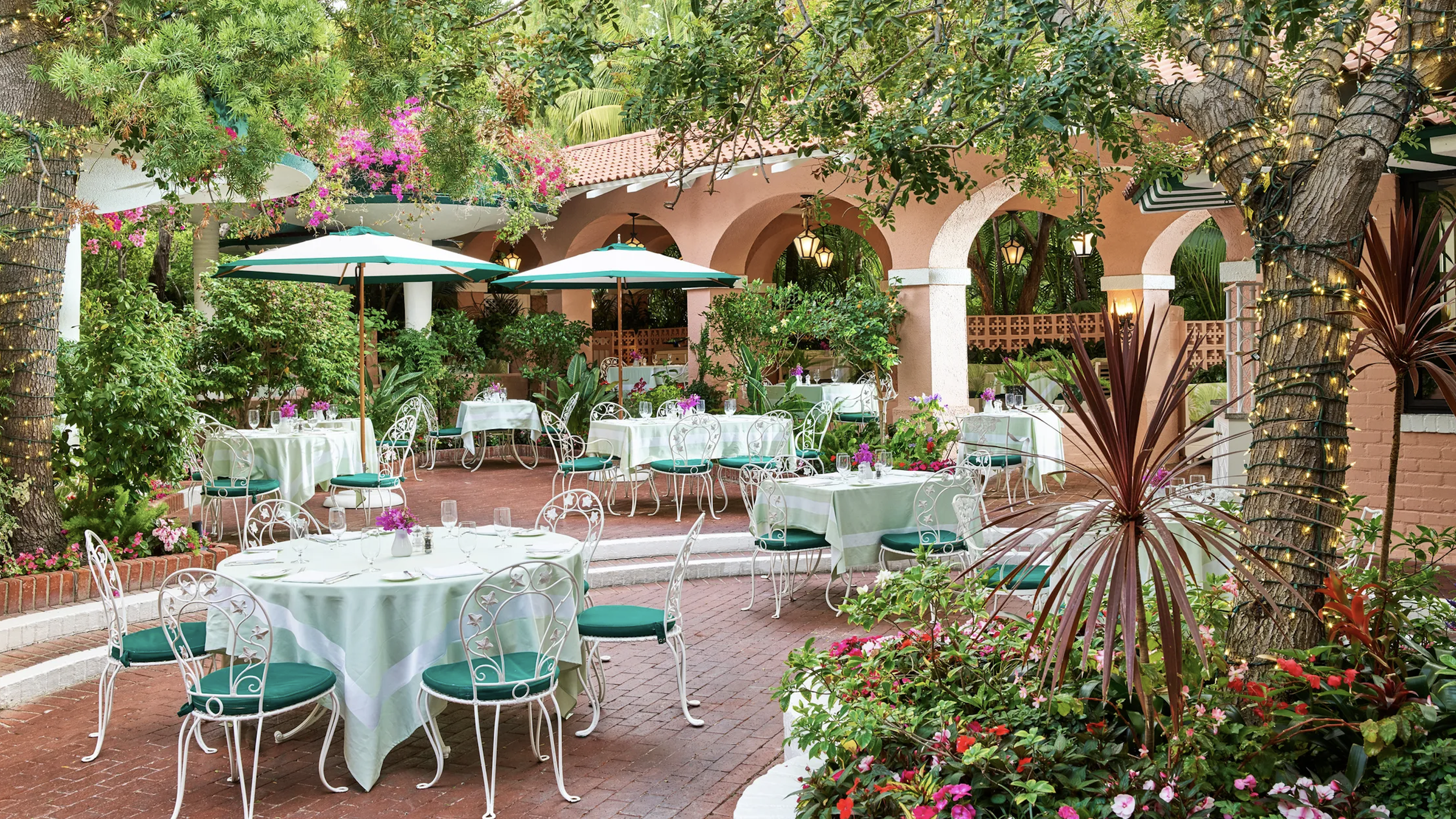
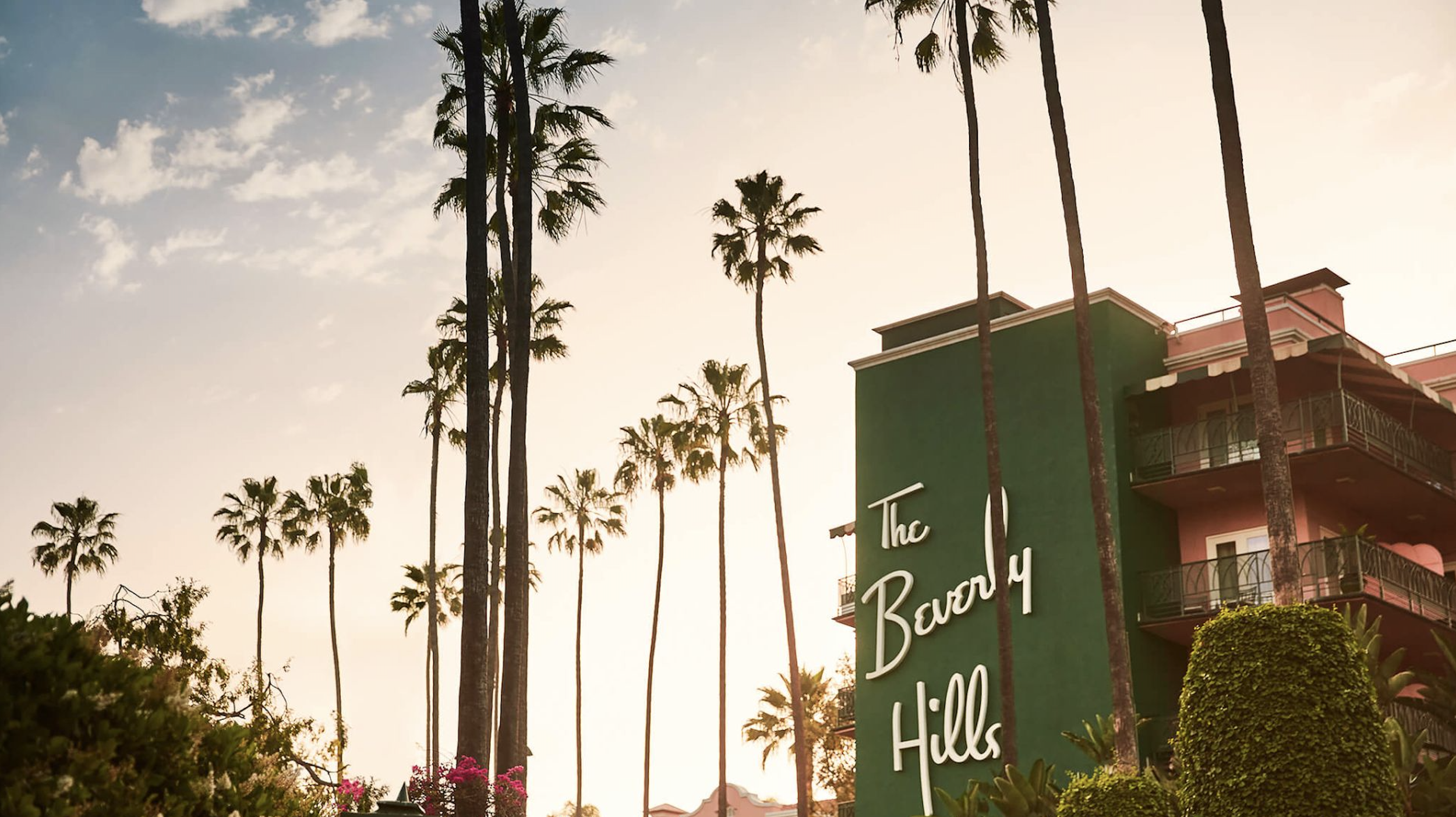
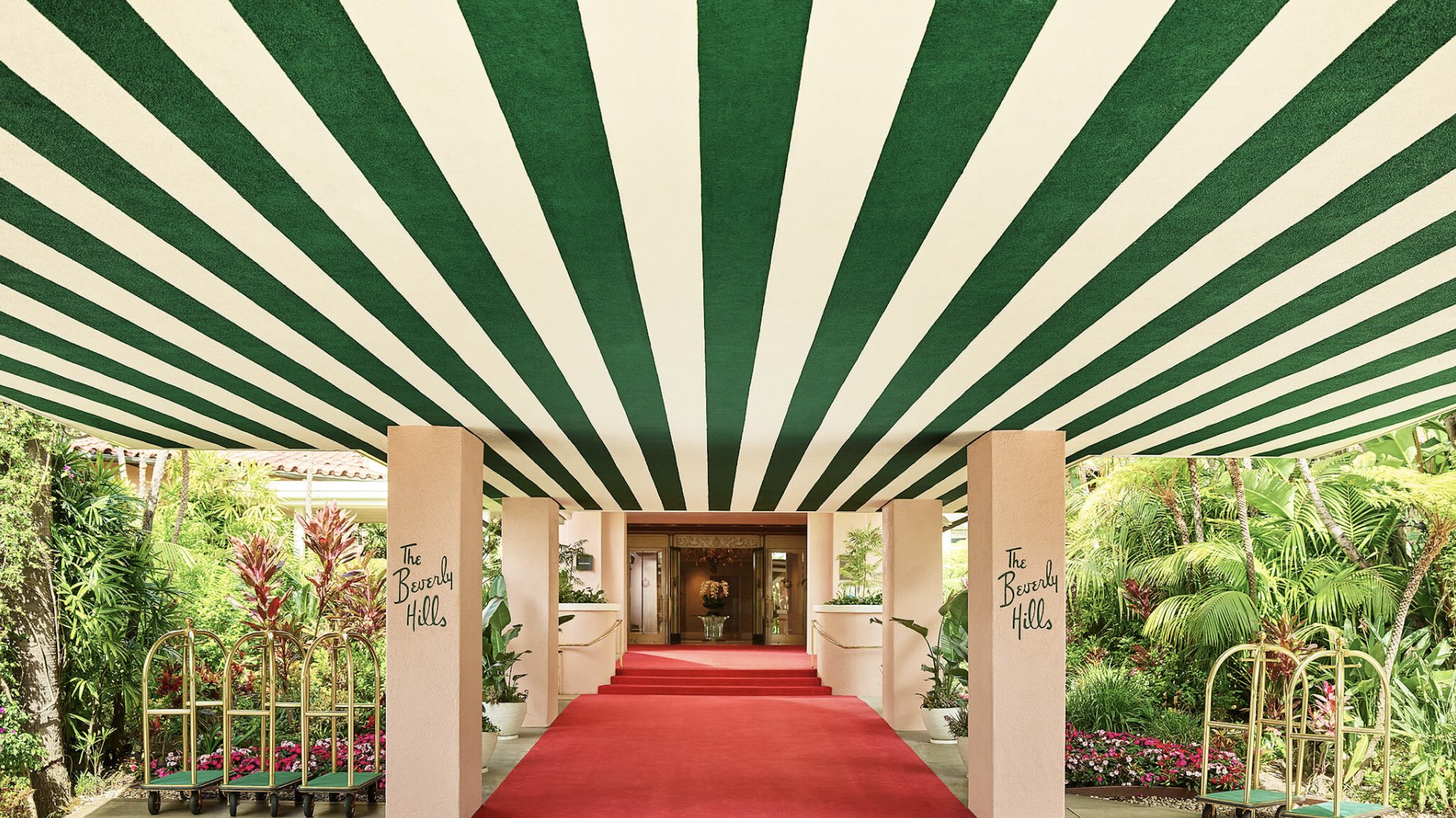
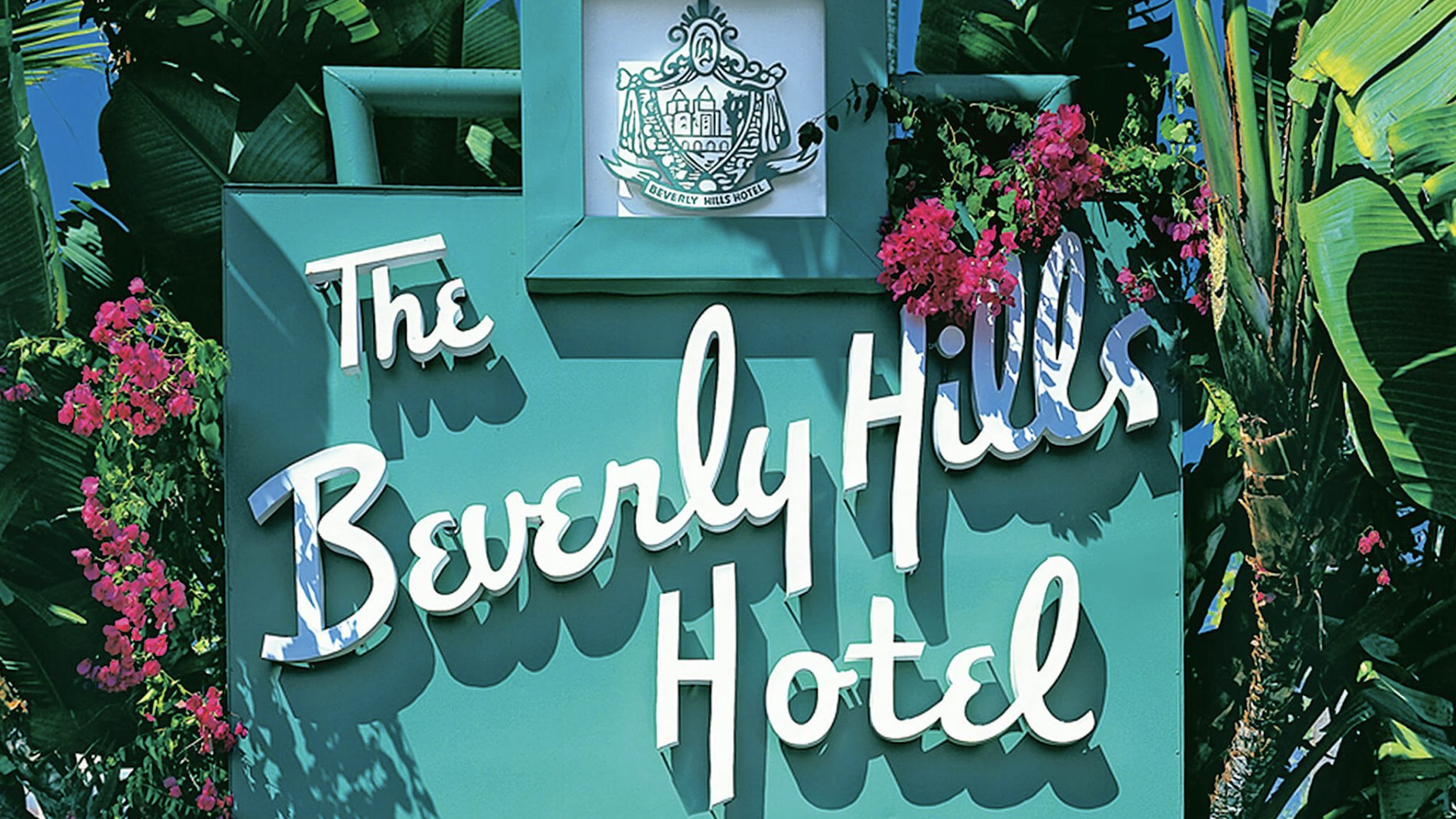
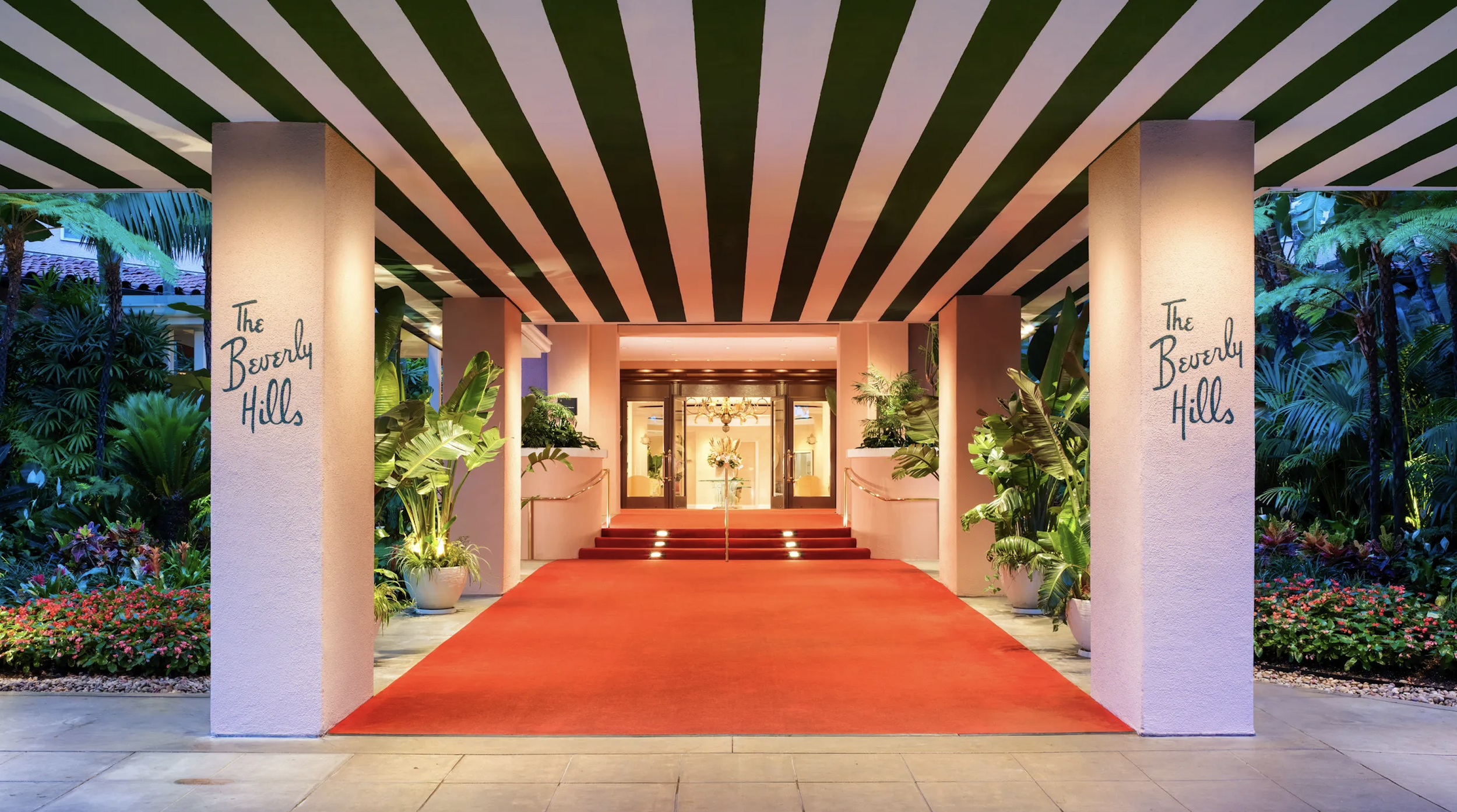
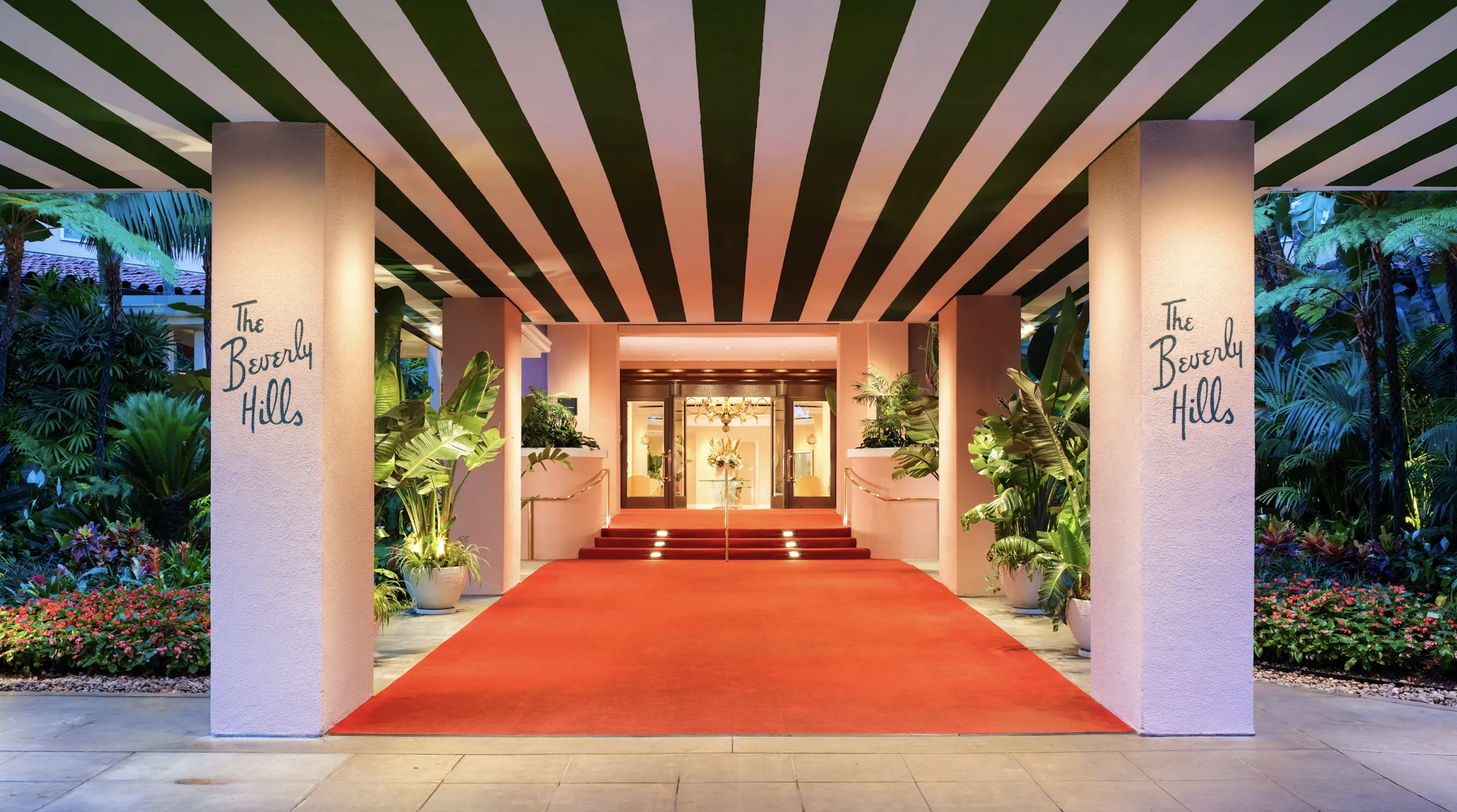
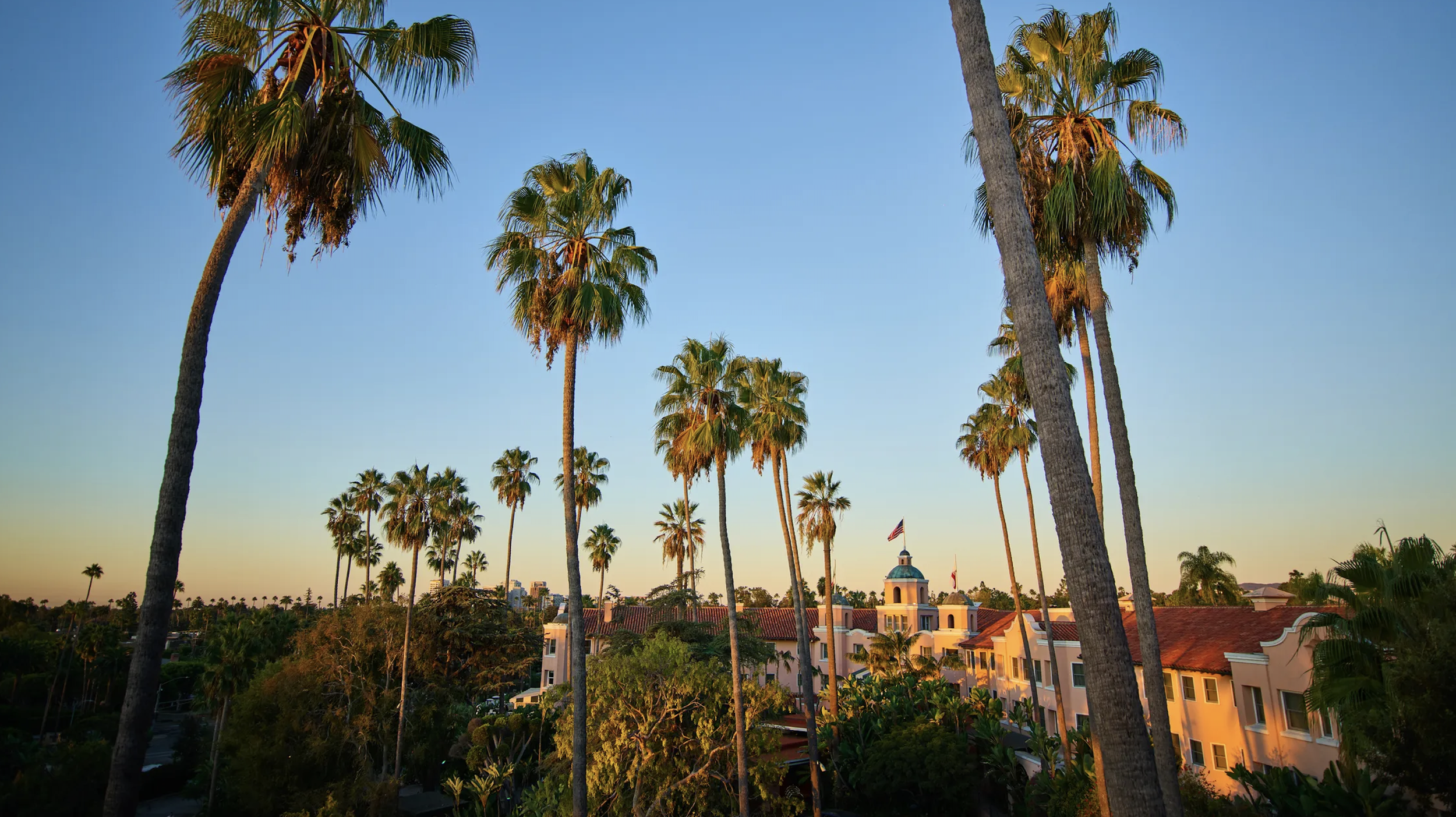
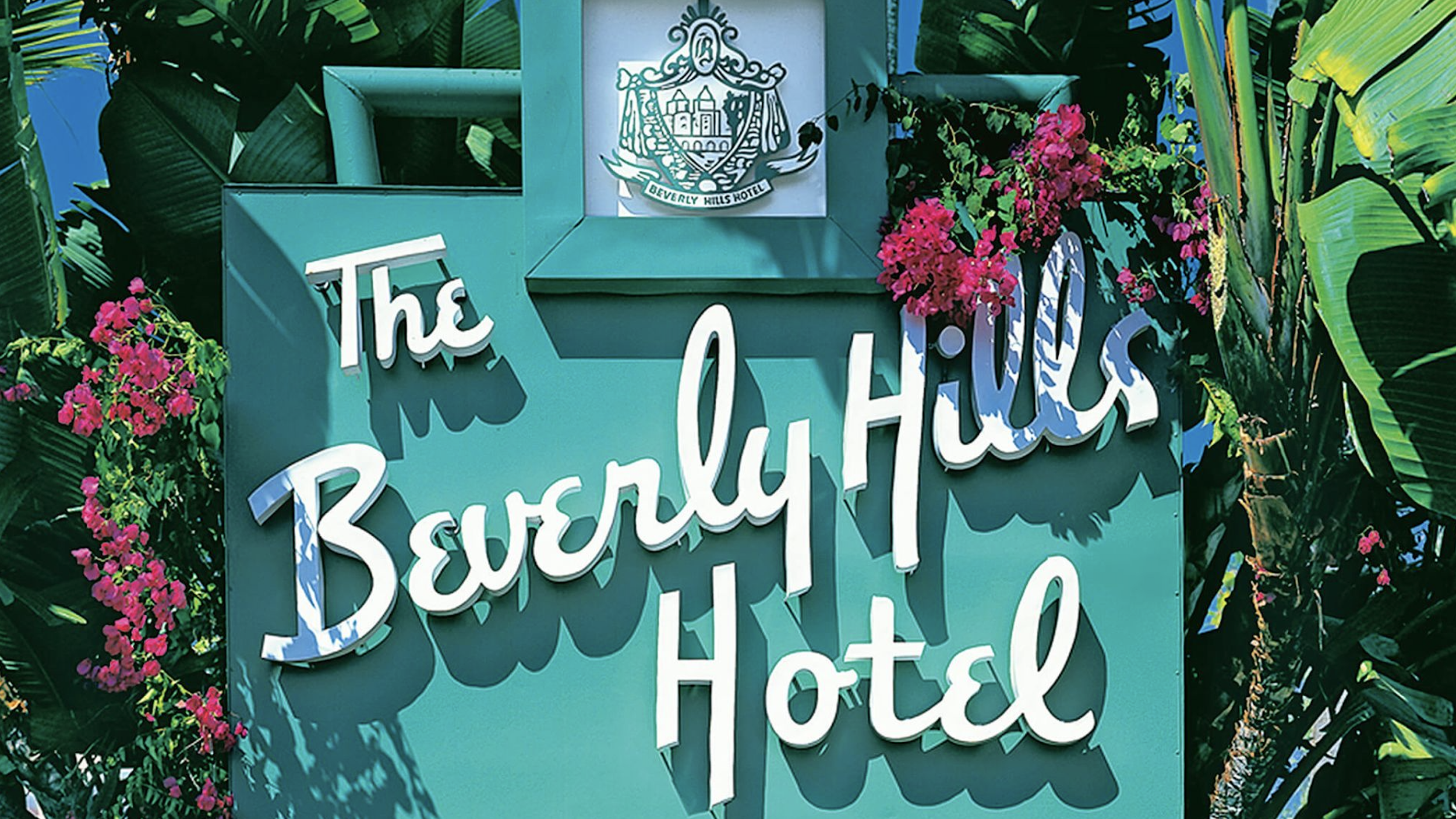
Few hotel arrivals feel as familiar as the red carpet leading into The Beverly Hills Hotel. The pink façade, green lettering, and tropical planting have appeared in countless photographs, yet they belong to a place that still has a working rhythm of its own. Breakfast is being served, someone is settling into a booth for lunch, and the garden paths lead away from the lobby toward the bungalows.
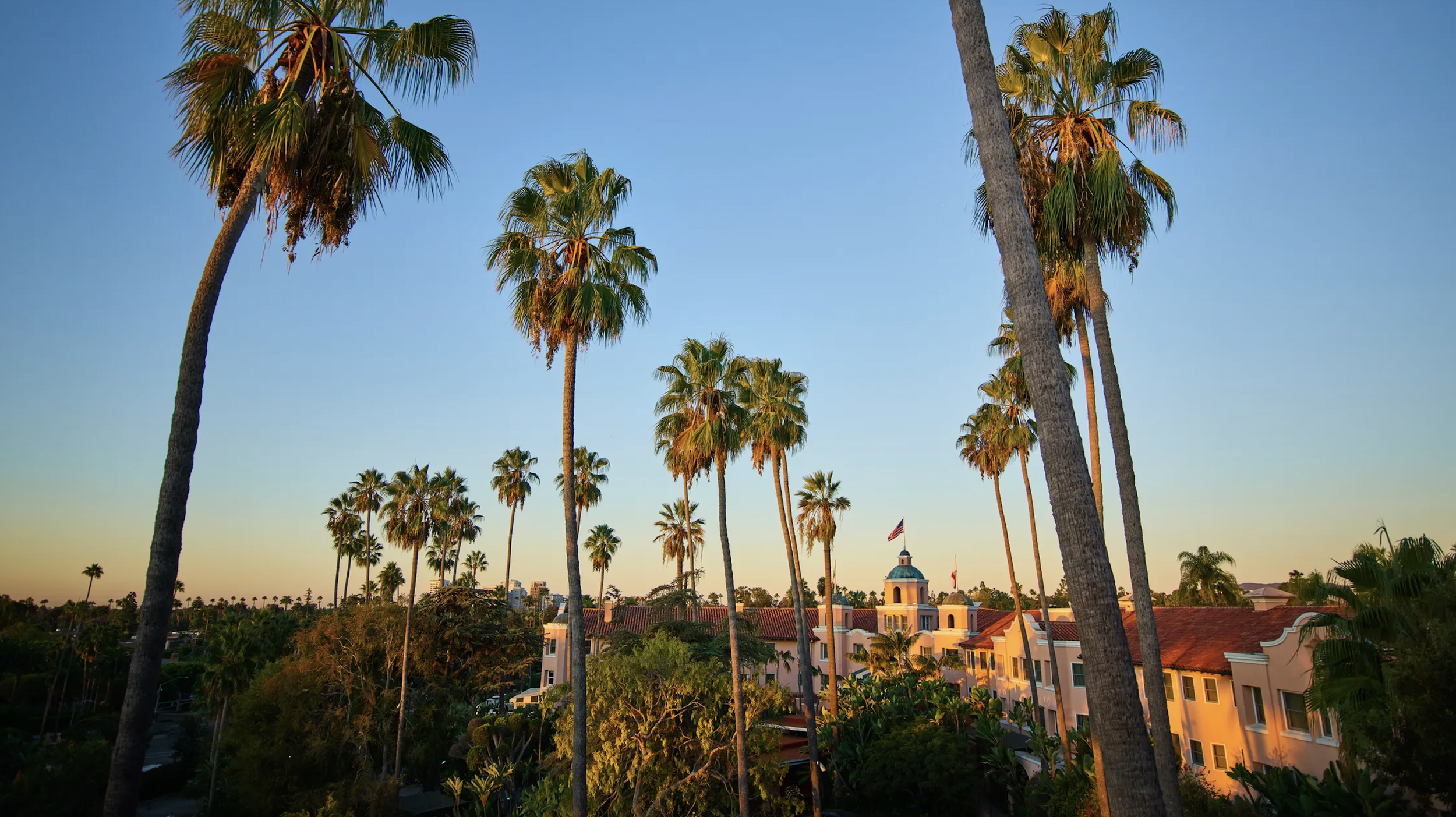
On Sunset Boulevard, surrounded by 12 acres of tropical gardens, this Dorchester Collection hotel offers a distinctive way to experience Los Angeles. Its public spaces have long been gathering places for the entertainment industry, while its accommodations allow for a more private stay. You can spend a morning in the middle of the conversation and an afternoon almost entirely removed from it.
That combination is central to the appeal. The Beverly Hills Hotel has considerable history, but it also provides the simple pleasures of a good California holiday: outdoor space, time by the pool, and somewhere inviting to return after a day across the city.
A Hotel That Helped Shape Beverly Hills
The hotel opened on May 12, 1912, under founder Margaret Anderson, two years before Beverly Hills incorporated as a city. Designed by architect Elmer Grey, it was intended in part to accommodate visitors considering property in the area. The hotel became an early focal point of community life, helping establish Beverly Hills as a place to live and visit.
Its relationship with Hollywood developed alongside the neighborhood. As actors, filmmakers, and other entertainment figures made homes nearby, the hotel became a convenient setting for meals, meetings, and extended stays. Over time, the bungalows became especially associated with the privacy sought by its best-known visitors.
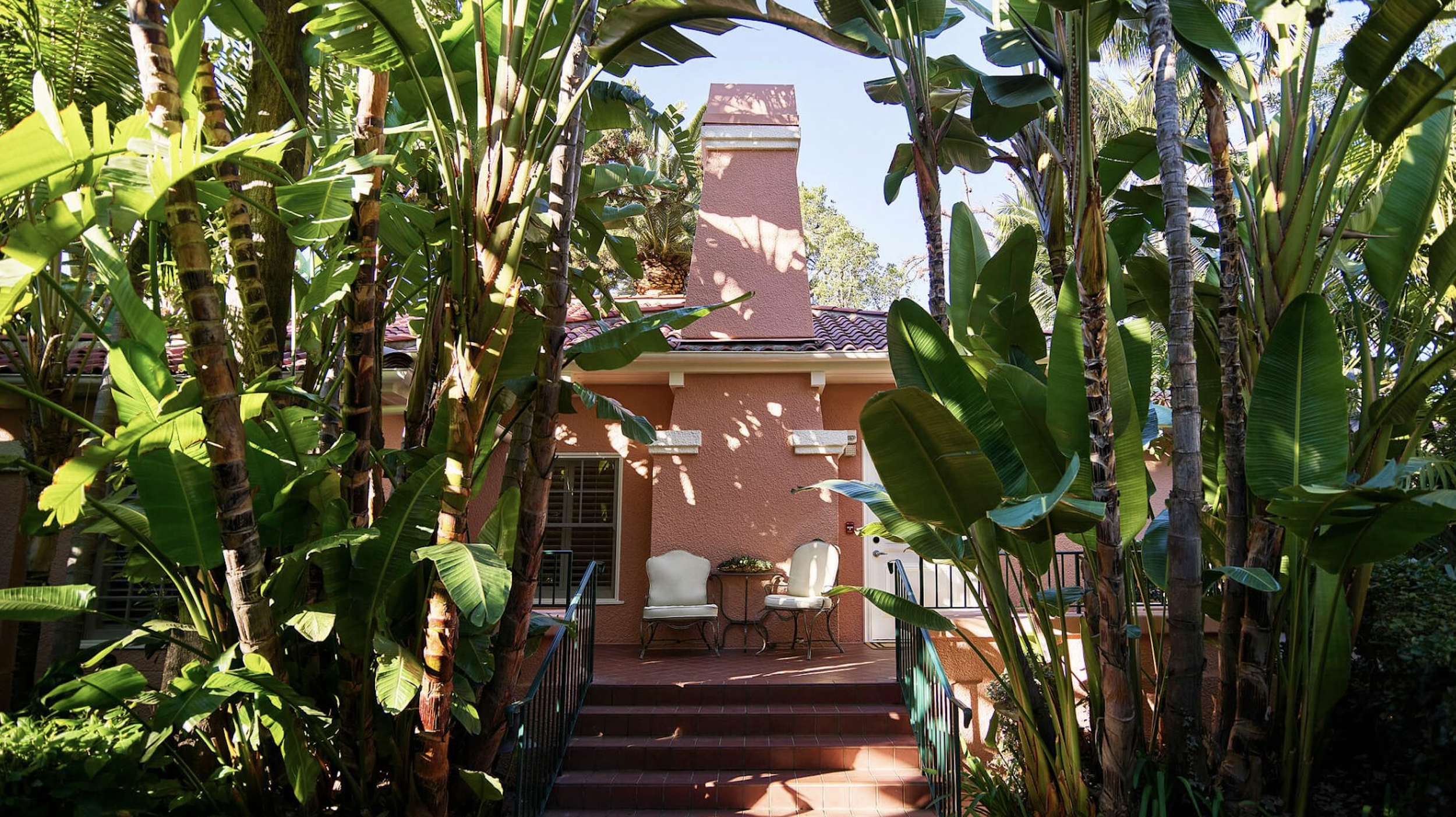
Those bungalows first appeared in 1915, originally serving families who wanted more room and independence. Their place in the hotel’s story has endured because the idea remains appealing: a garden setting, some distance from the main building, and the services of a hotel close at hand.
The property’s longevity is particularly striking in a city that changes quickly. Its identity has remained recognizable through successive generations, with familiar spaces carrying memories for returning travelers and offering newcomers their own introduction to Los Angeles.
Pink Walls, Banana Leaves, and California Style
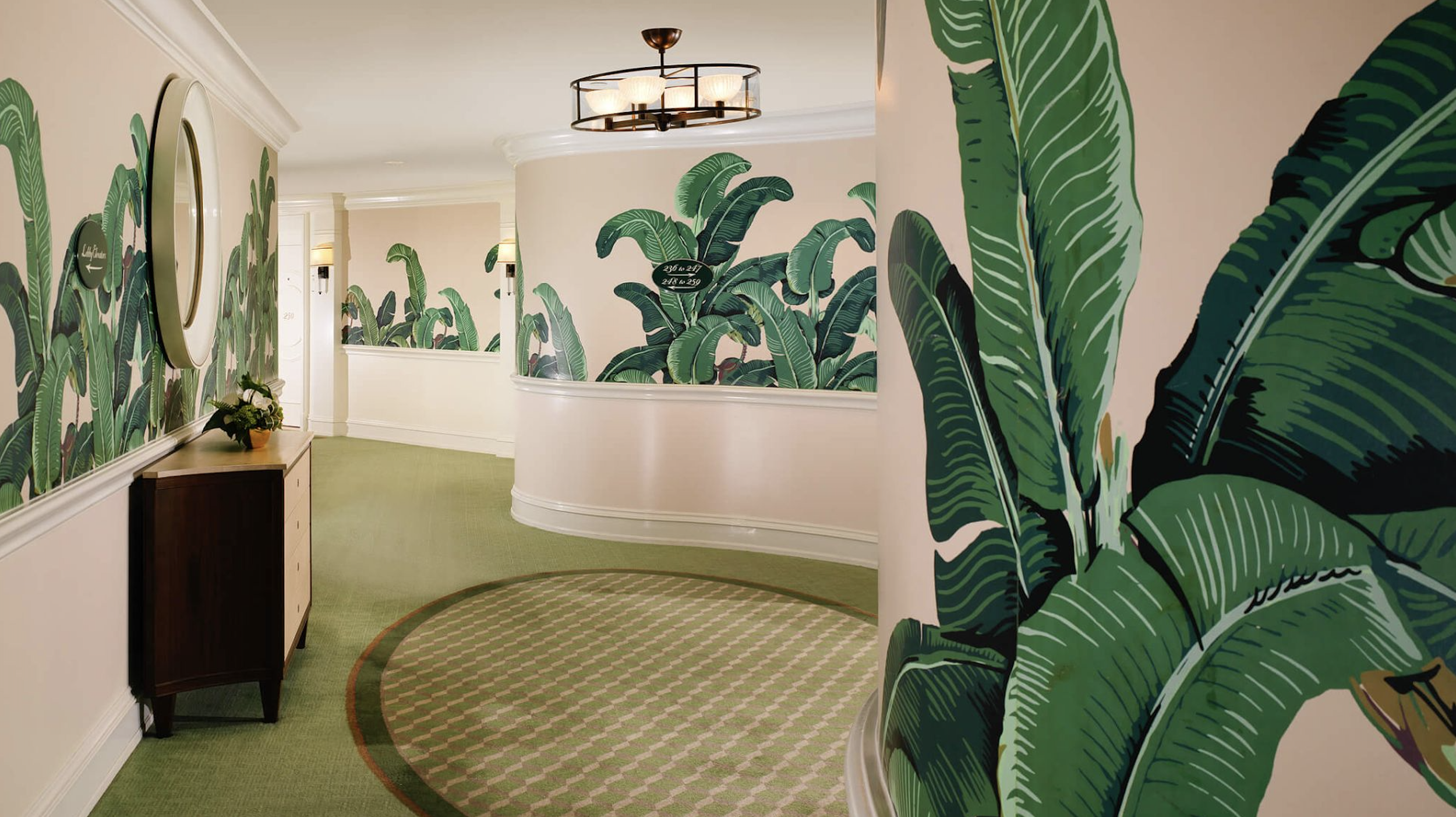
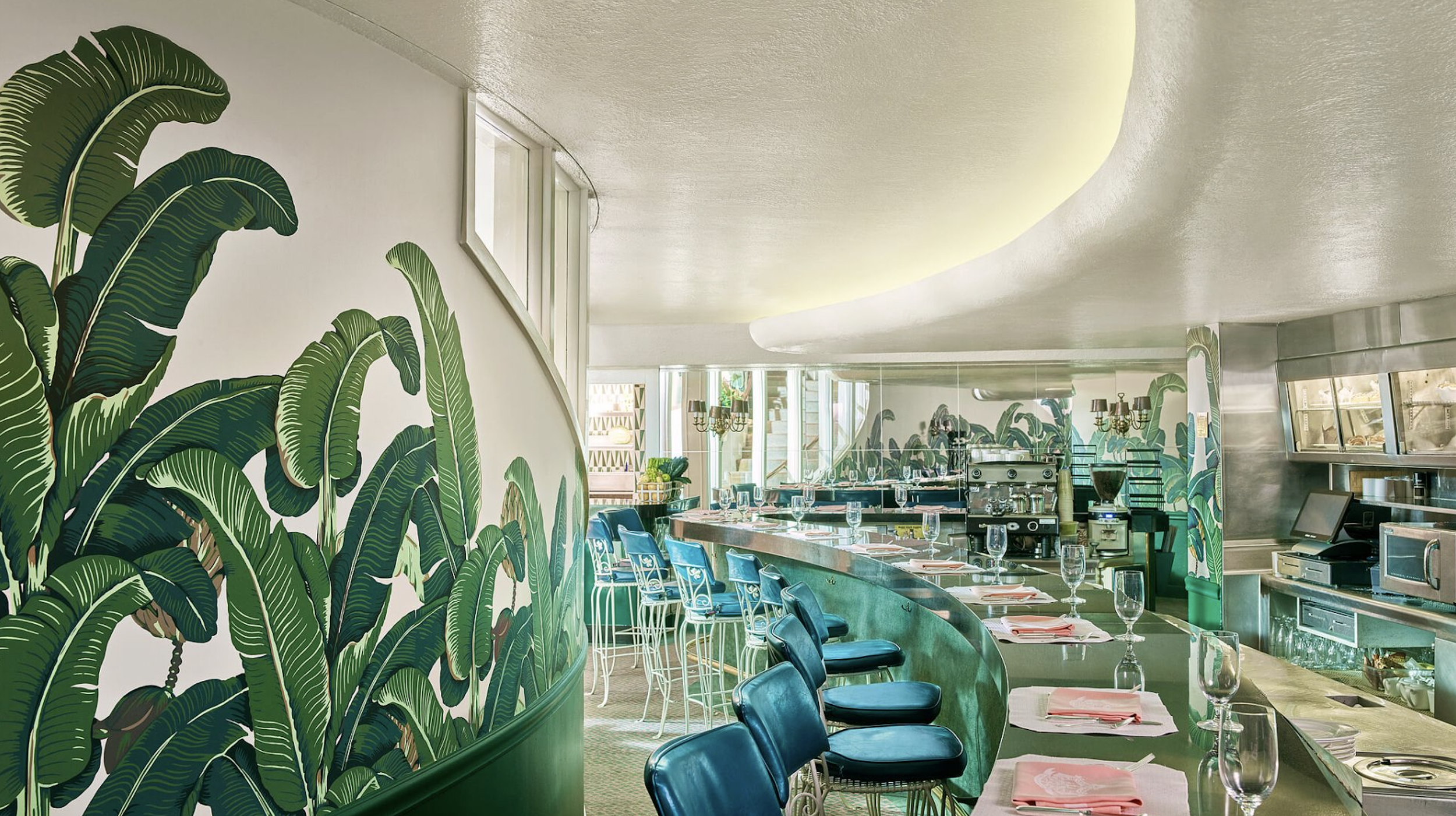
The hotel acquired its signature pink exterior in 1948. Another defining feature, CW Stockwell’s Martinique banana-leaf wallpaper, was created in 1942 and introduced here by designer Don Loper during the 1949 renovation. Together, these details established a visual language that has become closely associated with the property.
Architect Paul R. Williams also made an important contribution. He designed the Crescent Wing, completed in 1949, and reworked the lobby, Polo Lounge, and Fountain Coffee Room. His influence remains part of how the hotel is experienced, alongside a suite that bears his name.
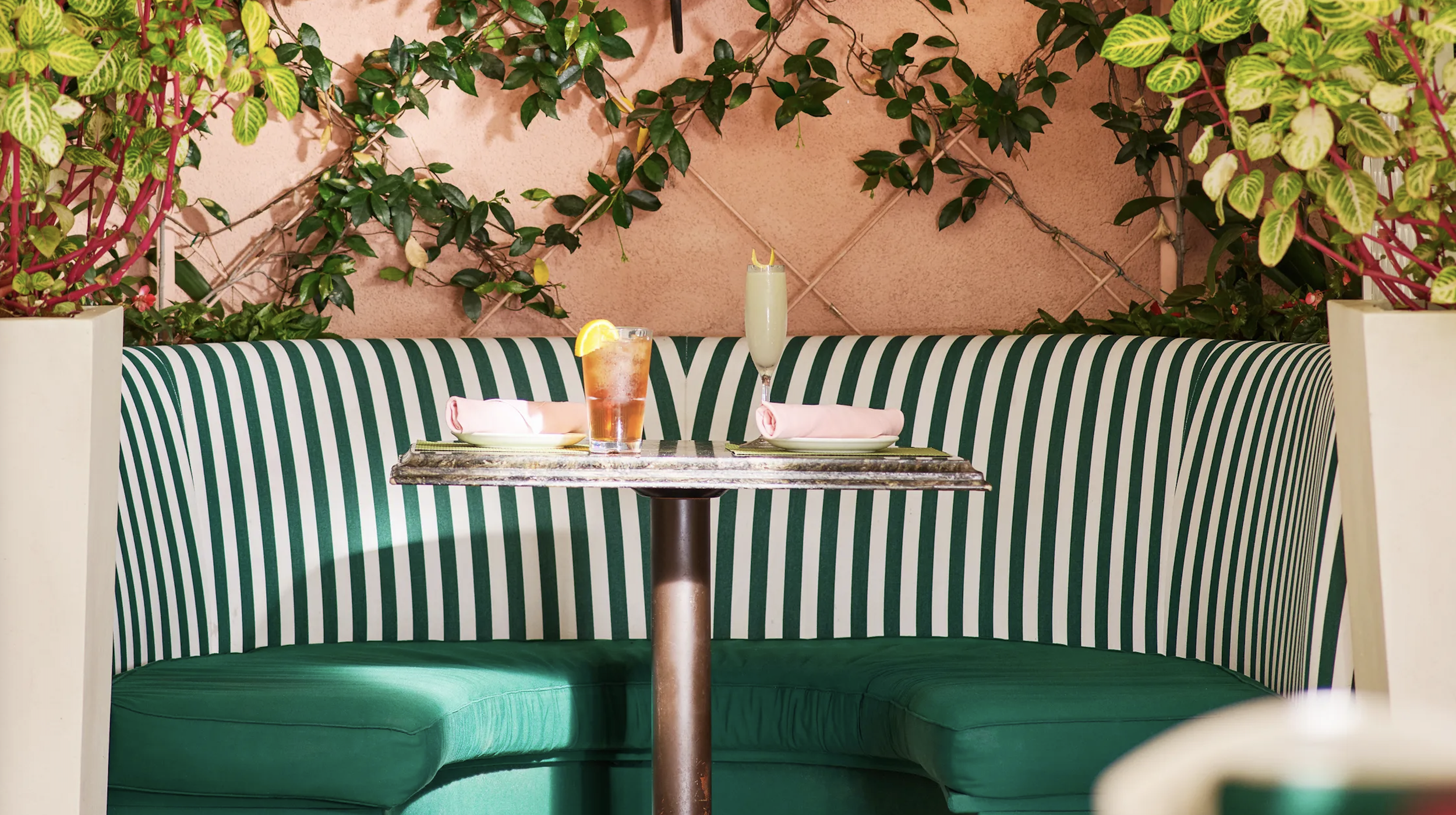
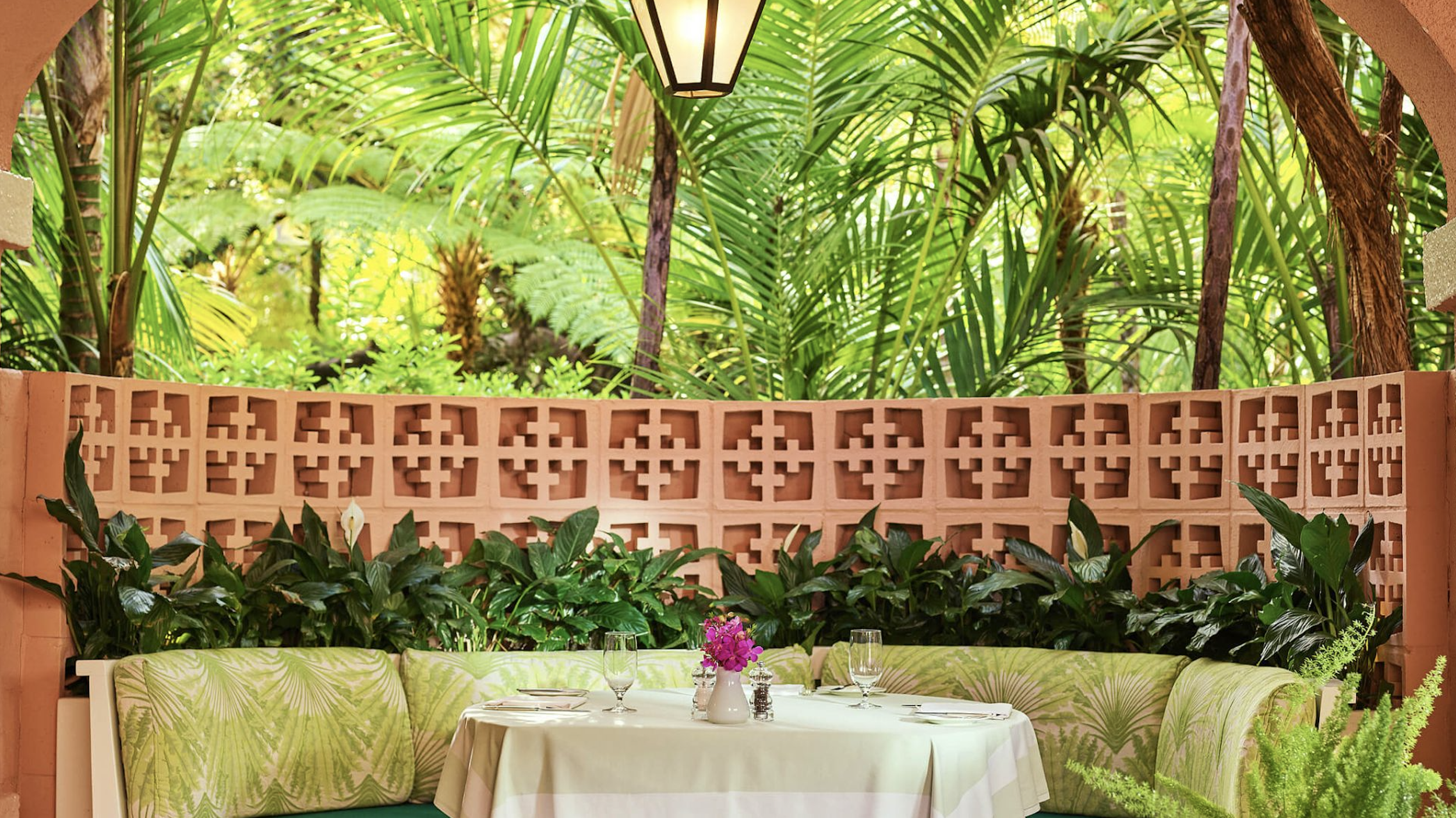
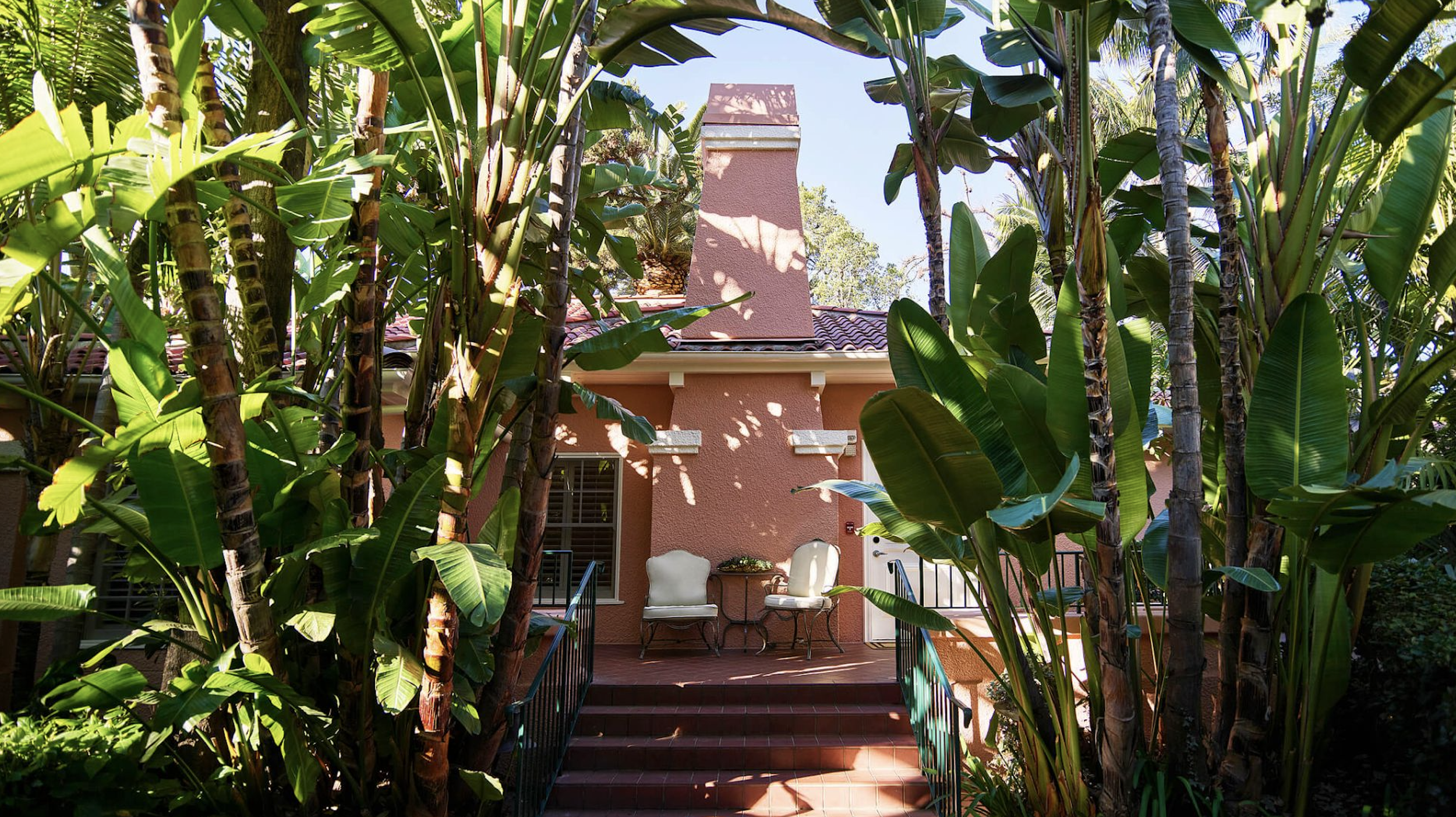
The appeal of these interiors lies in their confidence. Pattern, color, and decorative detail give the hotel a personality that carries from the entrance into its restaurants and accommodations. The gardens offer a softer counterpart, with paths and planting creating a sense of separation between different parts of the property.
For travelers who enjoy hotels with a strong sense of identity, there is plenty to appreciate beyond the familiar photograph. The design is most enjoyable when it becomes the backdrop to ordinary moments: coffee, a walk back to your room, or a quiet table before the lunch crowd arrives.
Rooms, Suites, and the Garden Bungalows
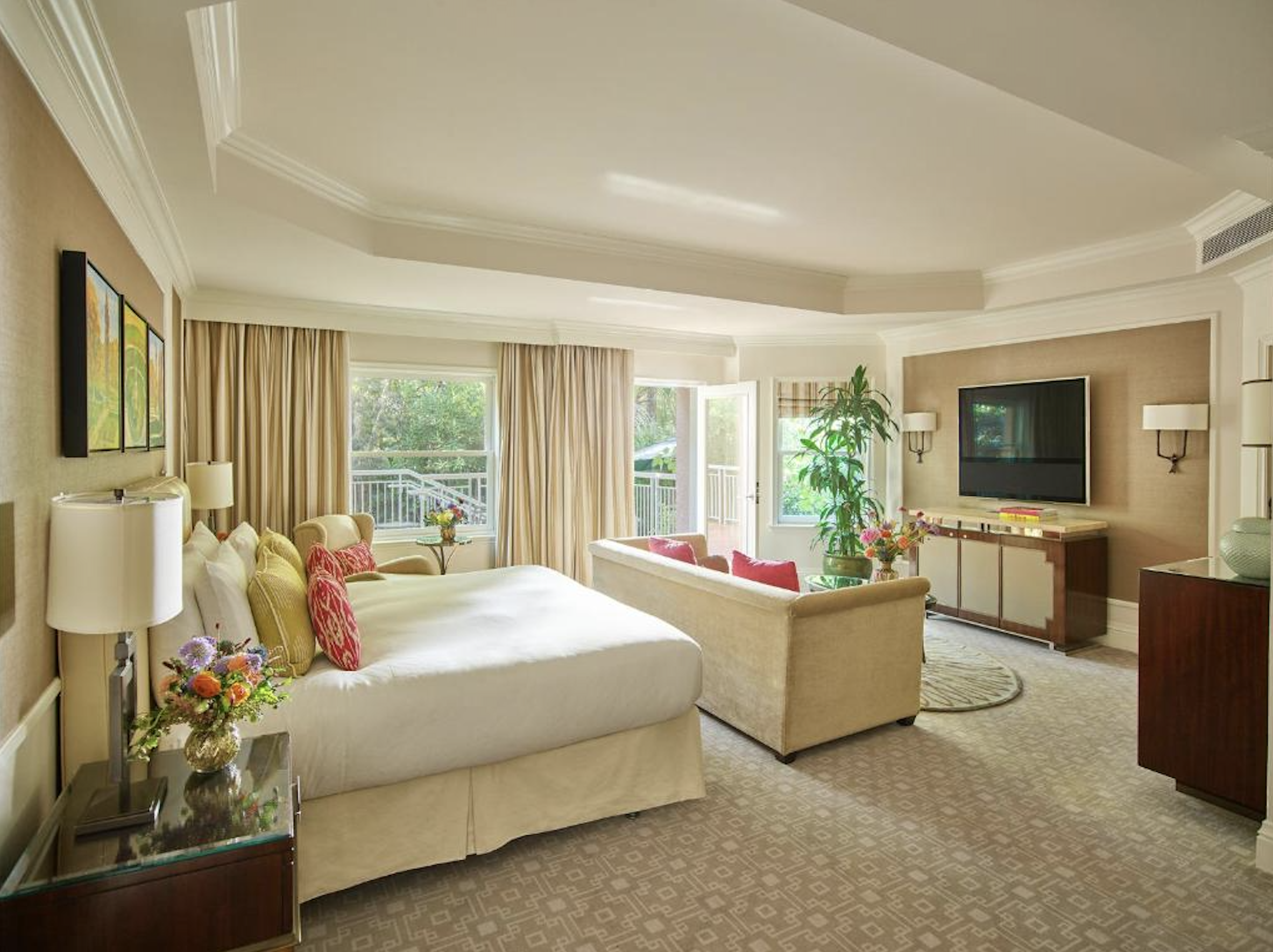
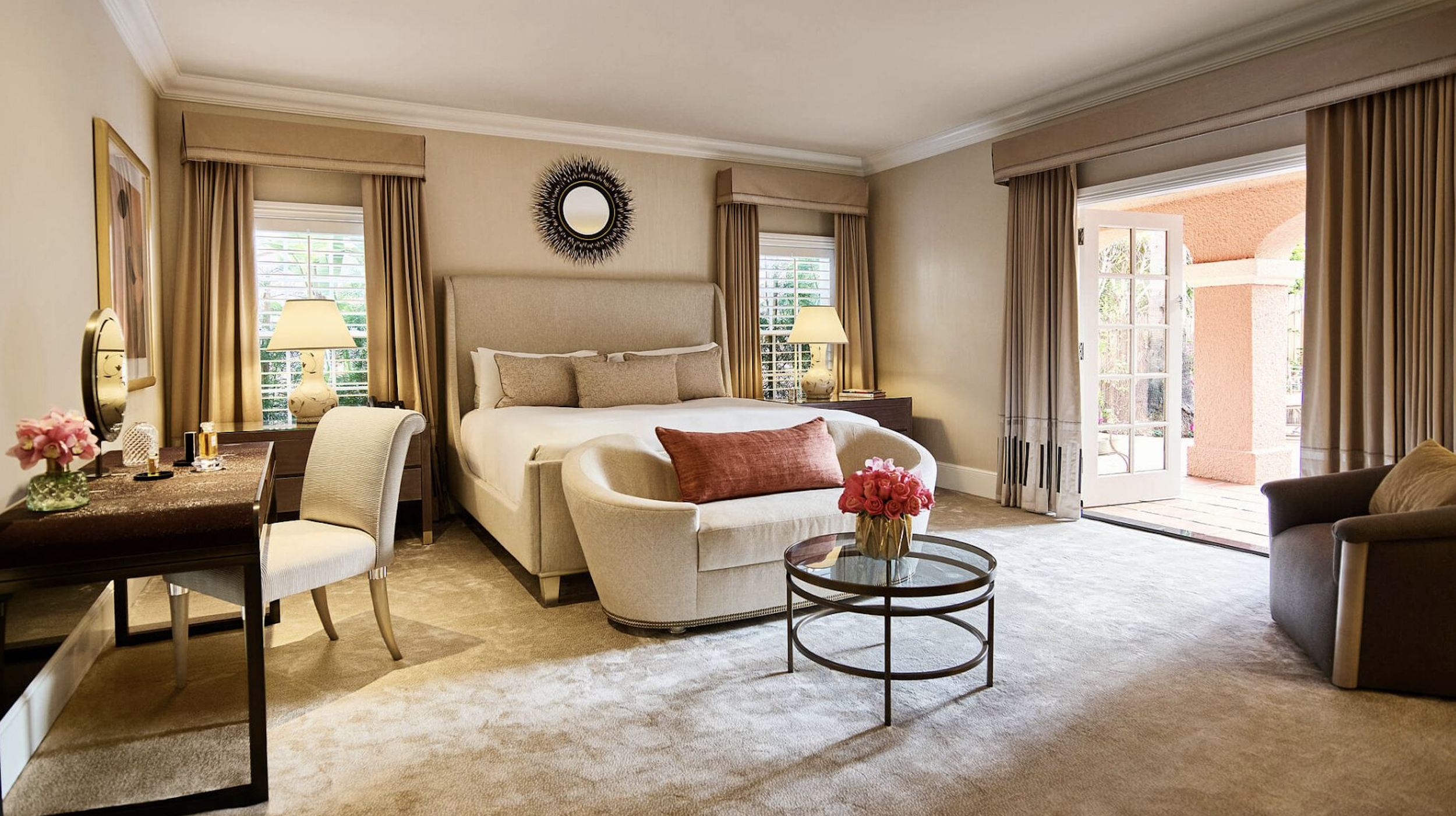
The hotel’s collection includes 210 rooms and suites, with its 23 bungalows forming a particularly distinctive part of the offering. The first decision is whether you prefer the convenience of the main building or the garden setting of the bungalows. From there, outdoor space, bedroom configuration, and entertaining areas become the useful distinctions.
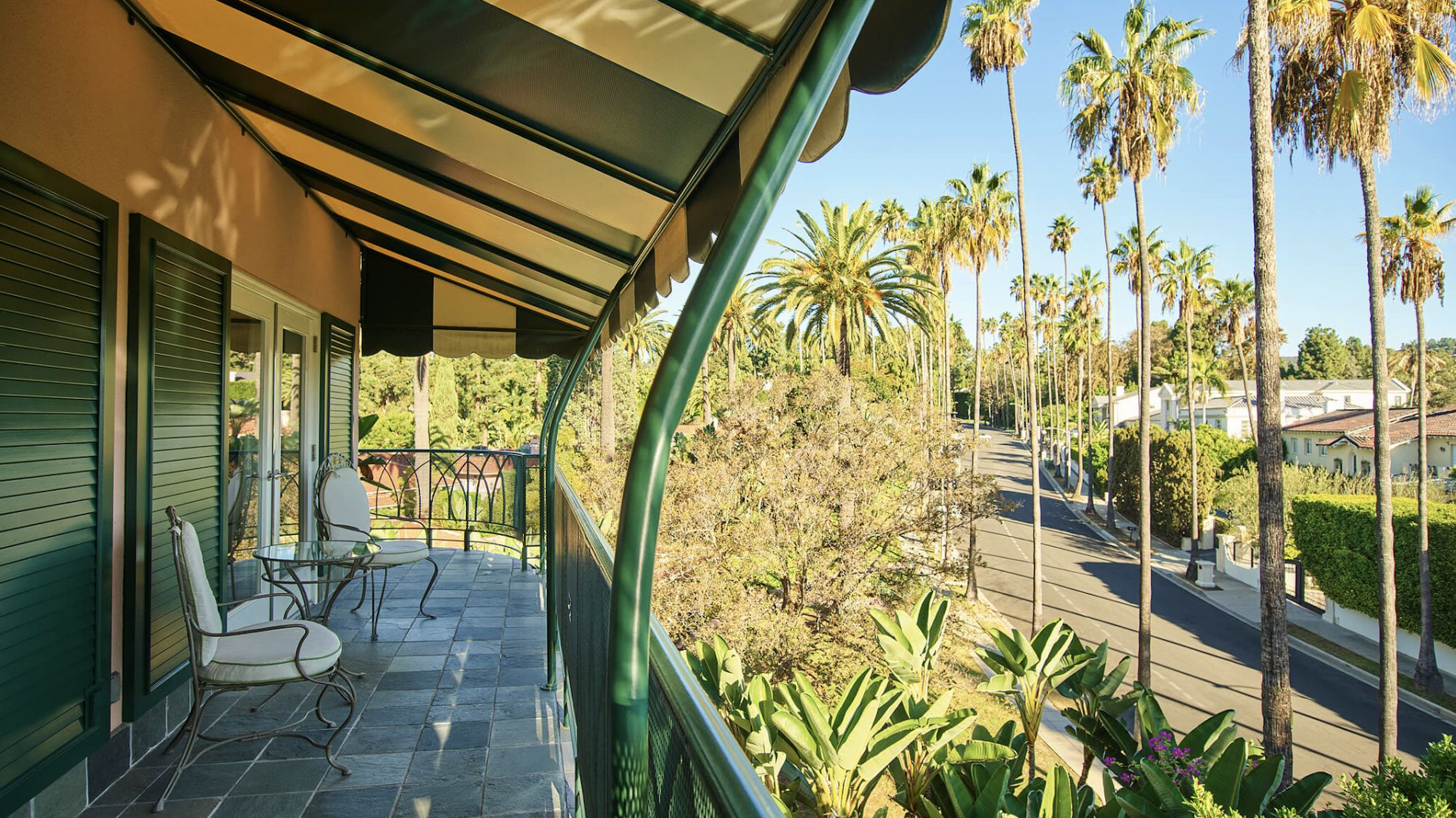
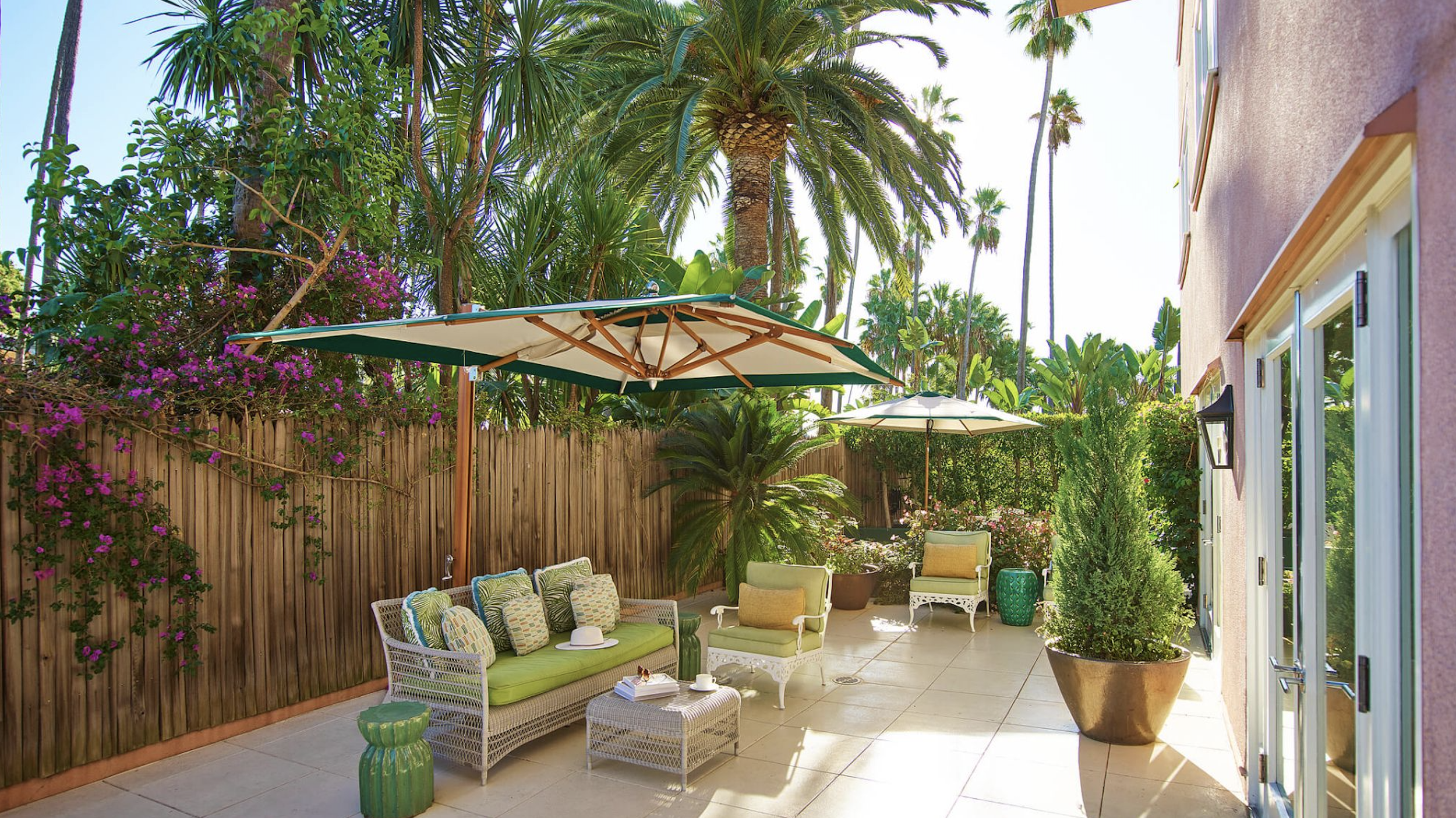
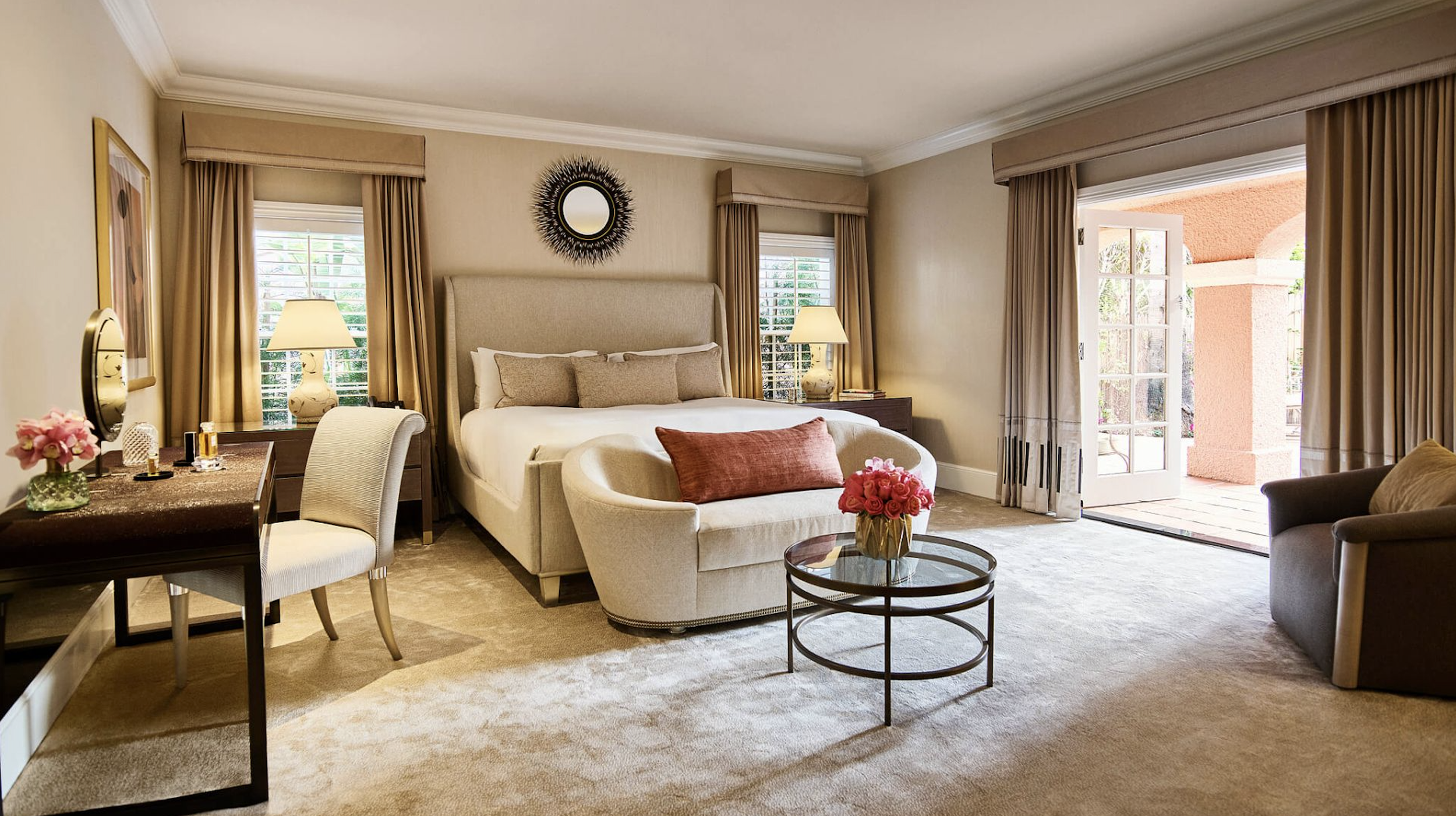
Superior and Deluxe Rooms: These main-building categories combine a traditional residential feel with contemporary comforts. Deluxe Rooms offer additional space, and separate balcony and patio categories are available for travelers who want their own outdoor area. Confirm the outlook and exact configuration when booking.
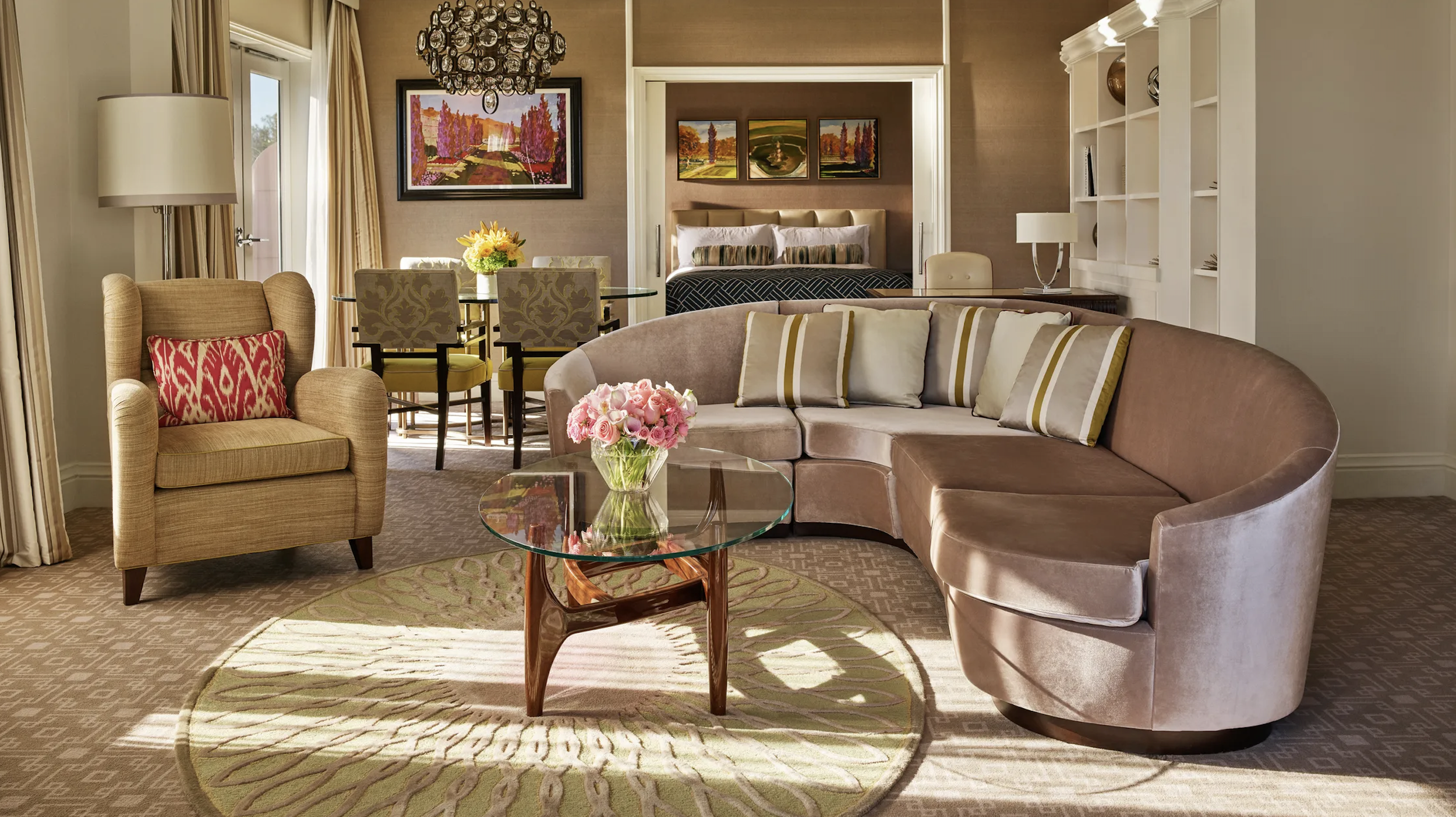
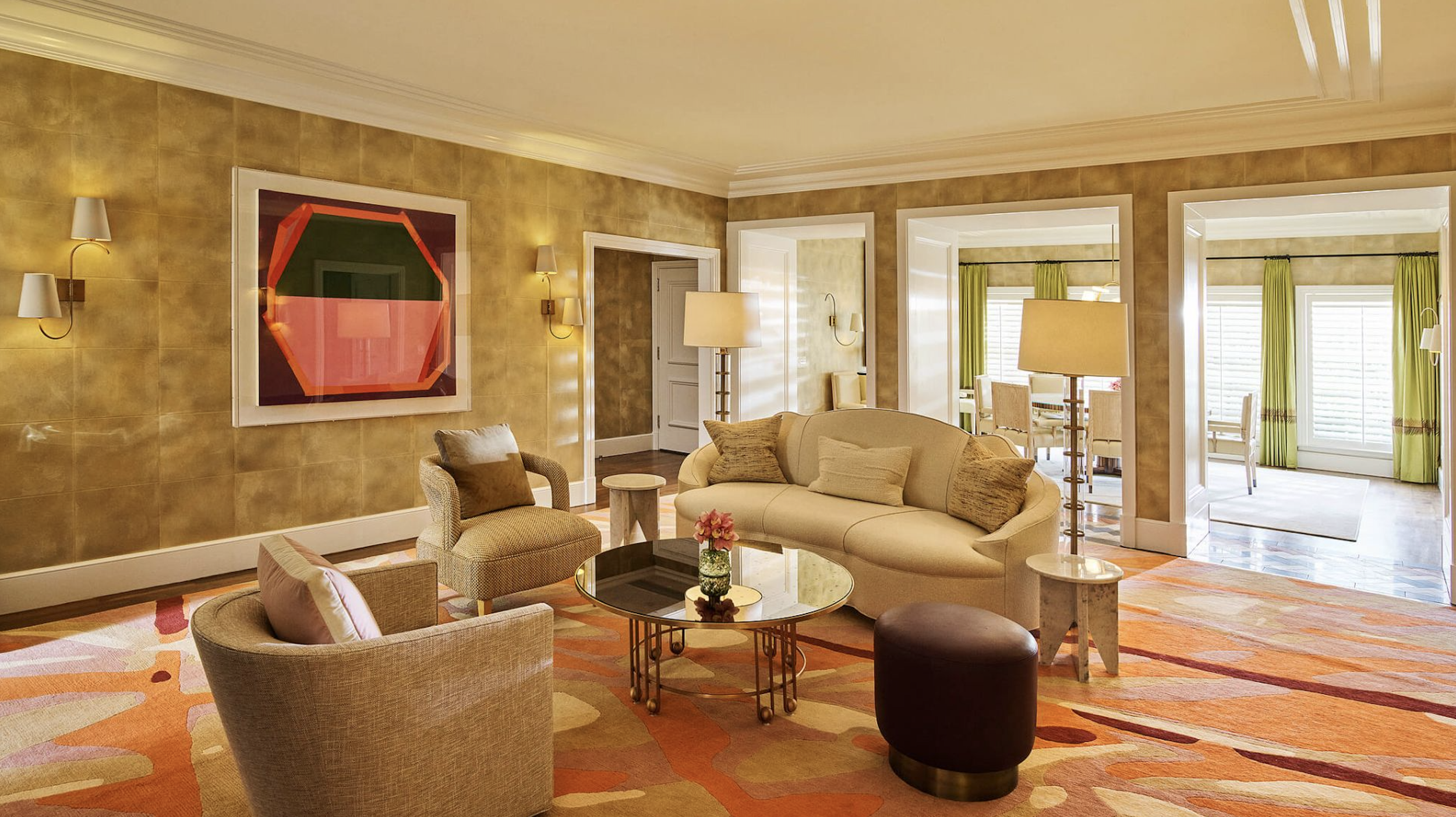
Junior Suites: A more generous layout includes a living area, making these a comfortable choice for a longer visit. They work well for travelers who want somewhere to read, take breakfast, or prepare for an evening out without moving into a substantially larger suite.
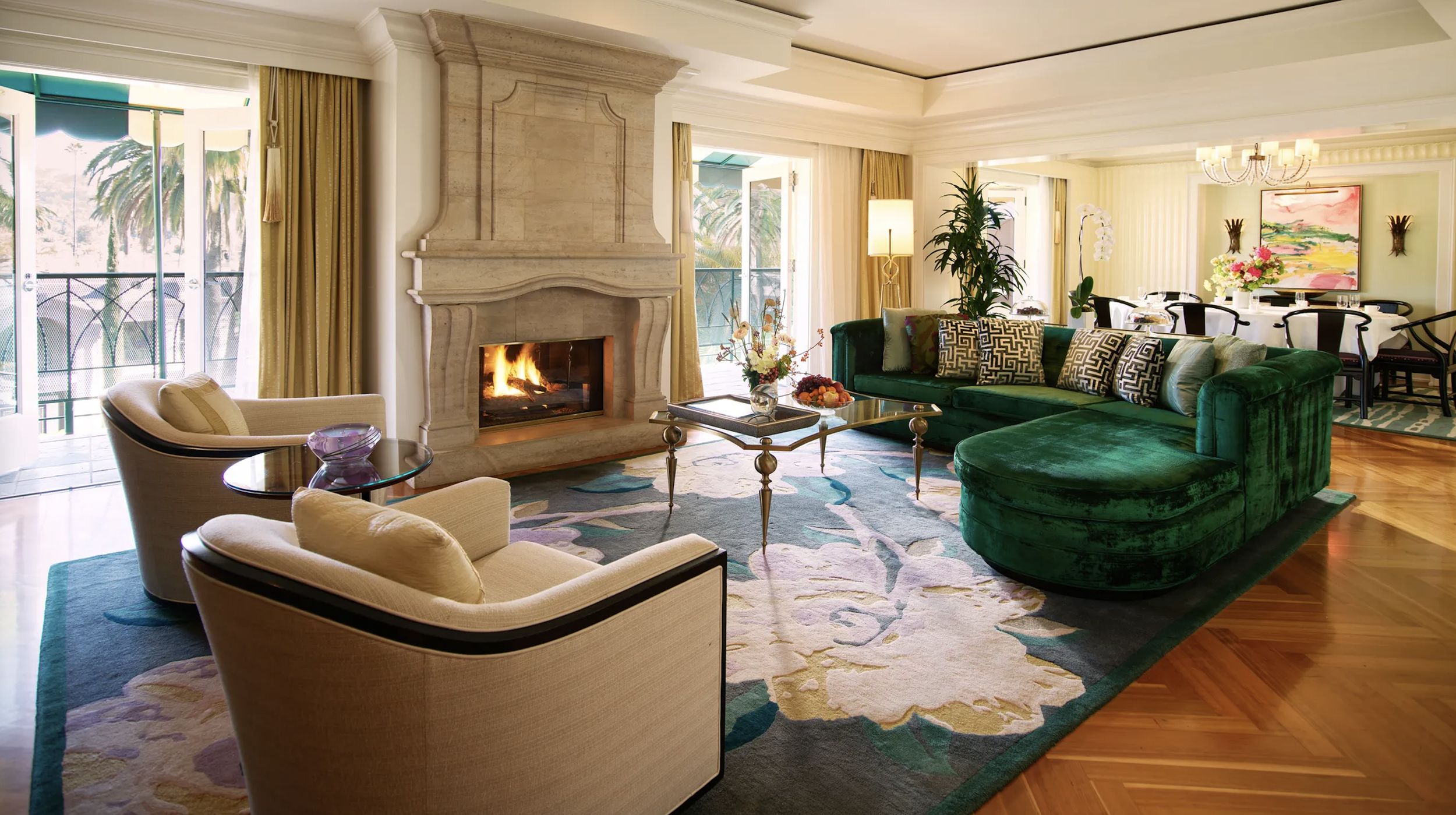
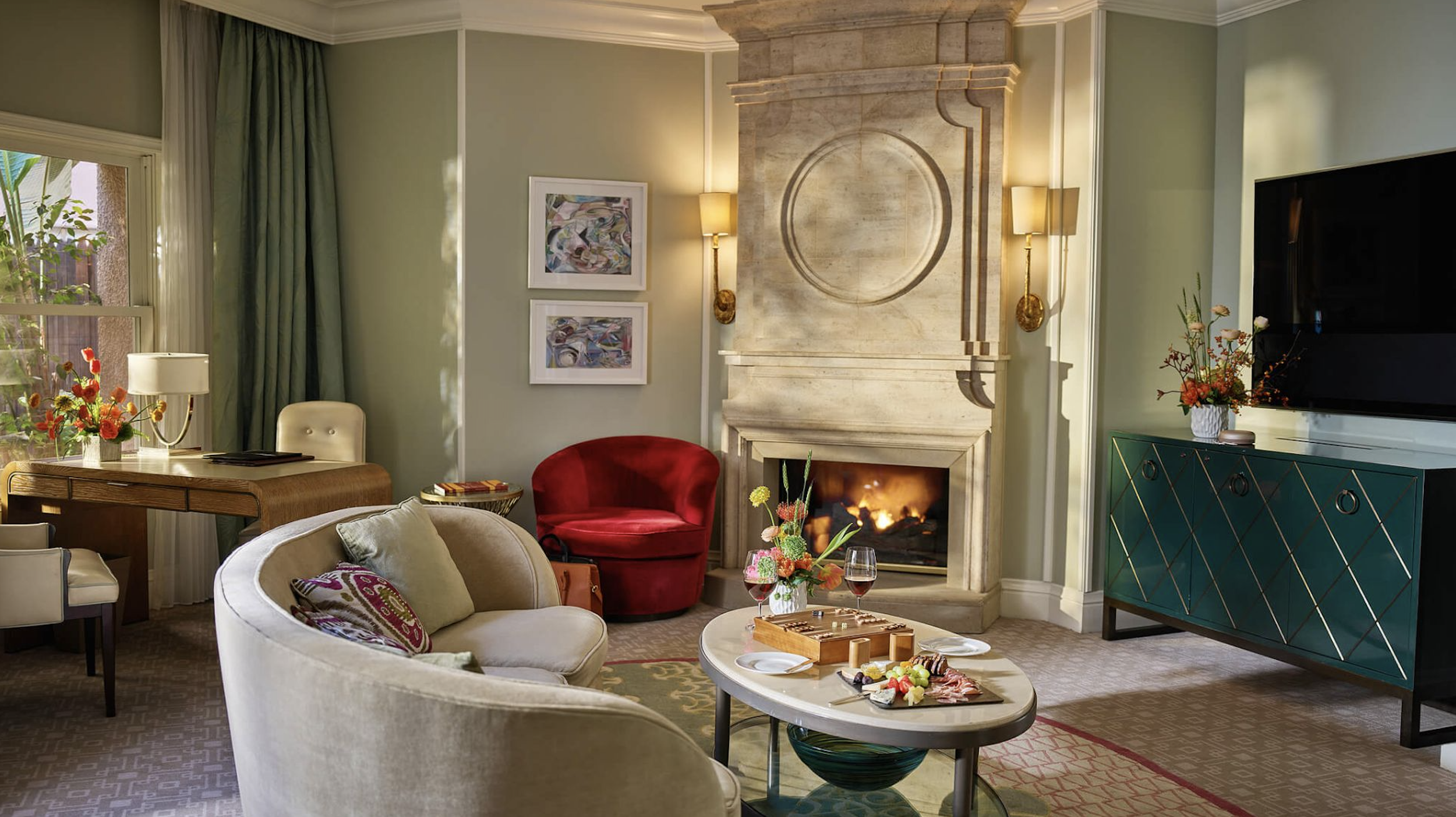
Beverly Hills Suite: A spacious living room with a fireplace and city views gives this category a stronger sense of residence. It is particularly appealing when the hotel will serve as a base between appointments, social plans, or several days of sightseeing.
Bungalow Rooms and Suites: Set among the gardens, this collection ranges from rooms to larger suites, with patio options available. The appeal is the setting and greater sense of independence. A bungalow room does not automatically include a private pool, so the specific category matters.
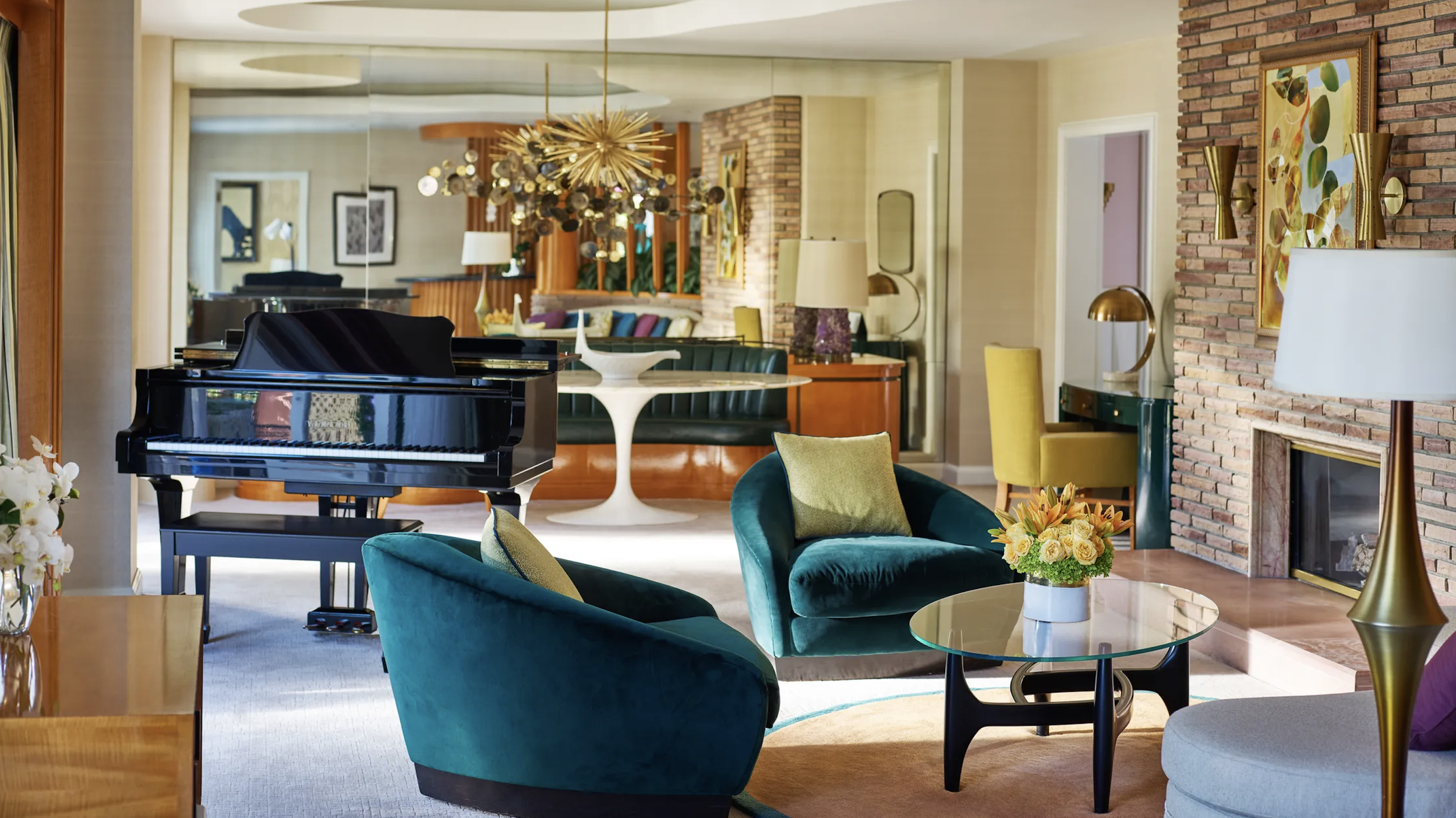
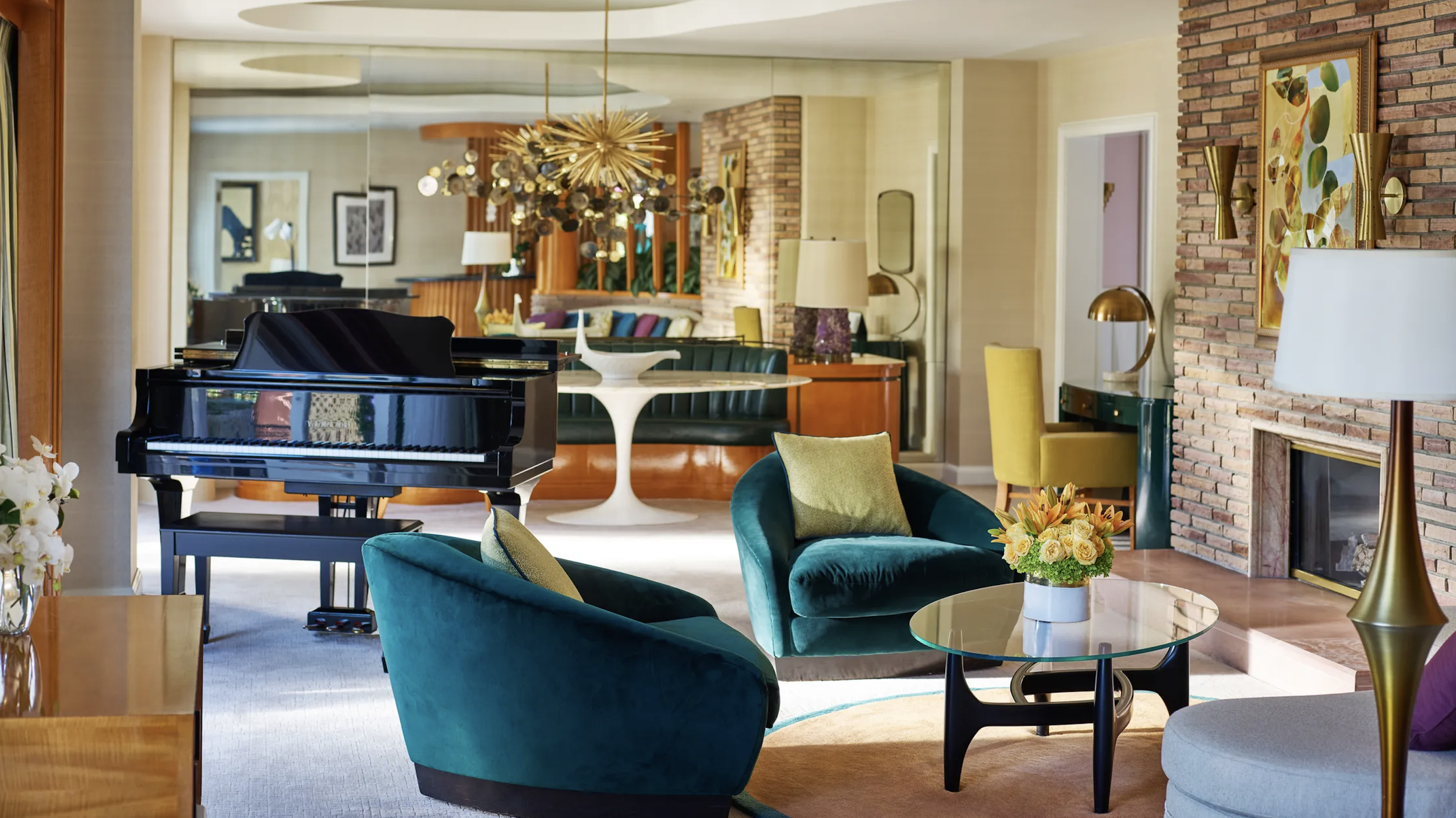
Paul R. Williams Suite: A large patio, dining area, curved bar, grand piano, and fireplace make this a distinctive option for entertaining. Its connection to the architect adds another layer of interest for travelers who appreciate the hotel’s design history.
Bungalow 1: Associated with Marilyn Monroe, this bungalow draws on her style through its furnishings and decorative details. A private patio, living room with a fireplace, and a collection of Monroe films and books give it a particular character. Connecting rooms can create a three-bedroom arrangement.
Bungalow 5: A private pool, whirlpool, kitchen, and patio make this an appealing choice for travelers who expect to spend substantial time at their accommodation. Patterned finishes and European furniture give the interiors a more decorative personality.
Bungalow 9: Inspired by Charlie Chaplin, this bungalow includes a private kitchen, dining room, garden-facing veranda, and a second bedroom. Its combination of shared space and separate sleeping areas makes it worth considering for a family stay.
Presidential Bungalow: A private entrance, infinity plunge pool, outdoor fireplace, chef’s kitchen, and generous living spaces create the most complete residential experience in this selection. It suits a special occasion or an extended stay where privacy and entertaining are priorities.
For families or groups, I would review the actual floor plan before choosing. The bungalow collection is varied, and matching the layout to the group is more useful than relying on the name alone.
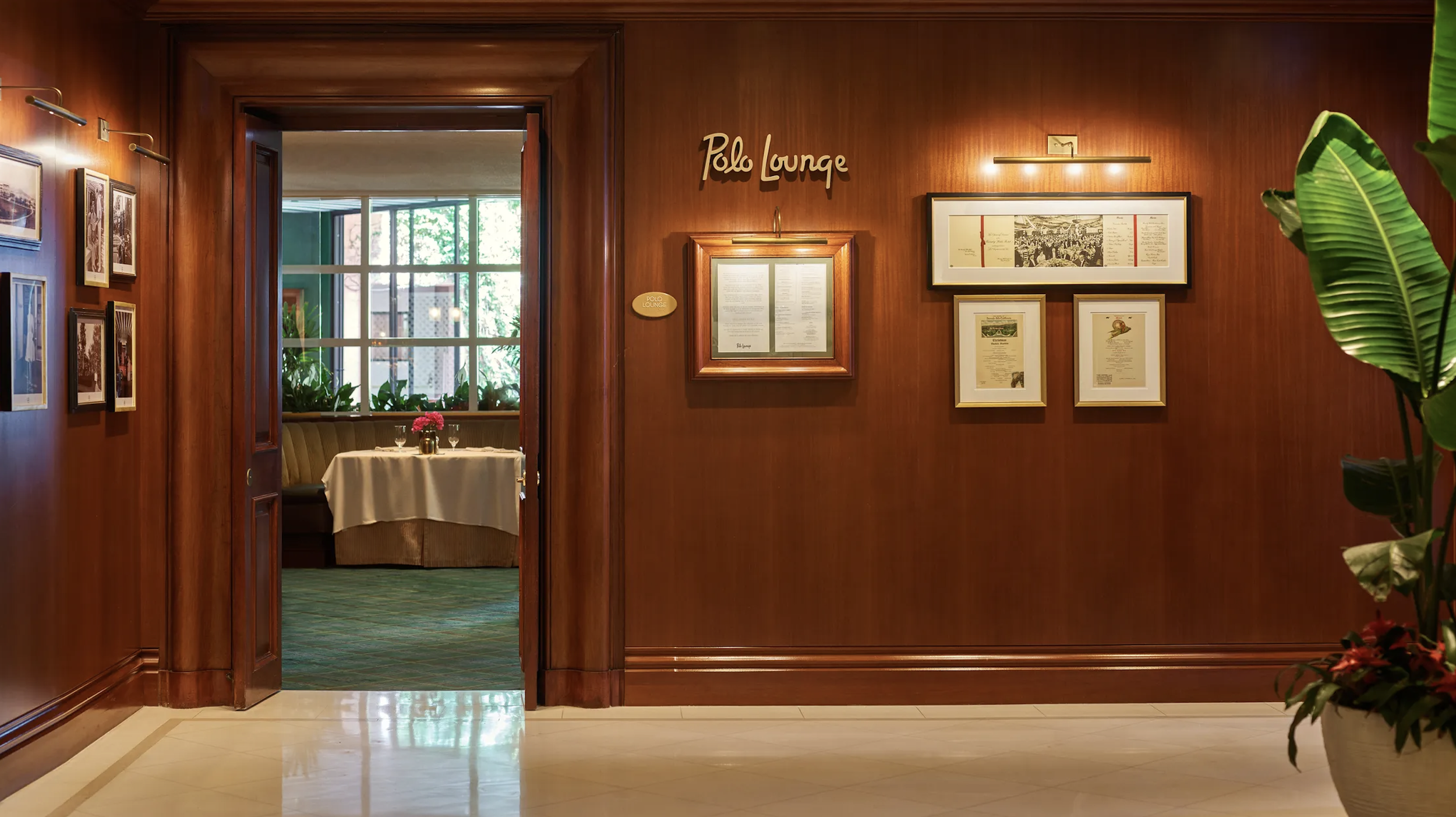
The Polo Lounge
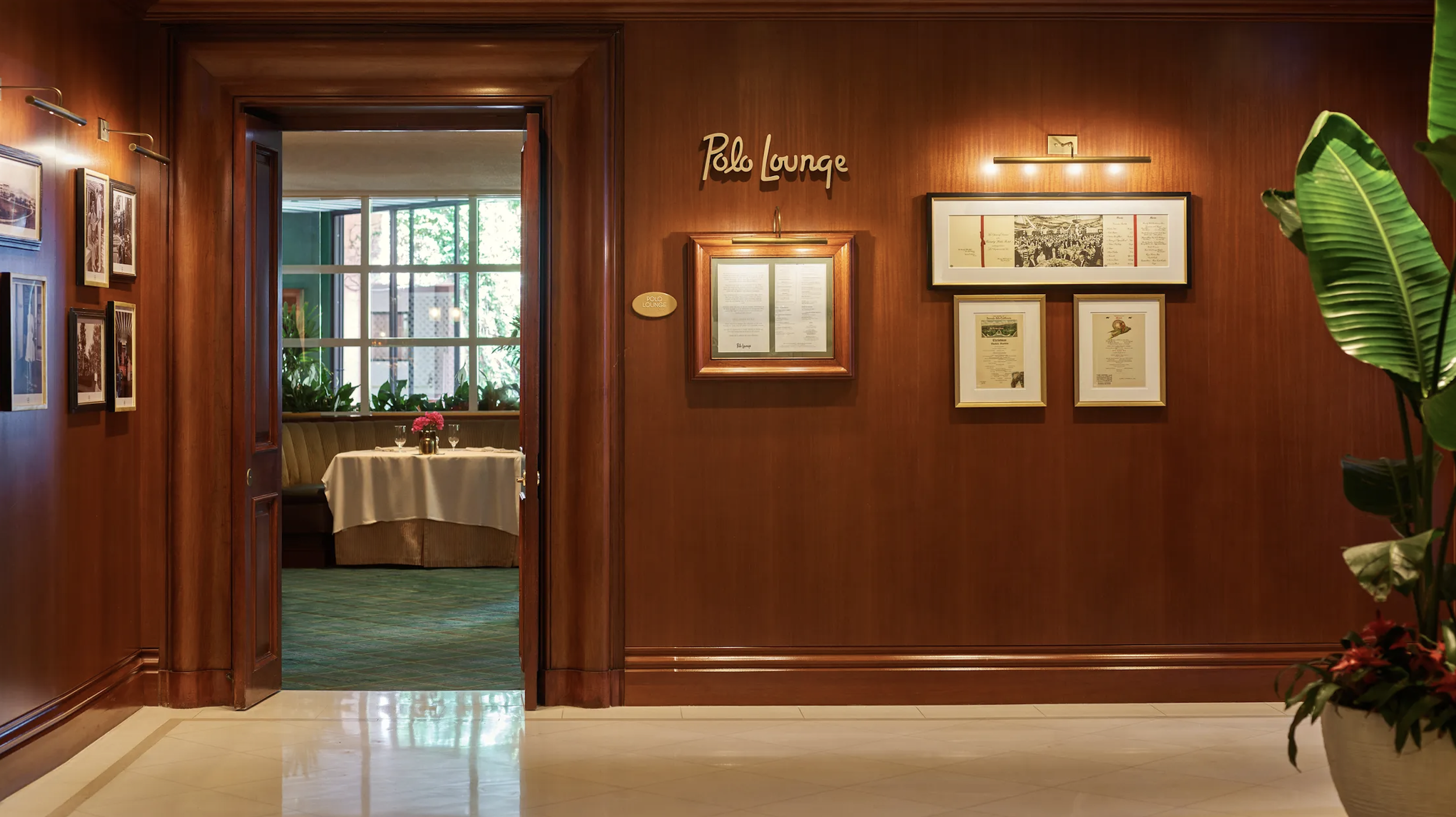
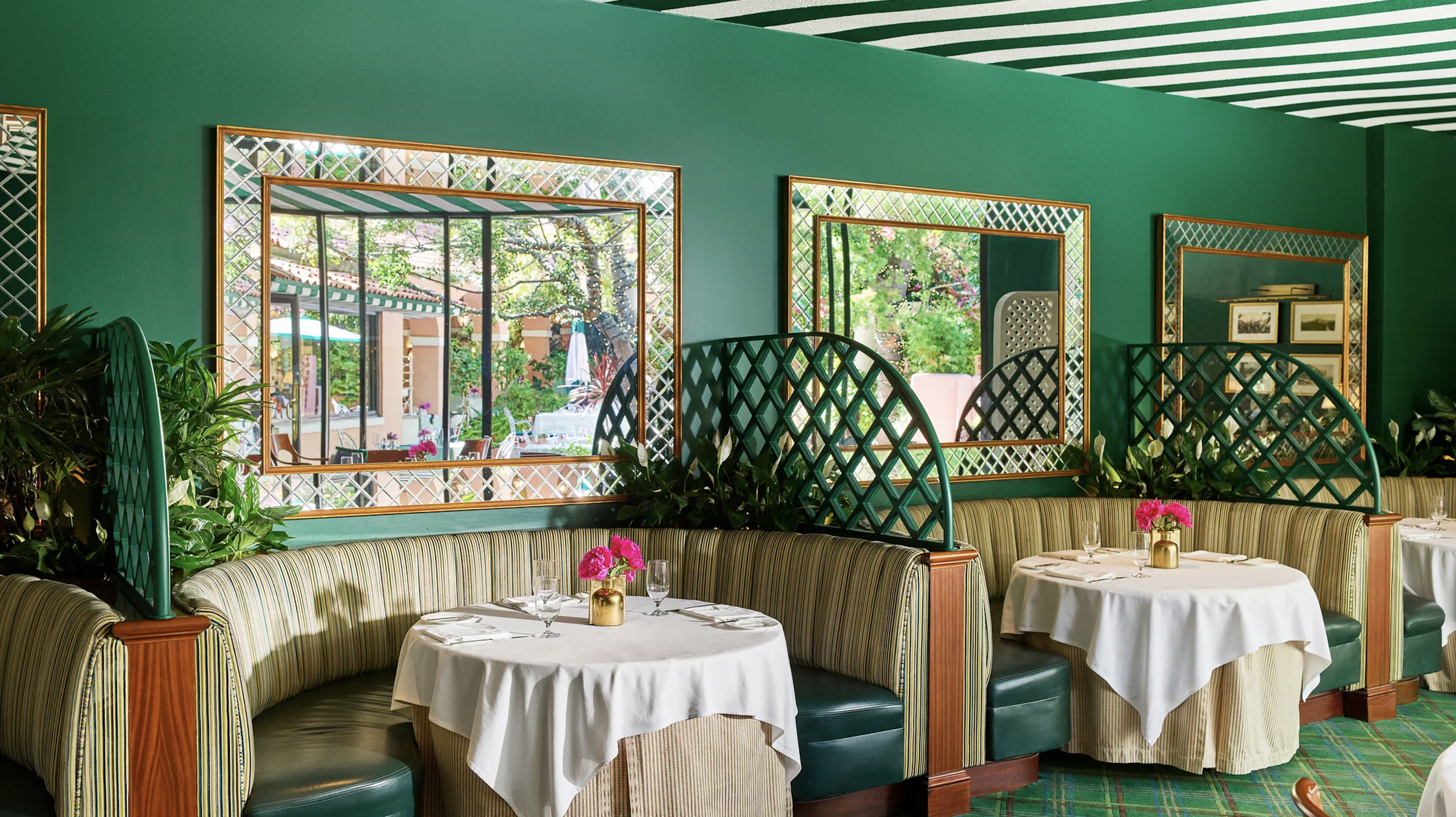
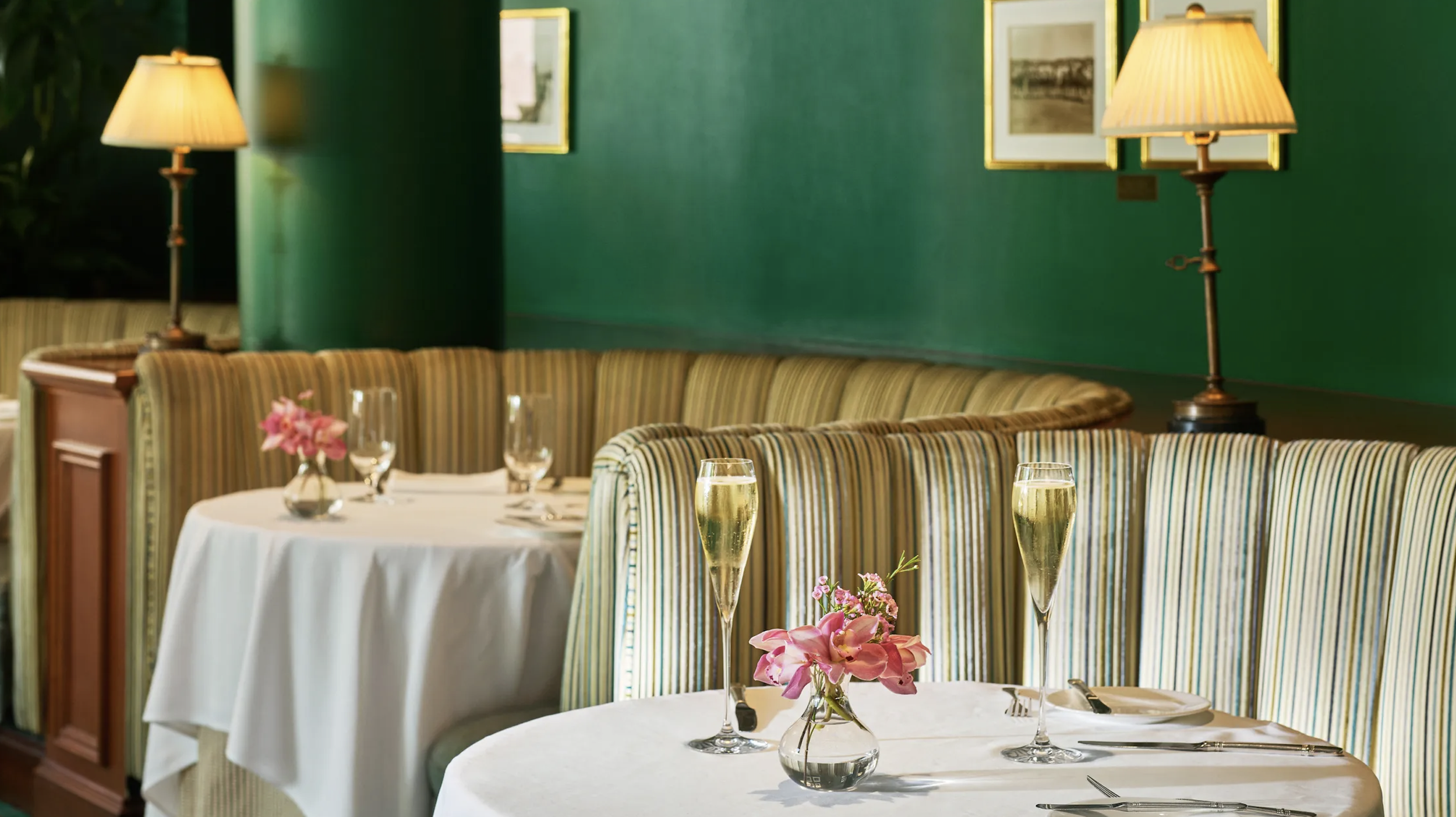
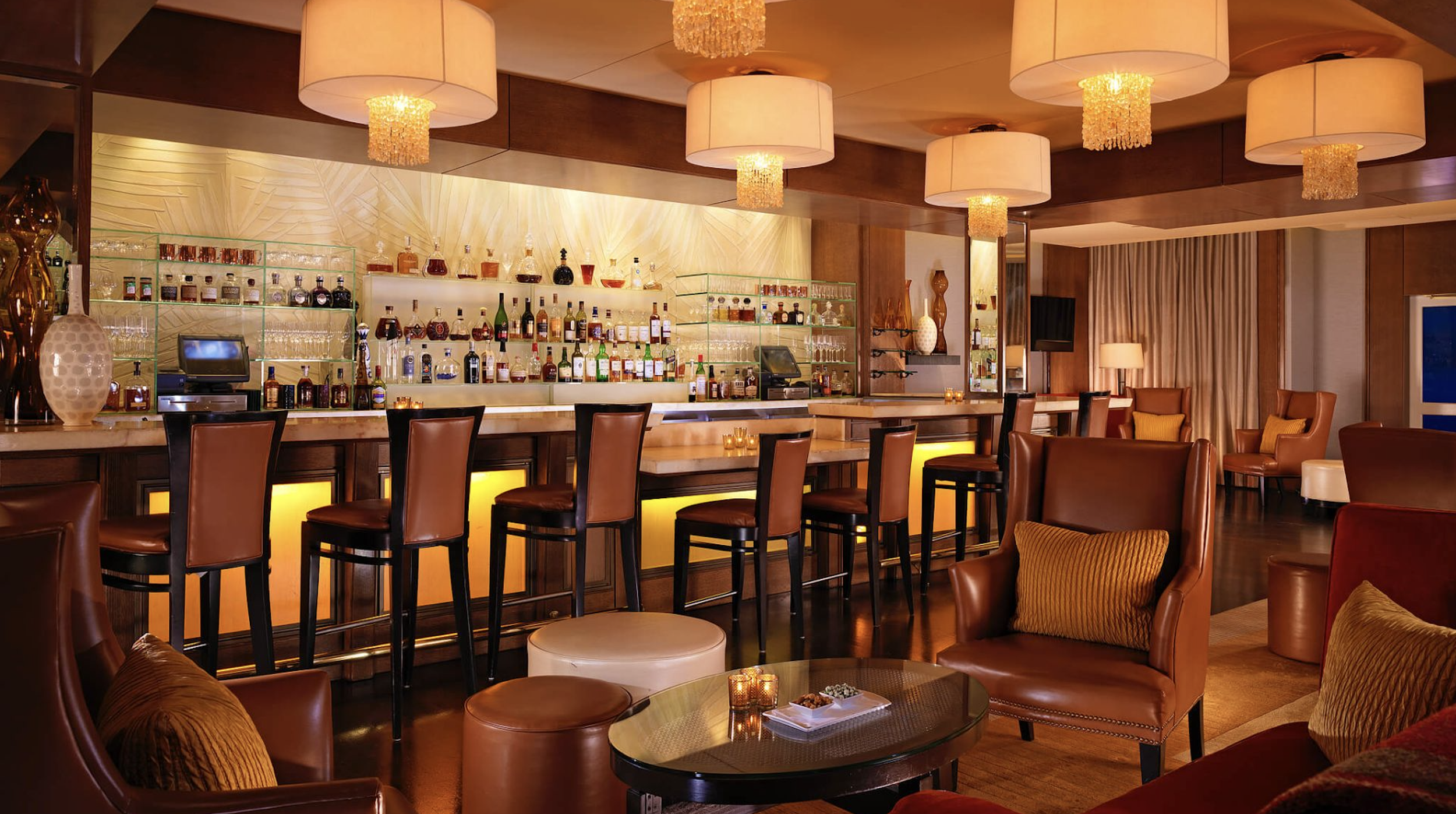
The Polo Lounge is a central part of the hotel’s identity. Its reputation as a meeting place for Hollywood has developed over generations, and it remains somewhere that people deliberately make time for, whether they are staying upstairs or coming in for a meal.
Breakfast, lunch, and dinner offer different ways to experience it. A morning reservation can fit neatly before a day of appointments, while lunch allows more time to settle into the room’s social atmosphere. Live piano accompanies lunch and dinner, adding to a setting that already has considerable personality.
The McCarthy Salad is one of its enduring signatures, and part of the pleasure is ordering something that belongs so closely to the restaurant’s history. For an evening visit, I would make a reservation in advance and treat it as part of the night’s plans. The Polo Lounge rewards a little time and attention, even when the rest of the trip is busy.
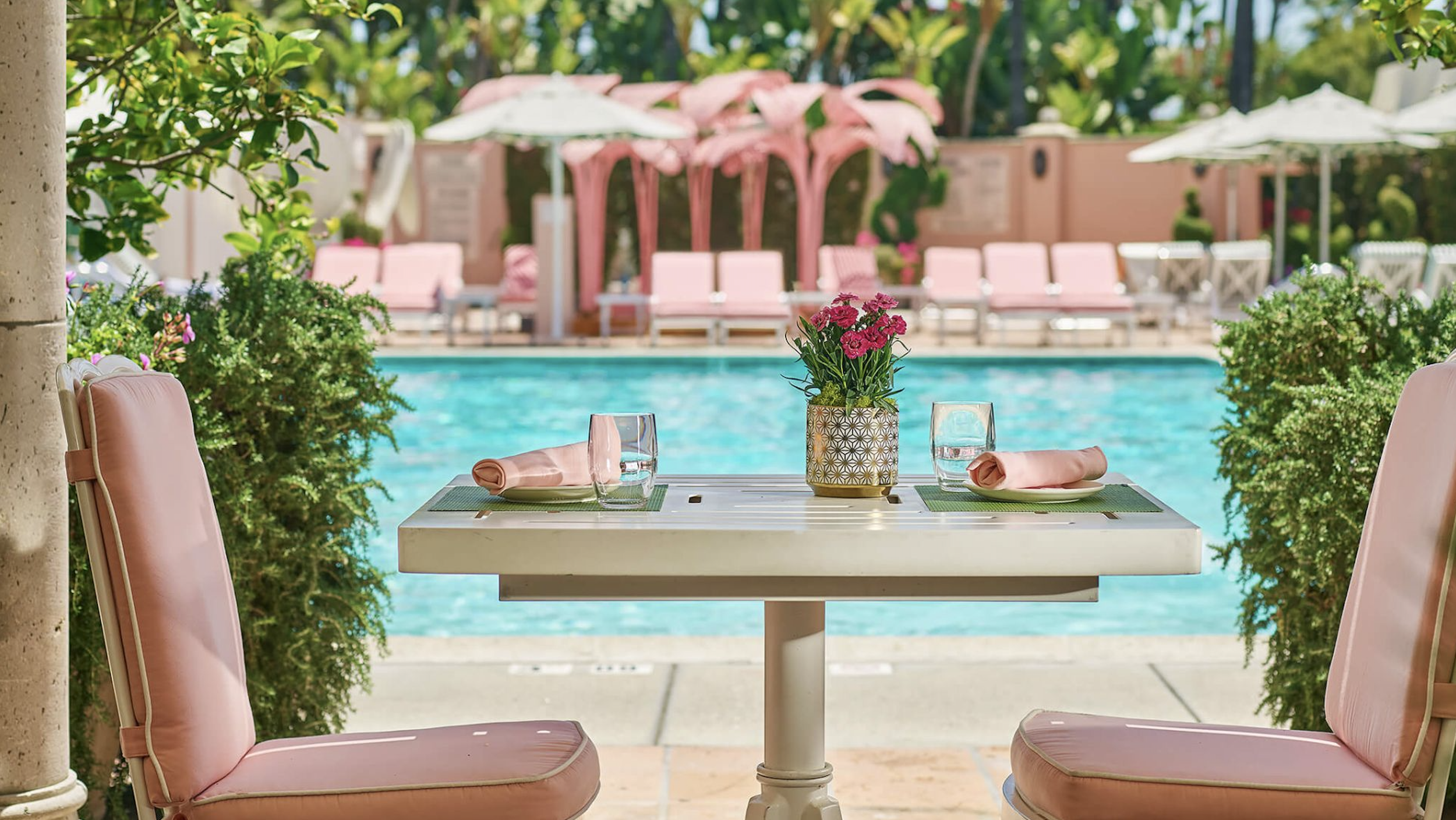
Counter Breakfasts and Poolside Lunches
The Fountain Coffee Room provides a different kind of hotel ritual. Open since 1949, it retains the appeal of a classic American counter, with stools, familiar surroundings, and a menu that includes breakfast dishes, sandwiches, burgers, homemade ice cream, and milkshakes.
It is an inviting option for a morning when you want something informal. For families, the straightforward food and counter setting can also be a welcome change from a more elaborate restaurant meal. A visit here deserves a place in the stay simply for the pleasure of experiencing another side of the hotel.
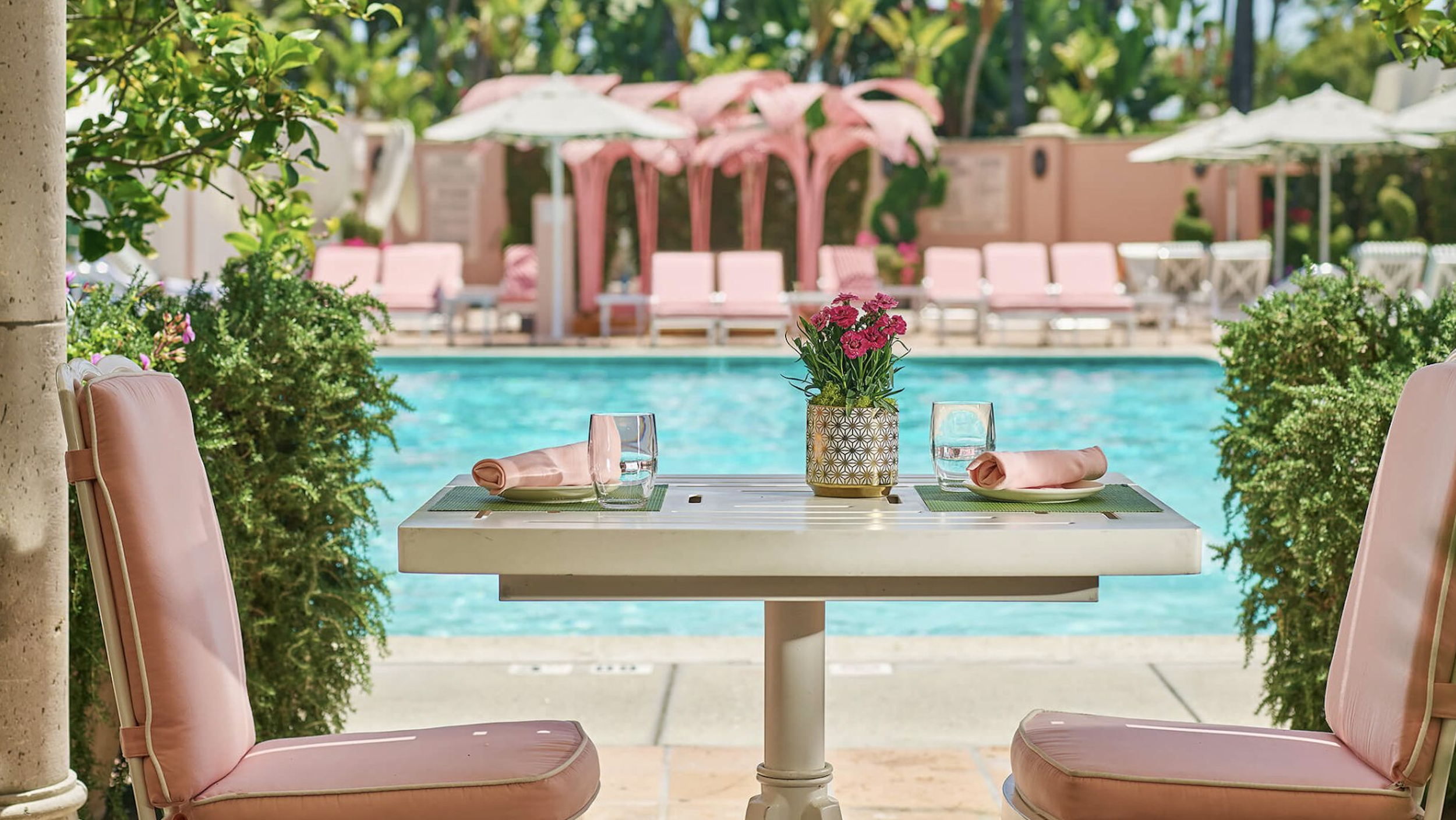
The Cabana Cafe moves dining outdoors, with breakfast and daytime meals overlooking the pool. It fits naturally into an afternoon spent at the property, allowing lunch to become part of the day’s relaxation.
The hotel has also announced a significant expansion of its dining and entertainment offering for fall 2026, with Ken Fulk as creative director. Planned spaces include a supper club, cocktail bar, lounge, screening room, and private dining room. These are announced additions, so opening dates and availability should be confirmed when planning a stay.
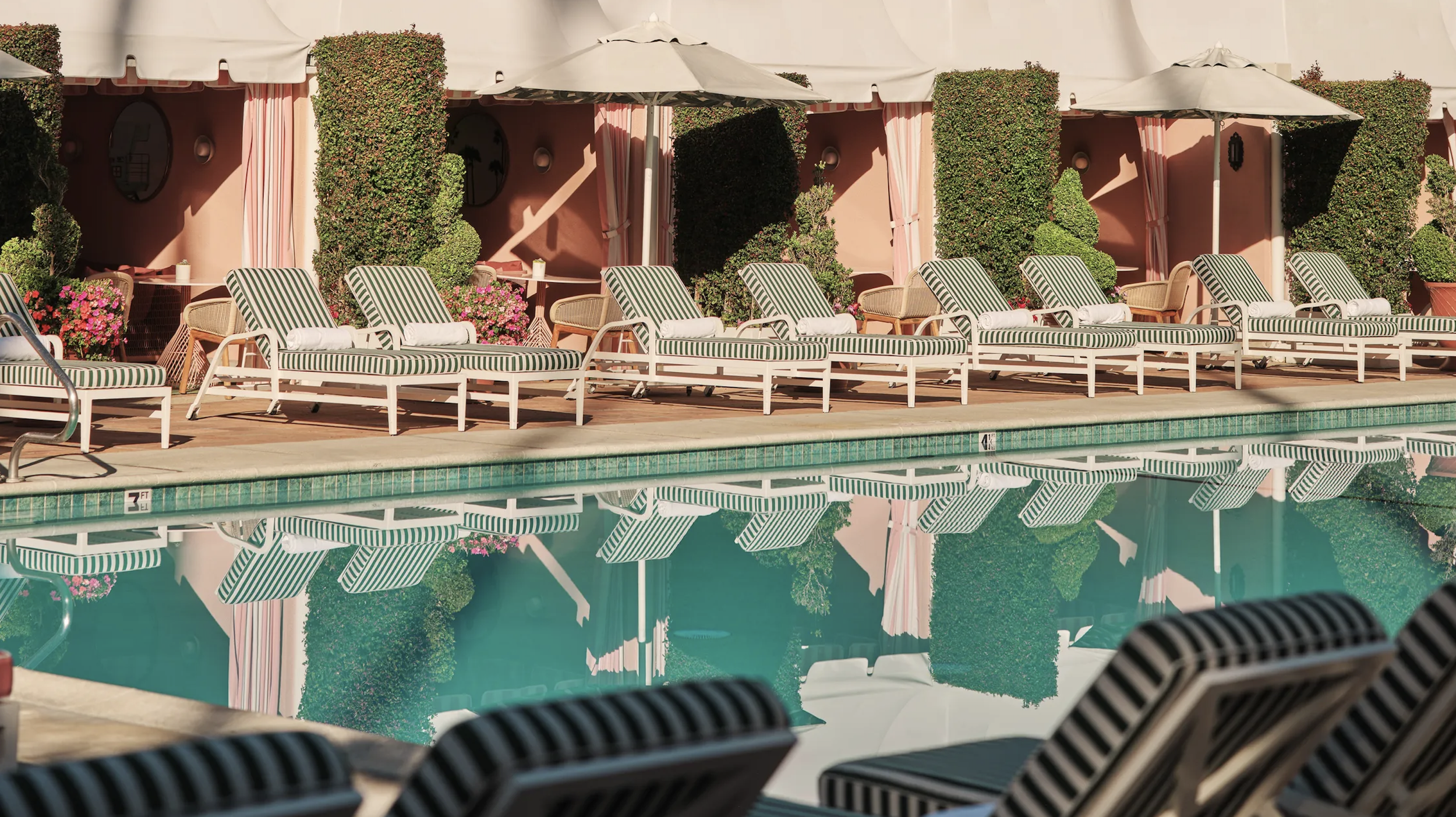
An Afternoon by the Pool
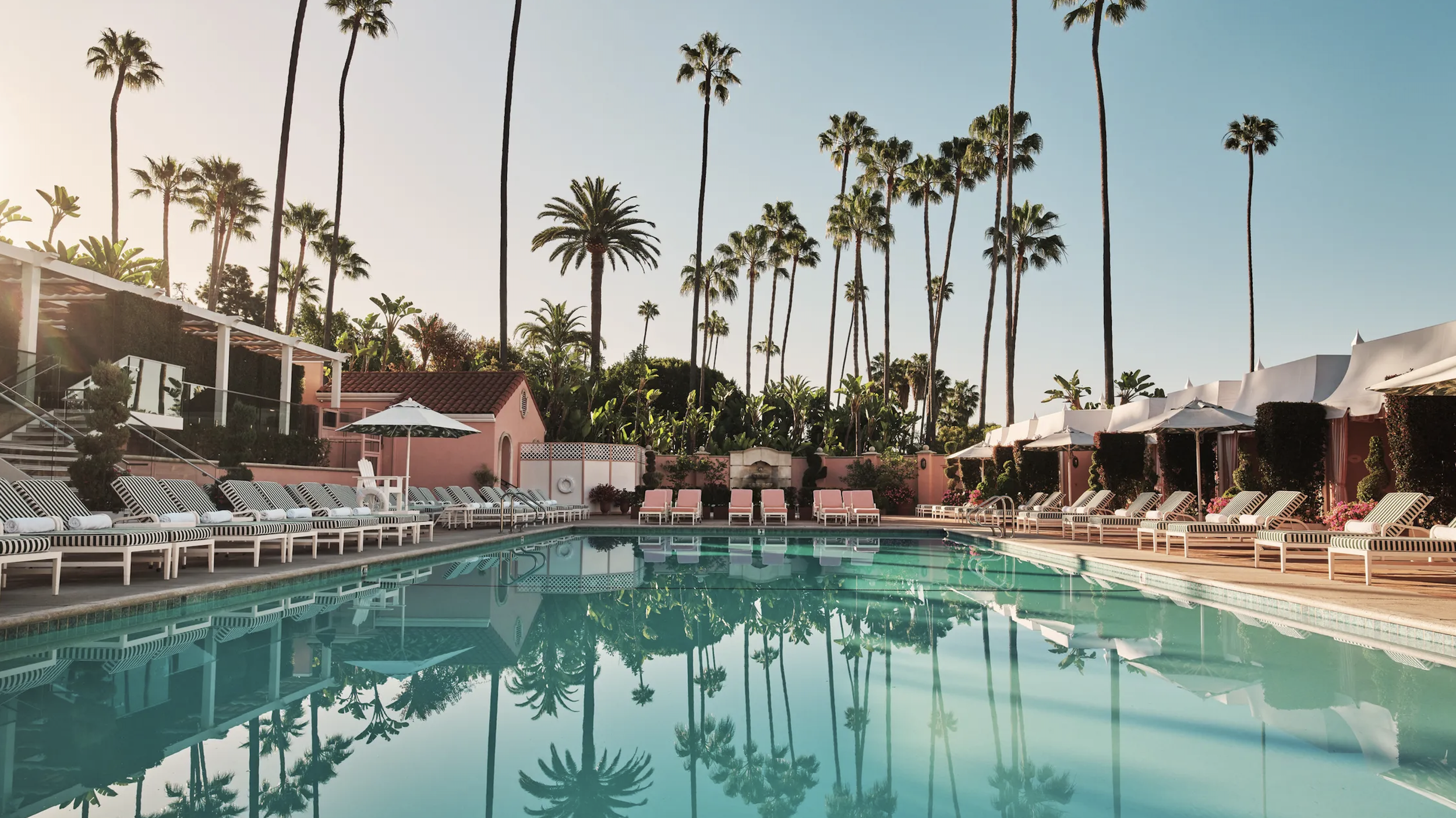
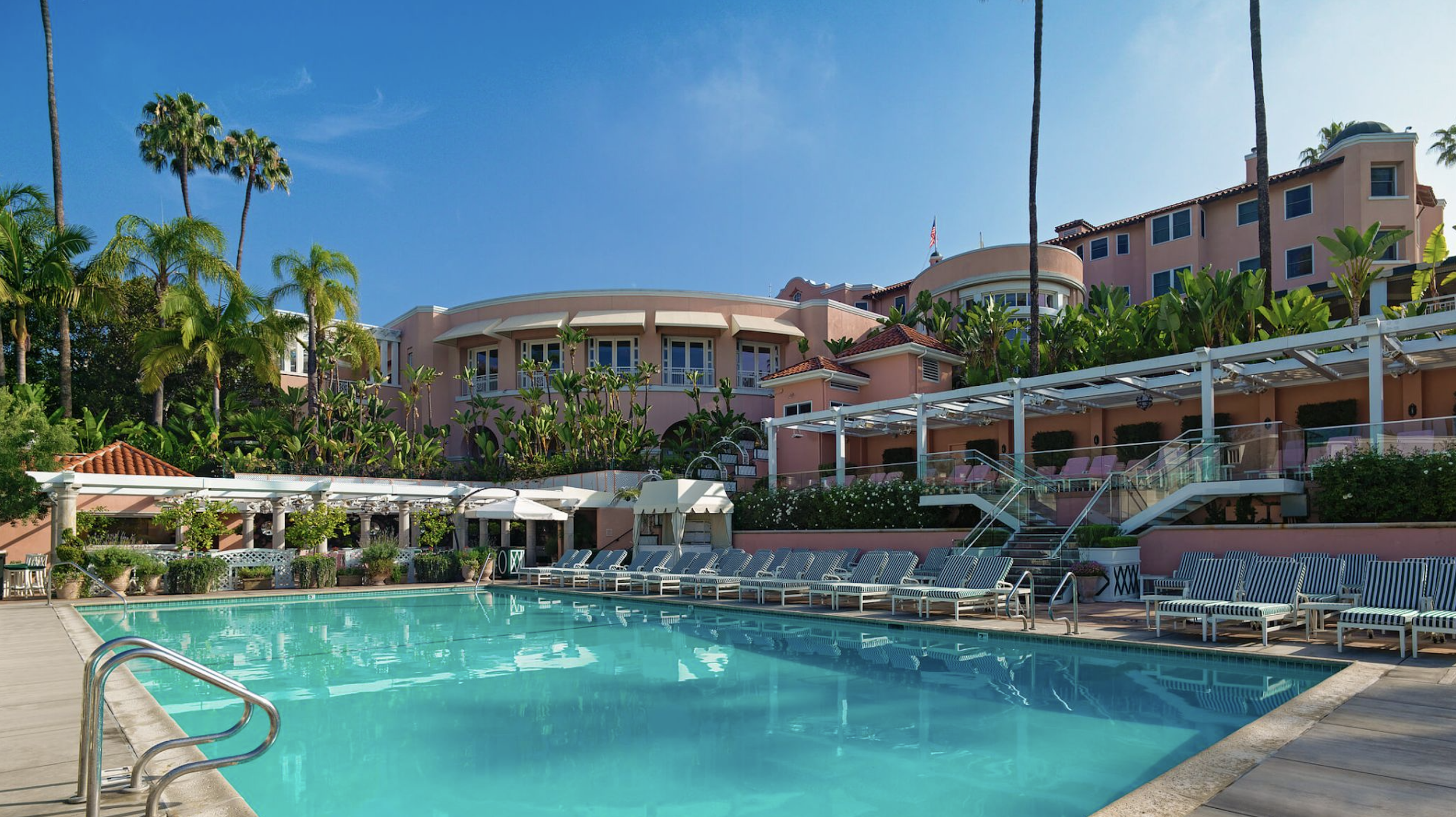
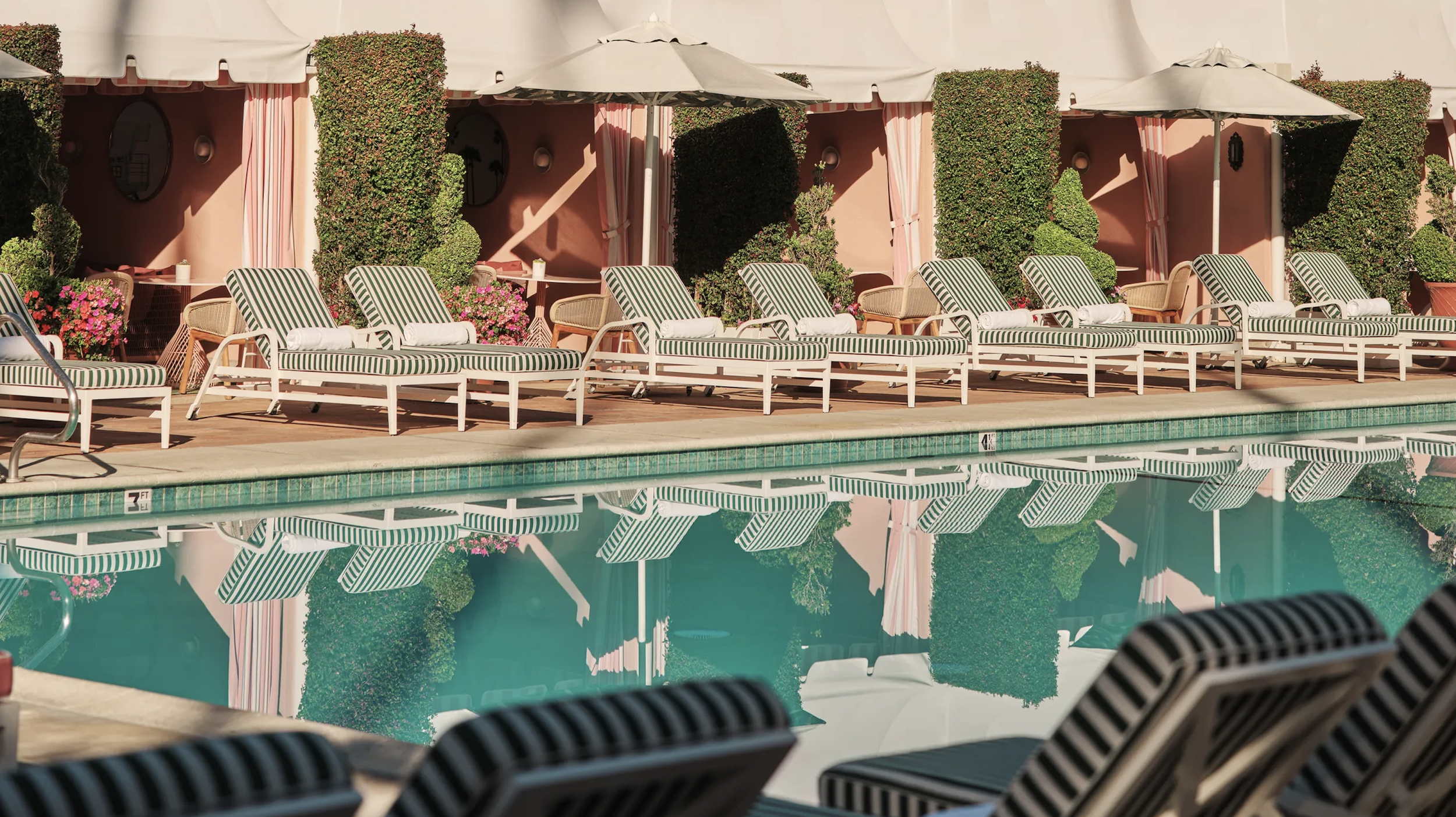
The pool has been part of the hotel since 1938, when it opened as the Sand and Pool Club. Its role as a place to spend an entire afternoon has endured, with palms and the surrounding hotel setting giving it a character distinctly tied to Los Angeles.
Pool access is reserved for hotel guests, which makes time here one of the particular pleasures of staying overnight. It is worth protecting a few hours in the itinerary rather than trying to fit in a quick swim between other plans.
A relaxed lunch, a book, and a return to the water can provide a useful balance to a city visit. Los Angeles often involves more travel time than expected, and an afternoon at the hotel lets everyone enjoy a shared base without another drive.
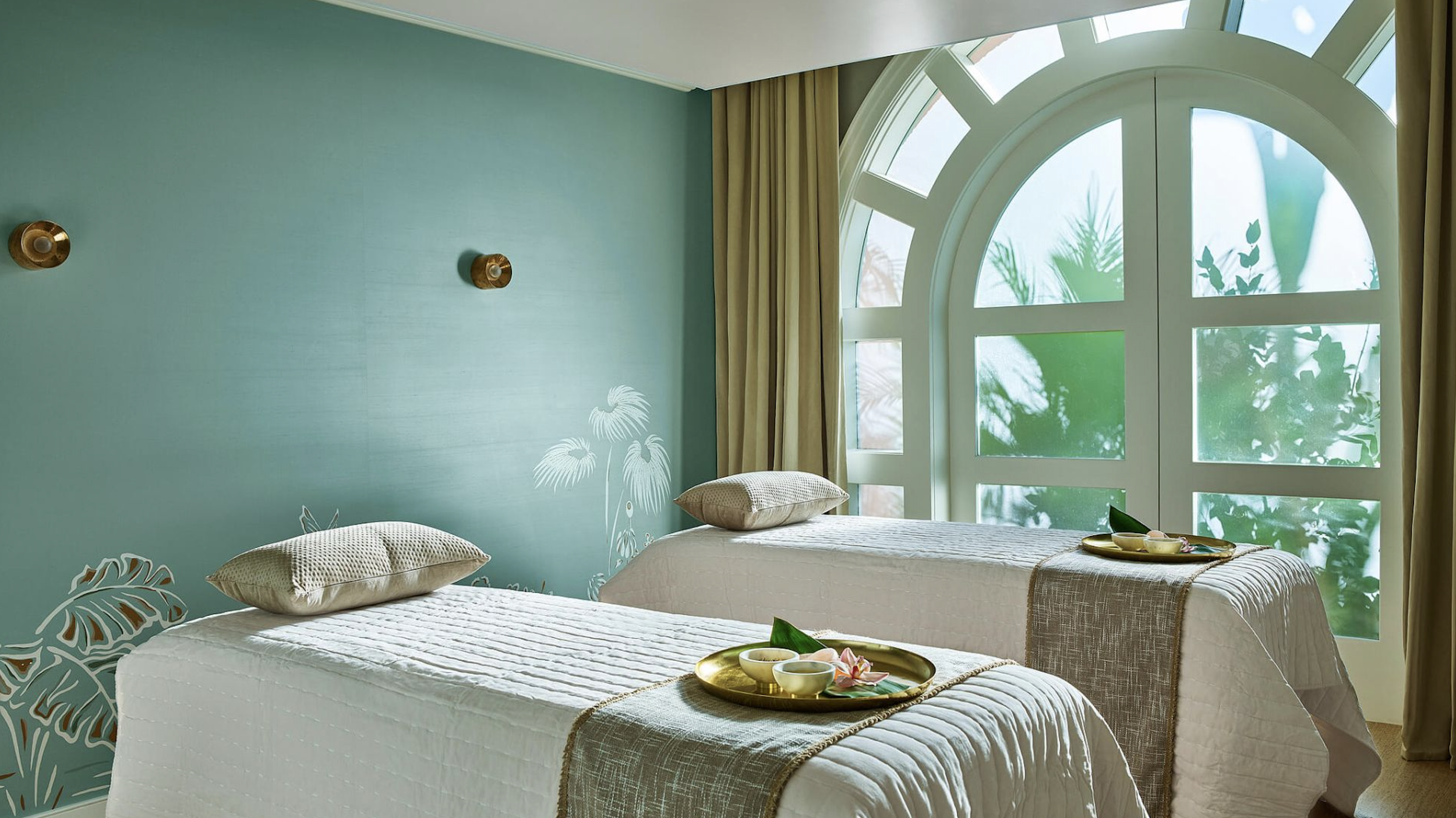
Spa Time and Familiar Routines
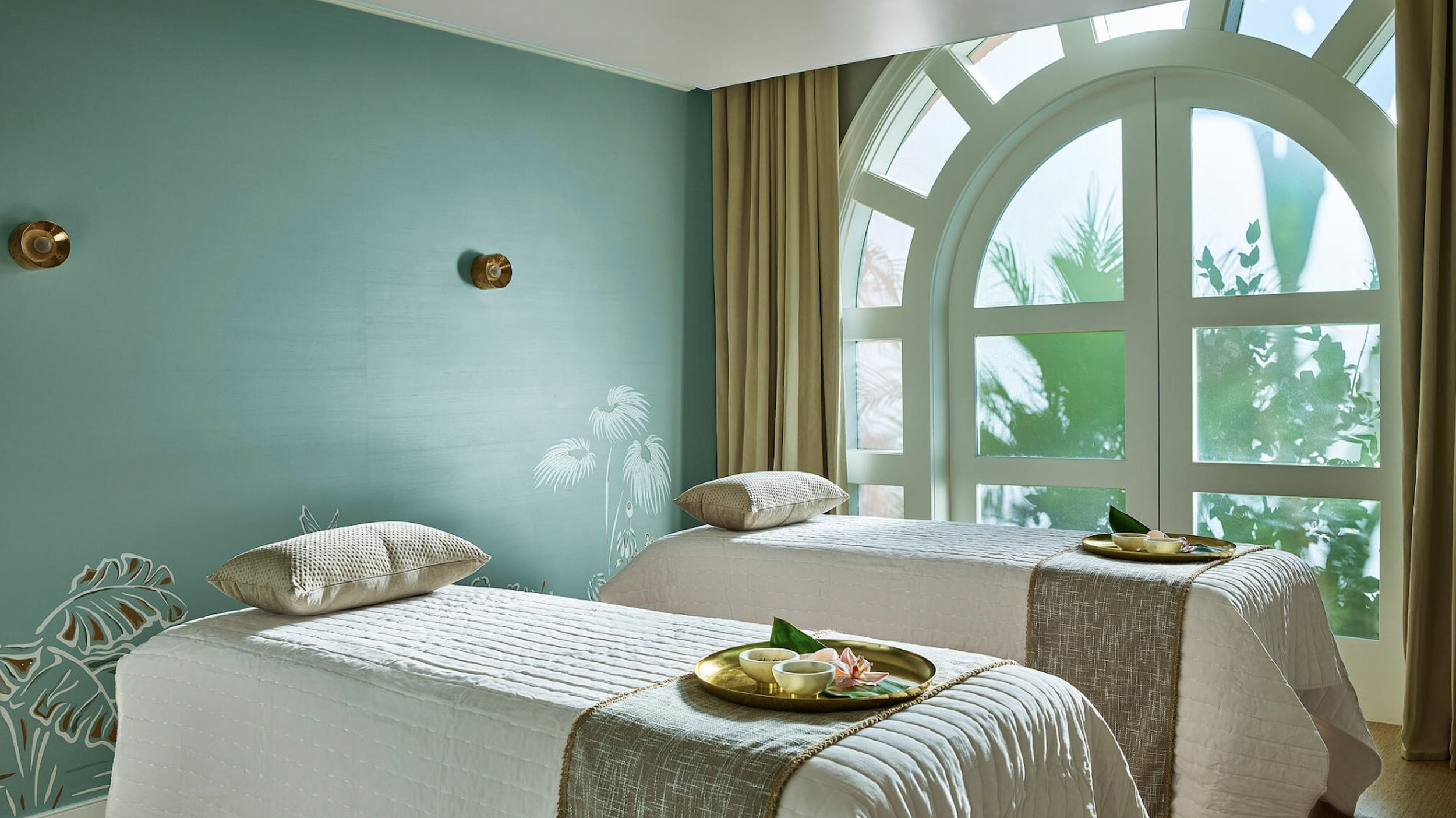
The Beverly Hills Hotel Spa offers four treatment rooms and a duet suite, alongside a nail suite. Its scale makes it well suited to a treatment during a city stay, whether that means a massage after travel or an appointment before an evening event.
The current offering includes Augustinus Bader facials, introduced in 2026, alongside the wider selection of body and facial treatments. The AB Glow Facial and The Method by Augustinus Bader provide two options for travelers who already know the skincare brand or want to experience it in a treatment setting.
A 24-hour gym allows exercise to fit around early starts, late returns, or a changing schedule. Together, these facilities make it easier to maintain familiar routines while leaving most of the day free for the city or the pool.
Making Time for Los Angeles
Rodeo Drive is approximately five minutes away by car, making shopping an easy part of a stay. The location also works well for a trip organized around Beverly Hills and the surrounding neighborhoods, especially when meals, appointments, and social plans are arranged with geography in mind.
I would avoid filling each day with stops scattered across Los Angeles. Choose one area to explore properly, allow time for lunch, and leave room for the journey back. A driver can be especially useful when several reservations need to fit together, while a more open itinerary allows you to adjust as the day develops.
The hotel itself deserves some of that time. A stay here becomes more satisfying when the Polo Lounge, gardens, and pool are part of the trip rather than places passed on the way to somewhere else.
Getting There
By Air and Private Transfer: Los Angeles International Airport (LAX) is the principal arrival point for most international travelers. The hotel quotes approximately 30–40 minutes by car, although traffic can extend that considerably. For planning purposes, allow around 45–90 minutes during busier periods and confirm the timing for your flight.
By Car: Valet parking is available at the hotel. Rodeo Drive is approximately five minutes away, while coastal outings generally require a longer drive; the hotel estimates around 30–45 minutes to some nearby beaches in favorable conditions. Allow additional time during peak traffic.
Three or four nights provide space for a city visit that includes time at the property. A longer stay becomes particularly appealing in a suite or bungalow, where the extra living space allows a more settled routine.
Your Own Chapter at the Pink Palace
The Beverly Hills Hotel carries a considerable reputation, but the most rewarding reason to stay is the experience you can have there yourself. Its combination of gardens, familiar restaurants, and varied accommodations allows a visit to feel social, private, or a little of both.
The history gives the place depth; the everyday rituals make it enjoyable. Breakfast at the counter, a long lunch, a walk through the gardens, and an afternoon without another appointment can become the parts of Los Angeles you remember most clearly. Give the hotel enough time, and its appeal extends well beyond the arrival photograph.