Chiang Rai, Thailand | Anantara Golden Triangle Elephant Camp & Resort
Three Countries Beyond the Balcony
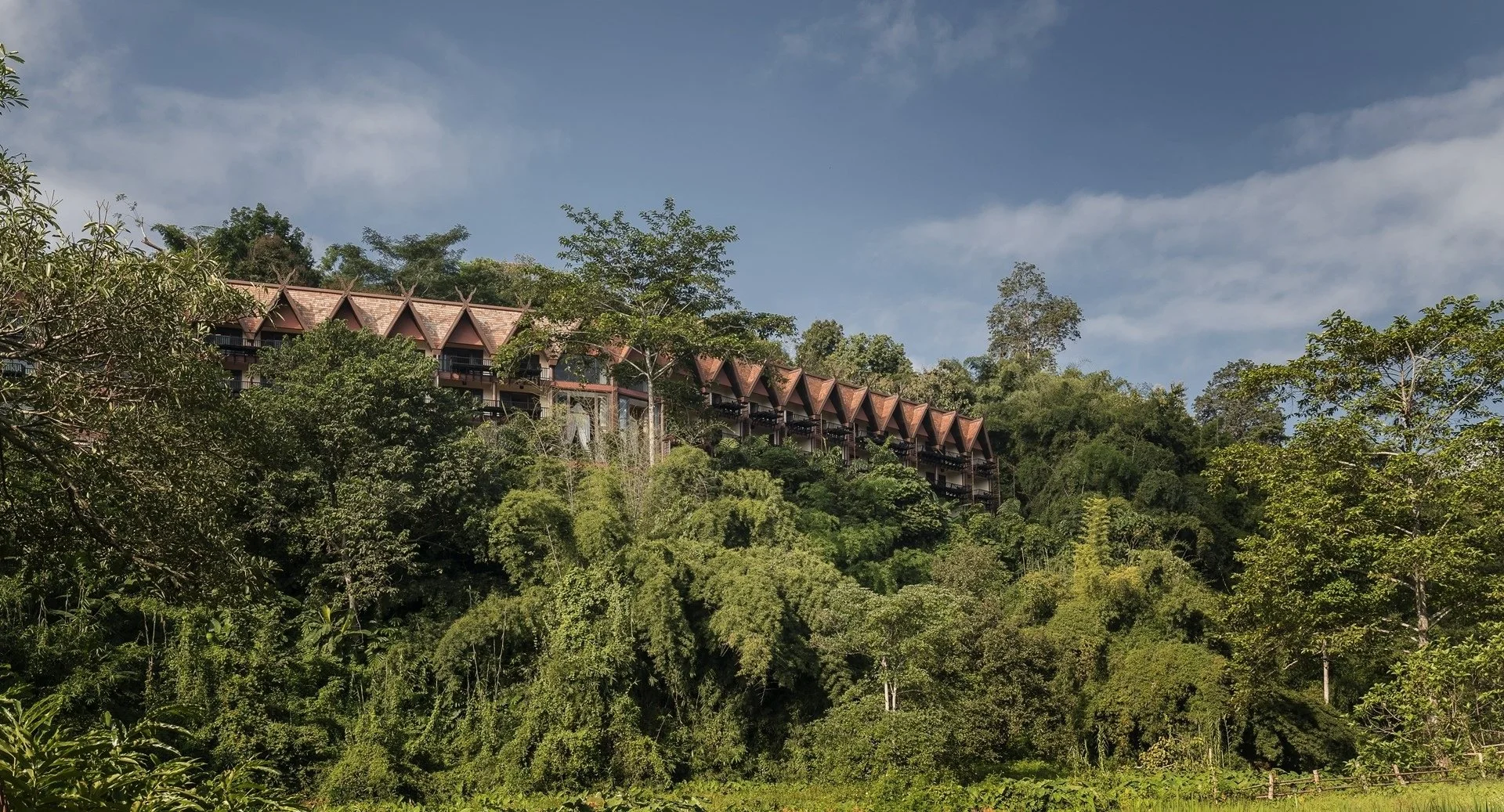
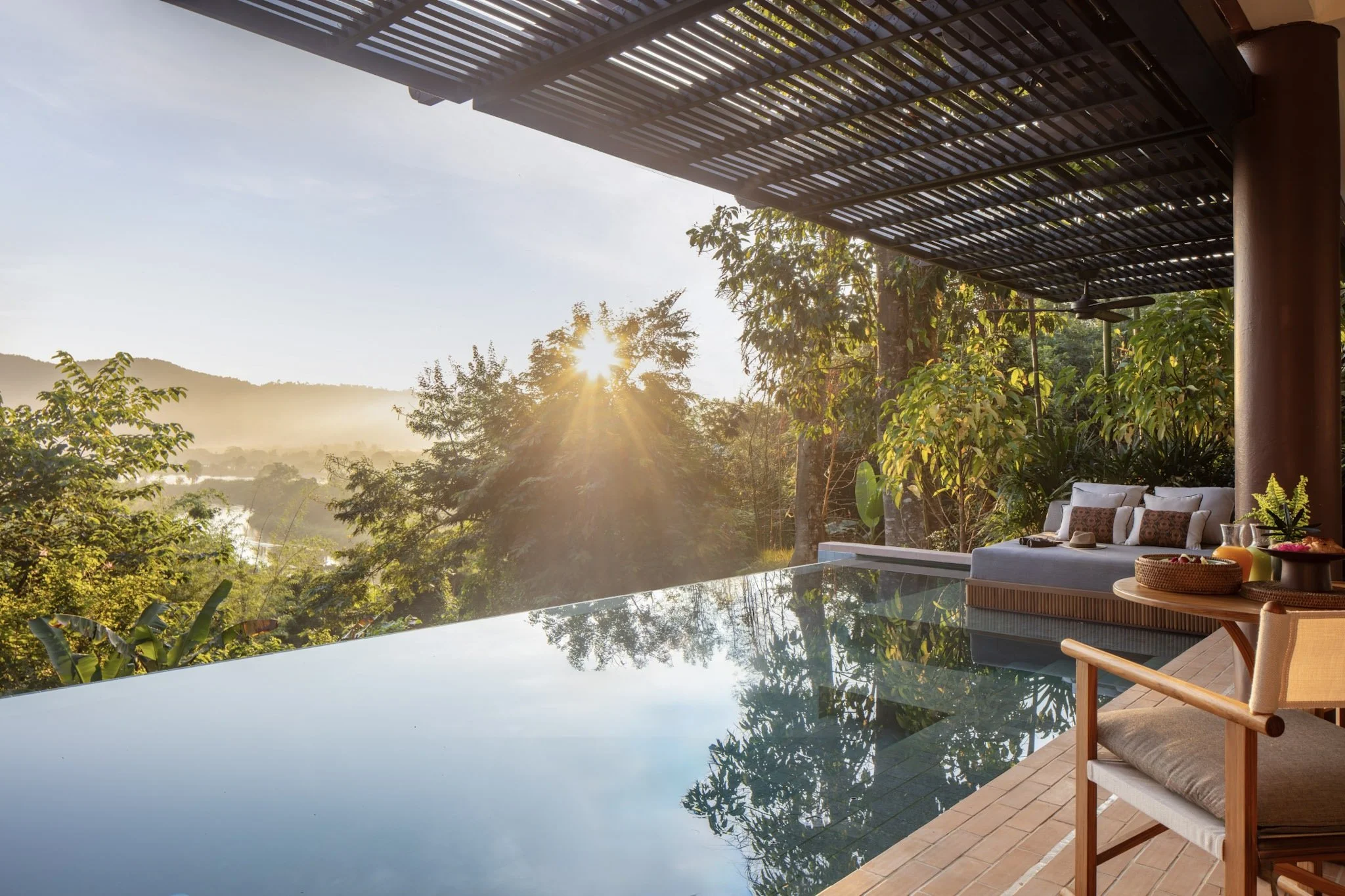
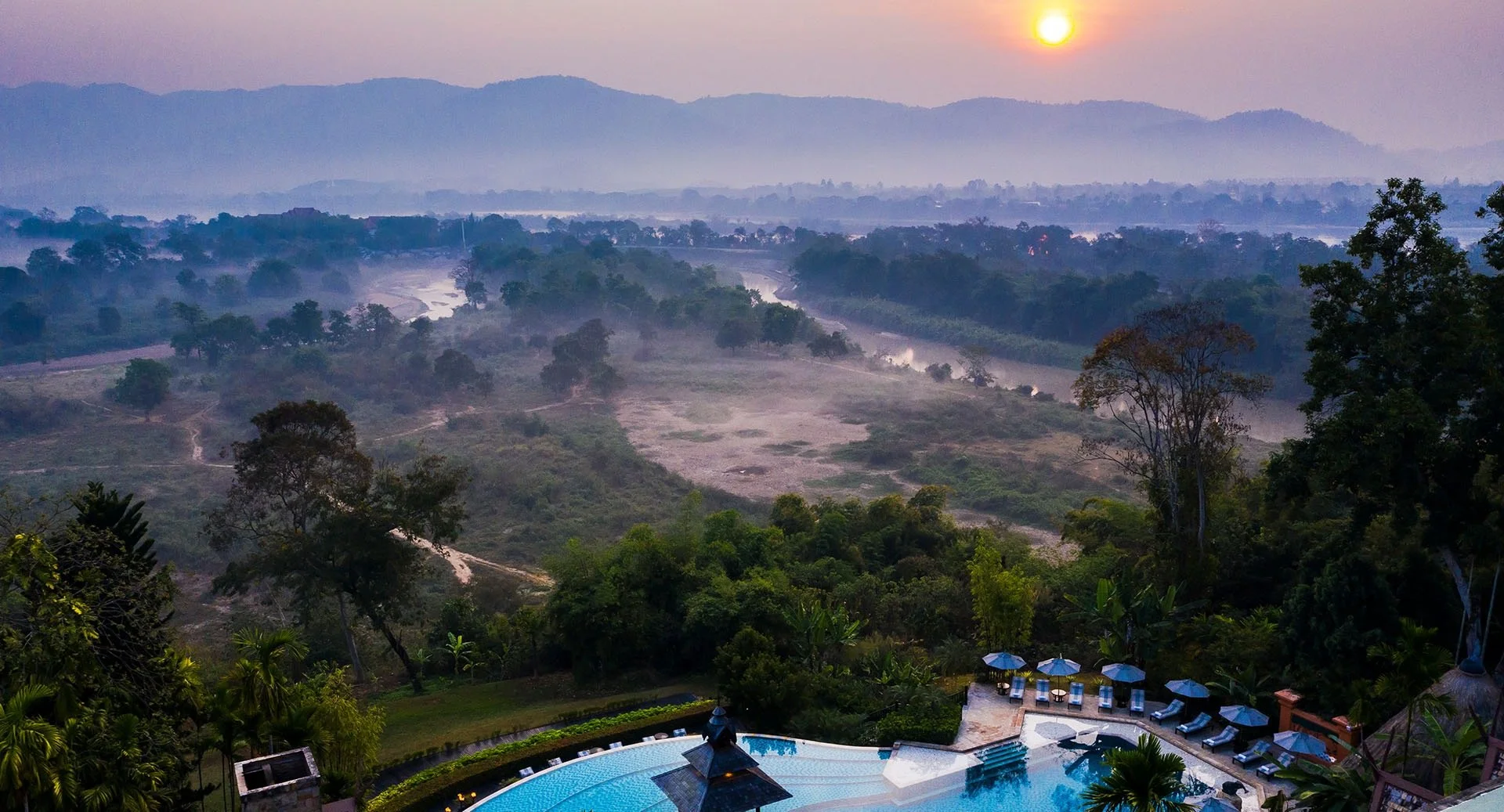
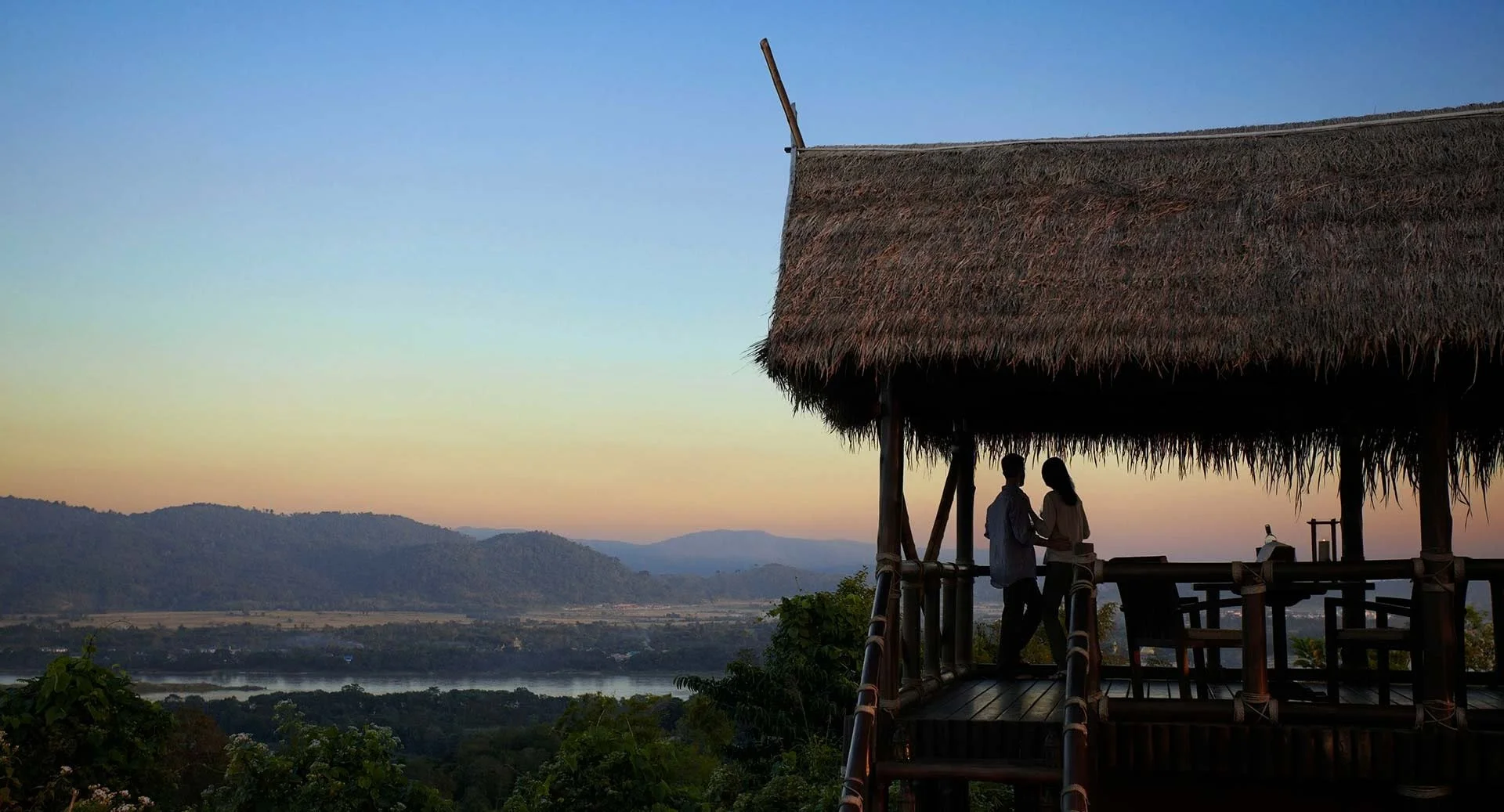
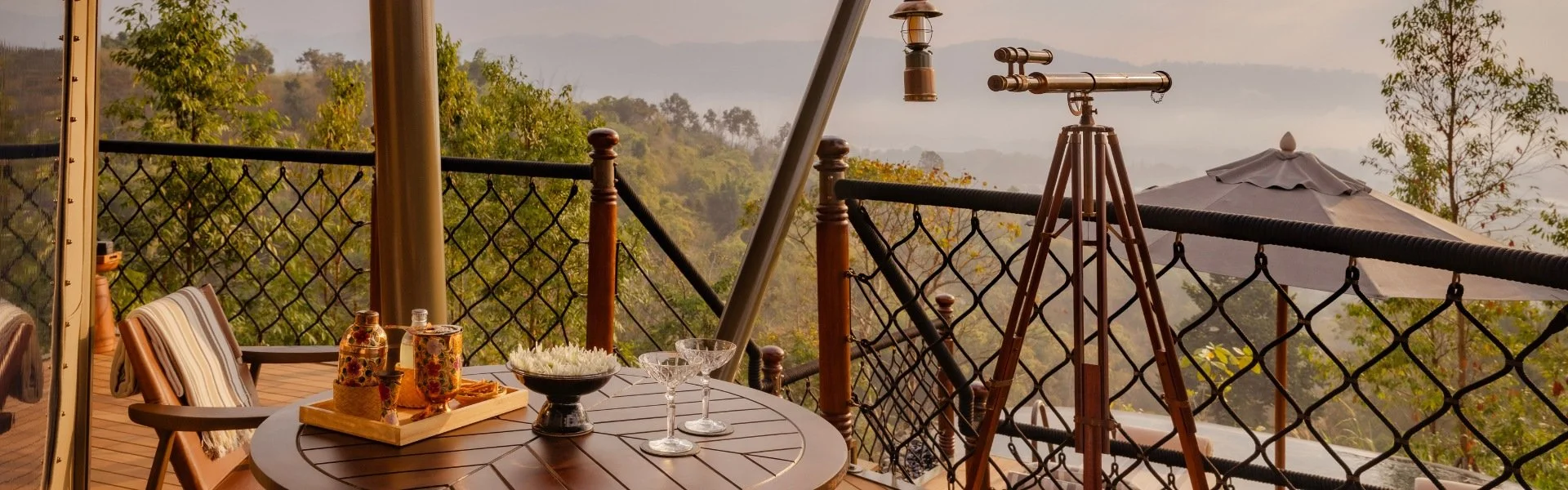
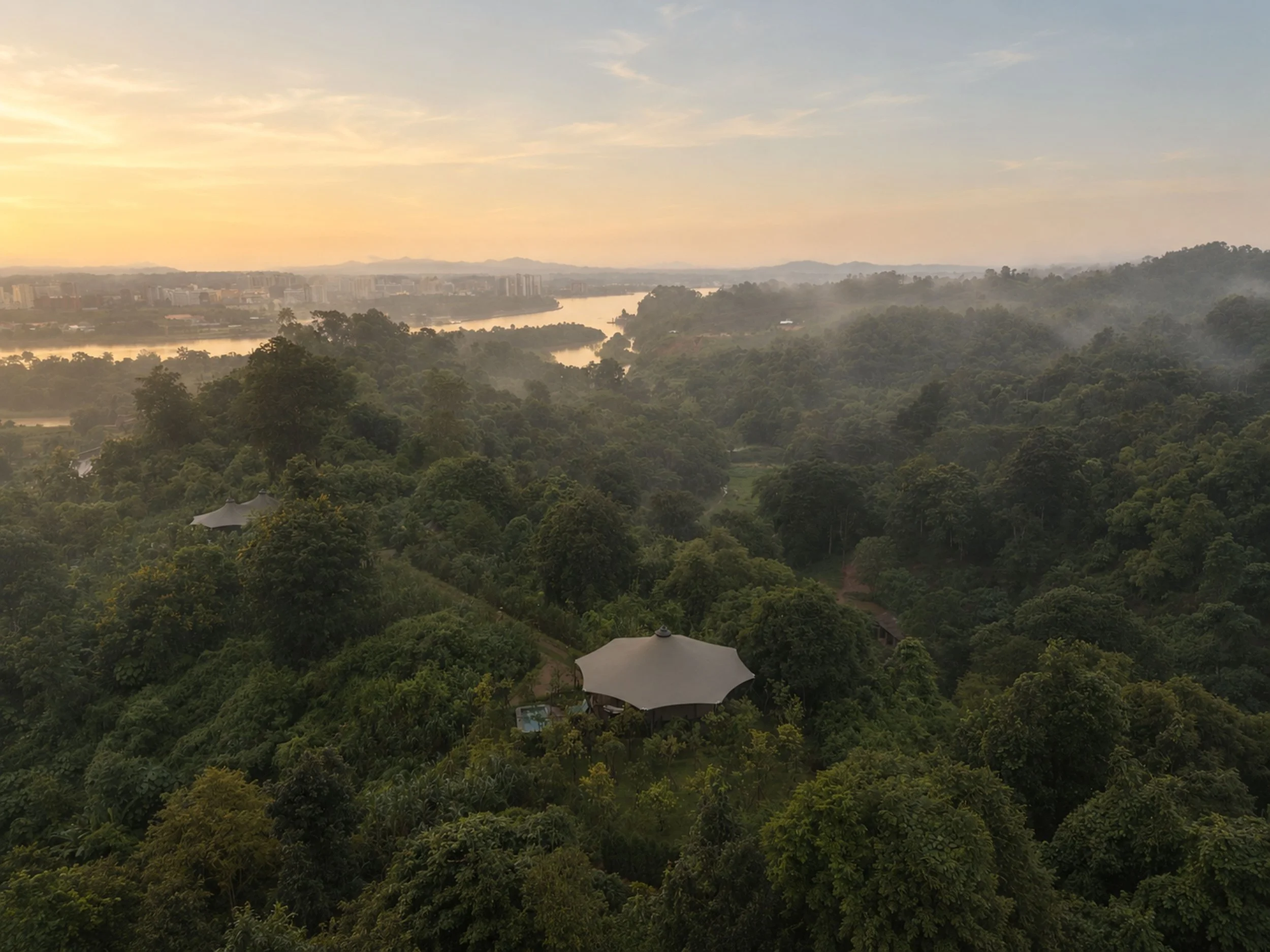
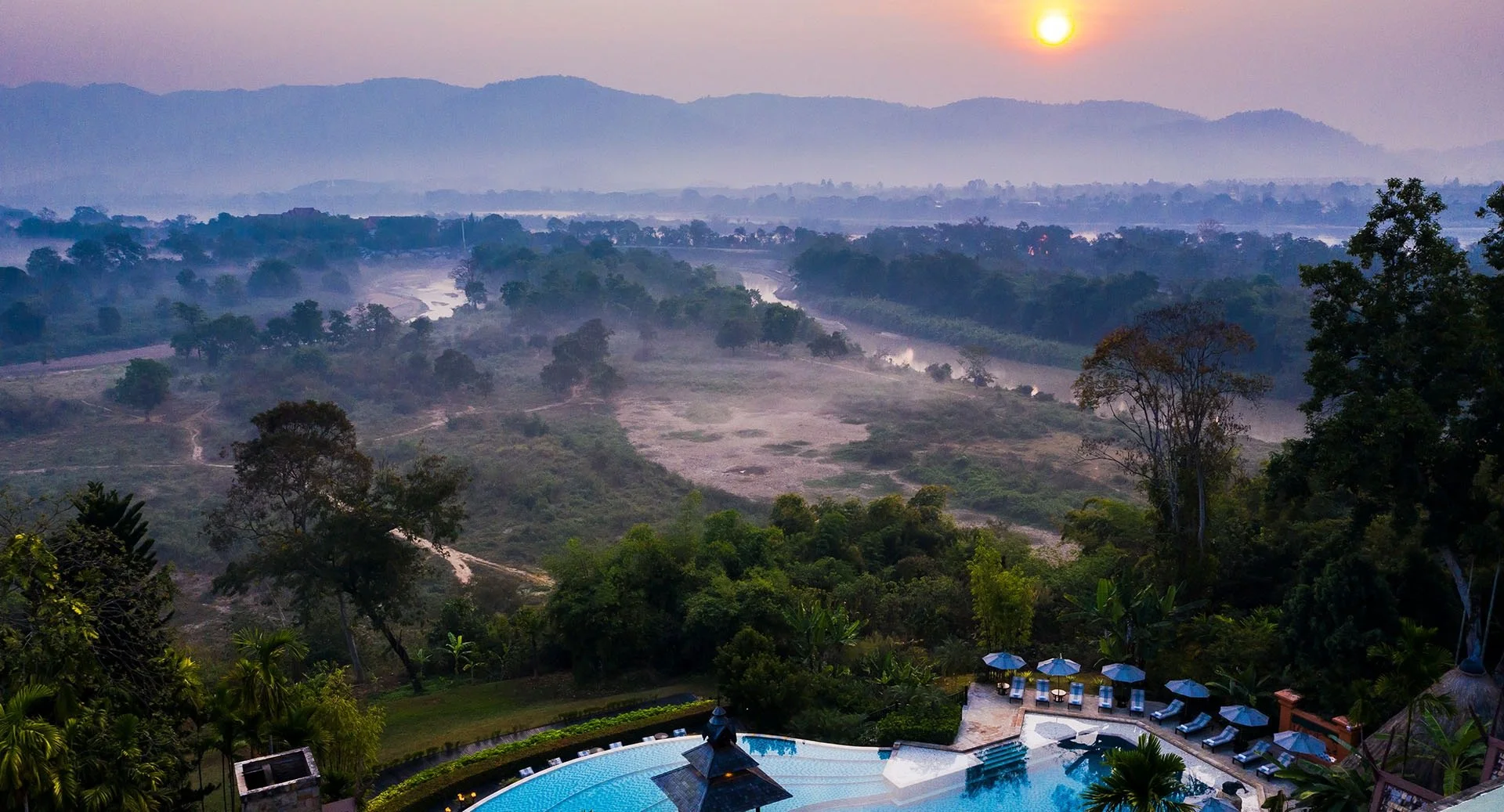
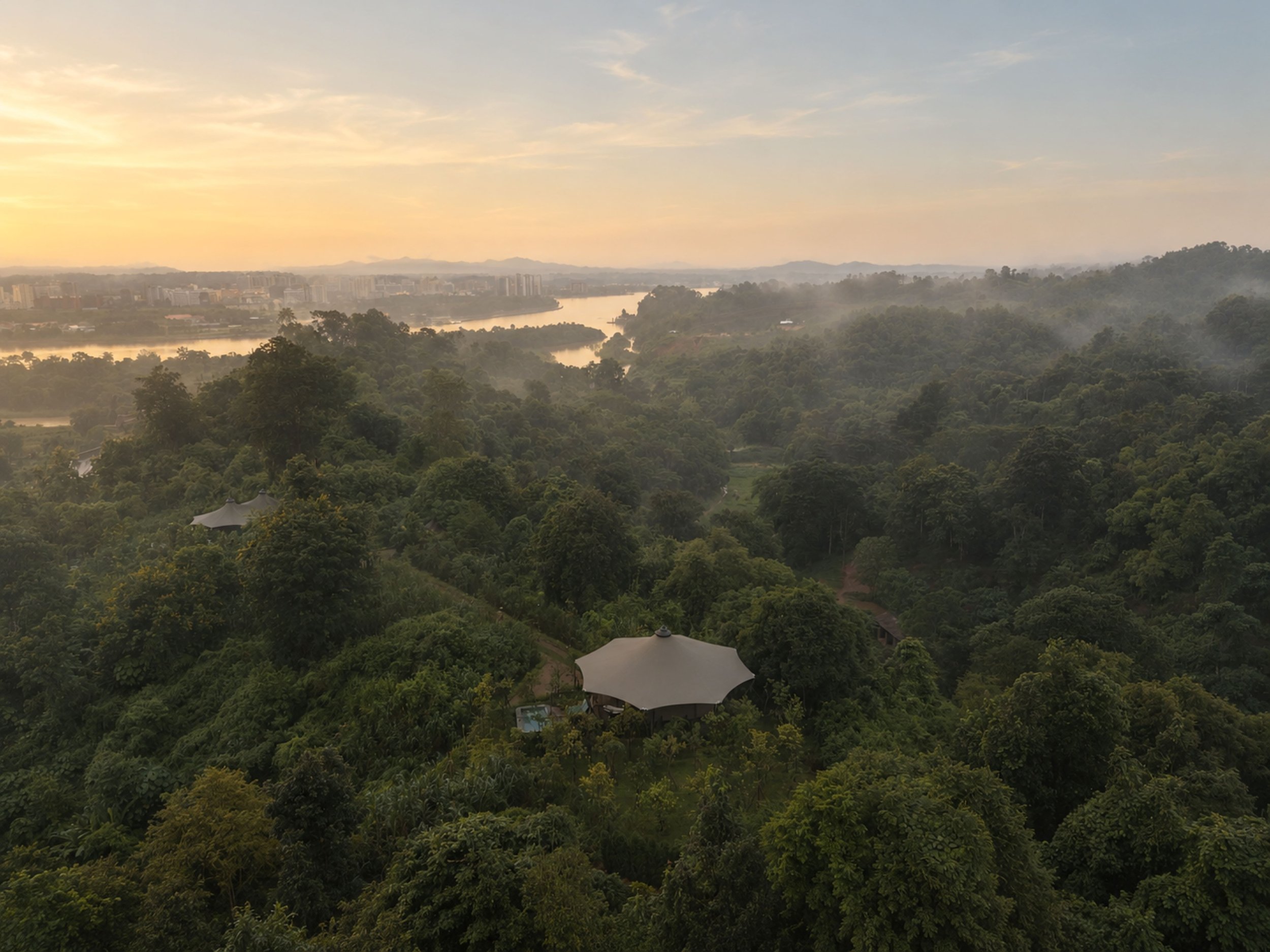
Morning at Anantara Golden Triangle Elephant Camp & Resort begins with a landscape that takes time to understand. The hills beyond the balcony belong to different countries; below, the Ruak and Mekong rivers help define the meeting point of Thailand, Myanmar and Laos. Bamboo forest, cultivated ground and distant ridgelines make the view more layered than a simple sweep of green.
Set in Chiang Saen in Thailand’s northernmost province, the resort combines a substantial country retreat with an elephant camp, regional cooking and excursions by road and river. Its appeal is the relationship between these experiences. A morning observing elephants can lead into an afternoon learning about northern Thai ingredients, followed by dinner that draws on all three neighboring countries.
This is a rewarding addition to a Thailand itinerary for travelers who want time outdoors and a closer understanding of the north. Allowing several nights gives the estate room to become more than a brief stop between Chiang Mai and Bangkok.
A Camp Built Around Elephants and Their Caretakers
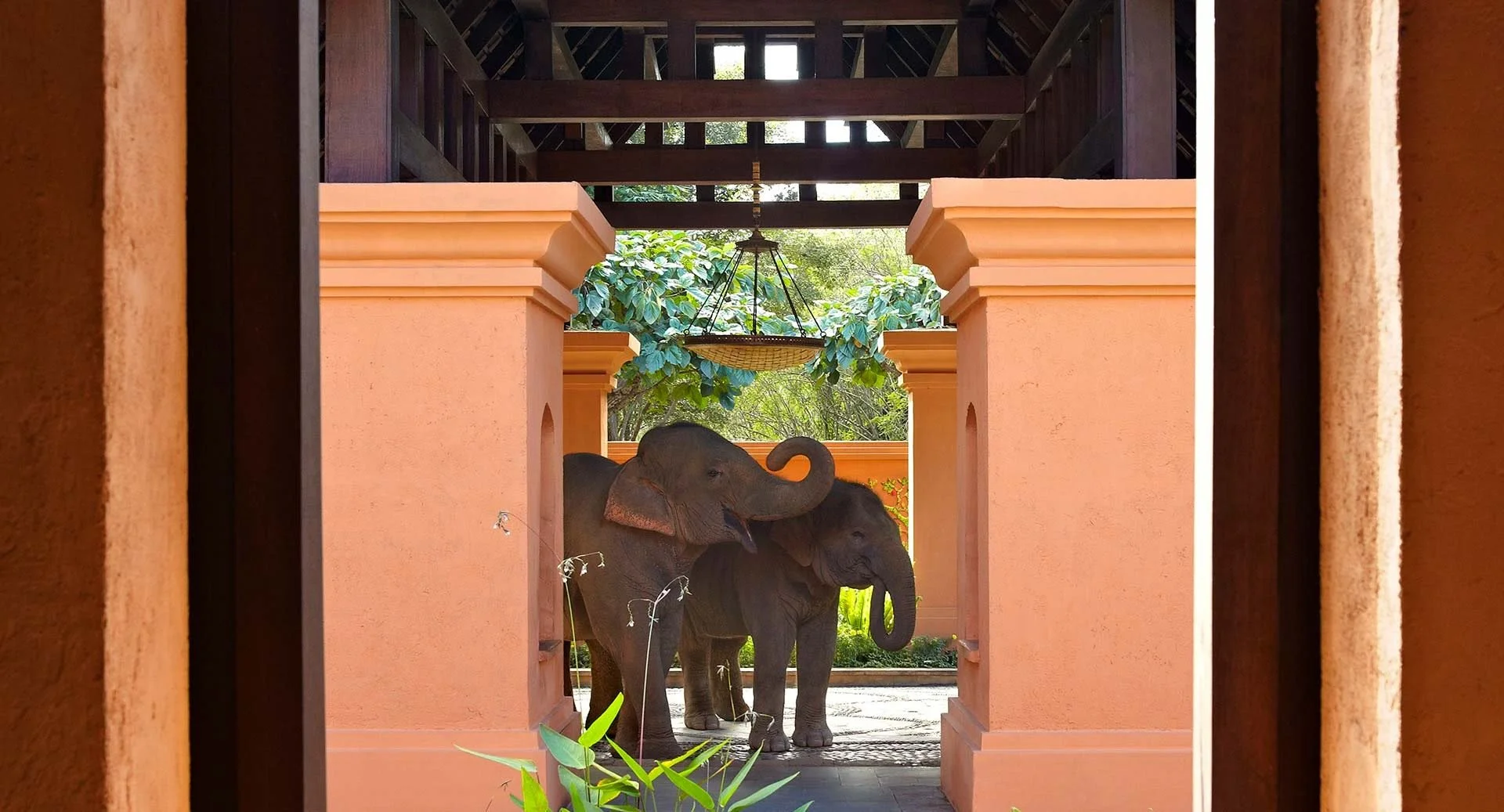
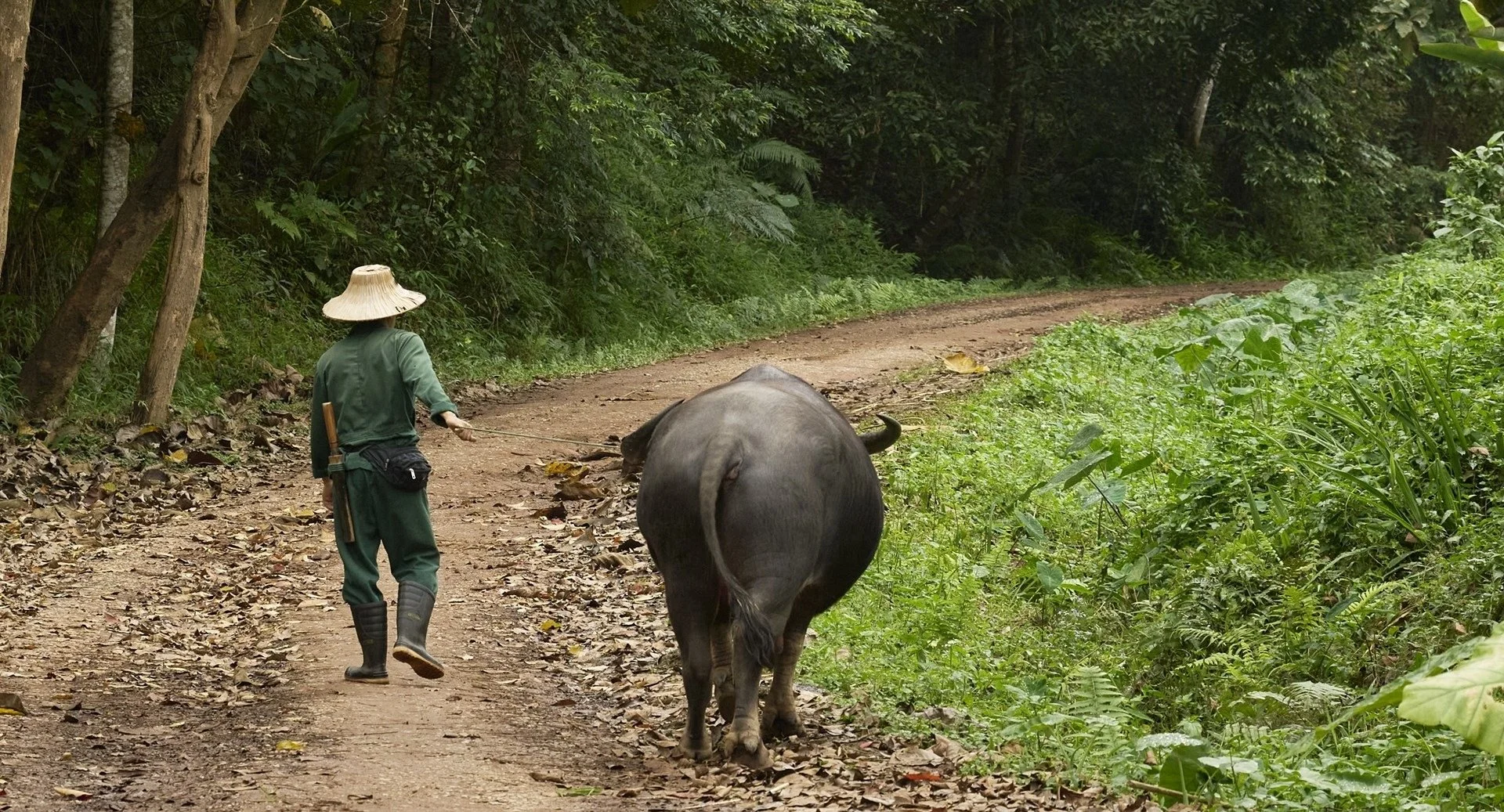
Anantara’s elephant camp dates to 2003, when it was established around the model of a traditional mahout village. The Golden Triangle Asian Elephant Foundation followed in 2006, creating a formal structure for work that encompasses both the animals and the people responsible for them.
The foundation rents elephants from their mahouts rather than buying them outright, providing food, veterinary care and a forest environment while supporting the caretakers and their families. Its stated reasoning is practical: purchasing an elephant can leave its former owner with the means and incentive to acquire another. The camp’s residents are captive elephants receiving ongoing care, including animals rescued from street begging, shows and other difficult working conditions.
The wider destination adds another layer. Nearby Chiang Saen’s temples connect a stay to Lanna history, while the Hall of Opium examines the region’s former dependence on the opium trade and the development of alternative livelihoods. Both help place the resort within a lived landscape rather than an isolated holiday setting.
Teak, Thai Silks and the Mekong Horizon
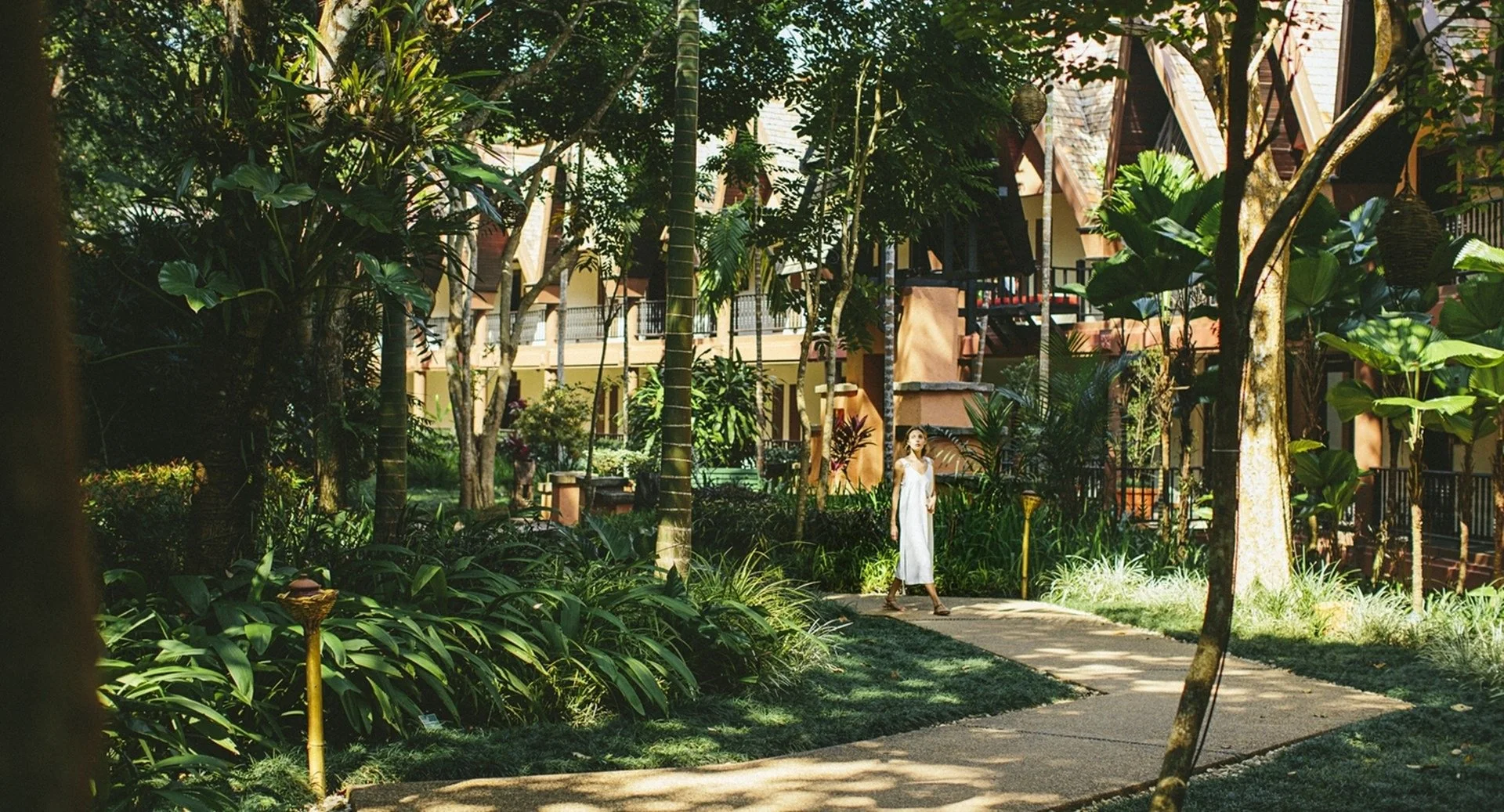
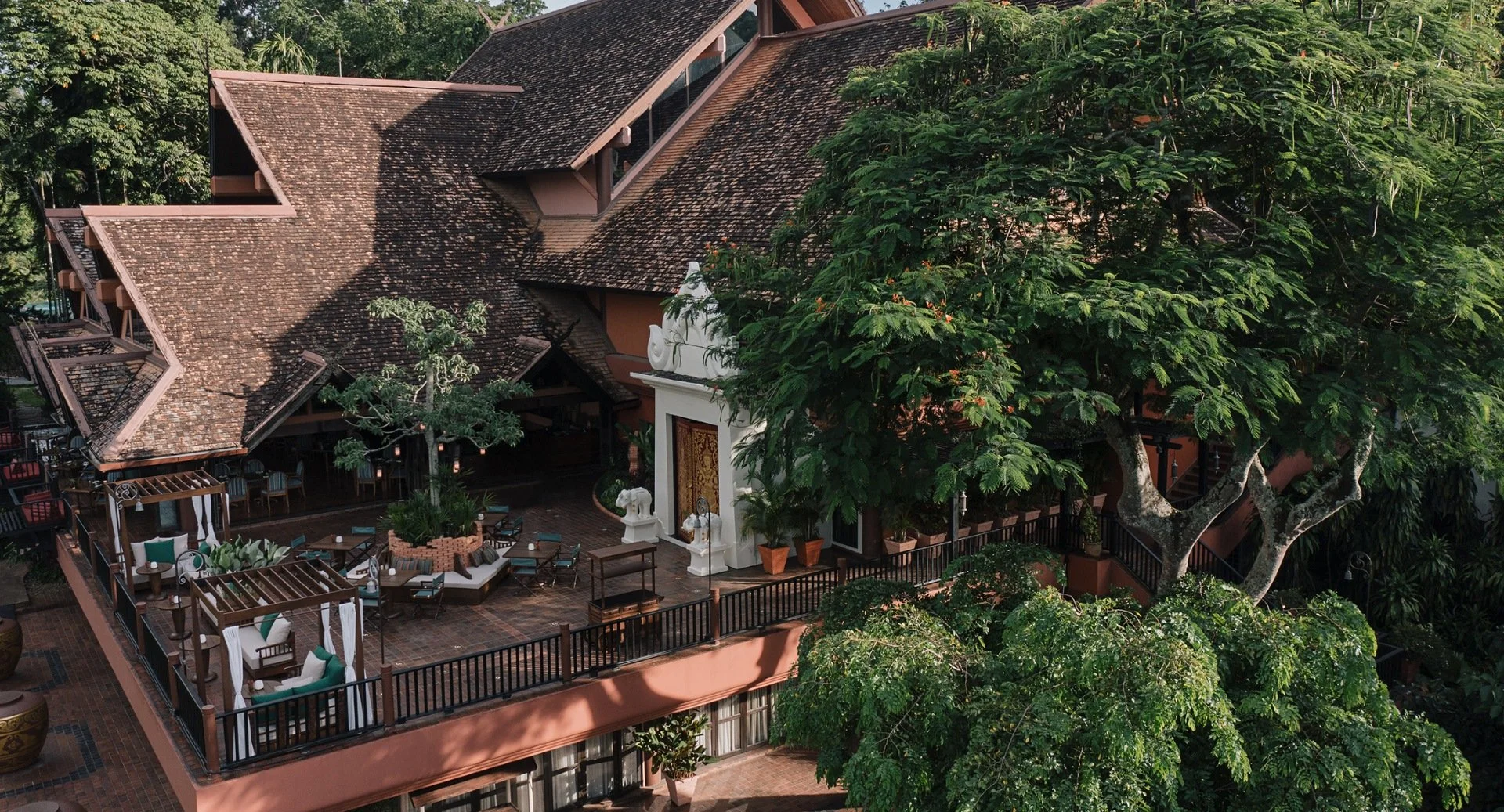
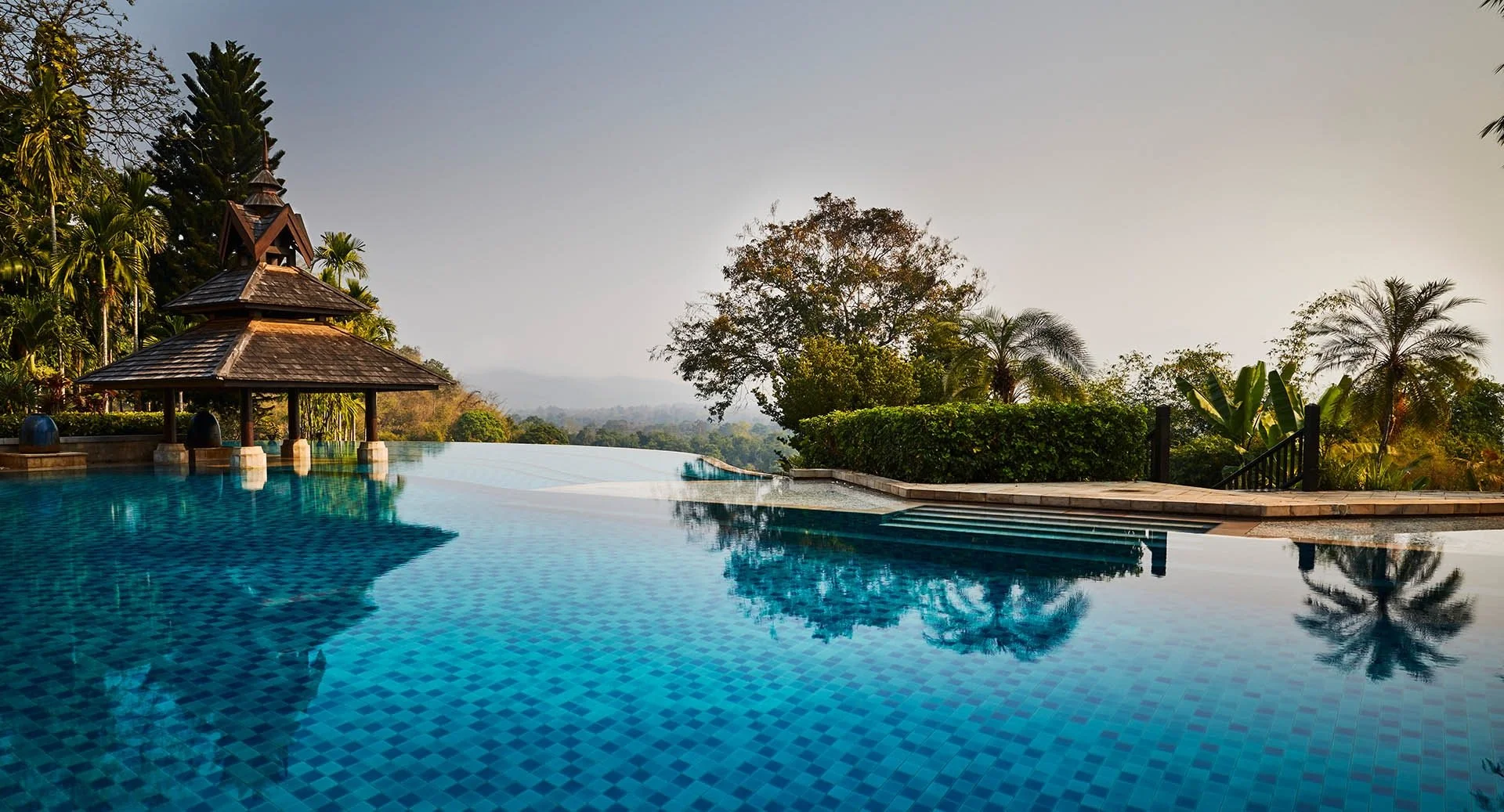
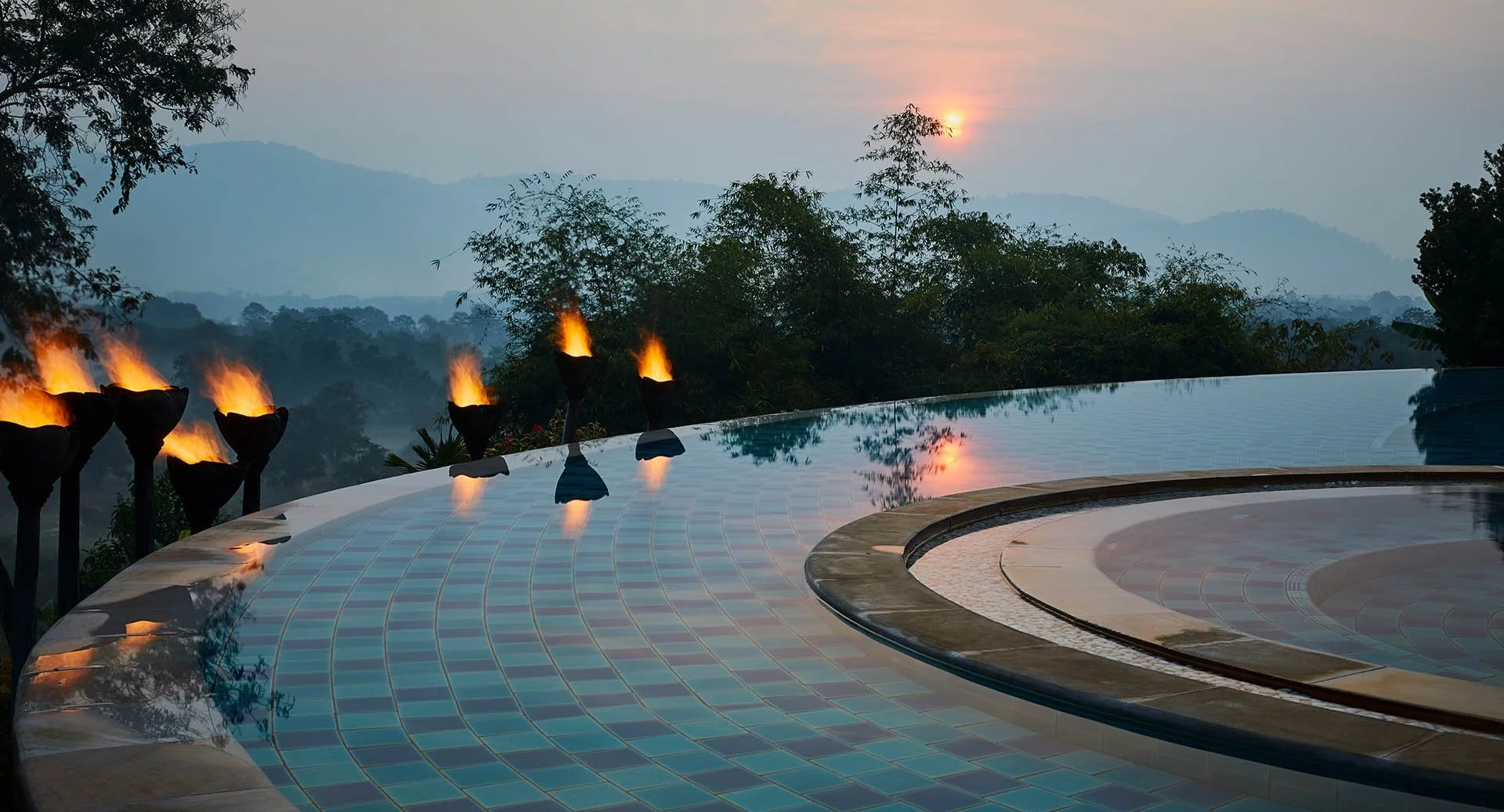
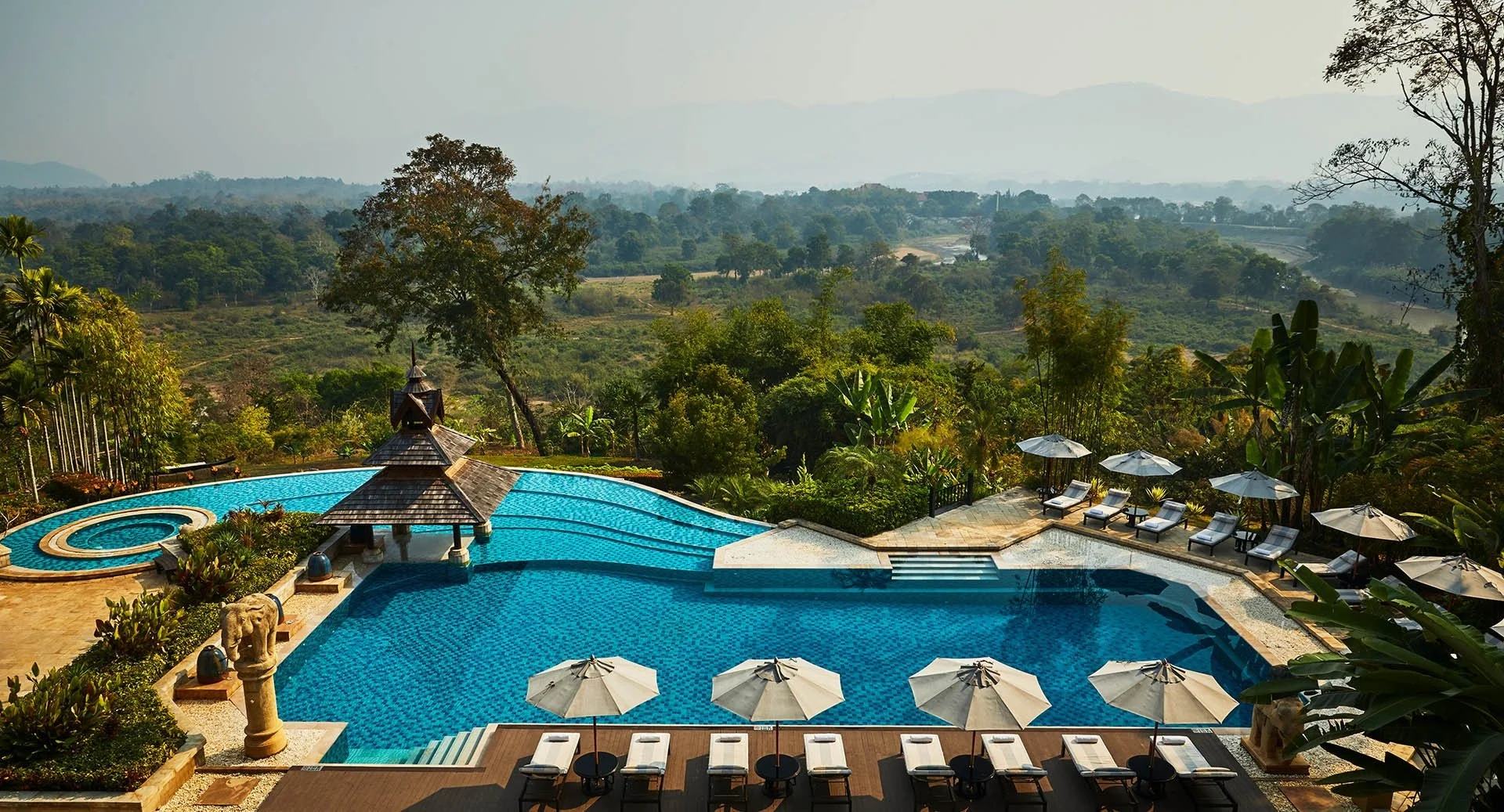
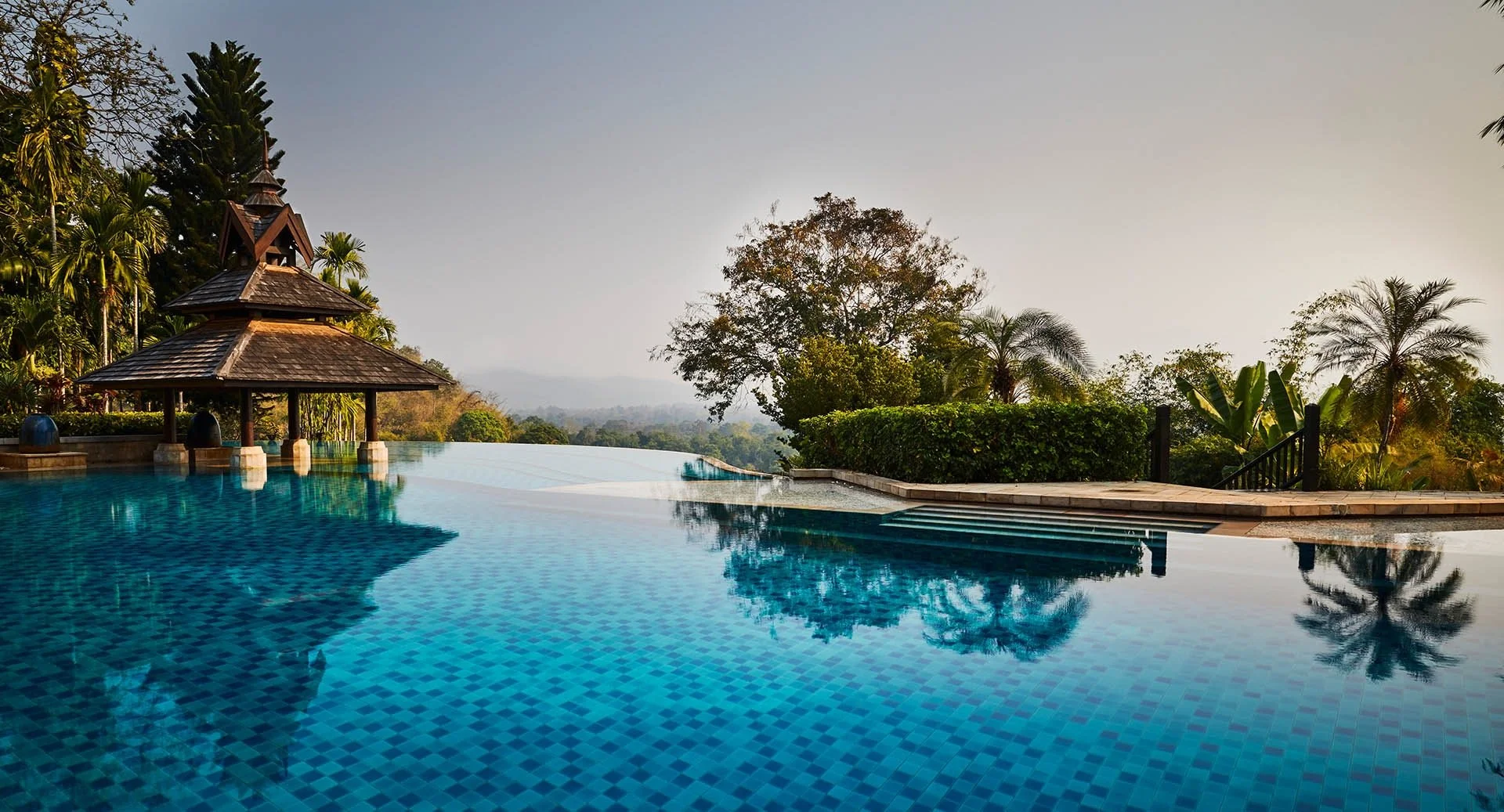
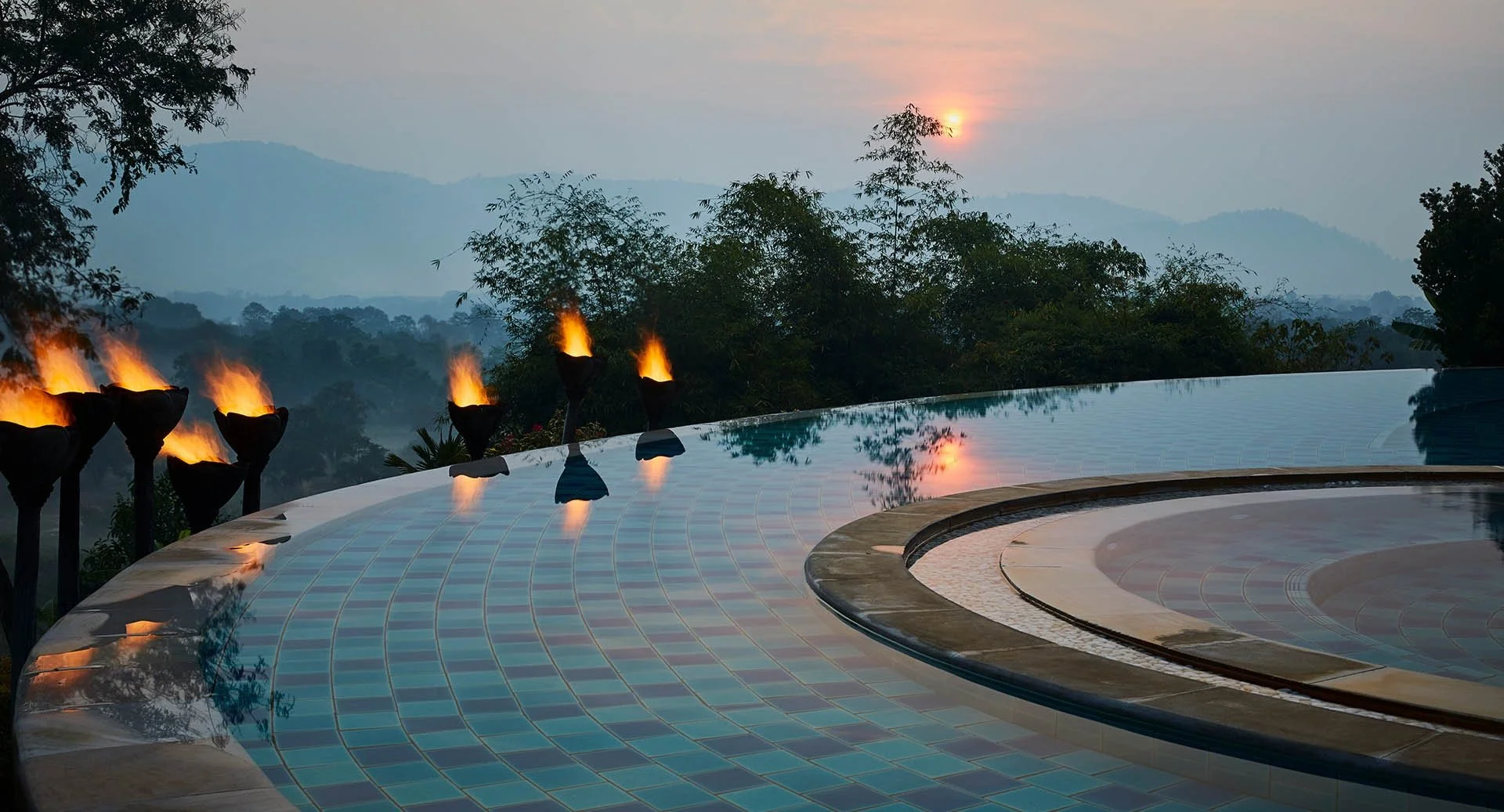
The estate extends across approximately 160 acres, with bamboo forest and gardens shaped by landscape architect Bill Bensley. The main building uses deep rooflines, shaded terraces and open views to establish a distinctly northern Thai atmosphere. The infinity pool provides one of the clearest connections between the architecture and the valley beyond.
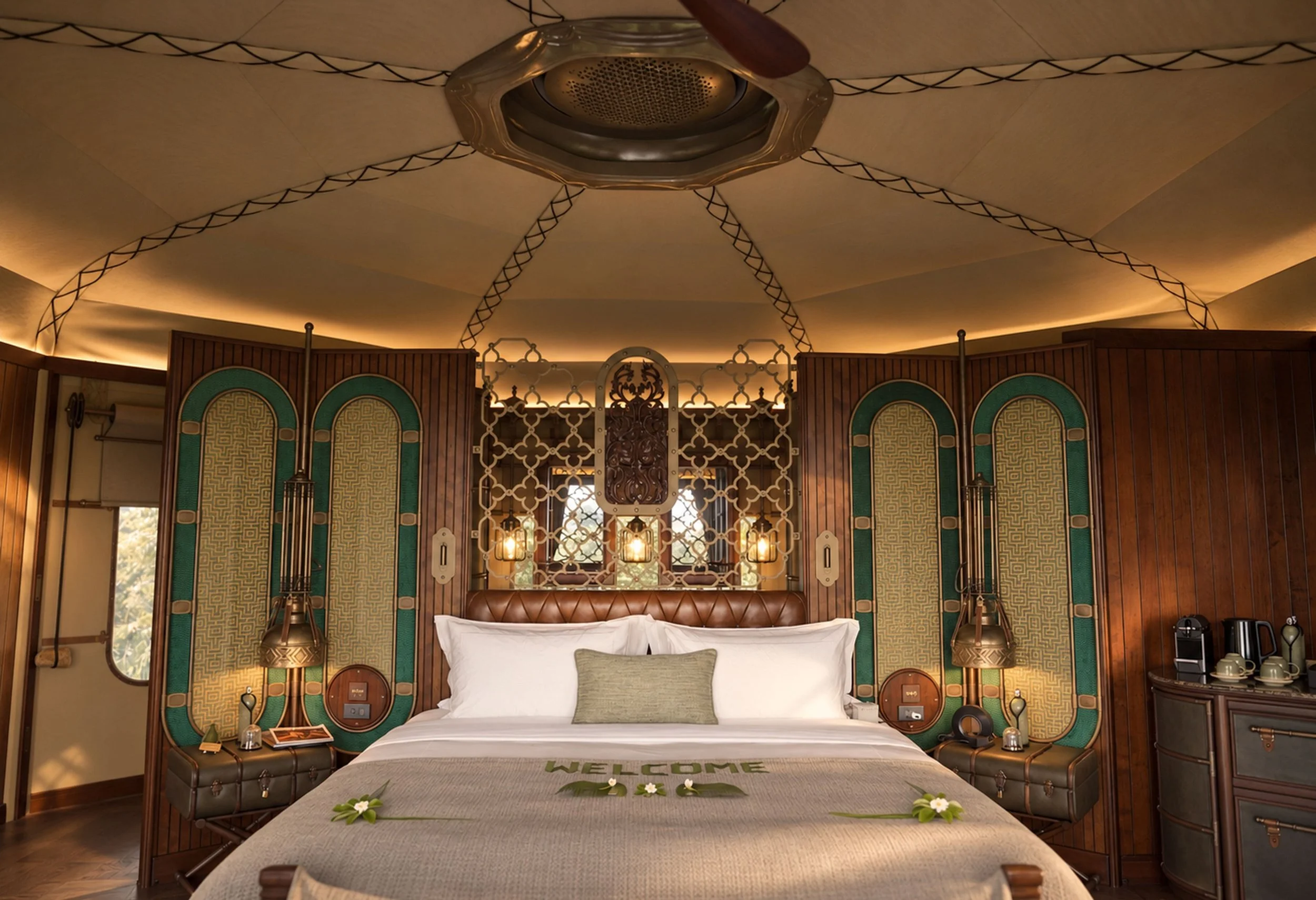
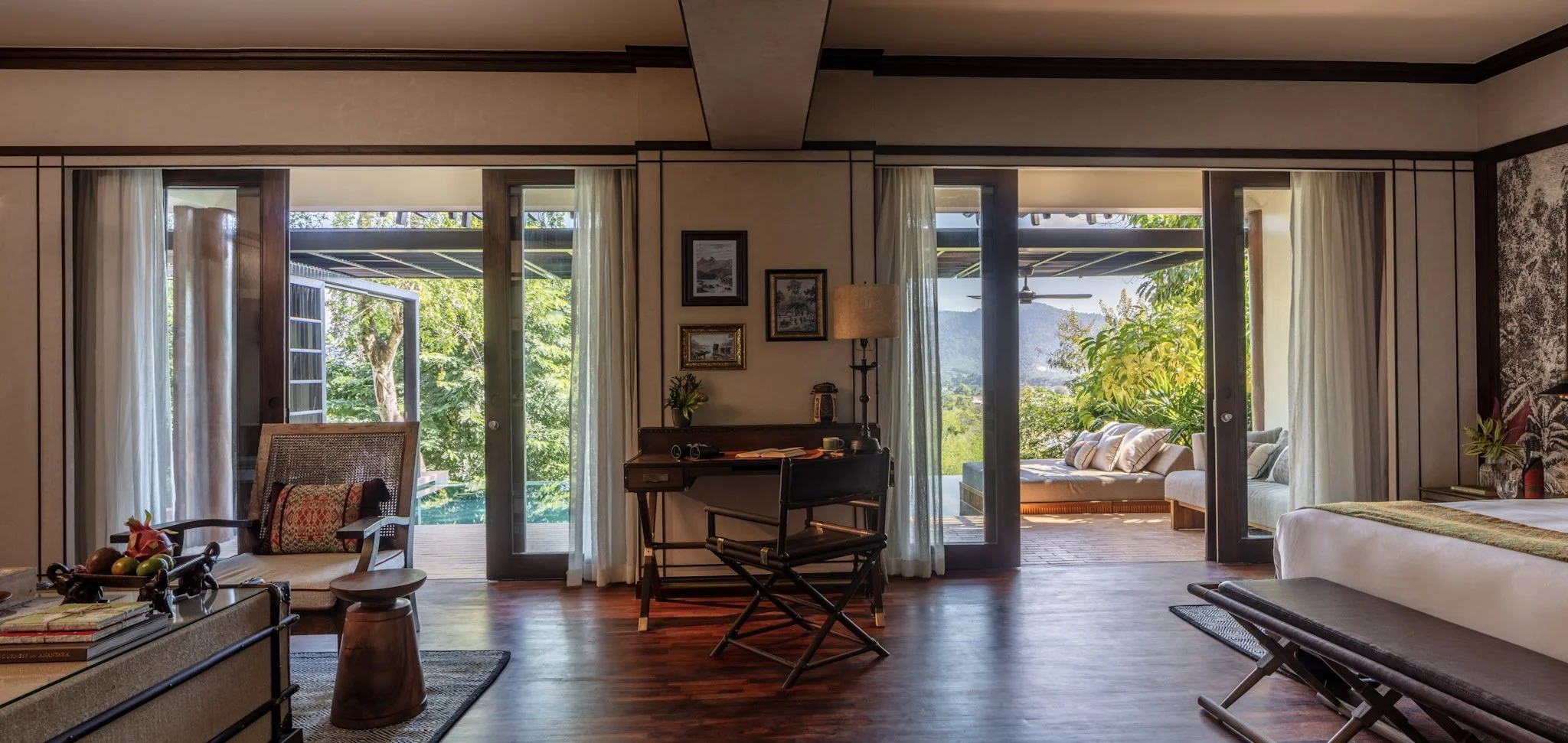
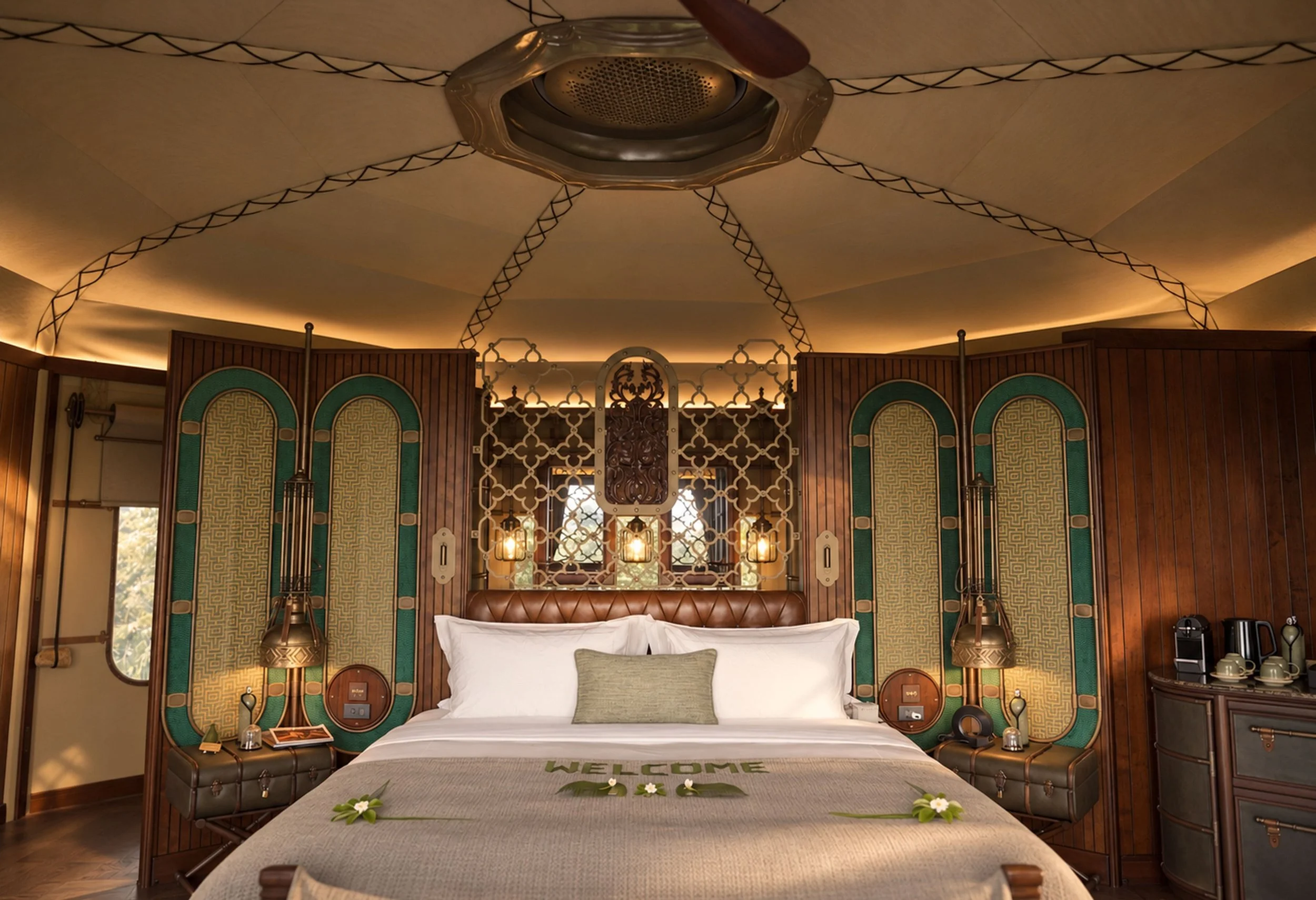
Inside, teak floors and Thai silks give the rooms warmth. The Mekong Explorer suites introduce dark wood paneling, elephant motifs and travel trunks with brass fittings. Artwork above the beds refers to places along the Mekong, making the river a recurring subject rather than simply a view.
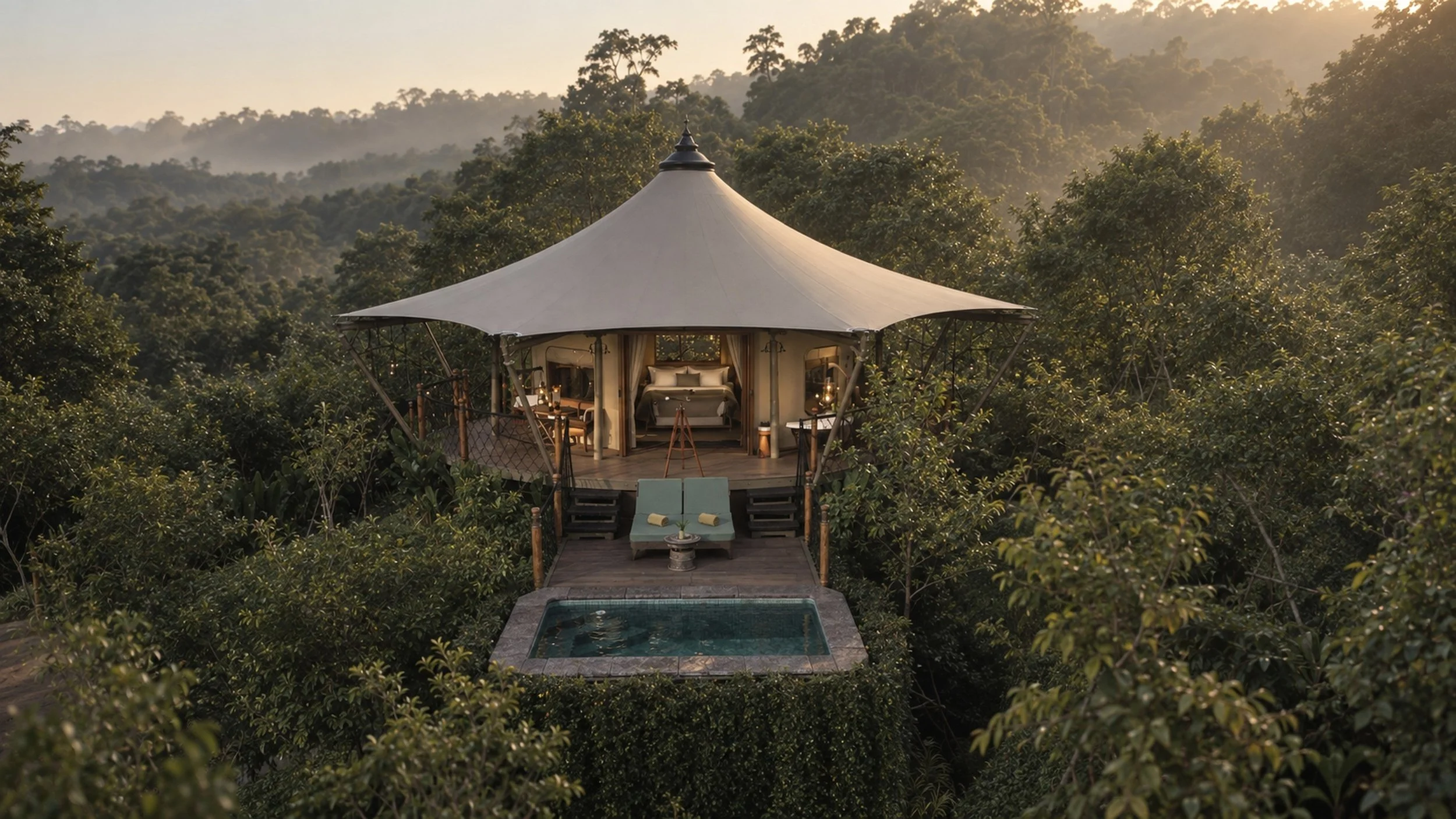
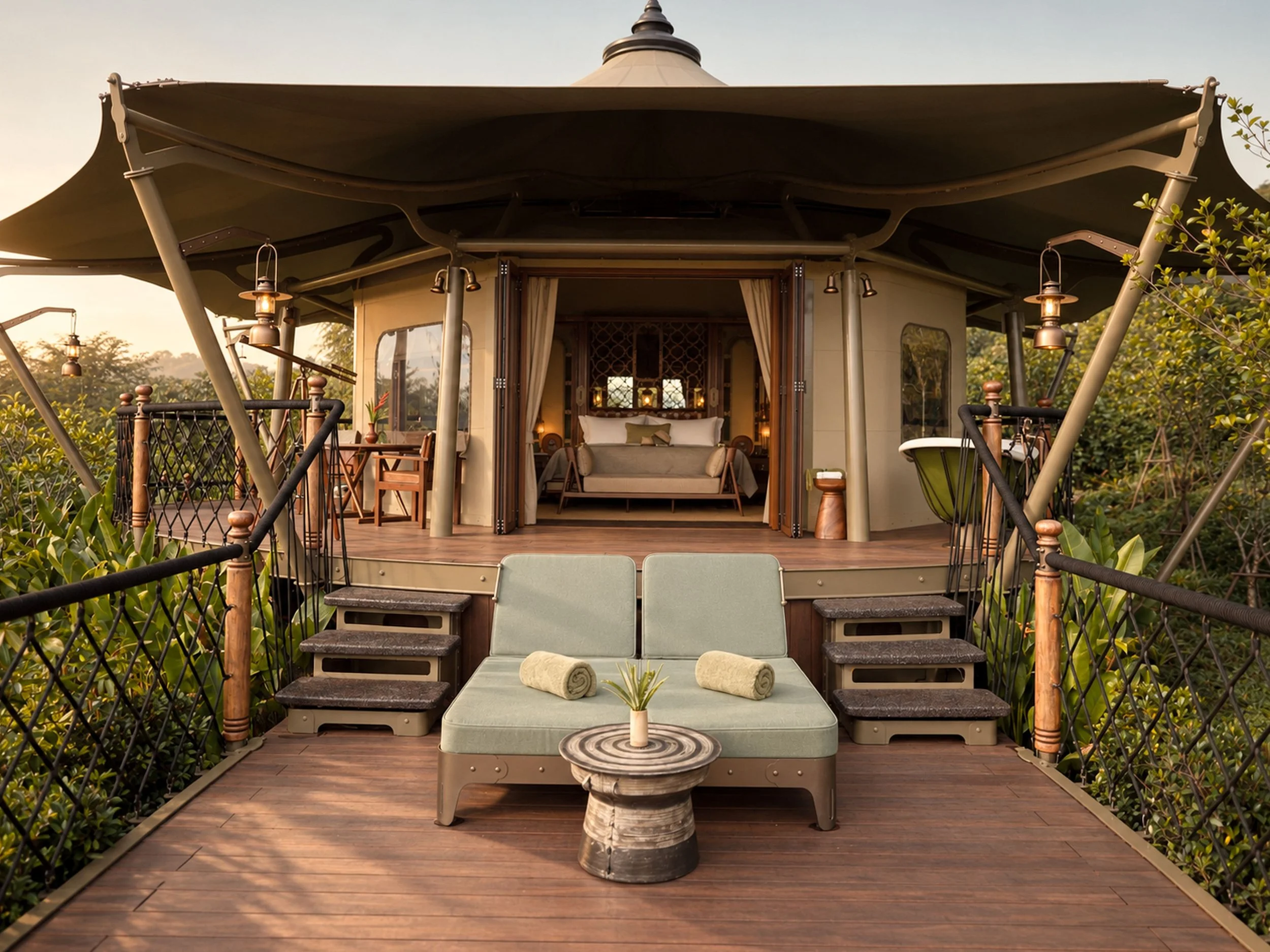
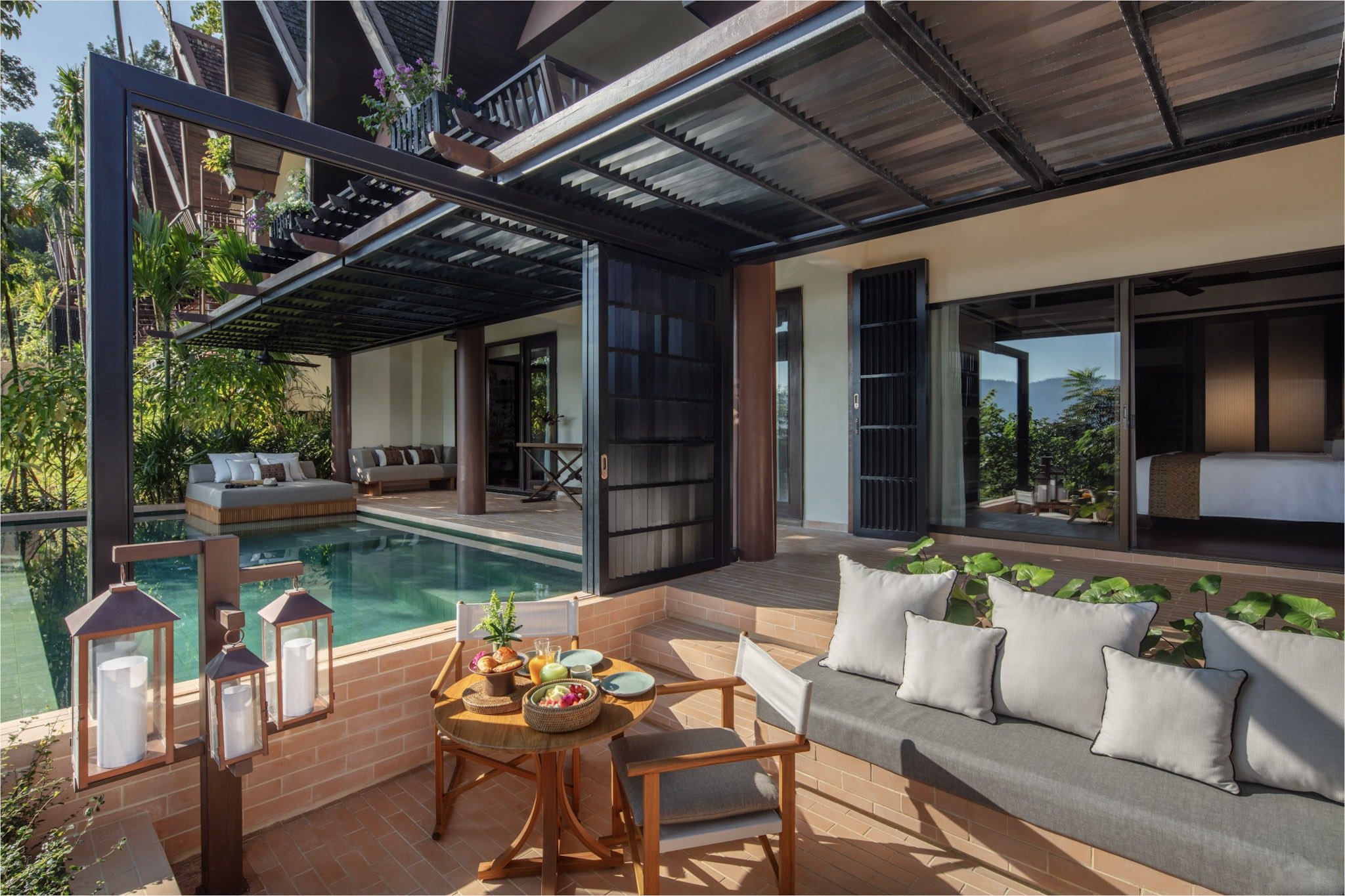
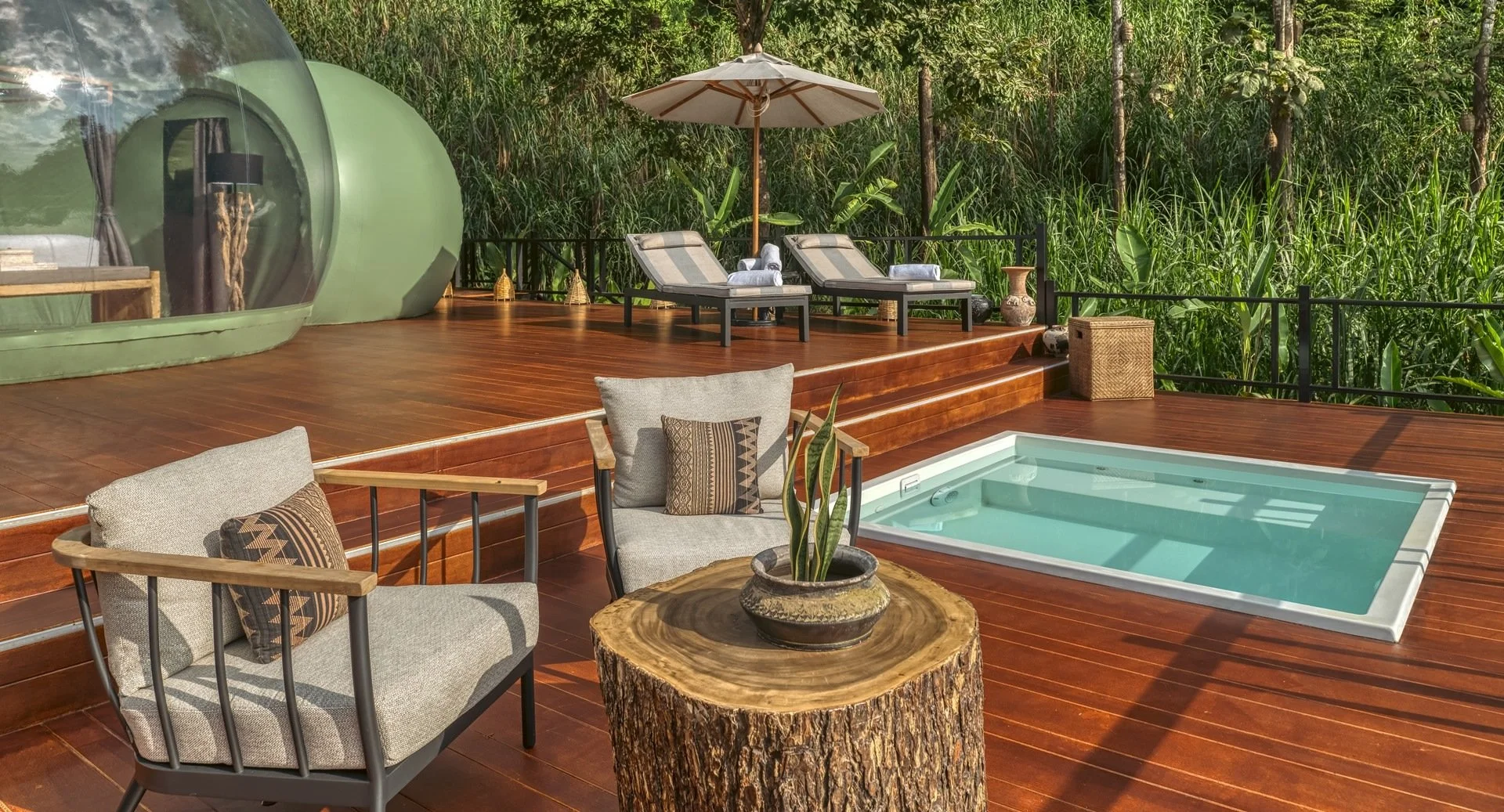
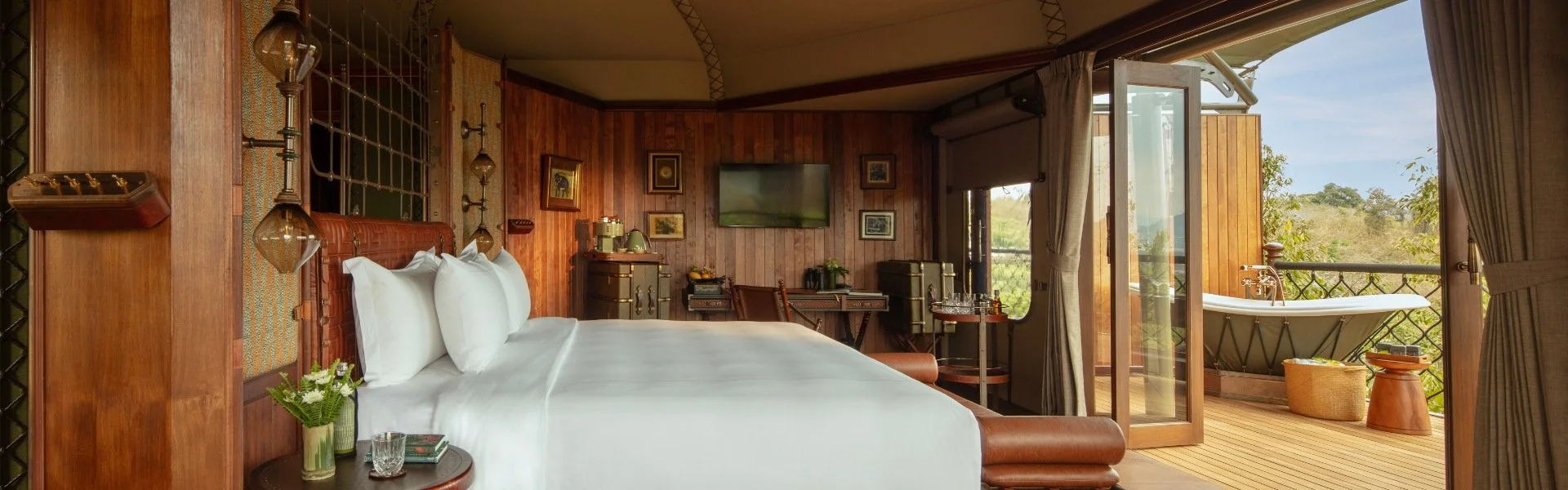
The hillside tents offer a different relationship with the grounds. Their decks, private pools and outdoor bathtubs encourage more time outside, while enclosed interiors retain the comforts of a hotel room. Choosing between the main building and a tent is therefore as much about the daily rhythm of the stay as the amount of space.
From Three-Country Rooms to Private-Pool Tents
The main-building collection progresses from balcony rooms to larger suites and interconnected family accommodation. Beyond it, the resort’s signature tents provide a more secluded alternative. The Mekong Explorer Tent’s stated area includes its balcony, while room and suite areas are separate from their balconies and pools.
Deluxe Three Country View Room: Approximately 344 sq. ft., with a king or twin beds, a private balcony overlooking the border landscape and a terrazzo soaking tub.
Mekong Explorer Suite: Approximately 689 sq. ft., adding a spacious living area and a private balcony to the suite’s Lanna-inspired interiors and explorer-themed furnishings.
Mekong Explorer Pool Suite: Approximately 689 sq. ft., pairing generous indoor living space with a private swimming pool, terrace and views across the Golden Triangle.
Mekong Explorer Family Suite: Approximately 1,033 sq. ft., combining an interconnected suite and ensuite room to provide separate sleeping spaces and shared living space for families or friends.
Mekong Explorer Family Pool Suite: Approximately 1,033 sq. ft., adding a private swimming pool and poolside lounge space to the interconnected suite-and-room arrangement, with king and twin beds.
Mekong Explorer Tent: Approximately 807 sq. ft. including its balcony, with a king bed, private swimming pool, outdoor bathtub and jungle-host service; the two adjacent tents can also be reserved together.
Anantara Explorer Tent: Approximately 861 sq. ft., with a king bed, private swimming pool, outdoor bathtub, outdoor living space and jungle-host service in a hillside setting.
For a couple, the choice is principally between the convenience of a suite and the more separate setting of a tent. For families, the interconnected configurations deserve particular attention. Private-pool categories should be selected with the children’s ages and supervision needs in mind.
Three Border Kitchens and Dinner in the Trees
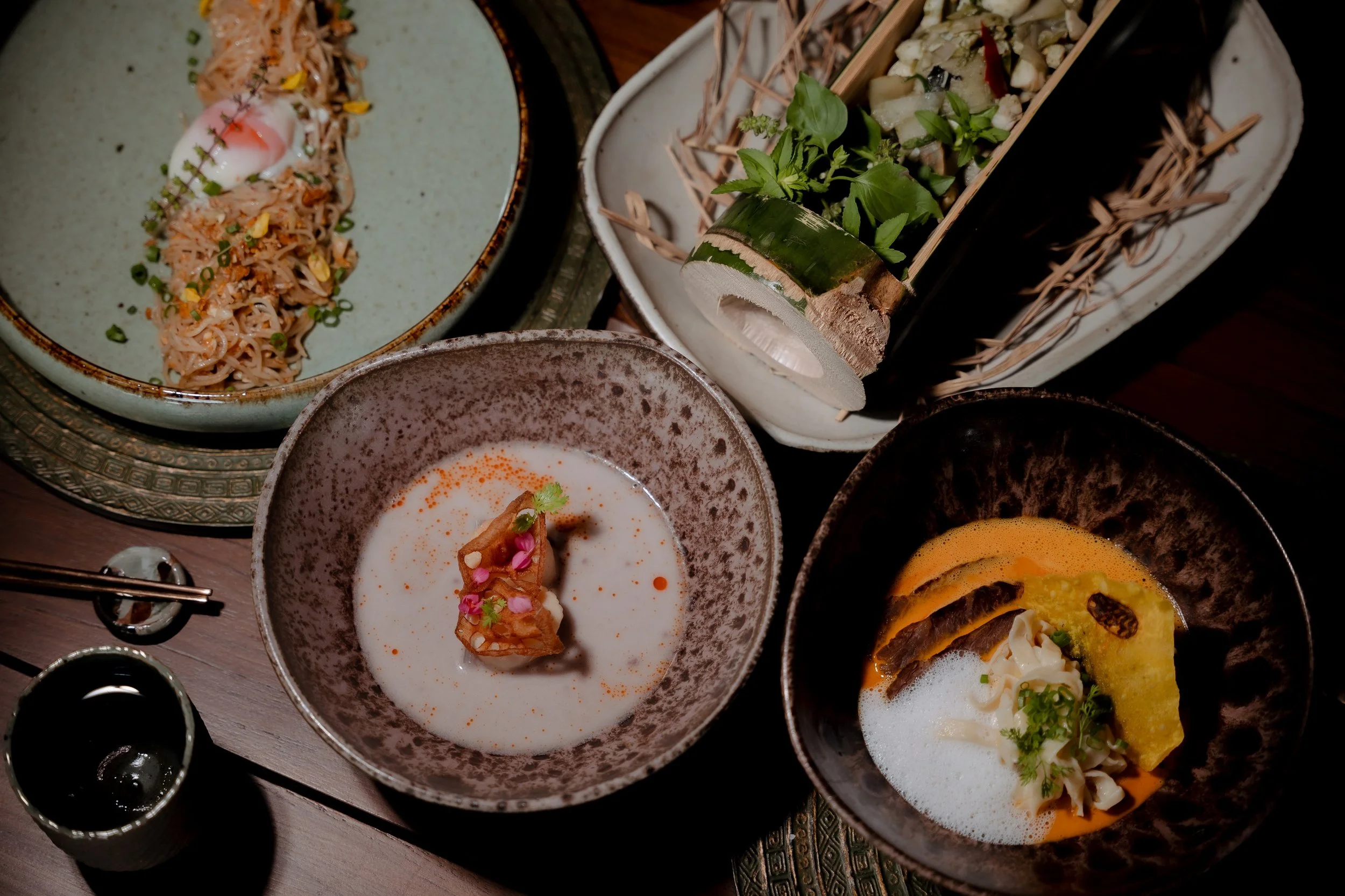
The dining collection gives the destination a presence throughout the day, from northern Thai dishes to the overlapping culinary traditions of Laos and Myanmar.
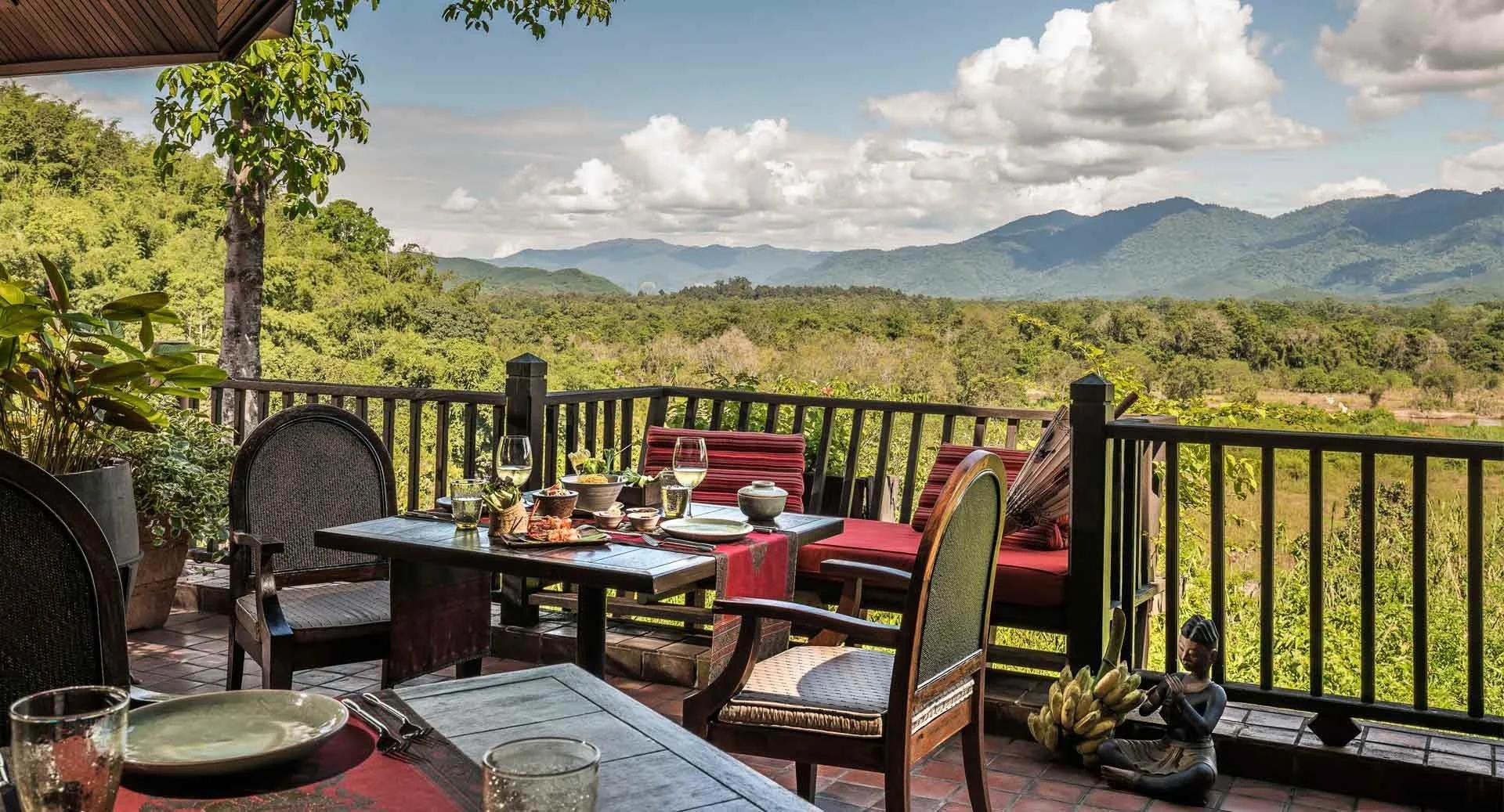
Sala Mae Nam: The main restaurant serves Asian and international cooking across breakfast, lunch and dinner, with broad views over the surrounding landscape.
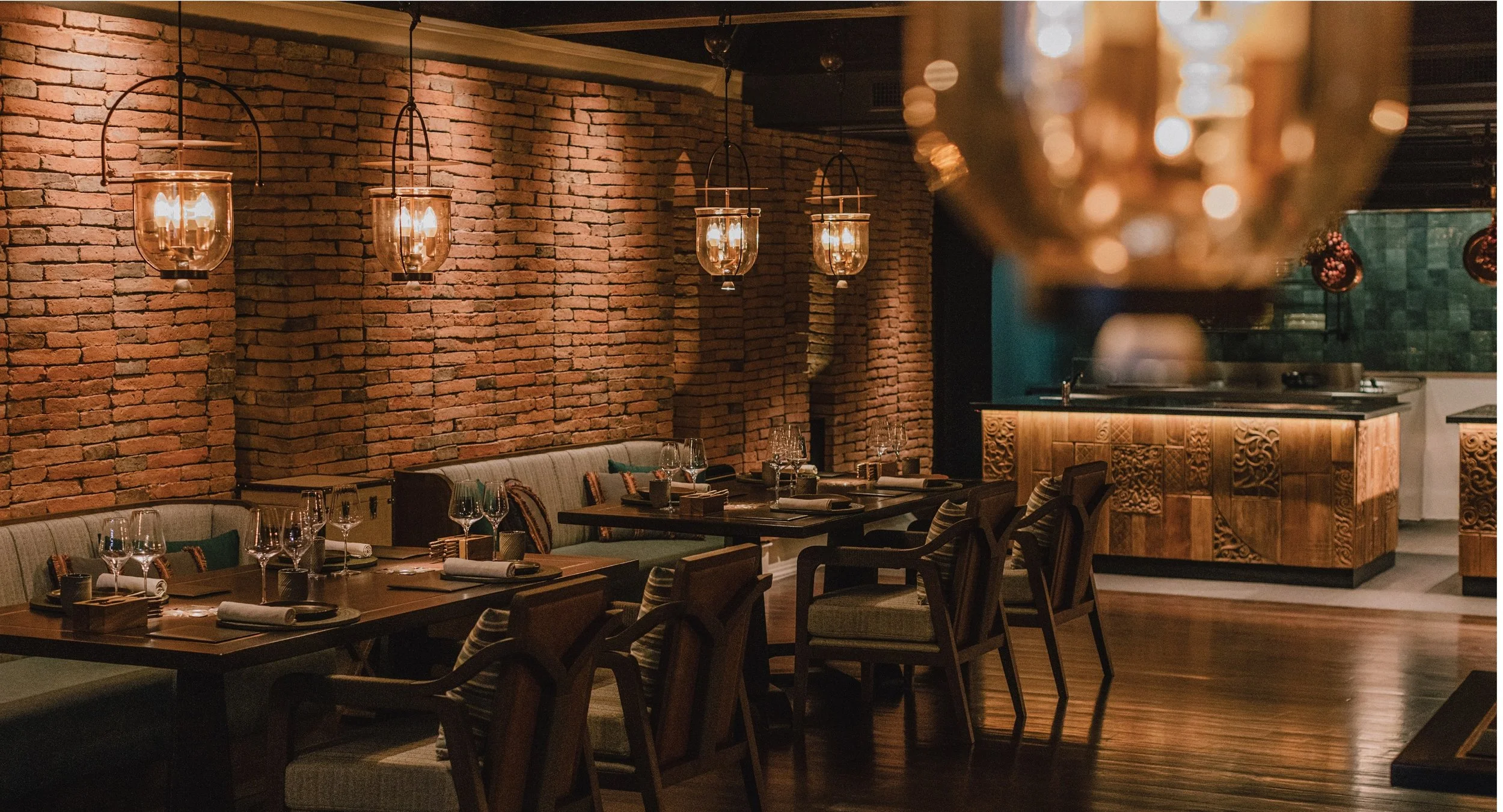
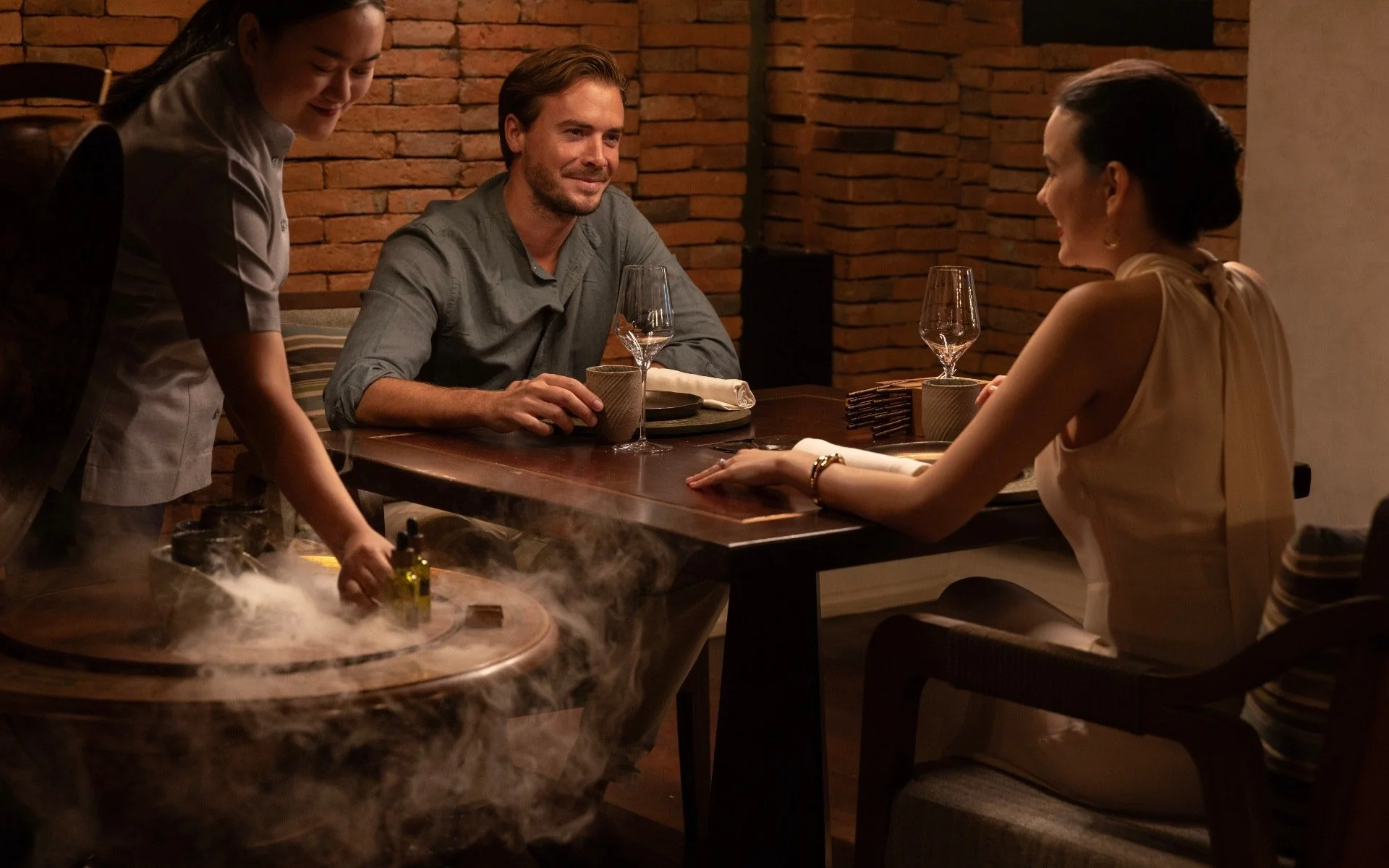
Samsarn: This evening restaurant explores Thai, Lao and Burmese flavors through contemporary regional cooking, including dishes such as buffalo-cheek khao soi and Shan noodles.
Elephant Bar and Opium Terrace: An informal setting for drinks, light bites and time on the terrace between excursions or before dinner.
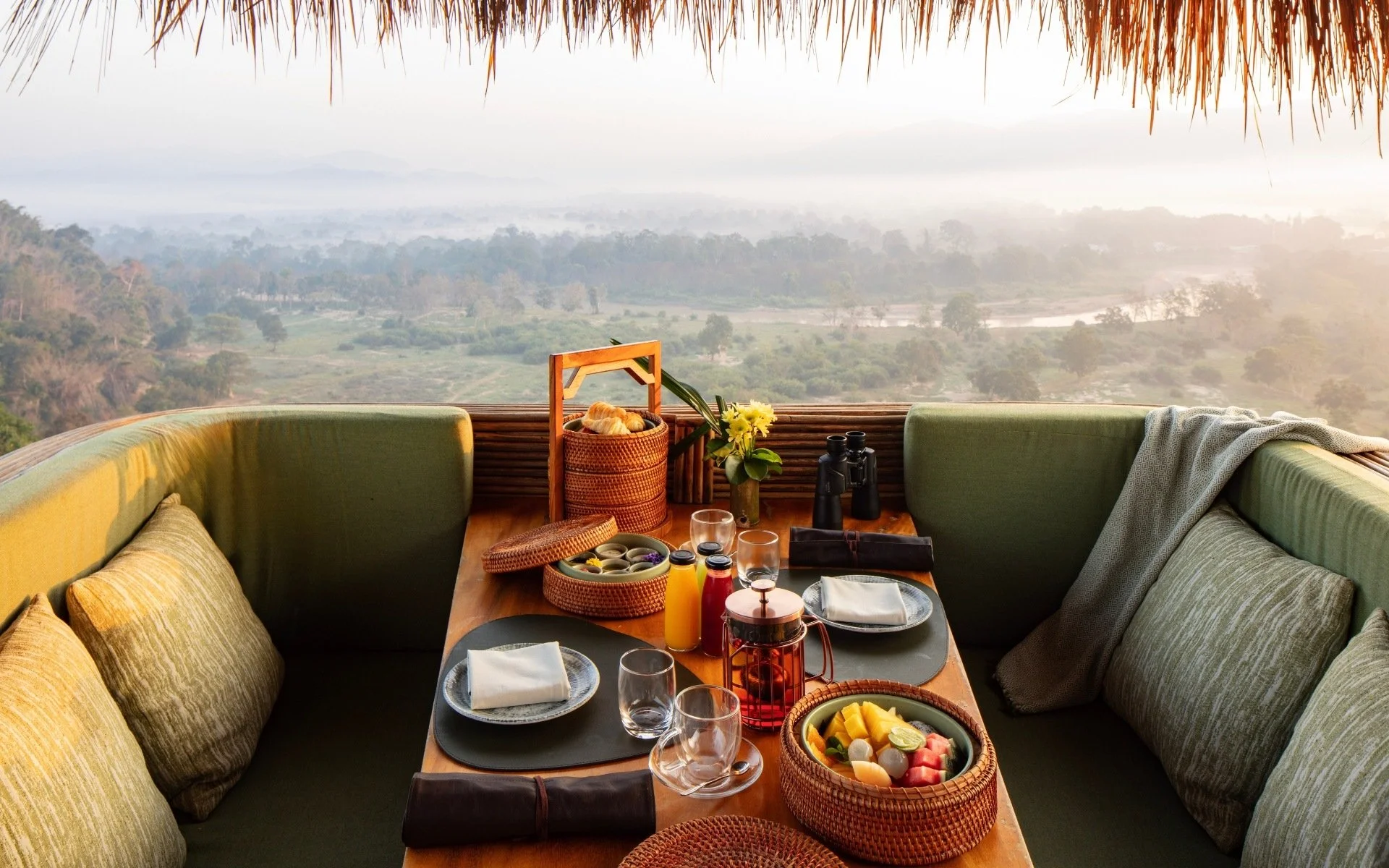
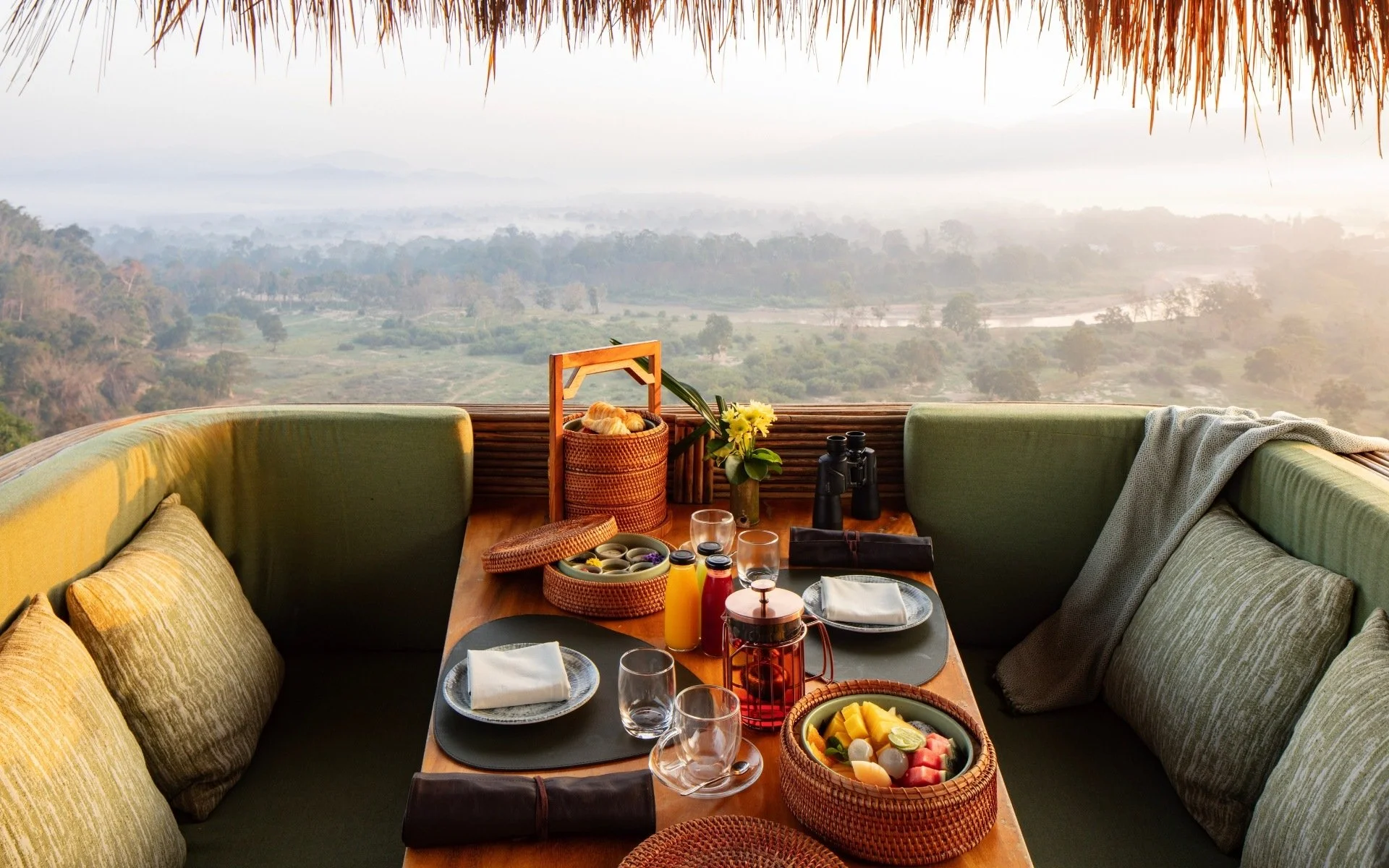
Canopy, a Tree Top Dining Experience: A private, elevated dining capsule for up to four people offers breakfast, lunch or dinner above the grasslands, with a minimum age of 10.
Designer Dining: A private chef and tailored menu create an occasion in settings such as the garden terrace, rice paddies or the pier beside the Ruak River.
In-Room Dining: A 24-hour menu allows a quieter meal in the privacy of a room, suite or tent.
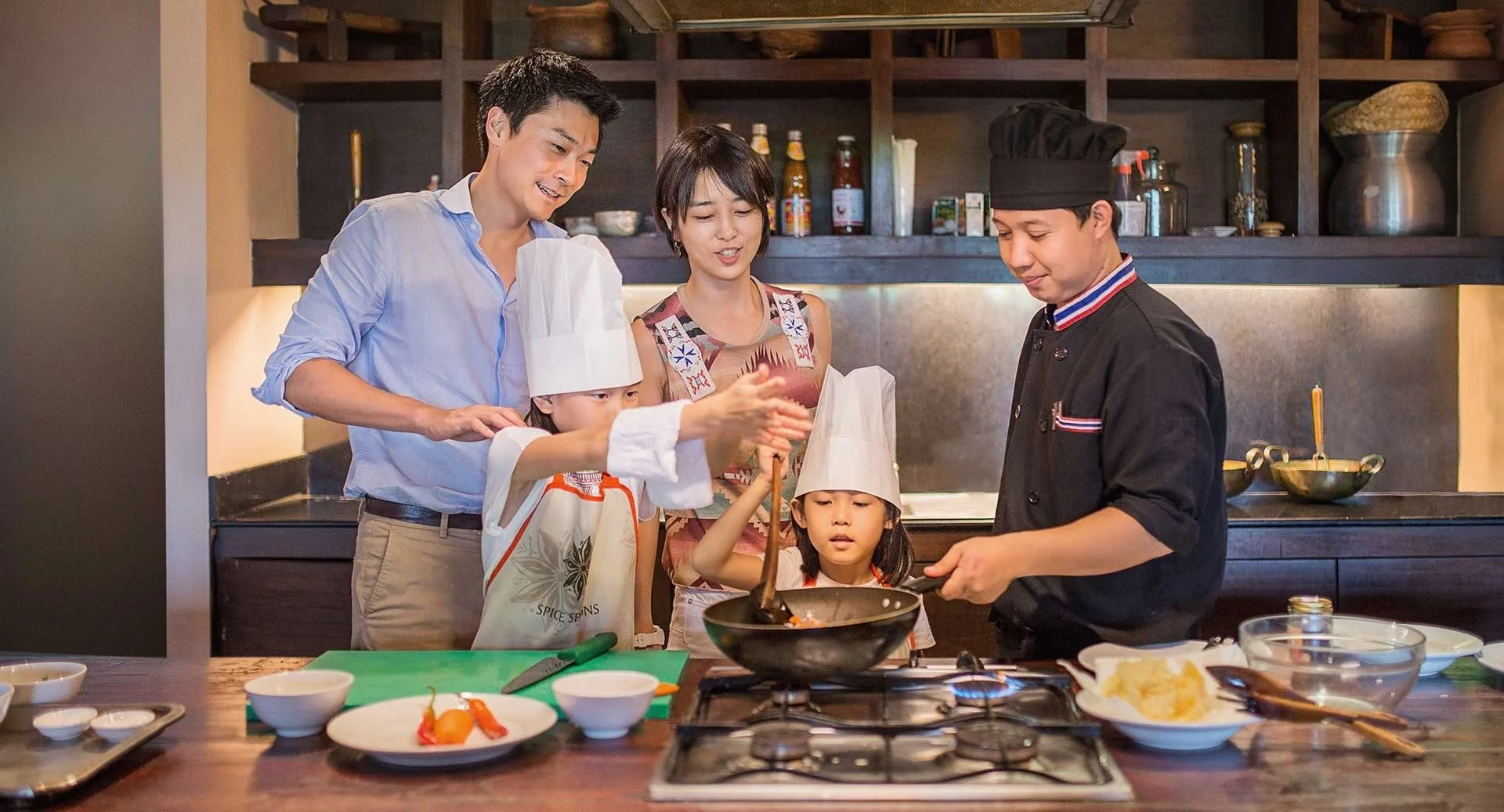
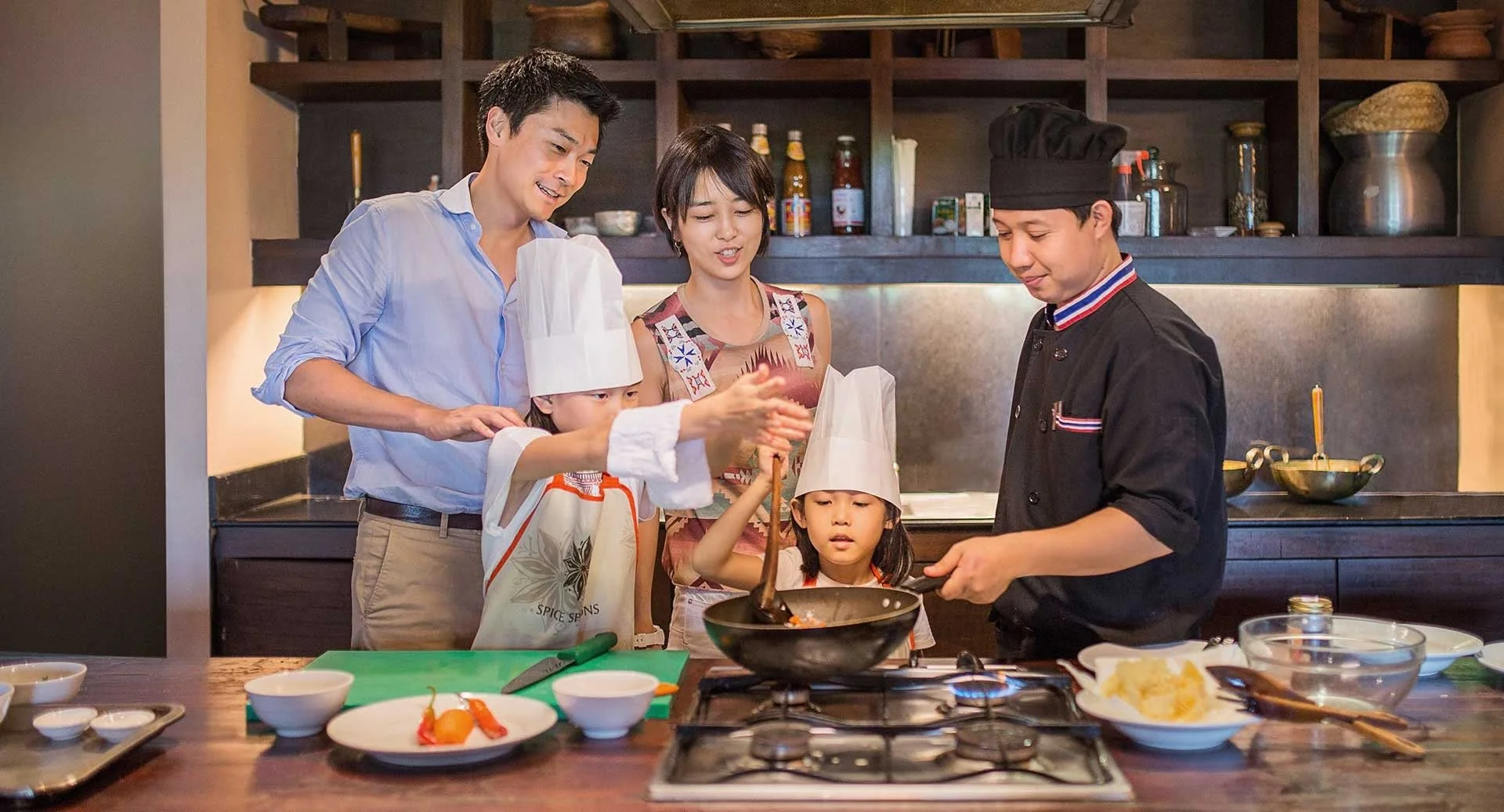
Spice Spoons adds a hands-on cooking experience, with an introduction to local ingredients and guided preparation of Thai dishes. It is particularly useful early in the stay, giving later restaurant meals additional context.
The Golden Triangle Luxury Explorer Package includes full-board dining with nonalcoholic drinks at specified venues, a daily minibar selection and one selected activity per night. Specialist dining experiences and other extras should be planned alongside the chosen package rather than treated as automatically included.
Northern Traditions at Spa by Nature
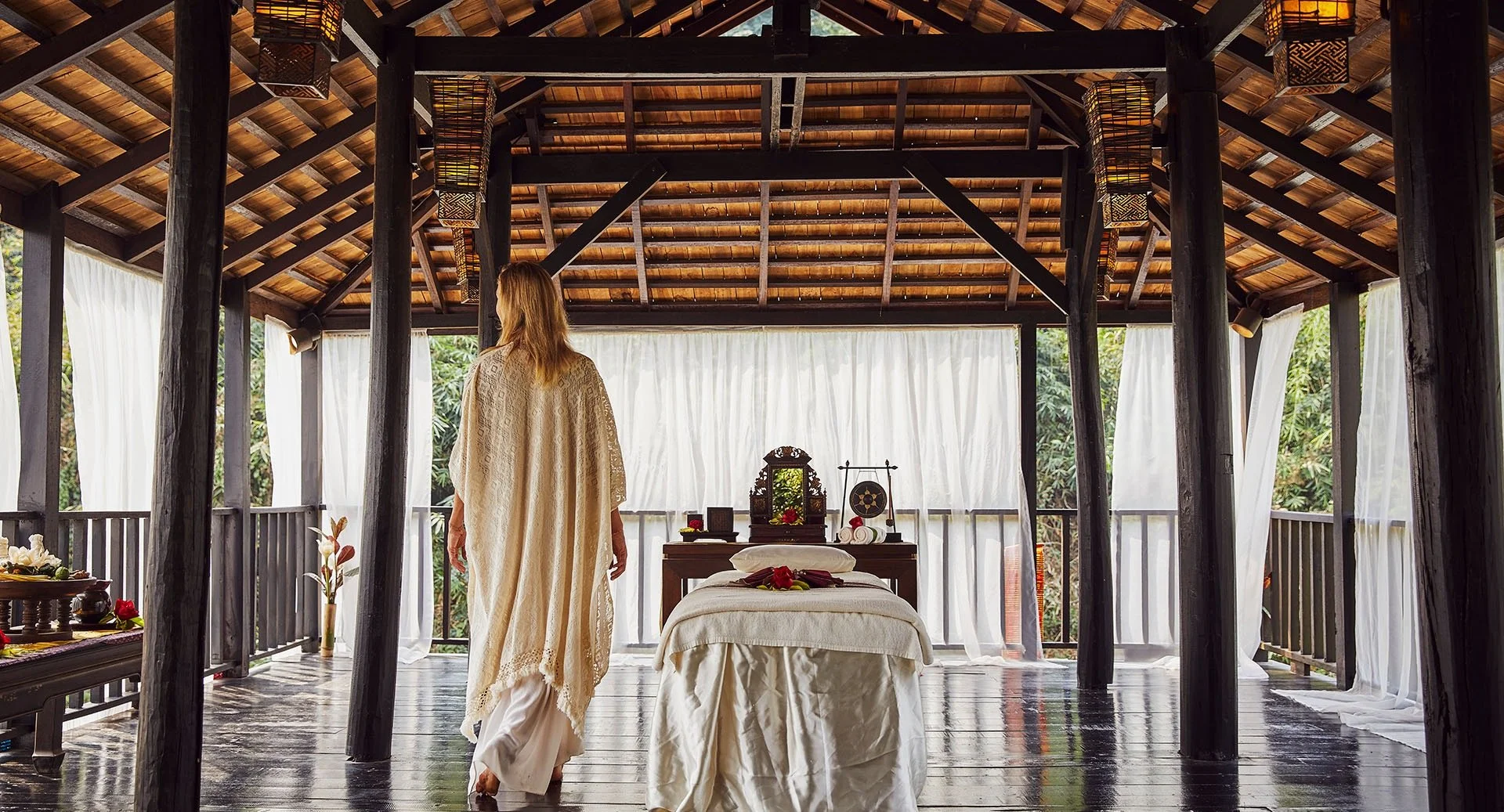
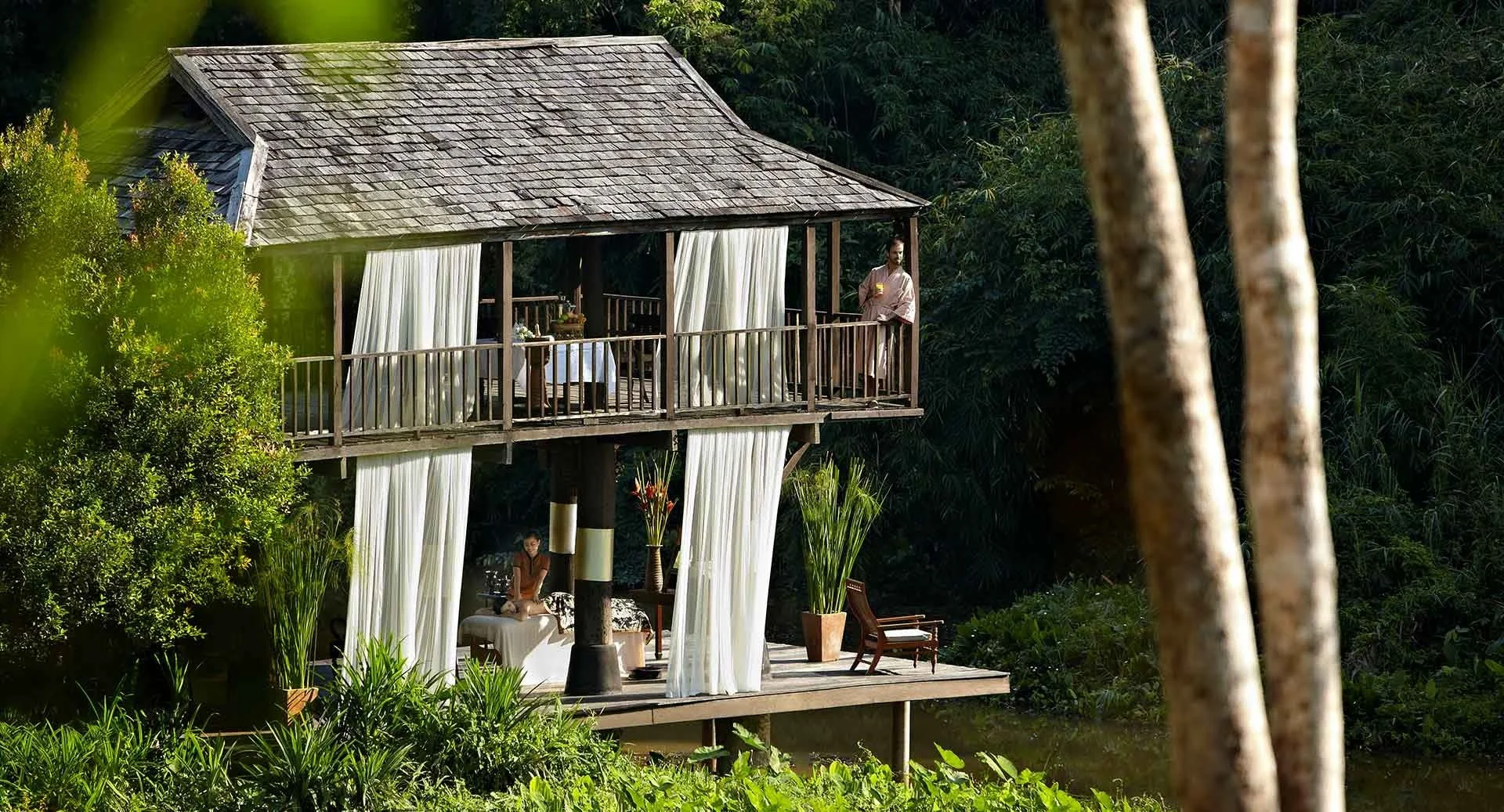
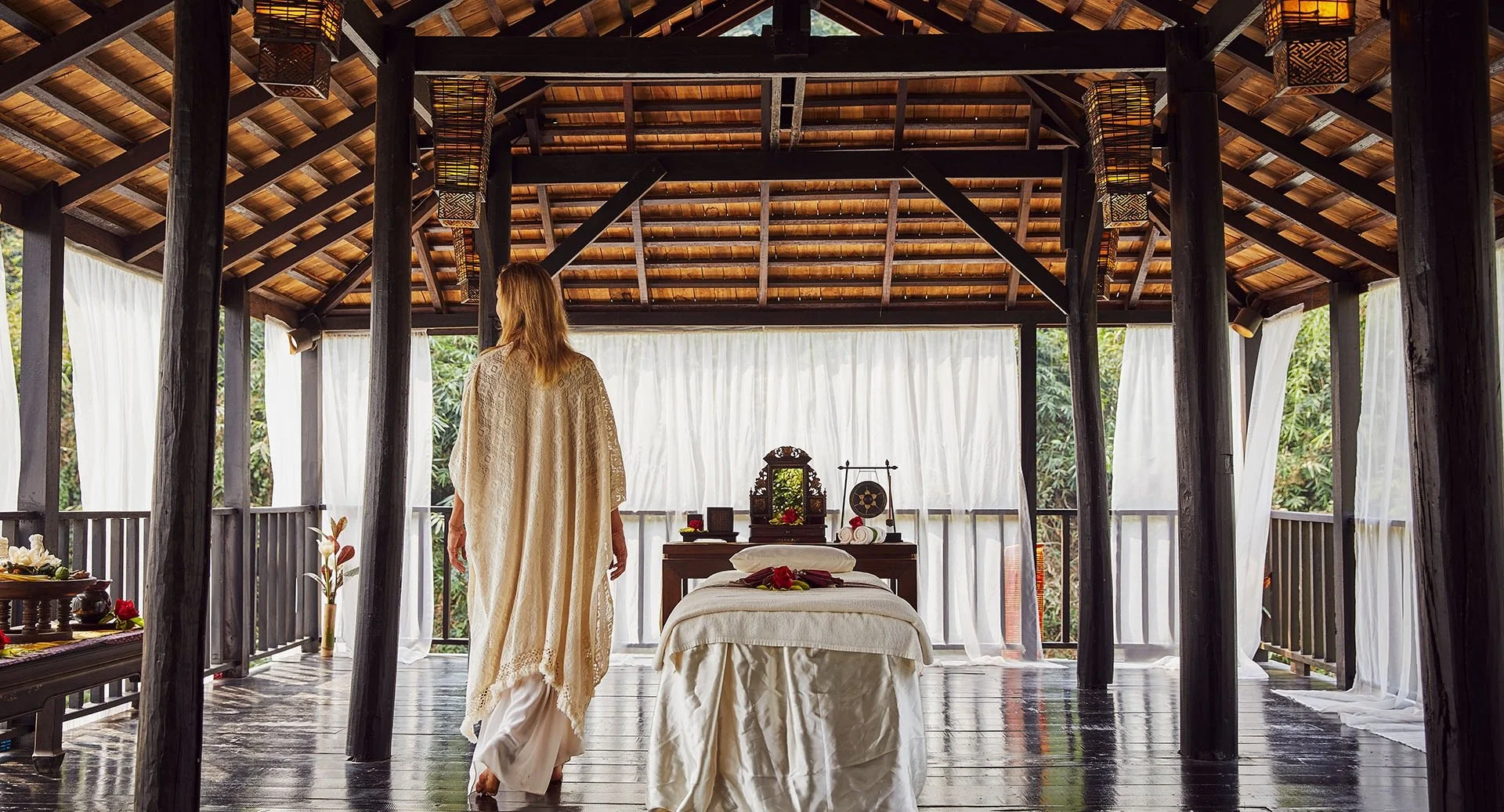
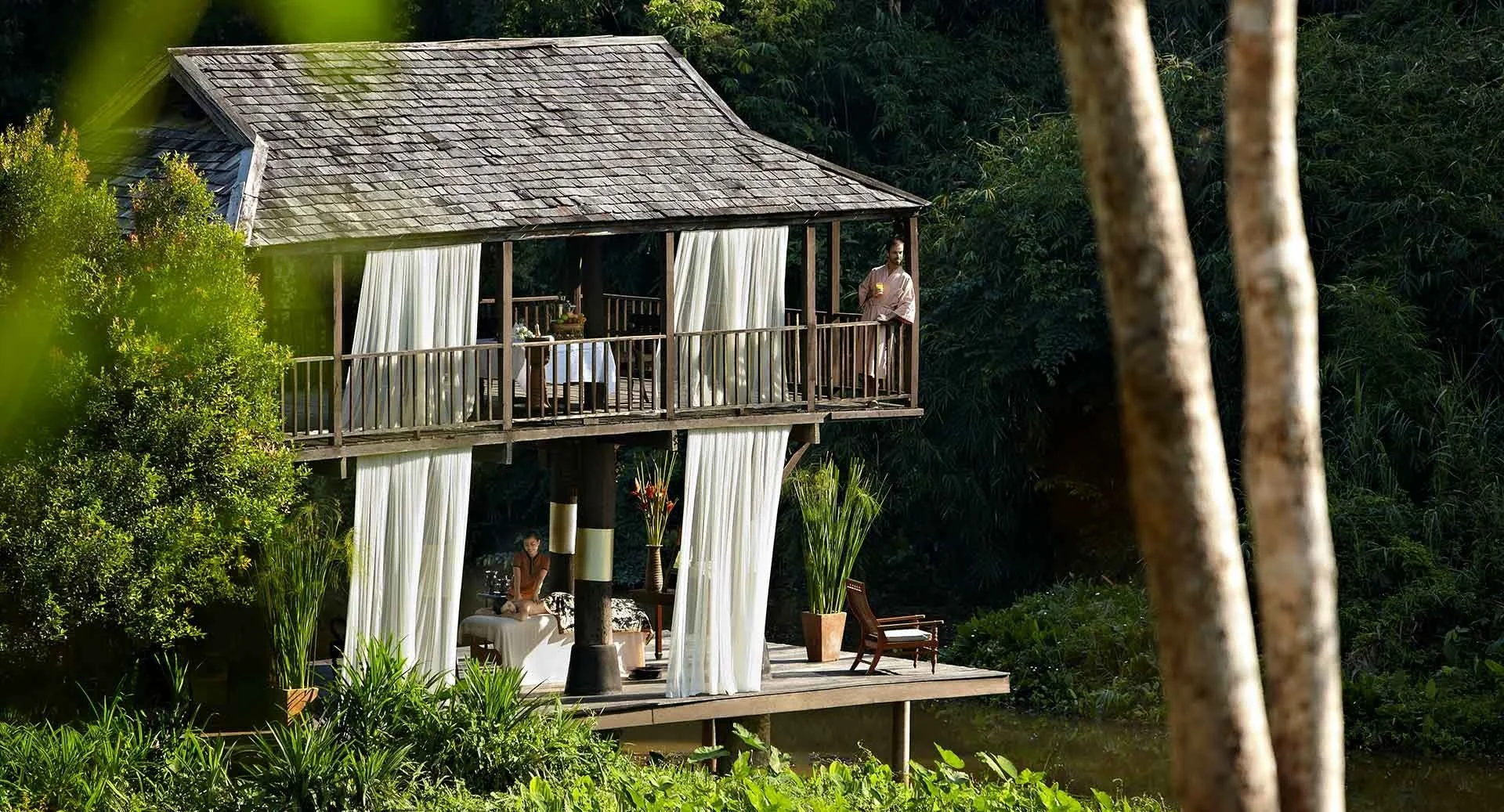
Spa by Nature occupies a three-story, open-air pavilion overlooking the border landscape. Three treatment suites for two include herbal steam rooms and terraces with terrazzo tubs; two further treatment rooms have outdoor massage balconies. A separate pavilion in the rice paddies provides another setting for massage and yoga.
The menu draws on northern Thai traditions, including herbal compresses and treatments using plai, a ginger-family plant known locally as poo loey. The setting is particularly suited to an unhurried afternoon after a morning excursion. Visiting-practitioner sessions add variety when scheduled, without requiring a stay to revolve around a formal wellness program.
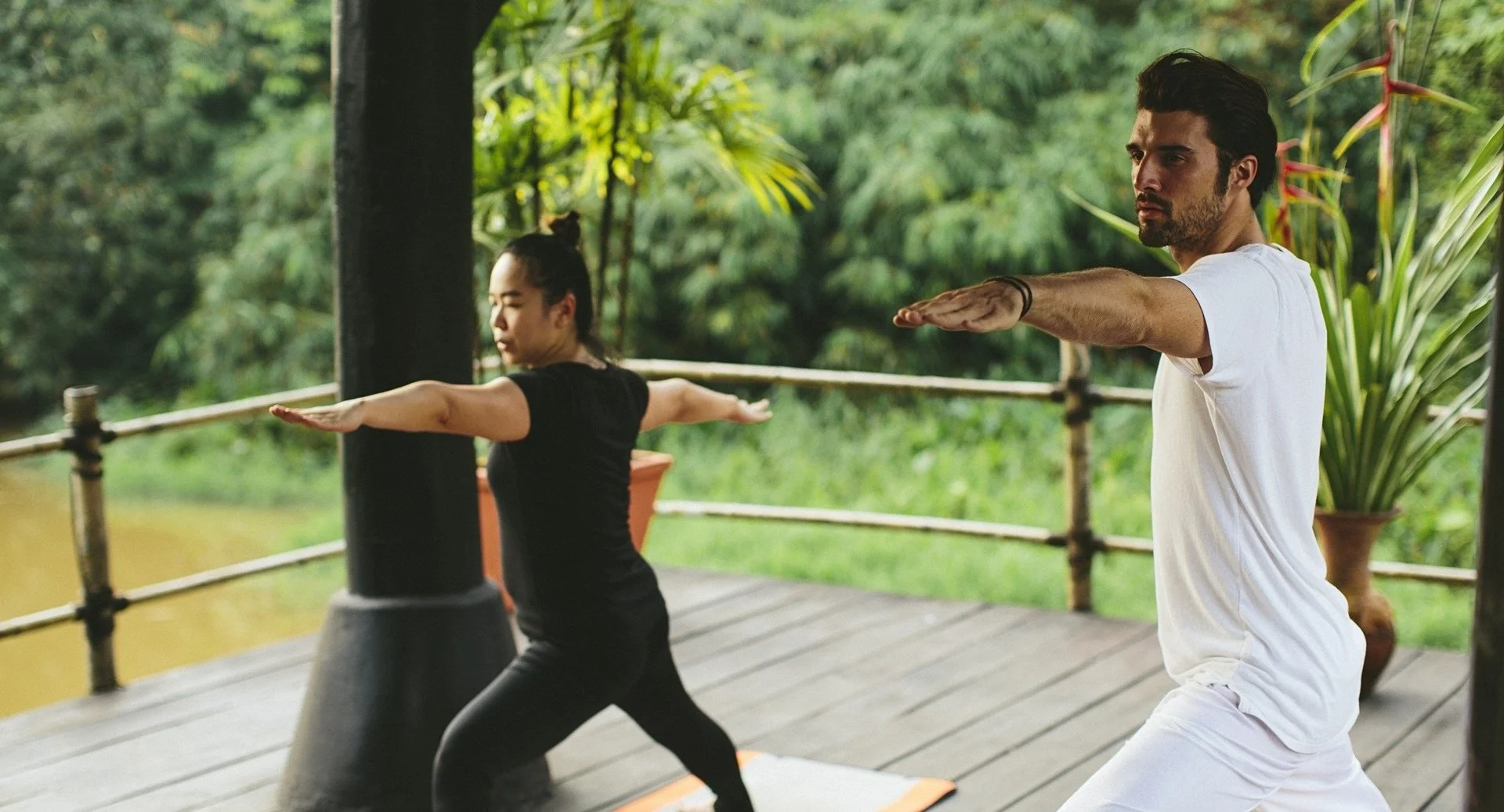
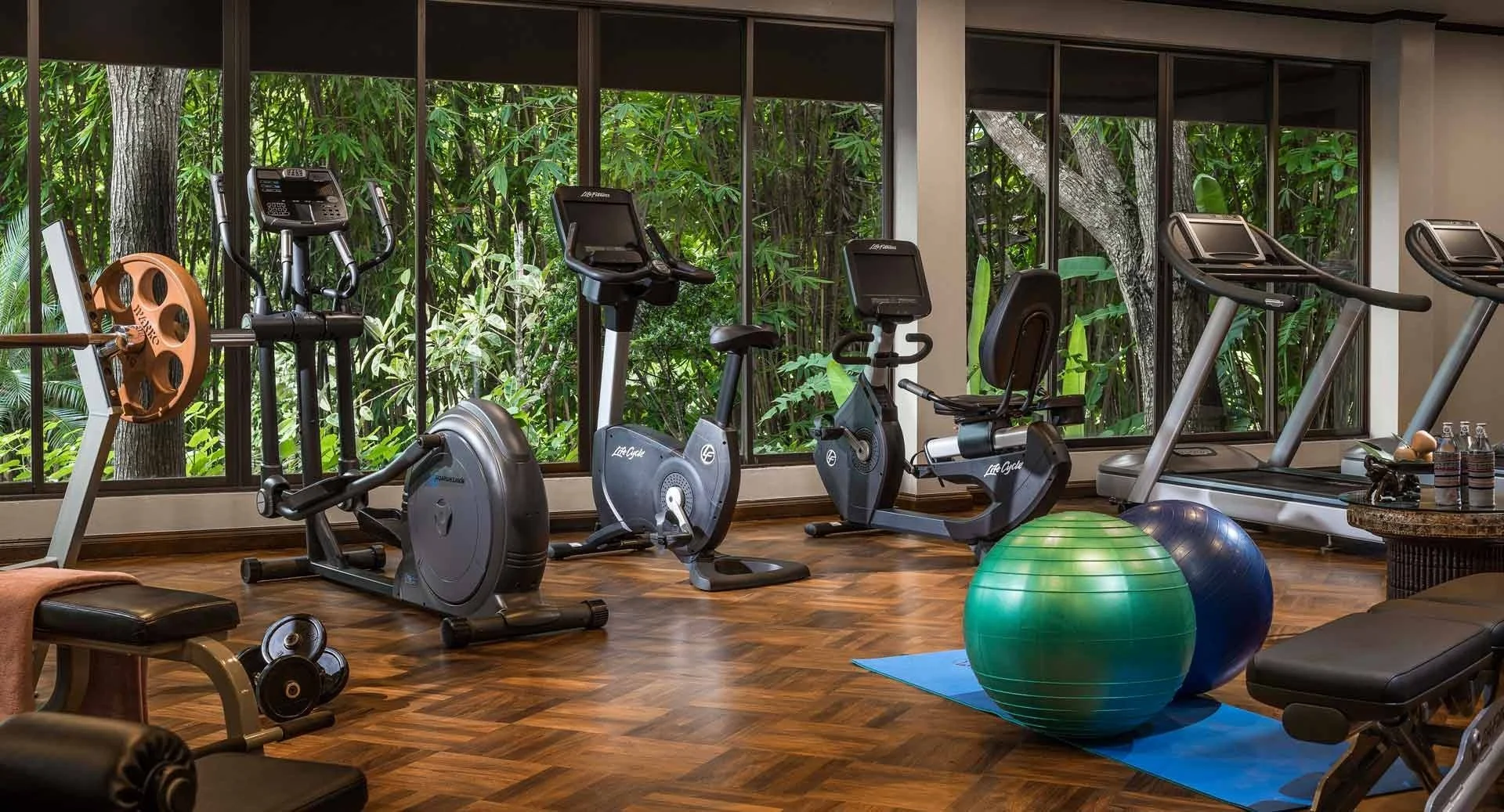
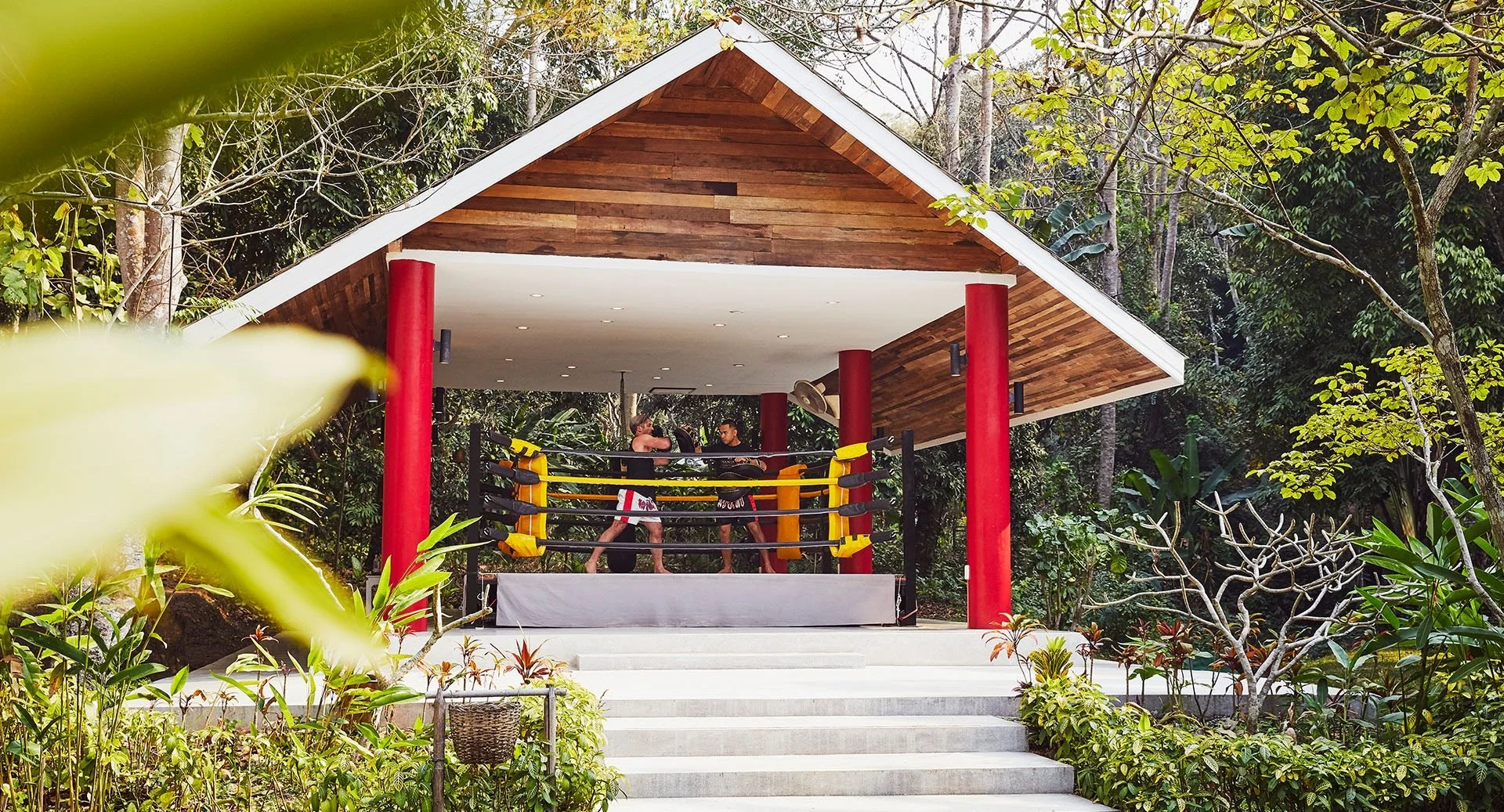
The main infinity pool, fitness center, sauna, steam facilities and whirlpool provide everyday options. Private yoga and mat Pilates, along with Muay Thai sessions, make it possible to balance slower days with structured movement.
Walking With Giants and Sleeping Beneath the Stars
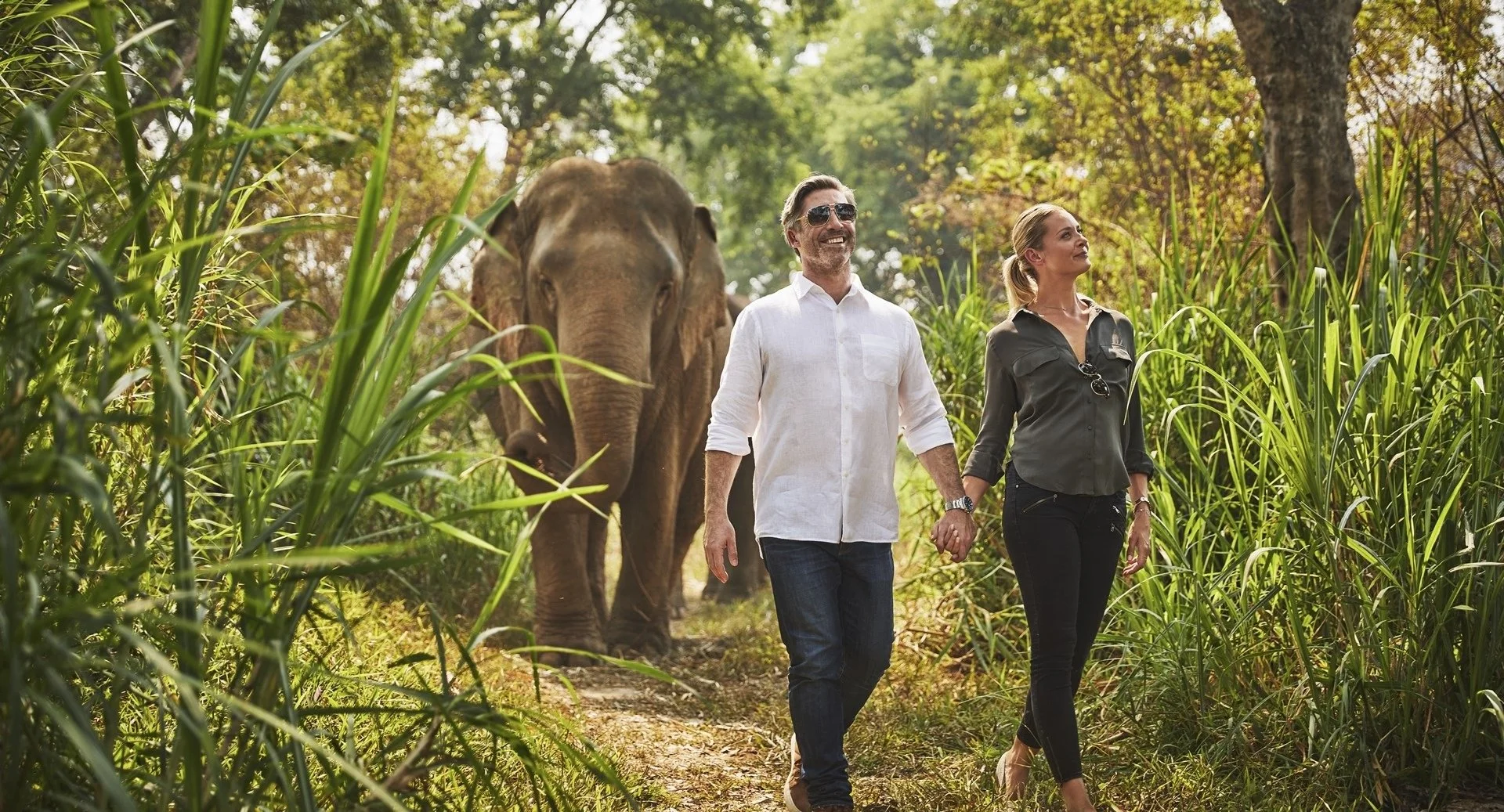
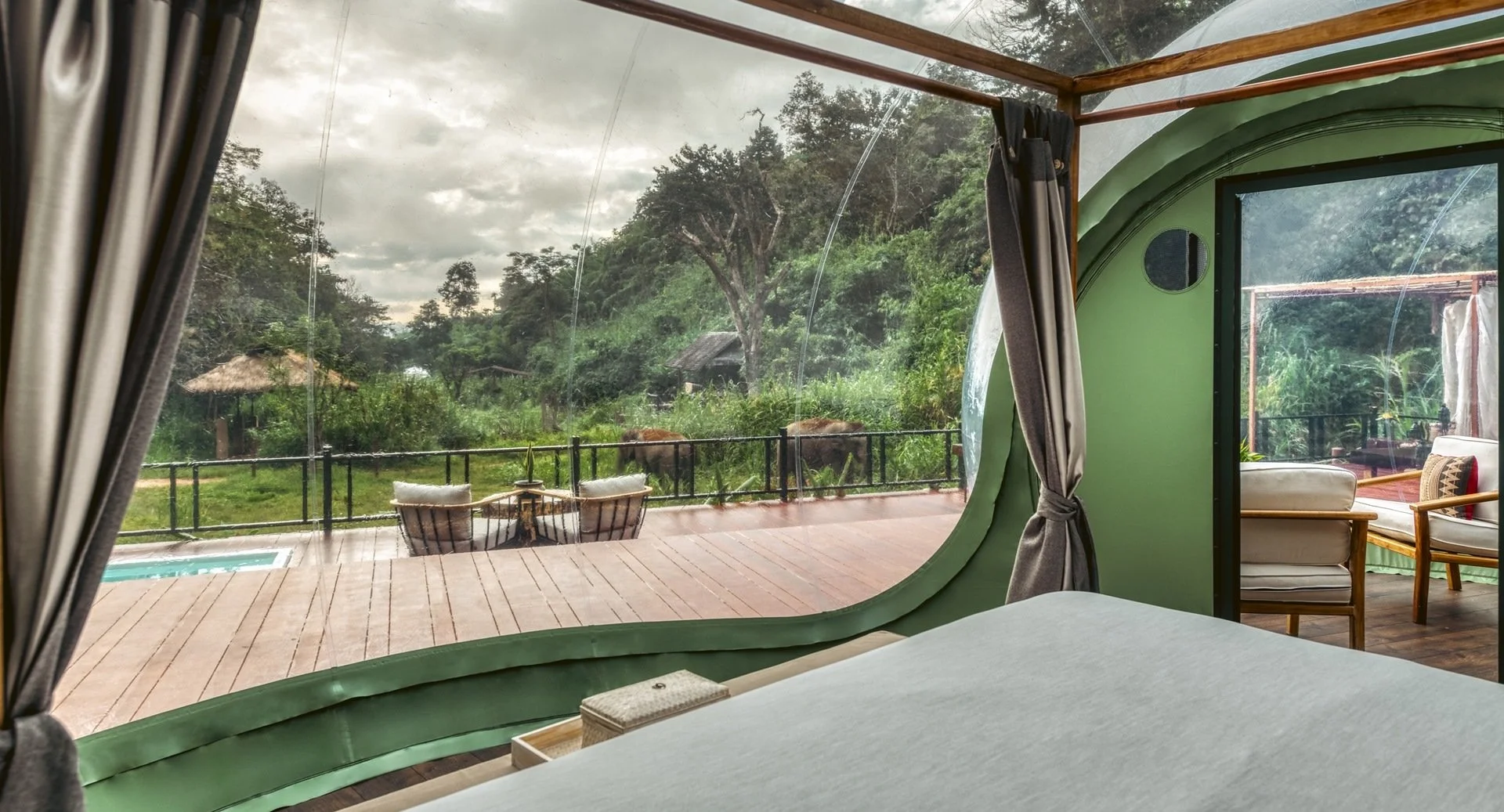
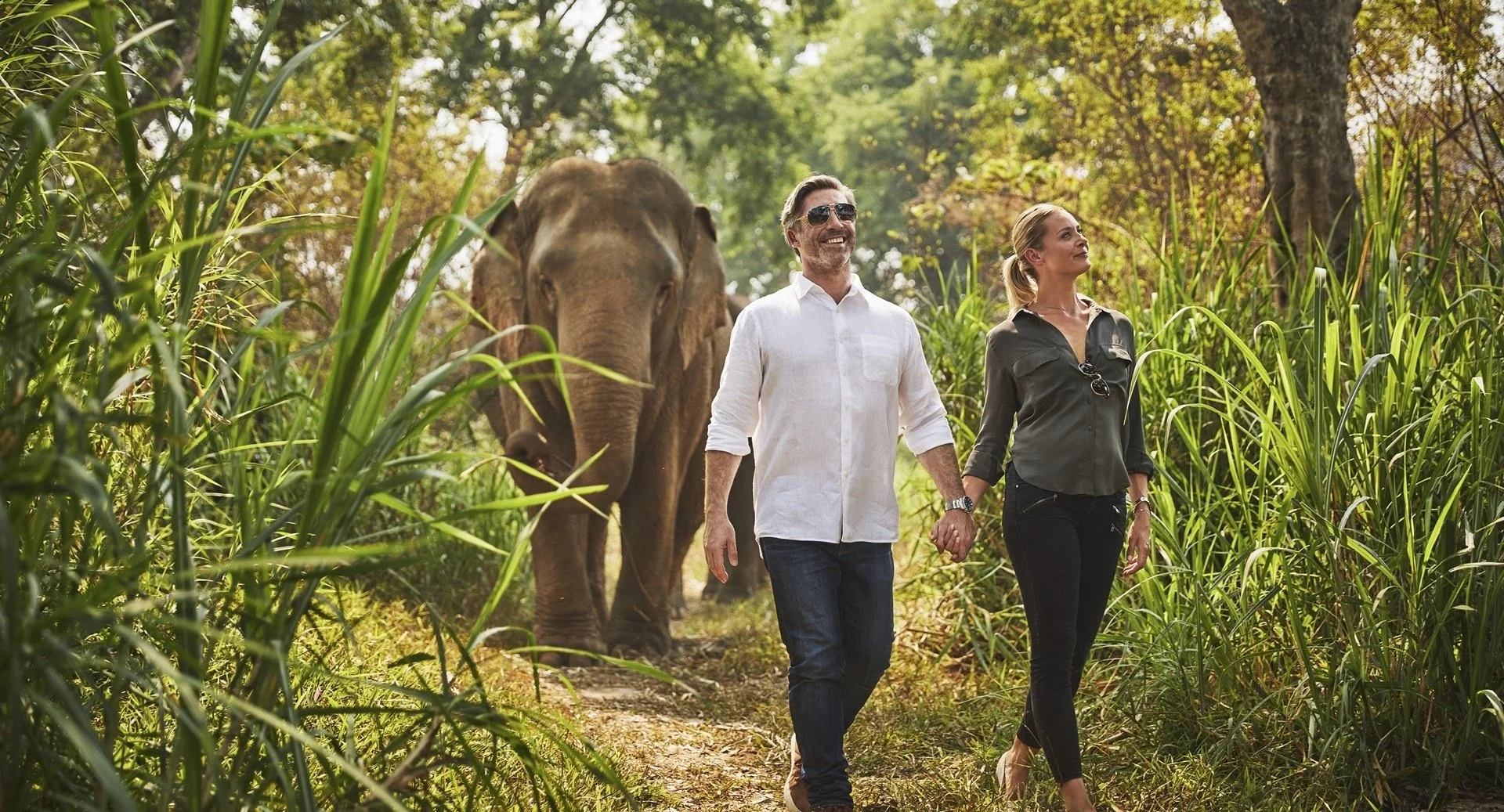
Walking with Giants follows the elephants and their mahouts on daily walks, observing foraging, social behavior and time in the water or mud. The Elephant Learning Experience focuses on behavior, while Elephant Guardian introduces mahout knowledge and aspects of care, including preparing food for older animals. Each offers a different perspective, and the camp team’s guidance shapes the encounter.
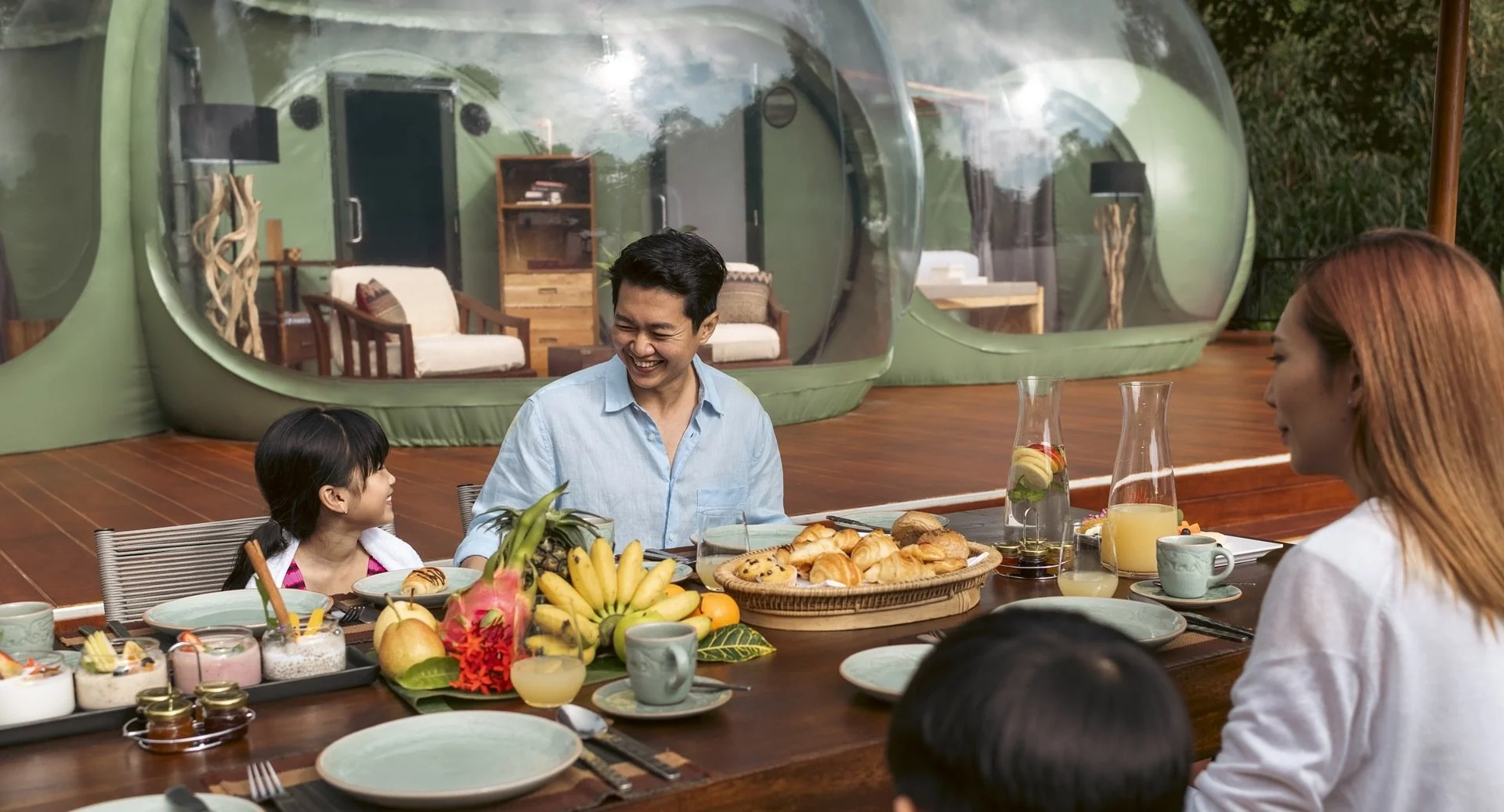
Jungle Bubbles are separate overnight experiences booked in addition to a resort stay. The transparent, air-conditioned sleeping spaces stand on raised decks within the elephant area; privacy is provided in the enclosed bathroom. The larger Jungle Bubble Lodge has two bedrooms, a communal living space, an outdoor deck and a plunge pool. The resort room remains part of the booking, making this a dusk-to-dawn change of setting rather than a replacement room category.
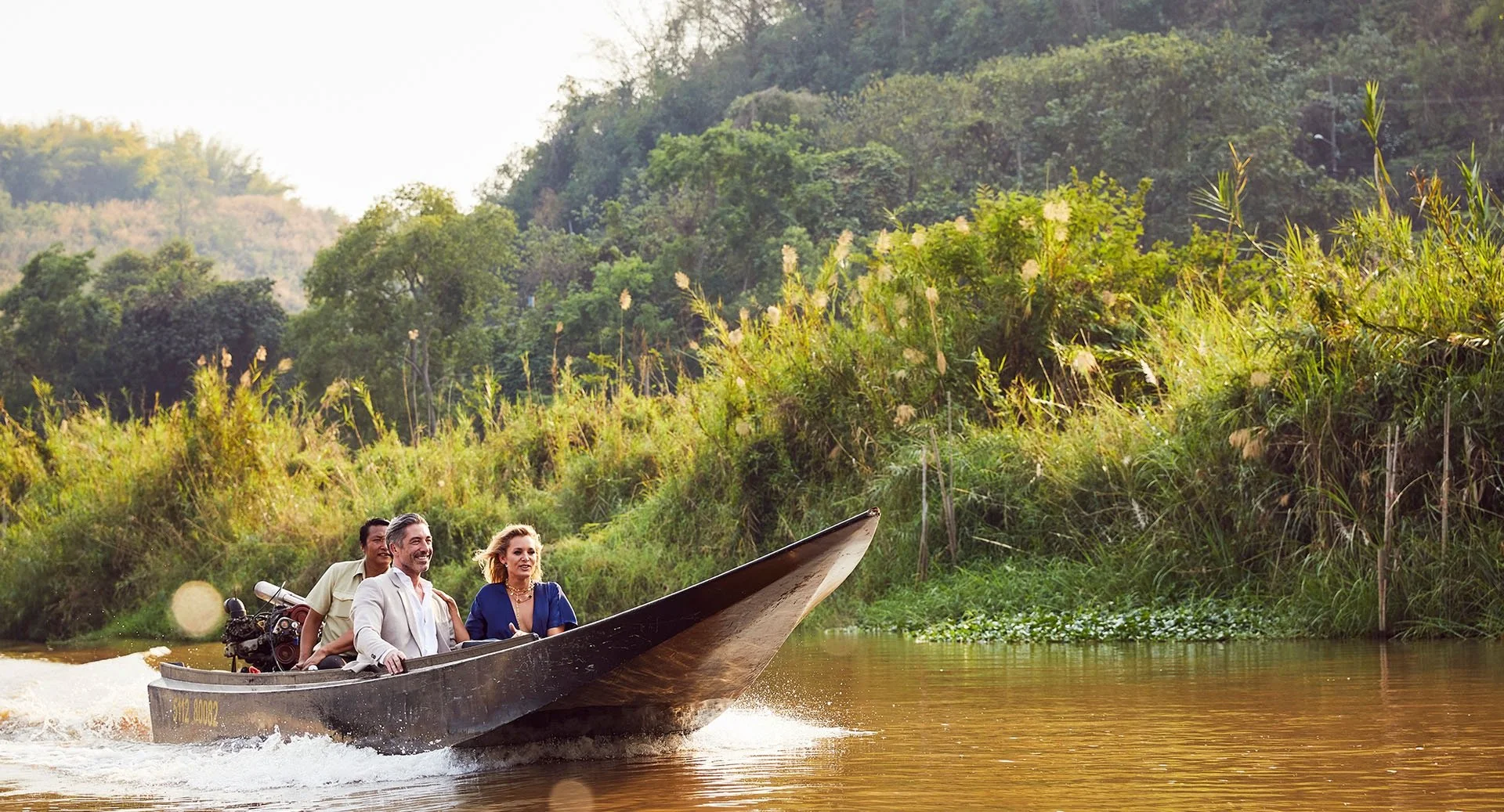
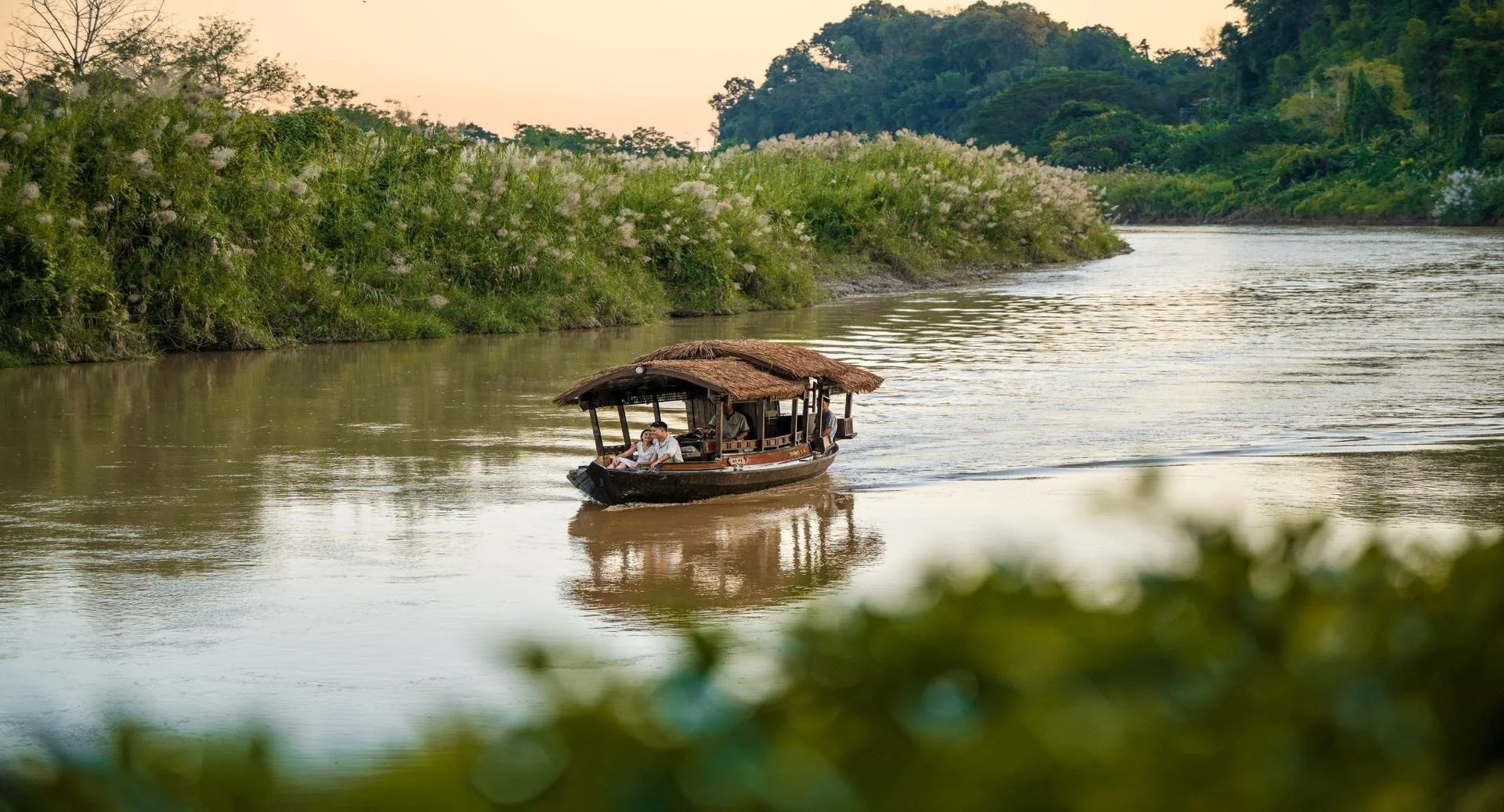
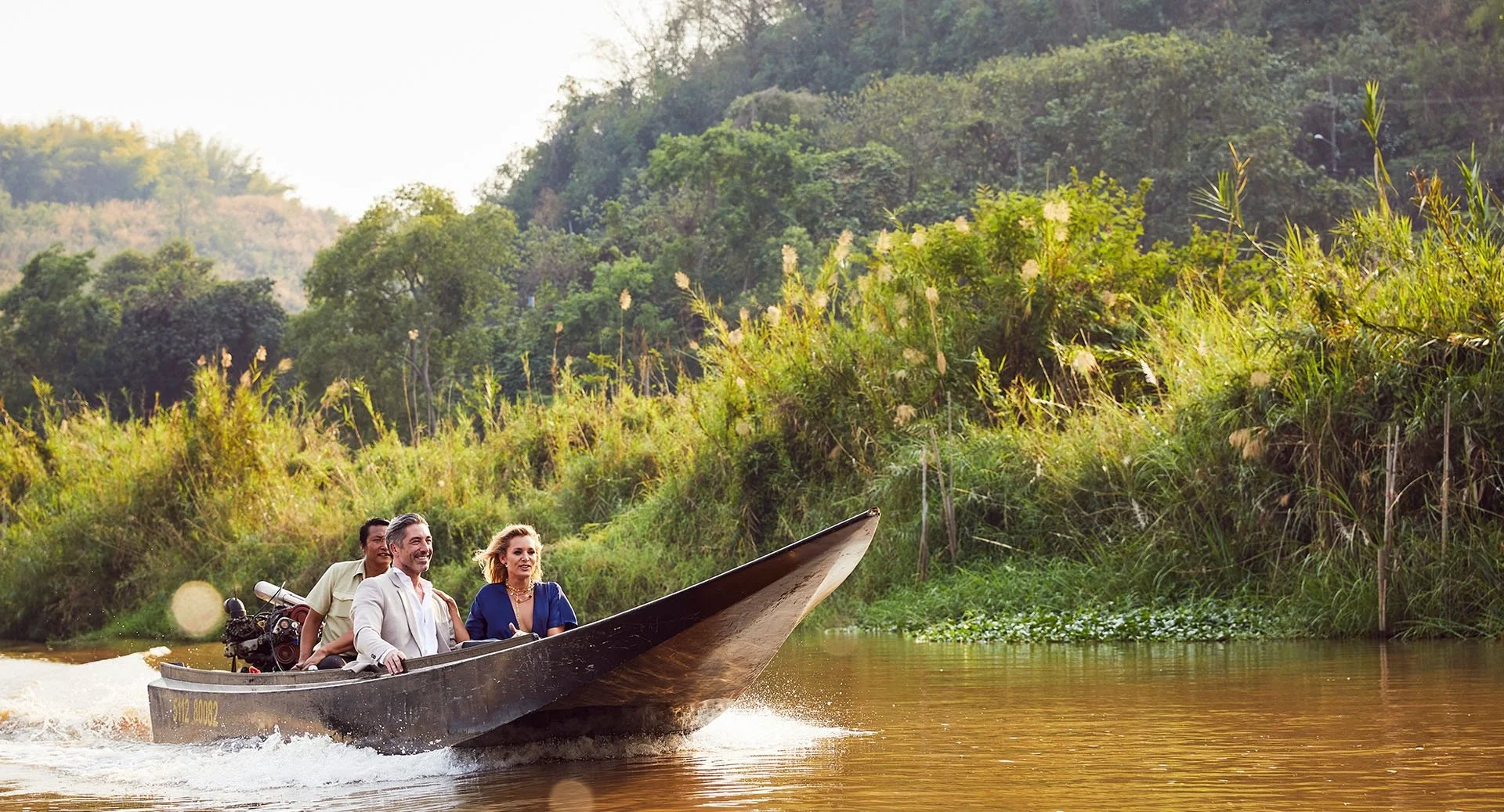
Beyond the camp, a private river journey reveals the meeting of the Ruak and Mekong, while Chiang Saen offers temples including Wat Pa Sak and Wat Chedi Luang. The Hall of Opium merits time for its historical interpretation. Farther afield, Doi Tung’s gardens and craft initiatives introduce a different part of the region’s story.
The resort also arranges Royal Enfield sidecar outings and a tandem Sky Bike above the forest. There is enough variety to fill a busy itinerary, but leaving an afternoon free is equally worthwhile: the pool, a balcony and the changing light over the hills are substantial reasons to stay.
Shared Discoveries for Curious Families
The family suites’ interconnected layouts make the resort a practical option for parents who want distinct sleeping spaces. Two adjacent Mekong Explorer Tents offer another arrangement for a family traveling together, while the Jungle Bubble Lodge provides a two-bedroom overnight experience. Childcare is among the resort’s listed services and should be arranged in advance.
Elephant learning, cooking and river excursions provide shared activities, with individual arrangements matched to the children traveling. Canopy dining and the Sky Bike both have a minimum age of 10. Younger families can instead build their days around suitable camp activities, pool time and shorter outings, without assuming every experience will be appropriate for every age.
Conservation Beyond the Elephant Encounter
The foundation’s work extends beyond the camp to elephant research, habitat protection and efforts to reduce conflict between wild elephants and neighboring communities. On the estate, support for mahout families is part of the care model, connecting animal welfare with stable livelihoods.
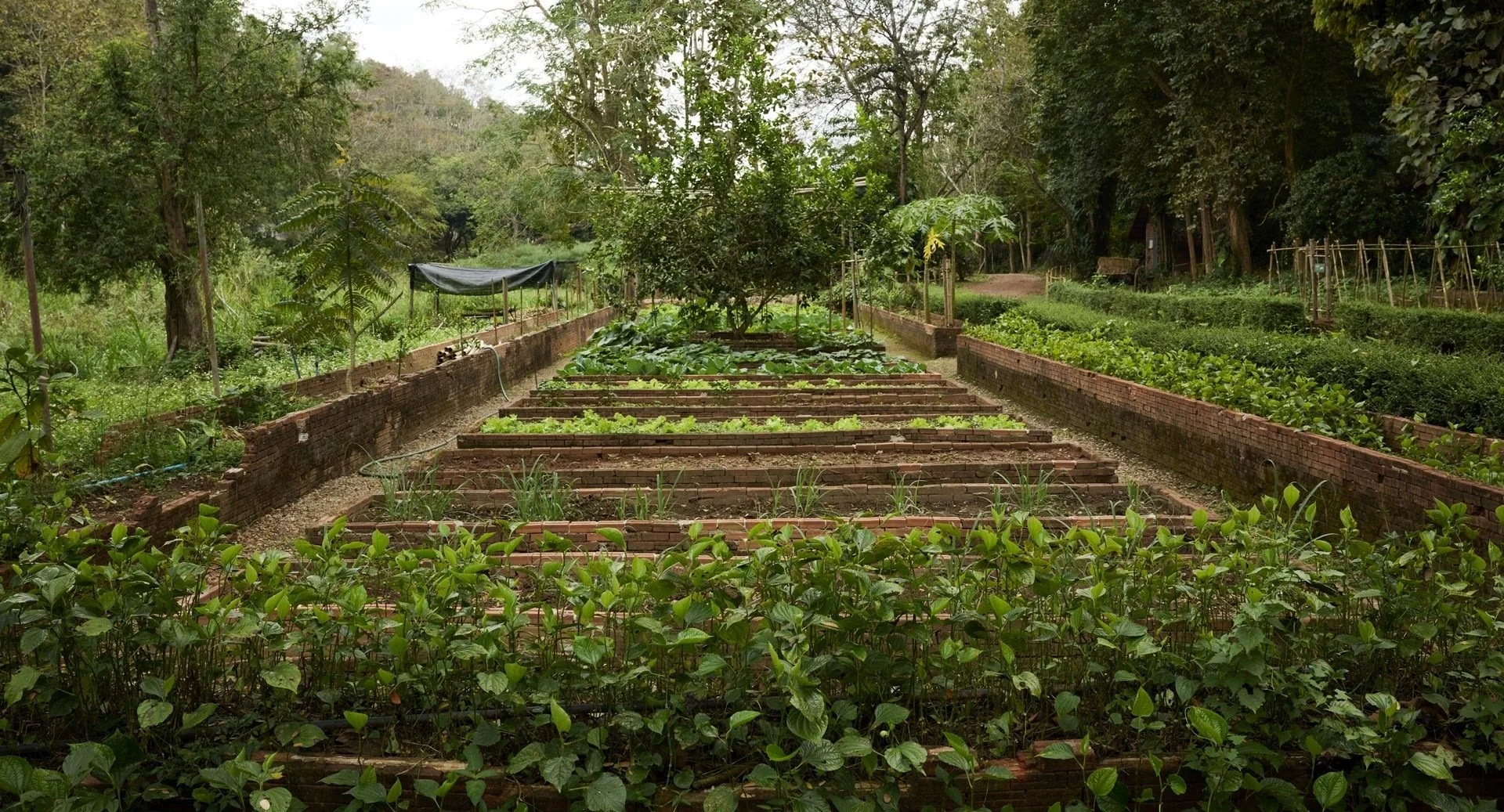
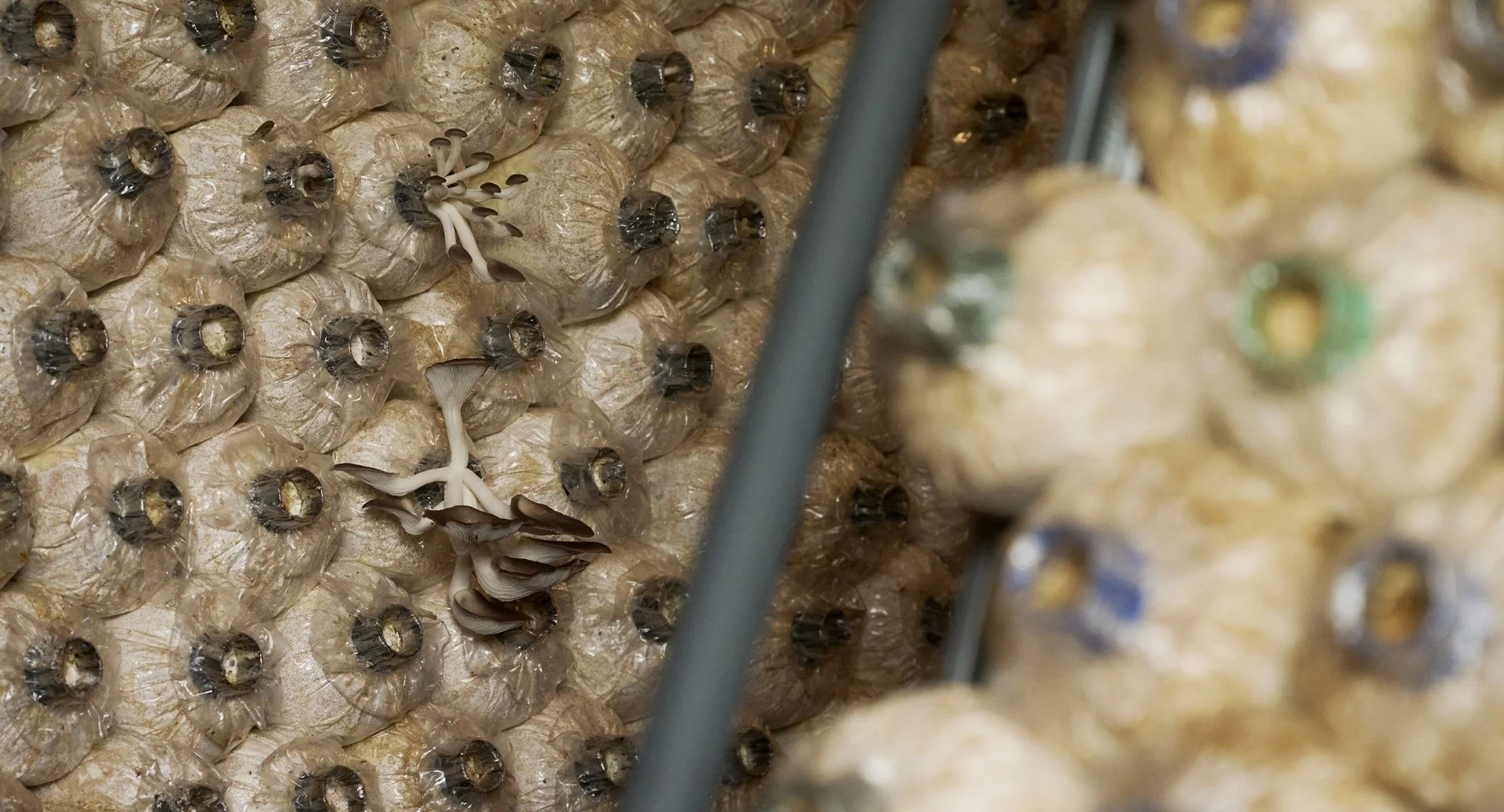
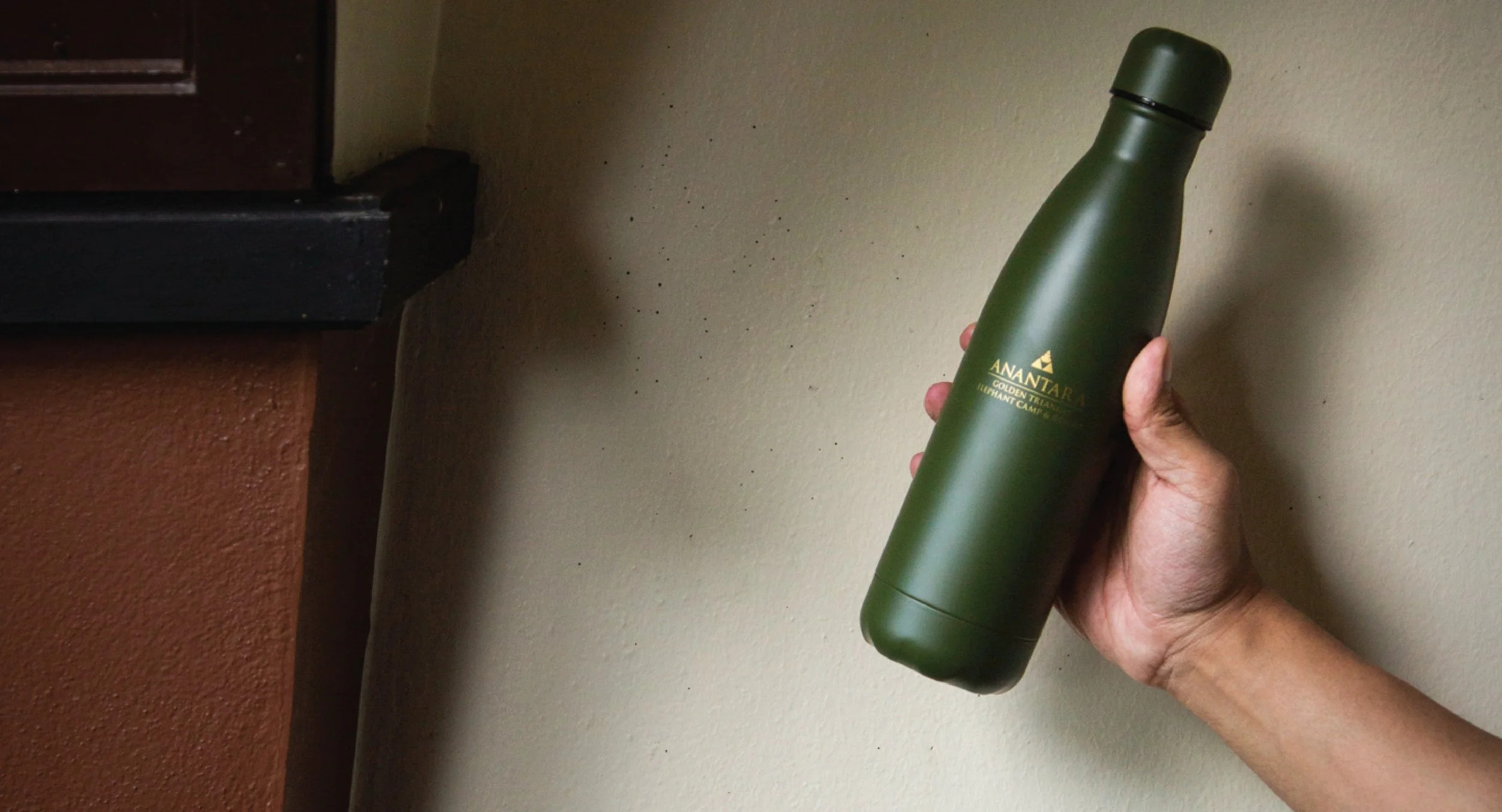
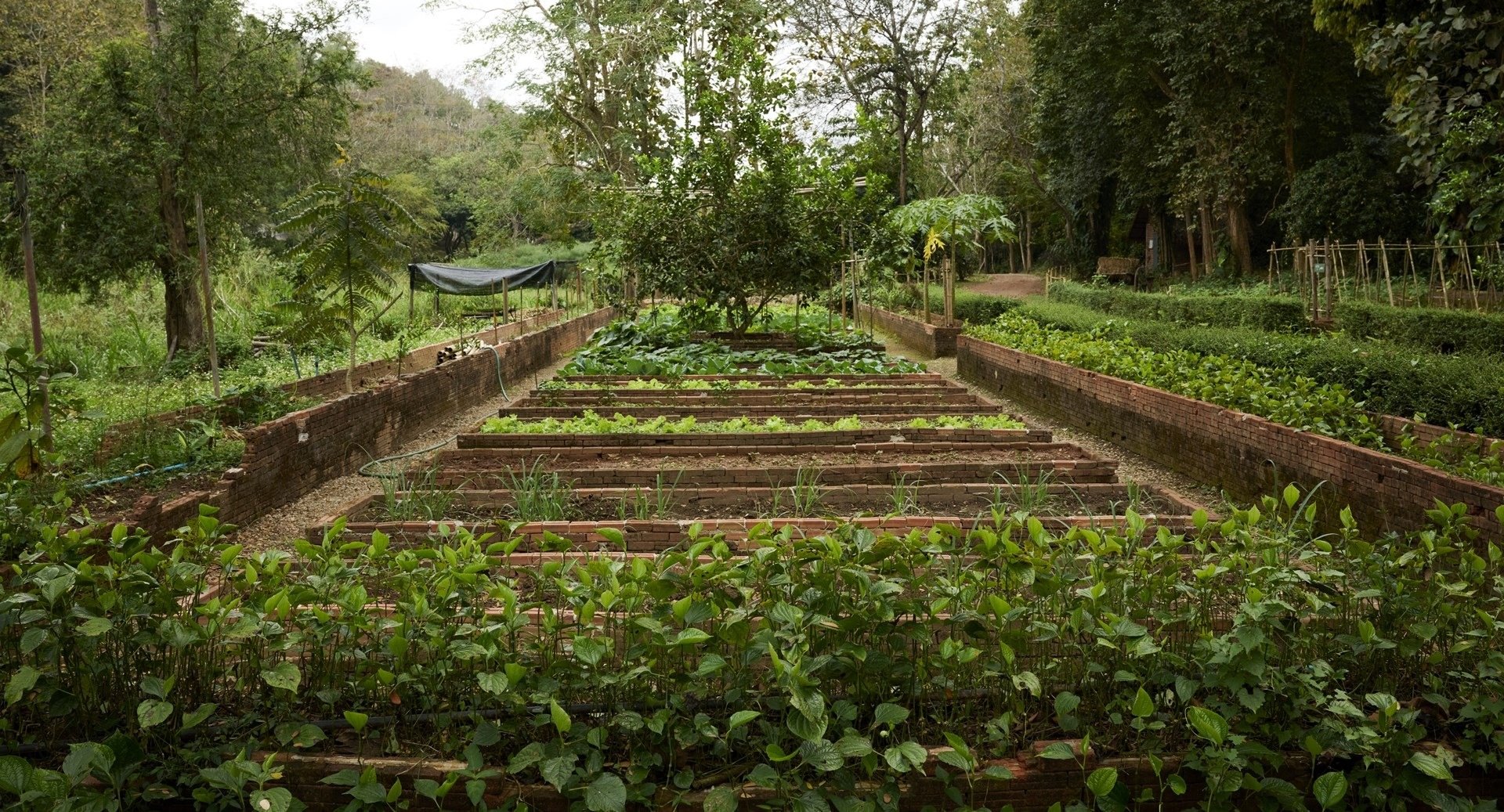
The resort also publishes specific operating practices. Kitchen waste is processed in a biogas digester to supply gas for the staff canteen; solar energy heats laundry water; refillable bathroom amenities reduce disposable packaging. The Suan Sai Jai garden contributes herbs and vegetables, and an on-site apiary supplies honey.
Local sourcing includes Chiang Rai tea, northern Thai coffee and regional dairy products. These are tangible measures worth considering alongside the elephant program, without treating any single certification or encounter as a complete account of a property’s environmental impact.
Planning Around a Hillside Estate
The terrain is integral to the experience: accommodation, the elephant area, river access and spa occupy different settings across the estate. The spa is a multilevel pavilion, while forest walks, boat boarding and elevated dining introduce distinct movement requirements.
Travelers with mobility needs should have our team arrange a property-specific review of the proposed room, bathroom, routes to dining and pool areas, and transport between activities. A conventional road arrival may be a more practical choice than the river-based Explorer’s Arrival, depending on boarding requirements. Matching the actual route and accommodation to the individual is particularly valuable here.
Cool Mornings and the Green Season
November through February generally brings the most comfortable conditions for exploring, with cooler mornings and evenings. March through May is hotter. Northern Thailand can also experience significant seasonal smoke and haze, particularly in March and April, affecting both air quality and the long views that define this location.
The wetter green season, broadly June through October, brings fuller vegetation and a different atmosphere across the estate. Outdoor meals, river trips and forest activities need flexibility around rainfall and conditions. Travel dates should reflect whether the priority is long days outdoors, cooler weather or time enjoying the resort between shorter excursions.
Plan Your Golden Triangle Stay With Destinations by David
Anantara Golden Triangle Elephant Camp & Resort participates in Virtuoso. Through our Virtuoso affiliation, Destinations by David can help you make the most of an eligible reservation while coordinating the details that shape the stay: the right suite or tent, elephant experiences, special dining and onward travel.
Our team can also compare the resort’s packages, arrange a Jungle Bubble night and create a comfortable balance between scheduled experiences and time on the estate. That planning is especially useful when combining the Golden Triangle with Chiang Mai, Bangkok or a beach stay farther south.
Contact us to plan and book a northern Thailand journey built around your interests, with the accommodation, transfers and key experiences considered together.
The Journey to Anantara Golden Triangle
Arrival Airport: Mae Fah Luang–Chiang Rai International Airport is the closest practical gateway, approximately one hour from the resort by road.
Private Resort Transfer: A prearranged car connects the airport with the estate in approximately one hour; round-trip airport transfers are included in the Golden Triangle Luxury Explorer Package.
Explorer’s Arrival: A combined private-car and river journey through Chiang Saen reaches the resort’s jetty, taking approximately two hours from Chiang Rai Airport to the hotel lobby.
From Chiang Mai: Allow approximately 4.5 hours by chauffeured car, with additional time for stops and road conditions.
Helicopter Transfer: The resort advertises a private charter from Chiang Mai with approximately 70 minutes of flying time, subject to advance arrangements, operating conditions and availability.
The ordinary arrival is entirely by road, so a boat connection is optional. Scheduling the first evening lightly leaves time for airport formalities, the transfer and a relaxed introduction to the valley.
Time to Read the Landscape
Anantara Golden Triangle is most compelling when the stay moves between close observation and a wider view: an elephant choosing its path, ingredients gathered for a cooking lesson, temple brickwork in Chiang Saen, then the rivers and hills from a terrace. Its character comes from these connections. With enough time to follow them, the resort becomes a thoughtful way into northern Thailand and the border landscape beyond.