Chobe National Park, Botswana | Savute Elephant Lodge, A Belmond Safari
A Front-Row Seat to Savute
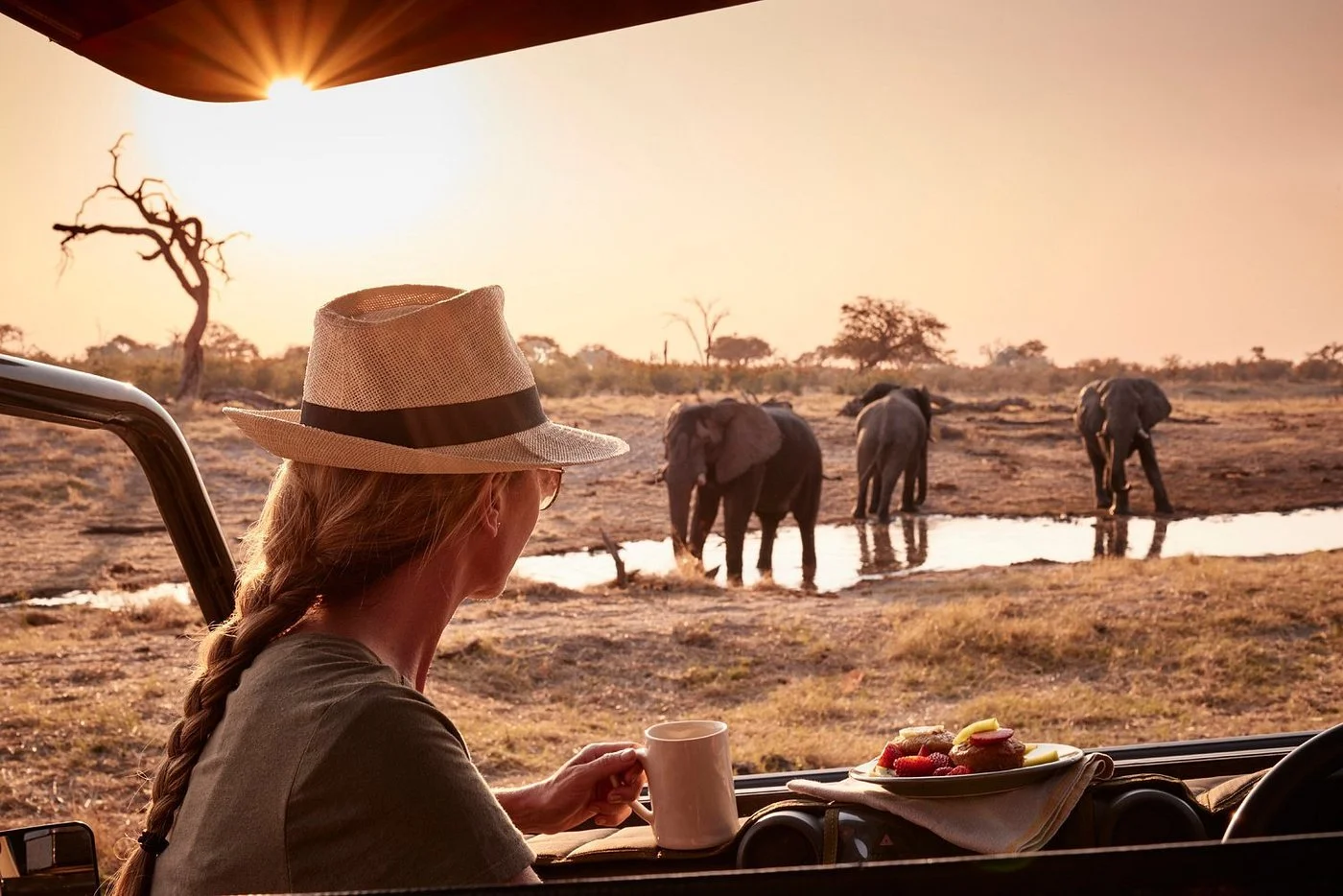
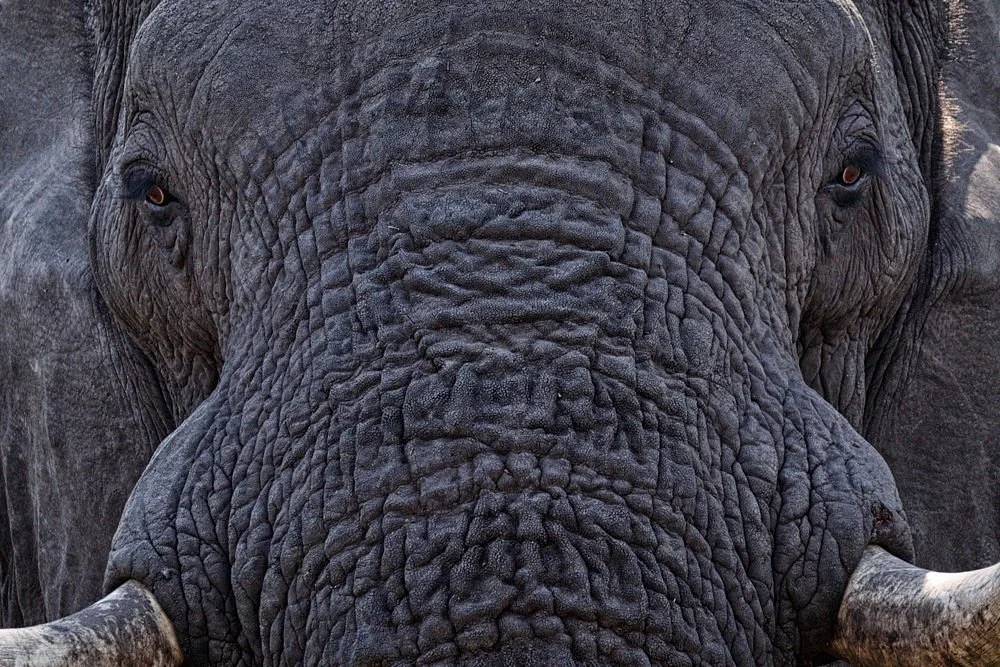
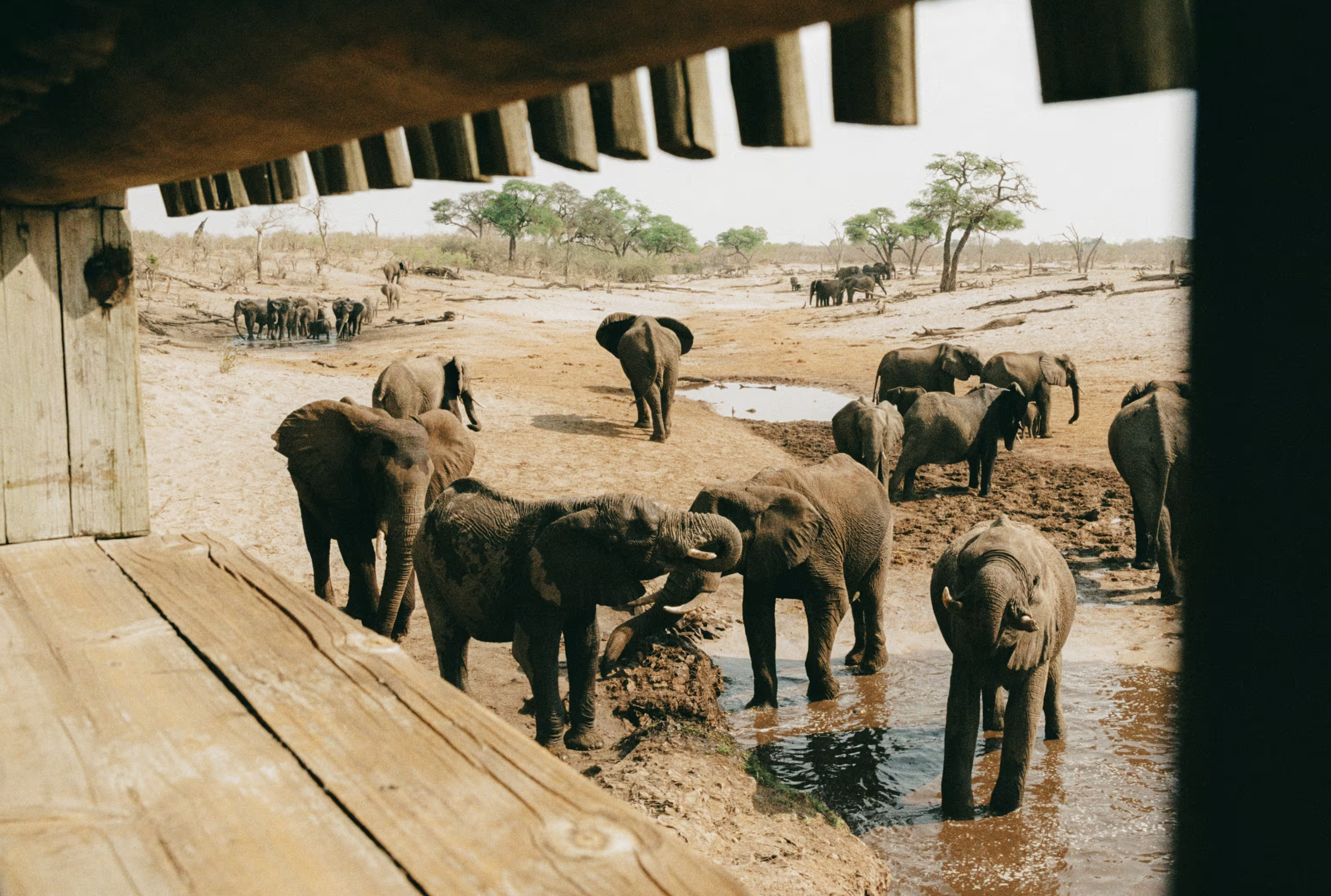
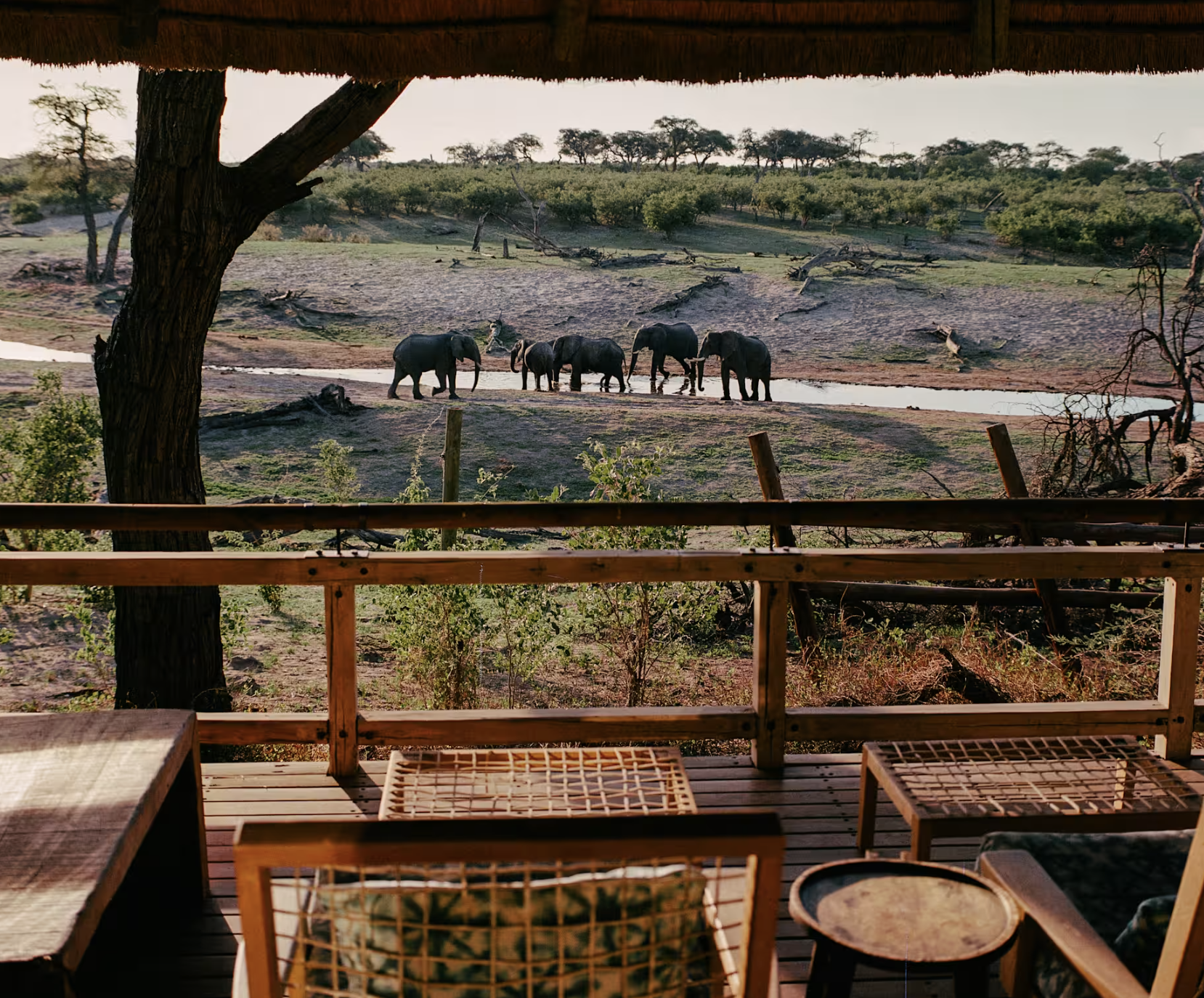
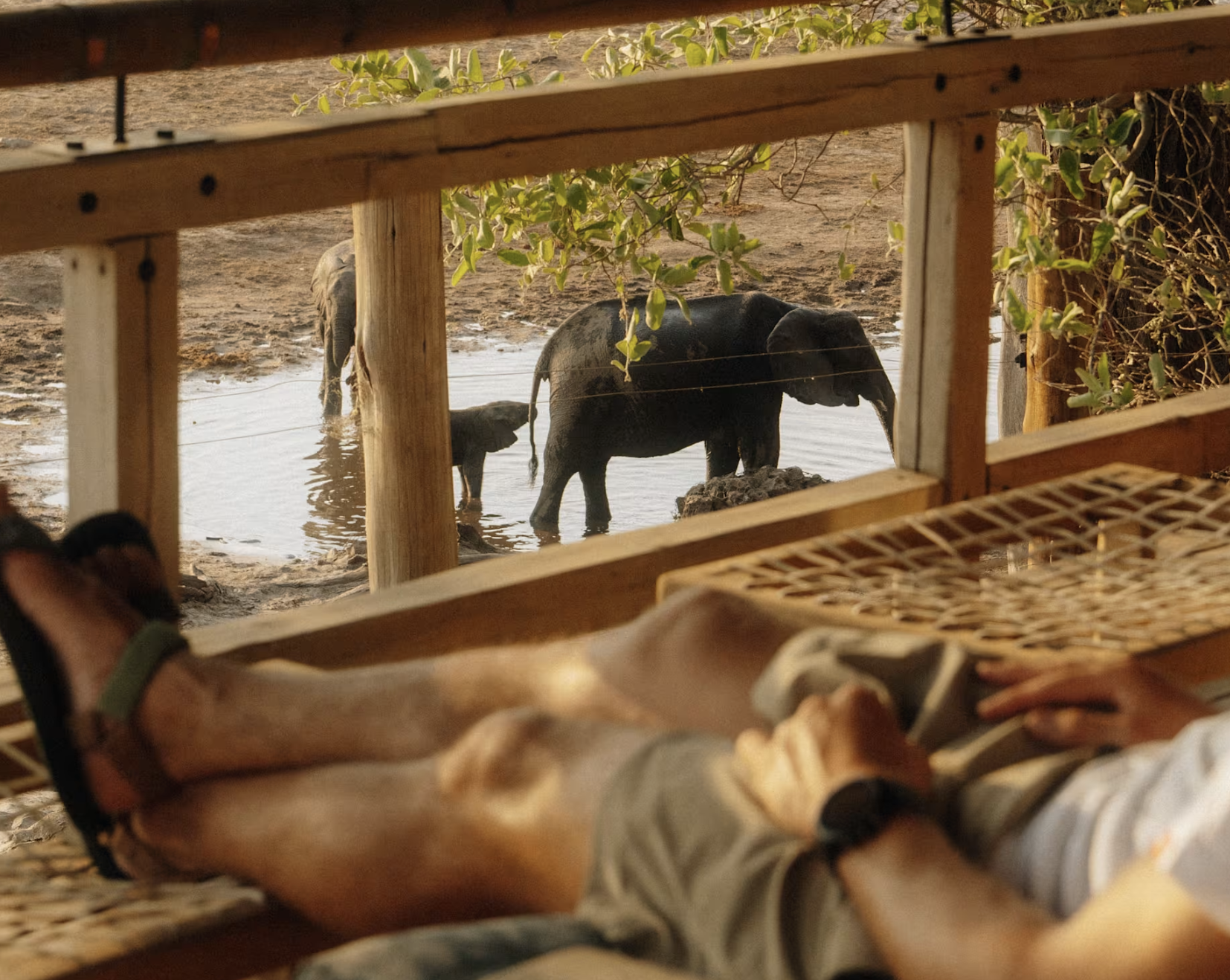
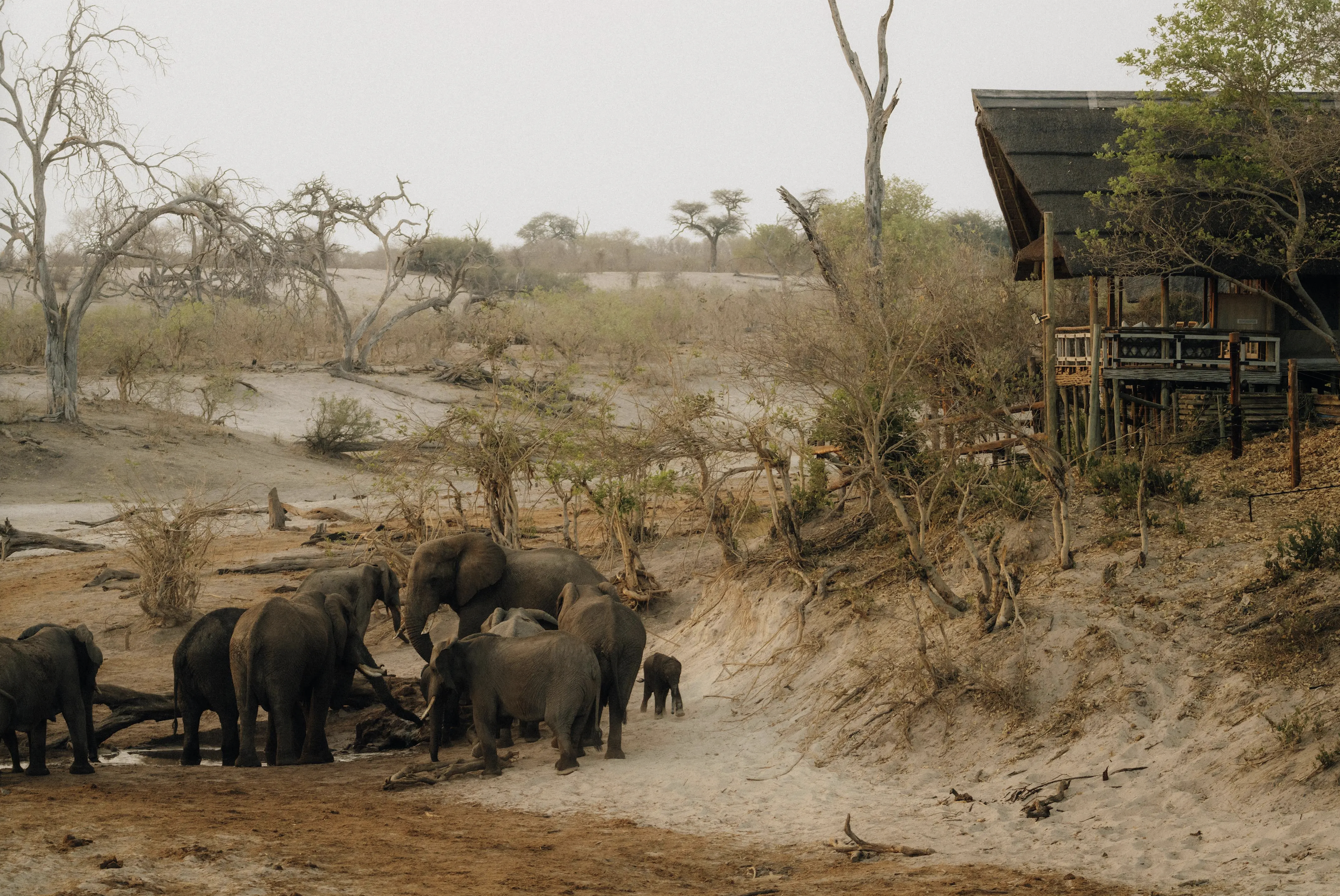
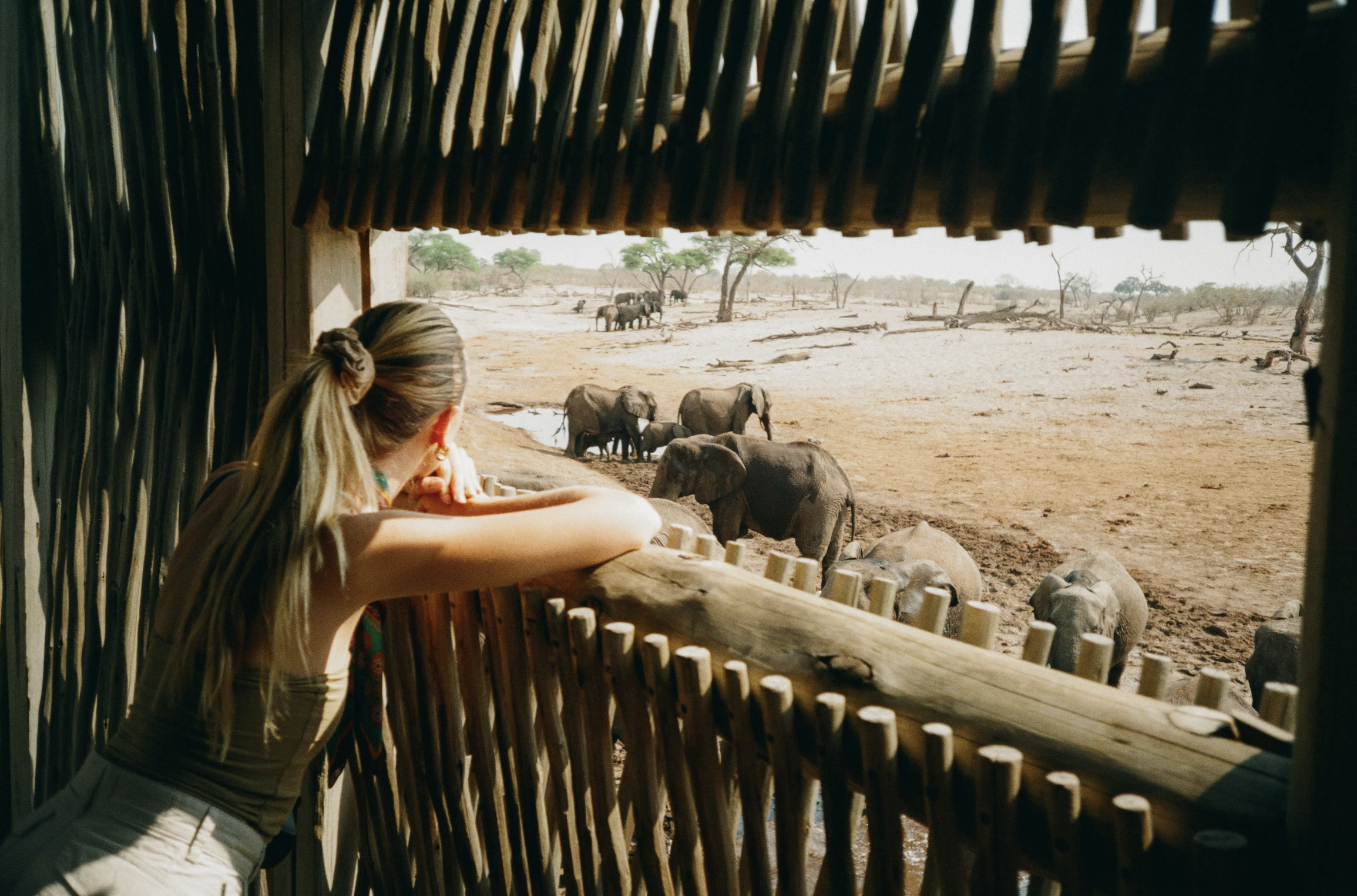
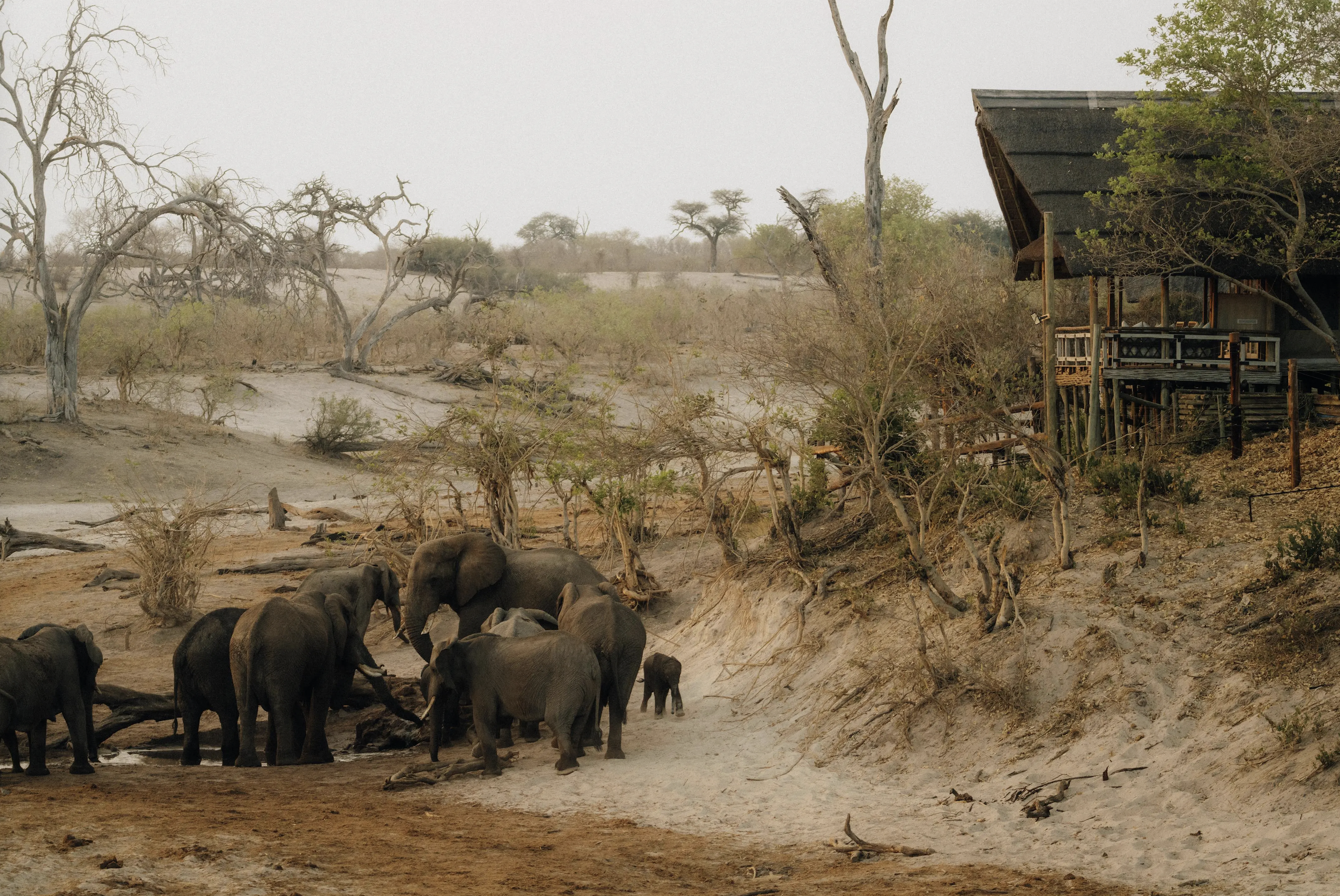
An elephant approaching the waterhole can change the pace of an entire afternoon at Savute Elephant Lodge. Conversation pauses, binoculars come out, and the view beyond the deck becomes the center of attention. In this remote corner of Botswana’s Chobe National Park, wildlife remains part of the day even after the safari vehicle returns to camp.
With just 12 tented rooms, the lodge offers an intimate base for exploring Savute, a region celebrated for its elephants, predators, and dramatic seasonal changes. Raised accommodation, open-air gathering spaces, and a viewing hide facing the waterhole keep the surrounding landscape in view. Between outings, there is time for a swim, a treatment, or an unhurried lunch.
For us, the appeal lies in that balance. The lodge provides considerable comfort while leaving room for the unpredictability that makes a safari memorable. A morning might revolve around tracking lions; an afternoon might be spent watching the changing traffic at the waterhole. Neither needs to be rushed.
A Landscape with a Long Memory
Savute’s story begins with the land itself. The Savute Channel has alternated between periods of flowing water and prolonged dryness, transforming the surrounding habitat and influencing the movement of animals. Standing dead trees in parts of the landscape are reminders of those changes. The channel should never be understood as a permanently flowing river, and its condition can differ considerably between visits.
Human history is also visible here. Rock paintings associated with San communities depict animals including giraffes and elephants, connecting the wildlife seen on safari with a much older cultural landscape. Exploring these sites with a guide adds context to a destination often discussed primarily in terms of animal sightings.
The lodge’s contemporary identity took shape through a major redesign in 2018. MuzaLab, led by Inge Moore, shaped the interiors, while Luxury Frontiers worked on the architecture and infrastructure. The project brought renewed attention to both the guest spaces and the practical demands of operating in a remote wilderness setting.
Canvas, Thatch, and Open Views
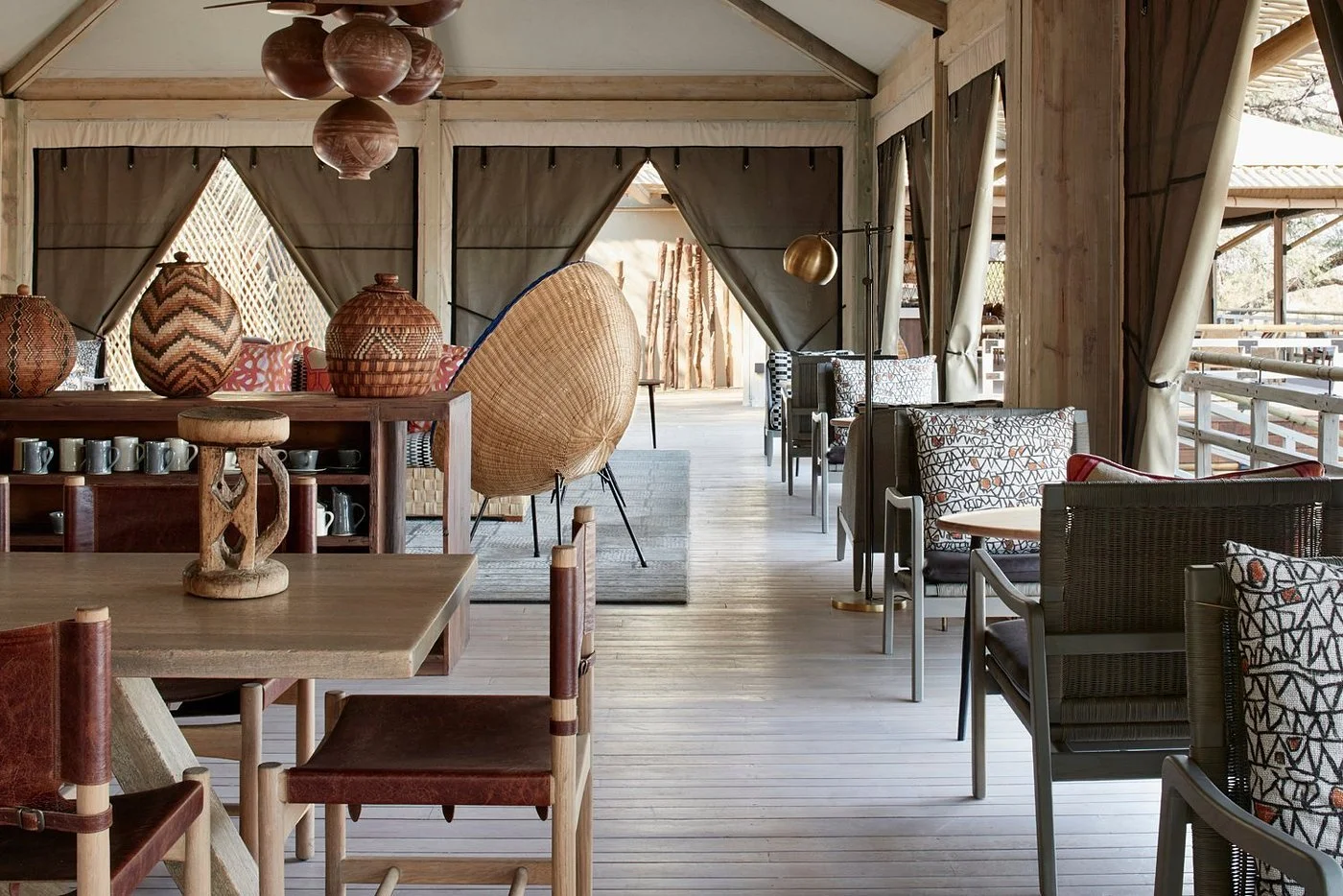
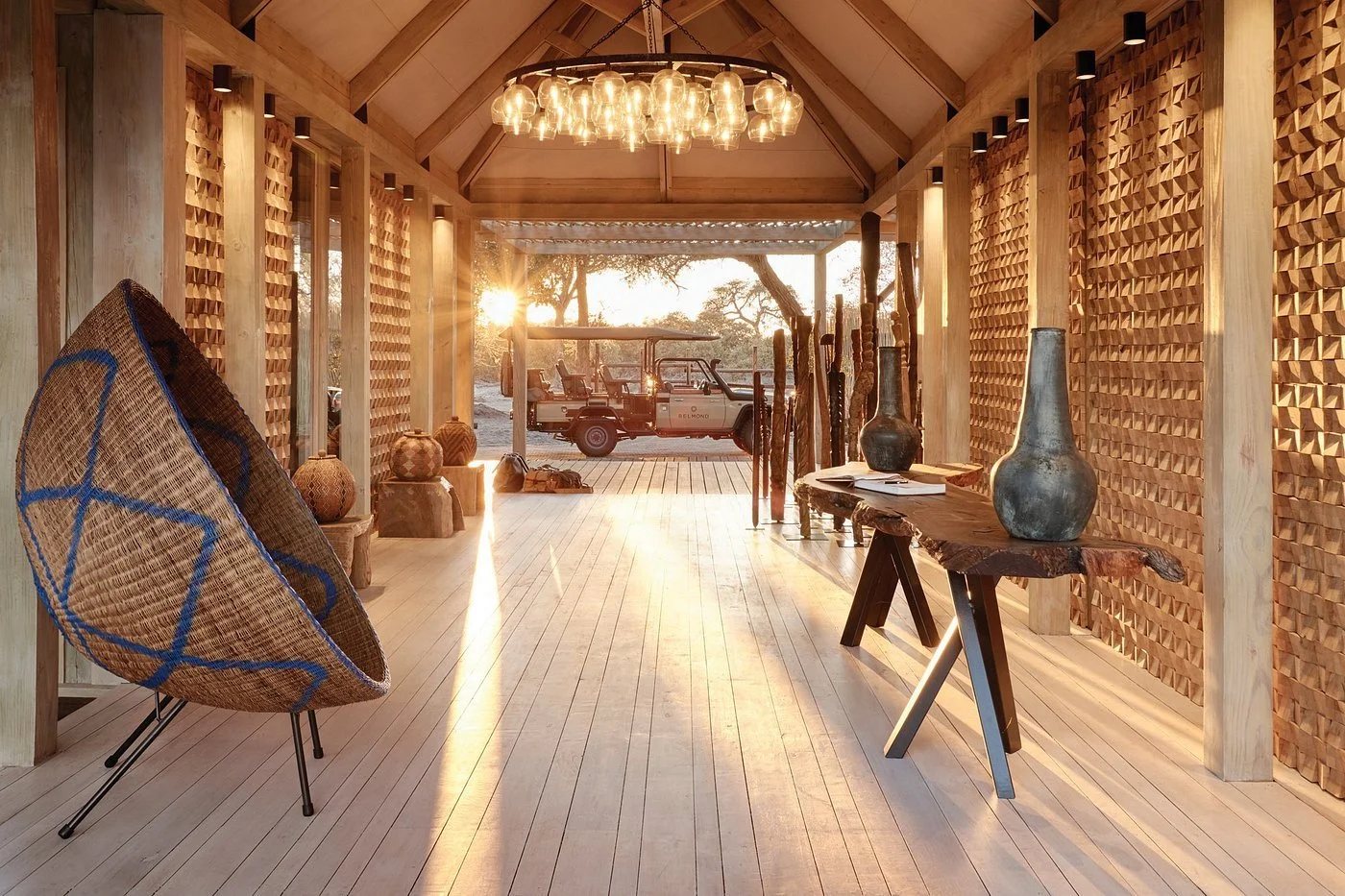
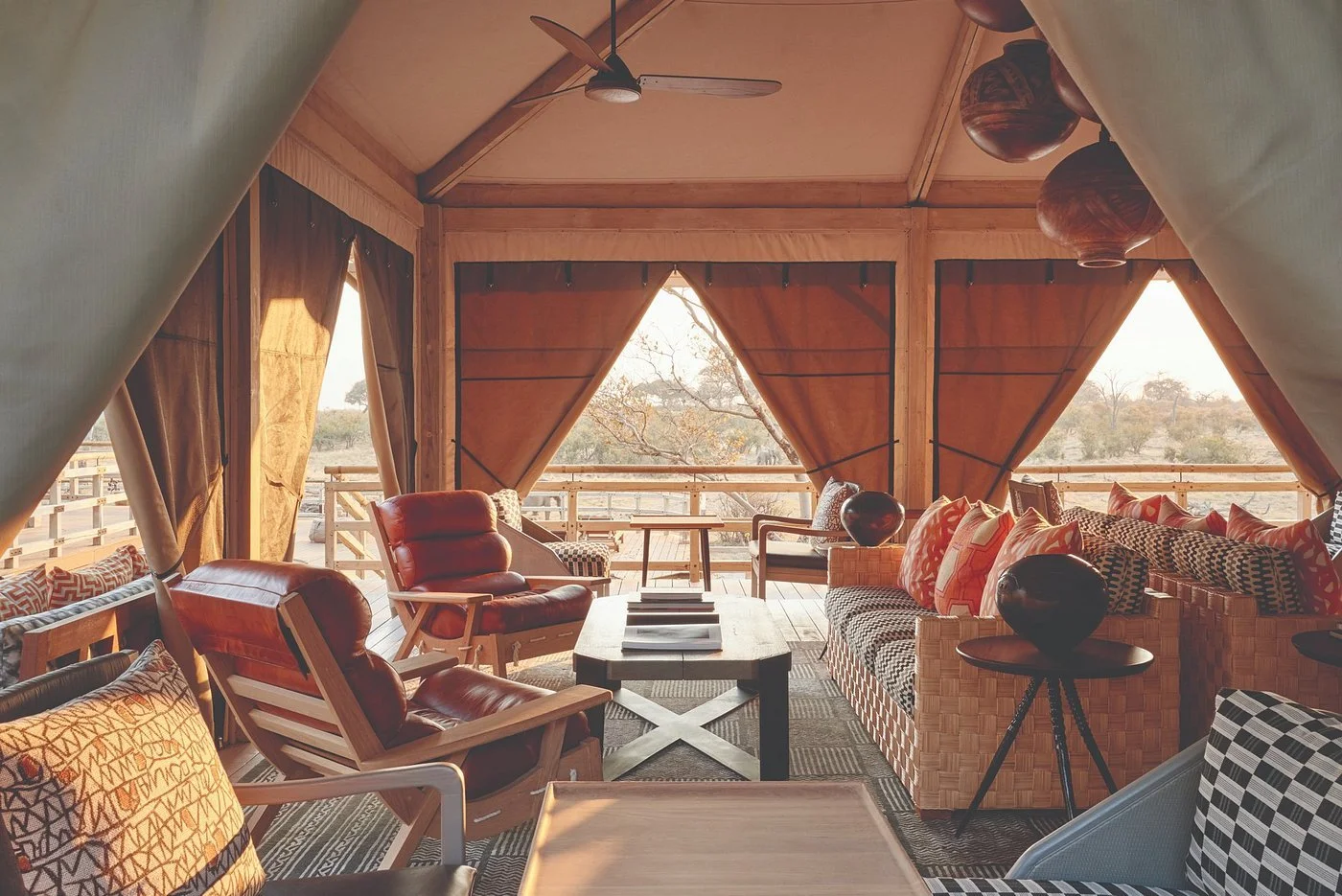
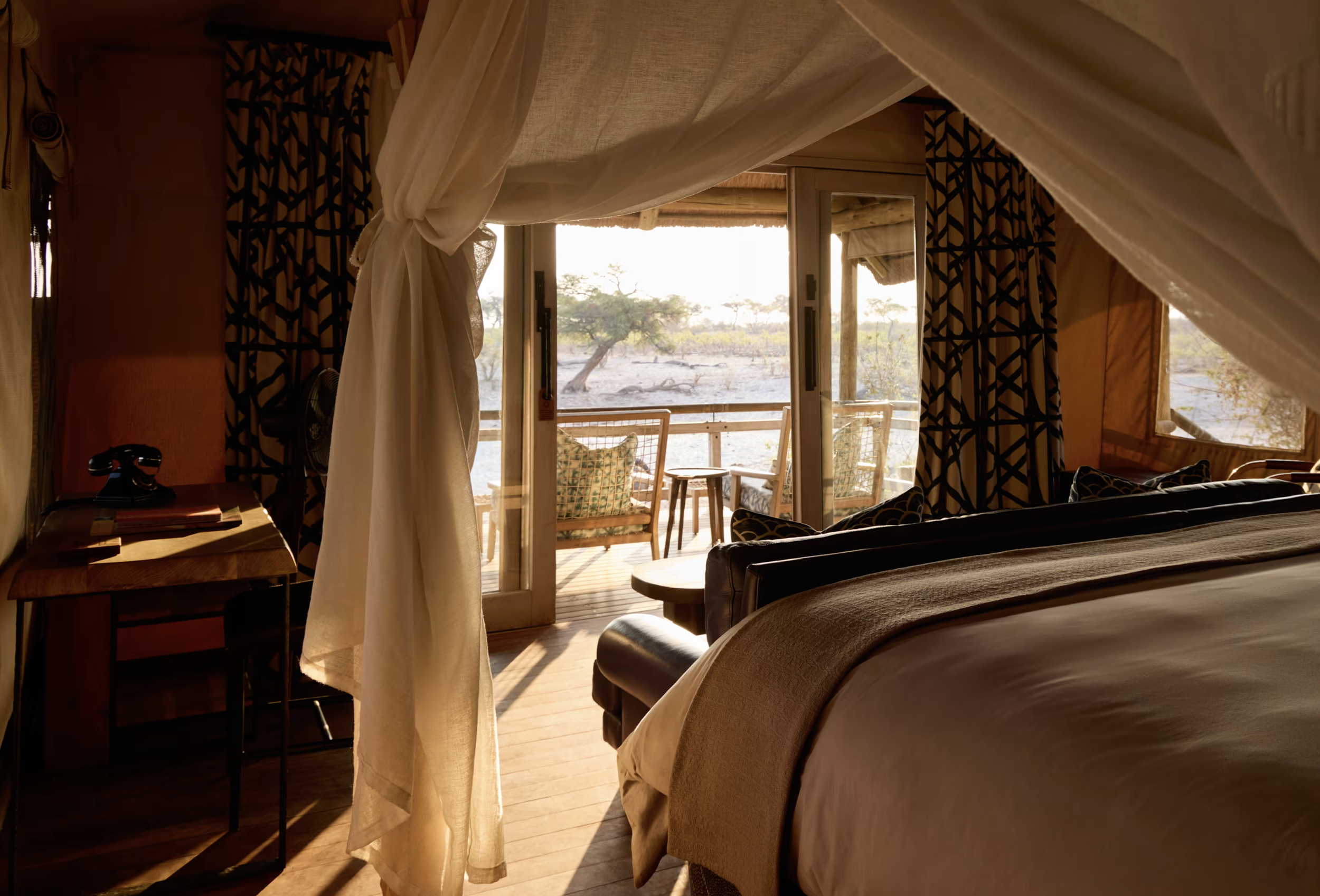
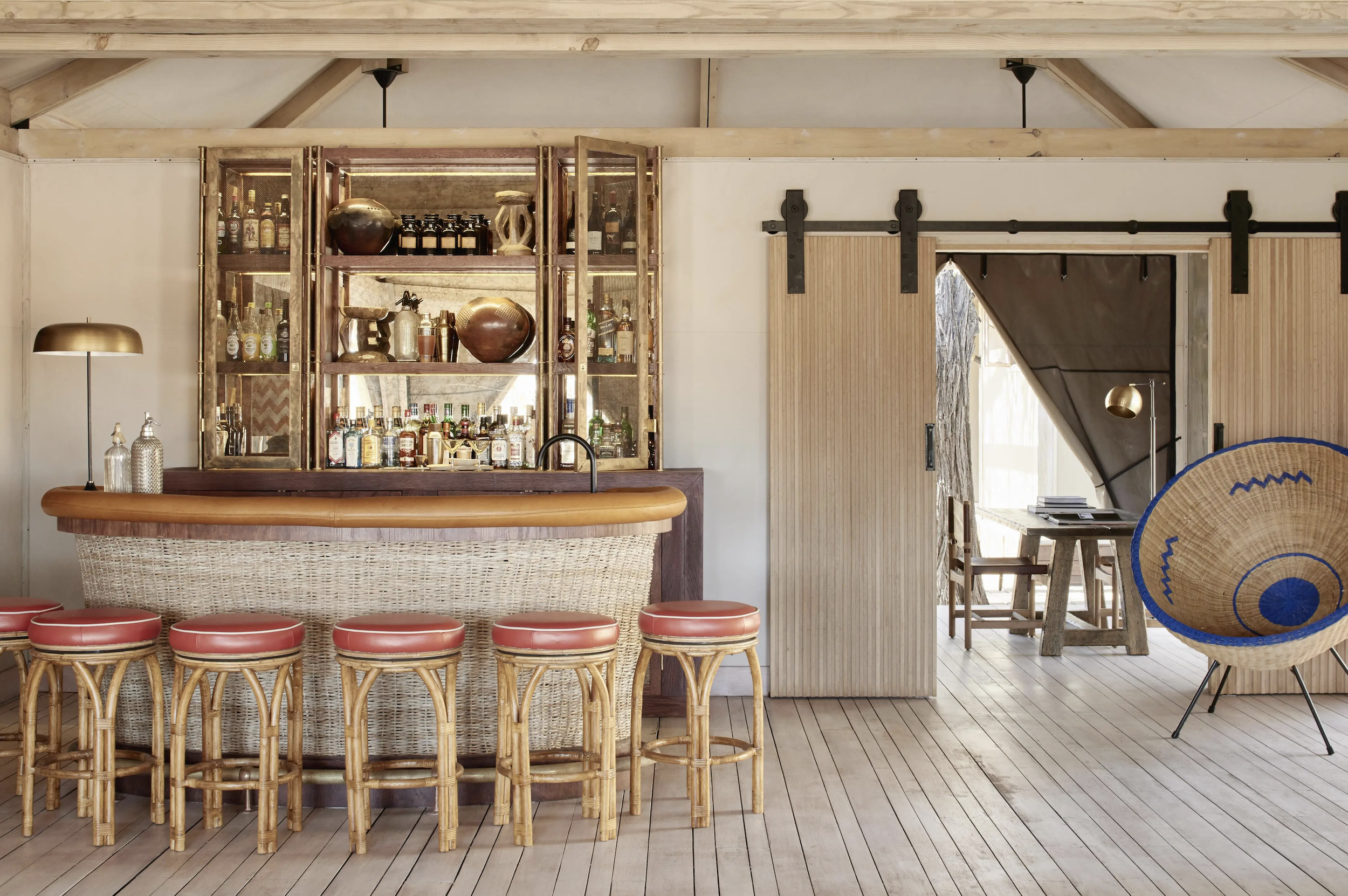
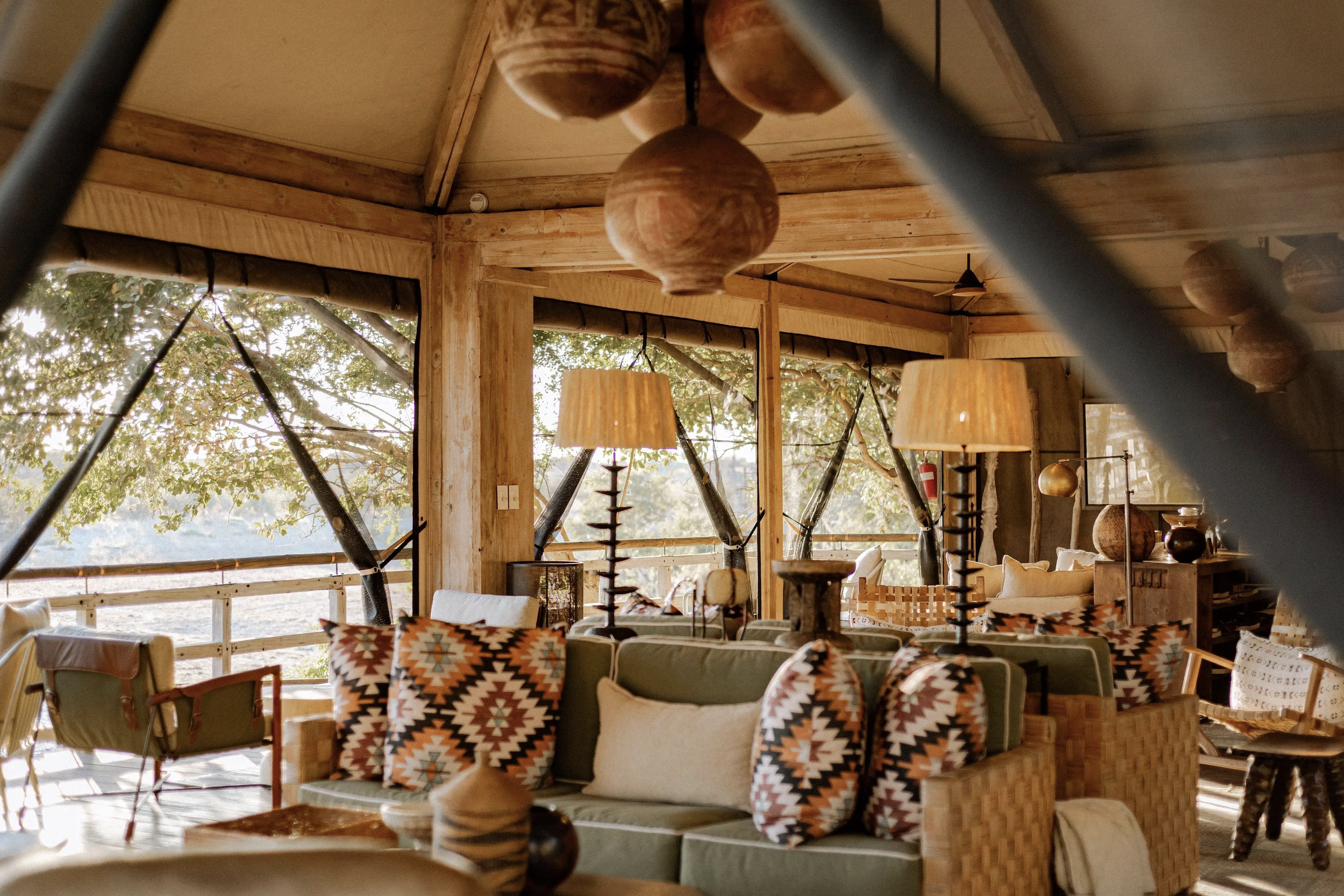
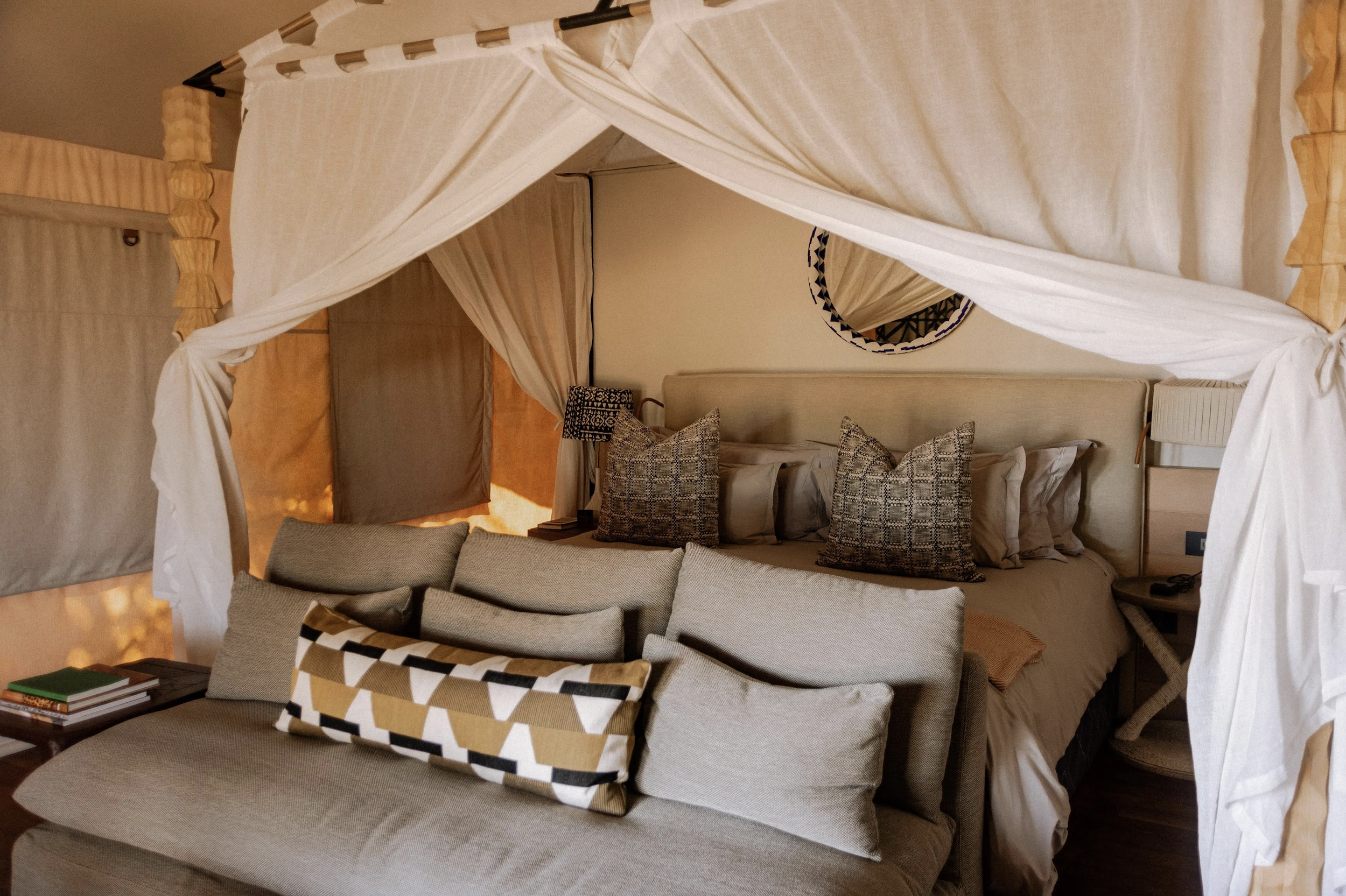
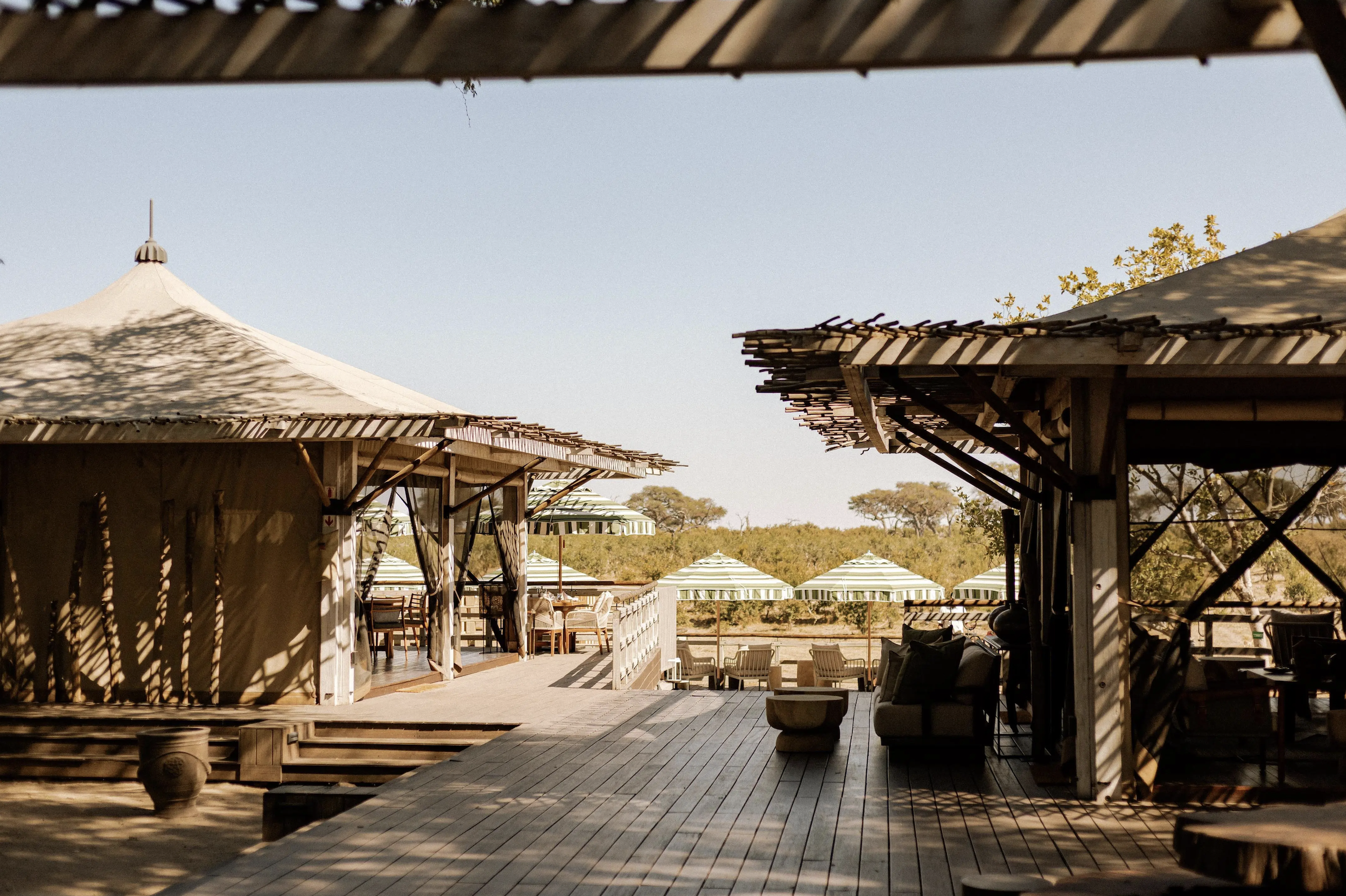
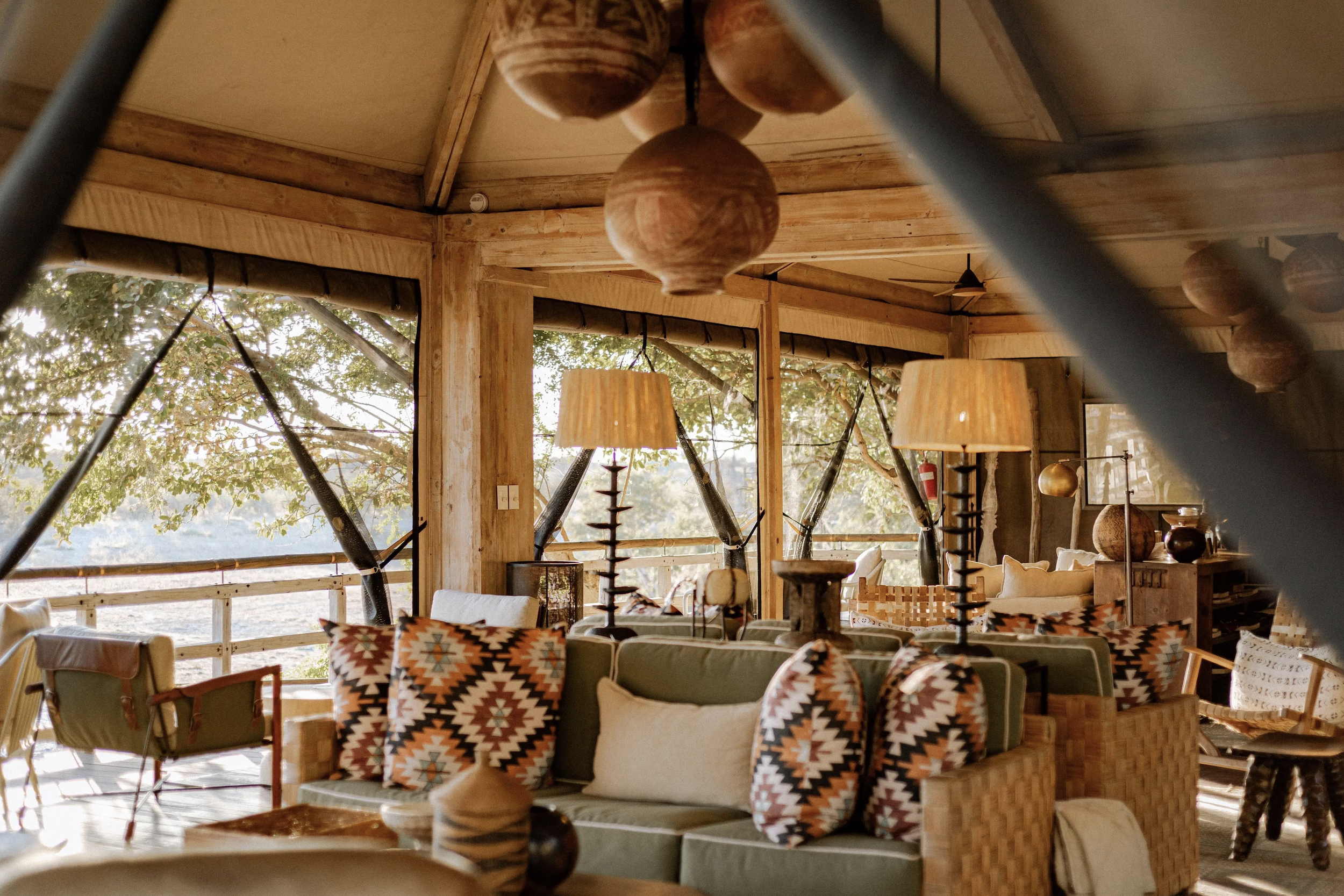
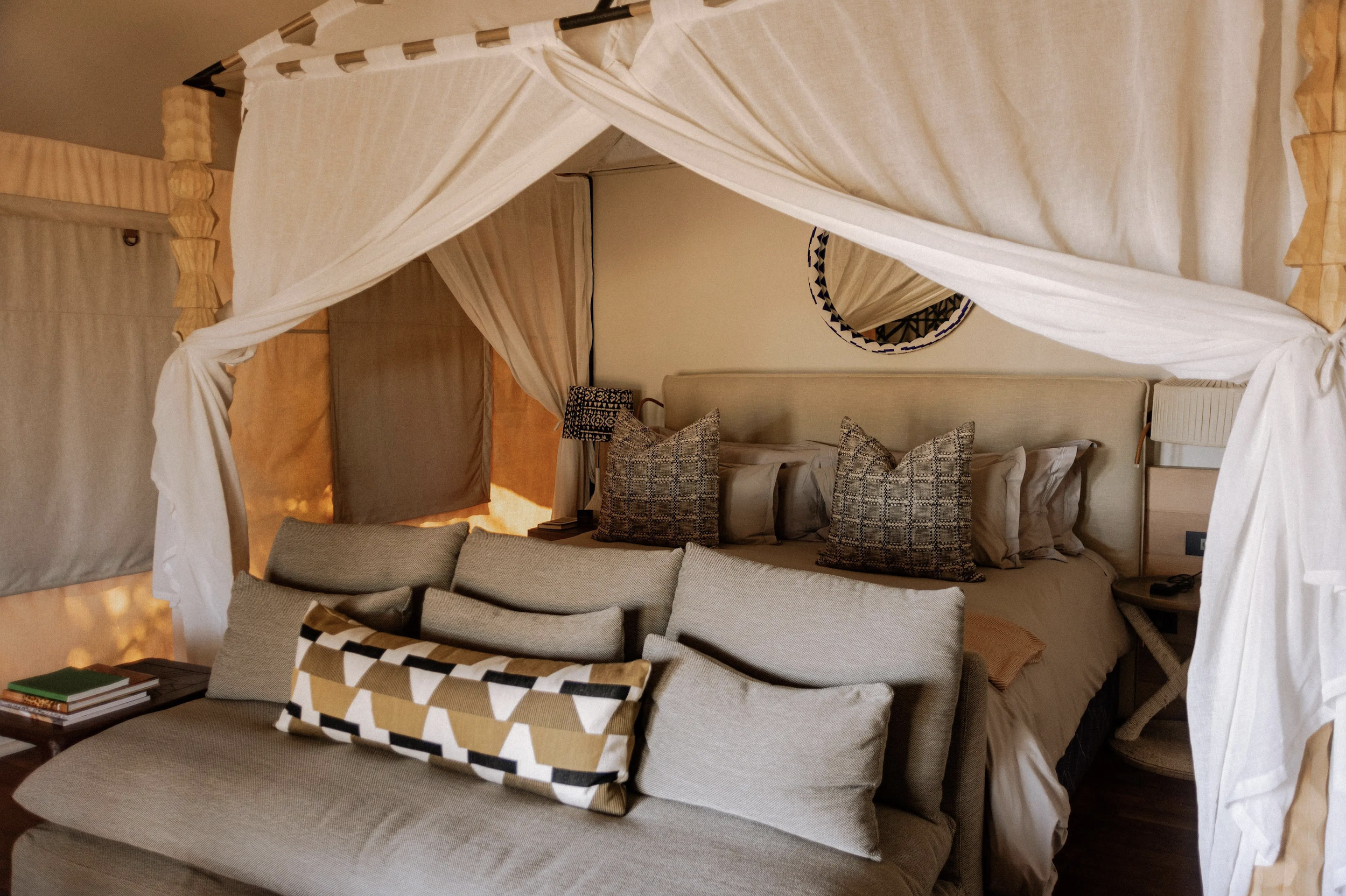
The architecture follows the familiar language of a tented safari lodge: canvas, thatched roofs, and raised platforms. Inside, pale timber, woven textures, and earthy fabrics create a softer setting than the rugged surroundings might suggest. Pattern and craftsmanship supply detail without competing with the view.
Some references are particularly specific to place. Belmond describes chandeliers inspired by clay pots and bedposts drawing on the forms of San walking sticks. These touches give the rooms character while keeping the overall atmosphere relaxed.
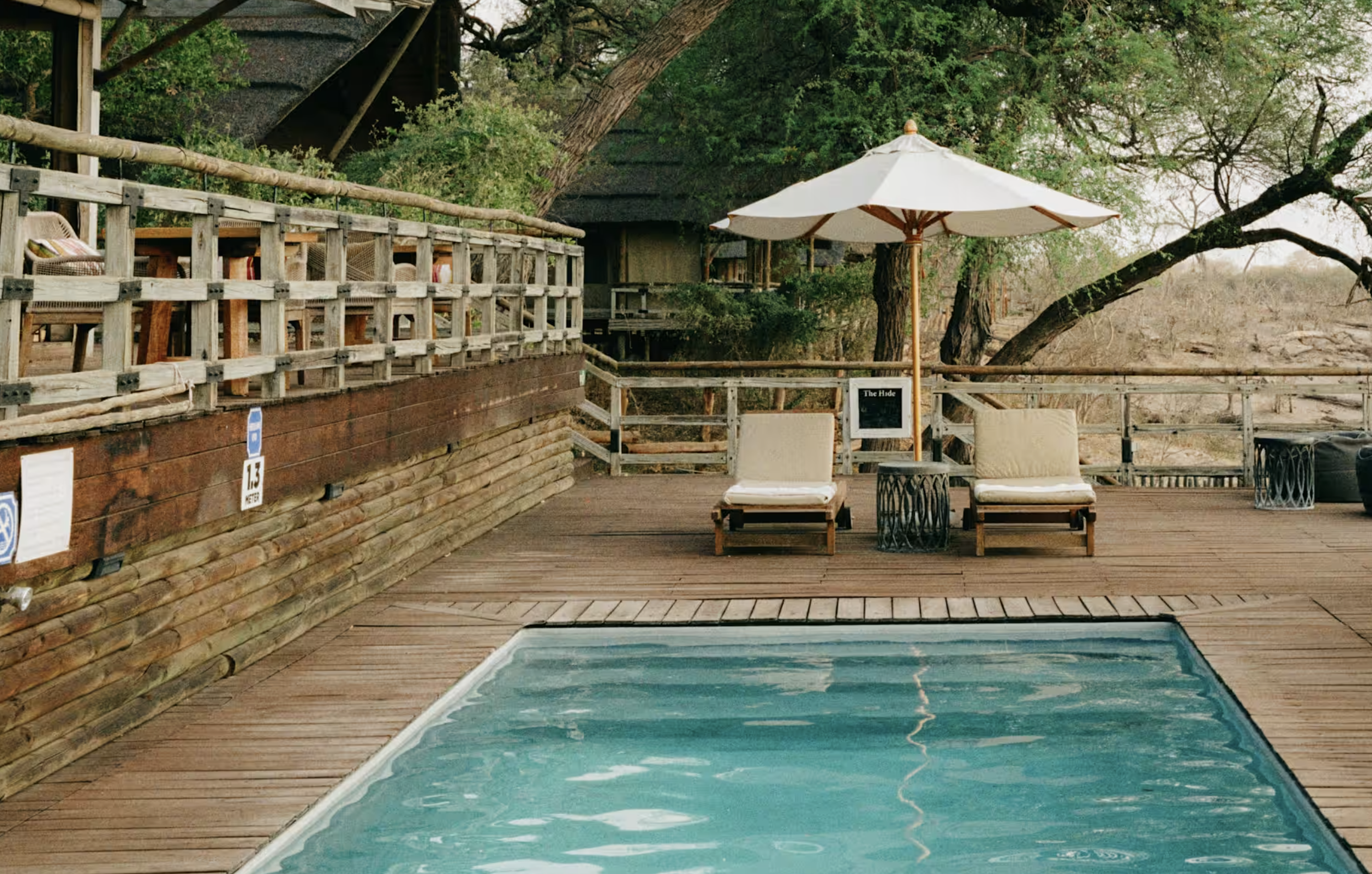
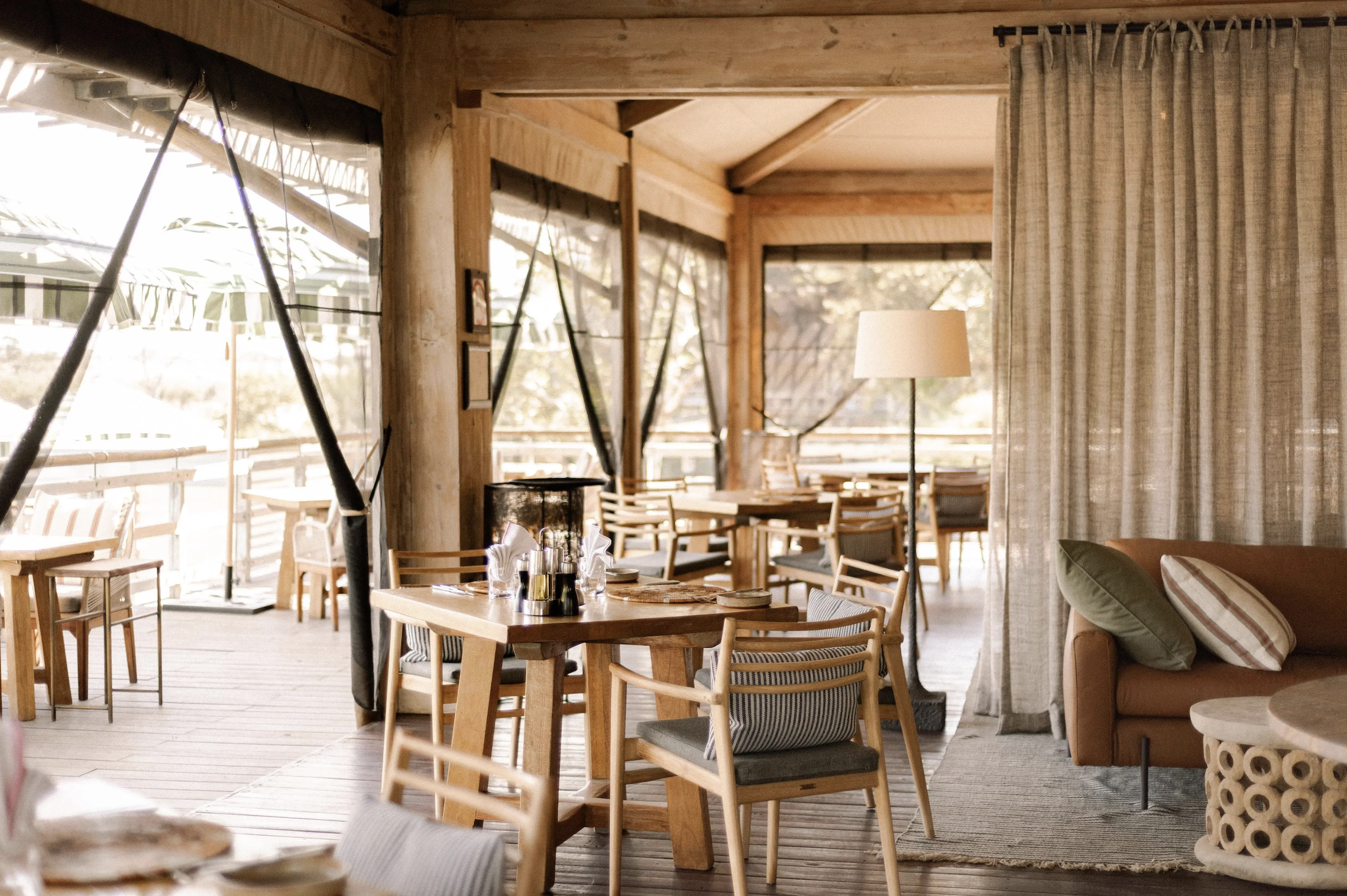
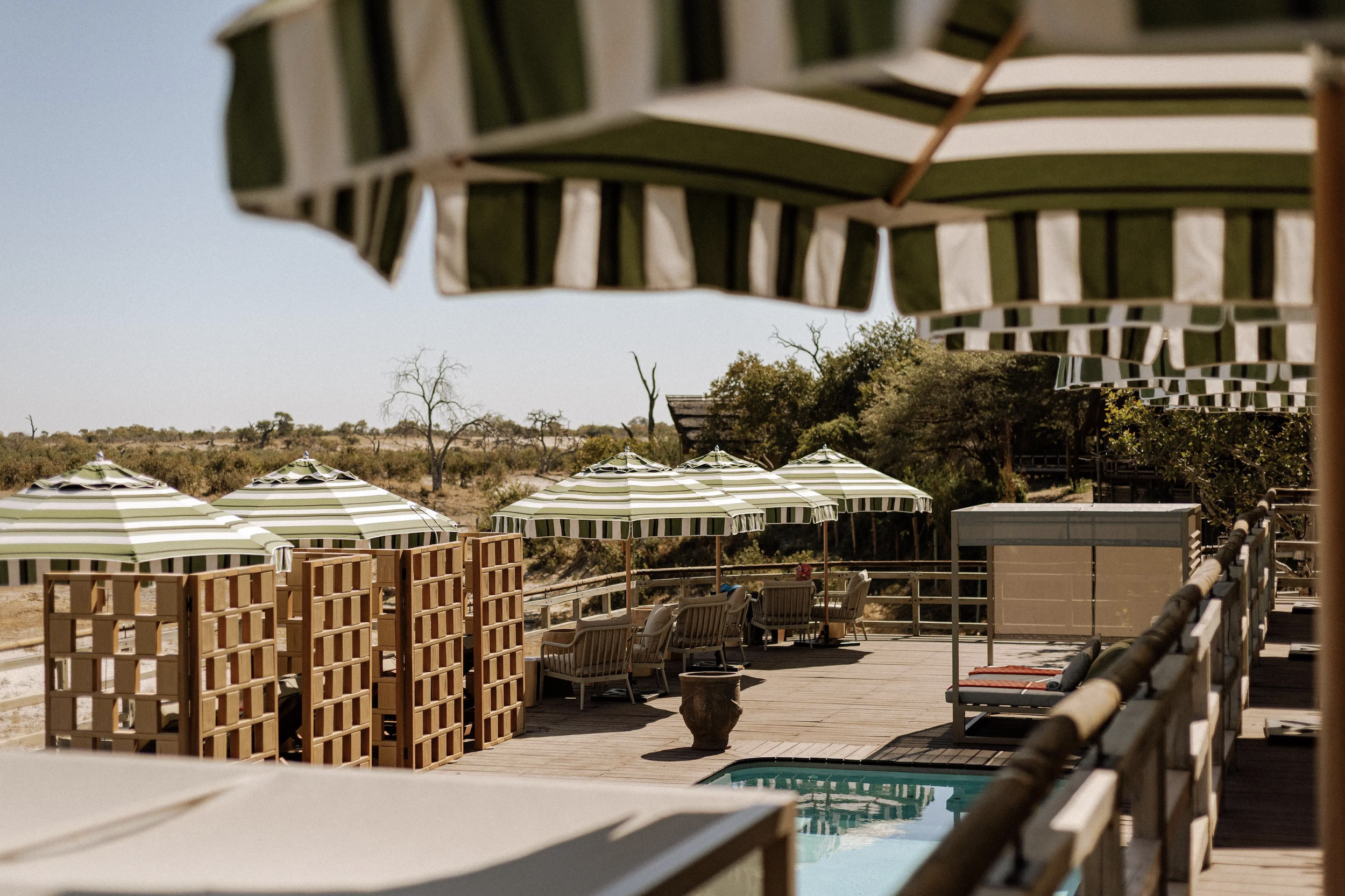
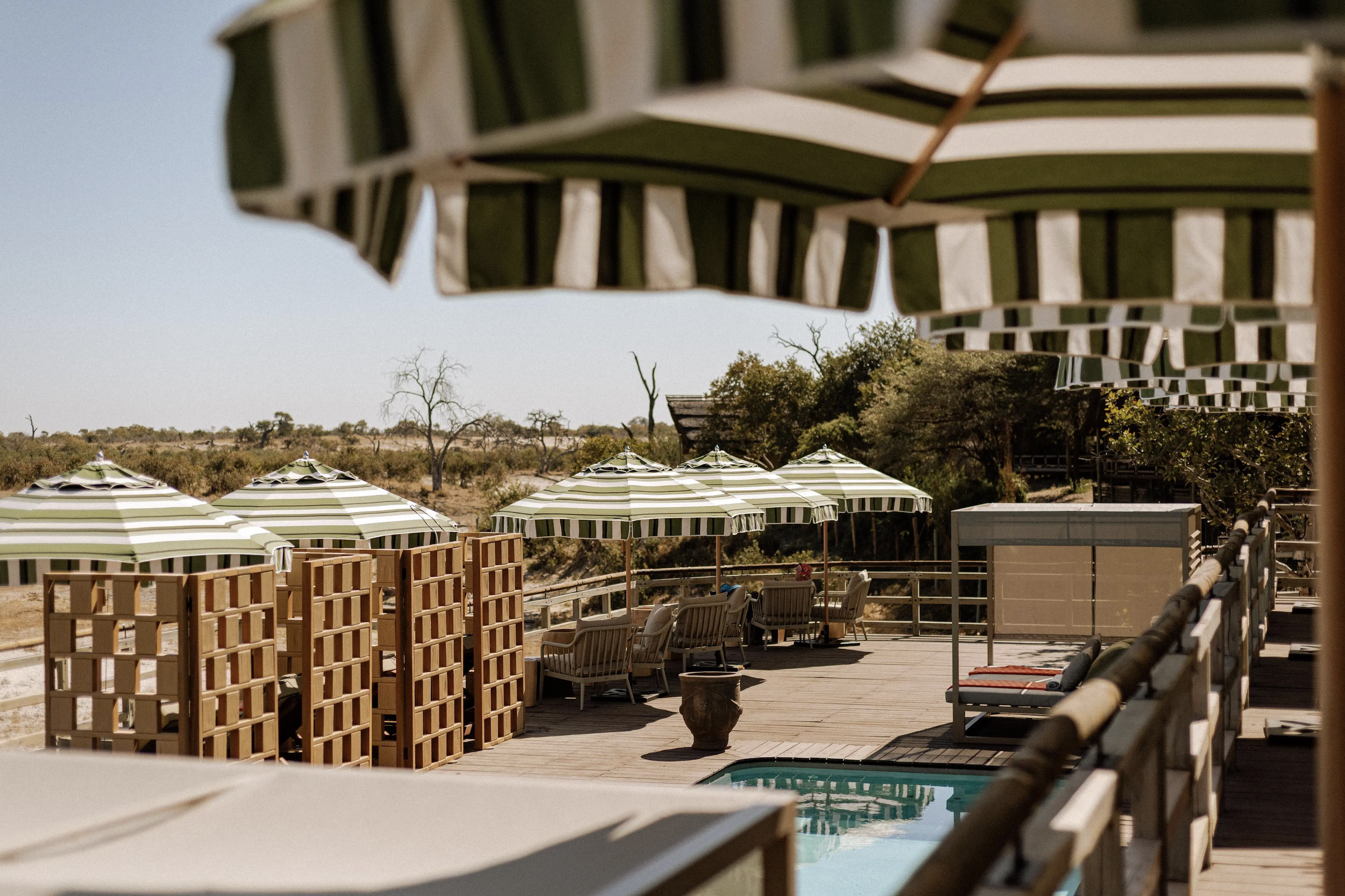
The shared spaces encourage a gentle movement between indoors and outdoors. The lounge, bar, dining areas, and pool provide different places to settle during the warmest hours. A library offers another quiet retreat. Throughout the lodge, the most compelling design decision is the simplest: arranging spaces so that looking outward feels natural.
Twelve Tented Retreats Above the Channel
Accommodation follows a single principal category, making the choice more about configuration and individual needs than a hierarchy of suites.
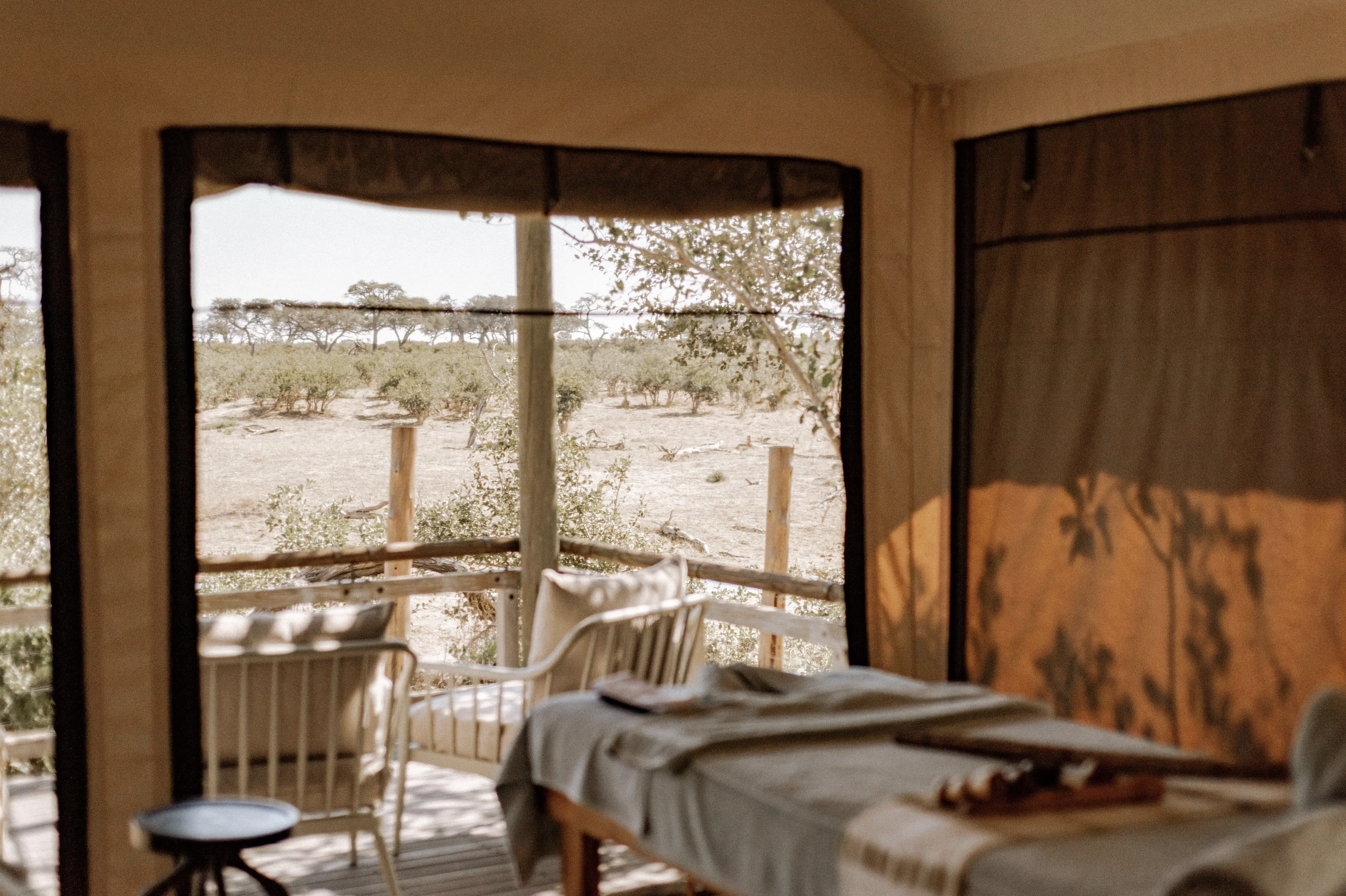
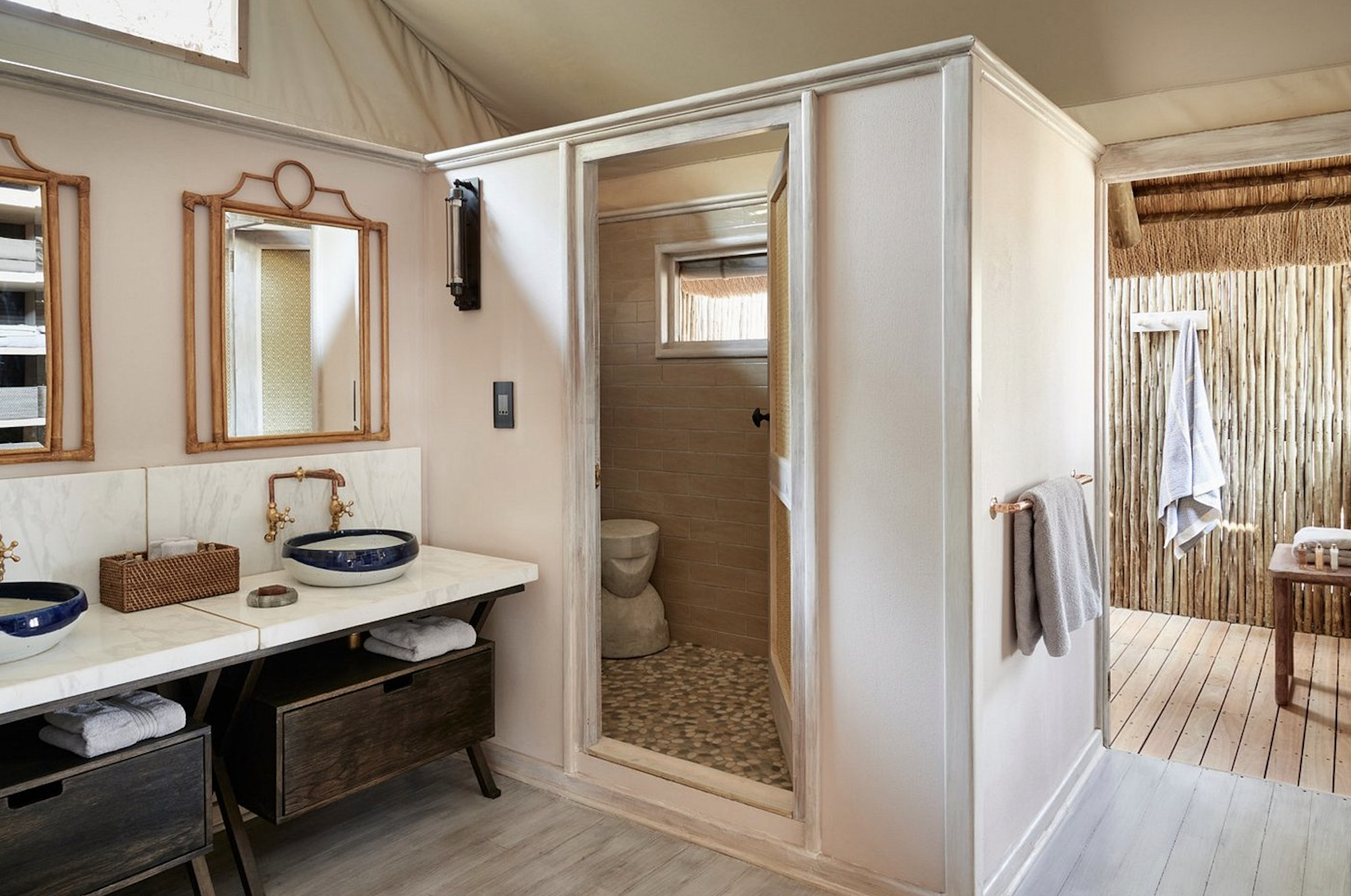
Deluxe Tented Room: Approximately 560 square feet, with an additional private deck of approximately 258 square feet. Raised beneath a thatched roof, each room has a king or twin beds, a sitting area, and a spacious bathroom with indoor and outdoor shower facilities. The deck provides space for lounging and private dining, with views toward the Savute Channel landscape. Rooms generally accommodate two people; two rooms can accommodate a third person using a sofa bed, subject to confirmation.
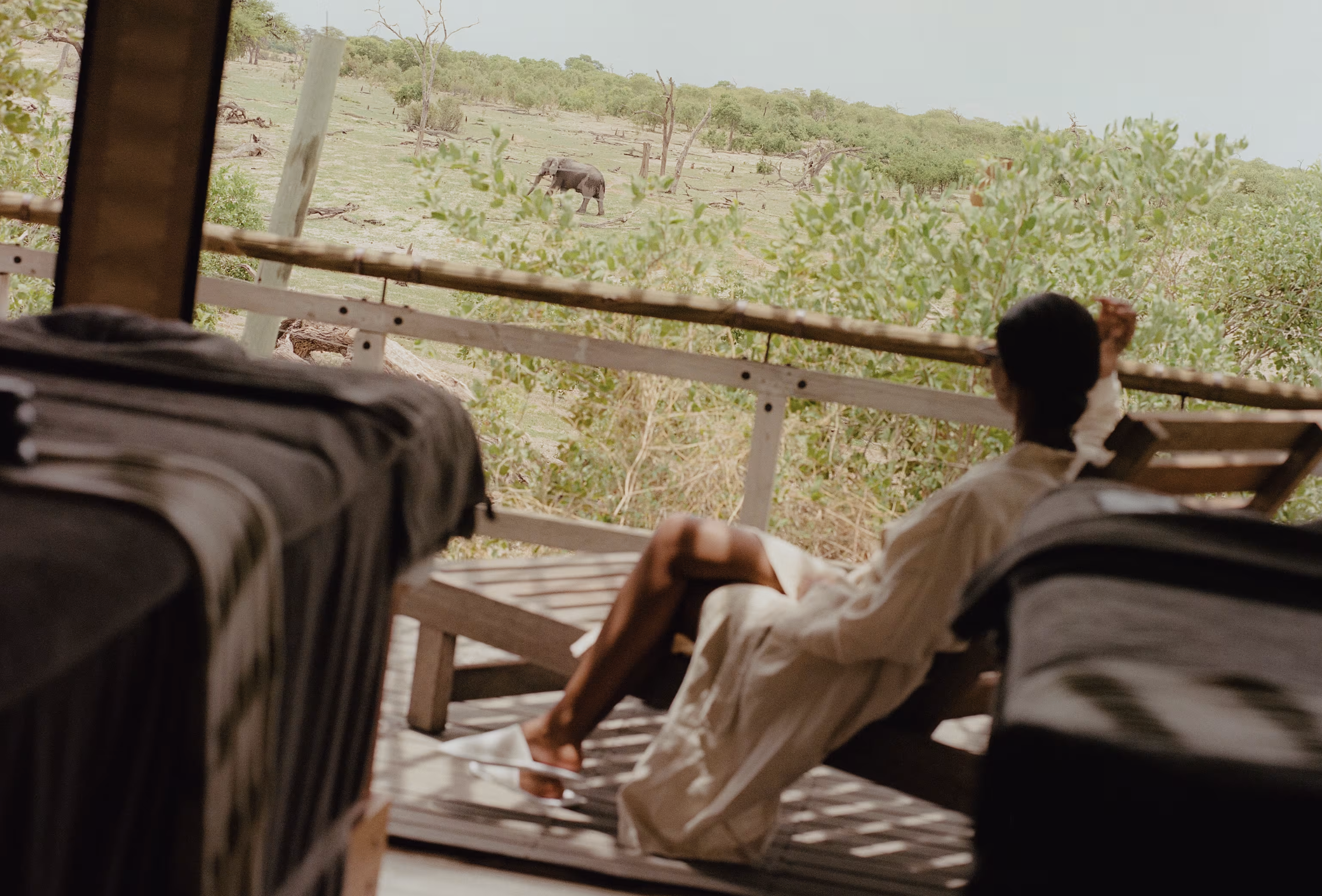
The deck is an important part of the accommodation. It provides somewhere to read between drives, watch for birds, or sit quietly as the temperature falls toward evening. Coffee and tea facilities and a minibar make these pauses easy to enjoy without returning to the main lodge.
For families or friends traveling together, room placement and the limited triple-occupancy options deserve attention at the time of booking. The small scale of the property makes advance planning particularly useful.
Meals Around the Safari Day
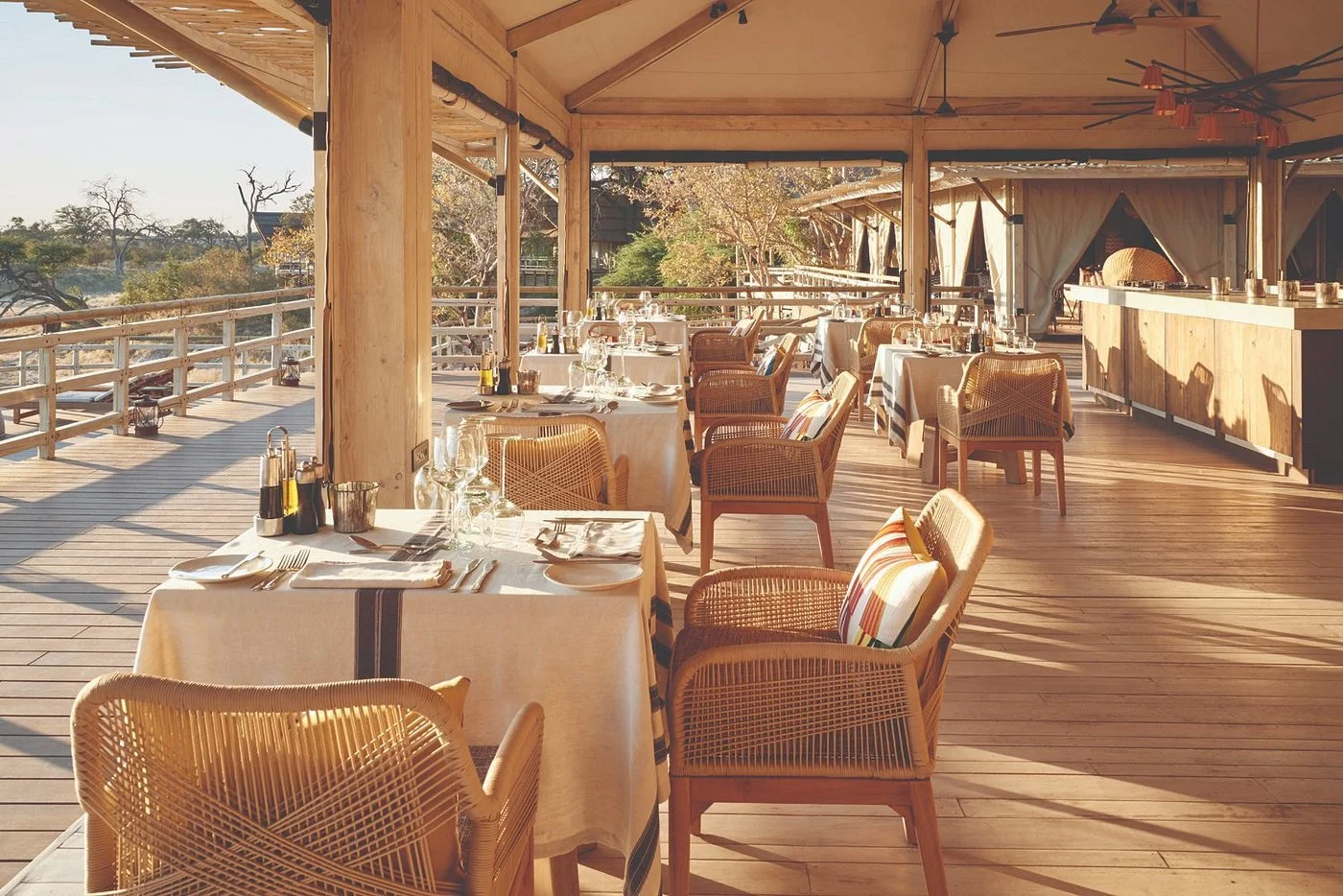
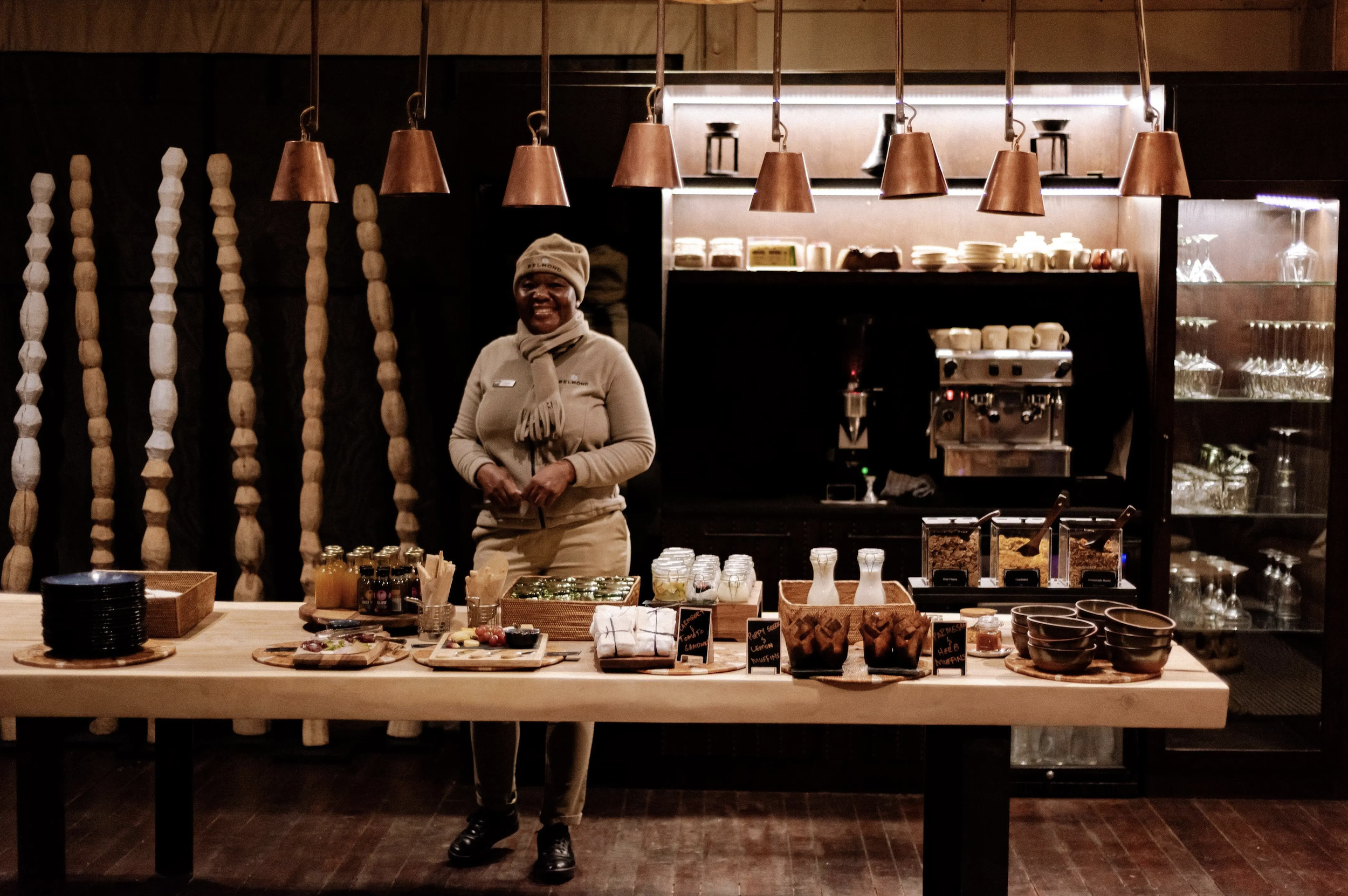
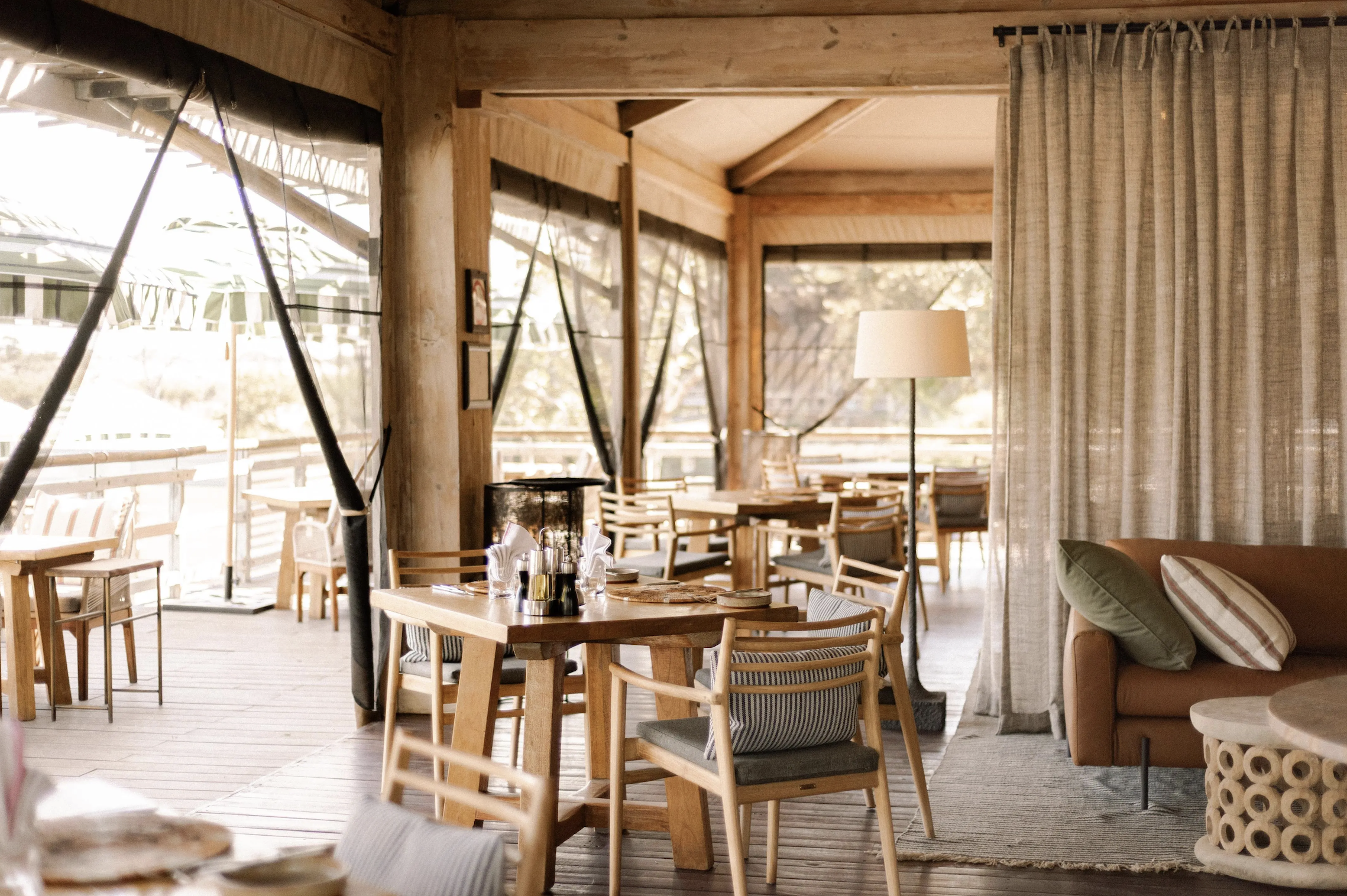
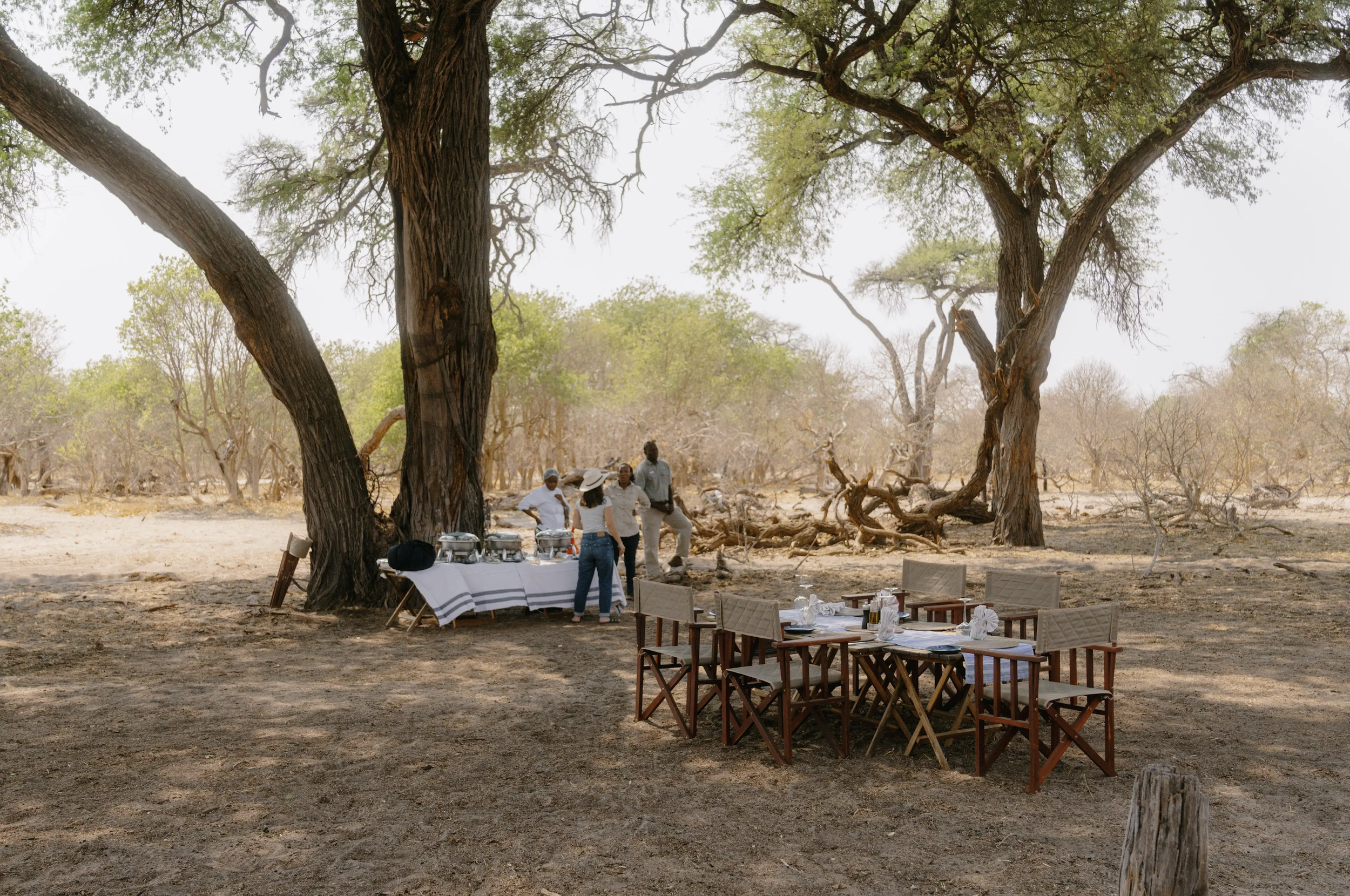
Dining fits around early departures, relaxed afternoons, and evenings back in camp. Menus bring together regional influences and international dishes, with settings that range from the restaurant to a private deck.
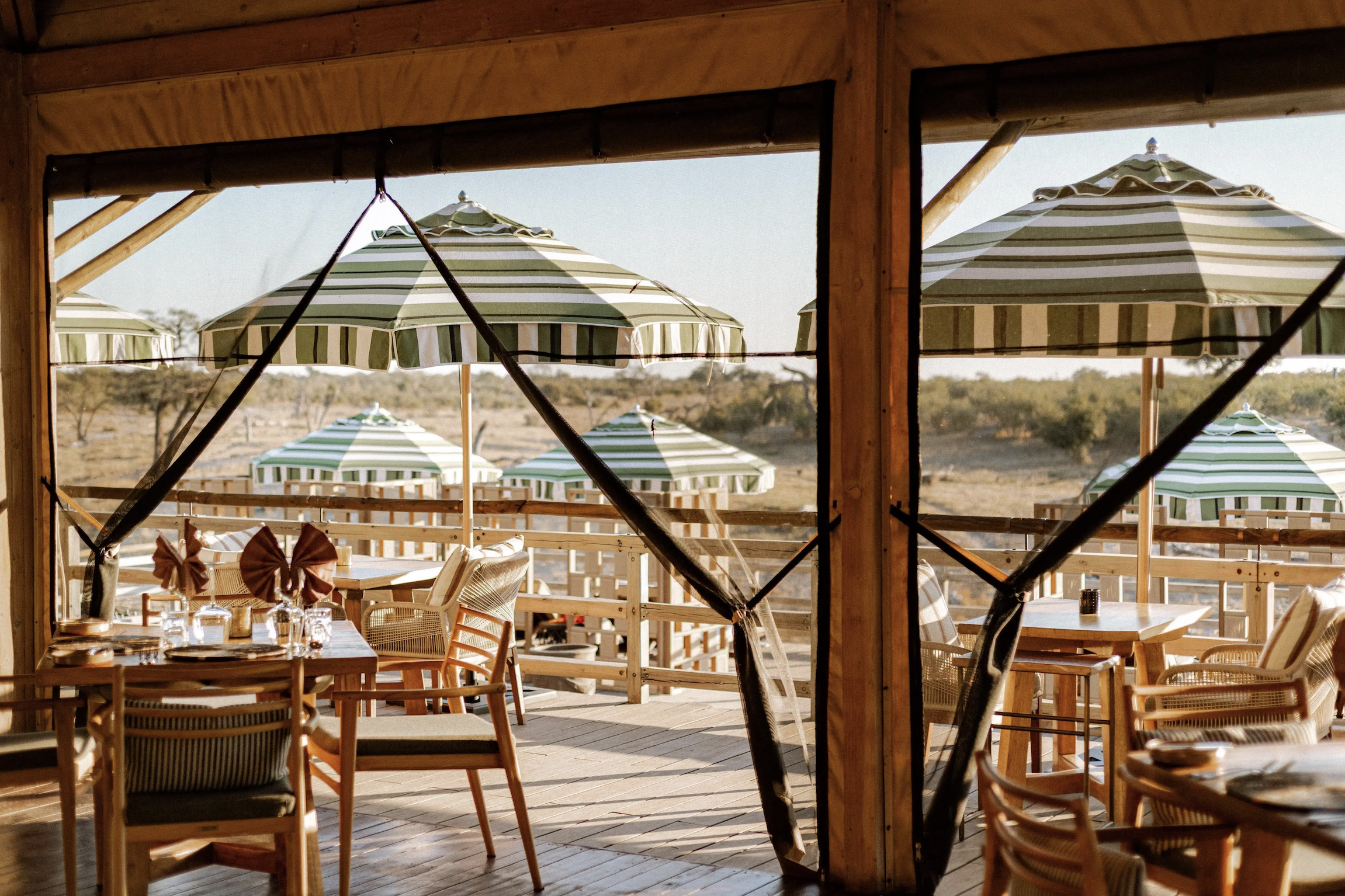
Lodge Restaurant: Open-air dining with seasonal menus and views of the surrounding landscape. Regional dishes may include seswaa, Botswana’s slow-cooked meat specialty, alongside international options.
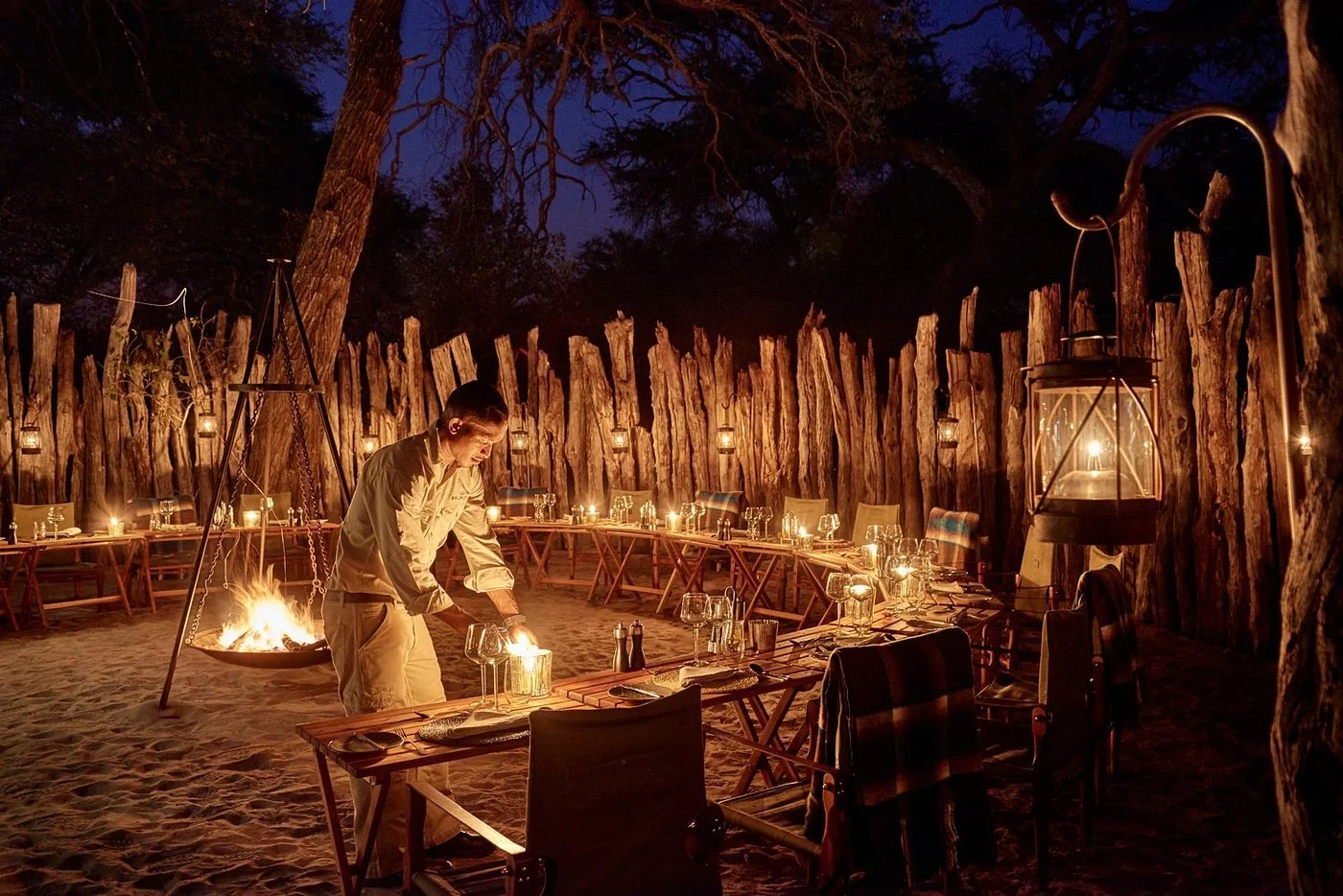
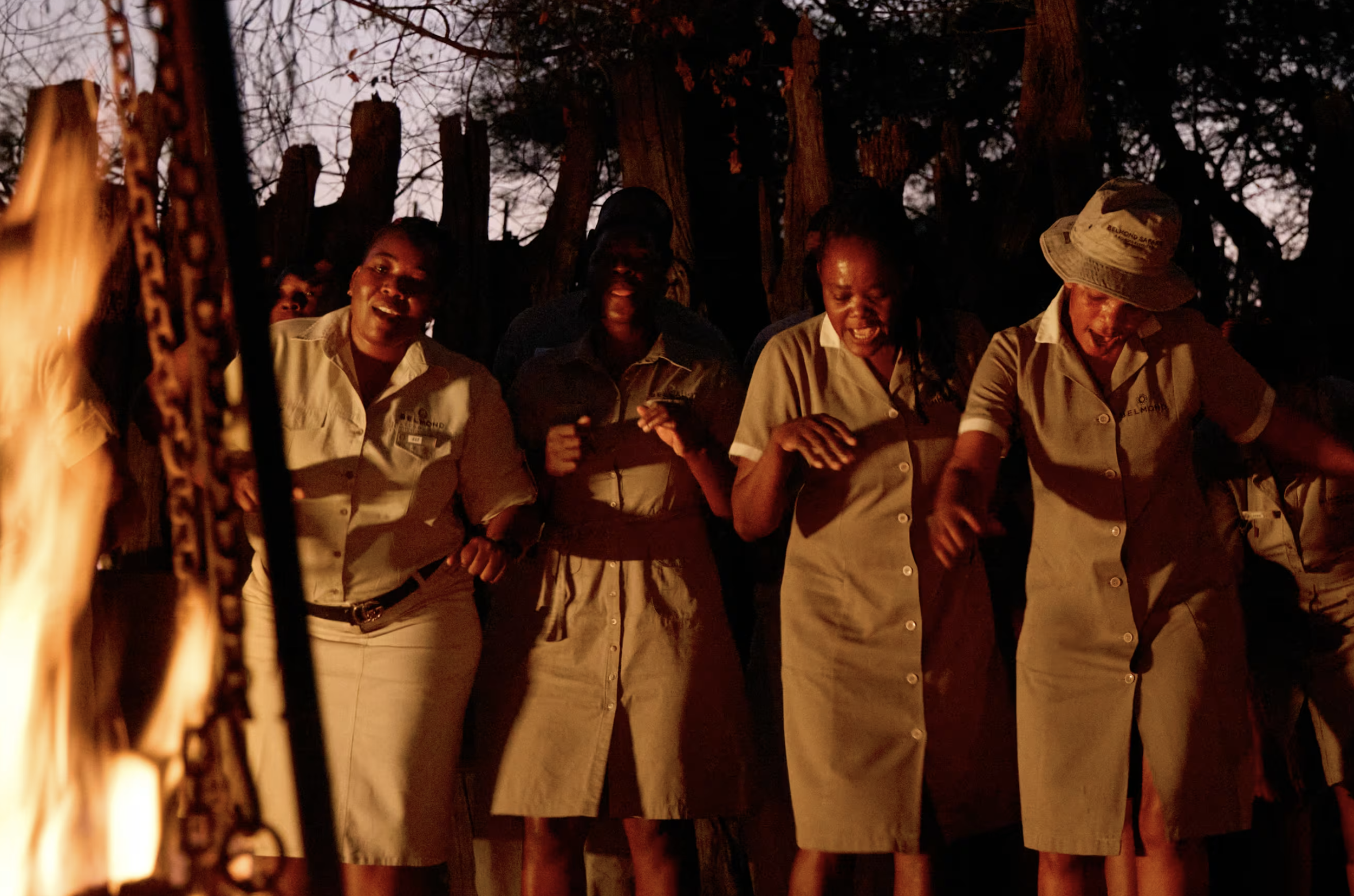
The Boma: A gathering place around the fire, where food and conversation extend into the evening beneath the open sky.
The Bar: A comfortable setting for a drink after a drive, with the day’s sightings often supplying the conversation.
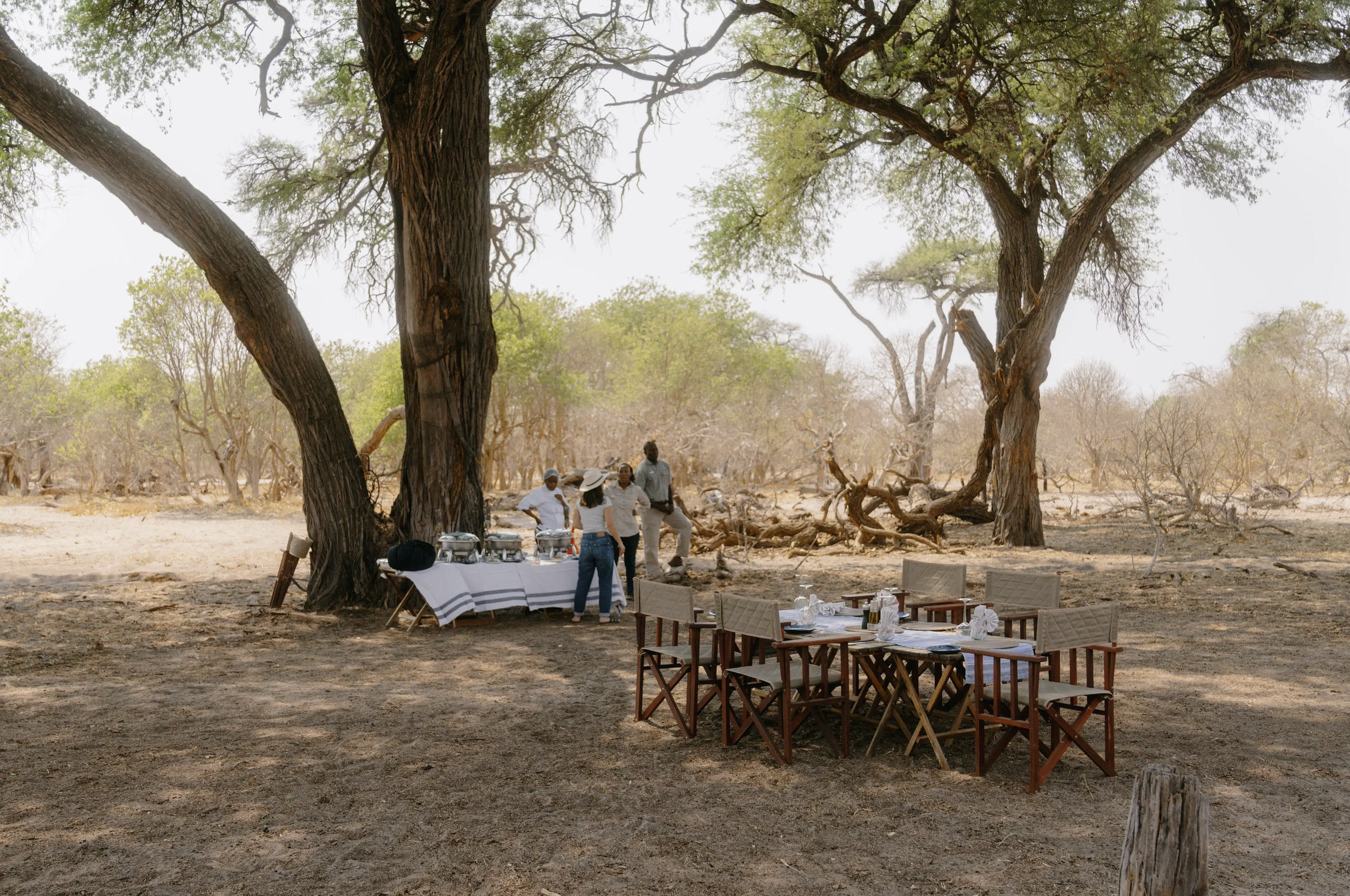
Bush Dining and Sundowners: Outdoor meals and drinks arranged in scenic settings, subject to weather, conditions, and the lodge’s program.
Private and In-Room Dining: Meals served in a more secluded setting, including the private room deck when arrangements permit.
The standard safari rate includes meals and a selection of alcoholic and nonalcoholic drinks. Premium selections can carry additional charges, so an inclusive stay should not be understood to cover every bottle on the list. Dietary requirements are best shared before arrival, allowing the kitchen to plan around the lodge’s remote supply arrangements.
Game Drives, Waterhole Encounters, and Ancient Rock Art
Morning and afternoon game drives form the core of the experience. Heading out early brings cooler air and the possibility of finding animals still active after the night. Later drives reveal a different landscape as the light softens and wildlife begins moving again.
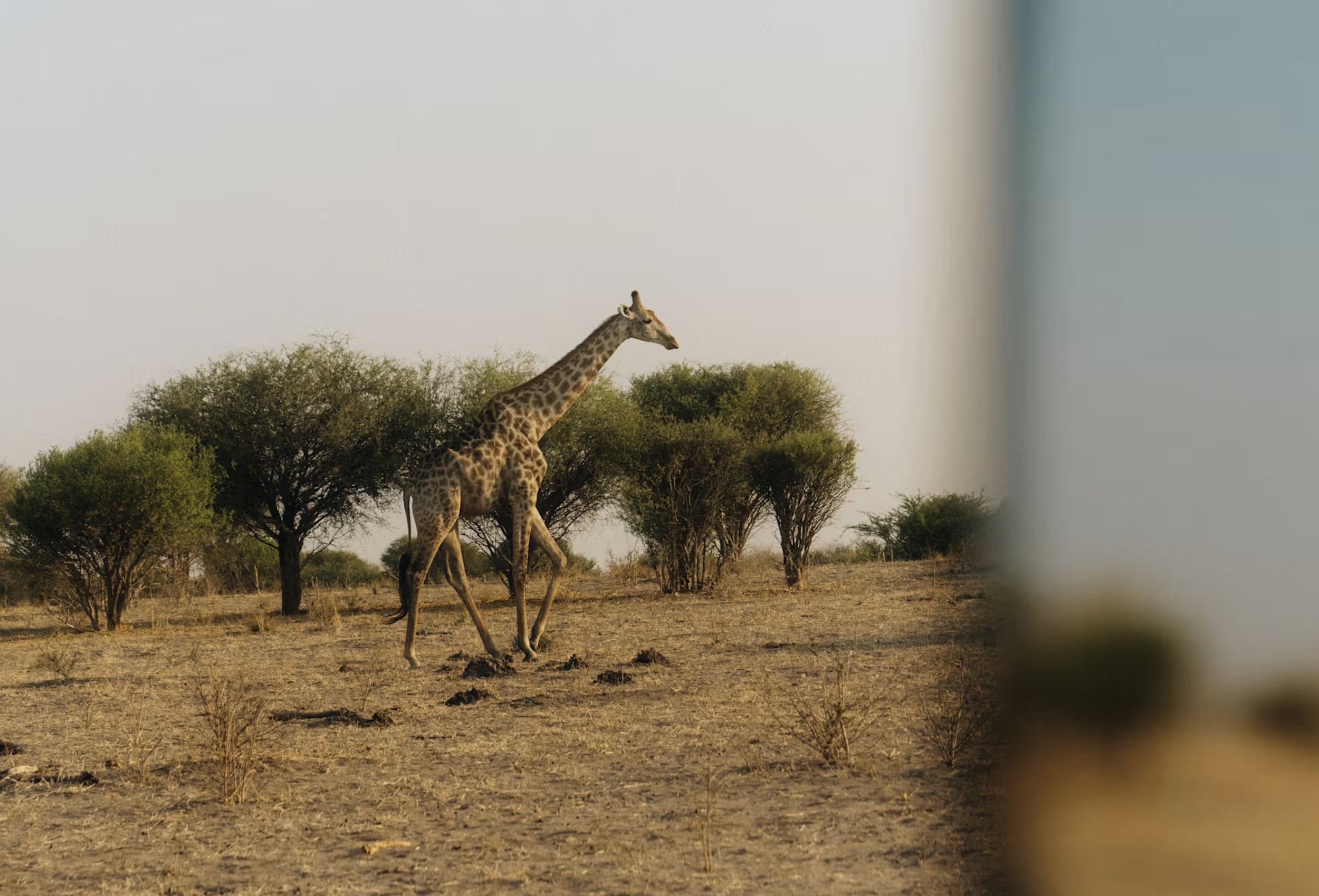
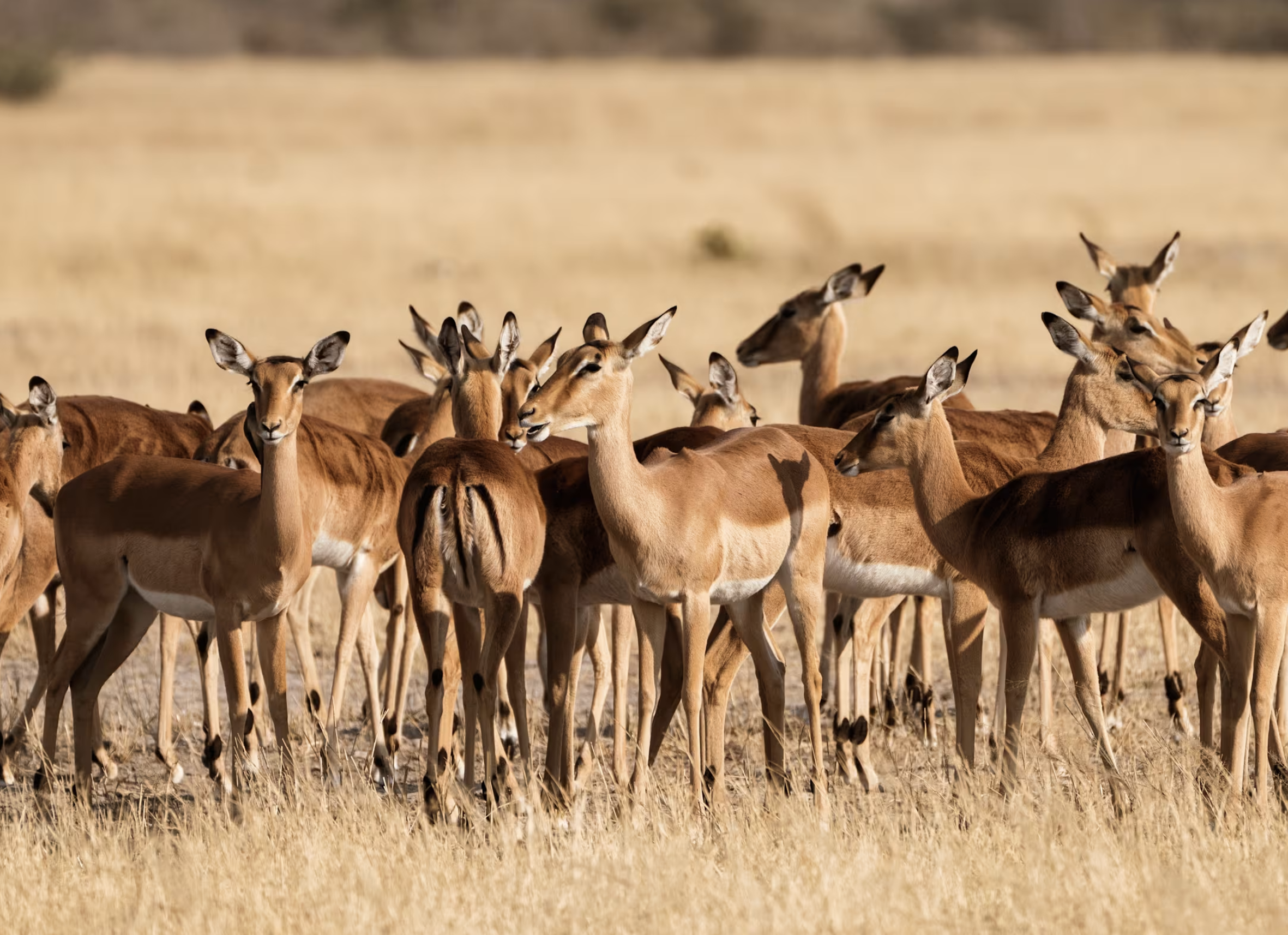
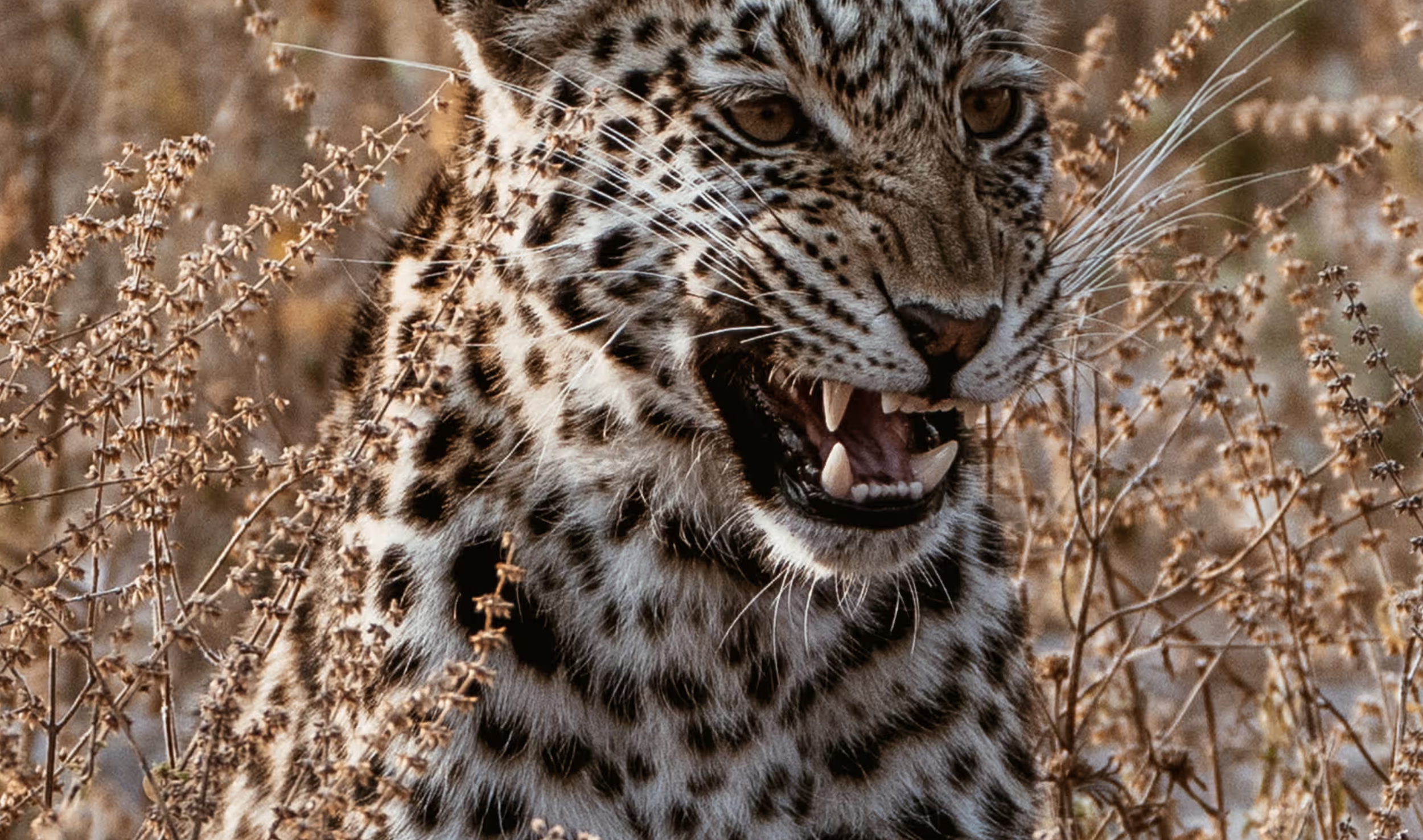
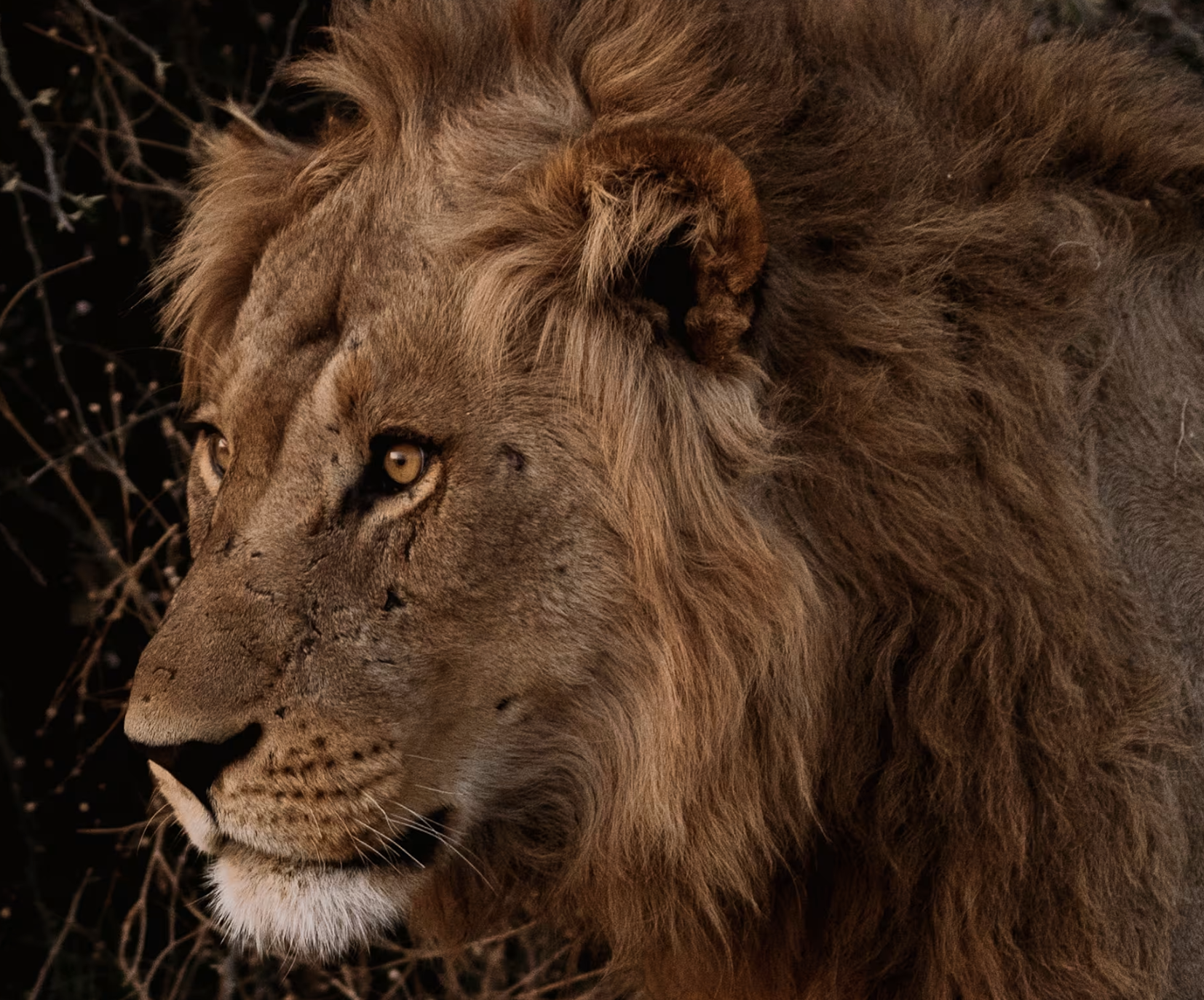
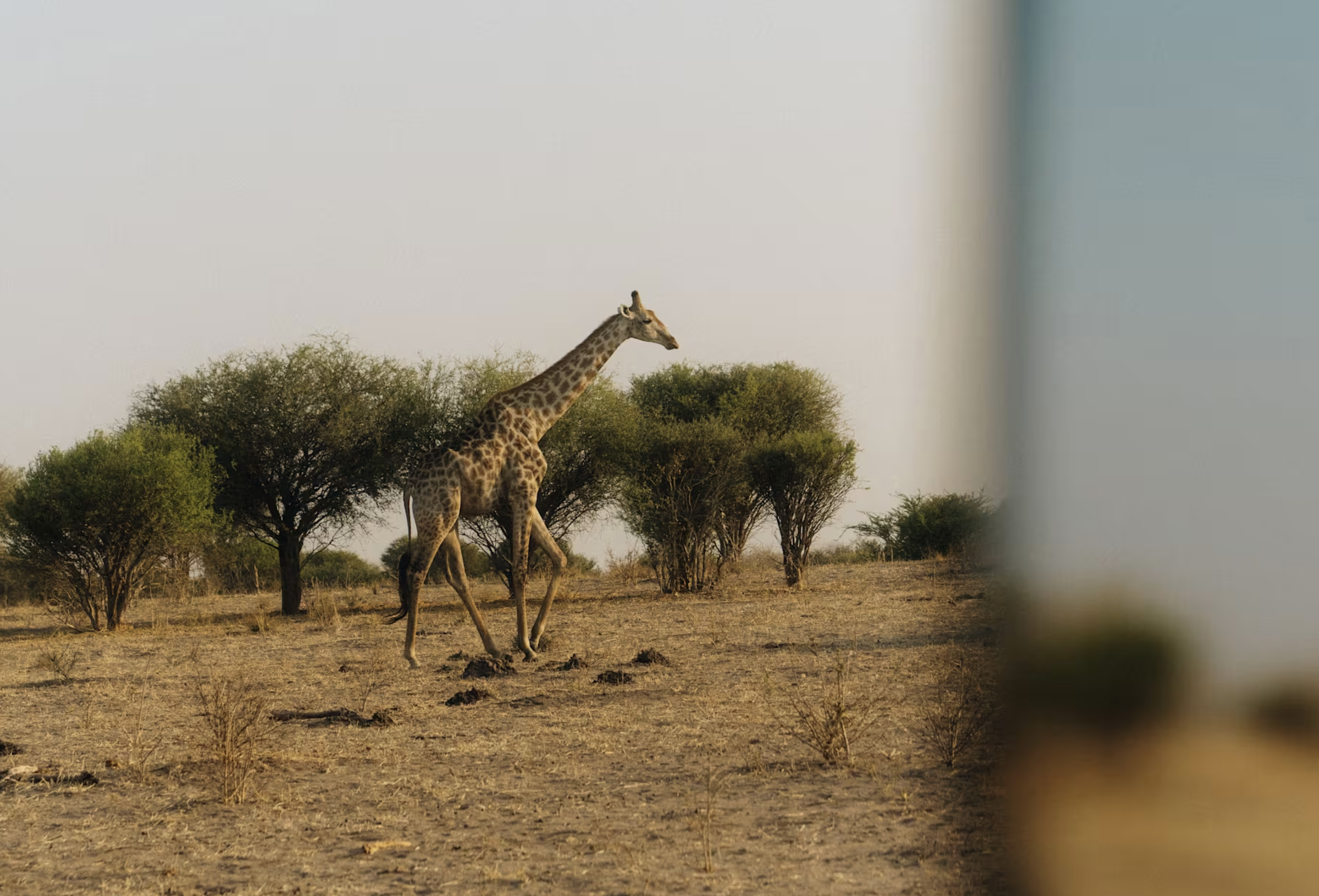
Savute is particularly associated with elephants and predators. Lions, leopards, hyenas, cheetahs, and African wild dogs are among the species that may be encountered, alongside a wider range of mammals and birds. Sightings depend on season, conditions, and animal movements; the interest often lies as much in following tracks and interpreting behavior as in finding a particular species.
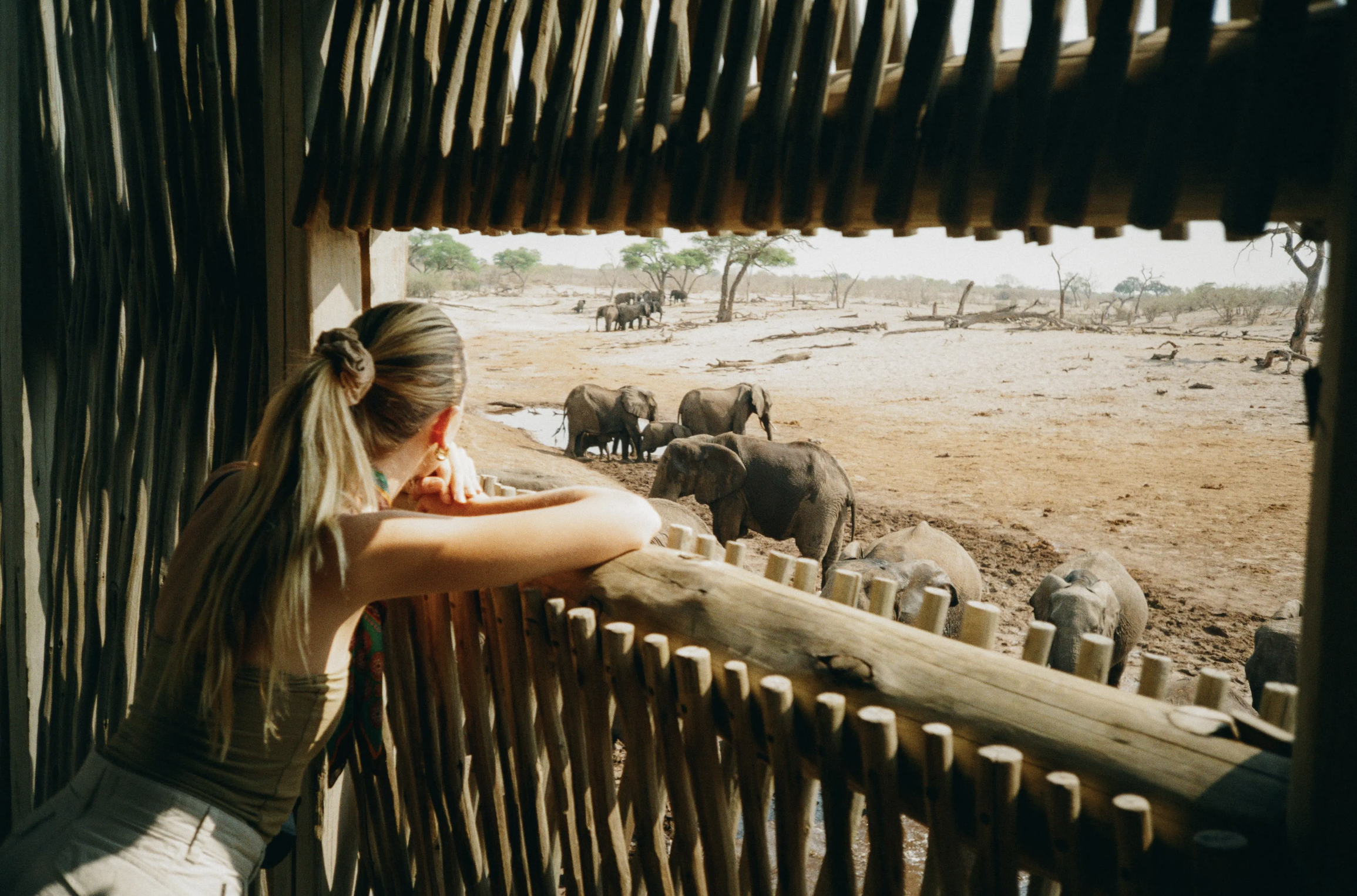
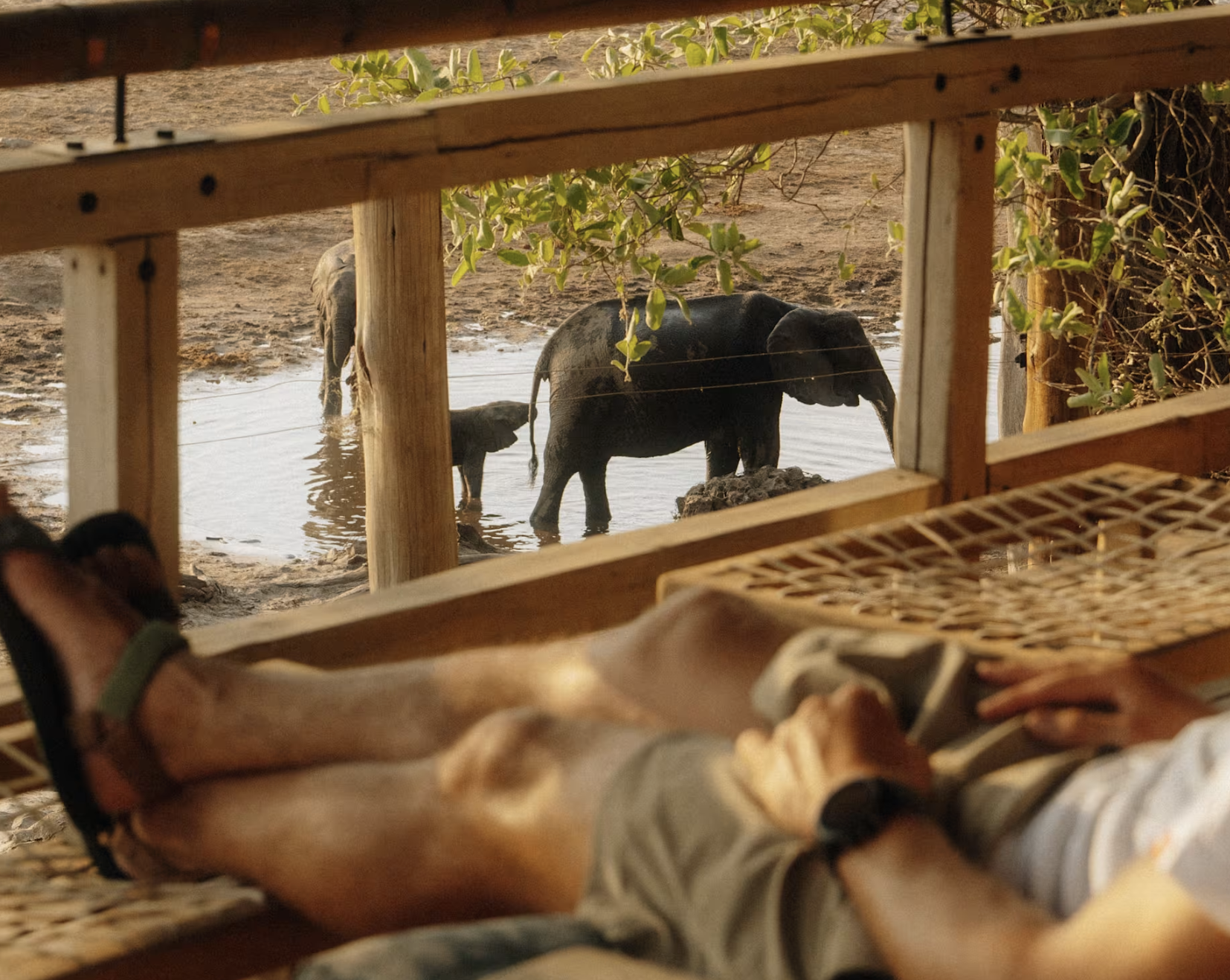
Back at the lodge, the viewing hide offers another way to observe wildlife. Positioned beside the waterhole, it encourages staying in one place and allowing events to unfold. An elephant’s approach, the order in which animals drink, or a sudden hesitation at the water’s edge can become absorbing when there is time to watch closely. It is also an appealing setting for photography without the movement of a vehicle.
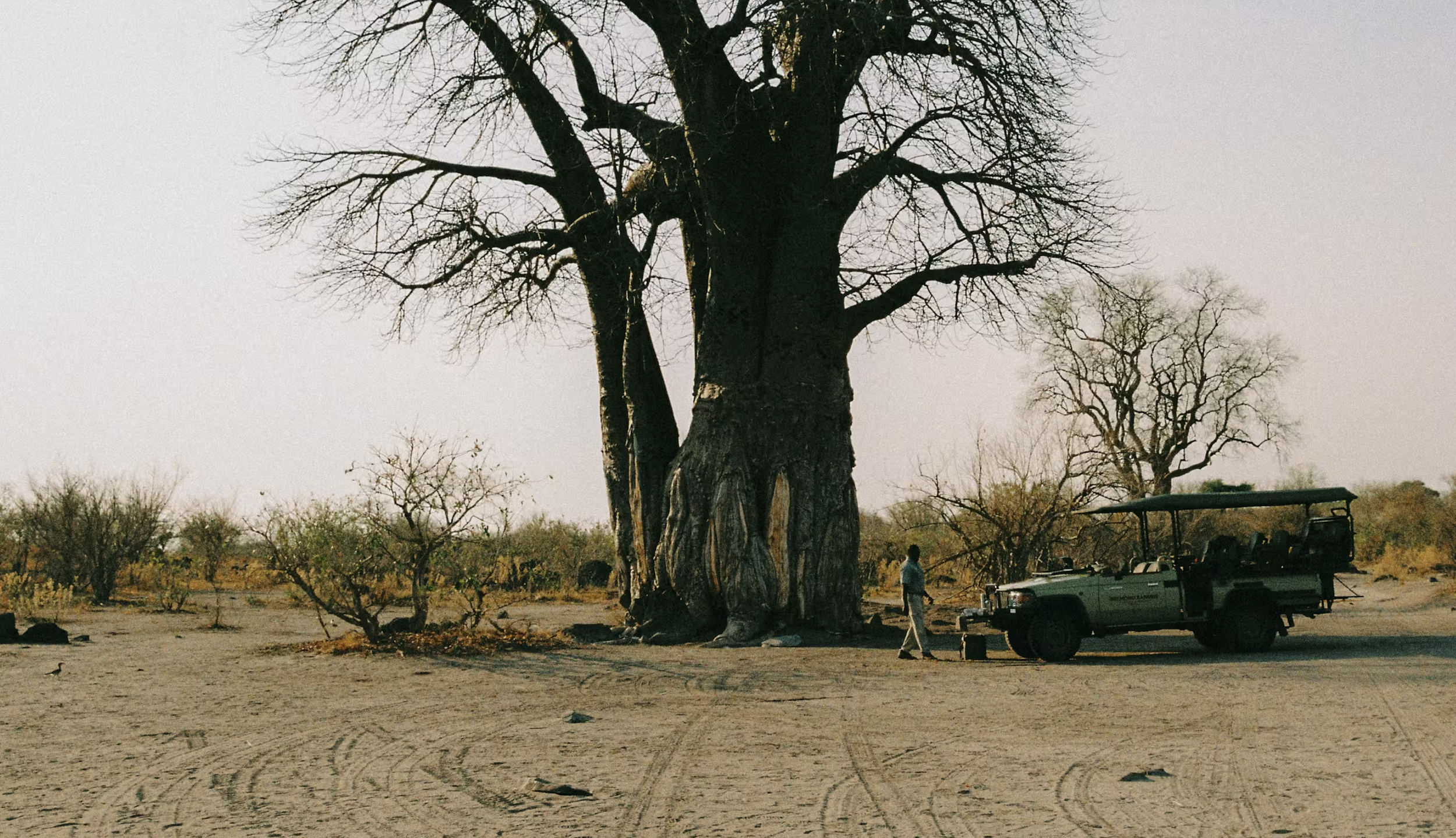
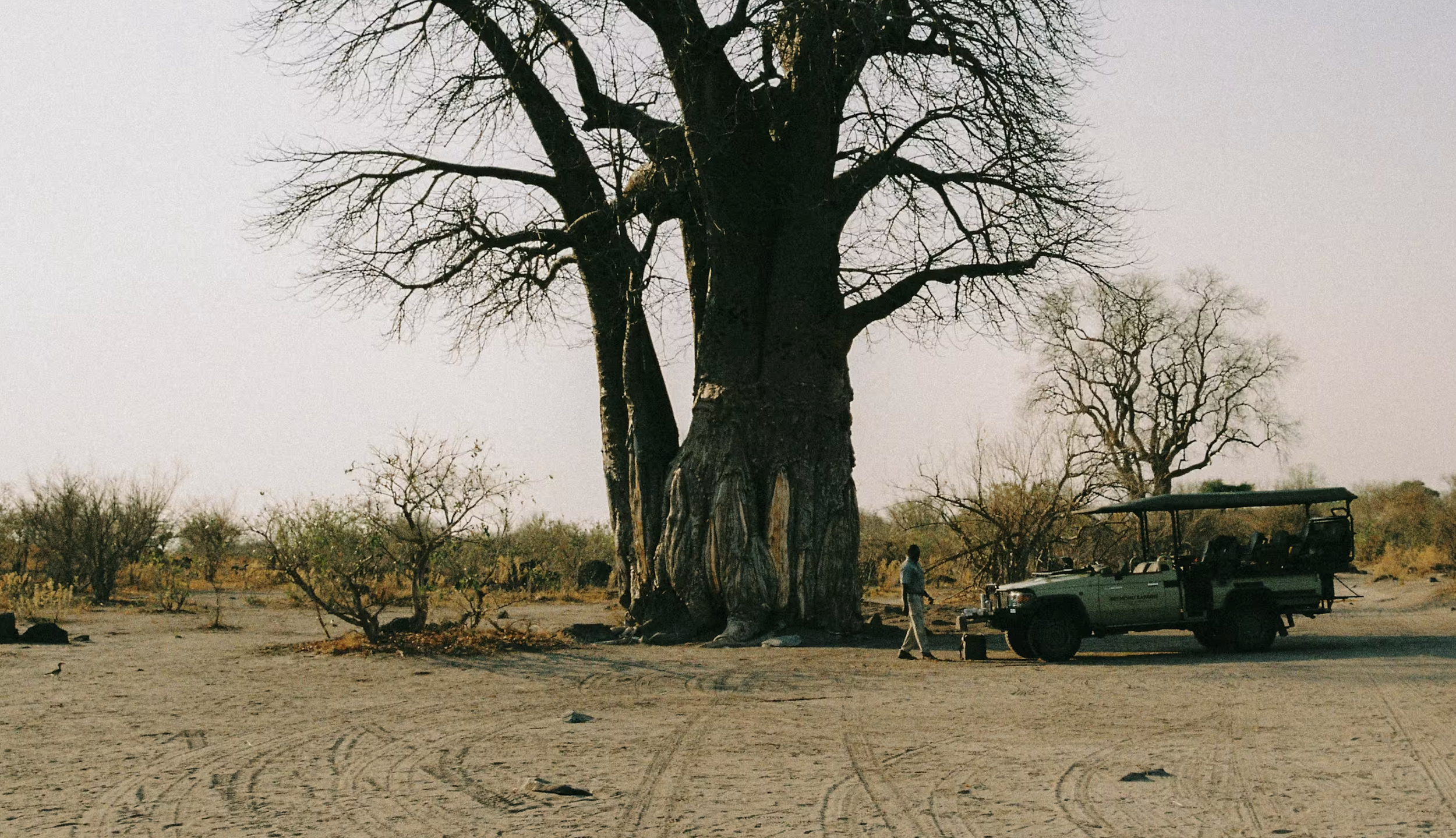
Excursions to San rock paintings bring a cultural dimension to the safari. Guided interpretation helps place the images within the landscape and encourages respectful attention to their significance. Outings involving Savute’s baobabs offer another perspective on the region’s remarkable natural forms.
After dark, stargazing turns attention upward. When skies are clear, the lodge’s telescope and guided explanations introduce southern constellations and the role of stars in navigation. The Southern Cross becomes part of the setting just as surely as the trees and waterhole below.
Time to Recover Between Drives
Safari days can involve early starts, dusty roads, and several hours in a vehicle. The lodge’s wellness offerings provide a welcome pause between excursions.
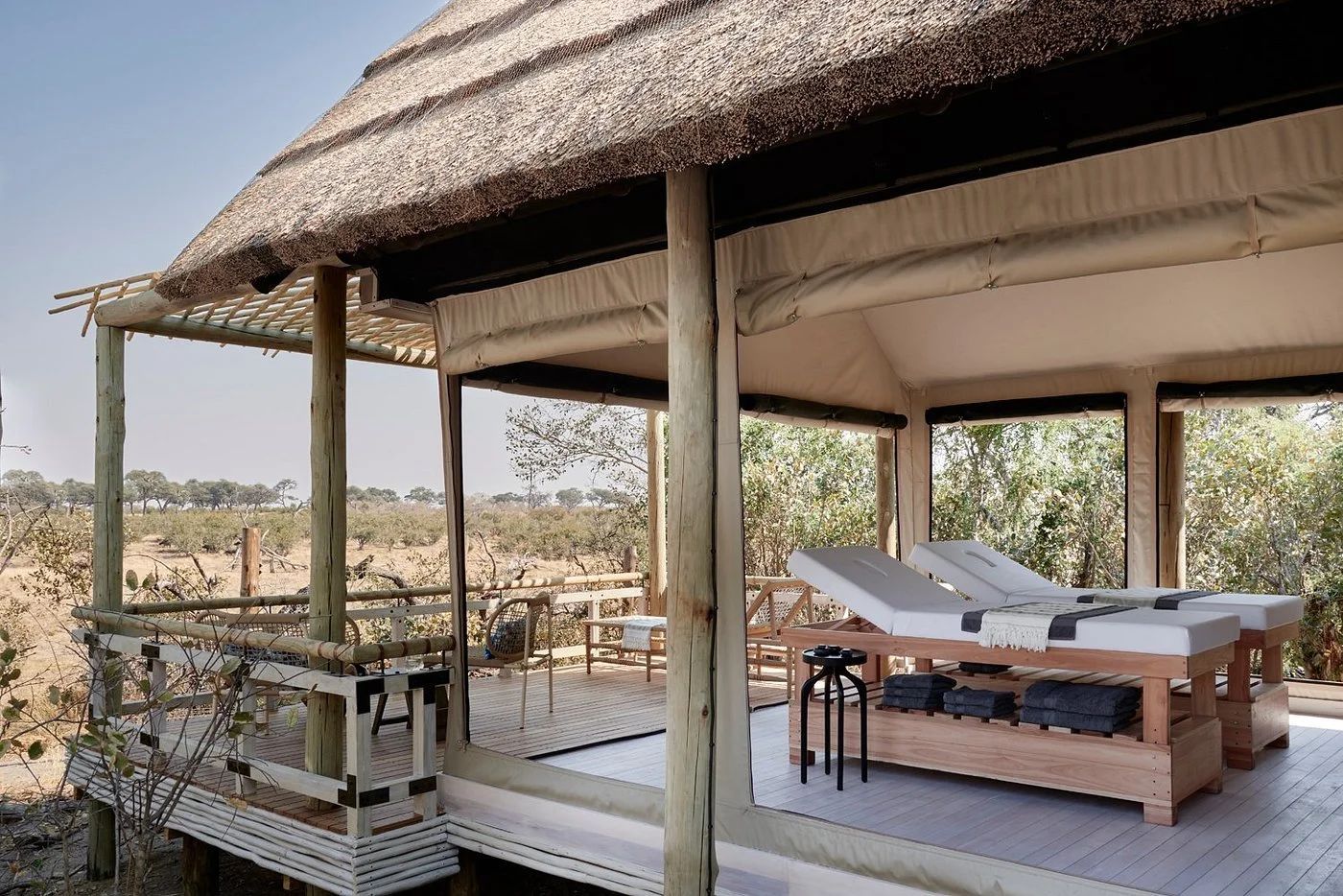
A dedicated spa tent hosts treatments including tailored massages, facials, and body therapies. Options such as the Botswana Glow treatment and after-sun care reflect the outdoor nature of the stay, while couples’ treatments offer time together away from the shared safari schedule. Treatment availability and charges should be confirmed separately from the standard stay inclusions.
The swimming pool is another natural gathering point during the middle of the day. A swim followed by a quiet hour overlooking the plains can be enough to reset before the next drive. Leaving this part of the day open helps preserve the slower rhythm that makes several nights in camp so rewarding.
Discovering the Bush as a Family
For children, safari creates opportunities to learn through observation: identifying a footprint, distinguishing bird calls, or understanding why different animals gather near water. The lodge’s published children’s activities include baking with the chefs, safari storytelling, plant identification, and bush skills, with activities adapted to age and circumstances.
The experience works best when expectations reflect the realities of a wildlife setting. Game drives require patience, and early mornings or long periods in a vehicle will suit some children better than others. Time at the pool and quieter activities around the lodge help provide variety.
We recommend confirming each child’s age, applicable activity policies, vehicle arrangements, and sleeping configuration before booking. Families should also discuss supervision requirements directly with the lodge. A private vehicle, where available, can offer more flexibility over the pace and duration of outings.
Operating Thoughtfully in a Remote Setting
The 2018 redevelopment incorporated environmental measures into the lodge’s infrastructure as well as its appearance. Solar generation and battery storage were designed to reduce reliance on diesel, while efficient water-heating and wastewater systems addressed some of the less visible demands of a remote camp.
Materials also formed part of the approach. Existing timber was reused, composite bamboo was incorporated into decking, and regional thatch was used for roofing. The design team emphasized sourcing from southern Africa, helping connect the project with regional makers and suppliers.
These choices matter in a location where energy, supplies, and waste management require considerable planning. They are best understood as practical efforts to reduce the lodge’s operating footprint, rather than a suggestion that a remote safari stay has no environmental impact.
Planning for Mobility and Access
Accessibility requires an individual assessment before booking. Belmond’s detailed lodge guidance describes elevated rooms reached by seven to nine steps, additional steps in communal areas, and limitations affecting wheelchair use. Assistance or temporary arrangements may be possible with advance notice, but the property should not be assumed to offer step-free access.
Travelers should discuss bathroom access, walking distances, safari-vehicle entry, and light-aircraft boarding with the lodge. Specific mobility requirements need to be reviewed across the entire journey, including transfers, rather than the room alone.
Savute Through the Seasons
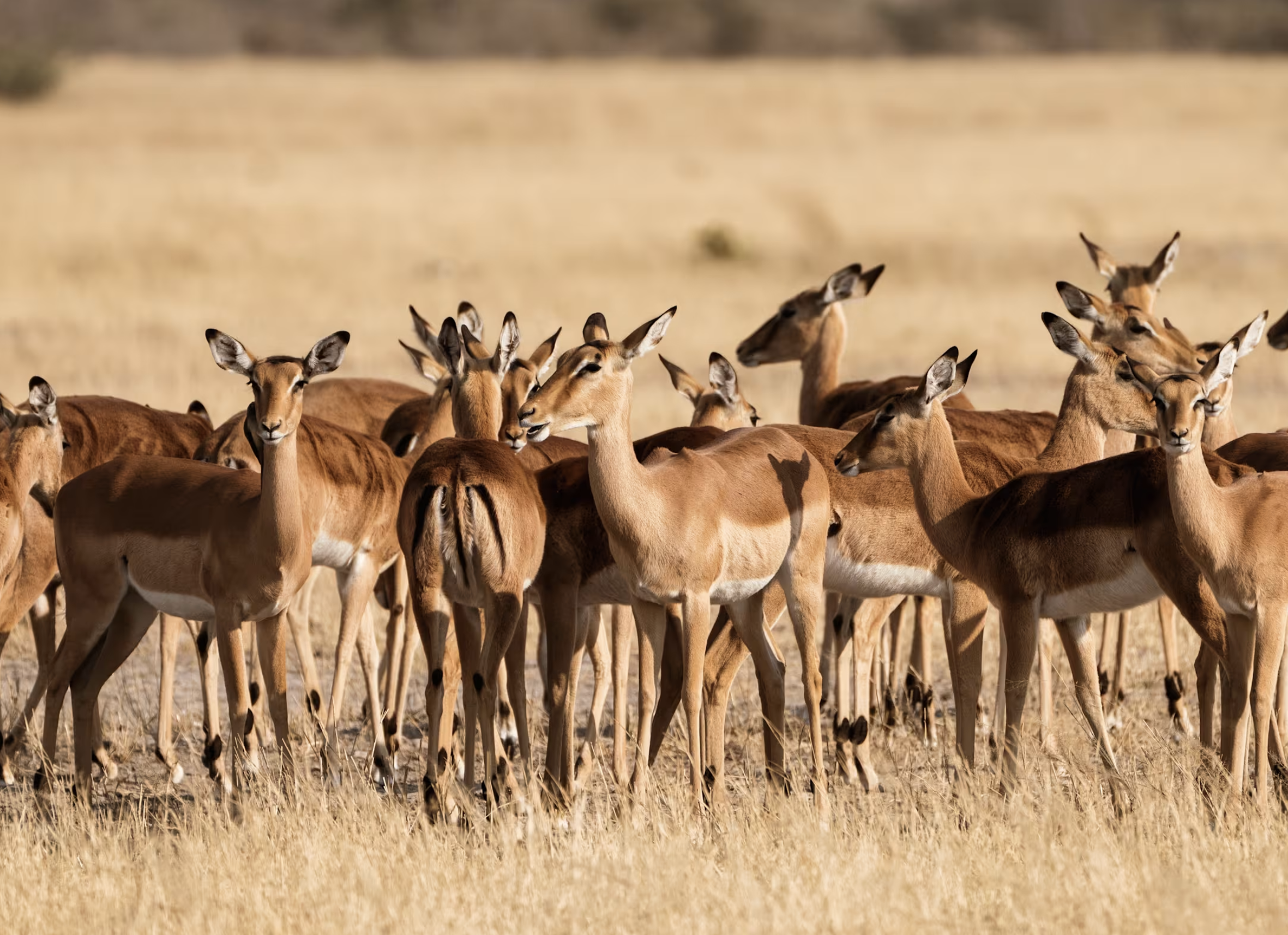
Savute occupies an inland part of Chobe National Park, with an experience distinct from the riverfront around Kasane. Dry woodland, open areas, marsh landscapes, and the changeable channel create a varied setting for land-based wildlife viewing.
During the drier months, animals increasingly concentrate around available water. The middle of the year can bring cold early mornings, making layers useful even when afternoons feel warm. As the dry season progresses, temperatures rise, and October can be particularly hot.
Rain changes the character of the region. Greener vegetation, seasonal birdlife, and young animals bring different reasons to visit, although wildlife can become more dispersed. Zebra movements also contribute to the seasonal picture, with timing influenced by rainfall and conditions. There is no single month that guarantees every experience.
For a broader Botswana journey, Savute pairs naturally with the Okavango Delta. Combining the two introduces contrasting habitats and, where water levels and the chosen camp permit, different ways of exploring. Belmond’s Eagle Island Lodge is one possible companion stay, allowing the trip to move between Savute’s inland landscapes and the Delta’s waterways.
Getting There
By Air: Arrive through Maun Airport or Kasane Airport, then connect by light aircraft to the Savute airstrip. Belmond lists approximate flying times of 50 minutes from Maun and 40 minutes from Kasane. Shared flights may include intermediate stops, extending the journey.
By Lodge Transfer: A lodge representative meets arriving flights at the airstrip for the onward vehicle transfer. Flight and ground arrangements should be coordinated together in advance.
Between Safari Lodges: Connections can be arranged as part of a wider Botswana itinerary. Belmond lists an approximate flight time of 45 minutes between Savute Elephant Lodge and Eagle Island Lodge, subject to routing and operating conditions.
Luggage Planning: Light-aircraft transfers generally allow 44 pounds per person in total, including hand luggage and camera equipment. Soft-sided bags are recommended; confirm the operating airline’s requirements before departure.
Transfer flights, gratuities, spa treatments, and premium drinks should be checked against the specific quotation rather than assumed to be included. Standard lodge inclusions cover meals, selected drinks, laundry, park fees, and at least two game-viewing activities daily.
When the Waterhole Grows Quiet
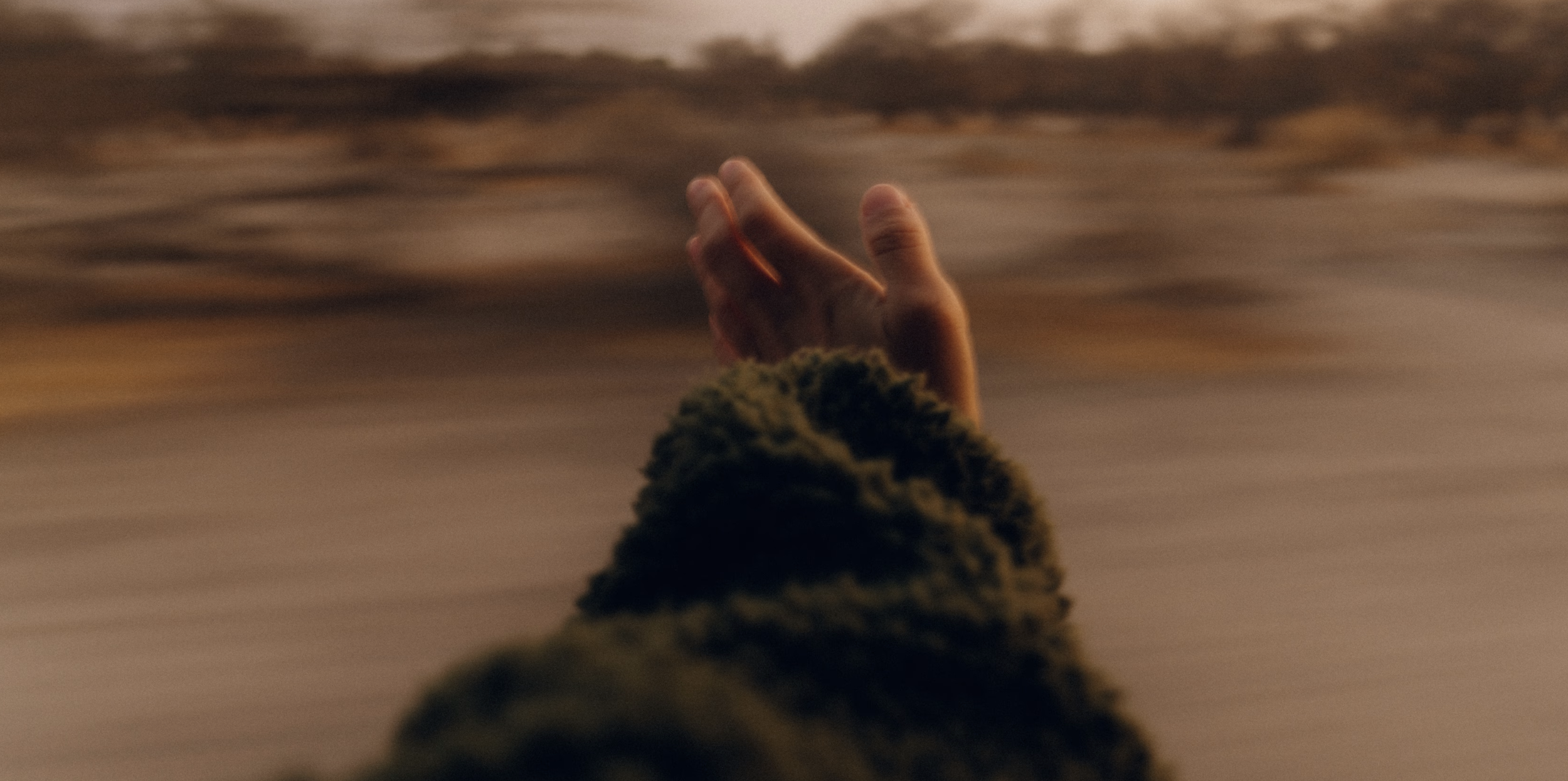
The lasting impression of Savute may come from something small: dust rising around an elephant’s feet, the outline of a baobab in evening light, or the sudden stillness after animals leave the waterhole. These moments sit alongside the more dramatic sightings and give the days their texture.
At Savute Elephant Lodge, there is space to notice them. The private decks, the hide, and the intervals between drives make observation part of the whole stay. As daylight fades, the landscape continues beyond the edge of the lodge, carrying on at its own pace.