Jakarta, Indonesia | Mandarin Oriental, Jakarta
At the Center of Jakarta’s Most Recognizable Roundabout
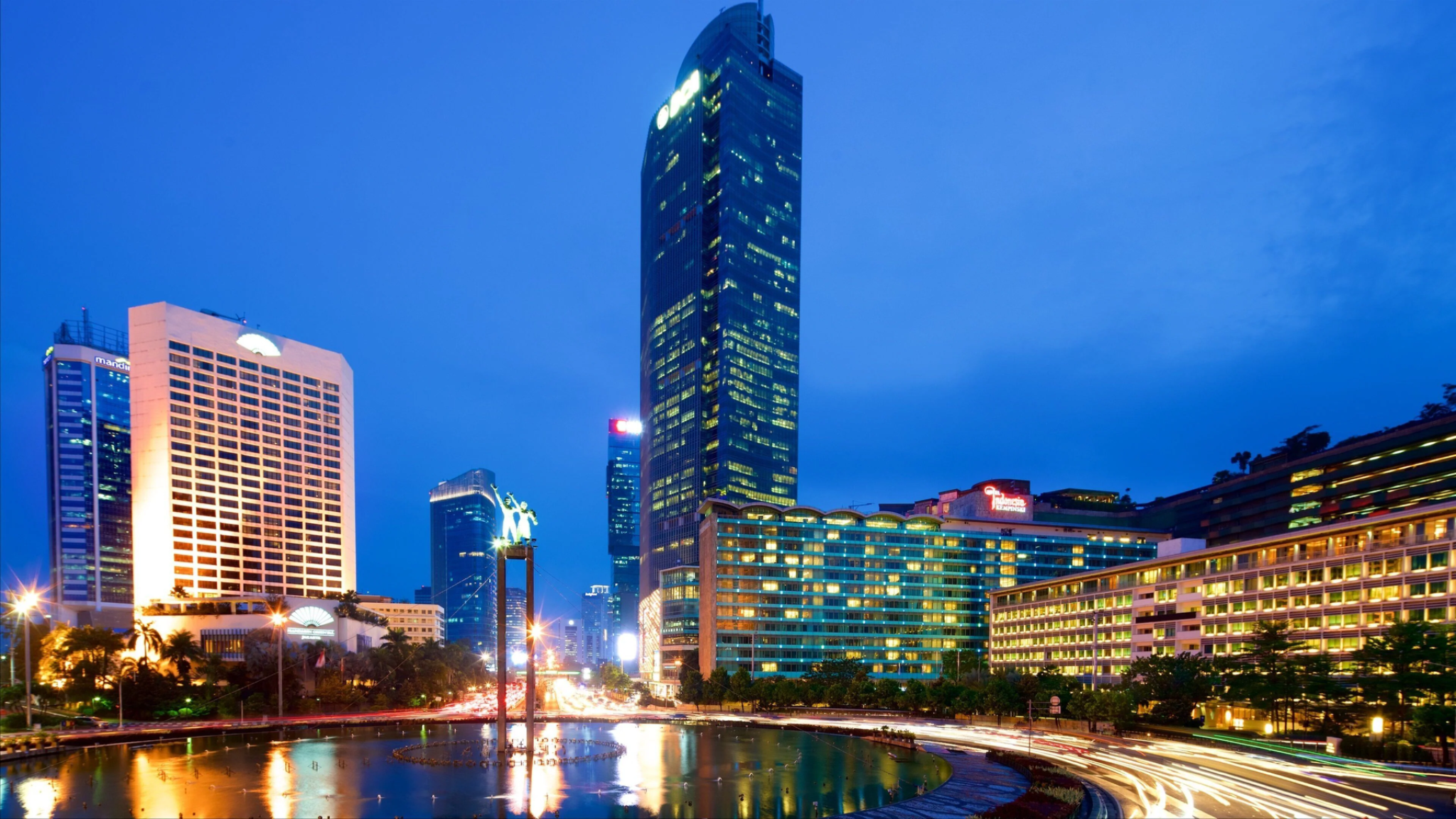
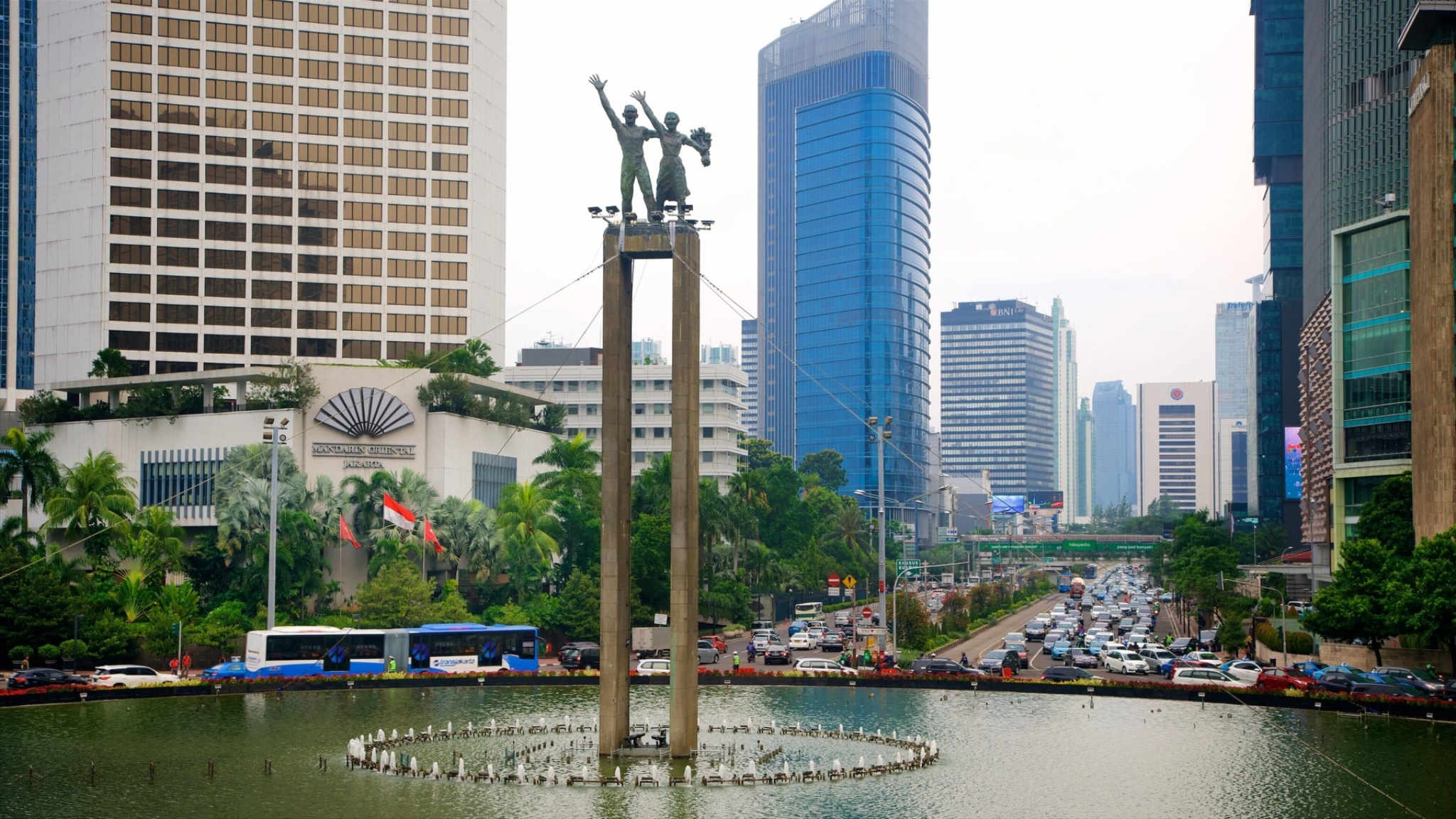
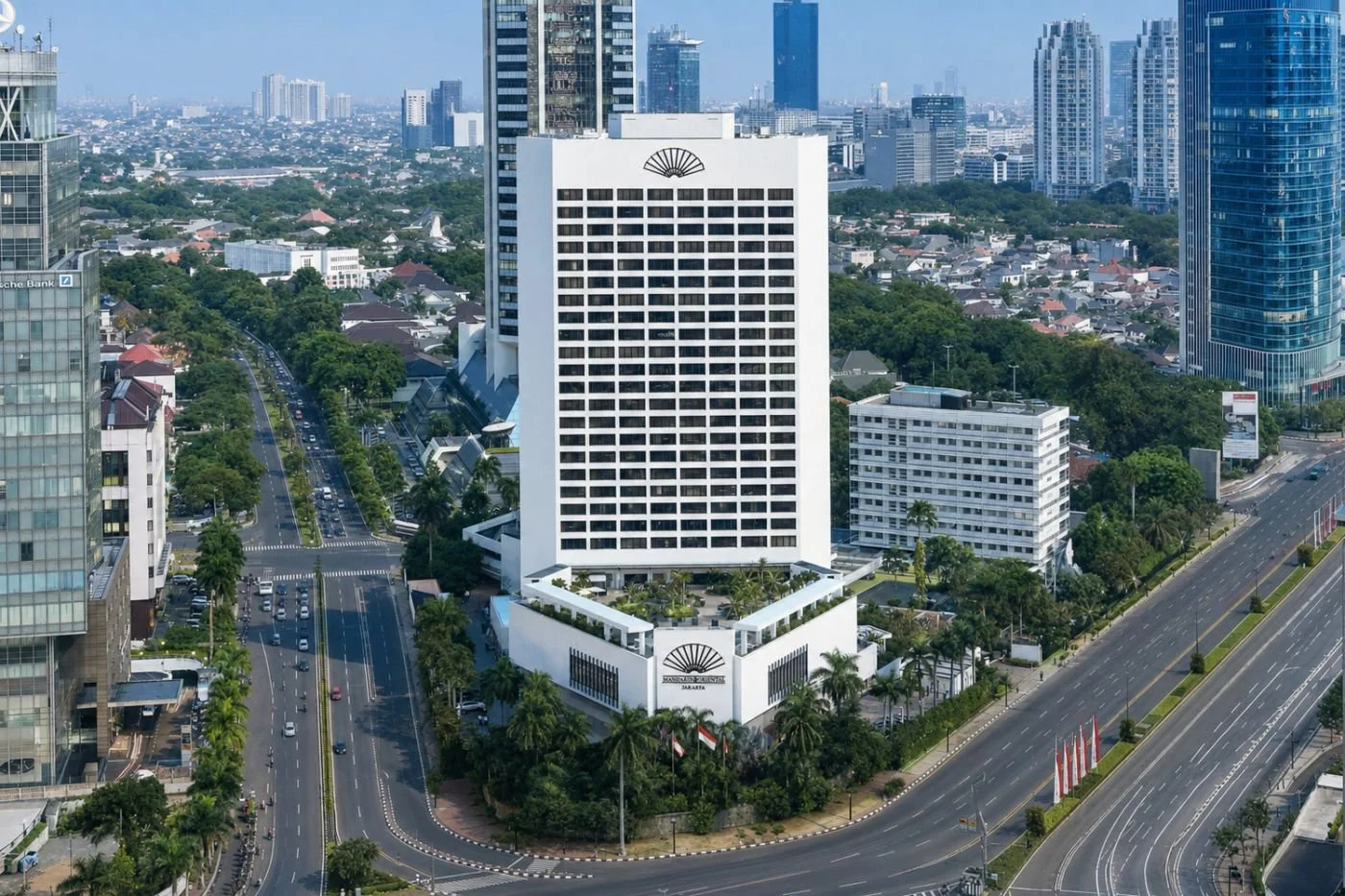
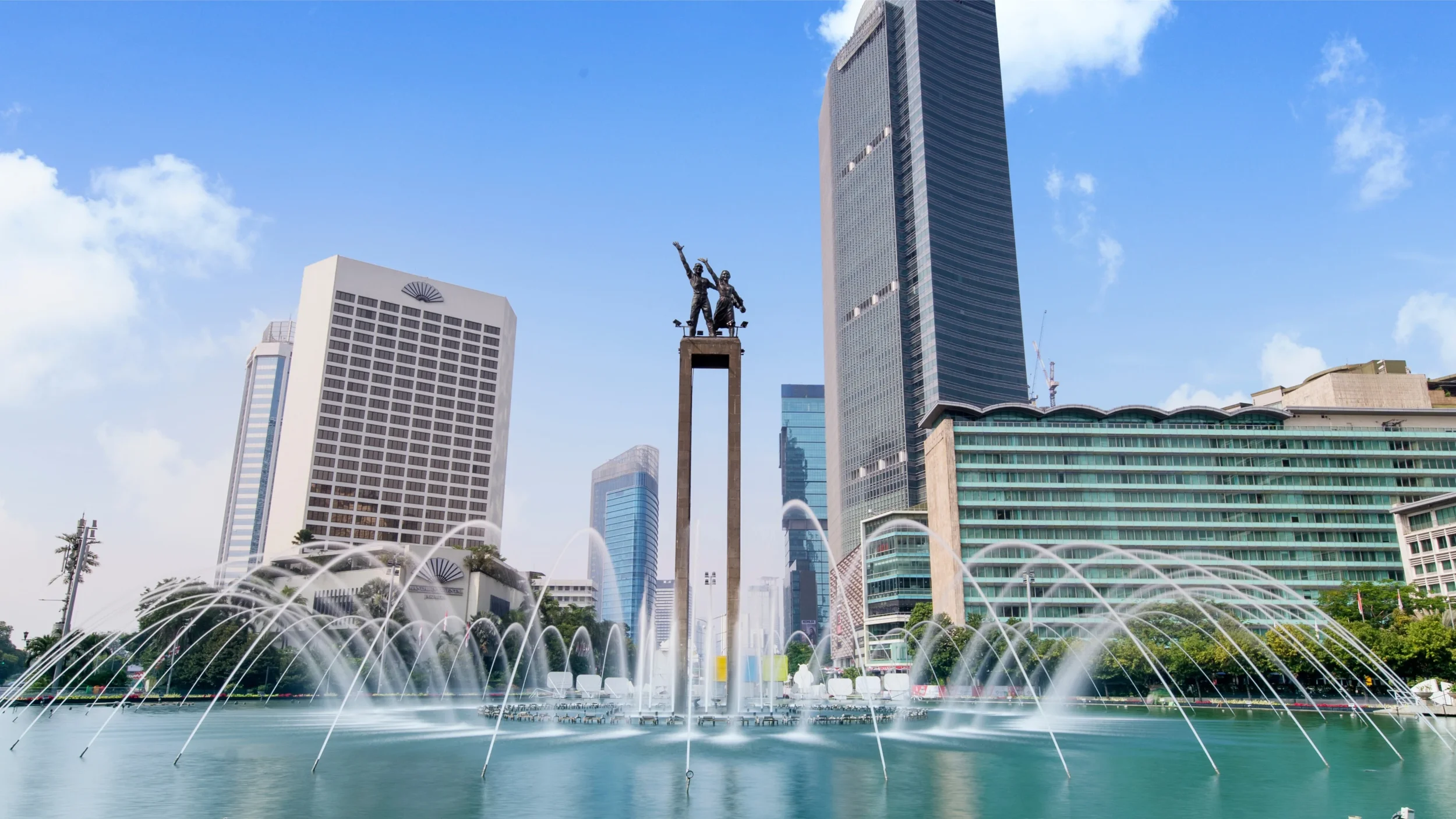
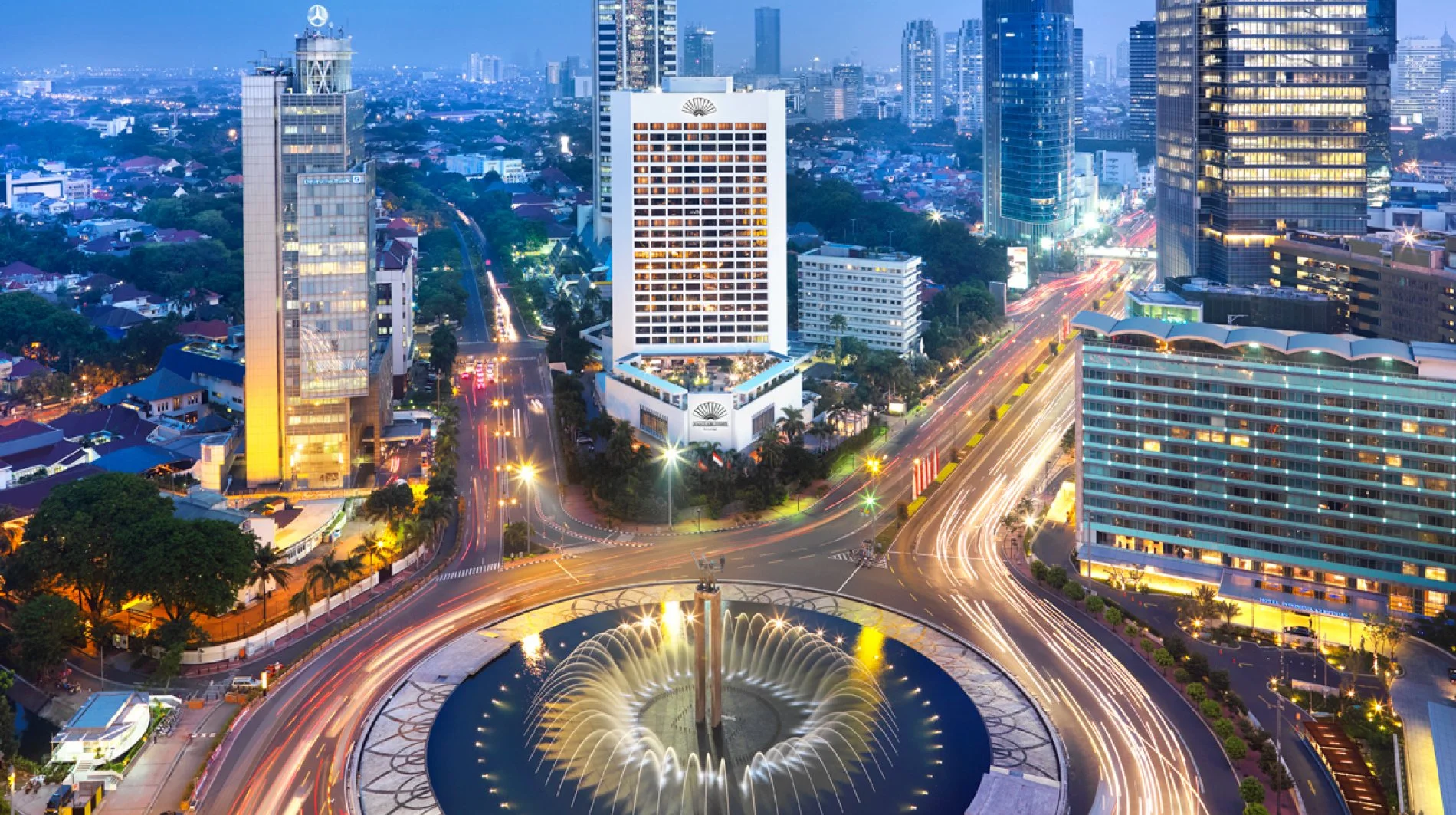
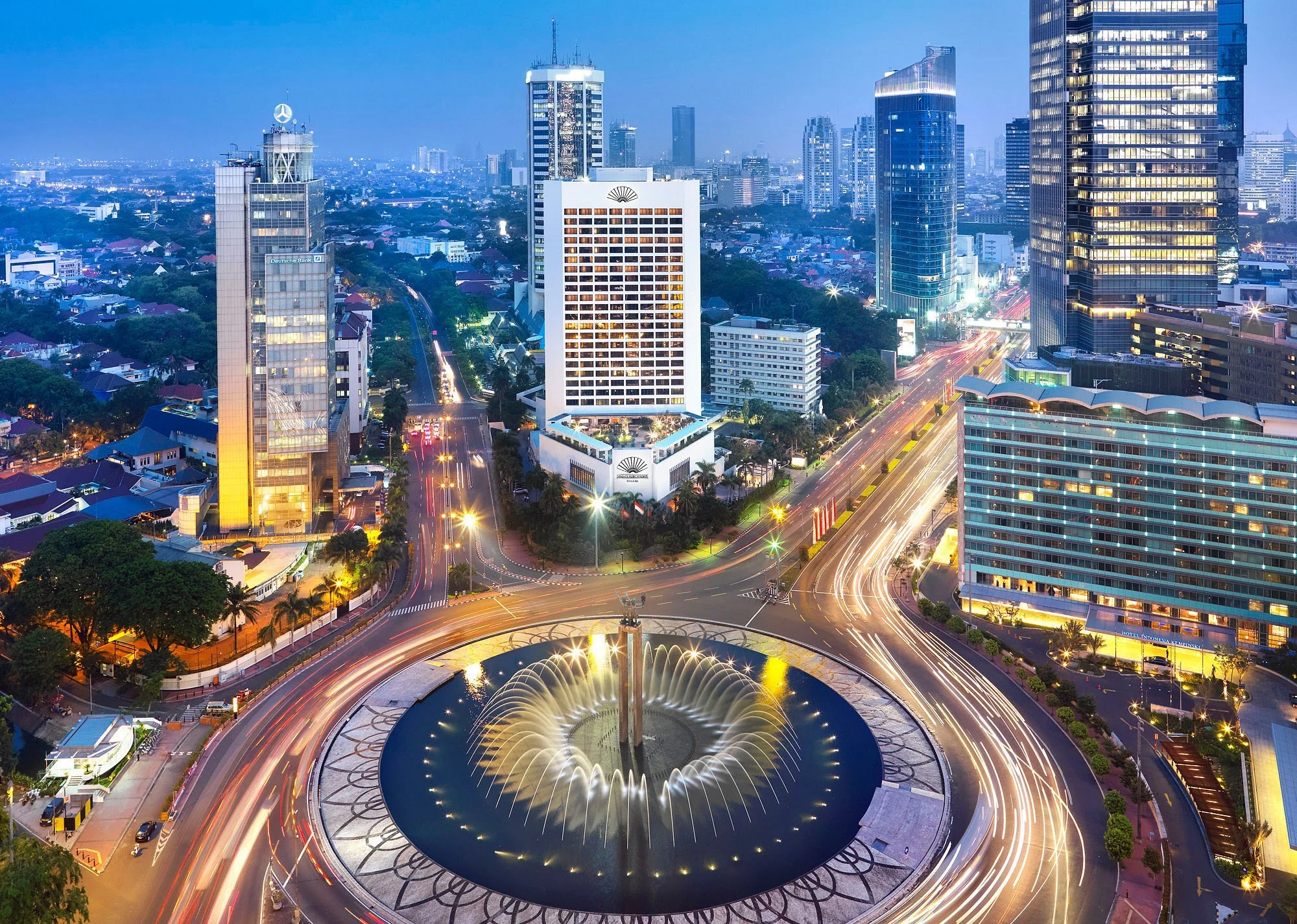
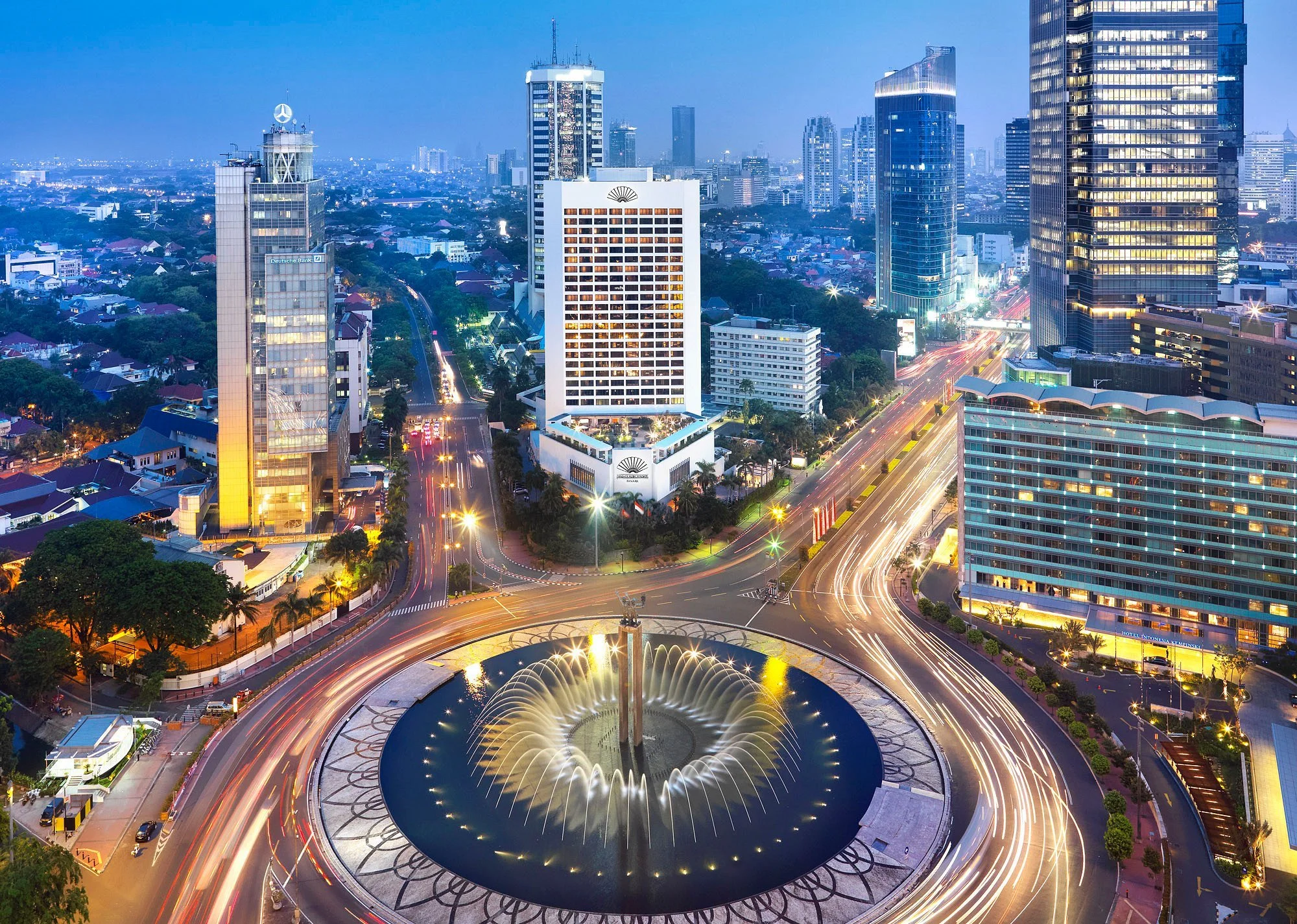
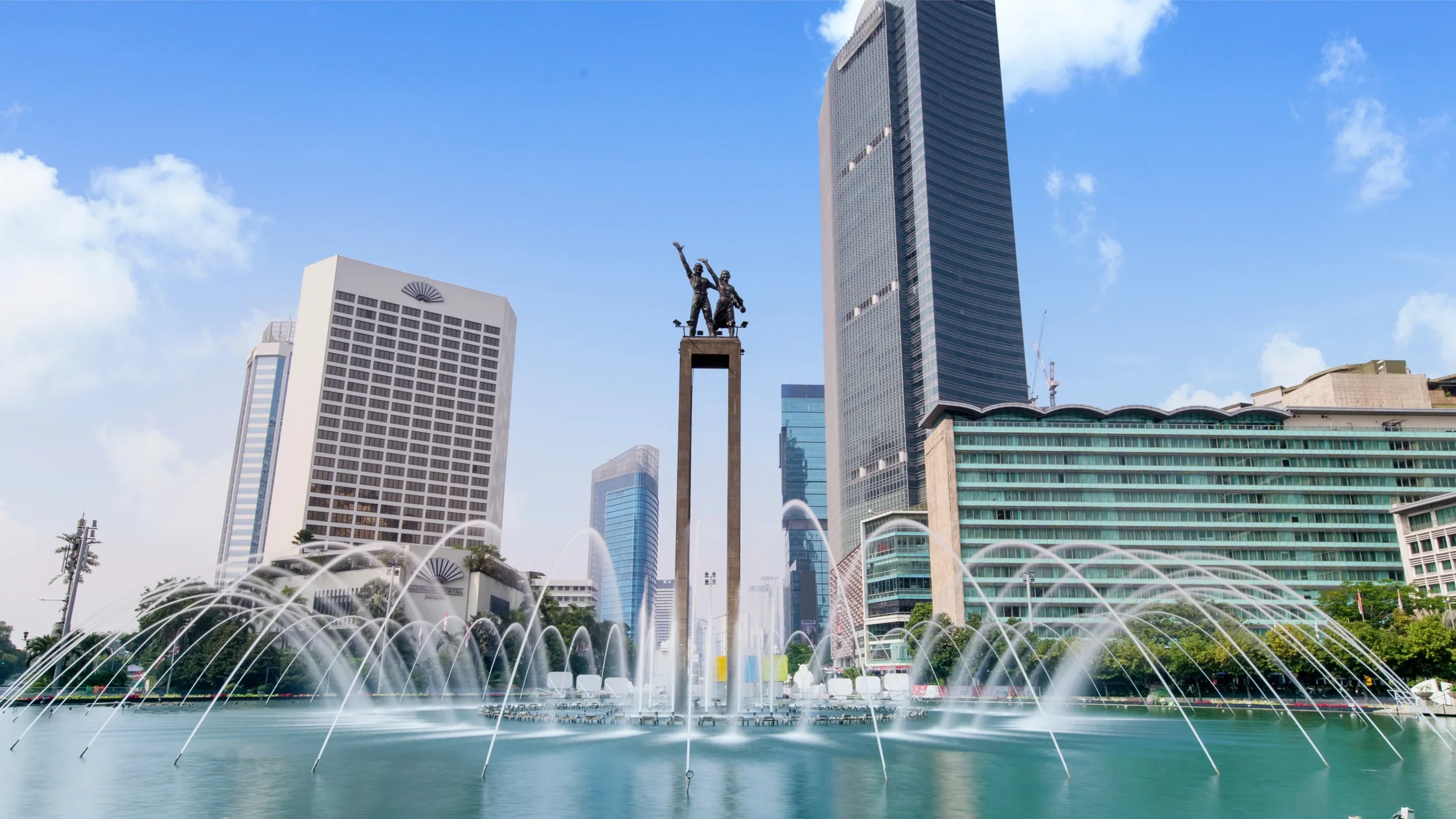
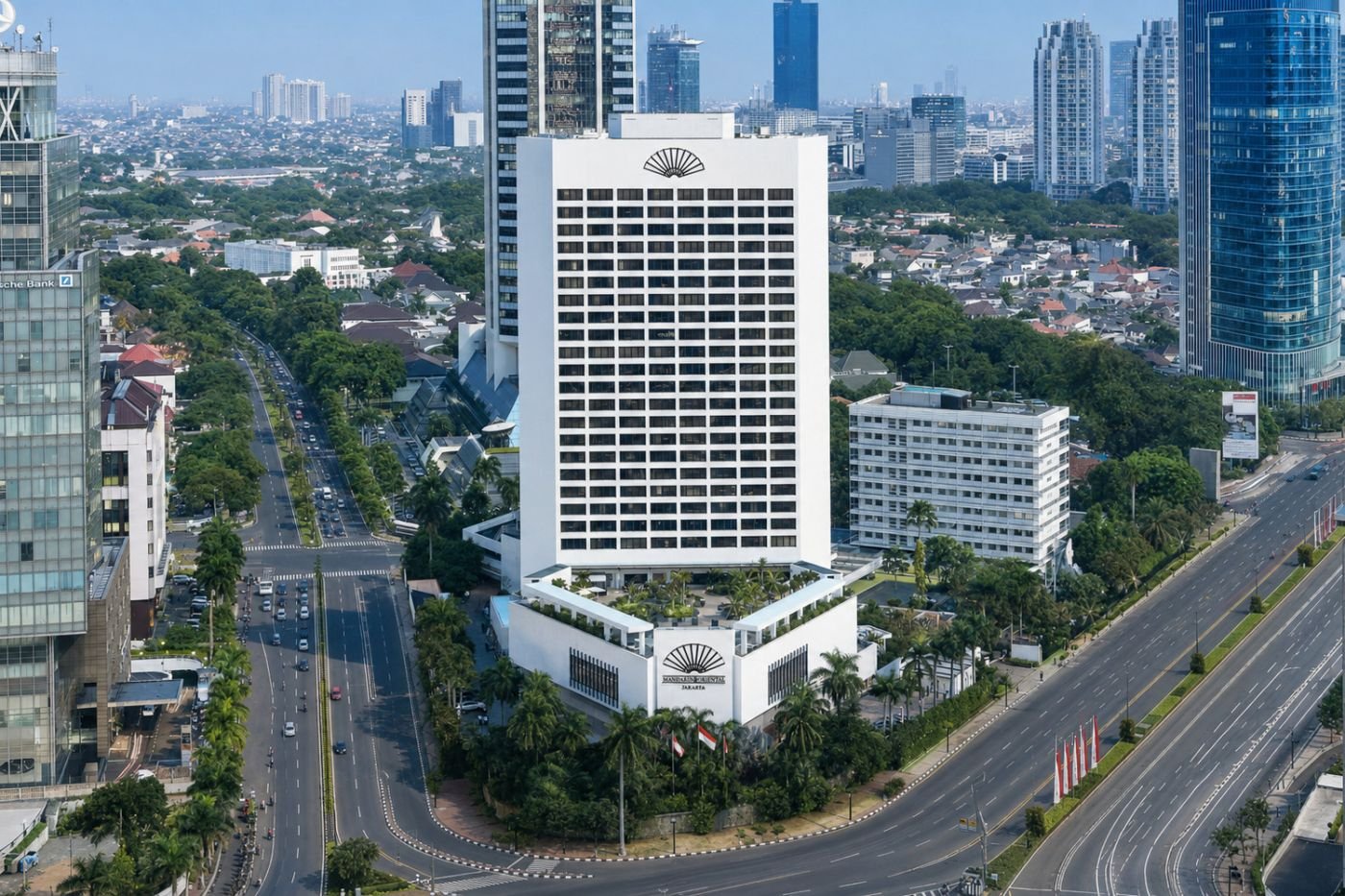
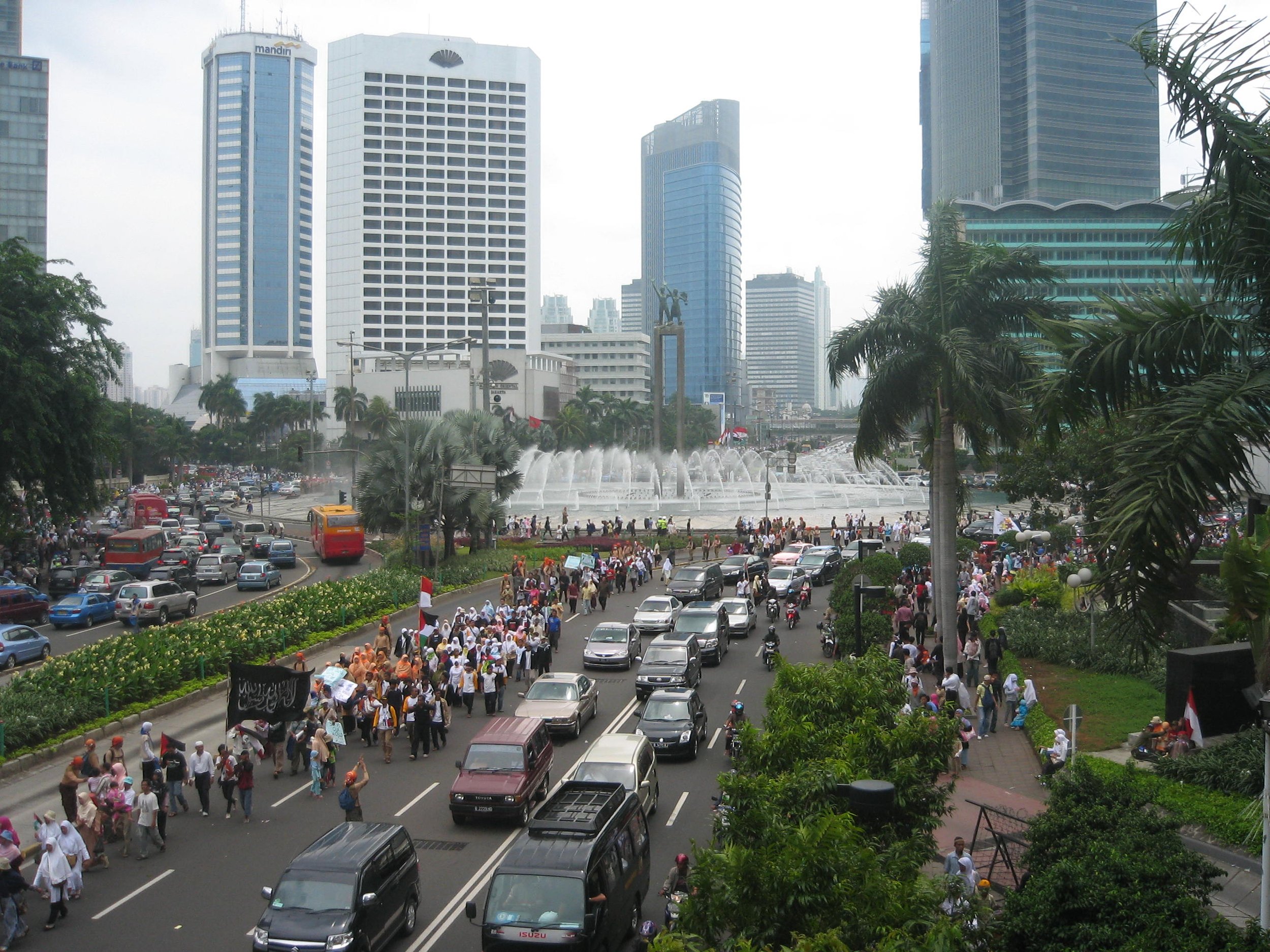
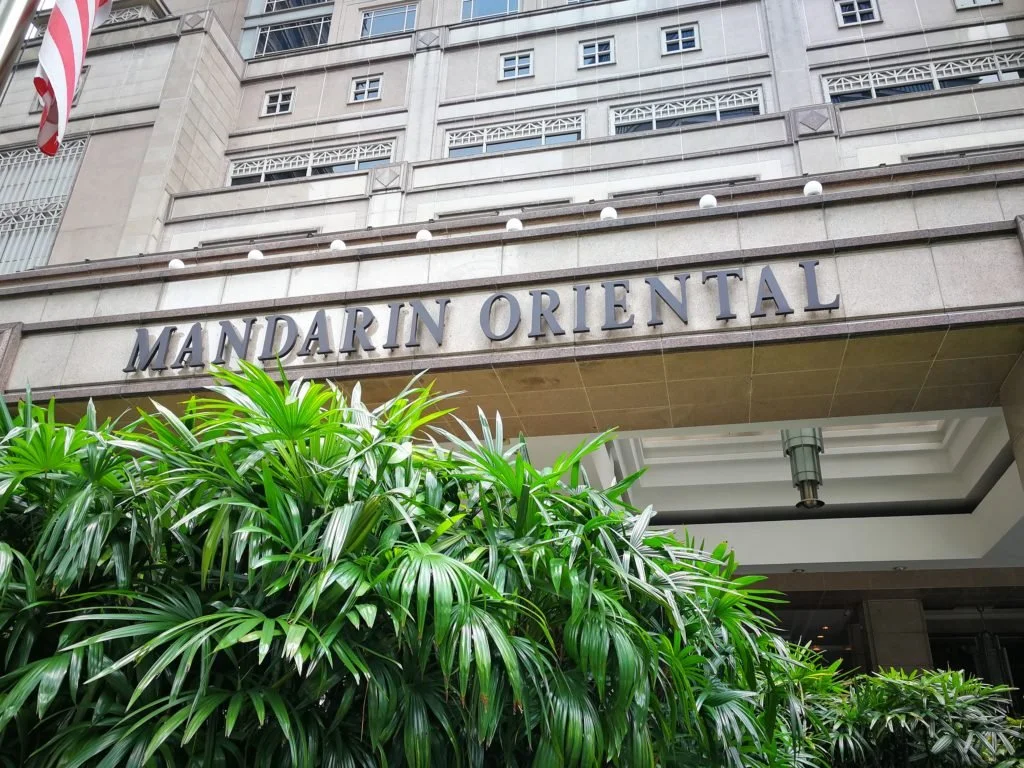
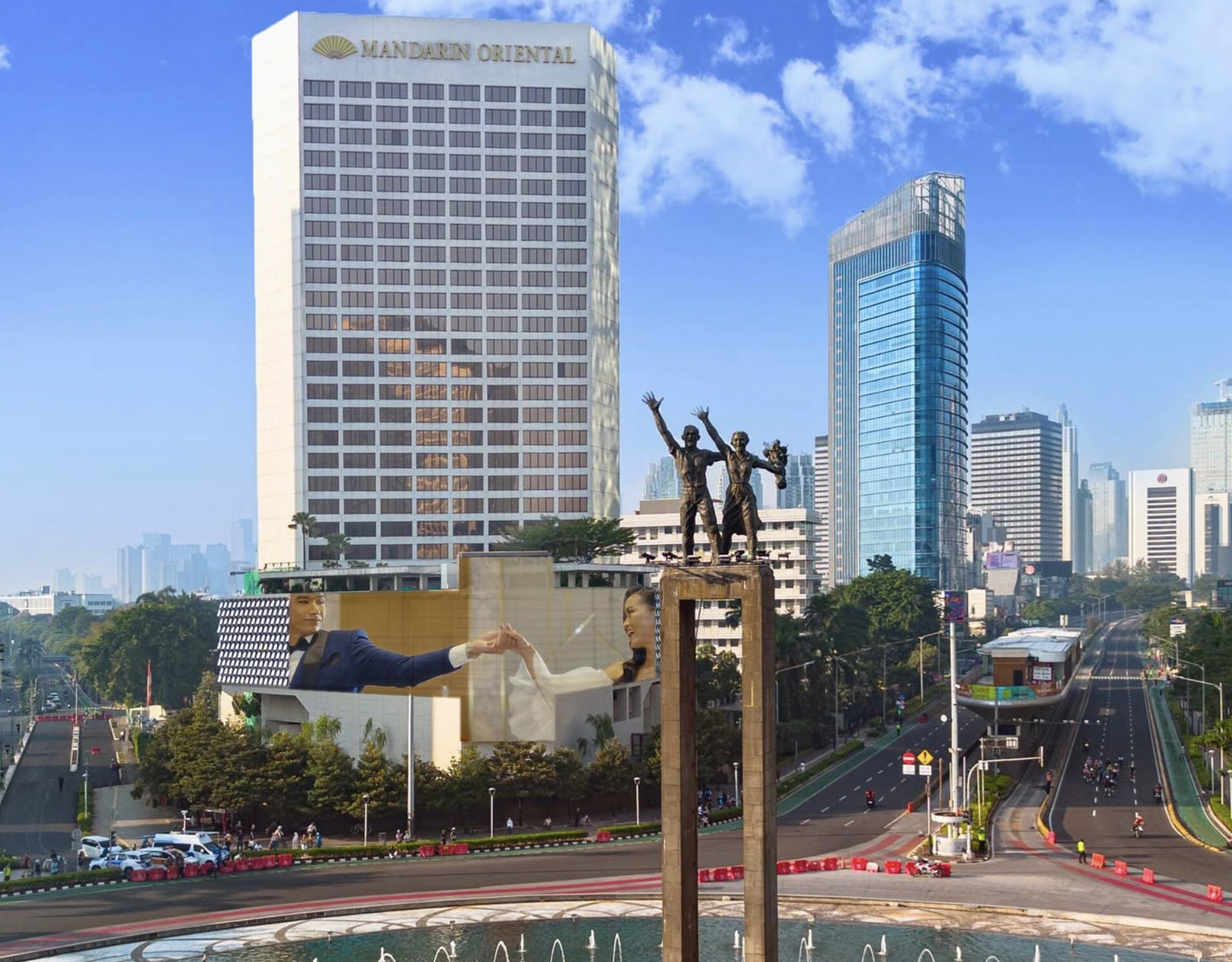
Mandarin Oriental, Jakarta stands on Jalan M.H. Thamrin beside Bundaran HI, the broad traffic circle anchored by the Welcome Monument. The location places the hotel in the middle of the capital’s financial and diplomatic district, directly beside two of Jakarta’s most prominent shopping centres and within a short walk of the MRT.
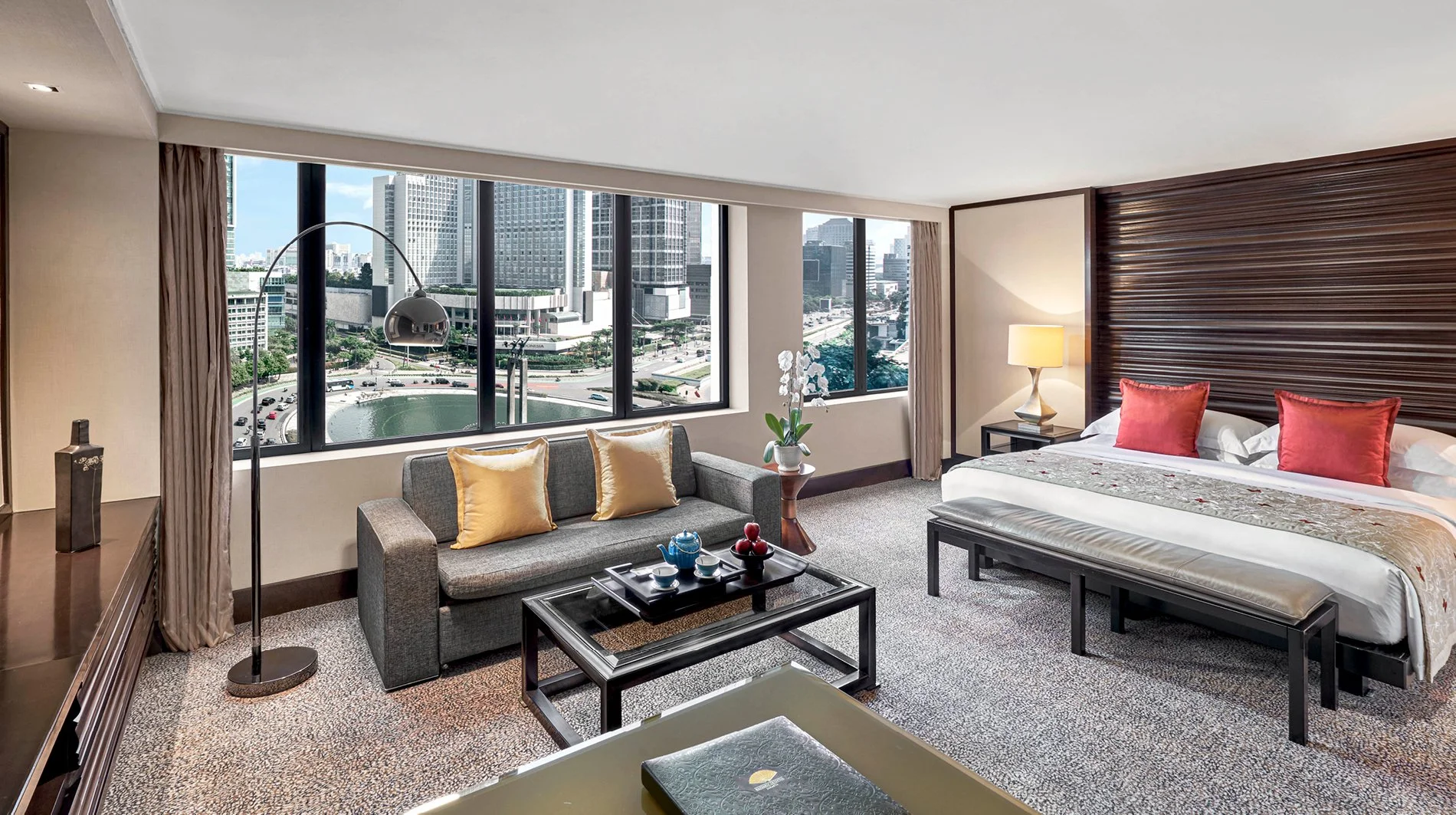
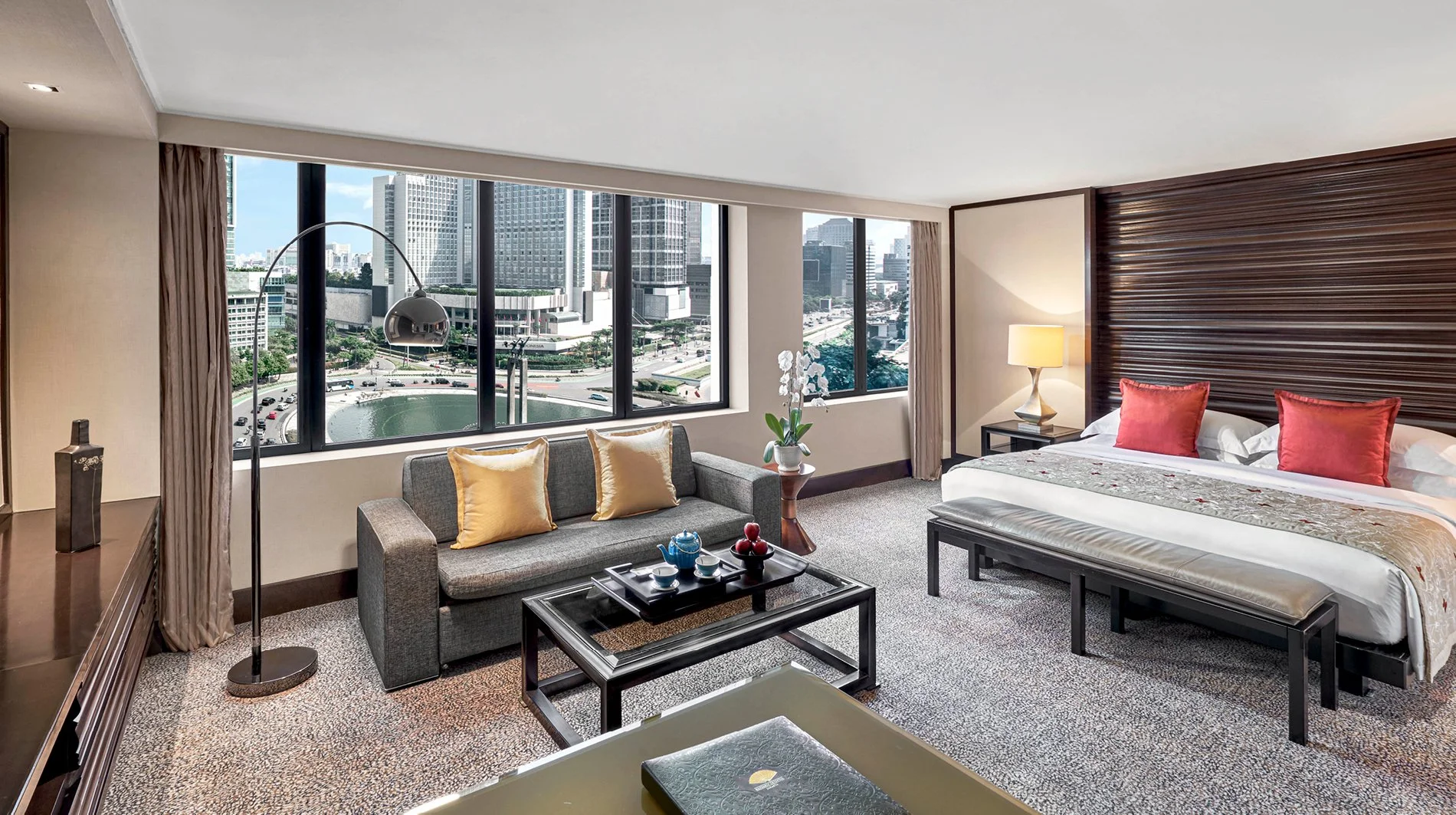
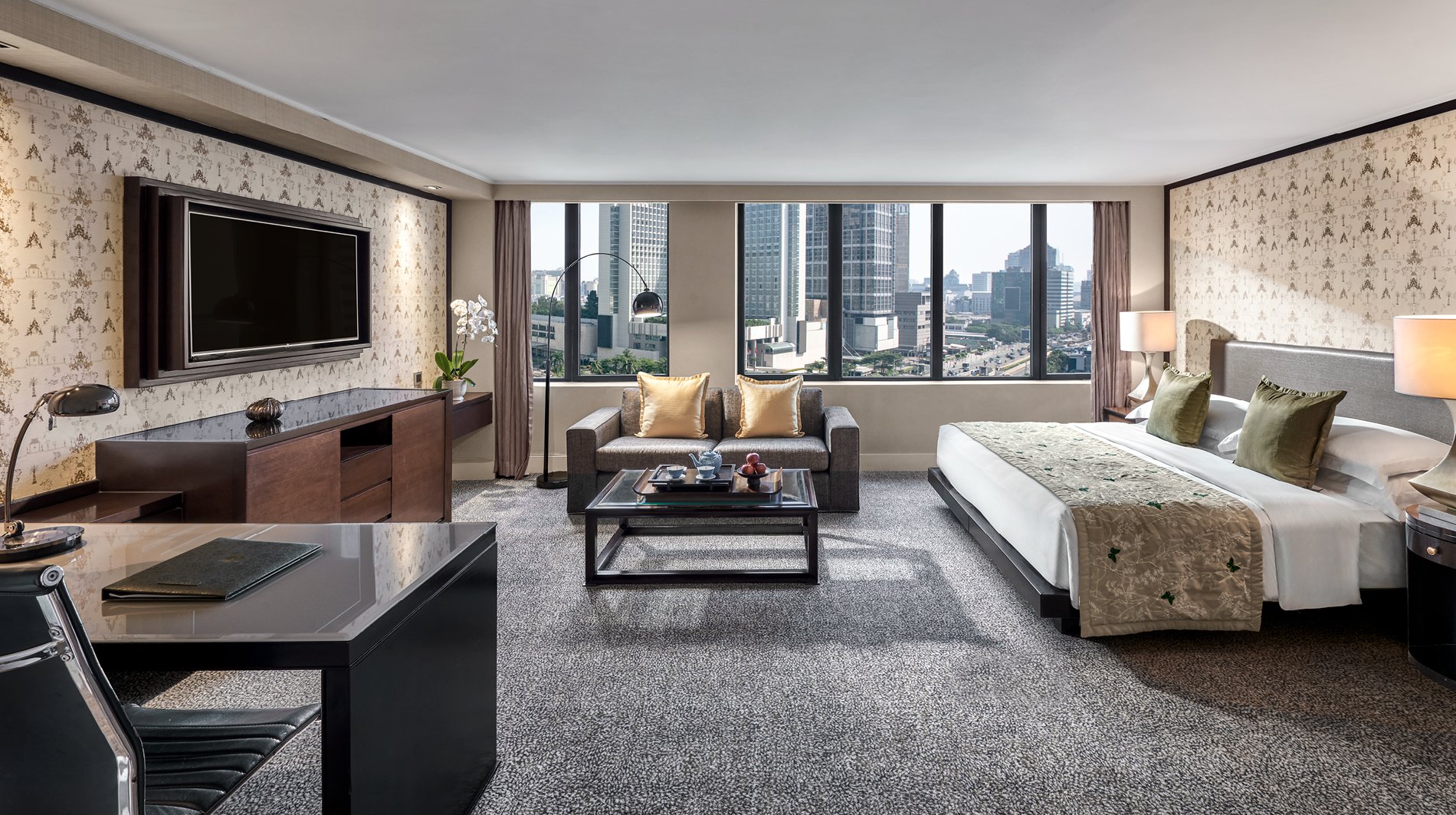
The hotel has 272 rooms and suites, split between 210 rooms and 62 suites. Rooms begin at a generous 506 sq. ft., which is notable in a dense city where many luxury hotels rely on smaller entry categories. The strongest views look toward the Welcome Monument, while other rooms frame the Sudirman and Imam Bonjol cityscape.
This is a particularly practical choice for travelers who want Jakarta to remain close at hand. Business addresses, museums, shopping and dining are easy to reach, while the spa, 15-metre outdoor pool, Club Lounge and substantial rooms make the hotel comfortable enough for time spent inside during heat, rain or heavy traffic.
A 1978 Landmark Reworked for Modern Jakarta
Mandarin Oriental, Jakarta opened in 1978 and has long occupied a prominent position at one of the capital’s most recognizable intersections. The current hotel describes the original building as International Style architecture shaped by references to the cultural heritage of Nias and Batak Tapanuli.
The property later closed for an extensive renovation and reopened in October 2009 after a US$50 million redevelopment. That project reduced the number of rooms while increasing their size, replaced major building systems and repositioned the hotel around contemporary interiors and larger accommodations.
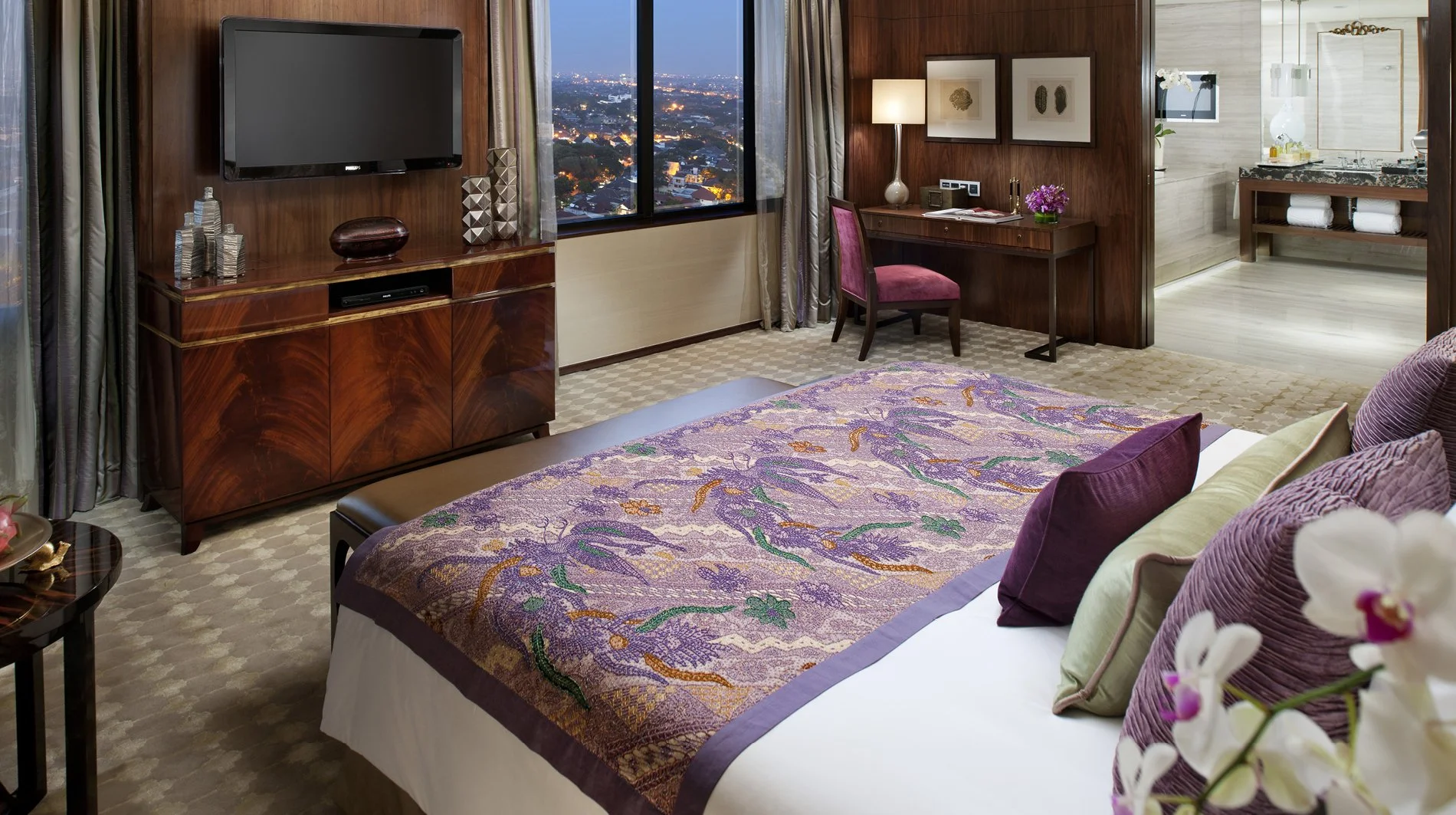
Design firm Lim, Teo and Wilkes led the guestroom interiors for the reopening, blending the Mandarin Oriental group’s Asian identity with Indonesian references. The hotel has continued to update its public spaces and events facilities since then rather than relying only on its late-1970s history.
In 2026, the hotel was recognized by the Travel Trade Gazette Awards as Indonesia’s Best Business Hotel, a distinction that reflects the continued importance of its Thamrin address for corporate as well as leisure stays.

International Style Architecture With Indonesian References
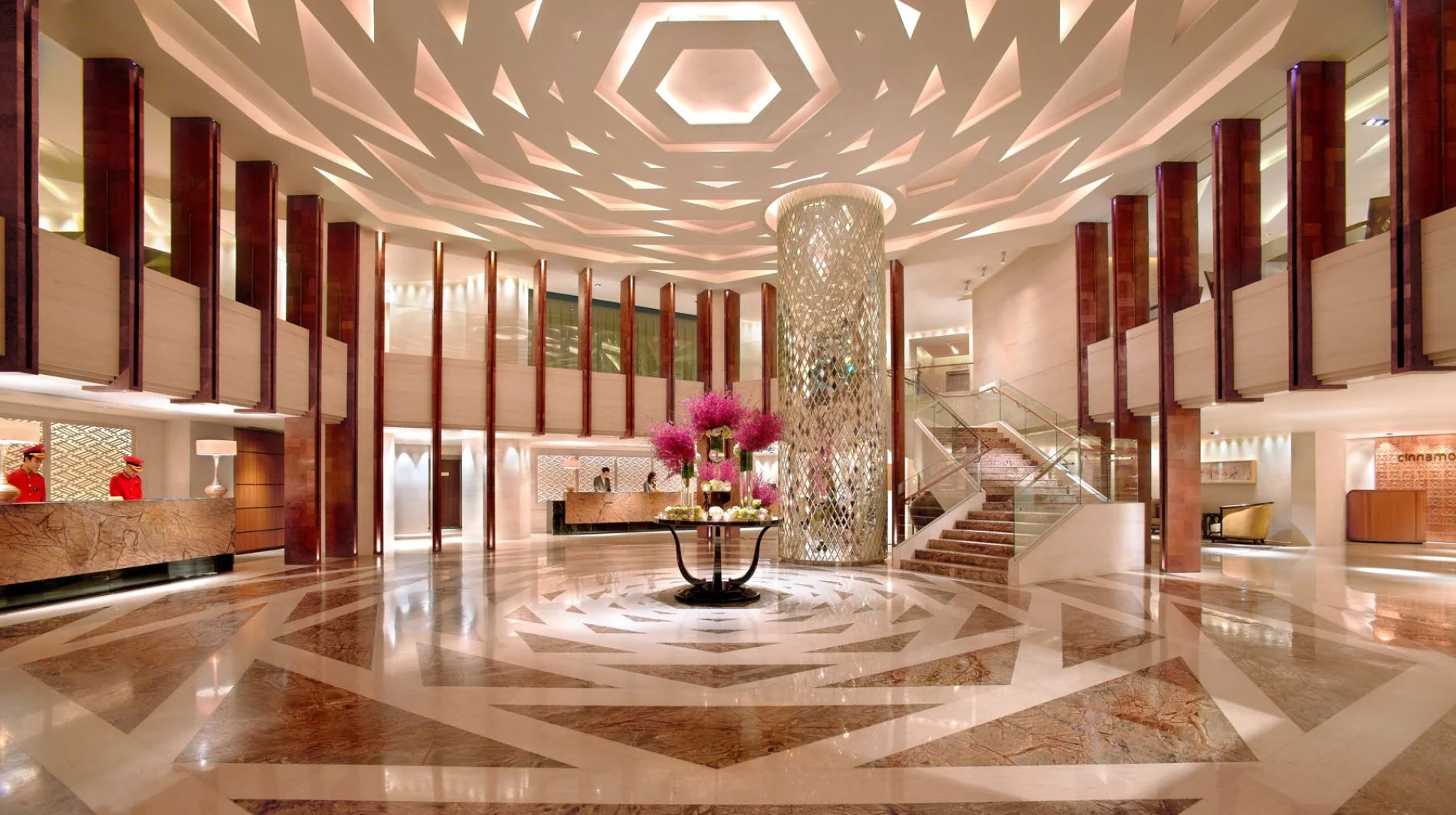
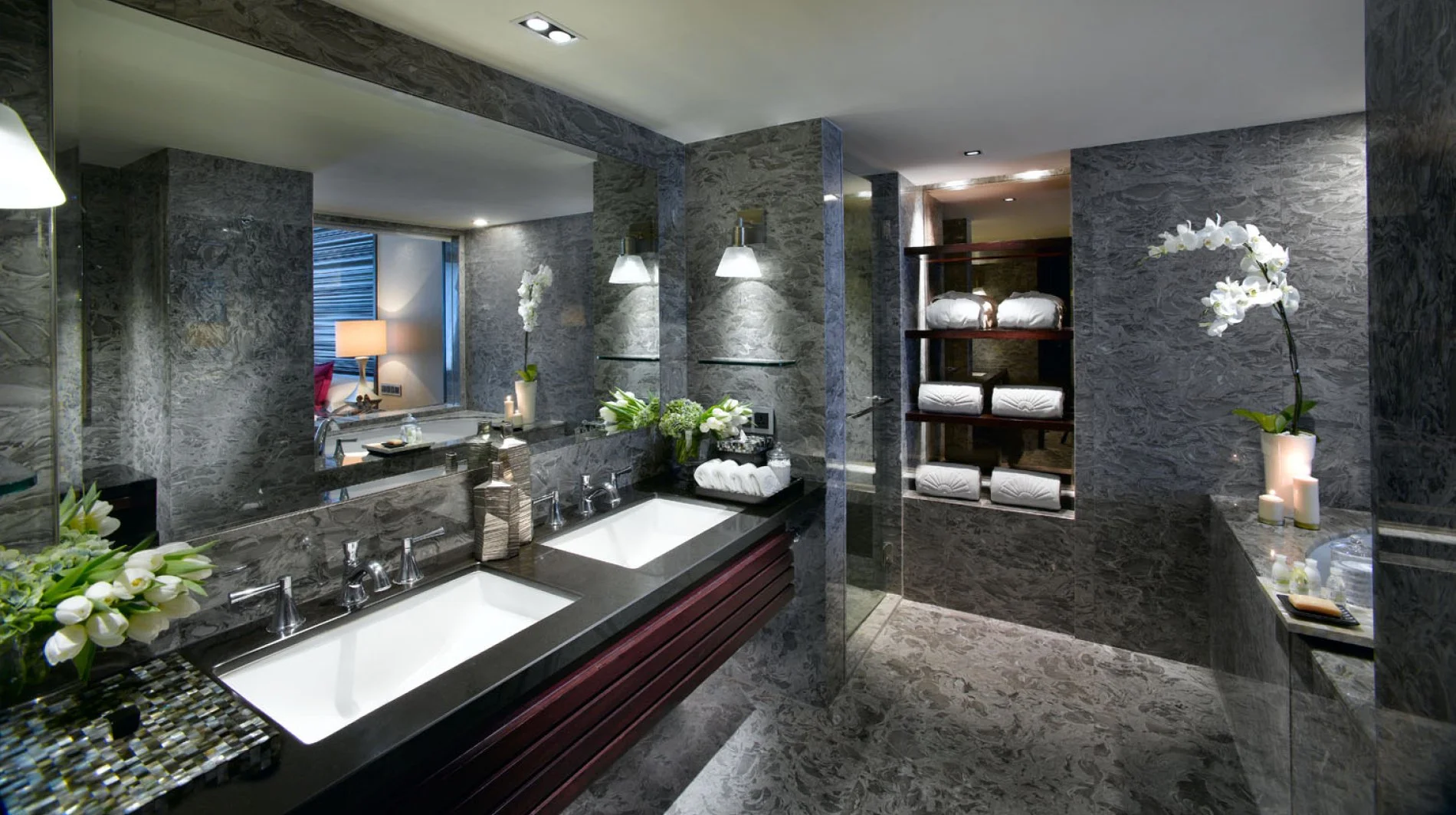
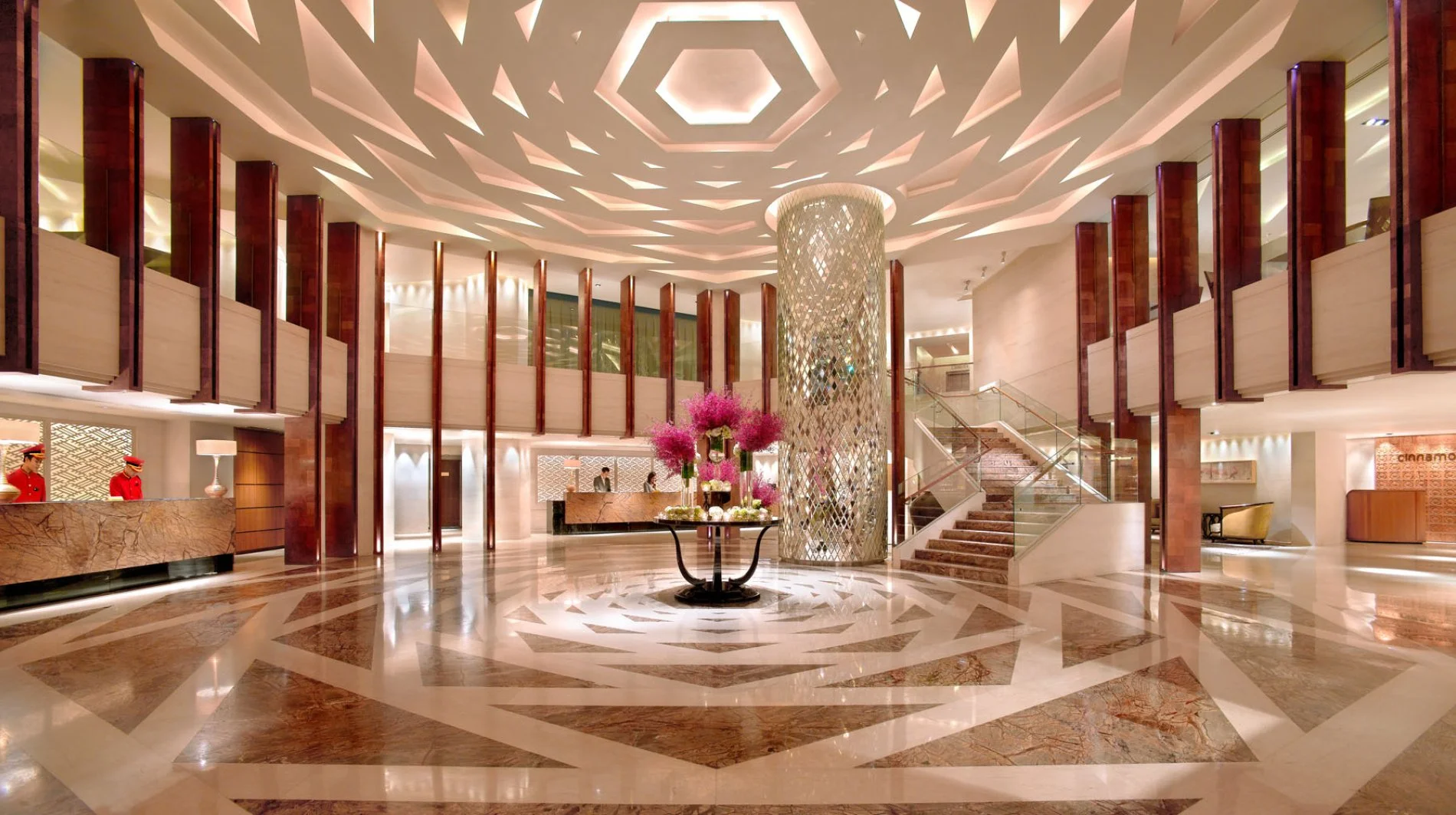
The exterior remains strongly urban and formal, but the interiors soften the International Style framework with polished timber, marble, patterned textiles and decorative references to Indonesian craft. The result is less overtly traditional than many heritage-led hotels in Southeast Asia and better suited to the hotel’s business-district setting.
The defining visual element in many rooms is not an interior feature but the view. The Welcome Monument rises from the Bundaran HI roundabout directly outside, while other rooms look along the city’s main commercial corridors. That makes room orientation one of the most meaningful booking decisions.
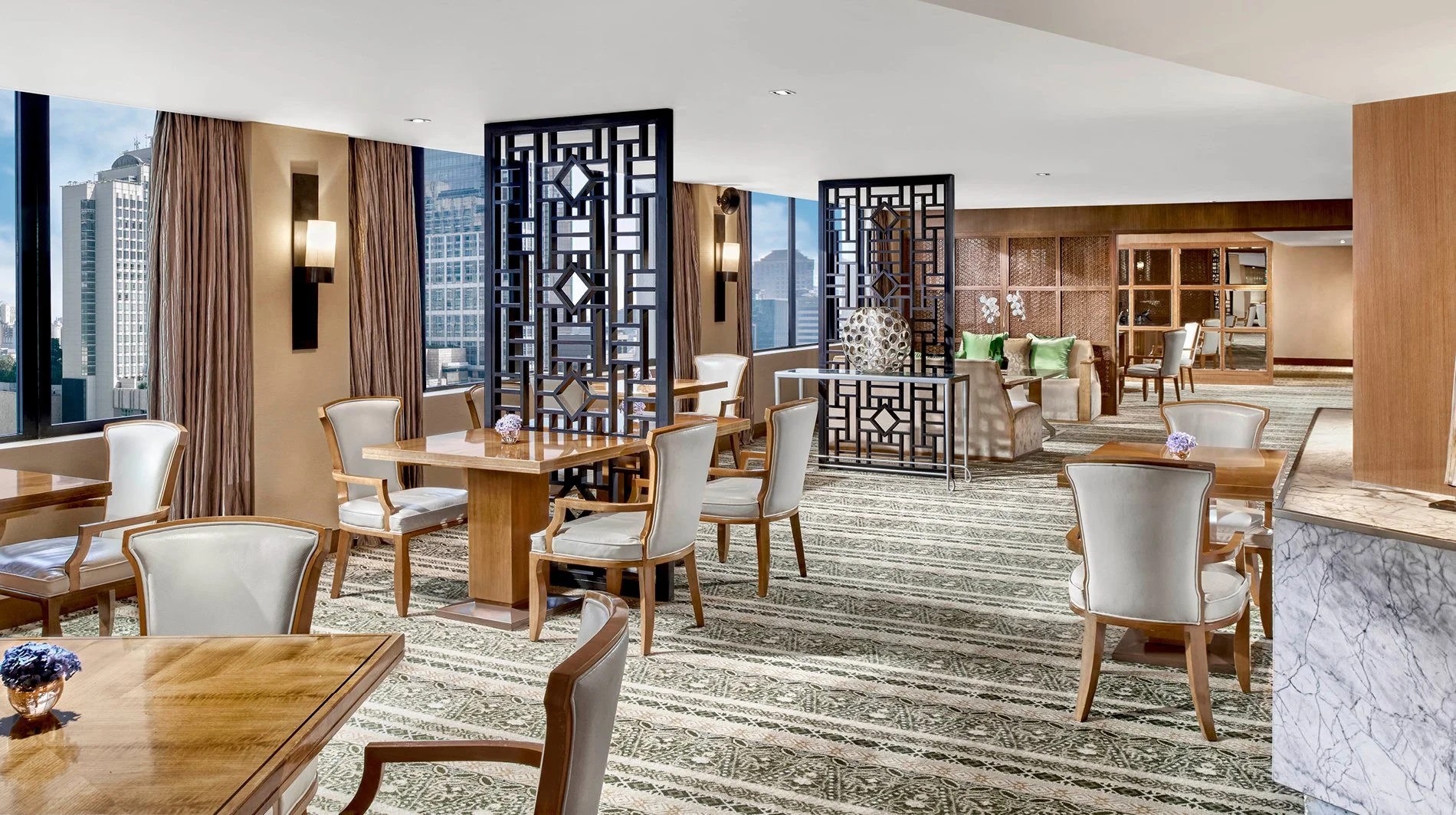
The 21st-floor Mandarin Oriental Club Lounge adds another perspective, with panoramic city views and a quieter environment for breakfast, afternoon tea and evening cocktails. Age access matters for families: from Monday through Thursday the lounge is reserved for guests age sixteen and older, while children may visit from Friday through Sunday under parental supervision.
For travelers interested in design, the best approach is to choose the view first and then decide whether Club access or a separate living room will add meaningful value to the stay.
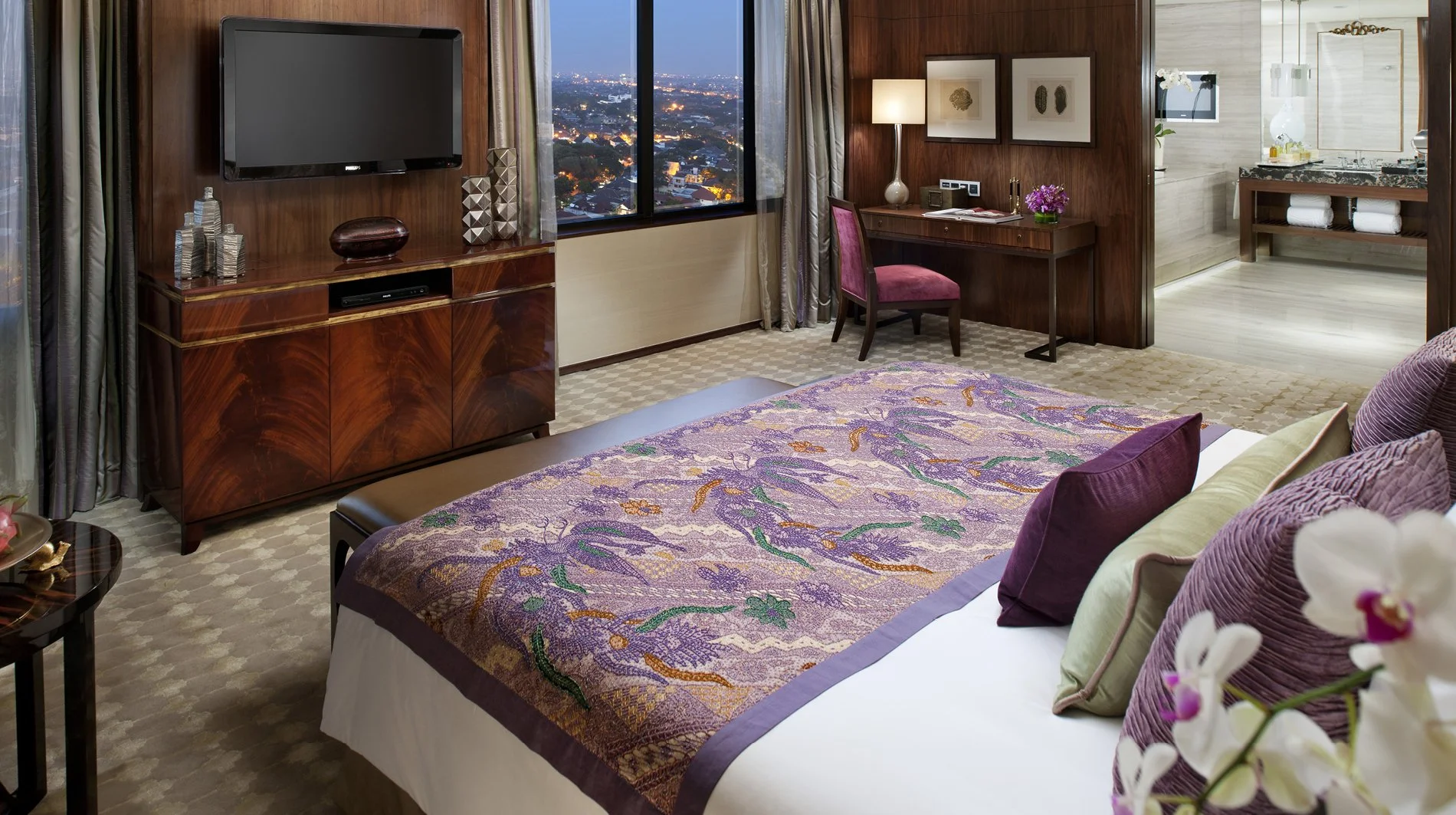
From City Rooms to the Mandarin Suite
The current live accommodation collection is organized around city views, Welcome Monument views, Club access and one-bedroom suites. Family connecting products are listed separately because they combine existing room and suite categories rather than functioning as independent standalone room types.
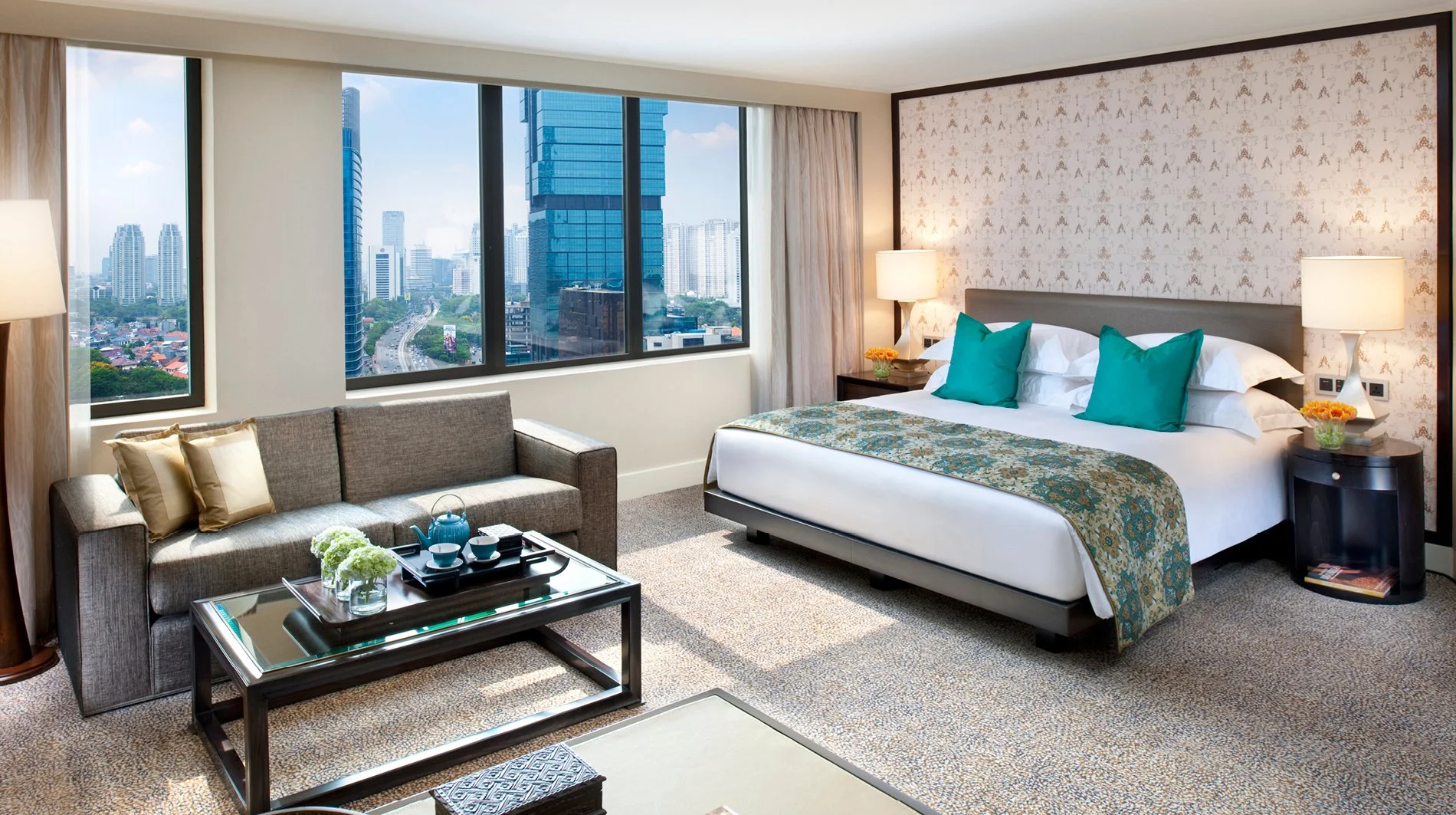
Deluxe Room: 506 sq. ft., with a king or twin configuration, a marble bathroom, work desk and views toward Imam Bonjol or Sudirman; accessible versions are available.
Monument View Room: 506 sq. ft., with the same generous room footprint as the Deluxe Room but a direct outlook over the Welcome Monument, making the view the main reason to upgrade.
Deluxe Club Room: 506 sq. ft., with Jakarta skyline views and access to the 21st-floor Mandarin Oriental Club Lounge.
Monument View Club Room: 506 sq. ft., combining direct Welcome Monument views with Mandarin Oriental Club Lounge access.
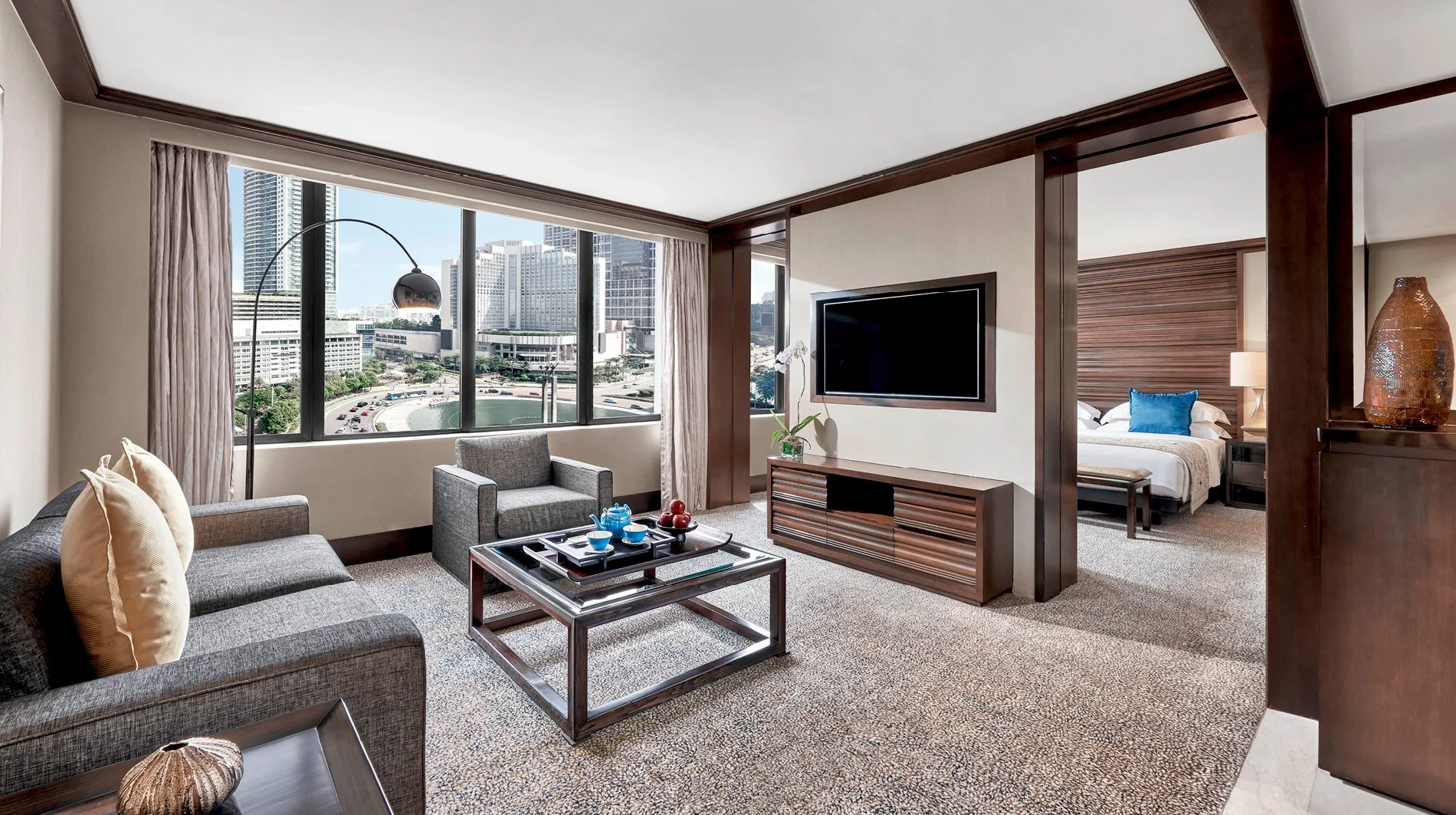
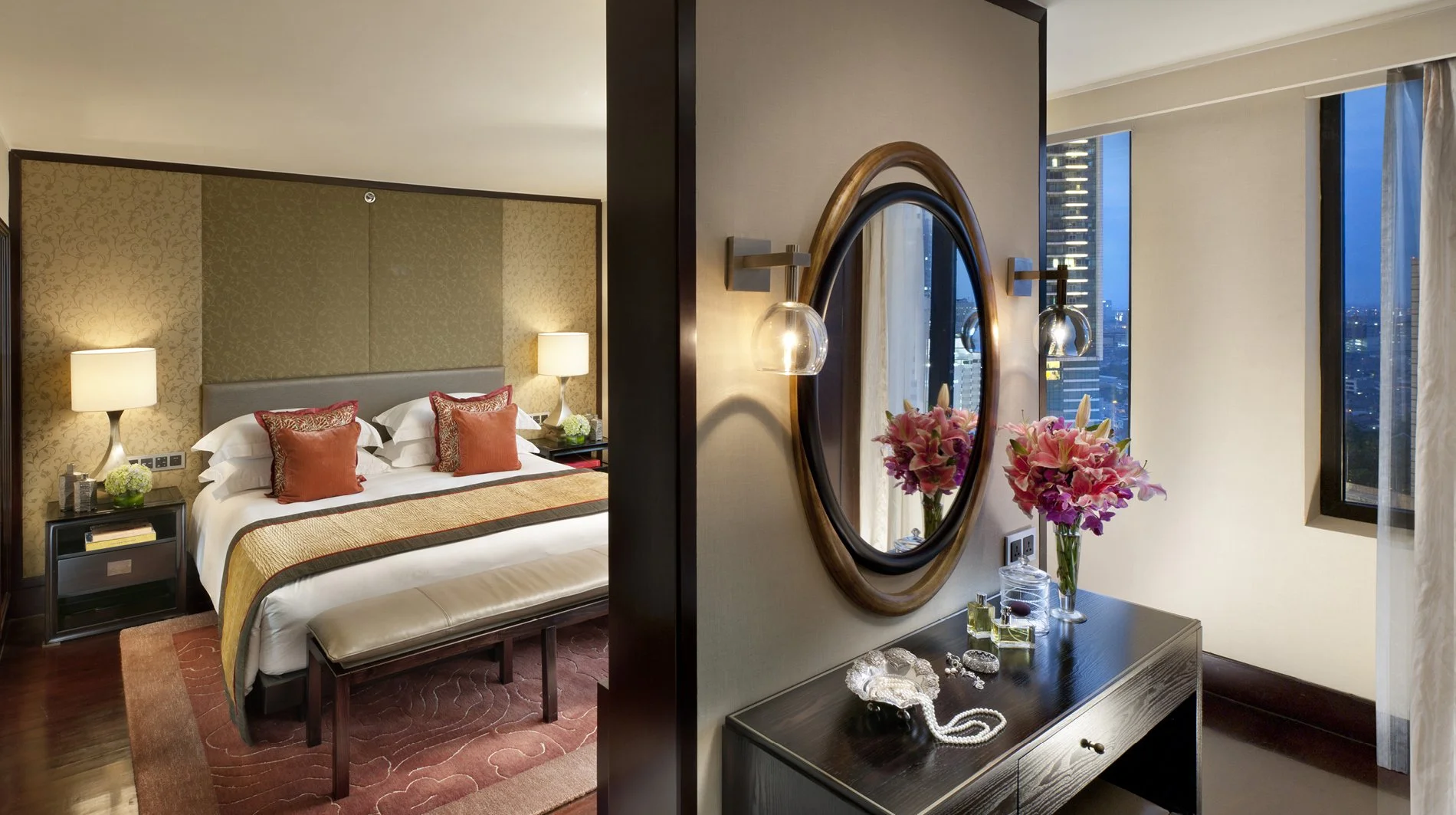
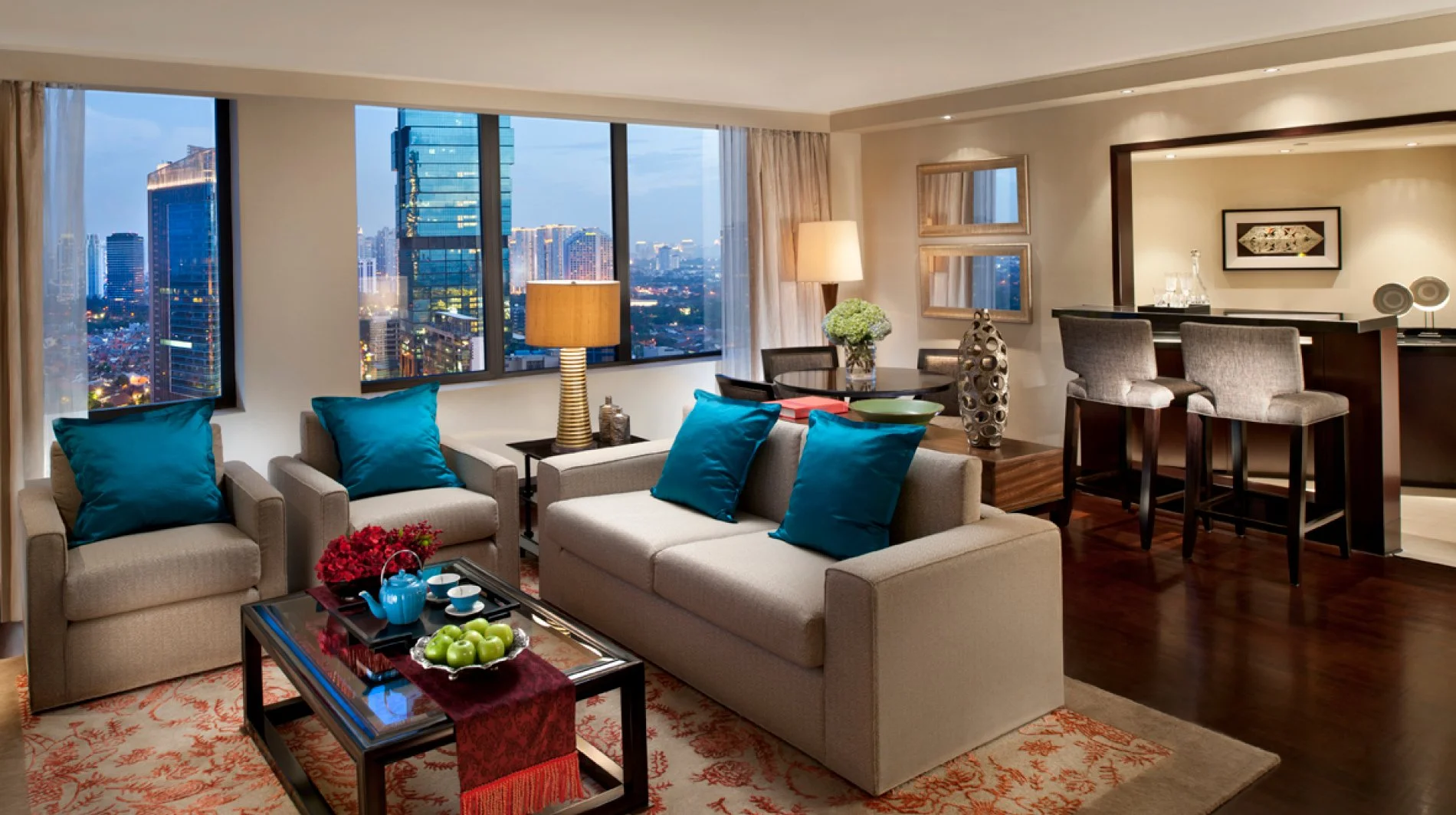
Urban Suite: 689 sq. ft., with one king bedroom, a separate living room, oversized marble bathroom and views toward Sudirman or Imam Bonjol.
Urban Suite Monument View: 689 sq. ft., with the same one-bedroom layout and separate living room as the Urban Suite, but oriented toward the Welcome Monument.
Urban Club Suite: 689 sq. ft., with a separate bedroom and living room, city views and Mandarin Oriental Club Lounge access.
Urban Club Suite Monument View: 689 sq. ft., pairing the Urban Club Suite layout with Welcome Monument views and Club Lounge access.
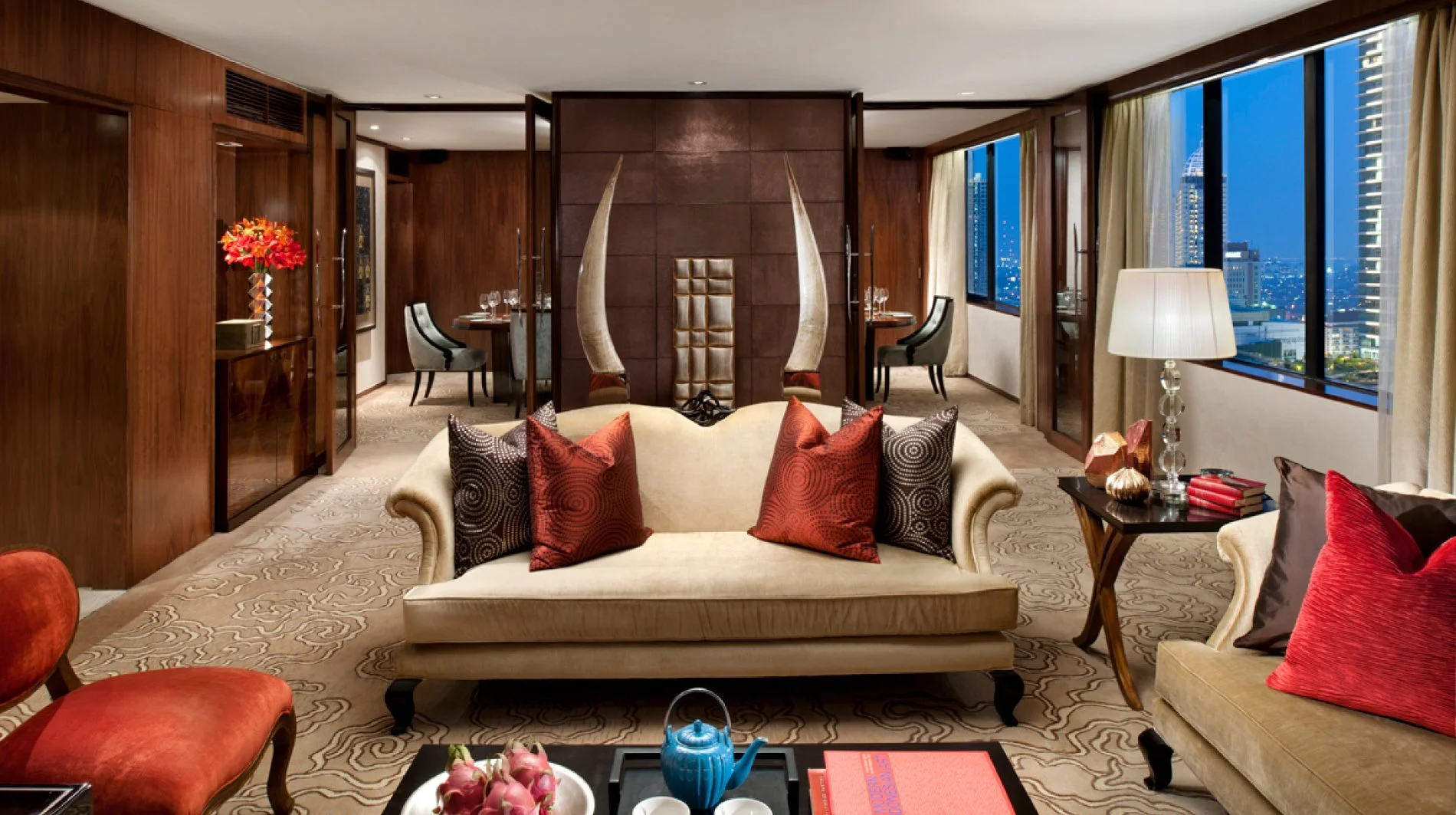
Oriental Suite: 1,023 sq. ft., with one bedroom, a separate living area, polished teak flooring, a spacious marble bathroom, Welcome Monument views and Club Lounge access.
Mandarin Suite: 2,153 sq. ft., on the hotel’s highest floor with a master bedroom, lounge, dining room for ten, study, kitchenette, panoramic Welcome Monument views and butler service on request.
Family configurations are also published by the hotel. The Family Connecting Deluxe is 1,012 sq. ft. and combines city-facing rooms for up to six guests; the Family Connecting Monument View is 1,012 sq. ft. with Welcome Monument views; and the Two-Bedroom Family Suite is 1,195 sq. ft., combining an Urban Suite with an additional Deluxe Room for a king bedroom, twin bedroom and separate living room.
For a first stay, the strongest upgrade is usually the Monument View rather than Club access alone. Travelers staying longer may gain more from an Urban Suite, while the Oriental and Mandarin Suites make sense when entertaining space, privacy or a special occasion matters.
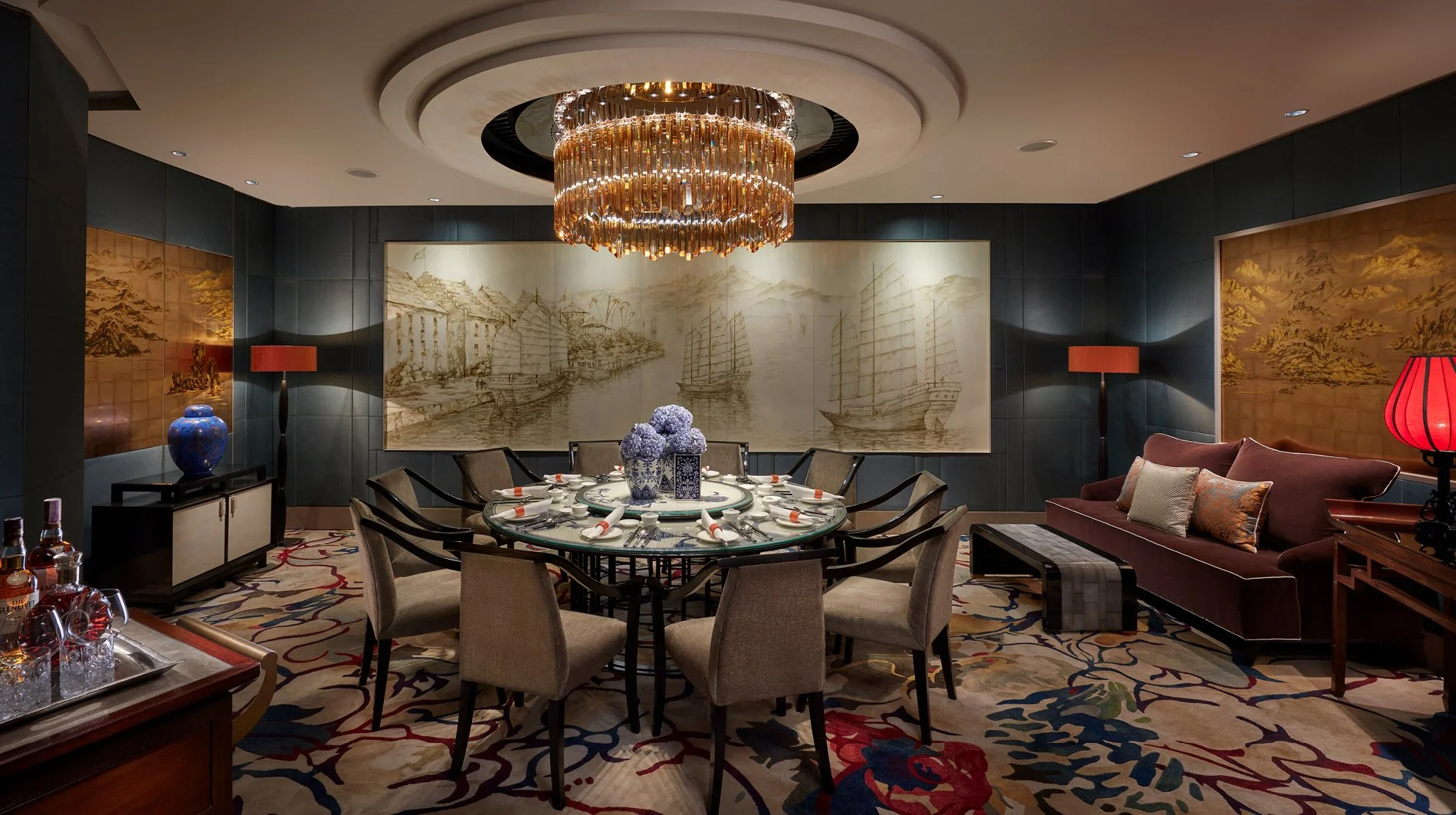
Cantonese, Indonesian and Poolside Dining
The current live dining collection is compact but varied, moving from Cantonese cooking and Indonesian all-day dining to cocktails, pastries and poolside meals.
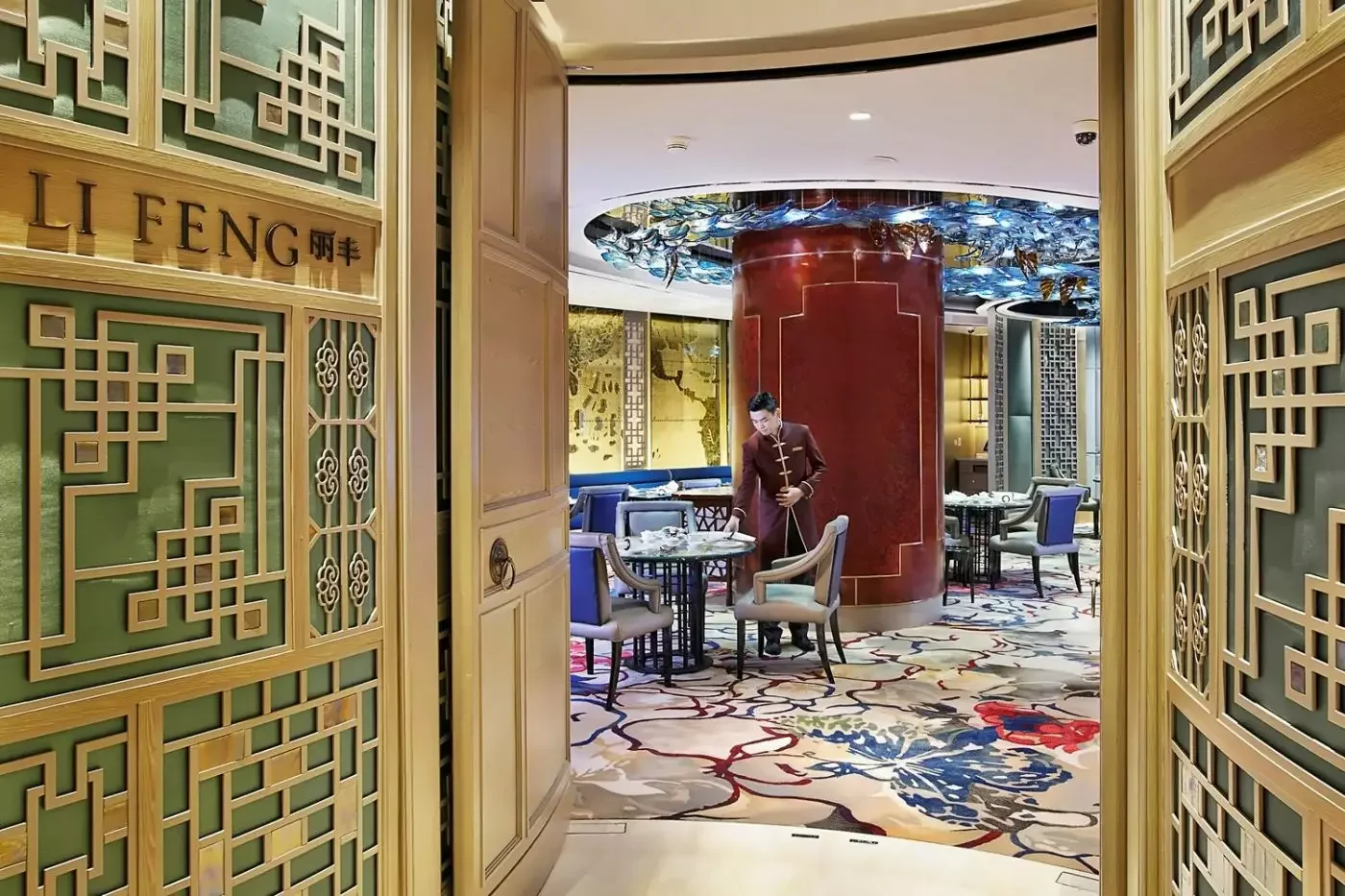
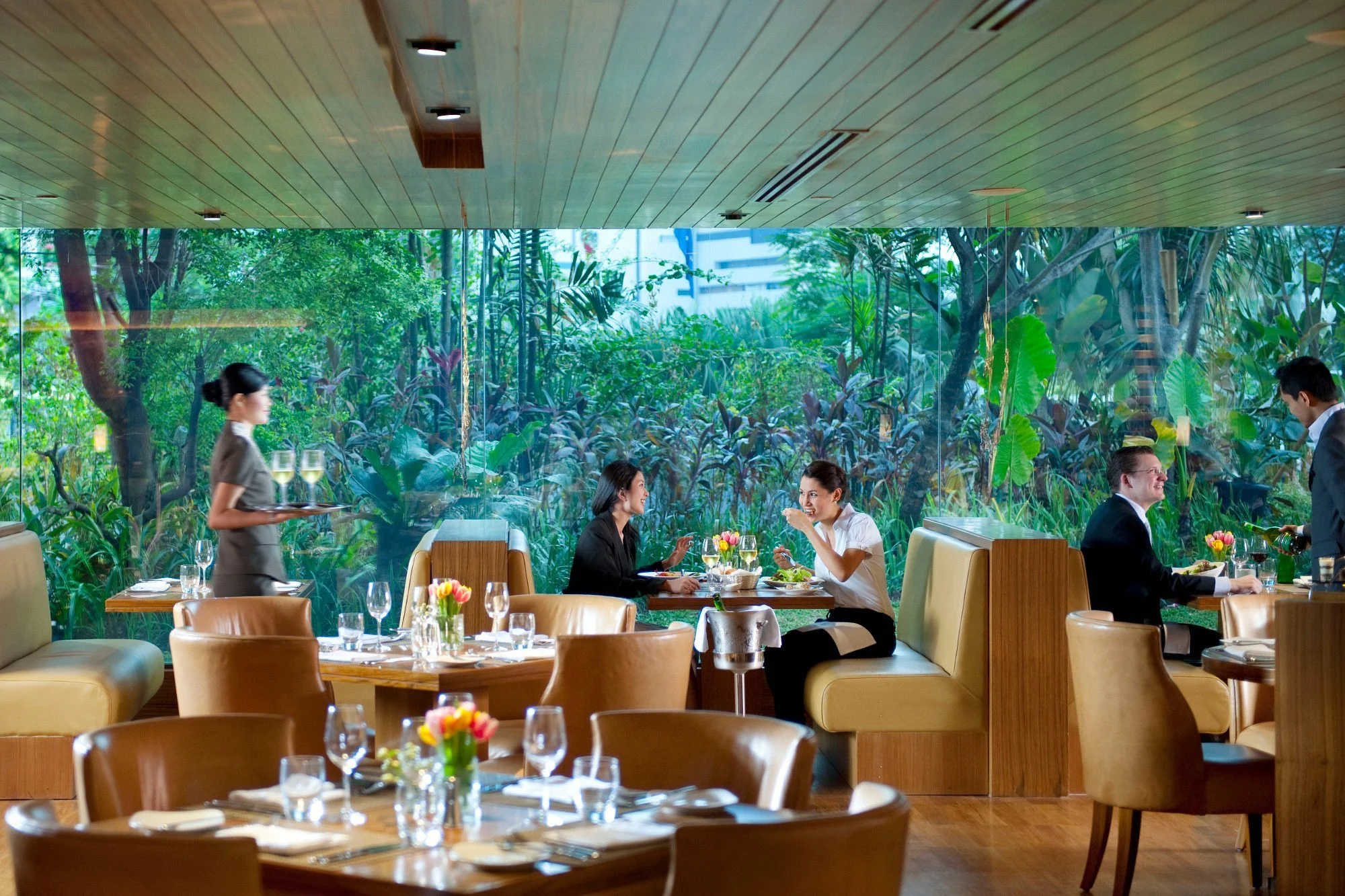
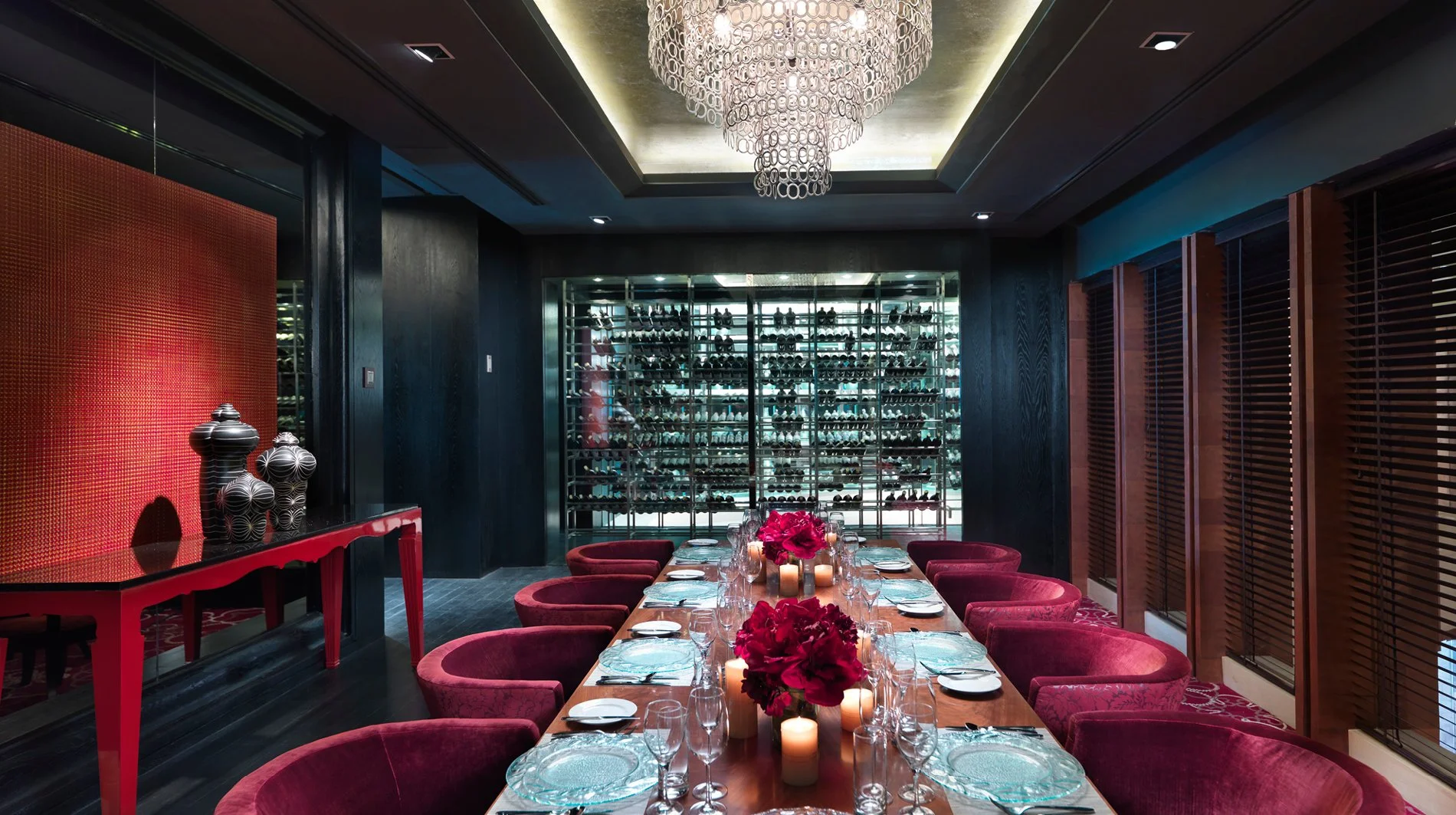
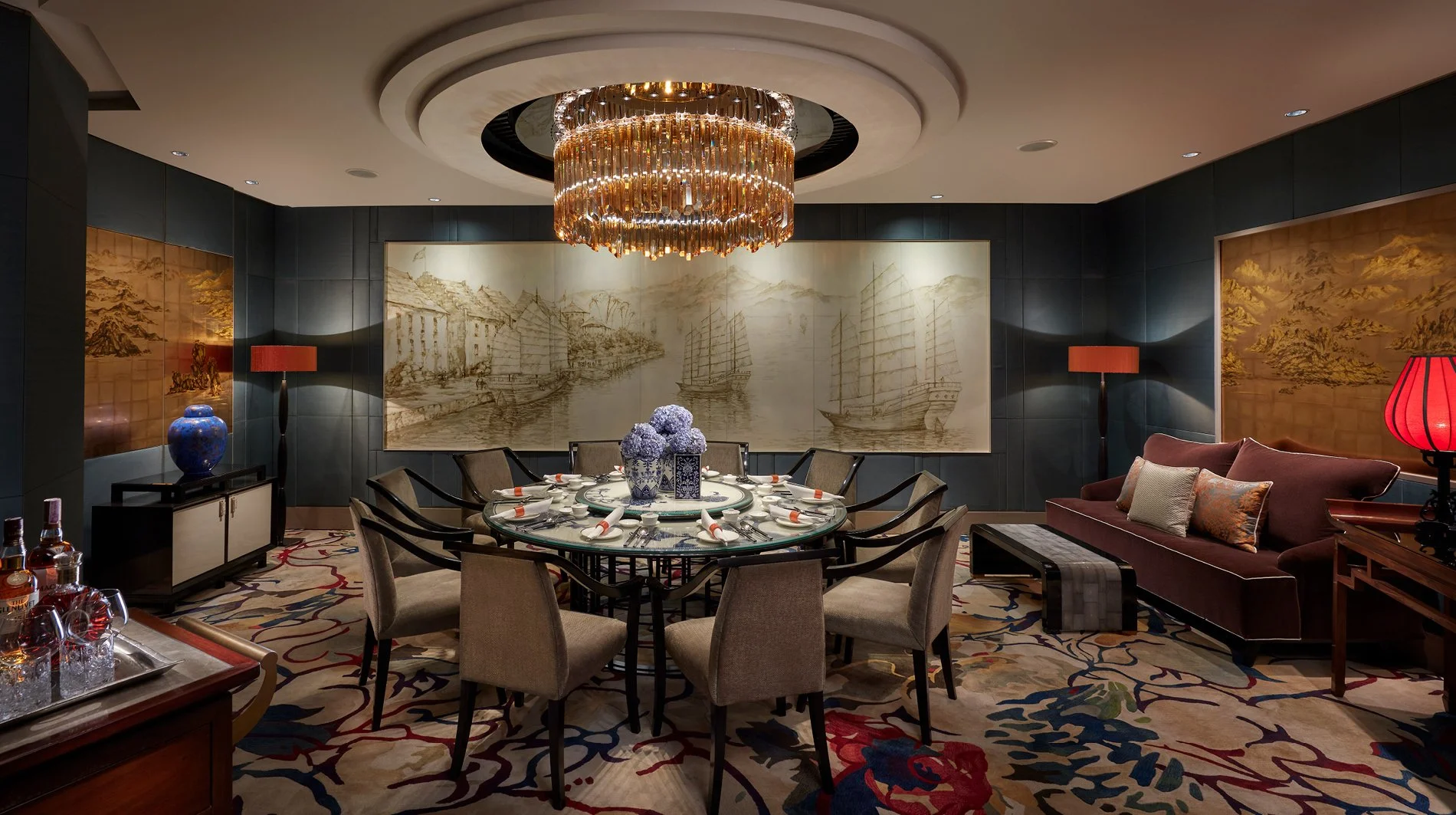
Li Feng: The hotel’s Cantonese restaurant, with interiors inspired by the historic maritime and spice-trade links between China and Batavia, plus three private dining rooms for smaller gatherings.
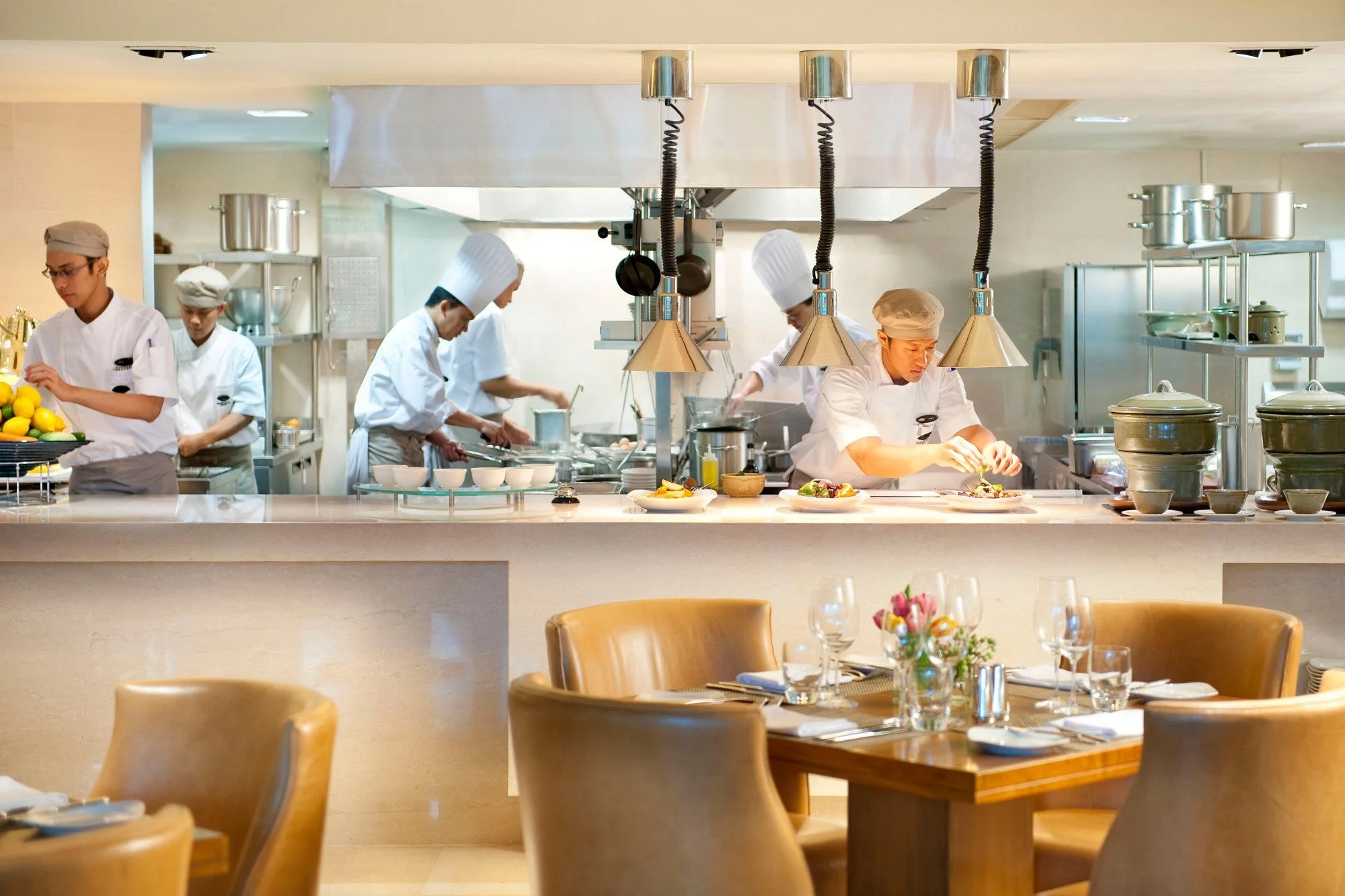
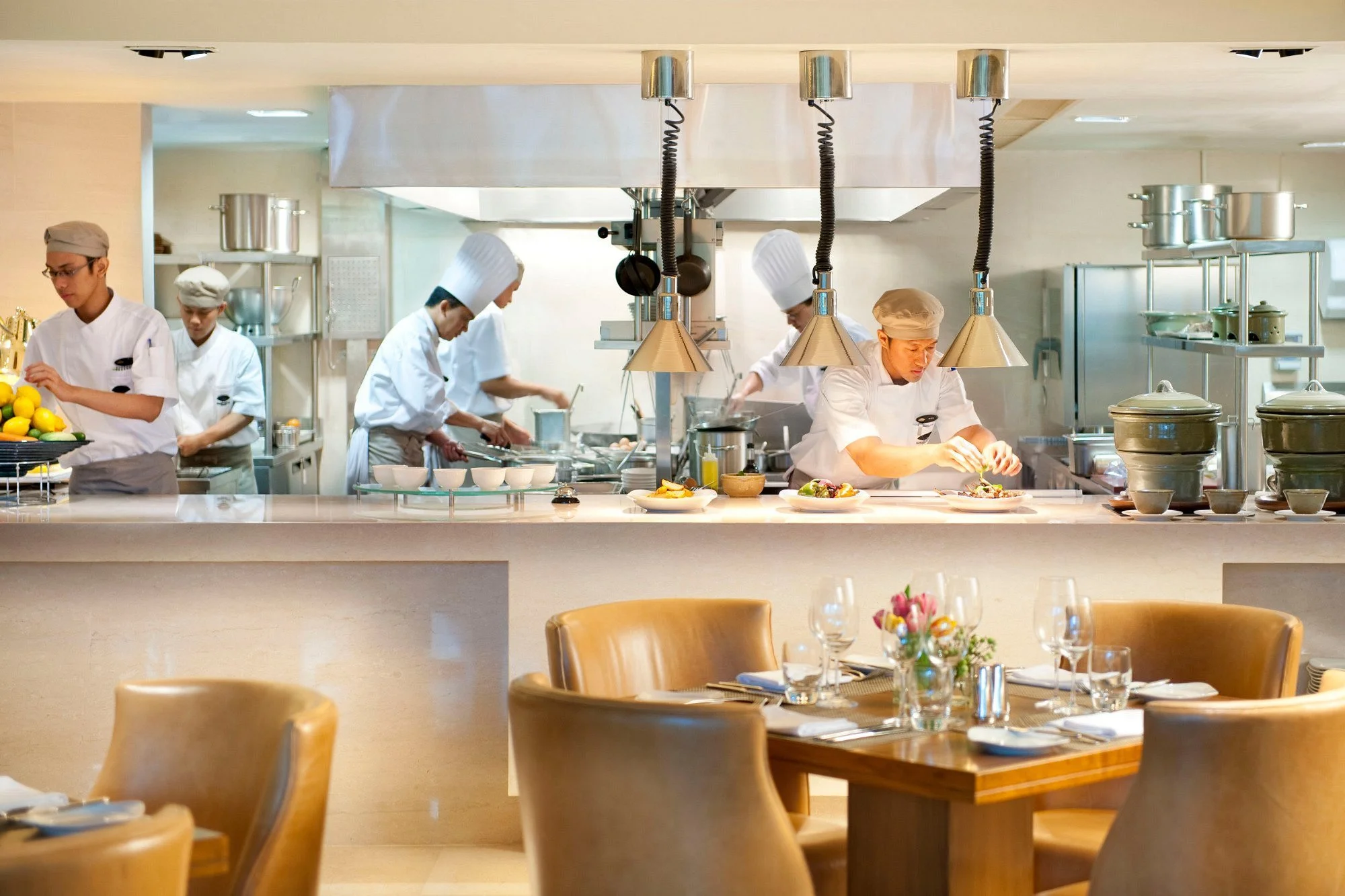
Cinnamon: The all-day restaurant, combining Indonesian flavours with international dishes from an open kitchen and serving breakfast through dinner.
Mandarin Oriental Cake Shop: A pastry and confectionery counter for breads, cakes, chocolates and desserts, useful for informal meetings or take-away treats.
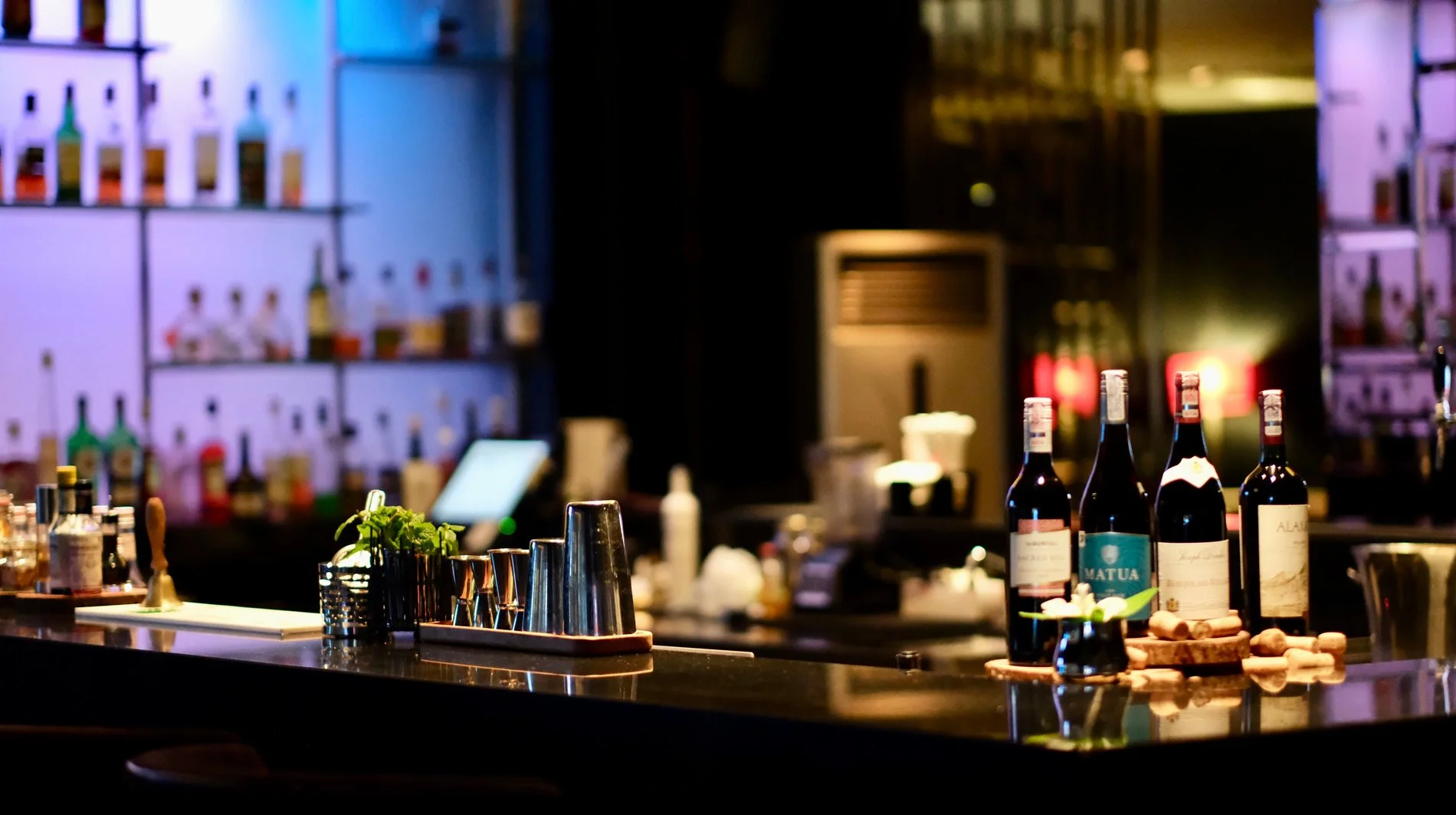
MO Bar: The evening cocktail bar, serving creative drinks, mocktails and light bites with music carrying the room into the night.
Azure: A casual poolside venue for drinks, lighter dishes and a dedicated children’s menu beside the outdoor swimming pool.
In-Room Dining: Available 24 hours, including local and international dishes, selected Li Feng items and a dedicated children’s menu.
One detail deserves caution: Lyon continues to appear in the hotel website’s dining FAQ and older press material, but it is not currently displayed in the live 2026 restaurant index. It should therefore be treated as unconfirmed for publication until its operating status is clarified.
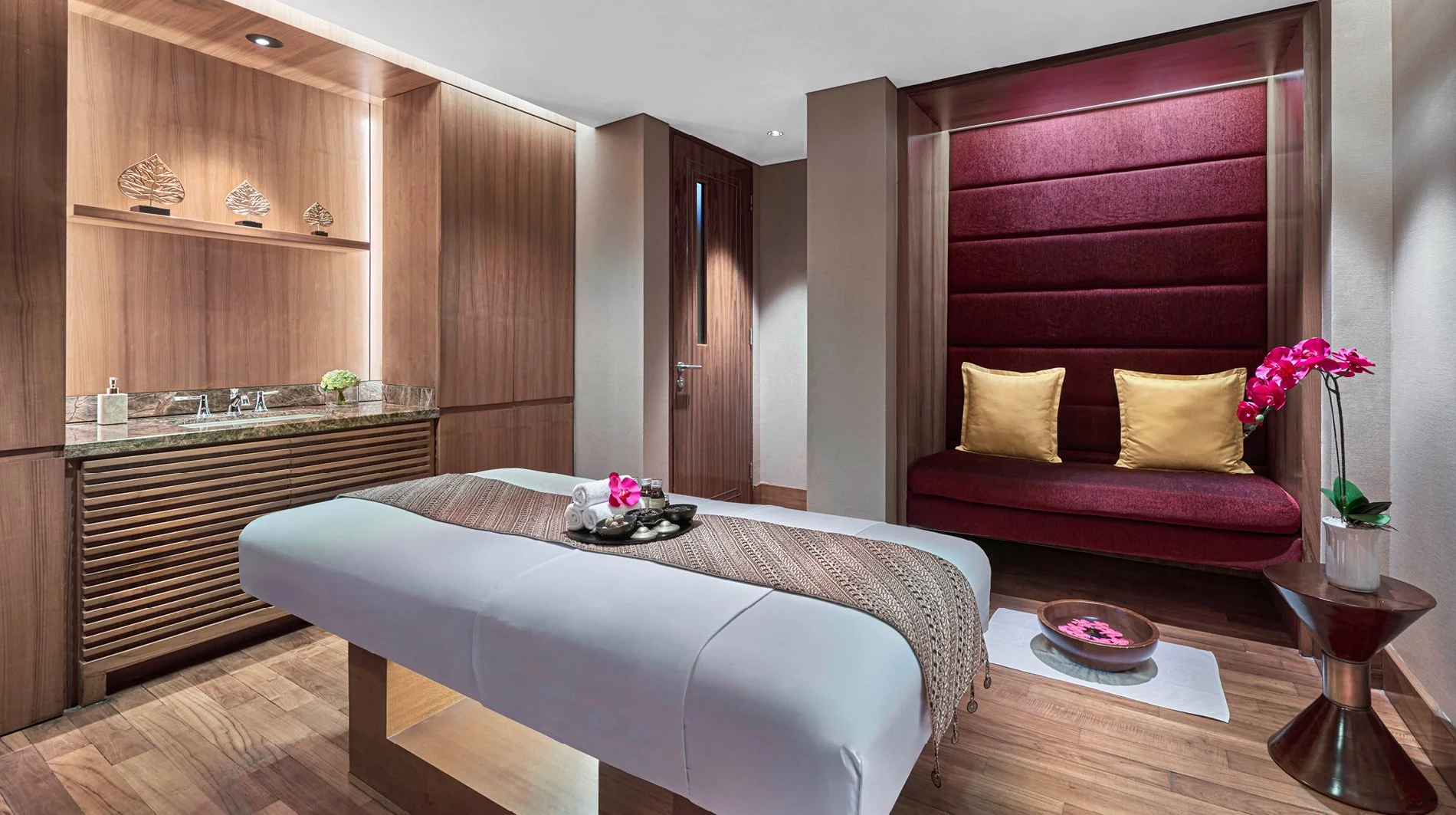
A Calm Layer Above the Traffic
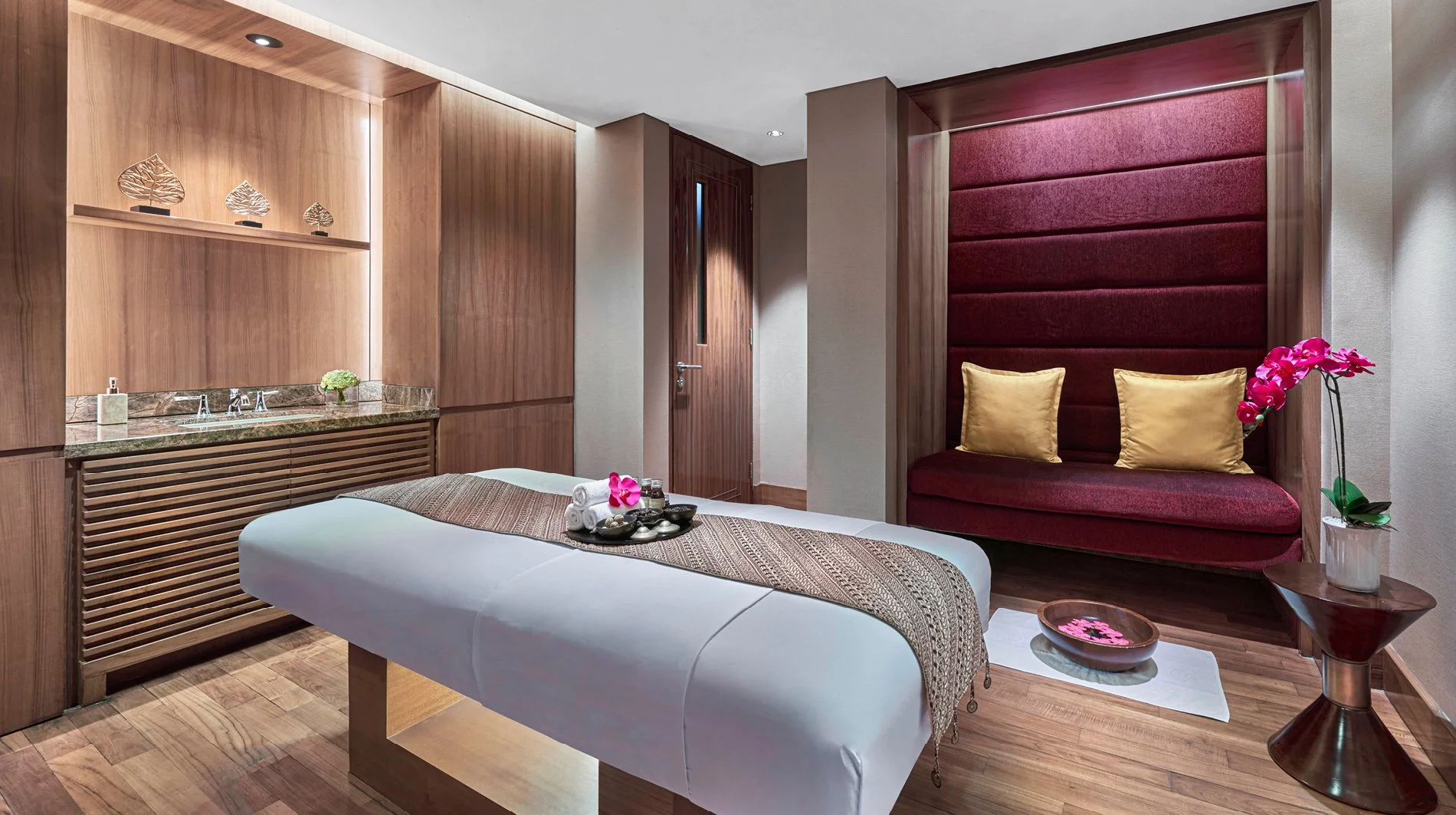
The wellness facilities create a useful contrast with the pace of Jalan M.H. Thamrin. The spa operates daily and offers massage, facial, body and couples’ treatments, while current programming also includes a Royal Javanese massage paired with afternoon tea.
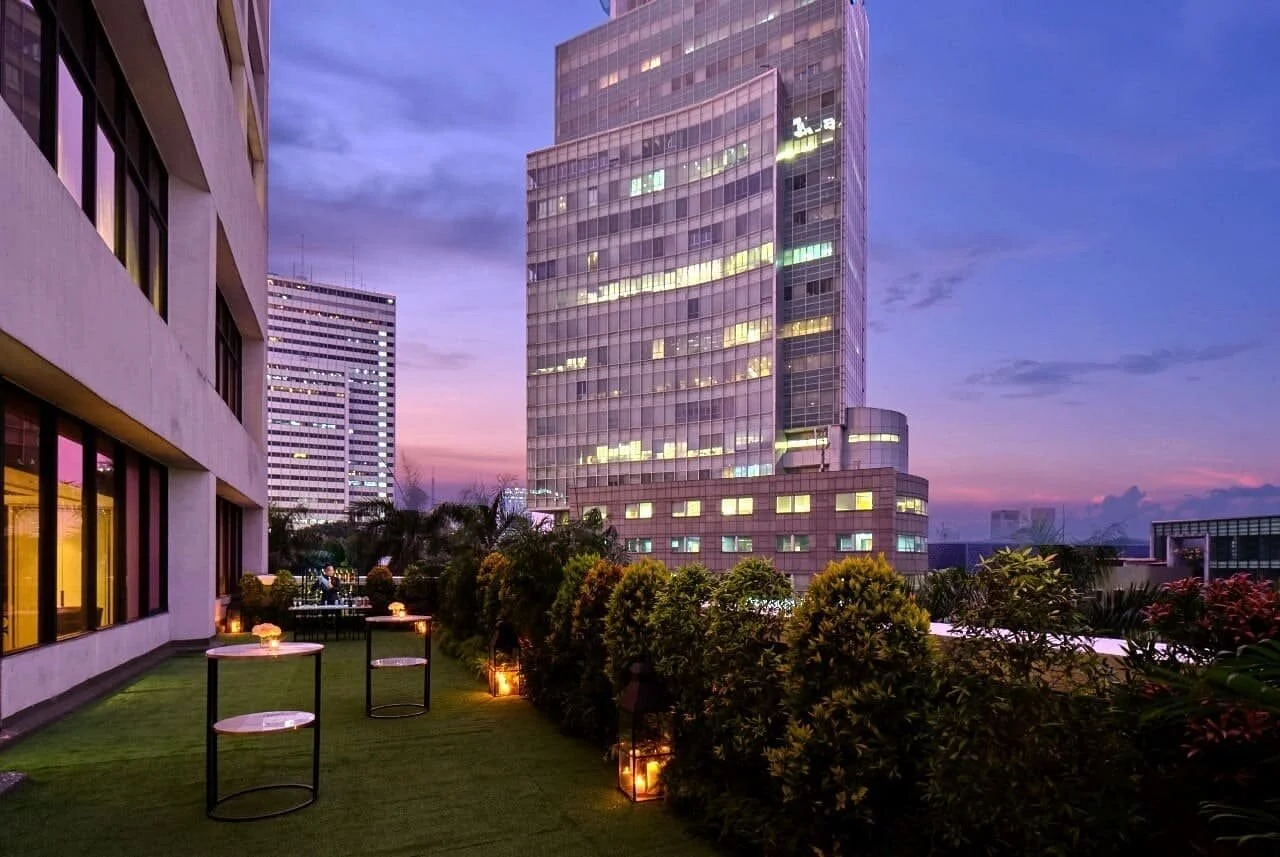
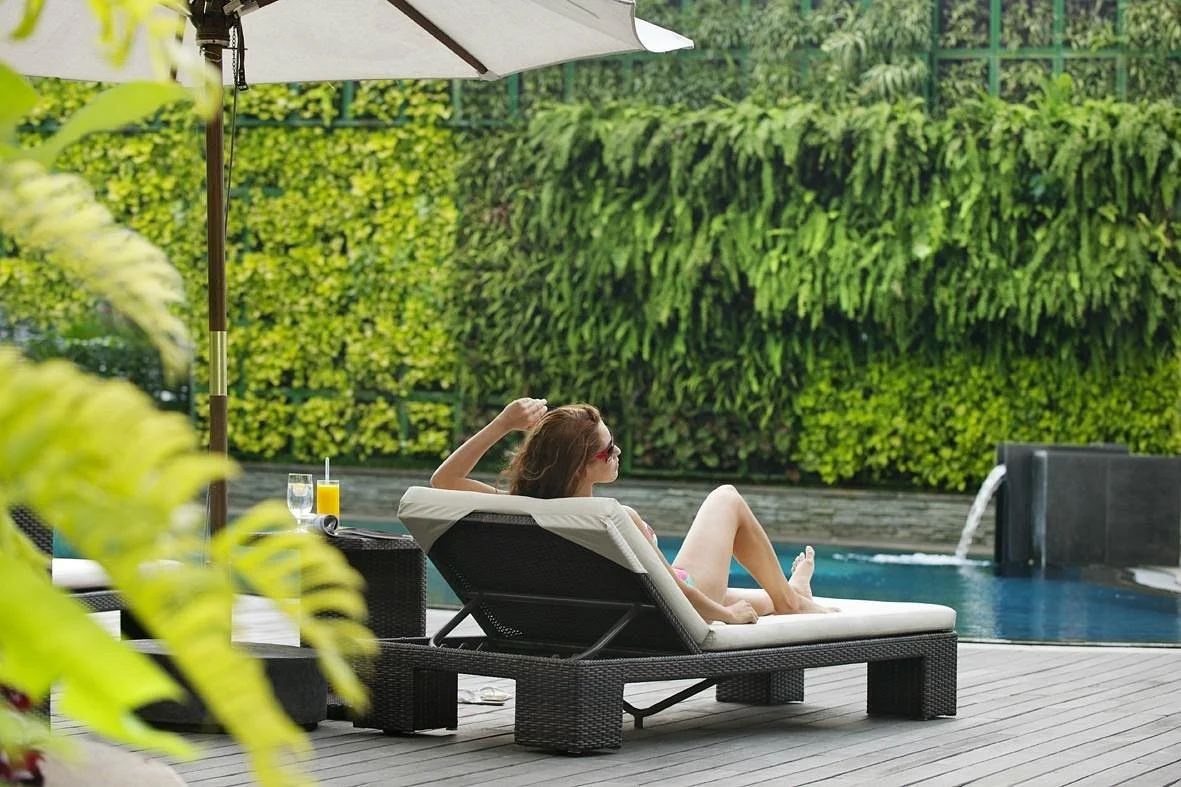
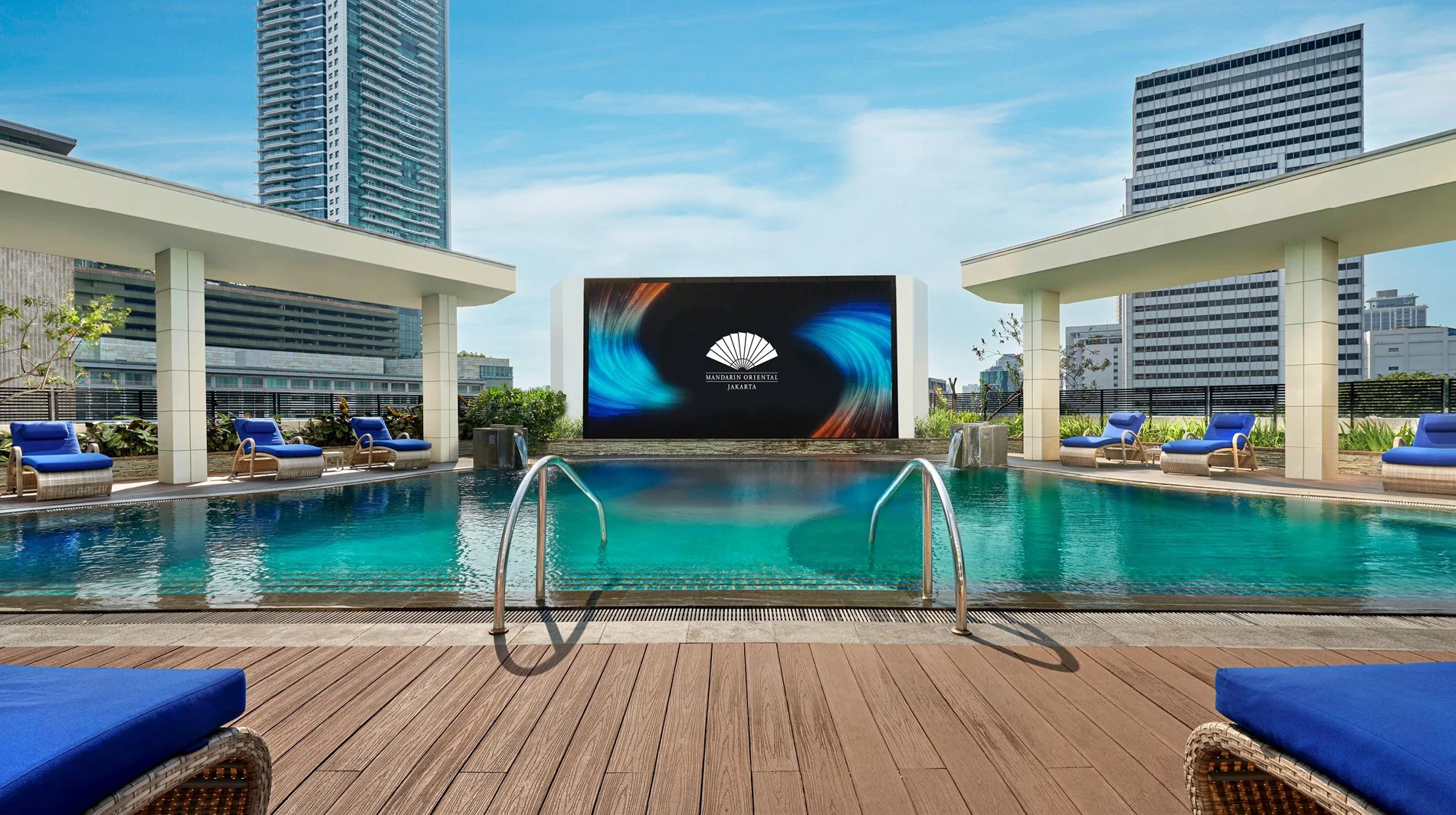
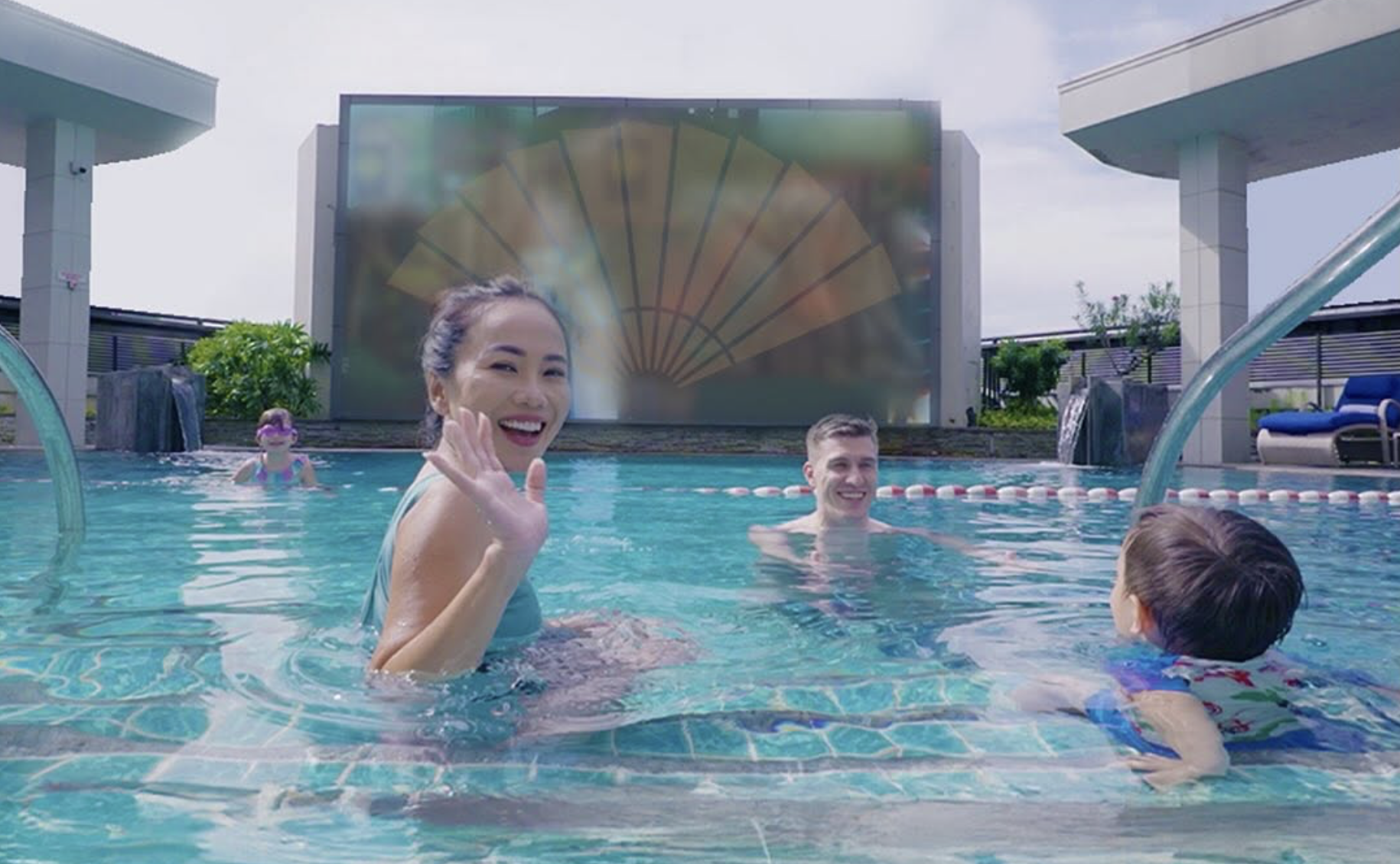
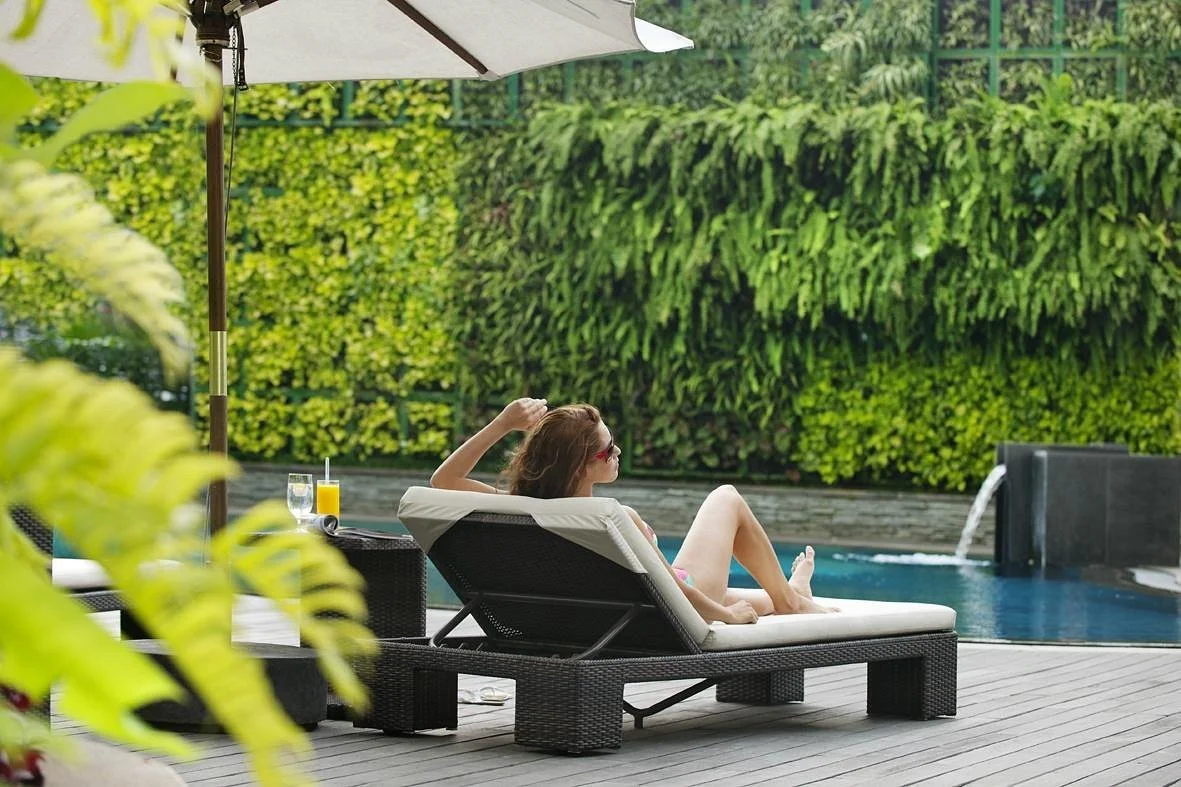
The hotel’s 15-metre outdoor swimming pool is one of its most useful leisure amenities. Surrounded by greenery and served by Azure, it creates a genuine pause from the surrounding office towers and traffic without requiring a resort outside the city.
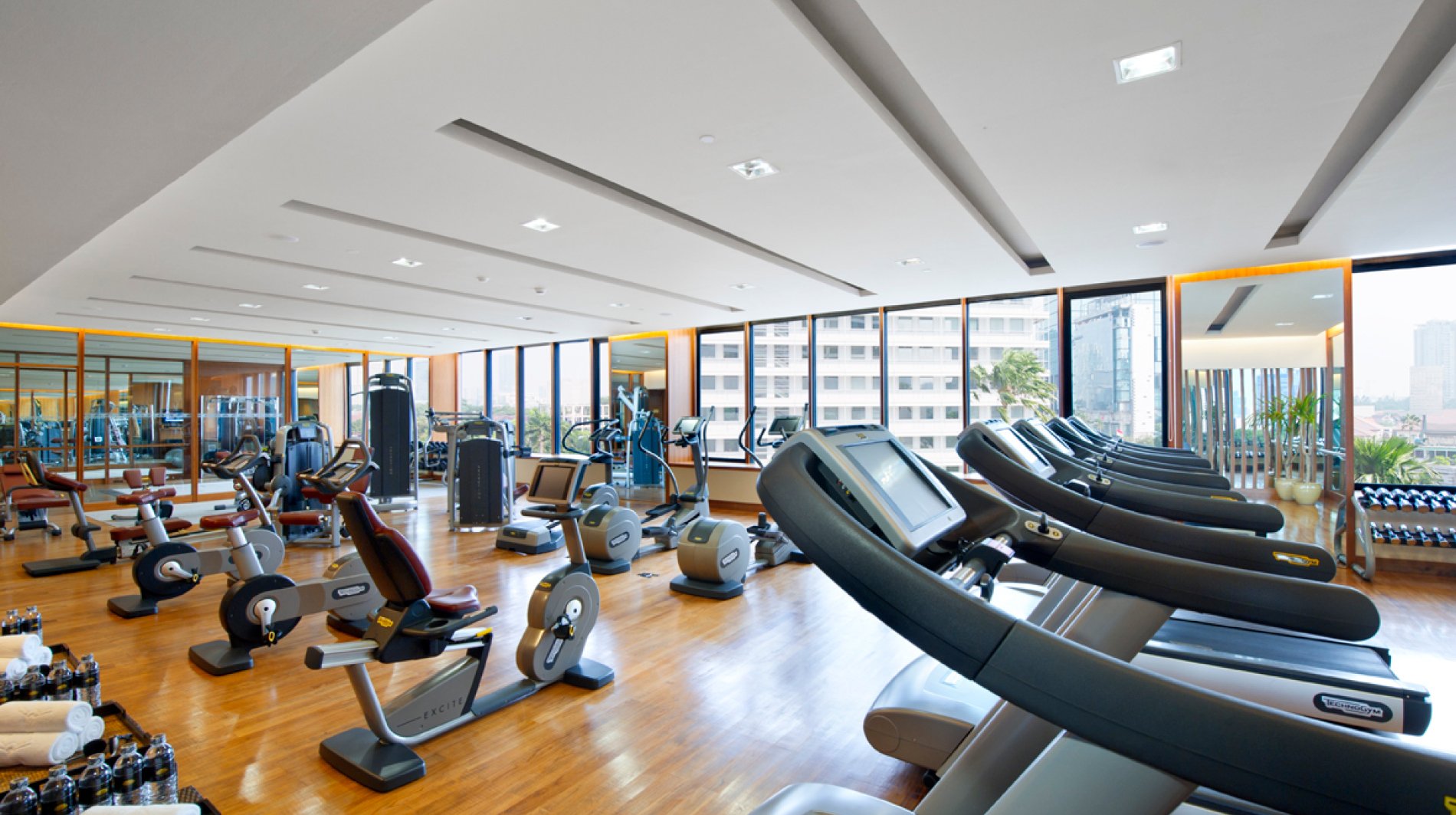
The fitness centre and studio support stretching and higher-intensity training as well as individual exercise. For business travelers or guests arriving after a long international flight, that combination of pool, treatment rooms and fitness makes the hotel more versatile than a conventional city base.
The steam room is temporarily closed at the time of research, so travelers for whom specific thermal facilities matter should have the current wellness setup confirmed before arrival.
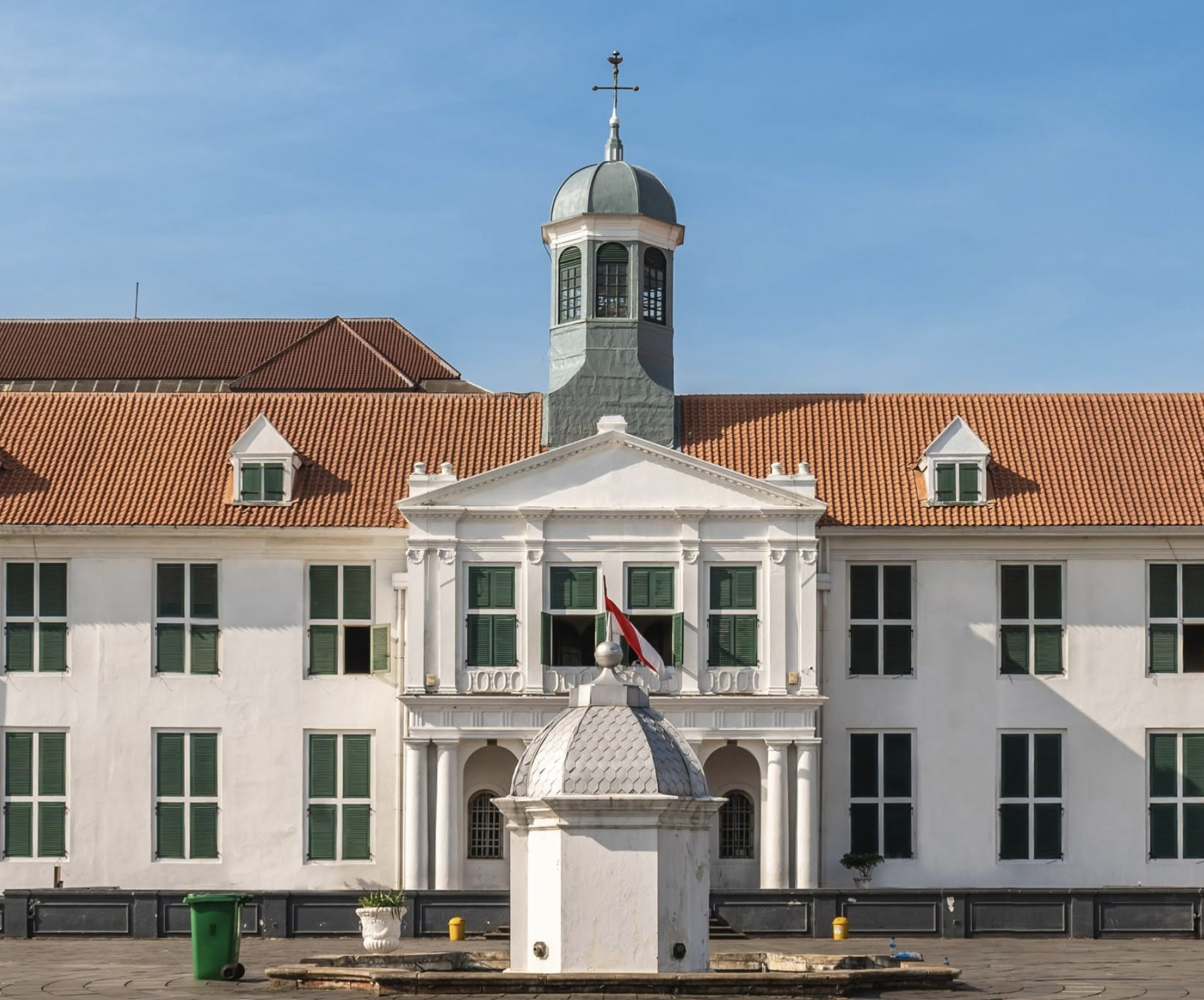
Old Batavia, Batik and Jakarta Beyond Thamrin
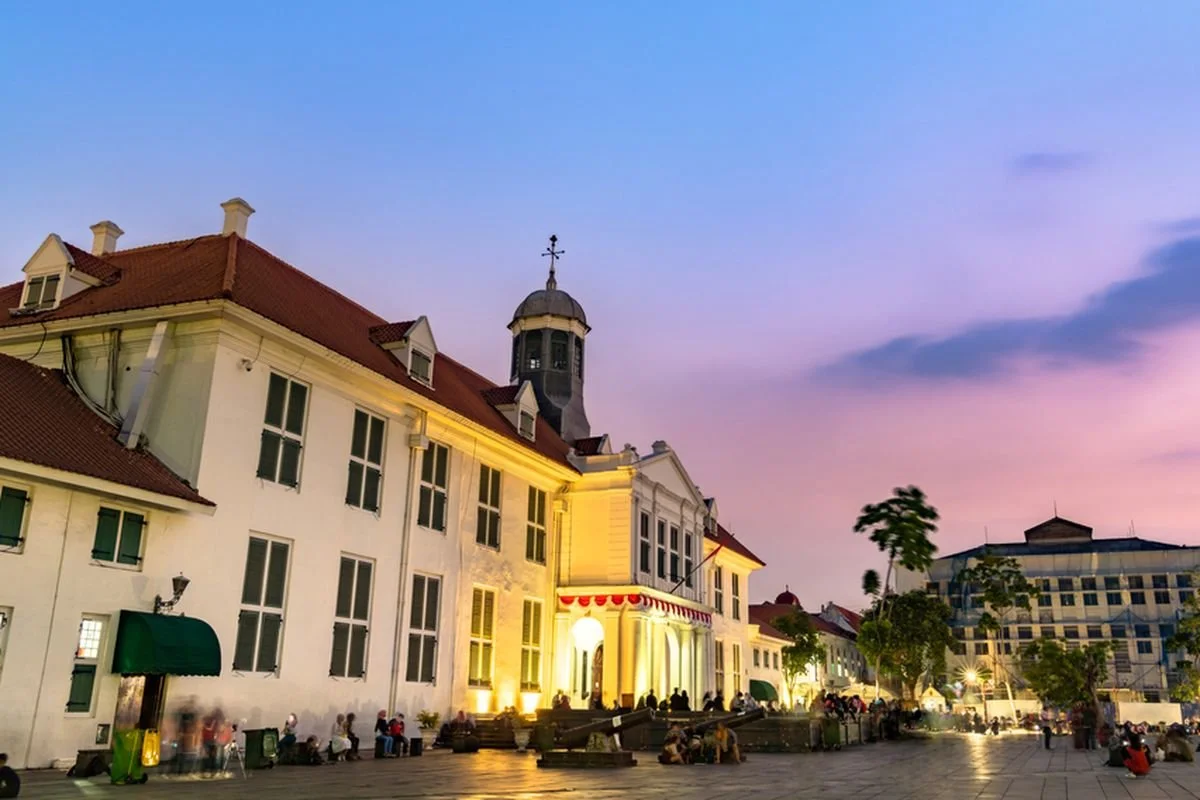
Mandarin Oriental’s current experience program gives the hotel more destination content than its business-district address might suggest. A guided Old Batavia experience explores the city’s history through the former colonial centre, while a batik-making program at the Textile Museum gives travelers a practical introduction to one of Indonesia’s most recognizable textile traditions.
The hotel also offers a private visit to Jalan Surabaya’s flea market, where Javanese puppets, batik, carvings and other objects create a different way to approach the city’s craft and collecting culture.
Independent exploration is straightforward from Bundaran HI. The MRT places other central neighborhoods within easy reach, while the National Museum, Merdeka Square, Istiqlal Mosque, Jakarta Cathedral and Kota Tua can be combined into focused half-day outings by car and rail.
Jakarta rewards an itinerary that accounts for traffic. Rather than crossing the city repeatedly, grouping visits by neighborhood leaves more time for museums, food and architecture and makes better use of the hotel’s very central location.
Families by M.O. Without a Traditional Kids Club
Mandarin Oriental, Jakarta is family-friendly, but the current hotel program does not operate around a permanent resort-style kids club. Instead, the experience is built around family room configurations, children’s dining and smaller activities that can be arranged through the hotel.
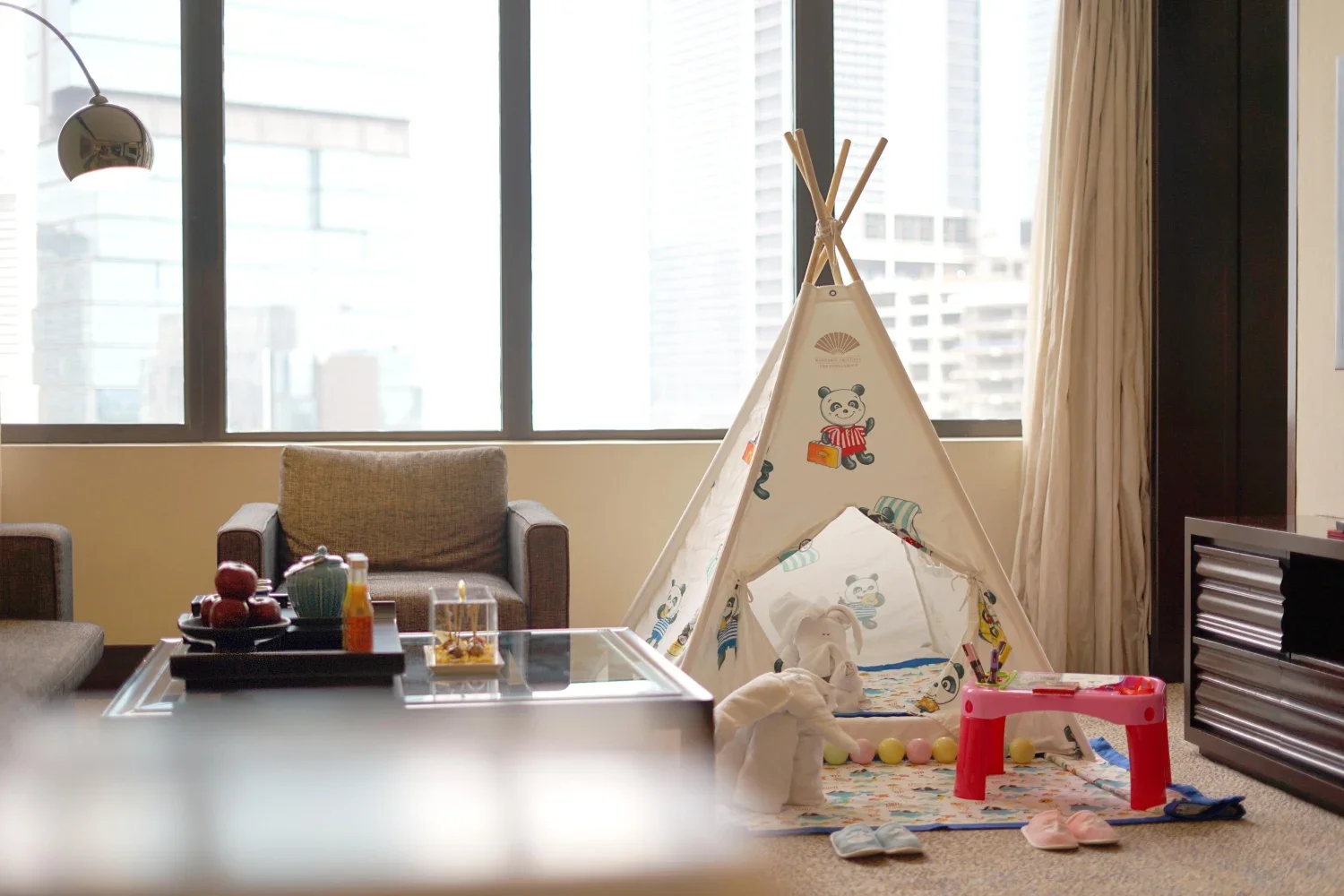
The supervised Kids Treasure Hunt is one of the clearest children’s activities, while in-room touches can include a kids’ tent and bubble baths with toys. The concierge can also adapt the Old Batavia experience and other city plans for families.
Accommodation is a particular strength. The two Family Connecting products can accommodate up to six guests, while the Two-Bedroom Family Suite provides a king bedroom, twin bedroom and separate living room for families that want more defined shared space.
Cinnamon, Azure and in-room dining offer children’s menu options. Families considering Club categories should also note the lounge policy: children are welcome from Friday through Sunday under parental supervision, while Monday through Thursday access is restricted to guests age sixteen and older.
Energy Efficiency Built Into a Long-Running City Landmark
Mandarin Oriental’s most specific Jakarta sustainability story begins with the 2009 reconstruction. The redevelopment replaced major mechanical, electrical and plumbing systems and introduced measures intended to reduce energy and water consumption rather than simply refreshing the interiors.
Those systems included electric heat pumps for hot water, heat recovery from laundry steam condensate, smart in-room controls, high-efficiency chillers and variable-speed pumps. Condensate from guestrooms and air-handling systems was also recovered for use in cooling towers.
At group level, Mandarin Oriental reported in 2026 that its full hotel network had achieved GSTC certification. The company also publishes portfolio-wide progress on reducing energy, carbon, water, food waste and single-use plastics, with responsible sourcing standards for key commodities.
For this property, the practical point is that the hotel’s sustainability work is tied to the continued modernization of a 1970s urban building rather than to a new-build environmental story. That distinction is useful when evaluating an established city landmark.
Accessible Rooms and Step-Free Routes Through the Hotel
Mandarin Oriental, Jakarta publishes more detailed access information than many city hotels. Accessible rooms are available, and the hotel confirms step-free access, elevators throughout the property, wheelchair access through key hotel facilities and accessible parking.
Both the Deluxe Room and Monument View Room publish specific accessible features including accessible baths, shower chairs and showers with grab handrails. That makes these room categories a useful starting point for travelers whose bathroom configuration is a priority.
Room selection should still be considered alongside the complete stay. Access to the pool, spa, restaurants, Club Lounge and hotel entrance may matter as much as the sleeping area itself, particularly for guests using mobility equipment.
Our team can coordinate individual mobility, hearing or visual requirements with the hotel before booking and request the most suitable available room and arrival arrangement rather than relying on a general accessibility label.
Dry Months for Easier Exploring, Rainy Months for a Slower Pace
Jakarta is warm and humid throughout the year, so rainfall rather than temperature creates the biggest seasonal difference. Indonesia’s tourism authority generally describes April through October as the drier season across Java, with November through March bringing wetter conditions.
June through September is often the easiest period for travelers planning full sightseeing days because rain is less likely to interrupt outdoor movement. The city remains hot, so museums, long lunches and a return to the hotel pool still make useful breaks.
During the wetter months, heavy rain can intensify traffic and make cross-city travel less predictable. A stay centered on the Thamrin corridor works particularly well then because shopping, dining, MRT access and hotel facilities remain close.
Seasonality in Jakarta is therefore more about logistics than closure. The hotel operates year-round, and the strongest itinerary simply adjusts the amount of outdoor walking and transfer time to the weather.
Plan Your Stay With Destinations by David
The most important choice at Mandarin Oriental, Jakarta is whether the Welcome Monument view matters enough to shape the room selection. Deluxe categories already offer substantial space, while Urban Suites provide a separate living room and the Mandarin Suite is best reserved for travelers who will genuinely use its dining and entertaining areas. Families have several connecting configurations that are more practical than booking unrelated rooms.
Destinations by David has access to Mandarin Oriental Fan Club. Through that preferred-partner relationship, our team can coordinate eligible stays directly with Mandarin Oriental while helping with room selection, airport transfers, Club Lounge planning, Li Feng reservations, spa appointments and private city experiences. Exact Fan Club amenities are discussed privately during the booking process.
Contact our team to plan and book Mandarin Oriental, Jakarta as a stand-alone city stay, a business trip with leisure time built around it, or the starting point for a wider journey through Java and Indonesia.
Arriving at Bundaran HI
Soekarno-Hatta International Airport (CGK): The hotel quotes approximately 45 minutes by road from Jakarta’s principal international airport, although peak traffic can extend the journey significantly.
Private Transfer: A prearranged hotel or private car is the simplest arrival for international travelers, particularly with luggage or after a long-haul flight; allow additional time during commuter periods.
Taxi or Ride-Hailing: Airport taxis and app-based car services provide direct alternatives to Jalan M.H. Thamrin, with travel time determined largely by traffic.
Bundaran HI MRT Station: The station is approximately a five-minute walk from the hotel and is useful for moving along Jakarta’s north-south MRT corridor without relying on road traffic.
Central Jakarta: Once checked in, Plaza Indonesia, Grand Indonesia and the Bundaran HI district are immediately close, while museums and historic neighborhoods are best grouped into planned car or MRT outings.
A City Hotel That Makes the Center Work in Its Favor
Mandarin Oriental, Jakarta works because it uses its central location rather than trying to disguise it. The Welcome Monument, the MRT, shopping, business addresses and the city’s constant movement are visible parts of the experience, while the pool, spa and large rooms create enough separation when a quieter pace is needed.
For first-time leisure travelers, a Monument View room or suite gives the strongest sense of place. Business travelers may value Club access more, and families gain the most from the published connecting configurations and the Two-Bedroom Family Suite.
The result is a hotel that remains strongly connected to Jakarta: practical for a short stay, substantial enough for several nights and positioned to make one of Southeast Asia’s largest cities easier to navigate.