Andermatt, Switzerland | The Chedi Andermatt
Between Gemsstock and Nätschen
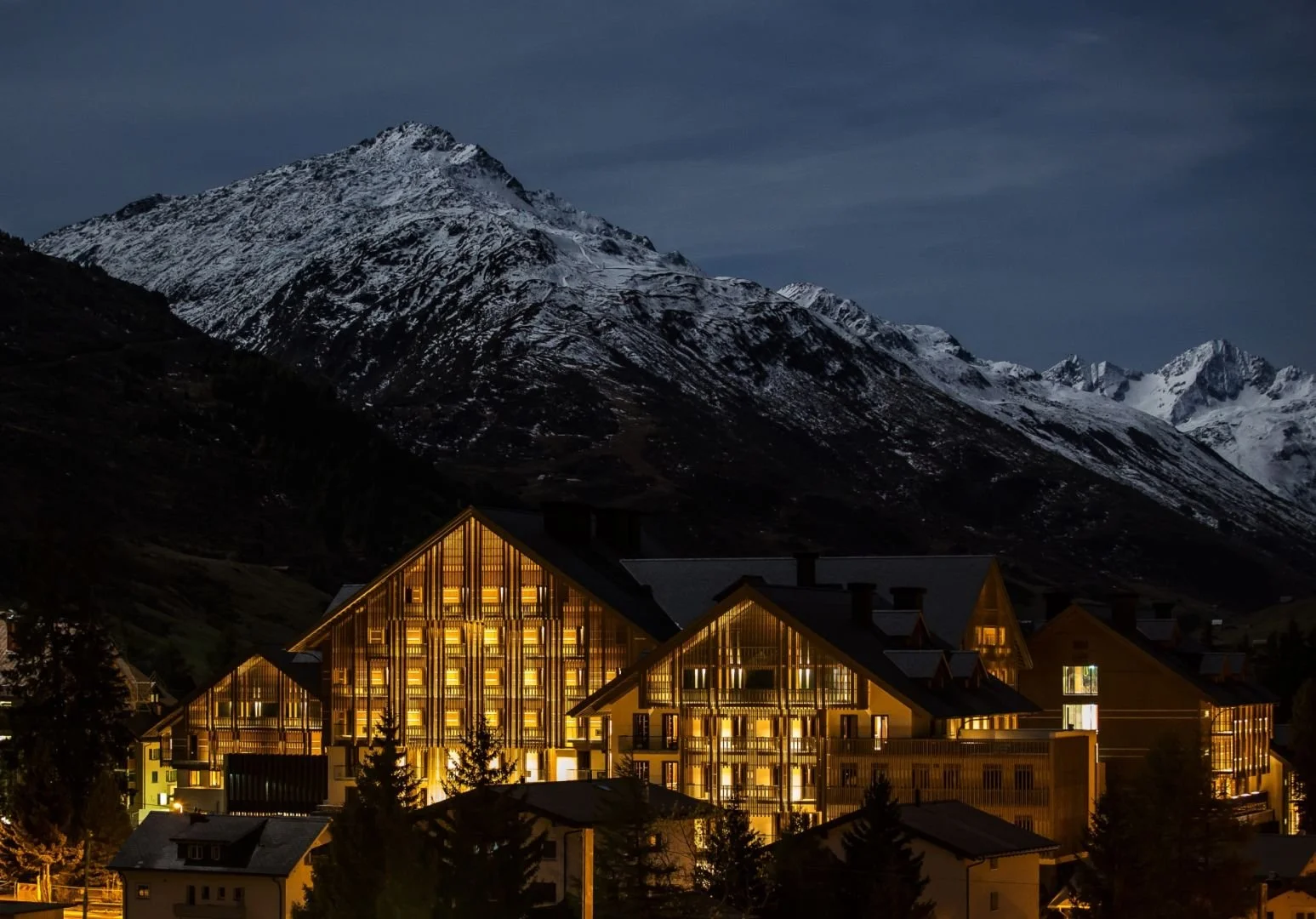
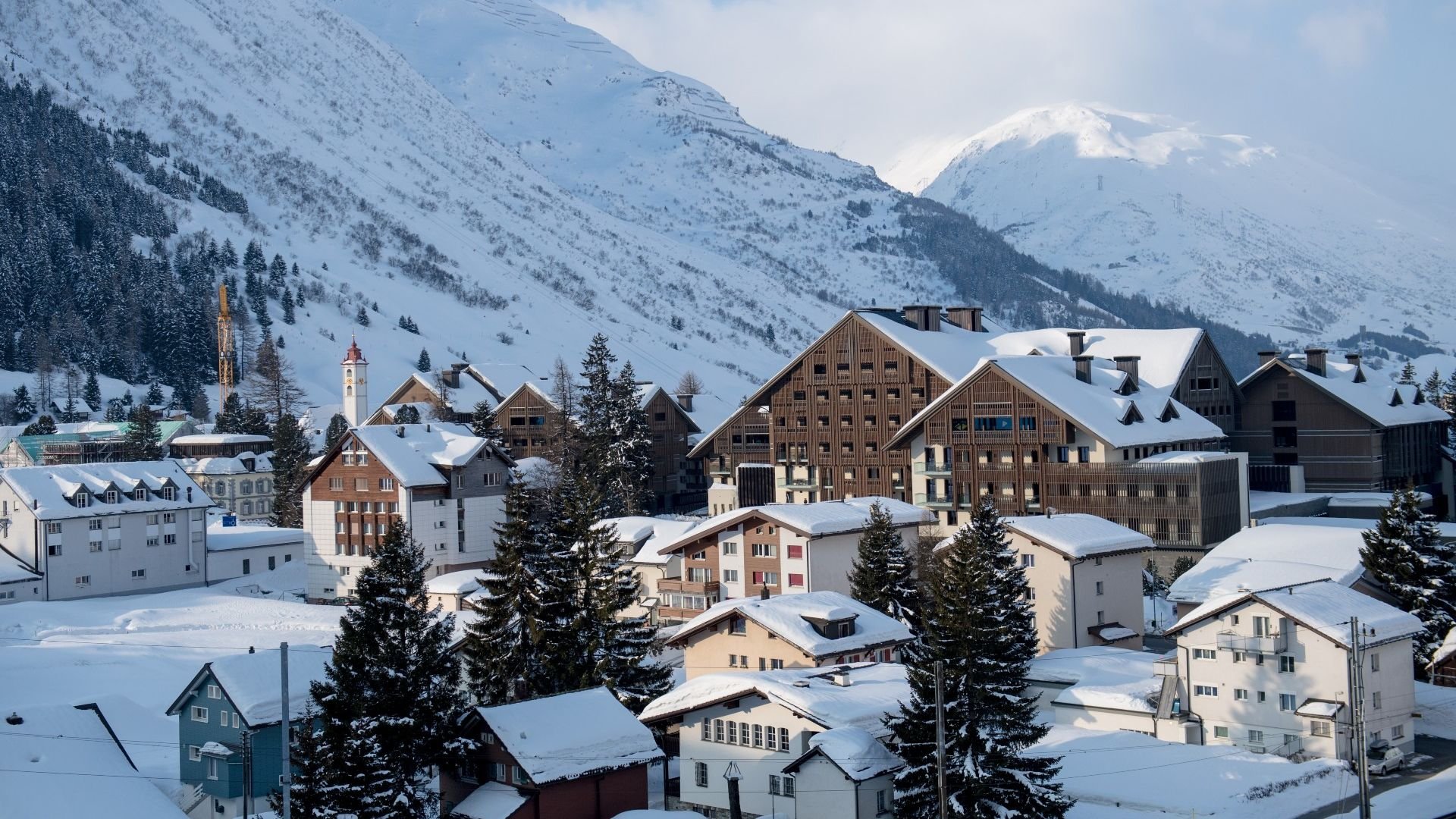
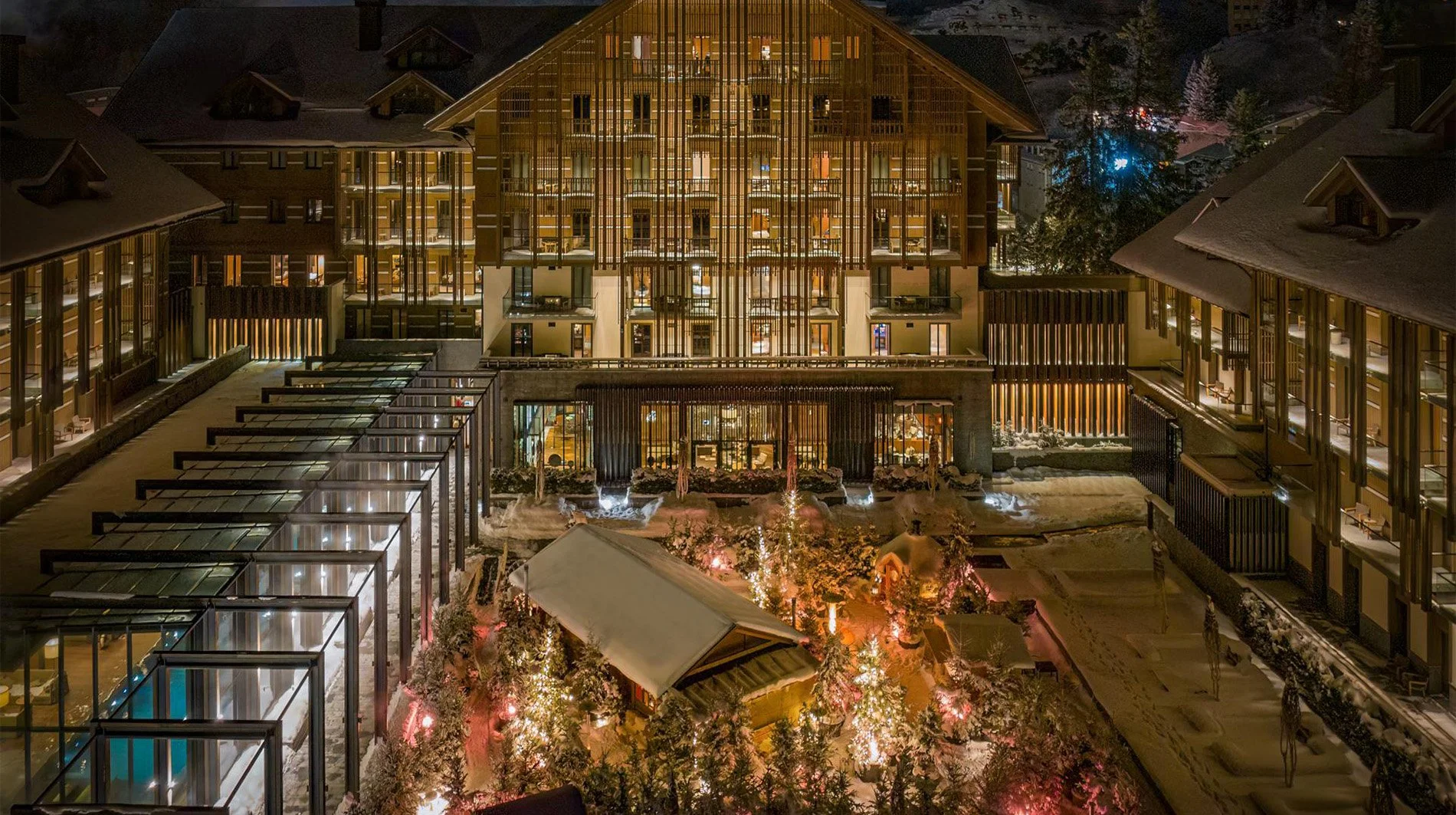
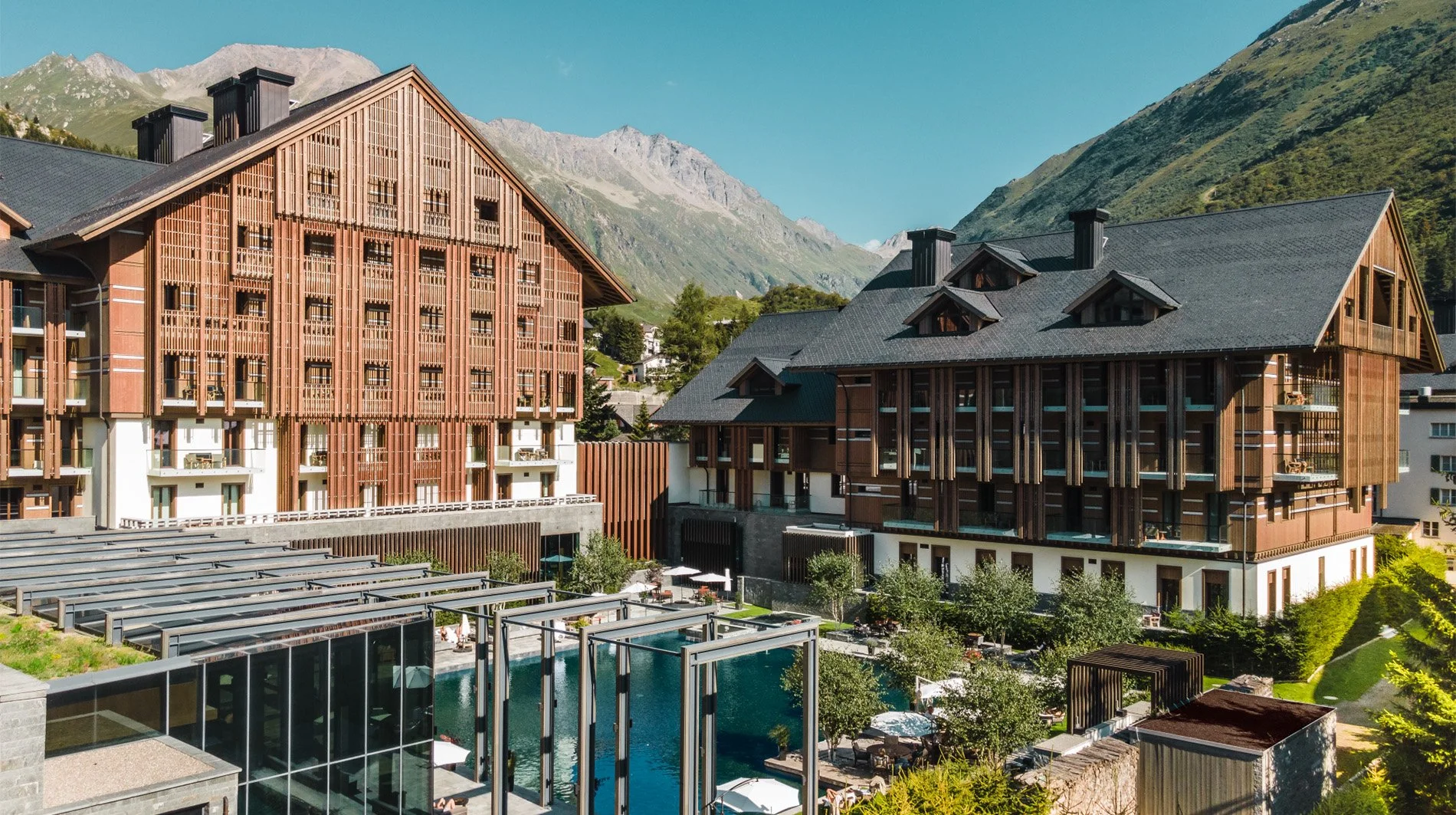
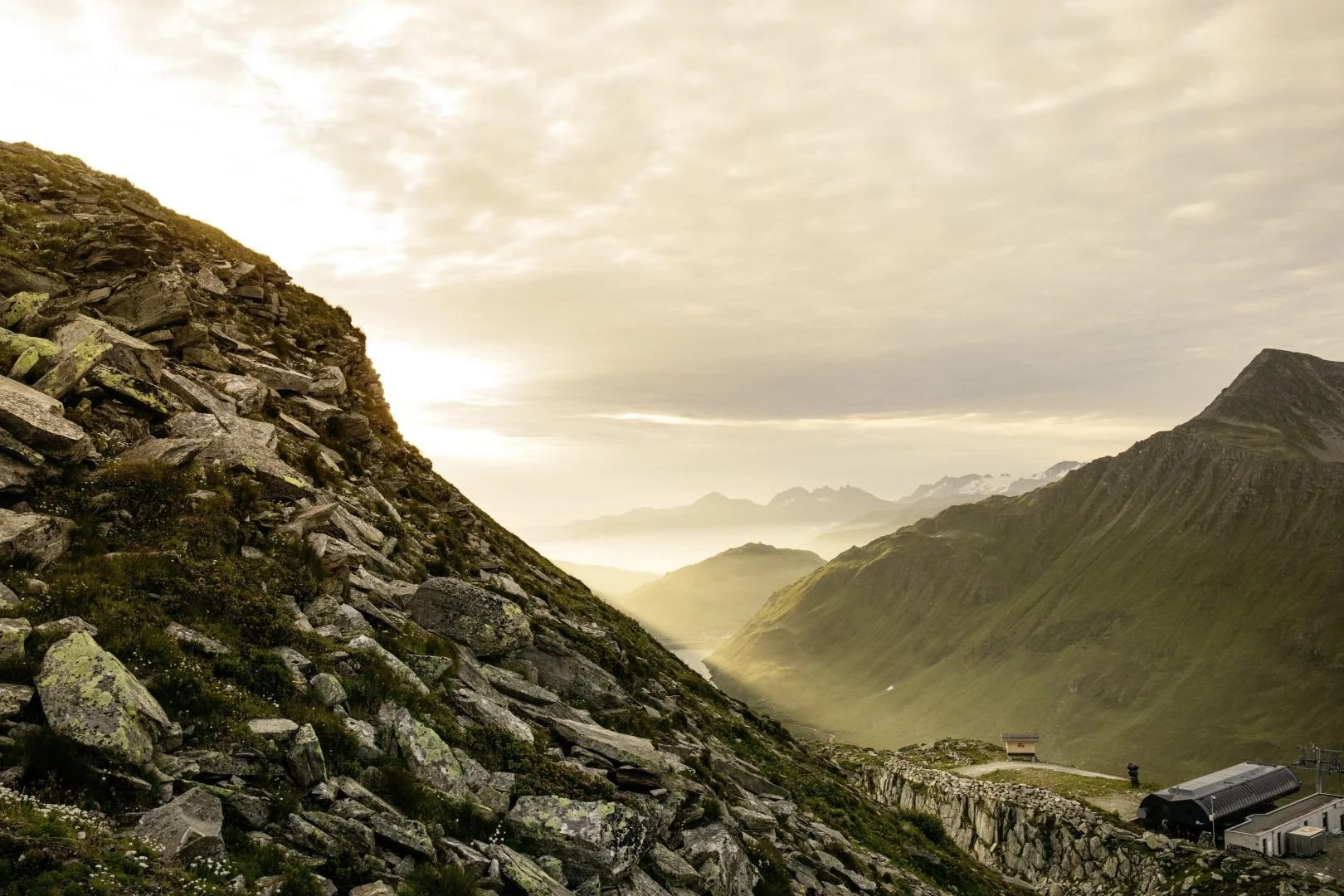
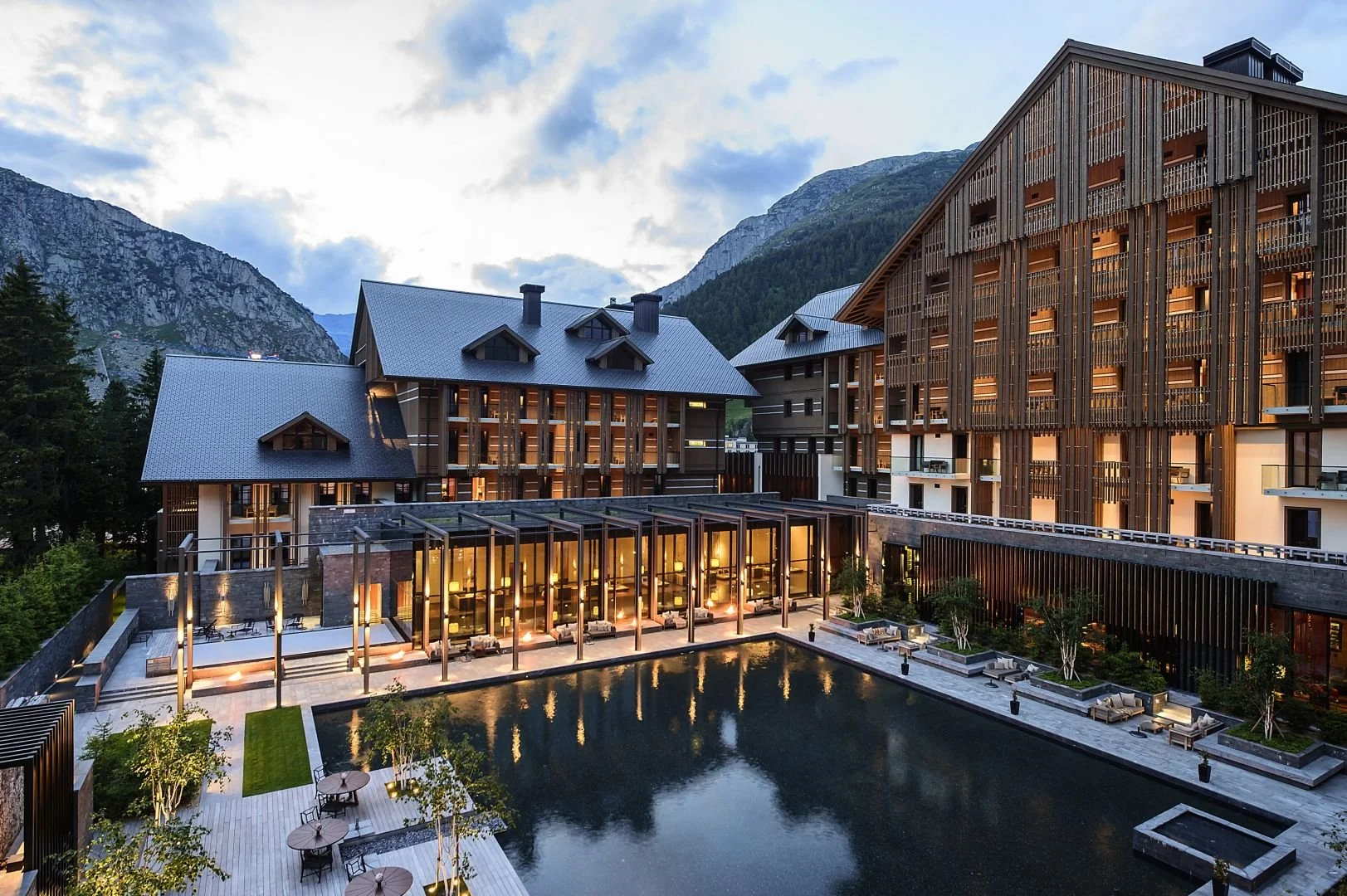
At the eastern edge of Andermatt village, The Chedi Andermatt occupies a position that makes the destination unusually easy to read. The historic centre is close enough to reach on foot, while the Ursern Valley opens immediately around the hotel and the mountains of Gemsstock and Nätschen establish the scale of the landscape. Winter brings skiing and deep snow; summer shifts attention toward golf, hiking, cycling and the Alpine passes that have shaped travel through this part of Switzerland for centuries.
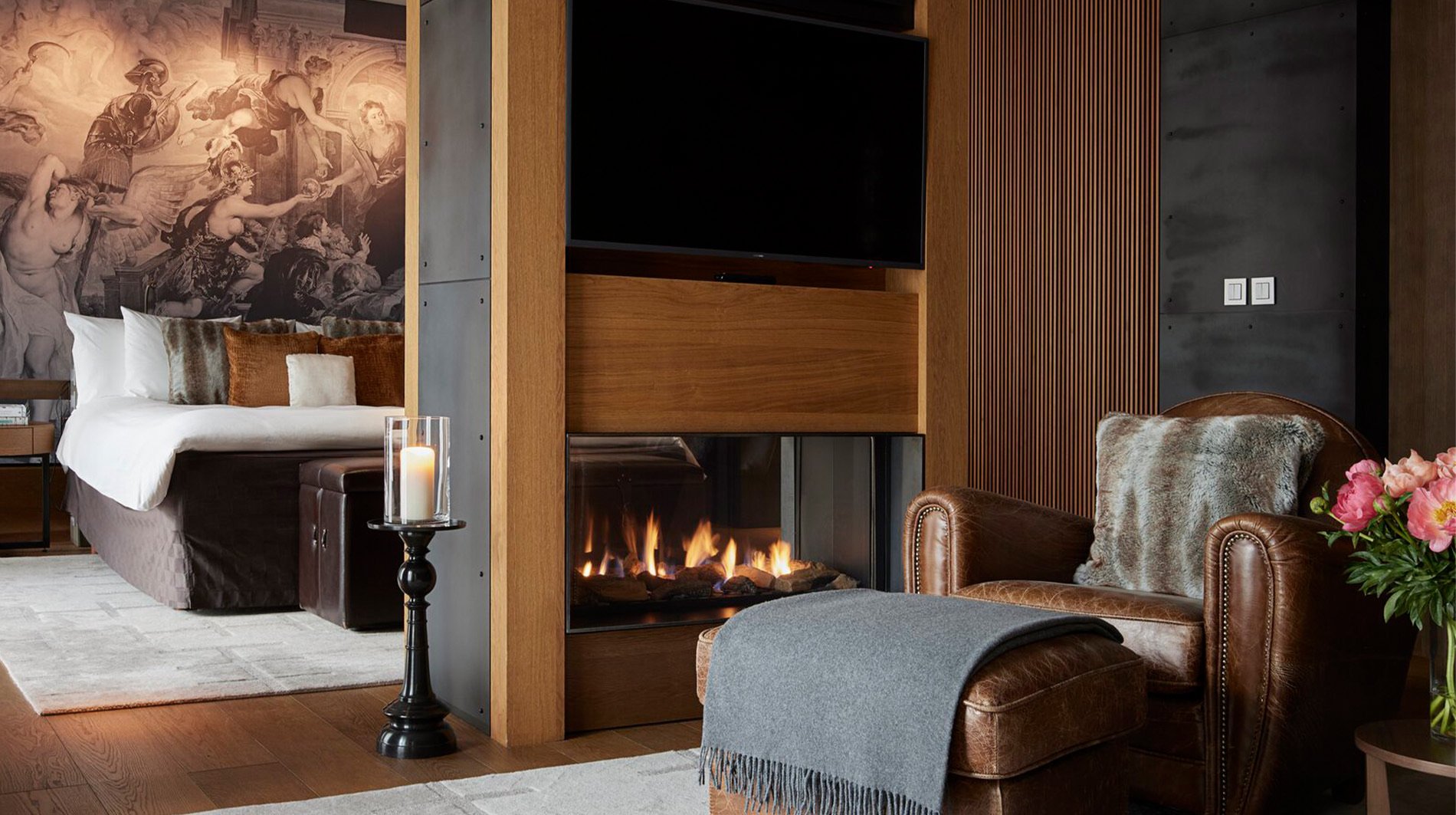
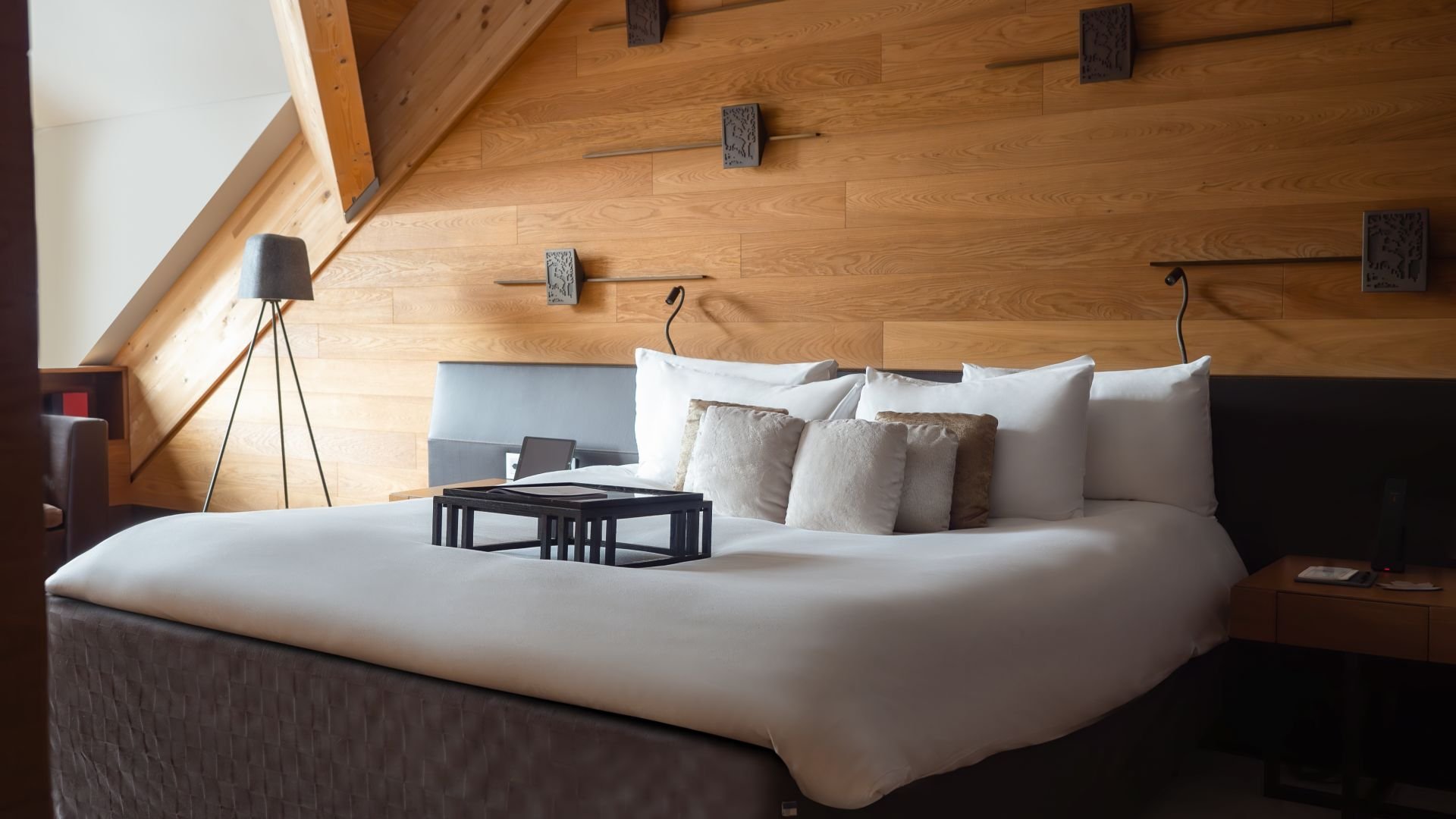
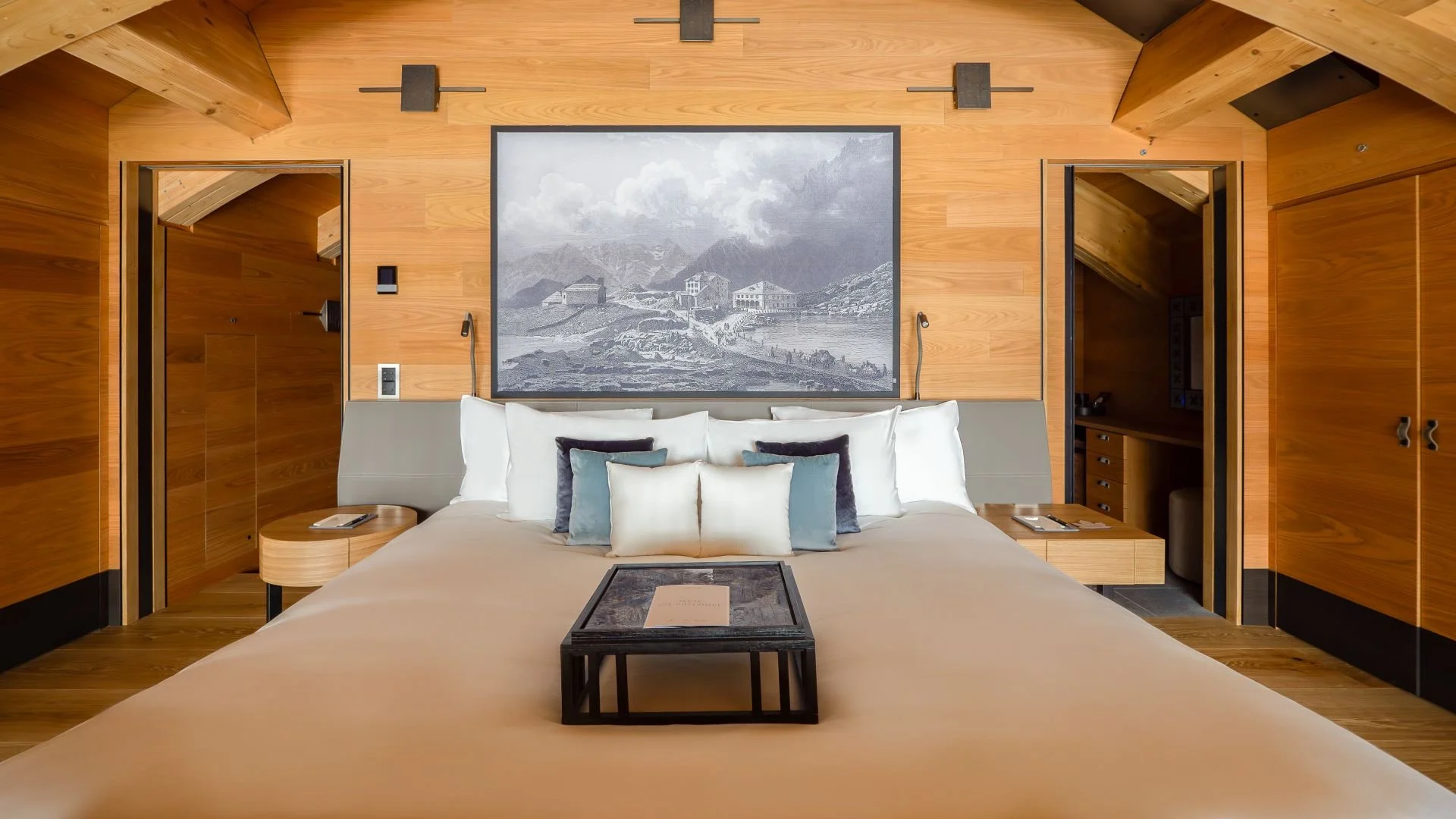
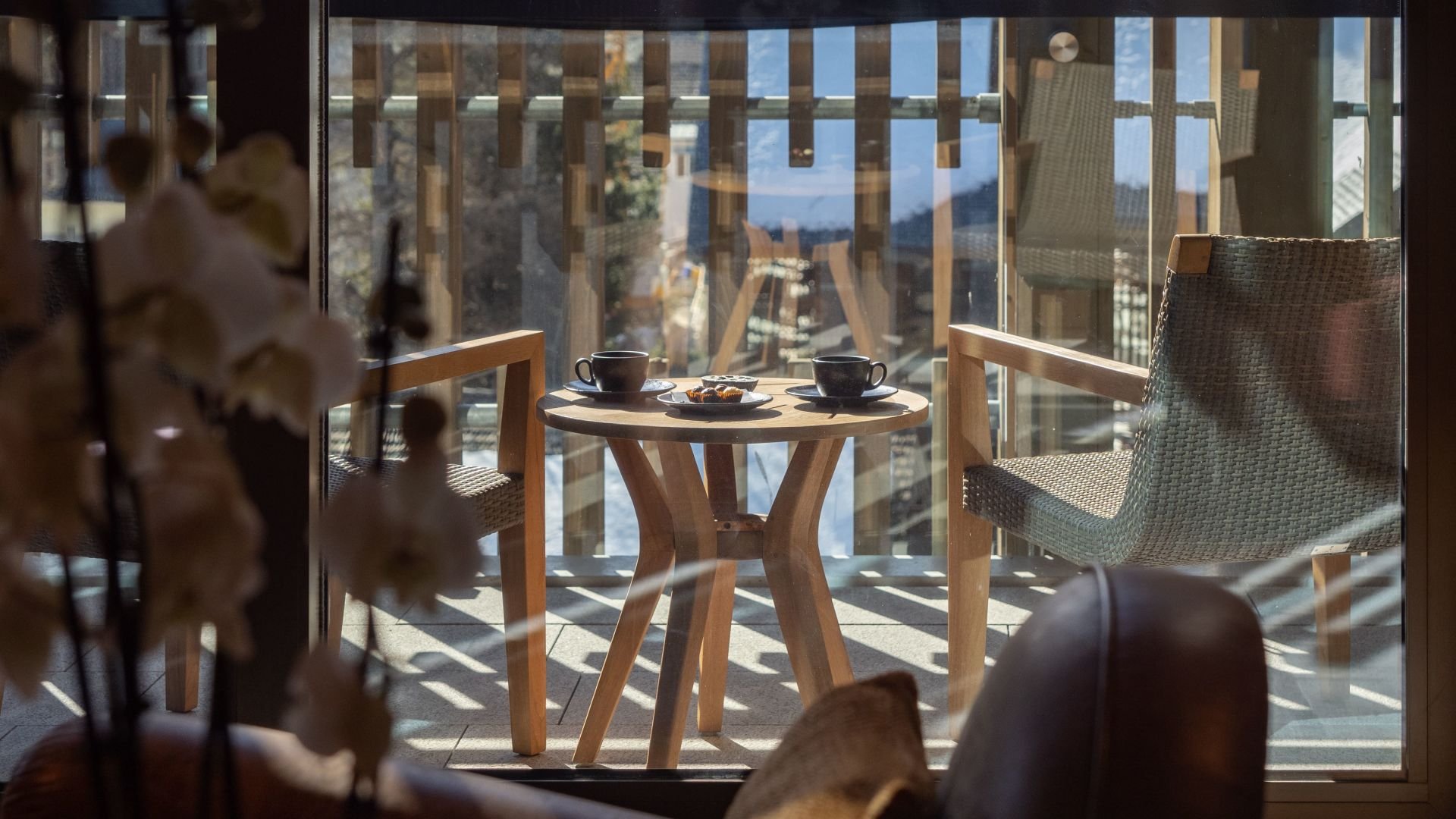
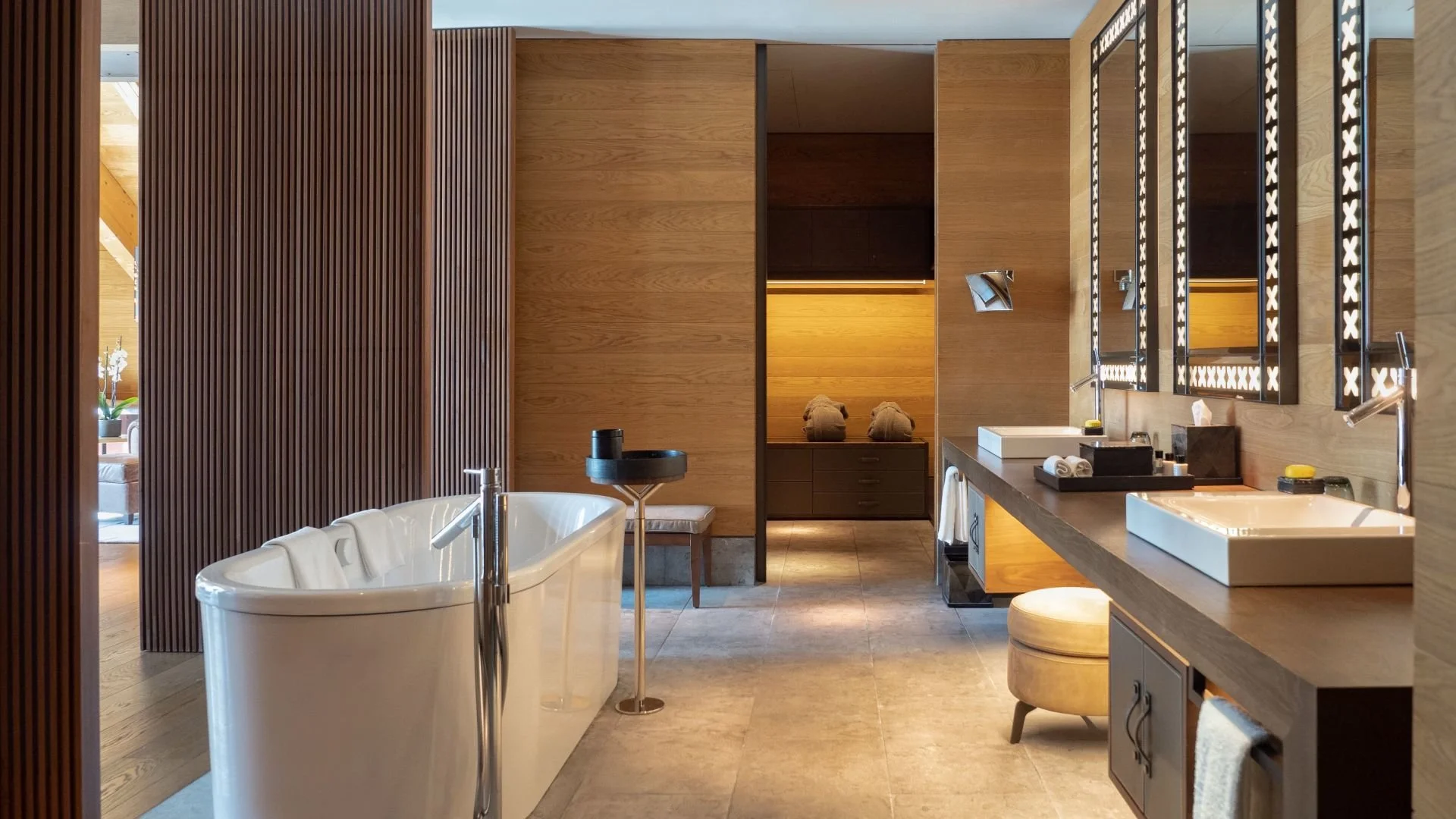
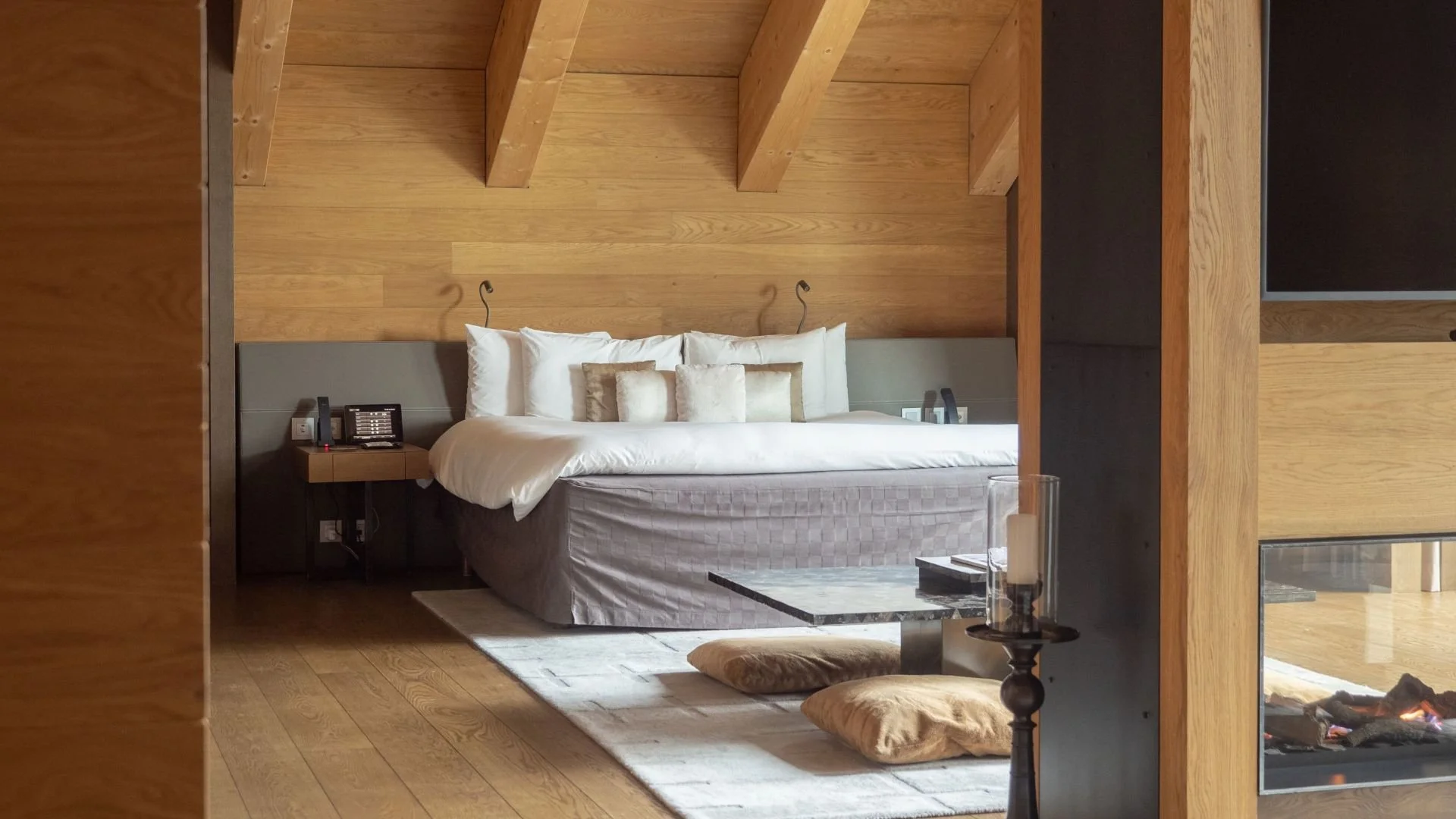
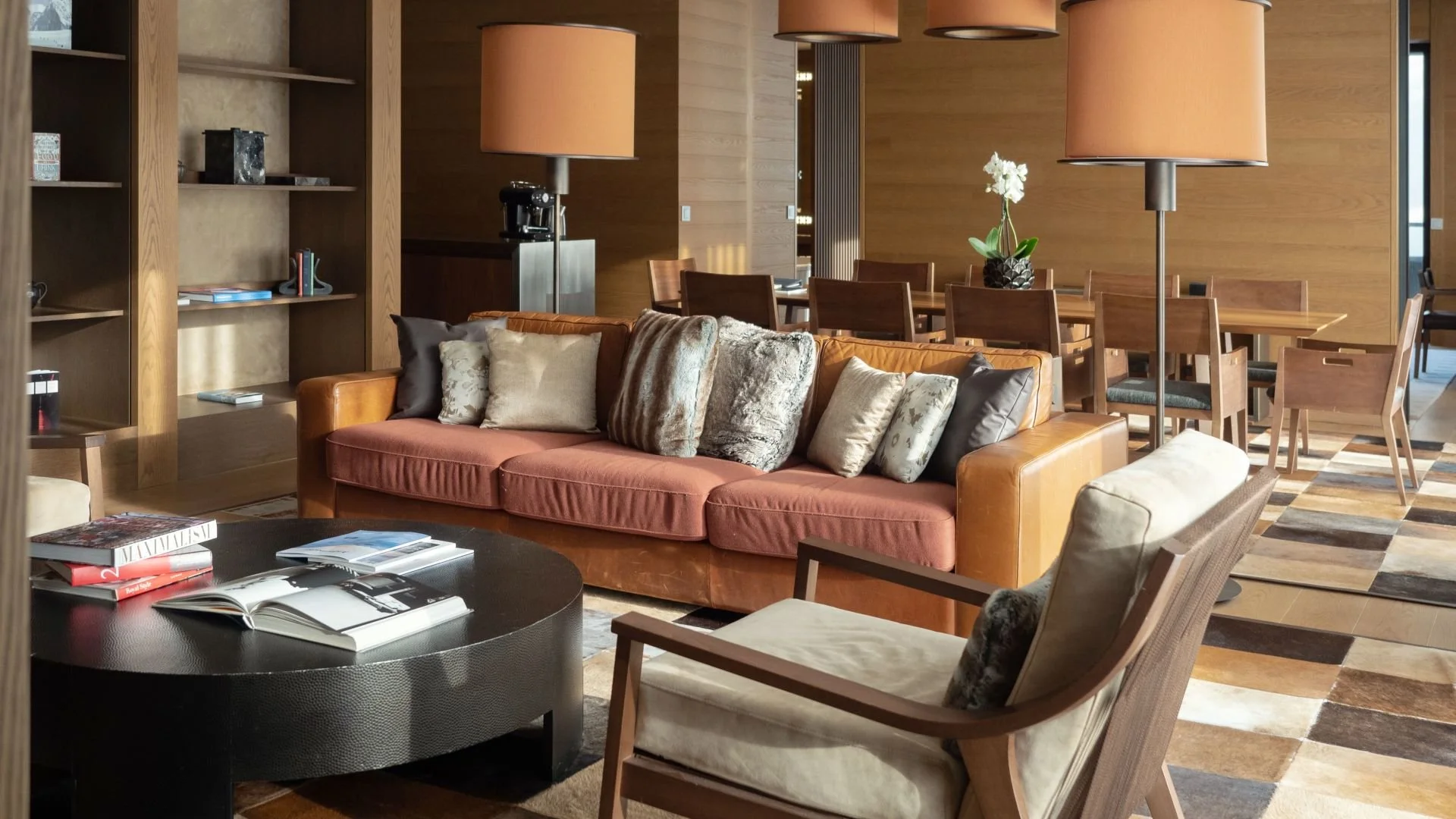
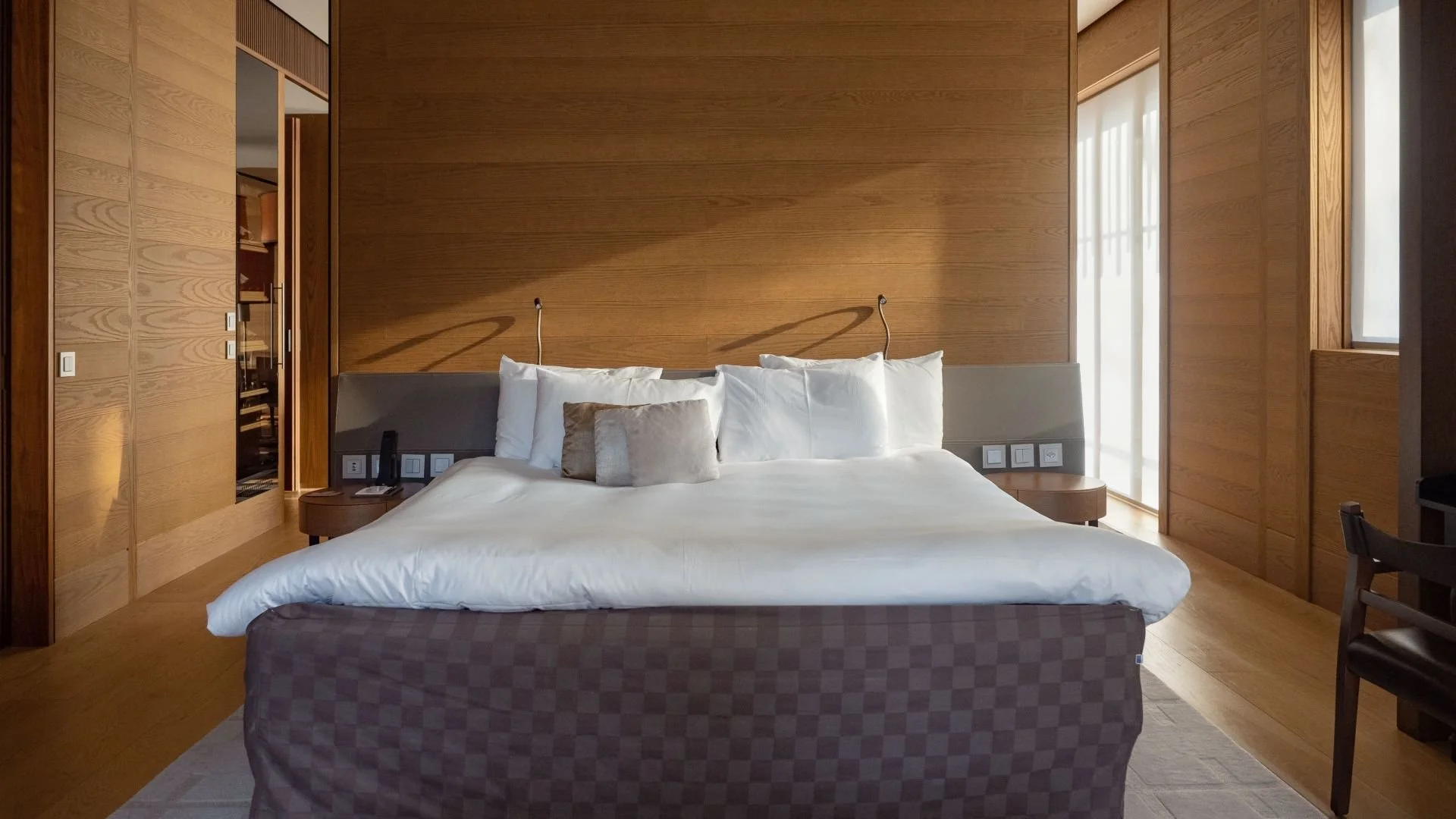
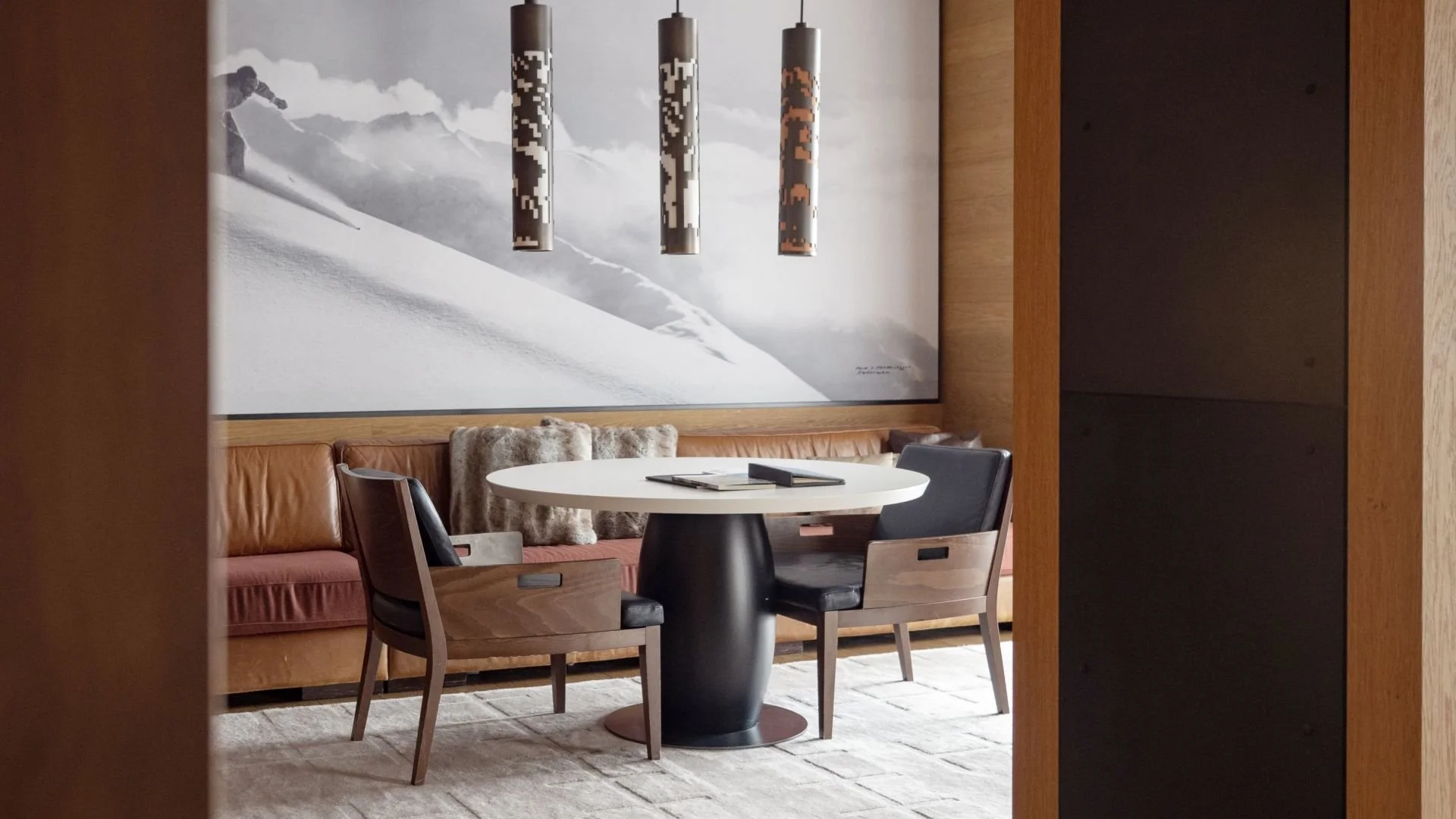
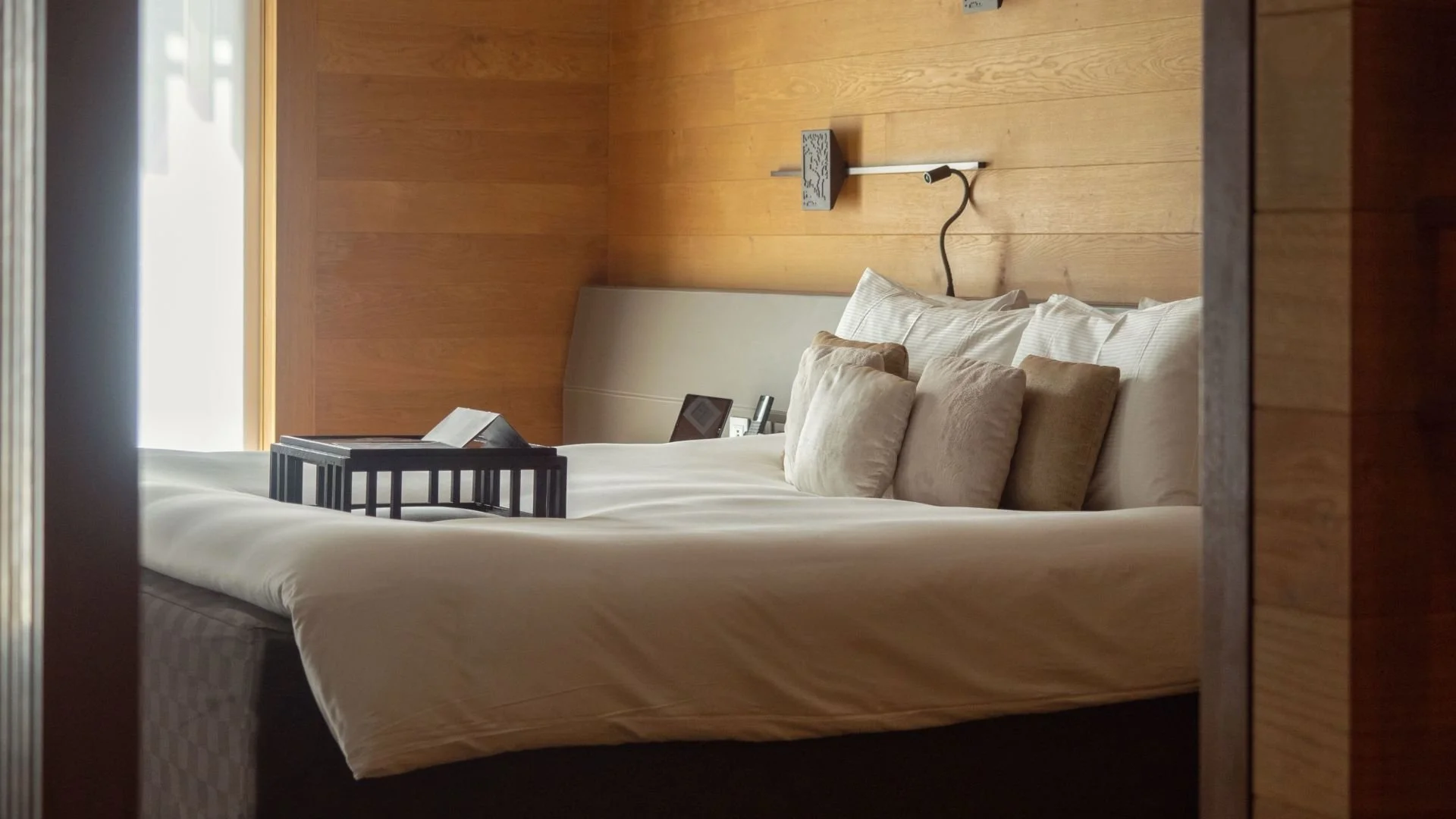
The hotel has 119 rooms and suites, beginning with unusually generous entry-level rooms and extending to three-bedroom signature suites that function much like private Alpine residences. Fireplaces, balconies, deep stone bathrooms and large windows are recurring features, but the design avoids becoming a conventional chalet. Dark timber and natural stone are balanced by Asian-influenced screens, bronze details, low lighting and a more restrained approach to decoration.
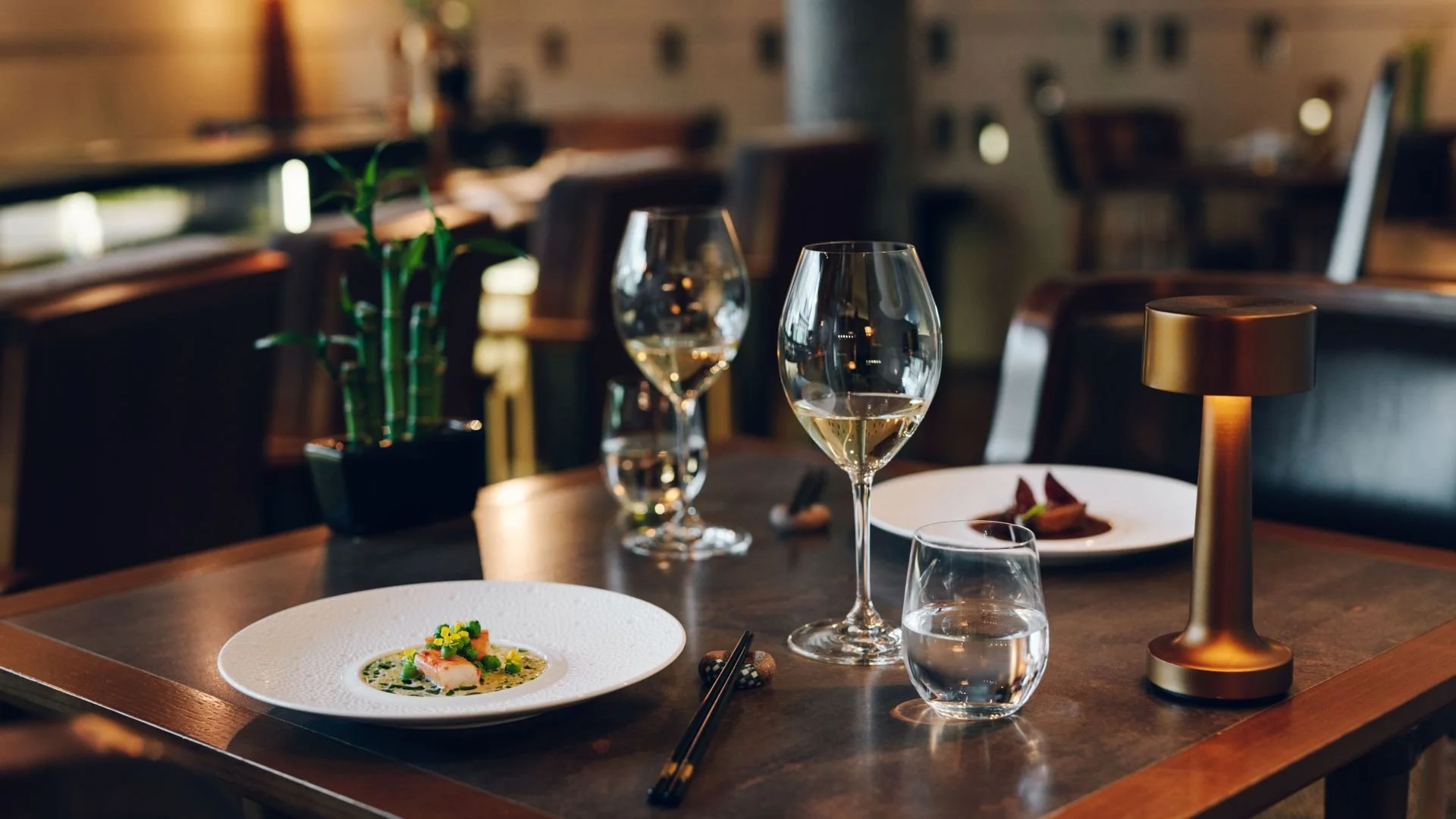
Dining and wellness are substantial enough to influence the shape of a stay. The Japanese holds two Michelin Stars, while The Japanese at Gütsch carries one Michelin Star at approximately 2,400 metres above sea level. The Spa & Health Club covers roughly 25,800 sq. ft., with indoor and heated outdoor pools, hydrotherapy facilities and twelve spa suites.
The accolades are equally current. In 2026, The Chedi Andermatt retained two Michelin Keys and received a Forbes Travel Guide Five-Star award, while The 101 Best Hotels of Switzerland recognised the property for luxury design and architecture. For us, those awards matter most when they point back to qualities a guest can actually feel: the scale of the rooms, the strength of the restaurants, the spa and the unusual contrast between a highly designed resort and an older mountain village just beyond it.
The Hotel That Marked Andermatt’s New Chapter
Andermatt’s modern resort story began long before The Chedi opened, but the hotel became one of its clearest symbols. Egyptian developer Samih Sawiris was invited to consider investment in the area in 2005, and residents approved the wider resort development in 2007. Ground was broken in 2009, beginning a transformation that would eventually include new residences, hotels, a golf course, expanded mountain infrastructure and cultural venues.
The Chedi Andermatt opened in December 2013 on the site associated with the former Grand Hotel Bellevue. Rather than attempting to recreate that earlier hotel, the new property announced a different direction: international in outlook, contemporary in execution and deliberately distinct from the compact traditional buildings in the village nearby.
That timing is important. Andermatt had long been shaped by its strategic position near the Gotthard Pass and by the Swiss military presence in the region. Tourism was part of the local economy, but the new development repositioned the valley for a much broader international audience. The Chedi arrived as the flagship hotel of that change.
More than a decade later, the property no longer feels simply like an opening statement for a development project. Its restaurants, spa and design have developed their own identities, while Andermatt itself has continued to evolve around it. The relationship between old village, newer resort infrastructure and the surrounding mountains is now one of the most interesting parts of a stay.
Alpine Timber, Asian Restraint
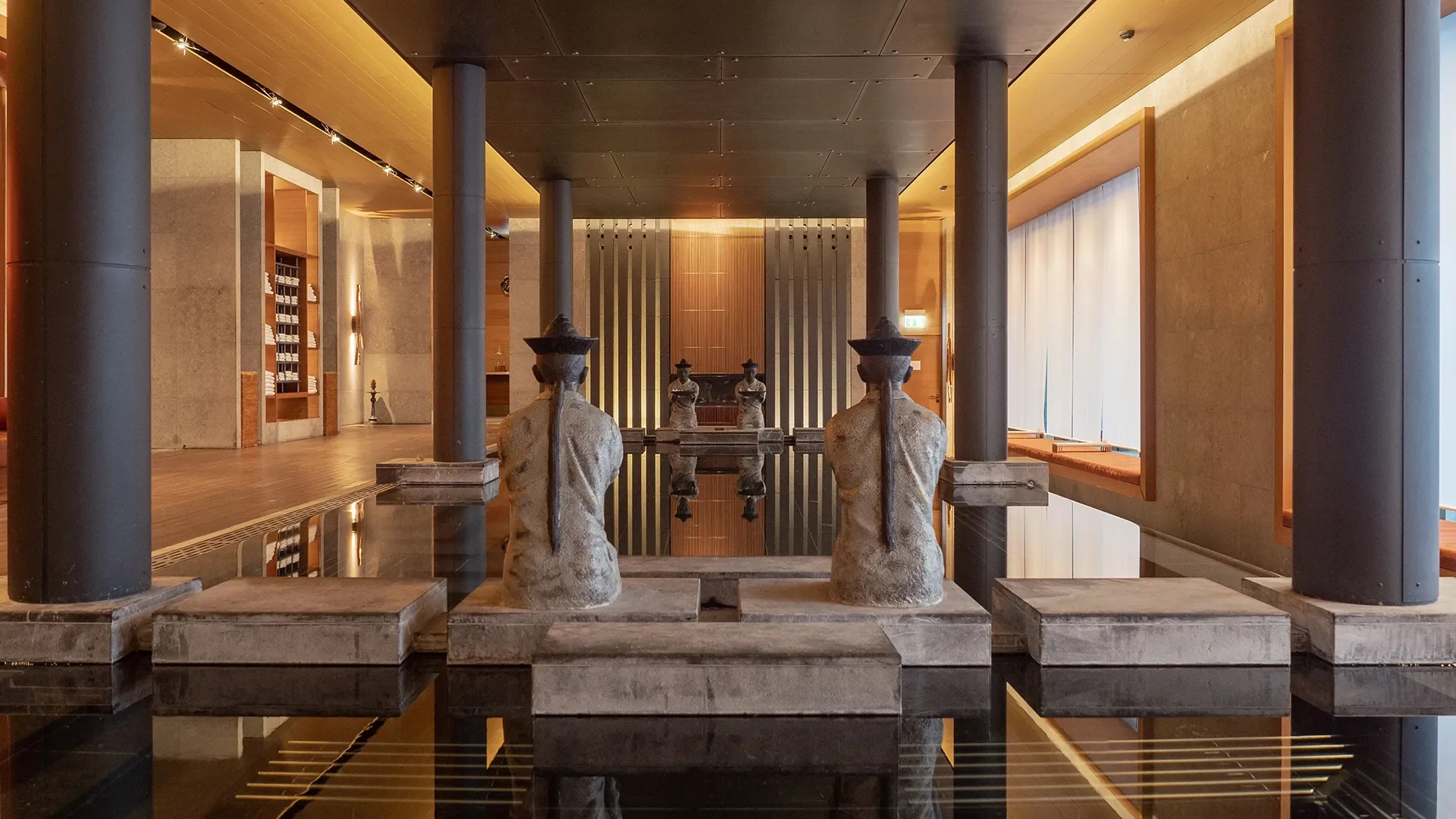
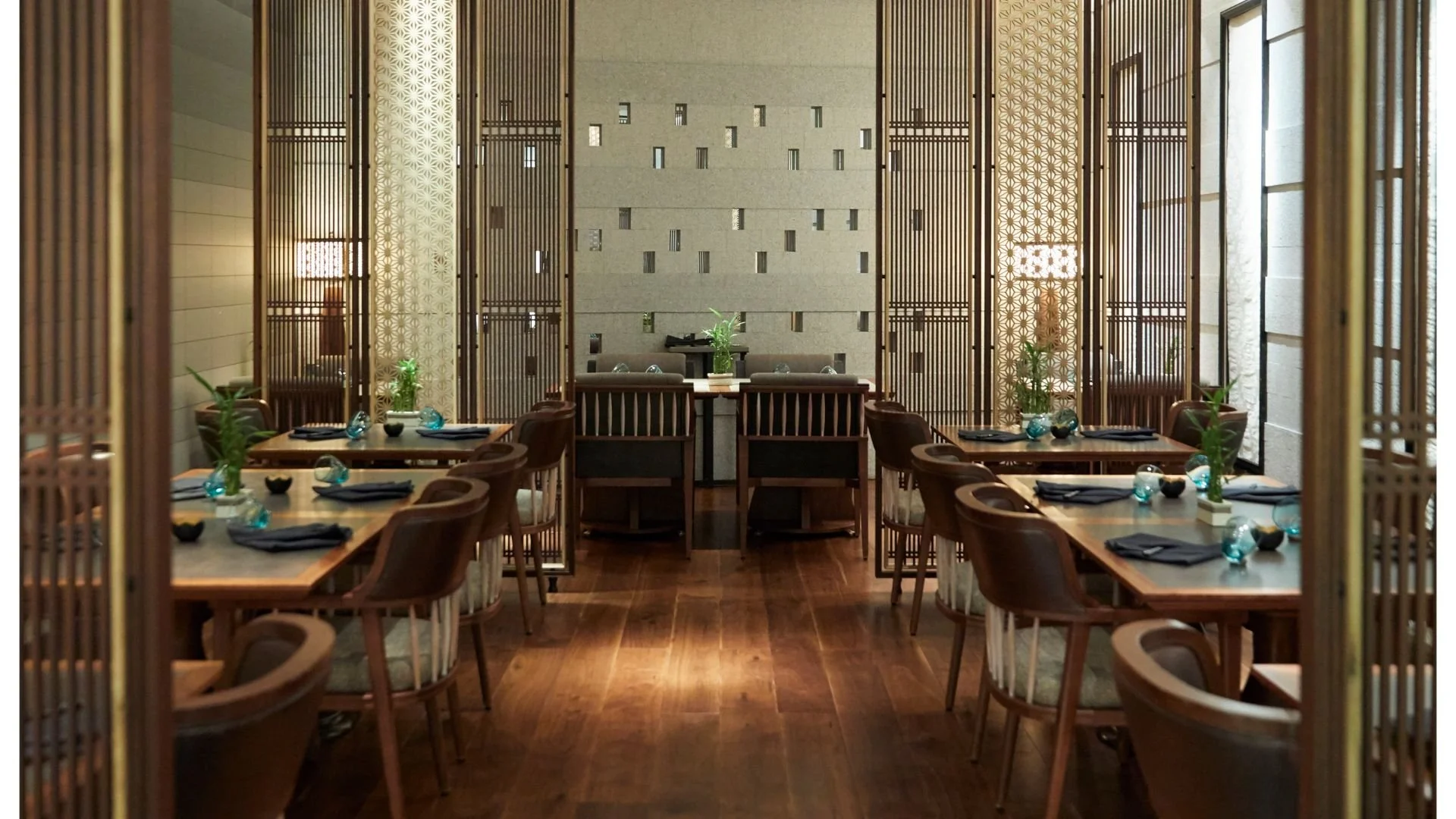
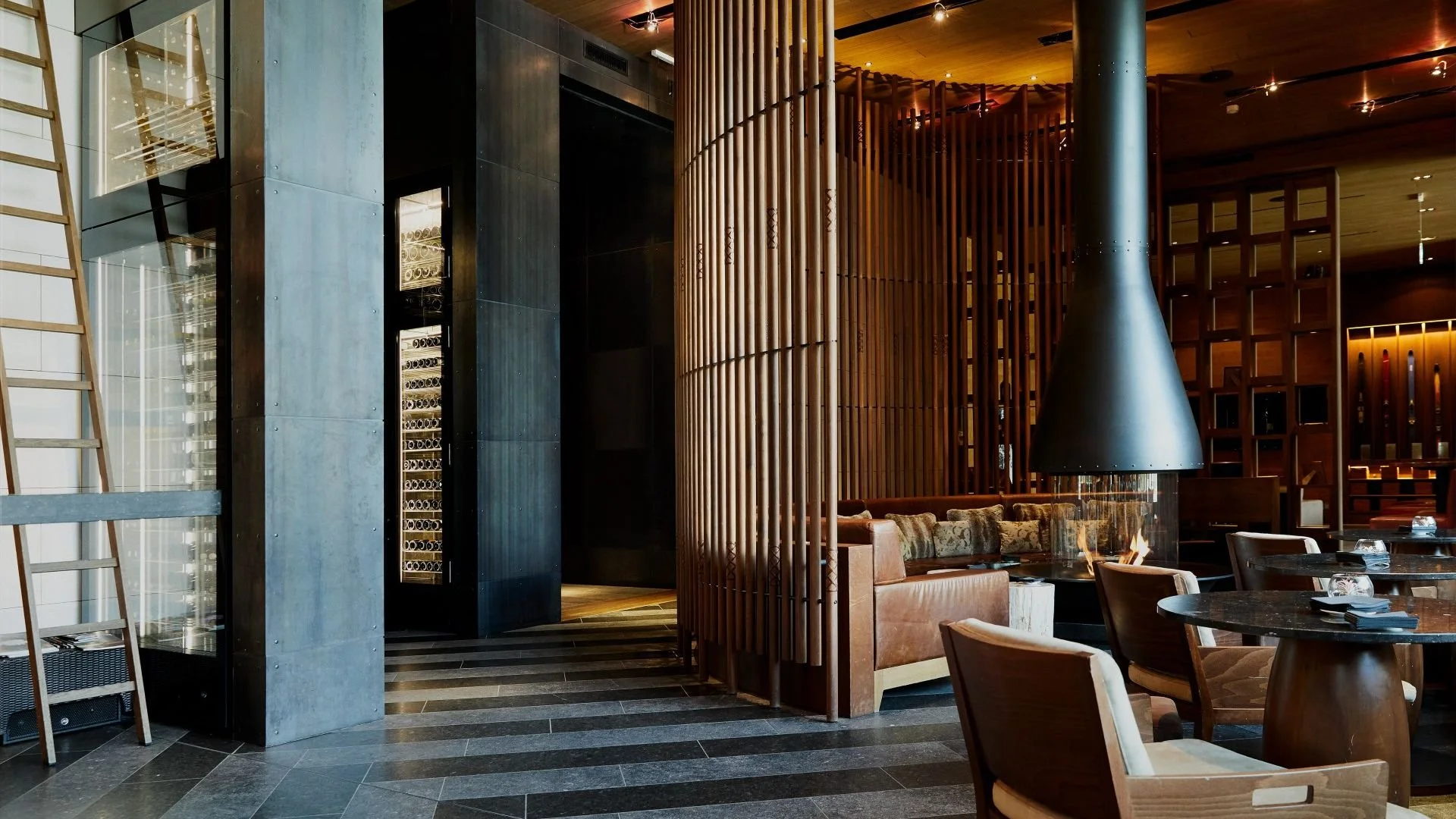
Jean-Michel Gathy of Denniston developed the architecture and interiors around a combination that could easily have become theatrical: Swiss Alpine building traditions and Asian design references. Instead, the connection is expressed primarily through material, proportion and atmosphere.
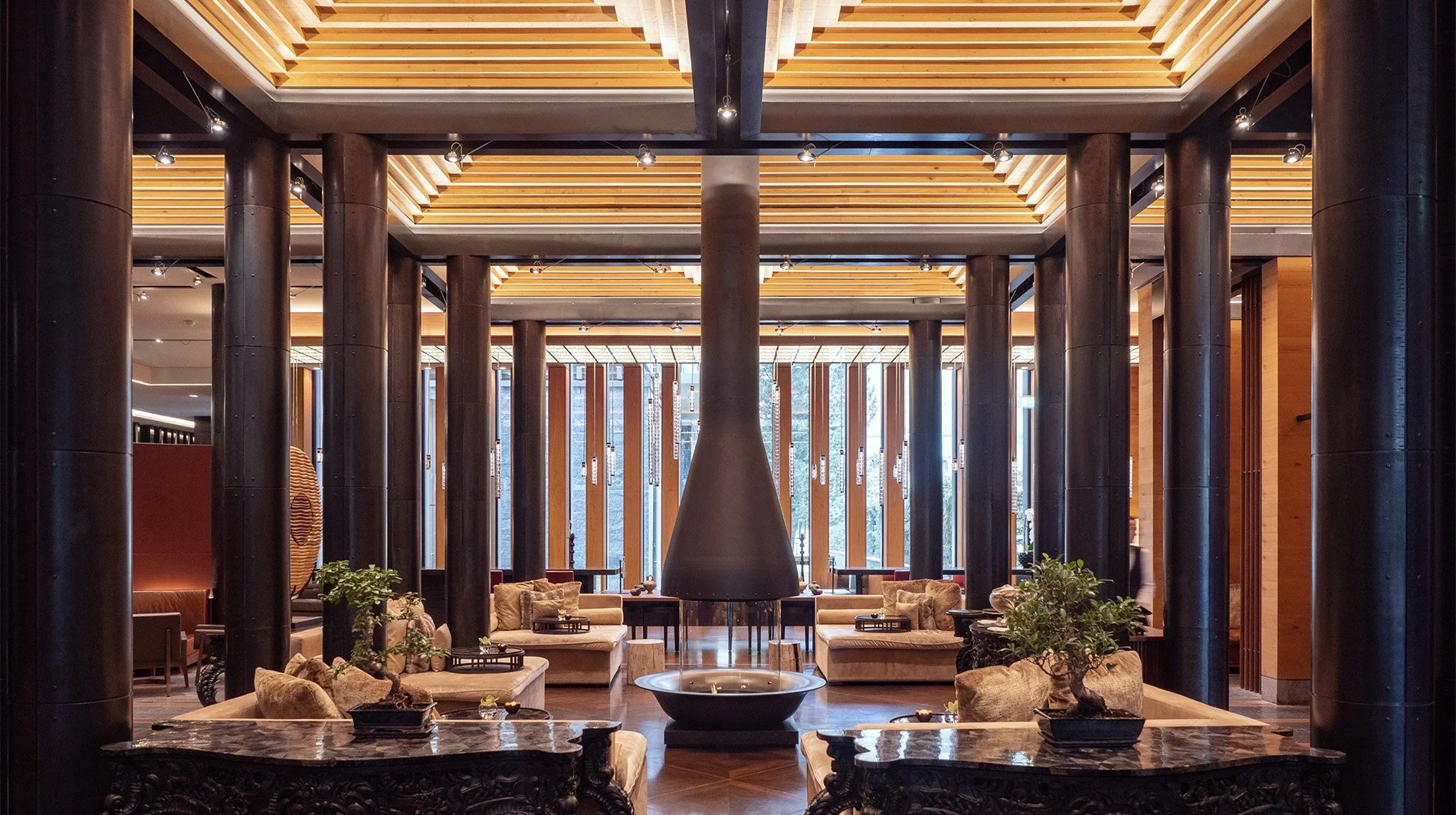
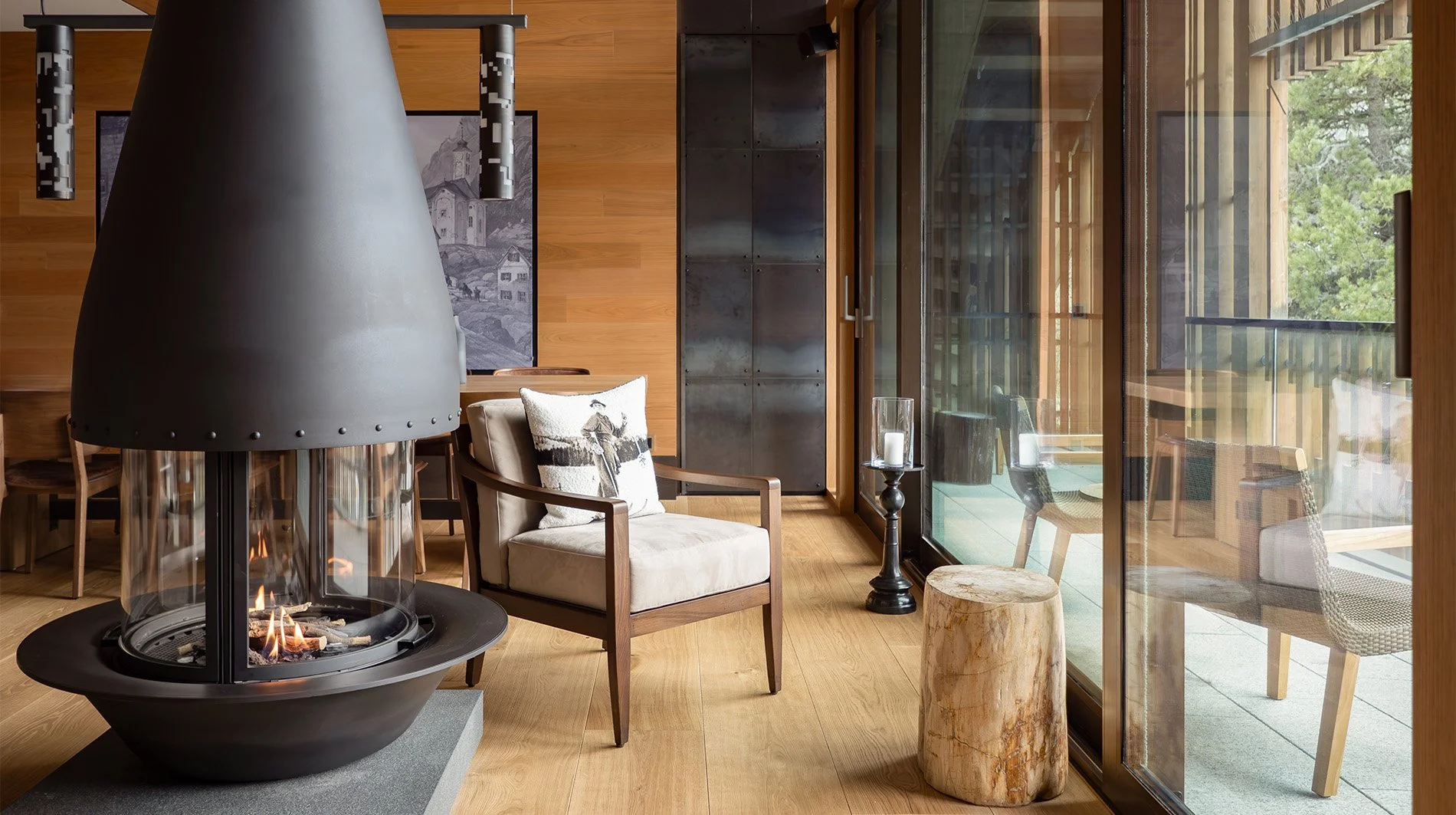
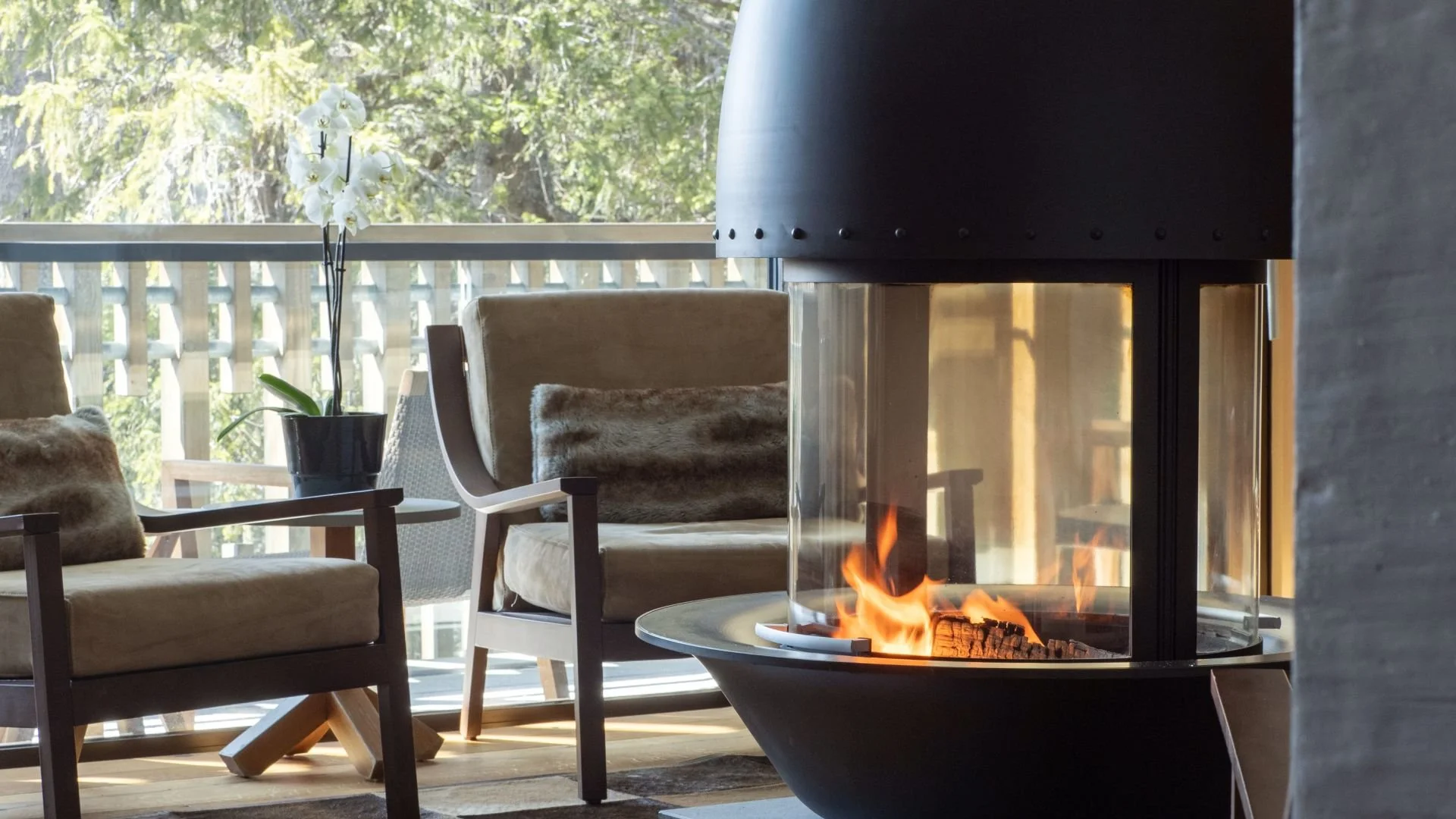
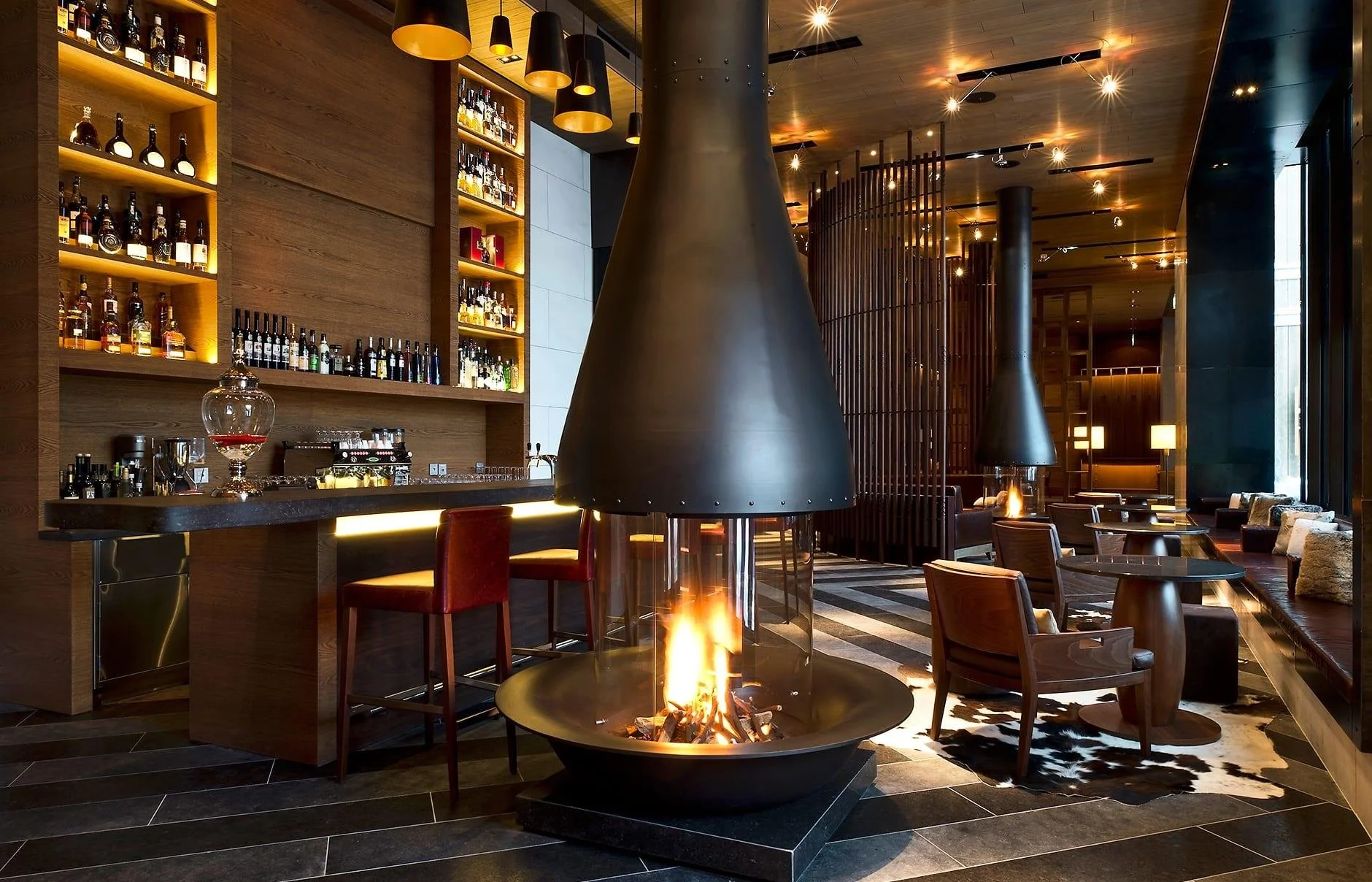
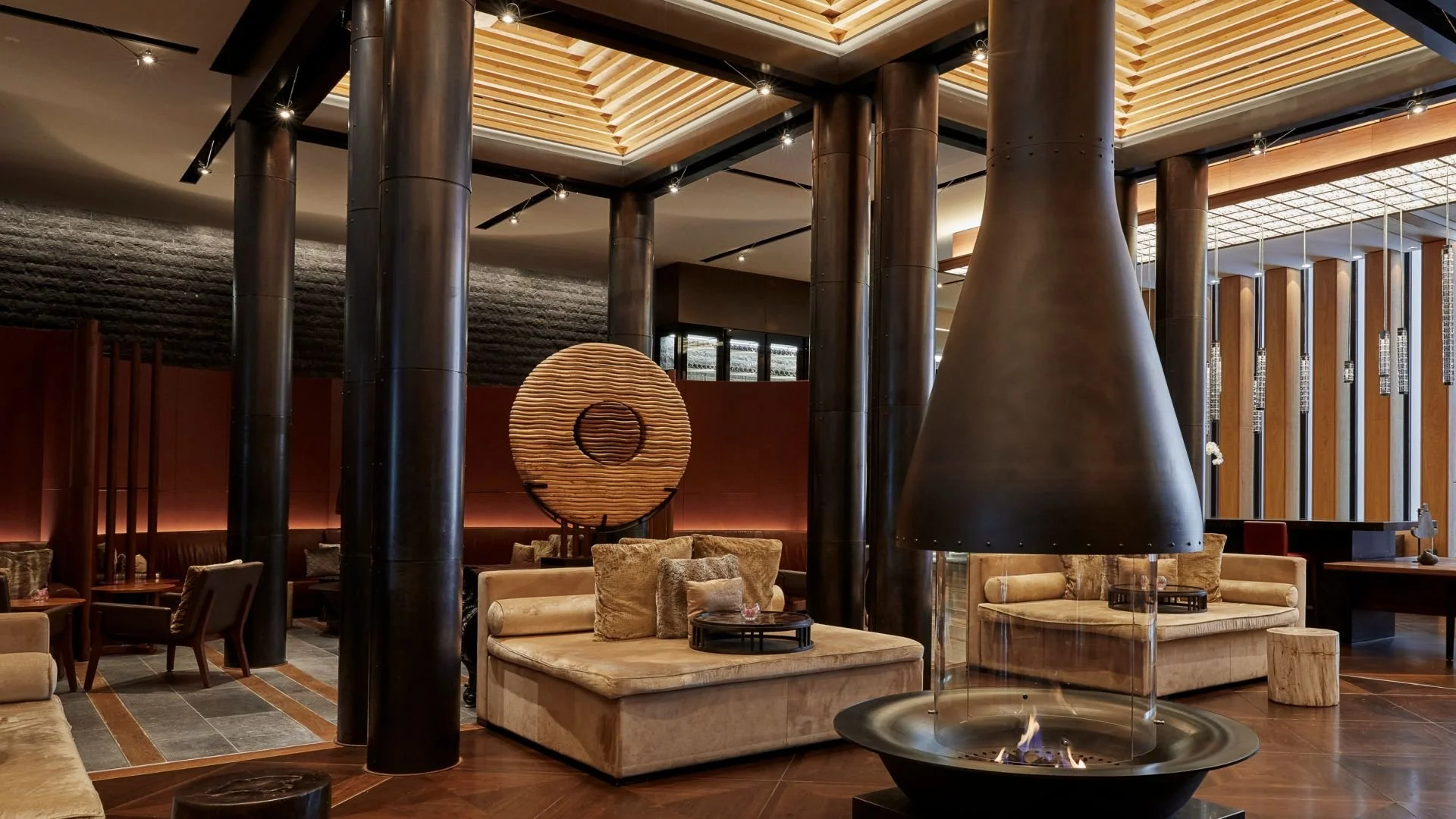
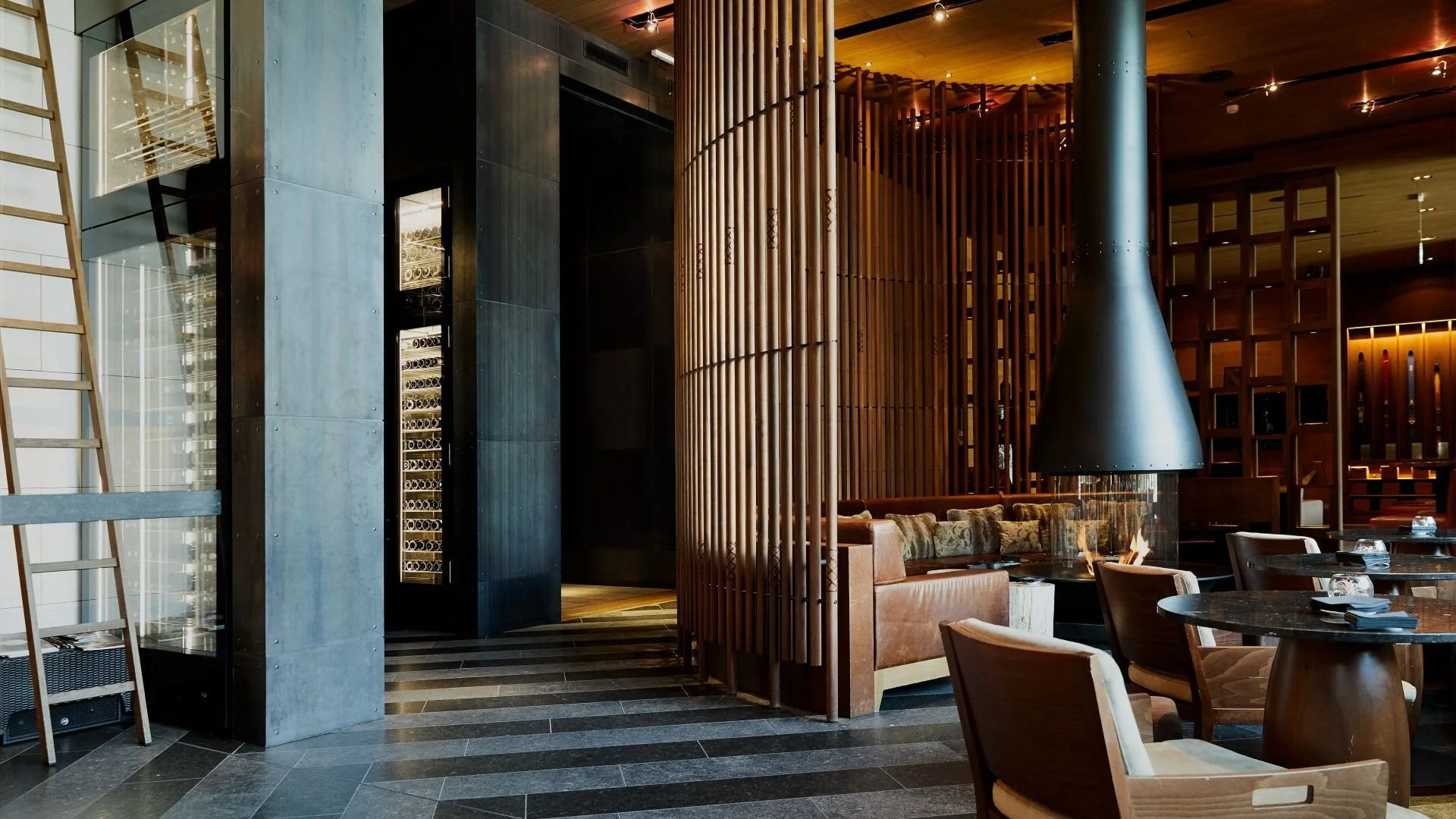
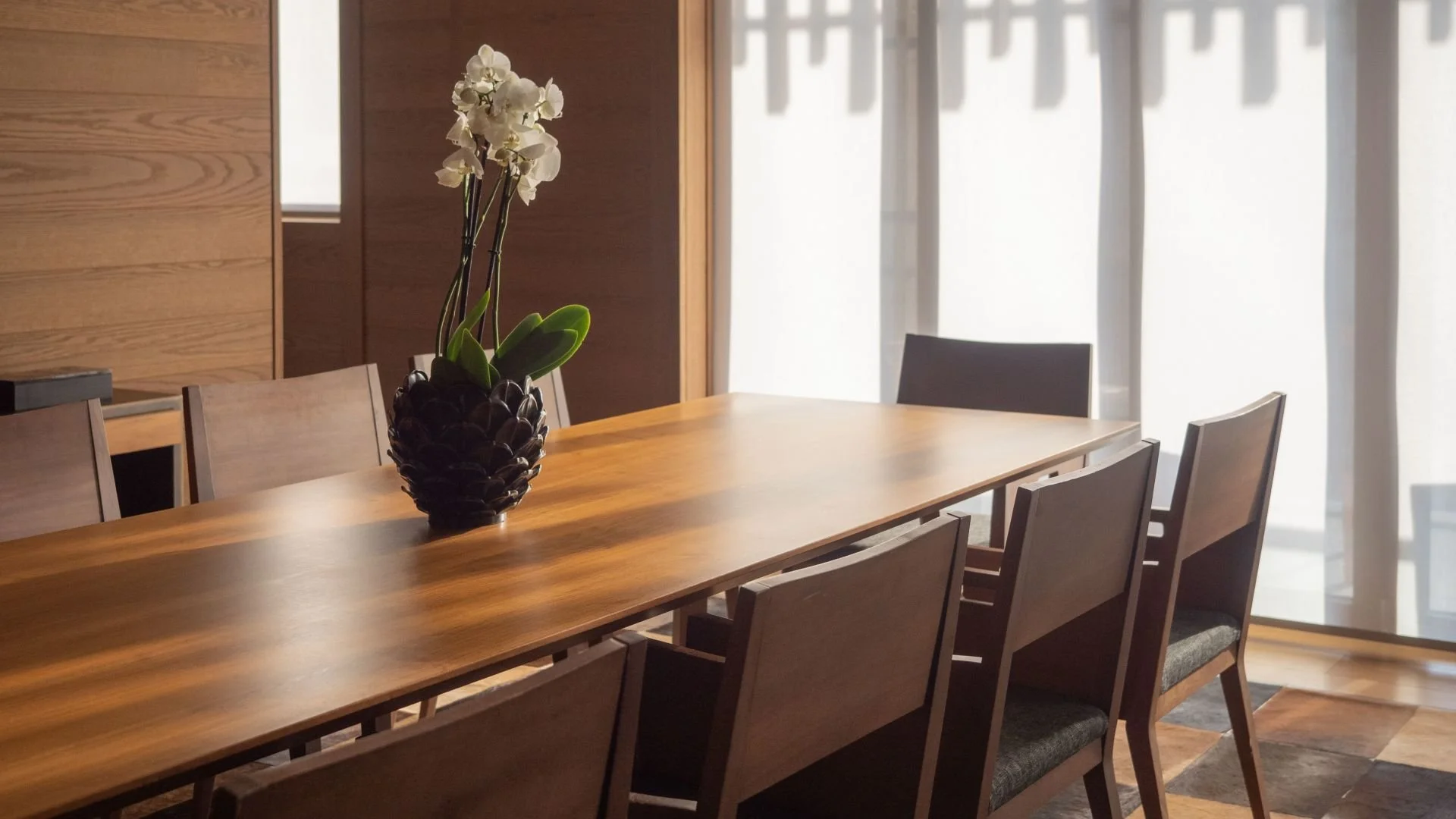
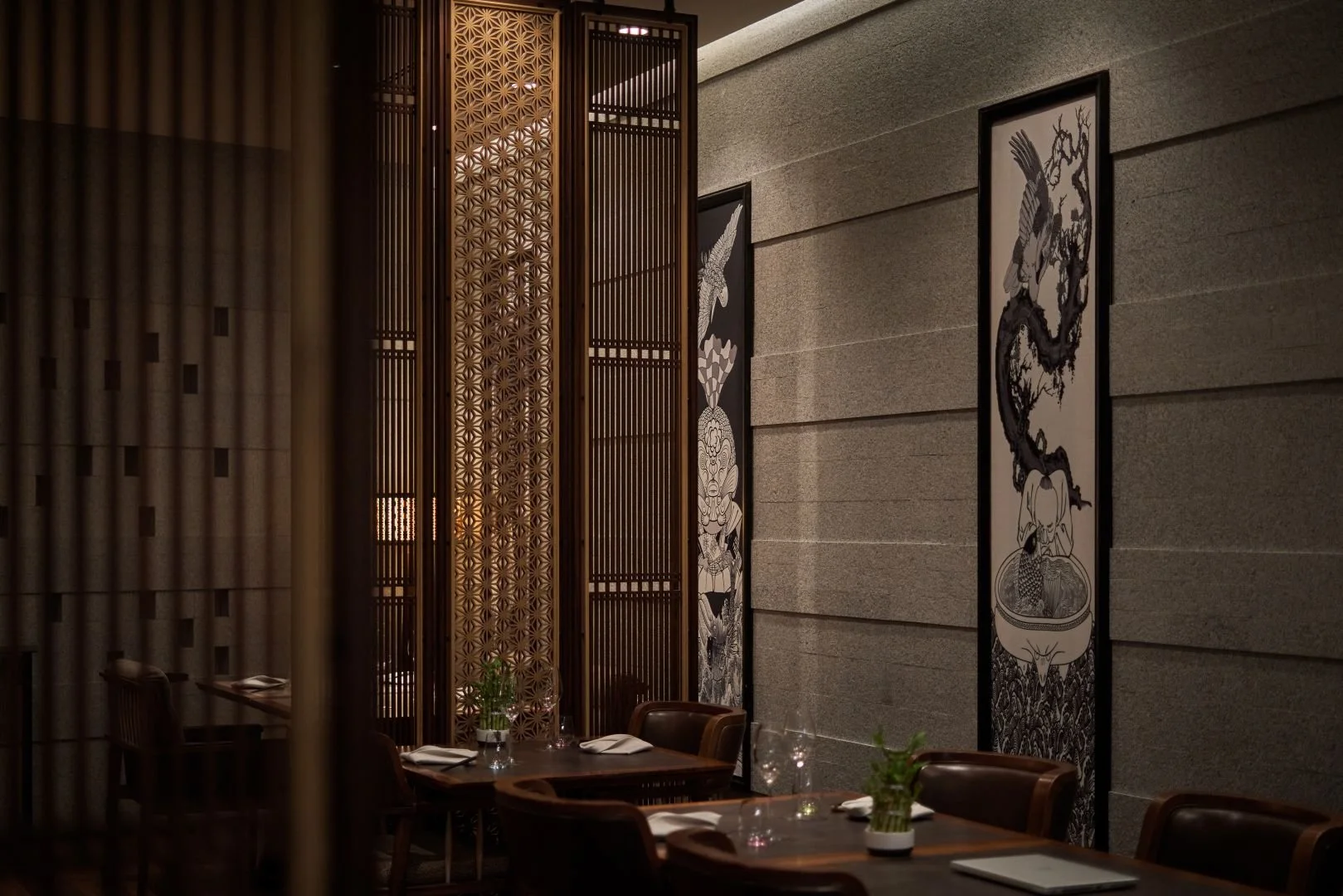
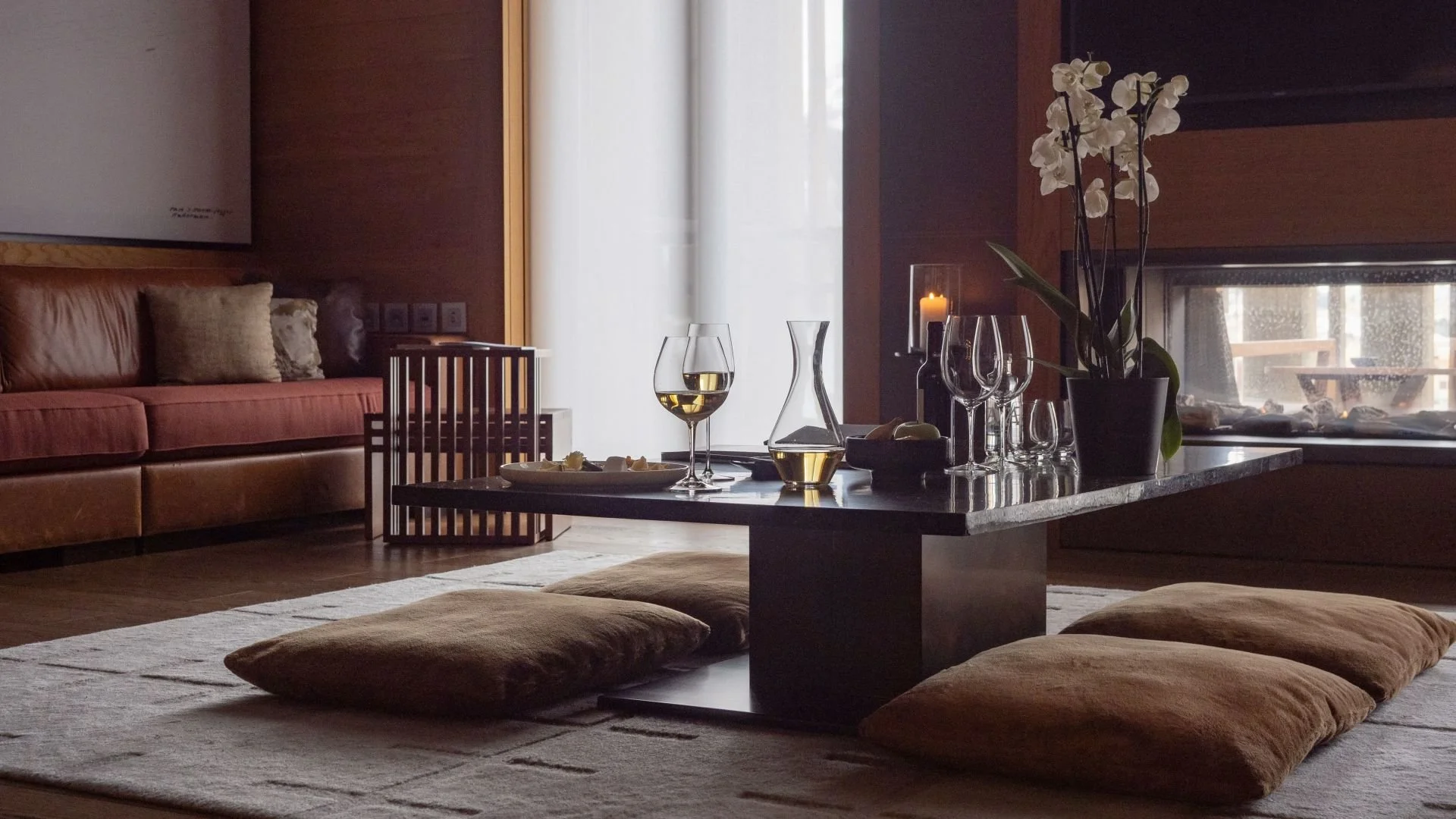
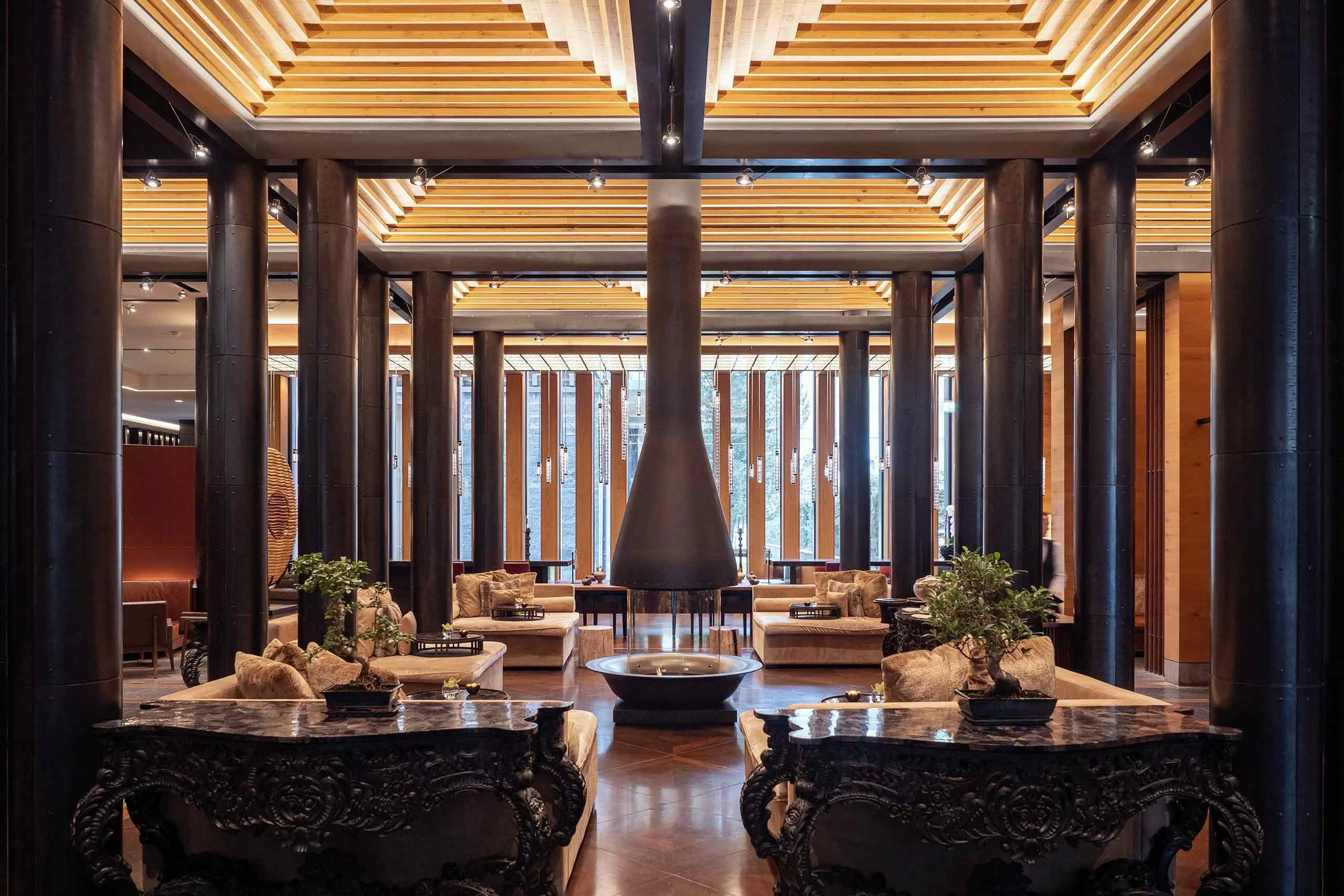
Timber, natural stone and leather create the Alpine foundation. Dark metal, bronze details, screens, low-set furnishings and carefully controlled lighting introduce a quieter Asian influence. Fireplaces appear throughout the building, breaking down the scale of large public areas and giving seating groups their own sense of enclosure.
The exterior uses a contemporary interpretation of chalet forms rather than copying a historic house. Executing architect Germann & Achermann worked with Denniston on the project, and the resulting building uses timber cladding, deep rooflines and repeated vertical elements to relate its size to the mountain setting.
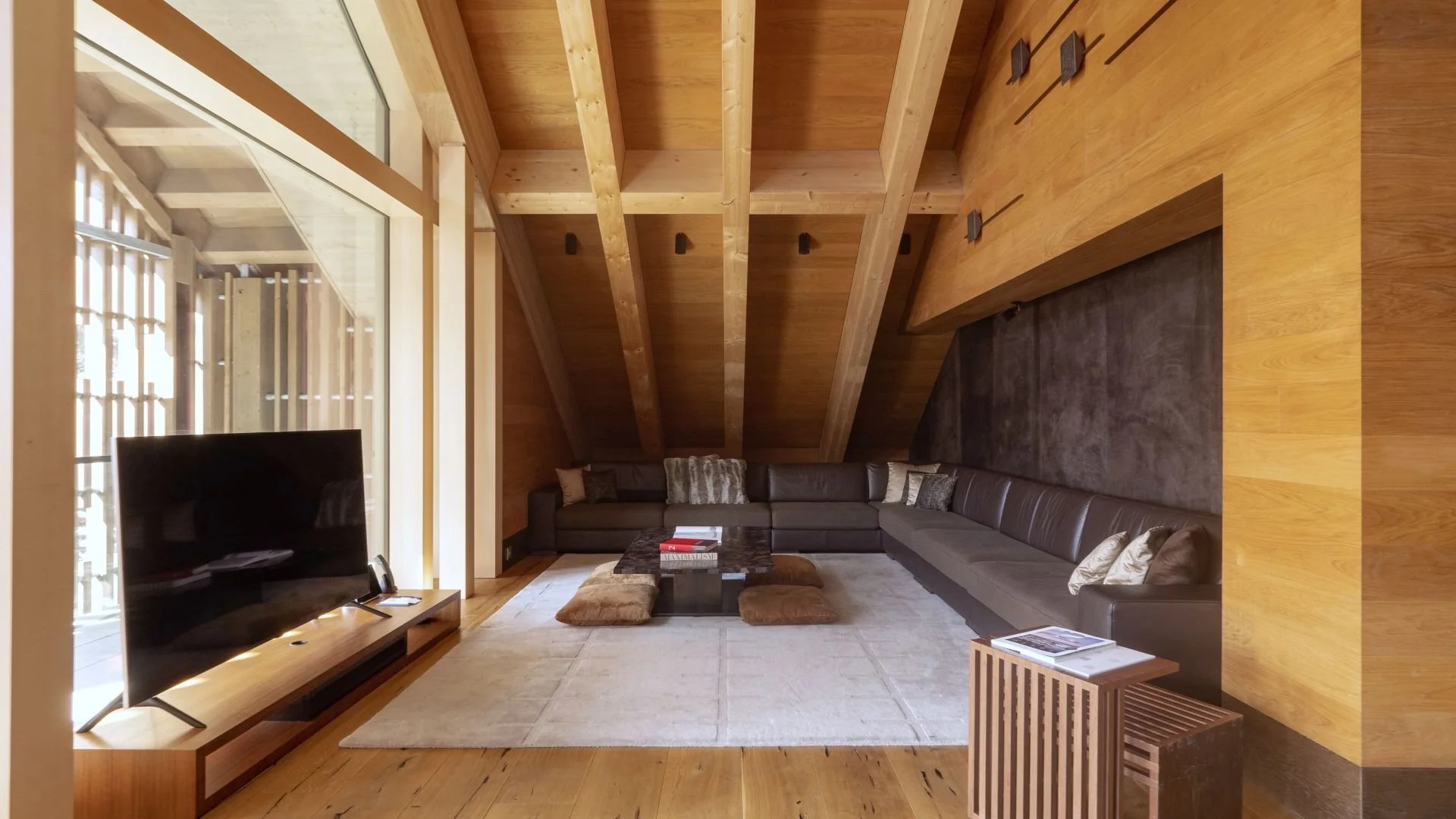
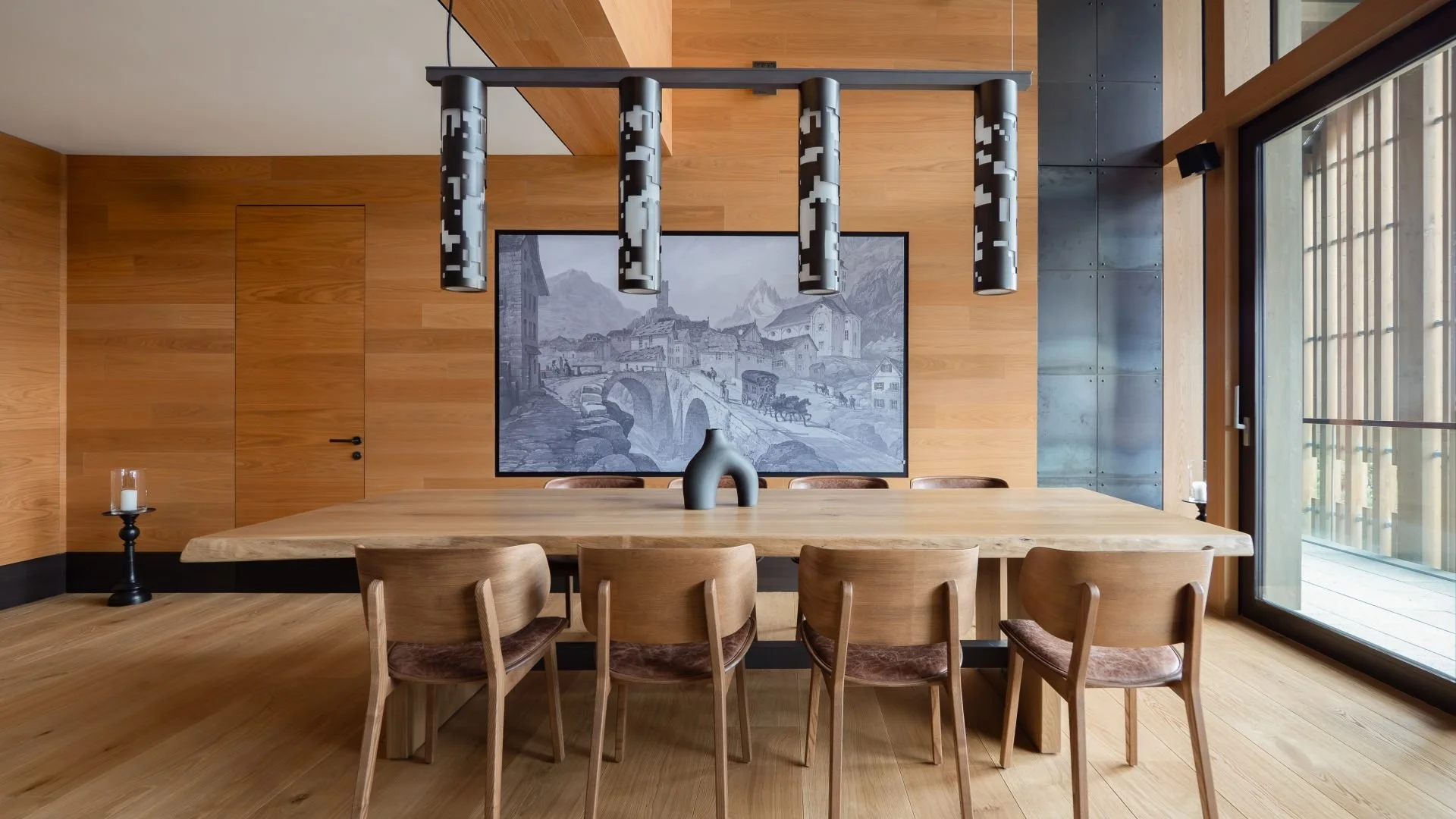
Inside, the Lobby and adjoining public spaces demonstrate the design most clearly. High ceilings and long sight lines could have felt formal, but fireplaces, timber screens and clustered seating create smaller zones. Guest rooms use the same language through oak panelling, stone bathrooms and built-in fireplaces, while generous glazing prevents the interiors from becoming visually heavy.
For us, the design works because neither side of the idea is treated literally. The hotel does not feel like a Swiss chalet decorated with Asian objects, nor like an Asian resort transported into the Alps. The materials and spatial planning create a third identity that belongs specifically to The Chedi.
Rooms With Fireplaces and Space to Settle In
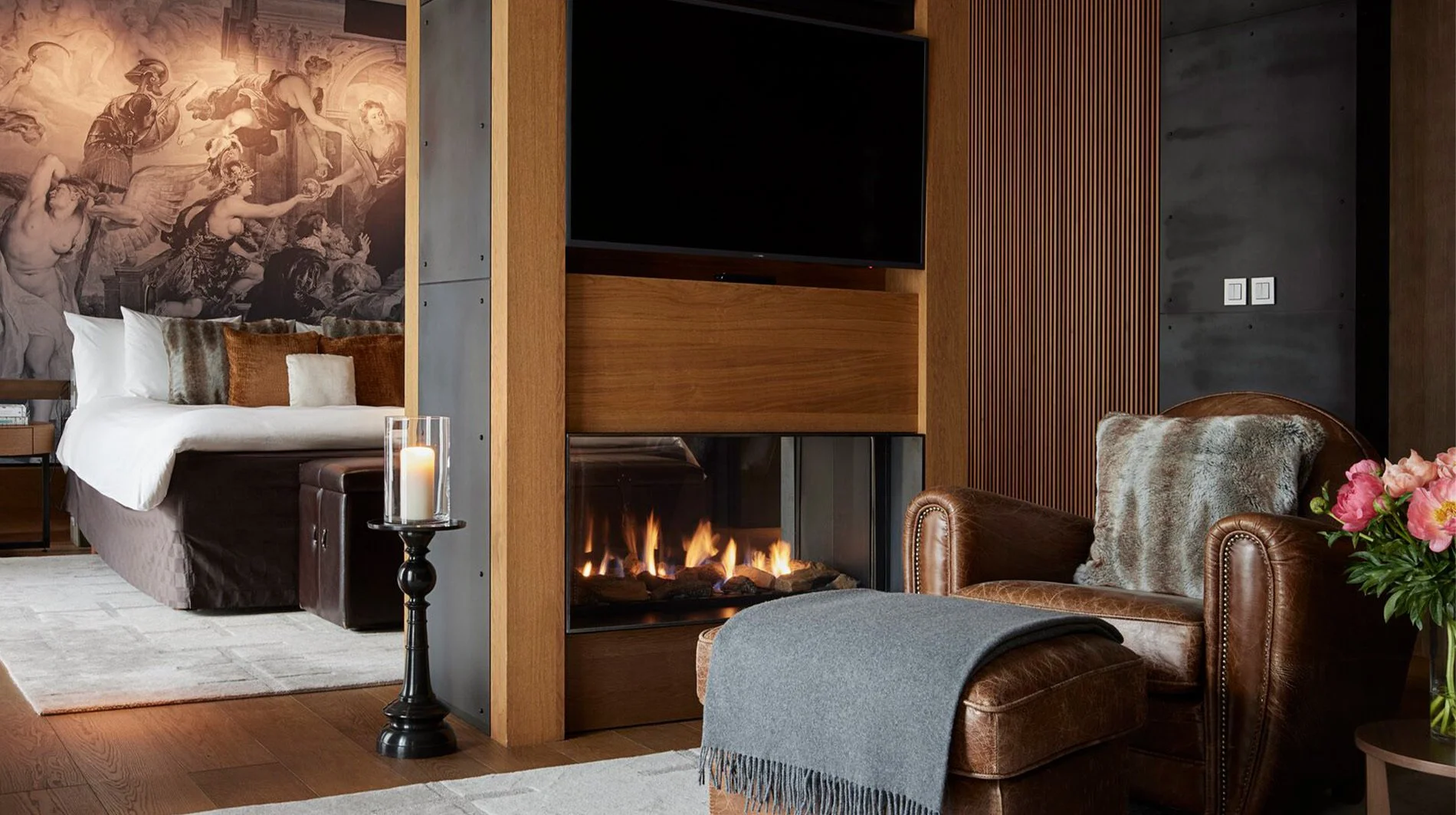
Space is one of the strongest practical arguments for staying here. Even the first room category begins at approximately 590 sq. ft., and balconies, fireplaces and large bathrooms are part of the experience well before reaching the signature suites.
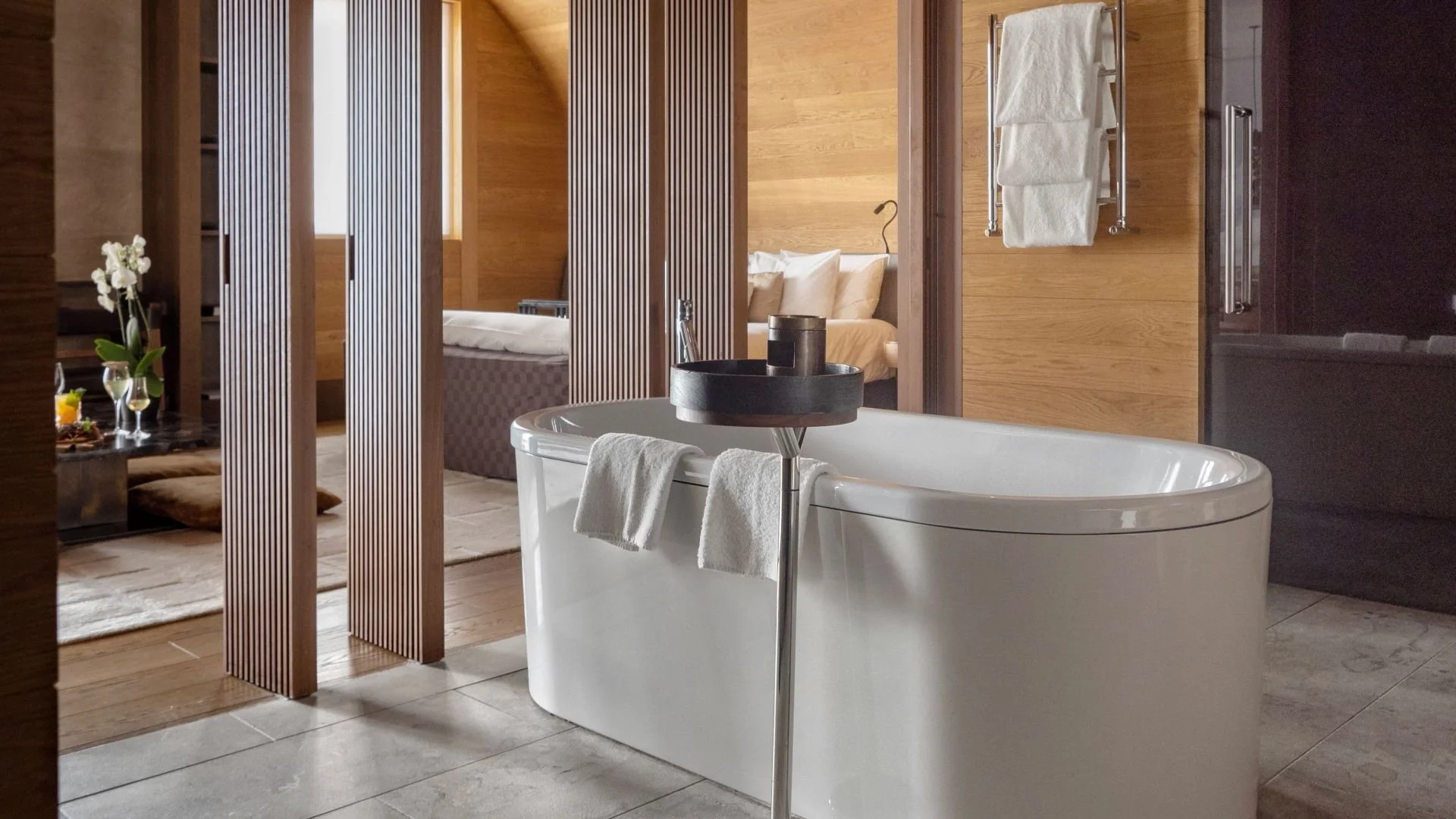
Alpine Deluxe Room: Approximately 590–745 sq. ft., with Alpine woods, natural stone, a built-in fireplace, a spacious balcony, a soaking tub and rain shower, and large windows looking toward Andermatt village or the surrounding mountains.
Furka View Deluxe Room: Approximately 630–745 sq. ft., with mountain views, a generous balcony, a two-sided fireplace, natural-stone detailing and a bathroom with soaking tub and rain shower, making the outlook and indoor-outdoor connection the principal distinctions from the Alpine Deluxe category.
Alpine Junior Suite: Approximately 743–961 sq. ft., with an open-plan sleeping and living arrangement, a large balcony, views across the Ursern Valley or surrounding mountains, Alpine woods and stone, and a bathroom with soaking tub and rain shower.
Alpine Deluxe Suite: Approximately 1,015–1,375 sq. ft., with a more defined living area, seating and writing space, a balcony, large windows overlooking the valley or mountains, and a substantial bathroom centred on a freestanding soaking tub.
Alpine 2-Bedroom Suite: Approximately 1,015–1,375 sq. ft., with two bedrooms, a shared living area, a balcony, natural stone and timber finishes, and views that may face the mountains, valley or village, providing useful separation for families or friends travelling together.
Grand Alpine 2-Bedroom Suite: Approximately 2,070–2,405 sq. ft., with two bedrooms, two bathrooms, a living and dining area, a fully equipped kitchenette, fireplaces and a generous balcony looking toward the Gemsstock and Nätschen peaks, creating a noticeably more residential arrangement for longer stays.
Gemsstock Suite: Approximately 1,235 sq. ft., with one bedroom, a generous living area, fireplace, large windows, a spacious balcony and panoramic mountain views, concentrating the suite’s appeal around a private one-bedroom layout rather than additional sleeping rooms.
Oberalp 3-Bedroom Signature Suite: Approximately 2,035 sq. ft., with three bedrooms, a substantial living and dining area, large windows and a spacious balcony with panoramic mountain views, allowing a larger party to share common space while retaining proper bedroom separation.
Furka 3-Bedroom Signature Suite: Approximately 3,425 sq. ft., with three bedrooms, expansive living and dining areas, a fireplace, floor-to-ceiling windows, a generous mountain-facing balcony and a private spa containing a sauna, steam bath and Jacuzzi.
The largest suite is not automatically necessary for a memorable stay. Couples already gain a fireplace and balcony in the room categories, while the Junior and Deluxe Suites make more sense when extra living space is the priority. The real shift comes with the two- and three-bedroom suites, where kitchens, dining areas and multiple bathrooms make the accommodation useful as a shared residence rather than simply a larger hotel room.
Japanese Precision at Two Altitudes
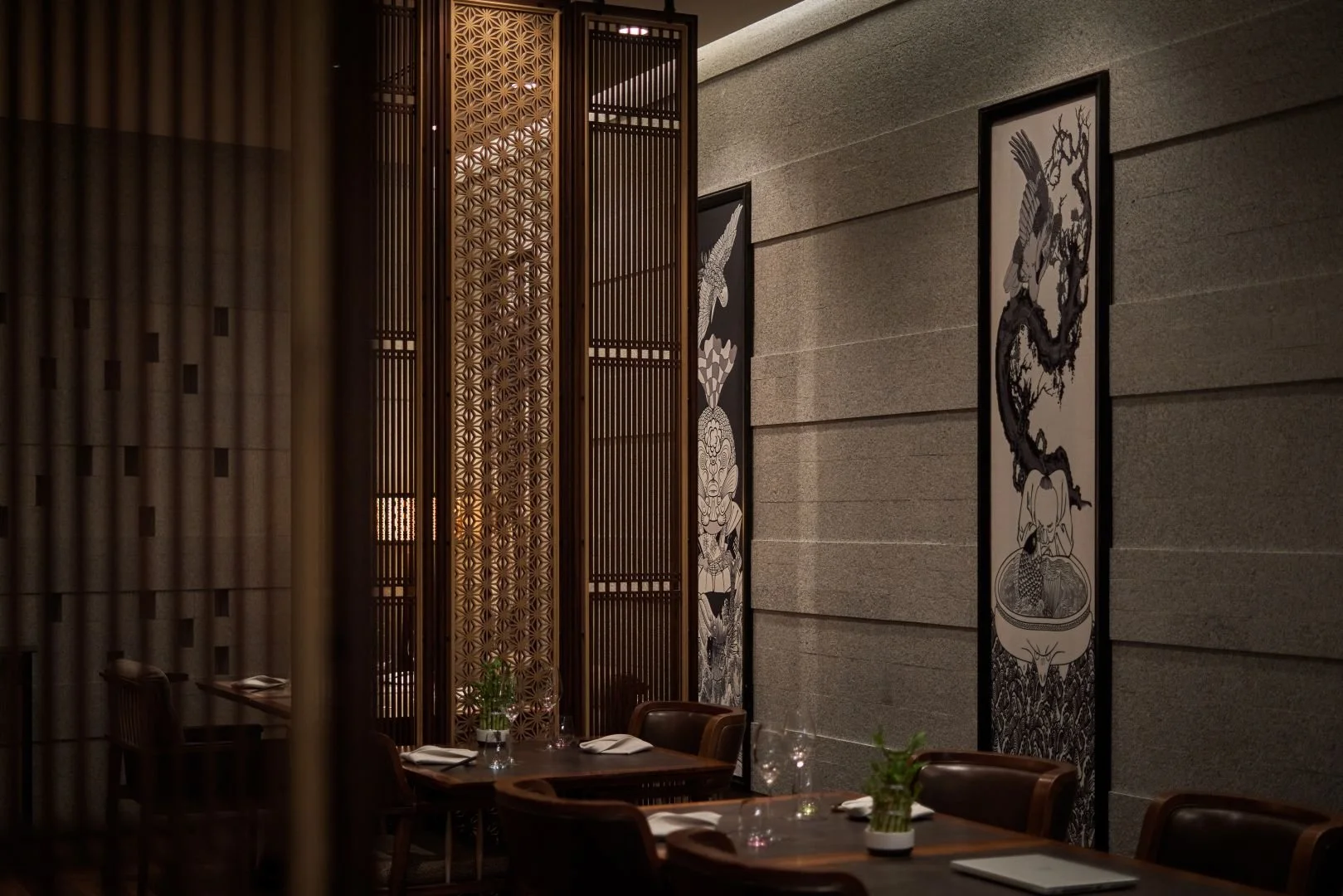
The dining programme moves between European cooking, Japanese fine dining and relaxed spaces for drinks or lighter meals. Two Michelin-recognised Japanese restaurants give the collection an identity that is unusual for a Swiss mountain hotel, while the seasonal outdoor venues change the experience between winter and summer.
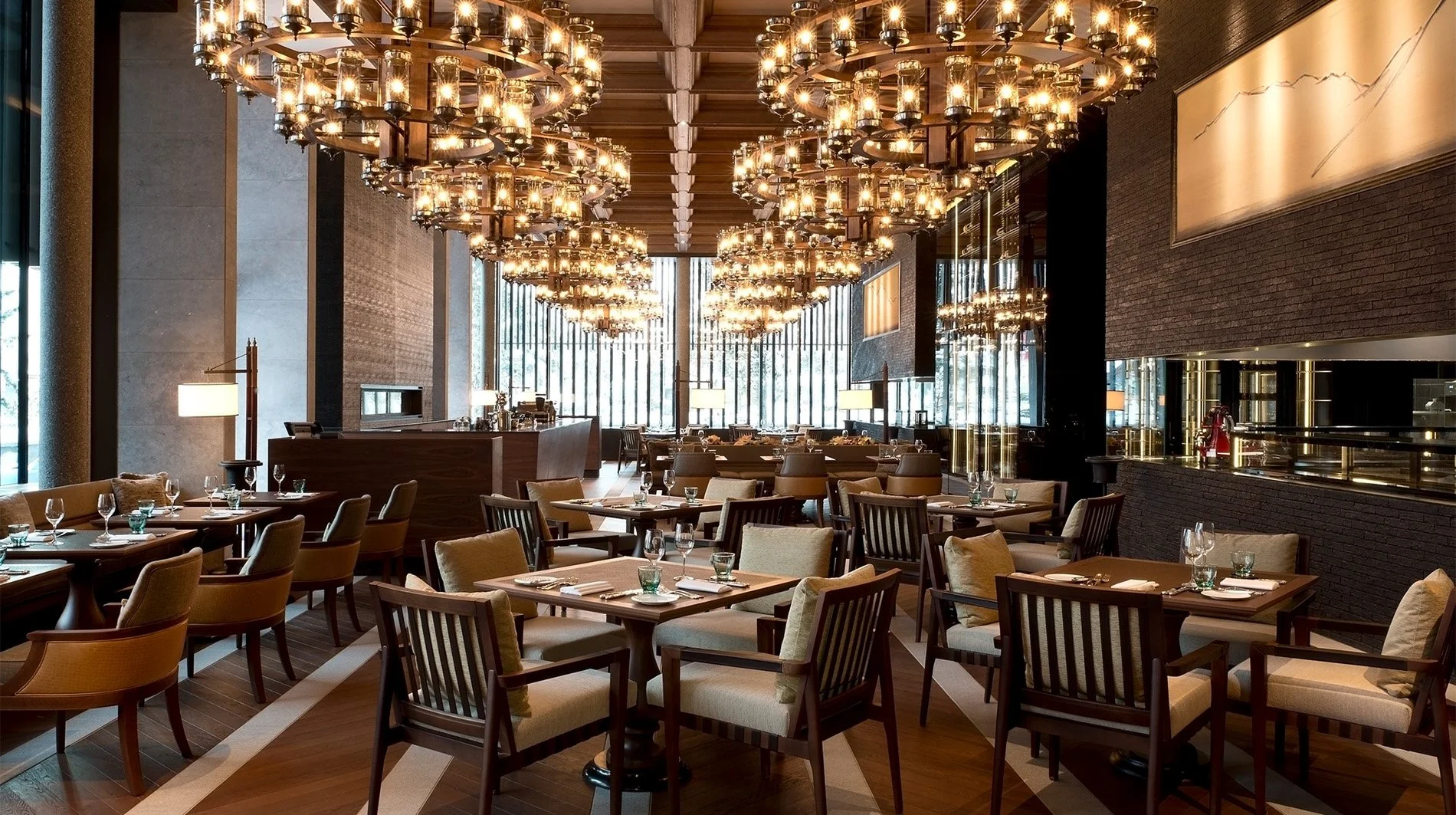
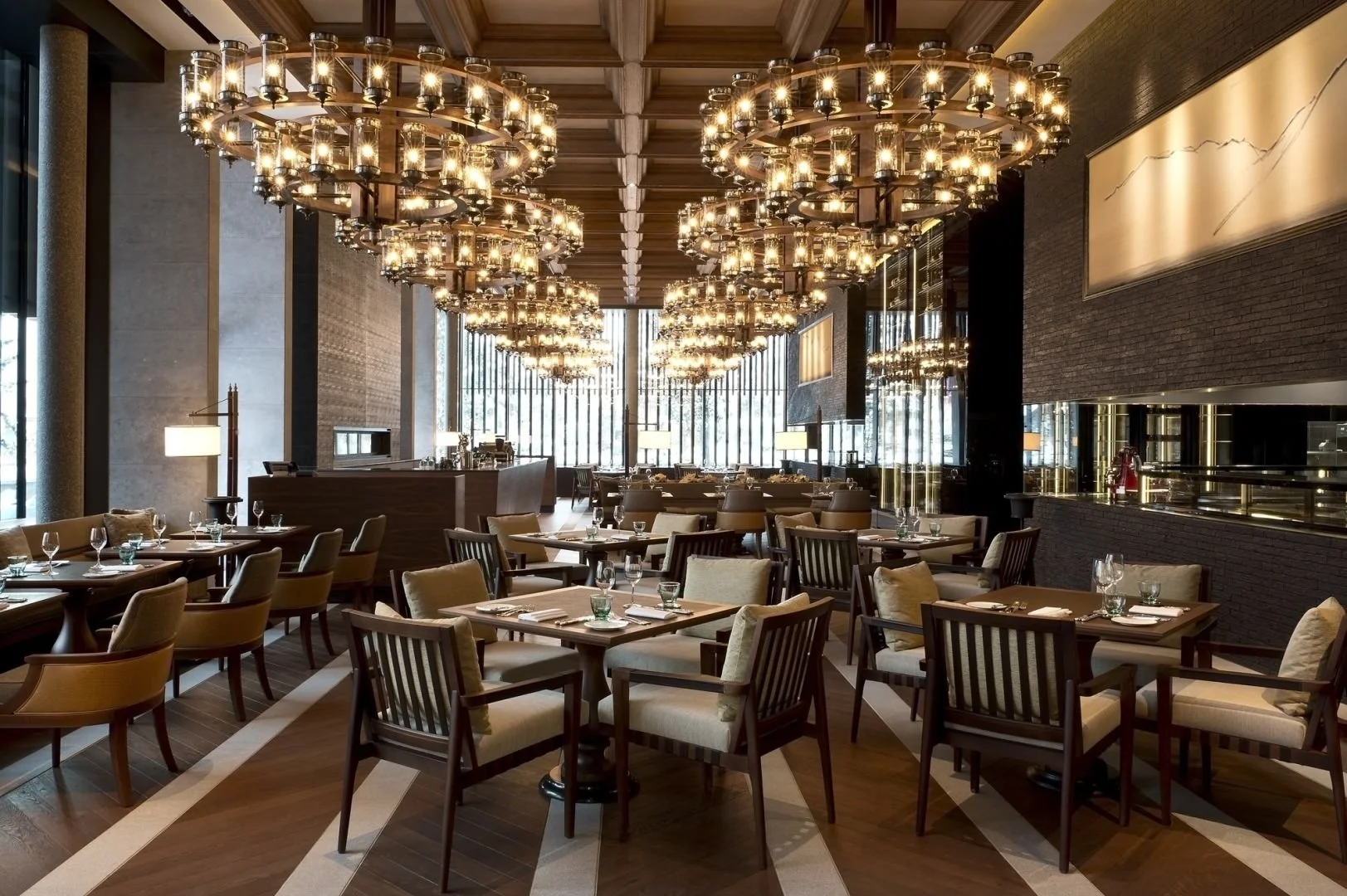
The Restaurant: Director of Culinary André Kaiser leads a menu built around seasonal ingredients sourced predominantly from the surrounding region, with four show kitchens and a dining room defined by dramatic chandeliers; the restaurant currently holds 14 GaultMillau points.
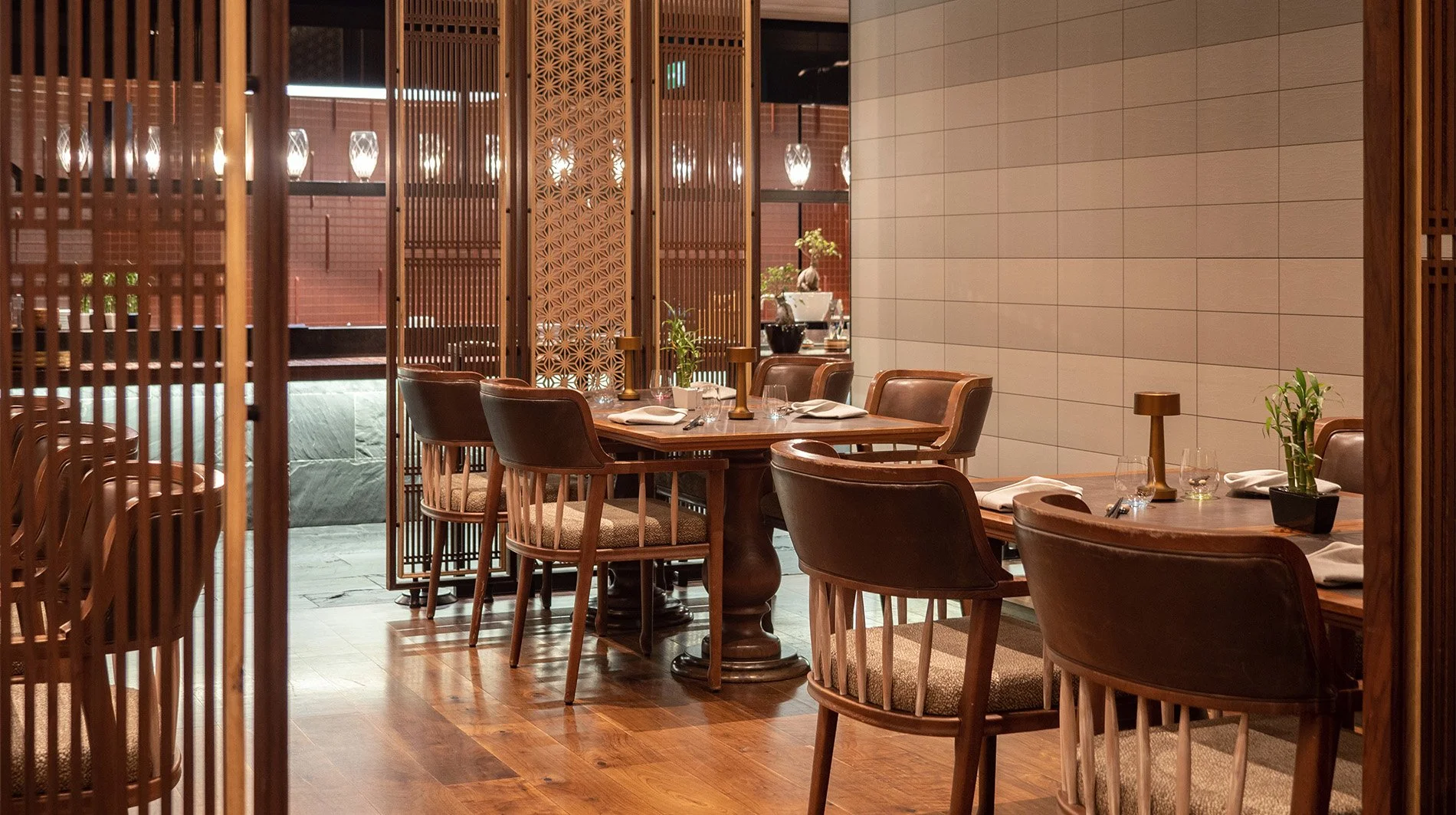
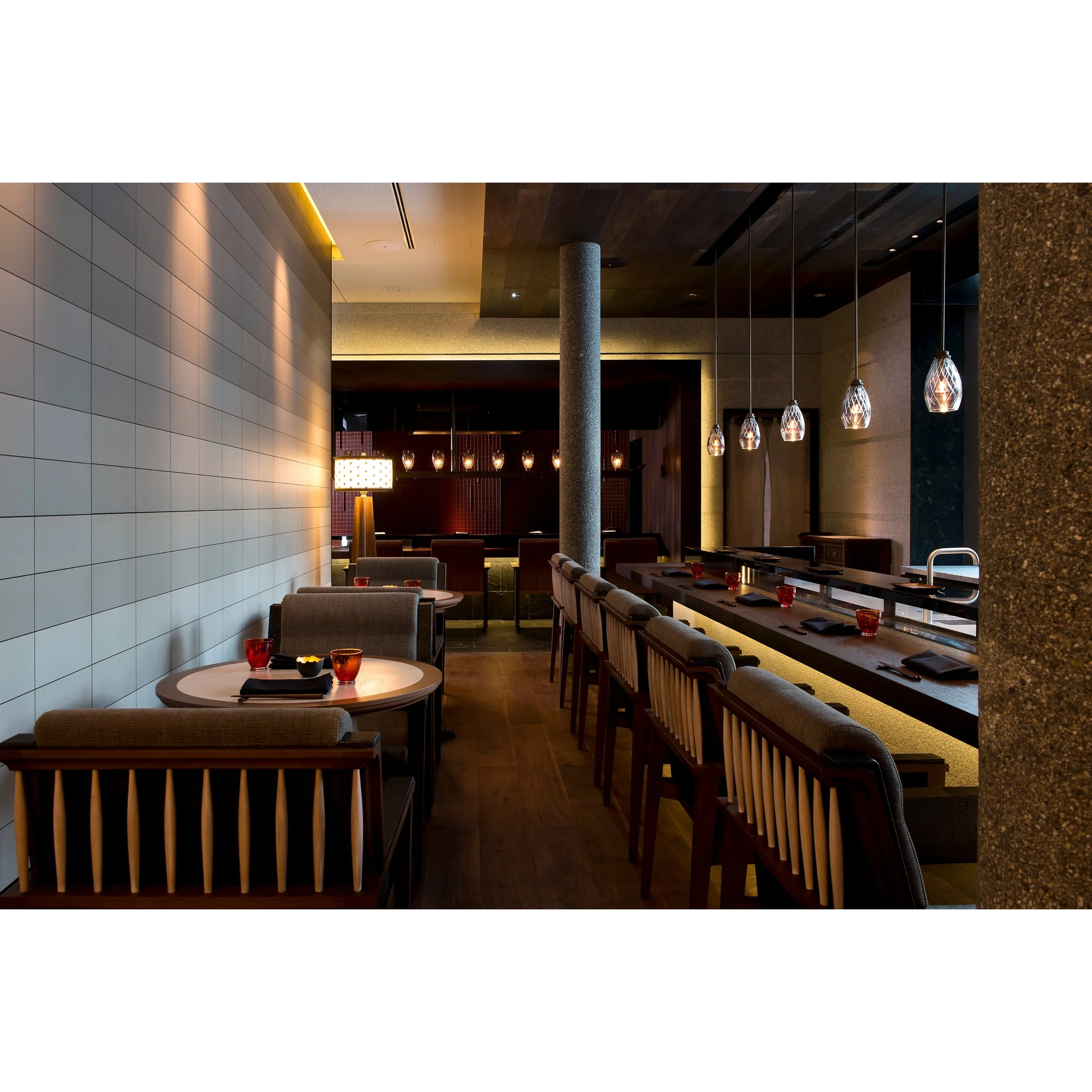
The Japanese: Executive Chefs Dominik Sato and Fabio Toffolon lead a contemporary Japanese fine-dining experience focused on modern omakase, precise preparation, saké and wine, with two Michelin Stars and 18 GaultMillau points; children are welcomed from age six.
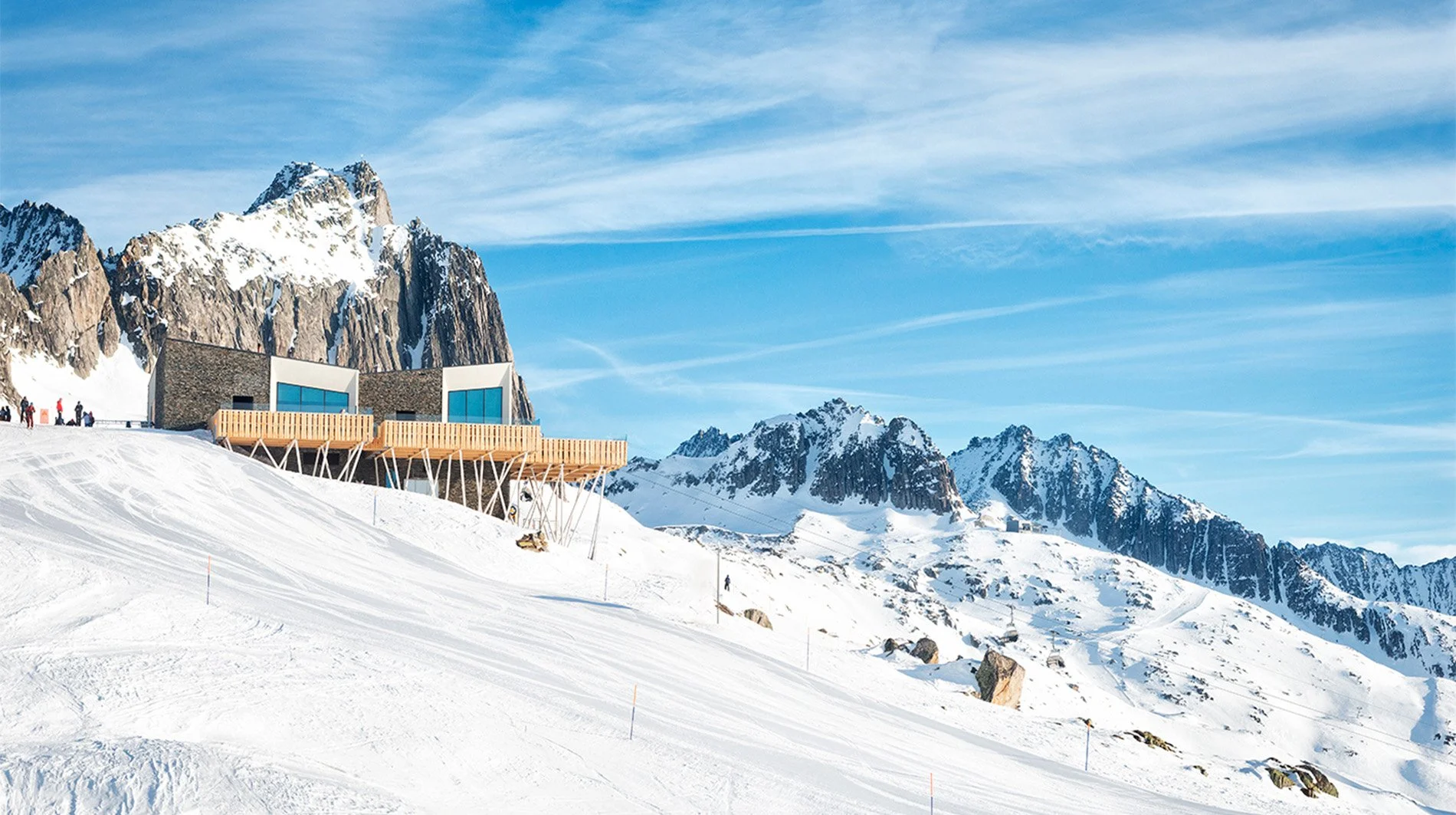
The Japanese at Gütsch – Off Property: At approximately 2,400 metres above sea level, this mountain restaurant serves Japanese cuisine by Sato and Toffolon with views over the Gotthard and Oberalp passes and Ursern Valley; it currently holds one Michelin Star and 17 GaultMillau points, with access dependent on seasonal mountain operations.
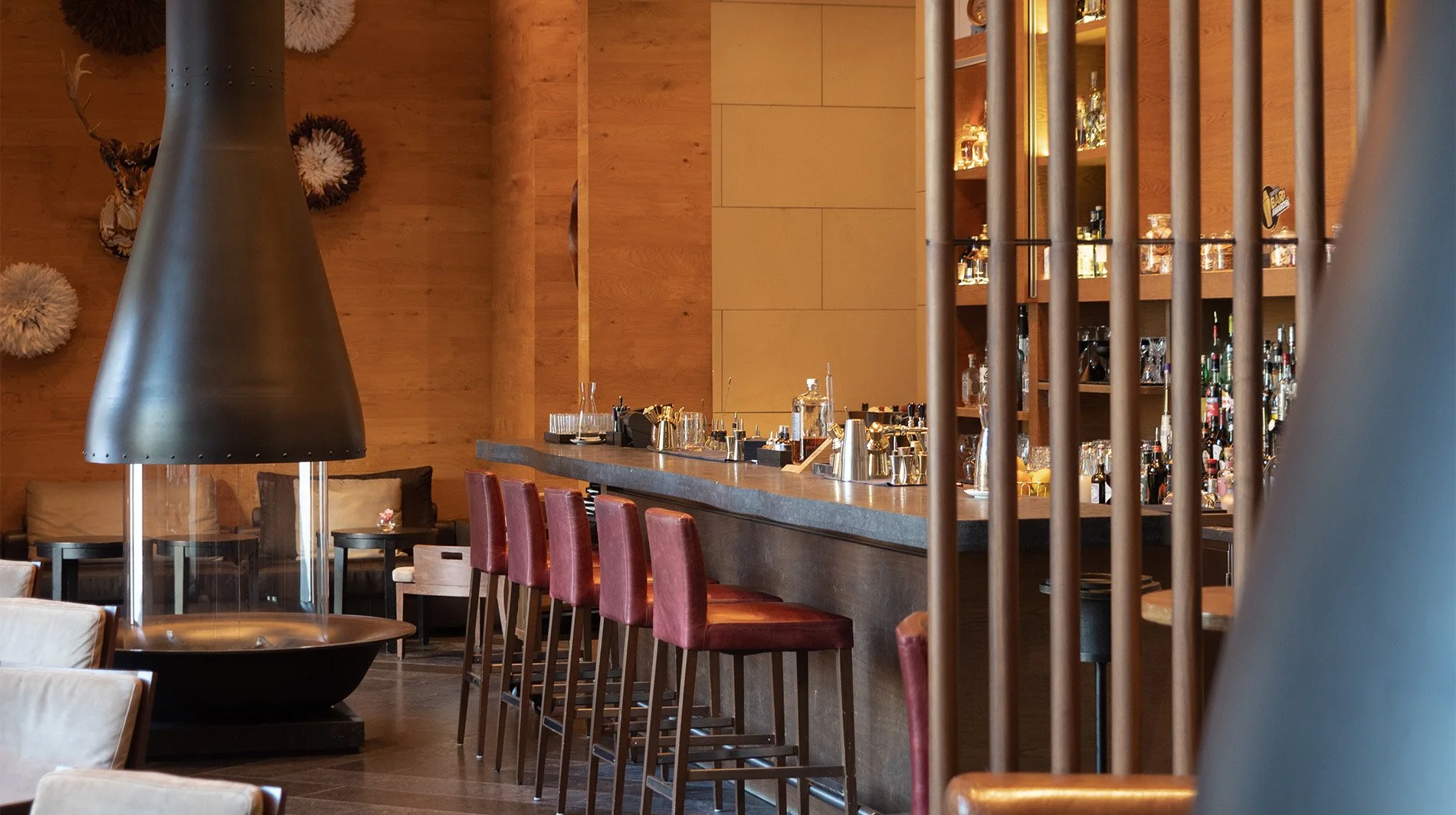
The Bar & Living Room: Fireplaces, leather seating and a well-stocked bar create an informal evening setting for inventive cocktails and light bites, with selected sushi service adding another way to experience the hotel’s Japanese culinary programme without committing to a full tasting menu.
The Lobby: A relaxed daytime and early-evening space for afternoon tea, pastries, drinks and small dishes, with fireplaces and generous seating making it particularly useful between mountain activities, spa appointments or an early arrival.
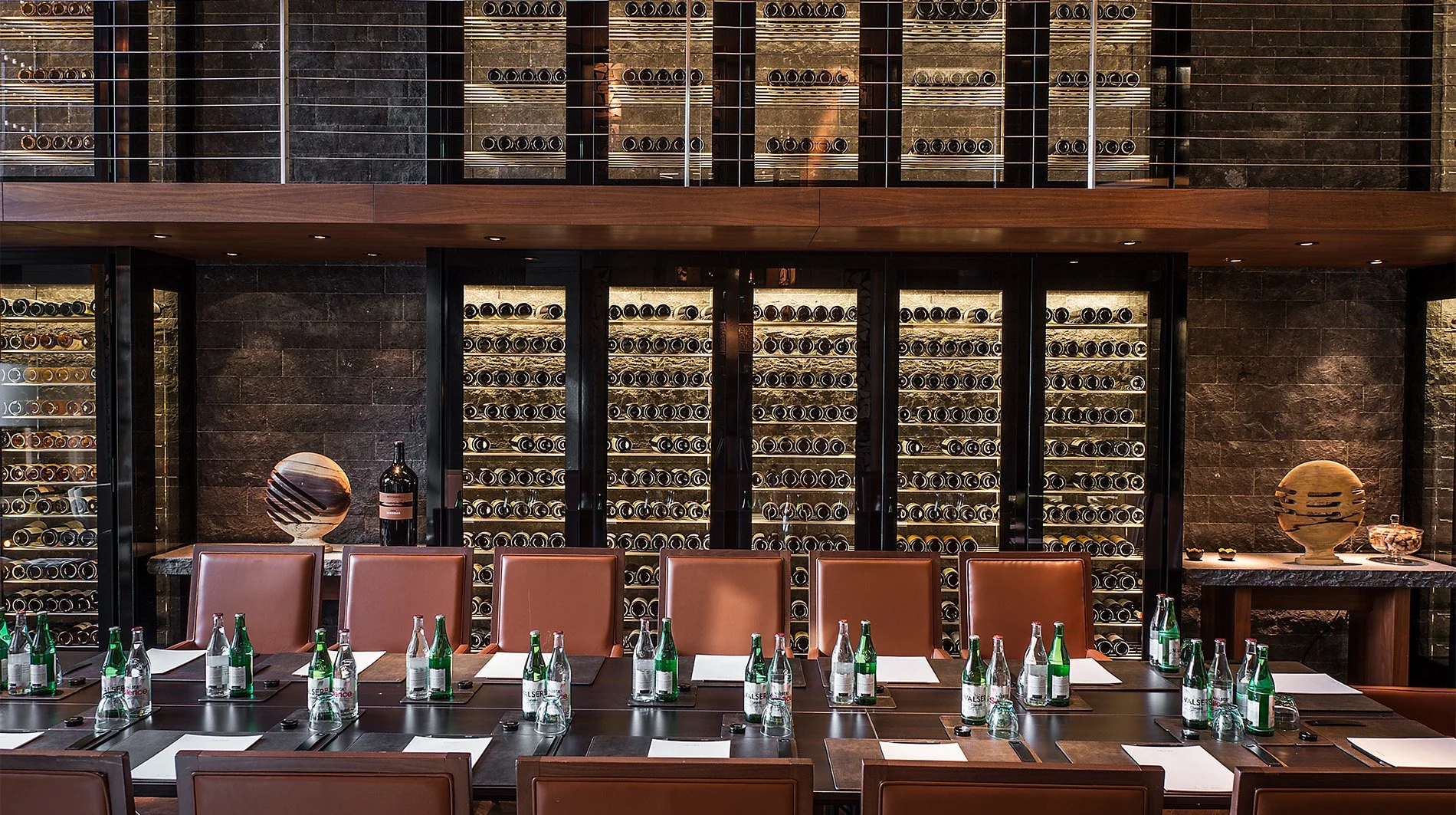
The Wine Library: An intimate room built around the hotel’s wine collection, suited to tastings and quieter evenings where the cellar itself is the focus rather than the pace of a conventional restaurant meal.
The Cigar Library: A dedicated smoking lounge with more than 1,000 cigars from approximately 15 countries, paired with spirits and drinks in a secluded setting that is deliberately separated from the hotel’s principal non-smoking public areas.
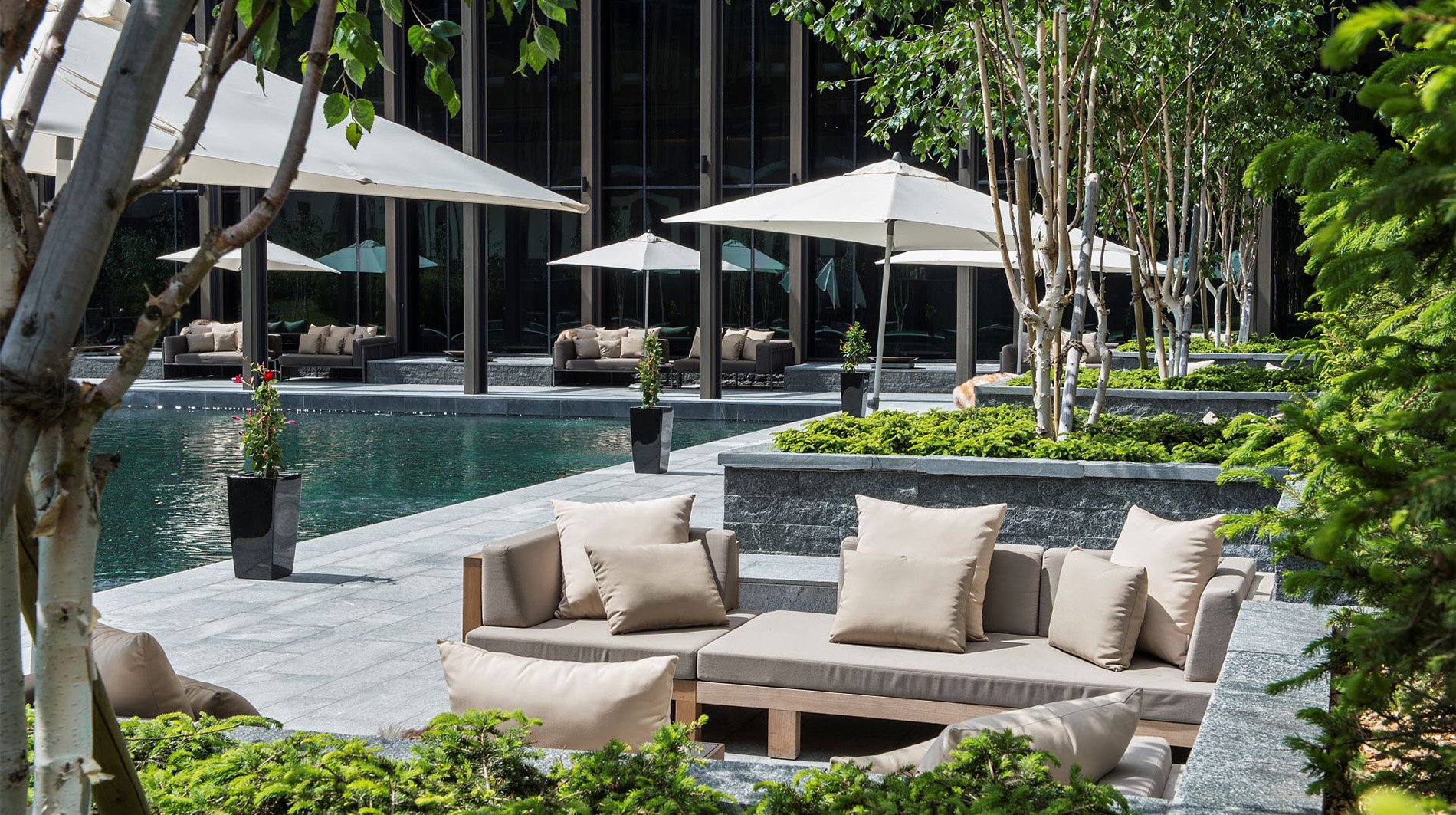
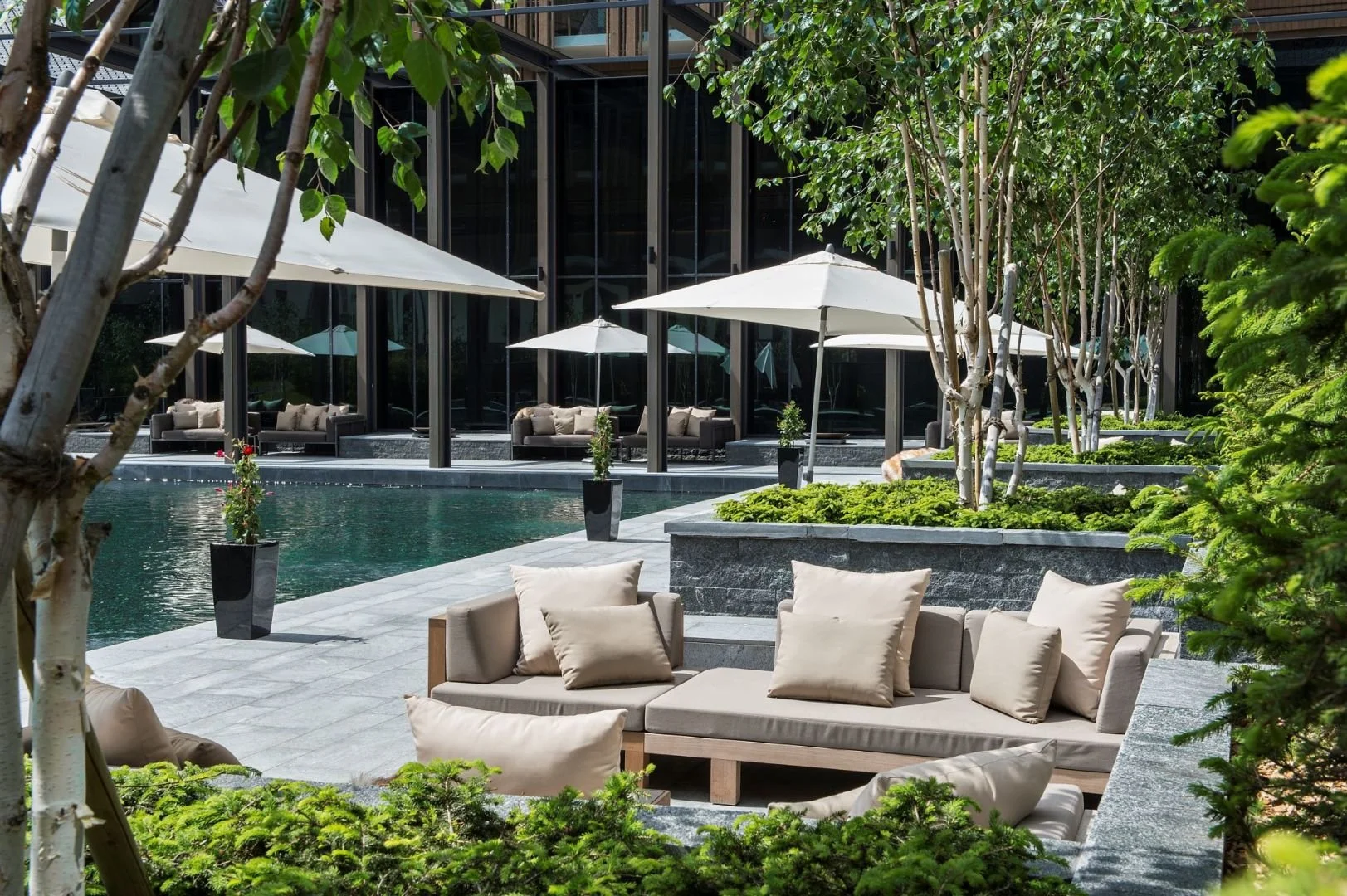
The Courtyard: A summer outdoor space beside the hotel’s landscaped water features for cocktails and light bites, with operation dependent on weather and the warmer-season programme.
The Winter Village and The Chalet: Seasonal cold-weather settings built around fondue, fireside drinks and familiar Alpine flavours, operating as part of the winter programme rather than as permanent year-round dining venues.
In-Room Dining: Available 24 hours, allowing meals to follow late arrivals, early departures, children’s schedules or evenings when the privacy of a room or suite is more appealing than another restaurant reservation.
The two Japanese restaurants are best understood as separate experiences. The Japanese is an evening destination within the hotel; Gütsch turns the meal into part of a day on the mountain. Their shared culinary leadership connects them, but altitude, access and atmosphere make them meaningfully different.
A Spa Designed for an Entire Afternoon
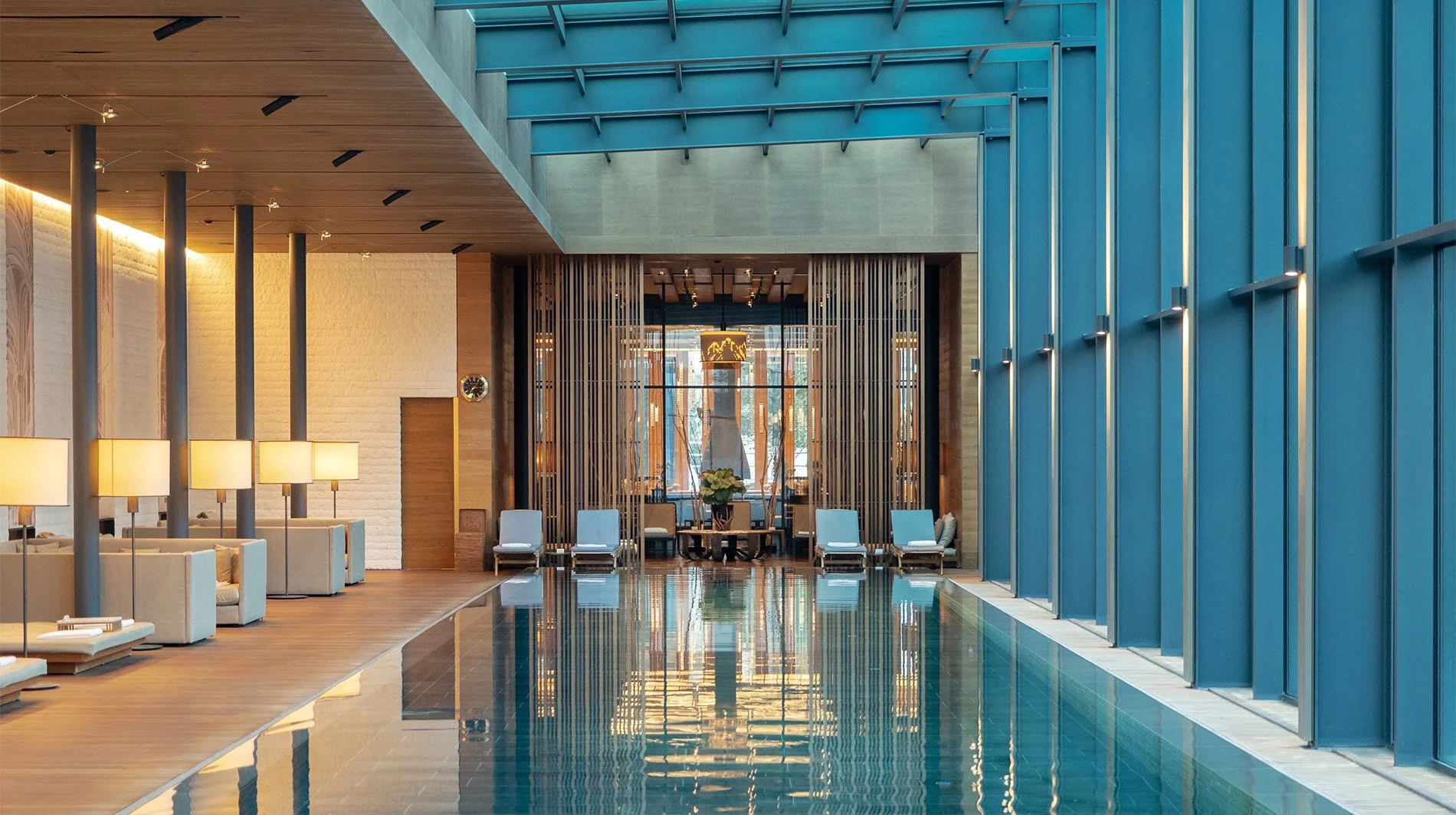
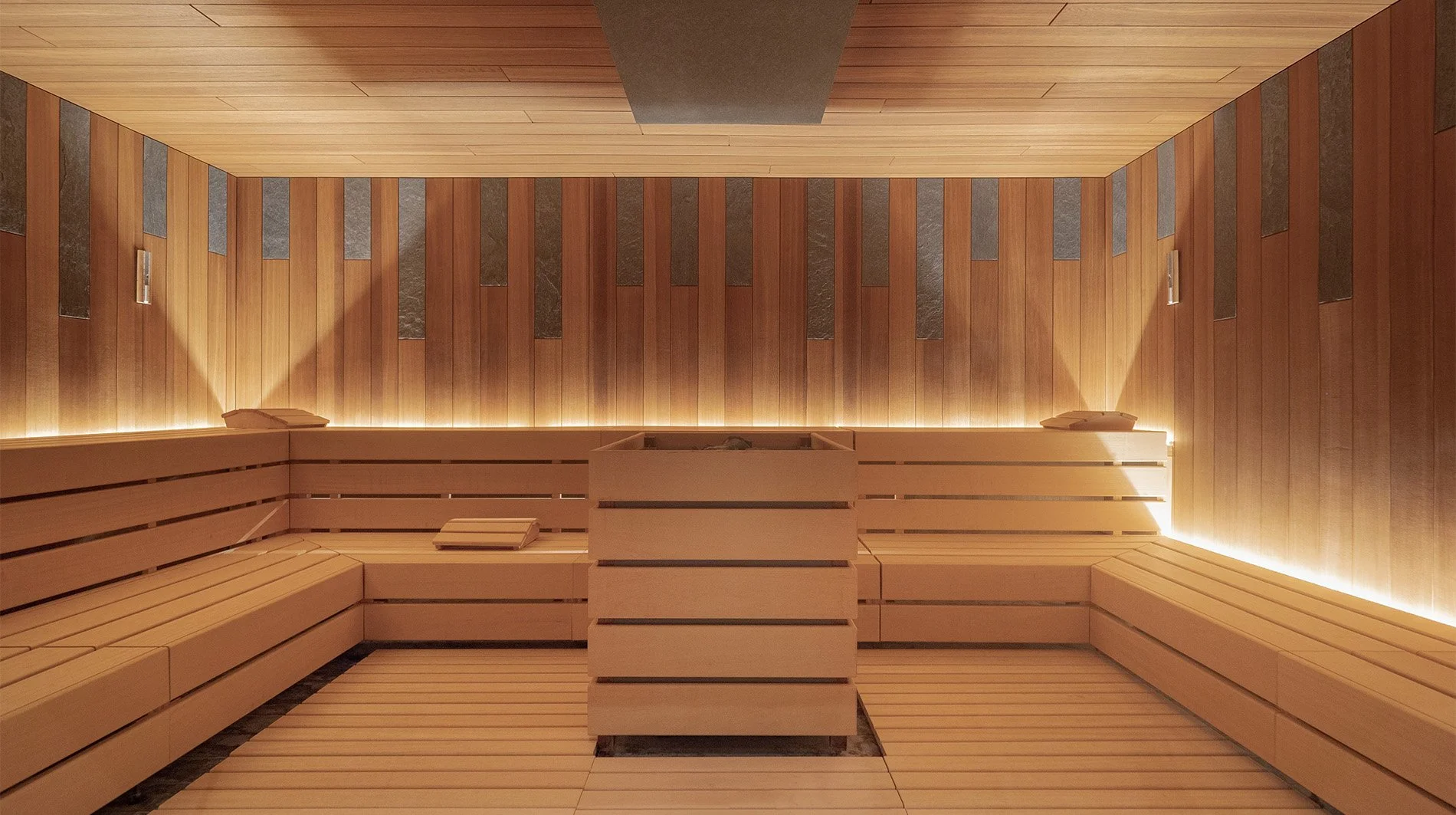
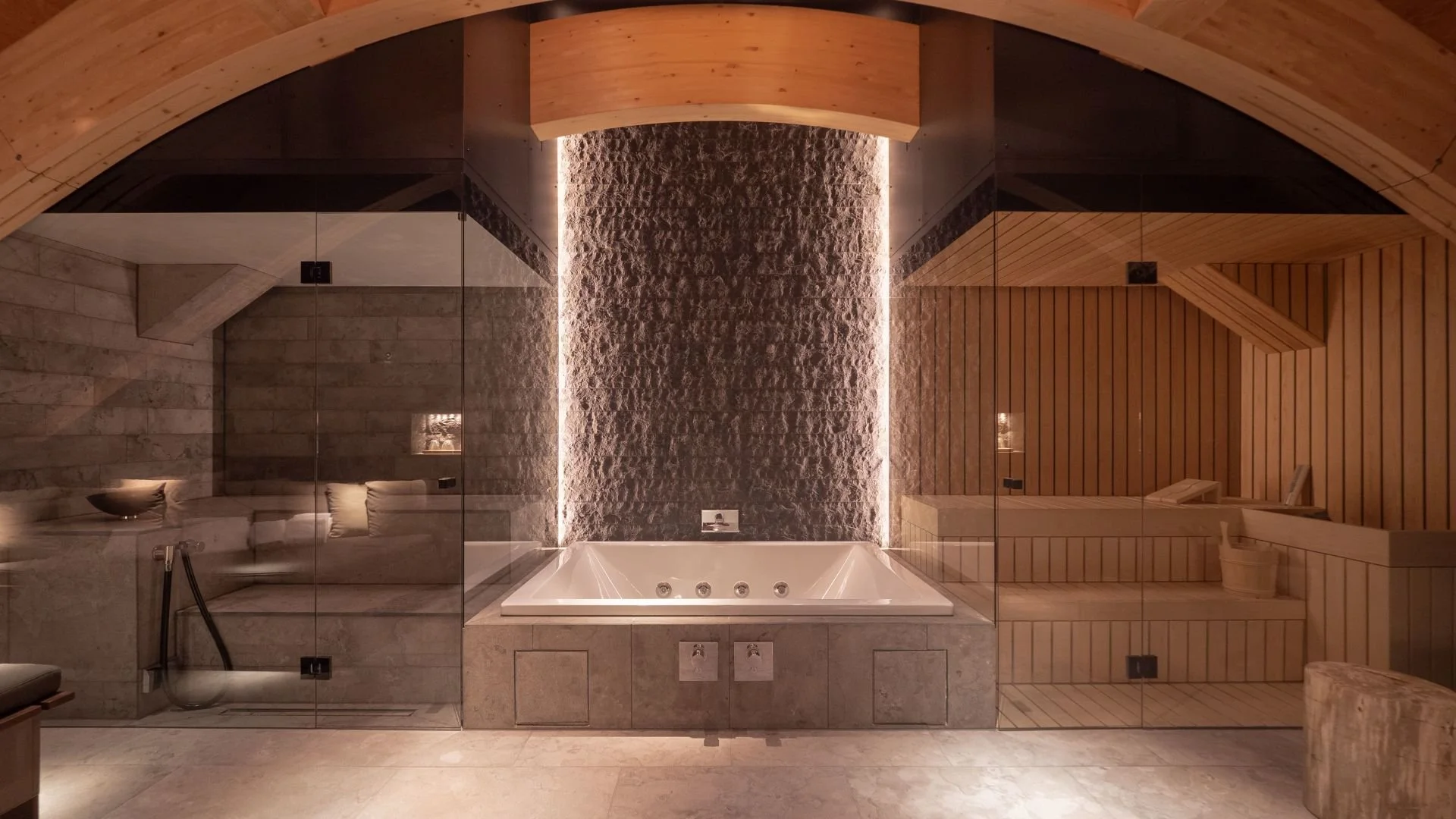
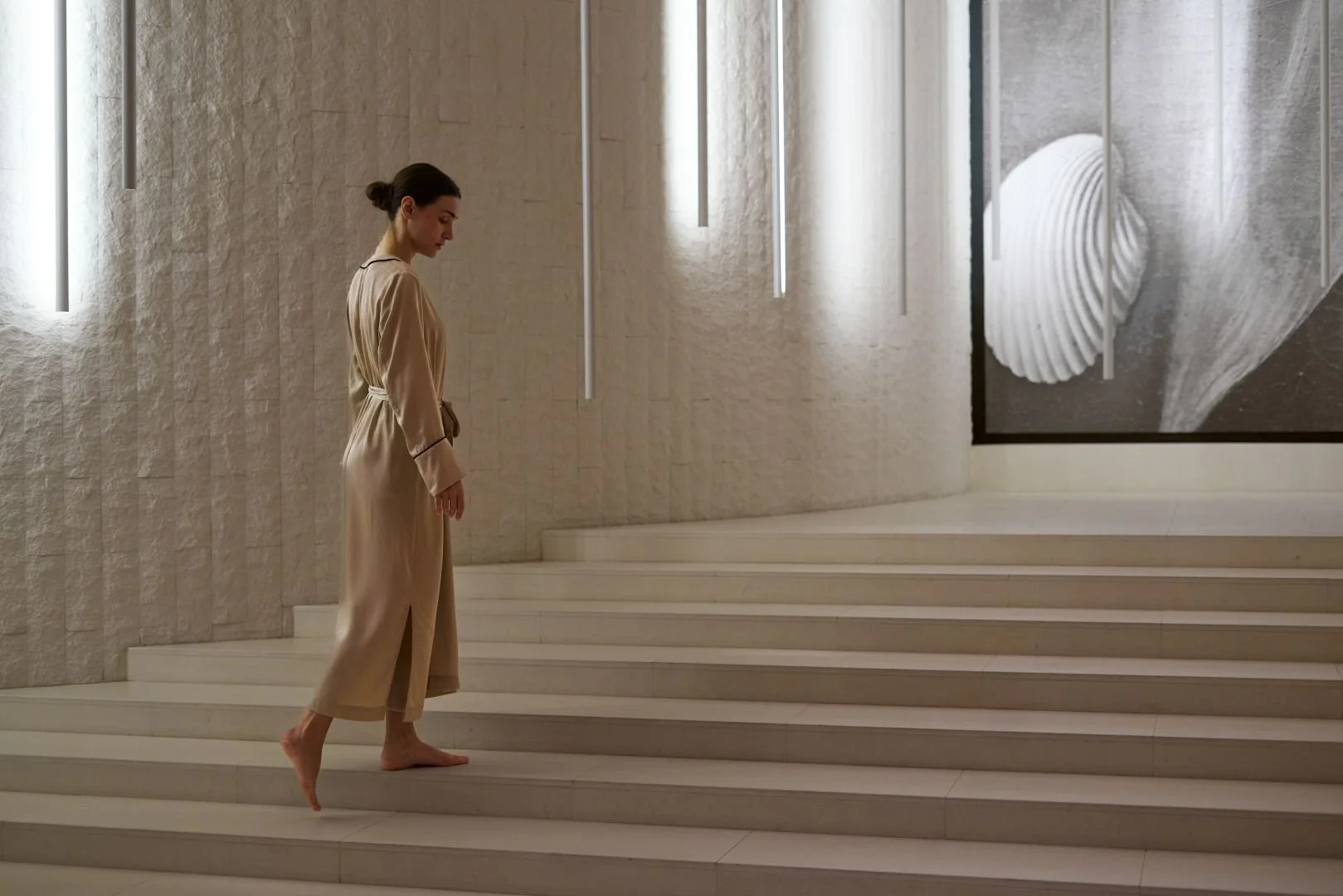
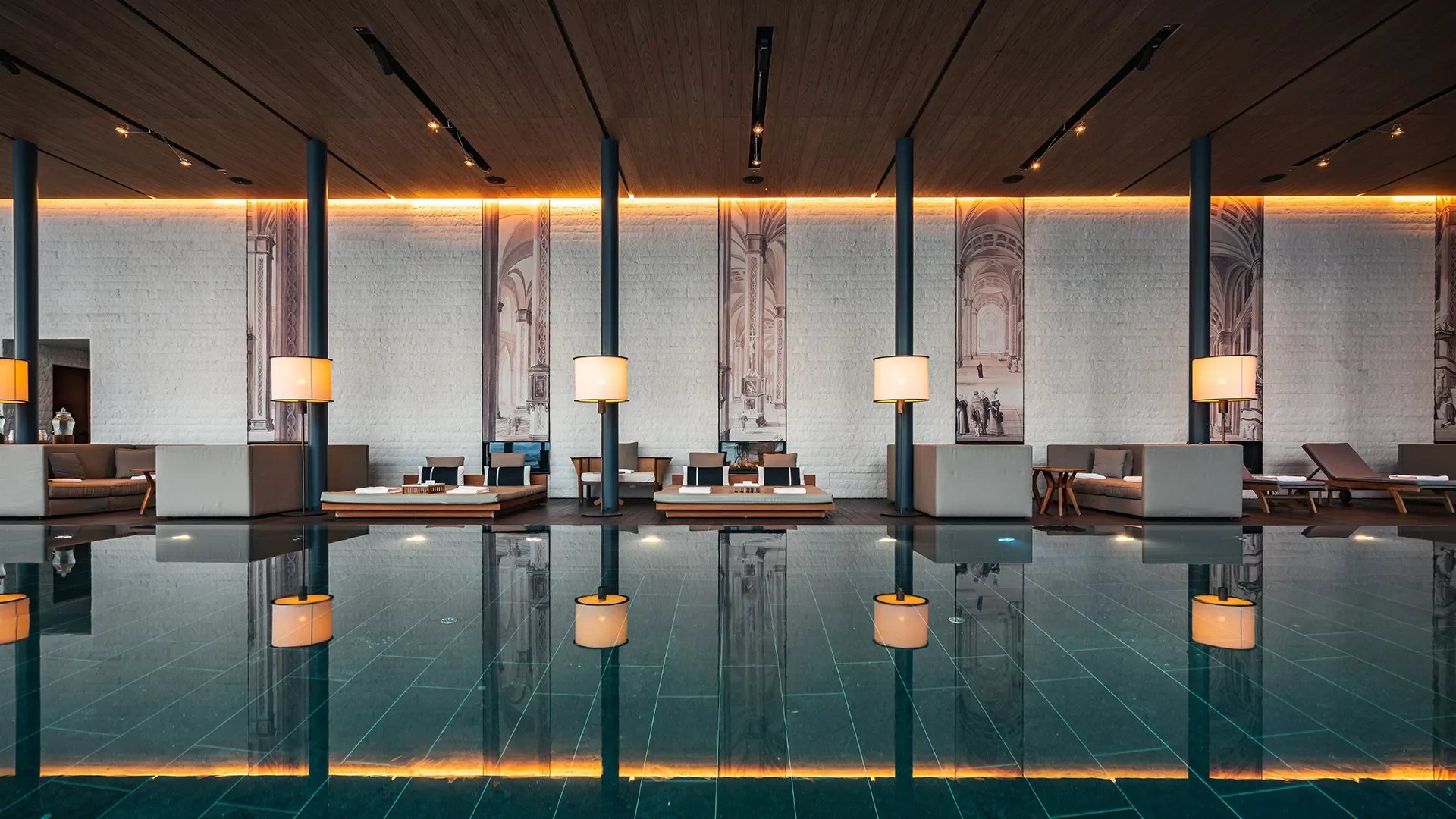
The Spa & Health Club extends across approximately 25,800 sq. ft., enough space for wellness to become a full part of the stay rather than an appointment between other activities. Twelve spa suites provide treatment space, while the hydrotherapy area includes a Finnish sauna, bio sauna, steam room and brine steam room.
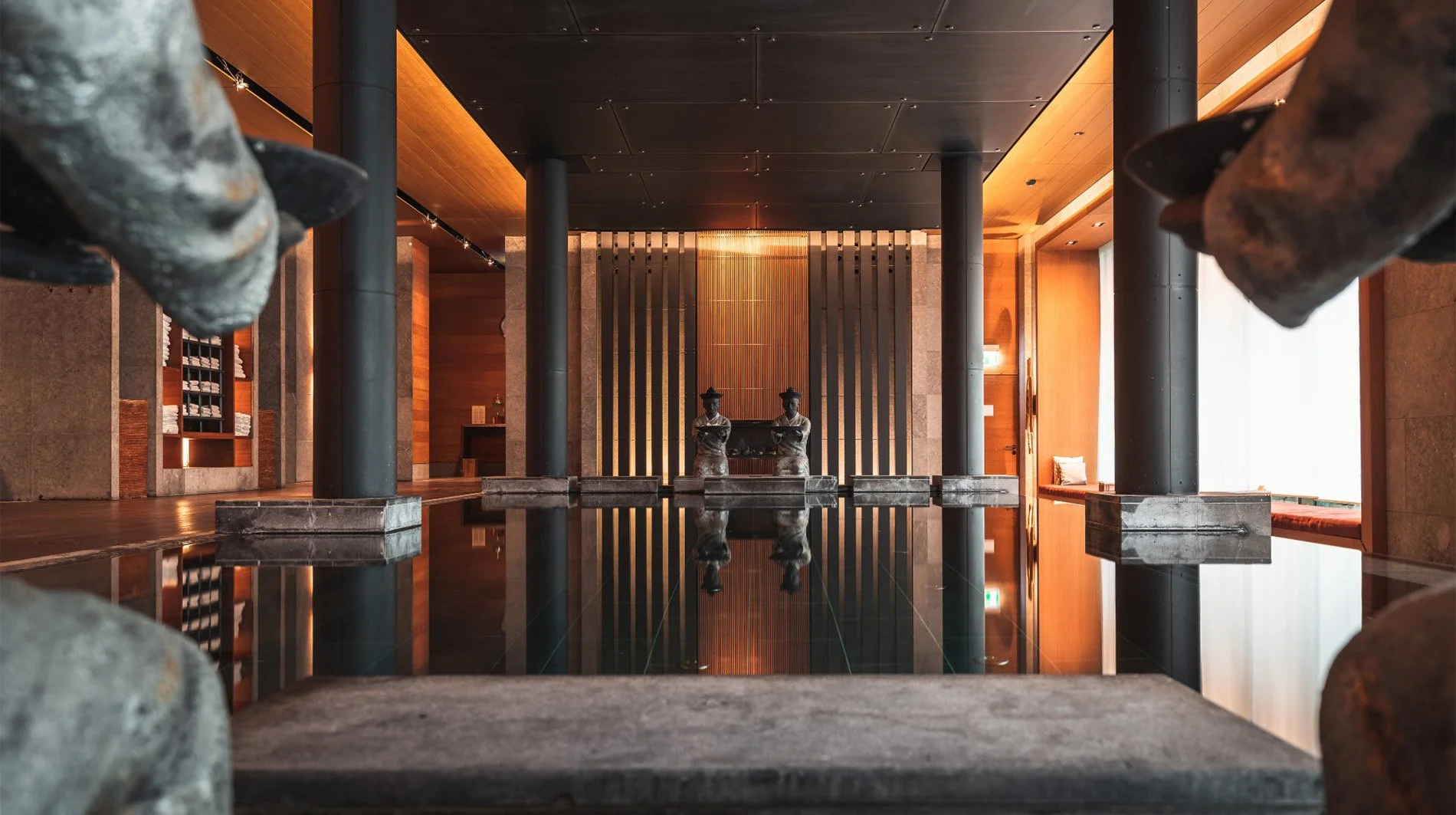
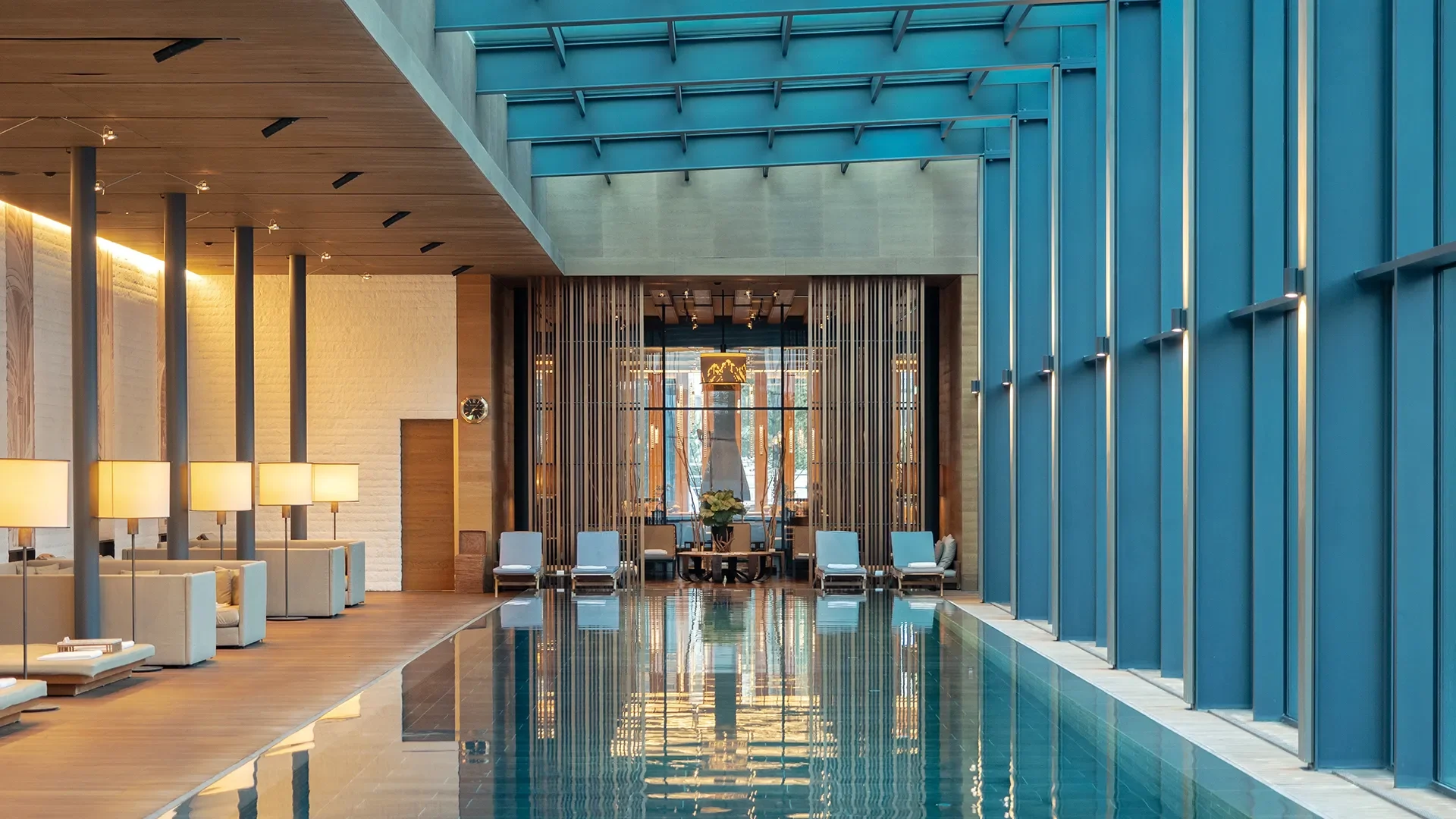
Three heated water features within the hydrotherapy programme include a Jacuzzi and cold plunge, while the principal indoor pool is framed by high glazing. A heated outdoor pool extends the experience into the mountain air and creates one of the hotel’s strongest visual connections between wellness and the surrounding landscape.
Treatments draw on both European and Asian approaches, with current product partnerships including Biologique Recherche and MEI Spa. The Health Club uses Matrix equipment, and personal training and private yoga can be arranged.
Family timing matters here. Children are welcome in the pool and spa areas until 7:00 PM; from 7:00 PM to 9:00 PM, the spa is reserved for guests aged 16 and over. The Health Club itself is also reserved for guests aged 16 and above. These rules make it worth planning pool time in advance when adults want a quieter spa period later in the evening.
Day-spa access is offered to non-resident visitors and can be limited on busy weekends. That does not diminish the scale of the facilities, but it is useful context for guests who assume the entire wellness area is reserved exclusively for hotel residents.
Winter Powder, Summer Passes
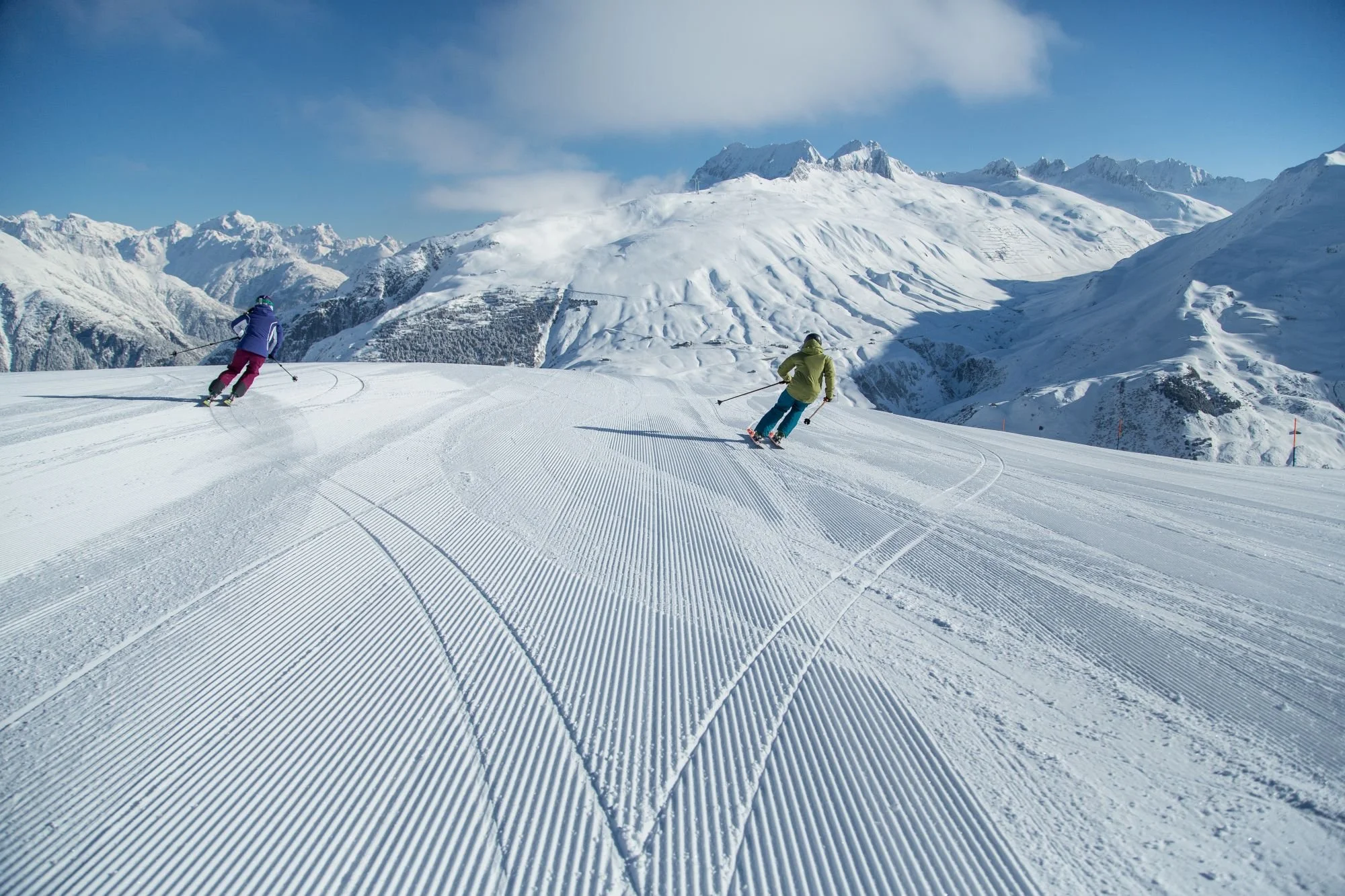
Winter gives Andermatt its most familiar identity. The wider Andermatt-Sedrun-Disentis area offers approximately 180 kilometres of pistes, with Gemsstock particularly associated with higher-altitude skiing and freeride terrain while Nätschen connects into a broader network toward Sedrun.
The hotel’s Ski Butlers help with equipment storage, maintenance, preparation and transport to the local ski areas. The distinction matters: The Chedi is extremely convenient for skiing, but it should not be described as a true ski-in, ski-out hotel where guests step directly from the property onto a piste.
Cross-country skiing, snowshoeing, sledding, ice skating, curling, carriage rides, llama trekking and helicopter experiences broaden the winter programme. Many are supplied by local or specialist operators rather than by the hotel itself, so prices, minimum ages, weather conditions and availability need to be confirmed for the intended dates.
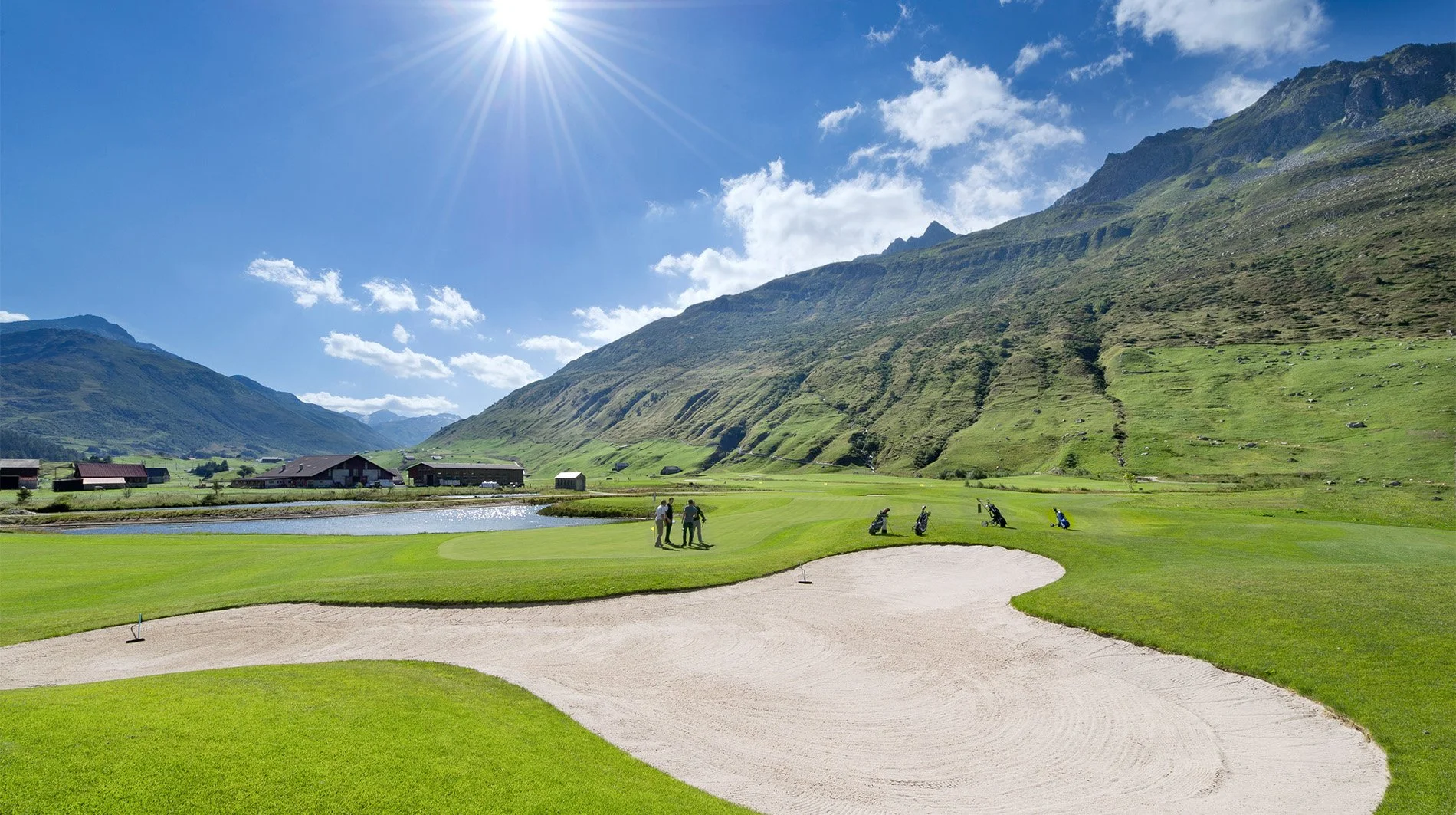
Summer changes the valley completely. The 18-hole, par-72 Andermatt Swiss Alps Golf Course spreads across the valley floor, while hiking and mountain biking open routes toward Gütsch, the Oberalp area and surrounding lakes.
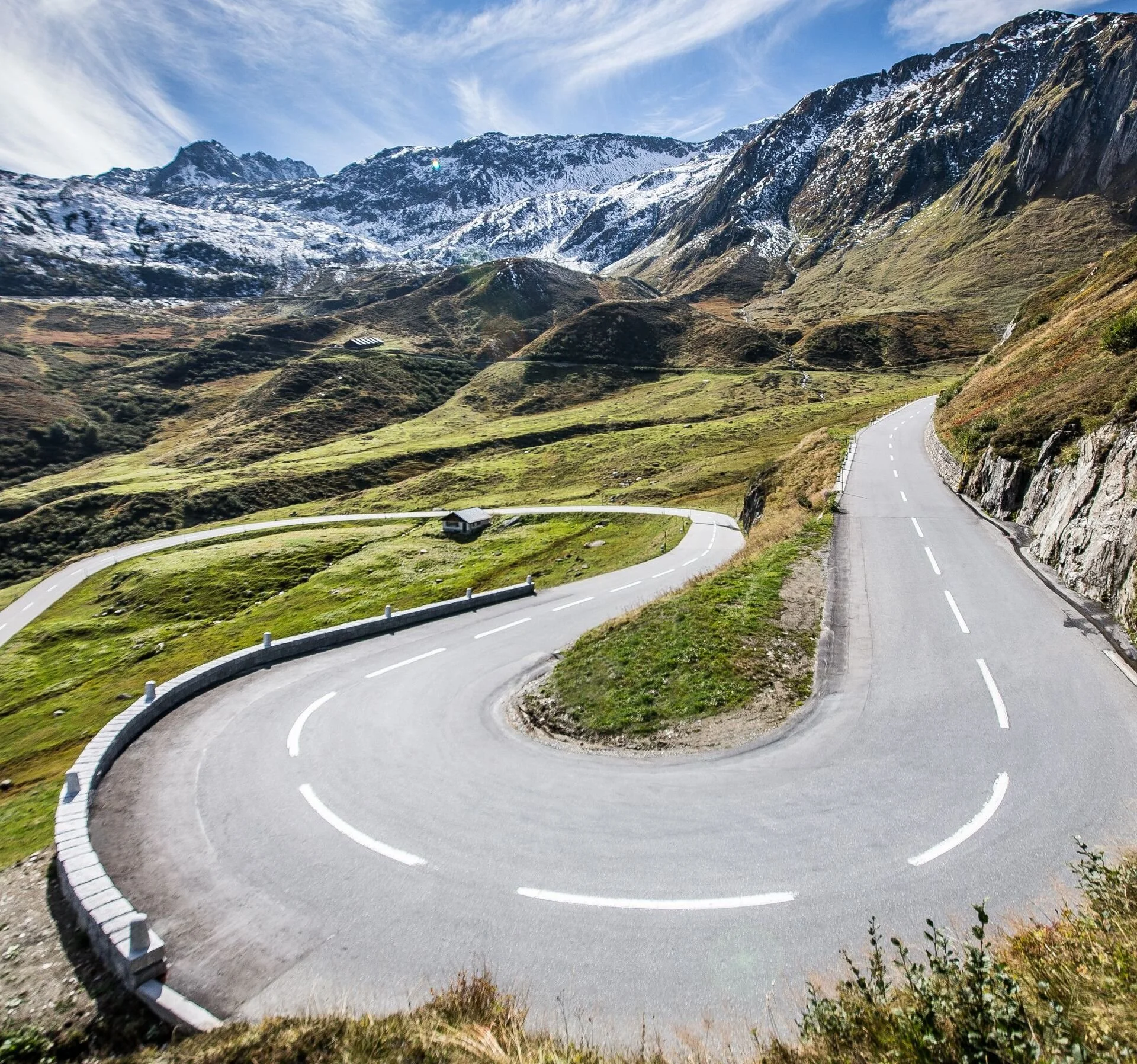
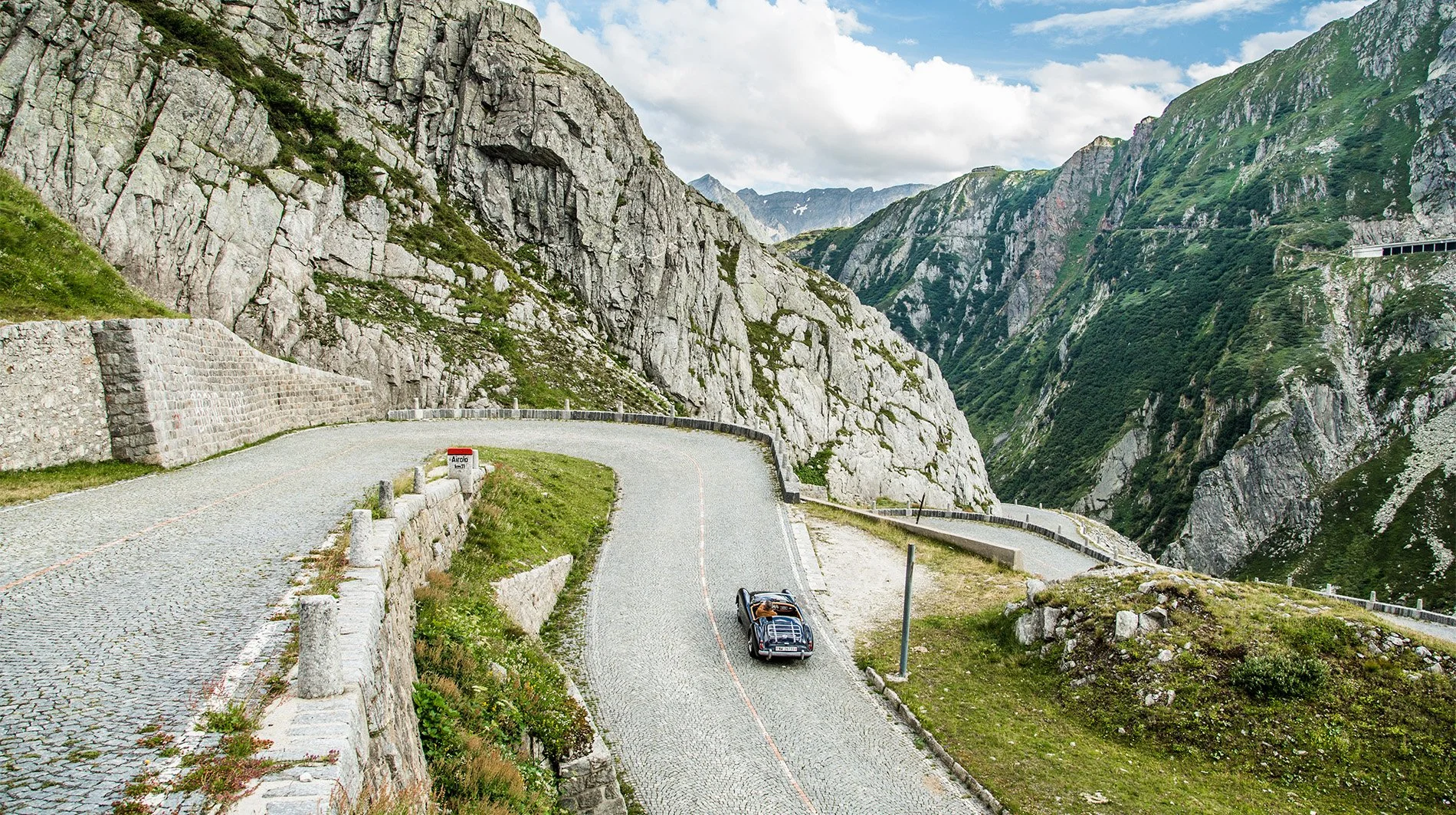
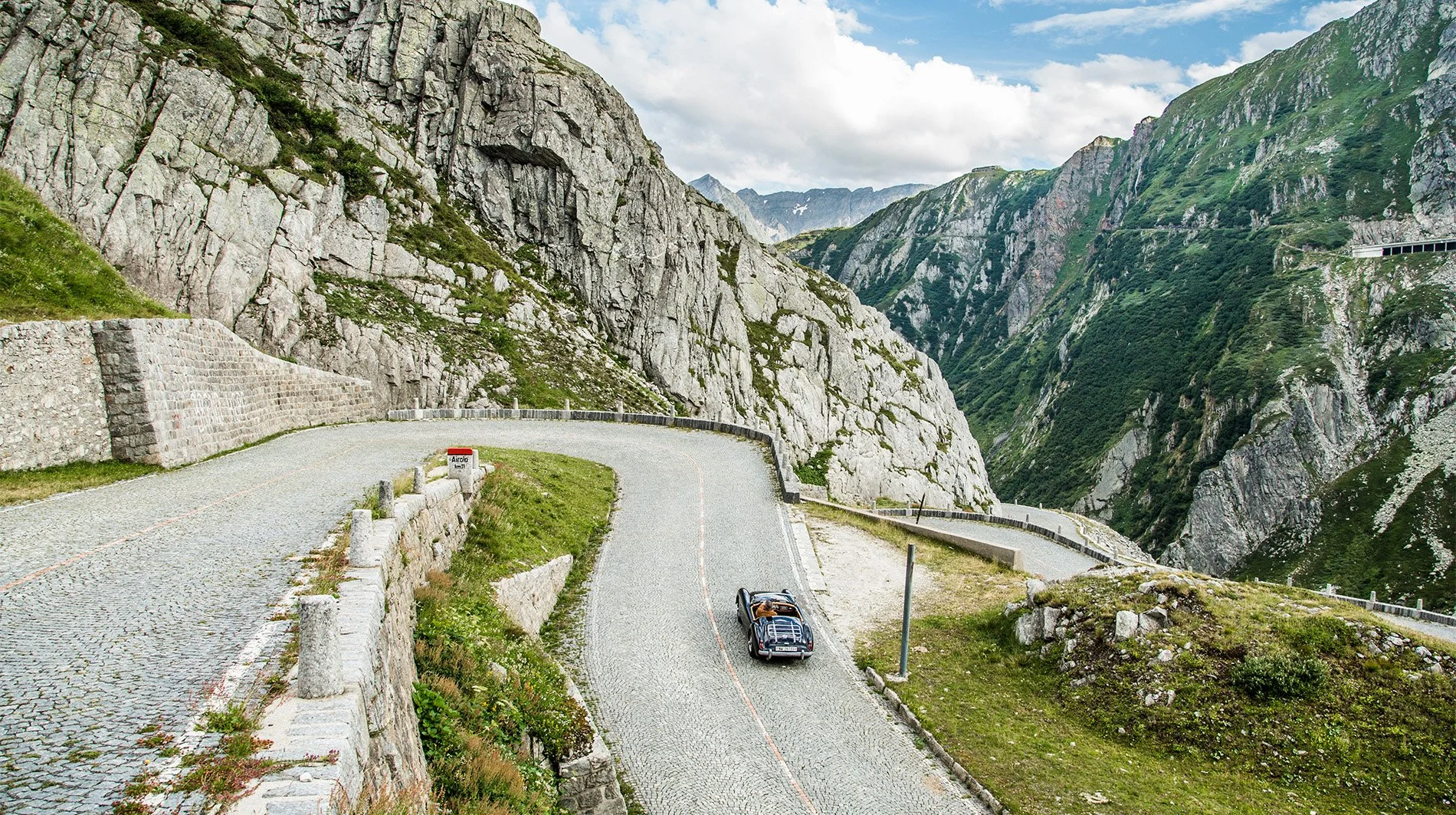
Road cycling has particular relevance because Andermatt sits among some of Switzerland’s classic Alpine passes. The Gotthard, Furka and Oberalp routes turn the village into a strong base for riders and drivers, although seasonal snow can keep higher passes closed well into the warmer months.
For us, the most successful itinerary leaves enough flexibility to respond to conditions. A clear day may justify a full mountain outing; poor weather can make the spa, village or a long lunch at the hotel a better use of time.
Family Time Without a Fixed Formula
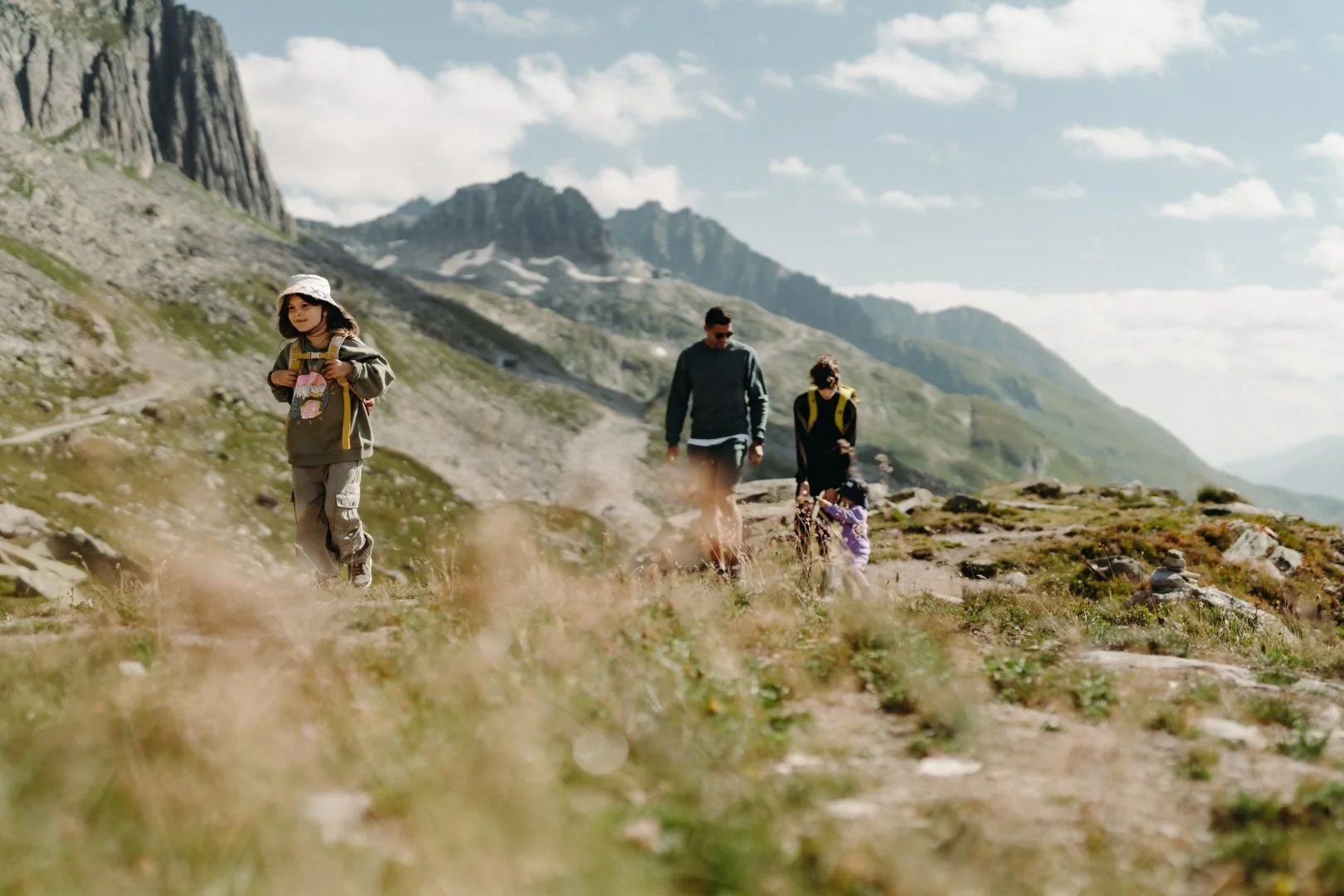
The Chedi Andermatt works well for families without allowing children’s programming to define the atmosphere of the hotel. Cots, high chairs and family-oriented arrangements are available, while the two- and three-bedroom suites solve many of the practical problems of travelling with several generations.
The hotel promotes a Kids Club during the winter season and can provide activity and supervision options, while private babysitting can be arranged through the Concierge. Current public information does not publish a single year-round age range or guarantee identical supervised hours across every season, so families relying on childcare should confirm ages, supervision, charges and operating dates before travel.
Summer shifts attention toward the destination. Family activities around Andermatt can include easier hiking routes, mountain playgrounds, goat trekking, climbing introductions and excursions through the Schöllenen Gorge. These experiences may be independently operated and should not be assumed to be complimentary hotel programming.
The accommodation choice often makes the greatest difference. The Alpine 2-Bedroom Suite provides a practical step up for a family that wants separate bedrooms, while the Grand Alpine and three-bedroom signature suites add kitchens or substantial shared living areas that become increasingly useful on a longer stay.
What Sustainability Looks Like in Practice
The hotel’s sustainability programme is strongest where it provides specific operational detail. Electricity is sourced entirely from hydroelectric and wind power in the Gotthard region, while the property is heated through a district system fuelled by locally sourced wood chips from the canton of Uri and a sawmill in Airolo.
Waste heat from cooling equipment is recovered and reused elsewhere in the hotel, including to warm parts of the spa. Food waste from The Restaurant and the employee restaurant is collected, measured and analysed so that purchasing and production can be adjusted rather than relying only on end-of-process disposal.
Other measures include refillable MEI Spa dispensers, recycling streams and the conversion of green waste and material from grease traps into electricity. Since autumn 2024, the hotel’s food-and-beverage outlets have served local Andermatt spring water in reusable glass bottles through a partnership with BE WTR.
The property participates in the Andermatt Responsible programme and Switzerland Tourism’s Swisstainable scheme at Level II – engaged. These measures are more useful than describing the hotel with a broad environmental label: they show where energy, heating, food waste and packaging are being addressed while leaving room for the reality that a large mountain resort still has an environmental footprint.
Planning an Accessible Stay in the Alps
The Chedi Andermatt confirms that accessible guest rooms and accessible hotel facilities are available, and the property participates in the Swiss OK:GO initiative, which is designed to make practical accessibility information easier to obtain.
The public accommodation pages do not identify every technical feature of the accessible room configurations. Travellers who require specific door widths, roll-in or transfer space, particular bathroom layouts, bed heights or equipment should therefore confirm the exact assigned room rather than assuming that all categories provide the same arrangement.
Routes through the hotel, access to the pools and spa, and suitable transfer vehicles should also be discussed in advance where step-free movement is essential. Winter introduces an additional variable: snow, ice and sloping outdoor surfaces can affect movement between the hotel, village and mountain infrastructure even when the hotel interior itself is suitable.
Hearing, vision and other access requirements likewise warrant direct confirmation so that the relevant support can be arranged for the individual stay rather than inferred from a general accessibility label.
Beyond the Lobby: Andermatt and the Gotthard Landscape
Andermatt’s older centre is only a short walk from The Chedi. Traditional houses, small restaurants and compact streets create an immediate contrast with the larger contemporary resort, and spending time there helps explain what the destination was before the newest phase of development.
The Schöllenen Gorge lies nearby, where the Devil’s Bridge crosses a dramatic section of the historic route through the Alps. The landscape is a reminder that Andermatt’s importance came from geography long before skiing: the Gotthard corridor connected northern and southern Europe and gave the valley strategic as well as commercial significance.
Sasso San Gottardo, reached away from the hotel, adds another layer through exhibitions inside former military fortifications at the Gotthard Pass. The site connects directly with the 20th-century military history that once played such a significant role in Andermatt’s economy and identity.
In summer, the Furka, Gotthard and Oberalp passes become destinations in their own right. Scenic drives, road cycling and hikes reveal how quickly the landscape changes from valley meadows to high Alpine terrain. Tomasee near the Oberalp area, associated with the source of the Rhine, is another off-property excursion that rewards a full day rather than a quick stop.
The appeal lies in using The Chedi as a base rather than treating its facilities as the complete destination. The hotel offers space and comfort; the village and surrounding passes provide the historical and geographic context that make Andermatt distinctive.
Reaching the Ursern Valley
Zurich Airport: The principal international gateway is approximately 90 minutes away by road in favourable conditions, with traffic, snowfall and winter road conditions capable of extending the transfer.
Milan Malpensa Airport: Allow approximately two hours by road under favourable conditions, with border traffic, weather and seasonal conditions influencing the actual journey.
Lucerne: The drive from Lucerne is approximately one hour, making the city a practical pairing with Andermatt within a longer Swiss itinerary.
Hotel-Arranged Transfers: Private road transfers can be organised through The Chedi, with vehicle size, child seats, luggage, accessibility requirements and charges confirmed before arrival.
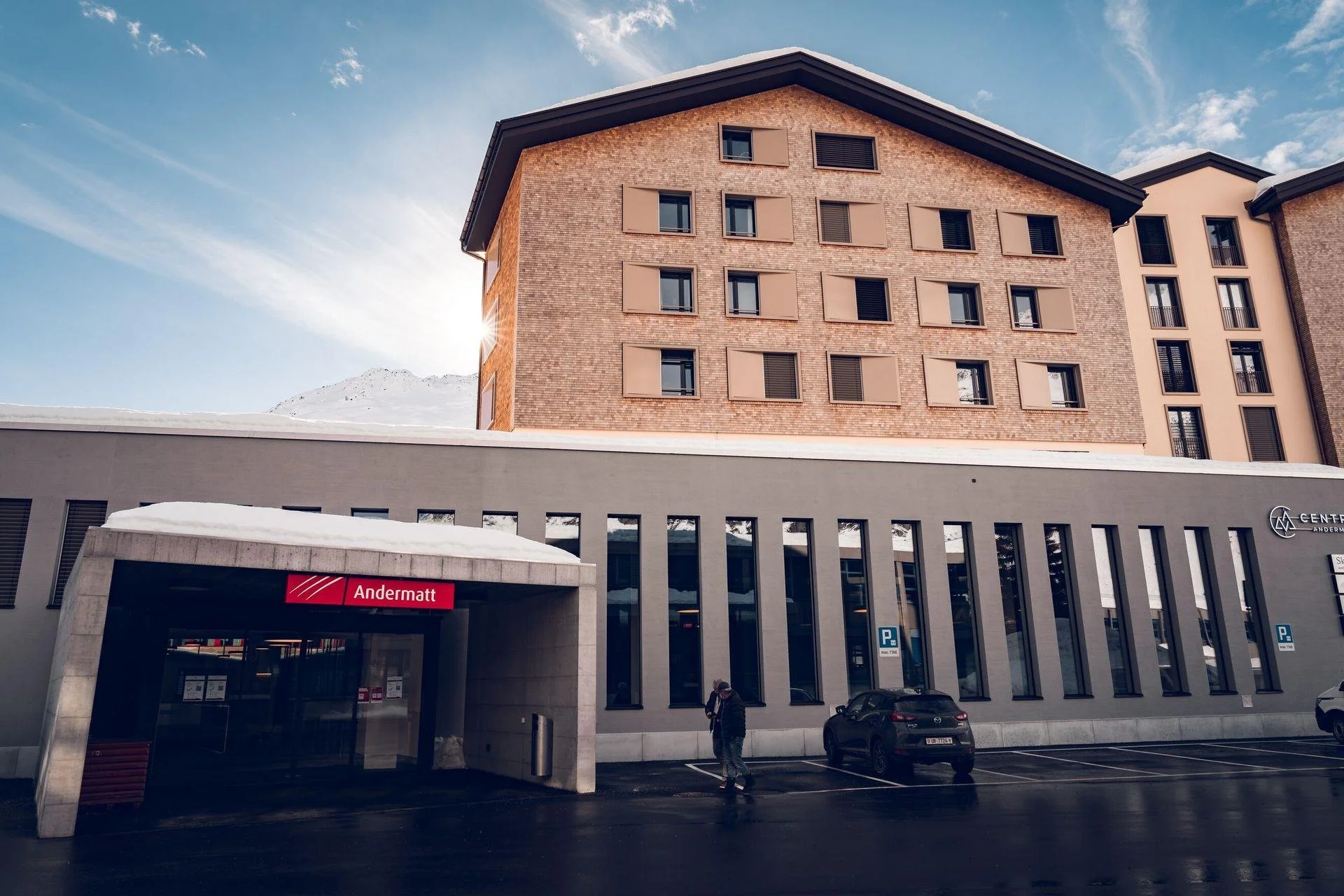
Andermatt Village and Railway Station: Both are close to the hotel and can be reached on foot in suitable conditions; travellers with substantial luggage, mobility requirements or winter-weather concerns should arrange assistance rather than relying on the short distance alone.
Driving: Travellers should check winter tyres, chains and seasonal mountain-pass closures before setting out, particularly when an itinerary includes the Furka, Gotthard or Oberalp routes rather than the principal year-round approaches.
Parking and Electric Vehicles: Parking and electric-vehicle charging are available at the hotel, with charges and charger availability best confirmed for the dates of the stay.
Why the Contrast Works
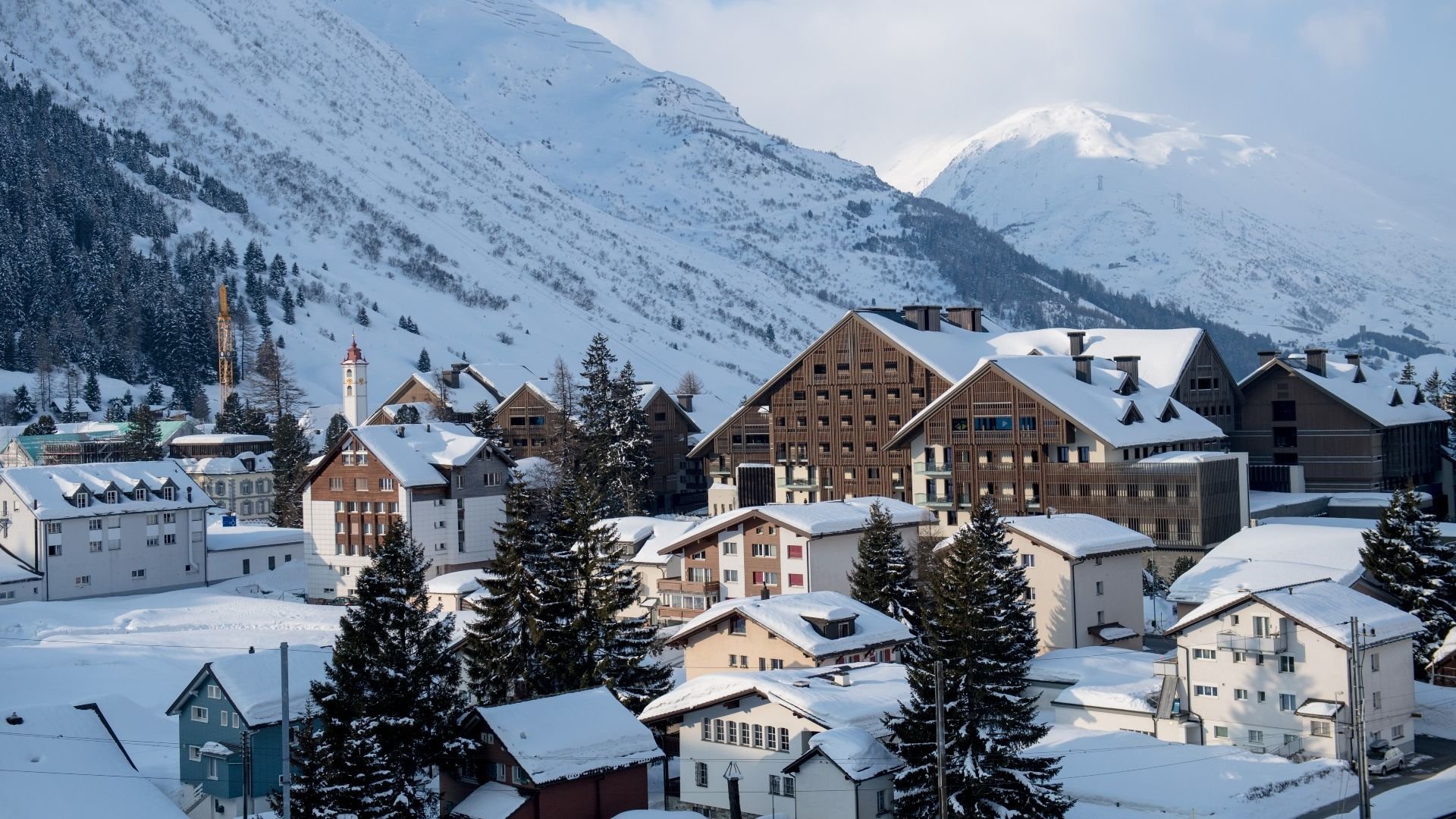
The Chedi Andermatt is most interesting when it is experienced alongside the destination rather than as a self-contained resort. Its scale, Asian-influenced interiors, Michelin-starred Japanese cooking and expansive spa are deliberately international; several minutes away, the older village returns to a smaller Alpine rhythm, while the surrounding passes and mountains remain governed by weather and season.
That contrast gives the hotel more depth than a purely ski-focused description suggests. Winter provides the most dramatic version of Andermatt, but summer reveals the geography that made the valley important long before luxury hospitality arrived. A stay works best when all three layers are given time: the contemporary hotel, the historic village and the landscape that continues to shape both.