Capri, Italy | Jumeirah Capri Palace
Jumeirah Capri Palace: Anacapri Through Art, Design and the Mediterranean
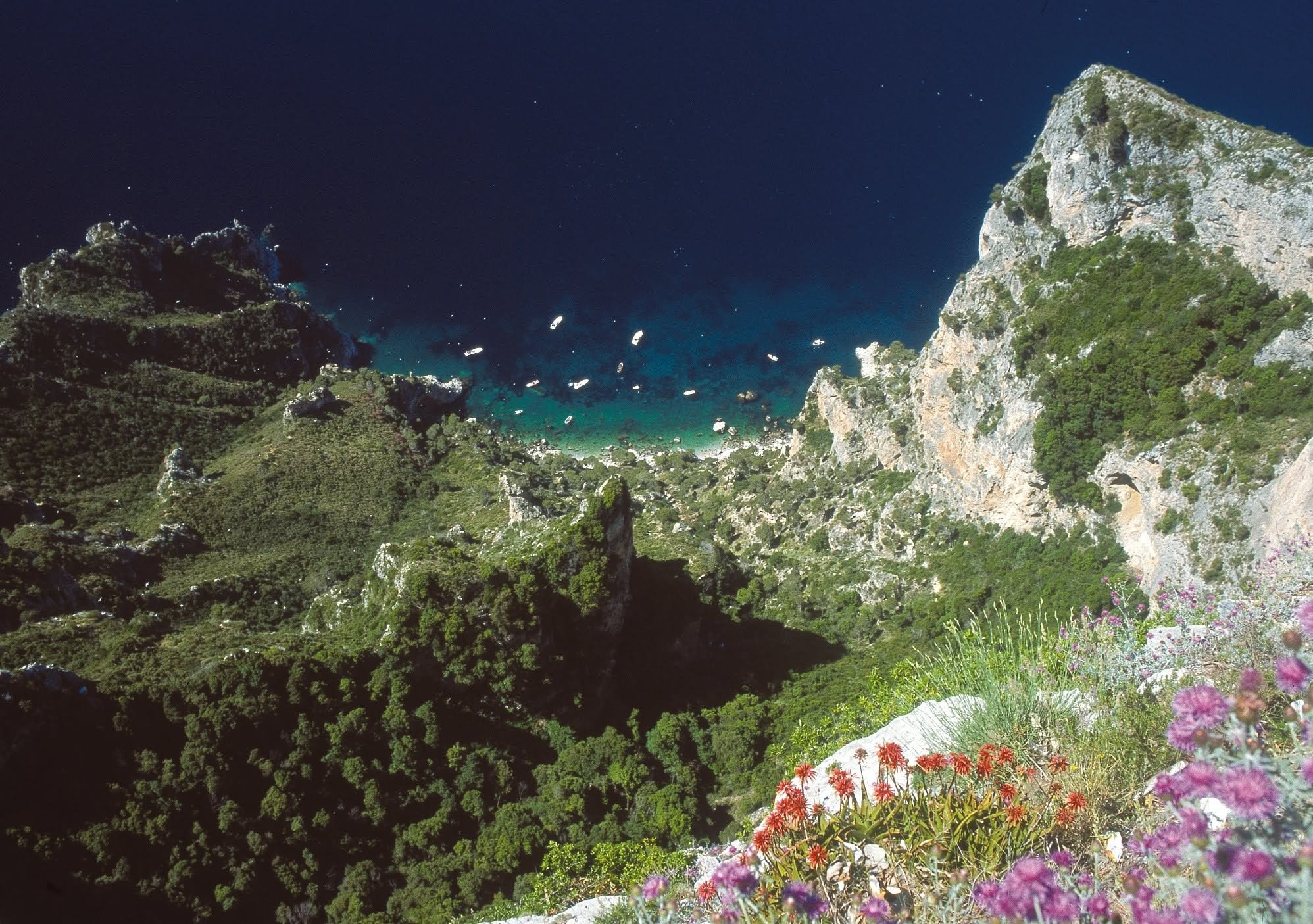
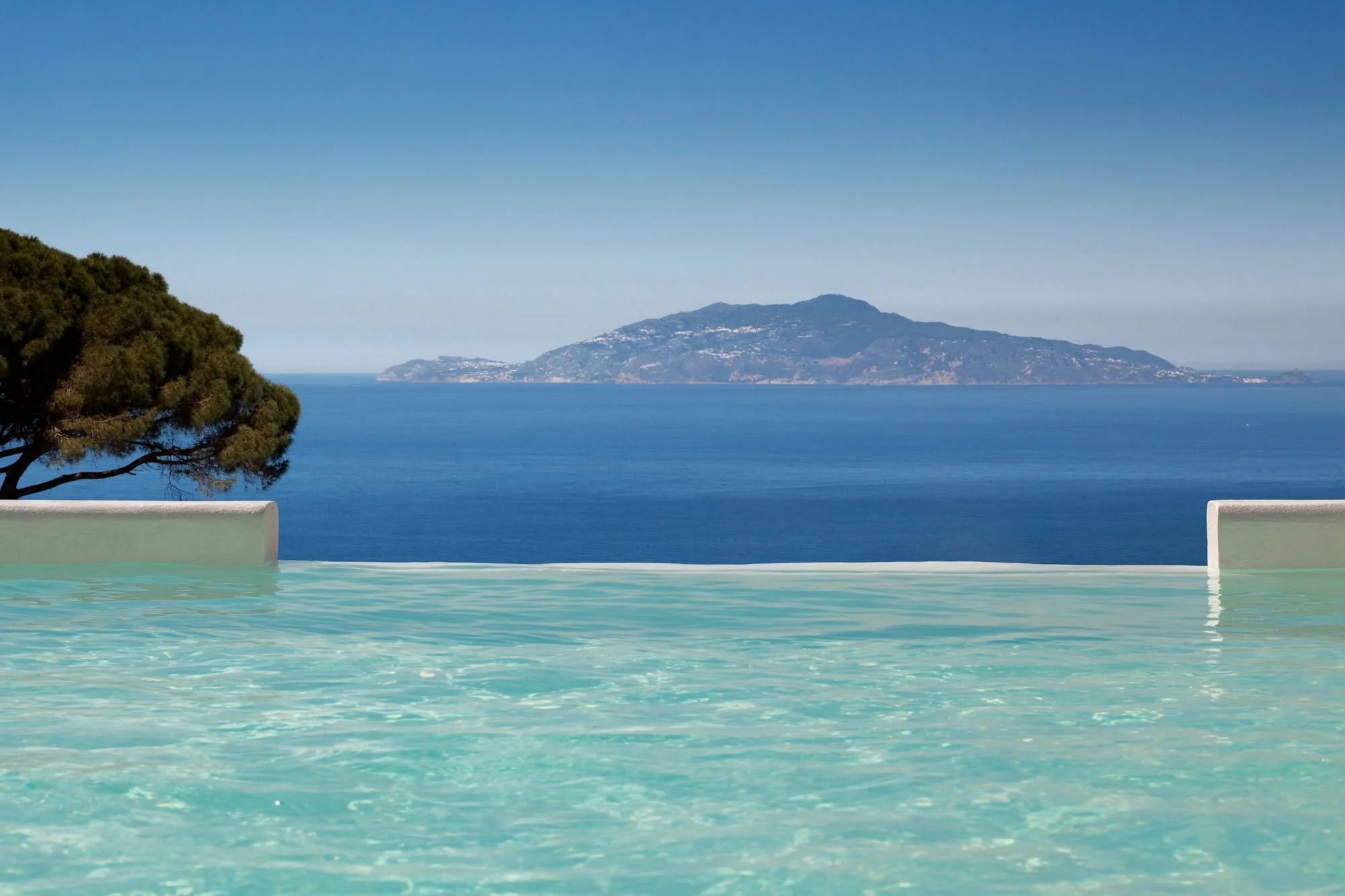
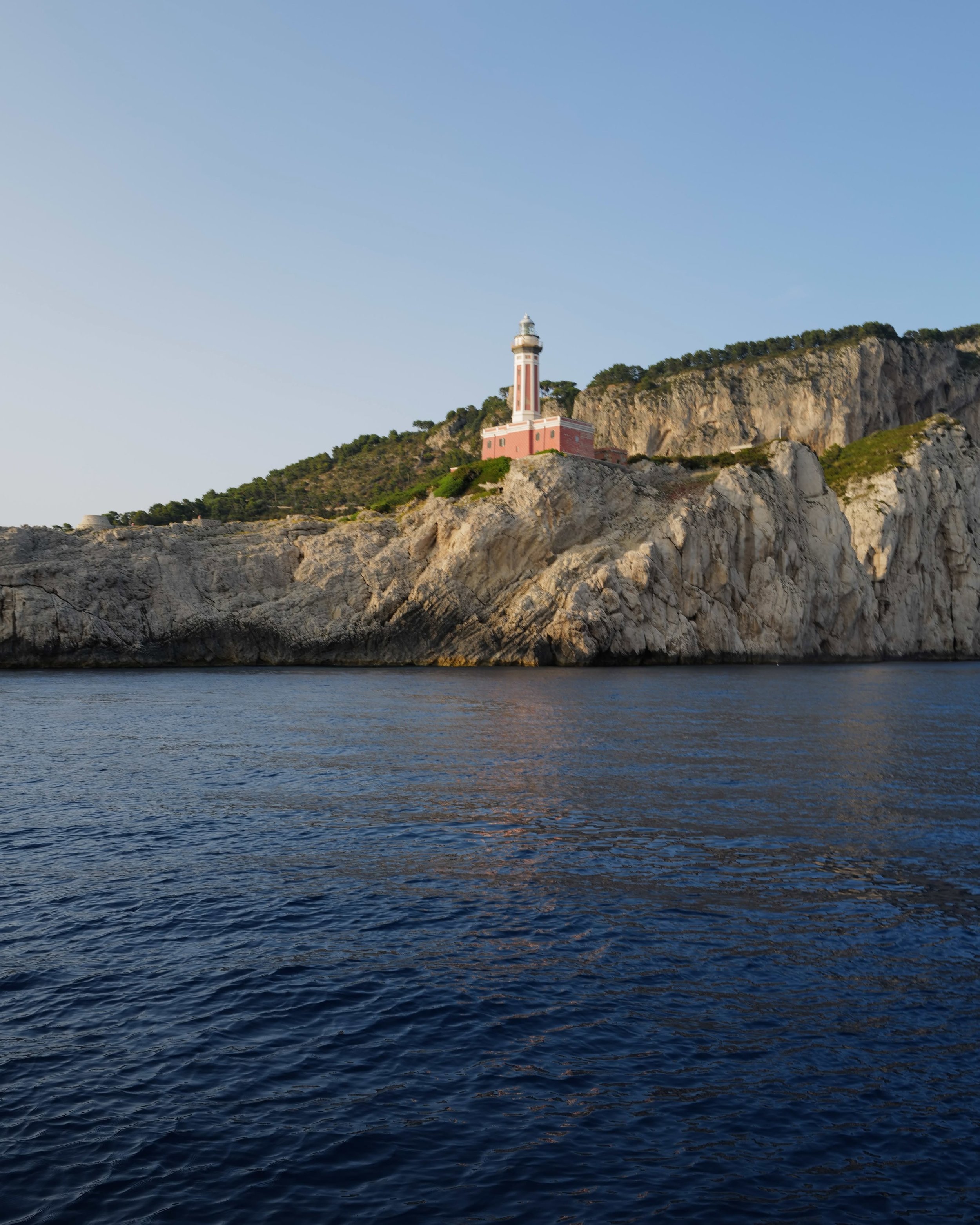
Capri has always existed somewhere between landscape and mythology. Limestone cliffs rise directly from the Tyrrhenian Sea, villas disappear behind bougainvillea and pine, and much of the island’s character comes from the tension between its glamorous reputation and the quieter life that continues away from the busiest waterfronts.
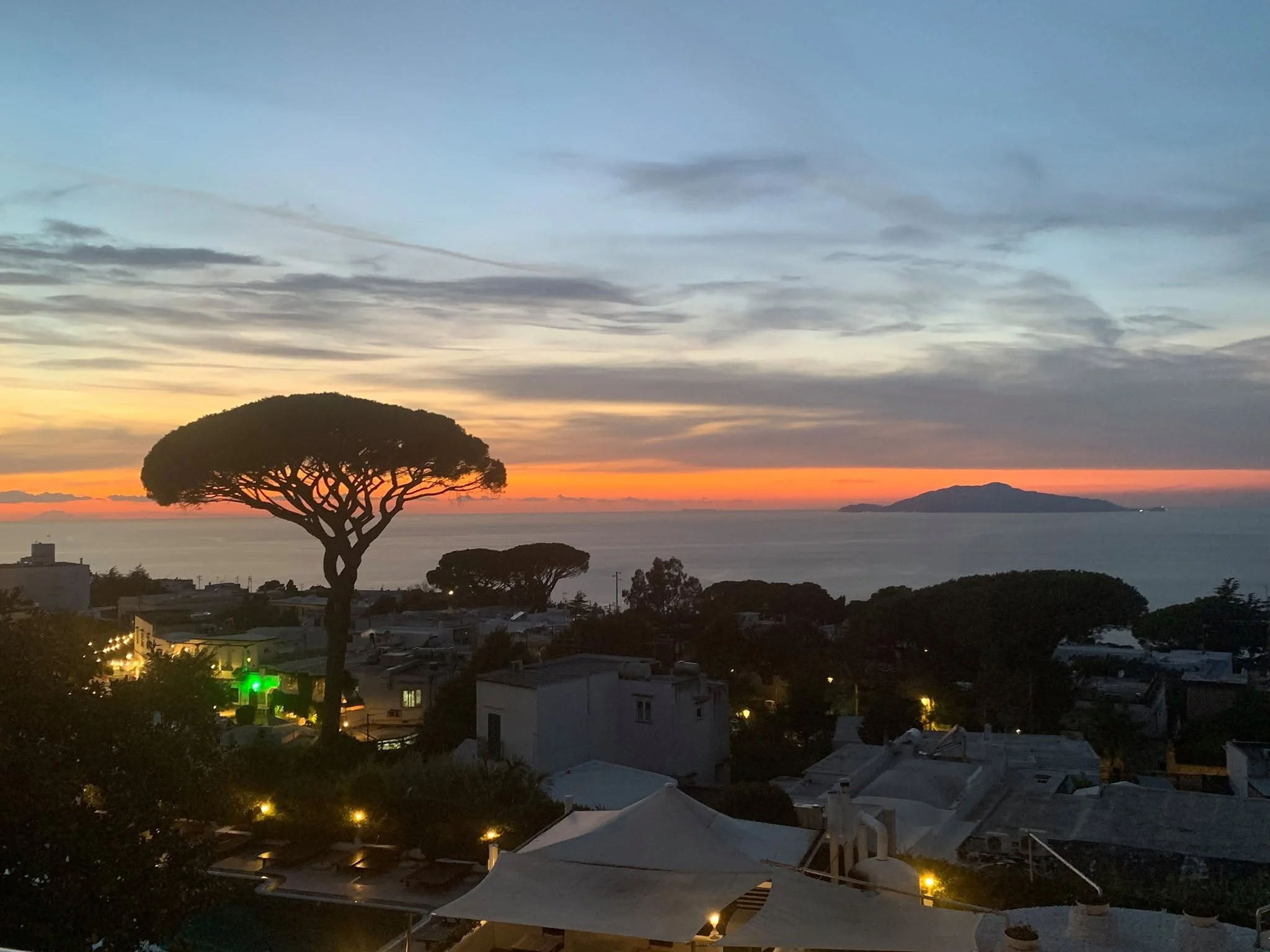
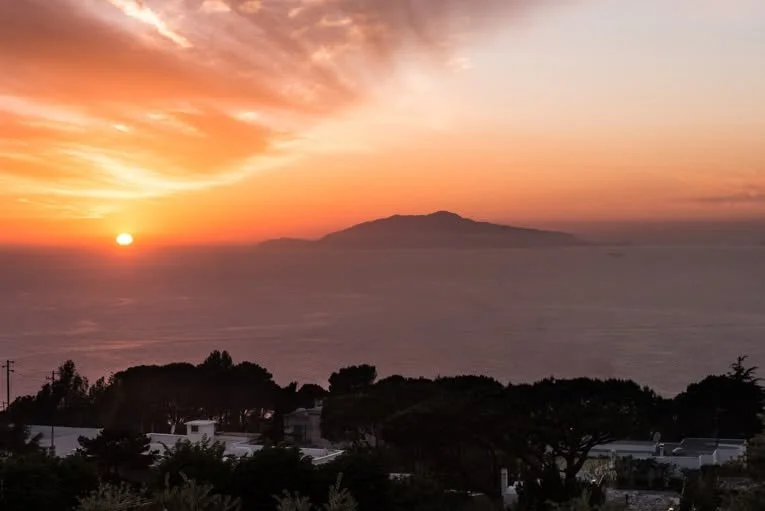
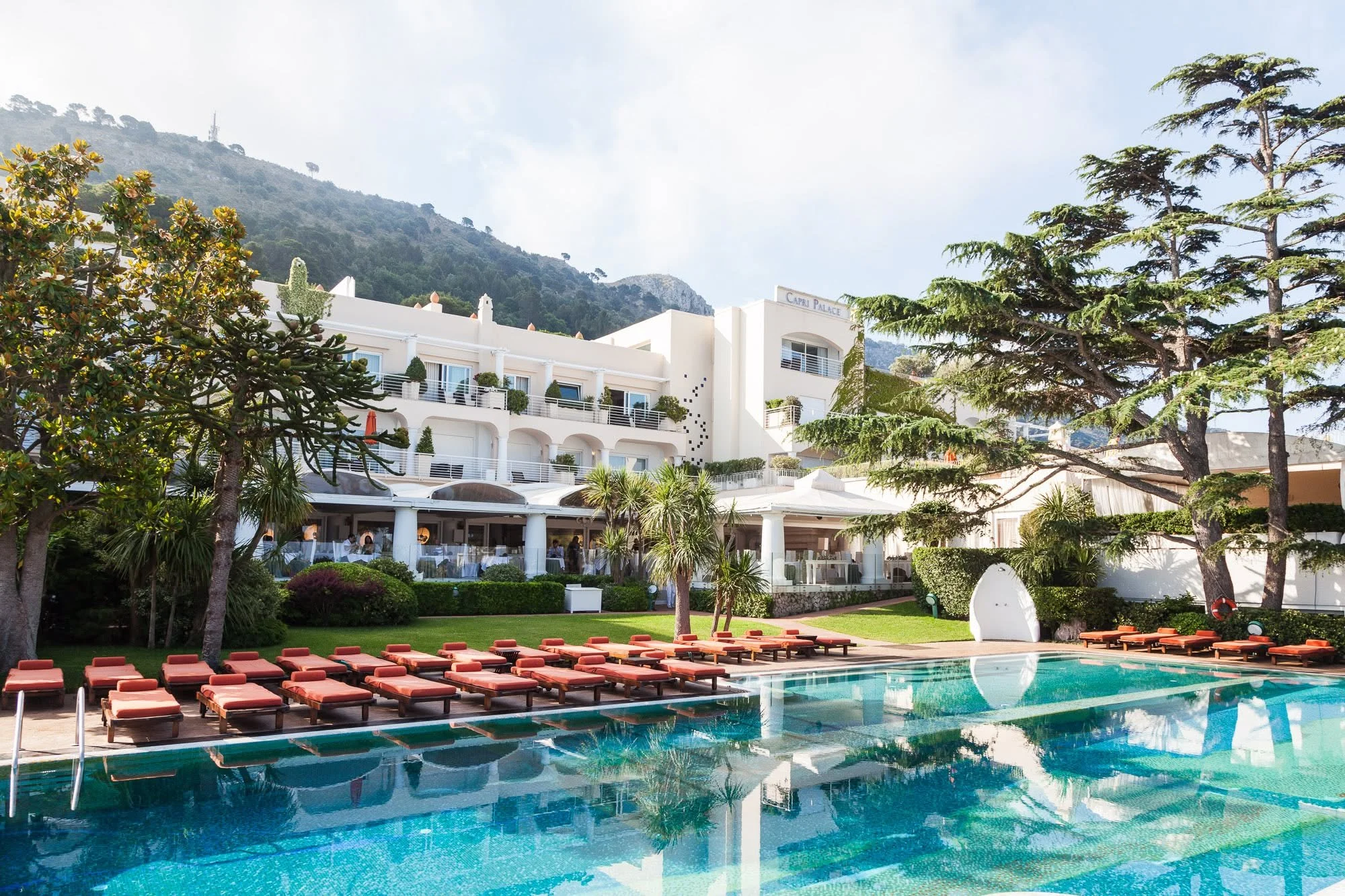
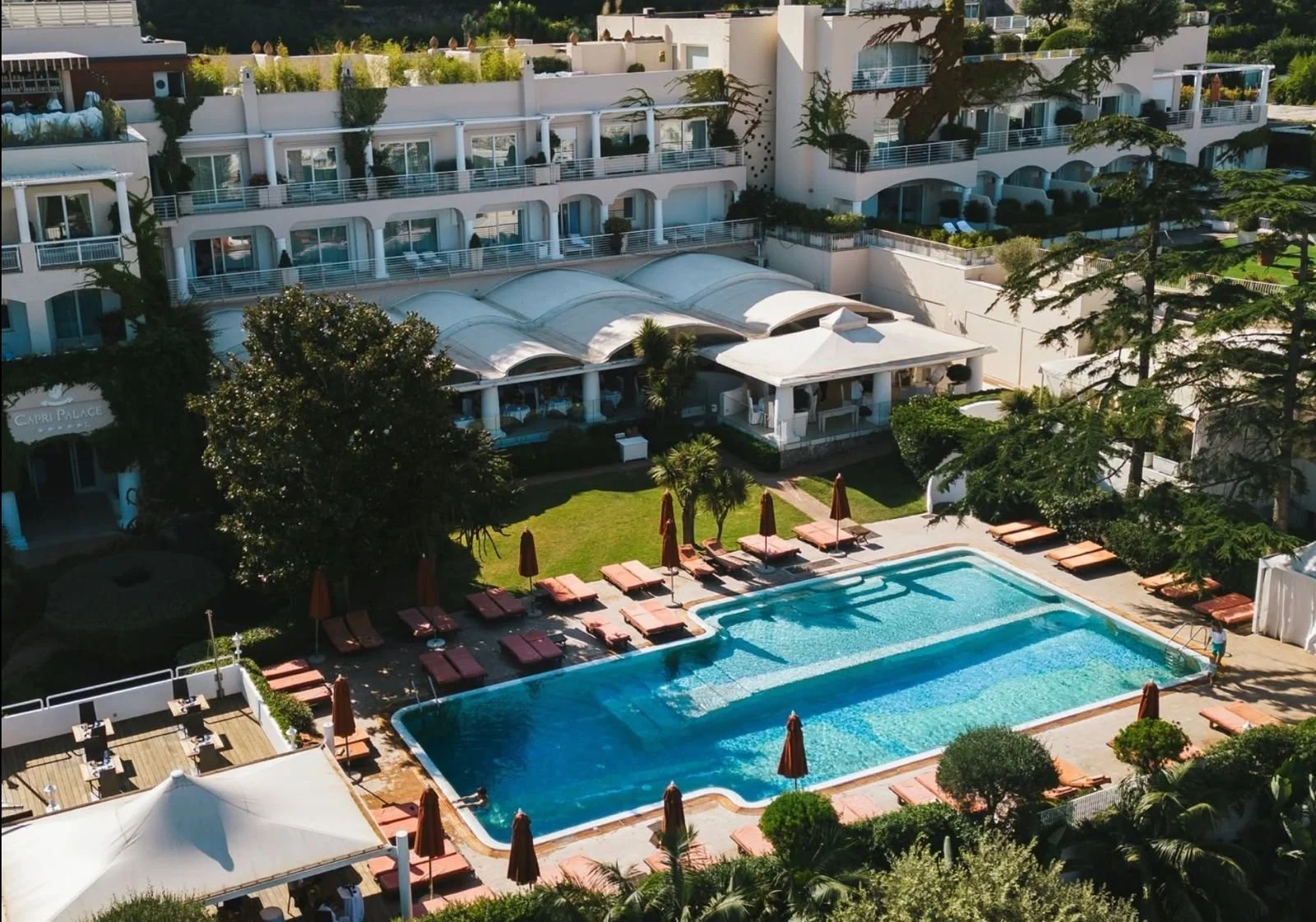
Jumeirah Capri Palace sits firmly on that quieter side of the island, in Anacapri, high above the main town of Capri and close to the slopes of Monte Solaro. The setting immediately changes the rhythm of a stay. Rather than stepping directly into Capri’s most crowded streets, guests arrive somewhere more residential, more spacious and deliberately removed from the island’s busiest corners.
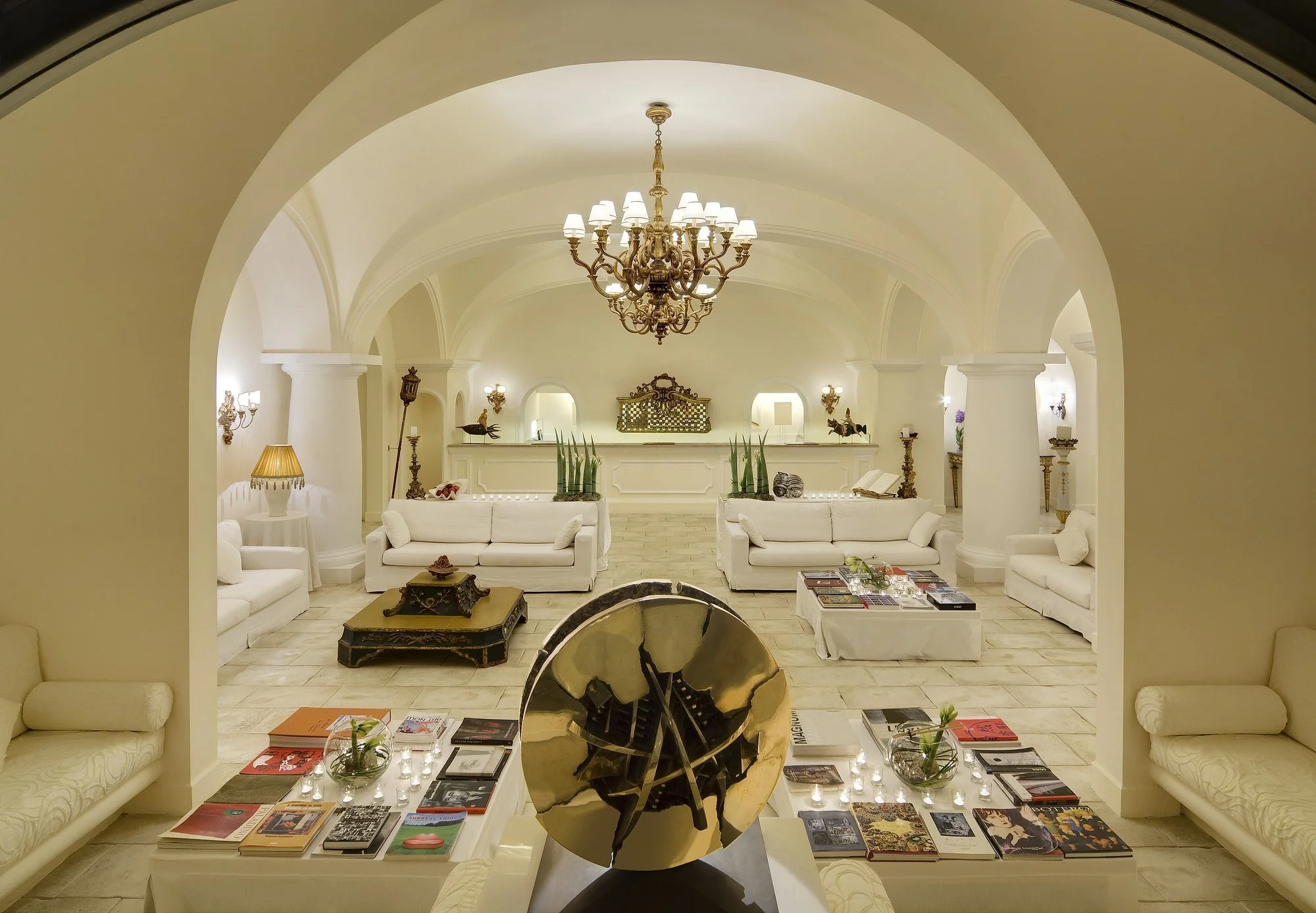
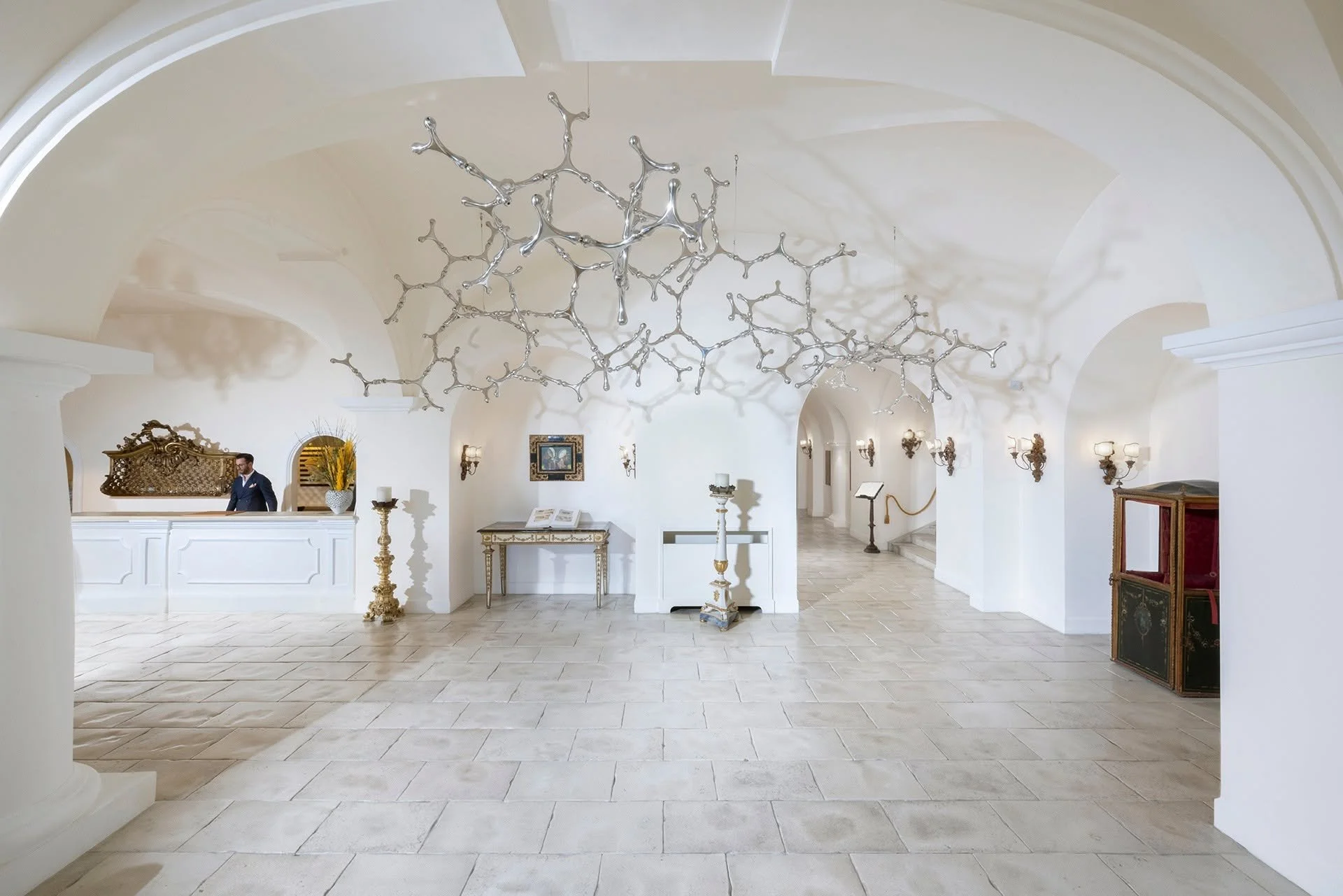
The hotel combines contemporary art, Mediterranean architecture, destination dining and an unusually serious wellness program. Its identity has continued to evolve under Jumeirah, with a major new design chapter led by Patricia Urquiola, whose reimagined rooms and suites bring a softer, more contemporary interpretation of Capri into the property.
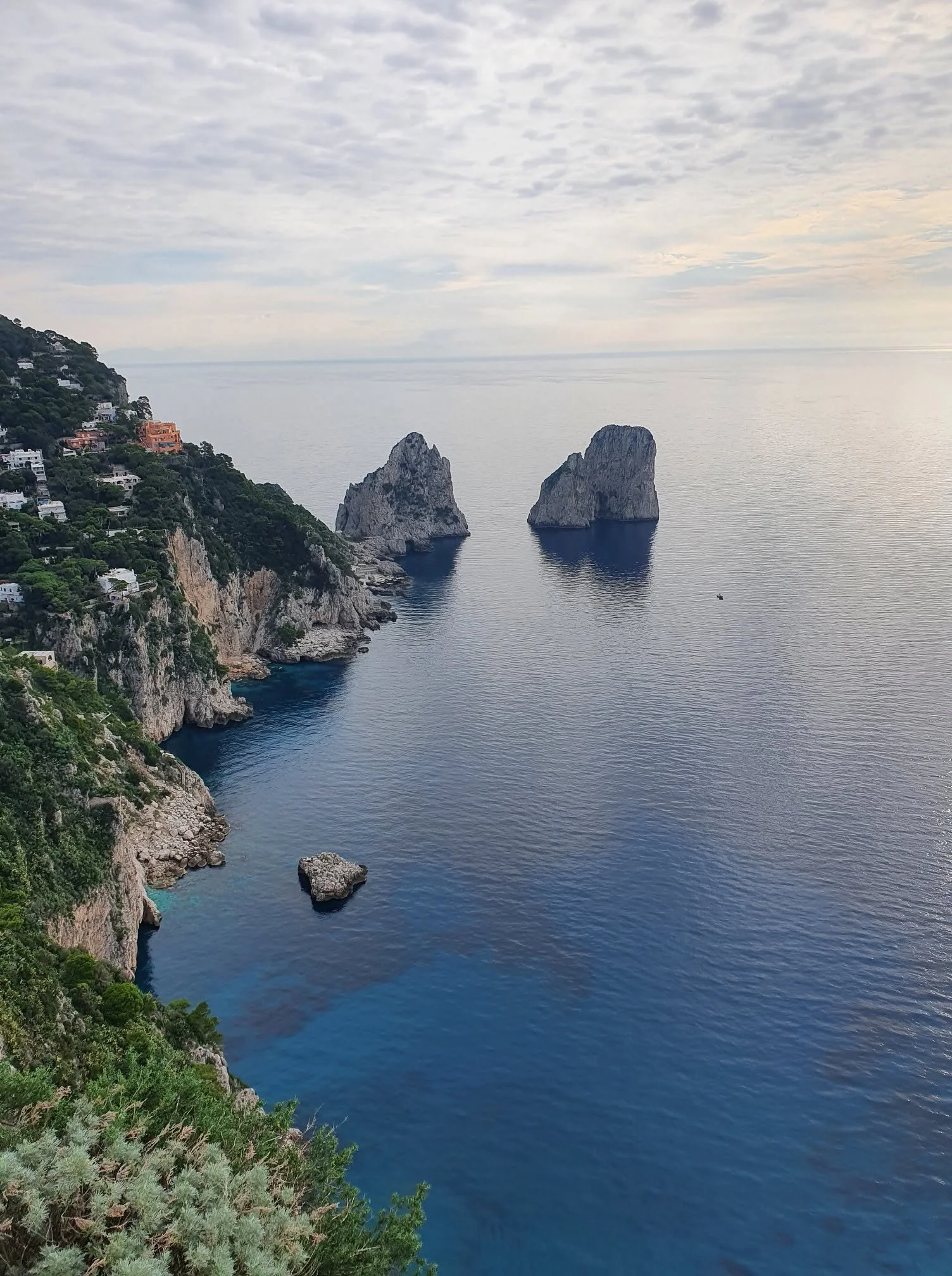
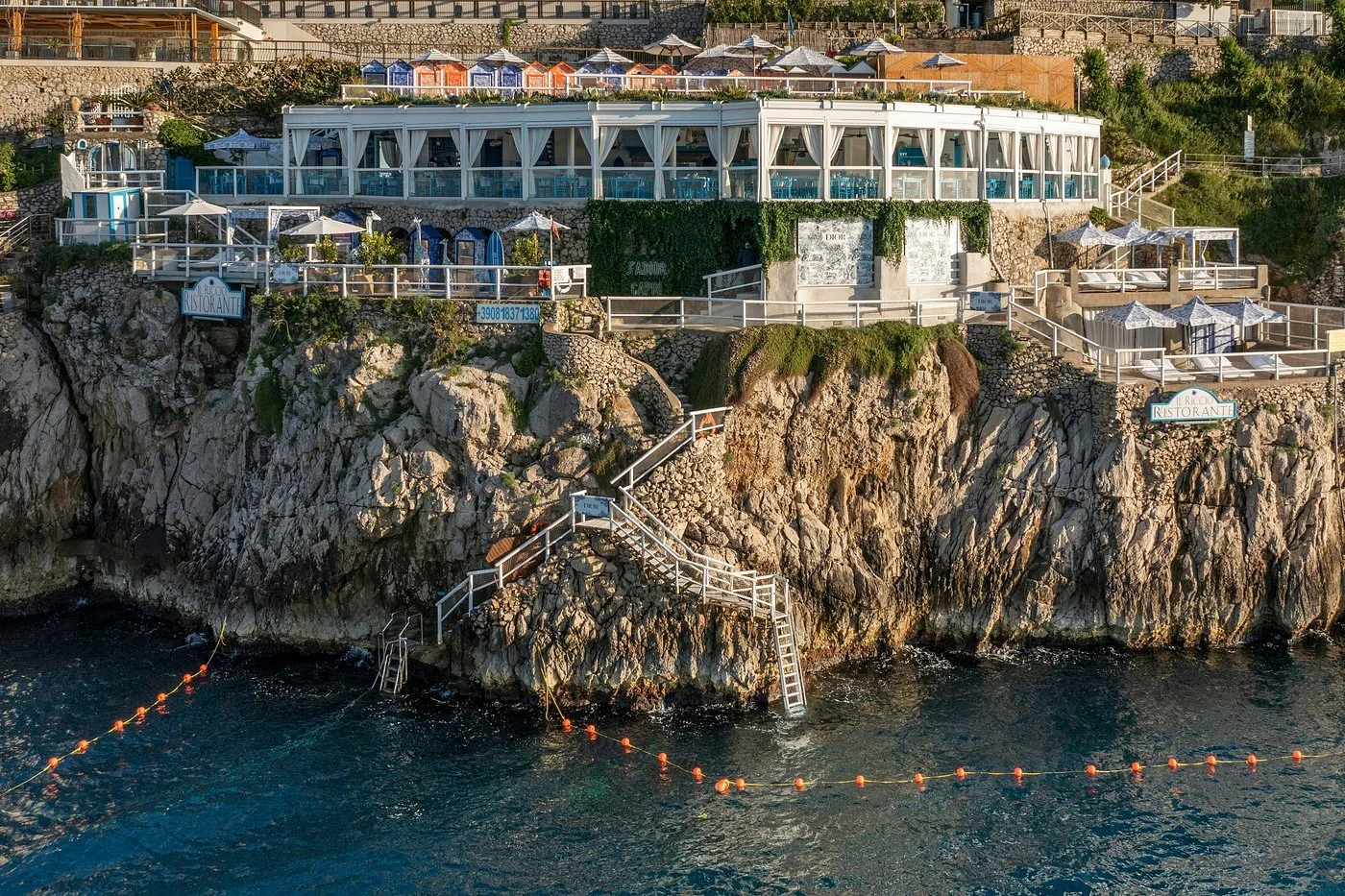
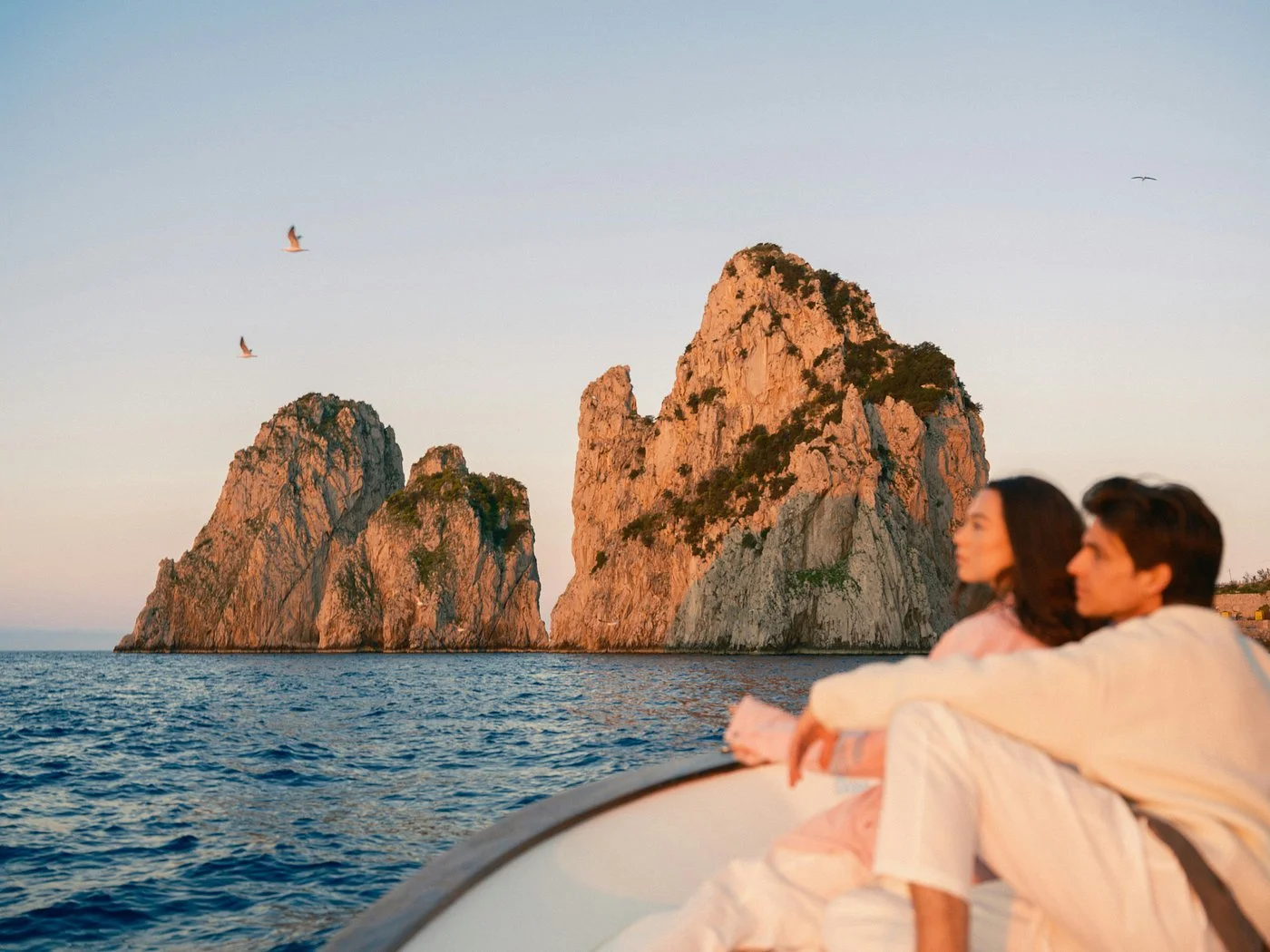
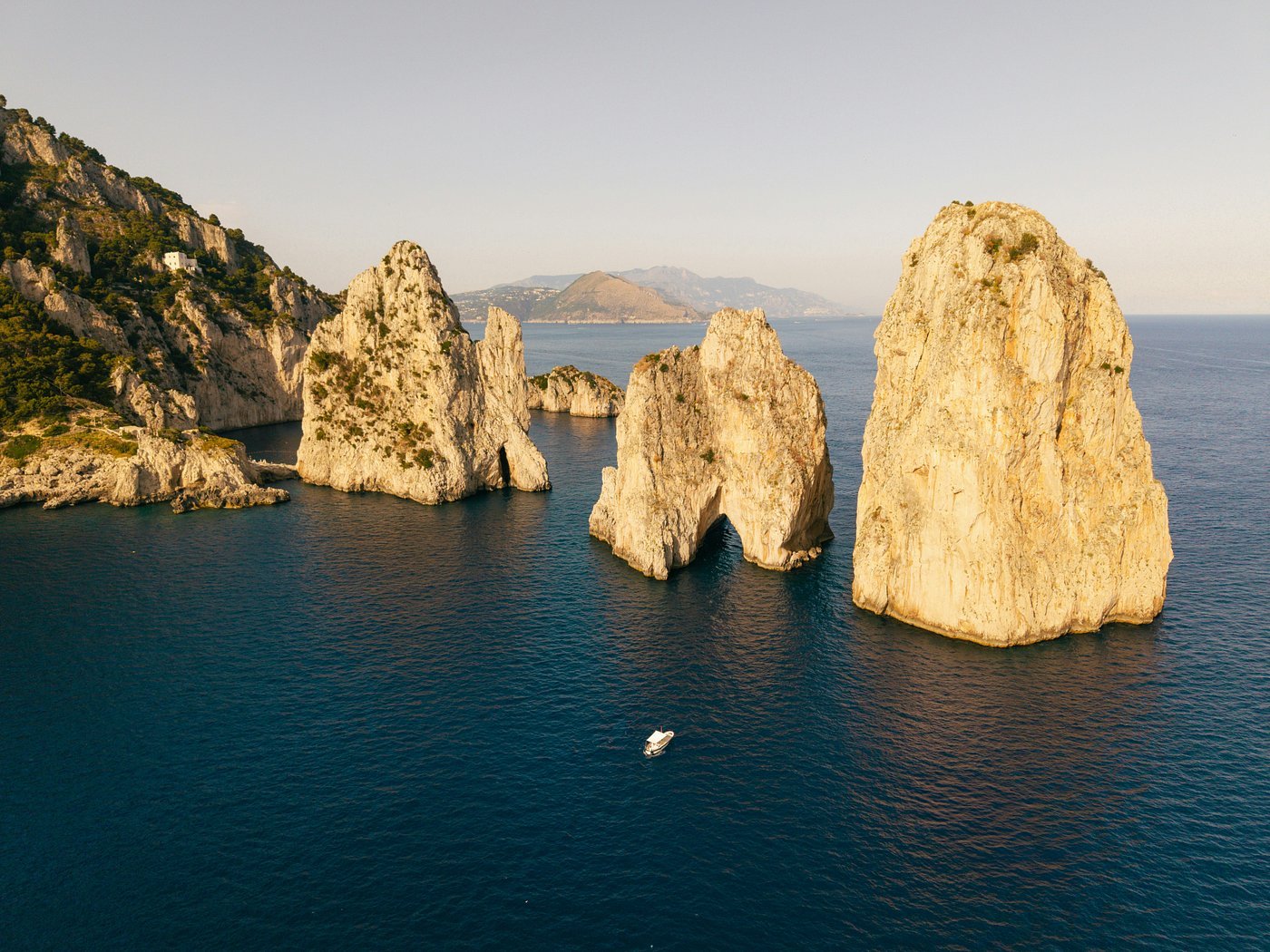
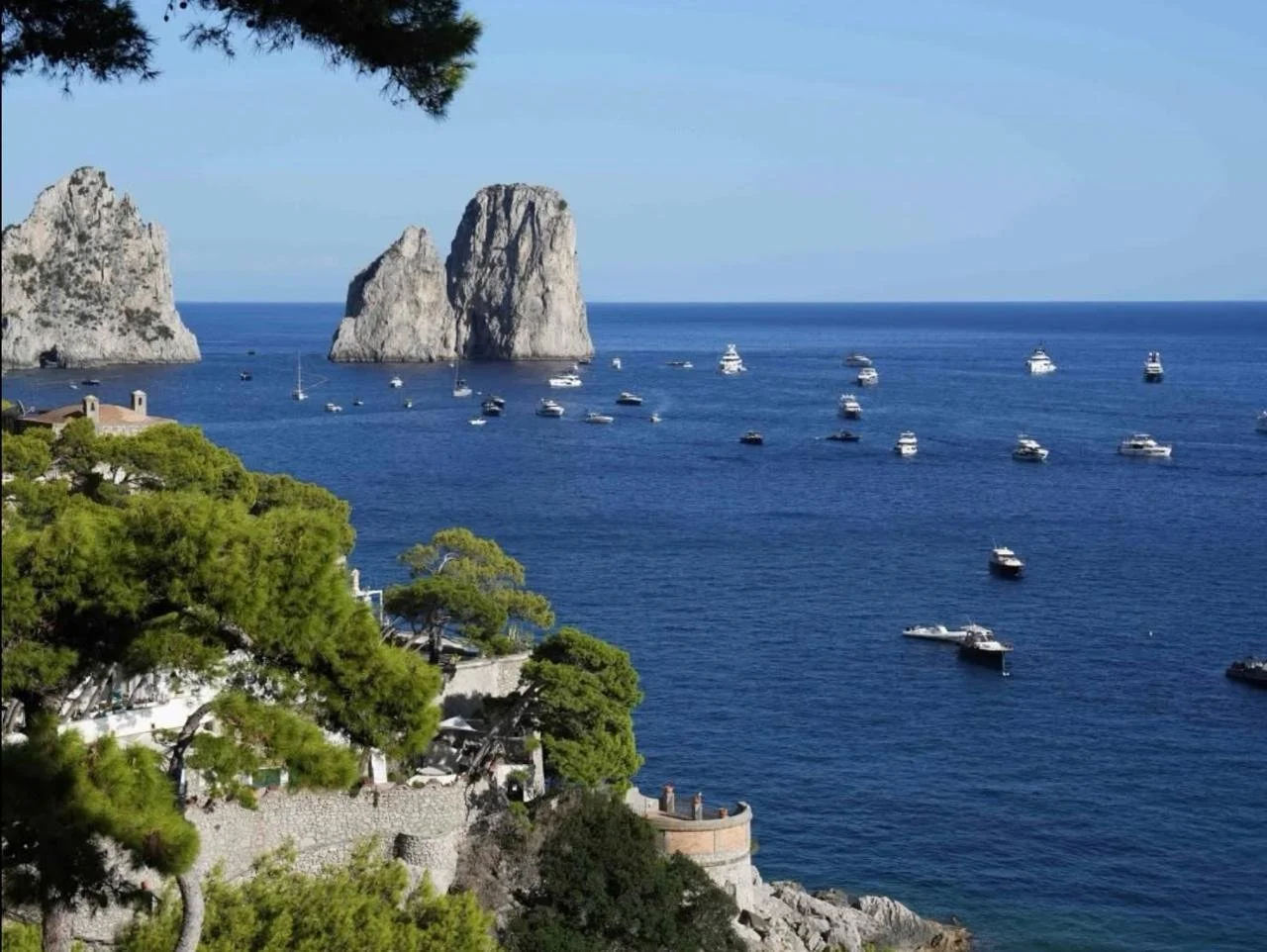
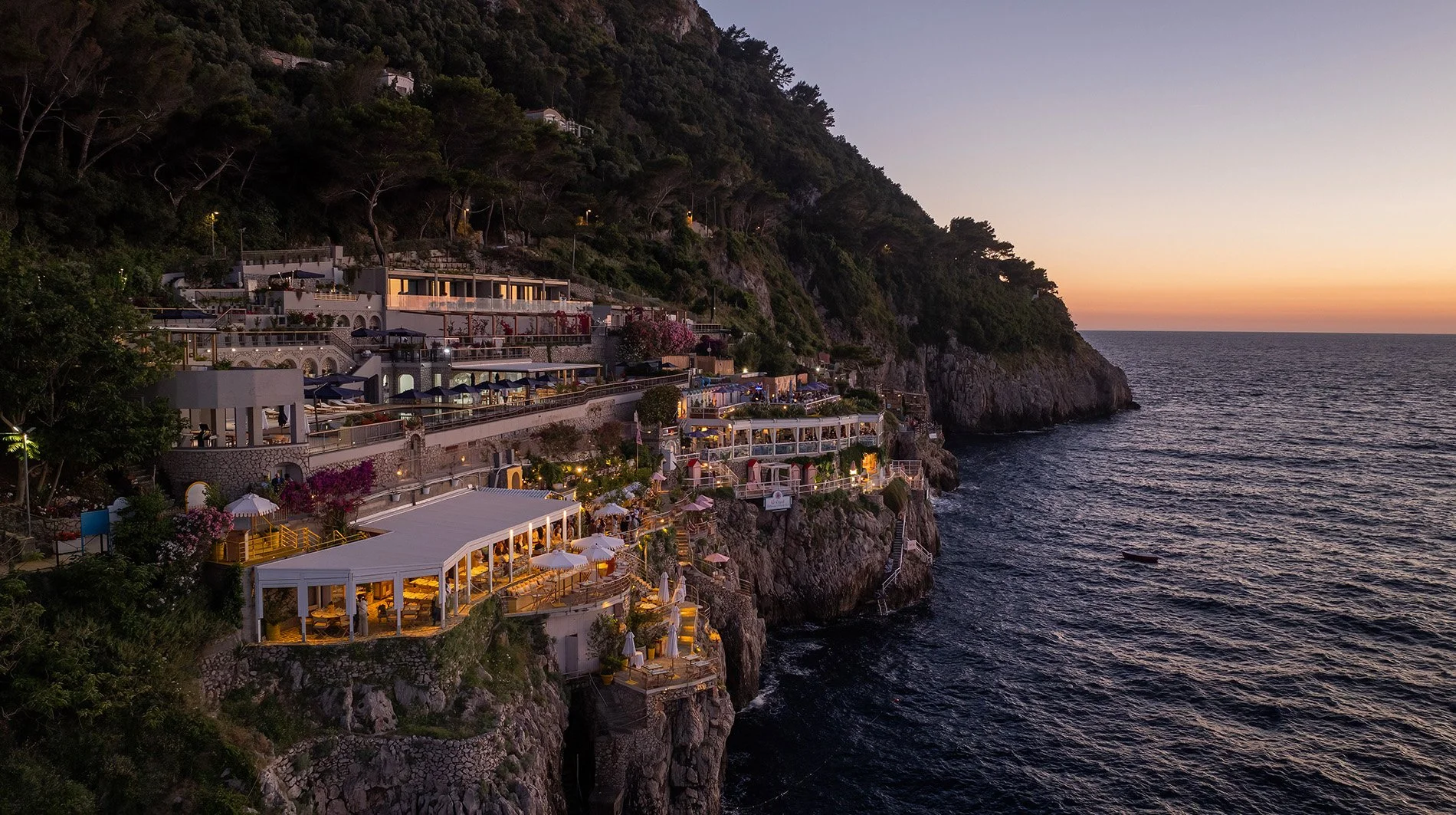
For us, the appeal is the range of experiences that can exist within a single stay. A morning might begin at the spa, continue with lunch beside the sea at Il Riccio and end with dinner at two-Michelin-starred L’Olivo. The following day can be spent almost entirely on the water, circling the Faraglioni, entering the Blue Grotto and swimming from hidden coves.
A New Design Language for Anacapri
The latest evolution of Jumeirah Capri Palace is closely tied to Patricia Urquiola, the Spanish-born architect and designer based in Milan.
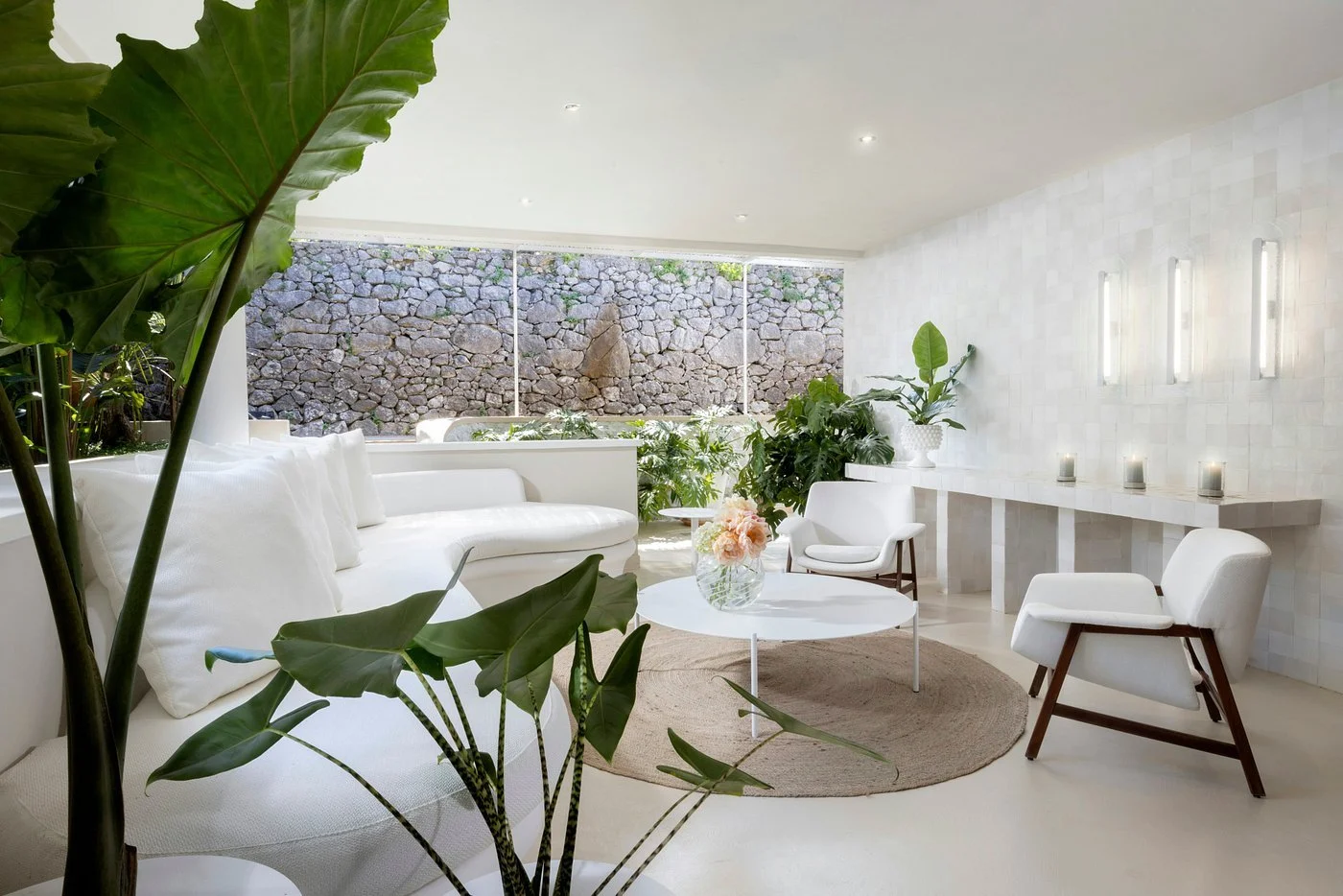
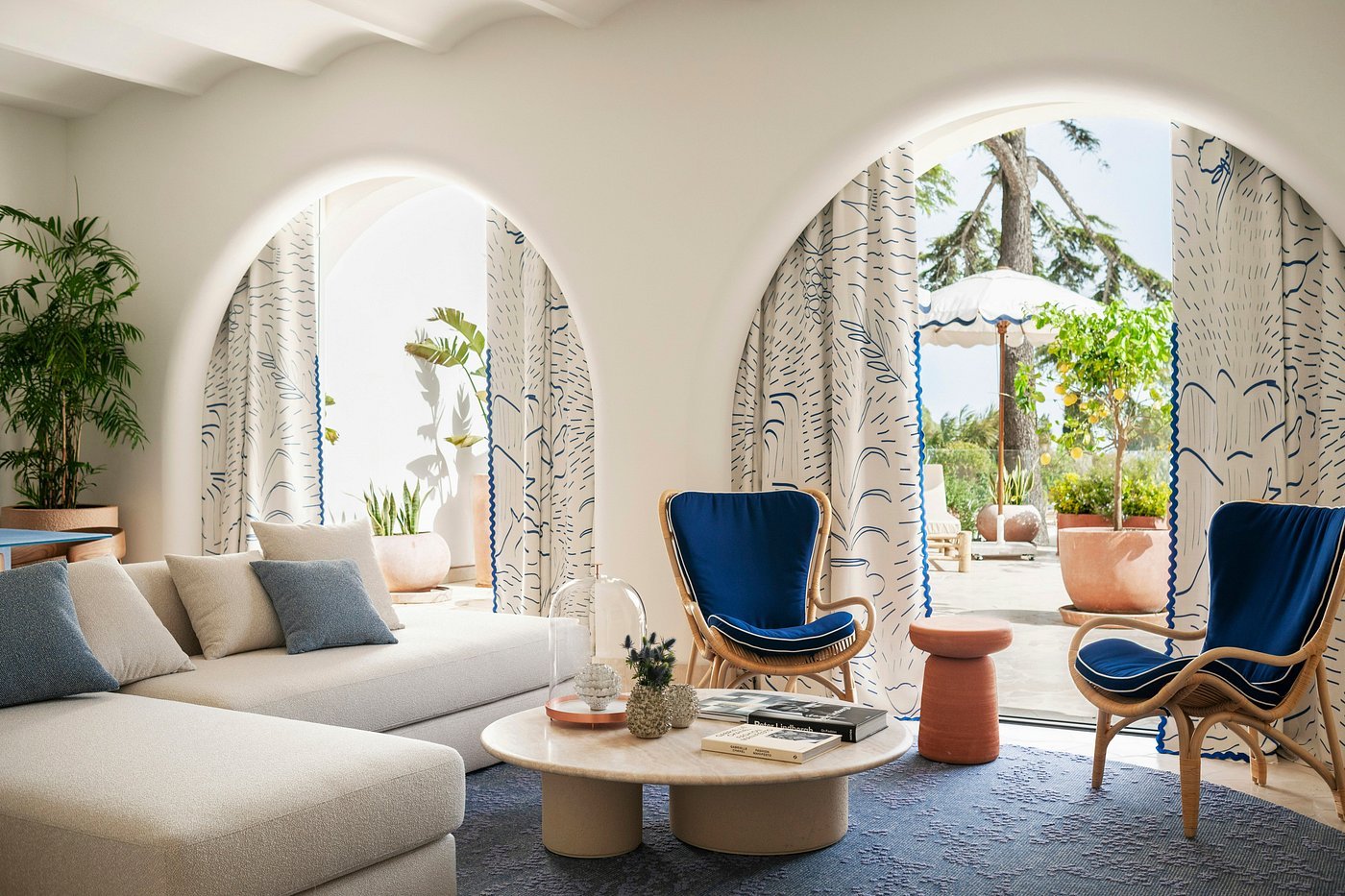
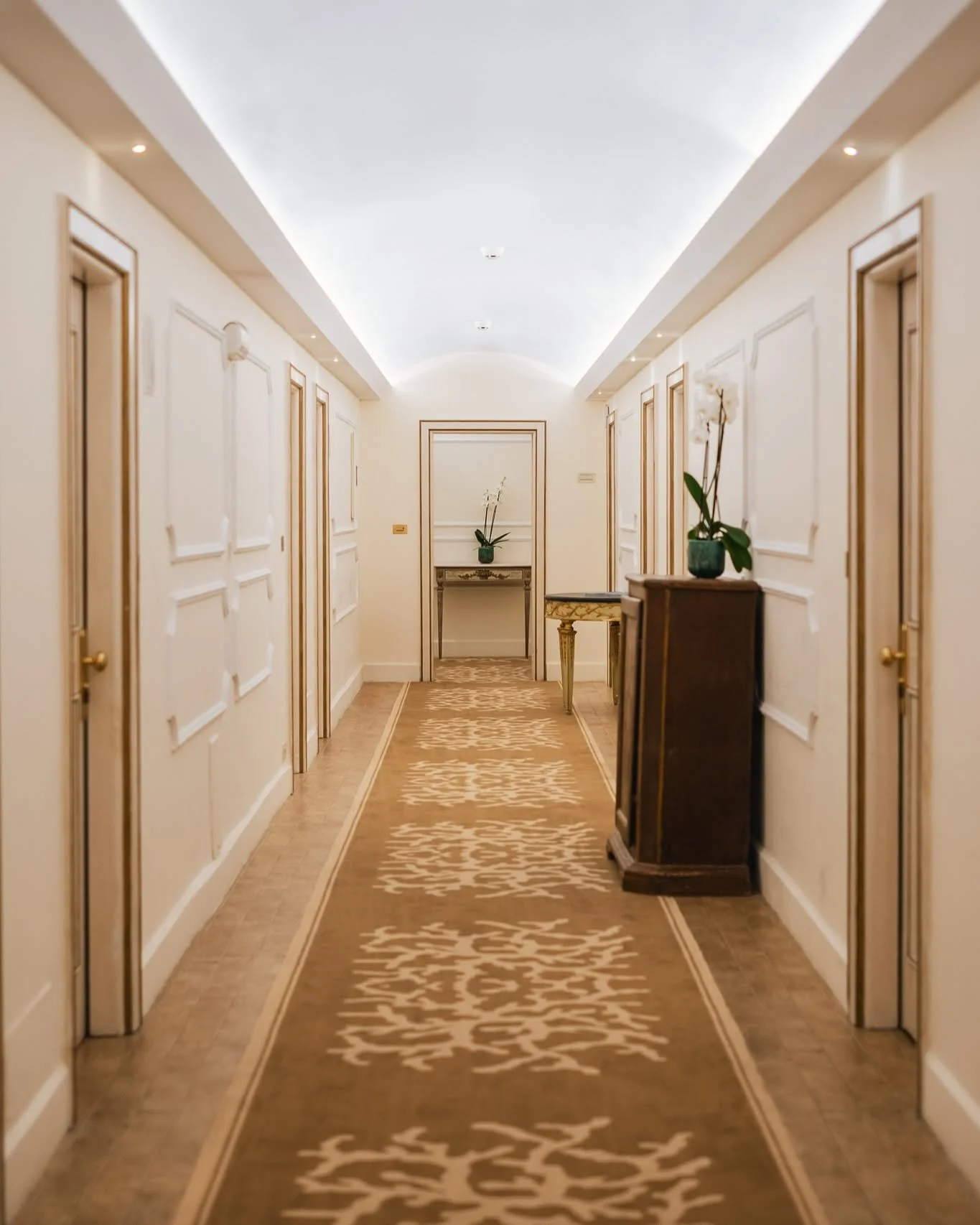
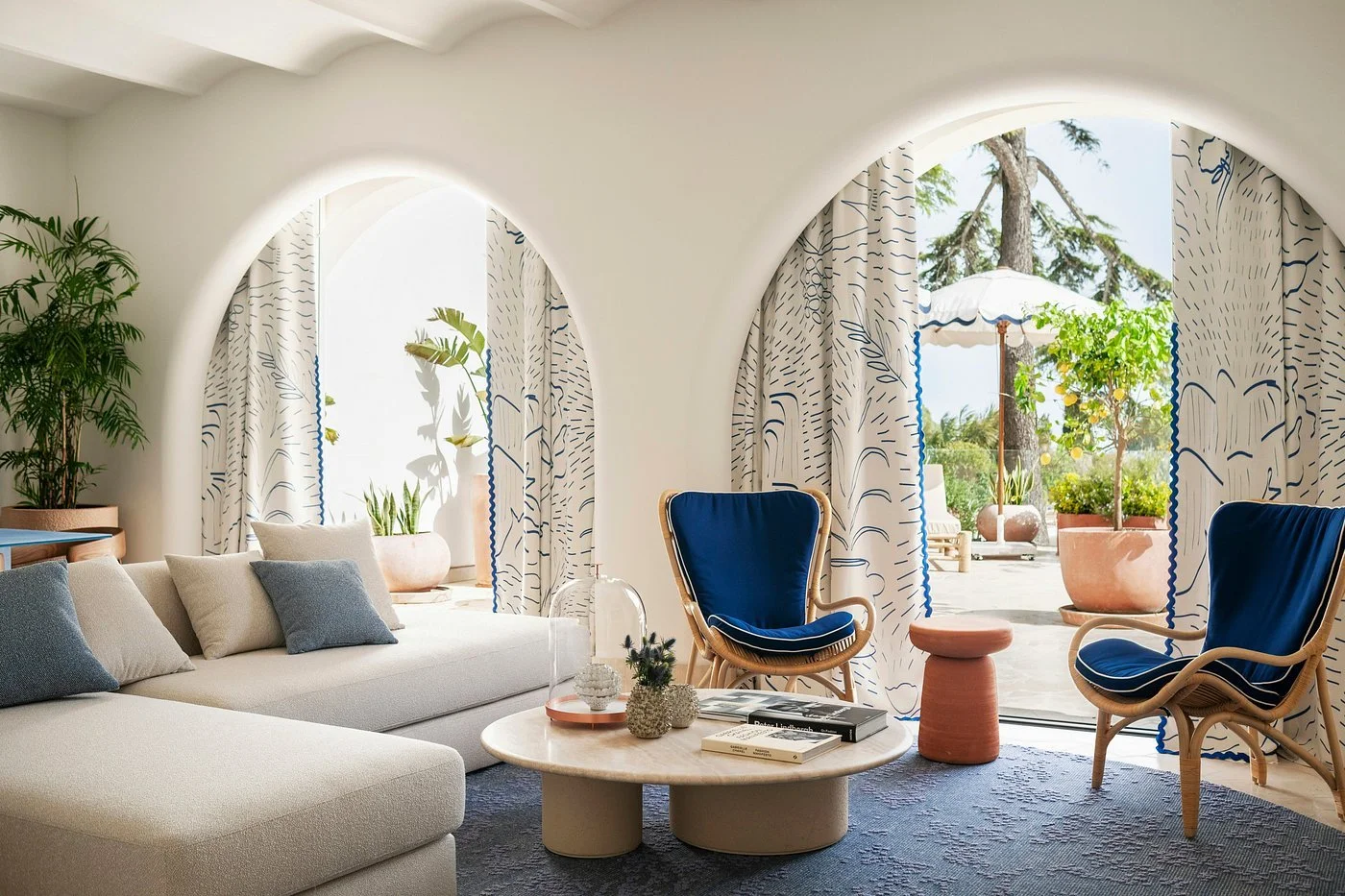
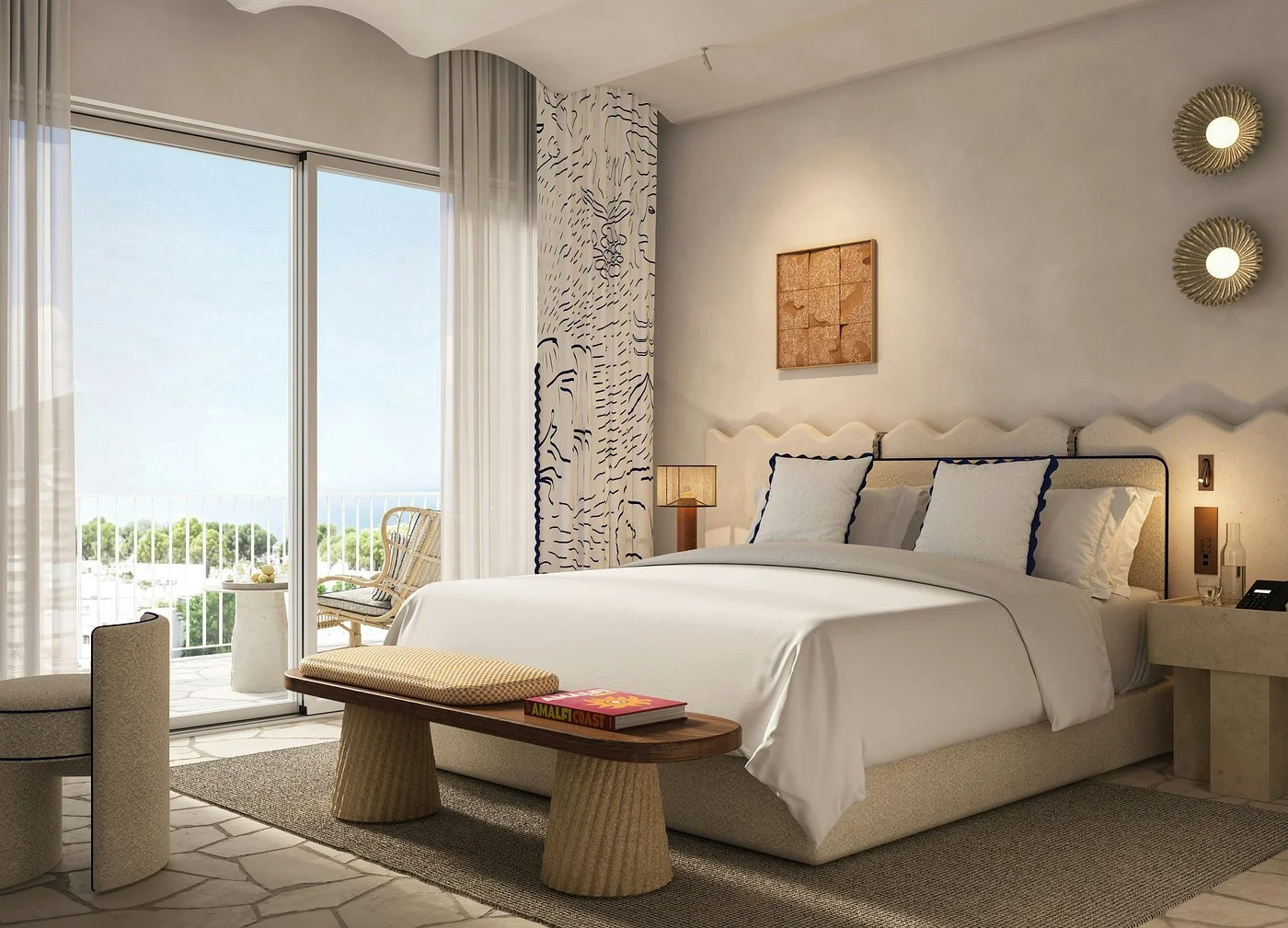
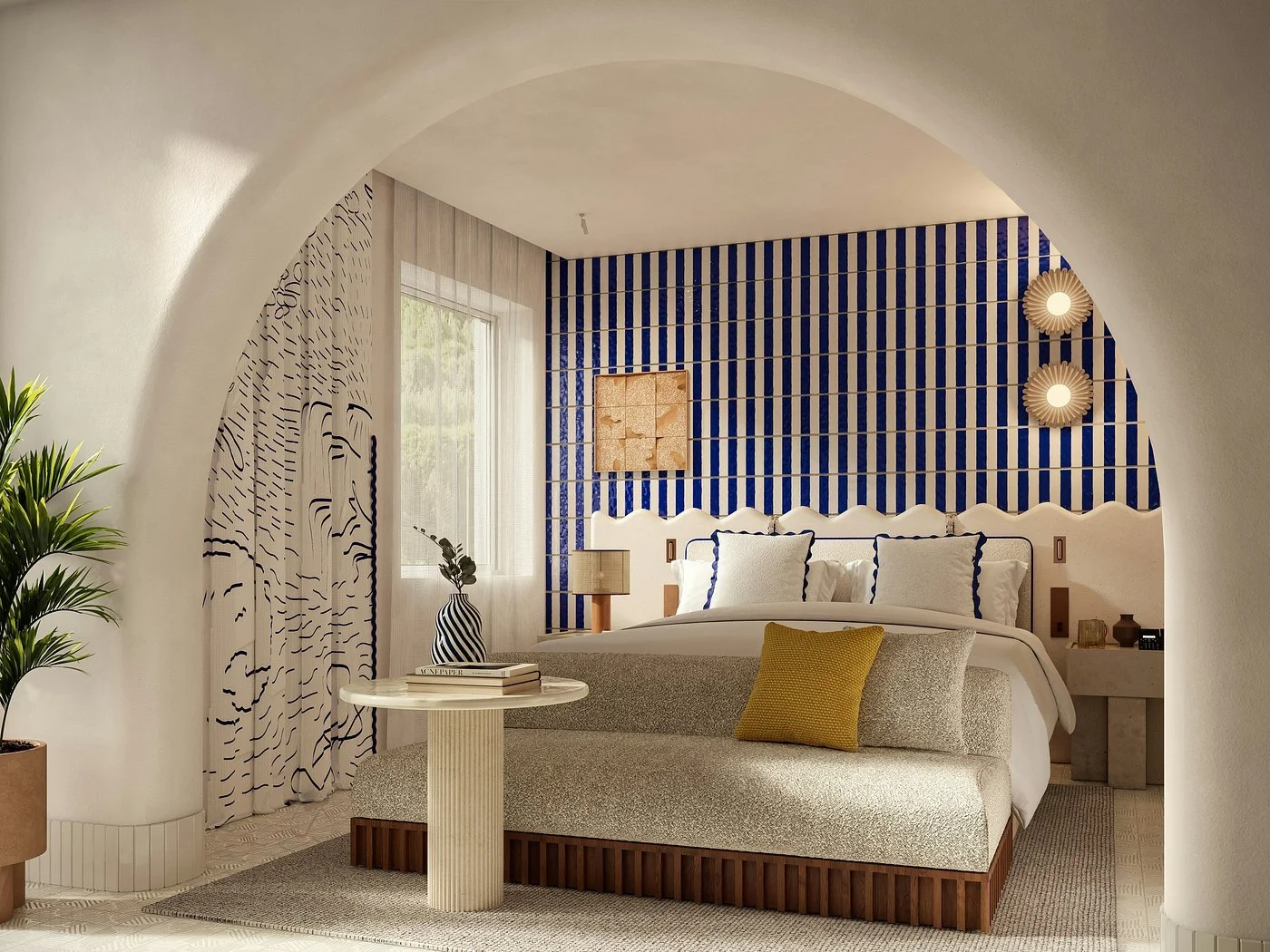
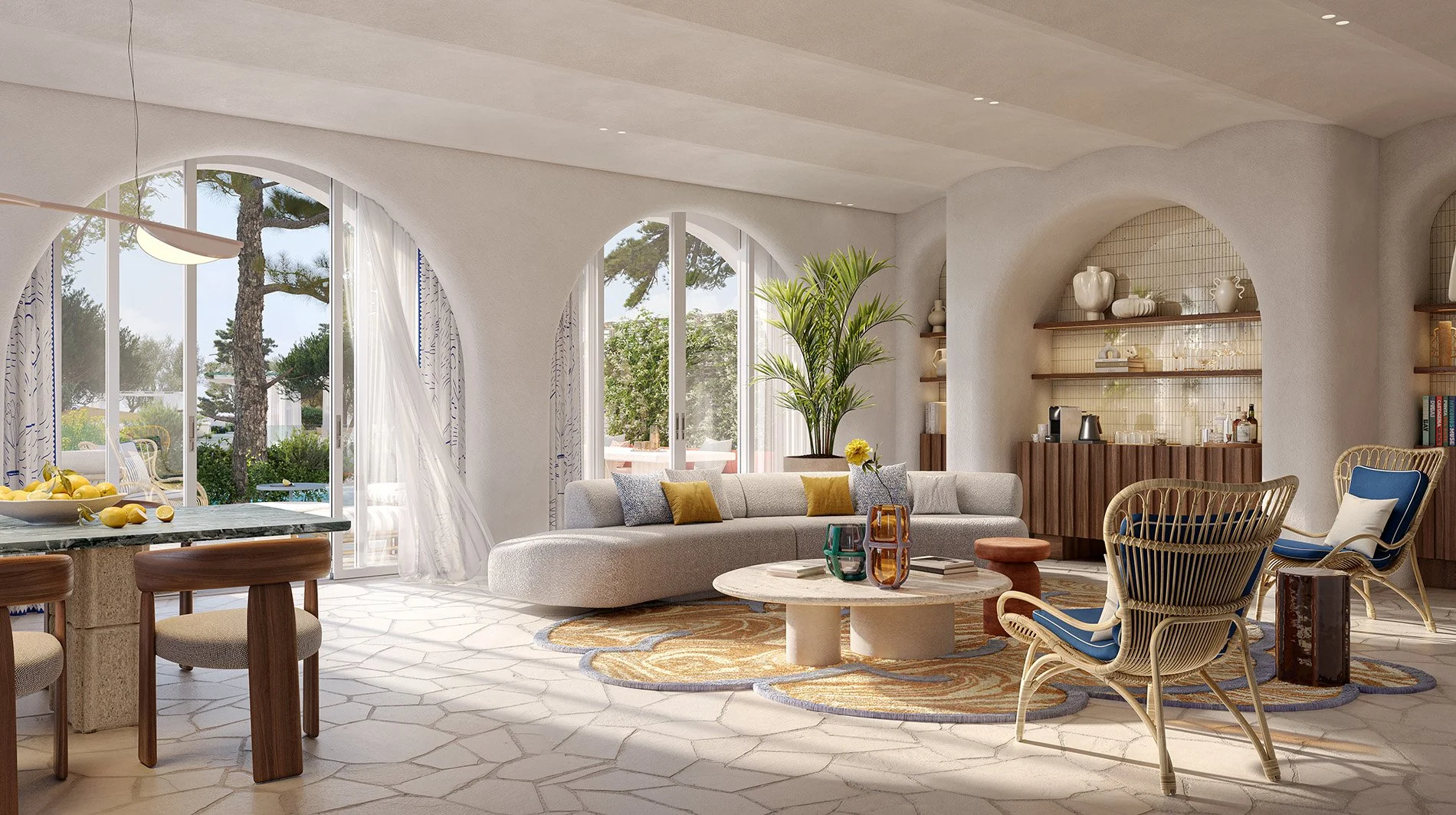
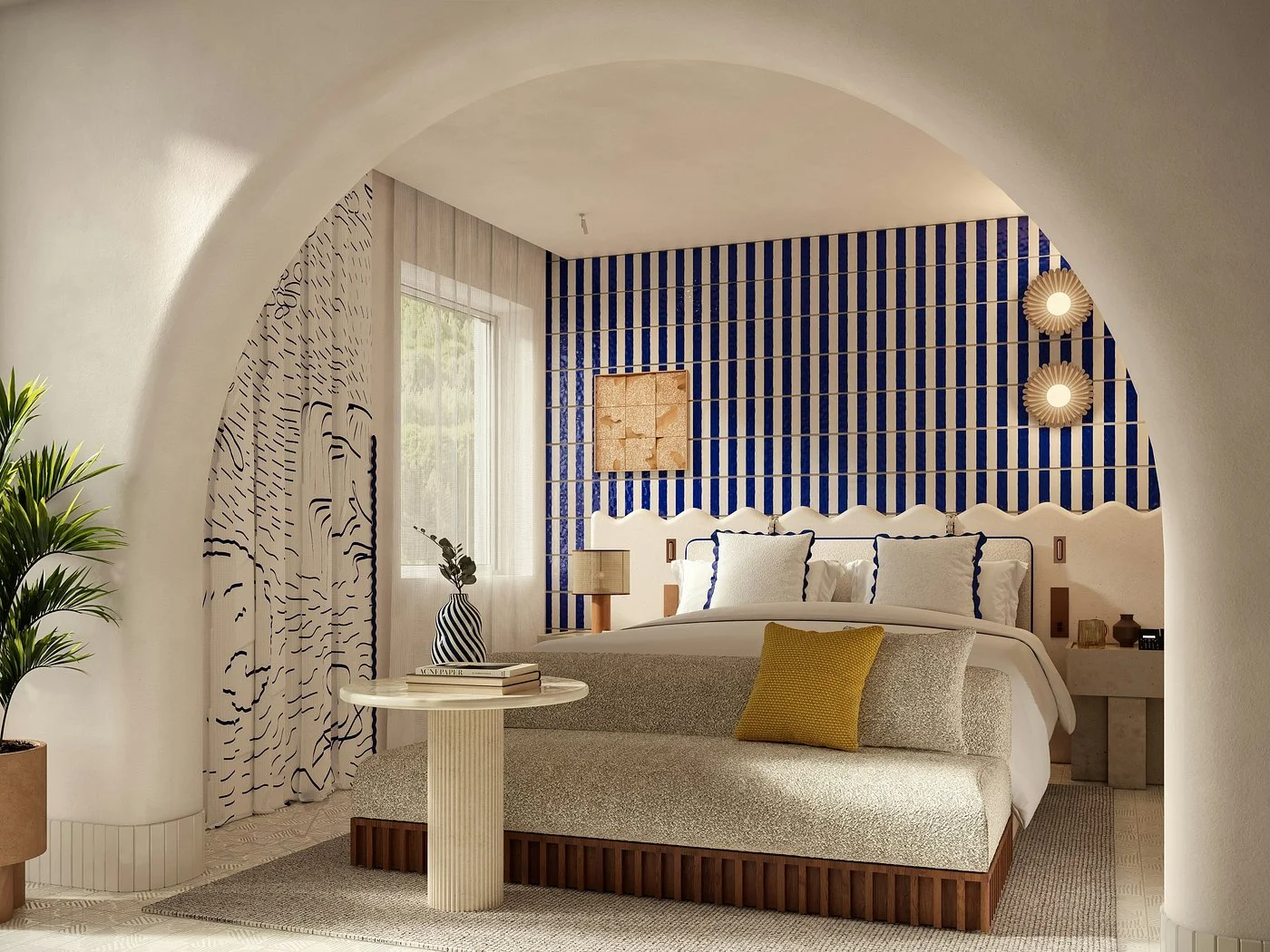
Her work at the hotel draws directly from the island rather than imposing an unrelated international aesthetic. The palette moves through warm terracotta, pale mineral tones, soft whites and Mediterranean blues, while local craftsmanship becomes part of the architecture itself.
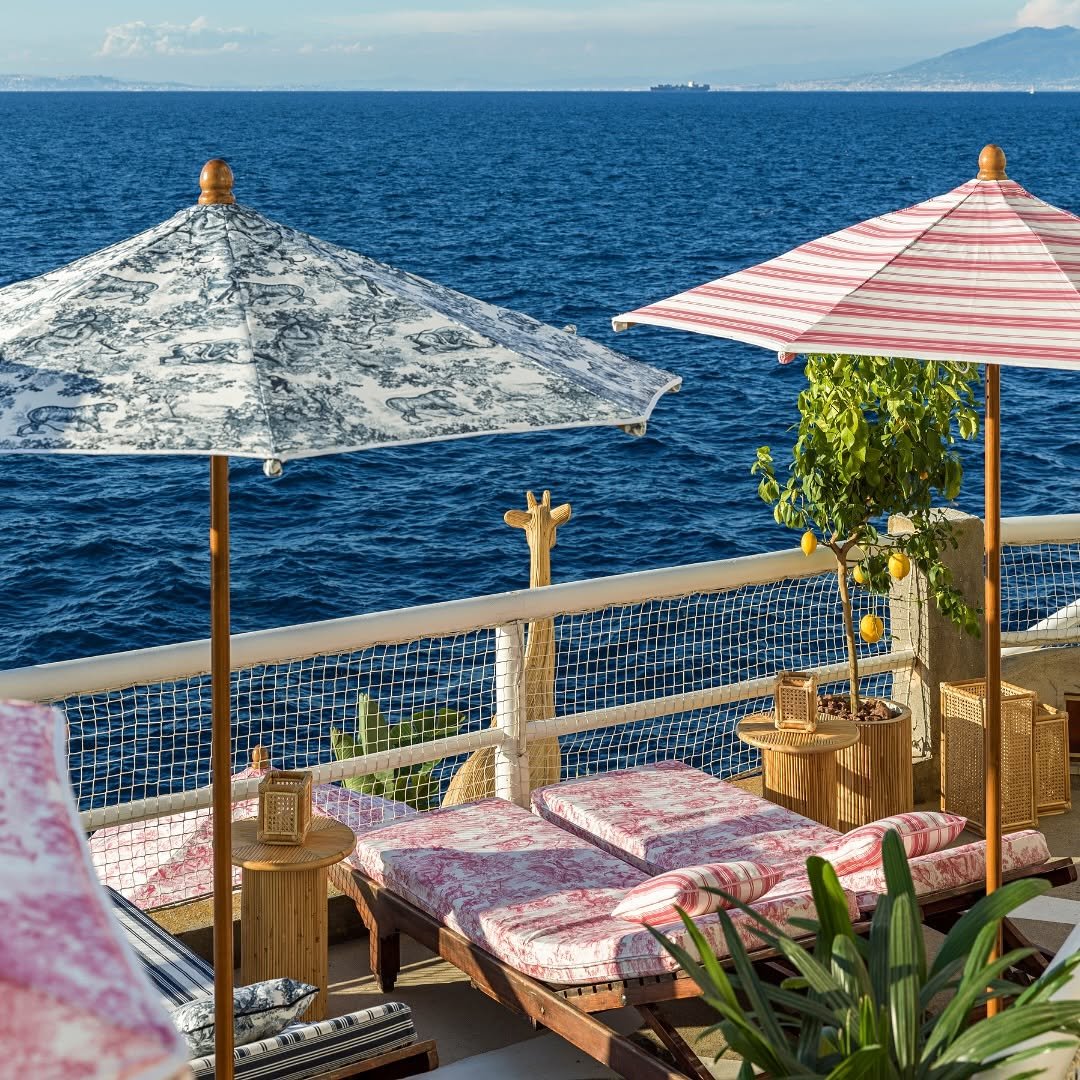
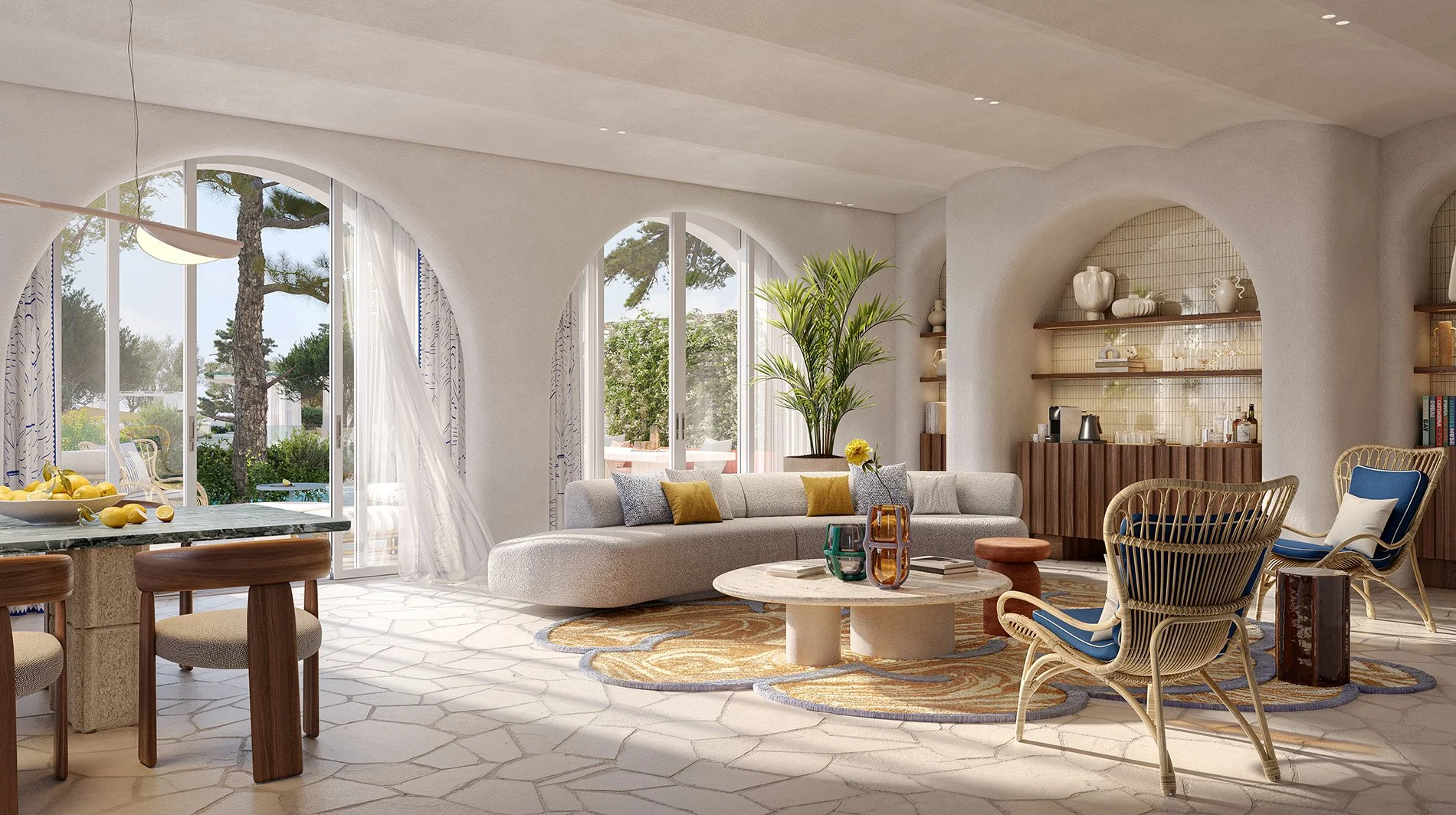
Undulating plaster references the movement of water against Capri’s cliffs. Palladian flooring continues through interior and exterior spaces, reducing the visual divide between rooms and terraces, while handcrafted Vietri ceramics bring southern Italian color and craft into the interiors.
Furniture is deliberately curved rather than rigid. Sofas resemble stones softened by water, tables take on sculptural forms and arched openings frame the landscape rather than compete with it.
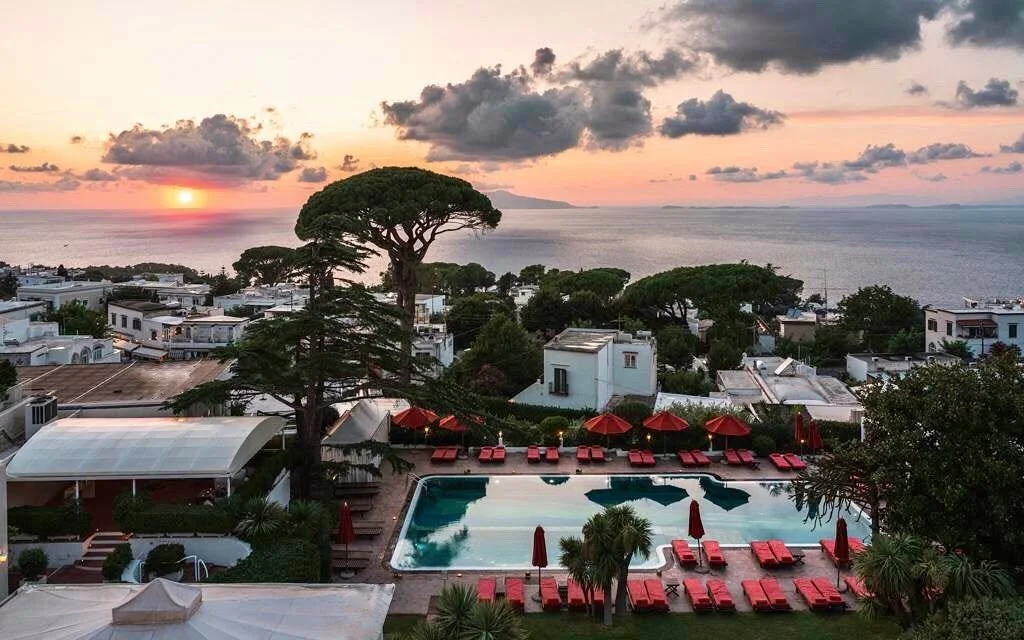
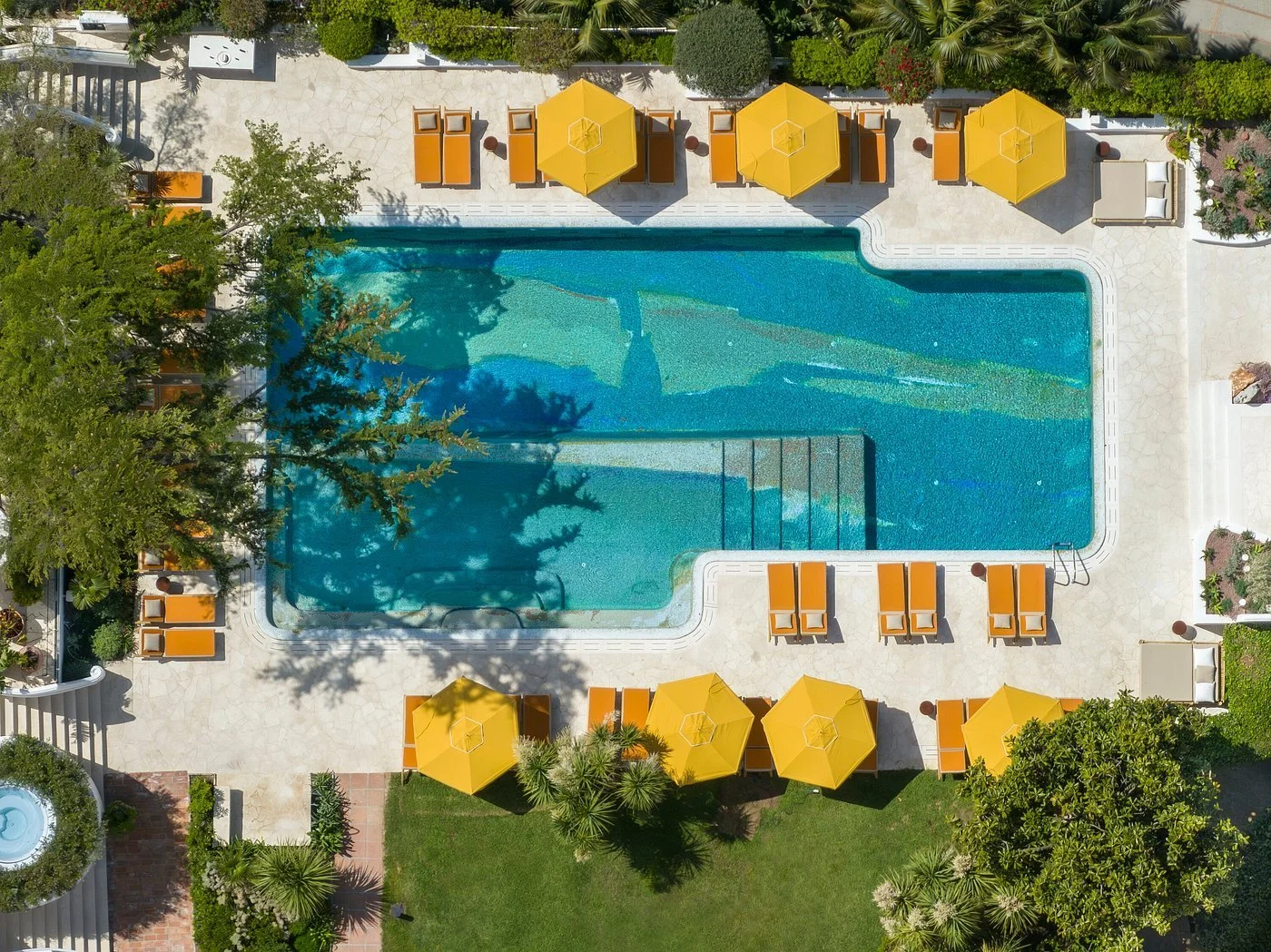
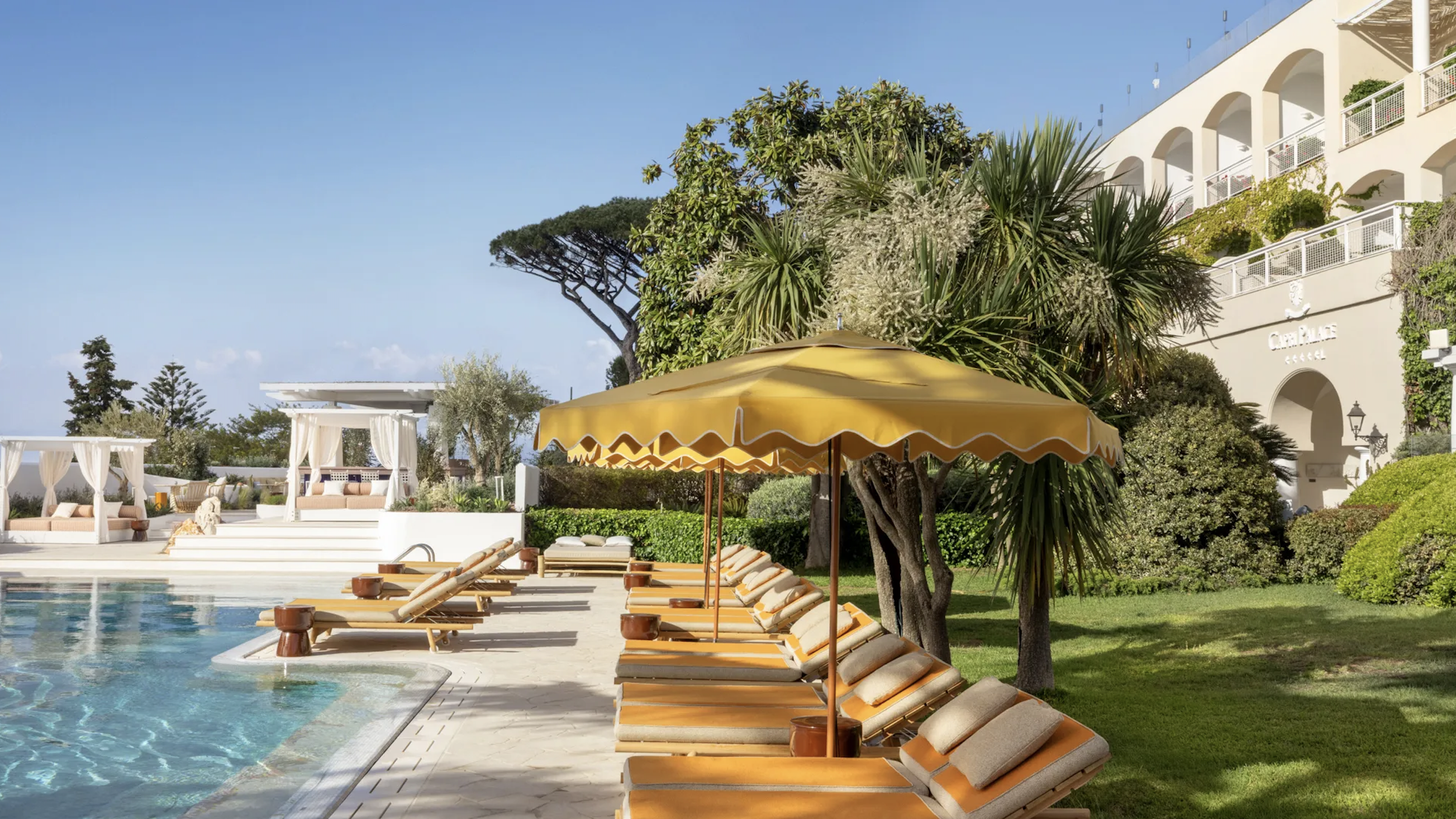
Urquiola’s work has extended beyond the guestrooms to areas surrounding the swimming pool and bar, giving the newer spaces a more unified relationship with the island.
The result is particularly effective because Capri is already visually intense. The interiors do not need to recreate the scenery. Instead, they borrow its colors, movement and materials and allow the real landscape to remain the focus.
Rooms and Suites Shaped by Capri
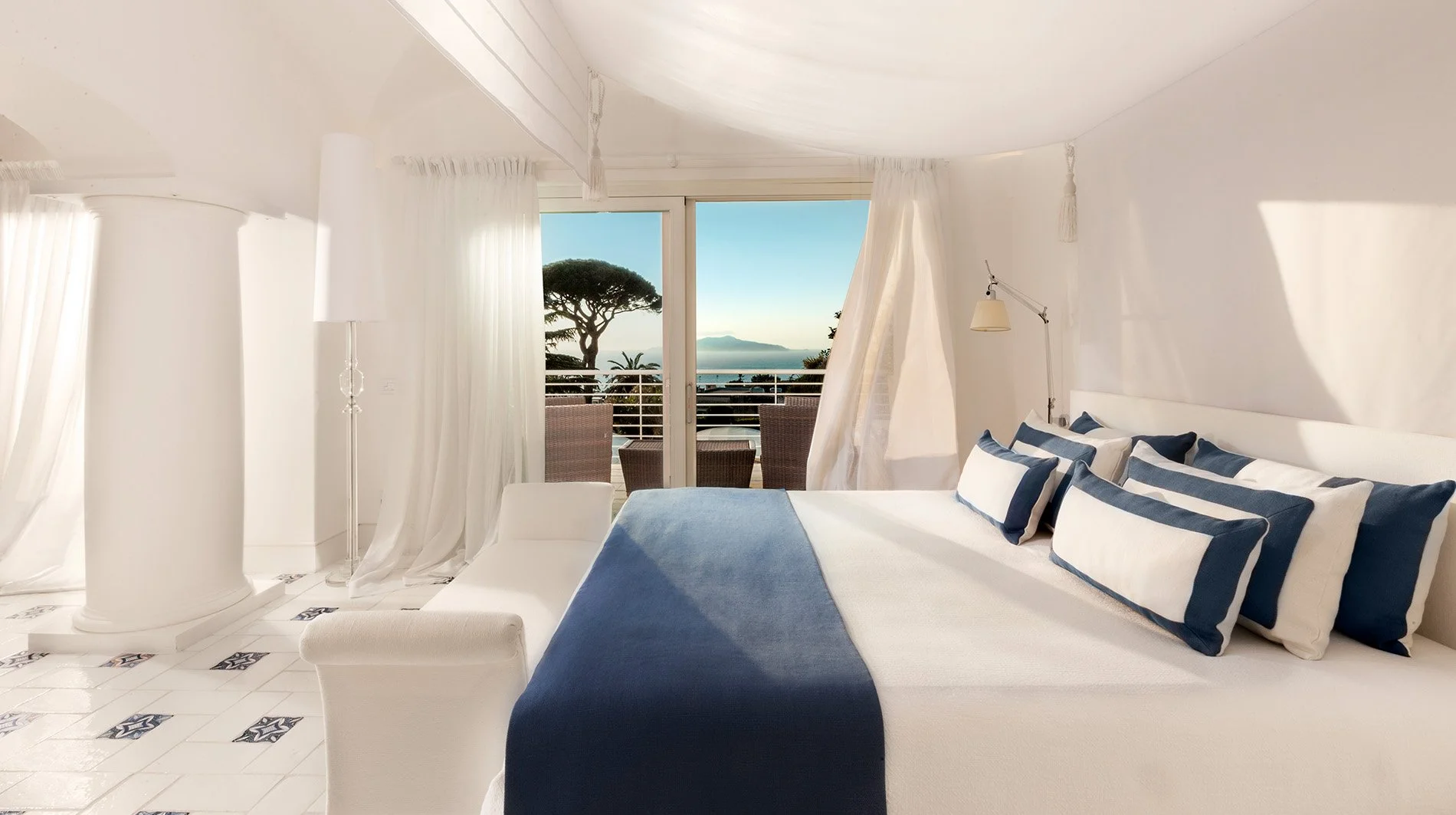
Jumeirah Capri Palace has a particularly varied accommodation collection, ranging from garden-facing rooms to large sea-view suites, private-pool accommodations and highly individual signature suites.
Current categories represented across the collection include:
Garden Room: Approximately 269 square feet, overlooking the hotel gardens and designed around Mediterranean tones and natural light.
Deluxe Balcony Garden Side Room: Approximately 323 square feet, with a private balcony immersed in the surrounding greenery.
Junior Suite Garden Side: Approximately 323 to 484 square feet, adding a living area and private balcony facing the gardens.
Junior Suite Sea View: Approximately 398 square feet, with Mediterranean views and either a private or French balcony.
Sea View Suite: Approximately 570 square feet, with a separate living area and private terrace overlooking the Bay of Naples.
Deluxe Sea View Suite: Approximately 646 square feet, with a larger terrace and uninterrupted views across the bay.
Executive Sea View Suite: Approximately 753 square feet, combining generous living space with an elevated private terrace.
Superior Room Seaside: Approximately 291 square feet, with nautical references inspired by traditional Neapolitan boats.
Two-Bedroom Superior Room Seaside: Approximately 592 square feet, created from two interconnected sea-facing rooms.
Capritouch Junior Suite Sea View: Approximately 484 square feet, combining Mediterranean views with handmade details.
Capritouch Suite Sea View: Approximately 538 square feet, characterized by handmade ceramic flooring and Loro Piana fabrics.
Capritouch Executive Suite Sea View: Approximately 753 square feet, with vaulted spaces and wide views across the Bay of Naples.
Art Suite Sea Side: Approximately 538 square feet, with interiors referencing artists including Kandinsky, Mondrian and Miró.
Star Junior Suite Sea Side: Approximately 484 square feet, drawing inspiration from figures including Audrey Hepburn and Isabelle Adjani.
Garden Suite with Private Pool: Approximately 495 to 753 square feet, with a private garden and heated pool.
Monroe Suite Sea Side: Approximately 861 square feet, with a separate living room and design inspired by Marilyn Monroe.
Callas Suite Sea Side with Plunge Pool: Approximately 807 square feet, with a large sea-facing terrace and private plunge pool.
Presidential Paltrow Suite Sea Side with Private Pool and Terrace: Approximately 1,615 square feet, positioned on the top floor with a panoramic terrace and private pool.
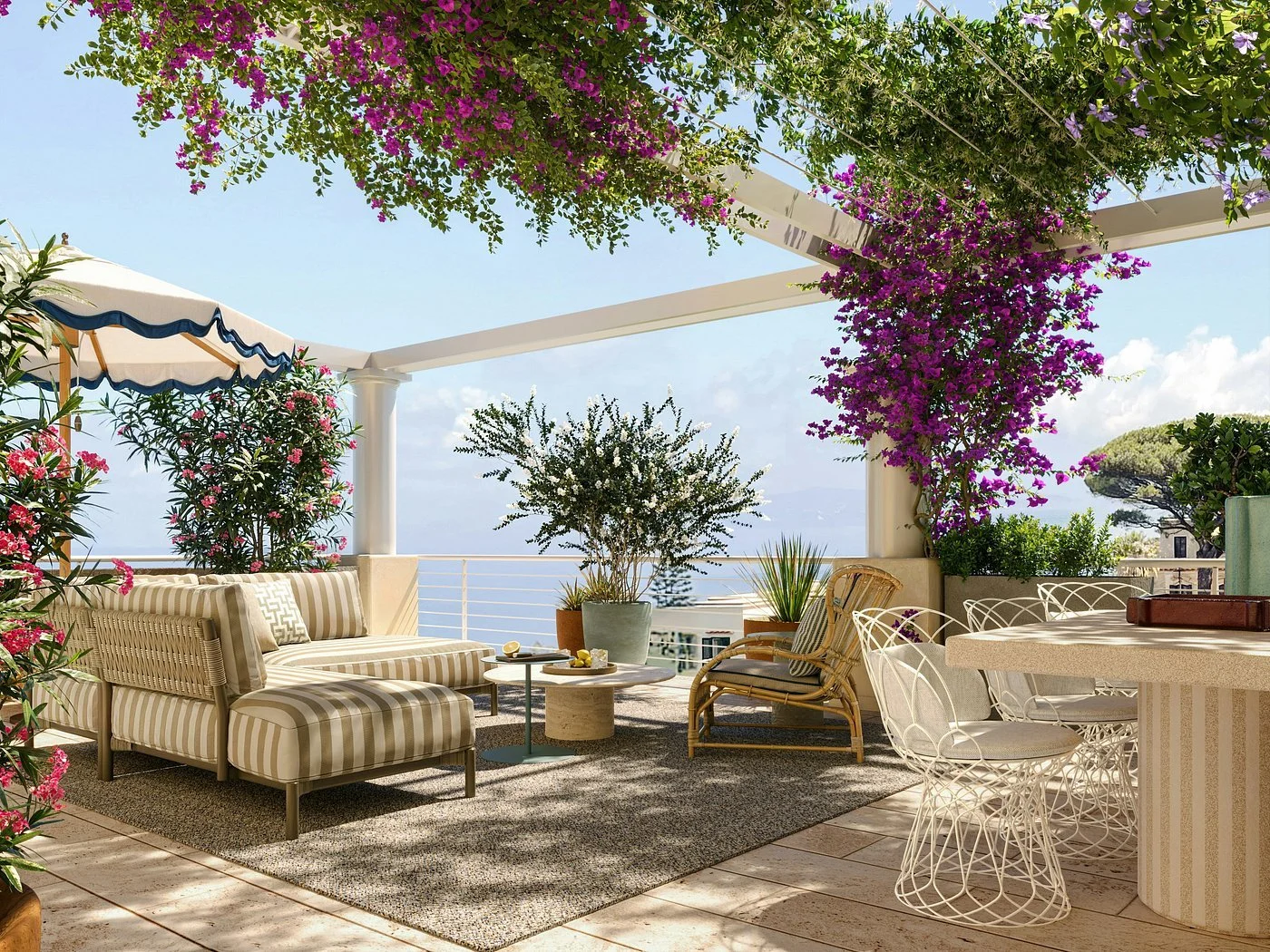
Terrace Suite: Approximately 775 square feet, newly designed by Patricia Urquiola and opening onto the pool area.
Executive Terrace Suite Sea View: Approximately 1,367 square feet, with a generous terrace and views toward both the sea and pool.
Executive Floor: A private configuration of approximately 3,531 square feet comprising five suites and its own lobby, designed for larger groups seeking greater privacy.
The breadth of the room collection means that choosing purely by size misses part of the point. The more important distinctions are garden versus sea, balcony versus terrace, and traditional signature design versus the newer Urquiola interiors.
Dining Across Anacapri and the Sea
Food is one of the strongest reasons to stay at Jumeirah Capri Palace because the dining program stretches well beyond a single hotel restaurant.
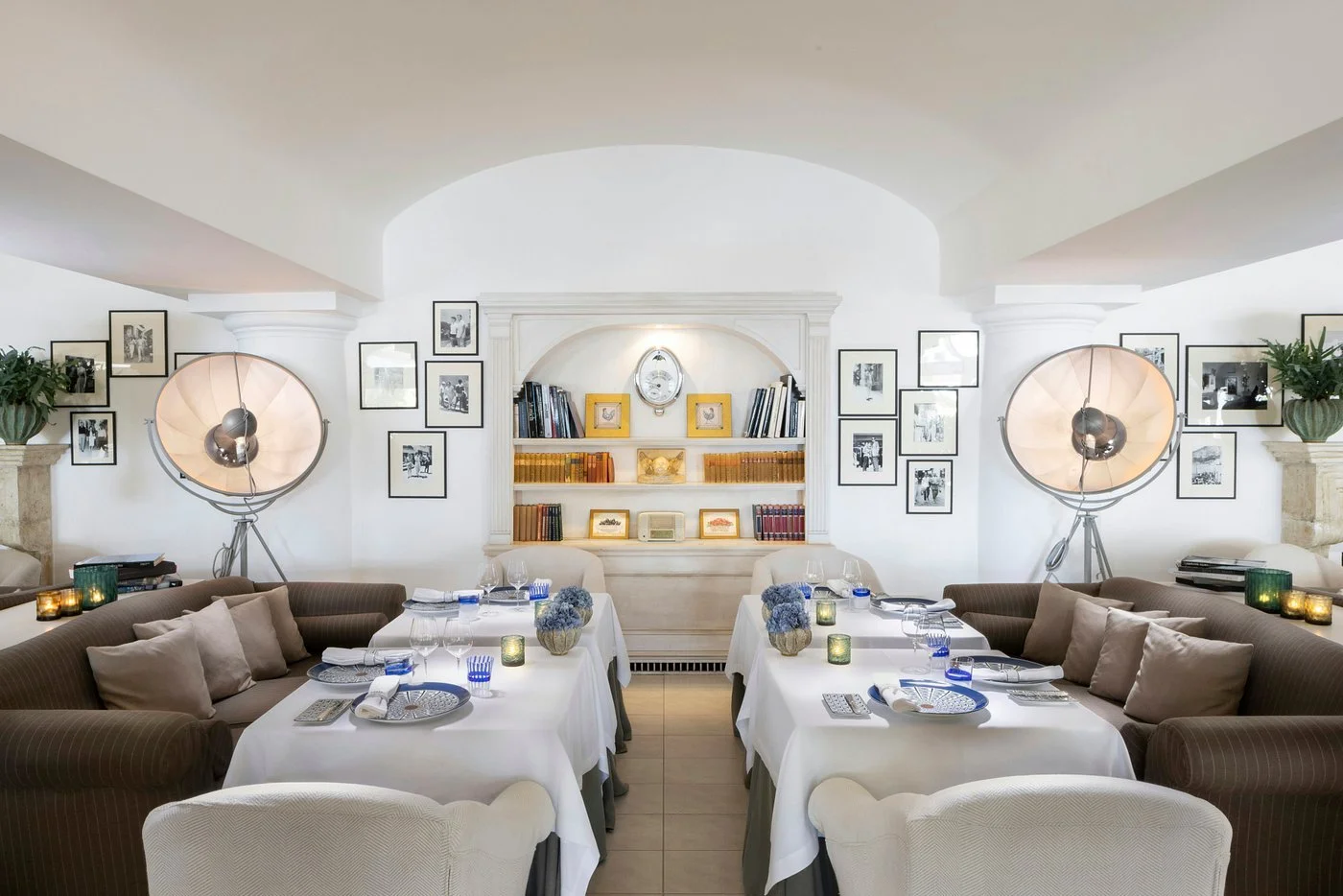
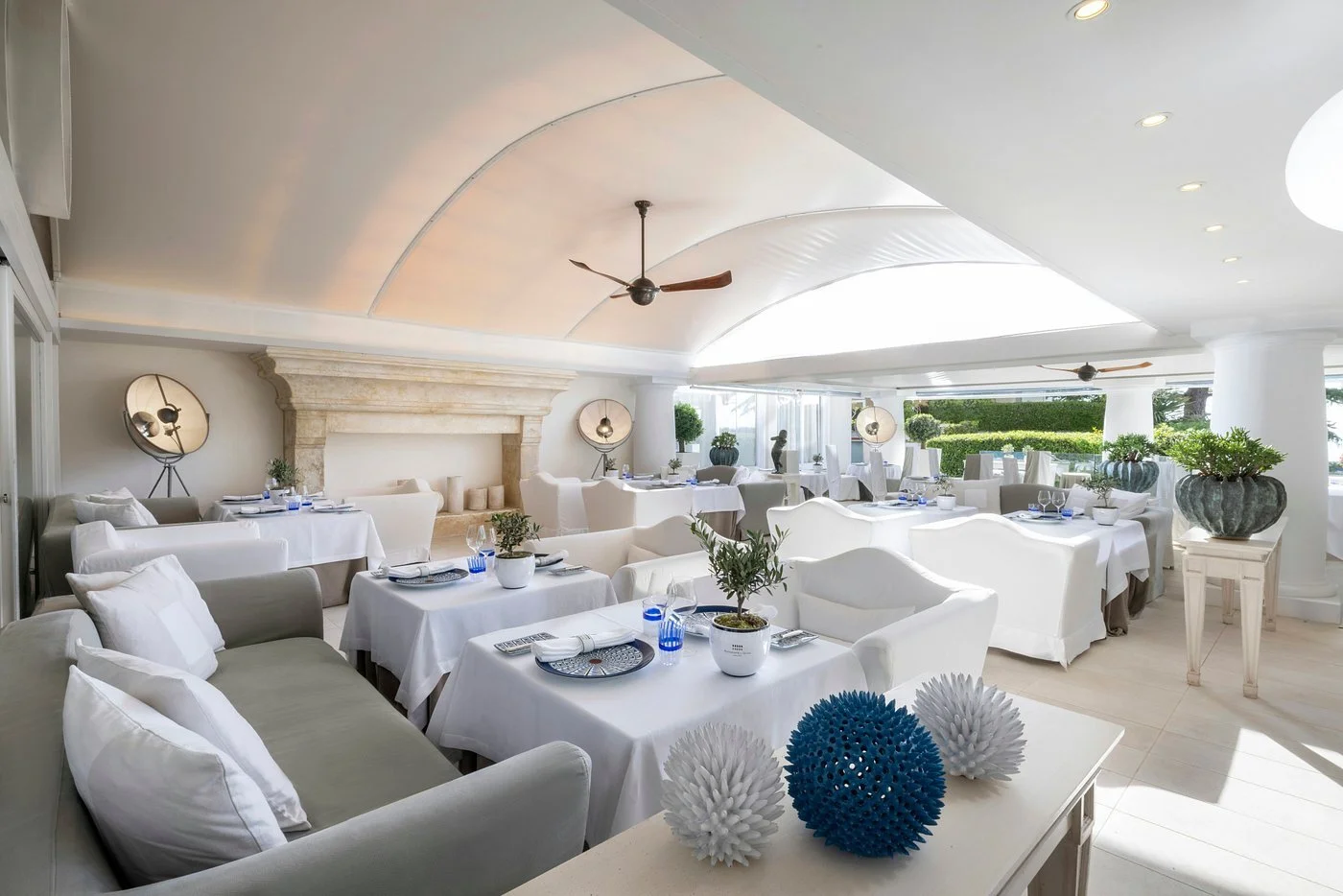
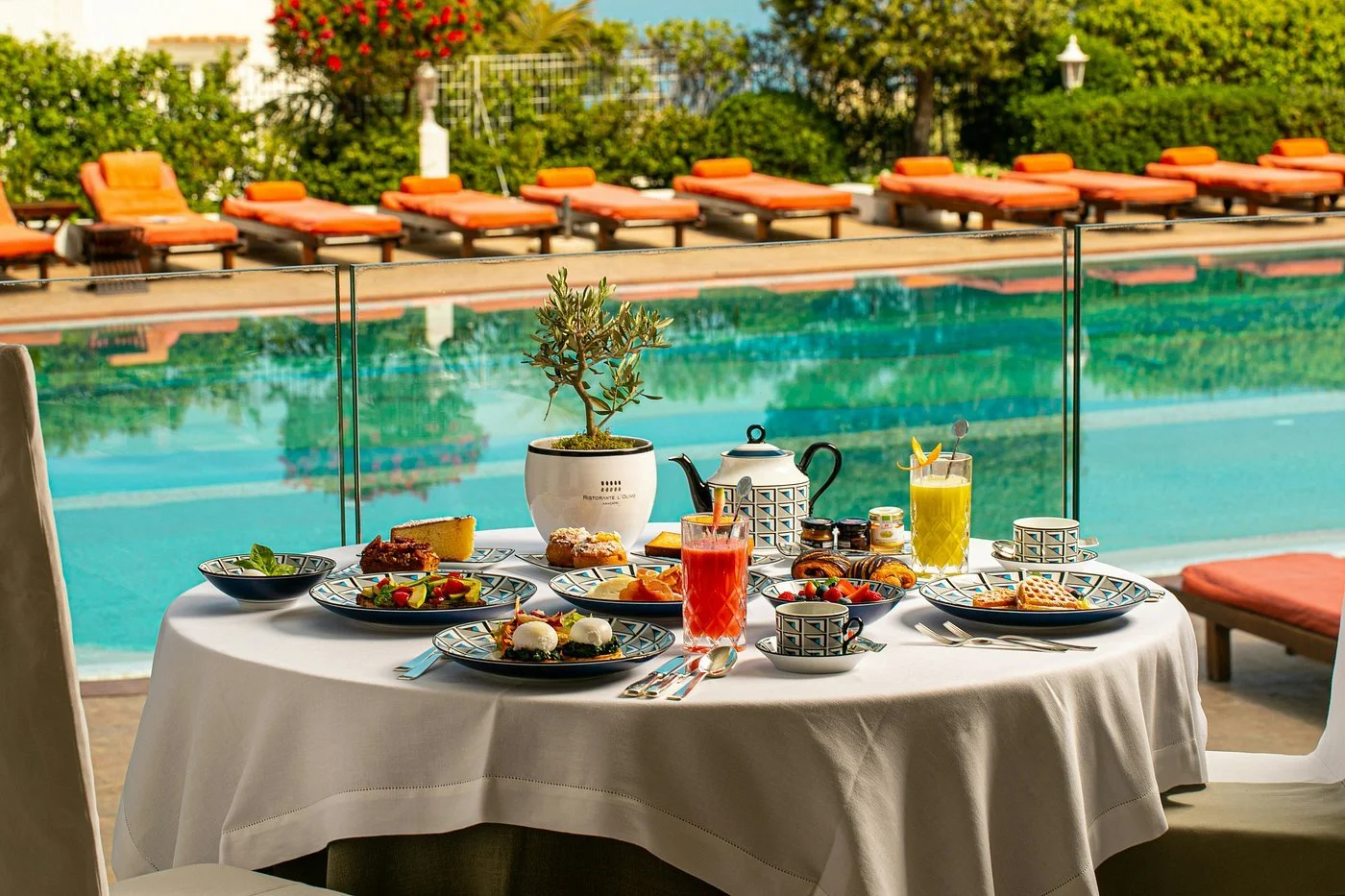
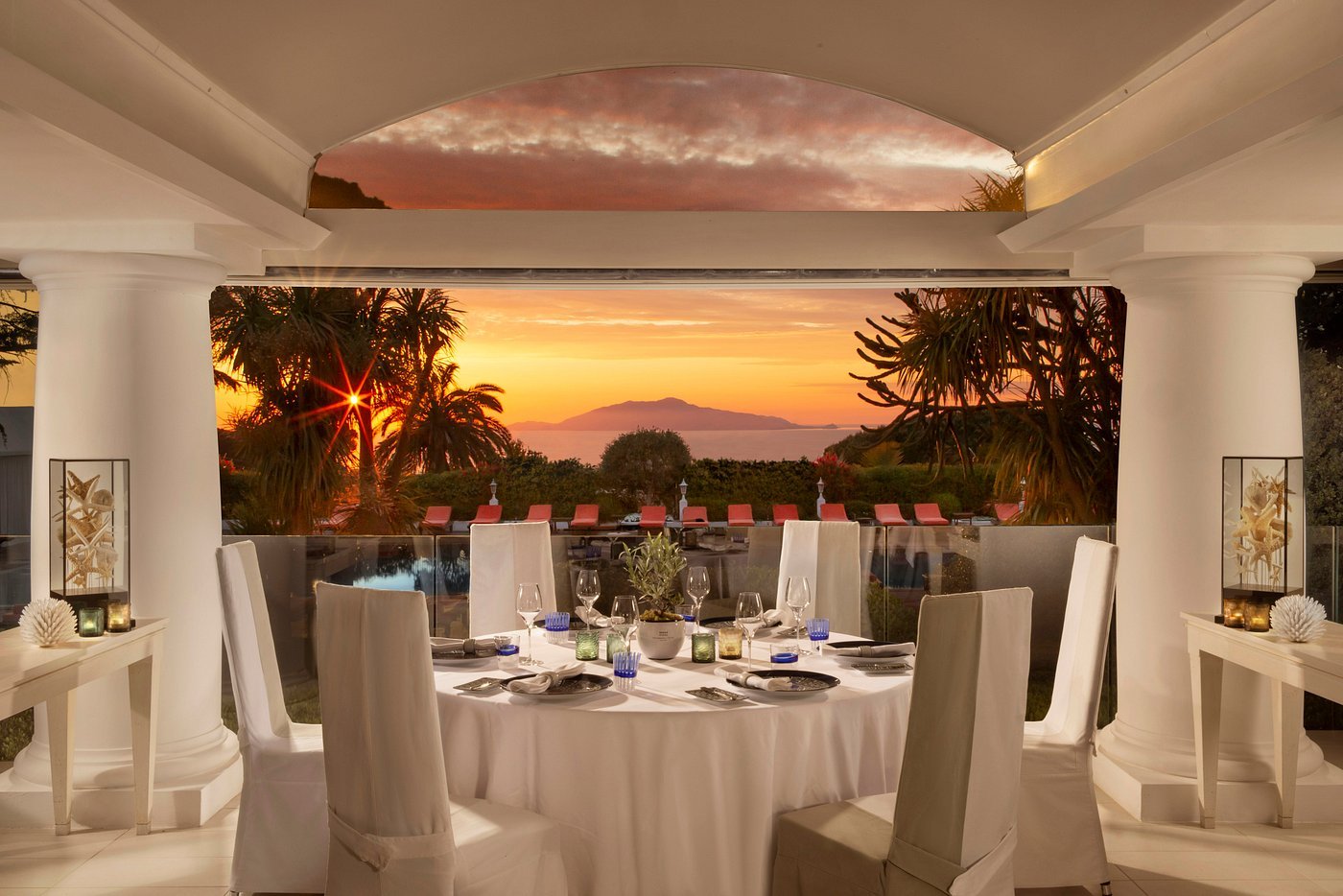
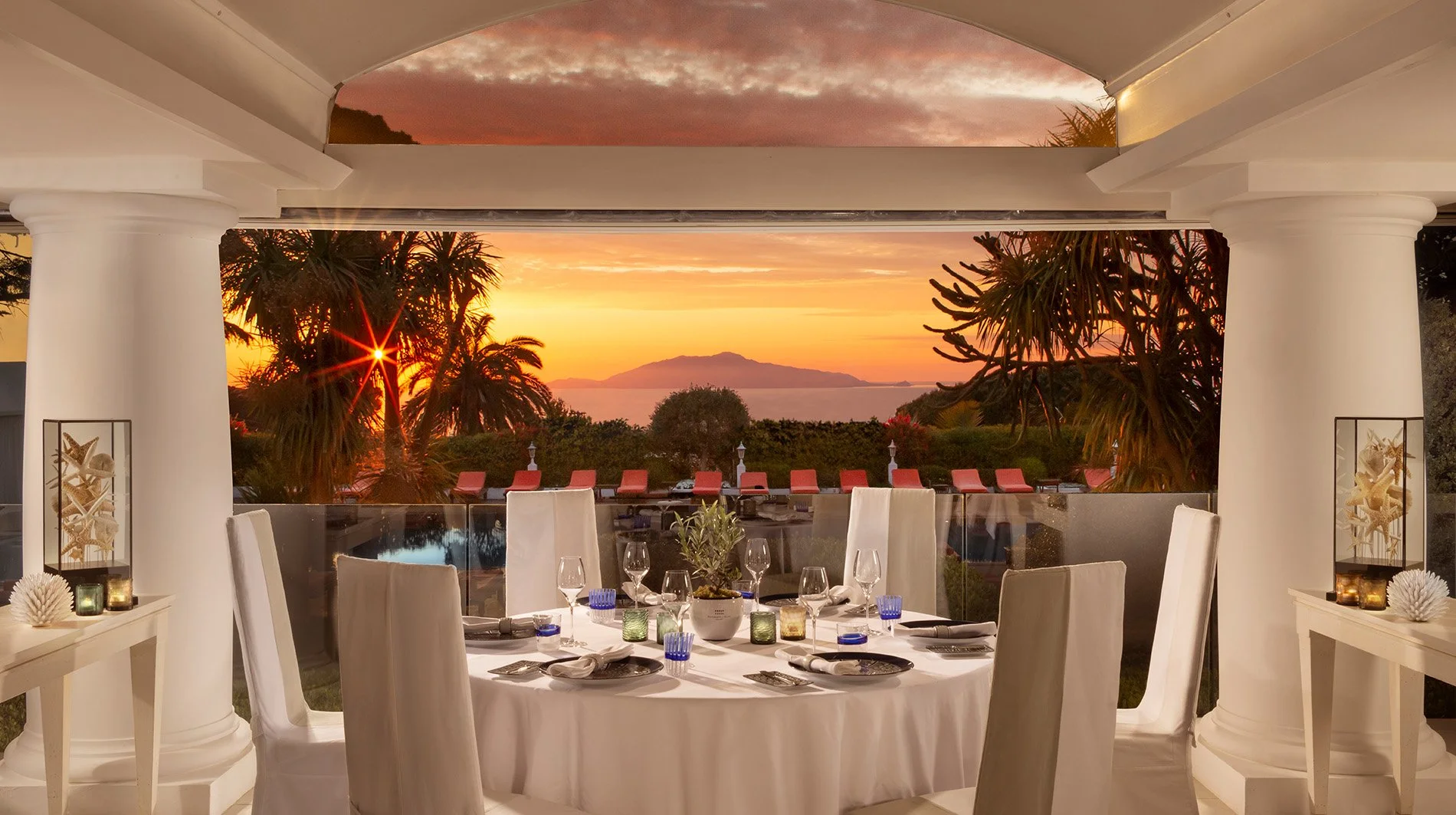
L’Olivo is the culinary anchor. The two-Michelin-starred restaurant serves contemporary Mediterranean cuisine under the wider culinary direction of Andrea Migliaccio, with the kitchen placing particular emphasis on precise technique and high-quality ingredients.
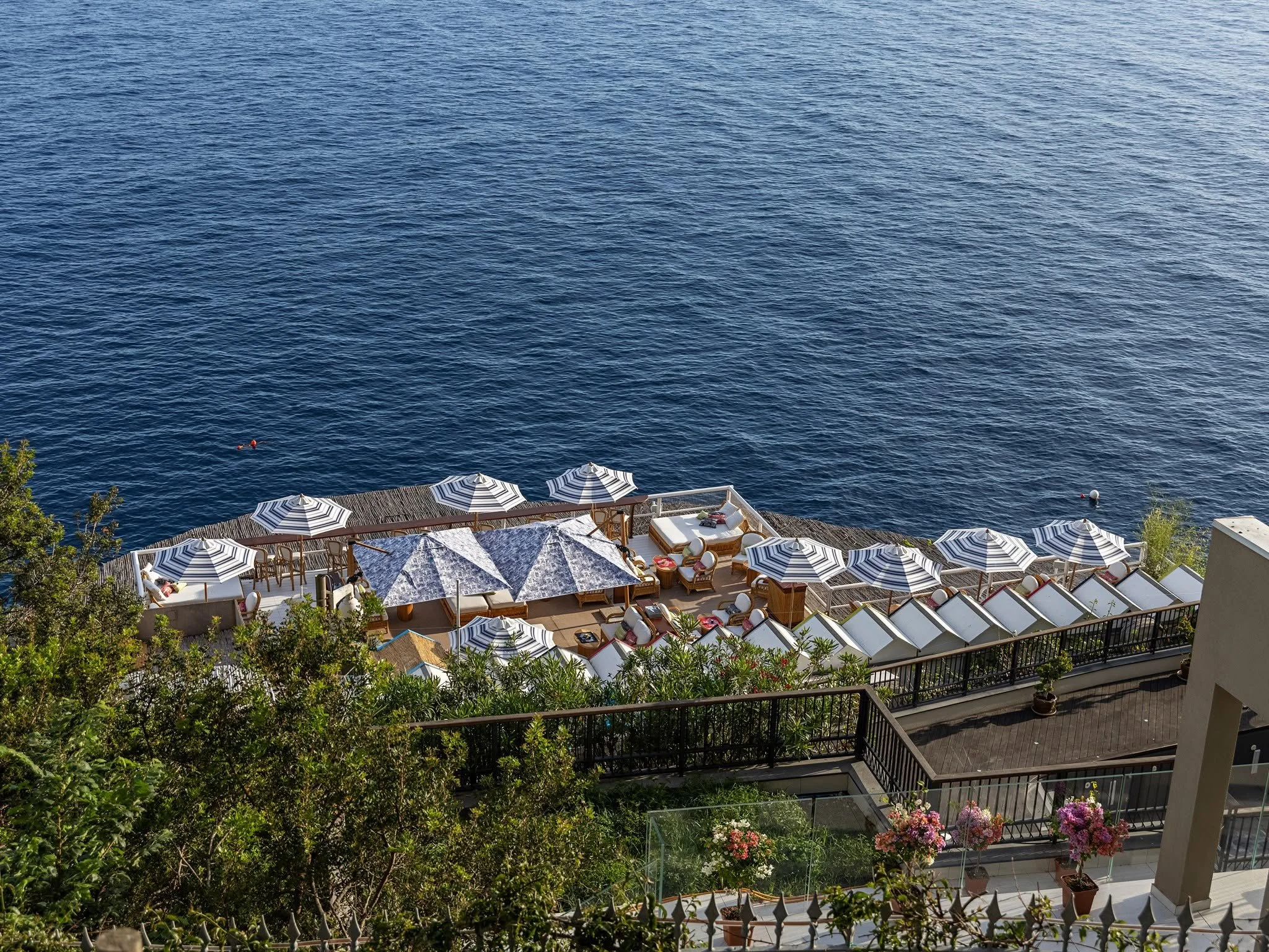
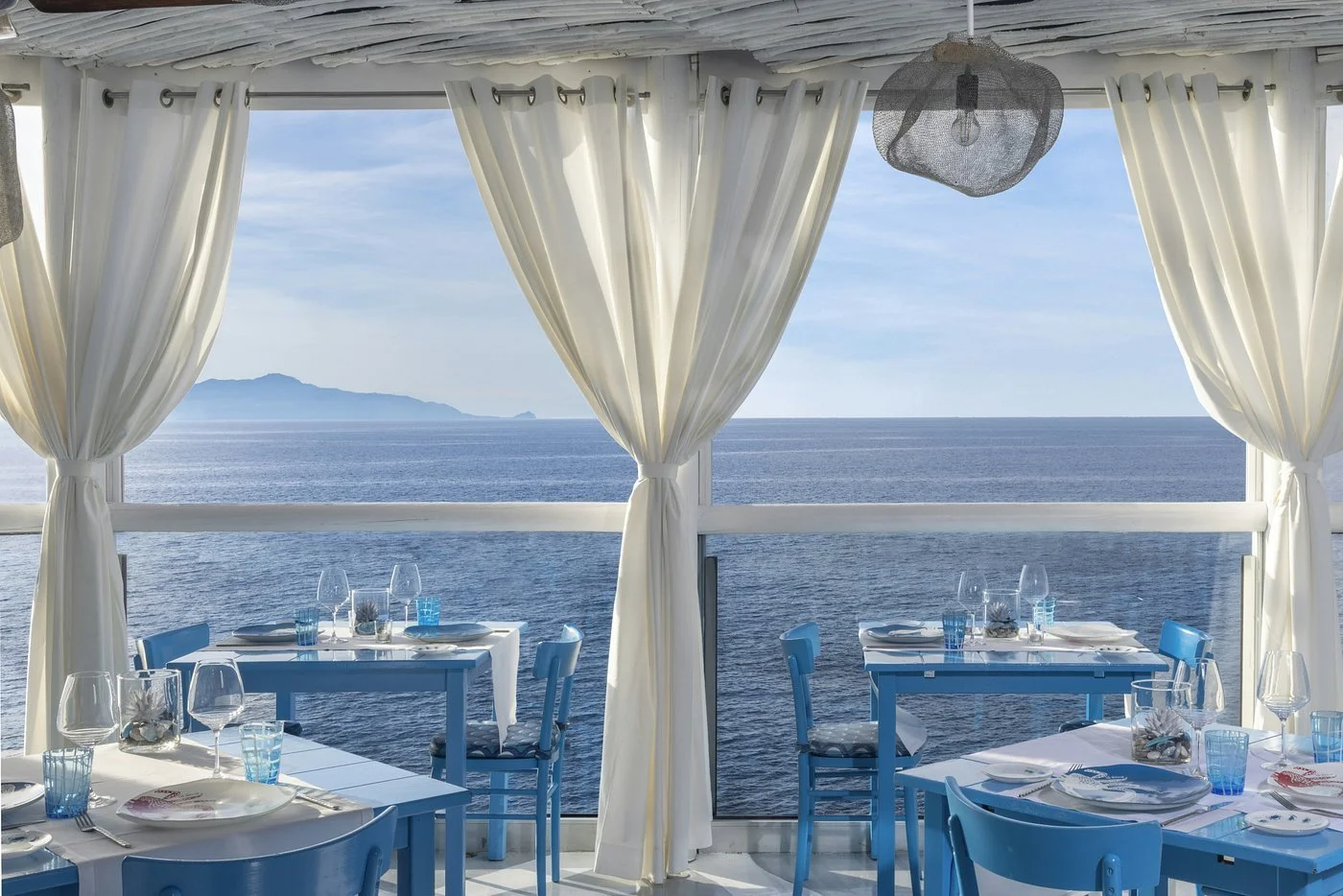
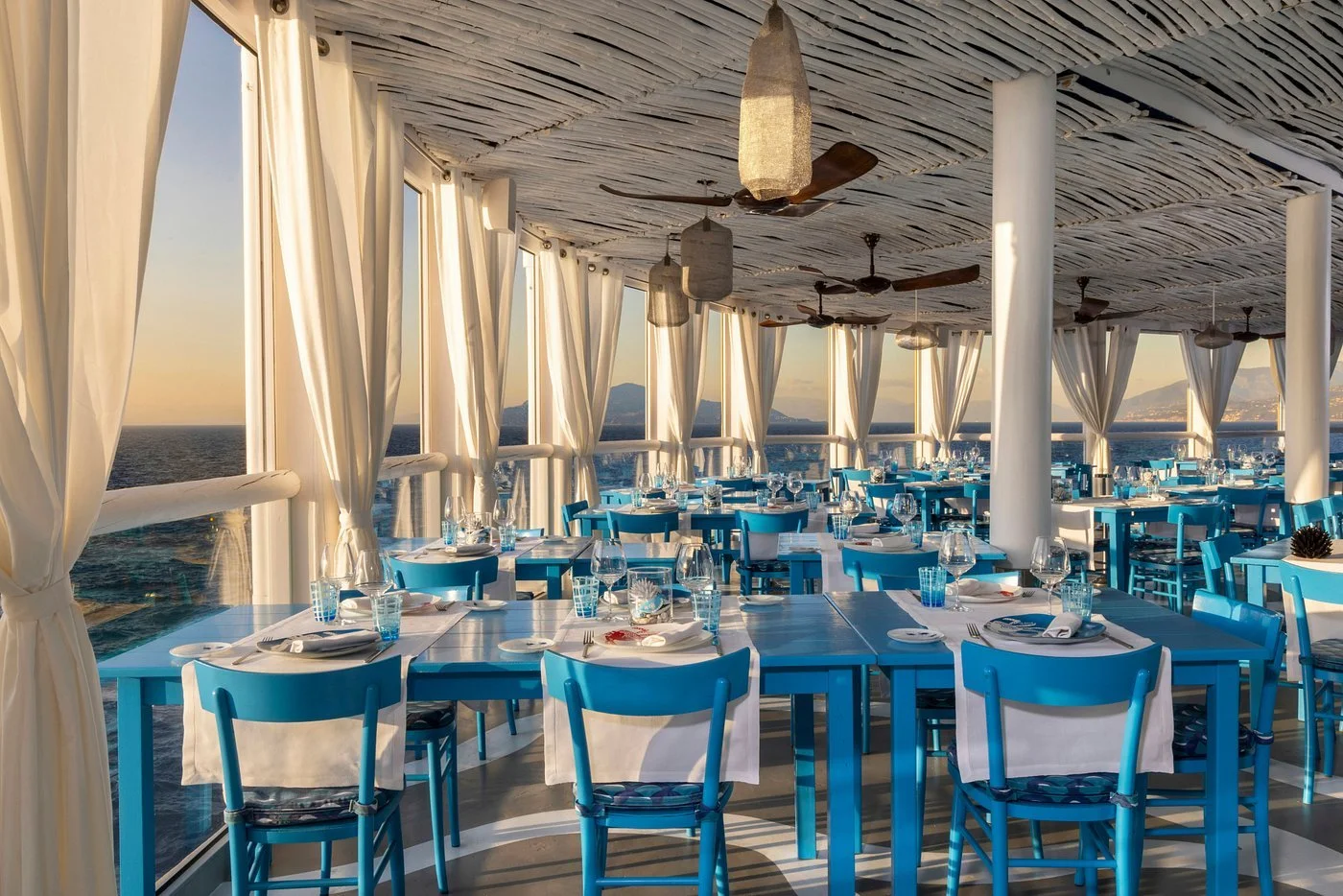
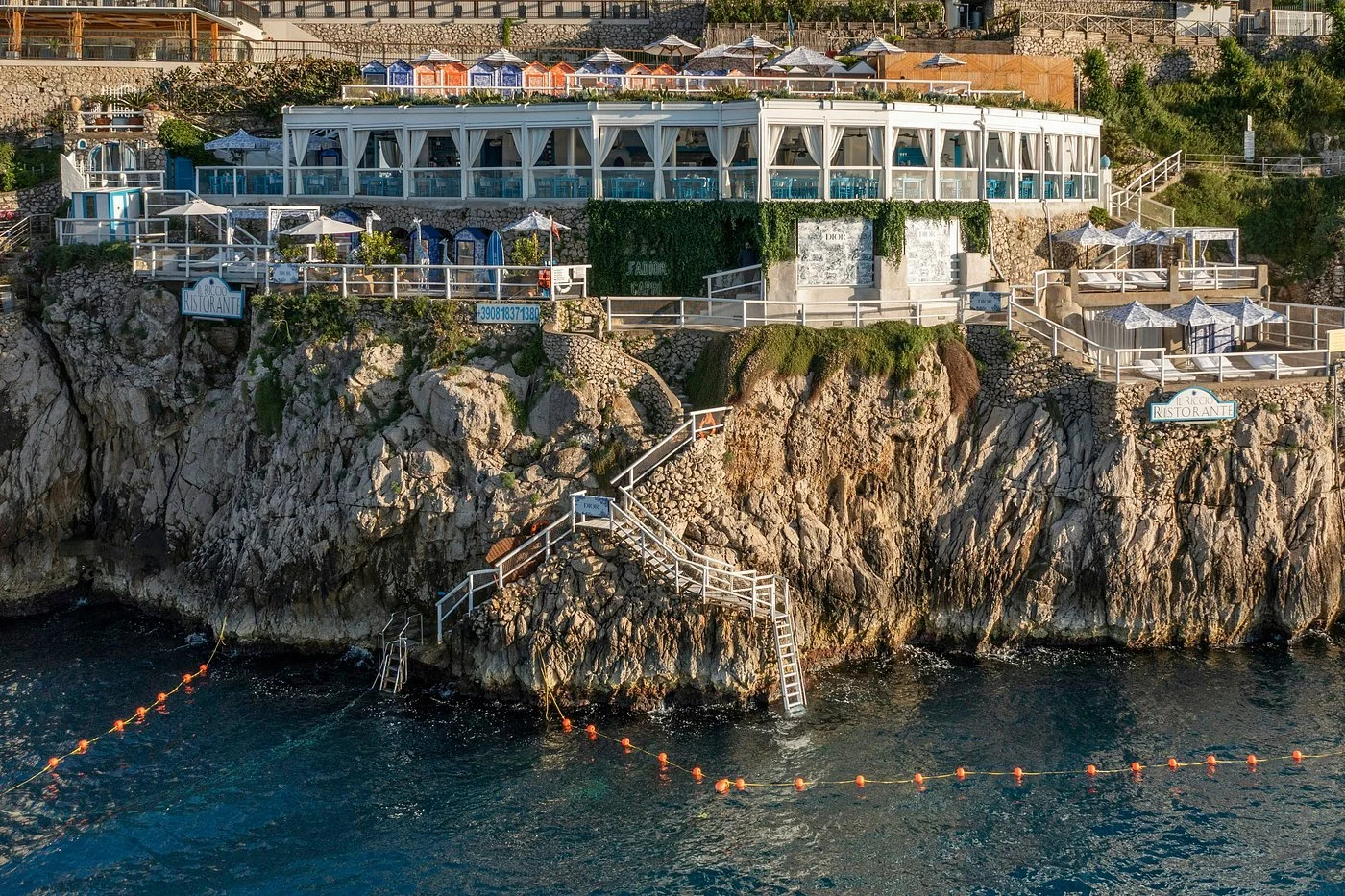
Il Riccio shifts the experience dramatically. Positioned beside the sea near the Blue Grotto, it focuses on Mediterranean seafood and is one of the property’s most recognizable destinations.
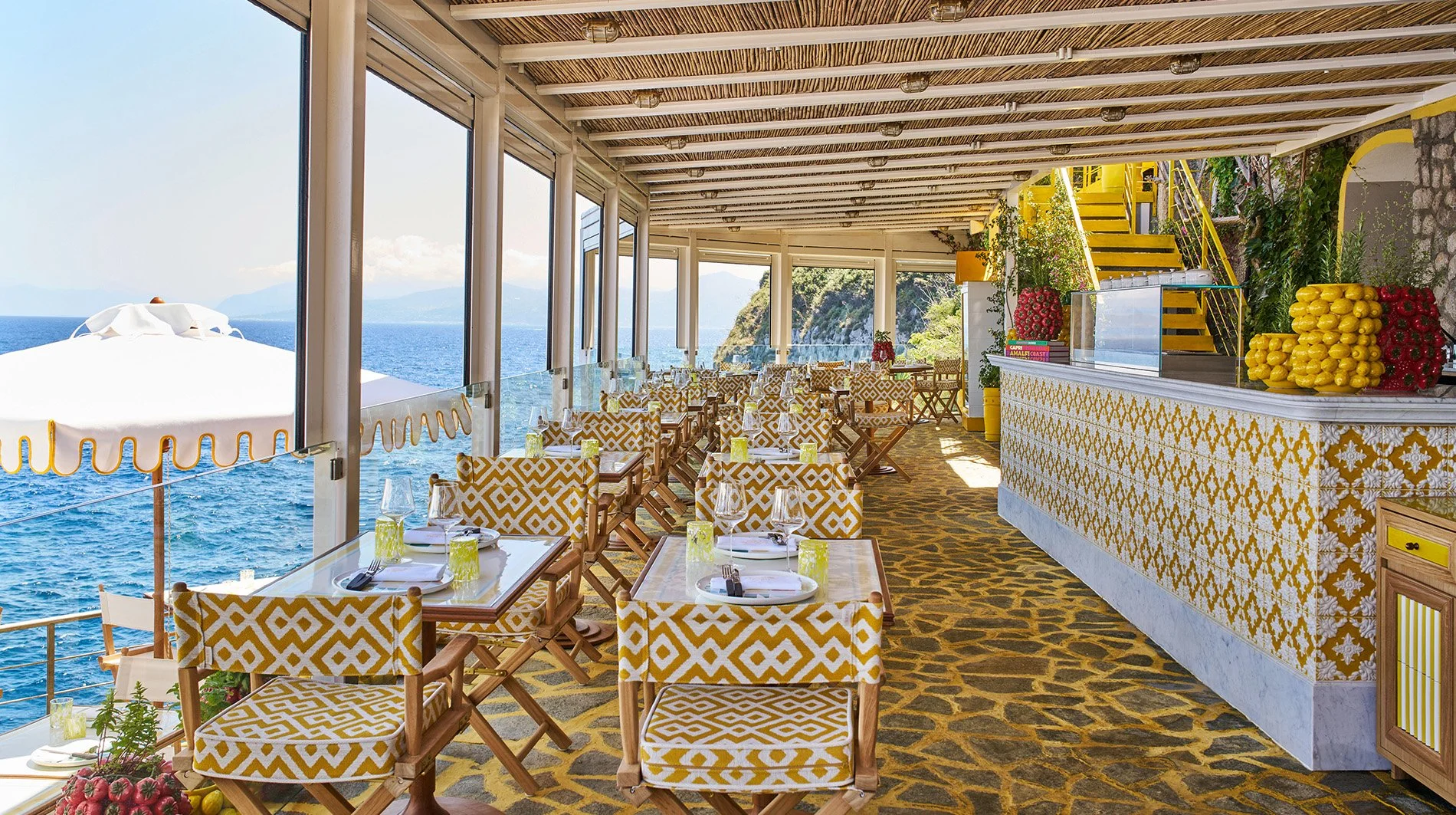
a-Ma-Re Capri takes a more relaxed approach to coastal dining, with Neapolitan cooking and pizza enjoyed against panoramic sea views.
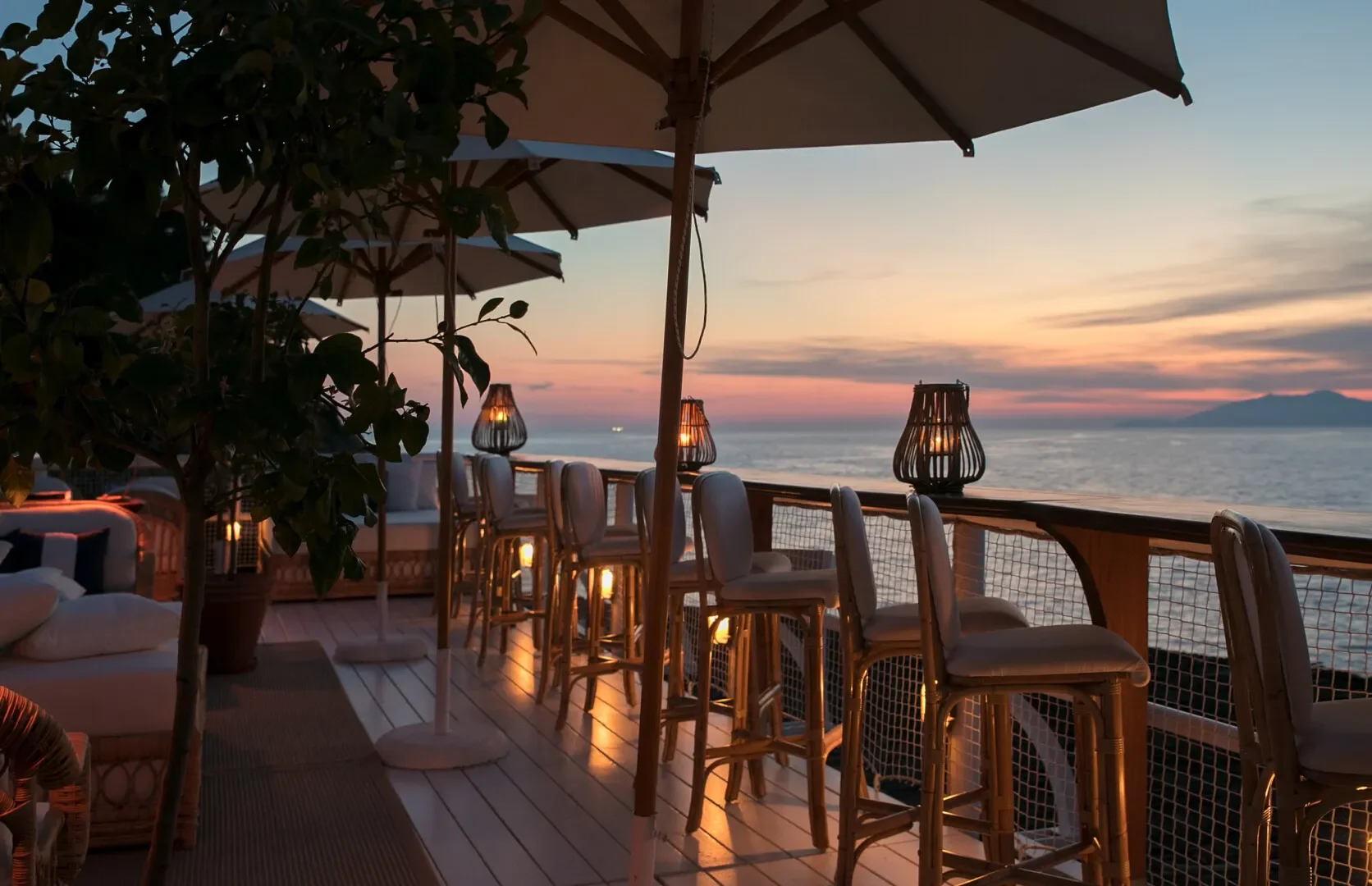
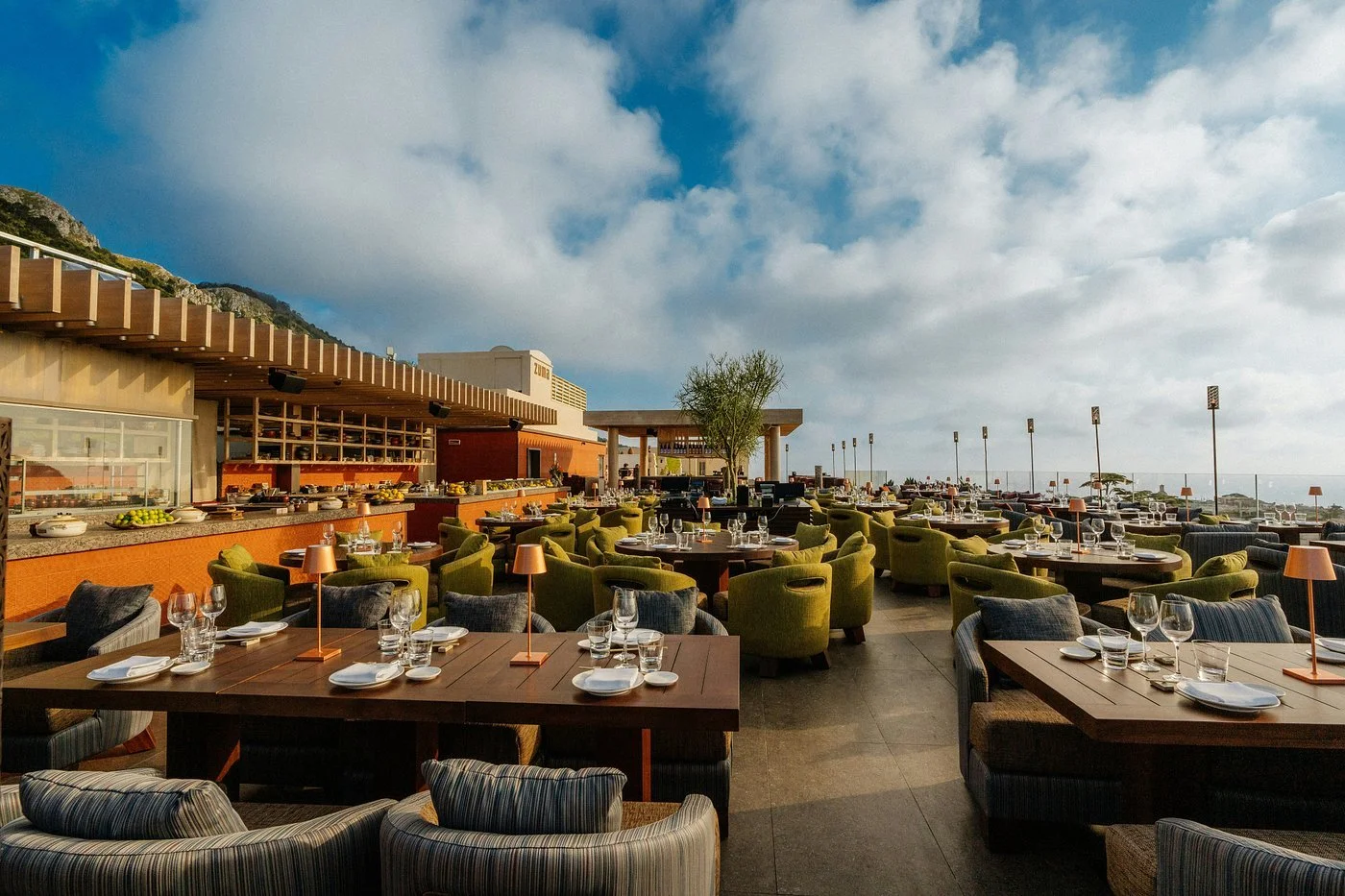
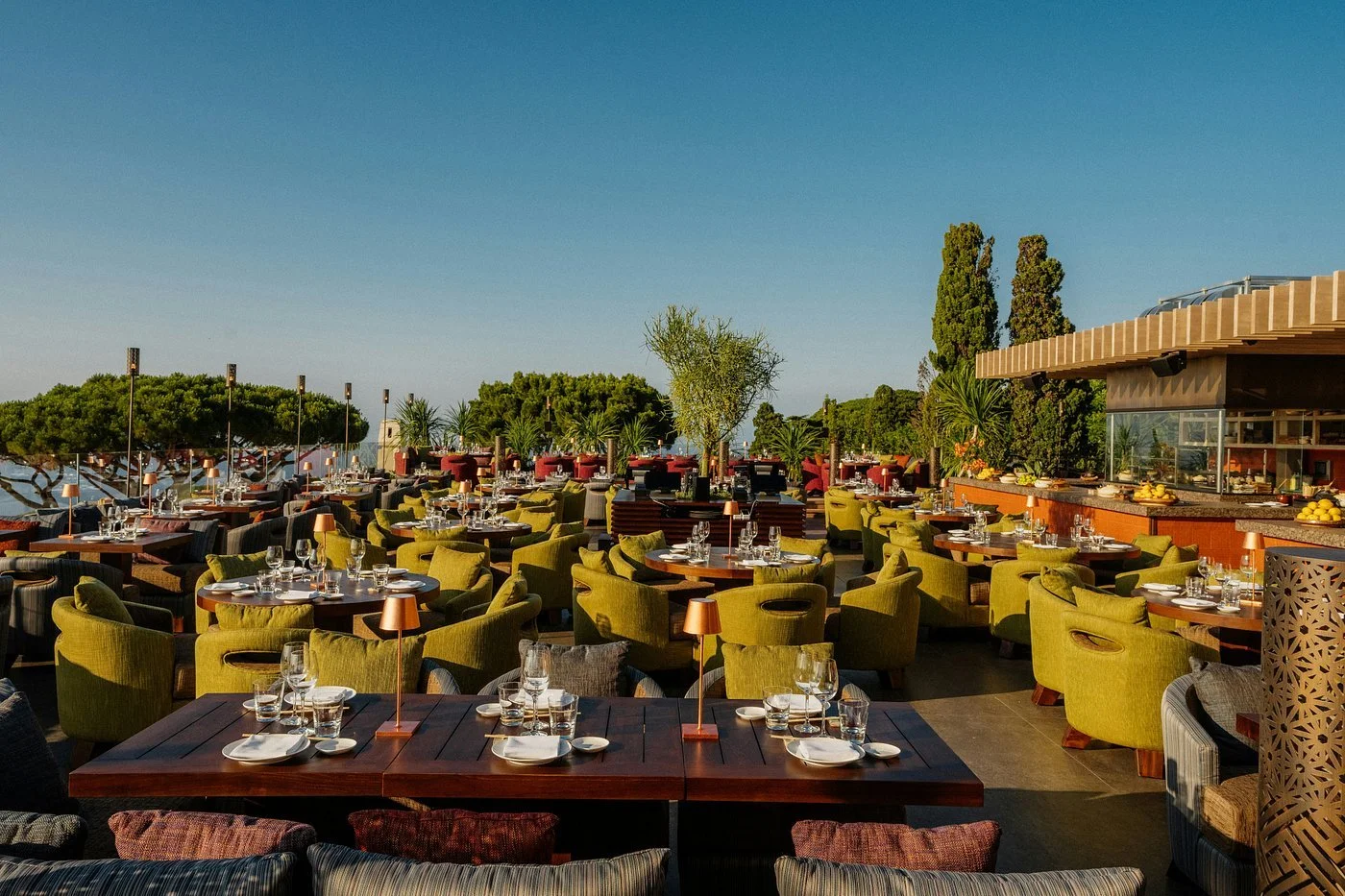
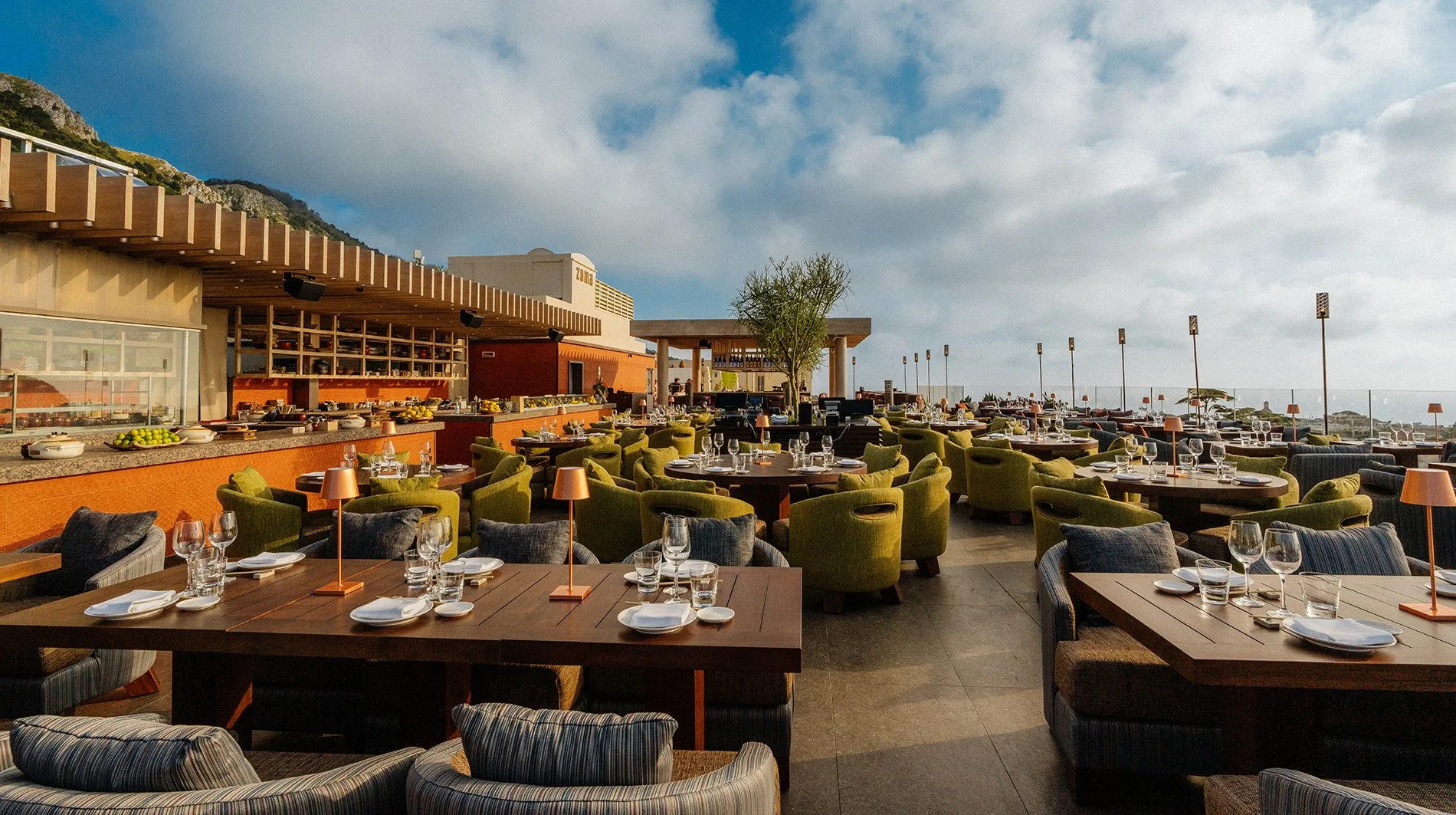
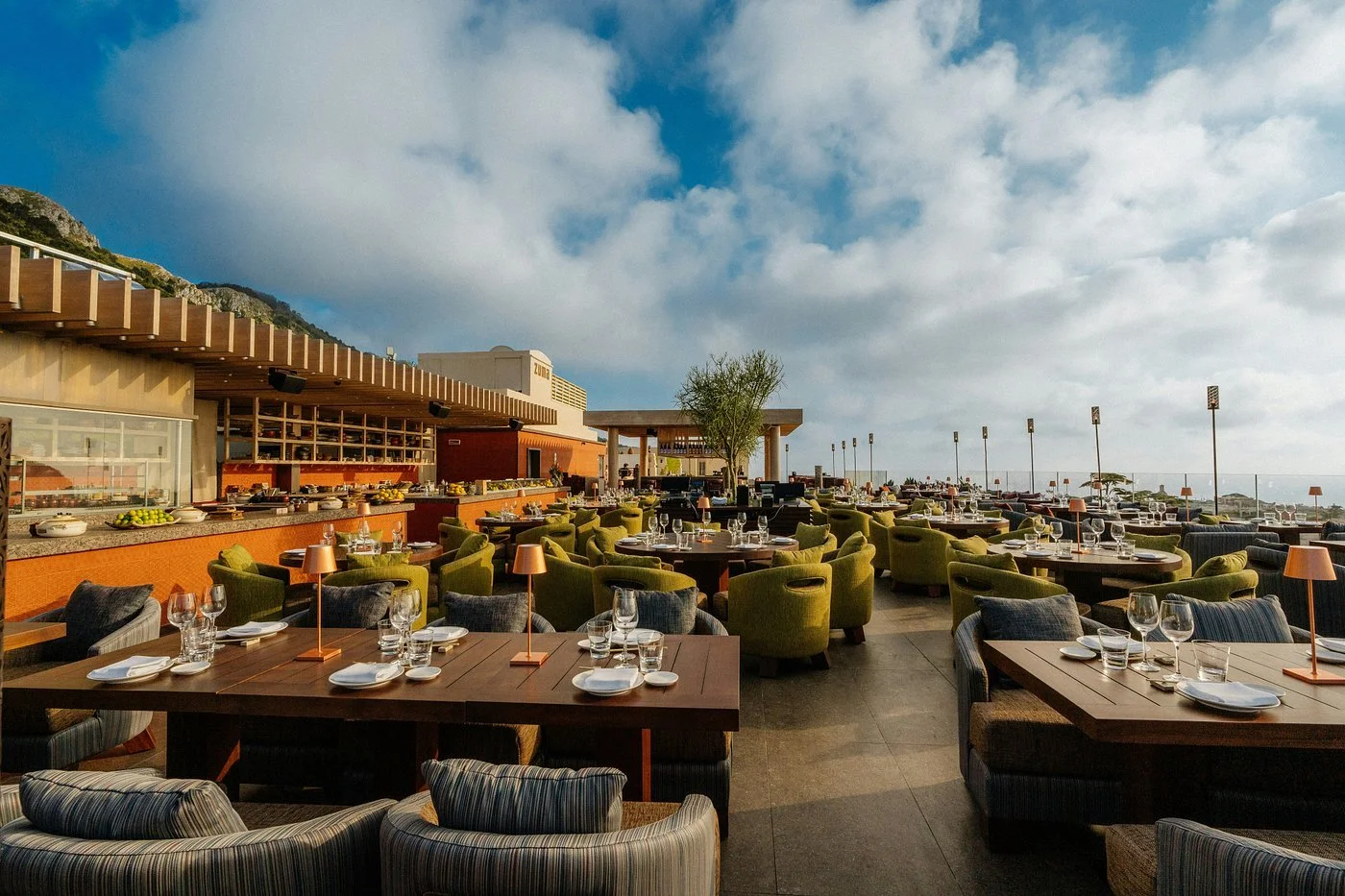
On the hotel rooftop, Zuma Capri brings contemporary Japanese cuisine, cocktails and a much more energetic atmosphere, particularly around sunset.
Back at the main property, Bar degli Artisti combines cocktails, music and art, while NOX Capri is conceived around nightlife, music and a cabinet-of-curiosities atmosphere.
Together, the venues give the hotel unusual range. A stay can move from Michelin-starred dining to pizza beside the water, seafood near the Blue Grotto and Japanese food overlooking the island at sunset without repeating the same mood twice.
Capri Medical Spa: Wellness With a Clinical Edge
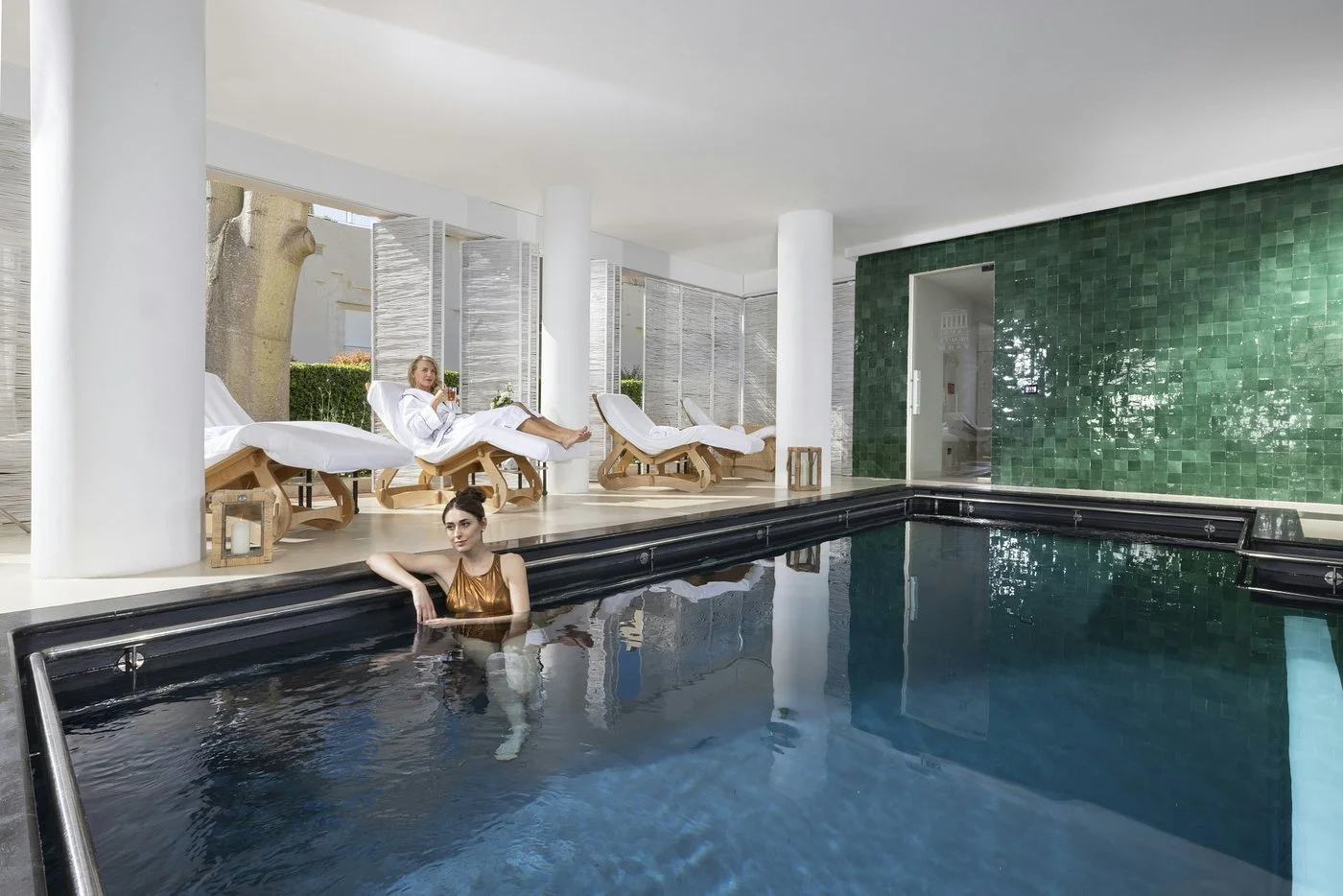
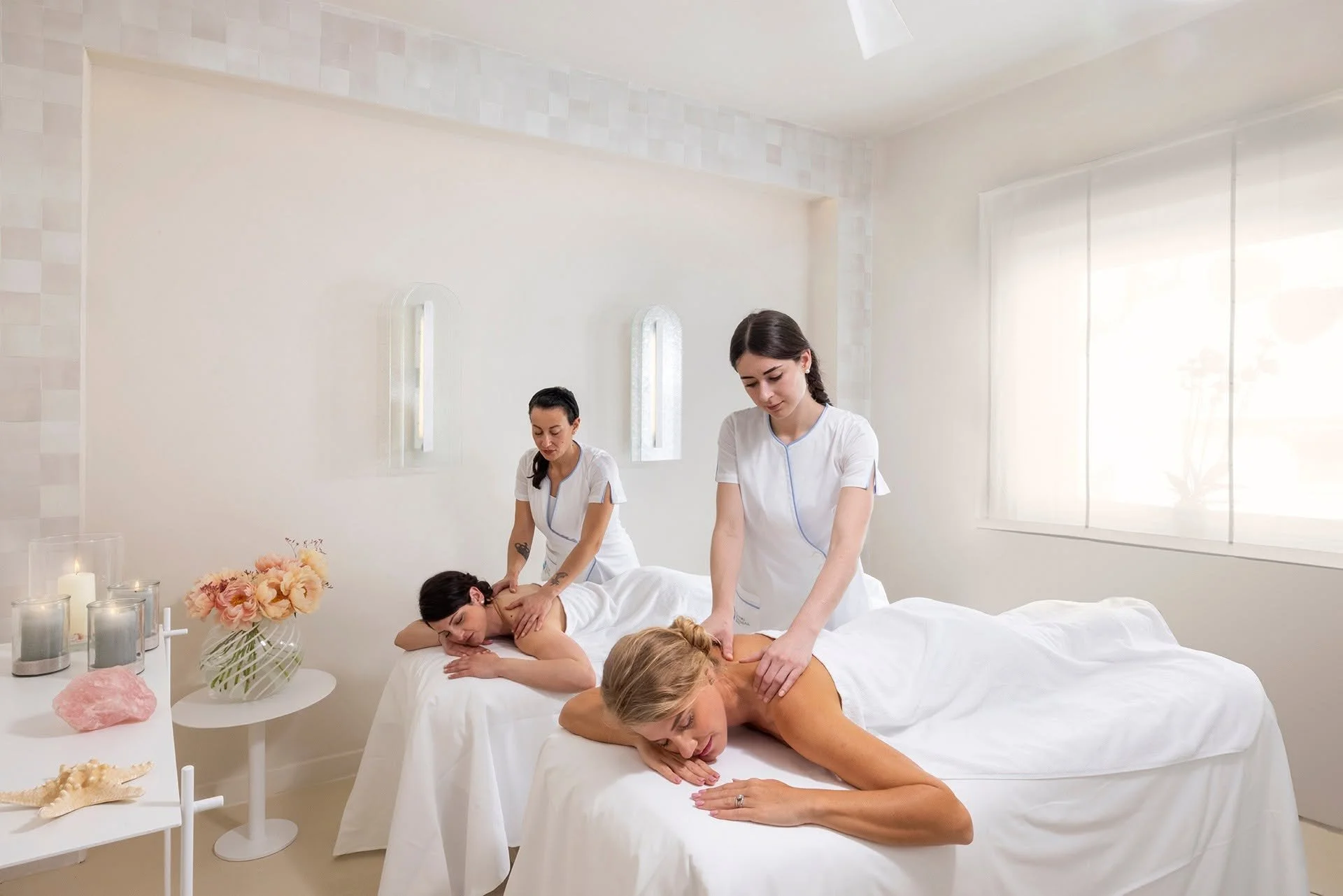
The Capri Medical Spa is one of the elements that most clearly separates this property from a conventional Mediterranean resort.
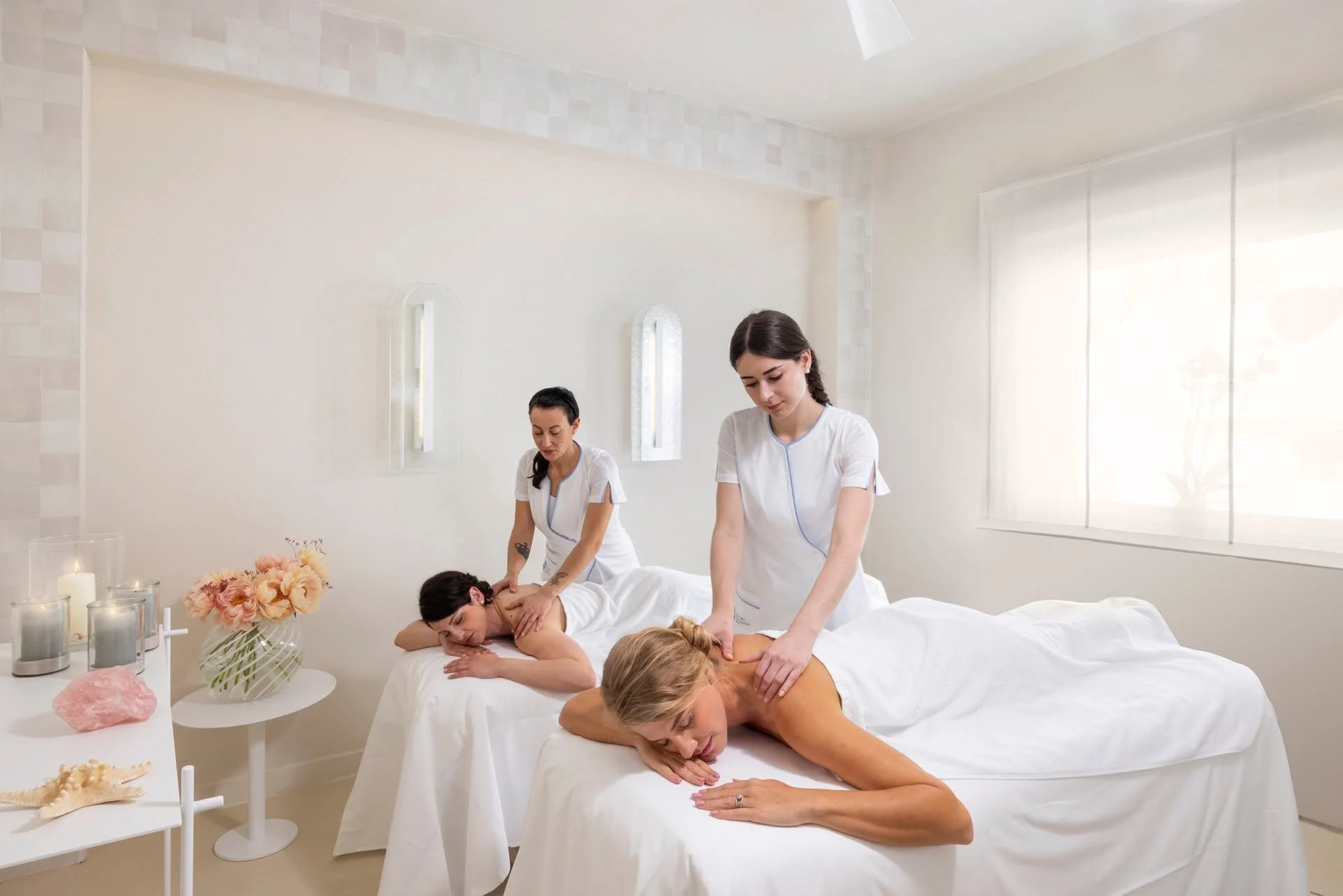
Rather than focusing solely on massages and relaxation, the spa combines traditional treatments with advanced aesthetics, nutrition and individualized wellness programs.
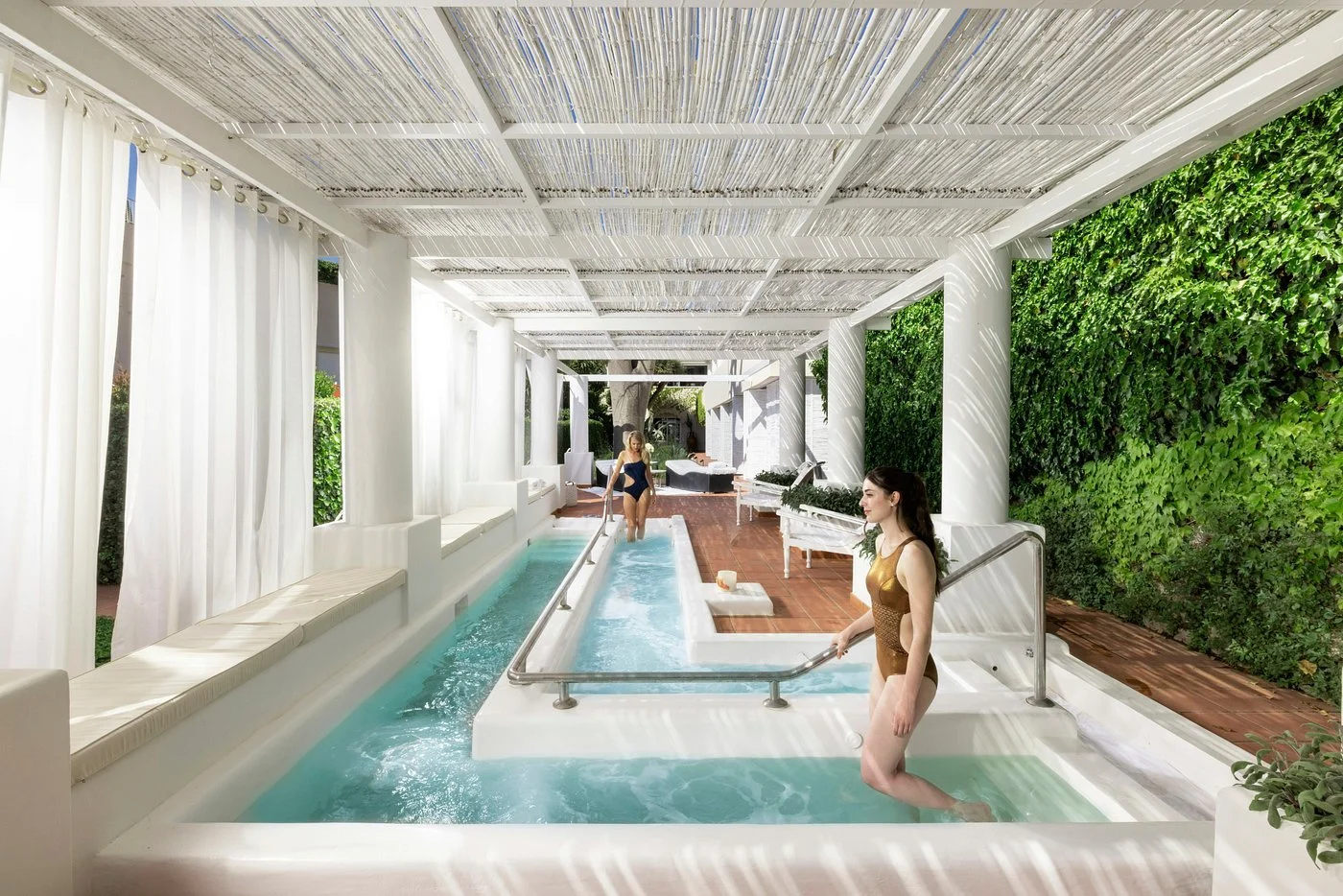
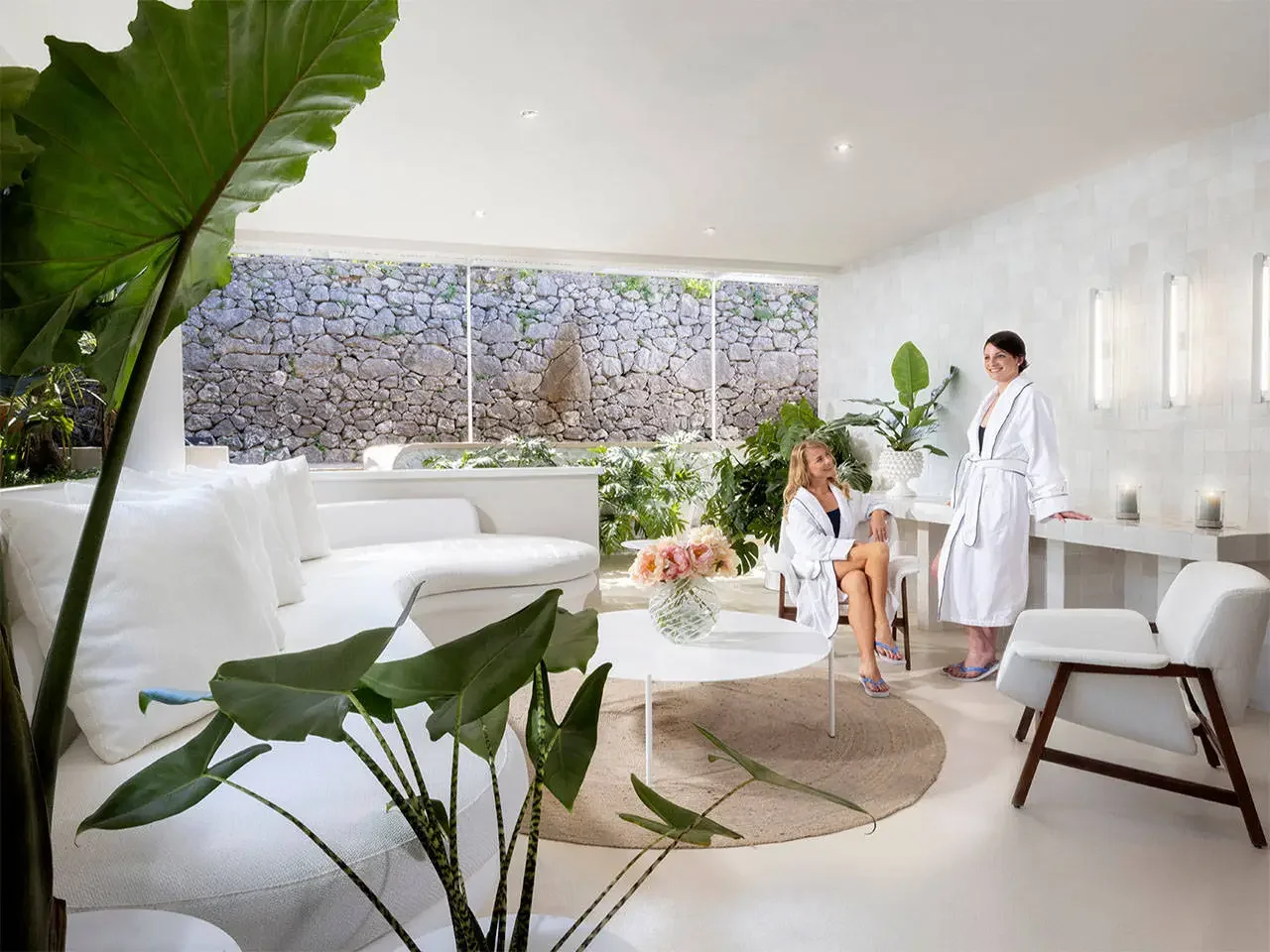
Facilities include an indoor pool, sauna and steam room, massage and facial treatments, LED therapy, manicures and pedicures and dedicated wellness programming.
Its best-known treatment is Leg School®, developed by Professor Francesco Canonaco. The program is designed around circulation, capillary health and tissue revitalization and has become one of the spa’s signatures.
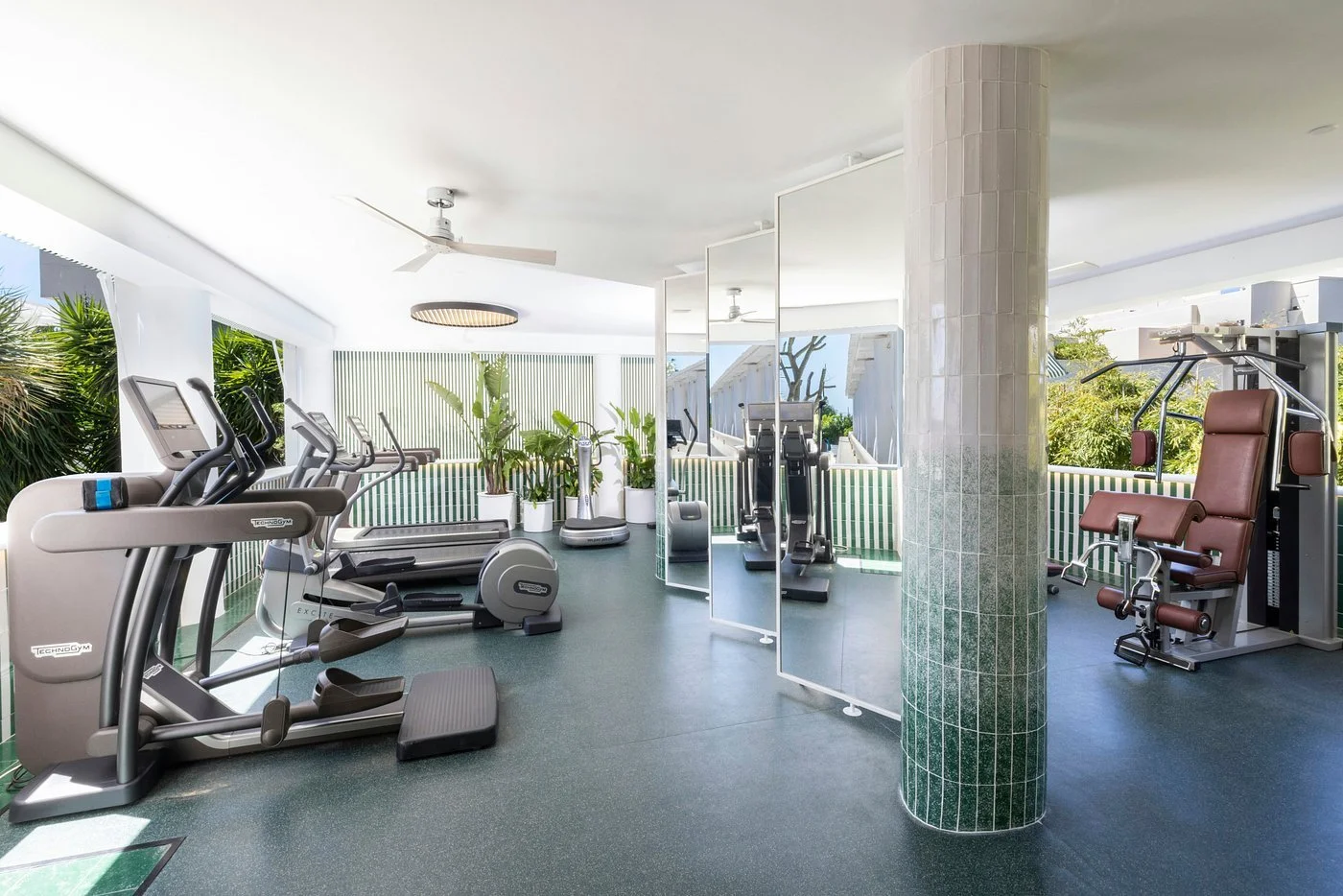
There is also a dedicated fitness offering with Technogym cardio and strength equipment, free weights, Pilates, personal training, group classes and a yoga studio.
For travelers who want wellness to occupy a meaningful part of the trip rather than simply an occasional spa appointment, this is one of Capri Palace’s strongest advantages.
Capri From the Water
Capri makes considerably more sense from the sea.
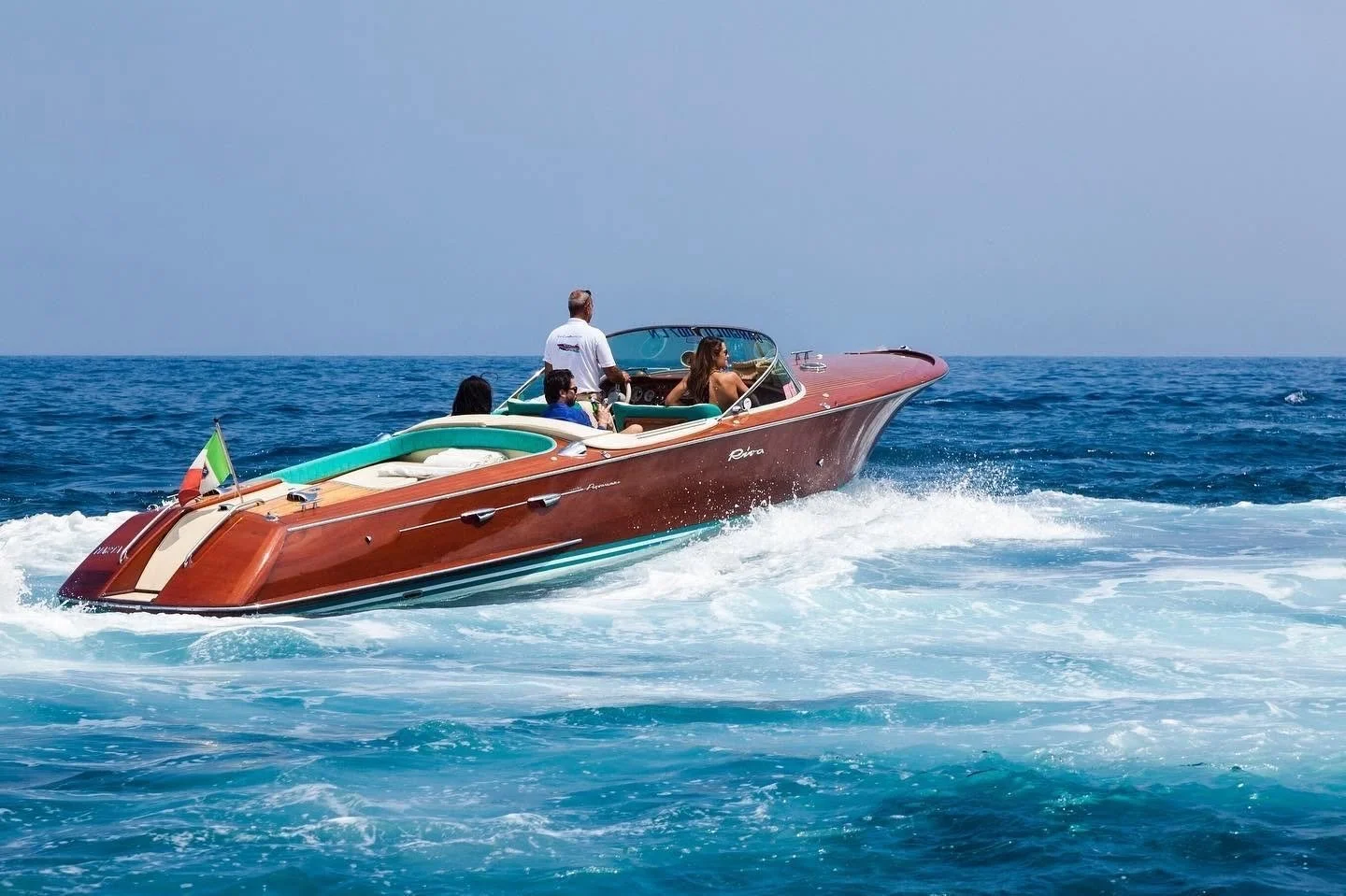
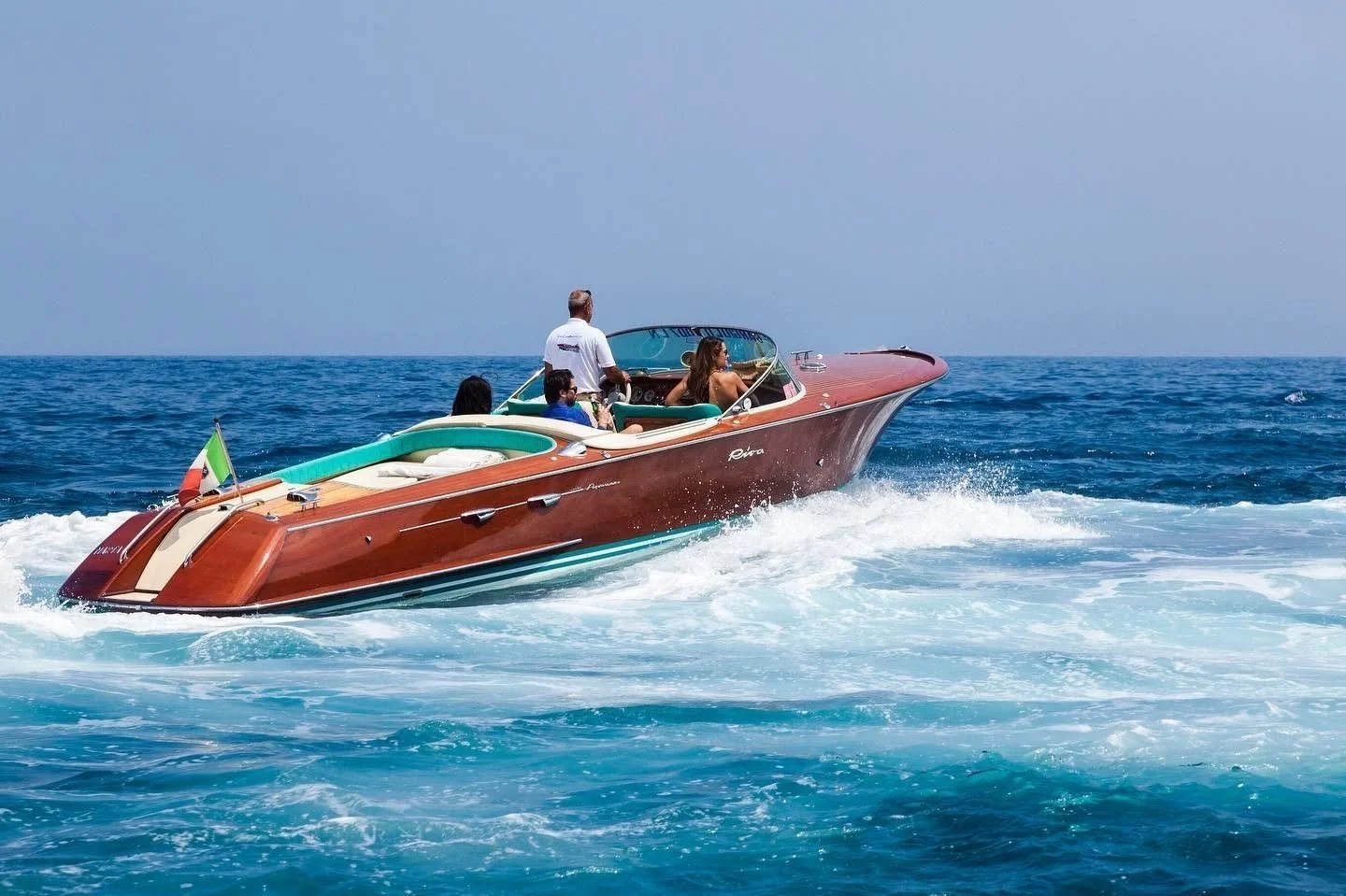
Jumeirah Capri Palace can arrange private outings aboard motor yachts as well as traditional wooden gozzo boats, allowing guests to explore the coastline at a slower pace.
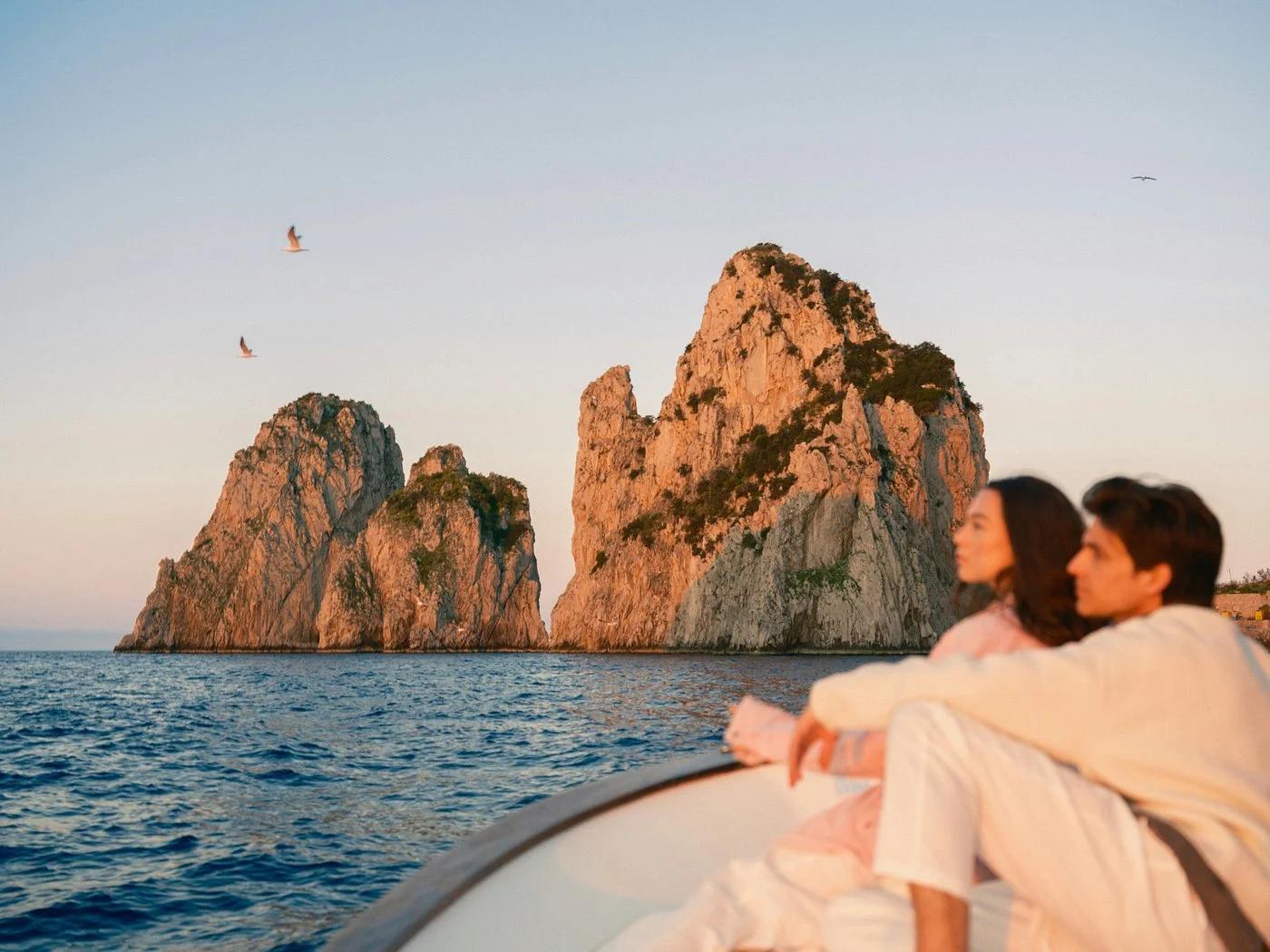
The classic route includes the Faraglioni, the Blue Grotto, secluded swimming coves and views of Villa Malaparte, but private boating also makes it possible to travel farther.
Longer excursions can continue toward Ischia for lunch or cross to the Amalfi Coast and Positano.
For us, at least one day on the water is essential. The cliffs, caves and scale of the island become much clearer from offshore than they ever can from a road or terrace.
Art Beyond Decoration
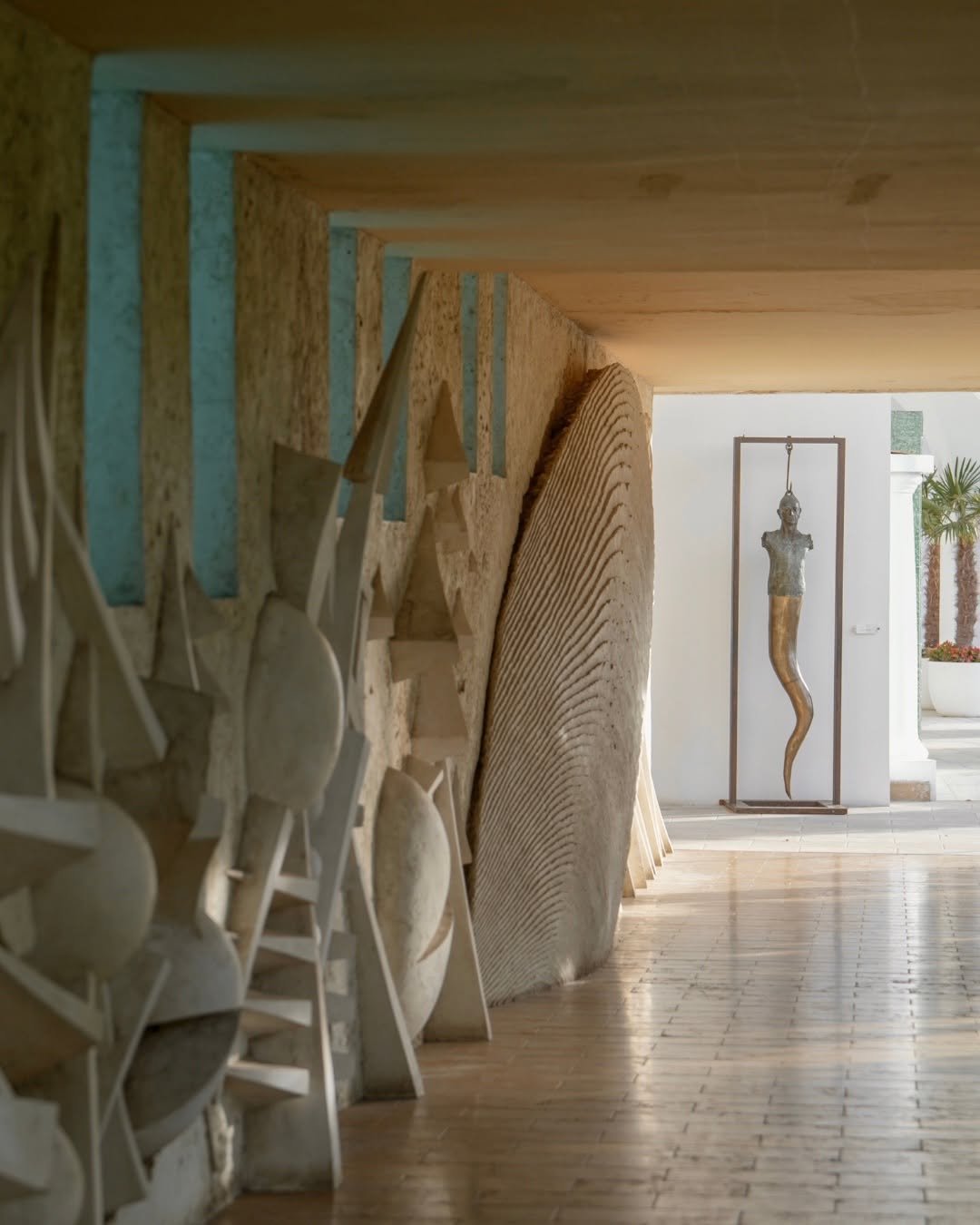
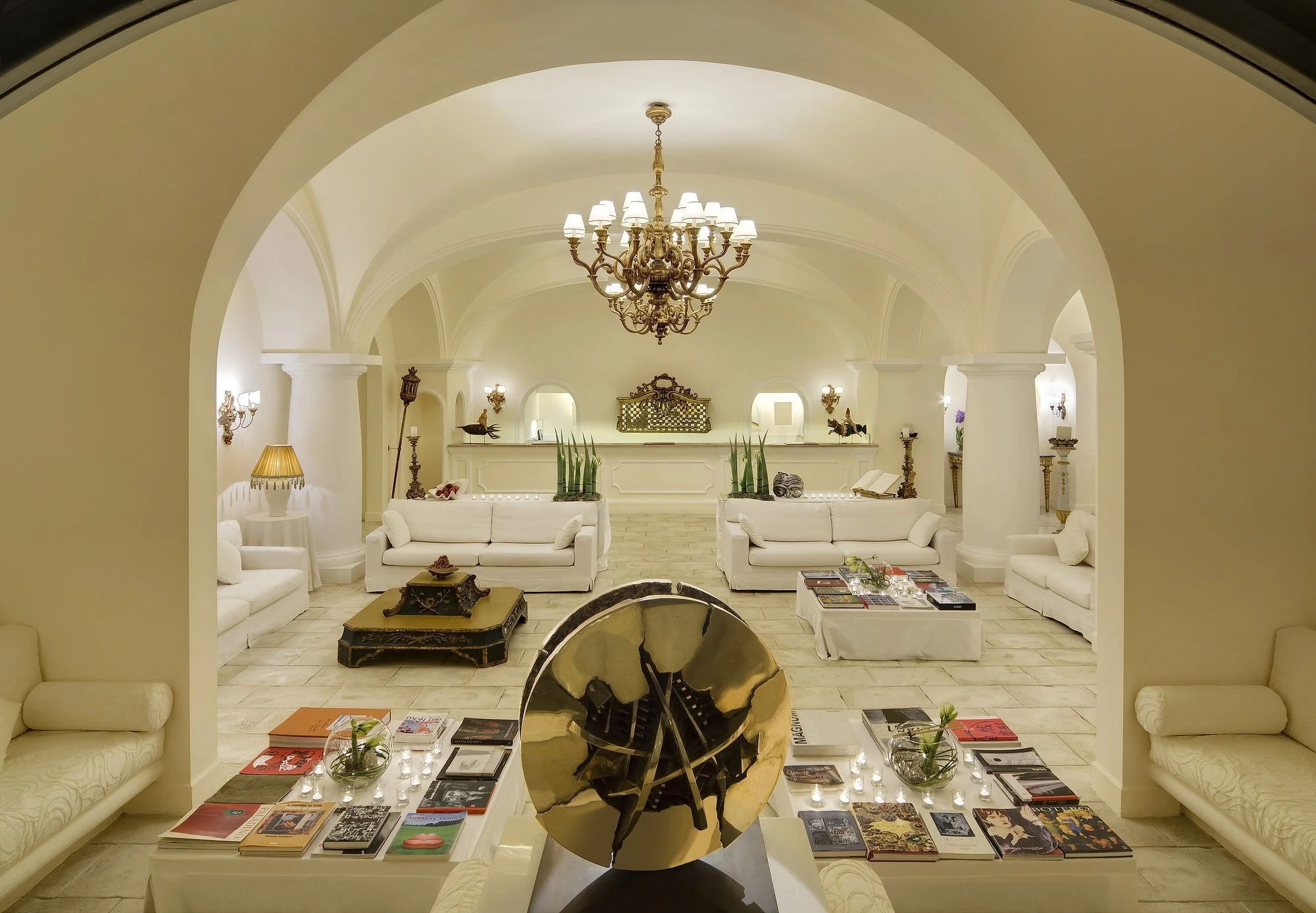
Art has long been part of Capri Palace’s identity rather than an afterthought added to guestrooms.
The hotel maintains its own collection and Artelier program, placing contemporary art into the wider experience of the property. Exhibitions and cultural programming create another connection between the hotel and Capri’s history as a refuge for artists, writers and intellectuals.
That artistic identity is also visible in several of the accommodations, particularly the Art Suites and other signature categories inspired by cultural figures.
Beyond the hotel, cultural excursions can incorporate Villa San Michele, Casa Rossa, the Church of San Michele and the Certosa di San Giacomo, allowing the art program inside the property to become a starting point for understanding the island itself.
Families in Anacapri
Jumeirah Capri Palace can work for families, although it is not built around the model of a large children’s resort.
The strongest family advantage is accommodation. Interconnecting rooms, two-bedroom configurations and larger suites make it possible to create considerably more space than a conventional European hotel room.
The Presidential Paltrow Suite can also accommodate families looking for a larger private setup, while the Executive Floor is especially useful for extended families or multigenerational groups who want several suites together.
For families with older children, Capri itself supplies much of the entertainment: private boat days, swimming, sightseeing, Anacapri, the chairlift toward Monte Solaro and excursions around the island.
Beyond the Hotel
Anacapri deserves time rather than being treated simply as the location of the hotel.
Villa San Michele, created by Swedish physician and writer Axel Munthe, combines architecture, gardens and expansive views across the Bay of Naples. The center of Anacapri is considerably quieter than Capri town, particularly early and late in the day.
From here, guests can also explore Monte Solaro, the highest point on the island, or travel down toward Marina Grande, Capri town and the Piazzetta.
The contrast matters. Staying in Anacapri gives travelers access to Capri’s better-known restaurants, boutiques and social scene while providing somewhere more peaceful to return to afterward.
Getting to Jumeirah Capri Palace
Most international journeys begin through Naples.
From Naples, travelers continue by ferry or hydrofoil to Marina Grande, Capri’s principal port. Private boat transfers can also be arranged depending on conditions and itinerary.
Once on Capri, Jumeirah Capri Palace provides transfer options between Marina Grande and the hotel, subject to availability.
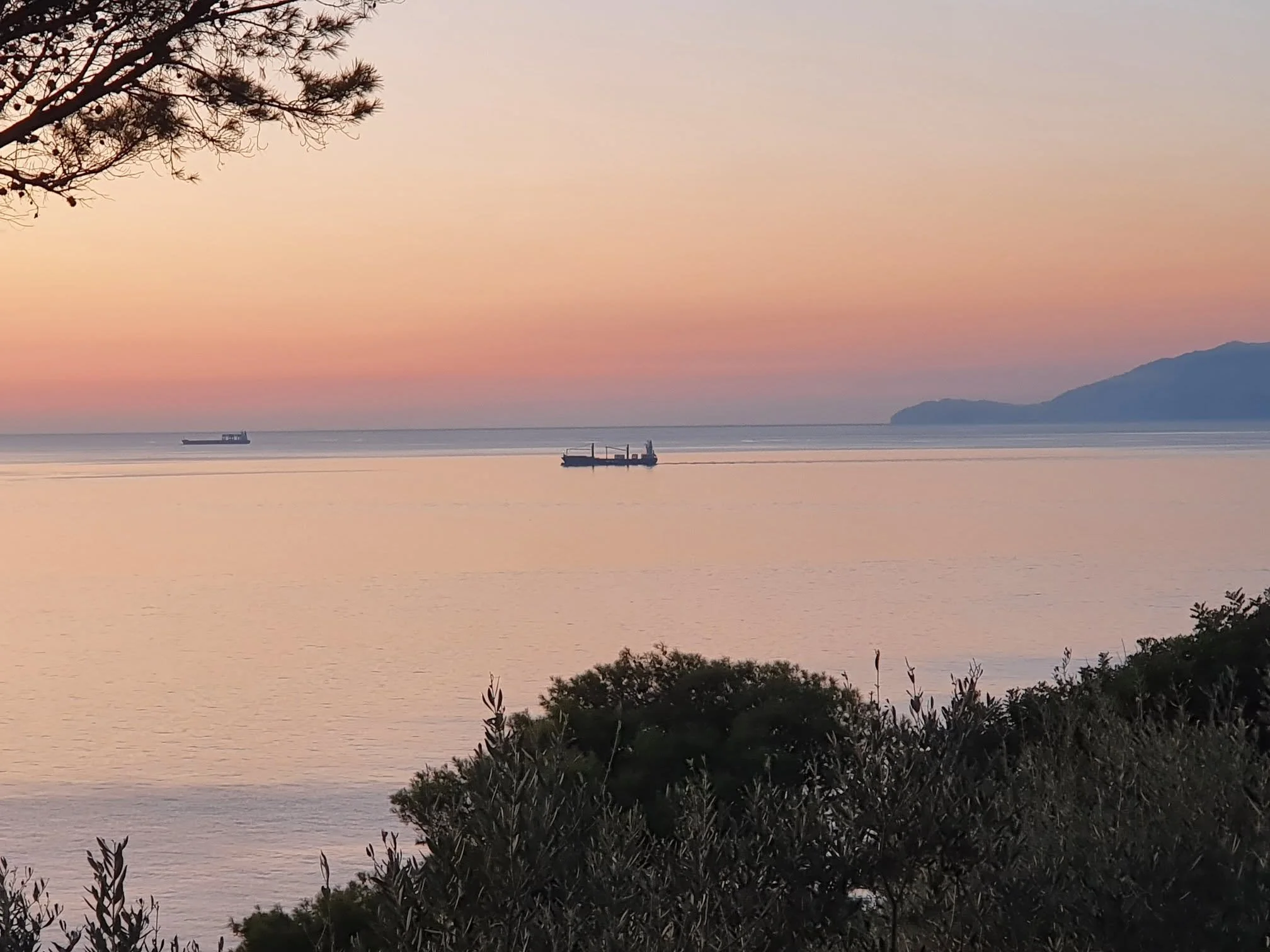
The final journey climbs from sea level toward Anacapri, and that change in elevation is part of the arrival. The island gradually becomes quieter, the views widen and the dense activity around the port gives way to a much more residential landscape.
For travelers combining Capri with the Amalfi Coast, Naples, Ischia or another part of southern Italy, private boating can also make the island part of a larger coastal itinerary rather than a separate journey.
A Different Rhythm of Capri
Jumeirah Capri Palace works because it allows several versions of Capri to exist at once.
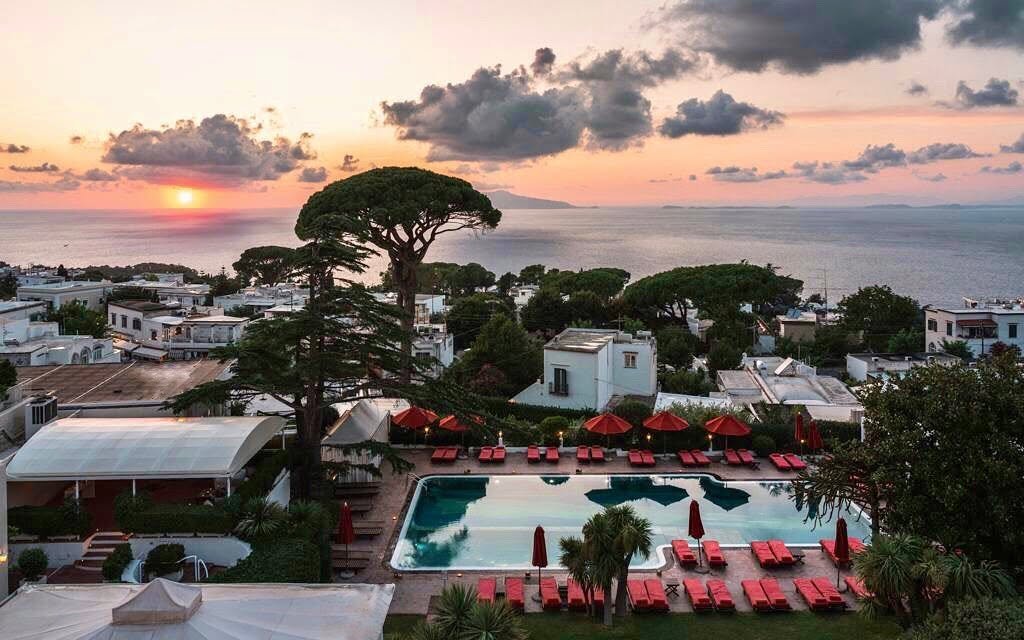
There is the glamorous island of rooftop cocktails, private boats and Michelin-starred dining. There is the quieter Anacapri of gardens, ceramics, mountain views and slower afternoons. There is also the Capri of art, architecture, wellness and a coastline that is best understood from the water.
The hotel connects those experiences without forcing them into a single identity.
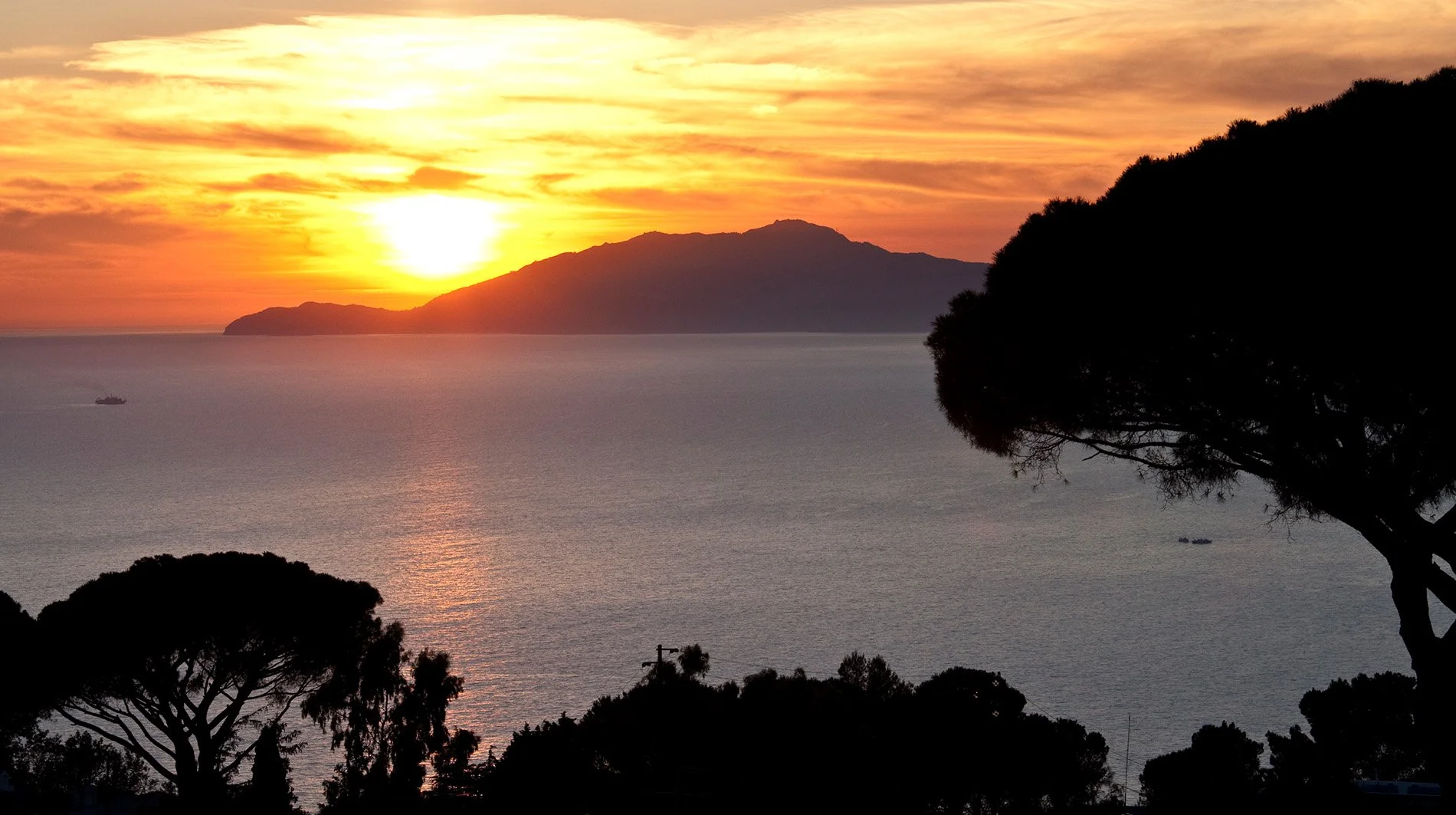
For us, that makes it especially interesting for travelers who want more from Capri than a beautiful hotel beside the sea. Spend a morning at Capri Medical Spa, take a gozzo around the Faraglioni, have lunch at Il Riccio, return to Anacapri before sunset and end the evening at L’Olivo.
The luxury is not simply in any one of those experiences. It is in being able to move easily between them while still feeling connected to the island.