Casablanca, Morocco | Royal Mansour Casablanca
A 1950s Casablanca Landmark Reborn
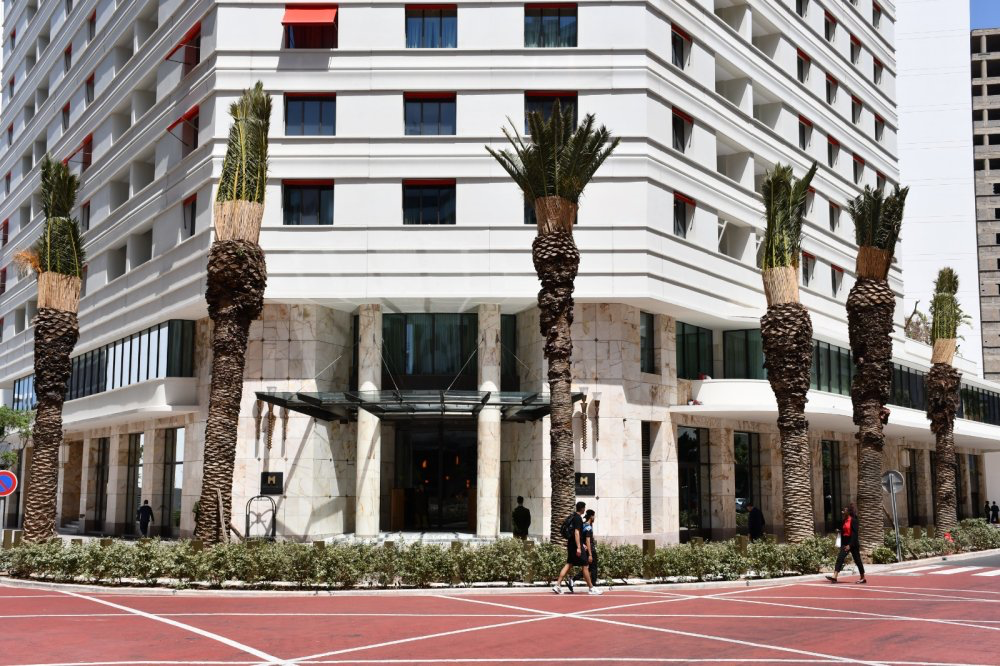
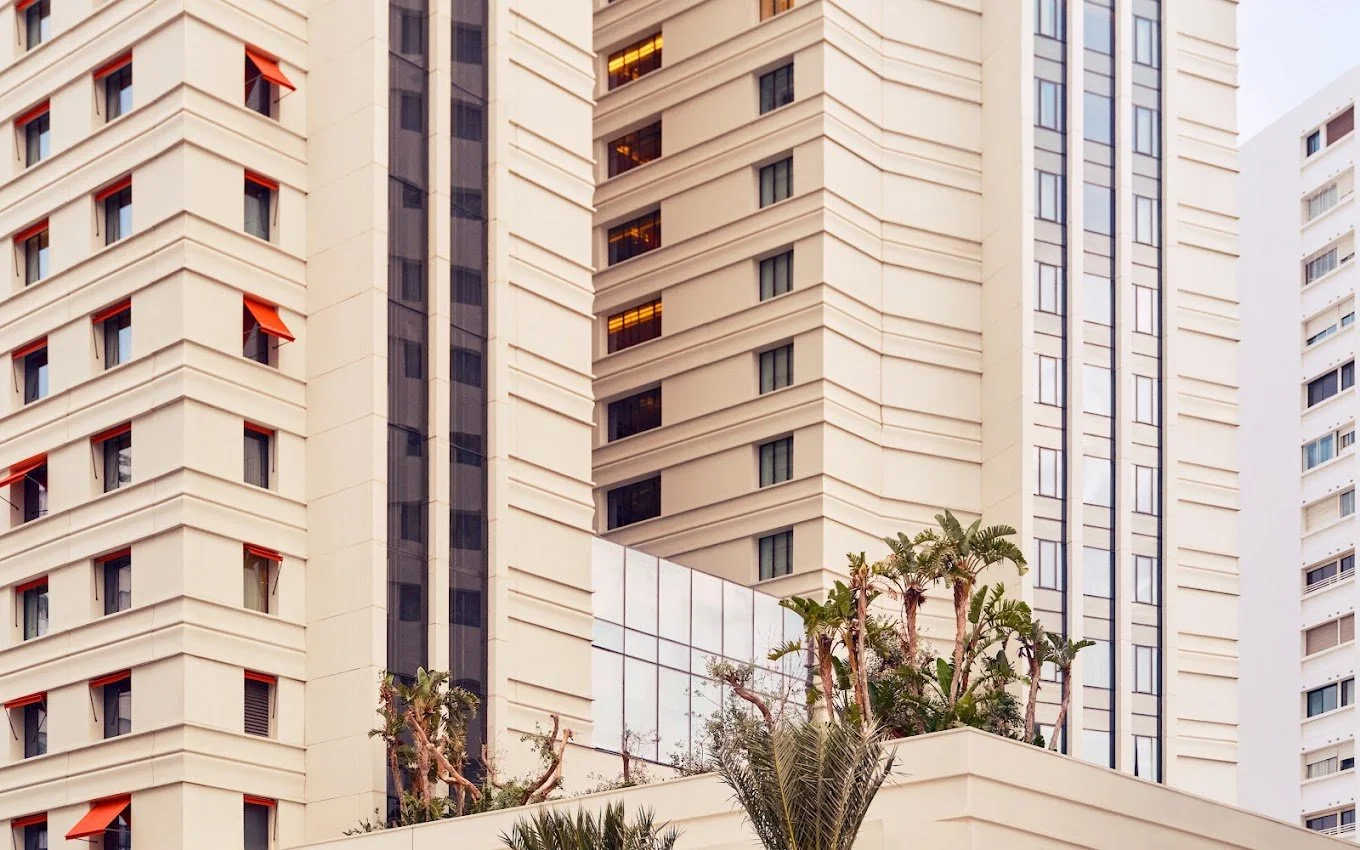
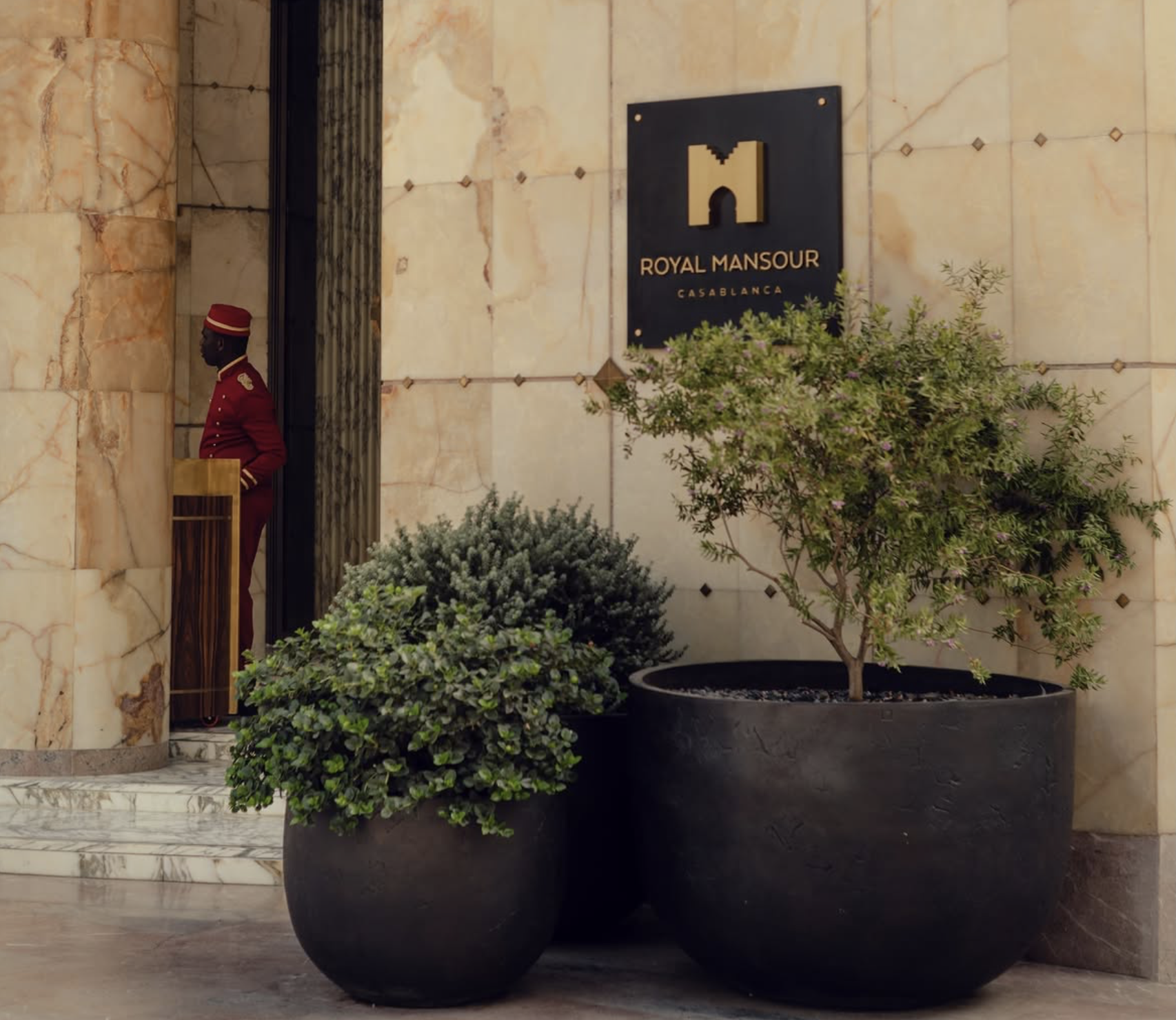
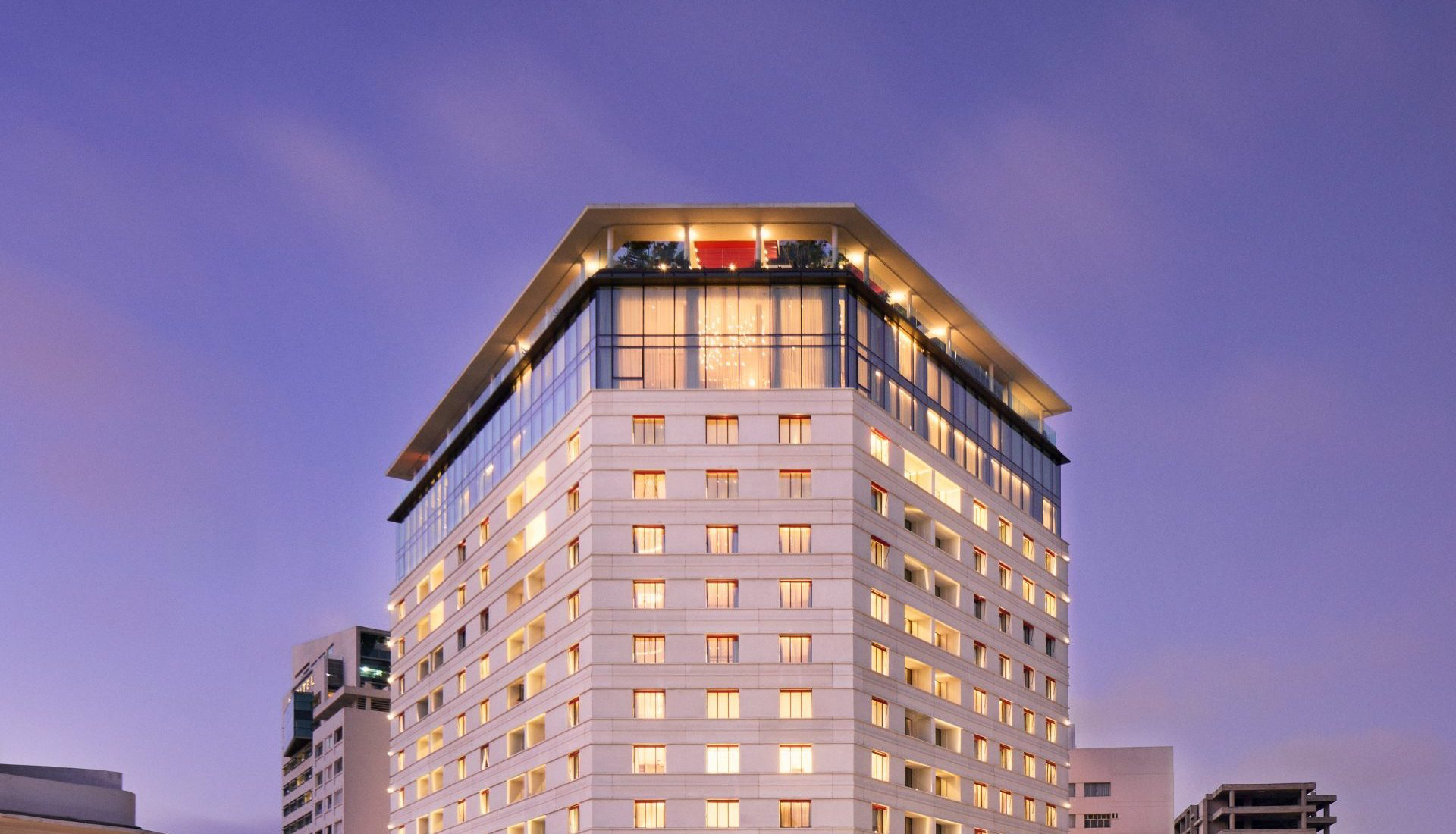
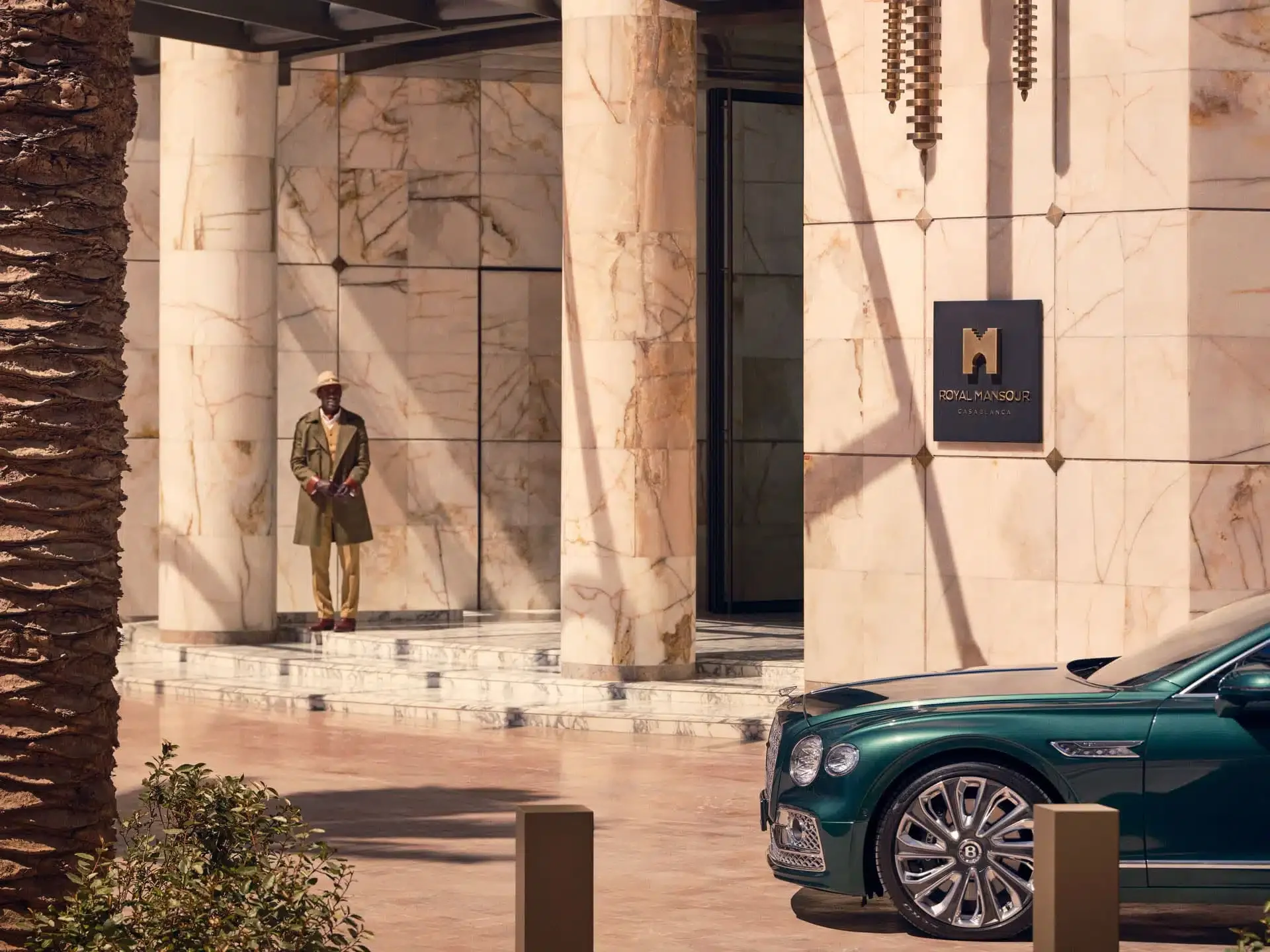
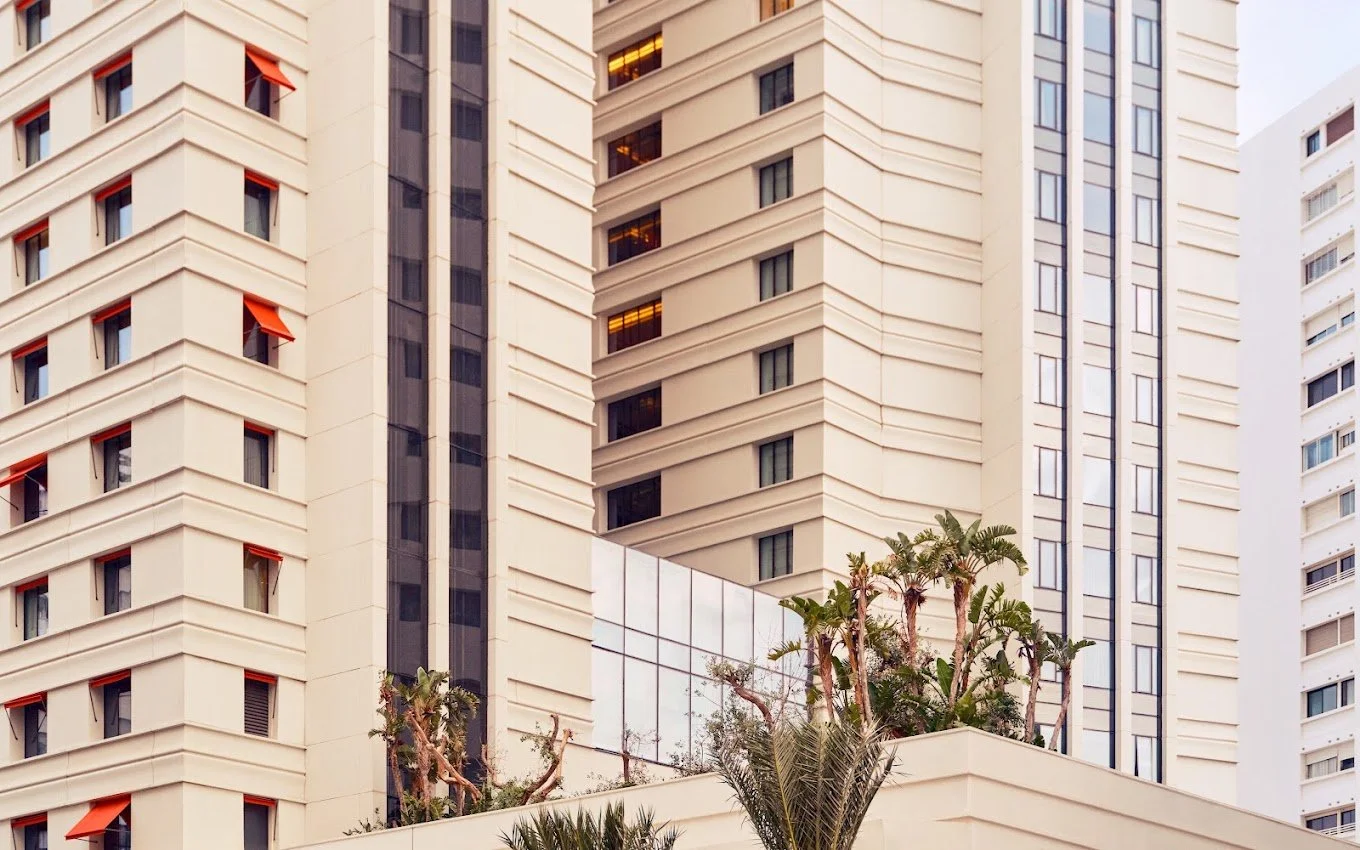
Royal Mansour Casablanca rises above Avenue des Forces Armées Royales in the center of the White City, close to the port, Old Medina and Casablanca’s dense collection of twentieth-century architecture. The hotel reopened in April 2024 after an eight-year reconstruction, reviving an address that had been part of the city’s social life since 1953.
The result is deliberately urban. Unlike Royal Mansour Marrakech, with its private riads and garden pathways, Casablanca is vertical: 23 floors, panoramic restaurants, high-rise suites and broad views across the city toward the Atlantic and Hassan II Mosque. Its 149 accommodations range from generous rooms to multi-level residences spanning several hundred square meters.
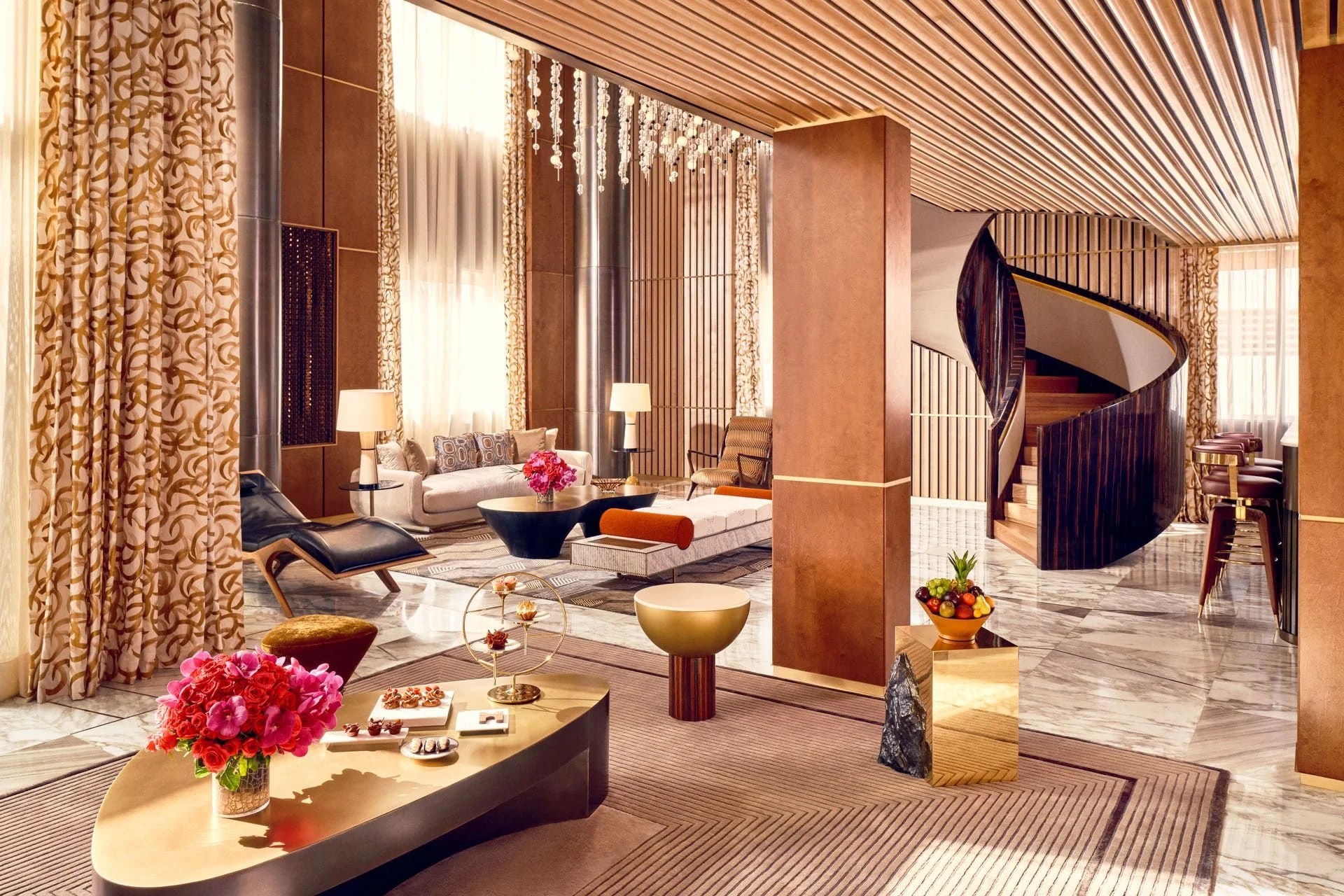
What makes the property particularly interesting is the way it uses nostalgia without becoming a replica of the past. Mid-century references appear in furniture, lighting and proportions, while marble, contemporary artworks, technology and monumental public spaces establish a new palace for a city that has always been more modernist than imperial in character.
The Return of the Palace on Avenue des FAR
The original hotel opened in 1953, during a period when Casablanca was expanding rapidly and some of its most ambitious modern architecture was taking shape. Architect Émile Duhon designed the building, which became the city’s first five-star hotel and a gathering place for international travelers, performers and public figures.
Royal Mansour’s own history recalls guests including Mohamed Ali, Charles Aznavour and Johnny Hallyday, part of a wider mythology surrounding Casablanca’s mid-century cosmopolitan years. Over time, however, the property aged and eventually closed. Rather than replace the site with an unrelated tower, the redevelopment sought to recover the building’s modernist silhouette and cultural memory.
After eight years of work, Royal Mansour Casablanca opened on 15 April 2024. The reconstruction increased the vertical program while preserving the visual idea of the 1950s hotel. That distinction matters: the current property is not simply a renovated old hotel, but a contemporary reincarnation shaped around the original address, proportions and identity.
Modernism, Marble and the Glamour of the White City
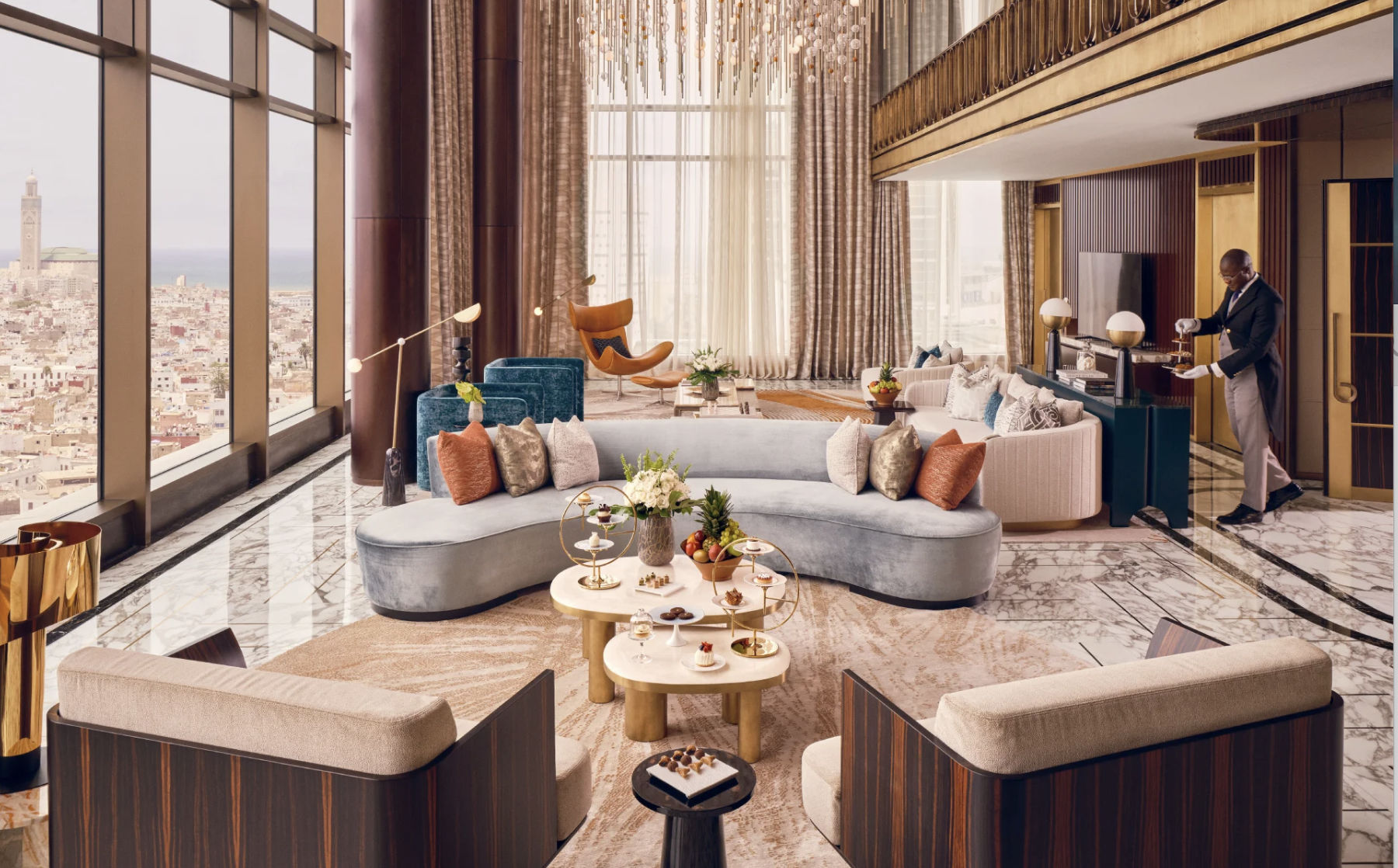
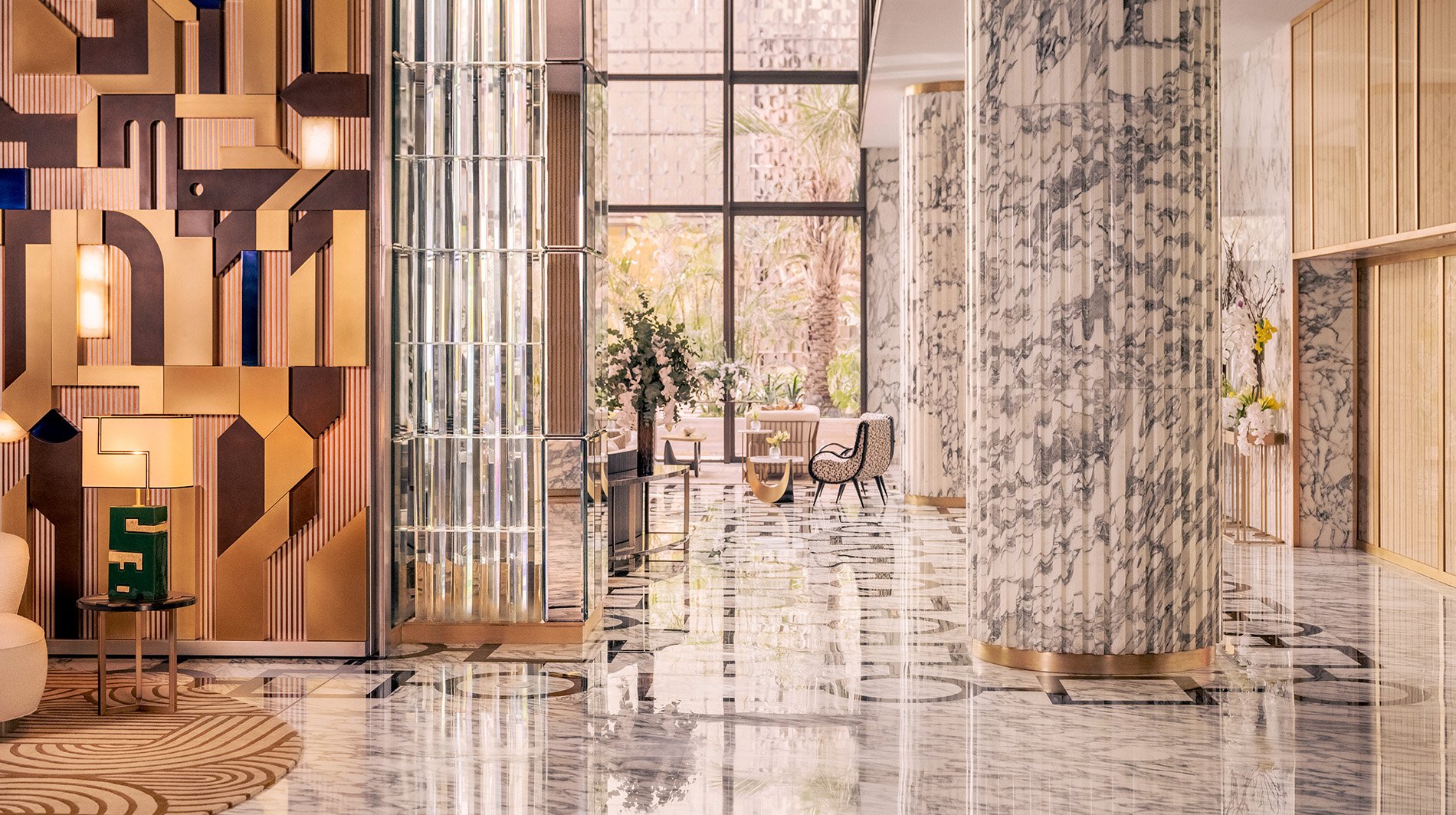
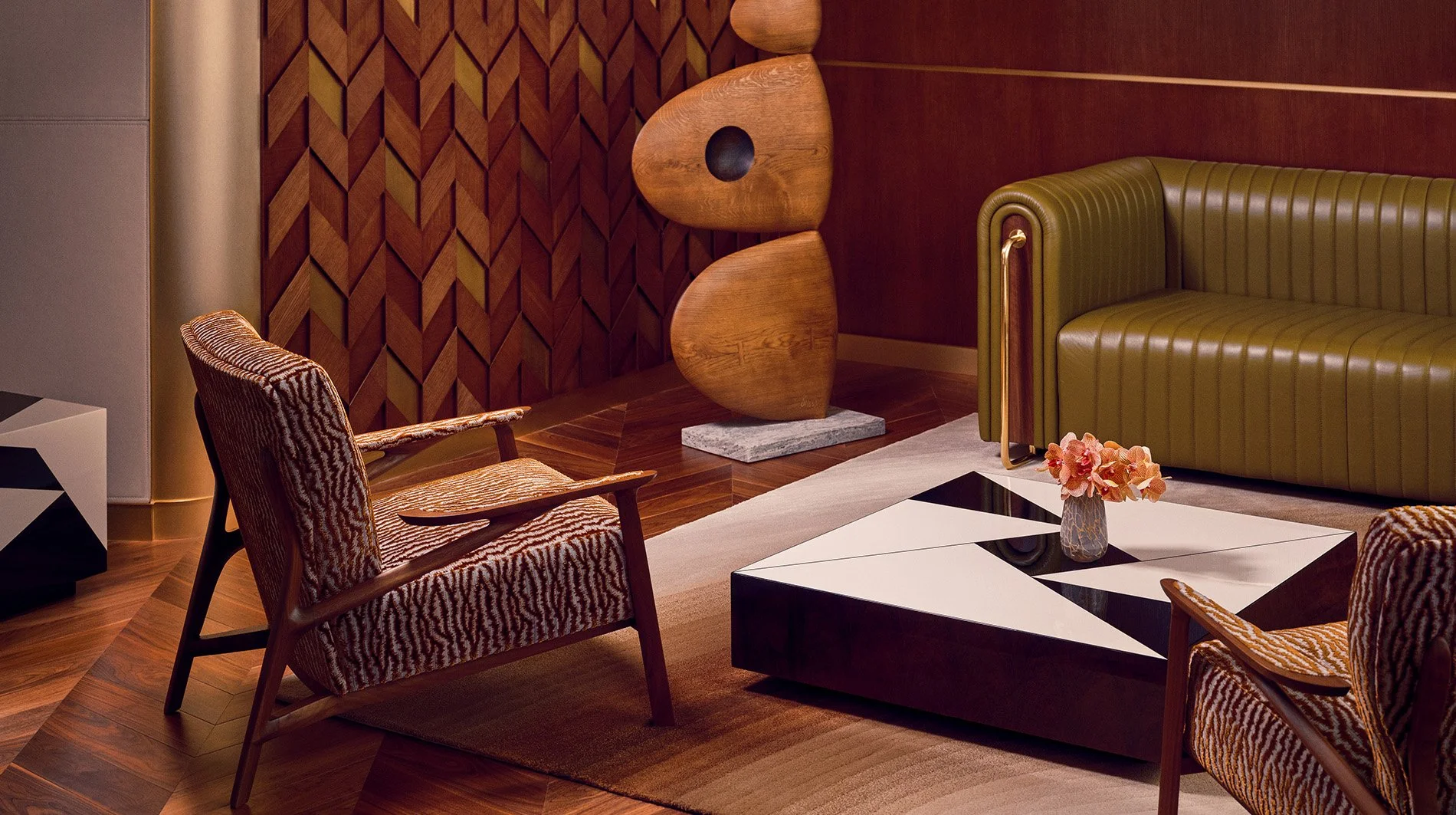
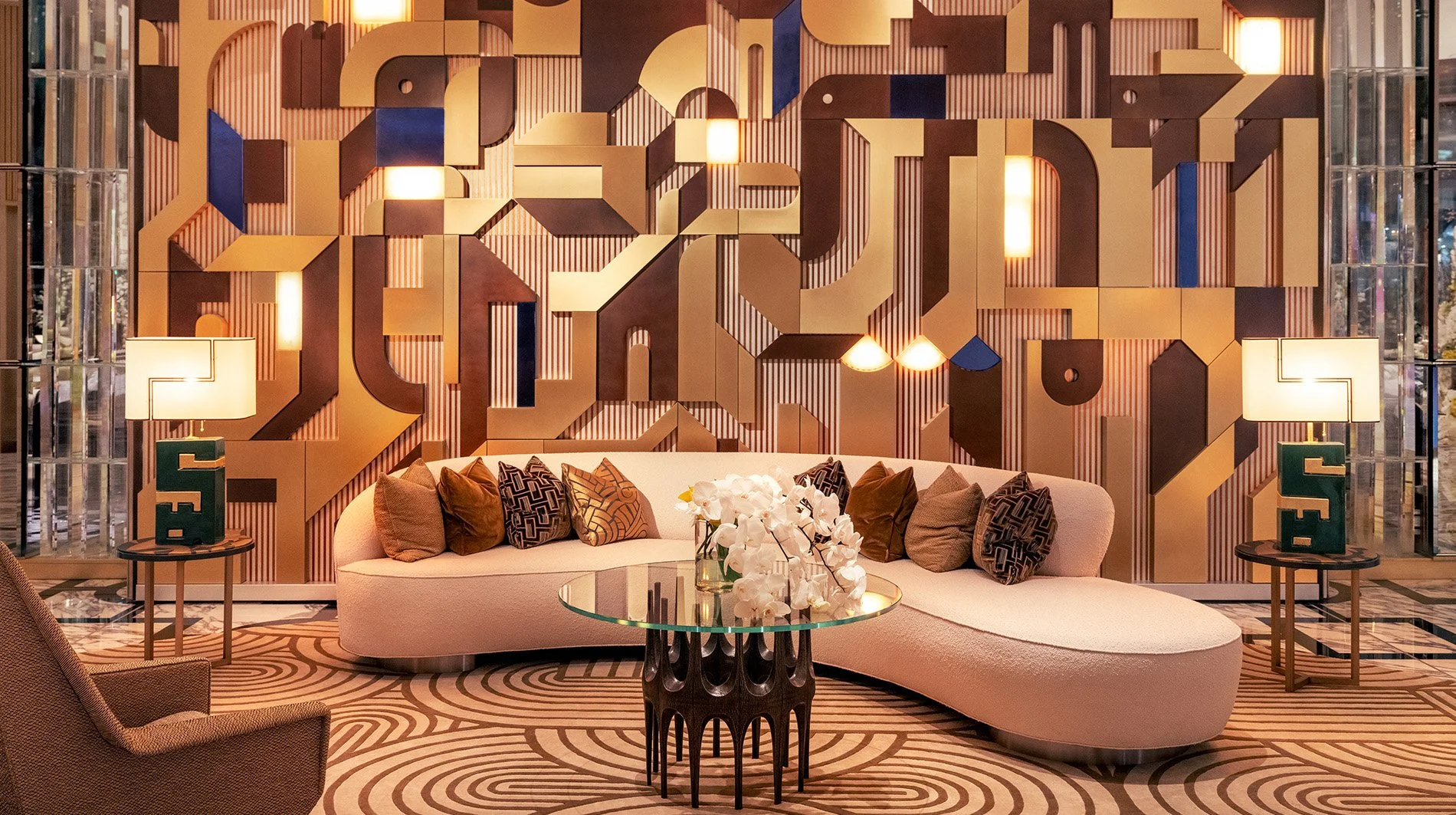
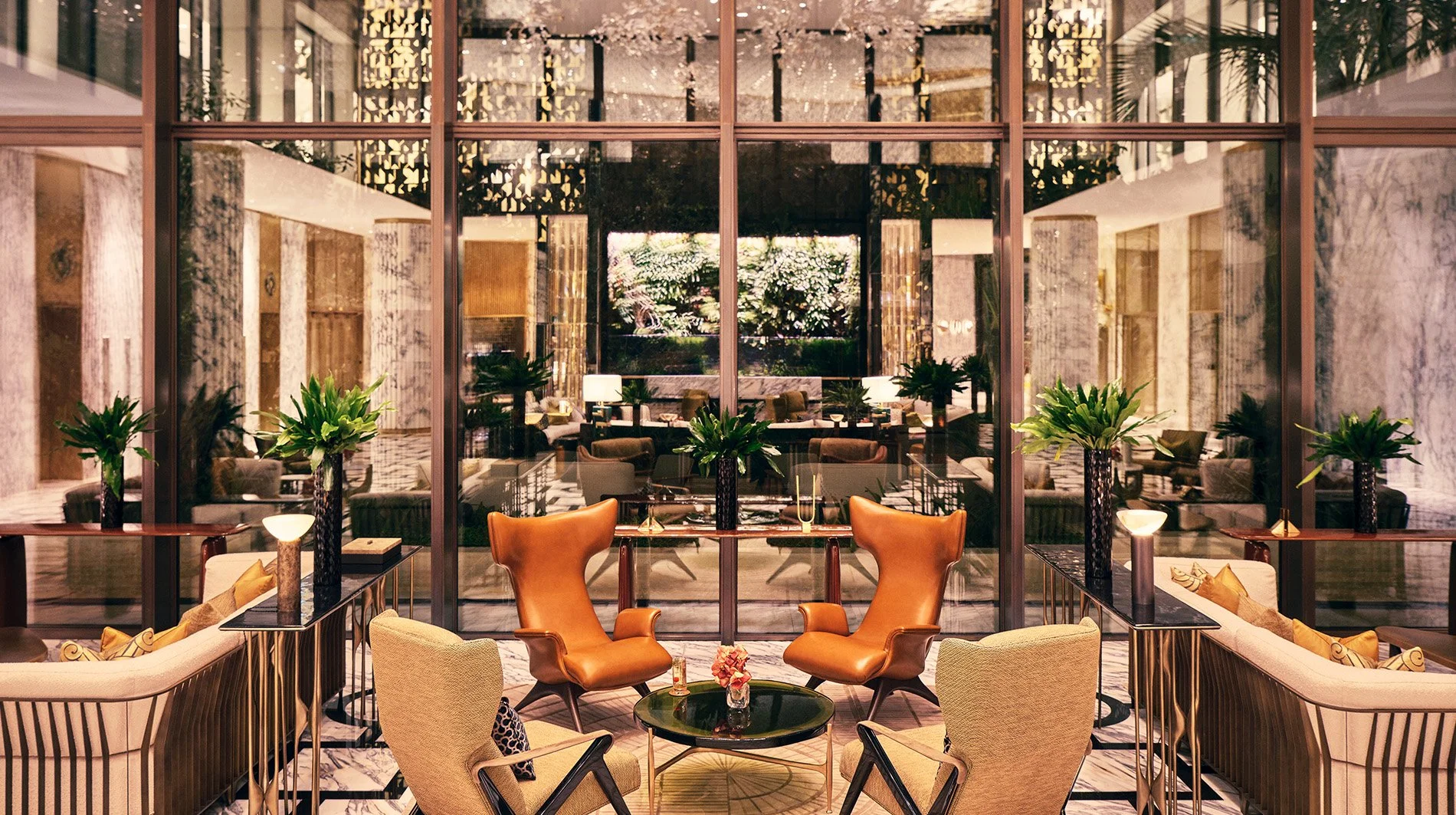
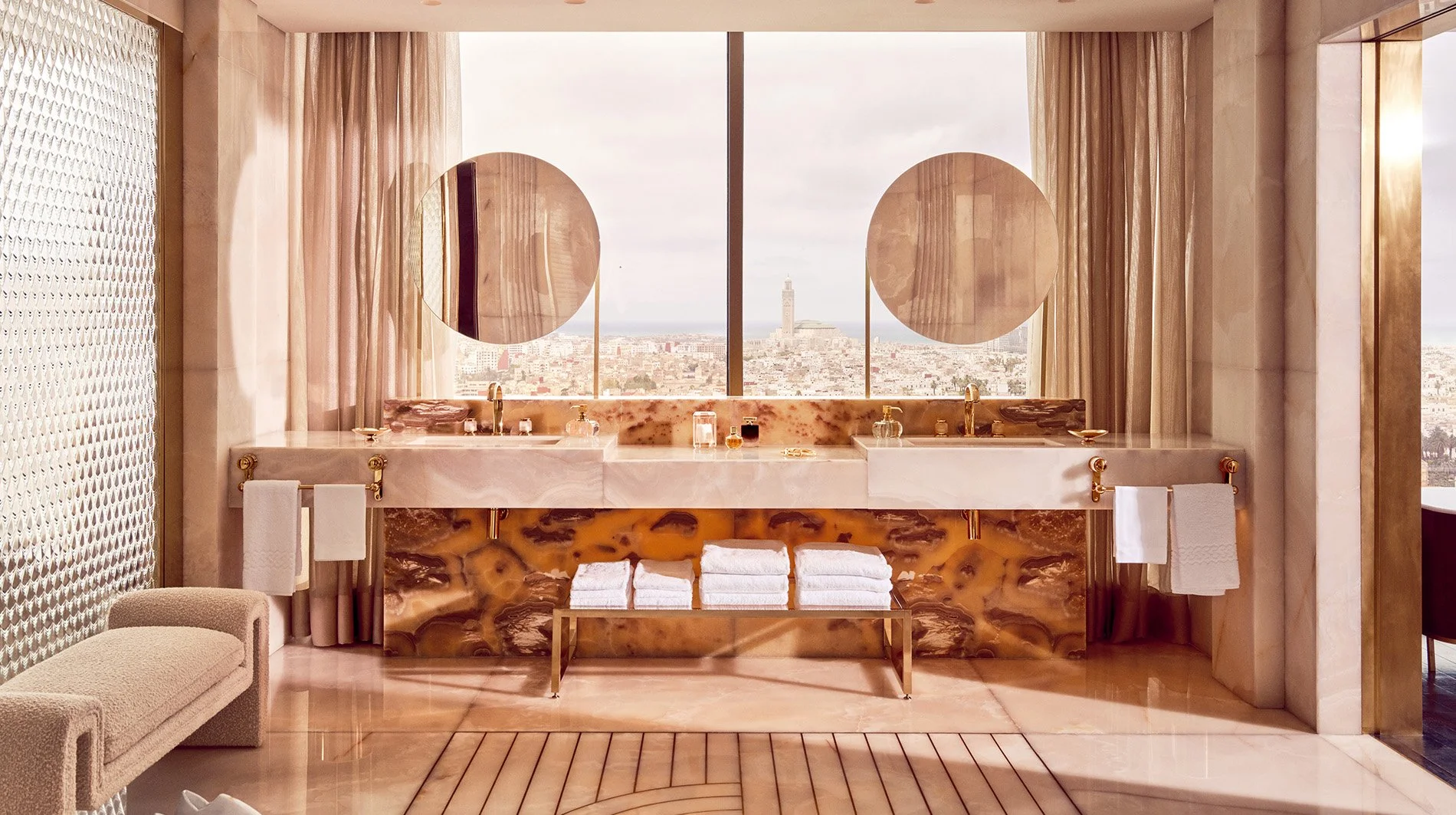
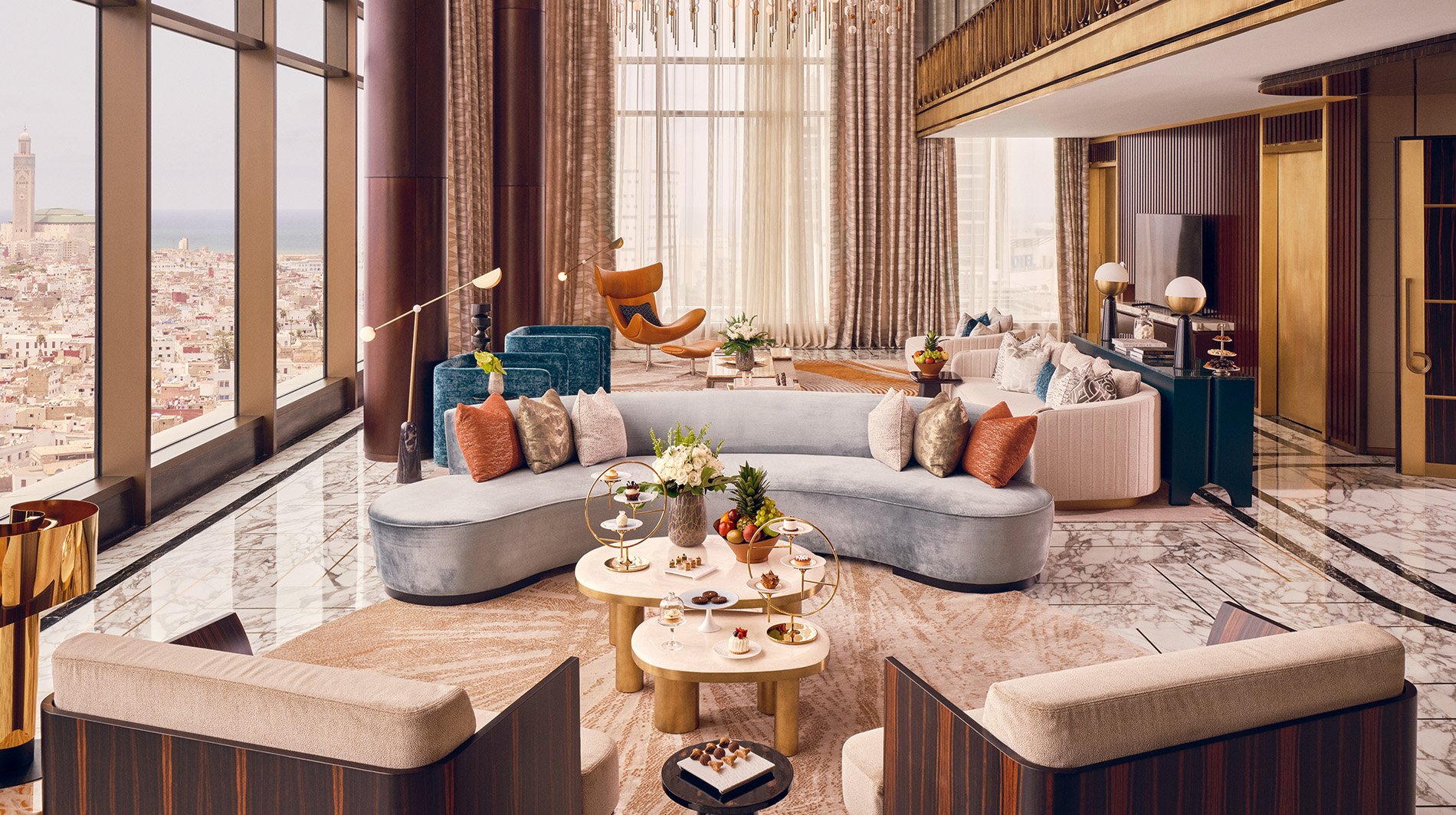
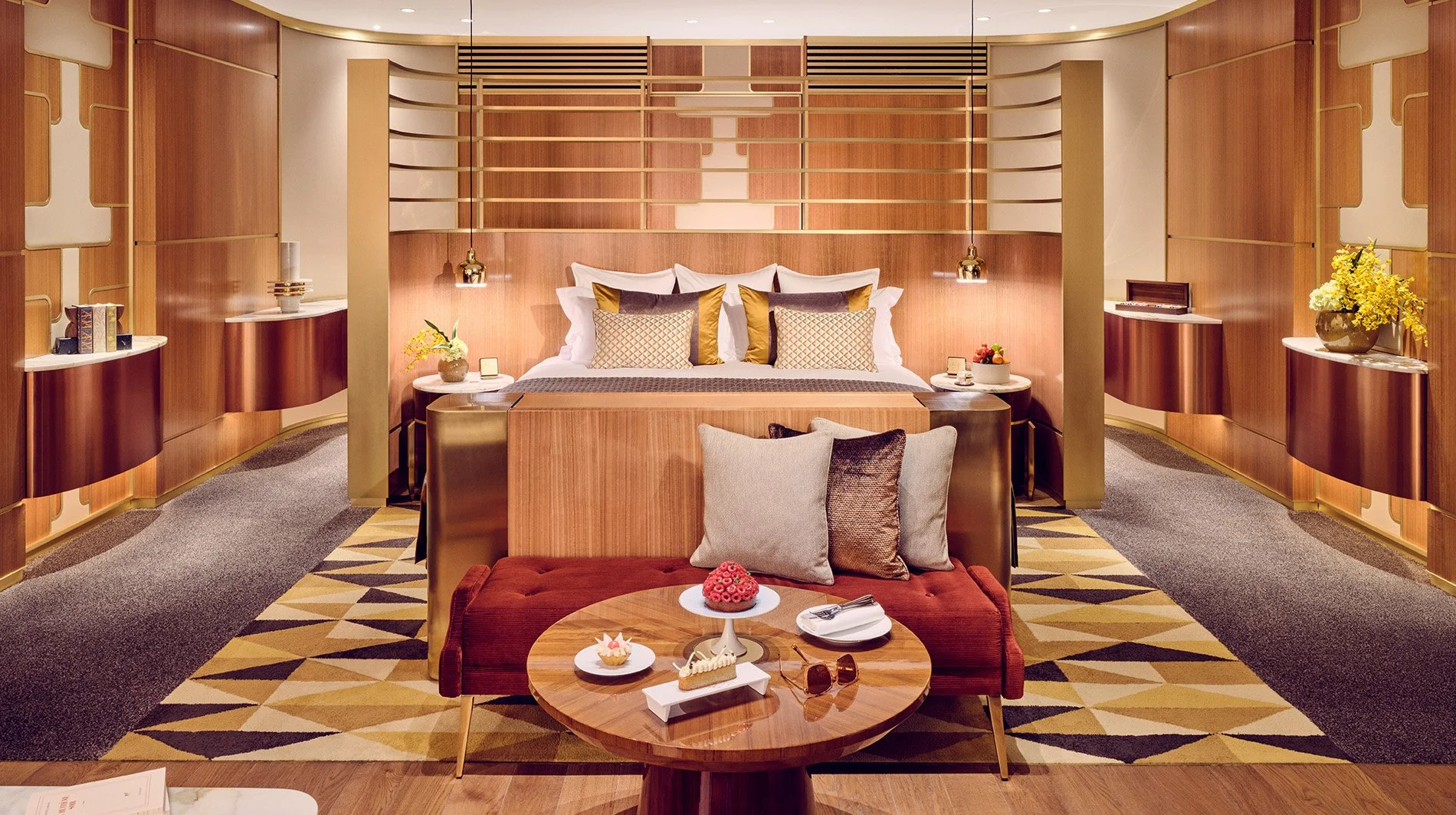
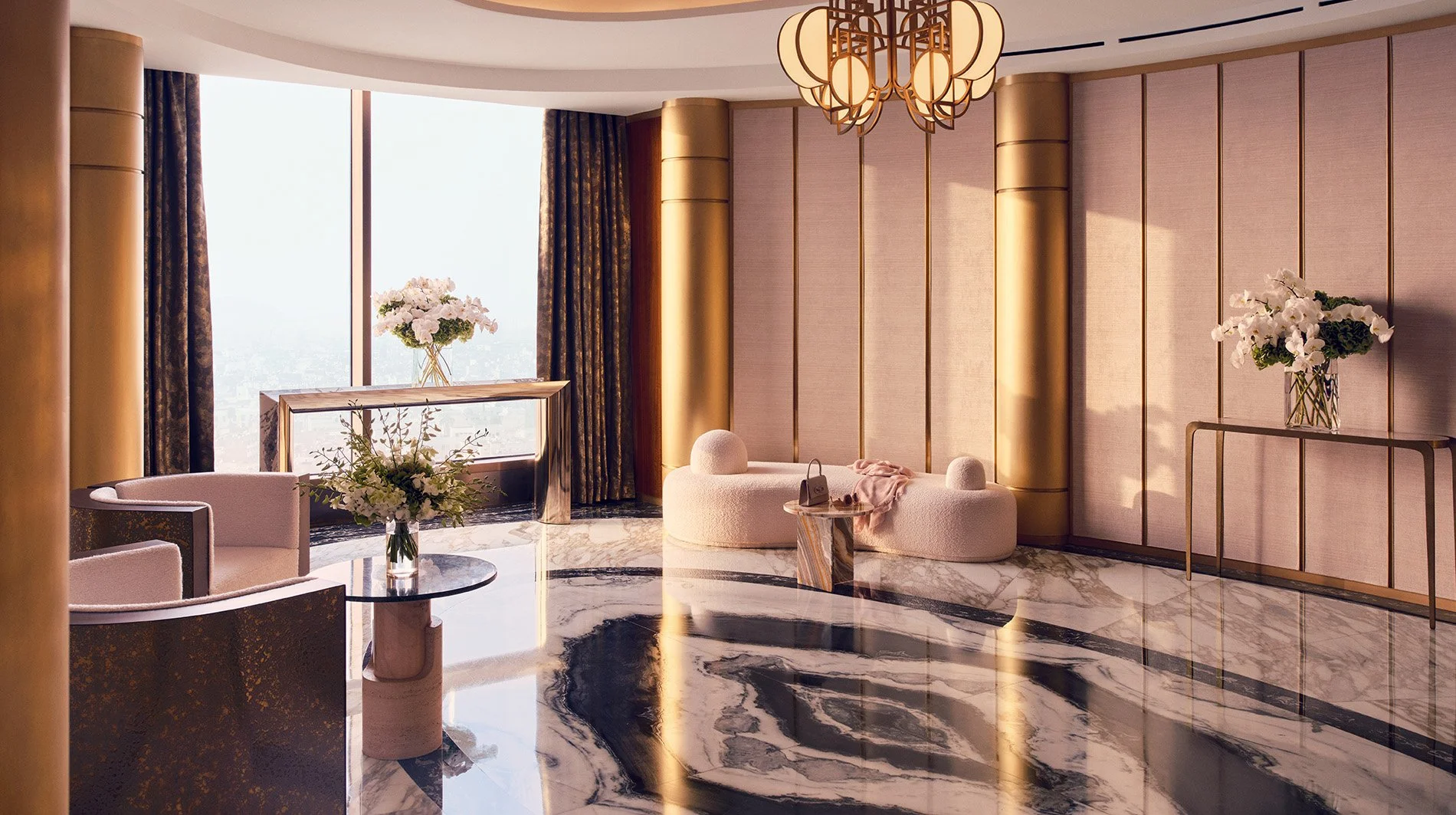
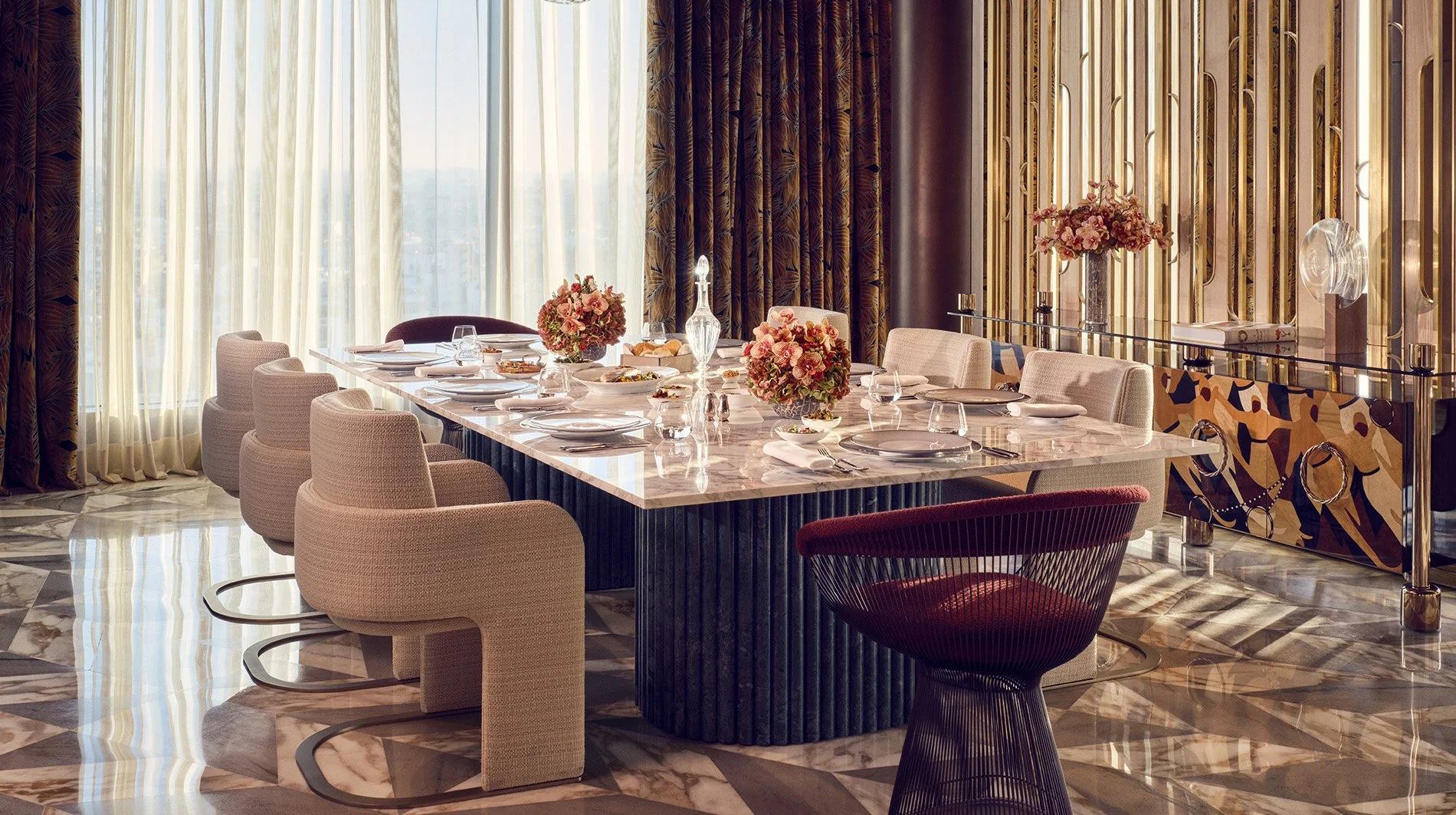
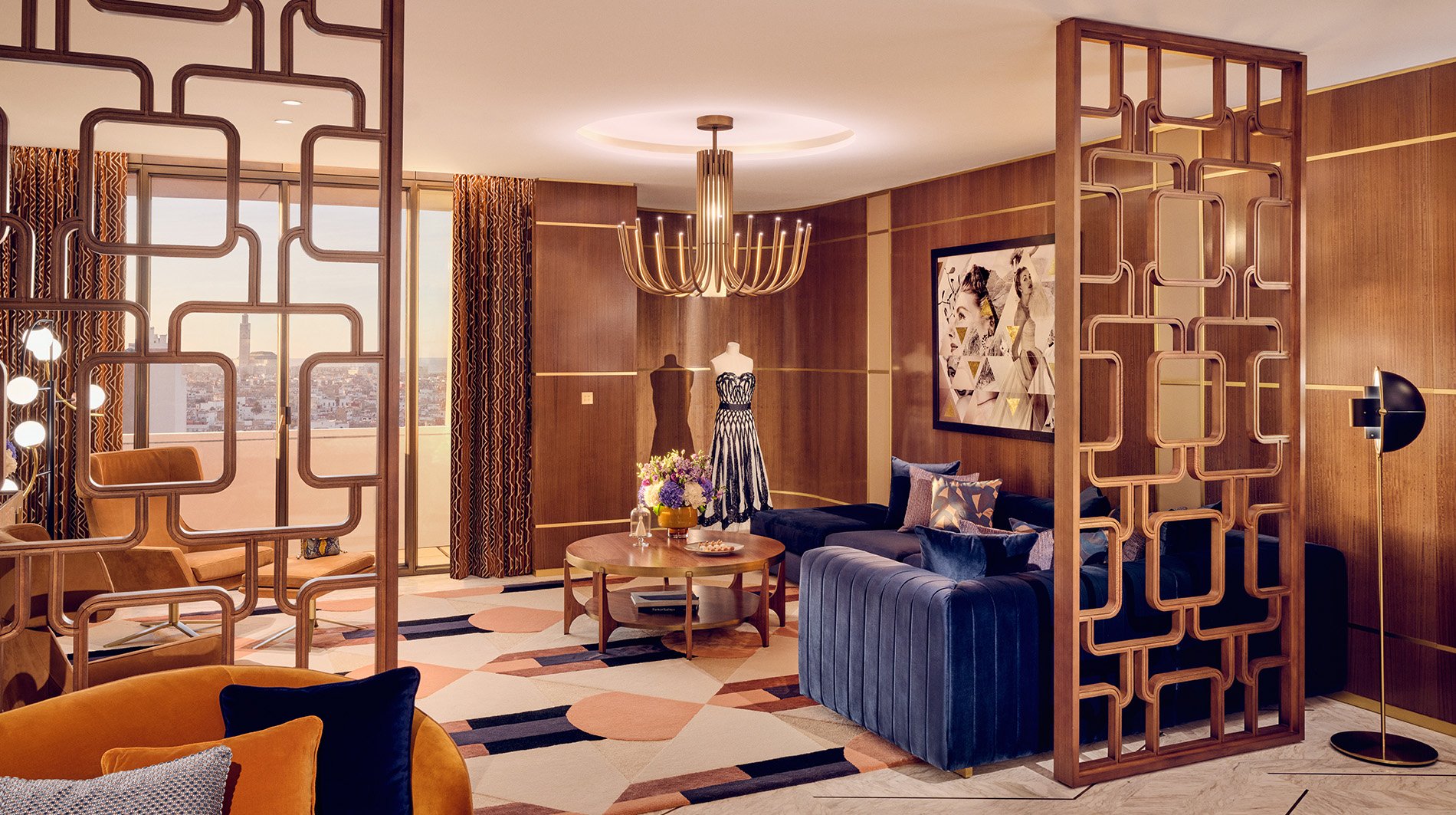
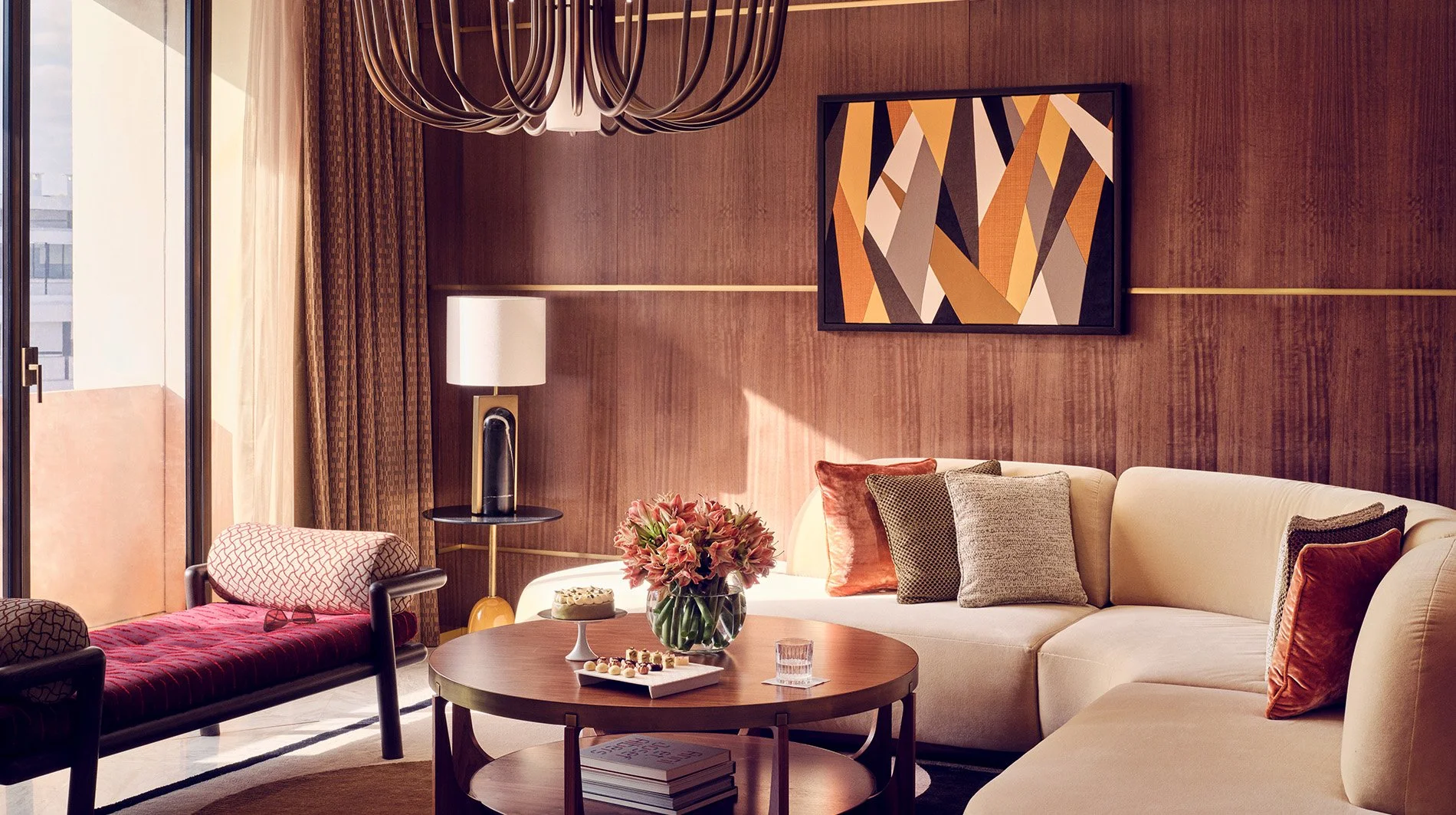
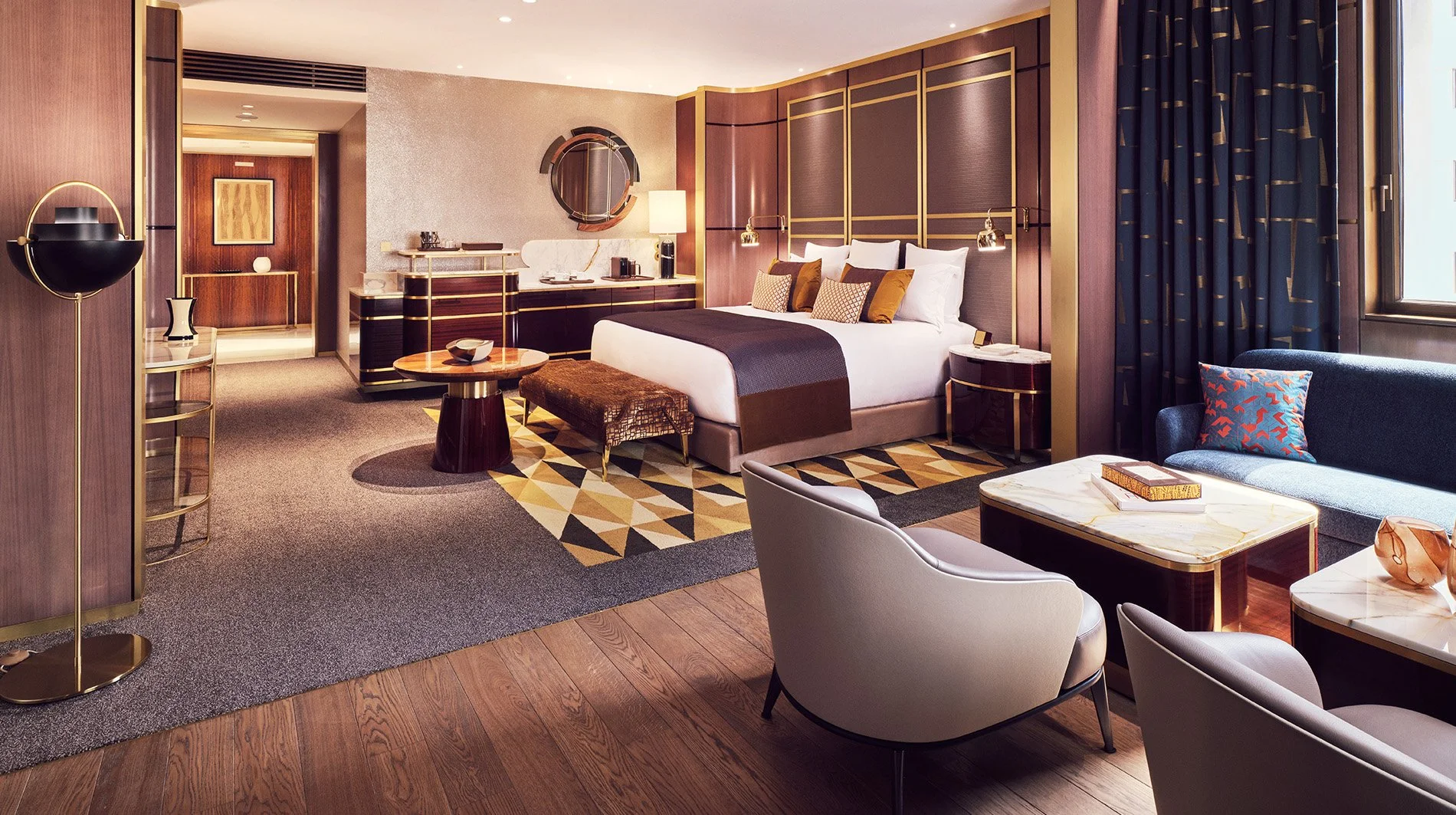
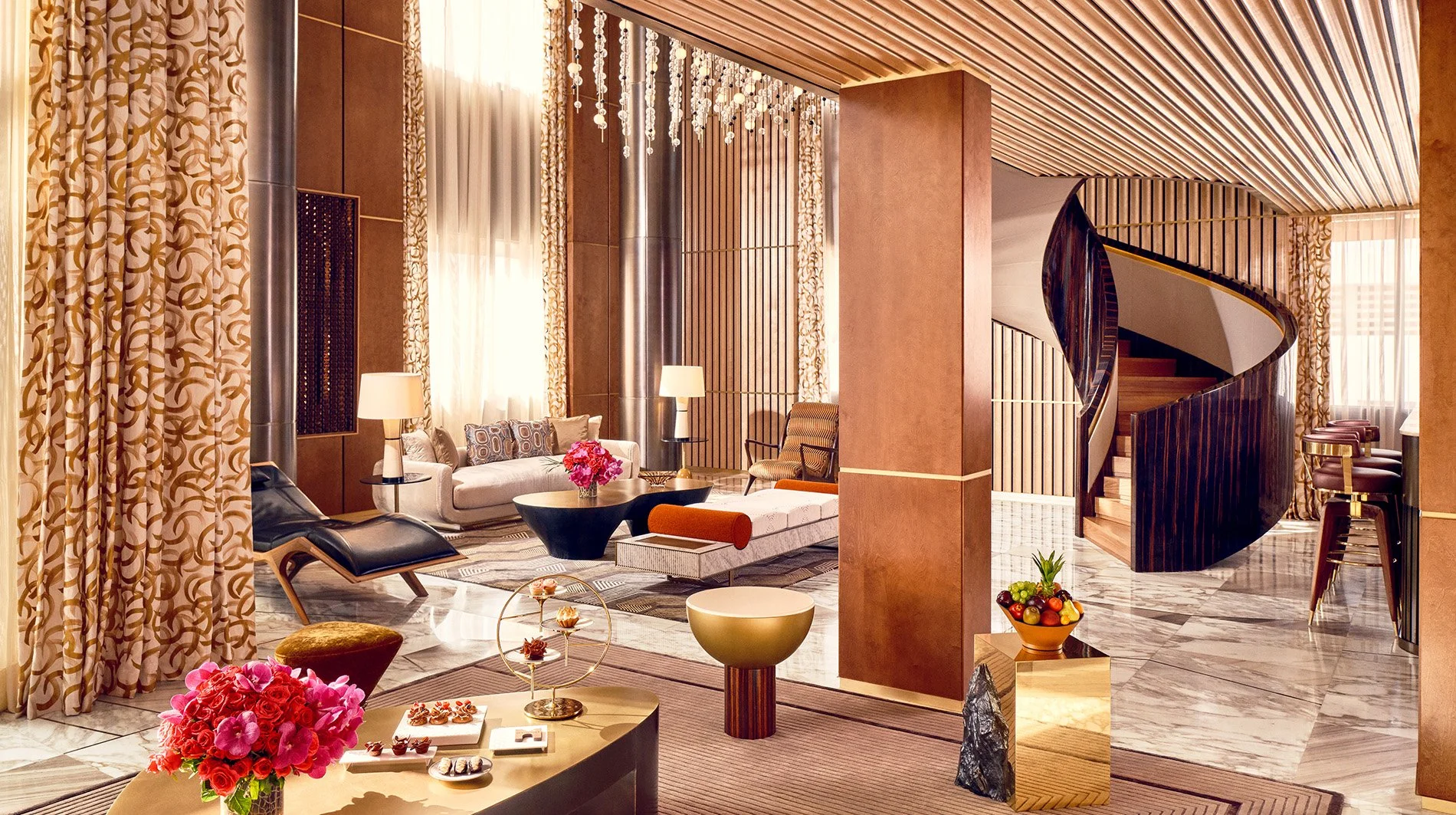
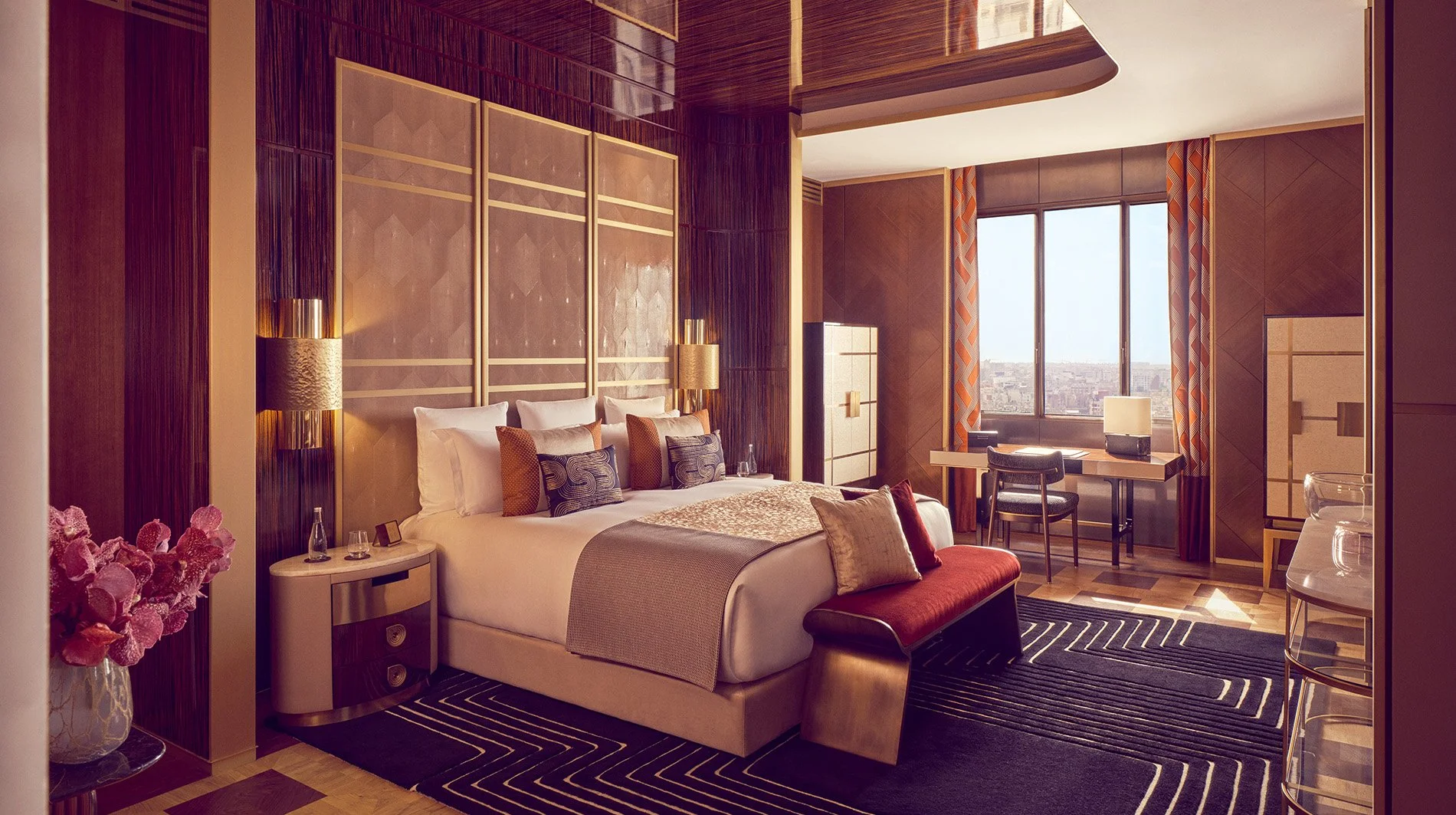
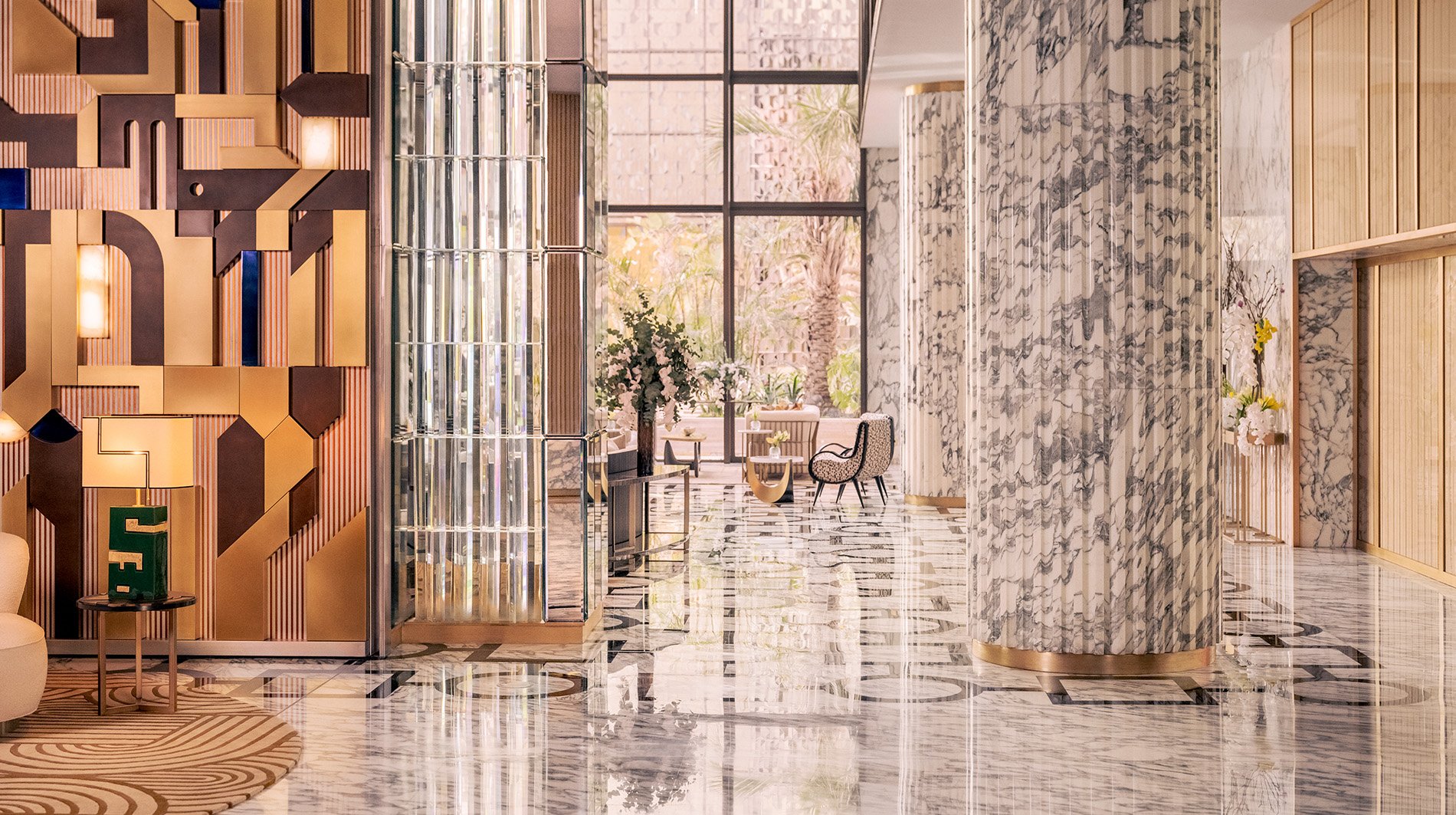
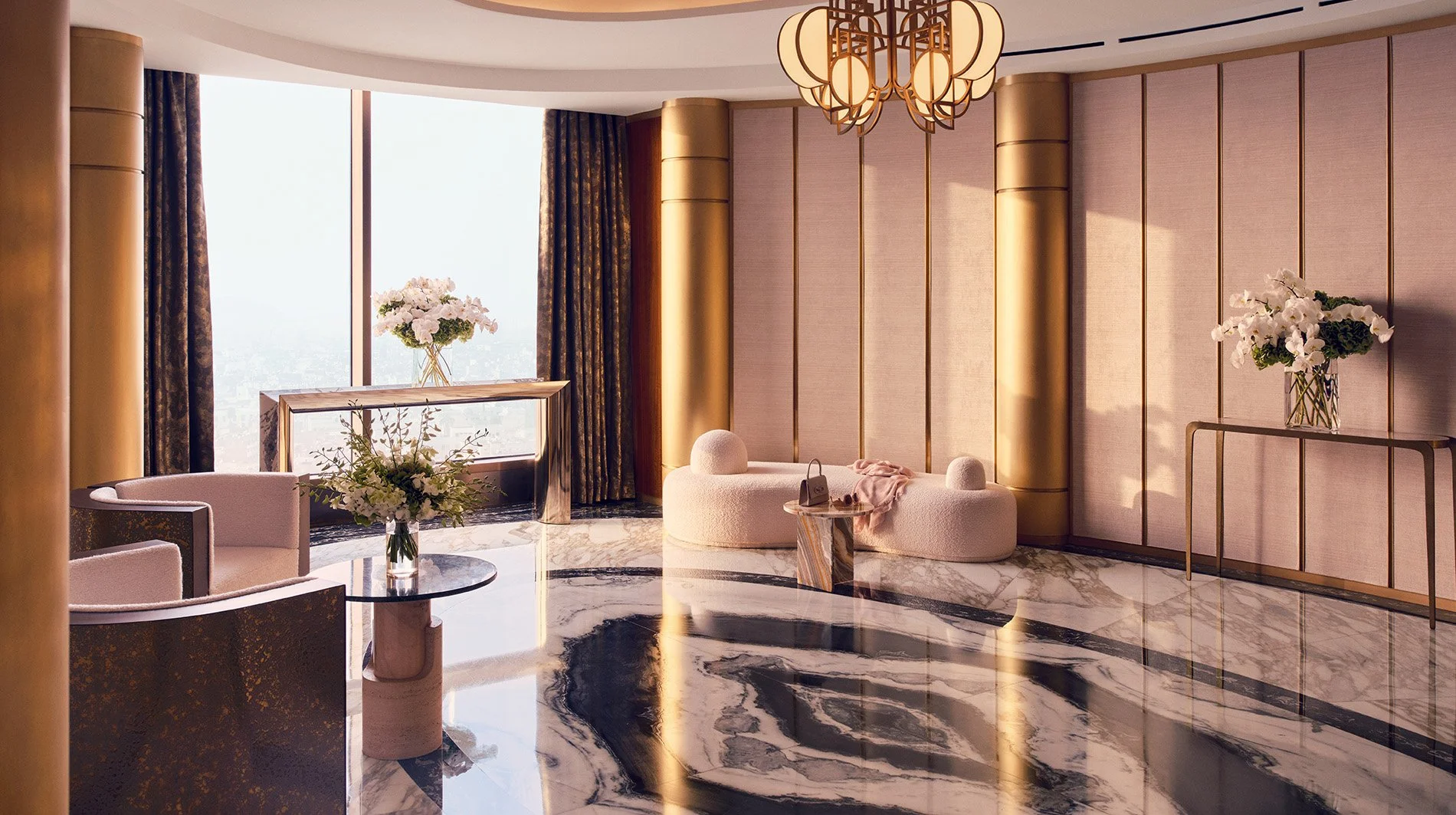
The interiors interpret Casablanca’s 1950s energy through curved furniture, polished surfaces, bold lighting, geometric detailing and materials selected from far beyond Morocco. The effect is more cosmopolitan modernism than traditional palace decoration, which helps distinguish the hotel clearly from Royal Mansour Marrakech.
Public spaces are intentionally dramatic. The lobby uses monumental scale, sculptural lighting and expanses of stone, while an aquarium filled with Amazonian species becomes an unexpected visual anchor. Higher floors change the mood again as the city and ocean begin to dominate through large windows.
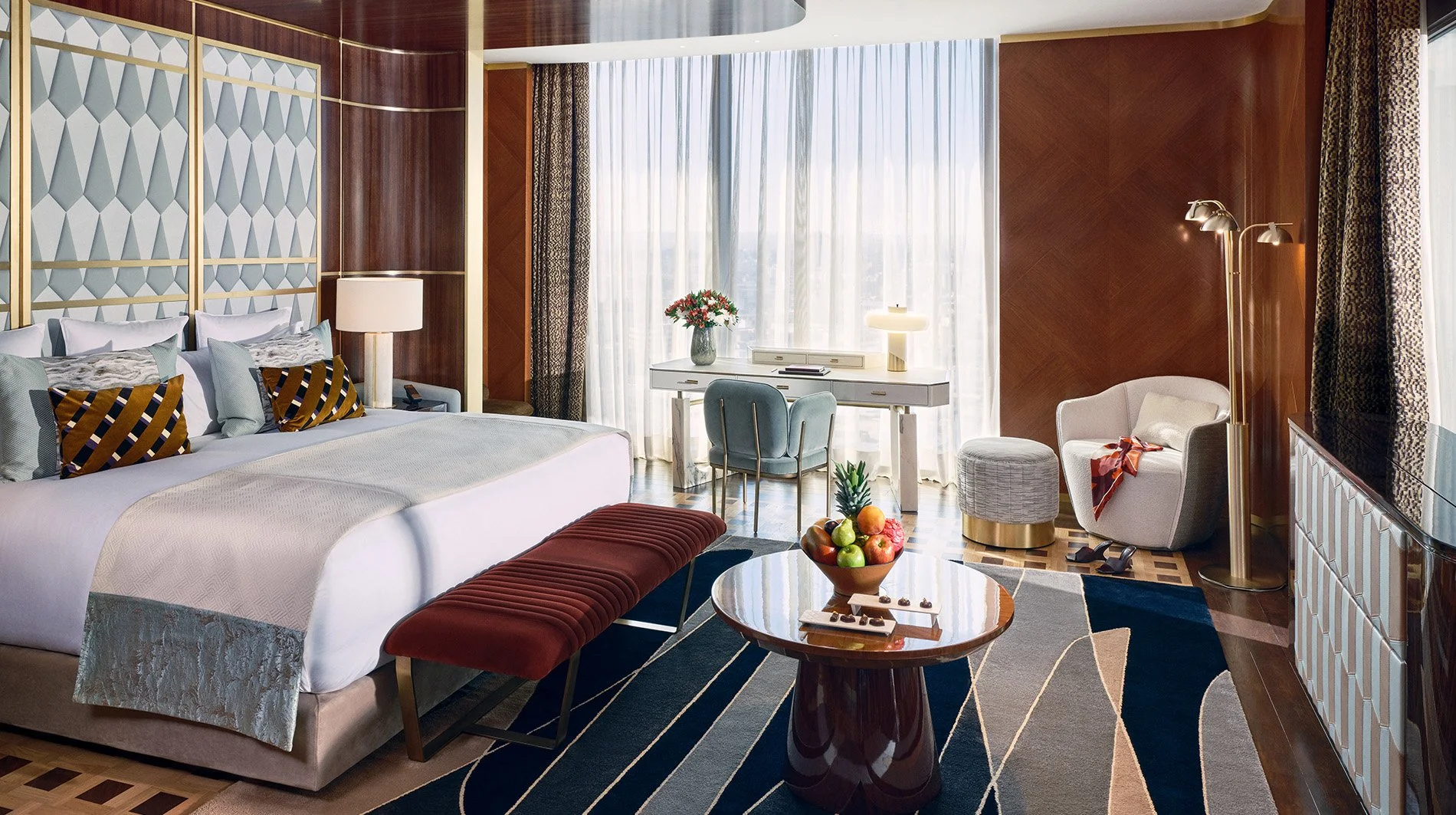
Art is integrated throughout the guestrooms and signature suites, where themes linked to music, film, fashion and literature give certain floors their own identity. Mid-century forms are combined with discreet technology, allowing the historical reference to remain visible without turning the rooms into period sets.
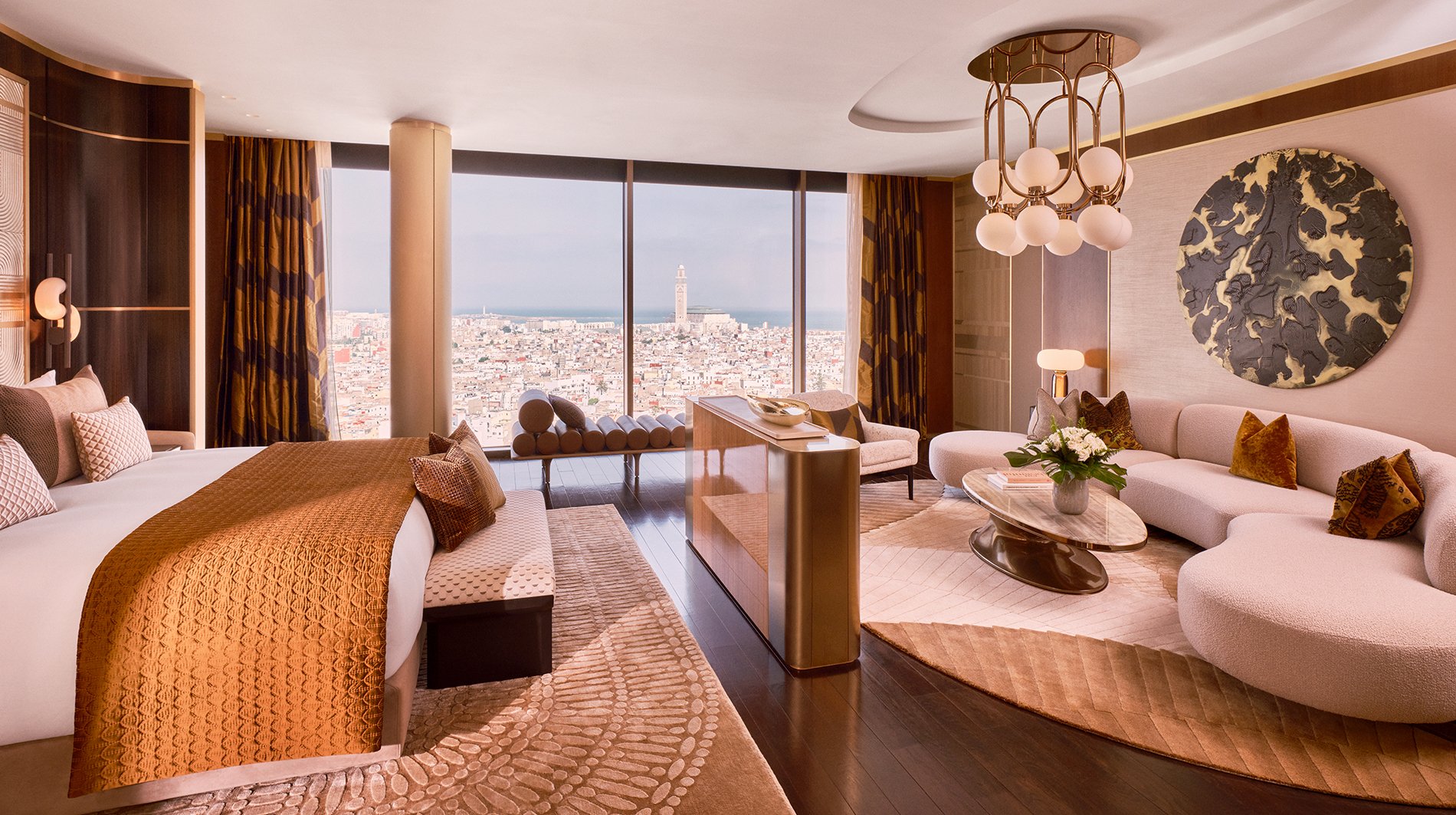
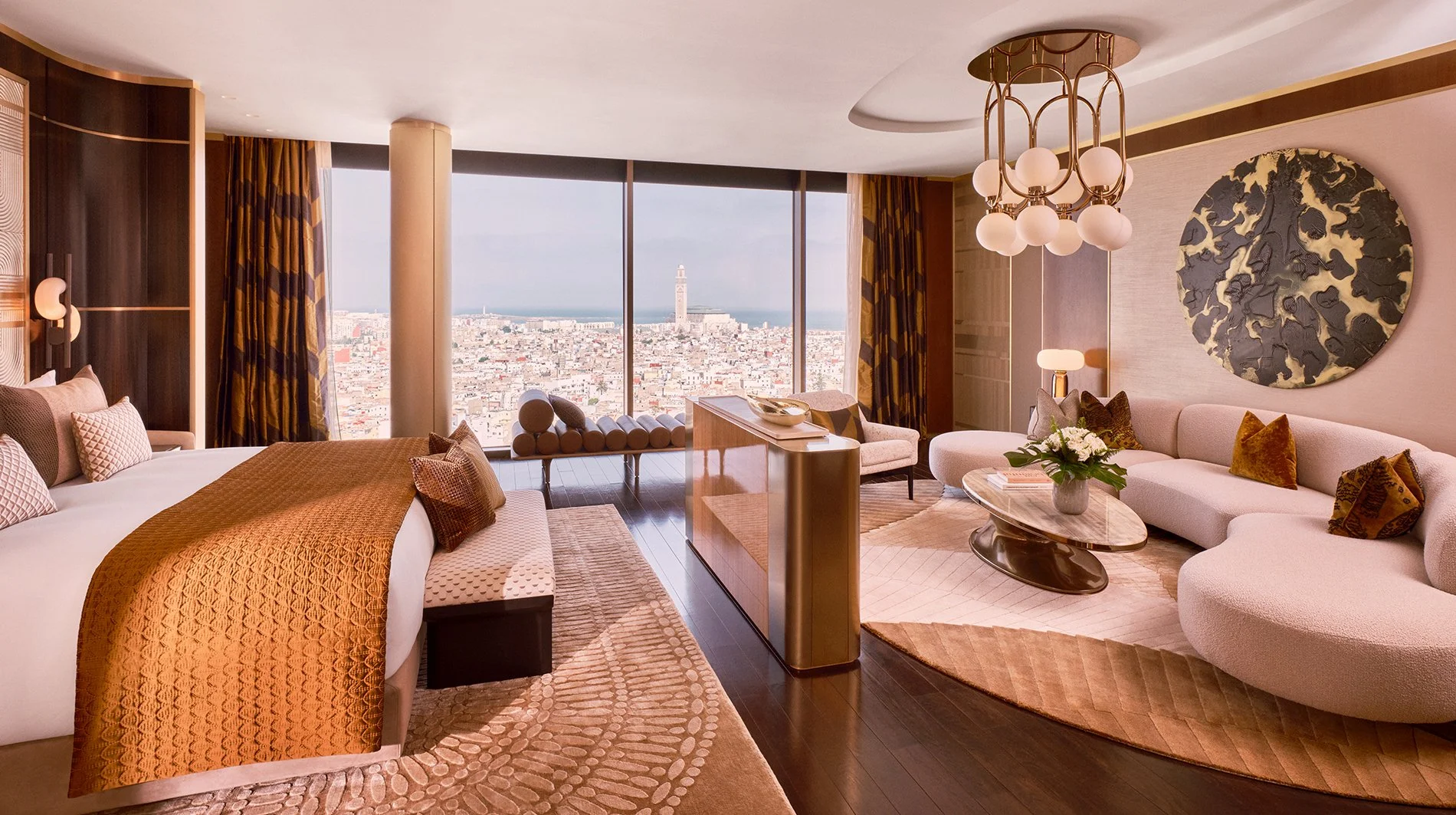
The building itself is one of the most important design elements. Its height gives the hotel a relationship with Casablanca that changes floor by floor: lower levels feel embedded in the commercial center, while the Signature and exceptional suites look across the city toward the Old Medina, Hassan II Mosque and Atlantic.
From 55-Square-Meter Rooms to a 1,200-Square-Meter Royal Suite
Deluxe Room: Approximately 592 sq. ft., with a double bed or two single beds, modernist-inspired furniture, a workspace and a marble bathroom with bathtub and rain shower; selected rooms can connect for families or companions traveling together.
Corner Room: Approximately 646 sq. ft., positioned on the corners of the building for increased daylight and city views, including selected perspectives toward the Hassan II Mosque, with a soundproofed layout, high-tech features and marble bathroom.
Premier Room: Approximately 753 sq. ft., with a double bed, dedicated work area, relaxation space, bathtub and walk-in shower, offering the largest footprint among the hotel’s standard room categories.
Junior Deluxe Suite: Approximately 861 sq. ft., with a king bed, spacious dressing room, separate lounge and marble bathroom, accommodating up to three guests with an additional bed where applicable.
Junior Premier Suite: Approximately 969 sq. ft., with a king bedroom, separate lounge, bespoke office furniture, a dedicated butler’s office and marble bathroom with bathtub and walk-in shower.
Executive Suite: Approximately 1,399 sq. ft., with a spacious bedroom, separate lounge and dining room, dedicated work area and broad views across Casablanca from the upper levels of the principal guestroom floors.
One-Bedroom Signature Suite: Approximately 1,615 sq. ft., with one bedroom, double lounge, dining room, dressing room and themed interiors inspired by music or literature, positioned between the 16th and 18th floors.
Two-Bedroom Privilege Suite: Approximately 2,368 sq. ft., with two bedrooms, butler’s pantry, dining room, study and cinematic or fashion-inspired decorative themes, supported by dedicated butler service.
Two-Bedroom Vintage Suite: Approximately 2,583 sq. ft., with two bedrooms and a 1950s-inspired design palette on the 19th floor, combining large living areas with elevated views of Casablanca.
Prestige Duplex: Approximately 5,113 sq. ft., arranged across the 19th and 20th floors with two bedrooms, two lounges, dining room, veranda, private elevator access, hammam and bathrooms with bathtubs and walk-in showers.
Grand Duplex: Approximately 5,866 sq. ft., with two bedrooms over two levels, private elevator access, gym, dressing room, study and a light-filled dining room high above the city.
Princiere Suite: Approximately 8,988 sq. ft., with two bedrooms spanning the 21st through 23rd floors, a rooftop terrace, cinema room, bar and extensive living spaces overlooking Casablanca.
Royal Suite: Approximately 12,917 sq. ft., extending across the 21st through 23rd floors with four bedrooms, a double lounge, dining and meeting spaces, open-air terrace, private spa facilities and its own elevator access.
The scale is unusual for an urban hotel. Even the entry rooms begin at approximately 592 sq. ft., while the exceptional suites function more like elevated private residences than conventional hotel suites. Travelers booking primarily for a specific monument or ocean view should confirm orientation as well as category, since the building’s corners and upper floors produce materially different outlooks.
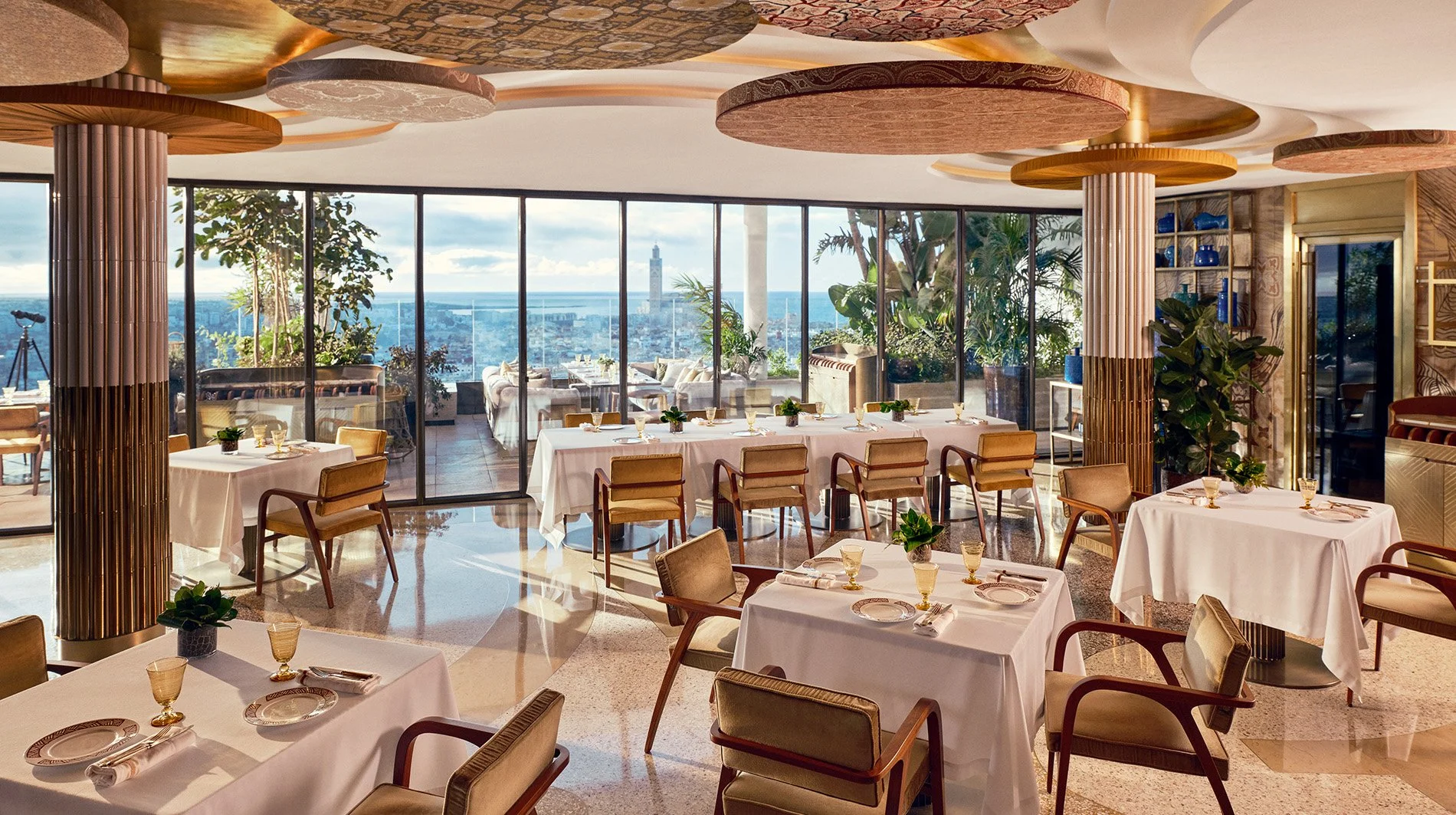
Four Restaurants, Four Different Versions of Casablanca
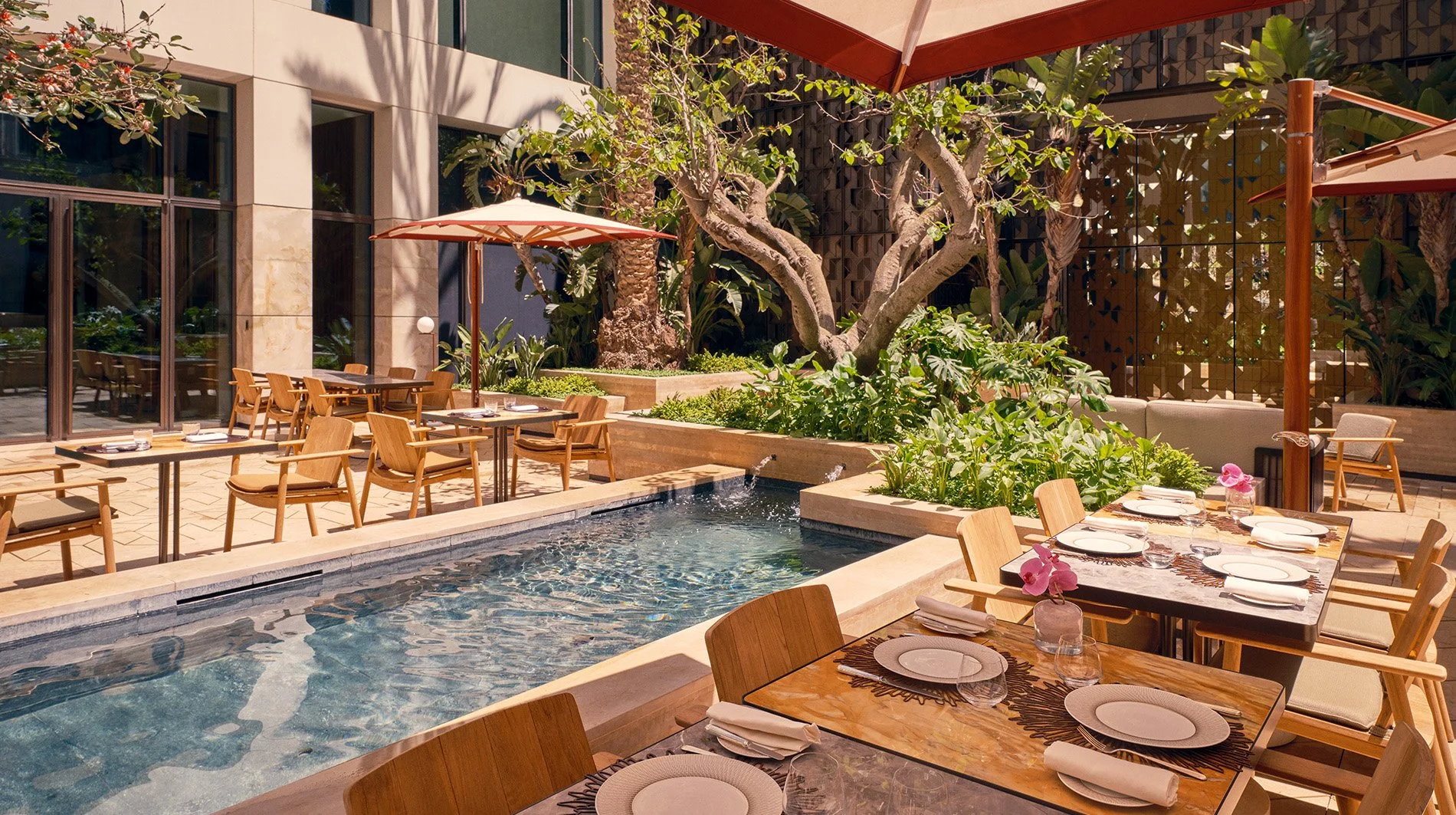
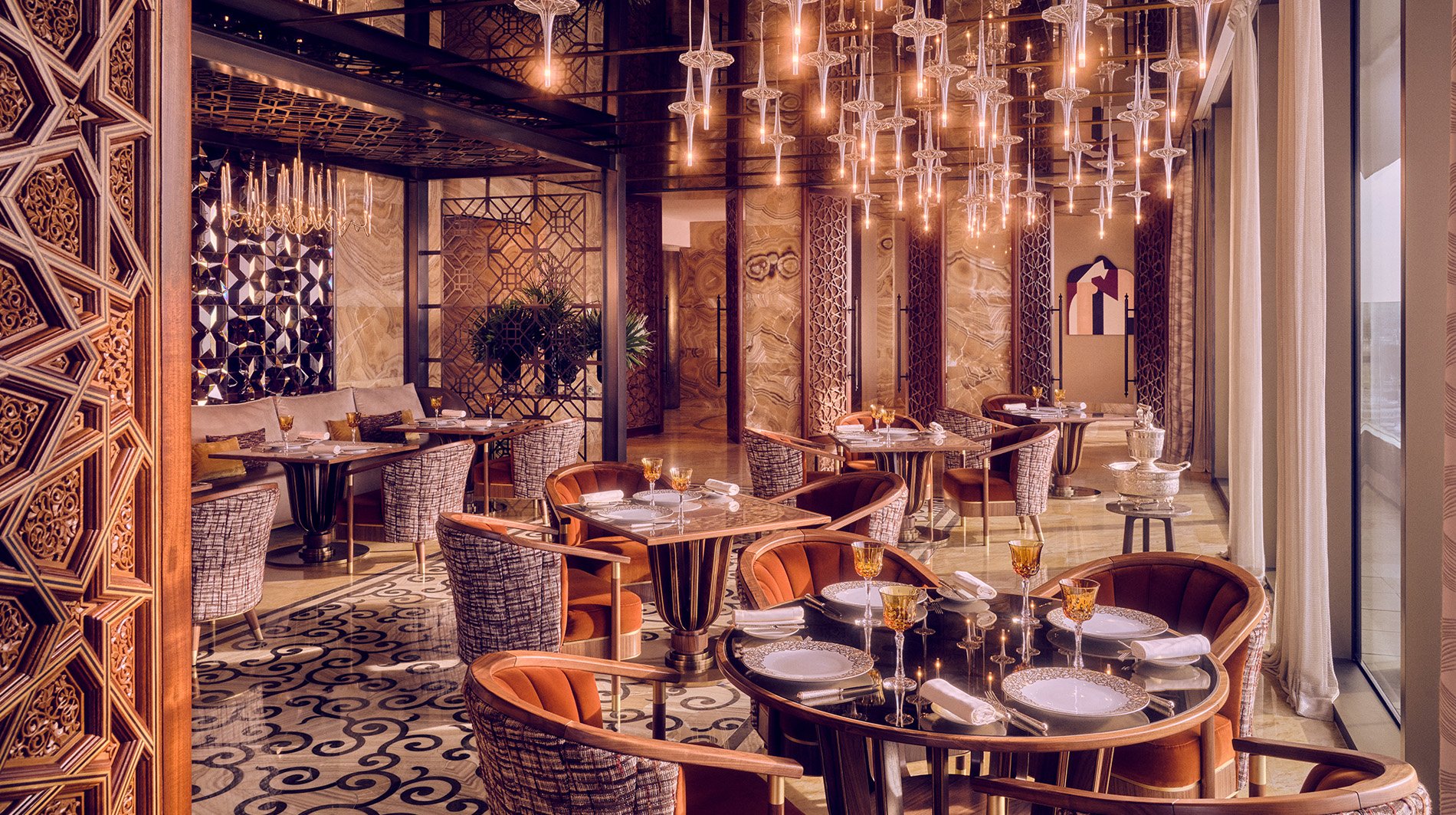
La Brasserie: Chef Éric Frechon oversees this French brasserie, where classic technique, seafood, poultry, pâtés, seasonal vegetables and polished comfort dishes are served in a lively ground-floor setting that also operates as one of the hotel’s principal social spaces.
Le Sushi Bar: Japanese chef Keiji Matoba leads an intimate counter-style restaurant beneath a sculptural Sakura-blossom chandelier, focusing on sushi, sashimi and precise Japanese preparations for lunch and dinner.
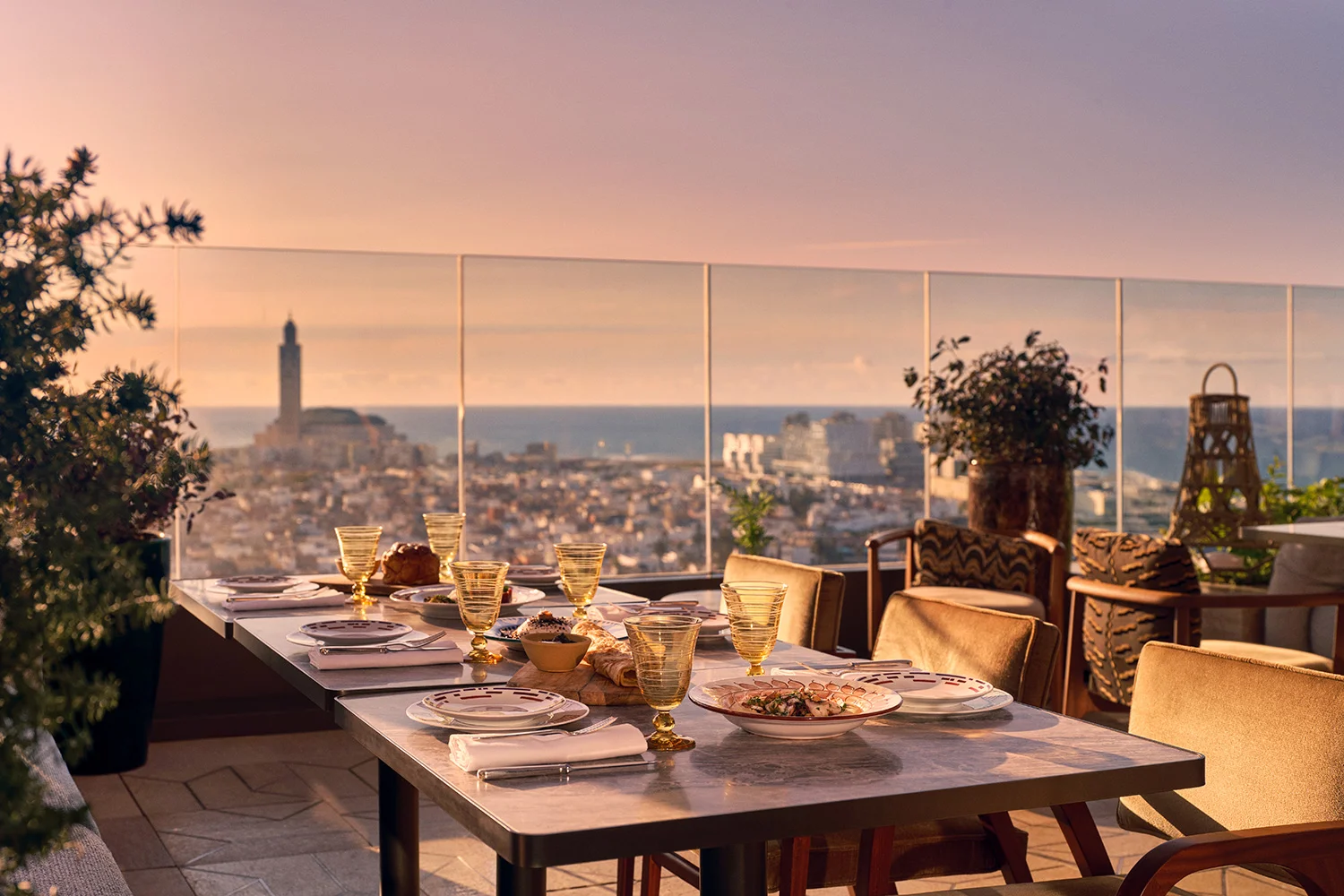
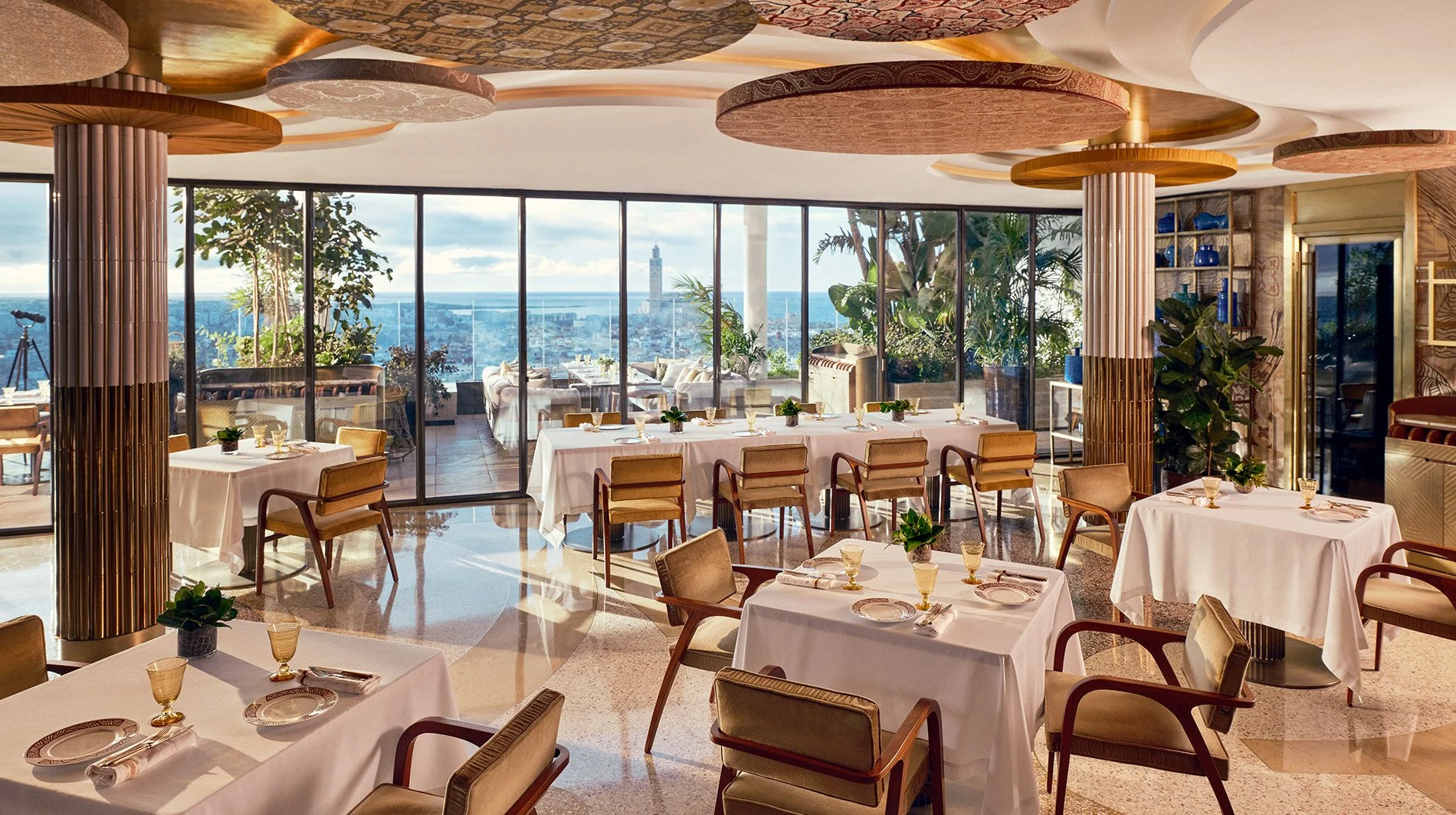
La Grande Table Marocaine: Positioned on the 23rd floor, chef Karim Ben Baba’s Moroccan restaurant translates dishes such as royal pastilla, m’hamar lamb, Moroccan salads and couscous into an elevated setting with panoramic views toward the Old Medina, ocean and Hassan II Mosque.
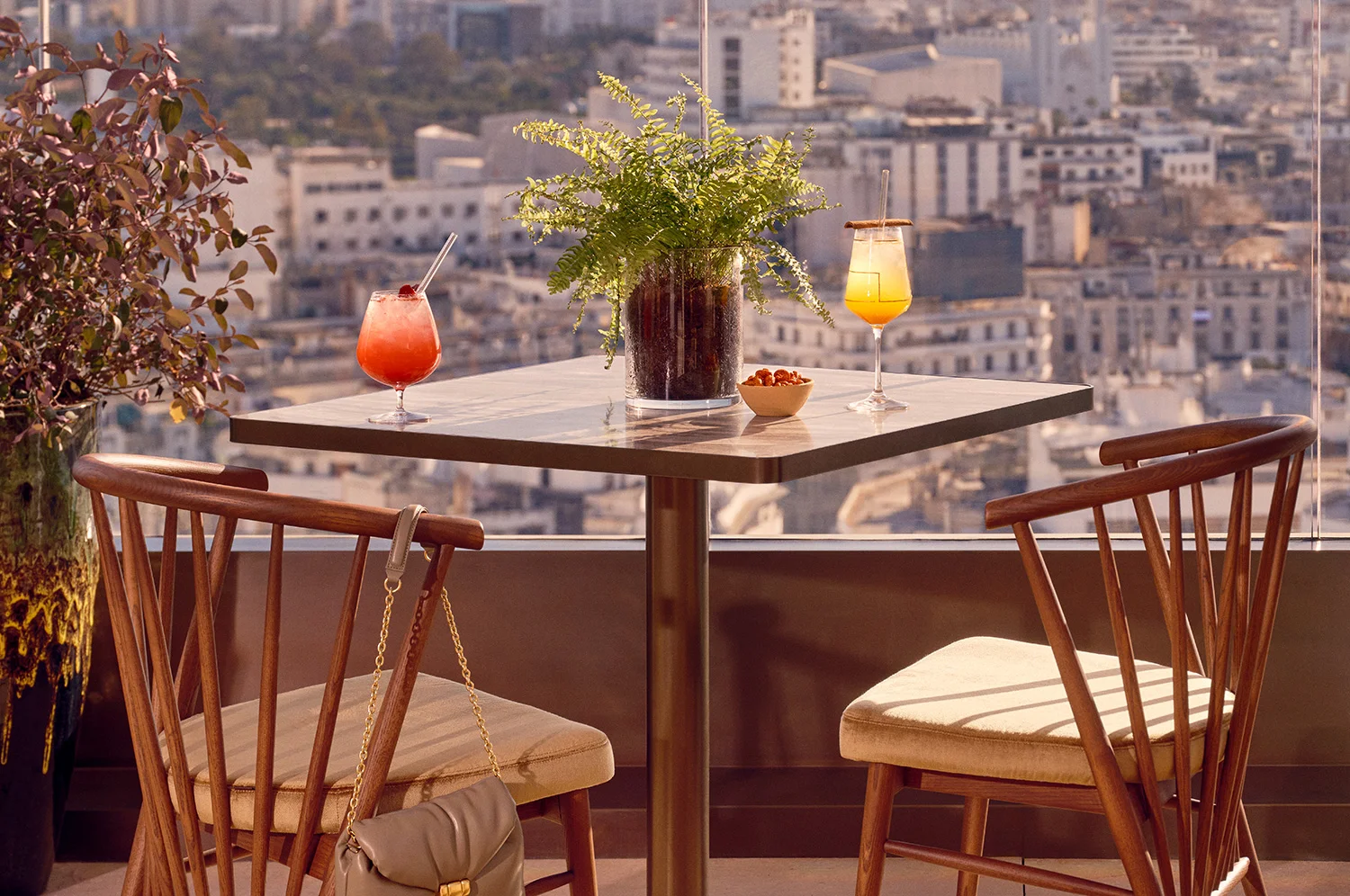
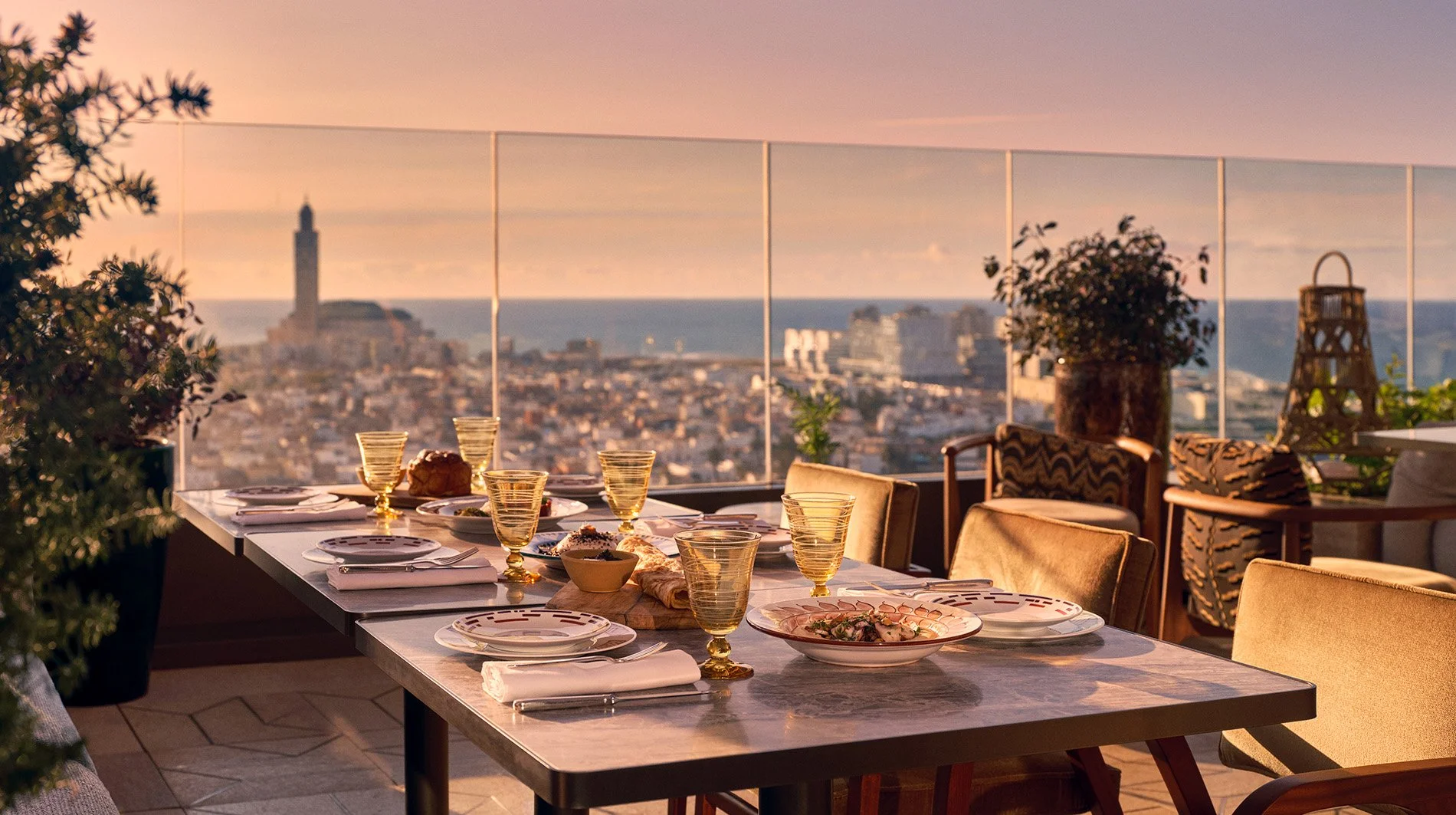
Le Rooftop: Also high above the city, this all-day venue combines Mediterranean foundations with Levantine, Italian and Asian influences, shifting from breakfast and lunch into a more animated evening atmosphere with a cocktail bar, terrace and DJ programming.
The Bar: A club-like lounge with a pronounced 1950s character, serving cocktails and light food throughout the day and evening in a setting designed for conversation rather than the expansive views of the rooftop venues.
The dining program is deliberately broad. La Grande Table Marocaine connects the property to Moroccan culinary tradition, La Brasserie gives Éric Frechon a distinctly French stage, Le Sushi Bar adds a tightly focused Japanese experience, and Le Rooftop uses Casablanca itself as part of the restaurant through its near-360-degree perspective.
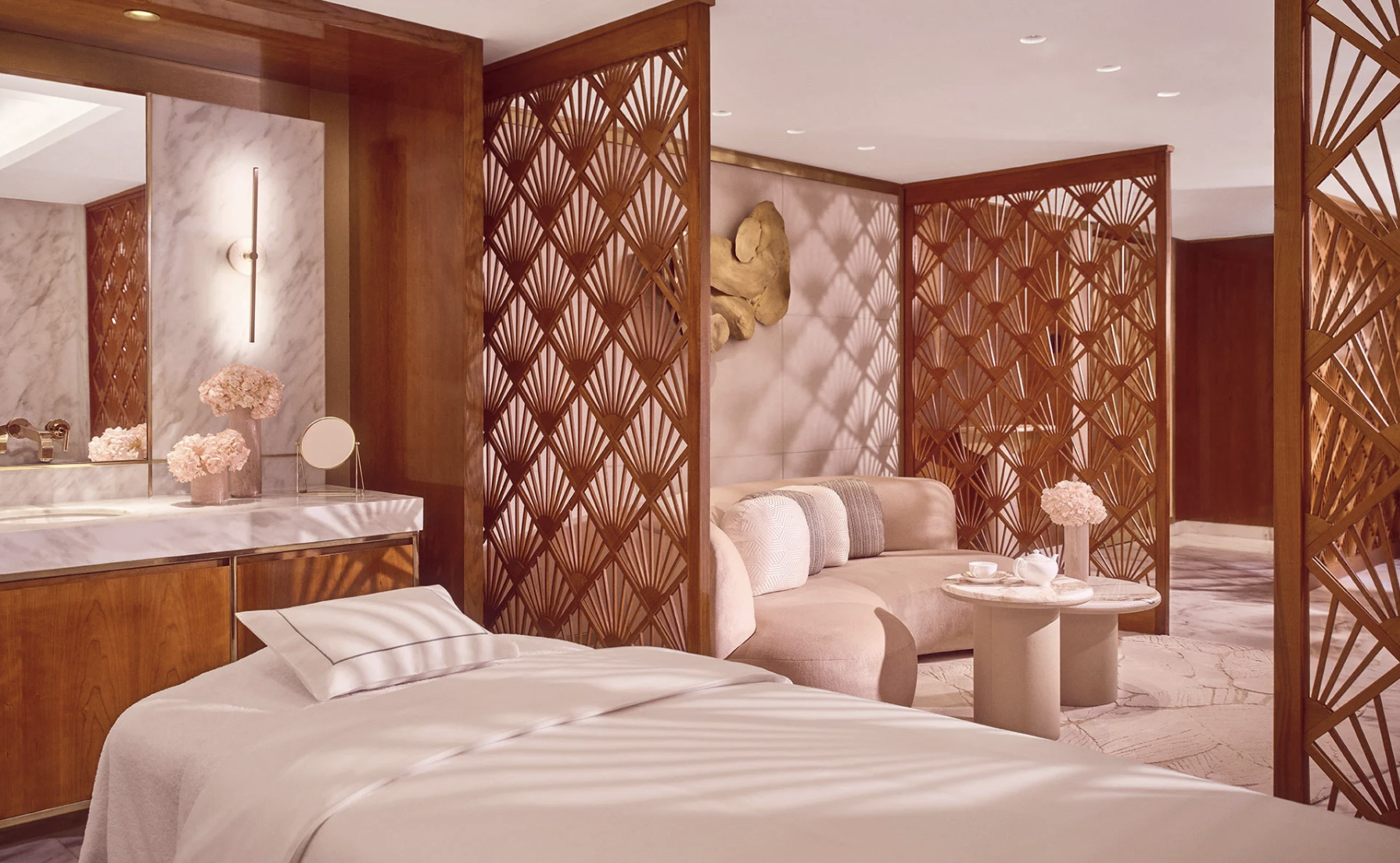
A 2,510-Square-Meter Spa Across Two Floors
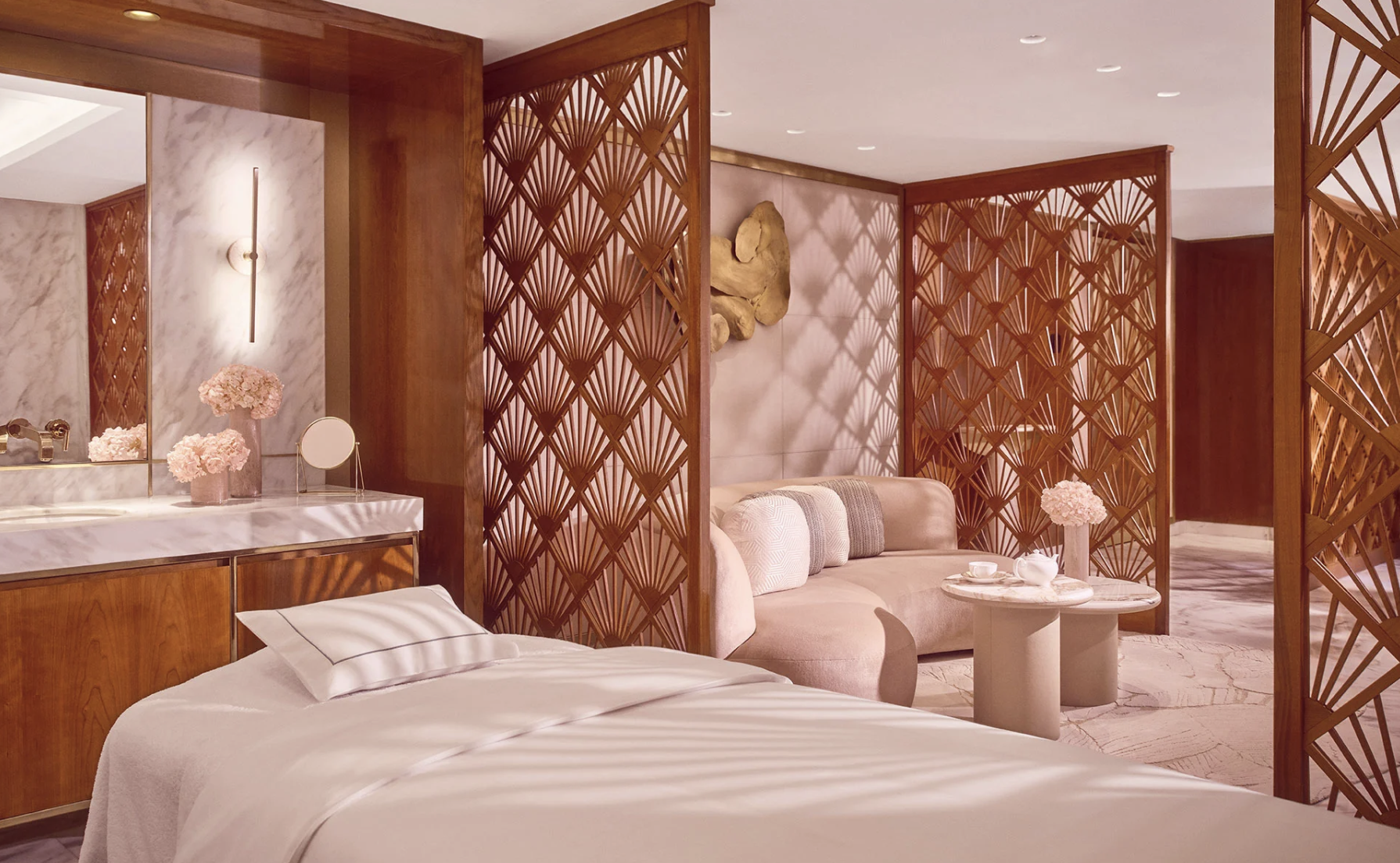
The Spa Royal Mansour Casablanca occupies approximately 2,510 square meters across the fourth and fifth floors, creating a wellness destination that is substantial even by resort standards. Seven treatment rooms, two hammams, a private spa suite, plunge pool, fitness center and hair and beauty facilities sit within a predominantly white and marble environment designed to separate the spa from the energy of the city outside.
Treatments range from massage and reflexology to facial rituals, scrubs and hydrafacial treatments. The spa works with marocMaroc for Moroccan-inspired body and hammam rituals, while Leonor Greyl supports the haircare program.
A dedicated fitness area incorporates contemporary equipment and private coaching, and yoga can also form part of a tailored program. On the 20th floor, the hotel adds a separate 240-square-meter barber salon designed by Sarah Hamizi, combining grooming services with city views.
The spa received the 2025 World Spa Award for World’s Best New Hotel Spa, along with Africa’s Best Hotel Spa and Morocco’s Best Hotel Spa, giving the young property one of its clearest international distinctions.
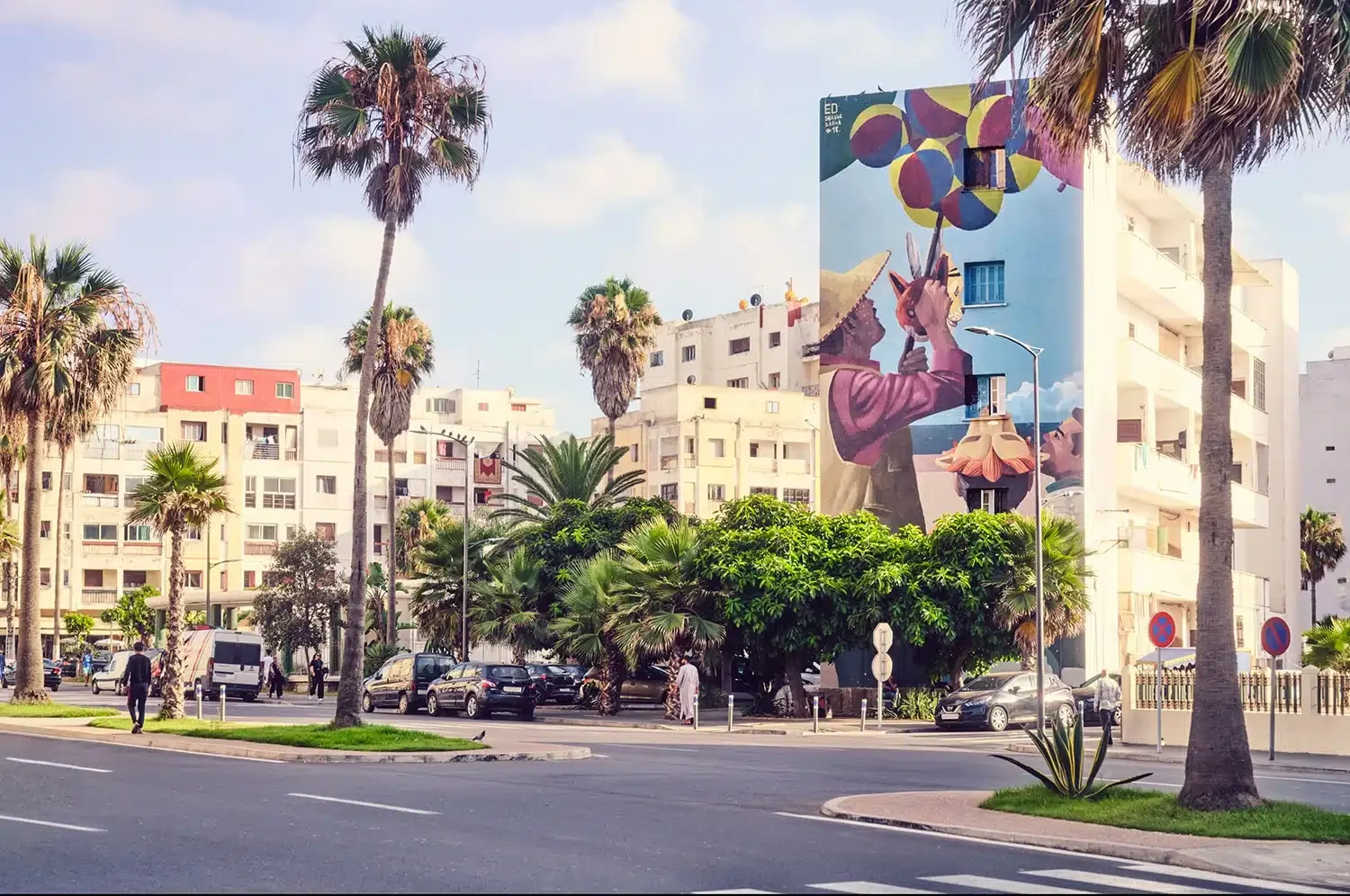
Street Art, Aviation and Atlantic Surf
Royal Mansour Casablanca treats the city as the principal experience. Its Cléfs d’Or concierge team organizes itineraries around the Old Medina, Casablanca’s Art Deco and modernist architecture, Hassan II Mosque and neighborhoods that reveal a more contemporary version of the city.
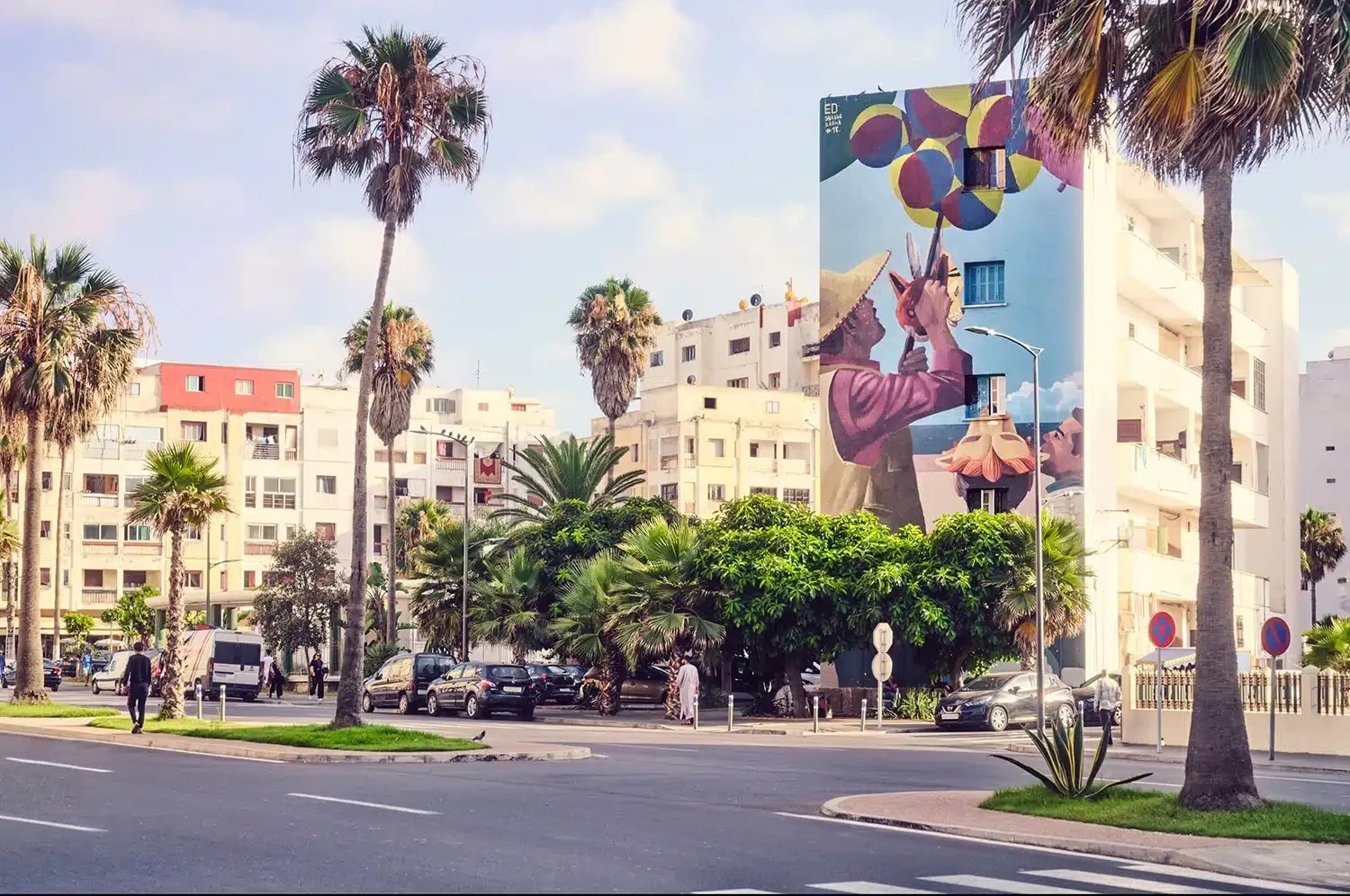
One guided route focuses on street art, moving between the Old Medina, Anfa and the Corniche to trace large-scale murals and newer creative districts. Another looks at Casablanca through food, linking market stalls and the Habous quarter with local street dishes rather than concentrating only on formal restaurants.
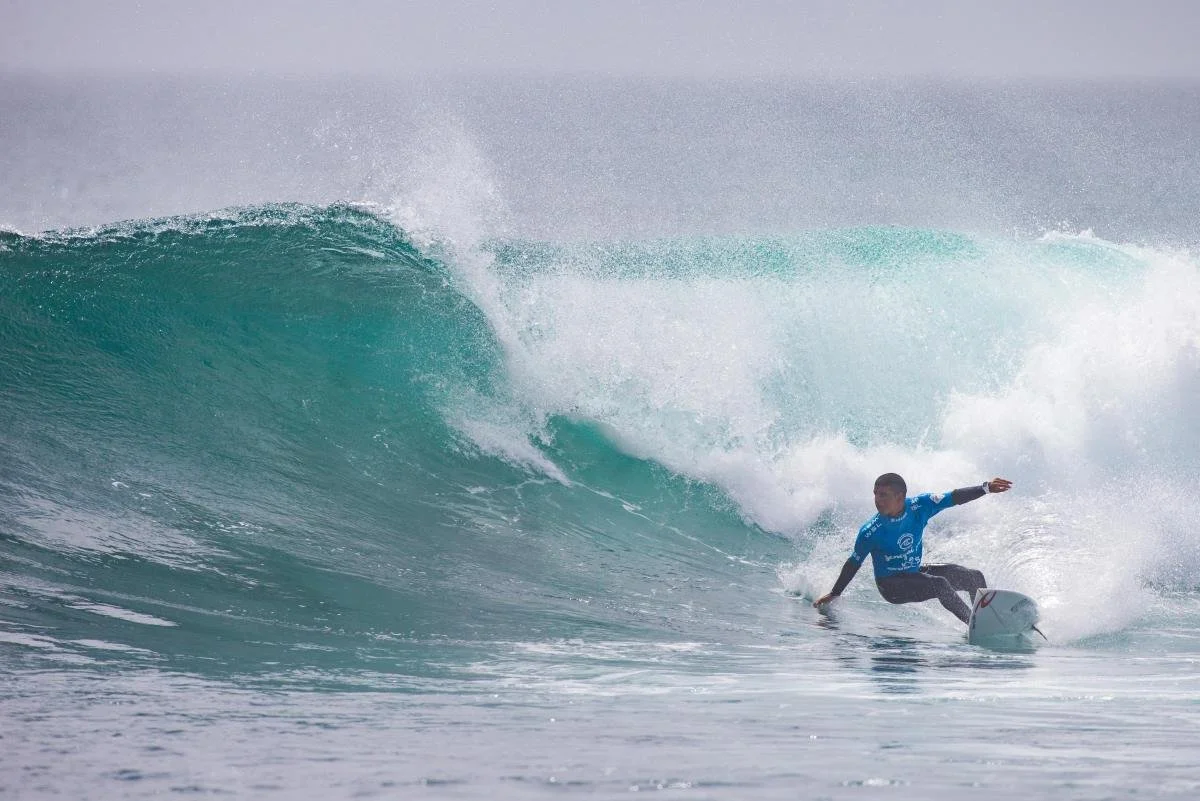
More unusual experiences extend beyond conventional sightseeing. The hotel promotes private aviation experiences and flying lessons, surf sessions at Dar Bouazza with Moroccan bodyboarding figure Adnane Benslimane, and shopping itineraries that connect visitors with a newer generation of Moroccan artisans, designers and concept stores.
Day trips can also move beyond Casablanca toward Rabat or the lagoon at Oualidia. These experiences are arranged rather than automatically included, and availability should be reconfirmed around weather, opening schedules and specialist guides.
Families in a Vertical City Hotel
Royal Mansour Casablanca is better understood as a family-capable city hotel than a resort centered on a large children’s club. The strongest family advantage is the accommodation inventory: selected Deluxe and Corner rooms connect, suites can take an additional bed, and the two- and four-bedroom categories provide substantial private living space.
The two-bedroom Privilege and Vintage suites are particularly practical for families wanting to remain together while retaining separate sleeping areas, while the exceptional suites add dining rooms, private elevators and, at the highest level, private wellness and entertainment facilities. The Royal Suite accommodates up to eight guests across four bedrooms.
Babysitting and child-oriented arrangements are available through the property, but detailed standing schedules for a dedicated kids’ club are not clearly published on the hotel’s current official site. Families traveling around a particular age group, supervision need or children’s activity schedule should therefore confirm the current program directly before arrival rather than assume resort-style daily childcare.
Triple Environmental Certification Built Into the Reconstruction
Royal Mansour Casablanca has one of the stronger documented sustainability stories among recently reconstructed urban luxury hotels. During redevelopment, the building followed a voluntary triple-certification approach and became the first hotel described by Royal Mansour as holding HQE, BREEAM and LEED environmental quality certifications together.
The group’s published environmental measures include LED lighting, motion detectors, low-emissivity glazing, energy recovery from ventilation systems and electronic energy monitoring. Water and waste initiatives include water-efficient sanitary fixtures, selective sorting and organic-waste composting, alongside broader responsible-sourcing policies.
The important distinction is that the triple certification specifically belongs to the Casablanca building, while some other environmental initiatives described by Royal Mansour apply across the collection or at individual sister hotels. Keeping those levels separate makes the hotel’s own achievement more meaningful rather than attributing every group practice directly to this property.
Accessibility Should Be Confirmed Before Arrival
Royal Mansour Casablanca is a recently reconstructed high-rise with lifts and contemporary infrastructure, which generally gives it a more straightforward starting point for accessibility than many historic hotels. However, the current official site does not publish sufficiently detailed room-by-room information on roll-in showers, bathroom clearances, bed heights or hearing and vision features to support broad claims about universal access.
Travelers with mobility requirements should confirm the exact accessible guestroom category, elevator route, entrance configuration and access to the rooftop, restaurants, spa and hammams before booking. The very large exceptional suites may also require discussion of internal circulation despite their generous dimensions.
Because Morocco does not use the U.S. ADA framework, it is better to verify practical features directly with the hotel than to describe accommodations as “ADA-compliant” without specific evidence.
The Old Medina, Art Deco Center and Hassan II Mosque
The hotel’s location at 27 Avenue des Forces Armées Royales places it between the commercial center, port and older parts of Casablanca. The Central Market is within walking distance, while United Nations Square, Mohammed V Square and the Old Medina help connect the immediate district to the city’s layered French colonial, Moroccan and post-independence history.
Casablanca’s architectural character deserves as much attention as its individual landmarks. Art Deco, Streamline Moderne and modernist façades appear throughout the center, often mixed with contemporary towers and dense street life. That context explains why the Royal Mansour’s return to its 1950s address is more than a branding exercise: the building belongs to the same architectural story.
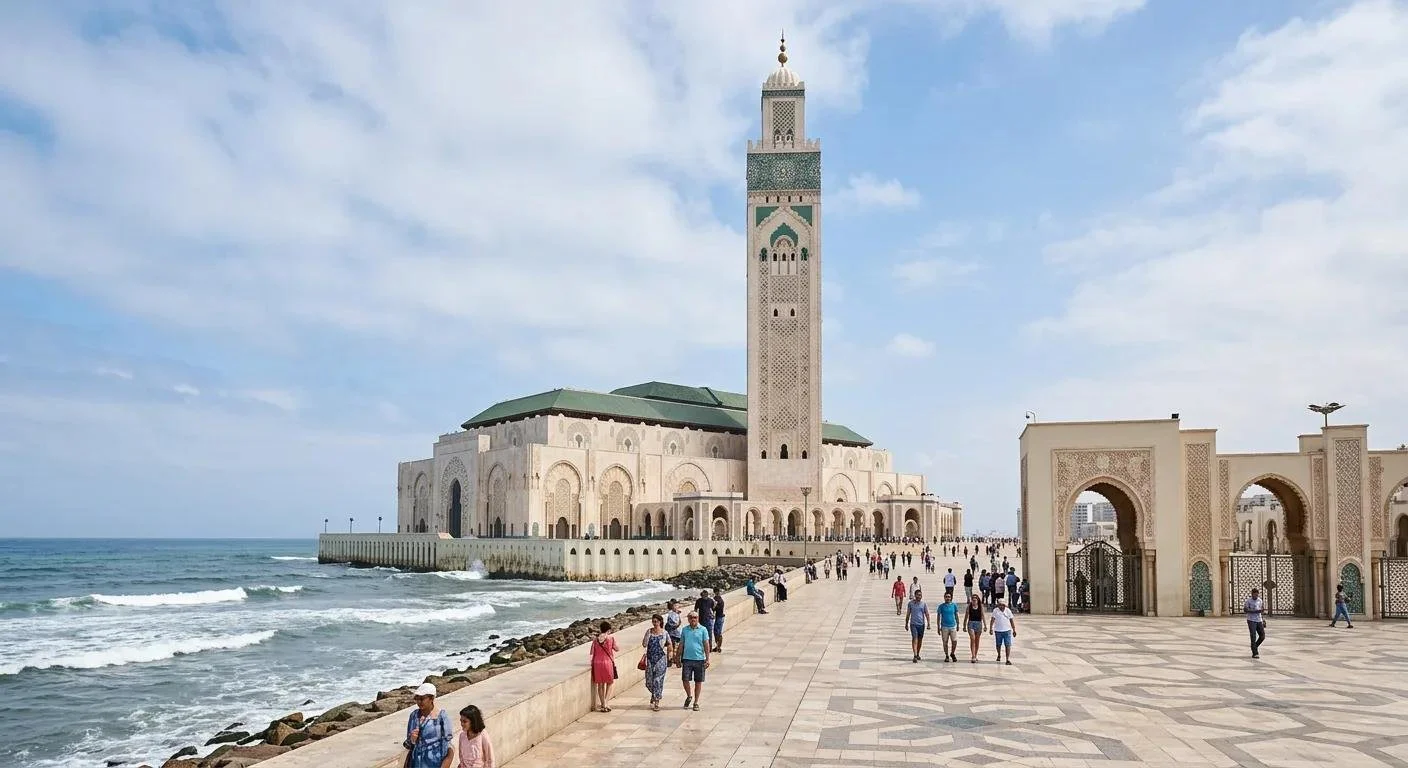
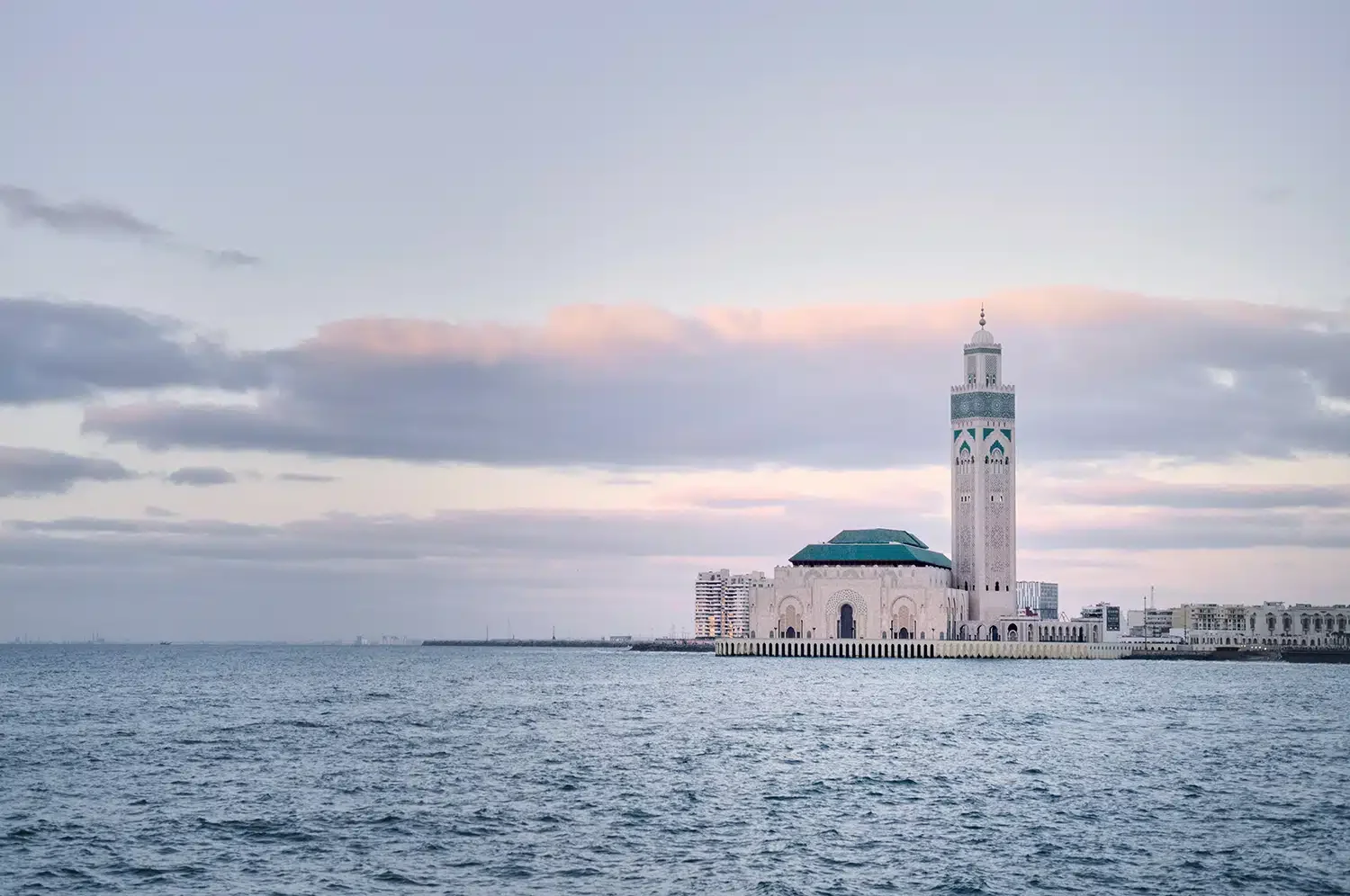
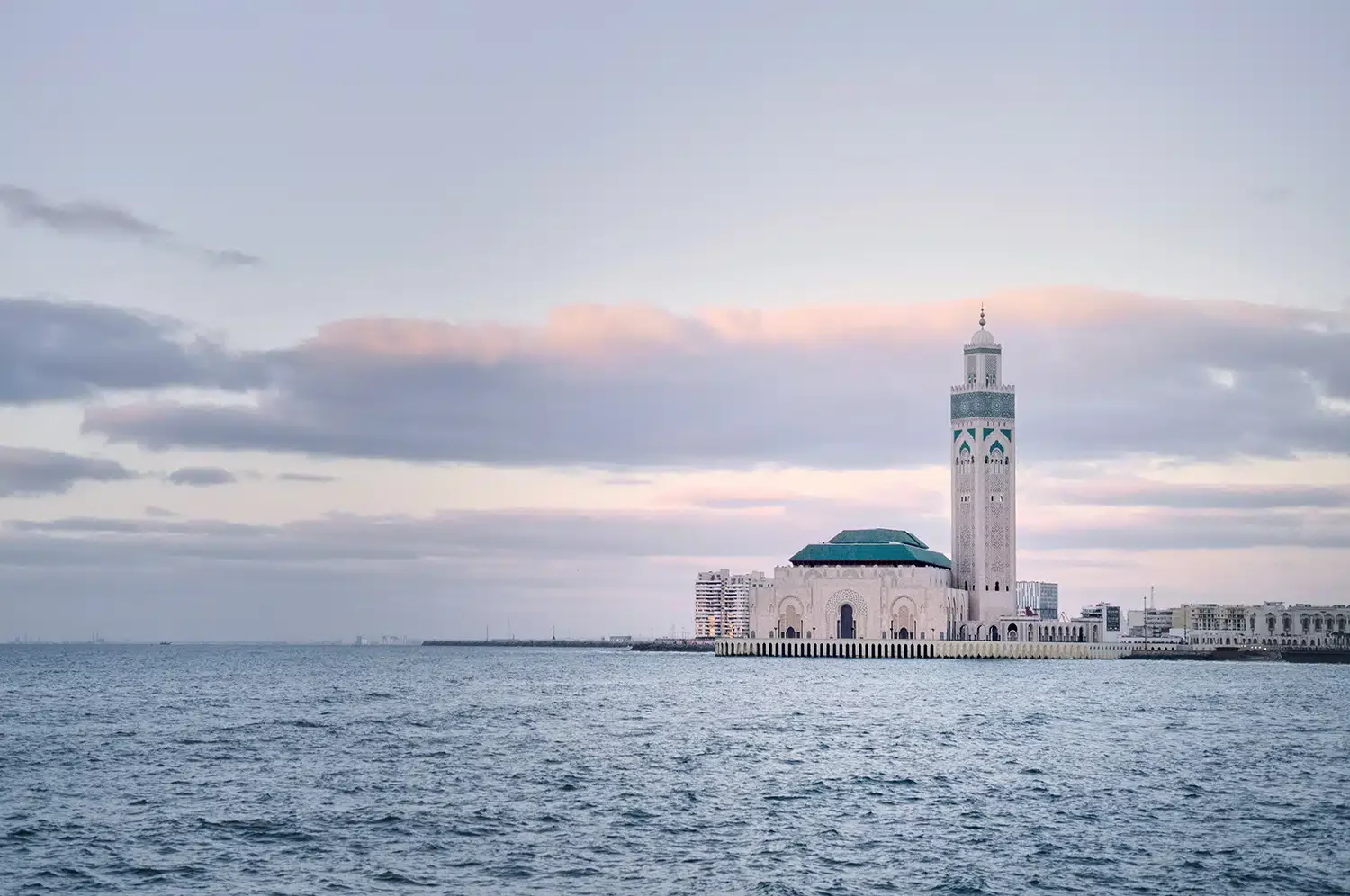
Hassan II Mosque sits closer to the Atlantic and is only a short drive from the hotel. Its vast prayer hall, minaret and oceanfront esplanade create a very different scale from the compact streets of the Old Medina. Farther west, the Corniche and Ain Diab shift the city toward beaches, cafés and the Atlantic-facing social life of modern Casablanca.
Arriving in the White City
Mohammed V International Airport (CMN): The airport lies southwest of central Casablanca; official airport guidance recommends allowing approximately 30–50 minutes by road depending on traffic, with longer times possible during busy periods.
Hotel-Arranged Transfers: Private airport transportation can be organized through Royal Mansour, particularly useful for travelers arriving with extensive luggage or requiring a seamless connection directly to the hotel.
Casablanca Port: The hotel is close to the port district and central station area, making the location practical for travelers connecting through the city center as well as those beginning or ending a wider Moroccan itinerary.
Within Casablanca: Many central sights can be reached by short car ride or on foot, while Hassan II Mosque, the Corniche and Anfa are better approached by driver or taxi depending on weather and traffic.
Day Trips: Rabat can be incorporated into a full-day excursion, while coastal destinations such as Oualidia require more time and are best planned as dedicated journeys rather than brief extensions of a city sightseeing day.
Casablanca Seen From Above
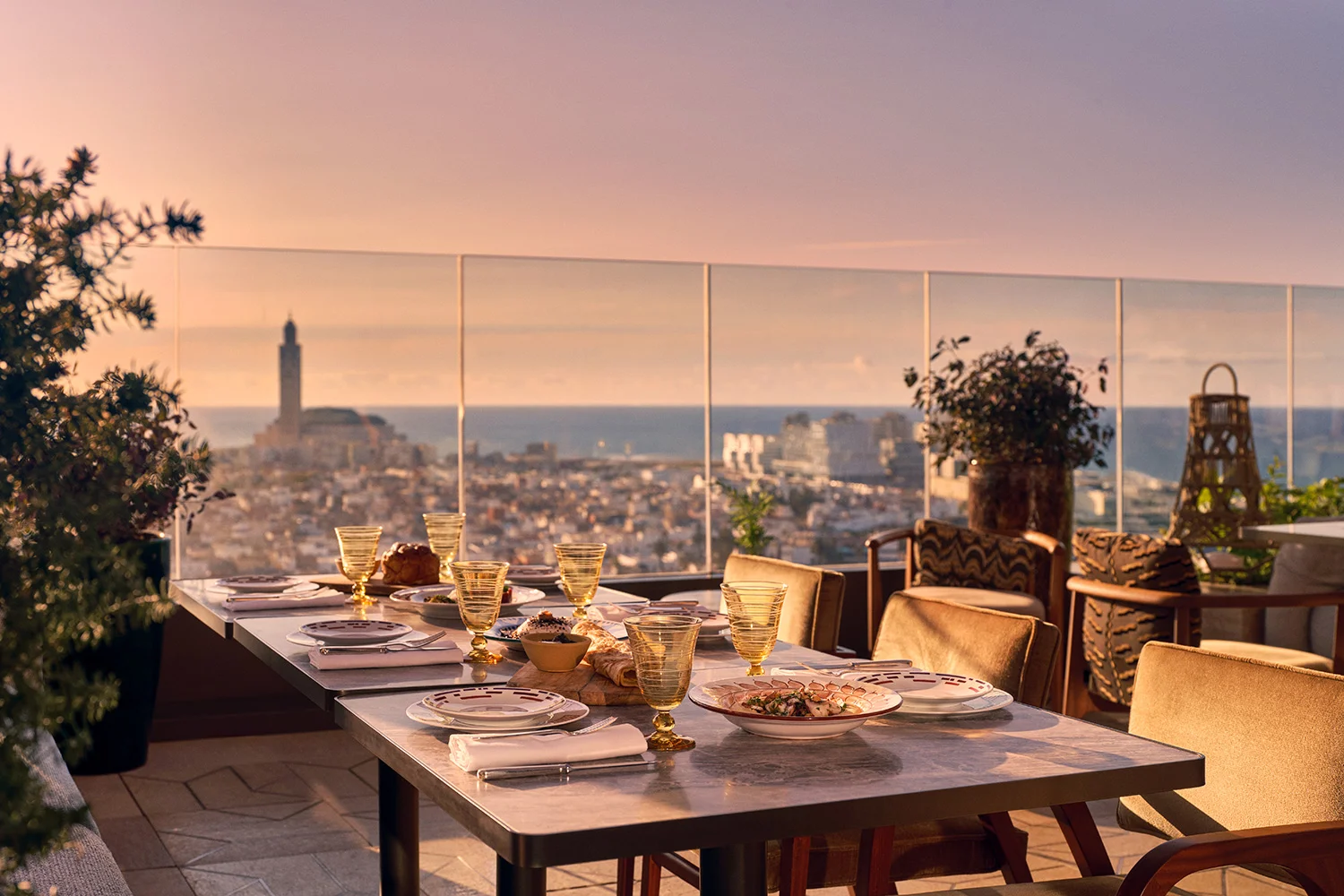
Royal Mansour Casablanca is most convincing when its history and verticality are experienced together. At street level, the hotel belongs to a dense commercial district shaped by the city’s twentieth-century growth. By the 23rd floor, the perspective has changed completely: the port, Old Medina, Hassan II Mosque and Atlantic become a single panorama.
That upward movement also explains the architecture of the stay. Rooms begin generous and grow progressively more residential as the building rises, eventually reaching duplexes and multi-level suites with their own cinemas, gyms, terraces and spa spaces. Dining follows the same progression, moving from the energy of La Brasserie to Moroccan cuisine and the rooftop high above the city.
The restored 1953 identity gives all of this a framework. Rather than importing the riad language of Marrakech, Royal Mansour Casablanca uses the White City’s own modernist history as its reference point. The result is a palace that belongs specifically to Casablanca – polished, urban, architectural and constantly aware of the Atlantic horizon beyond its windows.