Lhasa, Tibet, China | The St. Regis Lhasa Resort
A Himalayan Address in the Heart of Lhasa
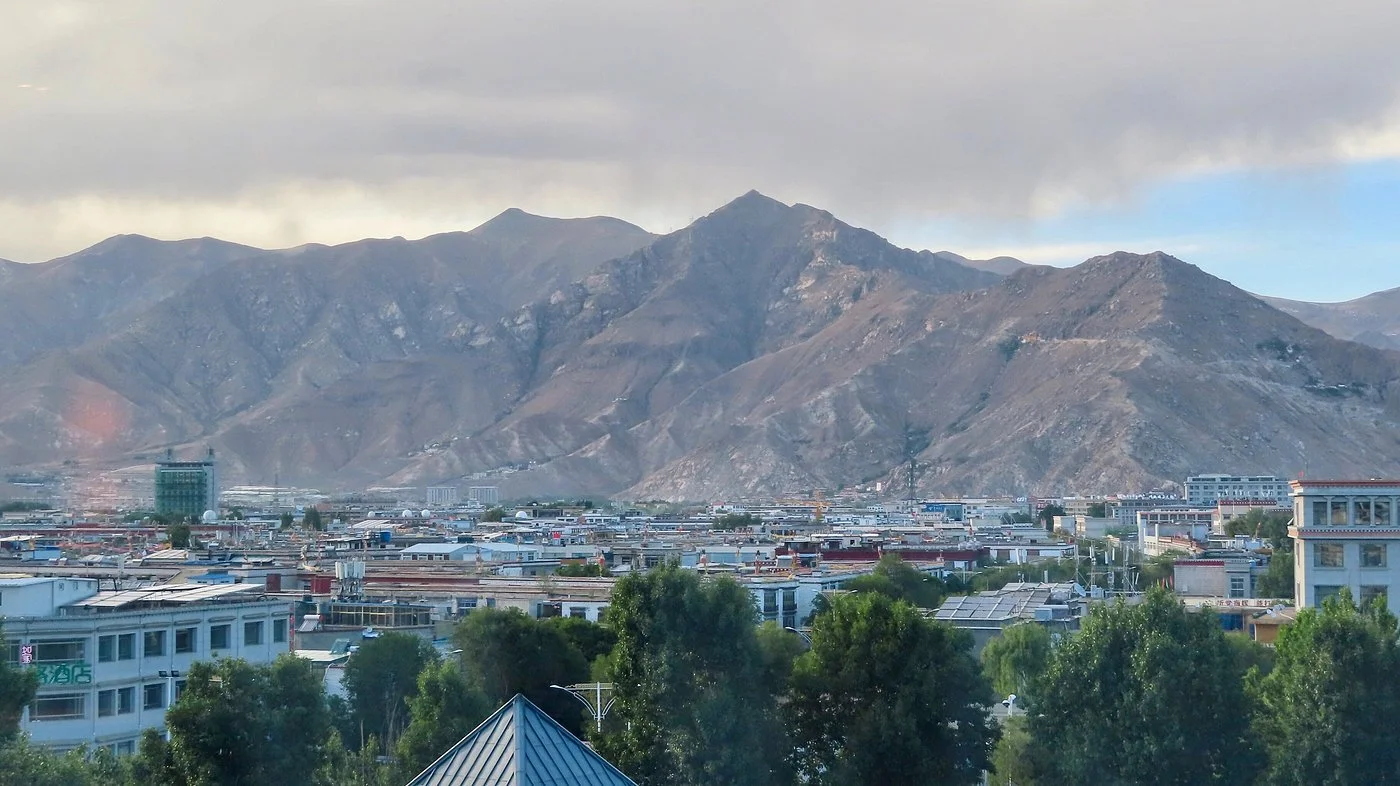
Lhasa is a city best approached with time and attention. Set high on the Tibetan Plateau, it brings together historic pilgrimage routes, active monasteries, neighborhood streets and mountain horizons in a setting unlike any other major Asian destination. The St. Regis Lhasa Resort provides a comfortable base for exploring this remarkable city, with the Barkhor area, Jokhang Temple and the Potala Palace defining much of the cultural landscape around it.
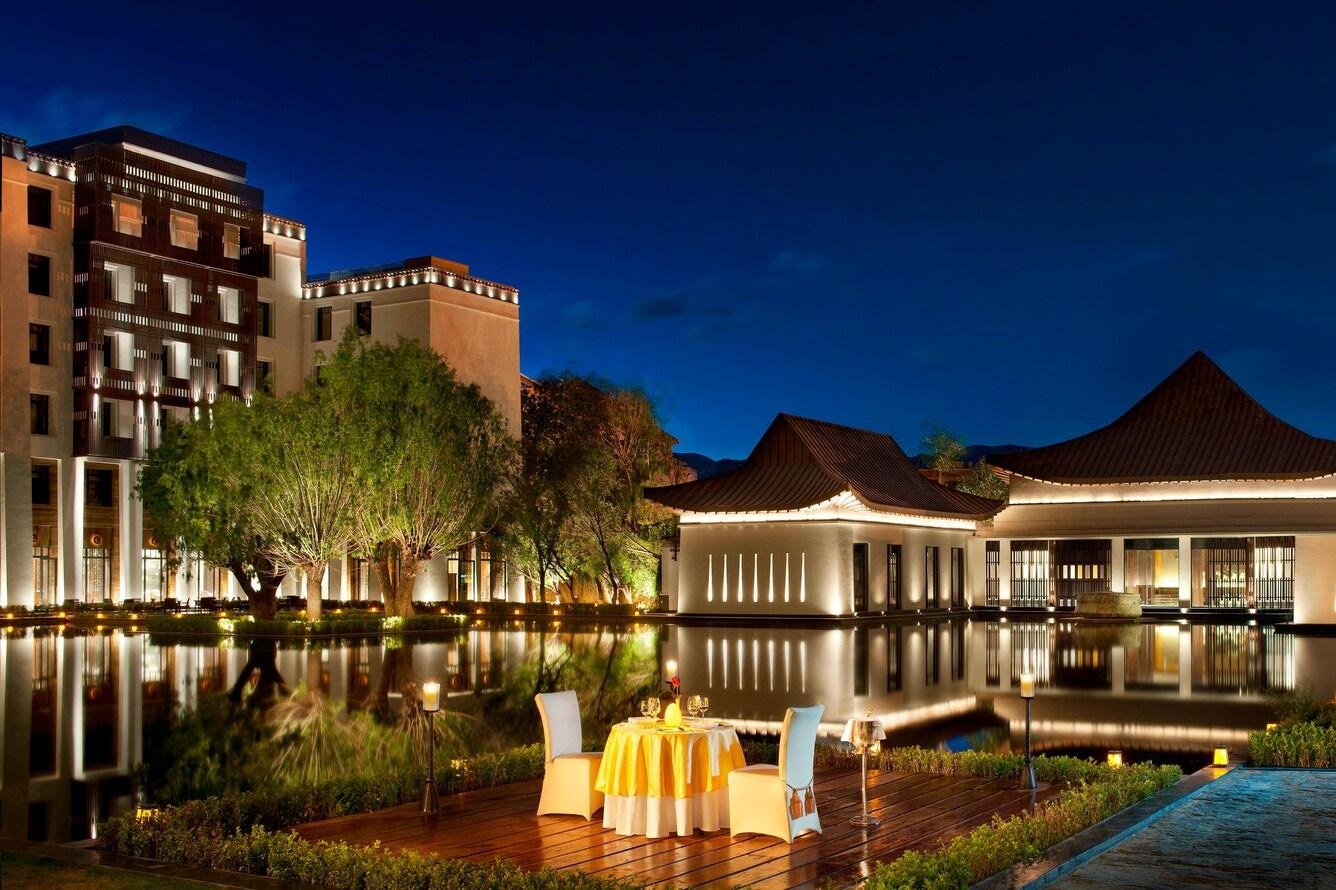
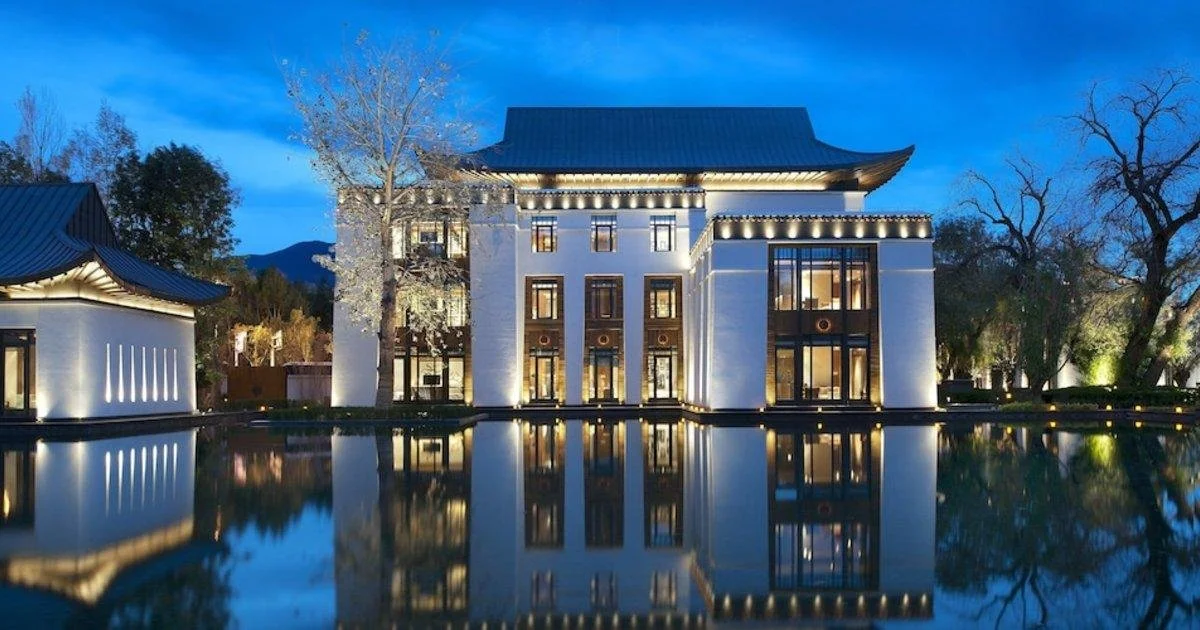
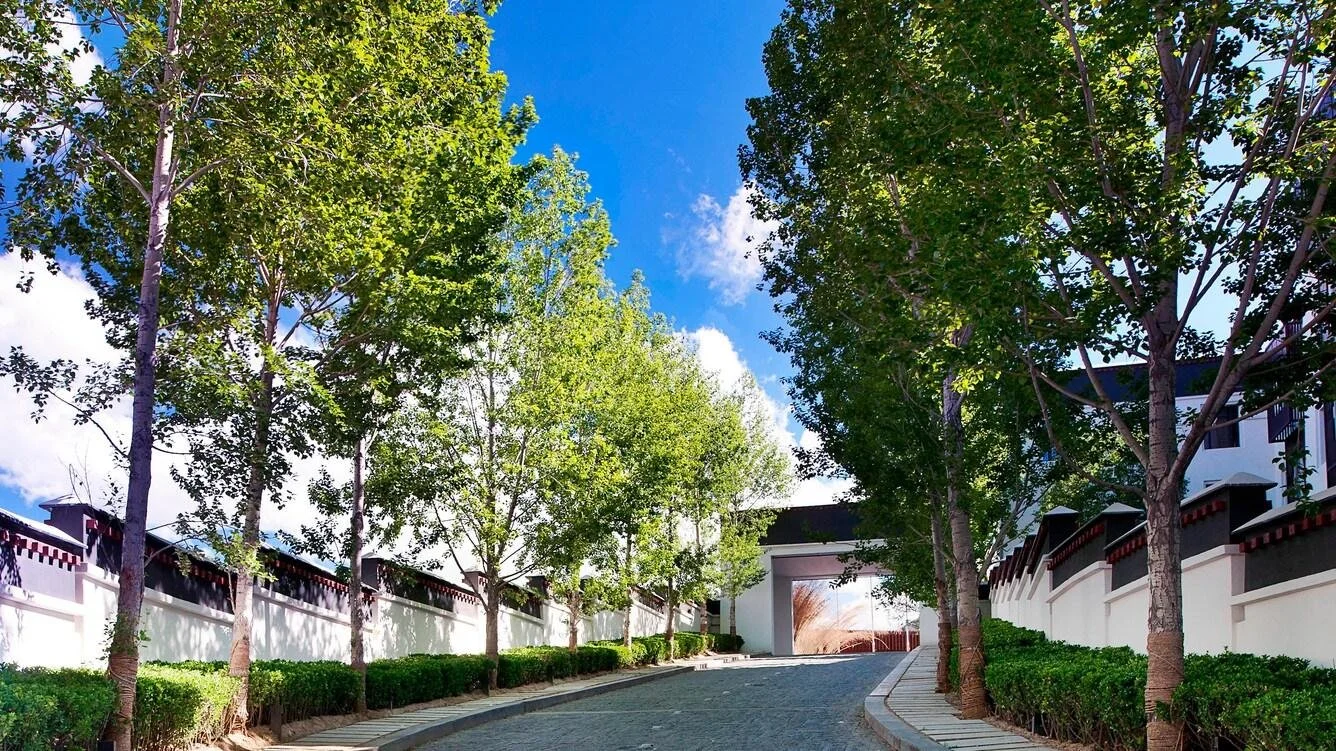
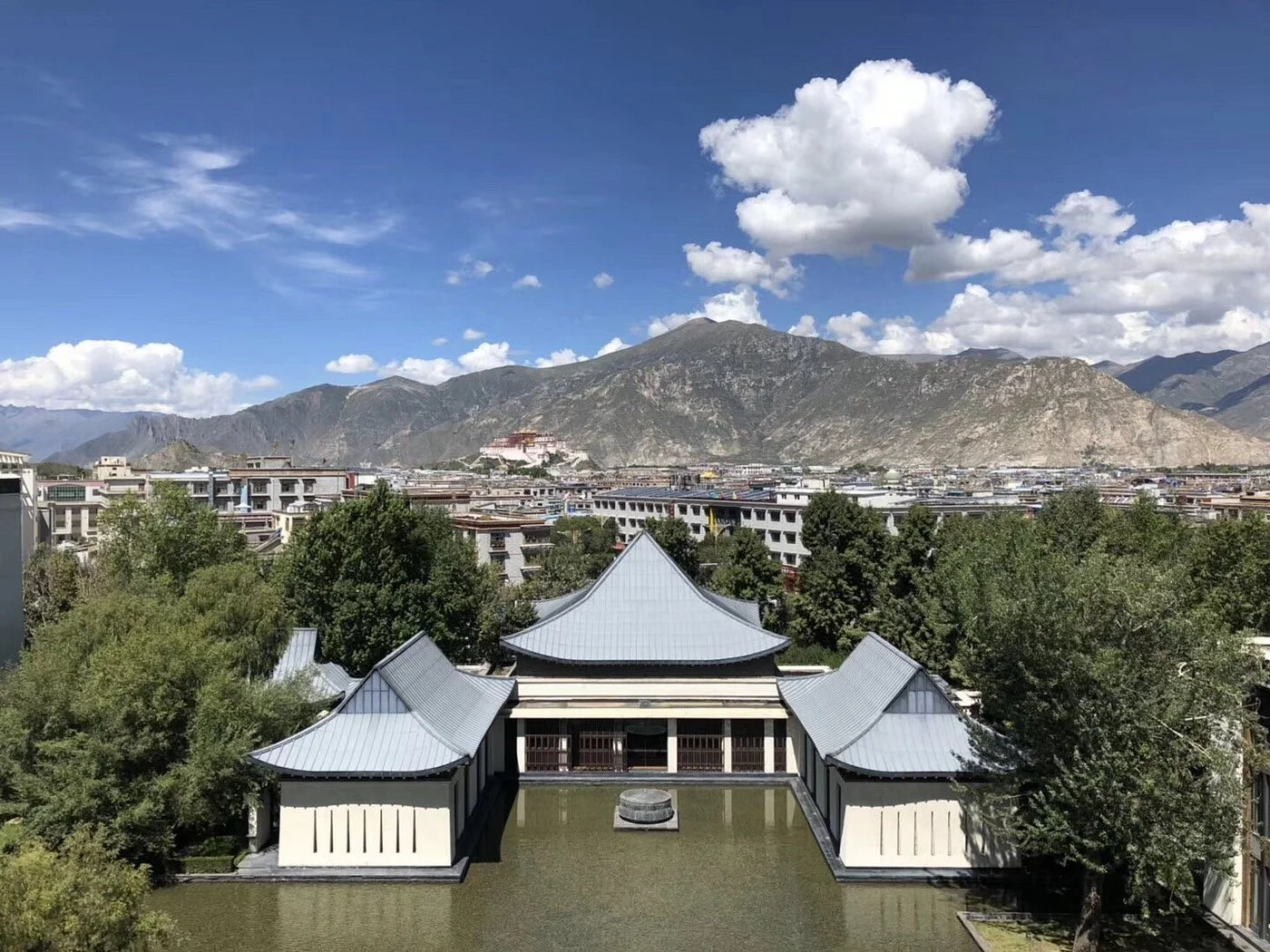
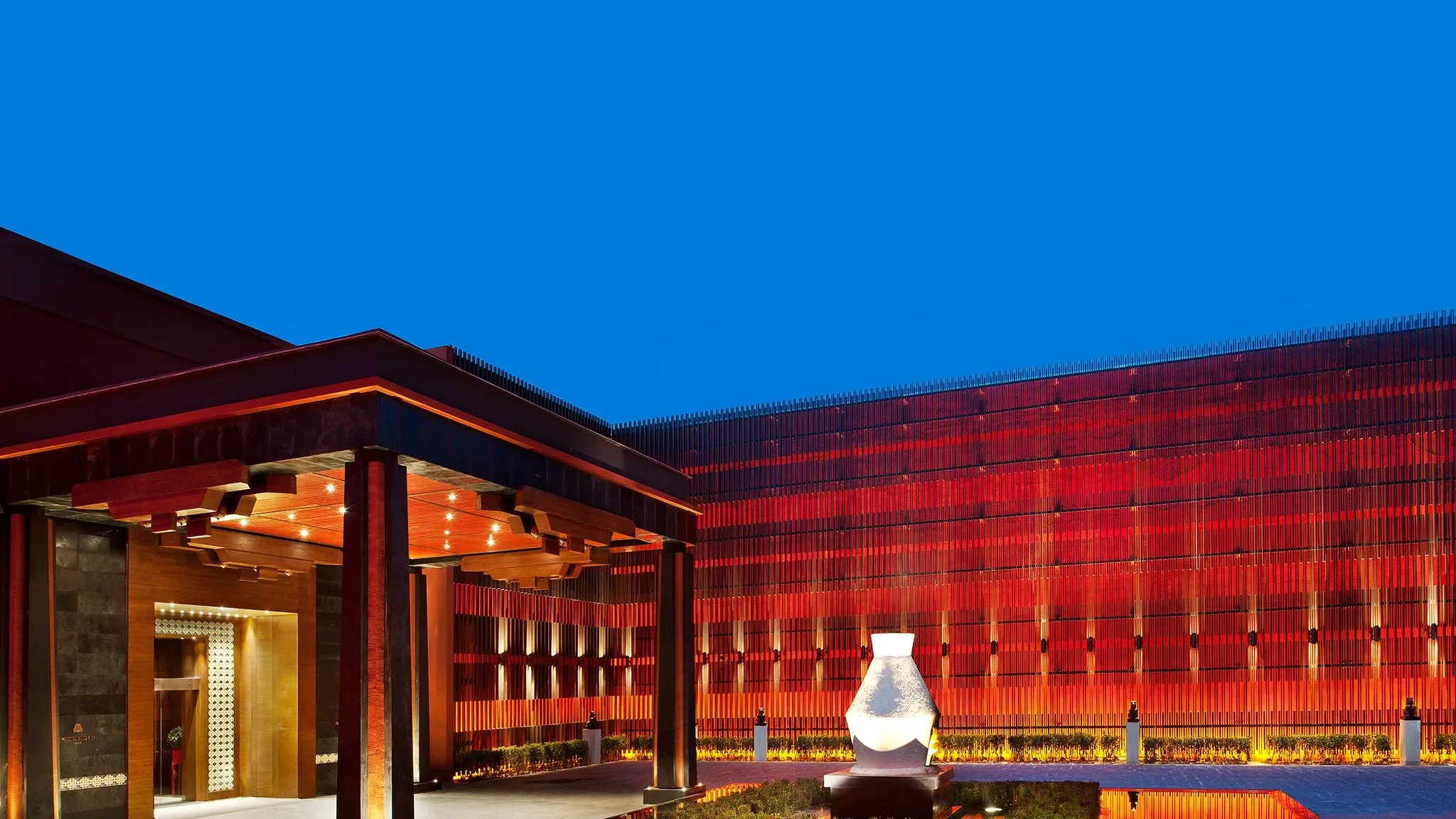
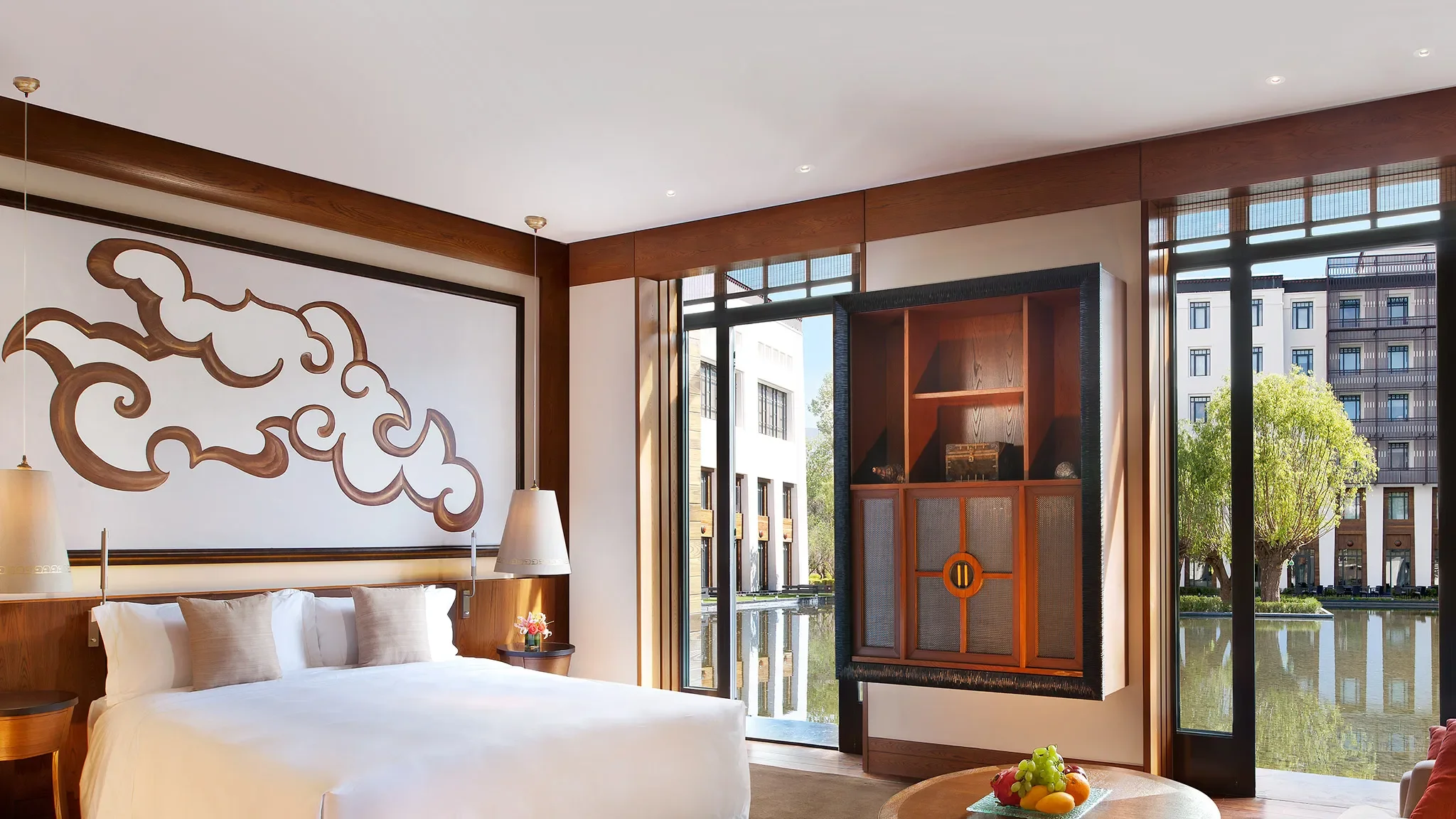
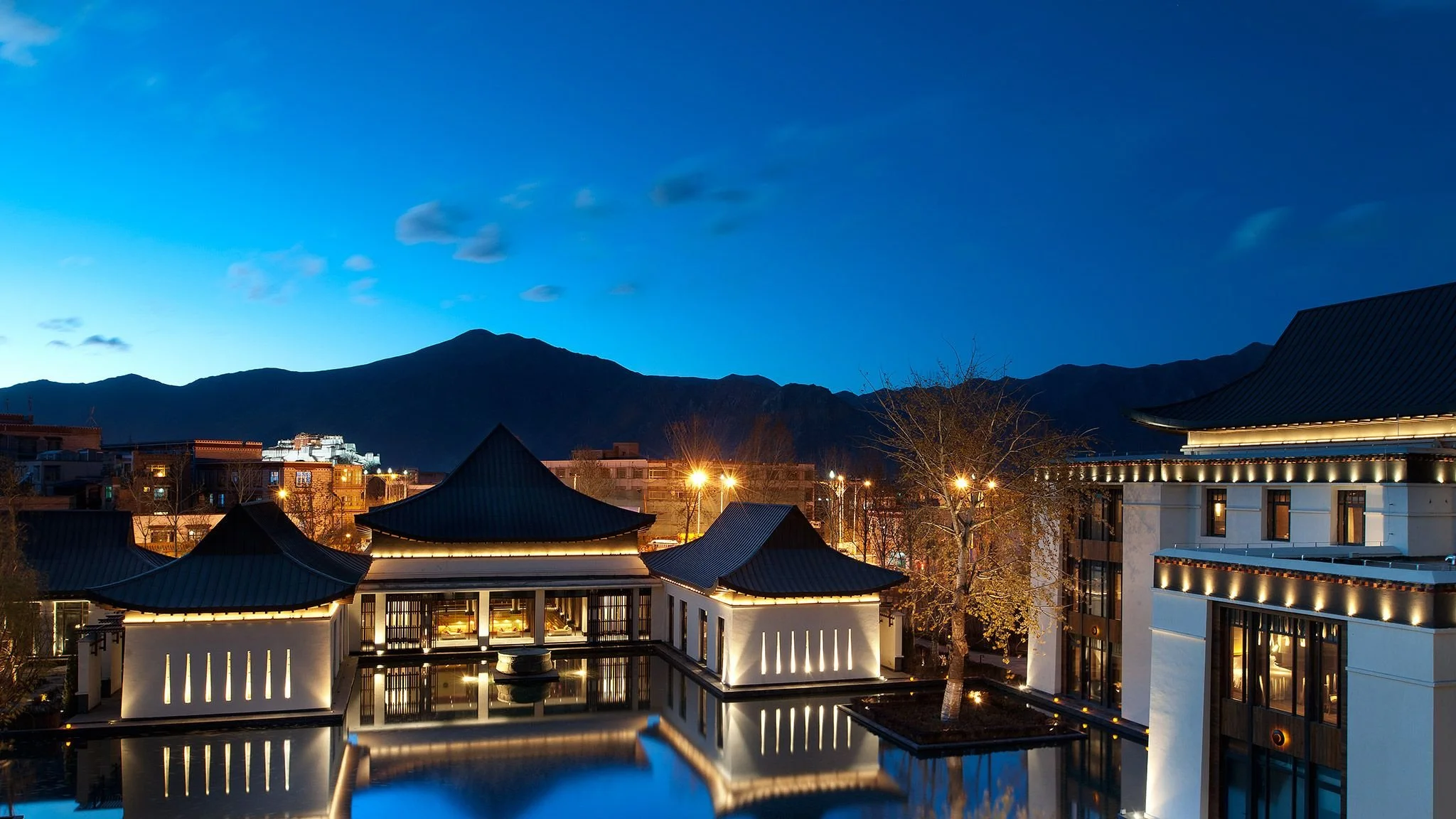
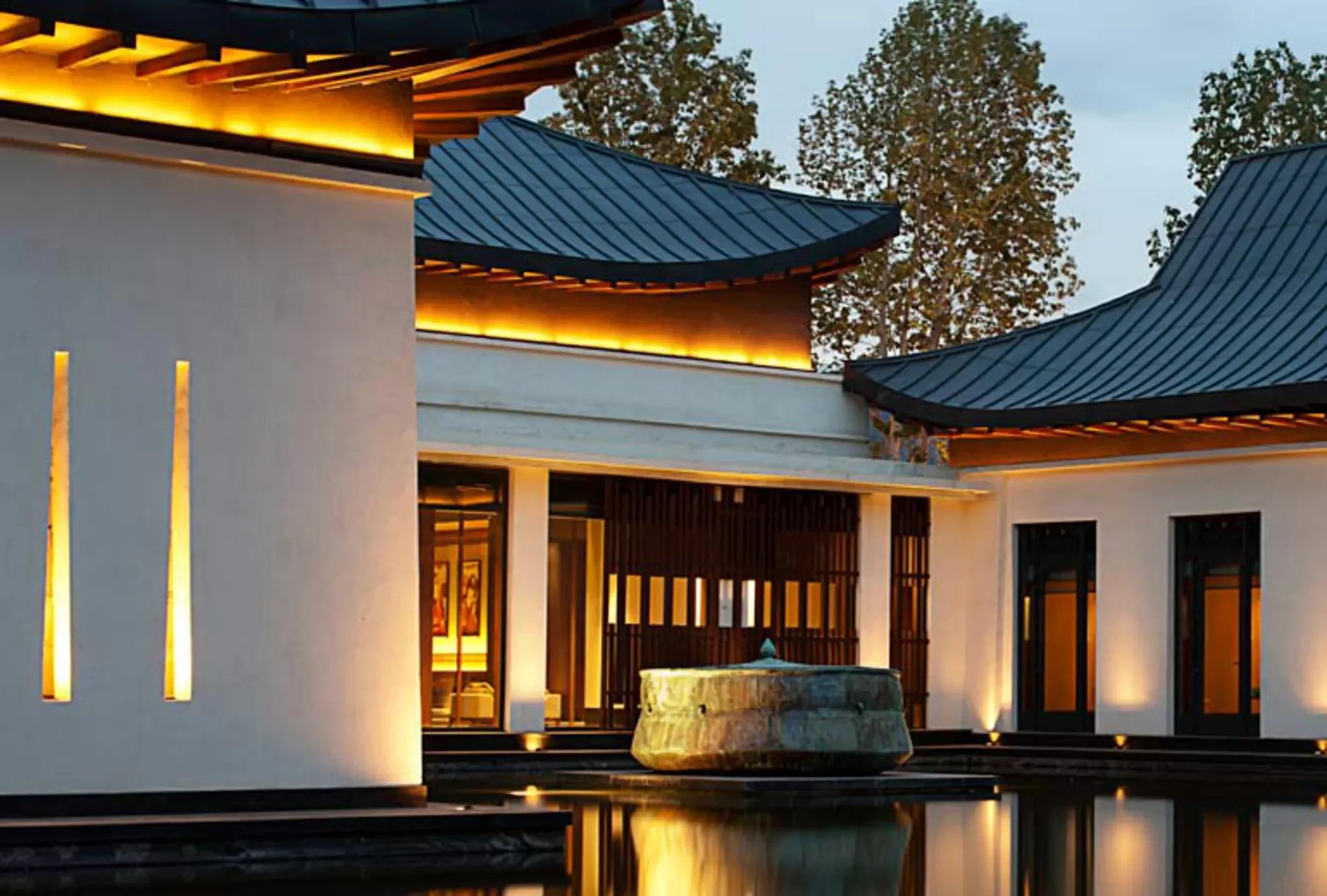
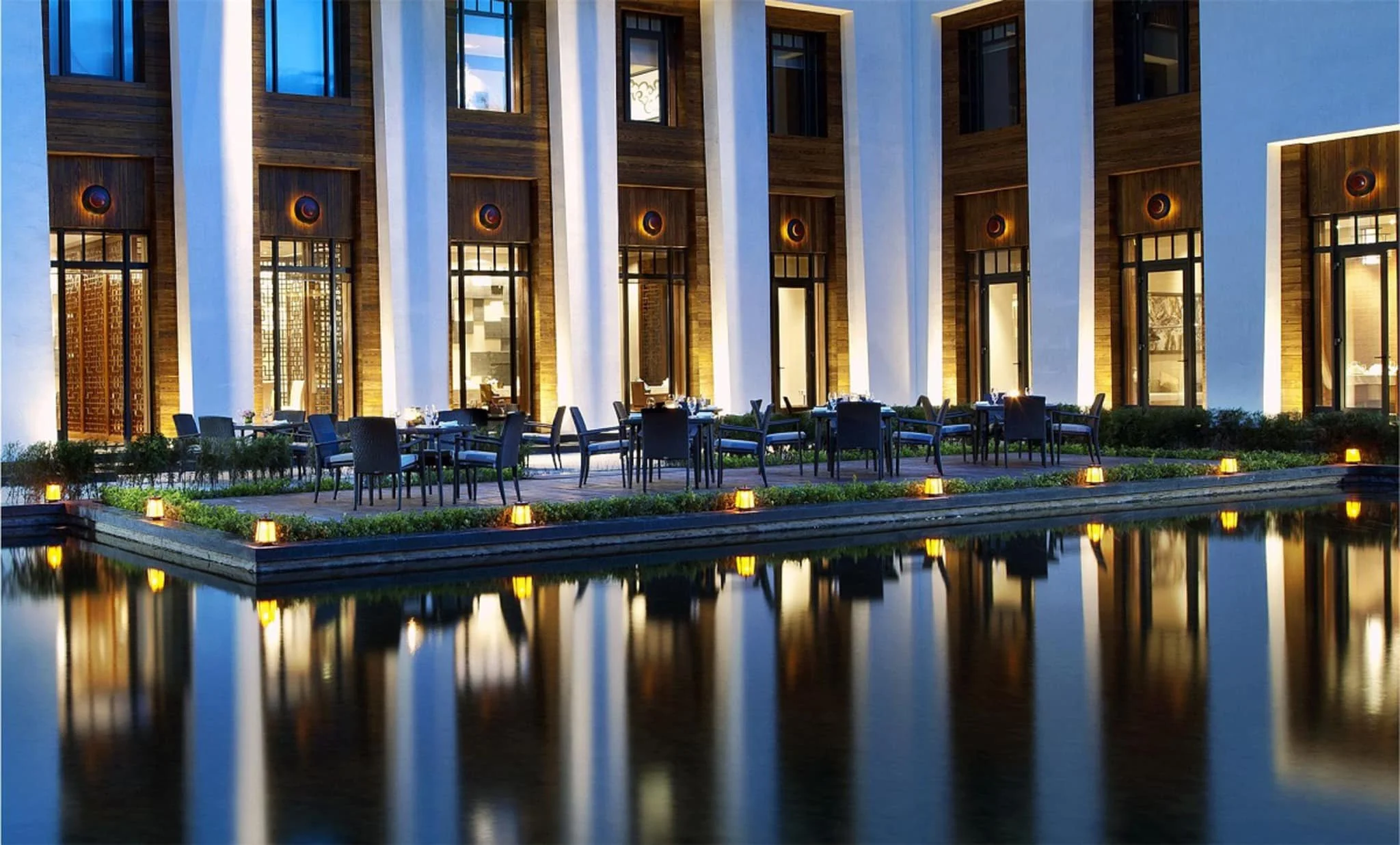
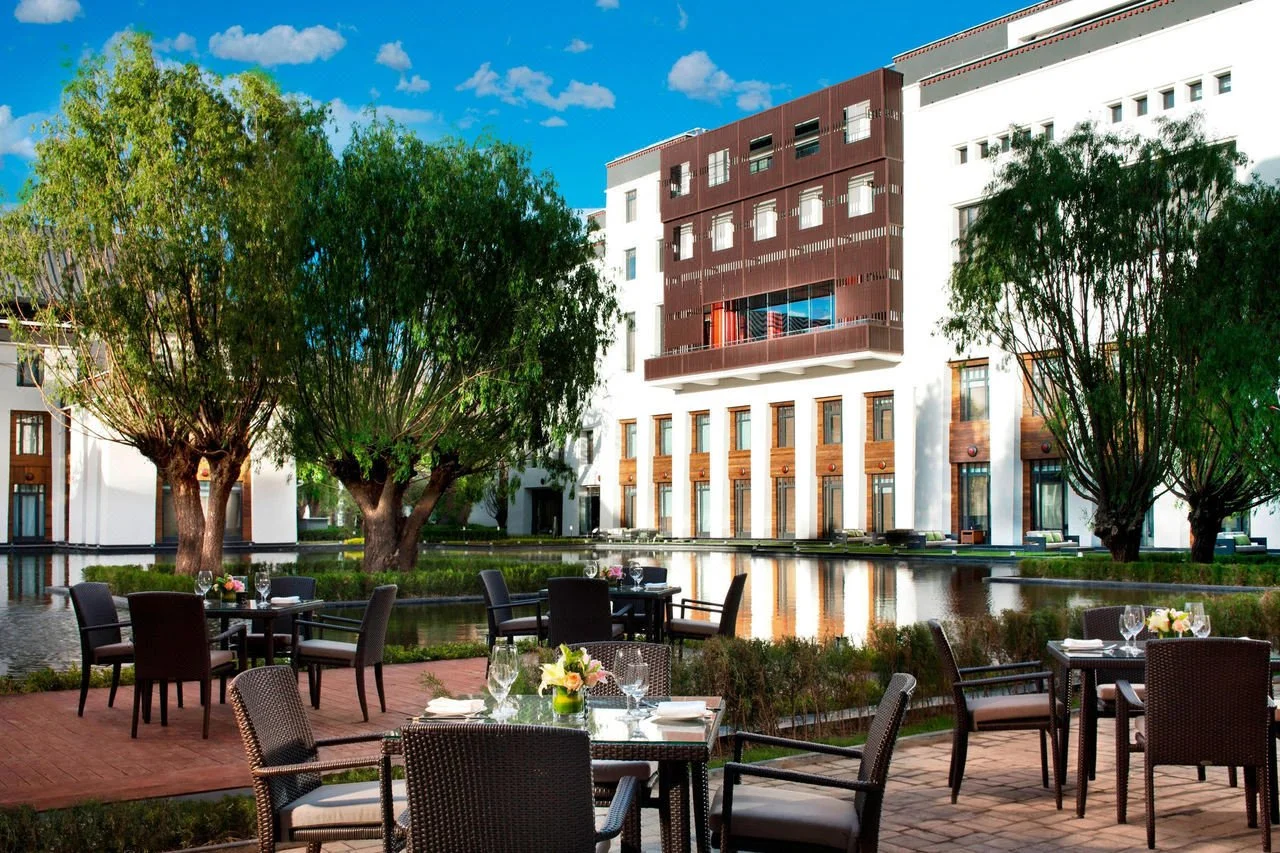
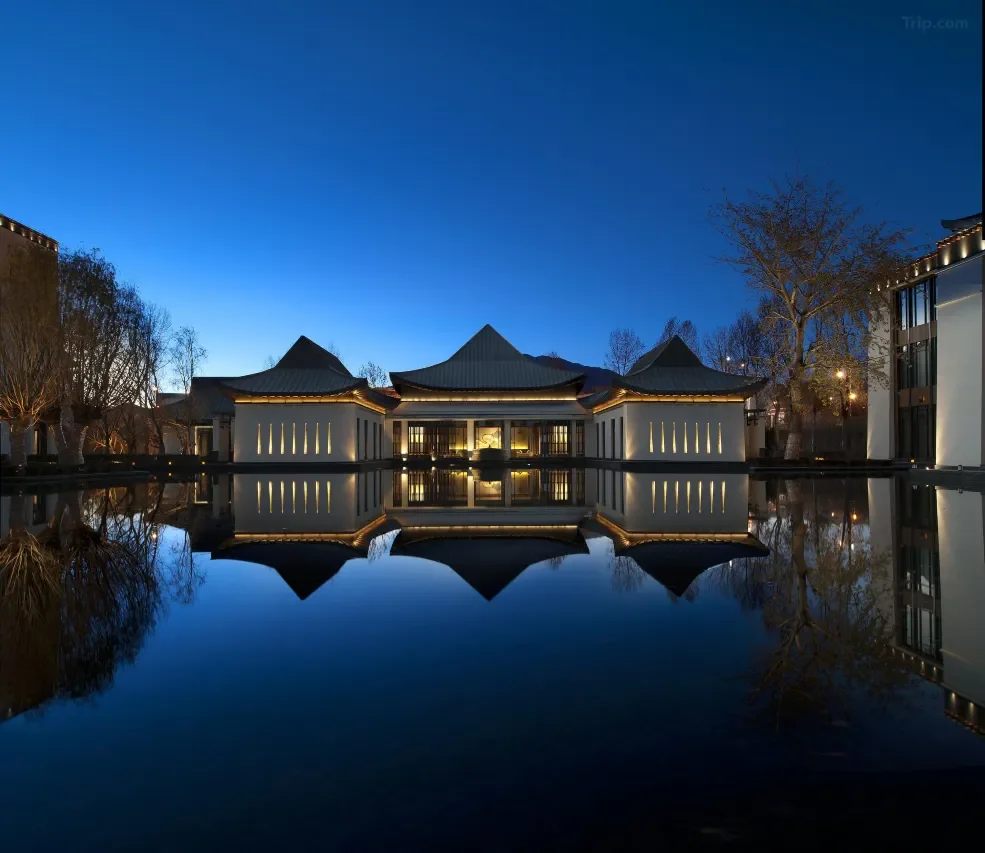
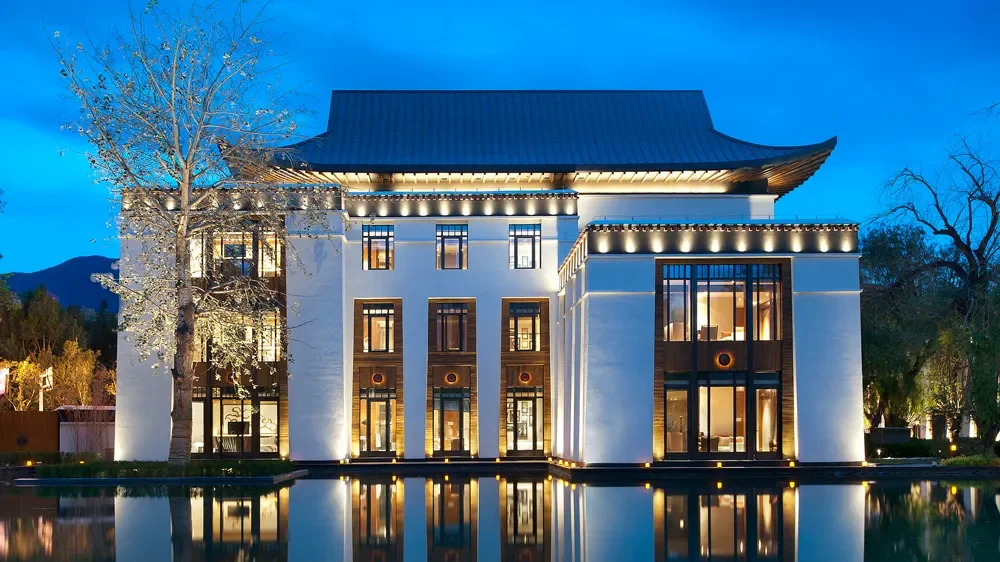
The resort occupies No. 22 Jiangsu Road, with courtyards and reflecting pools that create a quiet transition from the energy of central Lhasa. Within, the combination of Tibetan-inspired motifs, generous rooms and polished international hotel services makes the property particularly useful for travelers who want to spend their days exploring and return to a restful setting in the evening.
Lhasa sits at approximately 3,650 meters above sea level. That altitude shapes the entire visit: travelers should allow space in the itinerary to acclimatize, plan gentle first days and discuss personal health considerations with a qualified clinician before travel. The hotel is not a substitute for careful preparation, but its location and amenities can make a deliberately paced stay easier to organize.
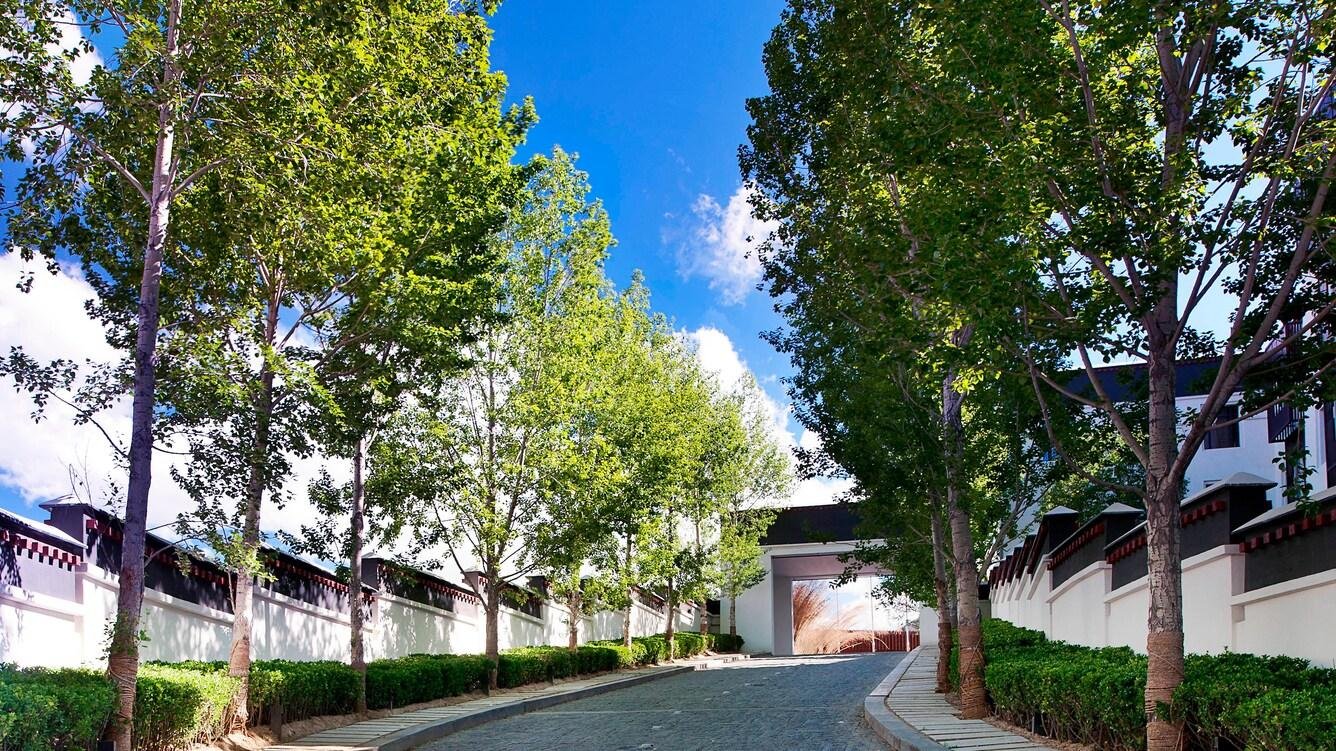
A Contemporary Retreat in an Ancient City
The St. Regis Lhasa Resort opened in 2010, introducing the St. Regis brand to one of the world's most distinctive cultural destinations. Rather than attempting to reproduce a monastery or palace, the property uses contemporary resort infrastructure alongside details drawn from the area's architectural vocabulary.
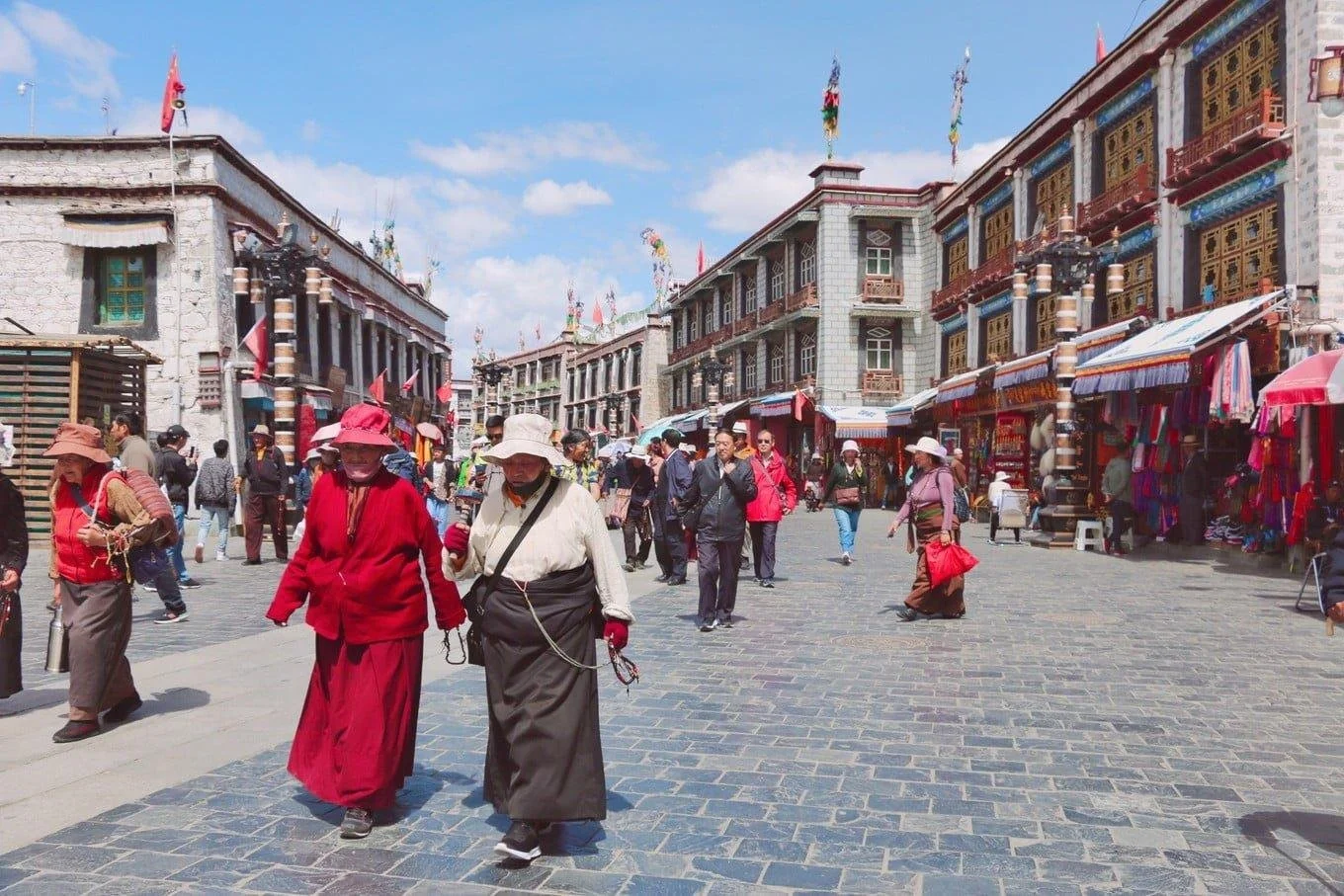
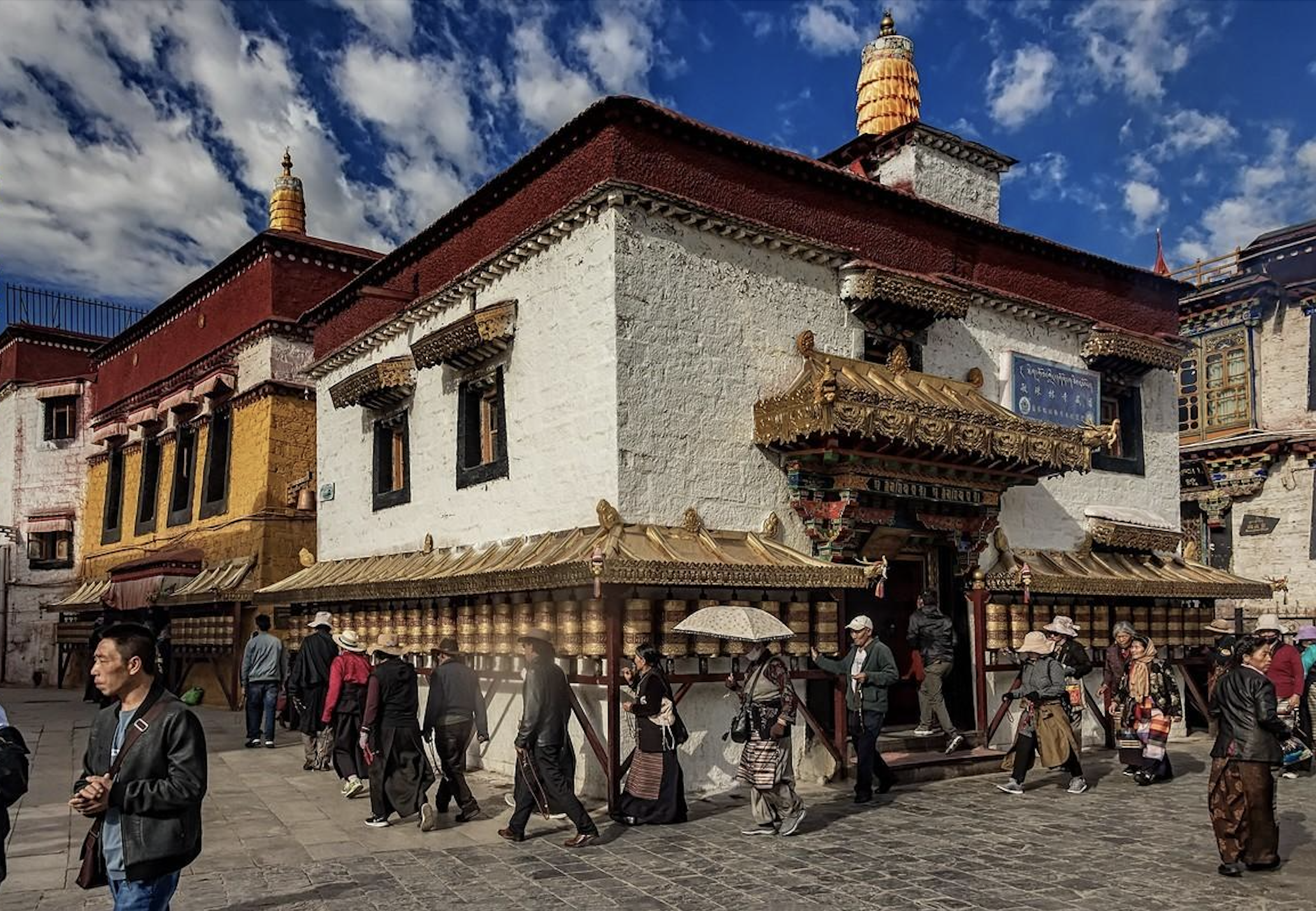
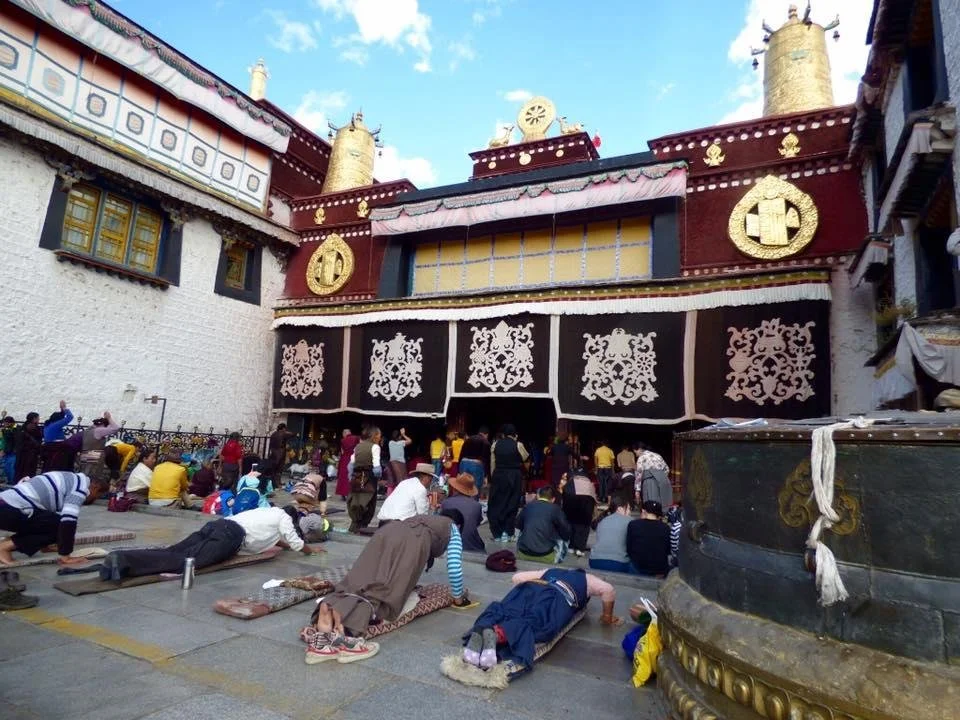
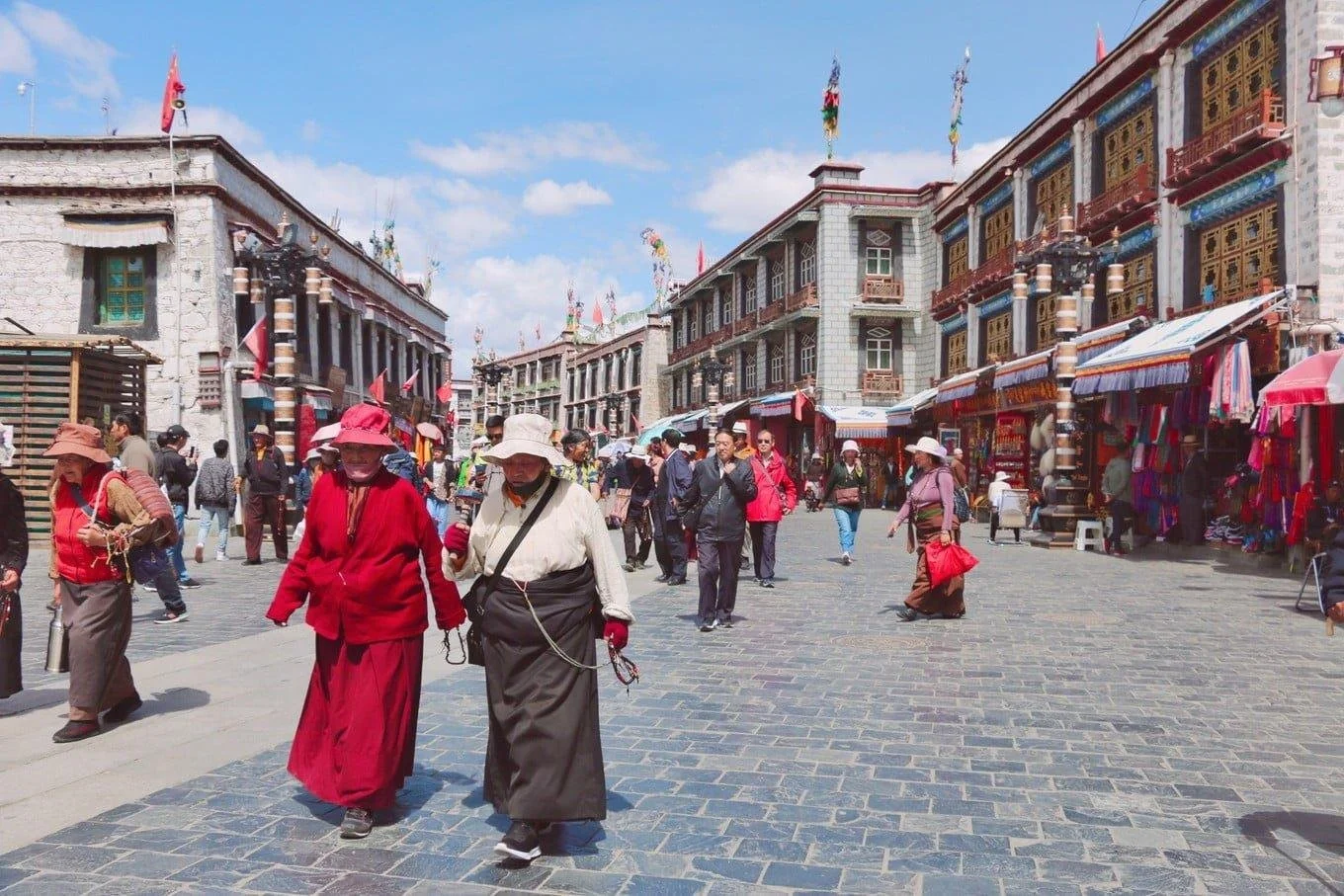
Lhasa's significance long predates the hotel. Jokhang Temple stands at the center of a living pilgrimage tradition; the streets of Barkhor are walked by worshippers and local residents as well as visitors. The Potala Palace, rising above the city, is an enduring landmark with profound Tibetan historical and religious associations. For travelers, these sites demand informed, respectful interpretation rather than a quick sequence of photographs.
A good guide is particularly valuable here. Visits can be timed to take account of opening arrangements, local restrictions, and the rhythms of religious sites. The purpose of staying centrally is not to compress every landmark into a single day, but to leave enough room to appreciate how these spaces continue to function within the life of the city.
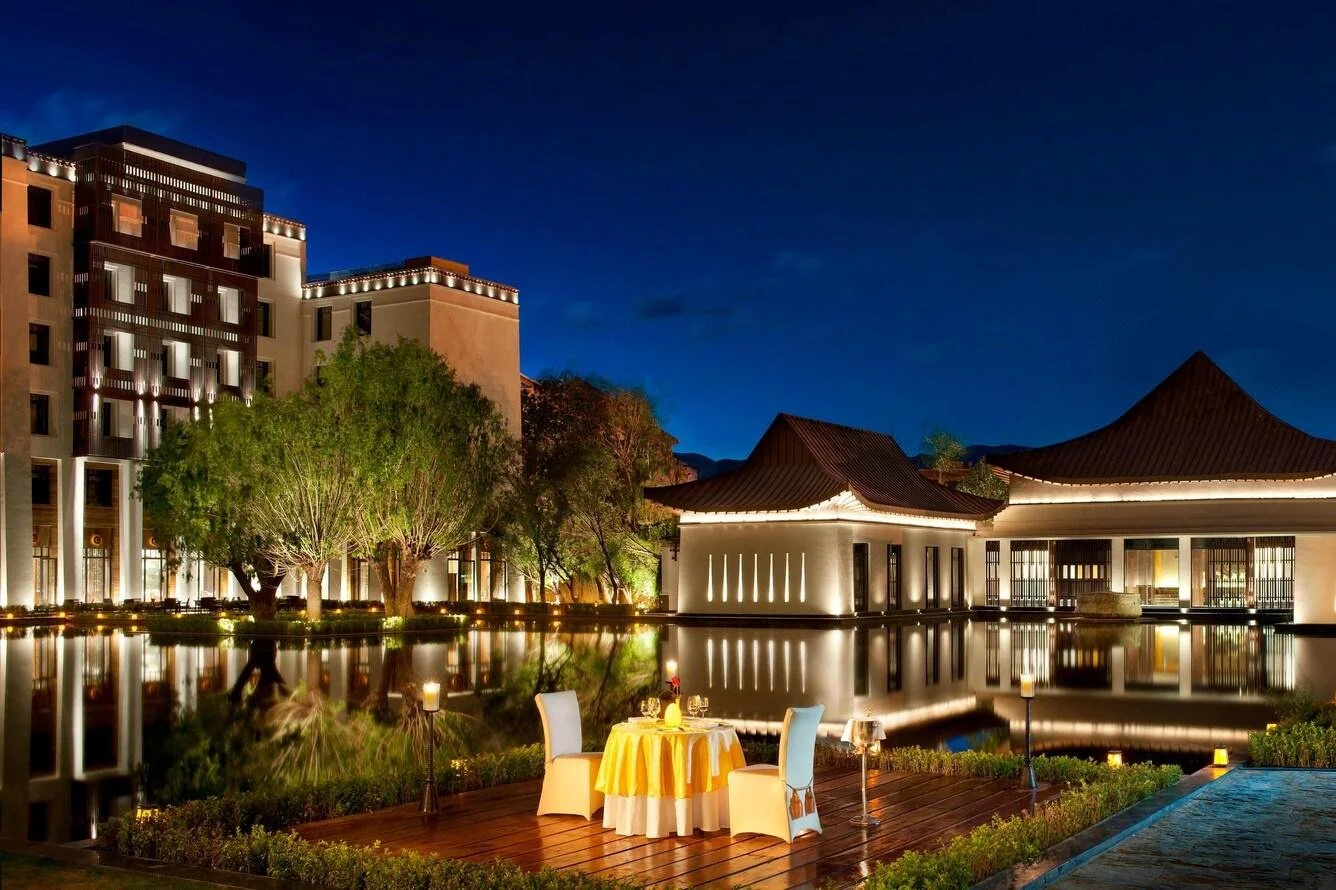
Courtyards, Warm Interiors and Plateau Light
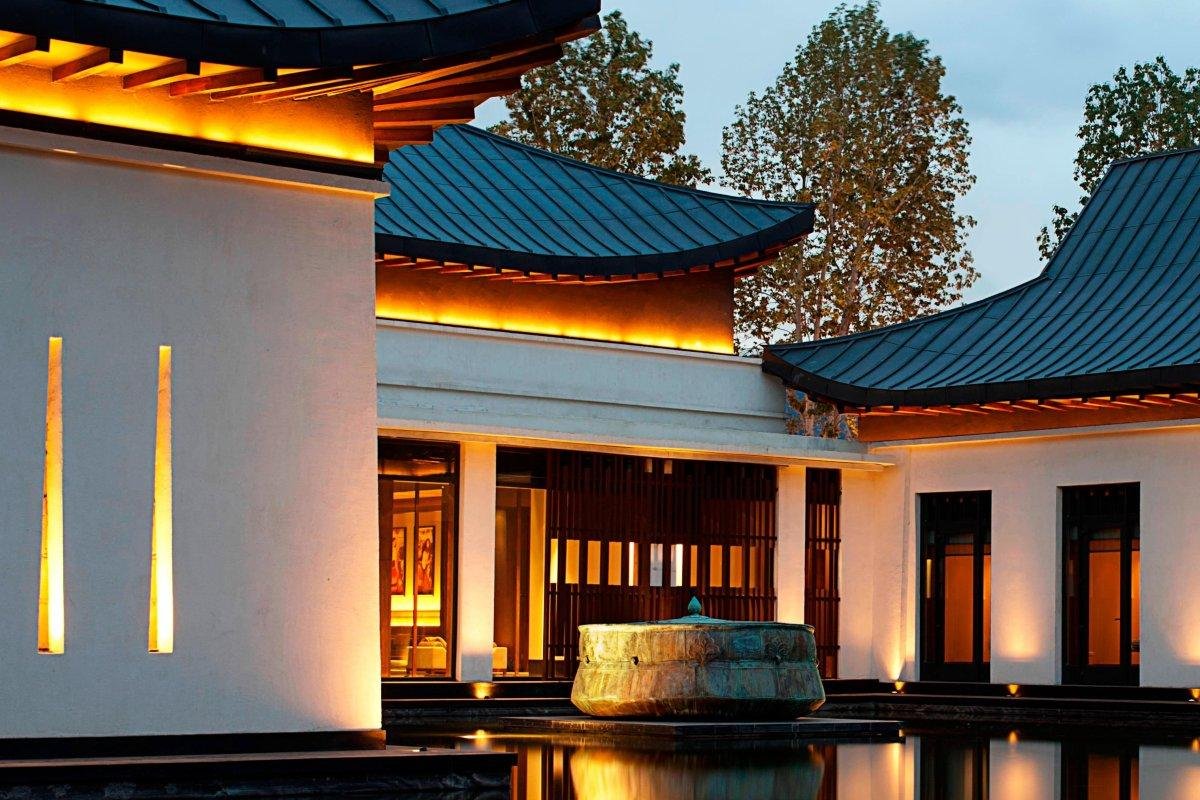
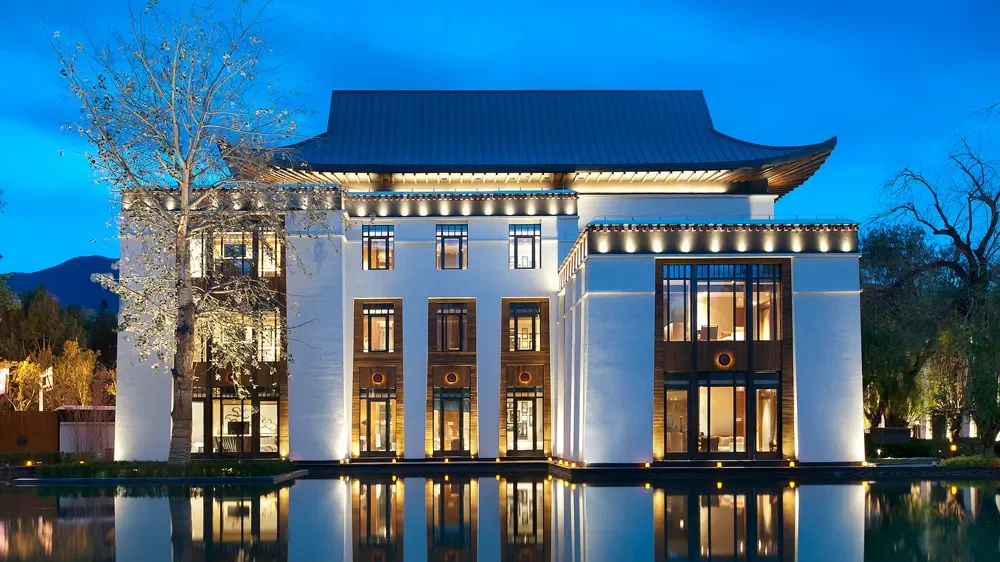
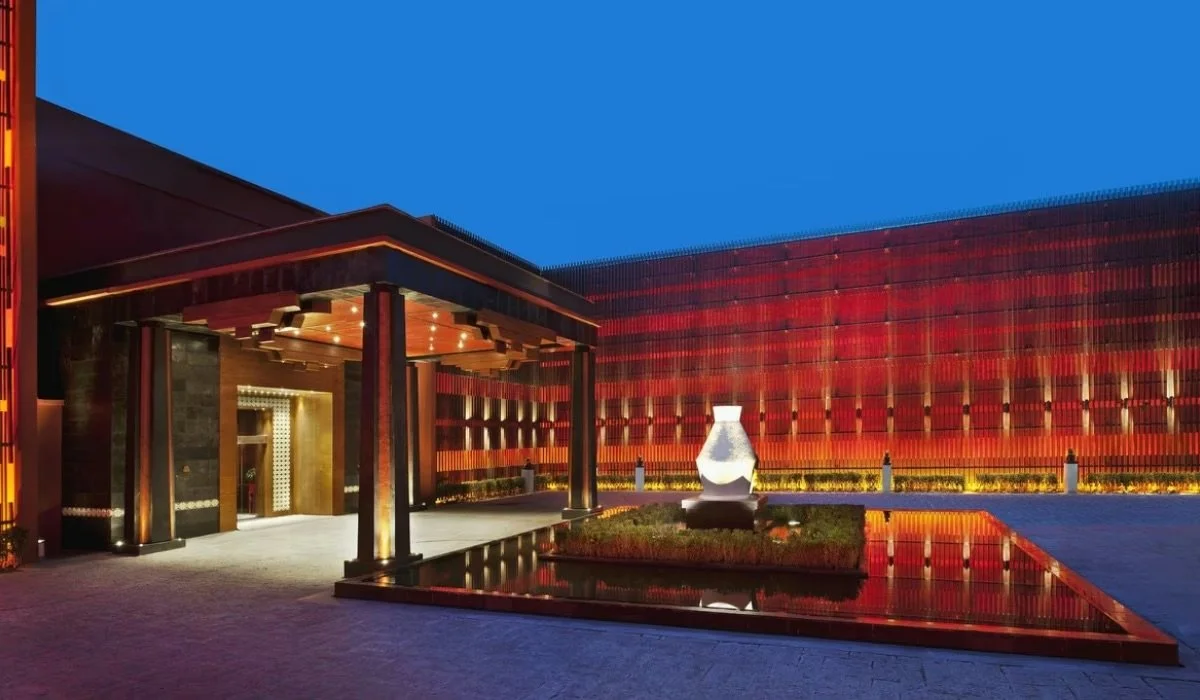
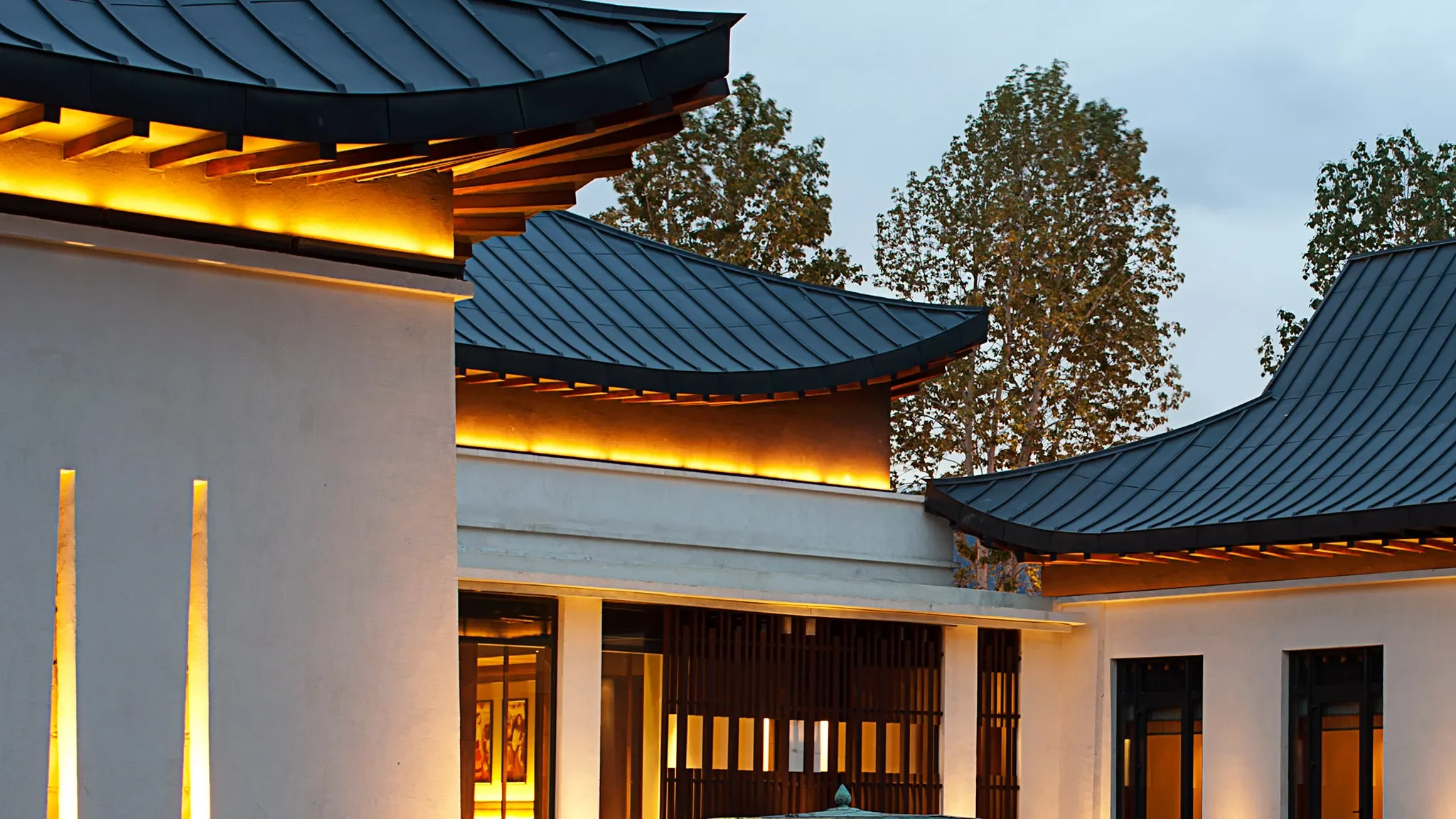
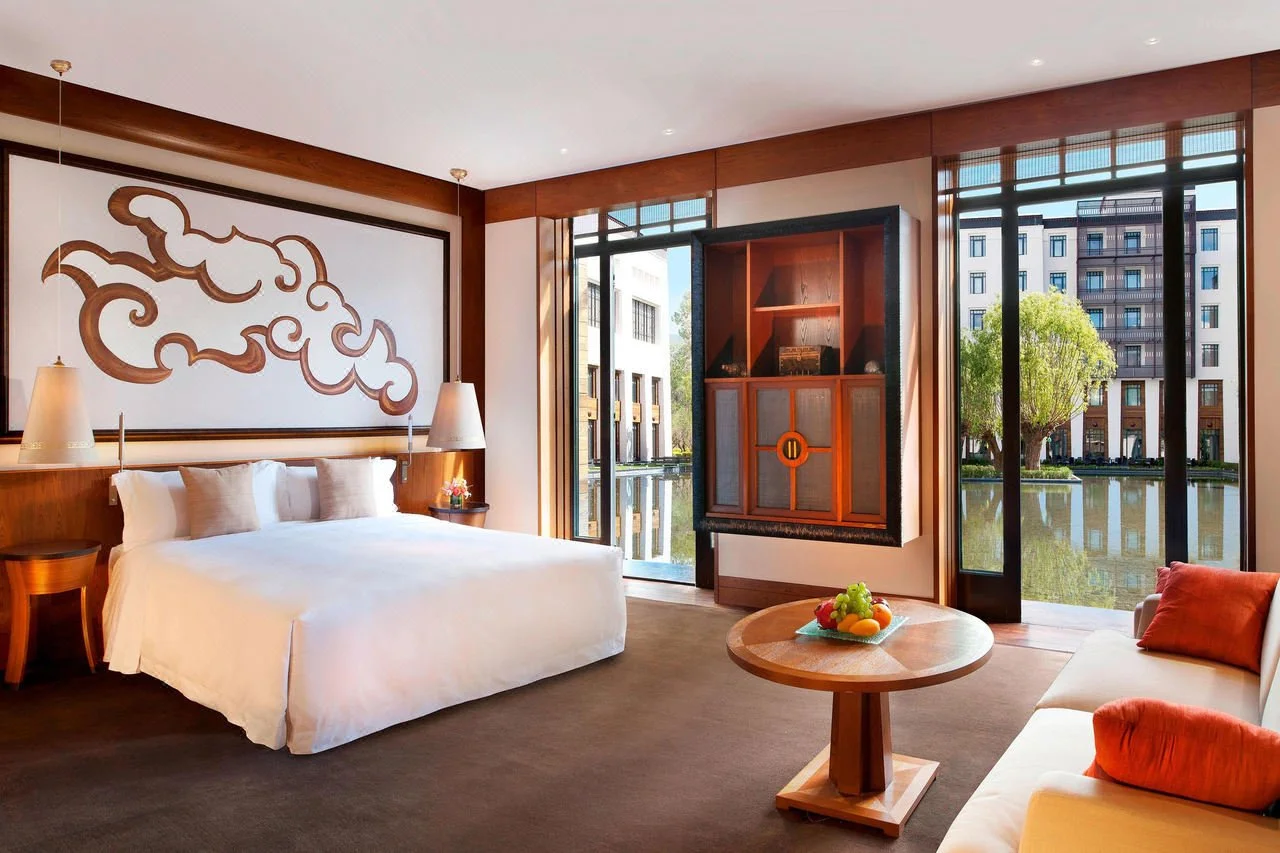
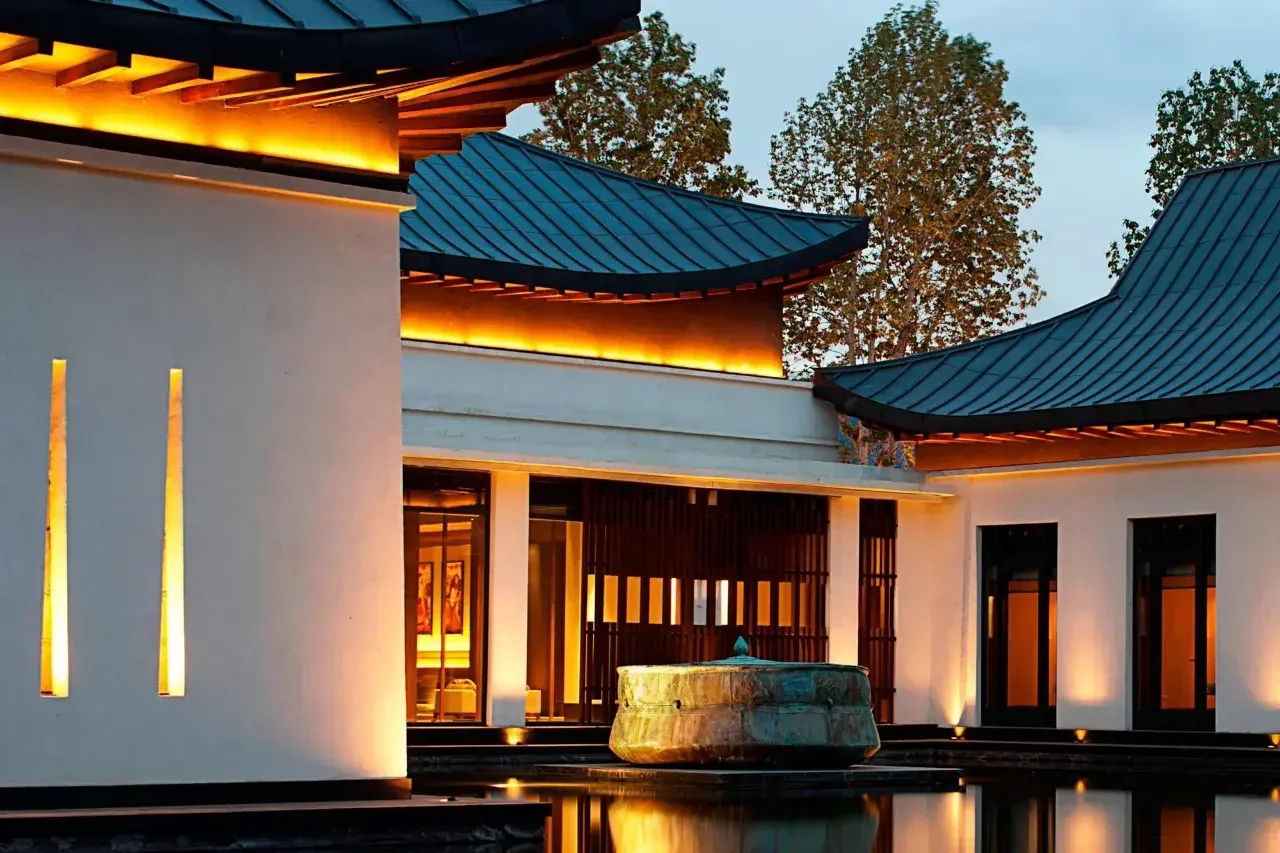
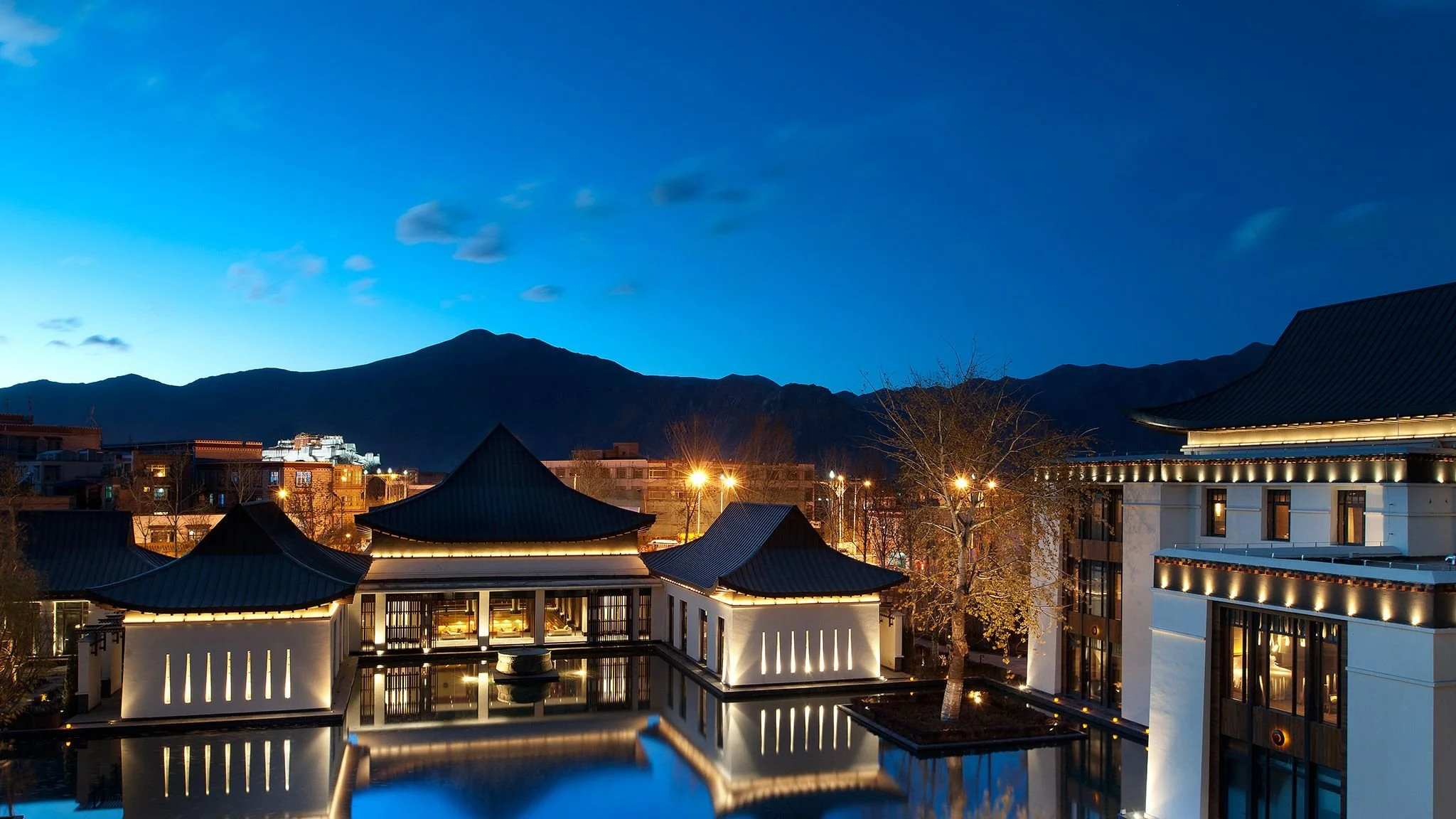
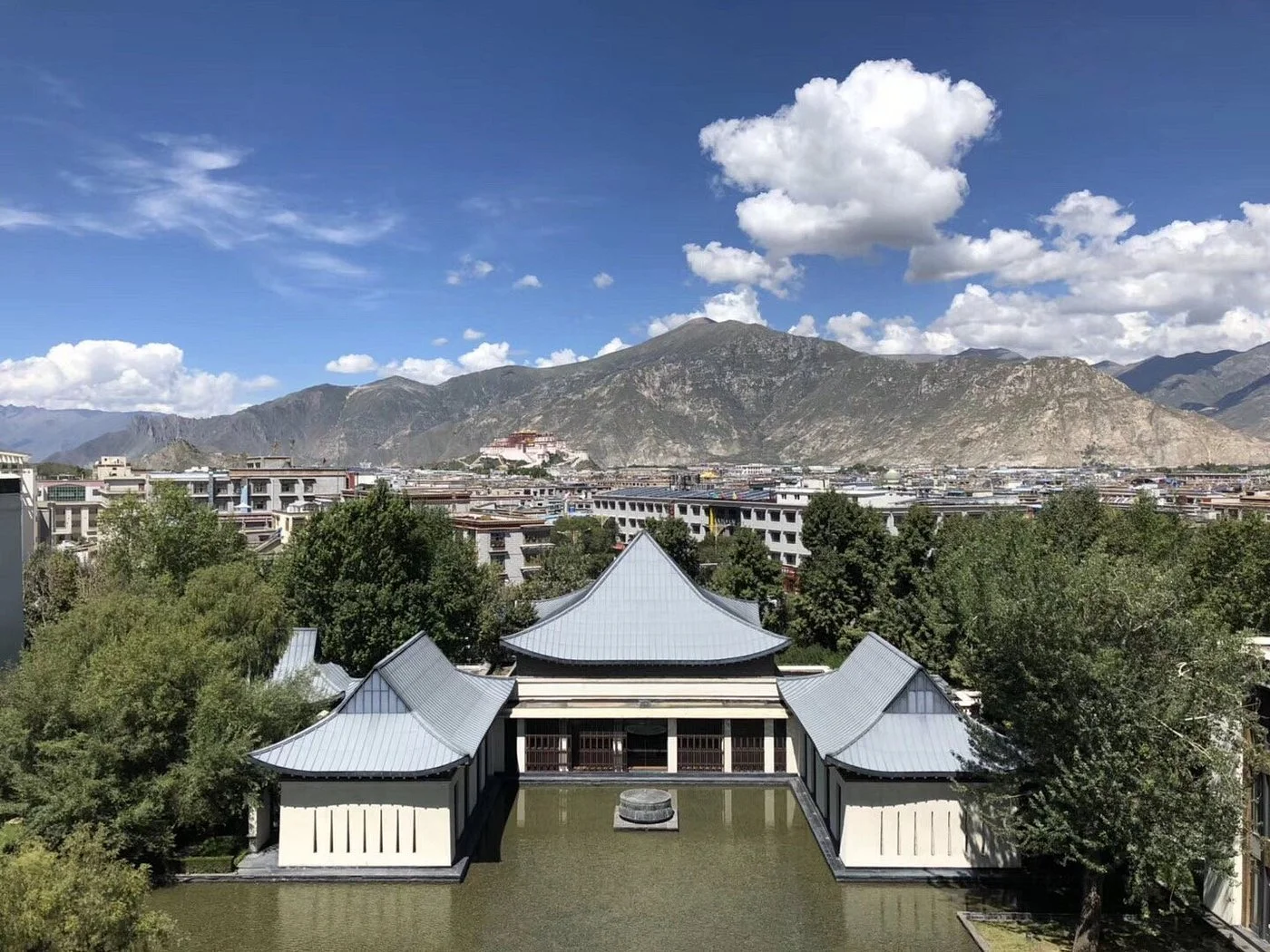
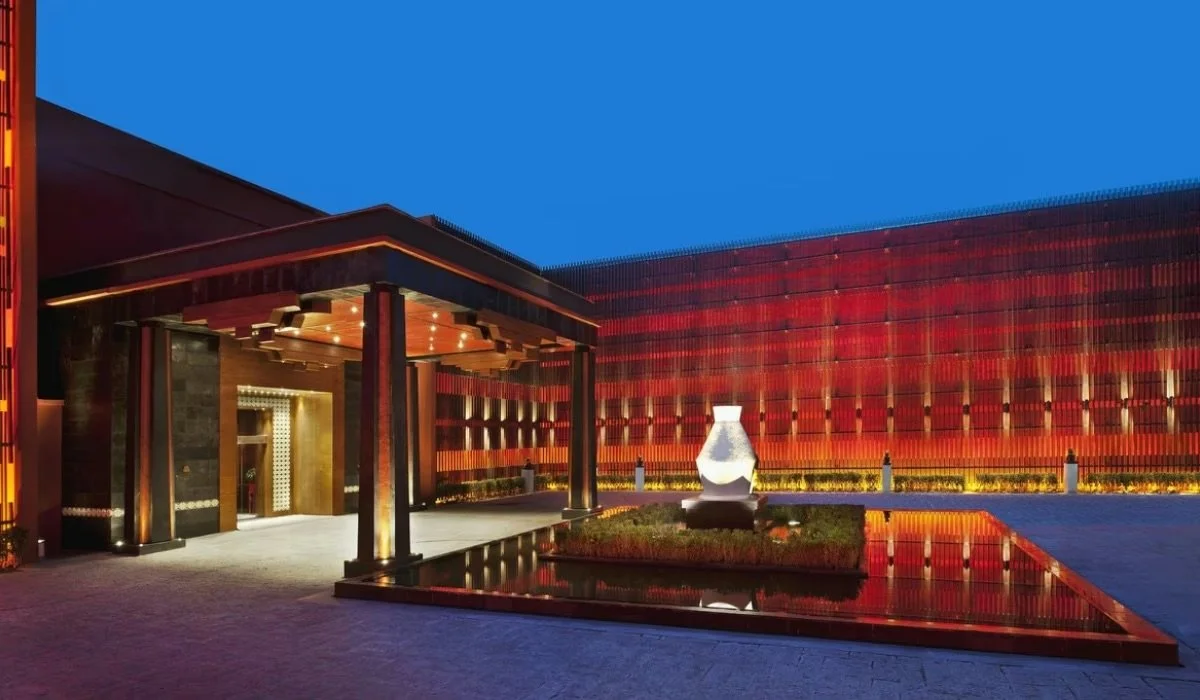
The hotel's design is built around a series of modern volumes, planted spaces, reflective surfaces and inward-looking courtyards. Exterior walls and roofline references sit alongside expansive glazing and a decidedly contemporary sense of scale. Arriving after dark, when the entrance and water features are illuminated, gives a different perspective from a daylight return beneath Lhasa's famously clear skies.
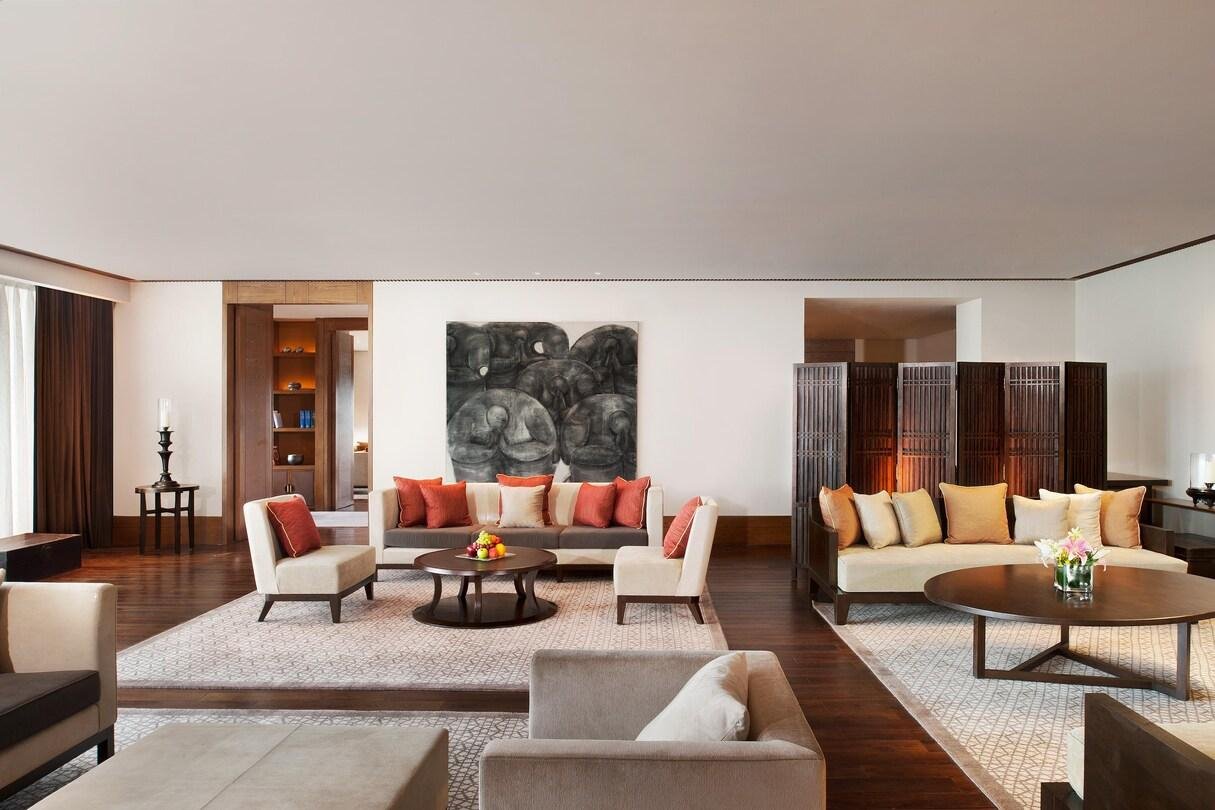
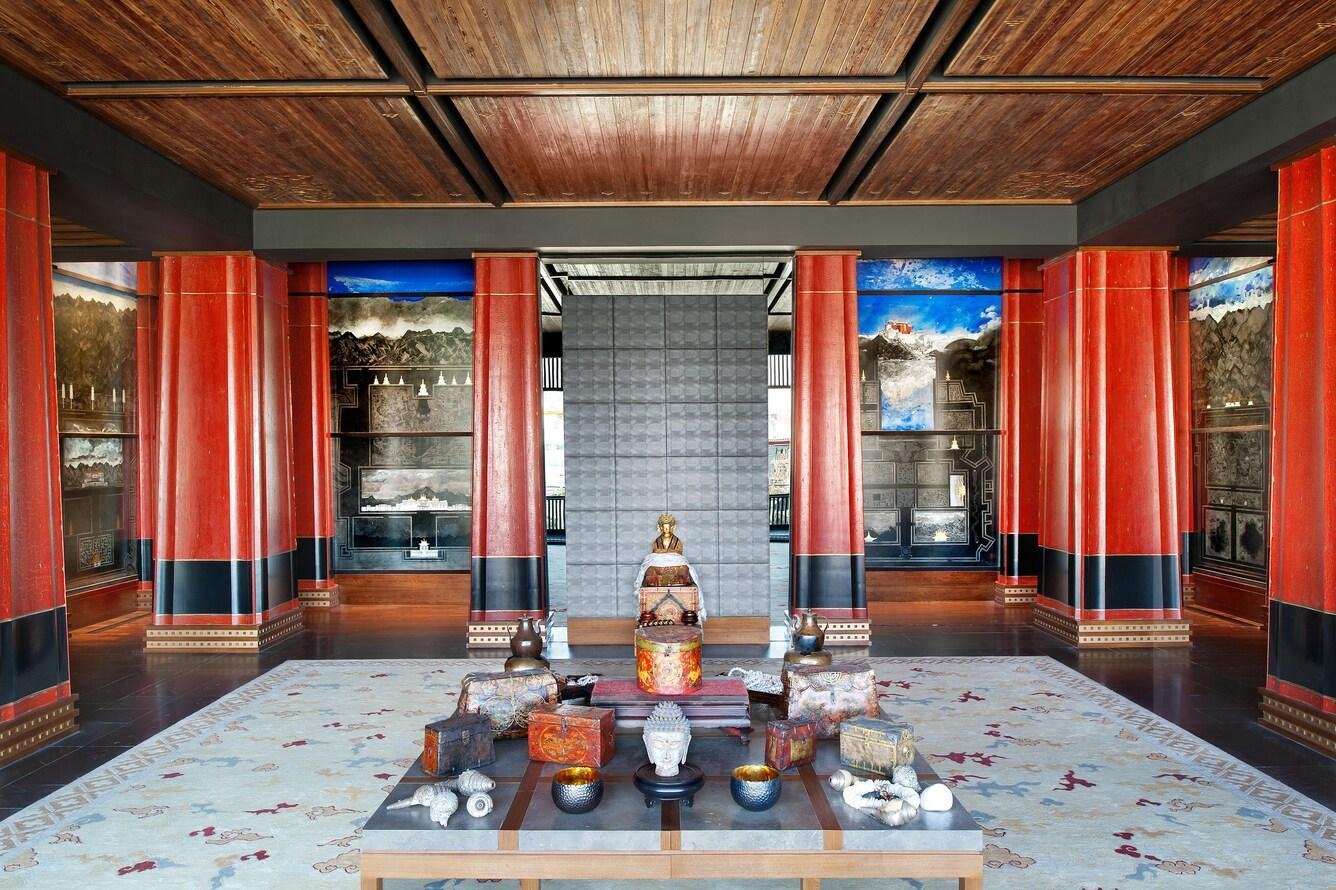
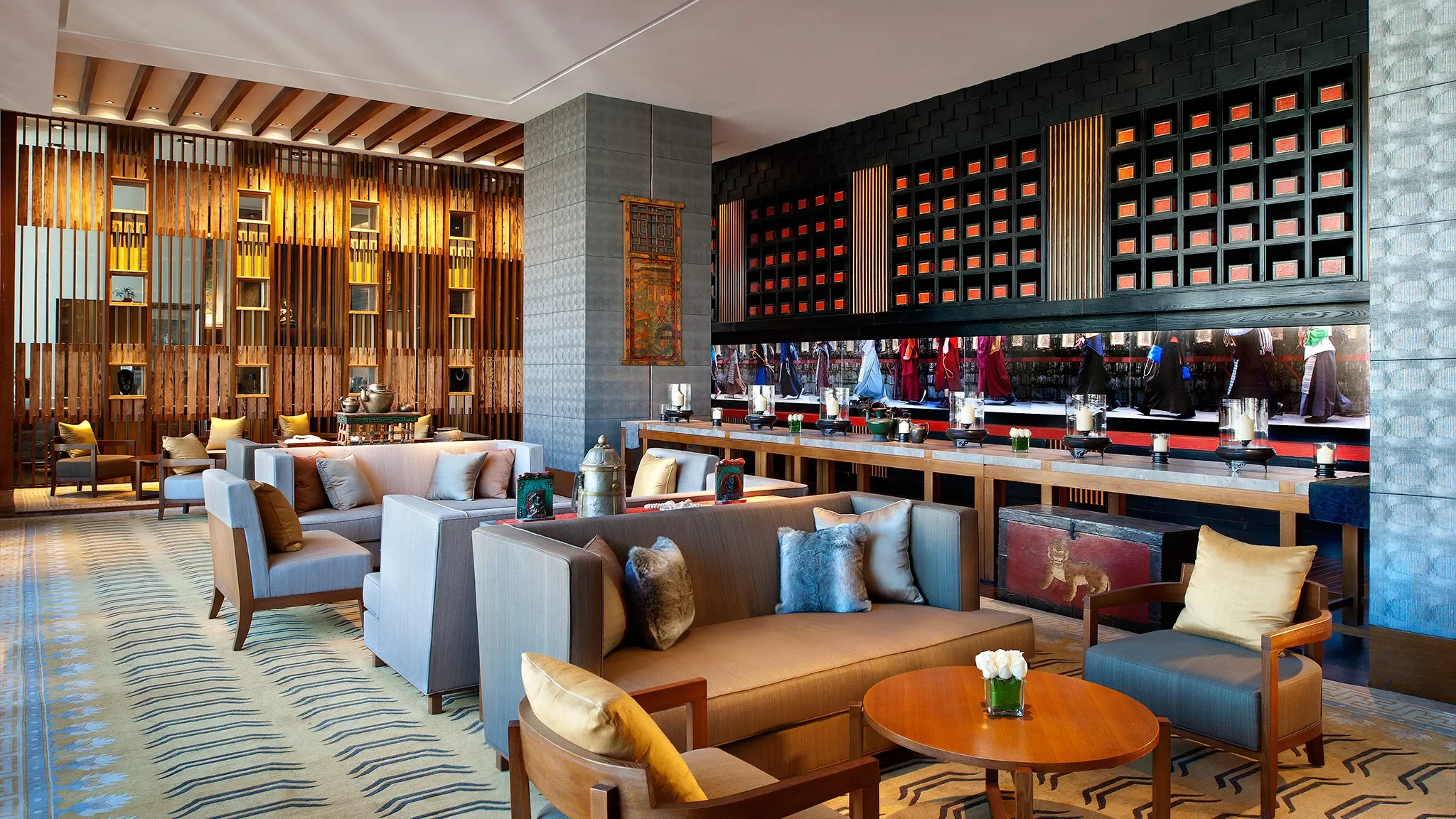
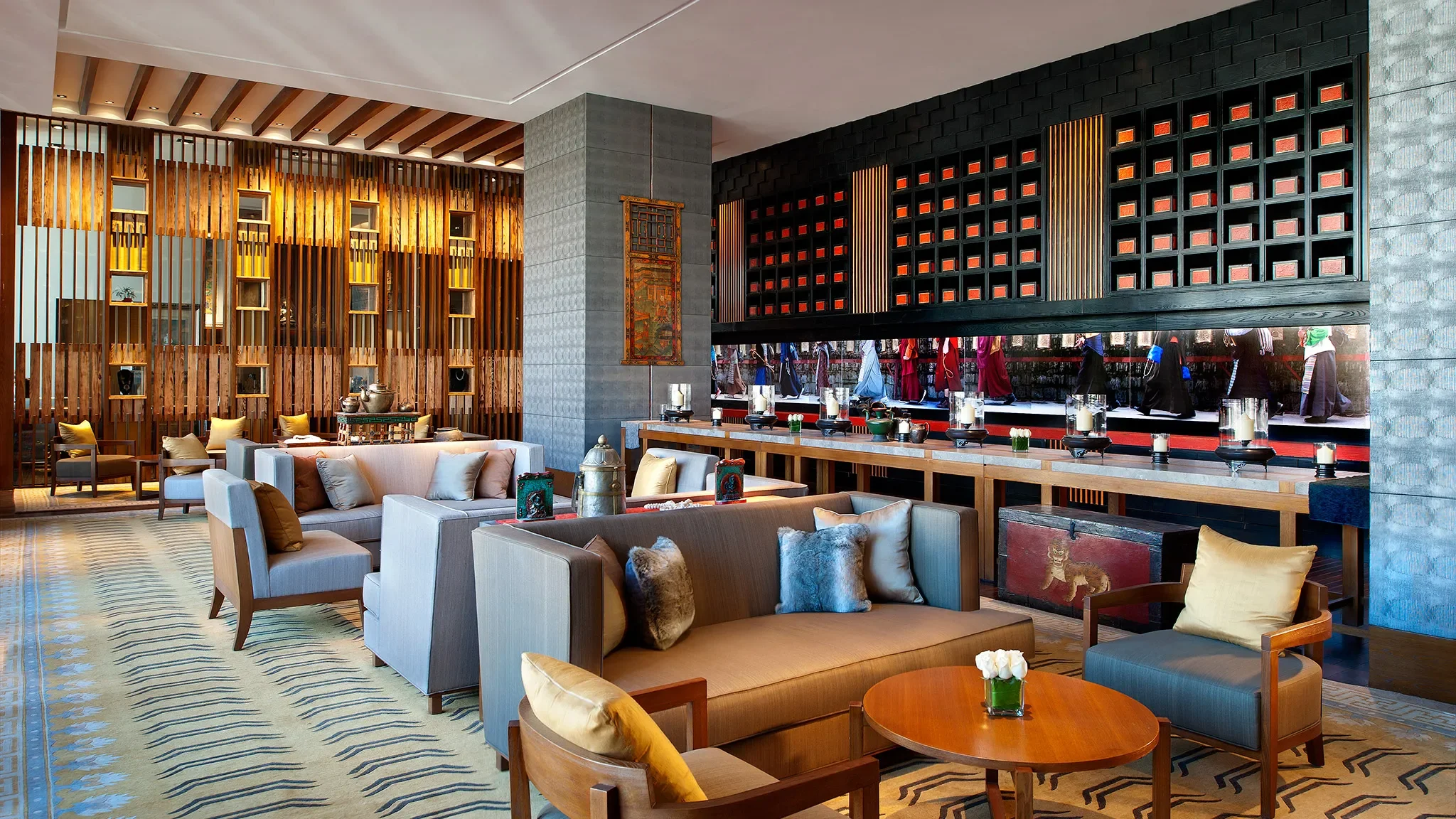
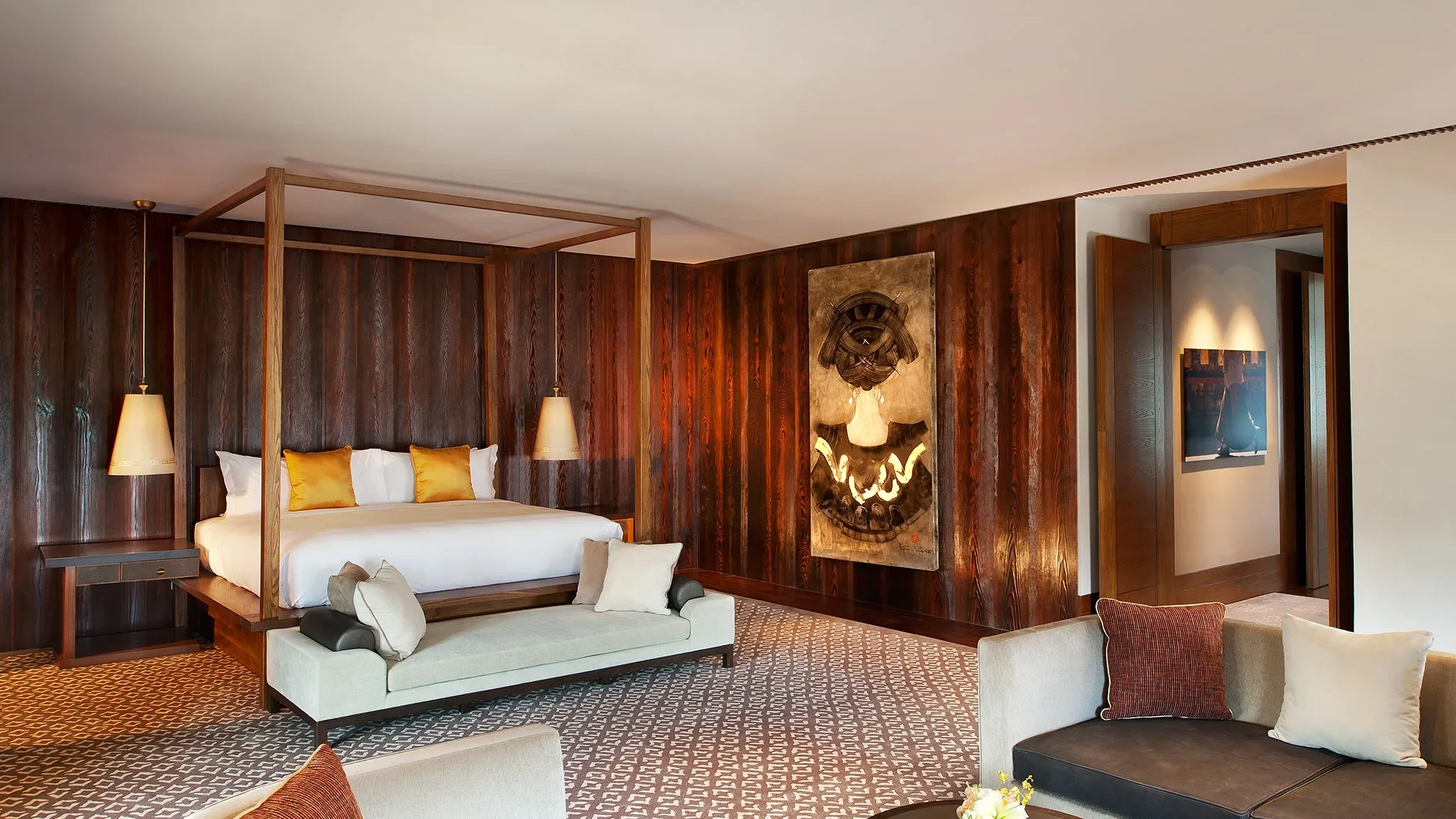
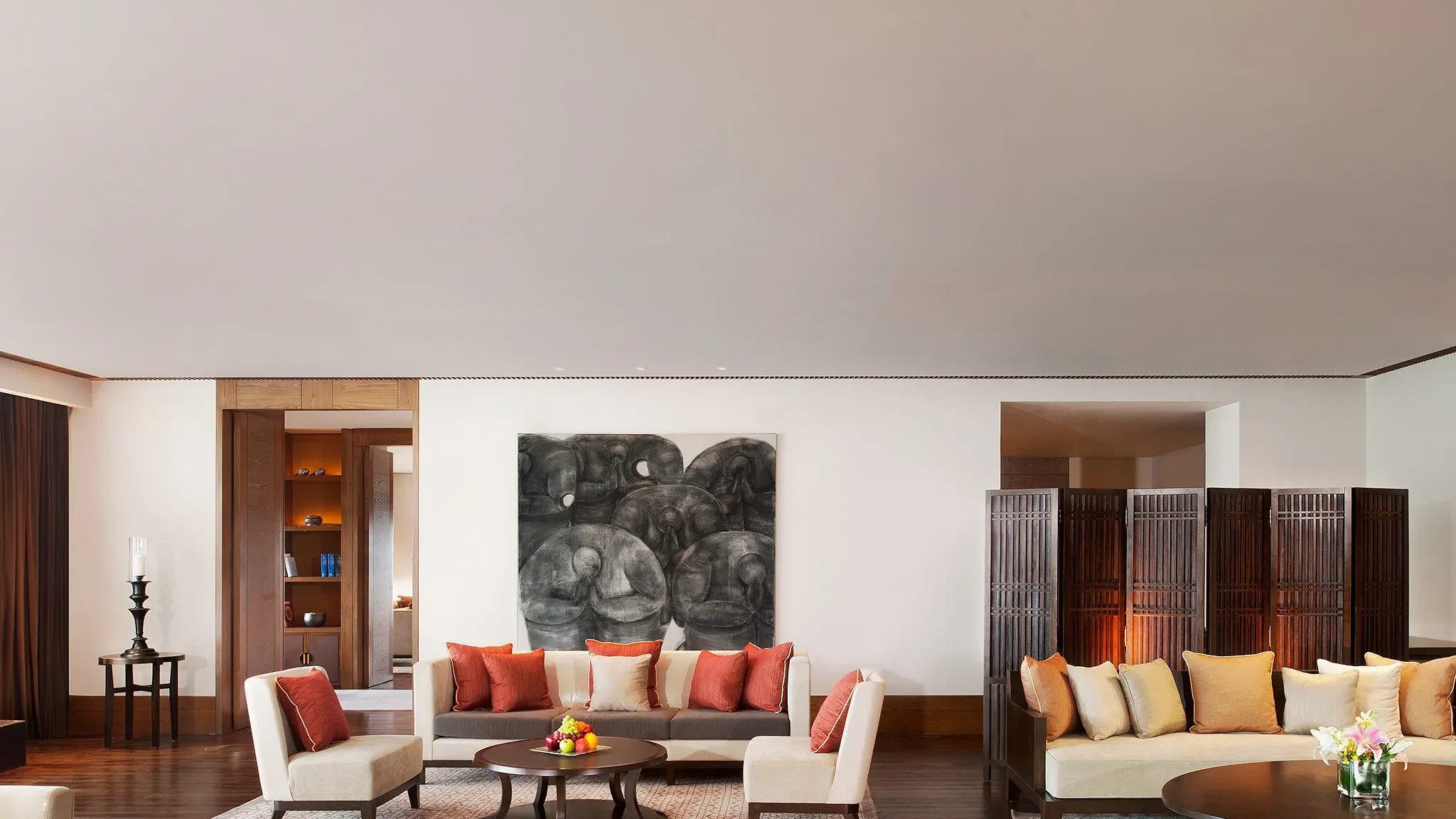
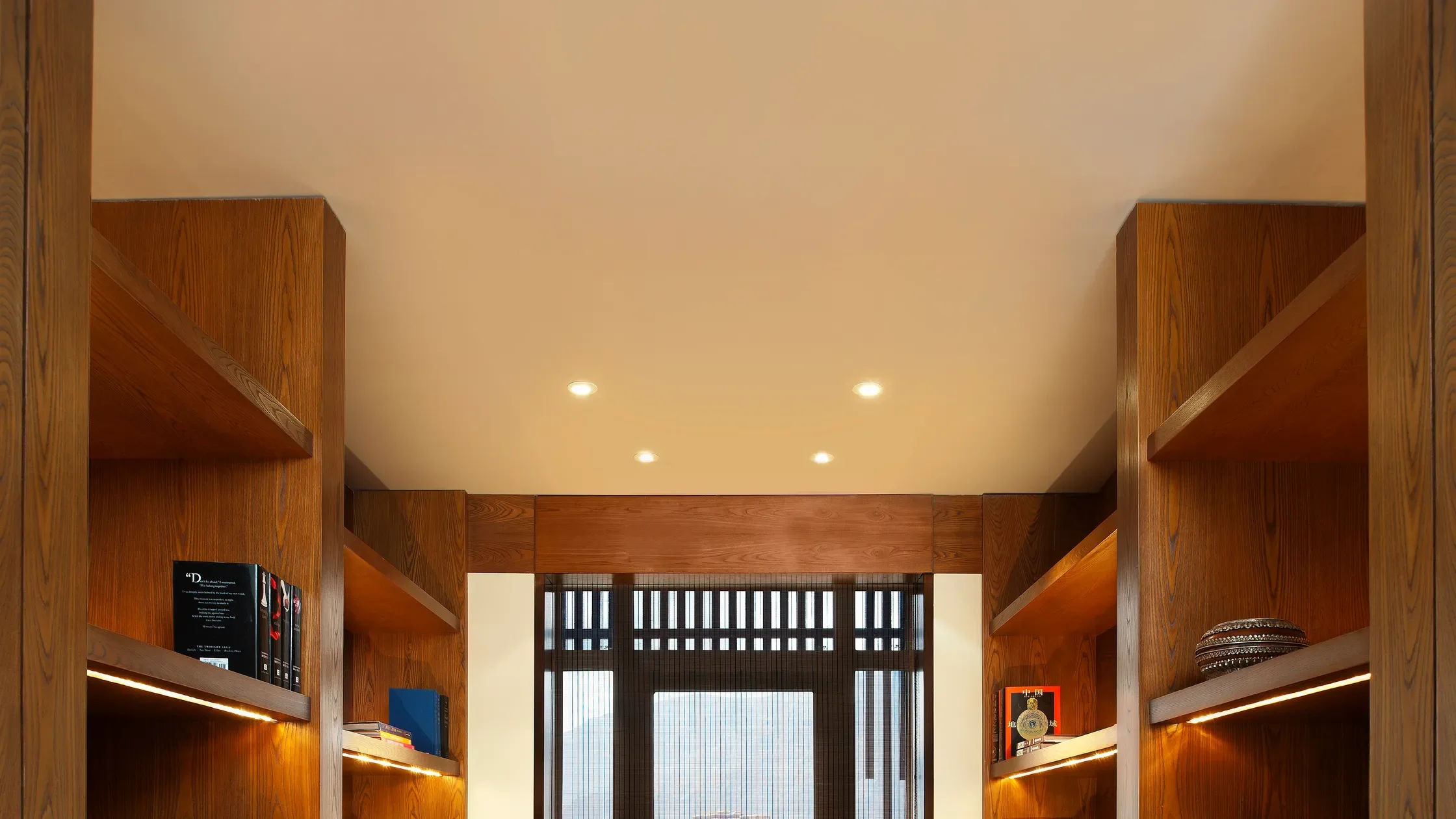
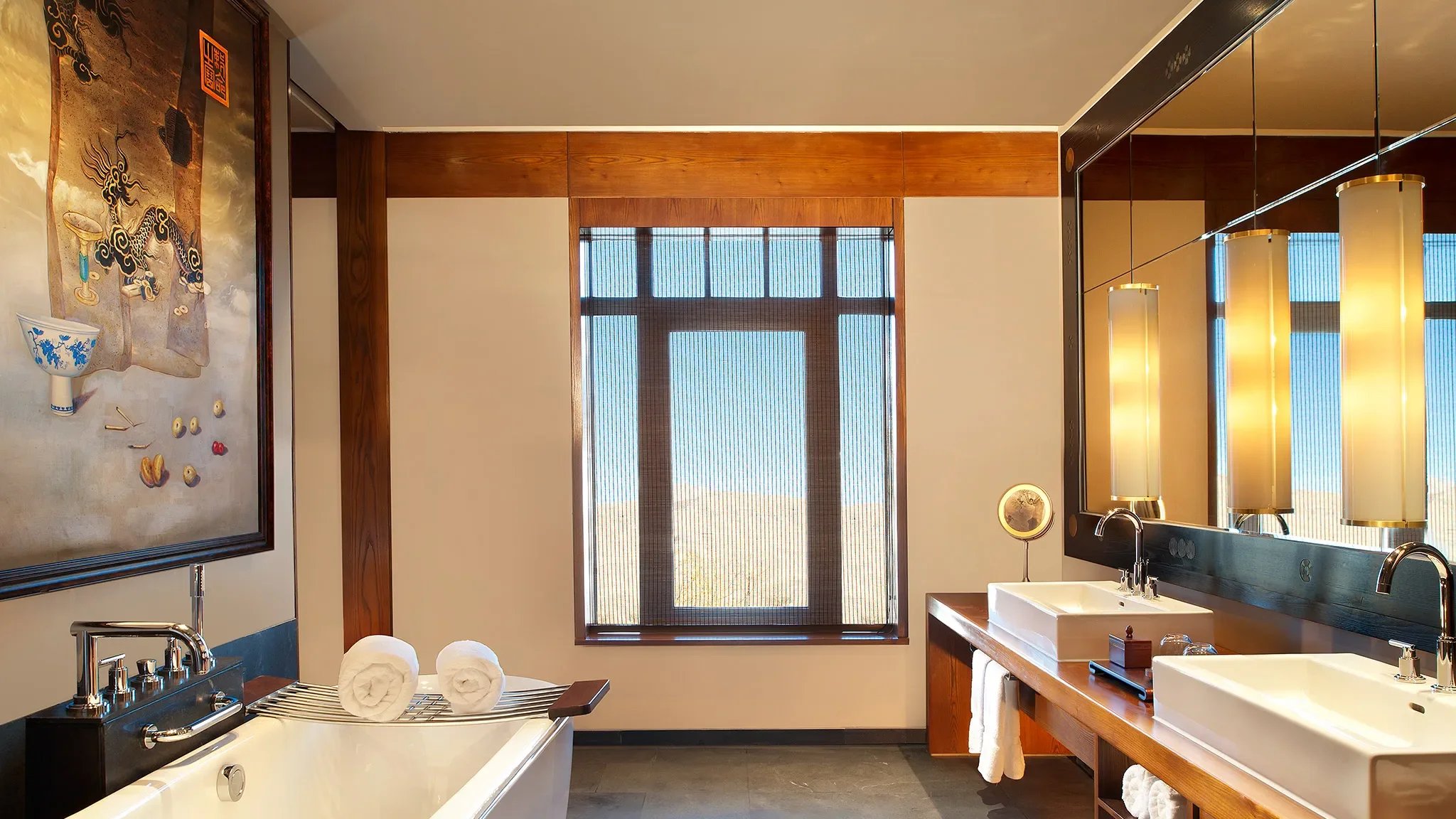
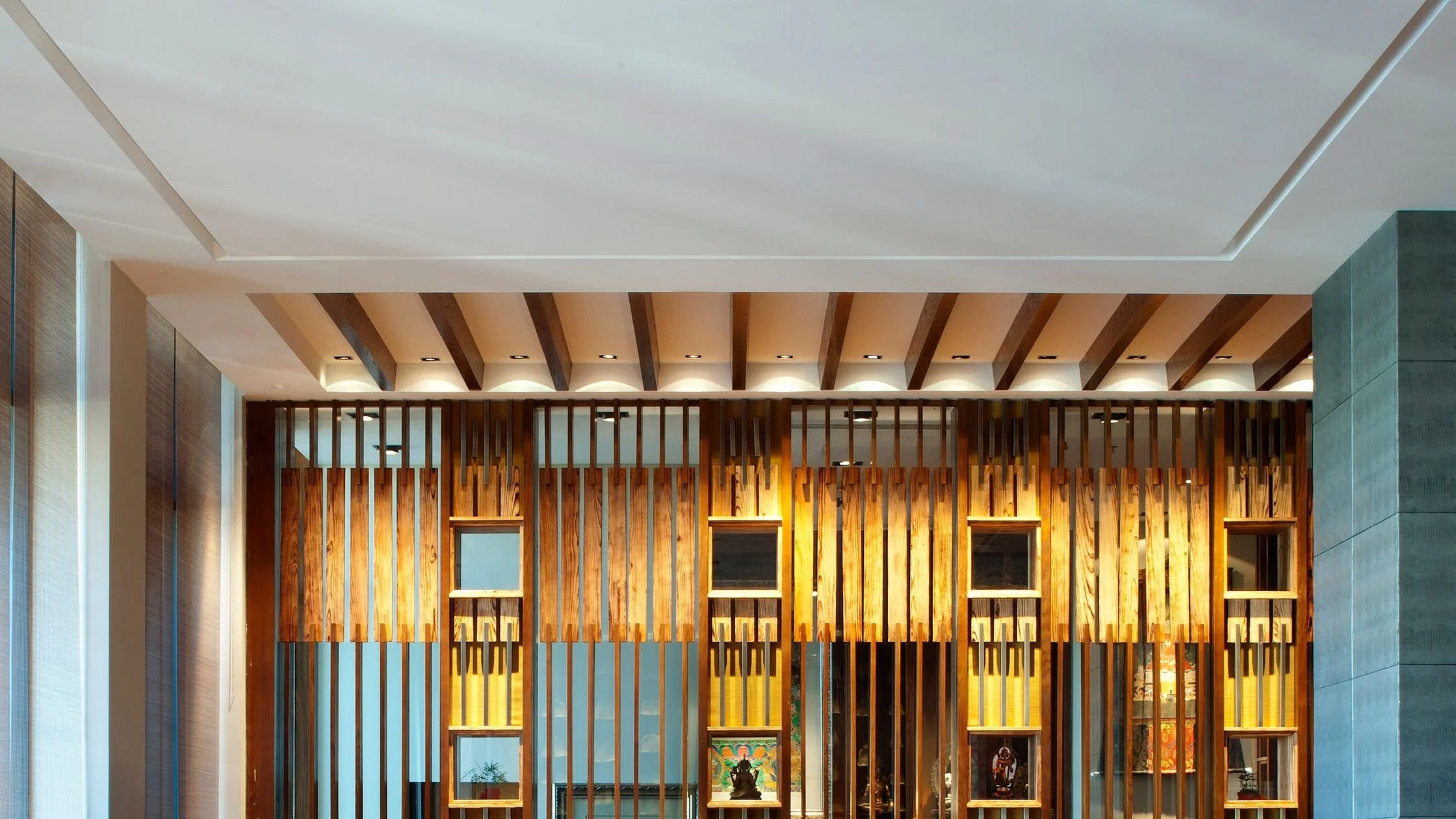
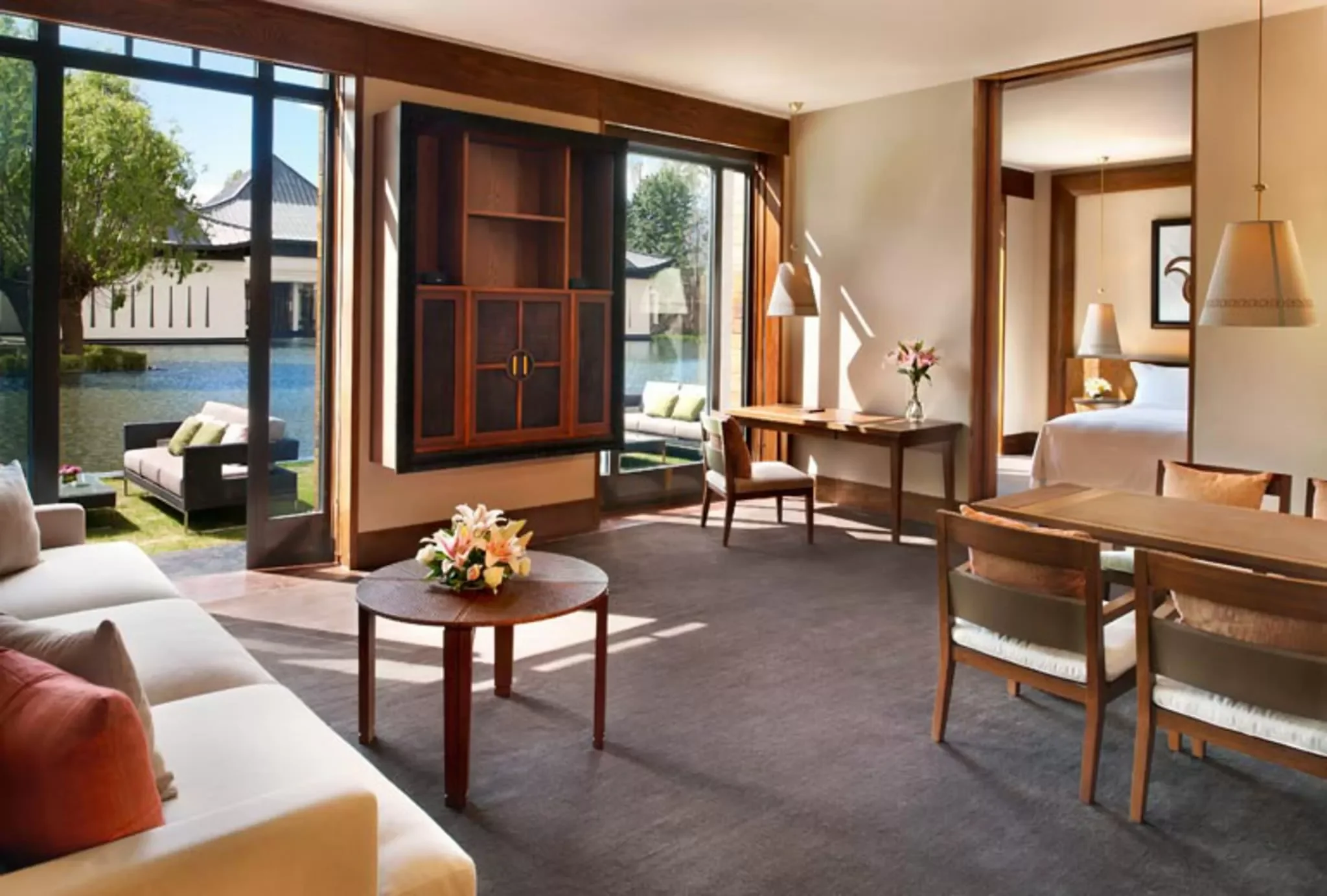
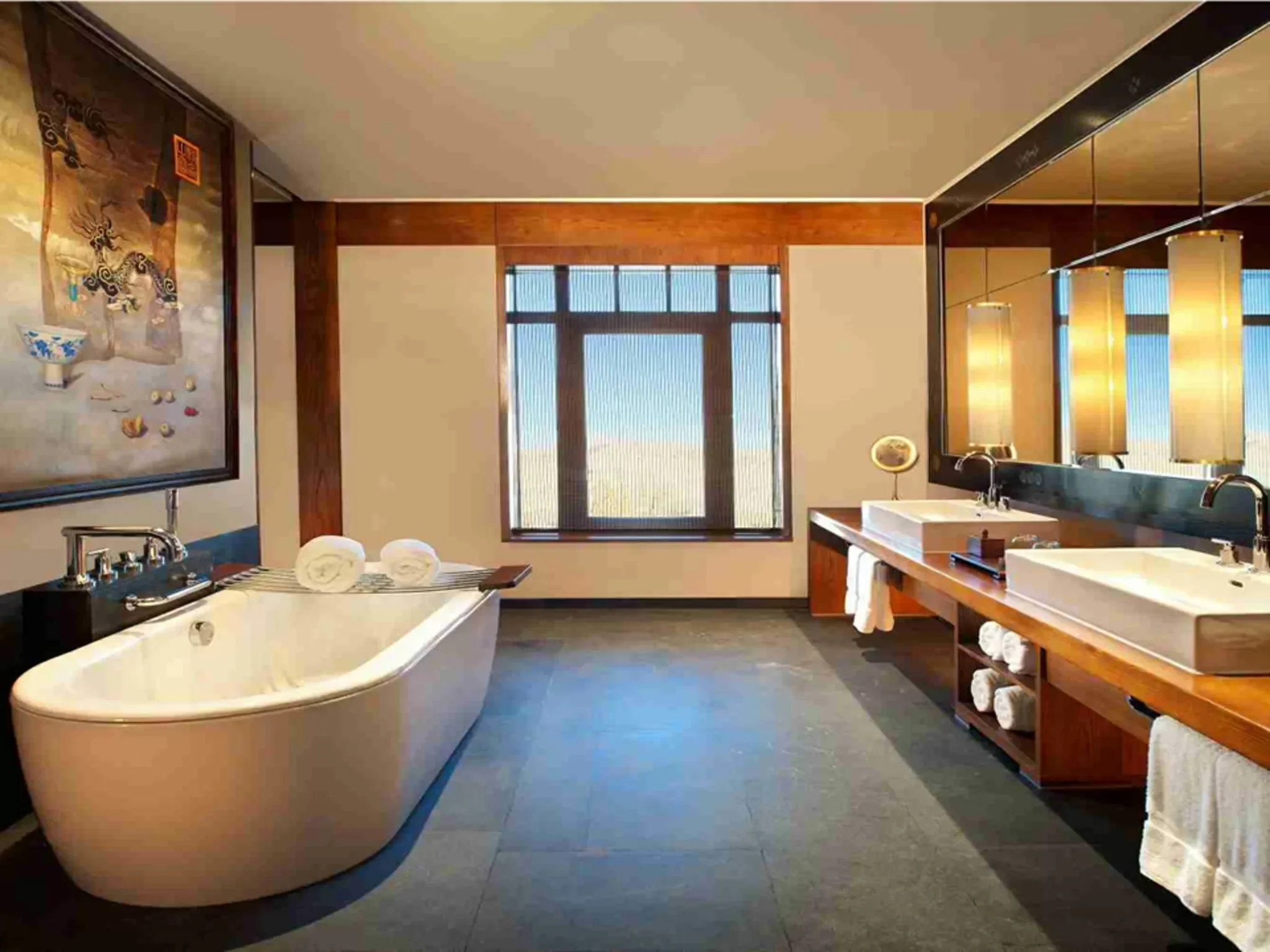
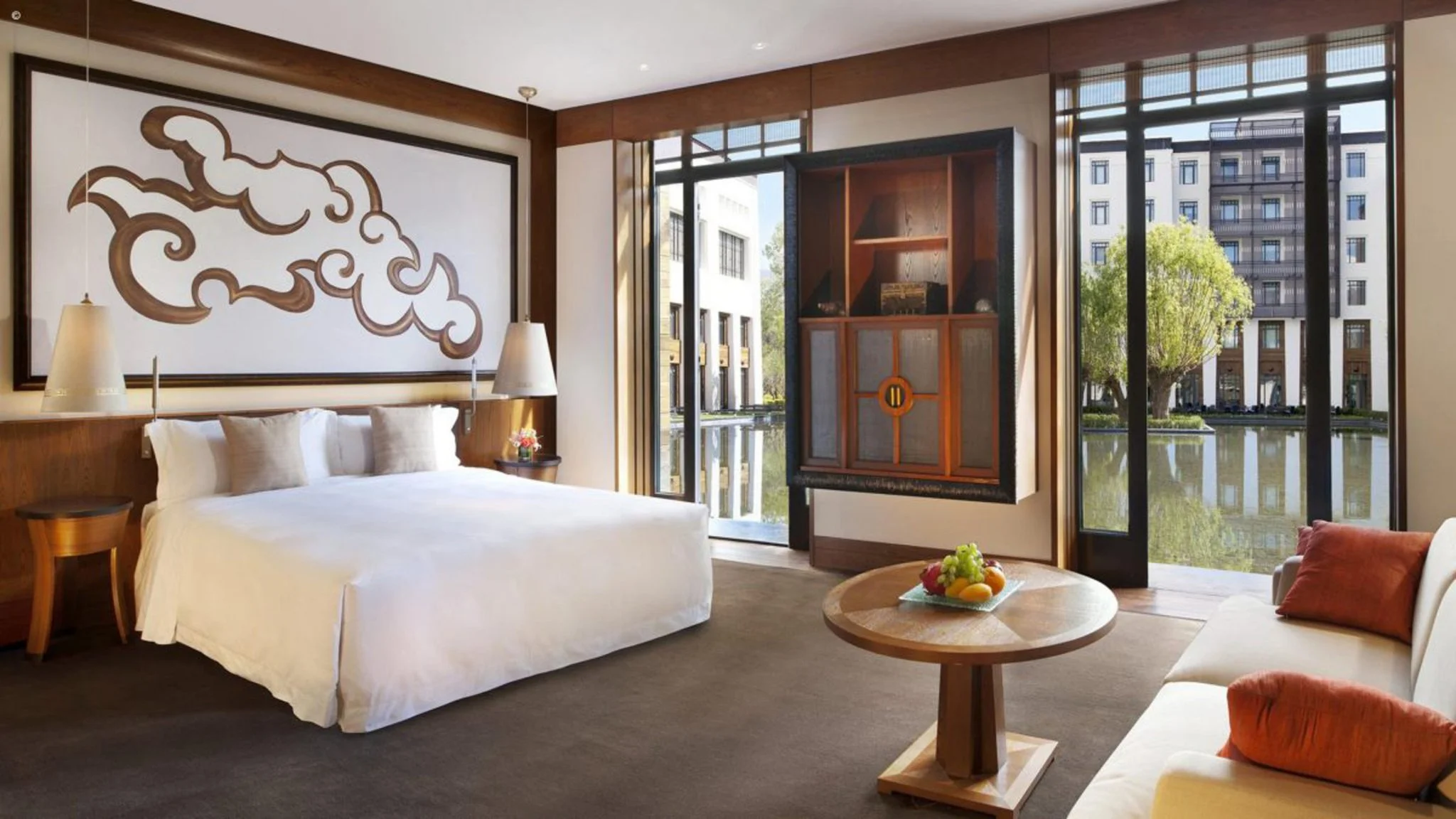
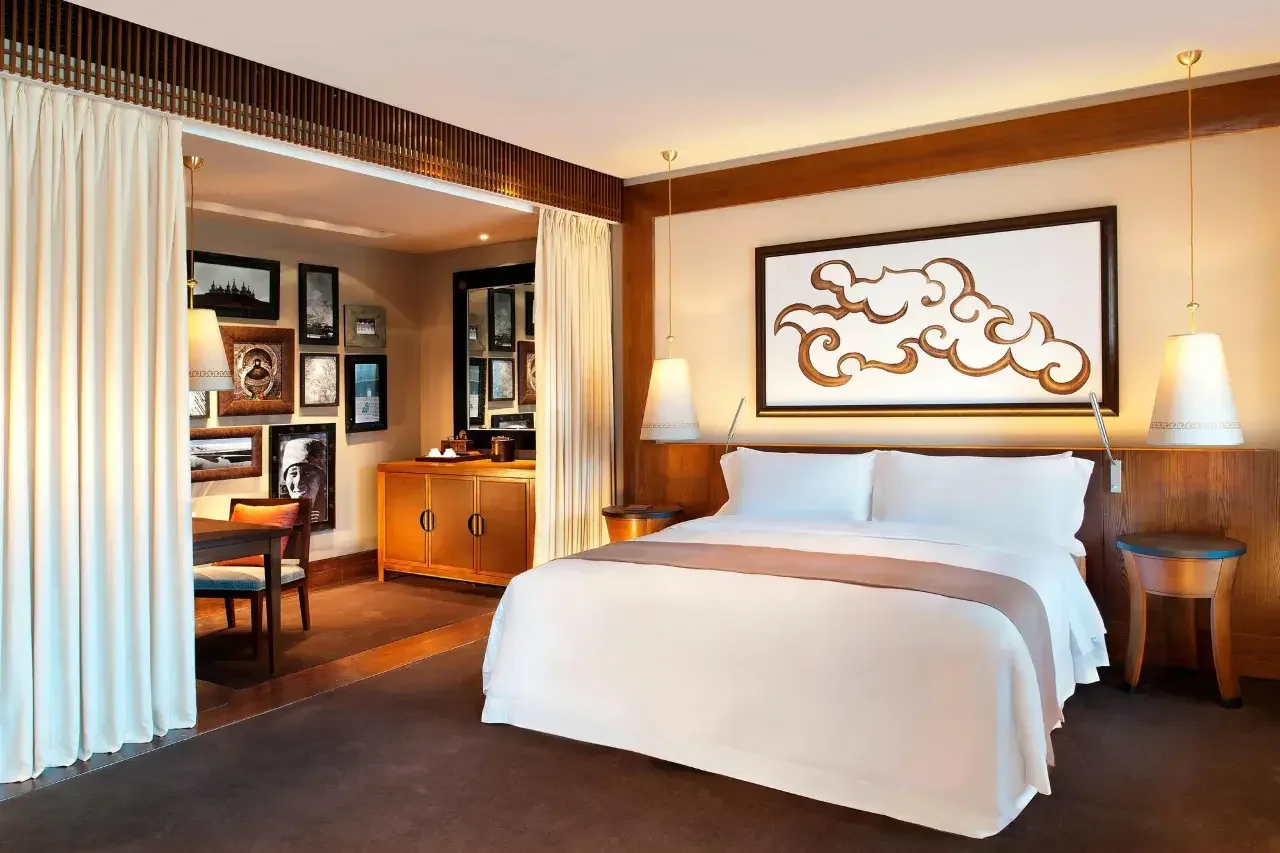
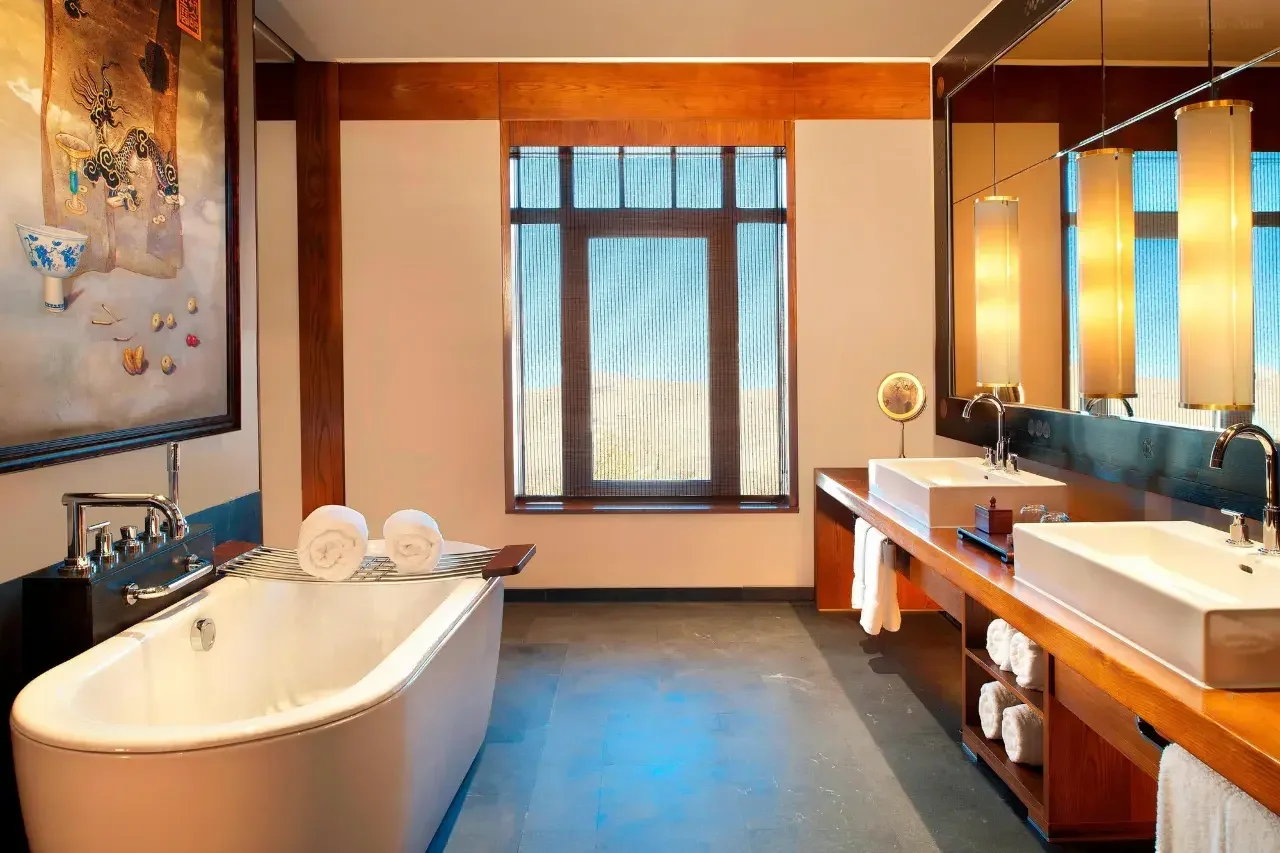
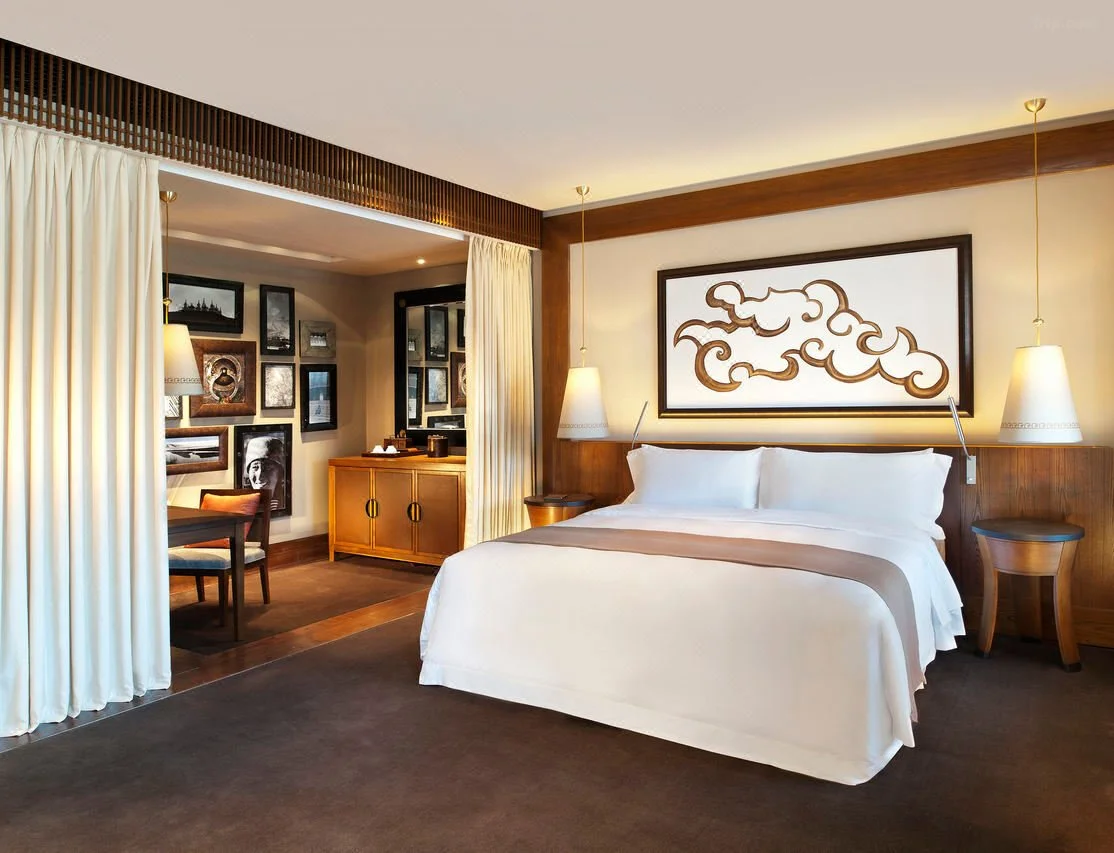
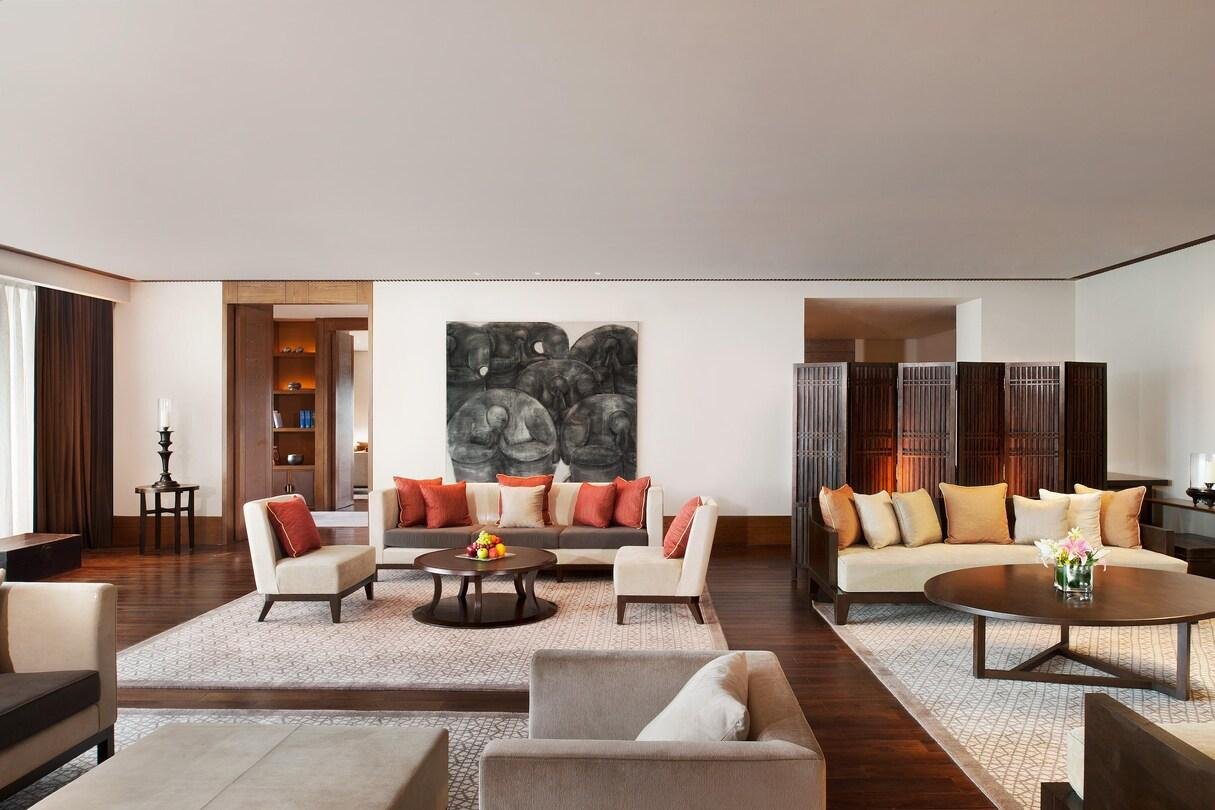
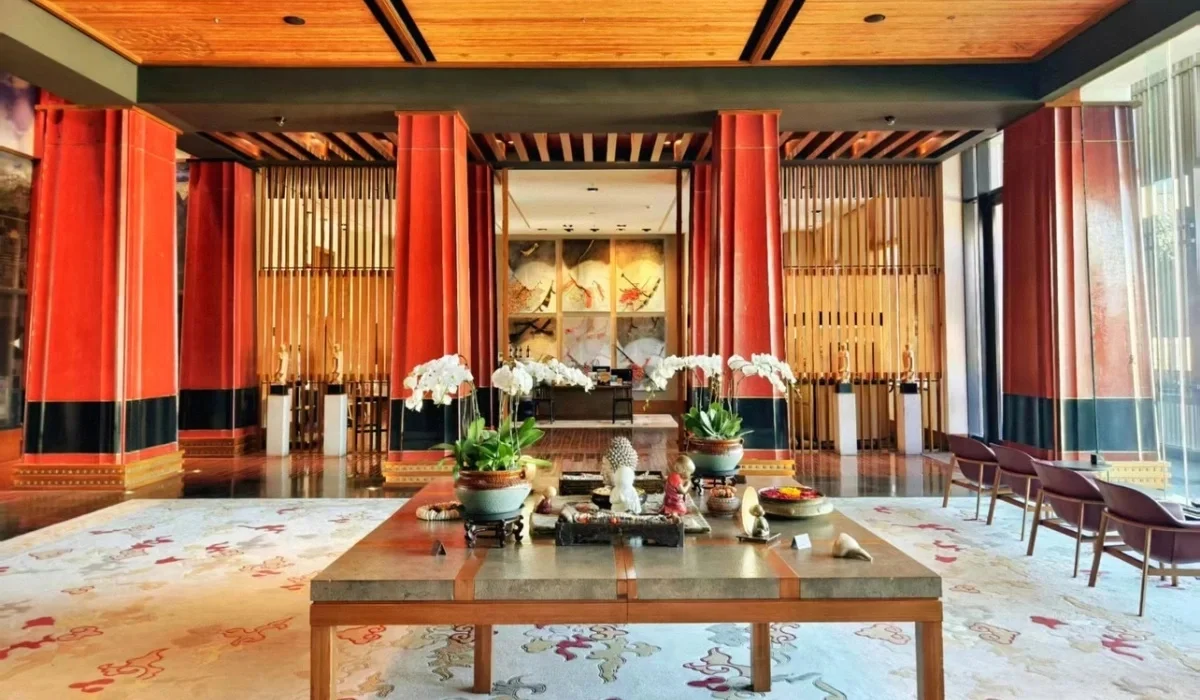
Inside, colors and motifs take inspiration from the region without transforming guest spaces into museum displays. The contrast between the city's busy streets and the hotel's sheltered public areas is among its practical strengths. Spacious rooms, warm finishes and substantial bathrooms encourage long pauses between excursions, which is particularly sensible during the first days at altitude.
Certain public spaces also frame distant mountain and city views. The hotel describes its accommodations as offering scenic outlooks, although views depend on the room selected. For a traveler planning a longer stay, choosing the preferred orientation and layout matters more than assuming that every room has the same landmark panorama.
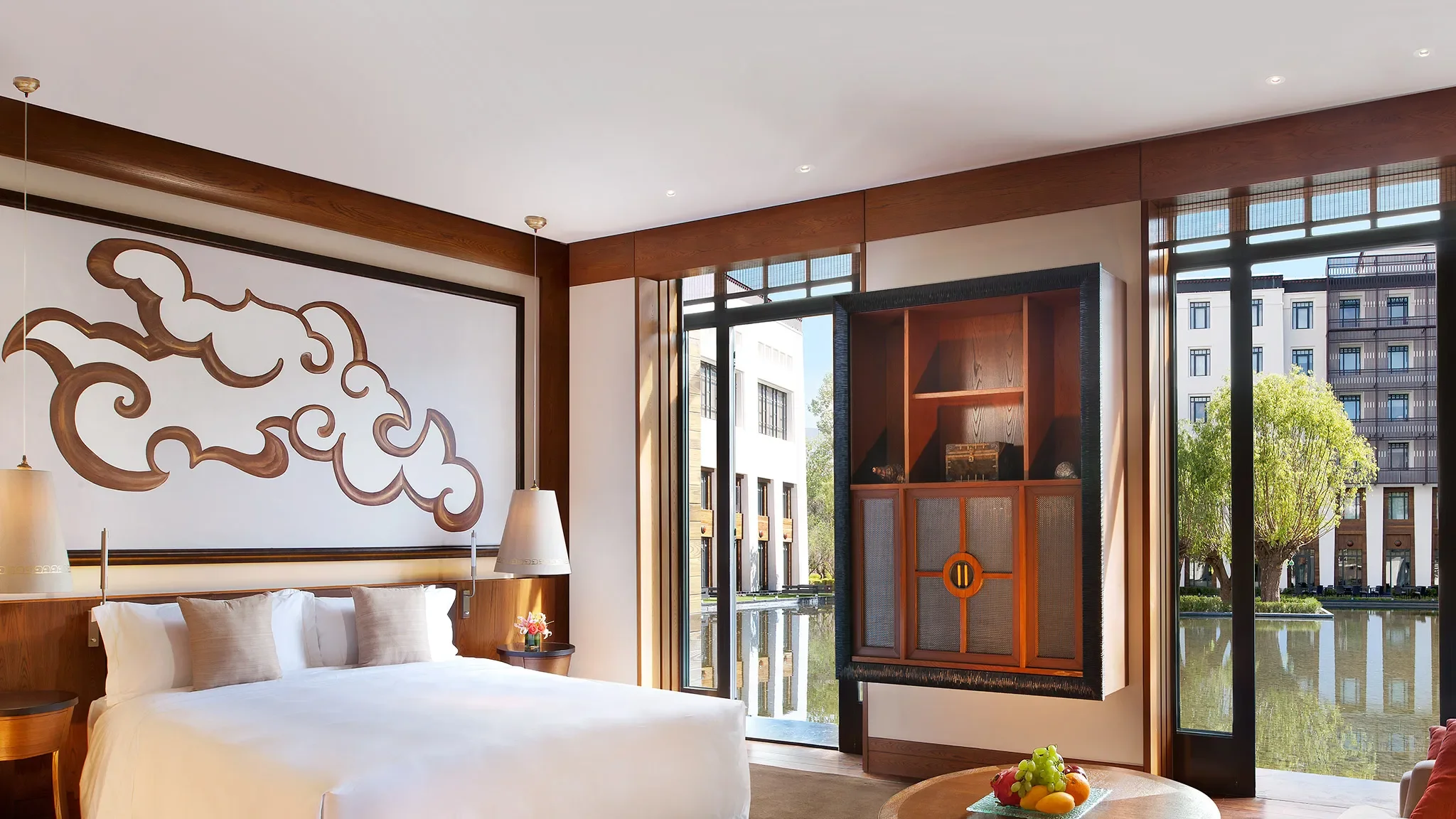
Rooms and Suites for a Considered Stay
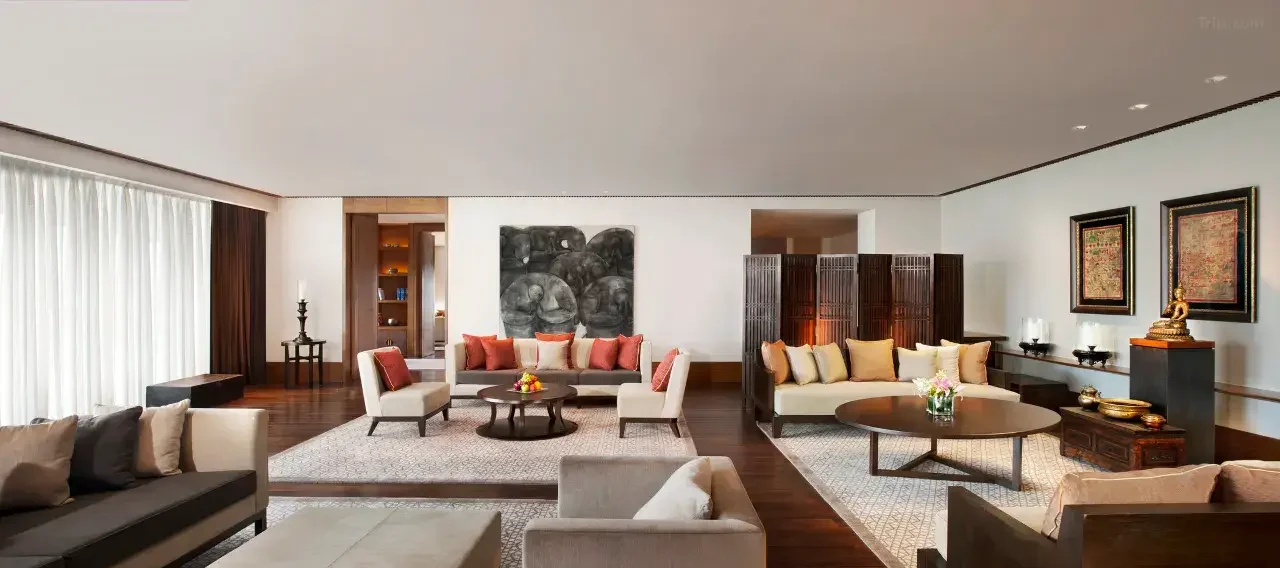
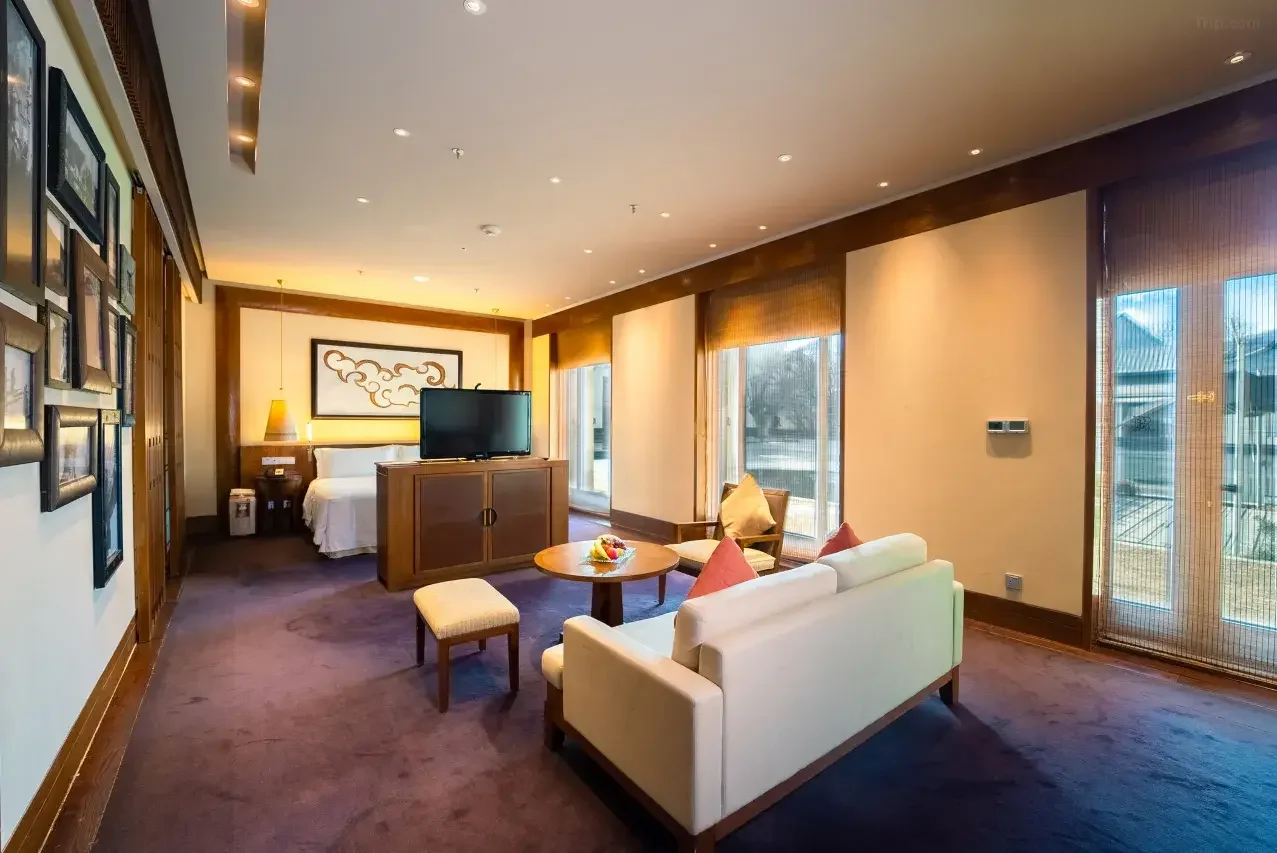
The St. Regis Lhasa Resort offers spacious accommodation with deep soaking tubs, underfloor heating and suites featuring separate living areas. The collection ranges from Deluxe Rooms to larger signature suites, with different layouts suited to both short cultural visits and extended stays. The following categories progress from standard rooms toward the hotel's more expansive accommodations.
Deluxe Room: Approximately 549–657 sq. ft. (51–61 sq. m.), with a spacious bedroom and bathroom, suited to couples or solo travelers seeking a comfortable base between cultural visits.
Grand Deluxe Room: Approximately 915 sq. ft. (85 sq. m.), offering additional space within a conventional room layout for travelers who prefer a more generous accommodation.
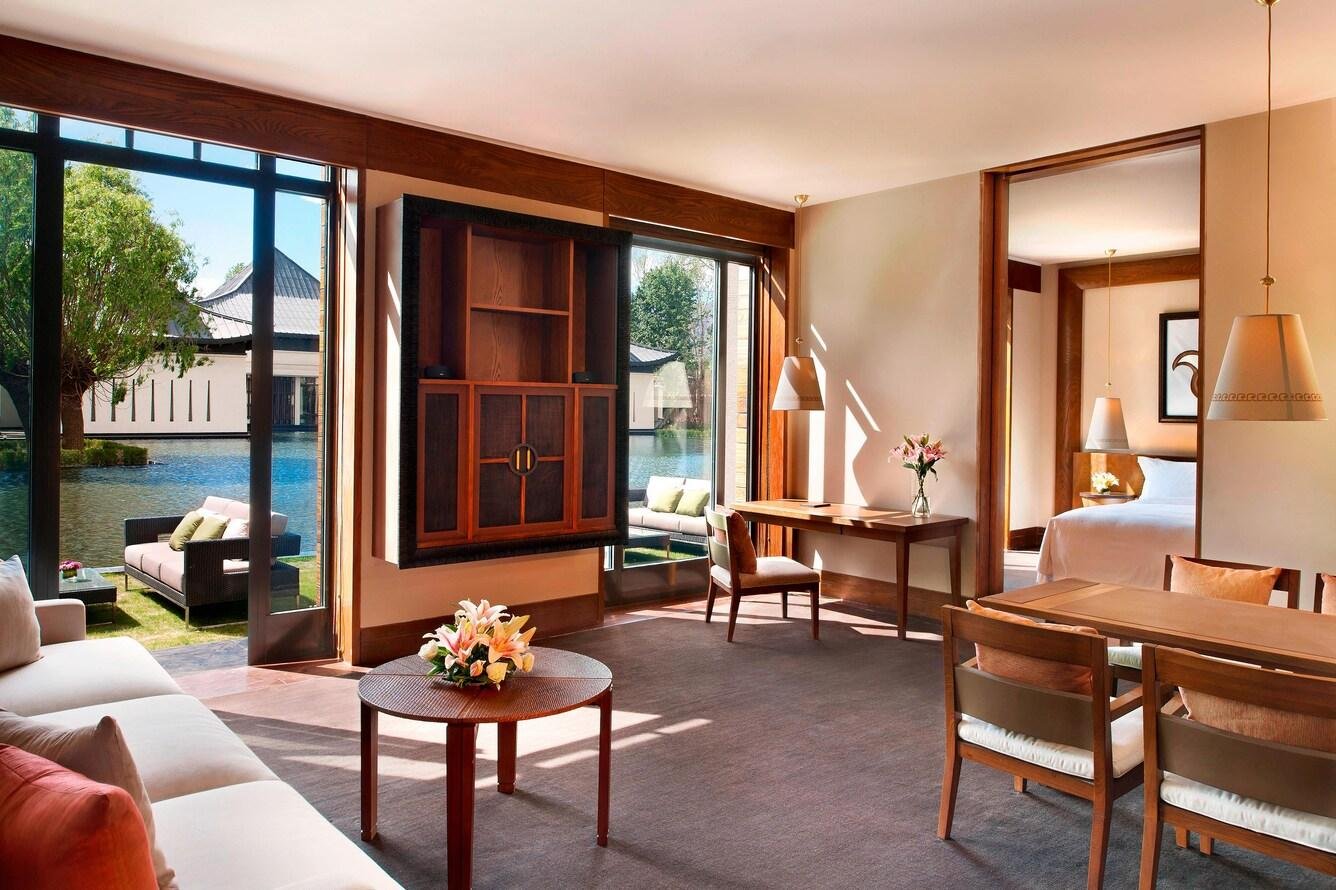
Deluxe Villa: Approximately 689 sq. ft. (64 sq. m.), featuring a garden-facing bedroom and a villa-style setting distinct from the hotel's principal room blocks.
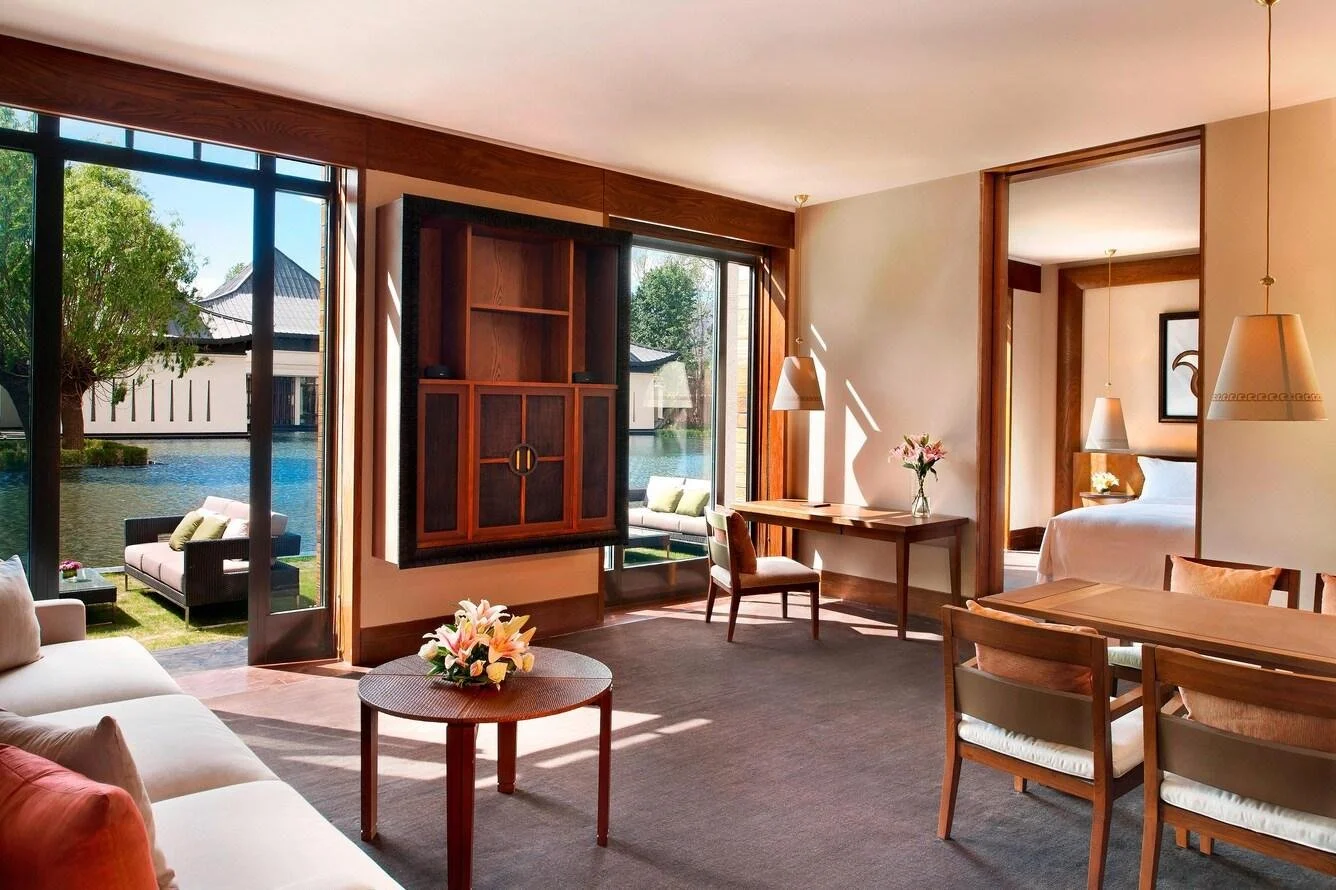
Shigatse Suite: Approximately 1,012–1,130 sq. ft. (94–105 sq. m.), with one bedroom, additional living space and a more residential layout suited to longer stays.
Lhasa Suite: Approximately 1,270 sq. ft. (118 sq. m.), featuring one bedroom with distinct living and sleeping areas for greater comfort and privacy.
Tubo Suite: An upper-tier suite with separate bedroom and sitting areas, offering additional space for relaxation and extended stays.
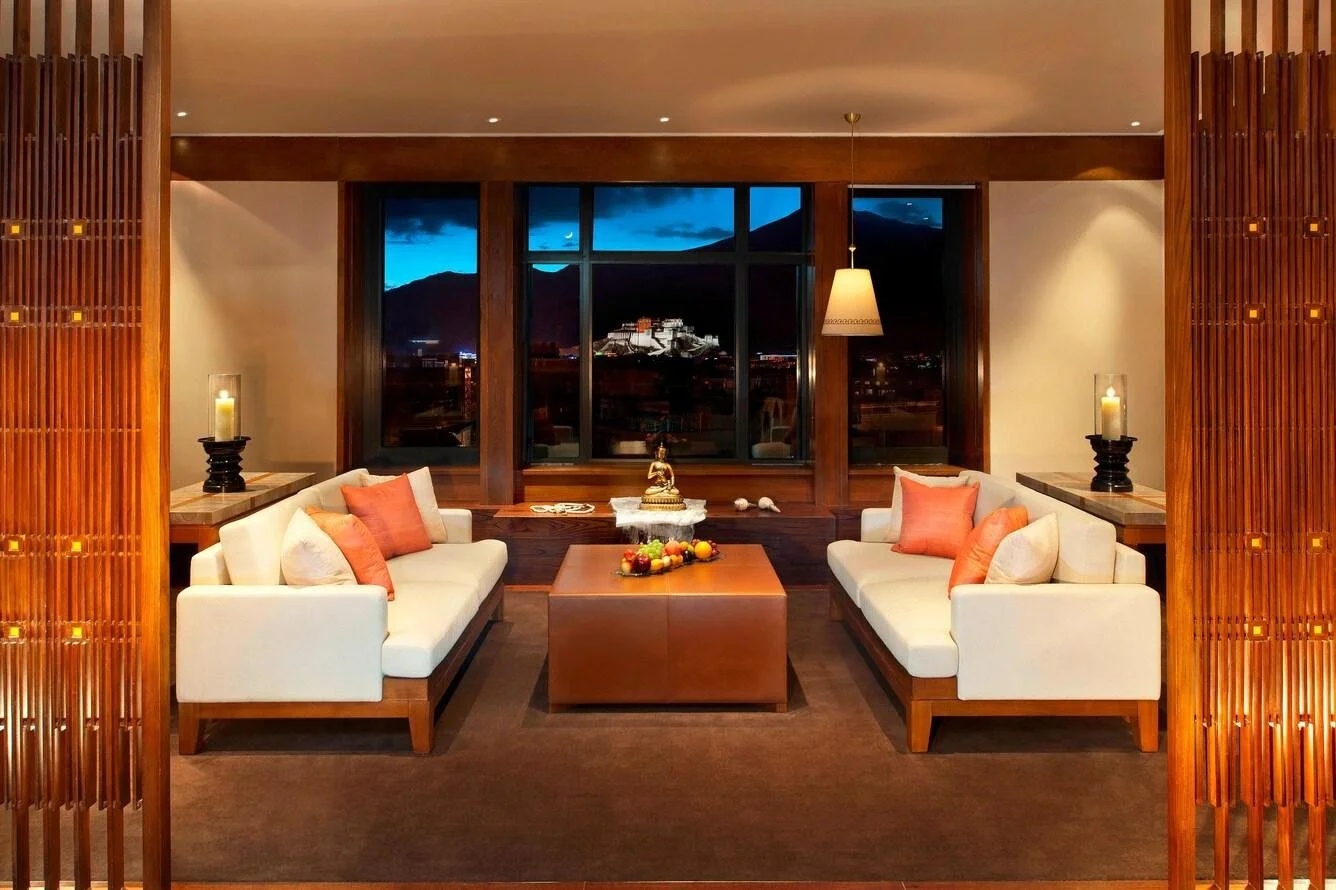
Everest Suite: A signature suite featuring separate bedroom and living areas, with views toward the Potala Palace illustrated in the hotel's official photography.
Specific bedding, views, villa placement and availability should be confirmed for the requested dates. Individual room layouts and outlooks may vary, while proximity to lifts and convenient access to public facilities can be particularly important for travelers adjusting to Lhasa's altitude or requiring additional mobility assistance.
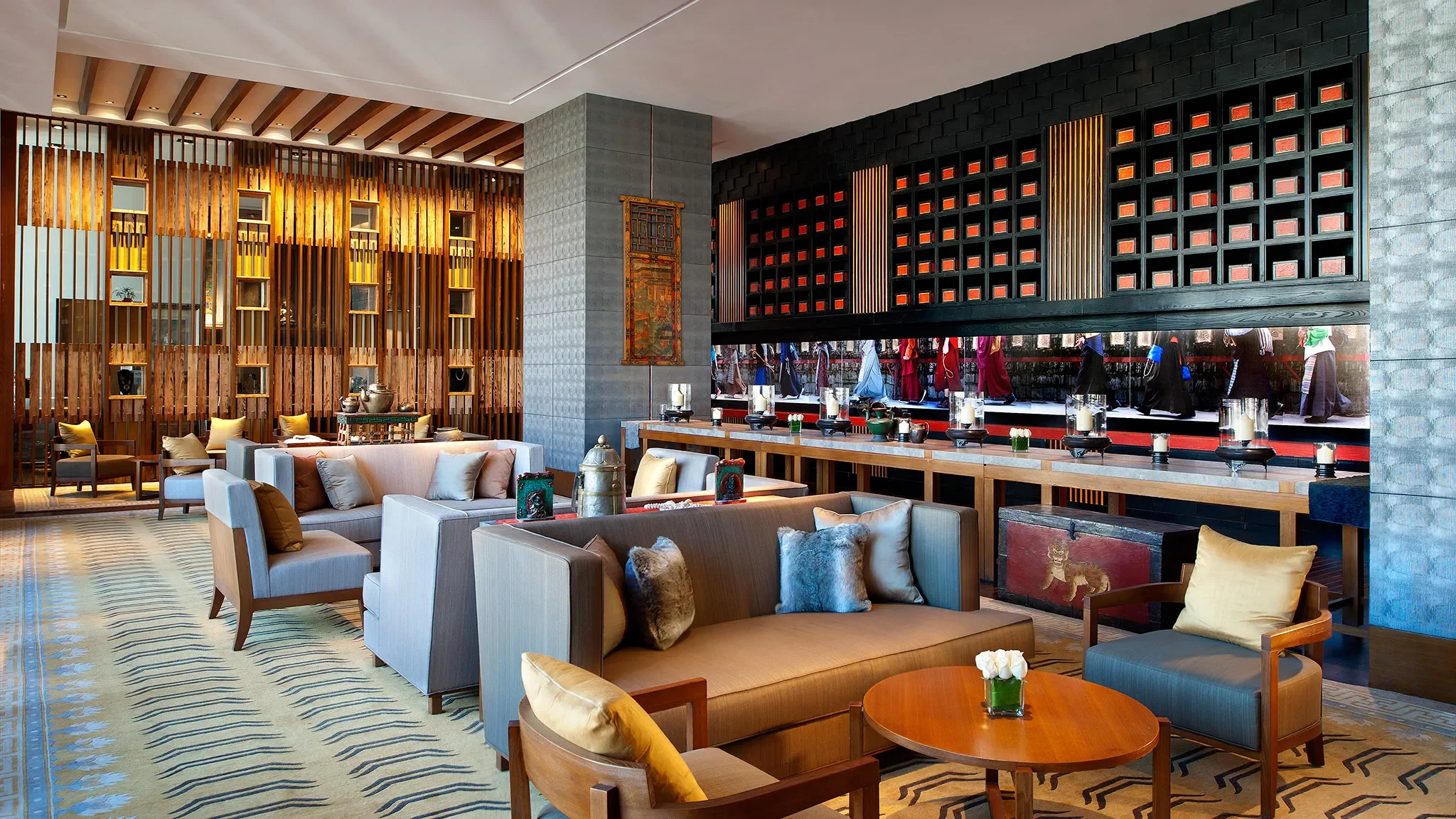
Chinese Flavors and Views Across Lhasa
Dining at The St. Regis Lhasa Resort centers on a small number of distinct venues, making it practical to alternate hotel meals with experiences in the city. Marriott's current dining page identifies the following operating outlets:
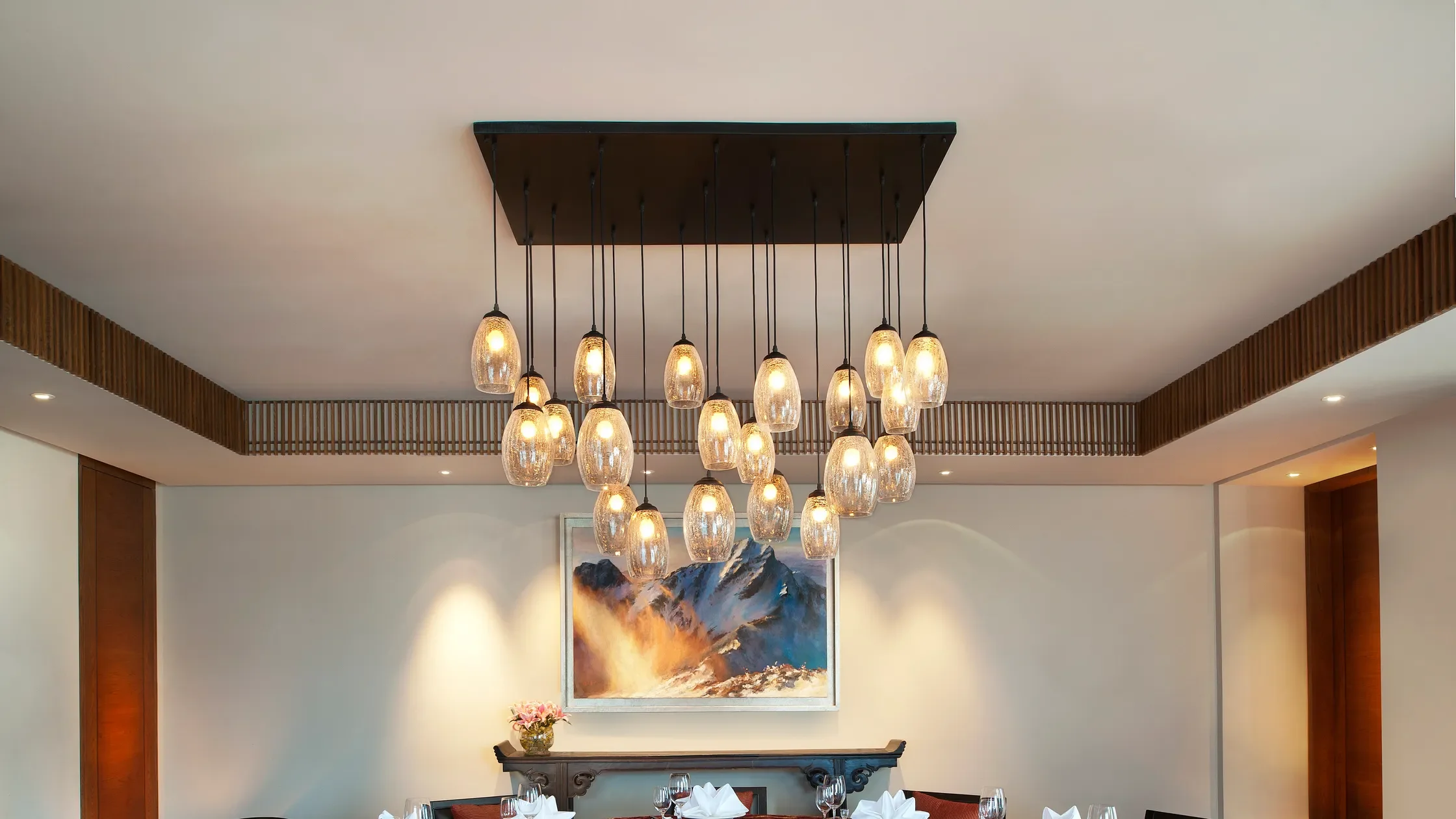
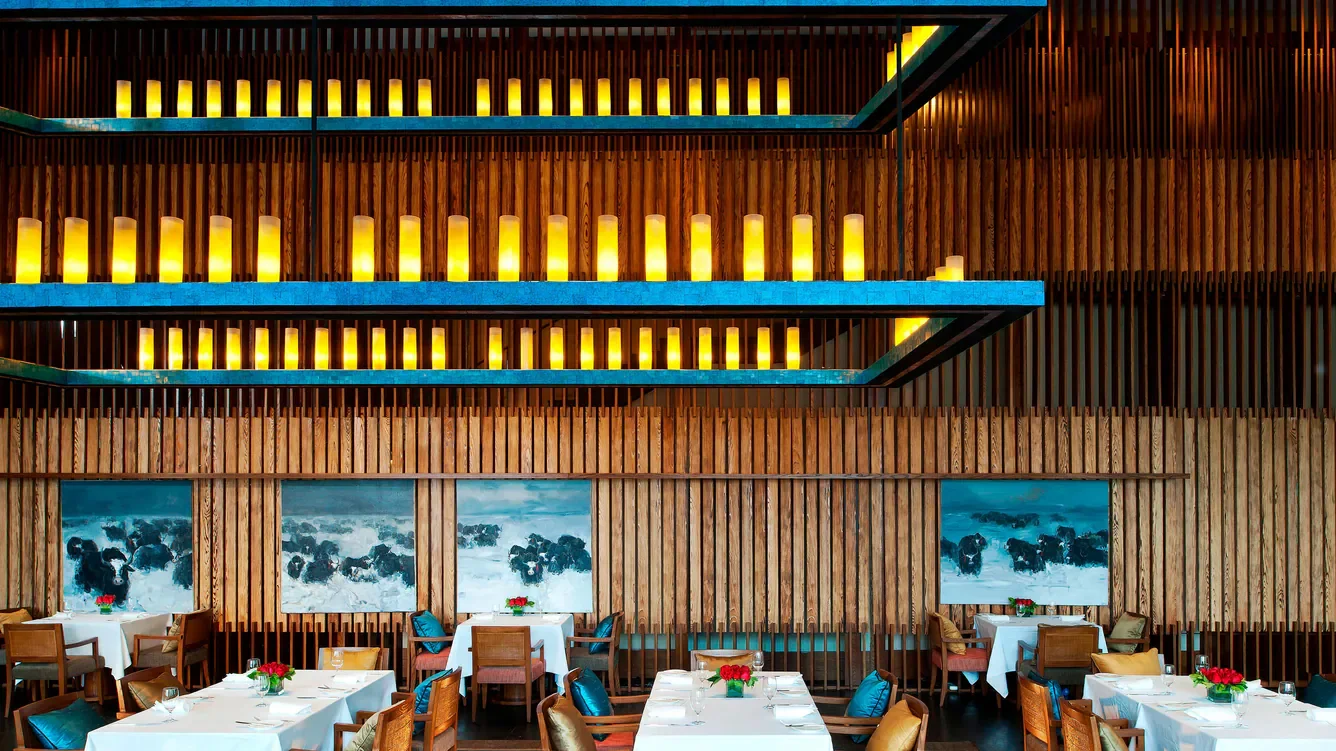
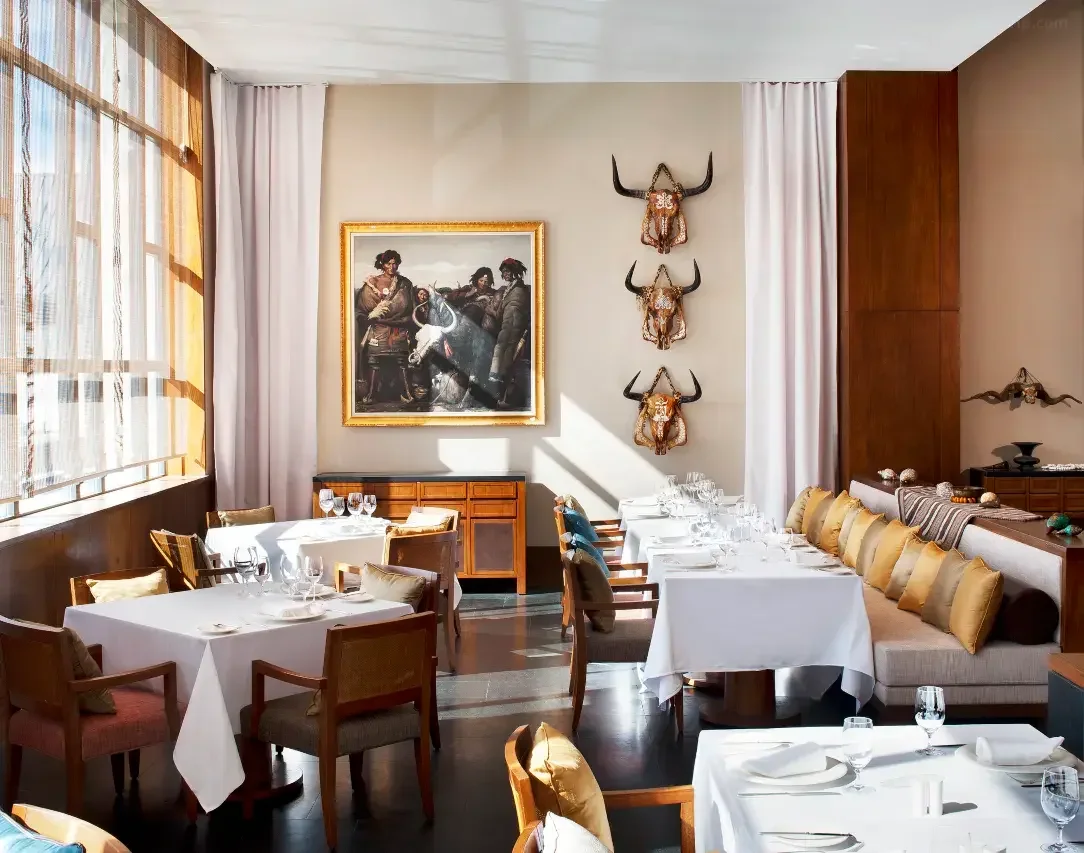
Yan Ting: A formally styled Chinese restaurant serving Cantonese, Sichuanese, Hunanese and local dishes, with six private dining rooms and an adjacent villa for more intimate gatherings.
Social: An international restaurant with an interactive kitchen and Asian- and Chinese-influenced selections, serving as a flexible choice for breakfast and other meals.
Tubo Bar: A sixth-floor bar with floor-to-ceiling windows overlooking the landscaped grounds and toward the Potala Palace, providing a comfortable setting for a leisurely drink.
Room service is also listed as available. The hotel gallery includes photographs of additional hospitality spaces, but the current dining page is the more reliable guide to which outlets are presently advertised. Those seeking a specific cuisine, private dinner or celebration should have arrangements checked directly with the hotel rather than relying on older restaurant names or historic dining guides.
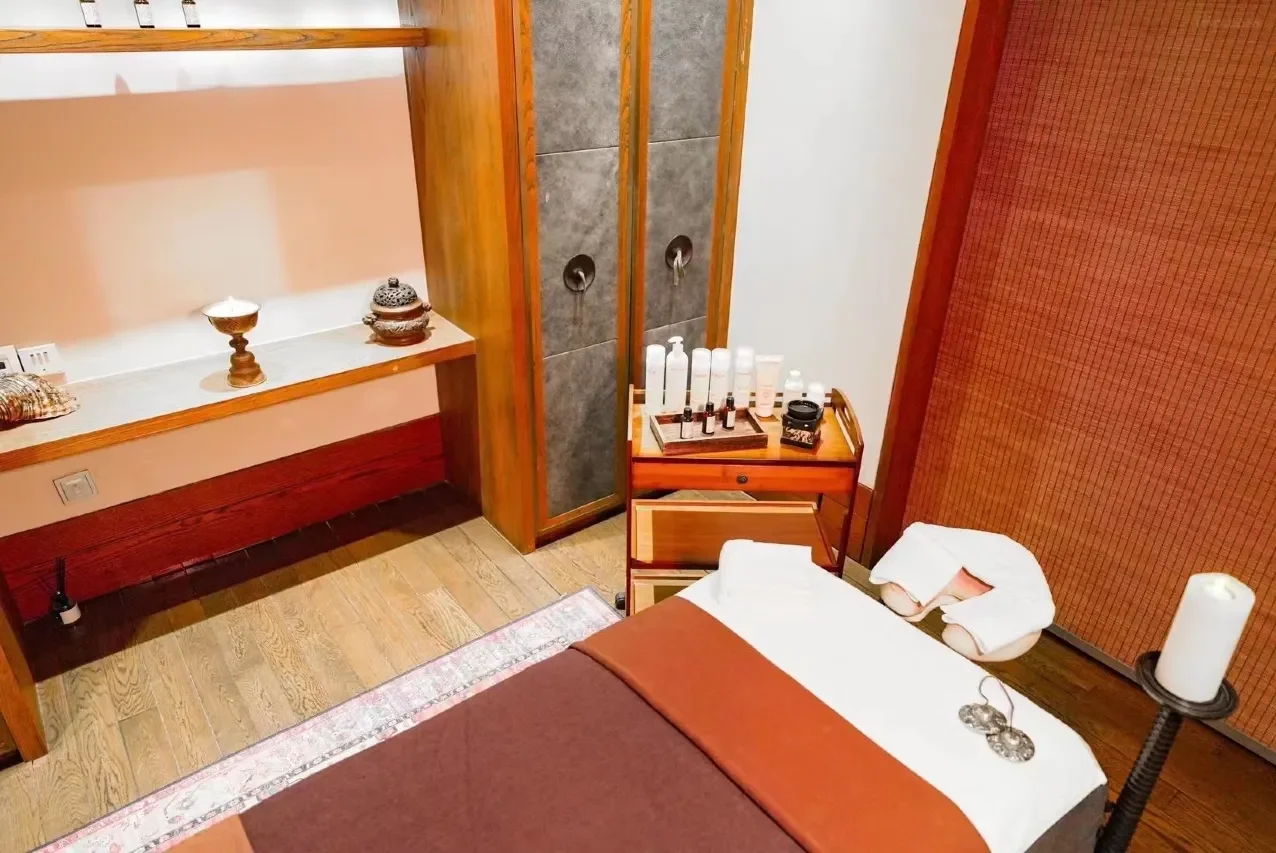
Spa Rituals and the Golden Energy Pool
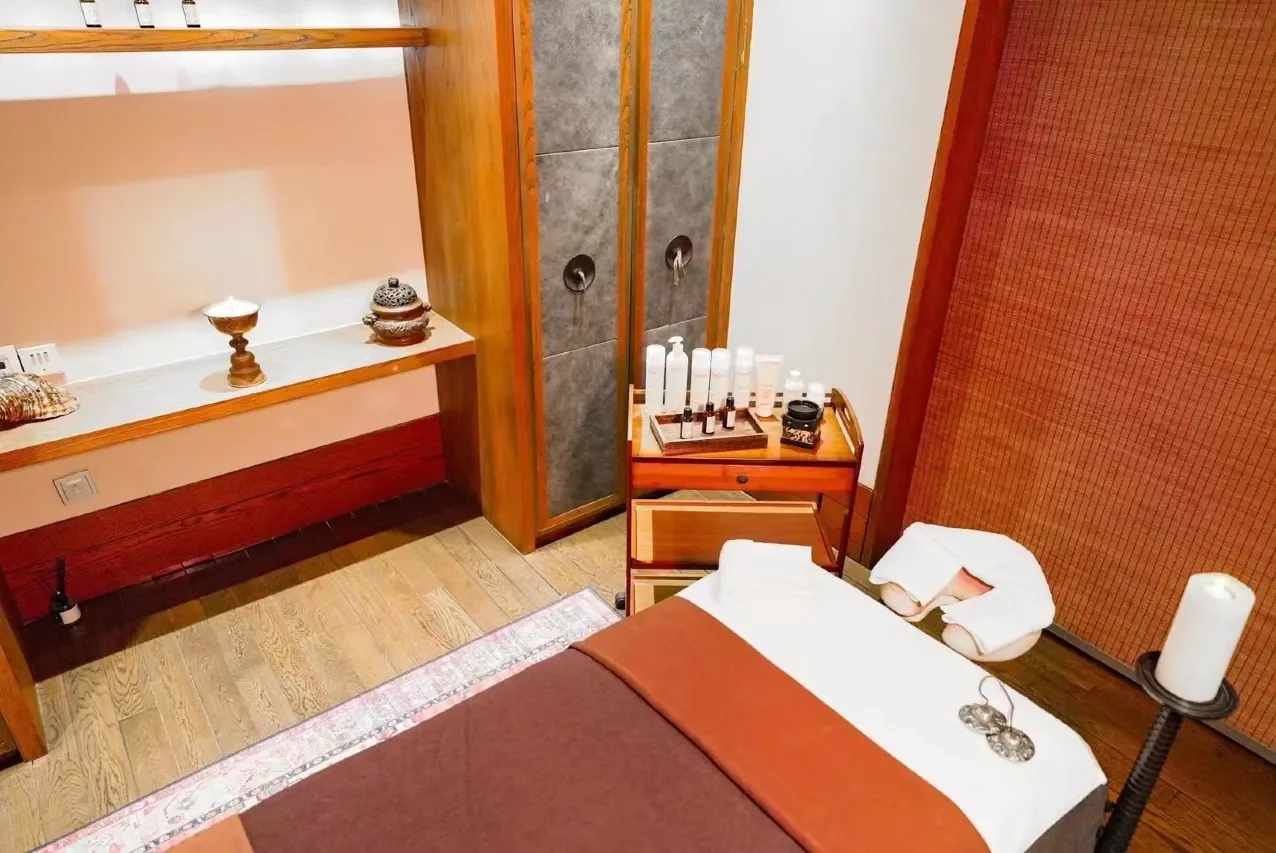
After sightseeing in the thin, dry air of the plateau, unhurried recovery time can be especially welcome. The SPA at The St. Regis Lhasa Resort offers personalized treatments in a setting inspired by regional design and wellness traditions. Marriott notes that this on-site spa is operated by a third party, so treatment menus, appointment hours and therapist availability are best reconfirmed before arrival.
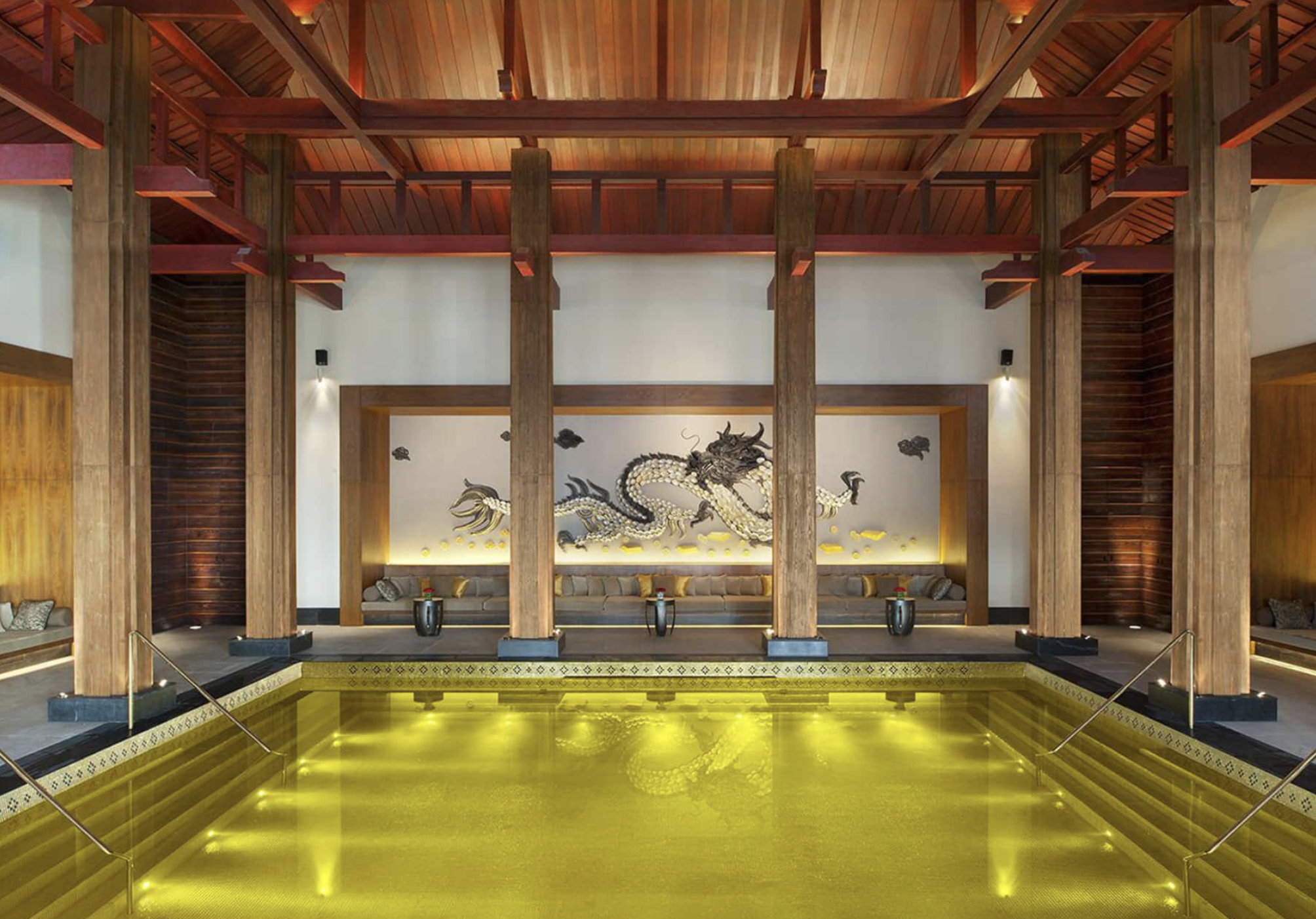
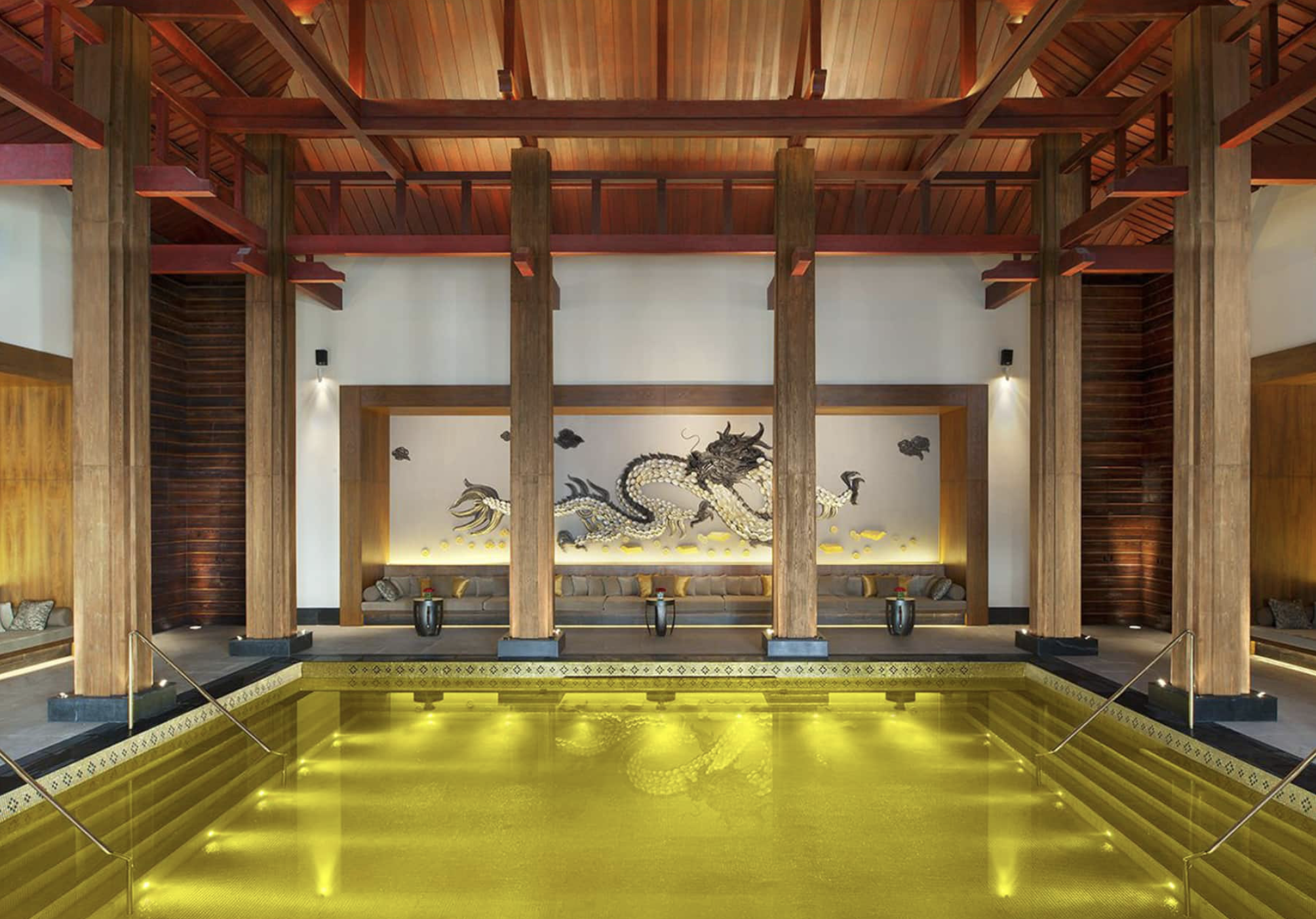
One of the property's most recognizable facilities is the Golden Energy Swimming Pool, an indoor pool that appears in the hotel's official gallery. For travelers who enjoy keeping a daily rhythm while abroad, the ability to swim or spend time at the spa provides a natural counterpoint to excursions involving stairways, uneven surfaces and long walking routes.
These amenities should not be mistaken for a medical remedy for altitude sickness. Symptoms at high elevation deserve appropriate attention, and activities should be adjusted as needed. The most rewarding way to use the spa is as part of a realistic itinerary with sufficient downtime, rather than as a way to push through an overambitious schedule.
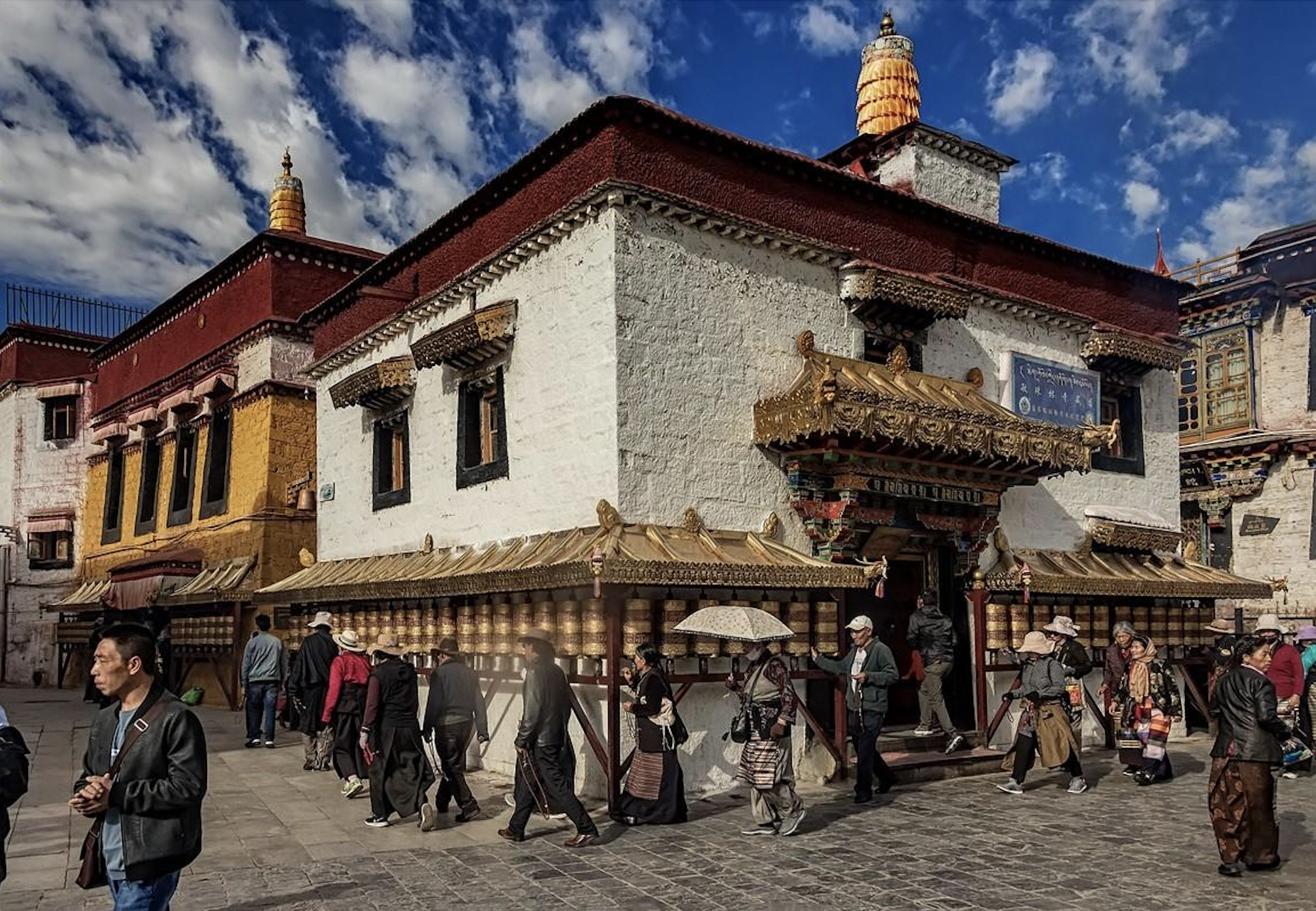
Temples, Pilgrimage Streets and Cultural Encounters
The city's historic sites are the principal reason to come to Lhasa. Jokhang Temple and the surrounding Barkhor circuit introduce visitors to the relationship between religious practice and everyday urban life. The Potala Palace offers a very different experience, with grand ceremonial spaces, collections and an elevated position overlooking the city. Admission rules, photography restrictions and access arrangements can change, and a knowledgeable local guide helps make each visit both informative and respectful.
Sera Monastery and Drepung Monastery extend the perspective beyond the city's center, while Norbulingka provides an important link to Tibet's more recent history and its garden setting. Travelers interested in artistic traditions may also wish to learn about thangka painting, regional textiles or religious craftsmanship through responsibly arranged cultural visits.
The sequencing matters. Starting with shorter outings allows time to acclimatize before longer sightseeing days. The city also offers opportunities simply to observe its neighborhoods and public spaces without making every hour a major excursion. For guests continuing deeper into the plateau, Lhasa can serve as an essential first stop before journeys to other destinations, subject to permits, route conditions and local regulations.
Traveling With Family on the Tibetan Plateau
Lhasa can be fascinating for families with older children who are interested in history, culture and geography. The St. Regis Lhasa Resort offers conventional hotel comforts alongside sightseeing opportunities that are often easier to manage with a private guide and driver than on a highly regimented group itinerary.
Family planning should begin with the age and health needs of every traveler. High altitude is a serious consideration for children as well as adults, and parents should seek qualified medical advice and design a conservative schedule. Not every temple or historic building is stroller friendly; stairs, crowds, walking distances and changes in weather can affect a family's day.
The hotel's public listings do not establish a dedicated children's club, so one should not be promised. The better approach is to select suitable bedding and room arrangements, verify connecting-room possibilities if required, and arrange flexible experiences with sufficient breaks. A short, well-explained visit to a major cultural site is often more memorable than trying to cover several in rapid succession.
Responsible Visits to a Living Heritage Destination
Environmental and cultural considerations are inseparable in Lhasa. The Tibetan Plateau is an ecologically sensitive region, while many places on a traveler's itinerary are active sites of religious and community life. Thoughtful travel begins with following local guidance on photography, appropriate clothing, respectful movement within worship spaces and the handling of sacred objects.
Marriott identifies sustainability among the resort's property amenities, but its current public overview does not supply enough detail to attribute a specific environmental certification or measurable conservation program to this hotel. Accordingly, specific performance claims should not be assumed. Travelers who wish to understand the property's present practices can request current details from hotel management.
Beyond the property, choosing experienced local guides, observing site regulations, reducing disposable waste and respecting the destination's customs are practical ways to approach the visit. The goal is a thoughtful encounter with place rather than treating its architecture and cultural traditions purely as a visual backdrop.
Access Considerations in Lhasa
Marriott lists accessible on-site parking, elevators, an accessible main entrance, routes to meeting spaces and restaurants, and accessible guest-room features at The St. Regis Lhasa Resort. Certain adapted rooms are limited in number, so an appropriate category should be requested well in advance and confirmed against the traveler's exact needs.
The broader destination is more challenging. Historic interiors may include steps and narrow passages, while street surfaces and religious sites can be difficult to navigate. The altitude itself introduces another consideration, particularly for travelers with existing respiratory or cardiovascular concerns. Specific advice should come from a qualified medical professional rather than a hotel accessibility summary.
For travelers with mobility requirements, our team can help clarify room routes, vehicle access, sightseeing pacing and the feasibility of individual attractions. The hotel may offer accessible facilities, but that does not imply every excursion in the region will be independently accessible.
Seasons Above the Clouds
Spring and autumn are often appealing seasons for a first visit to Lhasa, when daytime sightseeing can be more comfortable than in the colder winter months and the landscape changes across the plateau. Summer brings relatively mild daytime conditions, but it is also the wetter period, and popular destinations may be busier. Clear winter days can be striking, although nights are cold and a number of regional routes or attractions may face weather-related limitations.
Whatever the season, sunlight can be intense at high elevation, and temperatures may change quickly after sunset. Travelers should prepare layers, sun protection and adequate hydration, and allow some flexibility for transport or local conditions.
Some cultural events follow calendars that do not correspond to fixed Western dates. Travelers hoping to visit during a festival should have dates and access conditions checked carefully, with the recognition that ceremonies and sacred spaces are not staged primarily for visitors. The most effective itinerary respects both practical timing and local traditions.
Plan Your Stay With Destinations by David
Choosing where and how to stay in Lhasa is closely connected to the rhythm of the journey. Destinations by David can help select the most appropriate room or suite, plan a realistic acclimatization schedule and coordinate a private guide and vehicle for visits to the city's most important cultural sites.
Our team can also work with the hotel on dining arrangements, spa appointments, airport transfers and travel logistics, including the documentation and routing considerations associated with visiting Tibet. Rather than overloading the first days, we plan around the traveler's interests and the practical demands of this high-altitude destination.
Contact our team to plan and book The St. Regis Lhasa Resort as part of a considered Lhasa stay or a wider journey through the region.
The Journey to Lhasa
Lhasa Gonggar Airport (LXA): Marriott lists the airport approximately 60 kilometers from the hotel. Allow roughly 75–100 minutes by private vehicle in typical conditions, and confirm the route and traffic nearer travel.
Lhasa Railway Station: Rail service connects Lhasa with other cities on China's network. Allow approximately 20–40 minutes for a private road transfer, depending on traffic and station arrangements.
Airport and Station Transfers: Marriott states that the hotel does not offer a complimentary airport shuttle; private car services can be arranged in advance.
Travel Formalities: Foreign visitors commonly require special travel arrangements and permits for Tibet in addition to relevant China entry documentation. Requirements vary by nationality, route and current rules; verify these with a qualified local operator before booking.
Health and Pacing: Arriving at high altitude warrants a conservative first-day schedule, with medical guidance sought before travel when appropriate.
A Thoughtful Base for Discovering Lhasa
The St. Regis Lhasa Resort's strongest advantage is the balance it offers between the intensity of the city's cultural landscape and the comforts of a contemporary hotel. A morning at Jokhang Temple, an afternoon spent understanding the Potala Palace or an excursion to a nearby monastery can be followed by a quiet evening in the courtyard, a swim or dinner overlooking the city.
This is not a destination to rush. Travelers who build in room for acclimatization, local expertise and unplanned discoveries are likely to leave with a more meaningful understanding of Lhasa. As a base for that experience, The St. Regis Lhasa Resort makes a persuasive choice: central, well appointed and connected to a city whose significance reaches far beyond its extraordinary setting.