Mediterranean & Caribbean | The Maltese Falcon, a Jumeirah Privé Experience
Life Beneath Three Extraordinary Masts
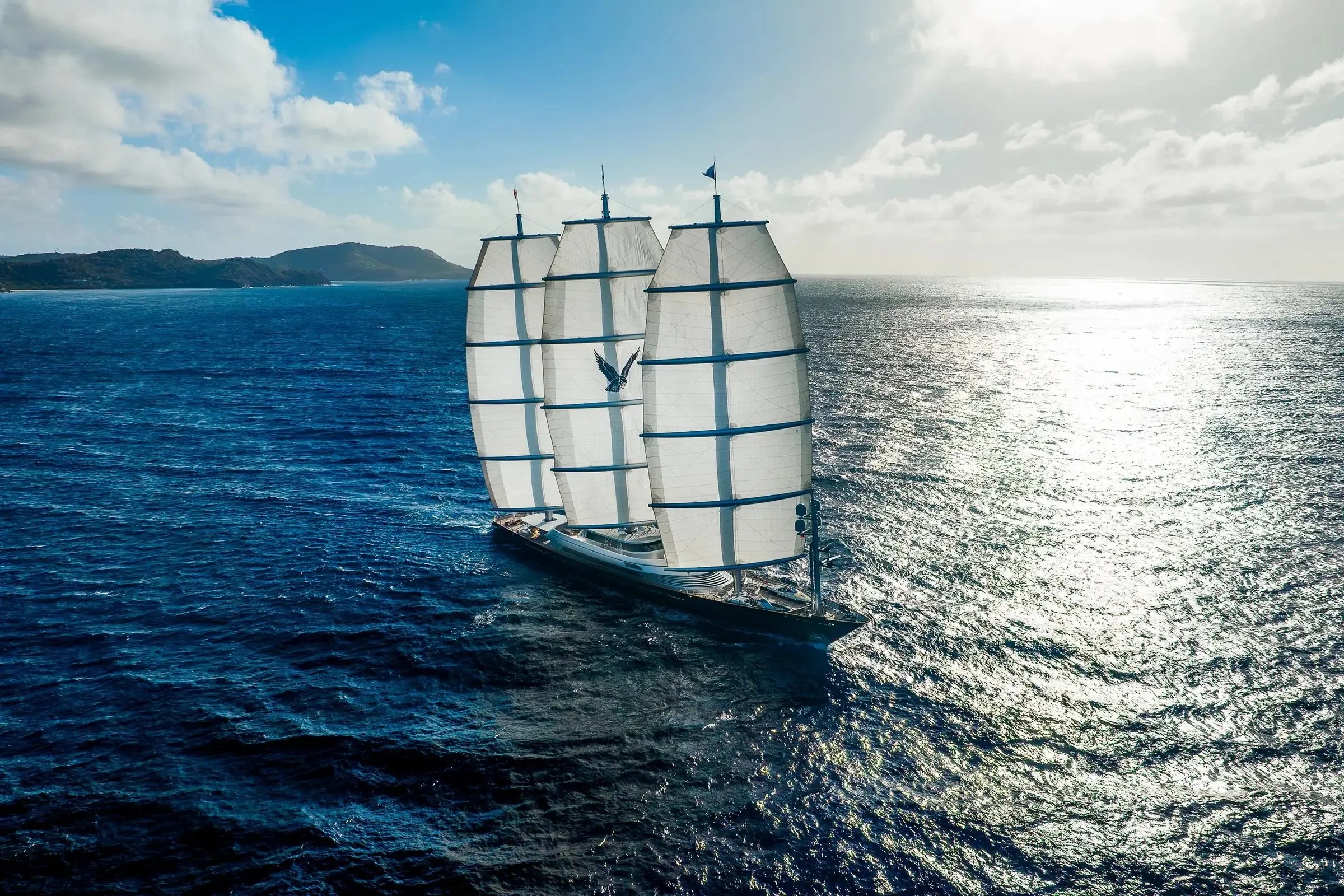
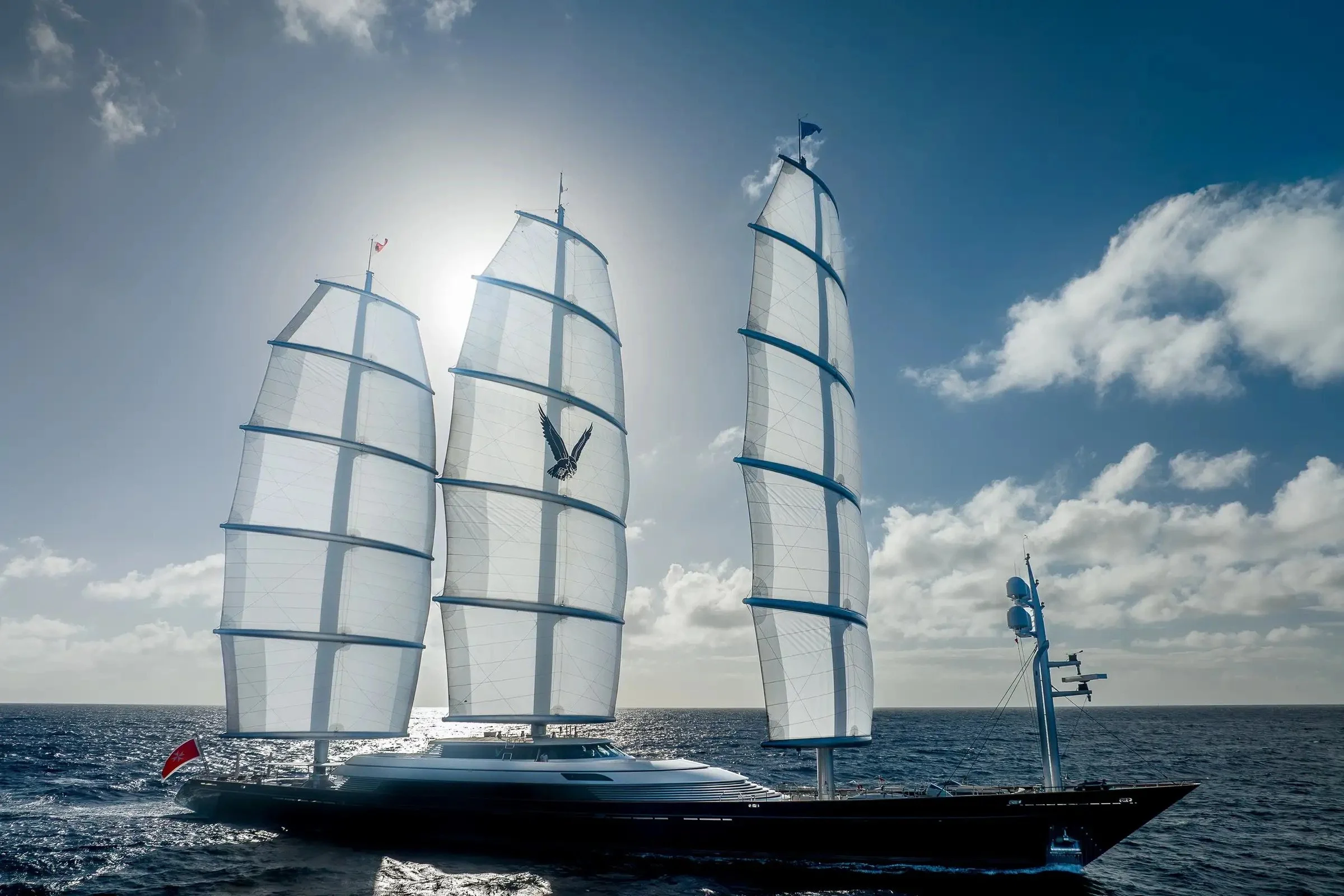
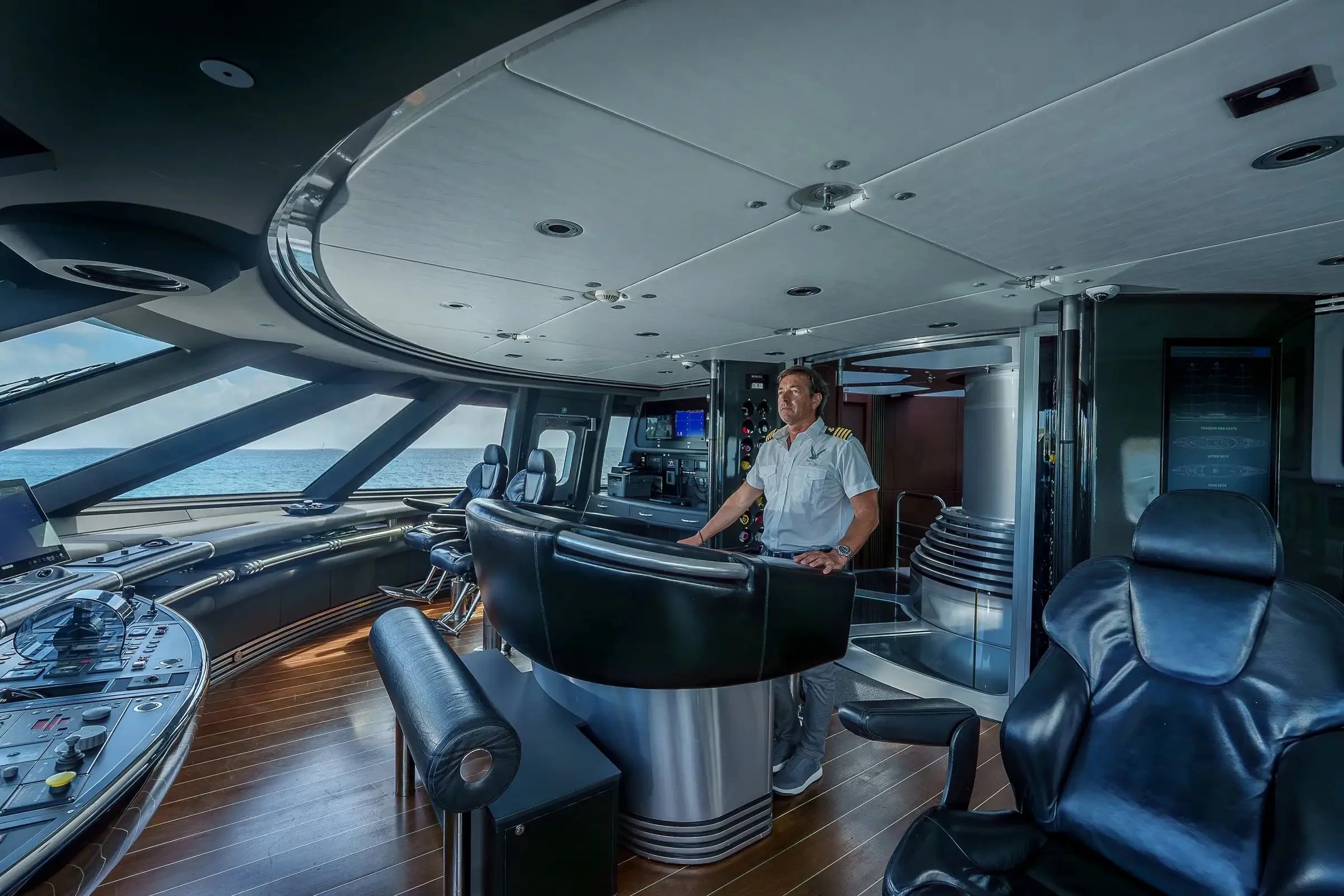
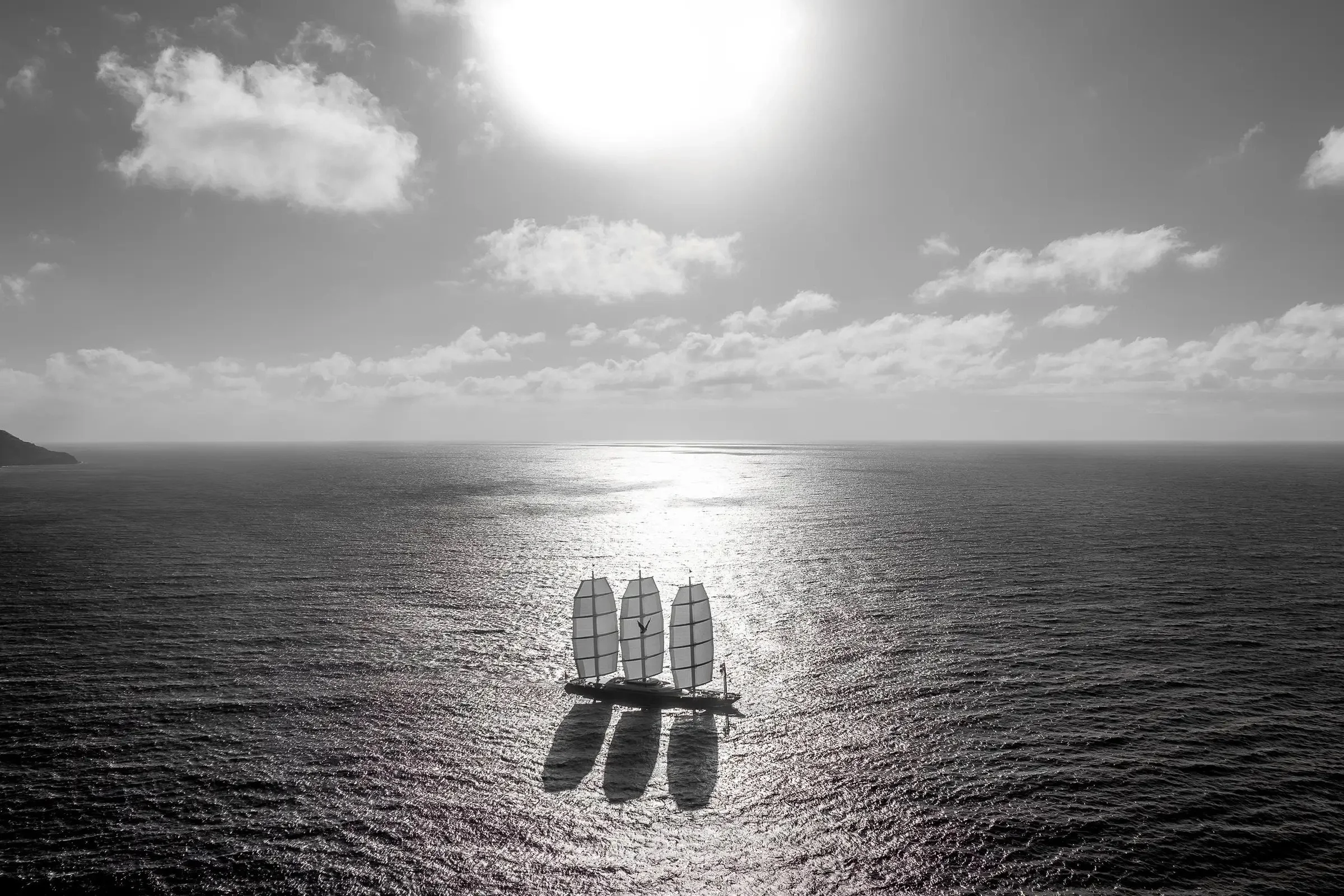
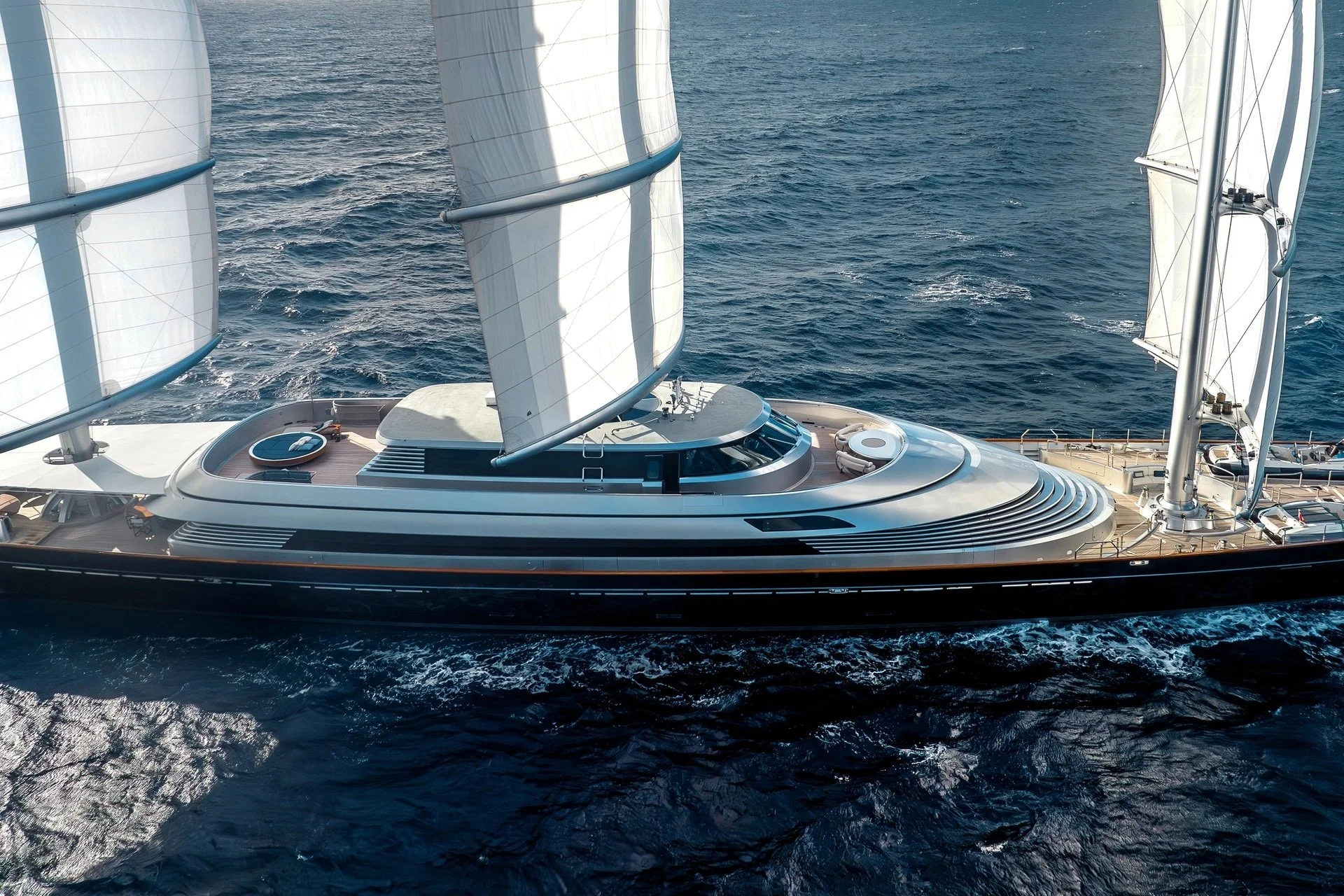
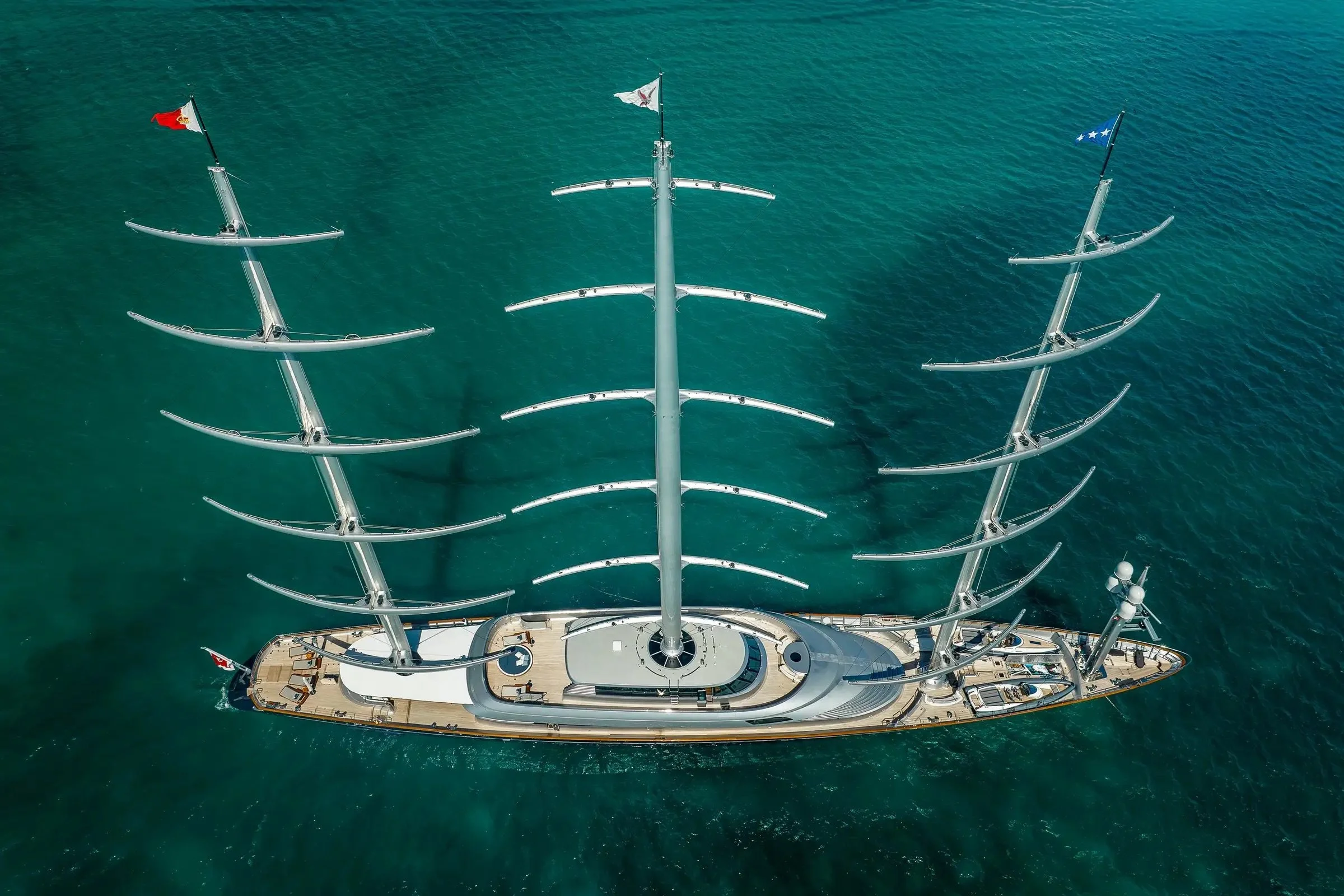
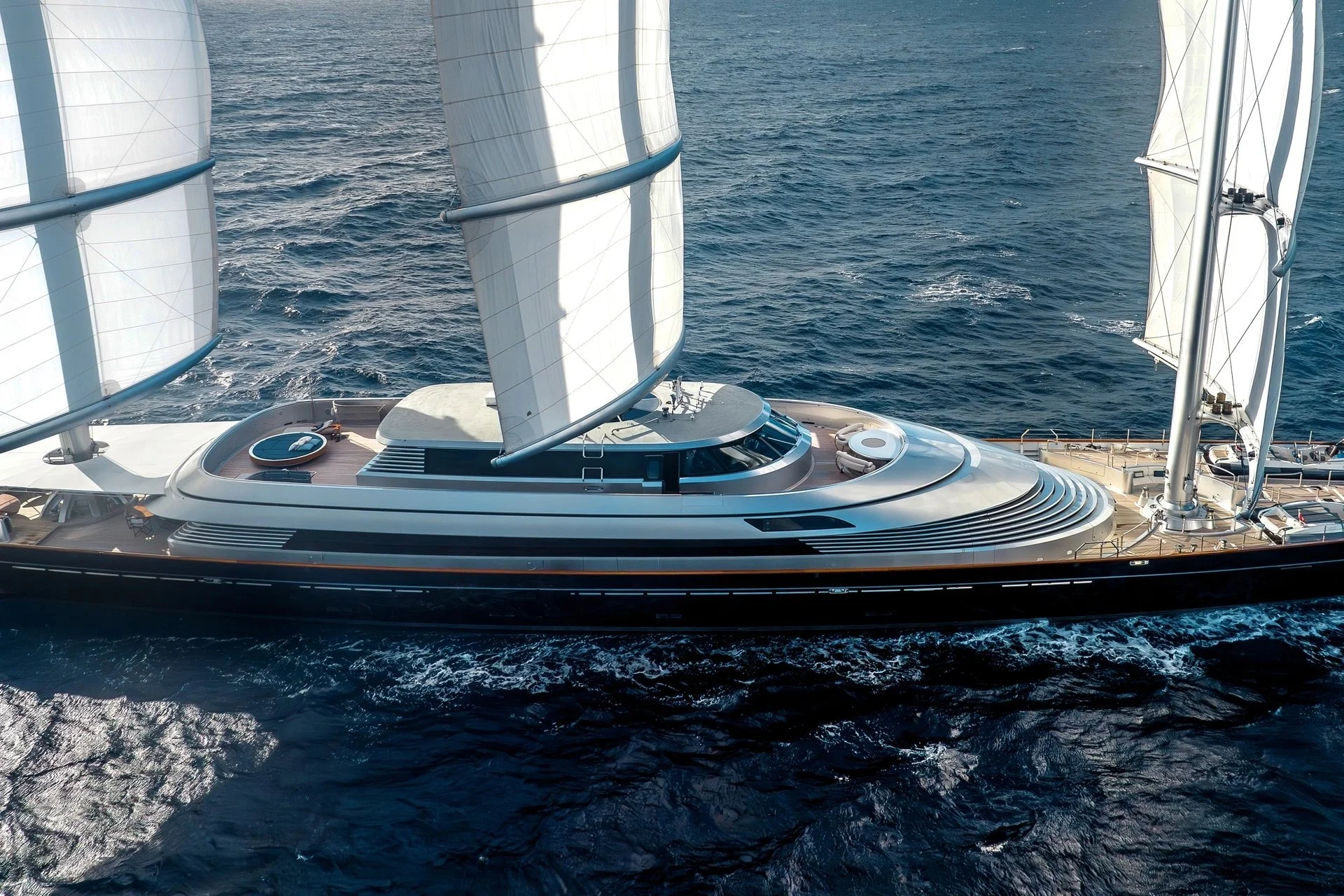
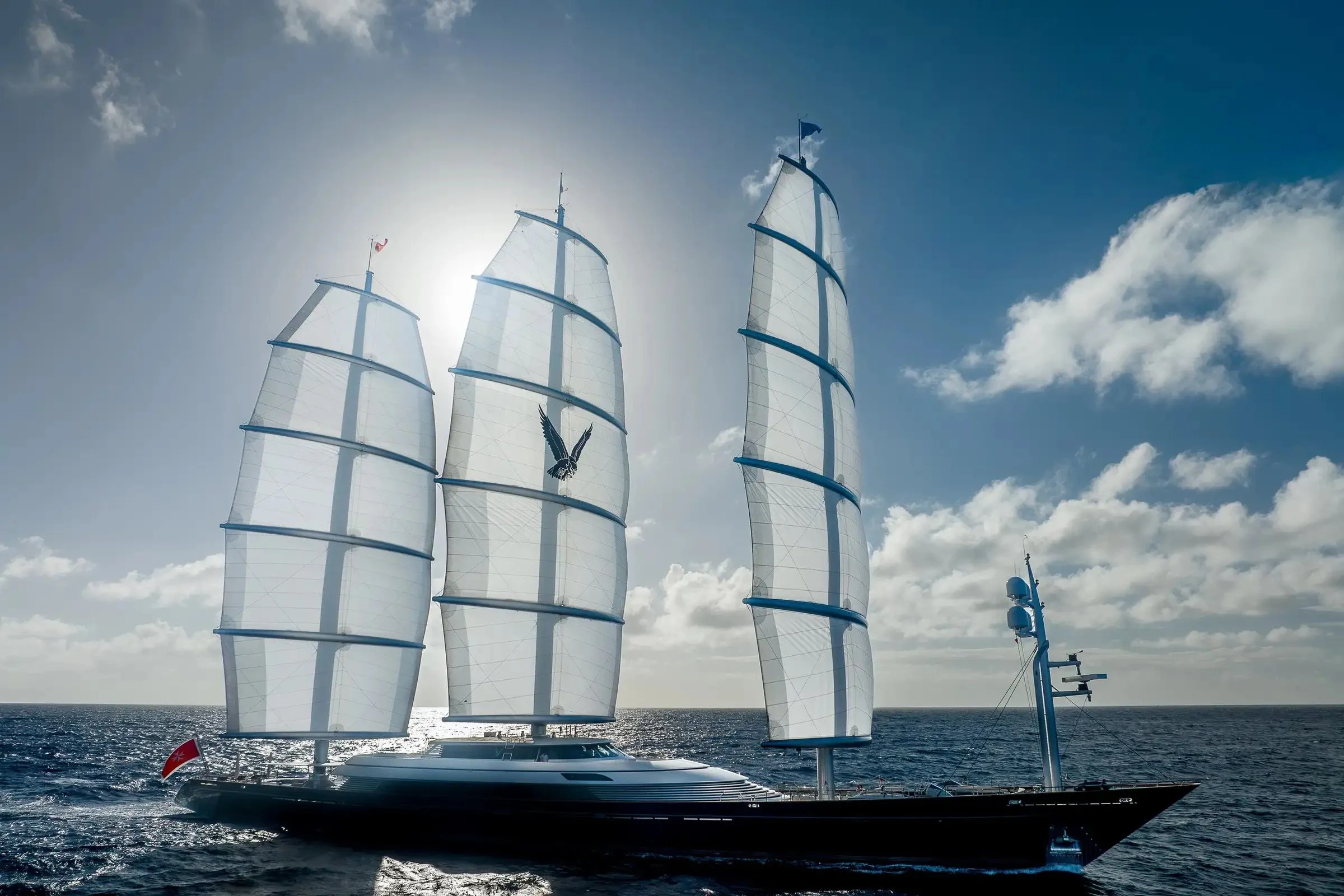
The Maltese Falcon is recognizable long before her name becomes visible. Three towering masts rise above a dark hull, carrying a sail arrangement that gives this 88-meter yacht a silhouette unlike almost anything else on the water. At anchor, the scale is striking; under sail, the engineering becomes part of the experience.
Through Jumeirah Privé, the yacht brings the hospitality group’s approach to service, dining, and wellness into a private charter setting. Accommodation is limited to 12 travelers across six cabins, with the vessel reserved for one group.
That distinction shapes everything from breakfast to the route itself. A family might prioritize swimming and shorter passages, while a group of friends might build its week around sailing, coastal towns, and dinners ashore. We see the greatest appeal in having enough time to enjoy the yacht as well as the places she reaches.
An Established Yacht Enters a New Chapter
Delivered by Perini Navi in 2006, The Maltese Falcon was already an important sailing yacht well before her association with Jumeirah. Her development brought together an existing Perini hull, Dykstra Naval Architects, and designer Ken Freivokh, with an ambitious brief that challenged familiar ideas about large sailing vessels.
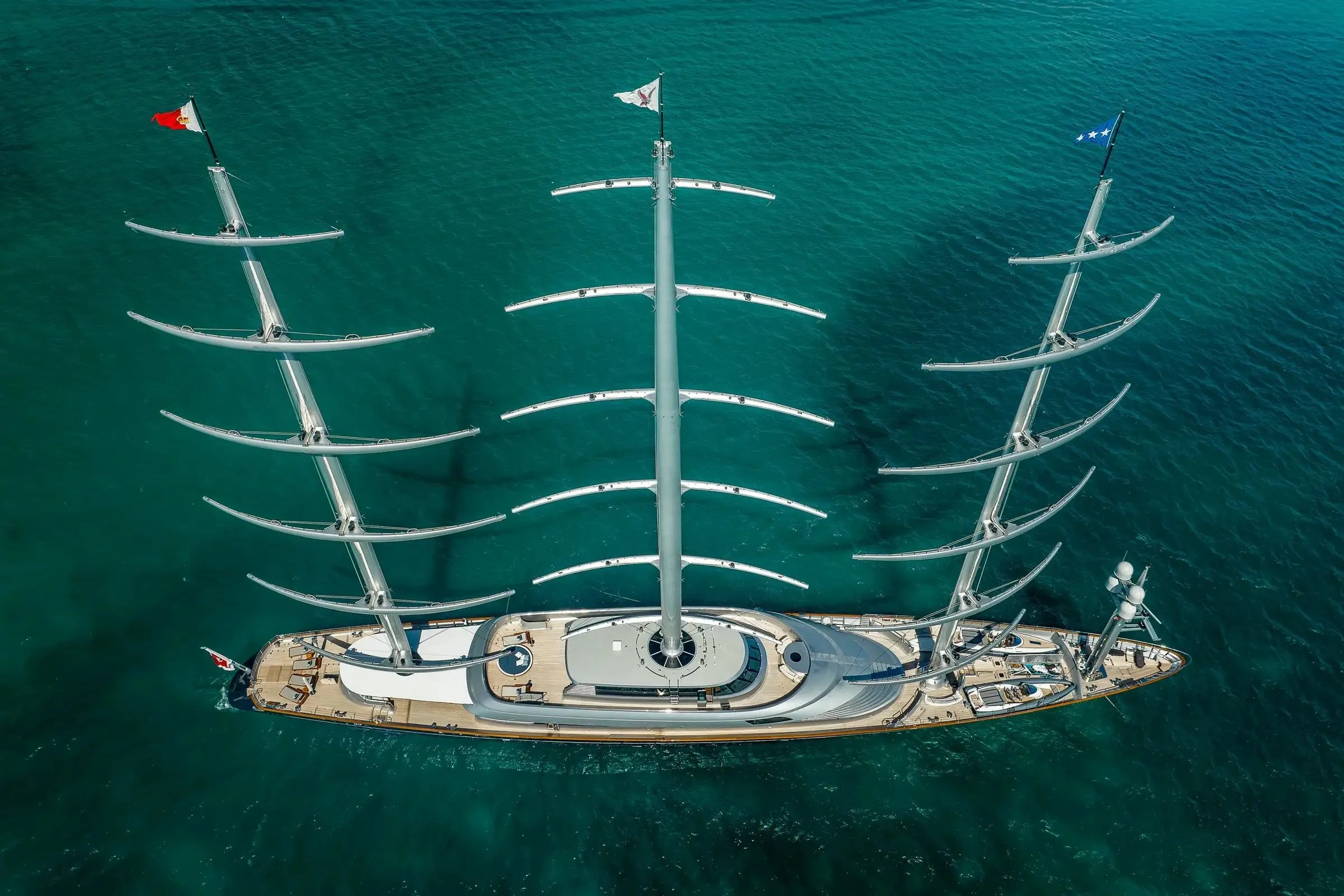
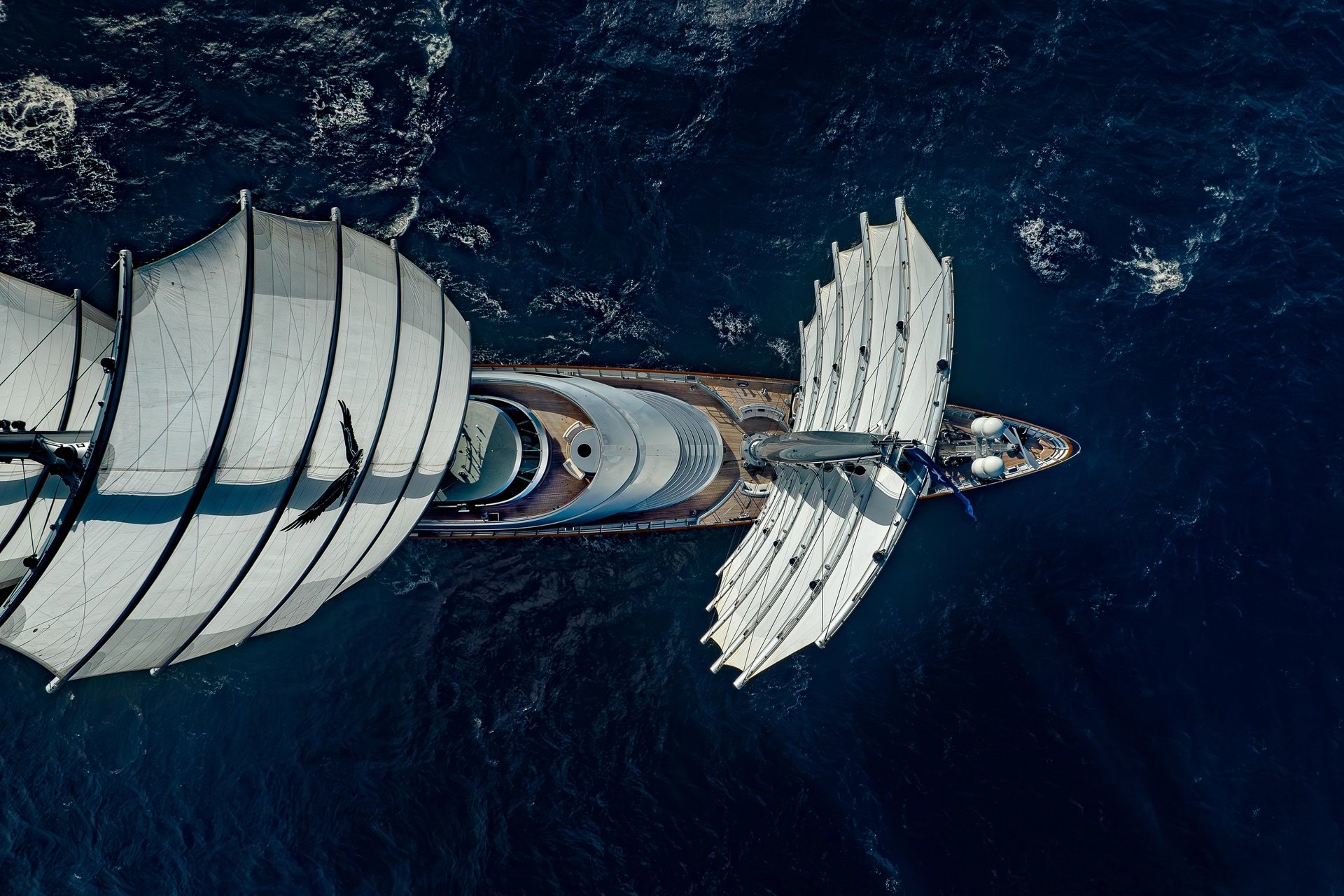
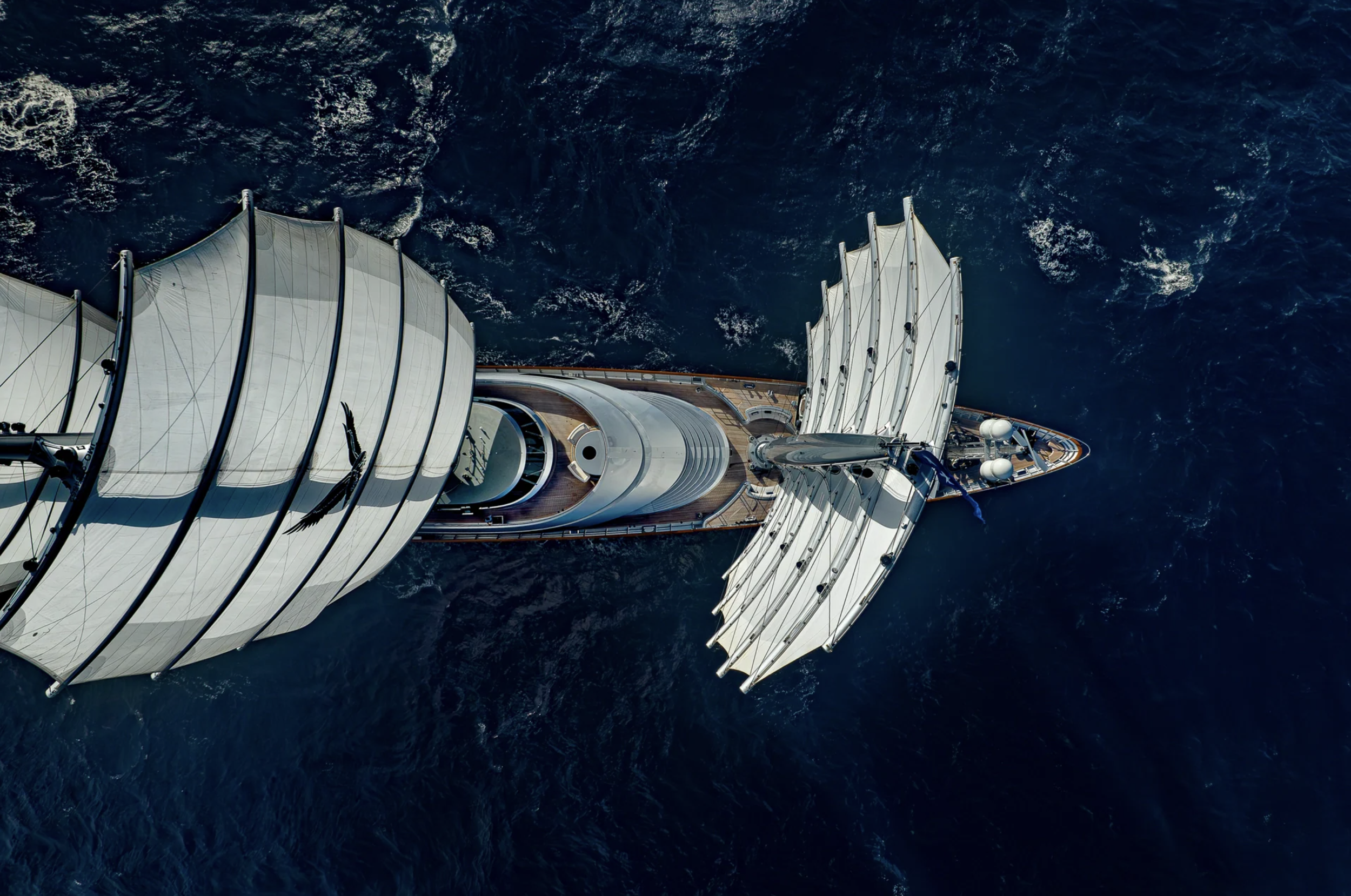
The defining innovation was the DynaRig. Its three freestanding, rotating carbon-fiber masts support a sail system controlled with a level of automation far removed from a traditional square-rigged ship. The visual reference is historic, but the way the yacht sails is thoroughly modern.
A major refit at Lusben in Livorno, completed in 2023, addressed machinery, mast systems, decking, interiors, and the hull’s distinctive blue finish. This work helped prepare an established vessel for another period of service.
Jumeirah announced its partnership with The Maltese Falcon in December 2025. The arrangement introduced the yacht into Jumeirah Privé, extending a collection associated with private residences and exclusive experiences into yachting. The yacht’s history and sailing identity remain central, with Jumeirah contributing to the onboard hospitality.
Architecture That Makes the Rig Part of the Interior
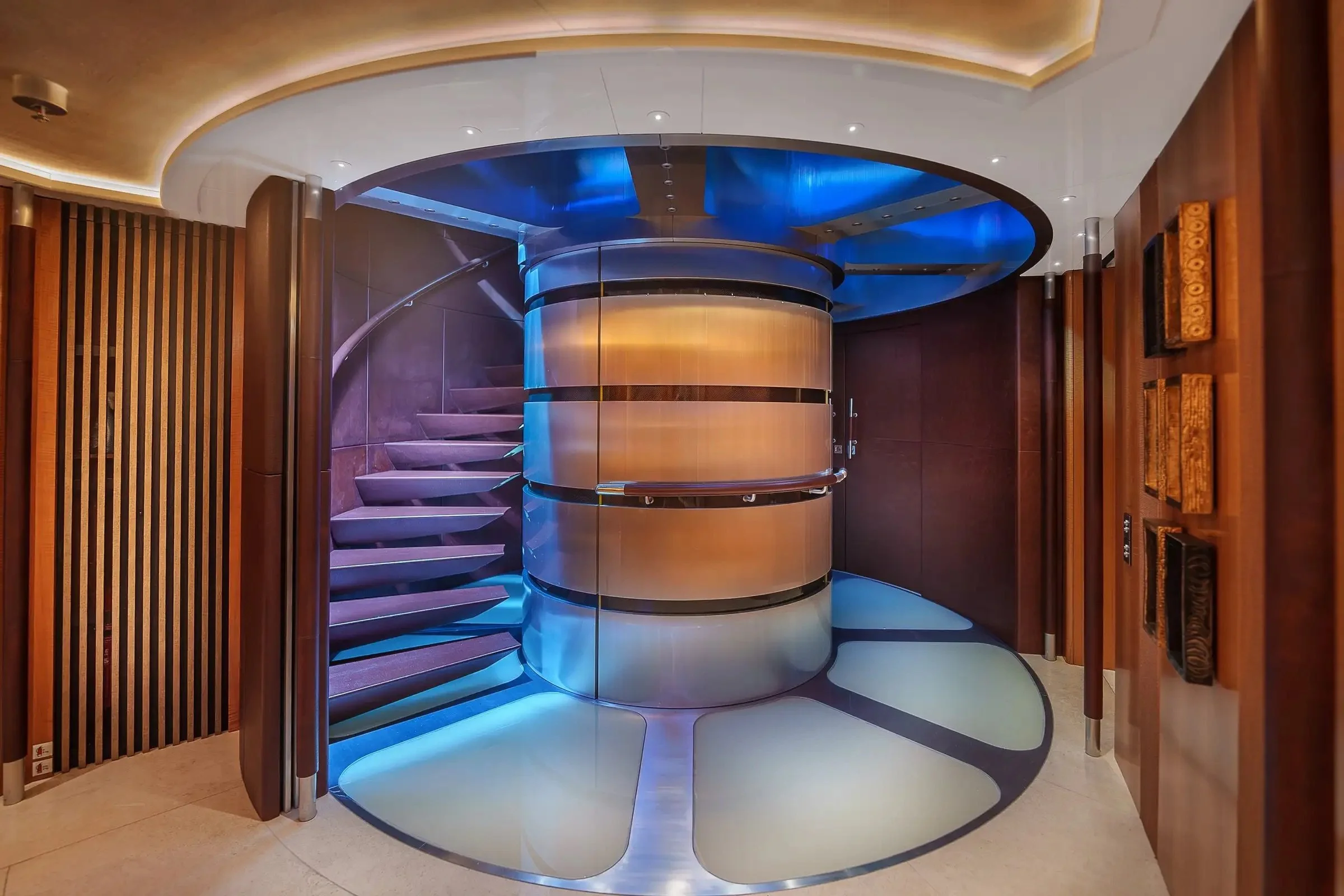
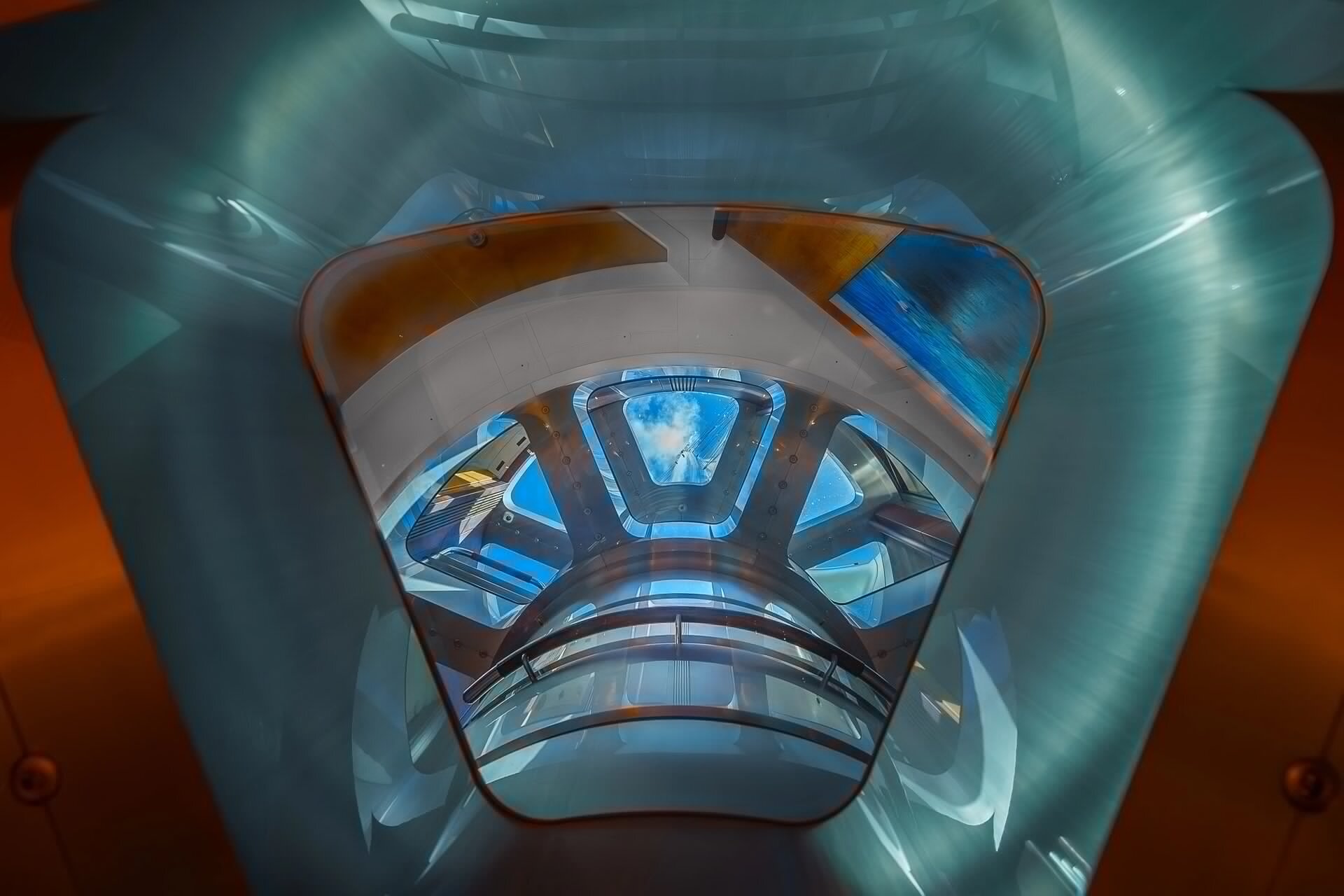
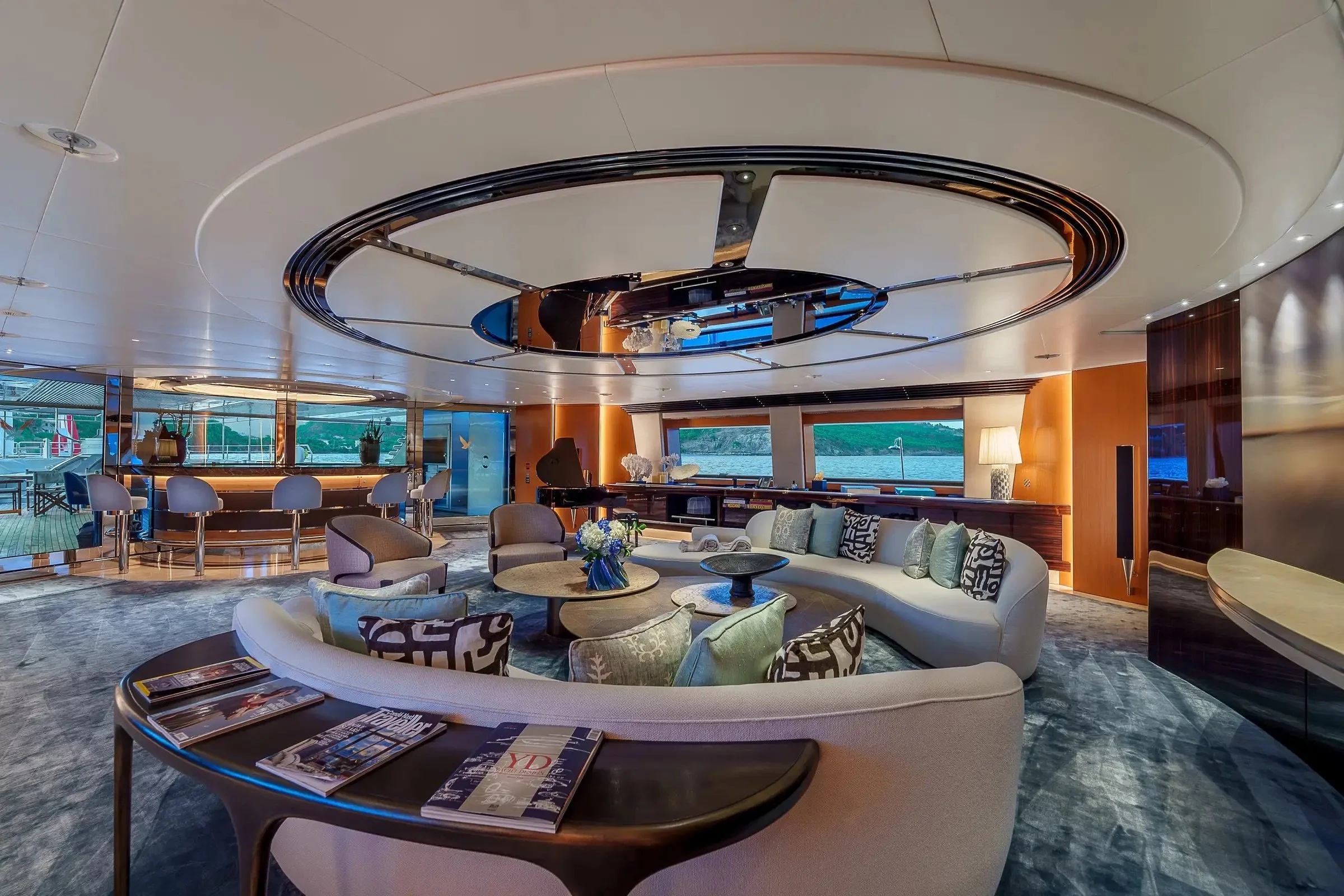
Ken Freivokh’s design gives the yacht’s structure a visible presence inside. At the center, a staircase curves around the main mast within a three-deck atrium, drawing daylight down through the interior and connecting the living spaces vertically.
This is one of the most distinctive aspects of the layout. Movement between decks offers a reminder of the machinery and structure above, keeping the sailing experience present even when everyone has gathered indoors.
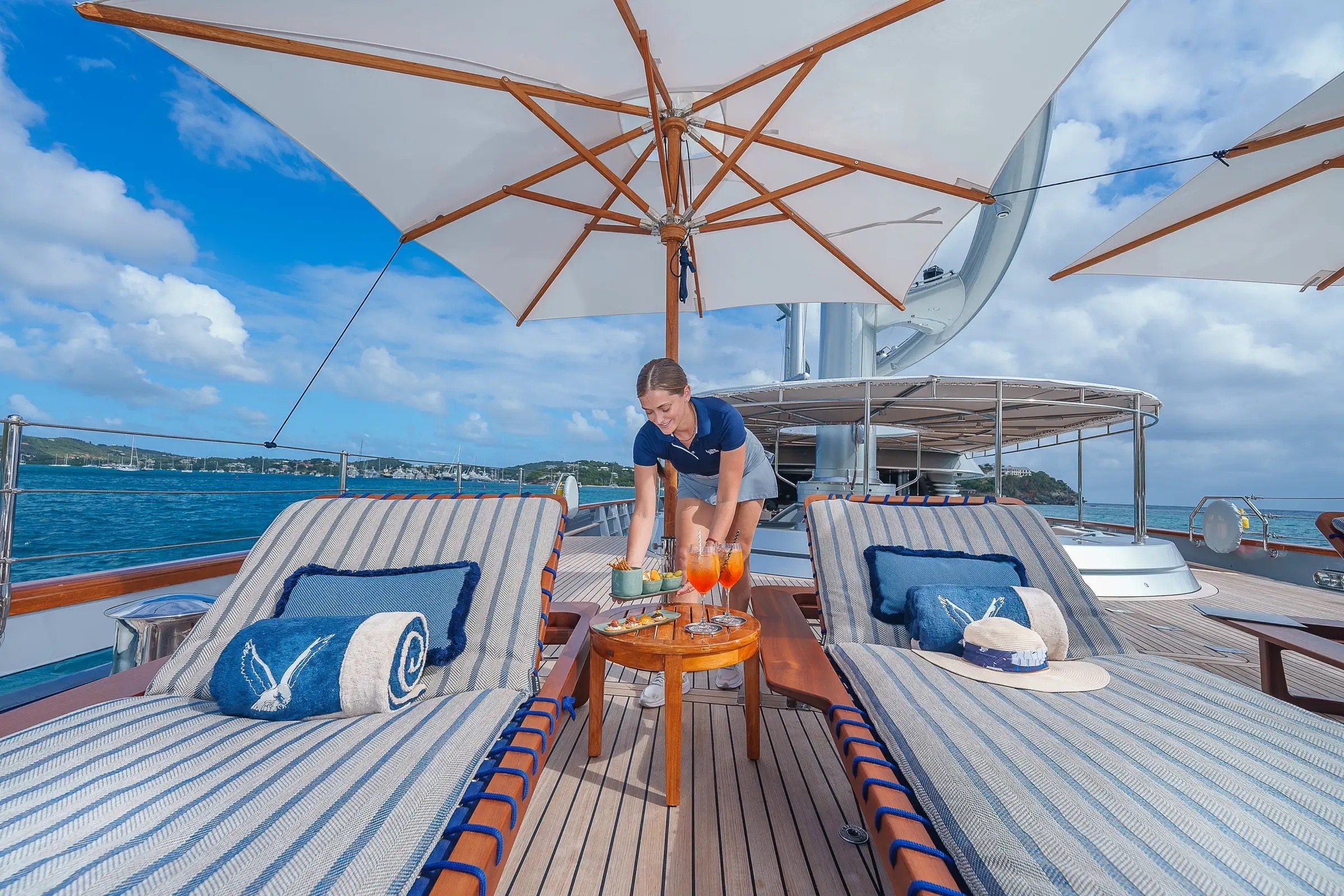
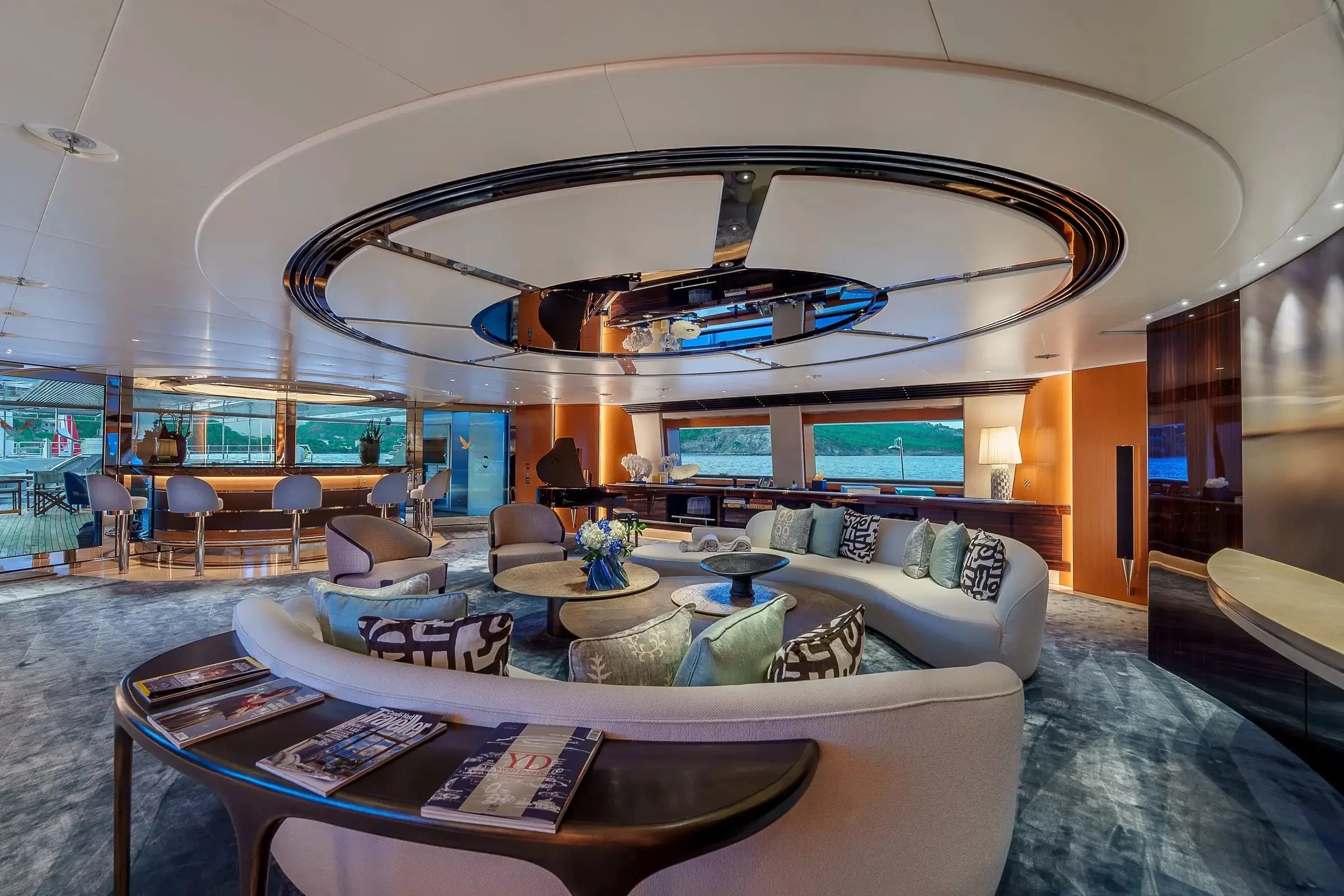
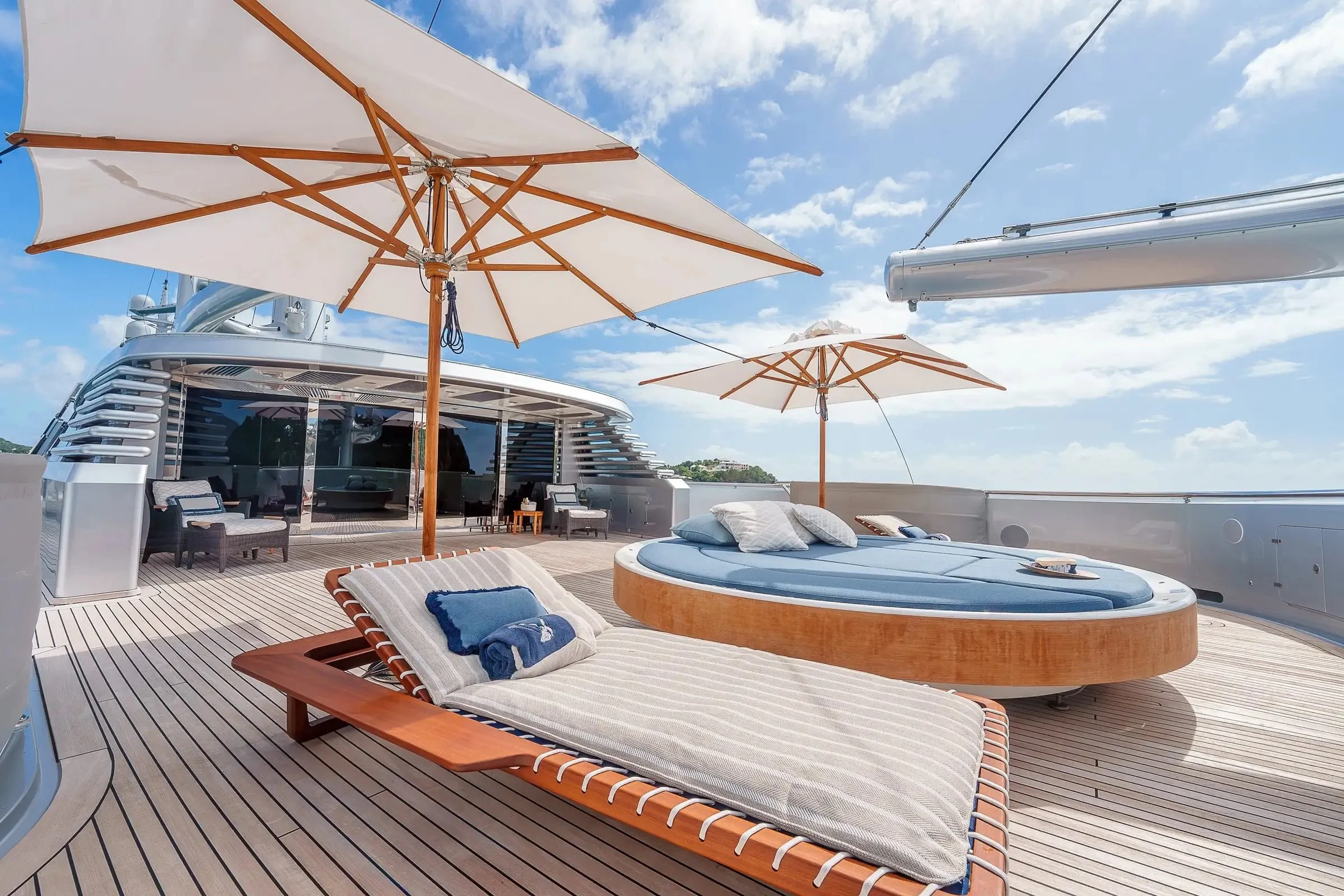
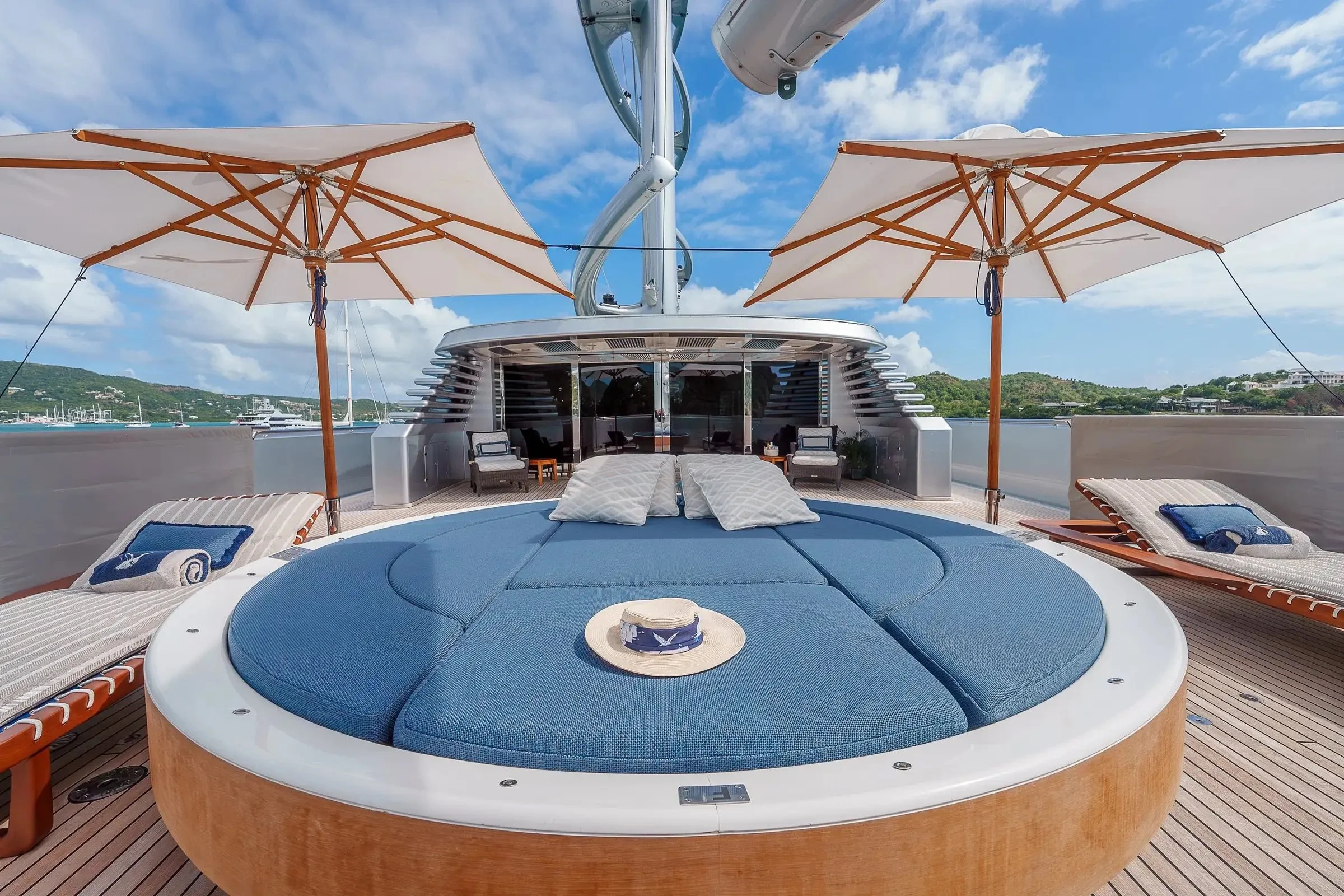
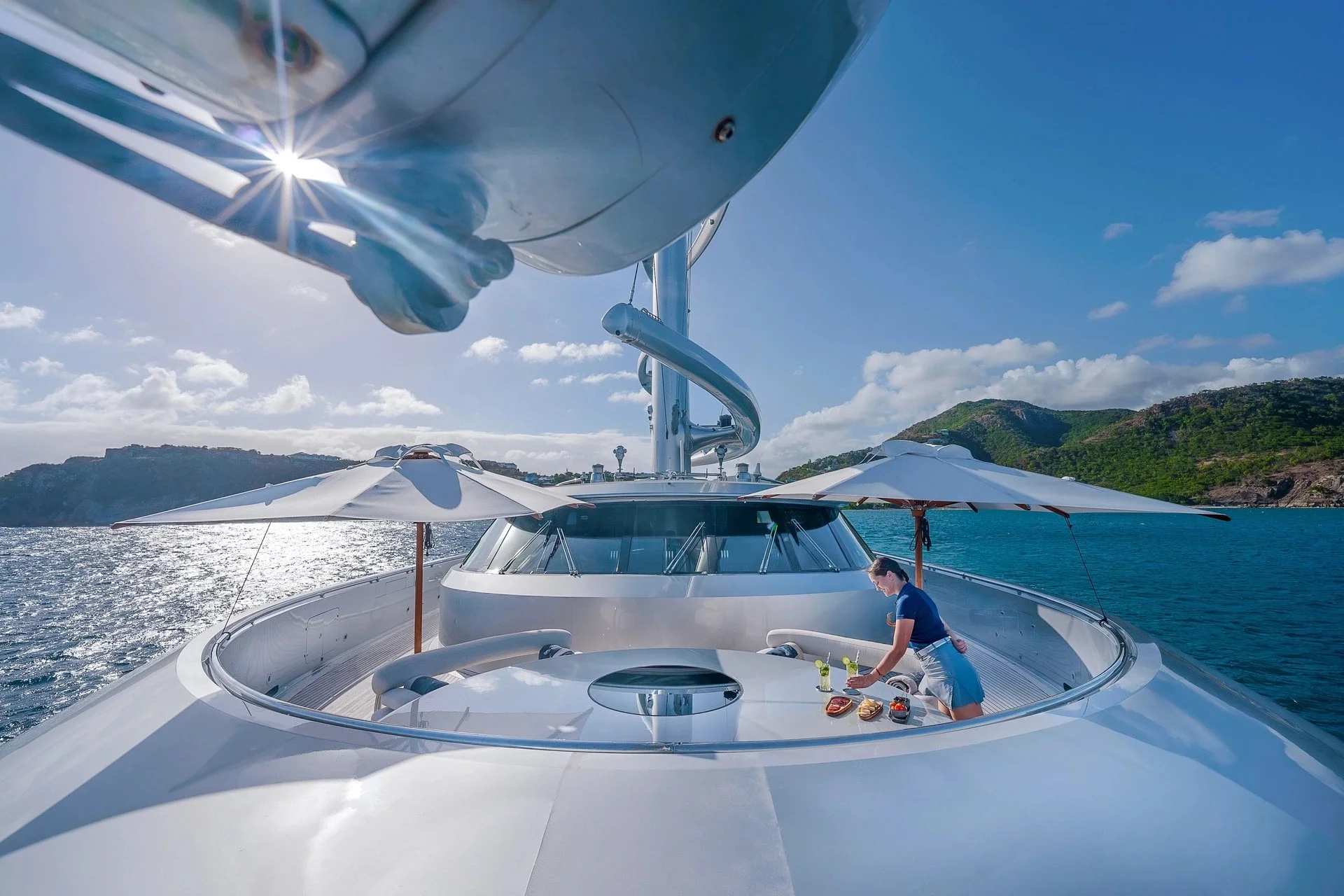
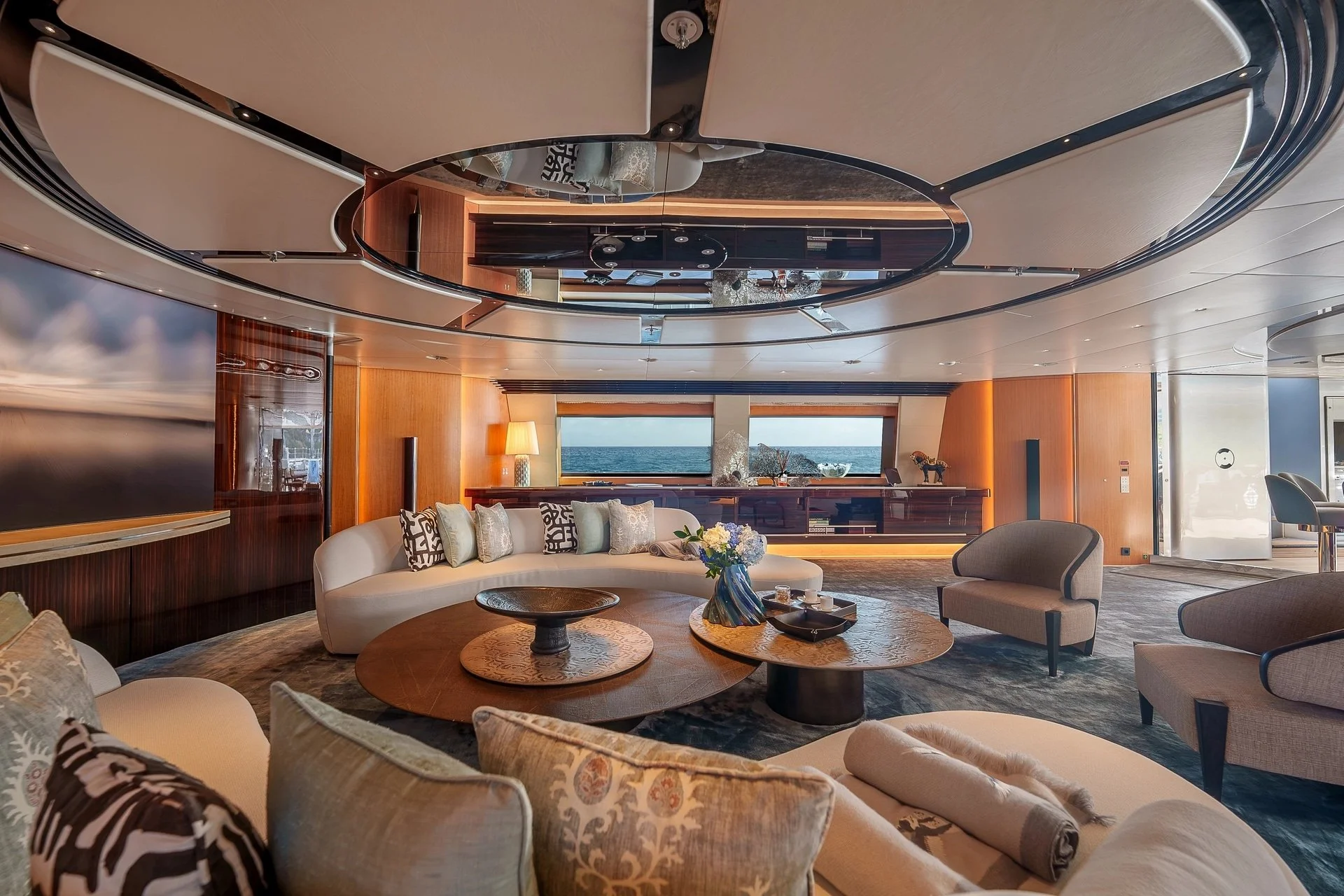
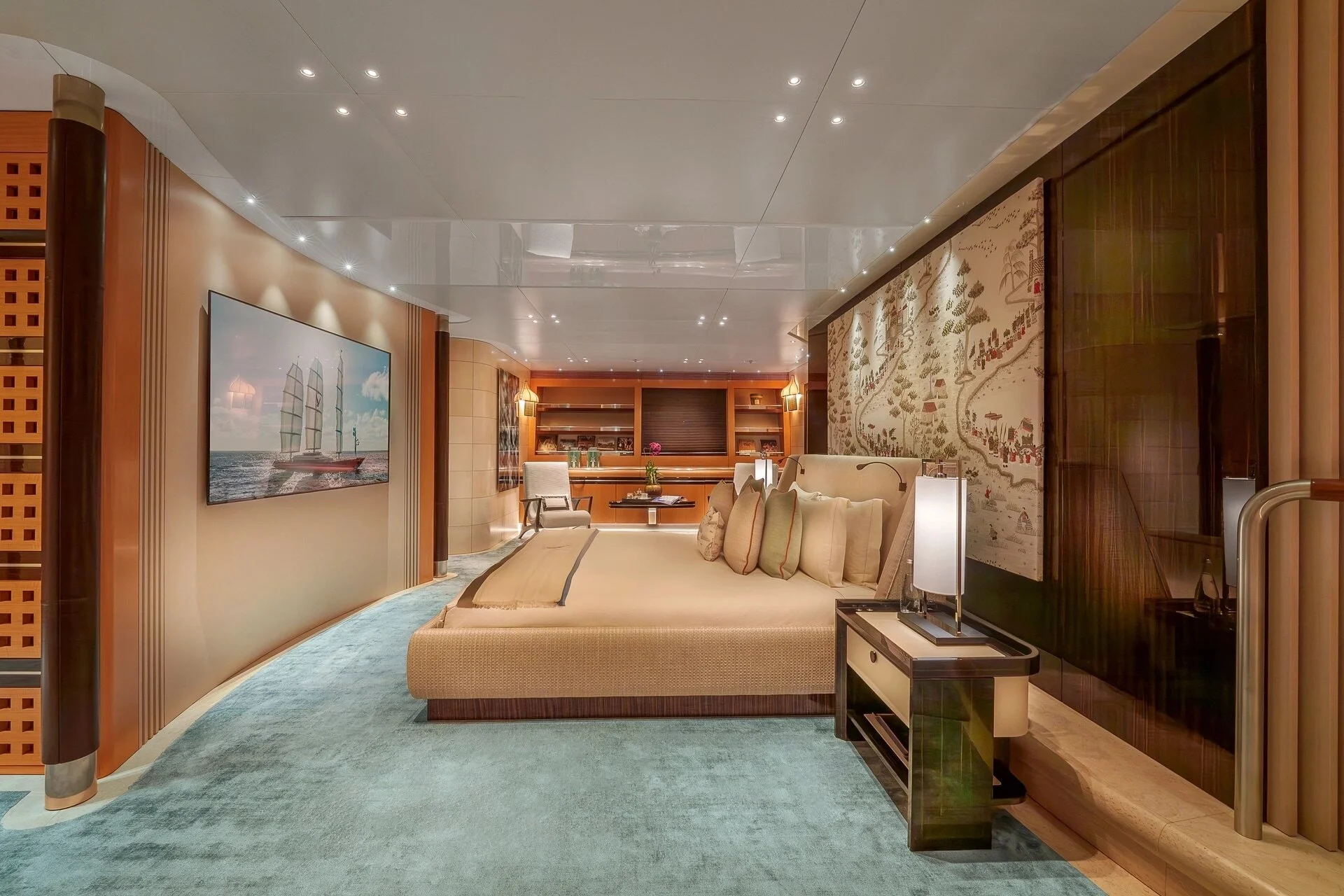
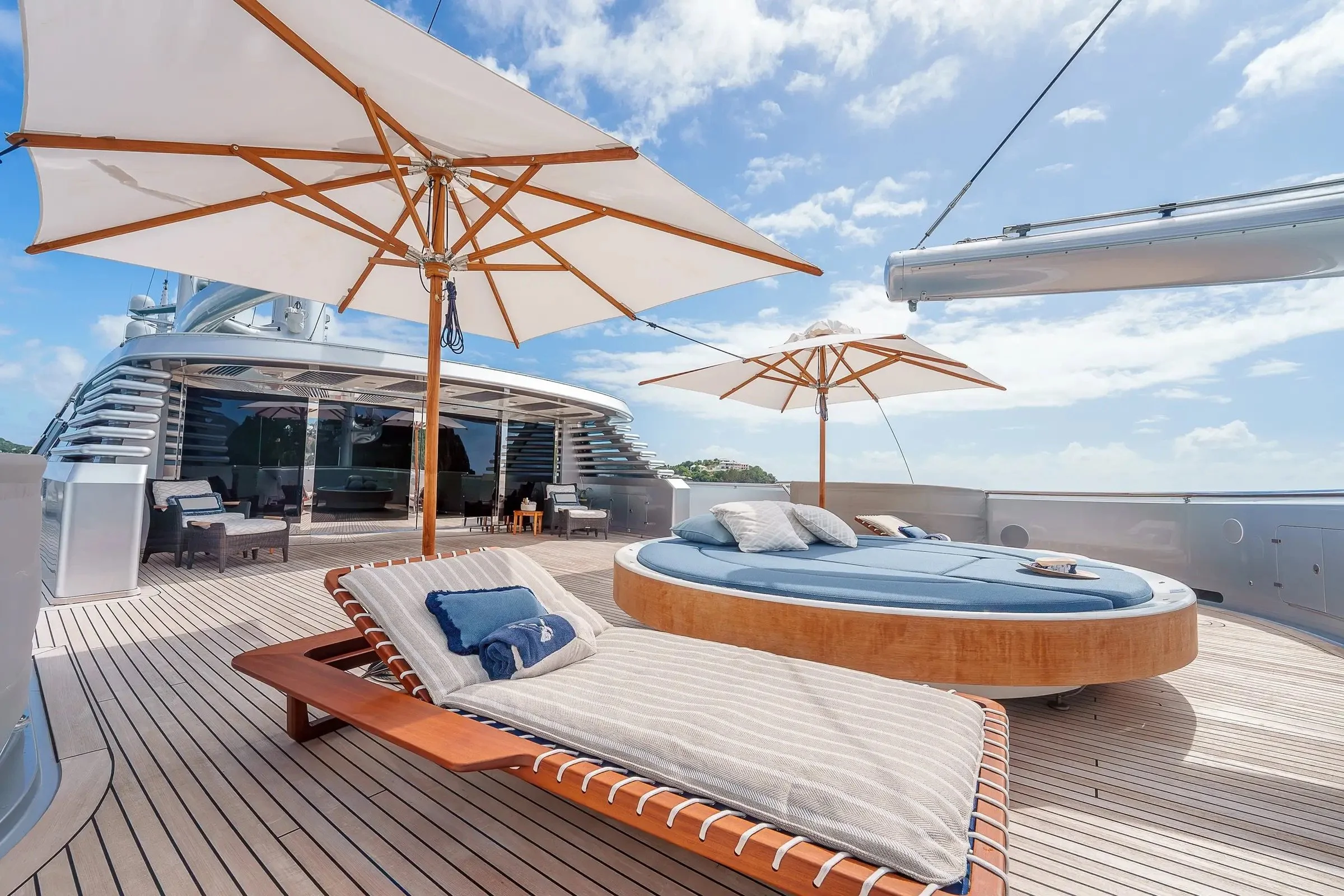
Refreshed interiors use lighter woods, cream panels, and tactile finishes to create a more relaxed atmosphere. Outdoor areas provide a different range of settings, from shaded dining to open lounging spaces and the flybridge’s rotating circular sunbed.
The sails are integral to the yacht’s appearance and performance. Dykstra’s published specifications list approximately 2,400 square meters of sail area, deployed across the three masts. For travelers interested in design, watching the rig operate can be as absorbing as studying the interiors.
Six Cabins, Reserved Together
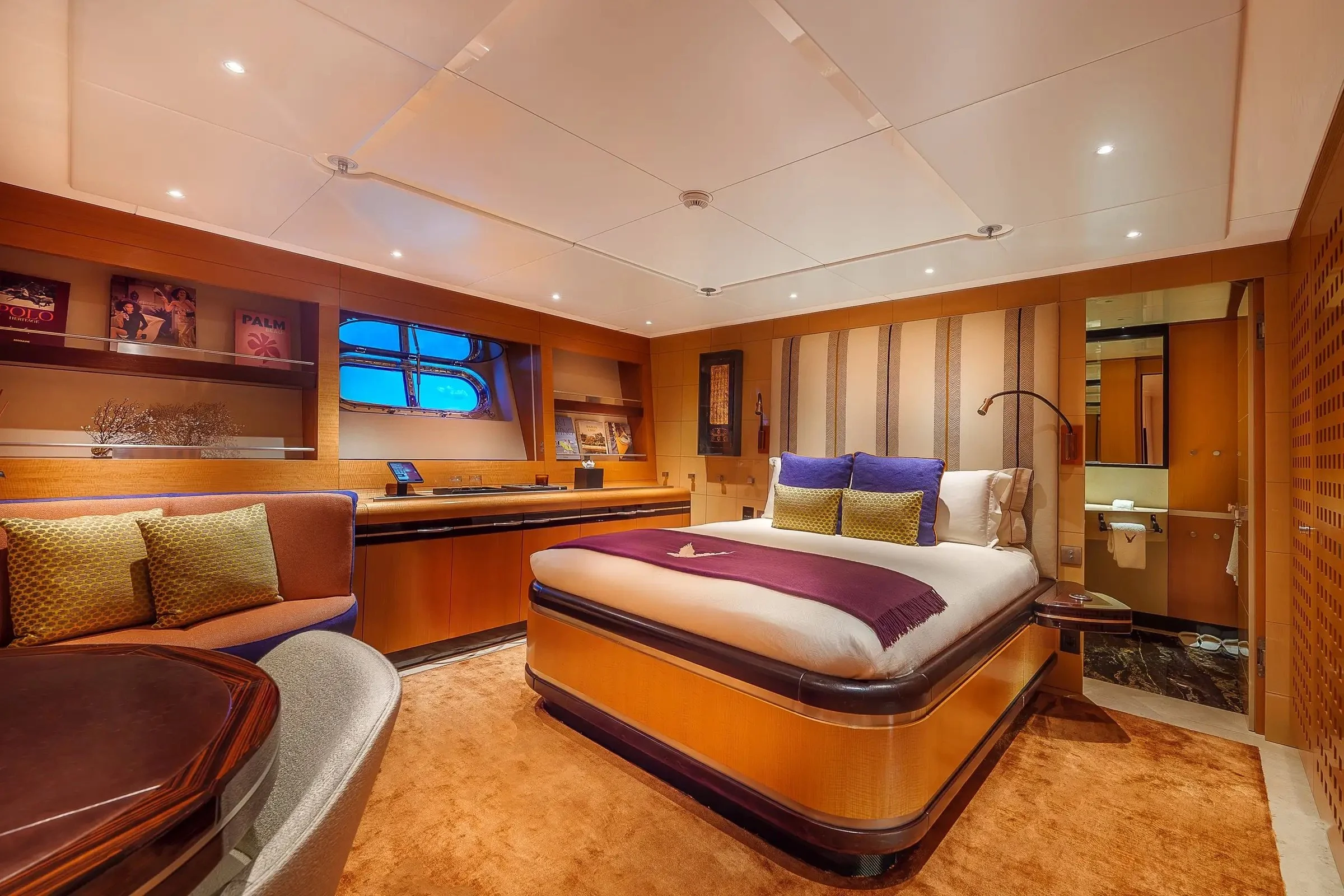
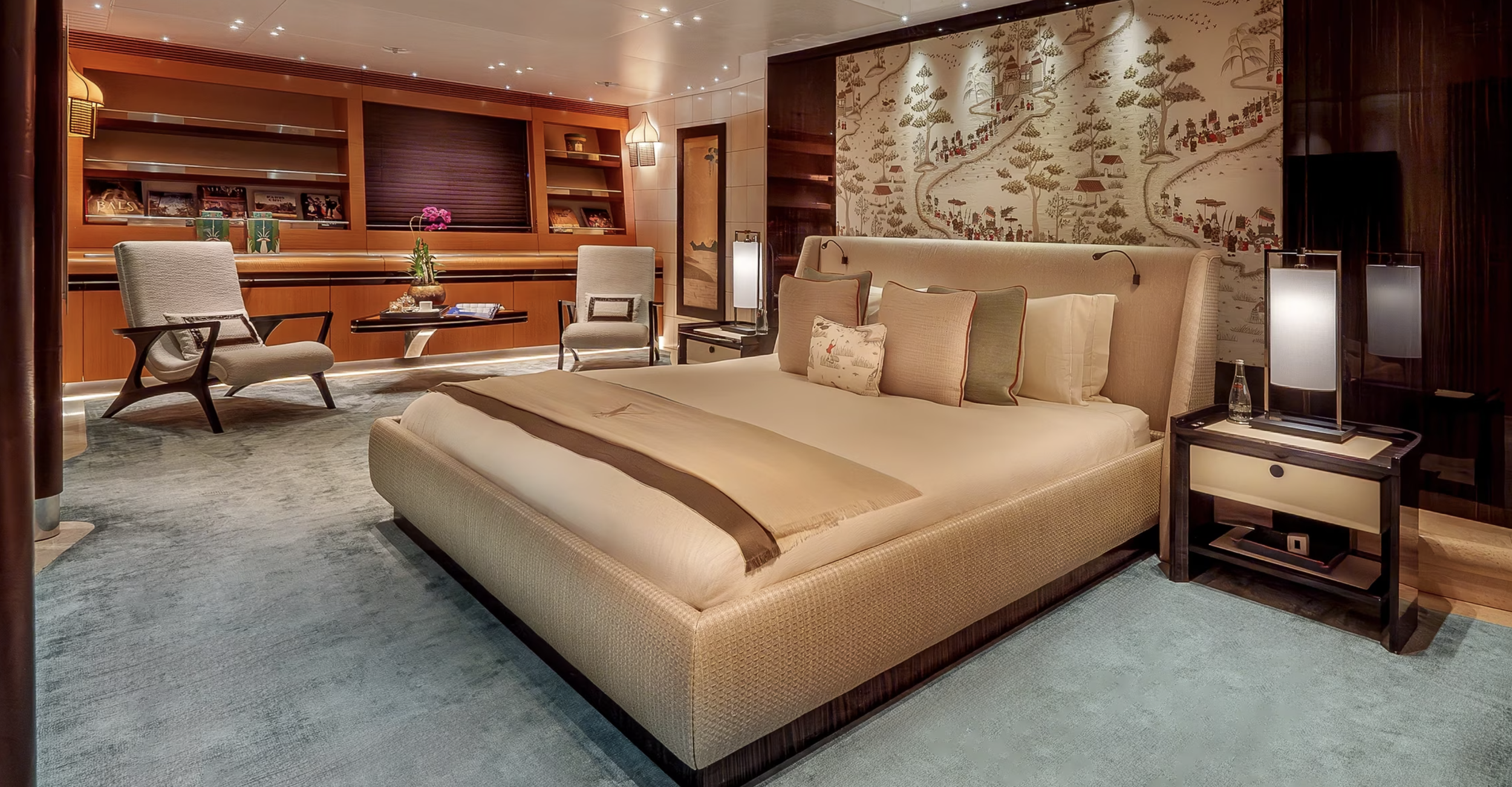
The accommodation comprises a full-beam Master Suite, an elevated VIP Suite, and four additional double cabins. These are allocated within a private charter rather than sold individually.
Jumeirah does not publish reliable individual cabin measurements in sq. ft., so the descriptions below focus on the confirmed layouts and amenities.
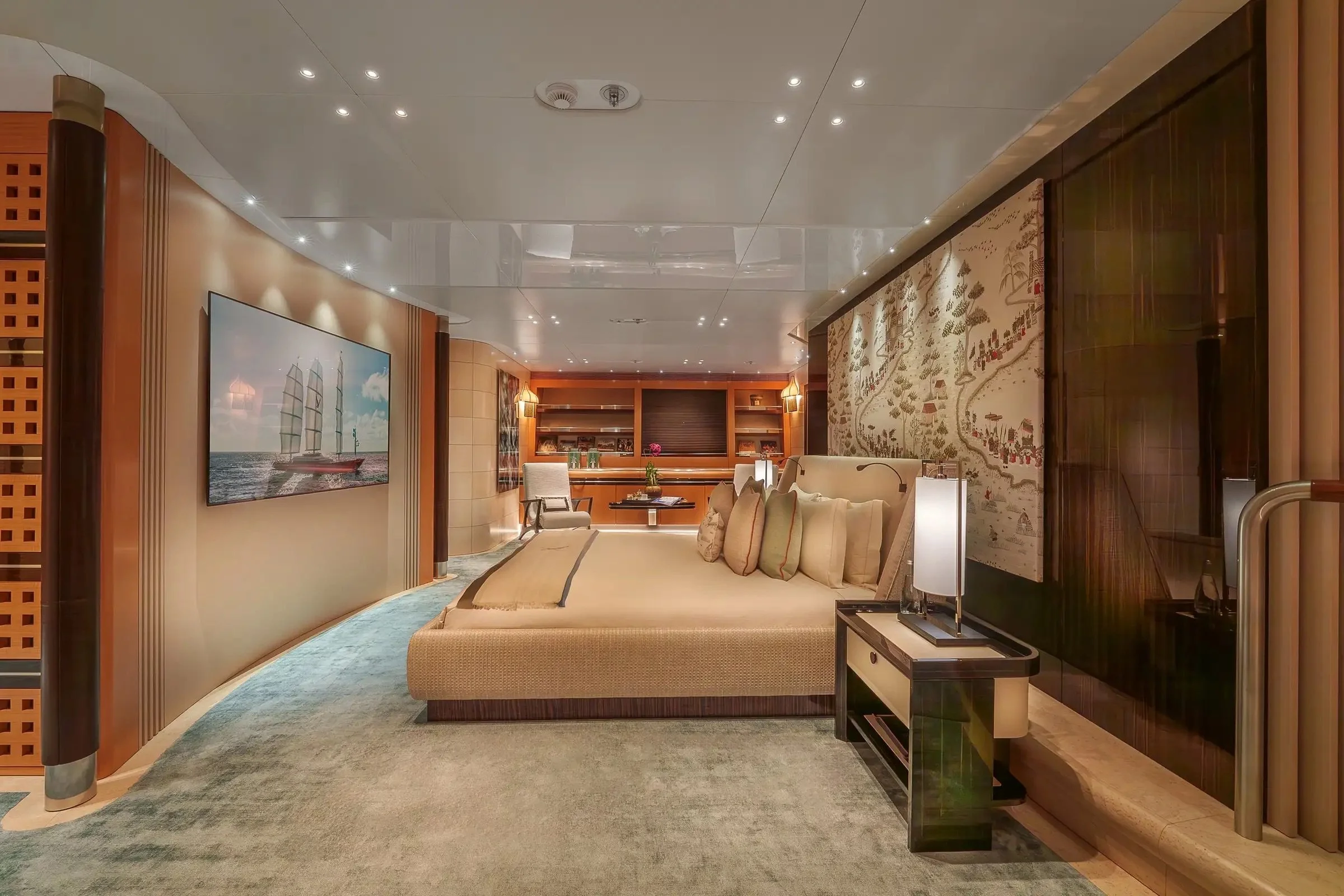
Master Suite: A full-beam suite on the lower deck featuring a California king bed, separate en-suite bathrooms, two walk-in wardrobes, a sitting area, original artwork by Squeak Carnwath, and direct access to the adjacent gym.
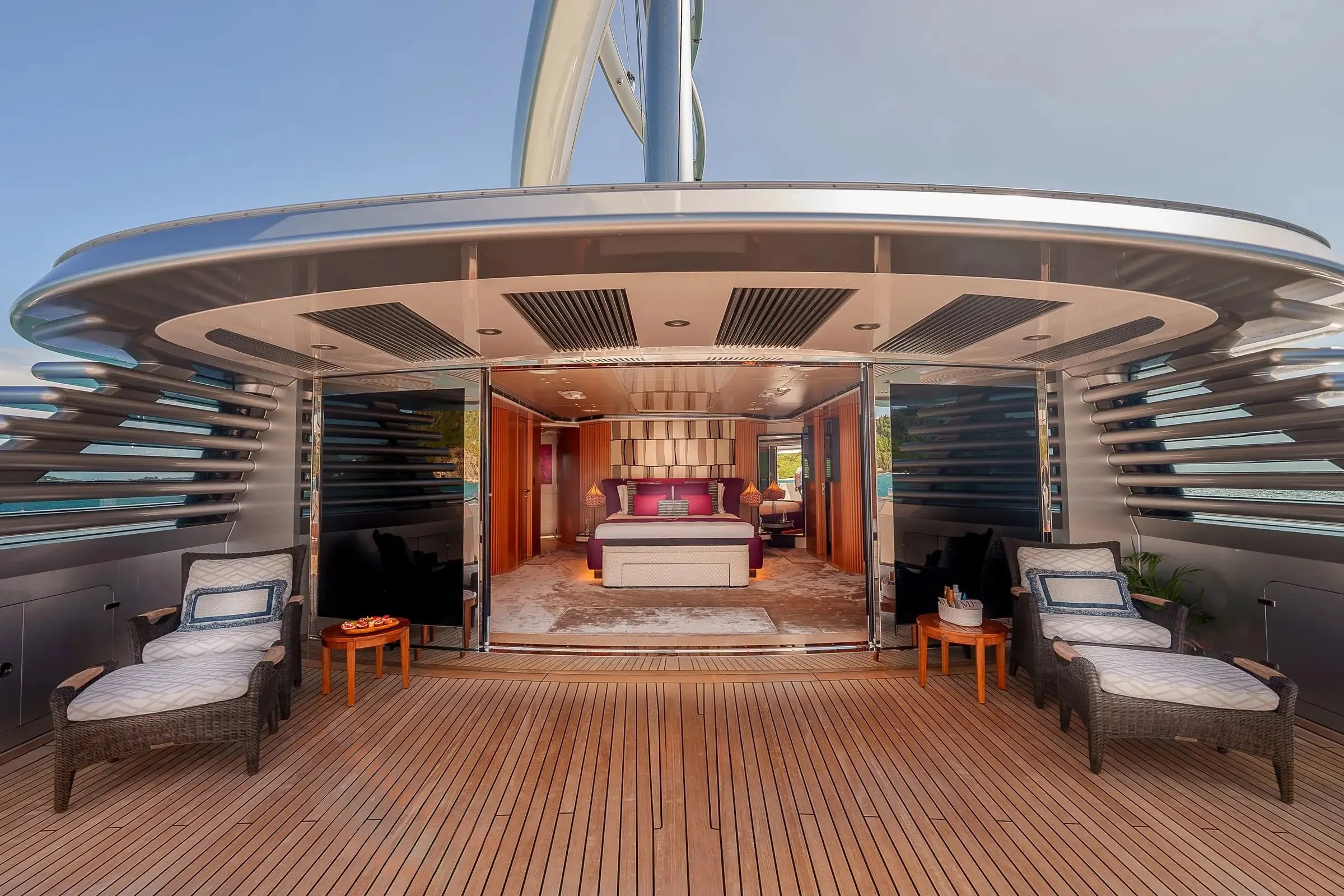
VIP Suite: An aft bridge-deck suite with a queen bed, an en-suite bathroom, private seating, and sliding glass doors opening onto a terrace with lounge chairs and expansive sea views.
Double Cabins: Four lower-deck cabins, each with a double bed, a private en-suite bathroom, wardrobe storage, entertainment facilities, individual climate controls, and natural light through windows or portholes.
The Master Suite offers the broadest interior layout, while the VIP Suite’s terrace creates a particularly appealing connection to the outdoors. For two couples sharing the principal accommodations, these different strengths deserve consideration before assigning cabins.
Families should also review the sleeping arrangements carefully, as Jumeirah currently describes all four additional cabins as doubles.
A Private Table with a Changing View
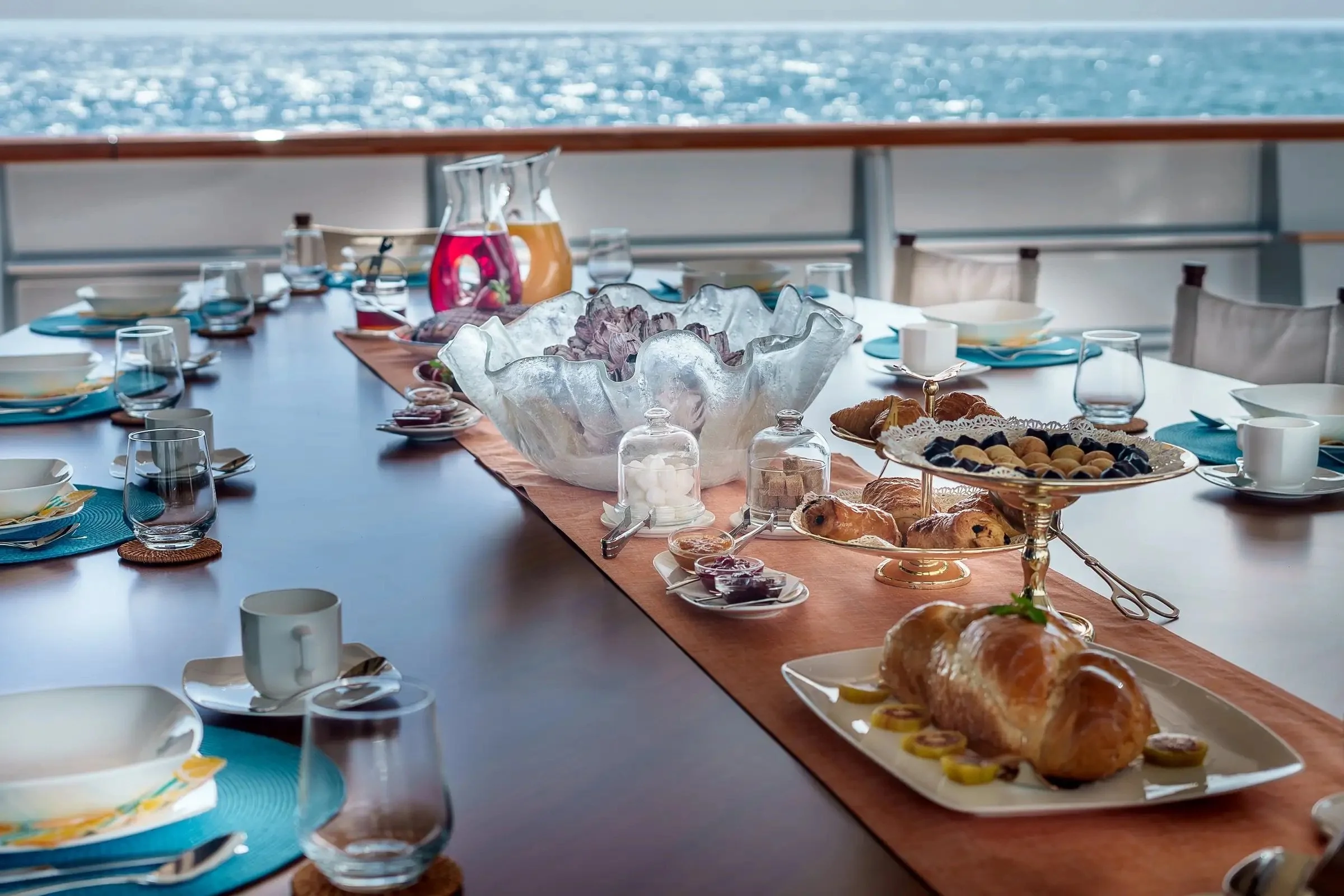
Dining aboard The Maltese Falcon is shaped around the charter party. Preferences, dietary requirements, favorite ingredients, and the balance between meals aboard and ashore should be discussed before departure, allowing provisioning and menus to support the planned week.
The yacht offers several settings rather than a collection of separately operated restaurants:
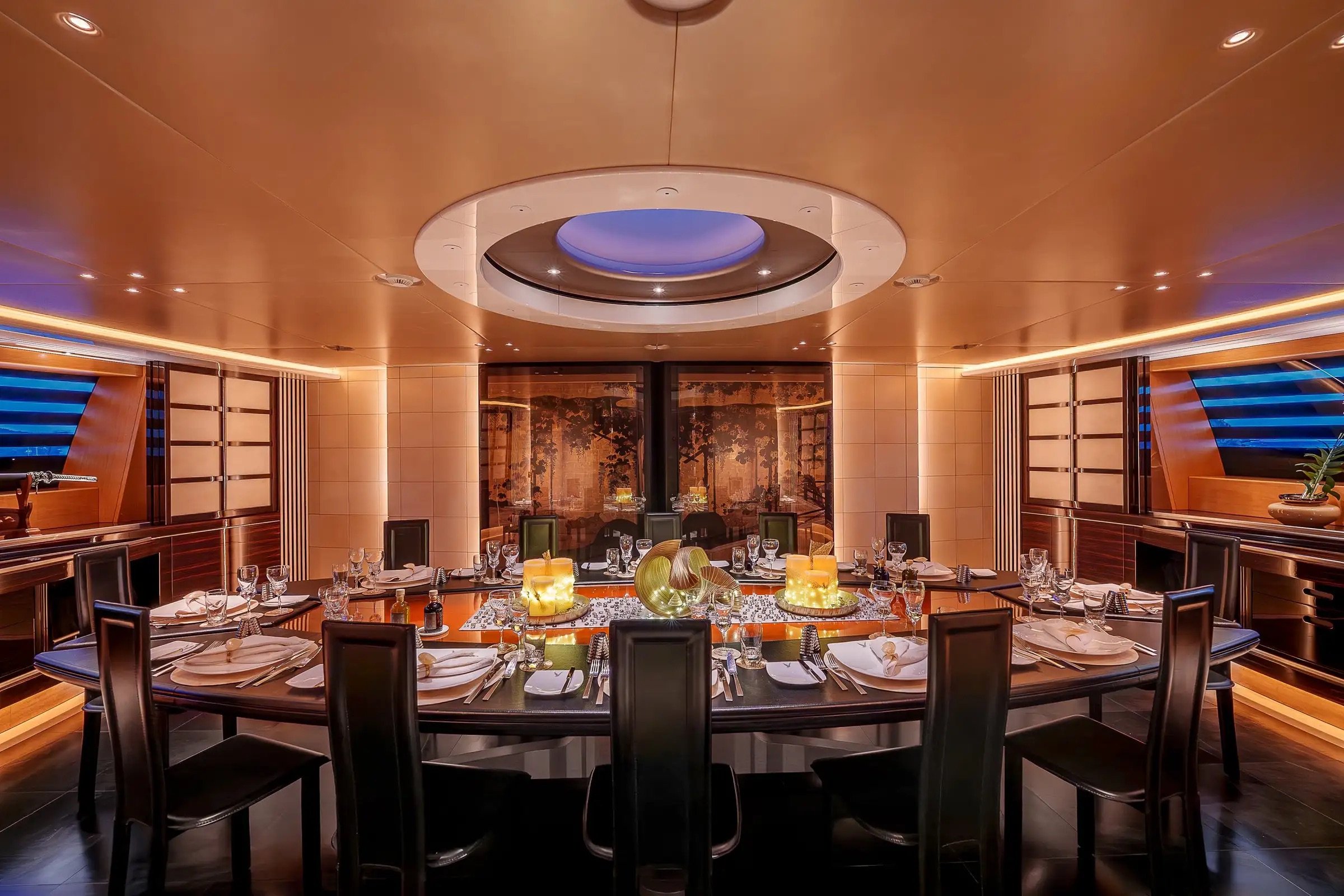
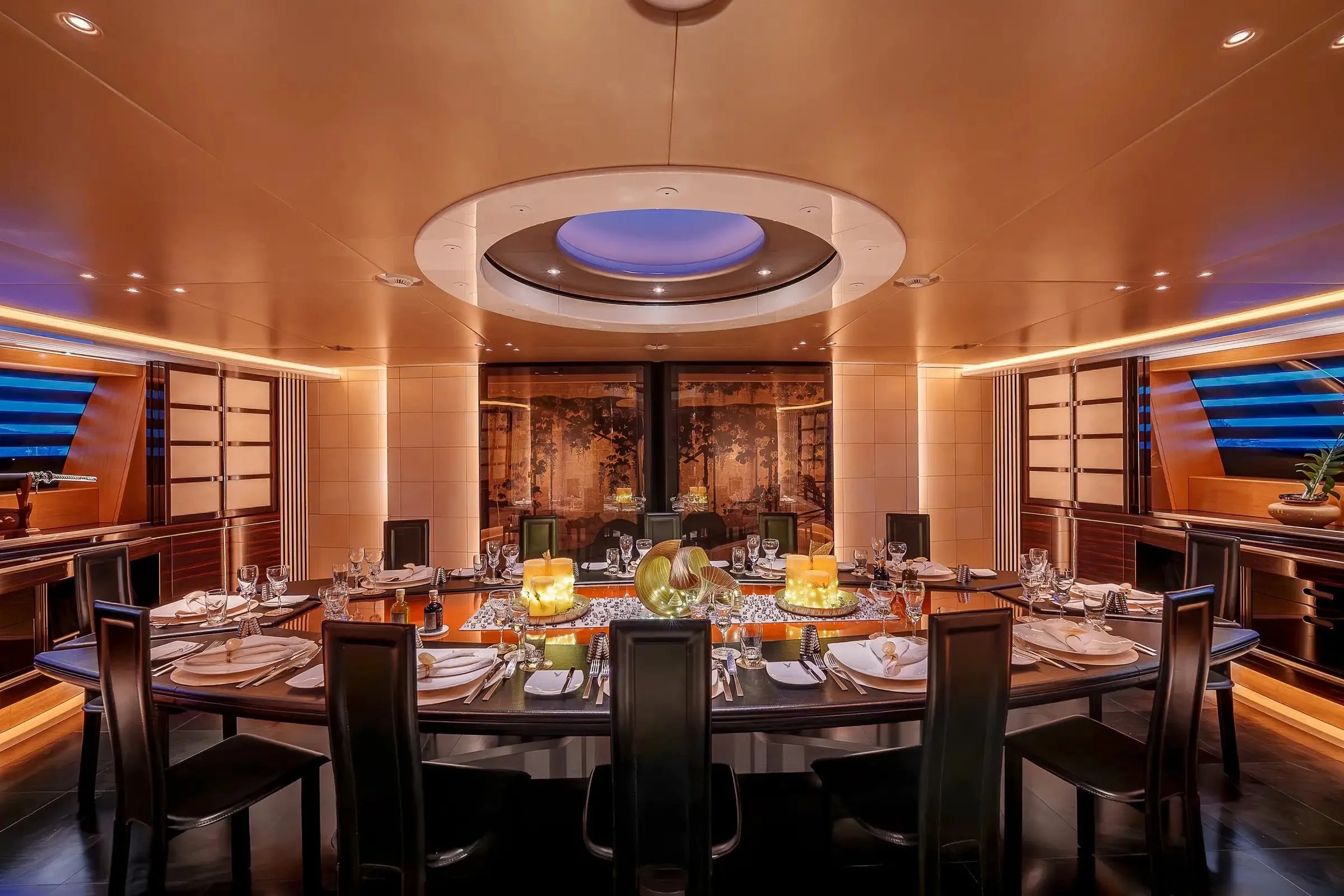
Interior Dining Room: An enclosed setting for more formal dinners and evenings when weather favors dining indoors, with a Japanese-influenced design introduced during the yacht’s refurbishment.
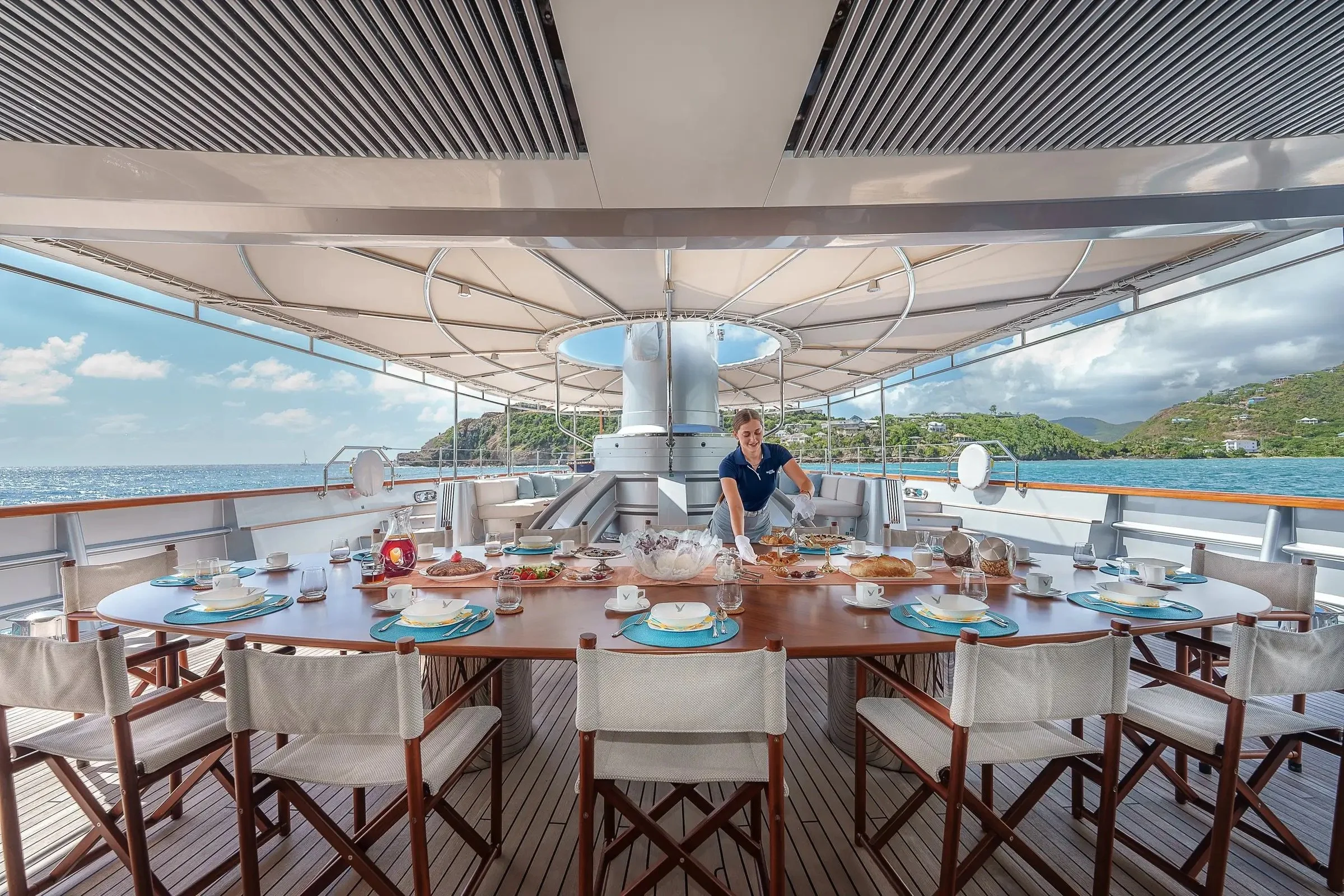
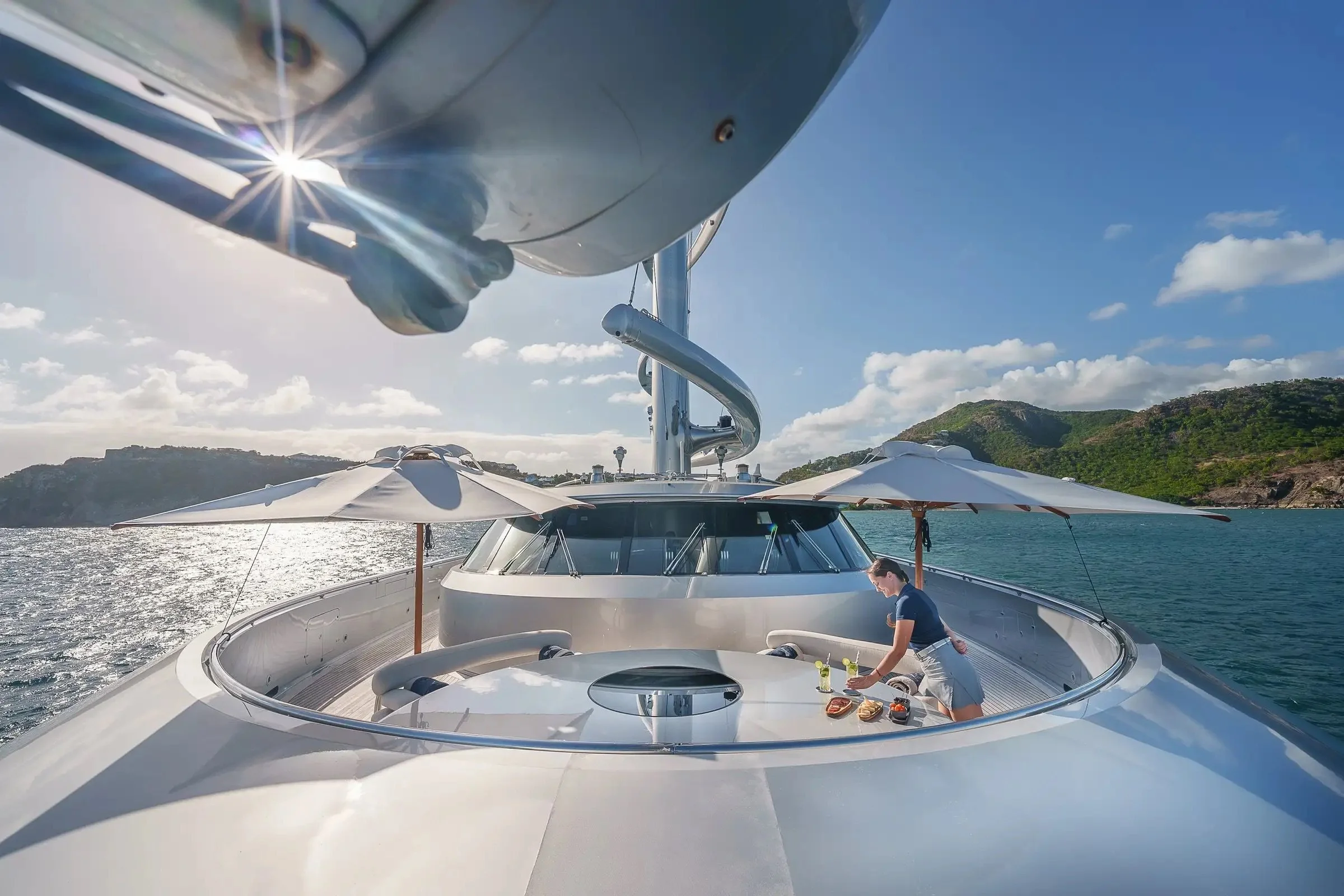
Main Deck Aft: A shaded outdoor dining area suited to breakfast, long lunches, and dinners overlooking the anchorage, keeping much of daily life close to the water.
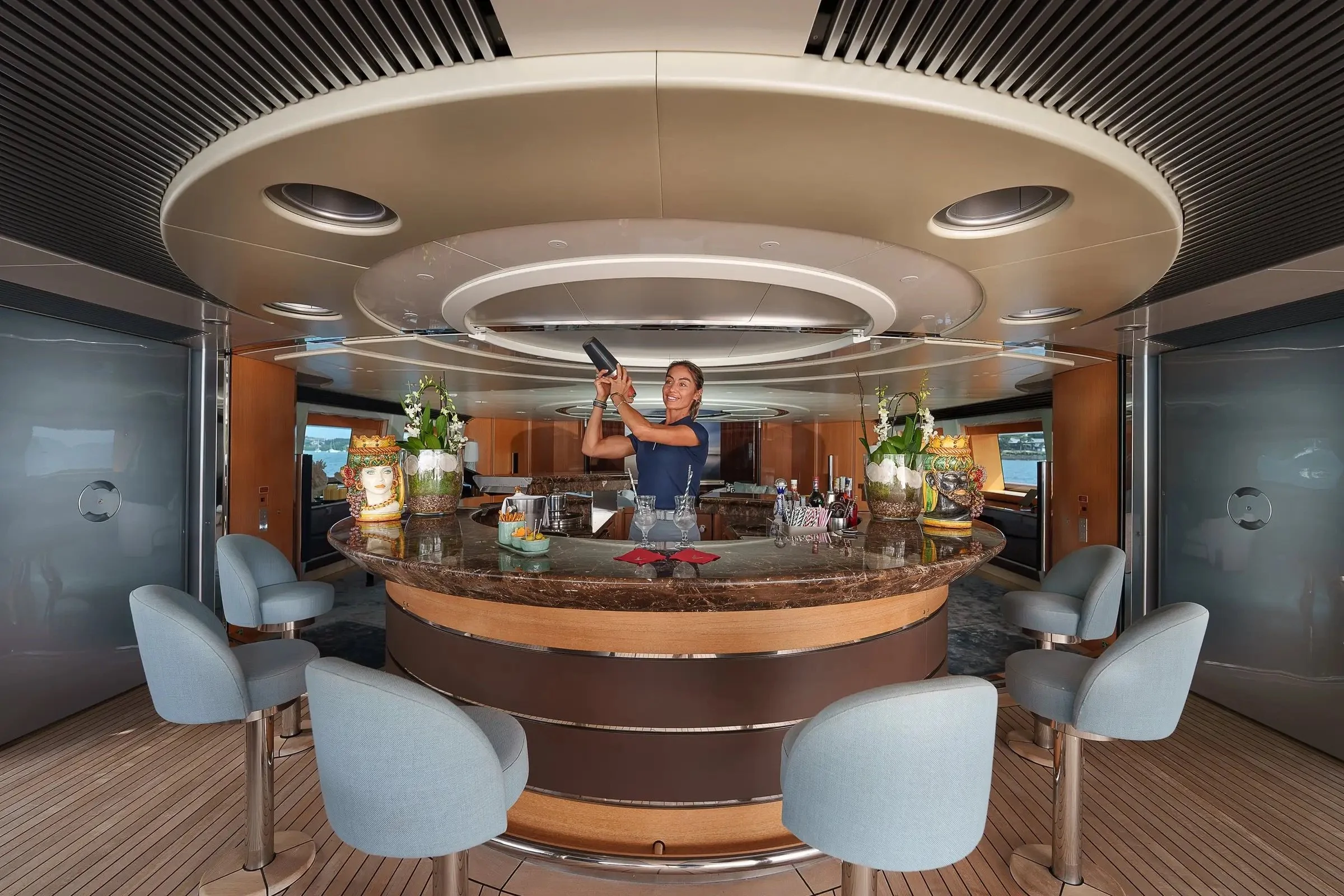
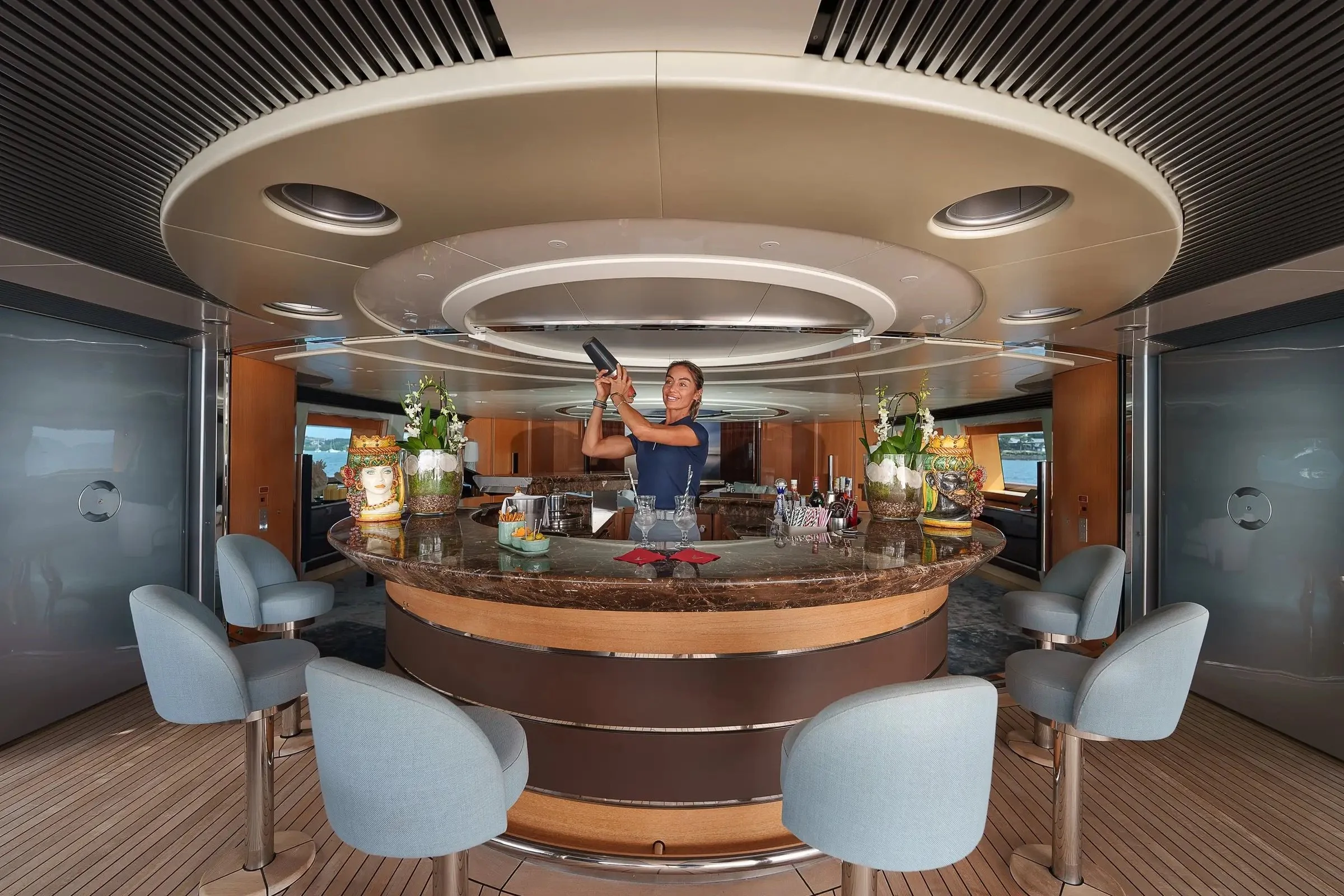
Main Deck Bar: A circular bar adjoining the outdoor entertaining area, providing a natural gathering point for an aperitif or conversation before dinner.
For us, flexibility matters more than filling every evening with an elaborate meal. A relaxed lunch after swimming and a carefully planned celebration dinner can both belong within the same charter.
Food and beverage preferences also affect the overall budget. Bespoke dining service does not mean that provisions, wines, and spirits are automatically included in the advertised charter fee.
Wellness Between Anchorages
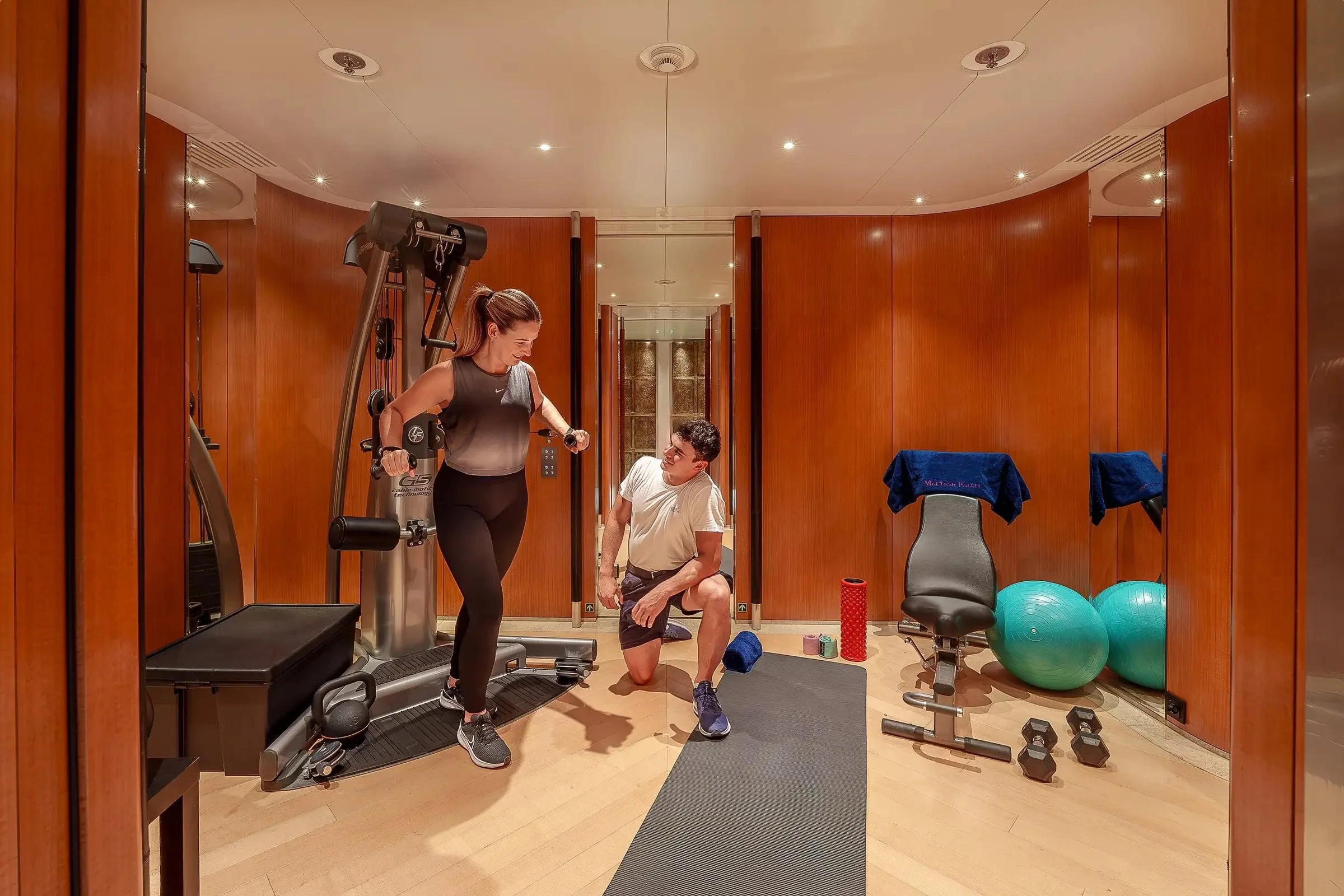
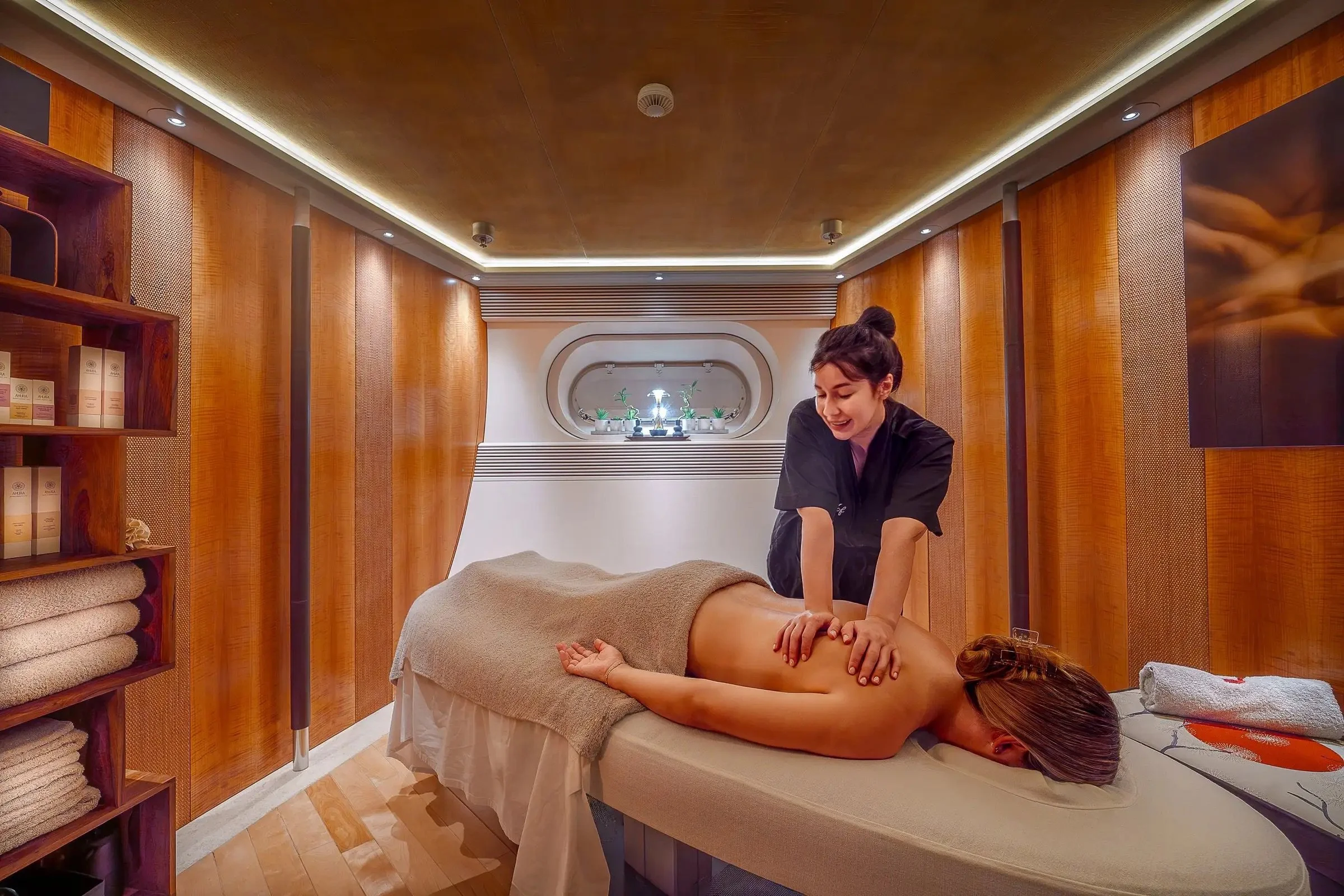
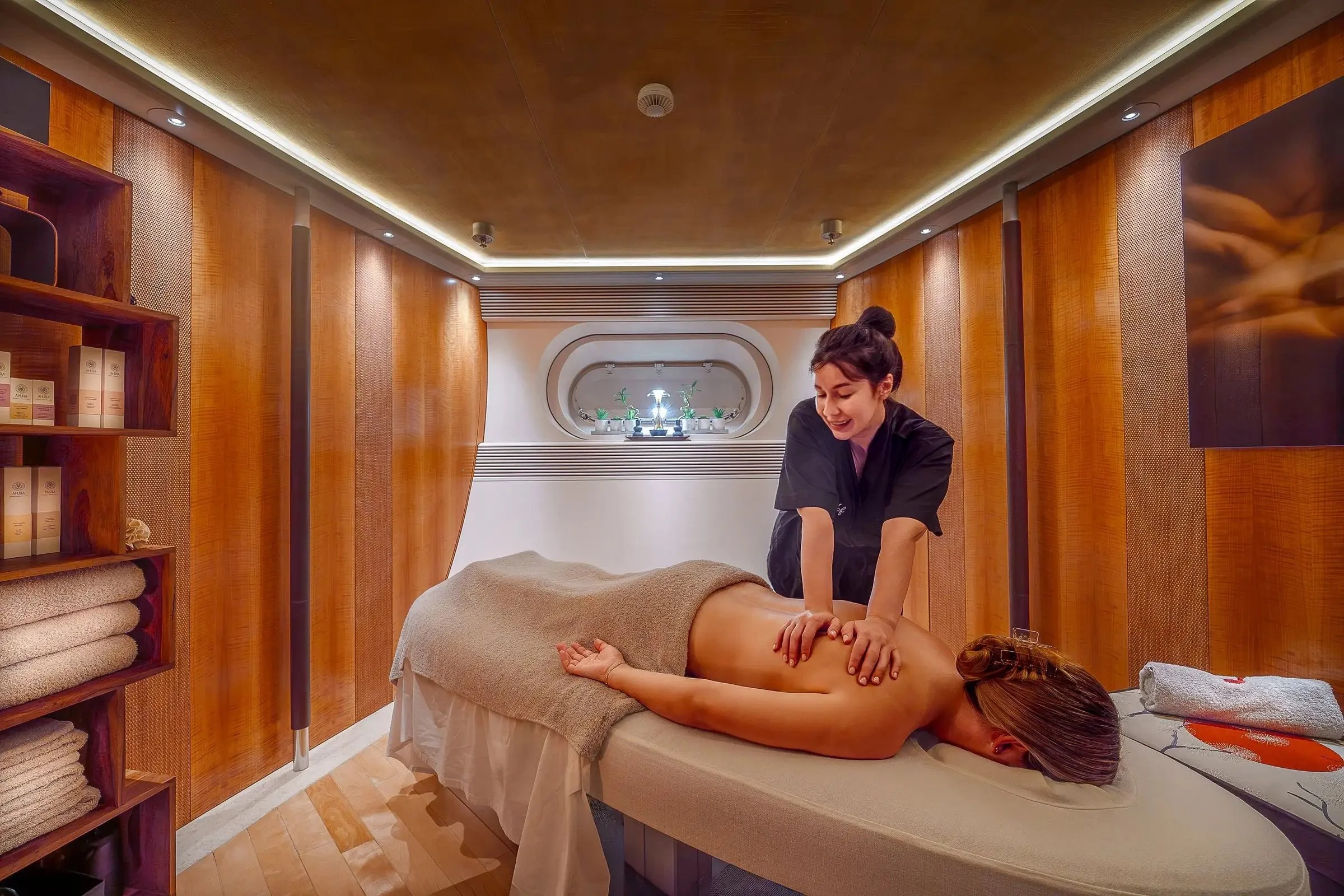
A dedicated massage room and fitness facilities allow wellness to fit into the day without requiring a trip ashore. The Master Suite’s position beside the gym makes that arrangement particularly convenient for its occupants.
The offering is intimate, with treatment availability and specialist requirements best agreed in advance. We would confirm the current wellness menu, practitioner arrangements, and any additional charges as part of the charter planning.
A sailing itinerary also creates its own opportunities for rest: a slower breakfast, time outdoors, and afternoons without a fixed program. Building that space into the route can be more valuable than trying to add an activity at every anchorage.
Travelers hoping to maintain a particular training routine should request the current equipment list before departure. On a private yacht, a little advance planning helps ensure the facilities match individual expectations.
Sailing, Swimming, and Cinema on the Water
The most distinctive experience aboard The Maltese Falcon is sailing itself. When conditions allow, the crew can deploy the rig and let wind propulsion become a central part of the journey. The captain determines when and where this is appropriate, so time under sail should be treated as an opportunity shaped by conditions.
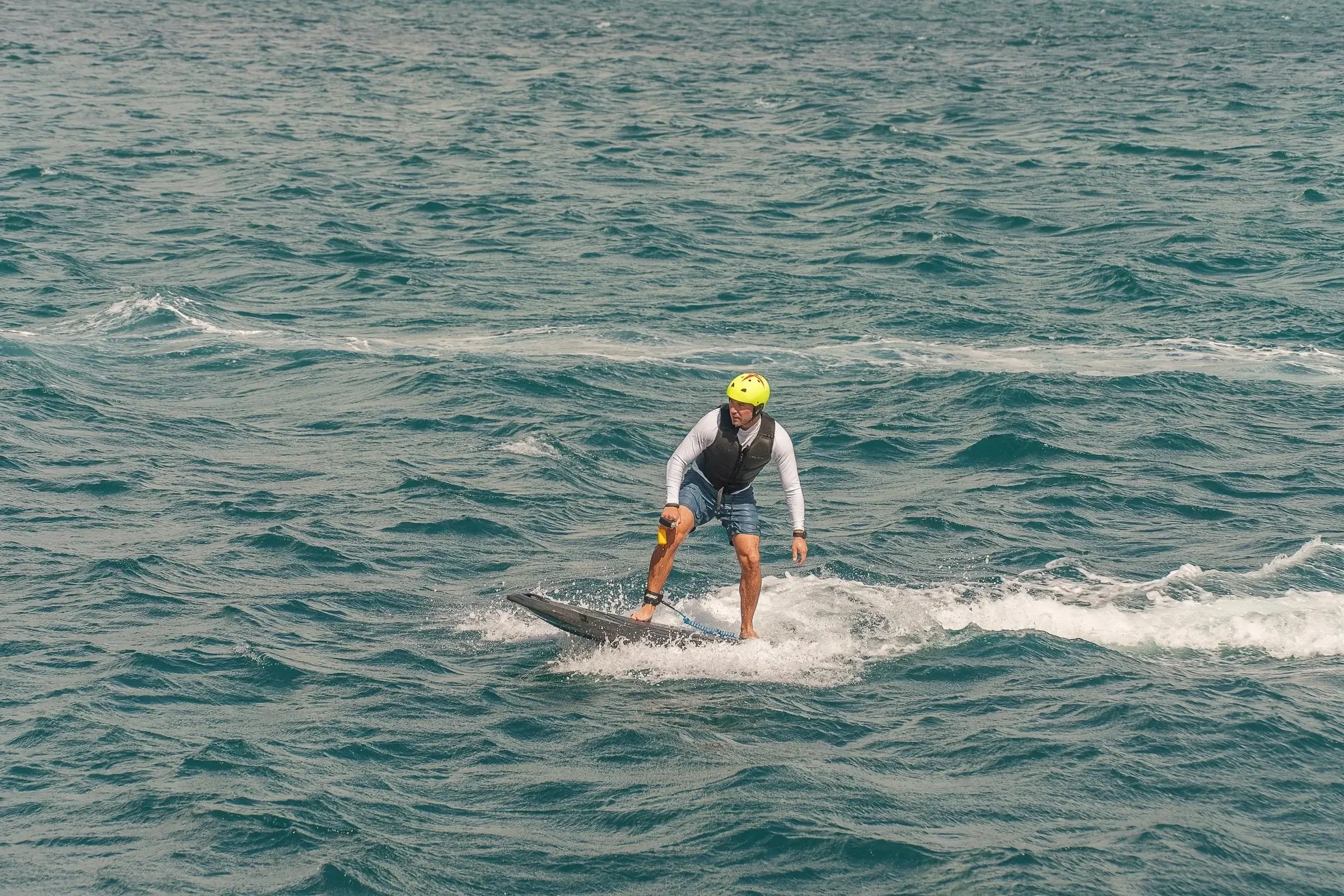
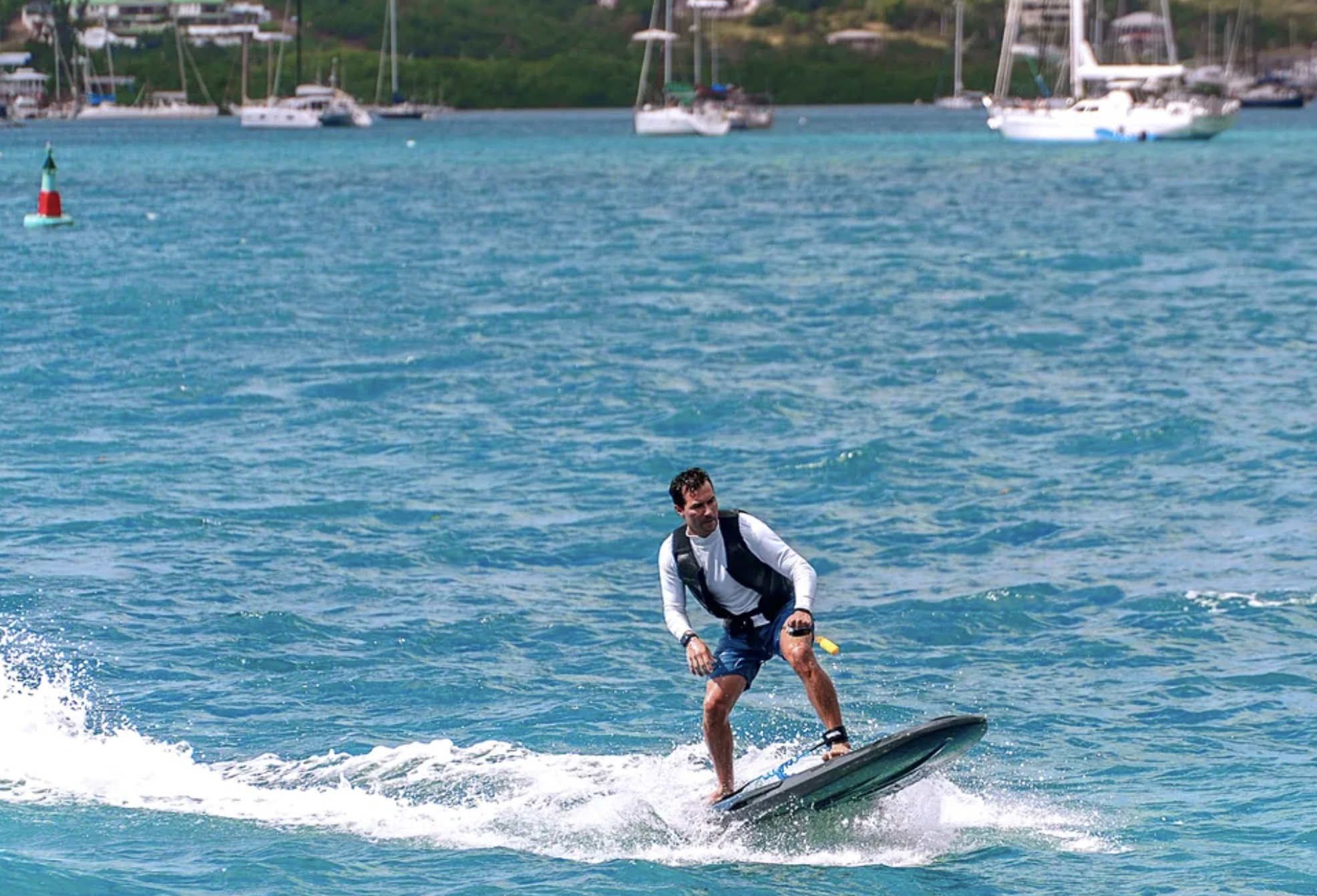
At anchor, the focus can shift toward the water. The published equipment selection includes personal watercraft, kayaks, paddleboards, JetSurf boards, and snorkeling gear. The exact inventory and any local restrictions should be confirmed for the charter.
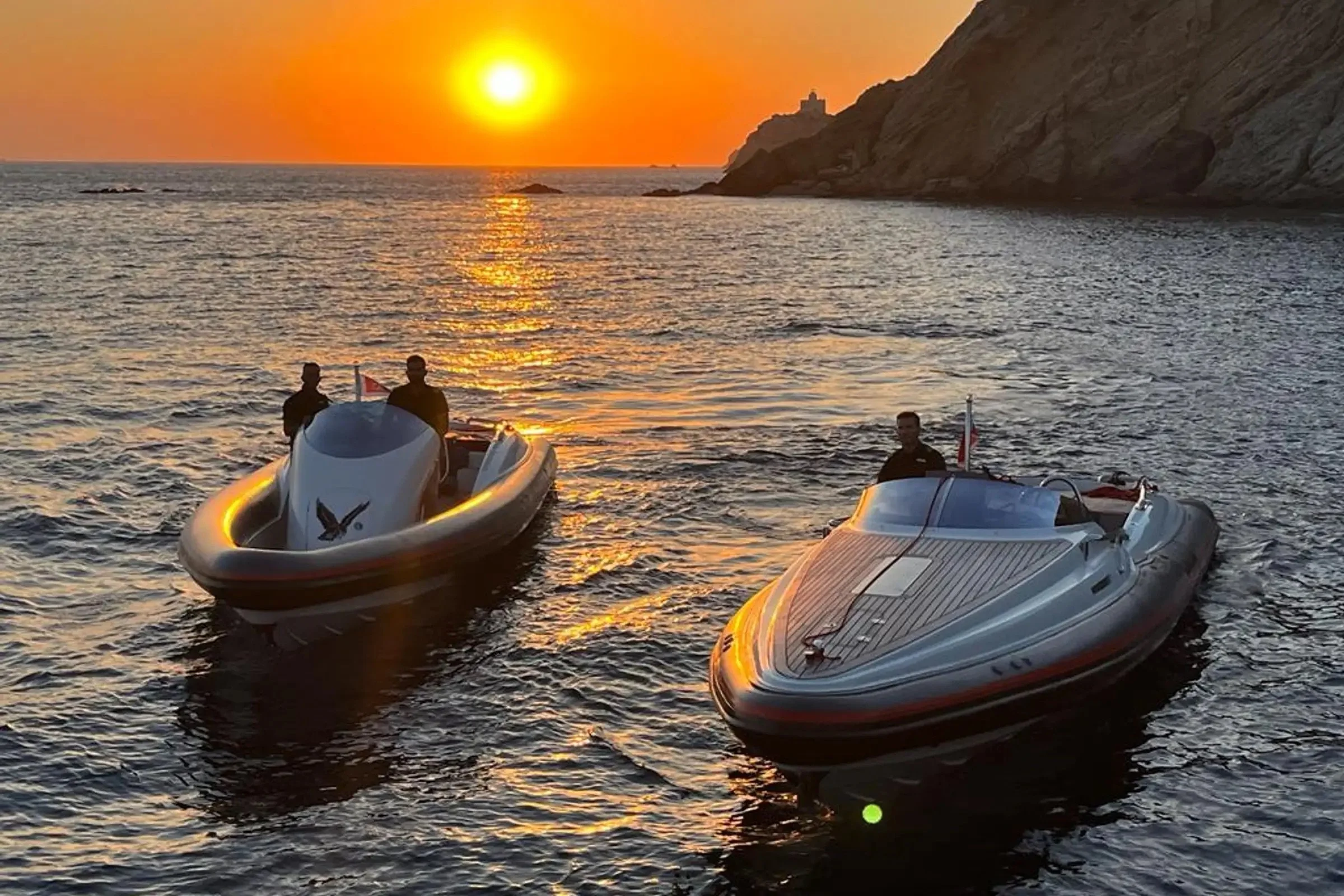
Tender excursions connect the yacht with shore, whether the plan is a coastal walk, a restaurant reservation, or an afternoon exploring a harbor town. Choosing destinations within a manageable cruising area leaves more time for these experiences.
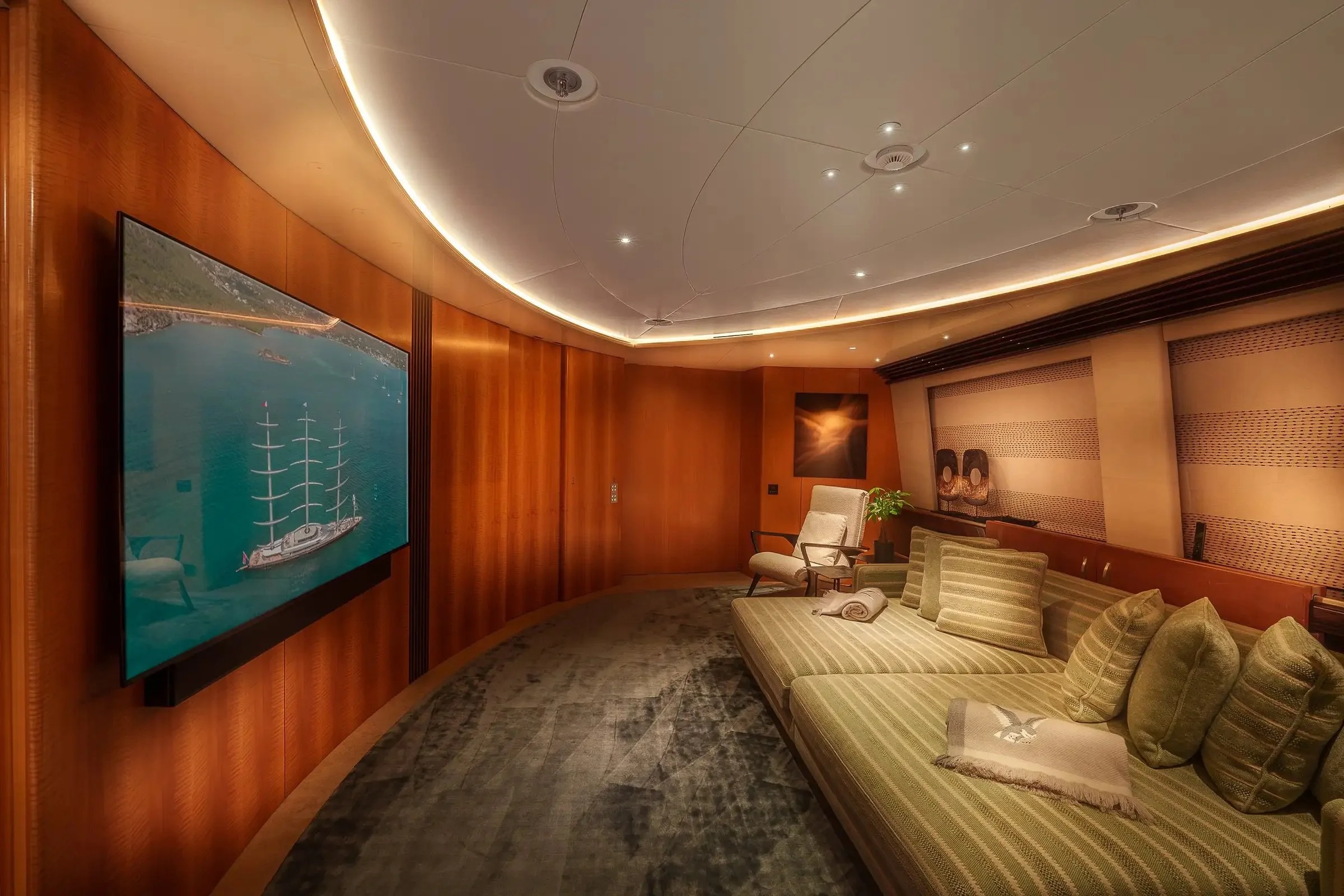
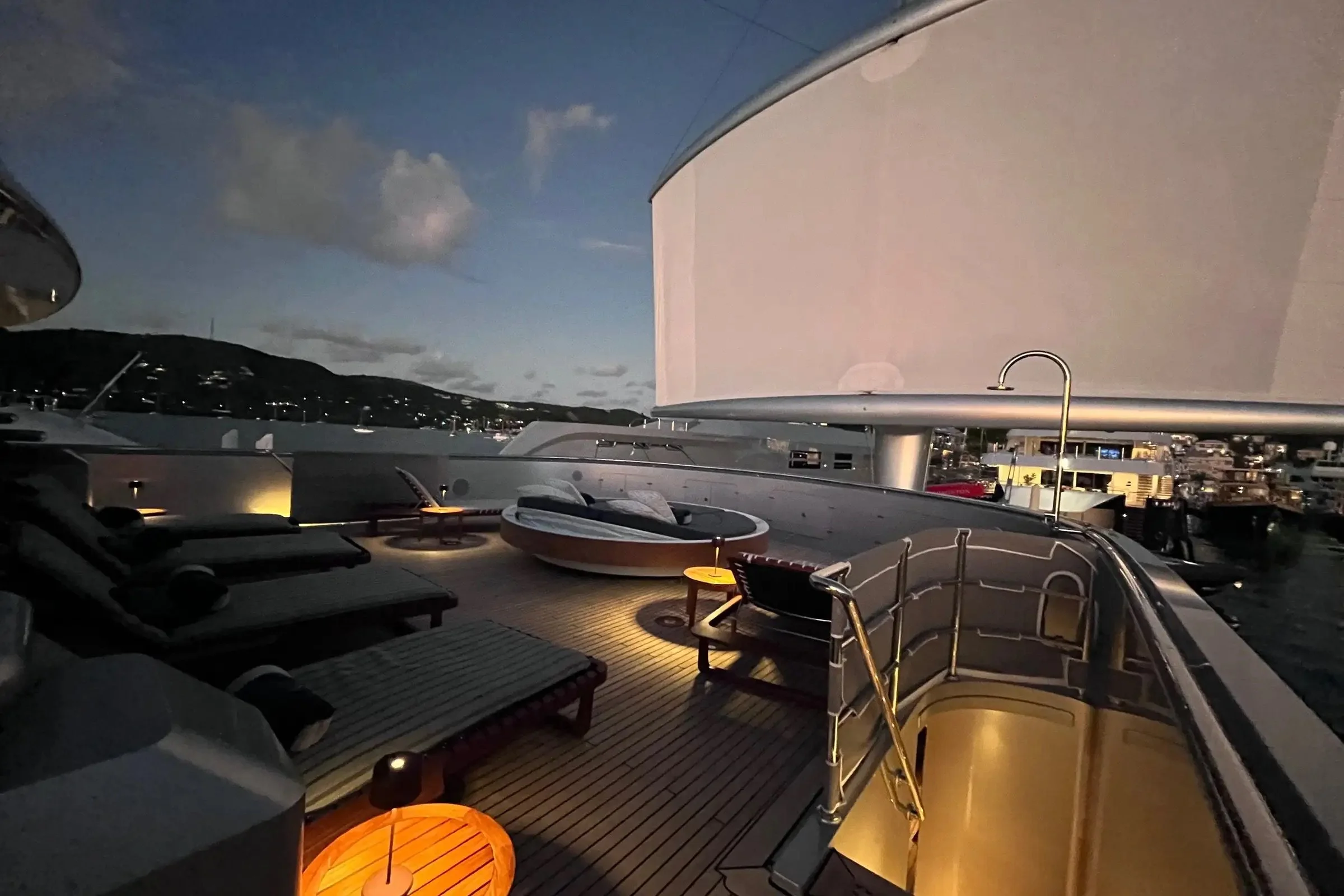
After dark, the lower sail can become an outdoor cinema screen, creating one of the yacht’s most memorable settings. There is also an indoor cinema room, giving movie nights a comfortable alternative.
We favor a mix of active and open afternoons. The freedom to remain in a favorite anchorage is part of the value of chartering, provided the weather and onward arrangements allow it.
Family Time Without a Fixed Program
For a family traveling together, the appeal begins with having the yacht’s living spaces reserved for the group. Shared meals, swimming, films, and time ashore can be planned around different ages and interests.
There is no published resort-style children’s club. Activities and supervision therefore need to be discussed directly, including the suitability of water equipment, any childcare requirements, and the arrangements for younger children during passages.
We would review cabin locations, bed configurations, and the movement between decks before confirming a multigenerational charter. A yacht’s stairs, railings, and boarding arrangements deserve particular attention when small children are traveling.
Shorter passages and longer stops often make a practical starting point for a family itinerary. They allow more time to enjoy each location and reduce the pressure to move simply to fit a long list of destinations into one week.
The Charter Fee and the Additional Budget
Jumeirah currently advertises private voyages of seven days or more from €490,000 per week. This is a starting charter rate, with the final quotation dependent on dates, availability, and the agreed arrangements.
Understanding the cost structure is essential:
Yacht and Crew: Under the conventional crewed-charter arrangement, the base fee covers use of the yacht and the services of her crew, with the specific facilities and terms established in the contract.
Operating Expenses: Food, beverages, fuel, port fees, and other charter-related expenses are generally funded separately through an Advance Provisioning Allowance, commonly called the APA.
Taxes and Repositioning: Applicable VAT or local taxes, along with any agreed delivery or redelivery charges, can increase the total.
Personal Arrangements: Flights, hotels, transfers, restaurant bills ashore, independently arranged experiences, and discretionary crew gratuities should be budgeted separately unless expressly included.
A published broker guide for The Maltese Falcon indicates an APA commonly calculated at 30–35% of the charter fee. The actual requirement belongs in the quotation.
The APA is an advance against expenses, with accounting provided by the captain. Unused funds are returned, while spending above the allowance requires additional payment.
We would request a complete estimate for the proposed route before treating any advertised weekly figure as the trip budget. Sailing distance, berth choices, and provisioning preferences can all influence the final cost.
Sailing with a More Considered Approach
Wind propulsion is central to The Maltese Falcon’s identity. When conditions permit sailing, it can reduce the need for engine-driven propulsion, although the yacht still depends on fuel and onboard power systems.
Refit work has included upgrades to generators, engines, and associated systems. Published charter information also identifies LED lighting among the improvements.
These are concrete measures, but they do not establish a zero-emission or carbon-neutral charter. Environmental impact depends partly on how the yacht is used, including the distance covered, time spent motoring, and operating requirements.
From an itinerary perspective, we favor realistic cruising distances and time to remain in one area. Beyond making a week feel less hurried, that approach avoids building the experience around constant repositioning.
Access Needs Deserve a Detailed Review
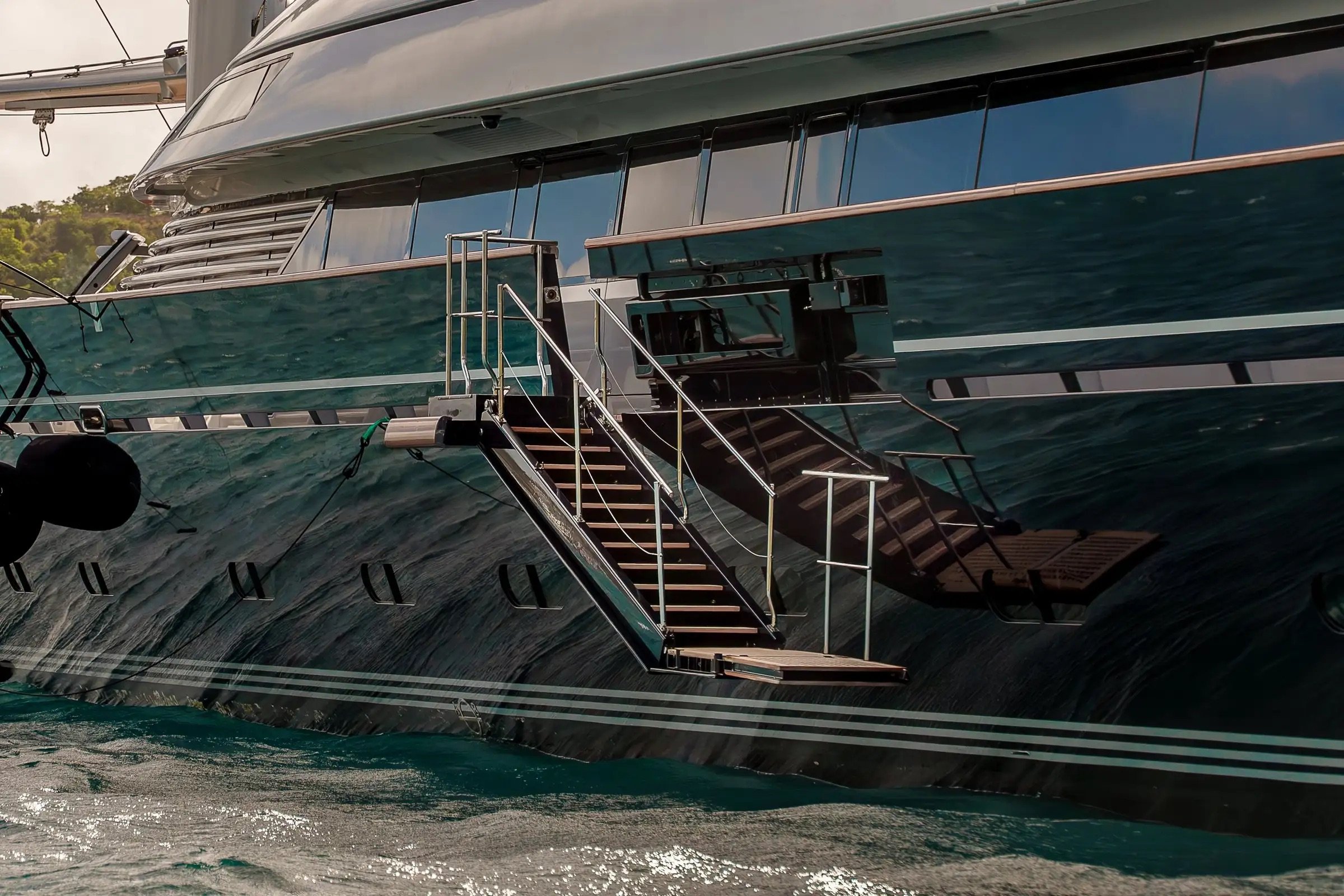
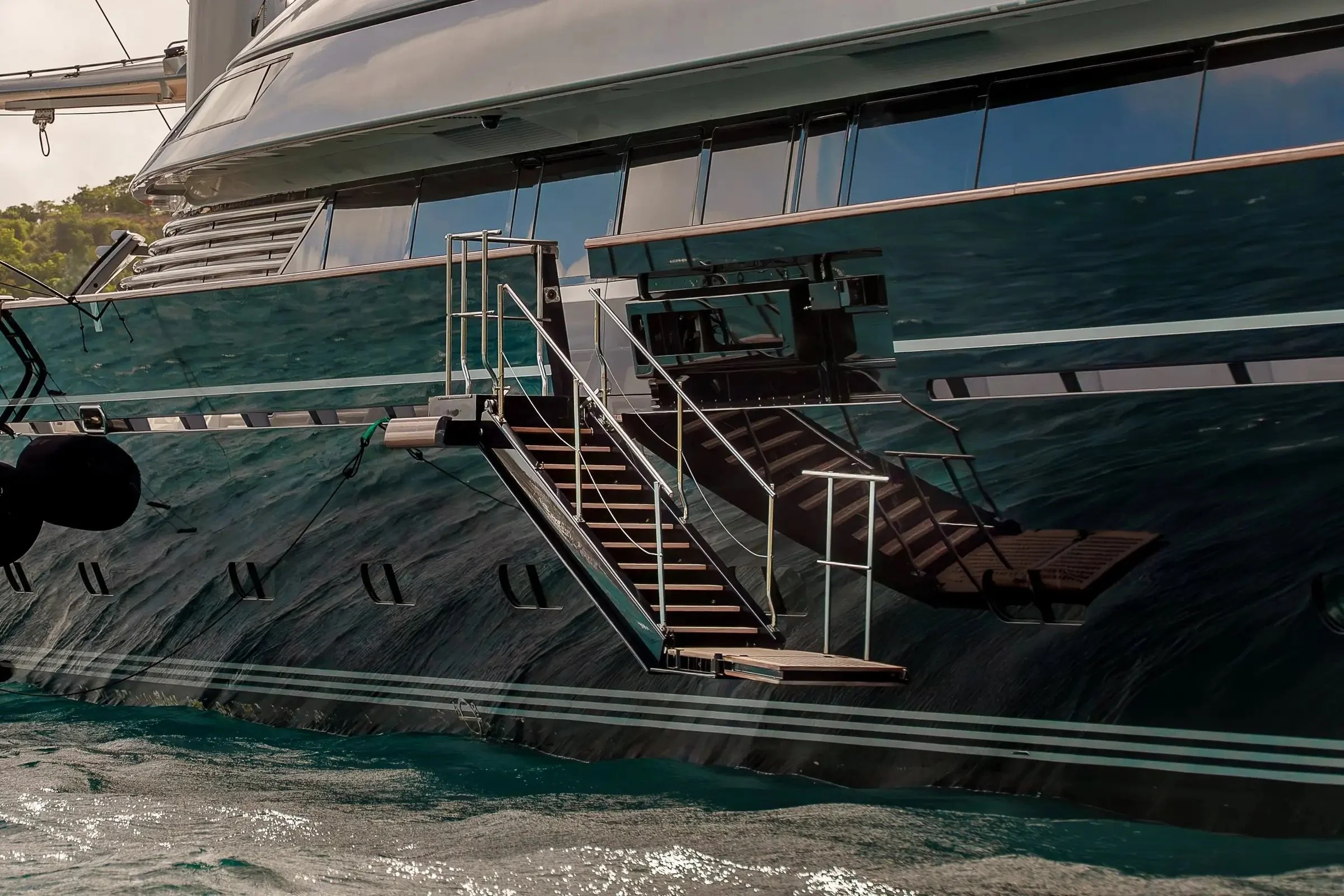
The Maltese Falcon’s published information does not establish a fully step-free guest experience. Her layout includes multiple decks and a central staircase, while boarding and trips ashore may involve a gangway or tender.
Travelers with mobility requirements should request a detailed review of cabin access, bathroom layouts, deck transitions, and embarkation arrangements before committing.
The yacht’s size alone should not be taken as evidence of accessibility. We would establish what assistance is available and whether the planned ports and shore experiences are suitable for the individual traveler.
Following the Seasons Across the Atlantic
Jumeirah describes a seasonal pattern centered on the Mediterranean in summer and the Caribbean in winter.
The Mediterranean program encompasses potential cruising areas including the Balearics, French Riviera and Monaco, Amalfi Coast, Sardinia, Croatia, Montenegro, Greece, and Türkiye. Winter possibilities include Antigua, Saint Martin, St. Barth, and The Bahamas.
These are operating regions, not a fixed timetable of guaranteed calls. A specific destination depends on the yacht’s position, existing bookings, charter permissions, and the time available for the proposed route.
Jumeirah has also announced a special private transatlantic charter departing Gran Canaria between December 1 and 5, 2026, with approximately ten days at sea followed by up to three days in Antigua. Offered to one private group, it places the ocean passage itself at the center of the trip.
That crossing requires a different outlook from a coastal charter: extended time offshore, fewer opportunities to step ashore, and a schedule governed by ocean conditions.
Three Ways to Shape a Week
The following are illustrative itinerary concepts, rather than published scheduled departures; every route requires confirmation by the charter team and captain.
French Riviera and Monaco – Approximately Seven Nights: Begin around Monaco, continue toward the Cap d’Antibes area, spend time near the Îles de Lérins, and finish with Saint-Tropez, balancing coastal towns and meals ashore with swimming stops and time aboard.
Bay of Naples and Amalfi Coast – Approximately Seven Nights: Build a route around Naples, Ischia, Capri, and the Amalfi Coast, allowing enough time for island exploration and a choice of coastal excursions instead of changing locations every morning.
Saint Martin, Anguilla, and St. Barth – Approximately Seven Nights: Use Saint Martin as a practical starting point, then combine Anguilla and St. Barth with anchorages selected for the conditions, leaving space for beach time, tender outings, and evenings ashore.
Each concept keeps the focus within a relatively compact region. We would rather spend an additional afternoon somewhere enjoyable than add a distant stop that changes the character of the entire week.
The yacht’s dimensions also influence where she can berth or anchor. Some destinations are best reached by tender, which should be considered when planning restaurant reservations and shore activities.
Getting There
The appropriate airport and transfer depend on the confirmed embarkation point. Common examples include:
French Riviera and Monaco: Nice Côte d’Azur Airport (NCE) is a practical gateway; allow roughly 30–45 minutes by private car to Monaco in normal conditions, with additional time during major events.
Mallorca: Palma de Mallorca Airport (PMI) serves Balearic charters; a transfer toward Port de Sóller generally takes approximately 35–45 minutes, depending on the meeting point and traffic.
Antigua: V. C. Bird International Airport (ANU) serves Caribbean embarkations on the island; allow approximately 40–45 minutes by road toward English Harbour or Falmouth Harbour.
Final Boarding: If the yacht is at anchor, a tender transfer follows the road journey, with its duration determined by the anchorage and sea conditions.
We recommend confirming the boarding location before booking flights and allowing an overnight stay before embarkation when connections are complex.
When the Sails Become the Memory
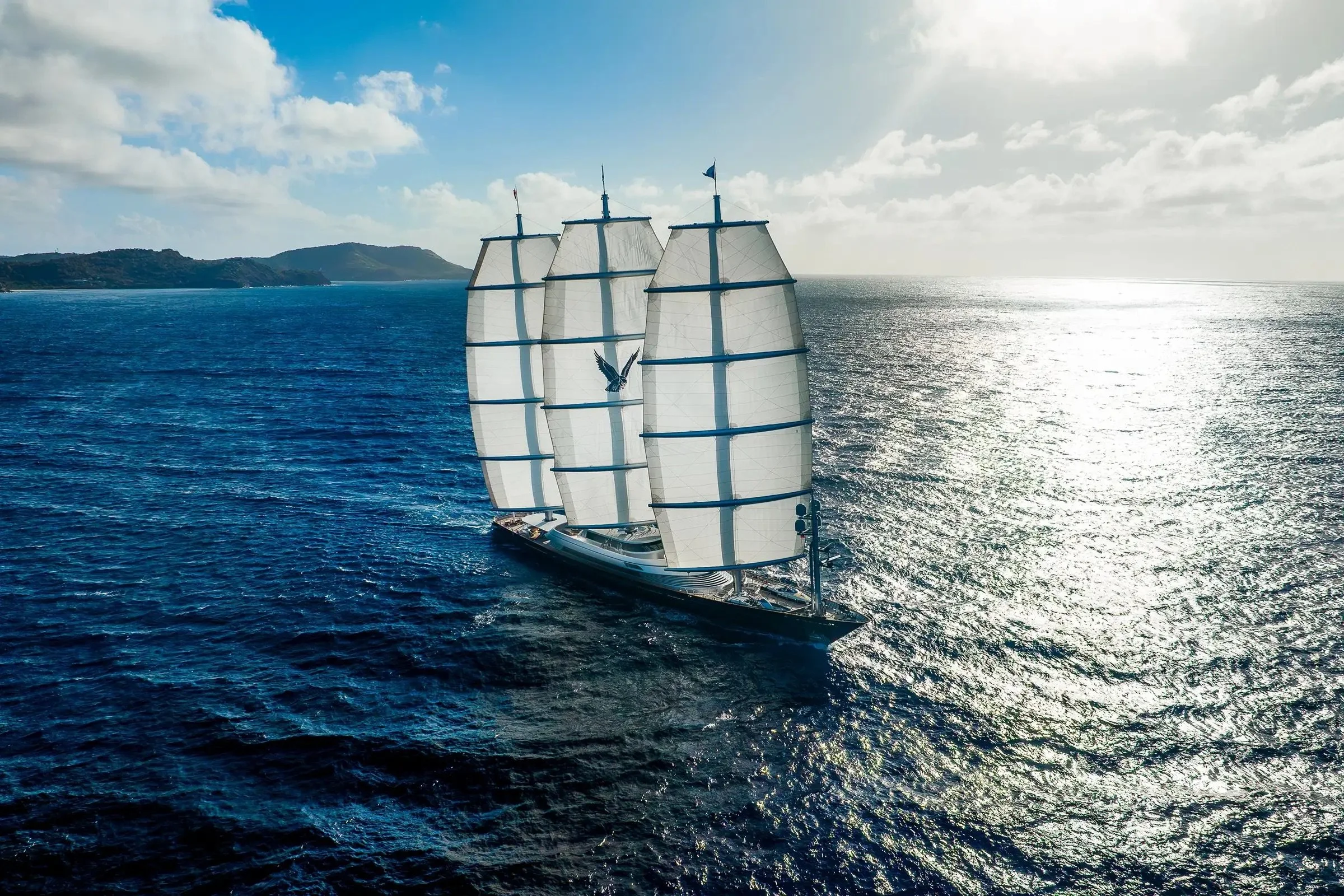
There is much aboard The Maltese Falcon to occupy a week, but the moments that distinguish her are often simple: watching the masts rotate, noticing the changing angle of the sails, or seeing the coastline gradually recede from the deck.
The private spaces and attentive service make life aboard comfortable. The sailing gives it character. Between one anchorage and the next, the journey has time to become part of the holiday.