Osaka, Japan | Patina Osaka
A Different View of Osaka
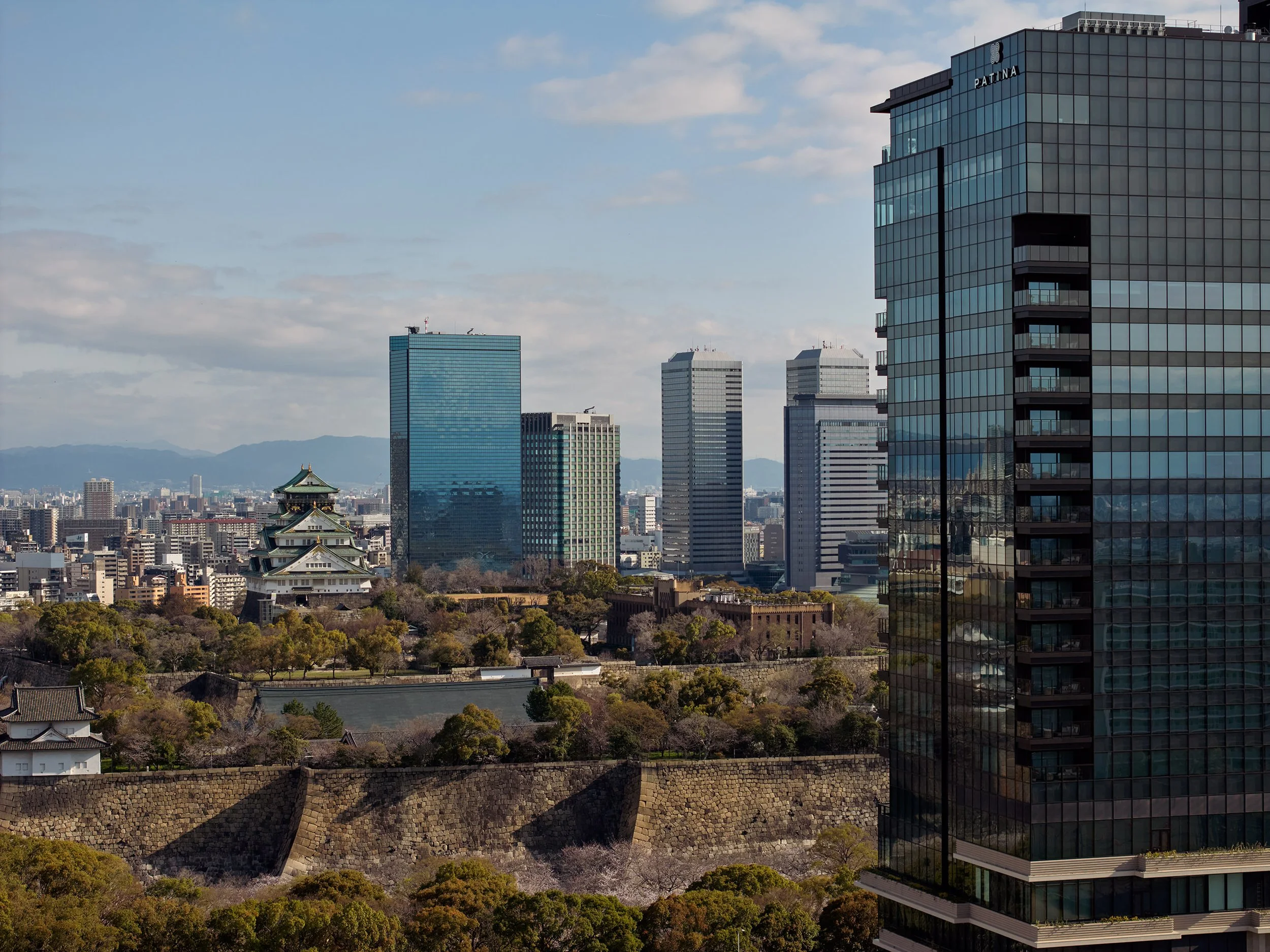
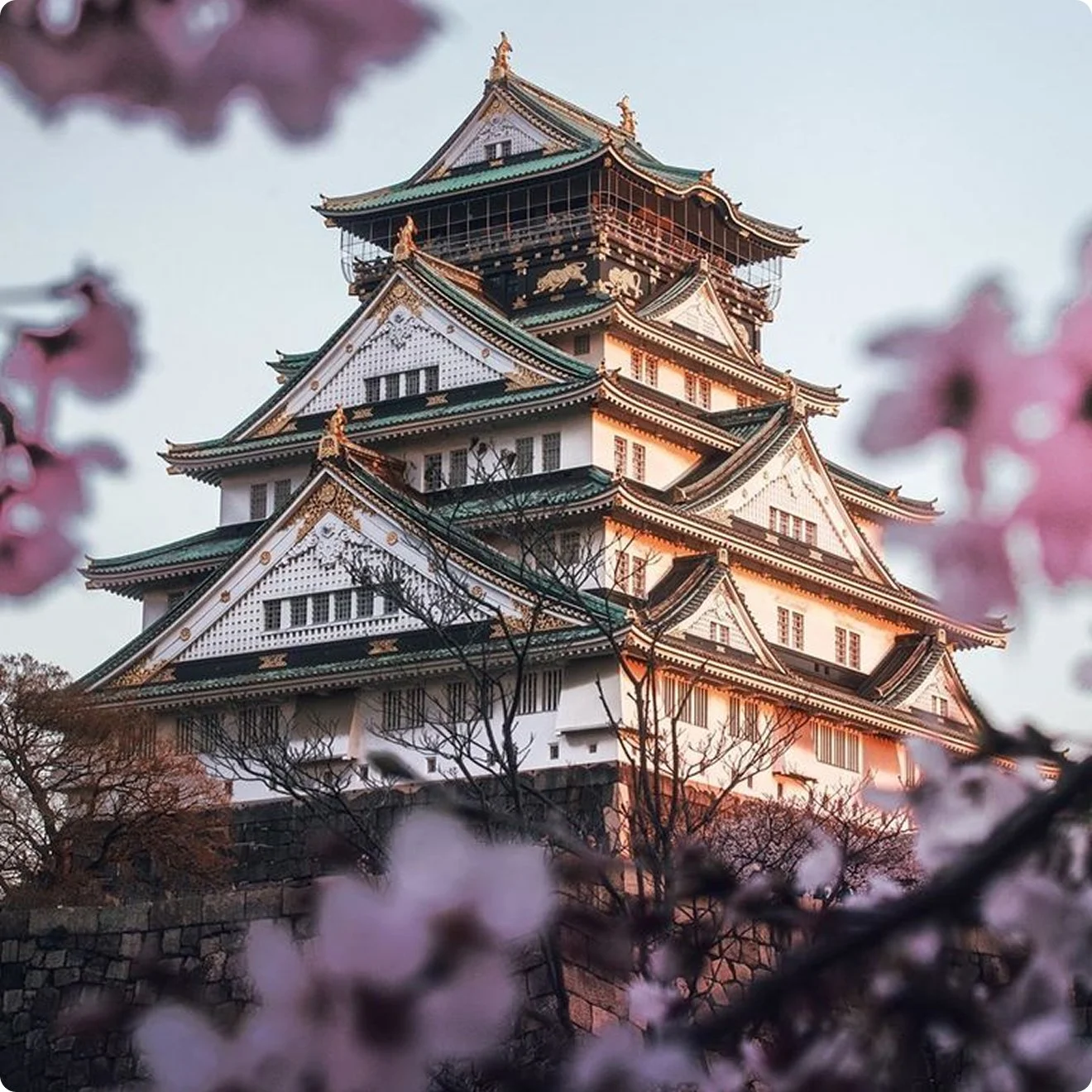
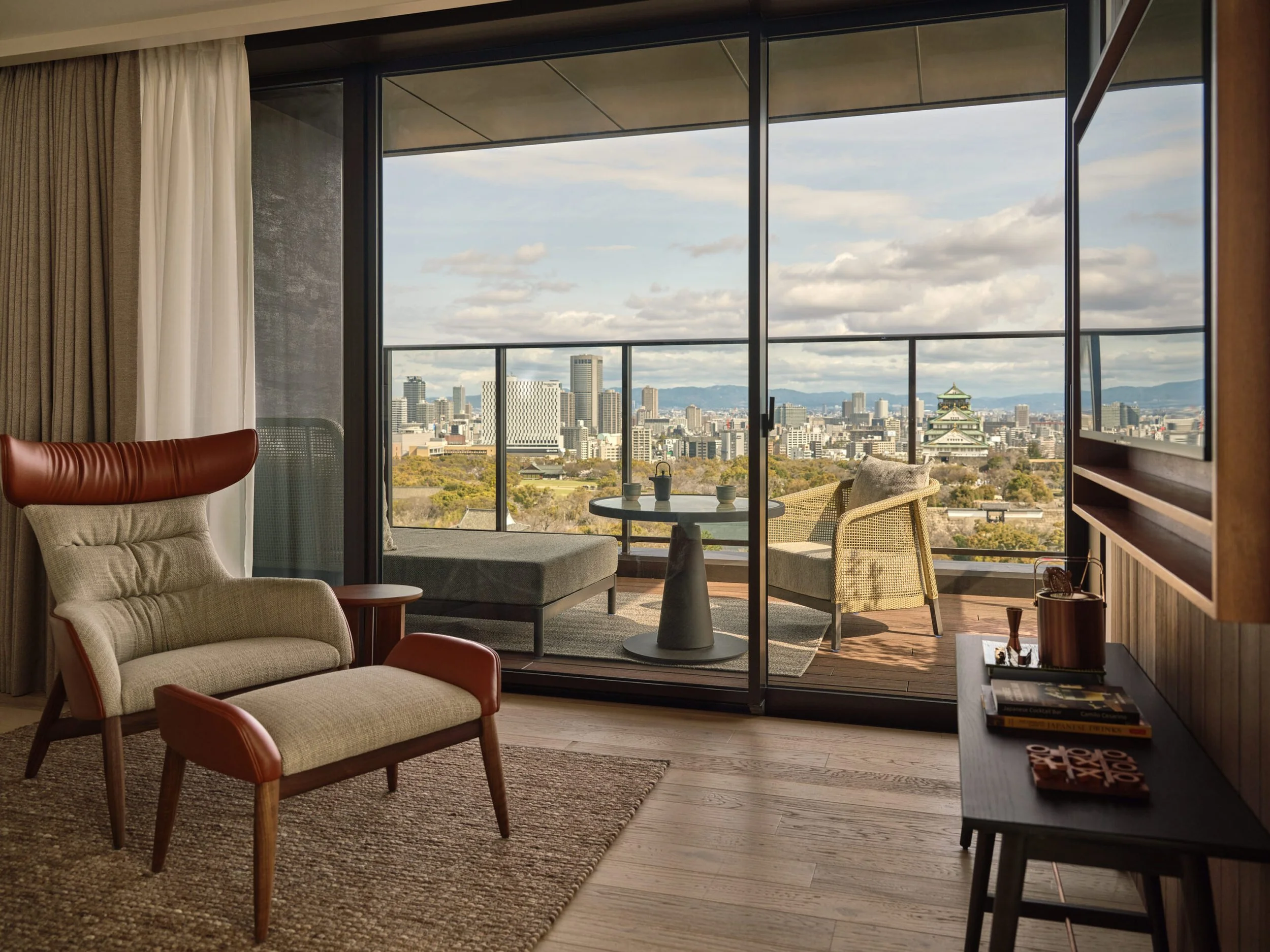
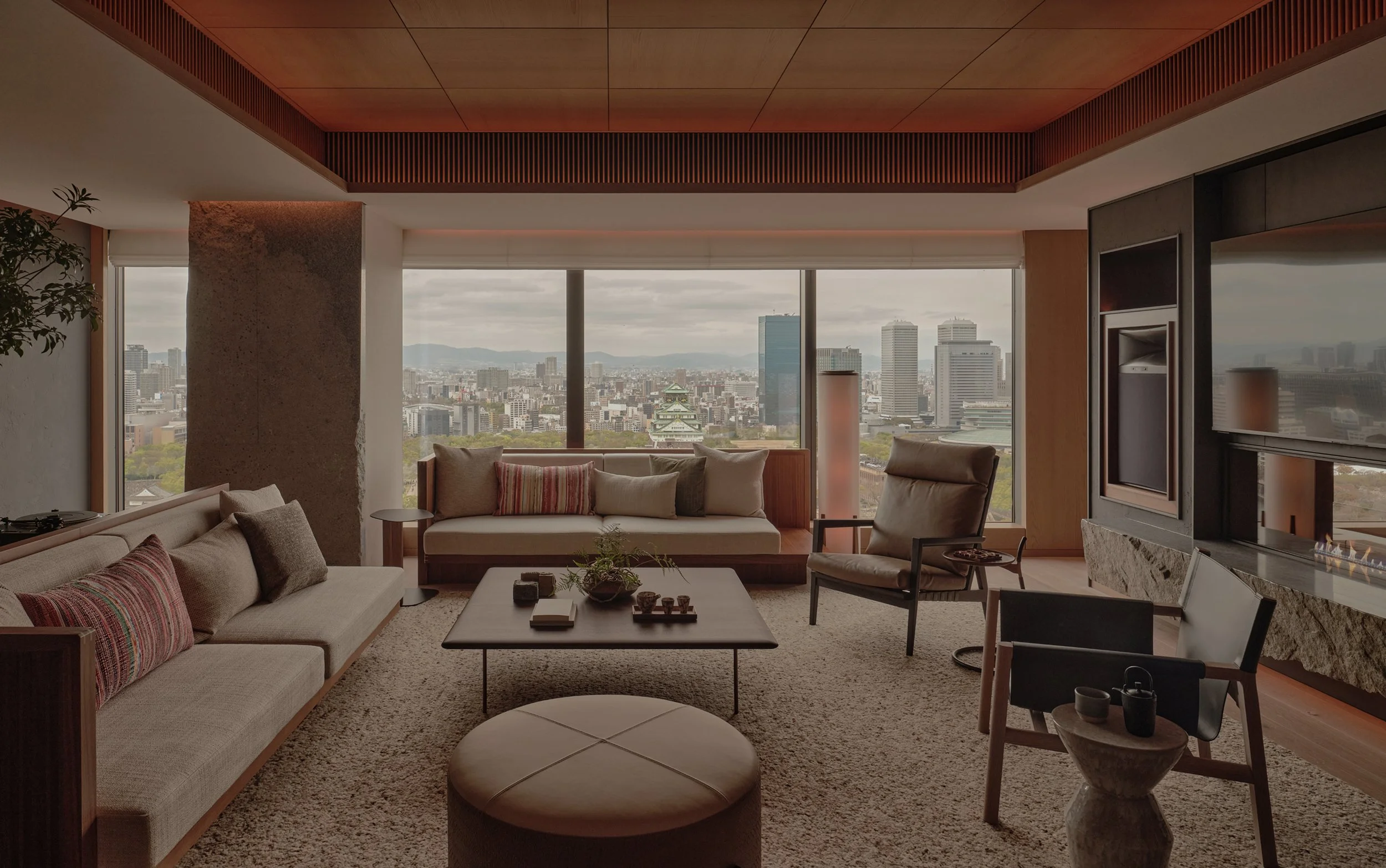
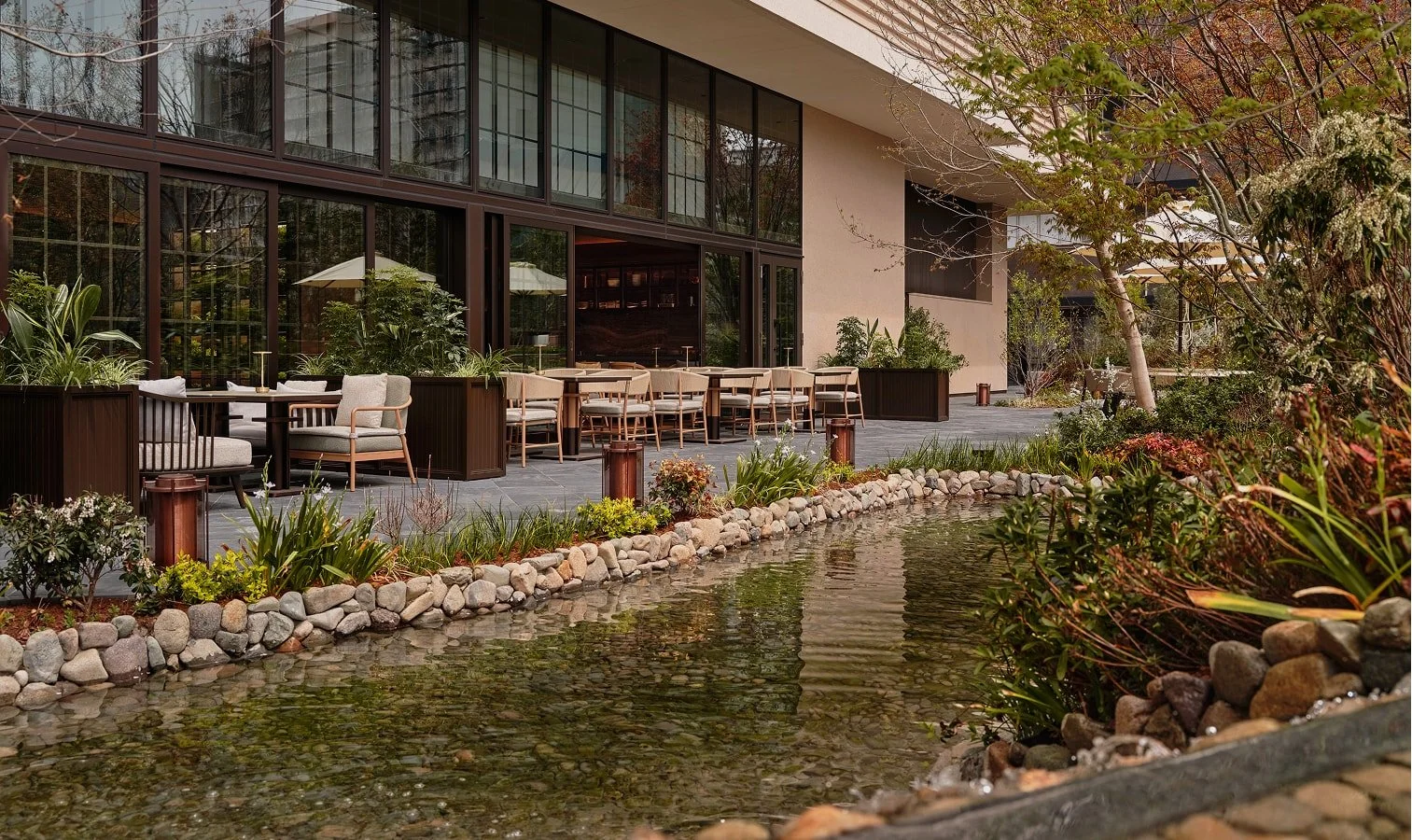
From Patina Osaka, the city reveals itself through an unusually generous stretch of green. Osaka Castle rises beyond its surrounding parkland, while the grounds of Naniwanomiya Palace offer another connection to the city’s past. Inside, natural materials, spacious accommodations, and a thoughtful emphasis on music and wellbeing give the hotel a character that feels distinctly its own.
Opened in May 2025, Patina Osaka brings 221 rooms and suites to a neighborhood where historical landmarks and everyday city life meet. Its position provides easy access to Osaka’s cultural attractions while offering some distance from the busiest shopping and nightlife districts.
In 2026, Travel + Leisure readers voted Patina Osaka the No. 1 hotel in the world in the publication’s World’s Best Awards – recognition earned just over a year after its opening.
For us, that balance is central to the hotel’s appeal. Osaka rewards enthusiastic exploration, particularly around its food scene, but there is equal pleasure in returning to a quiet room, an afternoon tea overlooking the city, or a listening session where the only agenda is the next record.
A New Chapter Beside an Ancient Capital
Patina Osaka is the brand’s first urban hotel and its first property in Japan, following the debut of Patina Maldives, Fari Islands. Part of Capella Hotel Group, Patina places particular emphasis on contemporary design, creative collaboration, and experiences that connect travelers with their surroundings.
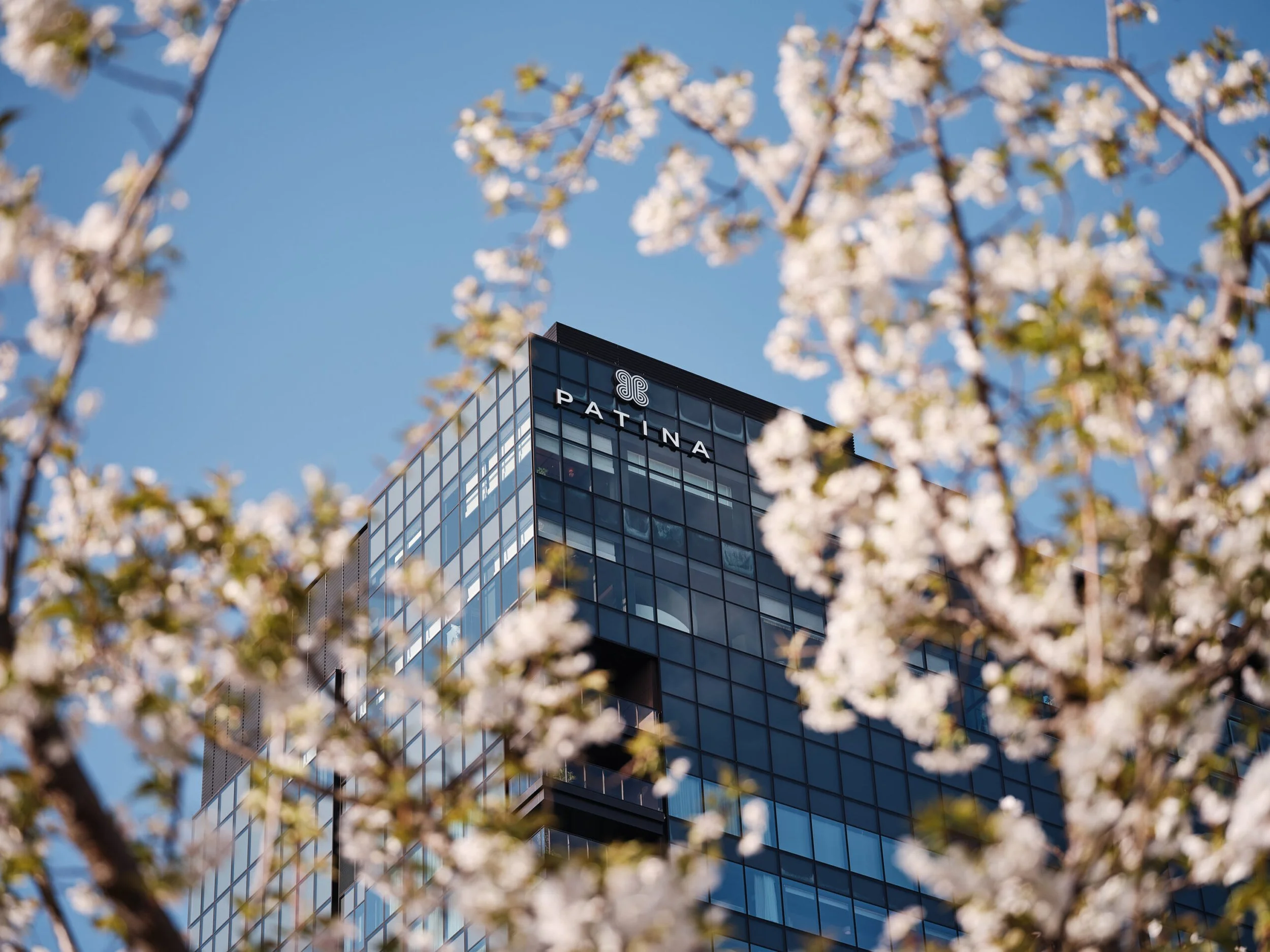
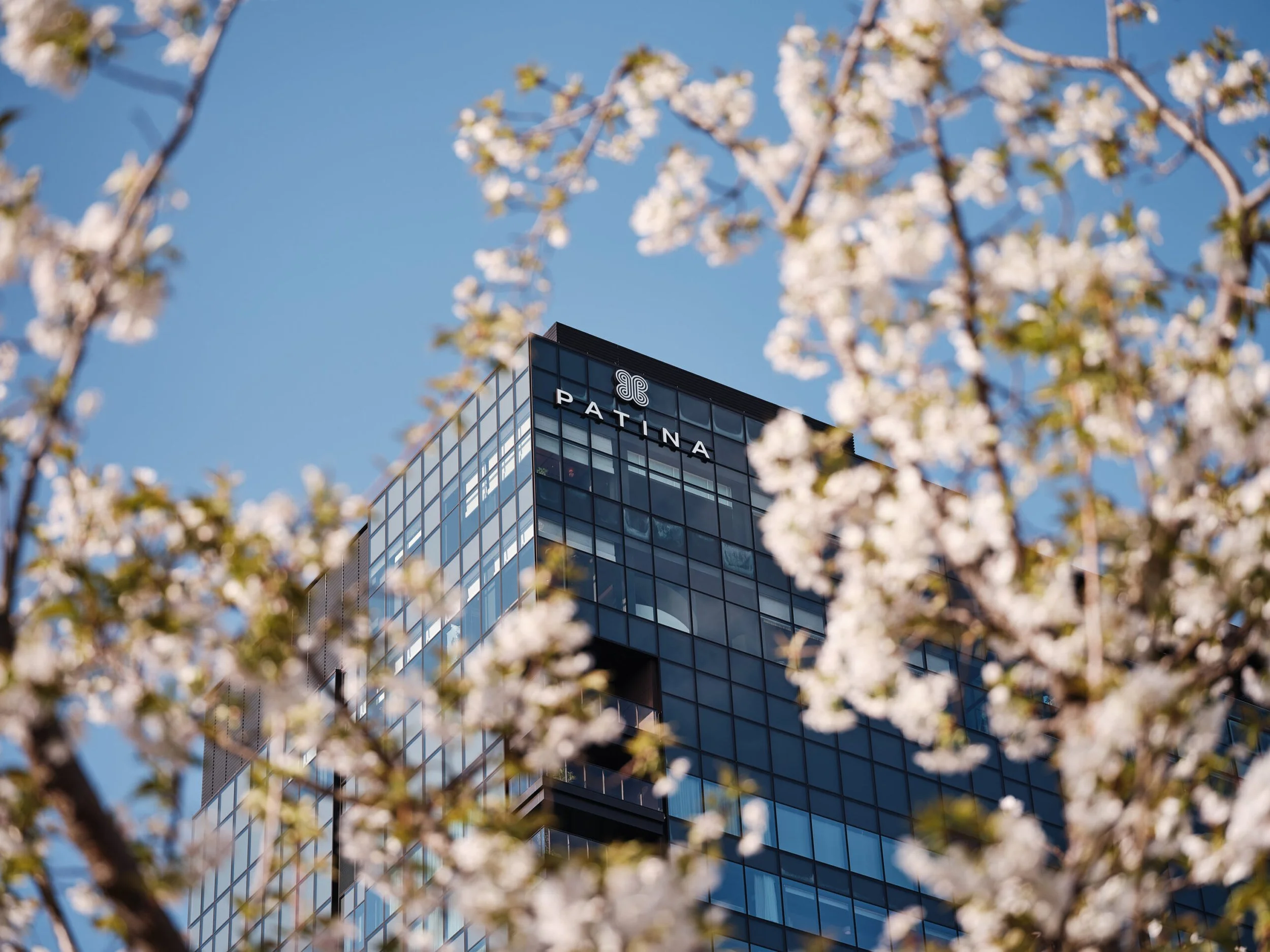
The Osaka property occupies a newly constructed, 20-story building. Its historical context comes from the neighborhood: Osaka Castle and the nearby Naniwanomiya Palace site connect this part of the city to successive periods of political and cultural importance.
That setting gives the hotel an interesting perspective. The building belongs to contemporary Osaka, yet many of its views are framed by landscapes associated with the city’s earlier identities. References to those surroundings appear throughout the interiors, establishing a relationship with the neighborhood without reproducing the appearance of a traditional Japanese inn.
Wood, Copper, and the Changing Seasons
Developed through a collaboration involving Jun Mitsui & Associates and interior design studio Strickland, the hotel draws on kisetsukan, the Japanese awareness of seasonal change.
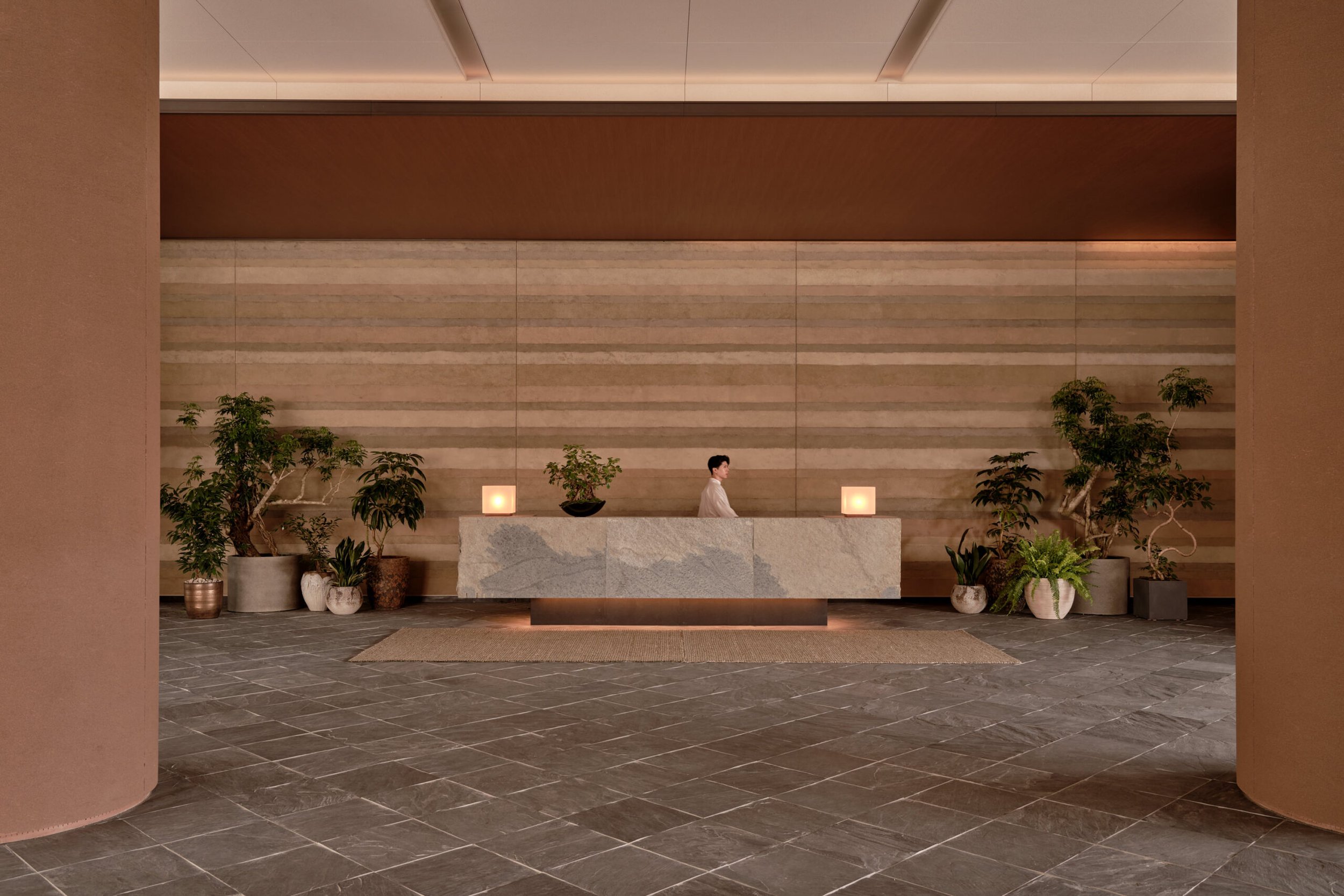
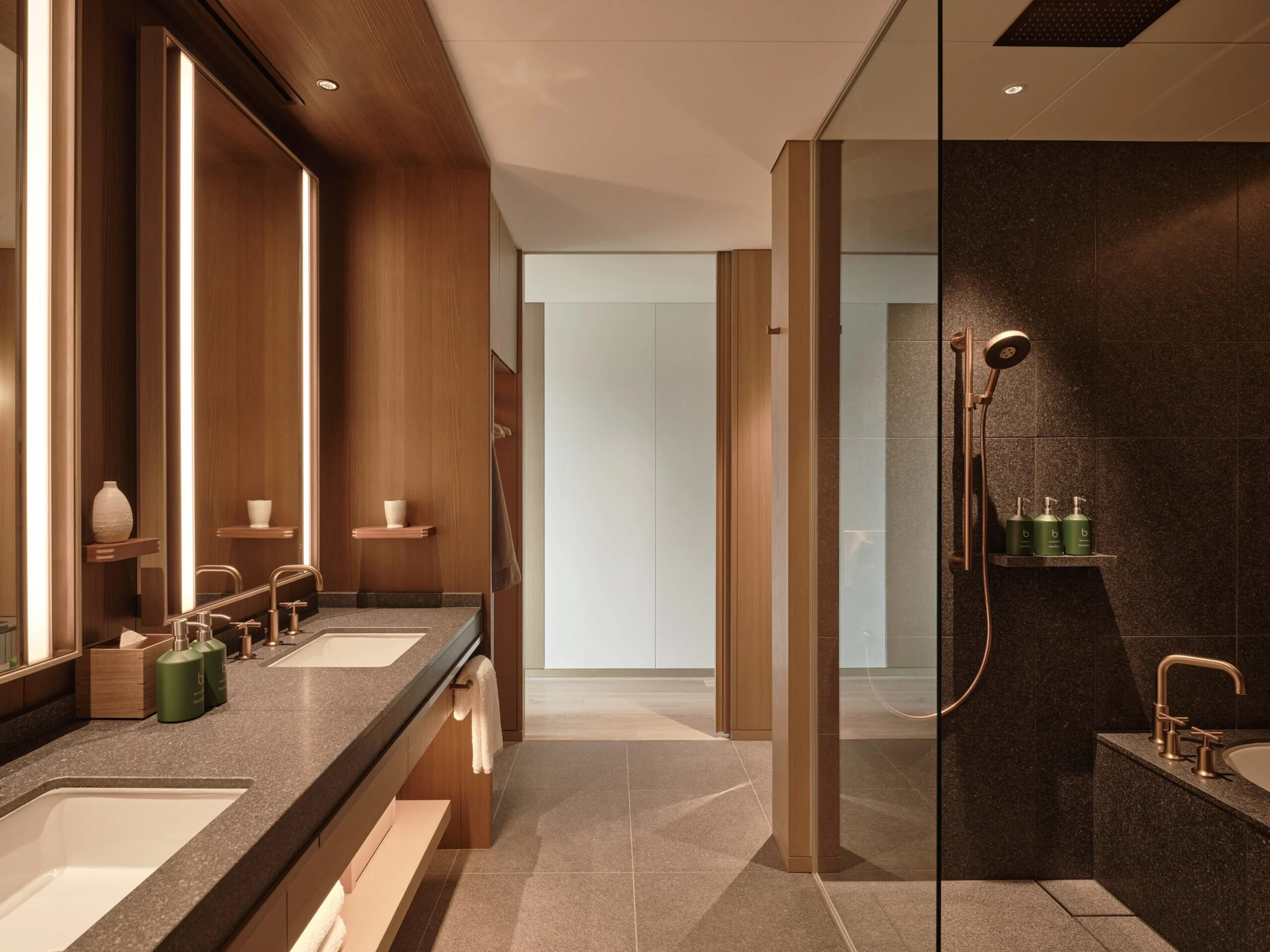
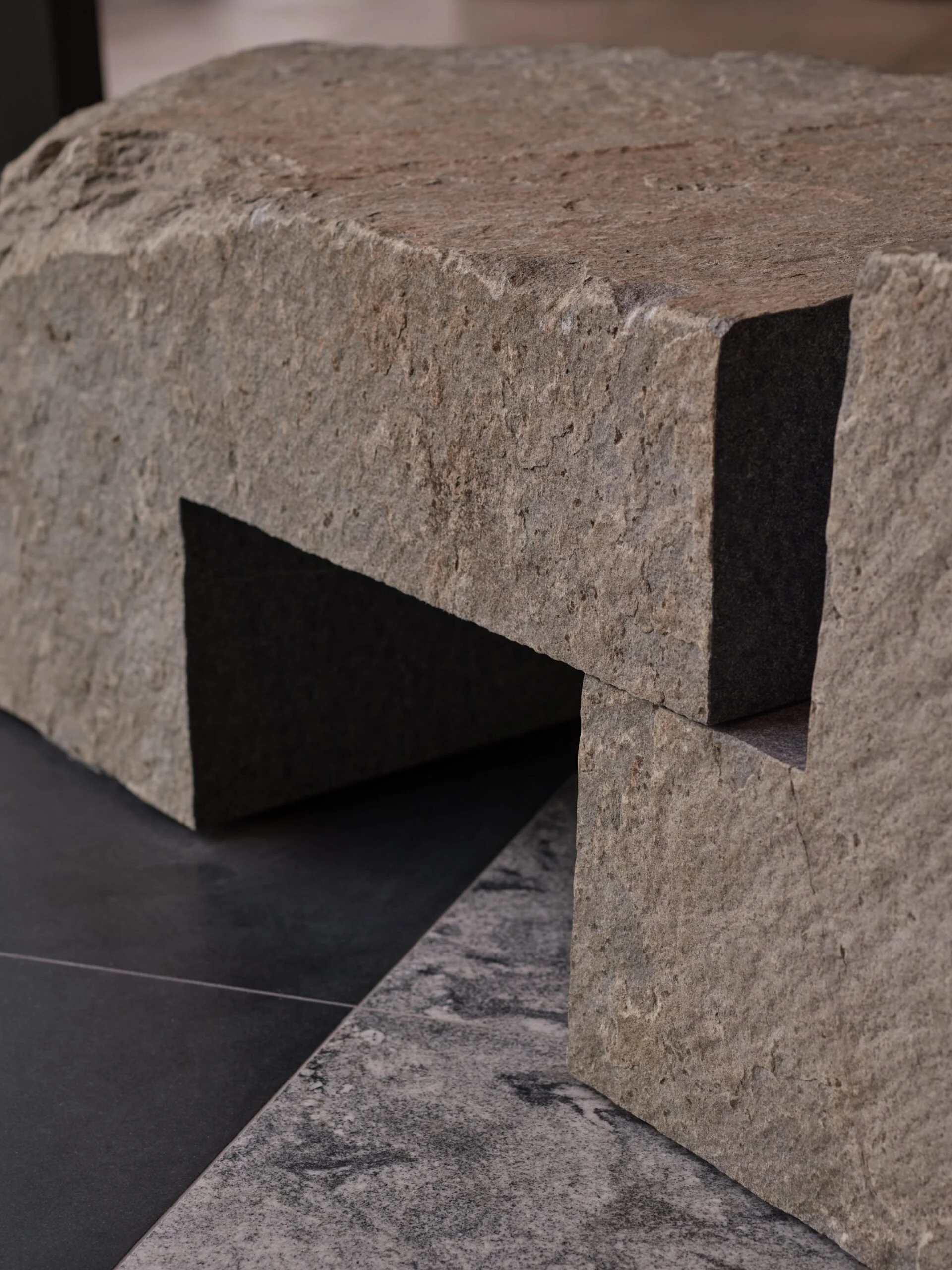
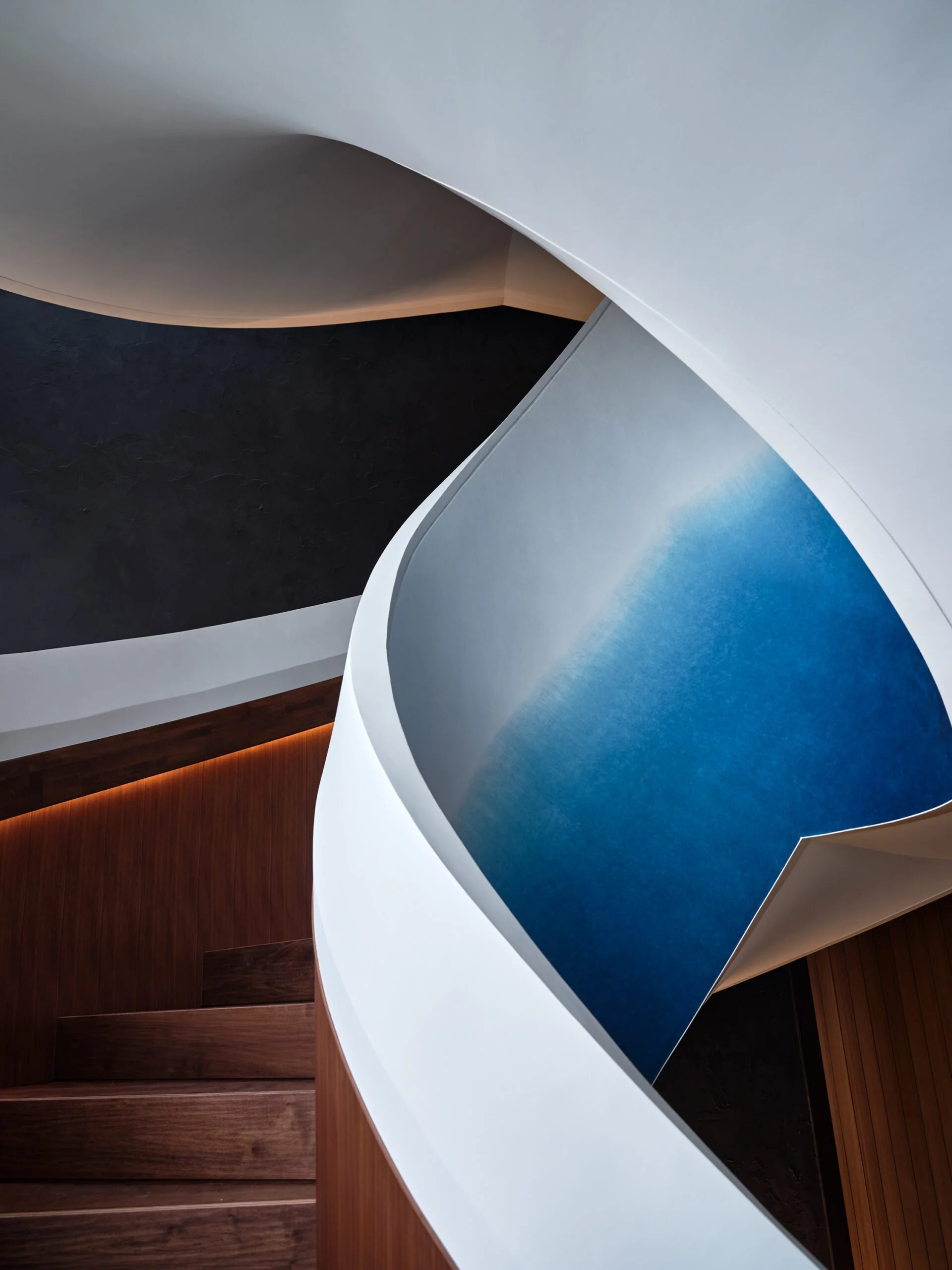
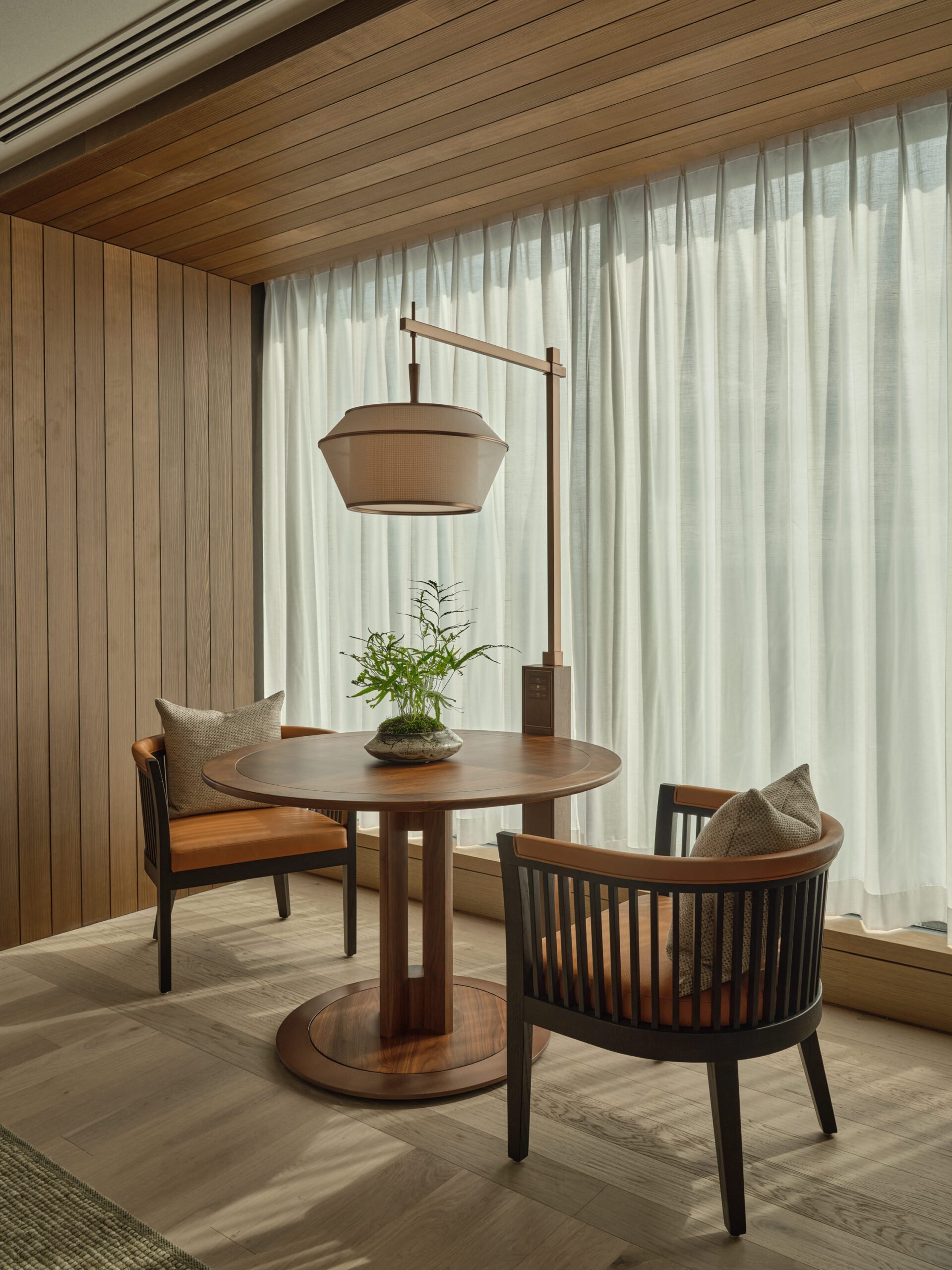
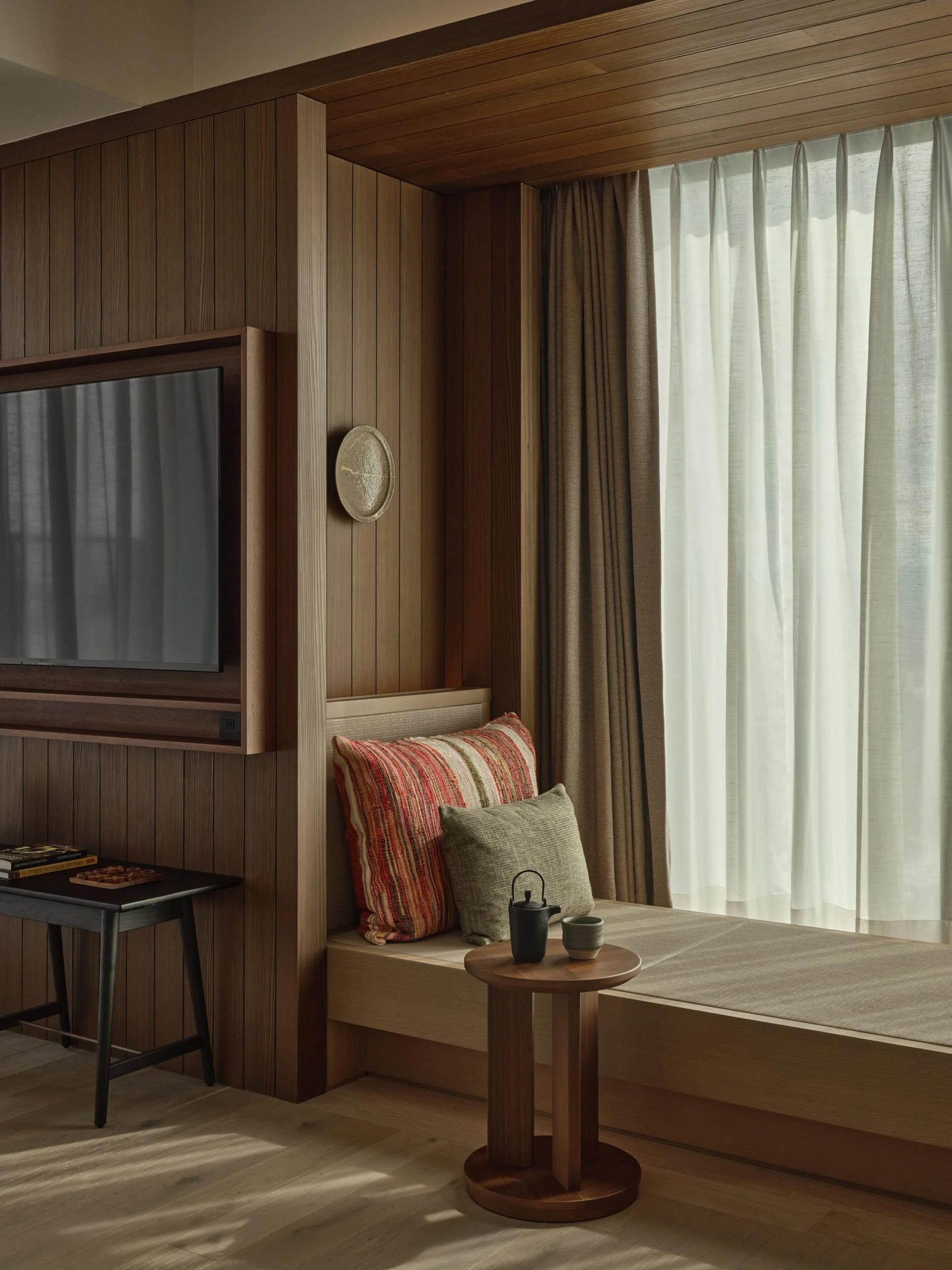
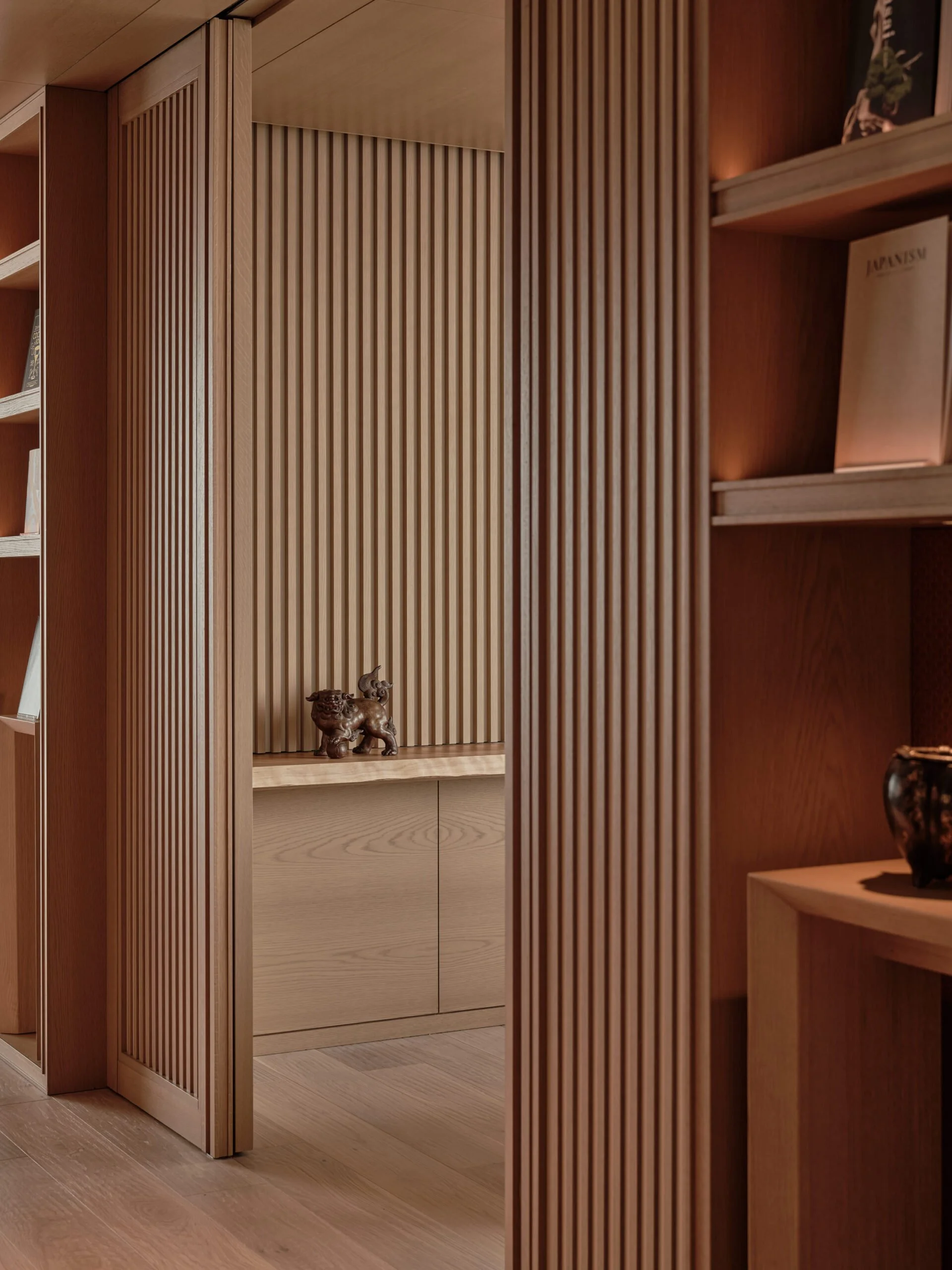
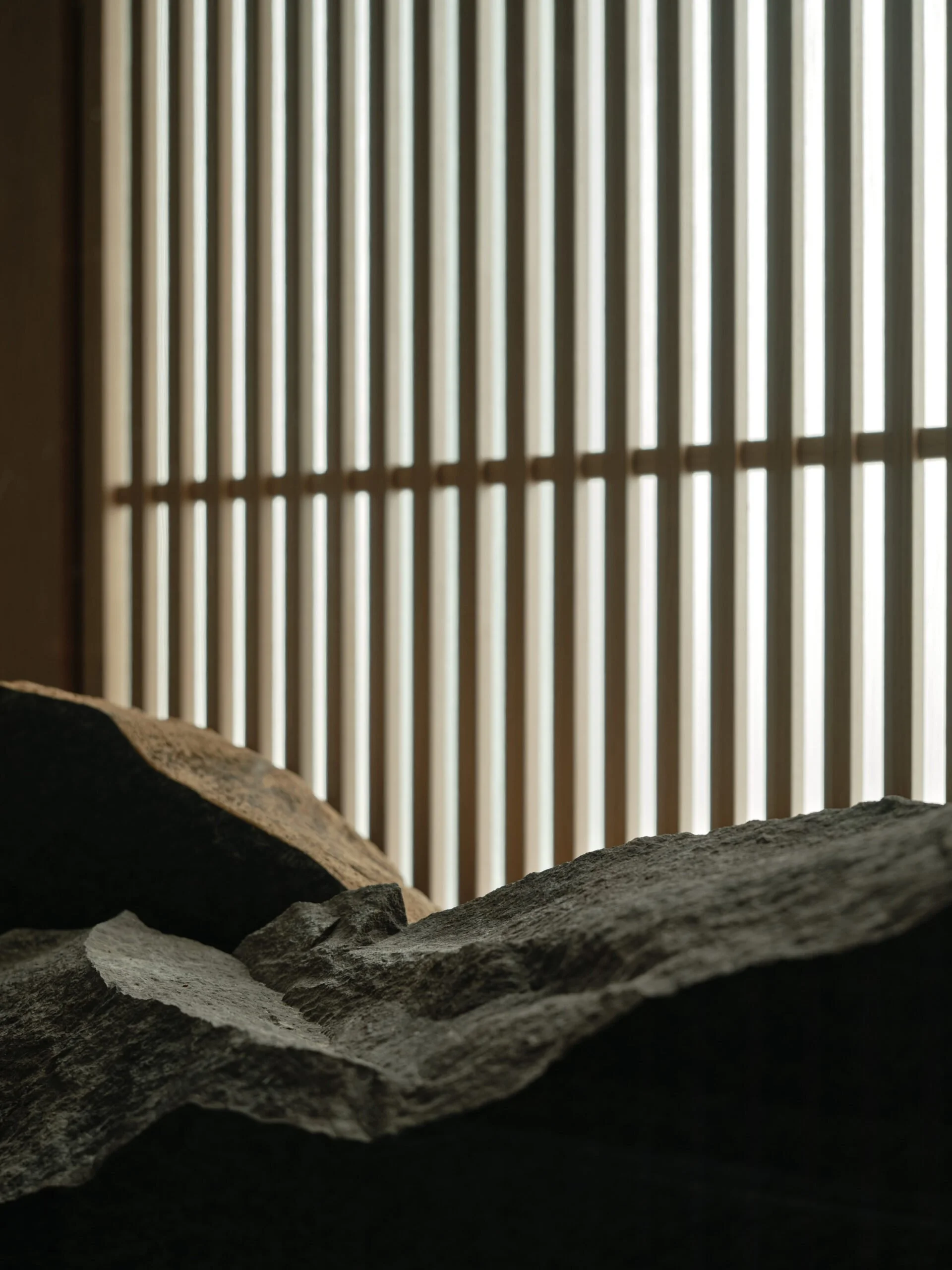
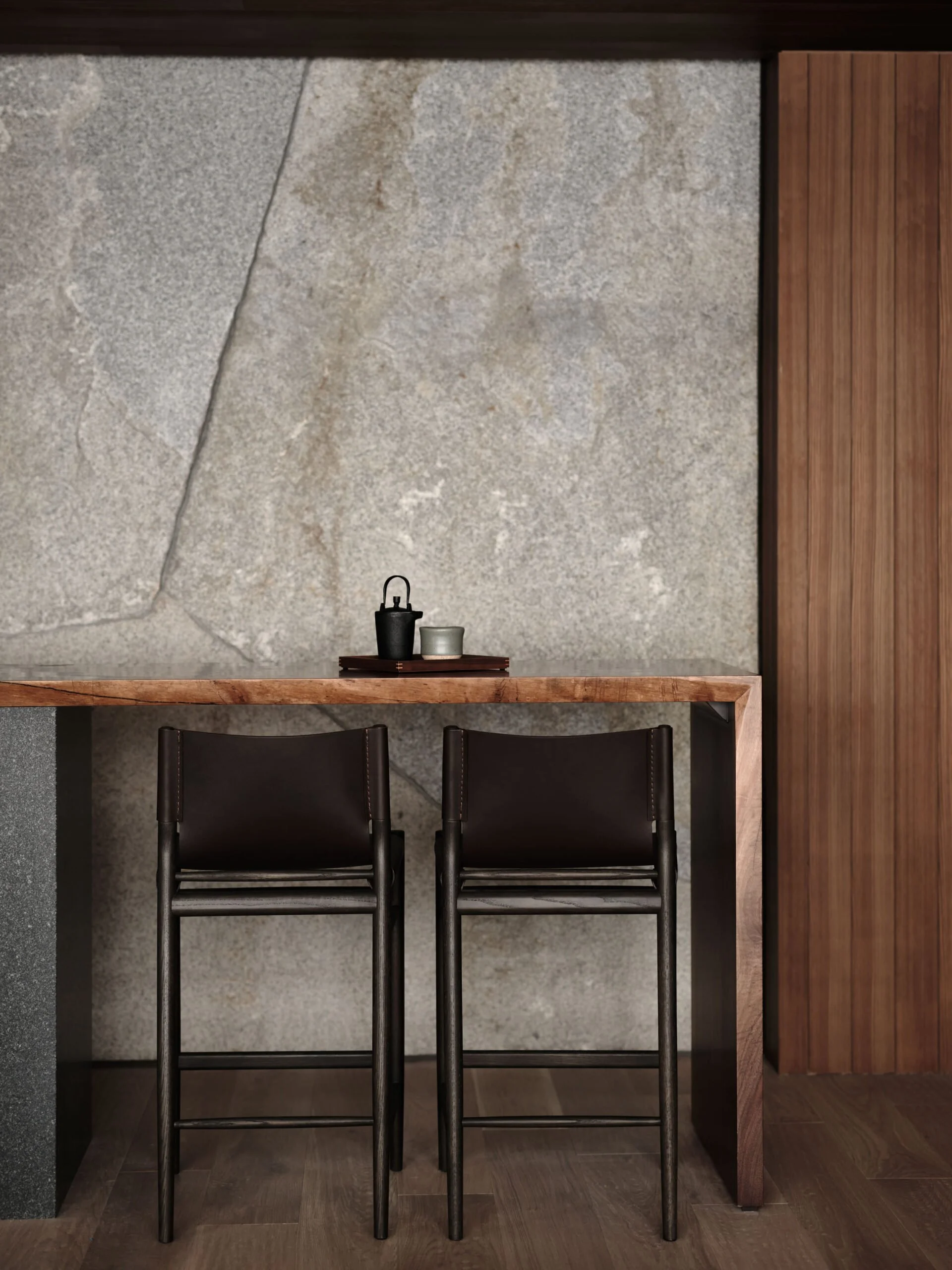
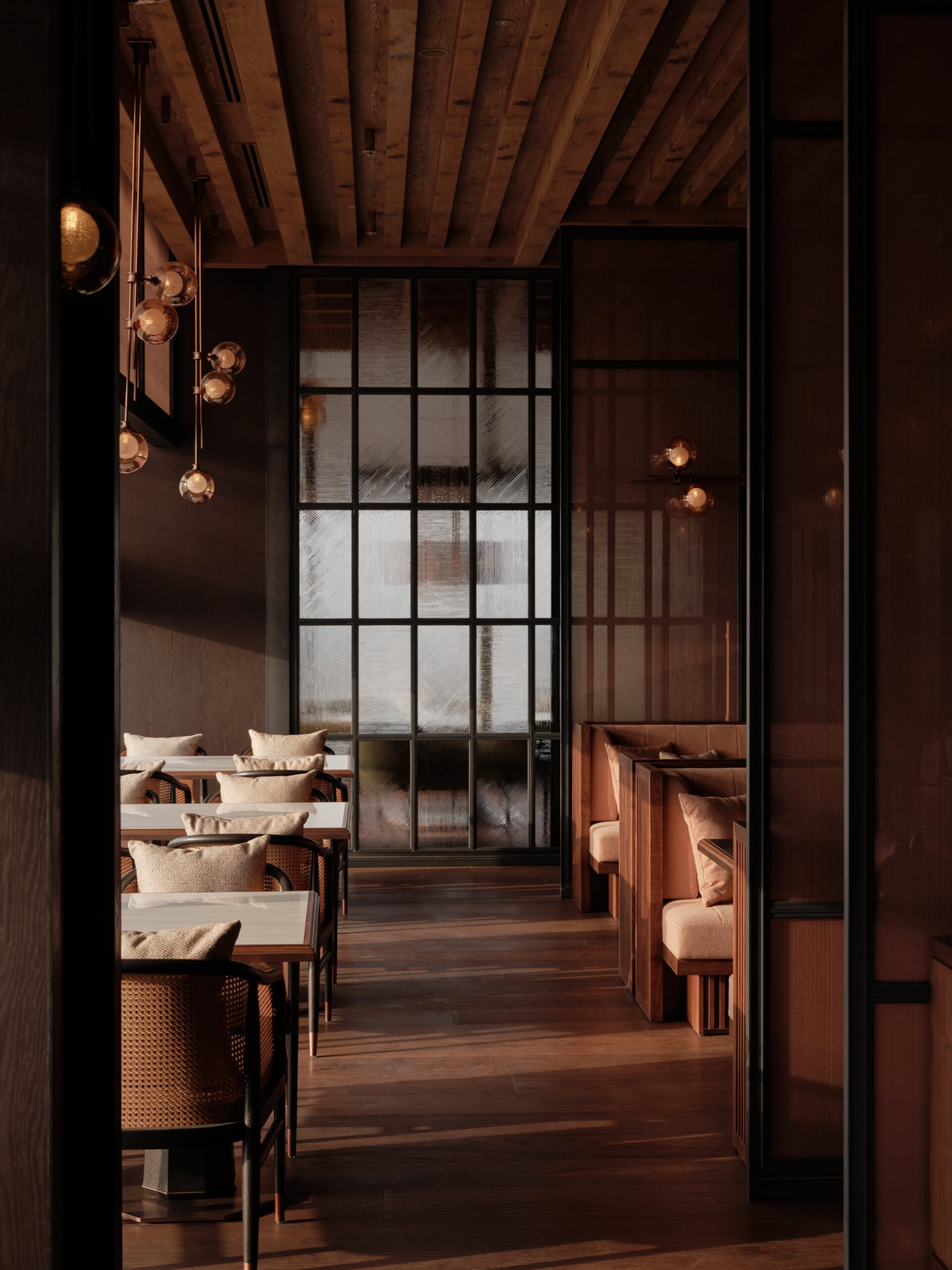
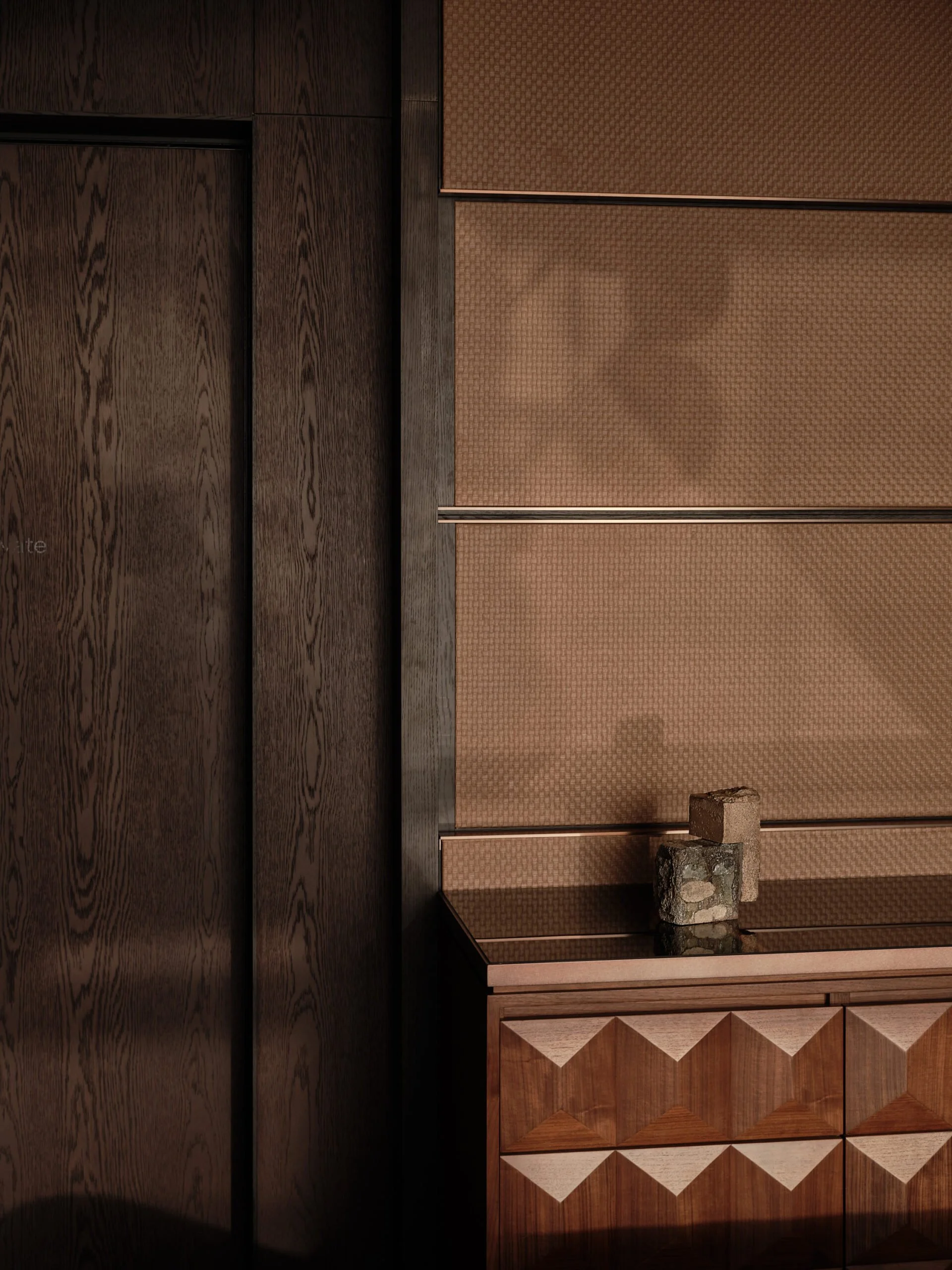
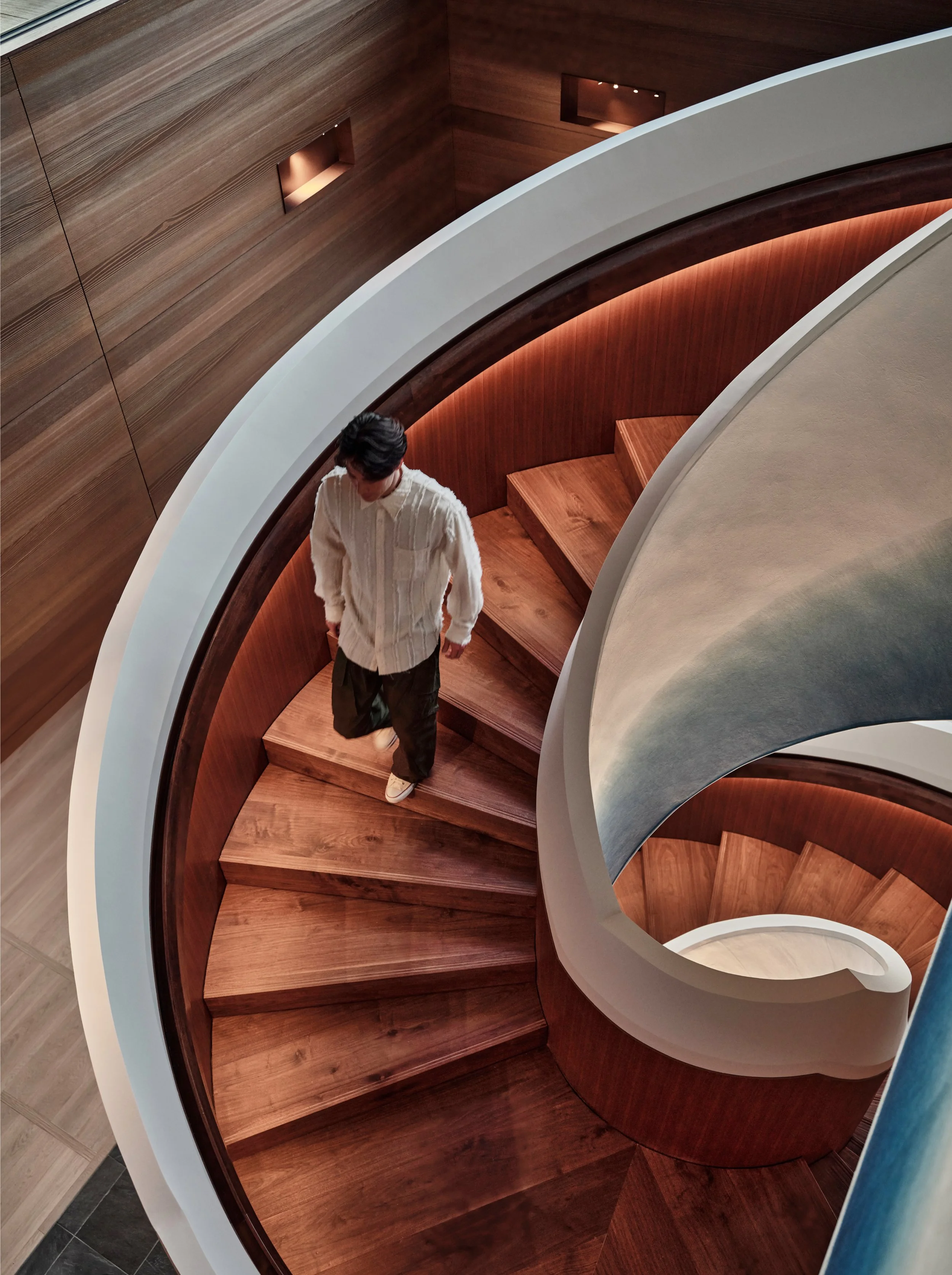
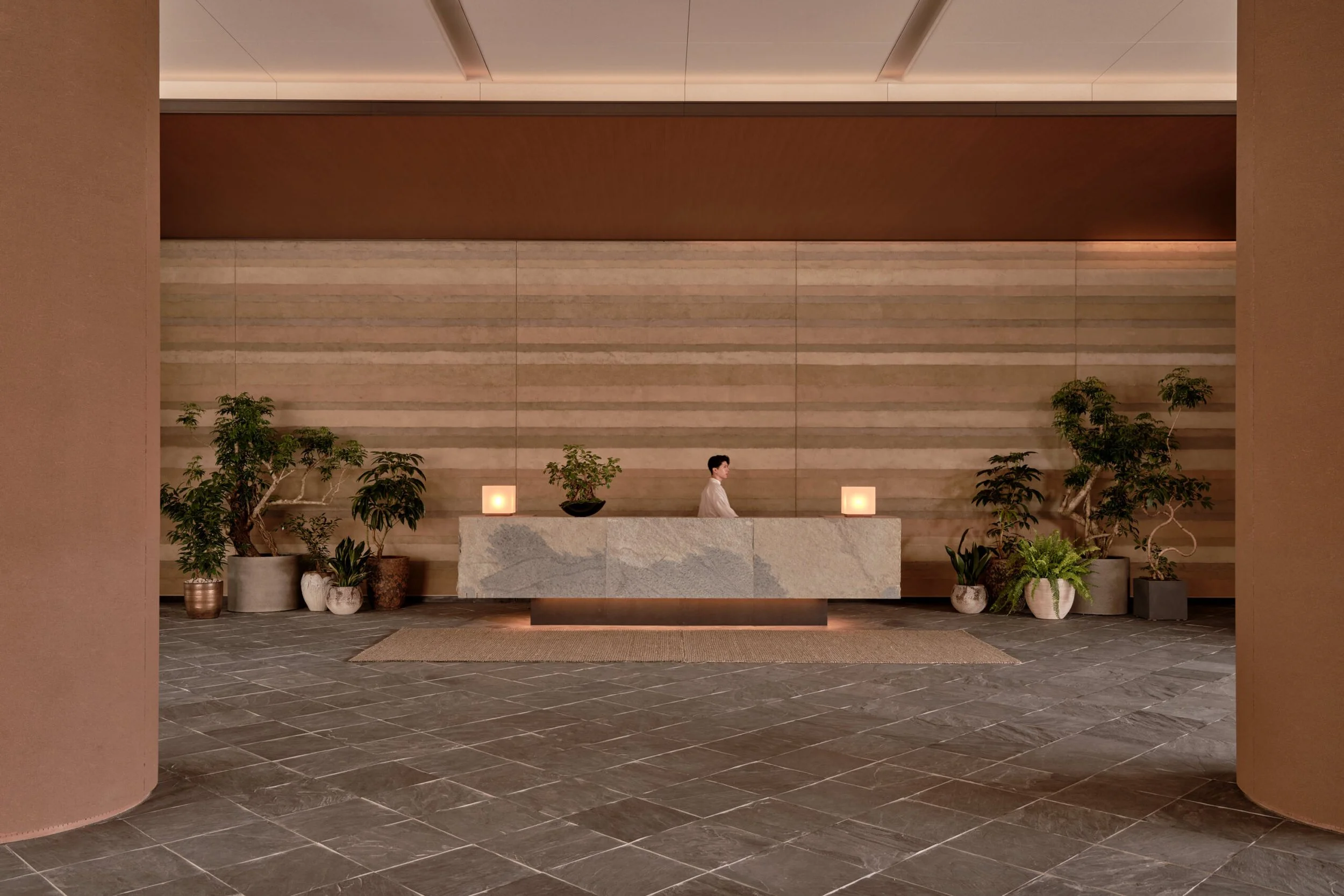
Wood, washi paper, stone, and hand-finished plaster introduce texture throughout the public spaces. Copper tones and references to water echo elements of Osaka Castle and its moat, while broad windows keep the surrounding landscape in view.
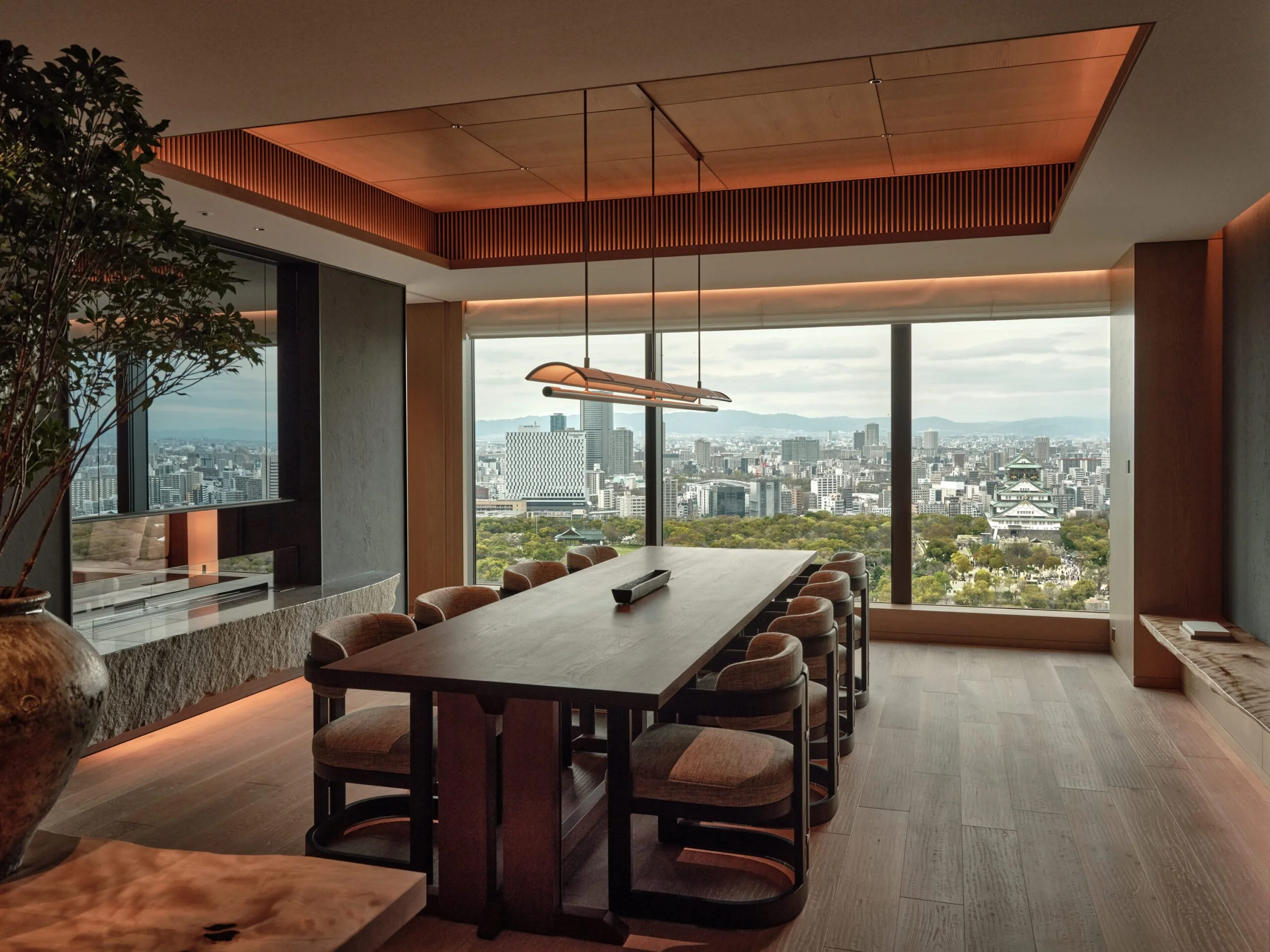
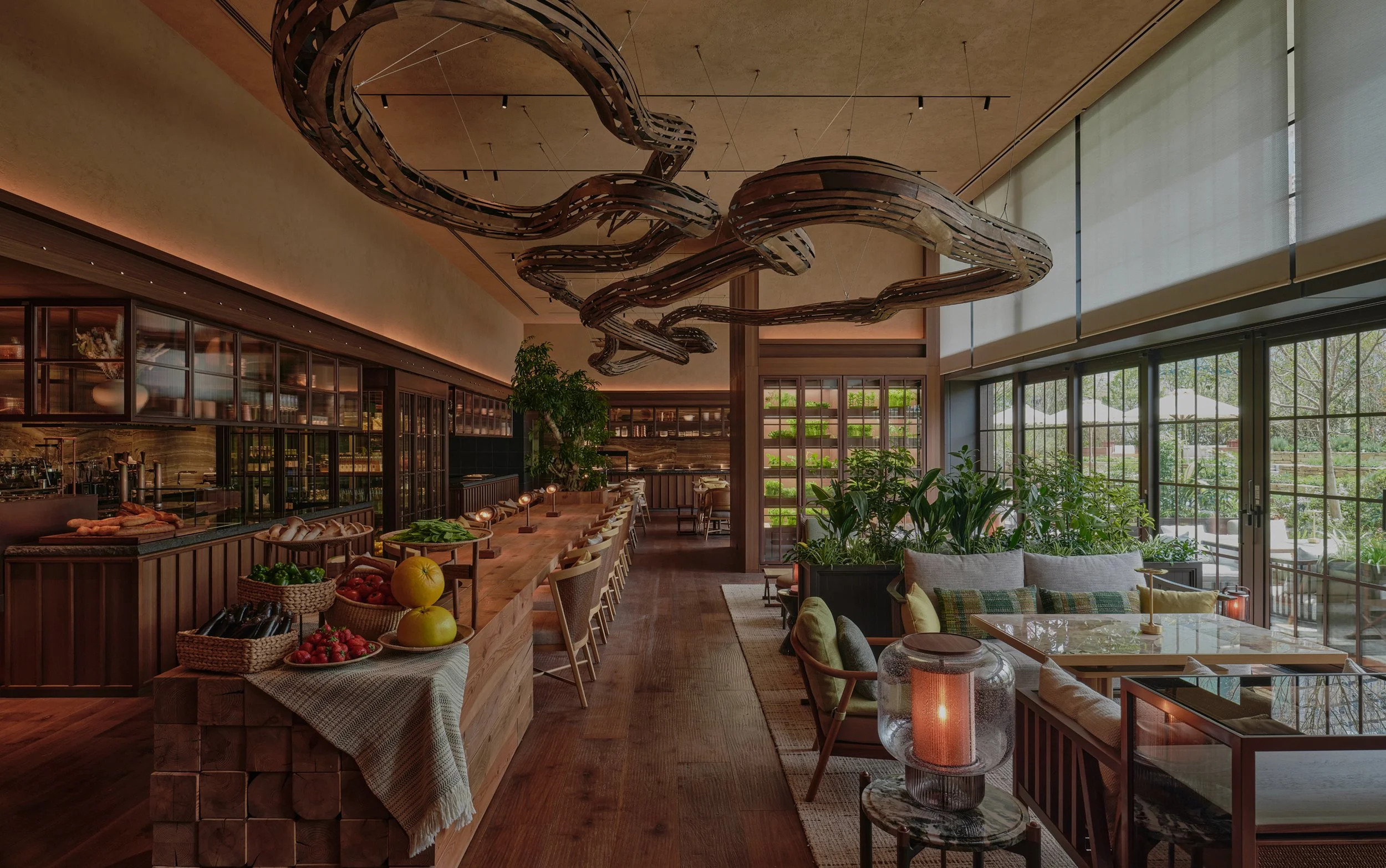
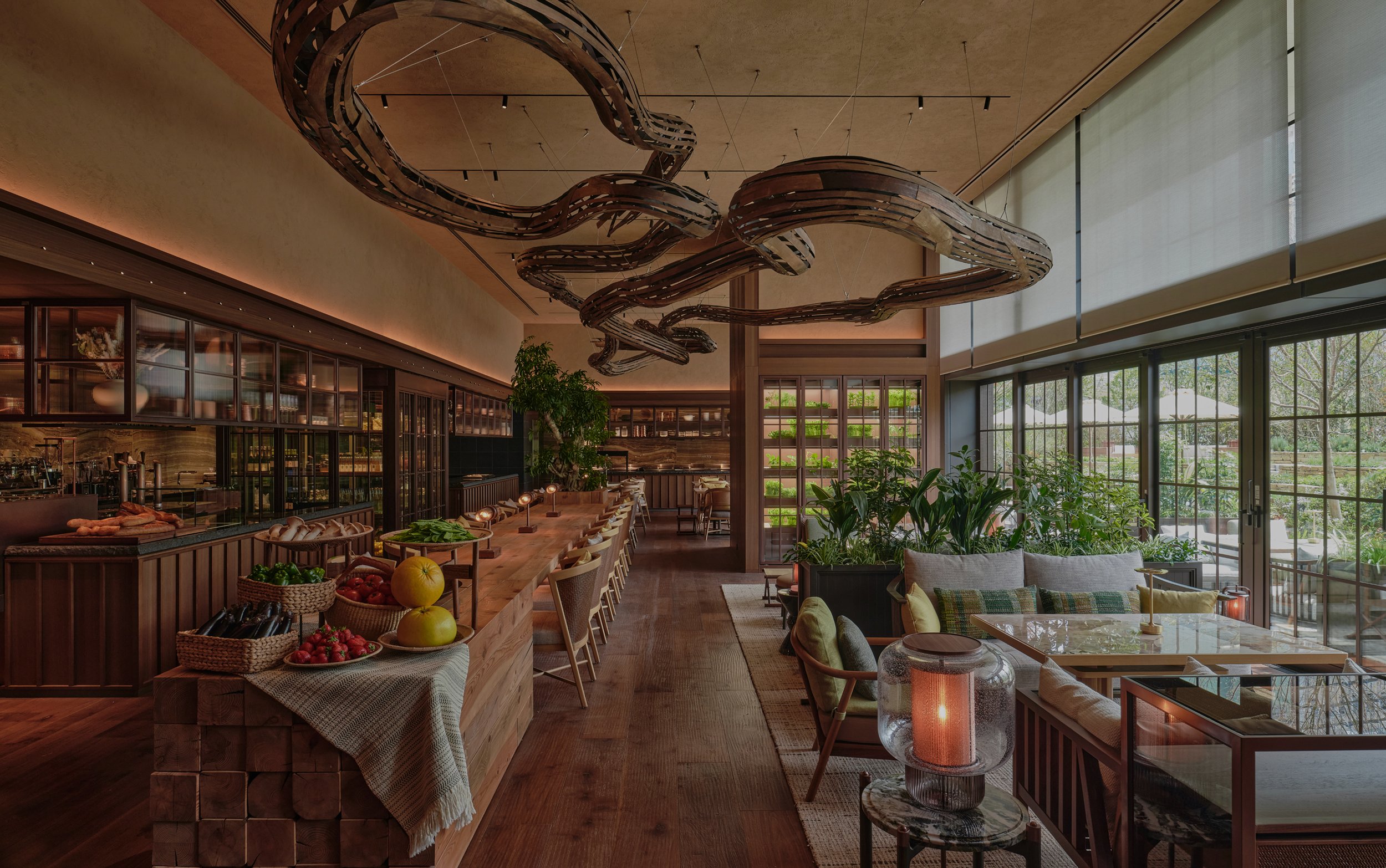
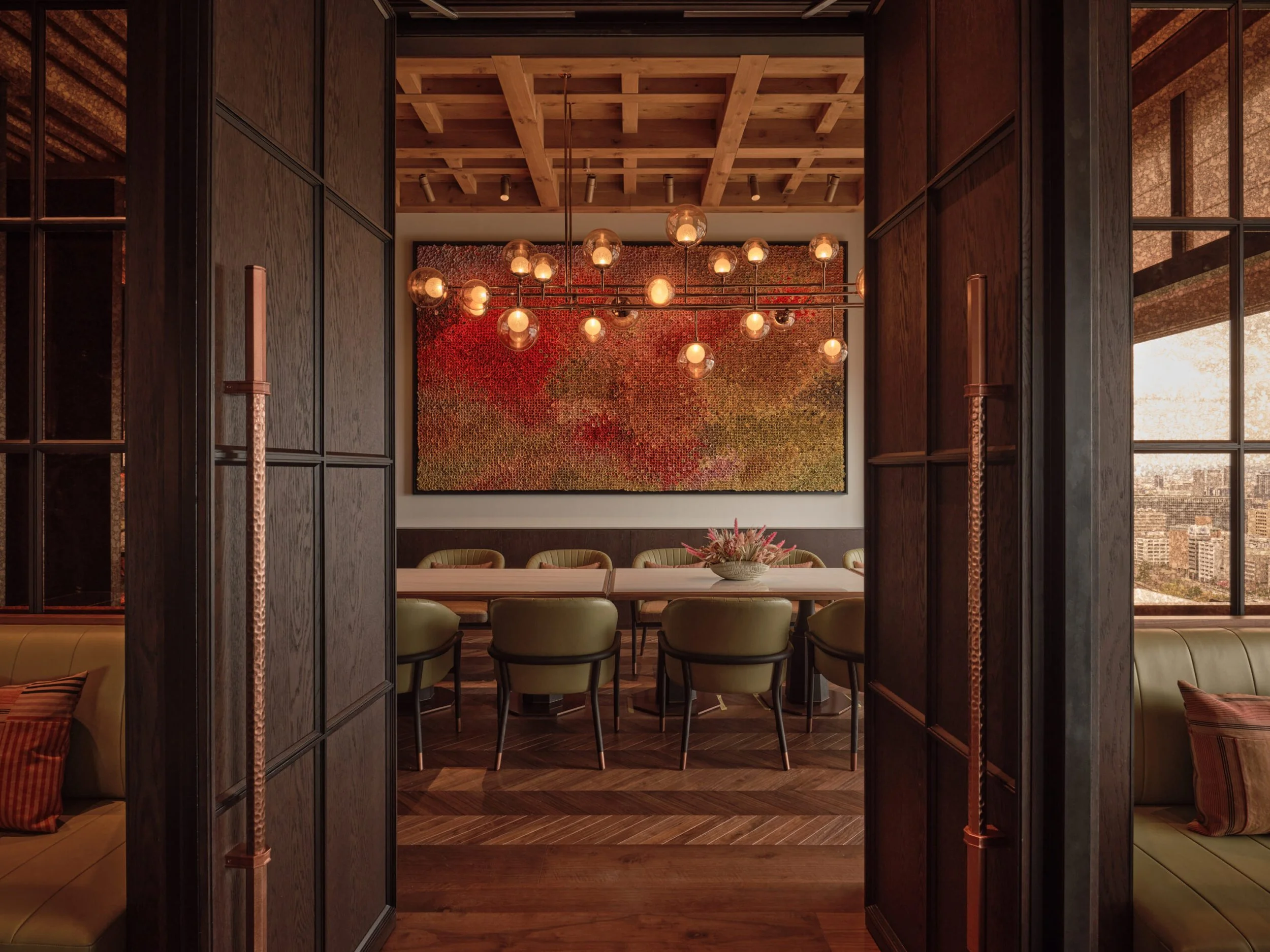
Arrival culminates on the 20th floor, where the elevated lobby establishes the hotel’s relationship with the castle and skyline. Downstairs, P72 provides a more grounded expression of the same design philosophy: a sculptural installation resembling an enormous root system stretches through the restaurant, formed from reclaimed wood.
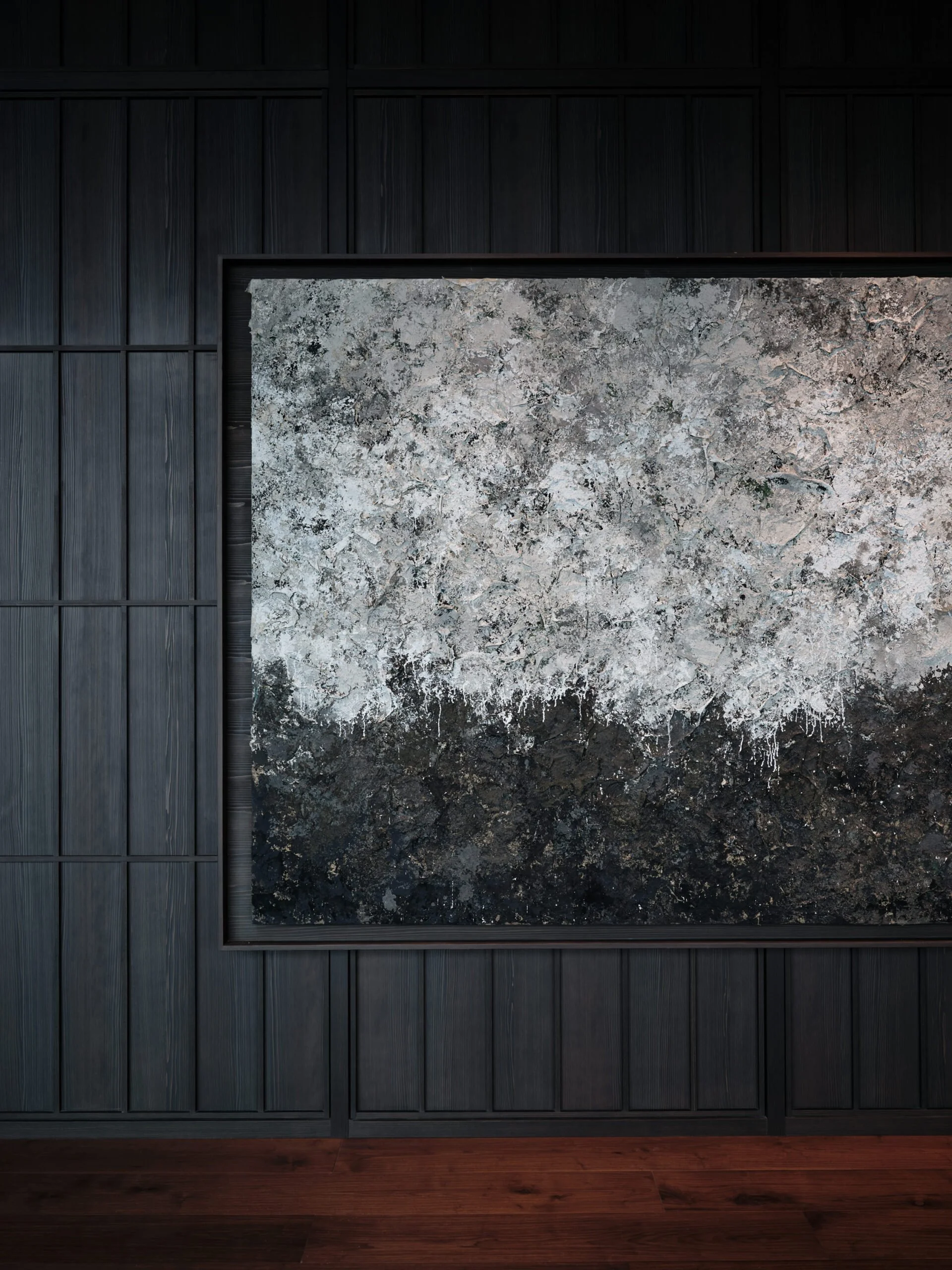
The interiors invite attention to smaller details. Changes in light, the grain of a timber surface, and the contrast between soft fabrics and textured walls become part of the experience of spending time in the hotel.
Rooms Framed by the City and Castle
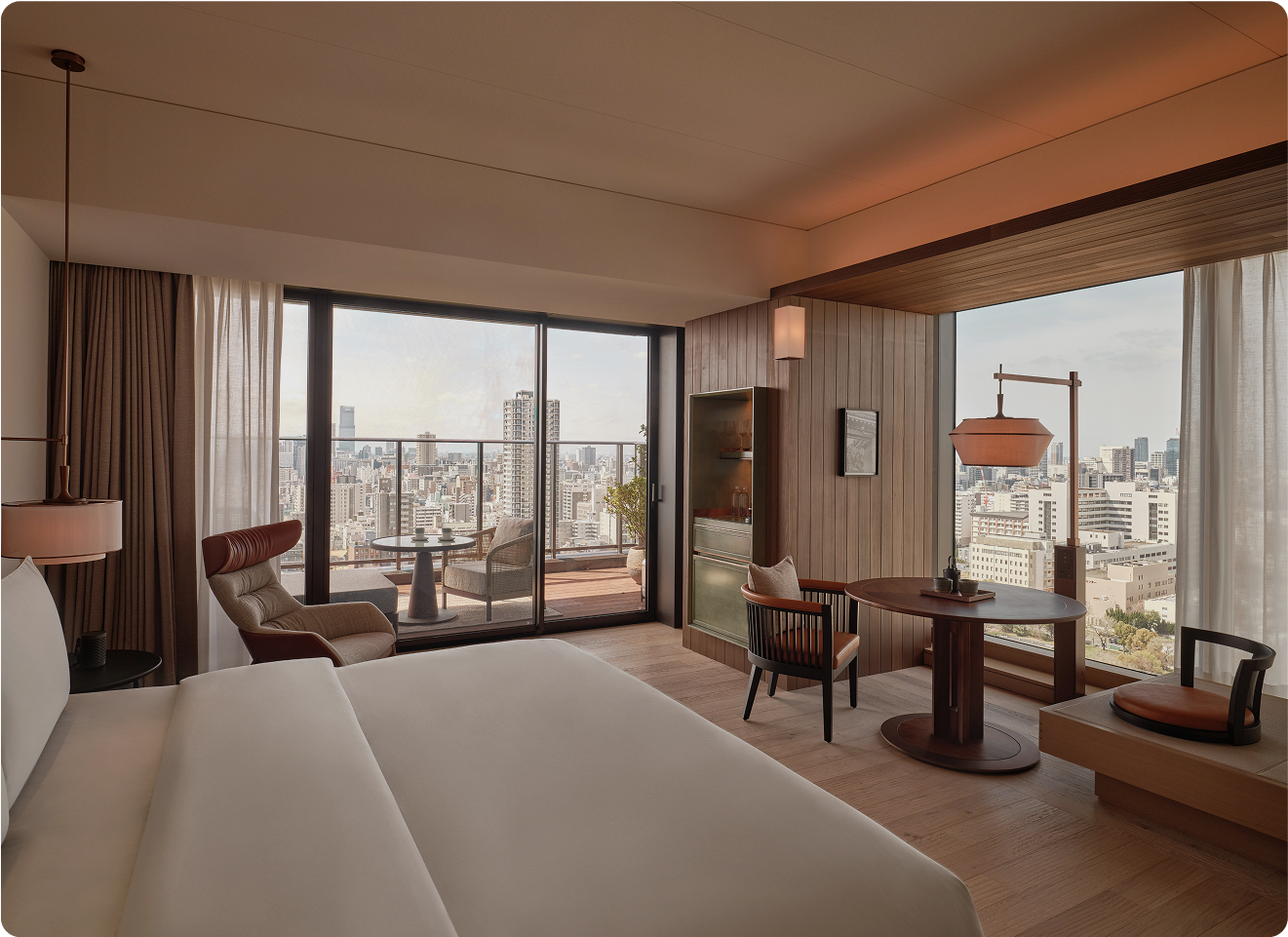
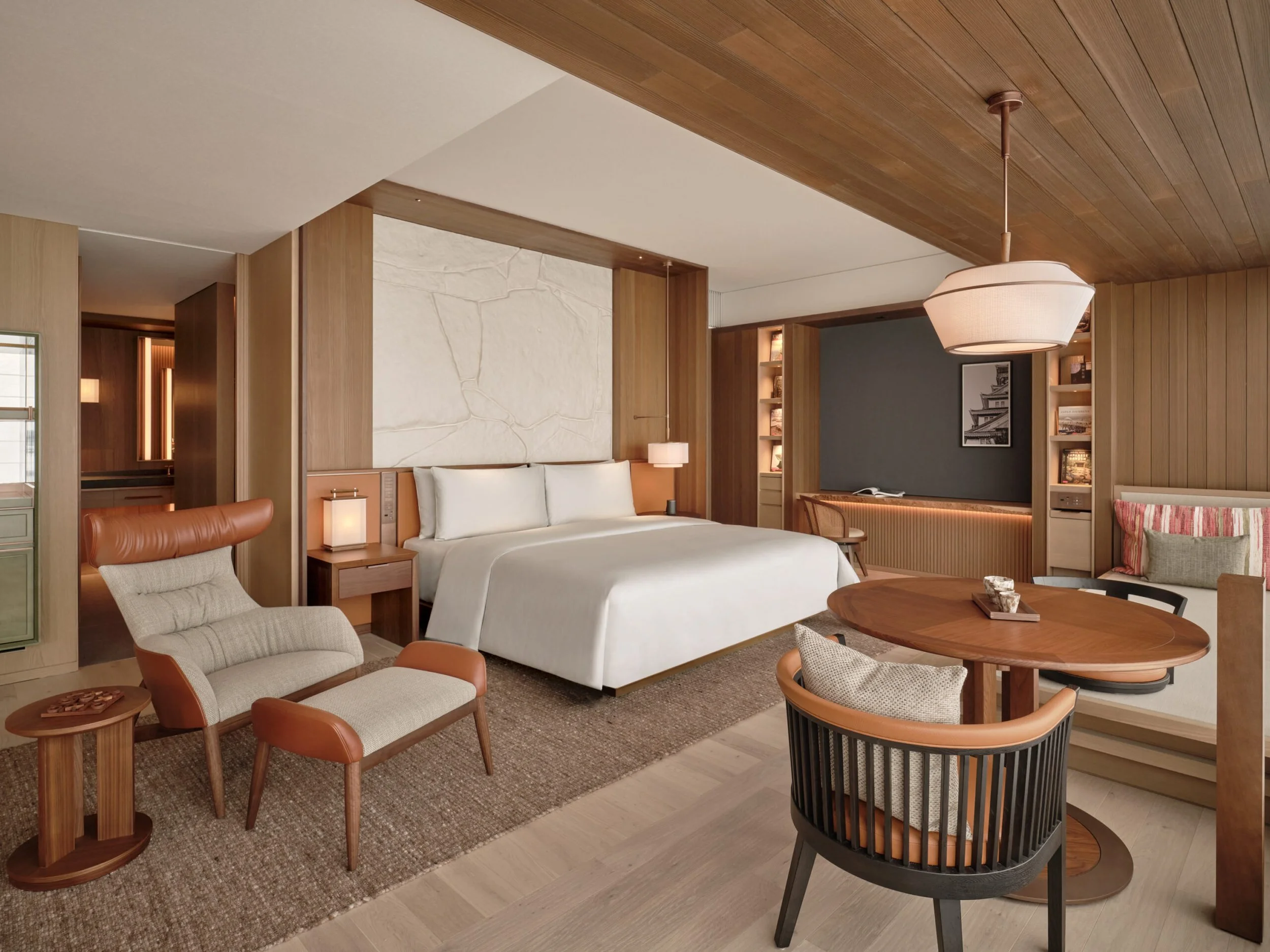
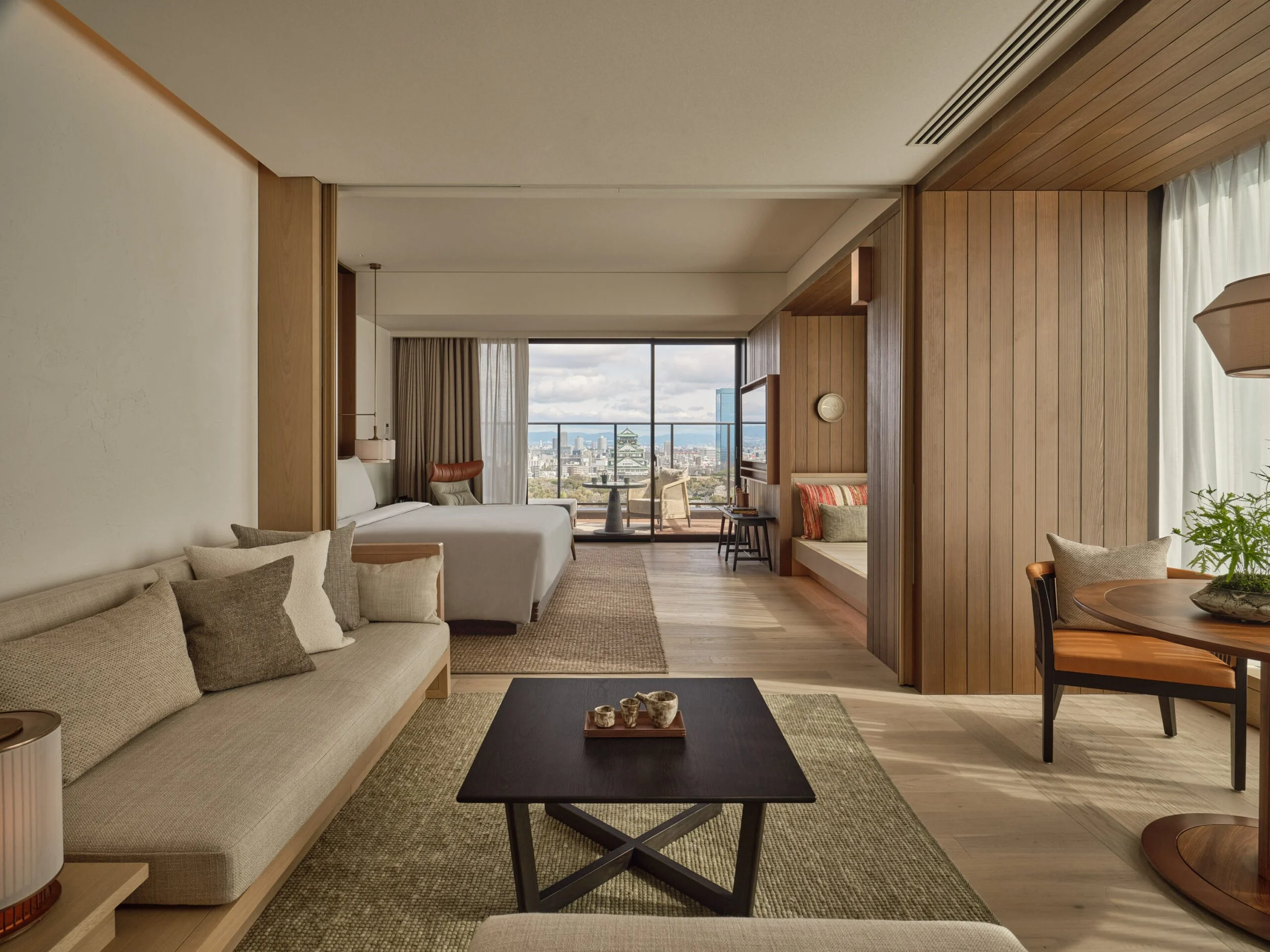
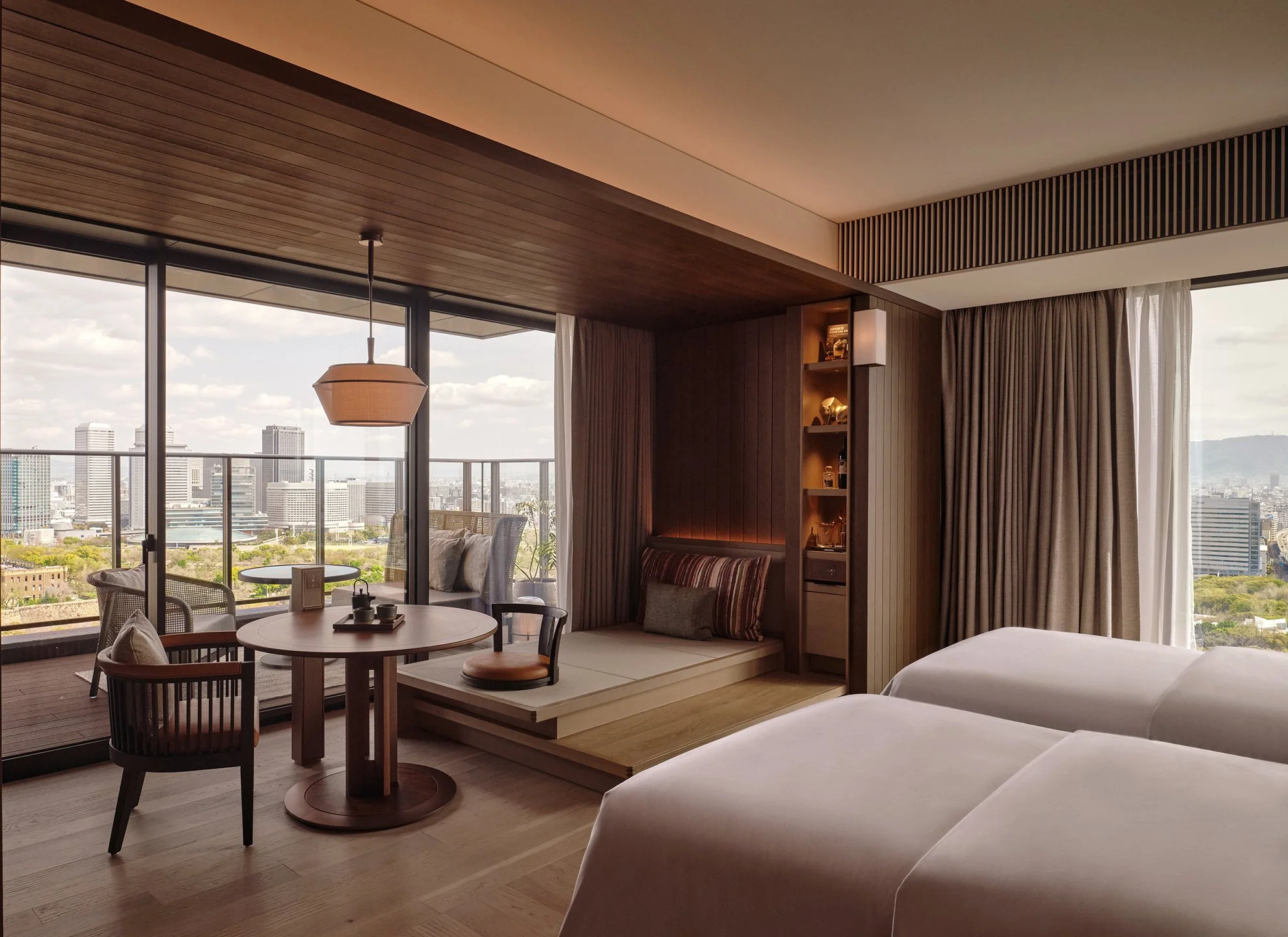
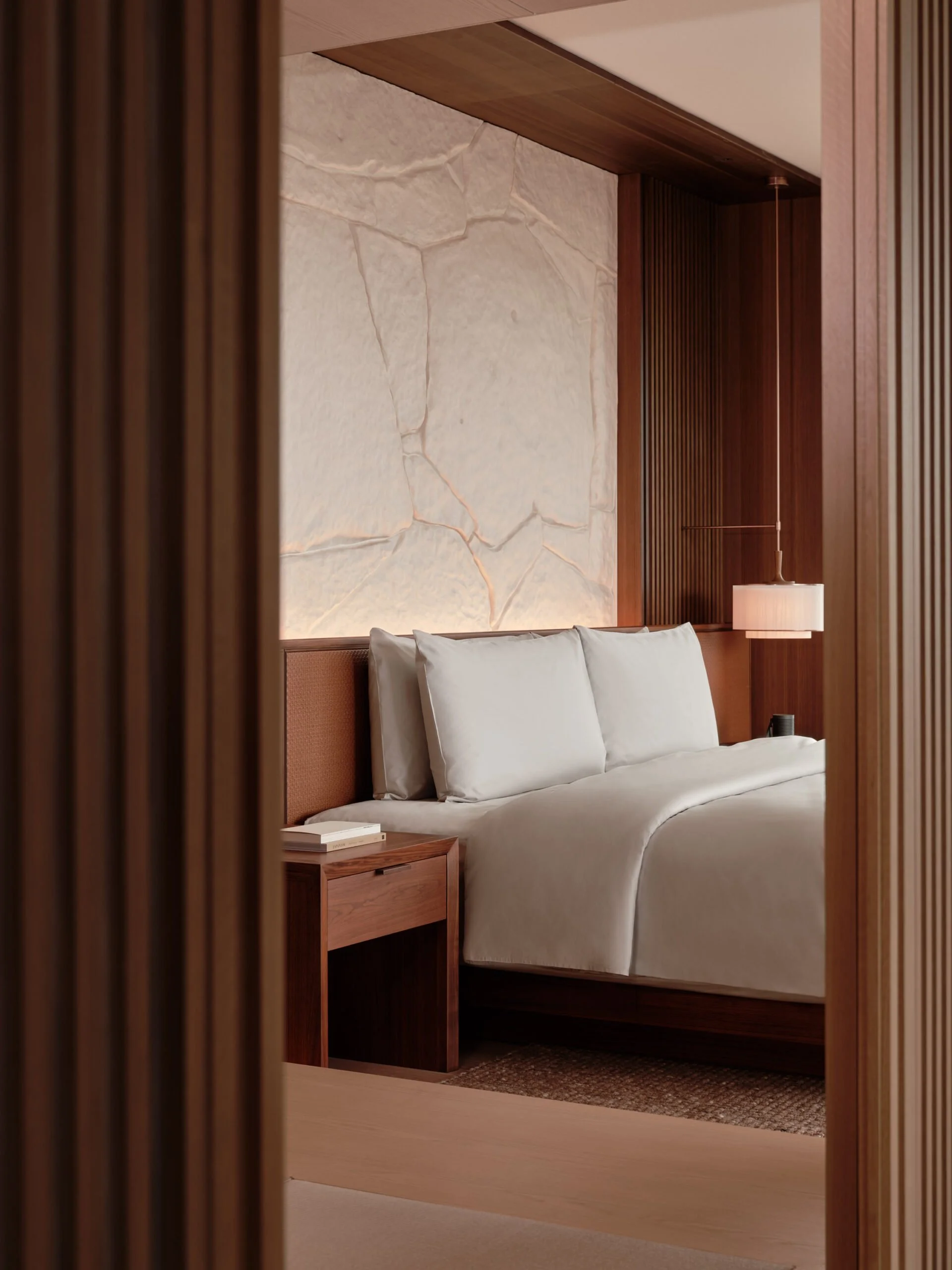
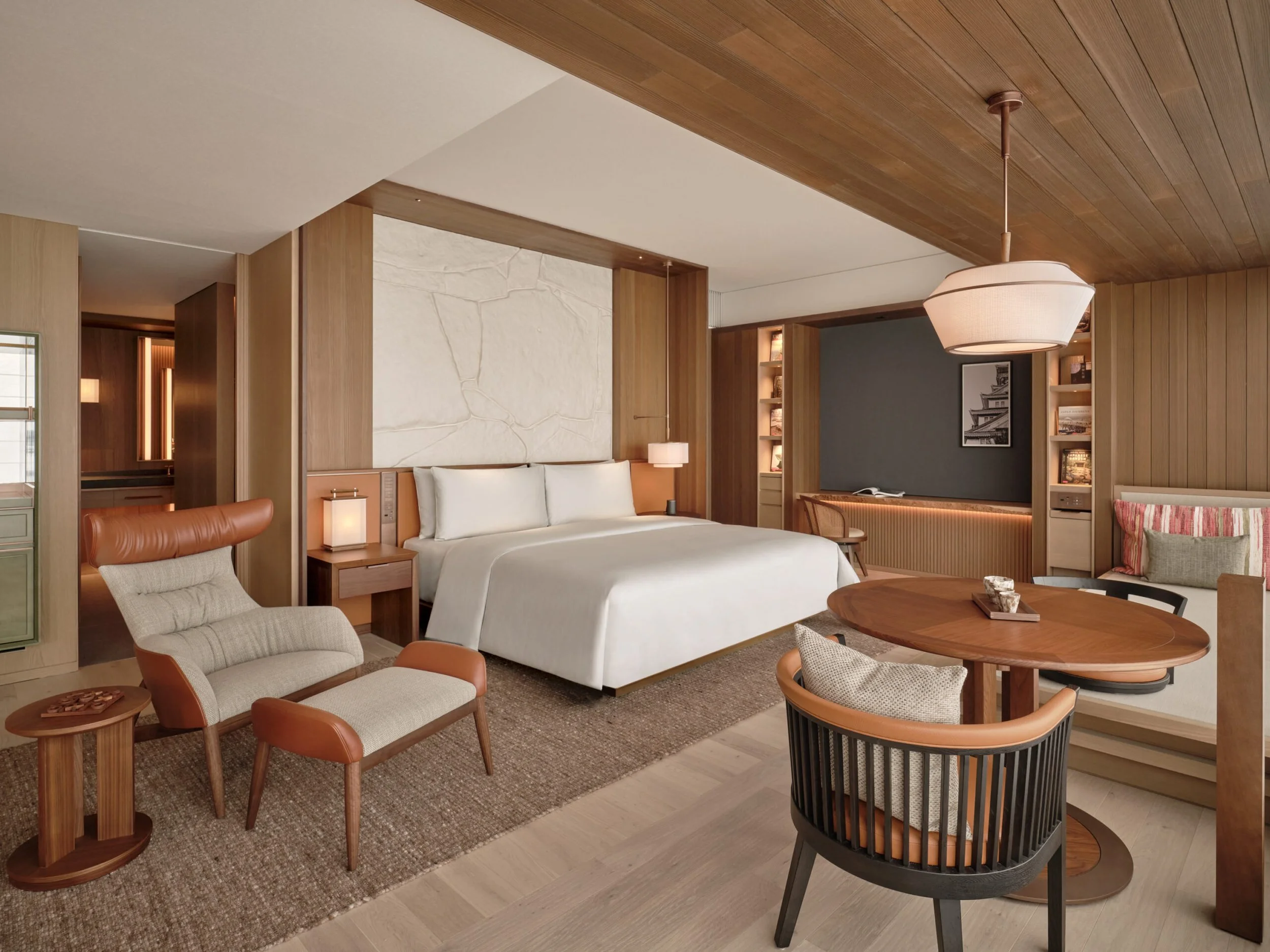
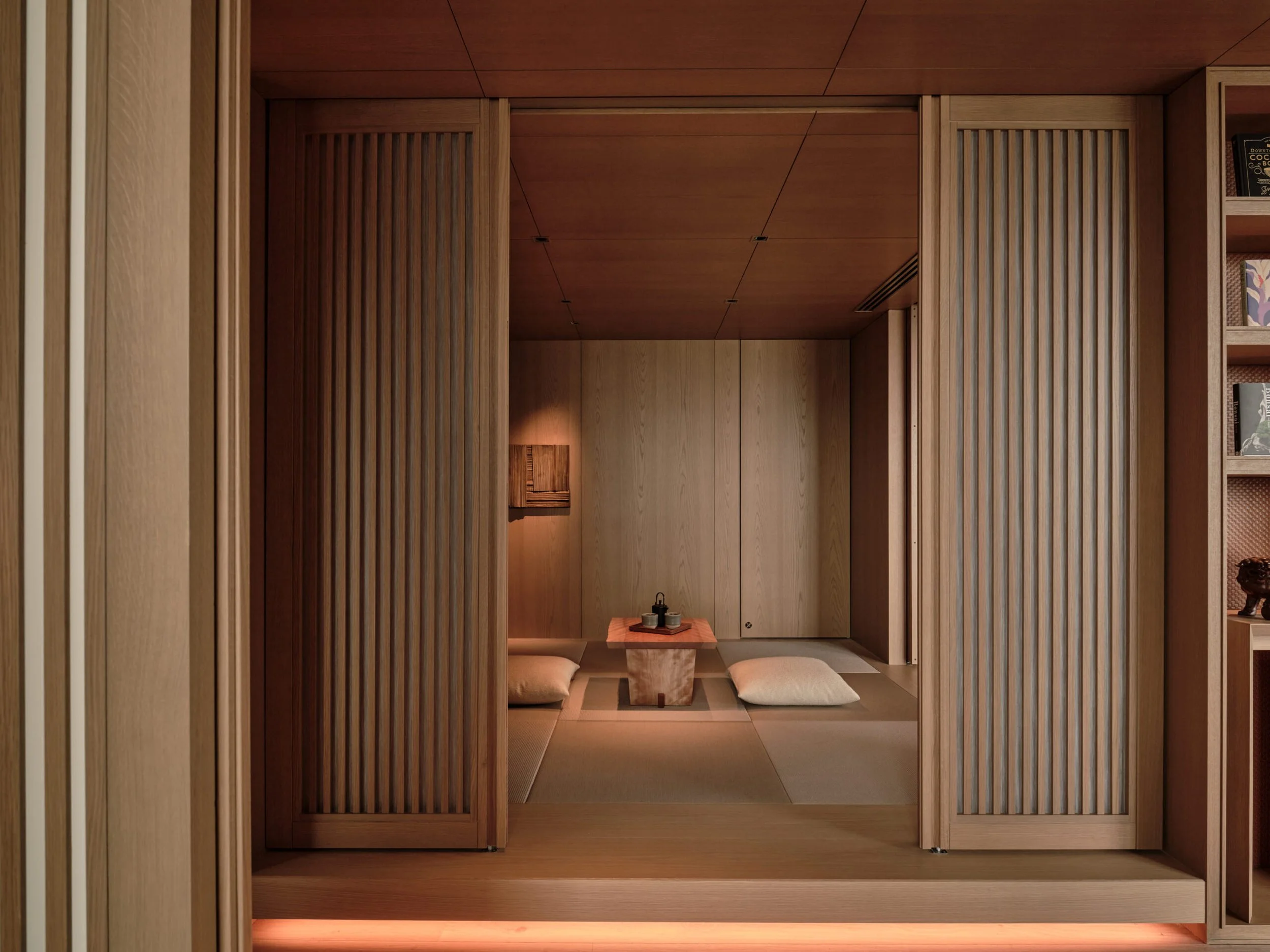
Accommodations begin at approximately 538 sq. ft., giving even the entry category a comfortable sense of space. The design carries through warm wood, restrained colors, and Japanese influences, including tatami seating areas in several categories.
Views deserve particular attention when selecting a room. Some categories offer a choice between city and castle outlooks, while others have a specific orientation; a higher category does not automatically mean a castle view.
Deluxe Room: Approximately 538 sq. ft., these rooms offer a king bed or two double beds, a tatami daybed, floor-to-ceiling windows, and a bathroom with a separate bathtub, rain shower, and double basins, with city-view and Osaka Castle-view options available.
Premier Room: Approximately 678 sq. ft., these city-facing rooms provide additional space around a king bed or two double beds, complemented by a tatami daybed and a generously arranged bathroom with a separate bathtub, rain shower, and double basins.
Junior Suite: Approximately 807 sq. ft., these suites overlook Osaka Castle and combine a king bed or two double beds with an expanded seating area, a tatami nook, and large windows that make the surrounding parkland an integral part of the room.
Deluxe Suite: Approximately 1,109 sq. ft., these one-bedroom suites feature a king bed, a separate living room, and a dining area, with city-view and castle-view configurations offering additional privacy and flexibility for longer stays.
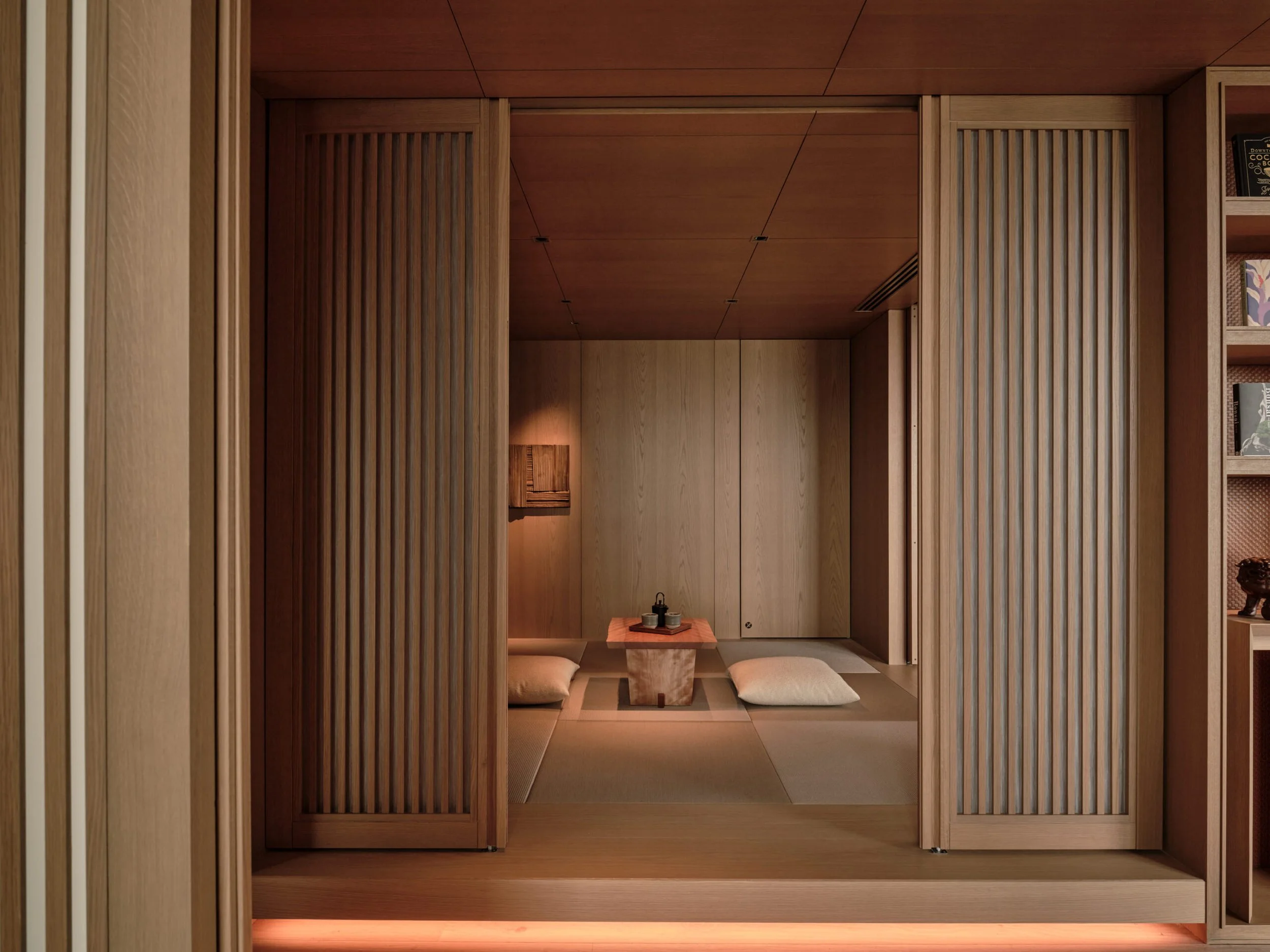
Urban Suite: Approximately 1,367 sq. ft., these castle-facing suites offer a king bed or two double beds alongside generous living and dining areas, tatami detailing, and a dedicated meditation space that extends the hotel’s emphasis on wellbeing into the accommodation.
Patina Suite: Approximately 2,508 sq. ft., the hotel’s signature suite occupies the 17th floor with Osaka Castle views, a spacious living room, a dining area, a kitchenette, dedicated working and meditation rooms, a steam sauna, and a turntable with an accompanying sound system.
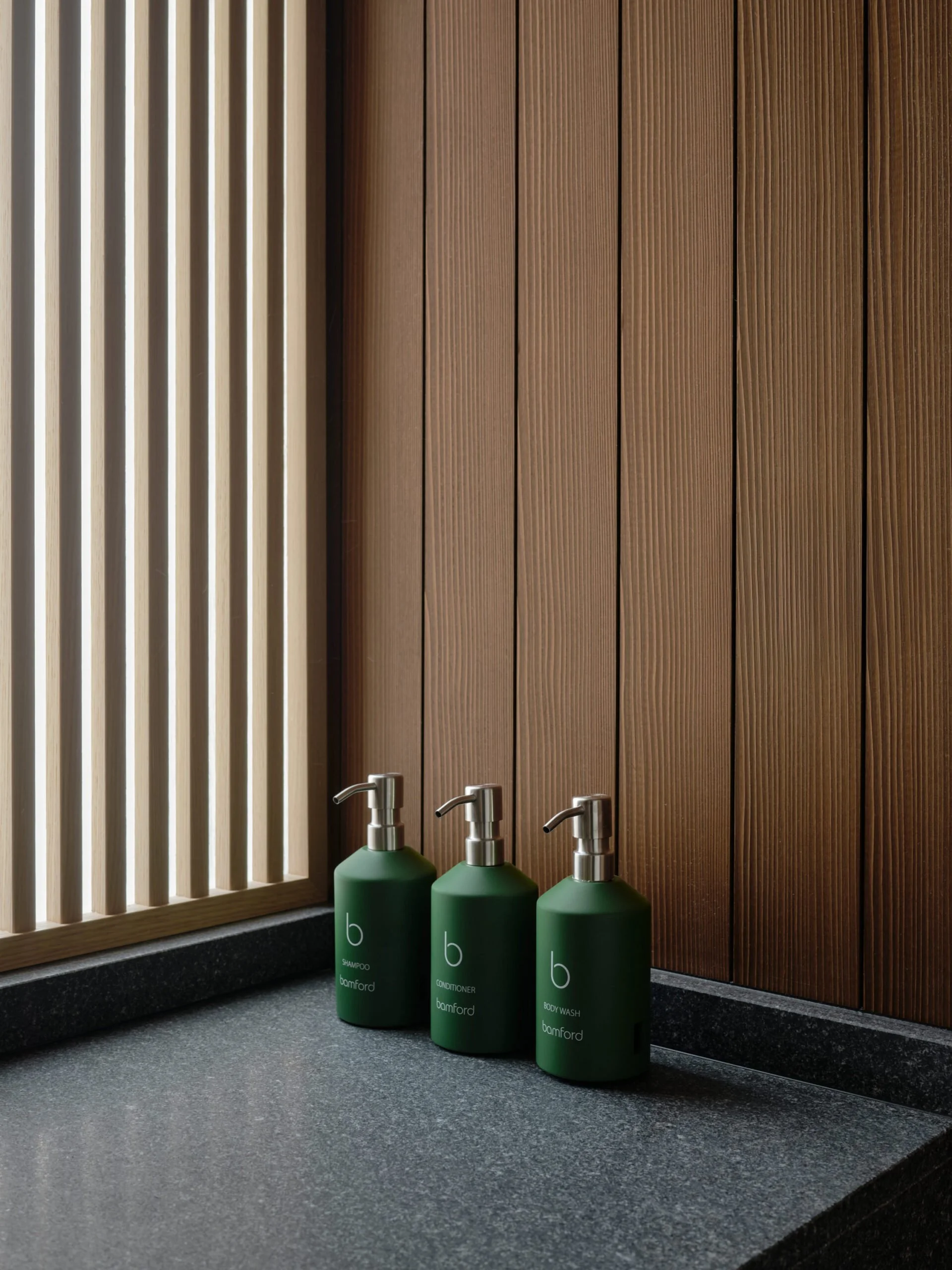
Across the collection, details such as Frette linens, Bamford bathroom amenities, and complimentary nonalcoholic minibar selections contribute to the everyday comfort of a stay. The hotel’s Essentialists provide personalized assistance with reservations and arrangements.
Five Expressions of Osaka’s Appetite
Dining moves between Japanese teppanyaki, Basque cooking, seasonal produce, afternoon tea, and cocktails overlooking the city. The variety makes it possible to spend a relaxed evening at the hotel while still leaving plenty of appetite for Osaka’s restaurants and street food.
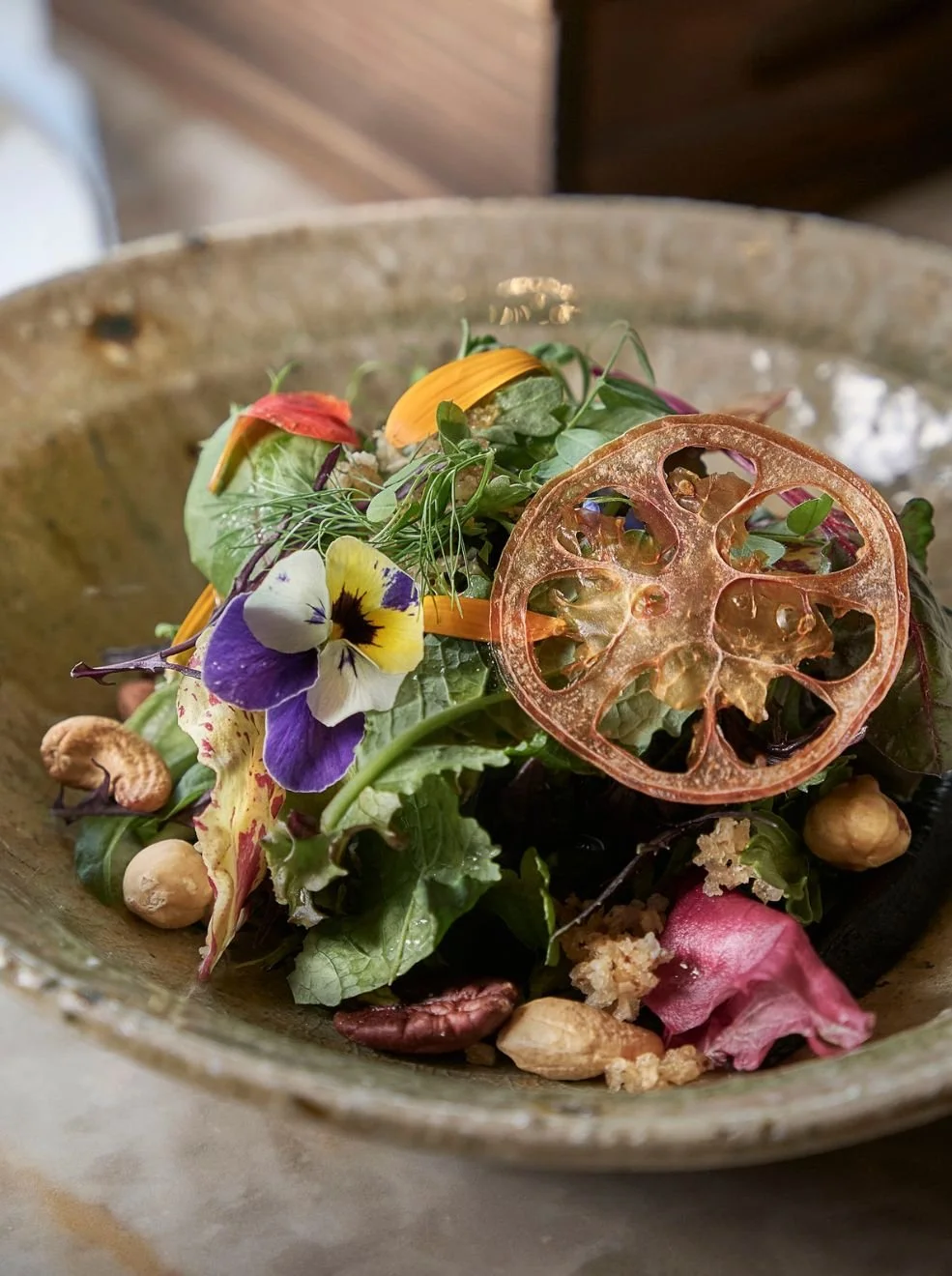
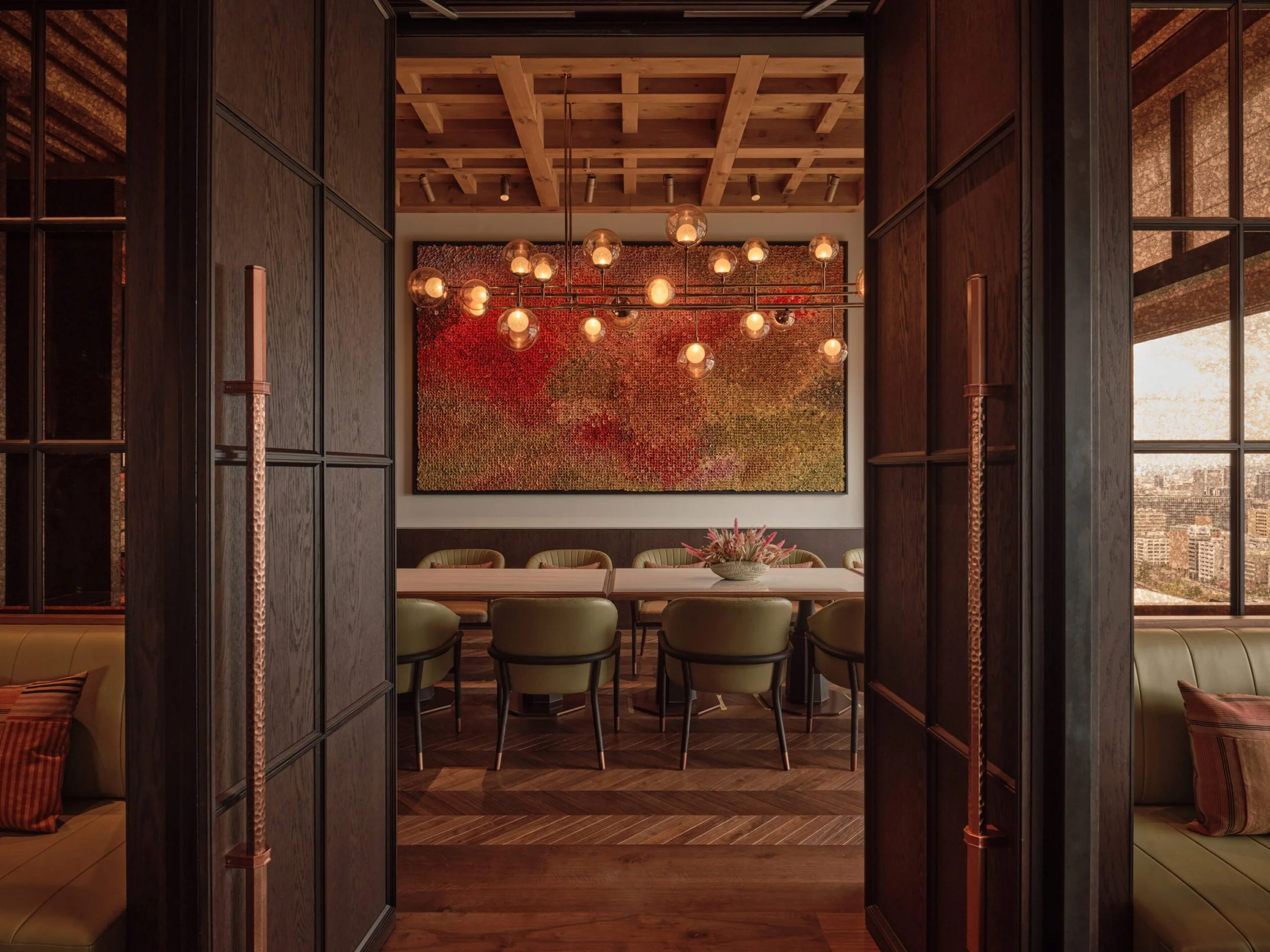
P72: Inspired by Japan’s 72 microseasons, this ground-floor restaurant works with seasonal ingredients and local producers, pairing a menu attentive to vegetables and changing harvests with an edible garden, terrace seating, and a striking reclaimed-wood installation.
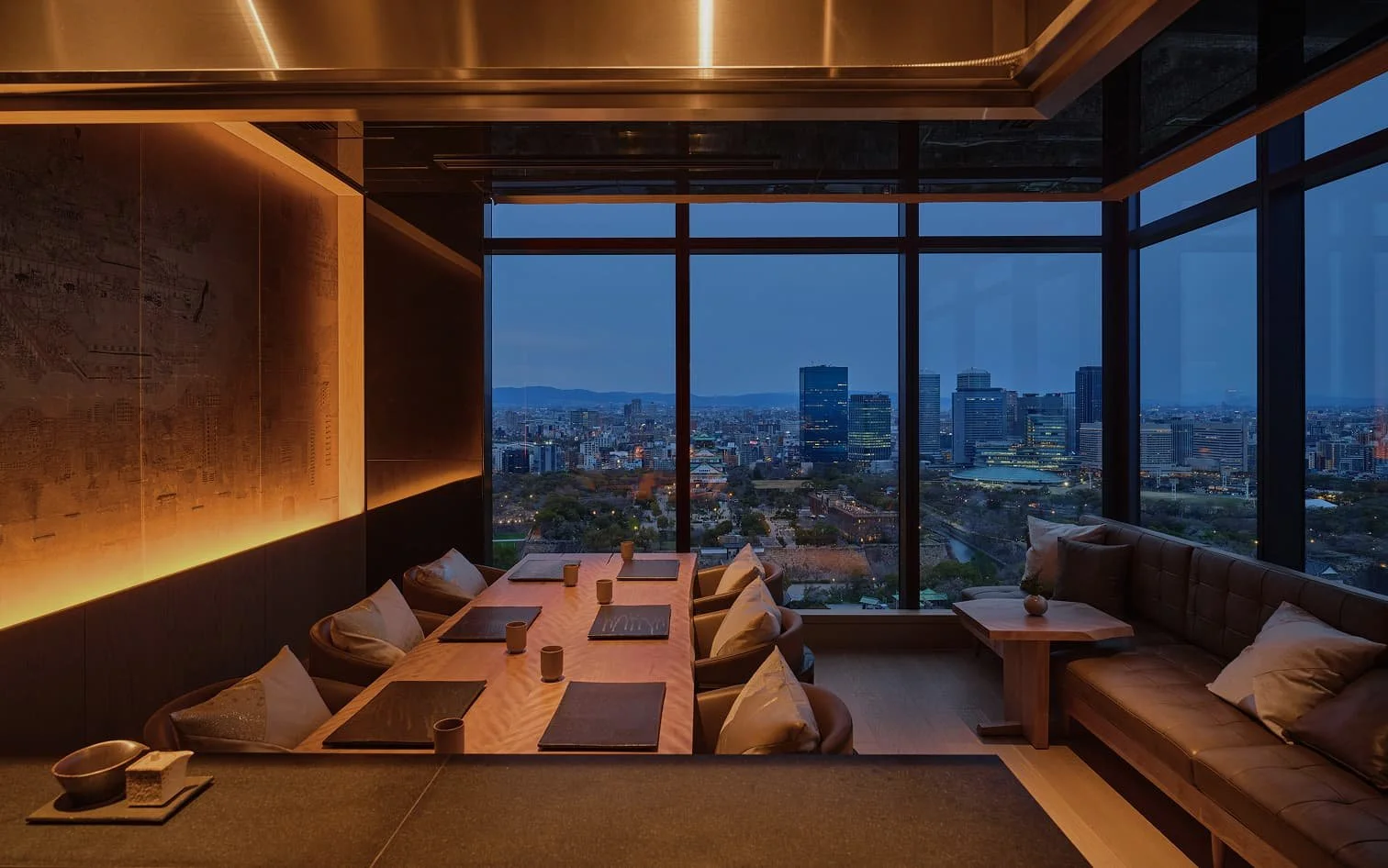
Barin: Located on the 19th floor, Barin centers on teppanyaki prepared with carefully selected Japanese ingredients, offering counter seating for a close view of the cooking alongside table seating and a private dining room.
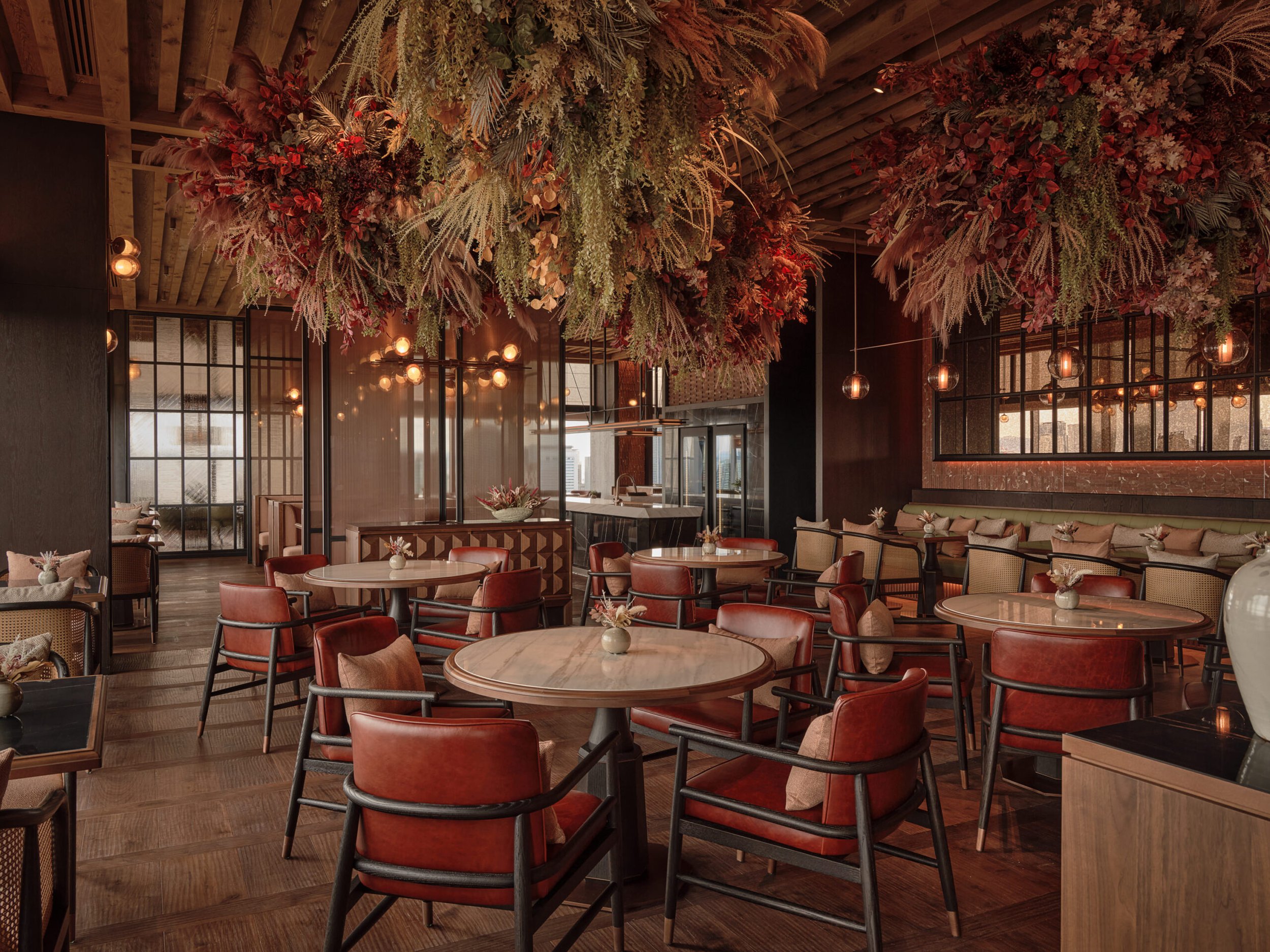
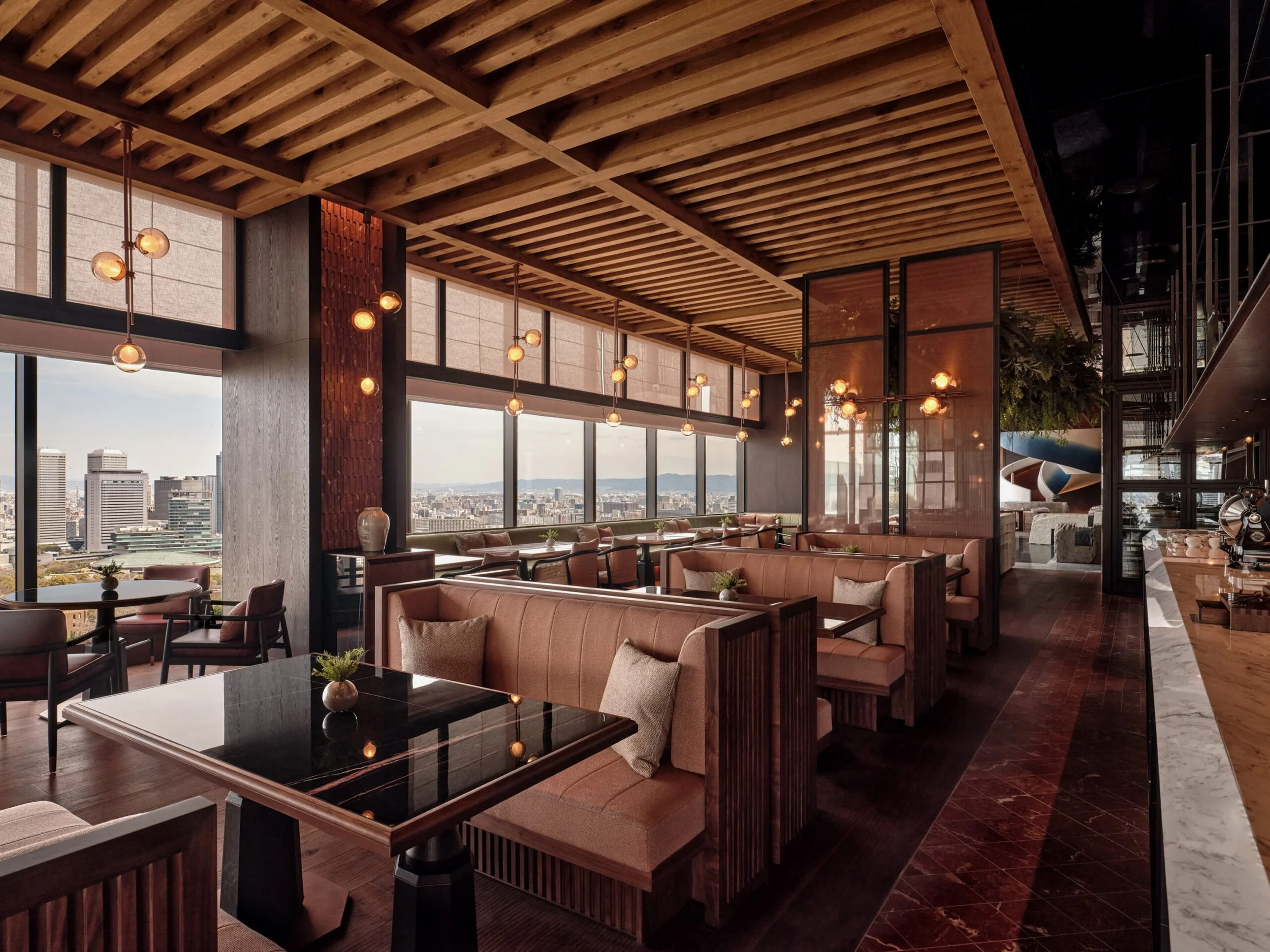
Iñaki: This 19th-floor restaurant draws on Basque grilling and Mediterranean influences, using an open kitchen, rotisserie, and wood-fired oven to prepare ingredient-focused dishes against views of Osaka Castle and the skyline.
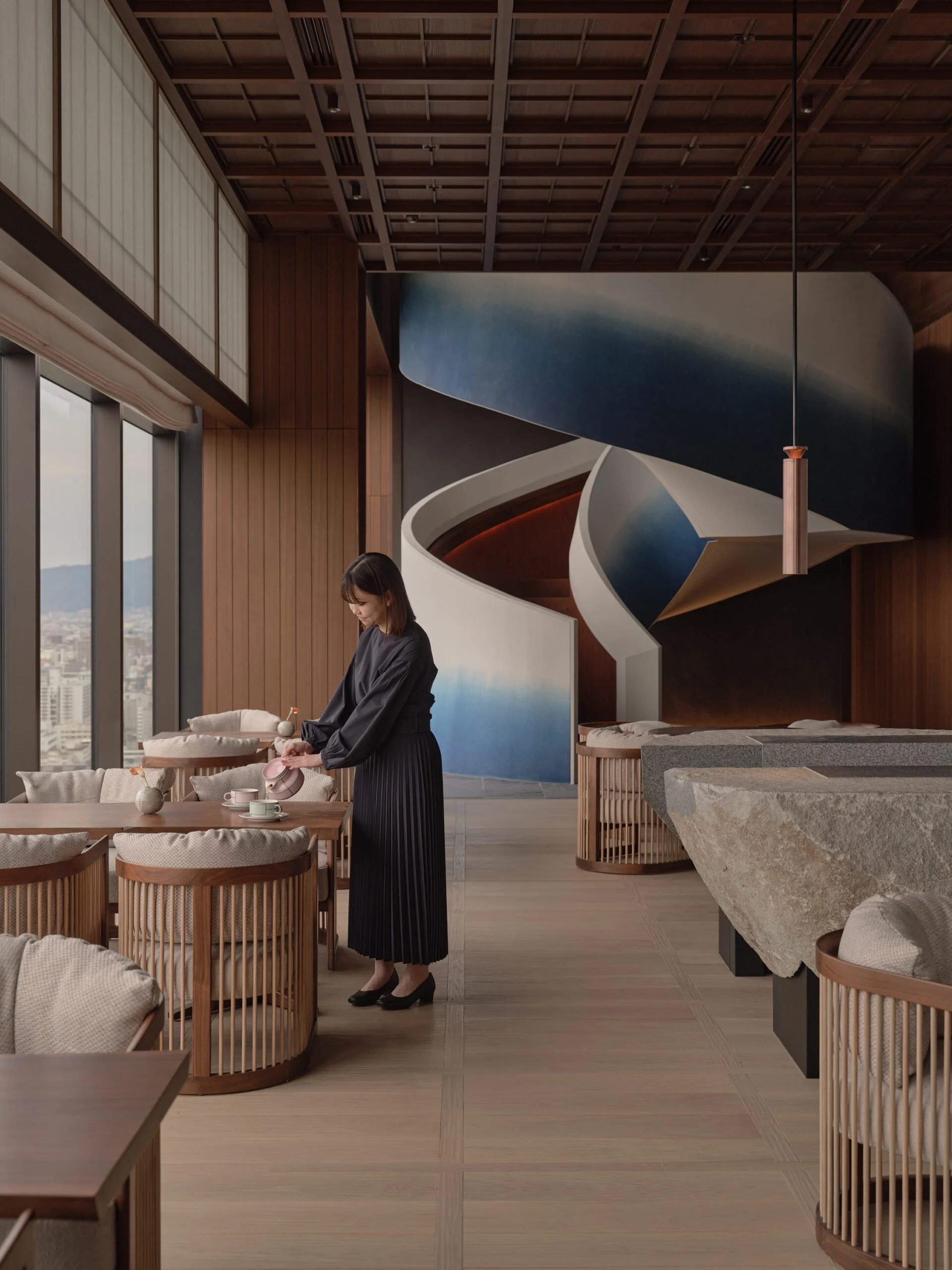
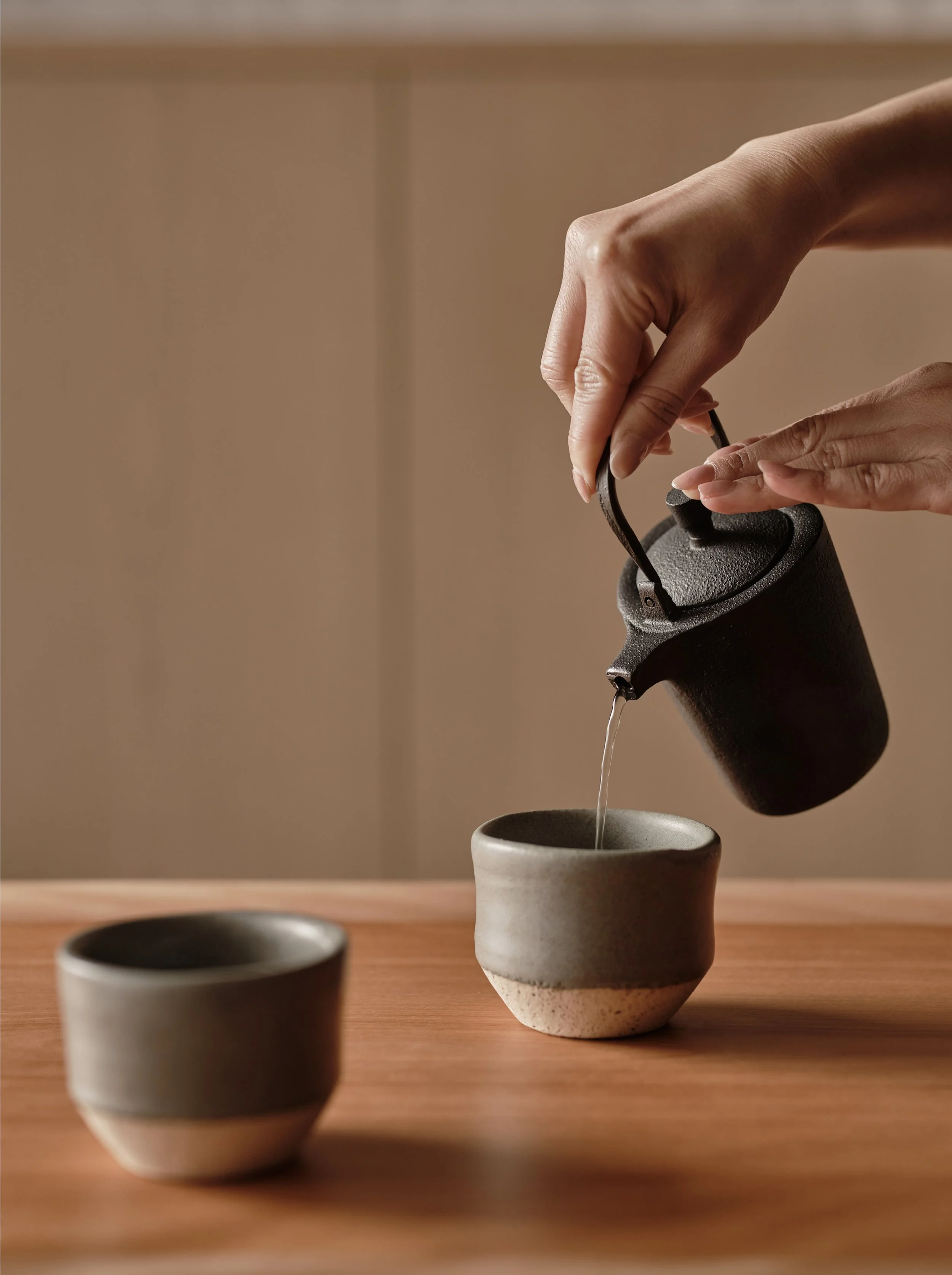
Nijiri: An intimate tea lounge on the 19th floor, Nijiri serves seasonal afternoon tea with sweet and savory preparations, accompanied by Japanese teas sourced from regions including Kansai and Shizuoka.
Sonata Bar & Lounge: On the 20th floor, Sonata combines cocktails, pintxos, and other bar snacks with city views, terrace seating, and a music program that brings a livelier atmosphere to the hotel’s uppermost level.
Menus and programming change throughout the year, and individual restaurant operating days vary. We would leave room for both a considered hotel dinner and an evening devoted to the city’s more informal food culture.
Wellbeing with Room to Breathe
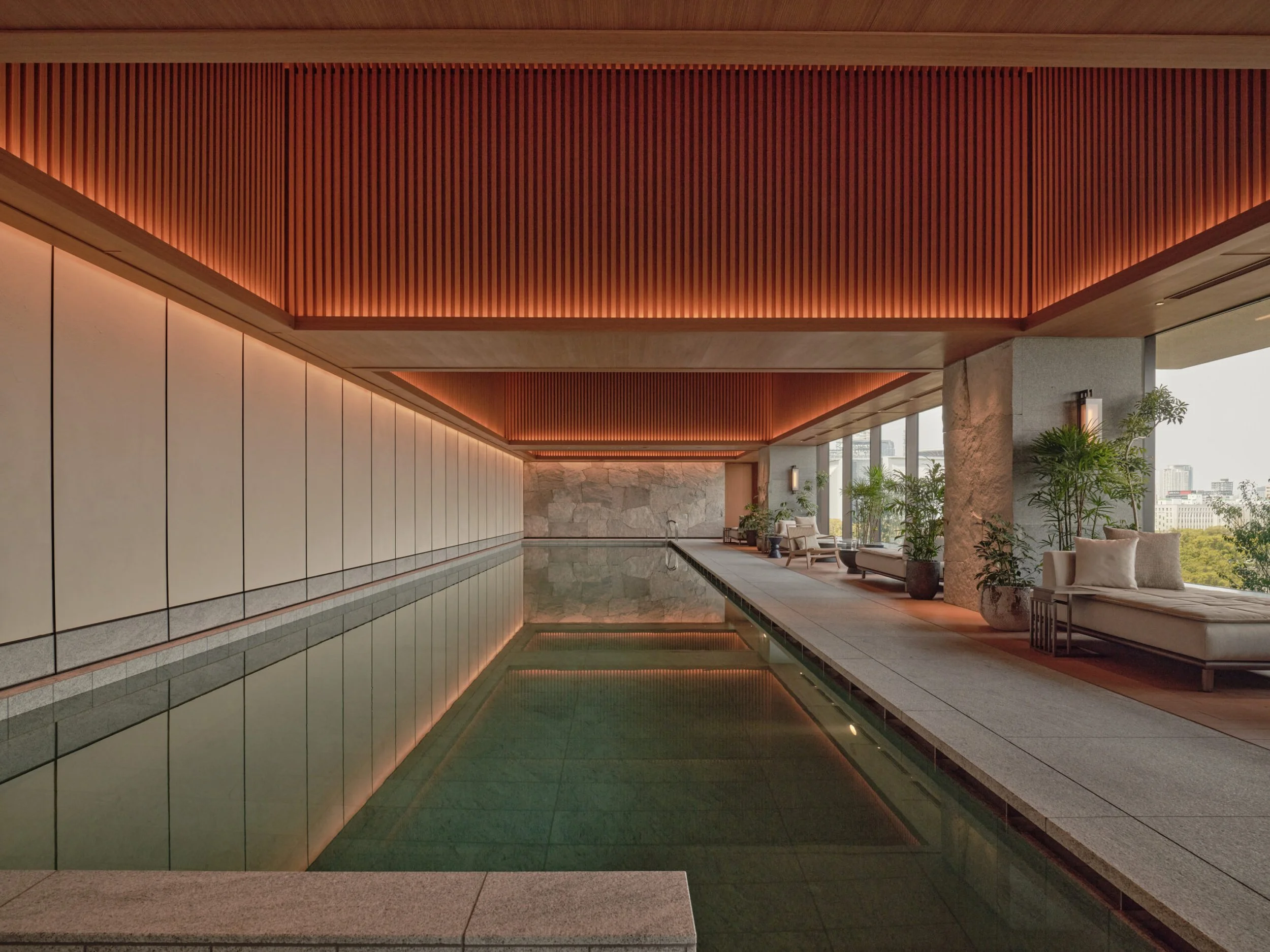
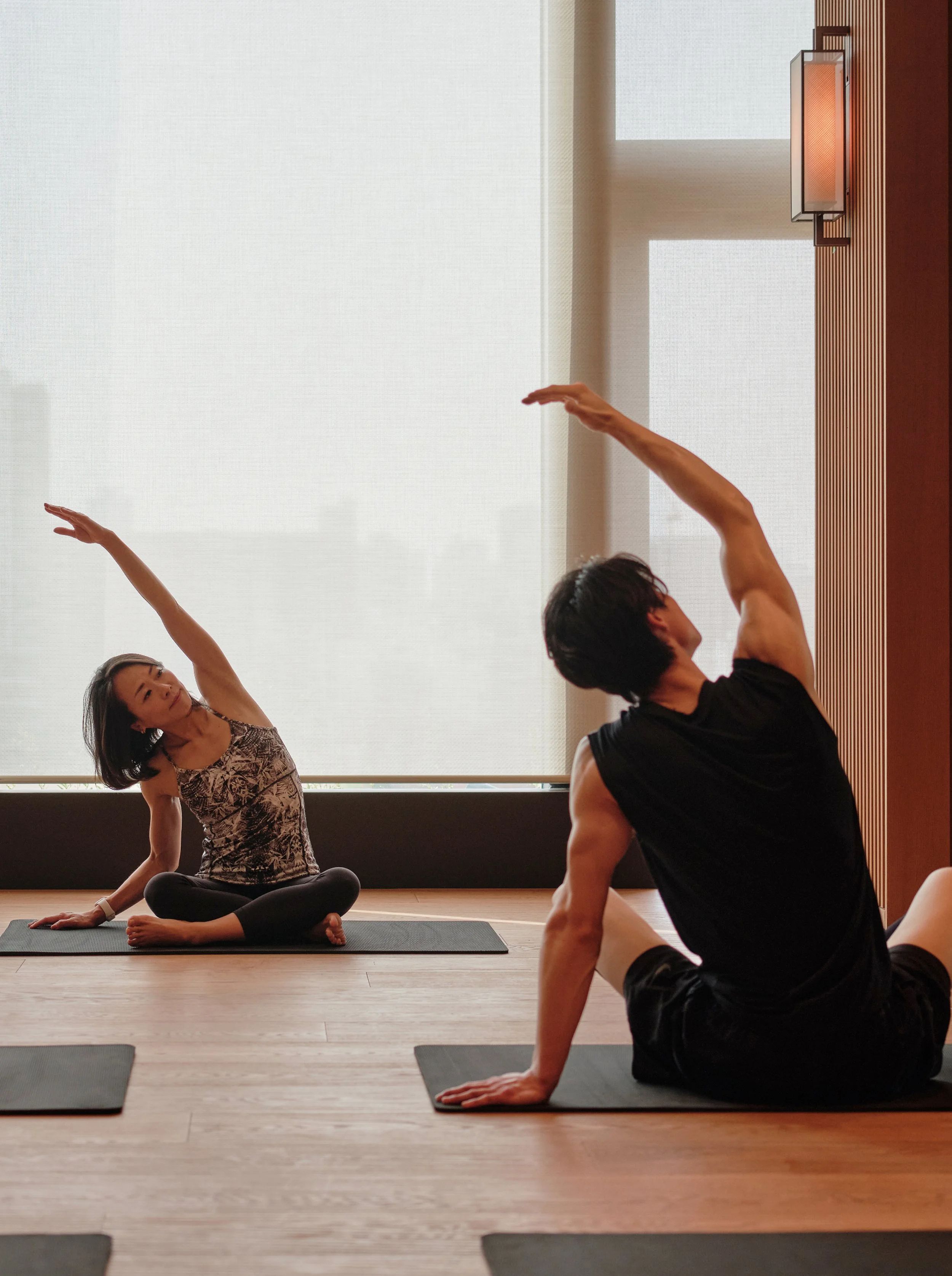
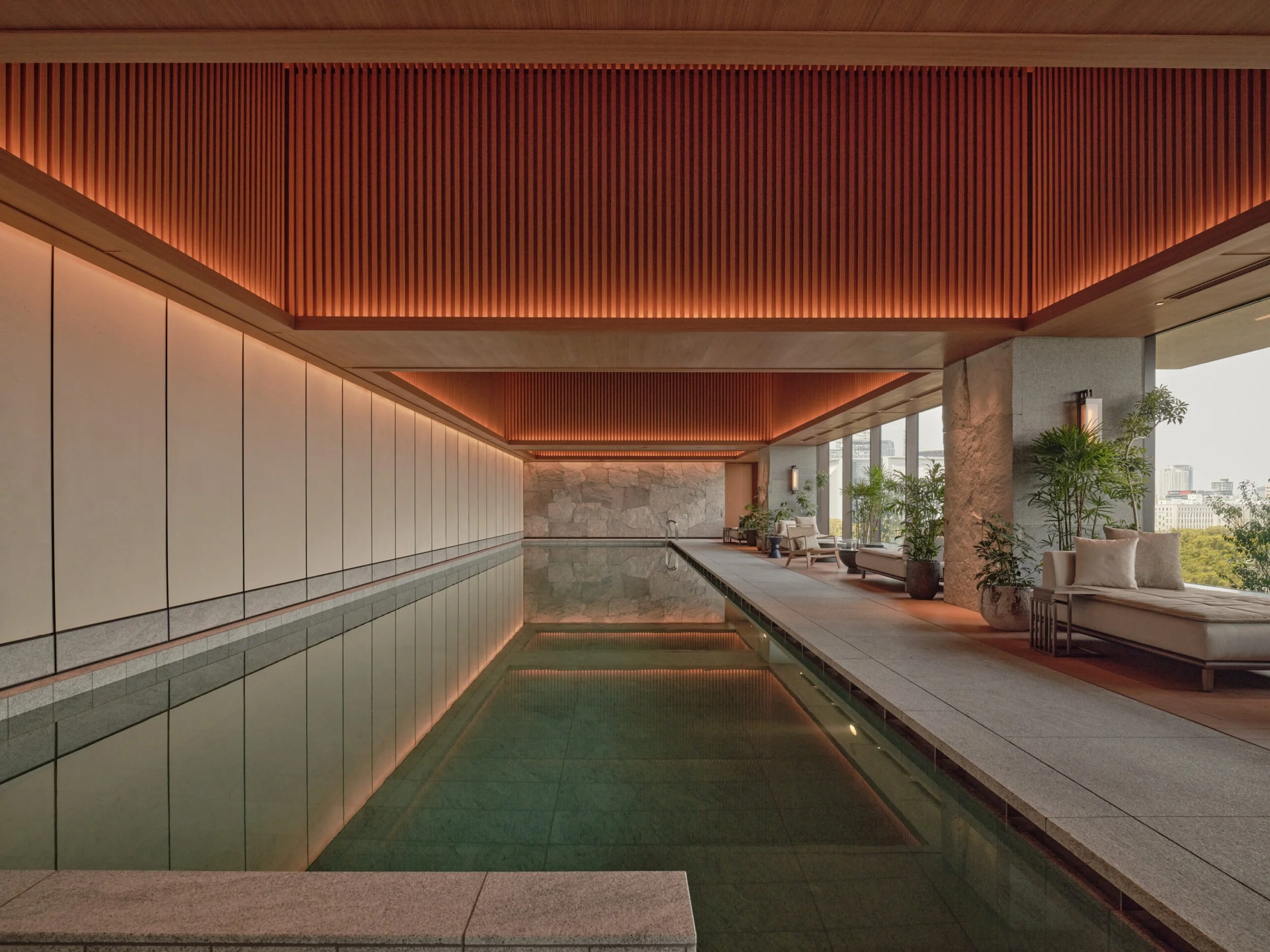
Patina Wellness occupies approximately 15,069 sq. ft., making it a substantial part of the property. A 20-meter heated indoor swimming pool provides space for proper laps, while the fitness center offers 24-hour access and Technogym equipment.
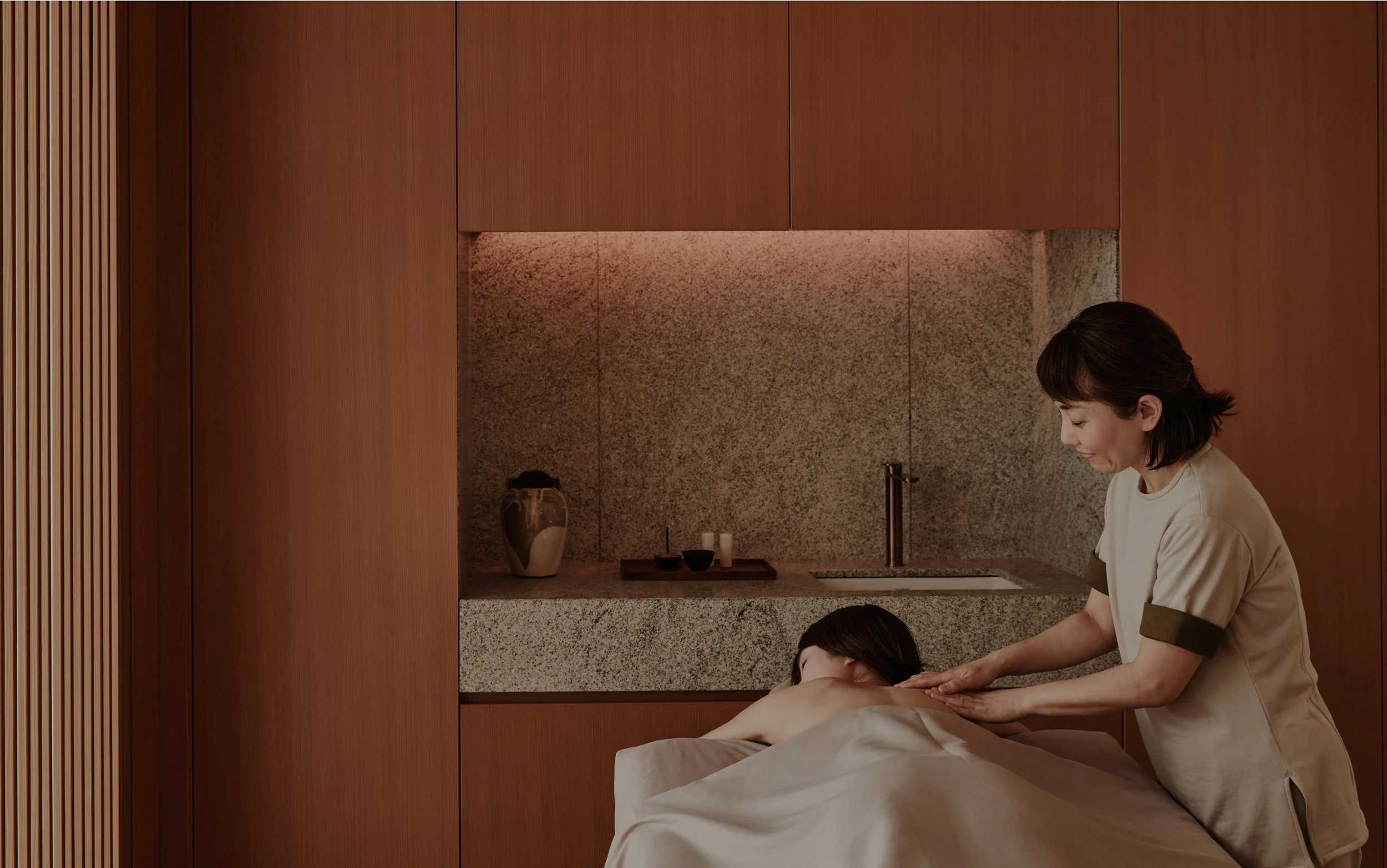
The treatment offering spans familiar spa experiences and more specialized equipment. Massages and facials sit alongside far-infrared sauna sessions, cryotherapy, full-body LED treatments, and oxygen- and hydrogen-based therapies. These are distinct services with their own booking requirements, and treatment suitability should be discussed with the wellness team.
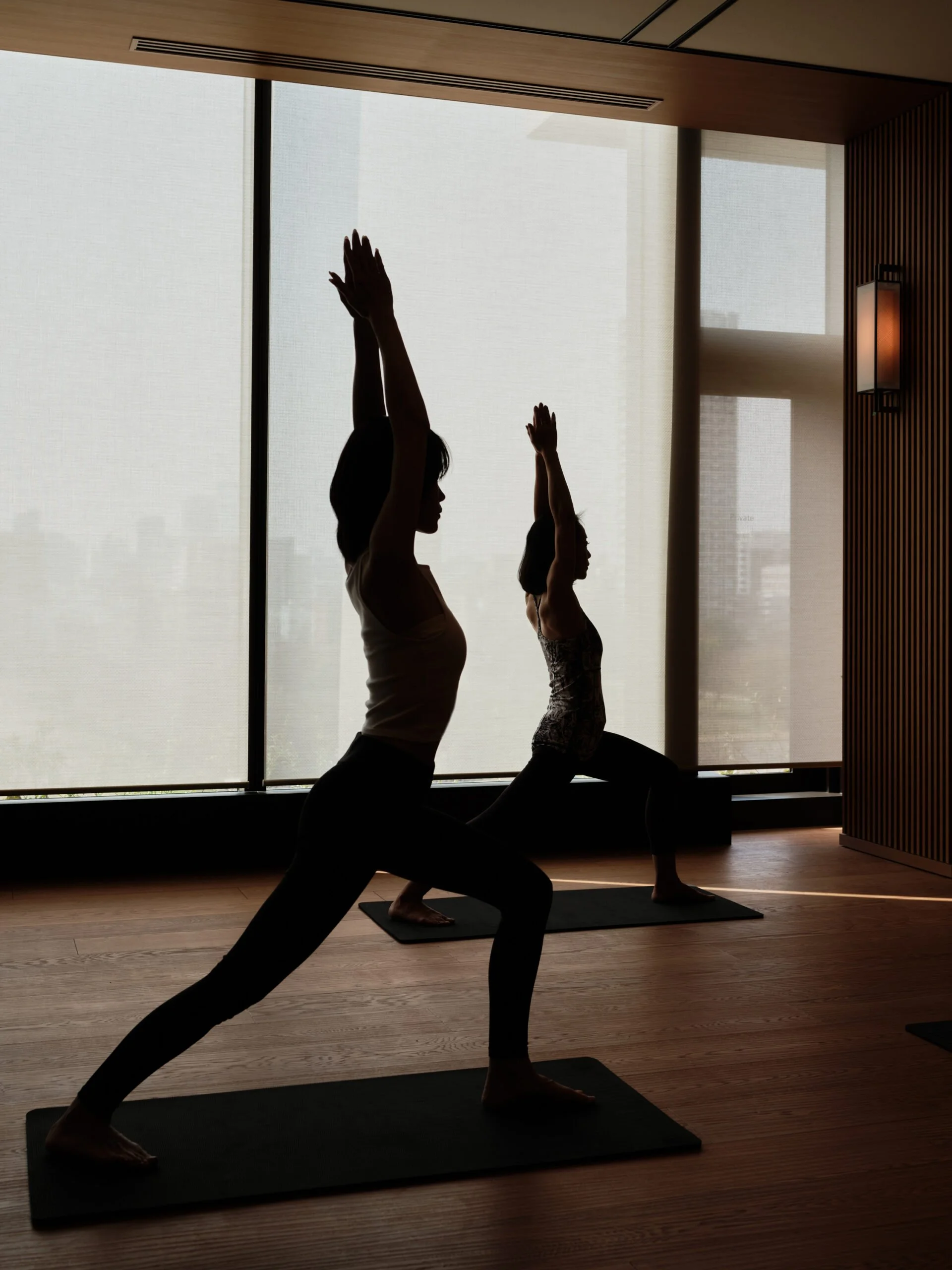
For many travelers, the simplest elements will be the most useful: a swim before breakfast, a massage following a long flight, or an unhurried hour away from sightseeing.
The scale of the facilities makes it worth allowing time for them within the itinerary. Spa treatments and specialist sessions should be reserved separately, with inclusions checked against the booked stay.
Listening Closely, Exploring Slowly
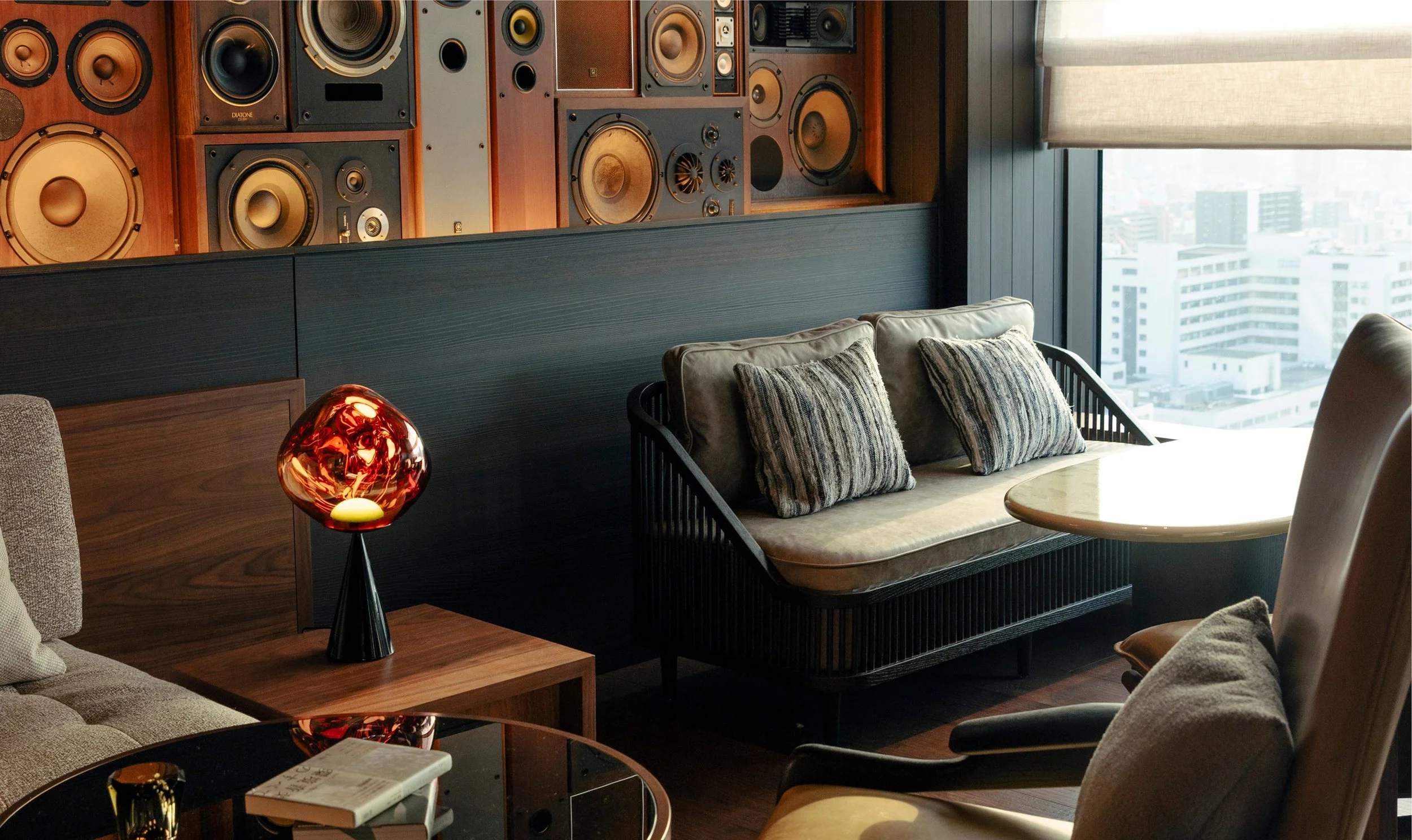
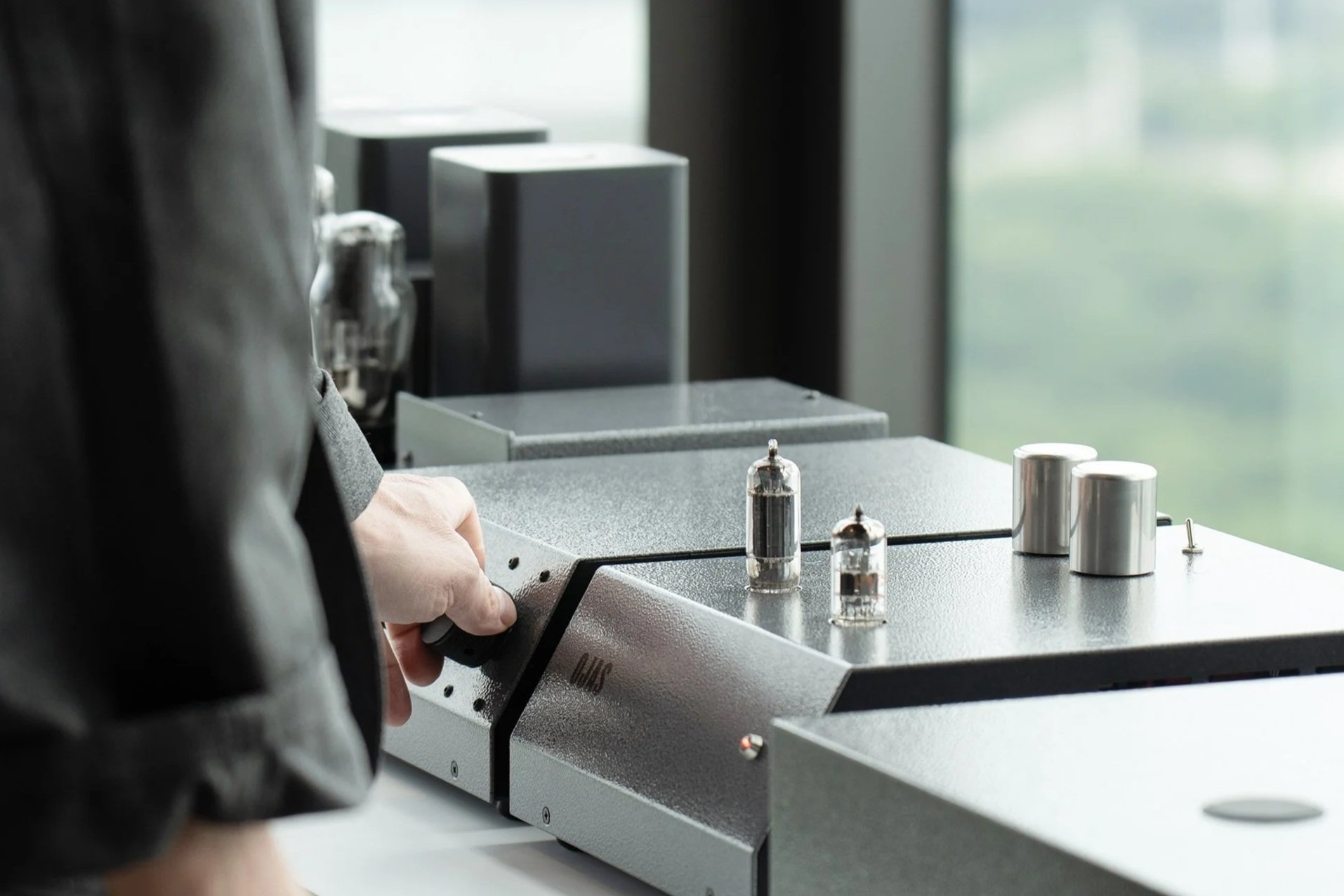
Music has a particularly distinctive place at Patina Osaka. The Listening Room by OJAS, created with audio designer Devon Turnbull, occupies the 20th floor and features a handcrafted sound system designed for focused listening.
The experience encourages attention to an entire piece of music, its recording, and the physical presence of sound in the room. Complimentary morning Soundscapes sessions are offered exclusively to hotel guests, while private listening sessions can be reserved separately.
Beyond the listening room, the hotel’s Perpetual Journey programming brings together creative, culinary, and wellbeing experiences. The schedule evolves, so the available activities depend on the dates of a stay.
Electric bicycles are also available by reservation, offering another way to explore the surrounding neighborhoods. The Essentialists can help shape the day around individual interests, whether that means food, architecture, shopping, or a deeper look at the area’s historical landmarks.
Osaka with Younger Travelers
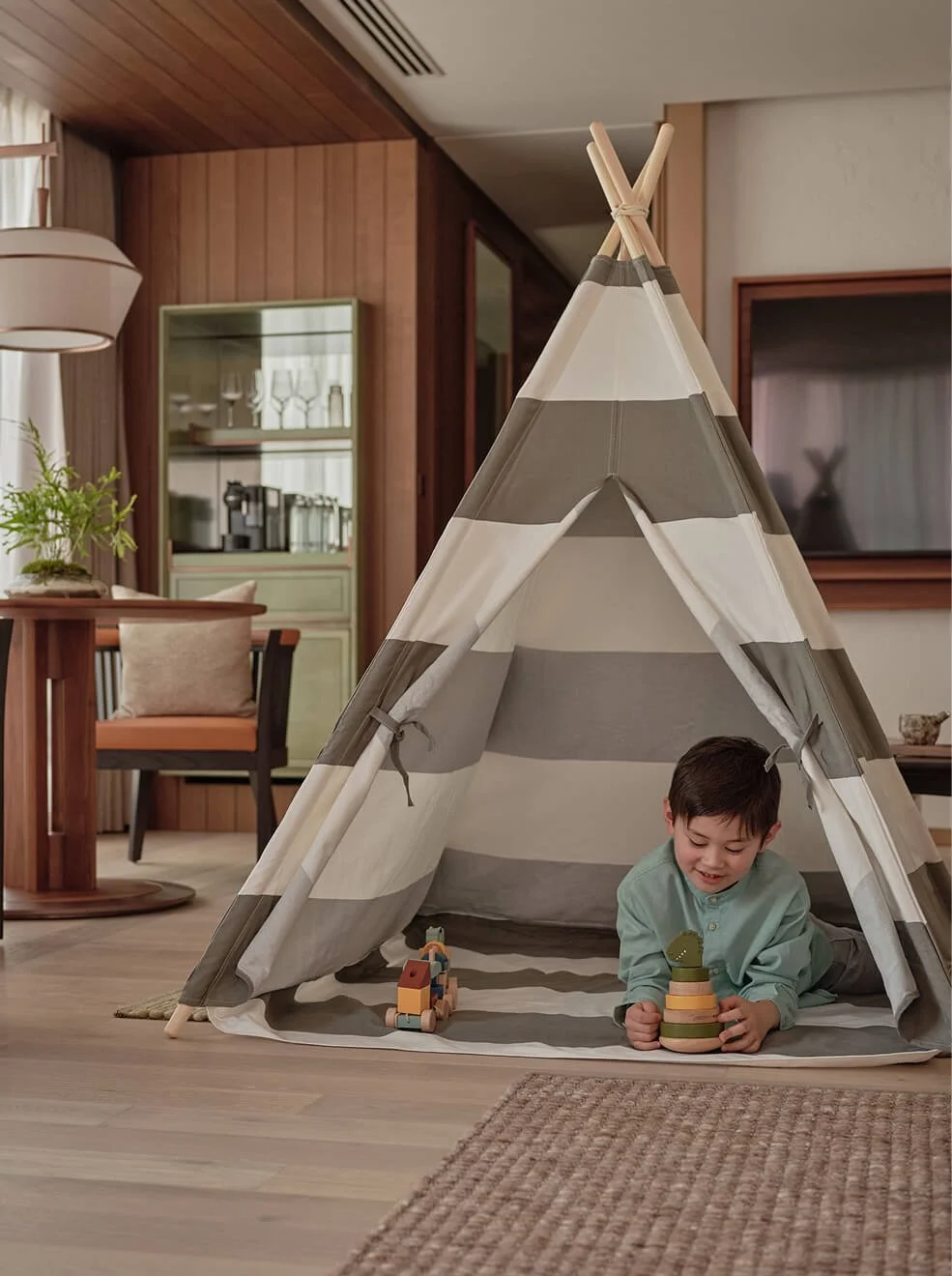
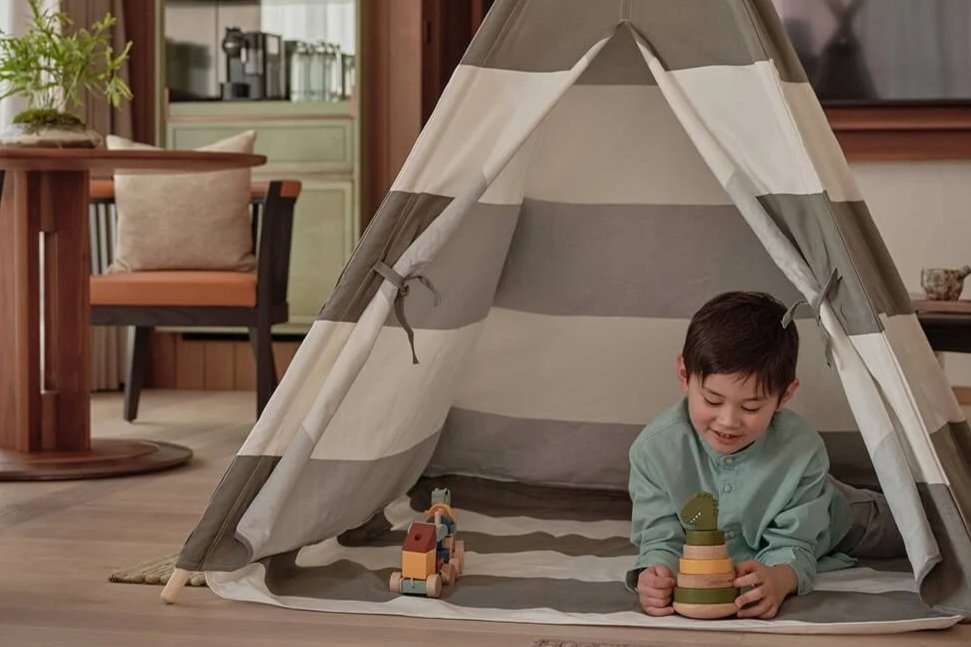
The generous room sizes and proximity to open parkland make Patina Osaka a practical option for families. Children aged 12 and under may stay without an additional accommodation charge when sharing existing bedding, subject to the room’s occupancy limits, while age-appropriate amenities can be arranged.
Bedding configuration matters. Two-double-bed rooms may suit some families, while a suite can provide more comfortable living space; additional bedding carries separate conditions and charges.
The indoor pool adds an appealing break between outings, with designated daytime access for children aged 12 and under. Nearby castle grounds also provide room to move after more structured sightseeing.
Some experiences have age restrictions, including the OJAS listening room, which welcomes those aged 16 and above. Family plans should therefore be built around the children’s ages and interests, with the hotel serving as a comfortable base for exploring Osaka together.
A More Considered Approach to Resources
Several of Patina Osaka’s environmental measures are built into the property itself. The building has received Japan’s ZEB Oriented certification, recognizing energy-efficient design within the country’s Zero Energy Building framework.
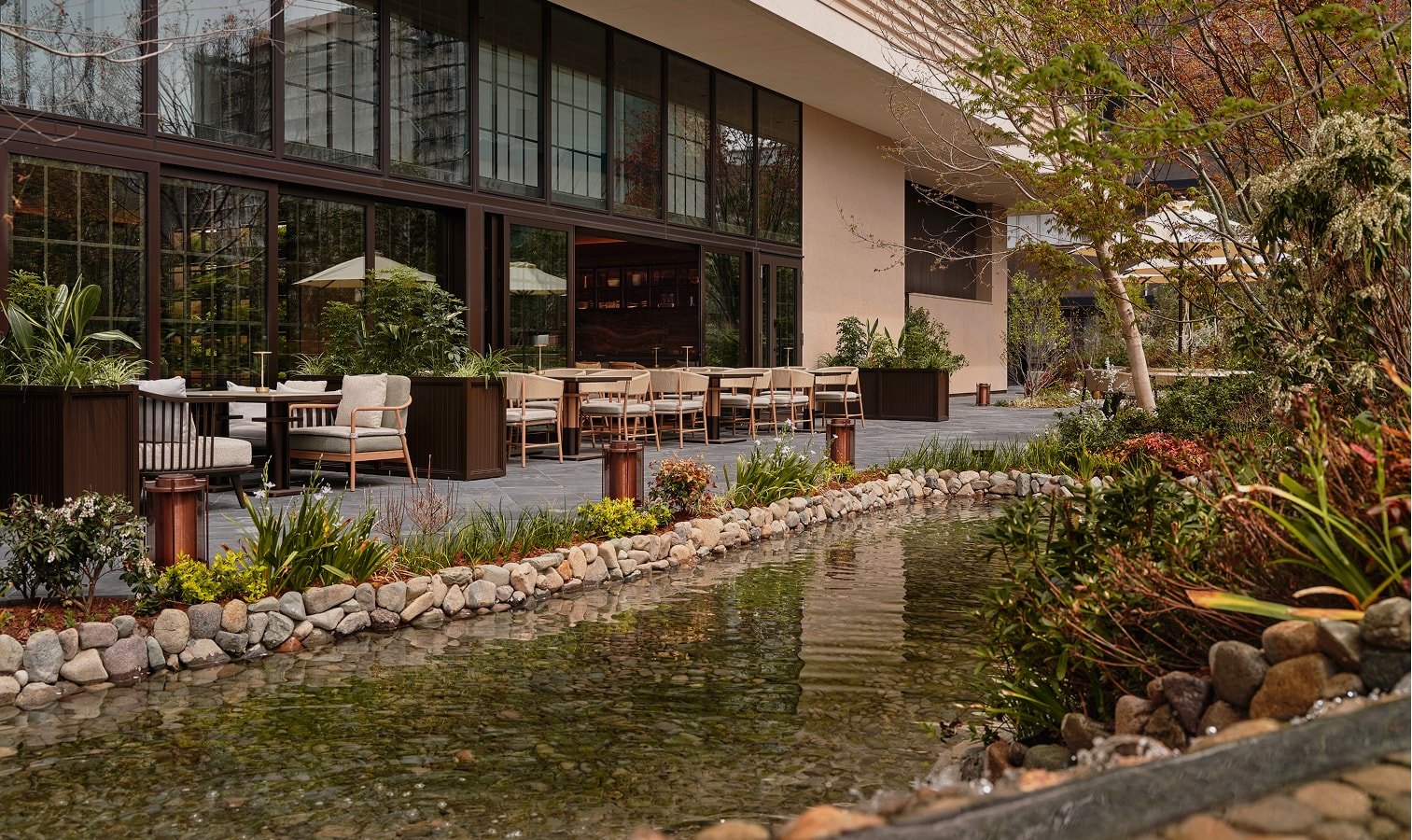
Insulation, efficient lighting, and architectural shading contribute to that approach. Landscaped elements also help connect the building visually with the surrounding green spaces.
Inside, the reclaimed wood used for P72’s sculptural installation gives discarded material a prominent second use. The restaurant’s edible garden and work with local producers extend the emphasis to ingredients and the relationship between the kitchen and its suppliers.
These are tangible measures that travelers can understand through the building, its materials, and its dining. The certification should be understood as an energy-efficiency designation, rather than a claim that the hotel operates with zero net energy use.
Accessibility with Advance Planning
Patina Osaka publishes detailed accessibility information, including three wheelchair-accessible guest rooms and two accessible public restrooms. Barrier-free routes, accessible elevators with audio and Braille features, and accessible areas within dining and exercise facilities support movement around the property.
Wheelchairs and shower chairs are available on request, and public areas include visual alarms.
Because the accessible room inventory is limited, we recommend confirming the precise room layout and bathroom features before booking. Bed height, transfer space, shower configuration, and transportation requirements should be discussed individually so that the arrangements match each traveler’s needs.
Beyond the Castle Grounds
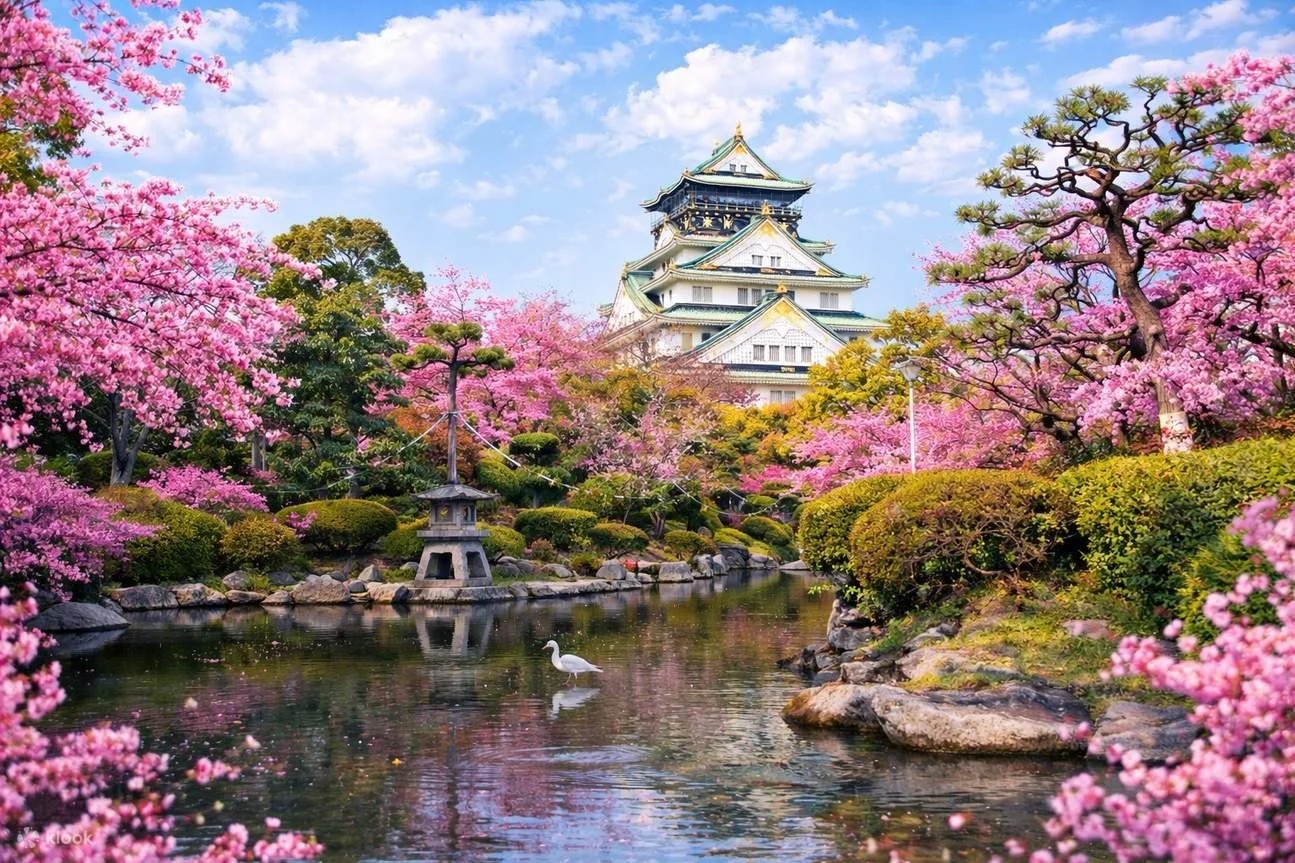
The hotel’s immediate surroundings offer a natural starting point for exploring Osaka. Osaka Castle Park provides walking routes, broad green spaces, and changing seasonal scenery, while Naniwanomiya Park introduces another layer of the city’s history.
The nearby Osaka Museum of History offers useful context for understanding how the city developed. Pairing it with time around the castle makes for a day that can unfold at a comfortable pace without crossing multiple districts.
Elsewhere, Osaka becomes louder, busier, and increasingly focused on food. Dotonbori’s illuminated signs and canal-side streets capture that energy, while Shinsaibashi adds shopping and the lanes around Kuromon Market invite a more food-led outing.
Takoyaki and okonomiyaki belong naturally within an Osaka visit, alongside the city’s more formal restaurants. We would allow time for both: a reserved dinner can anchor one evening, while another can follow a less structured route through the neighborhoods.
Patina’s location suits that varied approach. Historical sights and parkland shape the immediate setting, with the city’s other districts providing a different experience when the day calls for it.
Getting There
From Kansai International Airport (KIX): The hotel estimates approximately 50–55 minutes by car, with additional time advisable during heavier traffic.
From Osaka International Airport, Itami (ITM): The hotel estimates approximately 20–25 minutes by car; Itami primarily serves domestic flights and can be convenient when connecting through another Japanese city.
Private Transfers: Airport transportation can be arranged in advance through the hotel, with vehicle selection and pricing confirmed according to passenger numbers, luggage, and any accessibility requirements.
The City, at Your Own Pace
Some of Patina Osaka’s most memorable moments are likely to happen between plans: watching the light change over the castle, settling into a record in the listening room, or lingering over tea after a morning outside.
Those pauses belong comfortably within an Osaka stay. The city supplies movement, appetite, and constant reasons to explore; the hotel gives the day enough space for its quieter details to register, too.