Ranthambore, Rajasthan, India | Aman-i-Khás
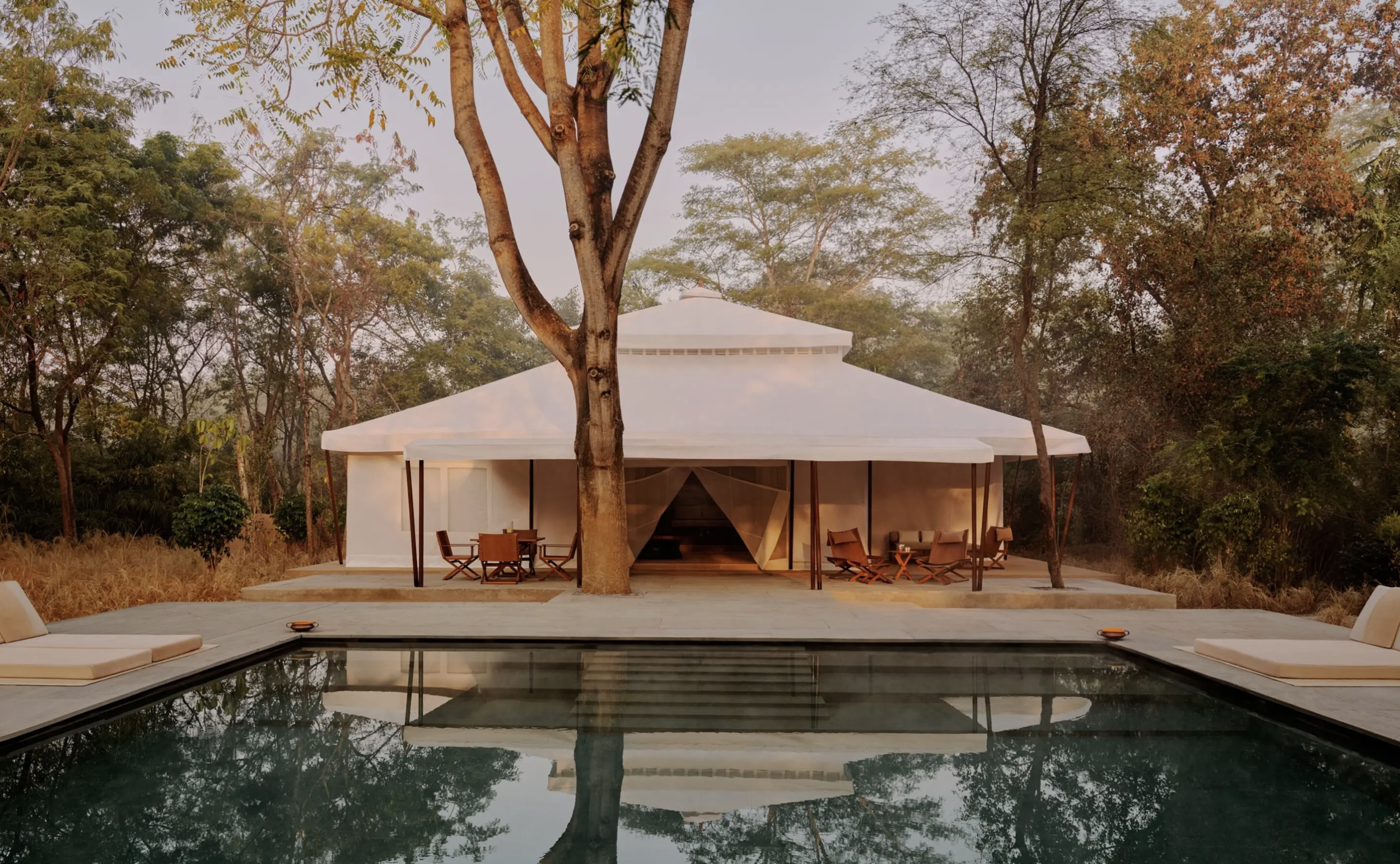
Canvas, Dhok Forest and the Edge of Ranthambore
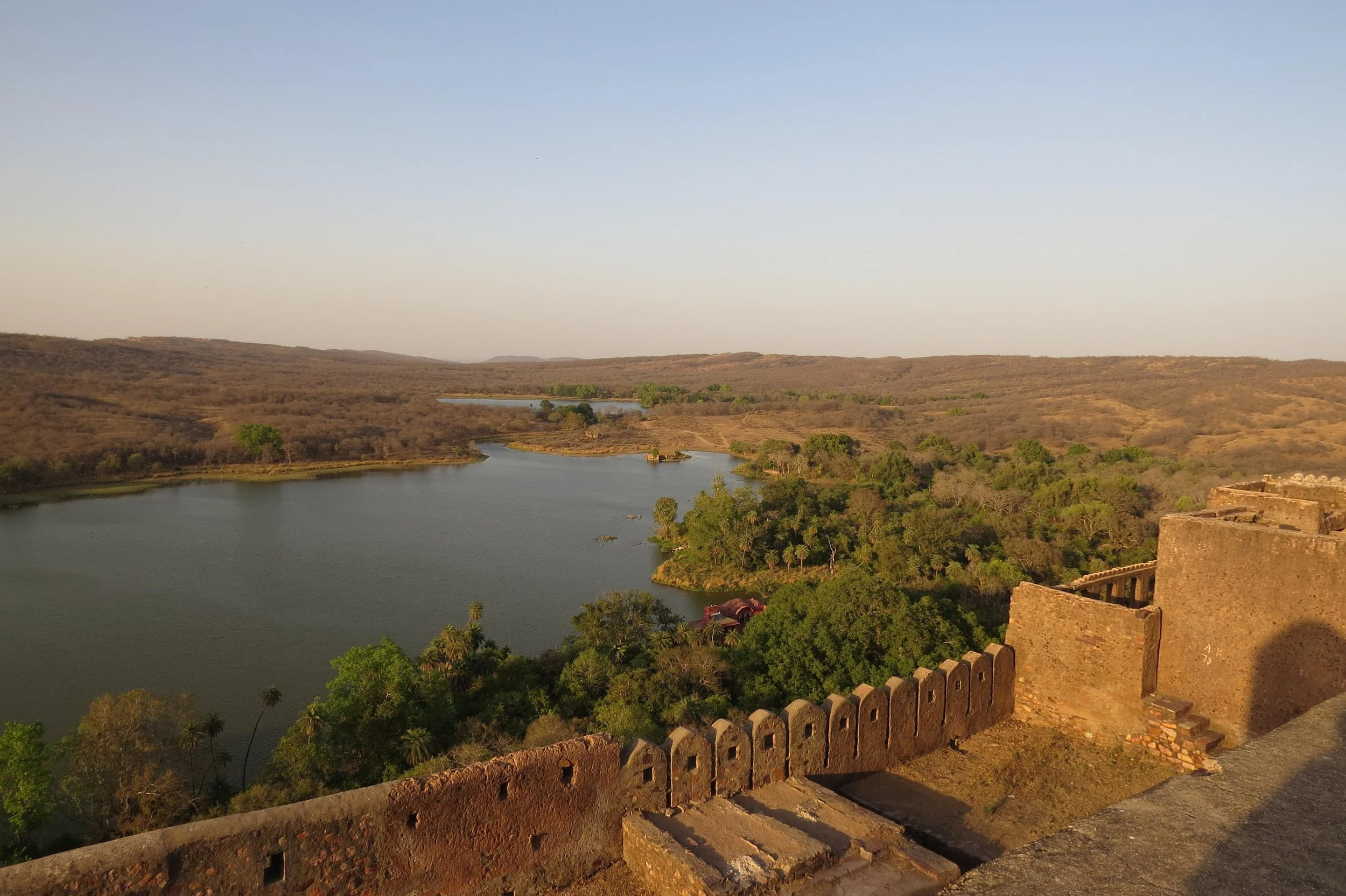
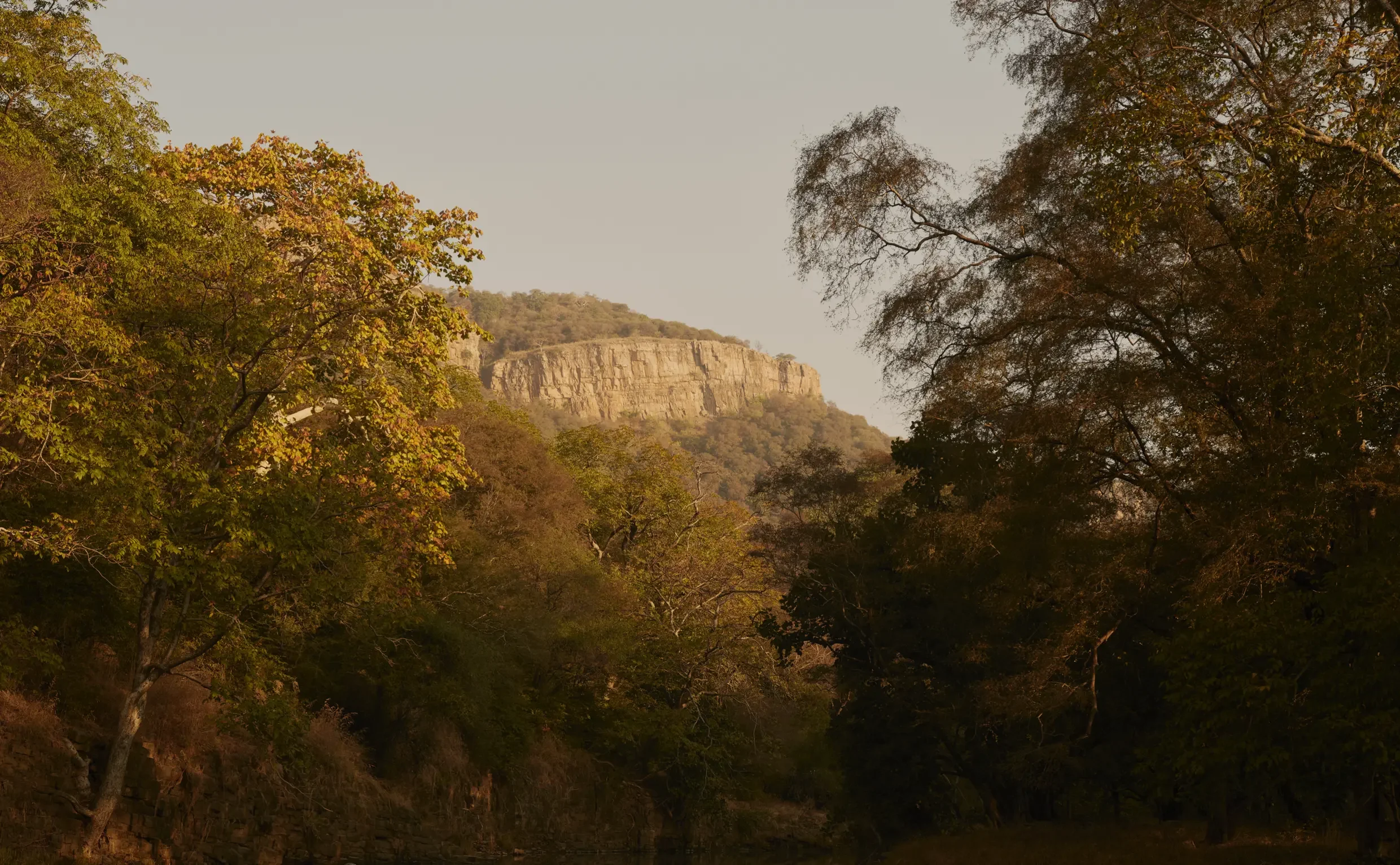
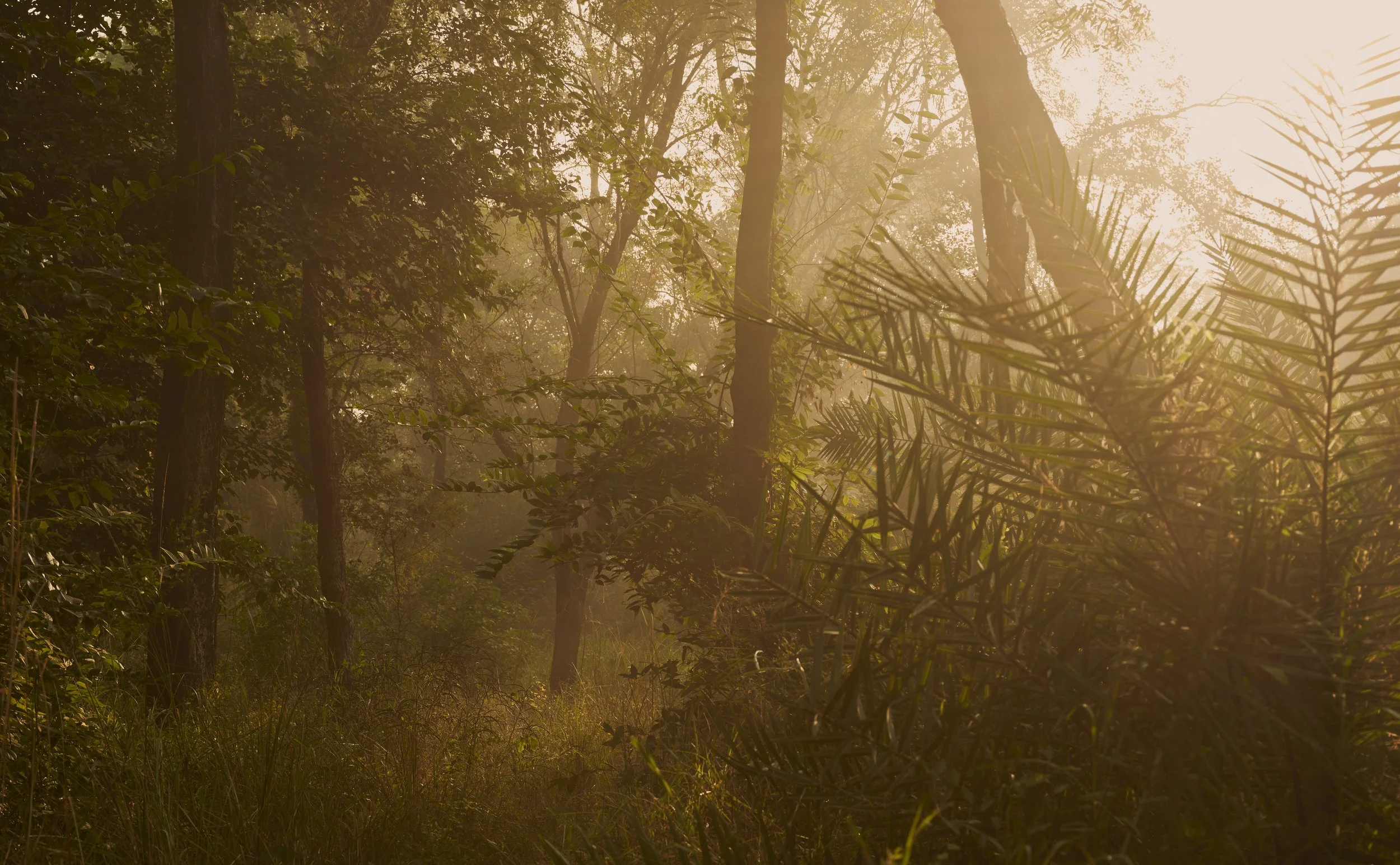
Aman-i-Khás sits in dry woodland outside Ranthambore National Park, close enough to make dawn and late-afternoon game drives the organizing principle of a stay. Dhok trees, tawny grass and the broken ridges of the Aravalli and Vindhya landscape surround a camp that feels deliberately temporary even though its service, spa and dining operate with the polish associated with Aman.
The camp is seasonal, opening from October through May and closing during the hottest and monsoon months from June through September. That operating calendar aligns the property with the best period for exploring Ranthambore, when park access, wildlife movement and cooler mornings make safari days more practical.
Current Aman inventory lists fourteen guest tents across three categories: ten Tented Pavilions, one Tented Pool Pavilion and three Grand Tented Pool Pavilions. All stays include full board for two guests, daily morning group yoga, private butler service and limited nightly laundry. In the 2026 MICHELIN Guide hotel selection, Aman-i-Khás is currently listed with One MICHELIN Key, recognition that suits a property whose strongest luxury is not scale but access to a remarkable landscape.
Aman’s 2003 Camp Reinterprets Mughal Travelling Courts
Aman-i-Khás opened in 2003, becoming one of Aman’s earliest Indian properties. Architect Jean-Michel Gathy of Denniston developed the original design around the idea of a seasonal wilderness camp rather than a permanent palace, taking inspiration from the elaborate mobile encampments used by Mughal rulers and hunting parties.
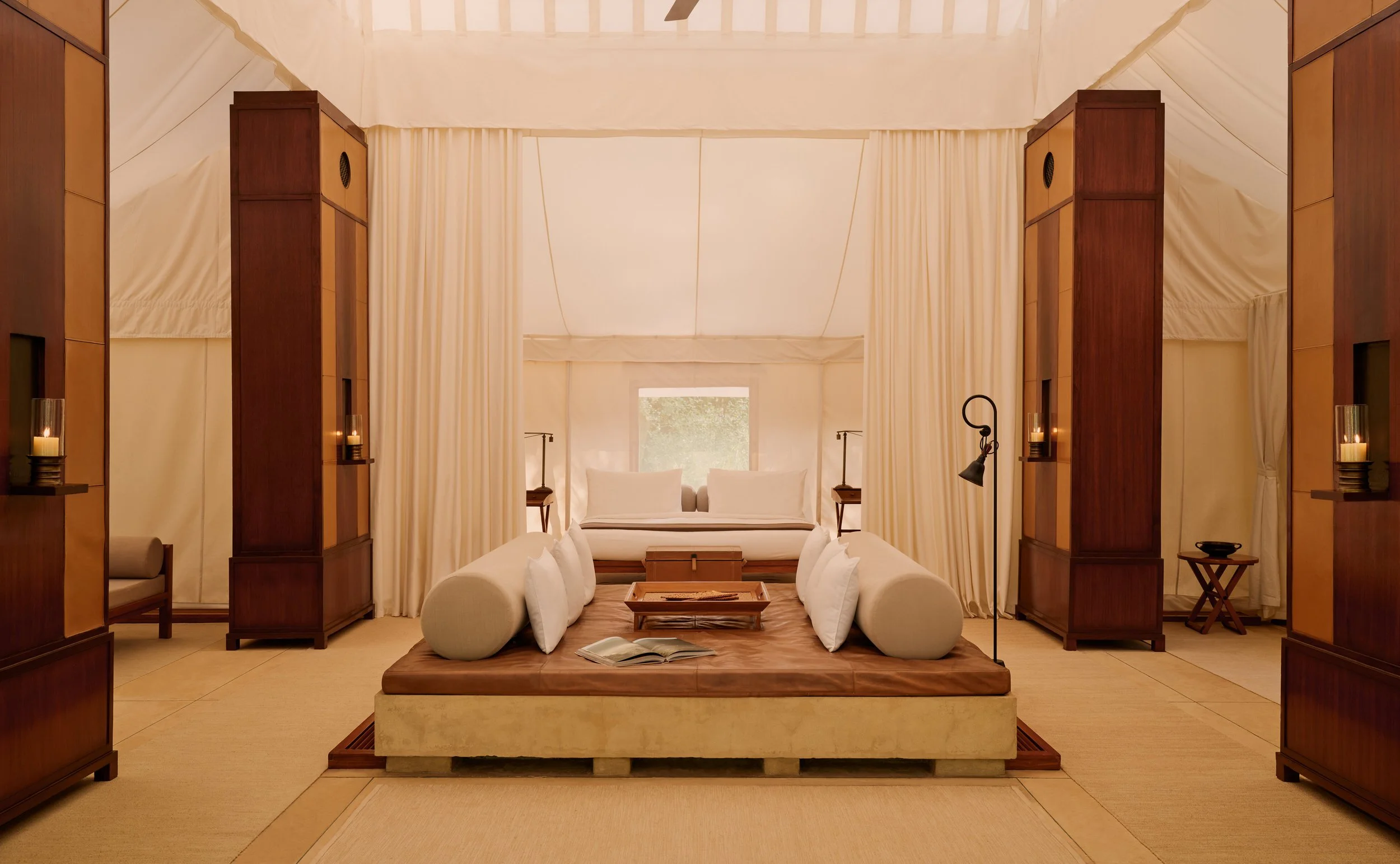
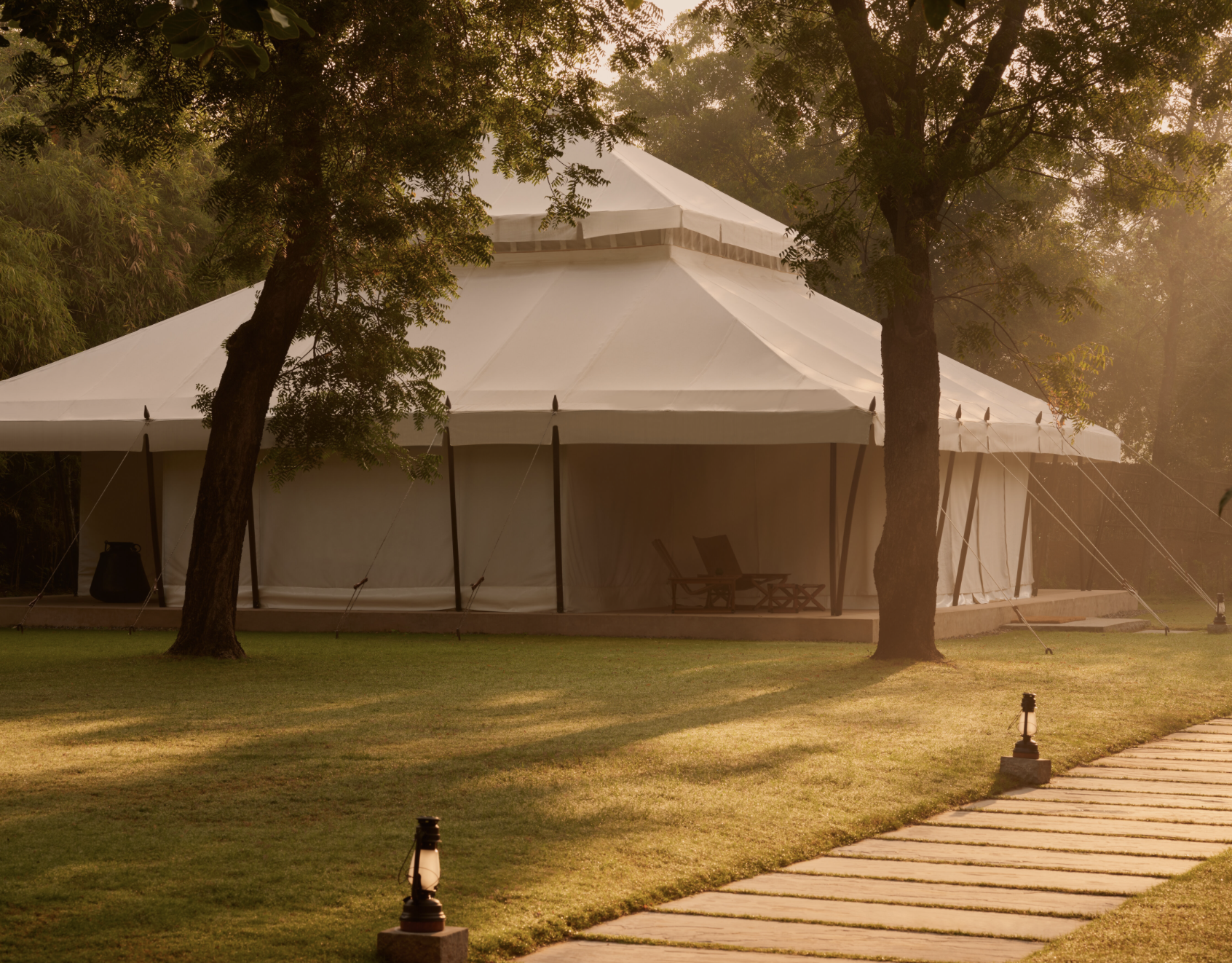
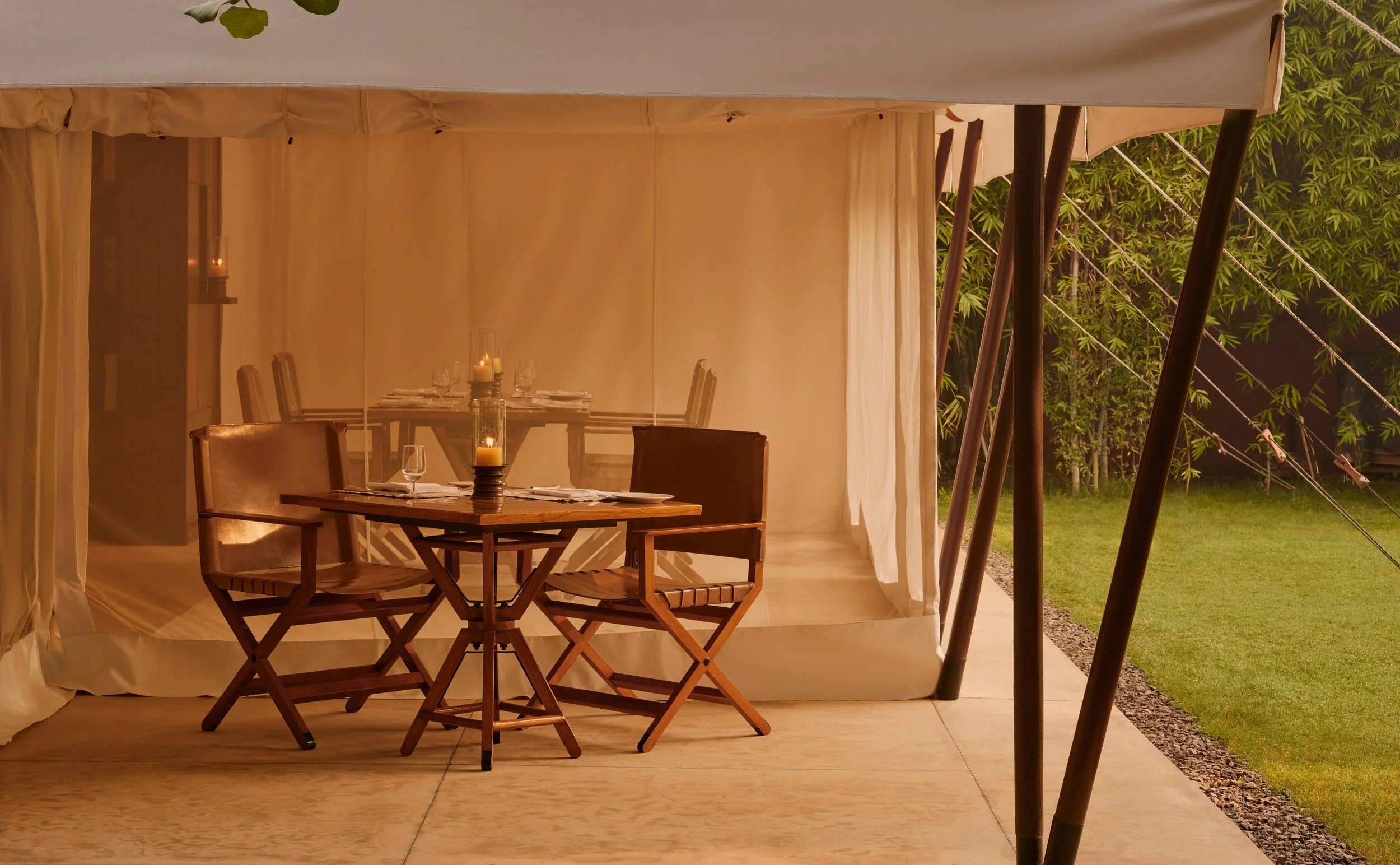
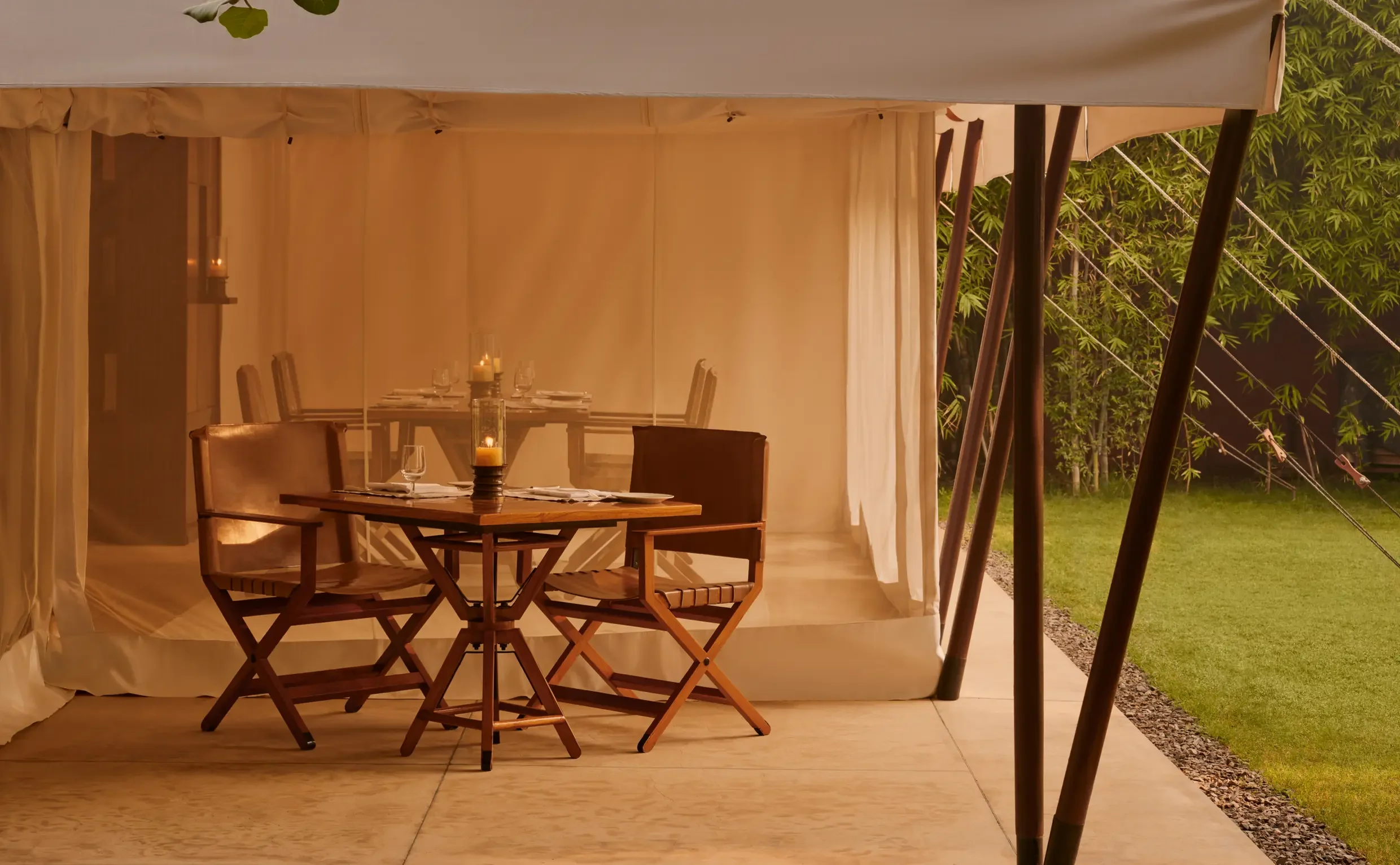
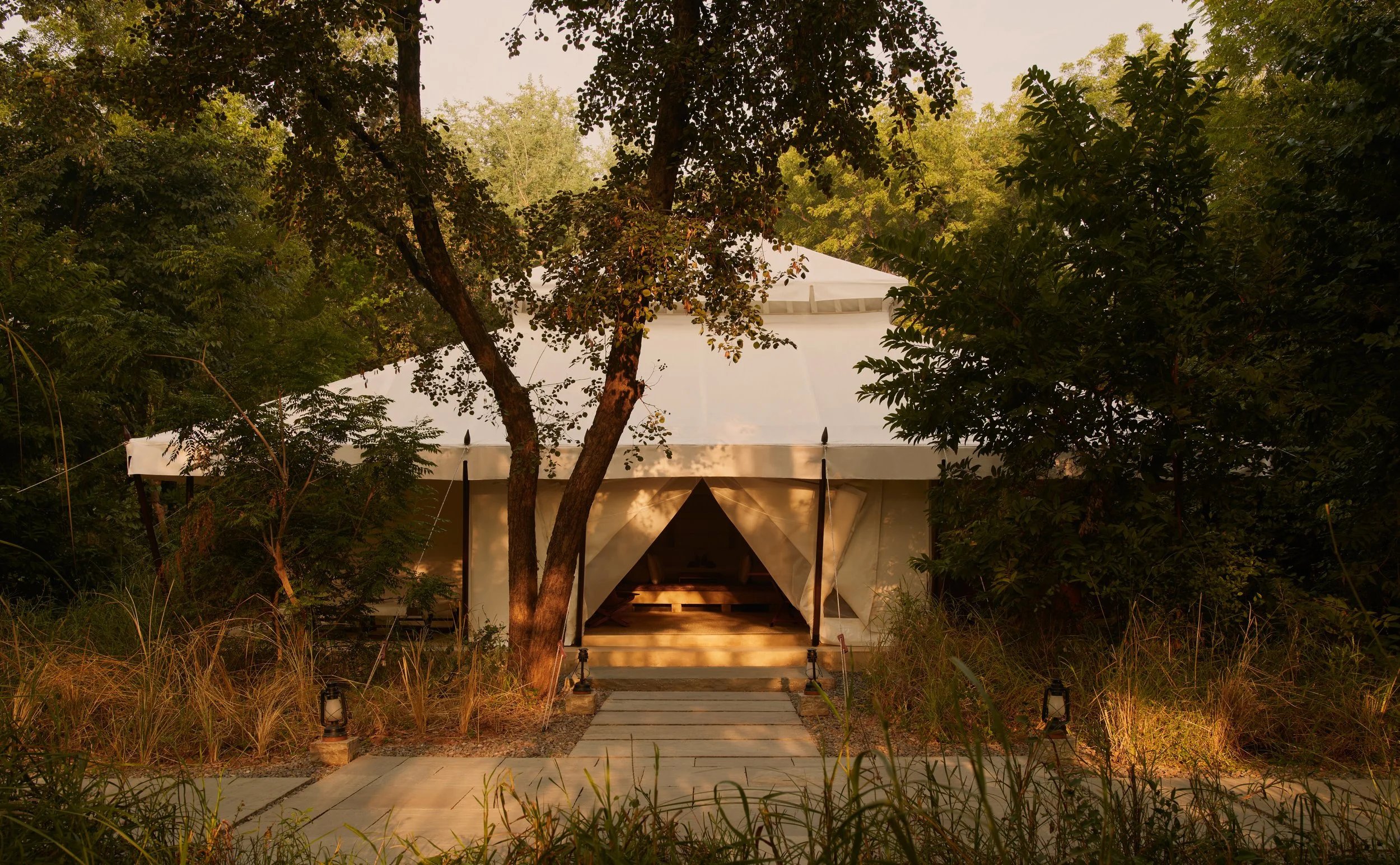
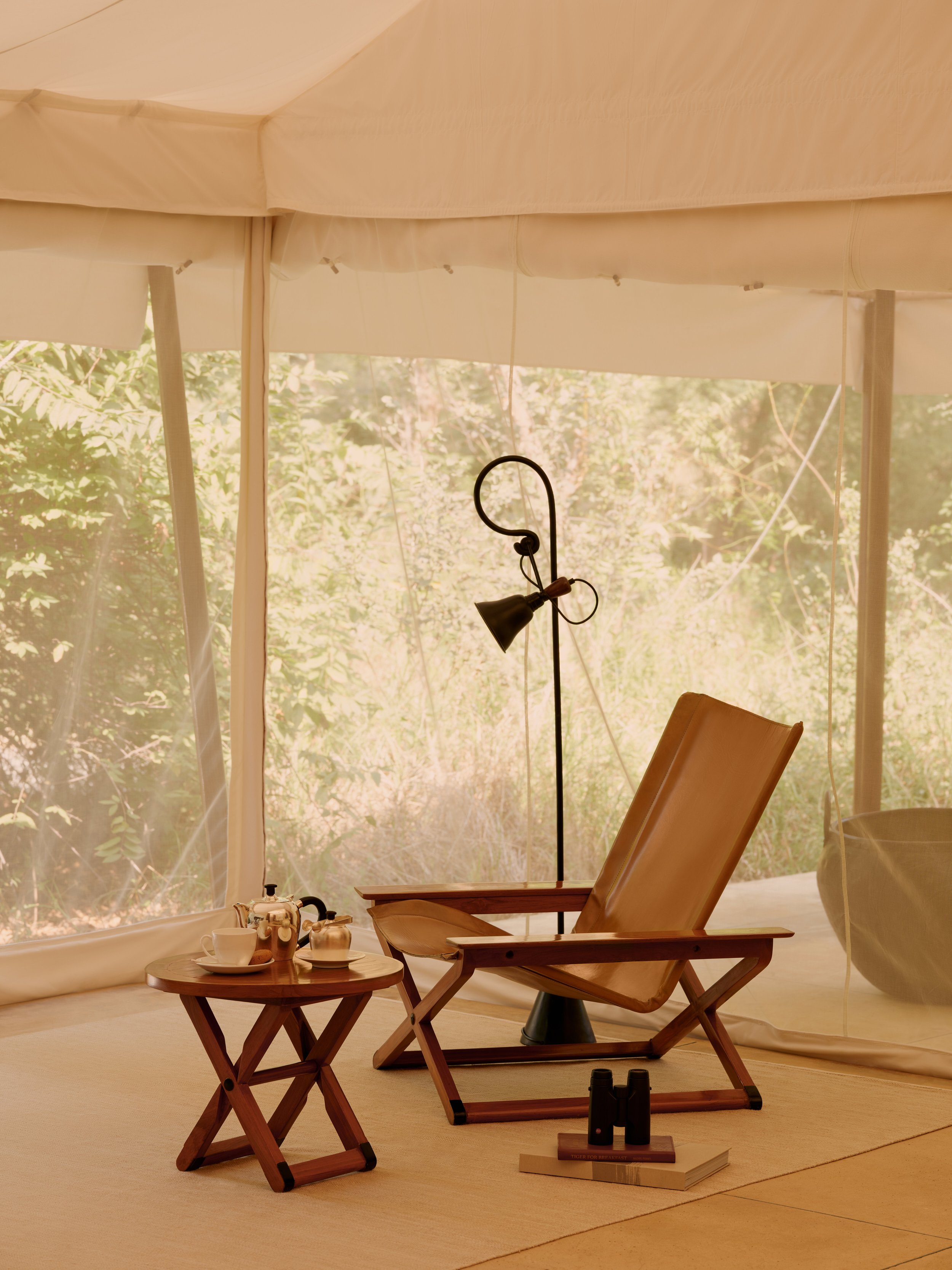
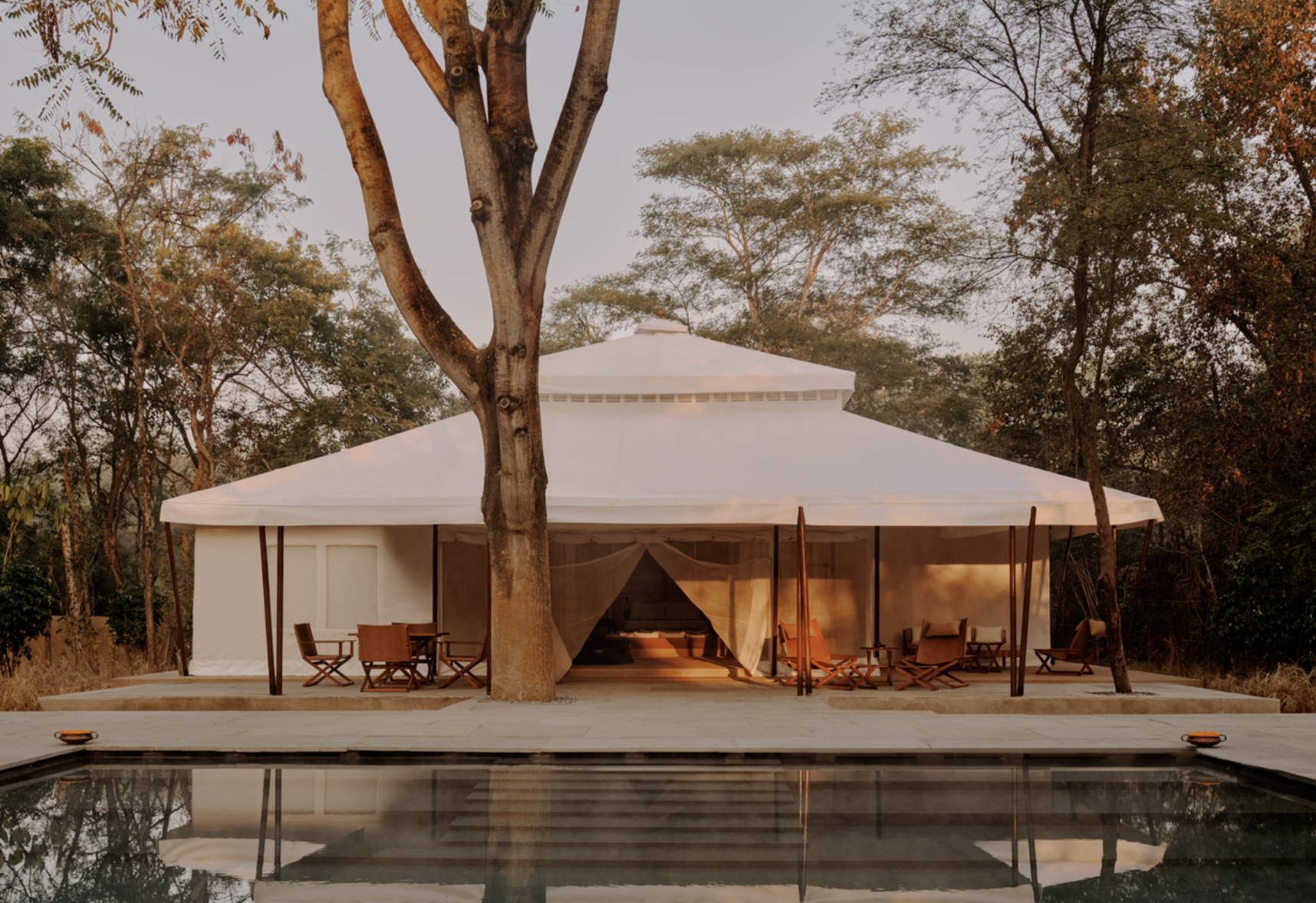
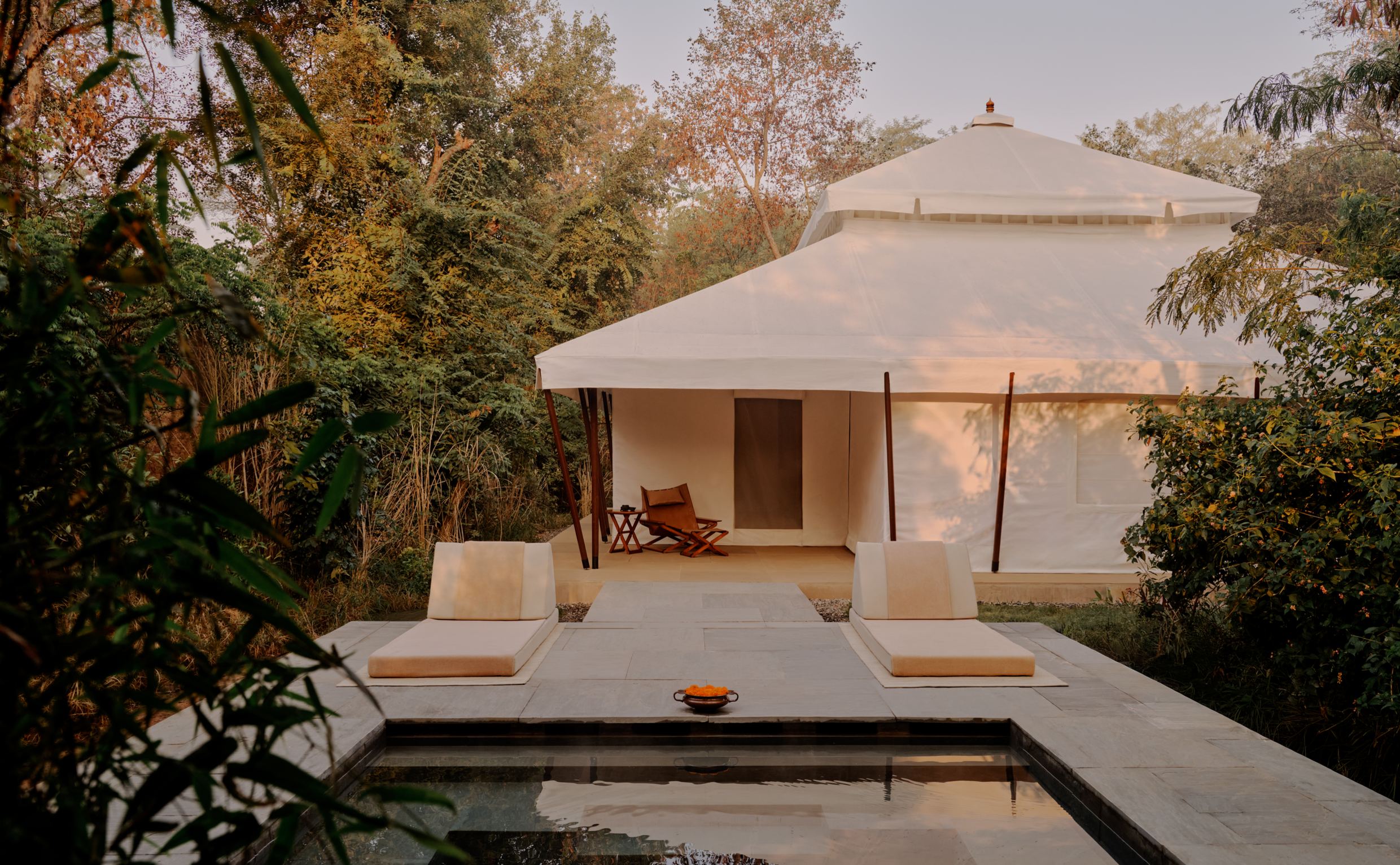
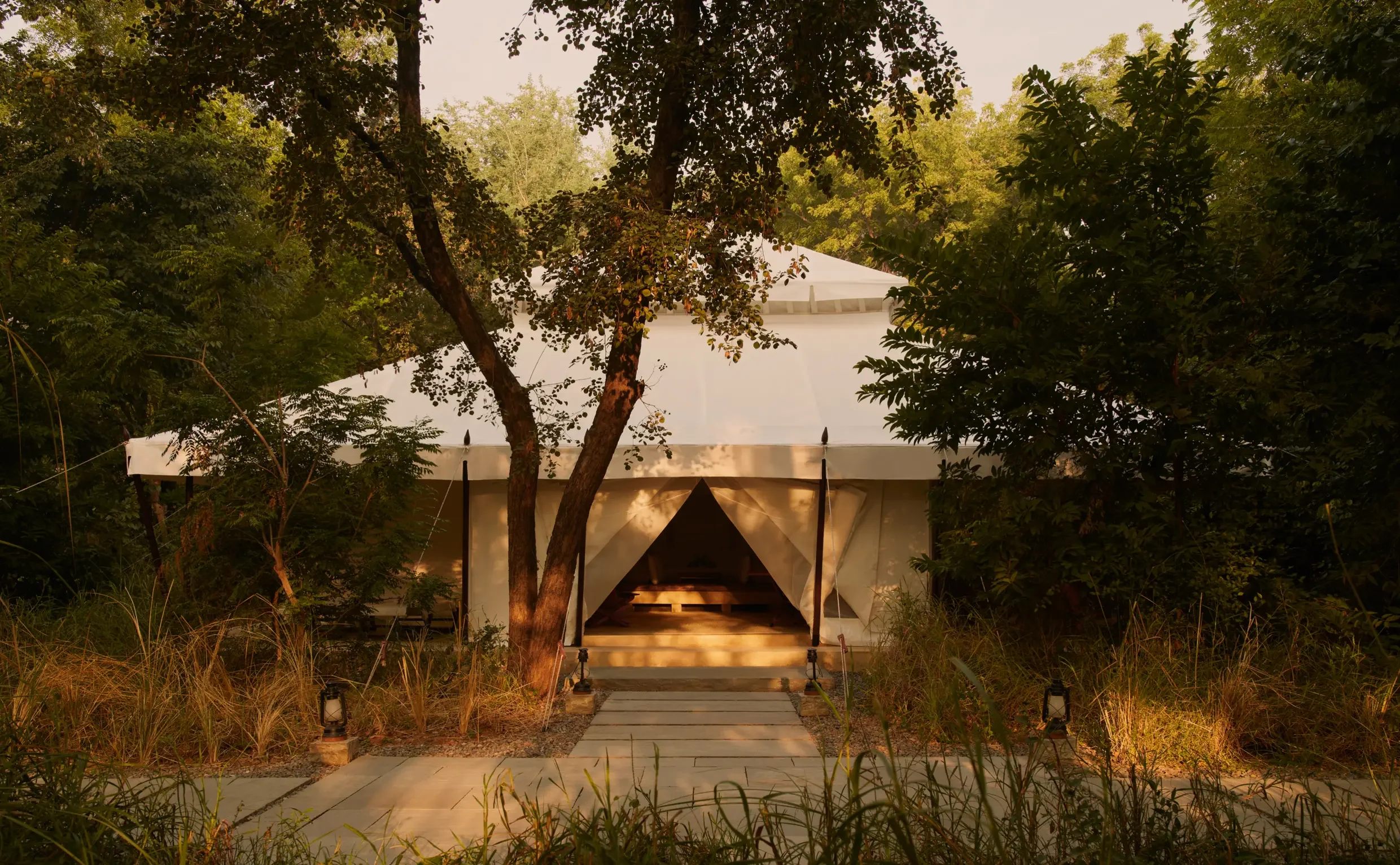
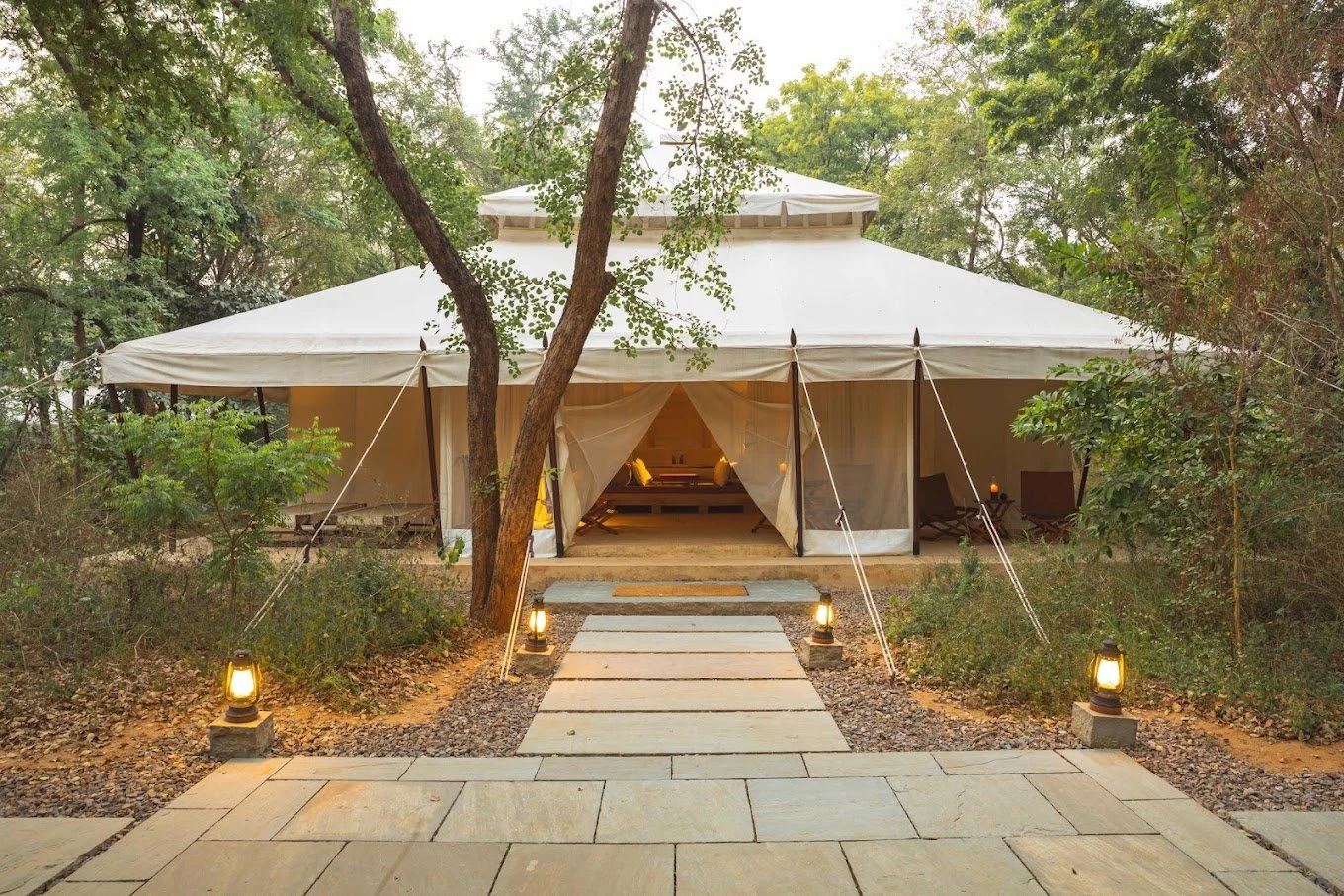
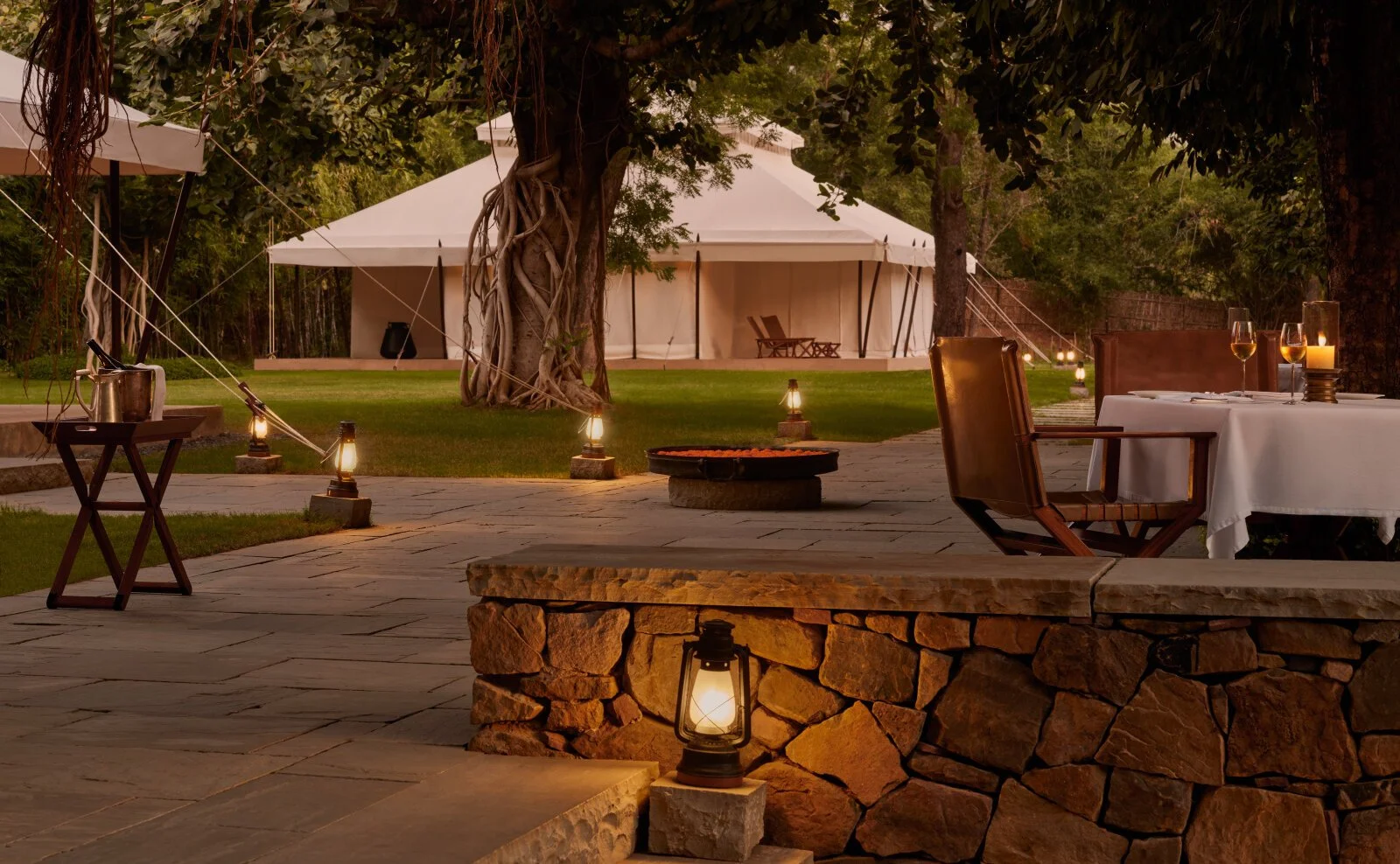
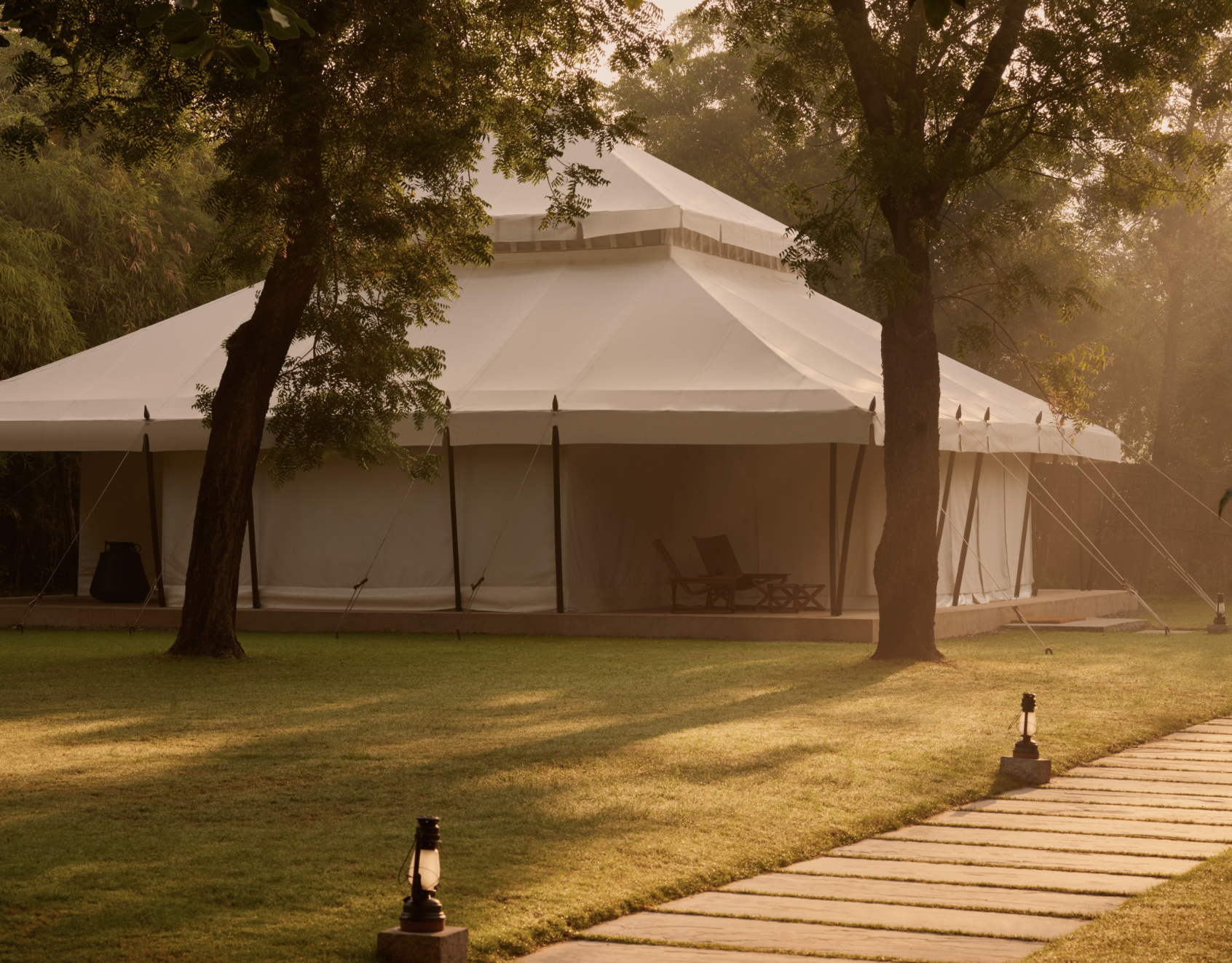
The historical reference is architectural rather than literal. Cream canvas roofs rise above solid floors and timber framing, while internal spaces are divided by white cotton drapes rather than conventional walls. Separate tents for dining, lounging and spa treatments create the feeling of a small settlement gathered in the forest.
Ranthambore gives that aesthetic context. The national park was once associated with royal hunting, but the contemporary experience is defined by conservation and wildlife observation. Aman’s camp therefore occupies an interesting position between two histories: the visual language of aristocratic tented travel and the modern purpose of entering the landscape to see tigers, leopards, deer, crocodiles and birdlife in the wild rather than pursuing them.
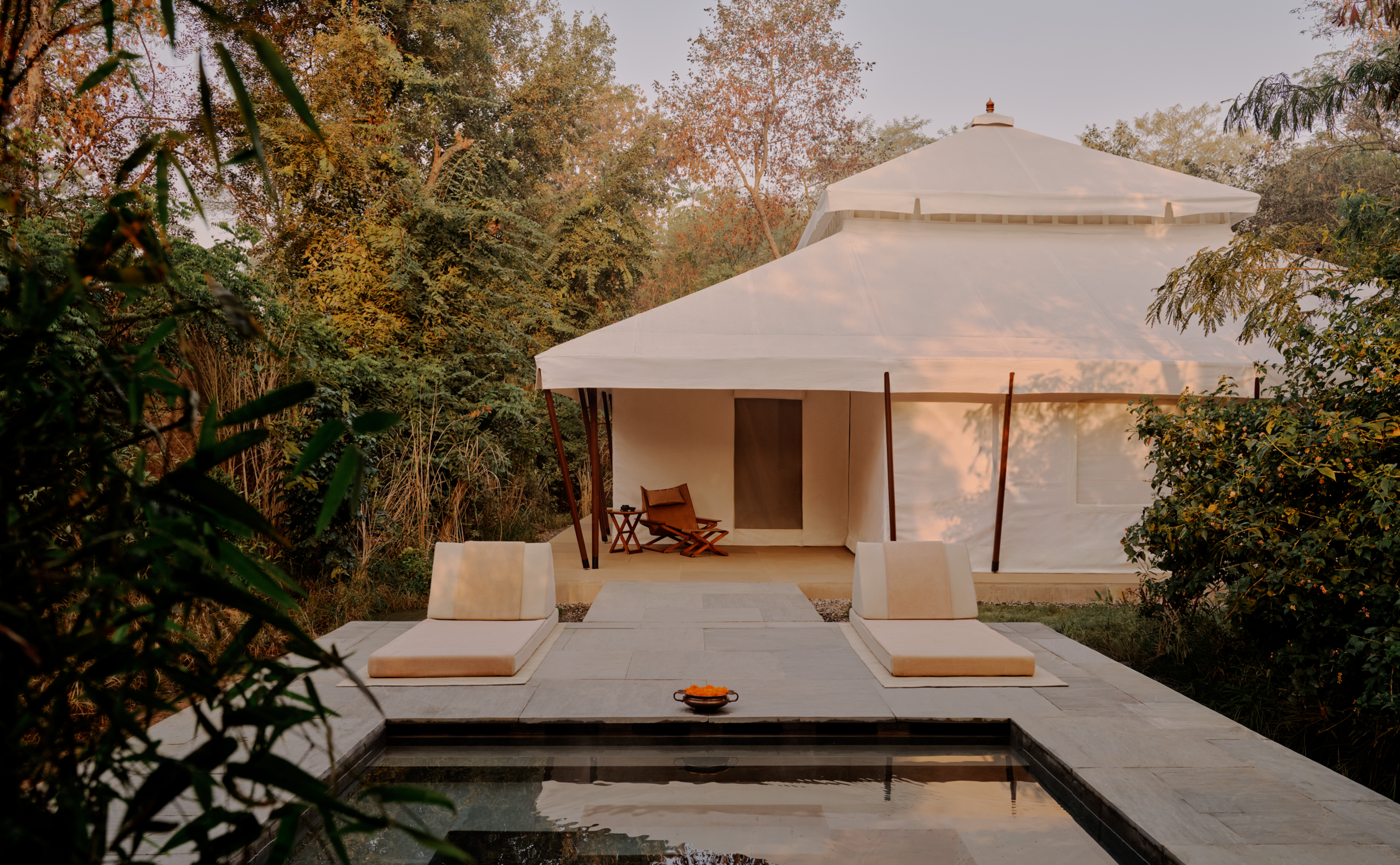
Jean-Michel Gathy Keeps the Architecture Light on the Ground
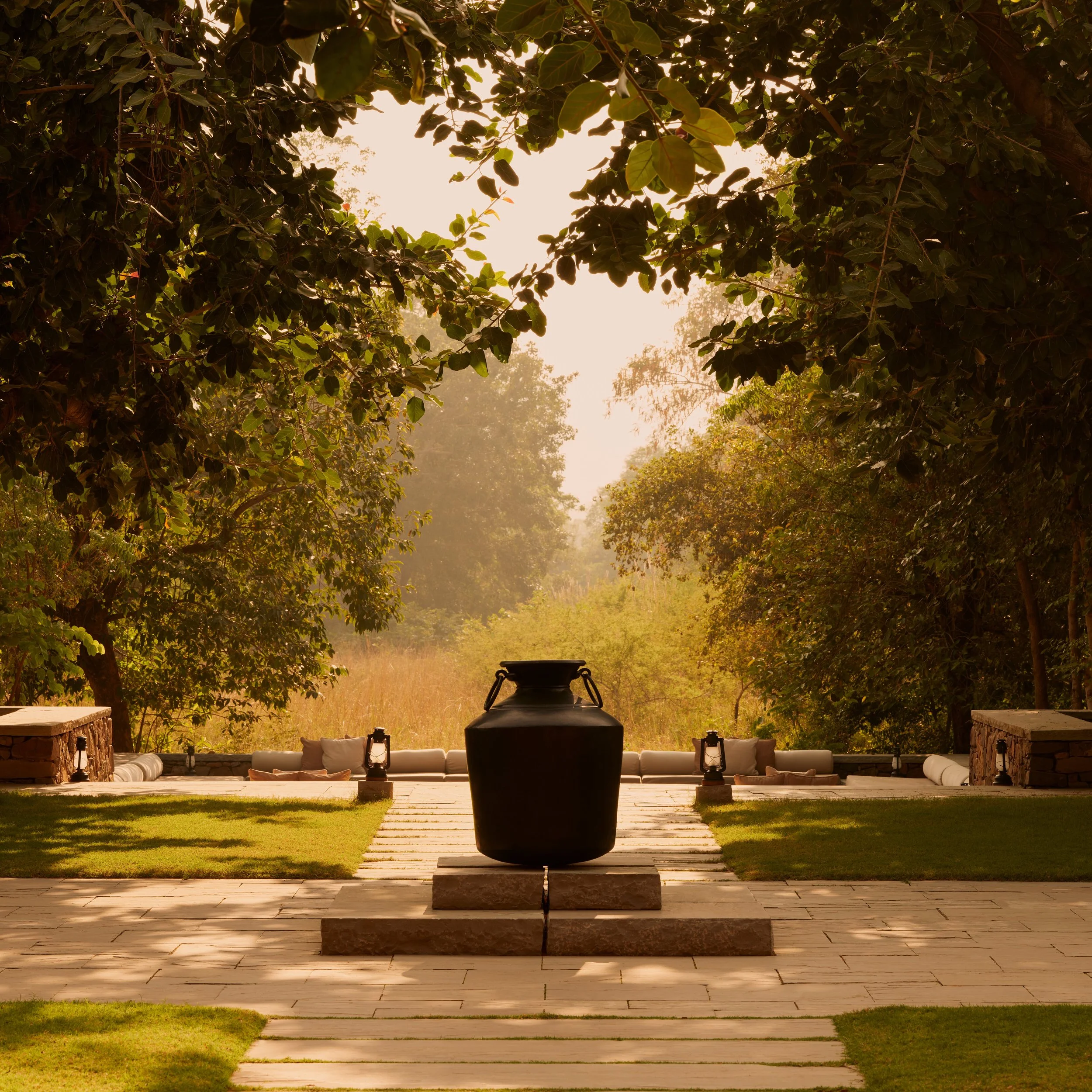
The camp’s original design is notable for what it avoids. There is no monumental lobby, broad stone staircase or hotel block. Guest tents stand apart in the woodland, and the central social spaces remain low, open and visually subordinate to the landscape.
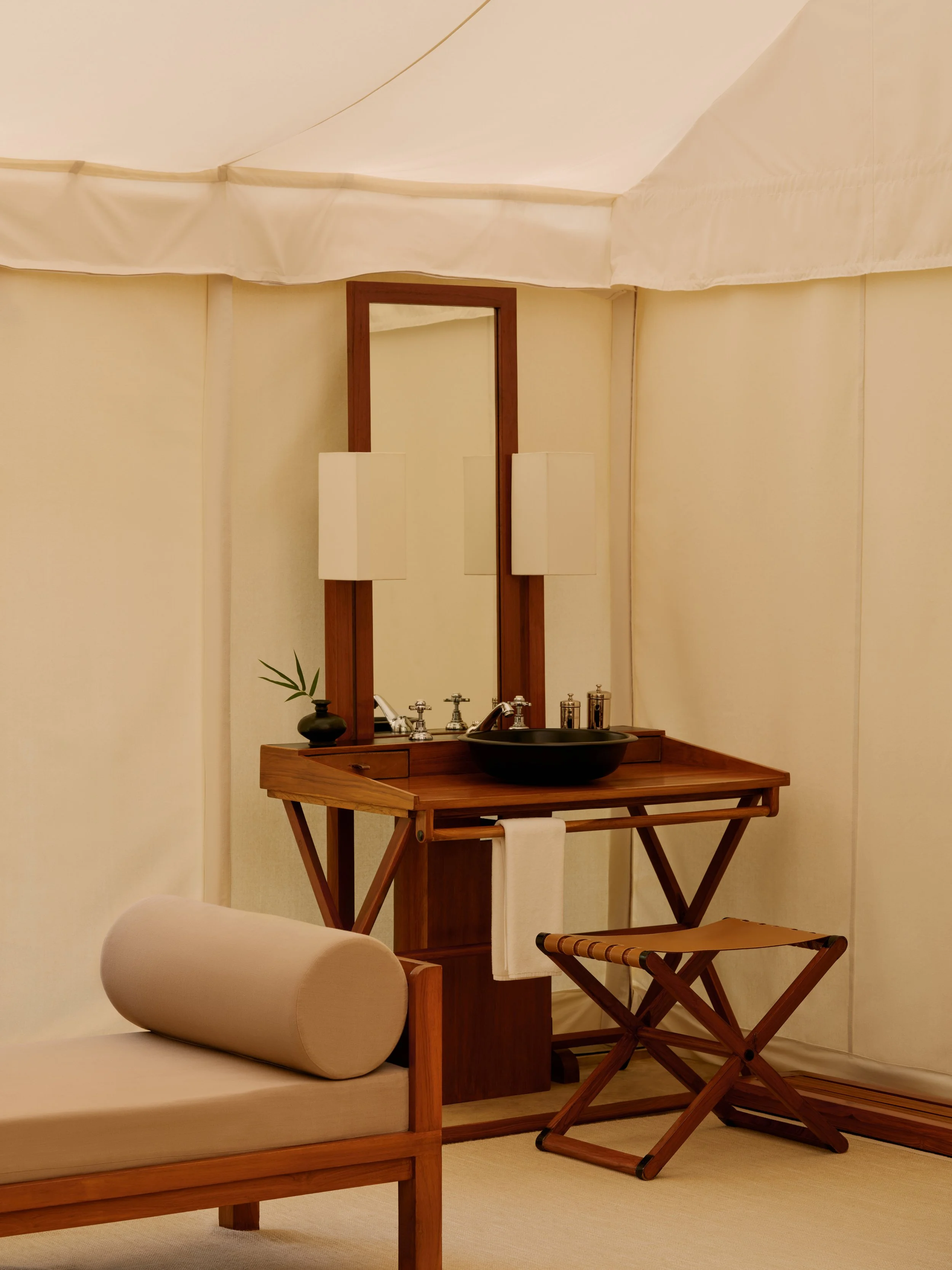
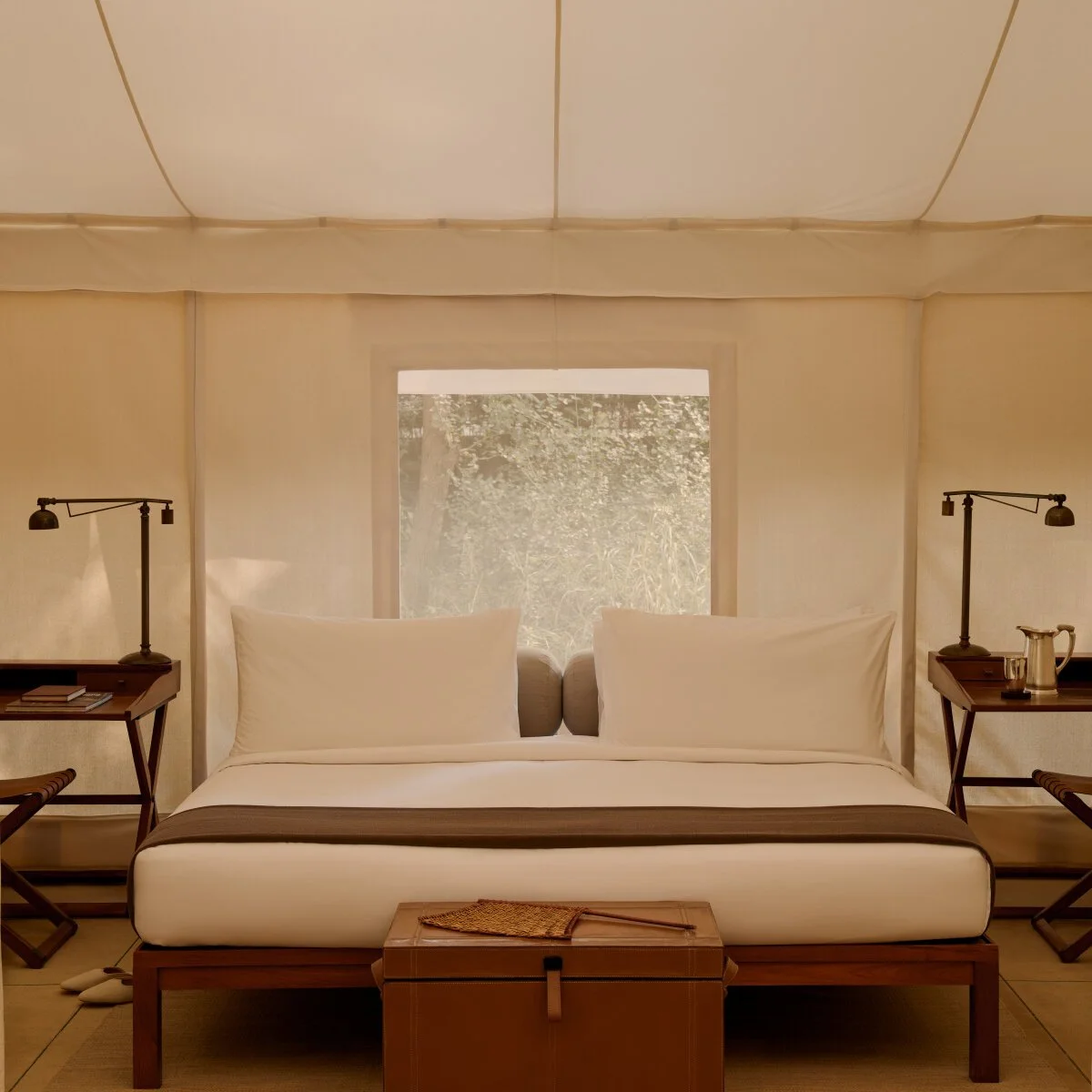
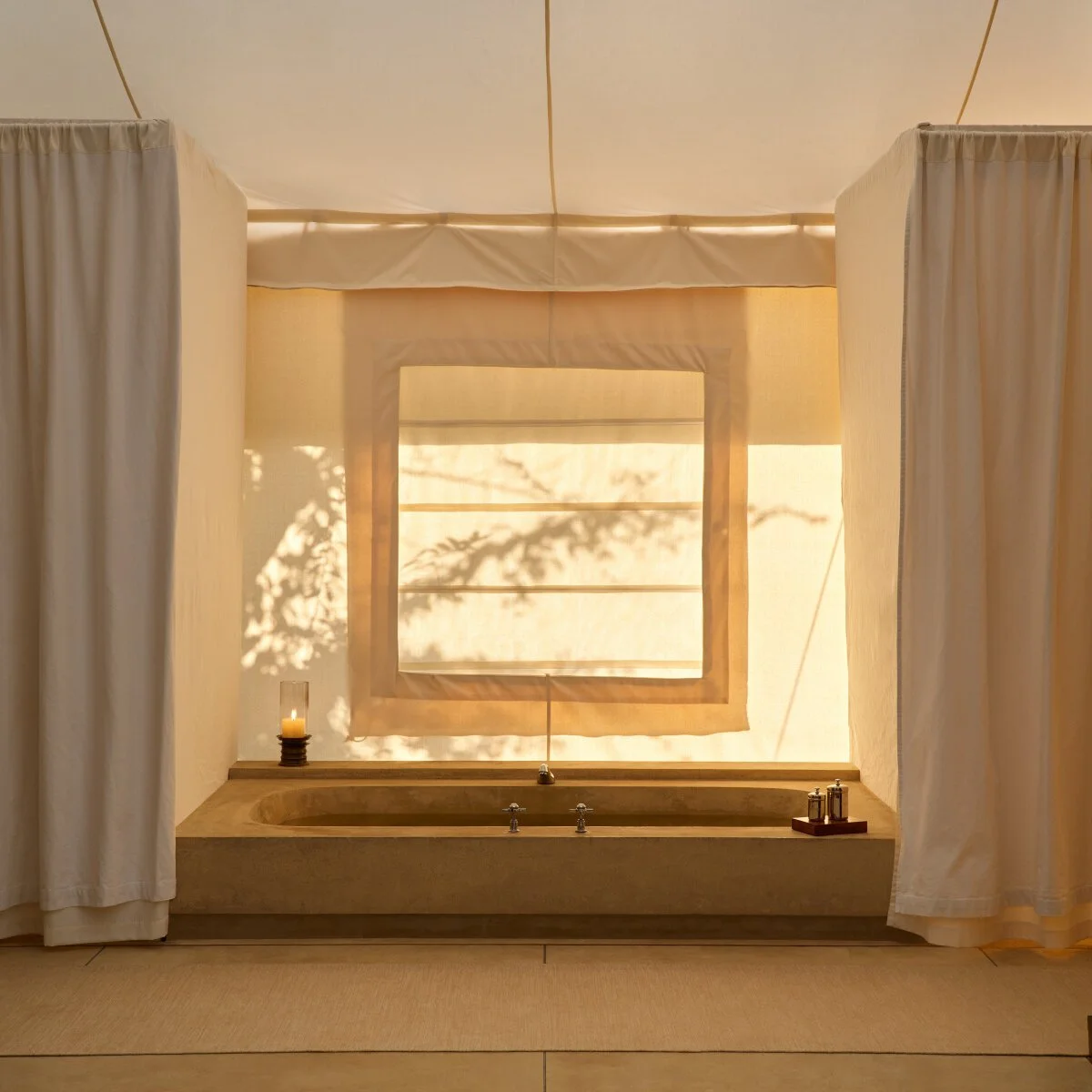
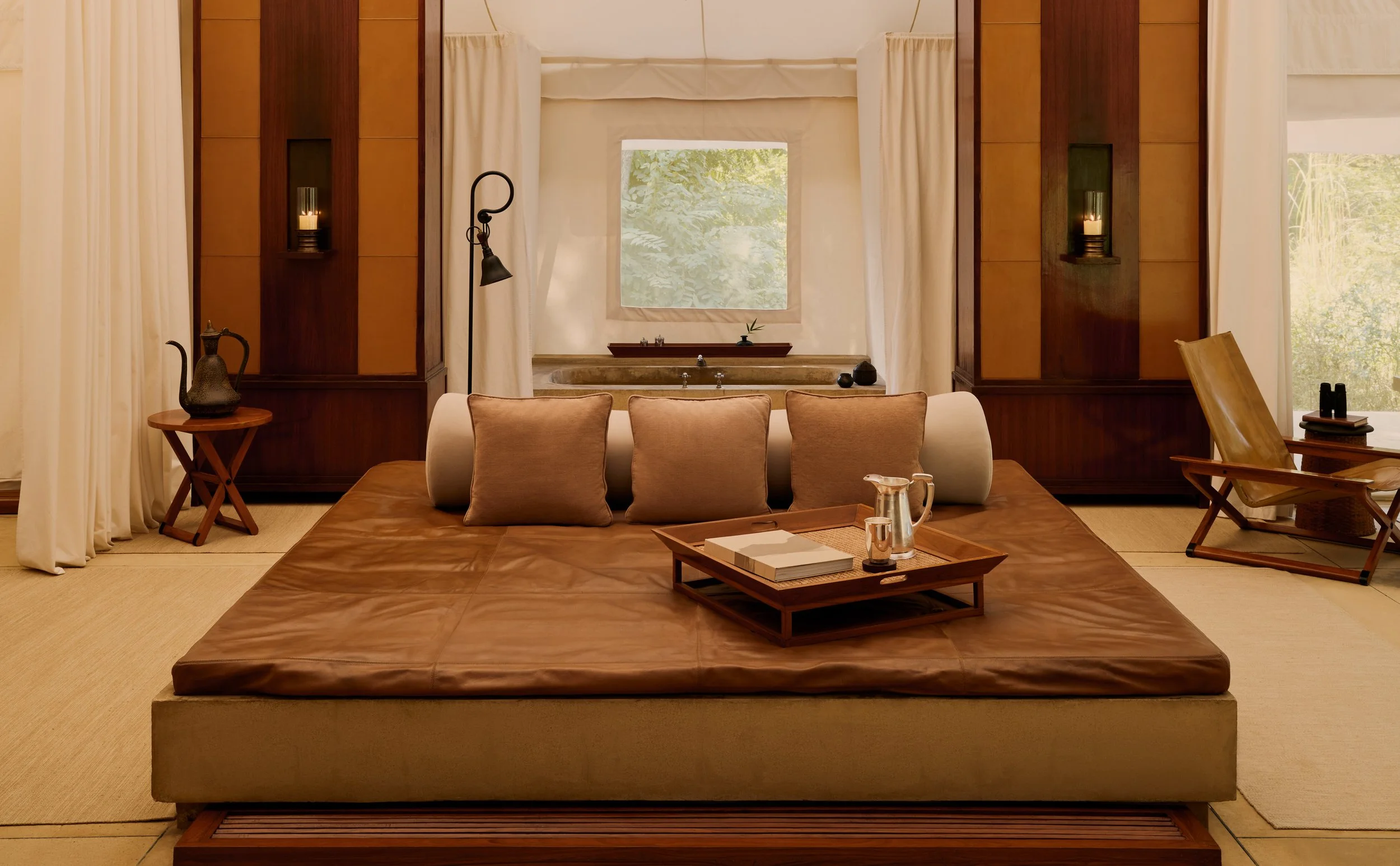
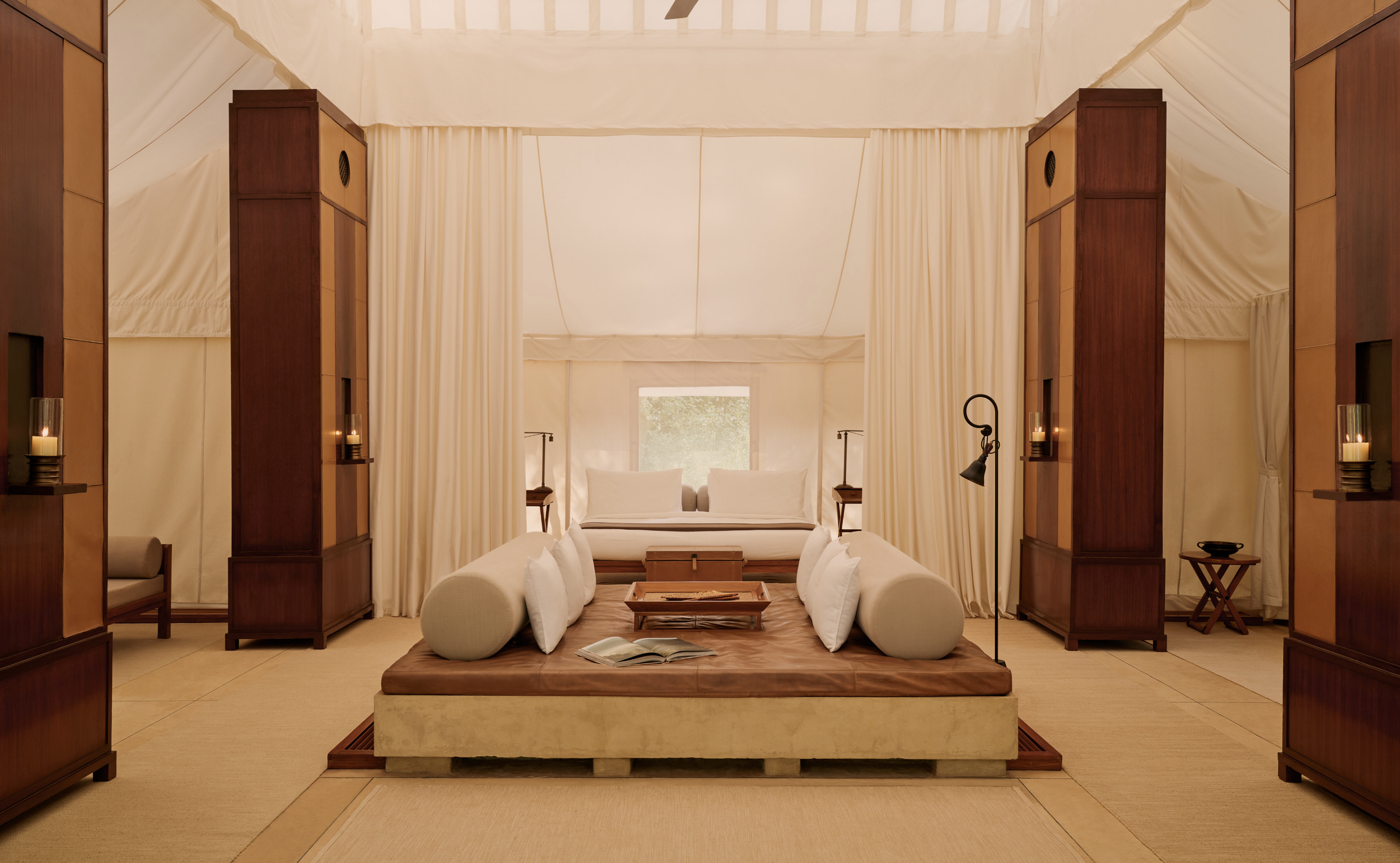
Inside the Tented Pavilions, the plan is symmetrical and restrained. A large bedroom, daybed, twin writing desks, dining area, dressing space and bathing area are separated by cotton curtains. Timber storage towers, neutral upholstery and simple campaign-style furniture give the interiors a quiet, almost portable quality despite the size of the tents.
More recent pool categories preserve the same tented identity while adding enclosed outdoor decks, plunge or temperature-controlled pools and more substantial living areas. The Grand Tented Pool Pavilions are the clearest evolution of the original idea: larger, more residential and more climate-controlled, but still visually tied to the same canvas-and-timber vocabulary.
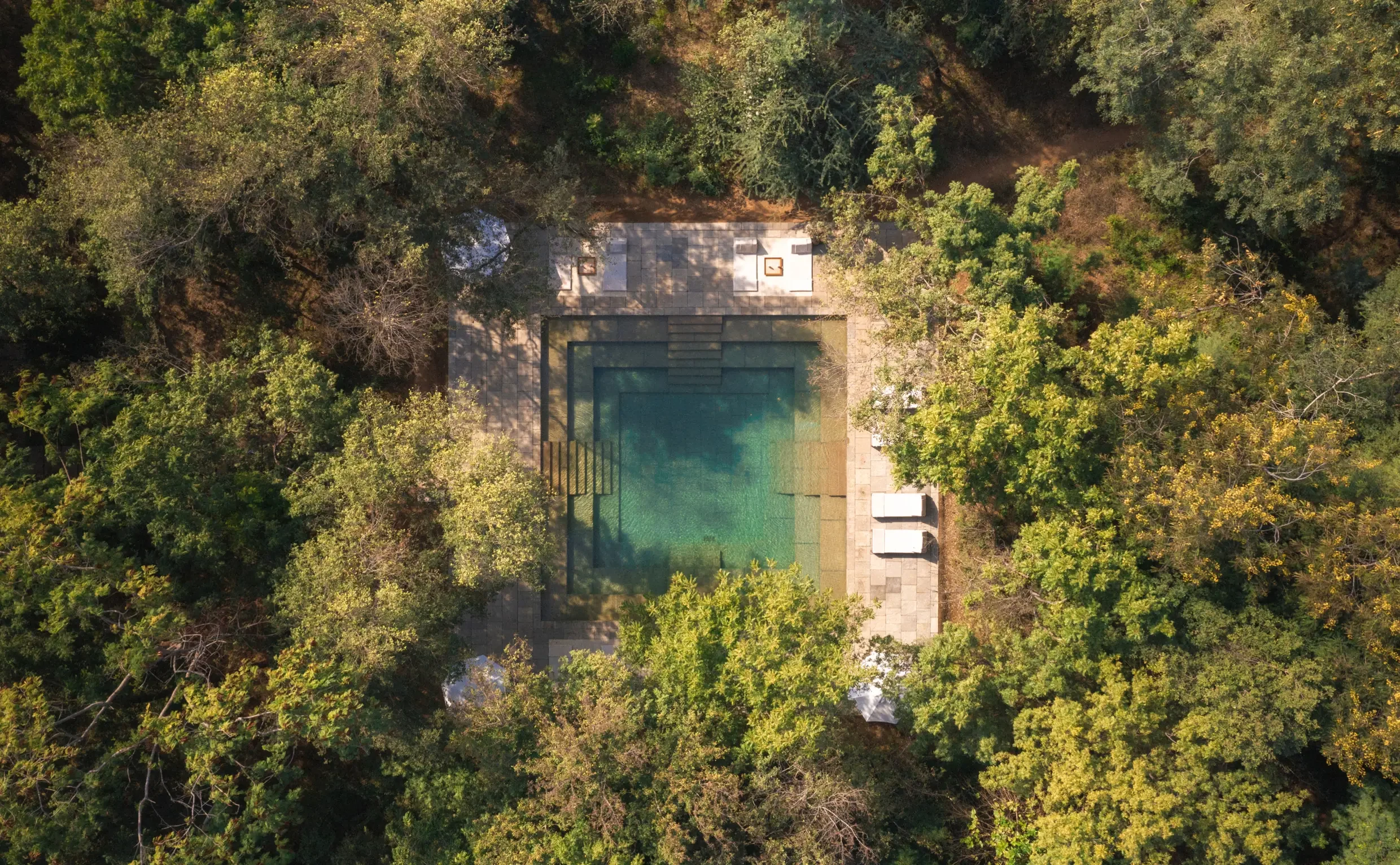
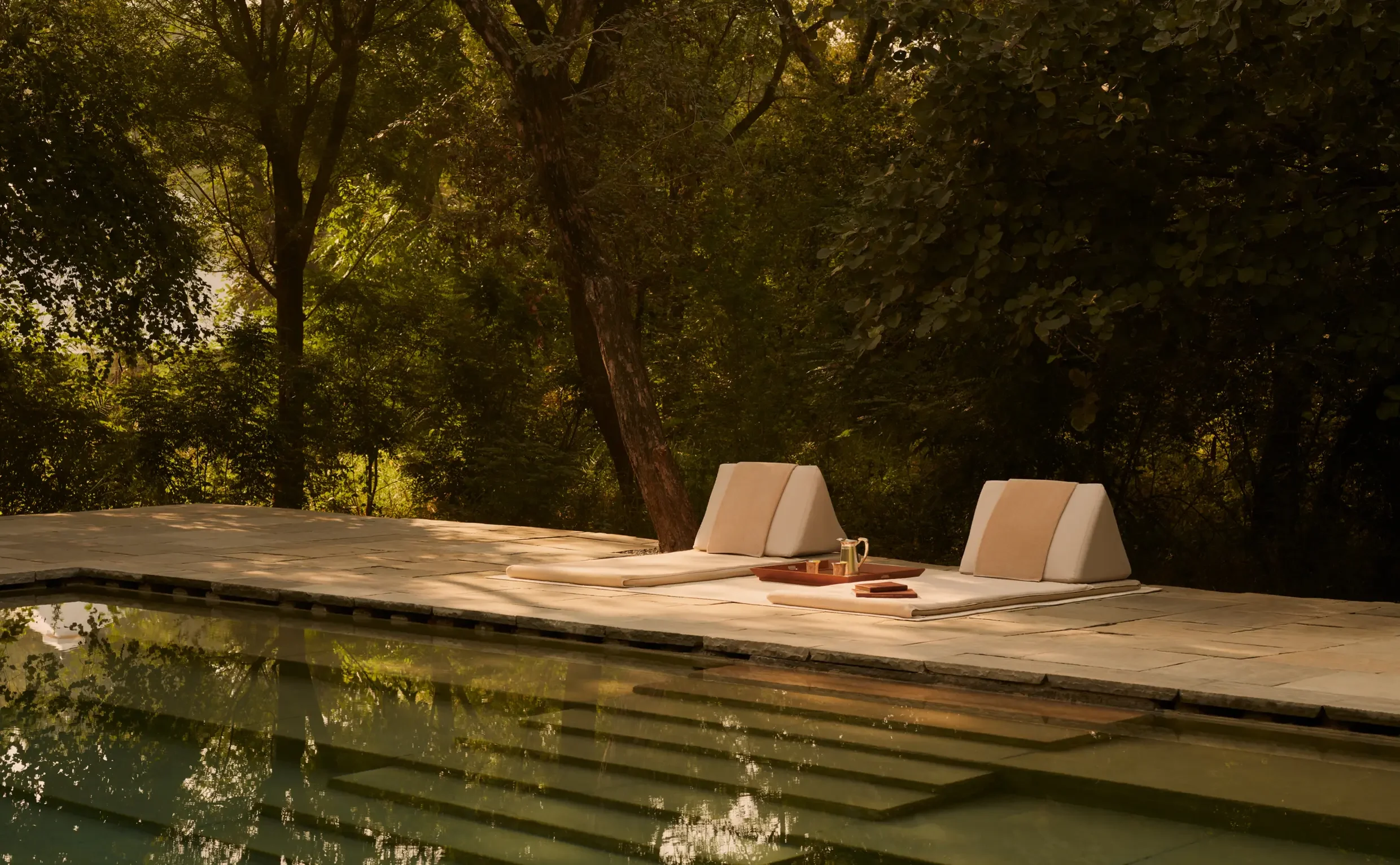
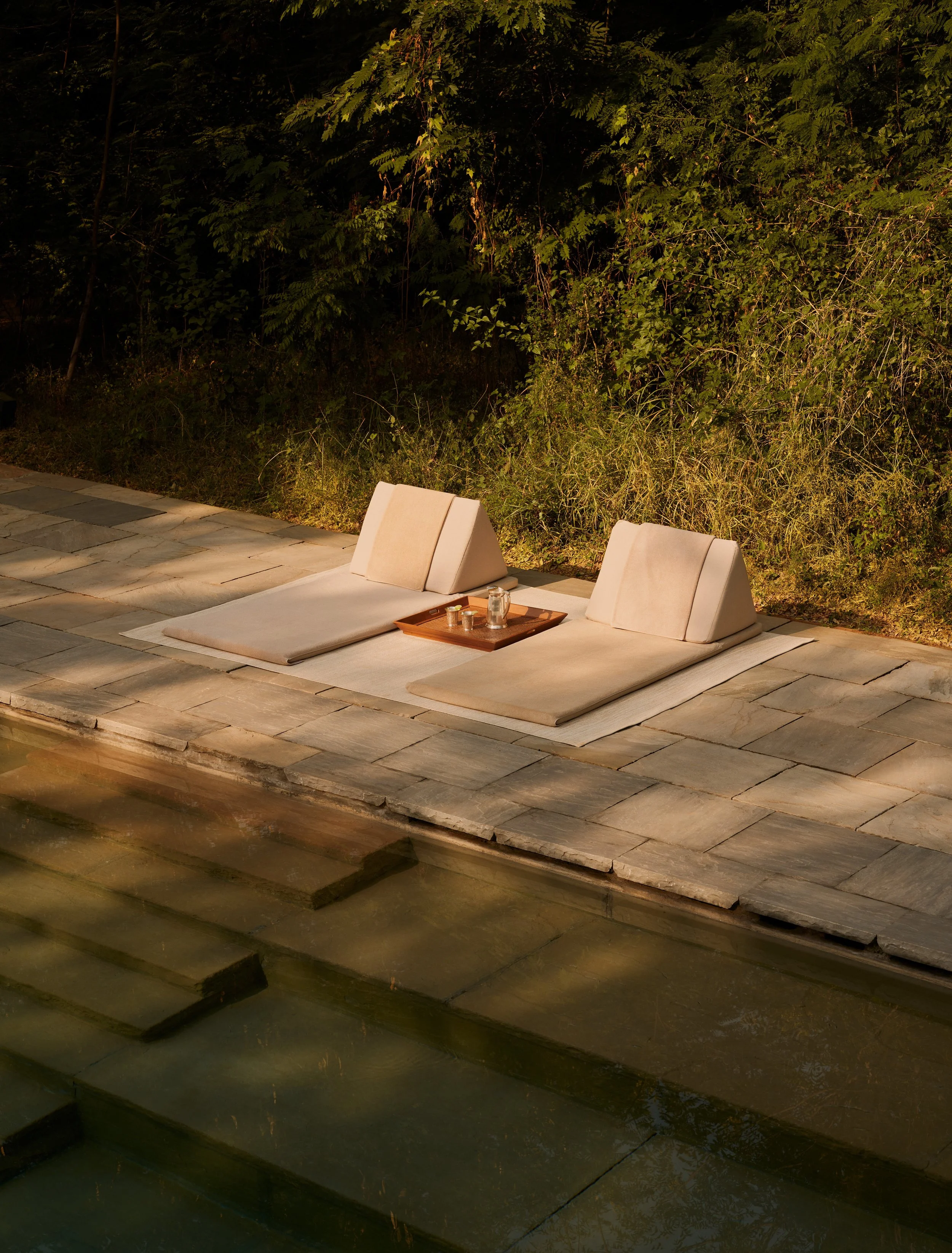
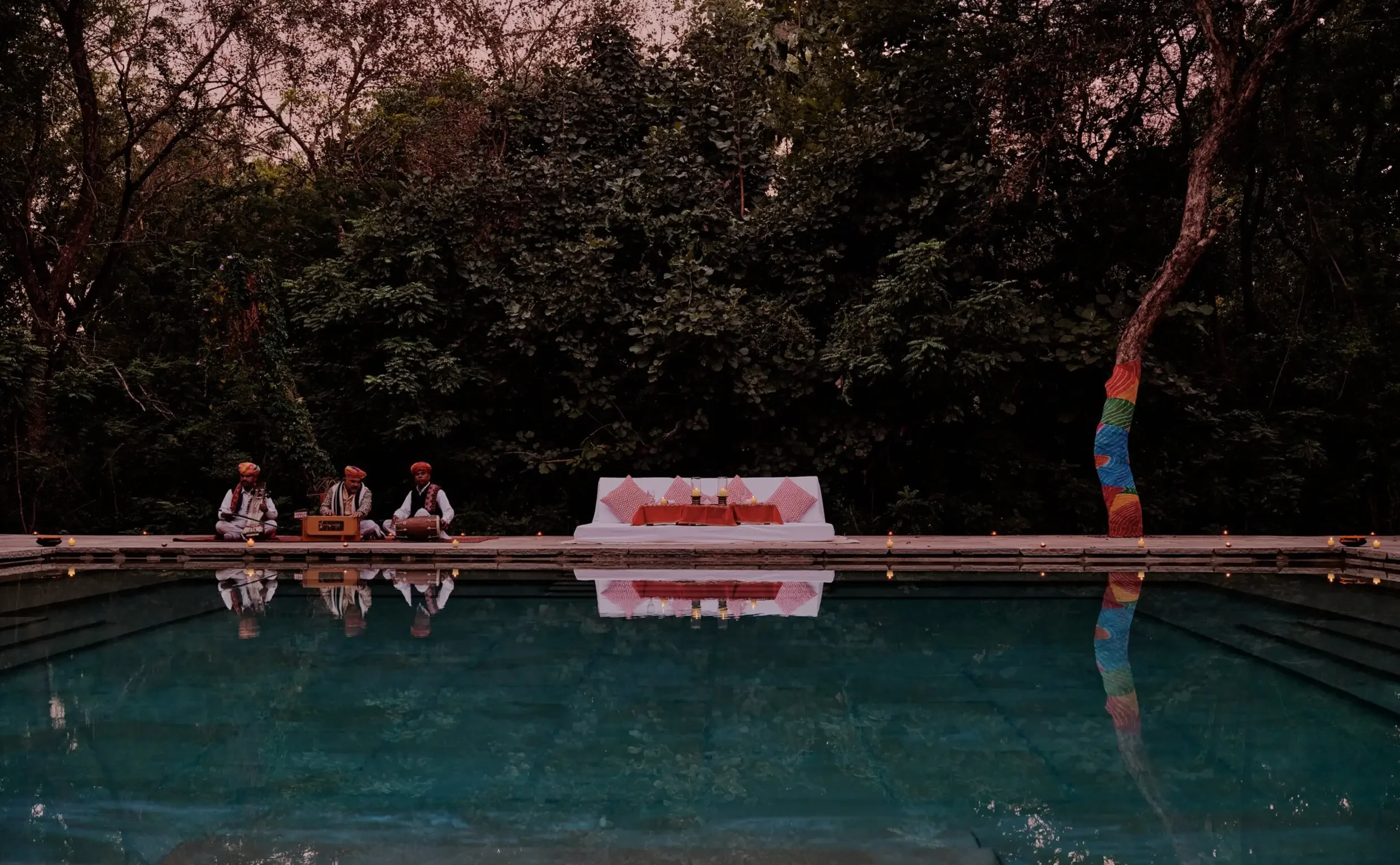
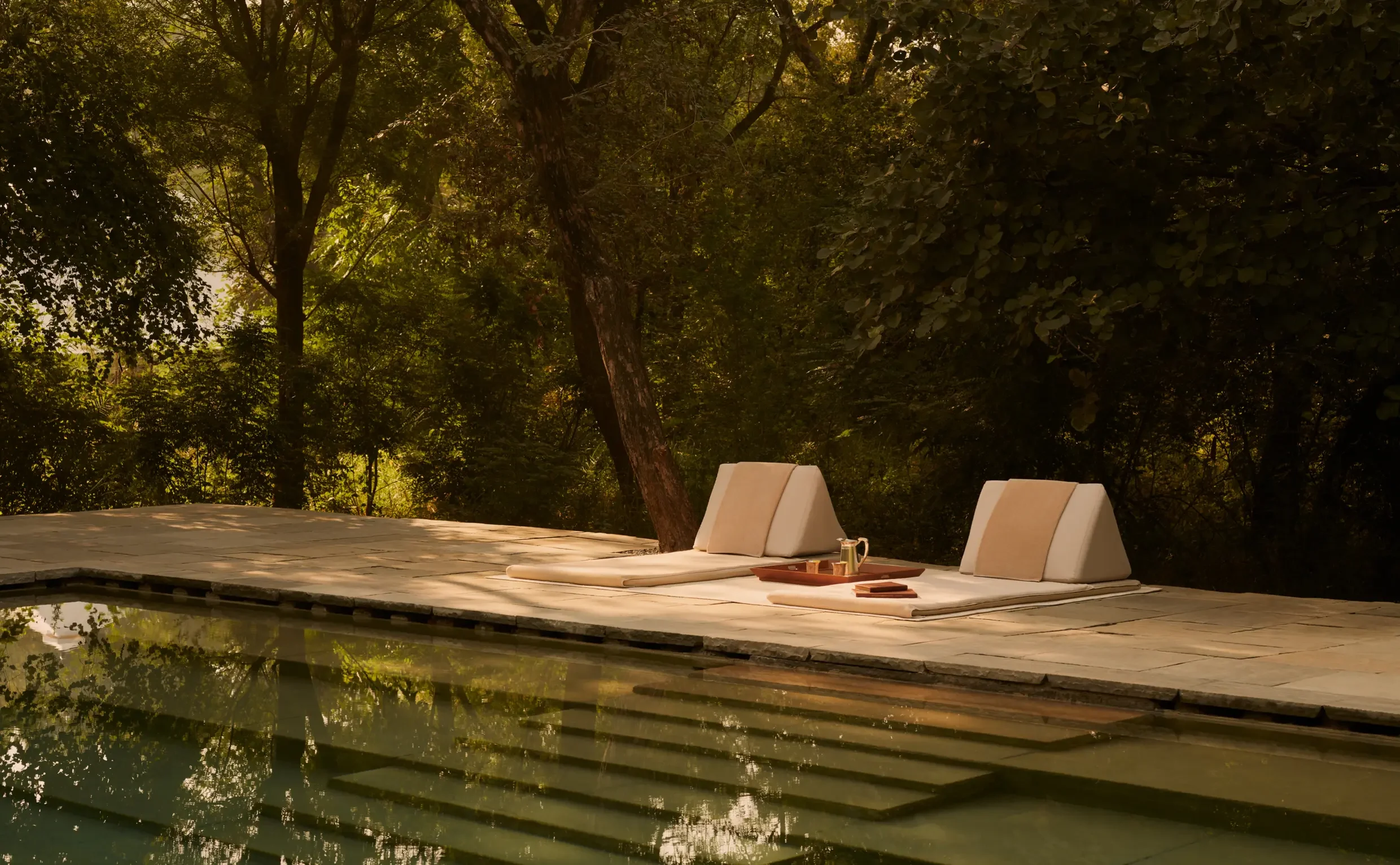
The camp’s most memorable designed object may be the swimming pool rather than a building. Modelled on Rajasthan’s ancient step-wells, it turns a regional water-harvesting form into a shaded recreational space surrounded by forest.
Three Tent Categories to Choose From
Tented Pavilion: Approximately 1,162 sq. ft., with one king bed or twin beds, a soaring canvas interior divided by white cotton drapes, daybed, dining area, twin writing desks, dressing space, free-standing bathtub, separate shower and private sun deck overlooking the woodland.
Tented Pool Pavilion: Approximately 1,770 sq. ft., with one king bed or twin beds, daybed, dining area, free-standing bathtub and walk-in shower, plus a private outdoor deck with a 10-by-10-foot plunge pool immersed in the surrounding vegetation.
Grand Tented Pool Pavilion: Approximately 2,755 sq. ft., with one king bed or twin beds, a separate sunken living area, indoor dining space, walk-in wardrobe, corner bathtub and an enclosed open-air deck with a temperature-controlled private pool.
The detailed 2026 accommodation inventory lists ten Tented Pavilions, one Tented Pool Pavilion and three Grand Tented Pool Pavilions. One Aman landing page still refers to thirteen tents, but the current category pages and factsheet add up to fourteen, so the detailed inventory is the more useful planning reference.
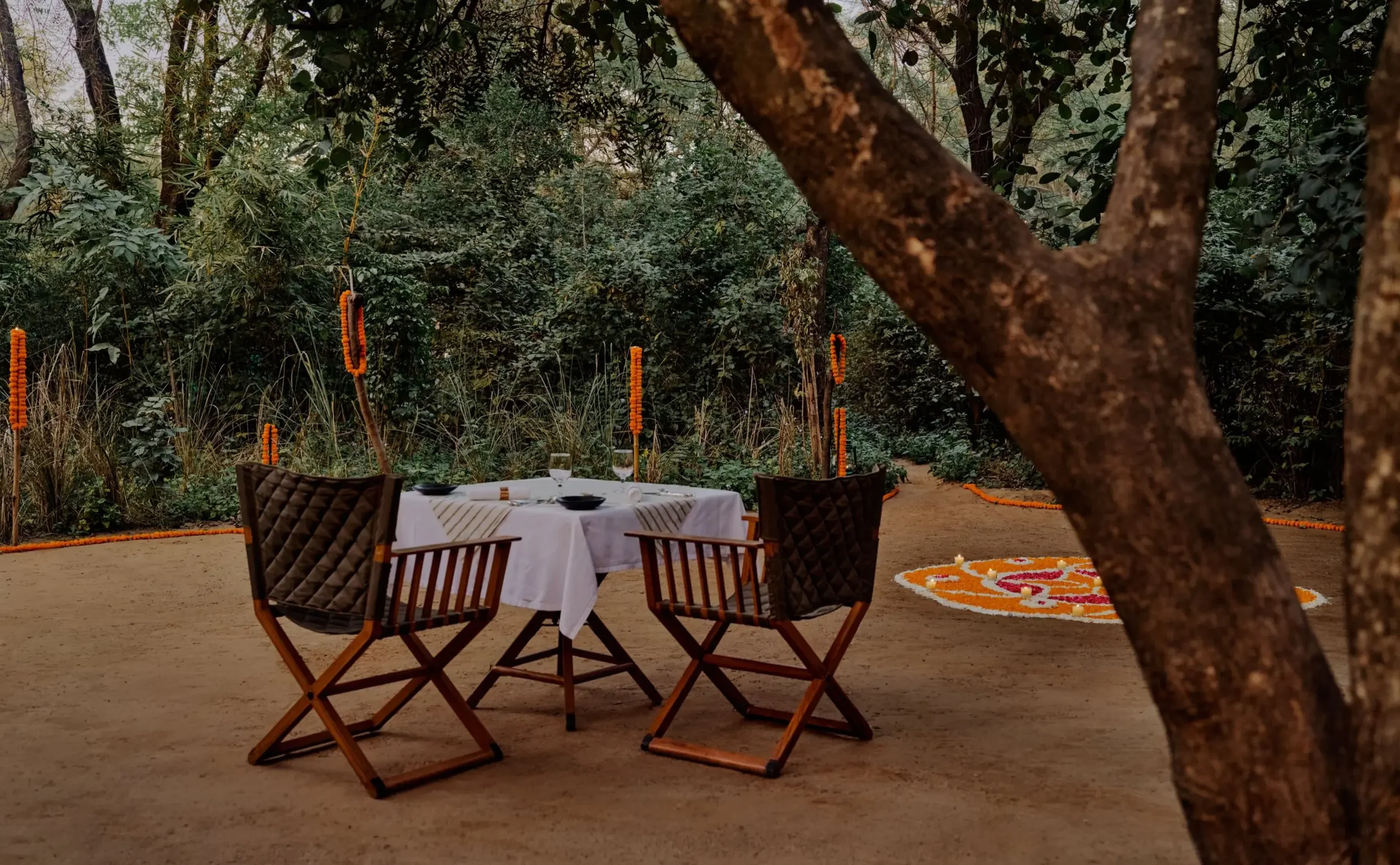
Dining Moves Between the Tent, Firepit, Farm and Forest
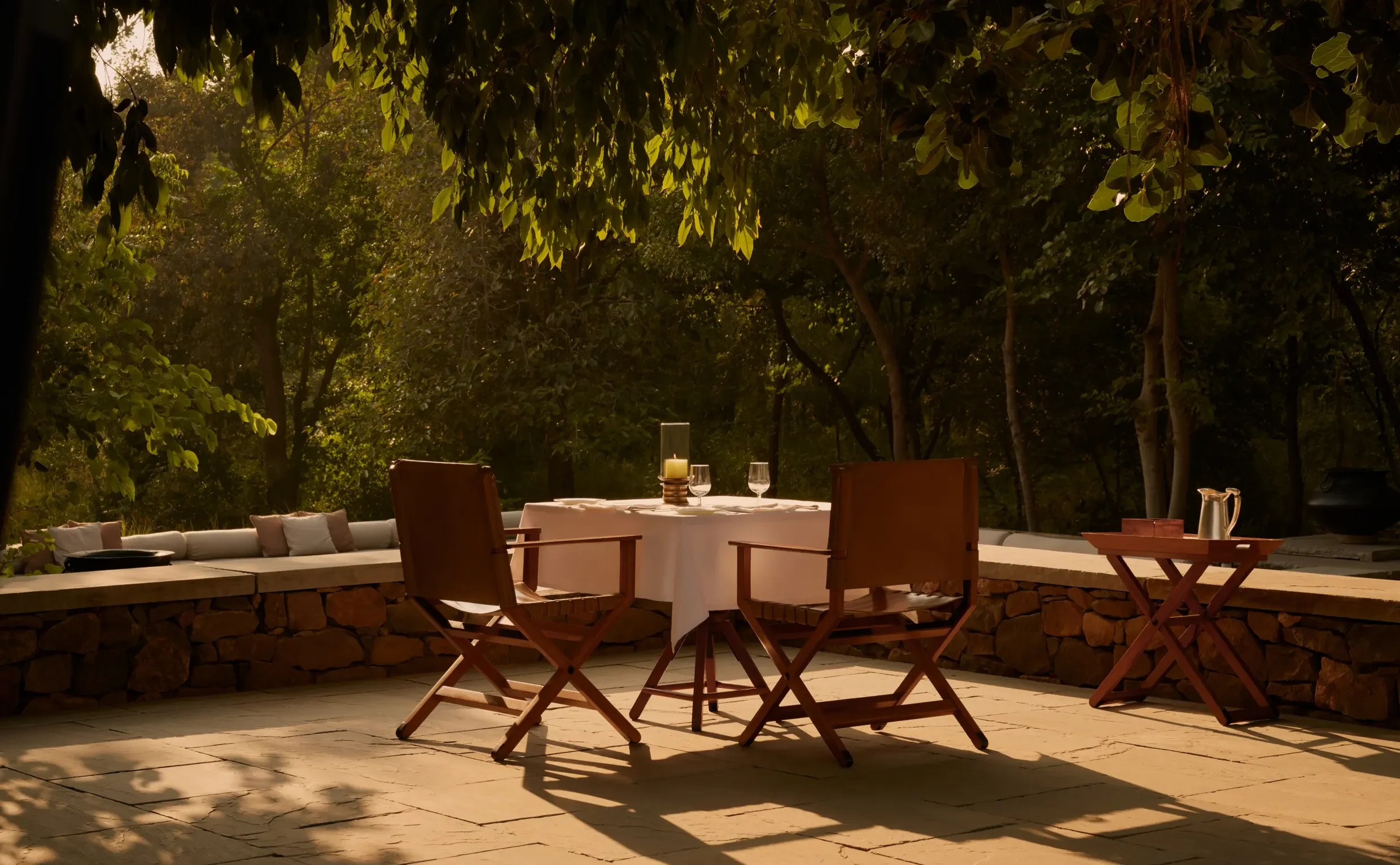
Dining Tent: The camp’s principal dining space combines a communal table, smaller individual settings and an outdoor terrace, serving Rajasthani and broader Indian cooking alongside lighter interpretations and international dishes tailored to individual preferences.
Rajasthani Thali: Traditional thali presentations bring curries, dhal, rice, homemade roti and seasonal accompaniments together on one platter, providing one of the clearest ways to explore local flavors during a short stay.
Firepit Dining: The central open-air firepit becomes an informal evening salon after safari, with drinks, snacks and occasional meals served around the log fire while guests exchange stories from the day’s drives.
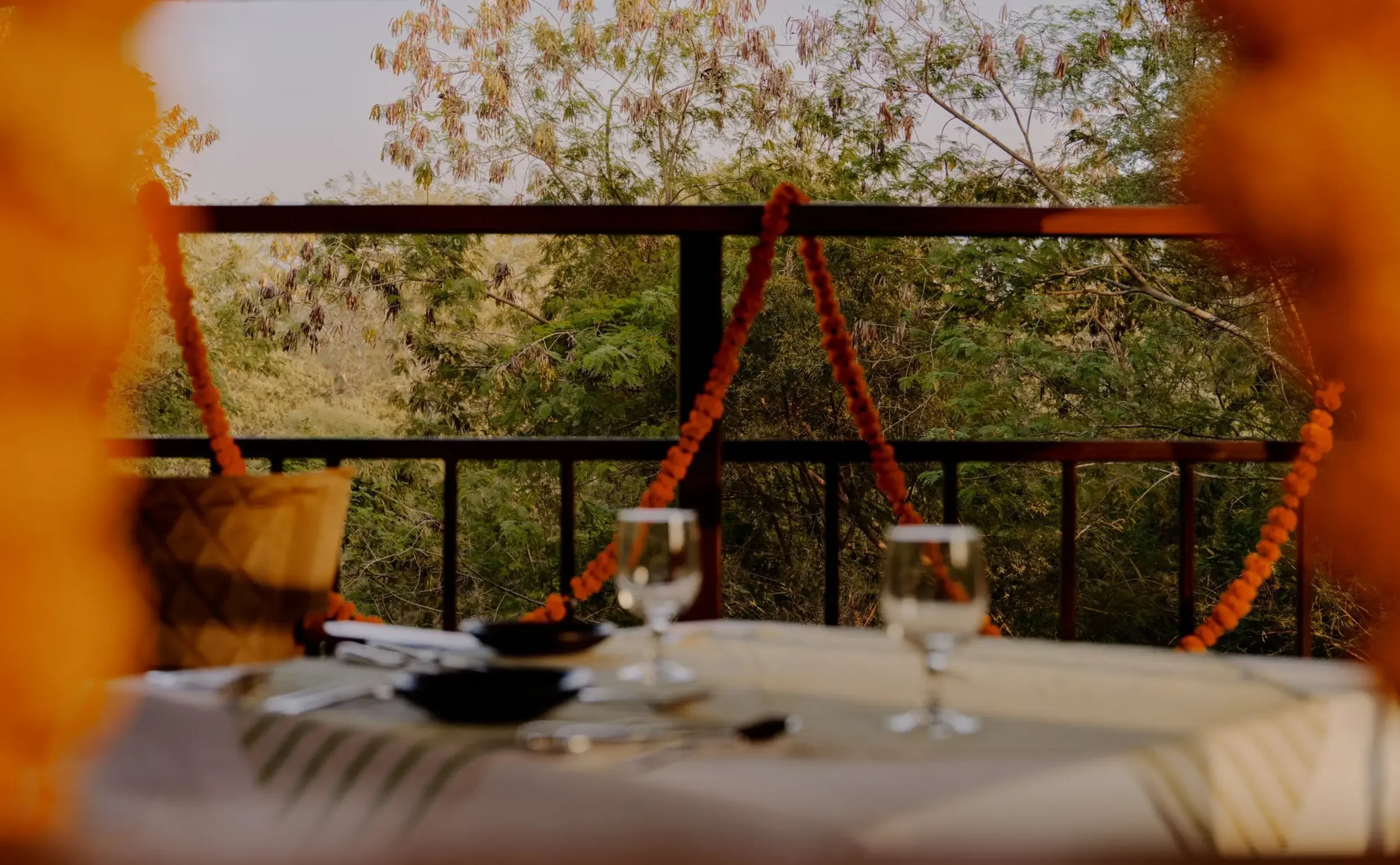
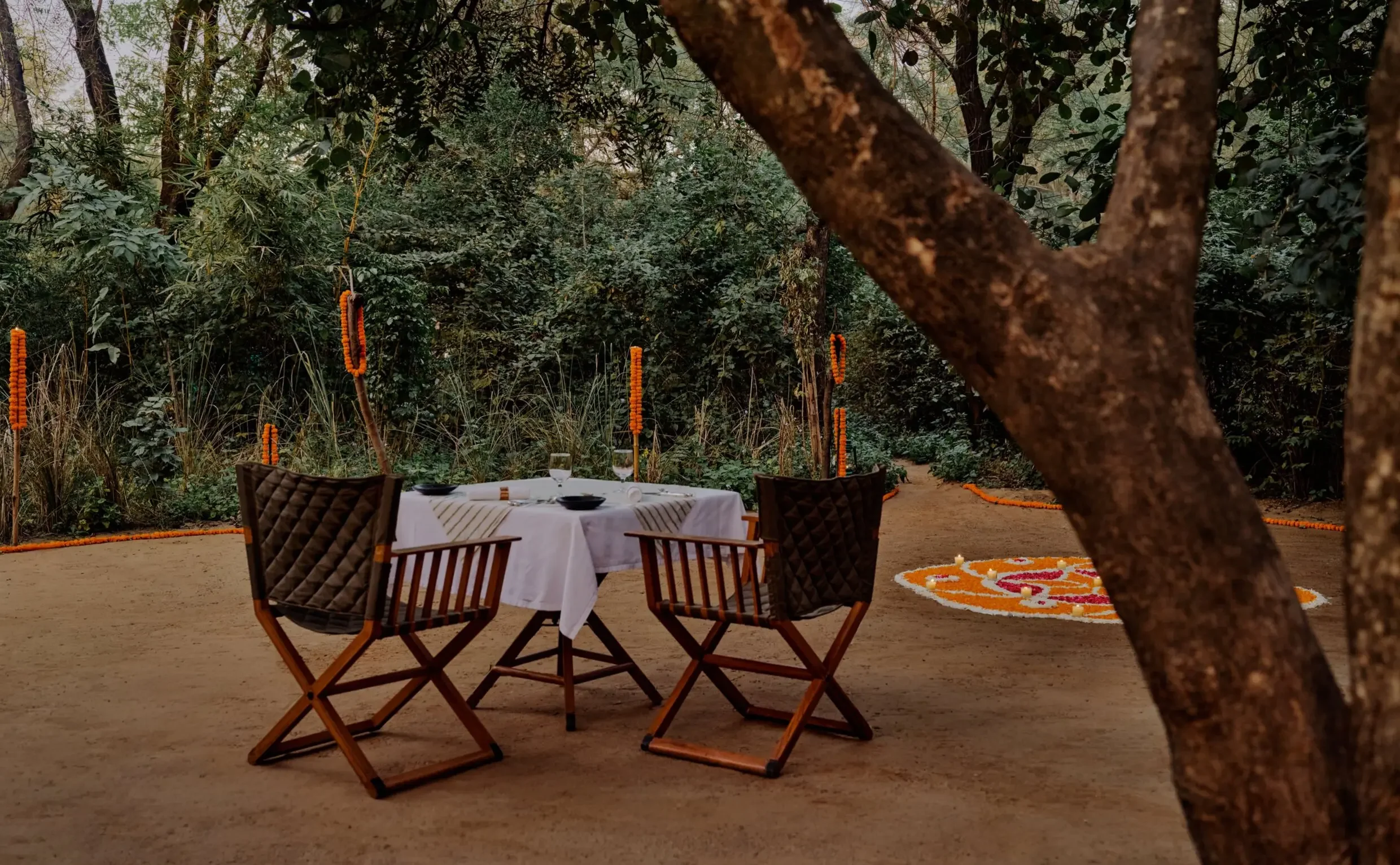
Machan Dining: A private platform approximately 20 feet above the forest recreates the idea of royal hunting feasts, with a dedicated chef cooking over open fire and a butler managing the meal among the surrounding trees.
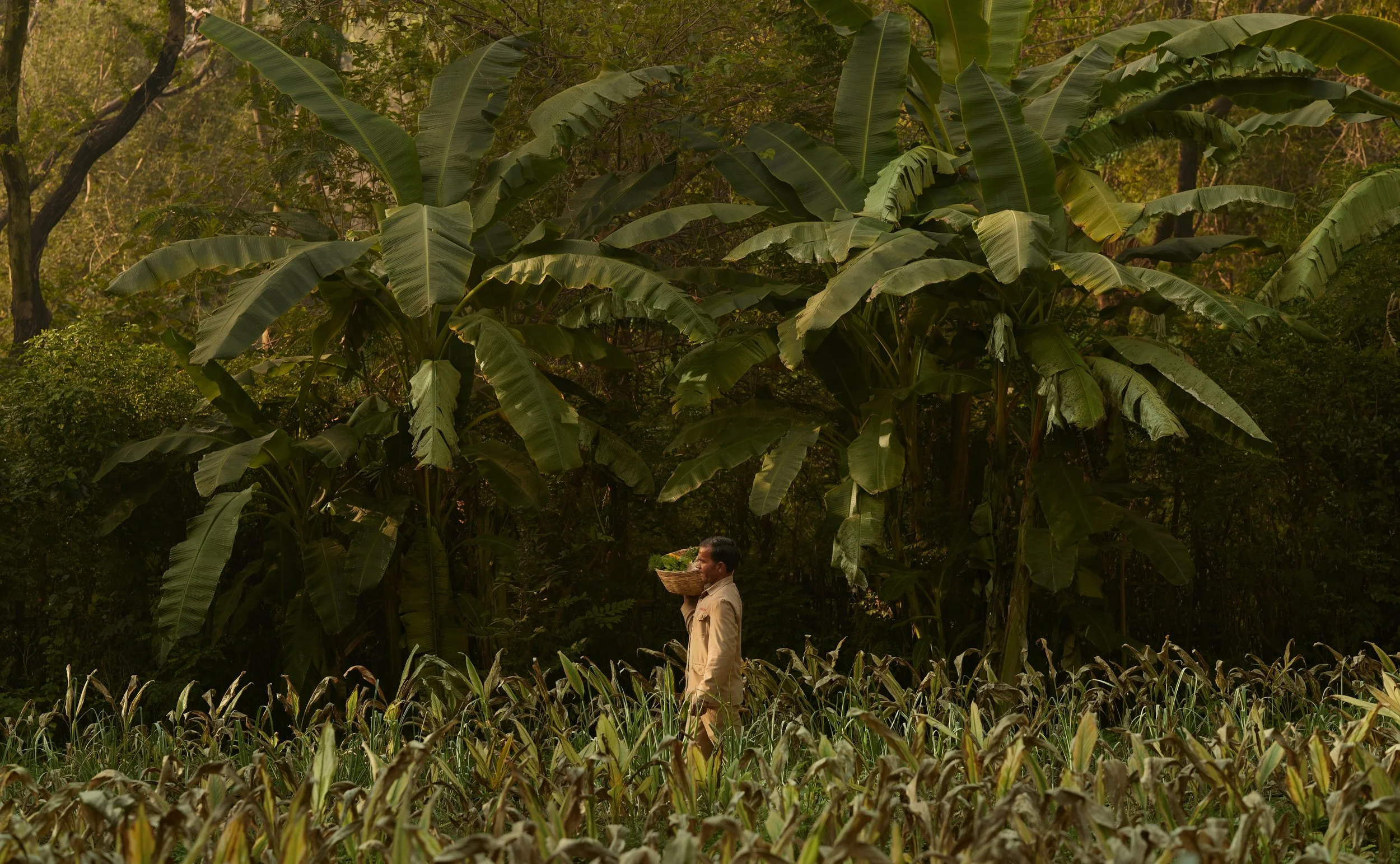
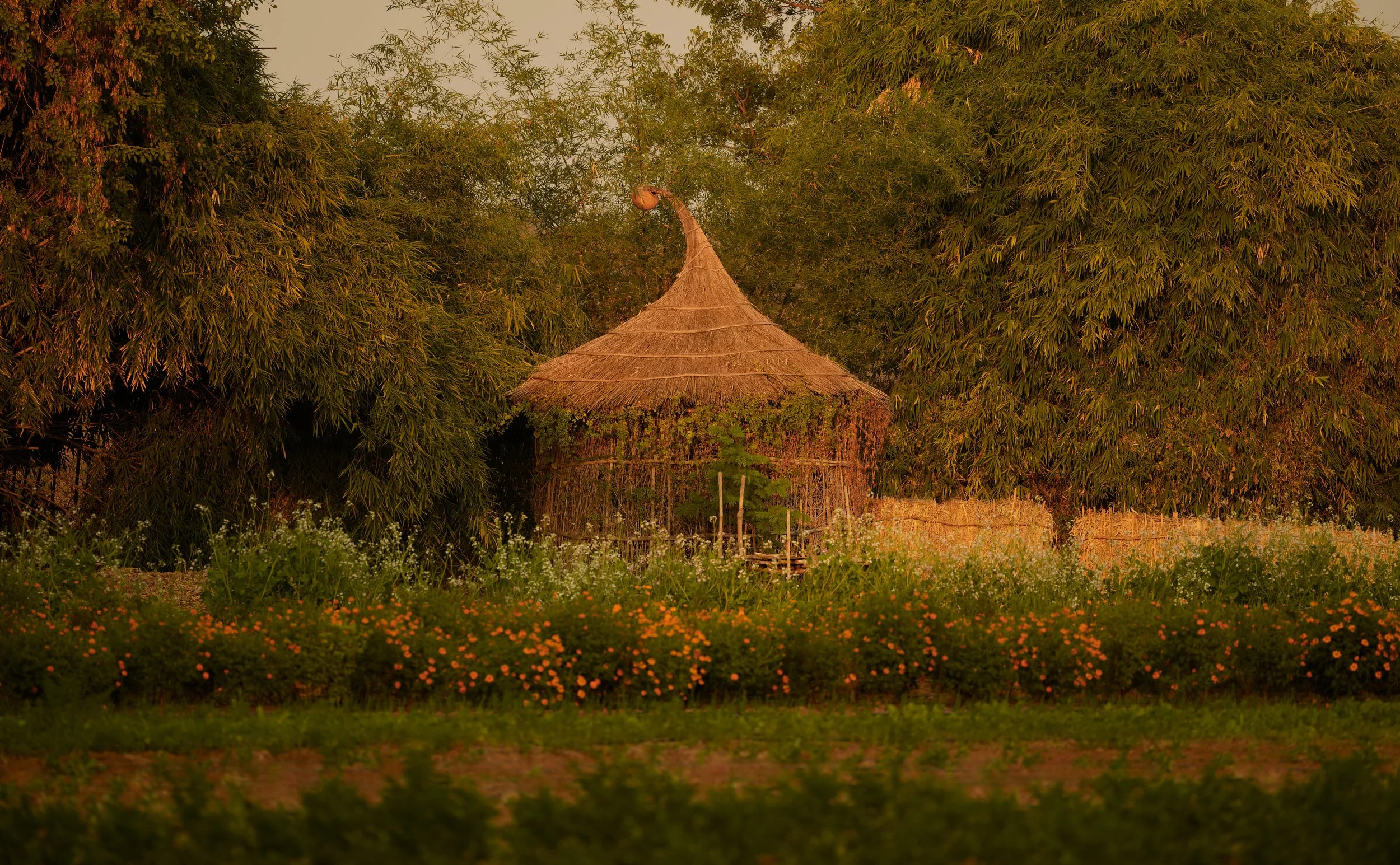
Organic Farm Dinner: A four-course private dinner is served in a rustic hut inside the camp’s organic farm, using seasonal produce grown only steps from the table.
Bespoke Picnics: Picnic hampers can accompany fort visits, river excursions or other outings, while secluded bush dinners allow meals to move farther into the landscape when conditions permit.
Guava-Farm Breakfast: During guava harvest season, breakfast can be prepared at a local orchard on the return from a morning safari, turning the meal into a seasonal off-property experience rather than a fixed restaurant service.
Full board is included for two guests in every standard stay, excluding alcoholic beverages. Because the menu changes with the garden, season and guest preferences, Aman-i-Khás is better understood as one flexible culinary program than a collection of fixed restaurants.
Ayurveda, a Step-Well Pool and an Outdoor Gym
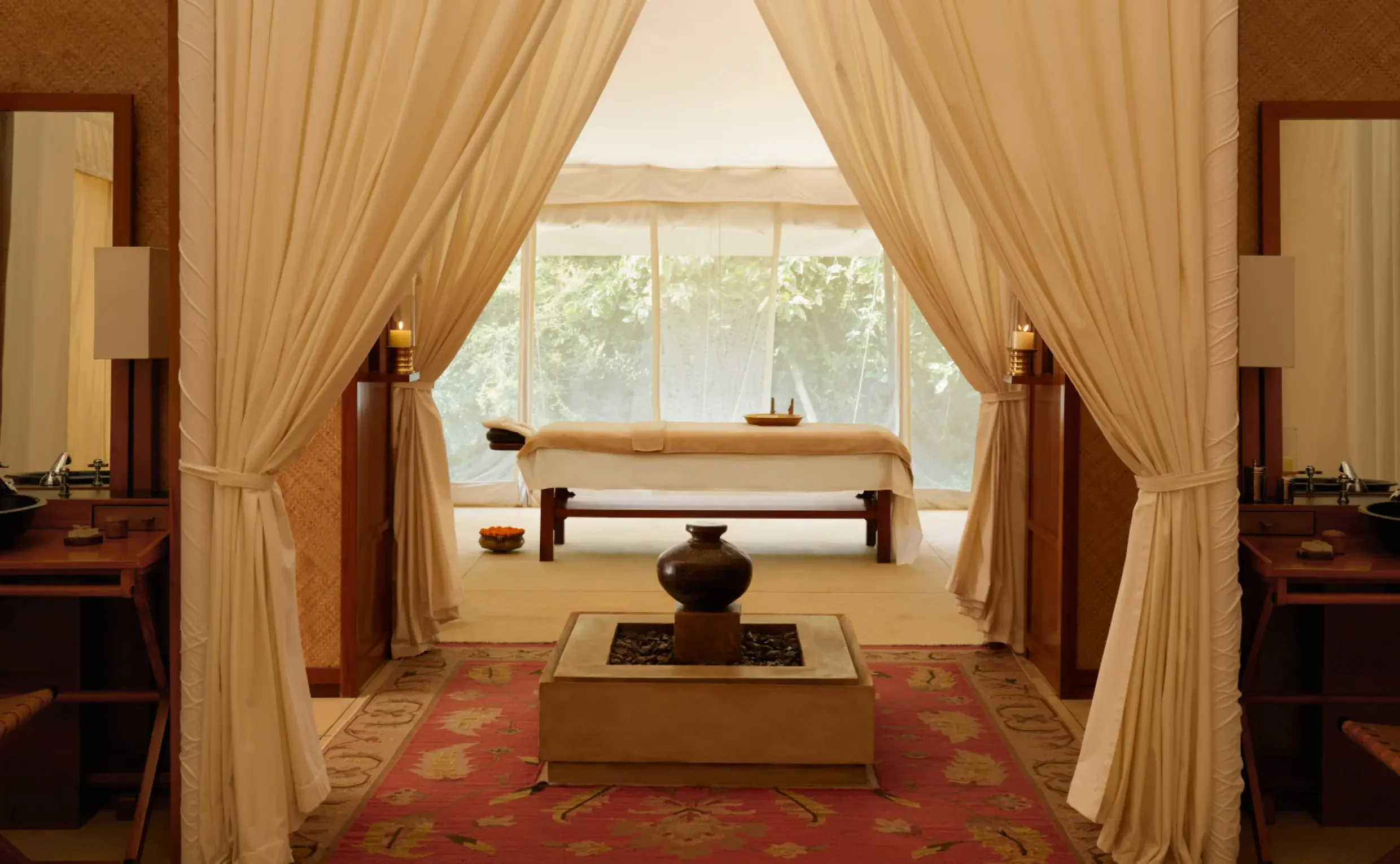
The Spa Tent centers on a small bubbling fountain and contains two double treatment rooms. Its program draws on Ayurveda, India’s more than 5,000-year-old healing tradition, alongside massage, scrubs, wraps and baths that can incorporate herbs grown in the camp’s garden.
One of the most distinctive post-safari rituals is also the simplest. Staff can prepare an aromatic bath inside a guest tent using fresh herbs from the organic garden, turning the transition from dusty game drive to evening drinks into part of the wellness program.
Daily yoga and meditation are offered in the open air, and private sessions can be arranged in more remote settings, including around Ranthambore Fort. Aman has also added an outdoor gym beneath the forest canopy, with training equipment developed with local artisans and fitness specialists.
The step-well-inspired swimming pool provides the camp’s main communal place to cool down. In winter it can be heated, and the surrounding grove keeps the experience visually connected to the woodland rather than creating a conventional resort-pool atmosphere.
Safaris Begin at Dawn, but Tigers Are Only Part of the Story
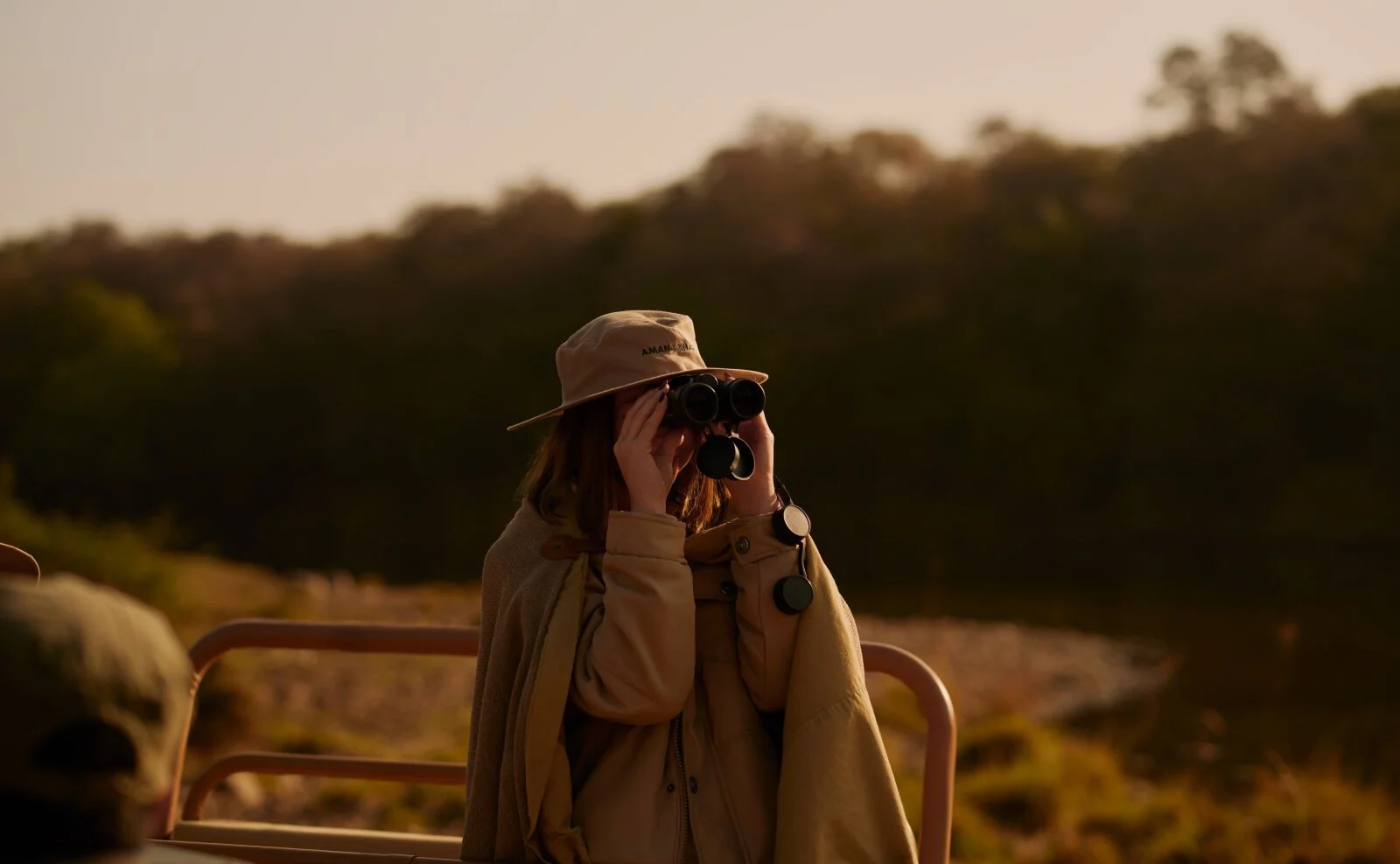
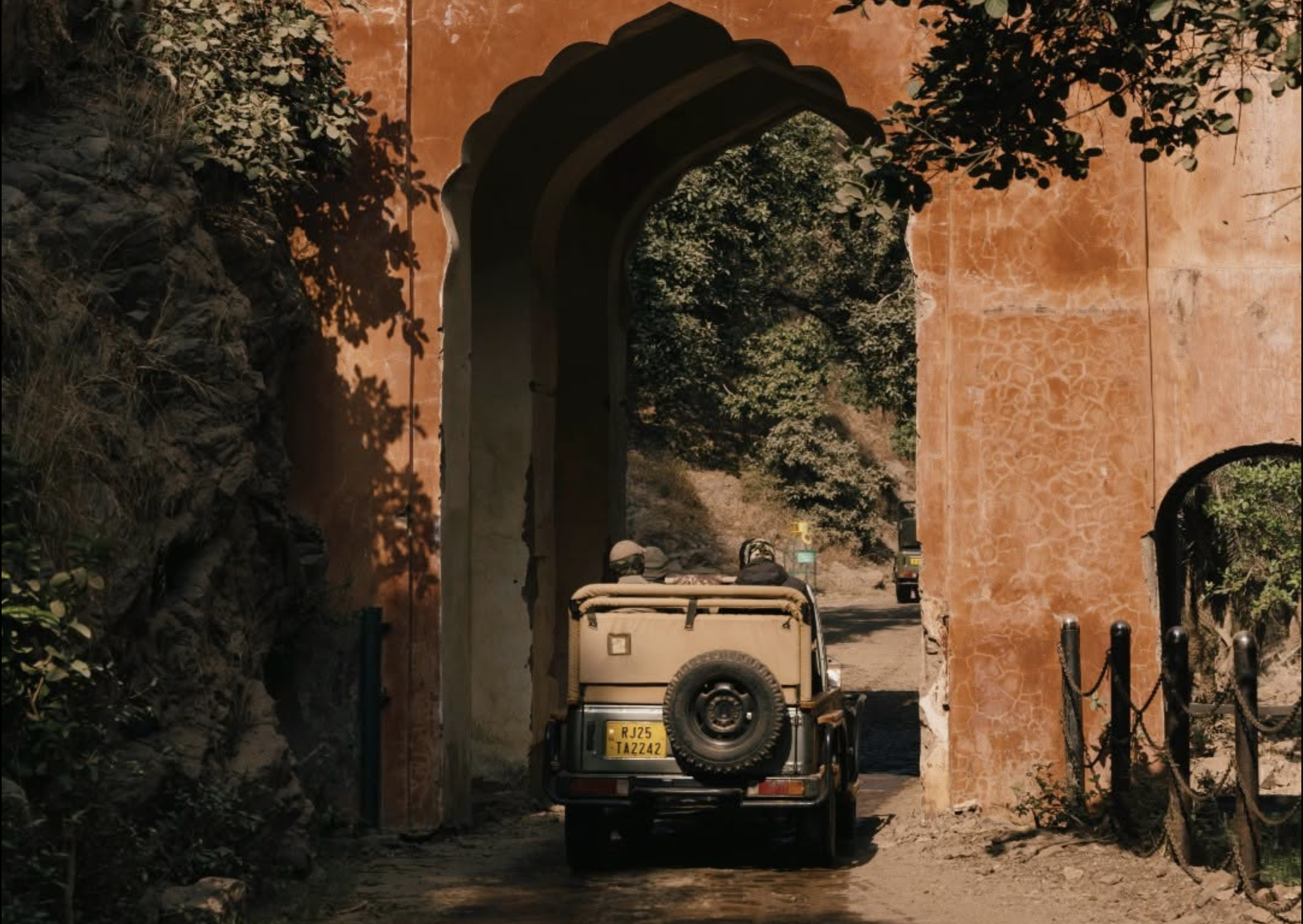
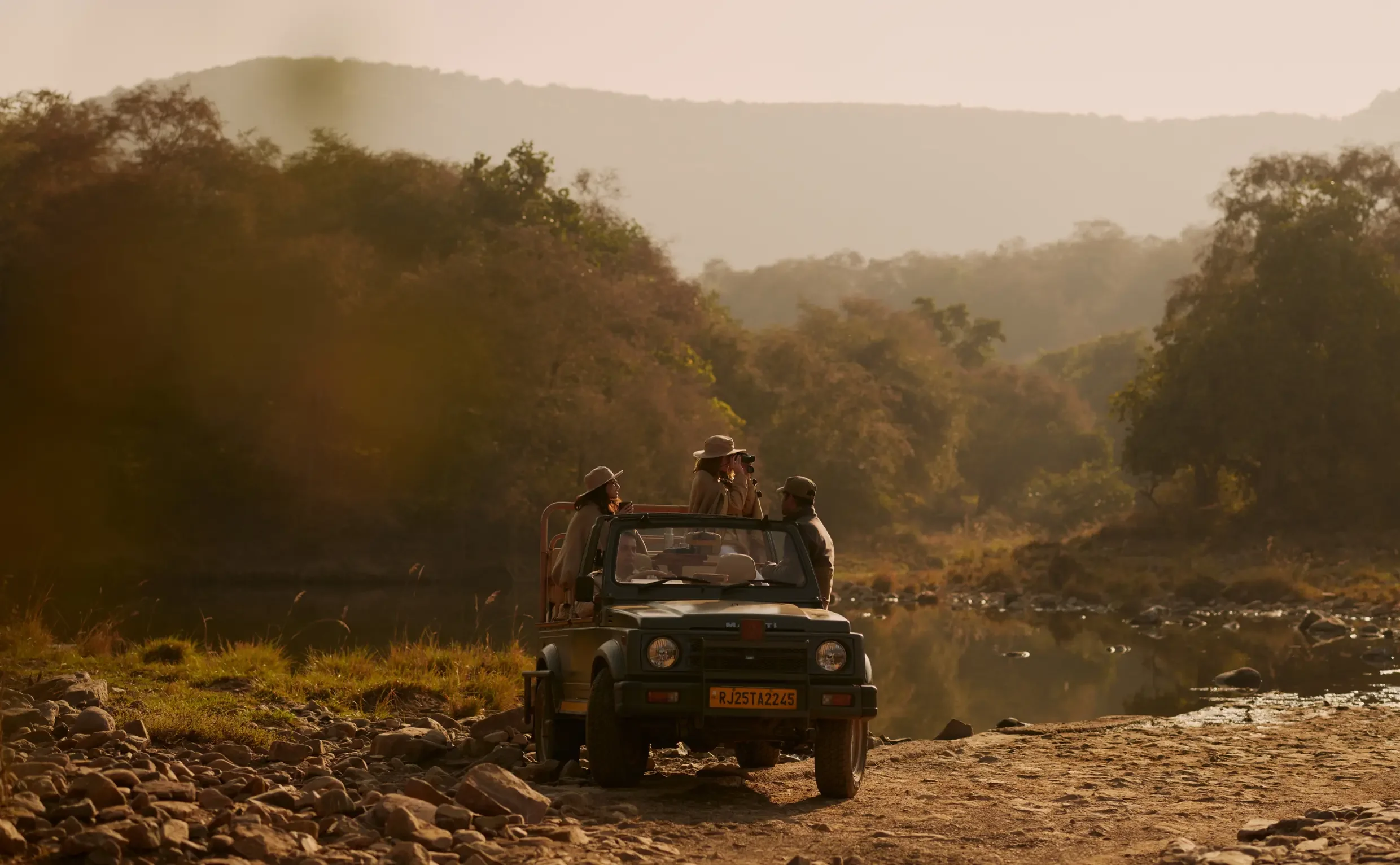
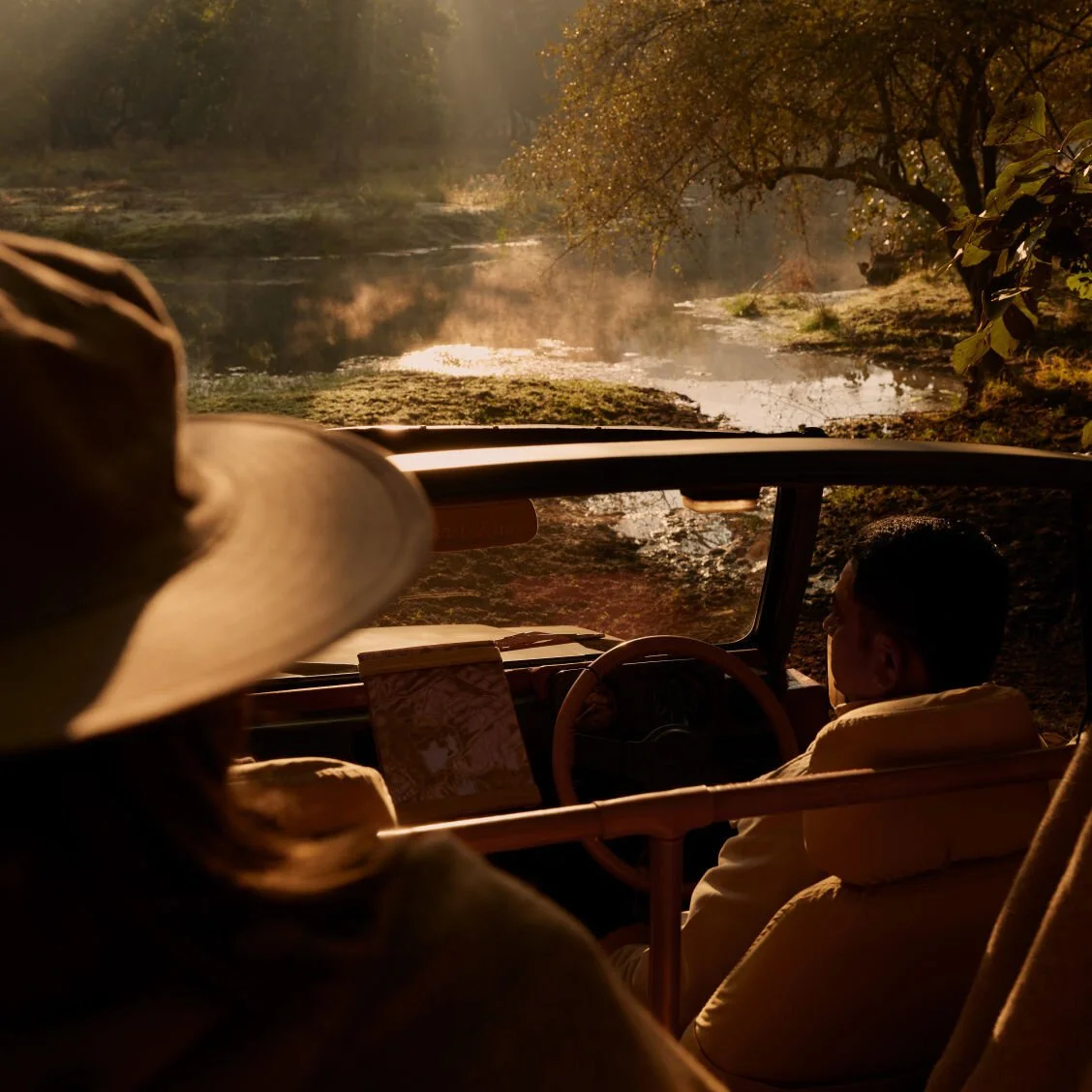
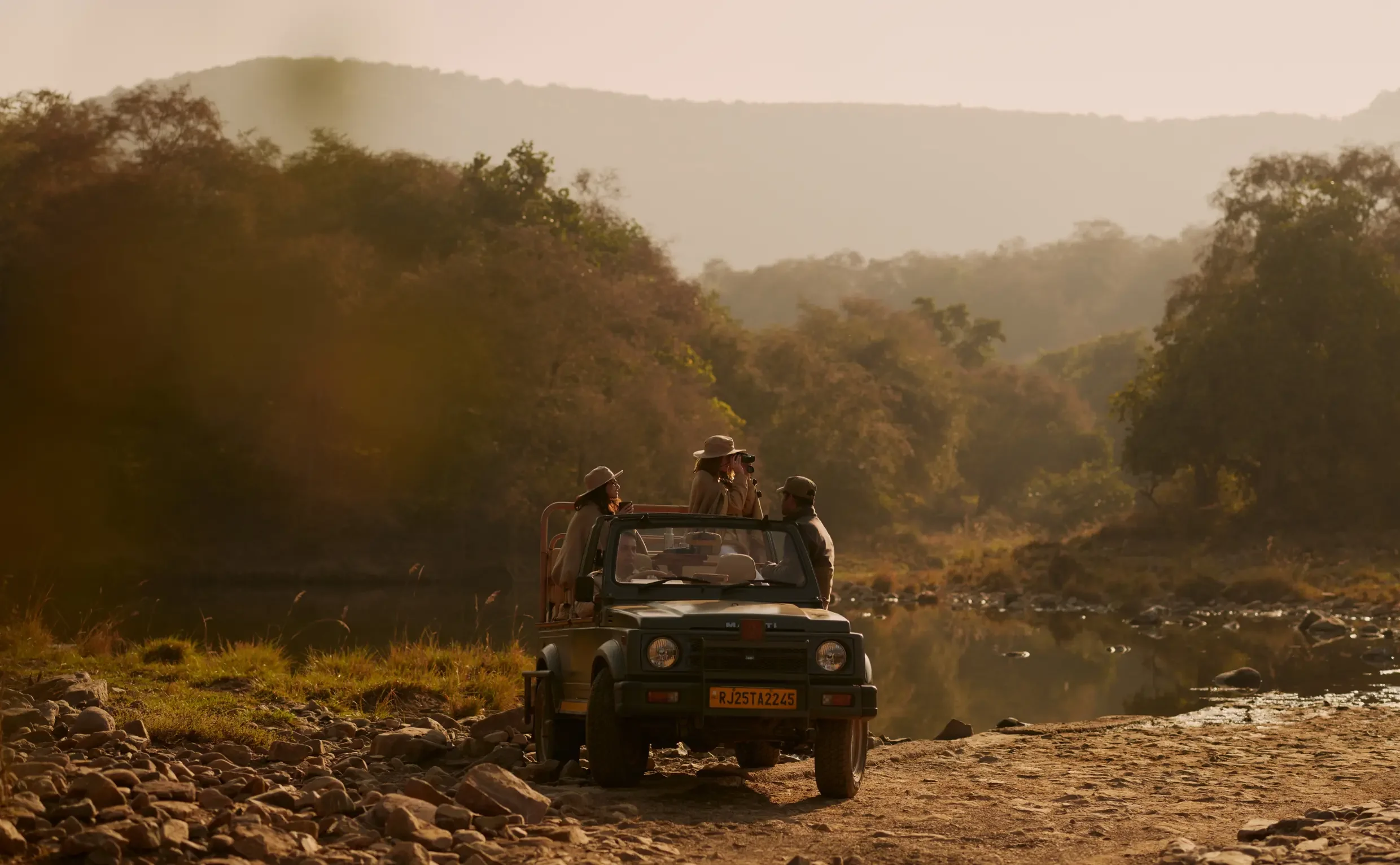
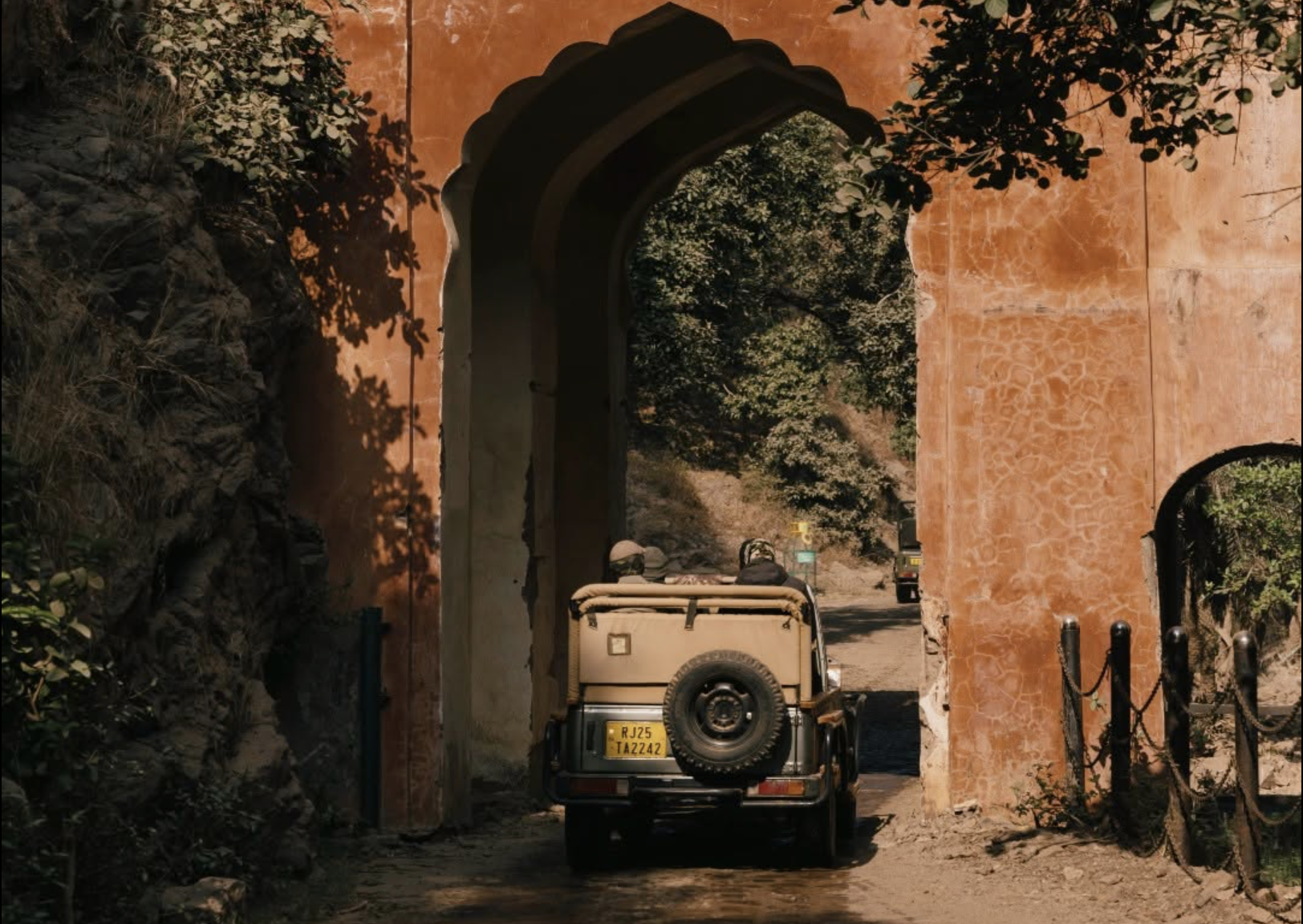
Wildlife safaris are the central reason to stay at Aman-i-Khás. Ranthambore National Park controls entry times and vehicle numbers, and regular drives last approximately three and a half hours. Departures take place after sunrise and again in the late afternoon, when temperatures are lower and animal activity is often greater.
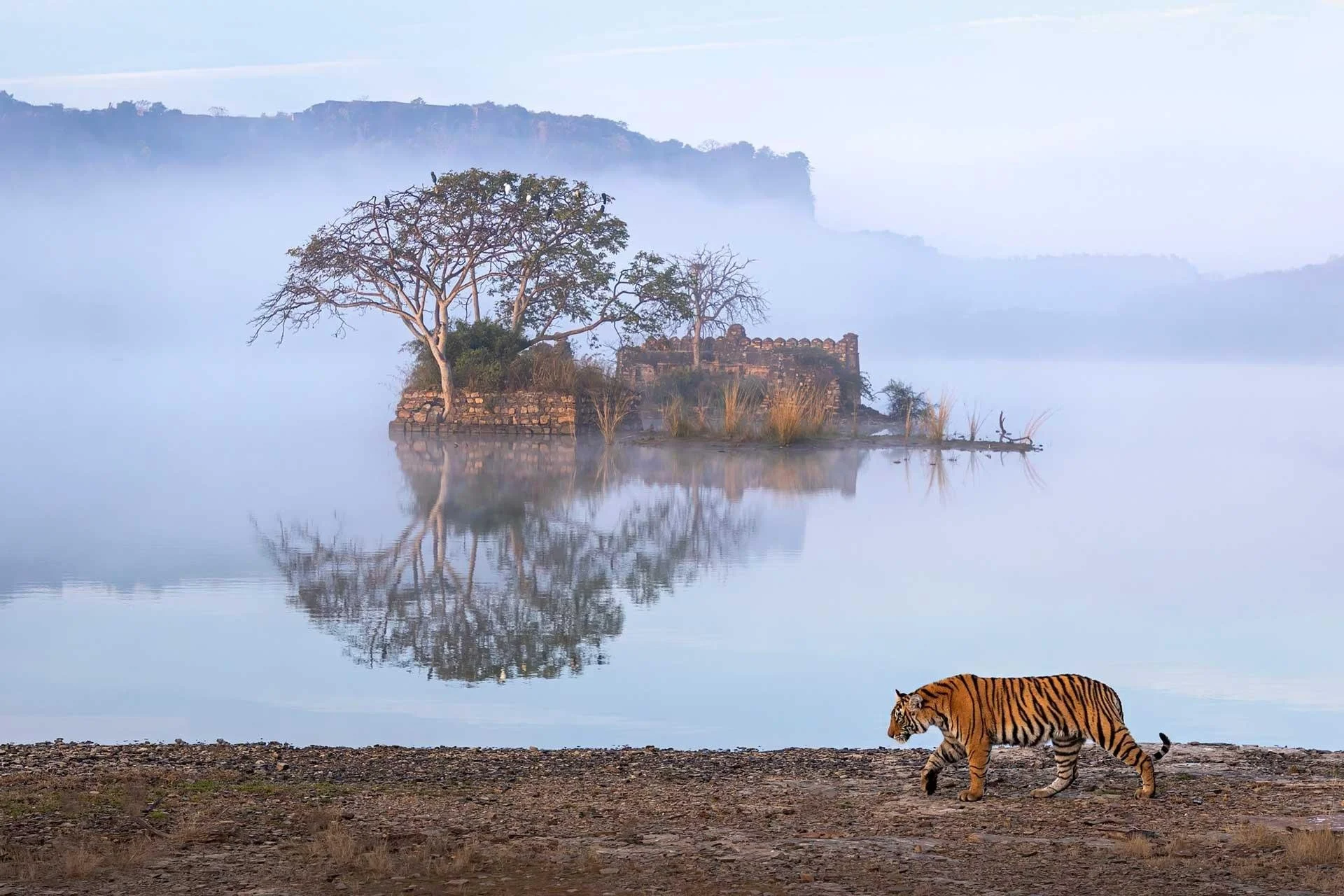
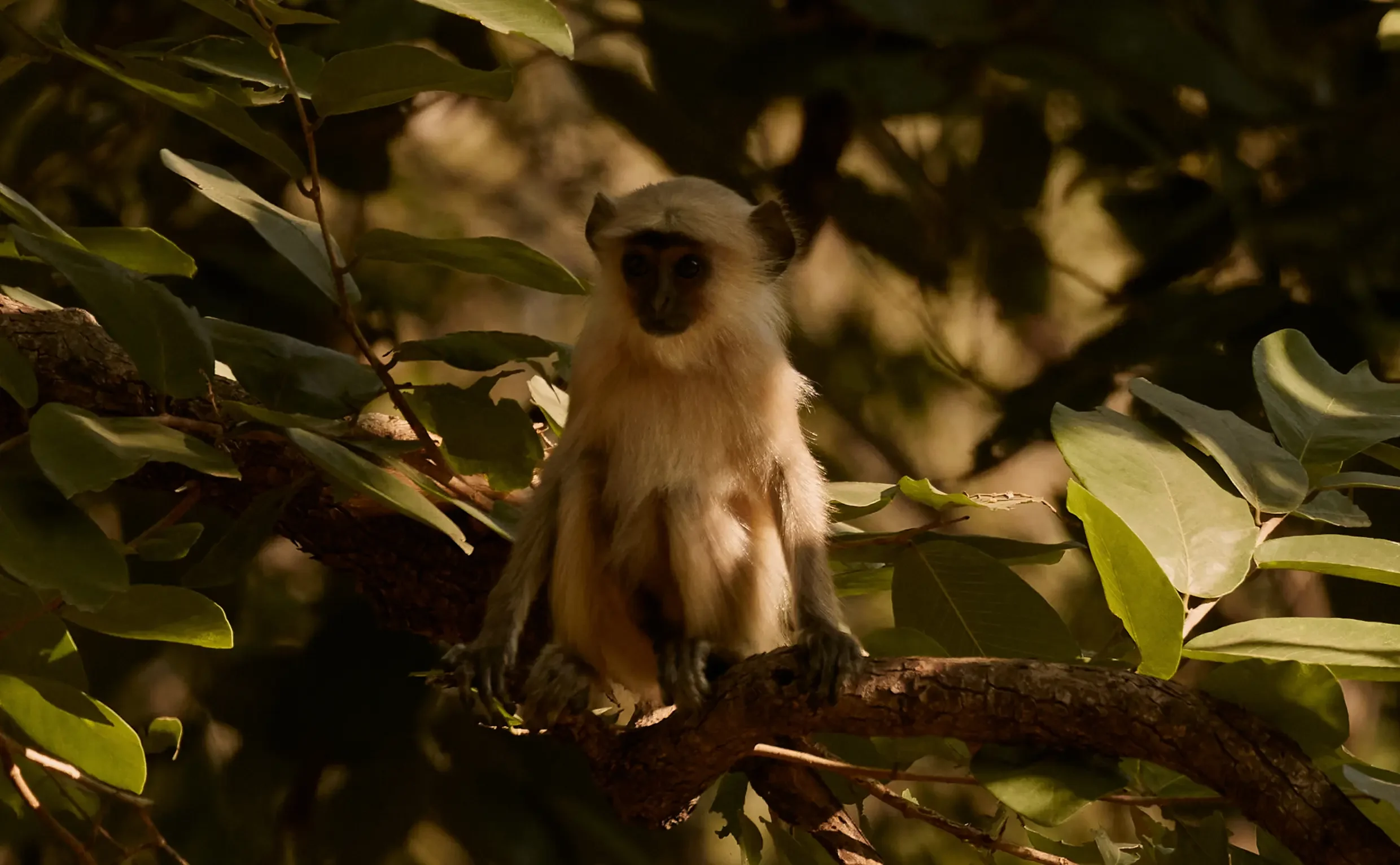
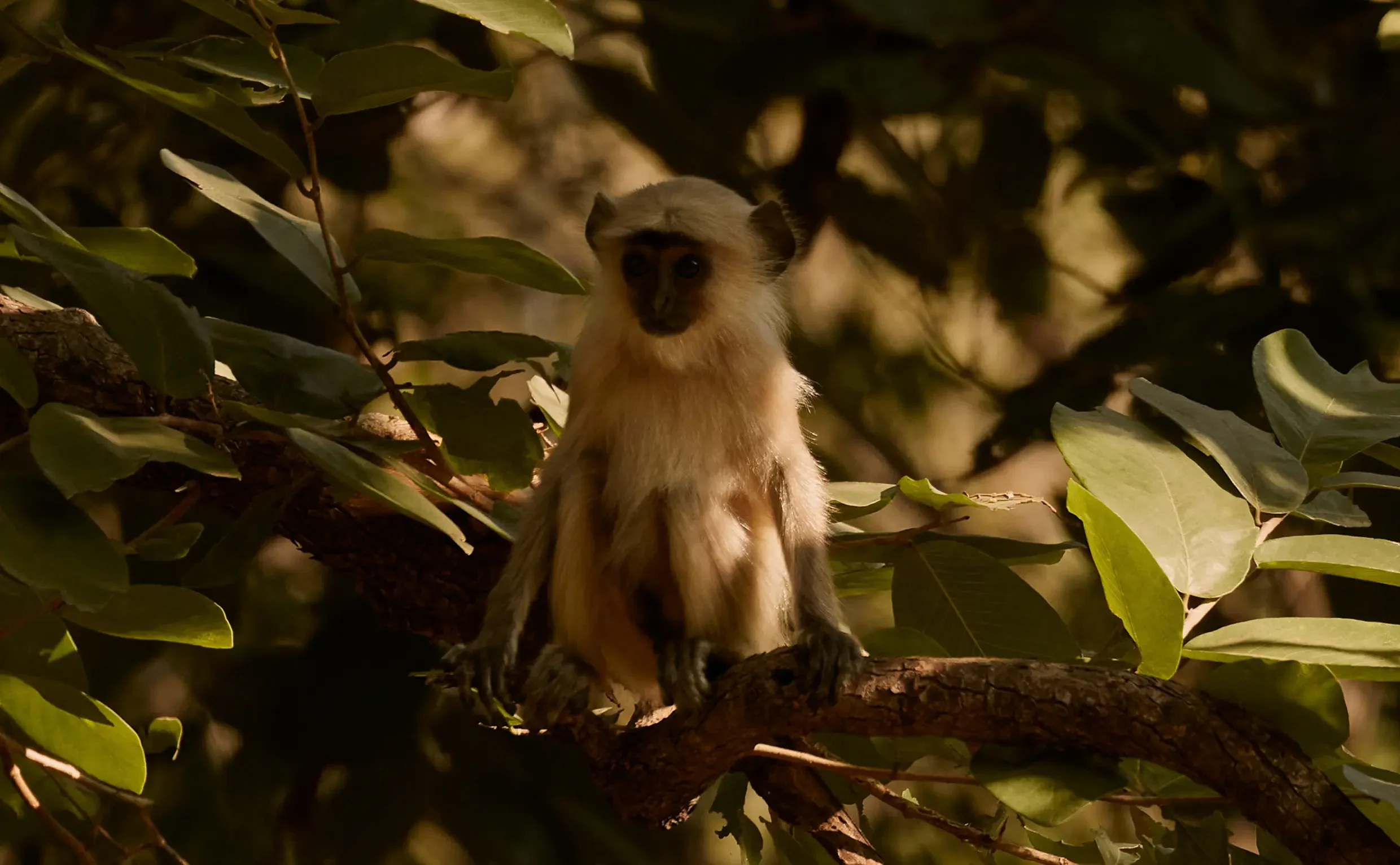
Aman works with expert wildlife guides, but sightings are never guaranteed. The Bengal tiger is the park’s most celebrated resident, alongside leopards, jackals, sambar deer, crocodiles, nilgai, langurs and hundreds of bird species. The strongest safari planning treats each drive as an encounter with an entire ecosystem rather than a single-species search.
Beyond the park, the camp can arrange camel safaris, bird-watching around the Banas riverbed, Marwari horse rides, Khandar Fort trekking and a Chambal River cruise where gharial, turtles and birdlife are the focus. Several experiences combine exploration with a picnic or private lunch.
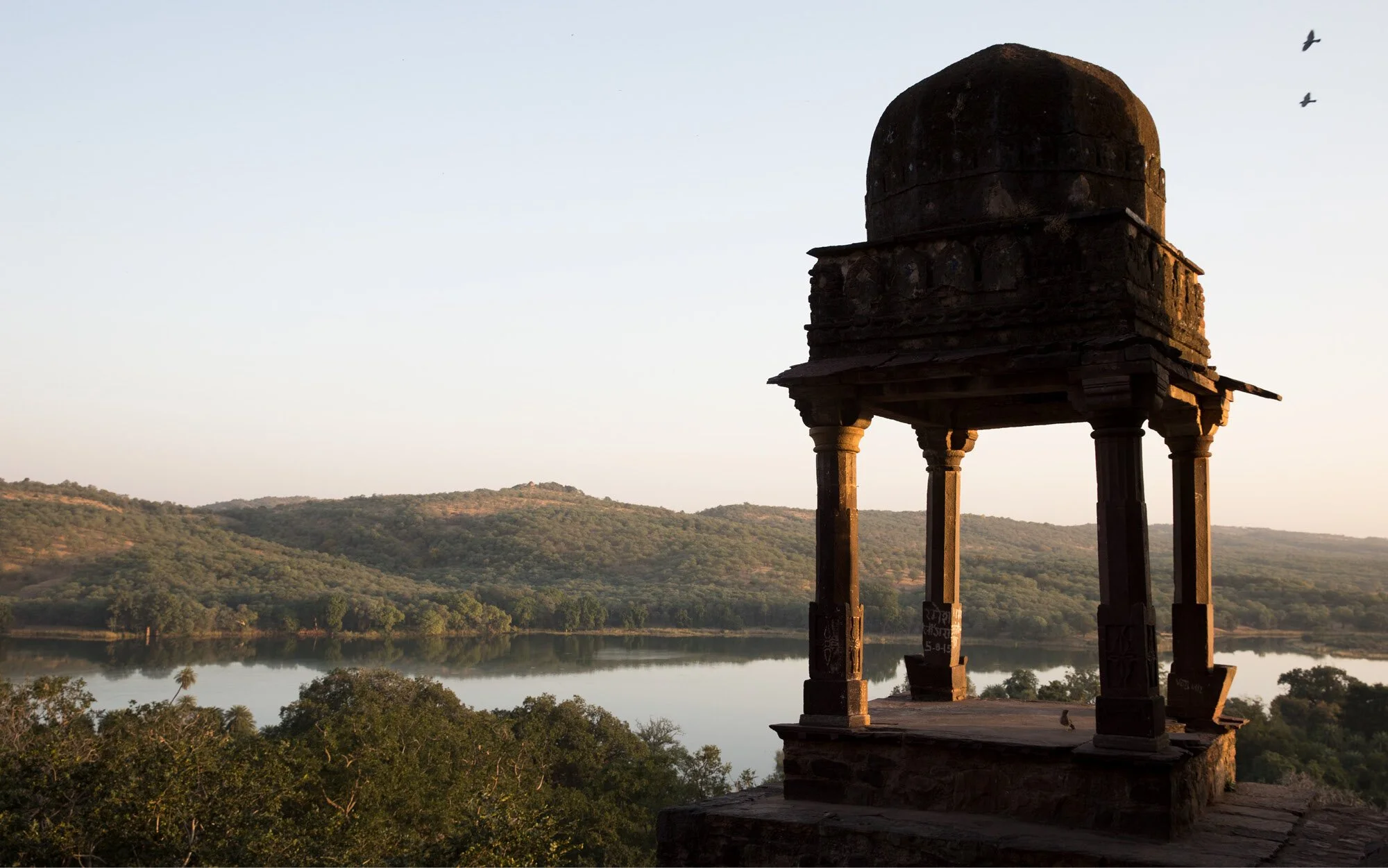
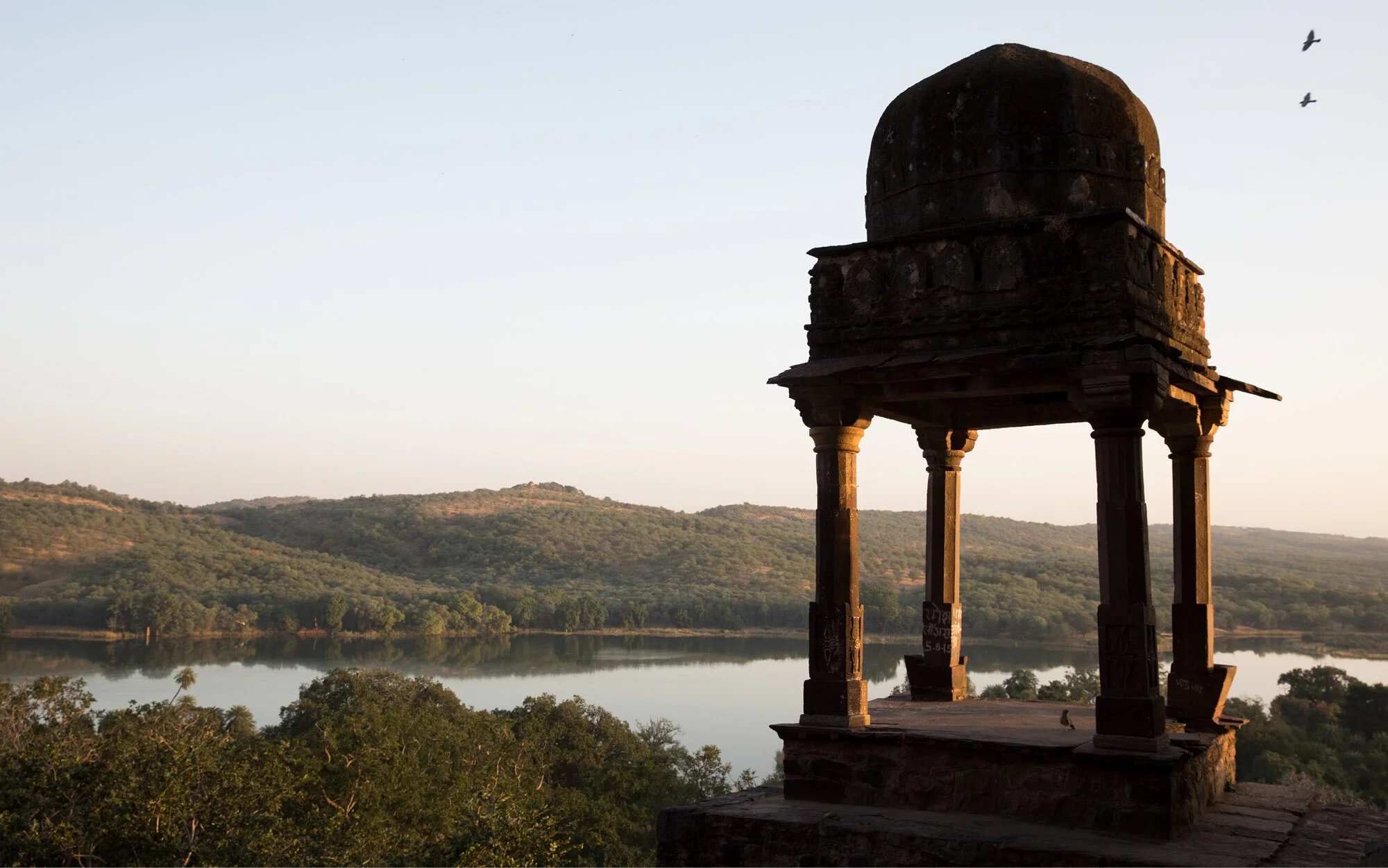
Ranthambore Fort adds a cultural dimension to the wildlife itinerary. Set inside the national park and included among UNESCO’s Hill Forts of Rajasthan, it contains temples, tanks, gates and defensive structures that reflect centuries of Rajput political history.
Families Need to Plan Around Safaris Rather Than a Kids Club
Aman-i-Khás does not operate a conventional children’s club, and its family appeal comes instead from wildlife, outdoor experiences and flexible tent occupancy. Current Aman offer terms state that children under six stay complimentary when sharing with parents, while children aged six to twelve carry an additional nightly supplement; older children are treated as adults for pricing.
The Tented Pavilions can accommodate a king or twin configuration and include an oversized daybed, while the larger pool categories provide more outdoor space for families who expect to spend substantial time at camp between excursions.
Safari regulations and long game-drive durations matter when planning for younger travelers. Families can choose a camel-cart excursion to DastKari for block-print paper activities, and the camp can tailor outdoor experiences around children rather than assuming every family member will join every park drive.
Babysitting is listed as available on request through the current MICHELIN Guide hotel information, but Aman does not publish fixed babysitting hours or fees on the property pages. Families needing childcare should therefore arrange it directly with the camp in advance.
A Four-Acre Farm, Solar Power and Hyperlocal Employment
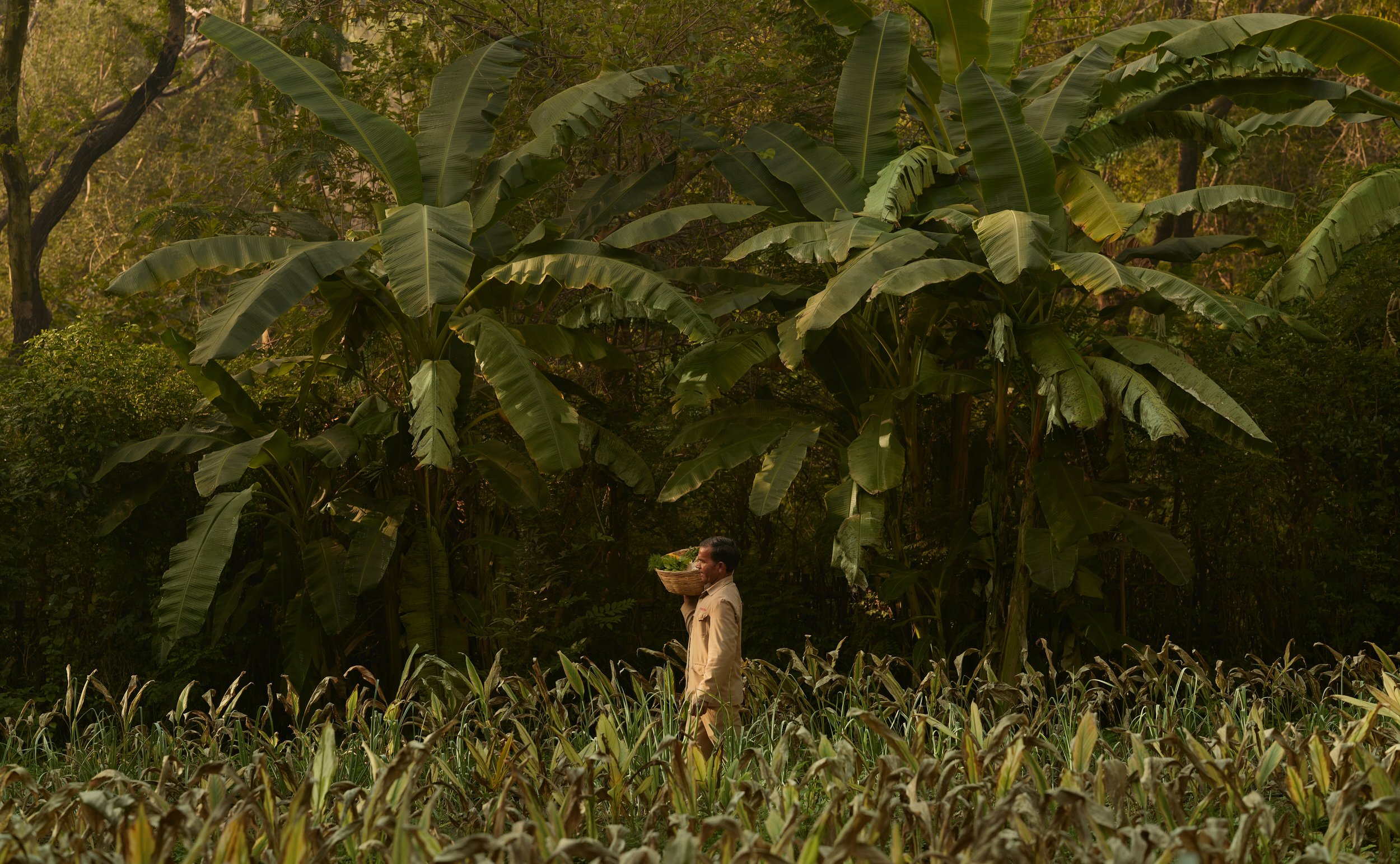
Aman-i-Khás publishes unusually specific sustainability information for such a small camp. Its four-acre farm supplies vegetables and herbs for the kitchen, while food-waste initiatives turn meat leftovers into feed for on-site fish and later use fish-tank residue as a calcium-rich soil amendment.
The camp has also developed a local ghee-sourcing program that buys directly from women-run farms in the surrounding region. Aman states that approximately 90 percent of the camp’s eighty-person workforce comes from Rajasthan, giving local employment a measurable role in the operating model.
Plastic reduction is handled through refillable large-format water vessels and reusable glass bottles, while decommissioned tent membranes have been turned into bags. A grinding mill and in-house spice preparation reduce reliance on packaged flour and spices.
Energy measures include LED lighting, electric heat pumps and a solar installation added in 2019. Aman reports that the solar system helped reduce the camp’s energy bills by roughly forty percent, while the panels were installed with micro-inverters so surrounding trees did not need to be cut back.
Physical Accessibility Requires Direct Confirmation
Aman-i-Khás does not currently publish a detailed physical-access guide identifying wheelchair-adapted tents, roll-in showers, hearing systems or step-free routes throughout the camp. The property’s website accessibility statement concerns digital services rather than the physical design of Aman-i-Khás.
The camp is spread across natural ground, timber decks, tent platforms and open-air paths, while safari vehicles require a separate transfer into raised open-top vehicles. Those conditions can be manageable for some travelers and difficult for others depending on mobility and transfer requirements.
Before booking, travelers should ask the camp to confirm the most suitable tent, bathroom clearances, steps or thresholds, access to the Dining Tent, Spa Tent and pool, and the feasibility of safari-vehicle transfers. Any required mobility equipment or assistance should be arranged before arrival rather than assumed.
Ranthambore Is a Wildlife Destination With a Fort at Its Centre
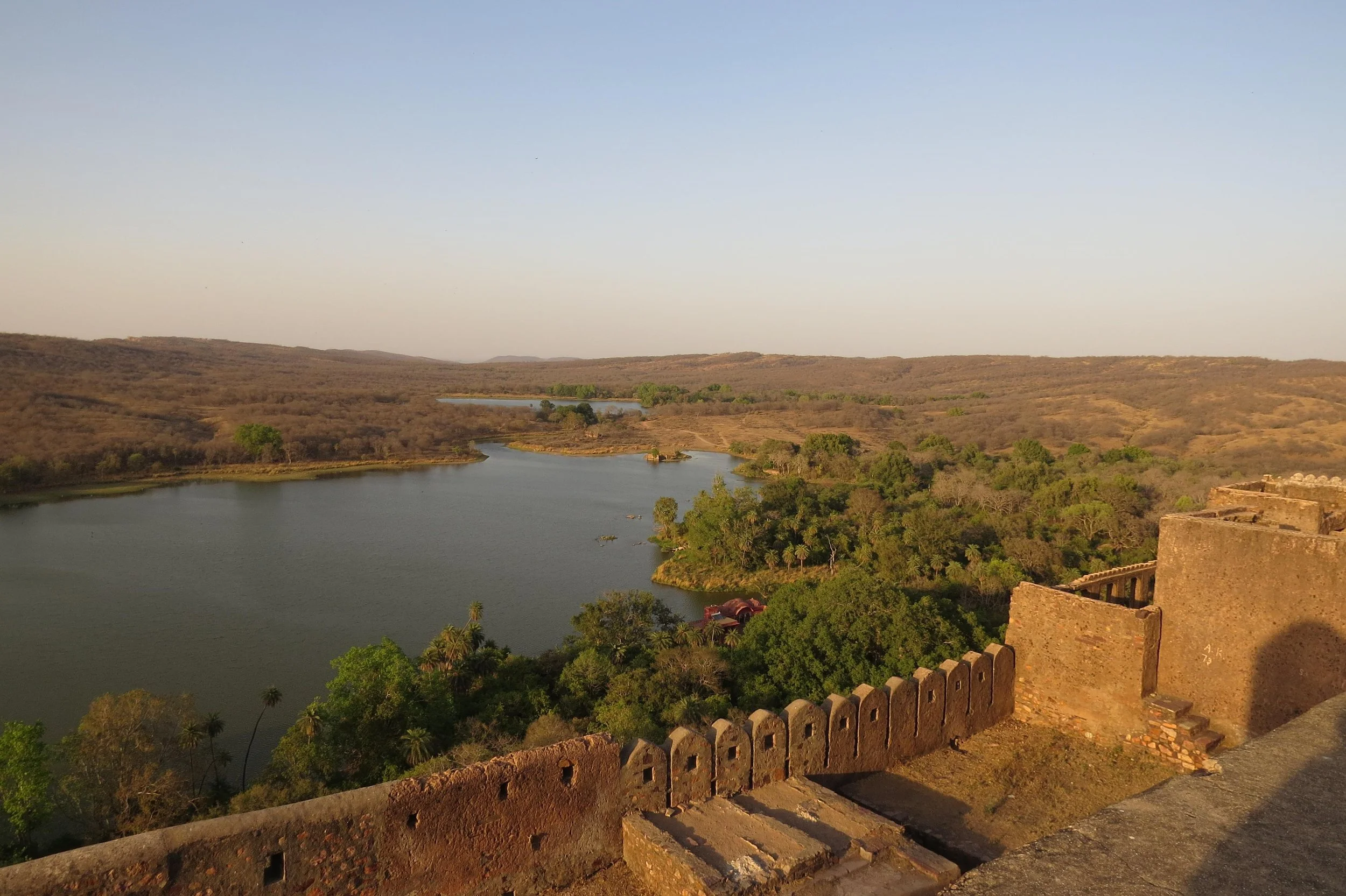
Ranthambore National Park lies between the Aravalli and Vindhya ranges near Sawai Madhopur. Dry deciduous forest, lakes, ravines and open grassland create a varied landscape that supports one of India’s best-known tiger populations as well as leopards, sloth bears, deer, crocodiles and abundant birdlife.
Ranthambore Fort rises above the forest and is part of UNESCO’s serial World Heritage listing for the Hill Forts of Rajasthan. Rajasthan Tourism traces the fort to the Chauhan rulers and the tenth century, with major gates, temples, tanks and defensive walls still defining the complex.
Khandar Fort lies farther from the camp and provides a more remote day out, while the Chambal River opens another ecosystem entirely. A stay at Aman-i-Khás works best when at least one non-safari experience is included, allowing the region to register as more than a tiger-viewing destination.
Jaipur Is the Nearest Major Airport, but Rail From Delhi Can Be Part of the Journey
Jaipur International Airport (JAI): Aman lists Jaipur as the nearest major airport, approximately three hours by road from the camp; the airport handles primarily domestic services plus selected international routes.
Indira Gandhi International Airport, New Delhi (DEL): Aman currently quotes approximately 4.5 hours by road from Delhi, although traffic and road conditions can extend the journey.
Rail via Sawai Madhopur: Aman also promotes train travel from Delhi to Sawai Madhopur, followed by an approximately 20-minute drive to camp; total rail time varies by service, so the journey should be planned around the selected train rather than a single fixed duration.
VIP Transfers: The concierge can arrange chauffeured airport and ground transfers, including assistance with complex multi-stop Rajasthan itineraries.
Amanbagh Combination: The Camp and Oasis Journey links Aman-i-Khás with Amanbagh and can include the inter-property transfer, creating a broader Rajasthan itinerary rather than treating Ranthambore as a stand-alone stop.
Seasonal Operation: Aman-i-Khás operates from October through May and closes from June through September, so transport and safari planning should be built around the camp’s seasonal calendar.
The Camp Makes Sense When the Wilderness Sets the Schedule
Aman-i-Khás is most convincing when the daily timetable is allowed to follow Ranthambore rather than the habits of a conventional resort. Early tea arrives before a morning drive, lunch can move to a fort or farm, and evenings settle around the firepit after the park closes.
The canvas architecture supports that rhythm because it never competes with the landscape. Even the new pool pavilions remain part of a camp rather than becoming detached villas in a resort compound. The result is a stay where the most memorable details often happen between formal activities: dust settling after safari, bird calls from a sun deck, or dinner served under trees after dark.