Rio De Janeiro, Brazil | Copacabana Palace, A Belmond Hotel
Copacabana Palace: A Century of Glamour on Rio’s Most Famous Beach
Long before Rio de Janeiro became synonymous with the sweeping curve of Copacabana Beach, one hotel helped establish the neighborhood as one of the city's great social centers.
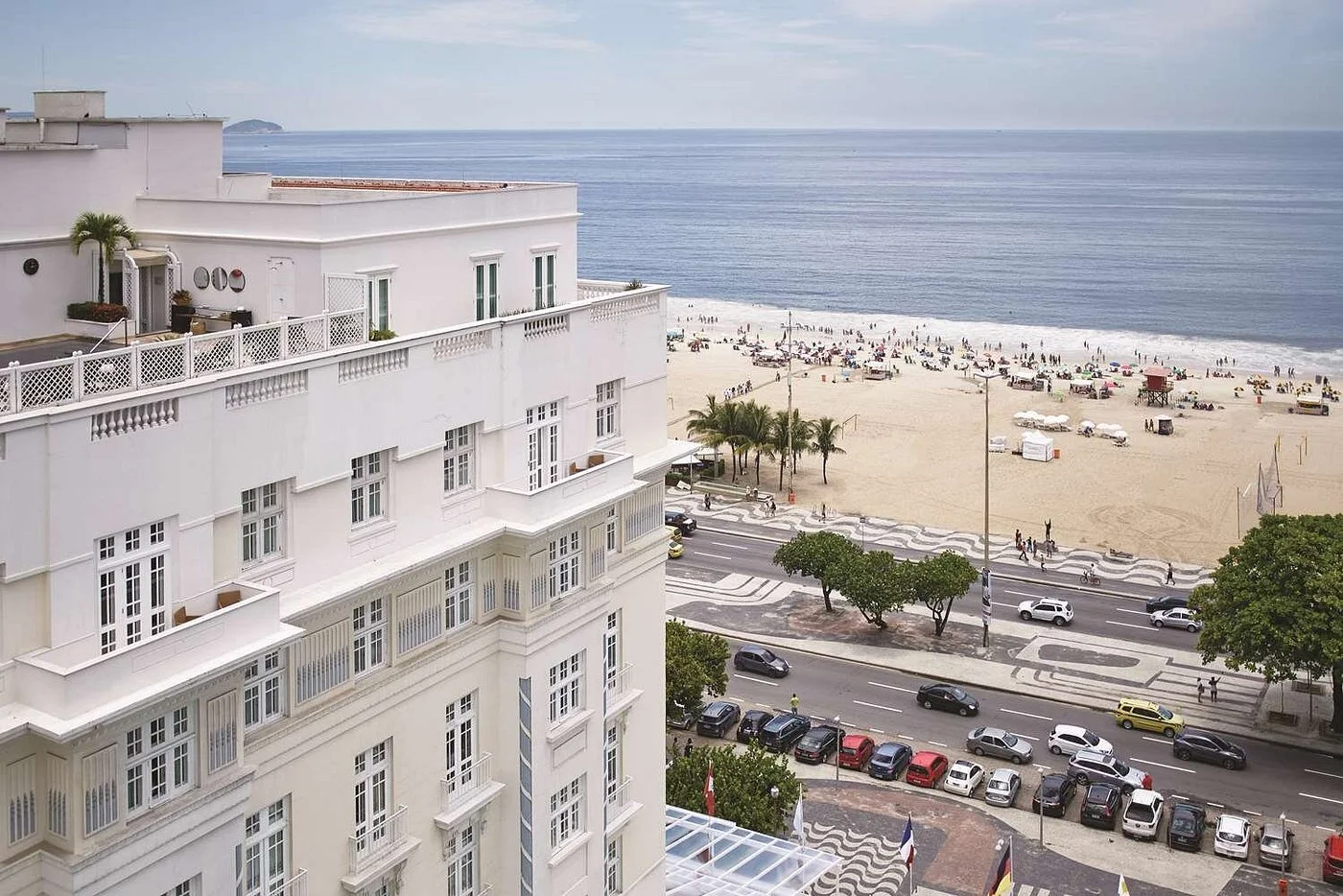
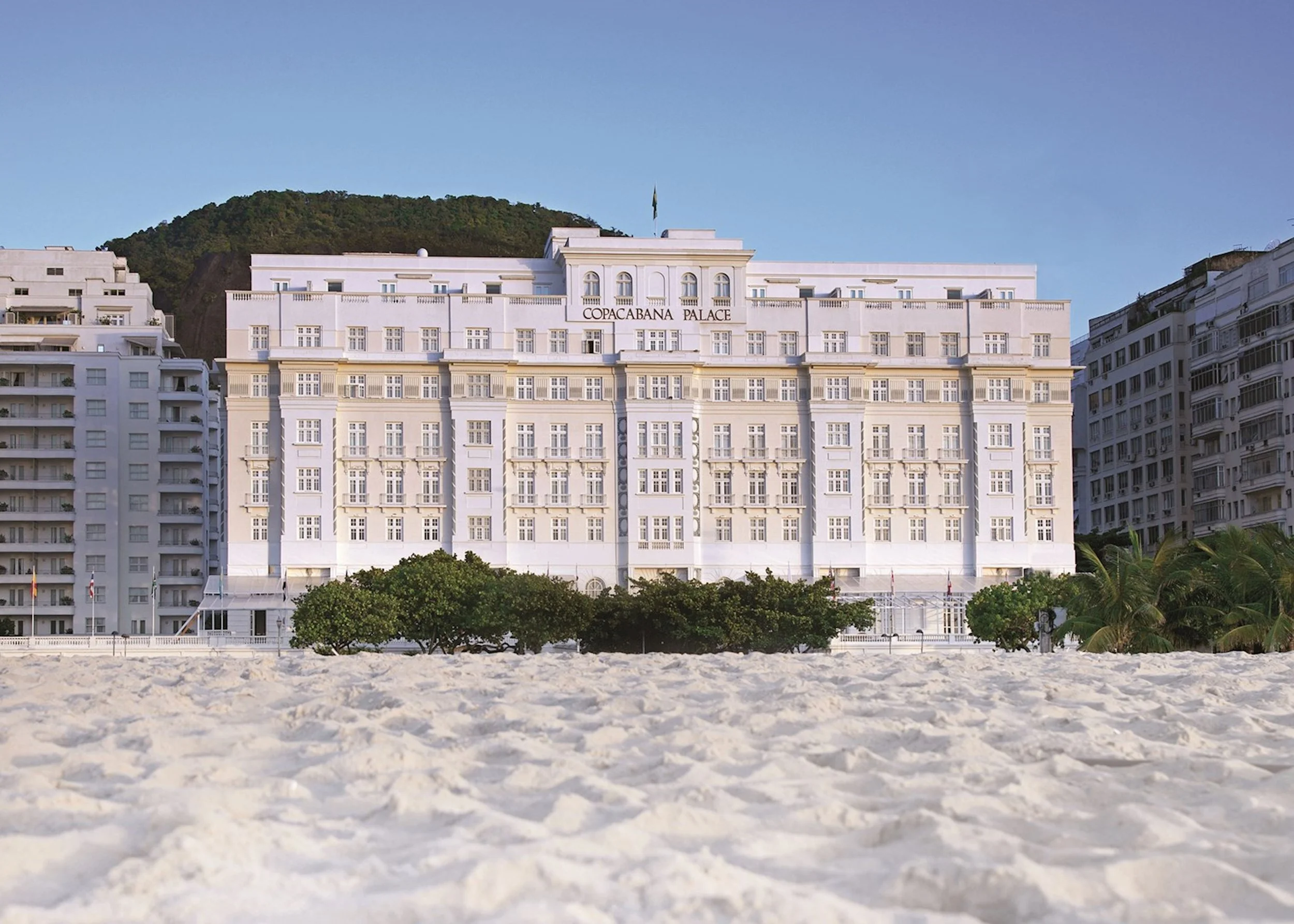
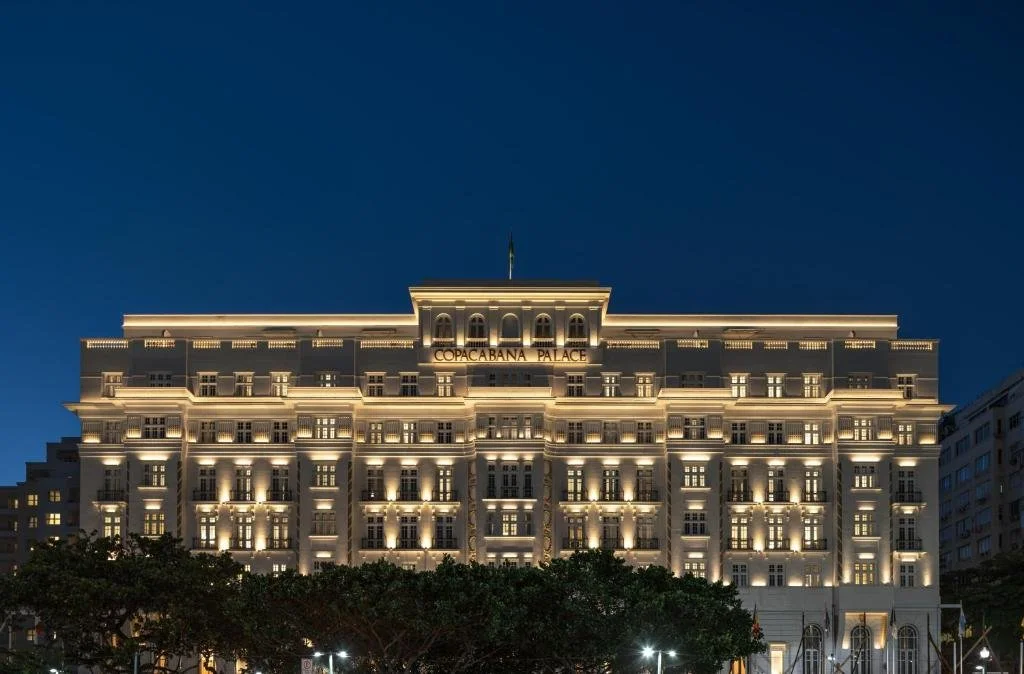
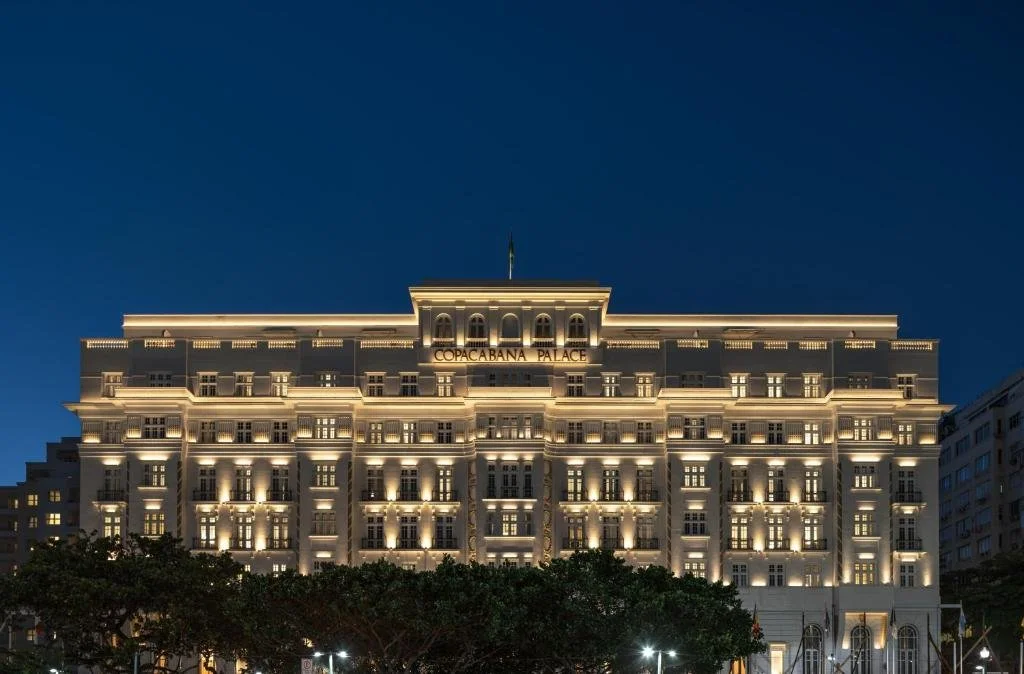
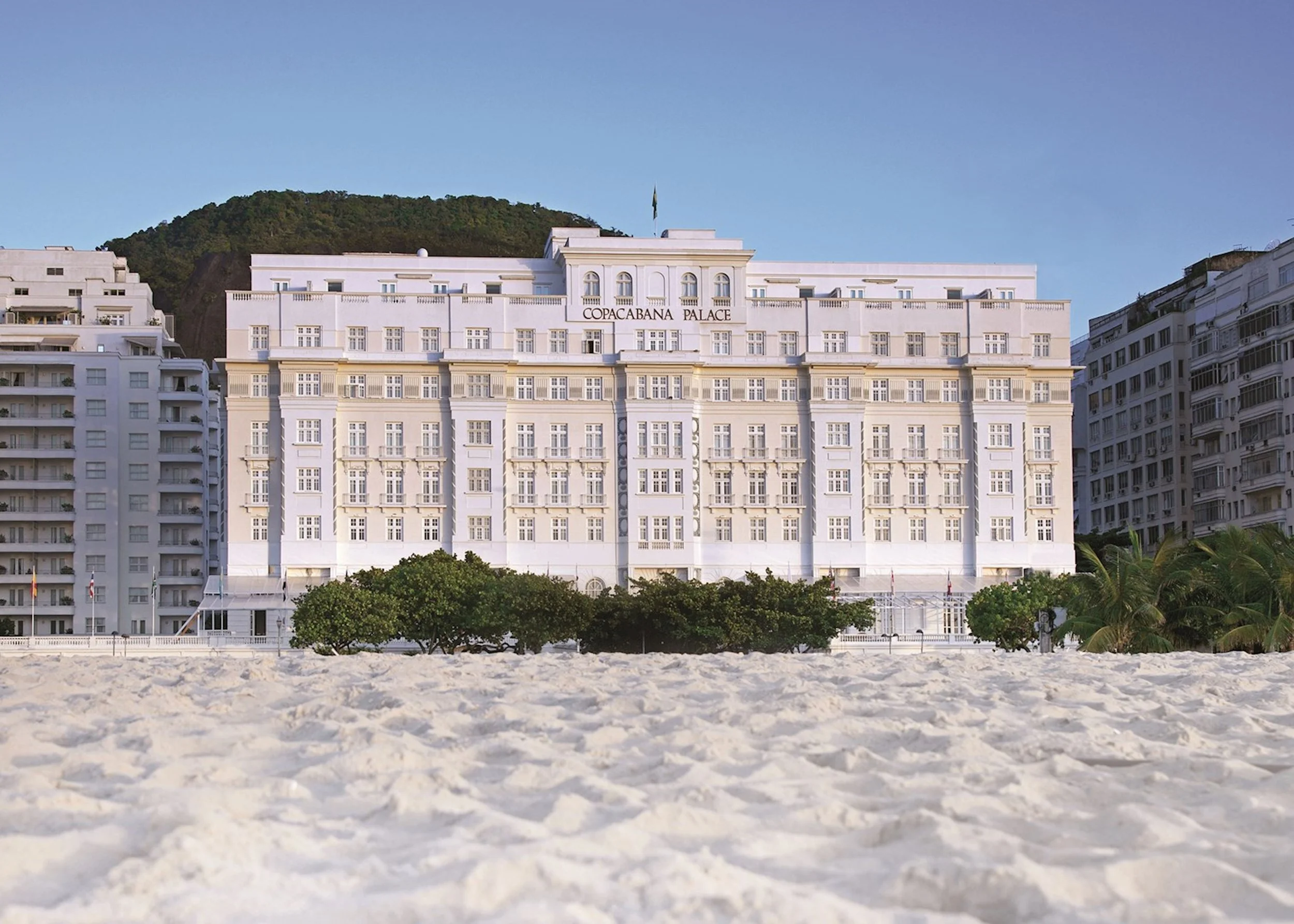
The Copacabana Palace, A Belmond Hotel, Rio de Janeiro opened in August 1923, when Copacabana was still emerging as a fashionable destination beyond Rio's established center. Its white façade rose directly opposite the Atlantic, inspired by Europe's grand resort hotels and designed to introduce an entirely new standard of hospitality to Brazil.
More than a century later, the hotel remains inseparable from the identity of Copacabana.
Presidents, royalty, actors, musicians and artists have passed through its doors. Hollywood stars arrived during Rio's golden age. Carnival celebrations turned its salons into some of the city's most coveted invitations. Performers ranging from Josephine Baker to the Rolling Stones became part of its story, while generations of Cariocas have celebrated weddings, birthdays, dinners and Sunday afternoons around its famous swimming pool.
The hotel is currently entering another significant chapter. Following its centenary in 2023, Belmond embarked on an extensive transformation of the Pool Wing and surrounding spaces. The redesigned wing is scheduled to debut in November 2026, introducing an all-suite accommodation concept, a renewed pool area, expanded wellness facilities and a new Italian restaurant.
For travelers visiting Rio, however, the fundamental appeal remains unchanged. Copacabana Palace is still one of the rare city hotels where the property itself is part of the destination.
The Hotel That Helped Shape Copacabana
Copacabana Palace was commissioned during a period of enormous change in Rio.
Brazil was preparing to commemorate the centenary of its independence, and President Epitácio Pessoa wanted the city to have a world-class hotel capable of receiving international dignitaries and prominent visitors.
Businessman Octávio Guinle took on the project, commissioning French architect Joseph Gire to design the hotel. Gire looked toward the great European seaside hotels of the era, particularly the Negresco in Nice and Carlton in Cannes, for inspiration.
When Copacabana Palace opened in 1923, its location was far removed from the dense beachfront skyline travelers know today. Copacabana was developing rapidly, but the hotel helped accelerate the neighborhood's transformation into a fashionable address for Rio's elite and international visitors.
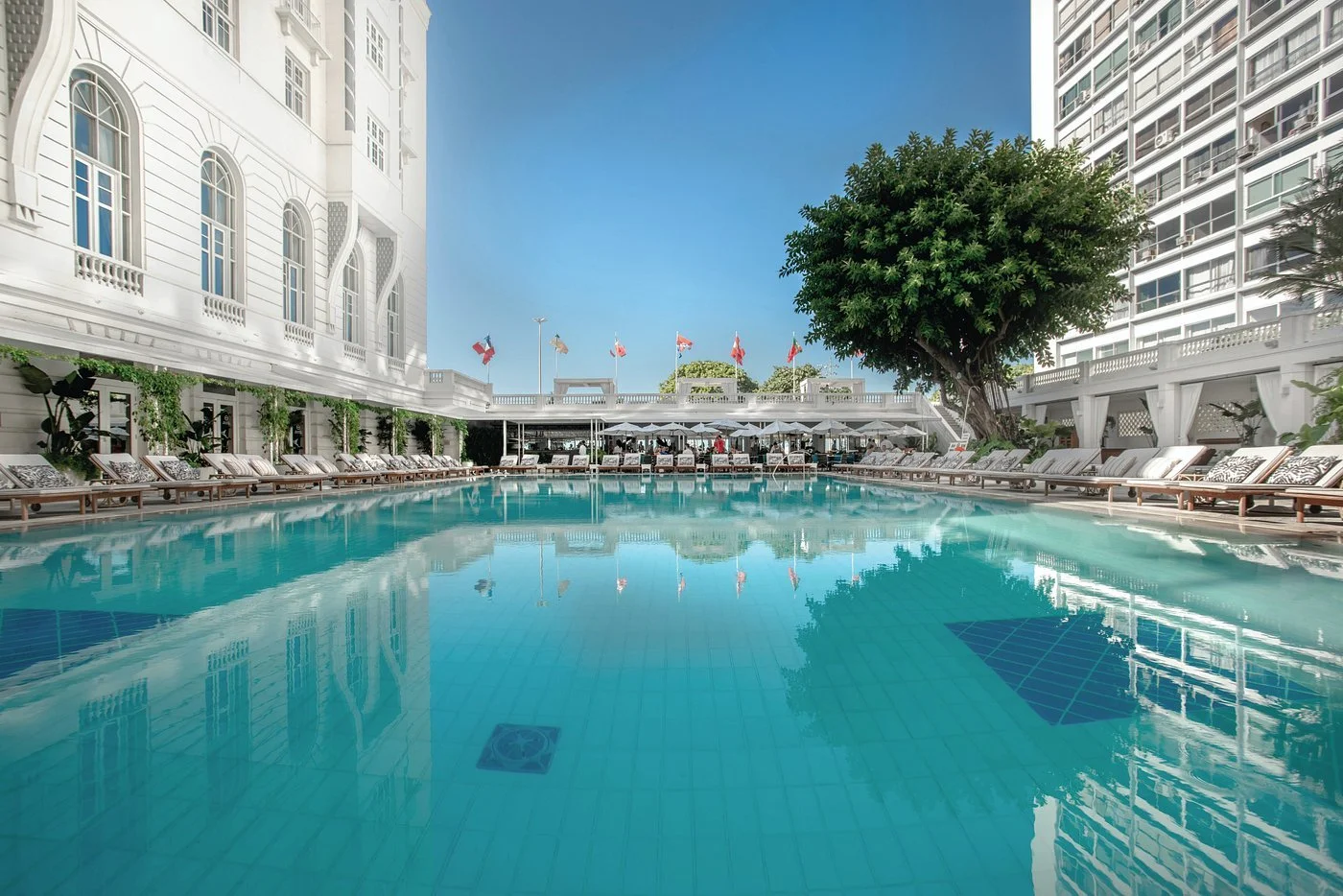
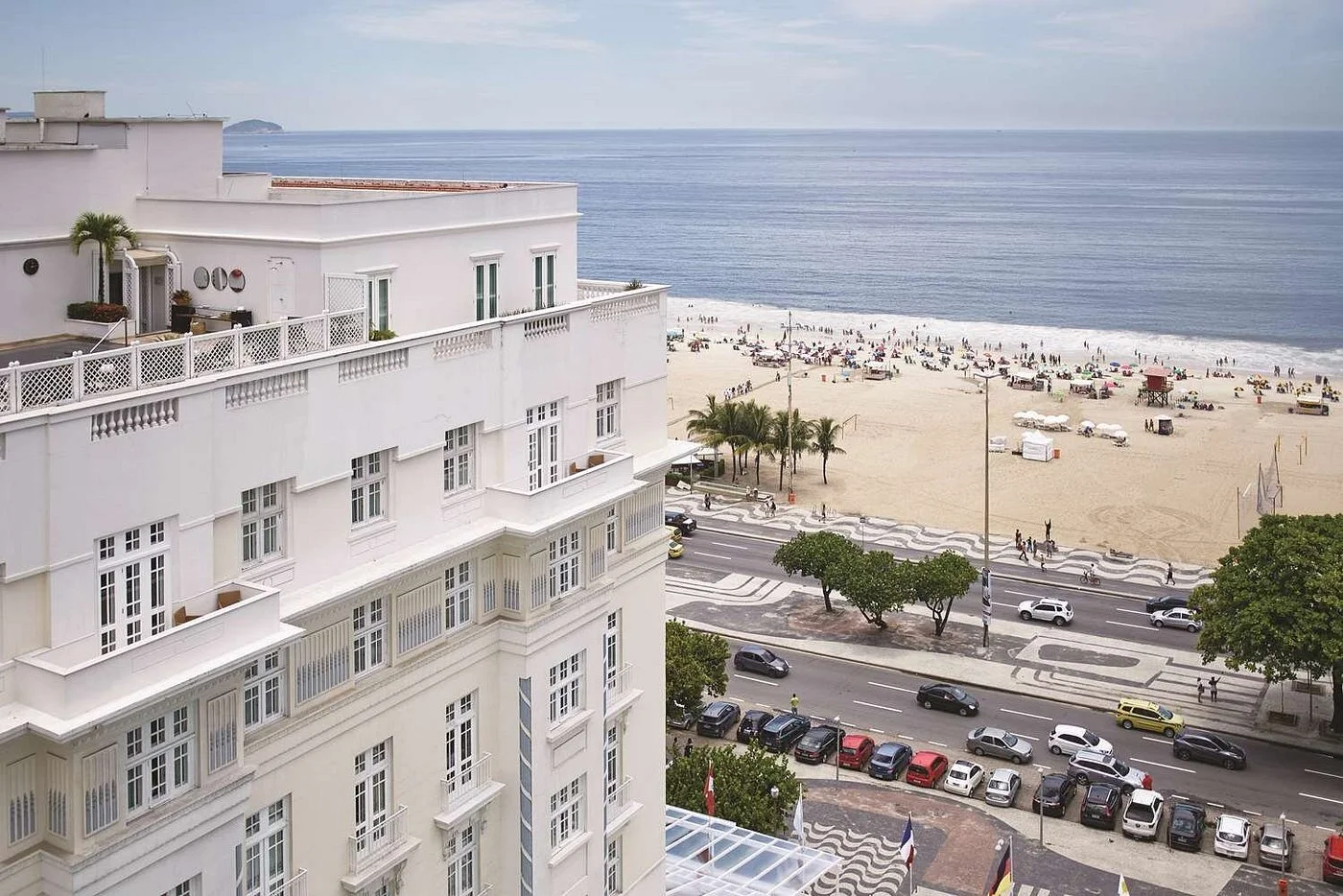
Its architecture immediately established a sense of occasion. The long white façade, arched windows and elegant proportions brought European resort grandeur to the Brazilian coastline, while the Atlantic provided a setting that was unmistakably Rio.
Over the following decades, the city grew around it.
Apartment buildings gradually filled Avenida Atlântica, Copacabana became internationally famous, and the beachfront developed into one of the most recognizable urban landscapes in the world.
Through all of those changes, the Copa remained.
From Hollywood to Carnival
Copacabana Palace became particularly glamorous during the middle decades of the 20th century, when Rio was an essential stop for international entertainers and socialites traveling through South America.
The guest list became extraordinary.
Fred Astaire, Ginger Rogers, Marlene Dietrich, Orson Welles, Ella Fitzgerald and Josephine Baker were among the artists associated with the hotel over the years. Later generations brought musicians, actors and cultural figures from around the world, including the Rolling Stones.
The hotel's theater also played an important role in Rio's cultural life. Performances, concerts and nightlife helped establish Copacabana Palace as far more than somewhere for visitors to sleep.
Then there is Carnival.
The hotel's Magic Ball, held during Rio Carnival, became one of Brazil's most celebrated social events. Elaborate costumes, black tie and extravagant decorations transform the hotel each year, continuing a tradition that has been part of the Copa's identity for decades.
This relationship with the city is important because Copacabana Palace has never functioned solely as an international hotel imposed upon Rio. Cariocas themselves have long used it as a place to dine, celebrate and gather.
That local relationship has helped keep the property relevant long after many other grand hotels of its era disappeared.
140 Rooms and Suites Across a Changing Hotel
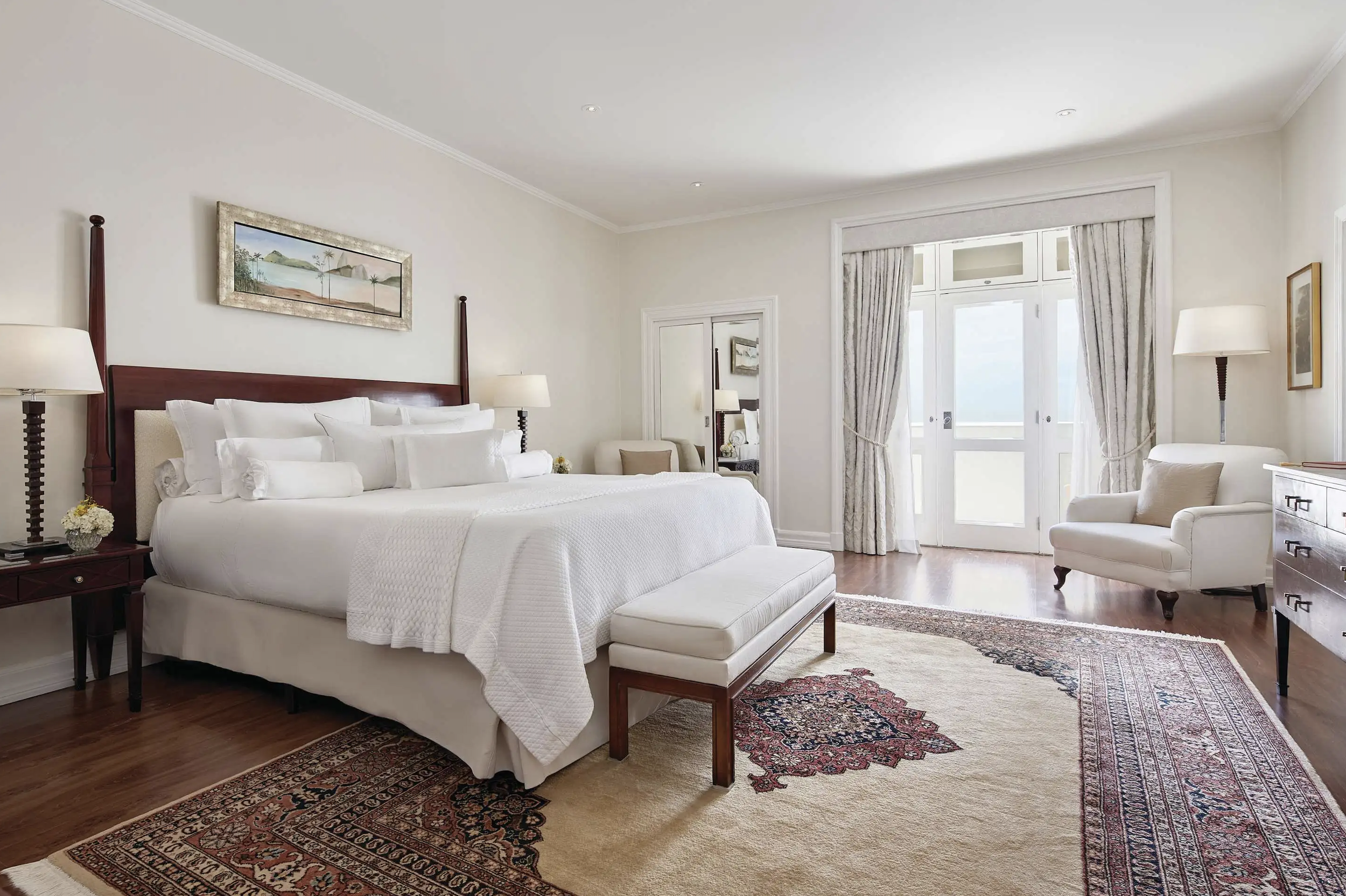
Copacabana Palace currently has 140 rooms and suites, including three Signature Suites.
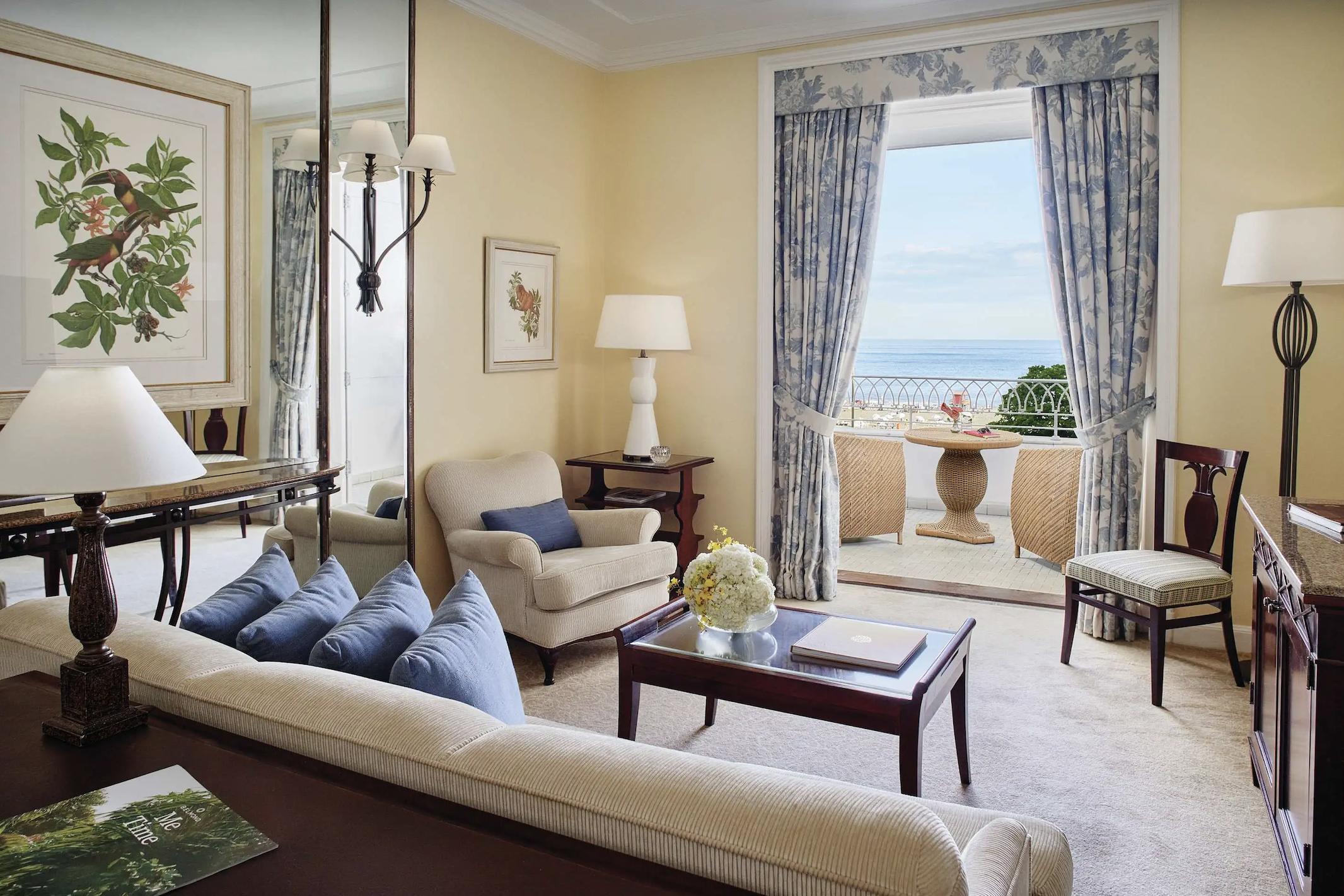
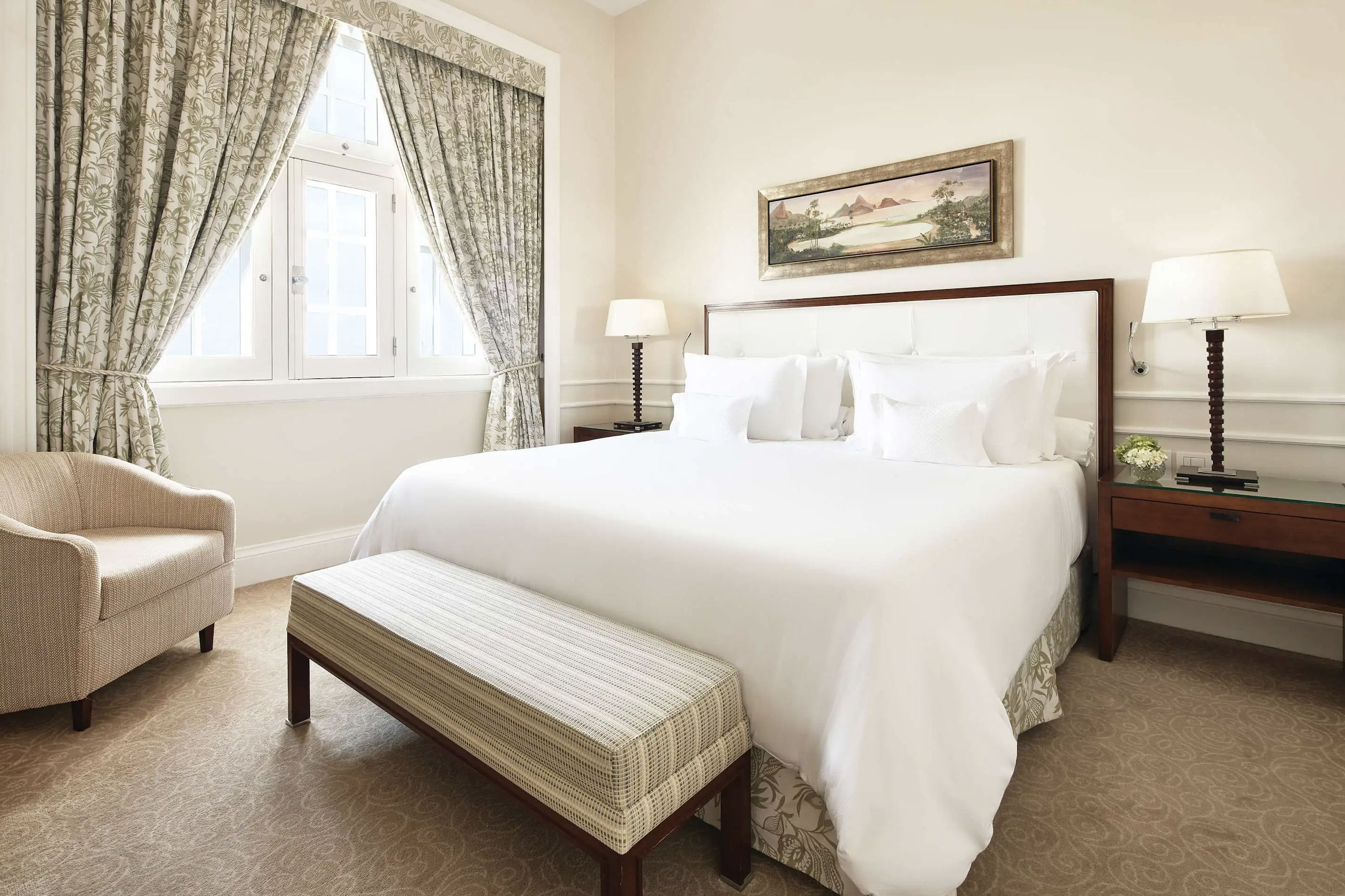
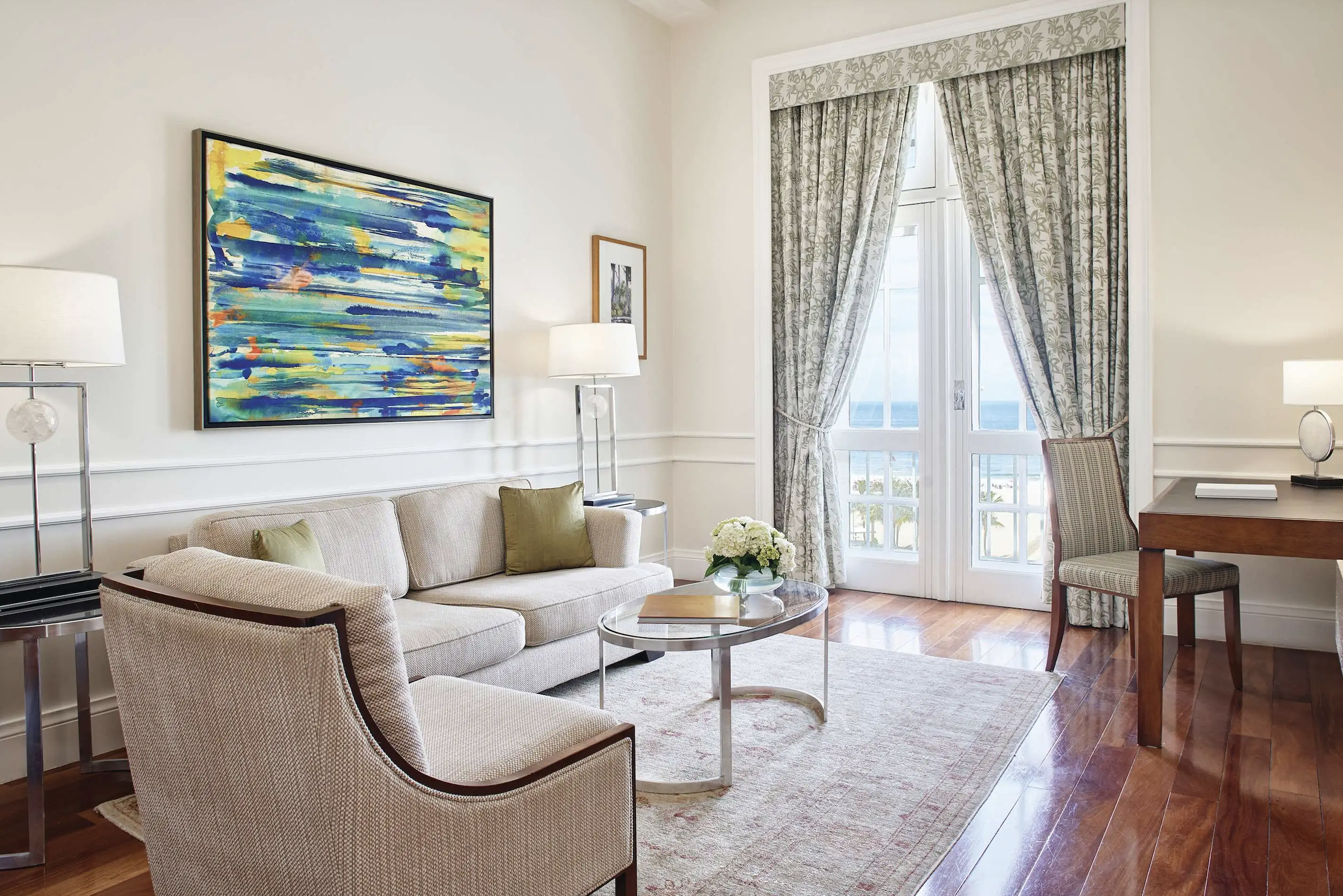
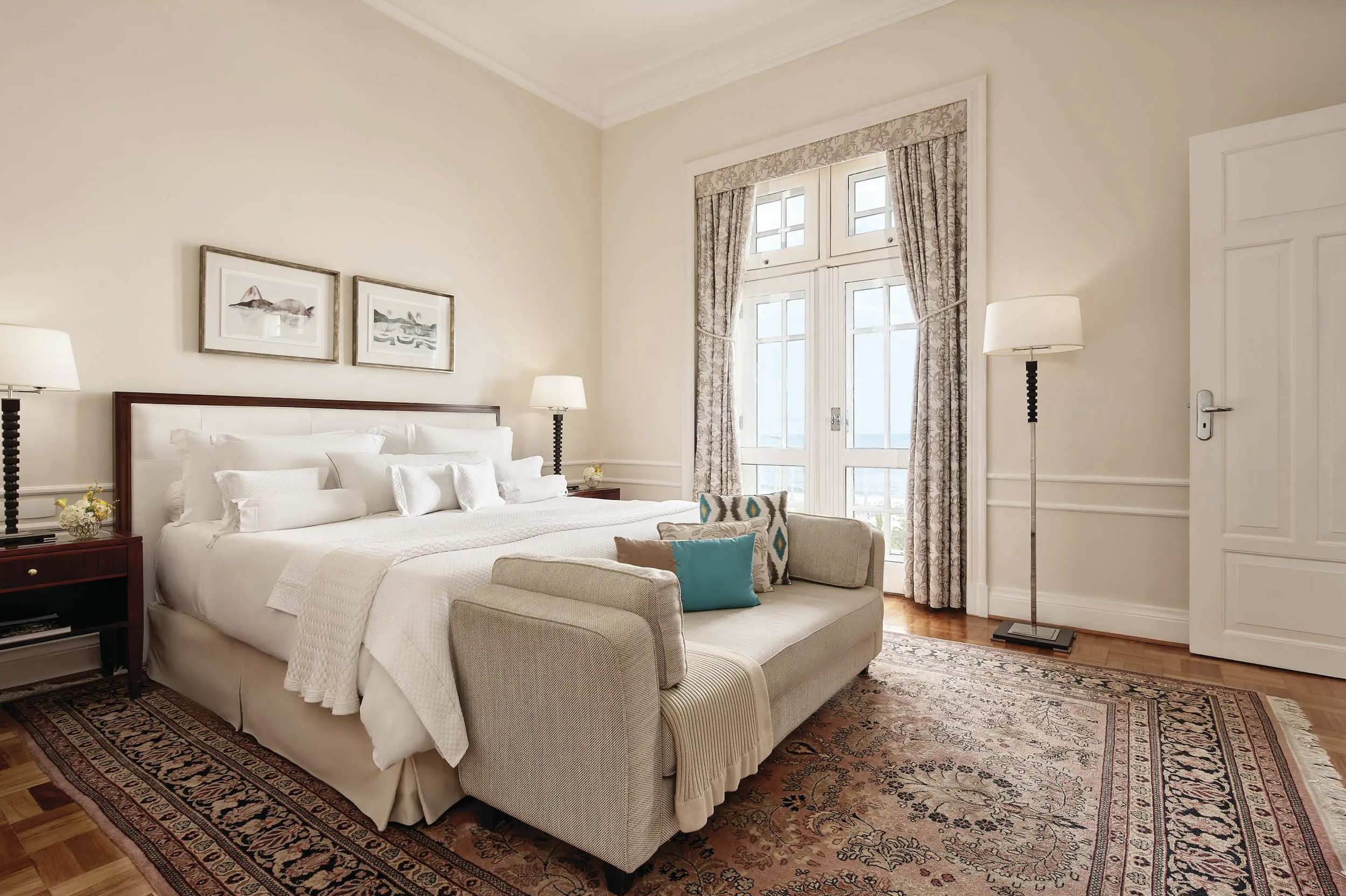
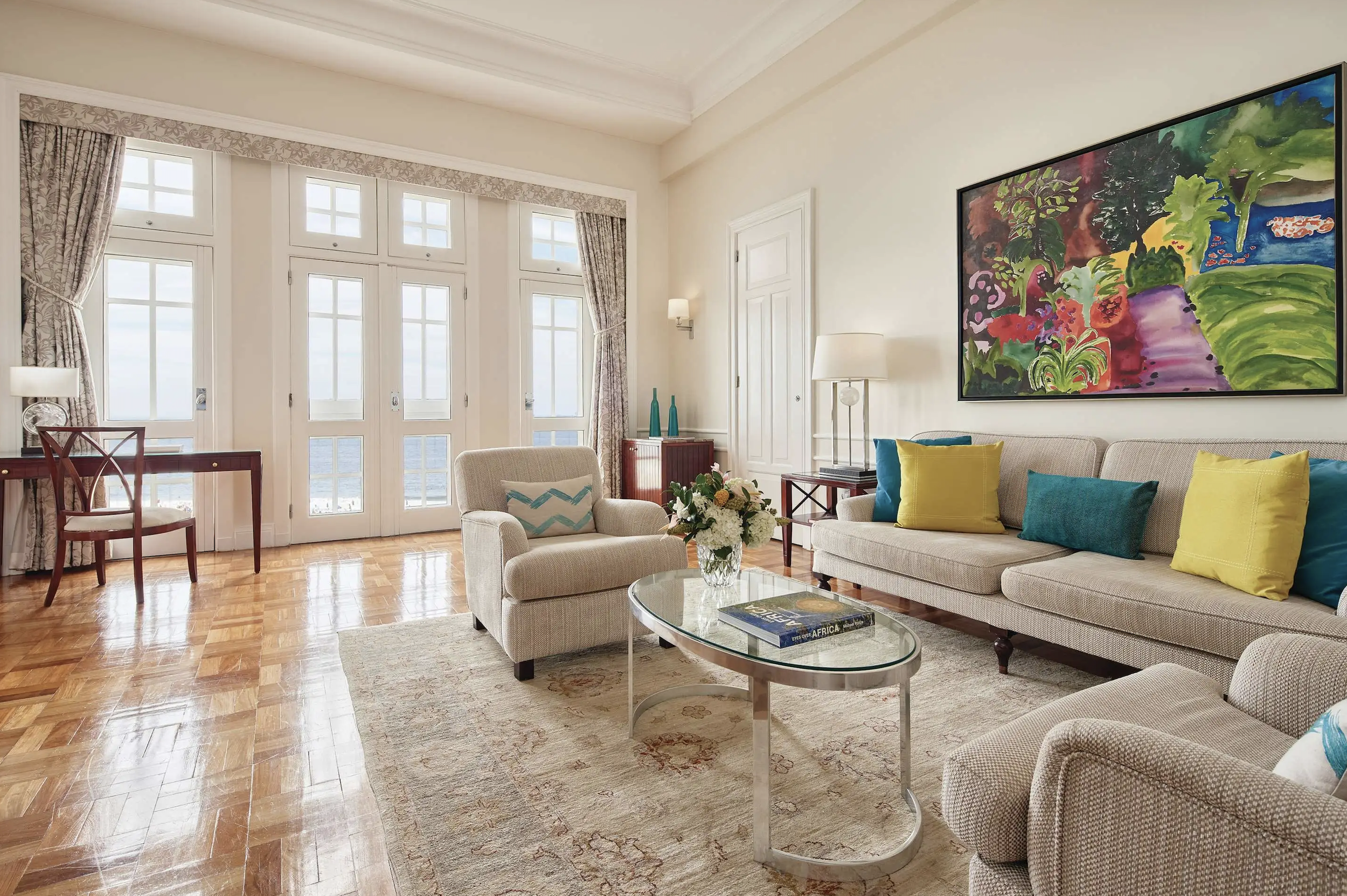
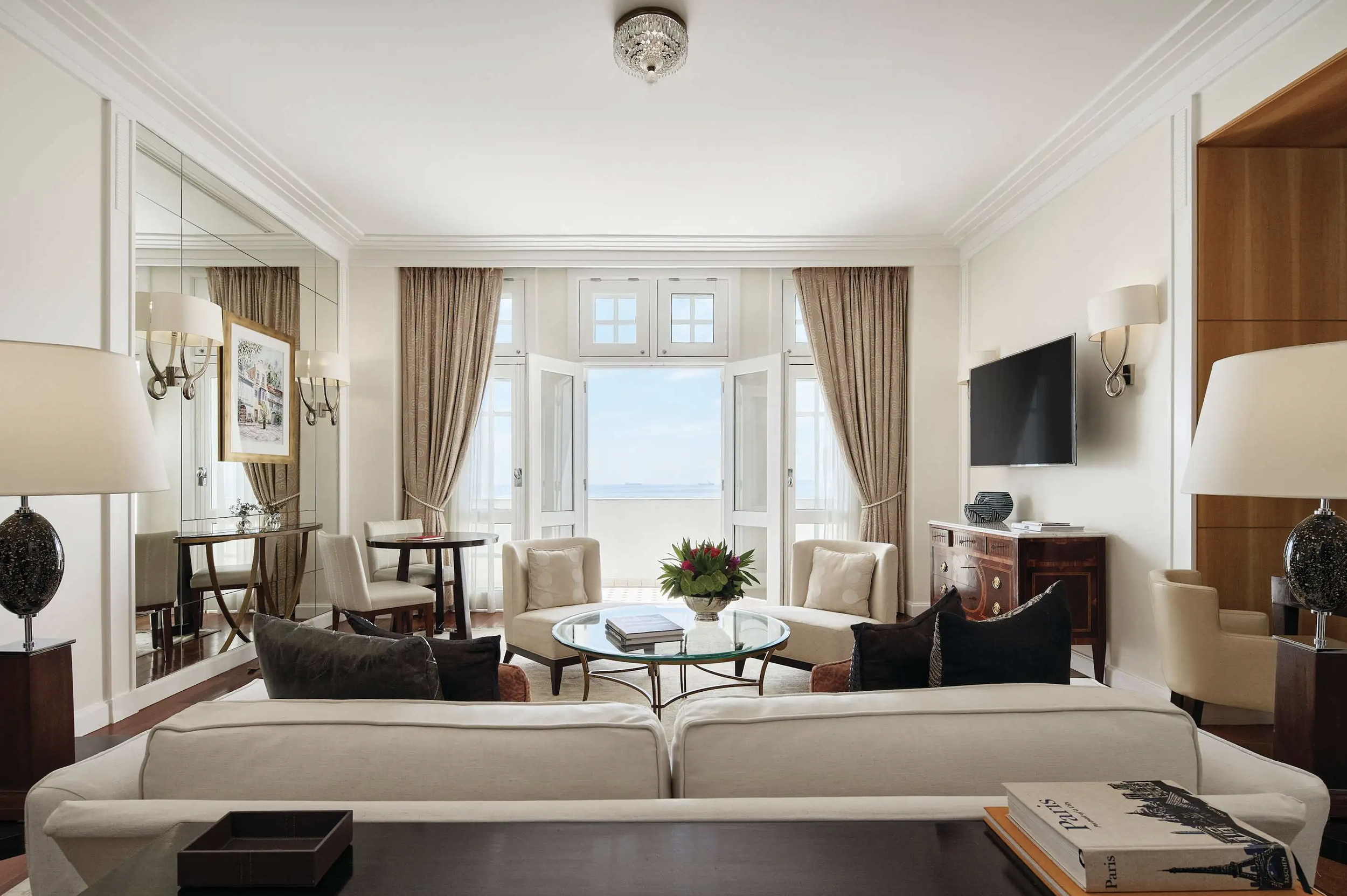
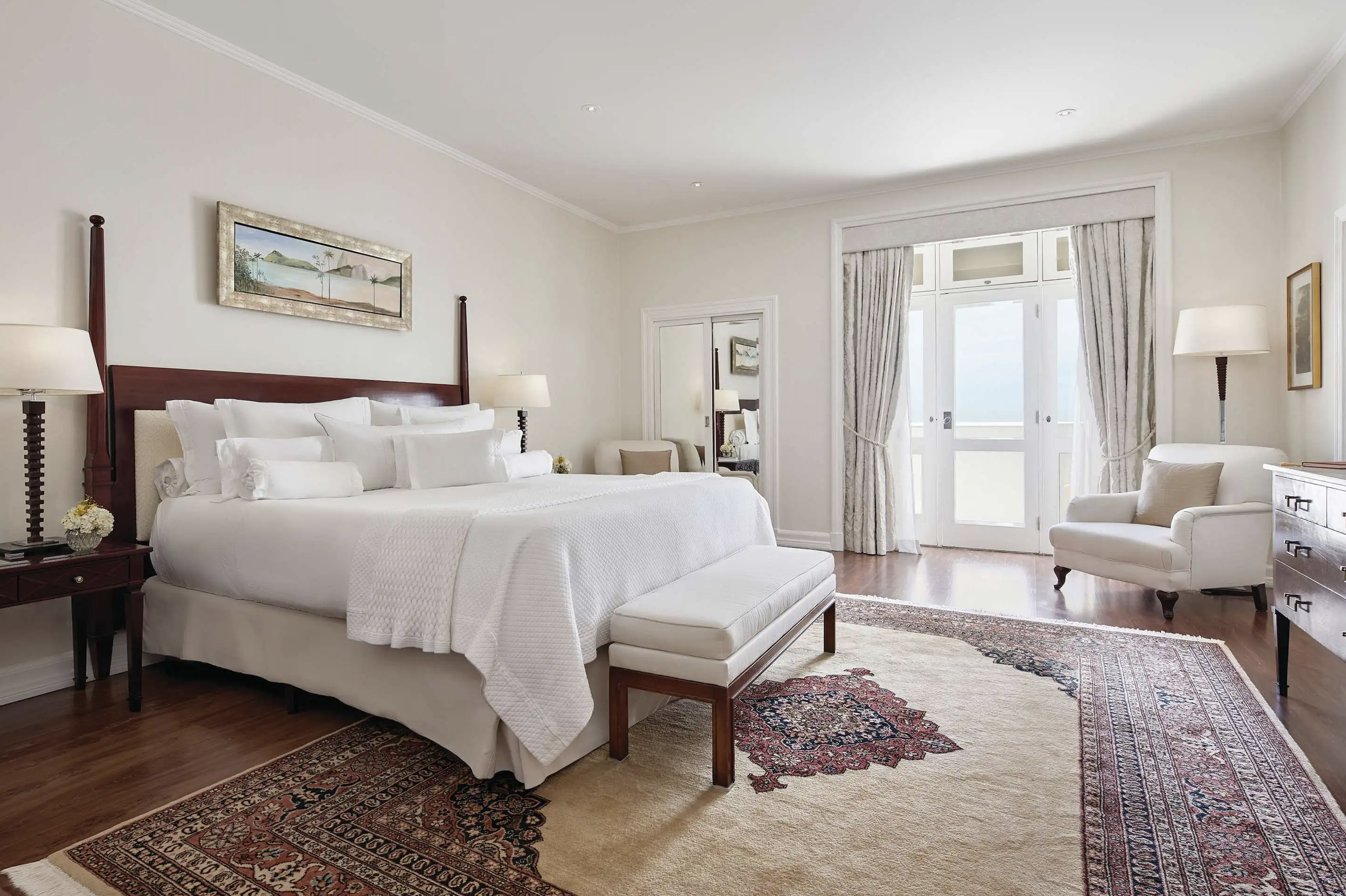
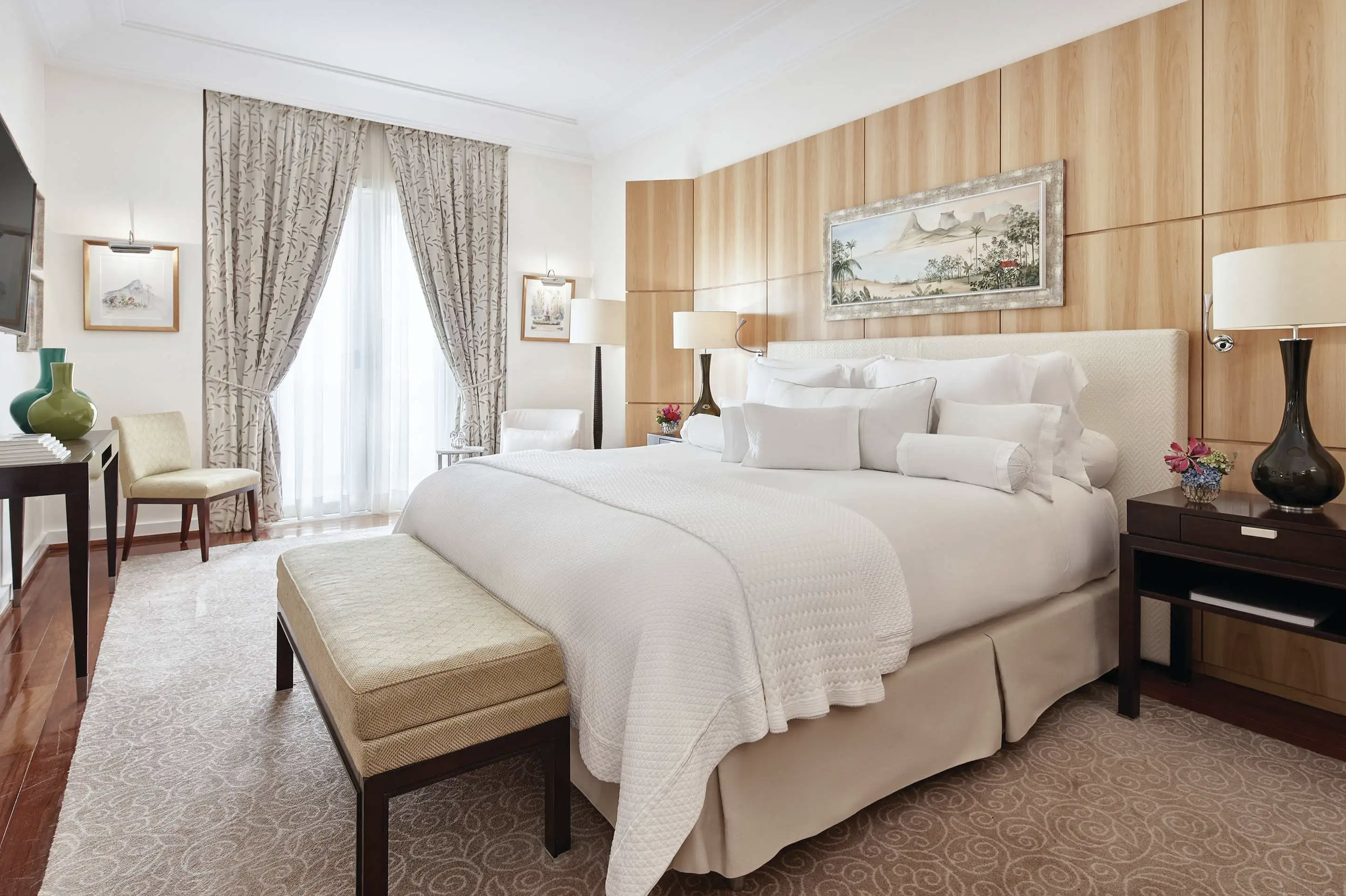
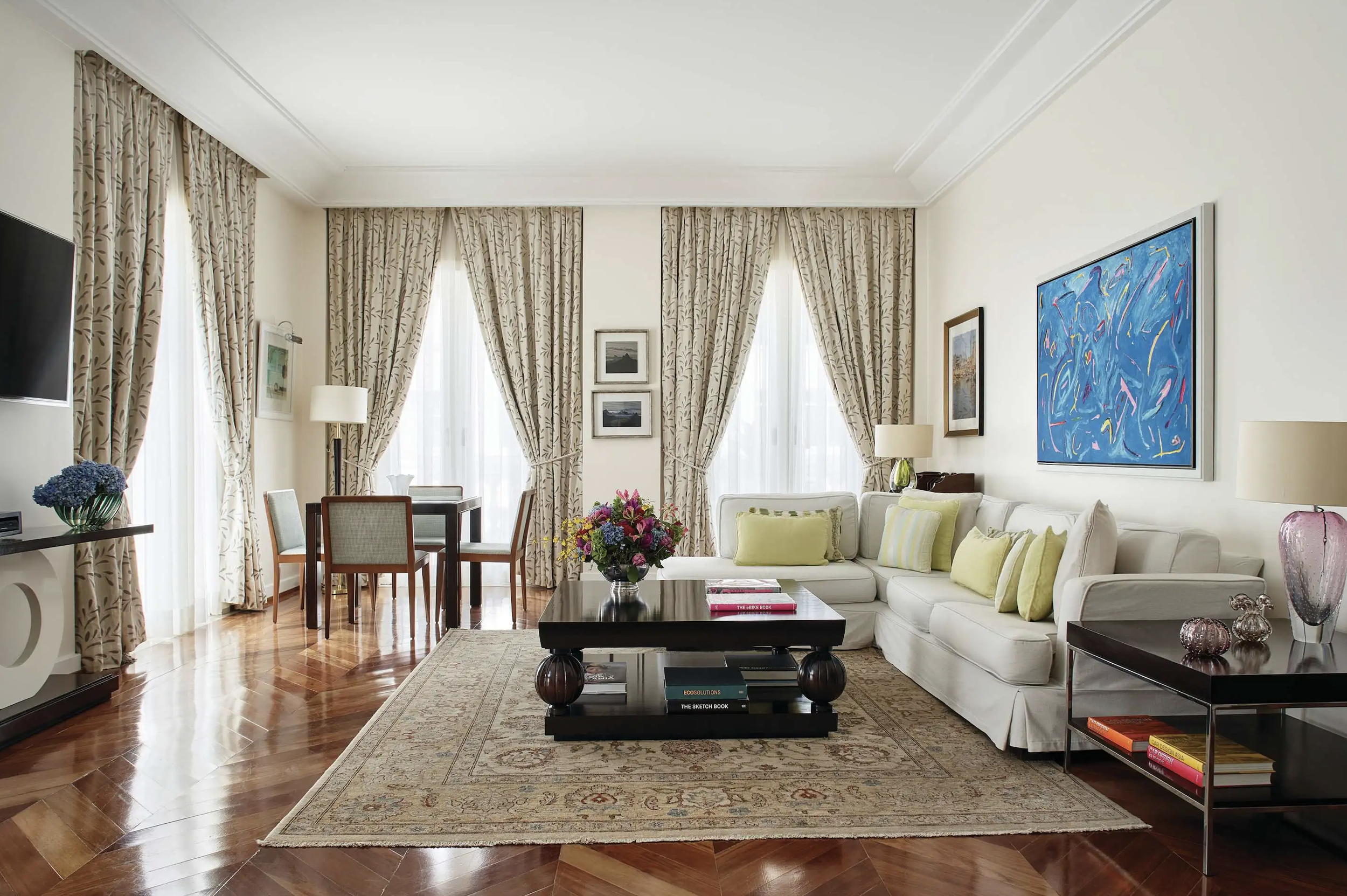
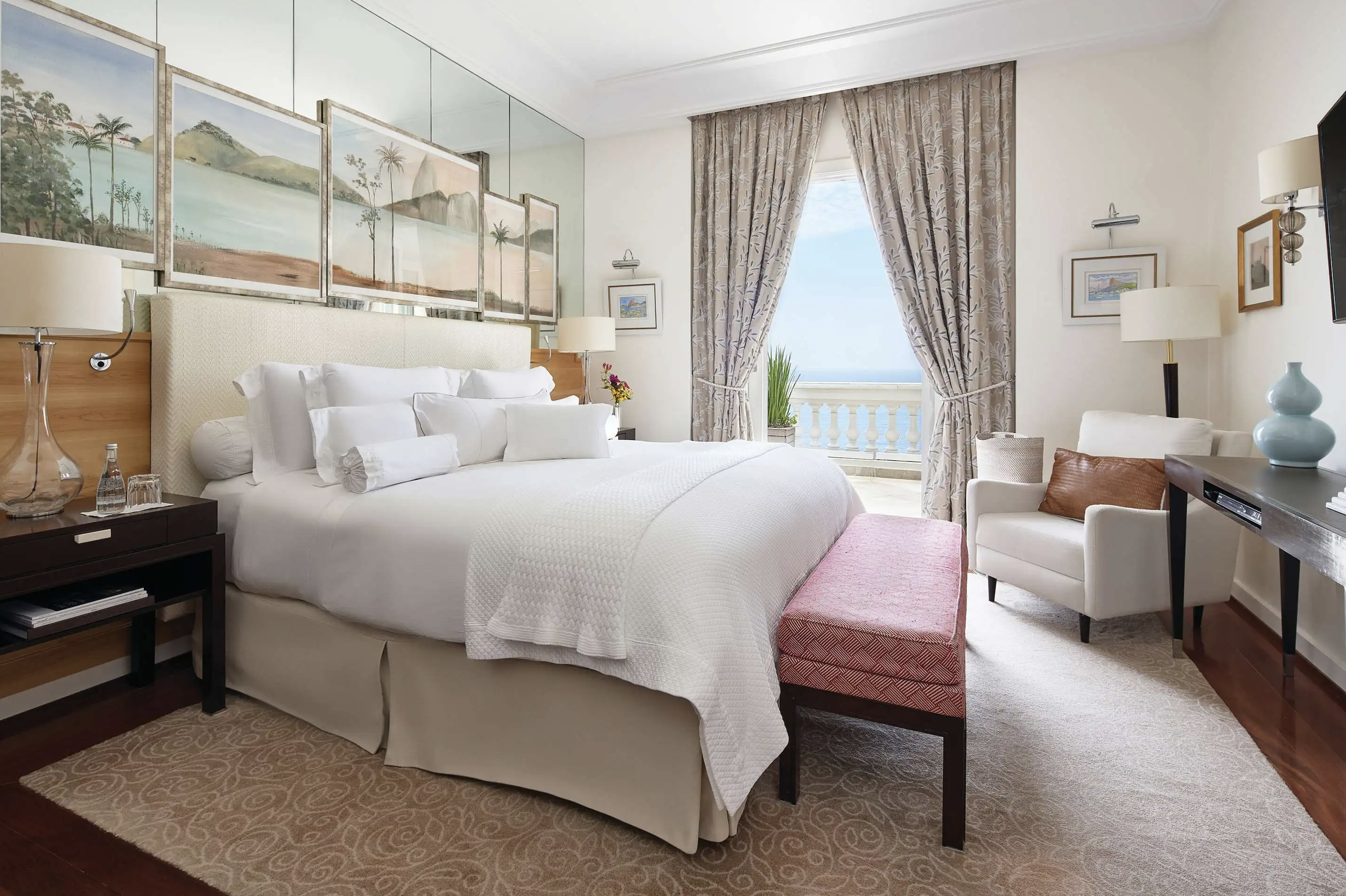
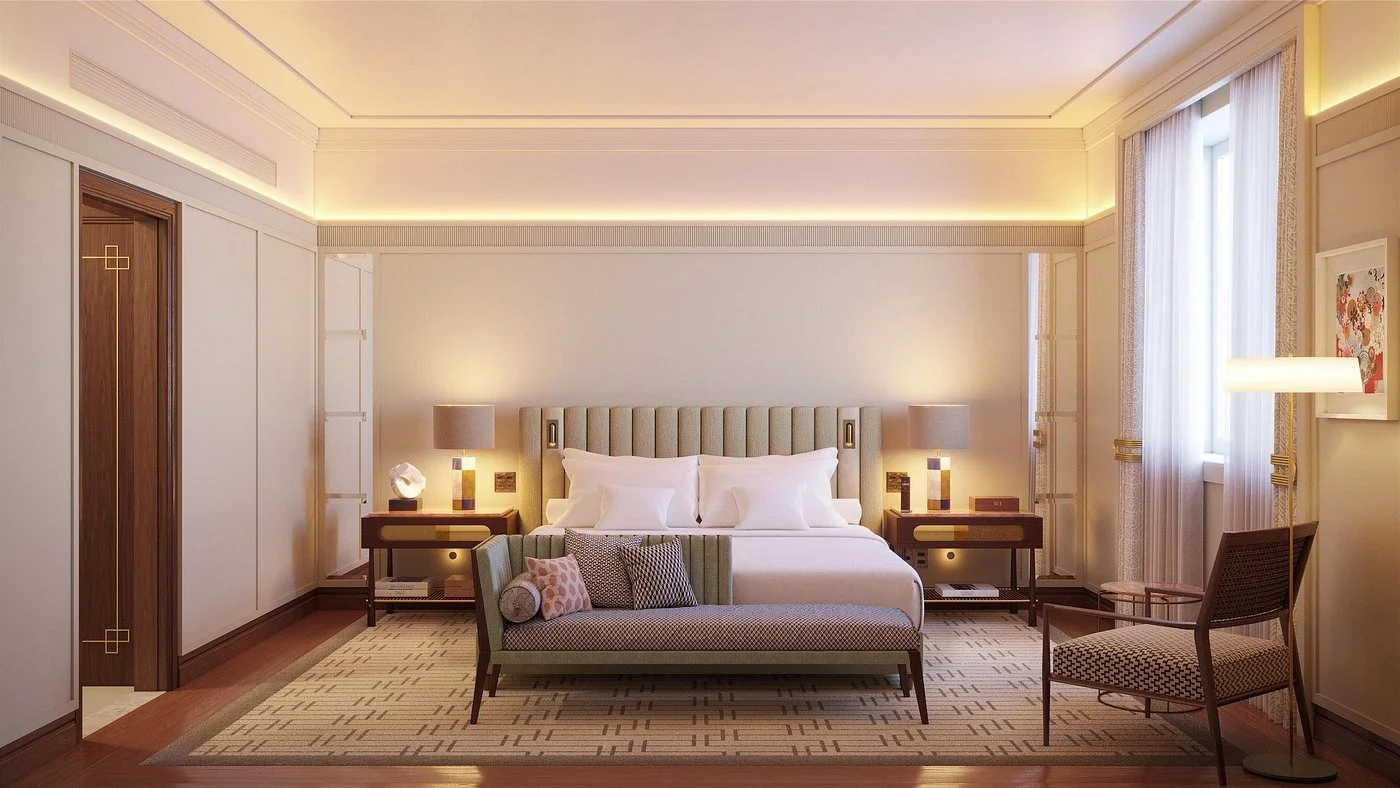
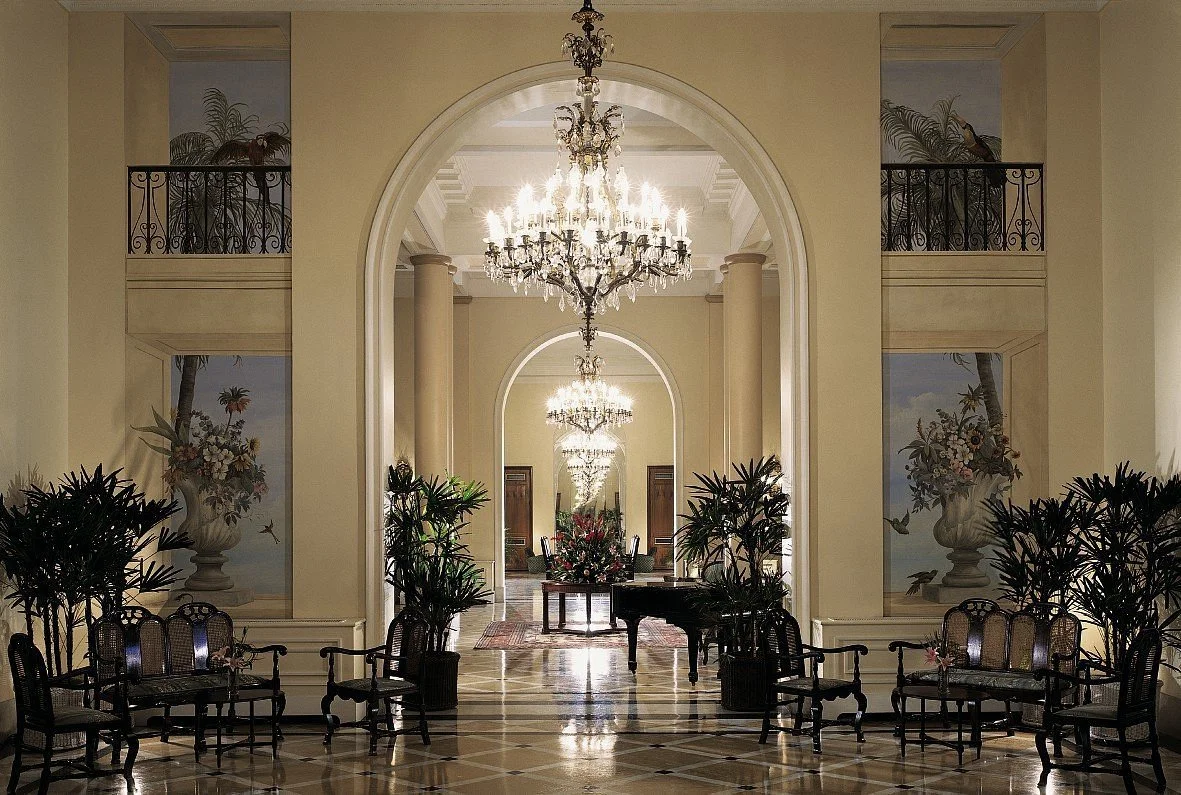
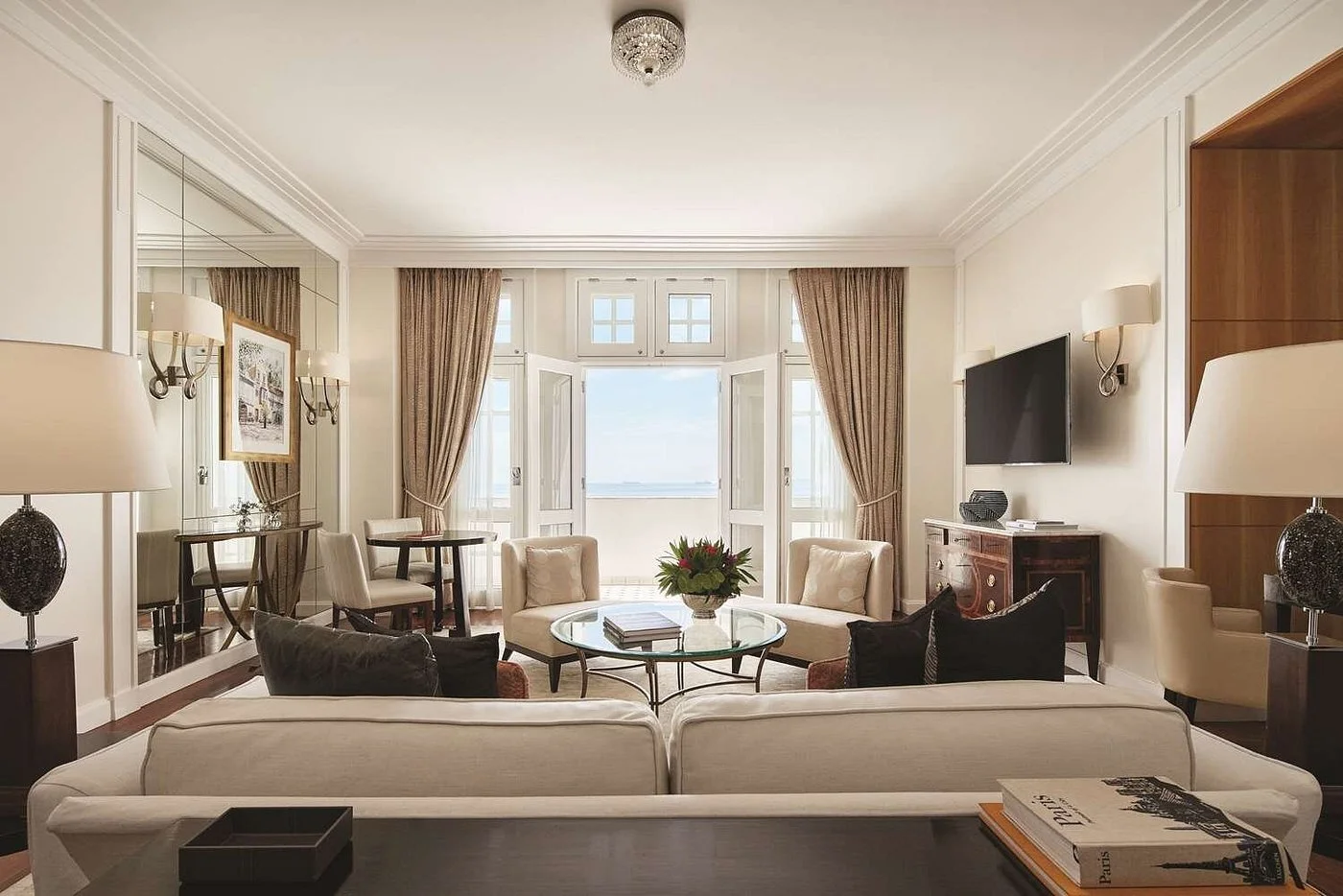
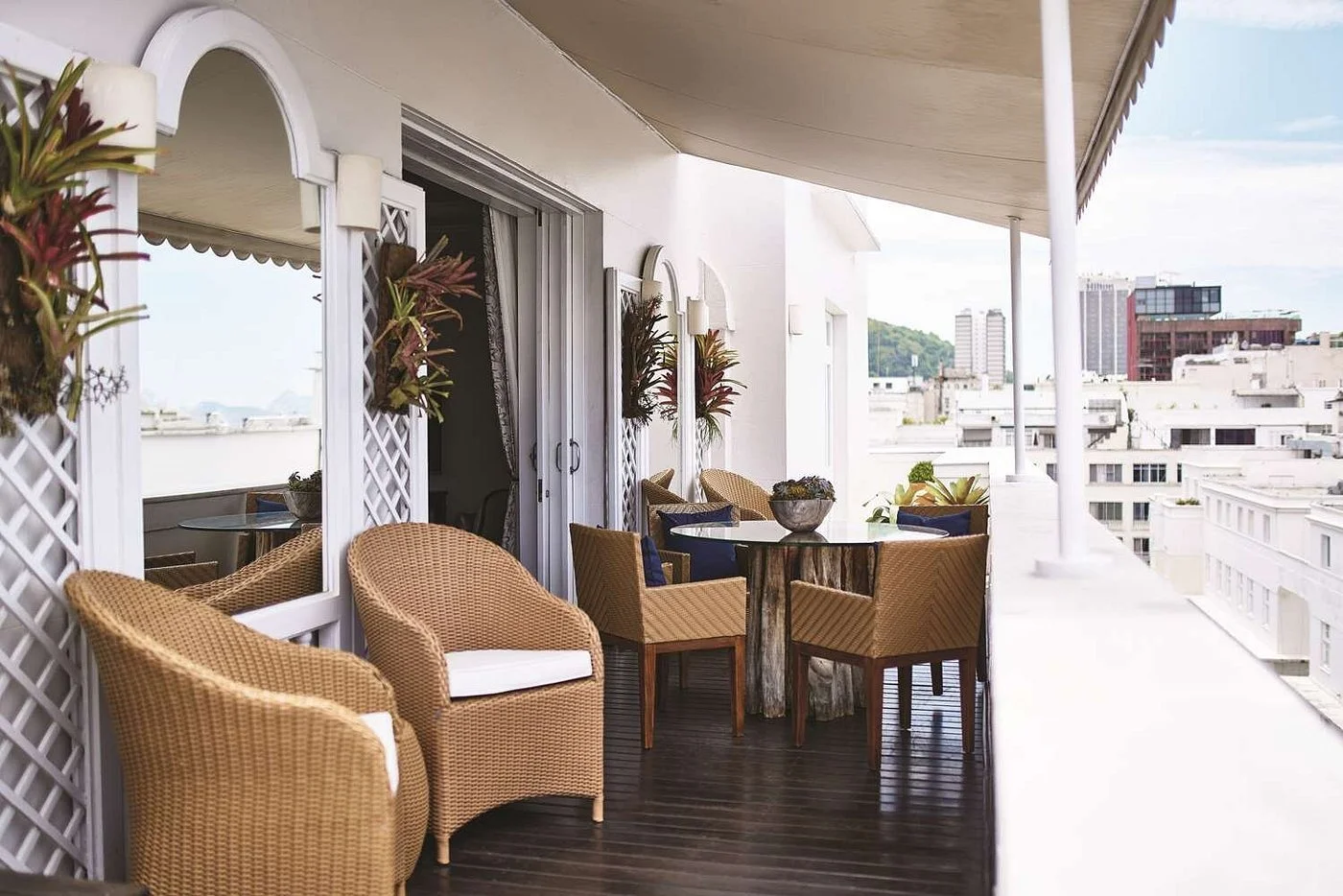
The accommodations span several categories, ranging from rooms within the historic Main Building to expansive suites and penthouses. Interiors combine the hotel's classical character with contemporary comfort, using light colors, polished woods, Brazilian influences and views that frequently become the strongest feature of the room.
The principal accommodation groupings include:
Rooms: The hotel's rooms provide the most straightforward introduction to the Copa, with categories offering city or ocean outlooks depending on location. For travelers planning to spend significant time exploring Rio, these retain access to the complete hotel experience without moving into suite territory.
Suites: Larger layouts introduce separate or expanded living areas, with selected categories overlooking Copacabana Beach. They work particularly well for longer stays when additional residential space becomes useful.
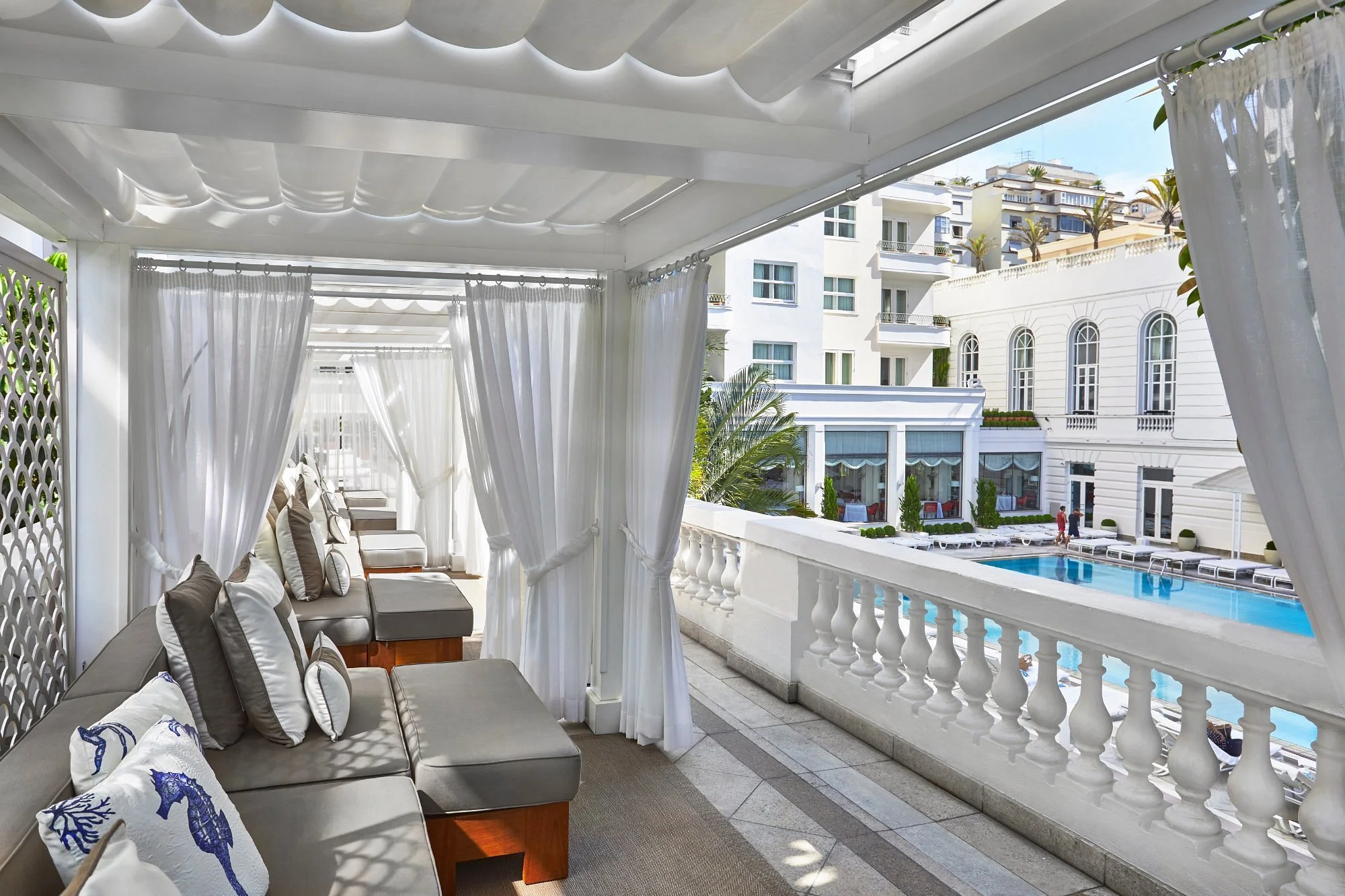
Penthouse Suites: Positioned on the hotel's upper floors, the Penthouse collection offers greater privacy and access to an exclusive sixth-floor swimming pool reserved for guests staying within the collection.
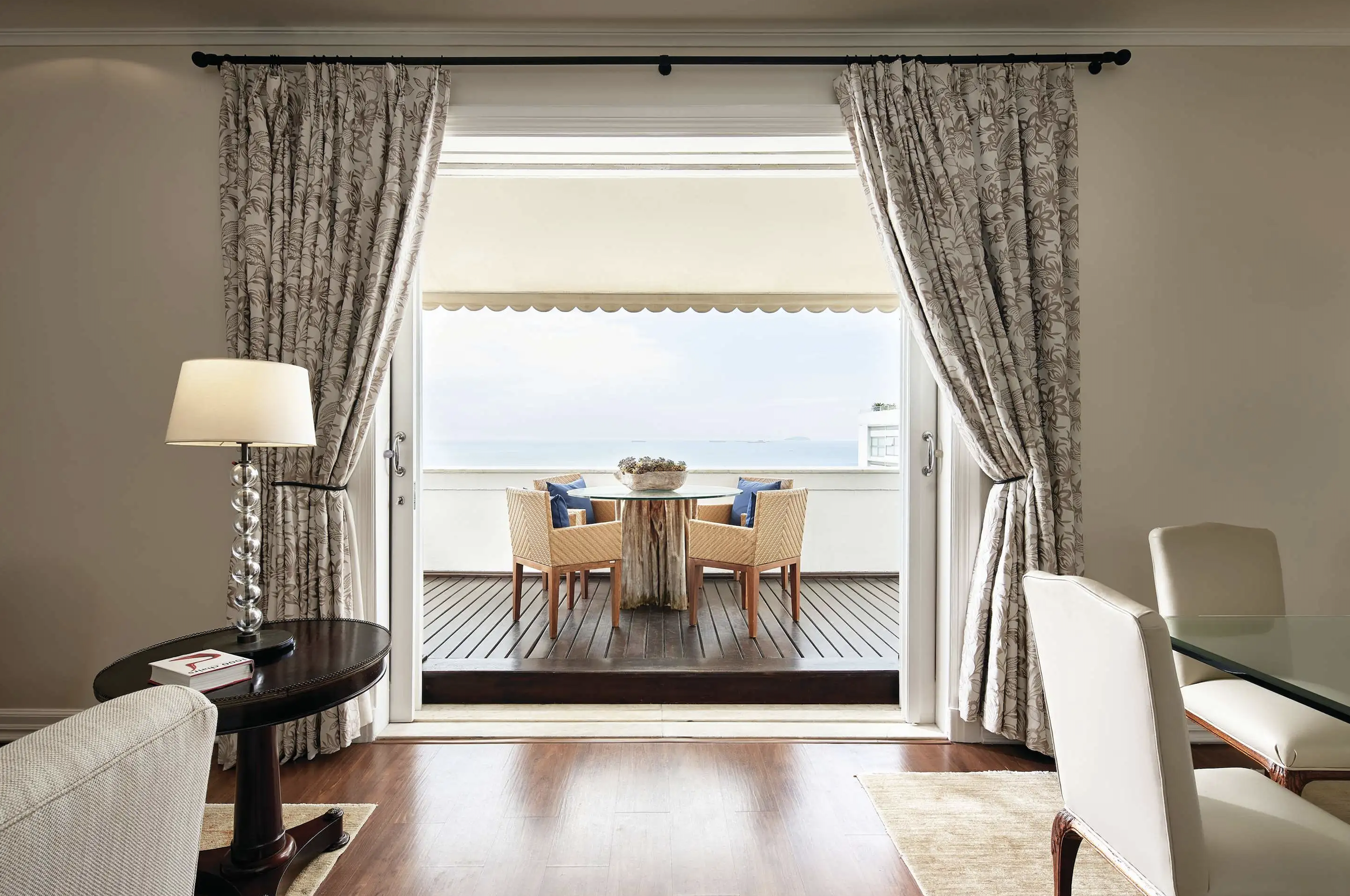
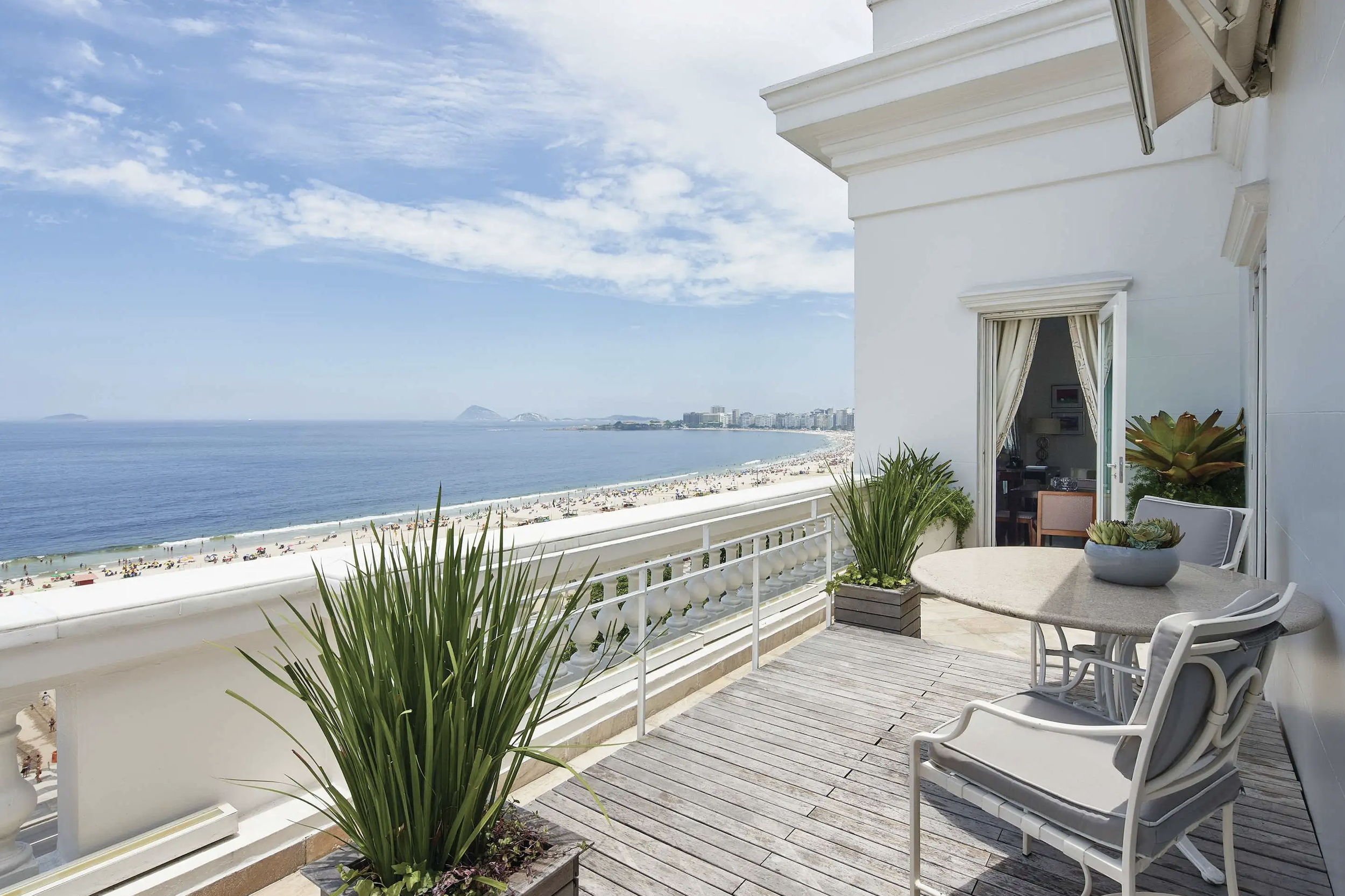
Signature Suites: The hotel's highest accommodation tier includes three individually distinguished suites. Among them, the Copacabana Suite pairs expansive balconies with panoramic views across Copacabana Beach and access to the private sixth-floor pool.
The accommodation story is also changing significantly.
In November 2026, Belmond is scheduled to reveal the transformed Pool Wing, following a 19-month renovation. Originally established above the hotel's swimming pool and terrace in 1948, the wing is being reinvented as an entirely all-suite collection.
Every new Pool Wing suite will have a private balcony, with most overlooking either the swimming pool or Copacabana Beach. Brazilian craftsmanship has been placed at the center of the redesign, incorporating work from artists and makers across the country.
A new two-bedroom penthouse will also look toward Christ the Redeemer, while larger configurations are being designed with families and longer stays in mind.
For travelers booking late 2026 onward, the Pool Wing will represent a substantially different version of the Copa from the hotel experienced over the previous decades.
The Swimming Pool at the Center of It All
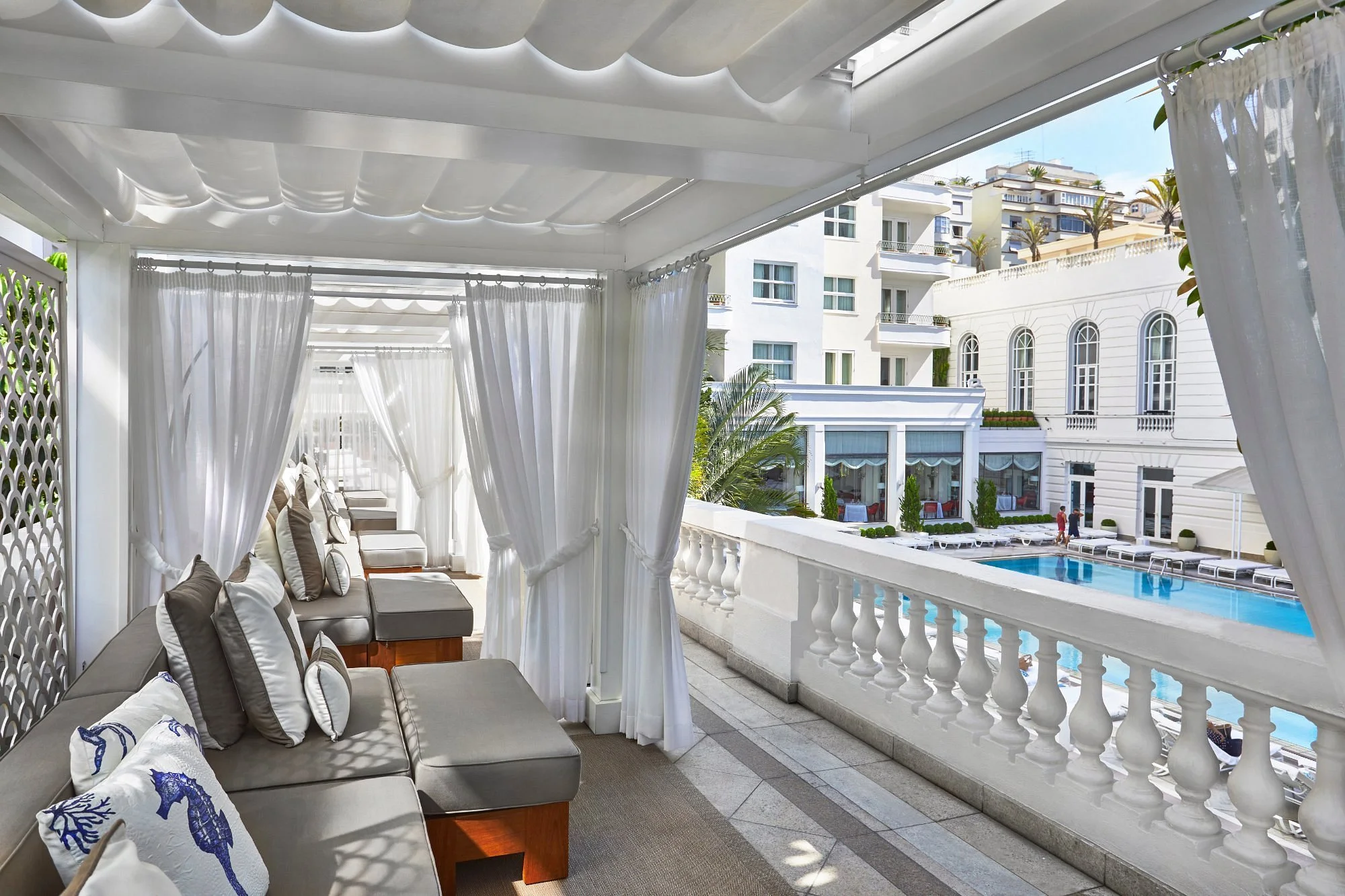
Few hotel swimming pools have become as closely associated with a property as the one at Copacabana Palace.
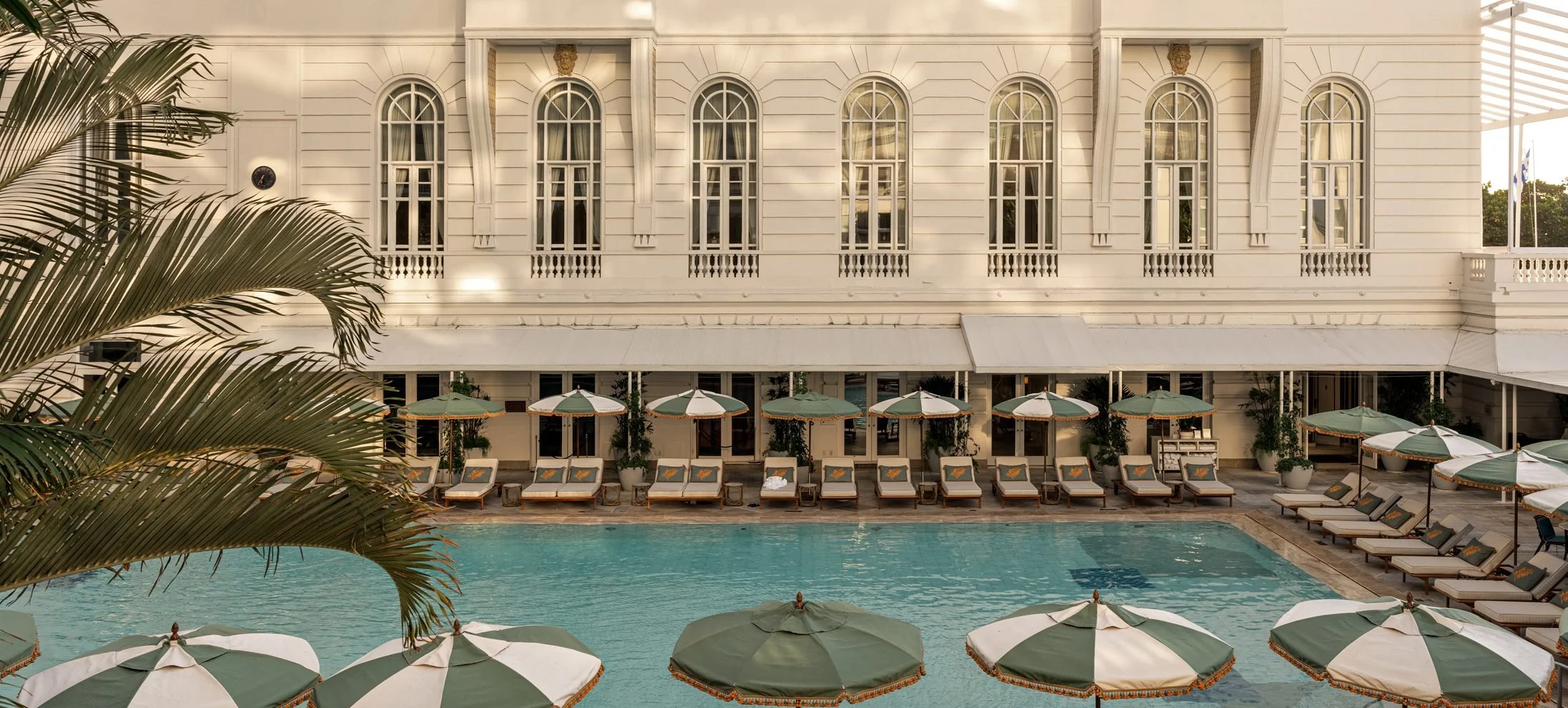
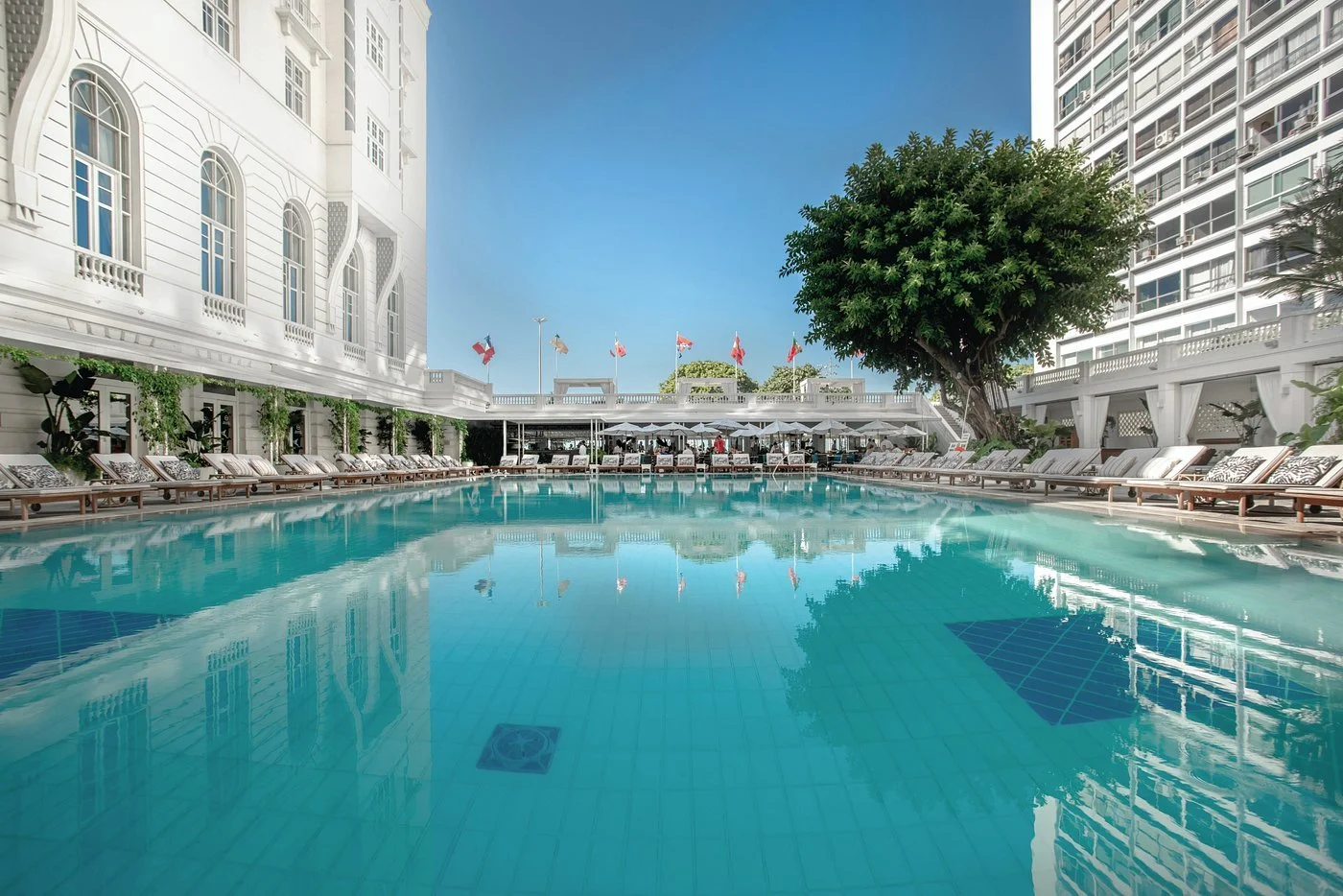
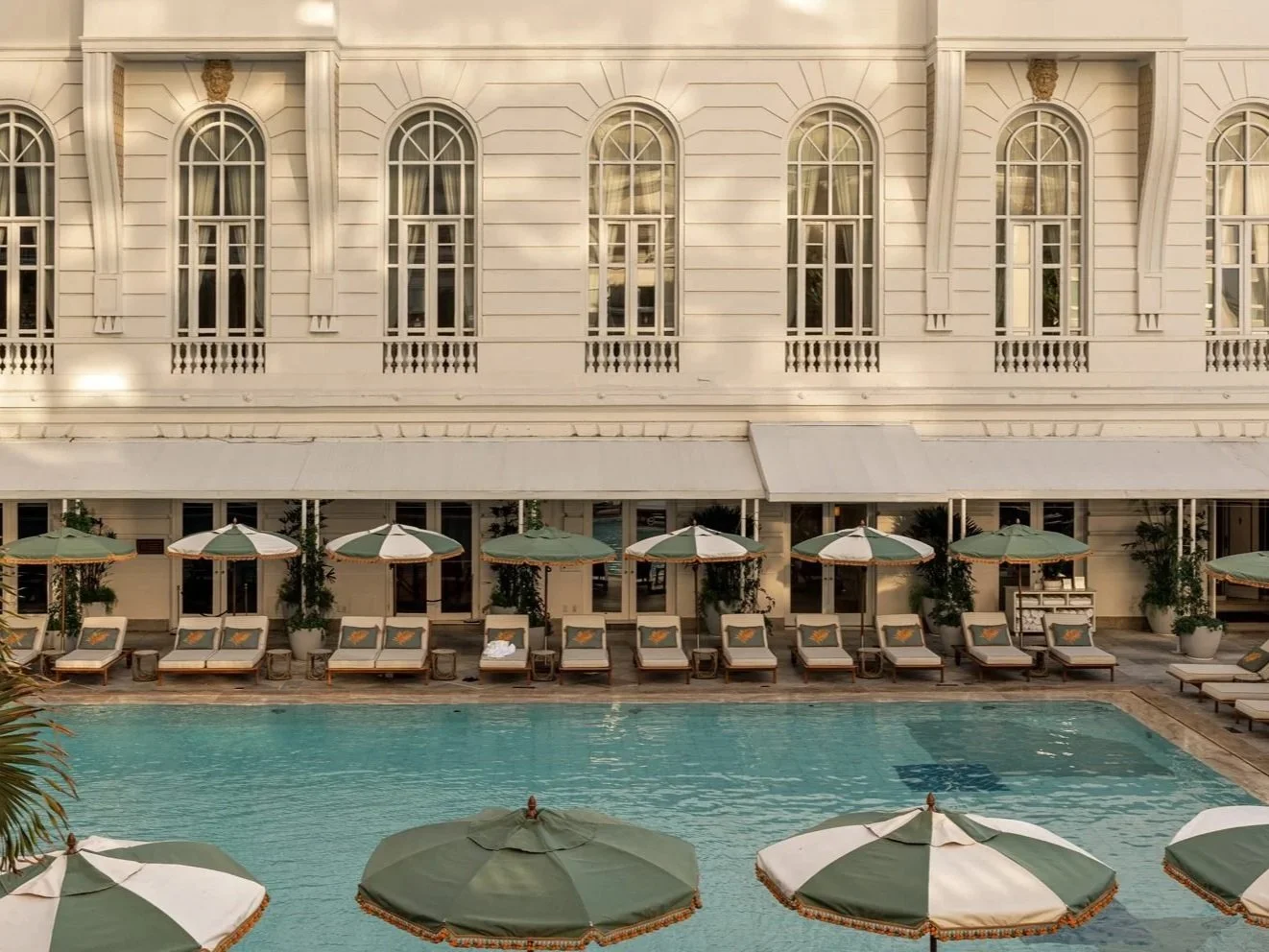
The enormous outdoor pool has been the hotel's social center for generations. Surrounded by loungers, palms and the white façade of the hotel, it offers a completely different environment from the beach directly across Avenida Atlântica.
The pool has historically been a place to linger rather than simply swim. Breakfast can turn into an afternoon beside the water, followed by drinks before dinner without ever really leaving the center of the hotel.
Belmond's current renovation is reimagining the pool area while preserving its role as the social heart of the Copa.
The redesigned space is expected to debut alongside the Pool Wing in November 2026, bringing new landscaping and facilities while retaining the proportions and atmosphere that have made the pool so recognizable.
For many repeat guests, this is the part of the hotel most closely associated with memories of Rio.
From Pérgula to Michelin-Starred Mee
Copacabana Palace has developed into one of Rio's strongest hotel dining destinations, with restaurants ranging from relaxed Brazilian cooking beside the pool to Michelin-starred pan-Asian cuisine.
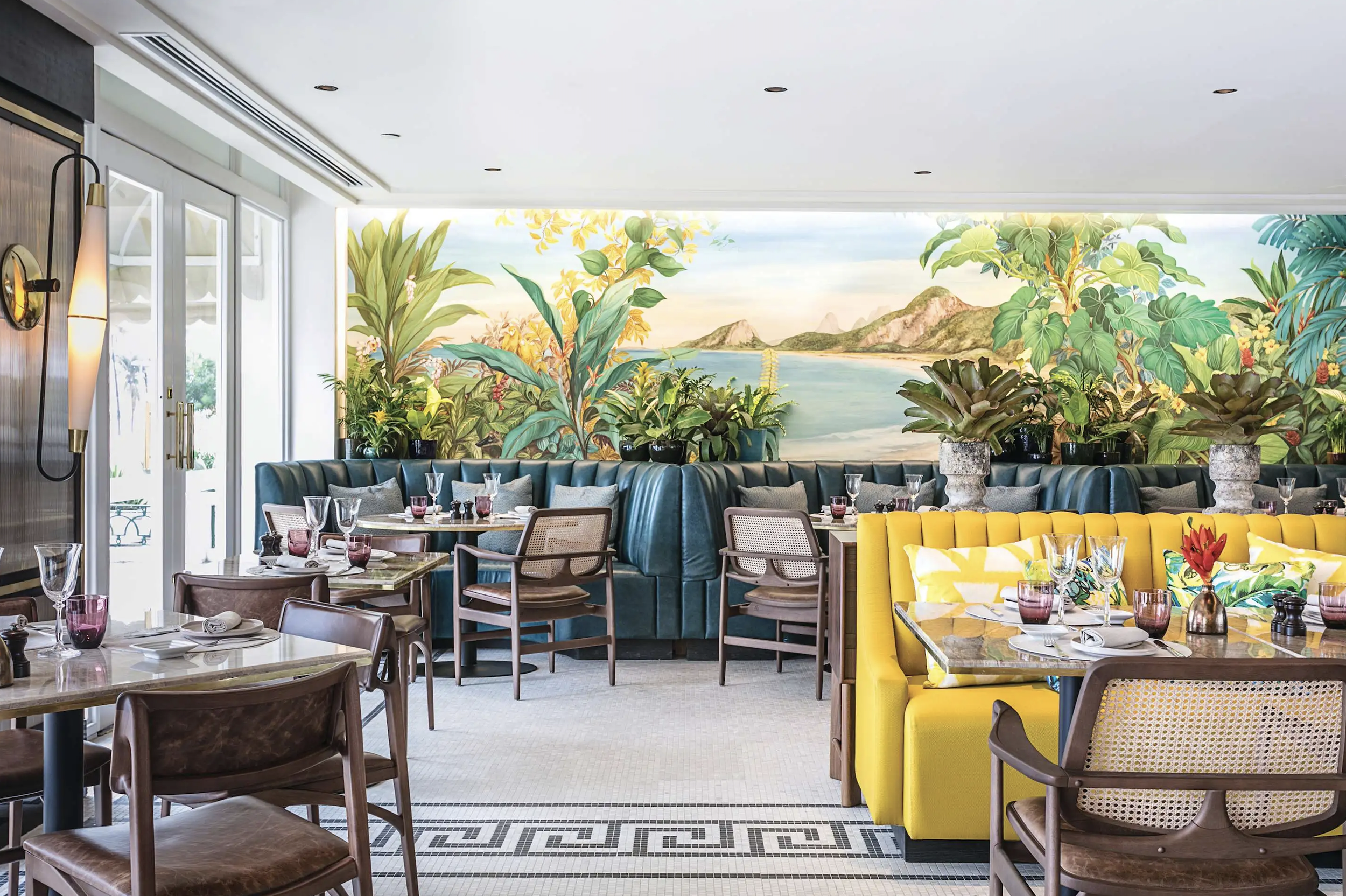
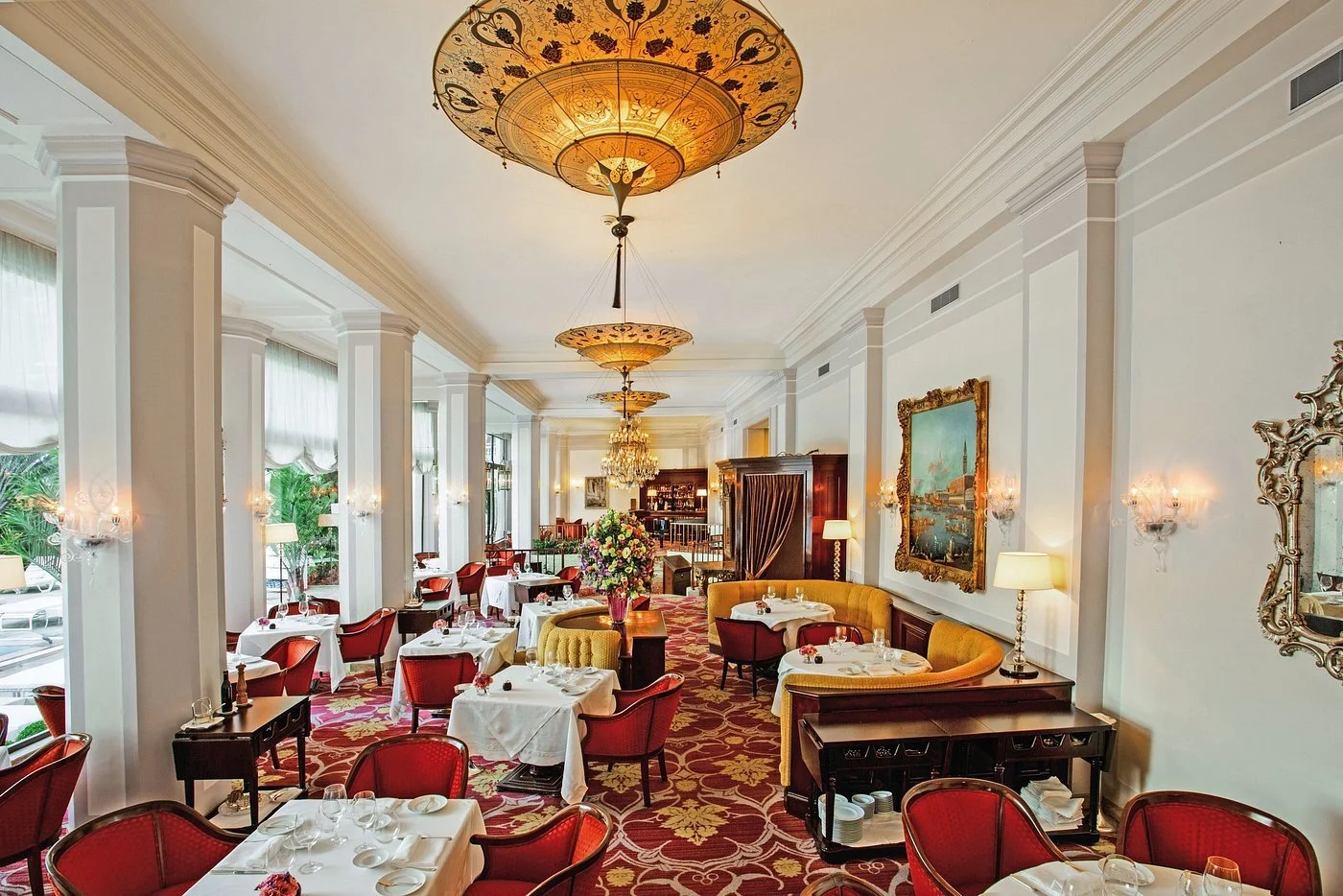
Pérgula: Positioned beside the swimming pool, Pérgula is the hotel's all-day restaurant and one of its most relaxed social spaces. Brazilian classics are combined with Mediterranean influences, while breakfast, lunch and dinner can be enjoyed overlooking the pool. The restaurant is also known for its Sunday brunch and traditional feijoada.
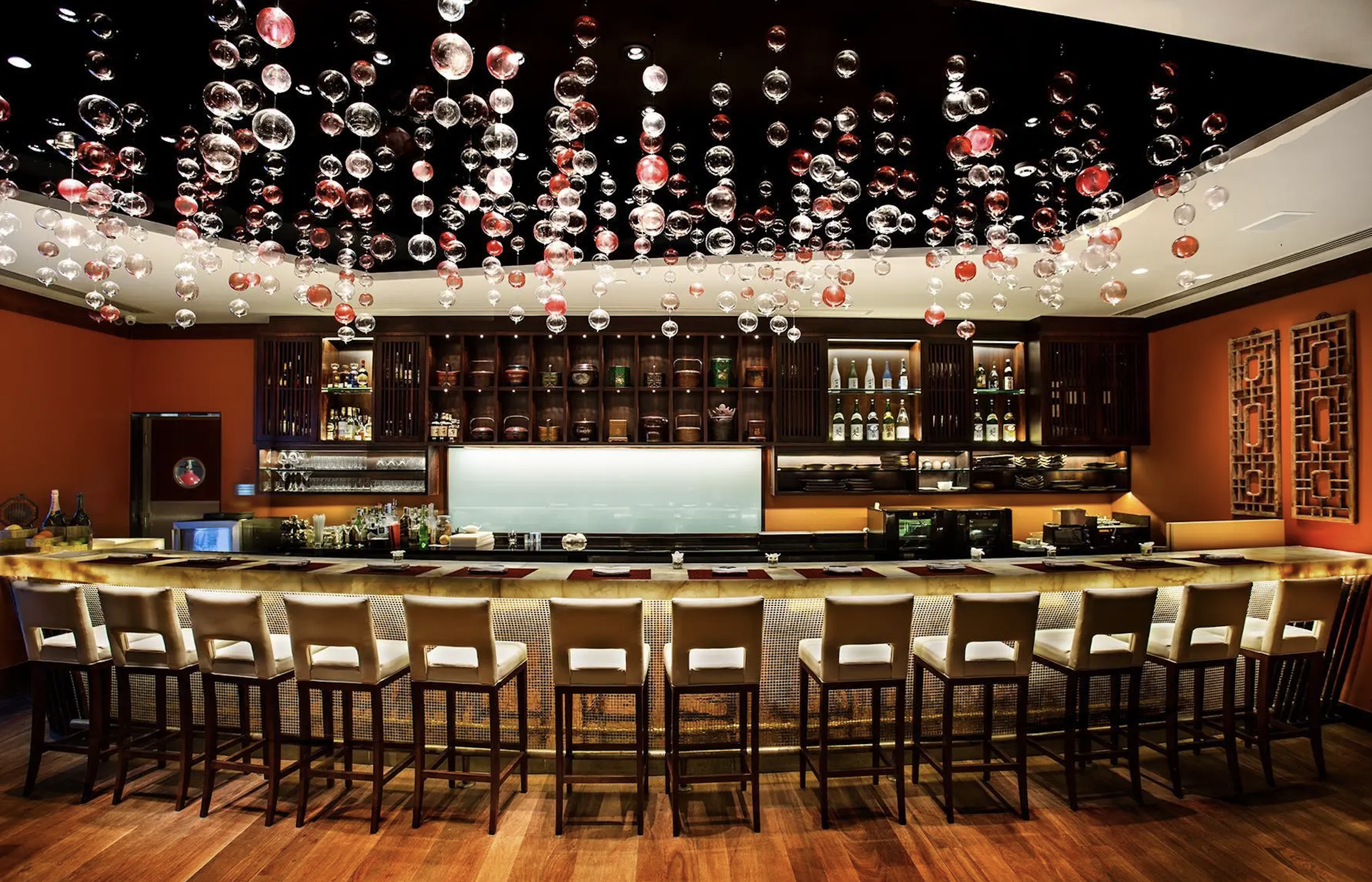
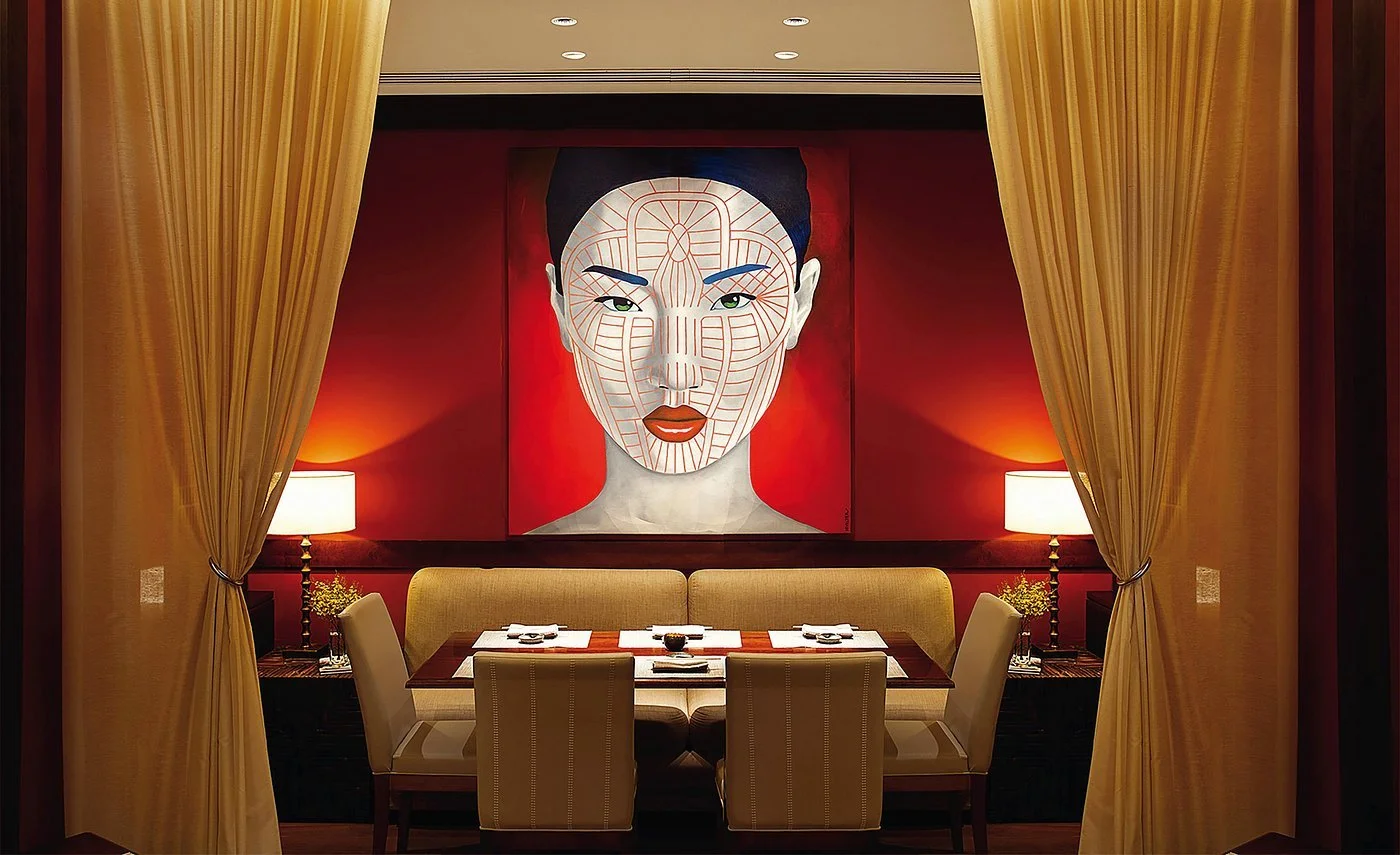
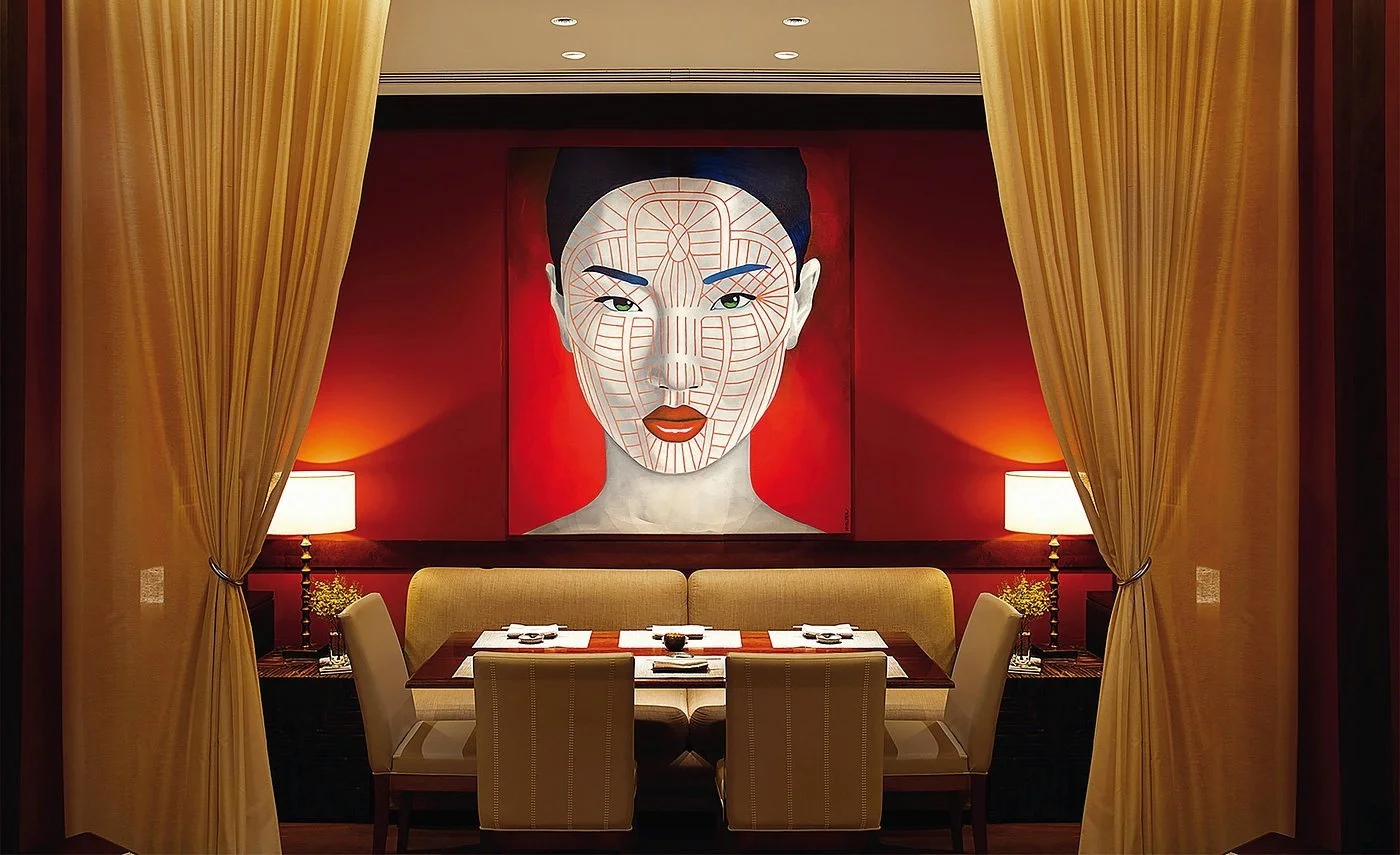
Mee: The hotel's Michelin-starred pan-Asian restaurant explores the cuisines of Japan, Thailand, Malaysia, Cambodia, Singapore and other parts of Asia. Japanese influence is particularly prominent under chef Alberto Morisawa, with sushi, sashimi, nigiri and an omakase experience available alongside tasting menus and à la carte dishes. Mee also maintains a substantial sake collection.
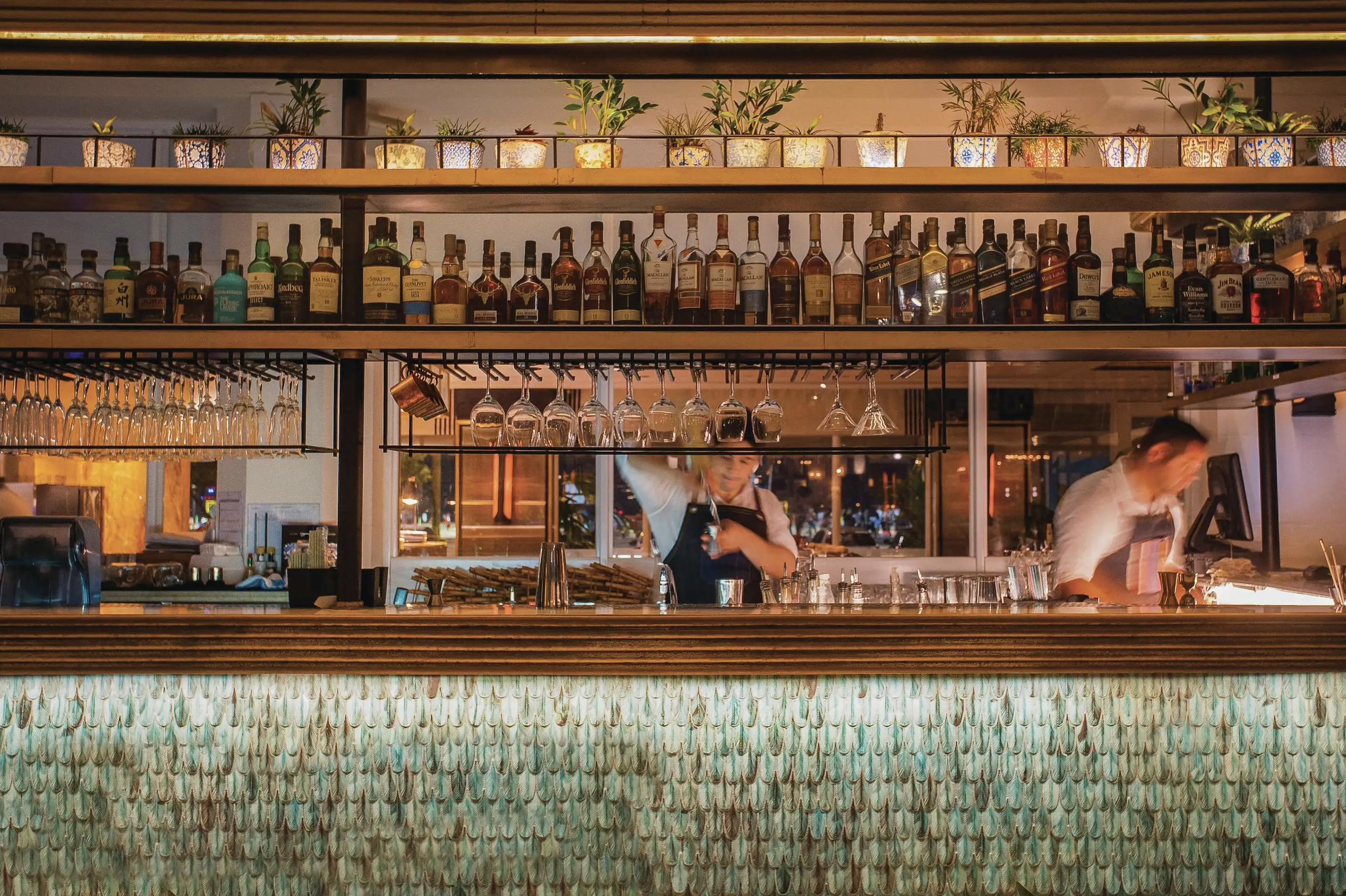
Pool Bar: Long associated with cocktails and lighter meals beside the hotel's famous pool, the Pool Bar is currently being reimagined as part of the broader Pool Wing renovation.
The hotel's Italian dining story is also entering a new era.
For years, Ristorante Hotel Cipriani was one of the Copa's signature restaurants, earning a Michelin star under chef Nello Cassese. That restaurant is currently closed as part of the renovation.
In November 2026, Cassese will introduce Lumio, a new 38-seat Italian restaurant replacing the previous concept. The tasting-menu-only experience will draw from the traditions of southern Italy and cucina povera while incorporating the chef's relationship with Brazil.
Architect Ivan Rezende is designing the restaurant, with Brazilian art and craftsmanship incorporated throughout the space.
For a hotel that has been operating for more than a century, this willingness to continually rethink its restaurants is one reason the Copa has remained relevant to Rio's dining scene.

The Copacabana Beach Experience
It would be impossible to stay here without spending time on the beach outside.
Copacabana Beach stretches for approximately four kilometers beneath the mountains of Rio, its promenade immediately recognizable by the black-and-white Portuguese stone wave pattern that runs alongside the sand.
Copacabana Palace provides a dedicated Beach Experience for hotel guests, creating a more comfortable base along the beachfront.
From here, travelers can swim, walk the promenade or simply spend the afternoon watching one of Rio's most animated public spaces unfold.
Football and footvolley games appear across the sand. Runners and cyclists move along Avenida Atlântica. Beach vendors pass between umbrellas, while the mountains create a backdrop unlike almost any other major city beach.
The beach is not manicured or isolated from local life, and that is precisely its appeal.
Staying at the Copa gives travelers the ability to move easily between the energy of Copacabana and the more controlled environment of the hotel pool.
Wellness and a Major New Chapter
Historically, the Copacabana Palace Spa has offered treatments incorporating Brazilian ingredients including açaí, guaraná and Amazonian clay.
As of September 2026, however, the spa and salon are temporarily closed for renovation, with in-room salon services available by request.
The closure is part of a much larger transformation.
When the renovated Pool Wing opens in November 2026, Belmond plans to introduce five floors dedicated to wellbeing, dramatically expanding the hotel's wellness offering.
This will mark an important shift for the Copa.
Rio is an unusually active city, where hiking, running, swimming, surfing and beach culture are embedded in daily life. Expanding wellness beyond a conventional city-hotel spa gives the property an opportunity to connect more naturally with that side of the destination.
The hotel also has tennis facilities, and its location makes morning walks or runs along Copacabana's waterfront exceptionally easy.
Experiencing Rio From the Copa
Copacabana Palace is well positioned for first-time visitors because many of Rio's essential experiences can be incorporated naturally into a stay.
Christ the Redeemer rises from the summit of Corcovado within Tijuca National Park and remains one of the city's defining landmarks. Visiting early in the morning can help avoid some of the largest crowds.
Sugarloaf Mountain offers another extraordinary perspective, reached by cable car above Guanabara Bay.
Neighborhoods including Ipanema and Leblon reveal a different side of Rio's beach culture, while Santa Teresa brings hillside streets, historic architecture and a more bohemian atmosphere.
Rio's Botanical Garden provides a quieter counterpoint to the beaches, and travelers interested in Brazilian football can visit the legendary Maracanã Stadium.
The concierge can also arrange hiking, cultural experiences and excursions throughout the city.
The advantage of returning to Copacabana Palace after a day exploring is that the hotel never feels disconnected from Rio. The beach, music, social life and energy of the city continue directly outside.
Carnival at the Copa
Visiting during Rio Carnival creates an entirely different hotel experience.
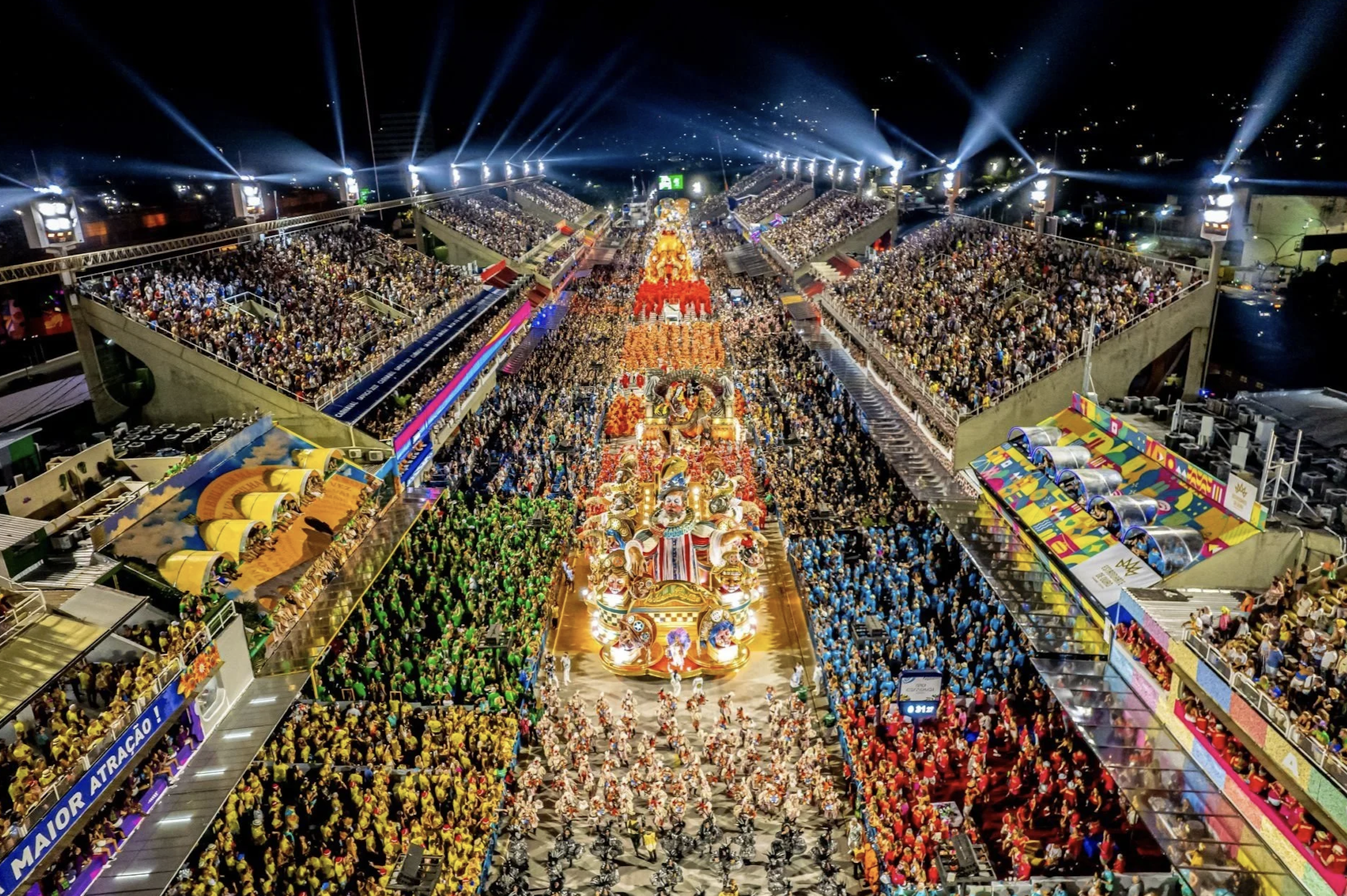
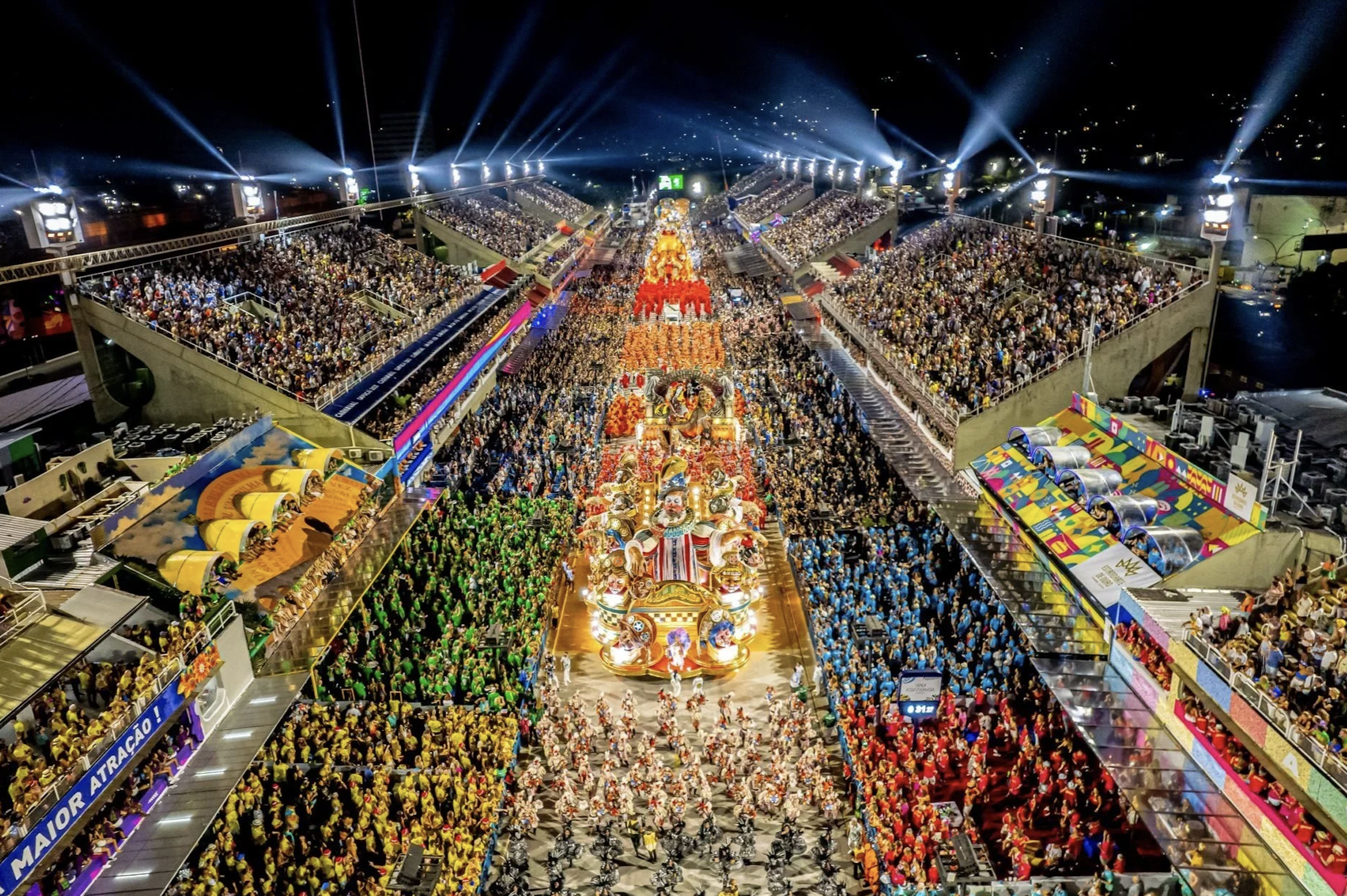
The city becomes intensely busy, with samba schools, street blocos, parties and events unfolding across Rio.
At Copacabana Palace, the Magic Ball remains one of the most prestigious events of the season.
The tradition dates back decades and has welcomed Brazilian society figures, international celebrities and artists through generations of Carnival celebrations.
For travelers planning to experience Rio during Carnival, arrangements need to be made far in advance. Hotel inventory, Sambadrome tickets, restaurant reservations and private transportation become significantly more difficult to secure as the dates approach.
Staying at the Copa places travelers directly within one of the city's most historic Carnival institutions while providing a controlled base from which to experience the wider celebrations.
A Hotel That Works for Families Too
Despite its reputation for nightlife, glamour and social events, Copacabana Palace is also surprisingly accommodating for families.
The hotel's children's programming operates from the Library, with younger children accompanied by a parent and older children able to participate independently. Babysitting can also be arranged.
The pool, tennis courts and beach create easy options between sightseeing days, while Rio offers plenty for families beyond the hotel.
Trips can include the aquarium, Botanical Garden, football matches, beach days, cooking experiences and outdoor excursions.
The expanding suite inventory within the renovated Pool Wing will make the property even more practical for families when it debuts, particularly through larger accommodations and the new two-bedroom penthouse.

Getting to Copacabana Palace
Copacabana Palace is located at Avenida Atlântica 1702, directly across from Copacabana Beach.
From Rio de Janeiro–Galeão International Airport: The drive generally takes approximately 30 to 45 minutes in light traffic, but Rio's congestion can extend the journey considerably. During busy periods, allowing an hour or more is sensible.
From Santos Dumont Airport: Located closer to central Rio, Santos Dumont is approximately 15 to 25 minutes by car from the hotel under favorable traffic conditions.
By Private Transfer: For international arrivals, a prearranged chauffeured transfer provides the simplest journey between the airport and Copacabana, particularly for travelers arriving with significant luggage.
From Ipanema: The drive generally takes approximately 10 to 20 minutes, depending on traffic. Walking between portions of Copacabana and Ipanema is also possible for travelers who want to explore the beachfront.
Once at the hotel, many of Copacabana's restaurants, bars and beachfront attractions can be reached on foot, while private transportation remains preferable for destinations such as Corcovado, Santa Teresa and other areas of Rio.
More Than a Century of Rio
The most interesting thing about Copacabana Palace is not simply that it has survived for more than 100 years.
It is that the hotel still matters to the city around it.
Rio has changed dramatically since 1923. Copacabana grew from an emerging beachfront neighborhood into one of the world's most recognizable urban coastlines. The city's social center shifted repeatedly, new hotels opened, travel patterns changed and generations of guests came and went.
The Copa continued to evolve with them.
Its history remains visible in the architecture and photographs lining its corridors, but the property has never relied entirely on nostalgia. Michelin-starred restaurants, contemporary Brazilian art, major renovations and the forthcoming transformation of the Pool Wing continue to move the hotel forward.
That balance is what makes staying here different from visiting a beautifully preserved grand hotel whose greatest years belong entirely to the past.
At Copacabana Palace, history is still being made around the pool, inside the restaurants, during Carnival and along the beach outside.
For travelers visiting Rio for the first time, there may be newer hotels and quieter stretches of coastline, but few addresses provide the same connection to the city's history, culture and unmistakable sense of celebration.
After more than a century on Avenida Atlântica, the Copa remains exactly where it belongs: facing the beach, at the center of the action, and unmistakably part of Rio.