Shenzhen, China | Mandarin Oriental, Shenzhen
Mandarin Oriental, Shenzhen: A New Perspective on China’s Most Forward-Looking City
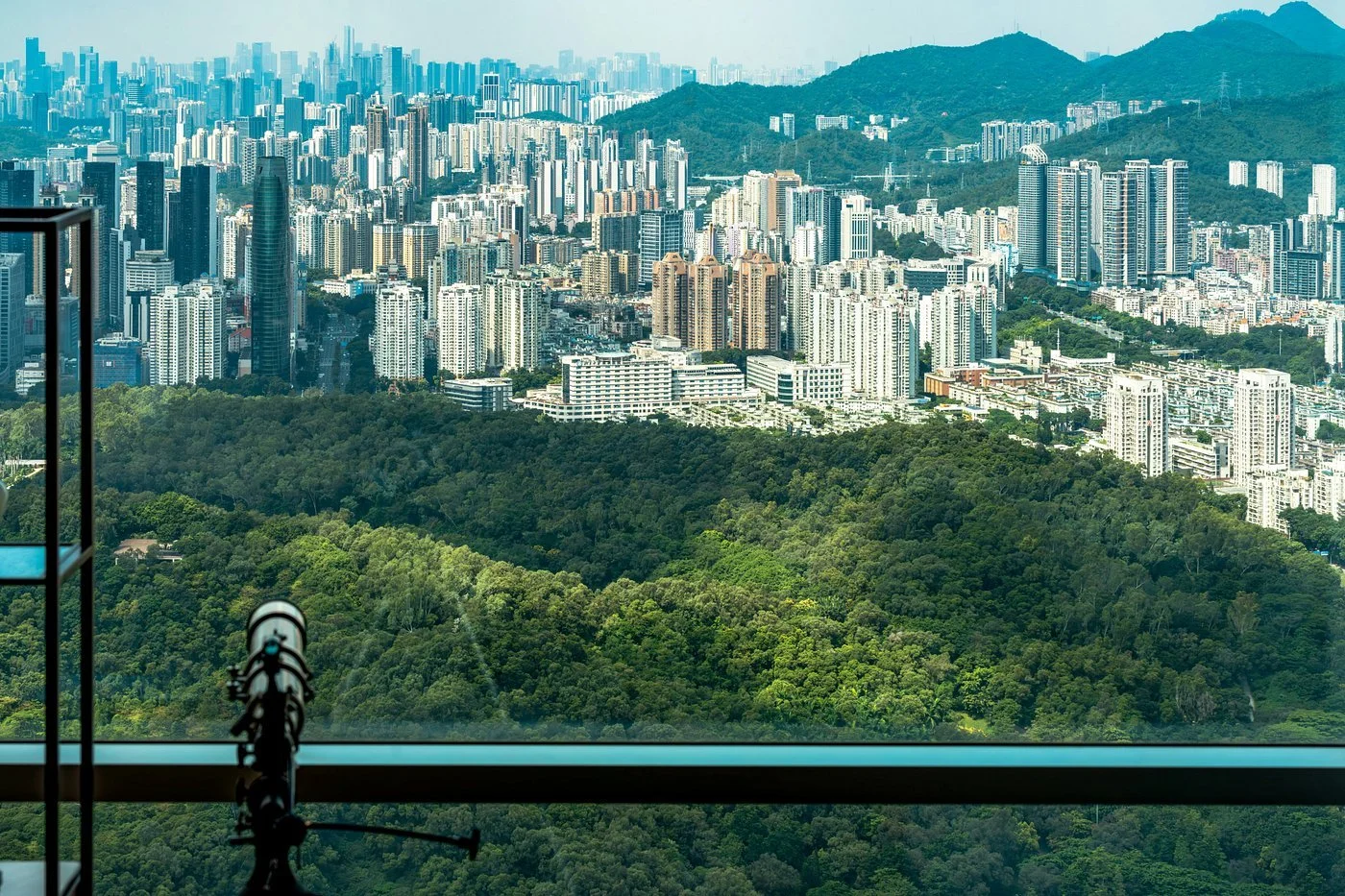
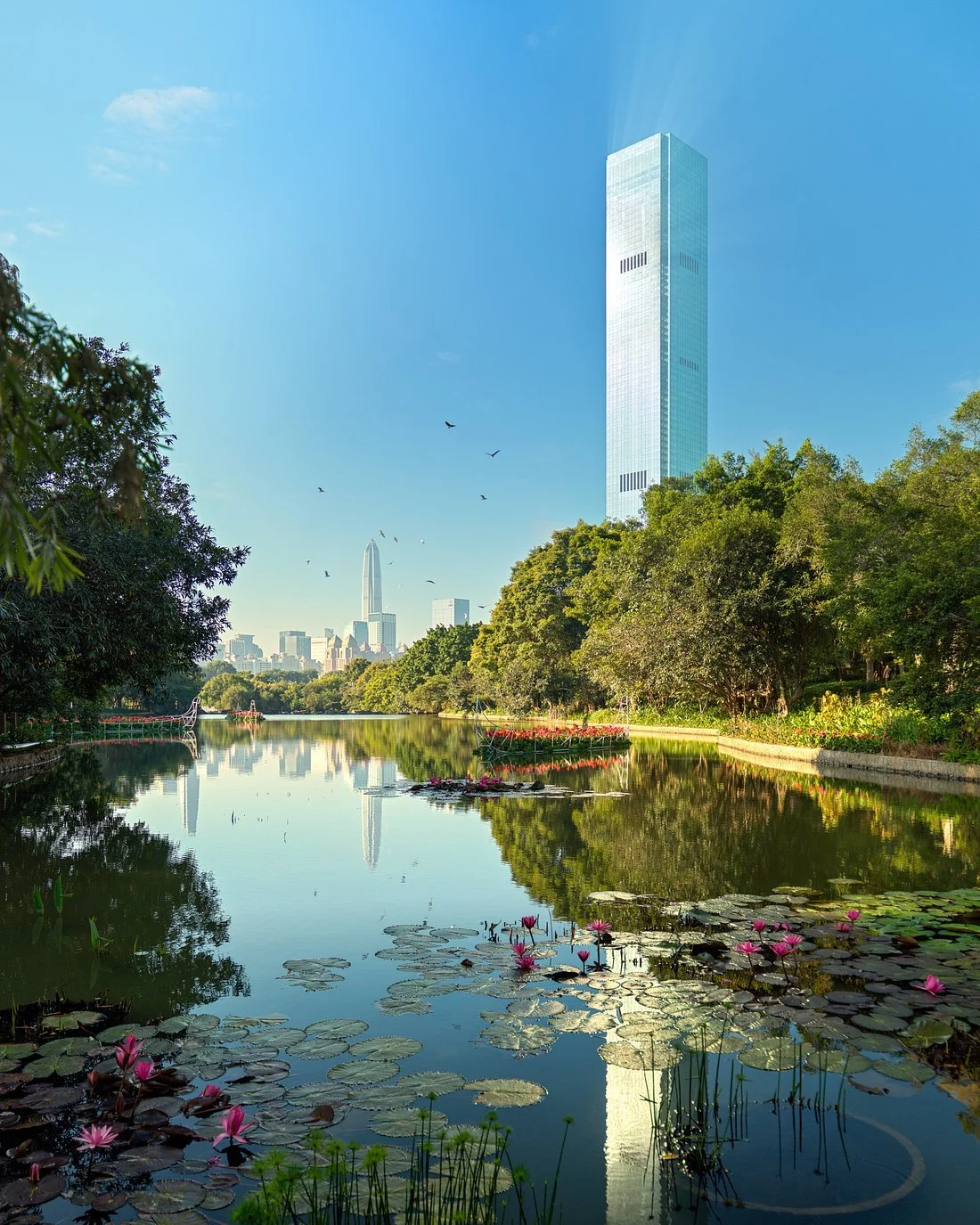
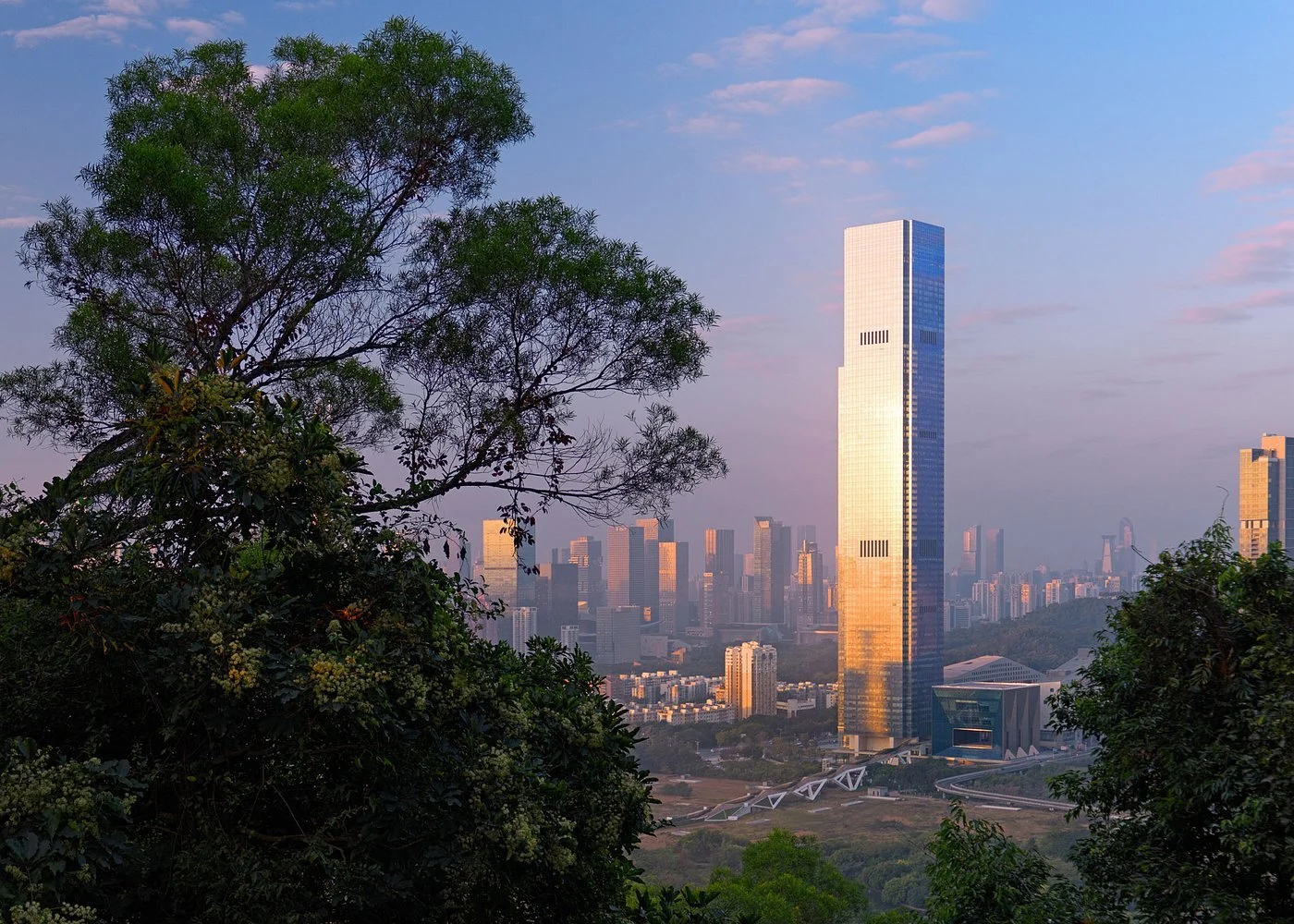
Shenzhen’s story is one of extraordinary speed. In little more than four decades, the city has grown into a center for technology, design and finance. Yet its towers share the landscape with broad parks, wooded hills and the waters of Shenzhen Bay. Mandarin Oriental, Shenzhen brings those two sides of the city into the same frame.
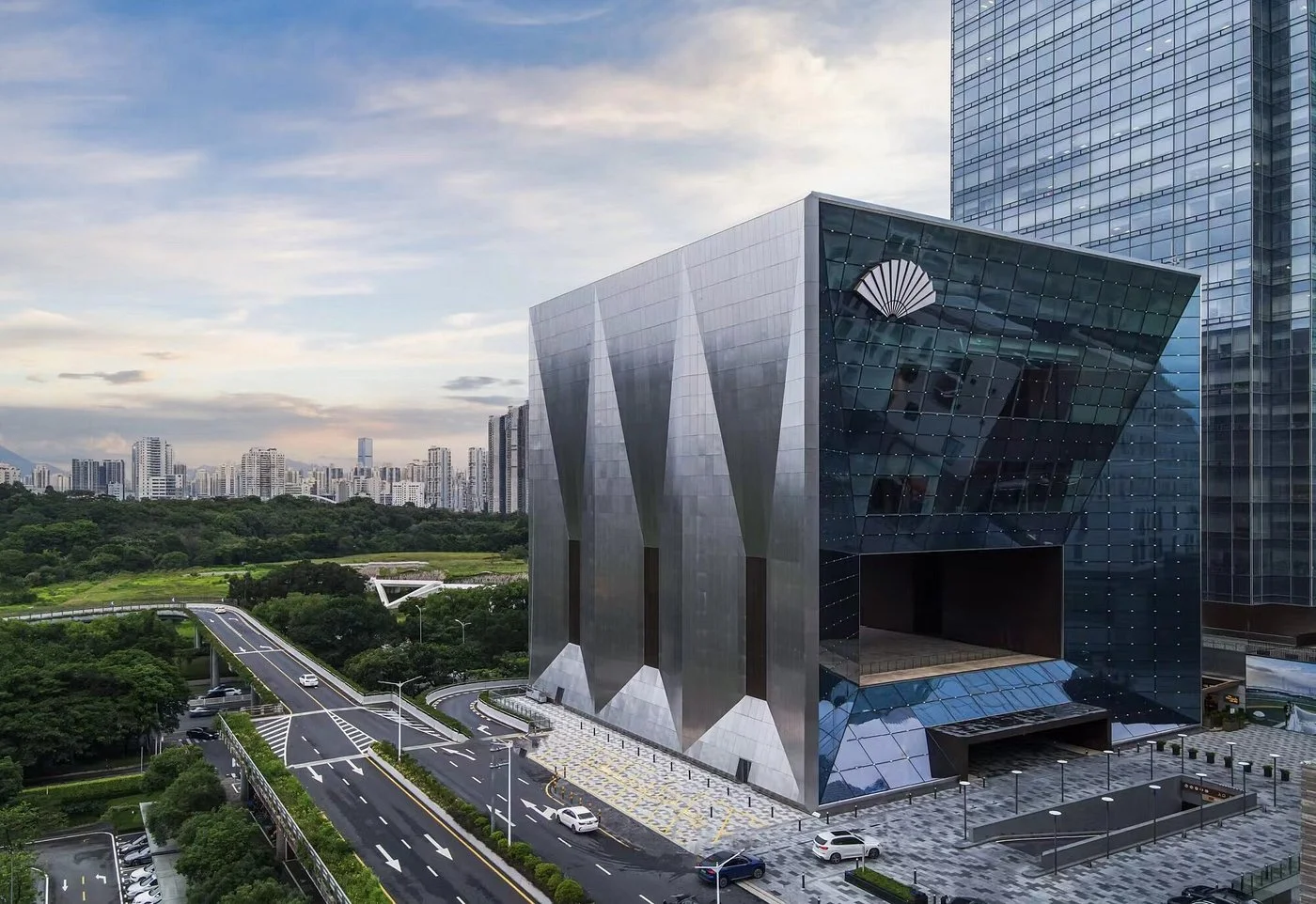
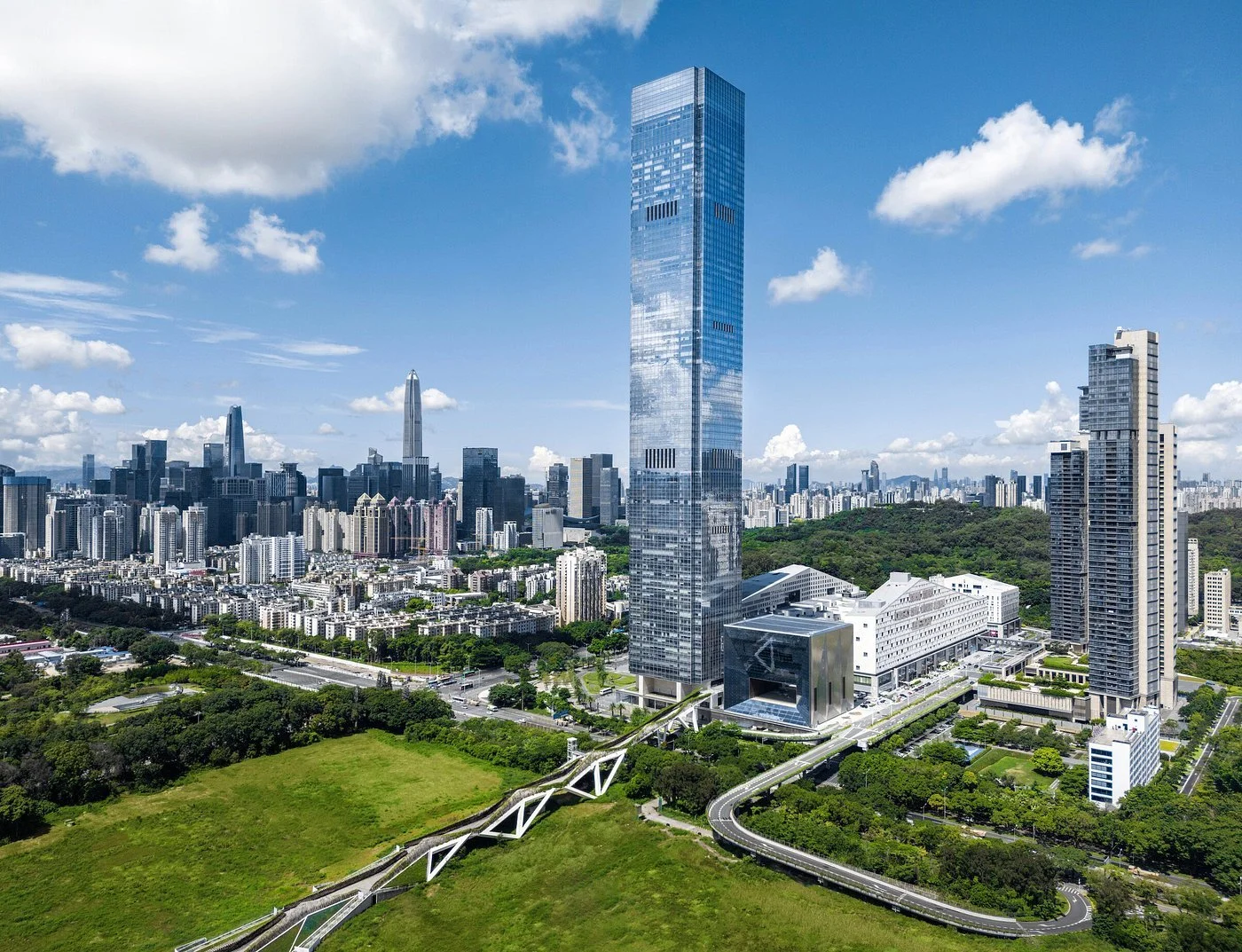
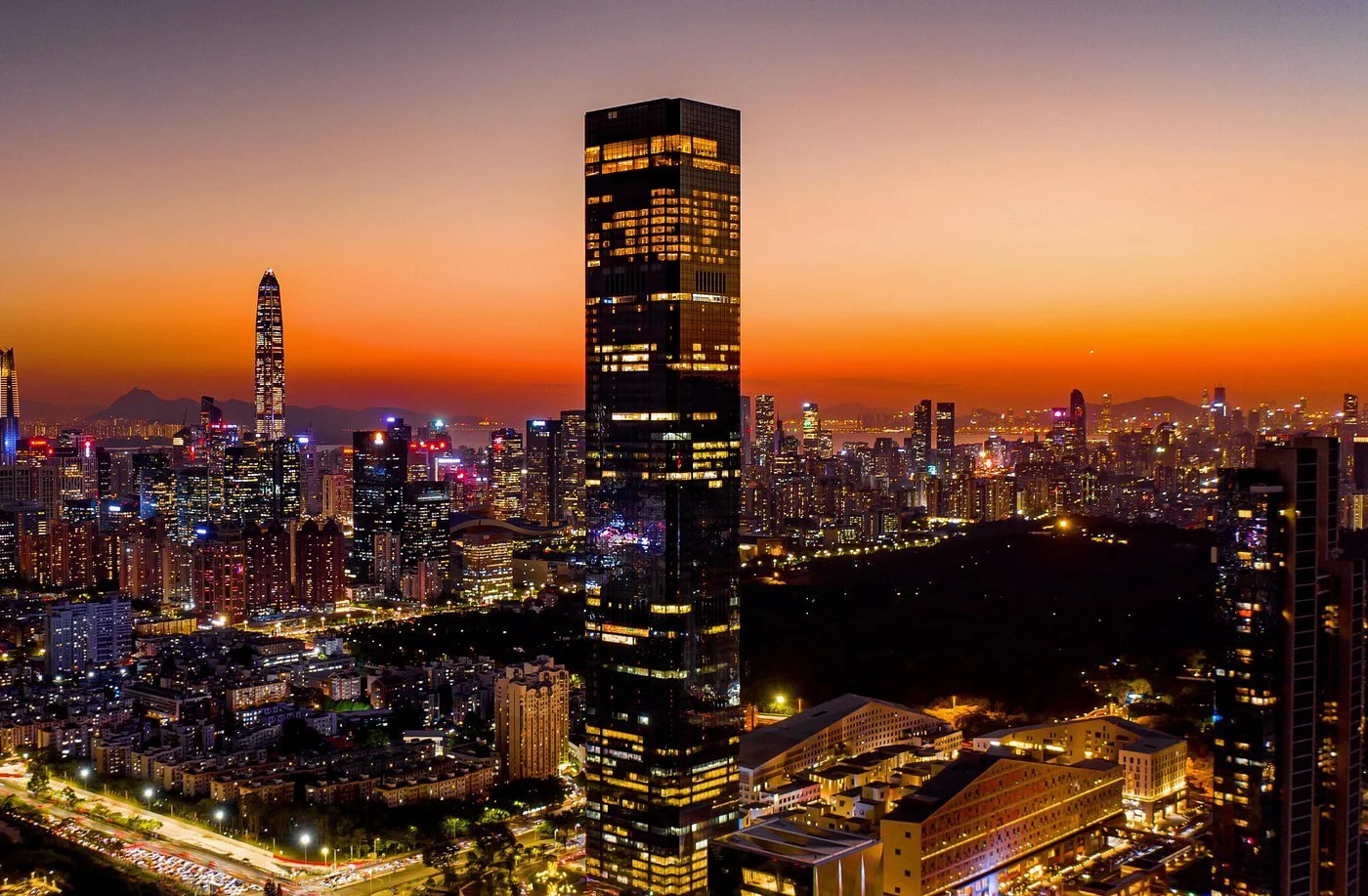
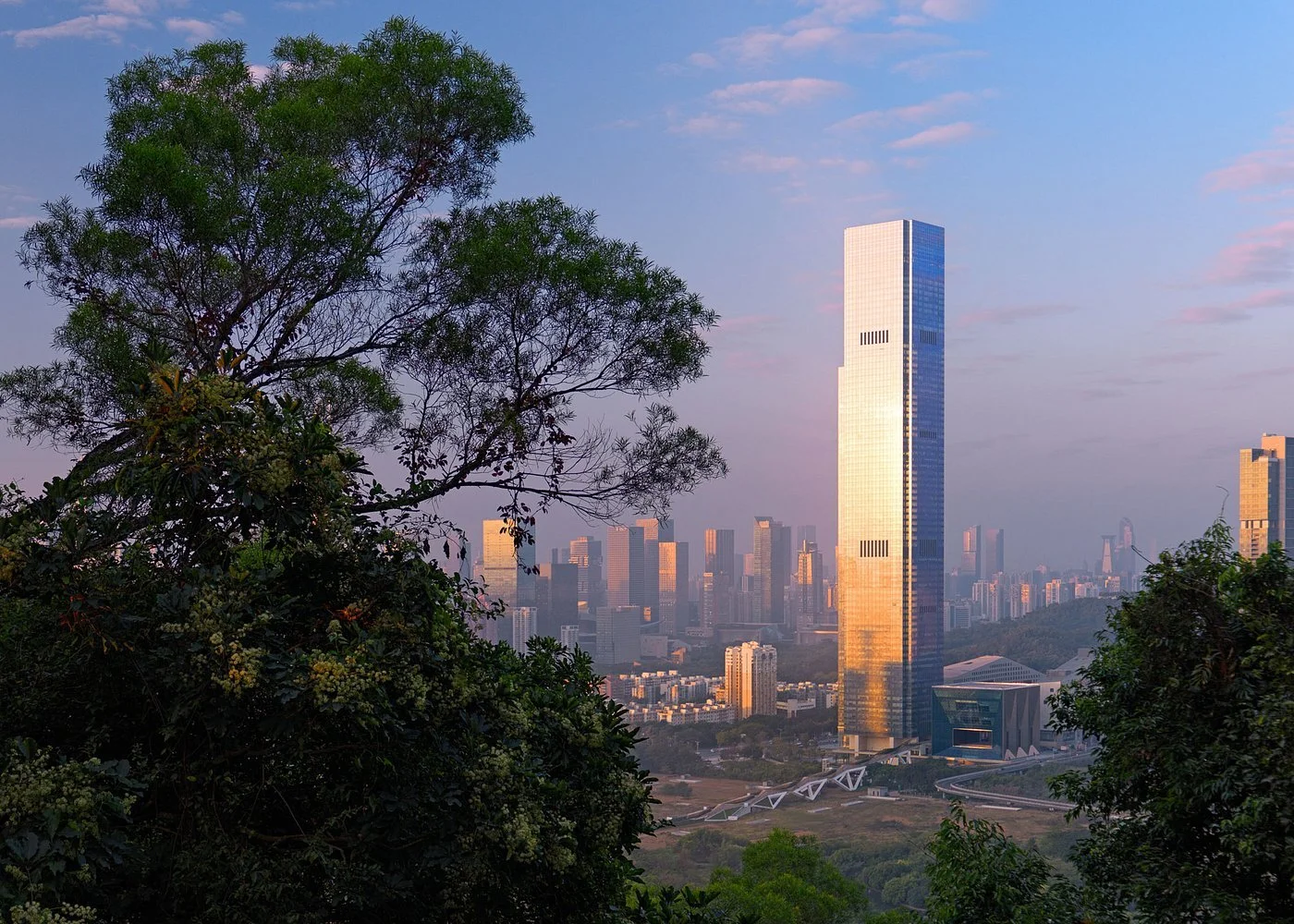
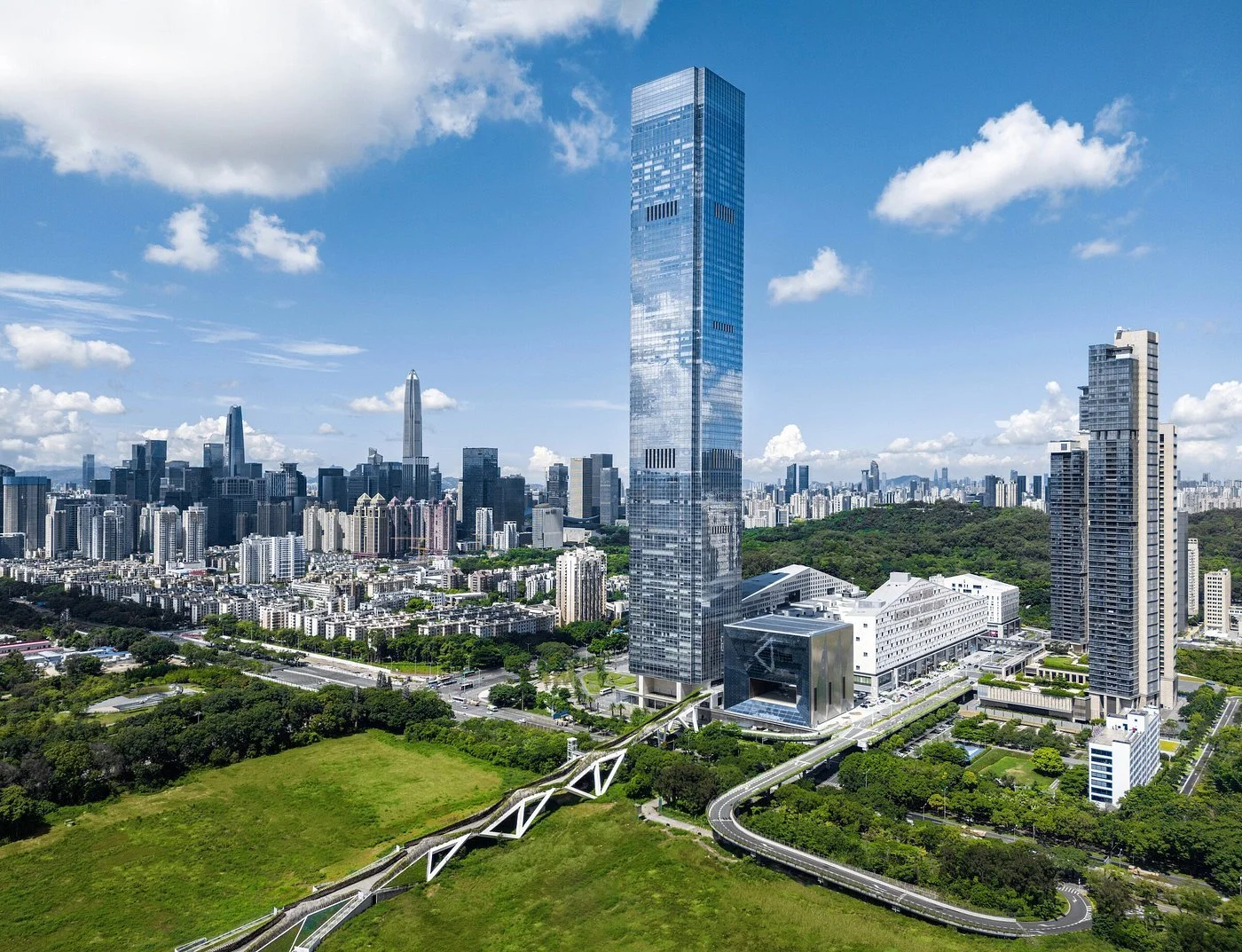
Opened in January 2022, the hotel occupies levels 67 through 79 of Tower One at UpperHills in central Futian. At 388 meters, it is the highest Mandarin Oriental in the world. Shenzhen Civic Centre and Futian Railway Station are within easy reach, while Bijia Mountain Park and Lianhuashan Park are close enough for a morning walk.
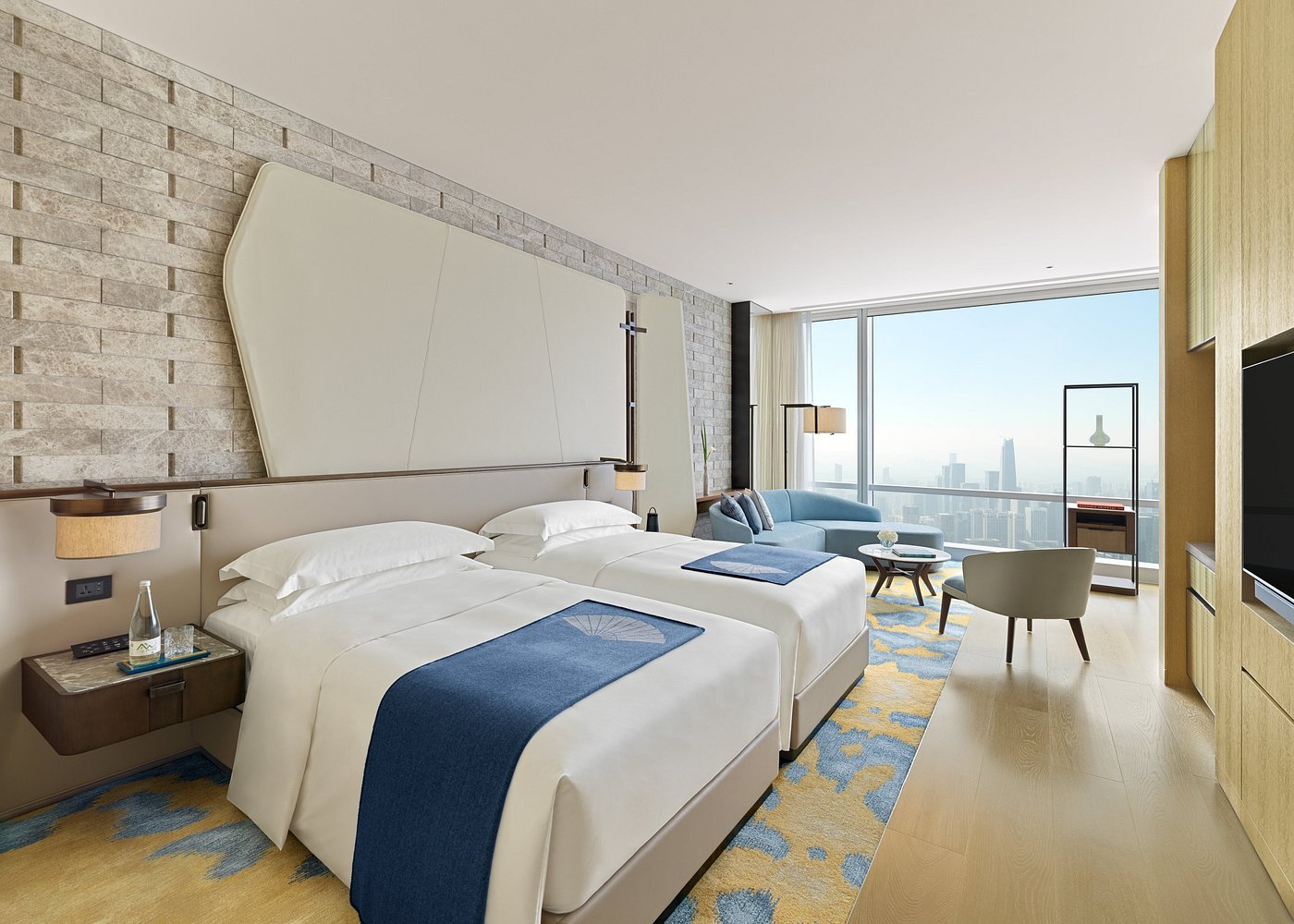
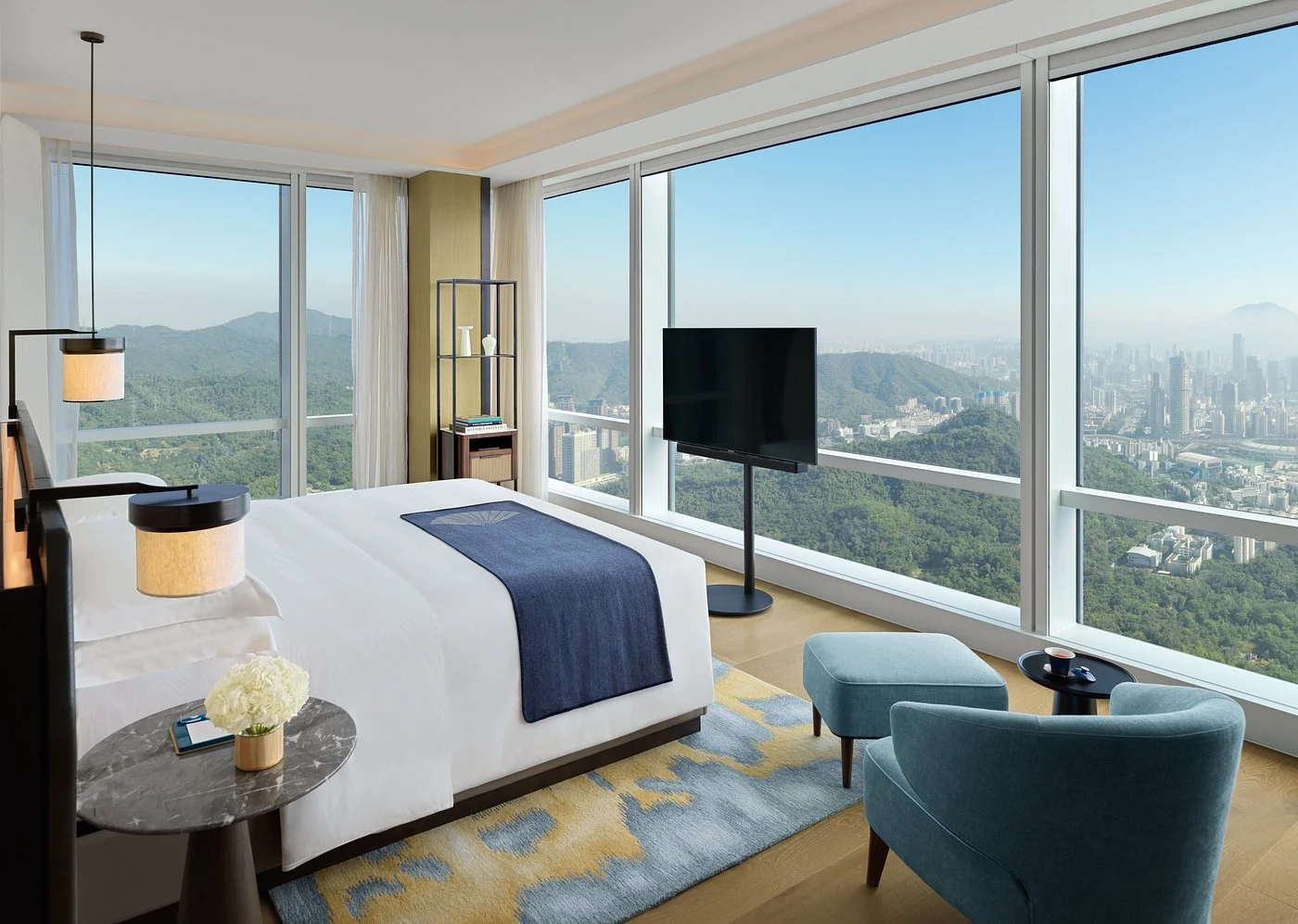
There are 178 accommodations—162 rooms and 16 suites—each with full-height windows and a view over the city, parkland or Shenzhen Bay. The scale is generous from the start: entry-level rooms measure 56 square meters, unusually large for a major Asian city. The hotel has also become a serious dining address. Its eight restaurants and bars include two Michelin-starred kitchens and MO Bar, ranked No. 5 in Asia’s 50 Best Bars 2026.
A Vertical Hotel Shaped Around the View
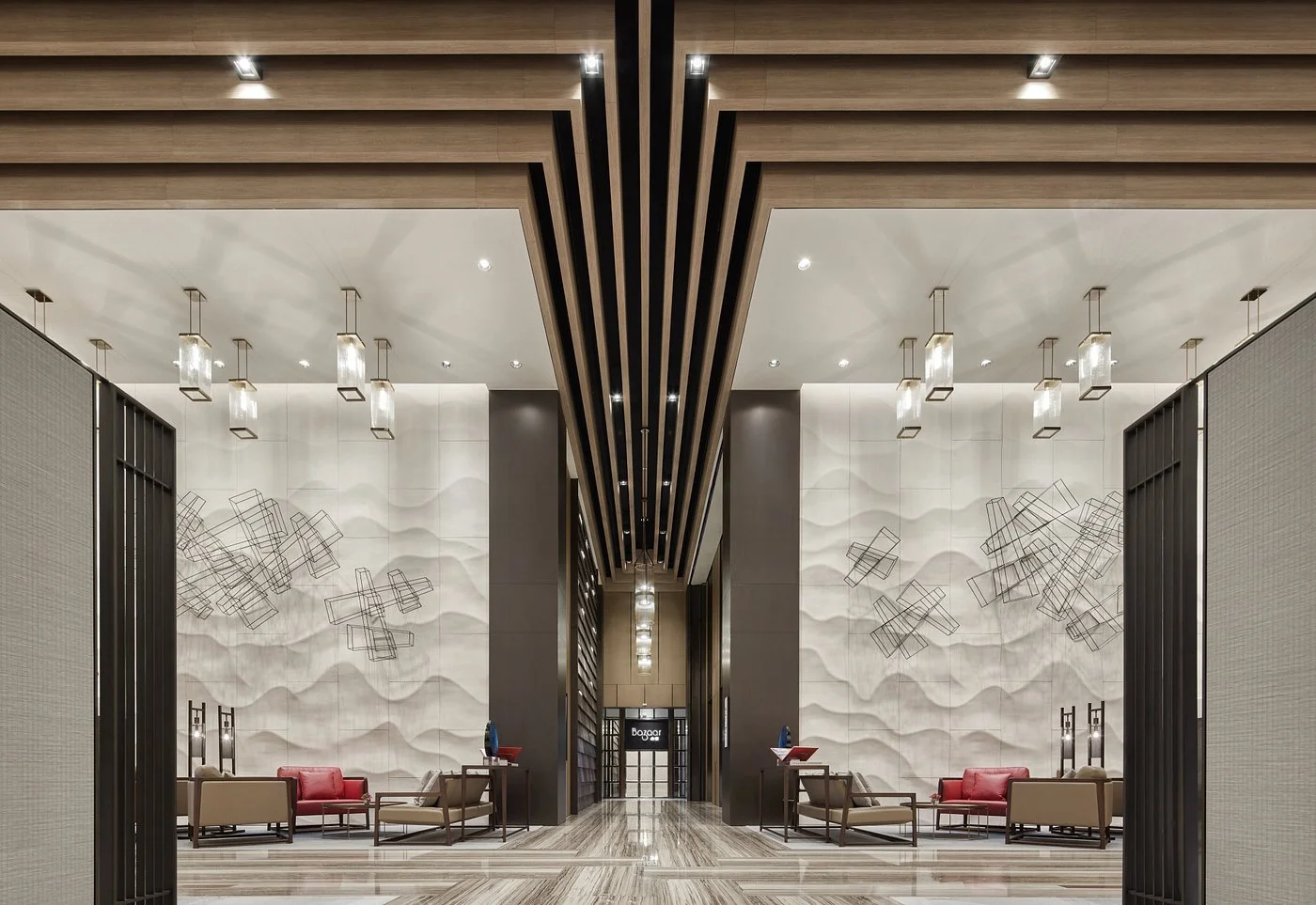
The hotel’s press materials name Skidmore, Owings & Merrill, better known as SOM, as architect of the UpperHills tower. The design makes height its organizing principle. Public rooms open to long skyline views, guestrooms look toward green parkland and glass links the interiors with the city below.
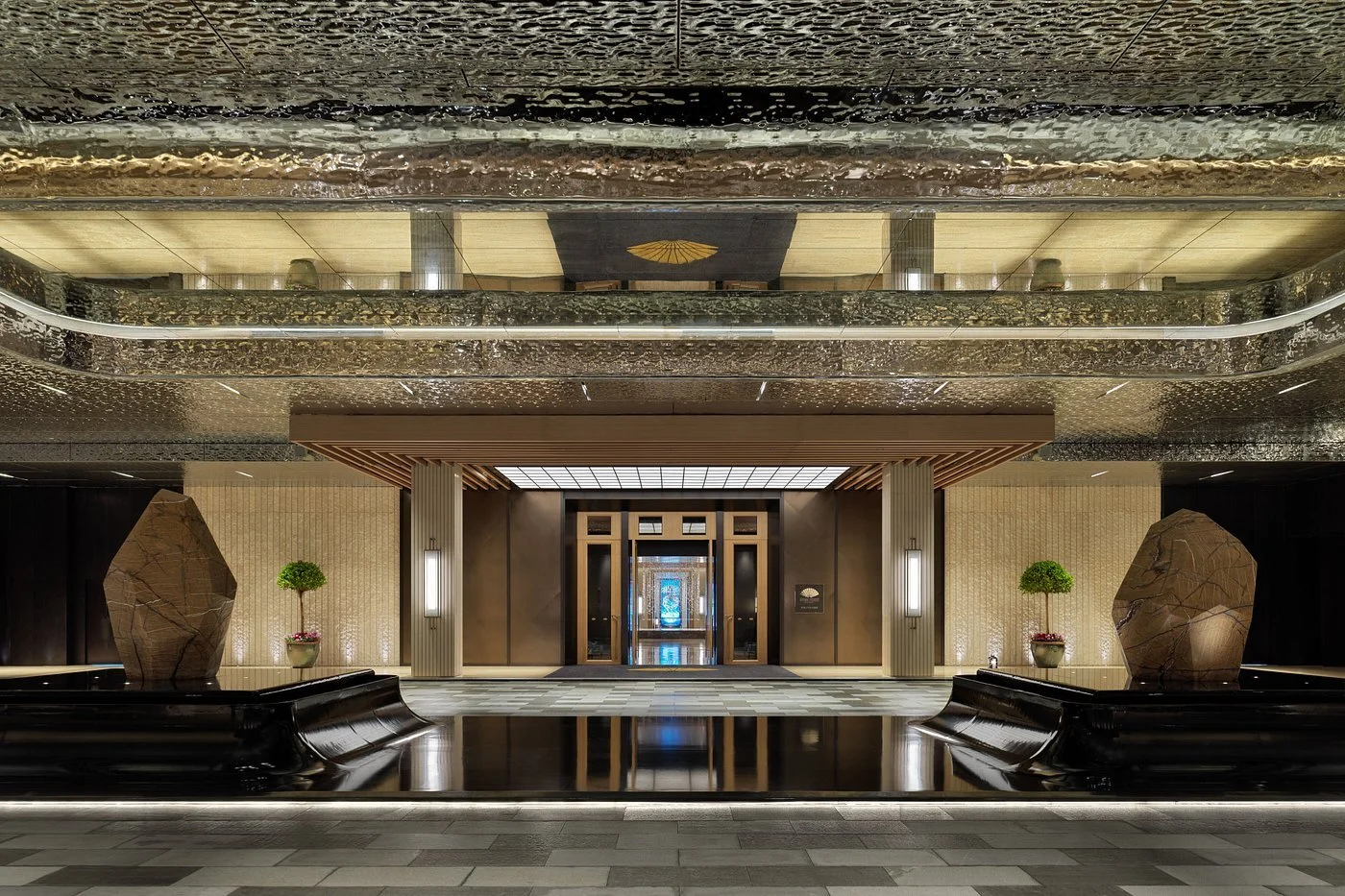
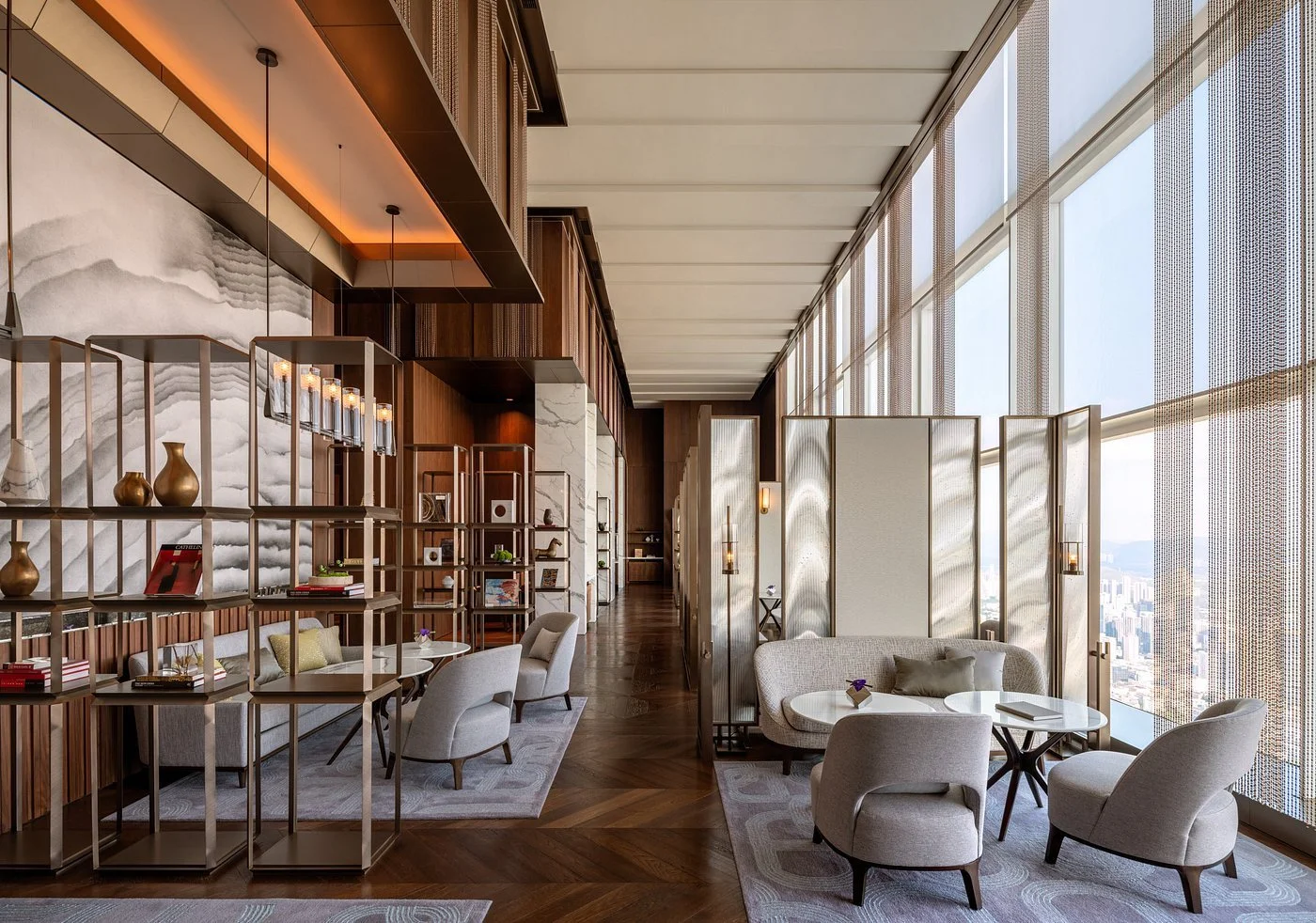
Interior credits include BTR Workshop and Silverfox Studios. The approach is contemporary and residential, with pale stone, warm metals and restrained earth tones. Silverfox also designed several upper-level dining spaces, including RIN and the rooftop bar concept. On the 73rd floor, the Oriental Suite introduces furniture by Chinese lifestyle house SHANG XIA.
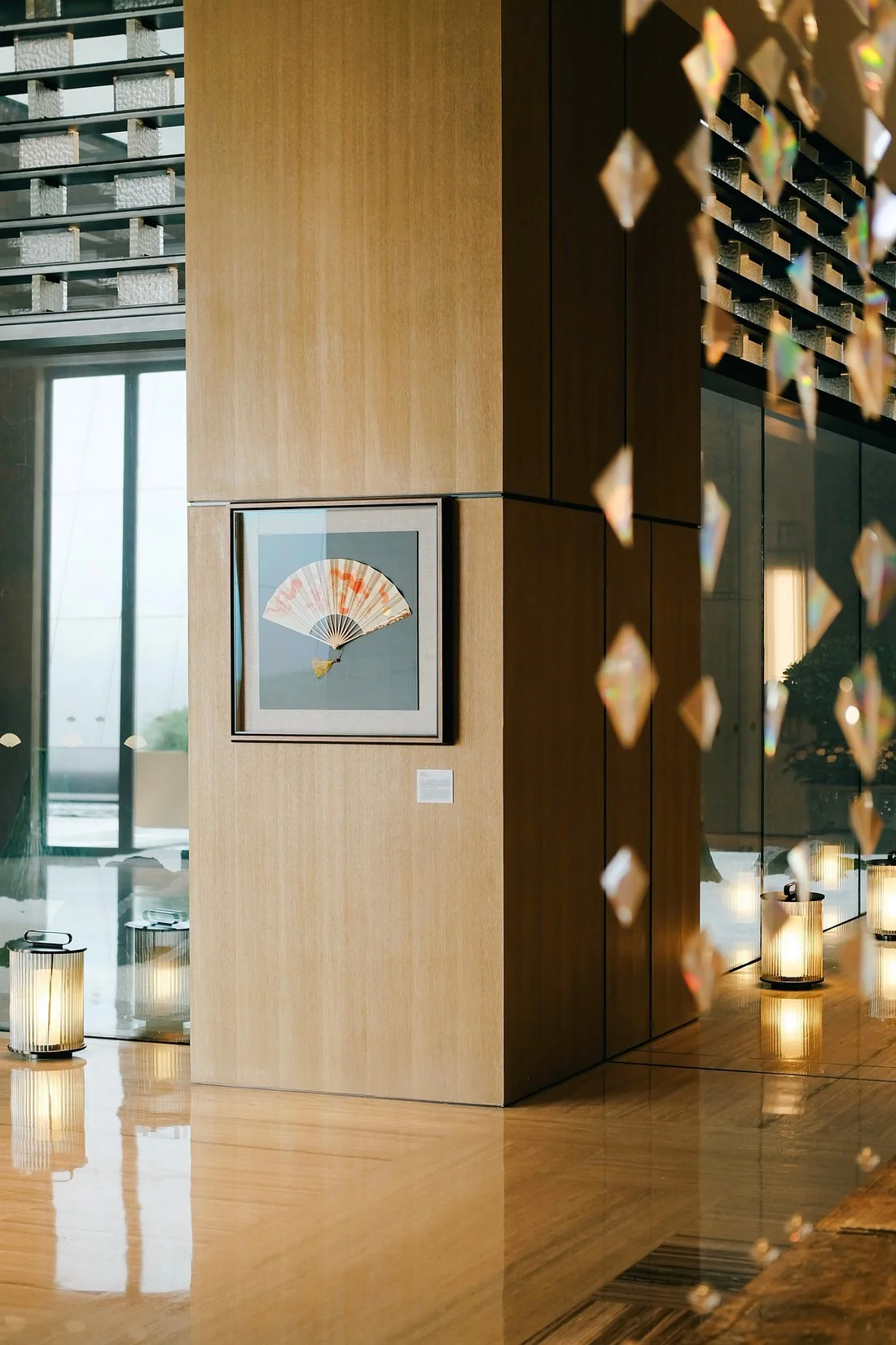
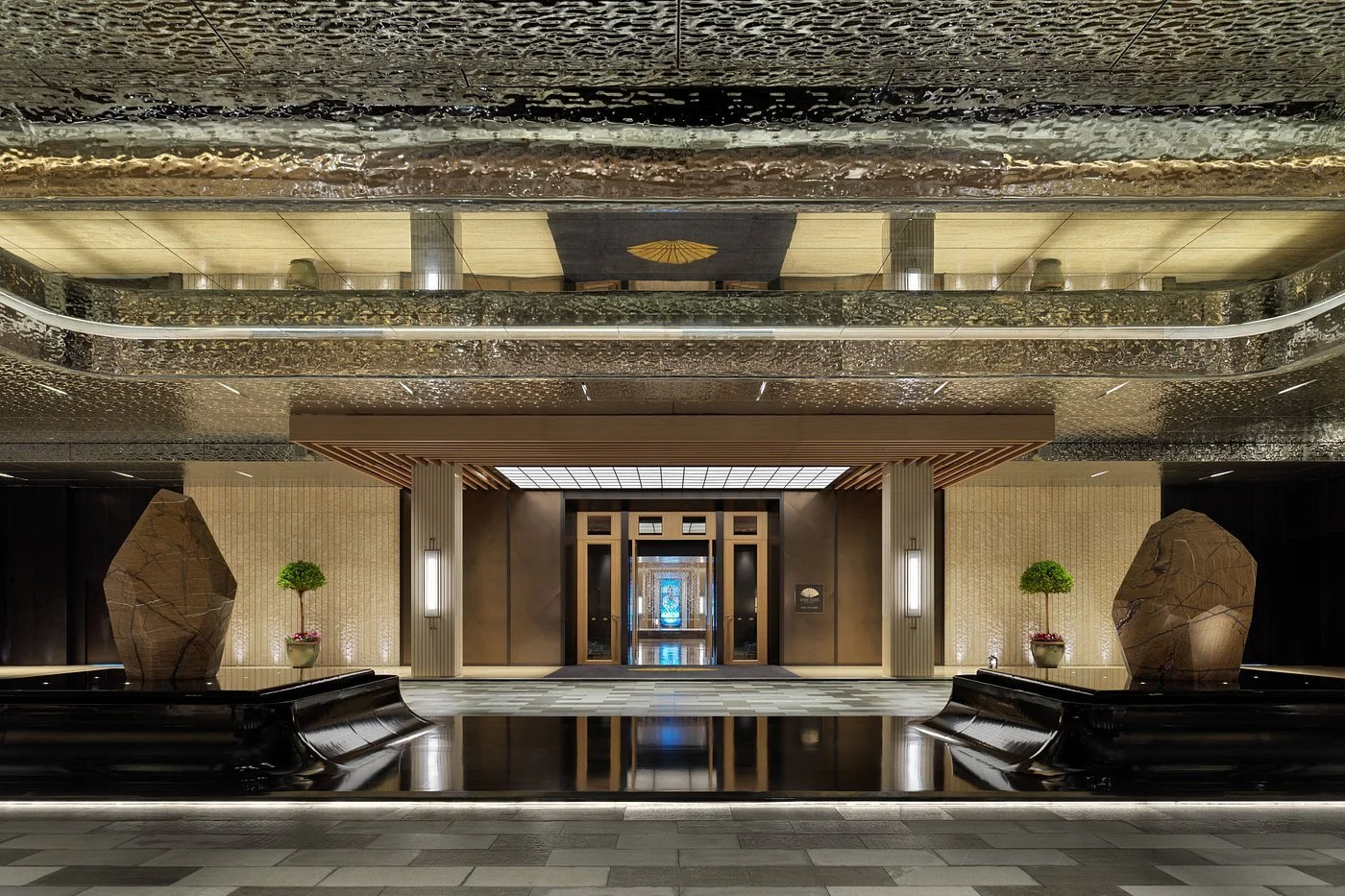
The most personal design element is in the lobby. Photographer and visual artist Chen Man created the hotel’s signature fan, translating the movement and color of southern China’s lion-dance tradition into an abstract red composition intended to express Shenzhen’s openness.
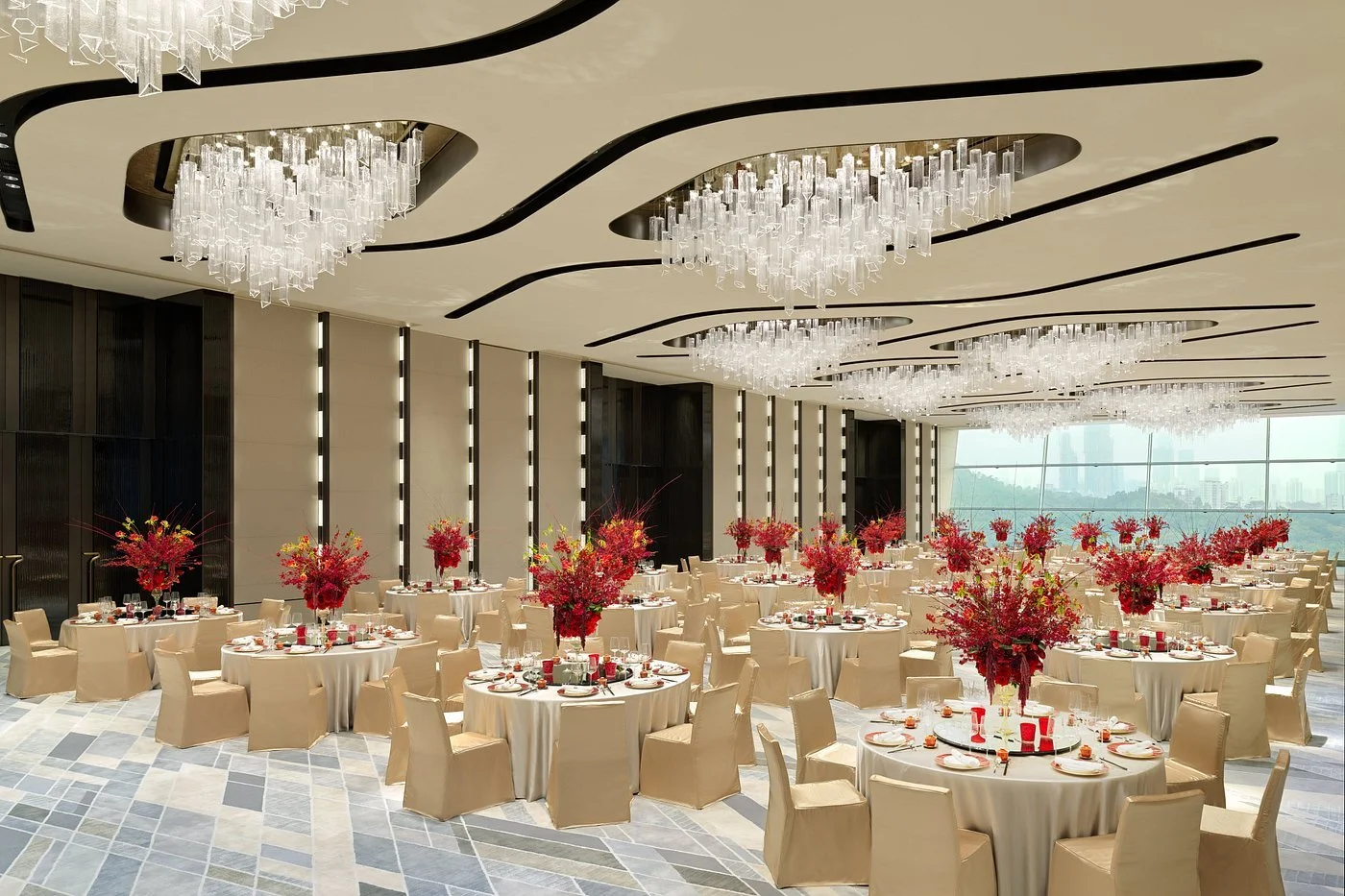
SOM also designed The Cube, the freestanding events building at the tower’s base. Long-span rooms and walls of glass keep its ballrooms open to Bijia Mountain Park, while a zigzagging bridge connects the complex with the landscape.
Rooms and Suites with Space to Settle In
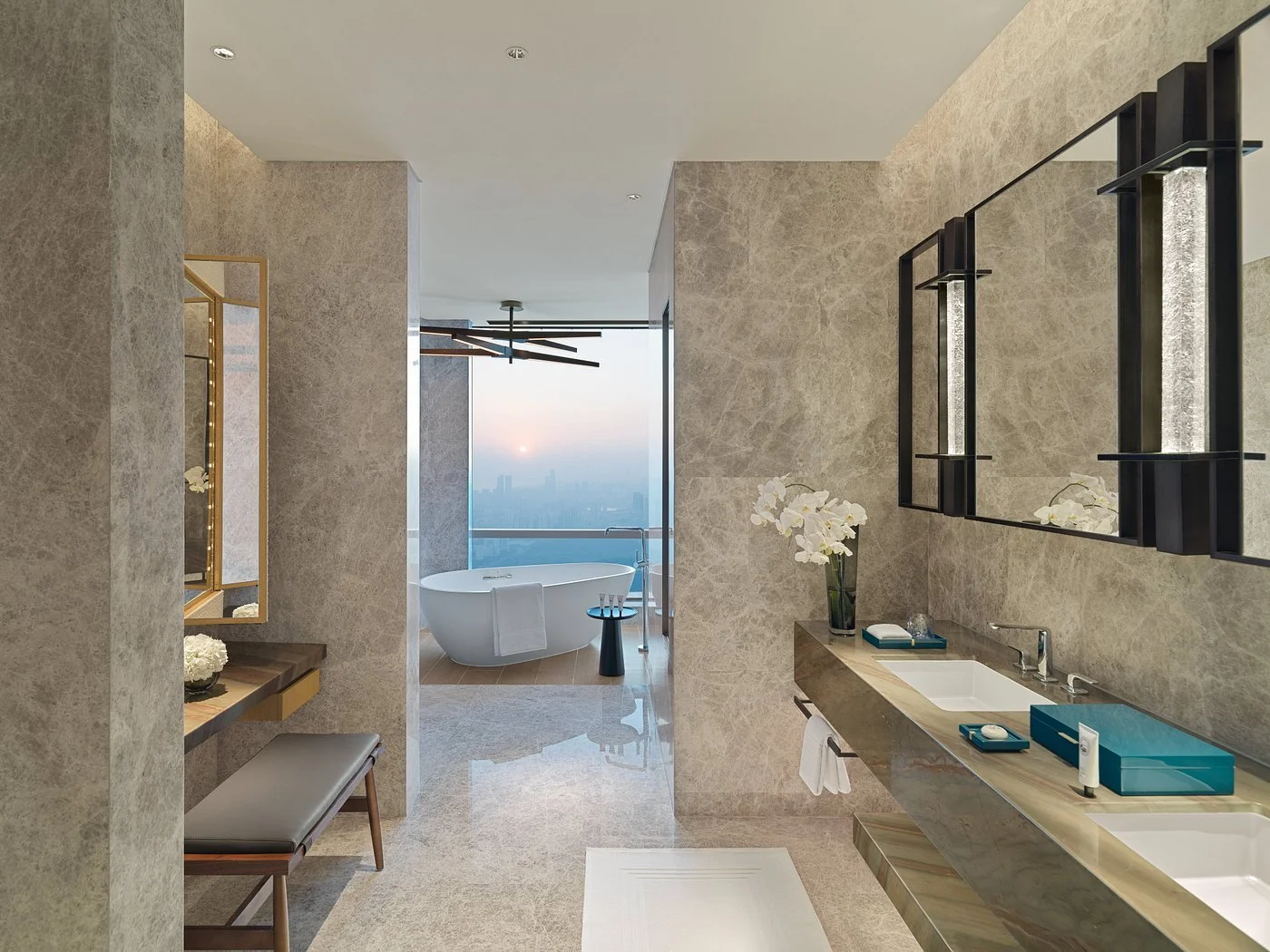
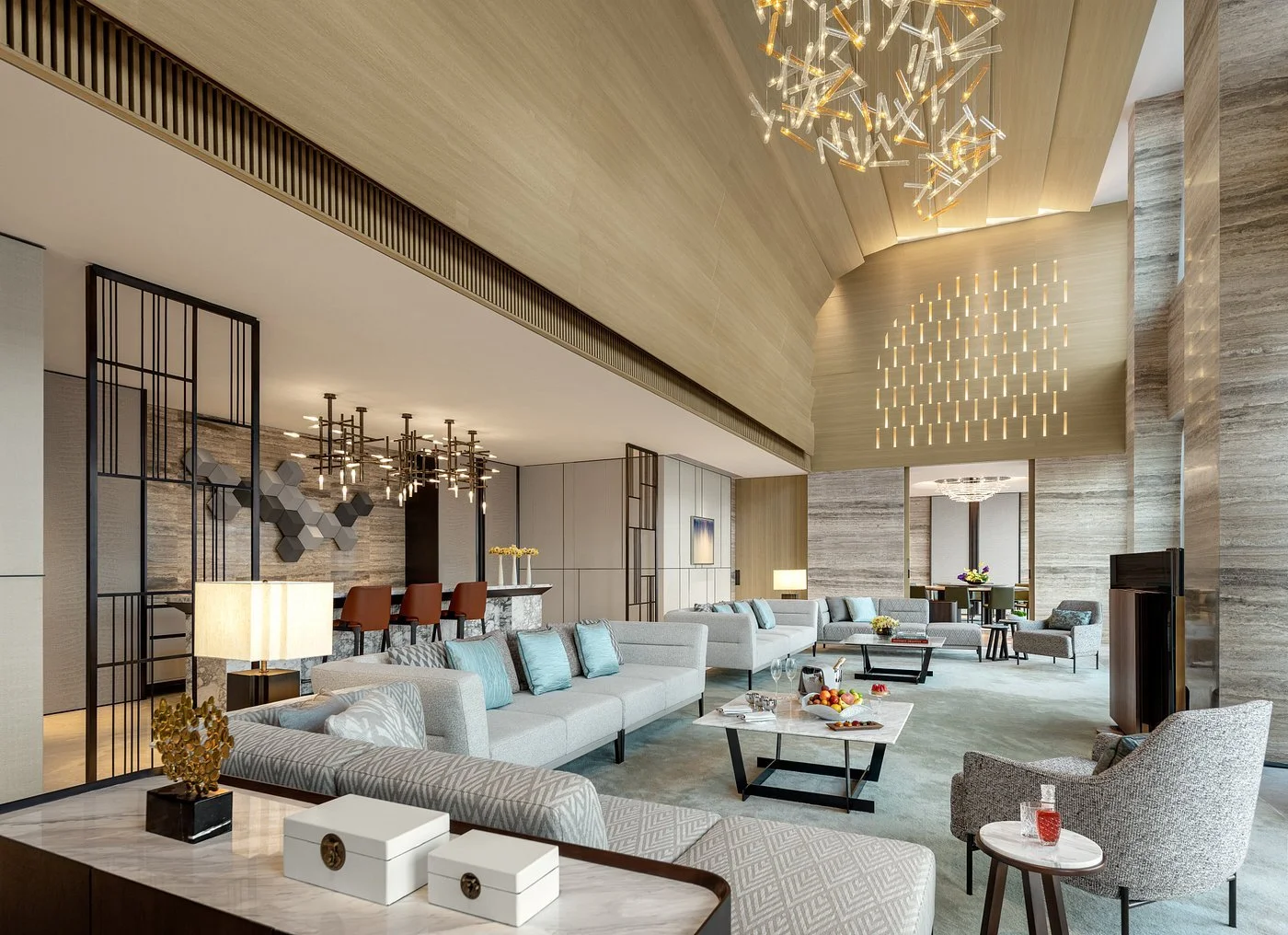
All accommodations have floor-to-ceiling windows; most pair walk-in wardrobes with marble bathrooms, tubs and rain showers. In-room technology comes from Samsung, Bose and Dyson. Club rooms and suites include access to the Mandarin Club on the 78th floor, with private check-in, refreshments through the day, afternoon tea and evening cocktails.
The current accommodation categories are:
Deluxe View Room: 56 square meters, with views of Bijia Mountain Park and the UpperHills skyline.
Skyline View Room: 63 square meters, facing the towers of central Shenzhen and the greenery of Lianhuashan Park.
Premier View Room: 70 to 76 square meters, located between floors 67 and 75, with an open layout and park or downtown views.
Club Skyline View Room: 70 to 76 square meters, looking toward the Futian skyline and Lianhuashan Park, with Mandarin Club privileges.
Family Deluxe View Room: 119 square meters, combining a connecting Deluxe View Room and Skyline View Room for privacy across two bedrooms and bathrooms.
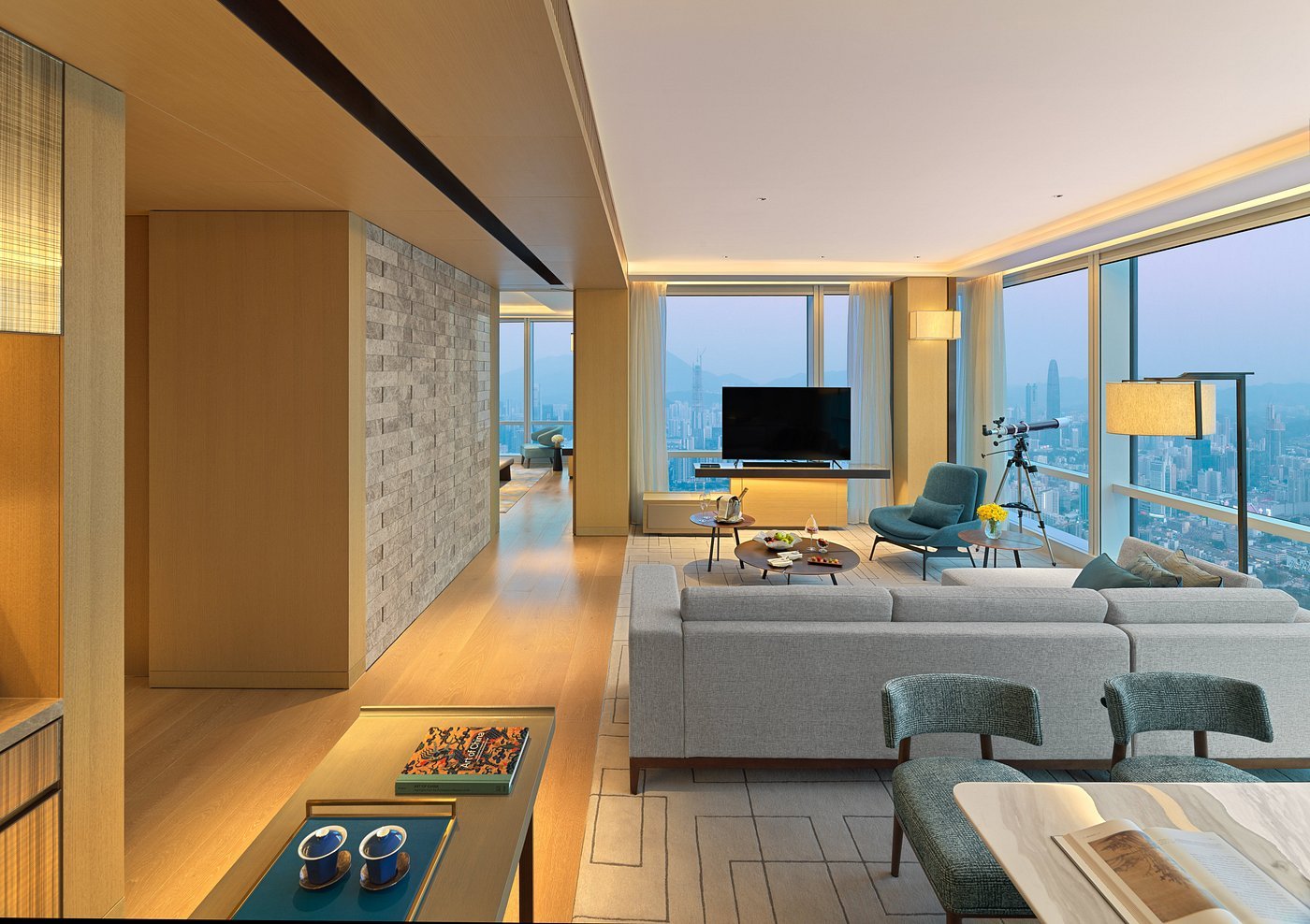
Deluxe View Suite: 114 square meters, with separate living space, an east-facing outlook and Mandarin Club access.
Skyline View Suite: 114 square meters, oriented toward the west for sunsets over the city and Shenzhen Bay, with Mandarin Club access.
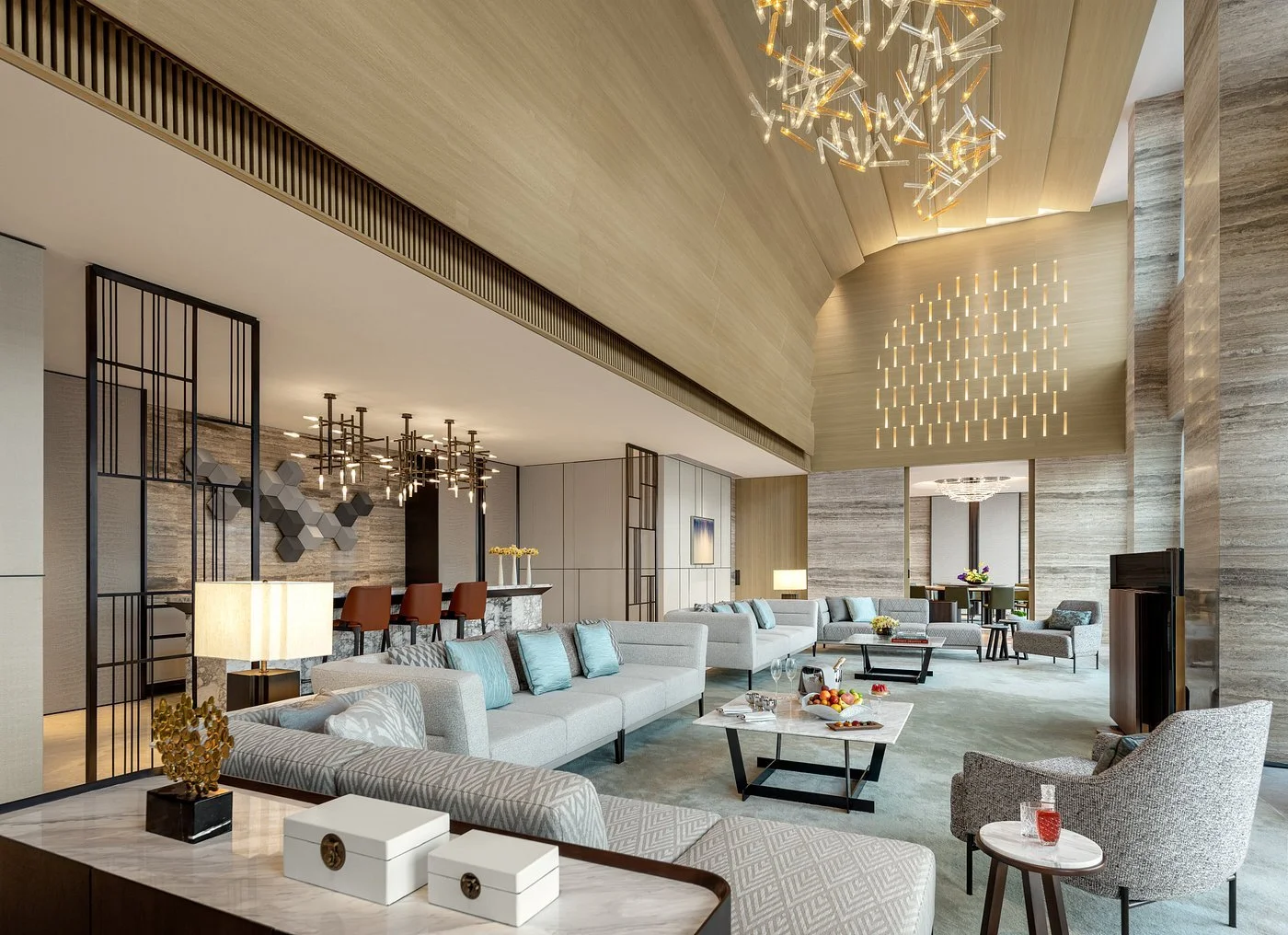
Mandarin Suite: 190 square meters on the 73rd floor, arranged with a bedroom, living room, dining area and kitchen.
Oriental Suite: 190 square meters on the 73rd floor, furnished with SHANG XIA pieces and wrapped by 270-degree windows that take in sunrise, Futian and Shenzhen Bay.
Presidential Suite: 400 square meters, with high ceilings, a full kitchen, formal living and dining rooms, and wide views across downtown, Bijia Mountain Park and, on a clear day, the distant hills of Hong Kong.
Eight Distinctive Places to Eat and Drink
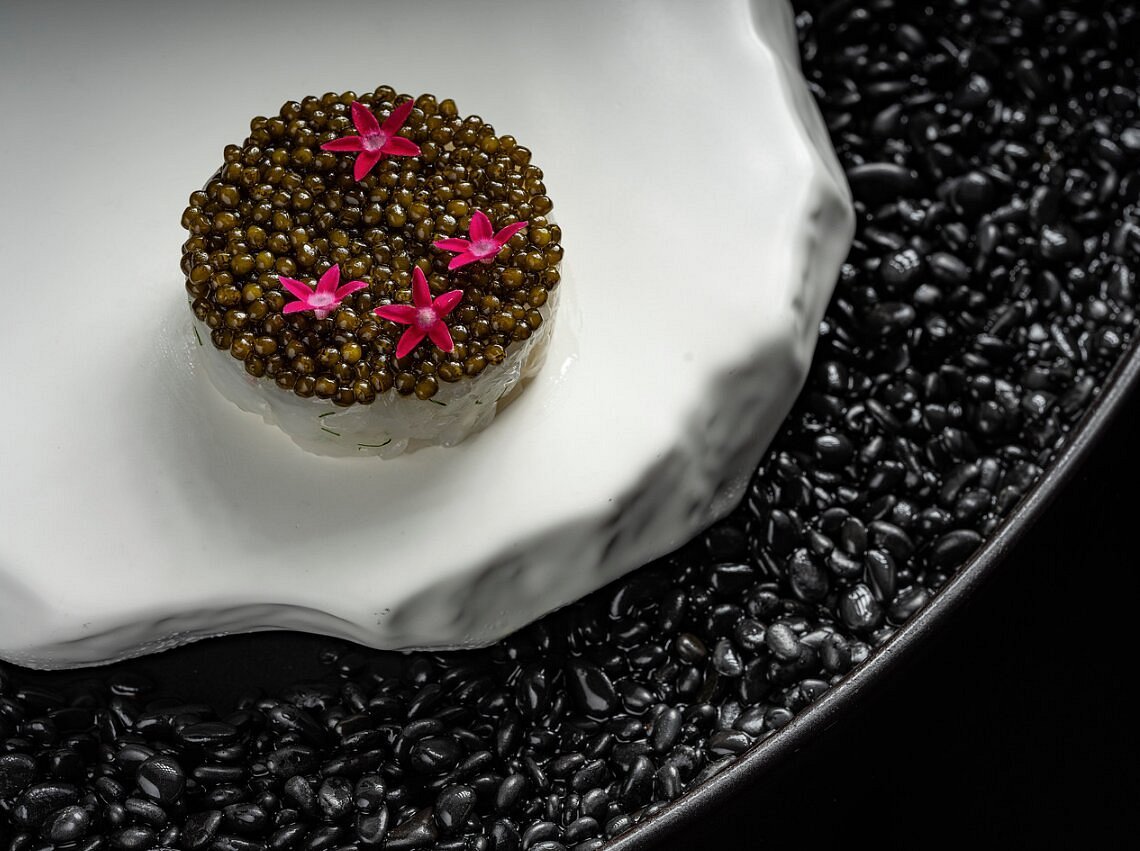
As of 2026, The Bay by Chef Fei holds two Michelin stars, OPUS 388 holds one, and MO Bar ranks among Asia’s leading cocktail bars.
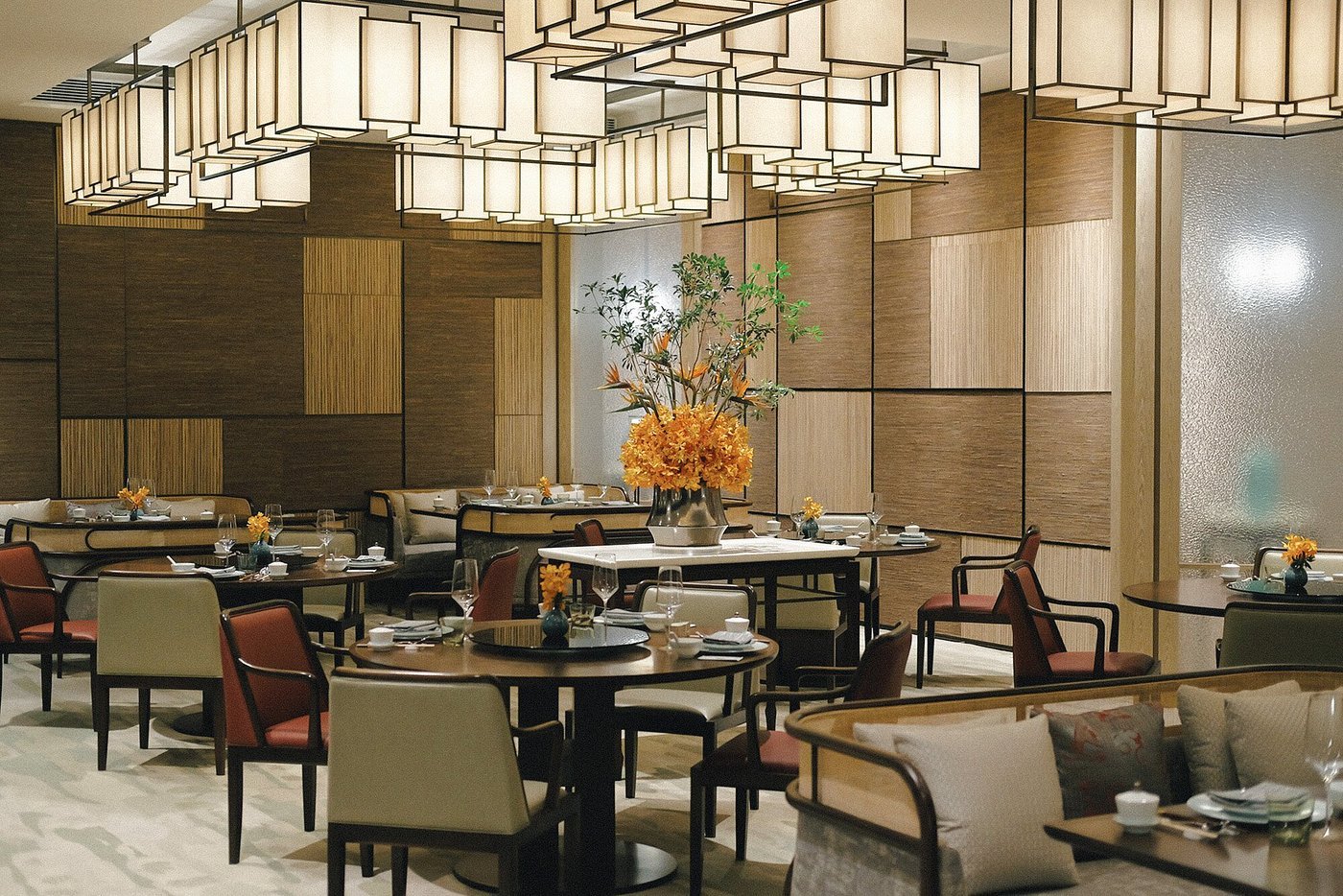
The Bay by Chef Fei: The hotel’s Cantonese flagship, located on the first floor. Chef Fei and Chinese Executive Chef Water Tang draw from Chaozhou and Lingnan cooking, placing careful technique and seasonal ingredients ahead of unnecessary theater. The restaurant also holds One Diamond in the 2026 Black Pearl Restaurant Guide.
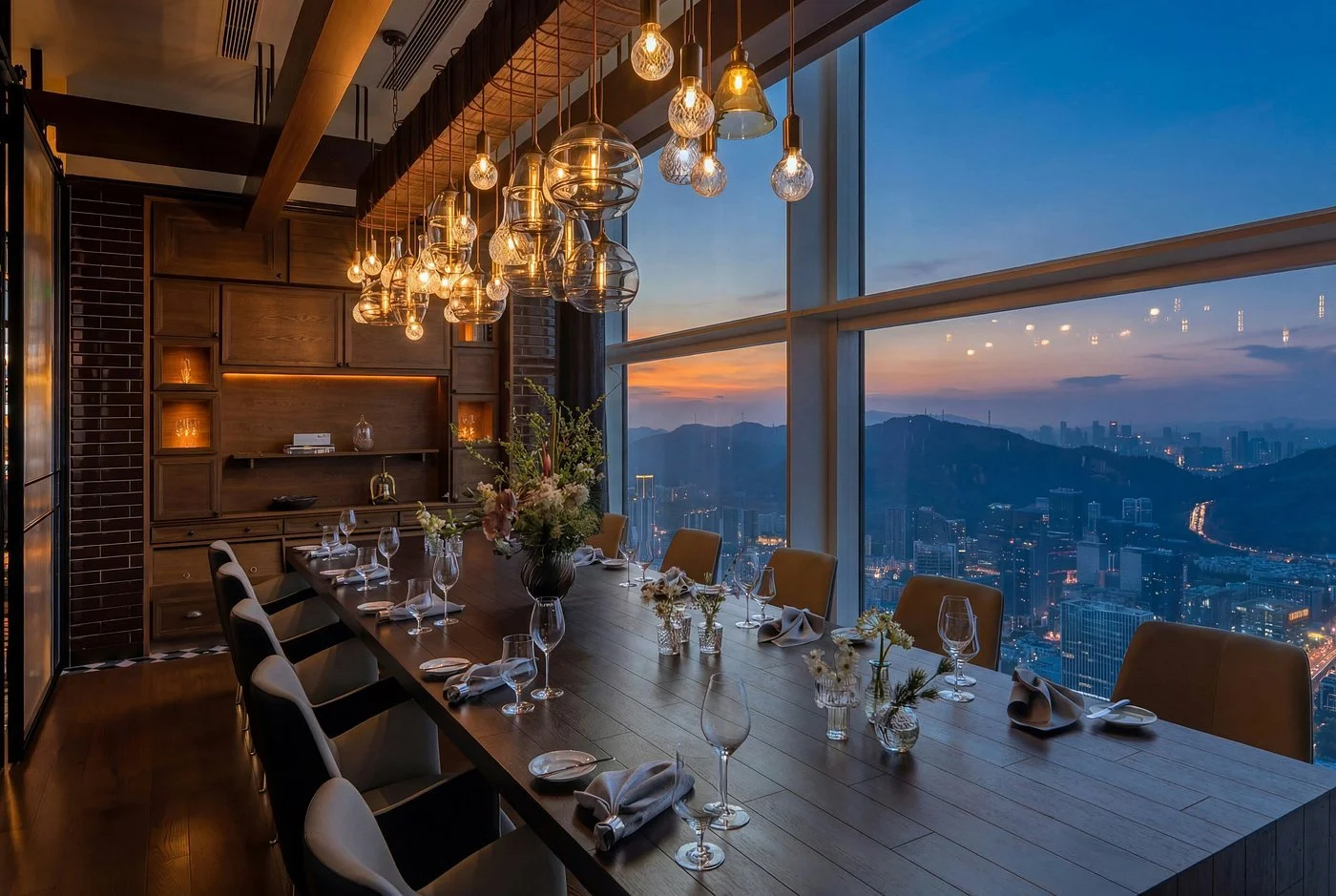
OPUS 388: Contemporary French dining on the 77th floor under Chef de Cuisine Alessio Durante. Classical French technique, Mediterranean influence and ingredients sourced in China come together in tasting and à la carte menus, with a chef’s table for a closer view of the kitchen.
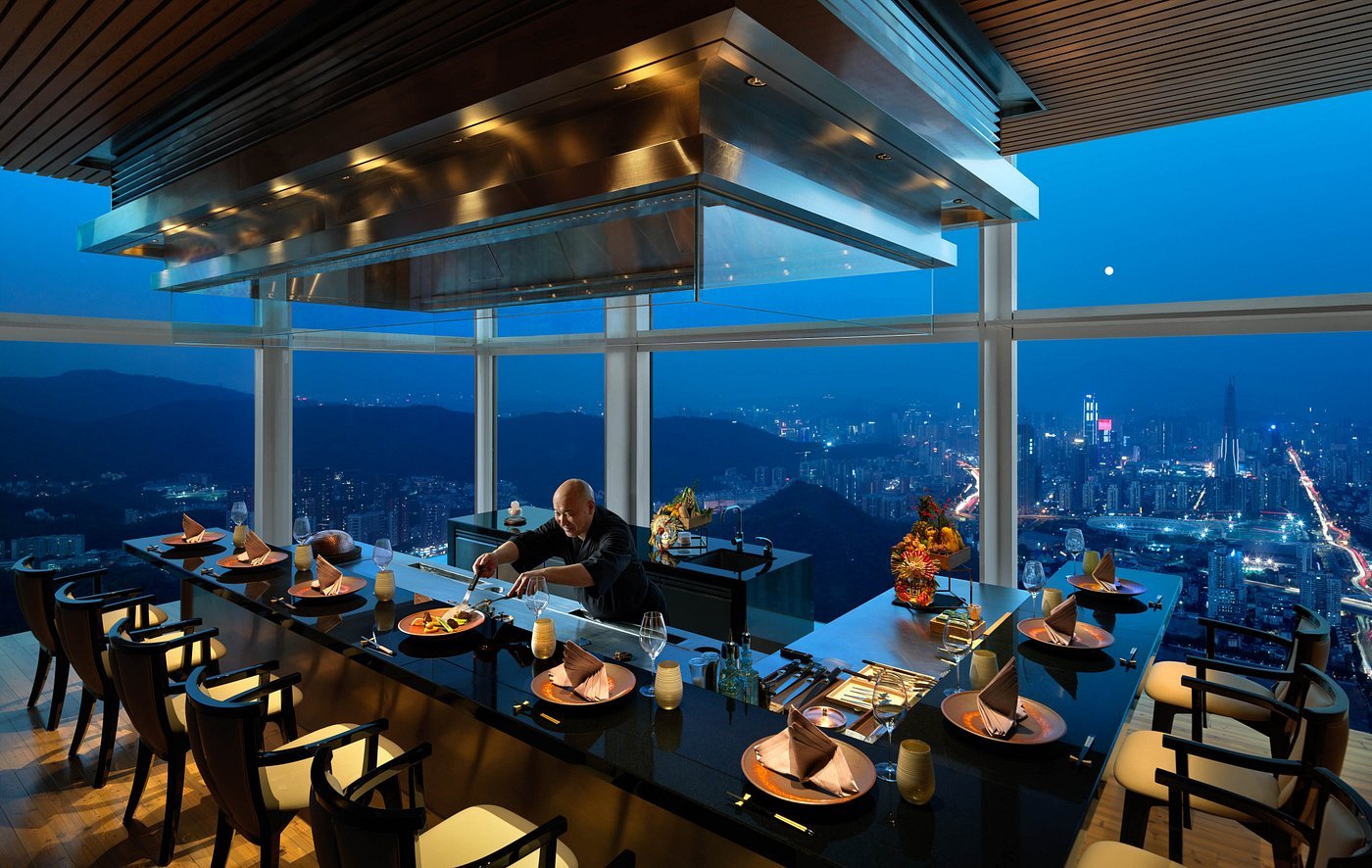
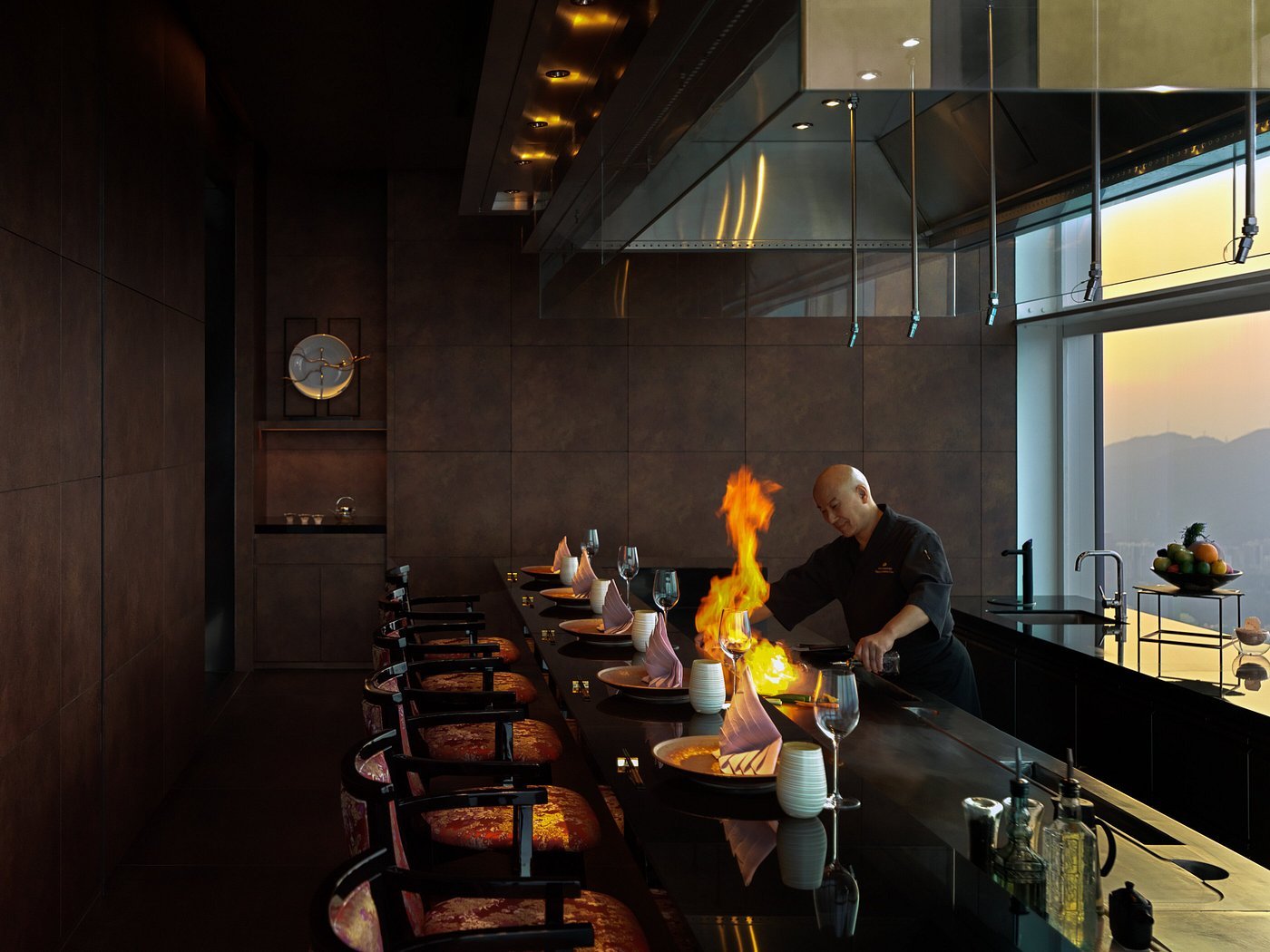
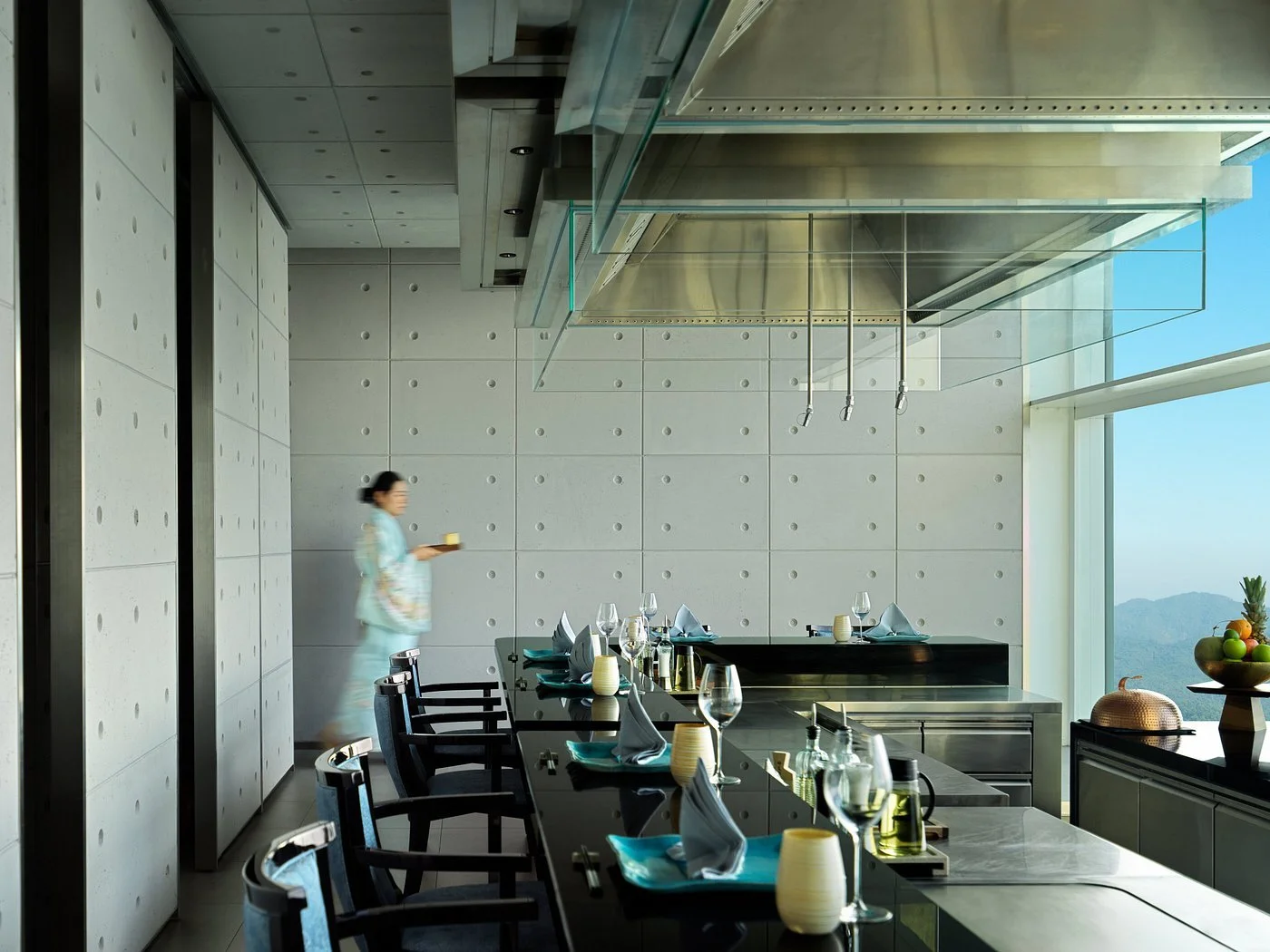
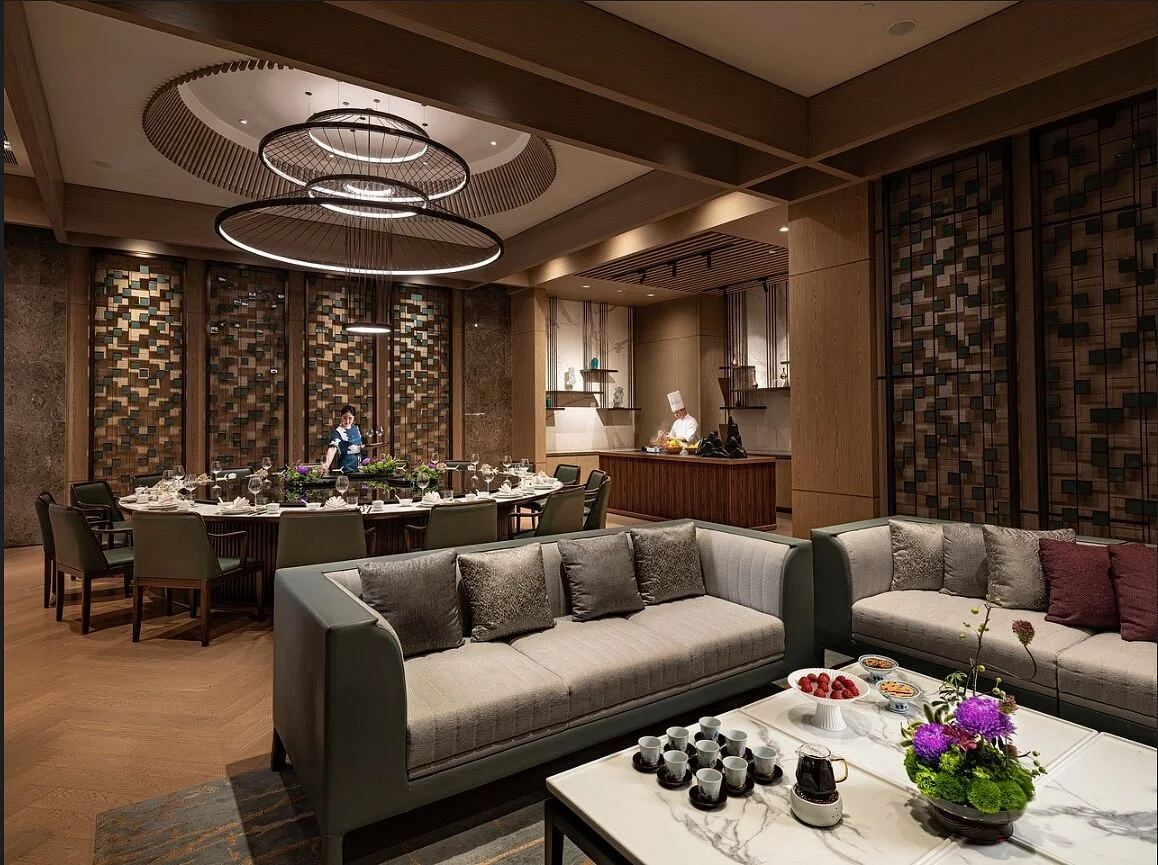
RIN: A private Japanese restaurant centered on teppanyaki, sushi, sashimi and tempura. Three dining rooms open from a sake lounge, making this one of the more discreet choices in the hotel.
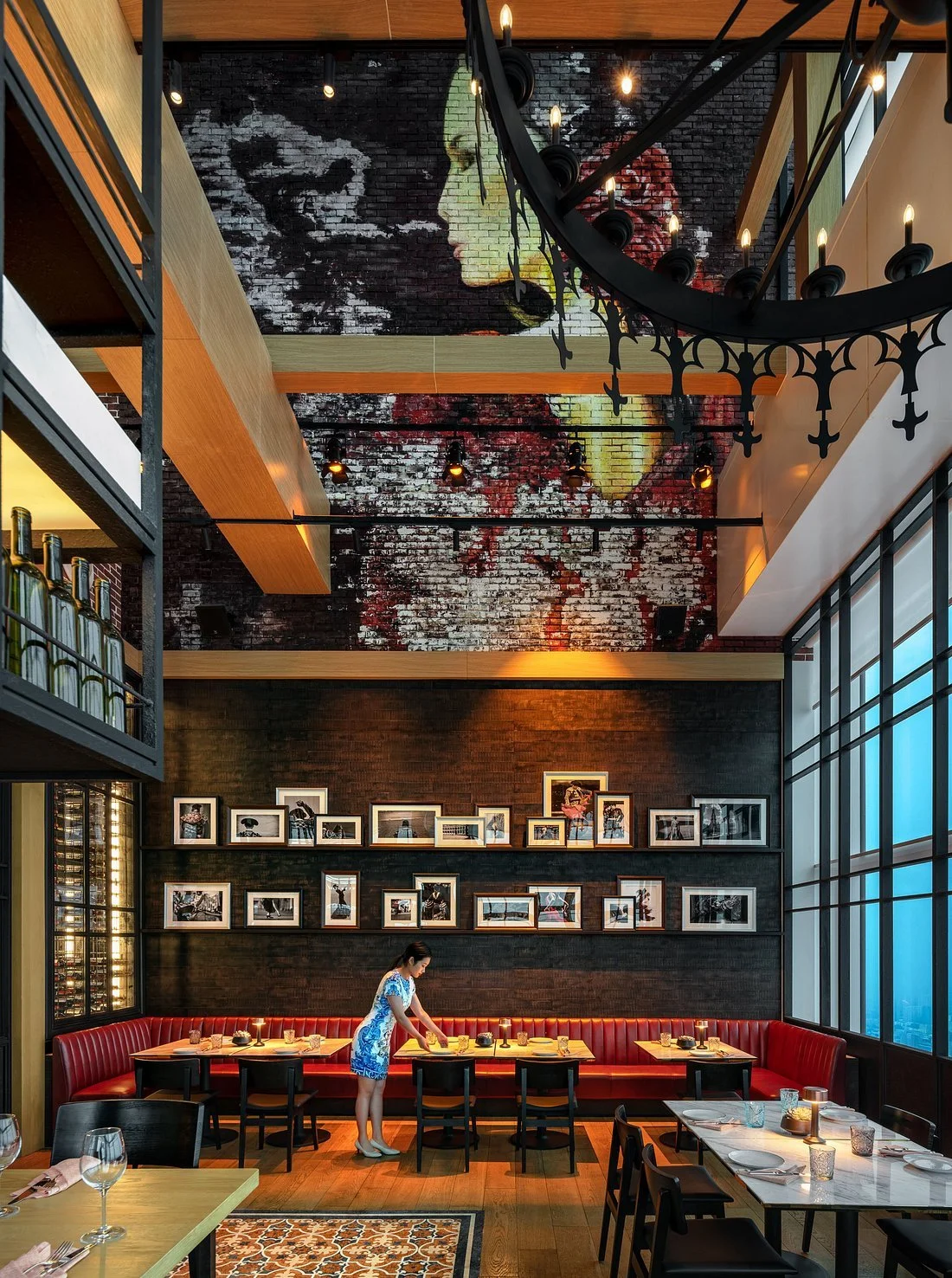
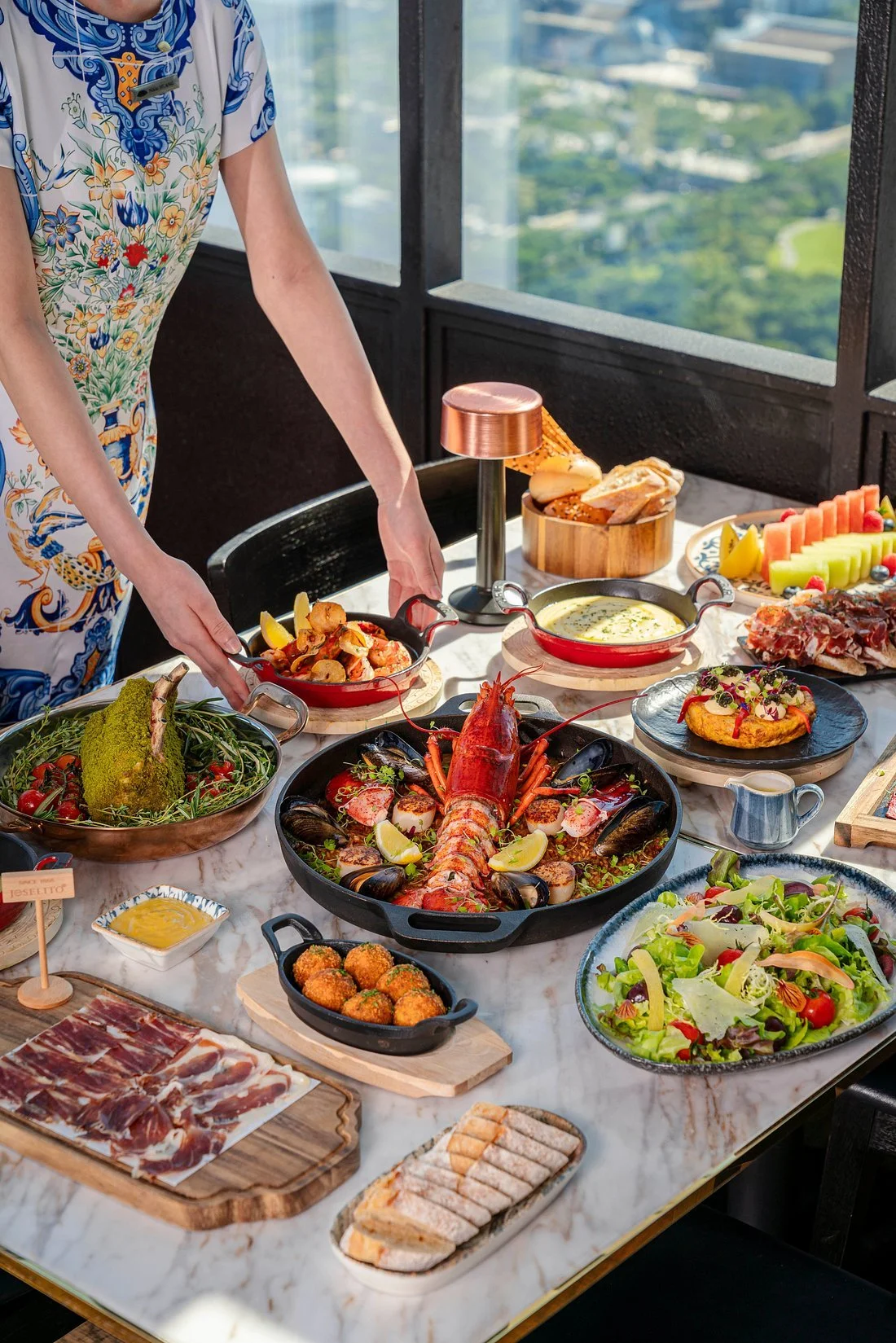
TAPAS 77: A colorful Spanish restaurant for shared plates, paella and relaxed dinners. Weekend lunch and a children’s menu make it an easy option for families.
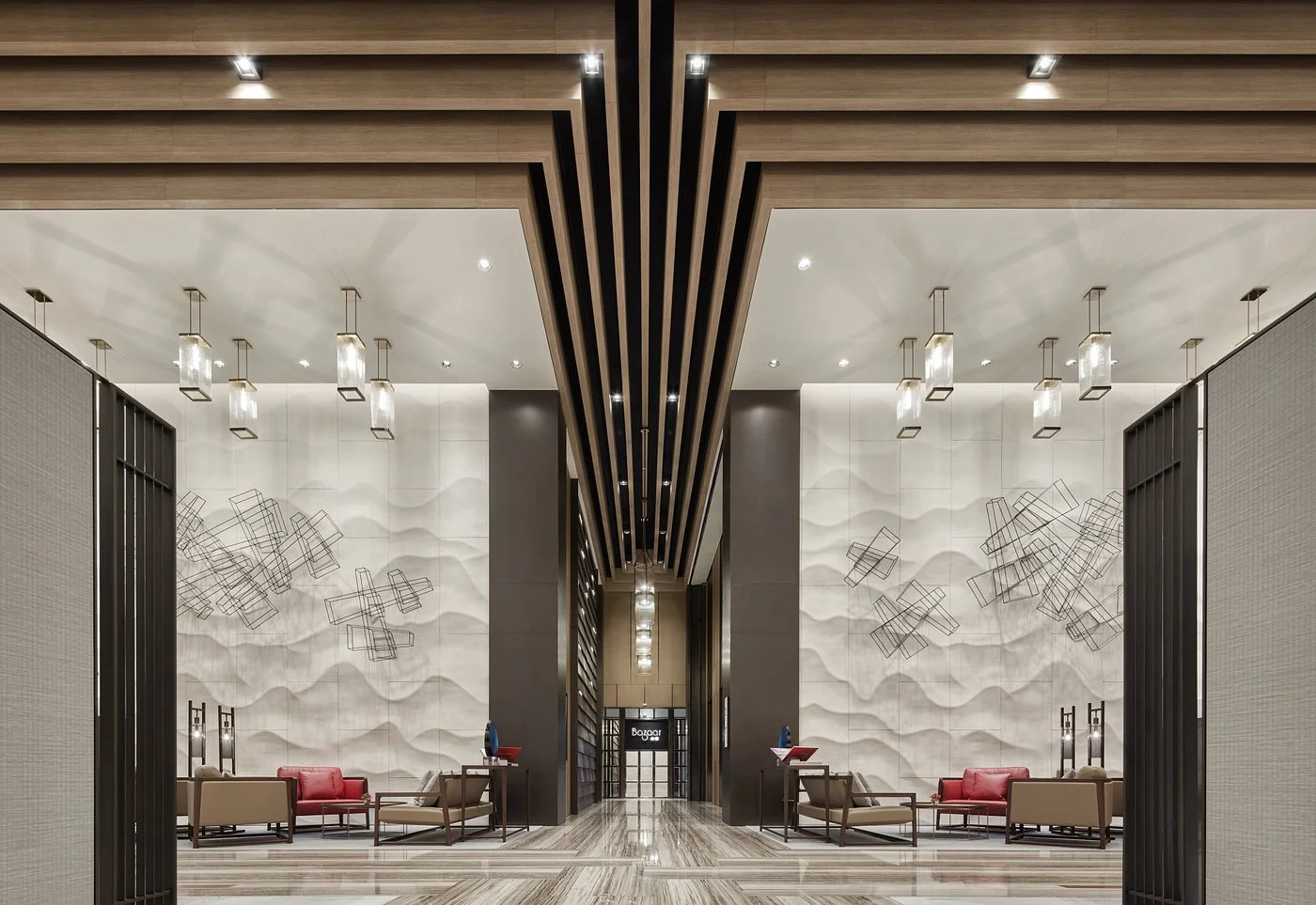
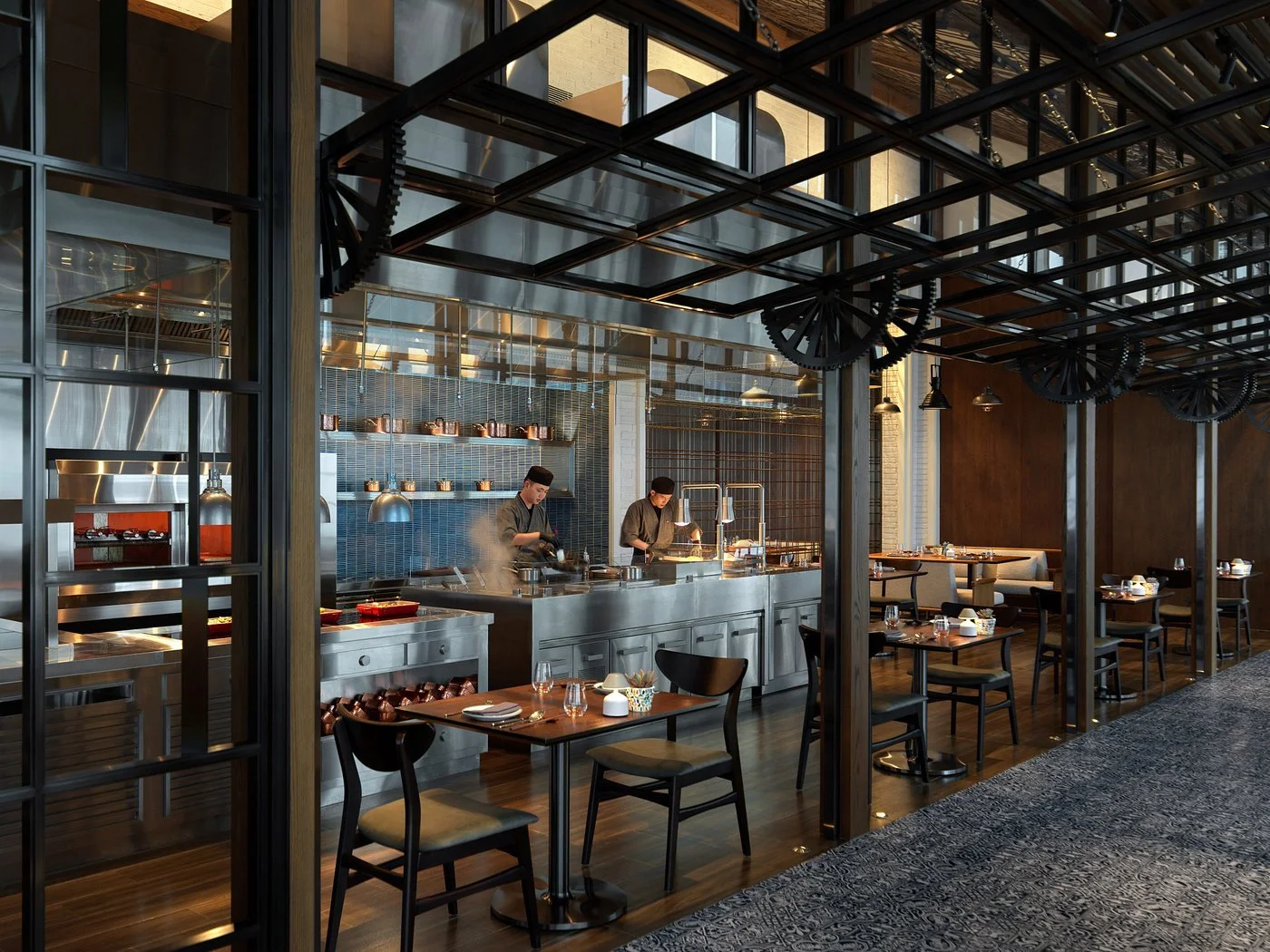
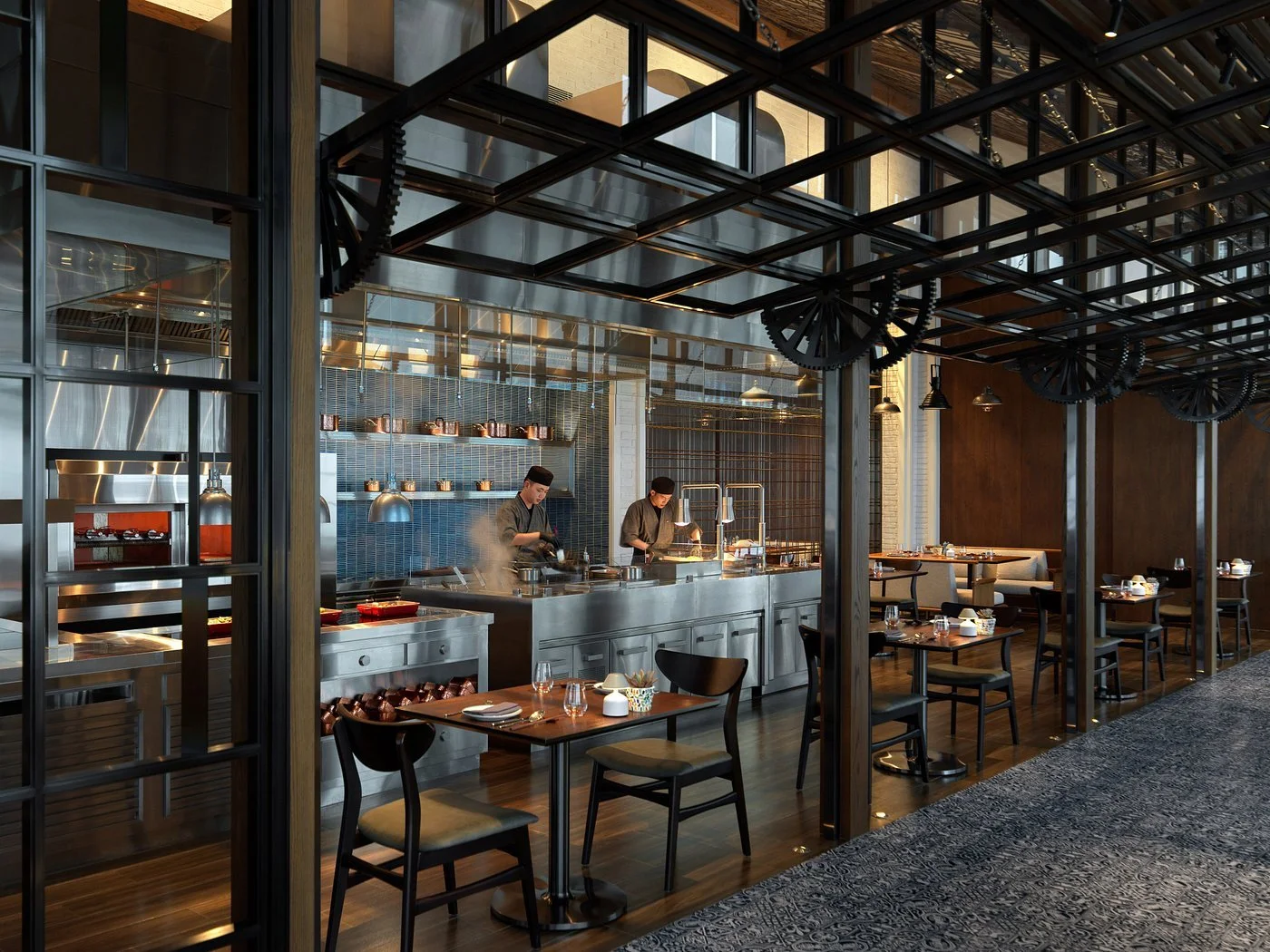
Bazaar: The all-day restaurant, built around open kitchens and food stations preparing regional Chinese and wider Asian dishes to order. Breakfast is served here, along with lunch, dinner and weekend buffets.
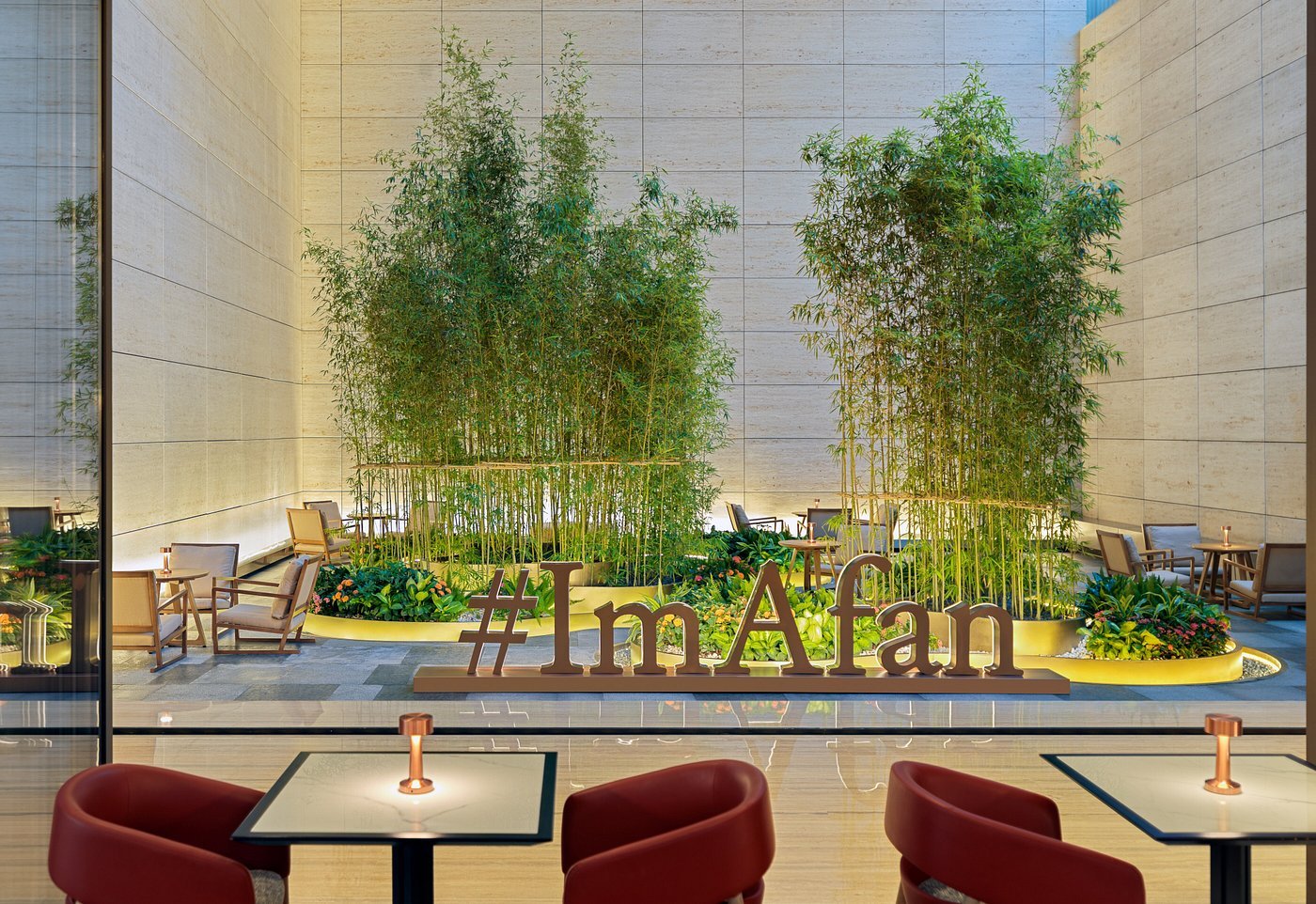
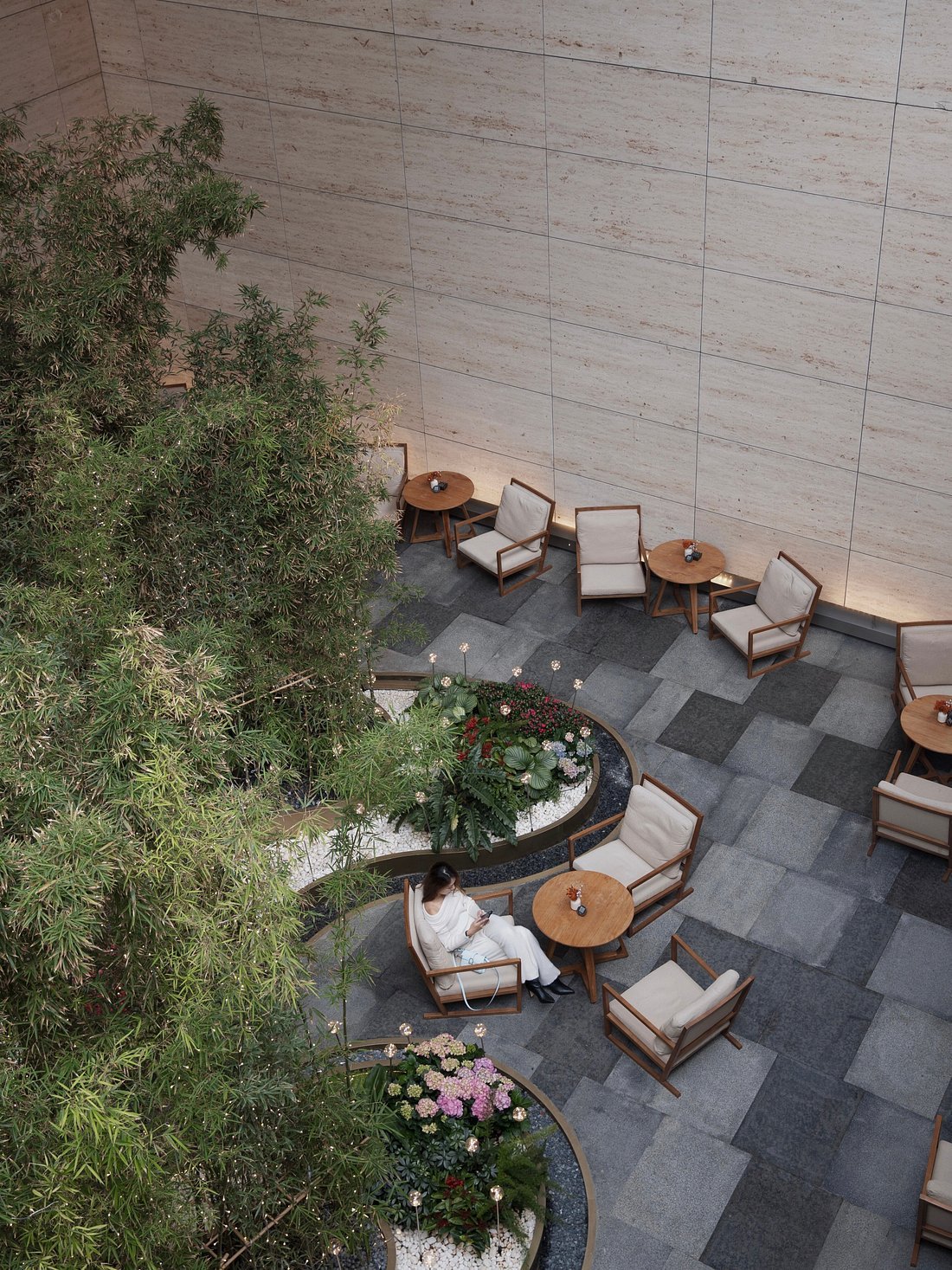
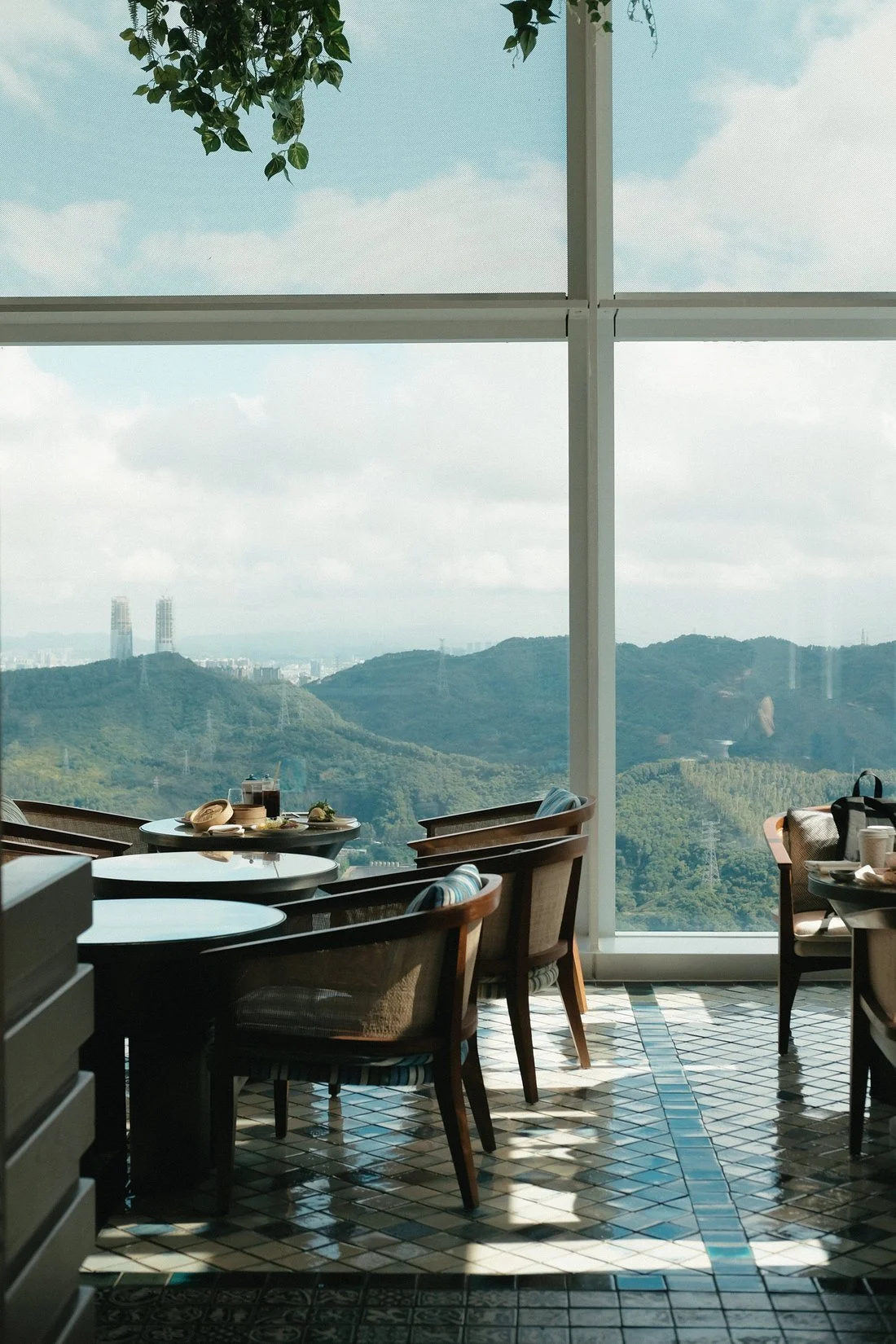
LIAN Lounge: A quiet meeting place for afternoon tea, light dishes and cocktails, with full-height windows facing the skyline and Lianhuashan Park.
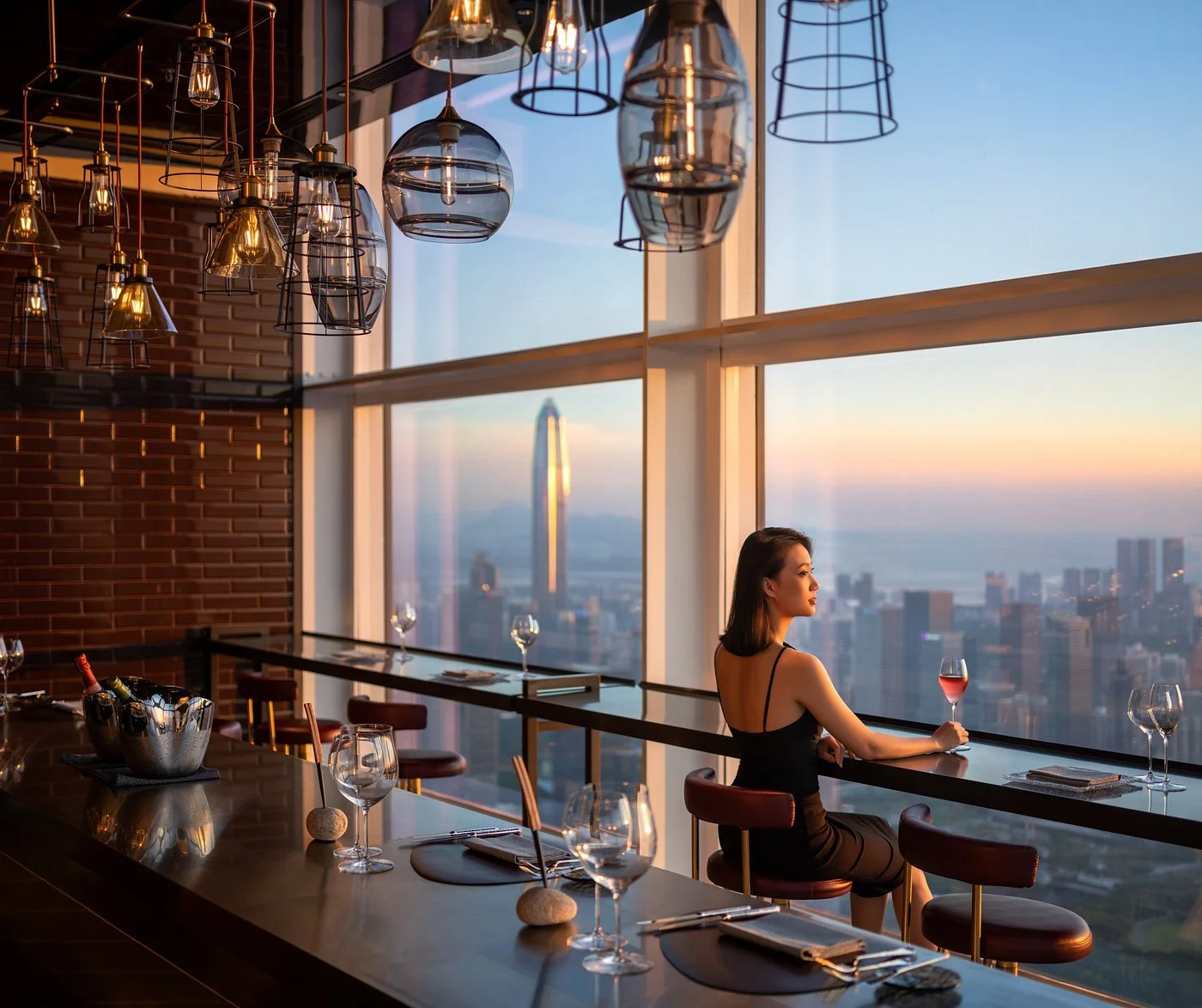
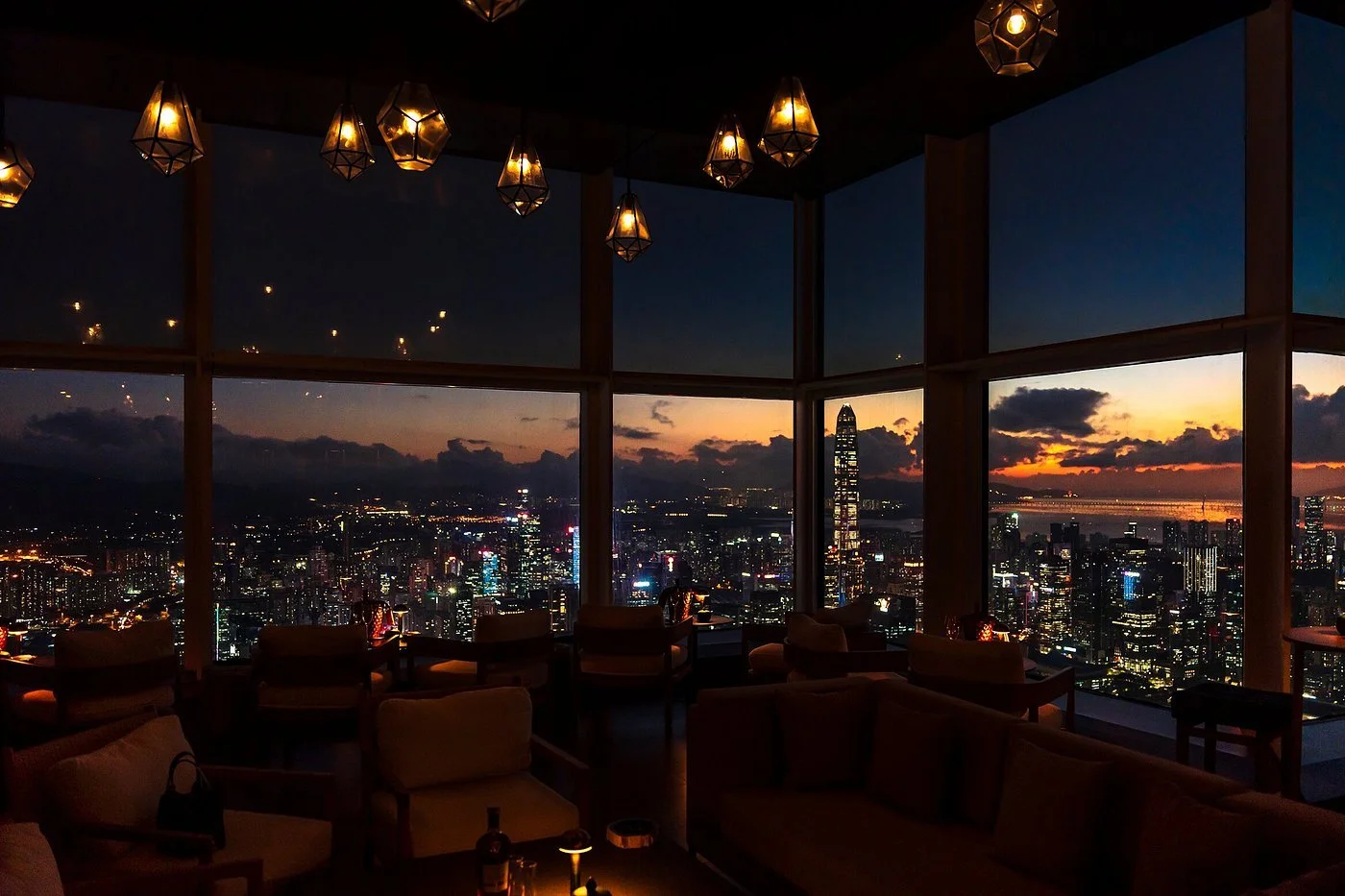
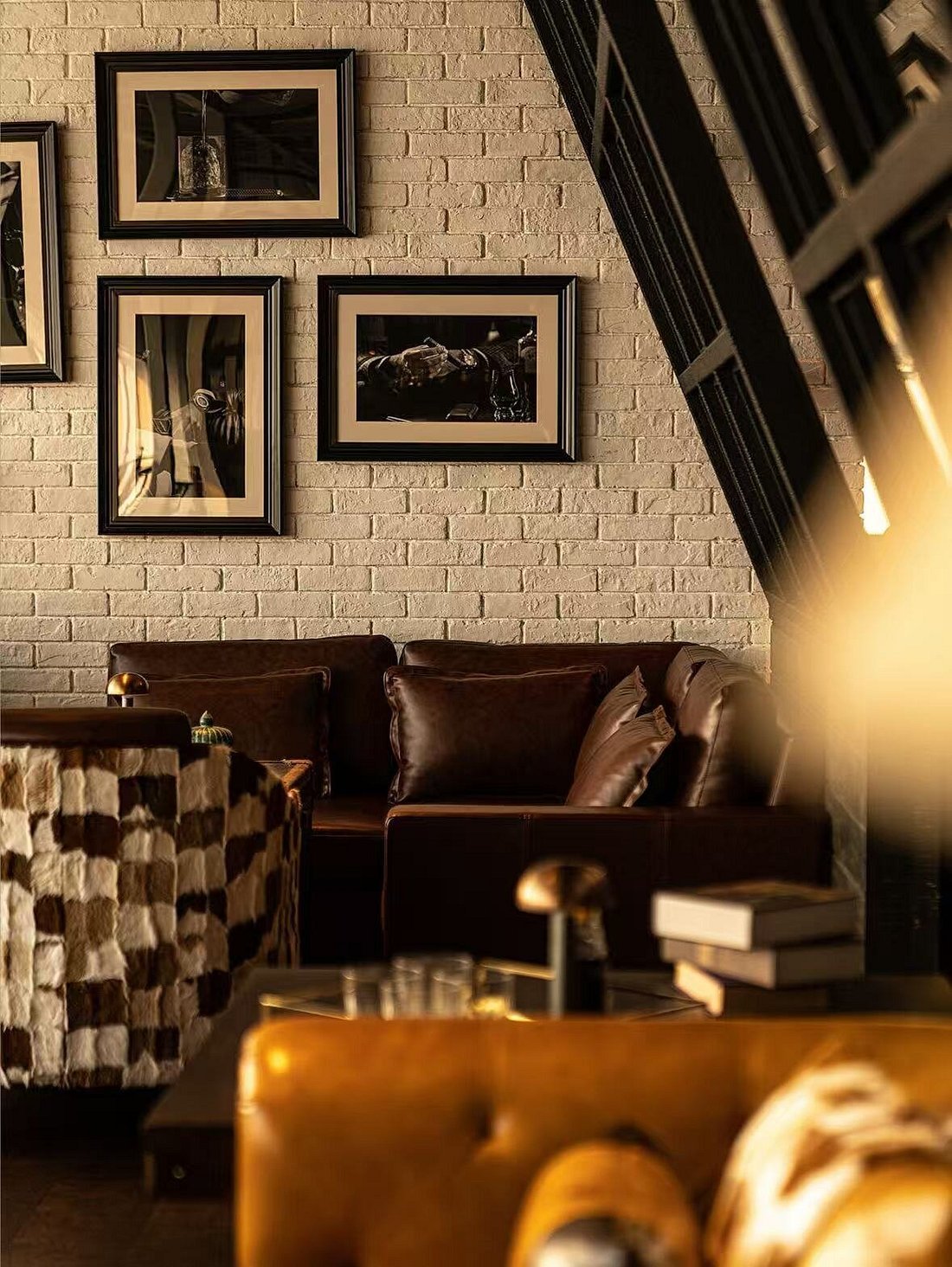
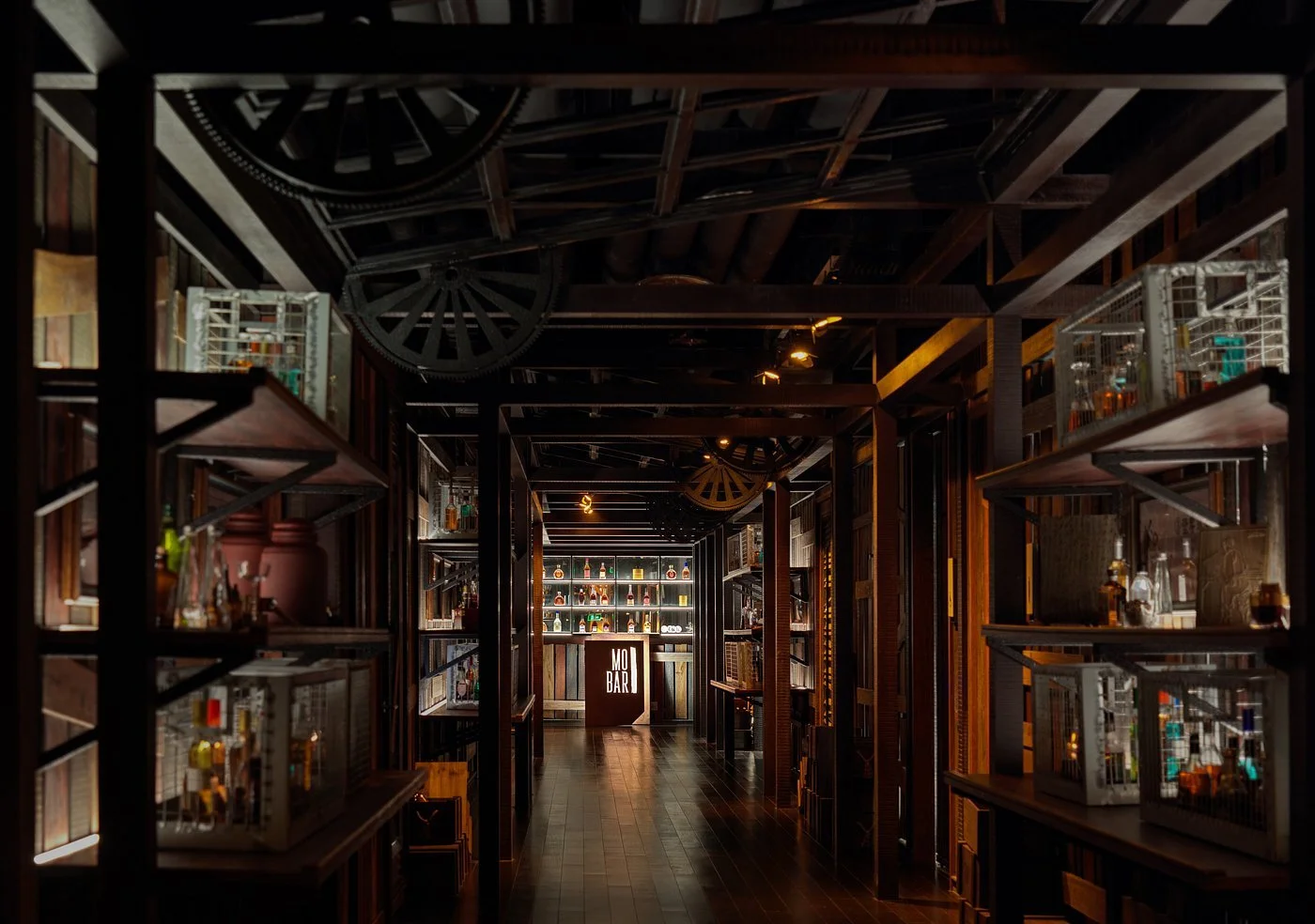
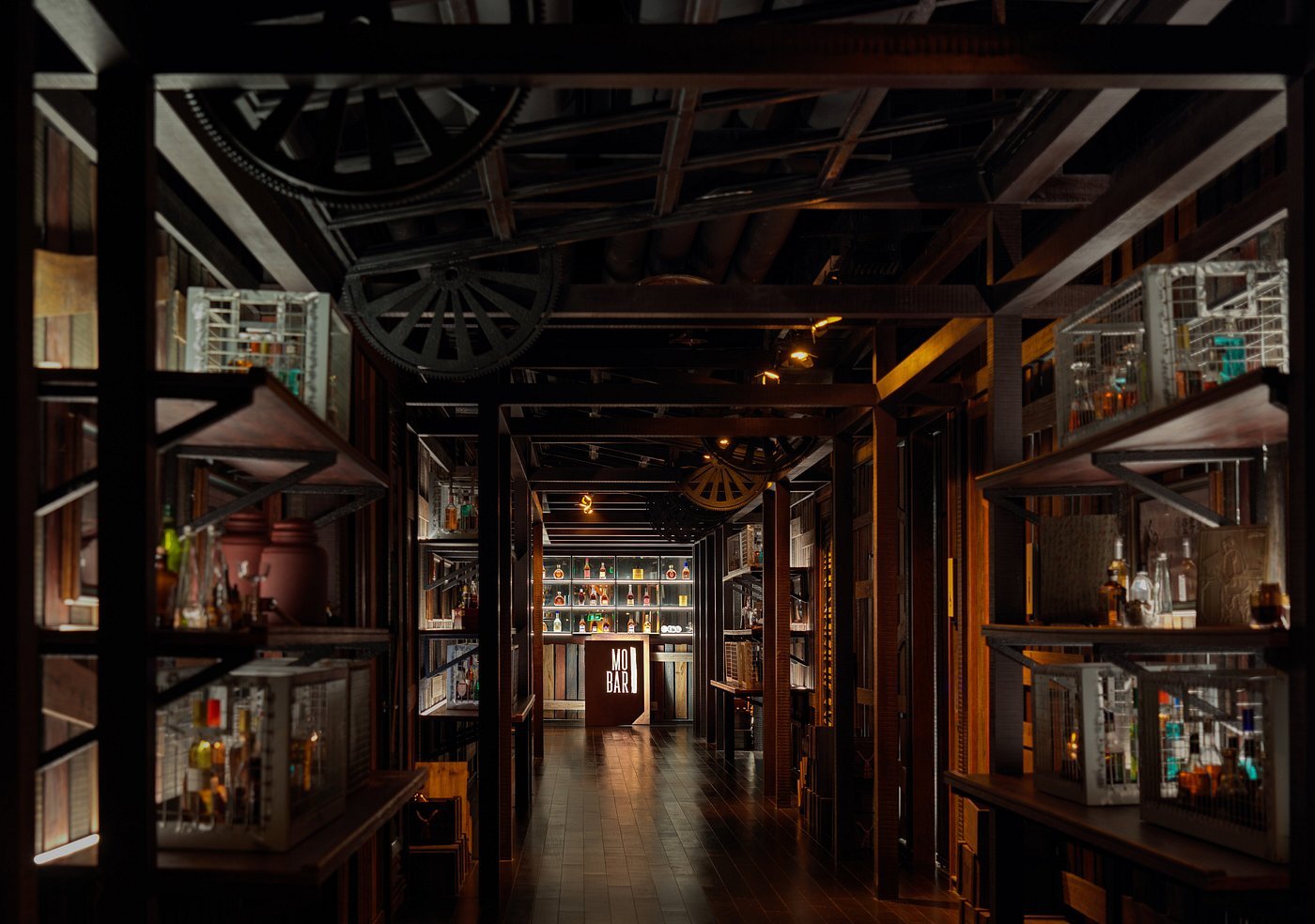
MO Bar: The 79th-floor rooftop bar pairs an industrial interior with an outdoor terrace. Tiger Chang’s current cocktail program, Colours of China, takes its cue from traditional Chinese pigments. Guests must be 18 or older.
The Mandarin Cake Shop: The hotel’s dessert boutique for French pastries, celebration cakes, chocolates, coffee and tea, with an outdoor terrace.
Twenty-four-hour in-room dining is also available. The Mandarin Club serves eligible guests throughout the day but functions as a private lounge rather than a ninth public restaurant.
Wellness on the 68th Floor
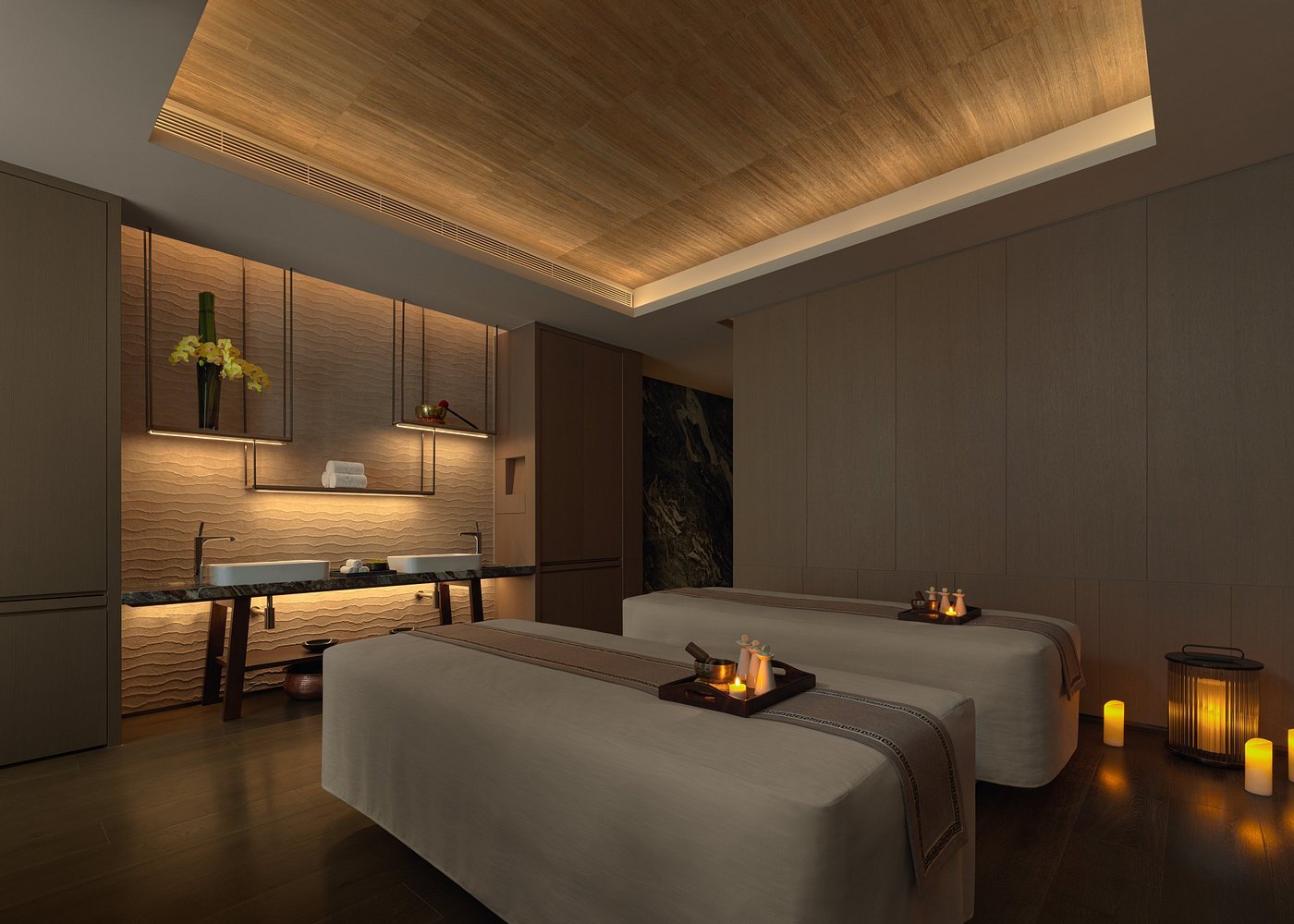
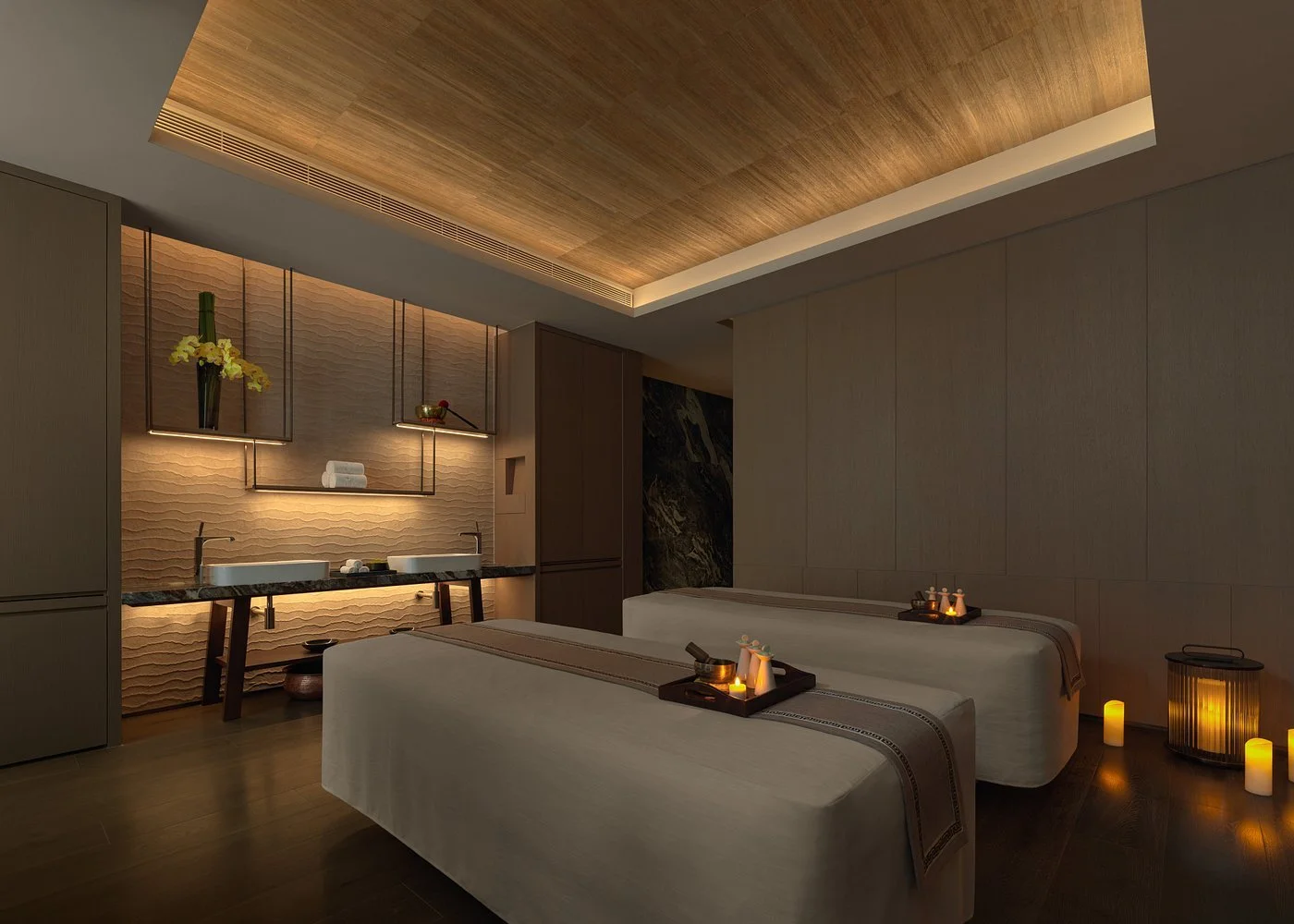
The Forbes Five-Star Spa occupies the 68th floor and looks across downtown Shenzhen and Lianhuashan Park. Its menu combines Mandarin Oriental therapies with bodywork, facials and Asian healing traditions. Five treatment rooms and suites face outward; the signature suite has a heated quartz-sand bed, while DOSE infrared equipment supports recovery.
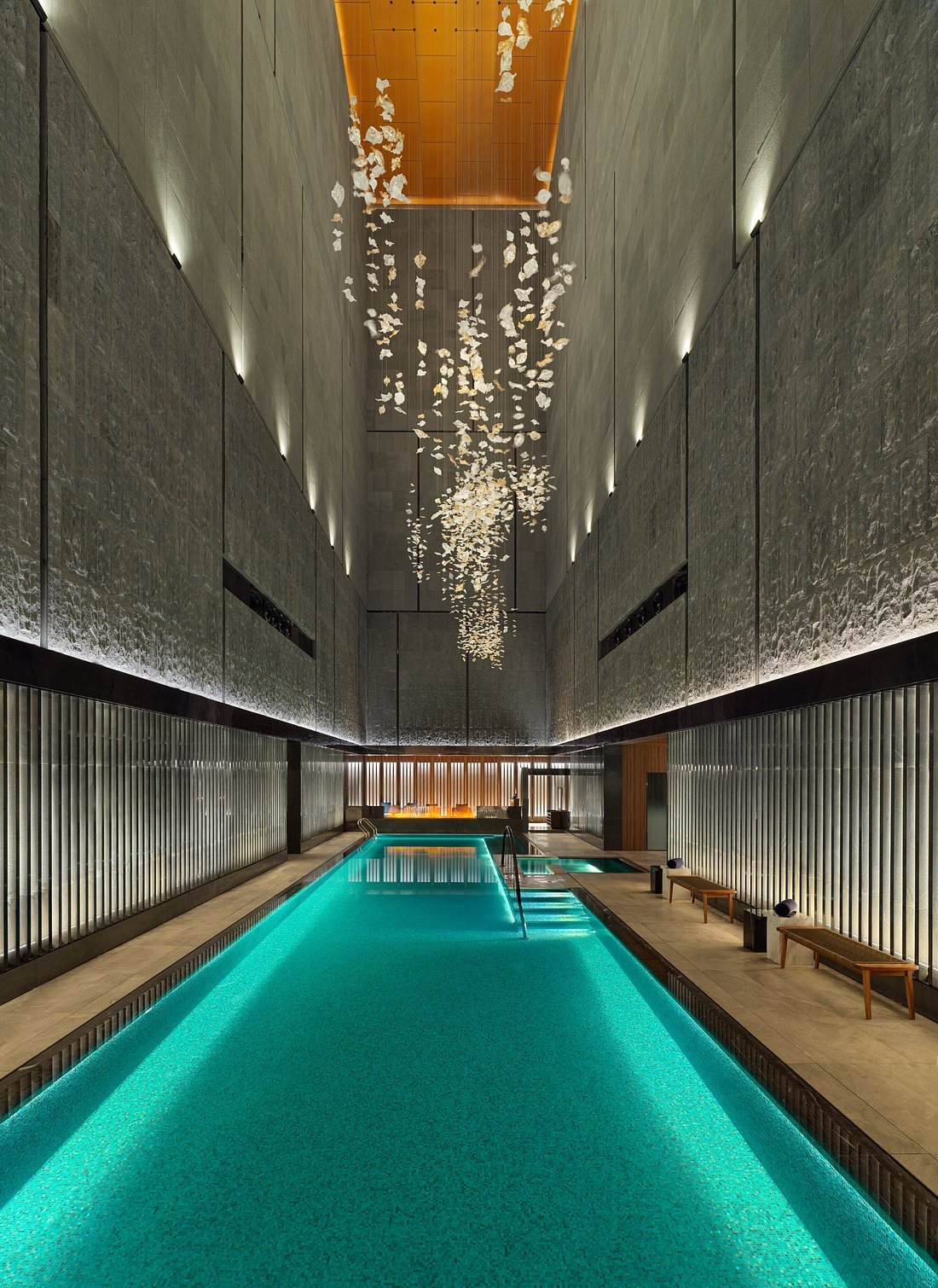
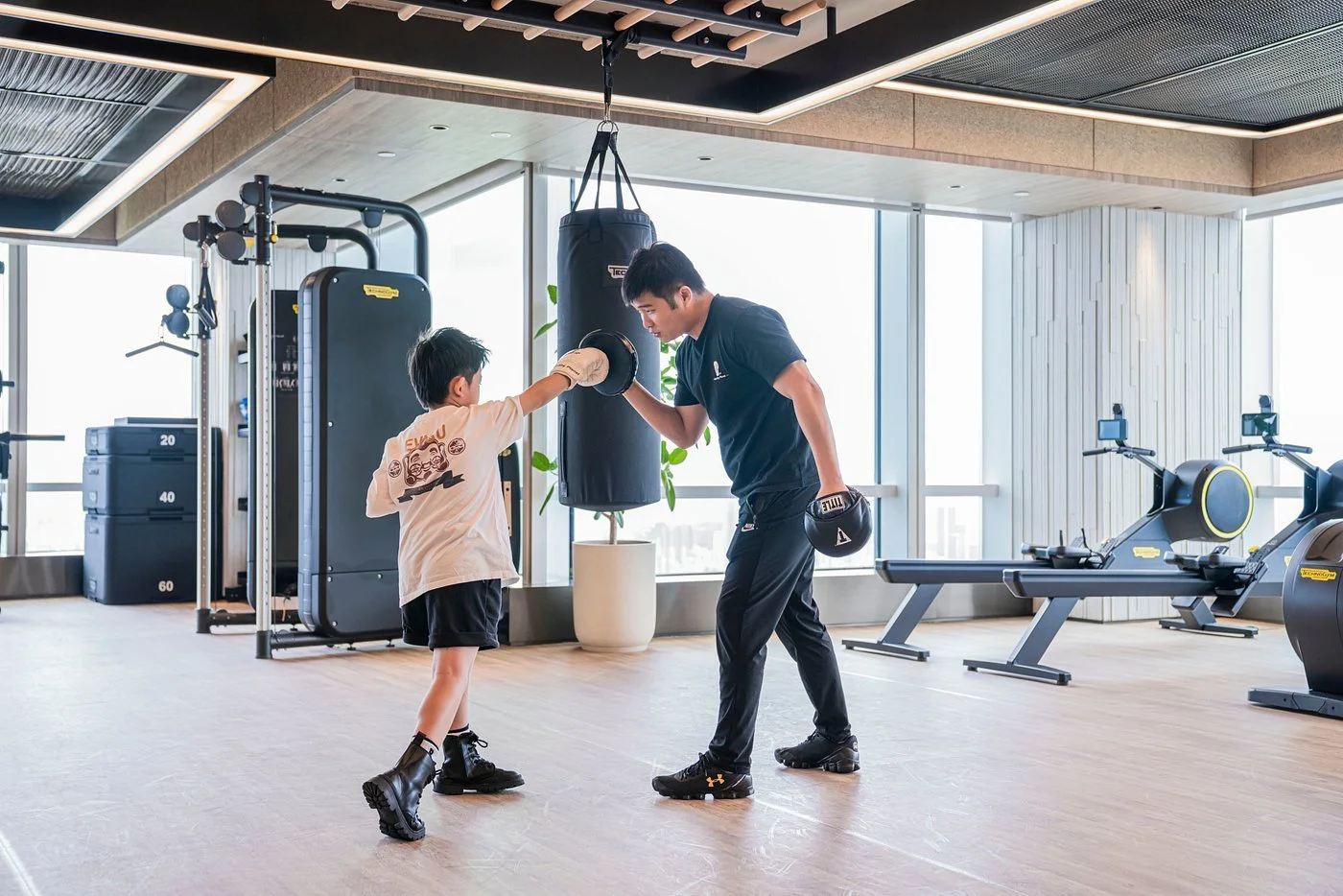
The adjoining fitness center is open 24 hours and fitted with Technogym cardio and strength equipment. A dedicated Pilates studio allows for individual movement sessions. The visual centerpiece is the 20-meter indoor pool and vitality pool beneath a roof approximately 30 meters above the water—a rare sense of volume in a city hotel.
Experiencing Shenzhen from Futian
The immediate neighborhood makes it possible to balance architecture and city life with time outdoors. Bijia Mountain Park is roughly two minutes away on foot, while Lianhuashan Park can be reached in about five. The hotel arranges a two-hour afternoon kite-flying outing in Lianhuashan Park for Fans of M.O.; an accompanying team member helps guests get their kites airborne, and two days’ notice is required.
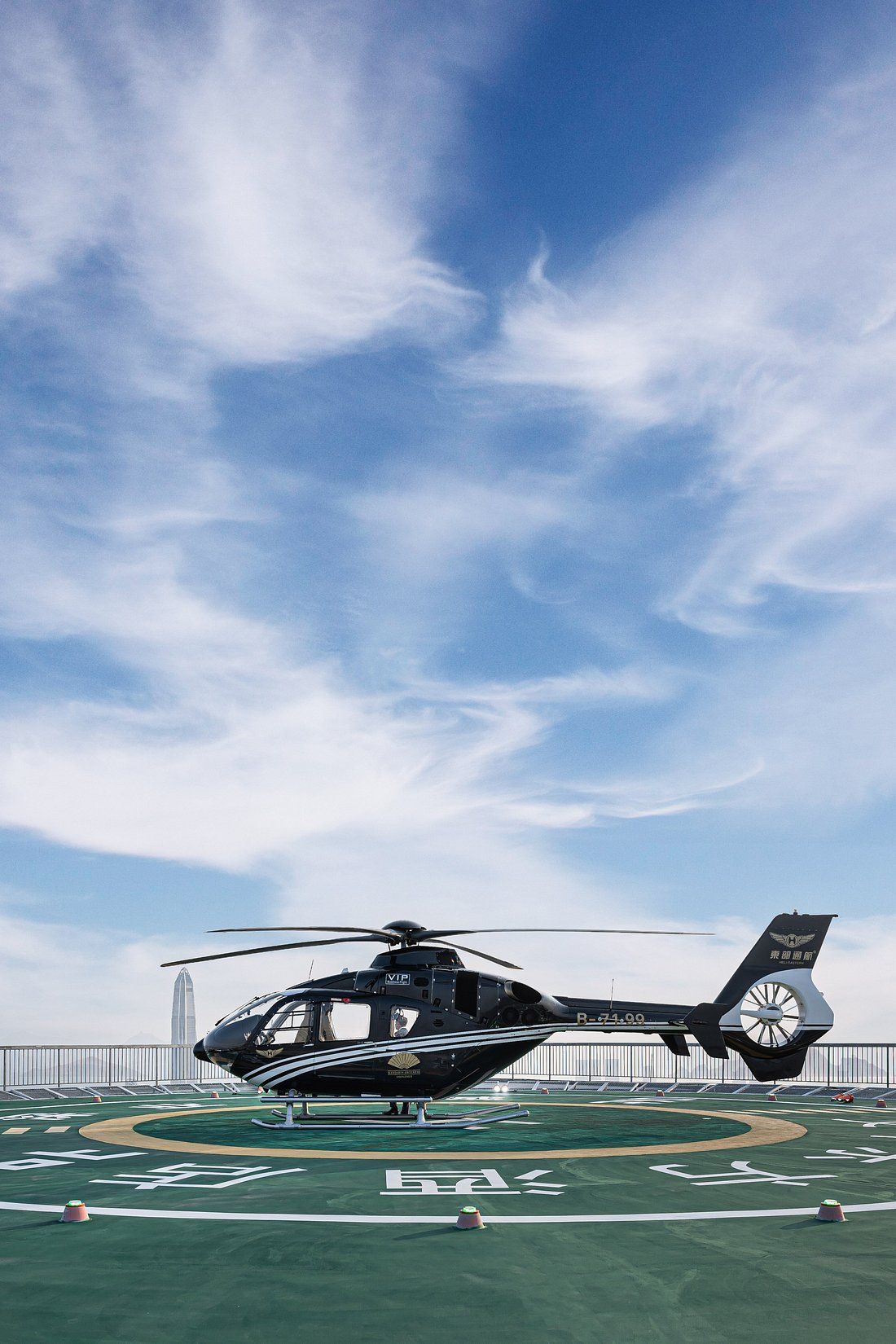
For a broader view, the hotel also promotes a bookable aerial journey departing from its helipad, subject to weather and operating conditions. On the ground, the Concierge can build an itinerary around the Museum of Contemporary Art and Urban Planning, Shenzhen Civic Centre, Ping An Finance Centre or Shenzhen Bay Park. UpperHills shopping and dining are connected directly to the hotel.
Families at Mandarin Oriental, Shenzhen
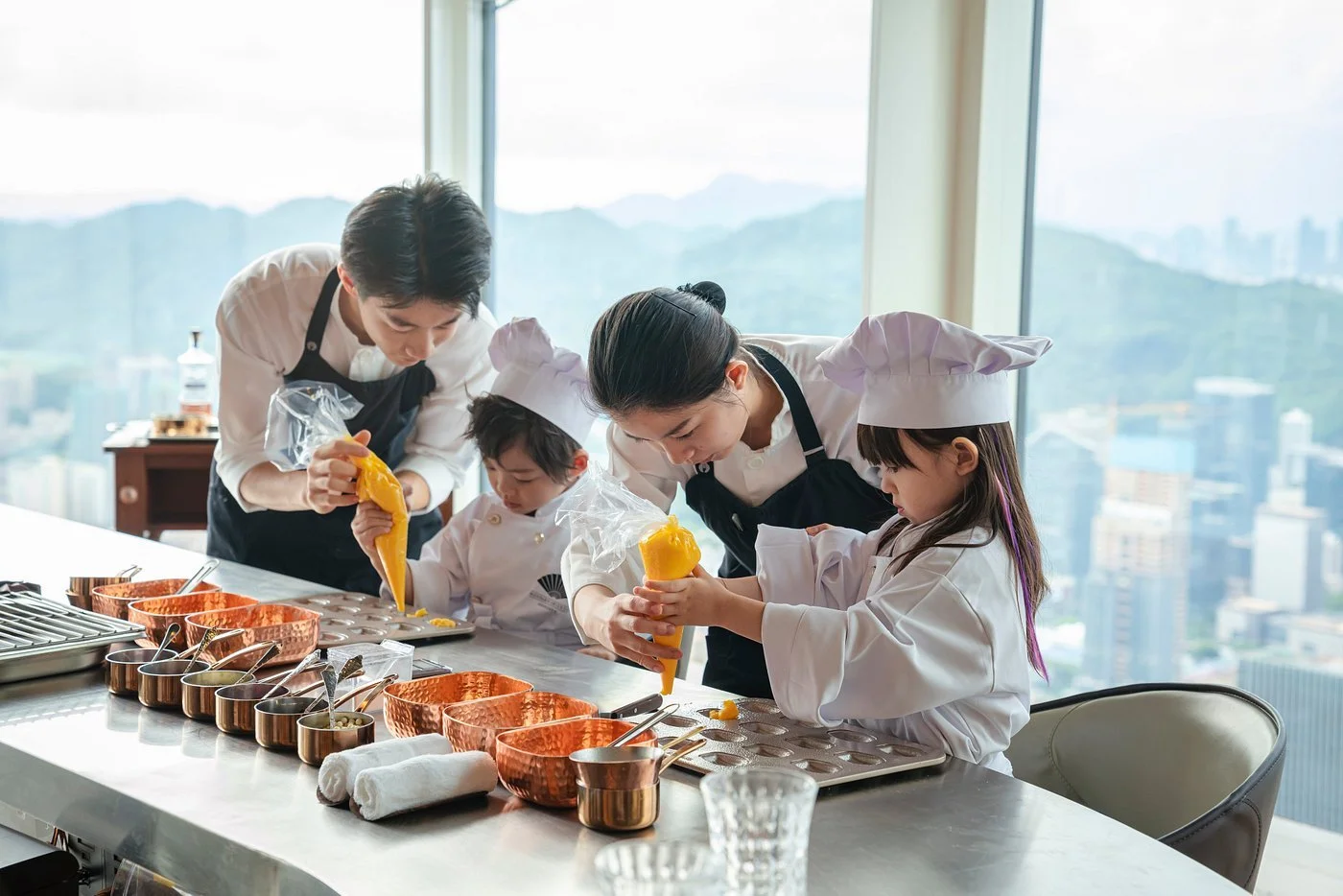
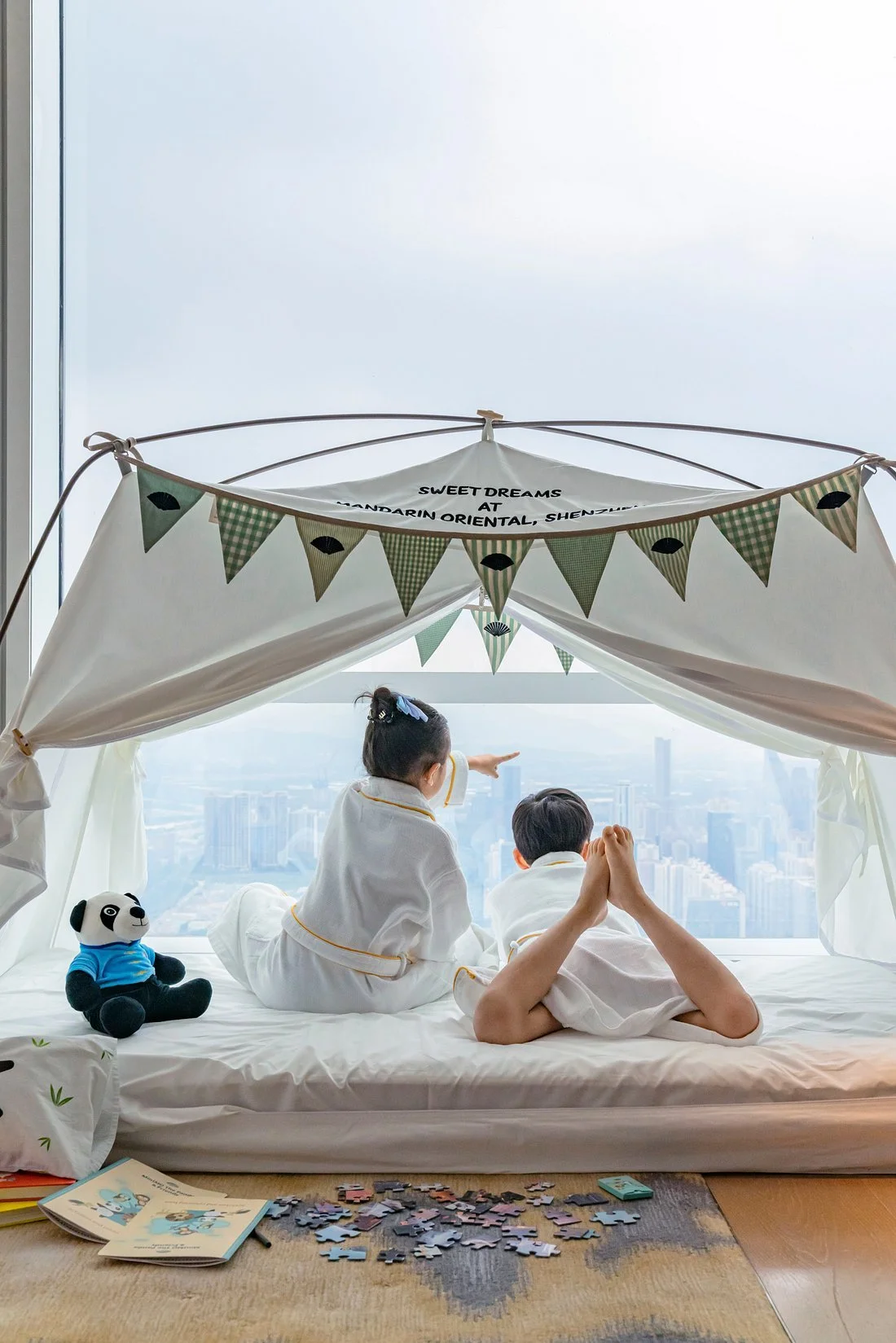
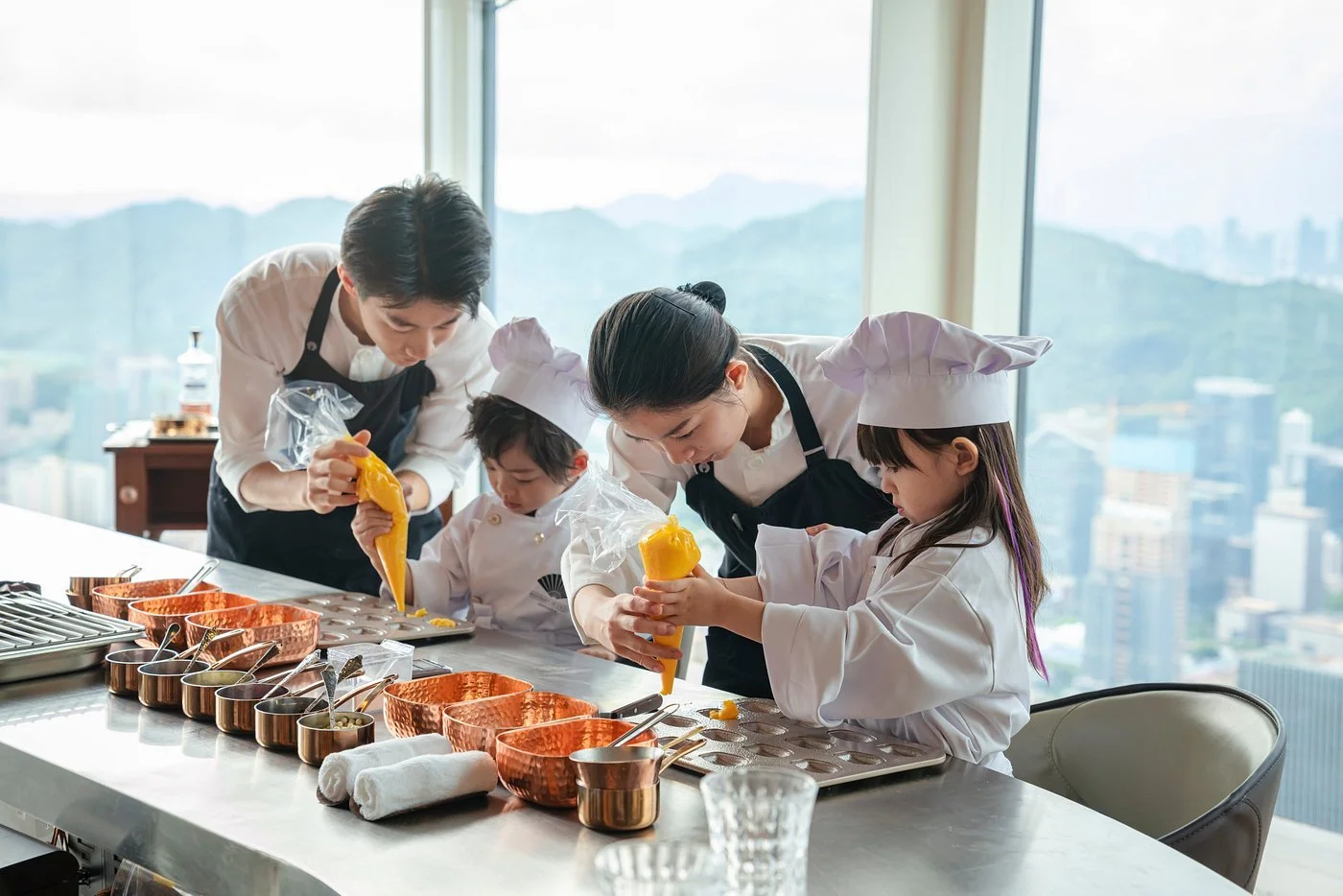
There is no permanent supervised kids club advertised at the hotel. Family support is instead woven through the stay. The 119-square-meter Family Deluxe View Room connects two guest rooms, several restaurants have children’s menus, and the Families by M.O. rate adds age-appropriate amenities and benefits that should be confirmed when booking.
The kite-flying experience is well suited to school-age children, and nearby parks provide outdoor time without a long transfer. Families should confirm age-specific pool hours and any childcare, crib or seasonal-activity needs before arrival.
Sustainability with Independent Verification
Mandarin Oriental, Shenzhen is certified to Global Sustainable Tourism Council standards and carries Forbes Travel Guide’s Responsible Hospitality VERIFIED badge. The property reports that it has removed single-use plastics, replacing them with glass-bottled water, recyclable minibar packaging and refillable bathroom amenities. Full LED lighting and other energy-saving building systems address day-to-day consumption.
The hotel also follows responsible agricultural and seafood purchasing guidelines and uses certified cage-free eggs. Its local partnership with the Mangrove Conservation Foundation directs a small donation from selected coffee and noodle sales toward wetland conservation and public education in Shenzhen Bay.
Getting There
By Car from Shenzhen Bao’an International Airport: The journey to Mandarin Oriental, Shenzhen takes approximately 30 to 40 minutes, depending on traffic. A private chauffeured transfer is the most seamless option for international arrivals and travelers with luggage.
By Car from Hong Kong International Airport: Allow approximately 50 to 60 minutes by car, although travel time can increase depending on traffic and immigration procedures at the Hong Kong–Shenzhen border.
By High-Speed Rail from Hong Kong: High-speed trains connect Hong Kong West Kowloon Station with Futian Railway Station, providing one of the most convenient ways to travel between Hong Kong and Shenzhen. From Futian Railway Station, Mandarin Oriental, Shenzhen is approximately five minutes away by car.
By Metro: Donggualing Metro Station is approximately a 10-minute walk from the hotel, providing convenient access to Shenzhen’s wider metro network.
From Huanggang Port: For travelers crossing into Shenzhen from Hong Kong via Huanggang Port, the hotel is approximately 20 minutes away by car, depending on traffic and border conditions.
For first-time visitors or travelers arriving with luggage, a private transfer remains the most comfortable and straightforward option.
Final Thoughts
Mandarin Oriental, Shenzhen is a modern urban hotel with a clear point of view. The rooms are genuinely spacious, the park-facing setting softens Futian’s density, and the dining program now carries international weight. It works especially well for travelers combining Shenzhen business with a few unhurried days in the city, or for Hong Kong visitors looking for a polished introduction to the mainland Greater Bay Area.
The strongest stays use the hotel as both lookout and base: breakfast above the city, time in the parks or museums, a late-afternoon return to the pool, then dinner on the 77th floor and cocktails on the 79th. Shenzhen can feel vast on a first visit. From here, its scale begins to make sense.