Ise-Shima, Japan | Amanemu
The Quiet Shores of Ago Bay
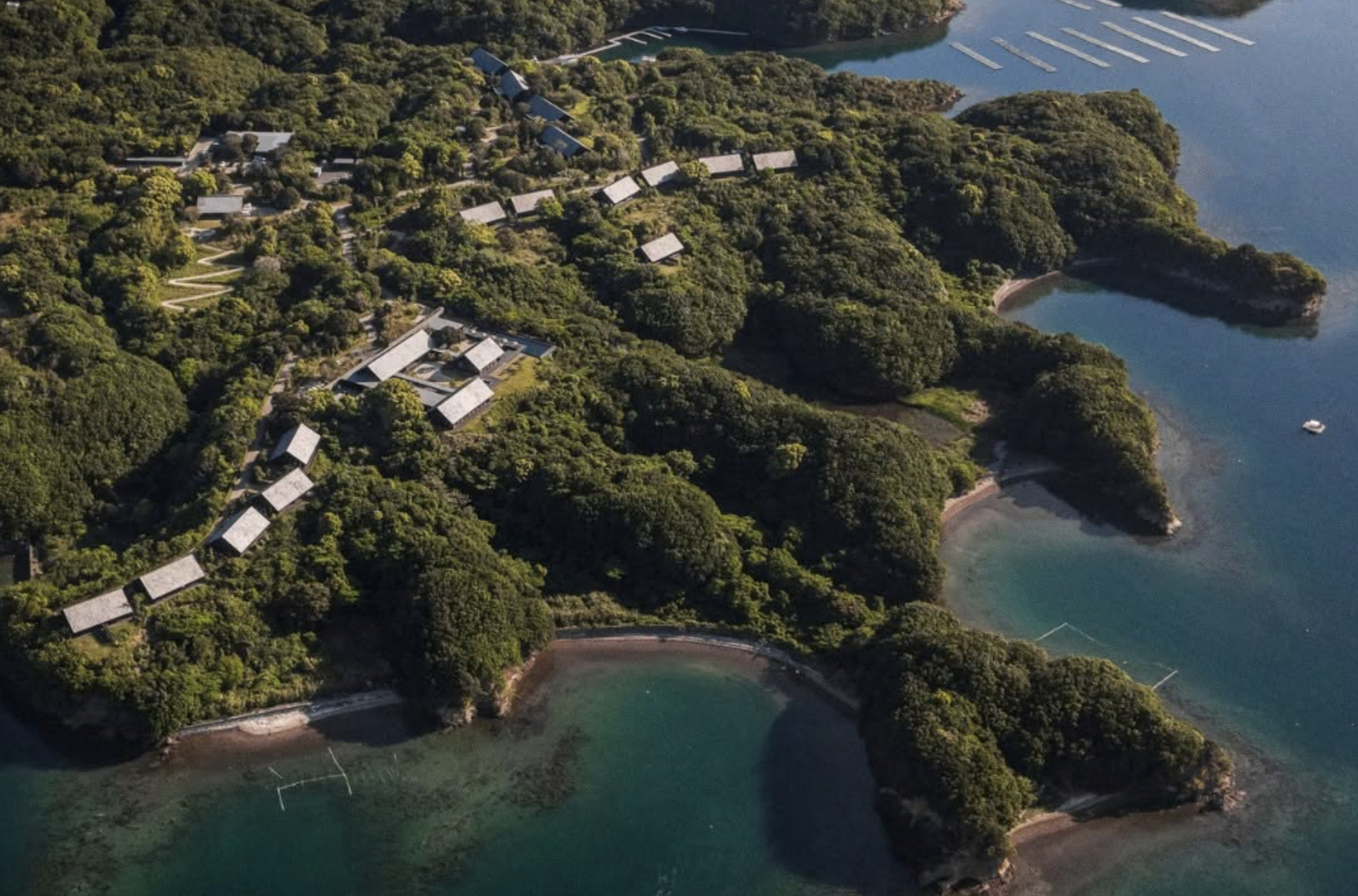
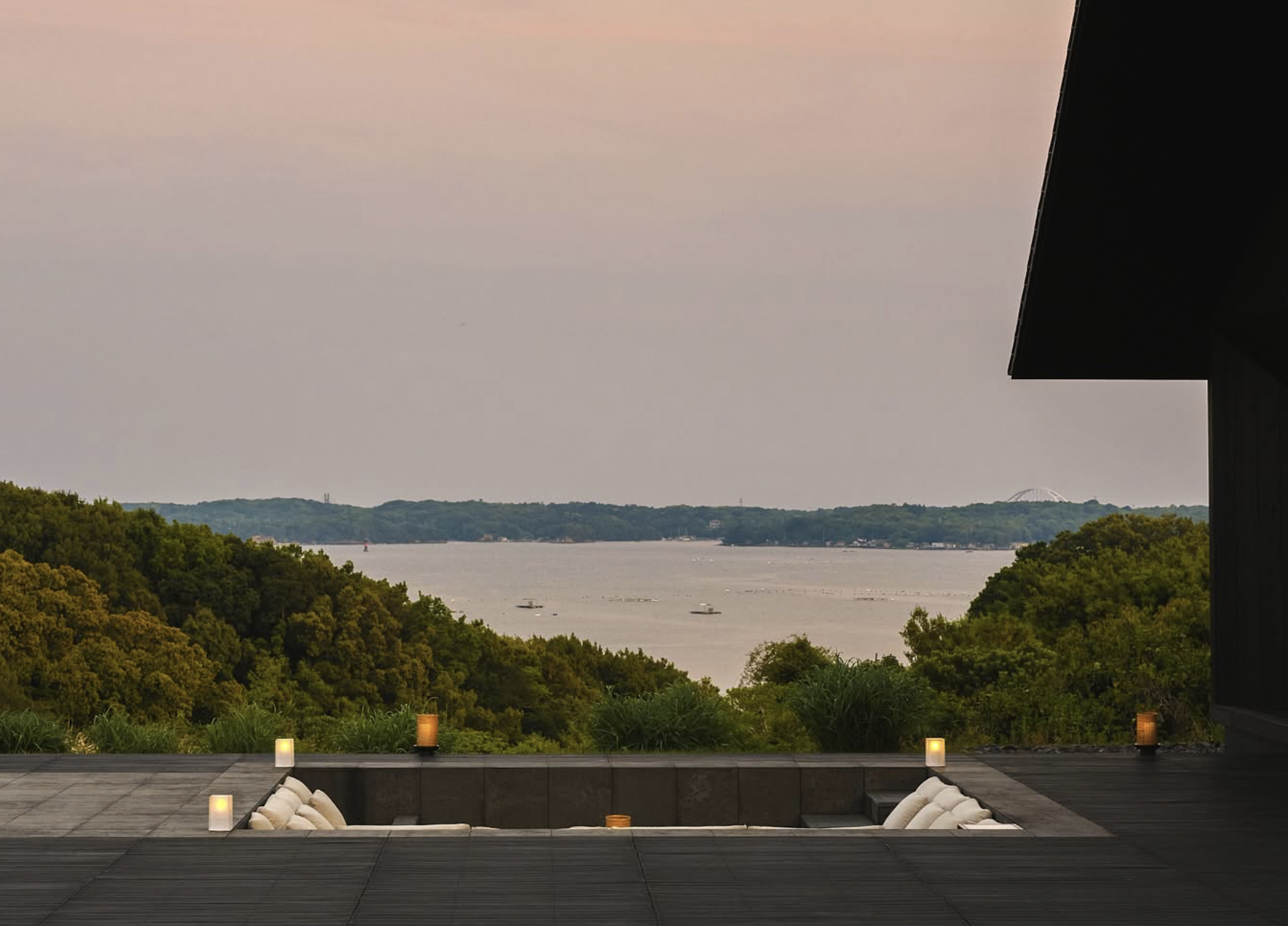
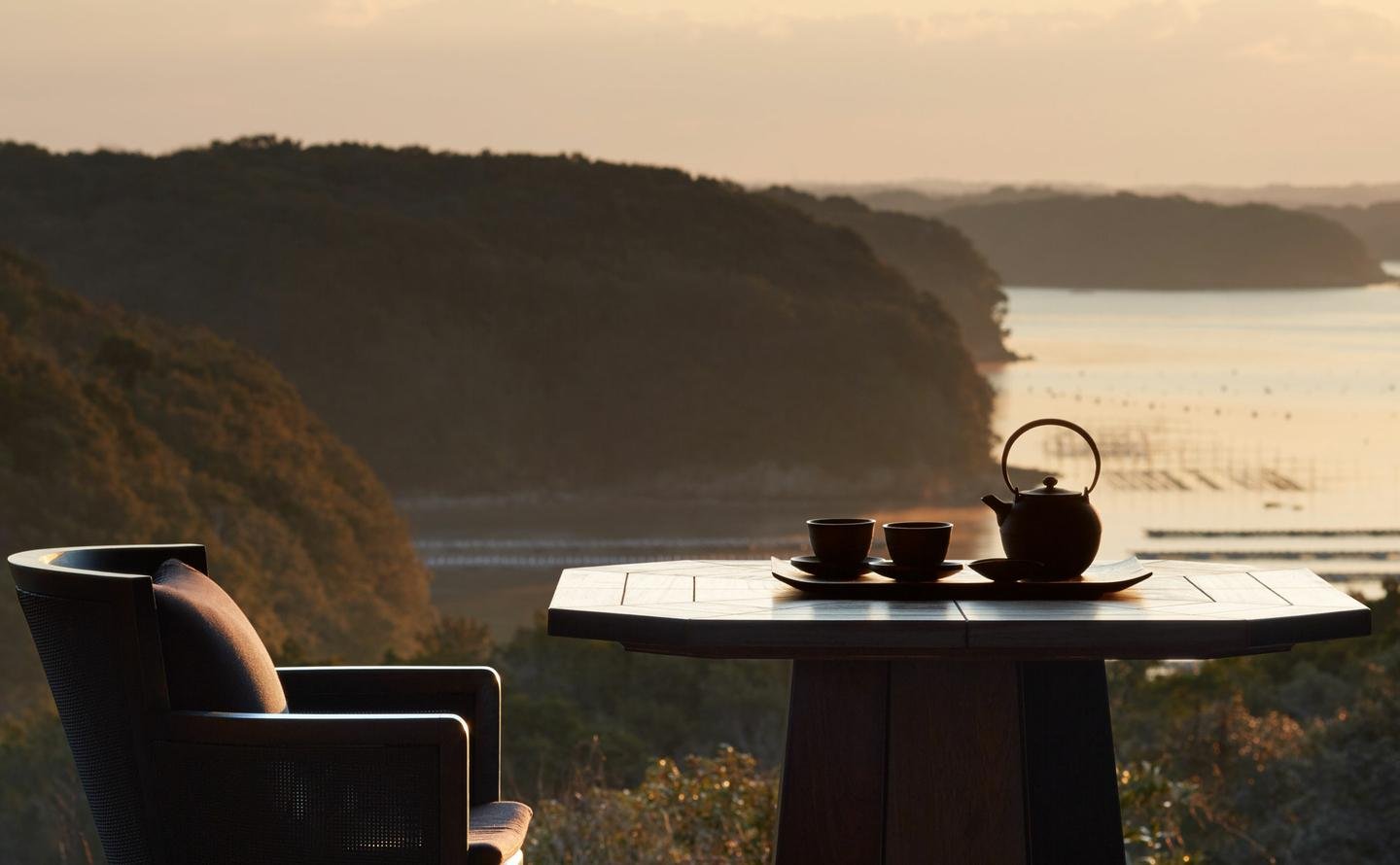
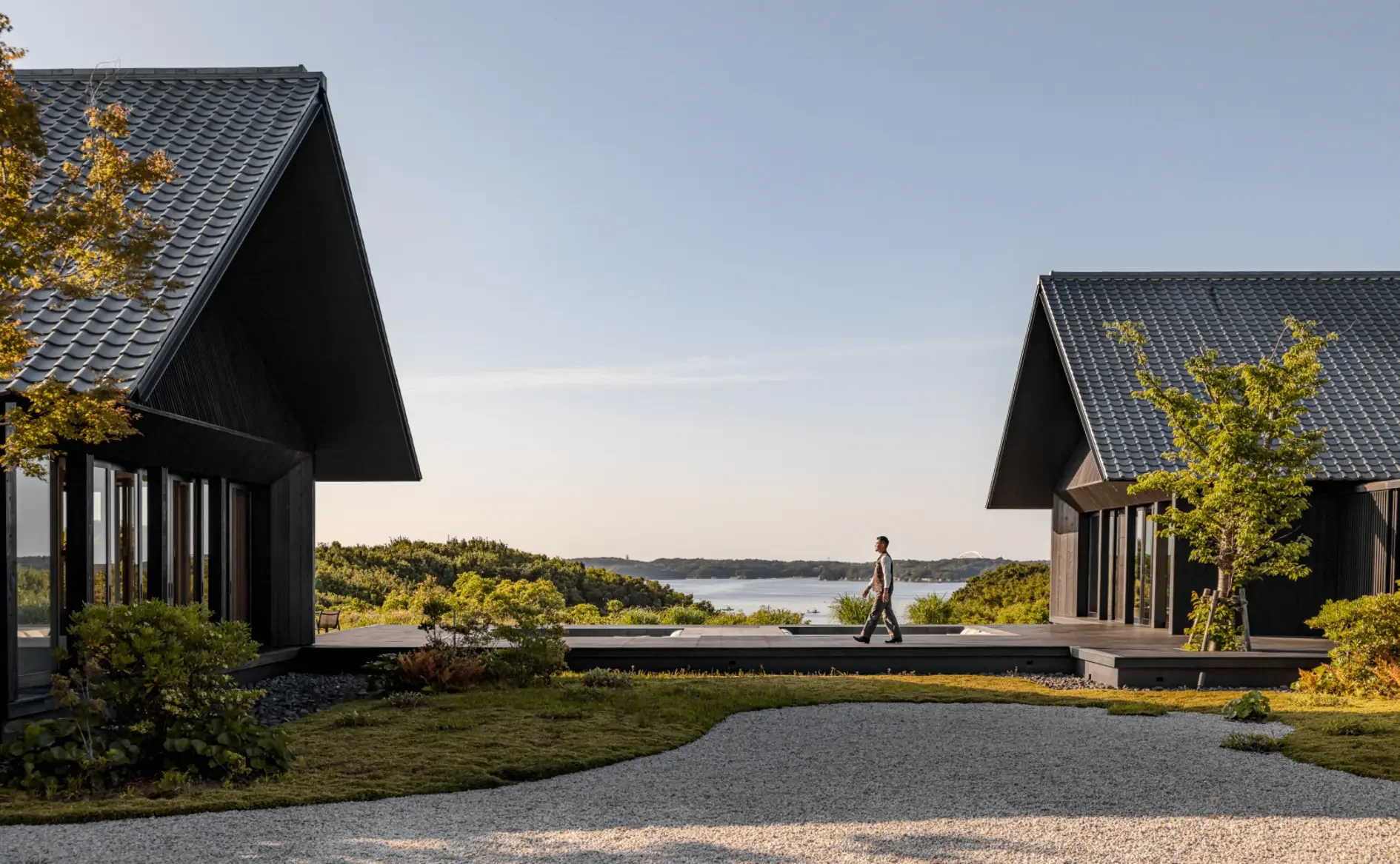
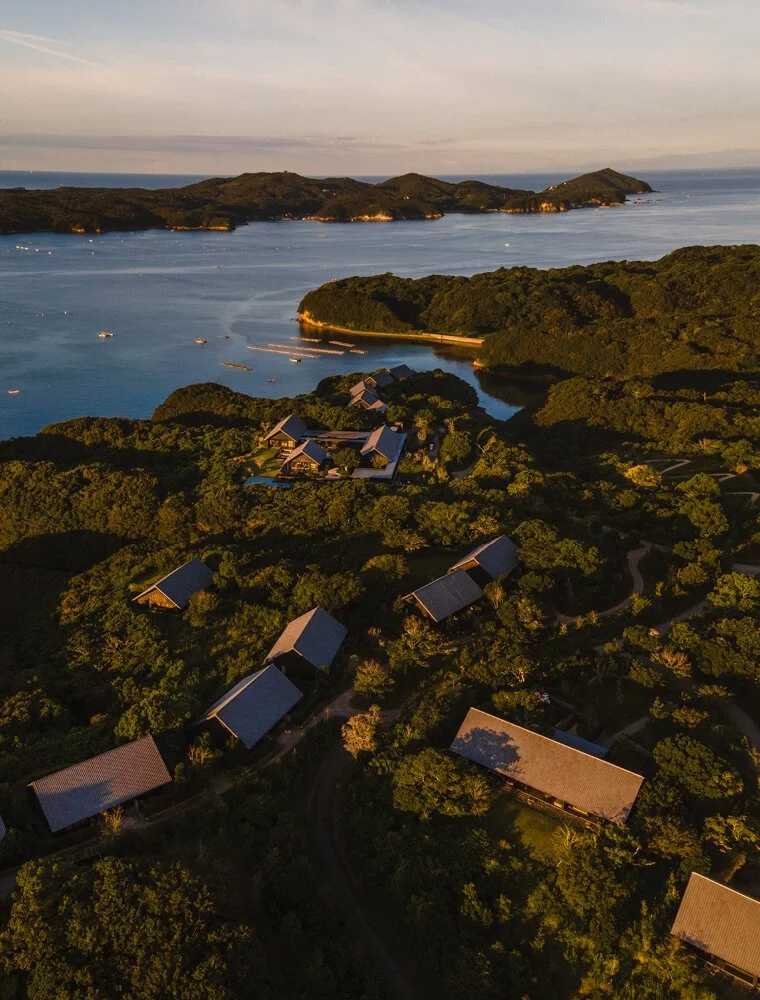
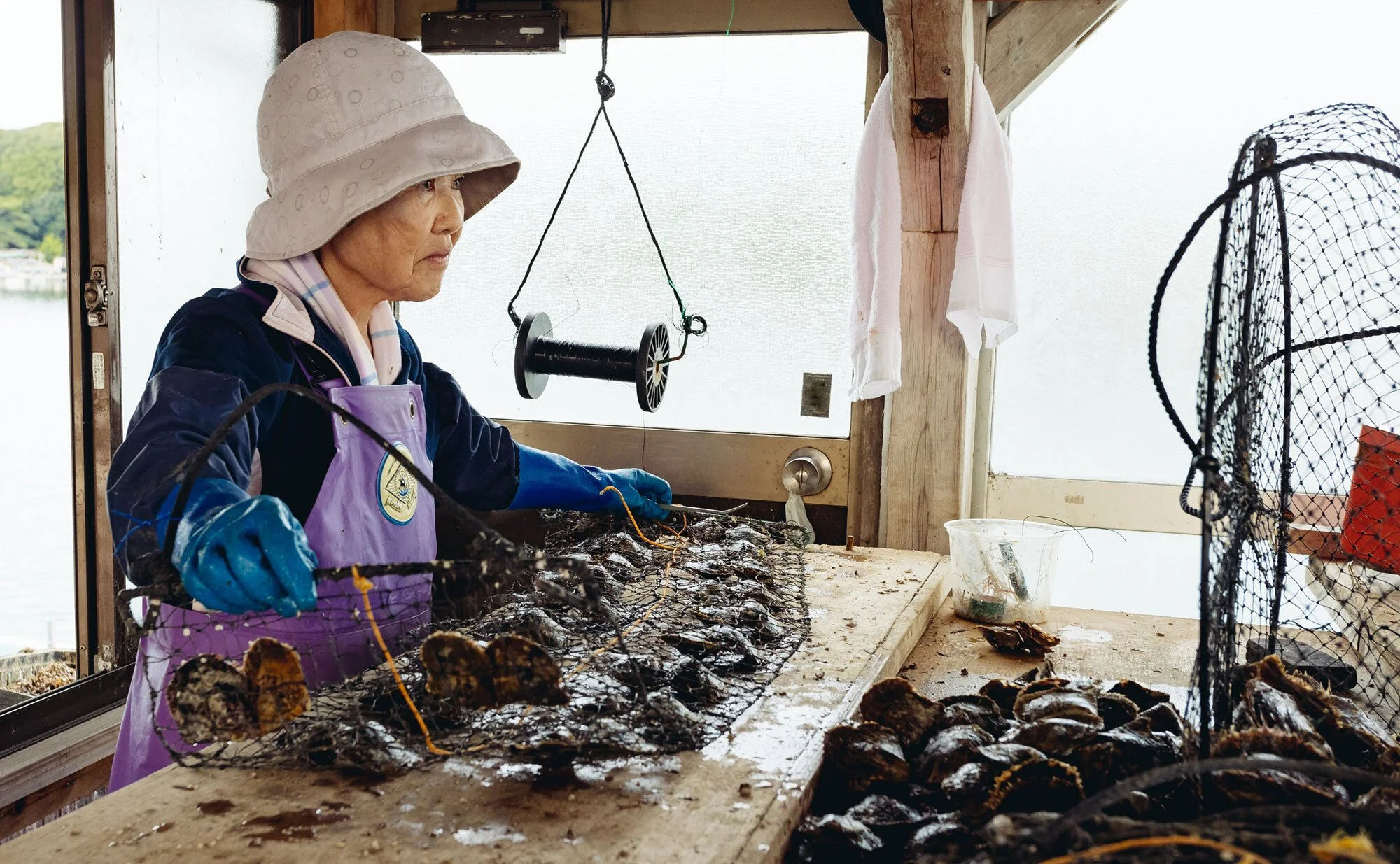
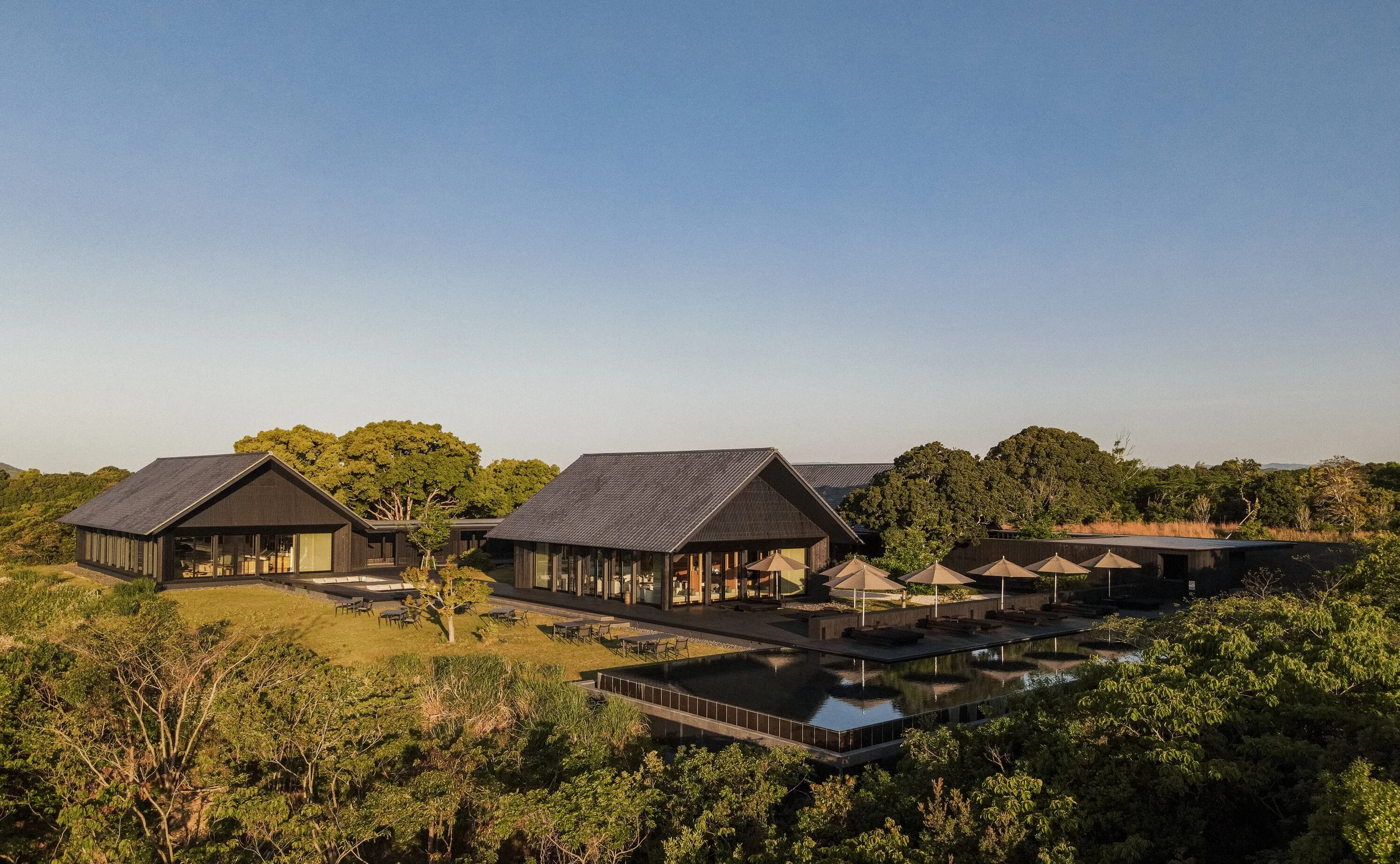
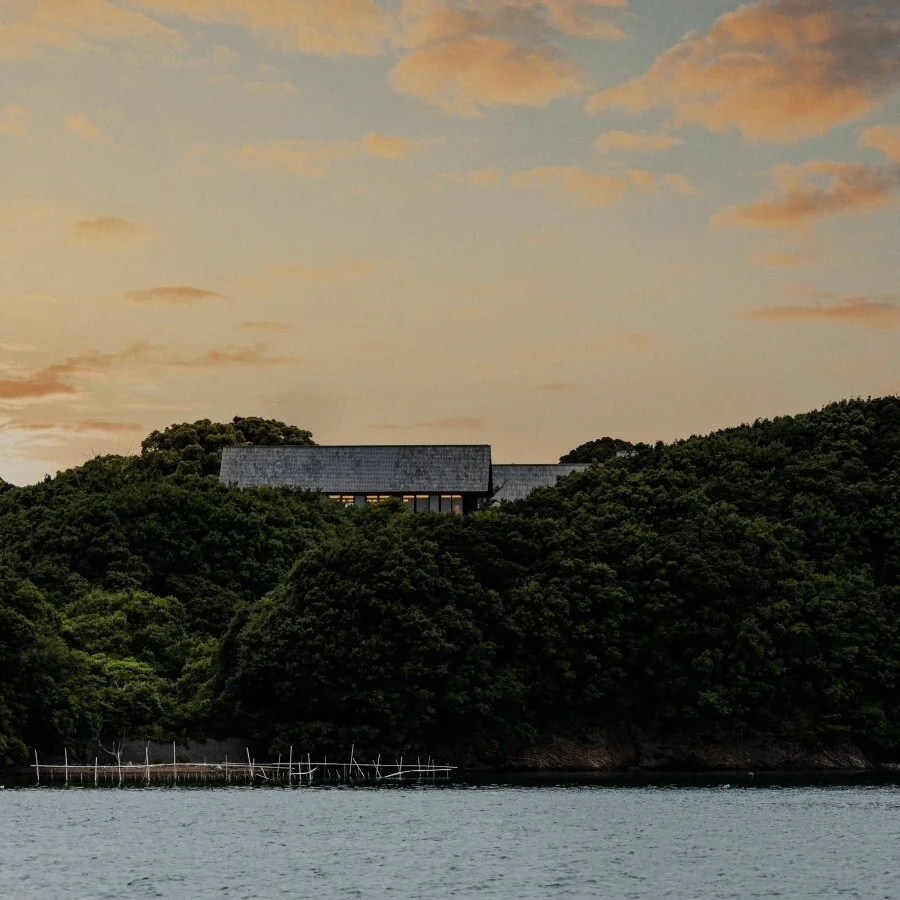
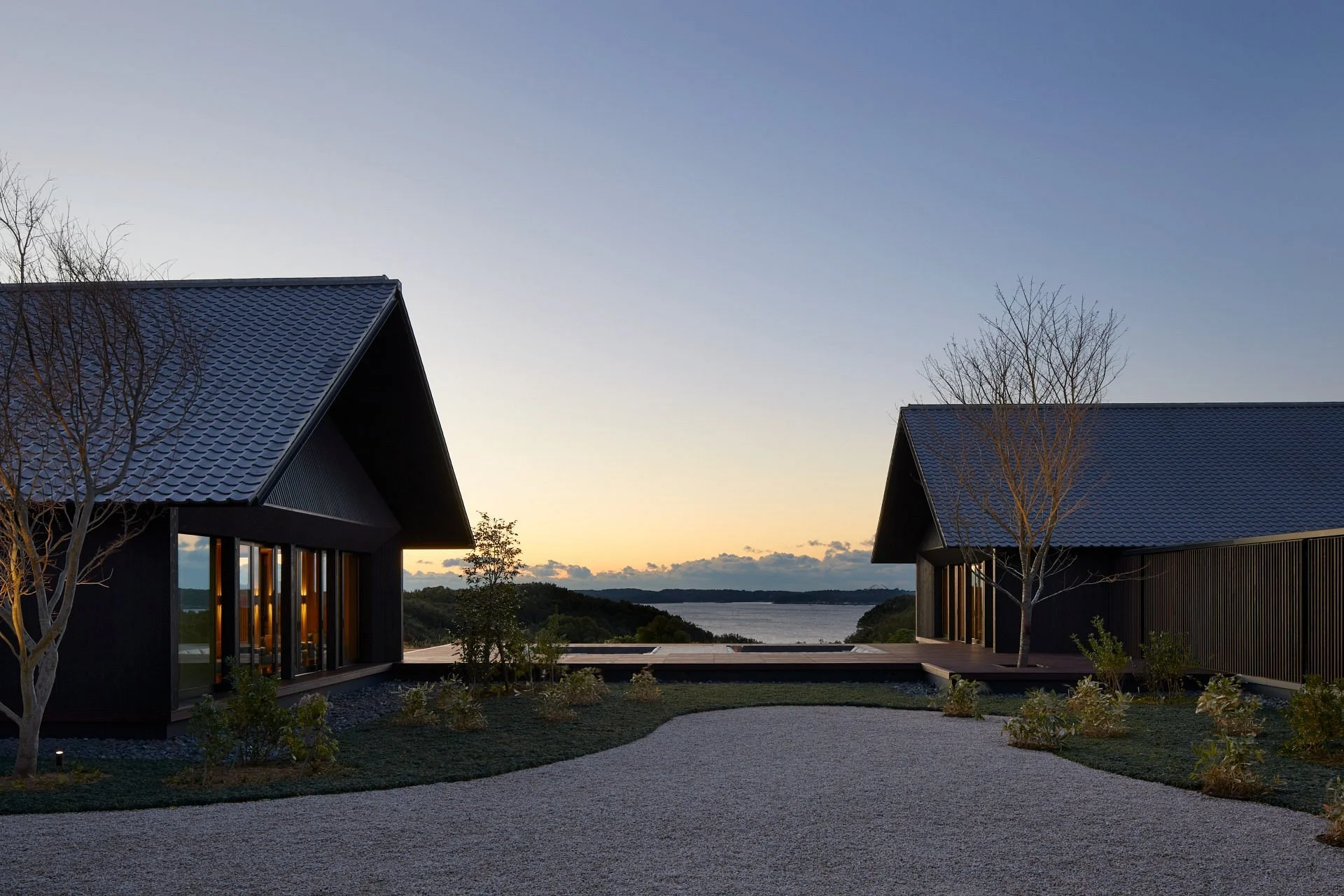
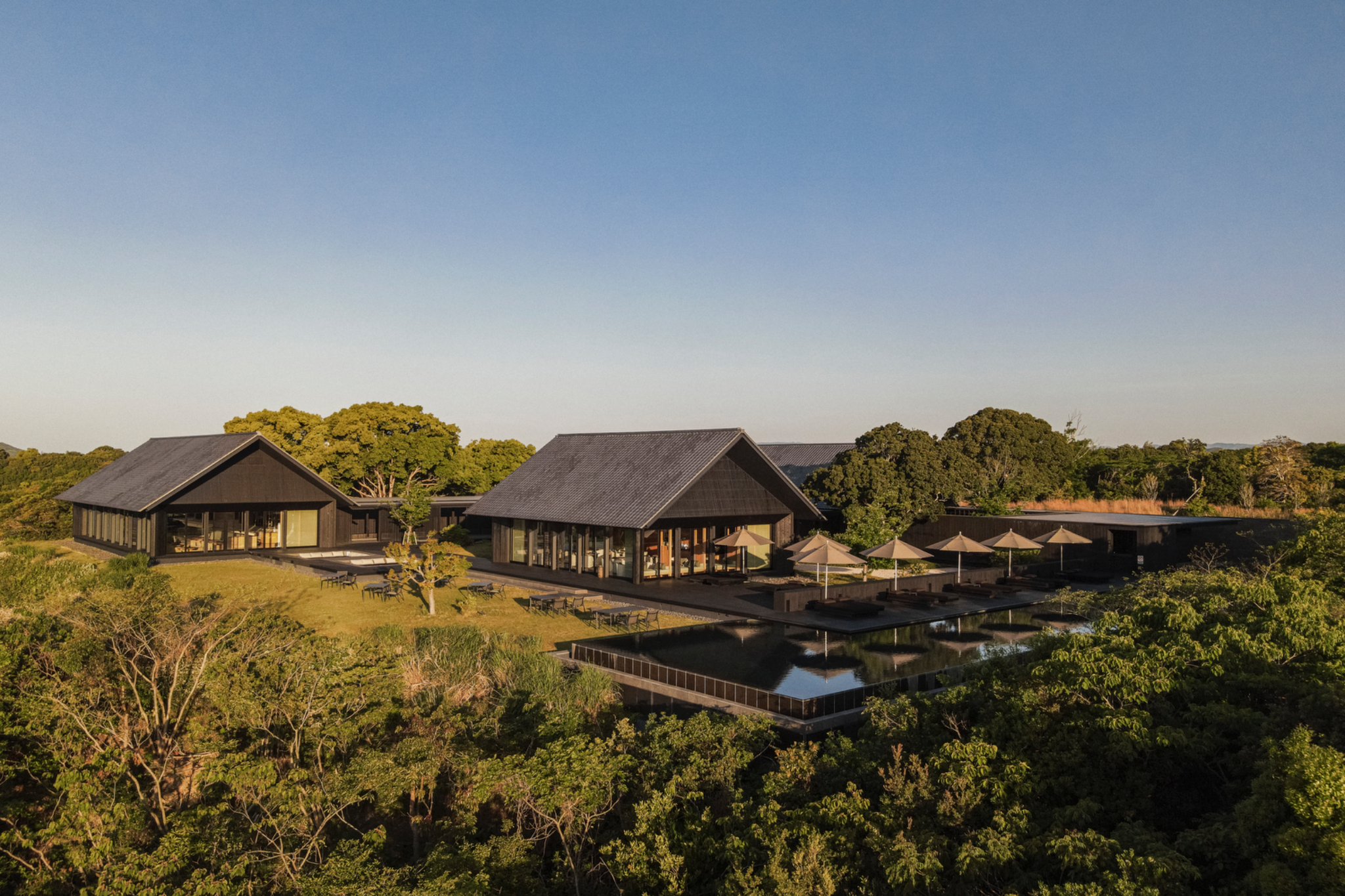
Above the deeply indented shoreline of Ago Bay, Amanemu brings the restorative traditions of Japanese hot-spring bathing into the forests of Ise-Shima National Park. This corner of Mie Prefecture is known for pearl cultivation, intricate coastal scenery and the sacred landscapes surrounding Ise Grand Shrine. The resort looks toward wooded islands and the waters of the bay, giving its low buildings a close relationship with the terrain rather than the scale of a conventional seaside hotel.
Amanemu is particularly rewarding for travelers who want to spend time in one place while getting to know a quieter part of Japan. A day might begin with a private onsen bath, continue with a visit to an ama diving community or a shrine precinct, and return to a dinner built around seafood and vegetables from the region. Its atmosphere comes from that balance between time set aside for rest and the opportunity to engage with local traditions.
Unlike a city hotel, the choice of view and accommodation arrangement changes the experience significantly. Suites have private hot-spring baths and generous verandas, while the two-bedroom villas provide gardens, separate bedroom pavilions and more space for a family or group. The resort works equally well as a dedicated wellness retreat or as the regional component of a larger Japan itinerary.
A New Interpretation of Japan’s Onsen Tradition
Amanemu opened in March 2016 as Aman’s first hot-spring resort and its second property in Japan after Aman Tokyo. Its name combines Aman’s association with peace and the Japanese word nemu, meaning joy. The setting on Ago Bay was chosen in part for the surrounding national park and natural hot-spring water, allowing bathing to become a defining part of the stay rather than an optional spa appointment.
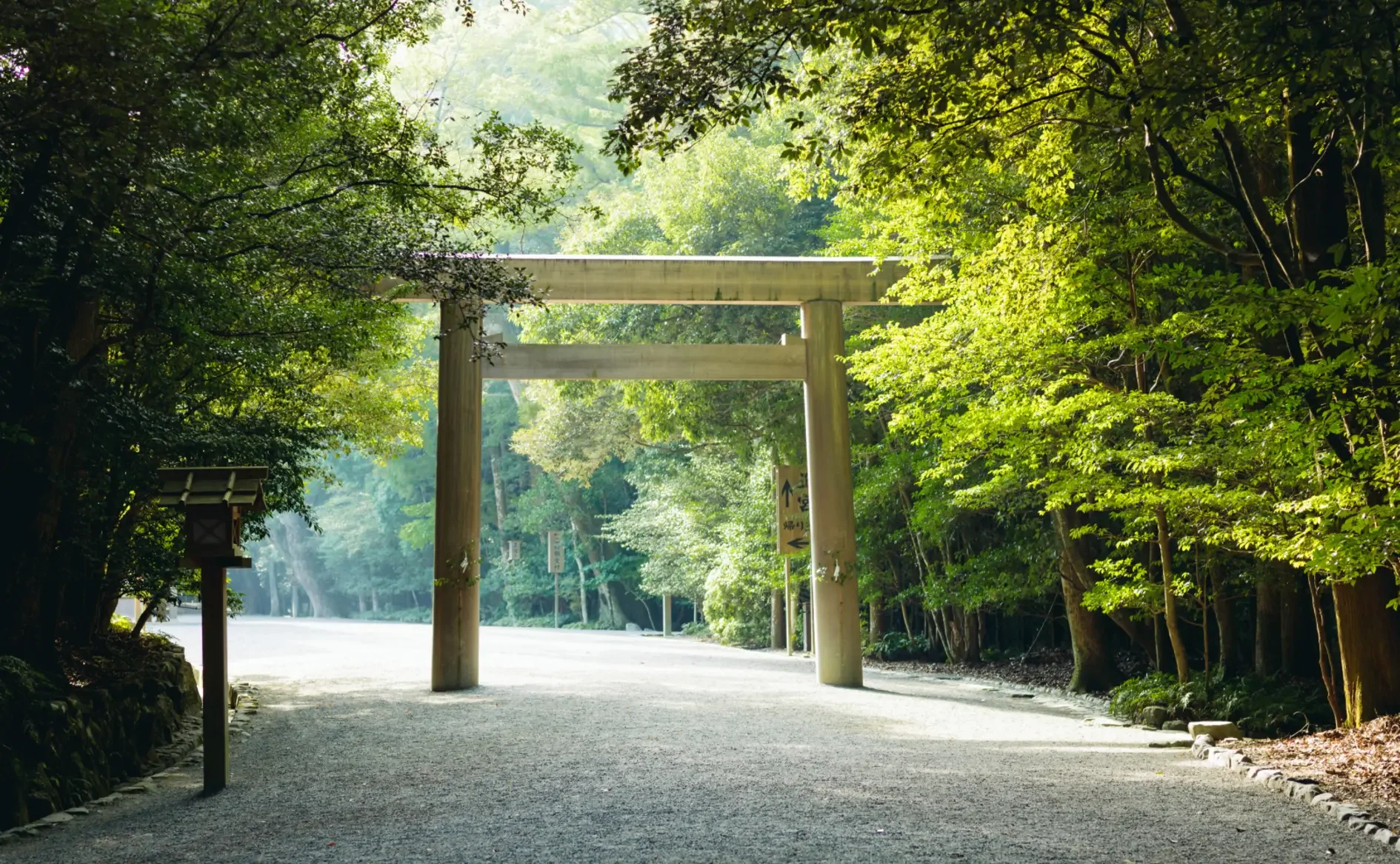
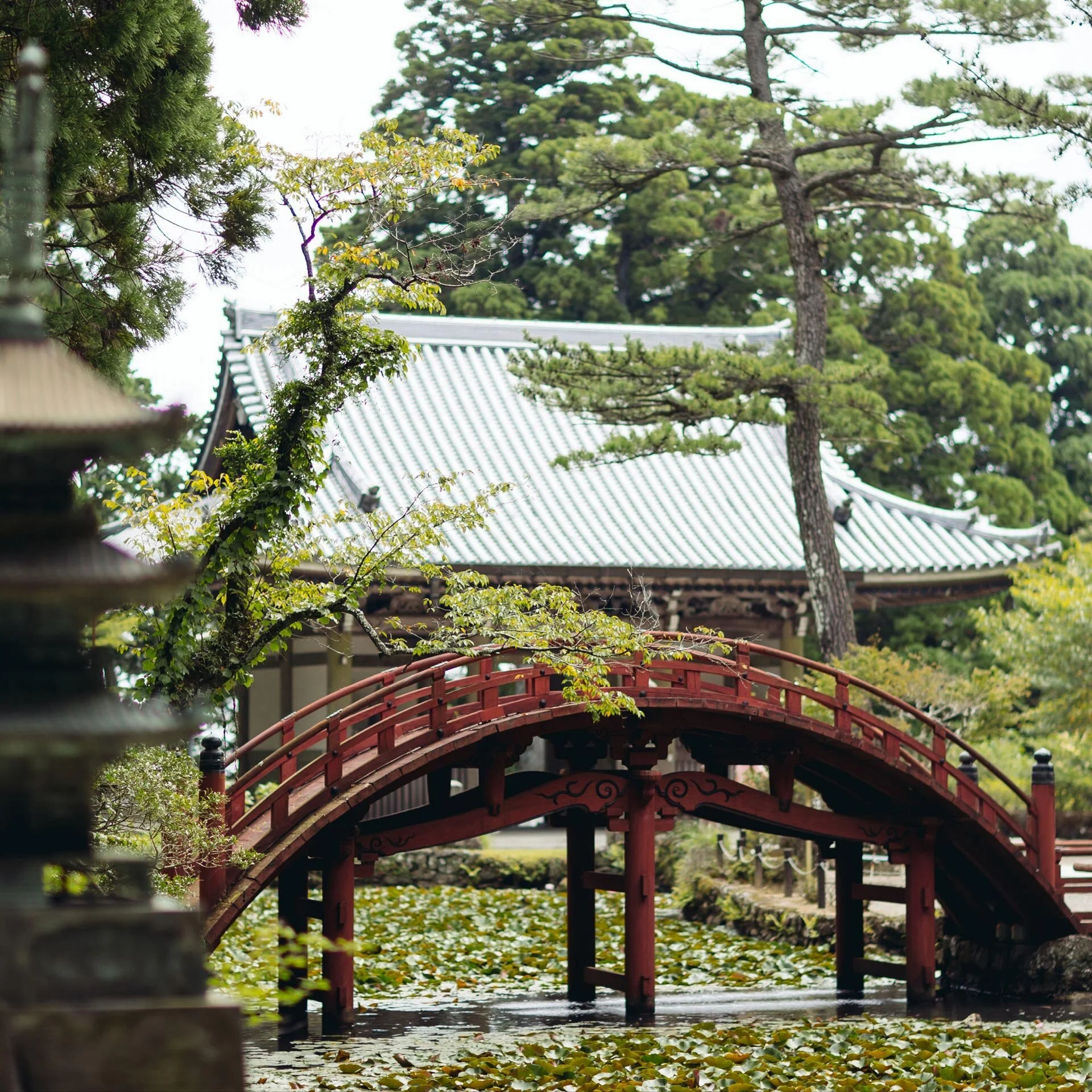
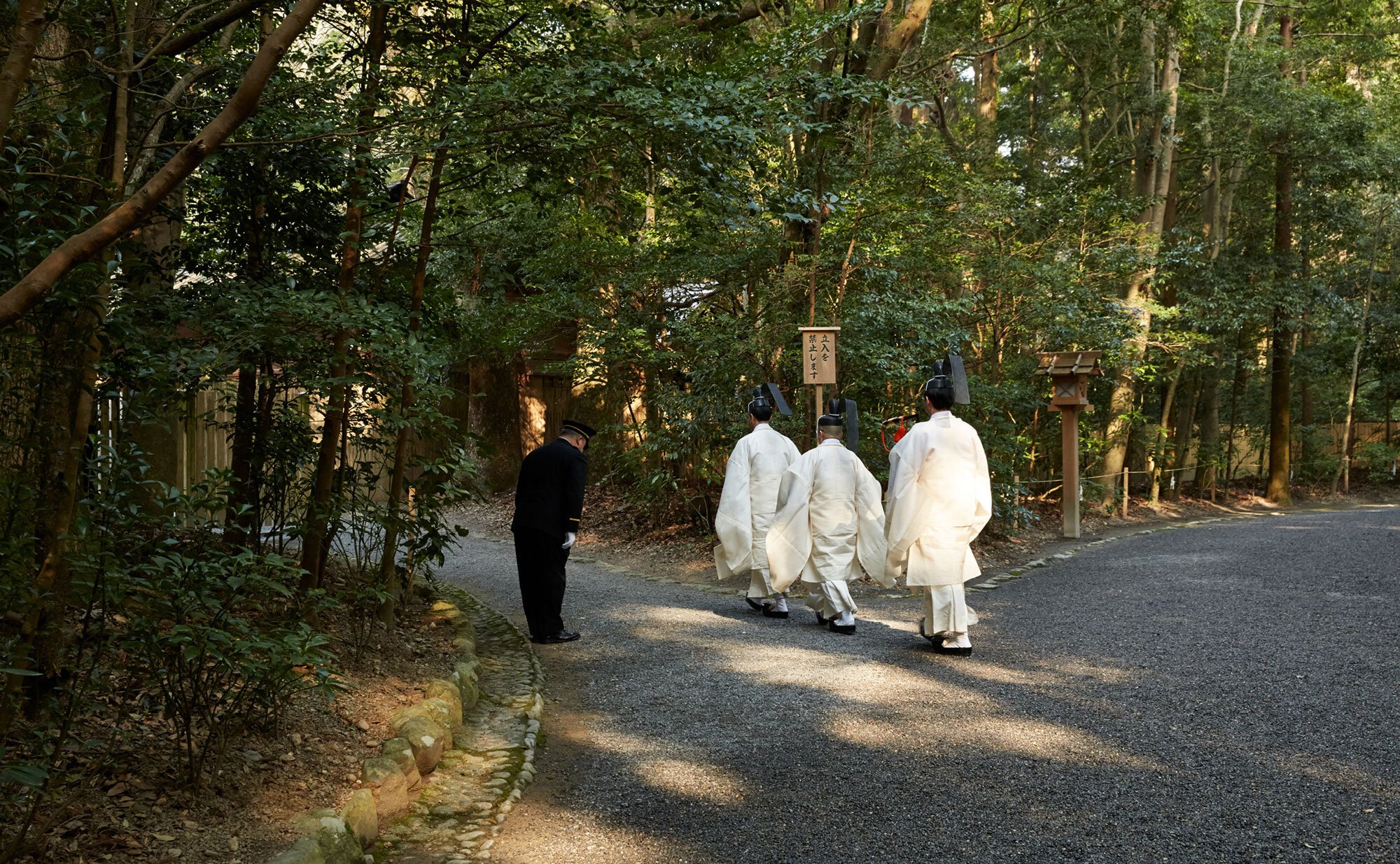
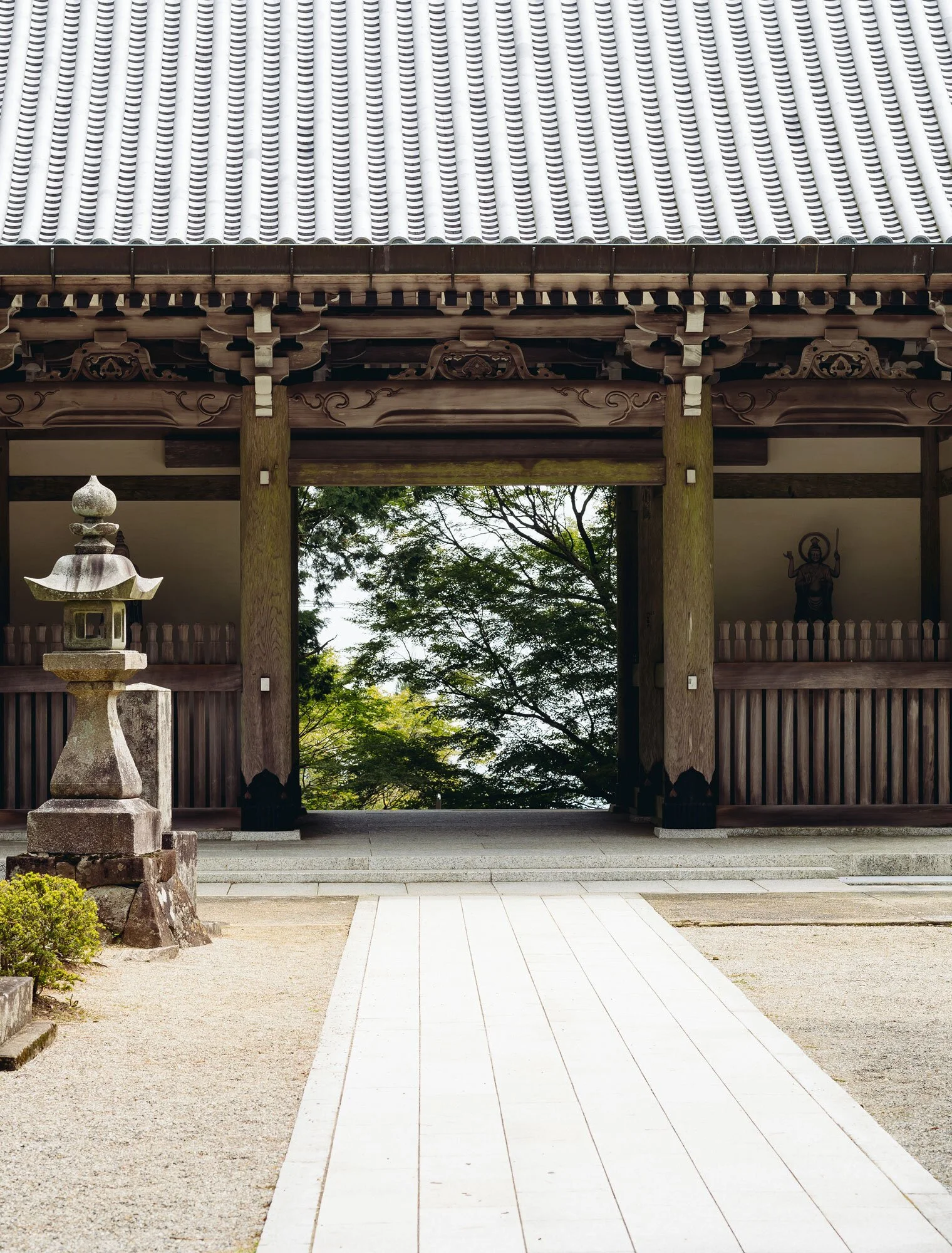
The wider region has a long history of pilgrimage, fishing and pearl cultivation. Ise Grand Shrine is among Japan’s most culturally significant Shinto sites, while the coastal communities of the Shima Peninsula have relied on the changing seasons of the bay for generations. Amanemu draws from these histories without attempting to recreate a historic inn. Instead, it translates elements of traditional ryokan hospitality into a contemporary resort of individual suites and villas.
The property began with 24 suites and four villas; additional villas were completed in 2020. Its development was planned to respect the wooded slopes, and the landscape design explicitly sought to restore local vegetation on land previously affected by earlier resort uses. That history helps explain the generous green areas and careful transitions between buildings and forest.
Kerry Hill’s Architecture Among the Trees
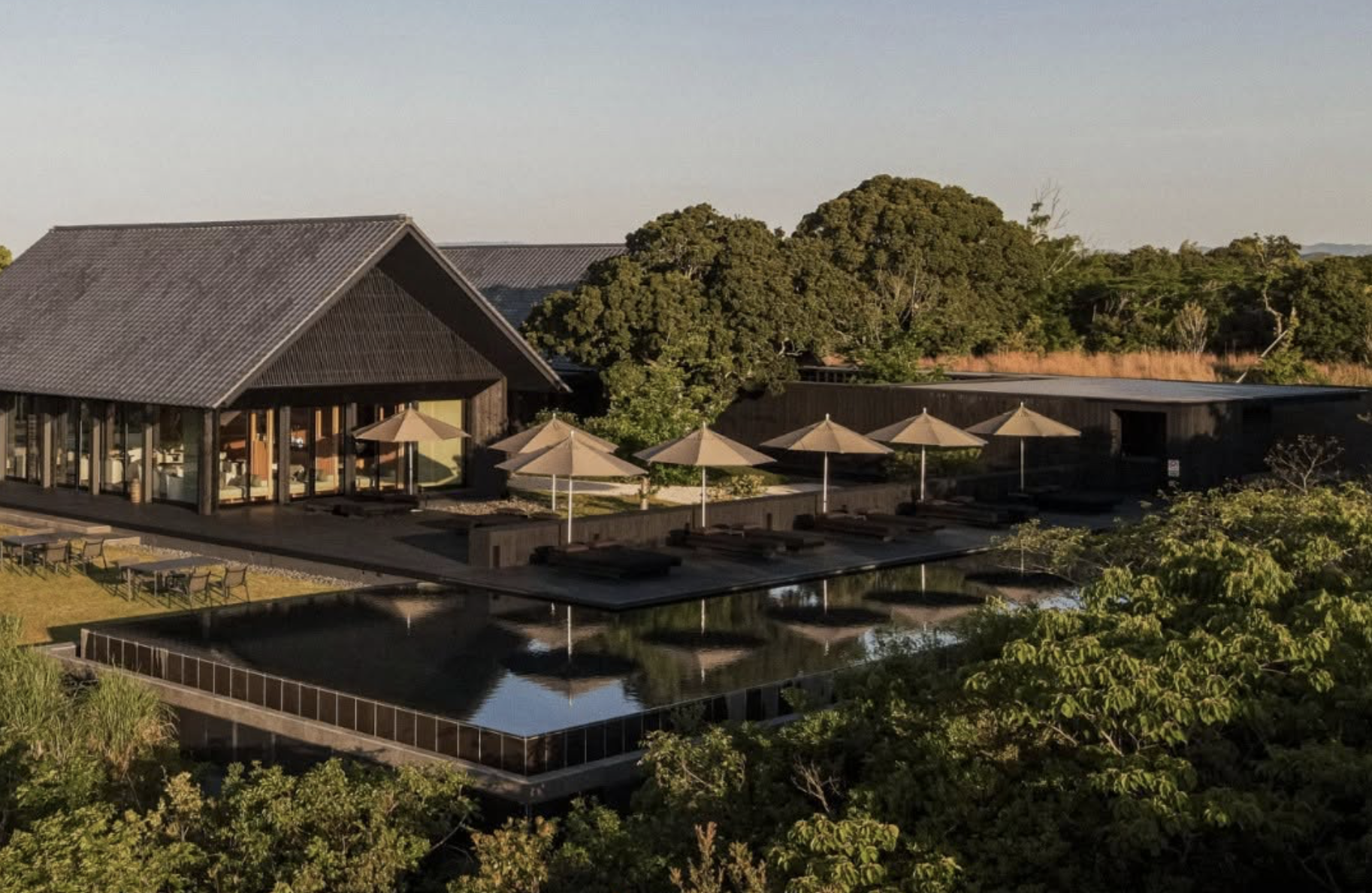
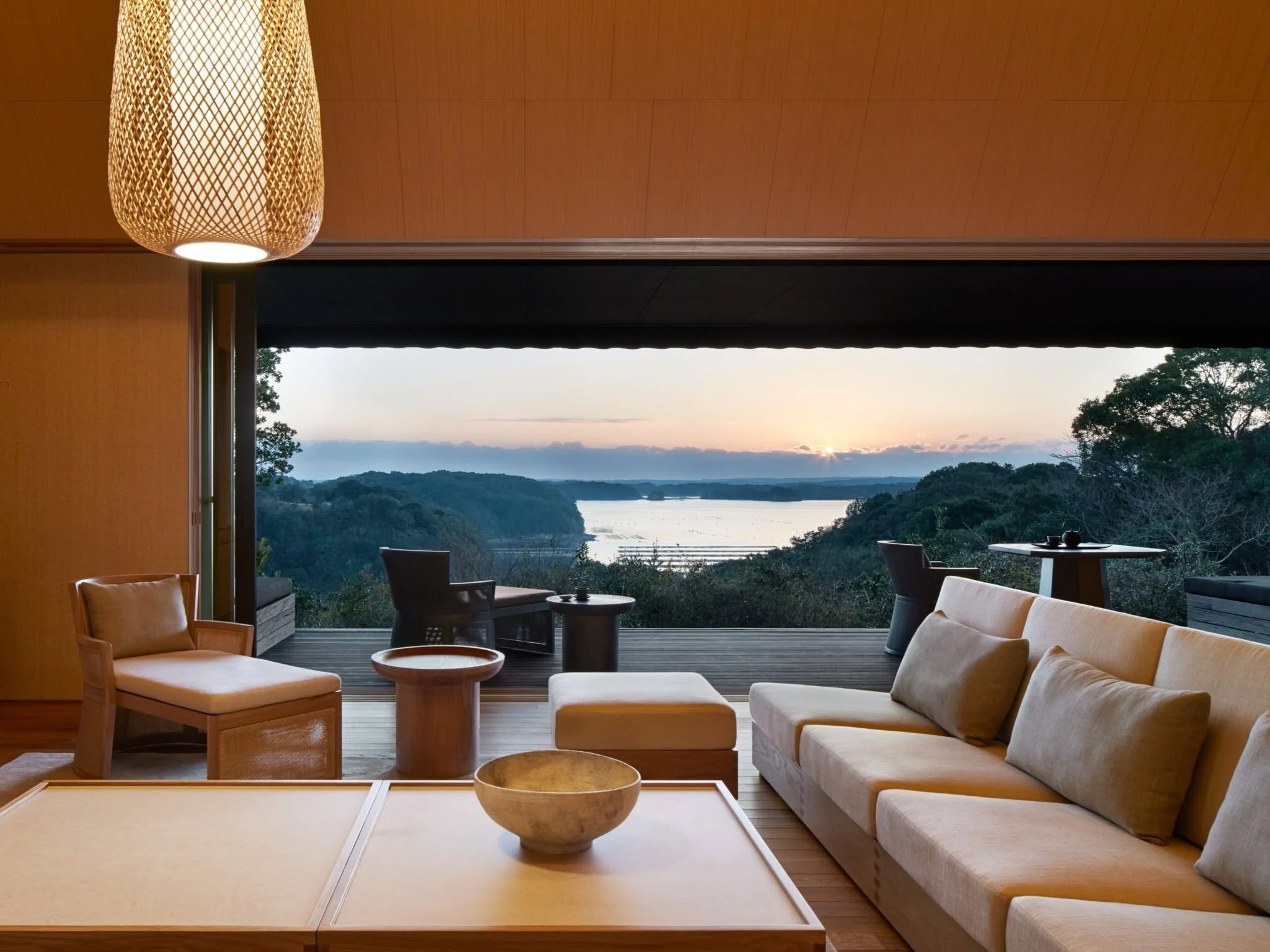
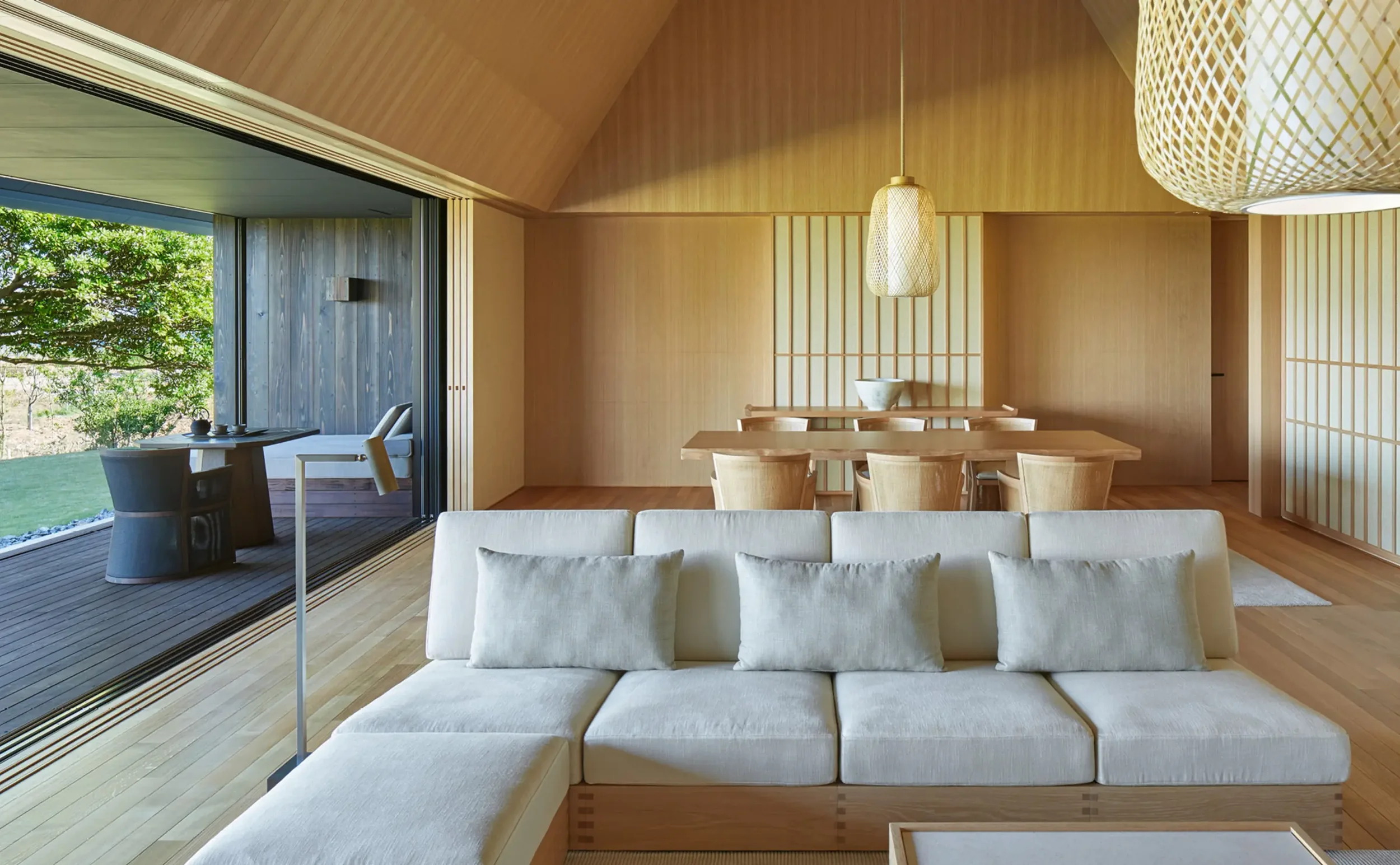
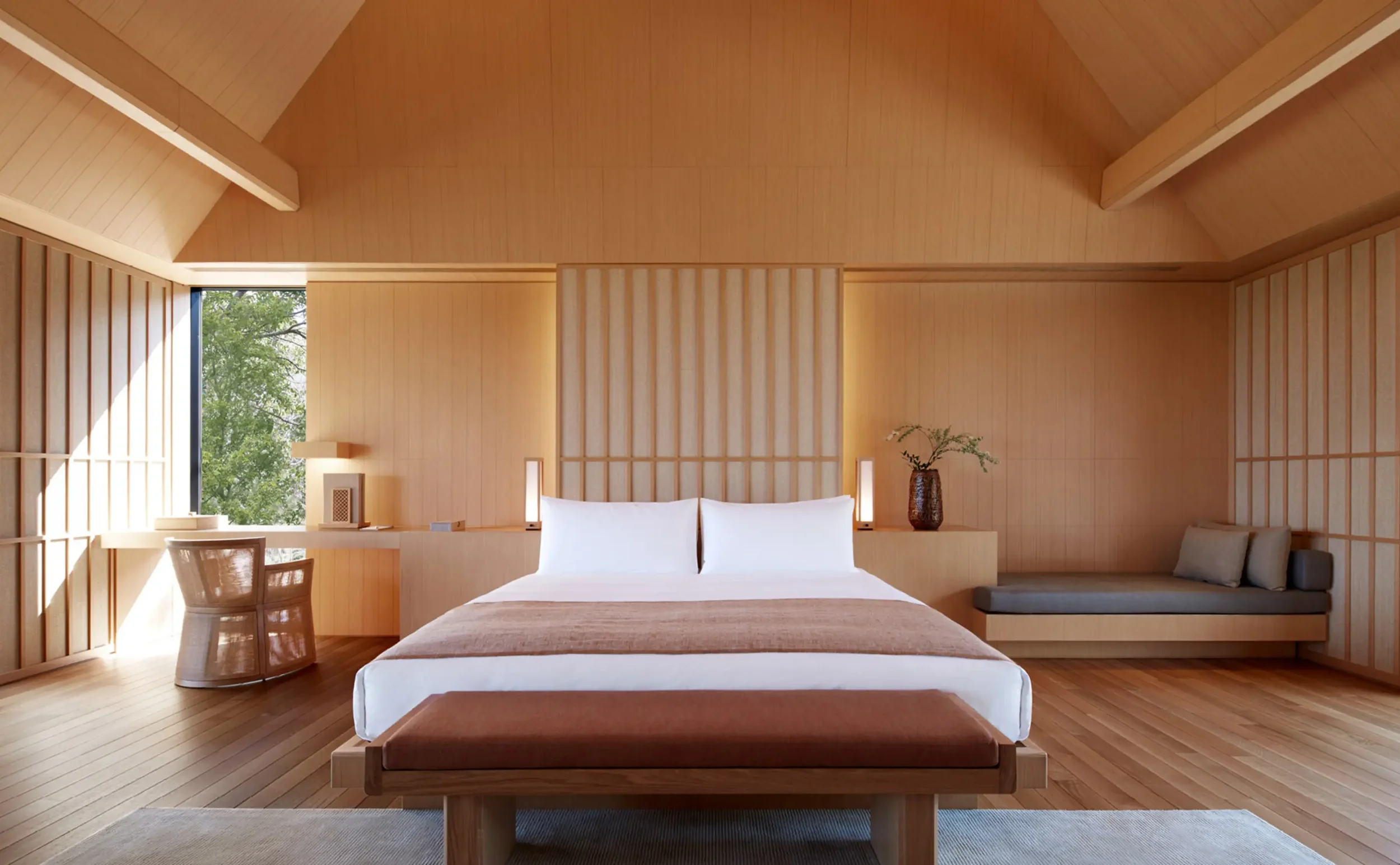
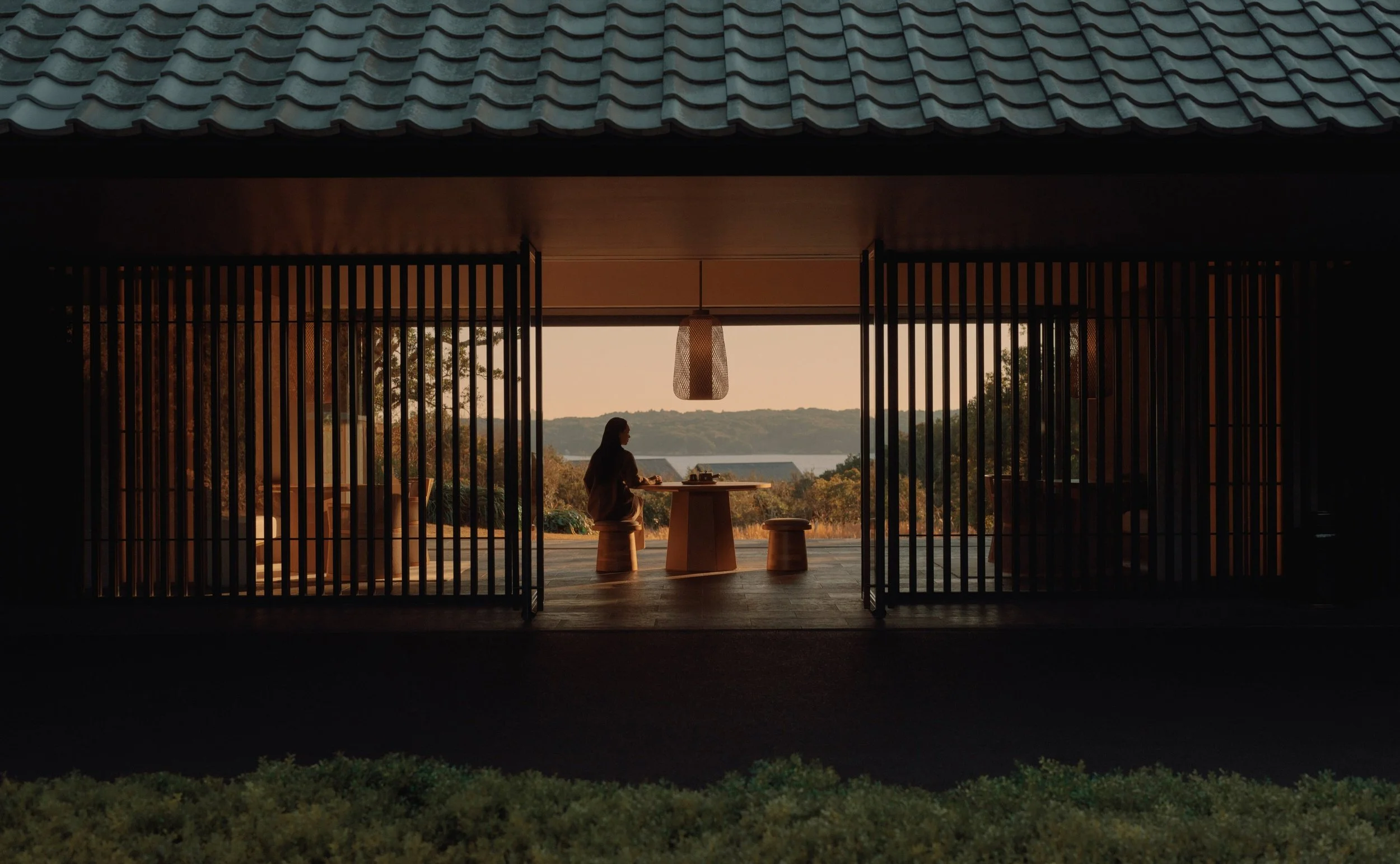
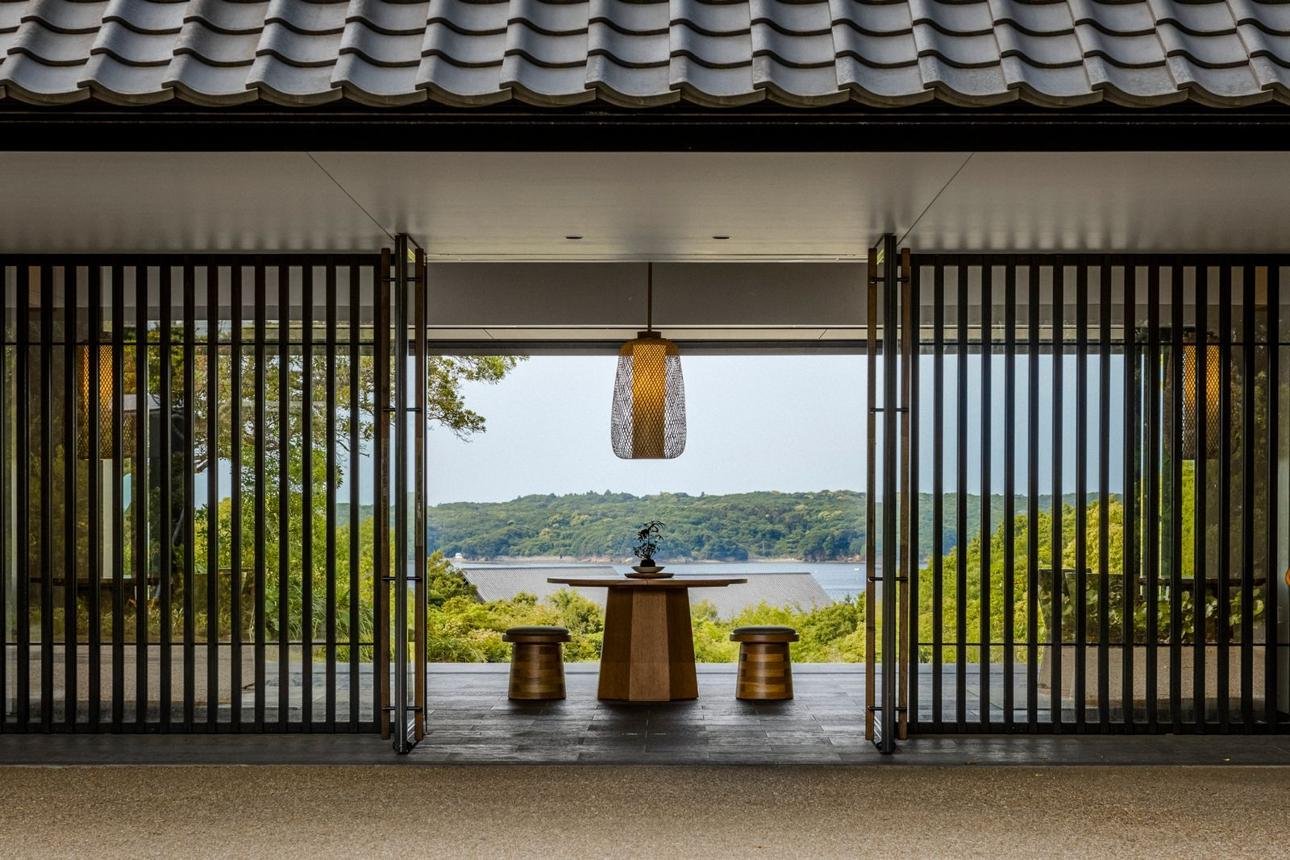
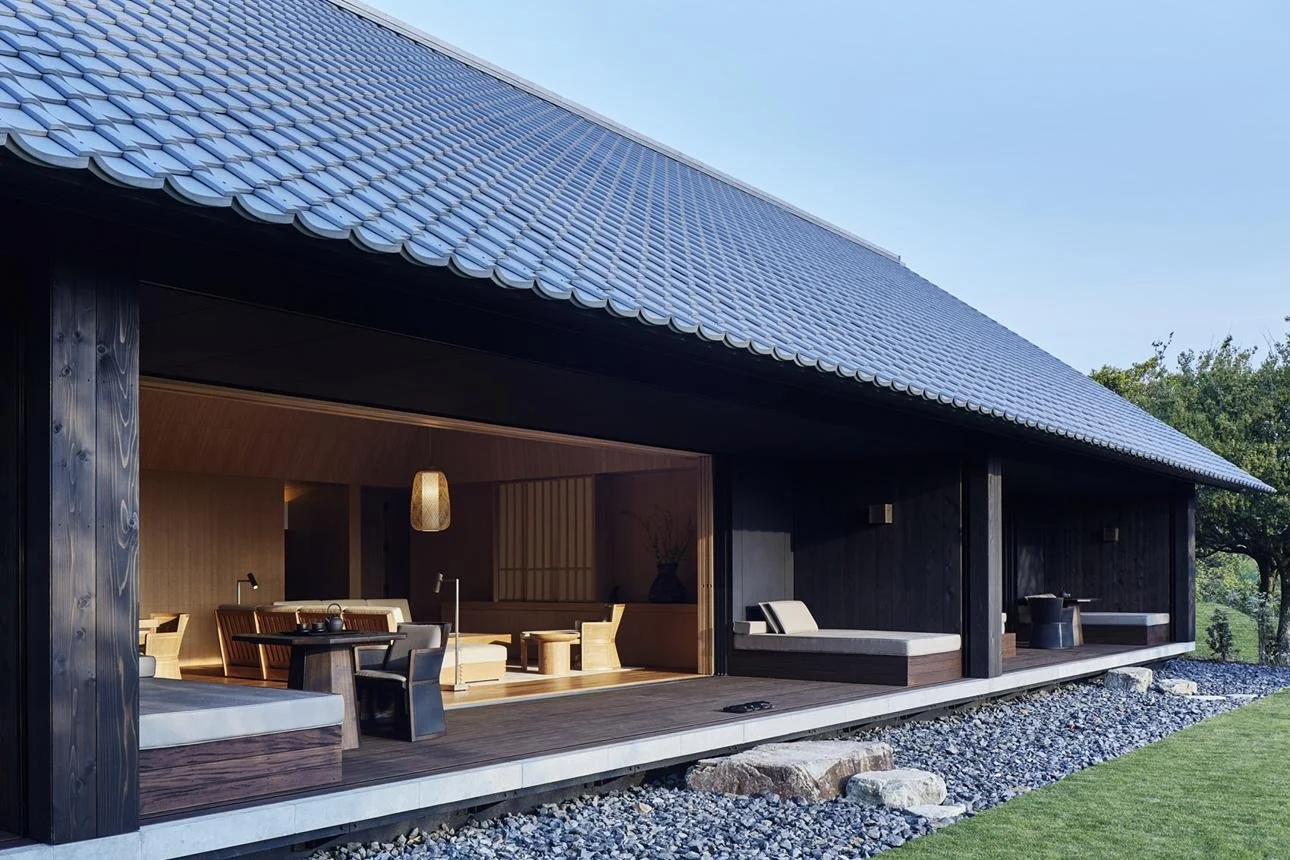
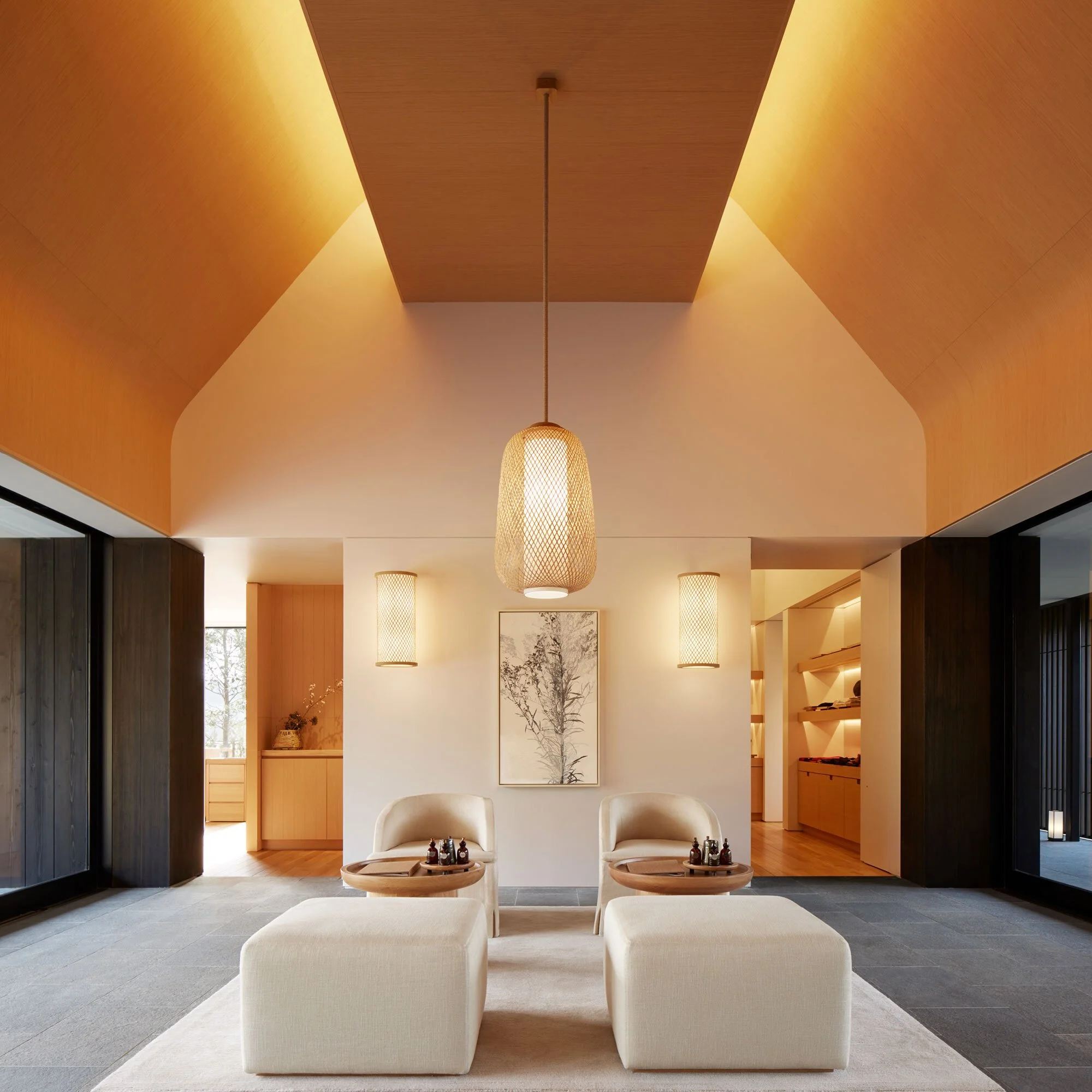
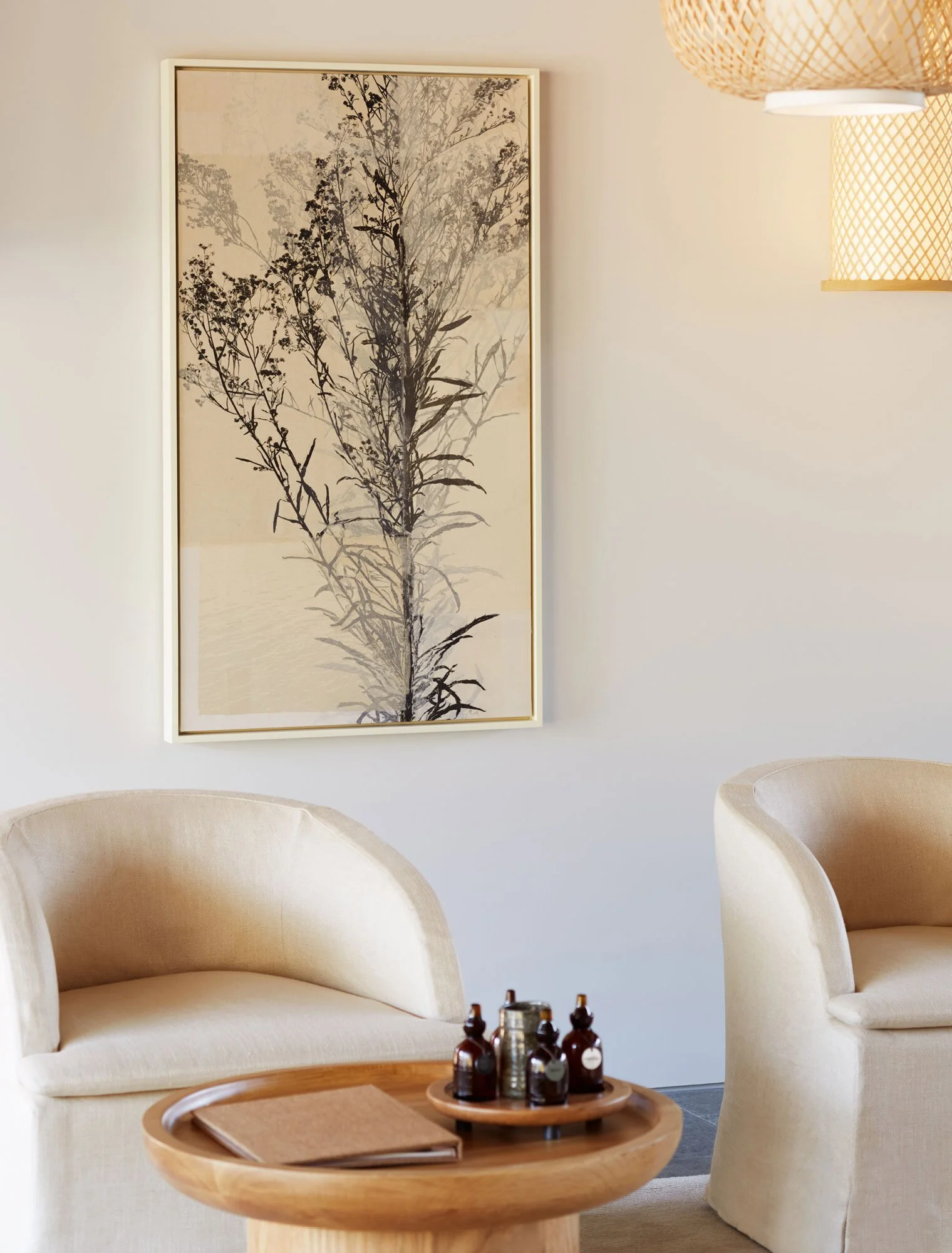
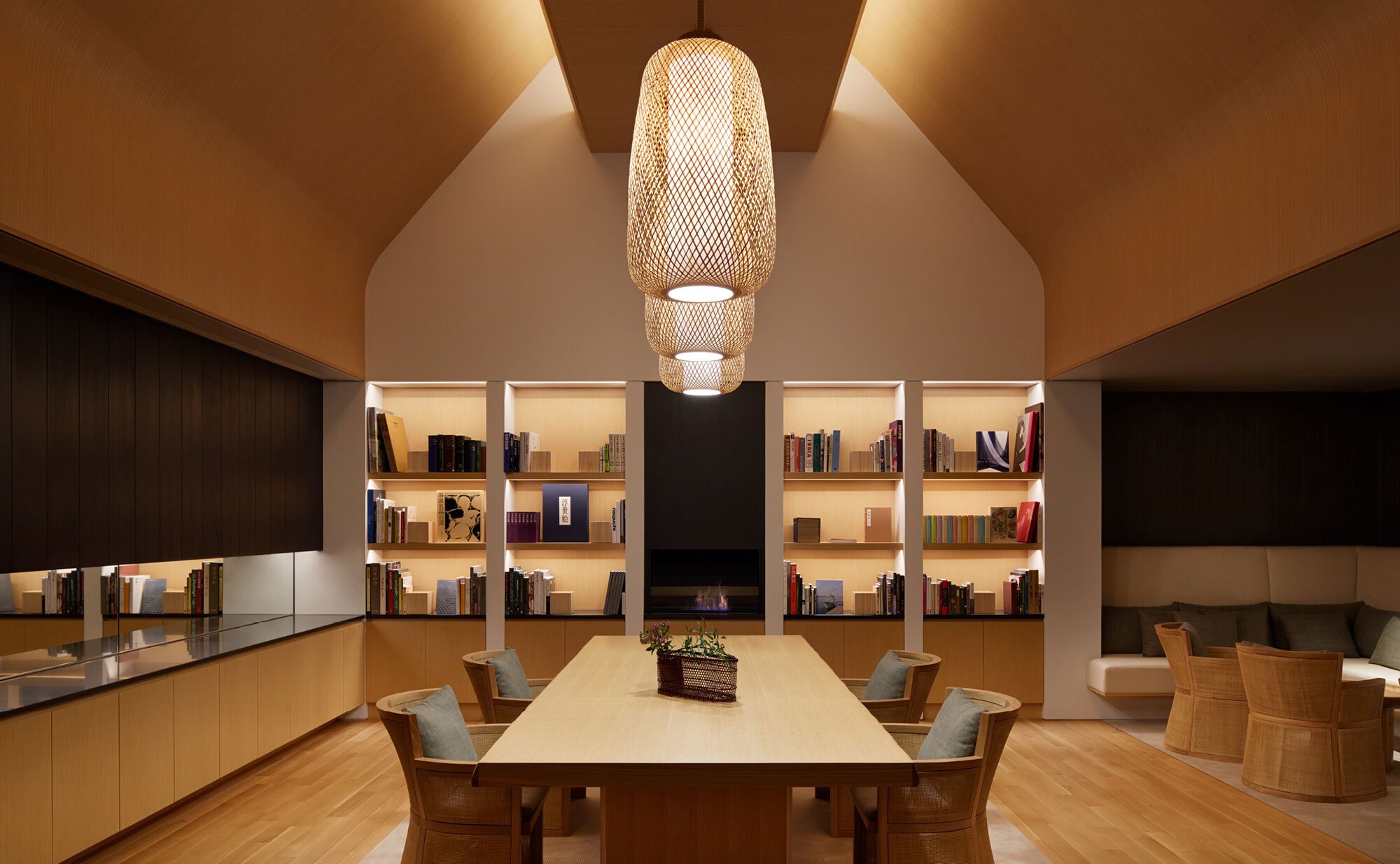
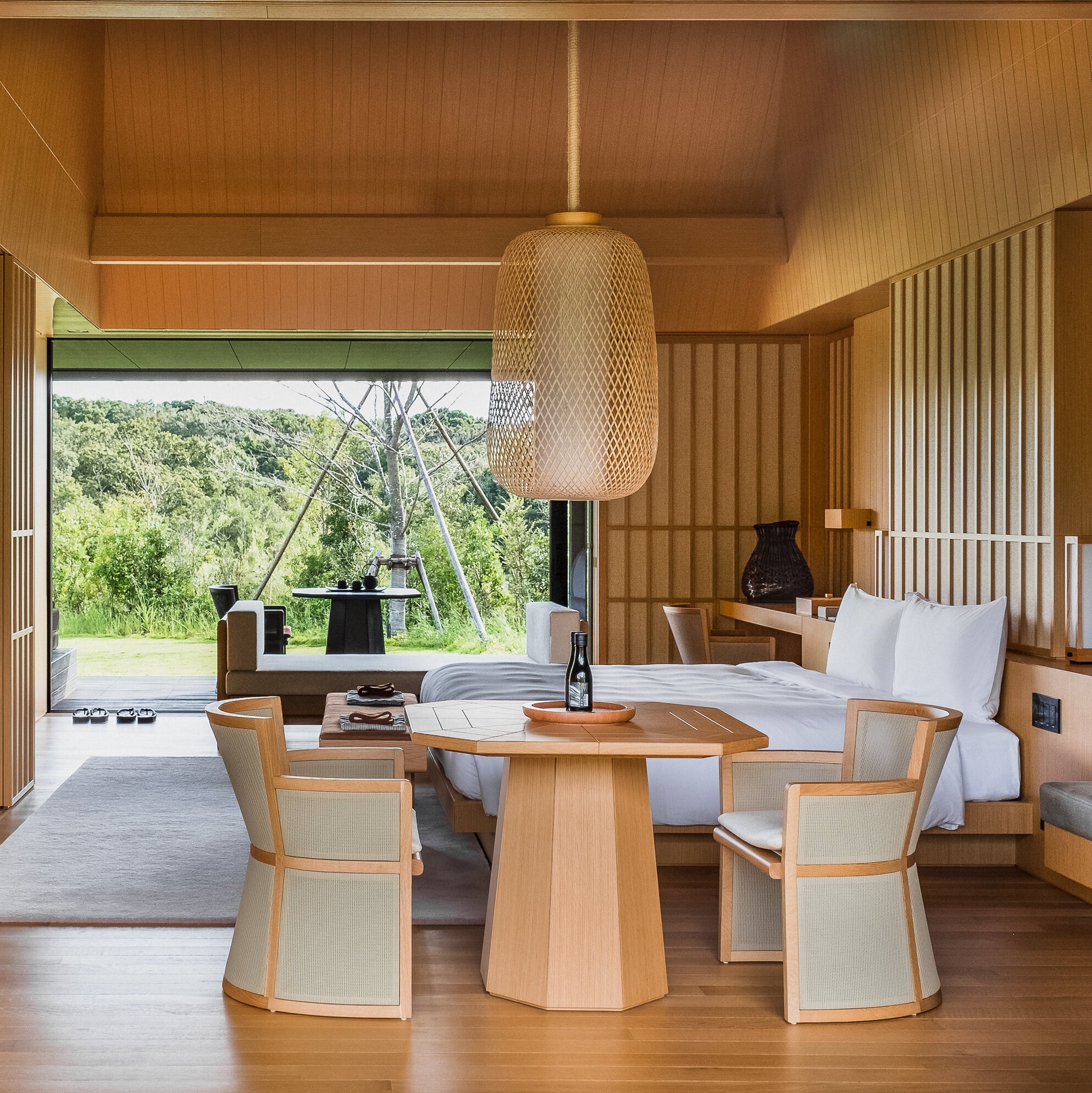
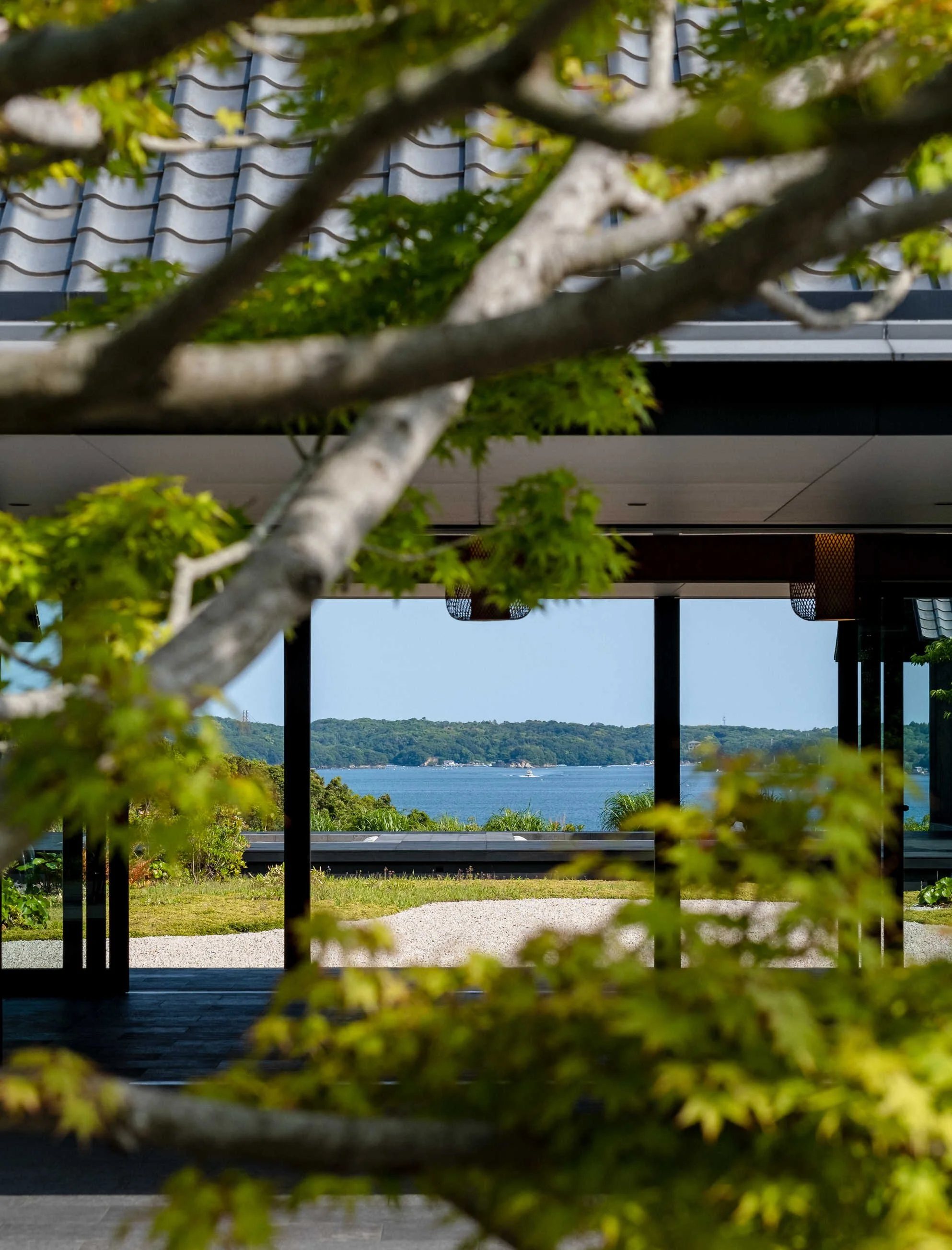
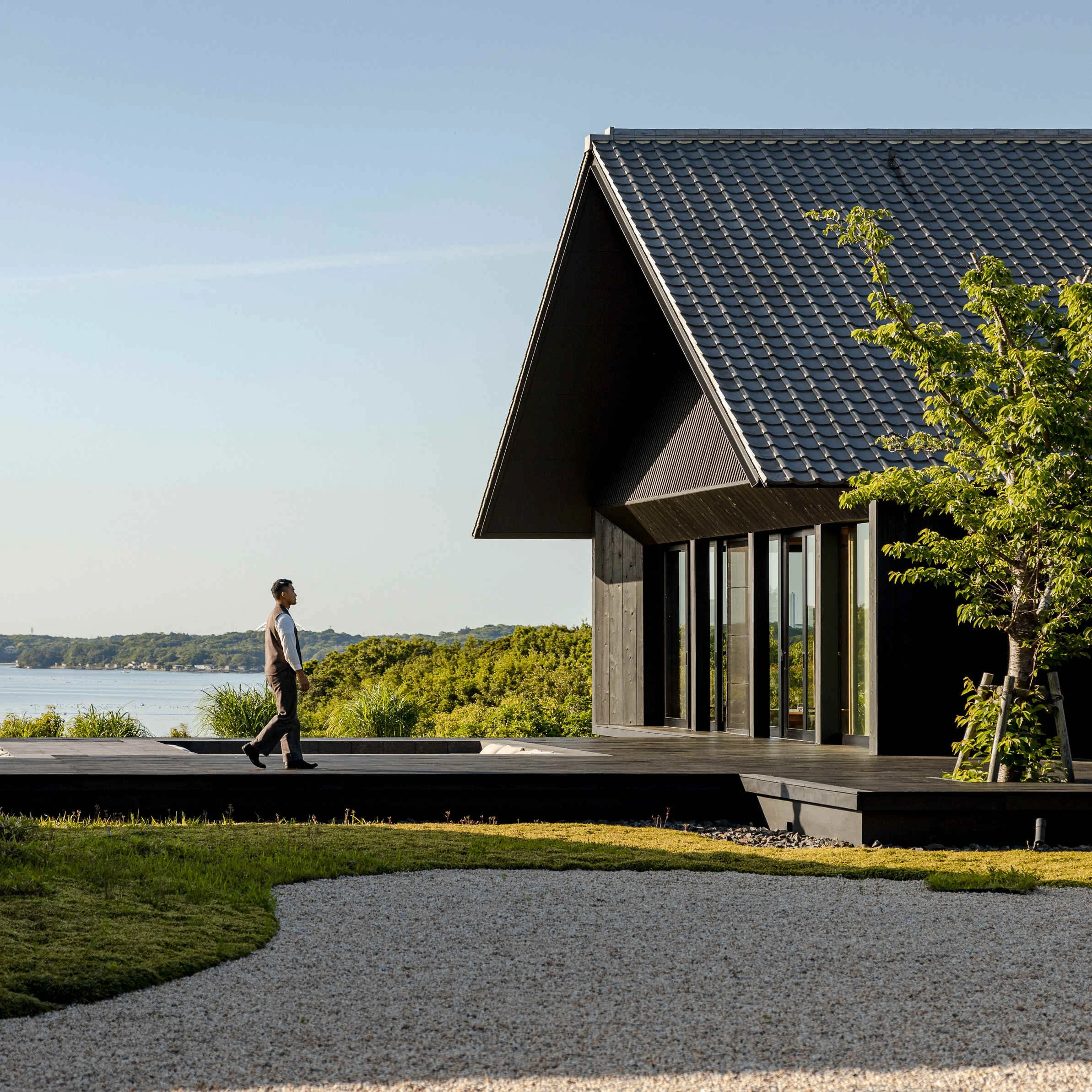
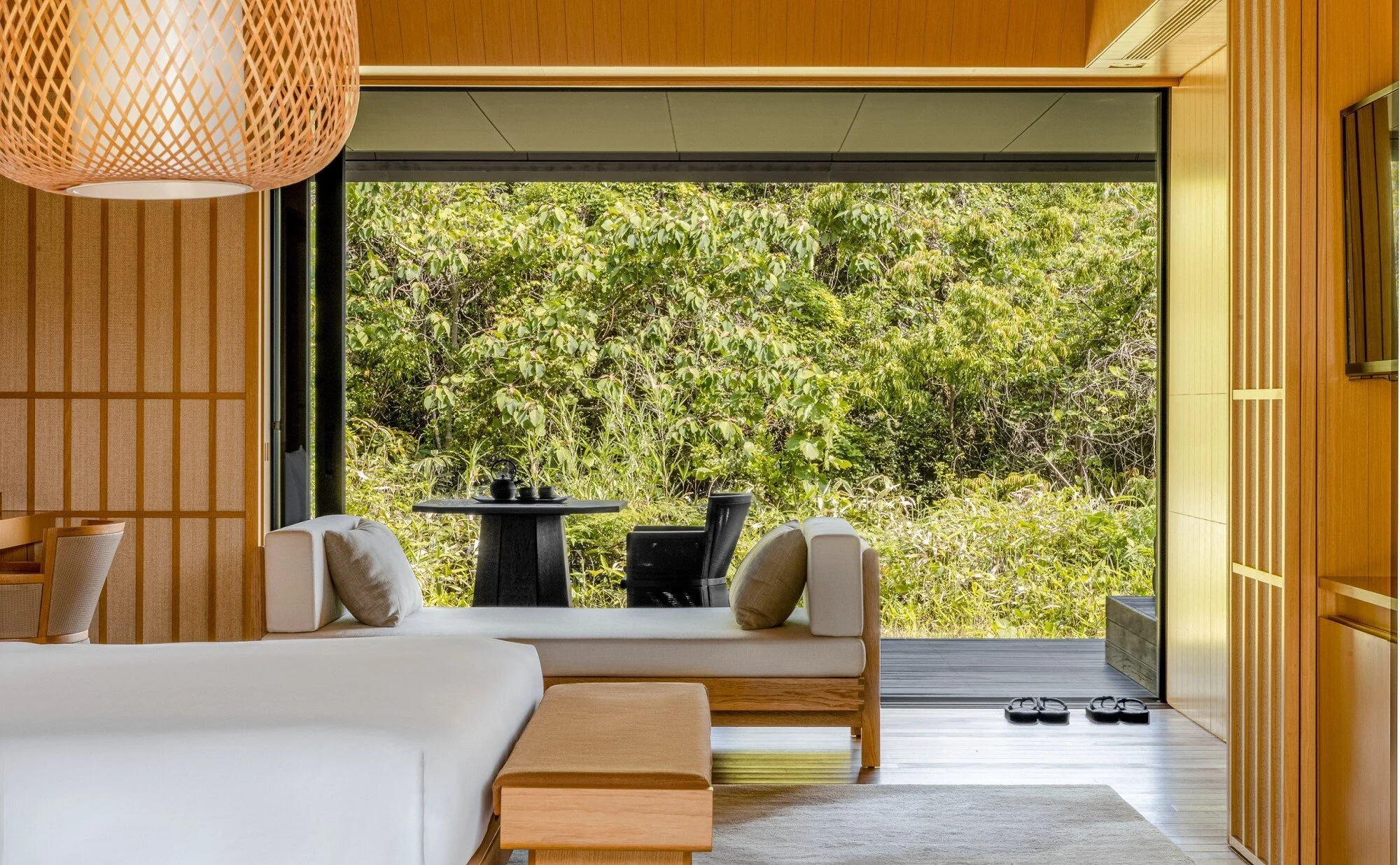
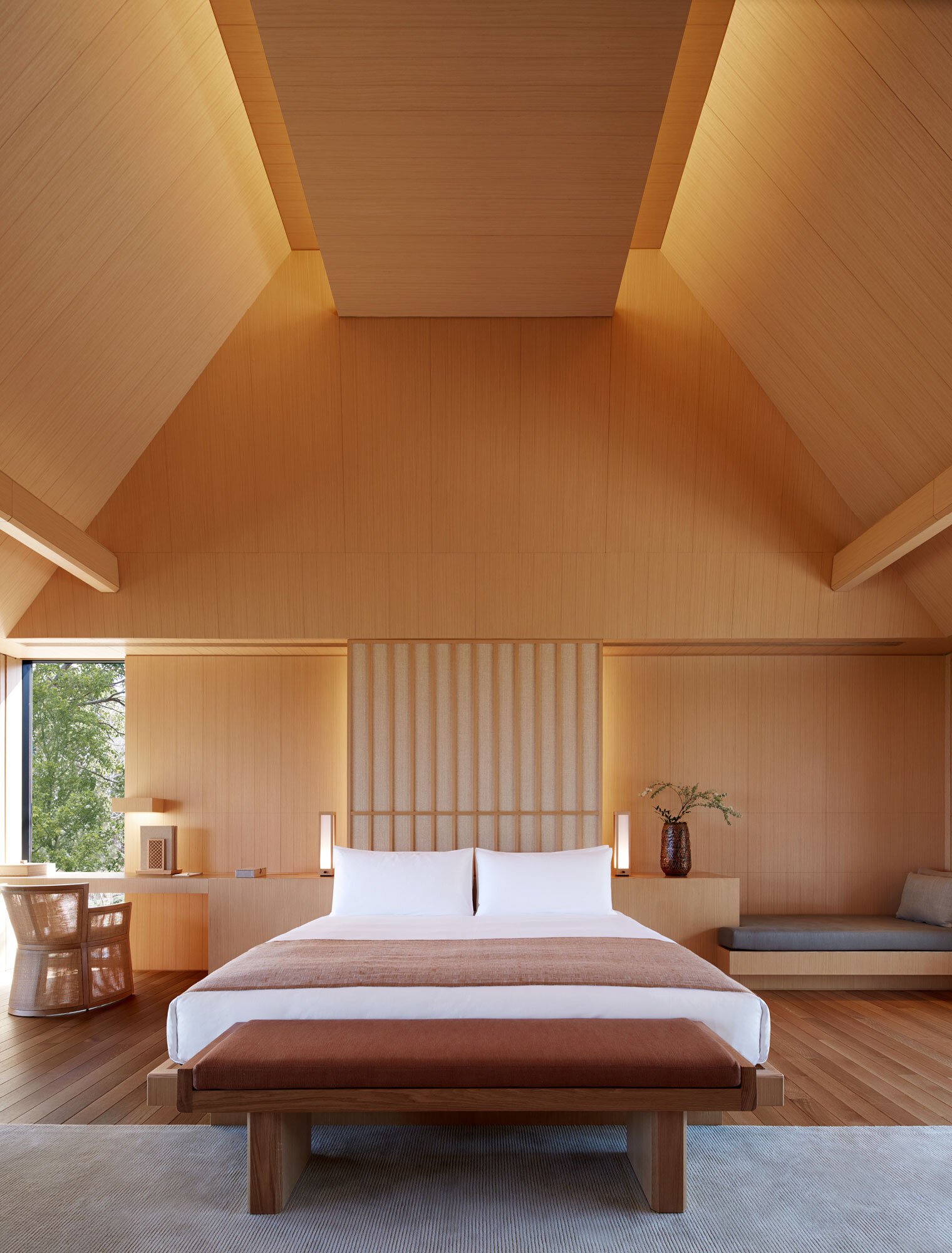
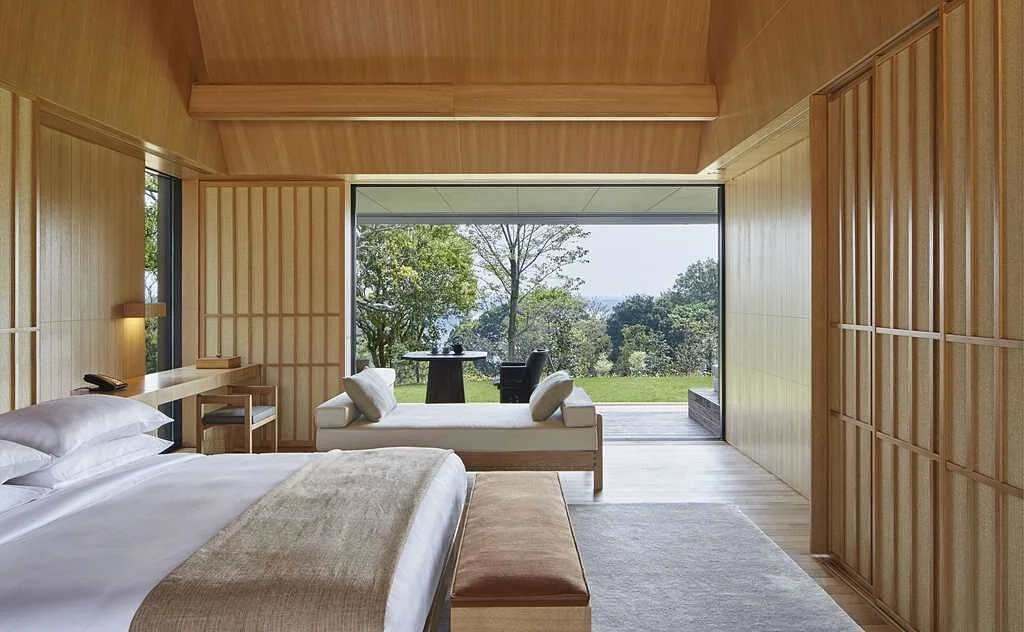
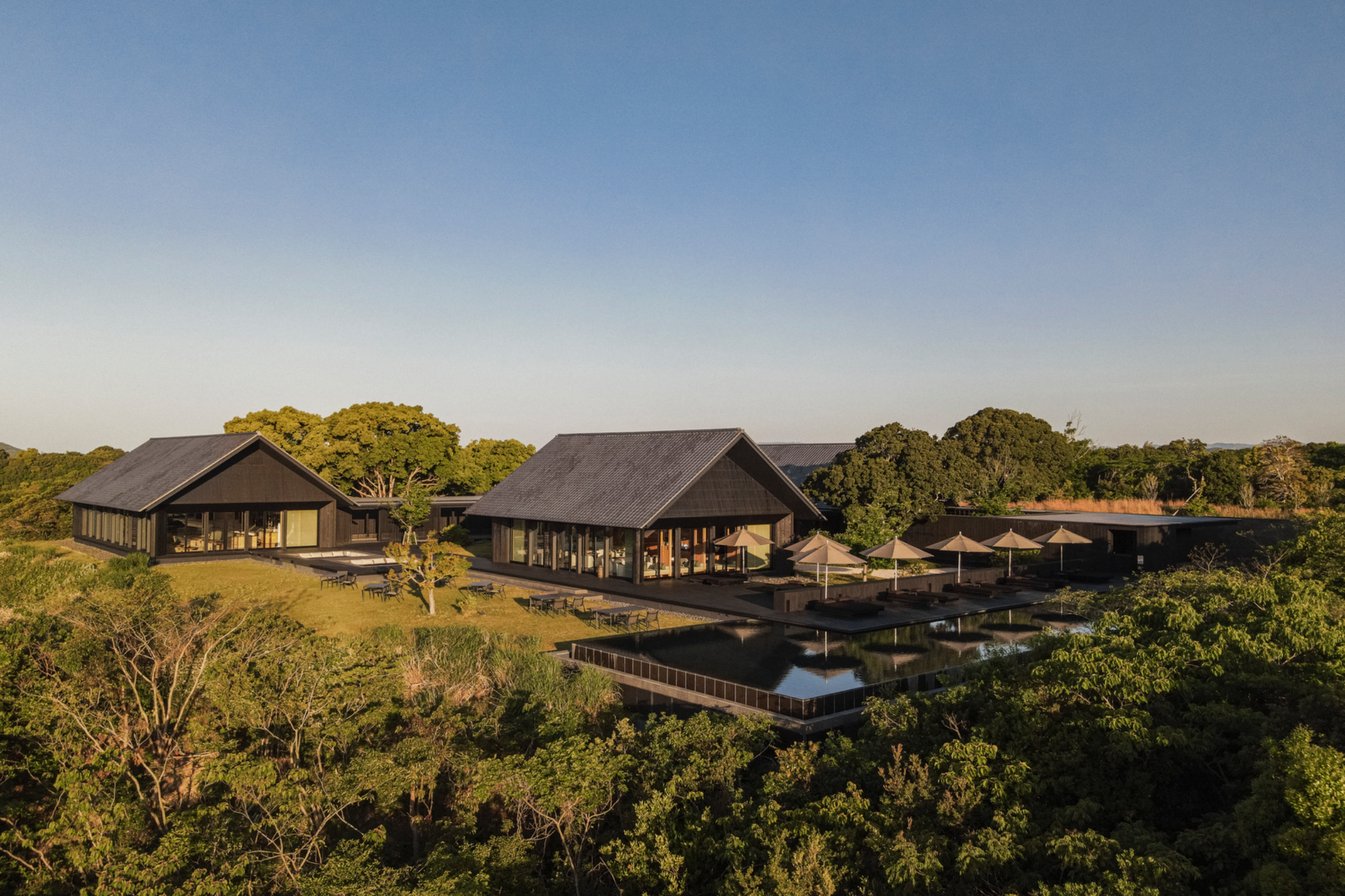
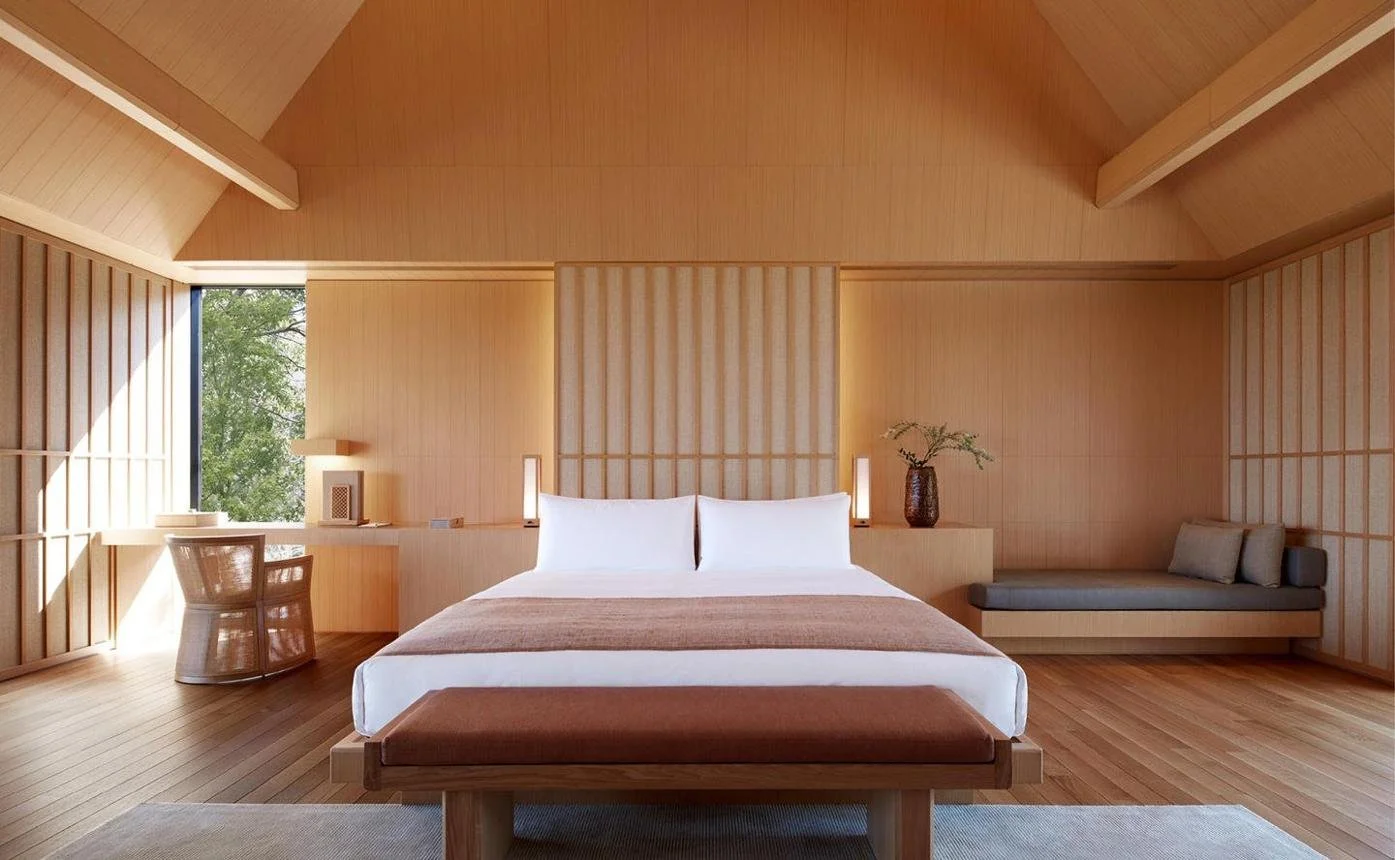
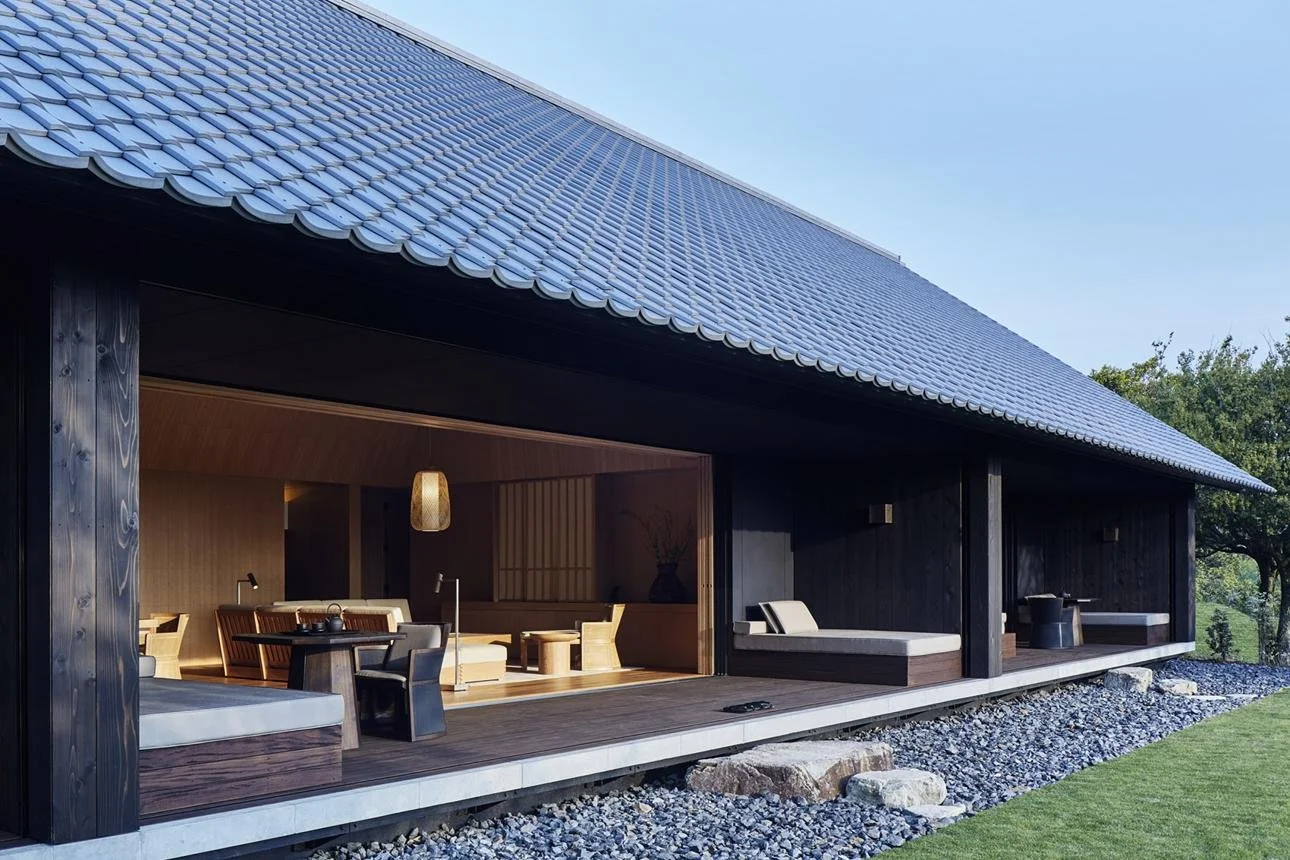
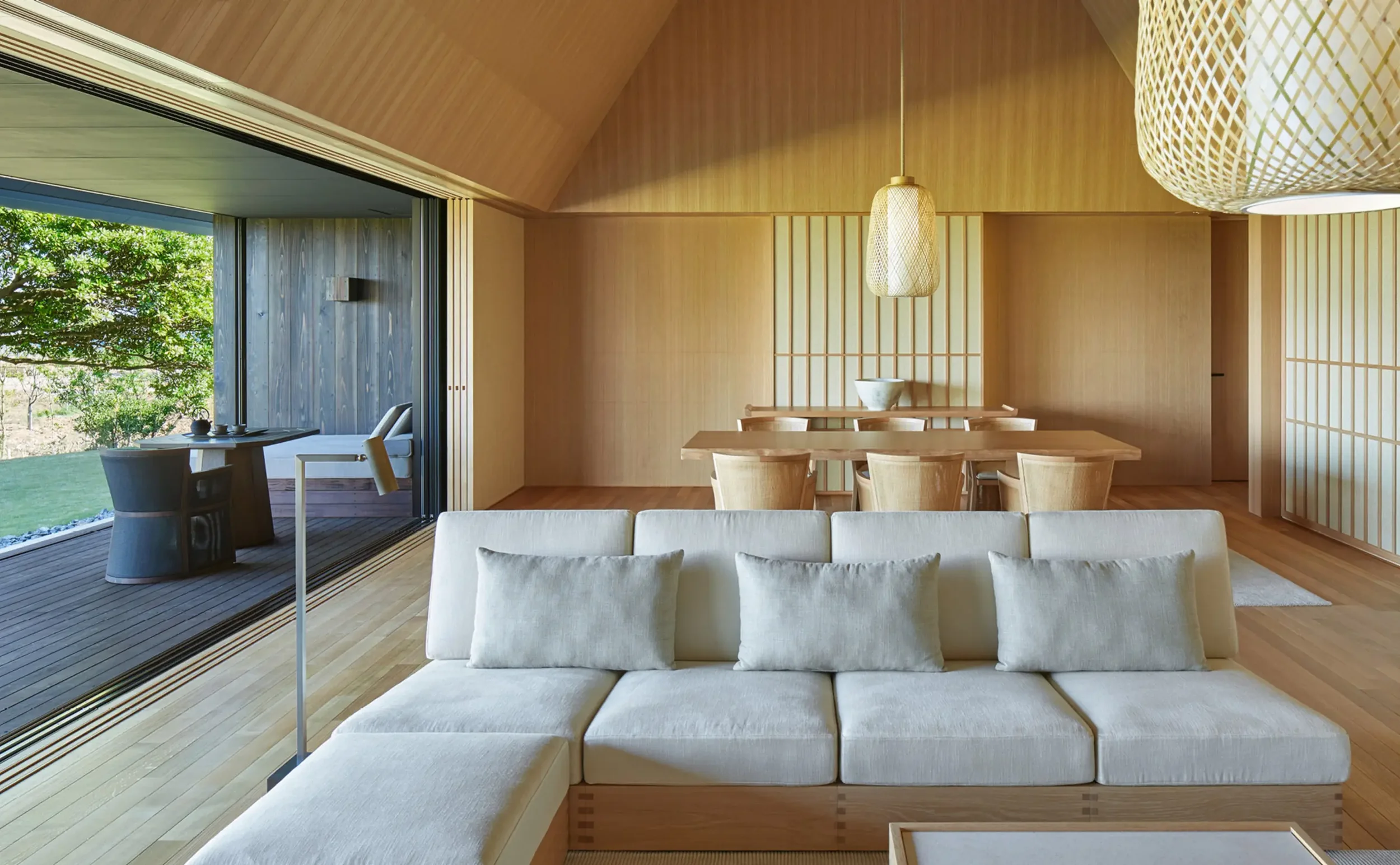
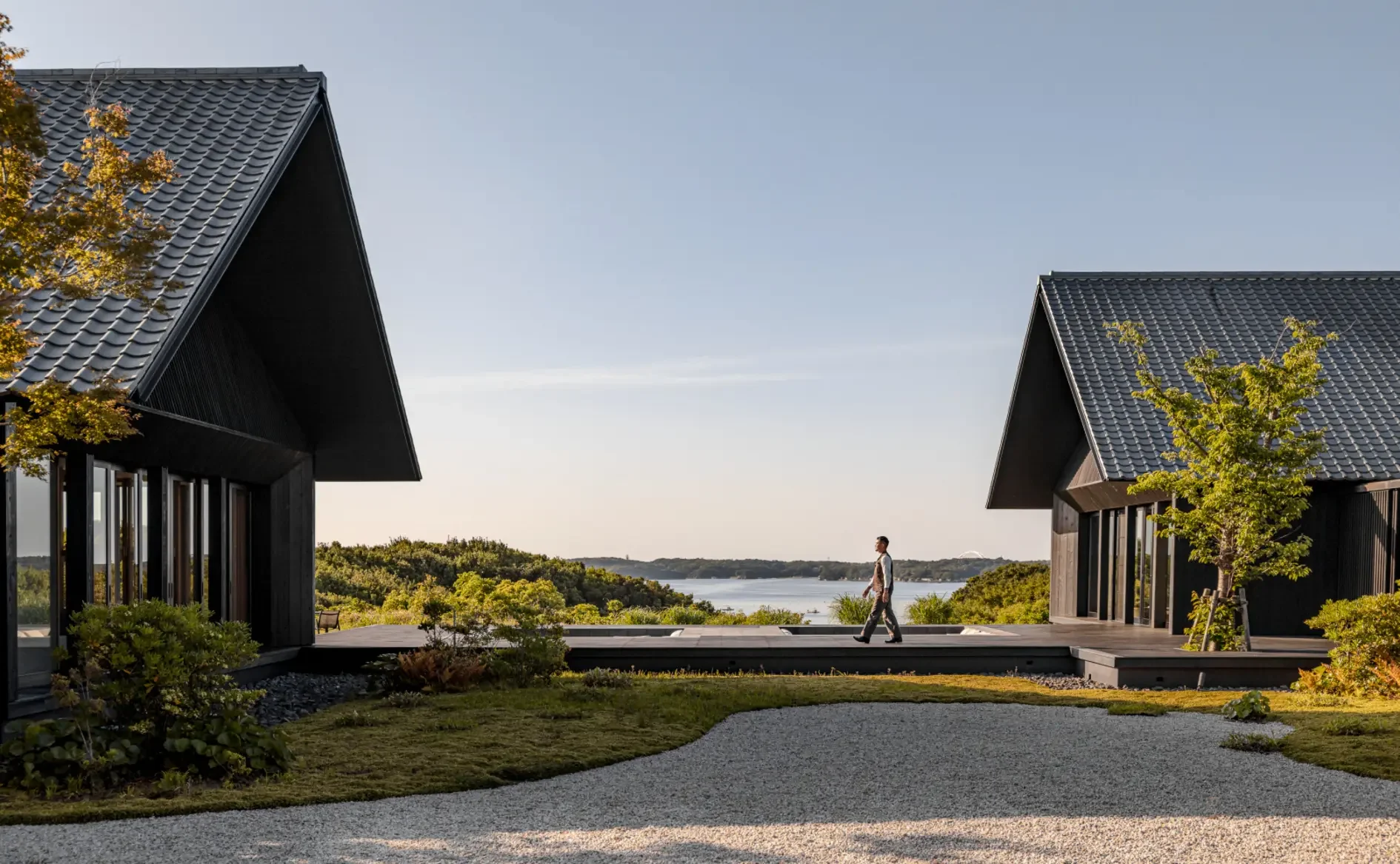
Kerry Hill Architects designed Amanemu as a contemporary response to Japanese minka farmhouses and ryokan retreats. Low rooflines, dark timber exteriors, sliding shutters and wide openings reference familiar domestic forms without turning the resort into a historical pastiche. Interiors employ pale wood, textured surfaces and restrained furnishings, allowing changing daylight and views into the garden or bay to provide much of the visual interest.
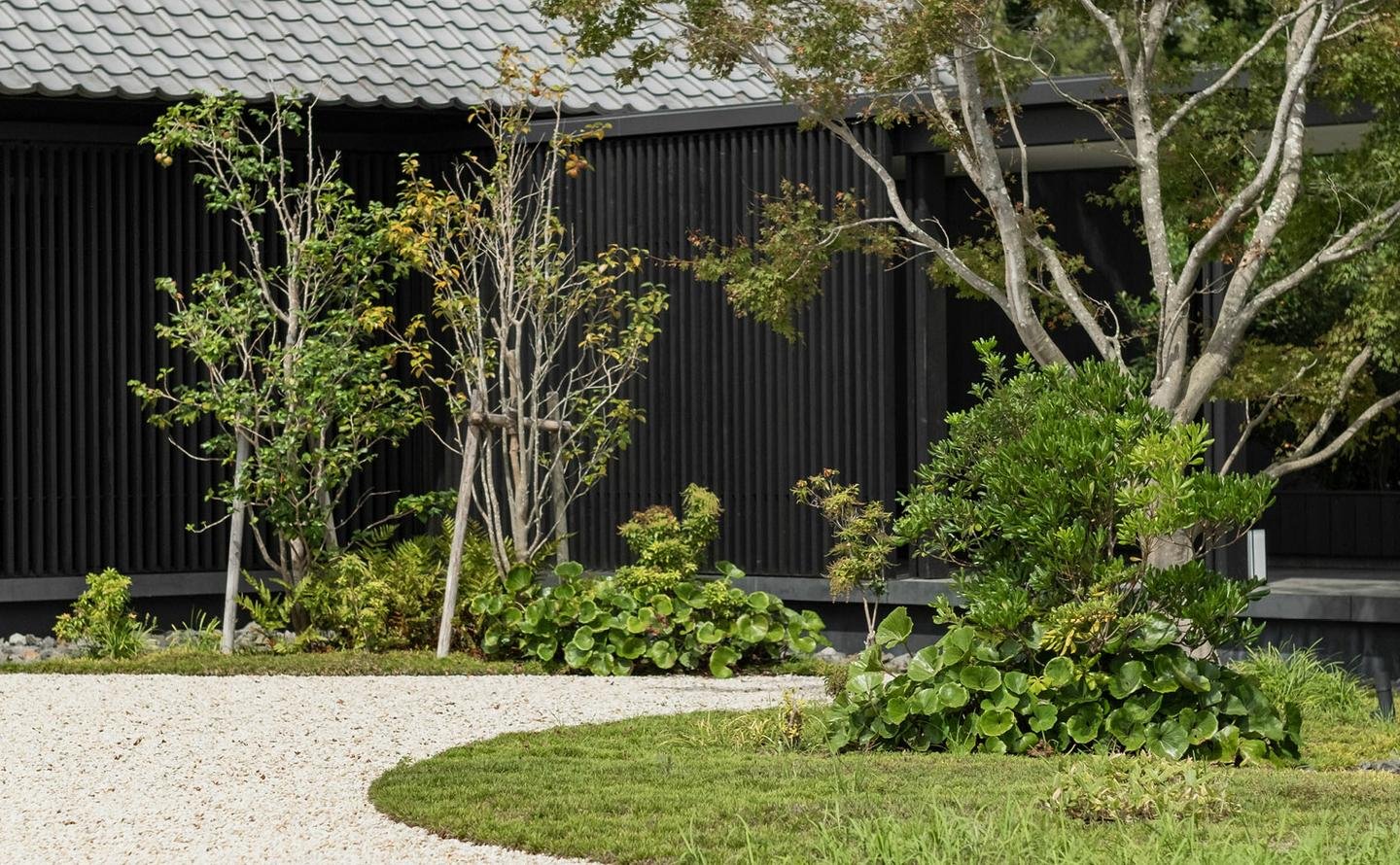
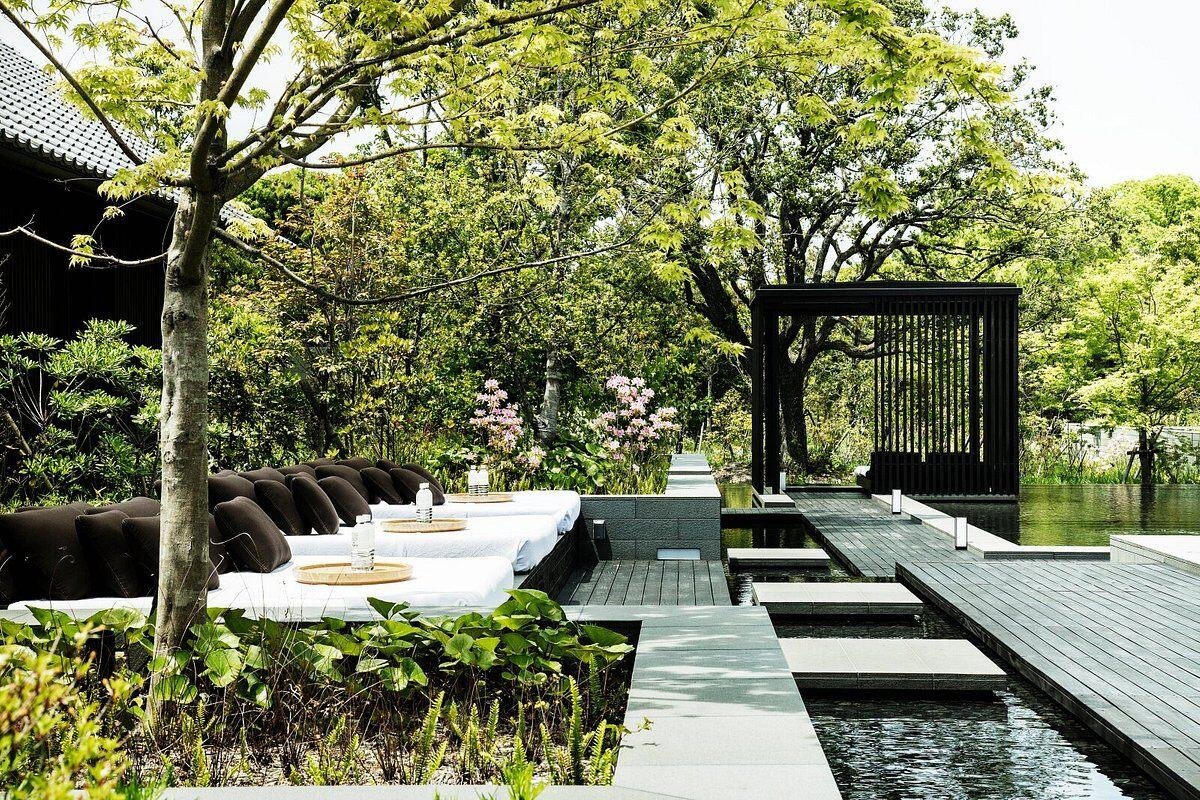
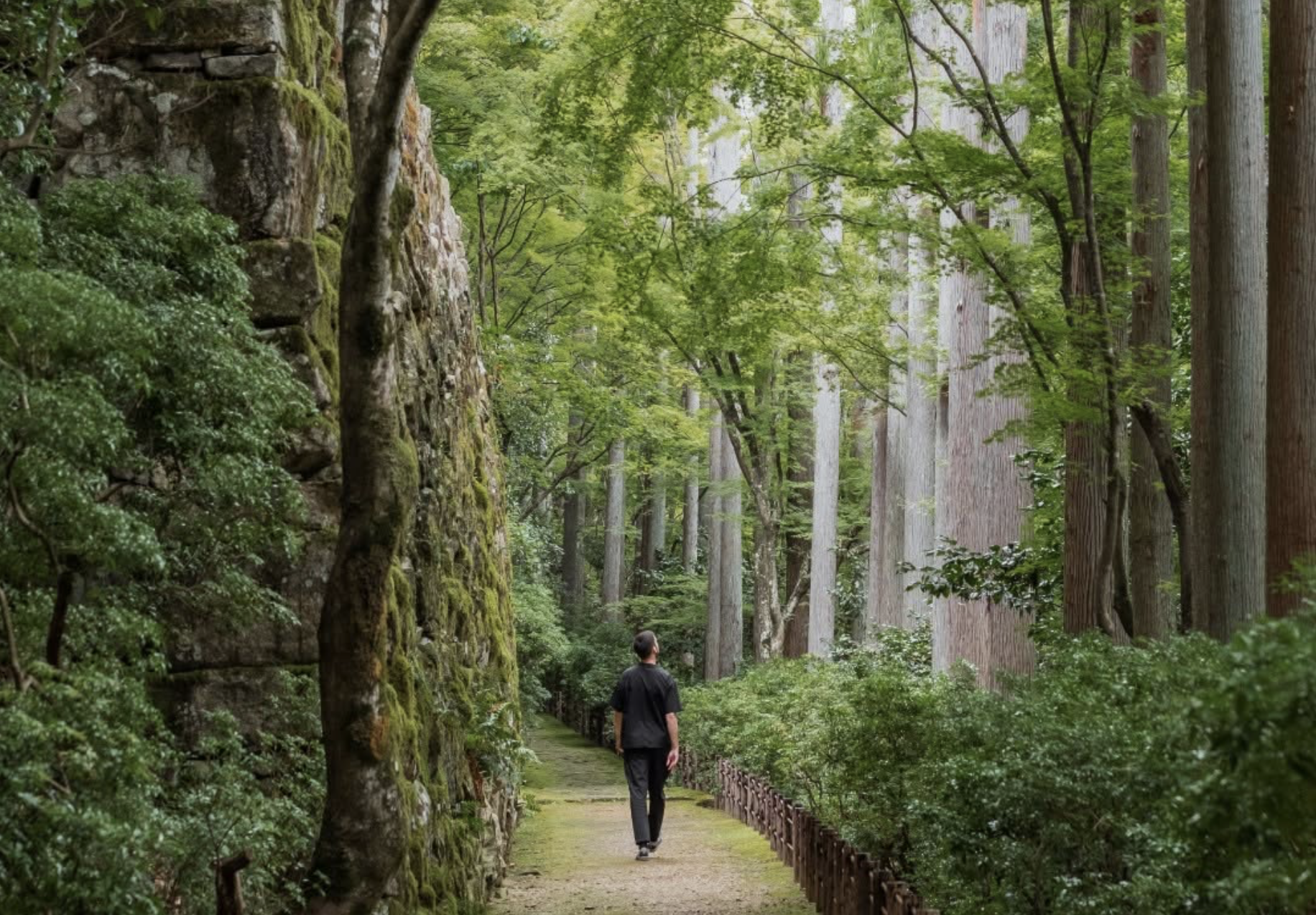
Landscape specialist Design and Management Inc. developed a reforestation-led scheme that reconnects built spaces with indigenous vegetation. Courtyards, garden paths and transitional planting soften the architecture, while long views across Ago Bay reveal the area's islands and pearl rafts. The experience of moving between pavilions is intentionally different from navigating an enclosed hotel tower.
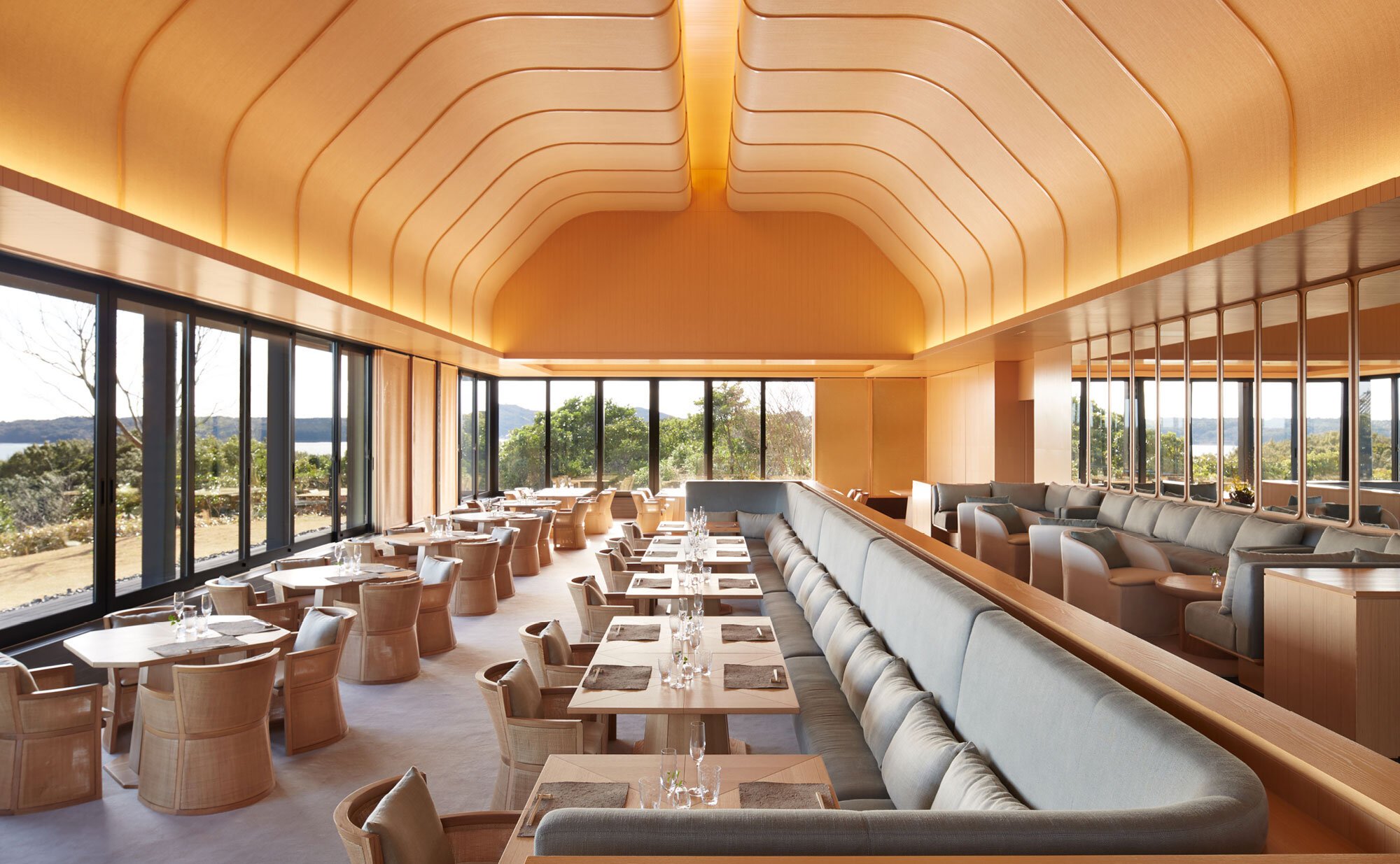
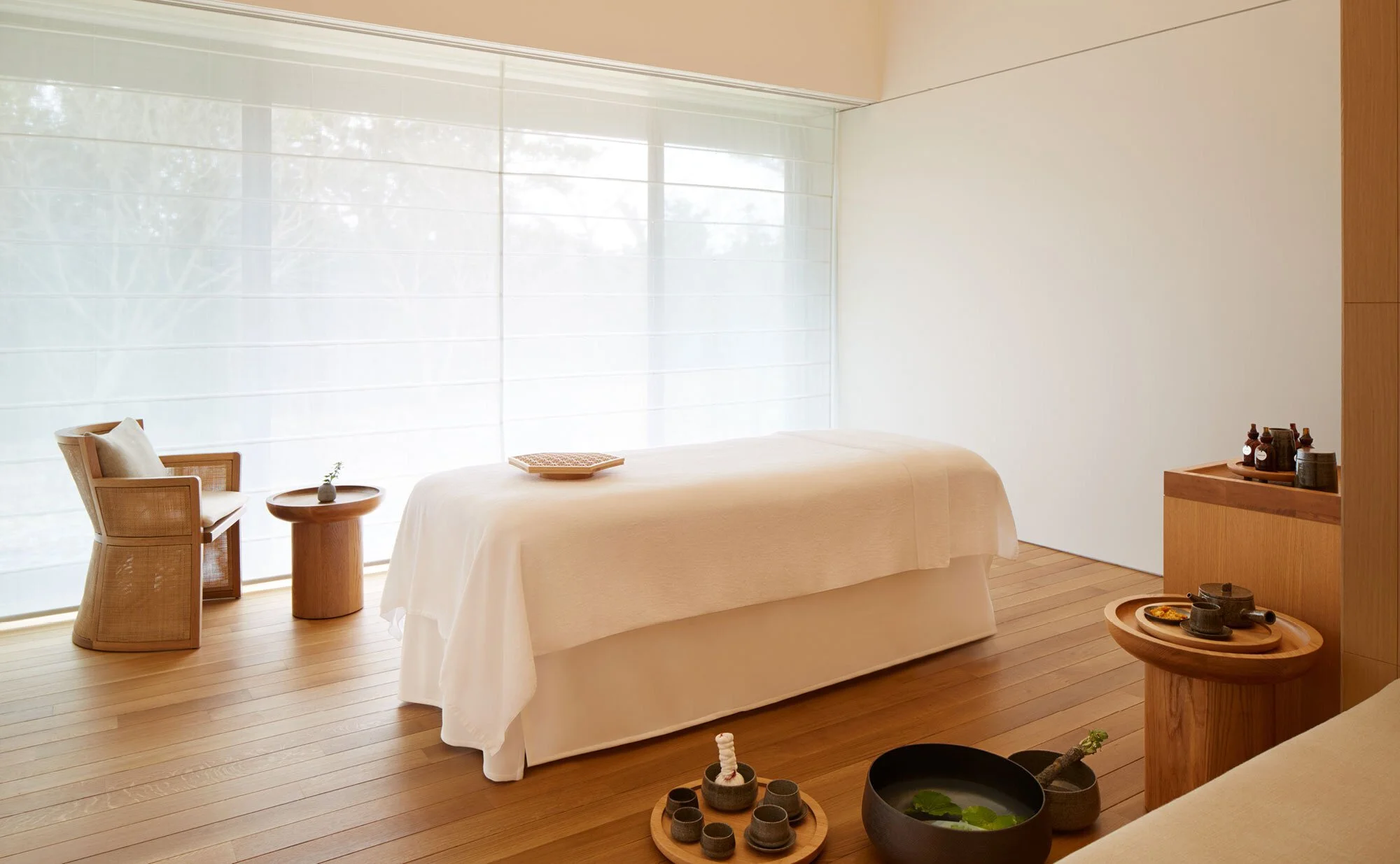
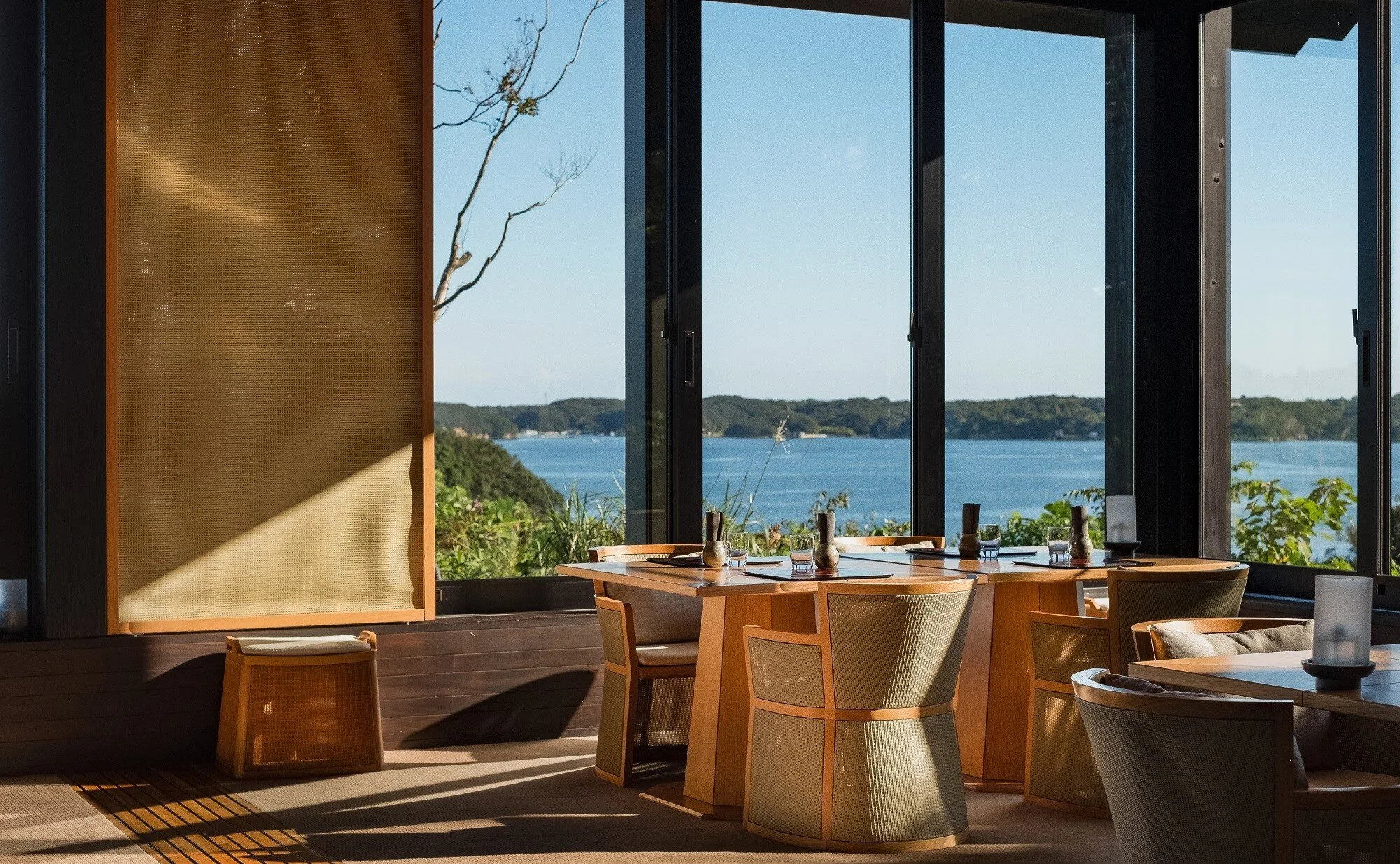
The central public spaces continue this approach. The Restaurant frames the surrounding greenery and water through broad windows, and the spa places thermal bathing at the heart of a substantial garden setting. More than decorative minimalism, the design asks guests to notice small changes in the weather, the movement of light and the privacy of a sheltered outdoor room.
Suites and Villas with Private Onsen Baths
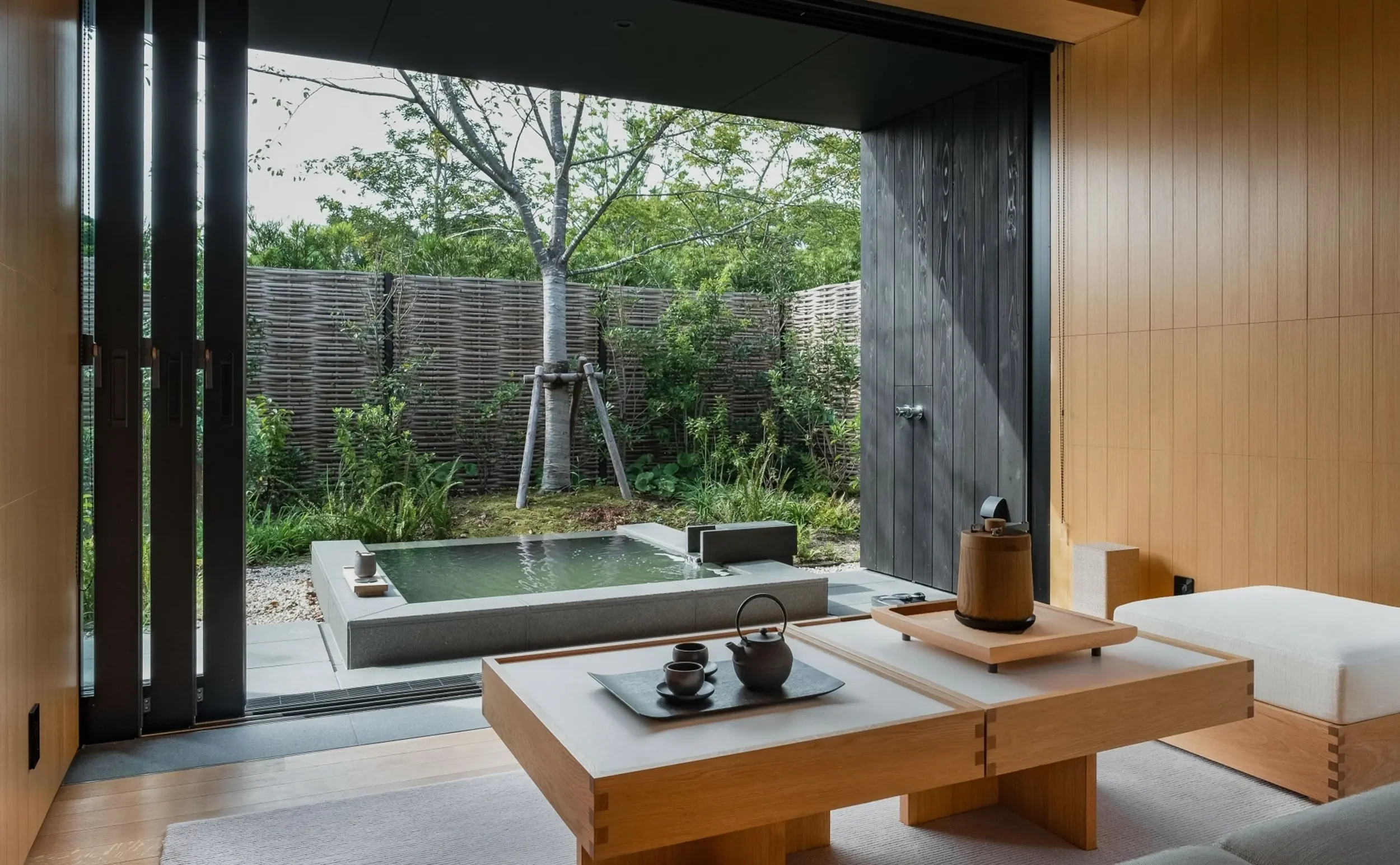
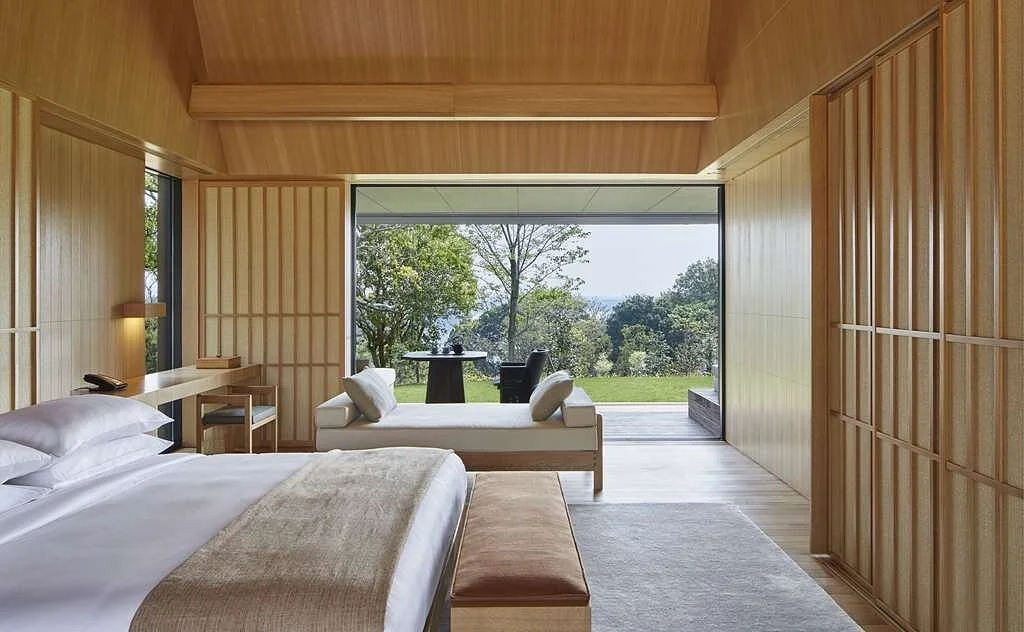
Amanemu's accommodation collection comprises three suite categories and four types of two-bedroom villa, each featuring private Japanese onsen bathing facilities supplied with local hot-spring water. Suites measure 1,065 sq. ft. (99 sq. m.), while villas range from 3,940 to 4,101 sq. ft. (366 to 381 sq. m.). The villa measurements represent the property's published overall category areas rather than interior bedroom space alone.
Mori Suite: 1,065 sq. ft. (99 sq. m.), featuring a combined bedroom and living area, private veranda, woven shutters, garden views and a private onsen bath, offering a secluded retreat surrounded by greenery.
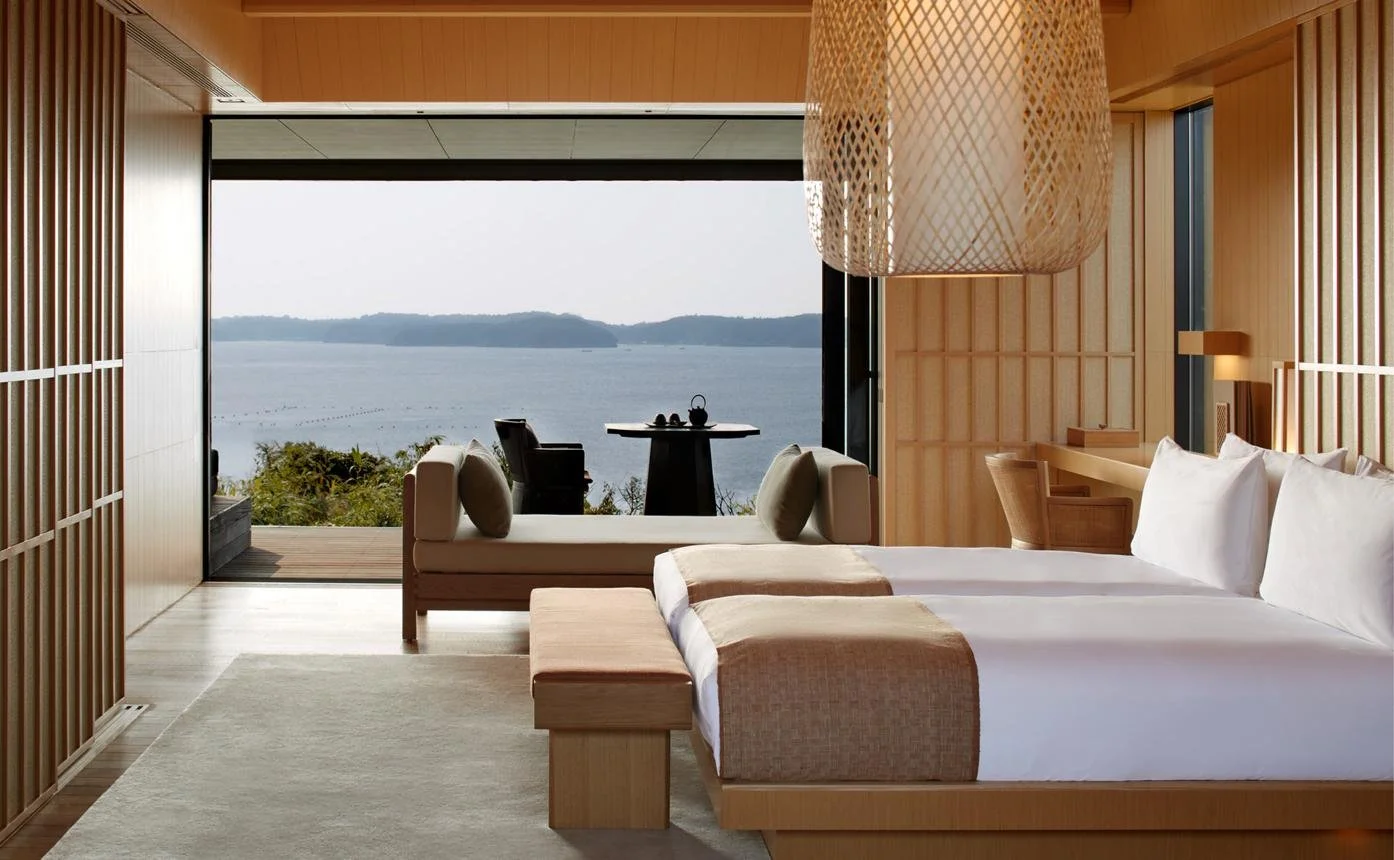
Sora Suite: 1,065 sq. ft. (99 sq. m.), offering a king or Hollywood-twin configuration, combined living and sleeping areas, a 291 sq. ft. (27 sq. m.) veranda, partial views of Ago Bay and private hot-spring bathing facilities.
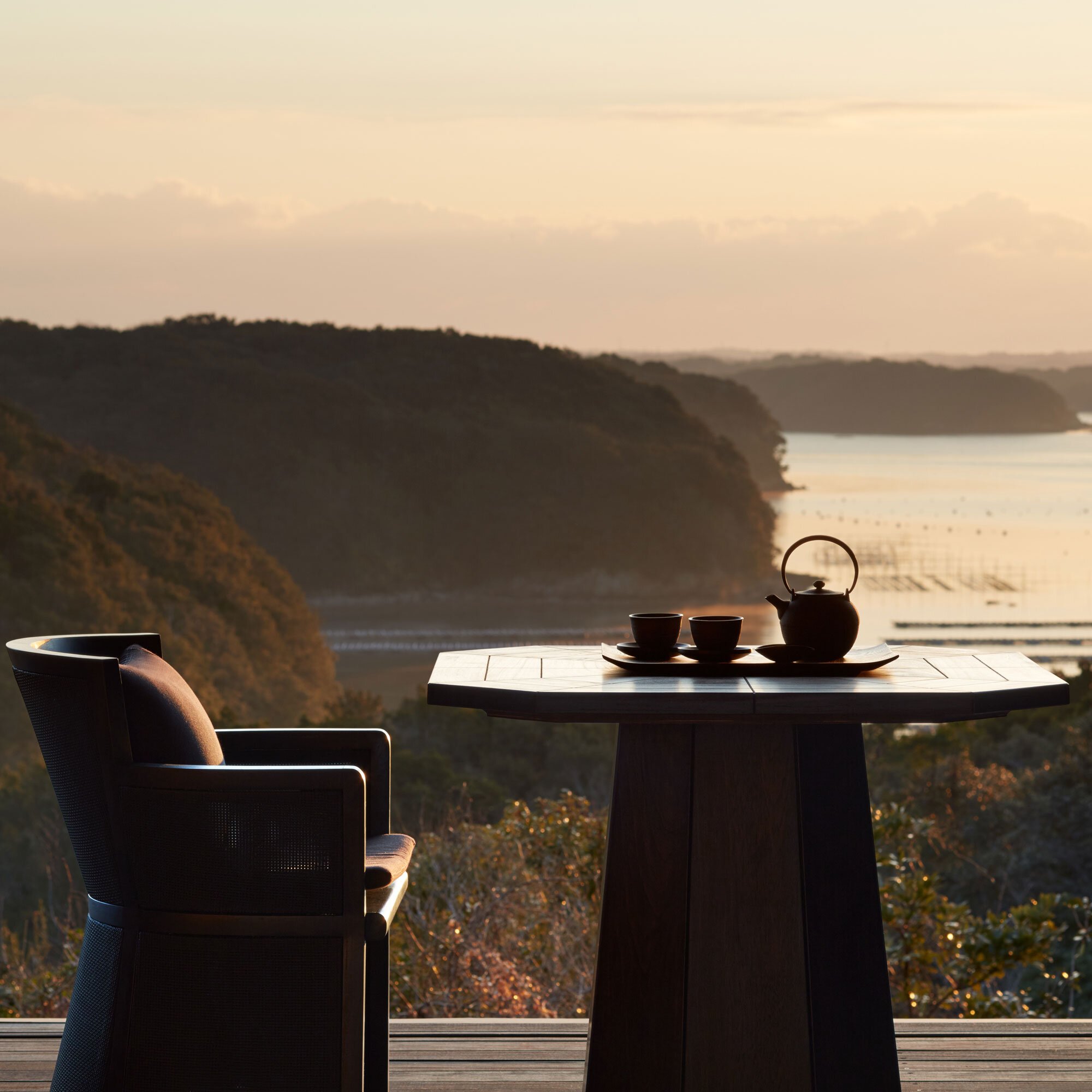
Nagi Suite: 1,065 sq. ft. (99 sq. m.), featuring a combined bedroom and living area, outdoor veranda, private onsen bath and expansive views across Ago Bay, providing a peaceful setting overlooking the coastline.
Mori Villa: 3,940 sq. ft. (366 sq. m.), featuring two bedrooms with private verandas, a central living pavilion, pantry, outdoor dining area, private garden and dedicated hot-spring bathing facilities.
Sora Villa: 3,940 sq. ft. (366 sq. m.), offering two bedrooms with private verandas, a central living pavilion, garden, dining space for six, partial Ago Bay views and a private onsen bath.
Nagi Villa: 3,940 sq. ft. (366 sq. m.), featuring two bedrooms, expansive verandas, a private garden, shared dining space and a dedicated hot-spring bathing pavilion, complemented by panoramic views across Ago Bay.
Tsuki Villa: 4,101 sq. ft. (381 sq. m.), offering two separate bedroom pavilions, a central living space, private garden, alfresco dining area and a 484 sq. ft. (45 sq. m.) indoor-outdoor onsen area, accommodating up to six guests.
The most meaningful distinction between the suites is their relationship to the surrounding landscape. Mori offers the privacy of a garden setting, Sora introduces partial views of the bay, and Nagi provides a broader coastal outlook. The villas offer additional flexibility for families and groups, with separate bedroom pavilions and shared living areas that balance privacy with time together. Bed configurations, occupancy arrangements and individual accessibility requirements should be considered when selecting the most suitable accommodation.
Ise-Shima Ingredients at the Table
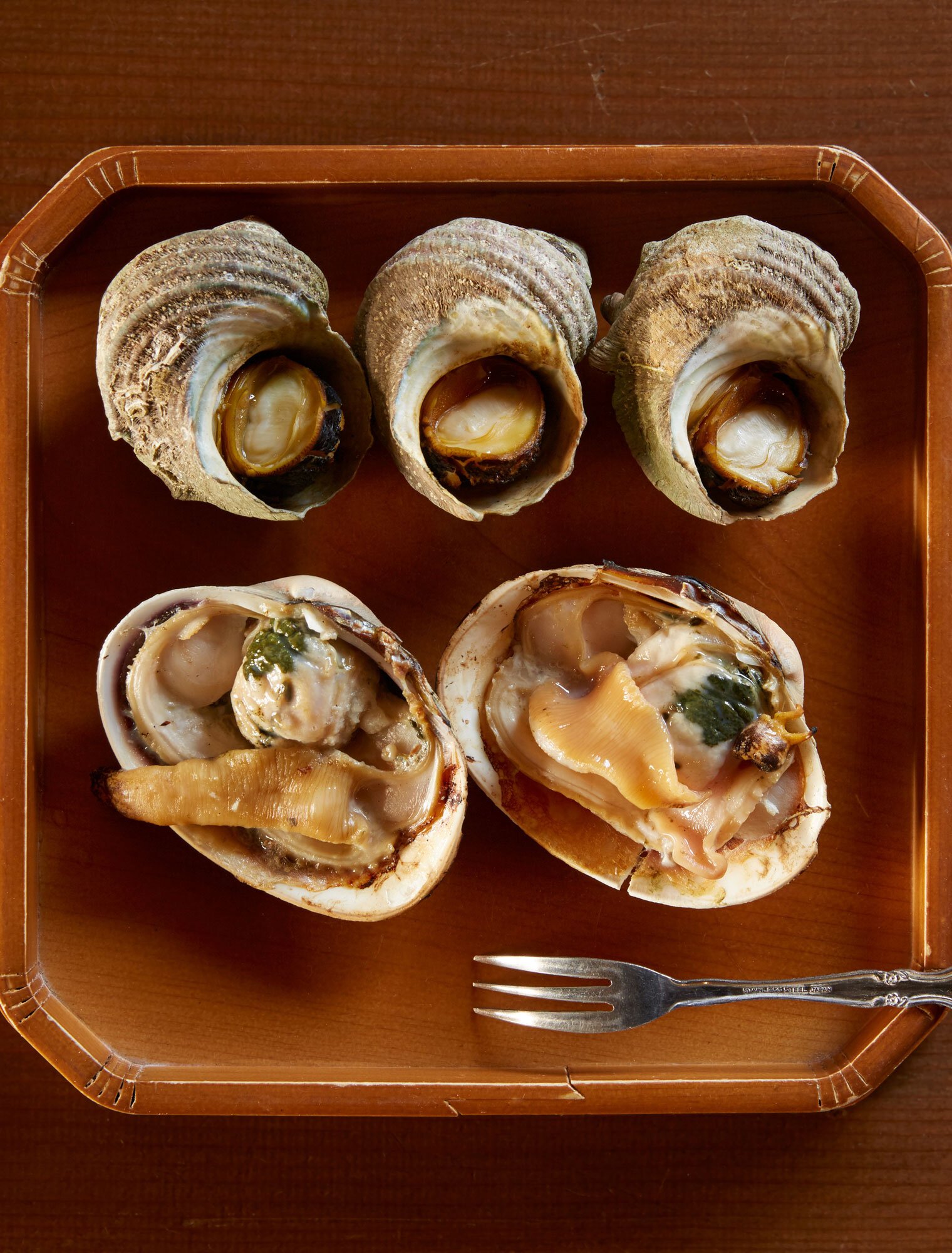
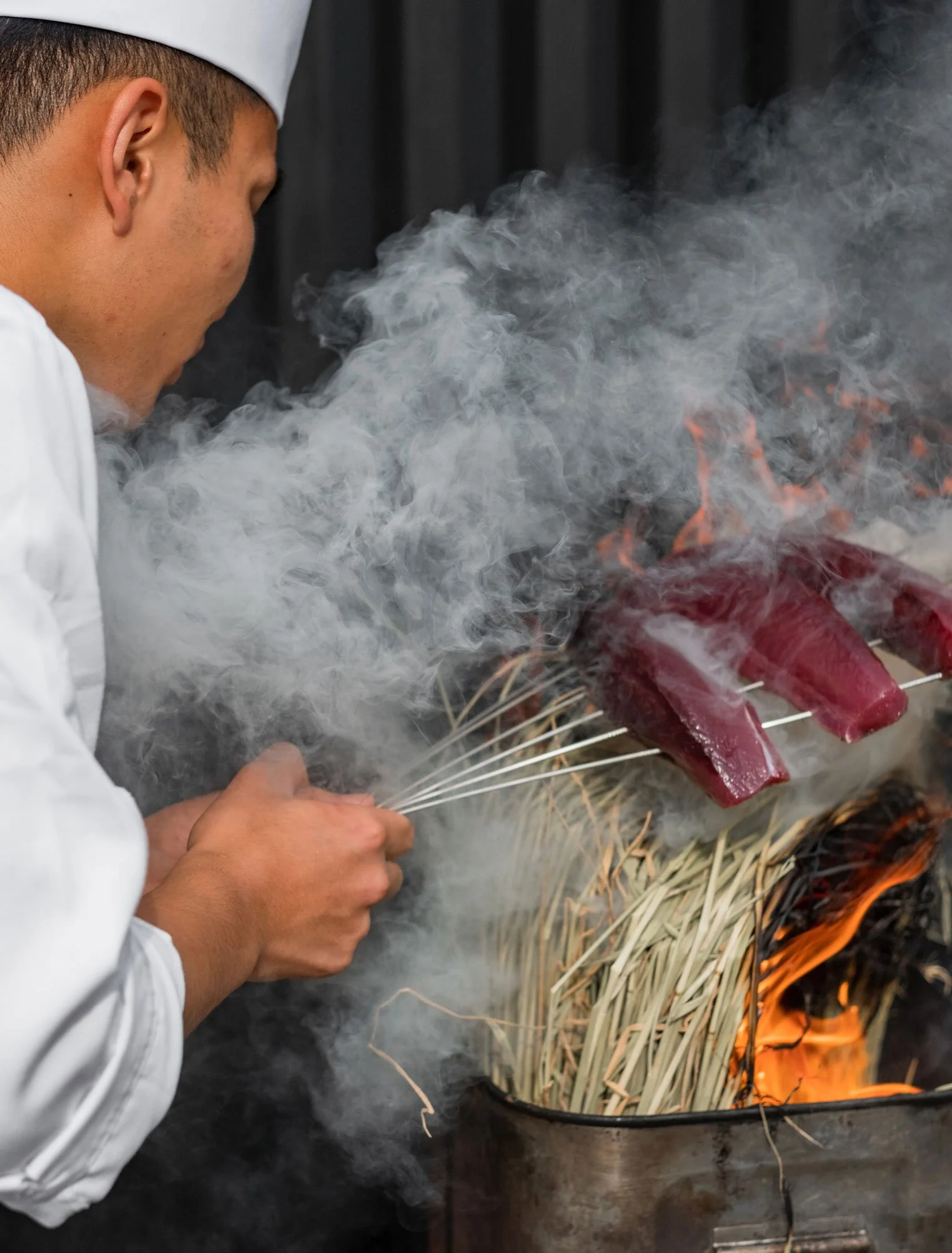
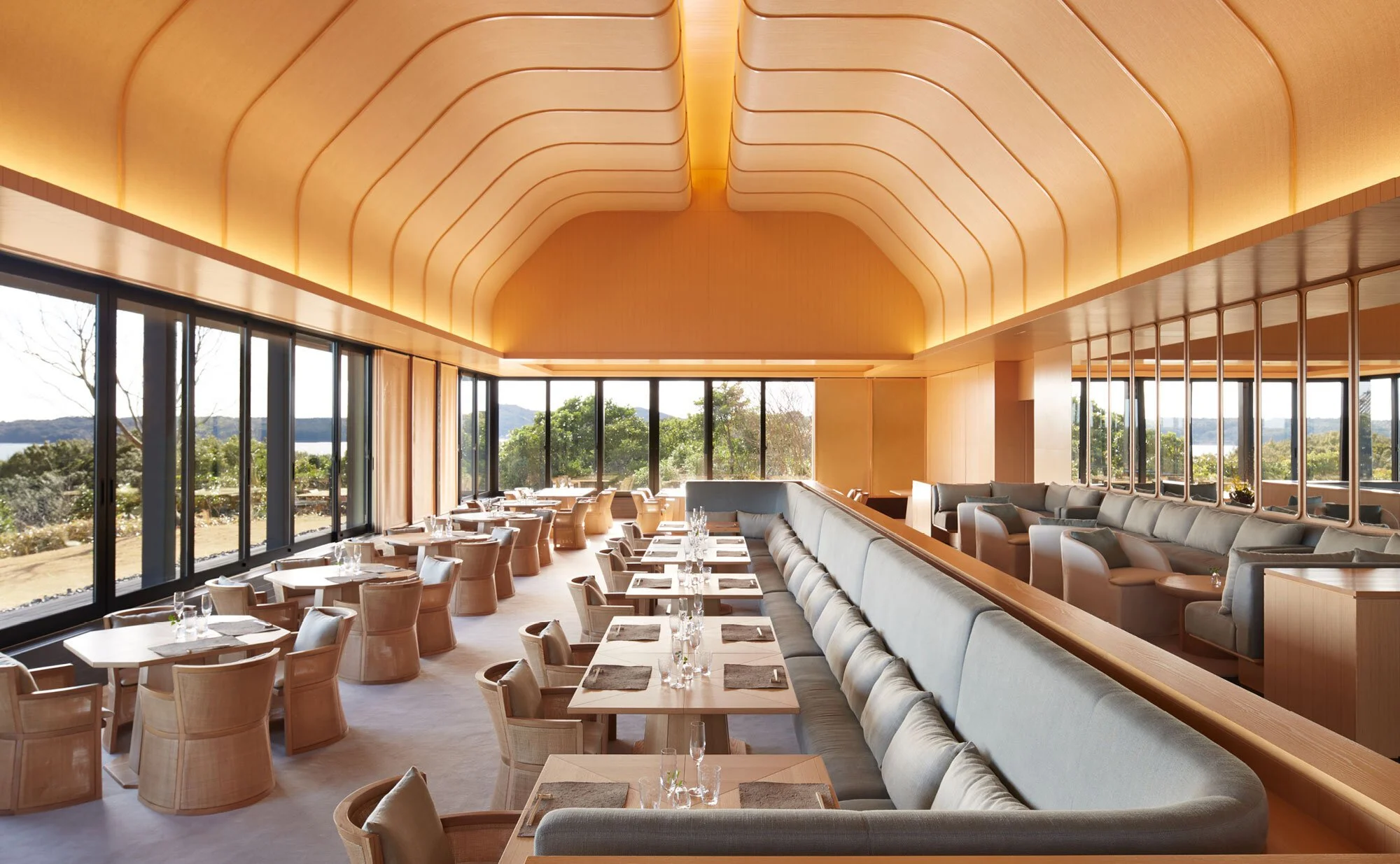
Amanemu's dining program draws directly on the region's coastal and agricultural traditions. Ago Bay supplies prized seafood, while the wider prefecture is associated with ingredients such as Matsusaka Wagyu beef. Rather than multiplying restaurant concepts, the resort keeps dining focused on a principal restaurant and an informal lounge, supported by tailored tastings and private arrangements.
The Restaurant: Serves Japanese and selected international dishes at breakfast, lunch and dinner, emphasizing seasonal produce, local seafood and regional specialties against views toward the surrounding forest and bay.
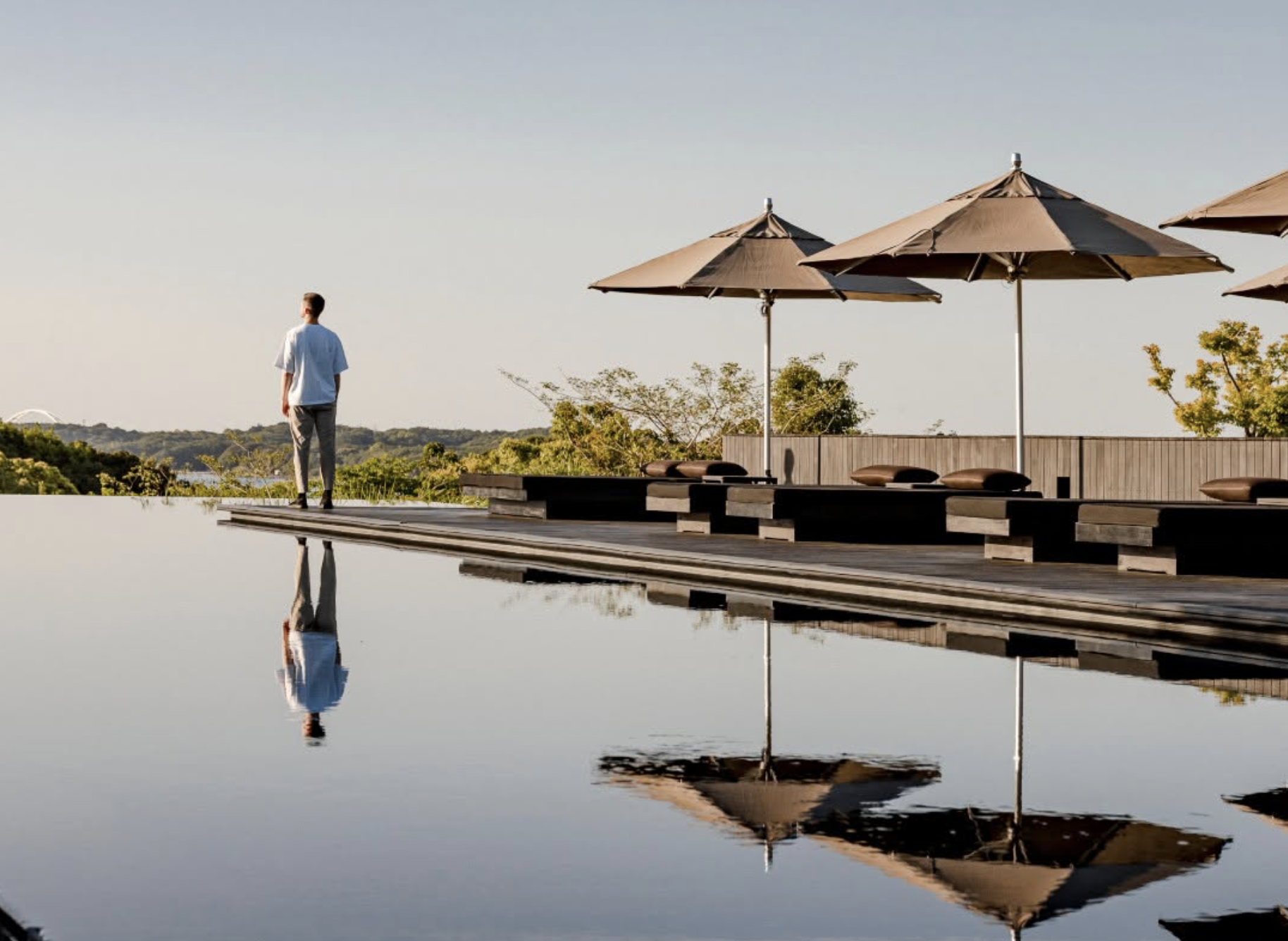
The Lounge: A relaxed setting near the pool for drinks and light refreshments, including Japanese craft beer and cocktails incorporating local ingredients, with a terrace that is particularly appealing in the evening.
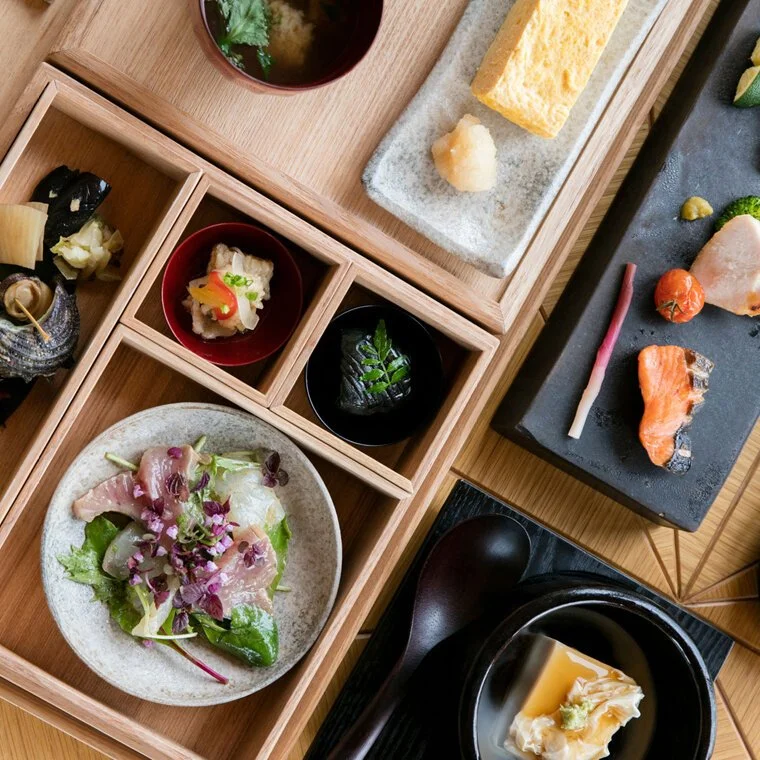
Regional Tastings and Special Dining: Experiences may include sake exploration, local tea tastings, a shrine-inspired breakfast and specialty tasting menus, with availability determined by the current program.
The resort's standard inclusions changed for certain bookings in 2026. Current eligible stays booked on or after 14 May 2026 for arrivals from 1 June 2026 include breakfast and dinner, excluding beverages, alongside additional listed inclusions. Earlier reservations may follow different terms. This distinction matters when comparing rates, particularly when planning several dinners away from the property.
A Spa Built Around Mineral Water
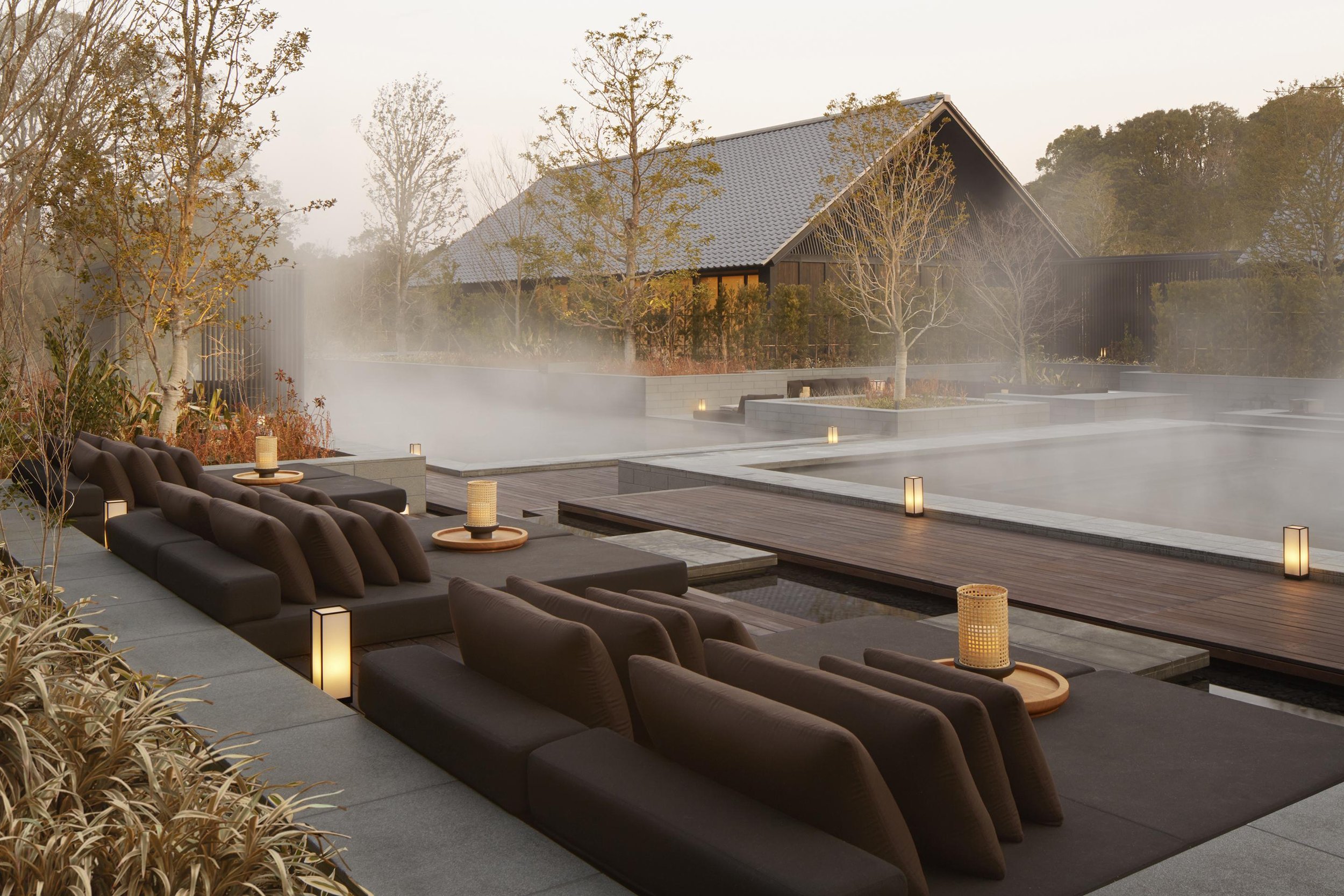
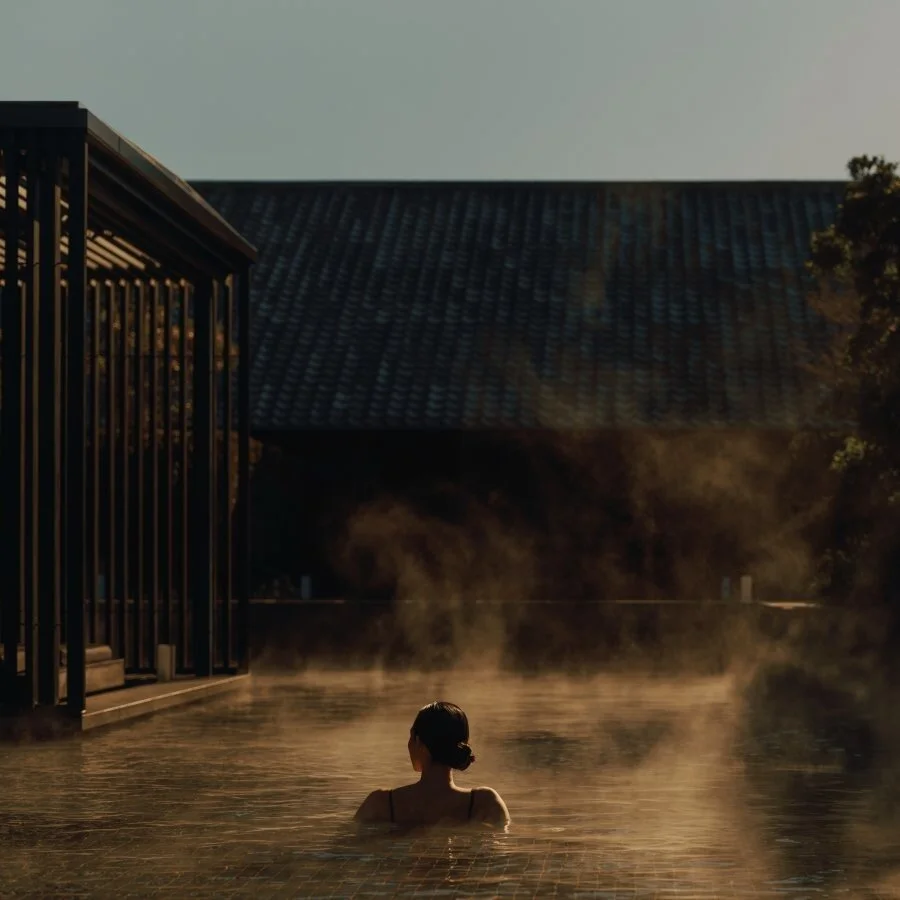
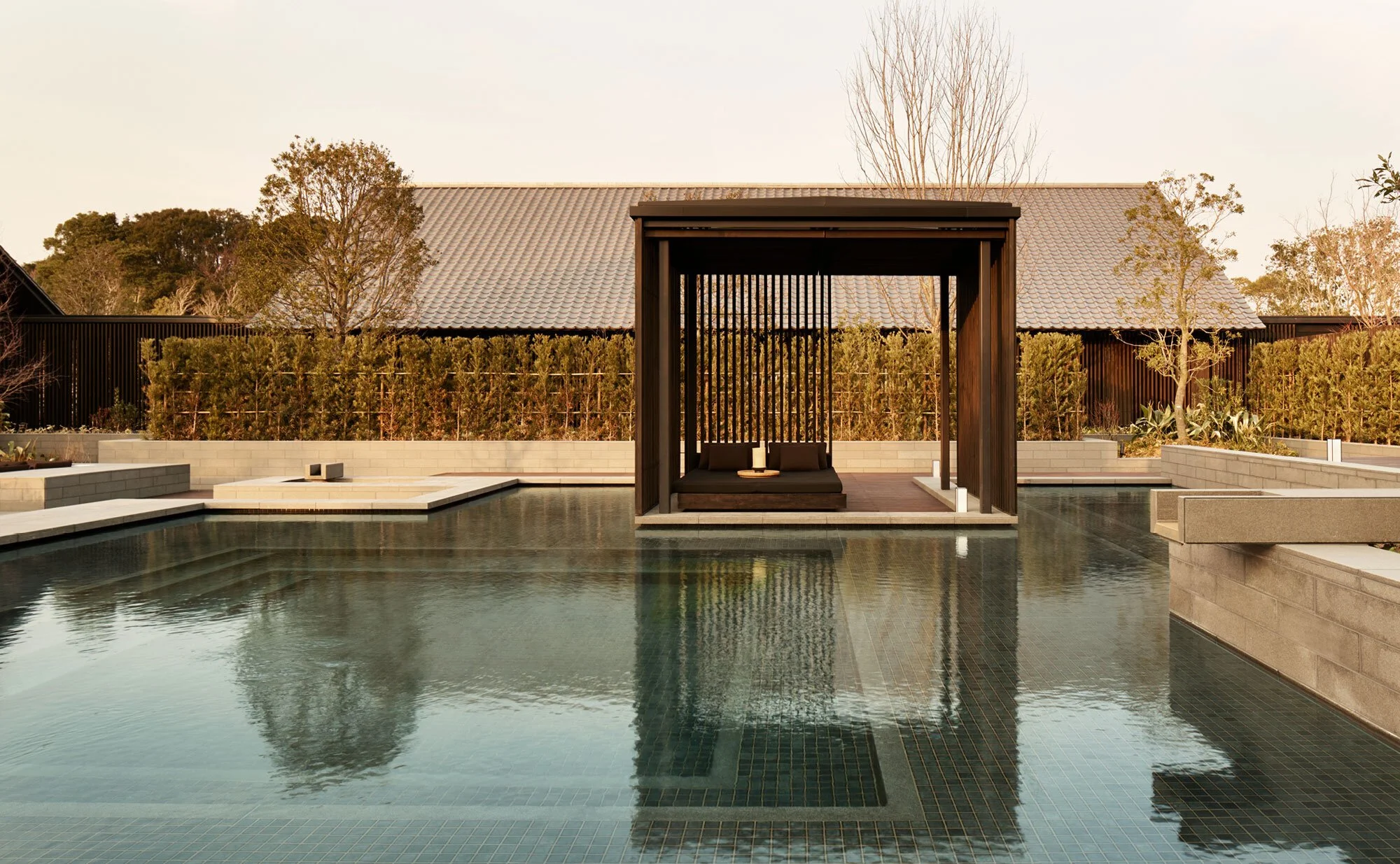
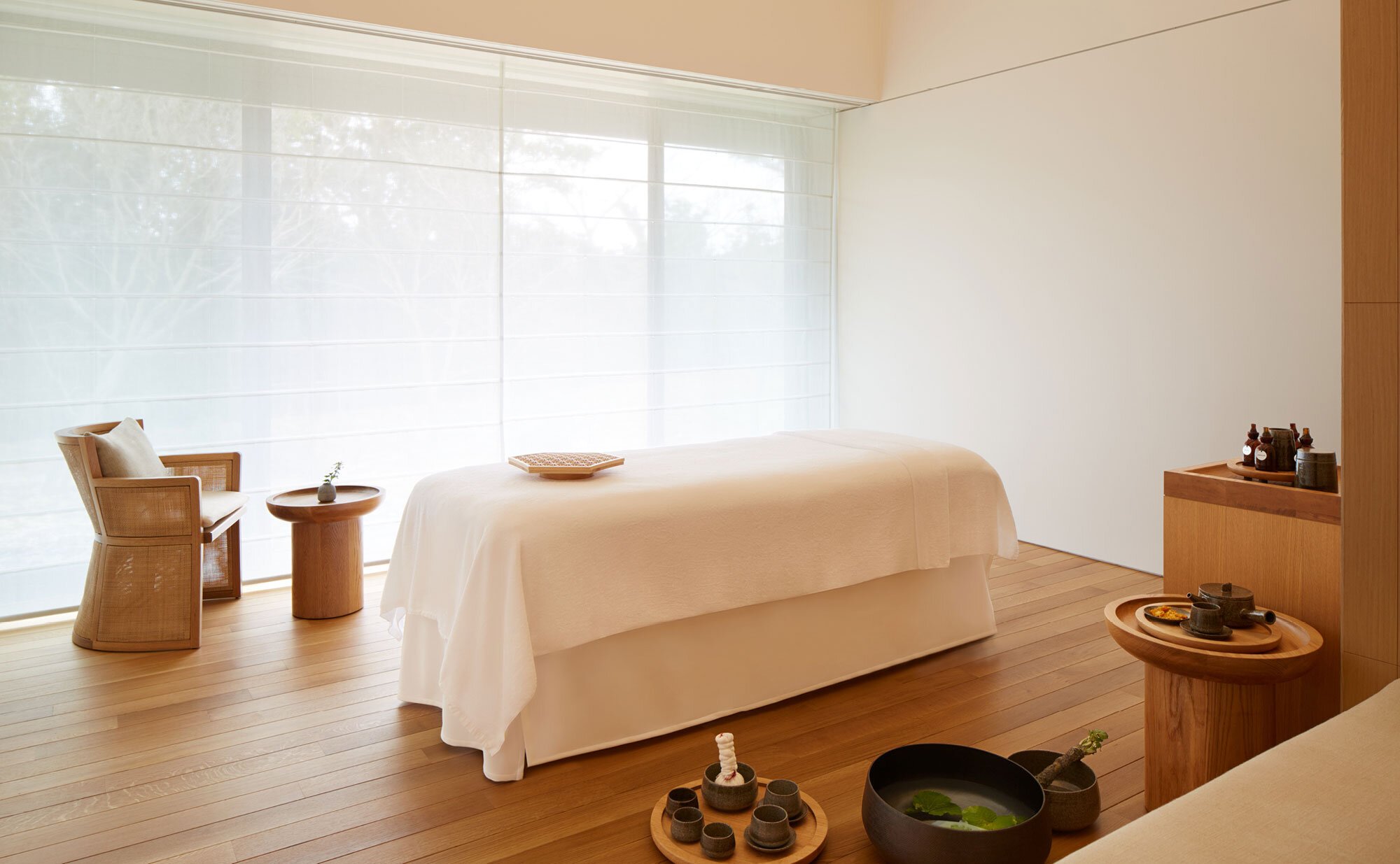
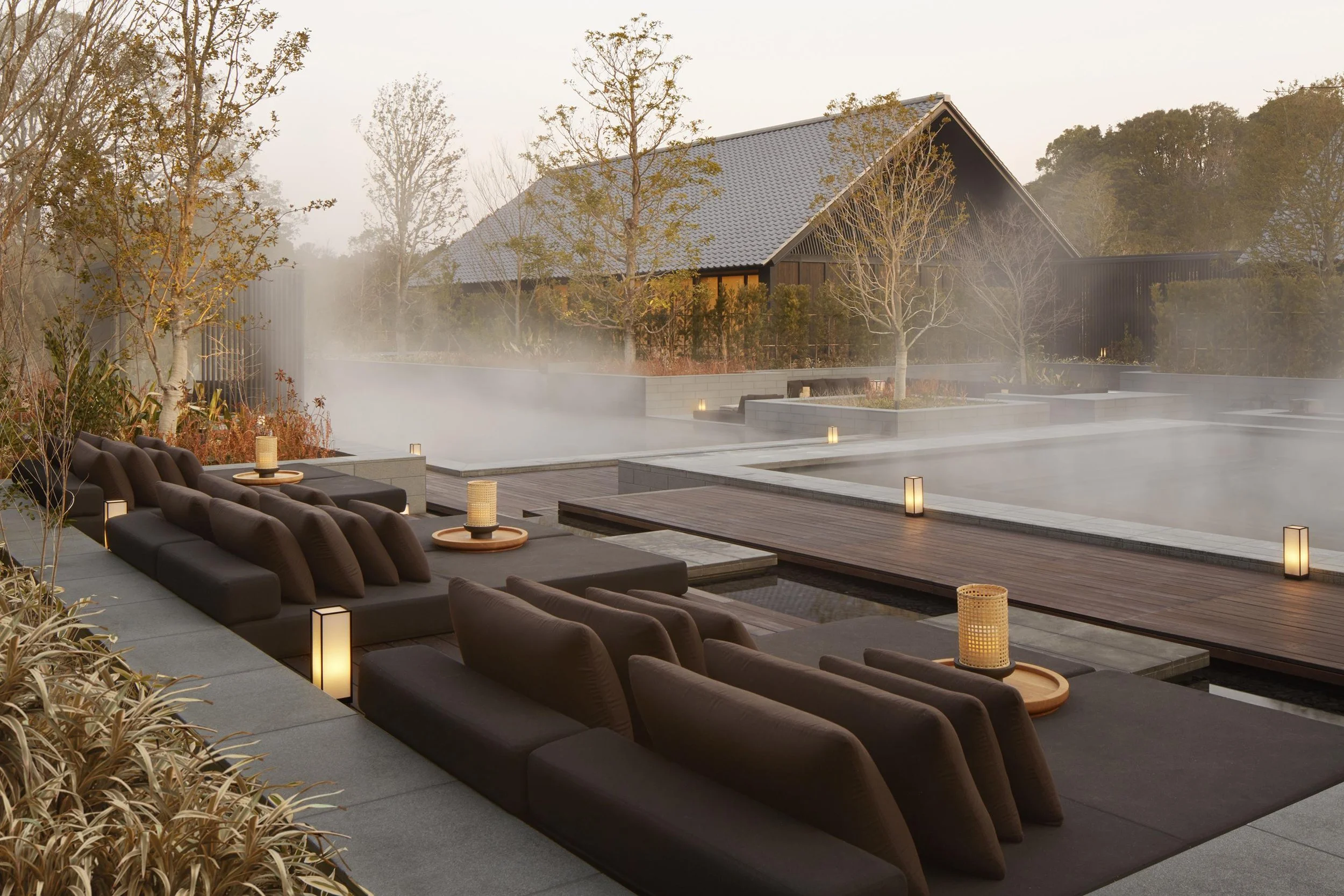
Amanemu's approximately 2,000 sq. m. spa is the center of the resort's wellness identity. Mineral-rich thermal water supports communal onsen-style bathing, while treatments draw on Japanese techniques and broader holistic practices. The surroundings encourage a slower rhythm: bathing, quiet recovery and a session of movement can form the substance of a day rather than merely an afternoon diversion.
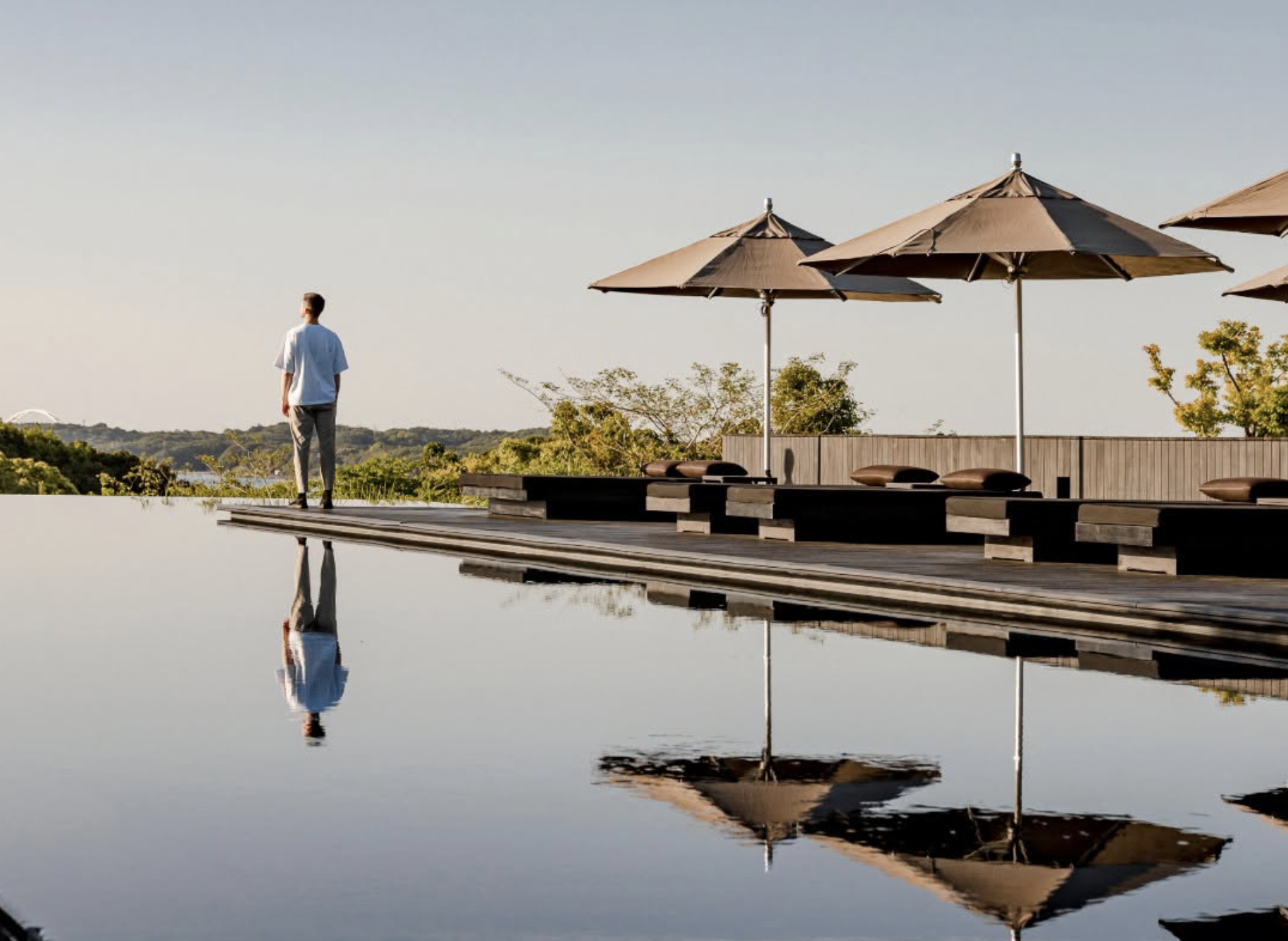
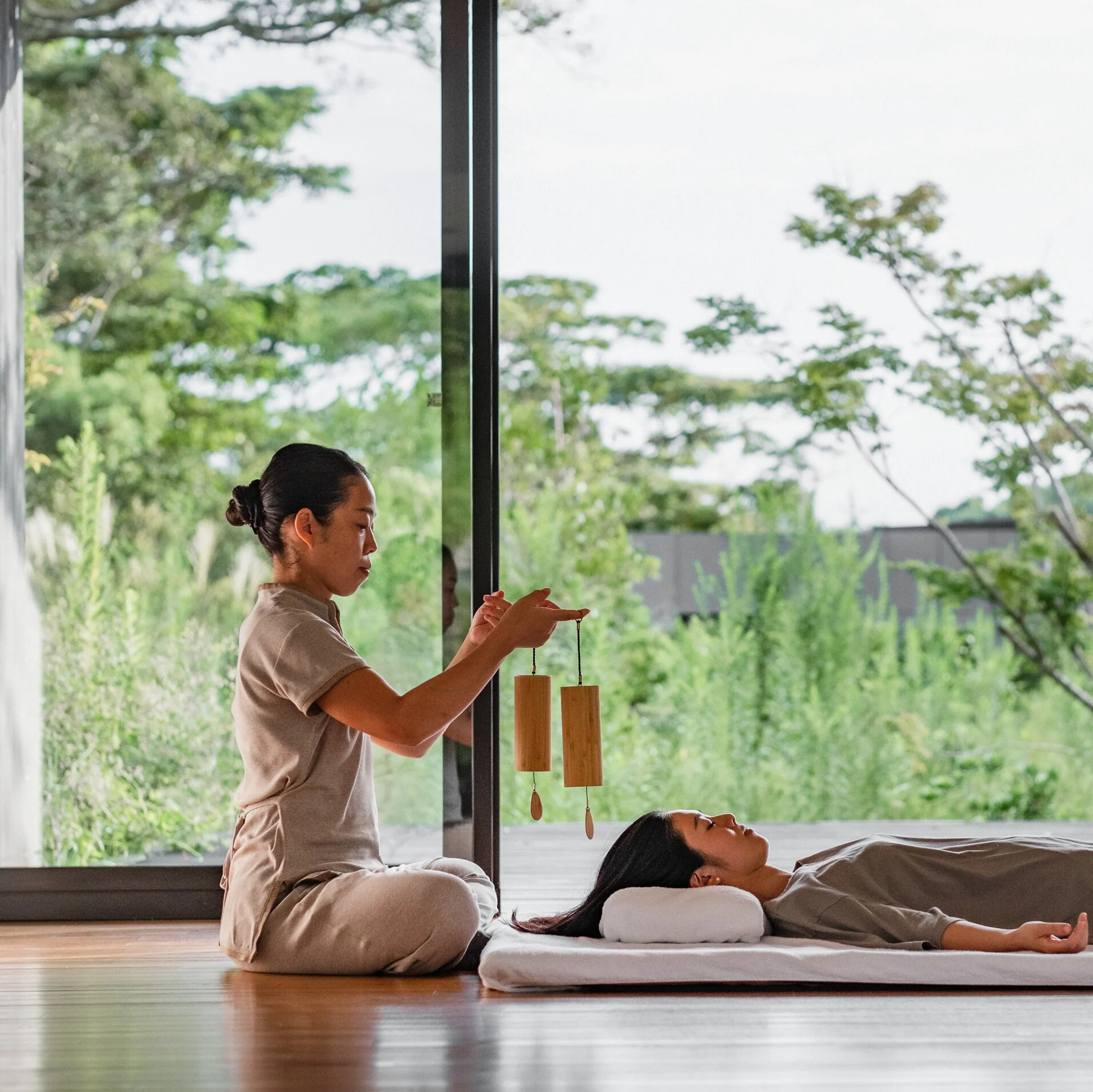
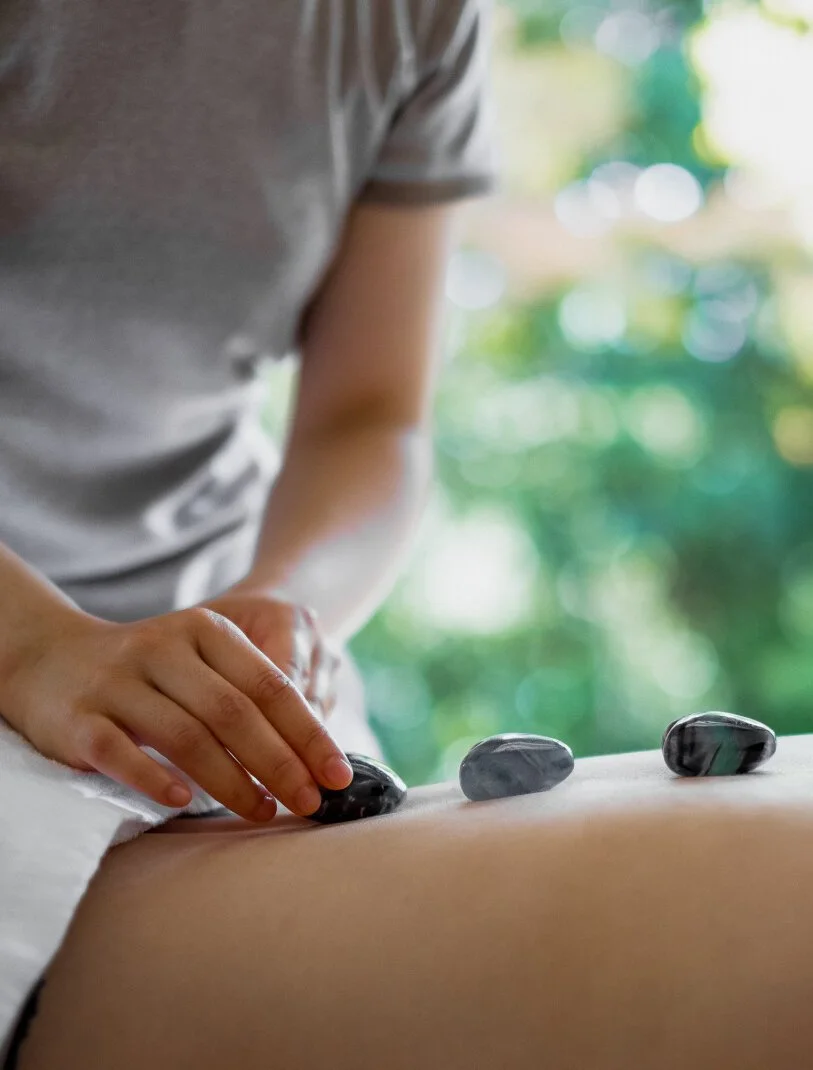
Spa facilities include hot-spring bathing environments, treatment areas and spaces for yoga and fitness. Water-based treatments such as Watsu, as well as bodywork and restorative therapies, may be available according to the current program. An outdoor pool offers another way to enjoy the landscape, distinct from the warmer mineral-water bathing experience.
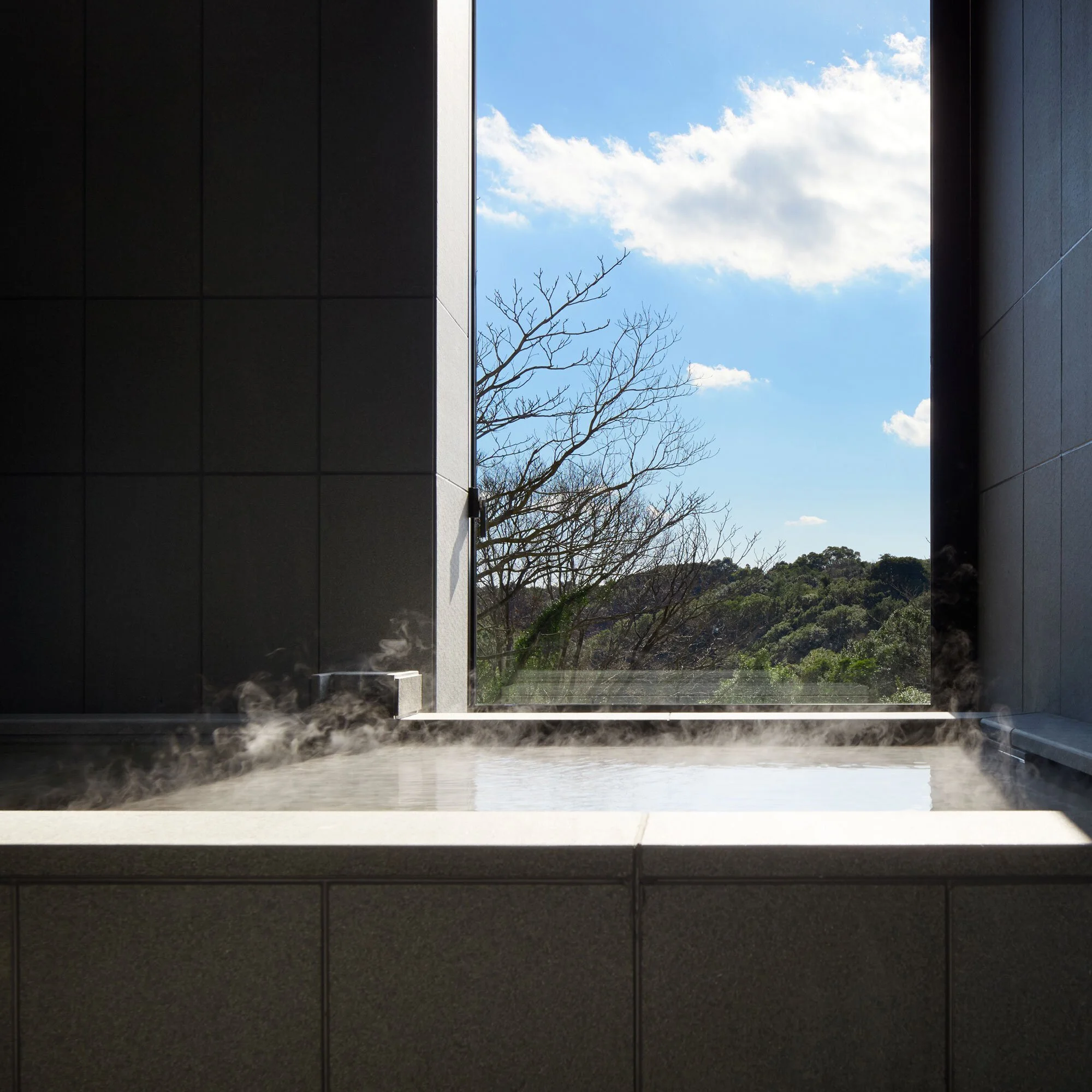
Private onsen baths in every accommodation category are especially significant. They allow guests to enjoy hot-spring bathing at their own pace and create a very different residential experience from hotels where visiting a communal spa is the only option. Guests with medical considerations or sensitivities to heat should confirm bathing suitability and the temperature of thermal facilities with an appropriate professional and the resort.
Beyond the Resort: Shrines, Sea and Local Traditions
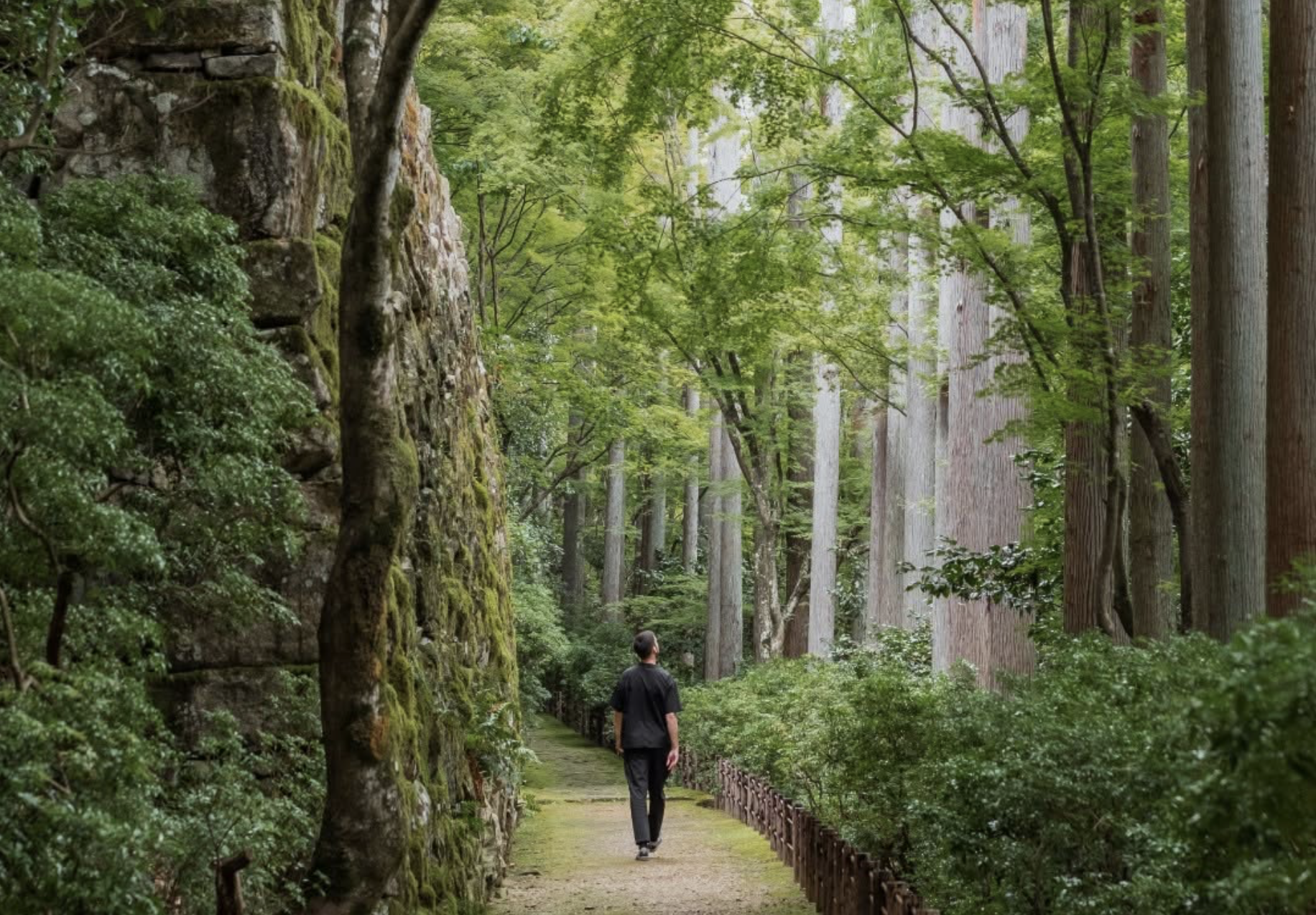
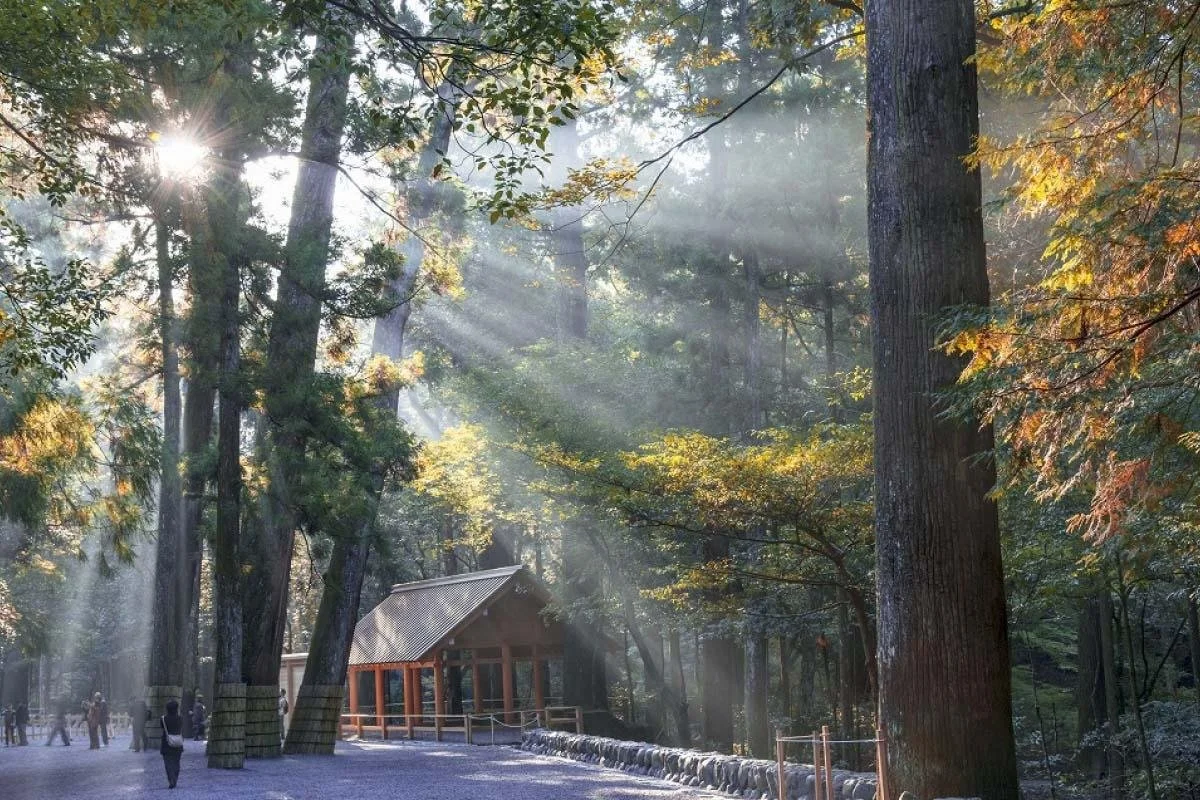
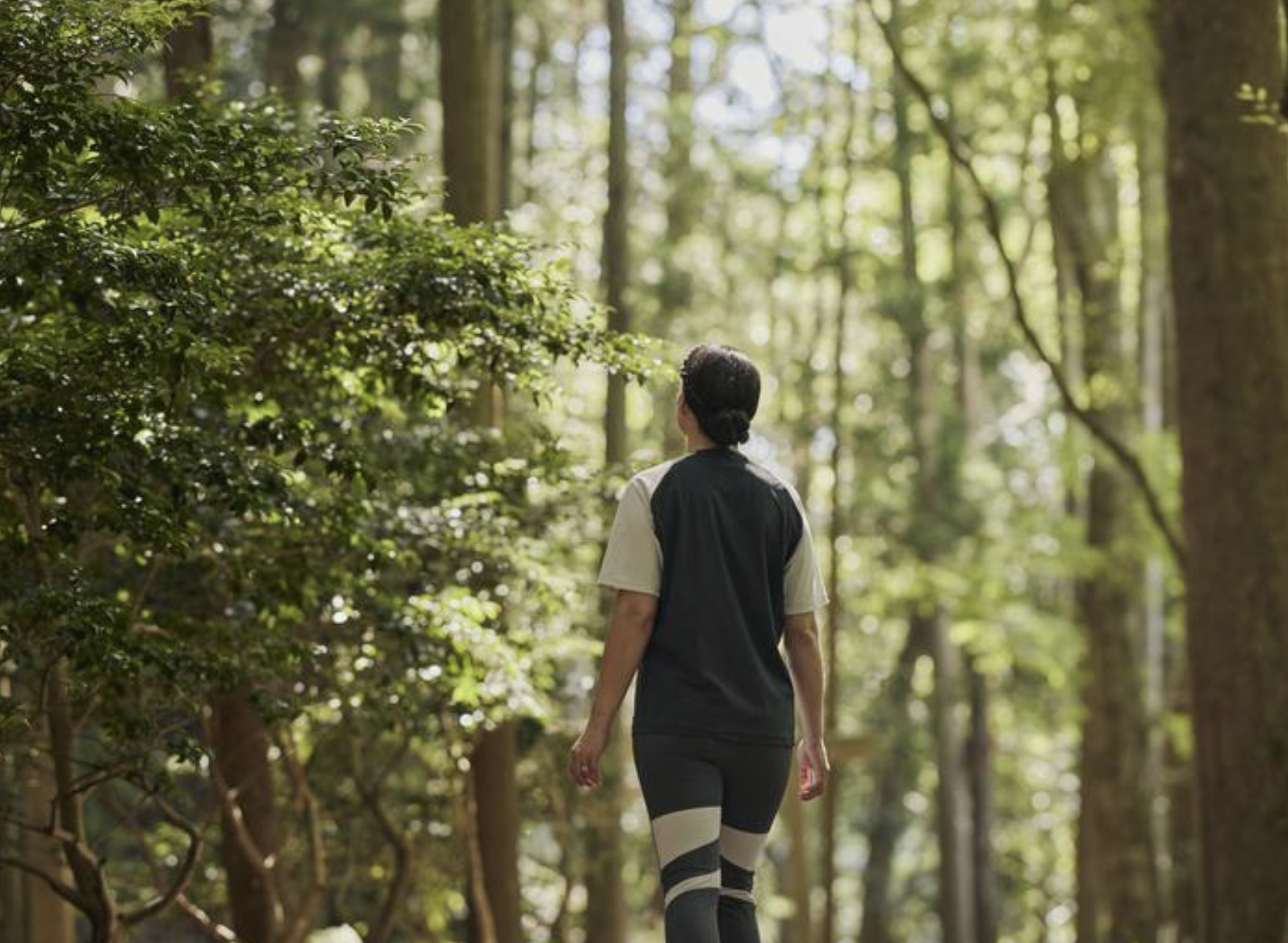
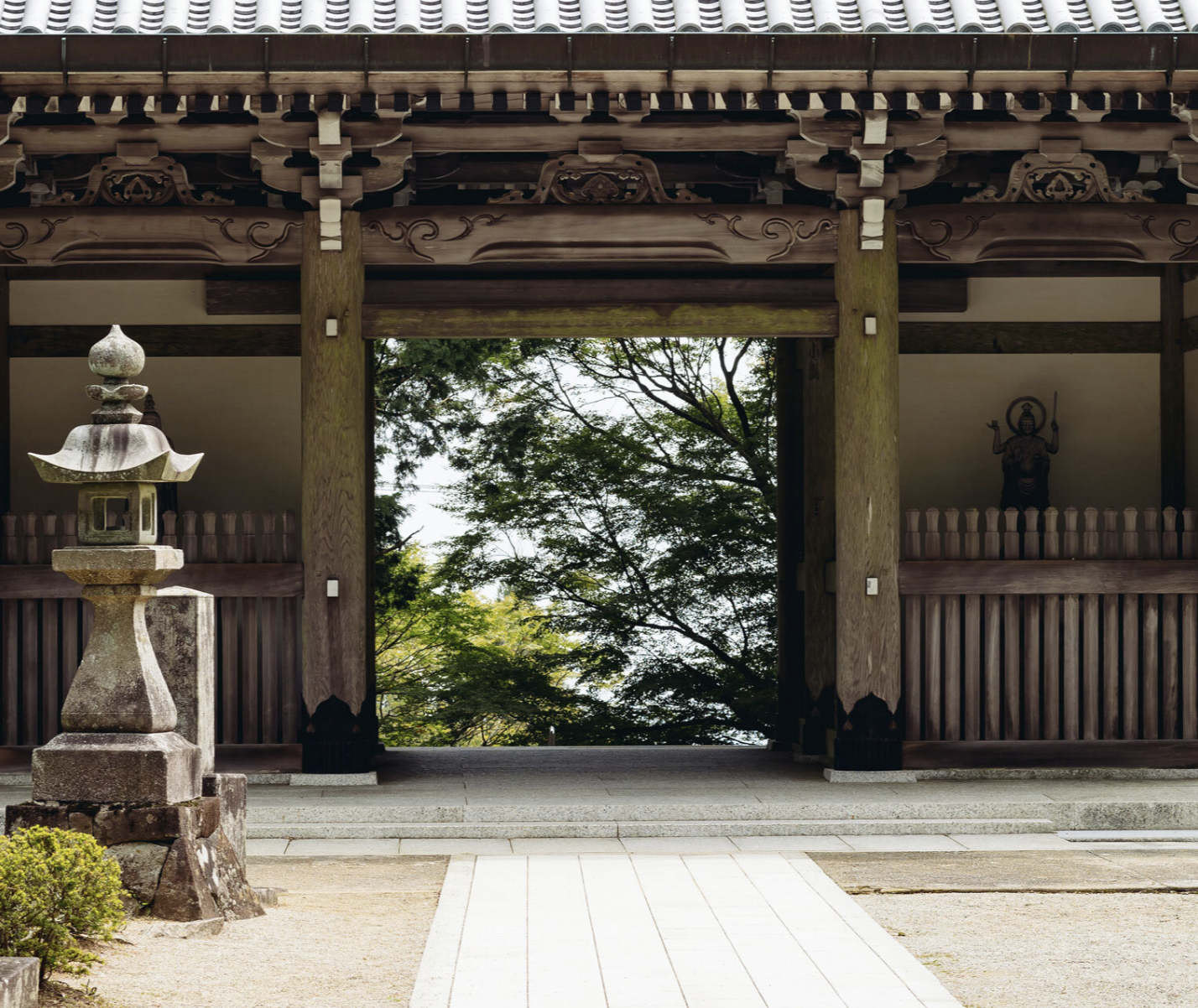
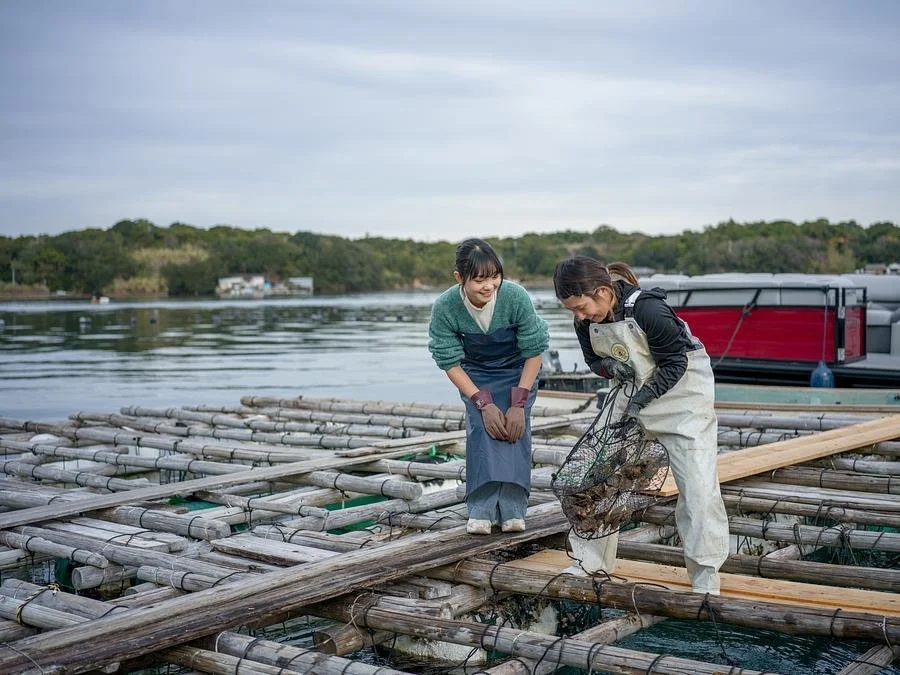
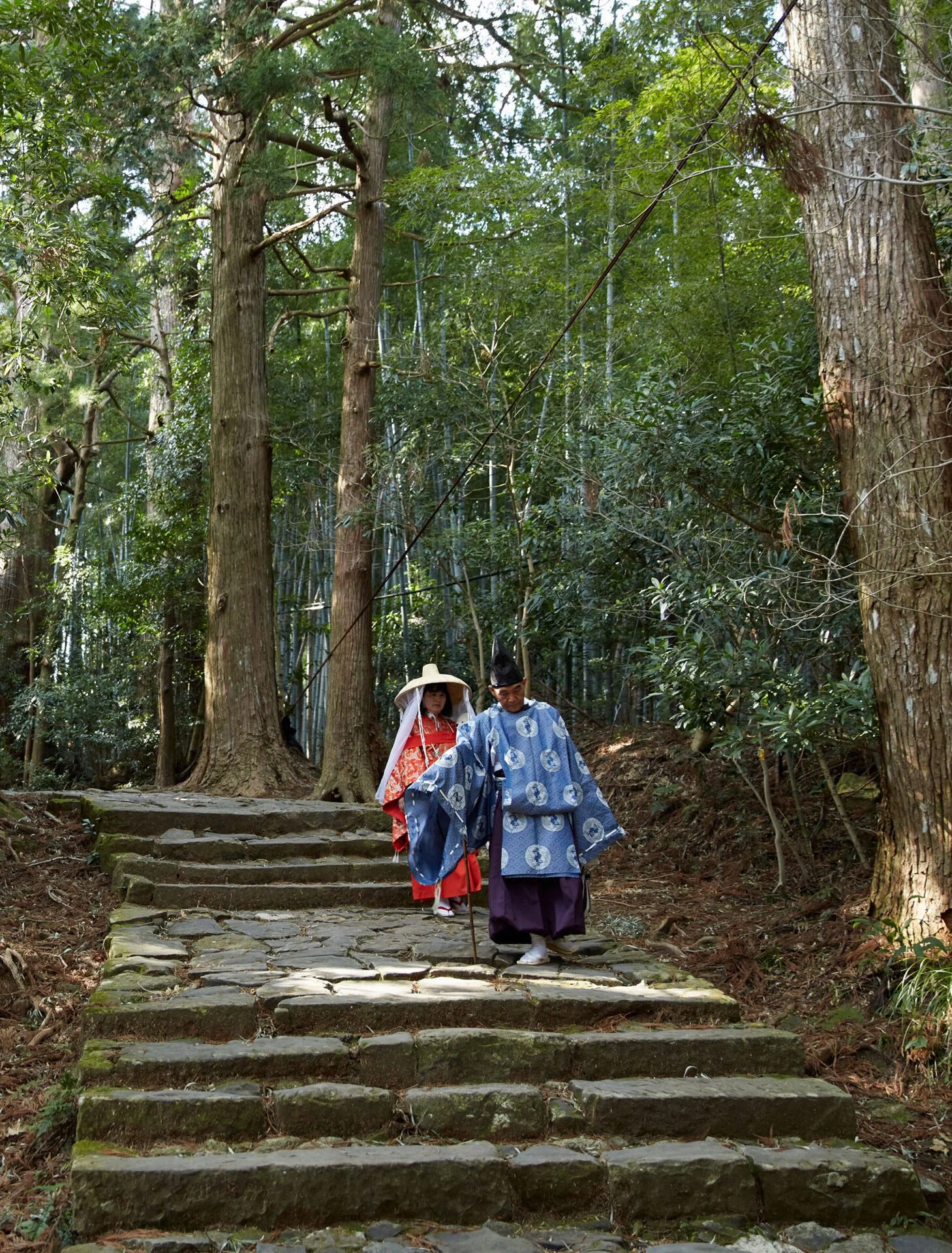
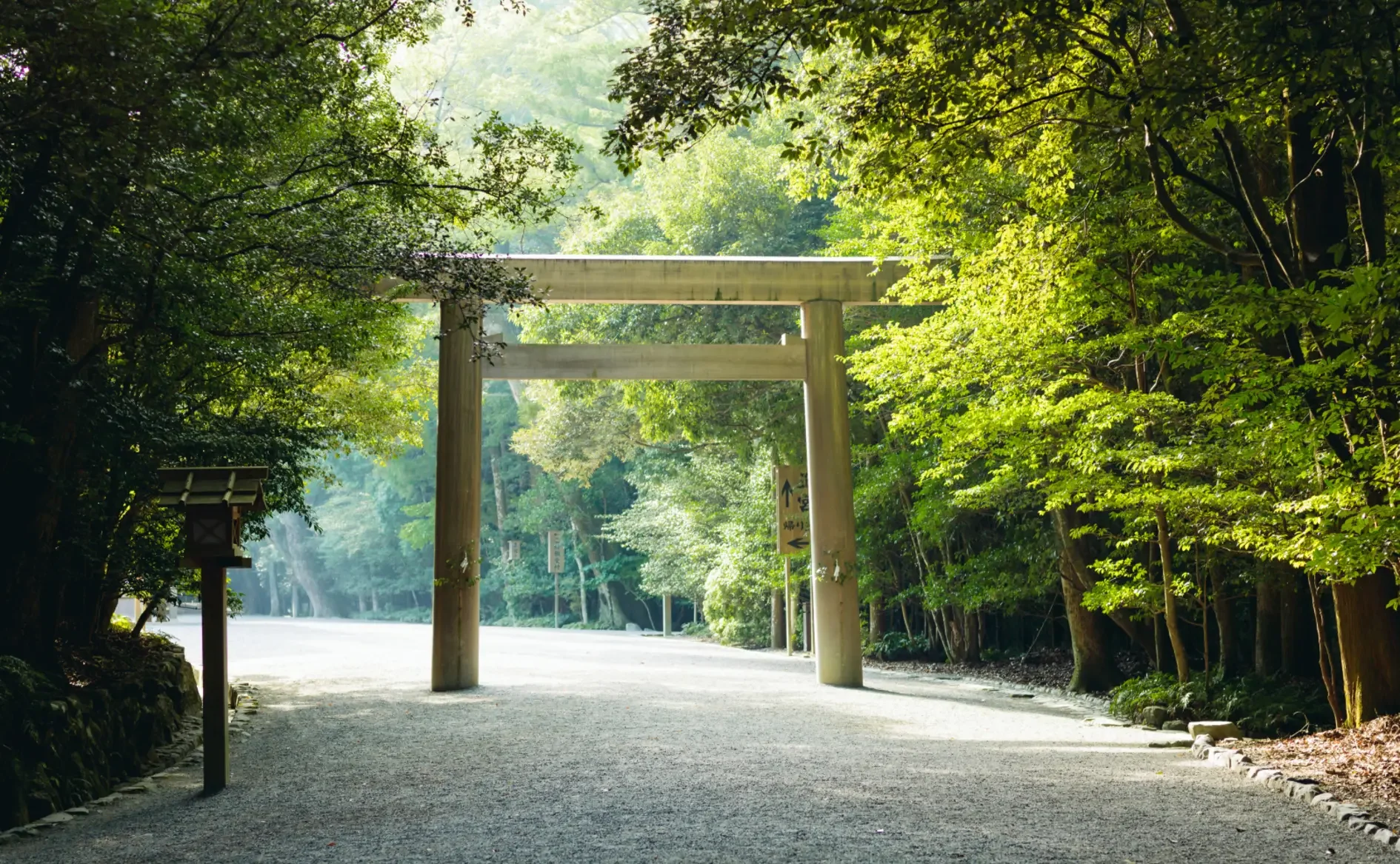
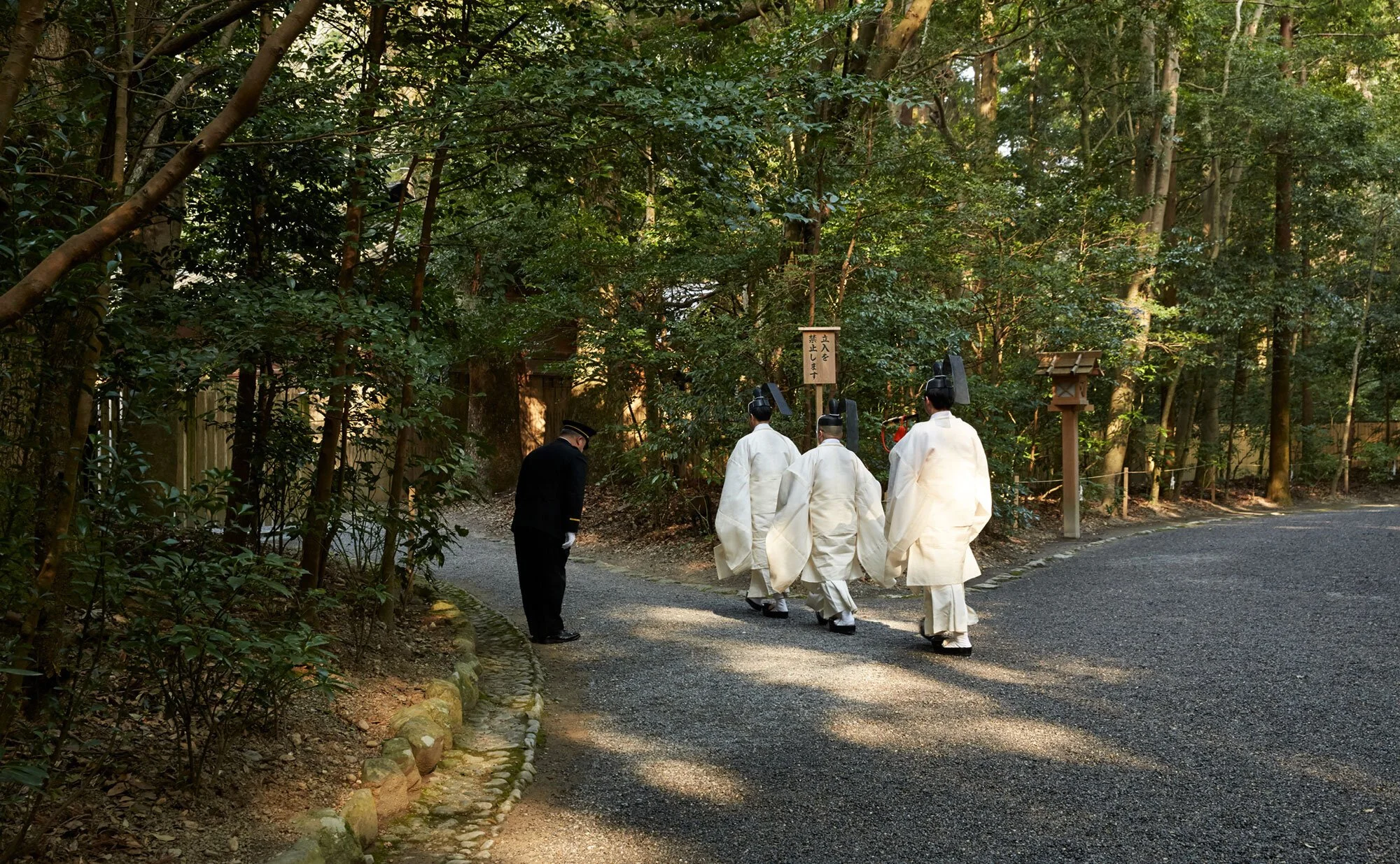
Amanemu is a base for a part of Japan that rewards close attention. Ise Grand Shrine and its surrounding forest precincts introduce the importance of Shinto pilgrimage and ritual; visitors should respect shrine etiquette and understand that access to sacred areas may be limited. Nearby coastal communities offer a contrast, revealing a working landscape of pearl farms, fishing boats and sheltered coves.
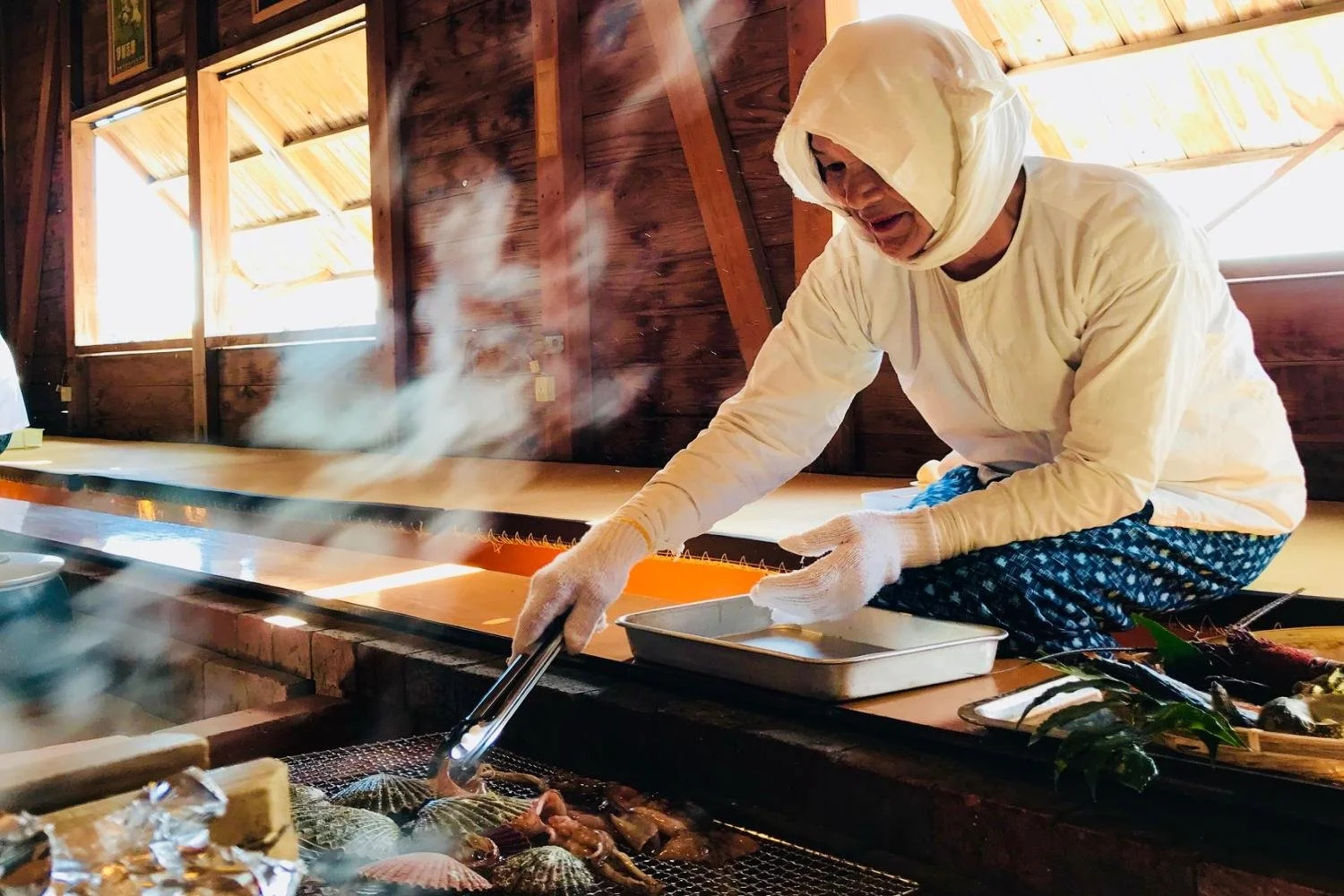
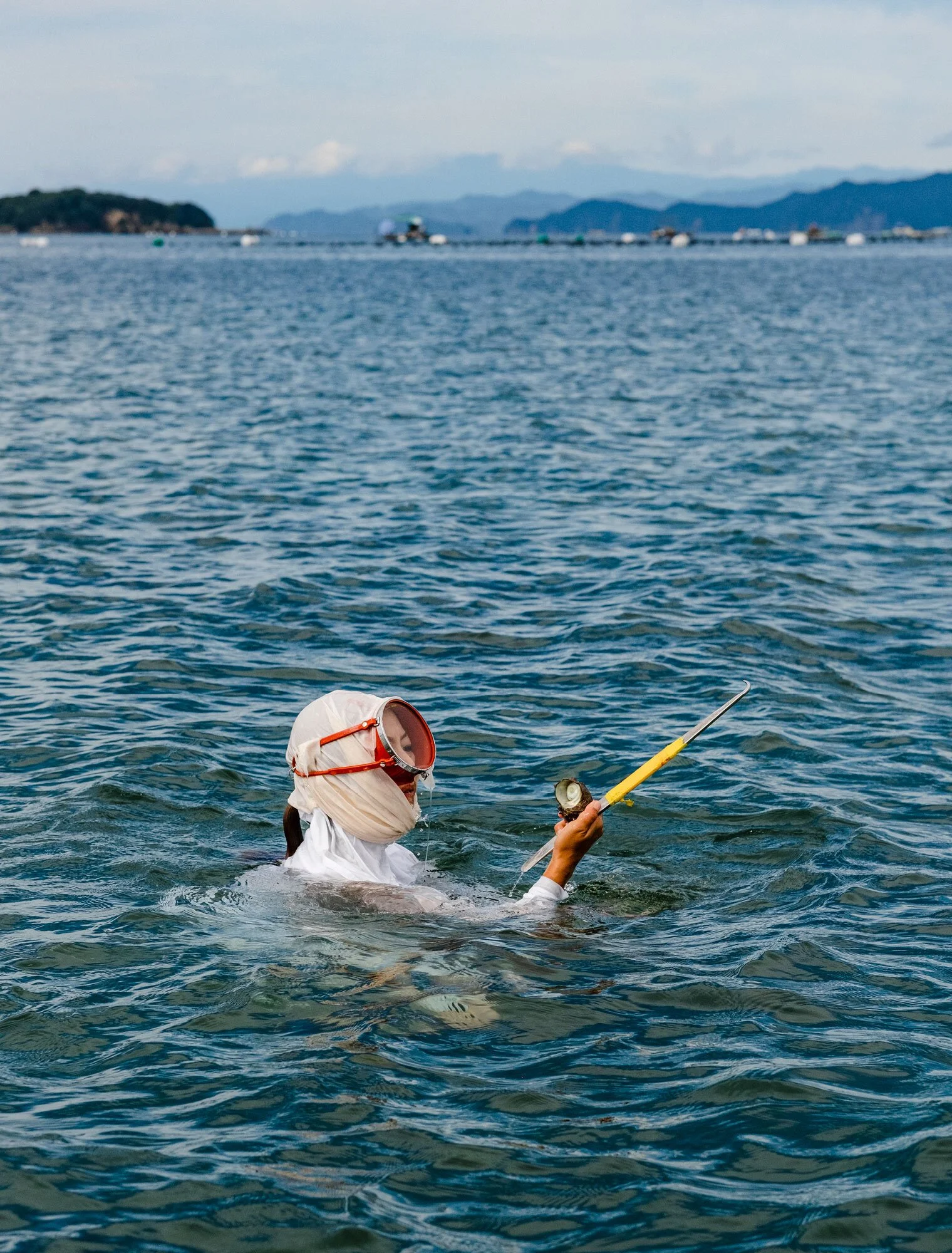
The ama tradition is particularly distinctive to Ise-Shima. For centuries, women free-divers have gathered seafood from the coast, passing their skills through generations. Amanemu features experiences that can include a visit to an ama hut and a seafood meal, offering cultural context alongside regional cuisine. It is best approached as an opportunity to listen and learn rather than as a staged performance.
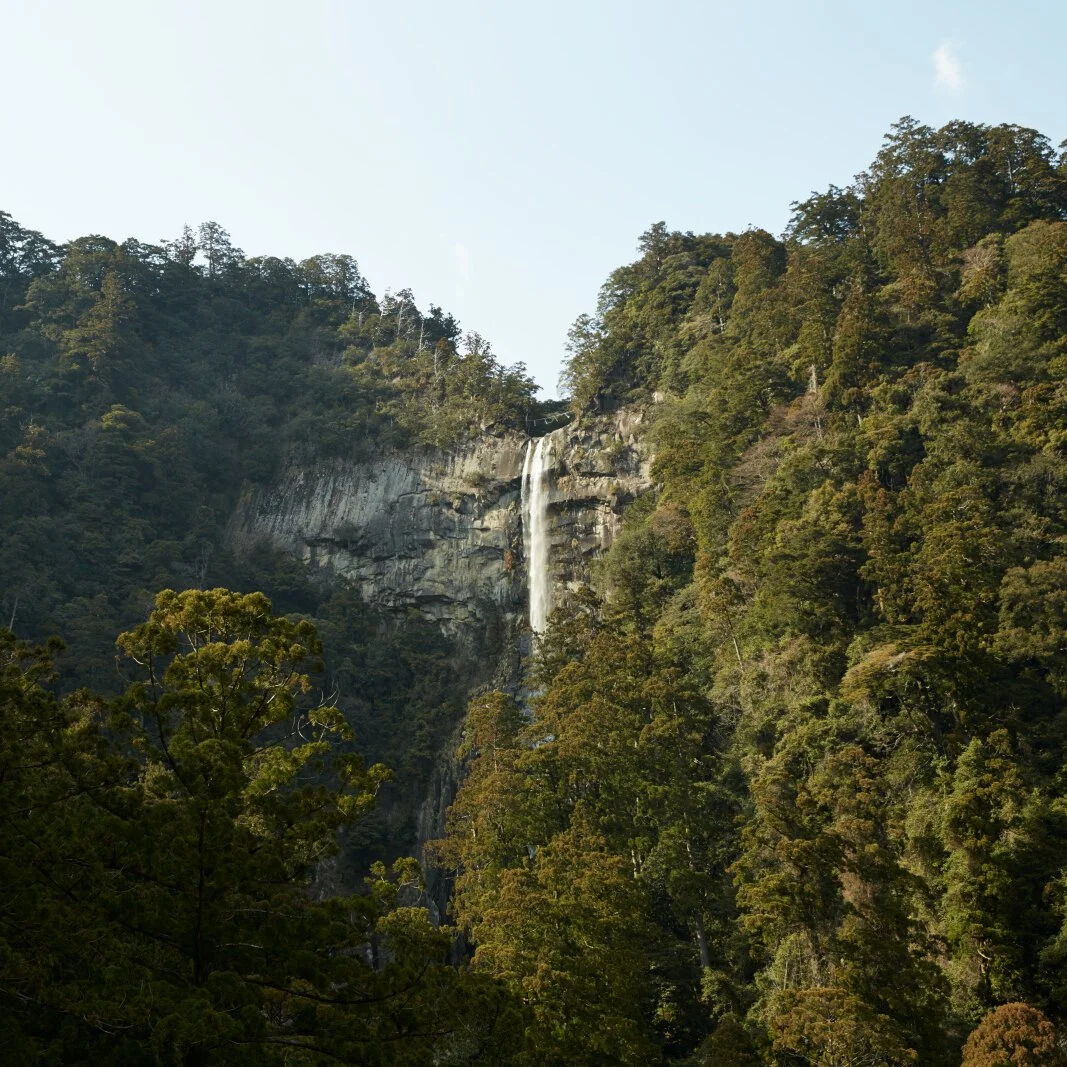
Other excursions may include coastal cruises, craft workshops, guided walks, tea experiences and visits to destinations across the Shima Peninsula. The sacred landscape around Ama-no-Iwato and the trails of Ise-Shima National Park connect natural scenery with longstanding traditions. Some excursions are weather-dependent or require advance booking, making a flexible itinerary the sensible approach.
A Thoughtful Setting for Families and Friends
The two-bedroom villas make Amanemu relevant to families with older children, adult relatives and small groups looking for a quiet shared retreat. Separate bedroom pavilions and a central living space allow travelers to come together for meals and activities without giving up privacy. Each villa accommodates up to six guests according to the property's published overview, subject to exact sleeping arrangements.
Amanemu is not presented as a conventional children's resort with a large organized kids' club. The strongest family experiences are likely to be thoughtfully selected local excursions, meals, suitable cultural activities and time spent in the gardens and villa. Parents should review hot-spring and pool safety, bathing supervision, dining preferences and suitable excursion ages when planning a stay.
For a group visiting Japan together, a villa also offers a calmer alternative to dividing the party among city hotel rooms. The separate sleeping arrangements are useful after long days of travel, while a shared meal or private outing can become a natural focus for the itinerary.
Landscape Restoration in a Protected Setting
Amanemu occupies a landscape within Ise-Shima National Park, where the coastline, woodland and marine environment form part of the reason for visiting. The project's landscape designer documents a reforestation concept developed to restore regional vegetation and reconcile the architecture with a site altered by earlier resort activity. Native and locally appropriate planting, garden courtyards and restrained interventions are central to that design approach.
The project's attention to landscape is a concrete environmental design choice, but it should not be confused with an independently verified whole-resort sustainability certification. Details of operational energy, waste and water performance are not comprehensively published on the resort pages reviewed for this article. Travelers interested in current operational initiatives can request further information through the hotel.
Responsible travel in the region also depends on guest choices. Respecting shrine restrictions, selecting considerate local guides and following marine-excursion instructions can help support the cultural and natural environments that distinguish Ise-Shima.
Accessibility Across a Hillside Retreat
Amanemu is arranged as separate pavilions across landscaped, sloping terrain, a format that may involve longer outdoor journeys than a single-building hotel. Although the suite and villa descriptions publish layouts and amenities, they do not establish that every category has step-free access or an adapted bathroom.
Travelers requiring mobility support should discuss the exact route from their accommodation to dining, the spa, vehicles and other public areas before choosing a category. Transport arrangements within the resort, bathroom access and the suitability of private onsen facilities may be especially important. Individual excursions involving boats, uneven ground or temple steps should be reviewed separately.
Advance coordination can also clarify whether suitable transport and assistance are available at Kashikojima Station or for a private transfer from an airport. The property's quiet setting is a strength, but planning must match the experience to each guest's requirements rather than assuming all parts of the resort are equally accessible.
The Changing Seasons of Ise-Shima
Ise-Shima can be enjoyed throughout the year, with seasonal differences that influence both the landscape and the pace of travel. Spring brings fresh greenery and blossoms, making shrine walks and garden time especially attractive. Autumn offers cooler temperatures, changing foliage and comfortable days for exploring the coast and forest trails.
Summer is warmer and more humid, with occasional heavy rain and the possibility of tropical storms. Travelers planning boats or outdoor excursions should preserve some flexibility. Winter is generally cooler and can be appealing for hot-spring bathing, when the contrast between chilly air and warm mineral water becomes part of the experience.
Dining changes with the season as local seafood and produce come into their own. Travelers focused on a particular festival, excursion or culinary specialty should check operating schedules and seasonal availability rather than assuming that every experience is offered throughout the year.
Plan Your Stay With Destinations by David
Choosing between a garden-oriented suite, a bay-facing suite and a two-bedroom villa is the starting point for planning Amanemu well. Destinations by David can help match the accommodation to your travel party, preferred view and interest in private bathing, while coordinating enough time in Ise-Shima to enjoy both the resort and its cultural surroundings.
Our team can arrange the practical details of arrival, from rail travel through Kashikojima Station to private transfers, alongside restaurant reservations, spa appointments and experiences such as shrine visits or an encounter with the region's ama traditions. We will discuss applicable booking arrangements and stay inclusions for your selected dates and rate as part of planning, without treating benefits available to every guest as exclusive agency privileges.
Contact our team to plan and book Amanemu as a quiet Ise-Shima retreat or as part of a wider Japan journey that also includes Tokyo, Kyoto or other destinations.
Arriving at Amanemu
Amanemu is in Shima City in Mie Prefecture. Kashikojima Station is the most convenient rail arrival point; the resort publishes complimentary round-trip transfers between the station and the property. Journey times below are approximate and depend on connections and the chosen service.
Chubu Centrair International Airport (NGO): Approximately three hours by private car to Amanemu; a private helicopter transfer can be arranged, with an indicative flight of about 25 minutes.
Via Nagoya and Kashikojima: Allow approximately 30 minutes on the airport train to Nagoya, about two hours on the Kintetsu Limited Express to Kashikojima and a further 20 minutes by resort transfer.
From Tokyo: Travel by Shinkansen to Nagoya in approximately 95–100 minutes, then continue by Kintetsu rail and the resort transfer; allow additional time for the station change and connections.
From Kyoto: A direct Kintetsu train to Kashikojima takes approximately two hours and 45 minutes, followed by the resort's 20-minute transfer.
Private Transfers: Chauffeured road transport and helicopter arrangements can be discussed for guests prioritizing a direct arrival or combining several destinations.
The Value of Time Beside the Bay
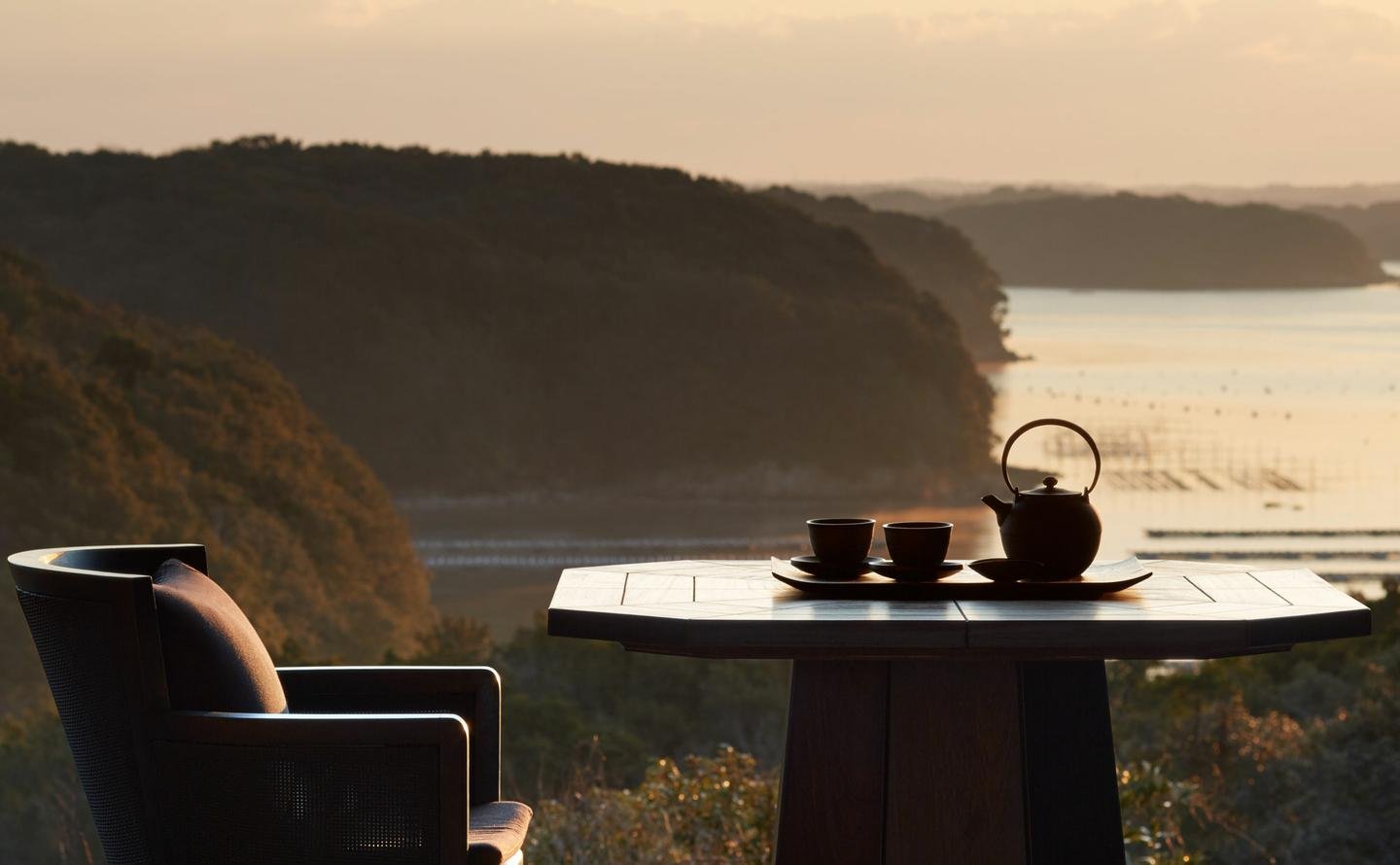
Amanemu's strength is its interpretation of an older idea of travel: allowing a place's rhythms to shape the day. The private onsen baths, understated architecture and views across Ago Bay create a setting where quiet time feels integral to the stay, not simply an interval between excursions.
Beyond the resort, Ise-Shima offers shrines, coastal communities and traditions that deserve careful attention. For couples, a Nagi Suite may be all the space needed to appreciate the changing horizon; for families or friends, a villa makes room for a shared journey without sacrificing privacy. The result is an experience rooted in a particular Japanese landscape, with meaningful opportunities to explore it slowly.