The Red Sea, Saudi Arabia | Desert Rock
A Different Side of the Red Sea
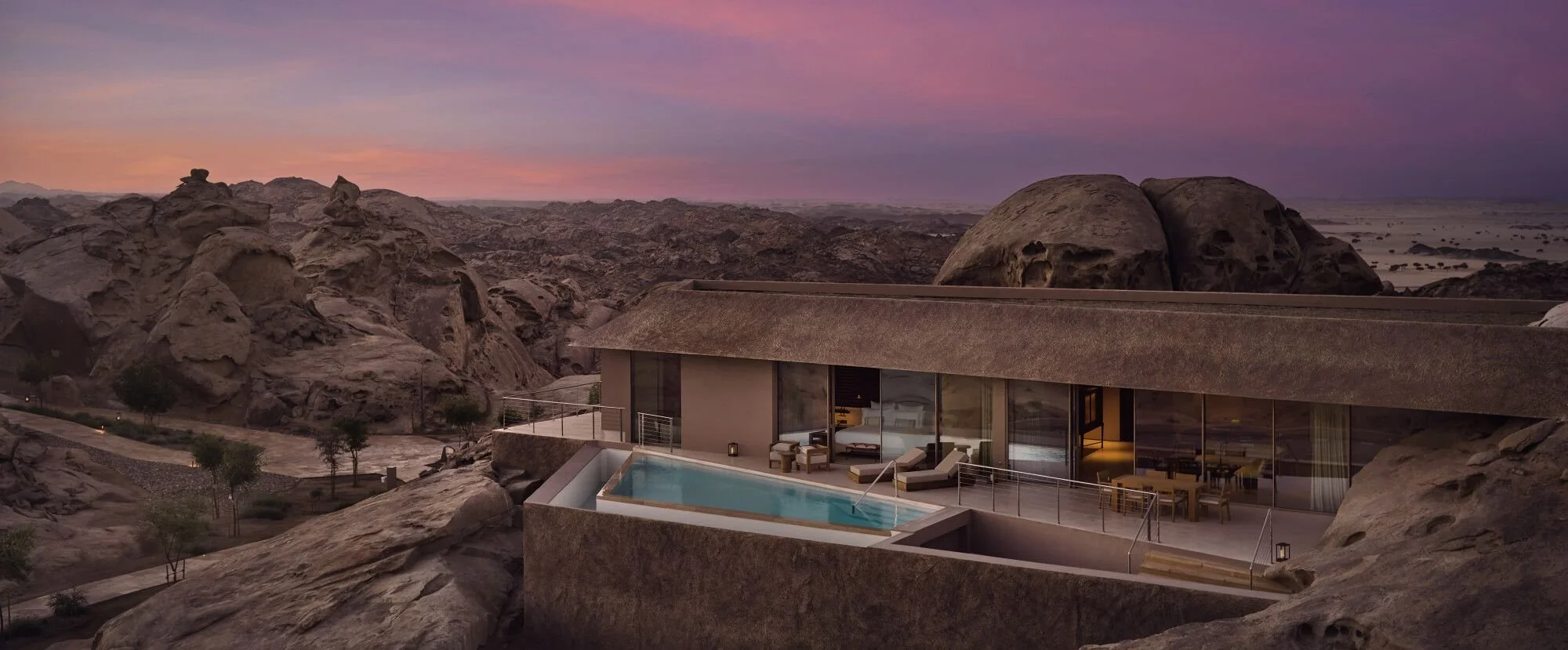
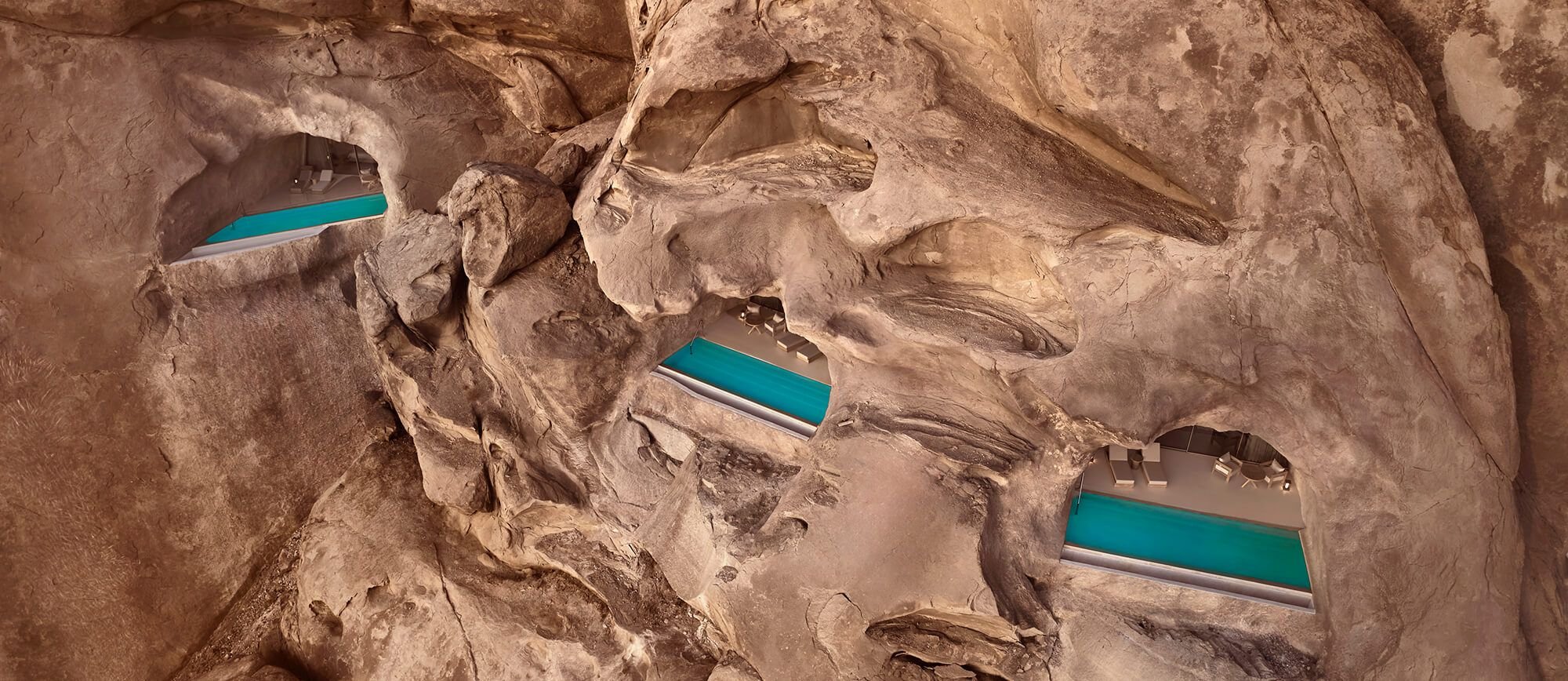
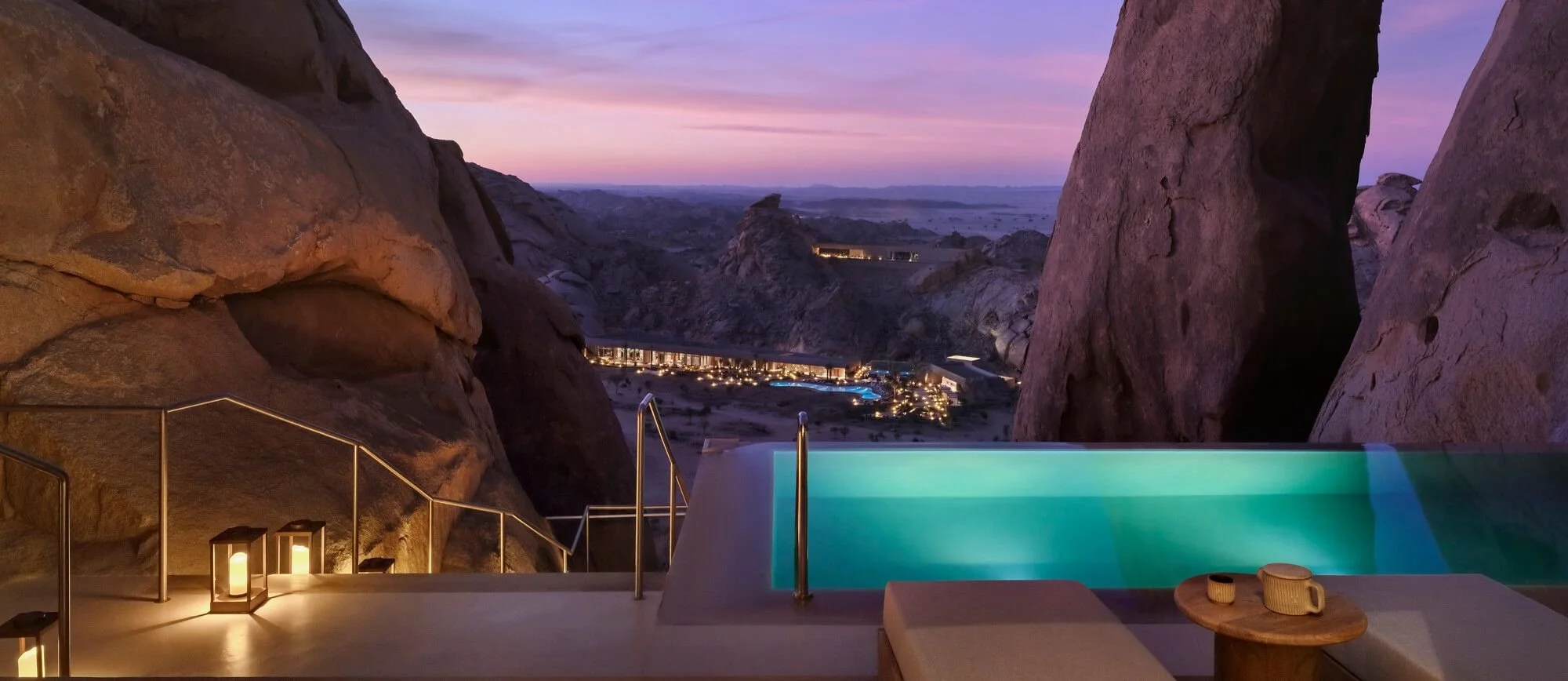
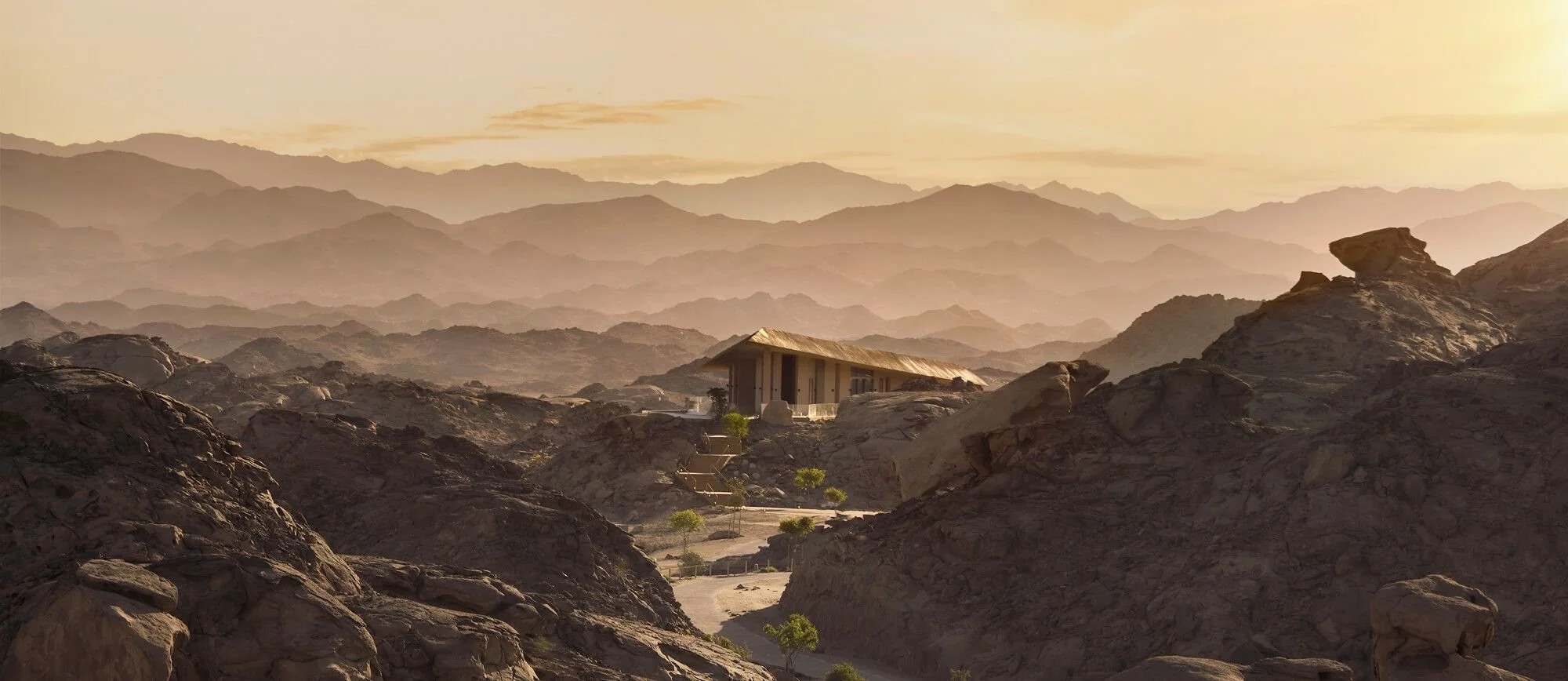
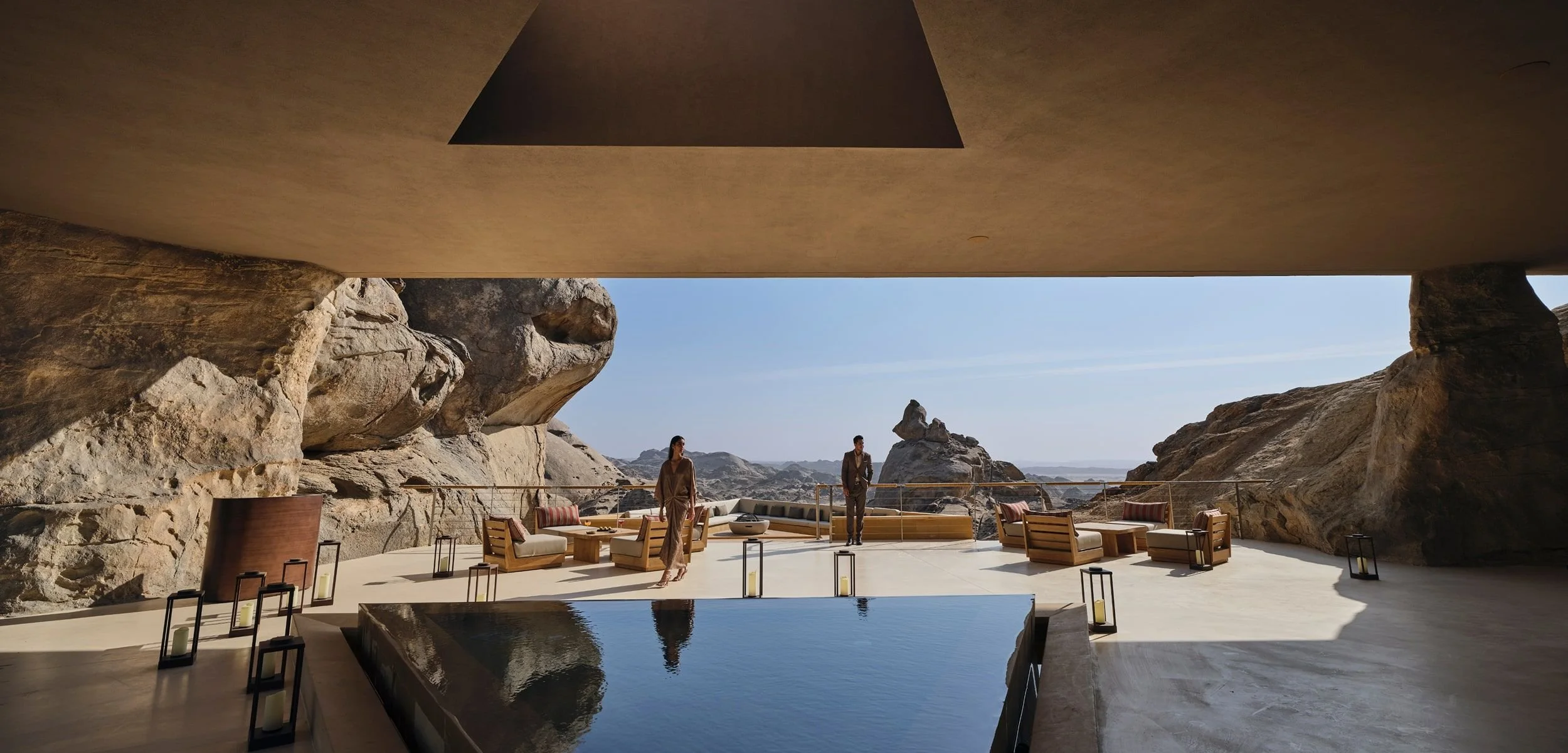
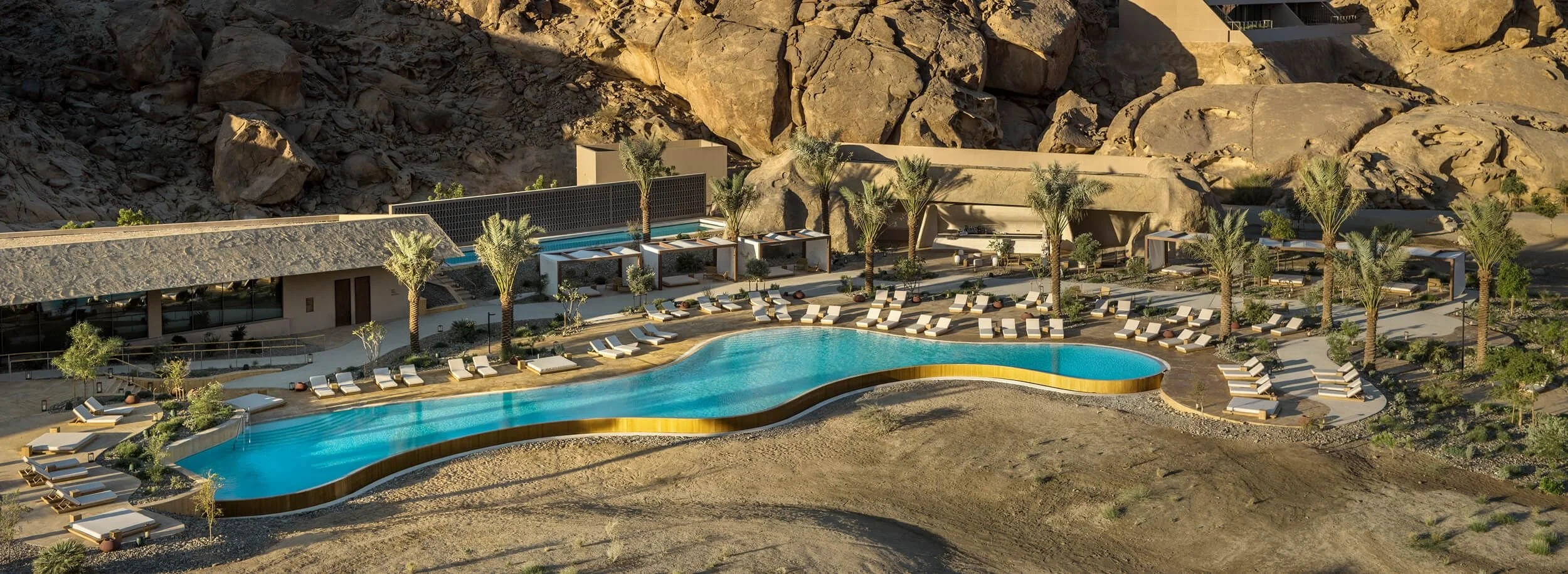
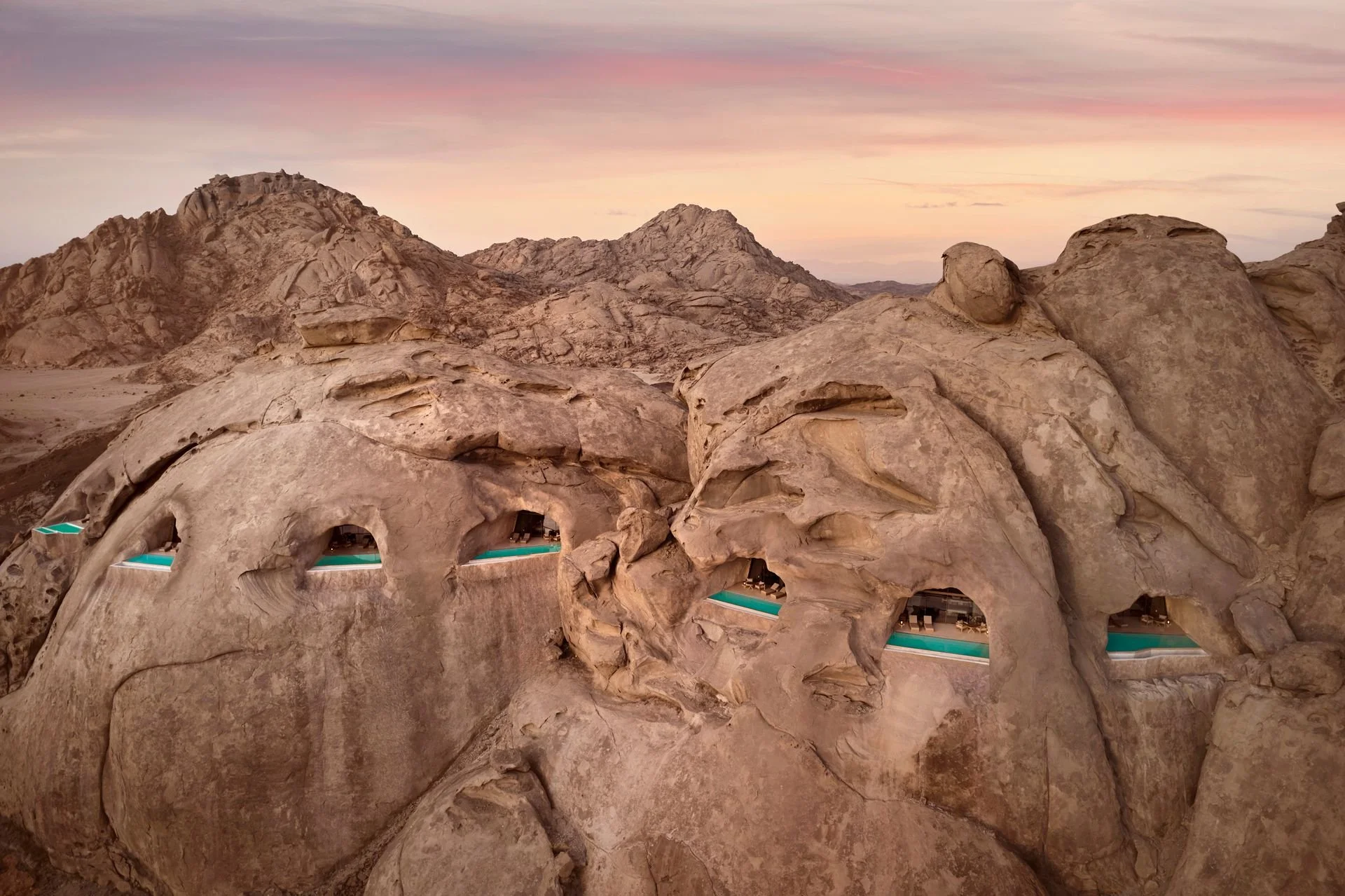
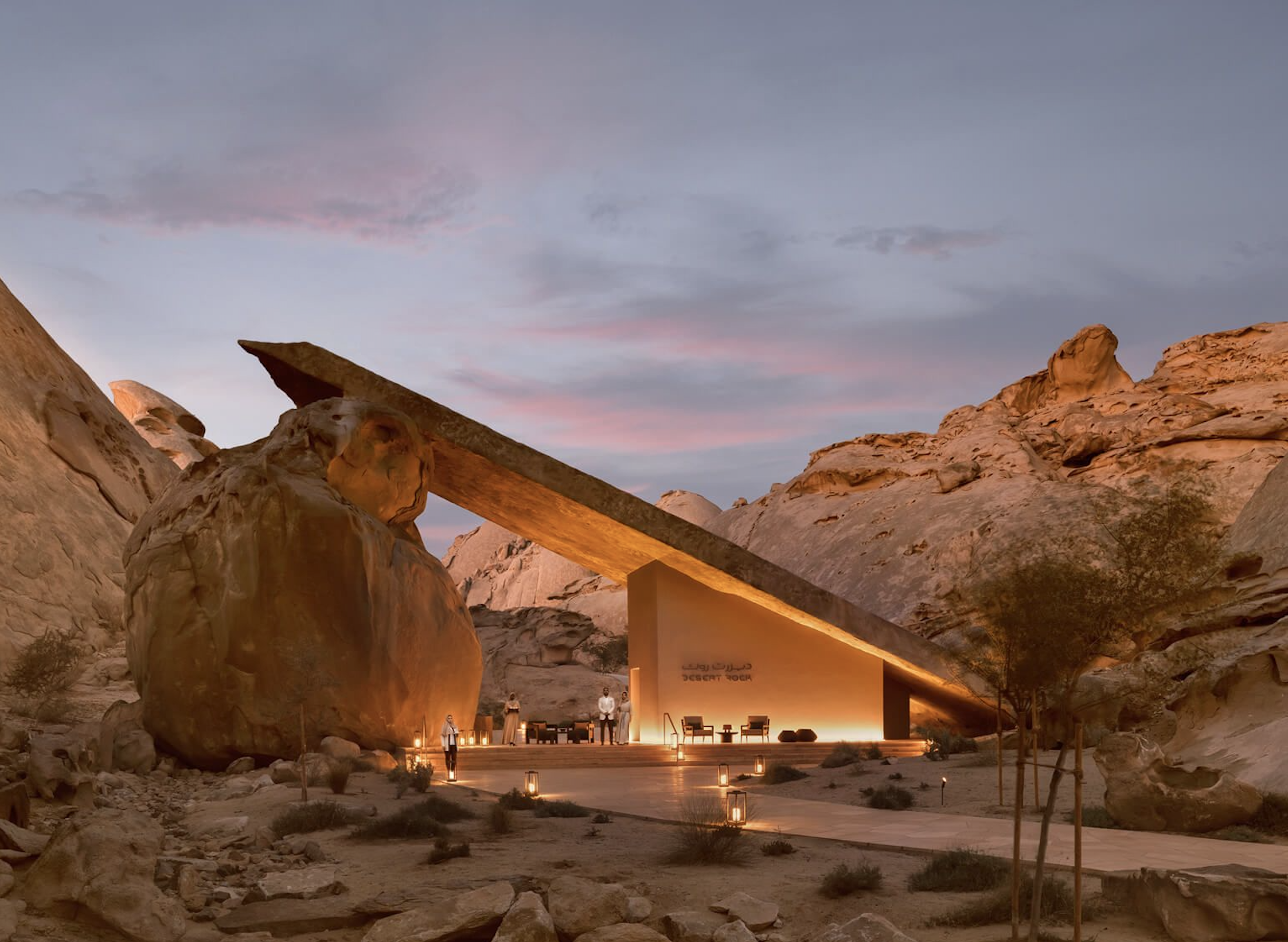
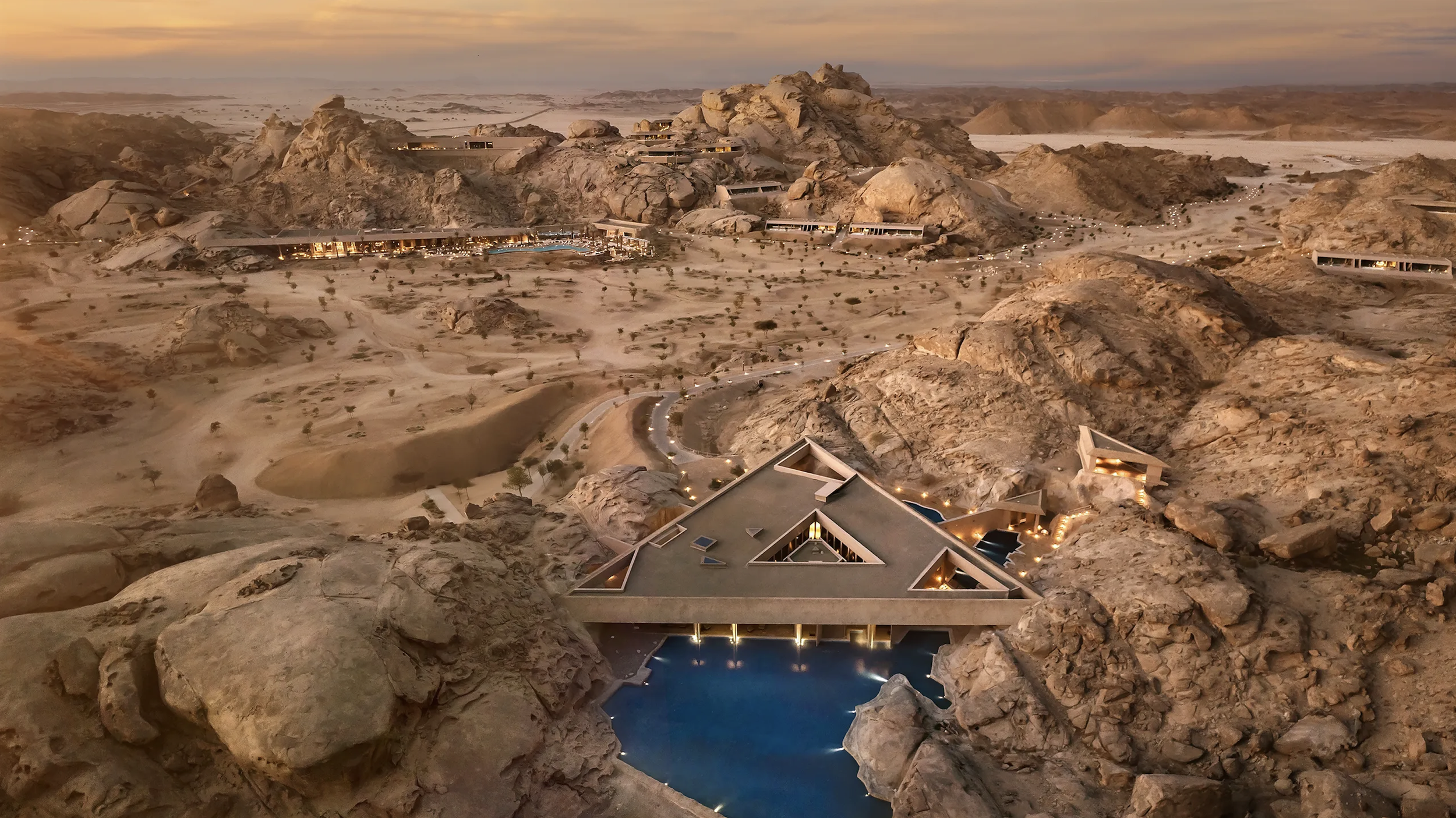
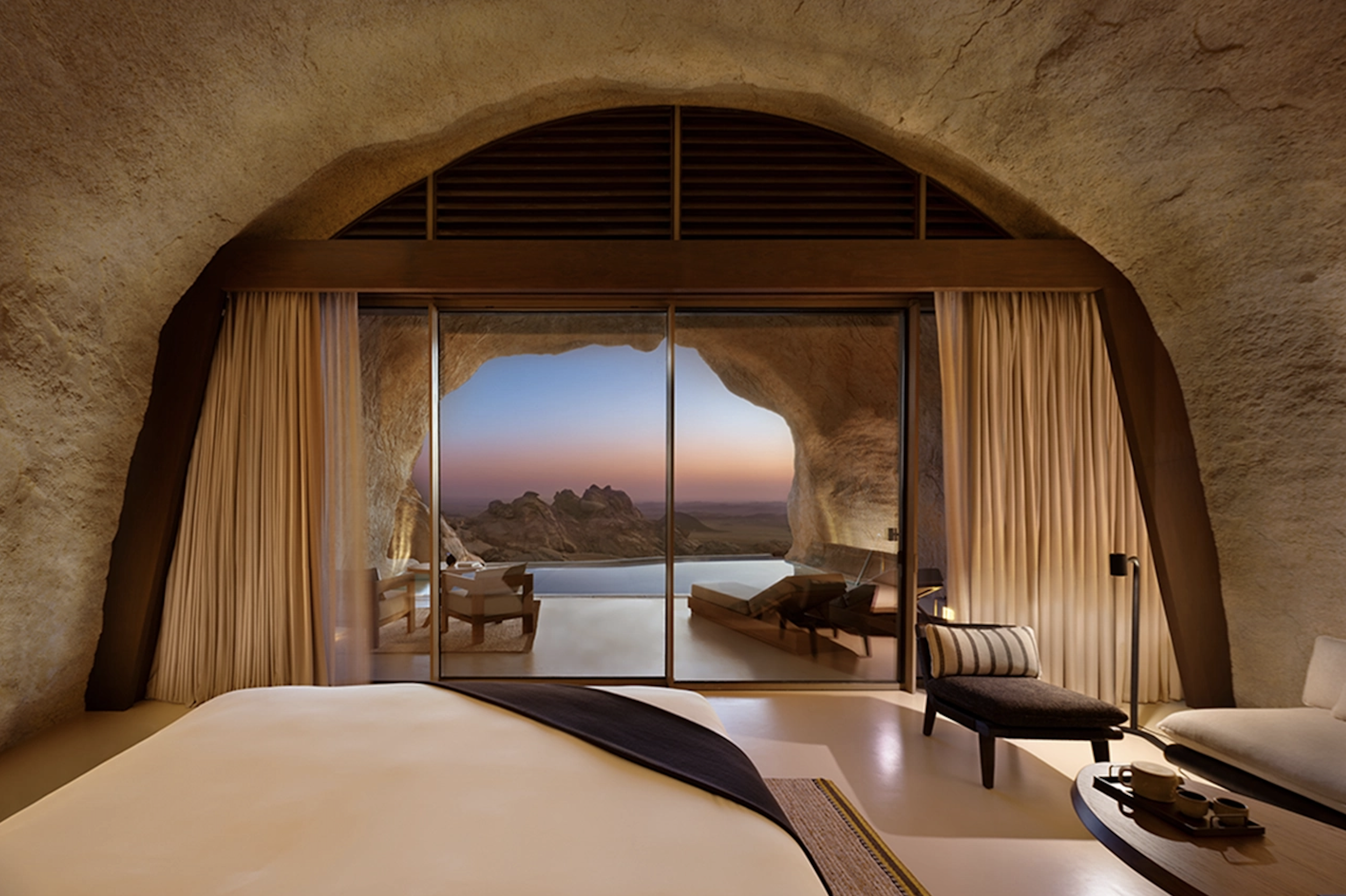
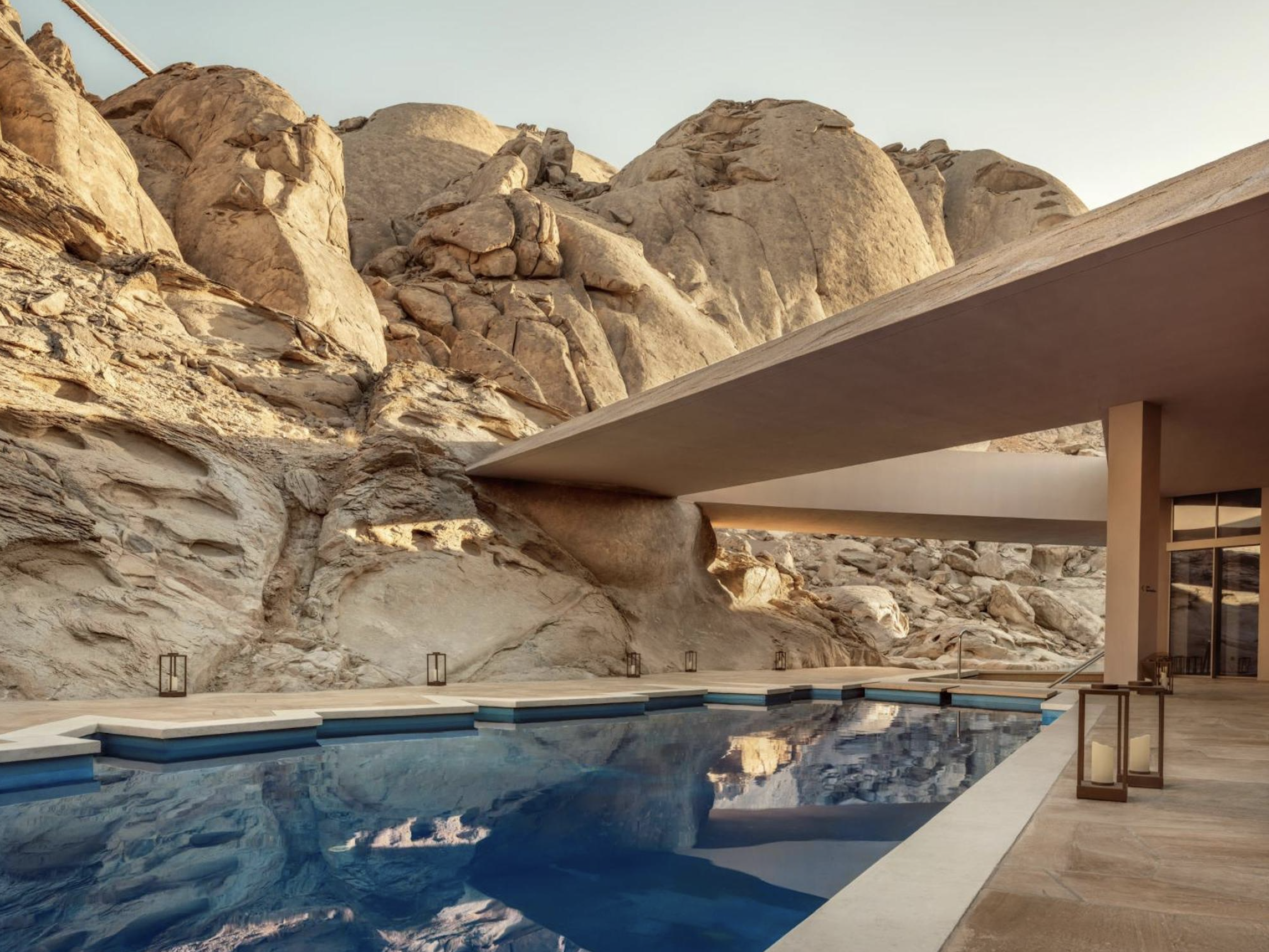
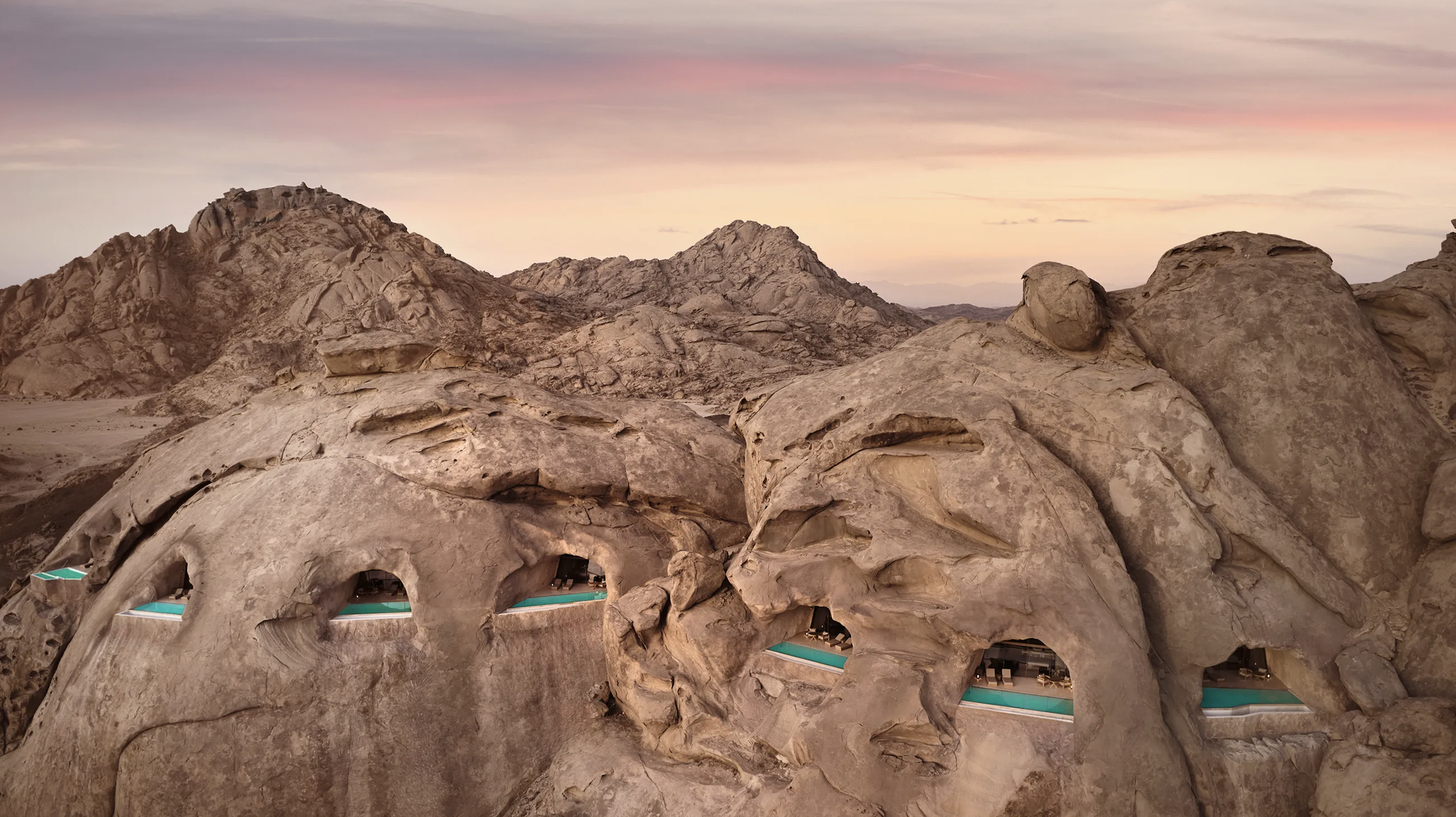
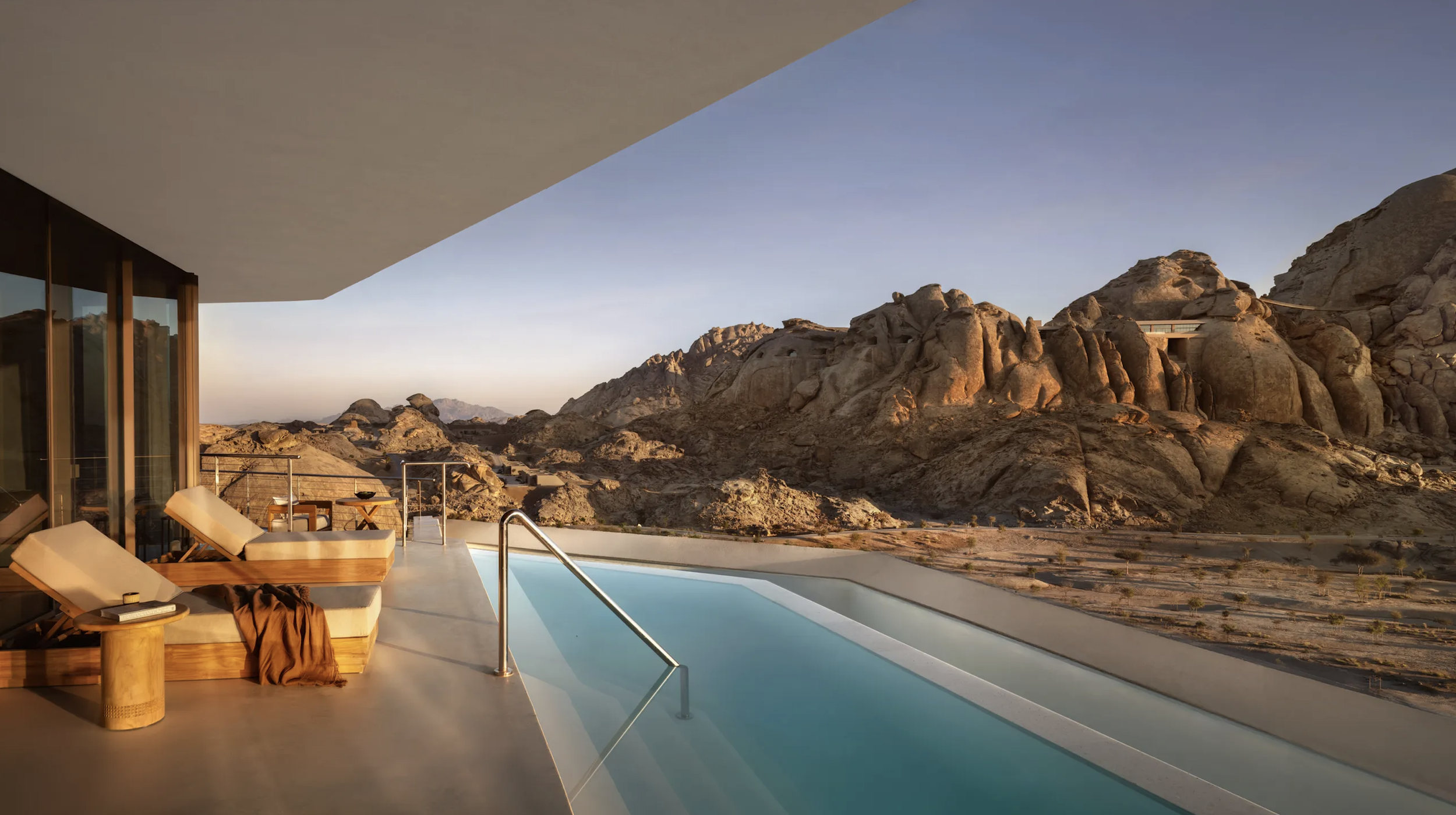
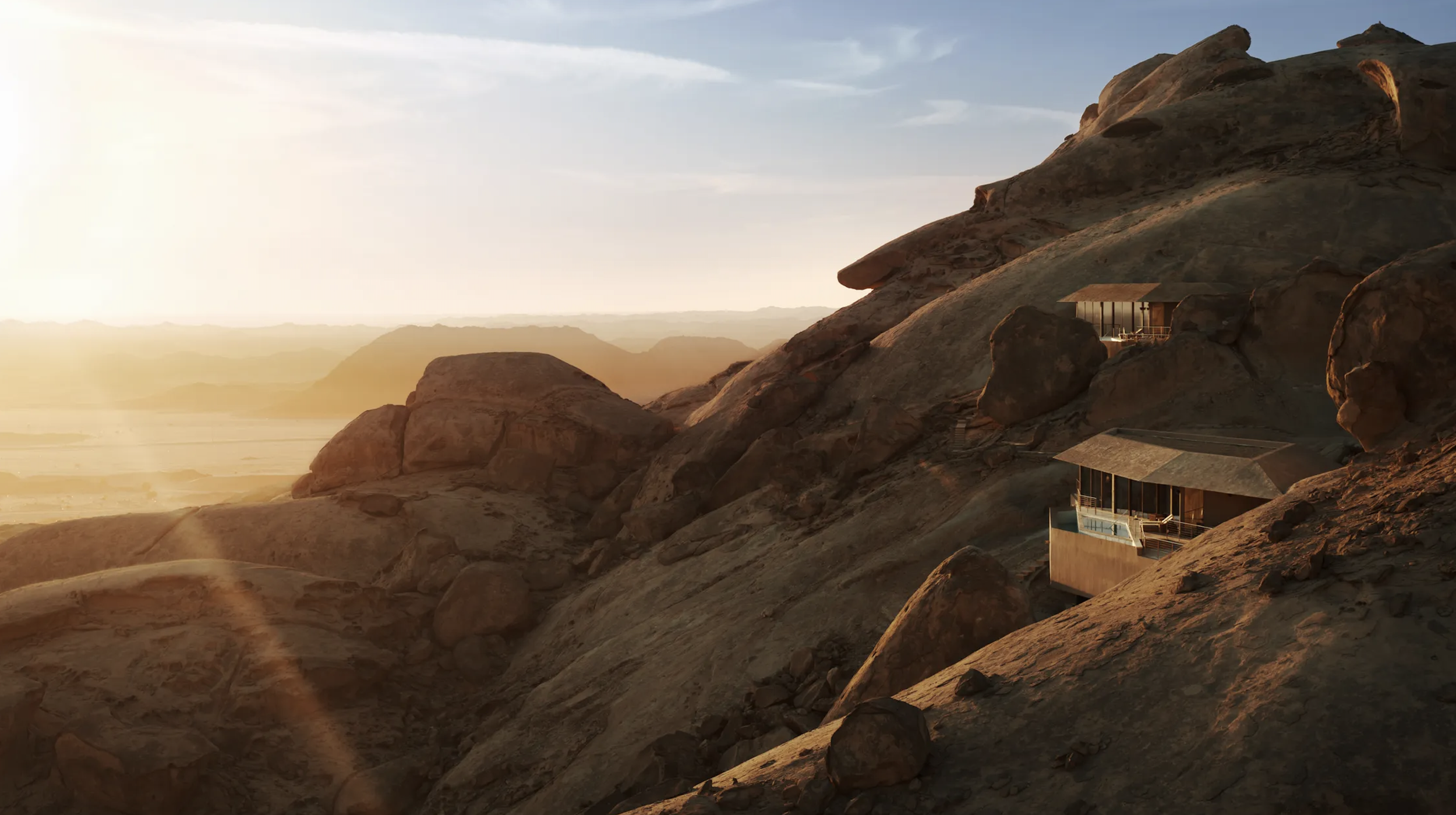
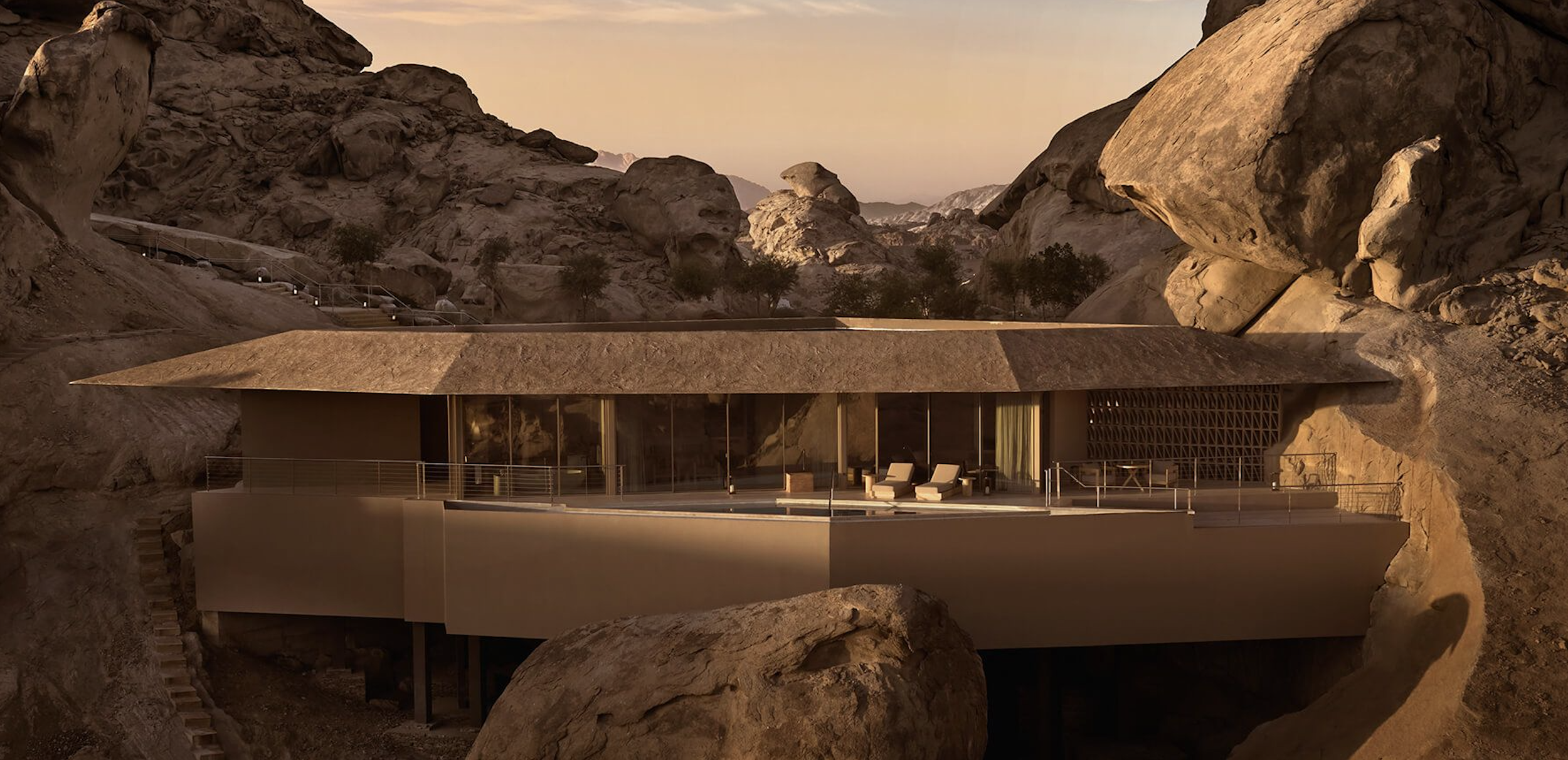
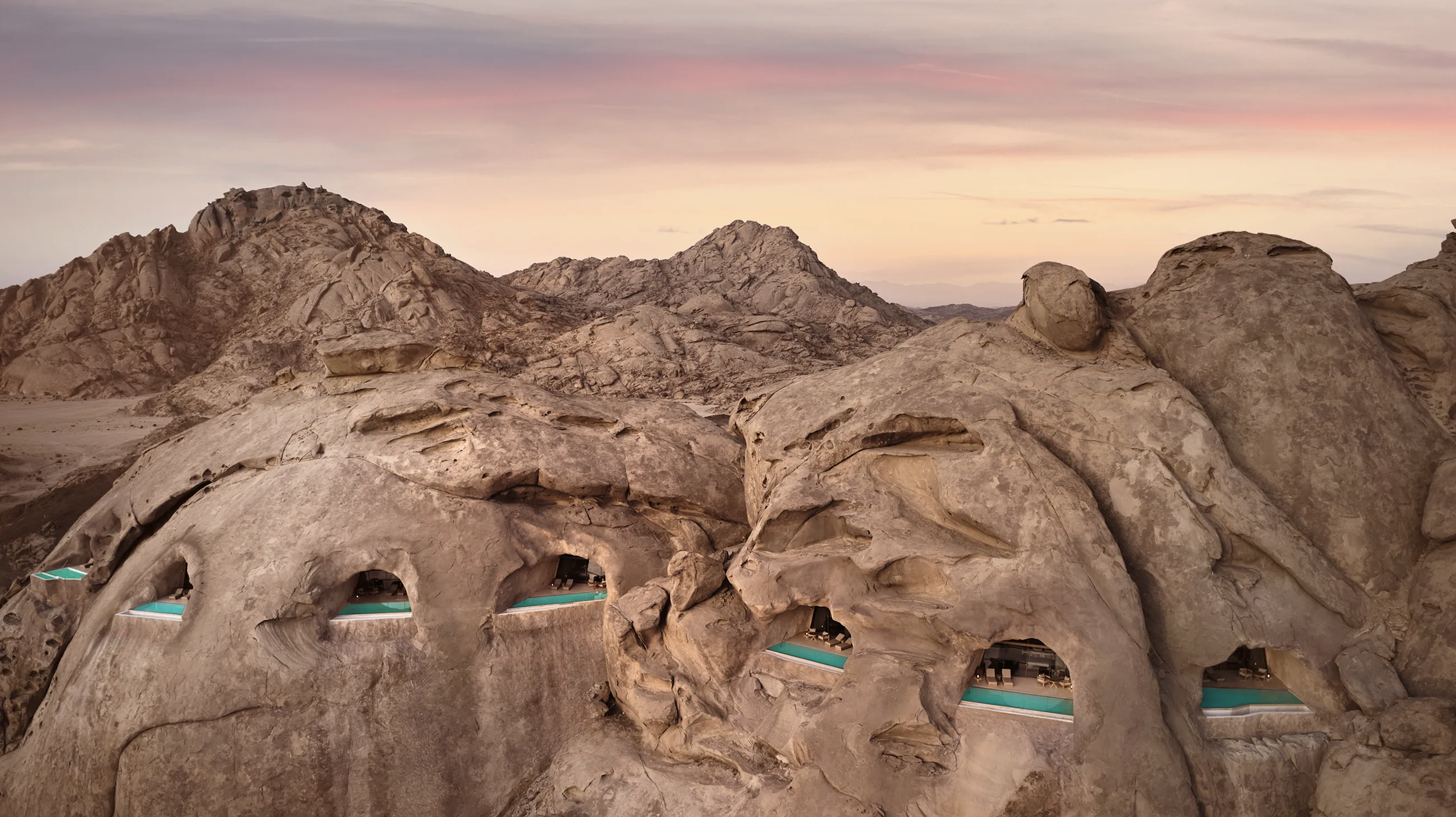
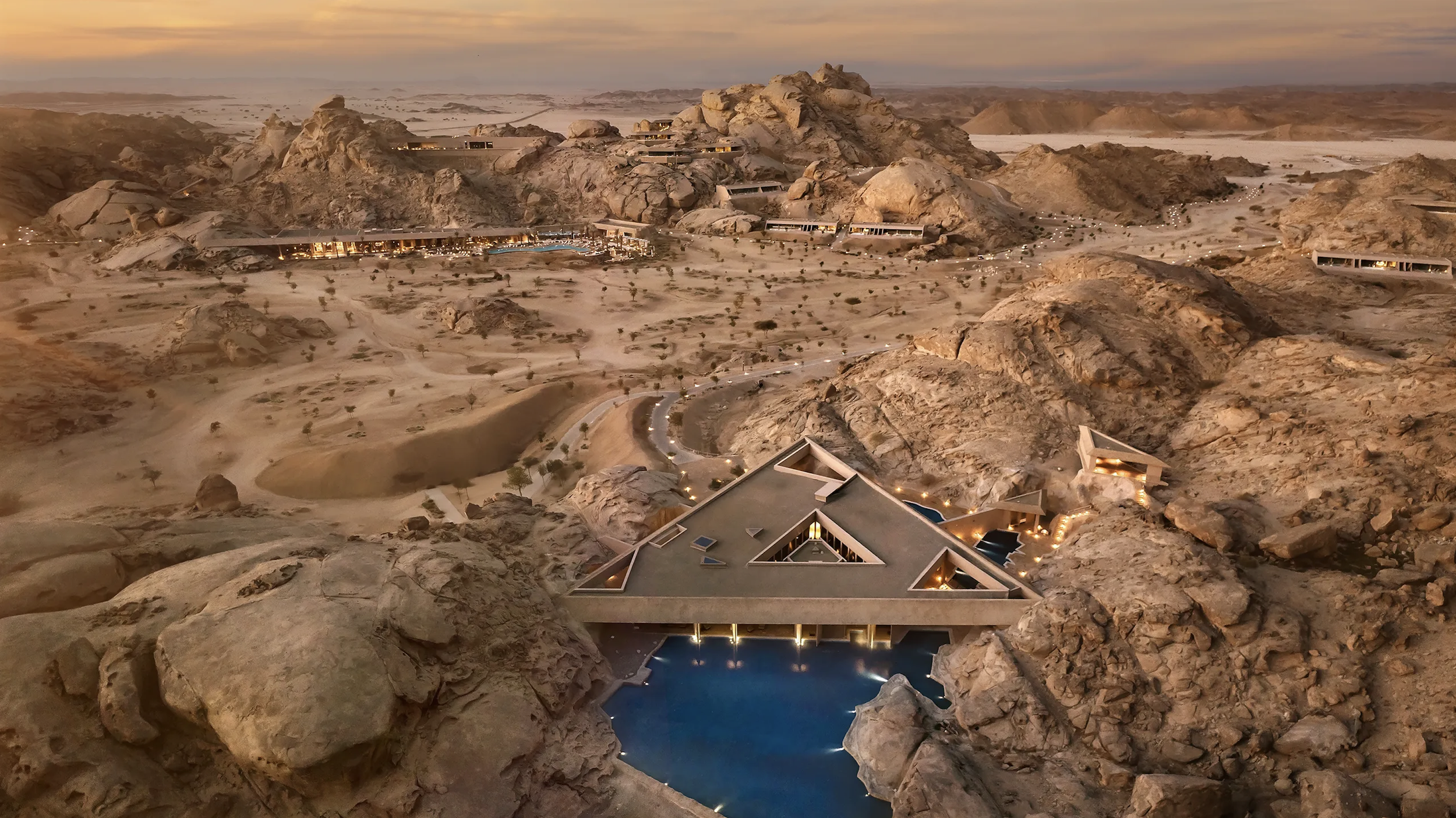
The first impression of Desert Rock is one of scale. Sheer rock faces rise above the valley, dwarfing the pools and terraces built among them. Look more closely and the resort begins to reveal itself: a window cut into the mountain, a villa suspended between outcrops, a shaded entrance almost lost against the stone.
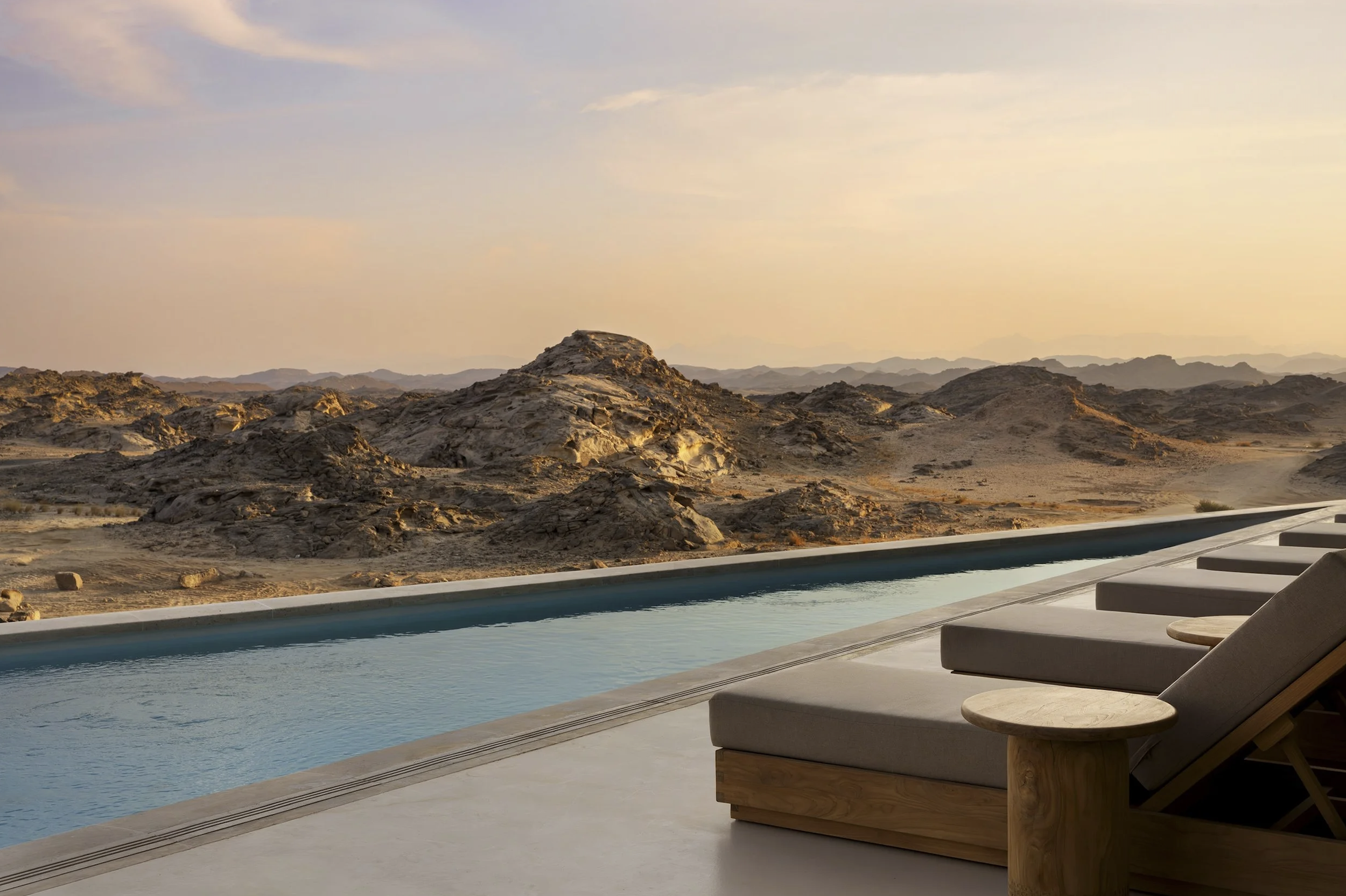
Set inland within Saudi Arabia’s Red Sea destination, Desert Rock brings a mountain experience to a region often associated with islands and coral reefs. Its 54 villas and 10 suites occupy markedly different positions across the landscape, from the valley floor to elevated openings in the rock. Private pools, ambitious architecture, and outdoor adventures give the property a character of its own.
For us, the appeal is the opportunity to experience this part of Saudi Arabia from another perspective. A stay can involve climbing and hiking, long afternoons by the pool, or simply watching the shadows move across the mountains. Dedicated Villa Hosts help organize the details, leaving the days as active or unstructured as desired.
A New Resort in an Ancient Setting
Desert Rock opened in December 2024 as the fifth resort at The Red Sea and the third owned and operated by Red Sea Global. Its arrival expanded the destination’s accommodation beyond the coast, giving the inland landscape a central role in the region’s tourism story.
This is a purpose-built contemporary resort, and its history is closely tied to the development of The Red Sea. The architectural ambition was unusually specific: to create accommodation that could occupy the mountain itself, with different ways of living among its slopes, crevices, and exposed rock.
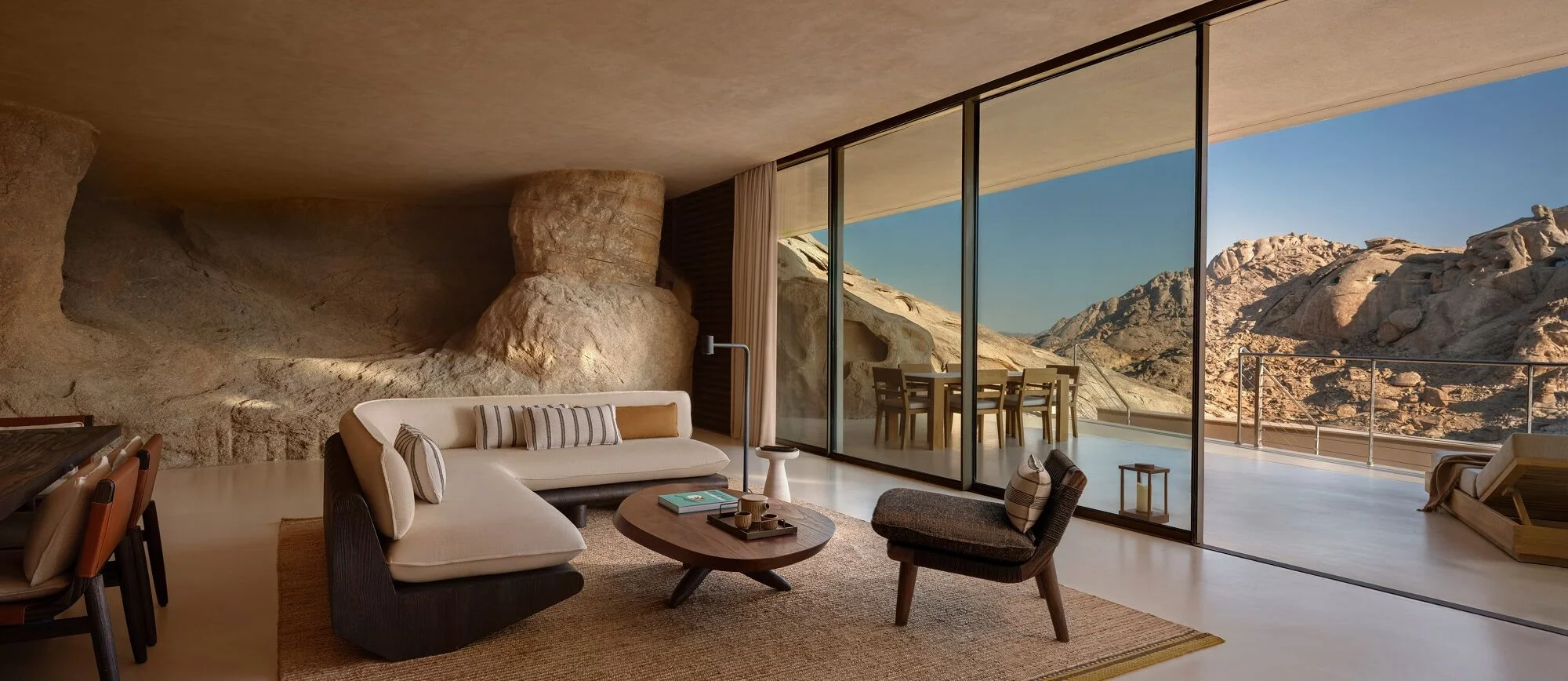
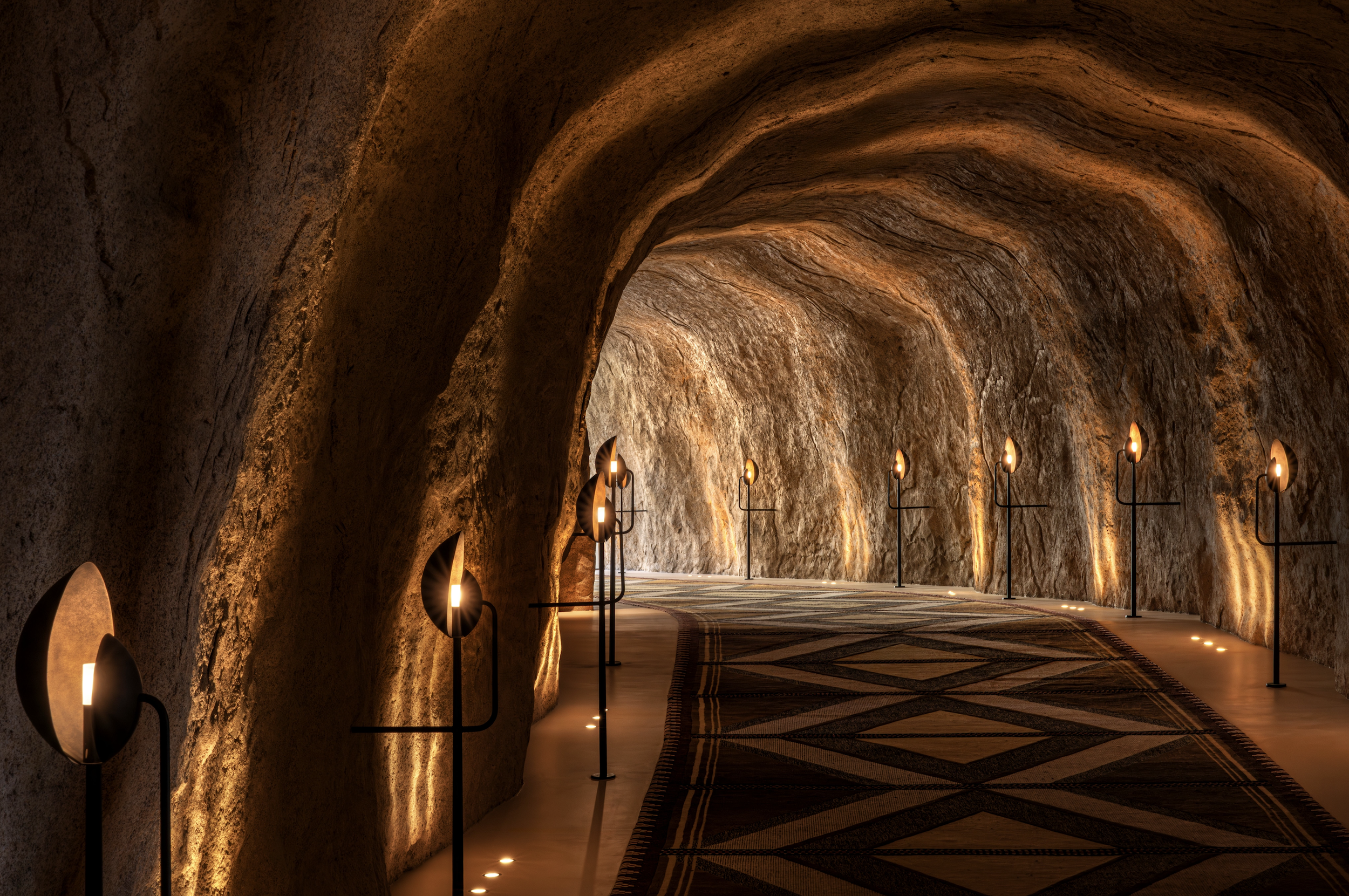
That distinction matters when understanding the property. The cave suites are newly created hospitality spaces, rather than restored ancient dwellings. Their atmosphere comes from the meeting of modern engineering and an existing geological setting. The result invites an appreciation of the landscape without needing to invent a historical identity for the hotel.
Architecture That Follows the Mountain
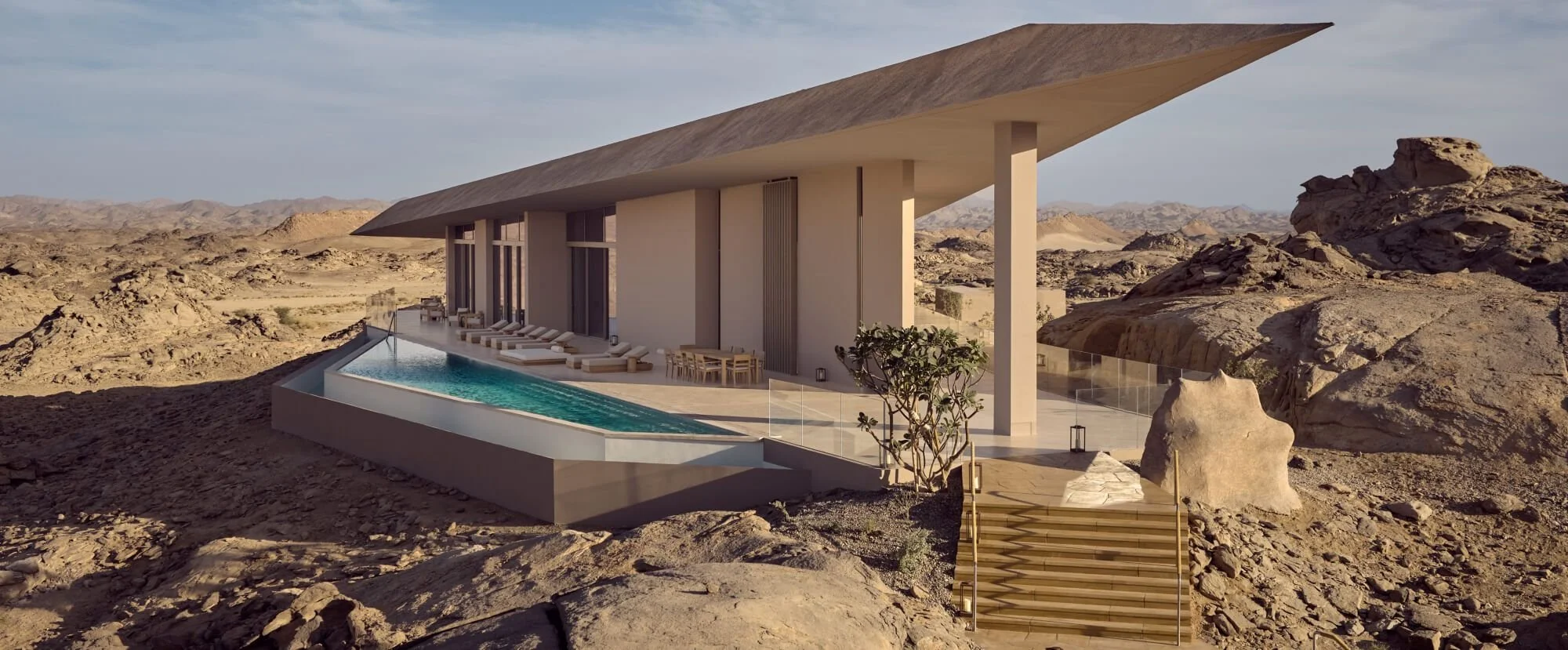
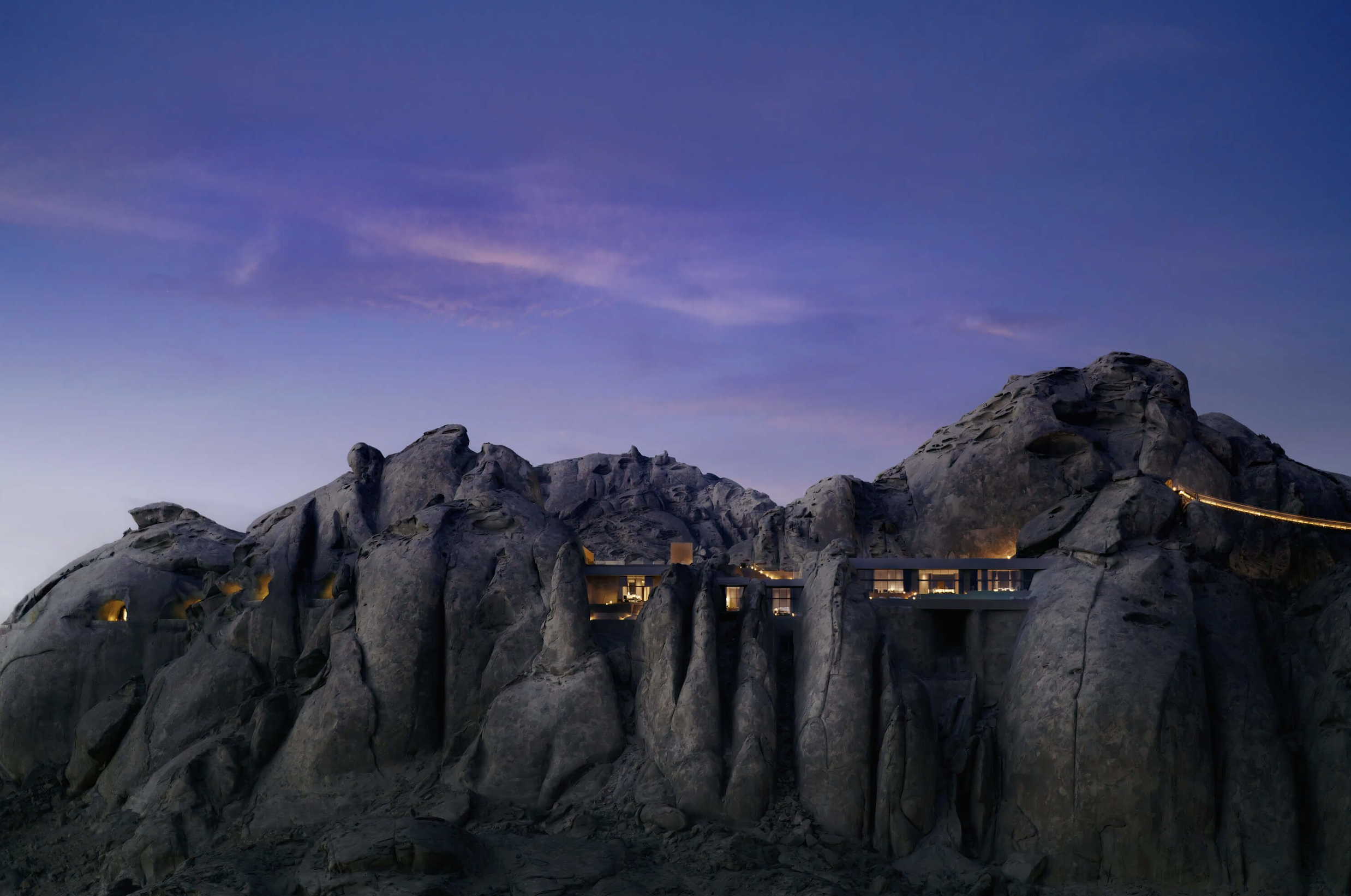
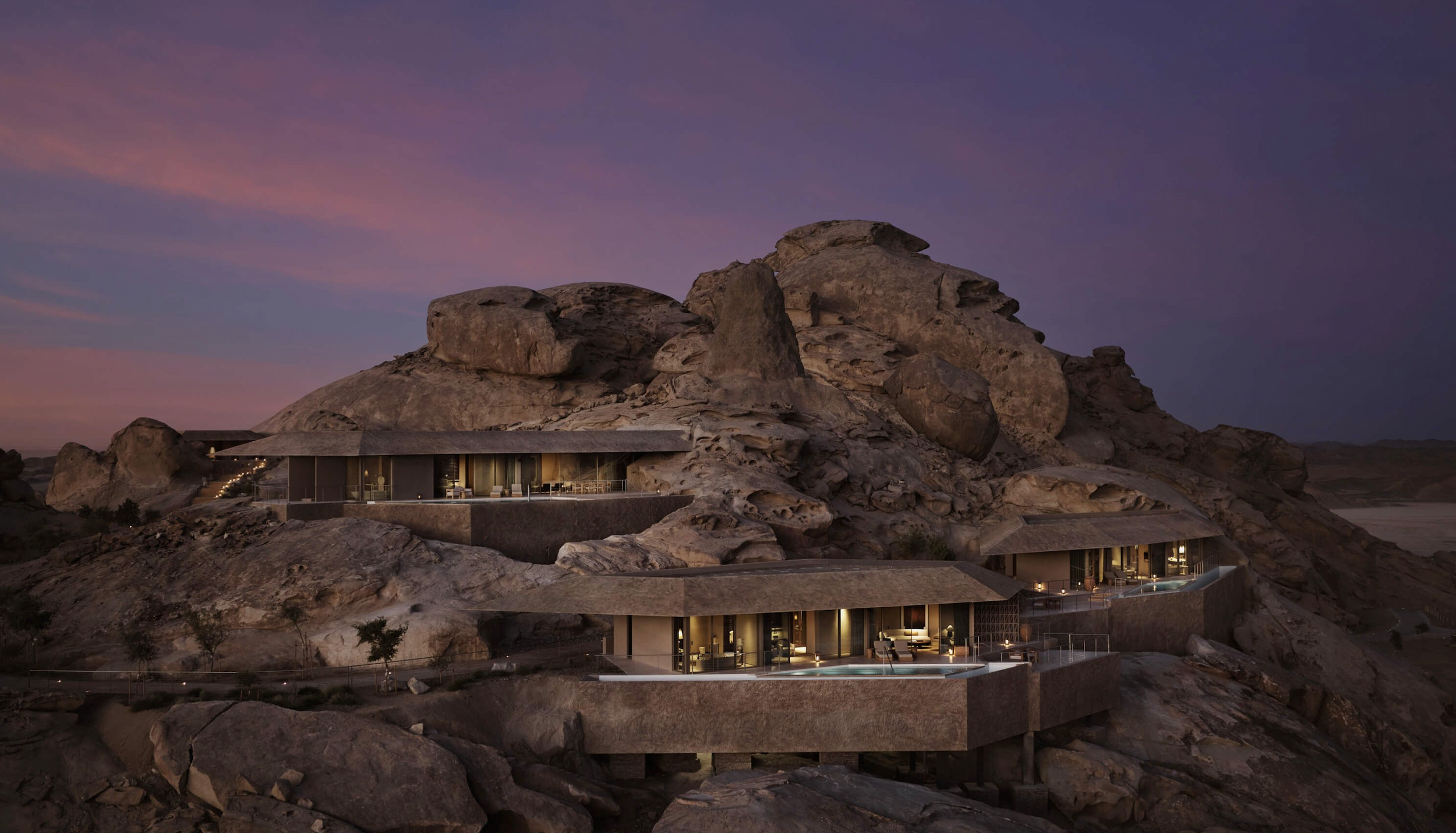
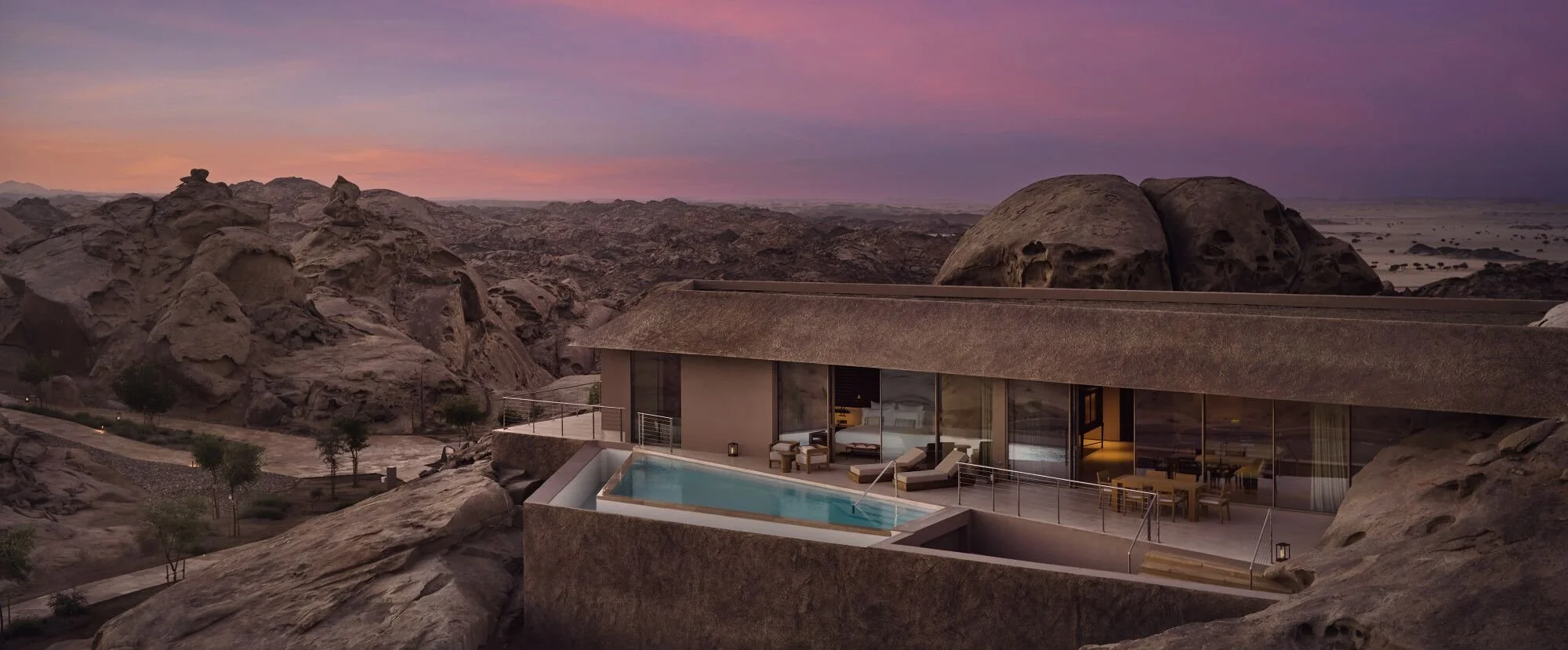
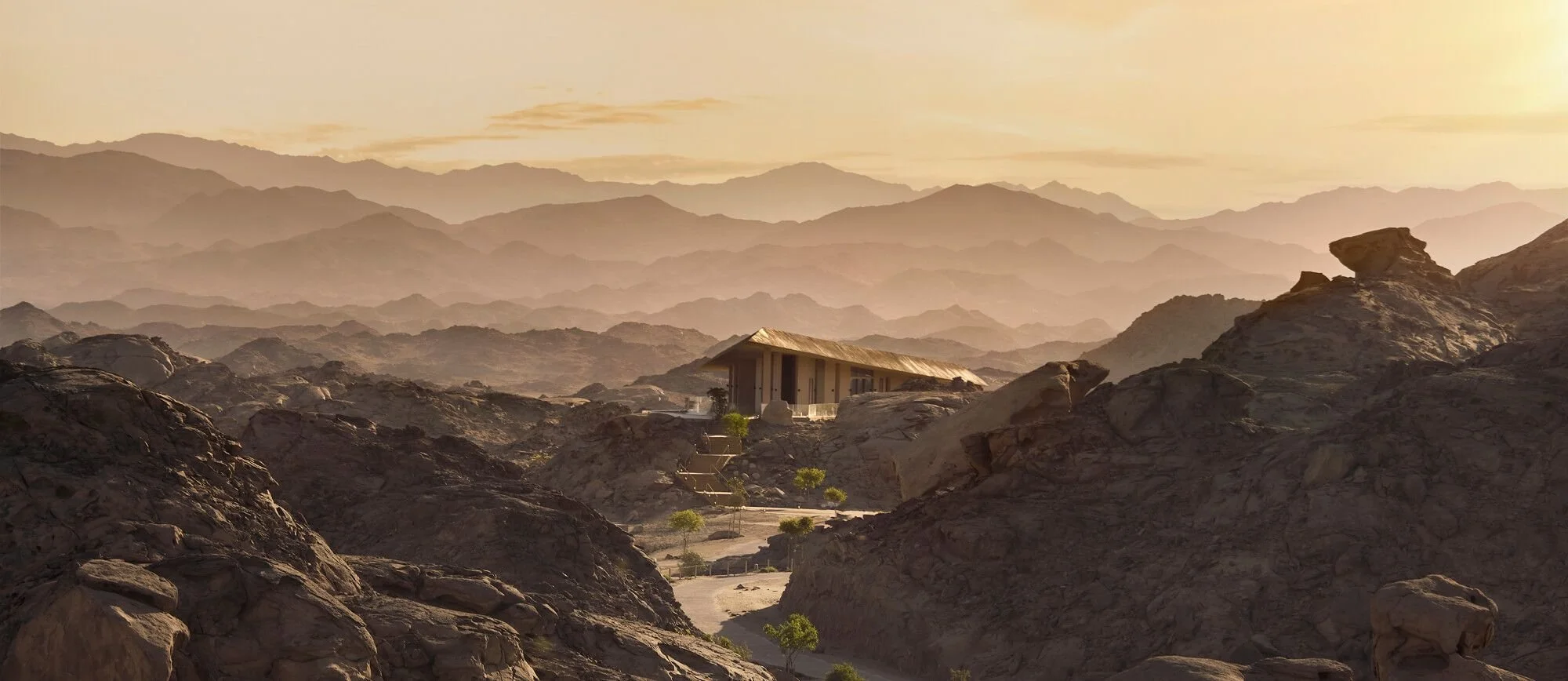
Oppenheim Architecture designed Desert Rock around the granite formations, distributing buildings across the site rather than concentrating them in one large hotel block. Accommodation occupies sheltered slopes and openings in the terrain, while other structures project outward to capture the views.
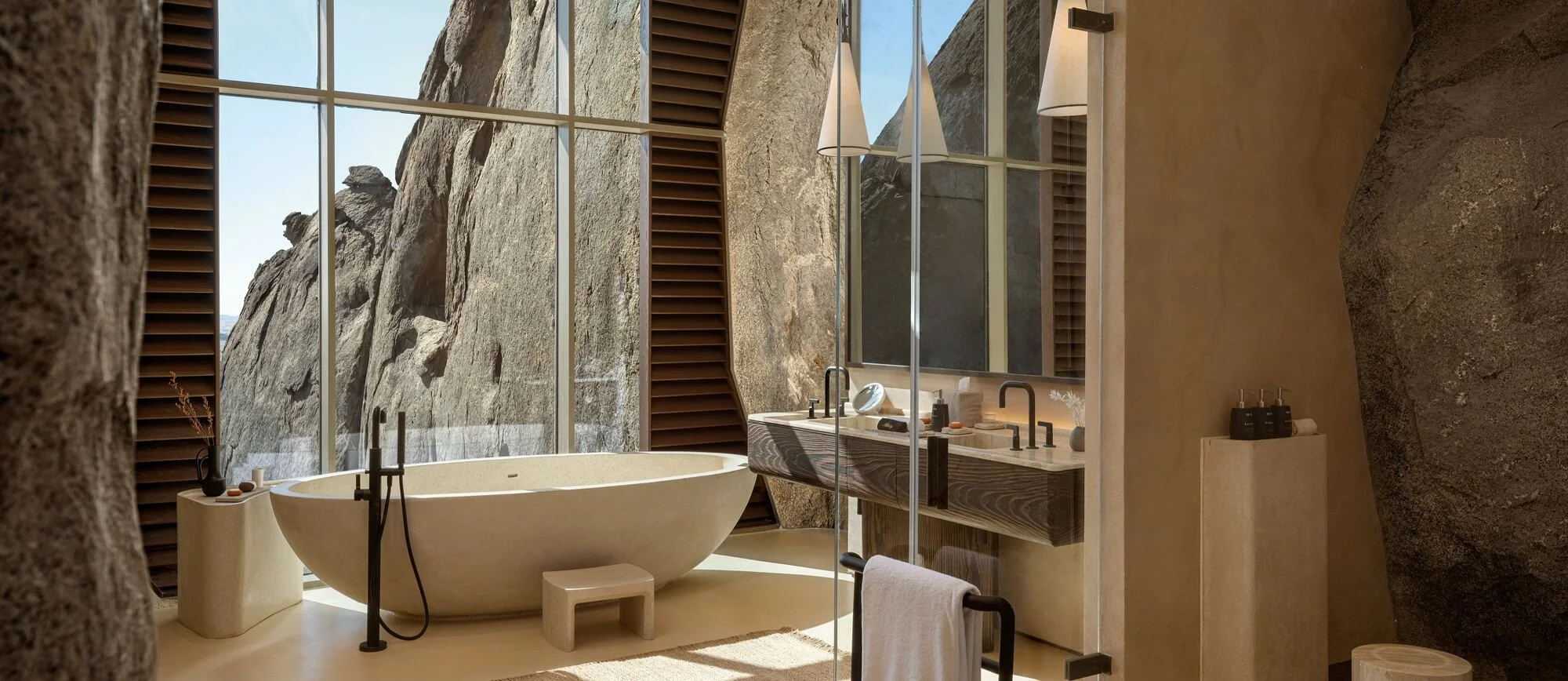
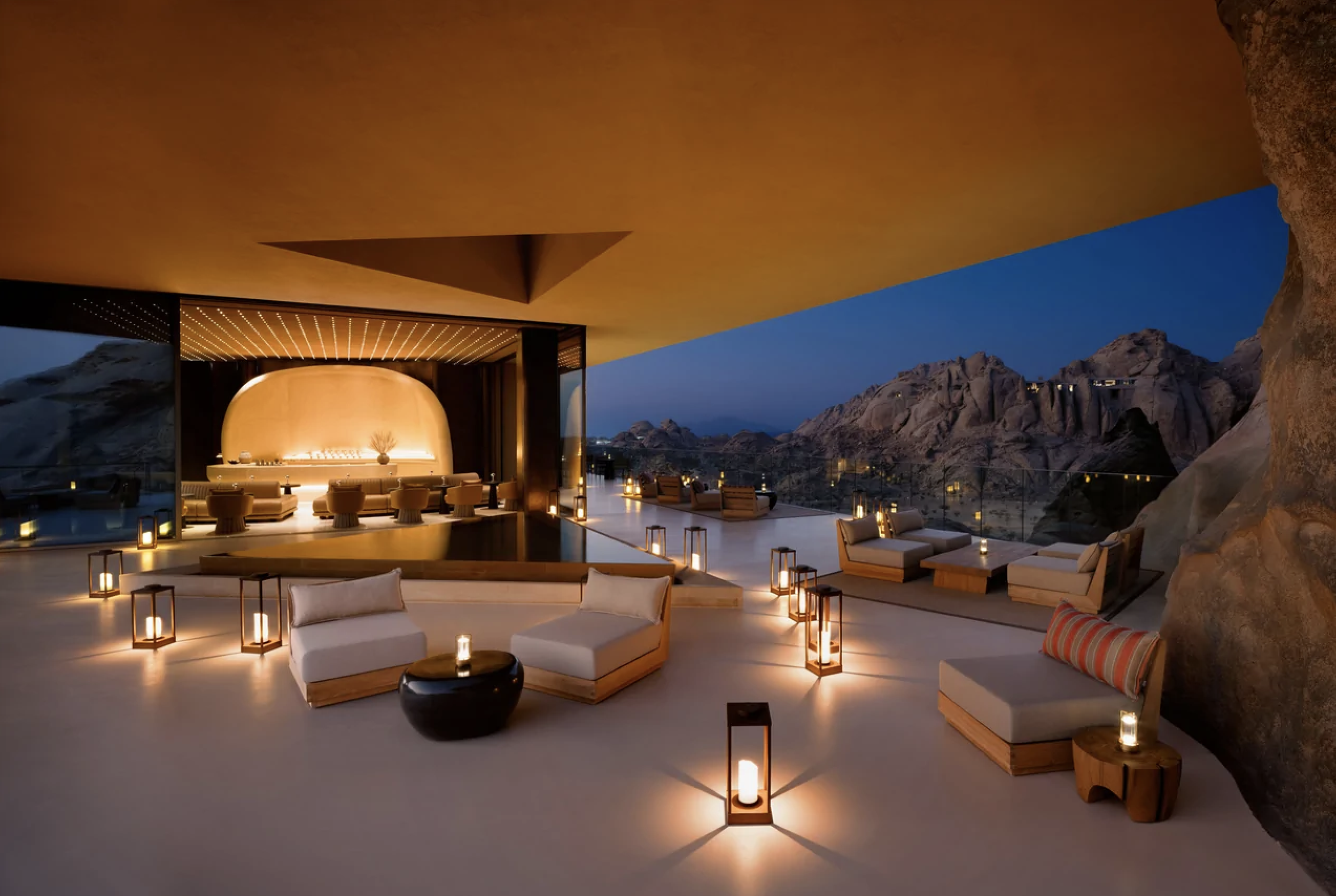
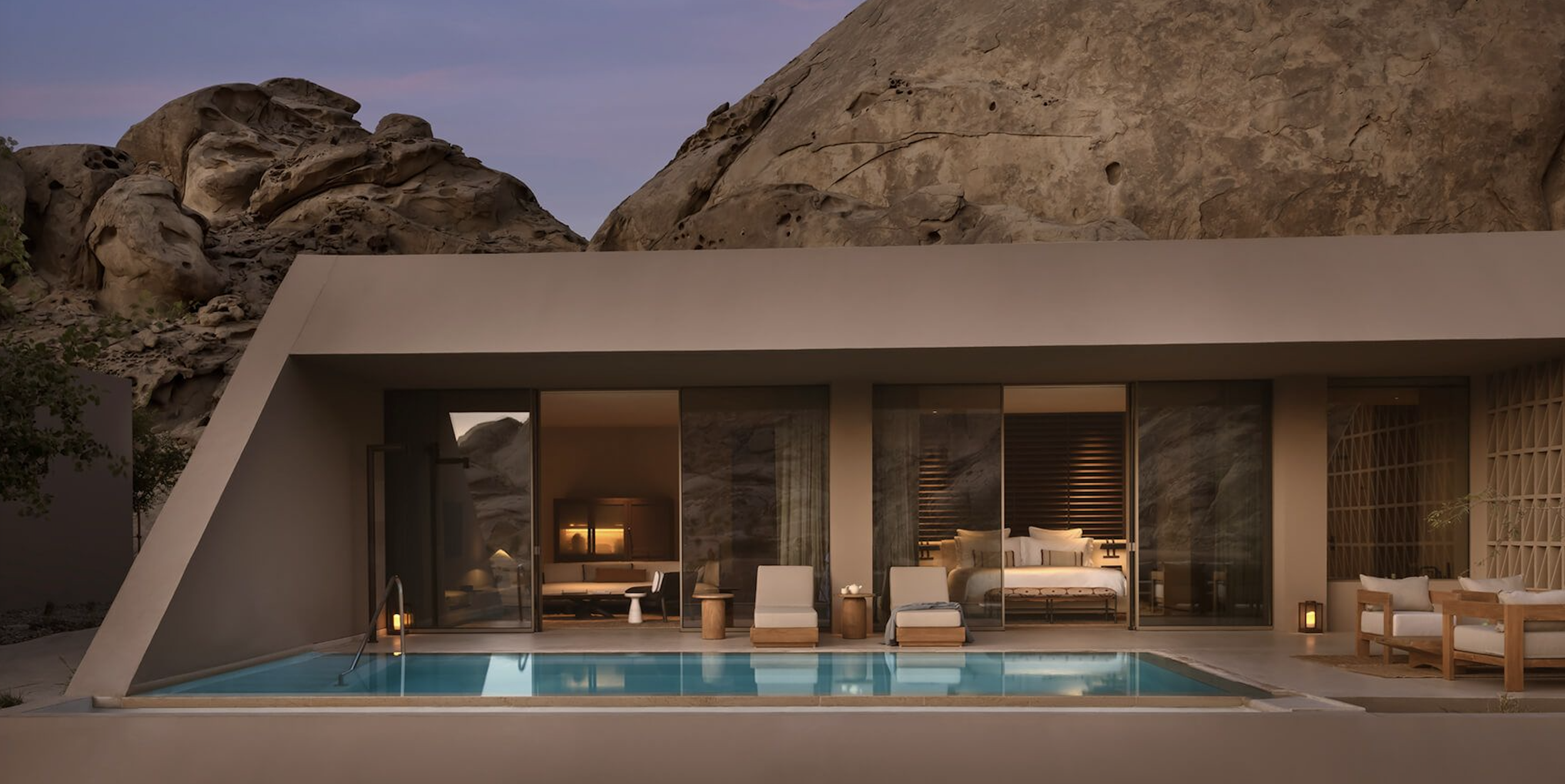
The architects reference the region’s Nabataean tradition of working with rock, but the execution is unmistakably contemporary. Large windows, precise edges, and pools introduce clear geometric forms against irregular stone. From a distance, much of the architecture recedes into its surroundings; closer inspection reveals the engineering behind that apparent simplicity.
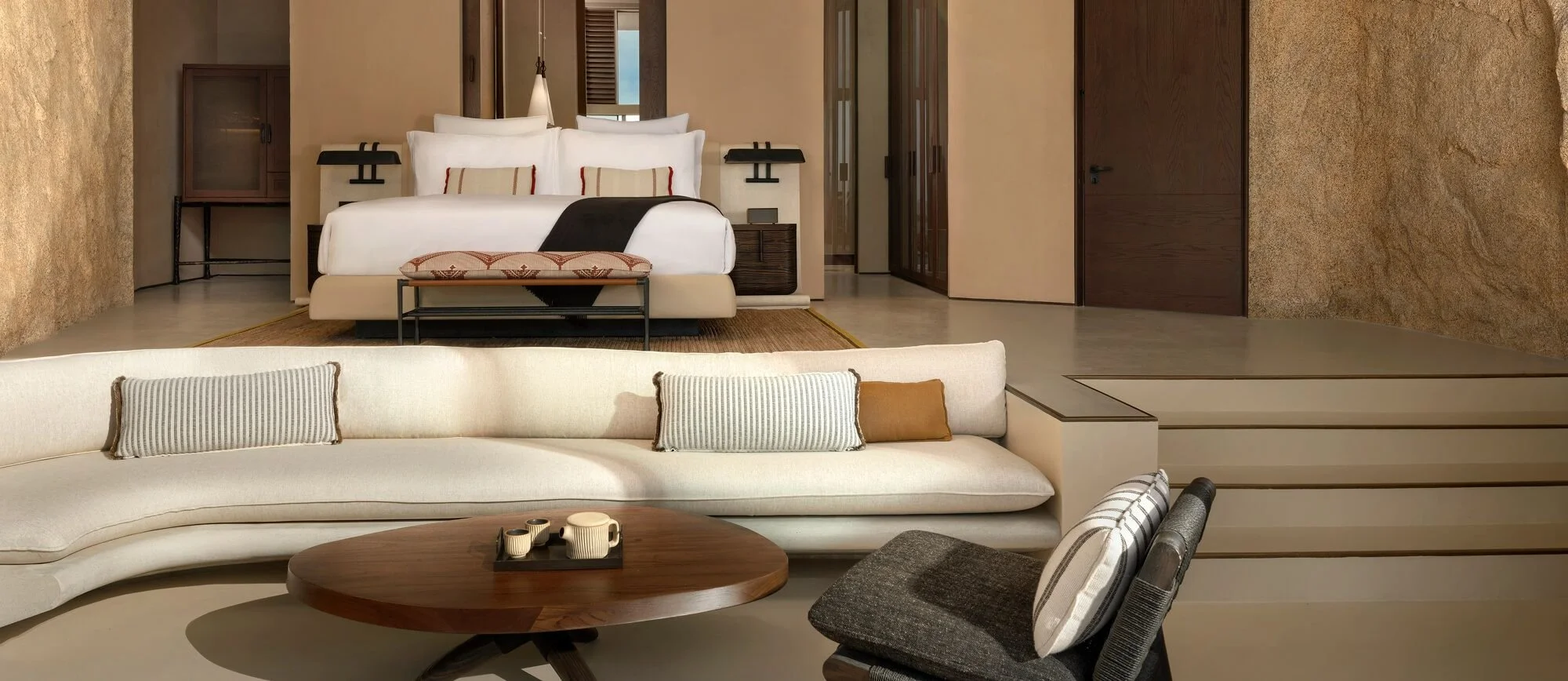
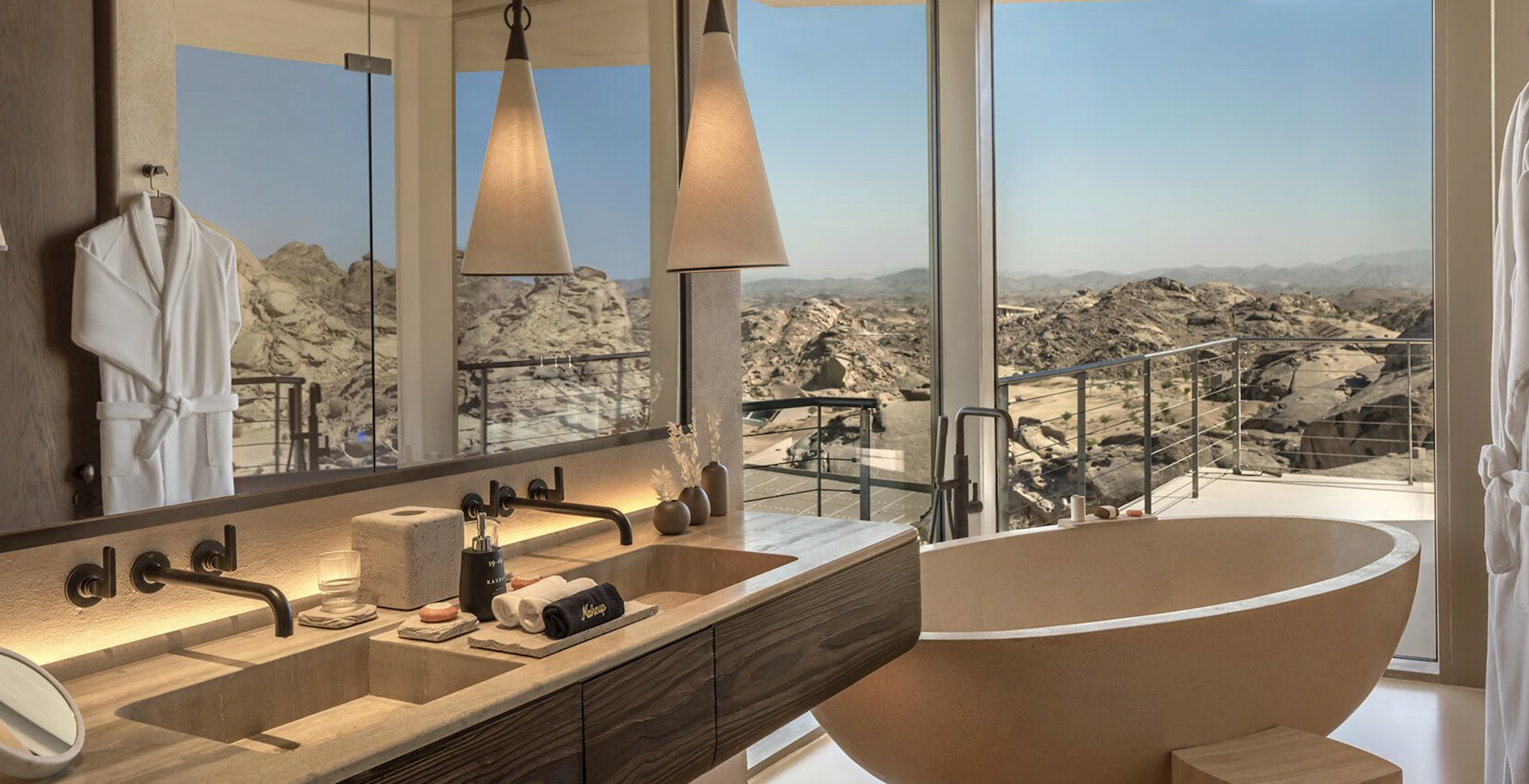
Position is an essential part of the experience. A room enclosed by rock feels intimate and sheltered, while an elevated villa offers a more expansive relationship with the valley. Moving between these settings is part of discovering the resort.
We would give this as much consideration as bedroom count when selecting accommodation. The dramatic appeal of a high mountain setting is different from the convenience and openness of a villa lower in the valley. At Desert Rock, location within the property changes the stay.
From Valley Villas to Mountain Caves
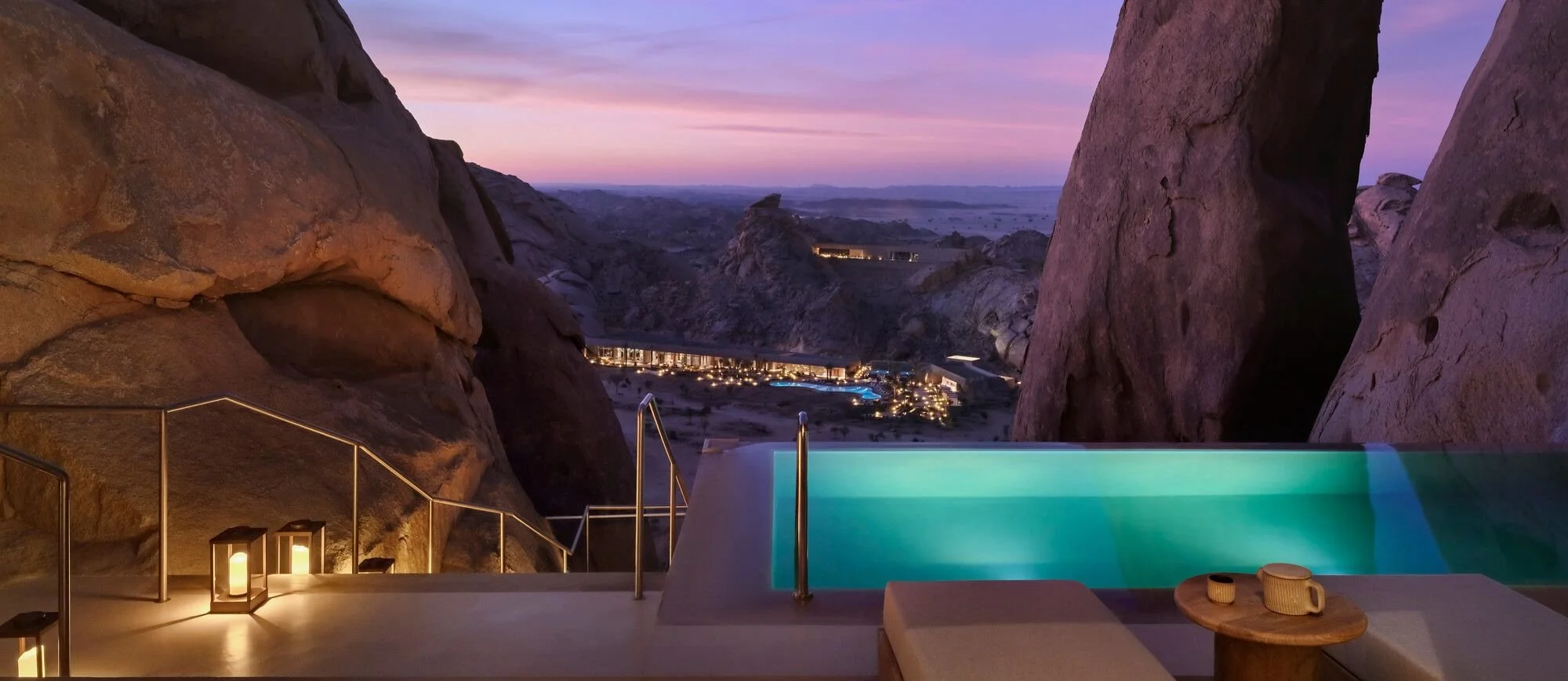
Desert Rock’s accommodations range from private valley retreats to suites integrated into the mountain, each with its own pool and a distinct perspective on the landscape. Approximate total sizes below include both indoor and outdoor space, with interior measurements noted separately.
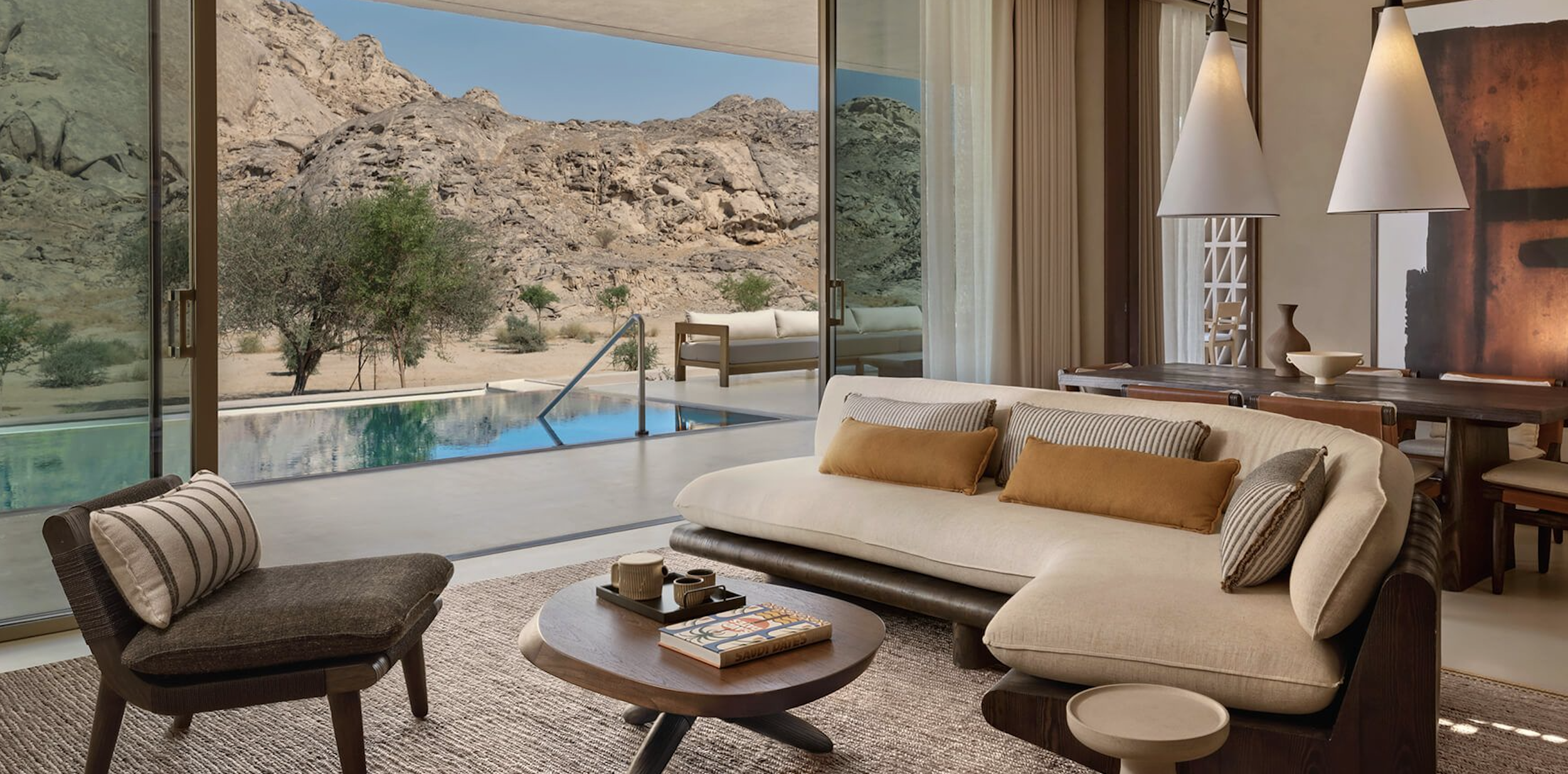
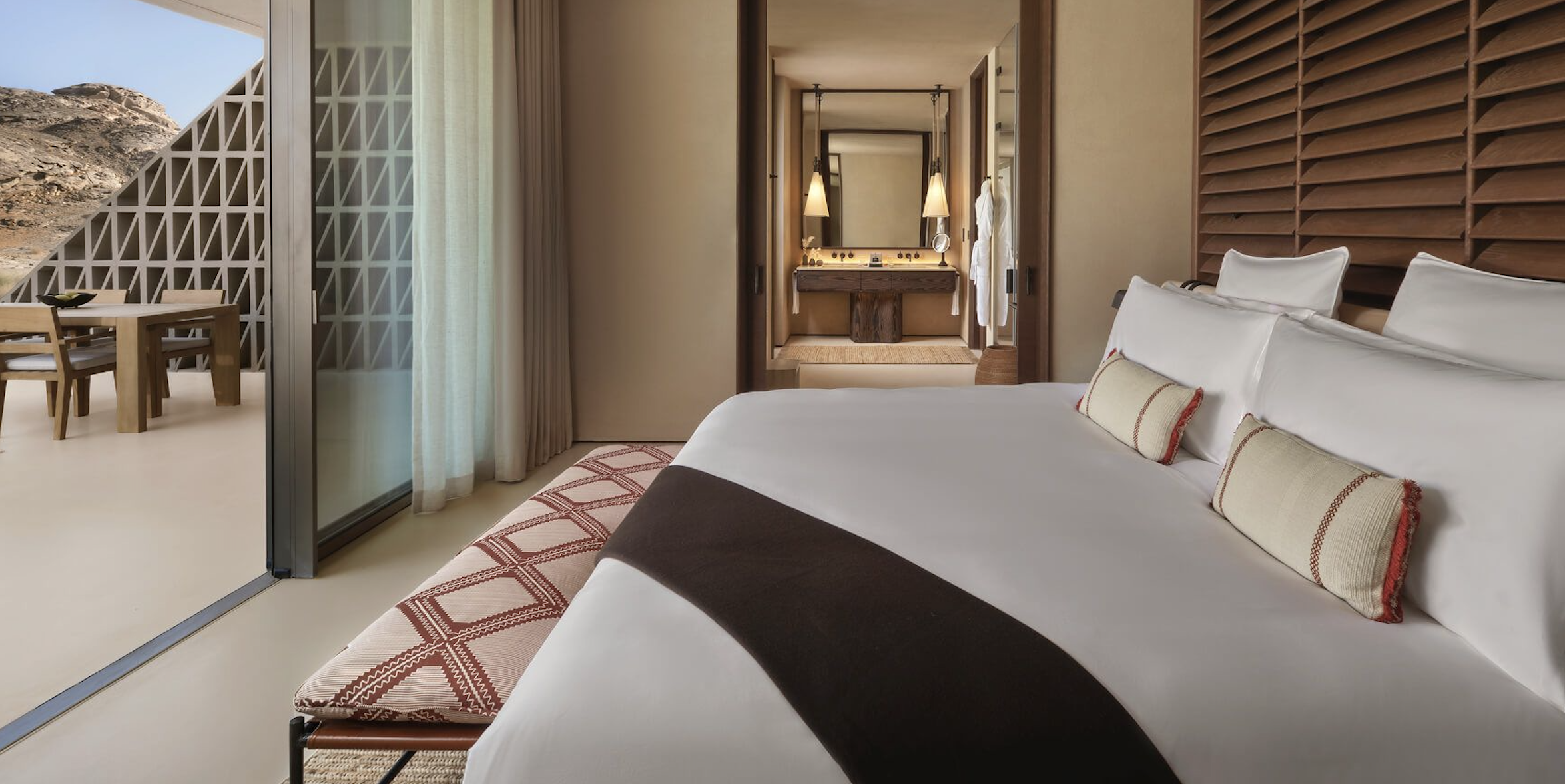
One-Bedroom Wadi Villa: Approximately 1,841 sq. ft., including 850 sq. ft. indoors, offering a king bedroom, comfortable living space, and a private pool and terrace surrounded by the valley’s natural rock formations.
Two-Bedroom Wadi Villa: Approximately 2,788 sq. ft., including 1,302 sq. ft. indoors, combining a king bedroom and a second bedroom with two large twin beds, shared living areas, and a private pool for families or friends traveling together.
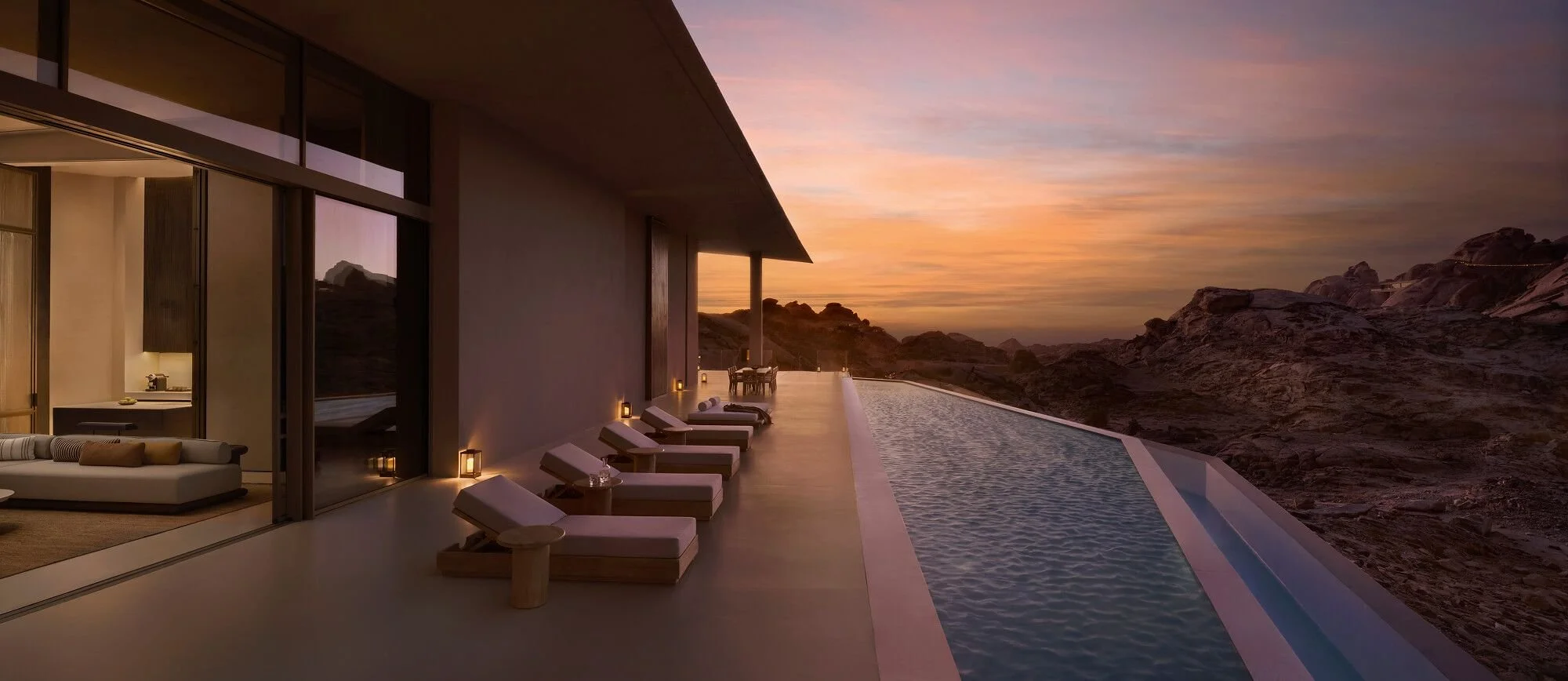
One-Bedroom Mountain View Villa: Approximately 1,841 sq. ft., including 850 sq. ft. indoors, featuring a king bedroom, a living area, and a private infinity pool and terrace oriented toward Desert Rock’s striking mountain formation.
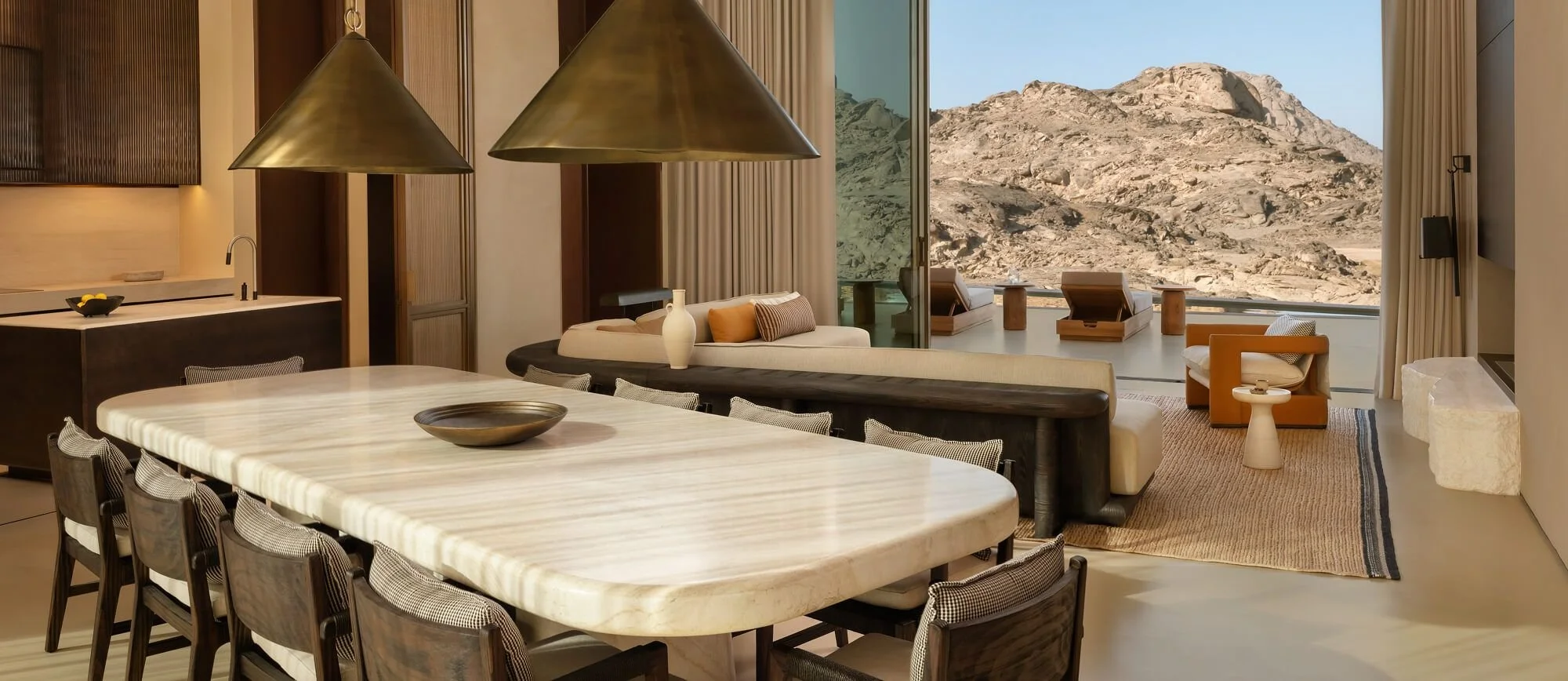
Two-Bedroom Mountain View Villa: Approximately 2,788 sq. ft., including 1,302 sq. ft. indoors, with king and twin bedrooms, a shared lounge and dining area, and an outdoor pool deck with loungers and a daybed overlooking the mountains.
One-Bedroom Cliff Hanging Villa: Approximately 1,938 sq. ft., including 861 sq. ft. indoors, built into the mountainside with a king bedroom, light-filled living space, and a private pool and terrace opening onto expansive views of the surrounding terrain.
Two-Bedroom Cliff Hanging Villa: Approximately 2,691 sq. ft., including 1,345 sq. ft. indoors, pairing king and twin bedrooms with shared living space and a private pool in an elevated setting that emphasizes the scale of the mountains.
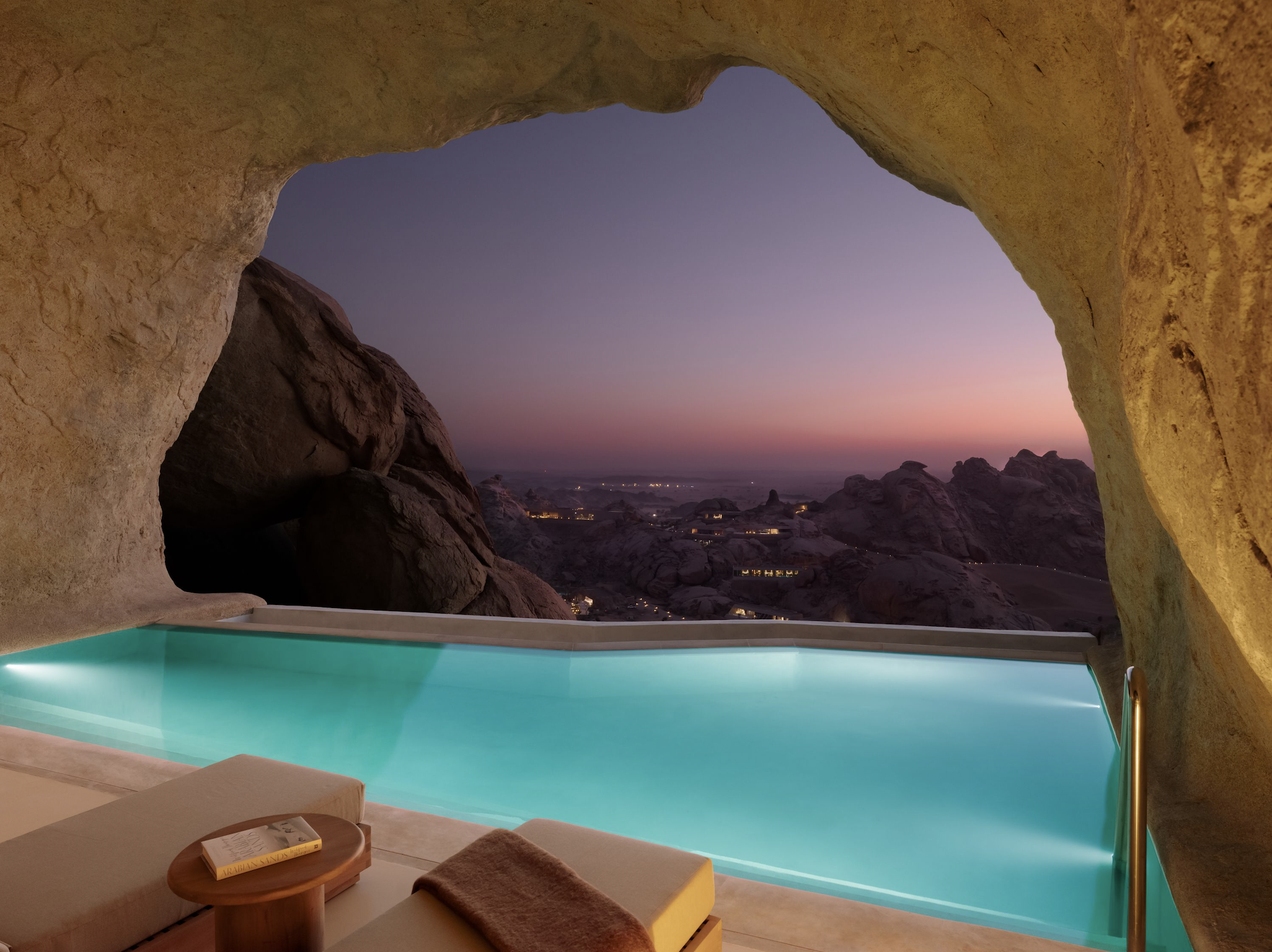
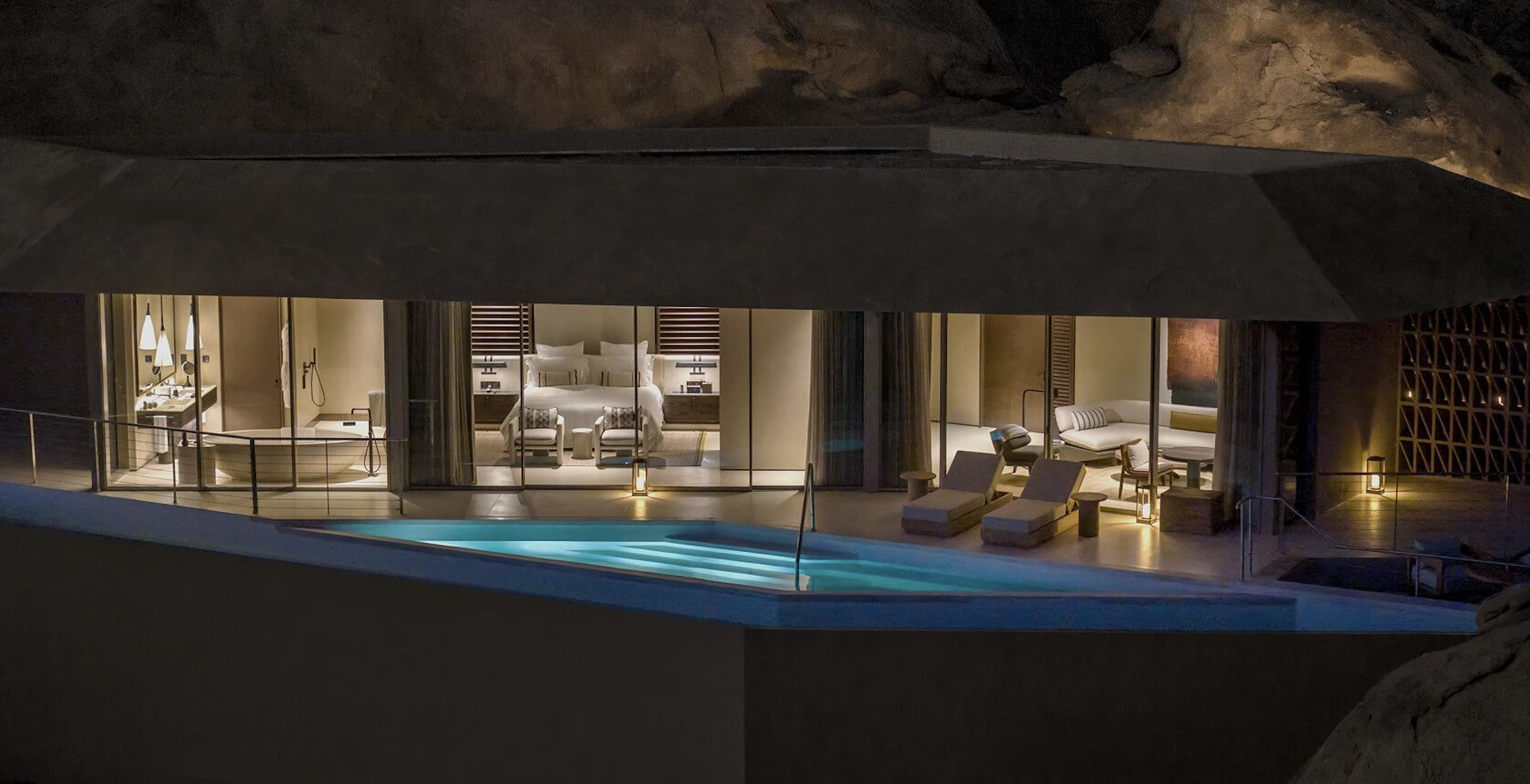
One-Bedroom Mountain Cave Suite: Approximately 1,399 sq. ft., including 646 sq. ft. indoors, integrating a king bedroom and intimate living space into the rock itself, with a private cliffside plunge pool and far-reaching views across the landscape.
One-Bedroom Mountain Crevice Villa: Approximately 1,345 sq. ft., including 646 sq. ft. indoors, positioned among the mountain’s rock pinnacles with a king bedroom, a curved living area, and a private pool extending toward the open desert views.
Two-Bedroom Mountain Crevice Skyline Villa: Approximately 6,361 sq. ft., including 3,197 sq. ft. indoors, combining king and queen bedrooms with generous living and dining areas, expansive terraces, and a private pool framed by the surrounding boulders.
Three-Bedroom Royal Villa: Approximately 11,916 sq. ft., including 3,337 sq. ft. indoors, occupying a secluded part of the valley with three bedrooms, spacious living and dining areas, and extensive private outdoor space arranged around its swimming pool.
Fire, Spice, and Mountain Views
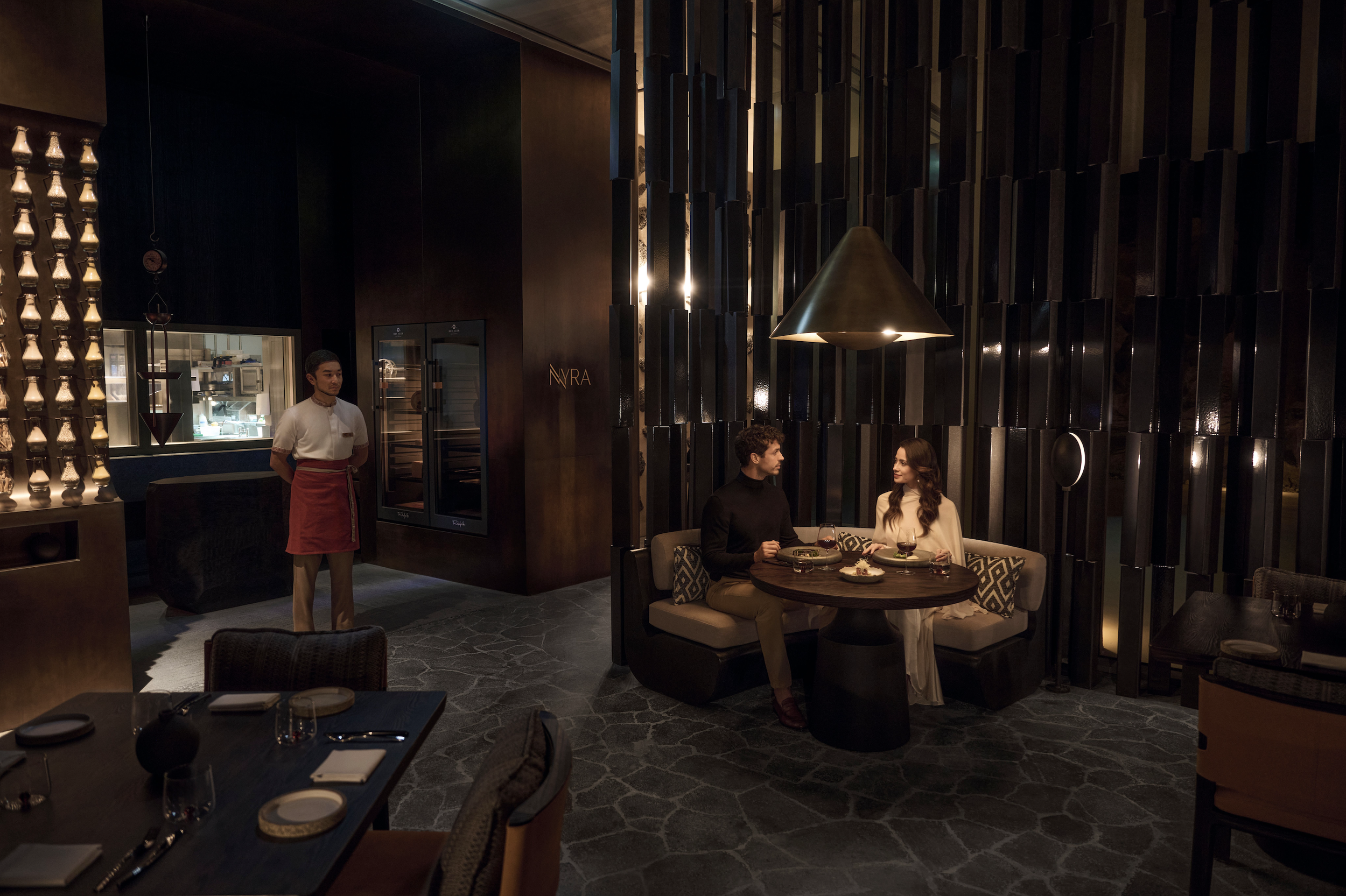
Dining offers several different moods, from an evening centered on live-fire cooking to a casual lunch beside the pool. The current lineup draws on Aegean, Peruvian, Levantine, and Saudi influences.
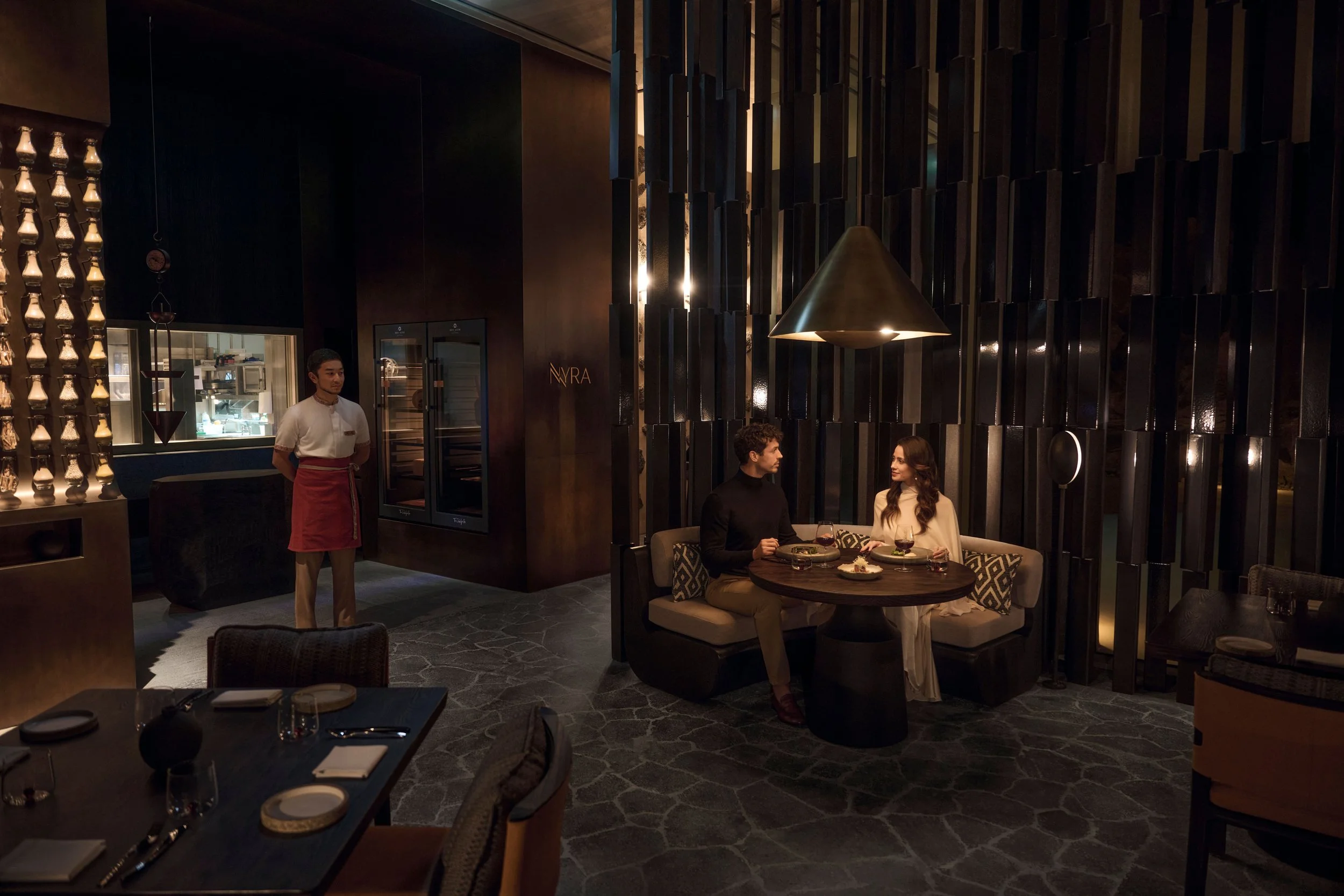
Nyra: Chef Osman Sezener’s Aegean-inspired restaurant emphasizes live-fire cooking, local ingredients, and dry-aging techniques.
Mica: A nonalcoholic bar serving inventive drinks and small plates. Fermentation, herbs, smoke, and preserved ingredients bring complexity to the beverage menu.
Basalt: Saudi and international breakfast dishes, with breads and pastries, give way to Peruvian cuisine at dinner.
Wadi Pool & Grill: An outdoor lunch setting for Levantine mezze, charcoal-grilled dishes, and relaxed poolside dining.
The Library: Specialty coffee, tea, salads, sandwiches, and gelato in a quieter setting overlooking the mountains.
Some restaurants operate on selected evenings, making a little advance planning worthwhile, particularly on a short stay. We would organize the preferred dinners first, then leave lunches and afternoons more flexible. The dining program rewards variety without requiring every meal to become a formal occasion.
Exploring the Landscape Up Close
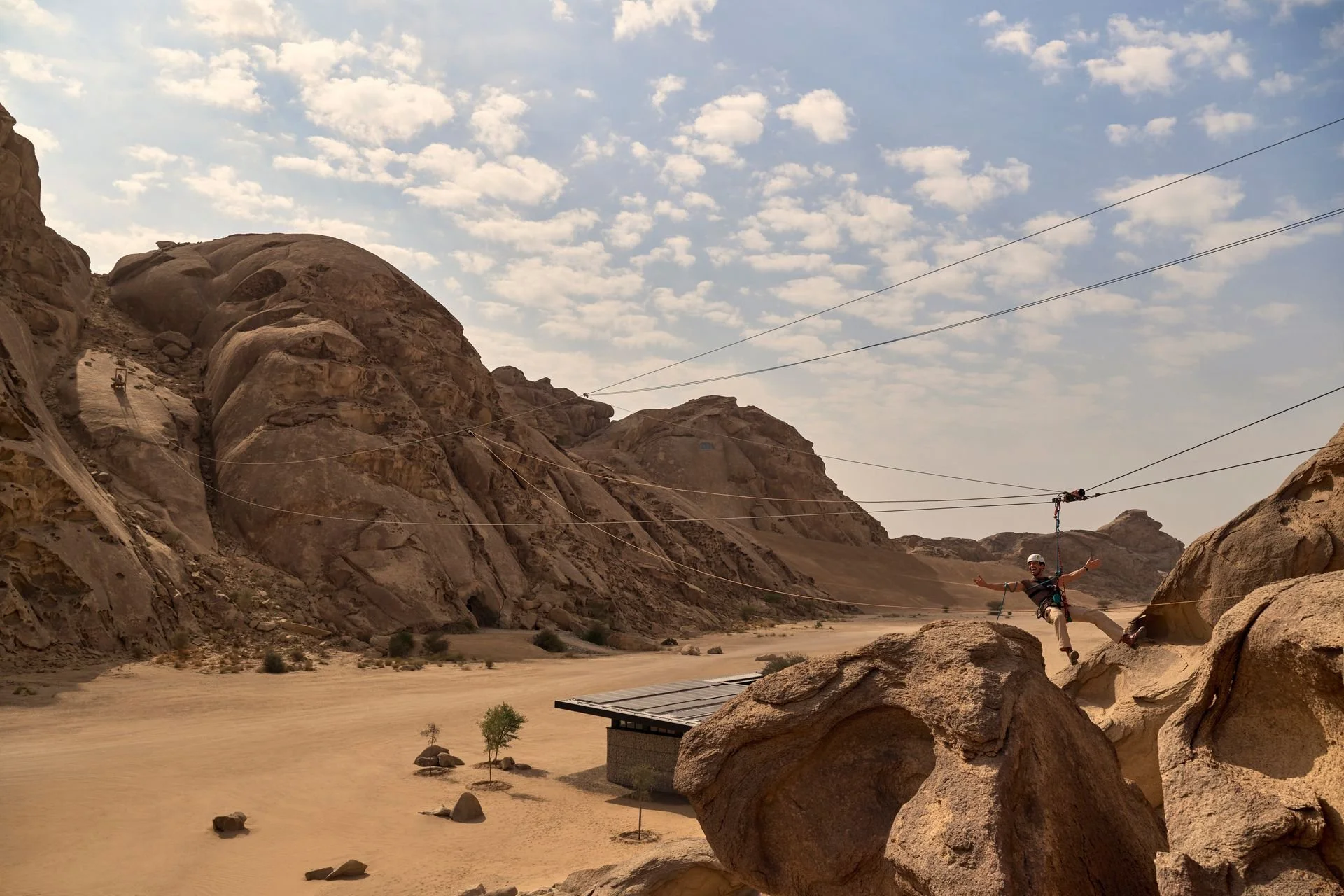
Adventure is a substantial part of Desert Rock’s identity. The mountain becomes something to explore physically, with guided activities that introduce its surfaces, scale, and changing perspectives.
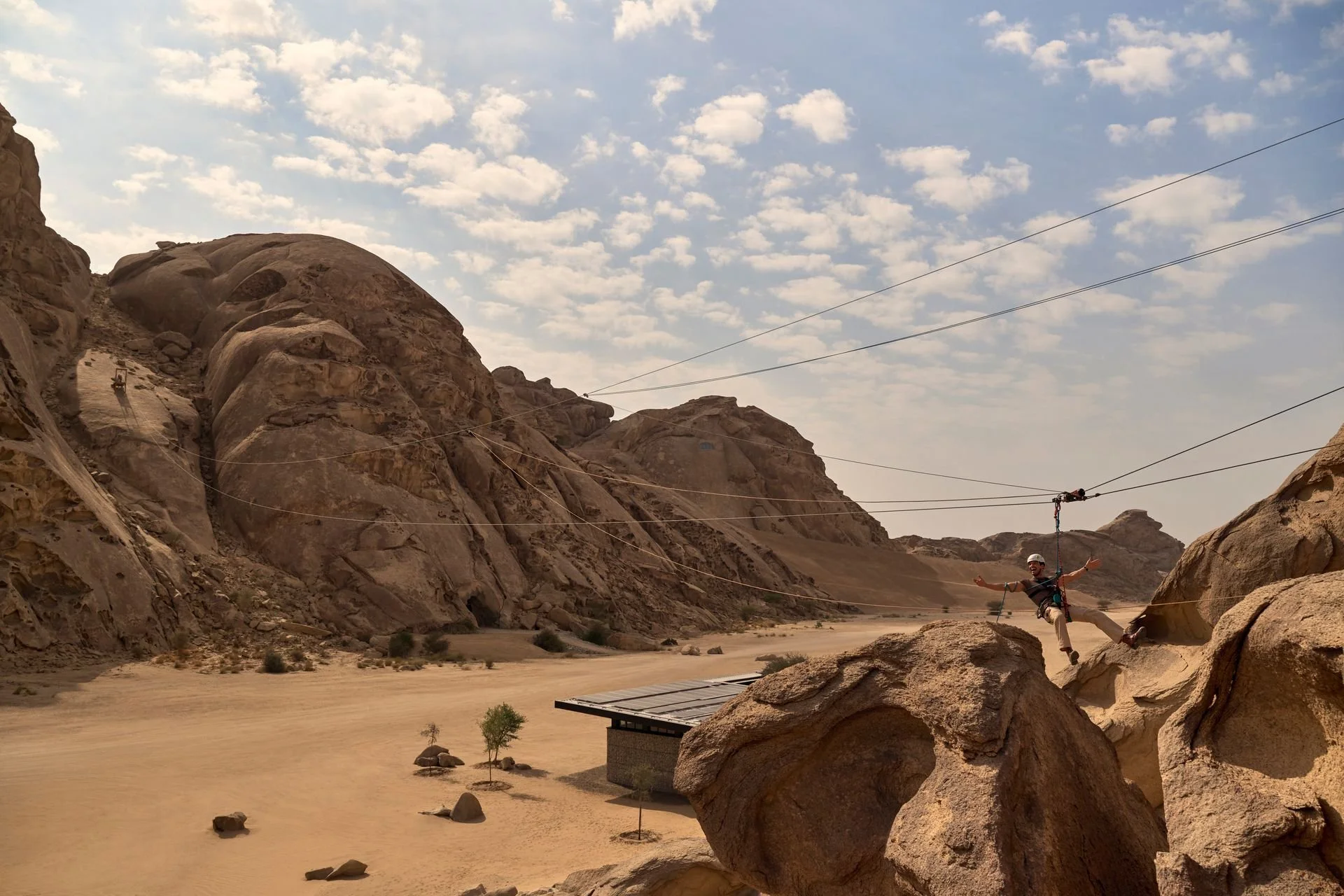
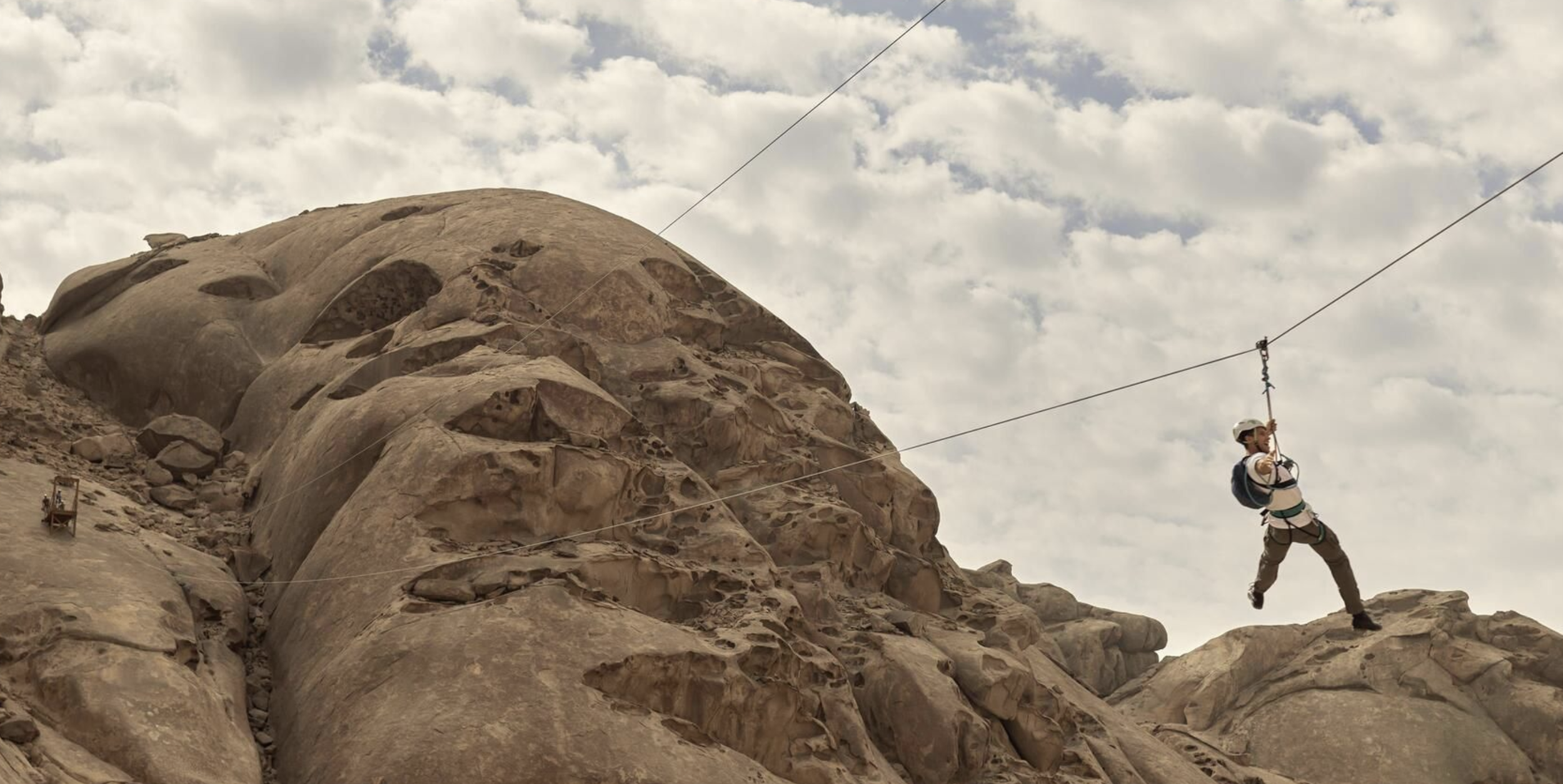
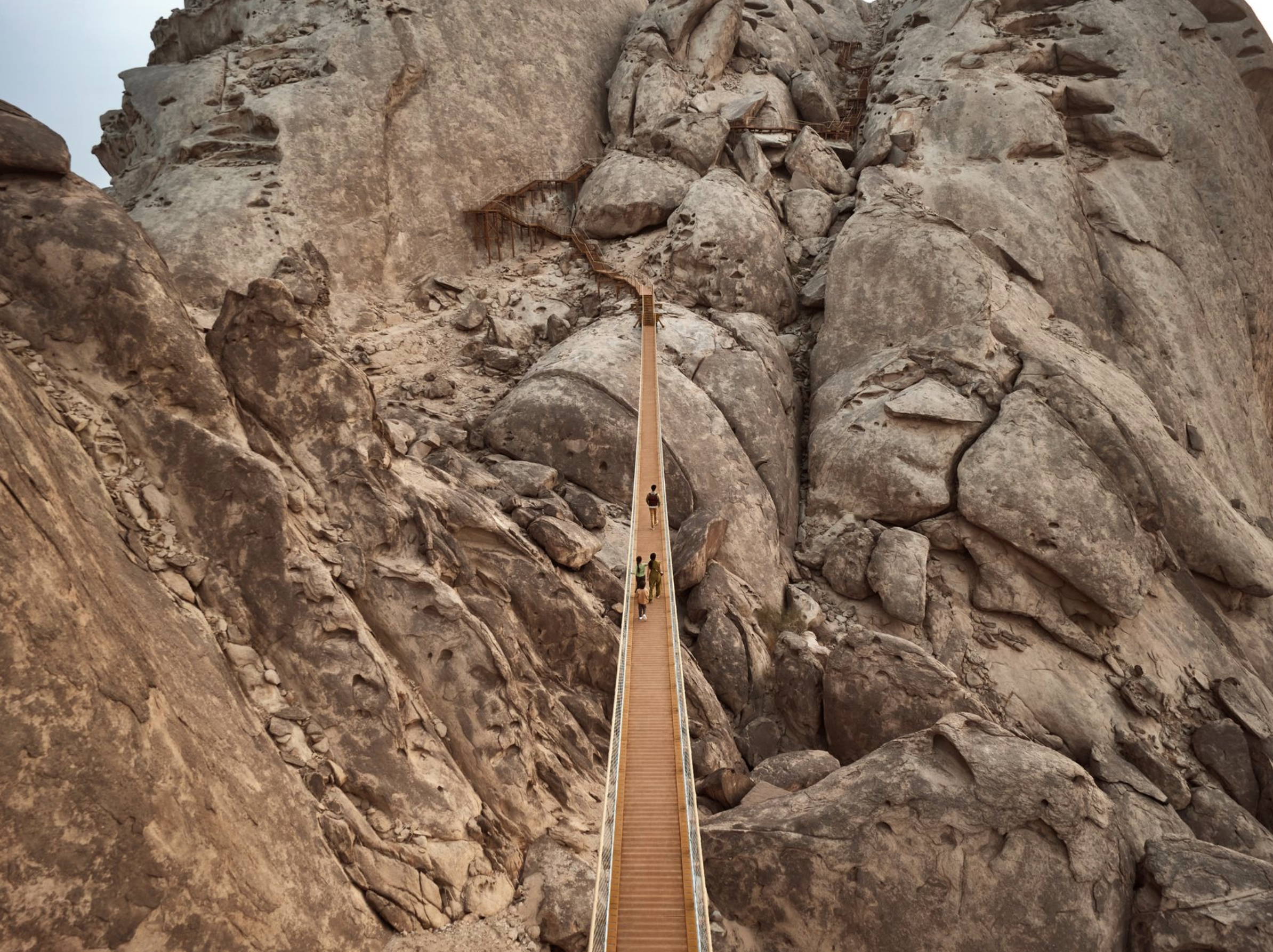
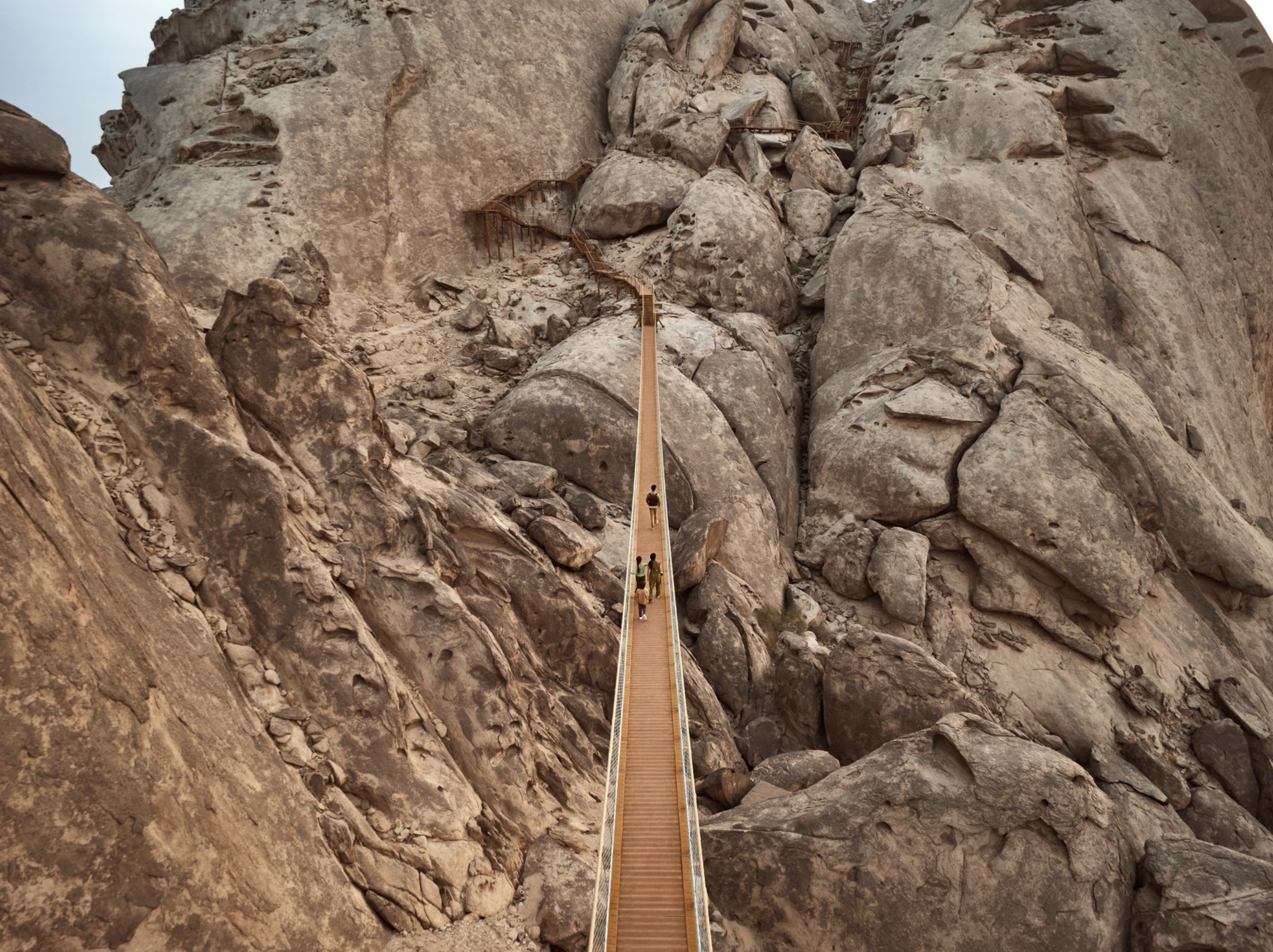
Via ferrata combines climbing and traversing on a secured route, using a harness system to move along the rock face. It is a particularly direct way to appreciate the terrain: details that disappear from the valley floor become visible at arm’s length. Guided climbing and abseiling provide other ways to engage with the cliffs, while the zipline offers a faster crossing above the landscape.
The adventure program is operated with Akun, Red Sea Global’s outdoor experiences team. Activities have their own age, height, weight, and fitness requirements, so choosing an outing should involve more than deciding how adventurous it sounds. The team can match the experience to the participants and explain what it involves before departure.
There are quieter ways to explore, too. Guided hikes and nature walks allow more time to notice the terrain, while electric quad excursions provide another perspective on the wadis. At the elevated Observatory, the journey and the outlook are both part of the appeal. Programming changes with the season, including adjustments to avoid the hottest hours.
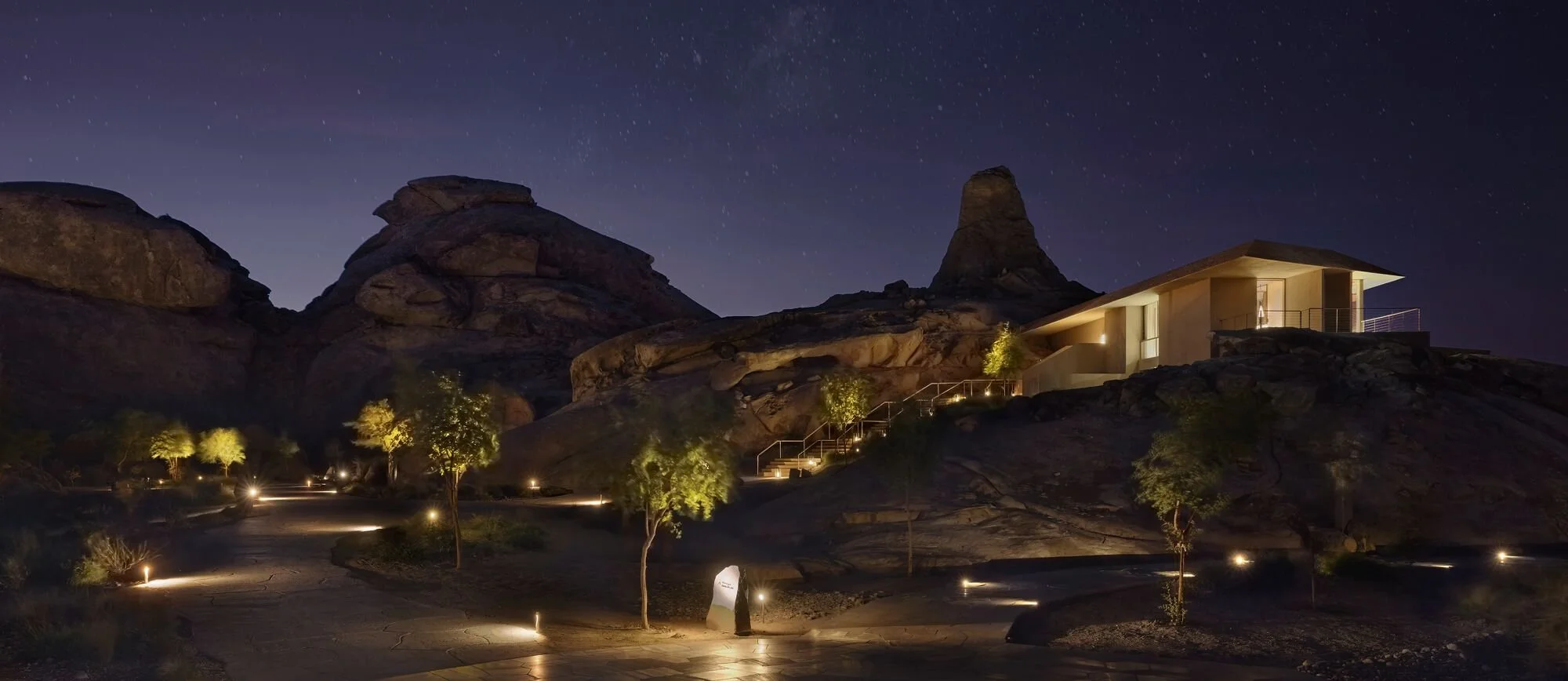
After sunset, guided stargazing offers a reason to remain outdoors. We would leave at least one evening loosely planned for this, rather than filling every night with a lengthy dinner. Weather and visibility shape the experience, but the transition from sunlit rock to a dark mountain silhouette is worth allowing time to watch.
Wellness Beneath the Rock
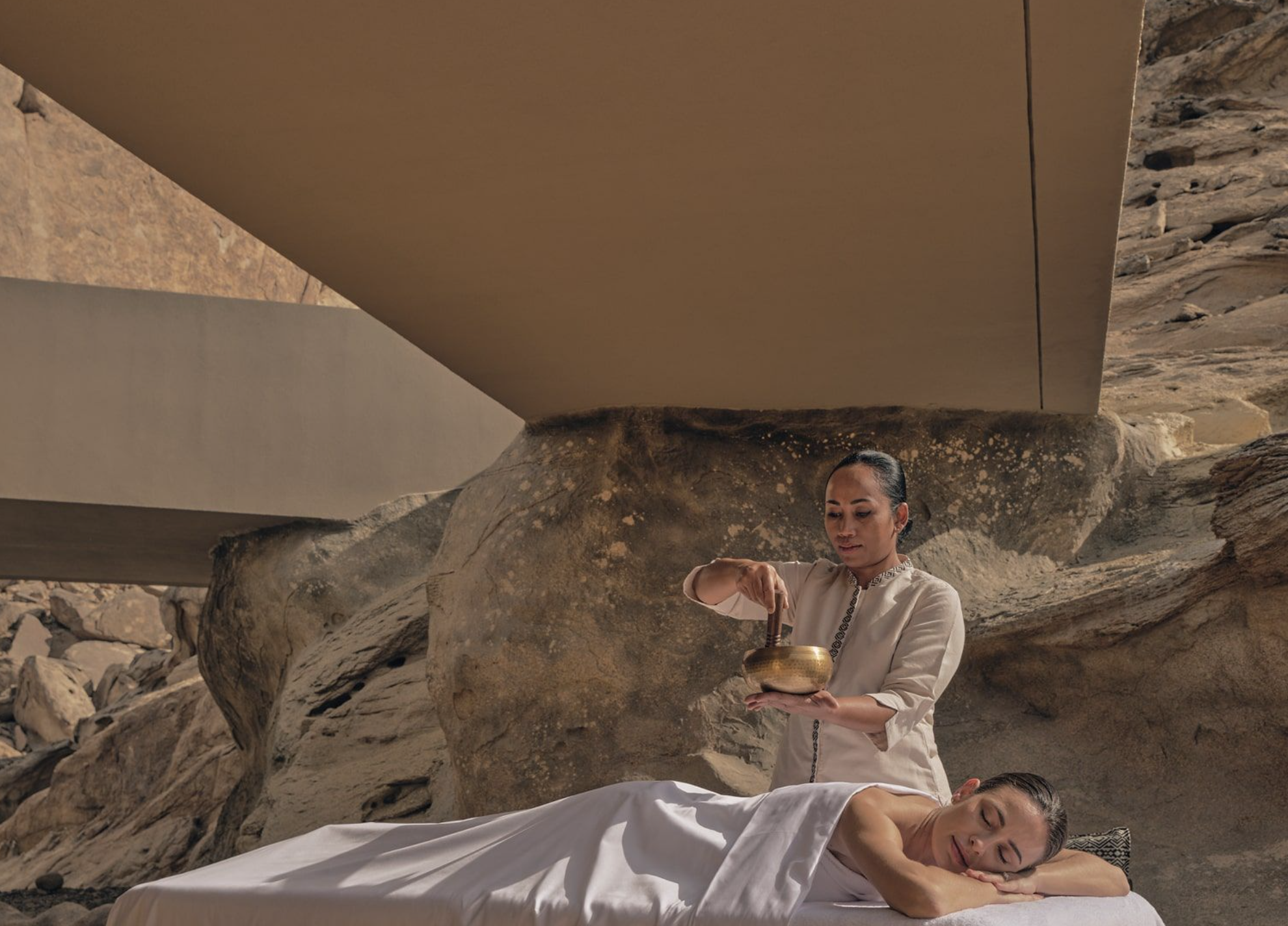
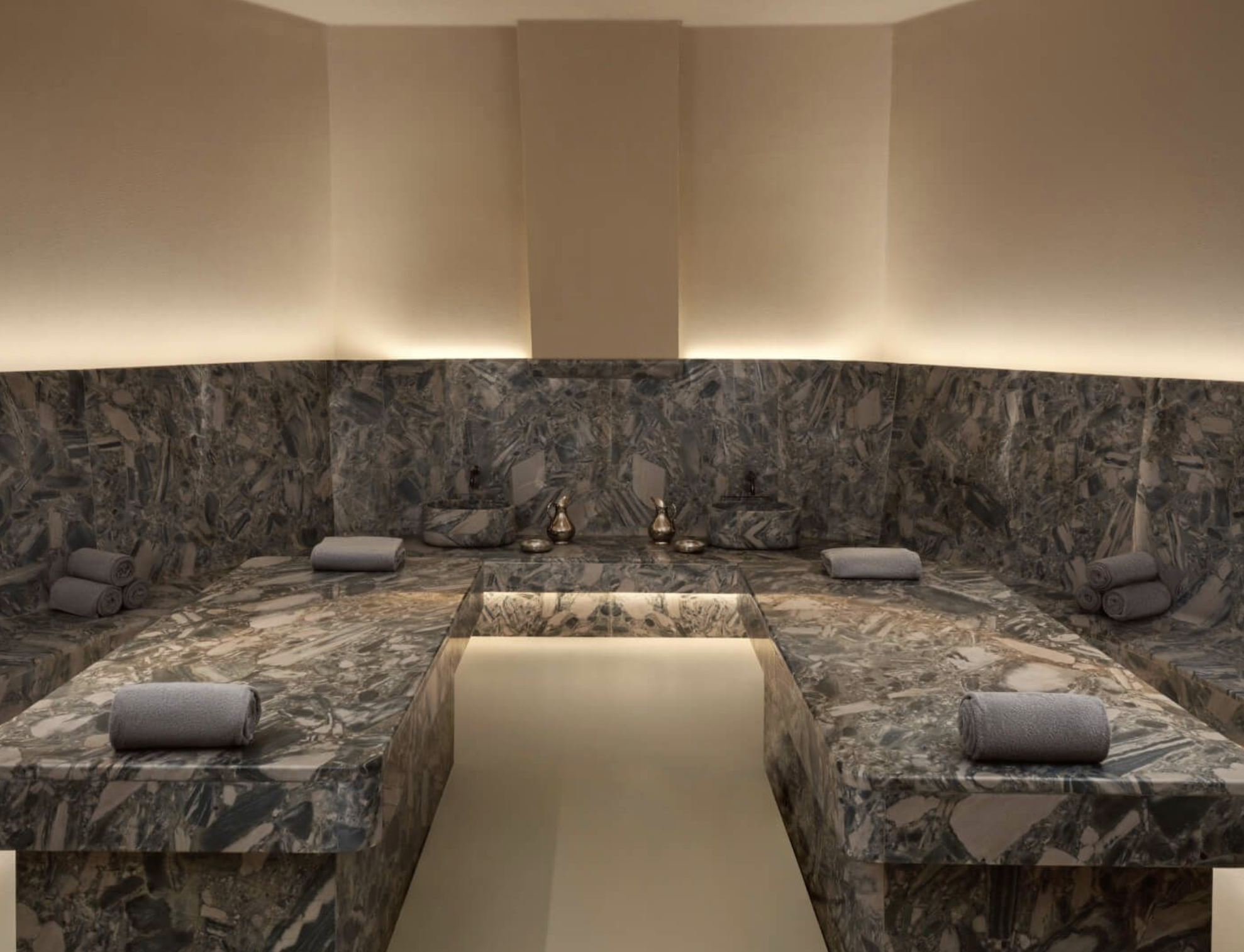
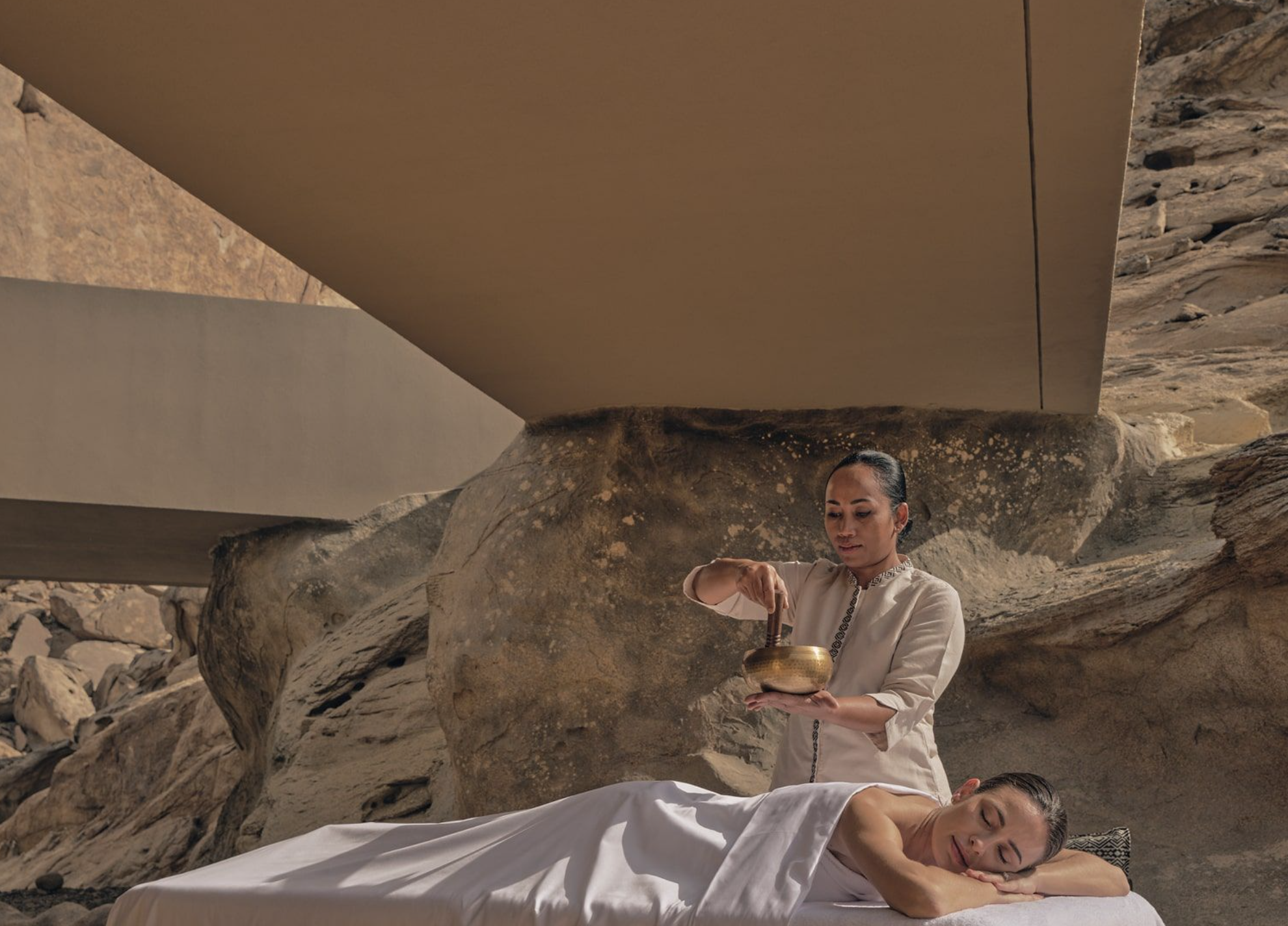
The spa sits at the foot of the mountain, with treatment spaces, a private hammam, and water therapies that offer a slower counterpoint to the adventure program. Its setting makes it easy to devote an afternoon to recovery after time outdoors.
The treatment menu includes massages, facials, and extended rituals using AMRA and Dr. Burgener products. The Cellular Gold Rejuvenation Hammam combines cleansing, exfoliation, and a rhassoul clay mask, while the longer Desert Rock Signature Ritual brings together yoga, body treatments, massage, and a facial. These are experiences to enjoy for their care and atmosphere, without needing to attach extravagant health promises to them.
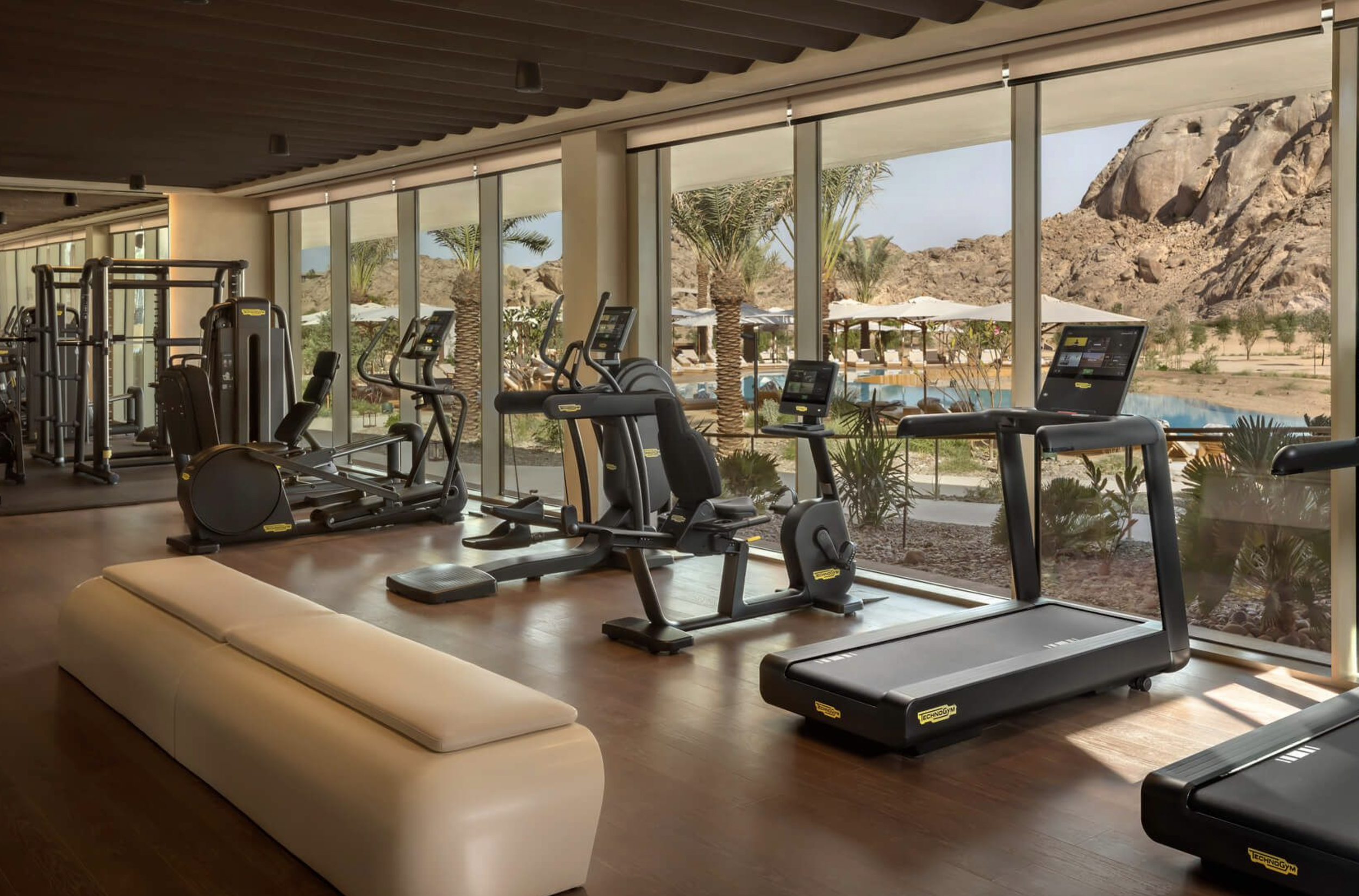
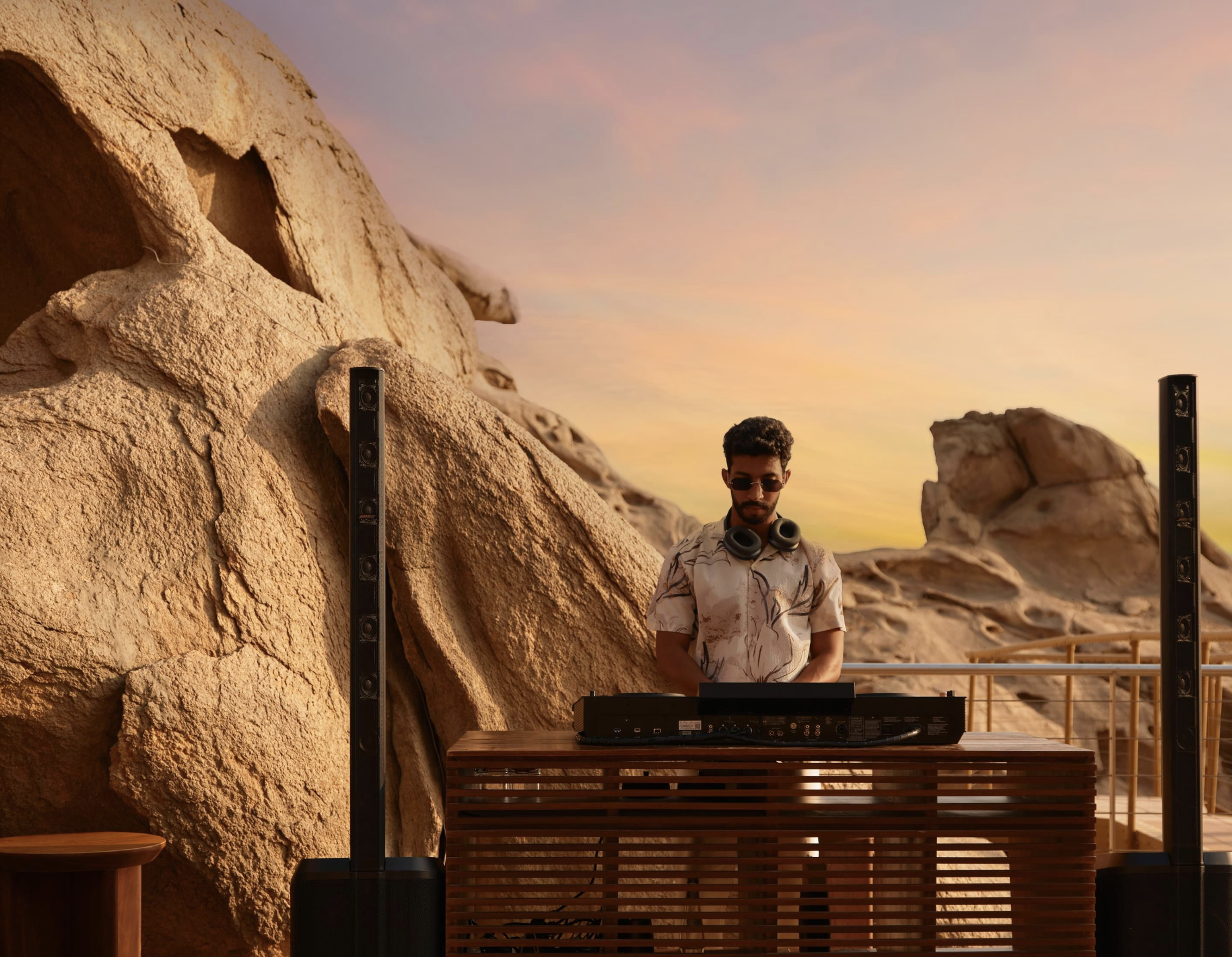
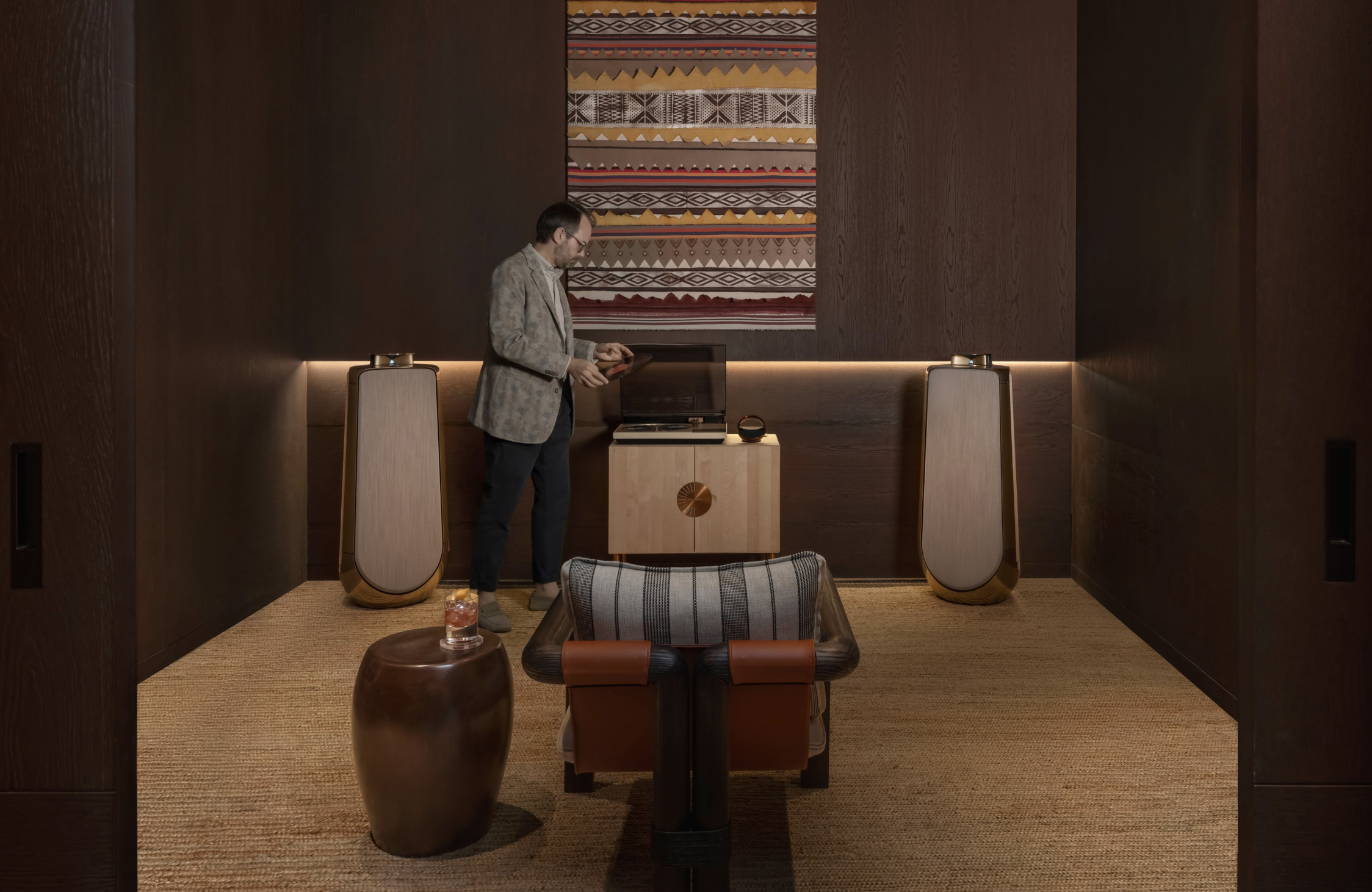
A yoga pavilion, aerial yoga, a Technogym-equipped fitness center, and a lap pool provide options for maintaining a routine. In-villa exercise equipment is also available on request. Elsewhere, The Listening Room offers an unusual change of pace through curated vinyl and high-fidelity sound – a quiet indoor experience between more active parts of the day.
A Mountain Escape for Different Ages
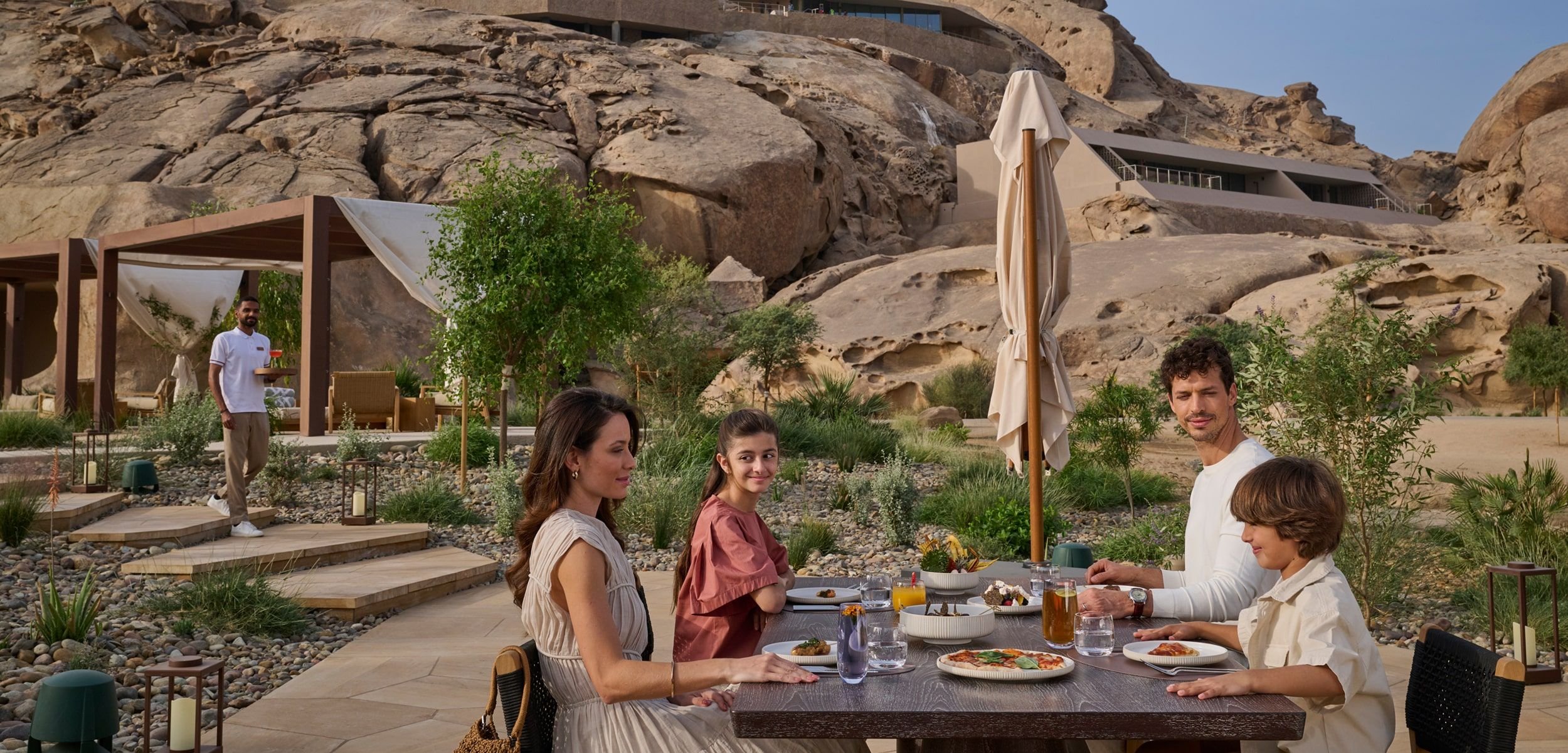
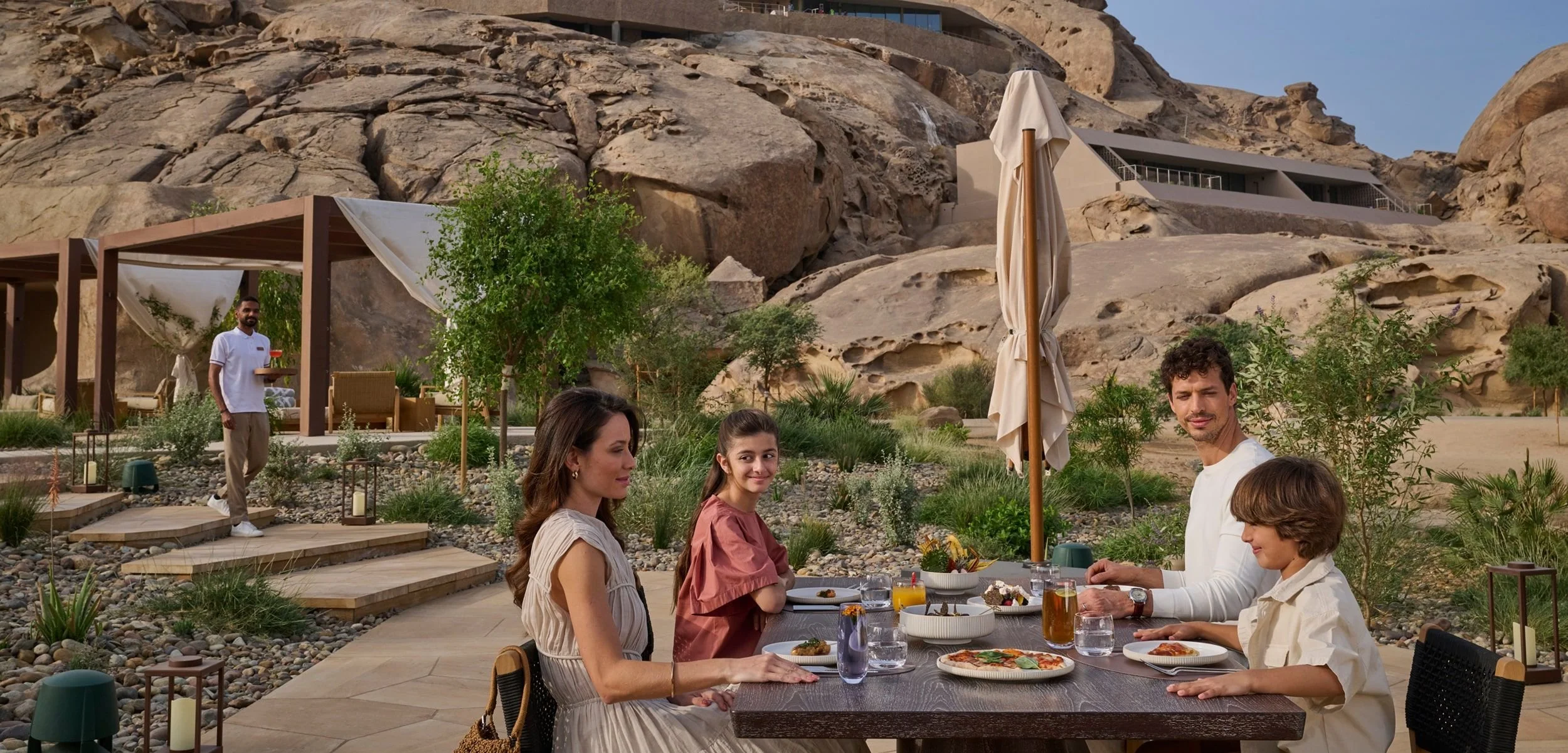
Desert Rock accommodates families as well as couples, with larger villas allowing everyone to share a base while retaining separate bedrooms. Choosing the right category is particularly important when traveling with younger children, given the differences in elevation, layout, and outdoor space.
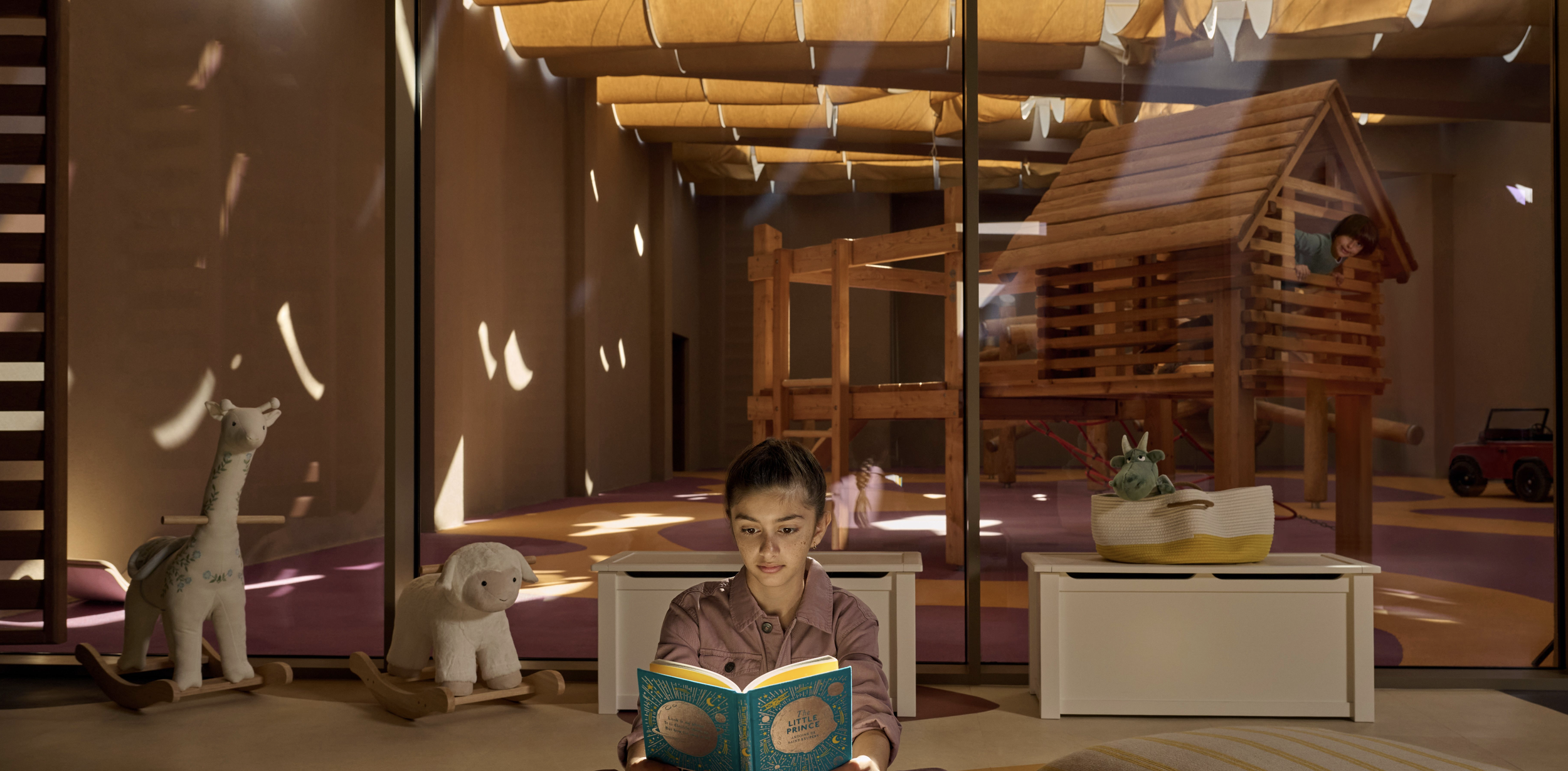
The Kids’ Club offers programming for ages three to twelve, including crafts, games, storytelling, and outdoor play. Children aged one and two may attend with a parent or guardian. This provides a useful alternative to the more demanding mountain activities and a place to spend time with other children.
For older children, an appropriately chosen outdoor experience can become a highlight of the stay. Eligibility varies by activity, and age alone does not determine suitability. We would confirm the requirements before promising a particular climb or zipline experience, then build in plenty of time for swimming and less structured afternoons together.
Conservation in the Details
Desert Rock’s environmental approach includes both its construction and its daily operations. The resort reports LEED Platinum certification and an entirely solar-powered operation, alongside measures to reduce single-use plastics.
Excavated stone and local sand were reused in construction materials, while mountain stone appears in interior and exterior finishes. Shaded positions and the thermal mass of the rock help limit heat gain, connecting the architectural approach with the practical demands of cooling buildings in the desert.
Landscape initiatives include planting more than 350 native acacia trees and hosting seasonal beehives in partnership with local beekeepers. Educational sessions and guided nature walks introduce the surrounding ecology, providing context beyond the visual drama of the mountains.
These details offer a more useful understanding of sustainability than broad claims alone. Energy supply, material reuse, planting, and sourcing decisions are all part of how the resort functions in a demanding environment.
Access Across a Mountain Setting
The resort identifies one accessible Two-Bedroom Wadi Villa, with a roll-in shower and integrated seat, accessible fittings, and additional maneuvering space. Its published guidance also lists access to public amenities and dining venues, along with a wheelchair-accessible buggy.
Because accommodation and experiences occupy varied terrain, specific routes and assistance requirements should be confirmed before booking. The resort advises that facilities for visually impaired travelers are limited and that a companion is required. We would review the complete stay, including transfers and planned activities, rather than room features alone.

Mountains First, Islands Next
Desert Rock is an inland retreat within The Red Sea destination. Beach access and marine activities should be planned as a separate part of the journey, rather than assumed to be immediately outside the villa.
That distinction creates an appealing opportunity for a two-part stay. The resort promotes combinations with Shebara, its sister property on the coast’s island side, pairing mountain adventures with a marine setting. Snorkeling, diving, and time beside the water give a different rhythm to the second half of a trip.
We would allow each setting enough time to feel distinct. Moving hotels every night would diminish the quieter pleasures of Desert Rock, where an unplanned hour on the terrace can be as enjoyable as a scheduled excursion. A few nights in the mountains followed by several at an island resort creates room for both exploration and rest, with transfers organized around the chosen properties.
Getting There
By Air: Red Sea International Airport (RSI) is the closest airport. Select flights around the routes operating on the intended travel dates; the onward drive to Desert Rock takes approximately 20 minutes.
By Private Transfer: The resort can arrange airport greeting and an electric-vehicle transfer, also approximately 20 minutes from RSI. Reserve the service in advance and confirm whether it is included in the booked rate.
By Car: Self-drive arrivals are possible. The resort publishes regional reference distances of approximately 500 kilometers north of Jeddah and 375 kilometers northwest of Madinah; exact driving time depends on the departure point and route and should be checked when planning the journey.
The Mountain After Sunset
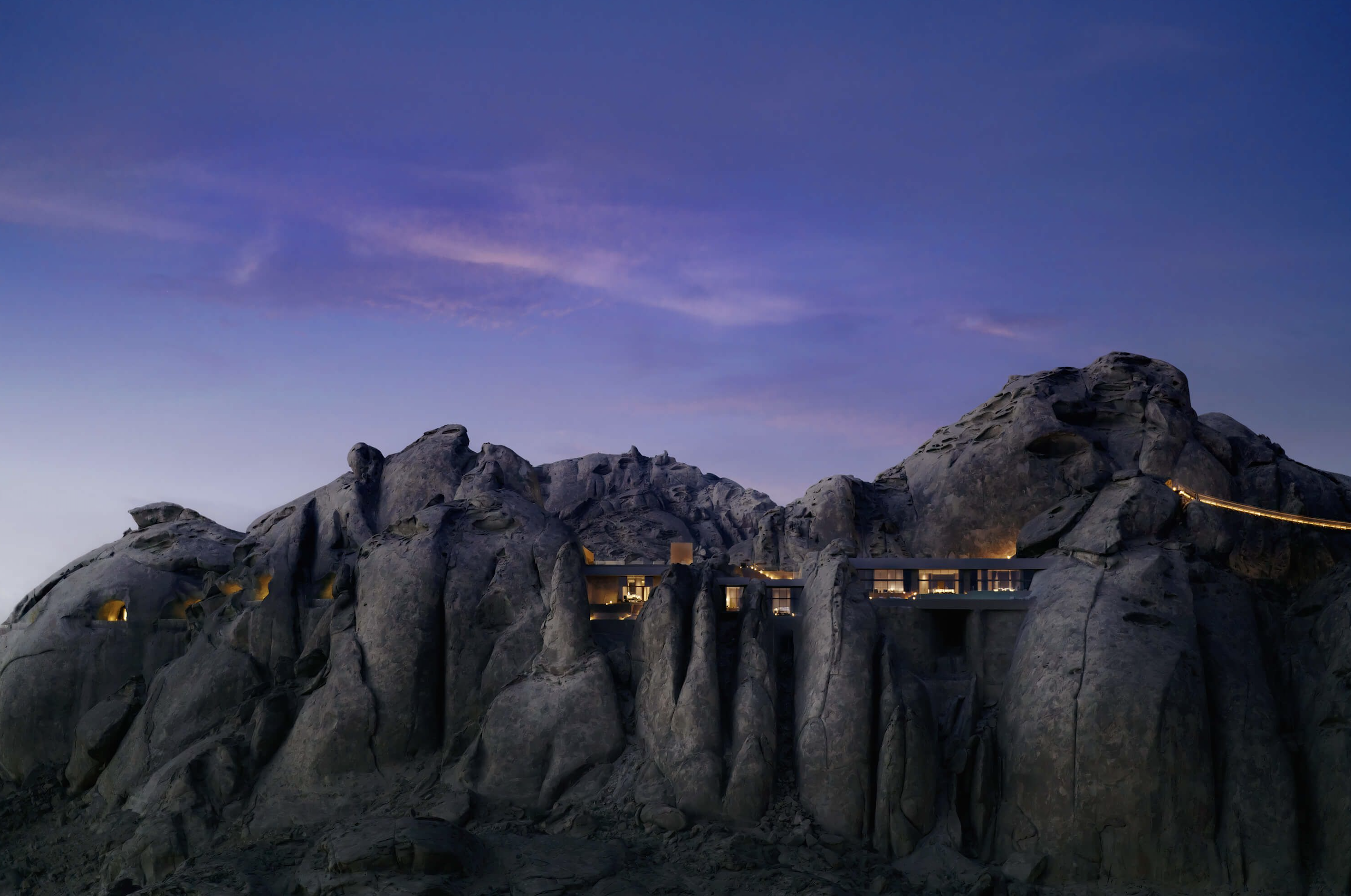
As the light fades, Desert Rock becomes a different place. The sharp edges of the valley soften, windows begin to glow, and the architecture becomes easier to distinguish against the darkening mountain. A view studied from the pool in the afternoon takes on another character after dinner.
That changing relationship with the setting gives the stay its continuity. Whether the day has involved a climb, a spa treatment, or very little at all, the mountain remains present. There is pleasure in returning to the same terrace and finding that the scene has changed again.