

Tokyo, Japan | Bvlgari Hotel Tokyo
Tokyo From Forty Floors Above Yaesu
Tokyo is a city where location fundamentally changes the experience of a stay. The western neighborhoods offer their own energy, but Yaesu places travelers beside Tokyo Station, within walking distance of Marunouchi, Nihombashi and Ginza, and close to the Imperial Palace Gardens. It is one of the most practical bases in the city for guests combining business, shopping, dining and cultural sightseeing.
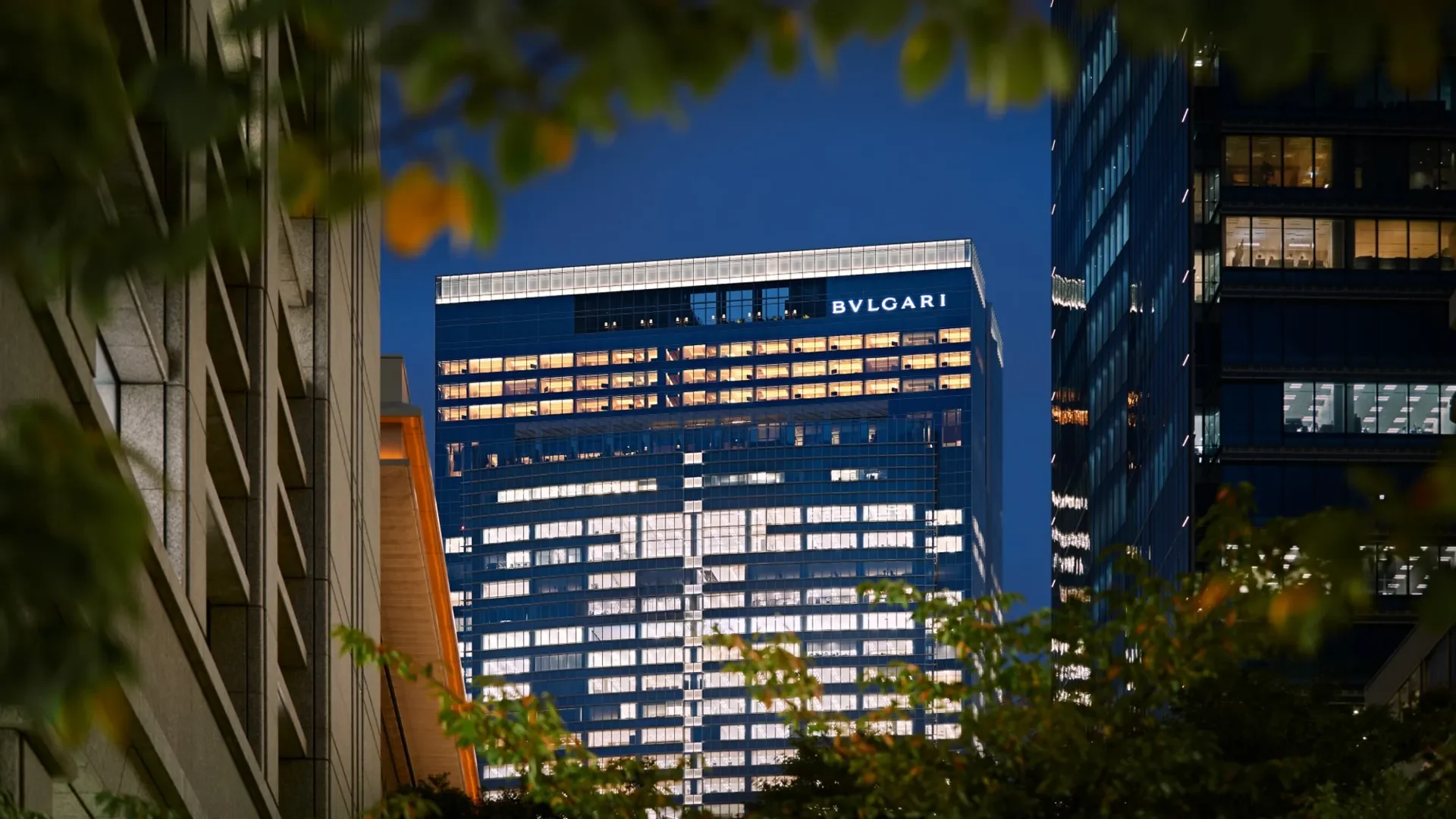
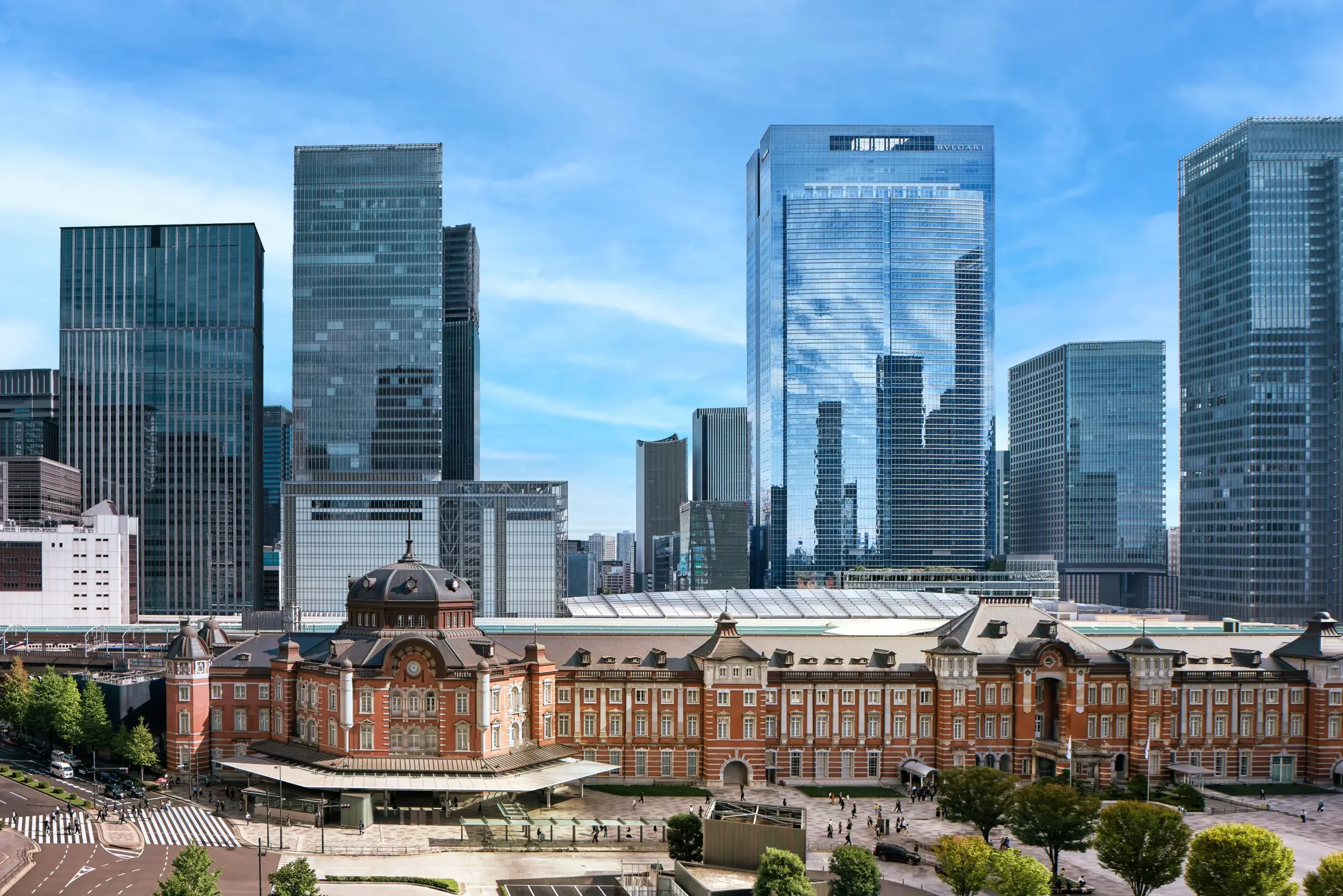
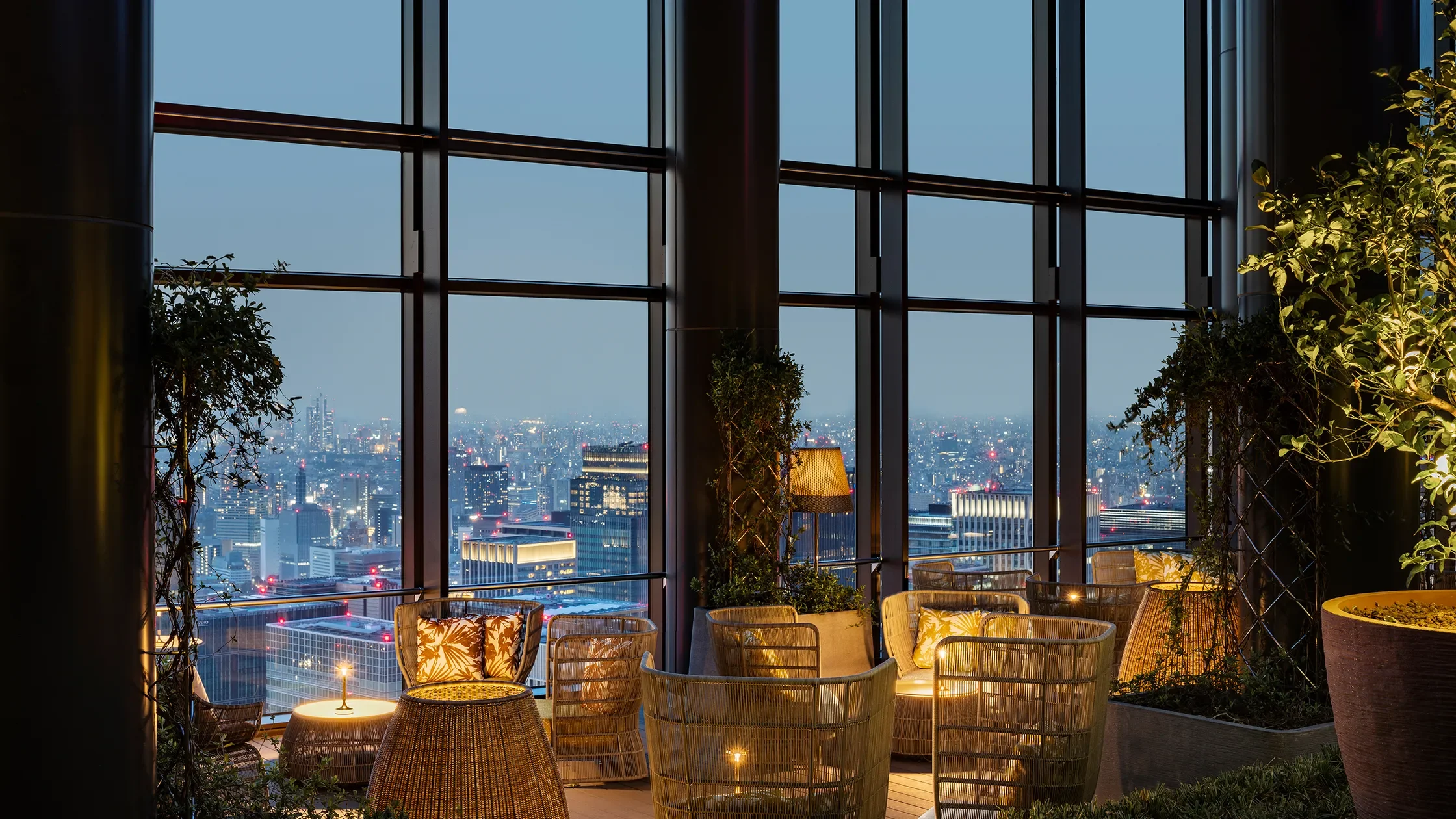
Bvlgari Hotel Tokyo occupies the 40th through 45th floors of Tokyo Midtown Yaesu, directly opposite Tokyo Station. From this height, the city becomes part of the hotel itself: guestrooms look across the skyline, Premium Rooms face toward the Imperial Palace Gardens and Tokyo Station, and on clear days views can extend toward Mount Fuji.
Opened in 2023 as the eighth hotel in the Bvlgari Hotels & Resorts collection, the property brings the Roman jewelry house’s approach to hospitality into a distinctly Japanese context. Italian furniture, marble and recognizable Bvlgari design codes are layered with Japanese textiles, woodwork, craftsmanship and quieter decorative references.
The result works particularly well for travelers who want Tokyo immediately outside the door but still value a highly controlled, residential environment above the city.
A New Hotel at One of Tokyo’s Oldest Gateways
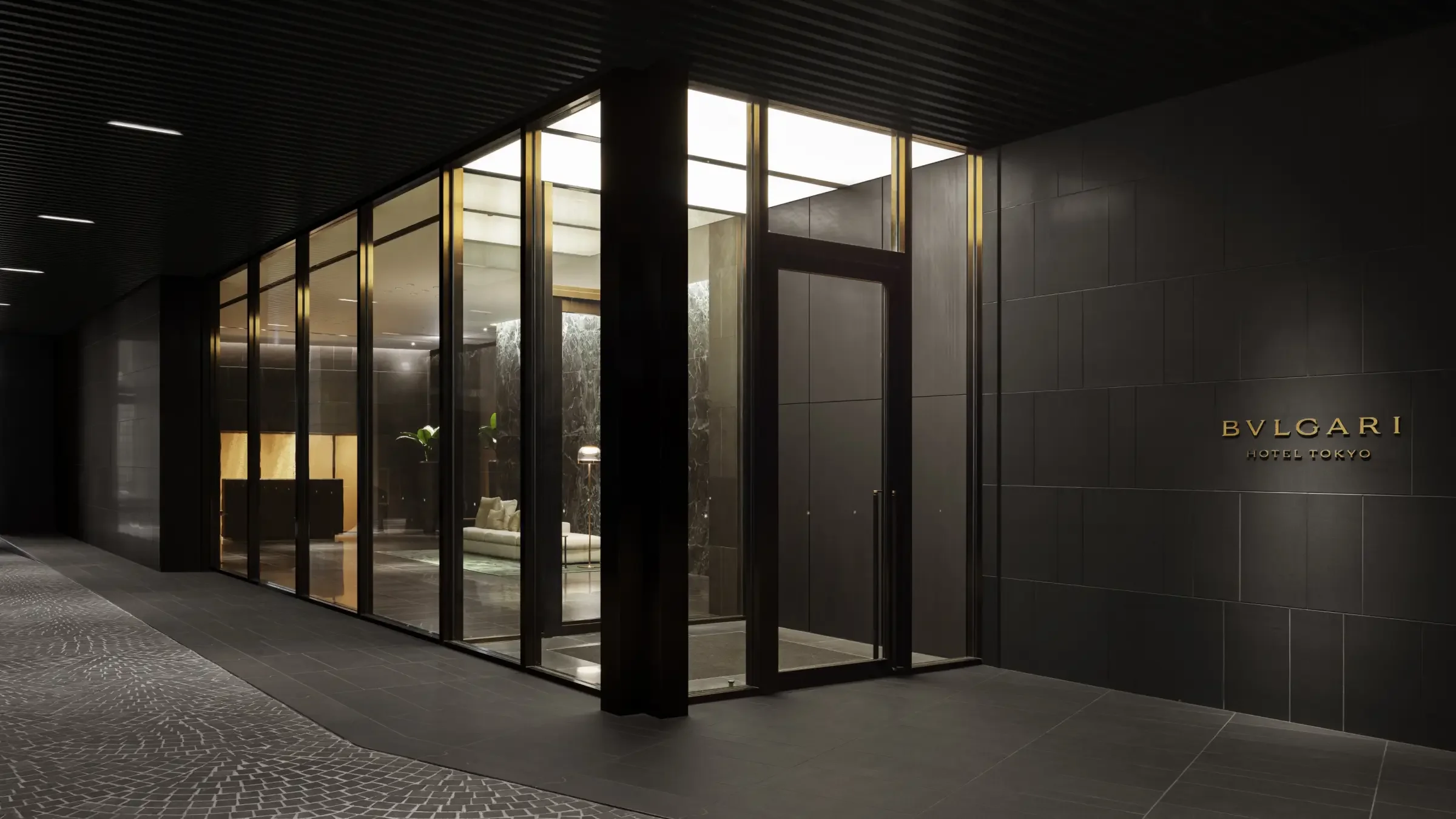
Bvlgari Hotel Tokyo opened on April 4, 2023, within Tokyo Midtown Yaesu, a major mixed-use redevelopment directly connected to one of the city’s most important transportation hubs.
The hotel itself is entirely contemporary rather than a restoration of a historic structure. Tokyo Midtown Yaesu was developed as a combination of offices, retail, transportation infrastructure, civic uses and hospitality, with Bvlgari occupying the tower’s upper floors.
Its location, however, connects it to a much longer urban story. Yaesu developed beside Tokyo Station and the districts of Nihombashi and Marunouchi, placing the hotel between historic commercial Tokyo and some of the capital’s most significant modern business districts. Ginza lies within walking distance, while the Imperial Palace Gardens create an unusually open visual counterpoint to the surrounding high-rise cityscape.
For us, the important historical distinction is that Bvlgari Hotel Tokyo is a new hotel responding to an established part of the city—not a historic Japanese building converted into a luxury property.
Roman Design Codes Meet Japanese Craft
The exterior design of the Tokyo Midtown Yaesu tower was led by Pickard Chilton, with the wider project involving Japanese architectural and construction teams, while the hotel interiors were created by ACPV Architects Antonio Citterio Patricia Viel, the Milan-based studio responsible for the design language across Bvlgari Hotels & Resorts.
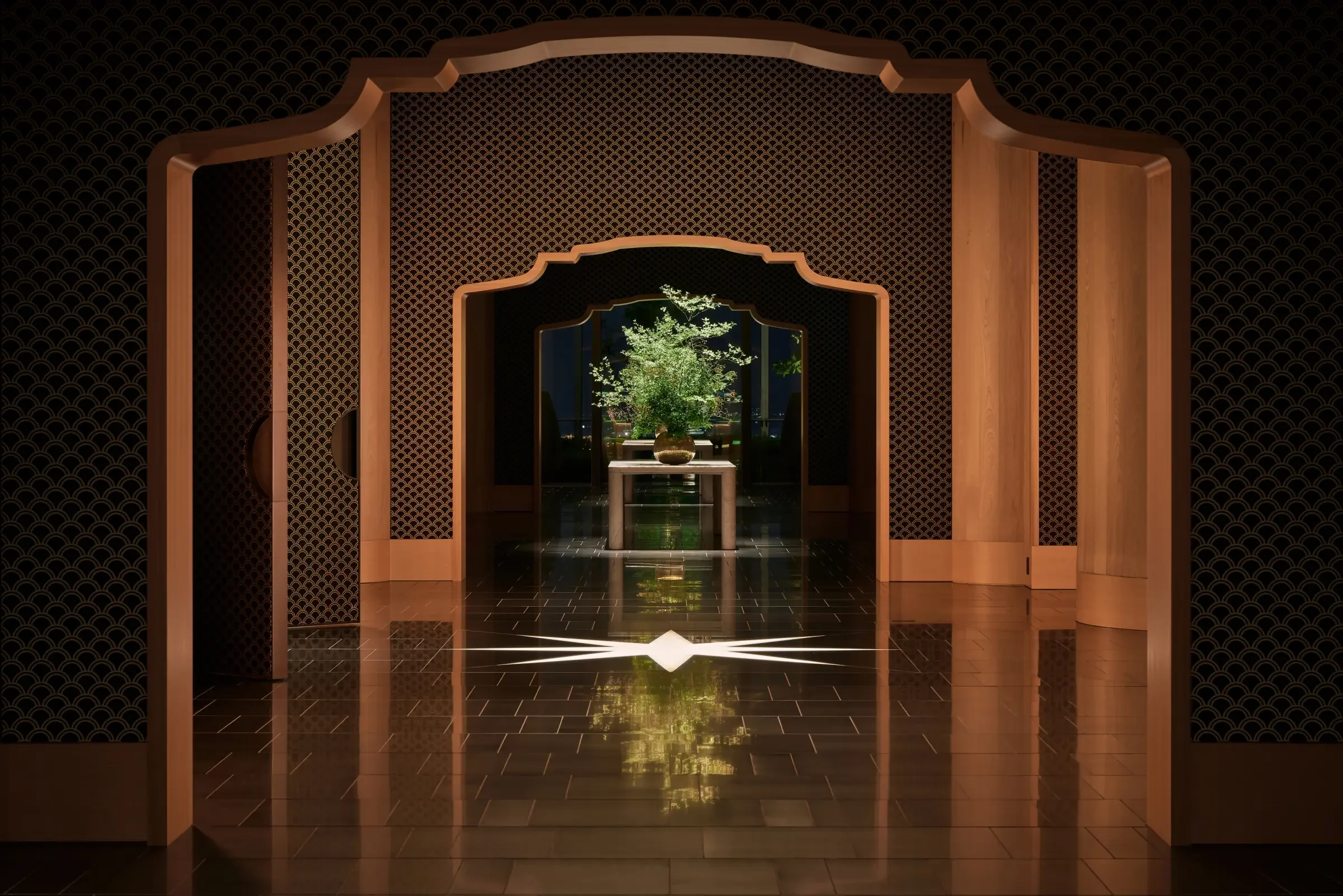
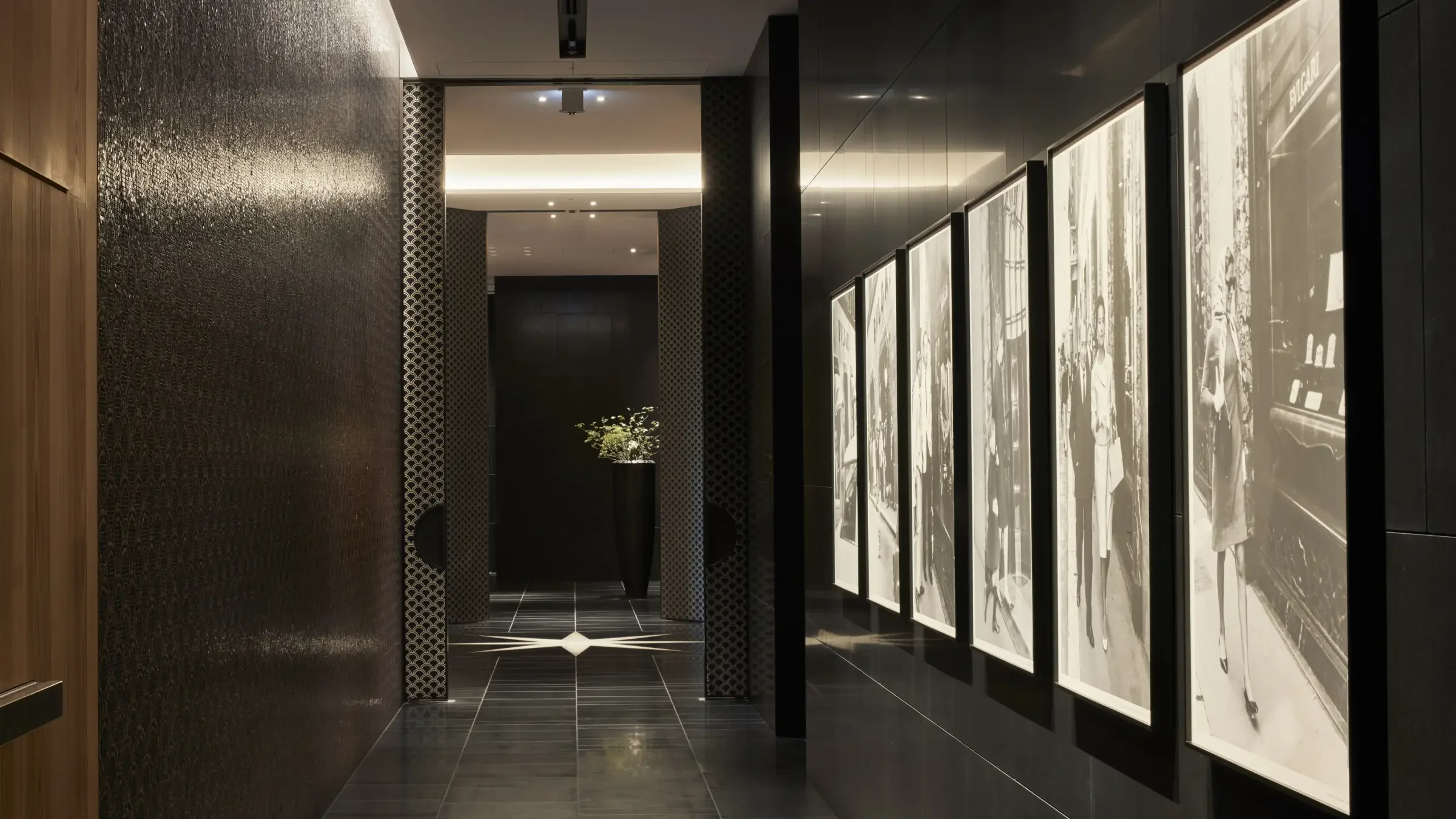
The interiors deliberately create a dialogue between Italy and Japan. Bvlgari’s Roman identity appears through marble, contemporary Italian furniture, jewelry-inspired details and the Maison’s eight-pointed star, while Japanese craftsmanship enters through timber, textiles, calligraphy and carefully executed joinery.
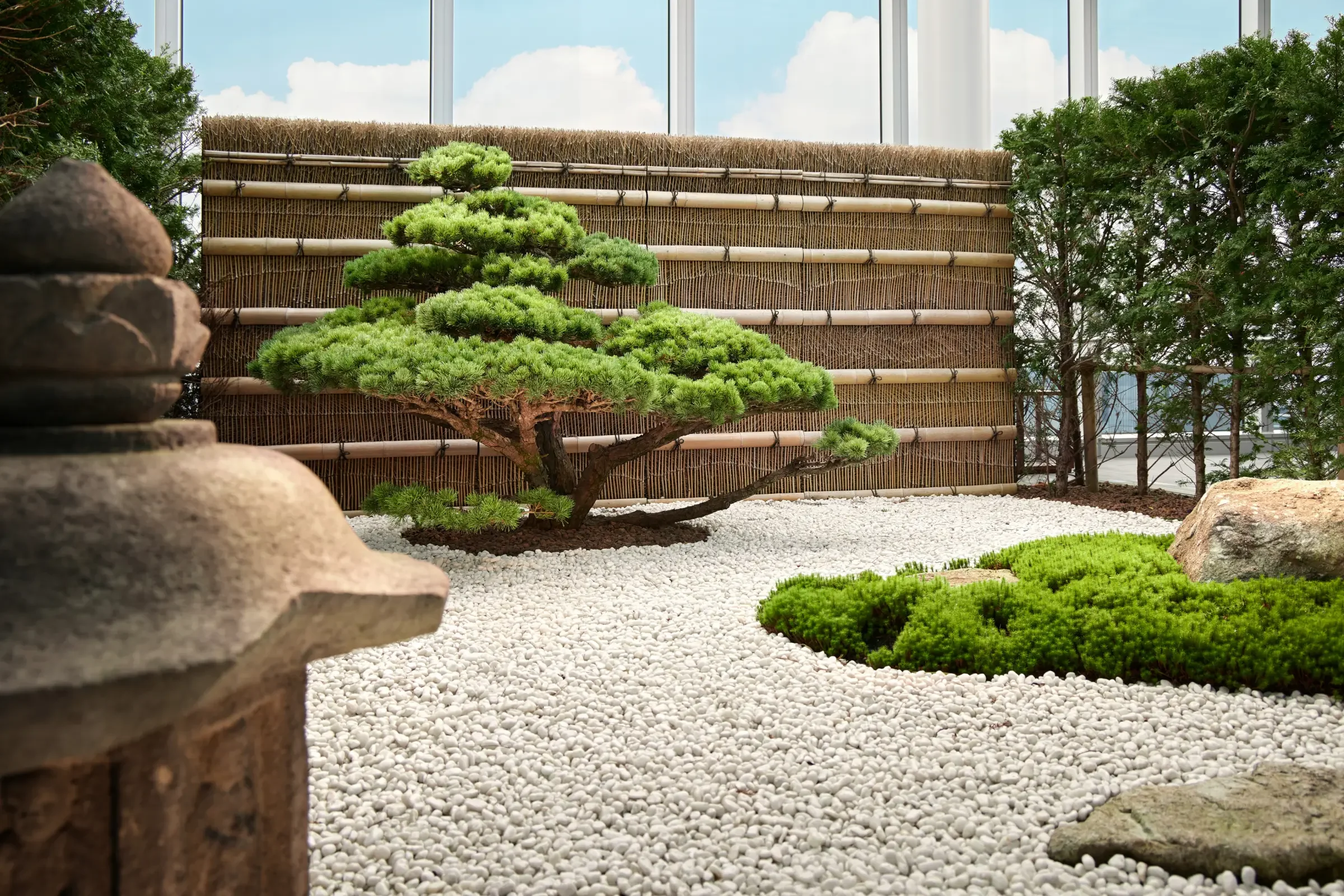
One particularly specific reference is the hotel emblem, derived from a 1970 Bvlgari brooch depicting Mount Fuji. Italian sanpietrino-style paving appears at the arrival, while Japanese influences continue upstairs through elements including the hinoki wood counter at Sushi Hōseki and its small Zen garden.
Guestrooms incorporate pieces from Italian brands alongside textiles by Kyoto-based Hosoo and furniture from Japanese maker Ritzwell. The intention is not to recreate traditional Japanese interiors, but to let local materials and craftsmanship sit naturally inside a contemporary Italian framework.
That restraint is important. Bvlgari Hotel Tokyo feels recognizably part of the Bvlgari collection without becoming disconnected from the city around it.
Rooms and Suites Framed by the Tokyo Skyline
Bvlgari Hotel Tokyo has 98 rooms and suites, with accommodations beginning at unusually generous dimensions for central Tokyo.
Rooms
Superior Room: At approximately 549 sq. ft., the Superior Room combines Bvlgari’s contemporary residential style with Japanese decorative elements, and can connect with a Deluxe Suite to create a larger two-bedroom arrangement.
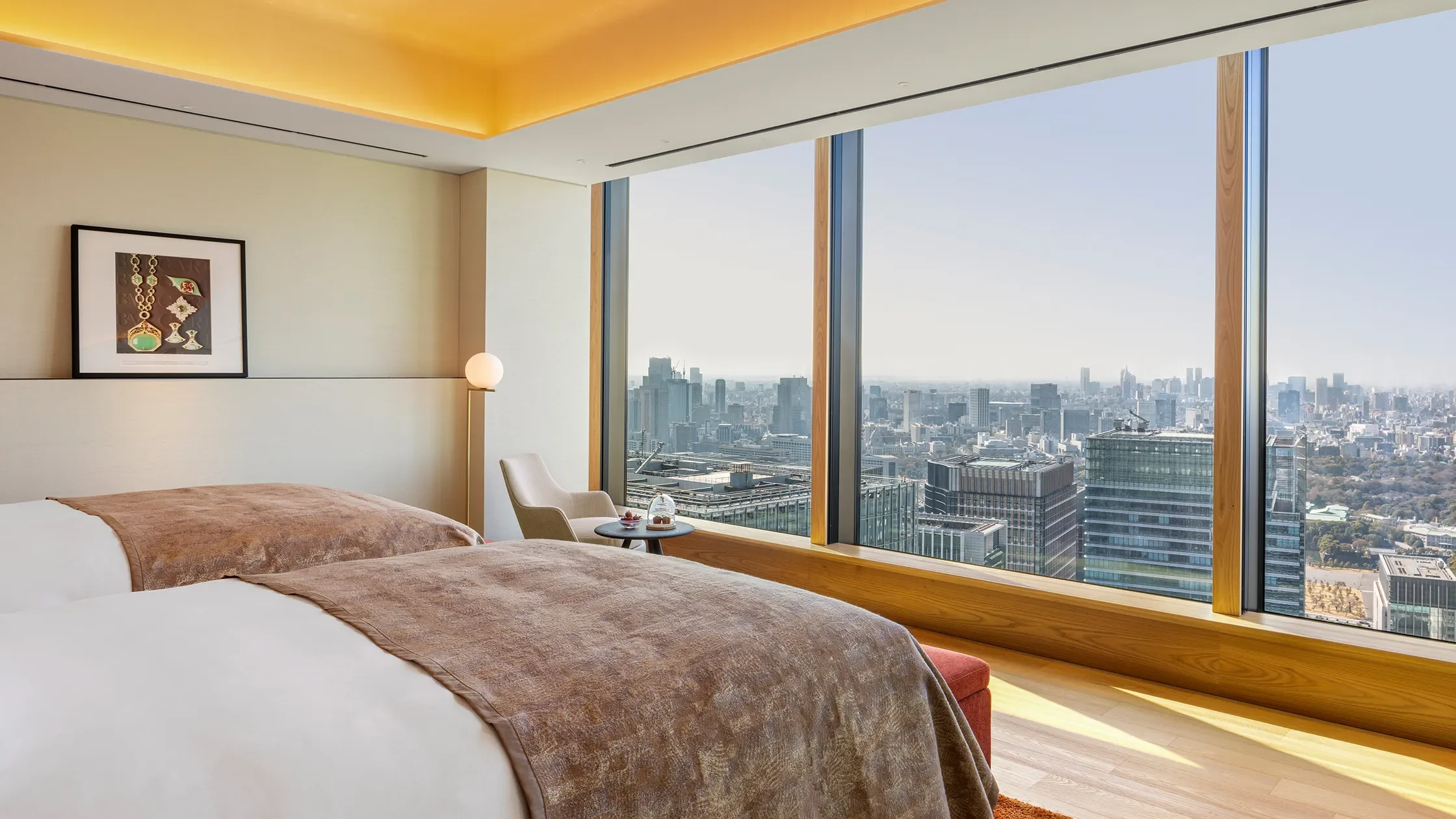
Deluxe Room: At approximately 603 sq. ft., this category uses floor-to-ceiling glazing to frame broad Tokyo skyline views, with Hosoo textiles, Ritzwell furniture and Italian pieces reinforcing the hotel’s East-meets-West design language.
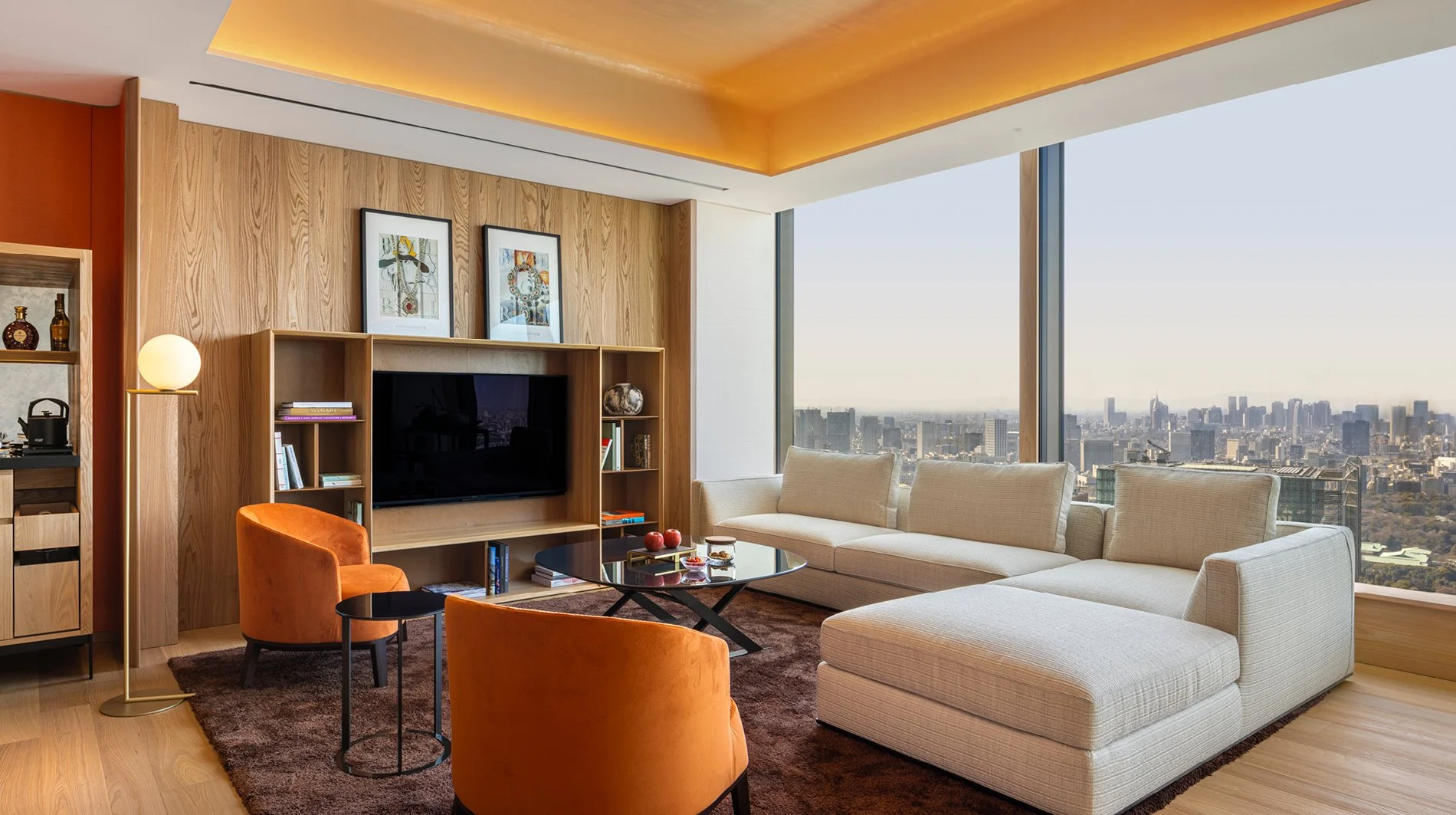
Premium Room: At approximately 603 sq. ft., the Premium Room differentiates itself primarily through its outlook, with views extending toward Tokyo Station and the Imperial Palace Gardens from the hotel’s elevated position.
Suites
Junior Suite: Ranging from approximately 840 to 915 sq. ft., these suites divide the accommodation into distinct bedroom and living areas and can connect with another Junior Suite to create approximately 1,755 sq. ft. of combined space.
Superior Suite: Ranging from approximately 1,001 to 1,055 sq. ft., the Superior Suite includes a separate bedroom and living room furnished with Italian brands such as Maxalto and B&B Italia alongside Japanese pieces from Ritzwell.
Deluxe Suite: At approximately 1,130 sq. ft., these corner suites feature separate bedroom and living areas and a hand-brushed matte-gold ceiling, while connection with a Superior Room can create a two-bedroom configuration of approximately 1,679 sq. ft.
Premium Suite: At approximately 1,259 sq. ft., the Premium Suite provides a generous one-bedroom layout with a substantial living area and decorative details influenced by both Bvlgari’s archives and Japanese craftsmanship.
Serpenti Suite: At approximately 1,259 sq. ft., this signature suite is dedicated to Bvlgari’s Serpenti motif, using specially selected linens, cashmere and design references to one of the Maison’s most recognizable jewelry collections.
The Bvlgari Suite: At approximately 4,478 sq. ft., this exceptionally large suite combines some of the hotel’s broadest views with multiple seating areas, a substantial dining room, private office, kitchen, bar, fitness room, walk-in wardrobe and a master bathroom finished in Roman travertine; it can also connect with an adjoining suite for additional space.
The meaningful choice here is less about whether a room is large enough—all categories are generous by Tokyo standards—and more about outlook, separation of living and sleeping areas, and whether connecting accommodation is required.
Italian Cooking, Eight-Seat Sushi and a Rooftop Bar
Il Ristorante – Niko Romito: Located on the 40th floor, the hotel’s signature Italian restaurant is overseen by chef Niko Romito and has received one Michelin star for three consecutive years since opening, presenting a contemporary interpretation of Italian cuisine in a dining room that incorporates subtle Japanese design references.
Sushi Hōseki: With only eight seats, this intimate omakase counter looks onto a small Zen garden and is led by chef Takuro Shimizu, pairing traditional sushi technique with a focused sake selection in one of the hotel’s most distinctly Japanese spaces.
The Bvlgari Lounge: Centered around a substantial cast-iron-and-granite fireplace, the 40th-floor lounge serves light dishes, afternoon tea and La Pasticceria – Niko Romito, with access to an outdoor terrace overlooking Tokyo.
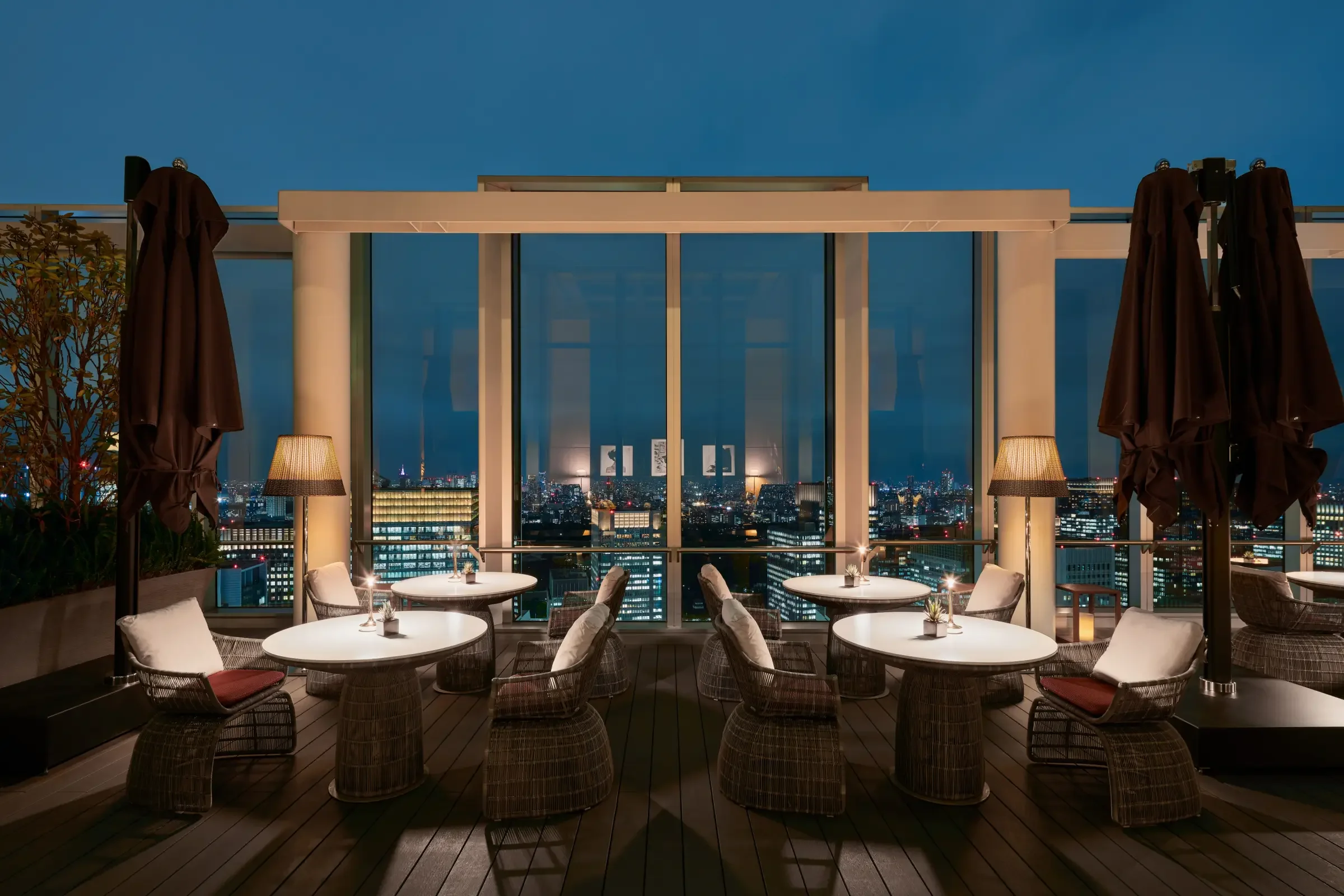
The Bvlgari Bar: Located on the 45th floor between two rooftop terraces, the bar is conceived as an Italian garden pavilion and serves cocktails, aperitivo dishes and expansive city views, with doors opening toward the terraces in suitable weather.
Pizza Bar – Pier Daniele Seu: Now offered within The Bvlgari Bar, this collaboration with Roman pizzaiolo Pier Daniele Seu brings a focused menu of classic and contemporary pizzas to the rooftop alongside Franciacorta and dedicated cocktails.
Bvlgari Dolci: The boutique brings together Bvlgari’s signature chocolate “gems,” Il Cioccolato, pastries from La Pasticceria – Niko Romito and a selection of jams, nectars and other Italian-inspired products designed both for hotel guests and gifting.
Dining here works best when treated as several distinct experiences rather than trying to cover everything in one evening. Il Ristorante deserves a full dinner, Sushi Hōseki should be reserved well in advance given its eight seats, and The Bvlgari Bar works particularly well around sunset or for a later drink after dinner.
An Emerald Pool Above the City
The Bvlgari Spa occupies approximately 19,375 sq. ft. on the 40th floor, making wellness a substantial part of the hotel rather than a small city spa added around a fitness room.
There are nine treatment rooms, including two double treatment rooms and a private Spa Suite with treatment beds for two and a hydro-massage tub finished in Iranian green onyx. Male and female changing areas incorporate hot baths and Japanese showers, adding a local reference to an otherwise distinctly Bvlgari environment.
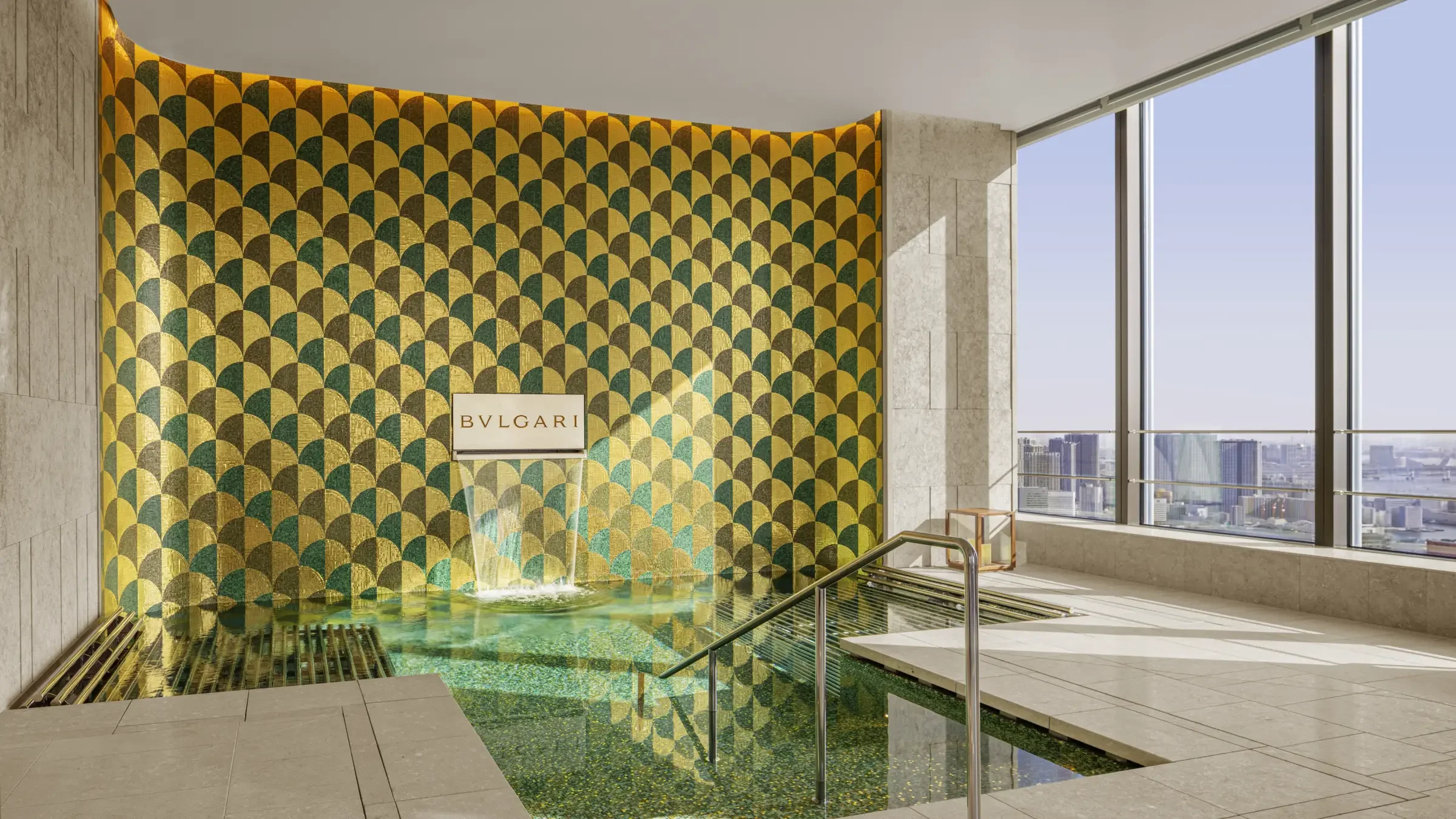
The visual centerpiece is the 82-foot indoor swimming pool, finished in emerald-green mosaic tiles inspired by Bvlgari’s colored gemstones. An adjacent vitality pool uses fan-shaped mosaics referencing Rome’s ancient Baths of Caracalla, creating another link between the Maison’s Roman identity and the Tokyo setting.
Treatments incorporate Augustinus Bader skincare, while newer wellness technology includes a Technogym Checkup assessment and a hyperbaric oxygen chamber. The Bvlgari Gymnasivm, developed with Technogym, combines training equipment with digital assessments and personalized workout programming.
This is one of the rare Tokyo city hotels where we would intentionally leave time for the spa. The pool and skyline setting make a morning swim or late-afternoon treatment part of the experience rather than simply a recovery tool between sightseeing days.
Tokyo Station Below, Ginza and the Palace Beyond
The hotel’s central location makes it particularly easy to divide a Tokyo itinerary between historic districts, contemporary shopping and cultural institutions without spending unnecessary time crossing the city.
The Imperial Palace and its gardens provide an important contrast to Tokyo’s dense urban environment, while nearby Nihombashi offers a connection to the city’s historic mercantile culture alongside major department stores and contemporary dining.
Ginza can be reached on foot and remains one of Tokyo’s most important districts for fashion, jewelry, department stores, galleries and restaurants. Bvlgari itself maintains a major presence there through the Bvlgari Ginza Tower, making the connection between hotel and Maison particularly tangible.
Kabuki performances at Kabukiza Theatre, walks through Marunouchi and the red-brick Tokyo Station building, and deeper explorations of Tokyo’s neighborhoods can all be layered into a stay.
We would avoid over-programming the first day. The area around Tokyo Station, the Imperial Palace and Ginza contains enough for a substantial introduction to the city without immediately adding long cross-town journeys.
A Sophisticated City Hotel for Families
Bvlgari Hotel Tokyo does not publicly position itself around a conventional children’s club or resort-style family program. Instead, its strongest family advantage is the size and connectivity of its accommodations.
Superior Rooms can connect with Deluxe Suites to create approximately 1,679 sq. ft. of two-bedroom space, two Deluxe Rooms can combine into approximately 1,206 sq. ft., and connecting Junior Suites can create approximately 1,755 sq. ft.These arrangements are particularly useful for families who need separate sleeping areas without sacrificing proximity.
Children aged four and above may use the swimming pool between 9:00 AM and 5:00 PM, while the main spa and fitness facilities are reserved for guests aged 16 and above.
Dining also requires some planning. Sushi Hōseki accepts guests aged 12 and above, while The Bvlgari Bar has evening age restrictions that make it better suited to adults later in the day.
For families, we would choose the accommodation configuration first and build the itinerary around it. The hotel works particularly well for families with older children who will appreciate the pool, Ginza, museums and the convenience of Tokyo Station, while families with very young children should confirm specific equipment, babysitting and child amenities directly before arrival.
Sustainability Without Overstating the Story
Bvlgari Hotel Tokyo states that the property was designed to incorporate high standards of environmental sustainability, but the hotel does not currently publish the extensive operational metrics or property-specific certification details that some newer resorts make publicly available.
One of the initiatives it does identify directly is the use of organic tea from Kitano Chaen in Ureshino in guestrooms and suites. The producer is highlighted for cultivation without pesticides or chemical fertilizers, connecting the in-room experience with a long-established Japanese tea-growing tradition.
We would keep the sustainability discussion at that level rather than assigning environmental credentials the hotel has not publicly documented. In a property built within a major mixed-use urban tower, many building-performance systems also operate at development level rather than appearing as visible guest-facing features.
Accessibility Details Worth Confirming Before Arrival
Bvlgari Hotel Tokyo’s public hotel pages do not currently provide sufficiently detailed specifications for accessible guestrooms, adapted bathrooms or every step-free route within the property.
The hotel occupies the upper floors of a modern high-rise development and is reached through elevators from its arrival areas, but we would confirm individual accessibility requirements directly with the property before booking rather than assume that every room category or venue has the same configuration.
Questions should include the exact accessible room layout, doorway clearances, roll-in or transfer-shower requirements, toilet and grab-bar positioning, elevator access to restaurants and spa facilities, pool accessibility and the most convenient step-free route from Tokyo Station.
For travelers arriving by rail, the route from the station is particularly important to confirm in advance because Tokyo Station is extensive even when a destination is physically very close.
Arriving Directly Into Yaesu
Haneda Airport: The hotel publishes an approximate 40-minute taxi journey from Haneda under typical conditions, making a private car or taxi one of the simplest options after an international or domestic flight.
Narita International Airport: The Narita Express reaches JR Tokyo Station in approximately 53 minutes, while the hotel estimates around 100 minutes by taxi depending on traffic.
JR Tokyo Station: The hotel benefits from direct access from the Yaesu South Exit, which is particularly valuable for guests arriving by Shinkansen or Narita Express.
Kyobashi Station: The Tokyo Metro Ginza Line station is approximately a three-minute walk from the hotel.
Nihombashi Station: Served by the Tozai and Ginza Lines and Toei Asakusa Line, Nihombashi Station is approximately a six-minute walk away.
Private Car: On-site parking is available, including valet service, for guests arriving by private vehicle.
For most first-time international arrivals, we would choose between a direct car from Haneda and the Narita Express from Narita. Once checked in, the convenience of Tokyo Station means rail becomes one of the hotel’s greatest practical advantages rather than simply a nearby landmark.
Why Bvlgari Works Above Tokyo Station
Bvlgari Hotel Tokyo succeeds because it does not treat Italian and Japanese design as competing ideas. The Italian side is unmistakable—in the furniture, marble, food, jewelry references and theatrical rooftop spaces—but Japanese craftsmanship and material culture prevent the property from feeling transplanted wholesale from Milan or Rome.
Its position above Yaesu is equally important. Travelers have immediate access to Tokyo Station, can walk toward Ginza, Nihombashi and the Imperial Palace, and then return to an environment removed from the density of the streets below.
The accommodations are unusually generous for Tokyo, the dining program has enough range to justify several evenings in the hotel, and the spa is substantial enough to change the rhythm of a stay rather than simply fill an hour between appointments.
For us, Bvlgari Hotel Tokyo makes the most sense for travelers who want contemporary design, strong dining and wellness, large rooms and exceptional transportation access without sacrificing a clear sense of place. It is not attempting to reproduce a ryokan or reinterpret traditional Japan literally. Instead, it allows Italian design and Japanese craft to meet several hundred feet above one of Tokyo’s most important urban crossroads.
