Bangkok, Thailand | Mandarin Oriental, Bangkok
A Riverside Hotel That Has Grown With Bangkok
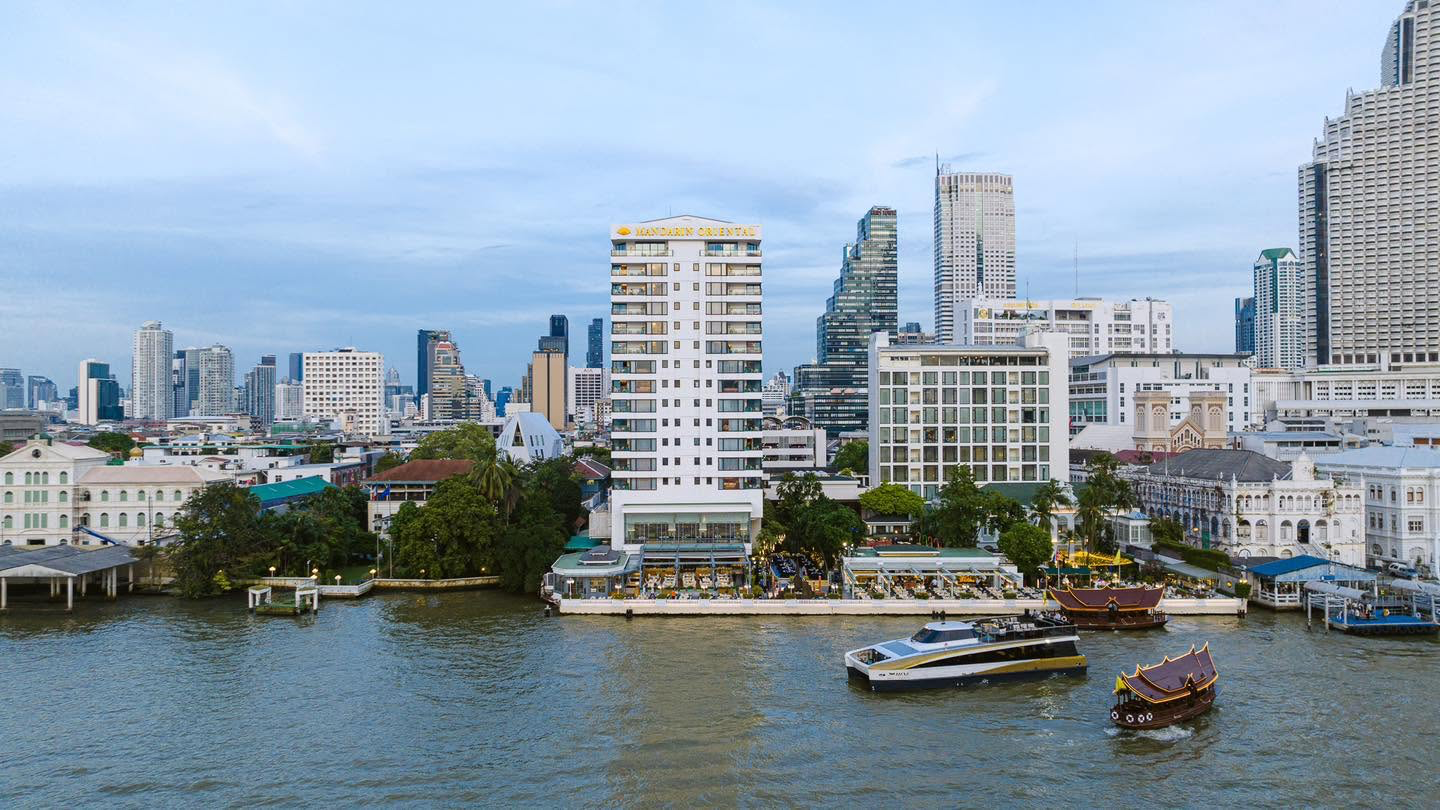
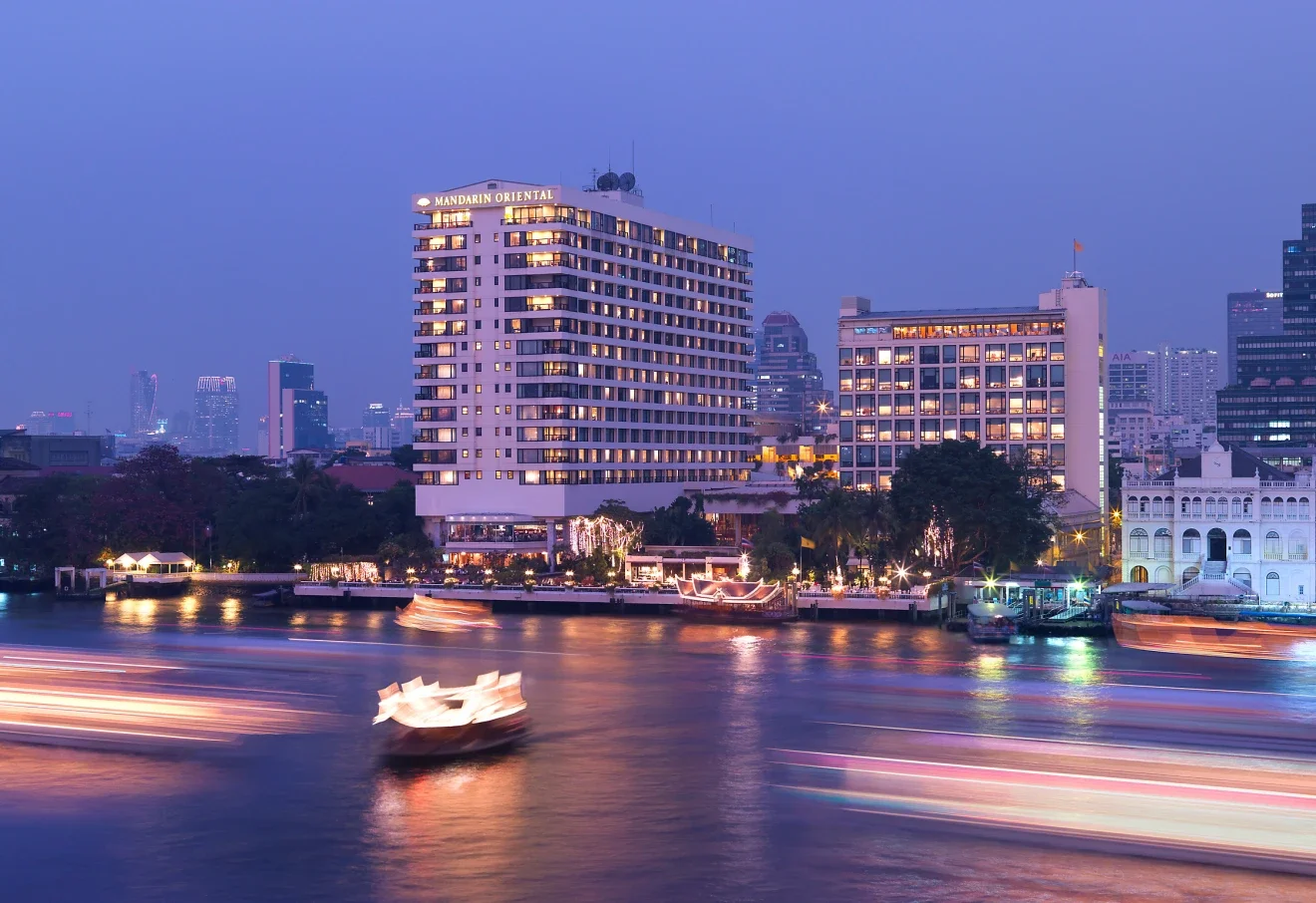
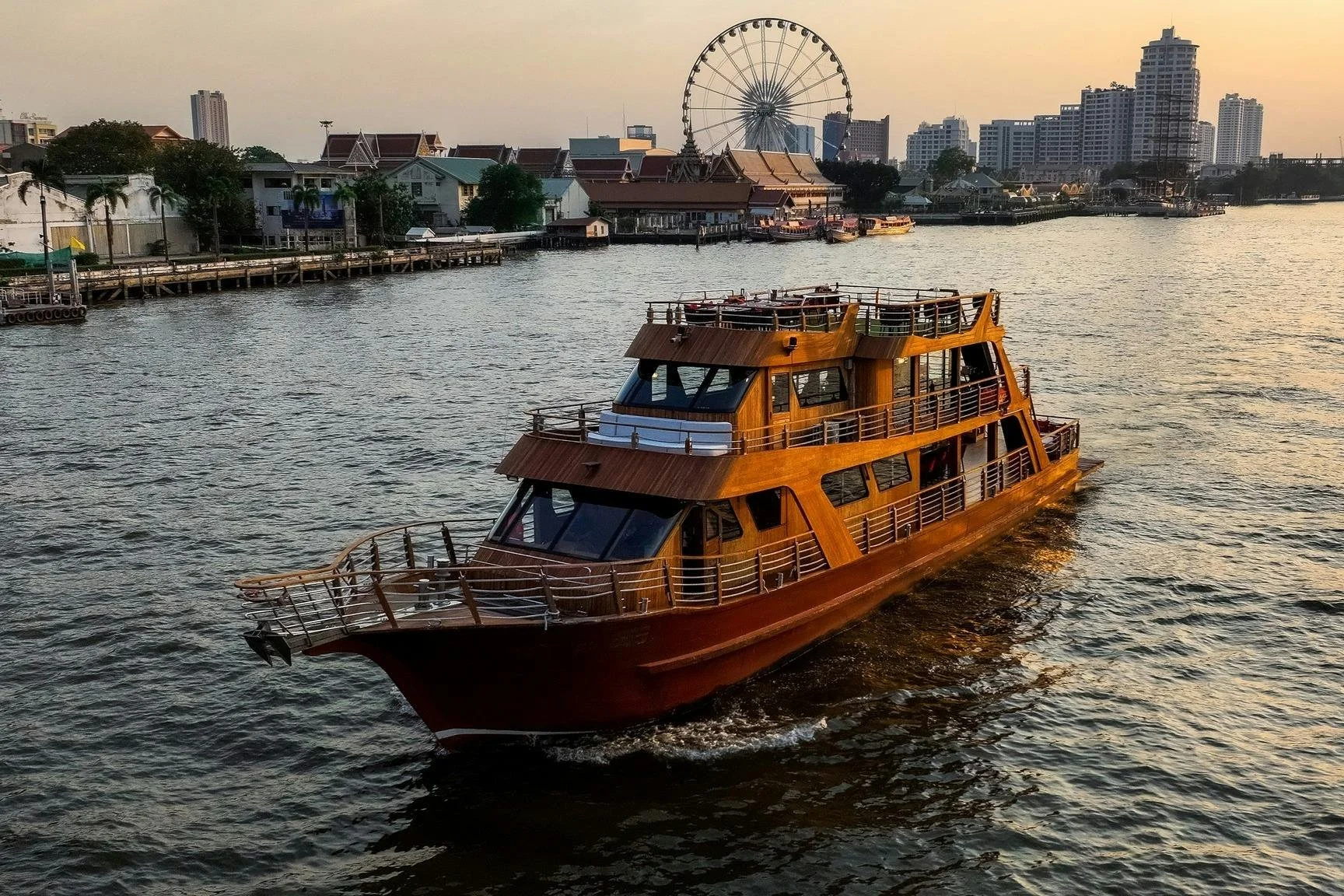
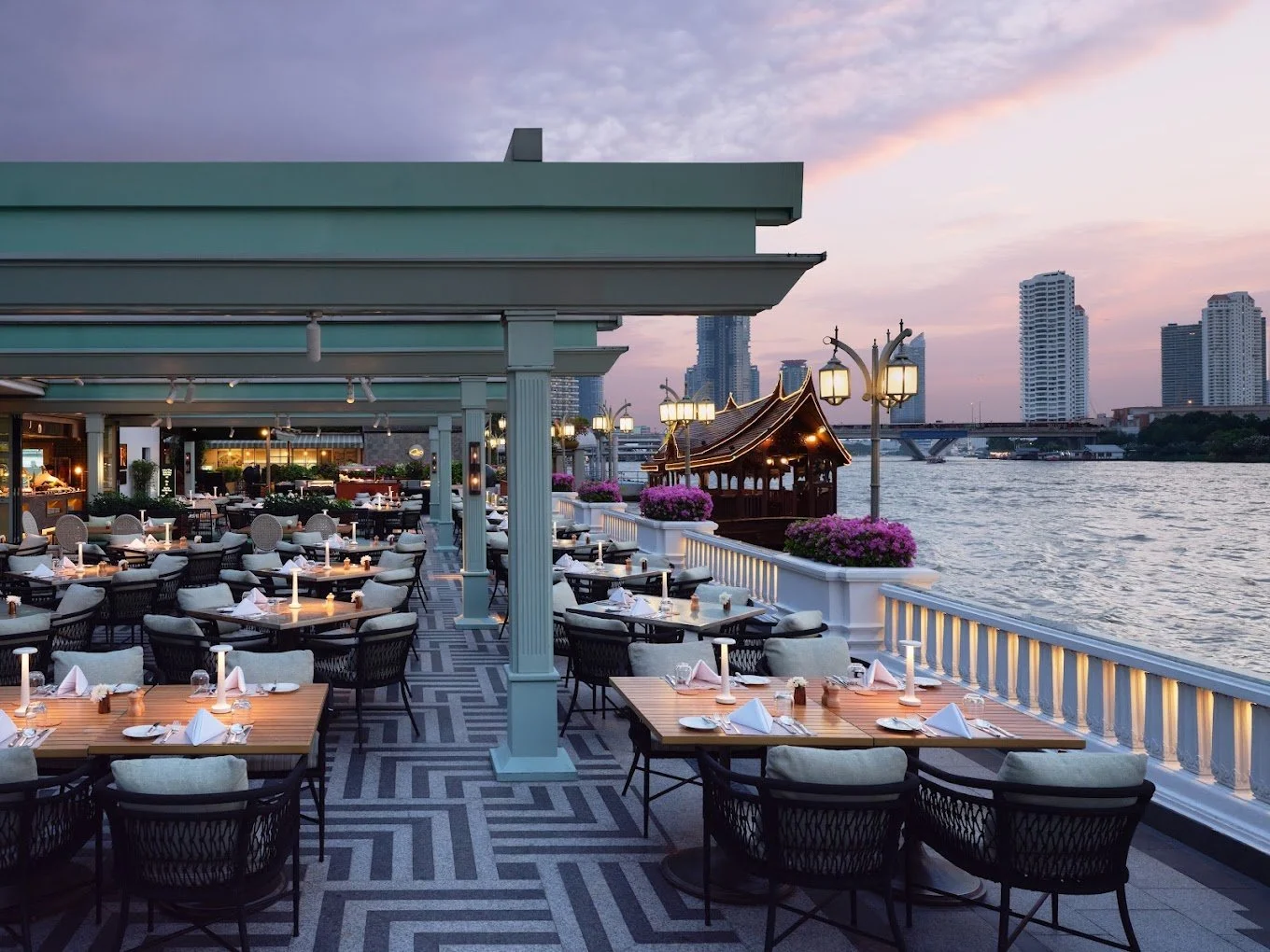
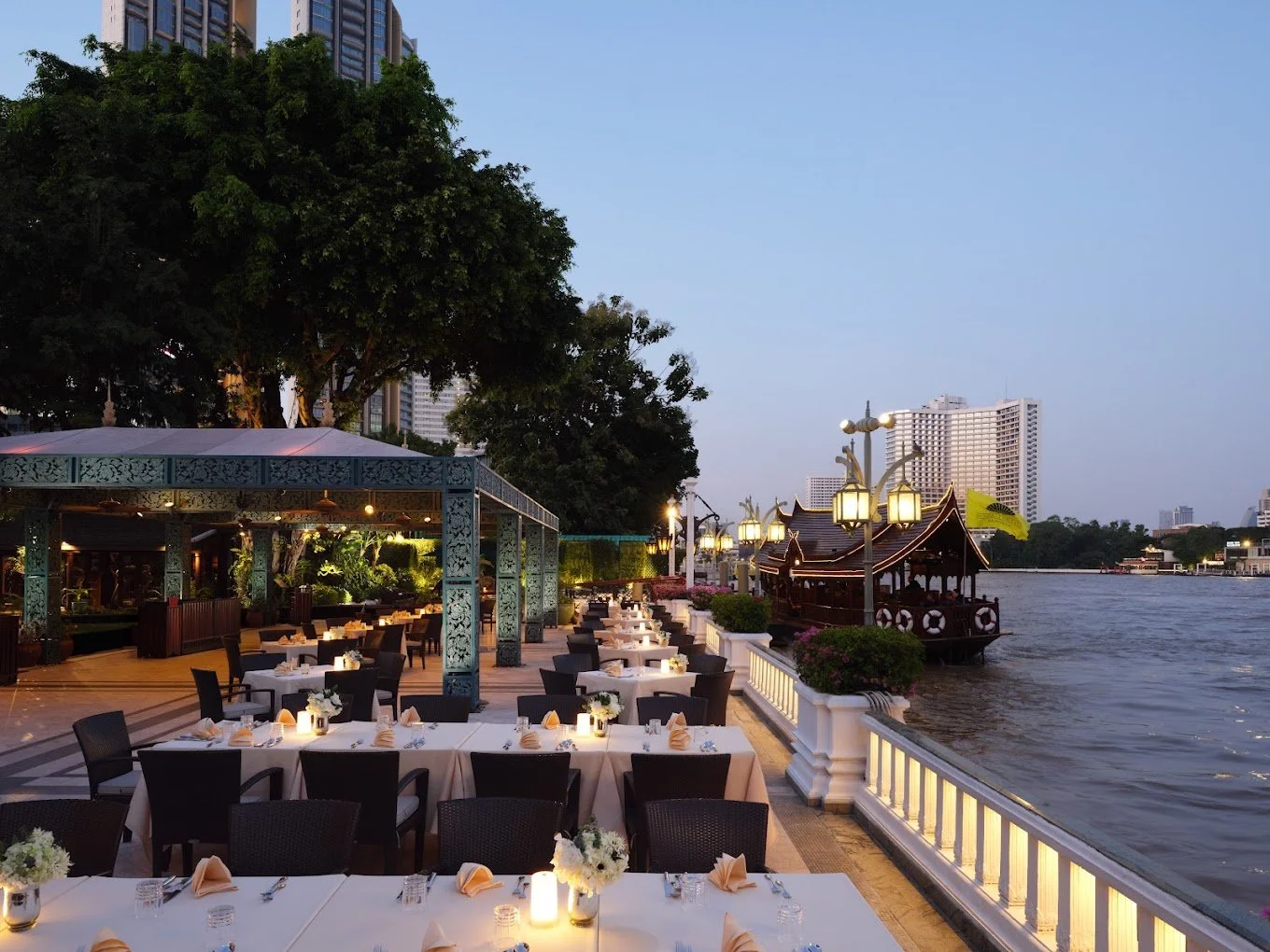
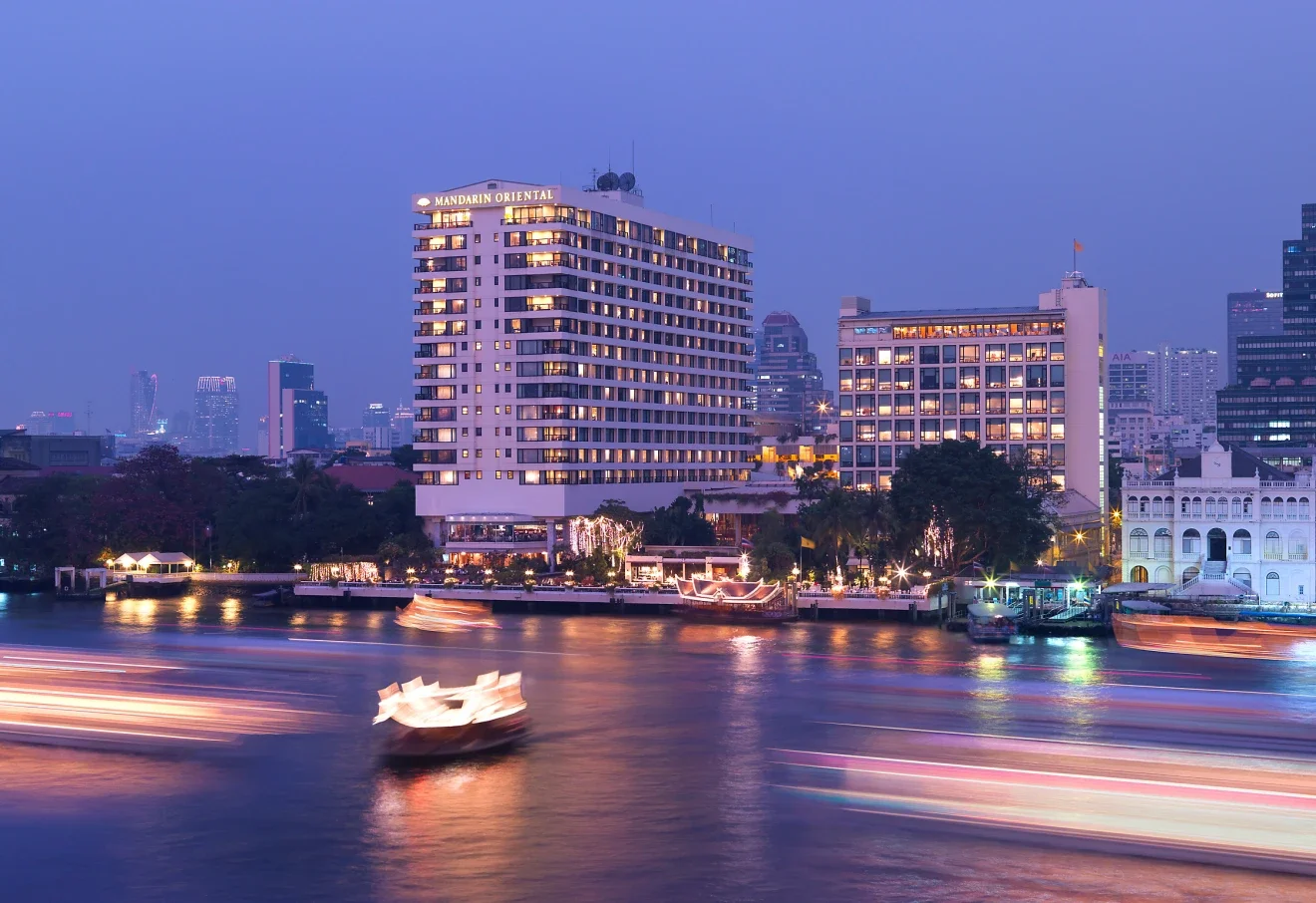
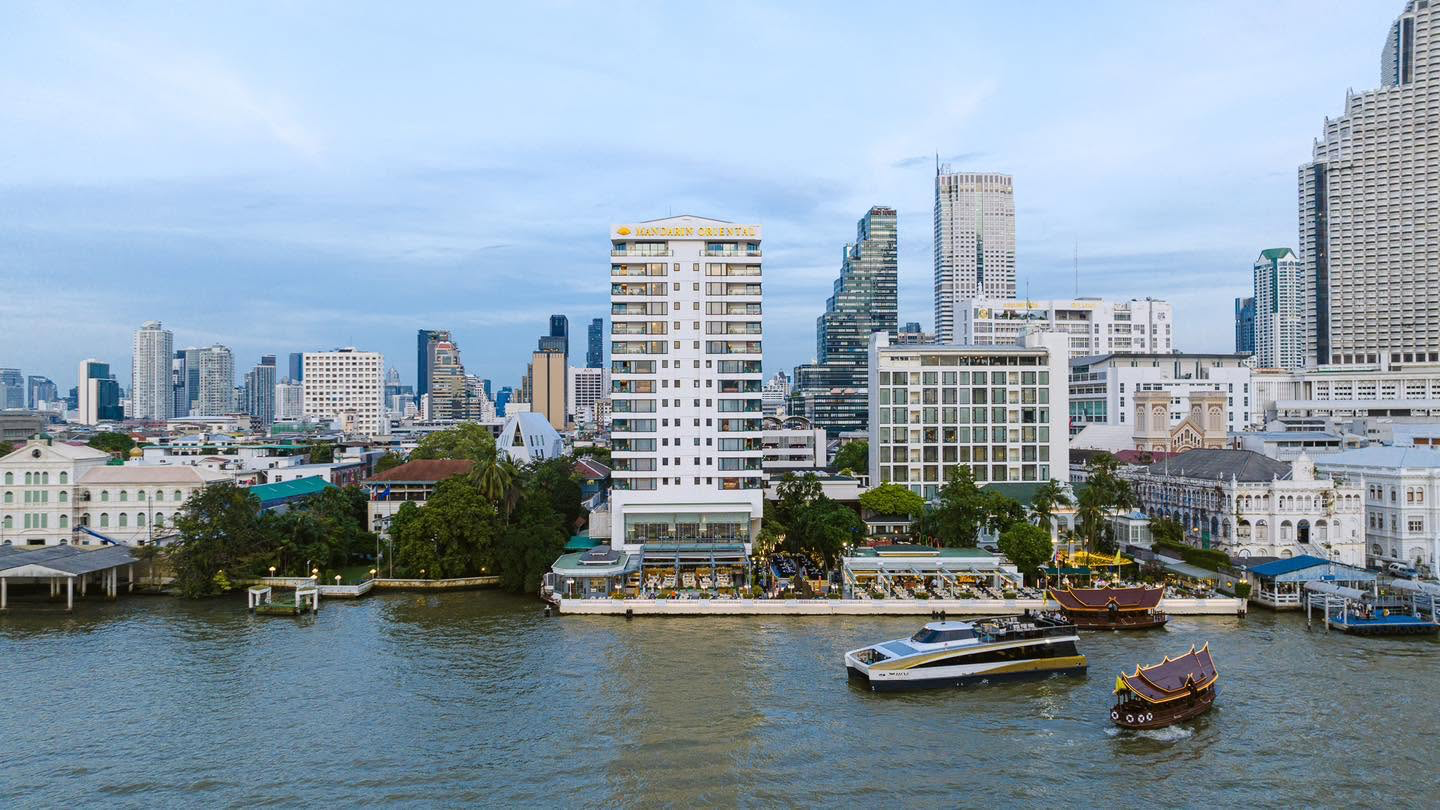
Mandarin Oriental, Bangkok occupies a stretch of the Chao Phraya River where the hotel’s history and the city’s modern life remain visible at the same time. Teak shuttle boats cross between the main property and facilities on the opposite bank; ferries, long-tail boats and dinner cruises move through the same water; and the towers of contemporary Bangkok rise behind buildings that have welcomed travelers since the nineteenth century.
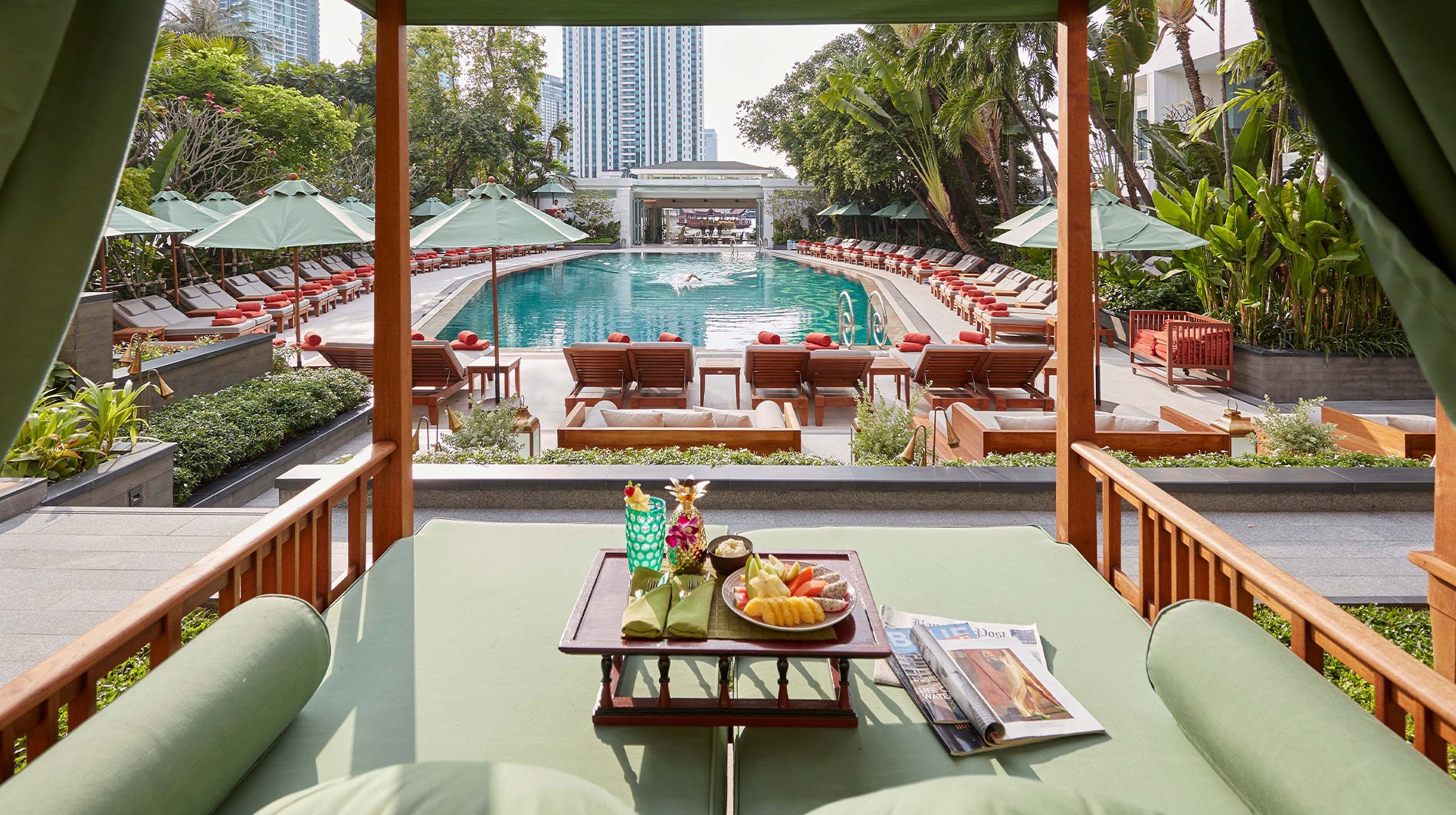
In 2026, that history is unusually present. The hotel is celebrating its 150th anniversary, tracing its beginnings to The Oriental Hotel in 1876. It now has 331 rooms and suites spread across several wings, 12 restaurants and bars, two swimming pools, and a spa and wellness complex reached by boat across the river.
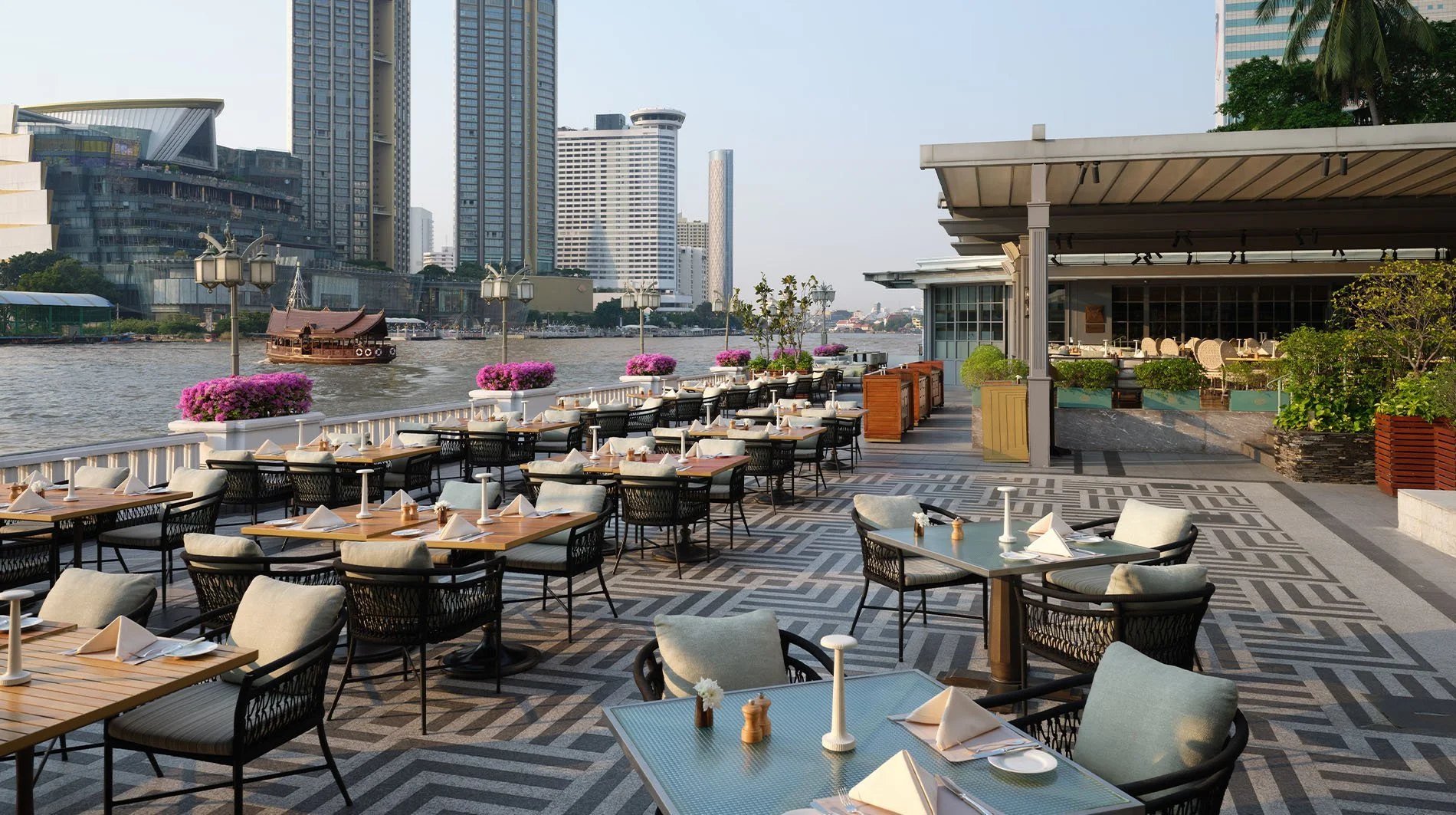
The river prevents the property from feeling like a conventional urban tower hotel. Breakfast at The Verandah, afternoon tea in The Authors’ Lounge and a boat crossing to dinner can all belong to the same day.
Mandarin Oriental, Bangkok currently holds three Michelin Keys, ranks No. 10 in The World’s 50 Best Hotels 2026, and carries a Forbes Travel Guide Five-Star Award. More important than the list of accolades is how a hotel this old continues to feel relevant in a city that changes as quickly as Bangkok.
From The Oriental Hotel to a 150-Year Landmark
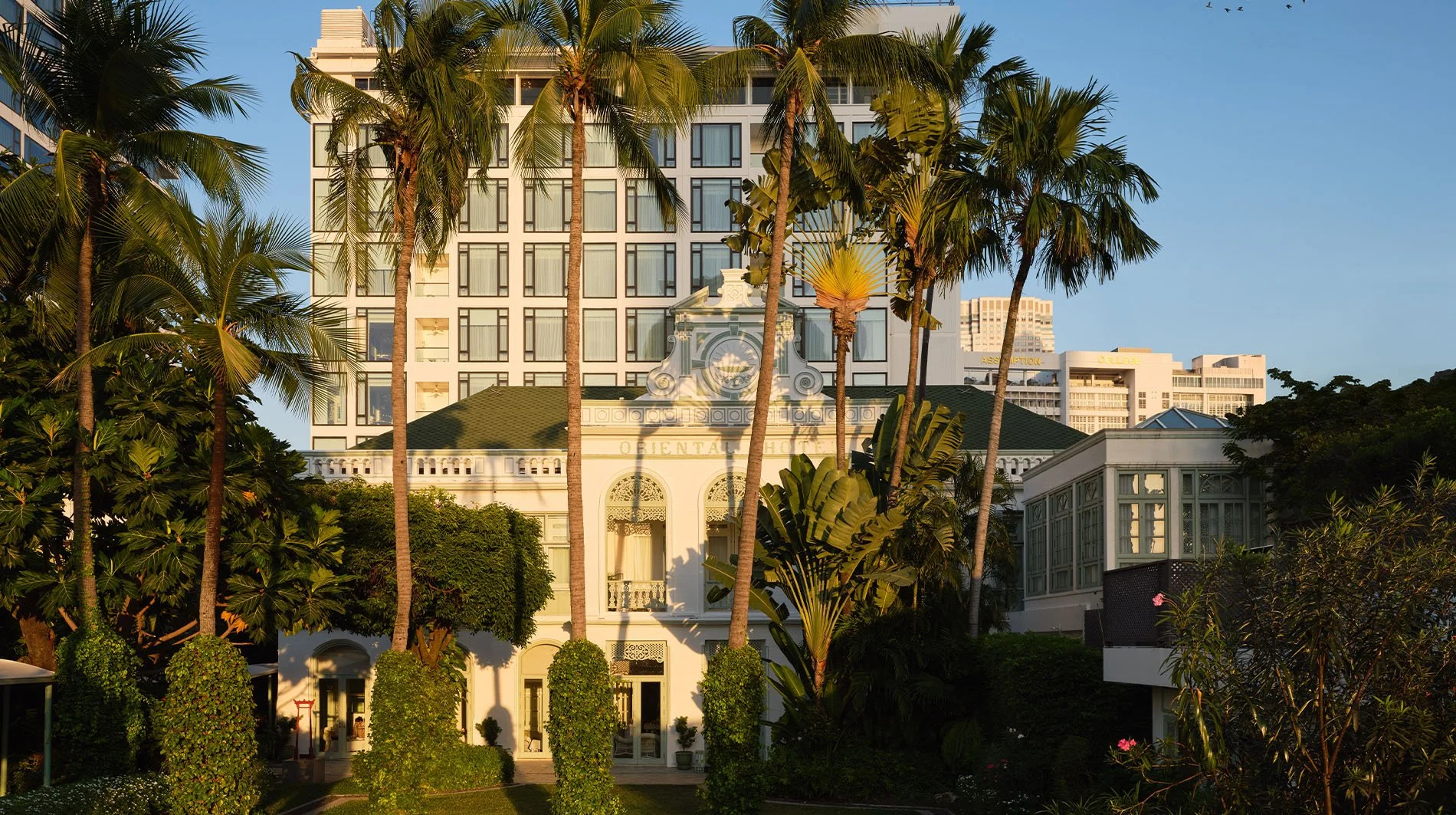
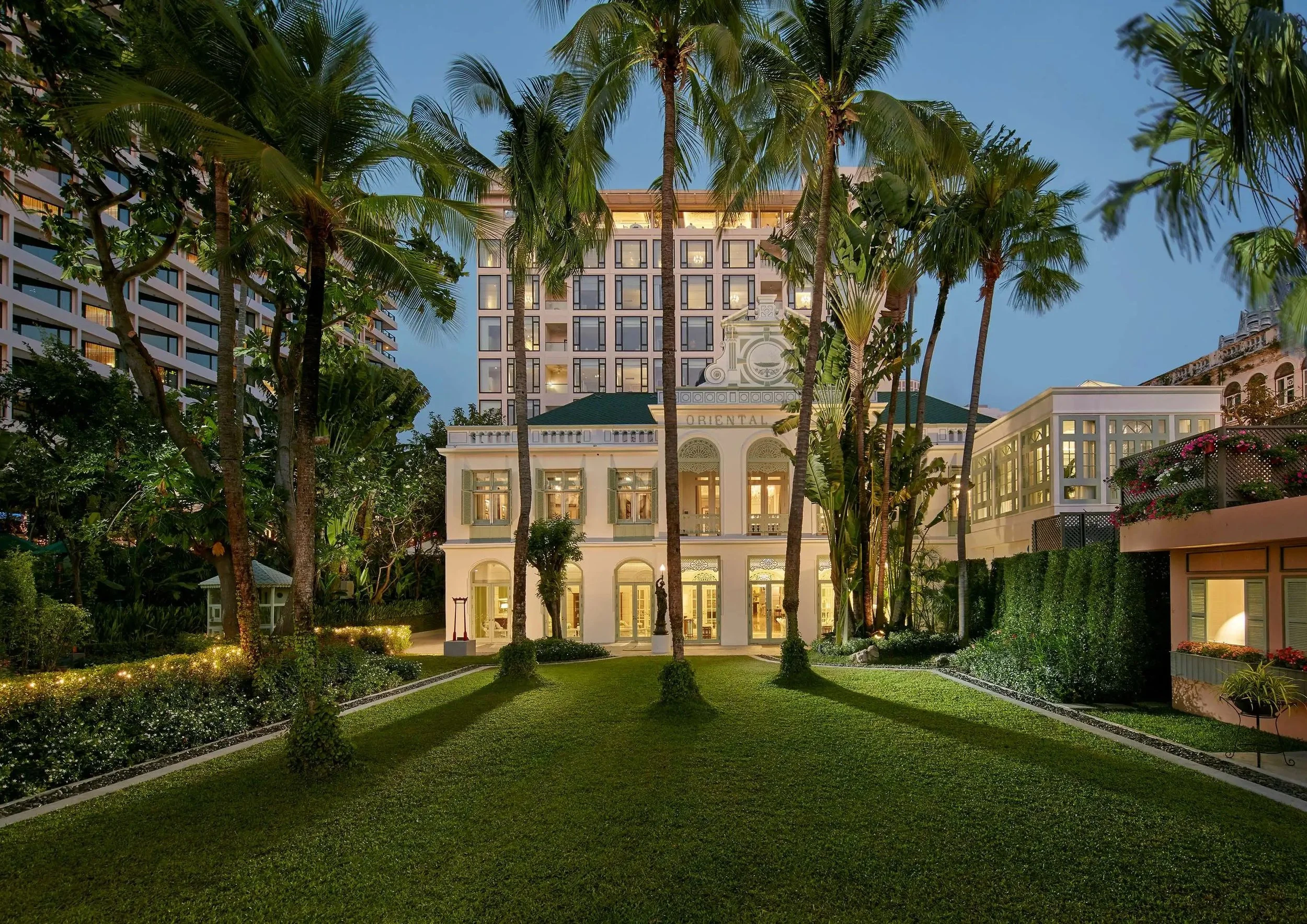
The Oriental Hotel opened in 1876 on the Chao Phraya, when river traffic shaped far more of Bangkok’s commercial and social life than it does today. The original building survives within what is now the Authors’ Wing, giving the property a physical link to its nineteenth-century beginnings rather than simply a story attached to a modern hotel.
The hotel became associated with royalty, diplomats and writers. Joseph Conrad, Somerset Maugham, Noël Coward, John le Carré and Graham Greene are among the literary figures woven into its history, later inspiring named suites, The Authors’ Lounge and the hotel’s historical displays.
Jim Thompson was a joint owner from 1946 to 1967. During the 2019 River Wing renovation, 189 of the 294 fabrics selected by Jeffrey Wilkes came from Jim Thompson, keeping that relationship visible in the present interiors.
The property has repeatedly renewed itself. The Authors’ and Garden Wings were restored in 2016, followed by the USD 90 million River Wing transformation in 2019. A further programme begun in 2025 refreshed the historic-wing accommodation, reworked Le Normandie for Anne-Sophie Pic, redesigned The China House and renewed the Fitness & Wellness Centre.
The Victorian-era core, twentieth-century additions and contemporary renovations now coexist, so choosing one wing rather than another can noticeably change the experience.
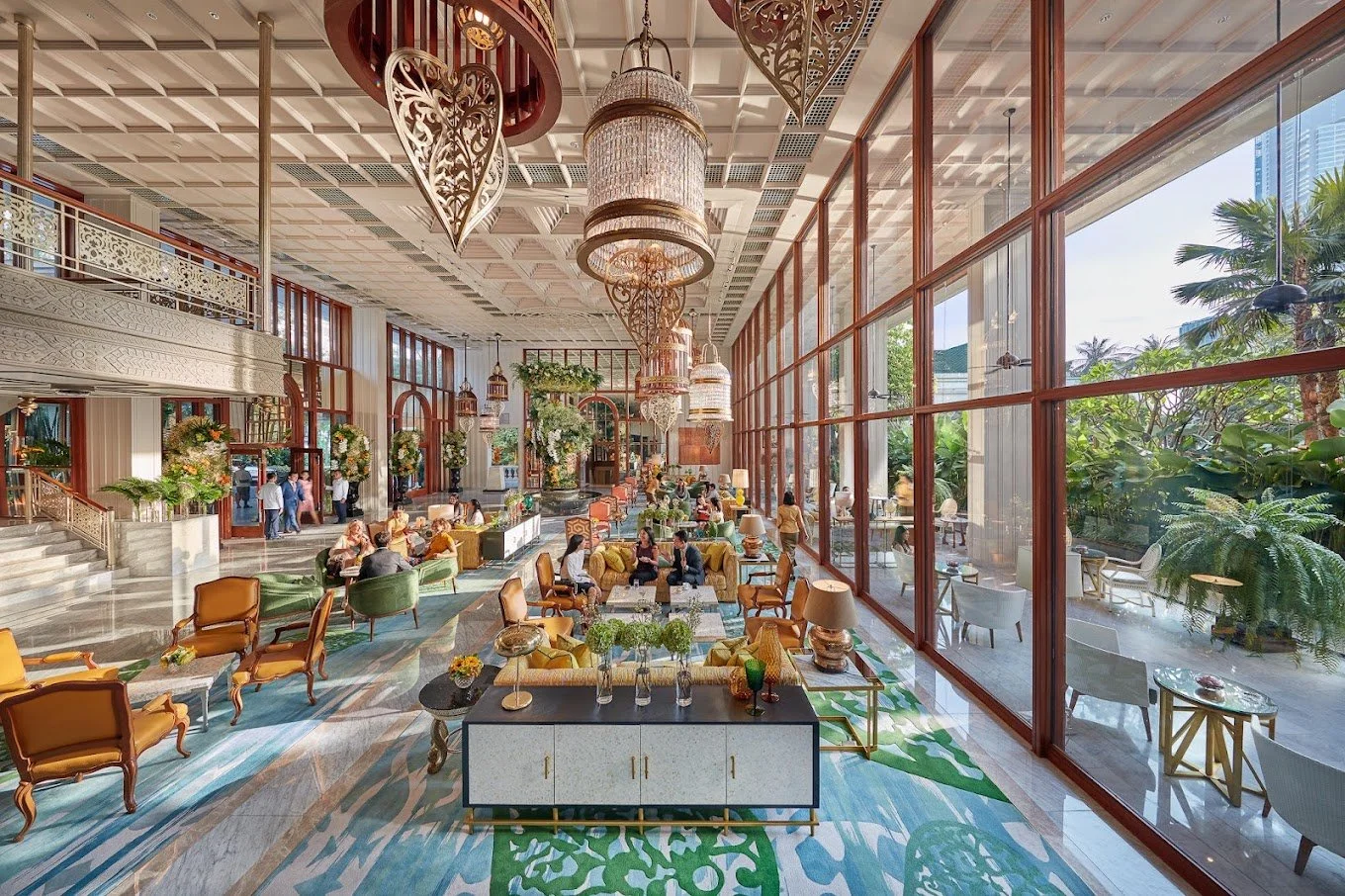
Teak, Thai Silk and a River Written Into the Interiors
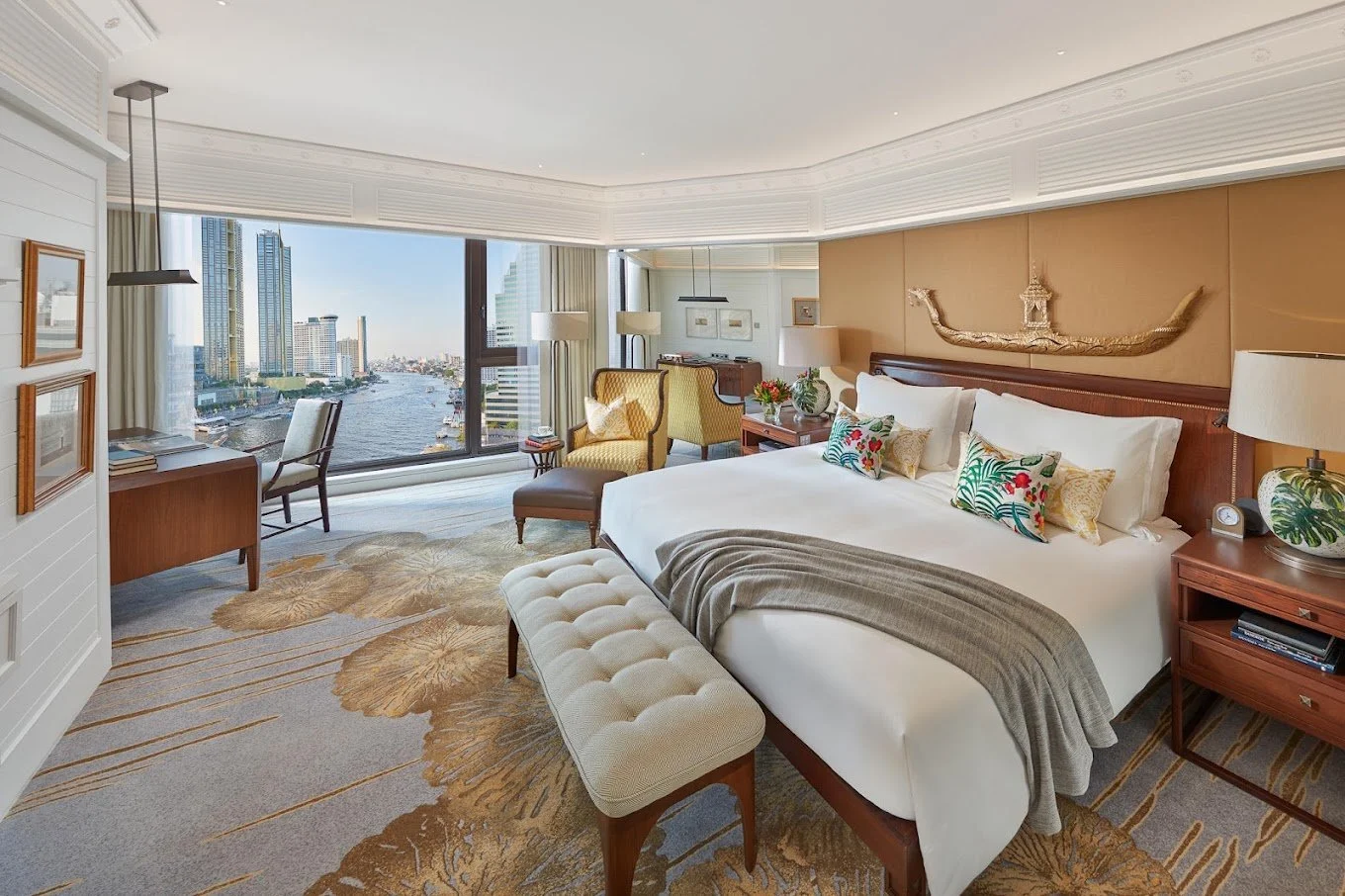
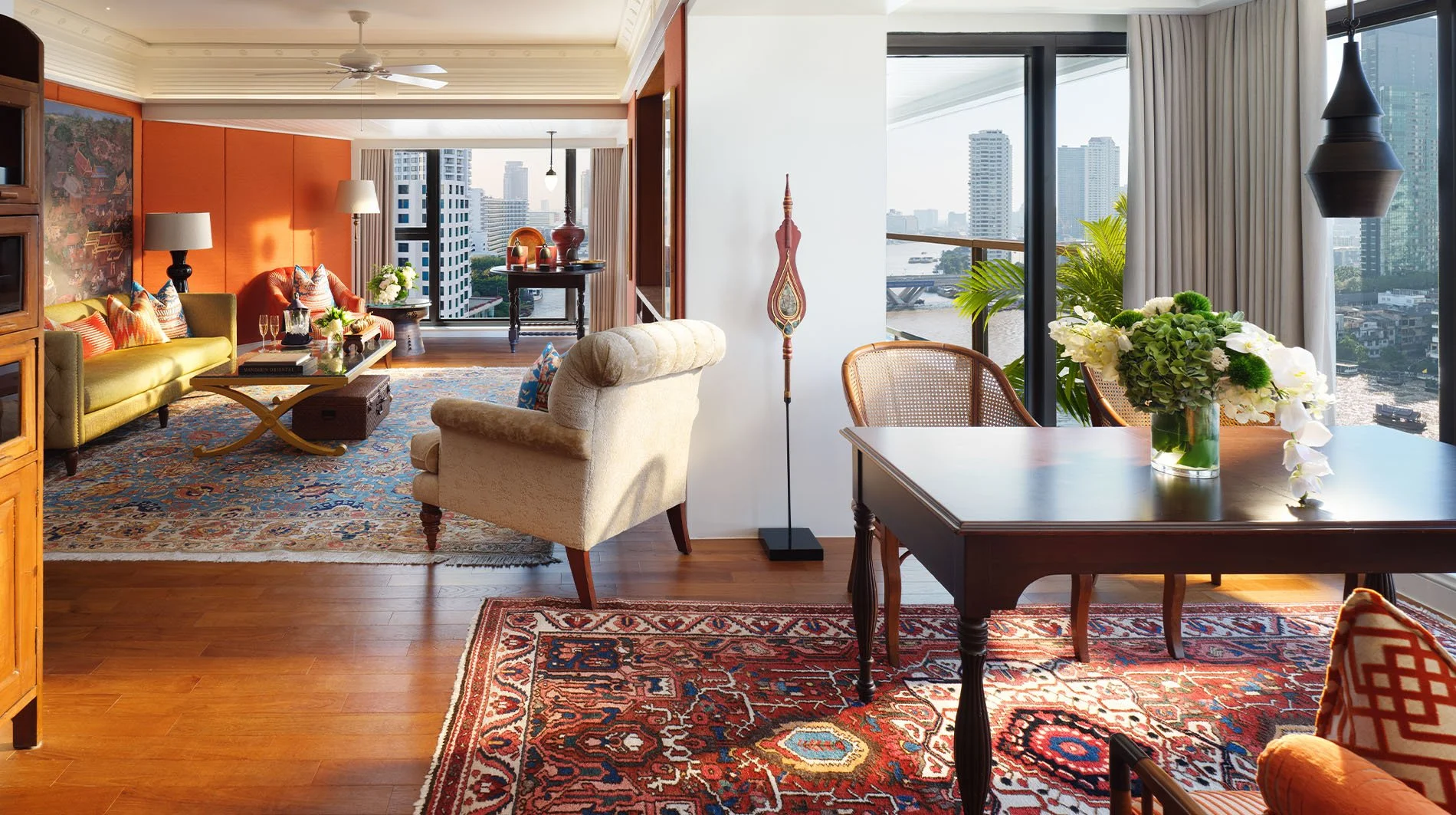
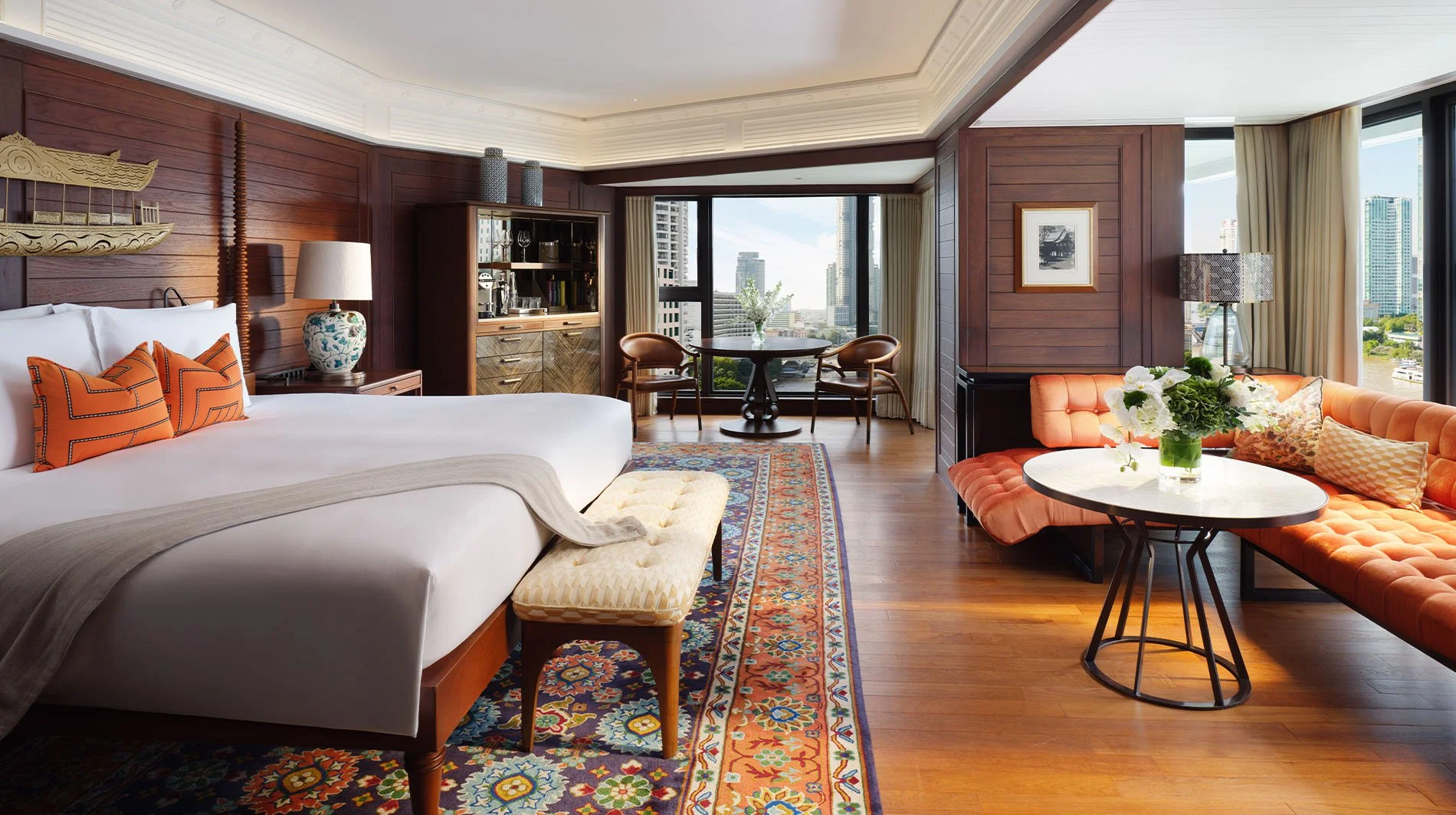
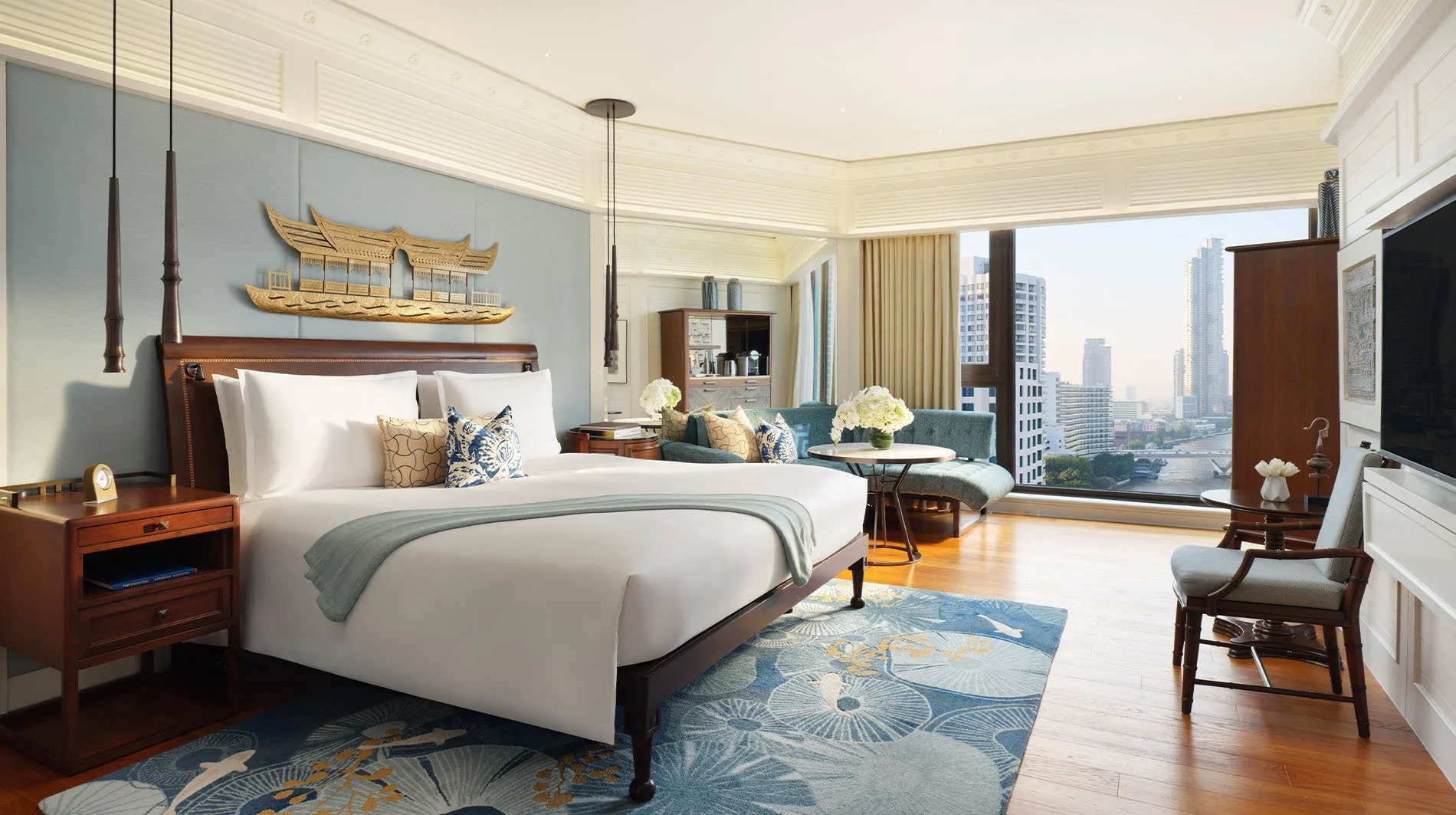
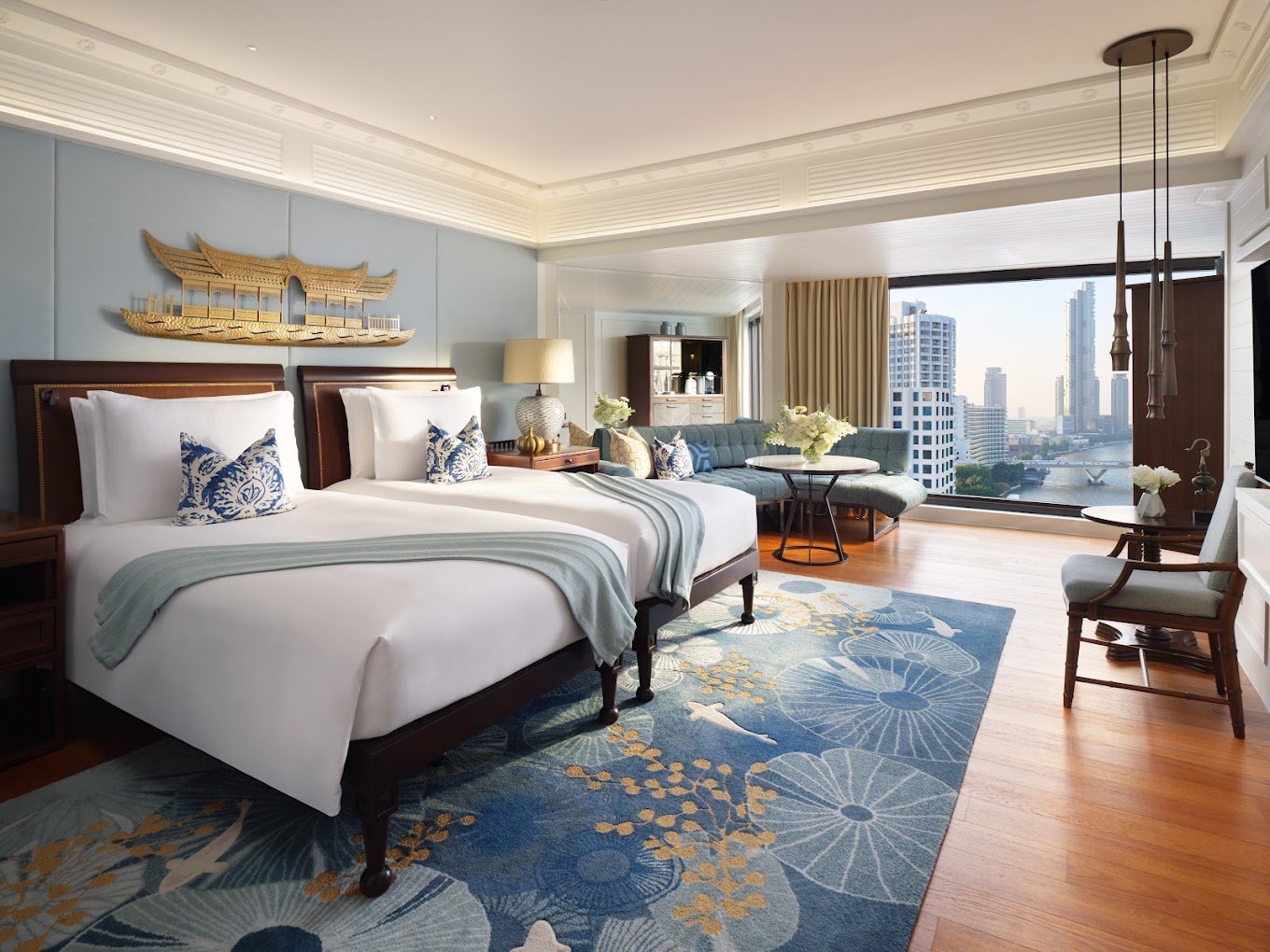
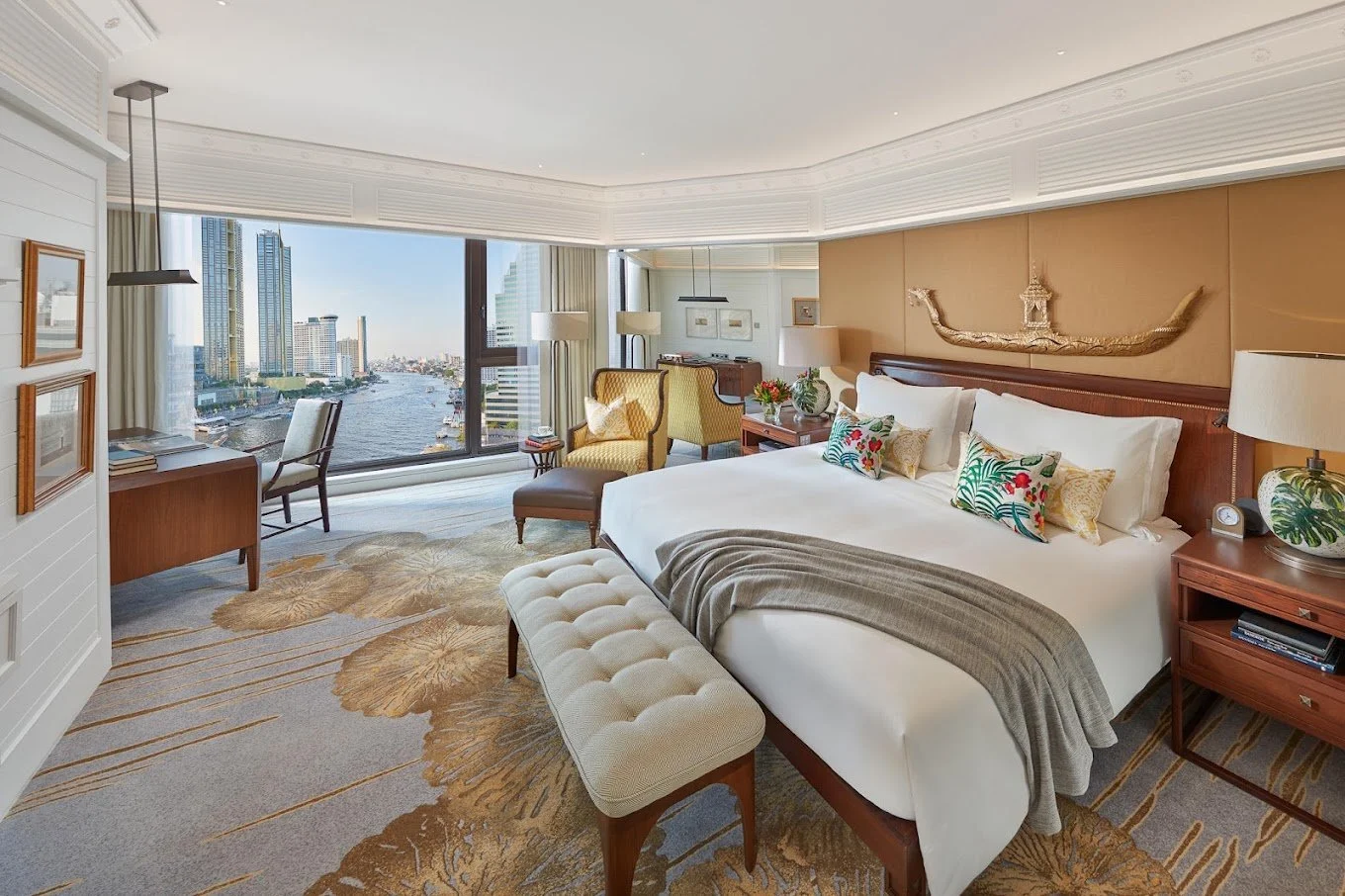
Jeffrey Wilkes has been central to the hotel’s recent design evolution. For the River Wing, his work drew on the Chao Phraya itself: rugs suggest reflections on water, hammered-brass forms recall royal barges, teak floors anchor the rooms, and Thai-made fabrics introduce colour without turning the interiors into period recreations.
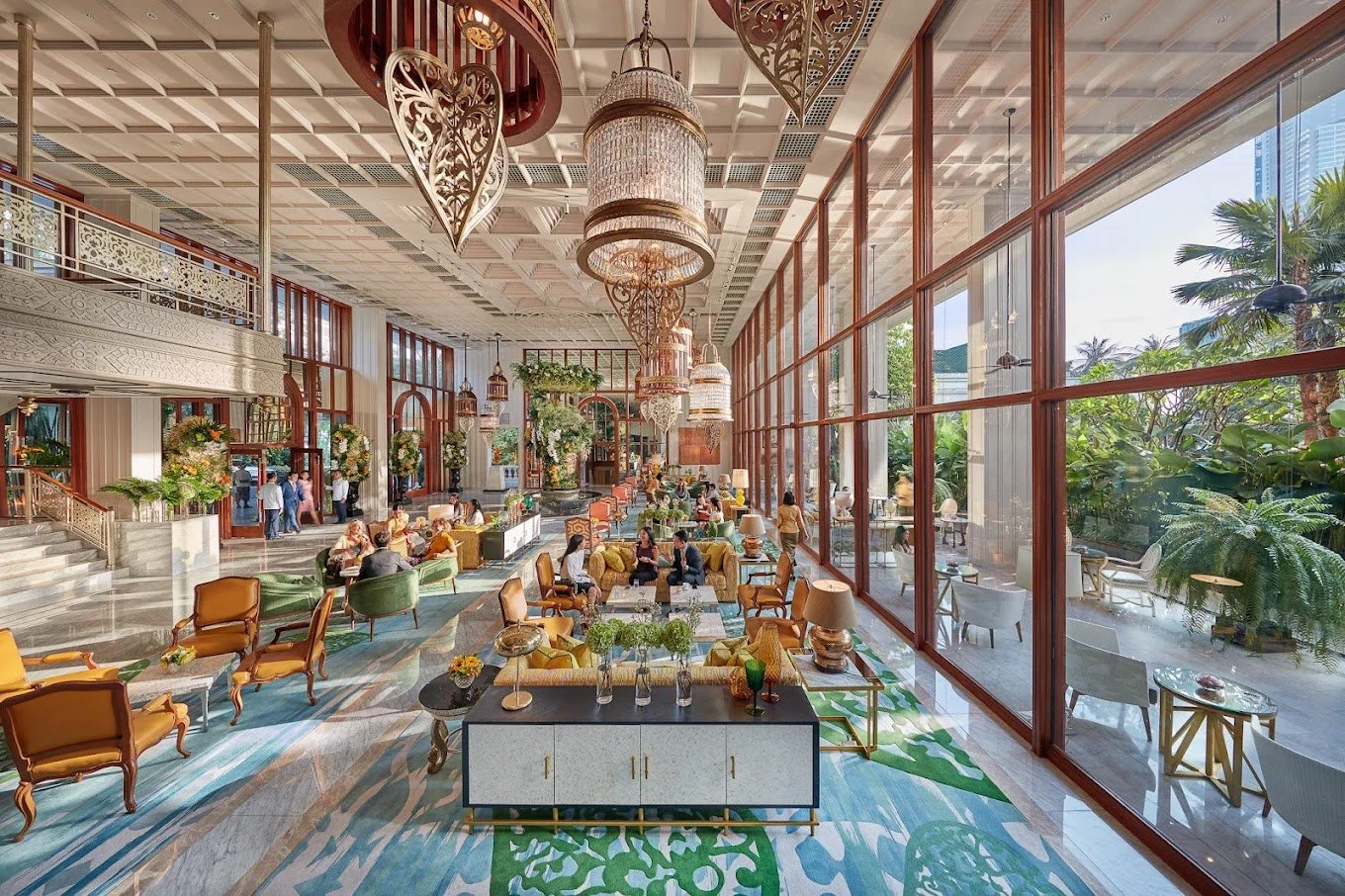
In the lobby, giant hand-forged brass bells containing 2,460 Bohemian crystals stand beside the original teak bells, while Bodhi-leaf forms reappear in the hand-woven carpets below.
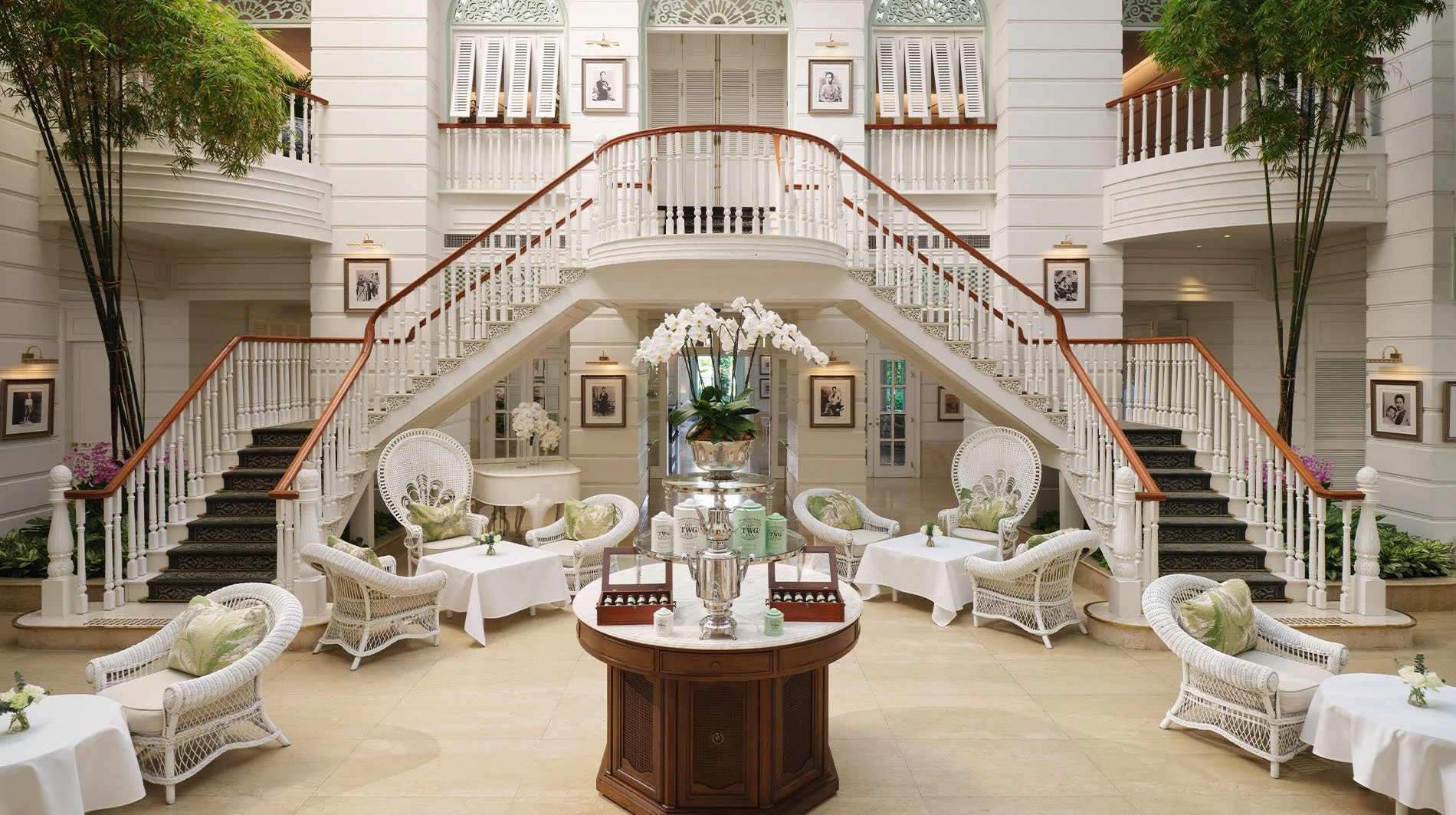
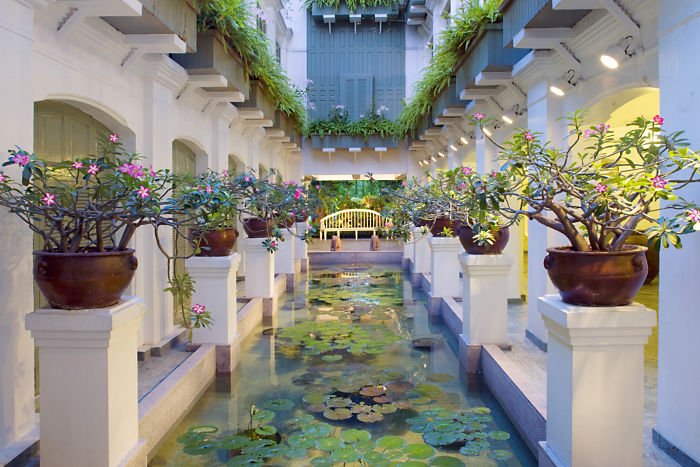
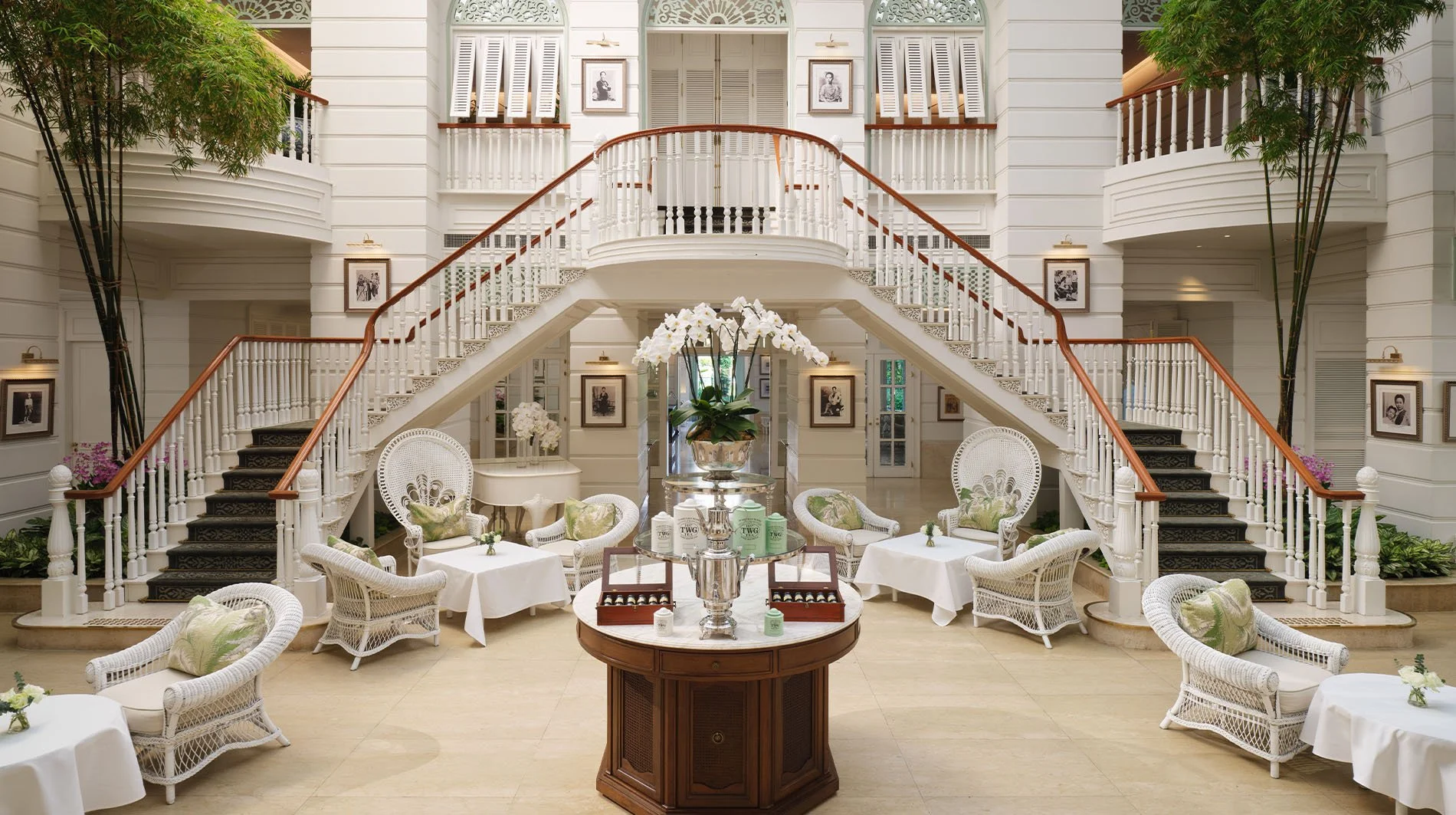
The Authors’ and Garden Wings feel more residential, with verandas, gardens and colonial references balanced by local craft and stronger colour. The Authors’ Lounge expresses this most clearly through white-painted architecture, wicker furniture, palms and literary photographs.
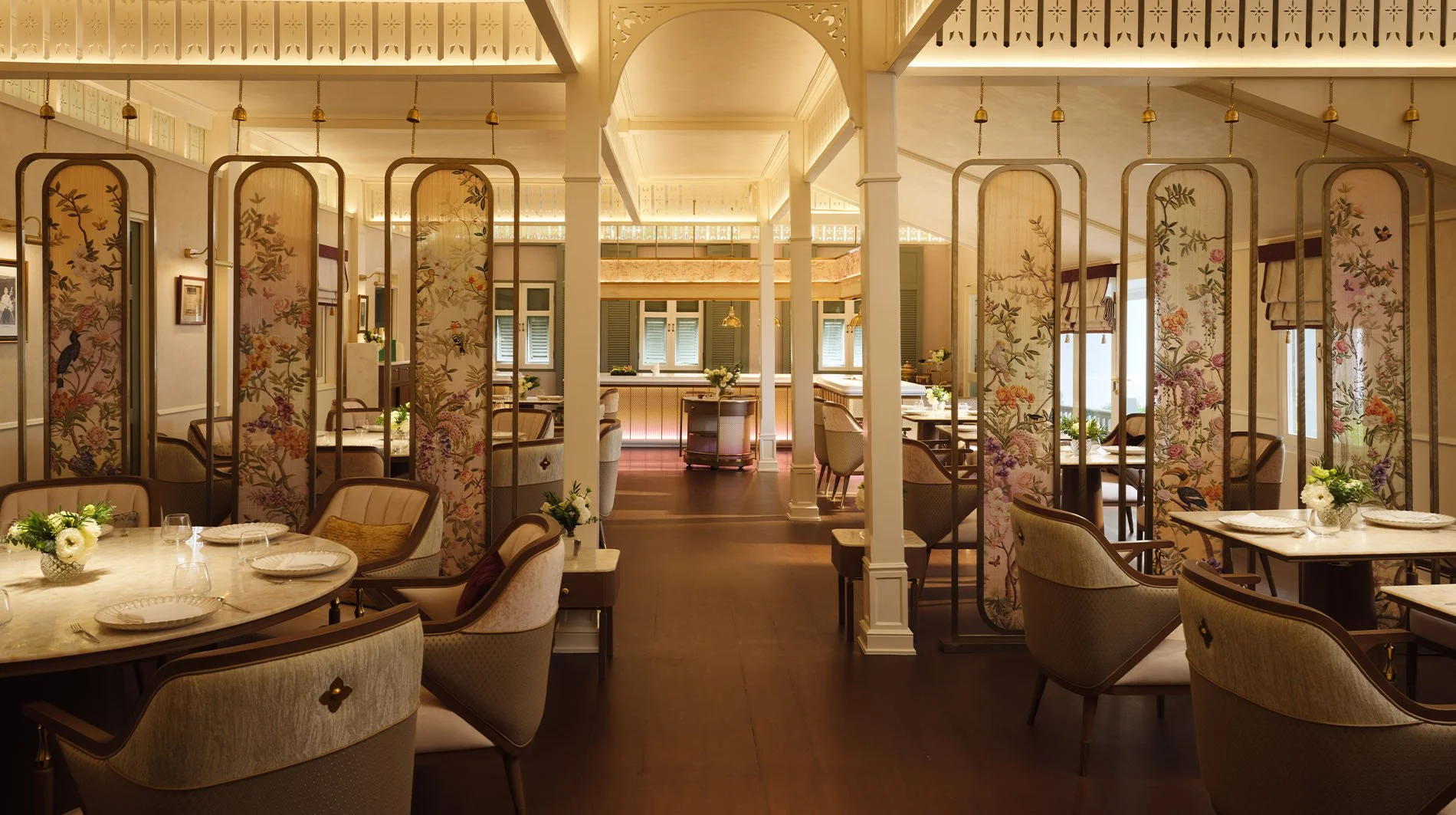
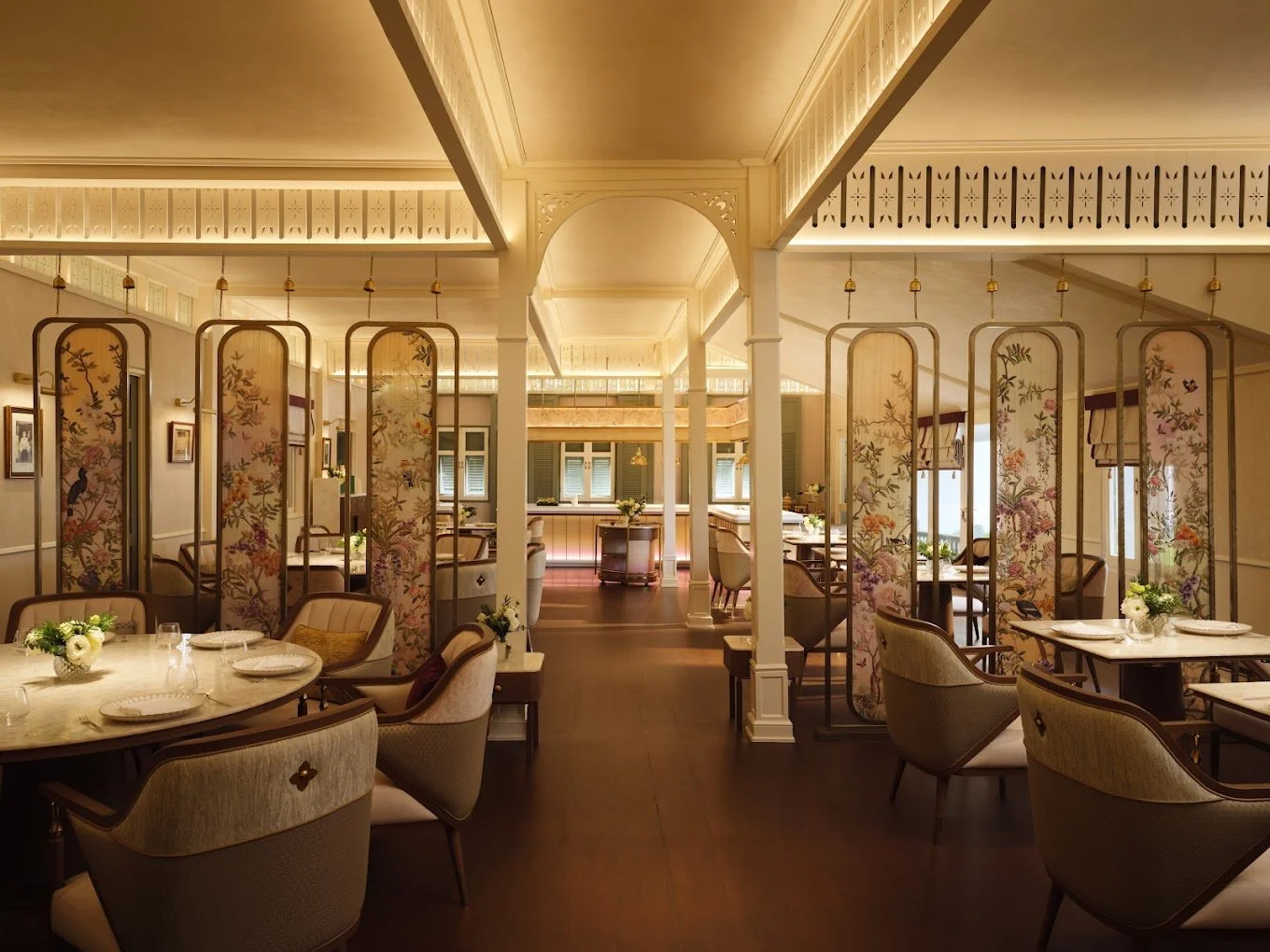
The Verandah adds a 17-metre hand-painted mural by Thai artists Anusak Paowpusri and Manussanun Wongrianthai, created with traditional temple-painting techniques and depicting local flora and fauna.
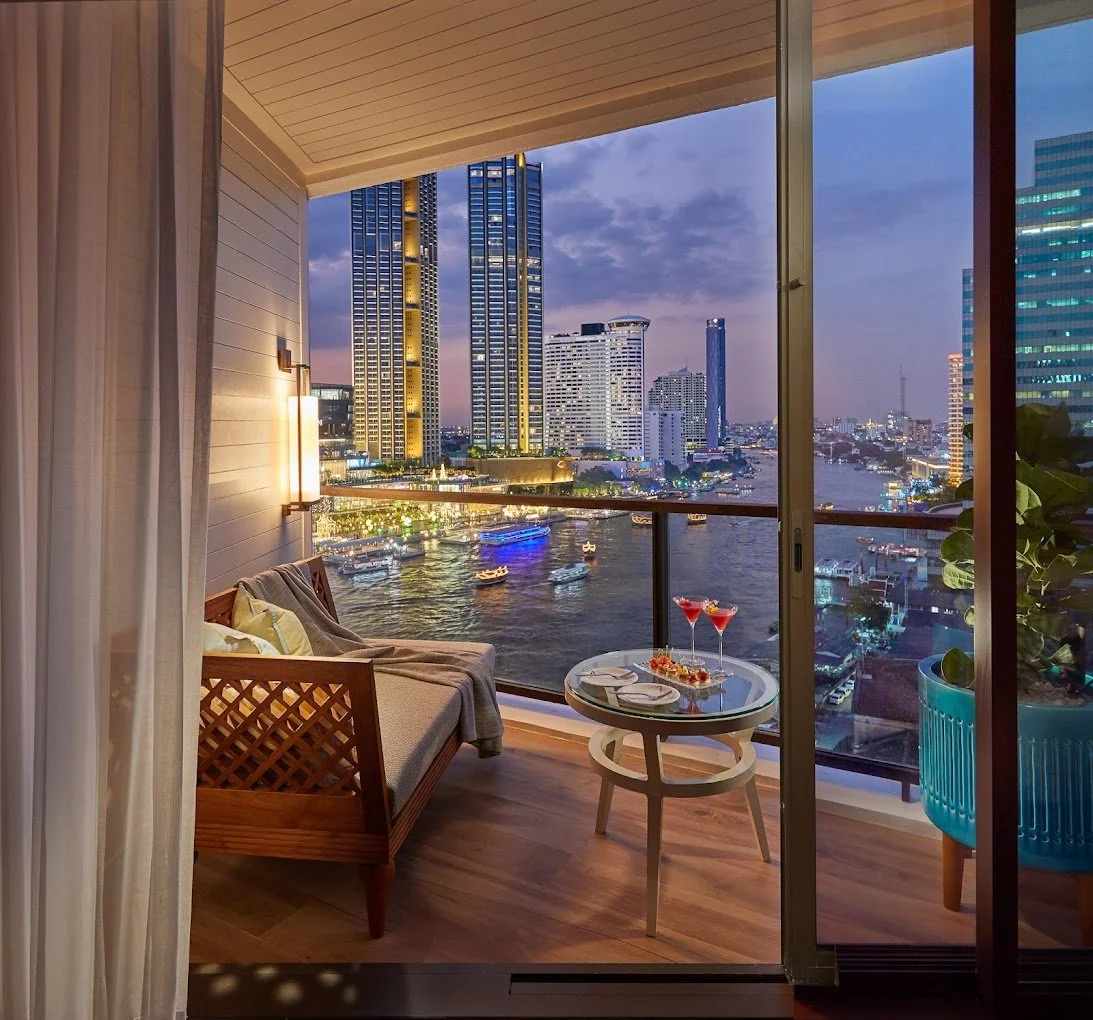
Floor-to-ceiling glazing, balconies and terraces keep the river present, preventing the design story from becoming entirely inward-looking.
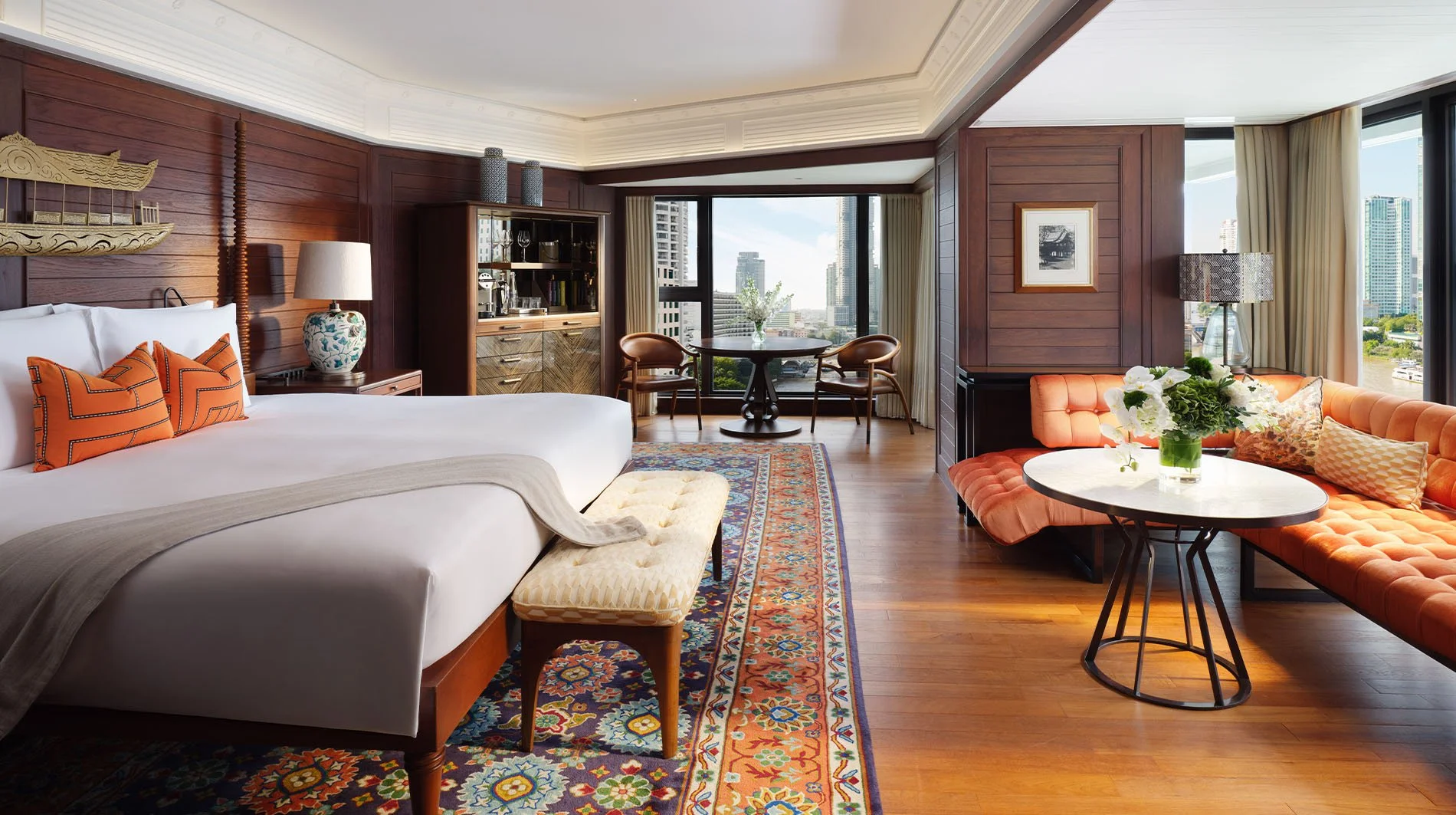
Three Wings, River Views and Some of Bangkok’s Most Storied Suites
The current room collection ranges from relatively compact River Wing rooms to large terraces, family suites and the top-floor Oriental Two-Bedroom Suite. Butler service is a consistent part of the accommodation experience. The categories below give a useful cross-section of the present collection rather than repeating every connecting variation.
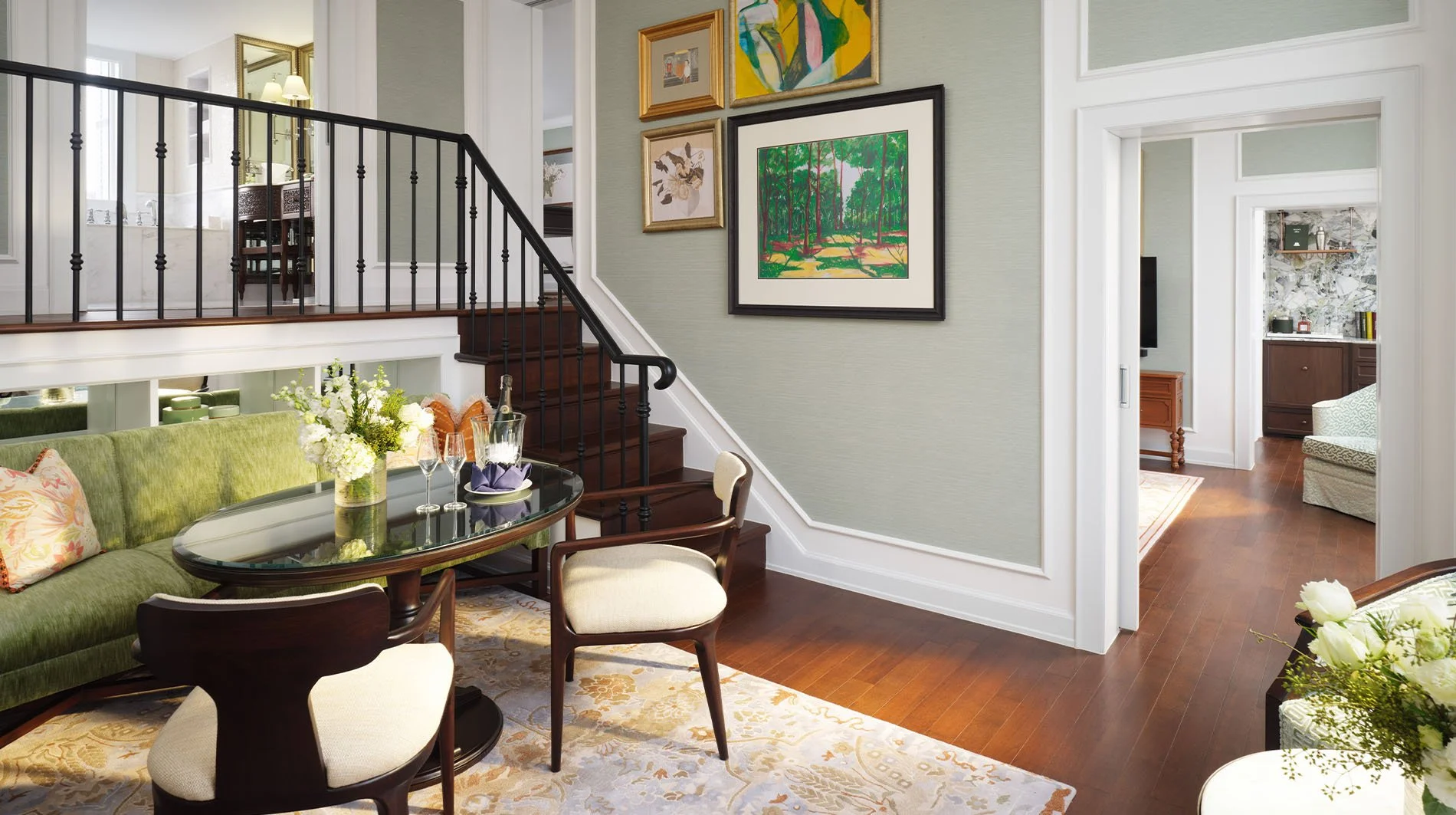
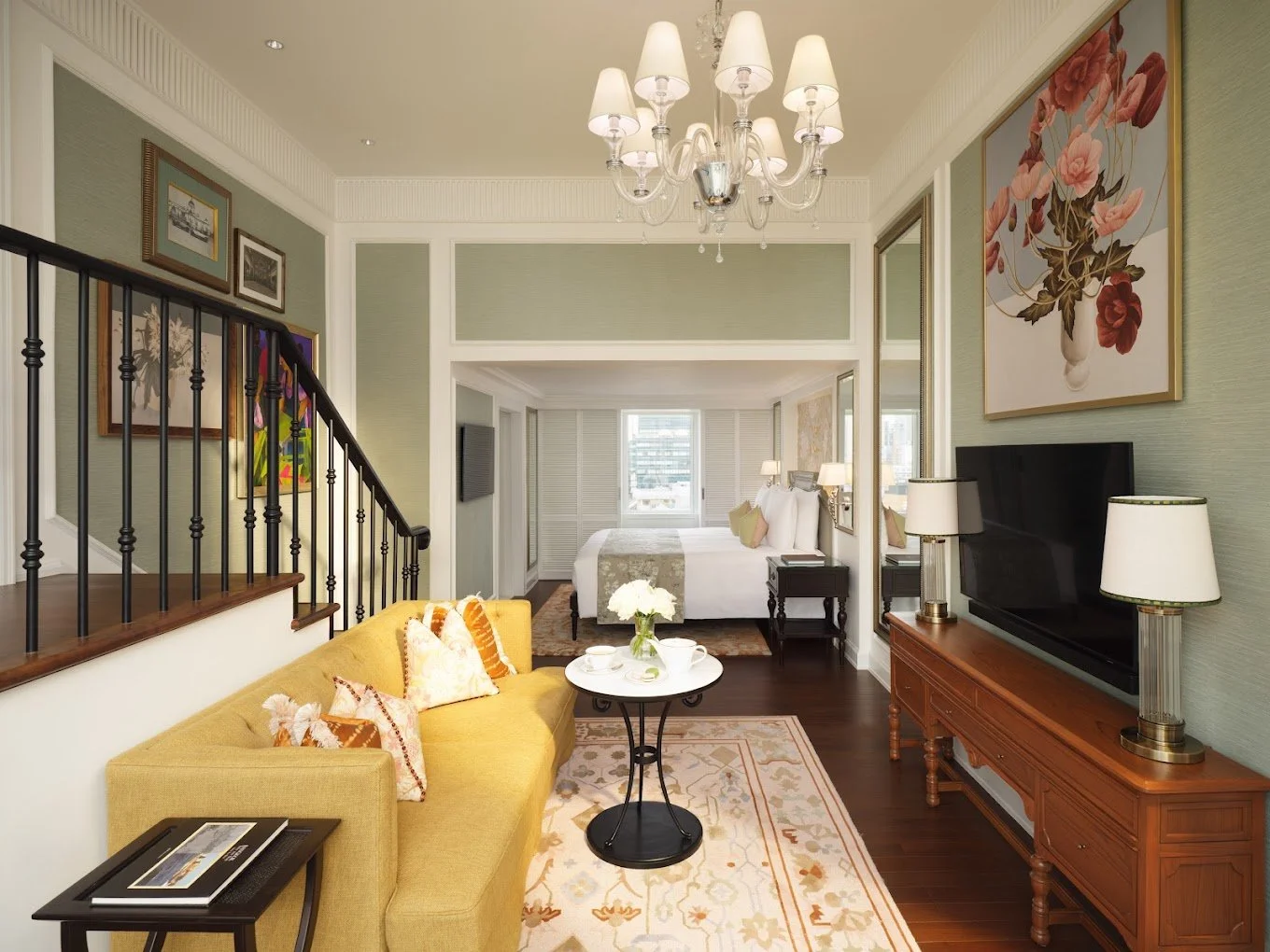
Chao Phraya Room: Approximately 377 sq. ft., with king or twin configurations depending on availability, single- or split-level layouts in the Garden Wing, a separate sitting area, floor-to-ceiling windows and full views over the river and gardens.
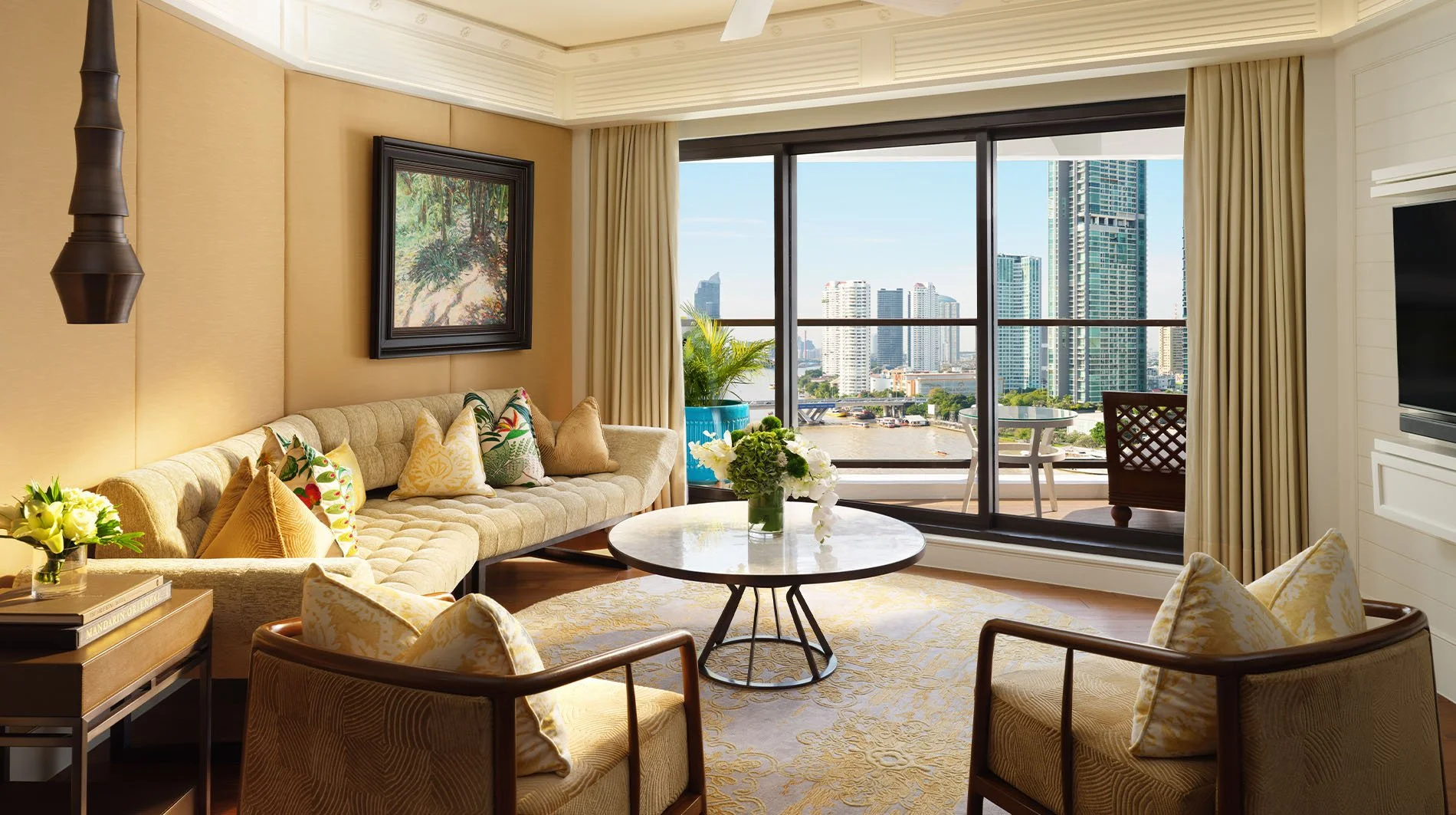
Deluxe Balcony Room: Approximately 397 sq. ft., with a private 65 sq. ft. balcony, floor-to-ceiling glazing, wood floors, Thai decorative details and pool-and-river views, giving this River Wing category more usable outdoor space than the standard room categories.
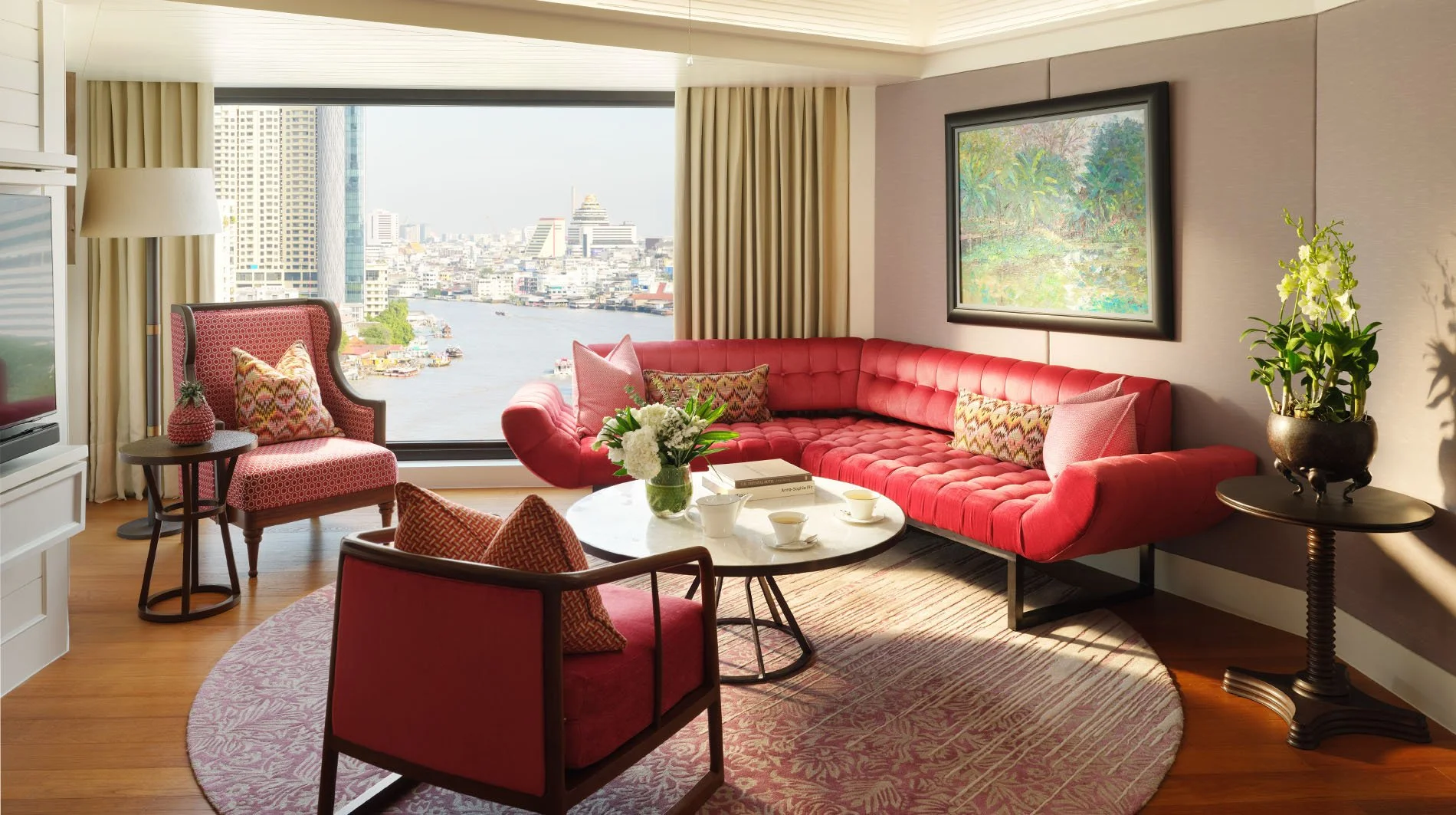
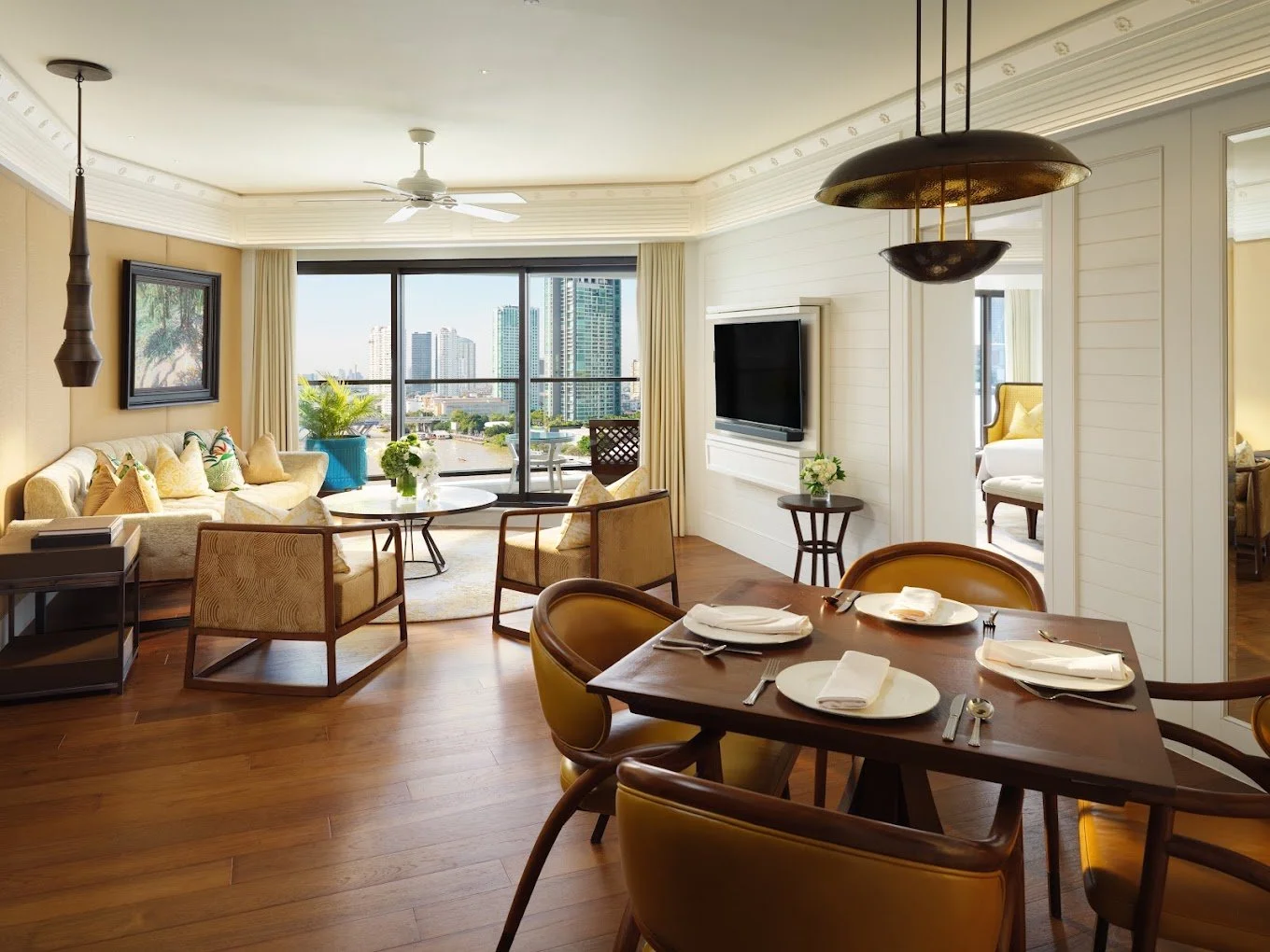
Deluxe Premier Room: Approximately 463 sq. ft., with king or twin beds, a large sofa and sitting area, teak-influenced furnishings, Thai silks and river-or-city views through floor-to-ceiling windows; accessible versions of this category are also available.
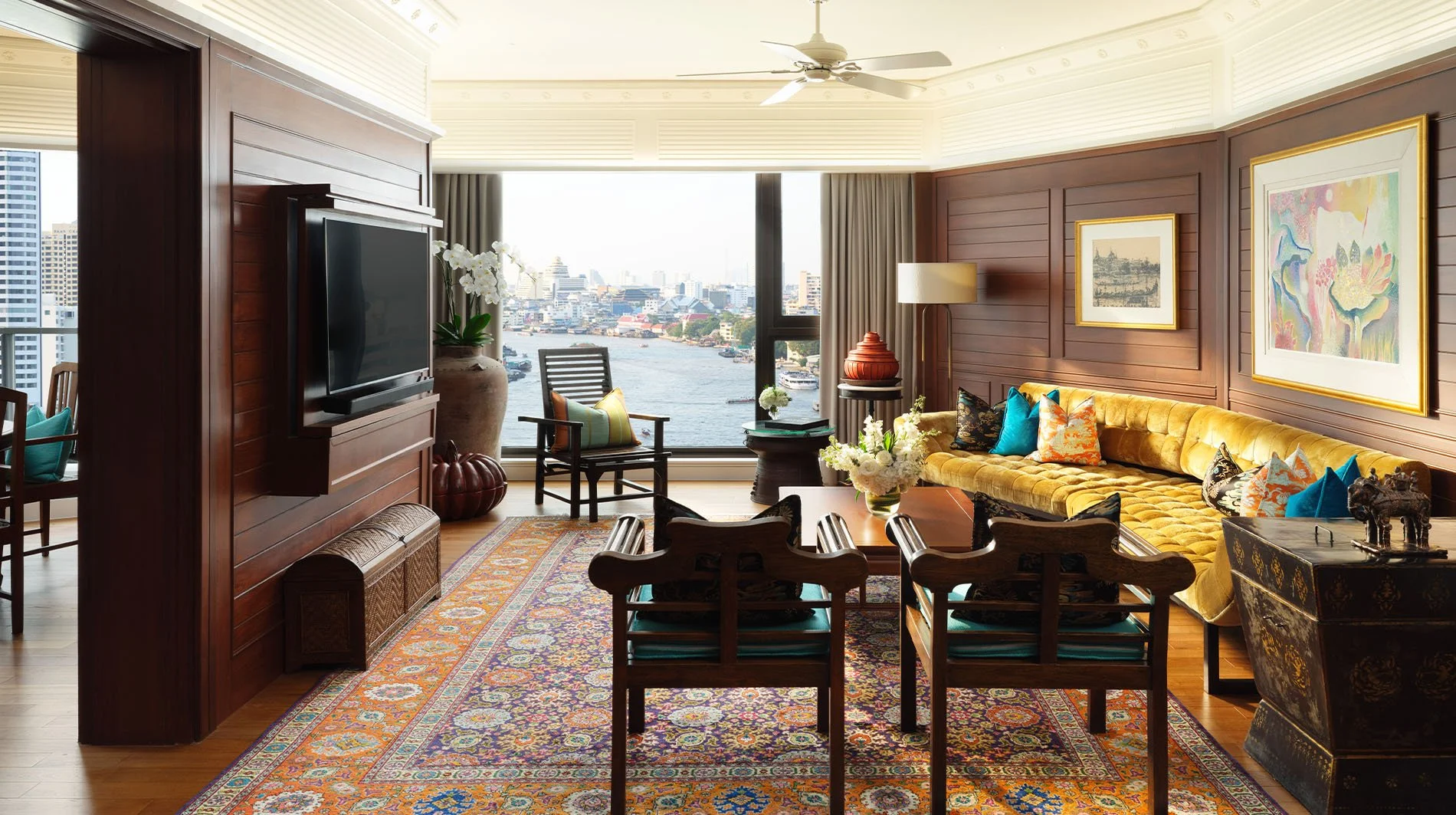
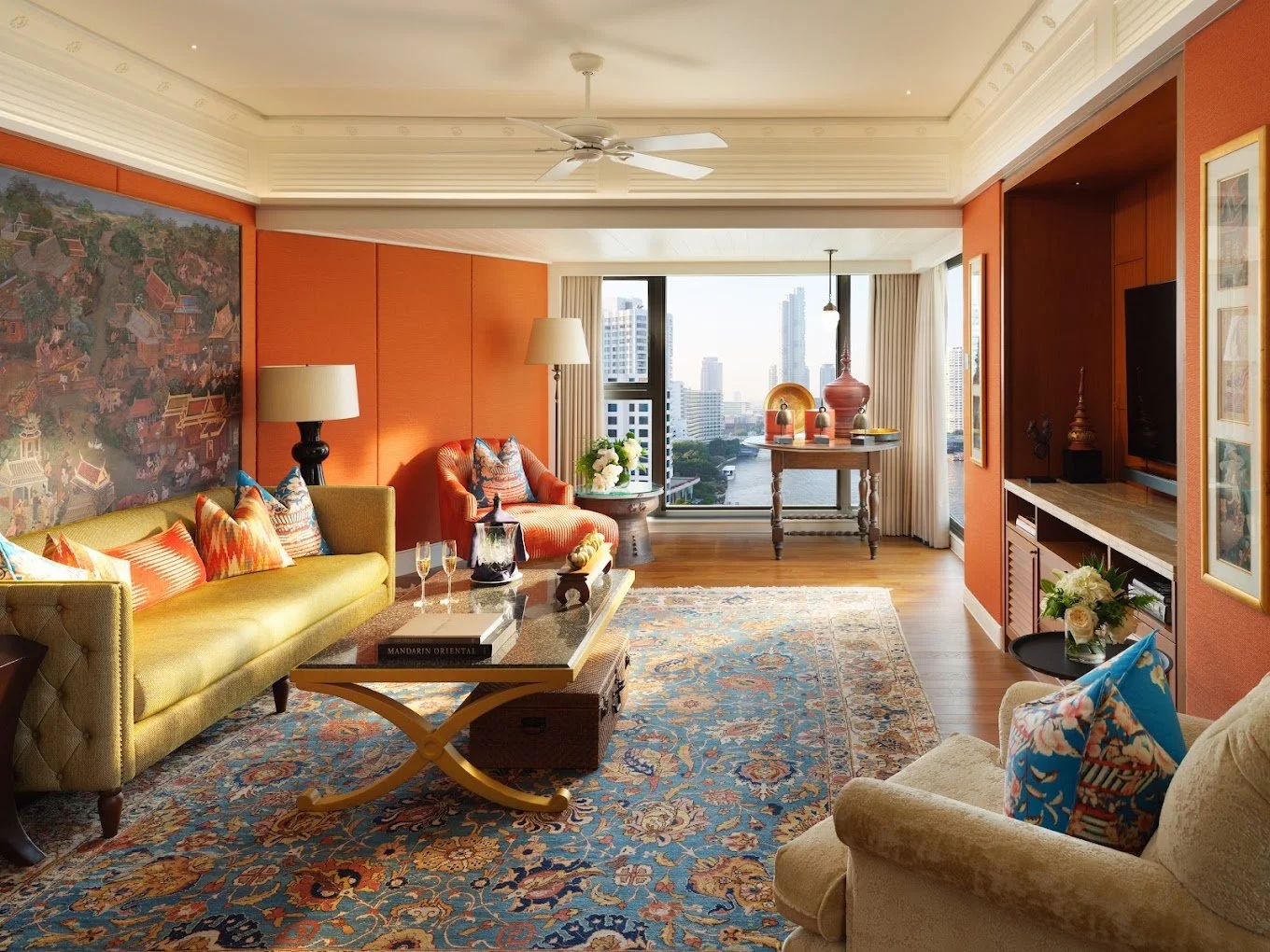
State Room: Approximately 657 sq. ft., with a king bed, teak-panelled entrance, dark wood furnishings, brightly coloured Jim Thompson silks, dining and seating areas and a balcony directly facing the Chao Phraya River.
Mandarin Room: Approximately 677 sq. ft., with a king bed, generous sofa and dining area, walk-in closet, Thai silk upholstery and a private balcony taking in both the river and city skyline.
Chao Phraya Suite: Approximately 892 sq. ft., with a king bedroom, separate living and dining areas, service pantry, marble bathroom and private terrace; single- and split-level layouts are available in the Garden Wing, so the precise configuration should be confirmed when booking.
Deluxe One-Bedroom Suite: Approximately 893 sq. ft., with a king bedroom, separate living and dining areas, private balcony, walk-in wardrobe and Italian-marble bathroom, overlooking the pool and river; an accessible configuration is available within this suite type.
Junior Terrace Suite: Approximately 1,043 sq. ft., with an open-plan living and sleeping arrangement, dining table for up to five, working desk and a substantial 188 sq. ft. terrace overlooking the river and city.
Author’s Suite: Approximately 1,087 sq. ft., with individually designed interiors honouring writers associated with the hotel, a separate sitting room, balcony with full river views, dressing area, walk-in closet and large Italian-marble bathroom.
Premier One-Bedroom Suite: Approximately 1,163 sq. ft., with a king bedroom, separate living and dining rooms, pantry, walk-in closet, marble bathroom and private balcony facing the river and French Embassy; it can connect with a Deluxe Premier Room when a larger family configuration is required.
Deluxe Two-Bedroom Suite: Approximately 1,344 sq. ft., with two bedrooms, separate living and dining areas, private balcony, Italian-marble bathrooms and pool-and-river views, accommodating up to six guests in a layout designed specifically with families in mind.
Premier Two-Bedroom Suite: Approximately 1,615 sq. ft., with one king bedroom and one twin bedroom, two marble bathrooms, living and dining rooms, pantry, walk-in closets and private balconies overlooking the Chao Phraya River.
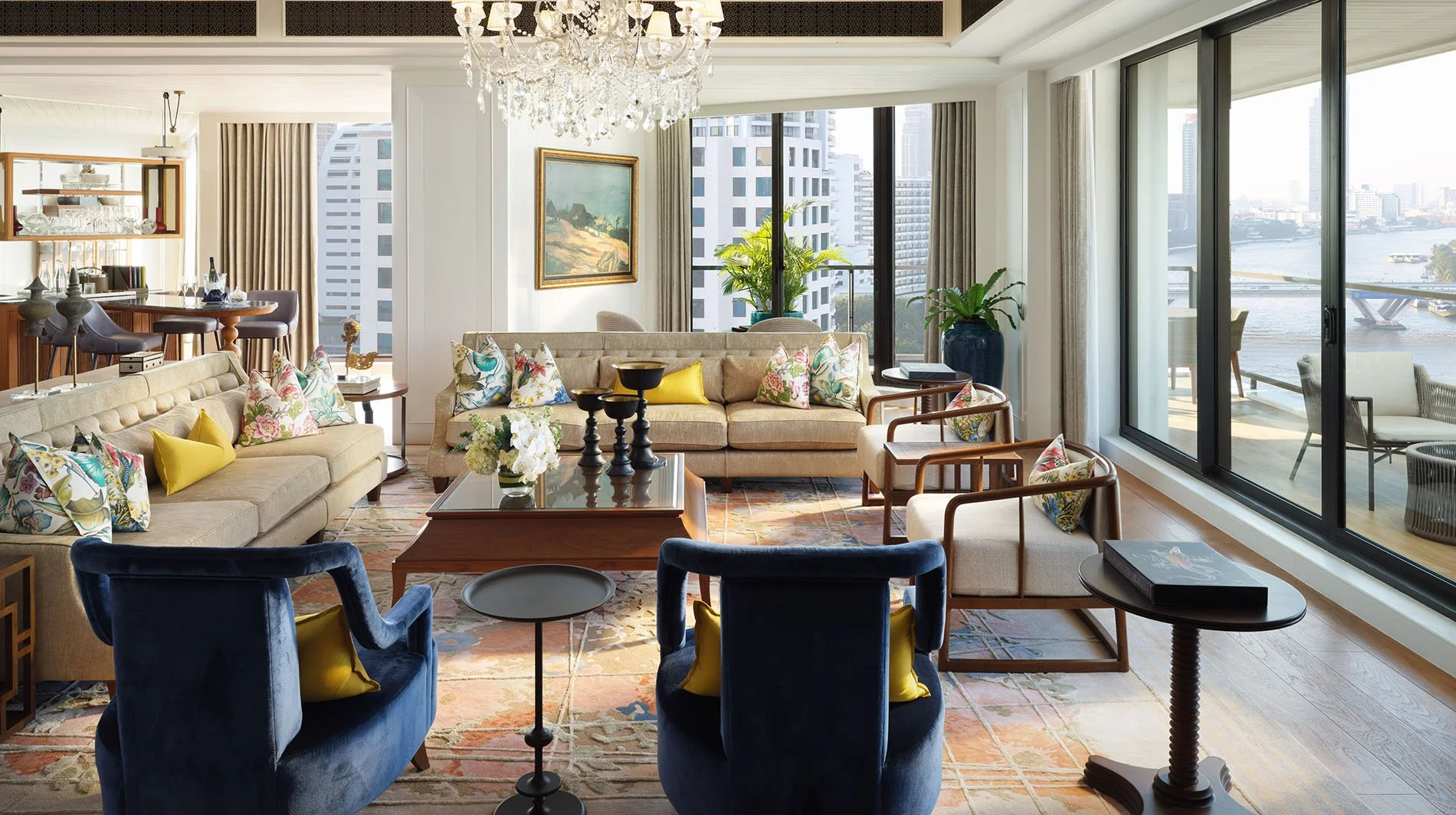
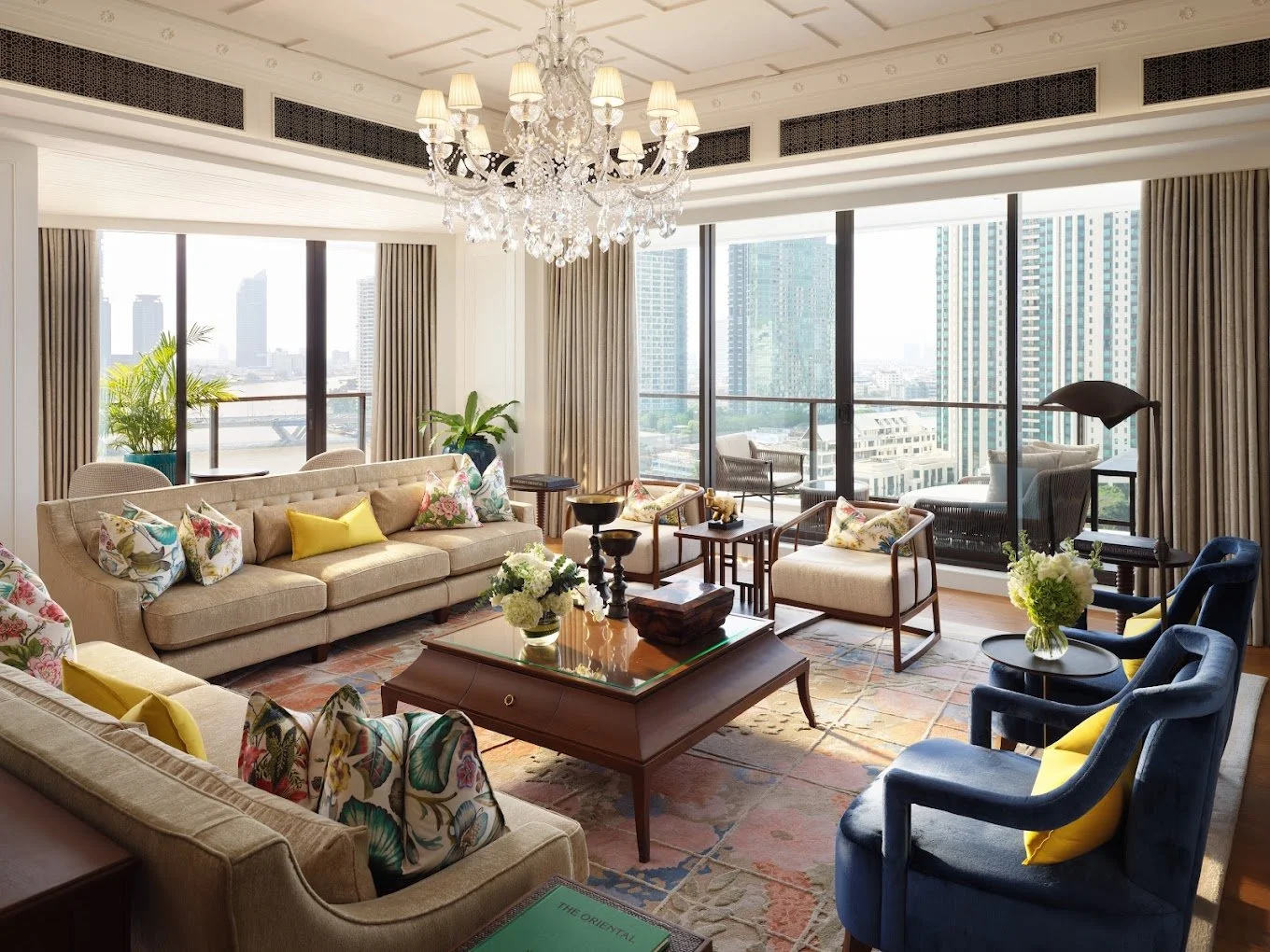
Oriental Two-Bedroom Suite: Approximately 4,046 sq. ft., with two bedrooms, a 620 sq. ft. wraparound terrace, multiple sitting areas, an entertainment room, kitchen and private dining room for twelve, occupying the hotel’s top floor with full river views.
An Author’s Suite brings the literary story into the accommodation itself, while the Garden Wing’s Chao Phraya Suite feels more residential. Families are better served by the two-bedroom layouts, and the Oriental Suite is most compelling when entertaining space matters.
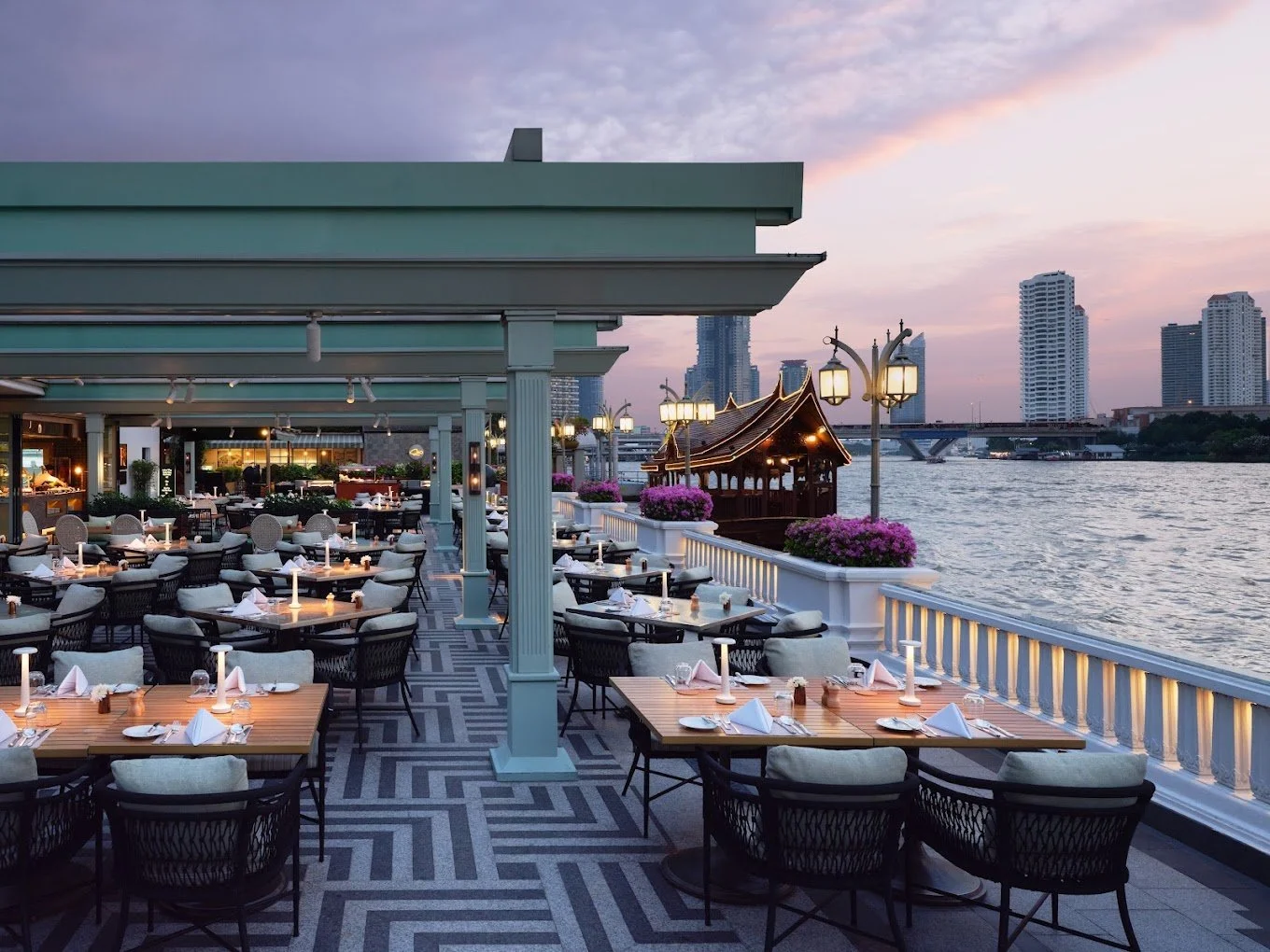
Twelve Places to Eat, Drink and Watch the River
Dining is one of the strongest reasons to stay for several nights. The collection moves from two-Michelin-starred French cooking to historic afternoon tea, Cantonese and Chaoshan cuisine, Thai dinner with performance, seafood buffets and live jazz. Several outdoor venues are seasonal, so the operating calendar matters.
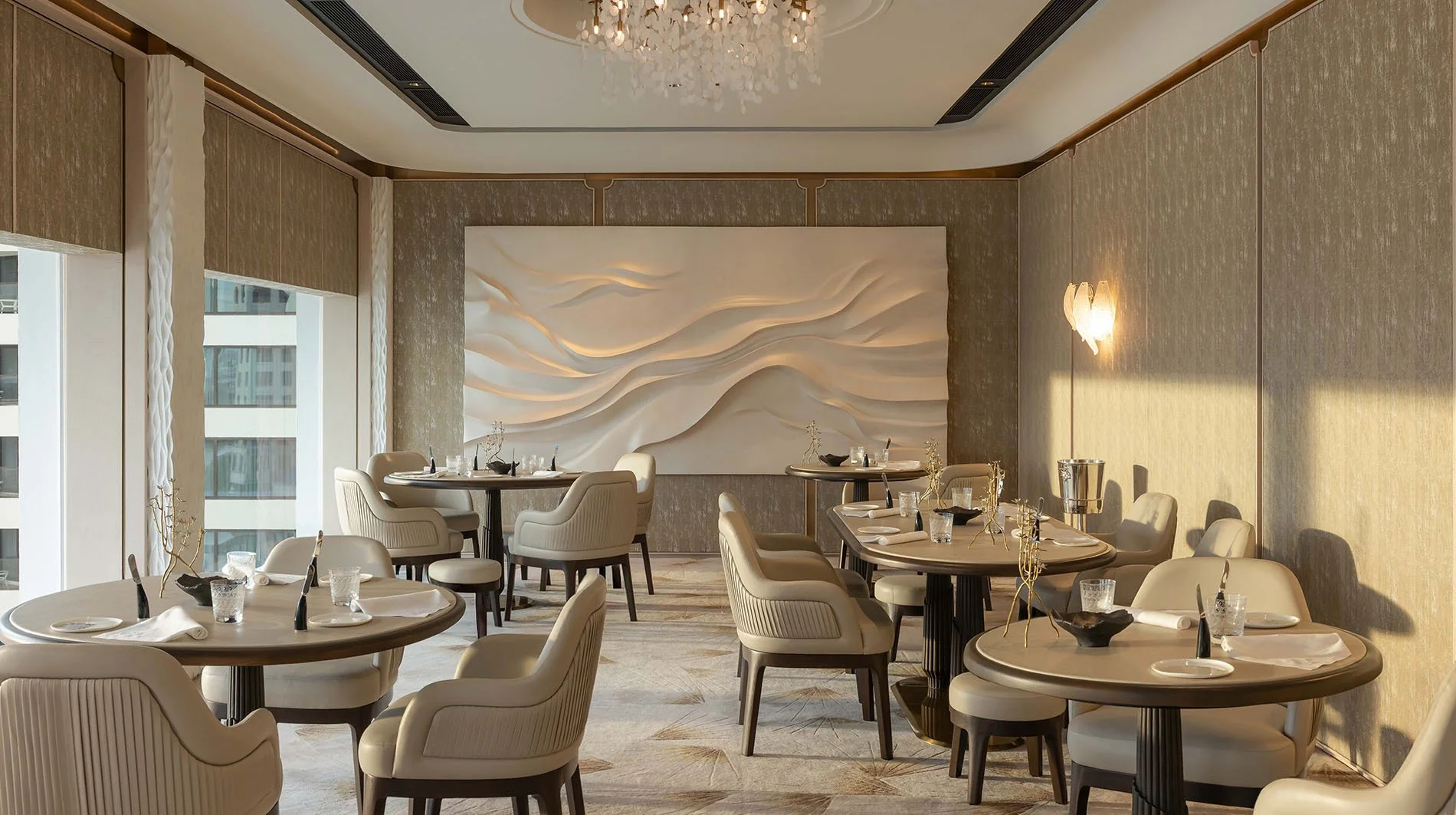
Anne-Sophie Pic at Le Normandie: The hotel’s flagship French restaurant is now led by Anne-Sophie Pic with head chef Tamaki Kobayashi, serving contemporary French tasting menus in a renewed river-facing dining room that currently holds two Michelin Stars.
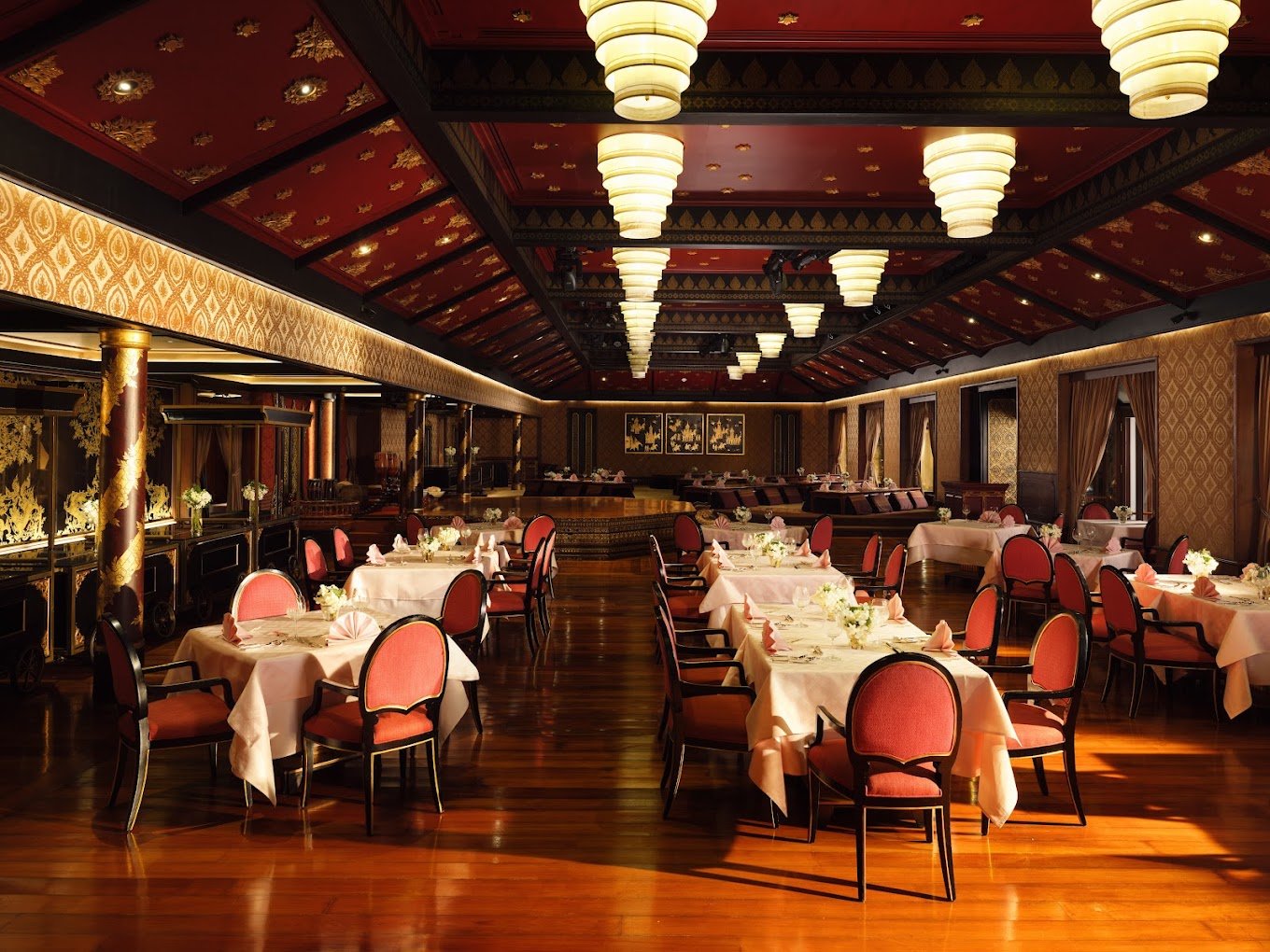
The China House by Chef Fei: Chef Fei’s restaurant focuses on Chaoshan and Cantonese cooking, supported by a dedicated Chinese tea bar, cocktail bar and private dining rooms within a redesigned setting intended for both formal meals and celebratory group dining.
Baan Phraya: Thai cuisine is served in a historic riverside house across the Chao Phraya, creating a more intimate alternative to the larger hotel restaurants and a particularly atmospheric setting for a dinner built around regional Thai flavours.
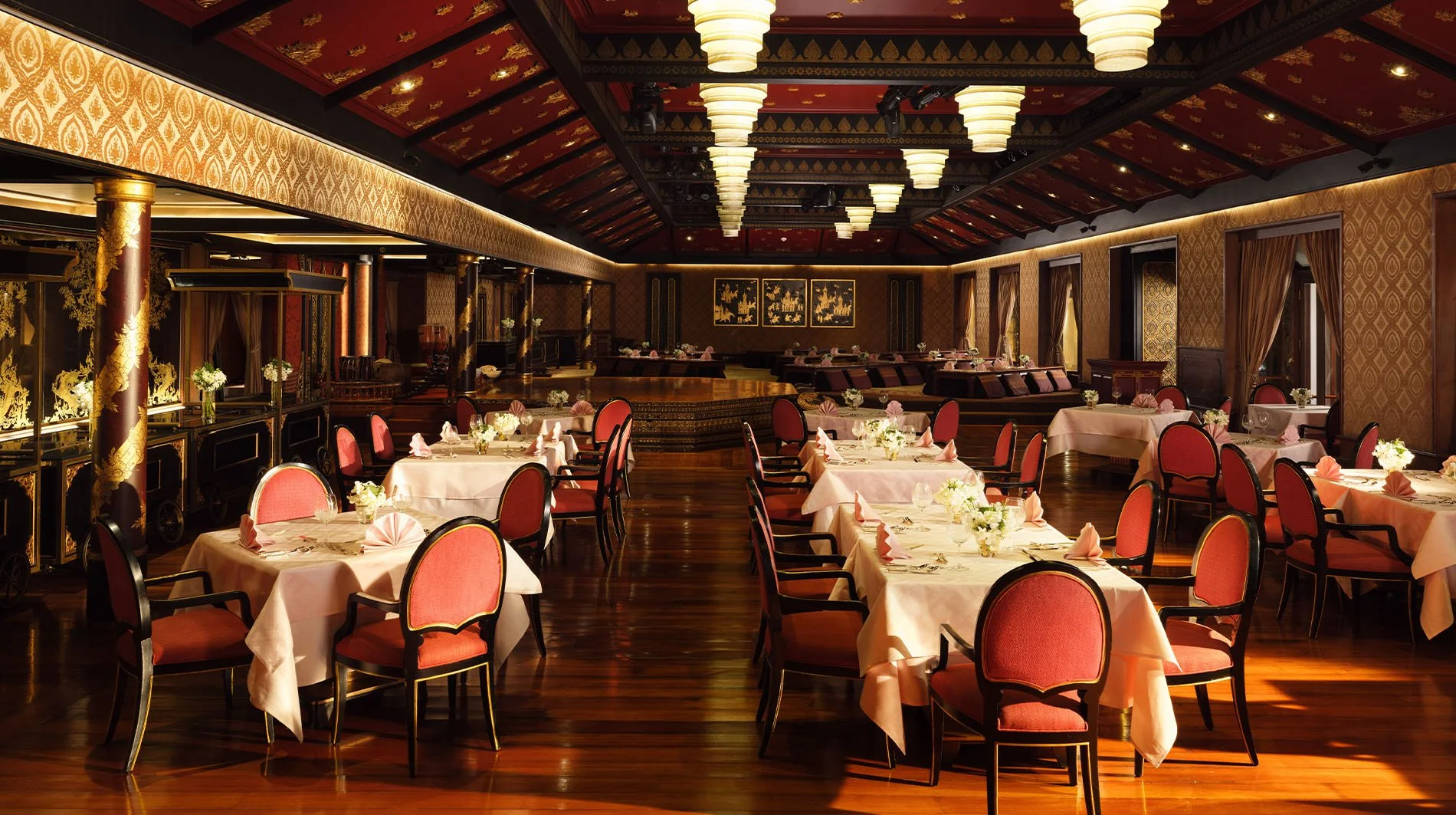
Sala Rim Naam: Traditional Thai set menus are paired with live classical dance performances in a richly decorated pavilion across the river, making the cultural programme as central to the evening as the food itself.
Terrace Rim Naam: Executive Thai Chef Pom Phatchara Pirapak presents Thai cooking with personal interpretation in an open-air riverside setting across from the main hotel, with seasonal operation influenced by Bangkok’s weather.
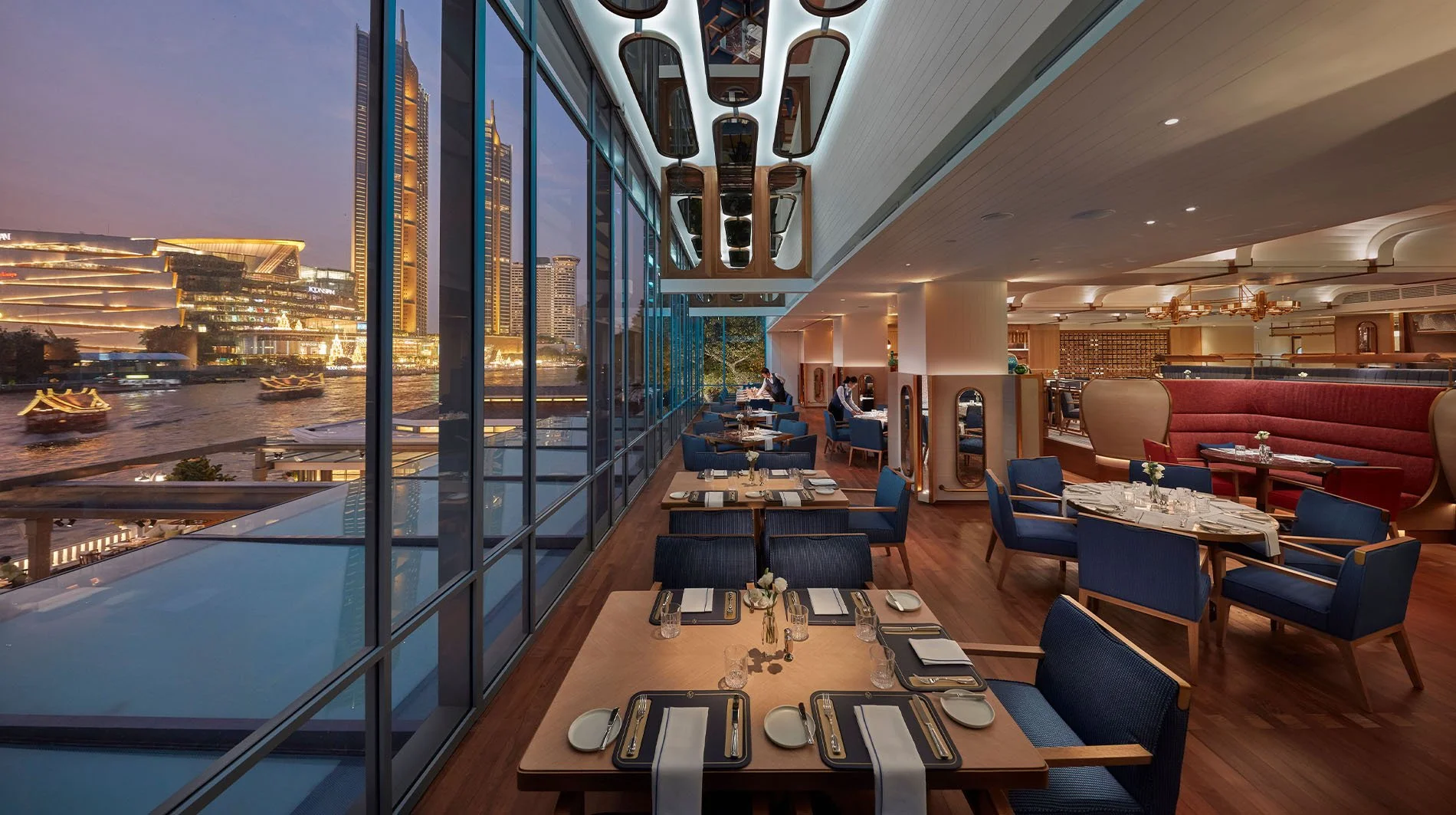
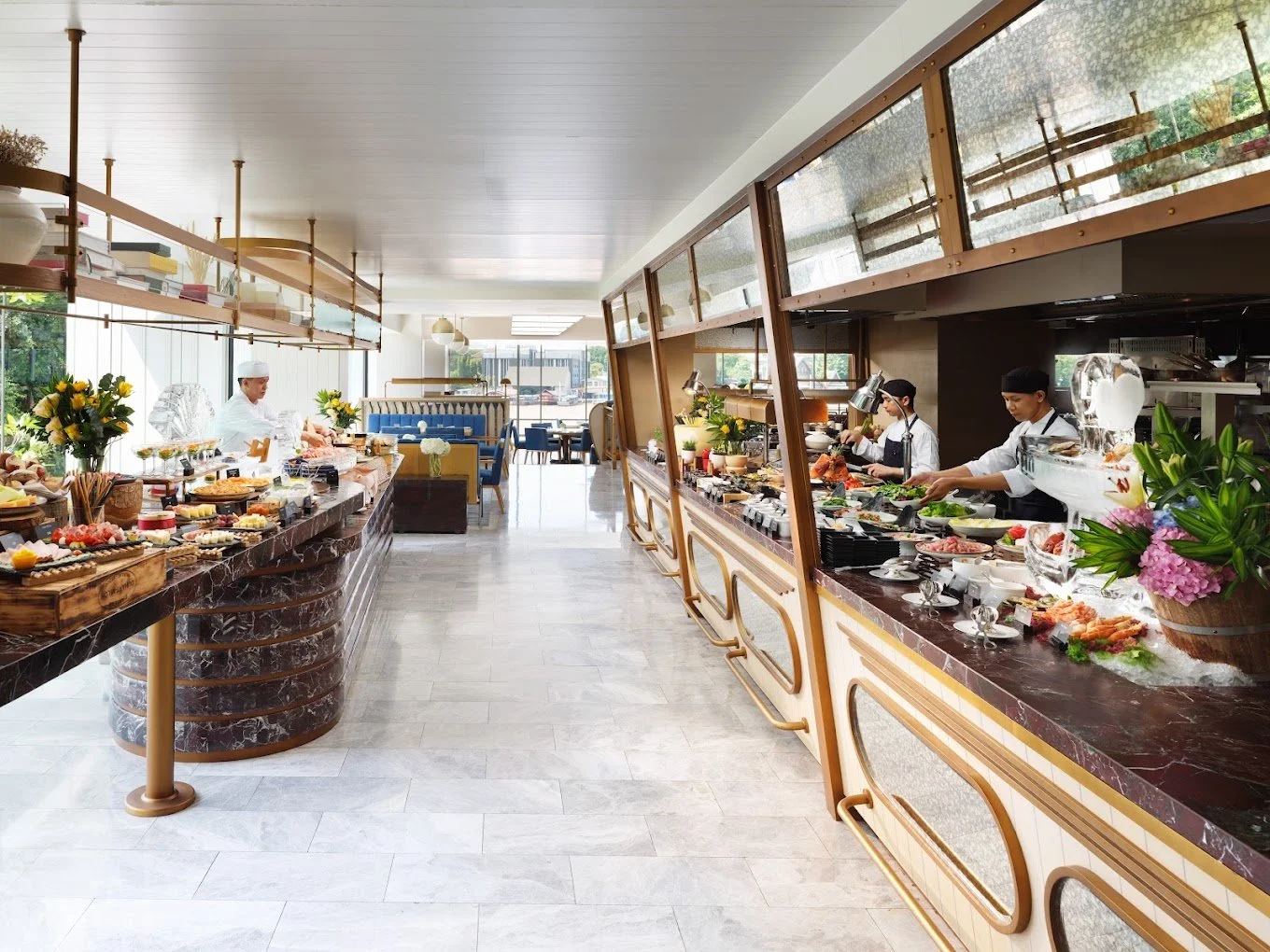
Lord Jim’s: River views frame international lunch buffets and seafood-focused evening service, with live cooking stations, seafood on ice and long-established signatures such as Lobster Thermidor and salt-baked sea bass.
The Verandah: The principal all-day restaurant serves Thai and Western dishes beside the river, handling breakfast particularly well because indoor and outdoor tables allow the Chao Phraya to remain part of the start of the day.
The Authors’ Lounge: Afternoon tea is served within the original hotel building among wicker furniture, palms and literary photographs, preserving one of the property’s most recognisable rituals without turning the room into a static historical exhibit.
The Bamboo Bar: Opened in 1947 and regarded as Bangkok’s first jazz venue, the bar combines live jazz and blues with a serious cocktail programme in a dark, intimate room that deliberately retains its mid-century character.
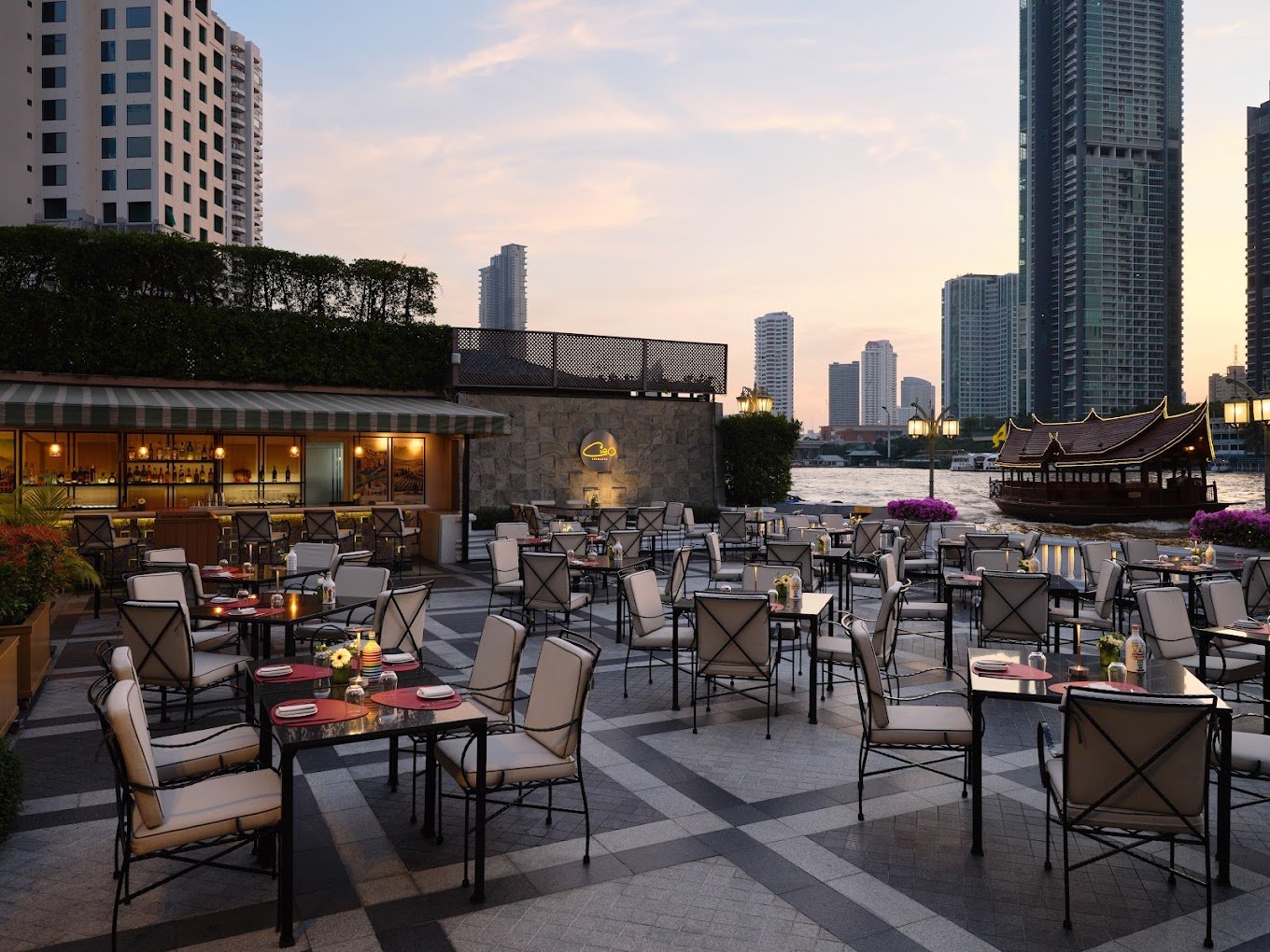
Ciao Terrazza: Seasonal Italian dining occupies an alfresco riverfront terrace, offering a lighter, less formal evening when Bangkok’s weather makes outdoor dining comfortable; in 2026 it is scheduled to reopen after its seasonal closure on October 22.
Riverside Terrace: The seasonal open-air barbecue places smokers, grills, tandoori ovens and live cooking stations beside the river; its 2026 seasonal closure continues until November 24.
In-Room Dining: Available 24 hours, with hotel restaurant influences brought into rooms and suites when an early arrival, late evening or private meal makes leaving the accommodation unnecessary.
Over a short stay, Le Normandie, one Thai restaurant and The Bamboo Bar create three very different evenings; longer visits justify exploring the wider collection.
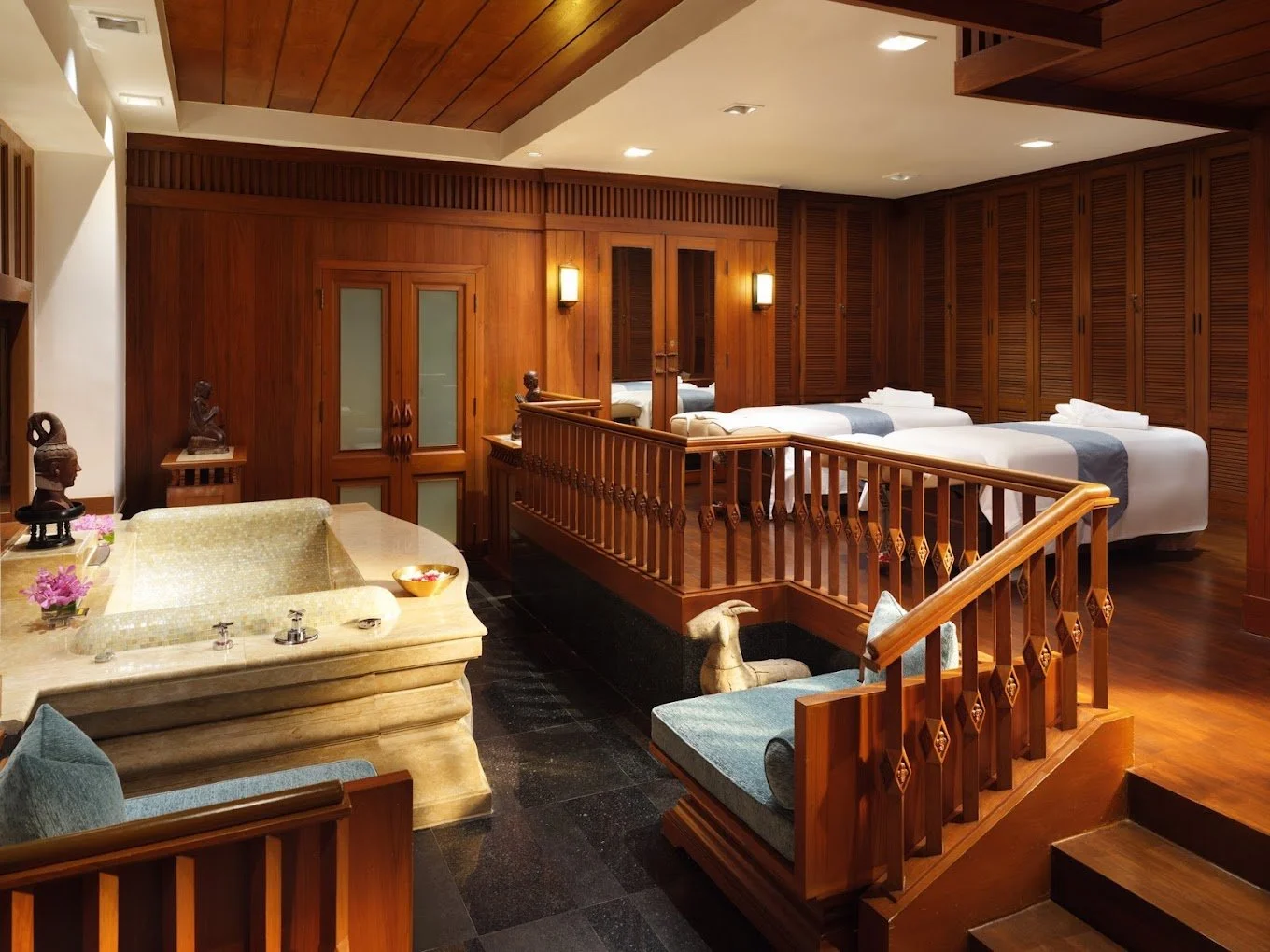
A Spa Reached by Boat
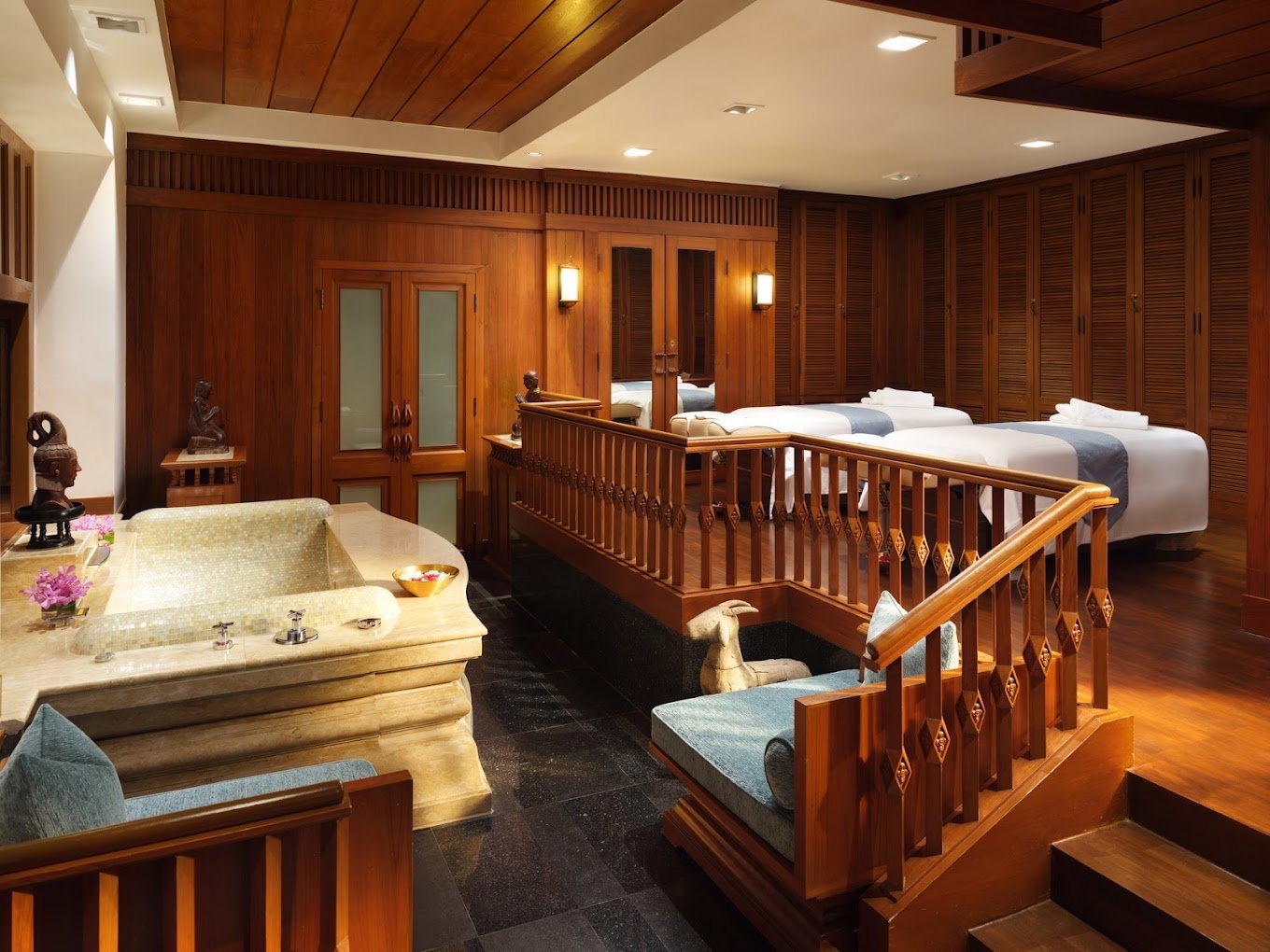
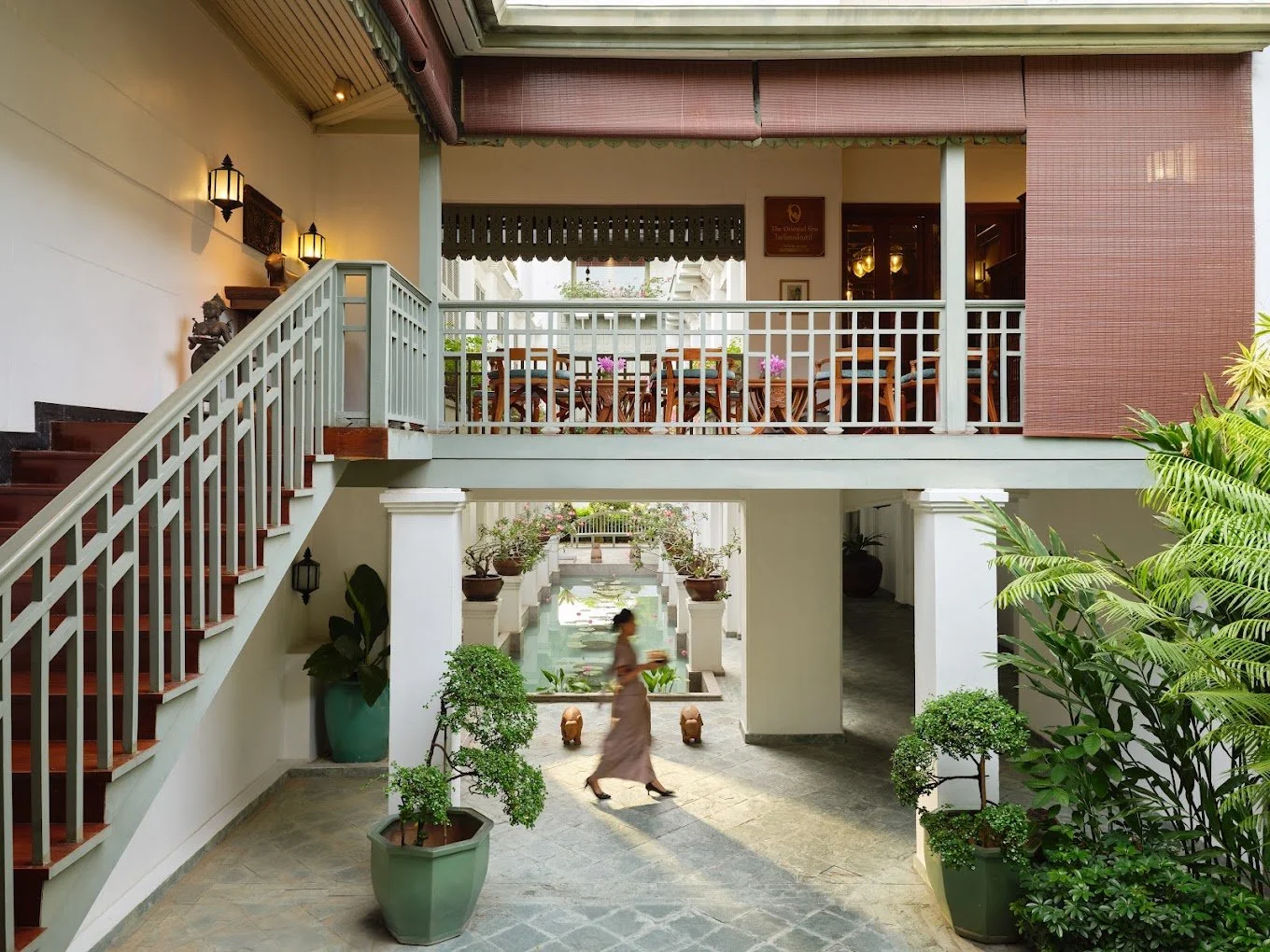
The Oriental Spa begins with a short boat ride across the Chao Phraya. It occupies a restored century-old teakwood house with 18 treatment rooms, physically separating the wellness experience from the guestrooms and restaurants.
Treatments draw from Thai healing traditions, Traditional Chinese Medicine and contemporary therapeutic practice. The current Essence of Thailand collection moves region by region, using rituals inspired by Isaan, Lanna, Central Thailand and the south, while Biologique Recherche skincare provides a more clinical alternative.
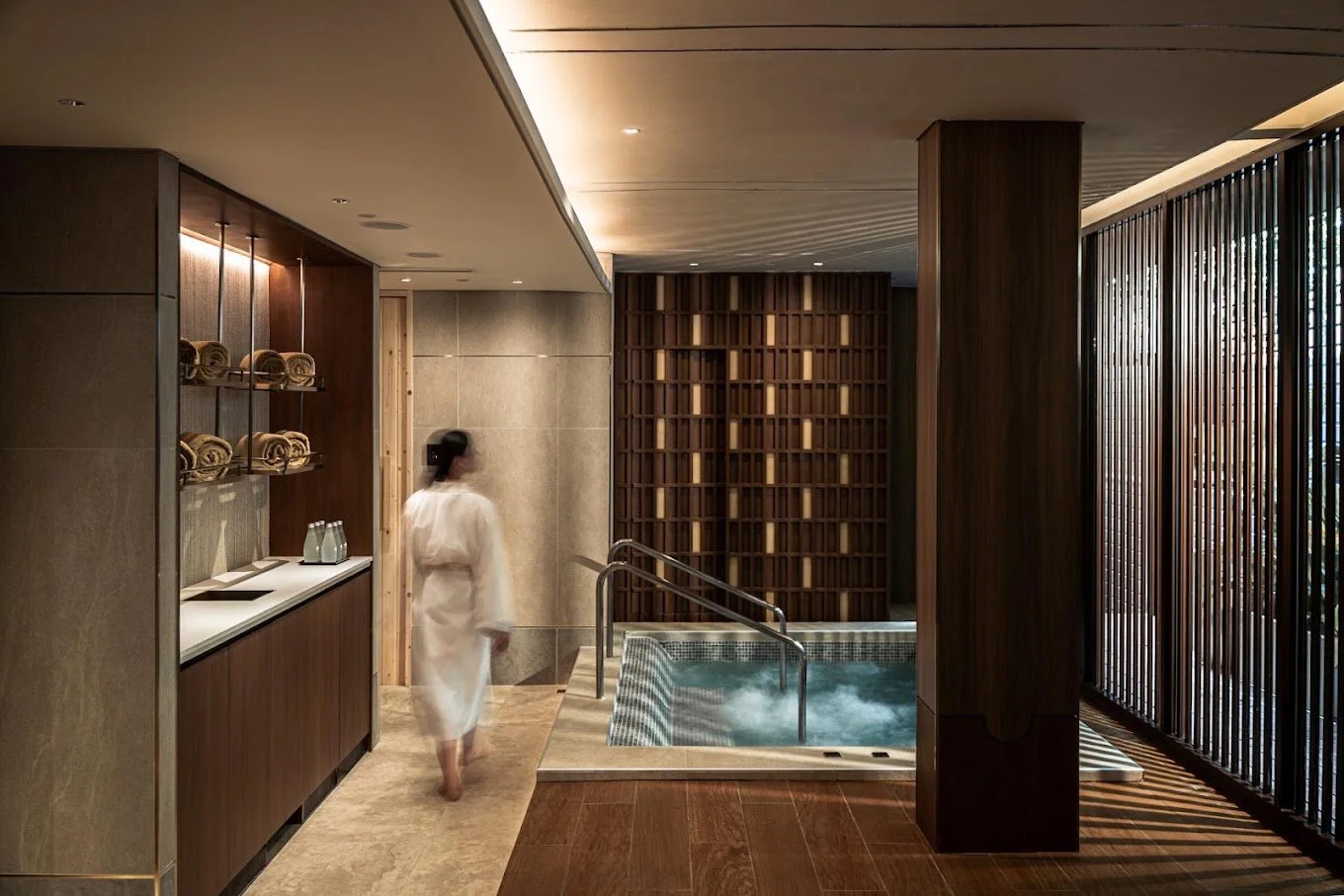
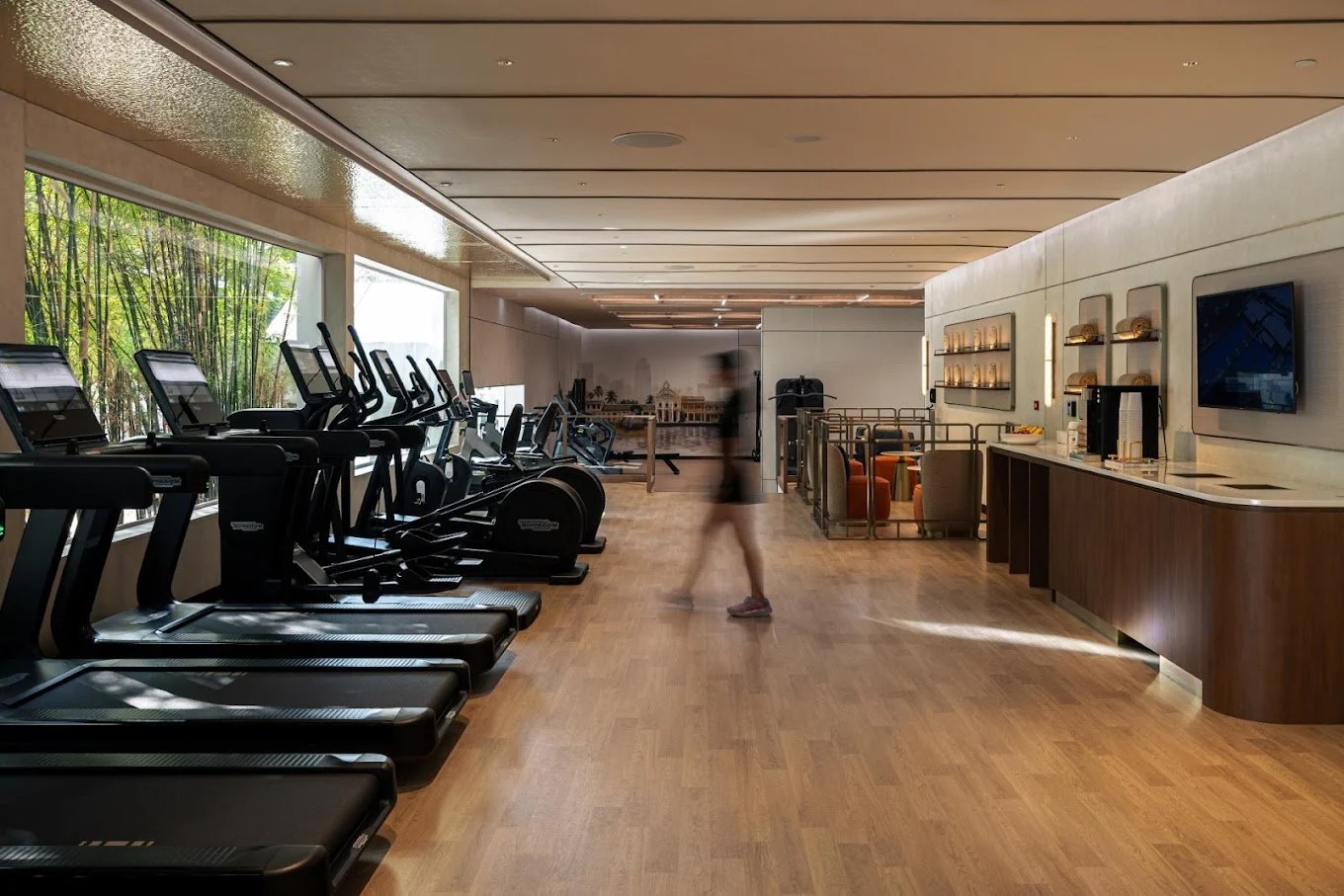
The renewed Fitness & Wellness Centre adds strength and movement facilities, yoga and Muay Thai spaces, personal training, tennis and a Recovery Studio combining cold immersion, infrared heat, stretching and guided breathwork.
The spa and fitness areas generally require guests to be at least 16, although adapted treatments are available for children aged six to fifteen with parental consent and a parent or guardian in the treatment room.
Bangkok by Boat, Bicycle and Cooking Class
The activity programme makes good use of the river and Bangkok’s Creative District. A private-pier cruise can link the hotel with temples, markets and the Grand Palace while avoiding some road traffic.
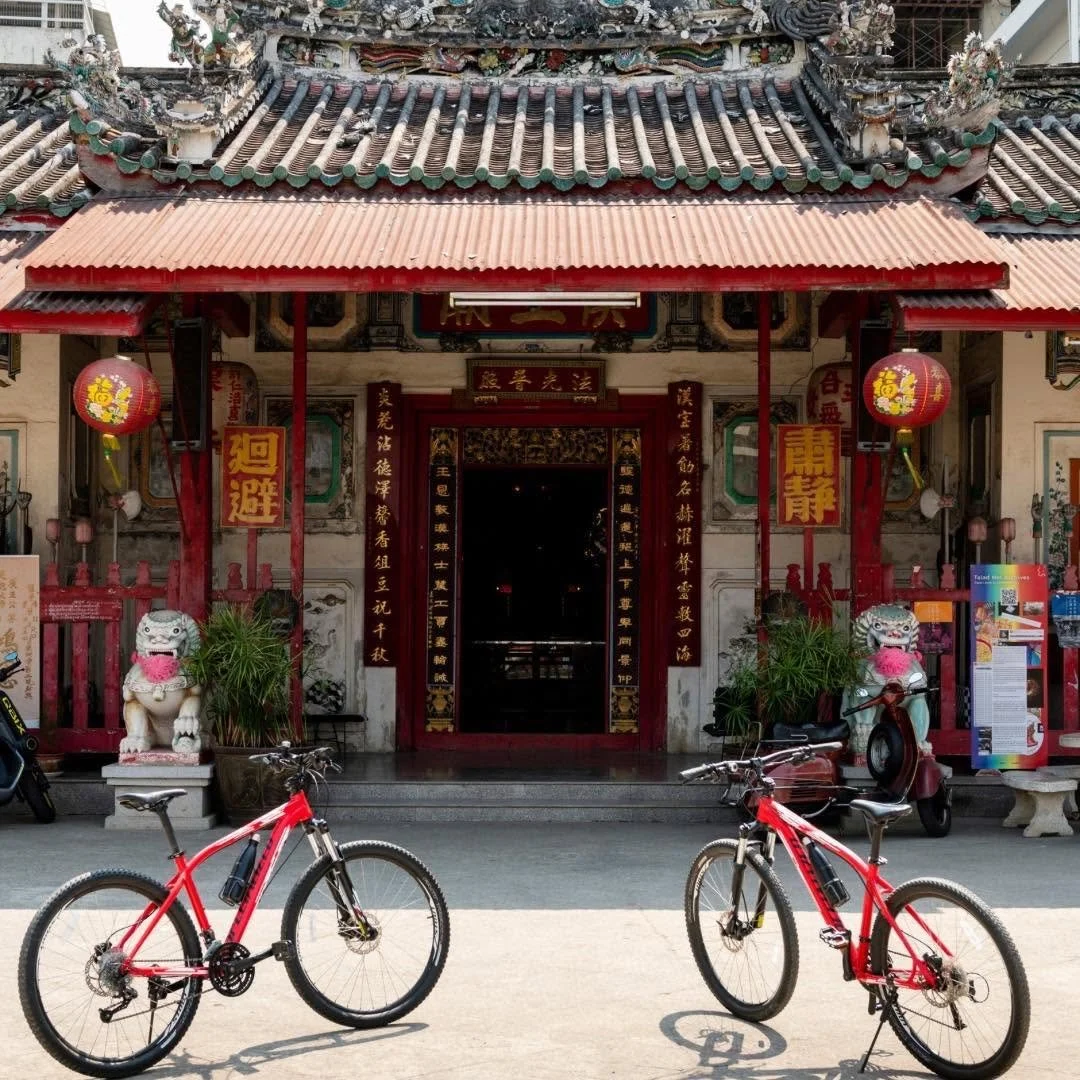
Guided cycling uses Charoen Krung and smaller lanes to explore Chinatown, older neighbourhoods and the city’s layered architecture; routes and operating conditions should be confirmed for the chosen date.
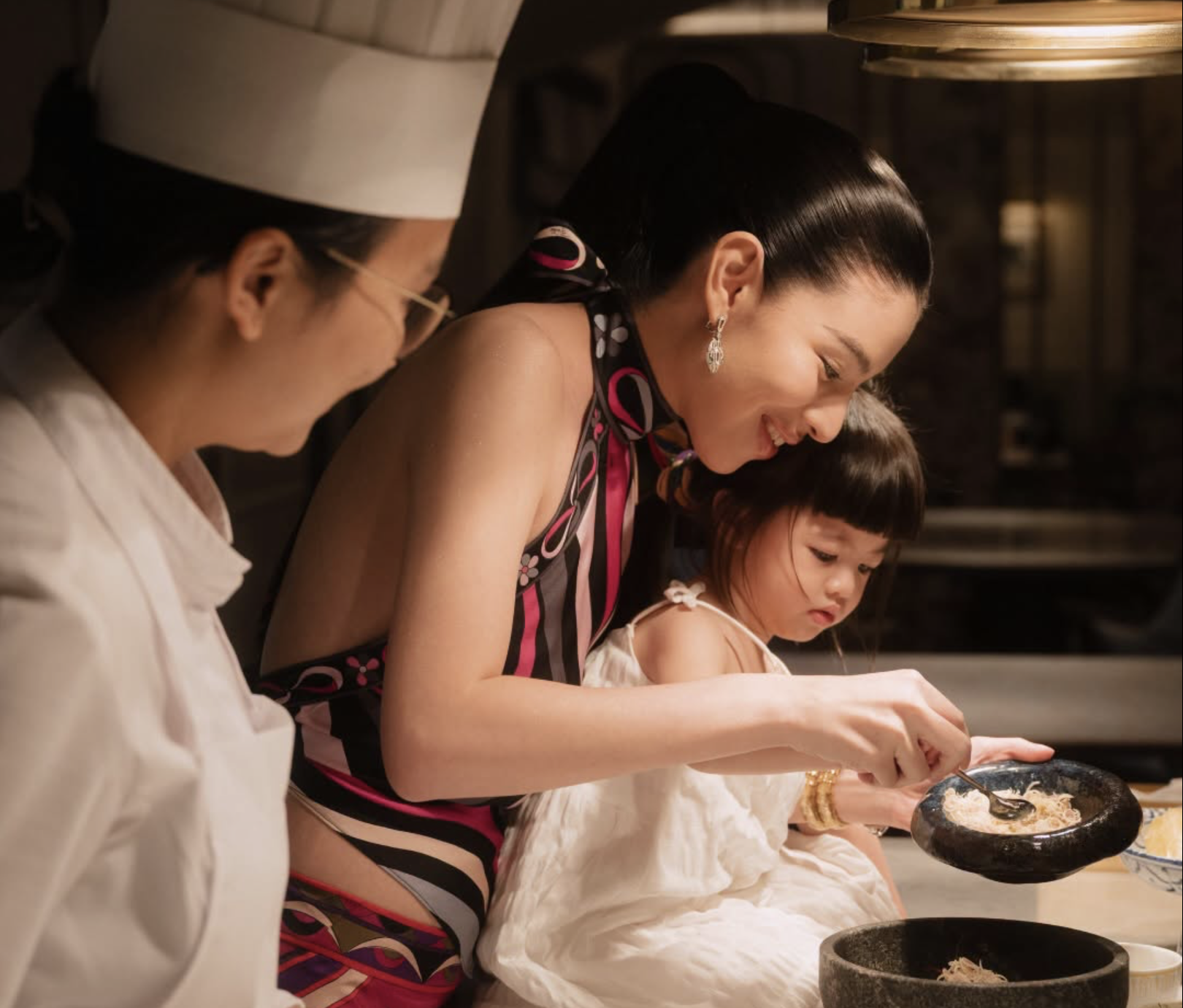
Thai cooking masterclasses run as three-hour sessions and conclude with lunch, while cultural programming may include alms giving, a historical walking tour, a self-guided VoiceMap route and scheduled boat tours. Some experiences are complimentary for hotel guests or Fans of M.O. members at particular times, while others carry separate charges, so inclusions should be checked rather than assumed.
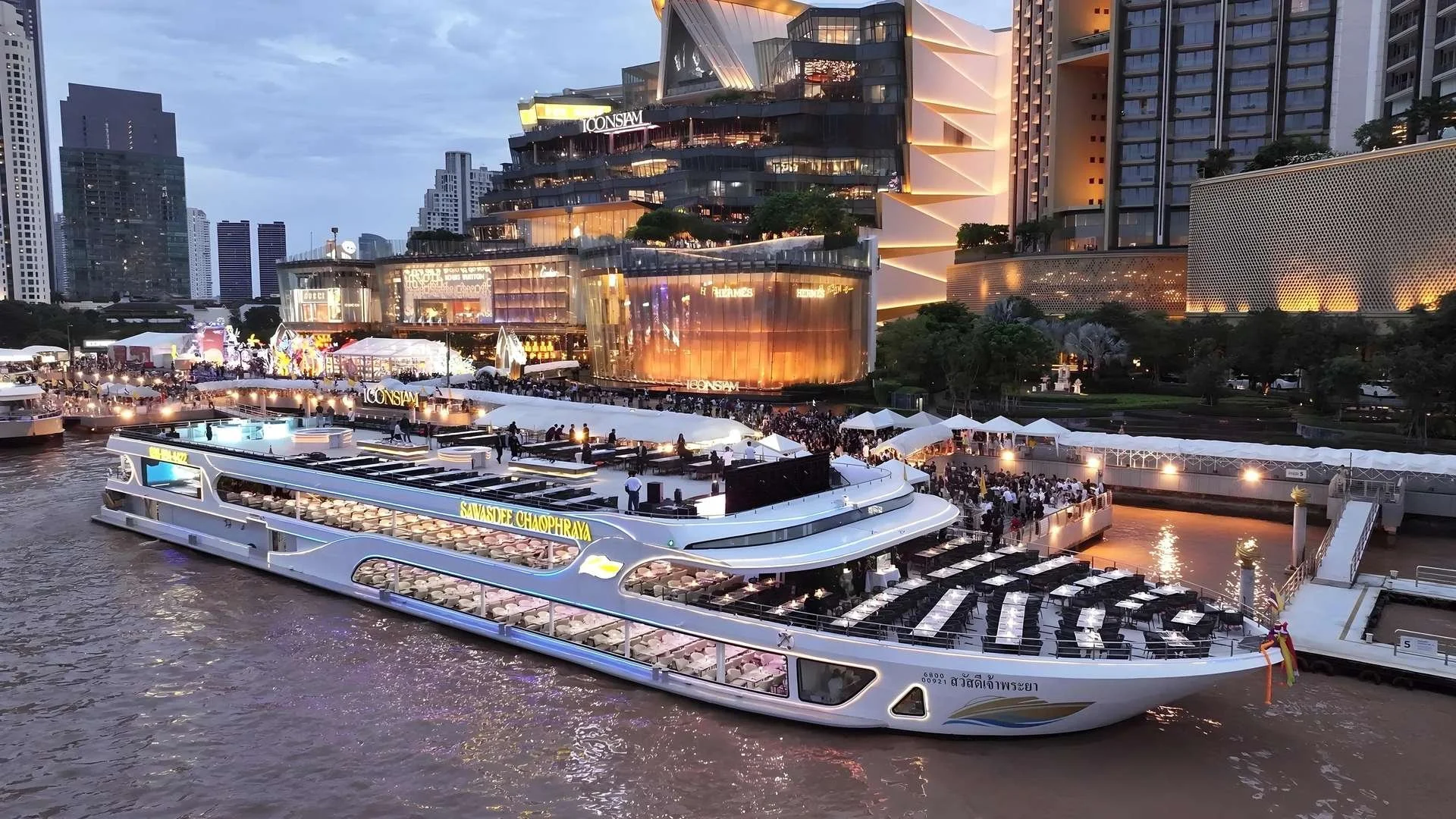
The hotel’s teakwood boats also connect to ICONSIAM and, on request, Sathorn Pier, making the river part of ordinary movement through the city rather than something reserved for sightseeing.
Little Fans on Both Sides of the River
The Little Fan’s Club sits across the river near The Oriental Spa and welcomes children aged three to twelve from 10:00 AM to 6:00 PM, currently Friday through Sunday. Children under three may use the club with a parent or guardian. Crafts, origami, storytelling, games and seasonal activities make it a genuine supervised programme rather than simply a playroom.
A dedicated children’s pool and kids’ menus at The Verandah and Sala Rim Naam support family days, while in-room touches include colouring materials, puzzles, an activity passport, children’s bathrobes and optional teepee tents.
Connecting rooms and the Deluxe and Premier two-bedroom suites are the practical family choices. Because some wellness and dining venues sit across the river, the shuttle boat also becomes part of day-to-day planning.
The public family information does not currently publish a general babysitting schedule or standard fee. Families relying on private childcare should therefore confirm availability, minimum booking periods, ages accepted and charges directly with the hotel before travel.
Solar Power, Composting and Responsibility to the River
Mandarin Oriental, Bangkok publishes unusually specific property-level sustainability measures for a historic urban hotel. A 300 kWp solar photovoltaic system contributes renewable electricity to hotel operations, while an on-site composting machine converts food waste into material used for landscaping.
Procurement policies include sustainable seafood aligned with WWF guidance, locally selected ingredients and environmentally responsible products. The hotel also uses biodegradable and glass water bottles in guest accommodation, an operational detail that is easier to verify than broad claims about eliminating environmental impact.
The Chao Phraya is treated as part of the sustainability programme as well as part of the guest experience. Hotel colleagues participate in regular river-cleaning initiatives intended to remove waste and debris from the waterway and surrounding areas.
In 2026 Mandarin Oriental reported GSTC certification across its entire hotel network, while the Bangkok property also cites Forbes Travel Guide’s Responsible Hospitality VERIFIED programme. The solar, composting and river-cleaning measures remain the more useful property-specific evidence.
Accessibility Across the Riverfront Estate
Unlike many historic hotels, Mandarin Oriental, Bangkok publishes specific information about accessible accommodation. Accessible options are available in the River Wing, including a Deluxe Premier Room and a Deluxe Suite configuration.
Published features include roll-in showers, shower chairs, bathroom handrails, adapted toilets, lowered closet rails, accessible light switches and related room modifications. The Deluxe One-Bedroom Suite page also lists an accessible configuration with wheelchair-accessible bathroom elements and shower seating.
Because important facilities sit on both sides of the Chao Phraya, wheelchair users should confirm step-free boat boarding, routes to the spa and wellness centre, and access to restaurants across the river.
Hearing, vision and other access requirements should likewise be discussed with the hotel in advance. The published room information is helpful, but the most useful plan is one that matches the specific accommodation with the restaurants, transport and experiences each traveller intends to use.
The Chao Phraya as a Way Into Bangkok
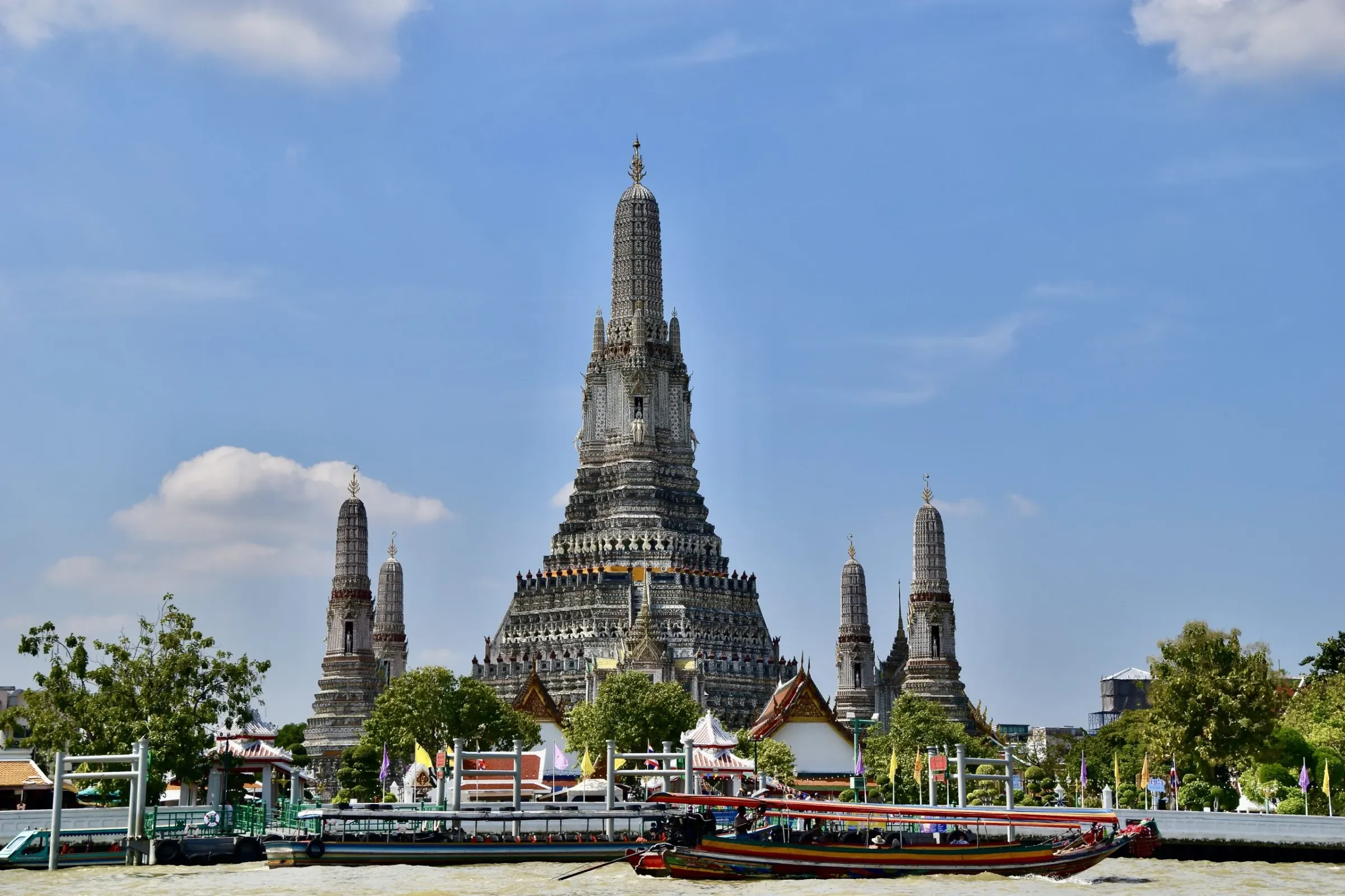
Mandarin Oriental sits in Bang Rak beside the Chao Phraya and Charoen Krung. River City Bangkok and creative businesses are nearby, while Chinatown, the Grand Palace and Wat Arun are better treated as short outings.
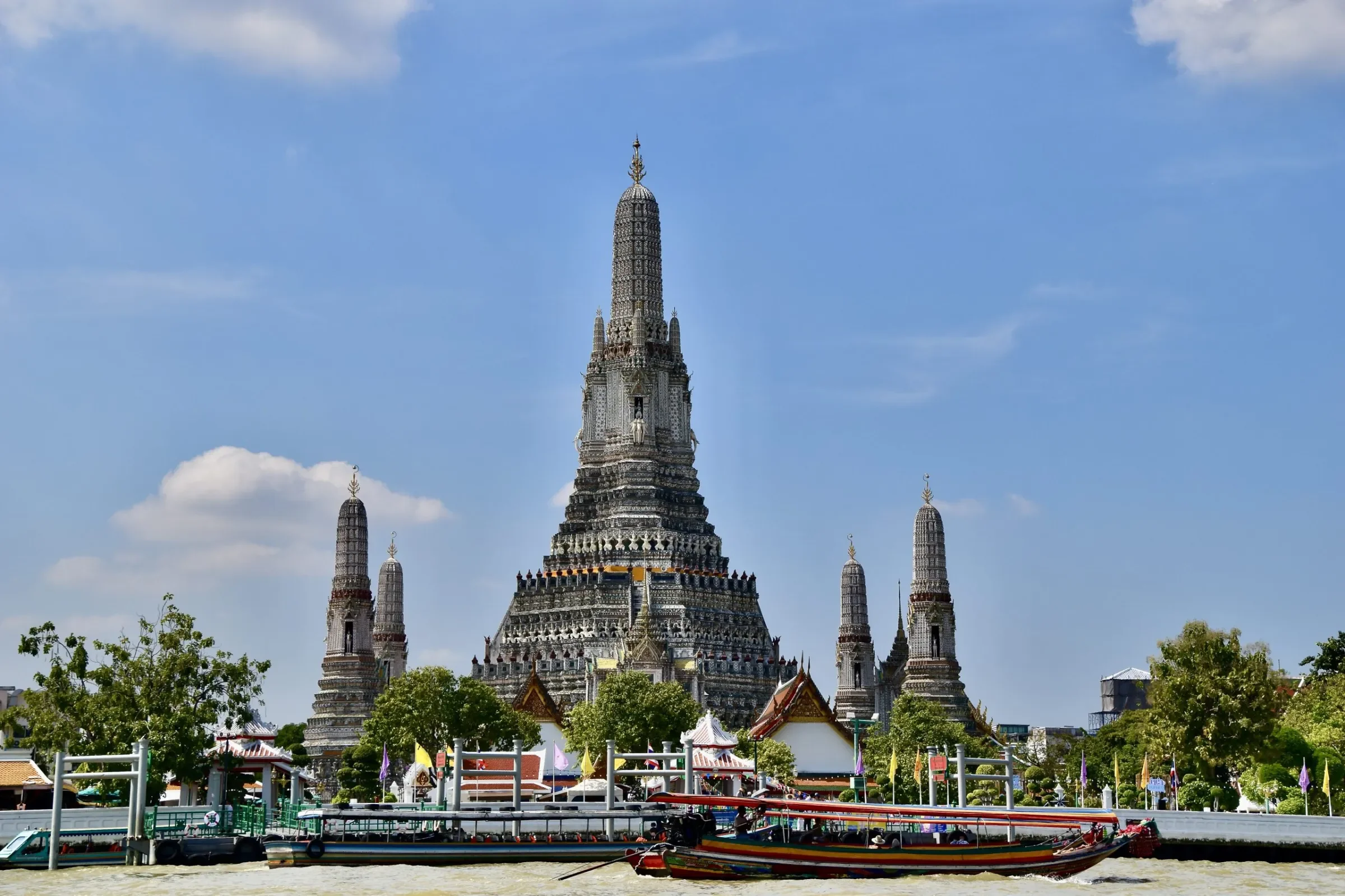
The river is the most distinctive way to orient a first visit. Traveling upstream reveals temples, piers, markets and residential stretches before reaching Wat Arun, the Grand Palace and Wat Phra Kaew.
Charoen Krung tells a different story, with old shophouses, embassies, restaurants, galleries and contemporary design businesses sharing what is often described as Bangkok’s first modern road.
ICONSIAM is directly relevant rather than merely nearby, because the hotel’s complimentary boat makes the shopping and dining complex easy to reach. Chinatown requires more deliberate planning, but its markets, temples and food scene make a worthwhile counterpoint to the calm of the hotel’s riverfront gardens.
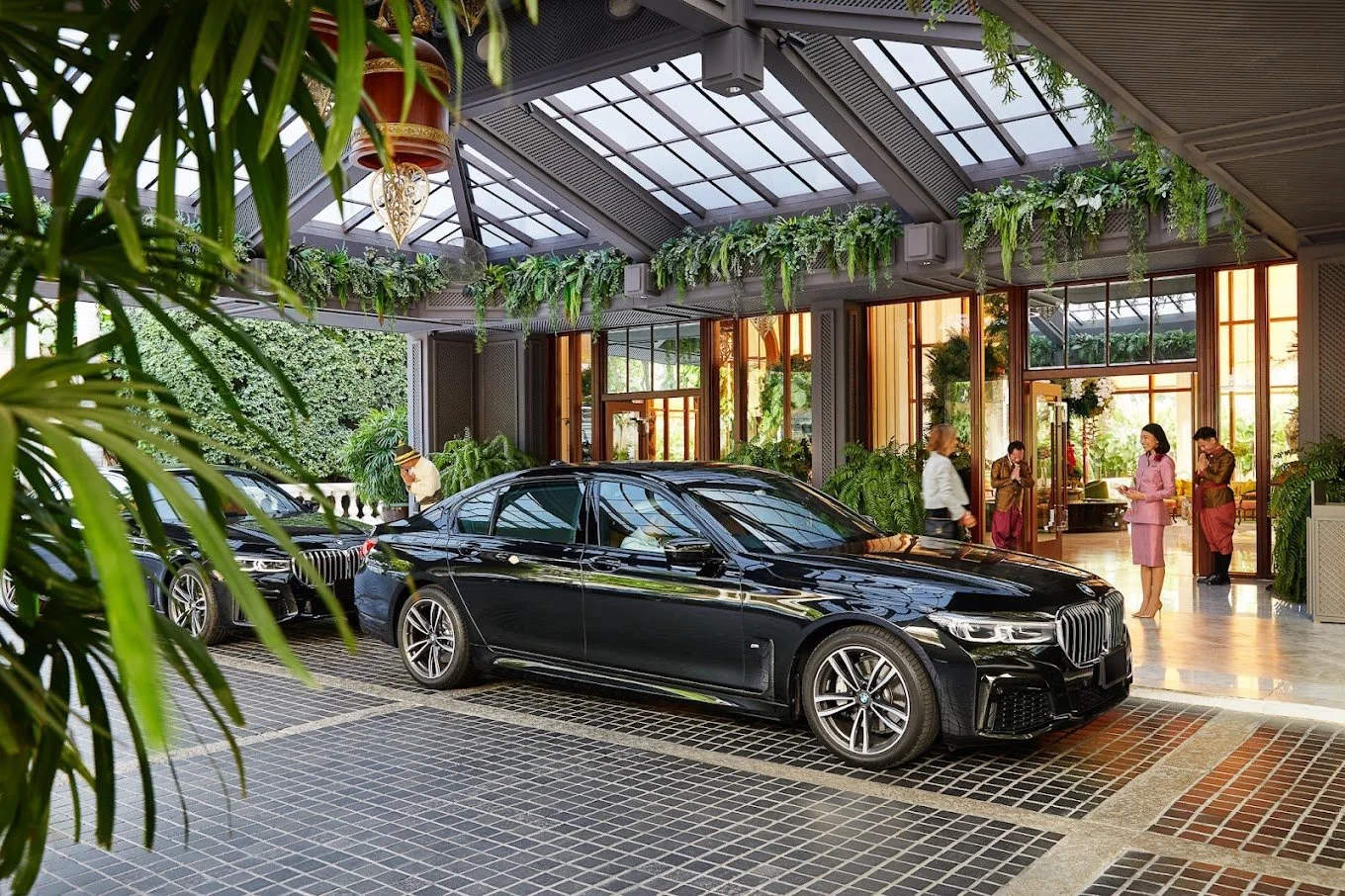
Arriving at Oriental Avenue
Suvarnabhumi Airport (BKK): The hotel can arrange private airport transfers, while taxis and app-based cars are also available; depending on traffic and time of day, the road journey can approach approximately one hour.
Don Mueang International Airport (DMK): Hotel-arranged transfers, taxis and app-based cars are available from Bangkok’s second major airport, with road time similarly dependent on traffic and the time of arrival.
Hotel Car Service: Chauffeured transfers can be reserved through the concierge, which is particularly useful for late-night arrivals, families requiring child seats, guests with substantial luggage or travellers who want accessibility needs confirmed before leaving the airport.
ICONSIAM Shuttle Boat: Complimentary hotel boats currently run between Mandarin Oriental and ICONSIAM at roughly 30-minute intervals, turning the river into a practical transport link rather than simply a view.
Sathorn Pier and BTS: A one-way hotel shuttle to Sathorn Pier is available on request, connecting with Saphan Taksin BTS and public river services; current boat timing should be checked with the hotel on the day.
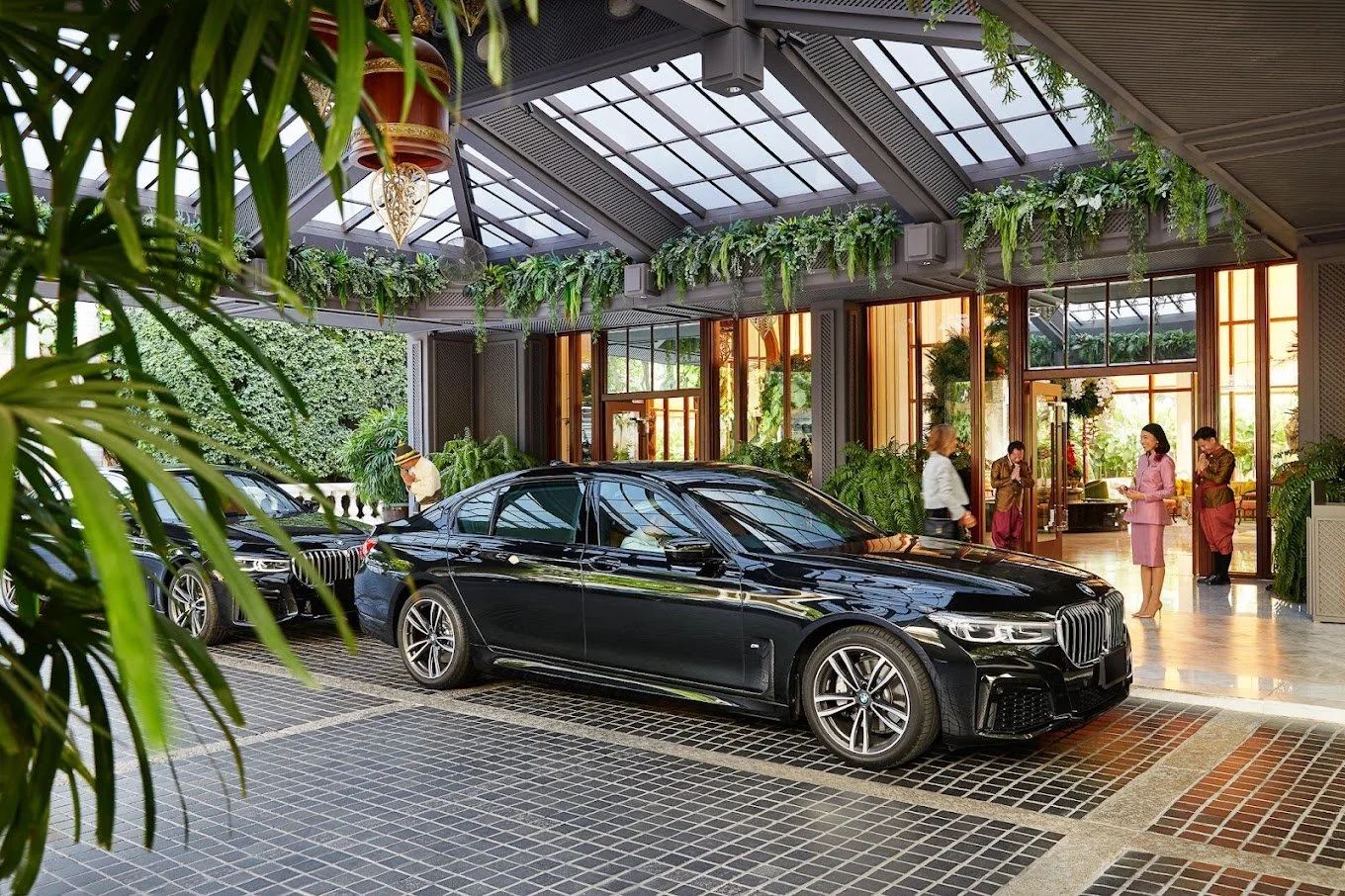
Private Car and Parking: On-site parking and valet service are available, although road congestion around central Bangkok means a car is not always the most efficient way to move between riverside destinations.
A Hotel Whose History Still Has a Daily Use
Mandarin Oriental, Bangkok works because its history affects daily use: where afternoon tea is served, how suites are named, which materials appear in the guestrooms and why the shuttle boat still matters.
A two-Michelin-starred dinner by Anne-Sophie Pic, a cold-plunge recovery session, a century-old teak spa house and a nineteenth-century Authors’ Wing can all belong to the same stay without forcing the property to choose between heritage and modernity.
At 150 years old, its strongest quality is not simply longevity. It is the ability to make the Chao Phraya feel like part of the hotel rather than scenery beyond the windows – a route to dinner, a way into the city and the constant thread connecting one generation of the property to the next.