Barcelona, Spain | Hotel Arts Barcelona
Where Barcelona Meets the Mediterranean
Barcelona is defined by contrasts.
Gothic streets lead toward wide Modernist avenues. Gaudí’s architecture coexists with the disciplined geometry of the Eixample, while the historic city eventually gives way to beaches, marinas and the Mediterranean.
Hotel Arts Barcelona occupies the point where those versions of the city begin to overlap.
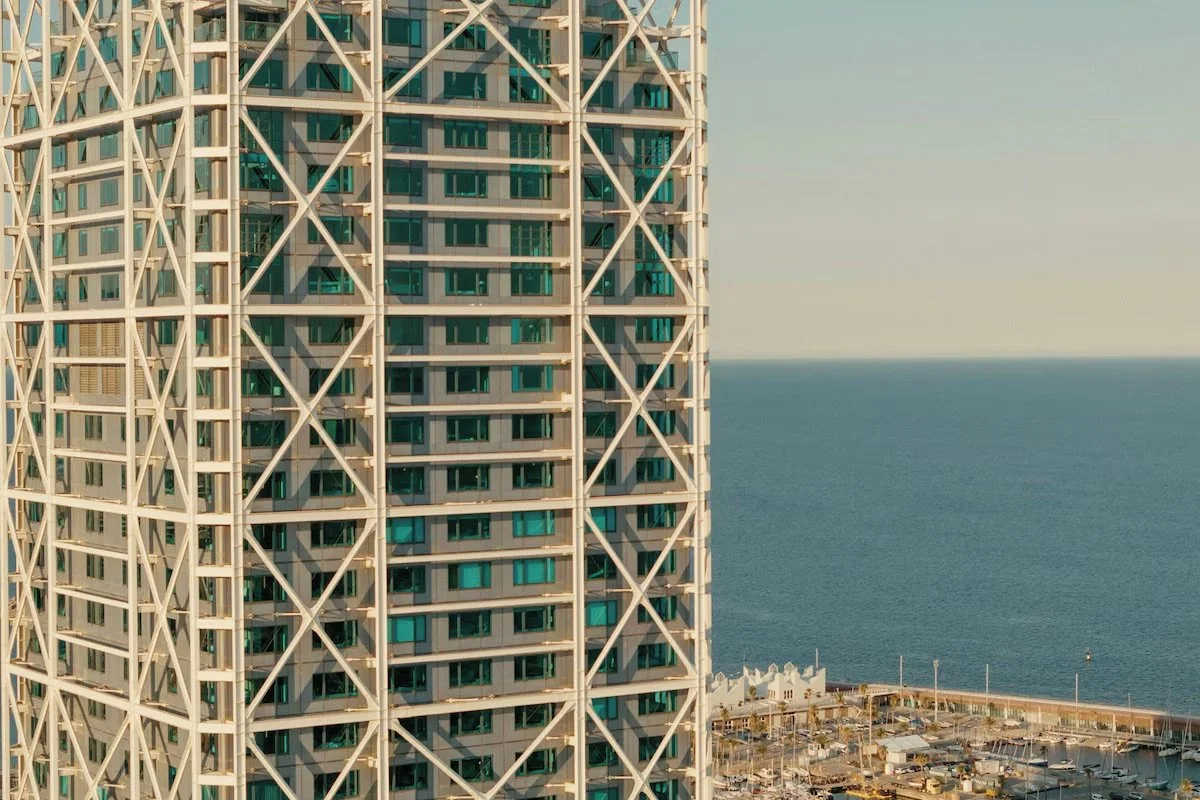
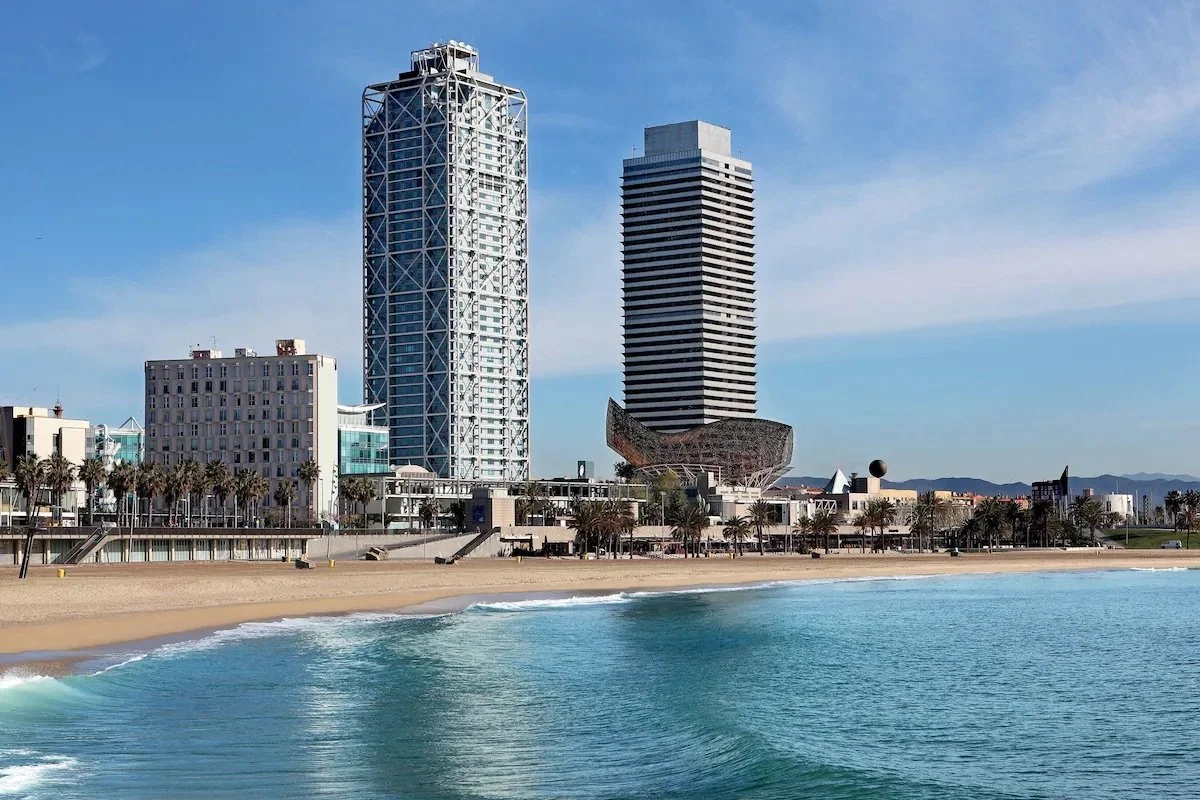
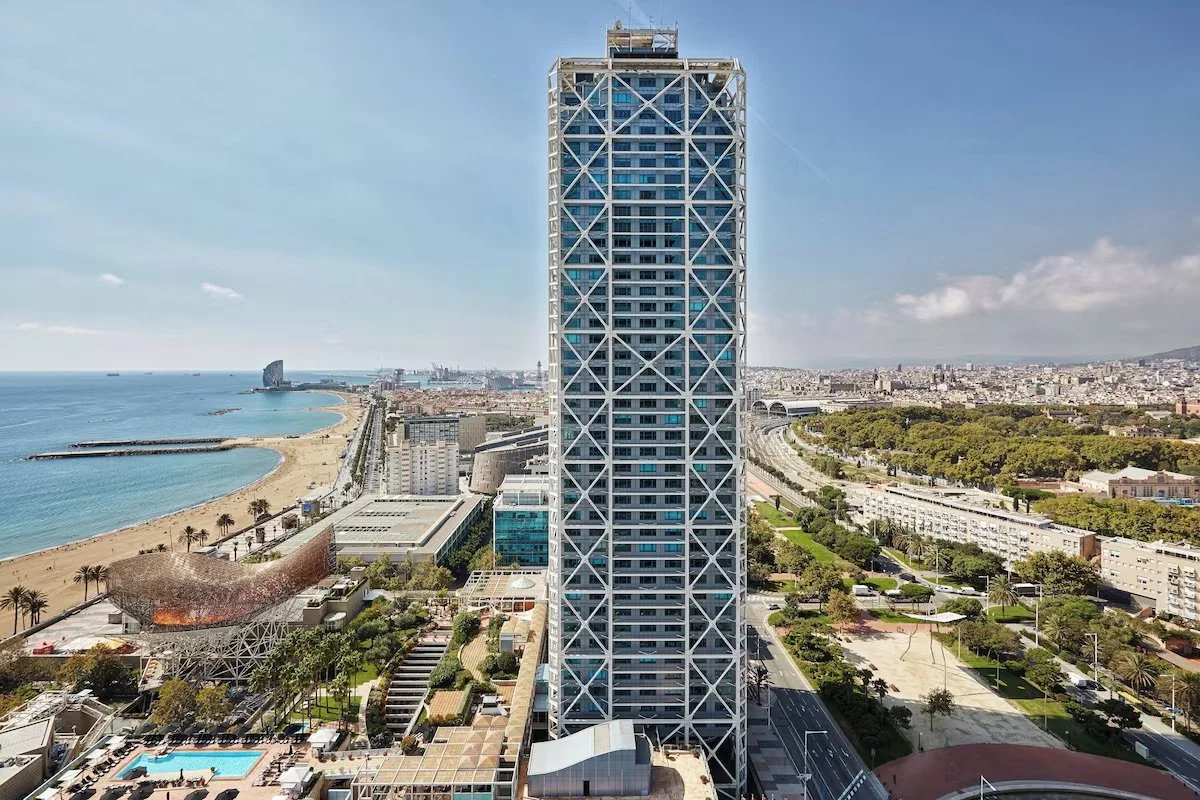
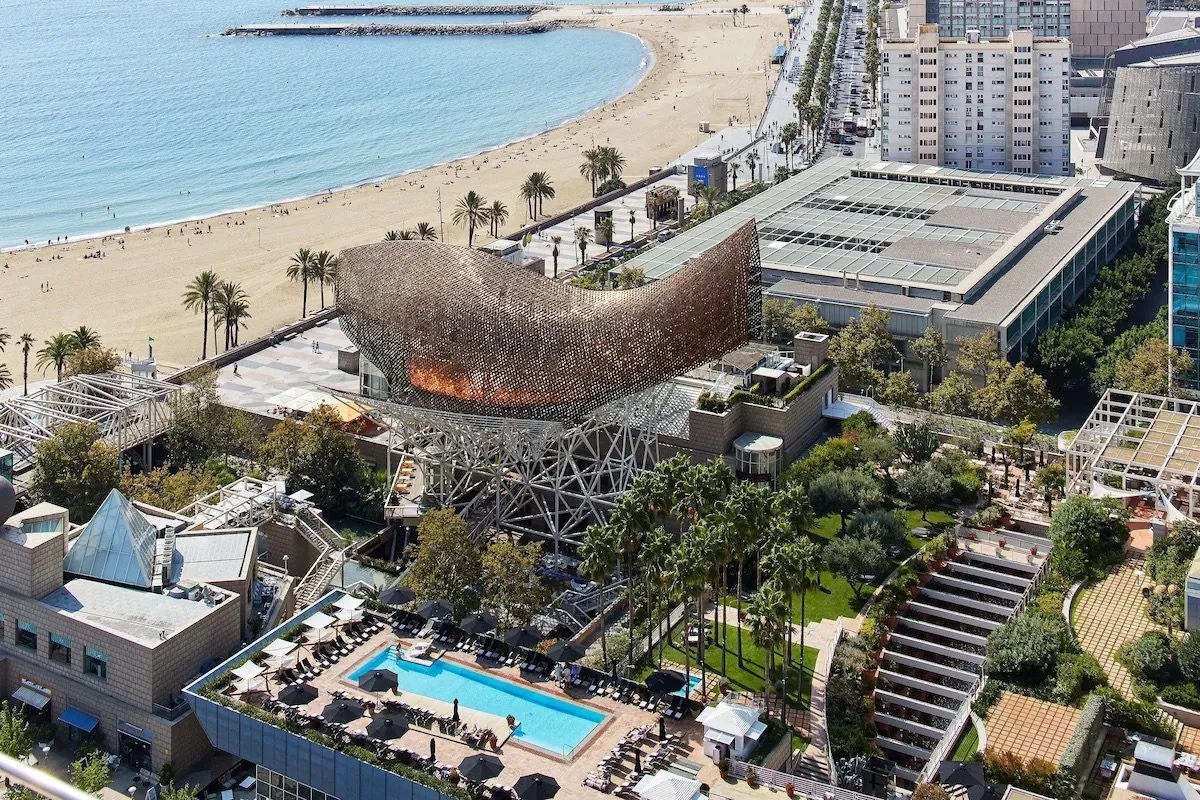
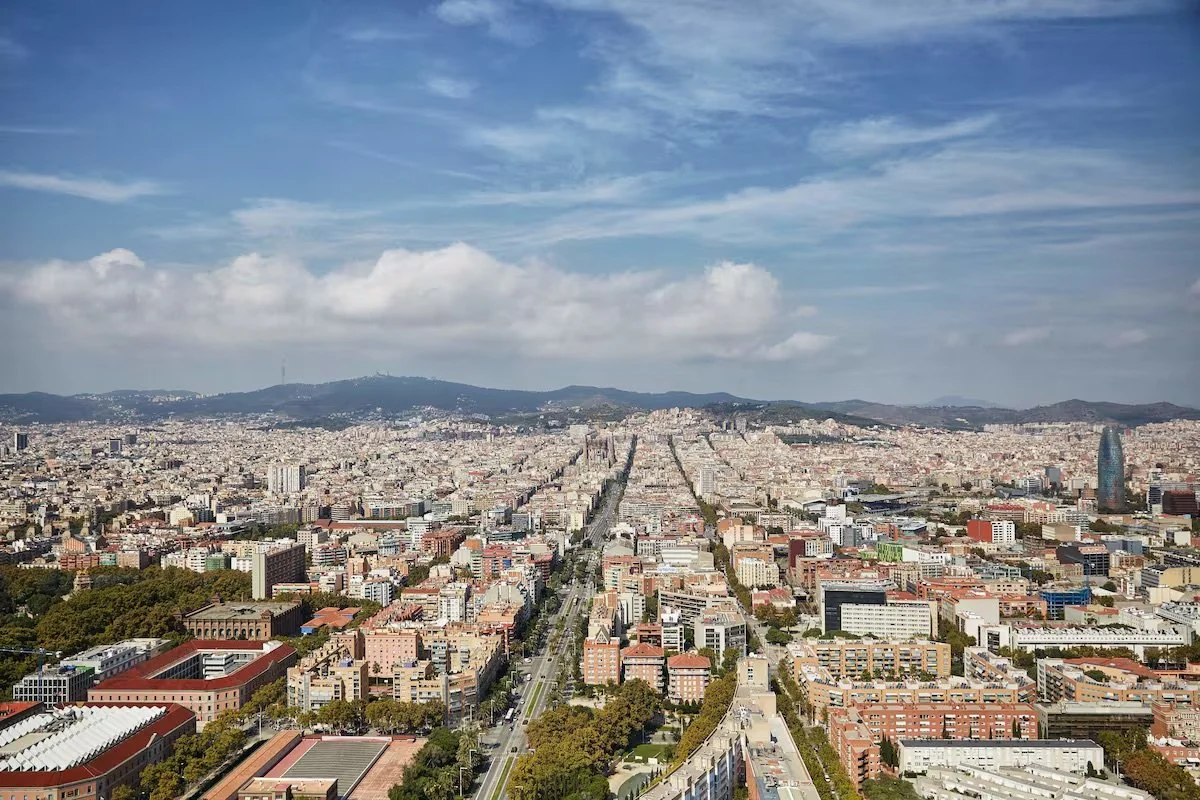
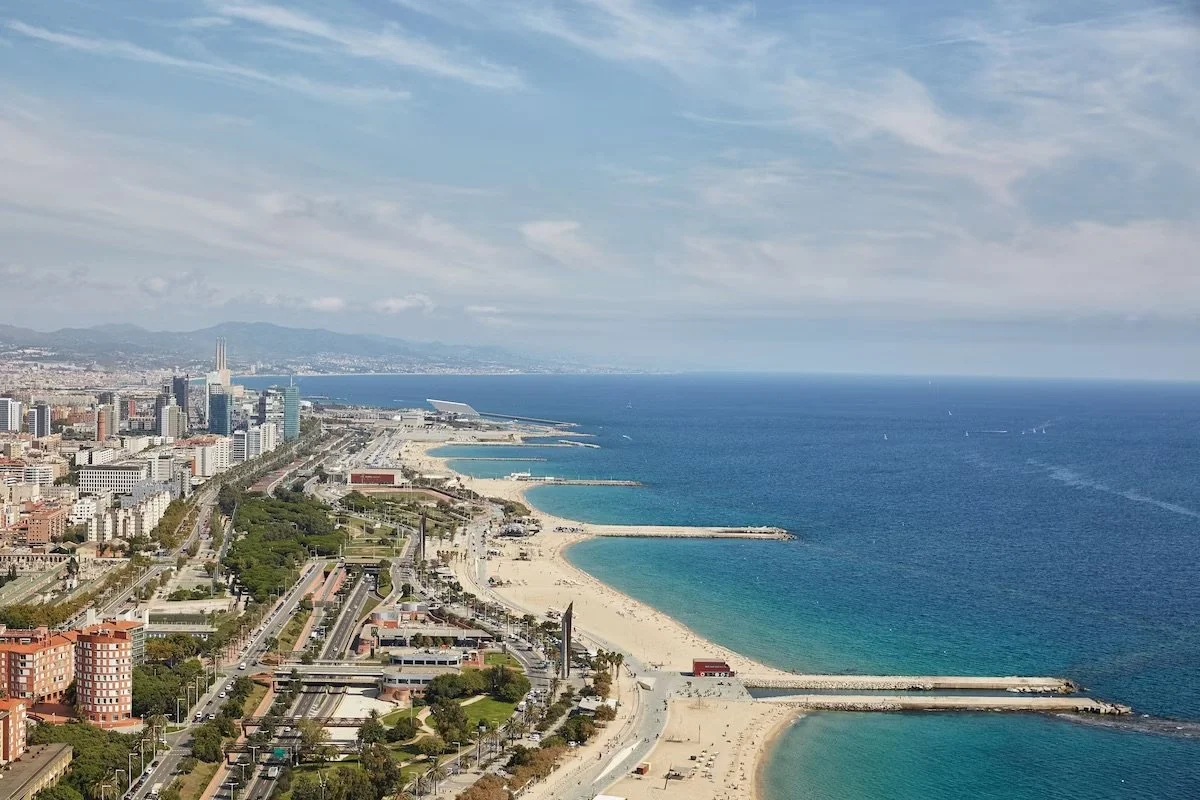
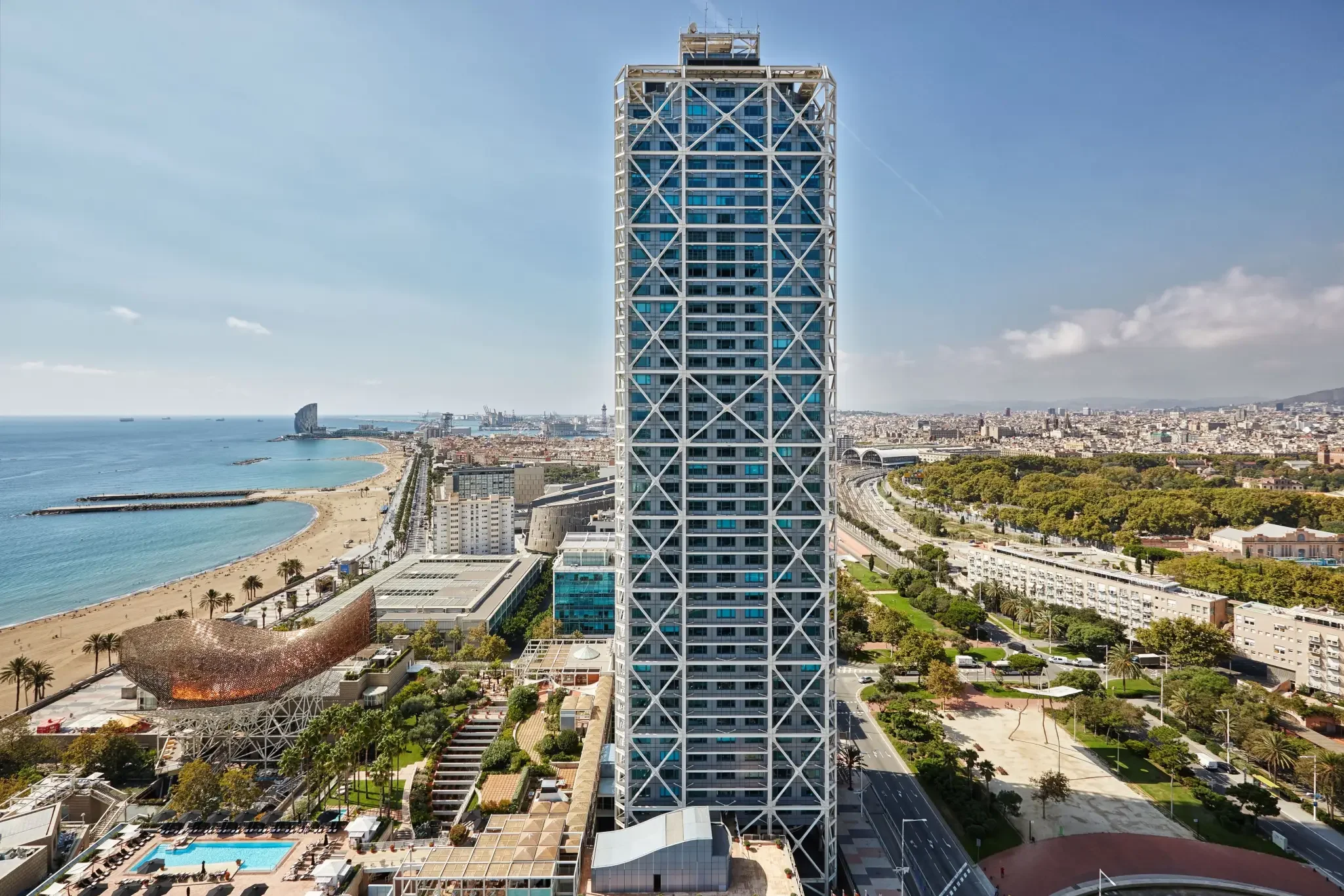
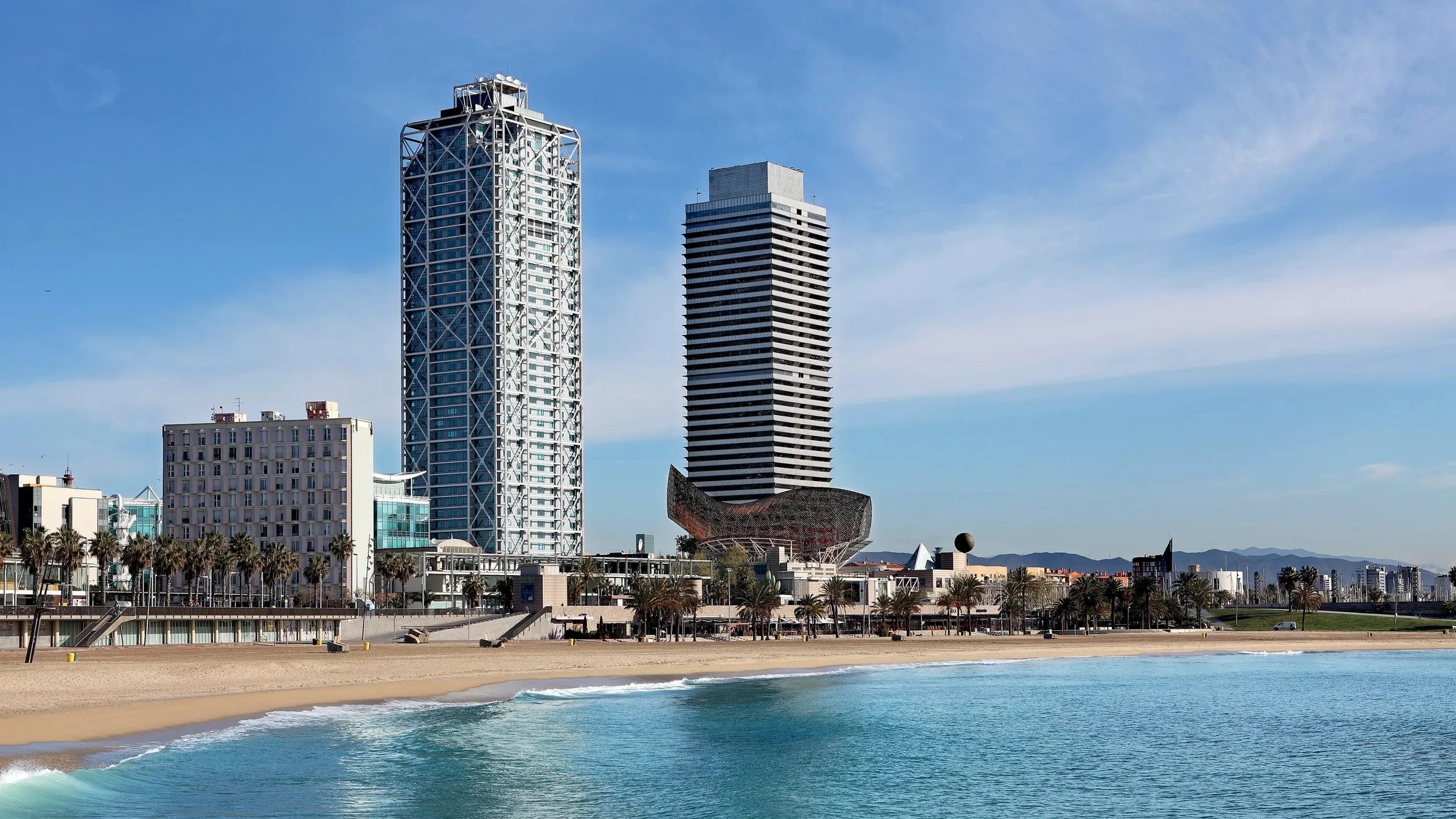
The 44-storey glass-and-steel tower rises beside Port Olímpic, just behind Frank Gehry’s monumental golden Peixsculpture and within walking distance of Barceloneta Beach. From the upper floors, one side of the hotel looks across the Mediterranean while the other faces back toward the dense urban landscape of Barcelona.
For us, that dual orientation is central to the appeal.
Guests can spend a morning exploring the Gothic Quarter, Passeig de Gràcia or the Sagrada Família and return for an afternoon beside the pool without feeling as though they have left the city for a separate resort district.
The hotel combines 432 guestrooms and suites, extensive outdoor space, Michelin-starred dining, family programming and a substantial wellness offering within one of Barcelona’s most recognizable contemporary buildings.
It is also in the middle of an important new chapter.
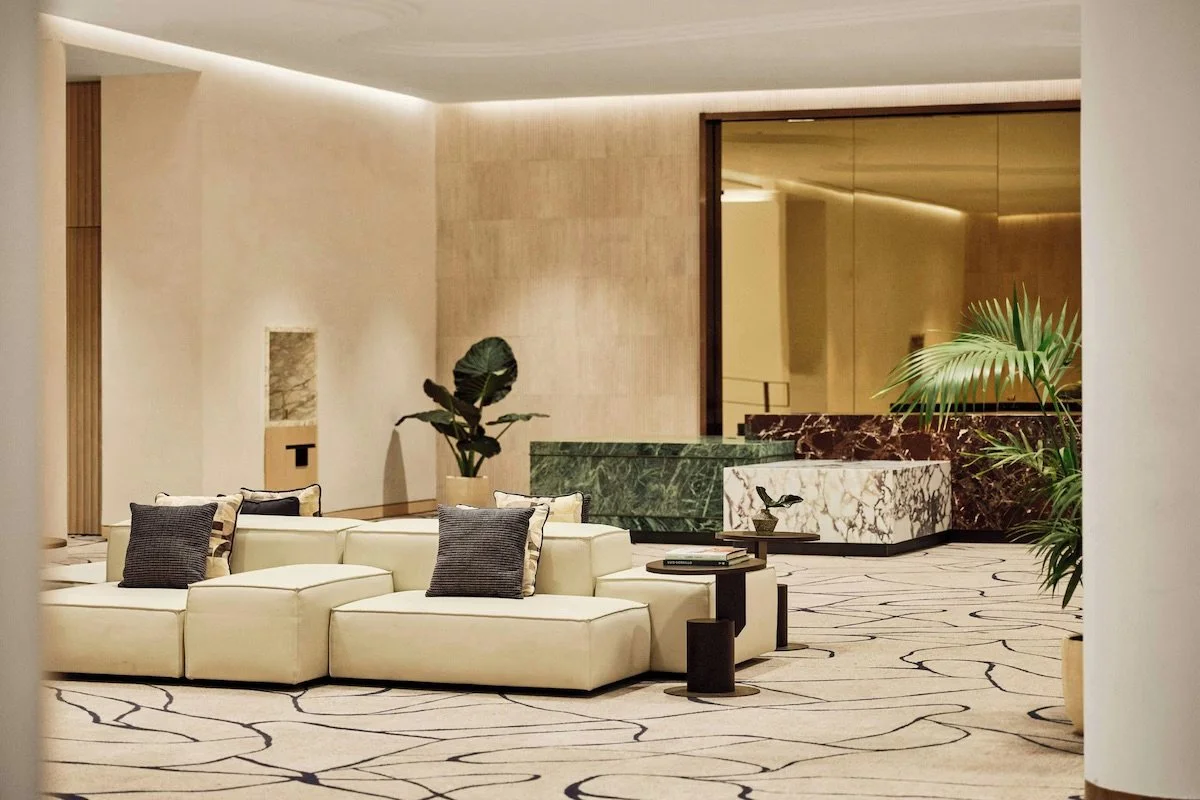
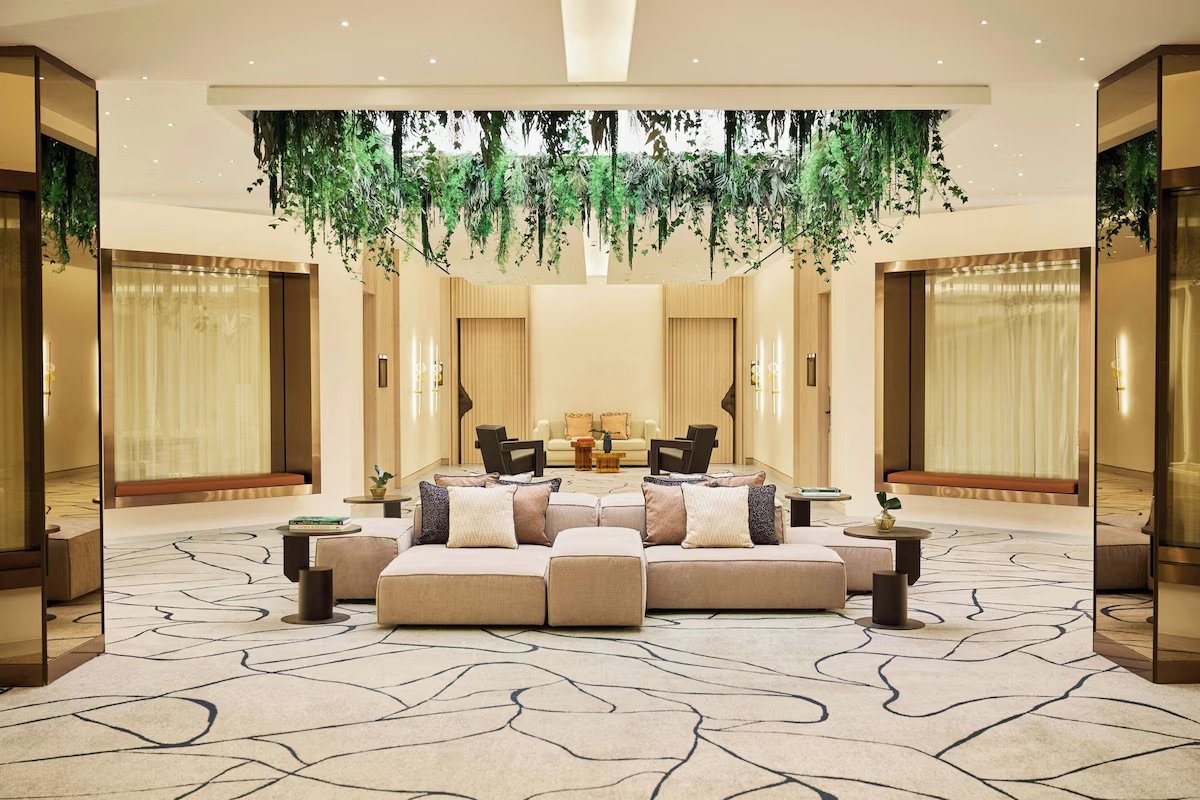
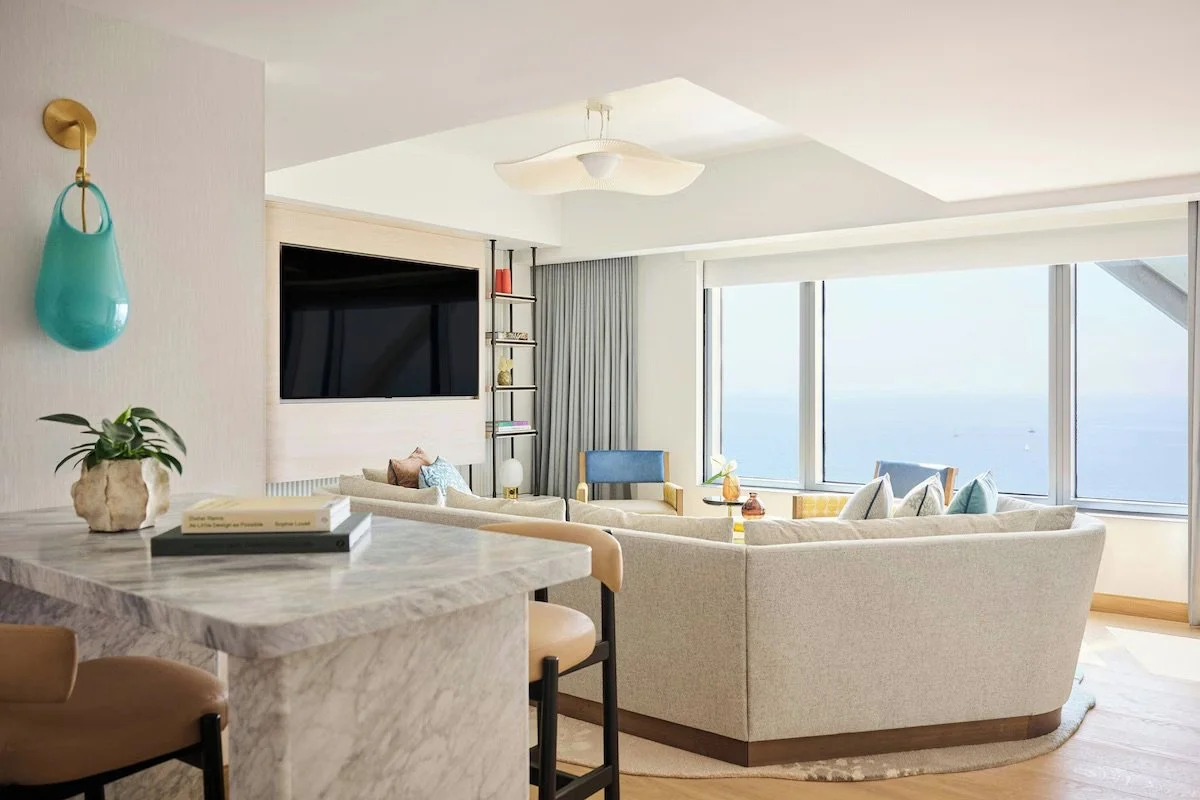
A multi-phase transformation led by Meyer Davis has already reimagined the guestrooms and suites, while additional public areas continue to evolve as part of a wider renovation scheduled to progress through 2027.
The result is a hotel with one foot in Barcelona’s Olympic-era transformation and another firmly directed toward the city’s future.
An Olympic Legacy on the Waterfront
Hotel Arts is inseparable from Barcelona’s transformation around the 1992 Summer Olympics.
Before the Games, much of the city’s eastern waterfront was industrial and disconnected from everyday life. Olympic development helped reopen this part of Barcelona to the sea, introducing beaches, promenades, housing, public spaces and the new Port Olímpic.
Hotel Arts was conceived as one of the architectural anchors of that transformation.
The tower was completed in connection with the Olympic redevelopment and subsequently opened as a hotel in 1994, becoming one of the earliest Ritz-Carlton-operated properties in Europe.
Together with the neighboring Torre Mapfre, the tower created a distinctive pair of vertical landmarks at the entrance to the Olympic Port.
More than three decades later, the surrounding district has matured considerably.
Barcelona’s beaches are now integral to the city, Barceloneta has become one of its most visited neighborhoods and the waterfront connects naturally with Ciutadella Park, El Born and the historic center.
Hotel Arts has remained one of the most visible reminders of the moment Barcelona consciously turned back toward the Mediterranean.
Its current transformation continues that story.
The first major phase, completed in 2025, reworked all guestrooms and suites. Additional public areas, wellness facilities and outdoor spaces continue to be renewed in phases, with selected temporary closures and relocations possible while the project progresses.
For us, that context makes the property more interesting than a conventional beachfront luxury hotel.
It is part of the physical history of modern Barcelona.
An Exposed Structure Reinterpreted for Today
Hotel Arts was designed by Bruce Graham of Skidmore, Owings & Merrill, the architectural firm also associated with some of the most influential American skyscrapers of the 20th century.
The building rises approximately 154 meters above the Barcelona waterfront.
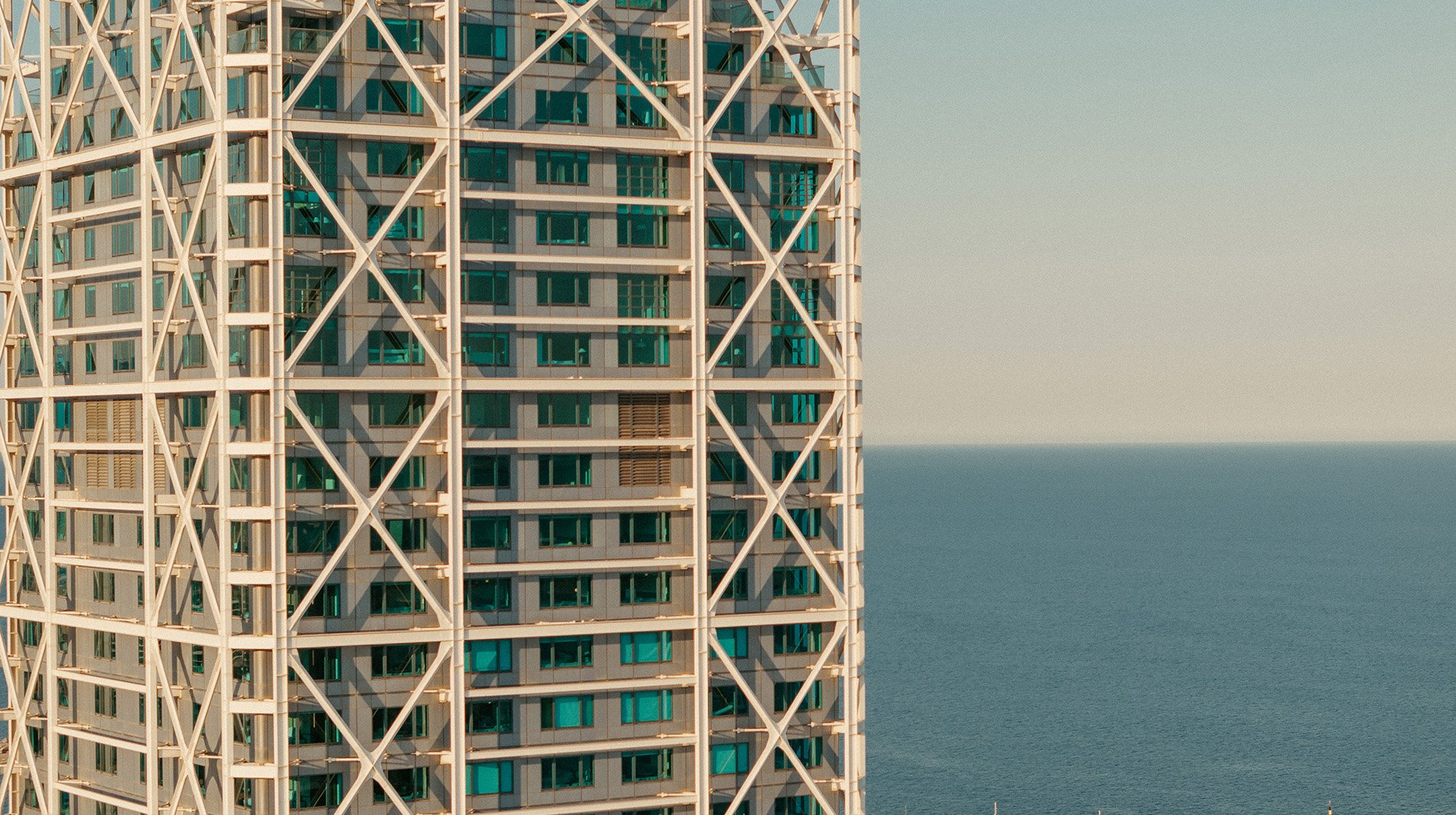
Its defining feature is the white-painted steel structure that sits visibly outside the glass façade.
Rather than hiding the building’s structural system, SOM made it part of the architecture. Large diagonal braces and interconnected frames create an external megastructure around the tower, giving Hotel Arts a distinctly technological character that contrasts sharply with much of historic Barcelona.
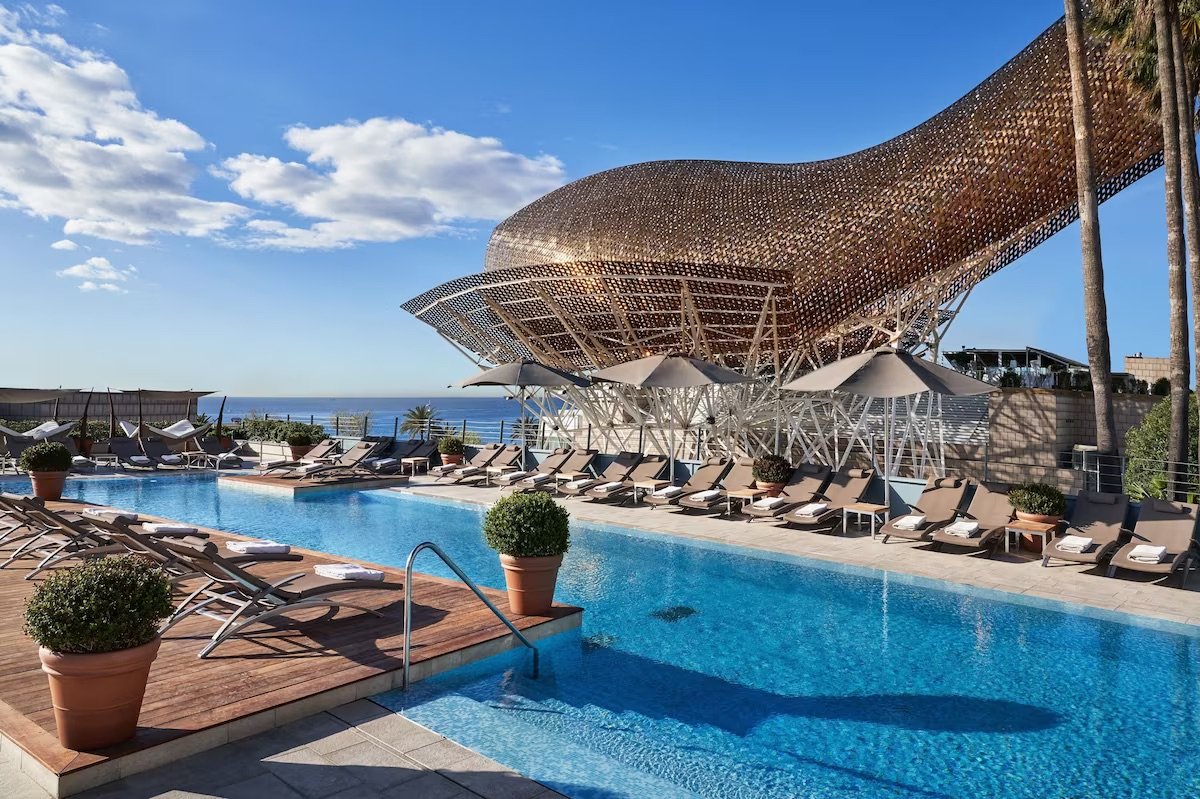
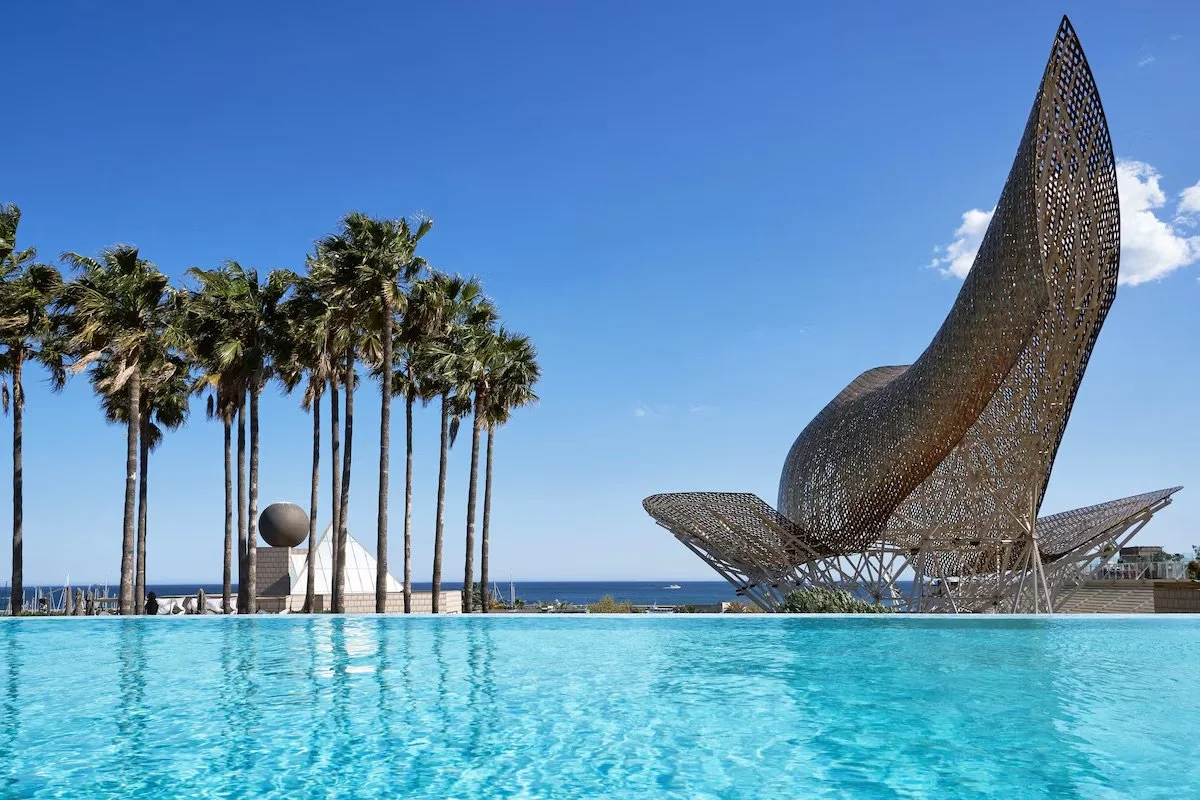
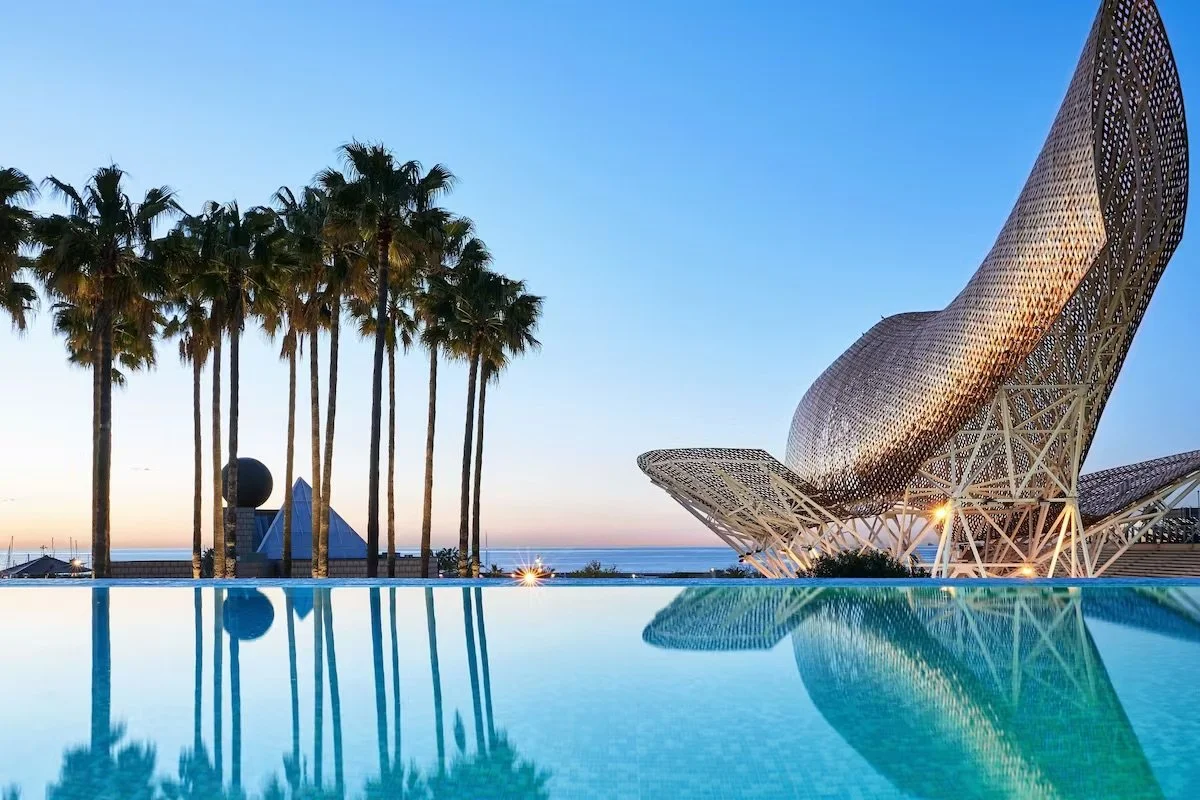
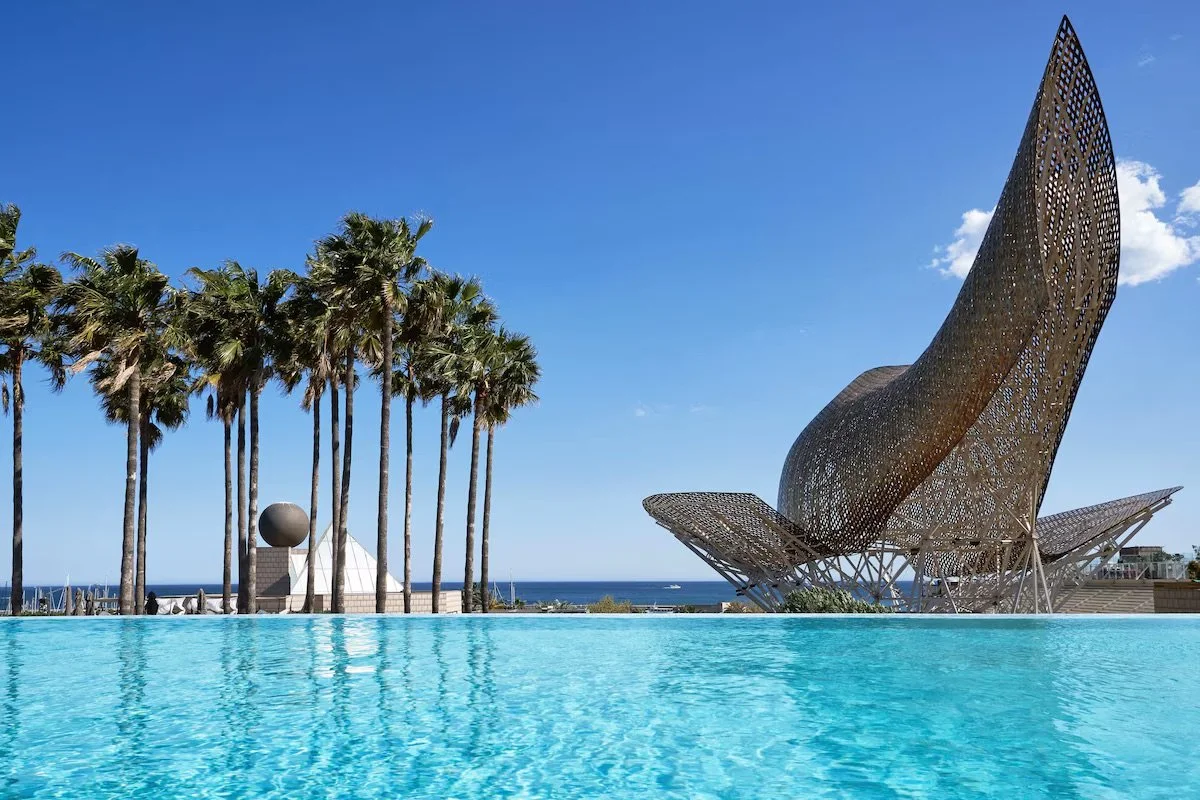
At ground level, that modernity meets another landmark of the Olympic era: Frank Gehry’s Peix, a monumental fish sculpture whose metallic surface changes with the Mediterranean light.
Inside, the current design tells a softer story.
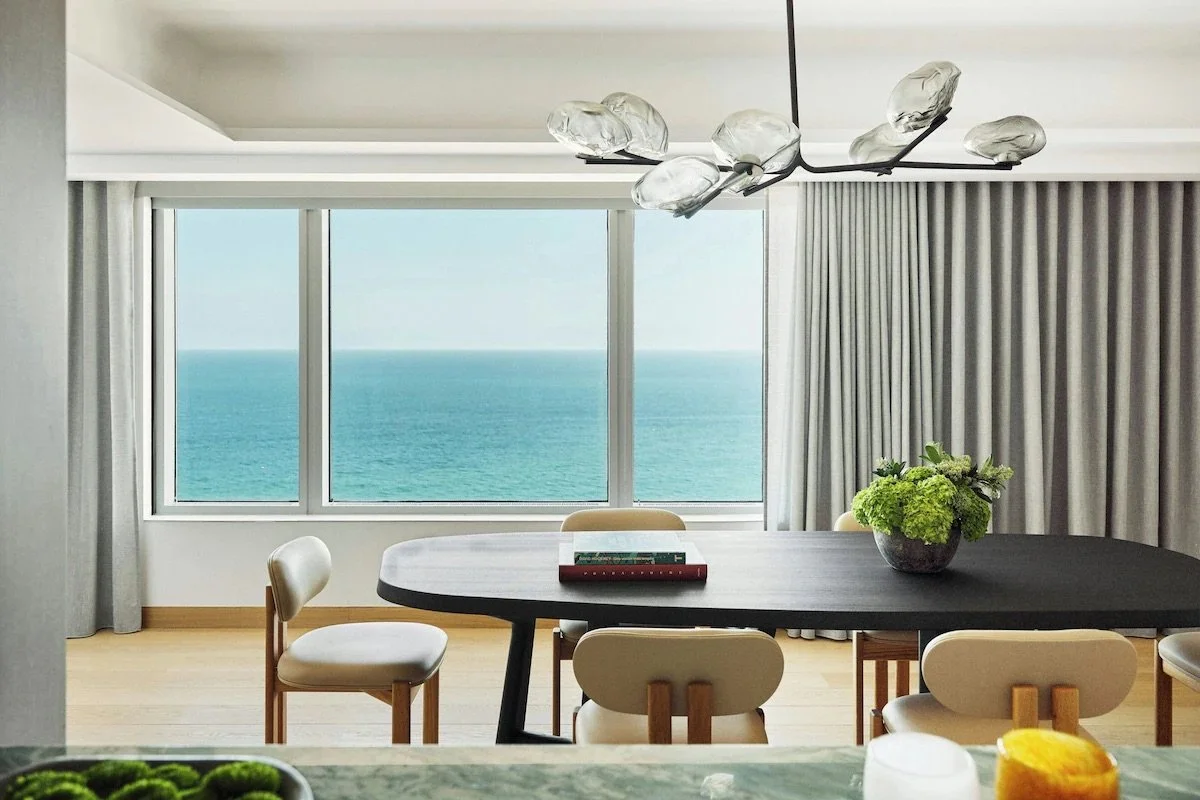
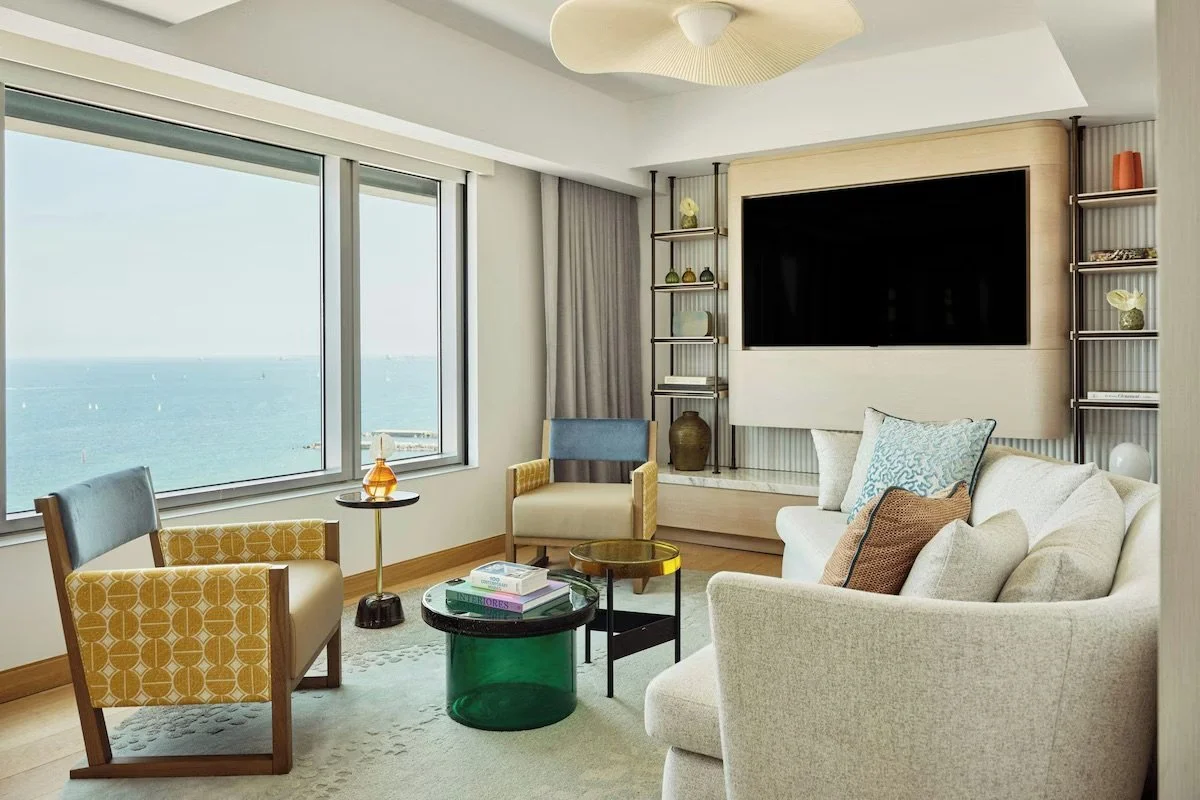
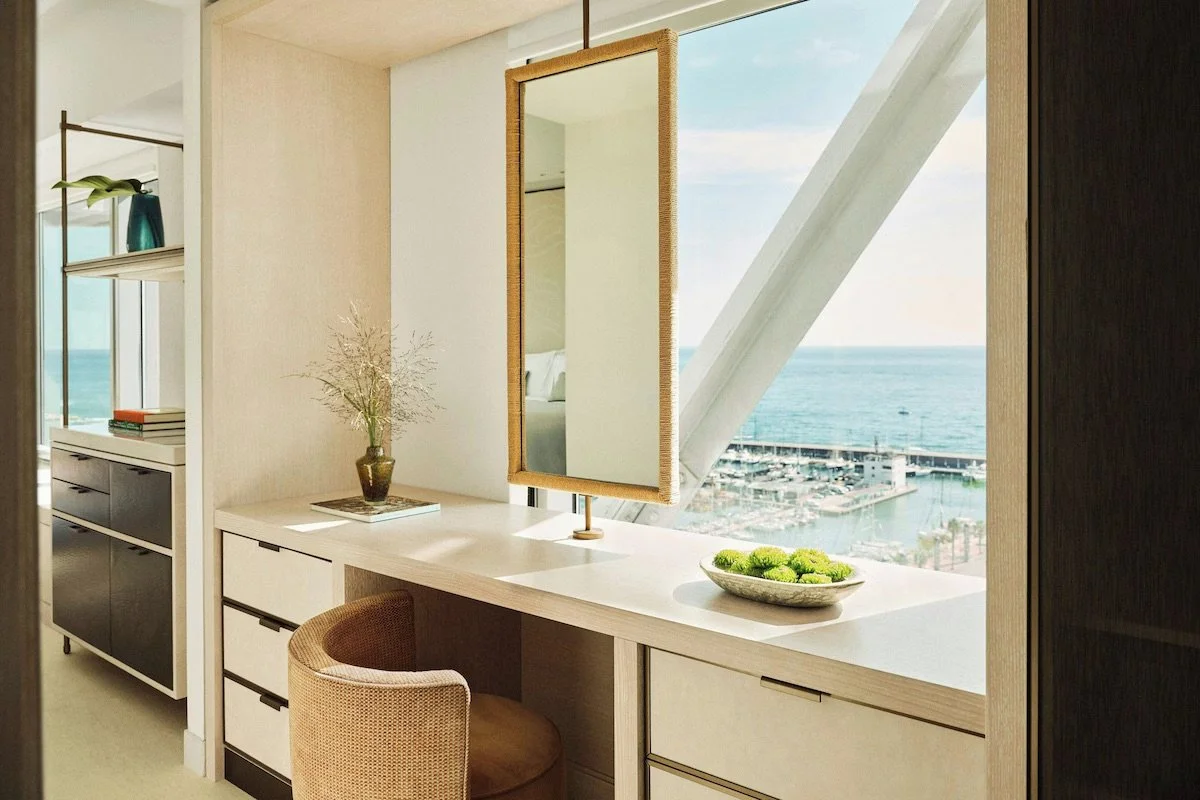
Meyer Davis led the recent redesign of the rooms and suites, drawing inspiration from one of Barcelona’s most basic geographical contrasts: mar and muntanya — sea and mountain.
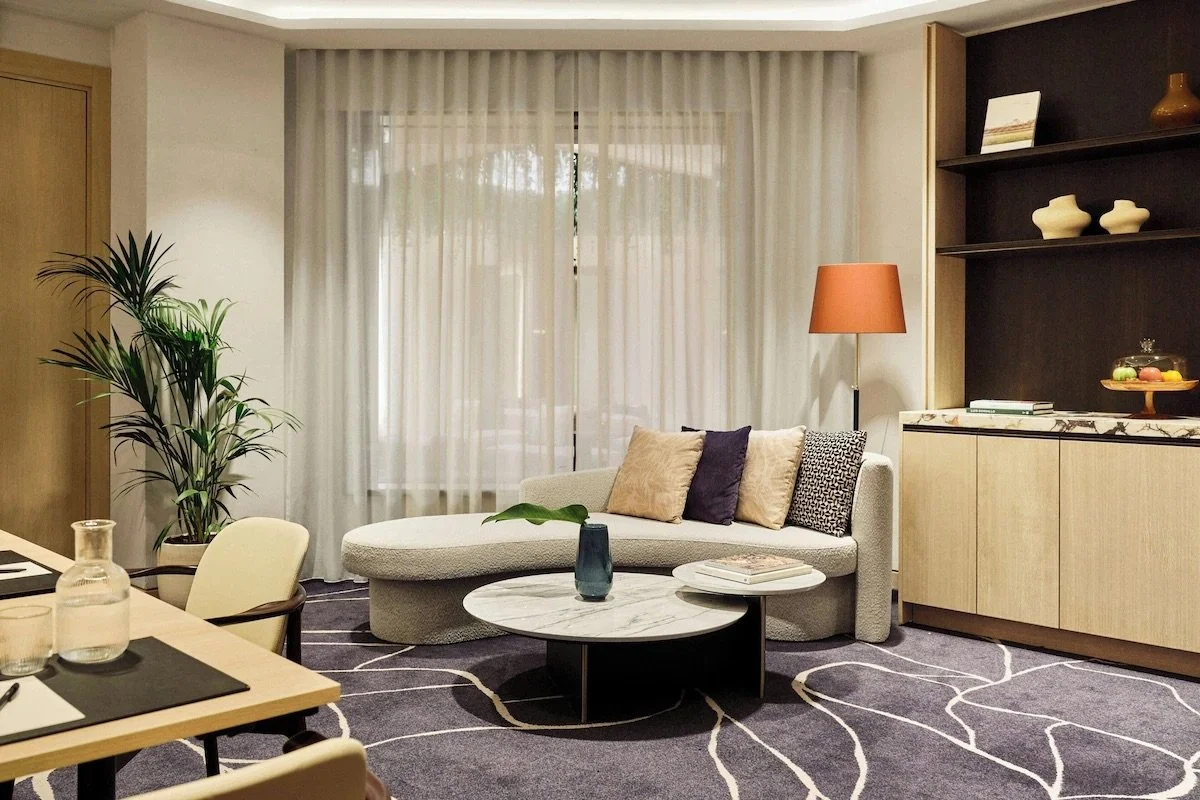
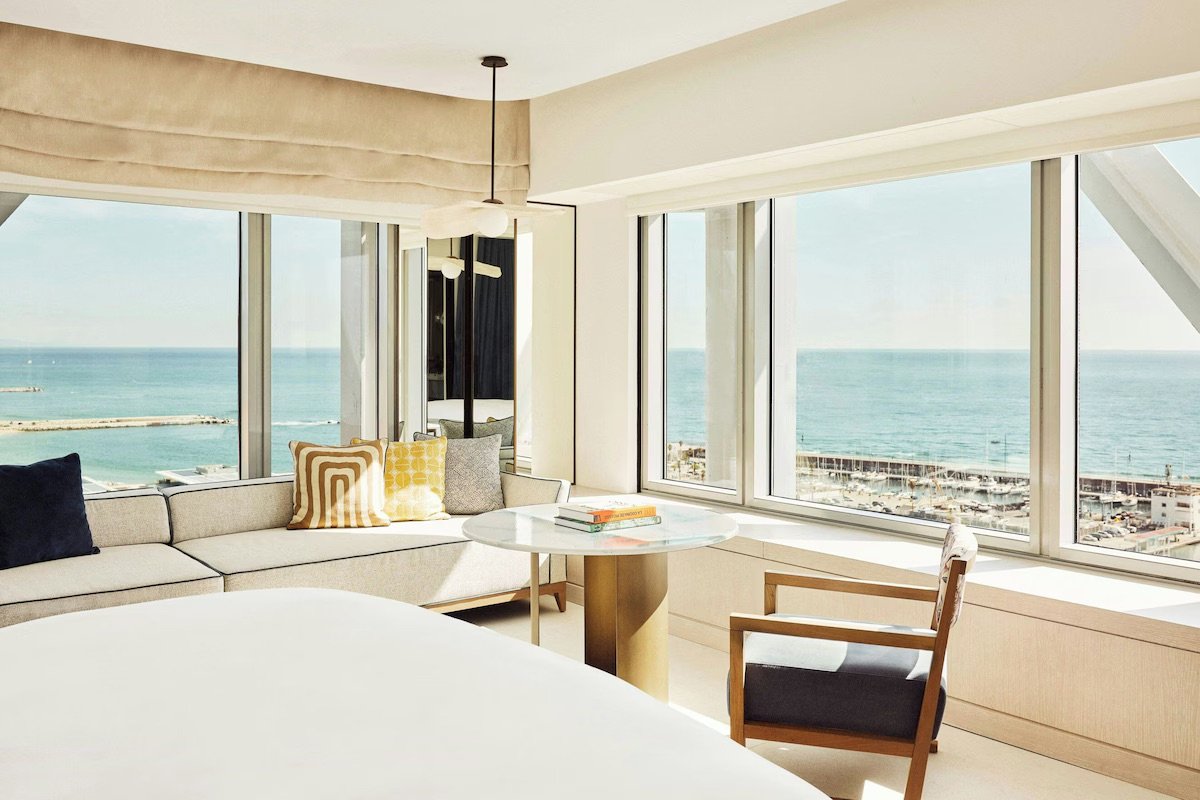
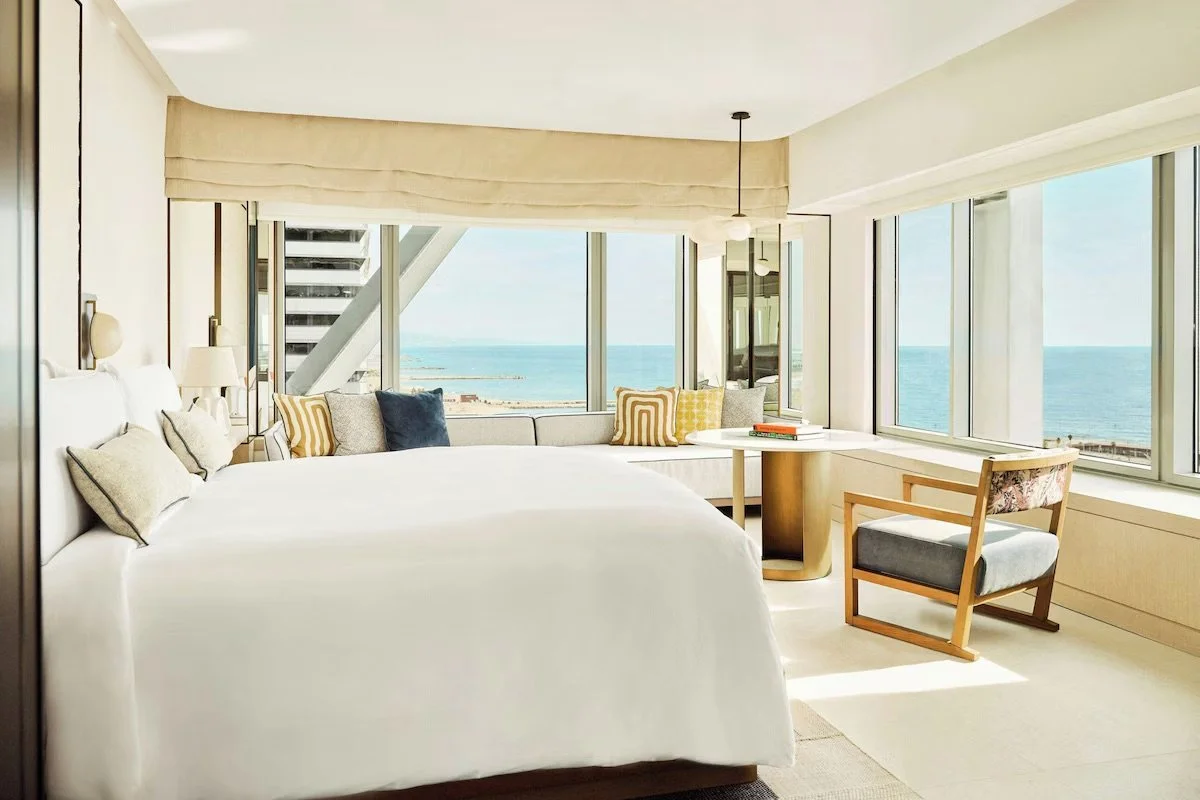
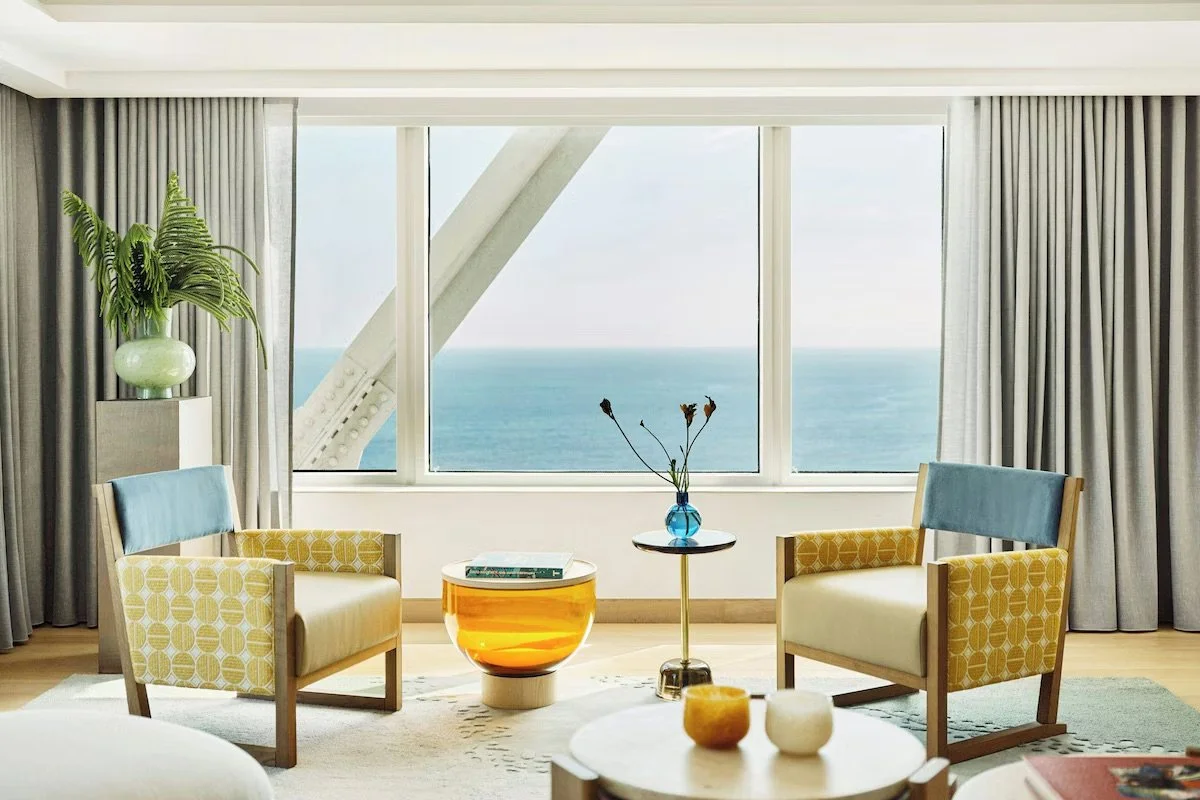
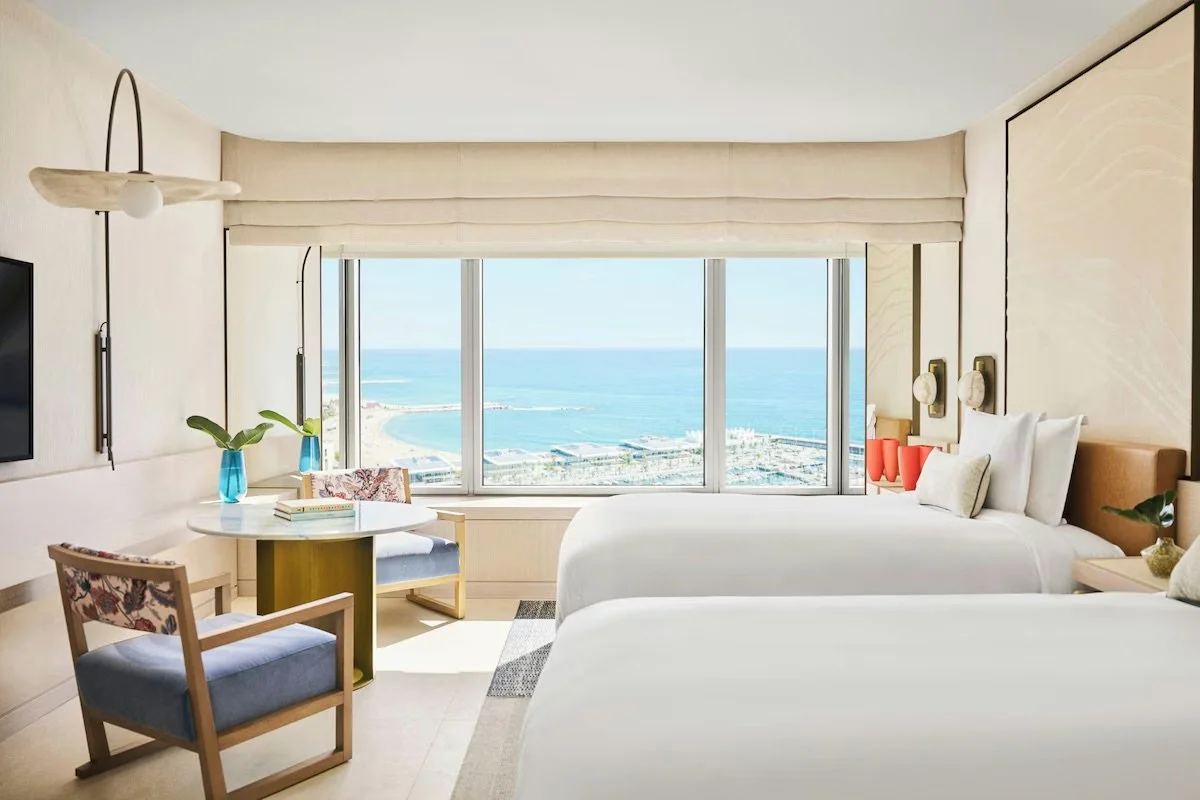
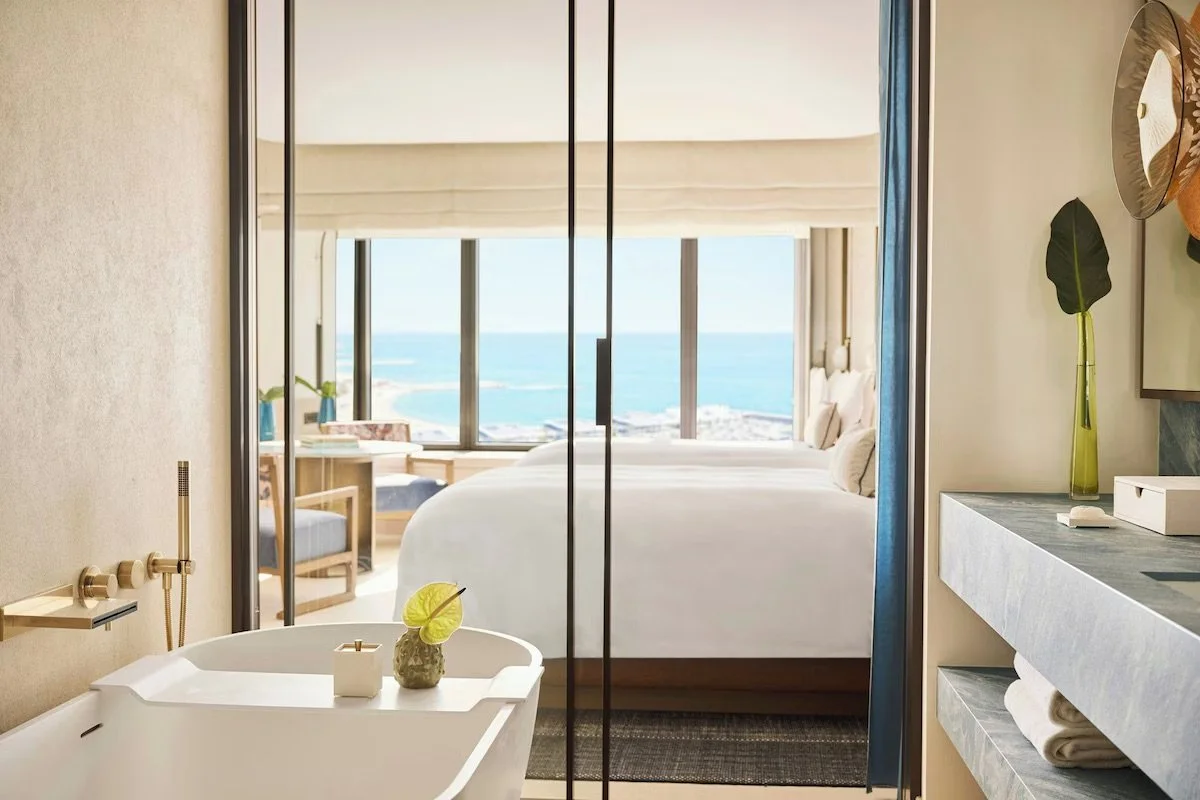
Sea-facing accommodations use softer blues, sand tones and fluid shapes, while rooms oriented toward the city and hills introduce warmer, earthier shades.
Straight lines reference the disciplined geometry of Barcelona’s street grid, while curved forms bring a more organic counterpoint associated with the city’s Modernist architecture.
Local craftsmanship is also part of the redesign.
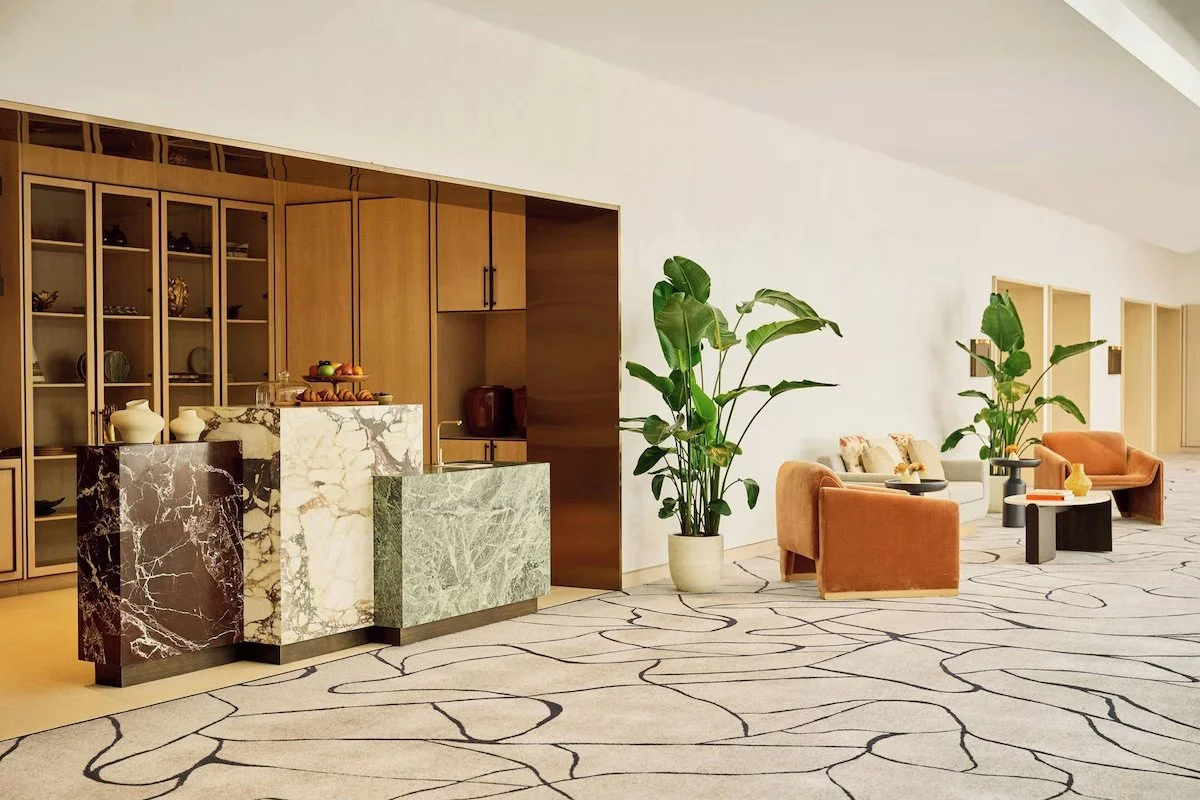
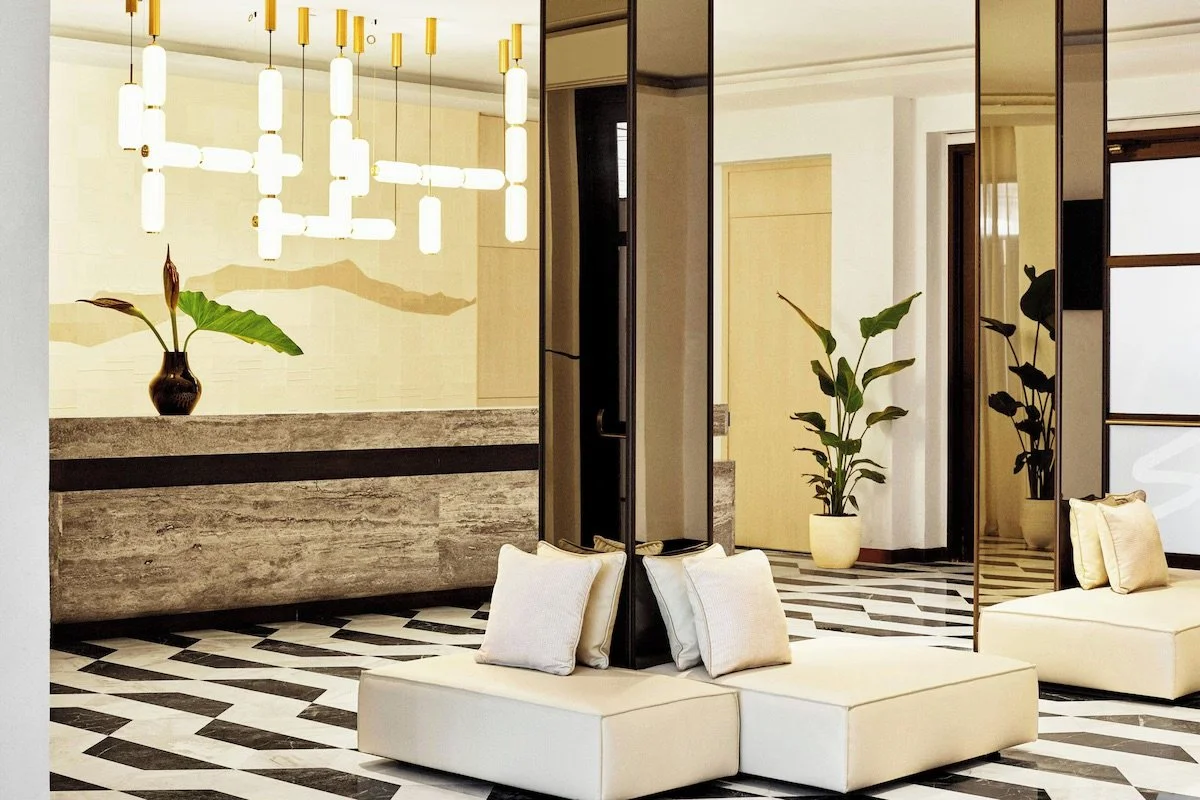
Textiles, ceramic details, custom furnishings and pieces created with Spanish artisans keep the interiors connected to the destination rather than simply updating them with a generic international luxury aesthetic.
For us, the contrast works.
The tower remains hard-edged and architectural from the outside.
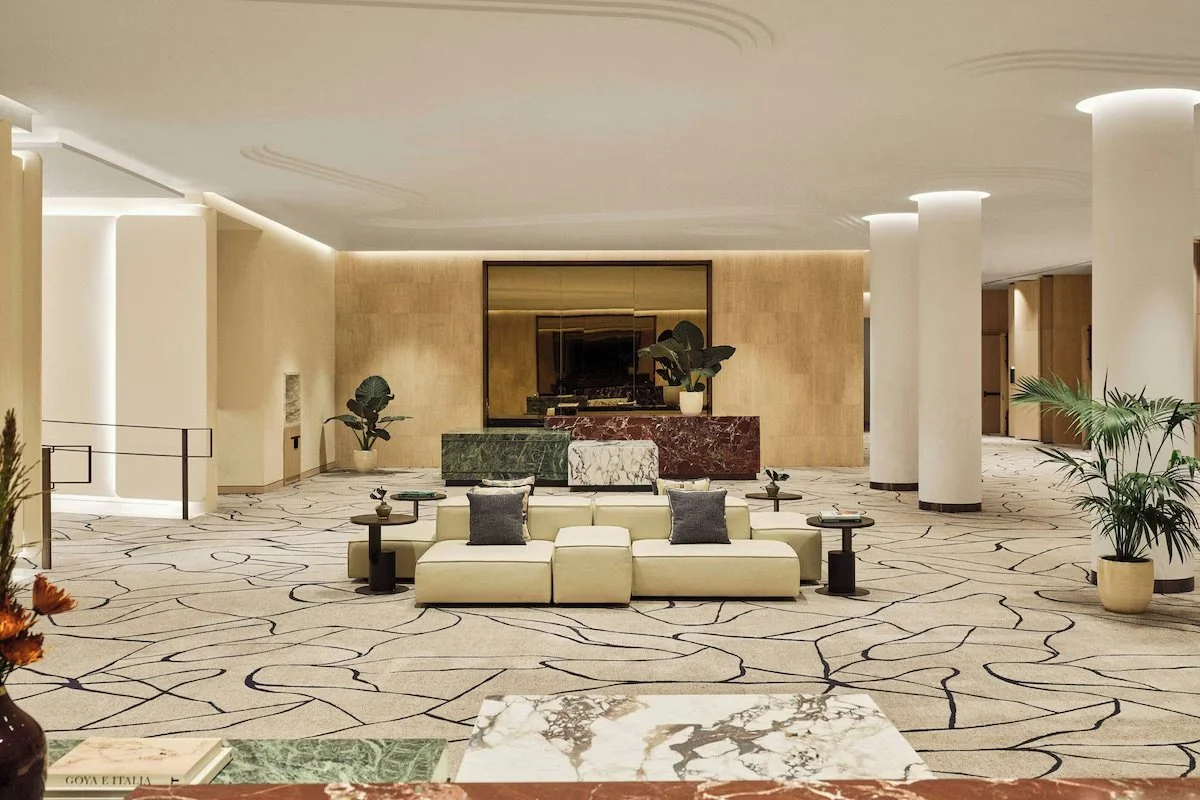
Inside, the rooms have become noticeably warmer, quieter and more residential.
Choosing Between Barcelona and the Sea
Hotel Arts Barcelona’s accommodations begin at approximately 484 sq. ft., already generous by central Barcelona standards, with floor-to-ceiling windows making the outlook almost as important as the room category itself.
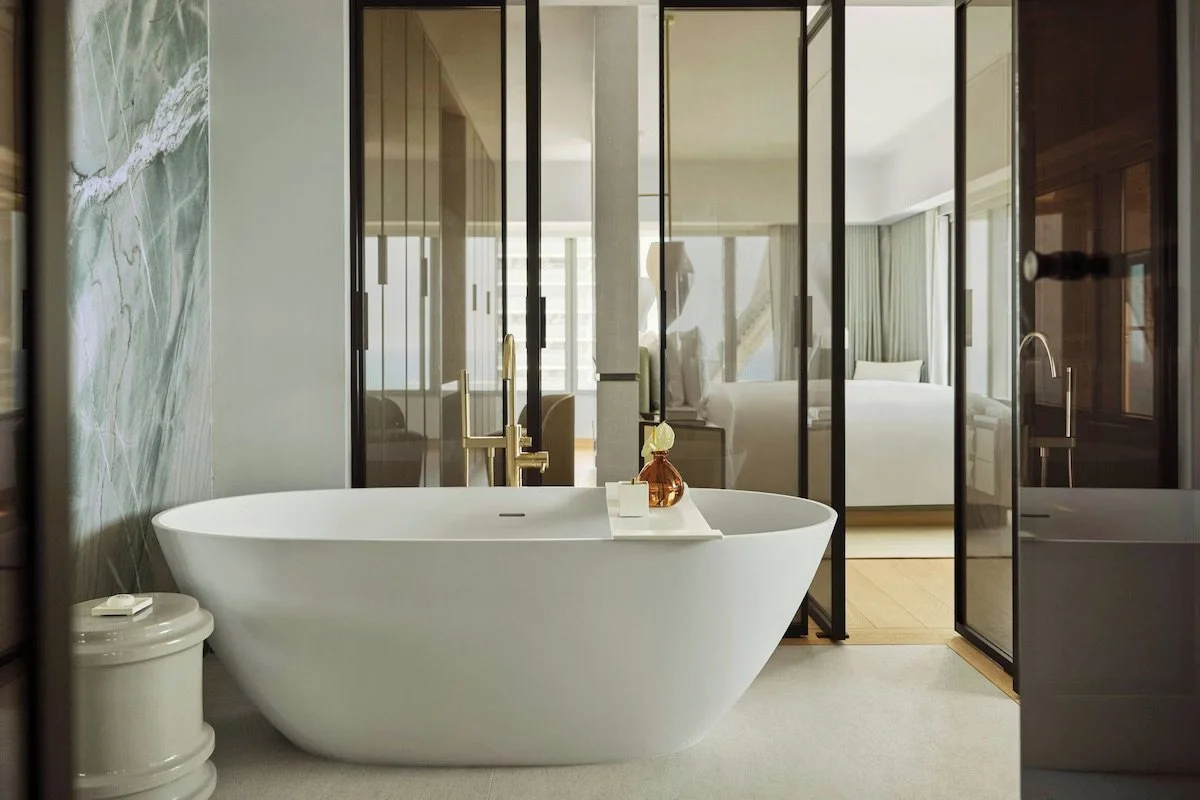
Landscape Room: At approximately 484 sq. ft., the newly redesigned Landscape Room combines a king bed or two double beds with warm natural materials, handcrafted details, a marble bathroom and large windows that introduce the city and surrounding urban landscape into the room.
Scenic Room: Measuring approximately 484 sq. ft., the Scenic Room offers a similarly spacious layout with king or two-double-bed configurations, a generous marble bathroom and wide windows positioned to make natural light and Barcelona views a central part of the experience.
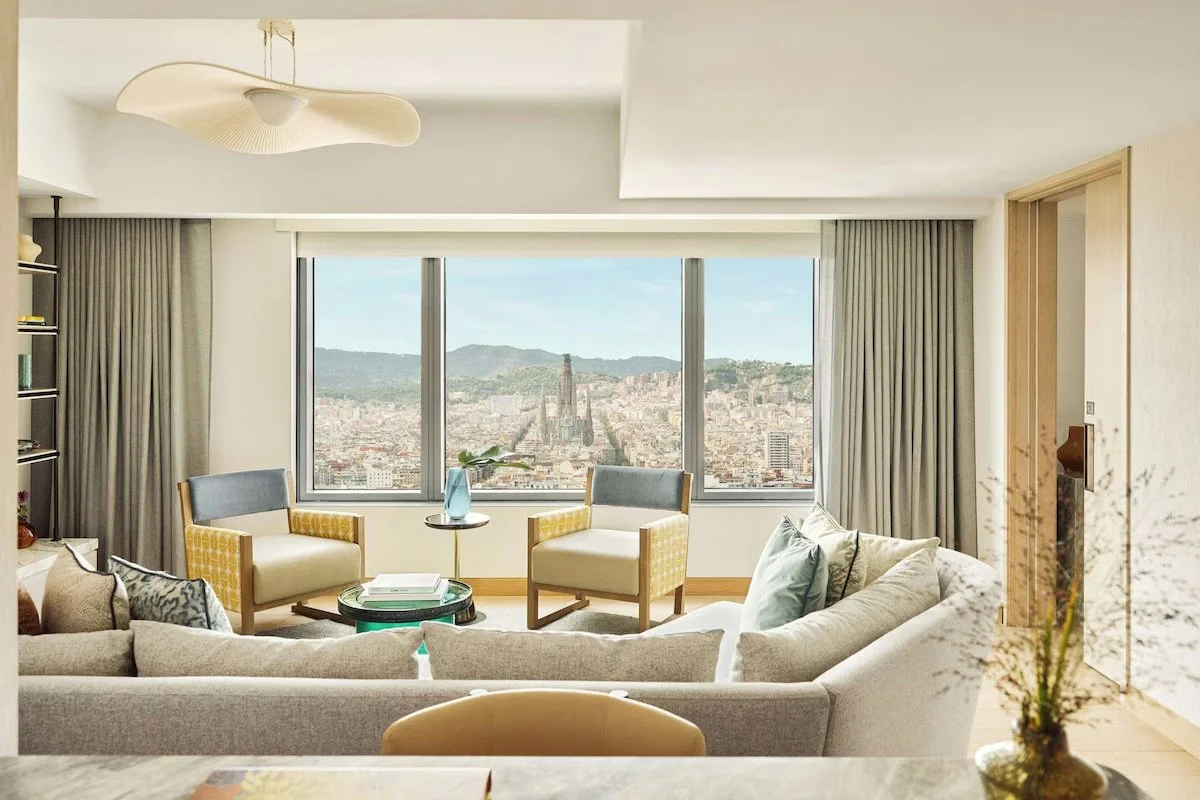
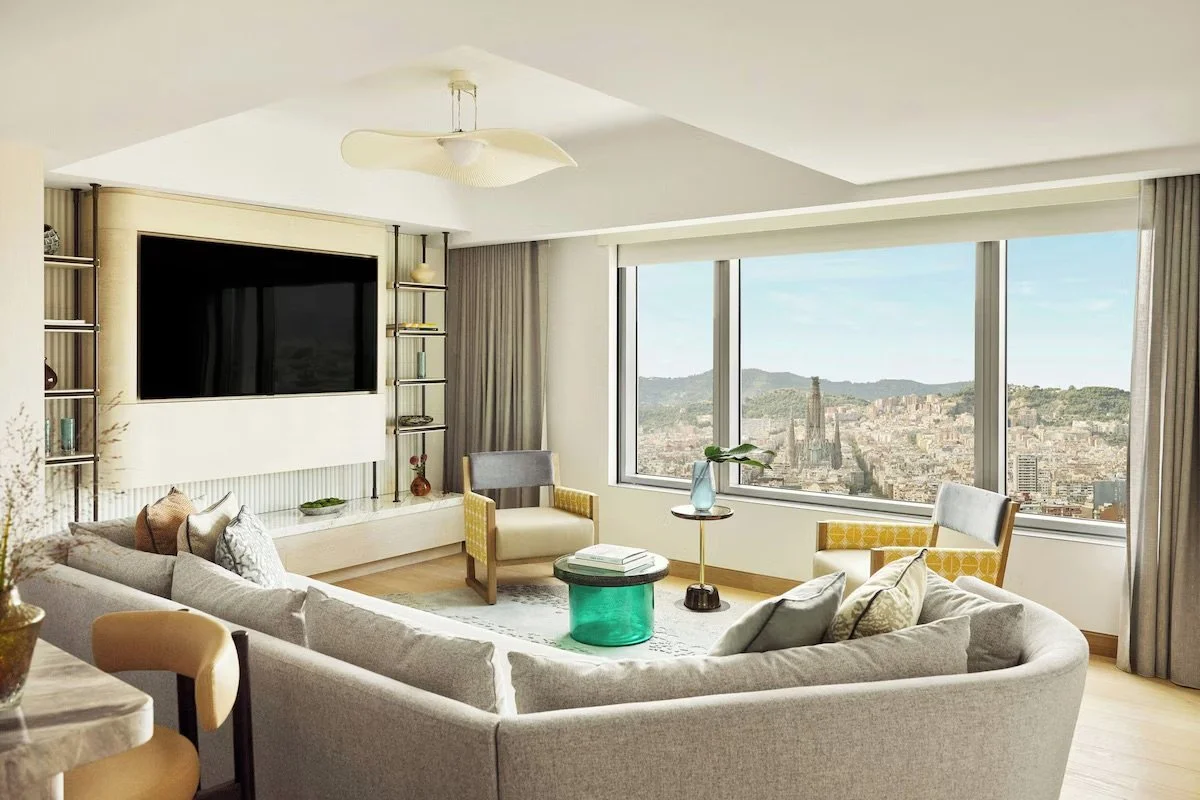
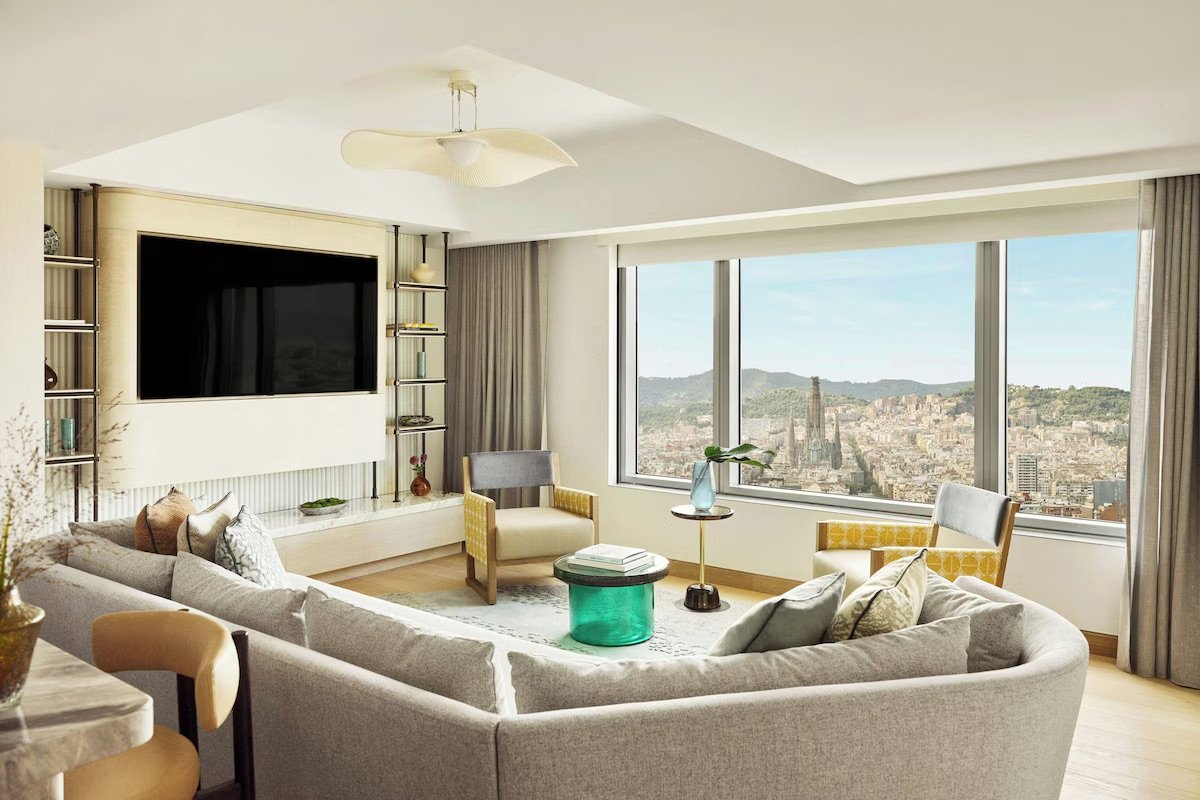
Panorama City View Room: At approximately 484 sq. ft., this higher-floor accommodation combines the hotel’s redesigned contemporary interiors with elevated views over Barcelona, making it particularly appealing to guests who want the urban skyline rather than the Mediterranean to define the room.
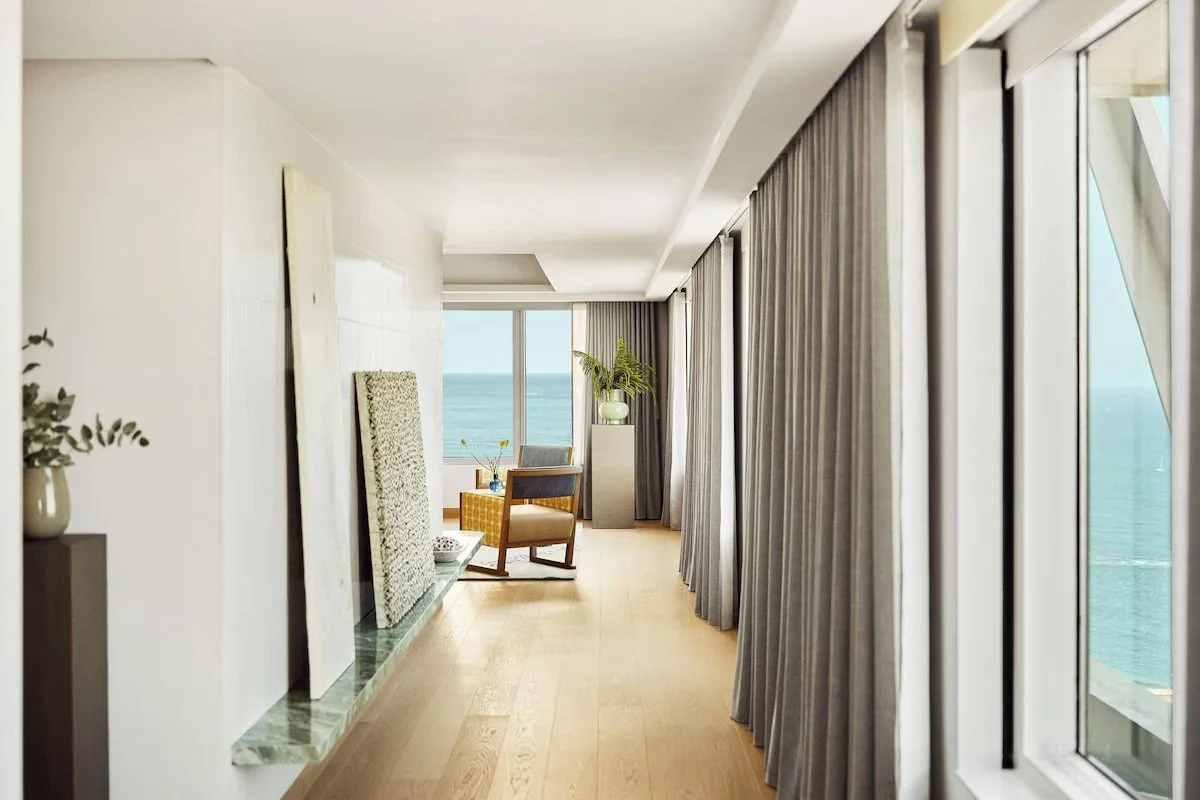
Panorama Sea View Room: Offering approximately 484 sq. ft., this high-floor category turns toward the Mediterranean and Port Olímpic, pairing the standard spacious layout with expansive sea views that become progressively more dramatic as the room rises through the tower.
Seascape Room: At approximately 646 sq. ft., this larger corner-style accommodation takes greater advantage of the waterfront position with broader Mediterranean views, additional space and a more open relationship between the sleeping, seating and window areas.
Club Room: Measuring approximately 484 sq. ft., Club Rooms occupy the hotel’s upper levels and combine panoramic city or sea views with access to The Club, including dedicated check-in, concierge assistance and five food-and-beverage presentations throughout the day.
Skyline Suite: Offering approximately 860 sq. ft., this one-bedroom corner suite faces Barcelona and includes a separate living area, custom drinks bar, wellness corner, integrated technology and large windows positioned to frame the city skyline from both the bedroom and lounge.
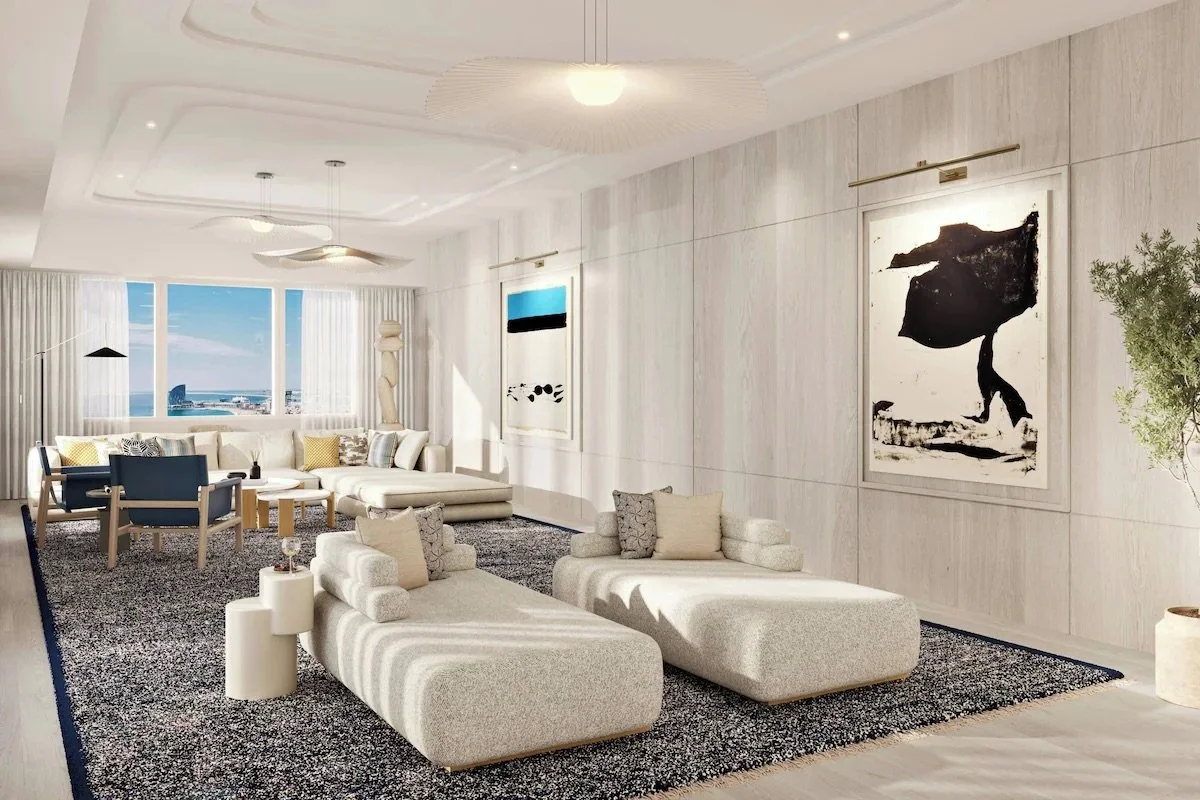
Horizon Suite: Also measuring approximately 860 sq. ft., the Horizon Suite uses a generous corner layout and separate living area to focus almost entirely on the Mediterranean, with broad sea-facing windows, a custom drinks bar and a softer palette inspired by the surrounding landscape.
Club Suite: At approximately 904 sq. ft., this upper-floor suite adds a separate living area and spacious bathroom to the elevated Club experience, combining broader views with private check-in, dedicated concierge service and continuous access to the Club Lounge.
Mediterranean Suite: At approximately 2,002 sq. ft., this expansive one-bedroom suite is designed for longer stays and entertaining, combining significant living and dining areas with a kitchen and sweeping views over the Mediterranean and Port Olímpic.
The Arts Suite: Spanning approximately 2,260 sq. ft., the hotel’s newly reimagined signature suite functions as a private residence above Barcelona, with a large lounge, dining area, kitchen, king bedroom, walk-in dressing room, private sauna and 180-degree views encompassing both the Mediterranean and the city.
For us, the room decision is unusually simple despite the number of categories.
Choose city or sea first, then decide how much living space and service matter.
A Panorama Sea View Room is already enough for many couples, while the Skyline and Horizon Suites make a meaningful difference for longer stays.
The Club becomes particularly useful for families, business travelers or guests who value a quiet private lounge between sightseeing and dinner.
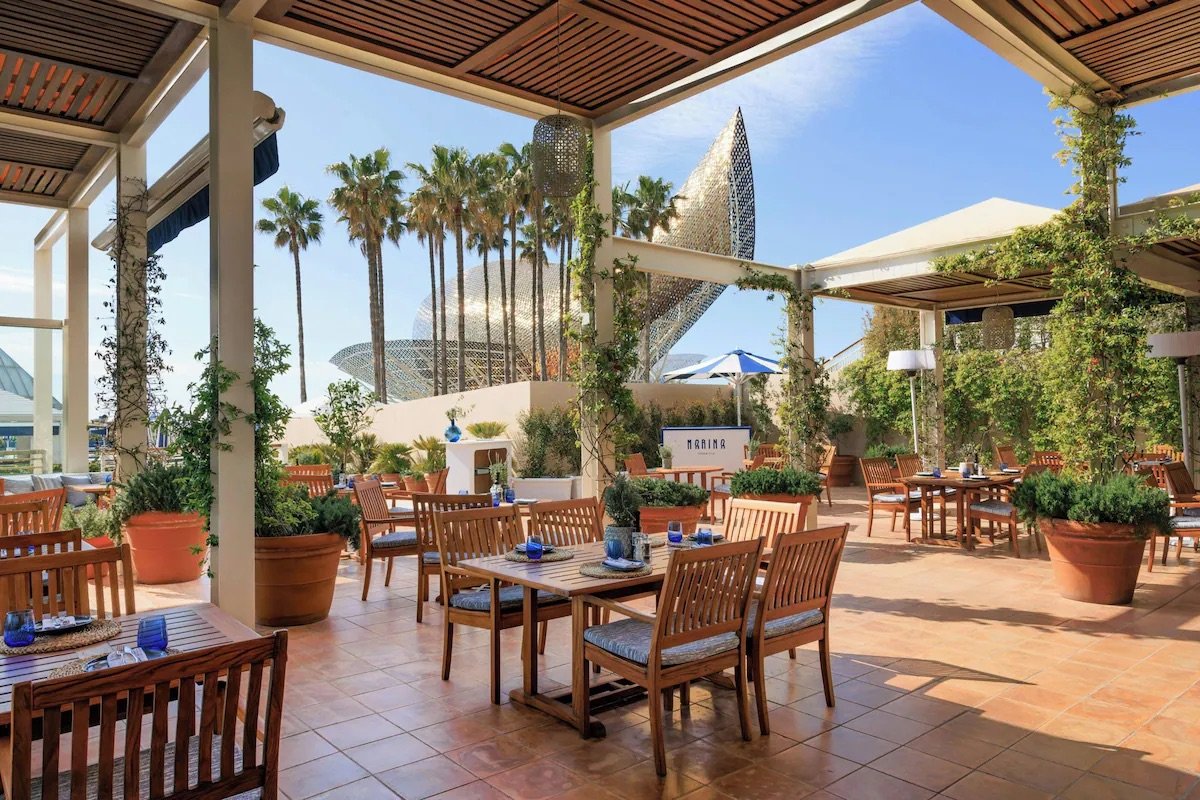
Mediterranean Cooking from Casual to Michelin-Starred
Hotel Arts currently keeps its dining collection relatively focused, with each venue serving a clearly different purpose.
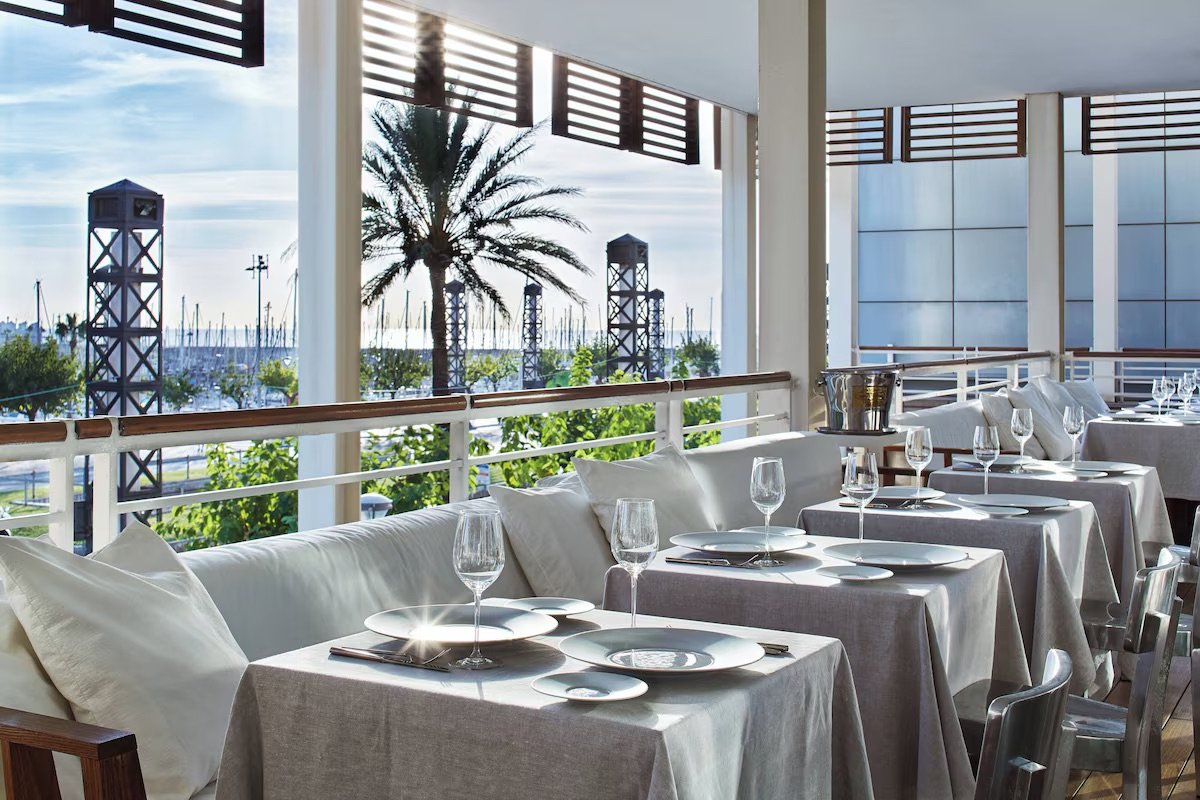
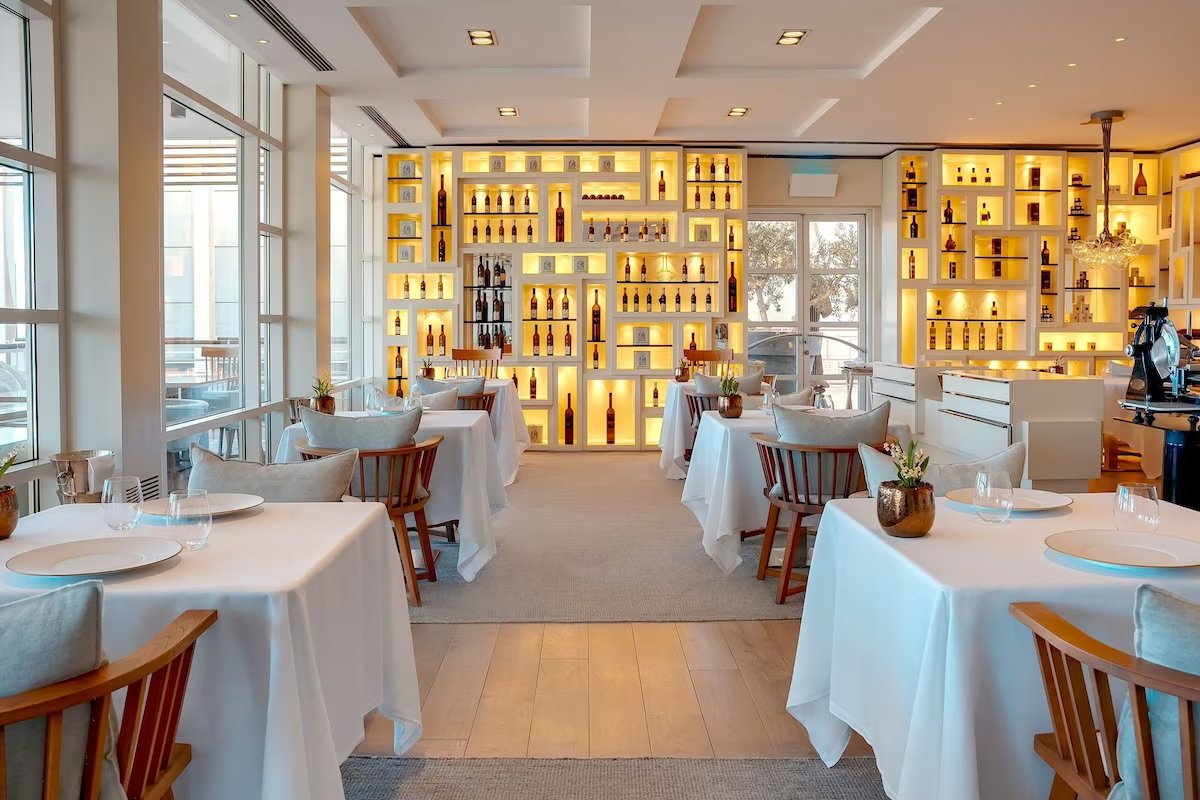
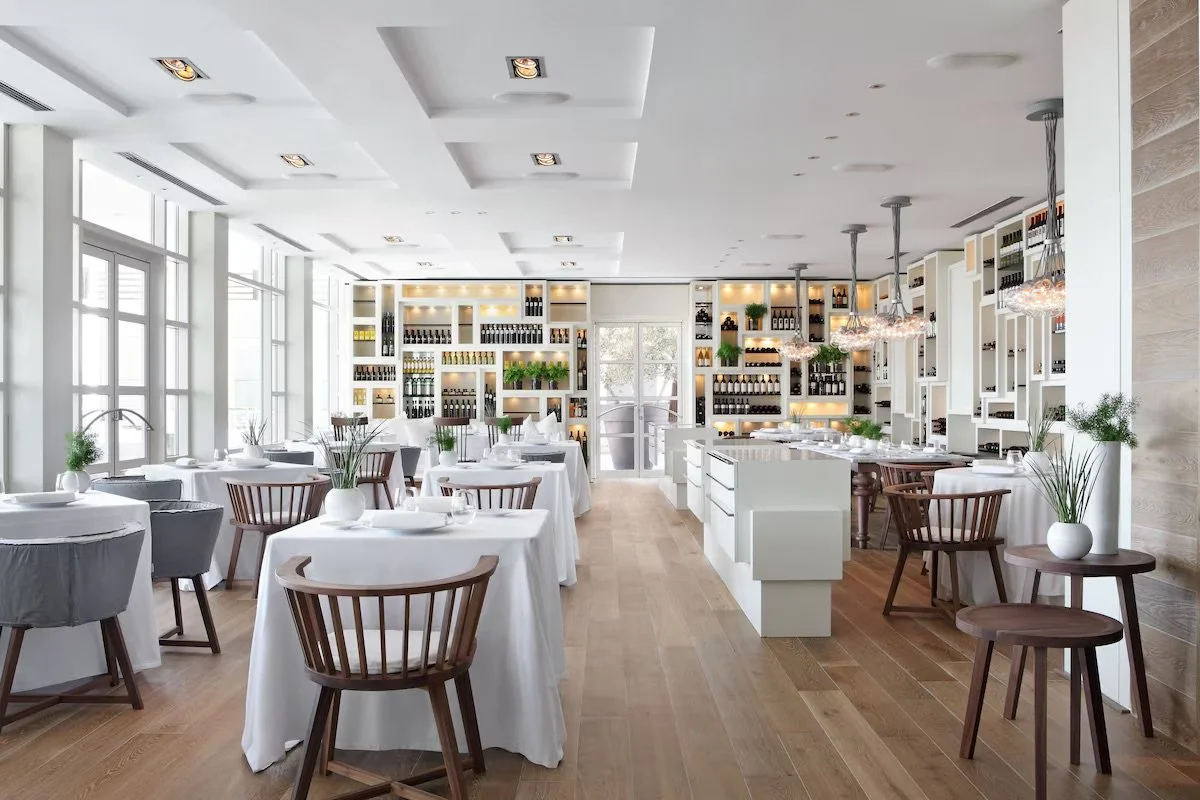
Enoteca Paco Pérez: The hotel’s signature two-Michelin-starred restaurant presents Paco Pérez’s contemporary interpretation of Mediterranean cooking, drawing on seafood, garden produce and ingredients from the mountains and pairing the tasting experience with a cellar of more than 700 wines.
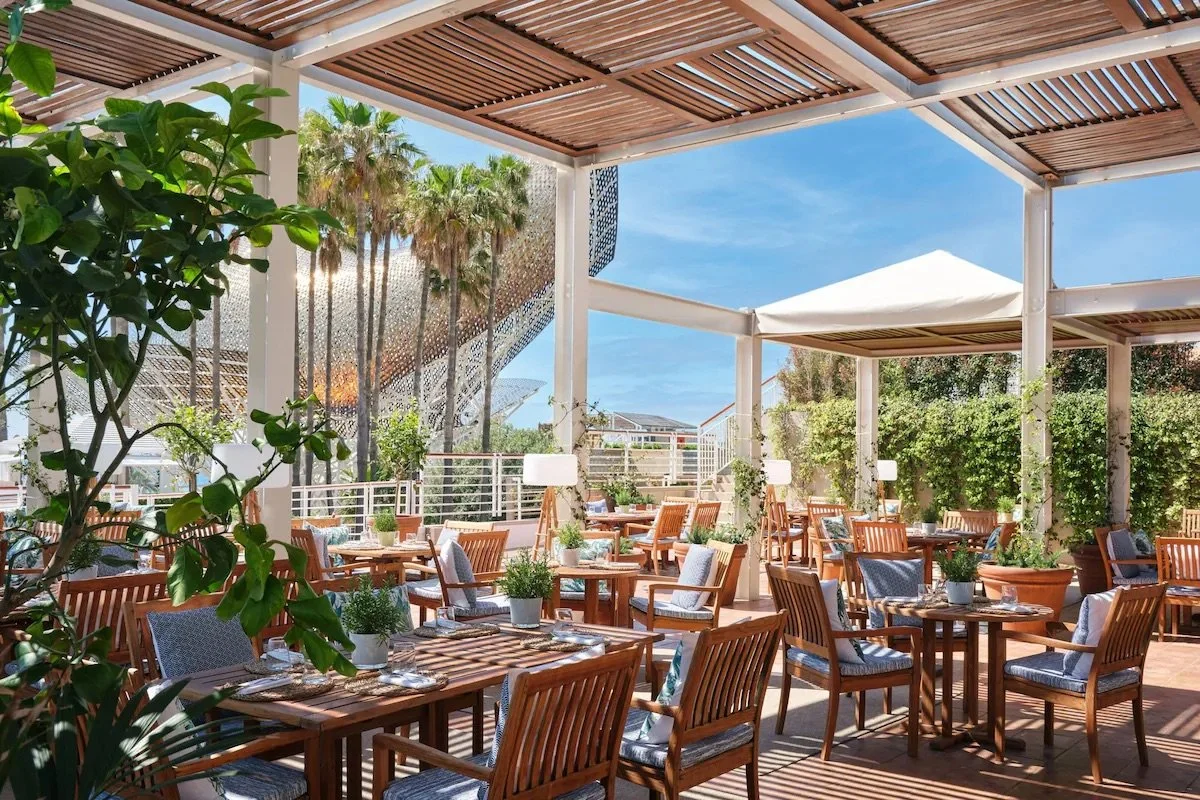
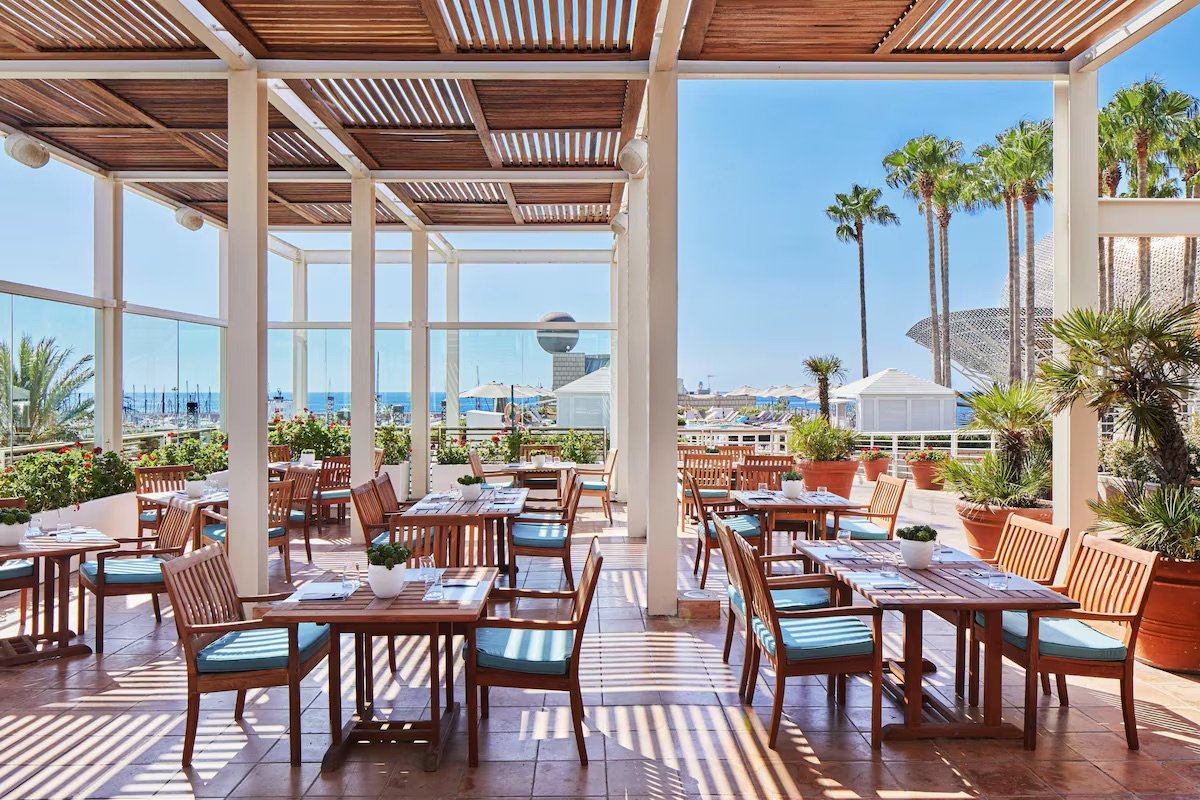
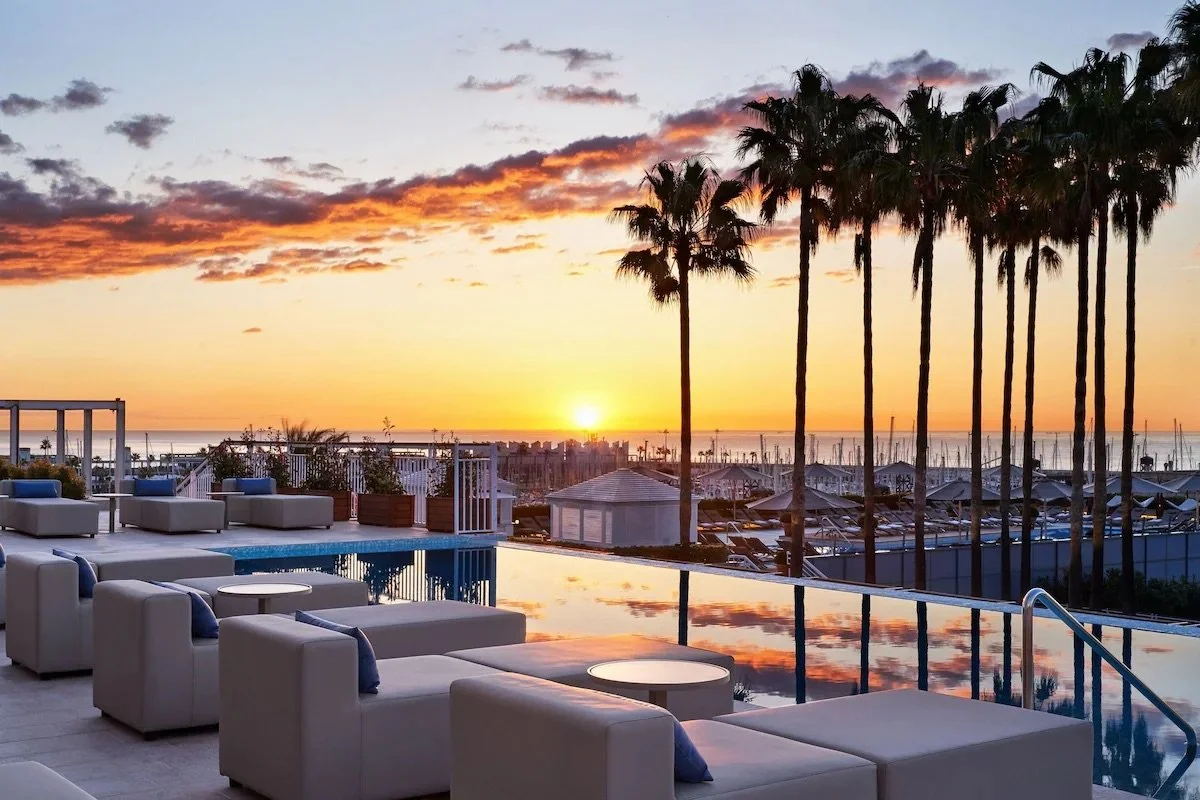
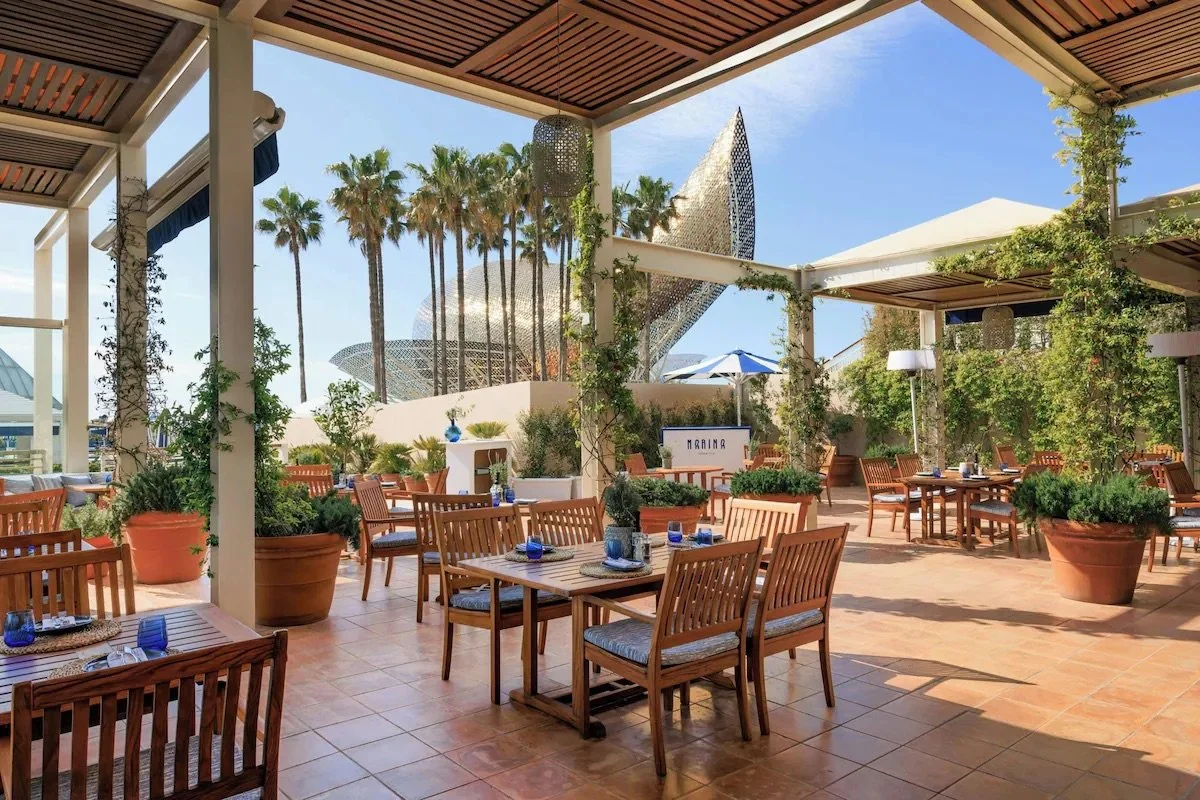
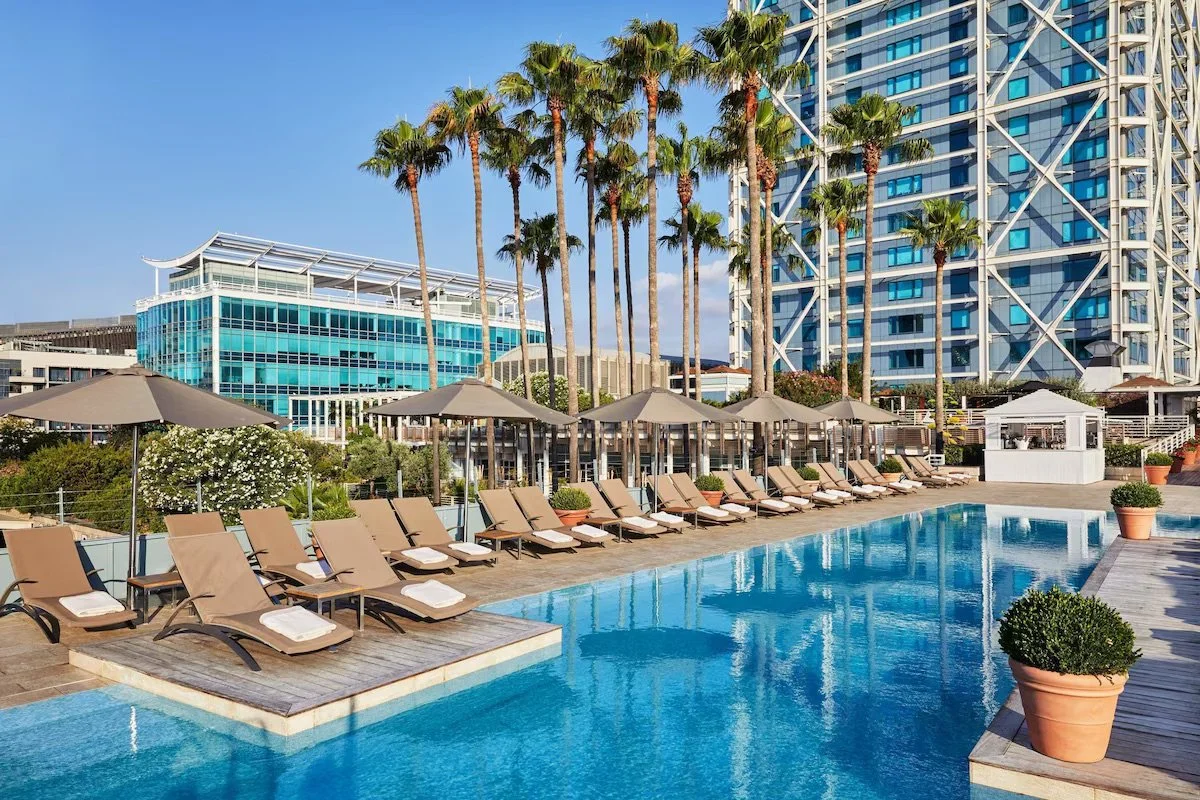
Marina Coastal Food: Open seasonally beside the outdoor pools, Marina focuses on Mediterranean seafood and dishes designed for sharing, combining the informality of a coastal chiringuito with a more polished resort-style presentation.
Bites & Sips: Open from morning into the evening, this relaxed all-day venue works for specialty coffee, light meals, casual lunches and drinks without requiring the commitment of a formal restaurant reservation.
Gehry: Currently serving as the hotel’s breakfast setting during the wider reimagination project, Gehry offers a continental buffet of sweet and savory dishes in a more functional morning format.
The dining experience also extends into Marina Coastal Club, the hotel’s large seasonal outdoor area incorporating pools, dining and Mediterranean views beneath the presence of Gehry’s golden Peix sculpture.
For us, Enoteca is the restaurant to reserve deliberately.
Paco Pérez’s cooking makes the hotel a genuine dining destination even for guests staying elsewhere in Barcelona.
Marina works differently.
It makes the most sense as part of an unstructured afternoon by the pool, when lunch can extend naturally into drinks and the city feels considerably farther away than it actually is.
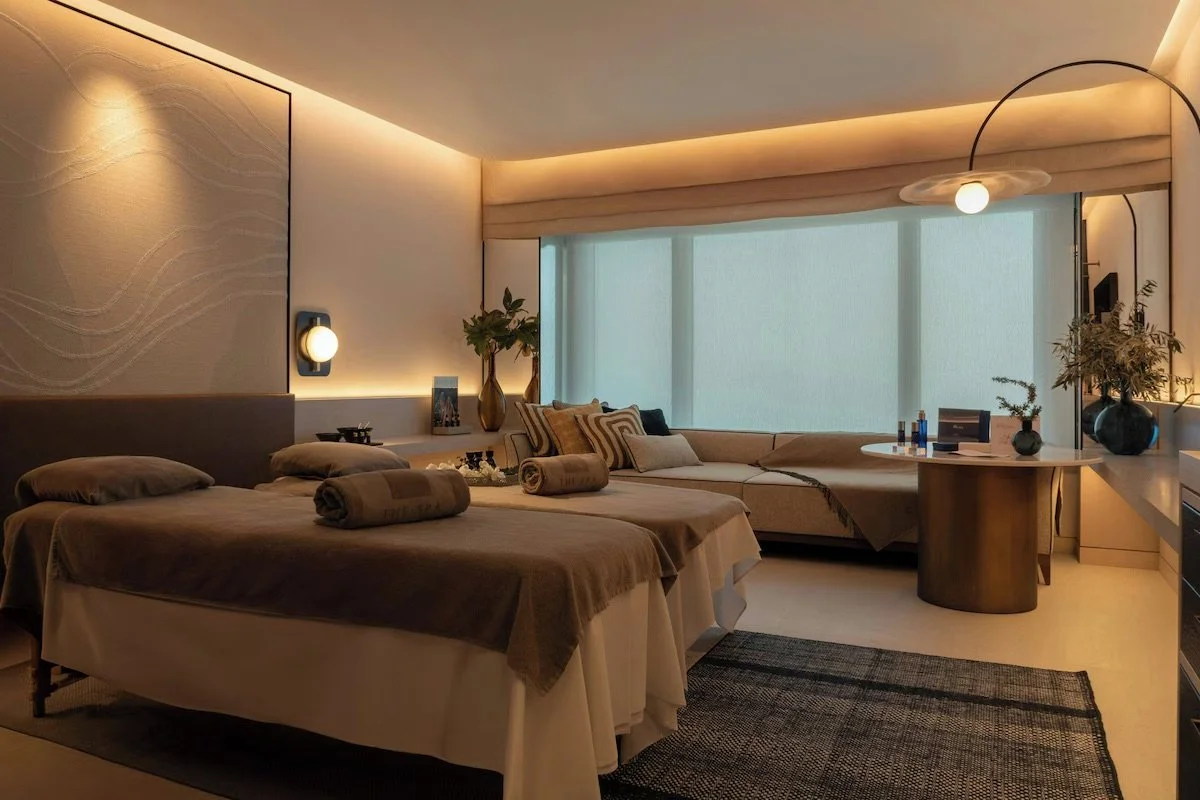
Wellness While the Hotel Evolves
Wellness at Hotel Arts is currently undergoing the same process of reinvention as the rest of the property.
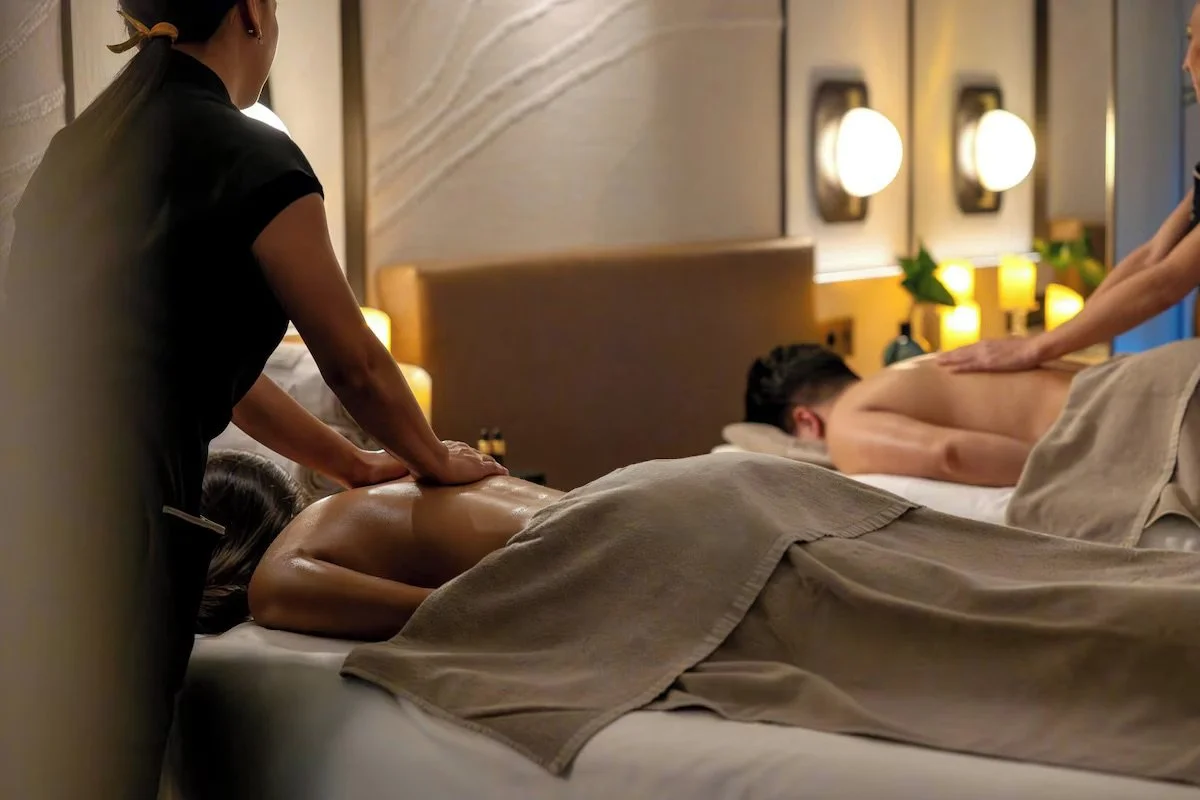
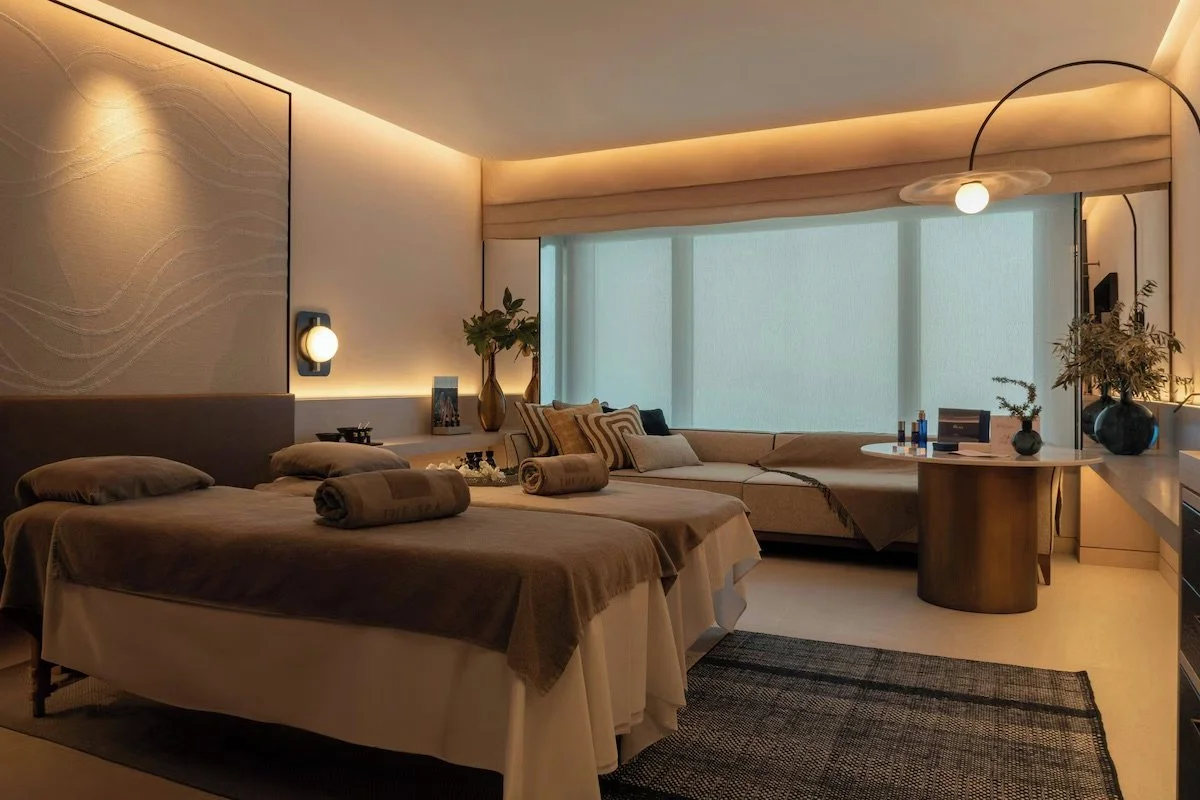
The hotel’s former high-floor spa became well known for pairing treatments with some of the most dramatic views in Barcelona, but the current Arts Wellness experience has been relocated to the fourth floor while the wider transformation continues.
Treatments remain available throughout this period.
The wellness menu includes massages, couples treatments and facials, with skincare programs using brands including Alqvimia and Swiss Perfection.
The emphasis is deliberately straightforward: restorative treatments, skincare and massage rather than an overly complicated medical-wellness concept.
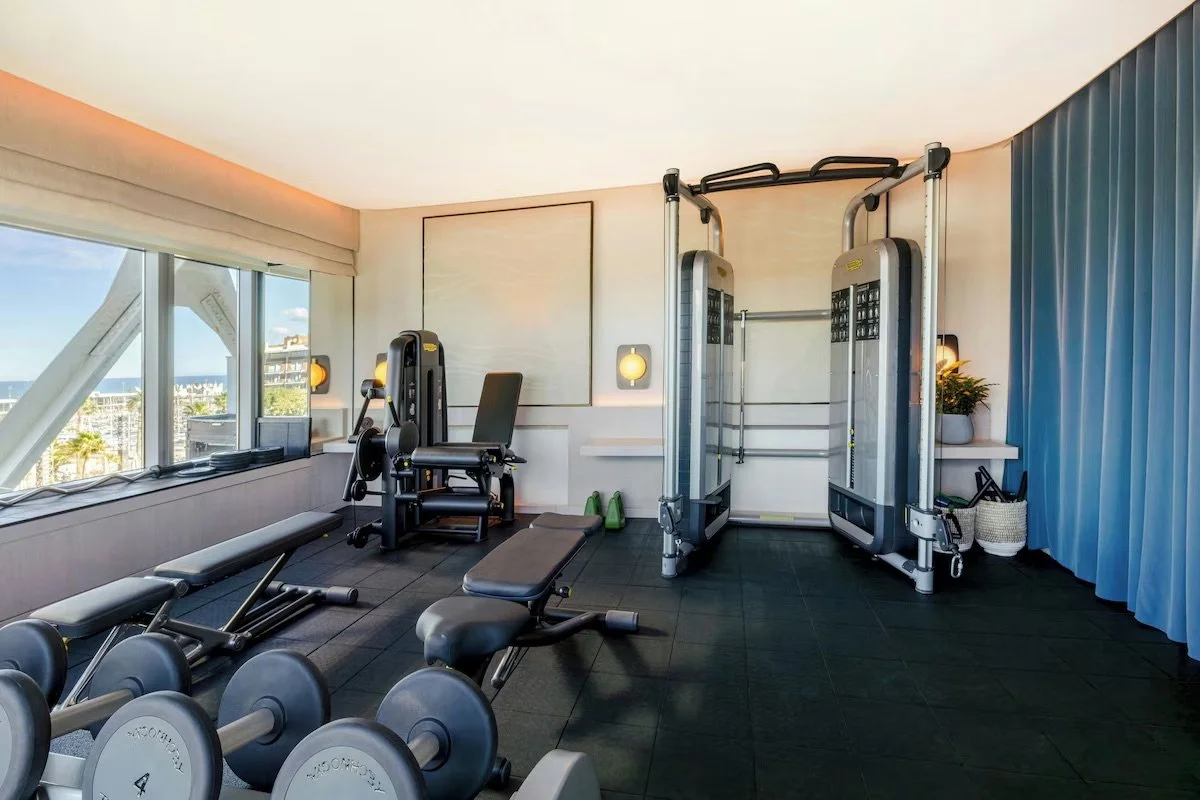
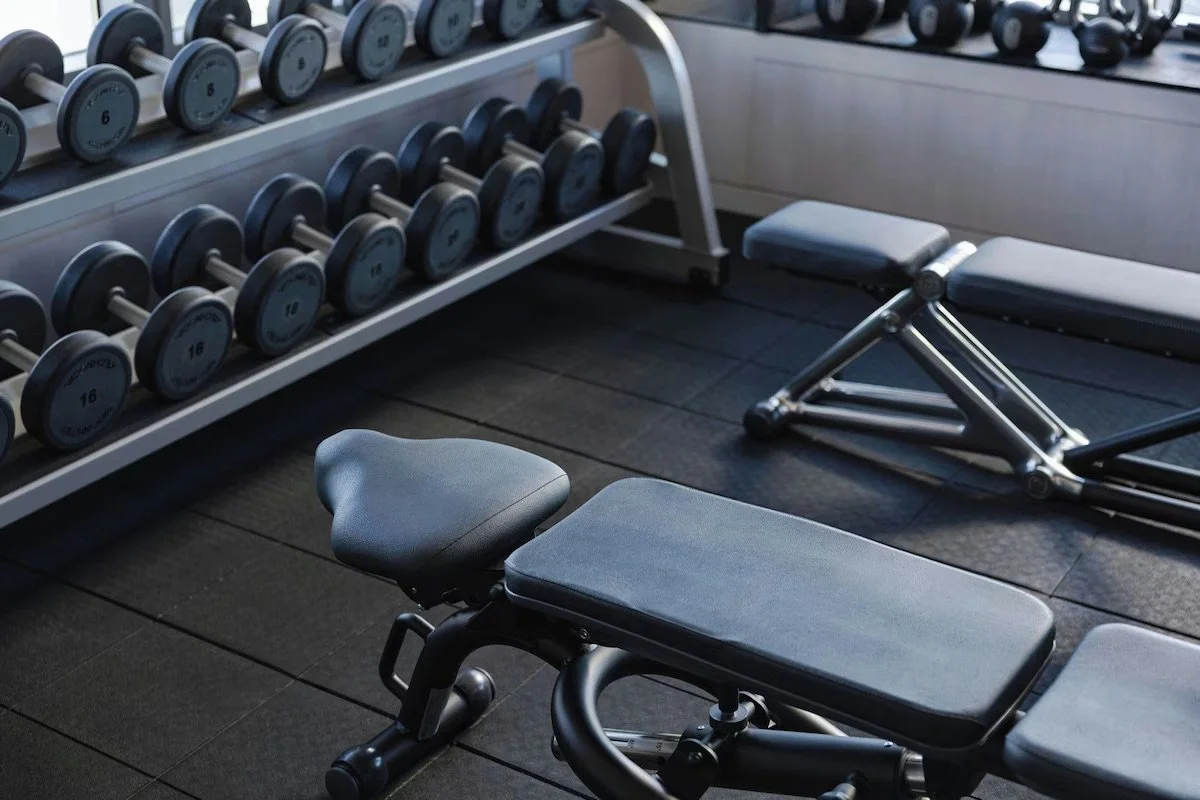
A fitness center remains available 24 hours a day, with cardiovascular equipment, free weights and strength-training machines.
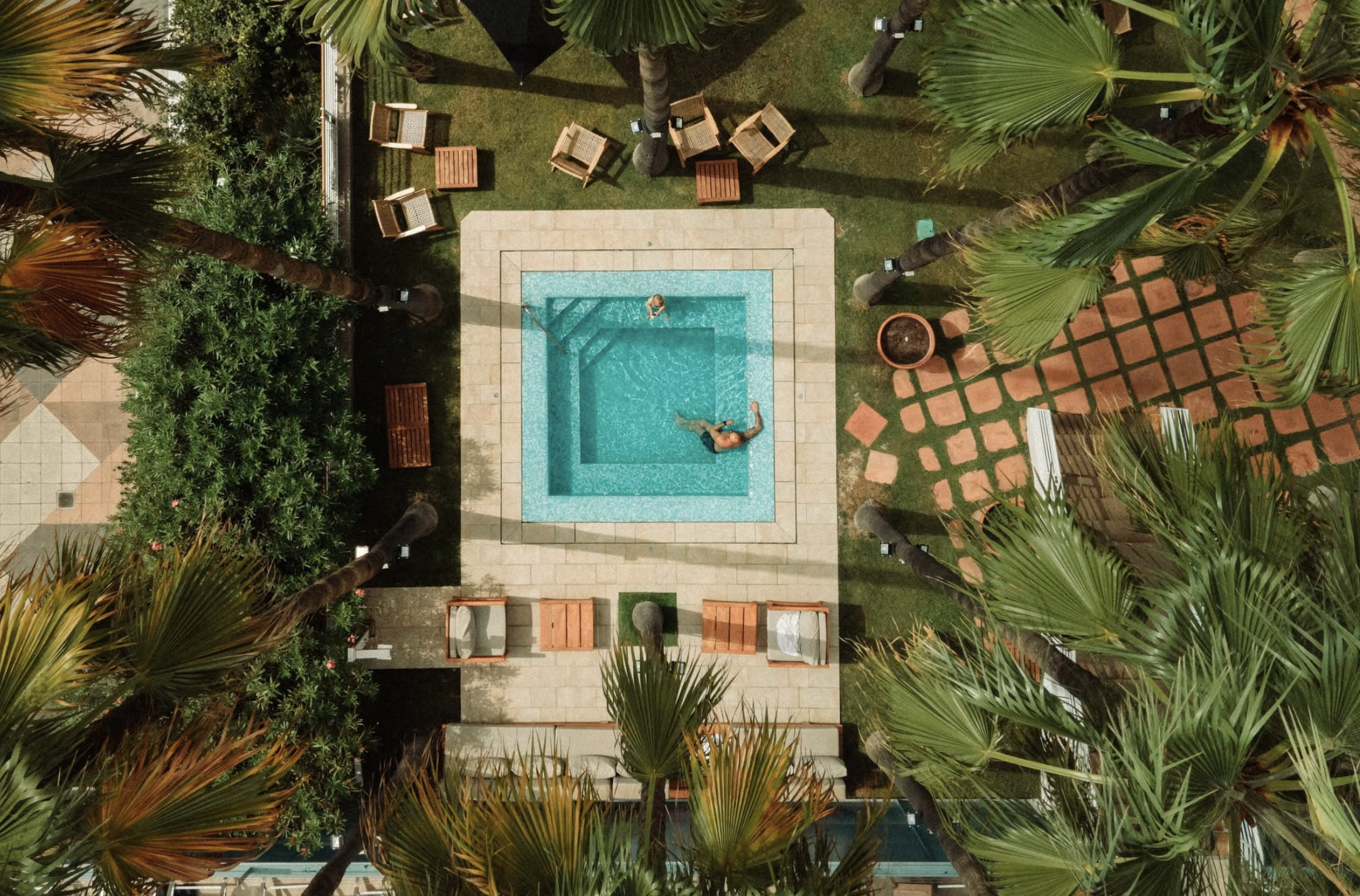
Outdoors, the pools give the hotel a wellness advantage that few urban properties in Barcelona can match.
The Marina Family Pool provides space for adults and children together, while the Gehry Pool is designed as a quieter adults-only setting with Mediterranean views.
Because the property remains in an active phase of renovation, we would confirm the exact availability and location of spa, fitness and pool facilities immediately before a stay.
For us, the outdoor spaces remain the bigger story.
Barcelona already encourages movement naturally, so wellness here can be as simple as walking the waterfront in the morning, booking a massage in the afternoon and spending the final hours of daylight beside the Mediterranean.
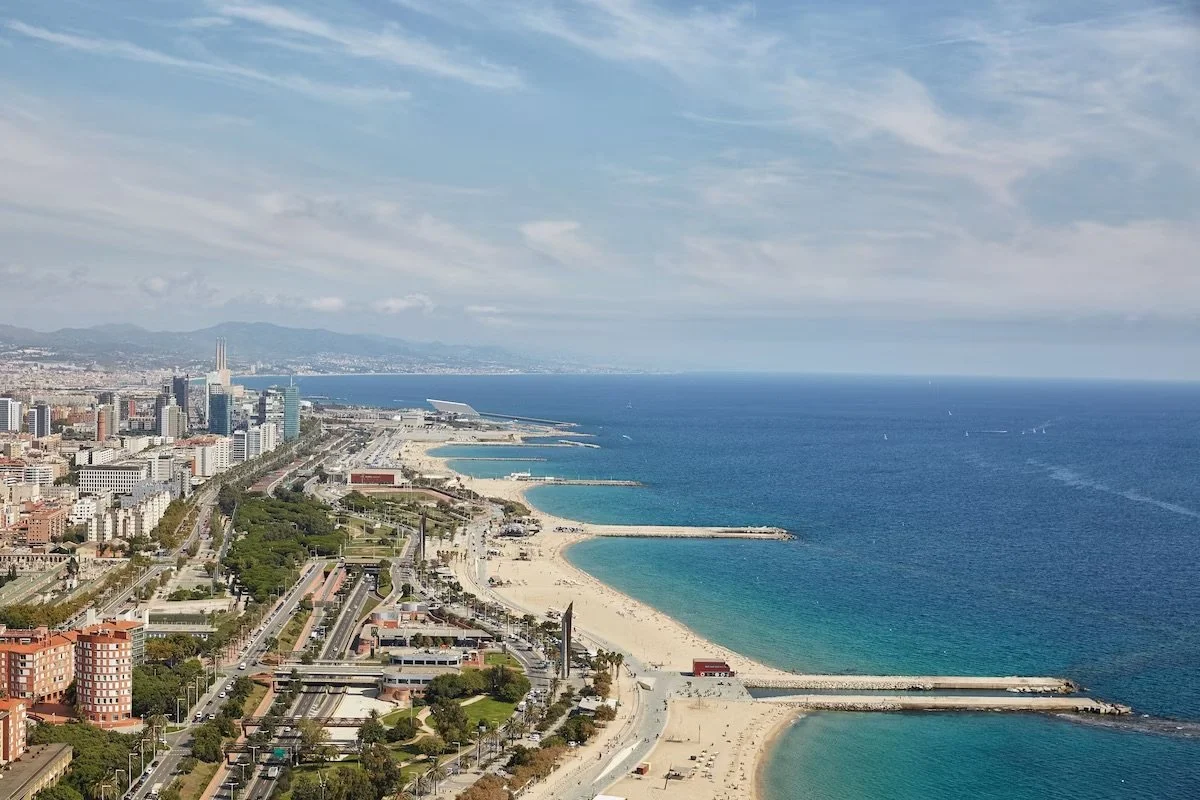
Barcelona from the Beach to Gaudí
Hotel Arts occupies one of the few locations in Barcelona where a beach day and a serious cultural itinerary can belong to the same stay without requiring a change of hotel.
Barceloneta Beach begins nearby, while the Olympic Port and waterfront promenades make walking or cycling along the coast particularly easy.
Ciutadella Park and Barcelona Zoo are also within convenient reach.
From there, the city opens quickly.
El Born introduces medieval streets, Santa Maria del Mar and smaller independent shops and restaurants. Continue toward the Gothic Quarter and the urban atmosphere becomes denser and considerably older.
Farther inland, Barcelona’s architectural identity changes again.
The Sagrada Família, Park Güell, Casa Batlló and La Pedrera provide different ways of understanding Gaudí, while Passeig de Gràcia reveals the wealth and ambition of the city’s Modernist period more broadly.
Markets are equally important.
La Boqueria remains the most famous, but Santa Caterina provides a slightly different experience closer to the Gothic Quarter and cathedral.
For us, the hotel is especially effective for travelers who do not want to choose between Barcelona and the Mediterranean.
Spend the first half of the day in the city.
Return to the water when the streets become busiest.
That rhythm feels particularly natural here.
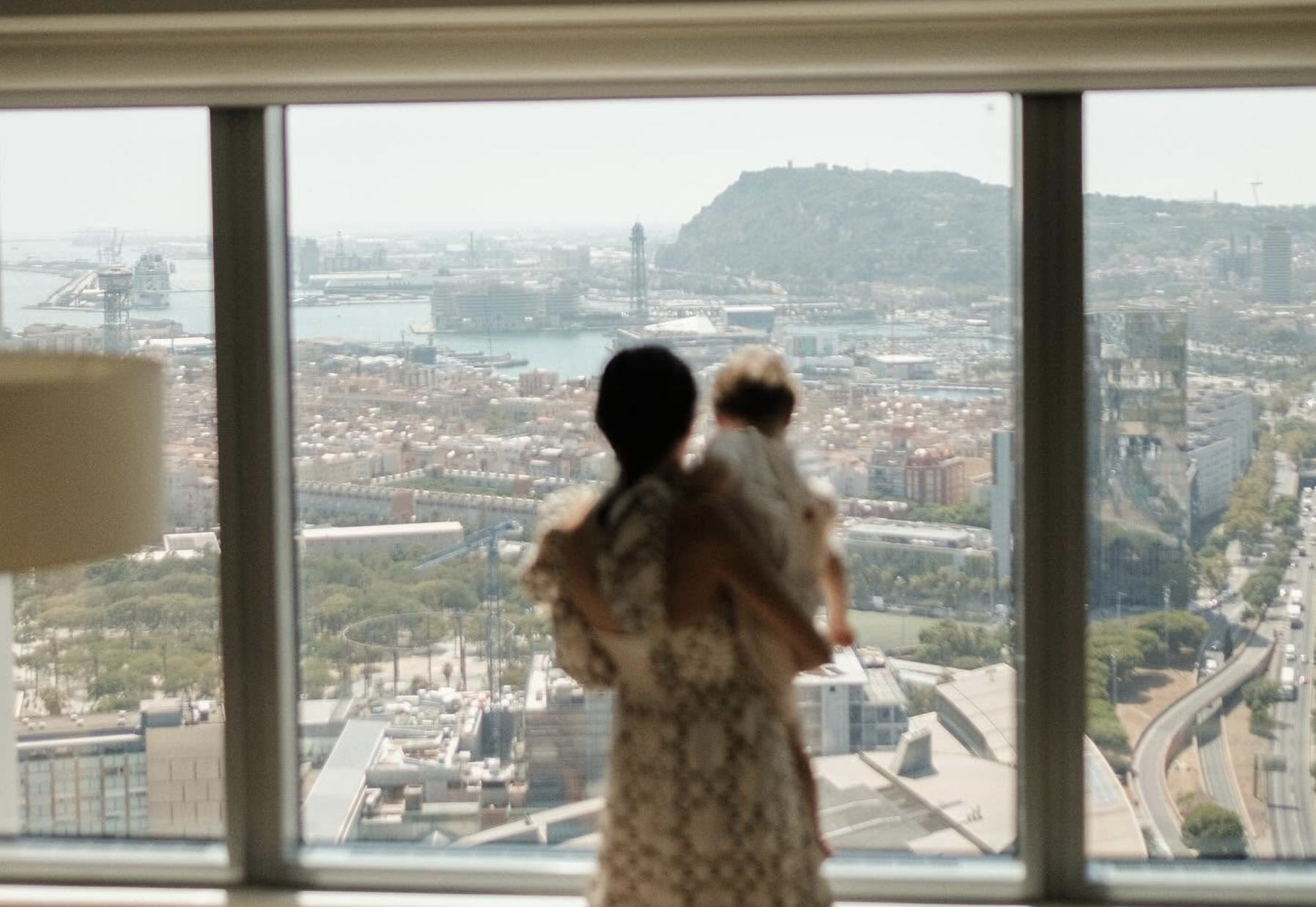
Arts Kids Beside the Mediterranean
Hotel Arts is more family-friendly than the height and architecture of the tower might initially suggest.
The Arts Kids program uses Frankie the Whale, a character inspired by the Mediterranean, to introduce younger guests to the hotel through activities, surprises and in-room details.
Children receive playful materials at check-in, including a questionnaire that encourages them to explore the property and complete challenges before returning it for a small reward.
Restaurants provide dedicated children’s menus, while the Club Lounge incorporates child-friendly items into its daily food presentations.
In-room amenities and family activities can also be arranged according to age and requirements.
The outdoor experience is equally useful.
The Marina Family Pool gives children a dedicated place to spend time between city excursions, while Barceloneta Beach and the waterfront are immediately accessible.
Barcelona itself does much of the rest.
The zoo, Park Güell, aquarium, beaches and open spaces make it relatively easy to build a family itinerary without relying exclusively on organized children’s programming.
For us, the best family stay would combine a larger room or suite with relatively short sightseeing days.
Barcelona can become exhausting when every hour is scheduled.
Having the Mediterranean and a pool waiting back at the hotel changes that considerably.
Sustainability Inside a Landmark Tower
Hotel Arts has developed a sustainability program that is more substantial than might be immediately visible from the guest experience.
The property holds recognized environmental and building certifications including BREEAM and Biosphere, while sustainability initiatives extend across energy, water, waste, sourcing and community involvement.
The hotel currently uses 100% renewable energy and has introduced occupancy-based lighting controls that have contributed to significant annual energy savings.
Water management includes a condensation-recovery system that captures water from air-conditioning equipment and redirects it for reuse.
Landscaping also prioritizes local plant species to reduce irrigation requirements.
Inside guestrooms, filtered osmosis water systems reduce dependence on disposable plastic and glass bottles.
Waste programs include guest-room recycling and food-donation initiatives, with surplus event food provided to local organizations when suitable.
The hotel also works with community partners across Barcelona through food donations, volunteering, training and charitable programs.
For us, the sustainability story is particularly interesting because this is a large existing tower rather than a new low-impact resort.
The question is not how to make the building disappear into nature.
It is how an established urban landmark can operate more efficiently while remaining relevant for another generation.
Planning an Accessible Stay by the Waterfront
Hotel Arts publishes relatively detailed accessibility information.
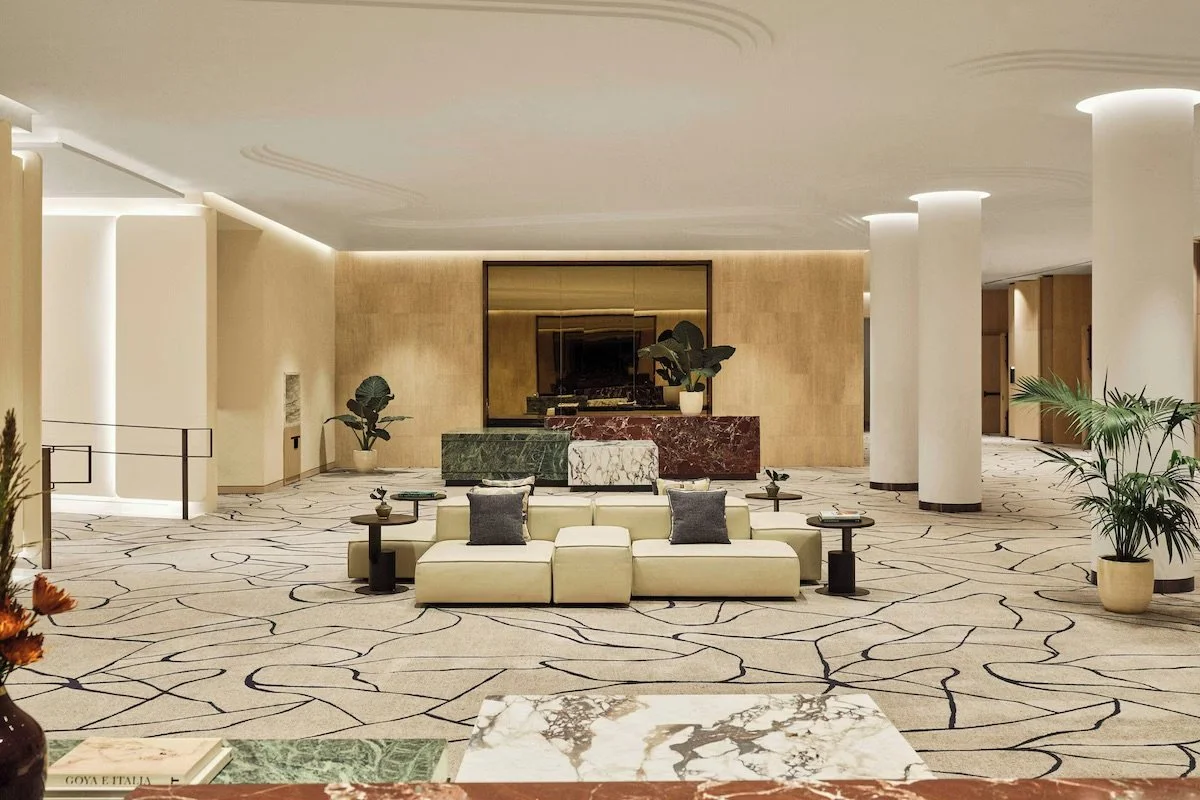
The property has elevators throughout, and accessible routes connect the main entrance with restaurants, meeting spaces, the fitness center, spa areas and selected pool facilities.
Mobility-accessible guestrooms are available, with specific features varying by category.
Available adaptations can include roll-in showers, wheelchair-height toilets, accessible vanities, bathroom grab rails, lever-style door handles, lowered electrical outlets and lowered door viewers.
The hotel also welcomes service animals.
Because accessible inventory can be limited within individual room categories, we would confirm the exact room before finalizing the reservation rather than simply requesting accessibility after arrival.
The surrounding area is another advantage.
The waterfront promenade is relatively open and level compared with some parts of historic Barcelona, although individual attractions and older neighborhoods should still be reviewed according to each traveler’s requirements.
From Barcelona Airport to Port Olímpic
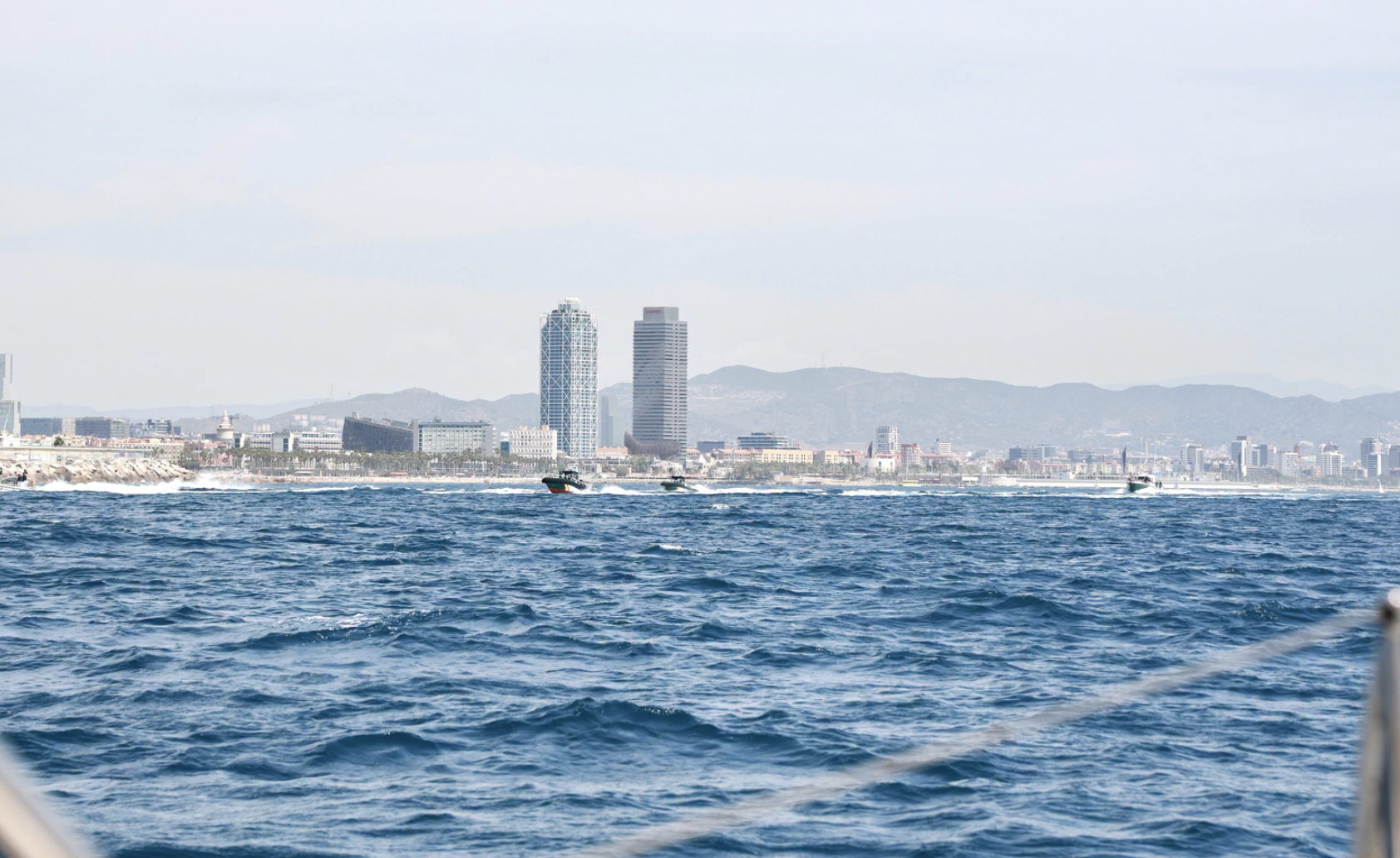
Hotel Arts Barcelona is located beside Port Olímpic and the Mediterranean waterfront.
By Air – Barcelona-El Prat Airport: Barcelona’s principal international airport is approximately 20 kilometers from the hotel, with the drive generally taking around 25 to 35 minutes depending on traffic.
By Private Transfer: A pre-arranged chauffeured transfer is the simplest option for international arrivals, particularly for guests traveling with substantial luggage or continuing from a long-haul flight.
By Taxi: Official Barcelona taxis are readily available at the airport and provide a direct route to Port Olímpic without the need to change transportation.
By Rail: Travelers arriving from Madrid, Paris or other Spanish and European destinations generally use Barcelona Sants station, followed by a short taxi or private transfer to the hotel.
By Metro: The nearby Ciutadella | Vila Olímpica station provides access to Barcelona’s metro network, although taxis are generally more convenient when arriving with luggage.
By Cruise: Barcelona’s cruise terminals are within easy driving distance, making Hotel Arts practical for pre- or post-cruise stays.
For us, arrival is best kept simple.
Check in, look at the city from above and then walk toward the beach or marina.
The first evening does not need a long sightseeing plan.
Being beside the Mediterranean is already a useful introduction to Barcelona.
Between the Skyline and the Sea
Hotel Arts Barcelona works because it occupies a position that few hotels in the city can reproduce.
It is unmistakably urban.
The steel tower belongs to Barcelona’s modern skyline, the guestrooms look across one of Europe’s most architecturally significant cities and major cultural attractions remain within easy reach.
Yet the Mediterranean sits immediately outside.
That changes the way a stay can be structured.
One morning might begin at the Sagrada Família and continue through Passeig de Gràcia before returning for an afternoon beside the pool.
Another day could remain almost entirely on the waterfront, moving from Barceloneta to Marina Coastal Food and finishing with dinner at Enoteca Paco Pérez.
Families can use the hotel as a base between cultural outings and pool time, while couples may find that the upper-floor sea views provide enough reason to leave parts of the itinerary deliberately empty.
For us, the most interesting element is the hotel’s continued evolution.
Hotel Arts was born from the Olympic transformation that reconnected Barcelona with its coast.
More than 30 years later, its current redesign is attempting to reconnect the hotel itself with the city, its artisans, its landscape and the Mediterranean light outside its windows.
The tower has always been one of Barcelona’s most recognizable modern landmarks.
The new chapter is about making the experience inside feel just as connected to the place around it.