Bhutan | Six Senses Bhutan
Five Valleys, Five Different Perspectives
Bhutan rewards travelers who resist treating it as a single destination. Pine forests and monasteries frame the capital of Thimphu; terraced fields soften the warmer Punakha Valley; migratory black-necked cranes return to the open wetlands of Gangtey; Bumthang holds some of the kingdom’s most significant sacred sites; and Paro combines a dramatic mountain landscape with Bhutan’s principal international gateway. Six Senses Bhutan makes these differences the basis of an unusual hotel experience: five lodges, each conceived for its own valley, linked through private guided journeys.
Travelers may stay at one lodge, but the collection makes its strongest case as a thoughtfully paced circuit. One day might involve a monastery visit and a city market, the next a walk through rice fields or a long view across a conservation valley. Rather than repeating the same resort formula in five locations, the lodges change their architectural language, scale and activities to respond to each setting.
Six Senses’ emphasis on sleep, wellness and fresh food runs throughout the collection, although facilities differ between lodges. It is an appealing approach for travelers who want a cultural itinerary without changing their standard of comfort at every stop.
A Contemporary Way to Explore an Old Kingdom
Six Senses Bhutan was developed as a connected collection rather than an isolated flagship property. Its five locations trace western and central Bhutan, where valleys historically developed distinct customs, agricultural traditions and relationships with Buddhist institutions. A private driver and guide connect the lodges, giving the road journeys themselves a role in the experience.
Bhutan’s philosophy of Gross National Happiness is part of the national context, but its meaning becomes more tangible in small encounters: a conversation with a local guide, a visit to a working farm, a prayer ceremony or the care taken around protected landscapes. The lodges frame these experiences rather than trying to replace them with resort entertainment.
The accommodation collection is contemporary in operation and design. Its connection to heritage comes instead through materials, local craft references, food, views and the experiences arranged in each valley. A journey can be tailored to one or two regions or stretch across all five, depending on the traveler's interests and tolerance for mountain-road travel.
Architecture That Changes With the Landscape
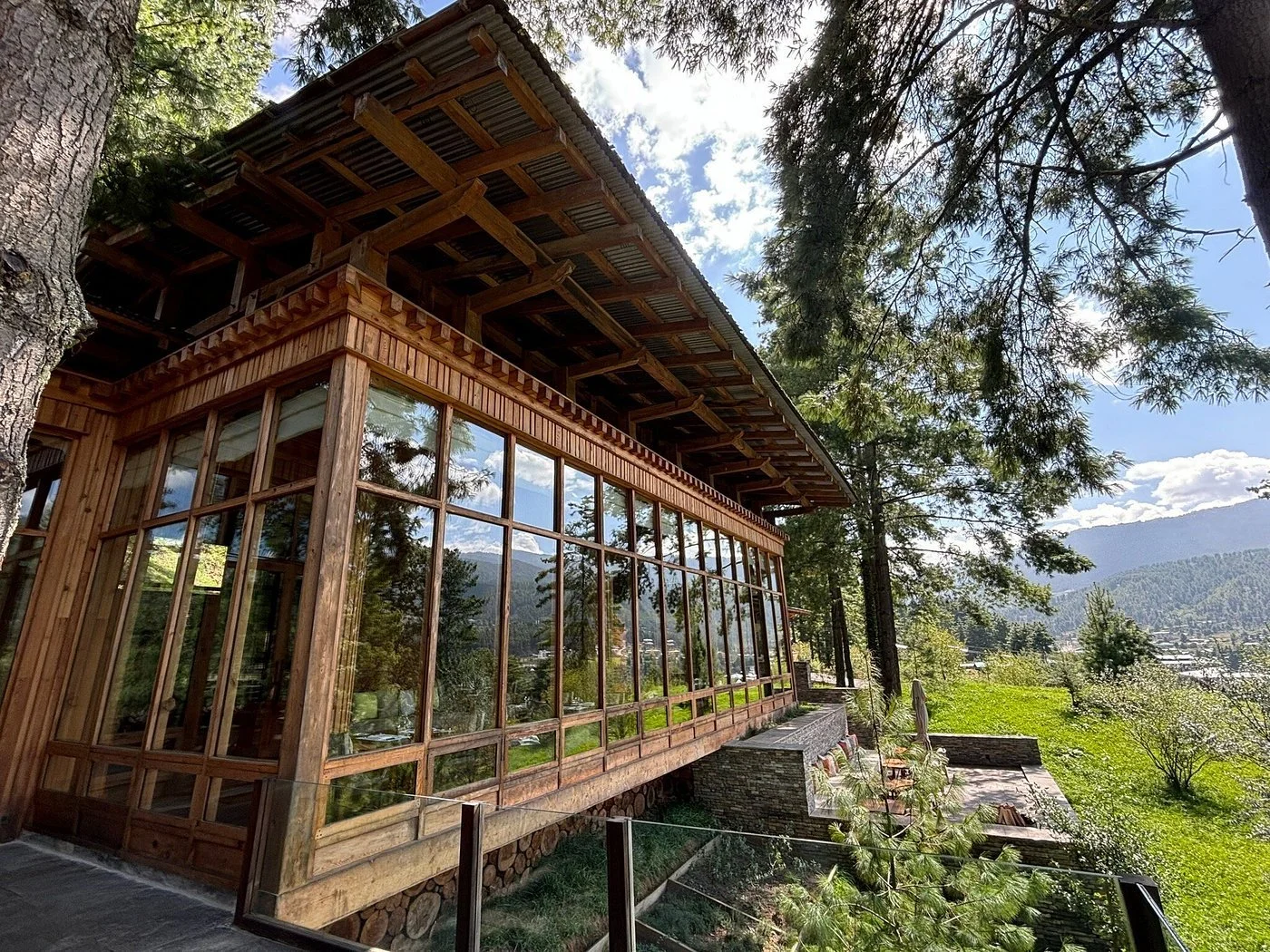
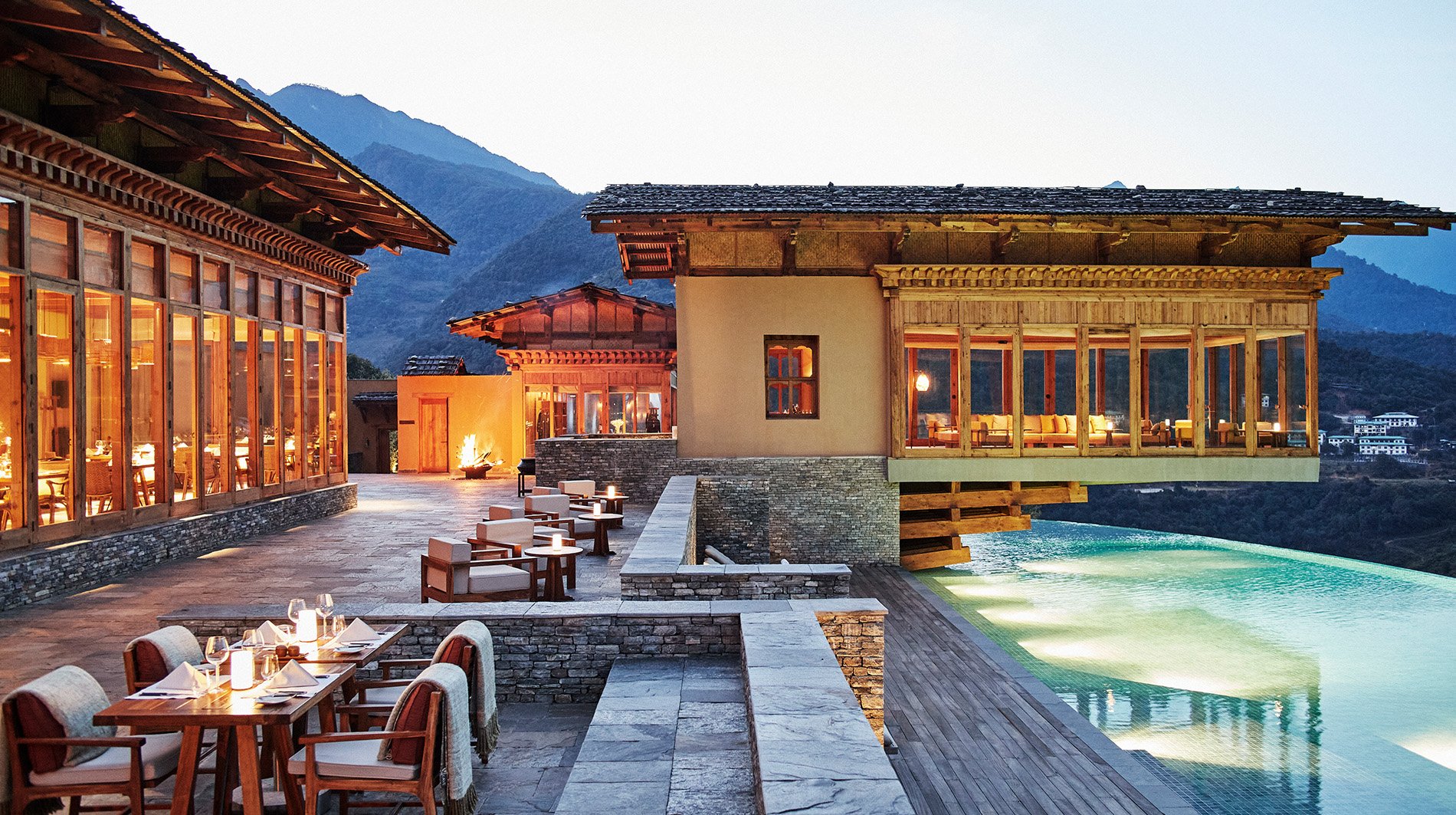
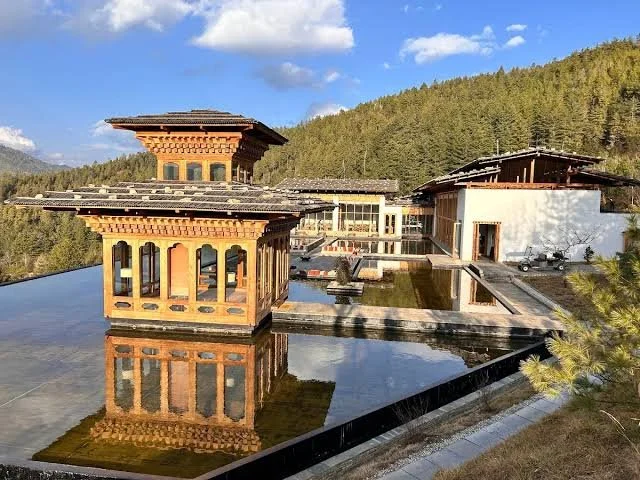
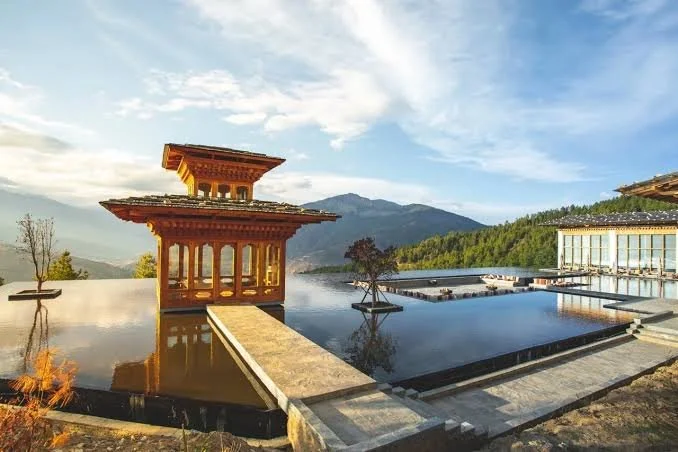
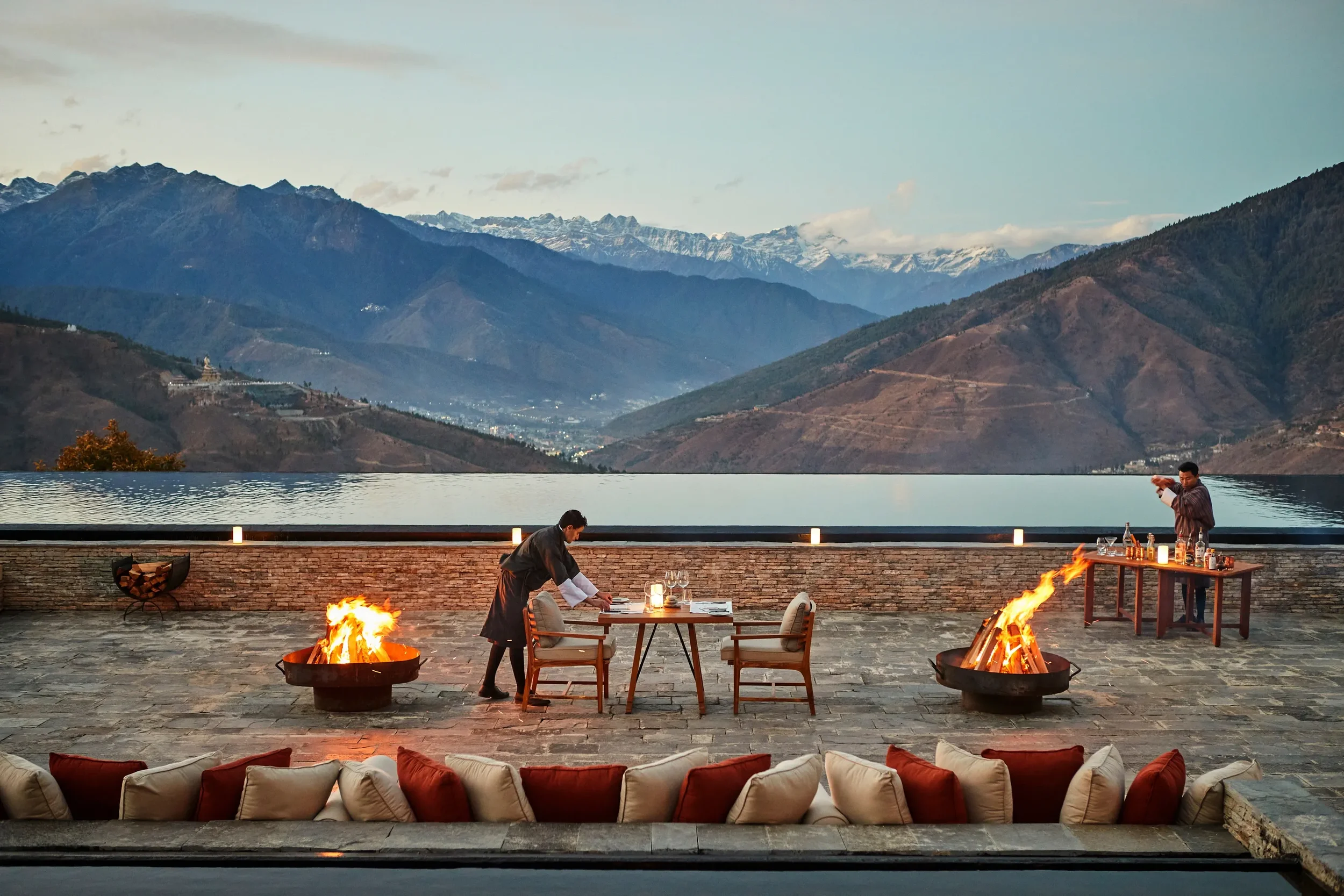
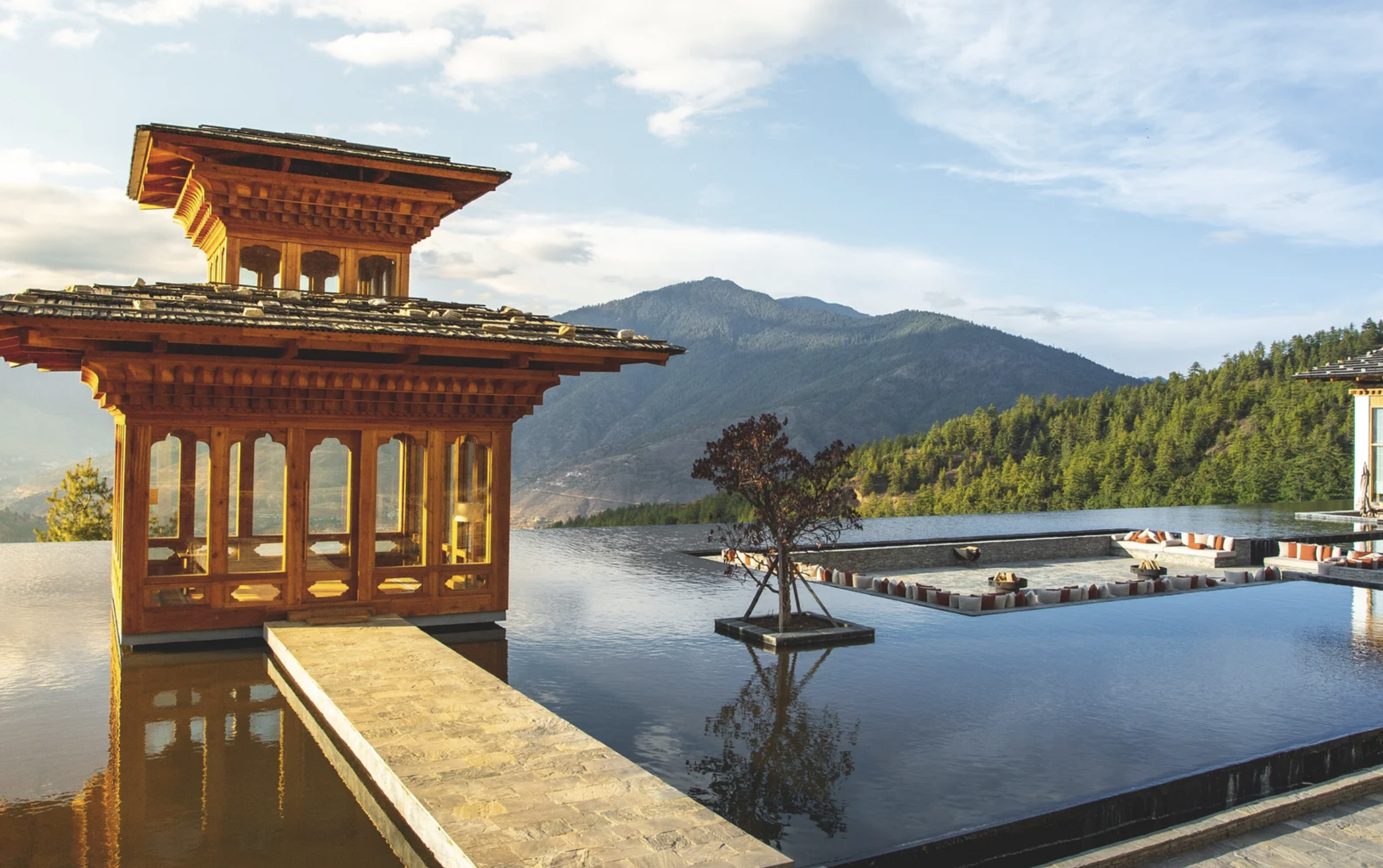
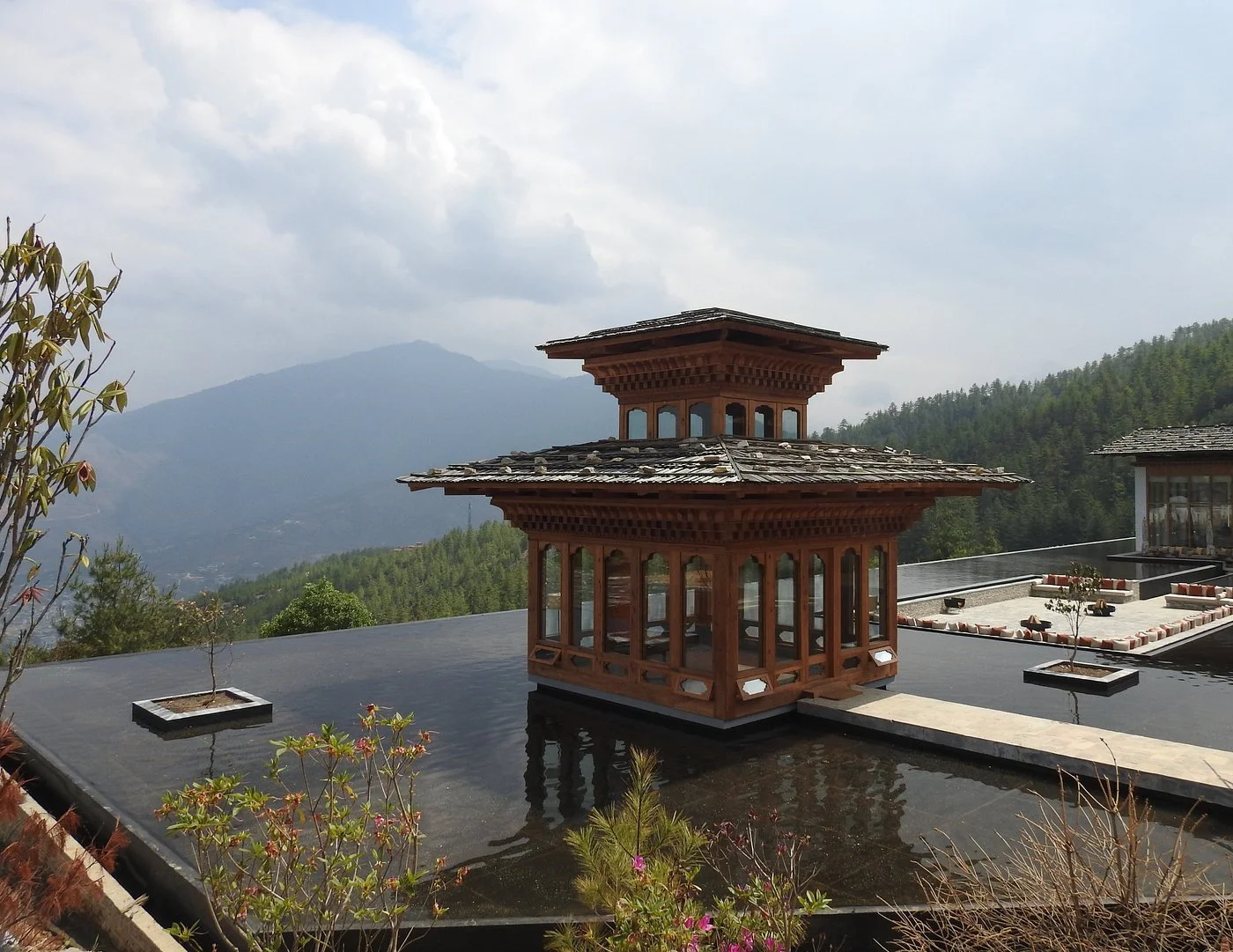
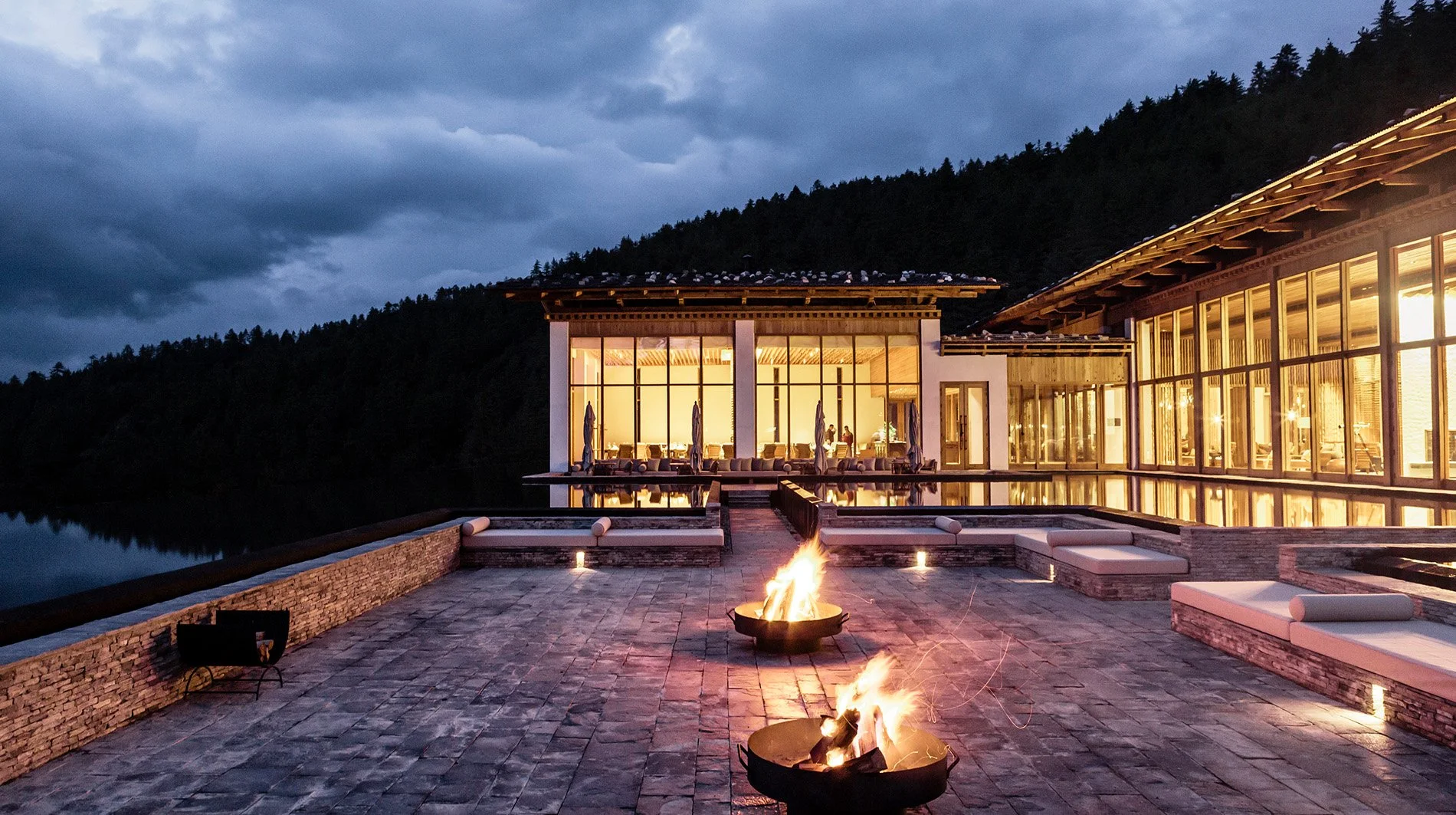
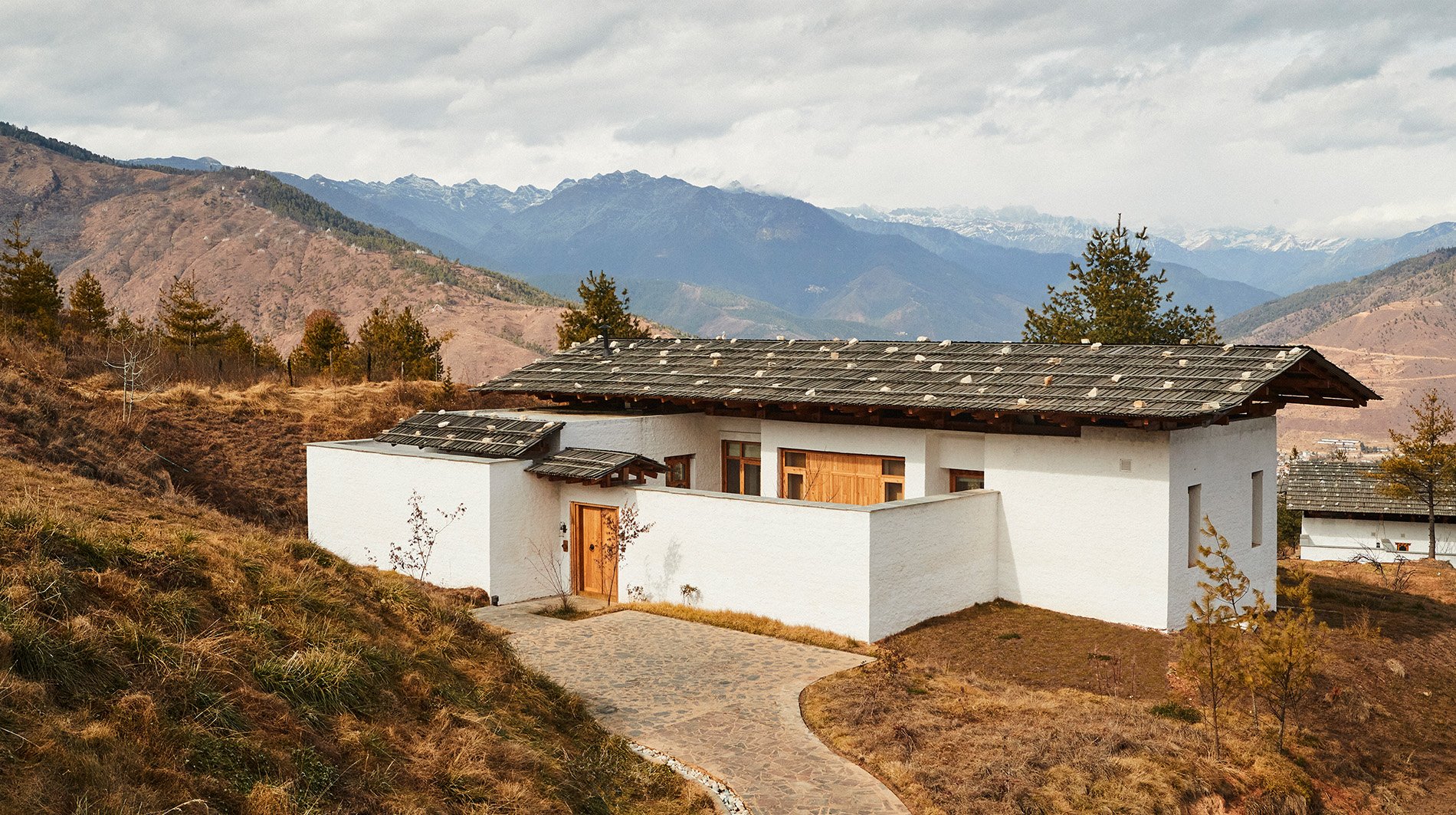
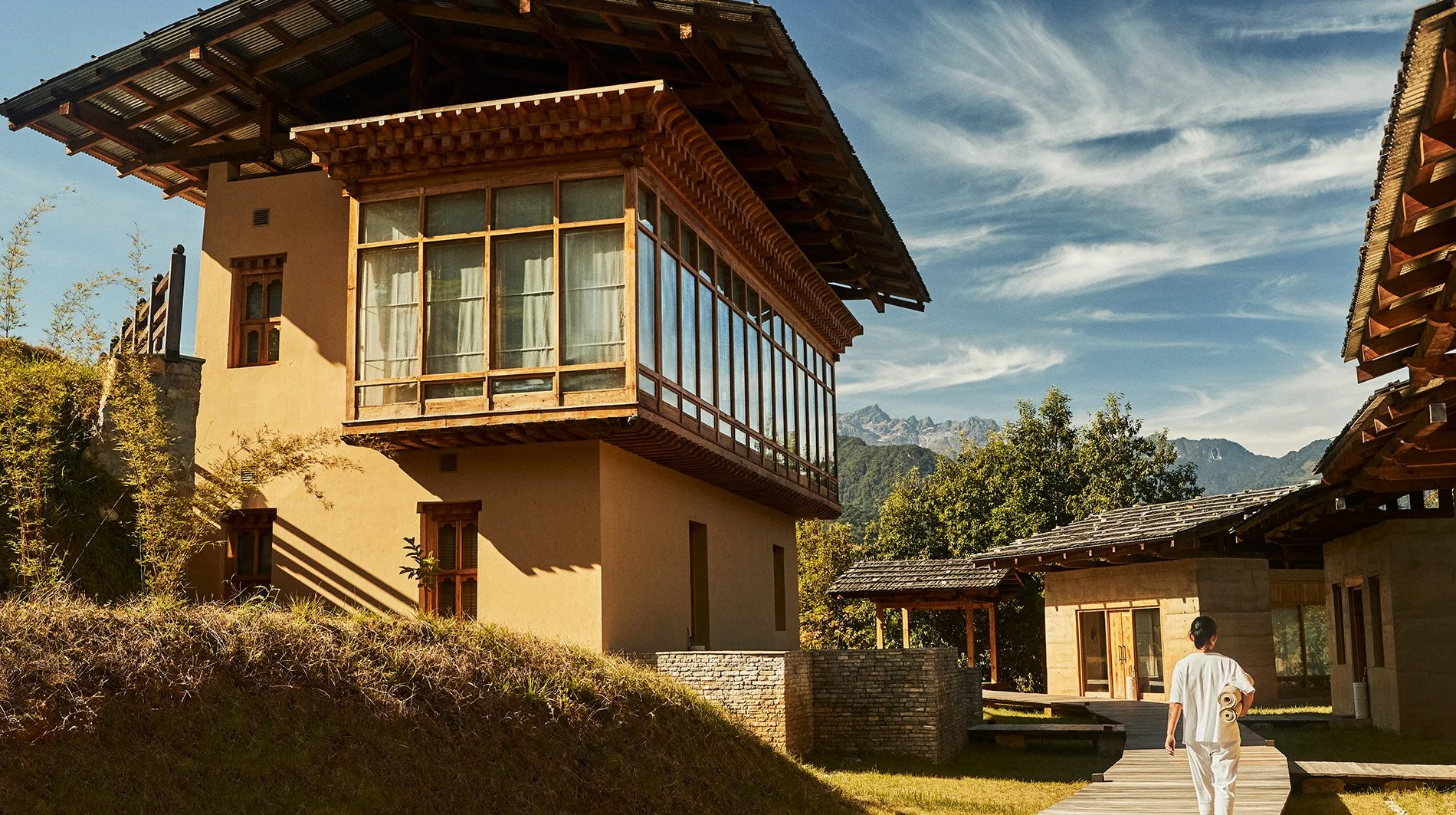
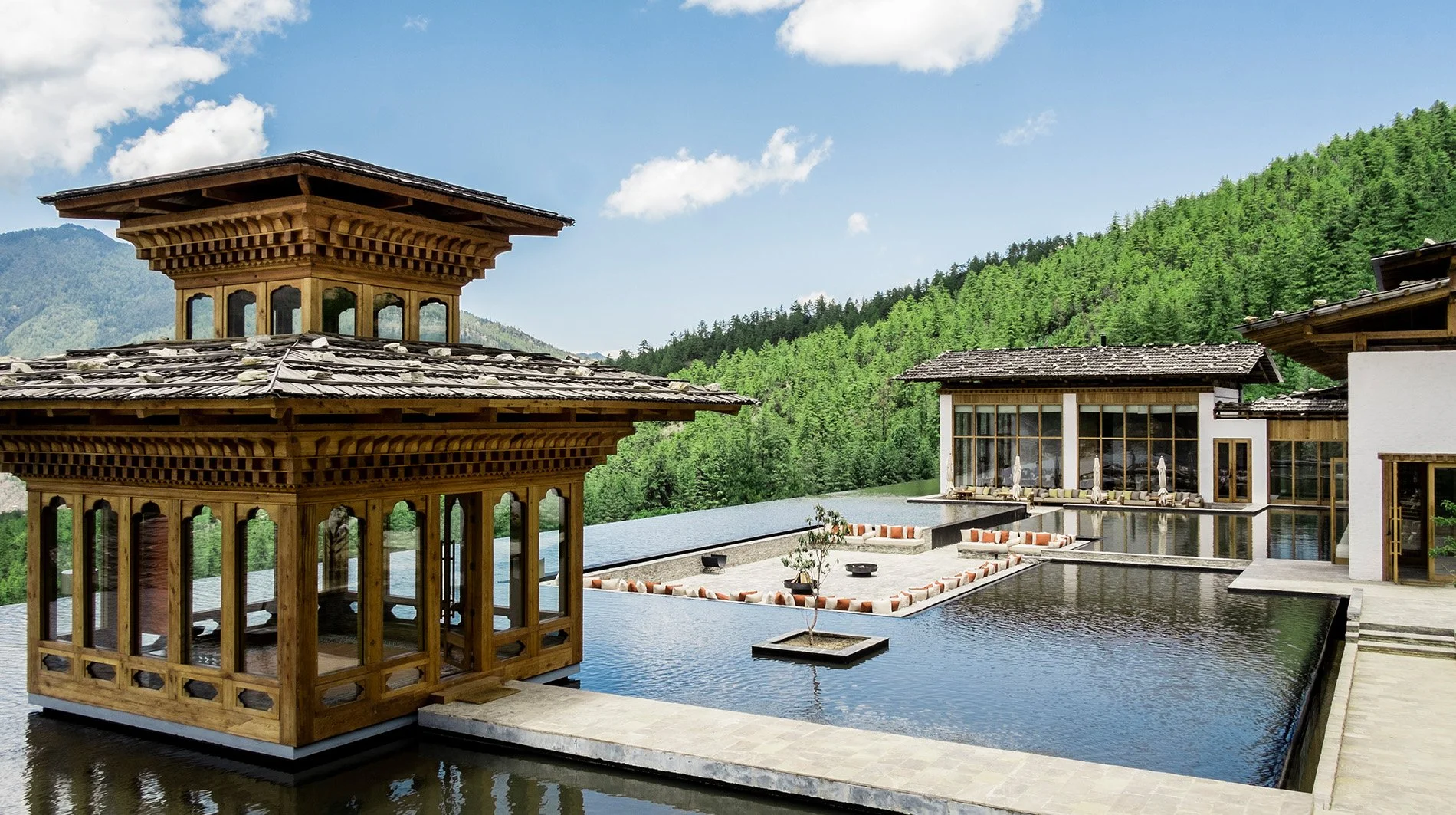
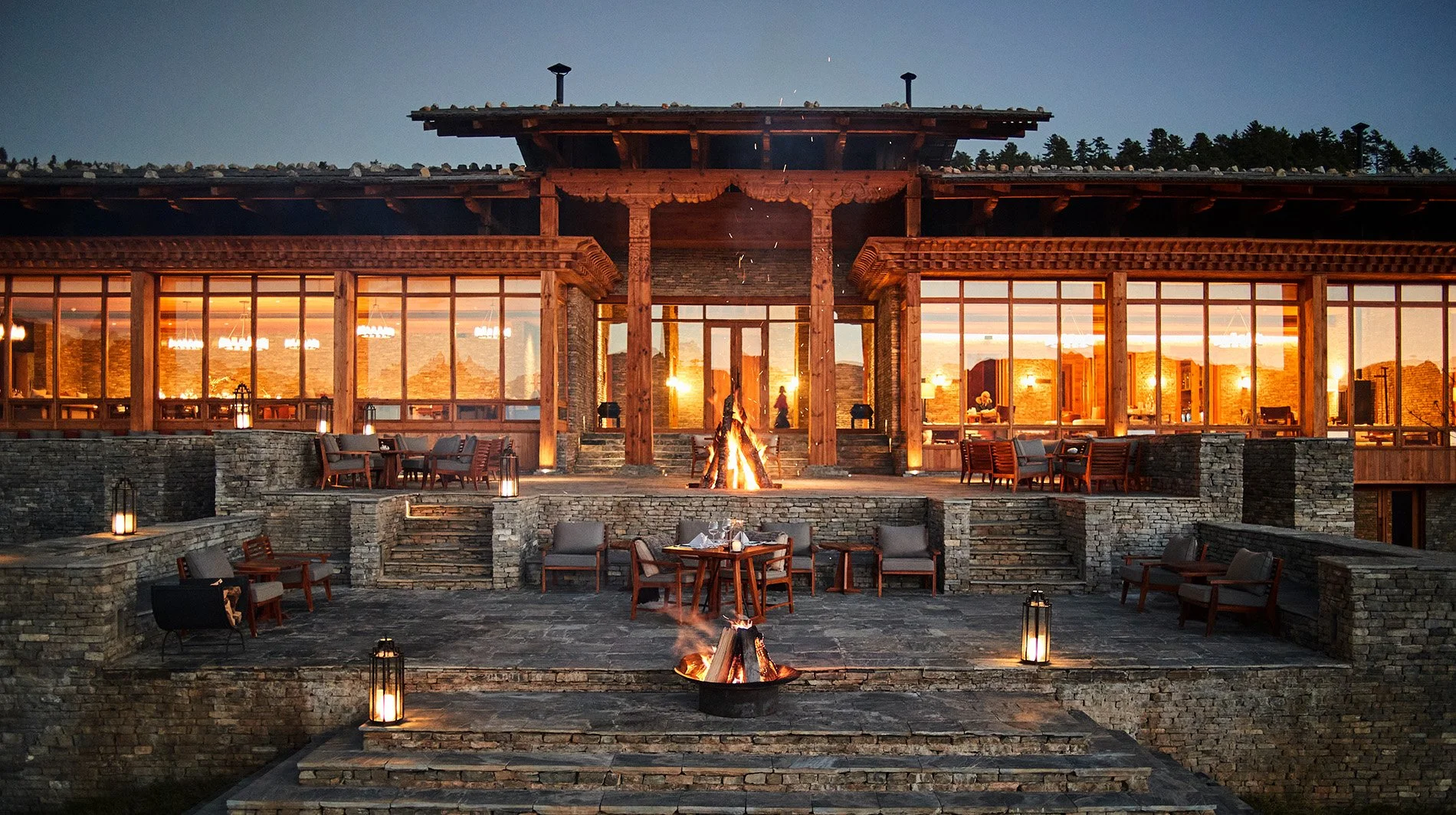
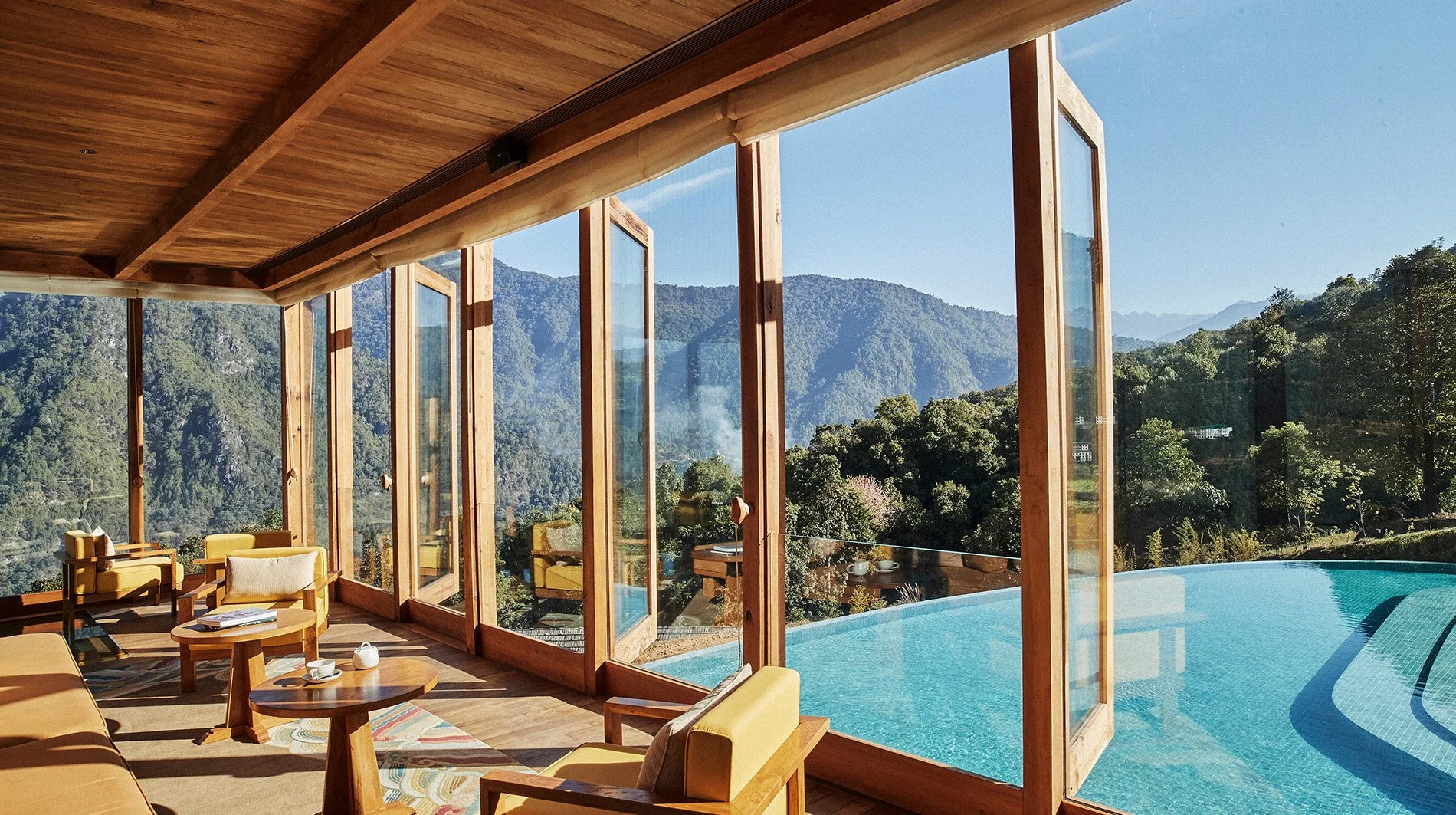
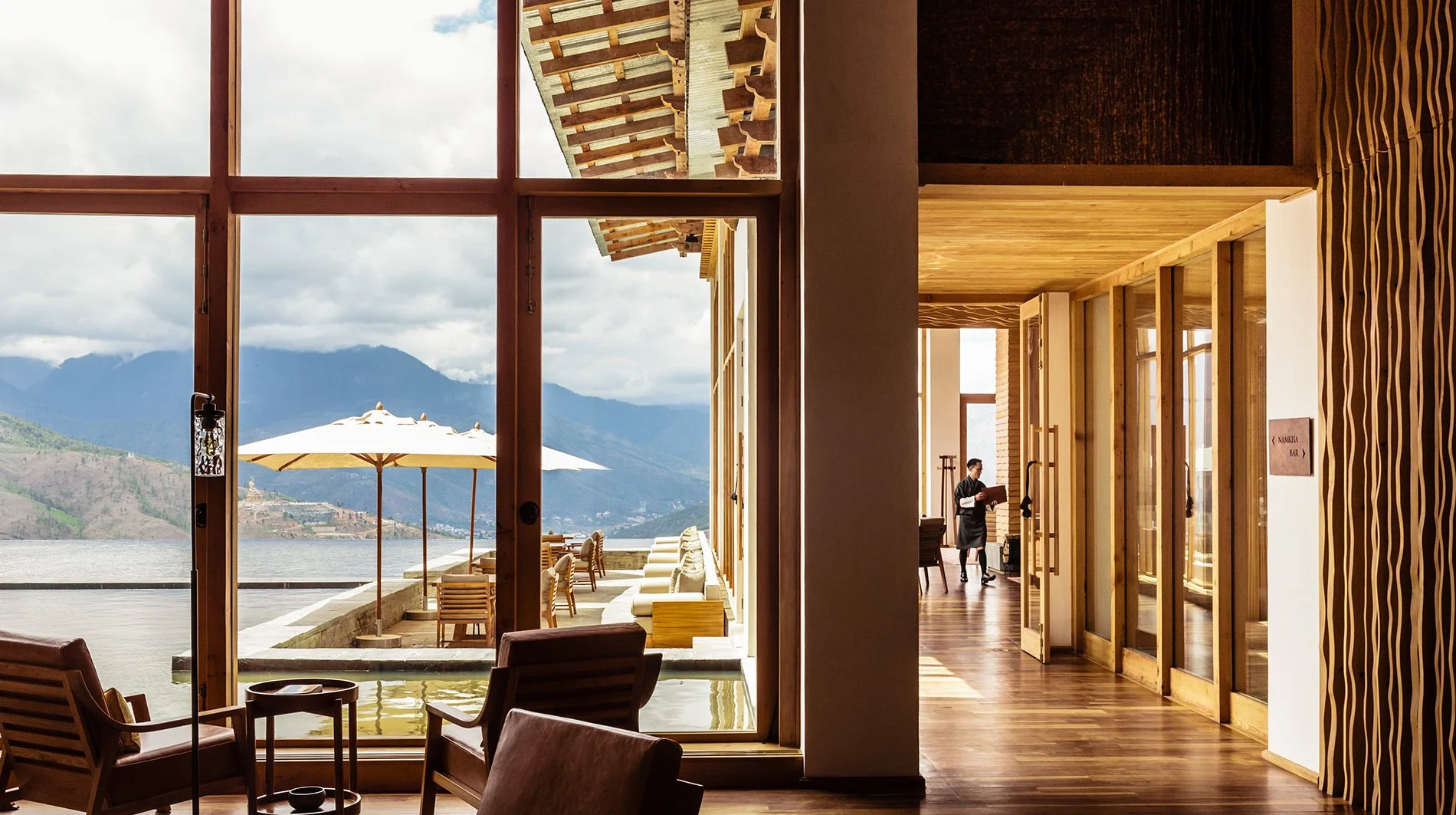
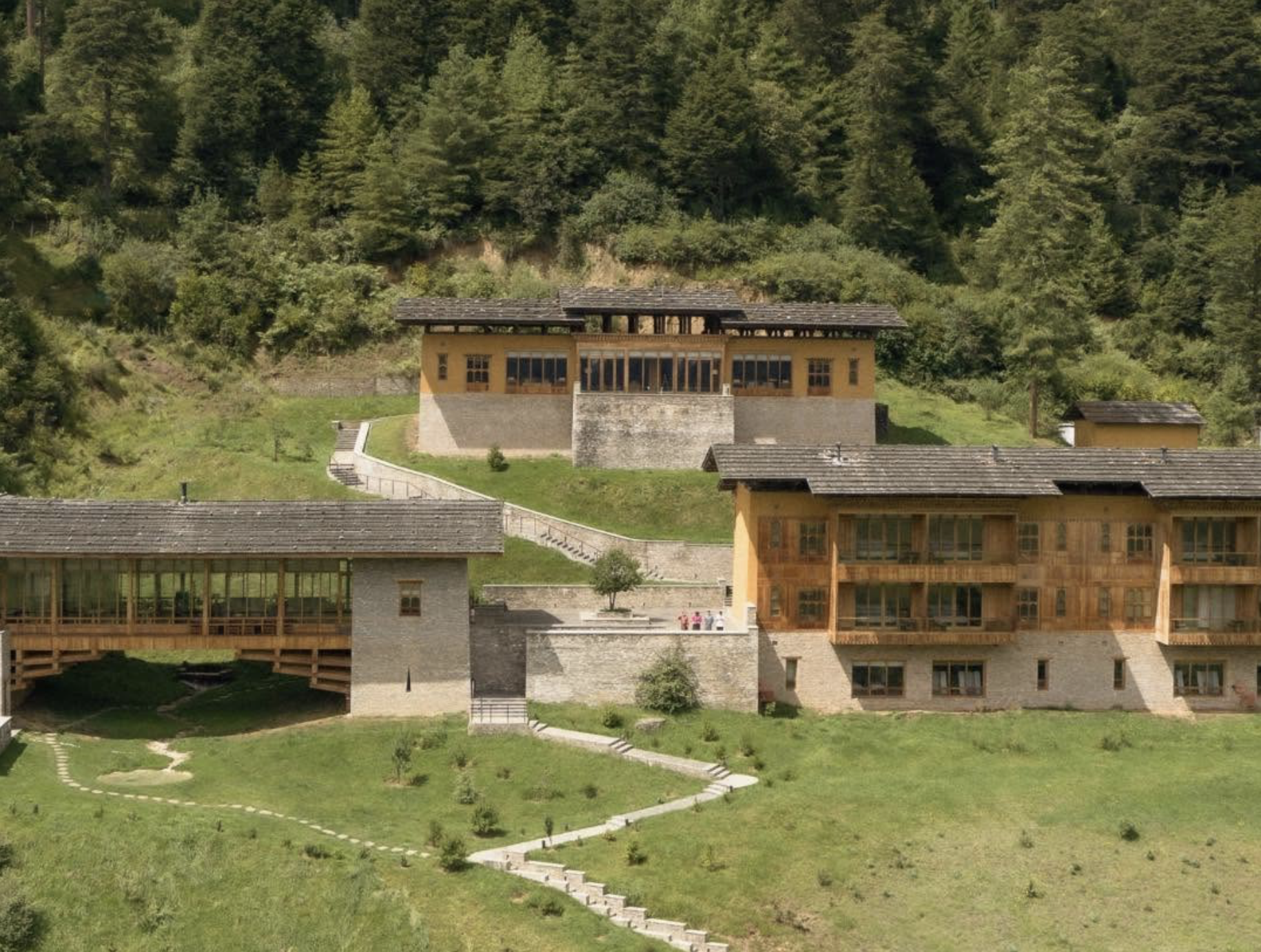
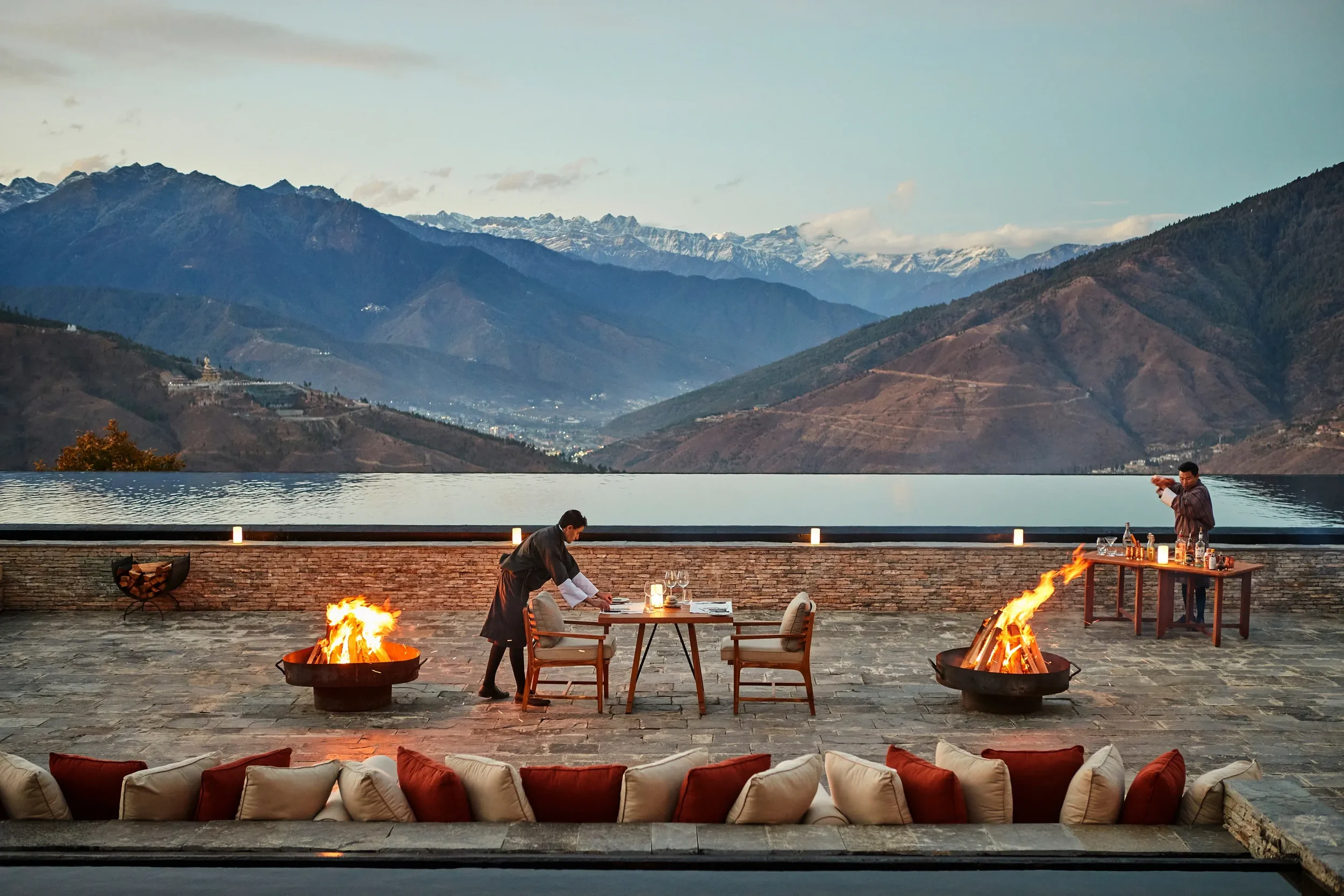
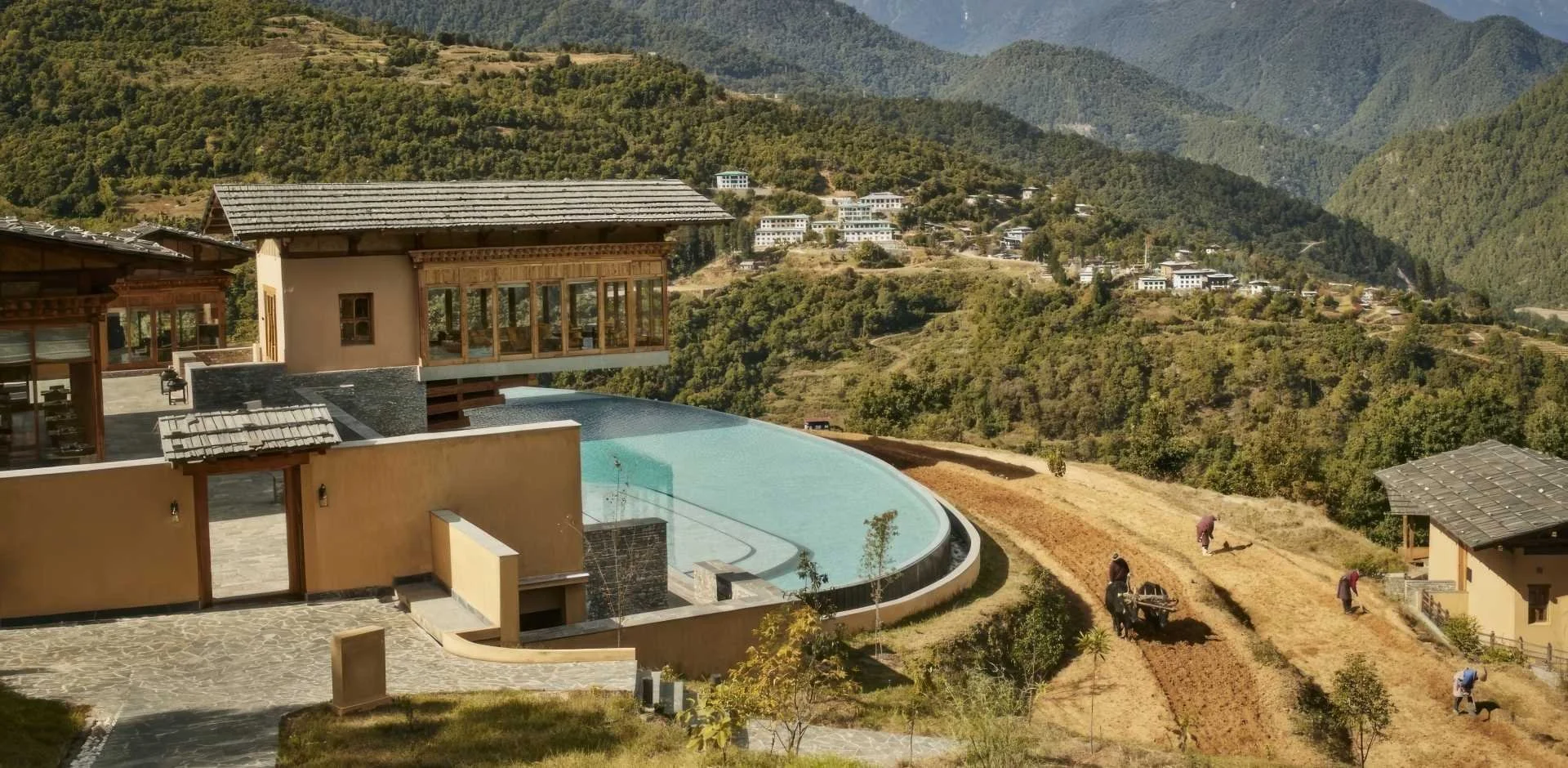
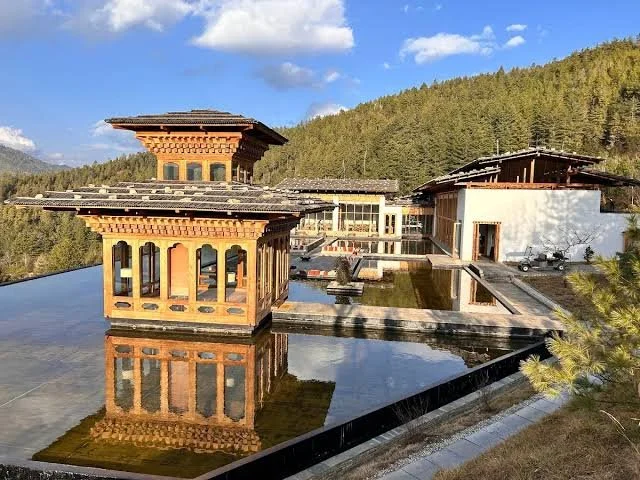
The lodges share natural materials, generous windows and a recognizable Six Senses approach to understated interiors, but each has a distinctive concept. Thimphu’s elevated position and reflecting water give it the nickname Palace in the Sky, with a more expansive, ceremonial atmosphere appropriate to the capital. Its long sightlines draw the eye over the valley and surrounding peaks.
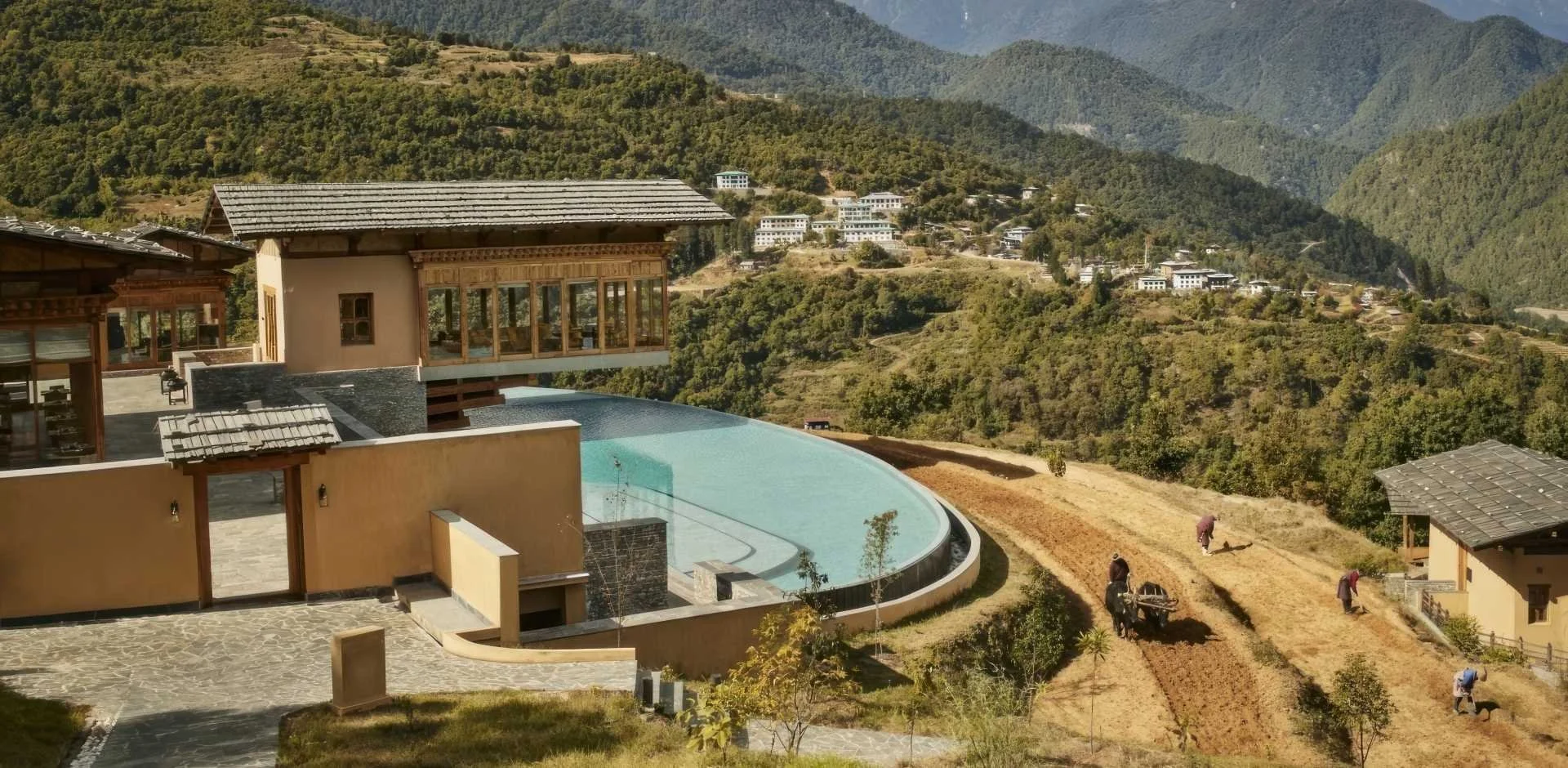
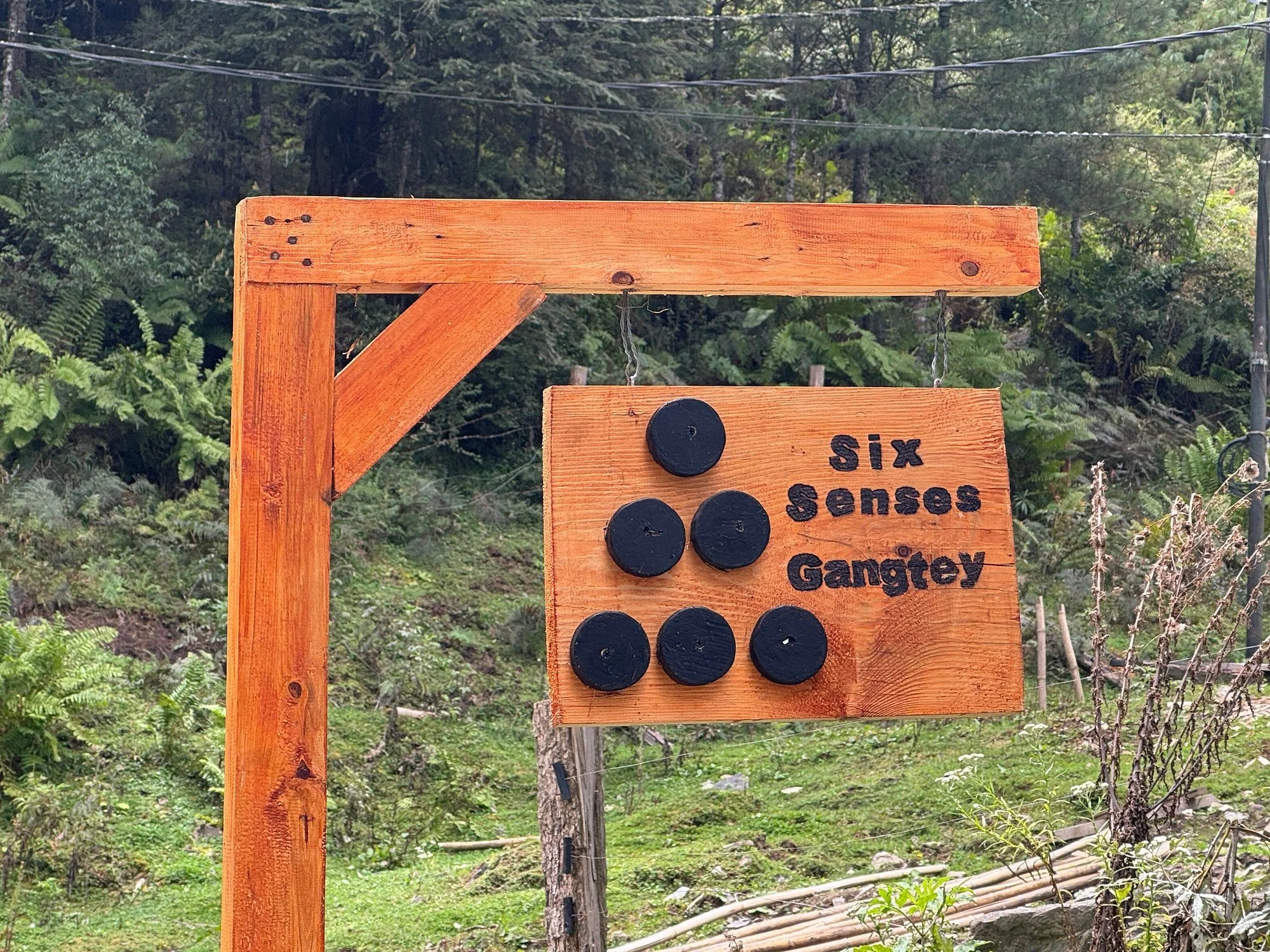
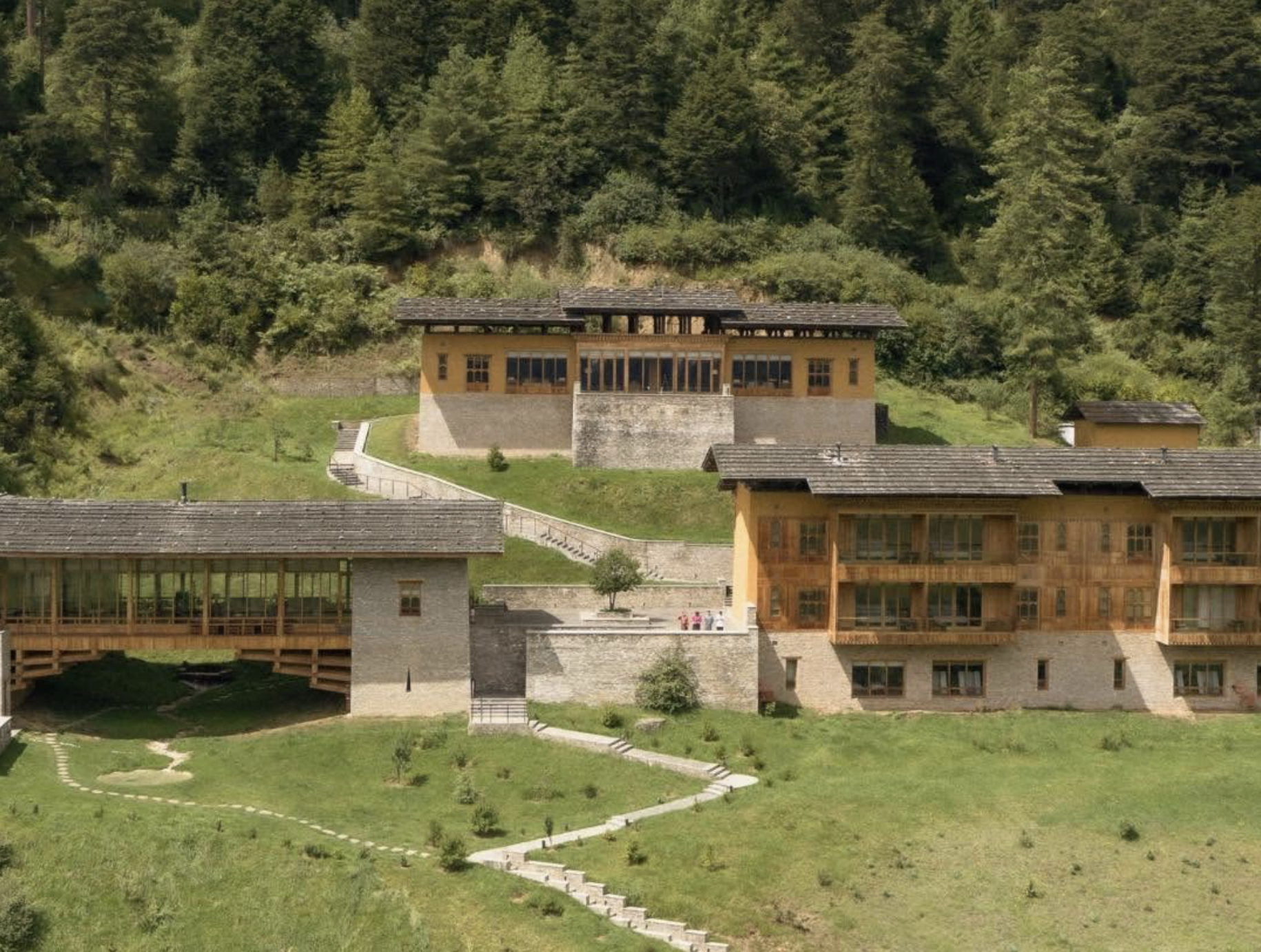
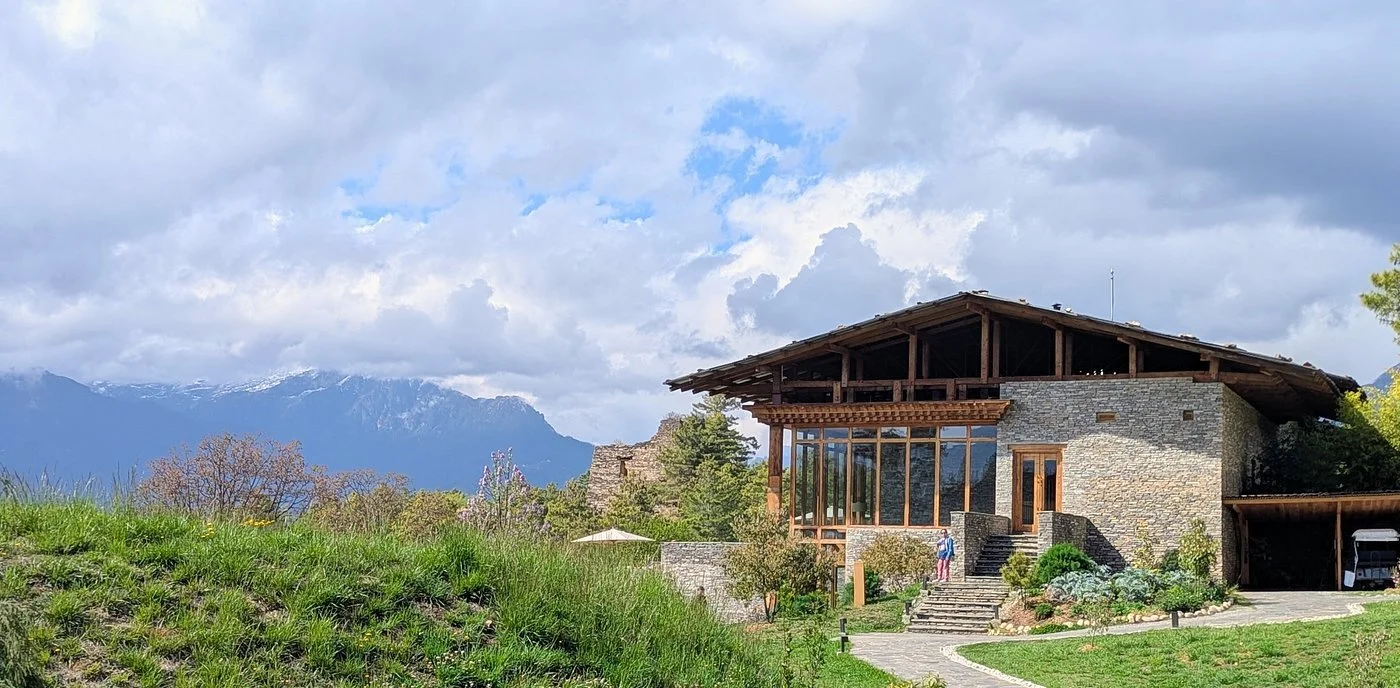
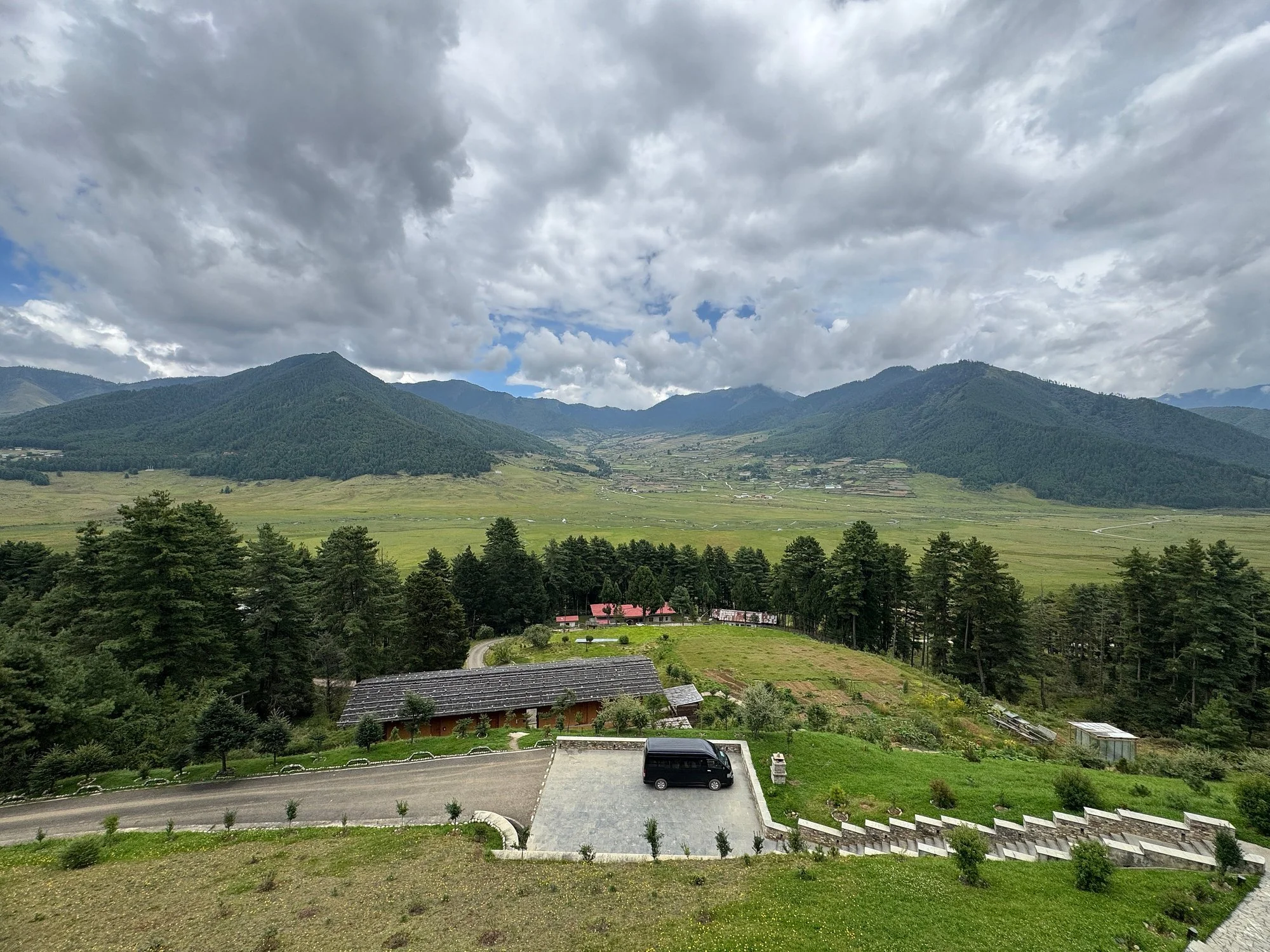
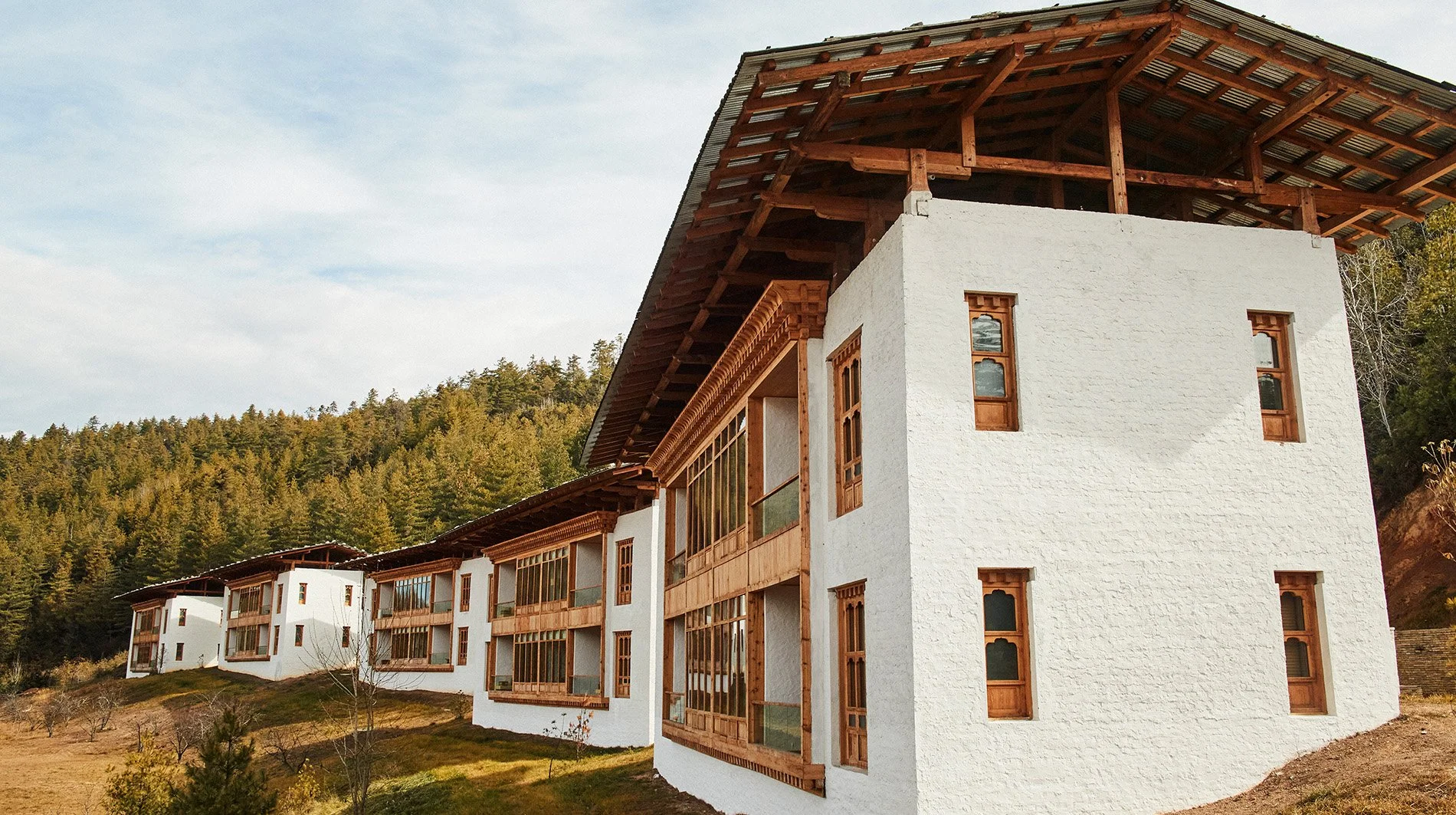
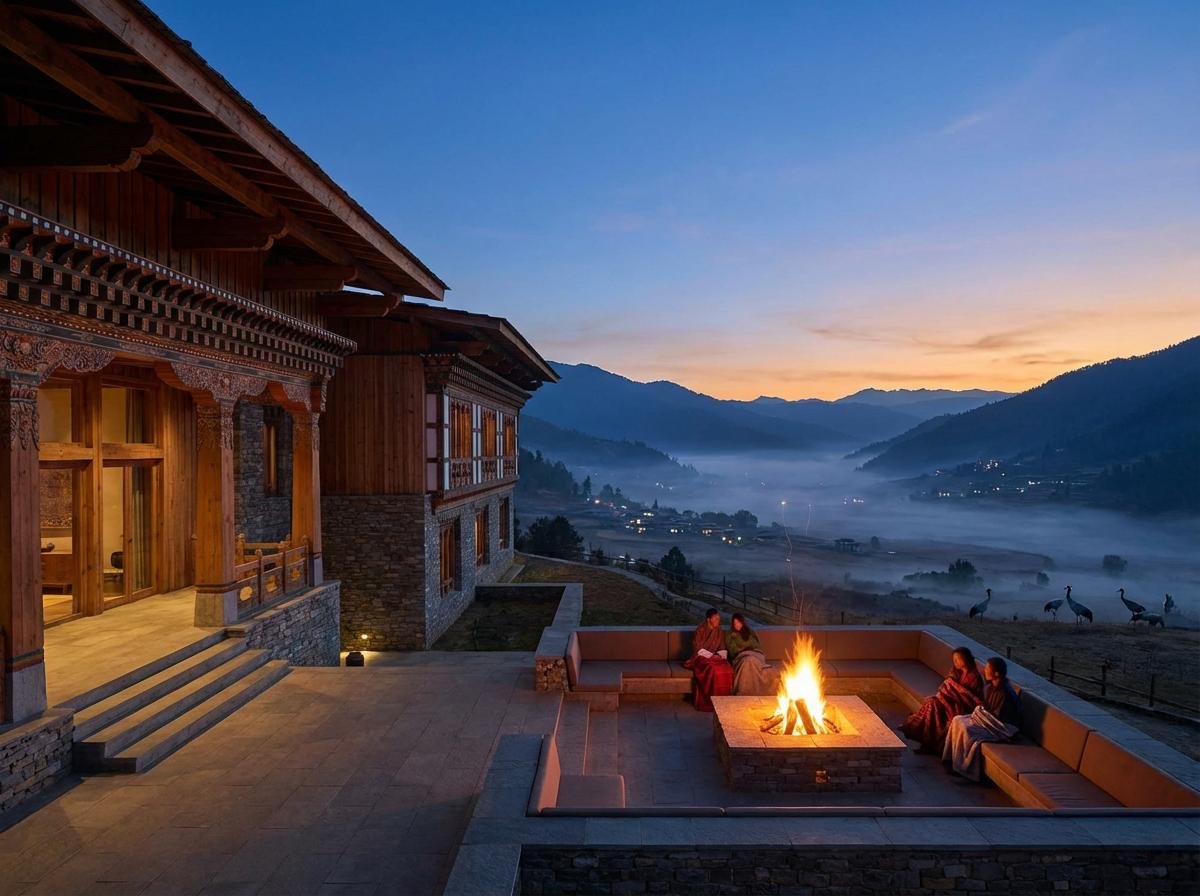
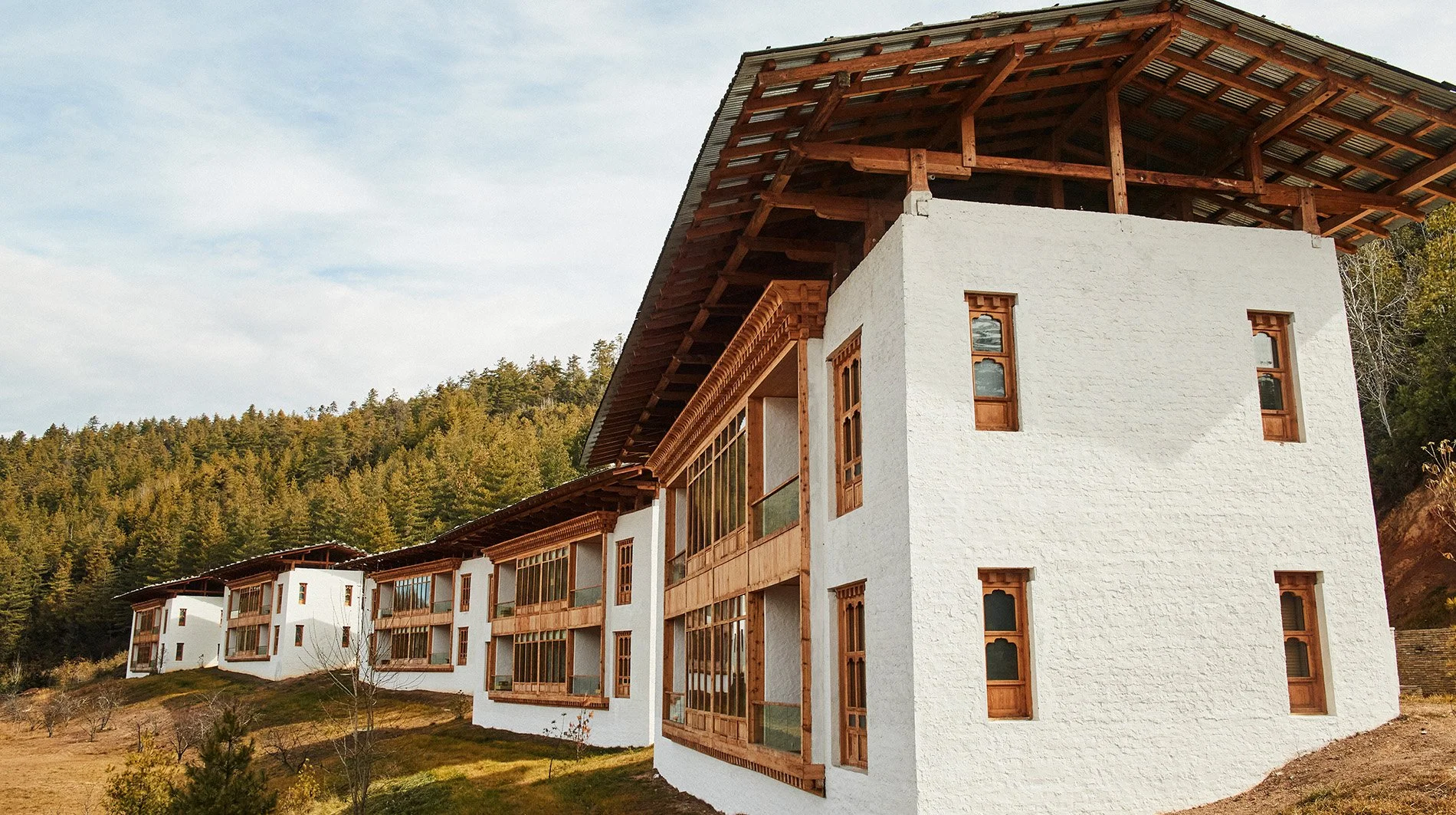
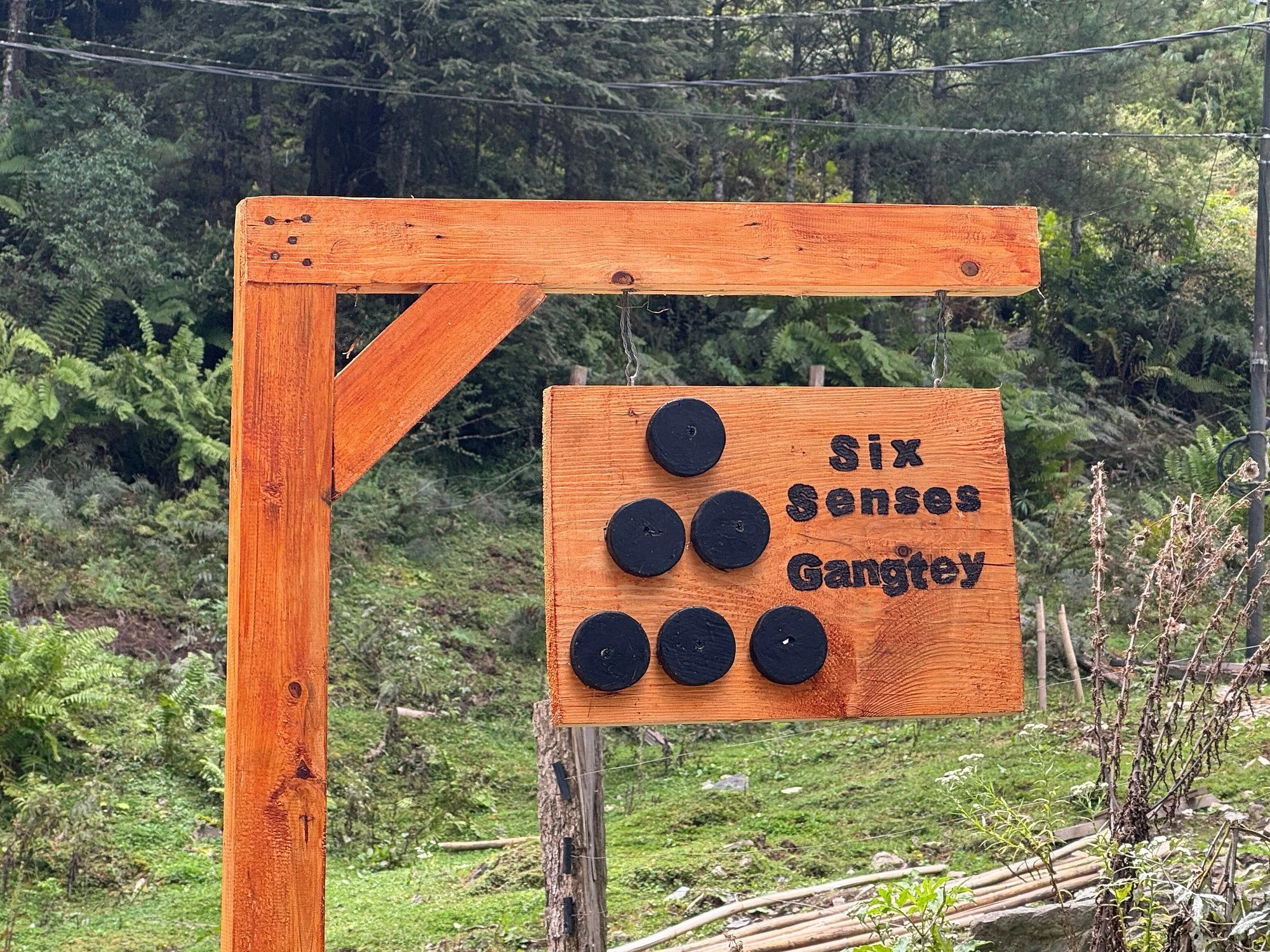
Punakha takes inspiration from a traditional farmhouse, with agricultural fields close to the lodge and an architecture that feels lighter in its warmer surroundings. Gangtey’s Birdwatching Bridge identity expresses its position above the Phobjikha Valley and its black-necked crane habitat. At this intimate property, locally inspired stone and timber, high windows and outward-facing balconies emphasize the extraordinary breadth of the landscape.
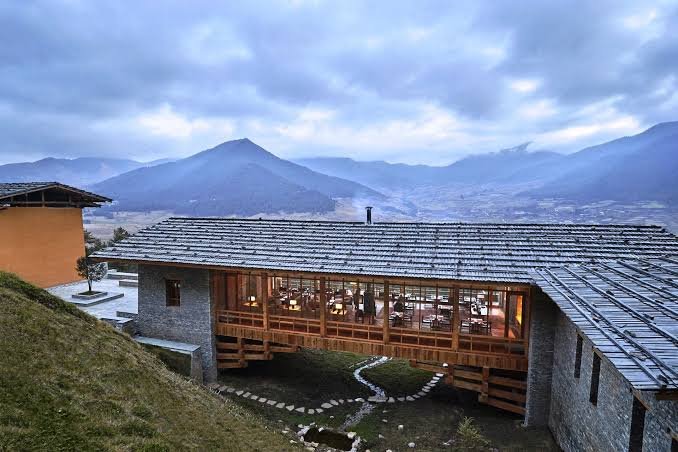
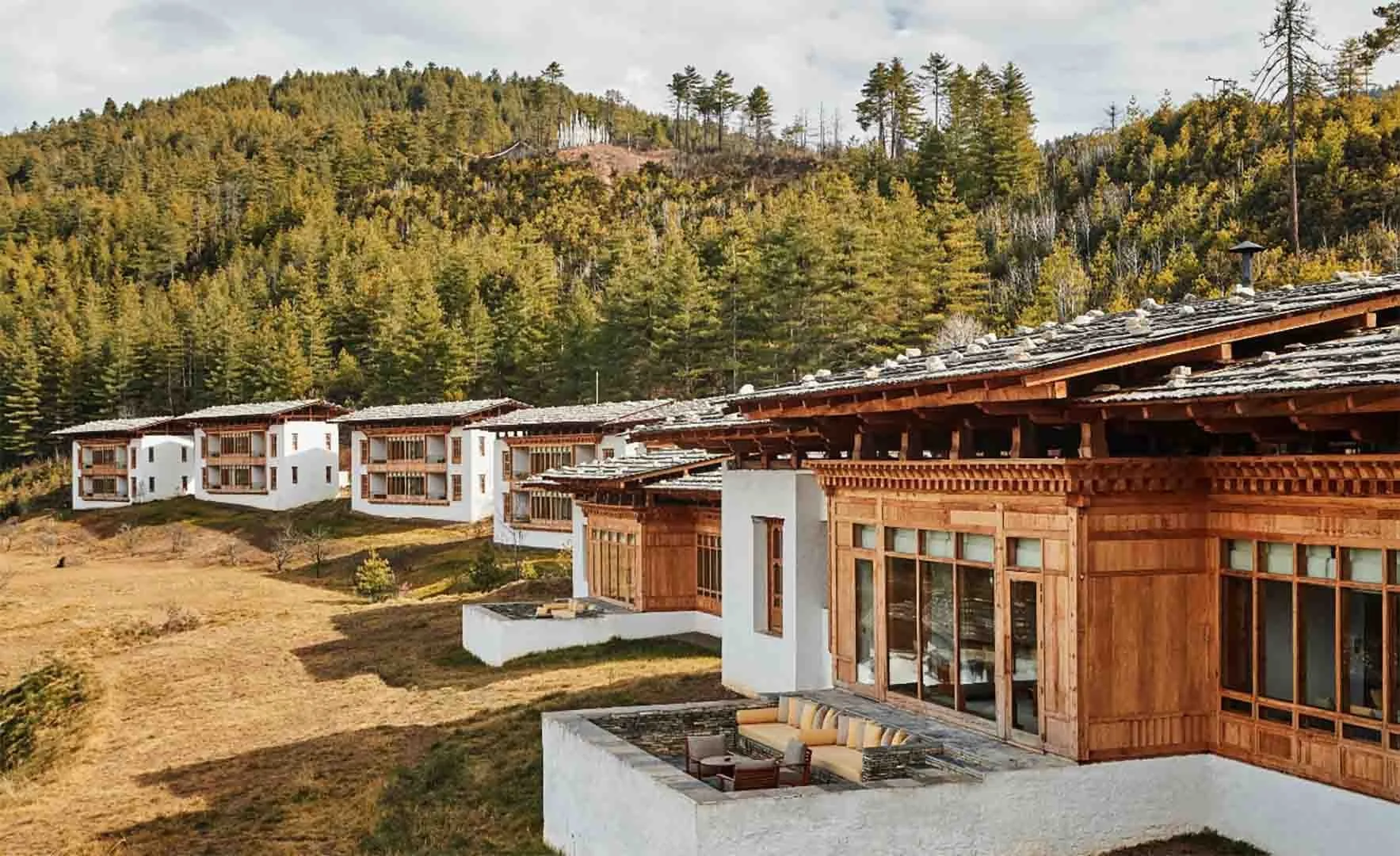
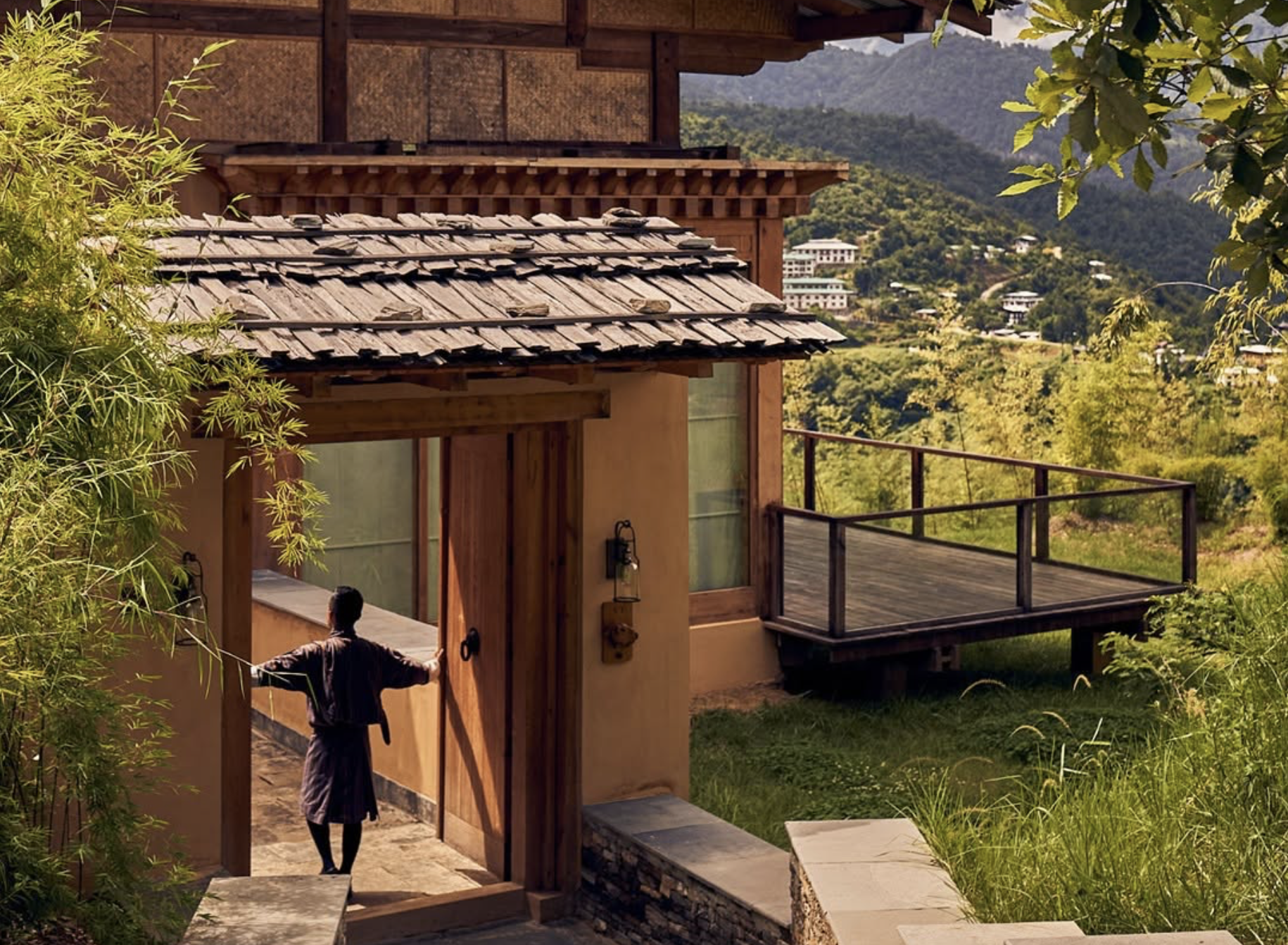
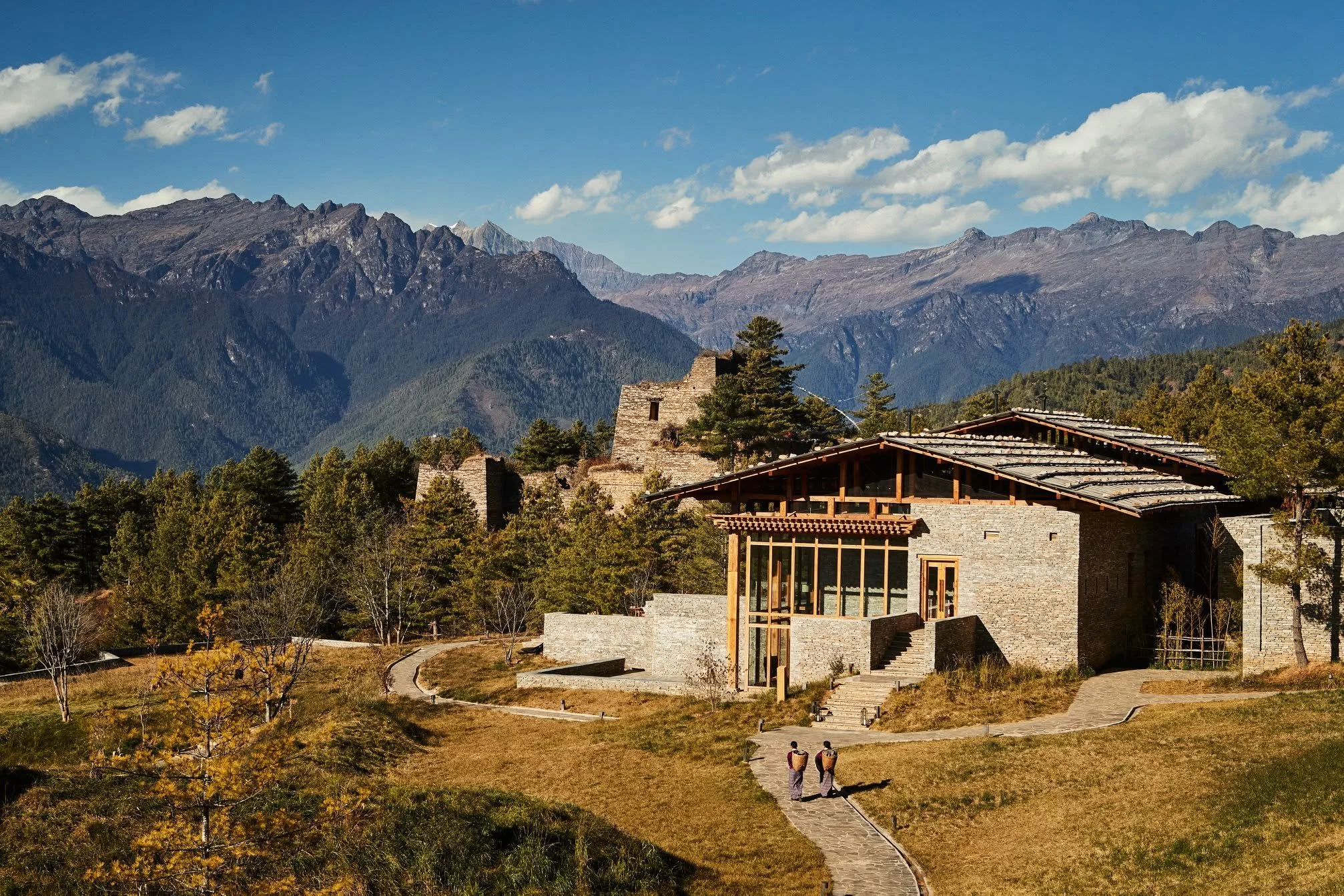
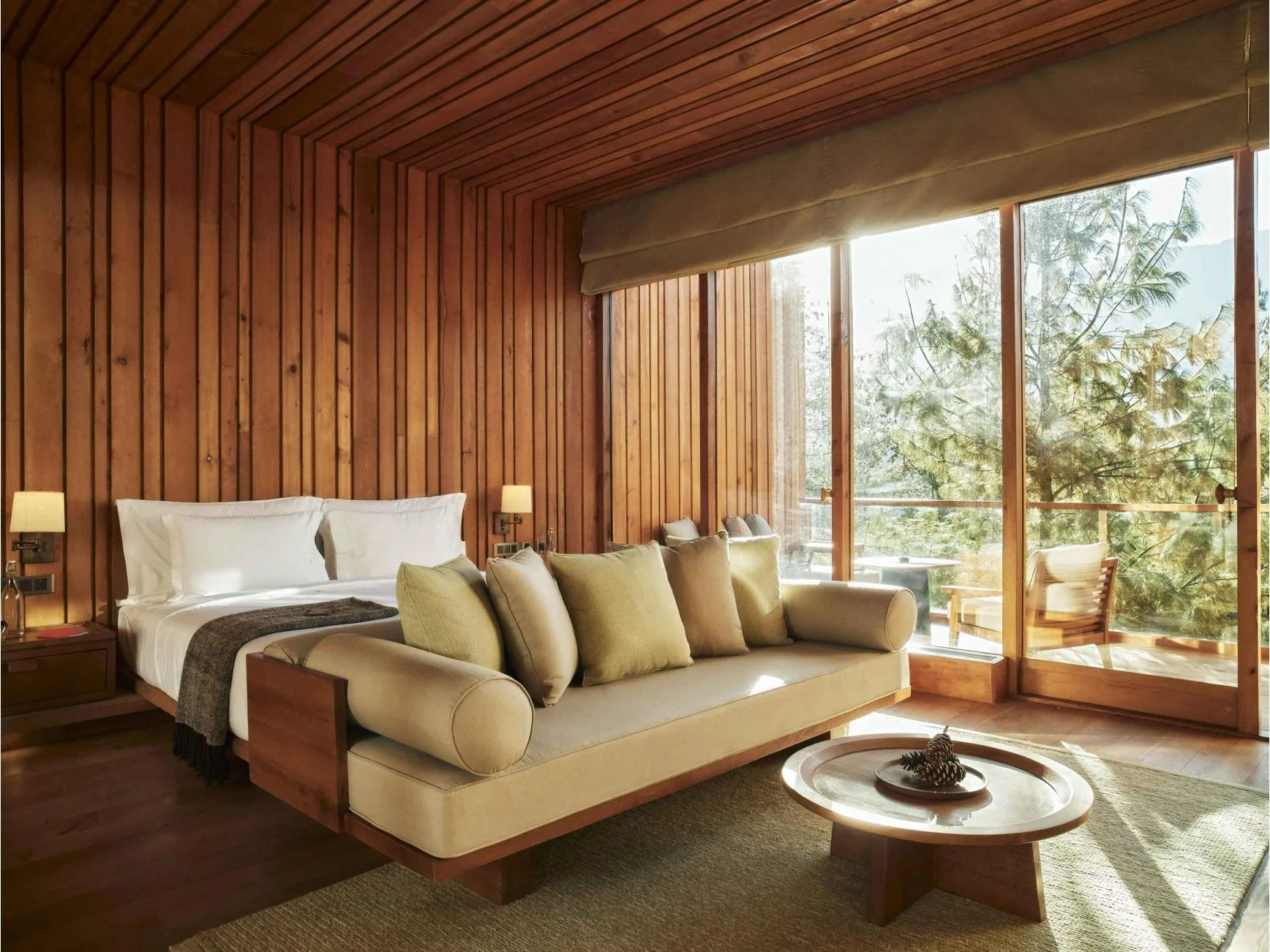
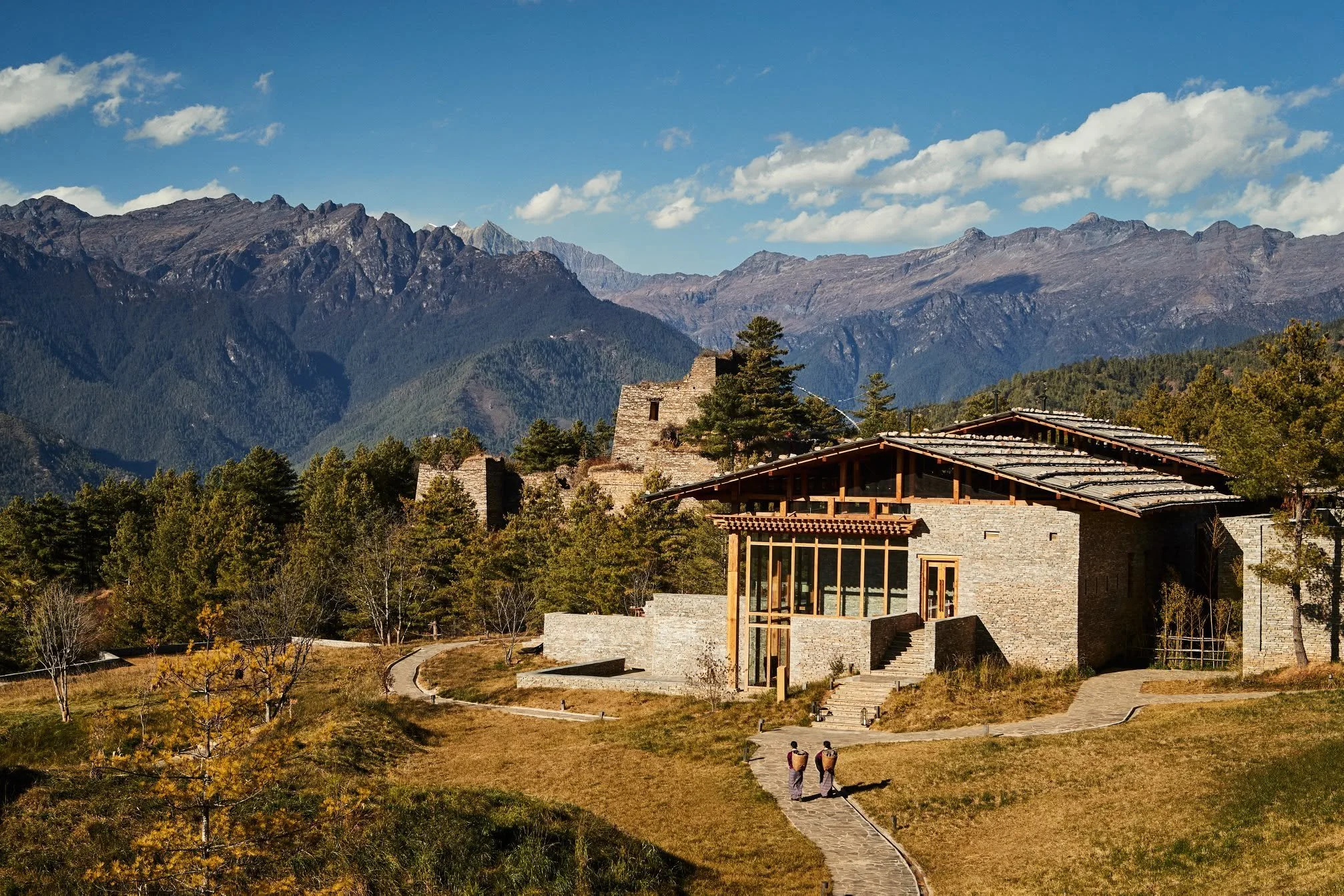
Bumthang follows a Forest within a Forest idea. Timber interiors echo the pines outside, while suites incorporate a small courtyard planted with a tree. Paro, known as Stone Ruins, responds to historic masonry and a hillside setting with wide valley views. These differences are worth considering when allocating nights: they are not interchangeable hotel addresses but distinct chapters of a journey.
Suites and Villas Across the Five Lodges
Six Senses Bhutan’s accommodation differs by location. The categories below follow the collection’s general progression from lodge suites to larger villas; category availability and arrangements should be matched to the specific lodge selected.
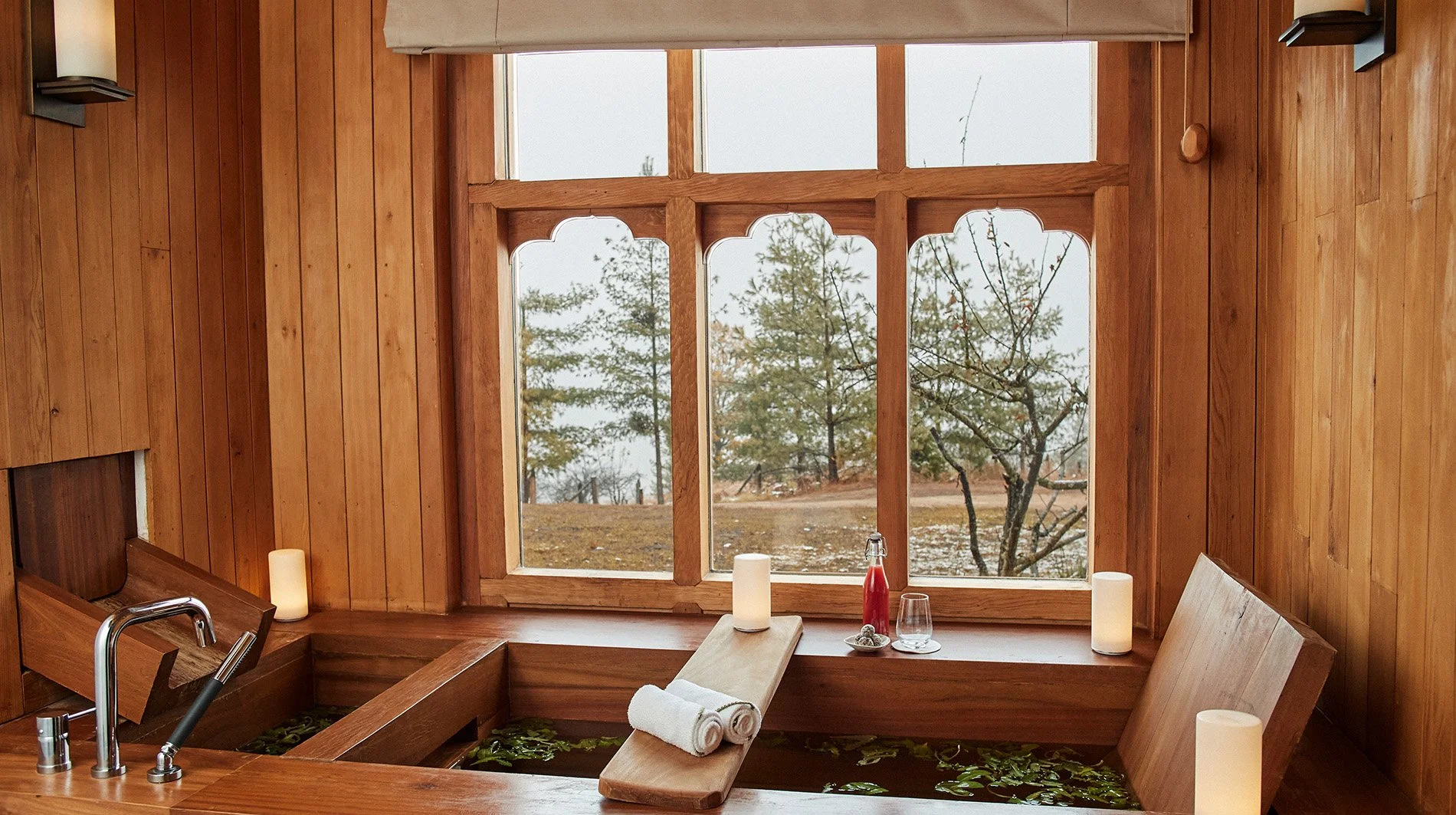
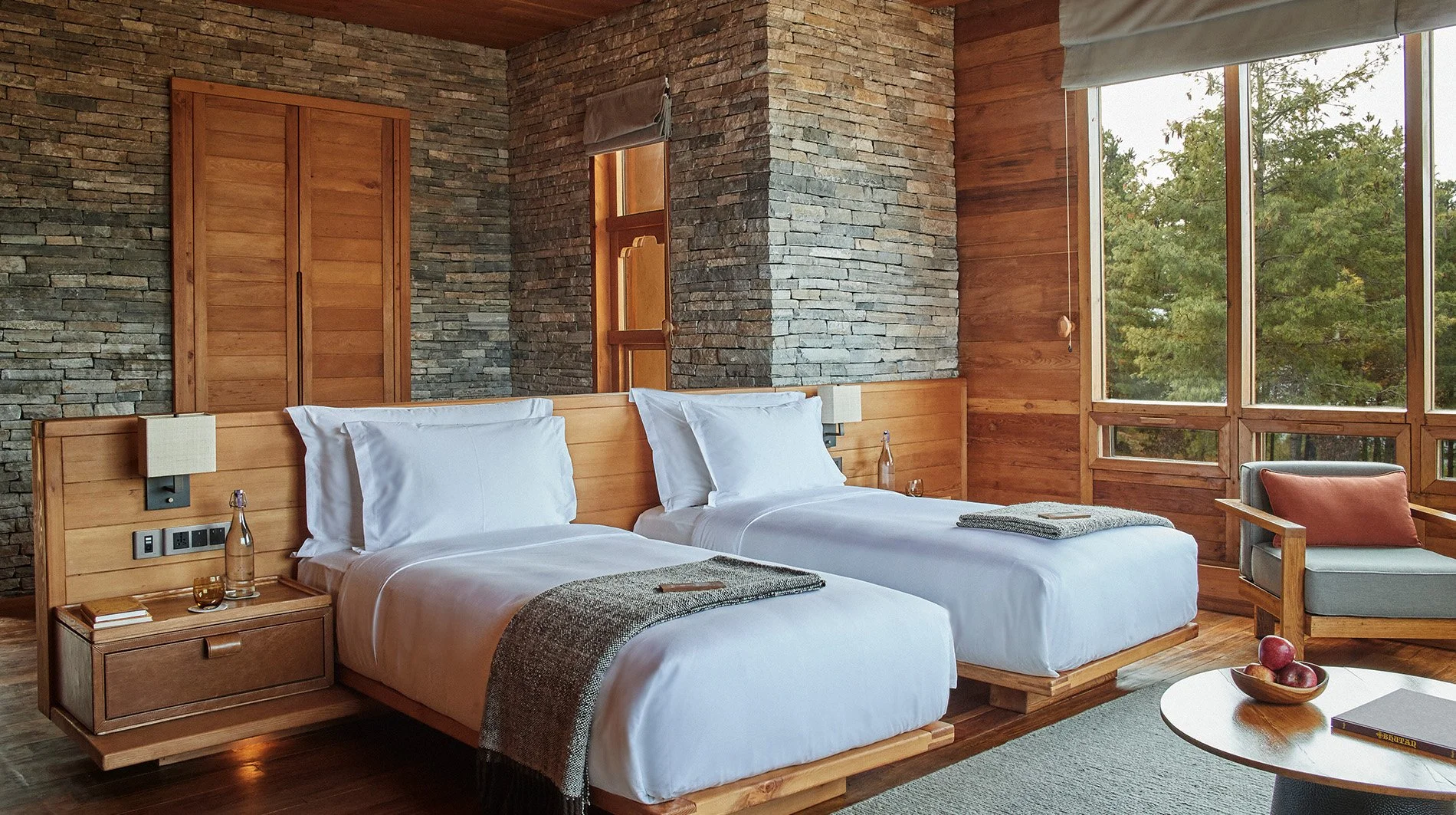
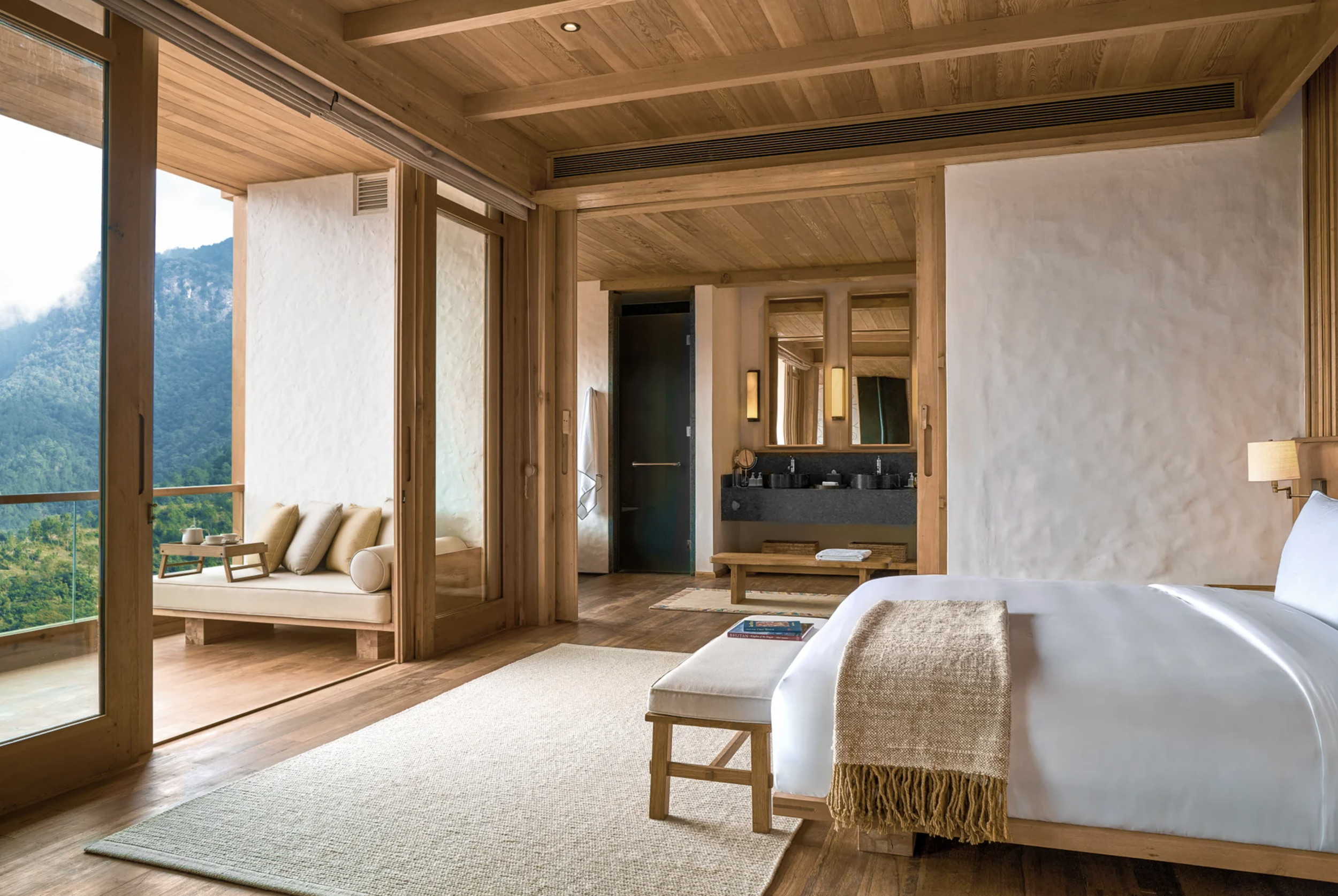
Lodge Suite: Offered across the five lodges, this starting category pairs a bedroom with a sitting area, generous bathing facilities and valley, mountain or forest views; some lodges provide a separate outdoor sitting area.
Upper Lodge Suite: A higher-positioned suite with advantageous outlooks in several lodges; in Bumthang, this category is on the same level as Lodge Suites but offers superior views toward the river.
Two-Bedroom Villa: Available across the collection for travelers who want bedrooms alongside shared living and dining spaces; layouts vary, and the Gangtey and Bumthang villas incorporate private spa-treatment facilities.
Three-Bedroom Villa: A larger accommodation option offered at selected lodges for groups requiring additional bedrooms and communal space; exact availability and configuration must be confirmed for the intended valley.
Choosing accommodation is not only about moving up a category. A suite facing the open Gangtey wetlands feels fundamentally different from a wooded Bumthang suite, even when both have comparable interiors. Travelers making a five-lodge circuit may find it more rewarding to vary lodge experiences and stay lengths than to reserve the largest category at every stop.
Five Kitchens With a Sense of Place
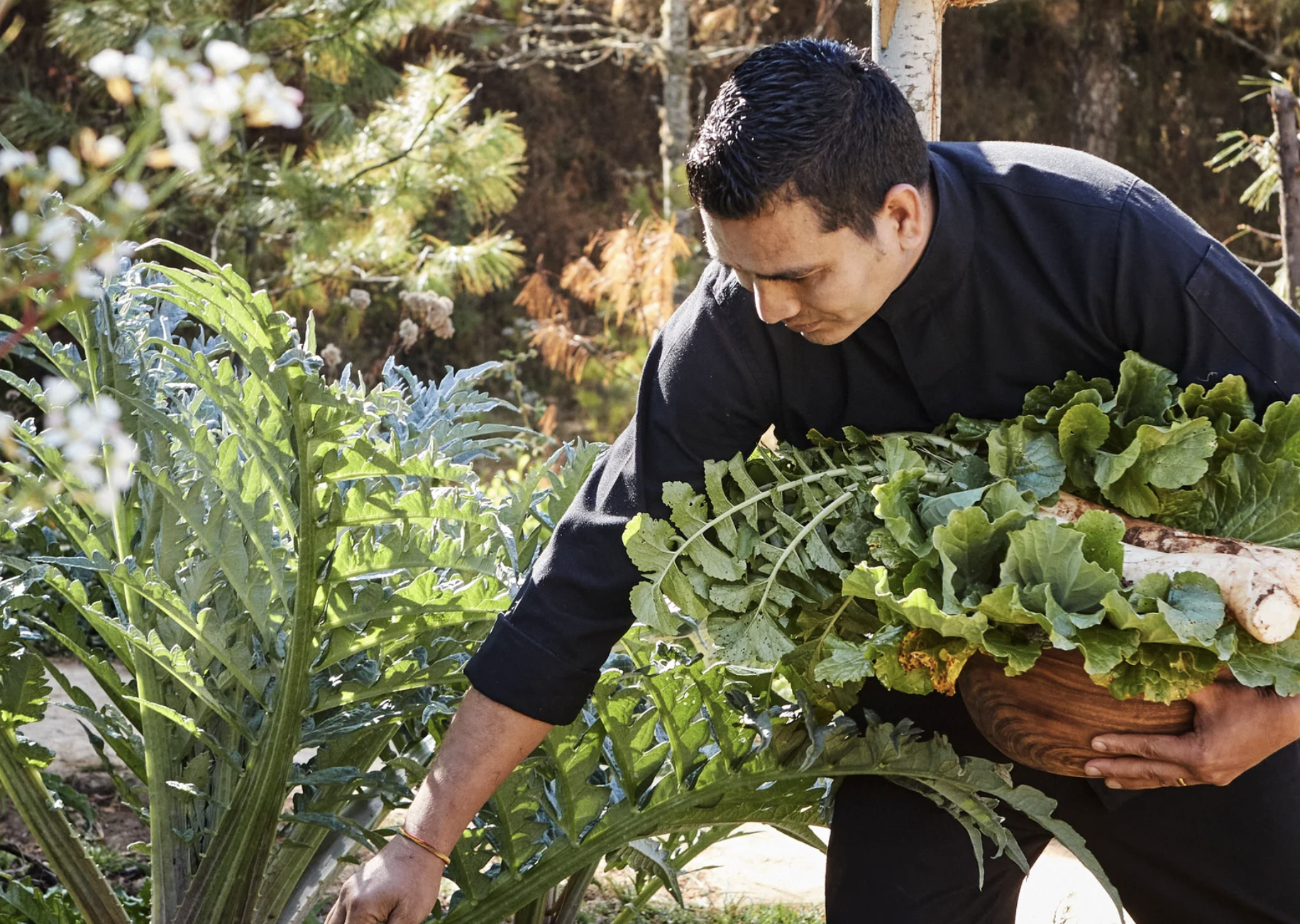
Food is integrated into the lodges’ wellness philosophy, with menus influenced by Bhutanese ingredients, seasonal produce and each valley’s agricultural character. Dining is intimate rather than built around a large collection of branded restaurants. The following are among the documented lodge experiences.
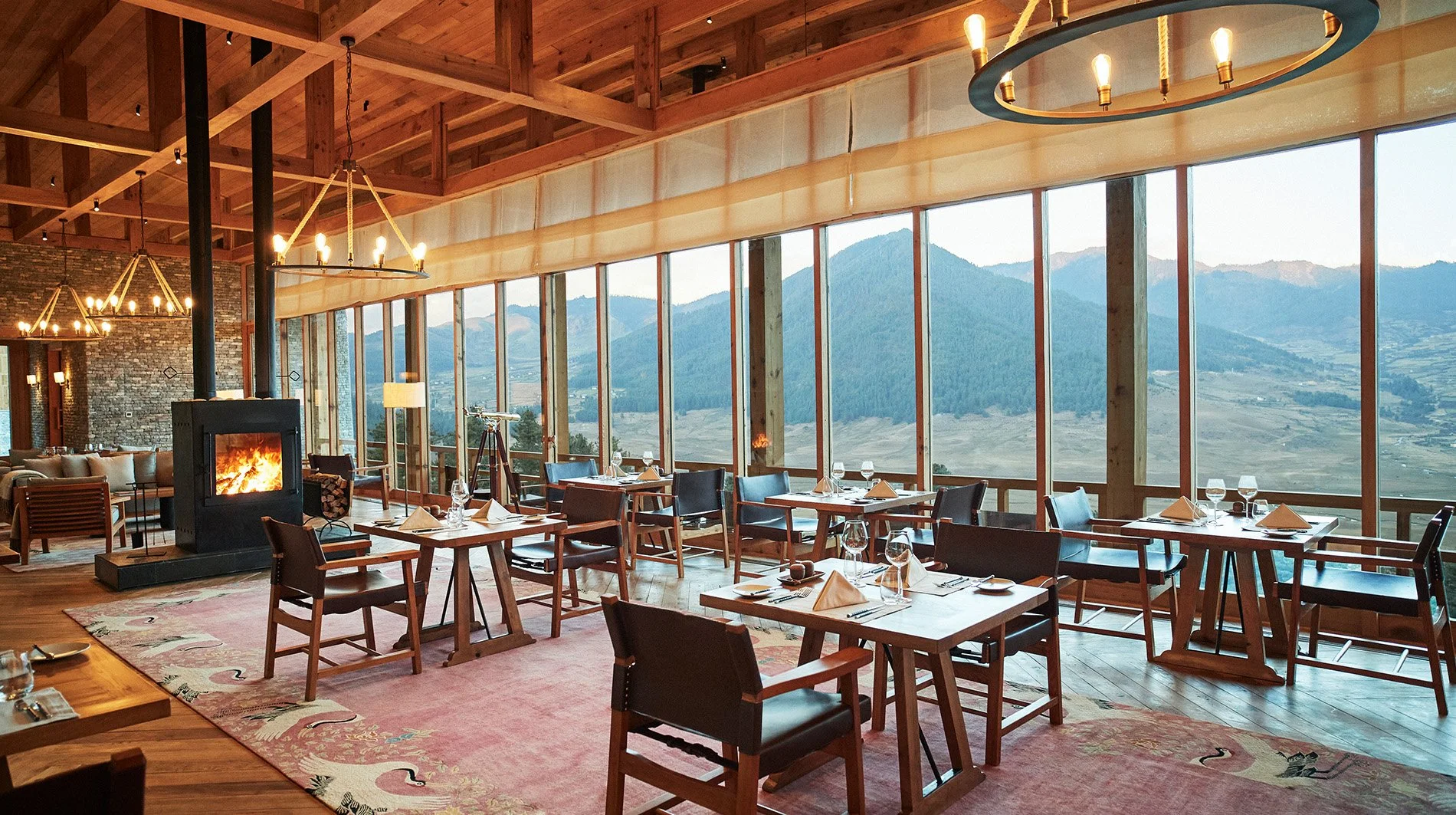
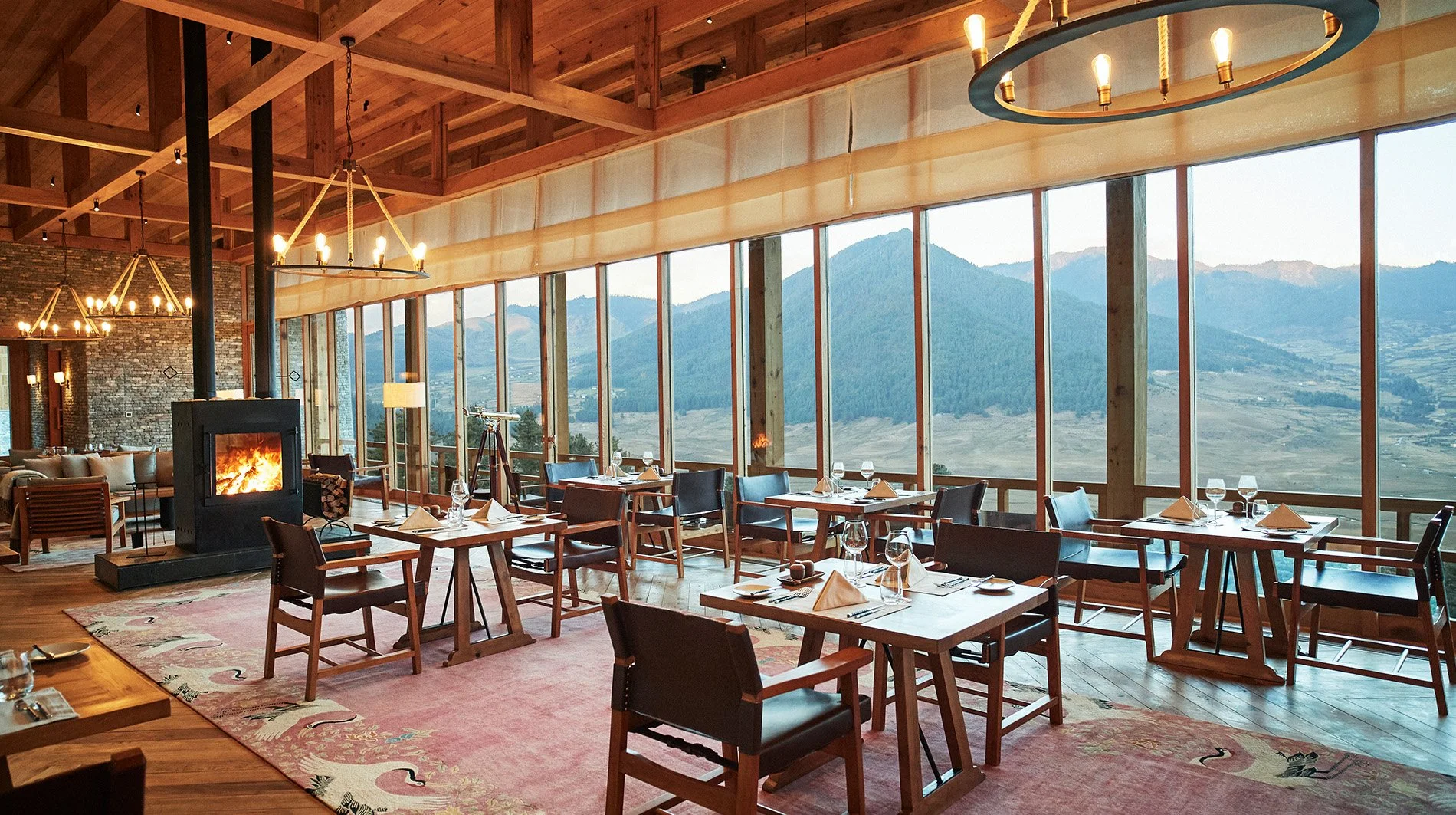
Namkha, Thimphu: An all-day dining setting with mountain-facing windows, Bhutanese dishes and international choices using produce from the lodge’s organic garden.
Ari Restaurant, Punakha: Farmhouse-inspired dining featuring Bhutanese and Indian preparations, with an outdoor setting near the valley’s cultivated fields and pool.
Baazam, Gangtey: An intimate all-day dining space overlooking the Phobjikha Valley, complemented by private meals and locally inspired culinary experiences.
Bumthang All-Day Dining Restaurant: A small restaurant serving lodge guests in a forest setting, with regional cooking and seasonal ingredients appropriate to central Bhutan.
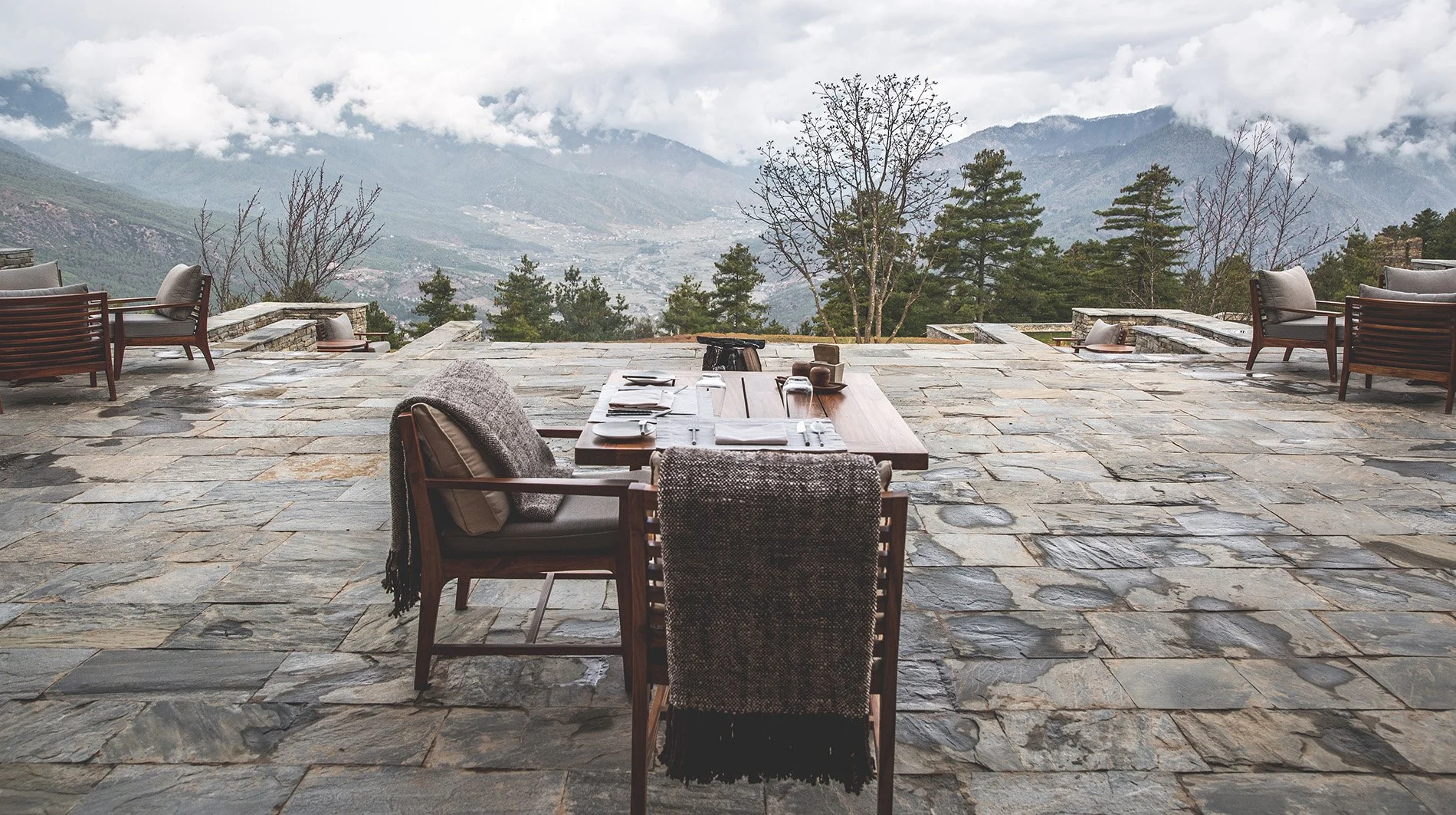
Jangkho, Paro: A dining room inspired by Bhutanese fortress architecture, serving produce-driven dishes with panoramic Paro Valley views.
There is also an important place for meals beyond the standard restaurant setting. Paro’s atmospheric dining among old stone ruins and Gangtey’s traditional cow-shed experience connect food to local stories, while picnic lunches can make the most of a walk or valley excursion. These experiences should be arranged in advance and may depend on weather and local operations.
Wellness From Ritual to Restful Sleep
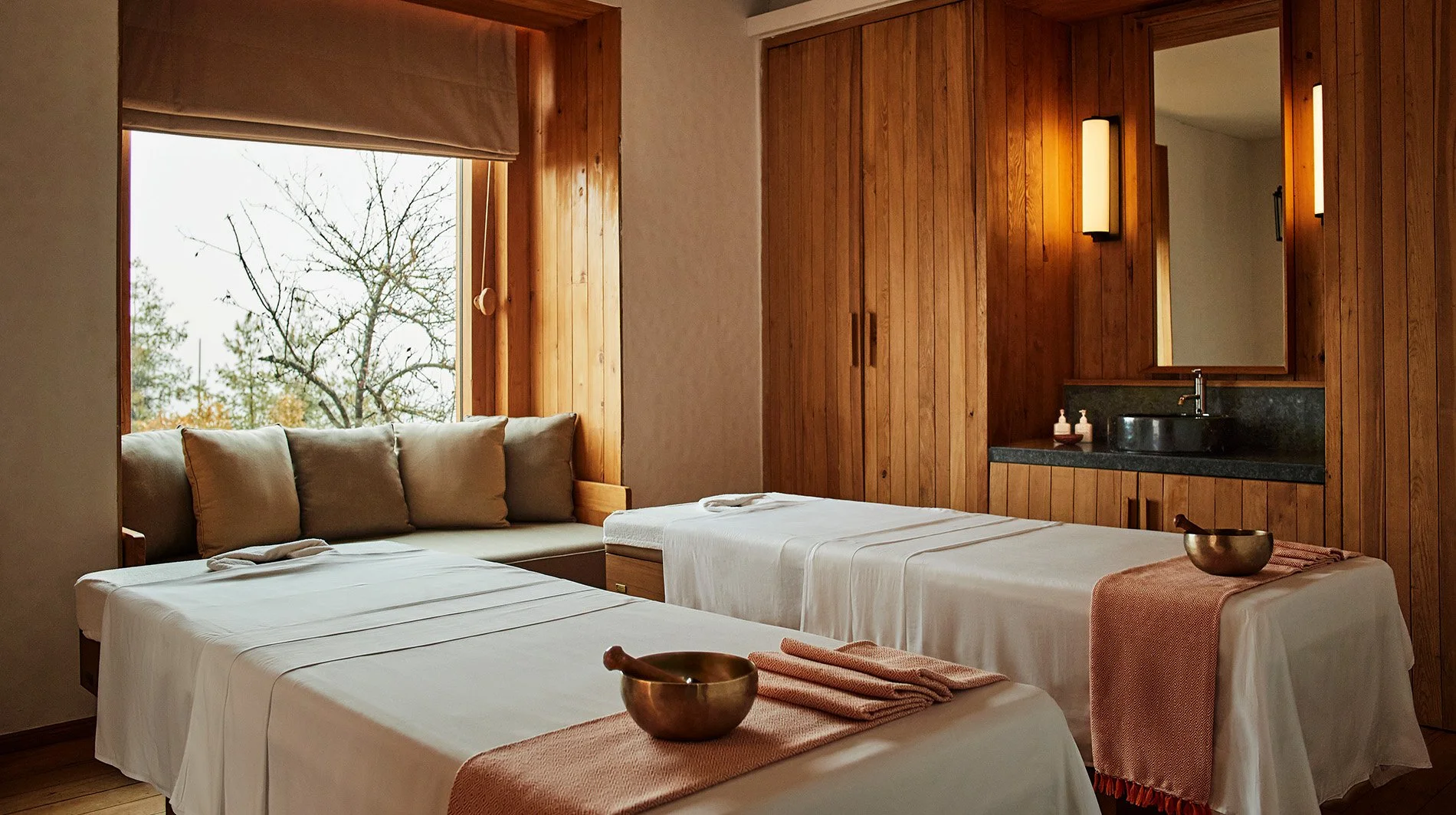
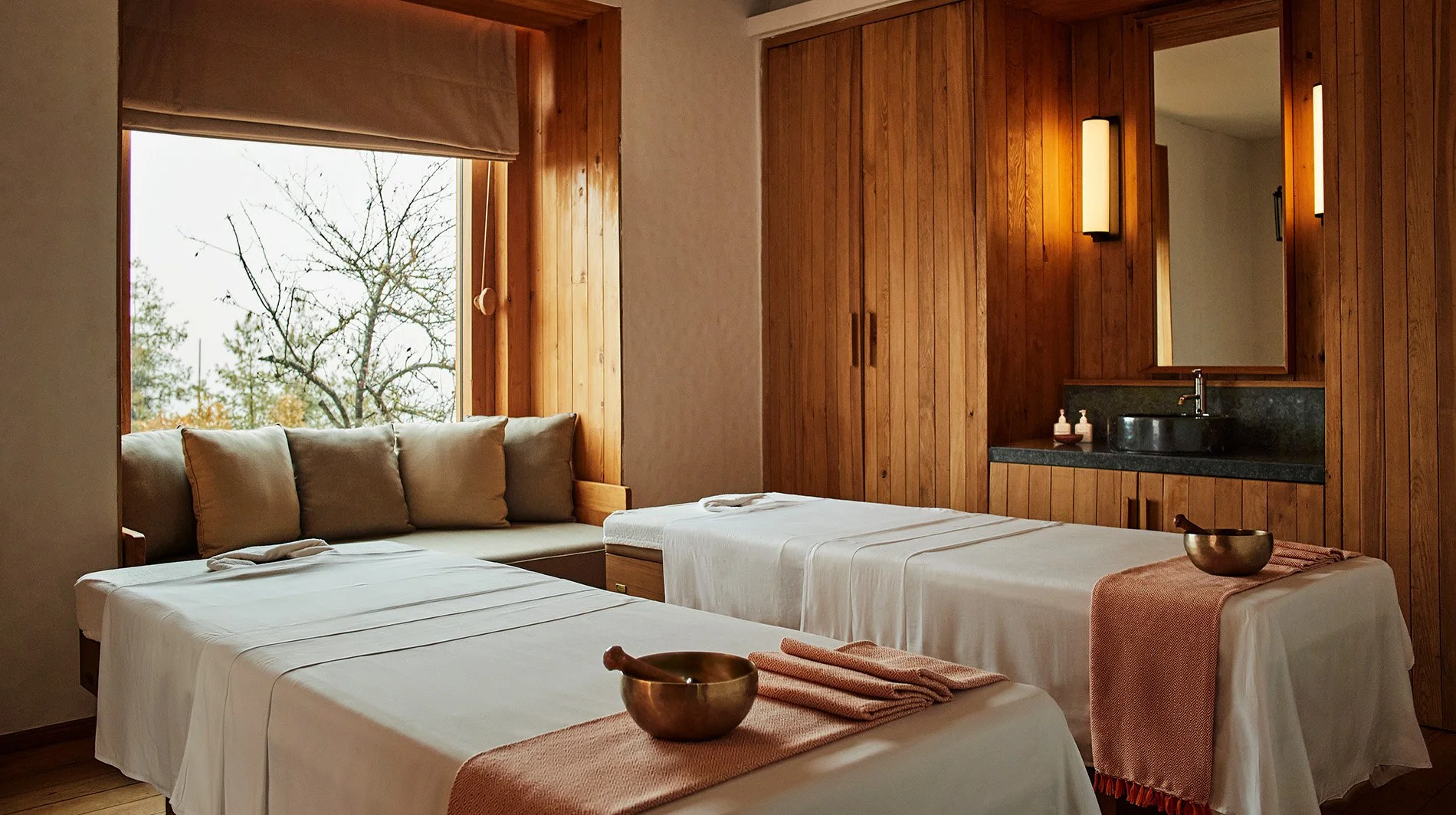
Wellness here is less about a single grand spa than a rhythm that runs through the journey. Six Senses Spa facilities are available across the collection, but room counts, equipment and treatments are lodge-specific. Guests can build a program around massage, yoga, meditation and restorative time between days of touring.
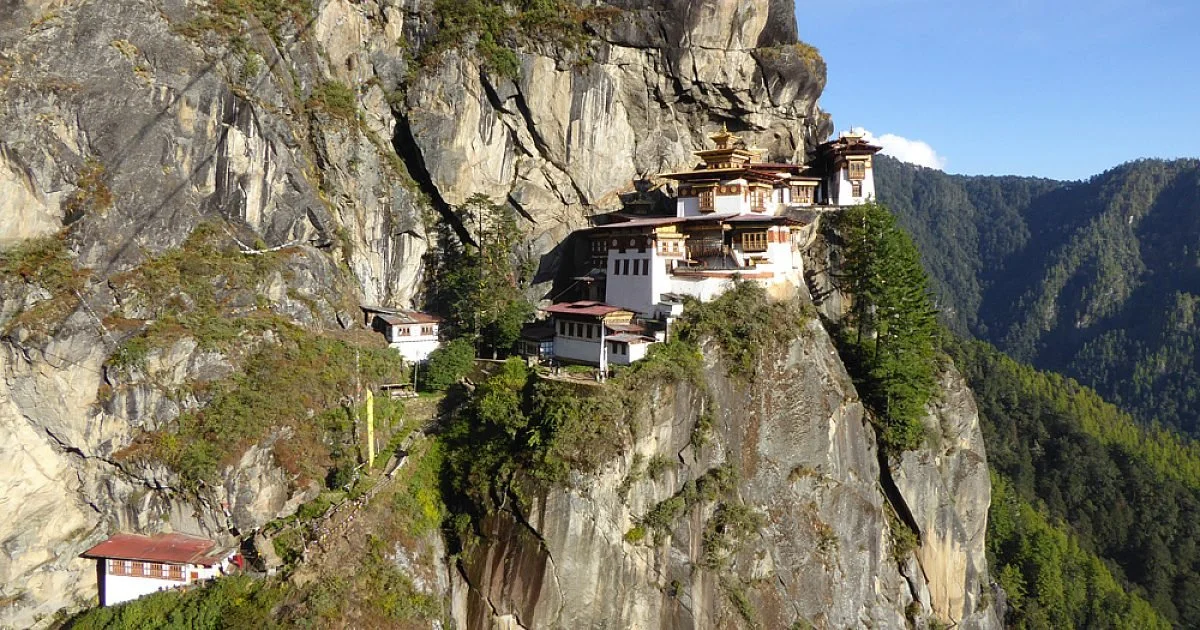
In Thimphu, a slower morning before city sightseeing can include yoga or meditation, with the surrounding landscape visible through the lodge’s architecture. In Punakha, the warmer climate and agricultural valley encourage time outdoors. Gangtey’s smaller spa offers a quieter setting after long walks or cycling, while Bumthang connects relaxation to forest and cultural immersion. At Paro, wellness provides a useful counterpoint to a demanding hike to Tiger’s Nest.
The brand’s Sleep With Six Senses concept includes bedding and in-room provisions intended to support rest. Traditional Bhutanese wood-burning stoves, known as bukharis, add warmth and a sense of place. Travelers interested in a focused wellness stay should confirm the exact treatments and facilities at their chosen lodge rather than assuming every property has an identical program.
Monasteries, Mountain Paths and Living Traditions
Each valley offers enough to justify an unhurried stay. Thimphu is the place to understand contemporary Bhutan alongside its spiritual traditions. Visits can incorporate the giant Buddha Dordenma statue, craft workshops, religious sites and markets, with your guide providing context that goes beyond the major photographs.
Punakha’s defining landmark is the majestic Punakha Dzong near the meeting of two rivers. The valley’s warmer weather, farming communities and footpaths lend themselves to slower excursions, including countryside cycling and visits to local villages. Gangtey is a different experience altogether: the wide Phobjikha Valley supports the rare black-necked crane during its winter migration, and the Gangtey Nature Trail introduces its rural landscape on foot.
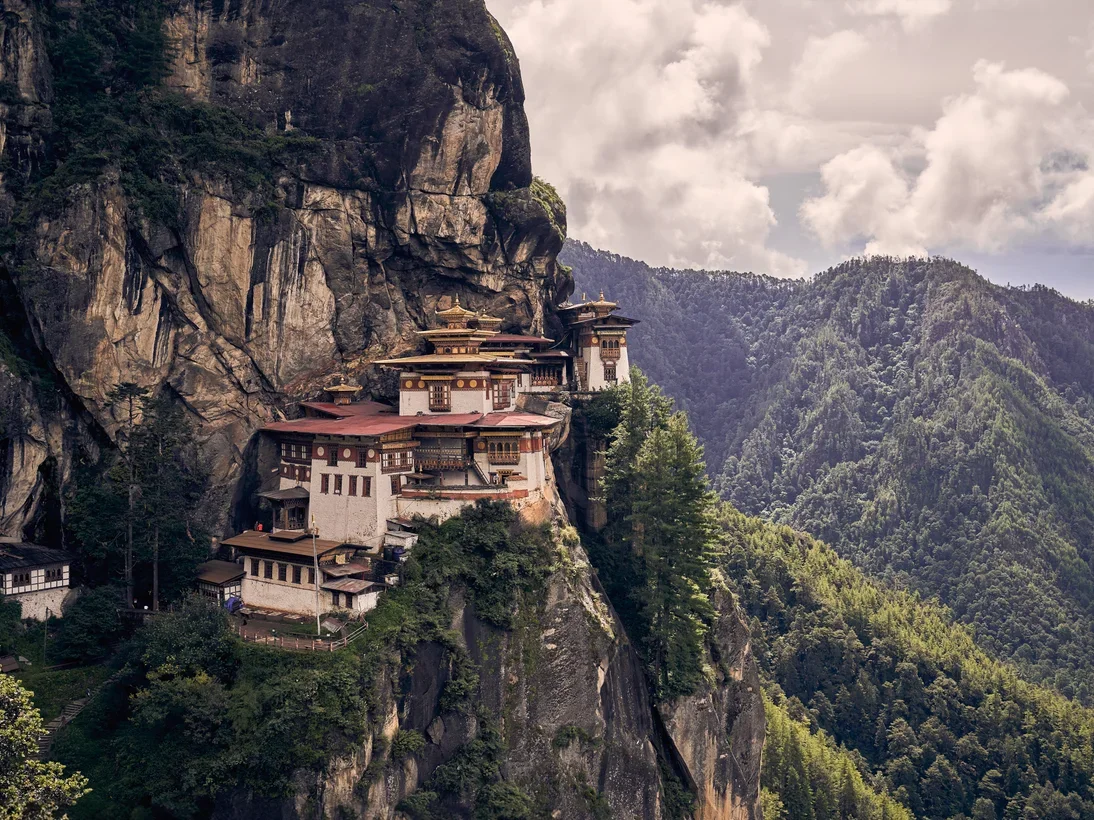
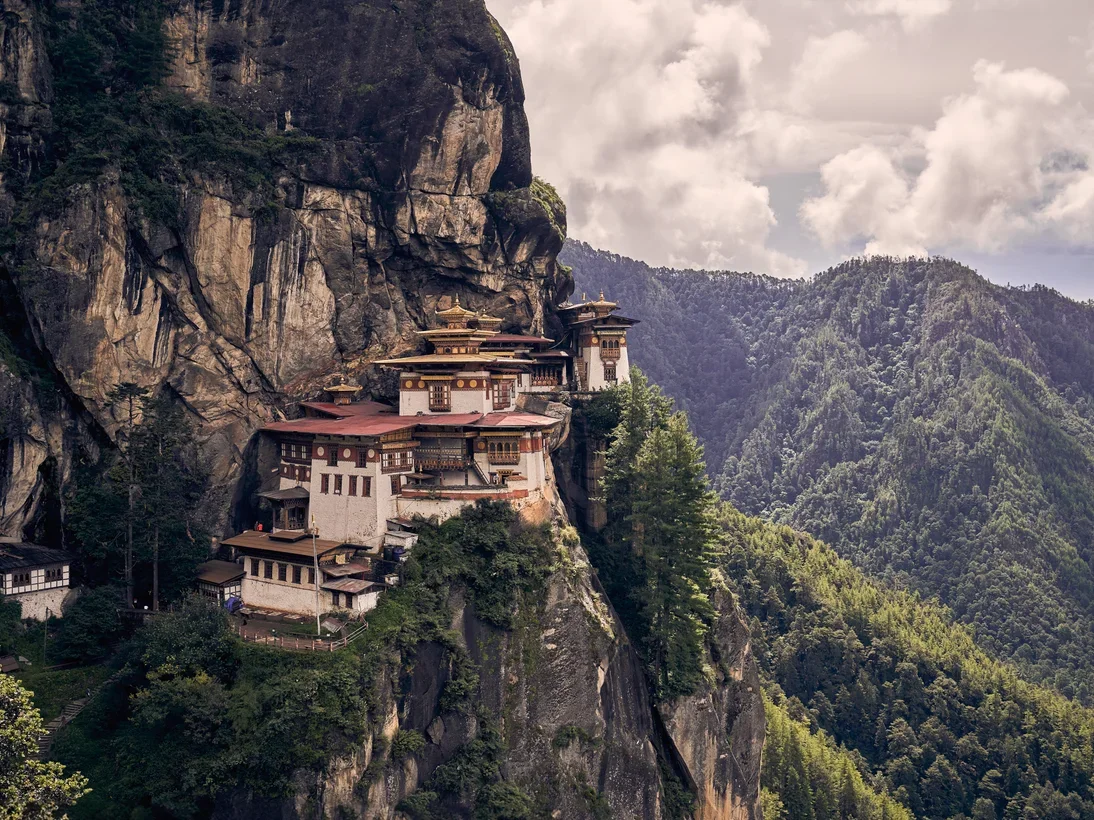
Bumthang brings travelers deeper into Bhutan’s sacred history, with monasteries and temples set among villages, streams and pine forests. Here, extended time is worthwhile for those interested in Buddhist traditions and the region’s distinctive culture. Paro is often the final dramatic chapter, especially for the steep hike toward Taktsang Lhakhang, widely known as Tiger’s Nest Monastery. The route requires realistic planning for altitude, steps and physical effort.
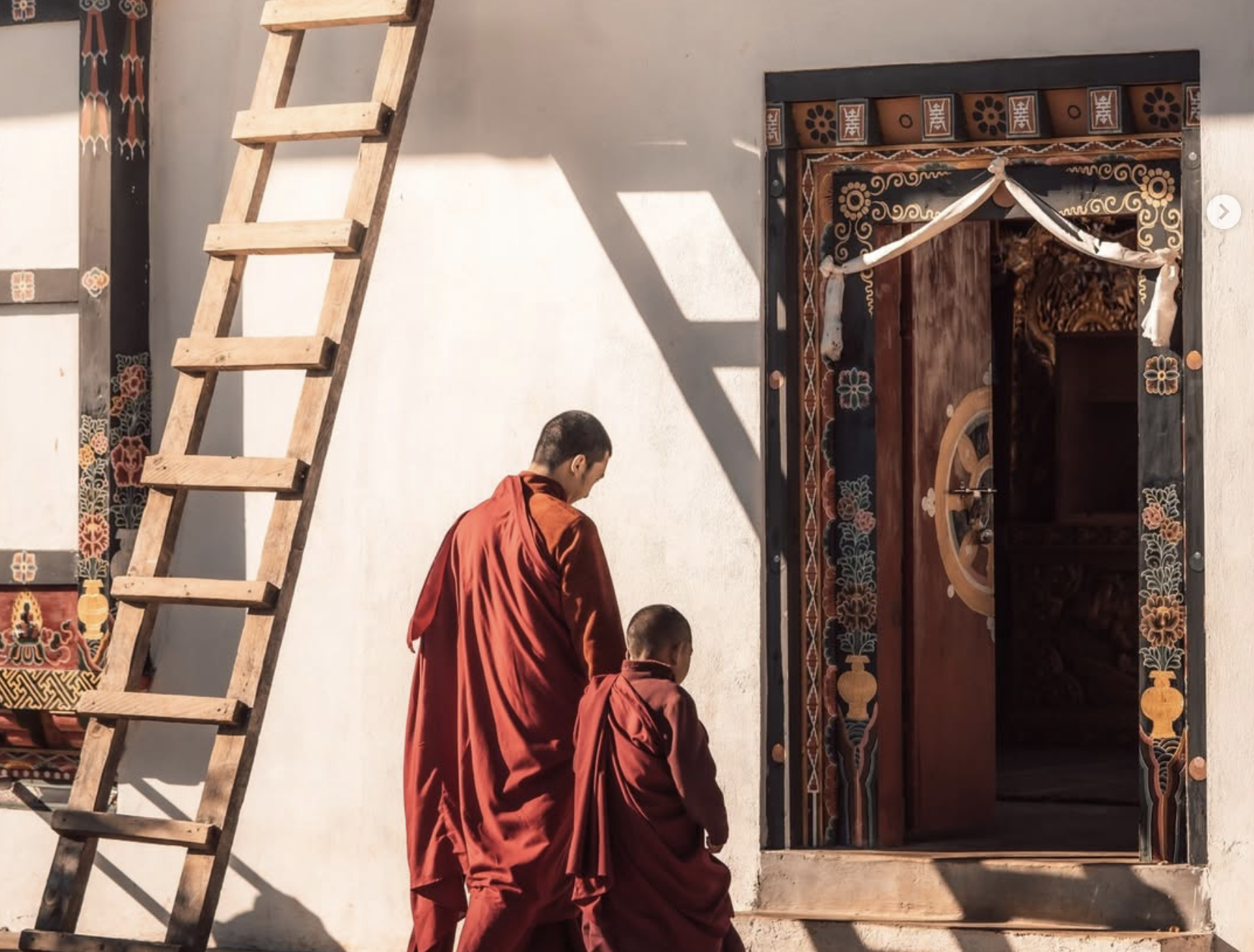
The lodges also organize smaller-scale encounters such as butter-lamp ceremonies, guided walks, cultural activities and destination meals. A private journey should leave sufficient room for spontaneous stops, changing road conditions and the slower pace that gives these places their character.
Bringing Children Into the Journey
Six Senses Bhutan can accommodate families, including through its Grow With Six Senses approach and larger villas at selected lodges. The experience is especially rewarding for children and teenagers who enjoy nature, walking, storytelling and cultural discovery. Short creative activities may provide a welcome break from longer sightseeing days.
Family planning in Bhutan requires more attention to the geography than it would at a typical beach resort. Drives between valleys can be long and winding; some trails include steep climbs, and different lodges have different recreational facilities. Choosing fewer stops, allowing rest days and matching excursions to the youngest traveler can make the itinerary more successful.
Two-bedroom villas may be useful for families or multigenerational groups who want common living areas. Babysitting and specific children's programming should be checked lodge by lodge, along with age-related rules and suitable bedding configurations. A well-paced three-valley journey may offer more meaningful family time than an ambitious schedule covering all five lodges.
Caring for the Valleys That Host the Lodges
The setting makes responsible operations especially relevant. Six Senses describes sustainability as part of its approach to energy, water, waste, purchasing and local-community relationships. Organic growing at individual lodges helps connect restaurant menus with seasonal agriculture, while the brand’s Earth Lab concept is intended to make environmental practices more visible to guests.
The relationship between tourism and conservation is particularly clear in Gangtey, where the Phobjikha Valley is a protected landscape associated with wintering black-necked cranes. Respectful wildlife viewing, limited disturbance and the guidance of local experts matter as much as a lodge’s own operational practices.
Bhutan’s conservation identity should not be reduced to an unsupported claim that every activity or transfer is carbon-neutral. The more meaningful picture comes from specific choices: careful sourcing, protecting fragile habitats, supporting local employment and crafts, and staying with a guide who understands the cultural significance of the places visited.
Practical Accessibility Across Mountain Terrain
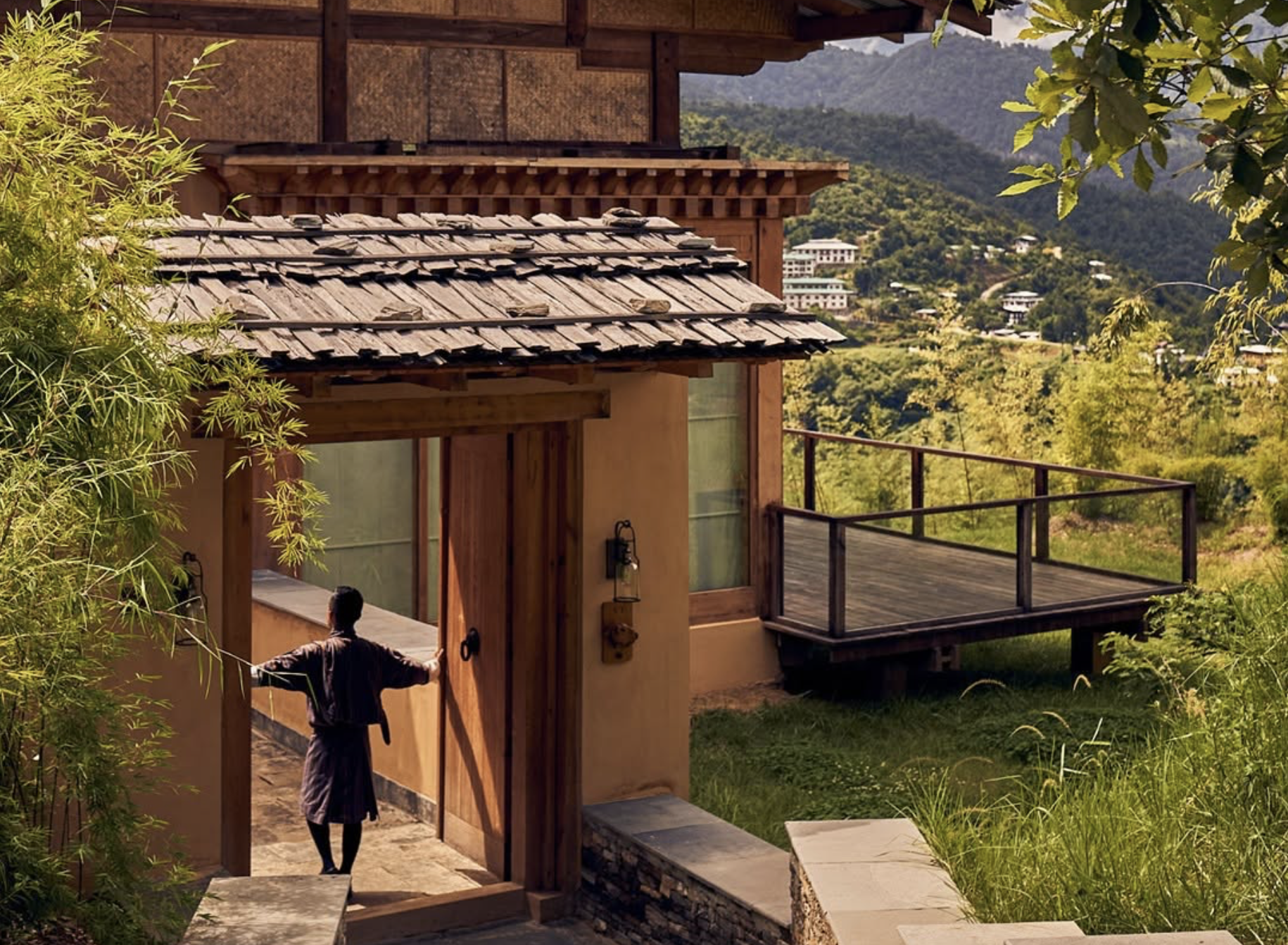
Travelers with mobility requirements should consider the full route, not only the room. Six Senses Bhutan’s lodges occupy hillsides, forest environments and rural valleys, and excursions can include steps, uneven paths and long road transfers. Historic monasteries and dzongs may have limited step-free access, while the Tiger’s Nest approach involves considerable uphill walking.
Published general accommodation details do not establish that a particular room is wheelchair-adapted or that every dining, spa and excursion space is accessible. The planning process should therefore address individual needs directly with each lodge, including bathing arrangements, paths to communal areas, transfer vehicles and the activities proposed for each valley.
Some itineraries may be adapted around scenic drives, accessible cultural visits and relaxed lodge time rather than strenuous treks. The best approach is to identify essential mobility needs before choosing the lodge sequence and to obtain property-specific confirmation rather than relying on broad accessibility assumptions.
Choosing the Right Season for Bhutan
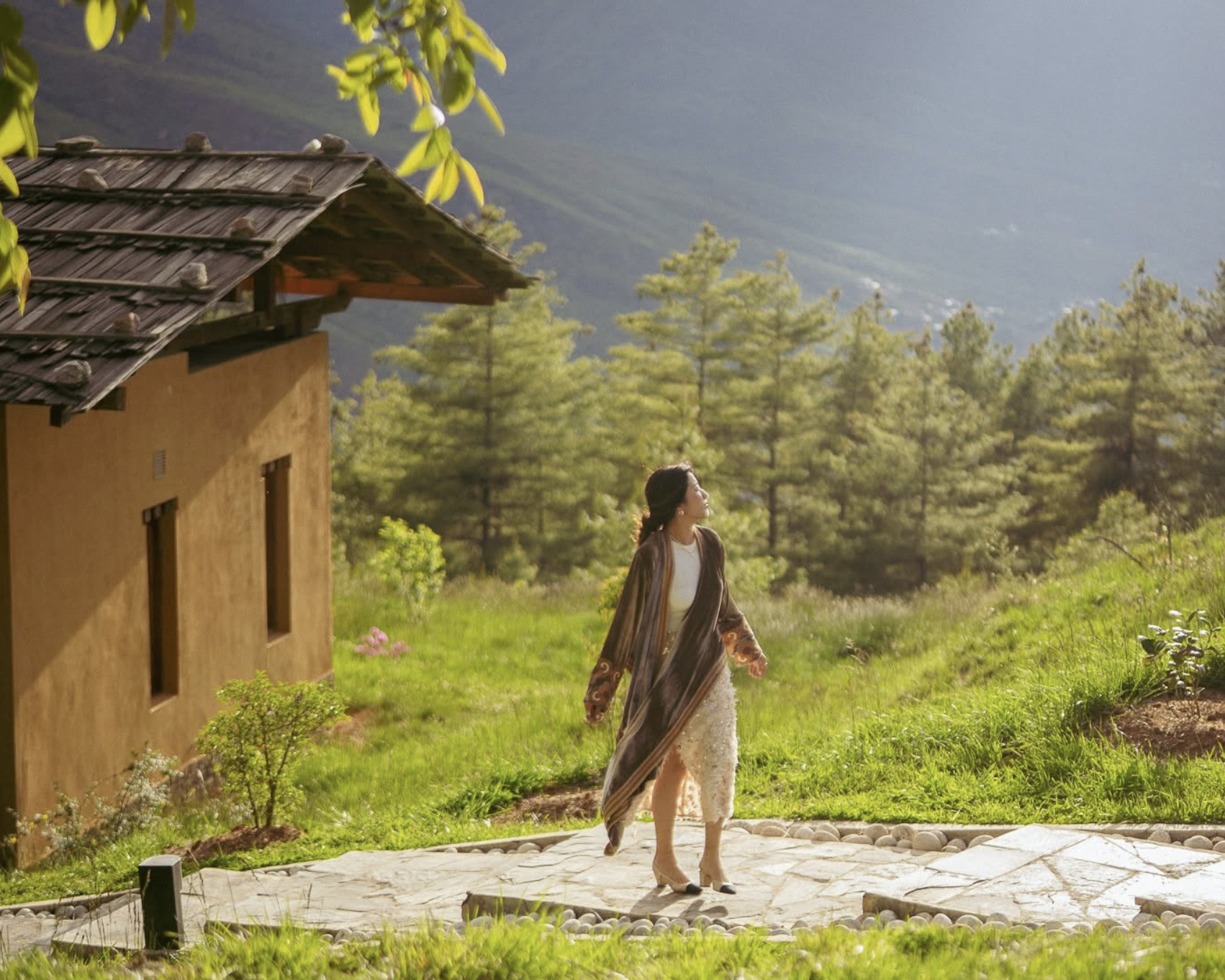
Spring and autumn are attractive times for a multi-valley itinerary, offering relatively comfortable touring weather and, often, good mountain visibility. March through May brings warmer conditions and seasonal color, while September through November is associated with clearer skies and important cultural festivals. The precise feel differs significantly with elevation.
Summer, particularly June through August, can bring monsoon rain, lush landscapes and challenging road or trail conditions. Winter often offers crisp mountain views and colder nights at higher elevations, while Punakha is comparatively warm. Gangtey’s black-necked crane season generally begins in autumn and extends through winter, making it an important seasonal consideration for wildlife enthusiasts.
Festival dates, flight schedules and road conditions should be checked for the actual travel year. A winter itinerary is not interchangeable with a summer one, and travelers should be prepared for changes in mountain weather even during otherwise favorable periods.
Plan Your Stay With Destinations by David
The most important decision when planning Six Senses Bhutan is how many valleys to include and how long to stay in each. Our team helps travelers balance cultural interests, walking ability, road time and accommodation preferences, whether the journey focuses on Paro and Thimphu or continues to Punakha, Gangtey and Bumthang.
Destinations by David coordinates the lodge sequence, private guide and driver arrangements, room and villa selection, wellness appointments and distinctive experiences across the itinerary. We can also discuss suitable booking arrangements and any applicable property benefits privately, according to the selected reservation.
Contact our team to plan and book a Six Senses Bhutan journey shaped around your interests, with enough time to appreciate the country between its most celebrated landmarks.
Reaching Bhutan and Traveling Between Lodges
Paro International Airport: The principal international gateway for journeys to the Six Senses Bhutan lodges; flight routes and frequencies vary by season and airline.
Thimphu: A drive from Paro of roughly one to one-and-a-half hours in normal conditions, with additional time possible for traffic or roadworks.
Punakha: Approximately two-and-a-half to three-and-a-half hours by road from Thimphu, typically crossing the scenic Dochula Pass.
Gangtey: Allow roughly two-and-a-half to three-and-a-half hours by road from Punakha, depending on conditions and stops.
Bumthang: Reaching the Bumthang lodge from Gangtey generally requires a longer cross-country drive; a full day with scenic breaks is sensible to plan.
Paro Lodge: Accessible from Paro town or airport by private road transfer, with travel time dependent on the route and local conditions.
A private guide and driver are central to the multi-lodge journey. Confirm international flights, visa requirements, Bhutan's applicable Sustainable Development Fee, road arrangements and any special permits well before departure.
What Remains After the Journey
The appeal of Six Senses Bhutan lies in what changes between its lodges. Thimphu’s city-facing outlook, Punakha’s farmland, Gangtey’s conservation valley, Bumthang’s forests and Paro’s ancient religious landscape each suggest a different way of spending the day. The accommodation provides a continuous thread of comfort, but the experiences remain firmly rooted in their locations.
For travelers who value place as much as the property, this is a compelling approach to Bhutan. A well-structured journey gives each valley its own space and allows the quiet moments – a courtyard tree, an evening prayer, an open mountain view – to become as memorable as the major sights.