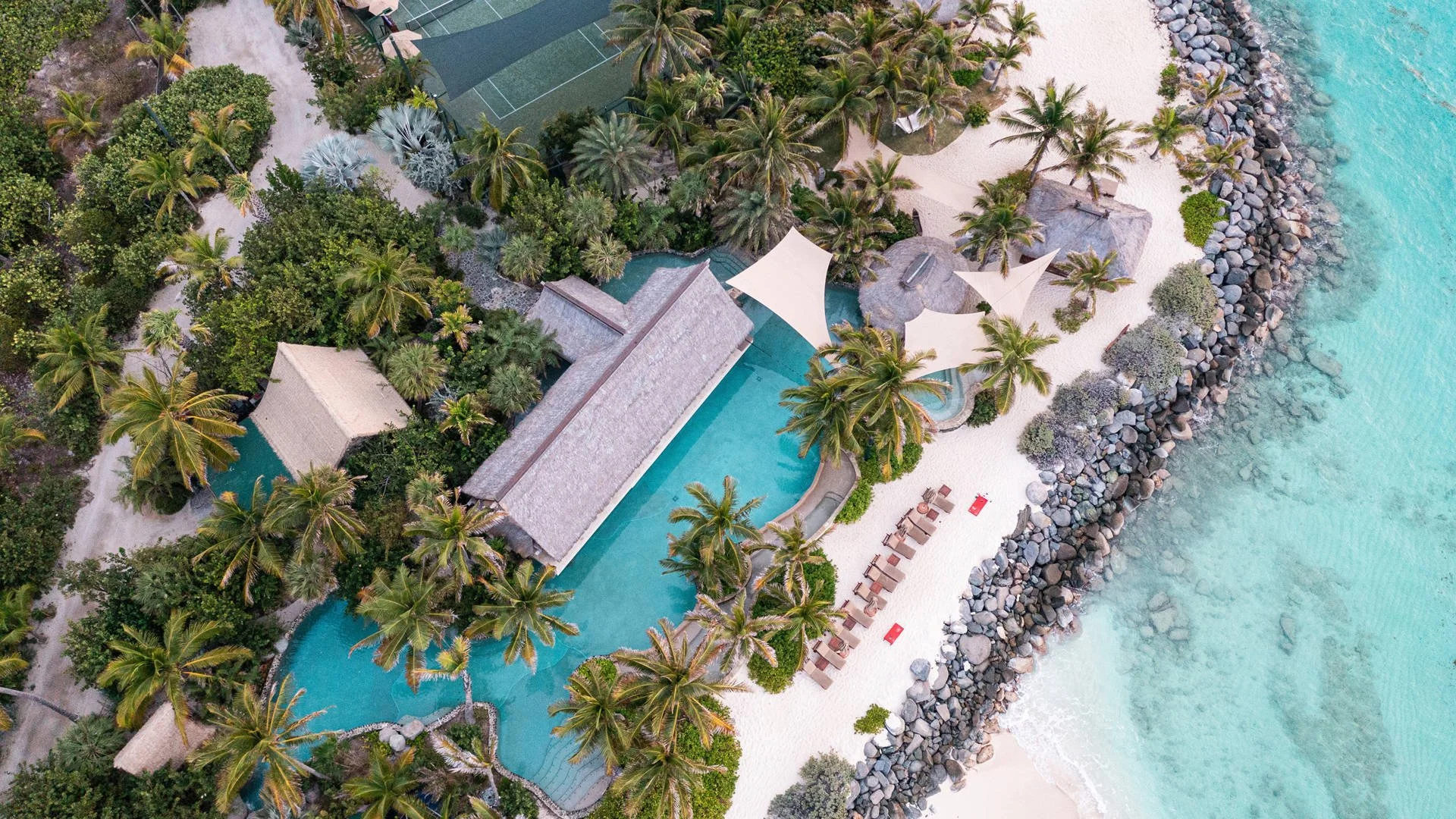
British Virgin Islands | Necker Island
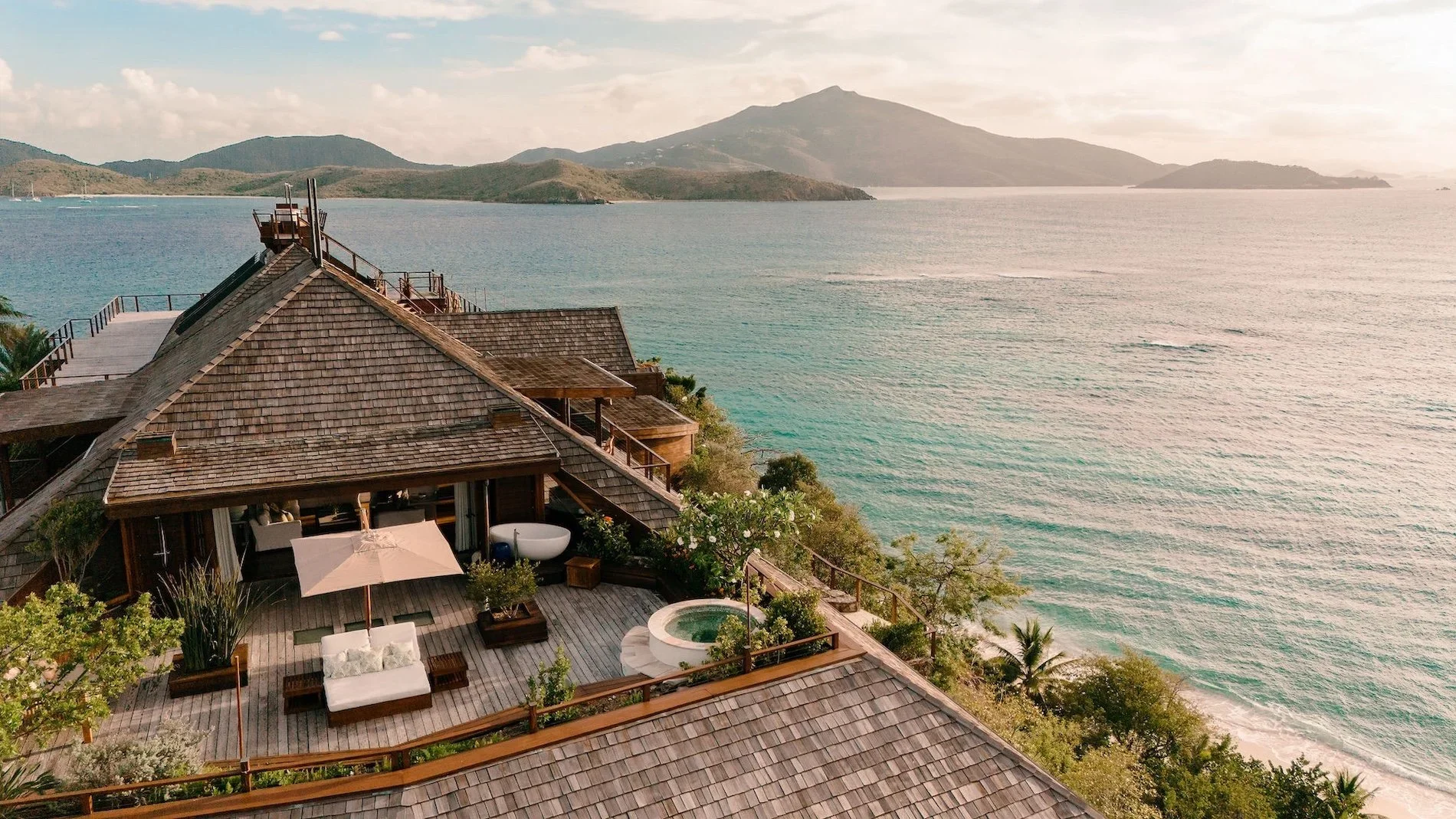
A Private Island That Still Feels Like a Family Home
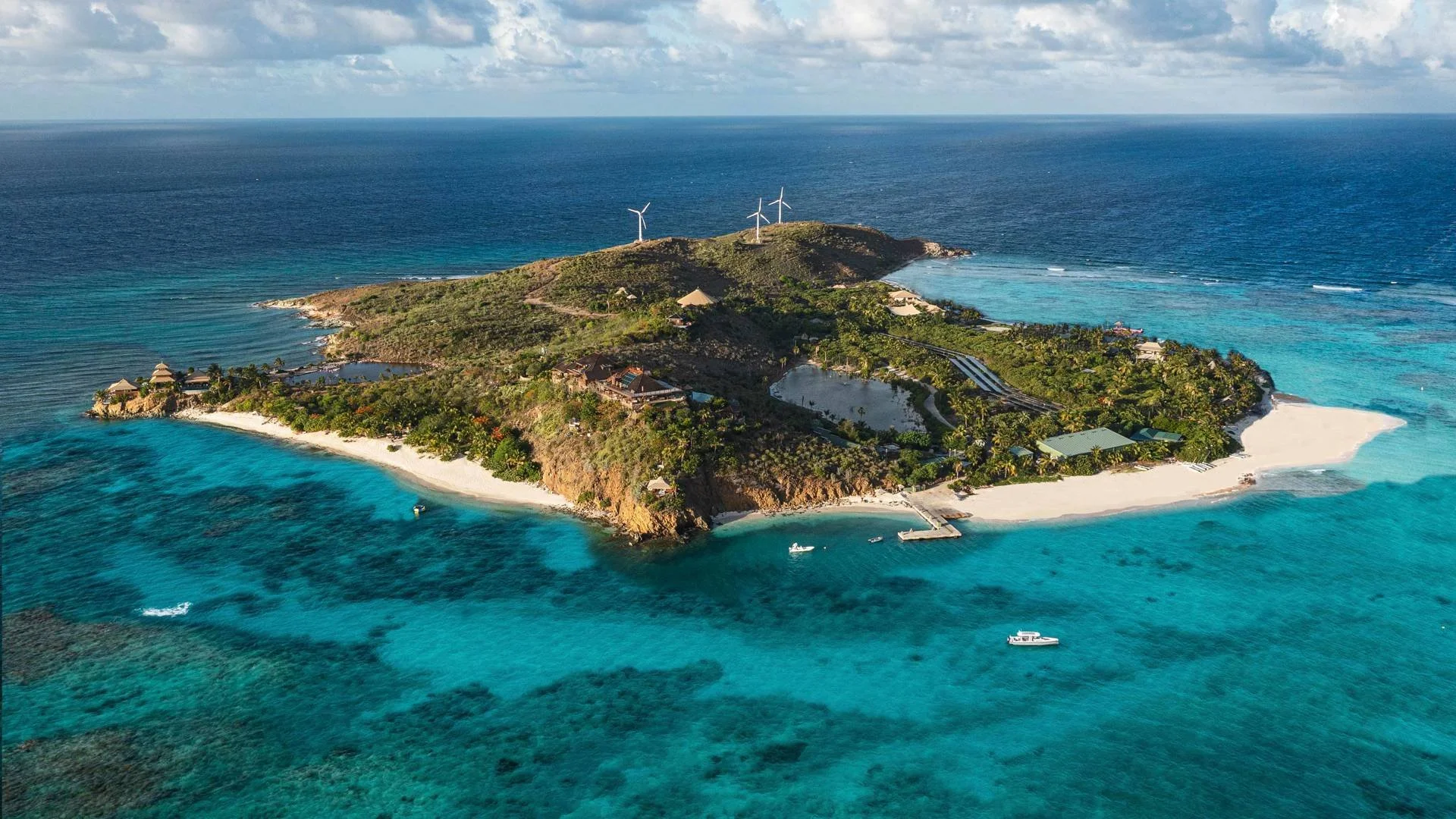
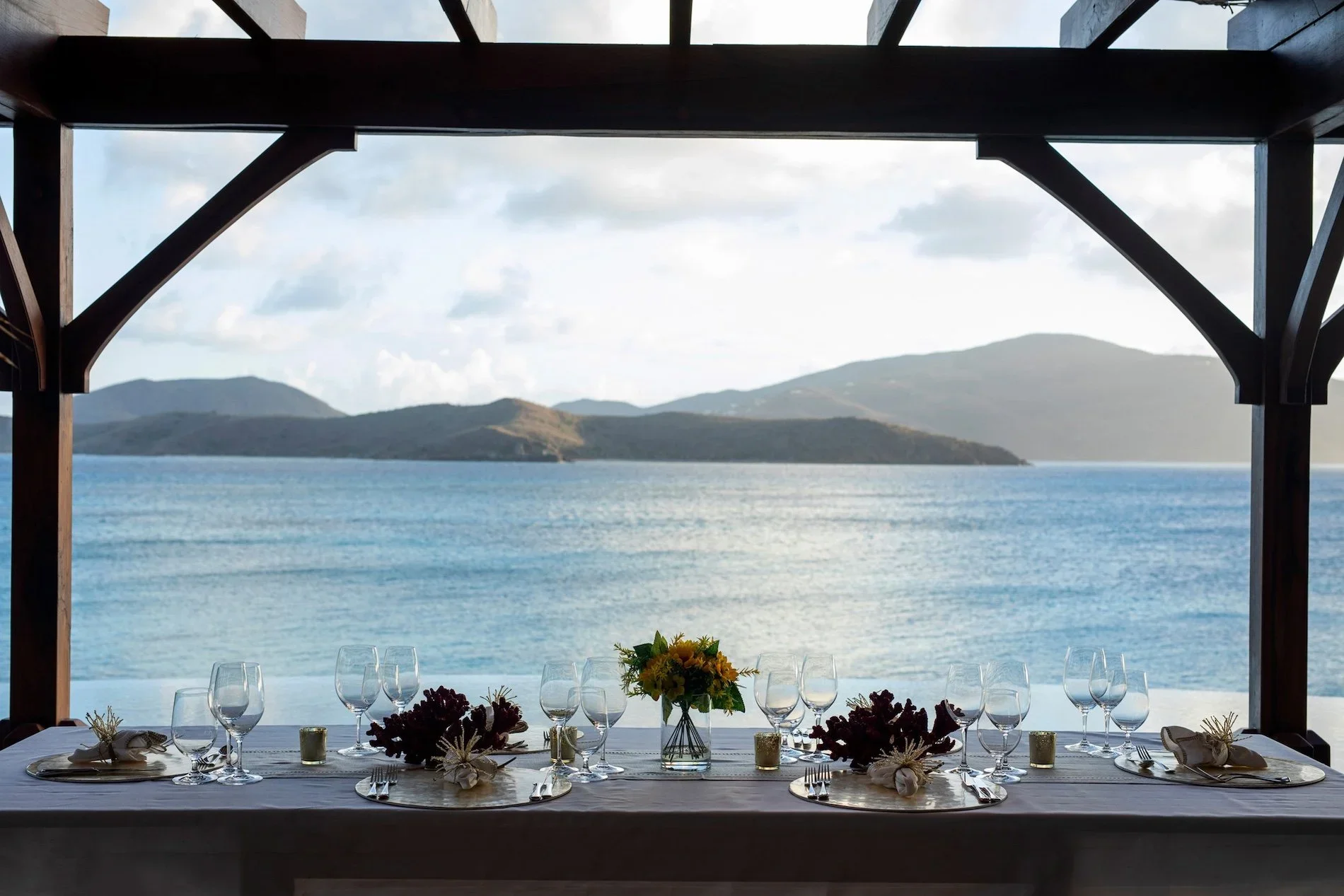
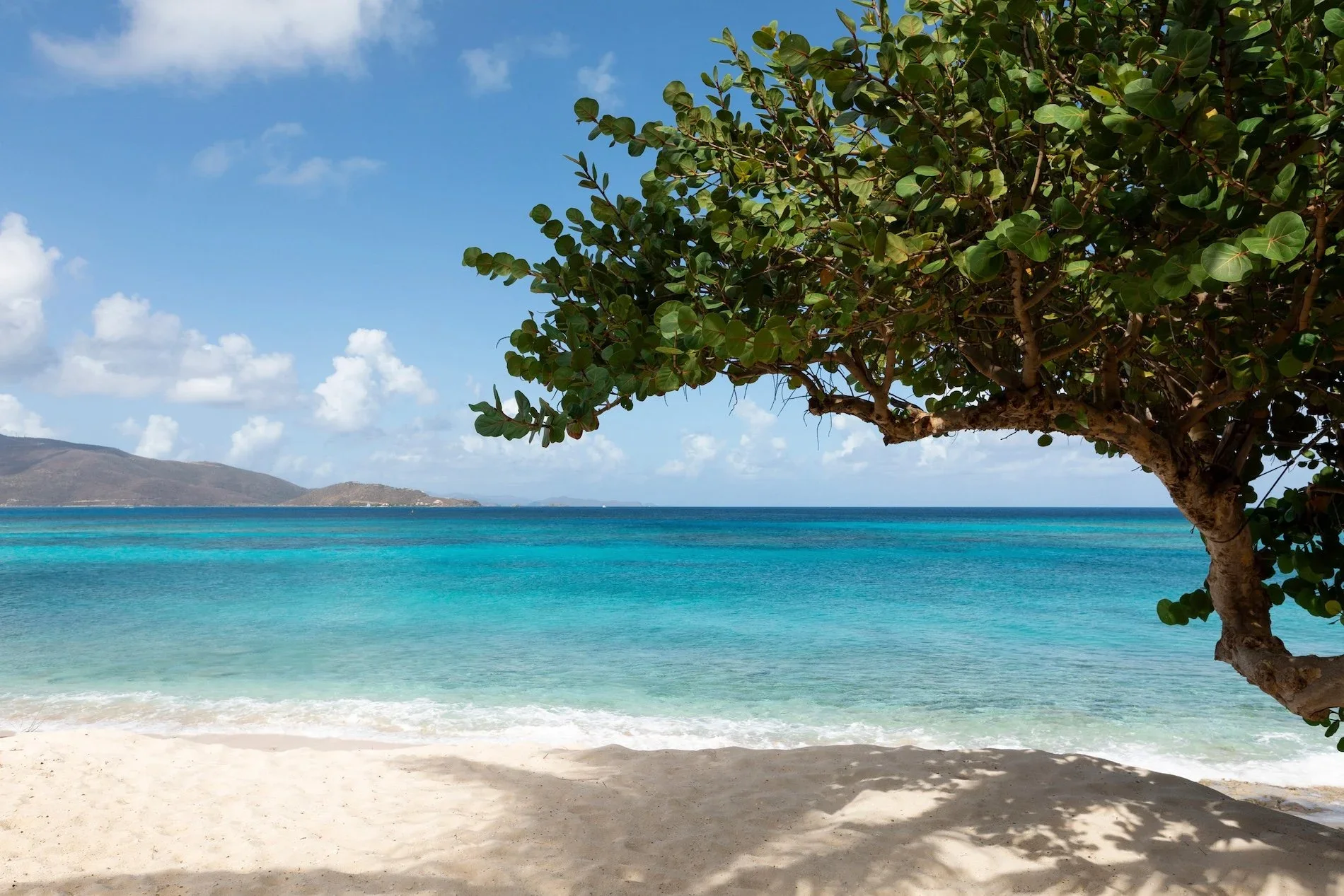
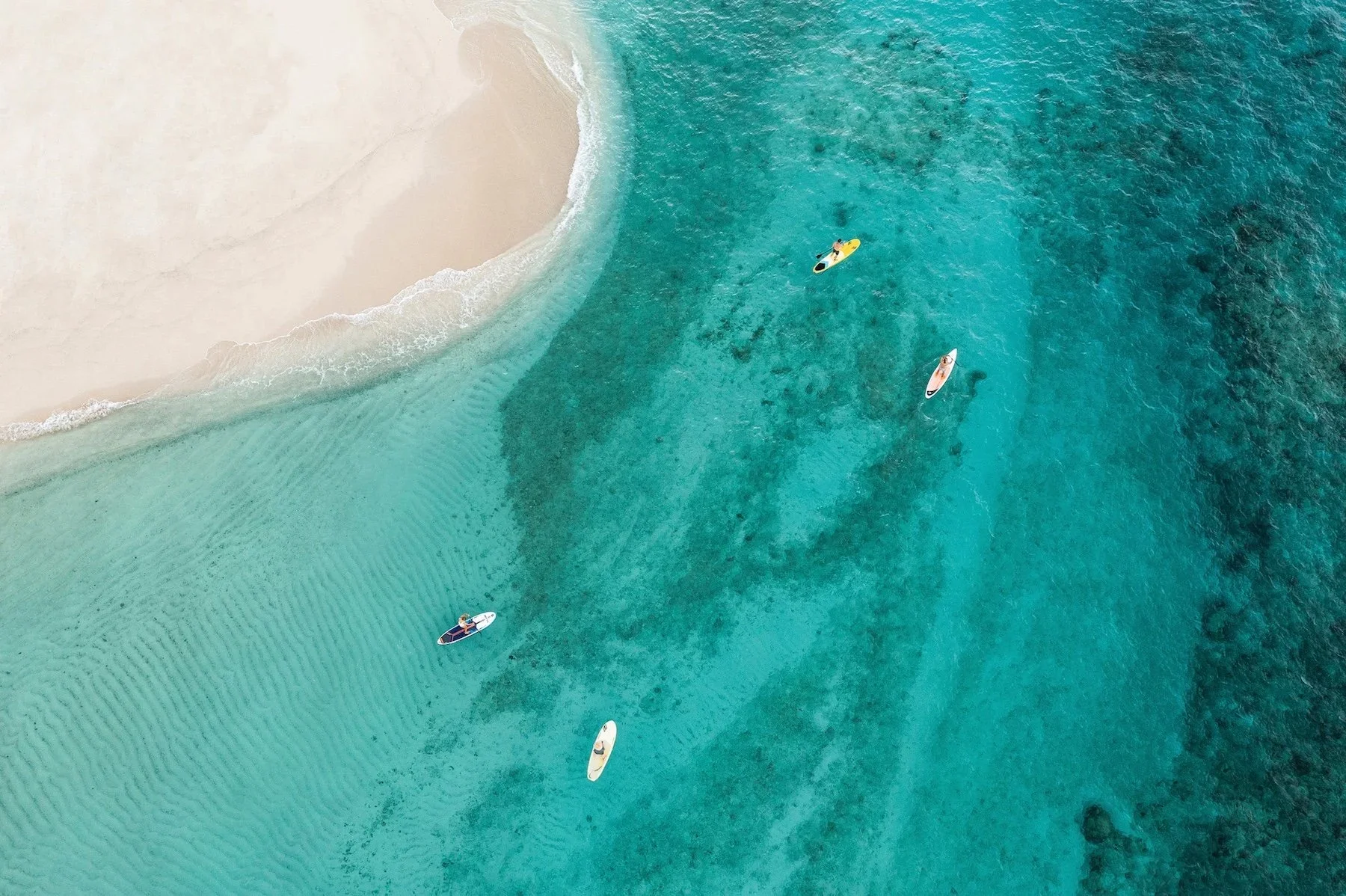
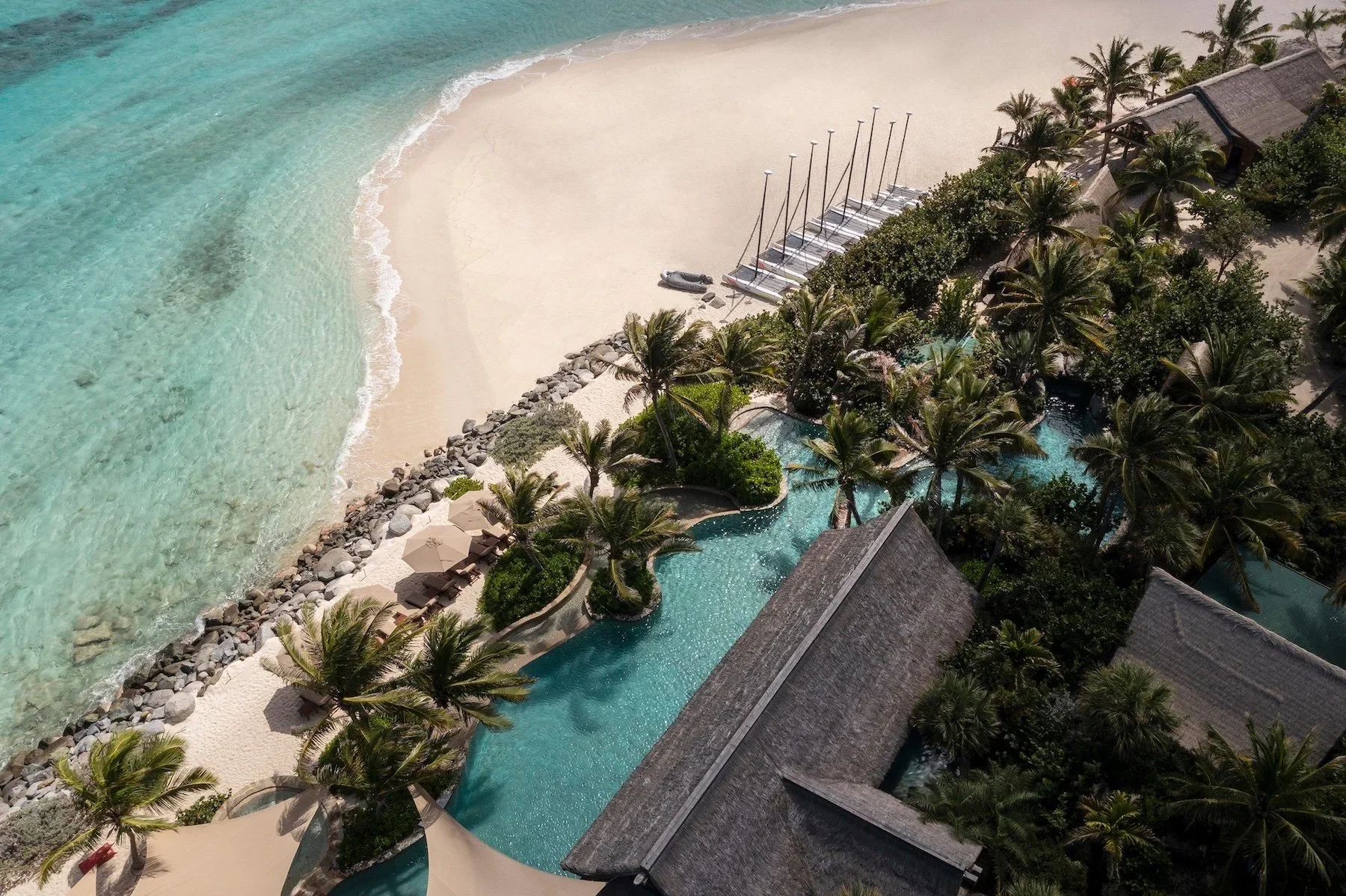
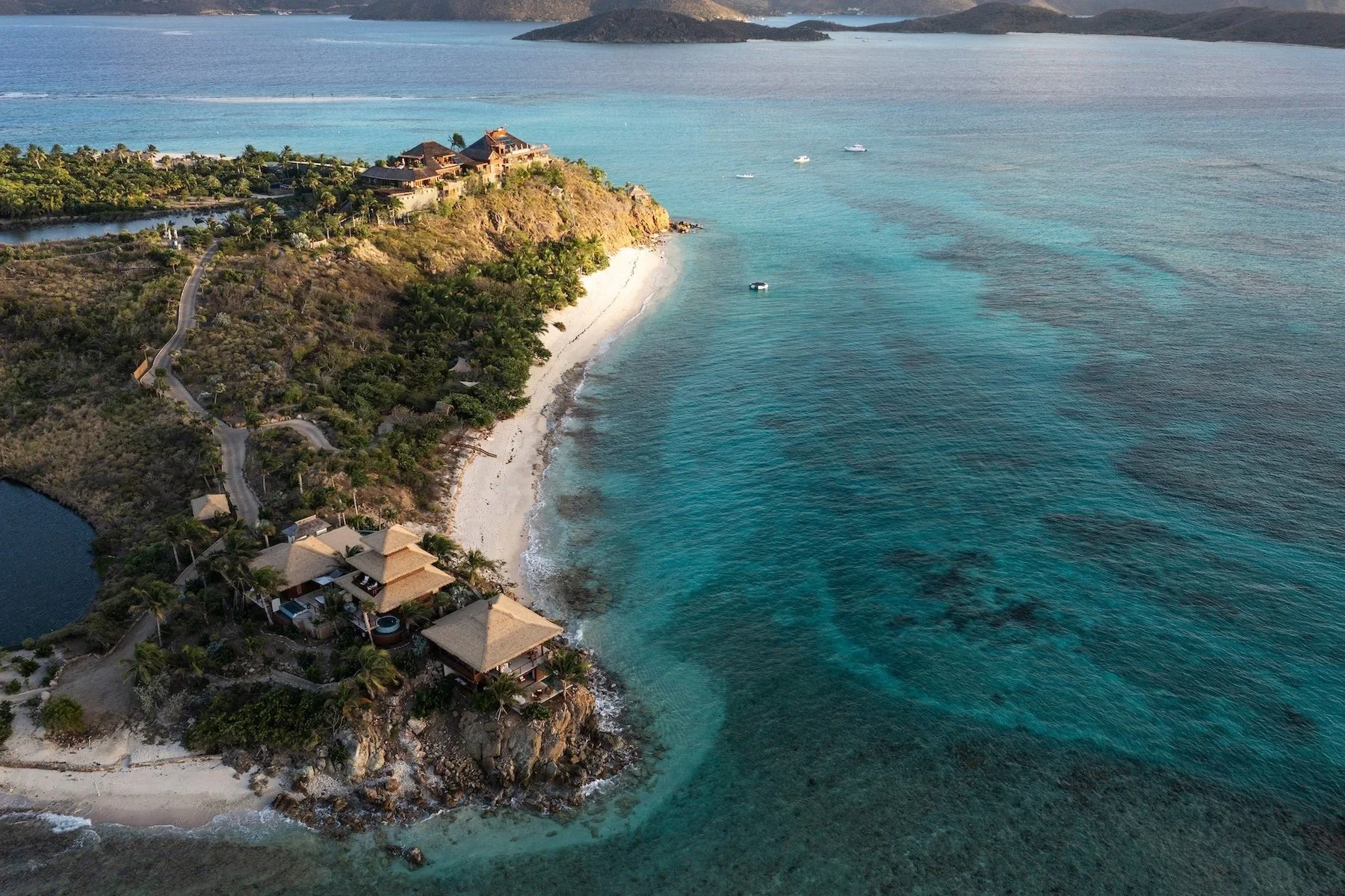
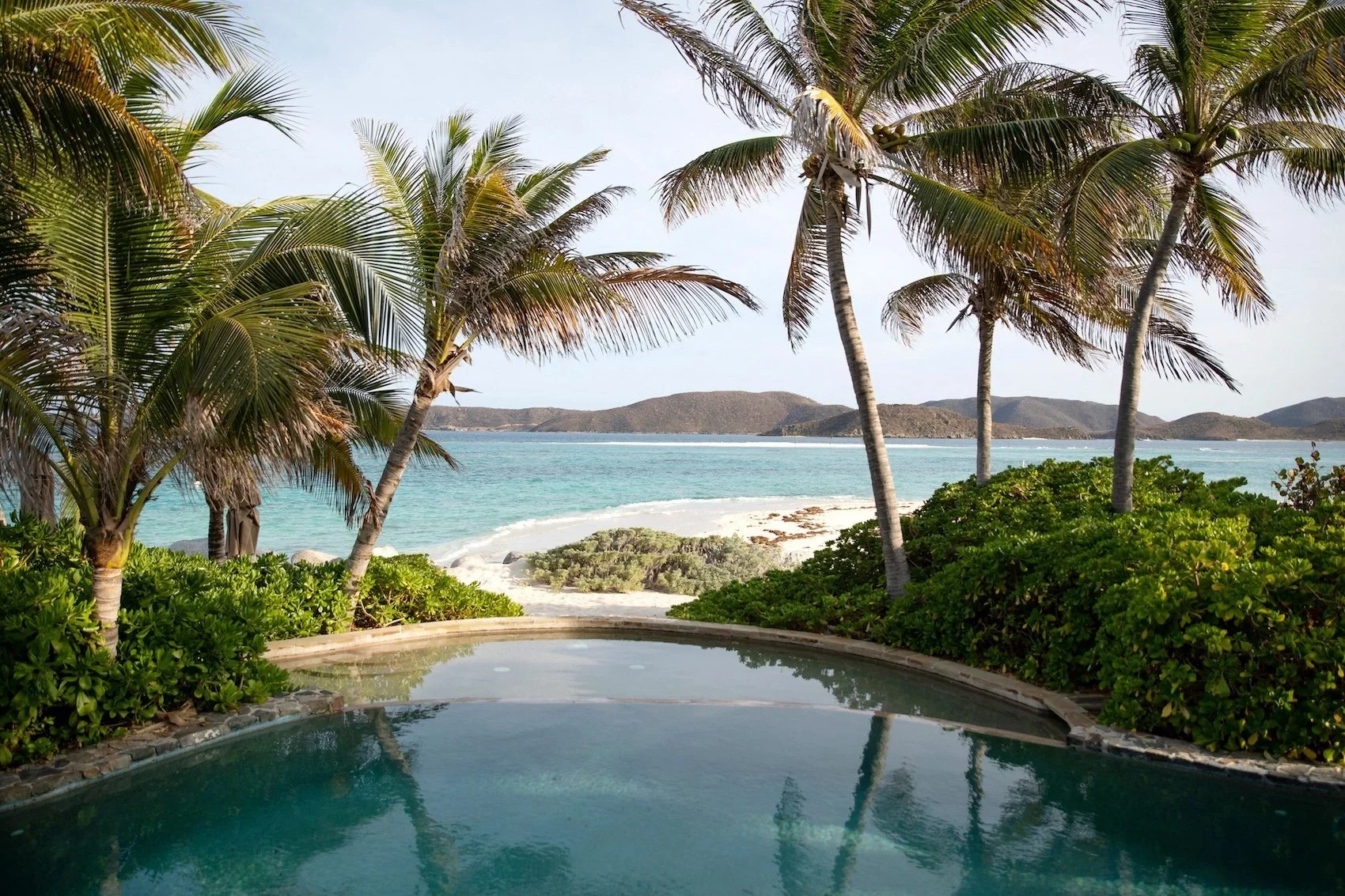
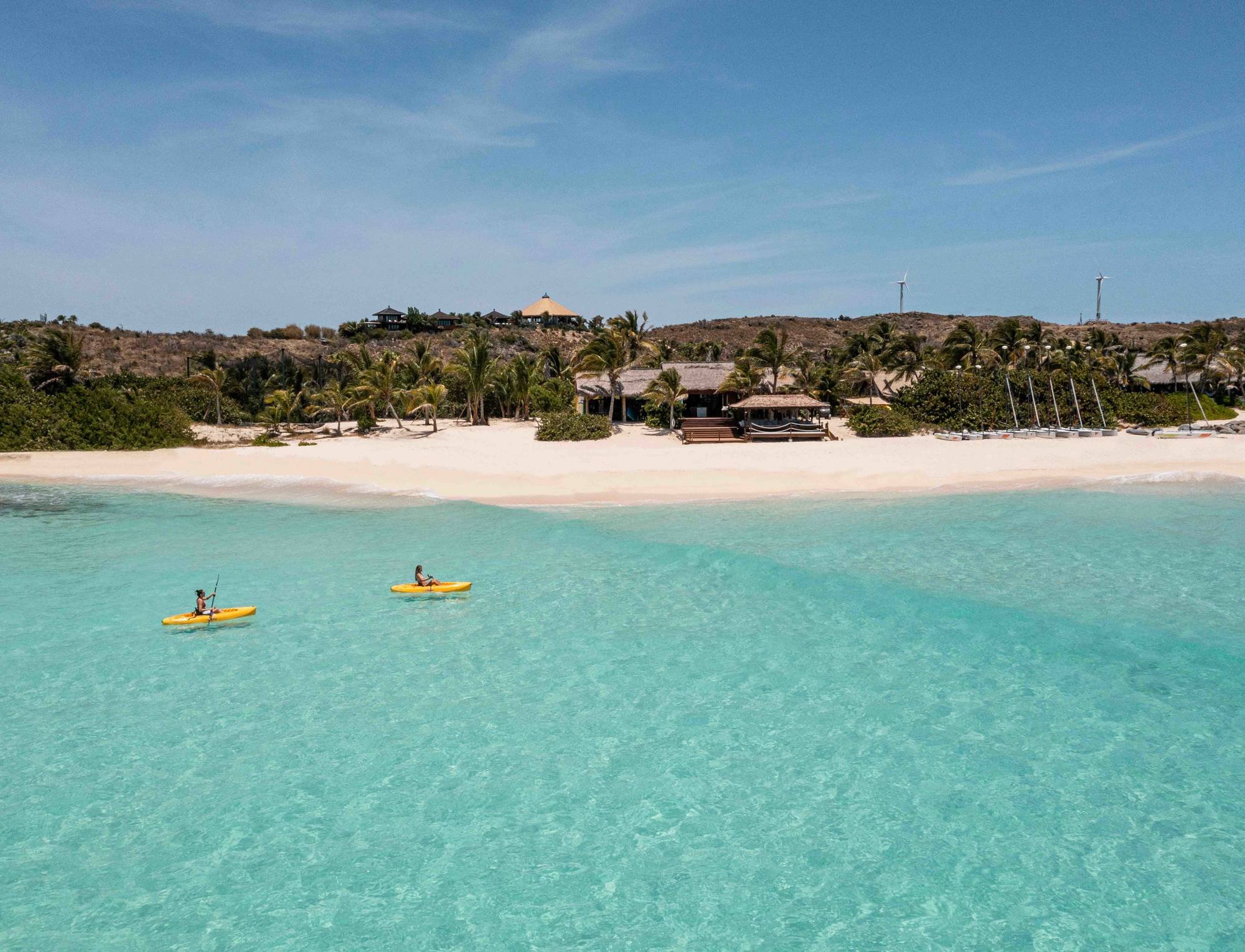
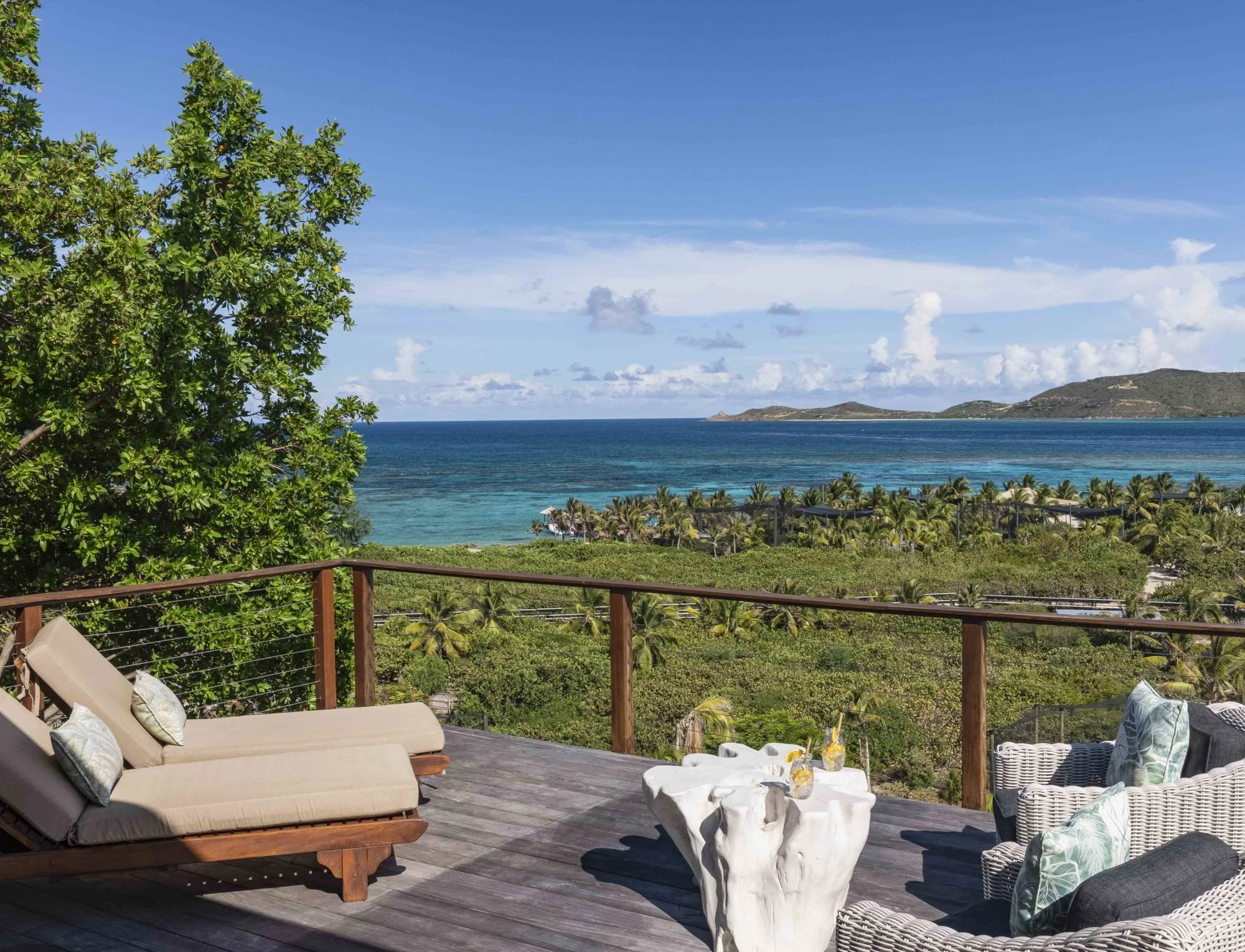
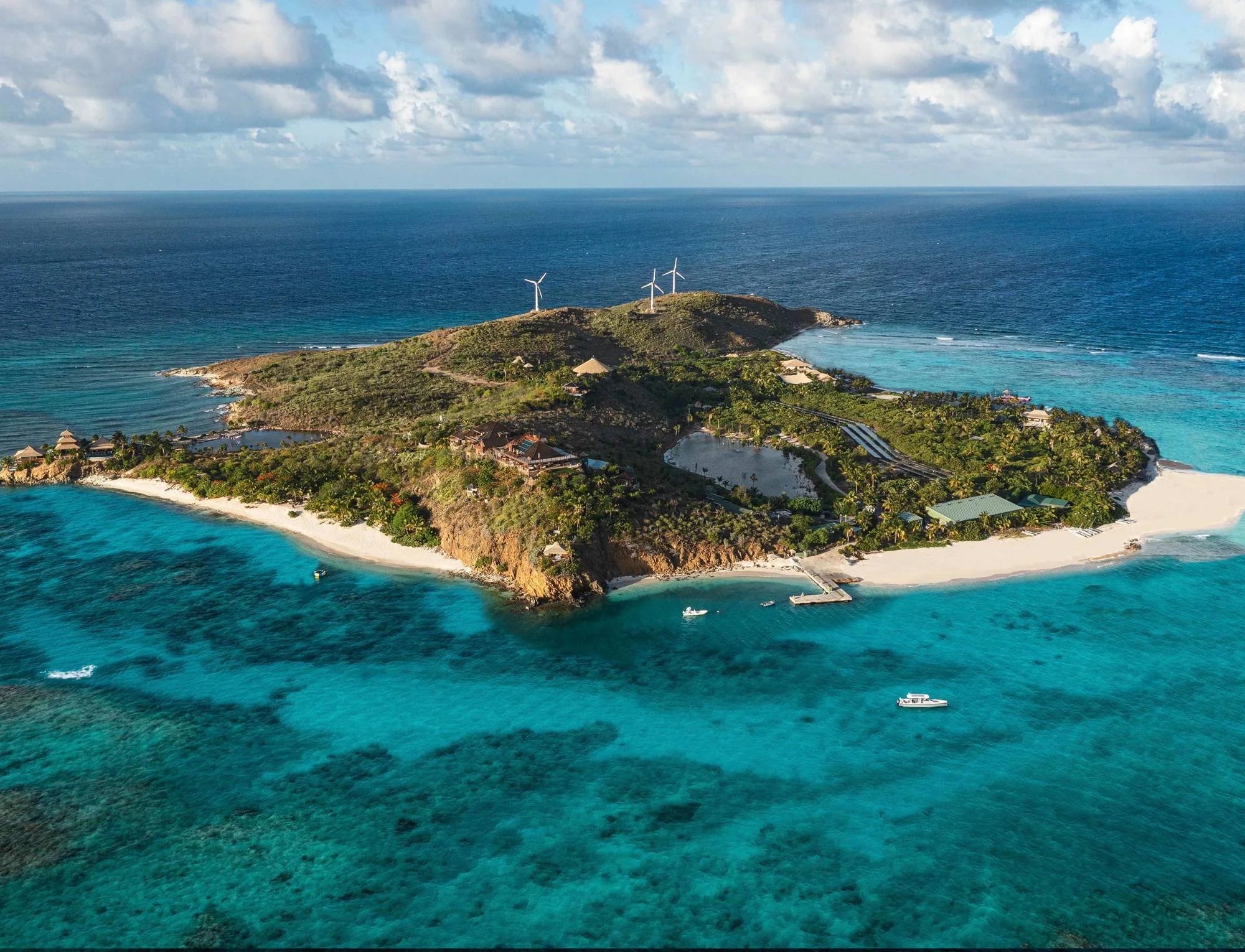
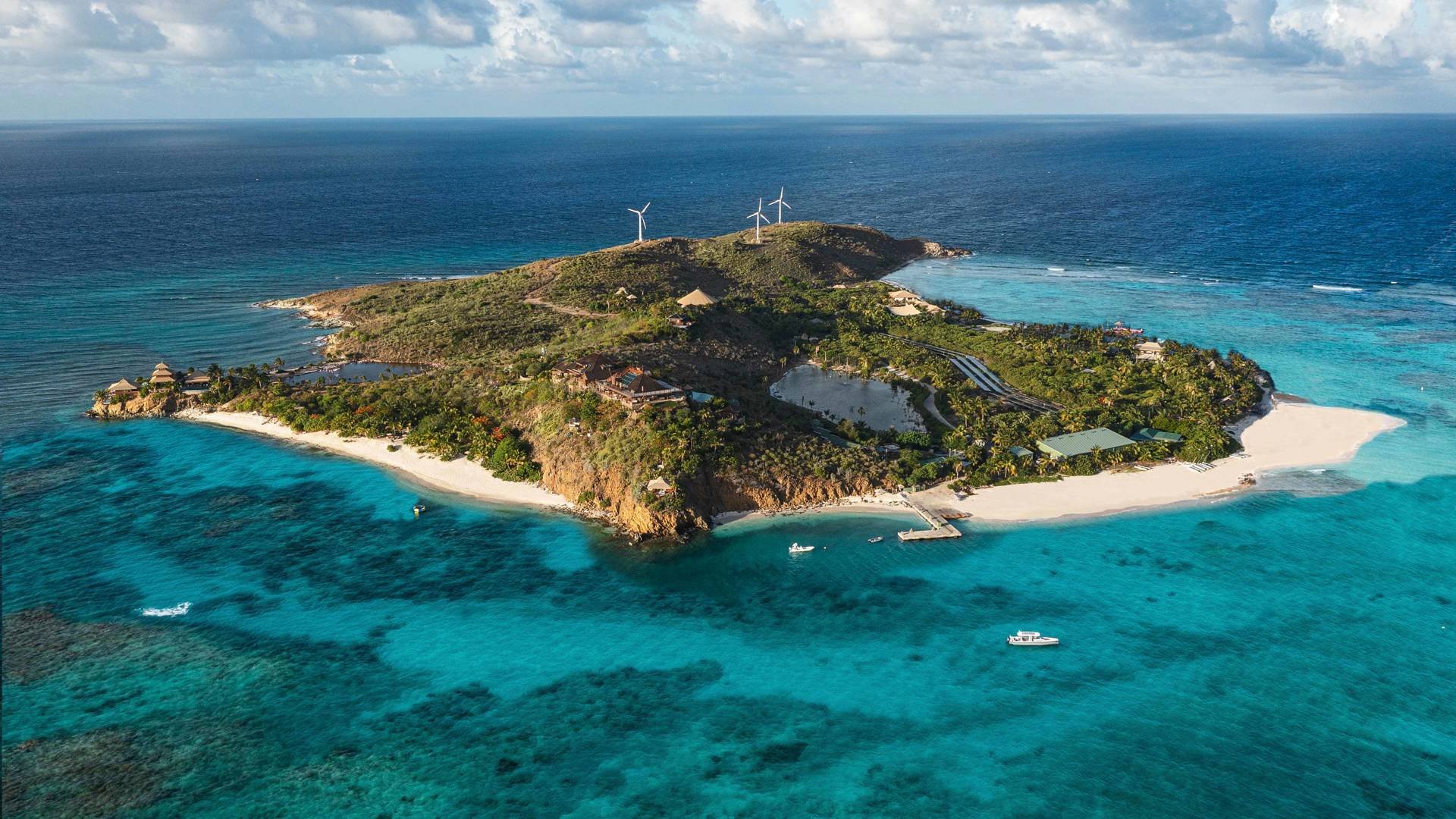
Necker Island occupies 74 acres in the North Sound of the British Virgin Islands, surrounded by reef, white sand and the low silhouettes of neighboring islands. It is best known as Sir Richard Branson’s private island, but the experience is less formal than that description suggests. The defining rhythm is closer to a highly staffed Caribbean house party: breakfast may be served at the Great House, lunch can move to Turtle Beach, tennis and watersports fill the afternoon, and dinner can be arranged almost anywhere on the island.
The usual way to experience Necker is through exclusive use, when one group takes over the island and its staff, beaches, pools and public spaces. The core setup accommodates up to 48 guests across the Great House and Balinese-style houses; for larger gatherings, additional bedrooms and bunkrooms can extend capacity to 56 adults plus 14 children. On selected dates each year, Virgin Limited Edition also releases individual stays, allowing travelers to reserve a room or several rooms without hiring the island in its entirety.
That distinction affects the character of a stay. Exclusive use allows meals, activities and the daily schedule to be built almost entirely around one group. Individual stays retain the same all-inclusive approach but introduce a more social atmosphere as different parties share the island. Either way, meals, drinks, airport boat transfers and most activities are included, while spa treatments, scuba diving, jet-ski experiences, deep-sea fishing and additional off-island excursions carry separate charges.
From a 1978 Purchase to Two Major Rebuilds
Richard Branson purchased Necker Island in 1978, when Virgin was still primarily associated with music rather than hotels or private-island retreats. The island later became his family home and, over time, developed into the property that would become one of the original foundations of Virgin Limited Edition when the collection formally launched in 2000.
The history since then has not been a simple sequence of expansions. In August 2011, a fire destroyed the Great House. The rebuilt house reopened in October 2013, retaining the Balinese-inspired character of the original while adding contemporary guest spaces and a larger master suite.
Four years later, Hurricane Irma caused extensive damage across the British Virgin Islands, including Necker. The island closed again for reconstruction and reopened in October 2018, with additional accommodation returning in stages. Those two rebuilding periods explain why the current property feels more contemporary than its long association with Branson might suggest: Necker’s history is measured as much through reinvention as through preservation.
Balinese Forms Spread Across a Caribbean Island
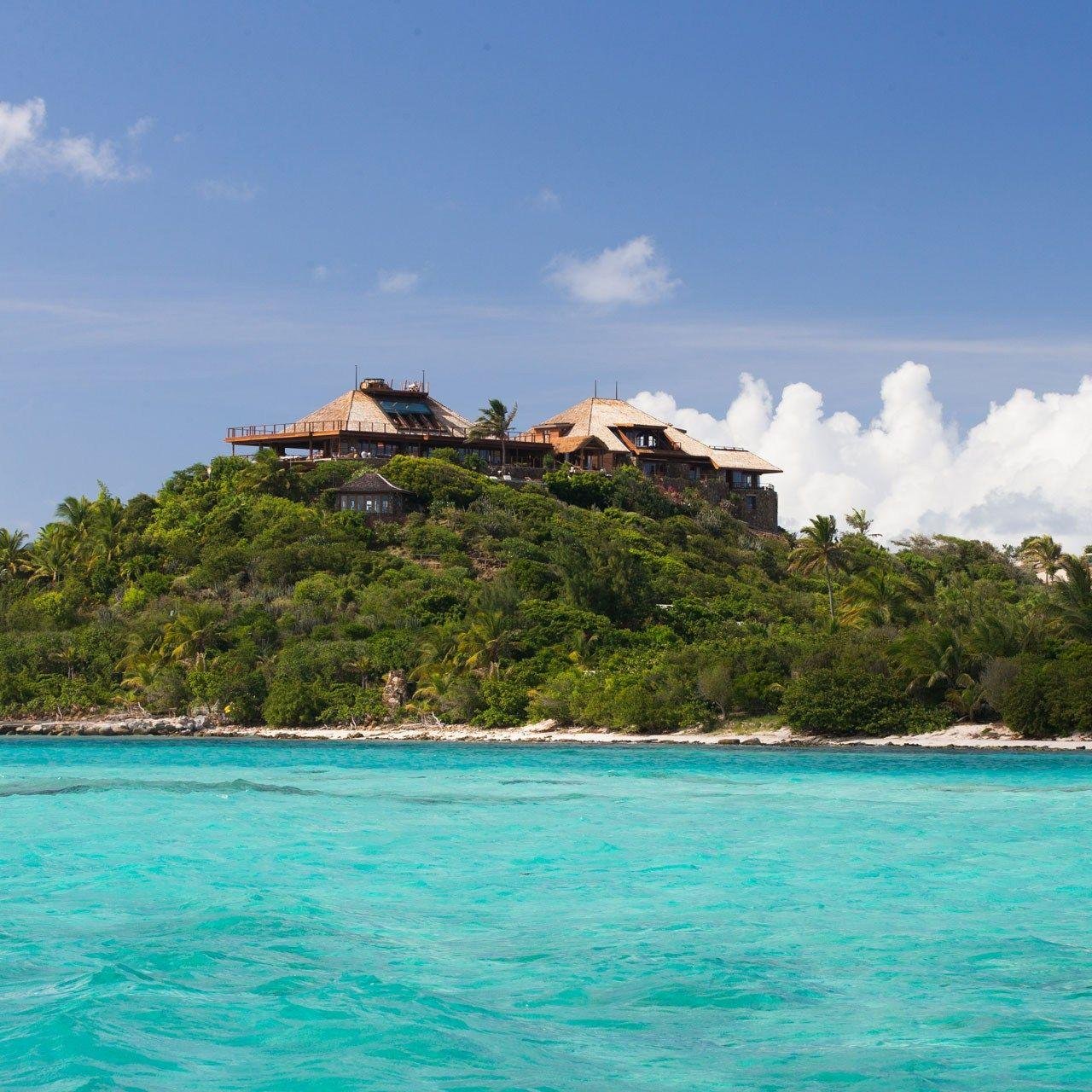
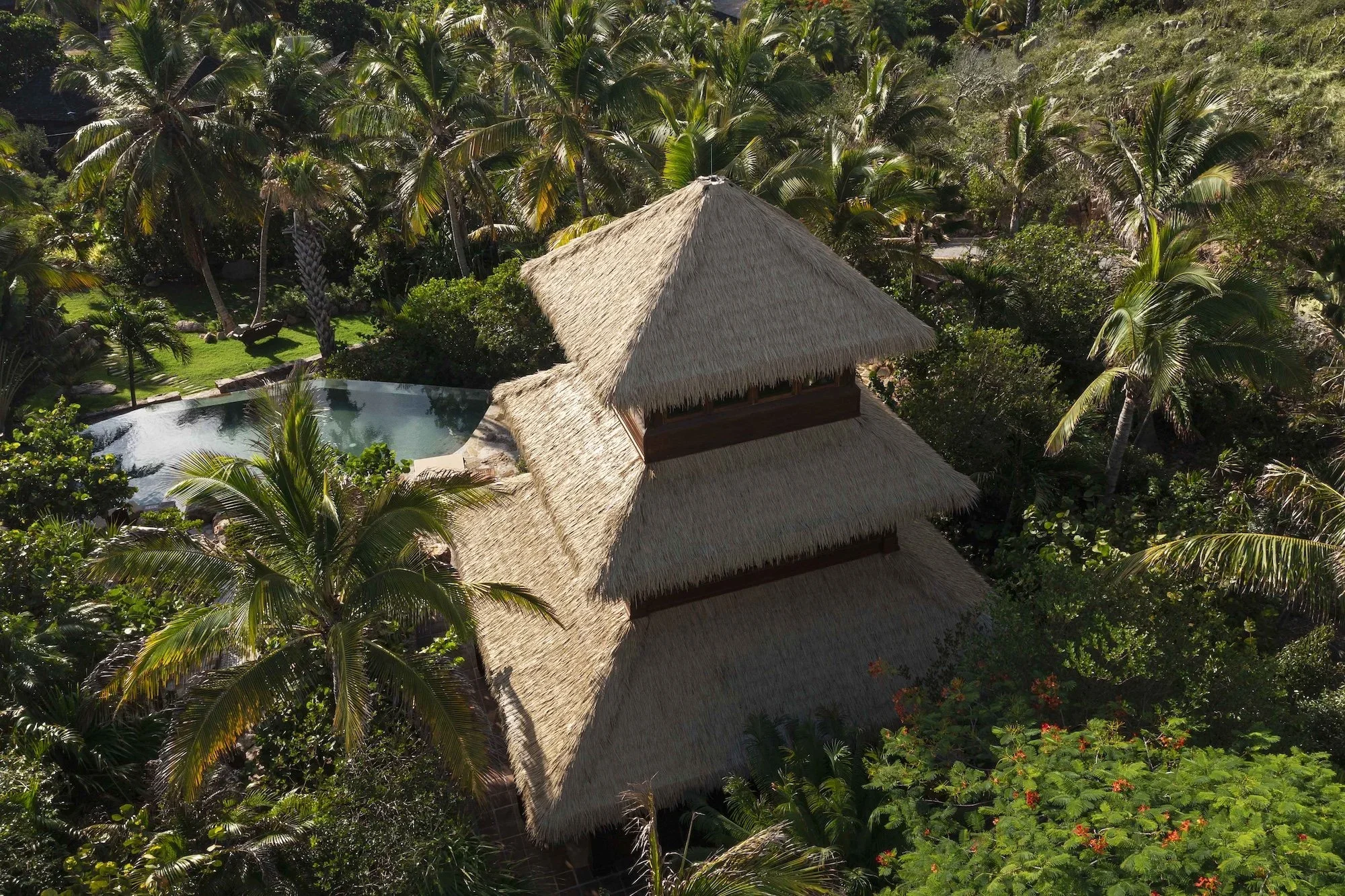
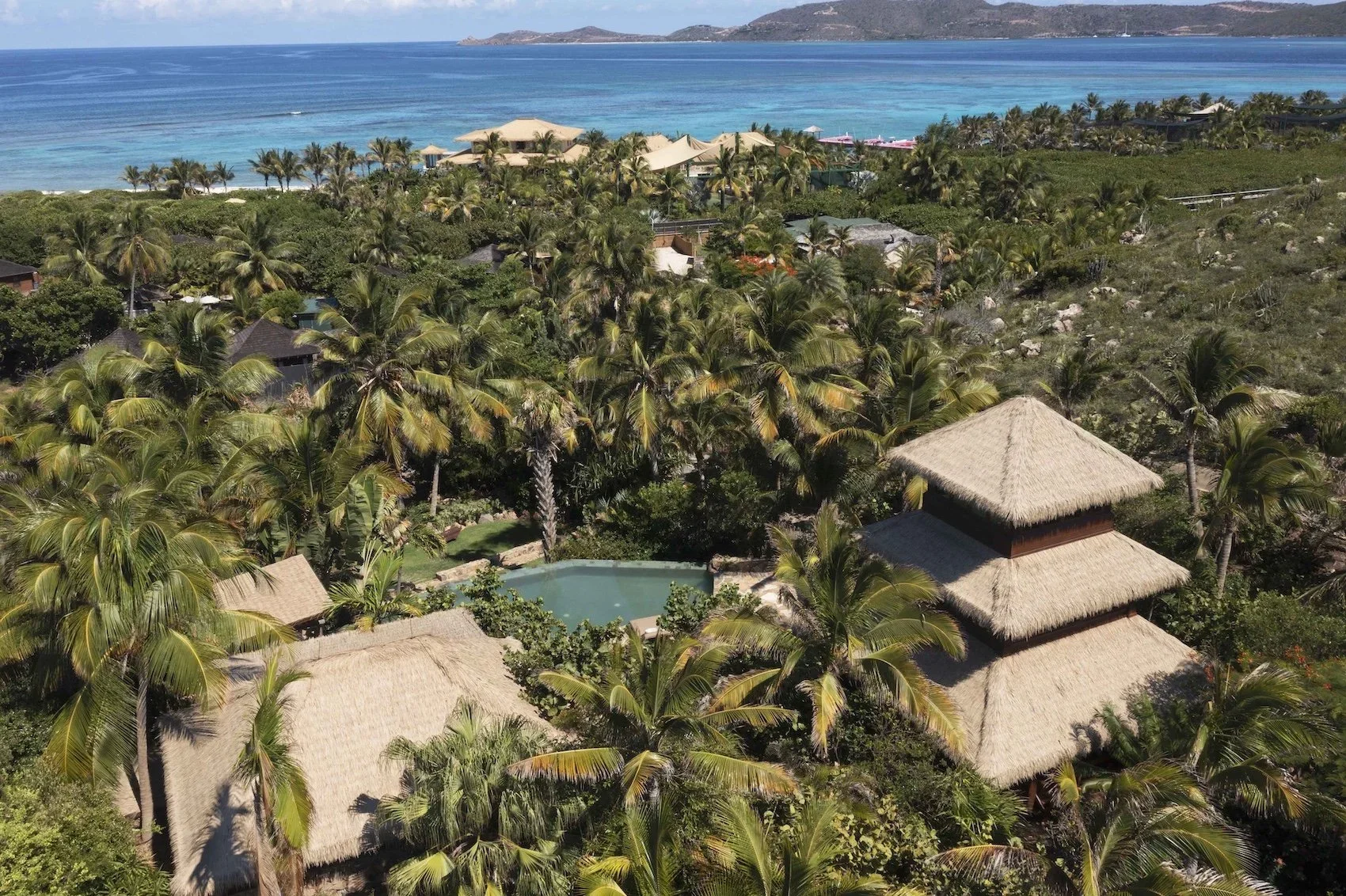
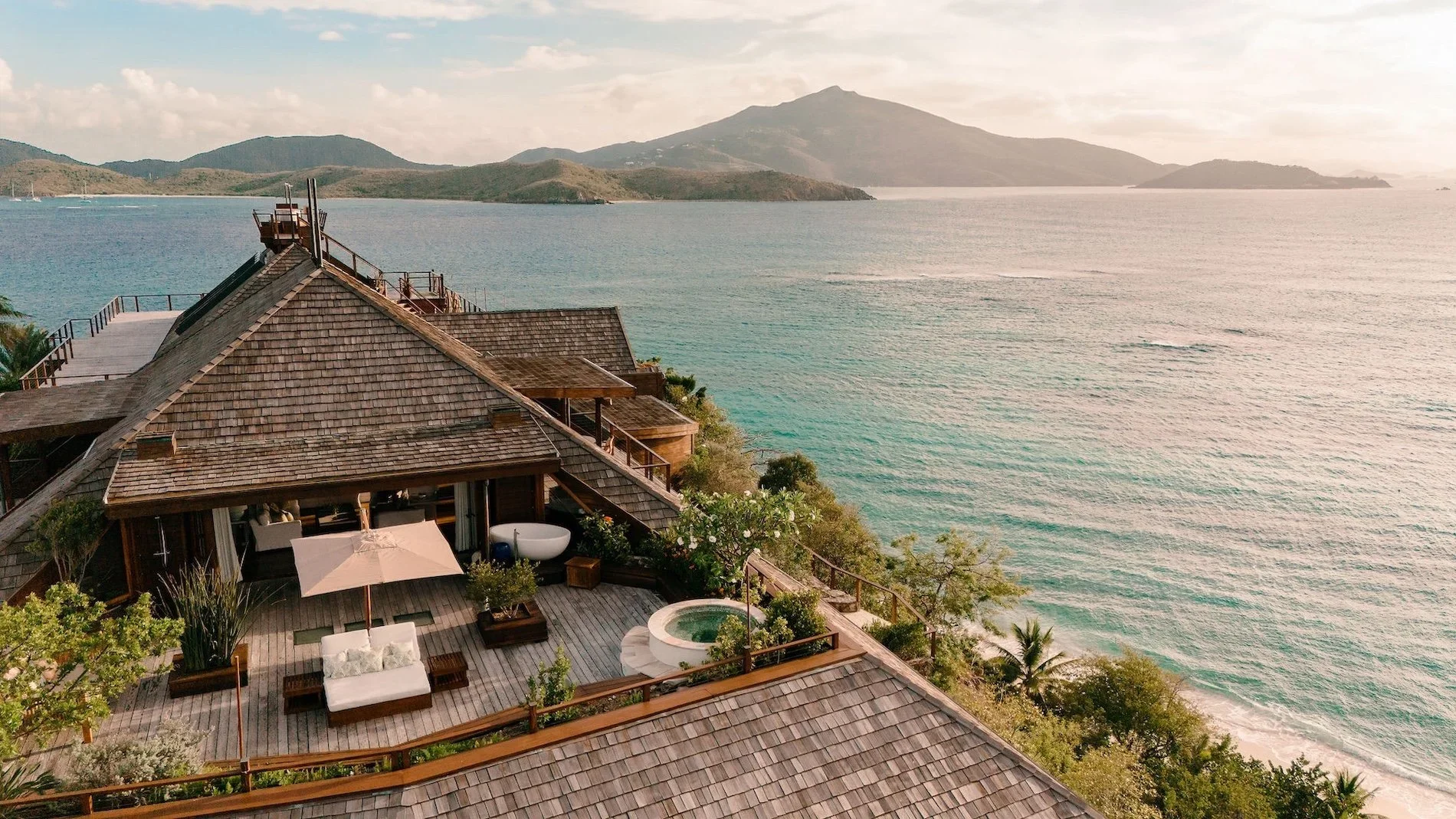
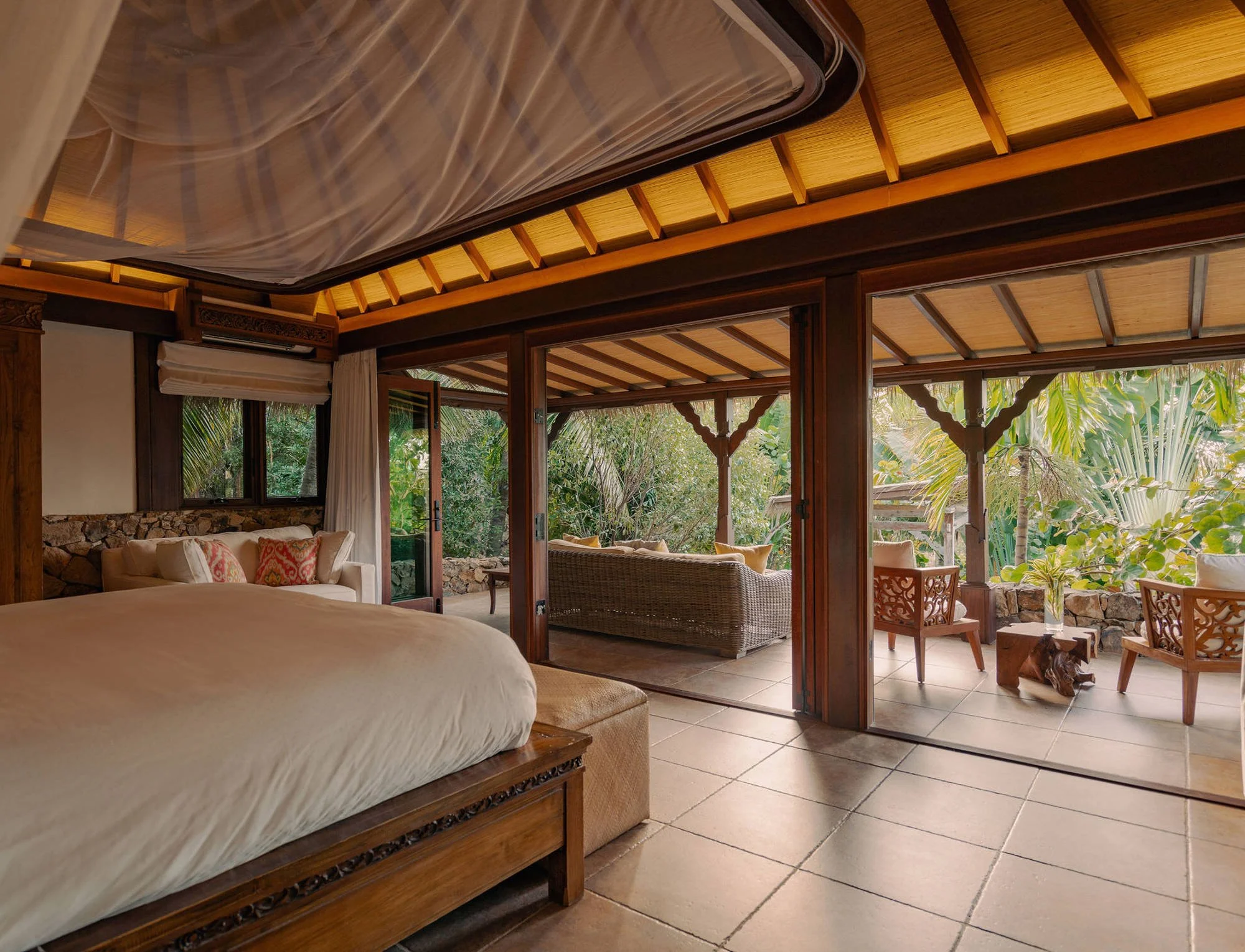
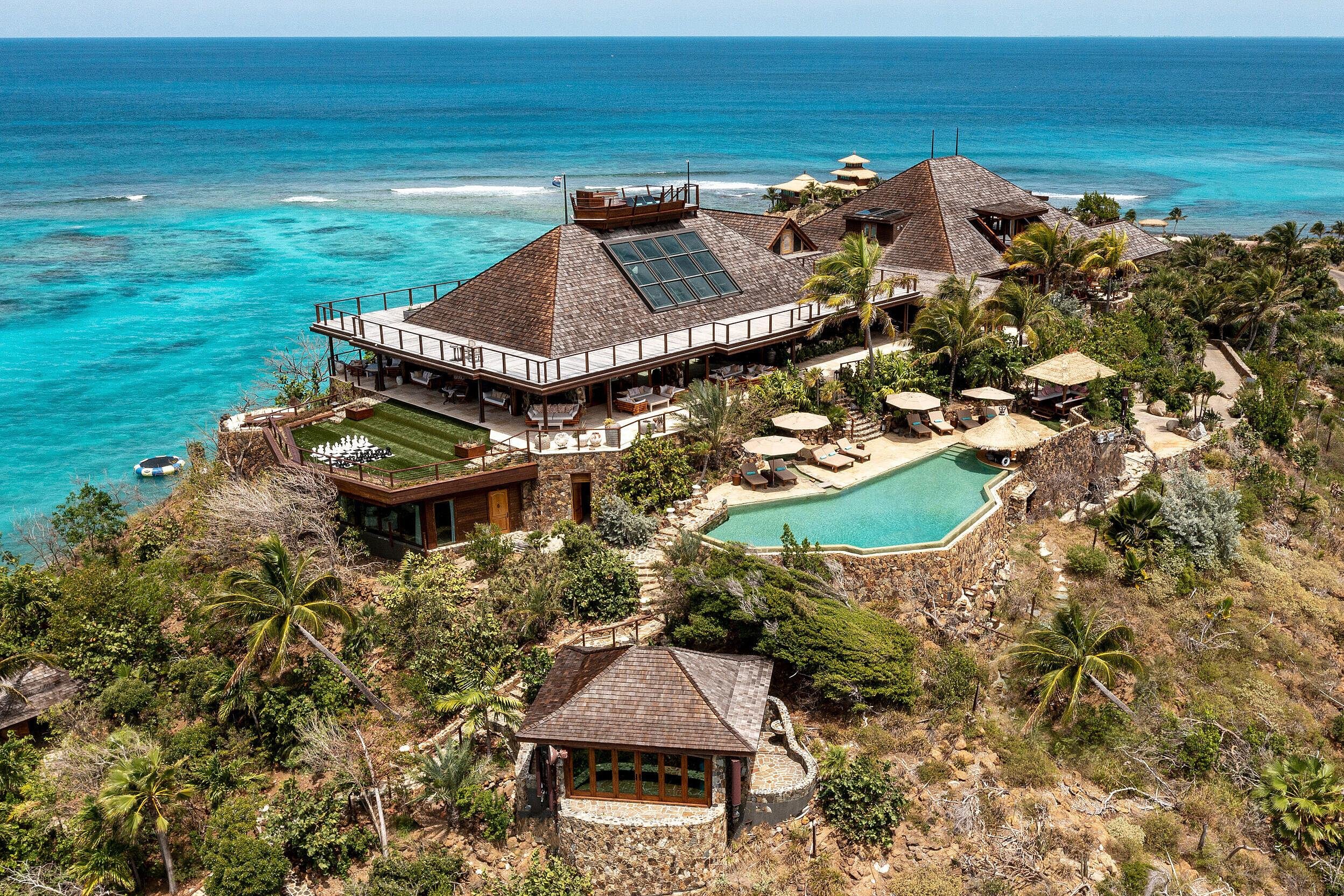
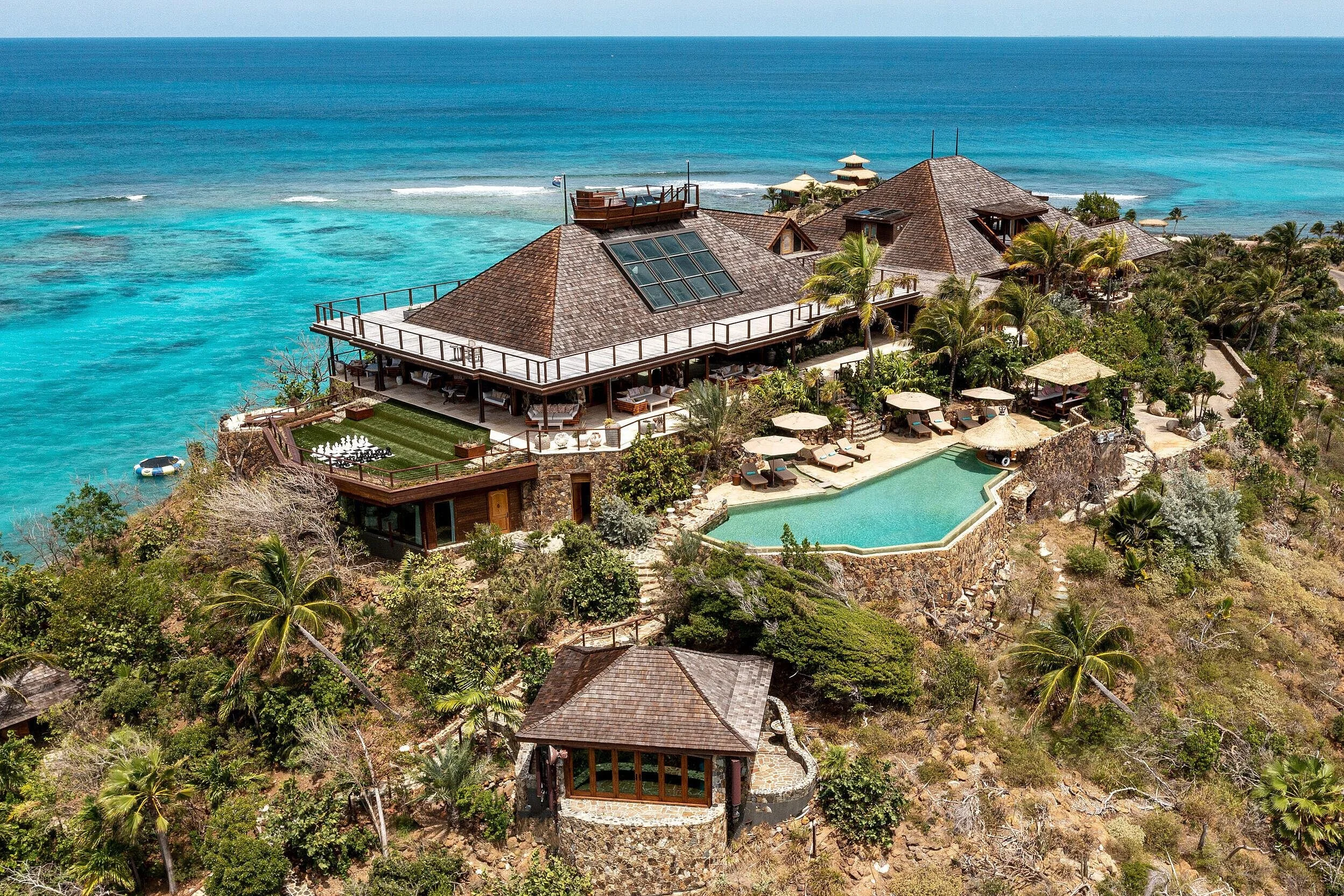
Necker does not read like a conventional resort organized around one central hotel building. The Great House occupies the island’s highest point, while individual Balinese-style houses are distributed across hillsides and tropical gardens. The arrangement creates a series of small residential zones rather than a single accommodation block.
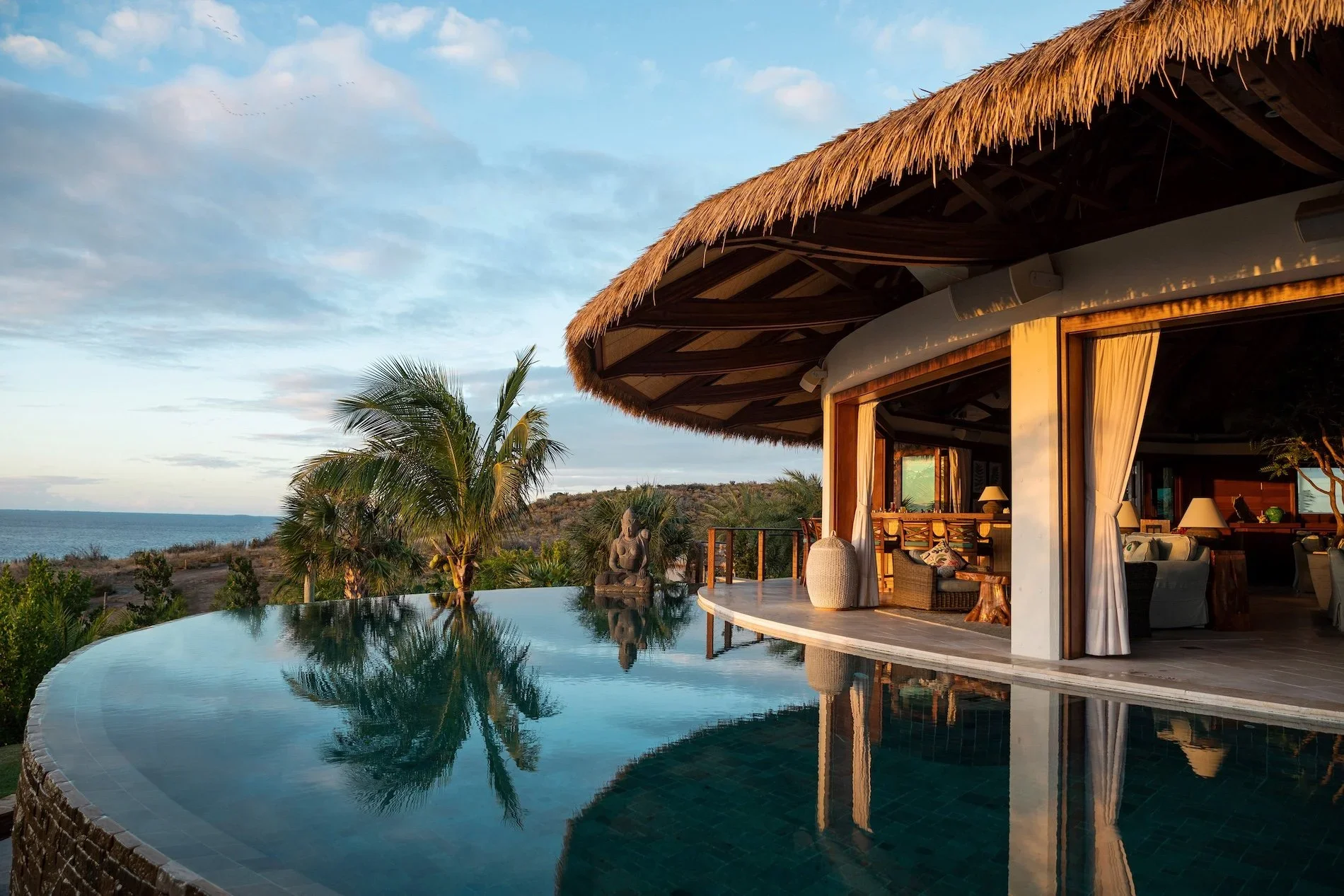
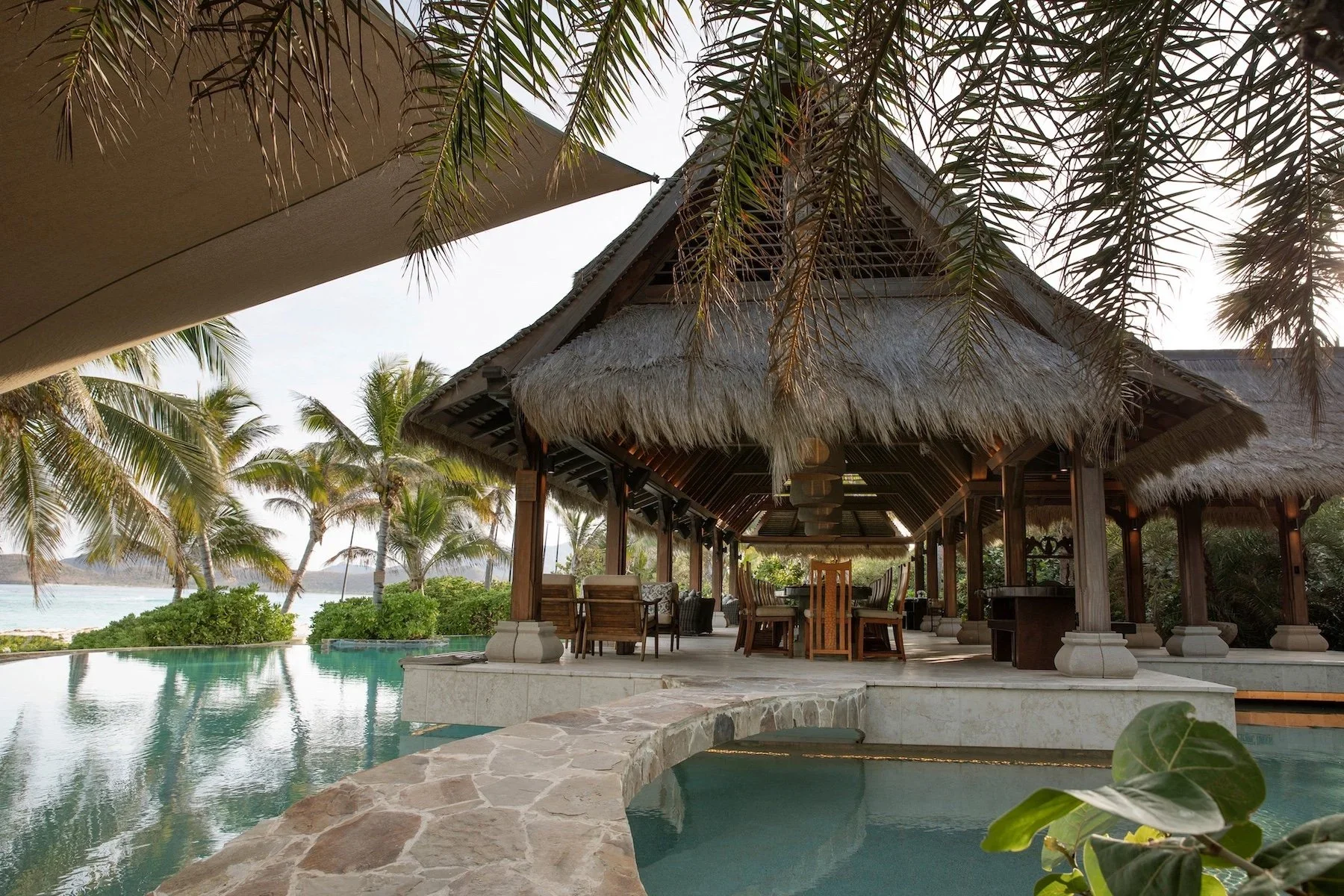
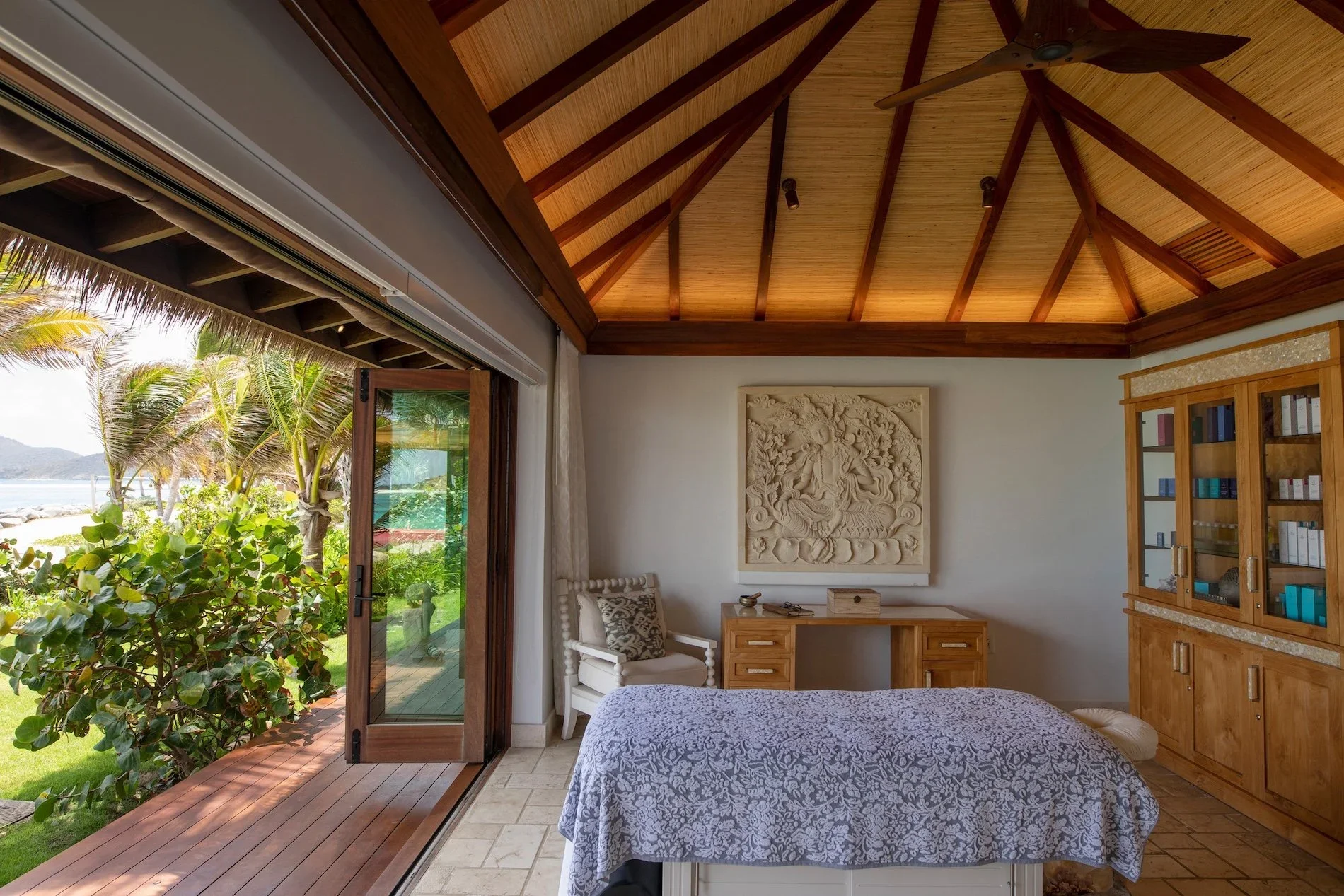
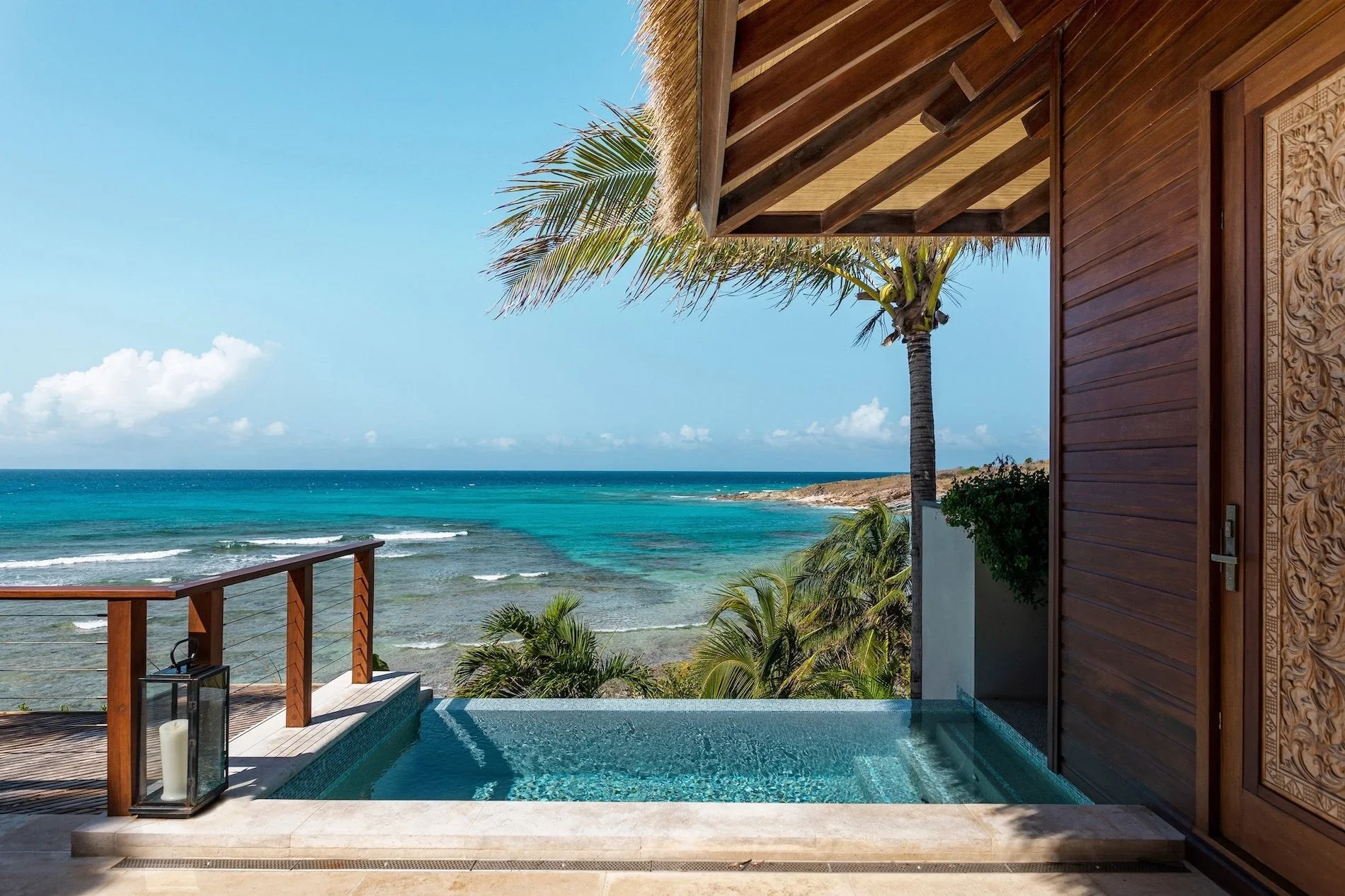
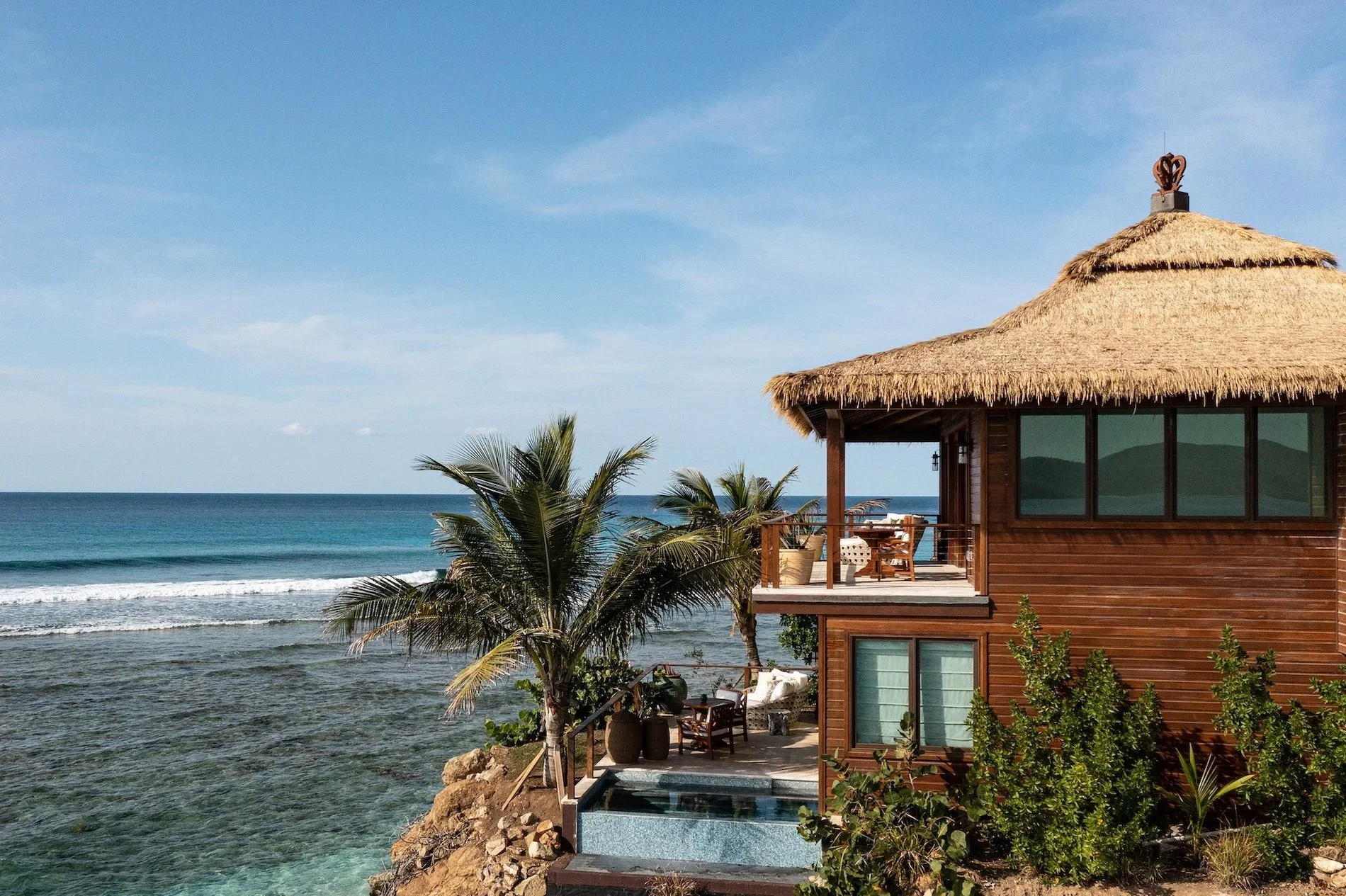
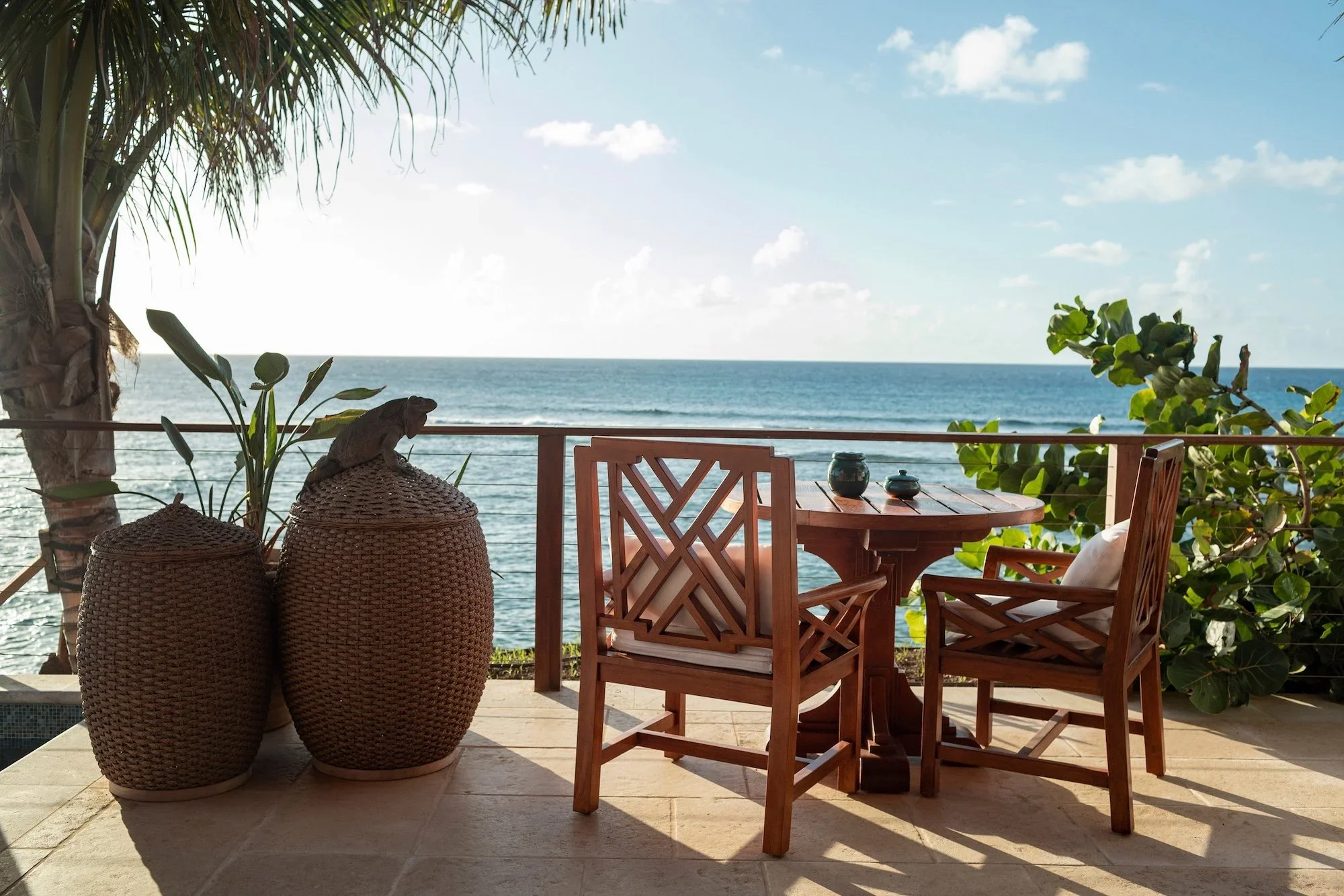
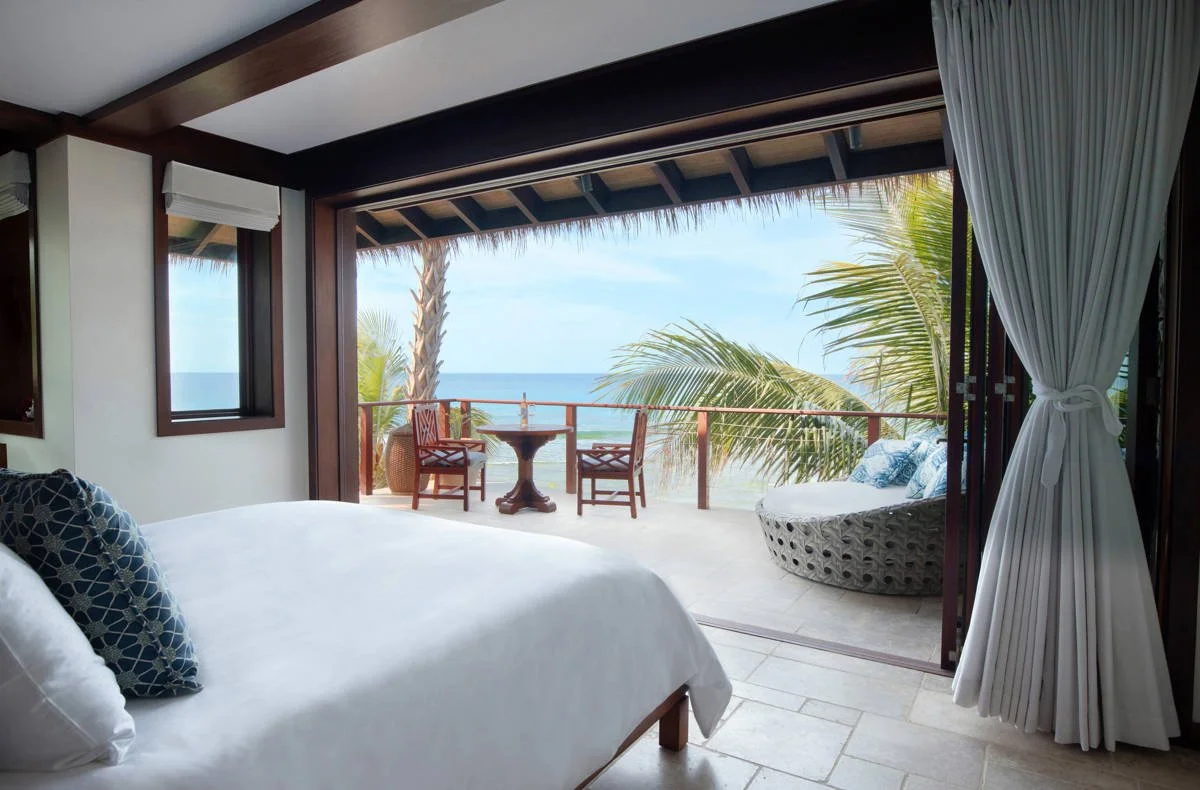
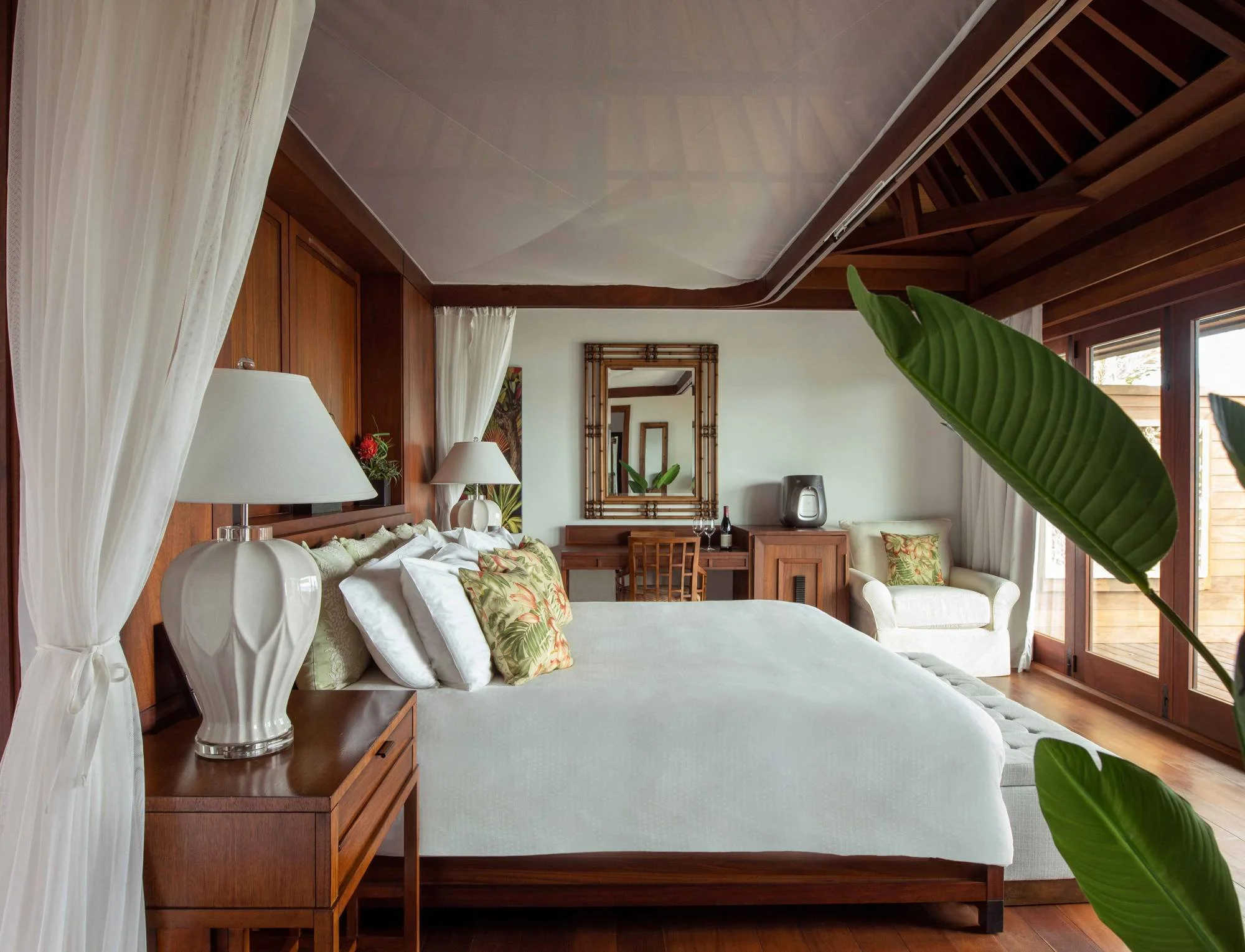
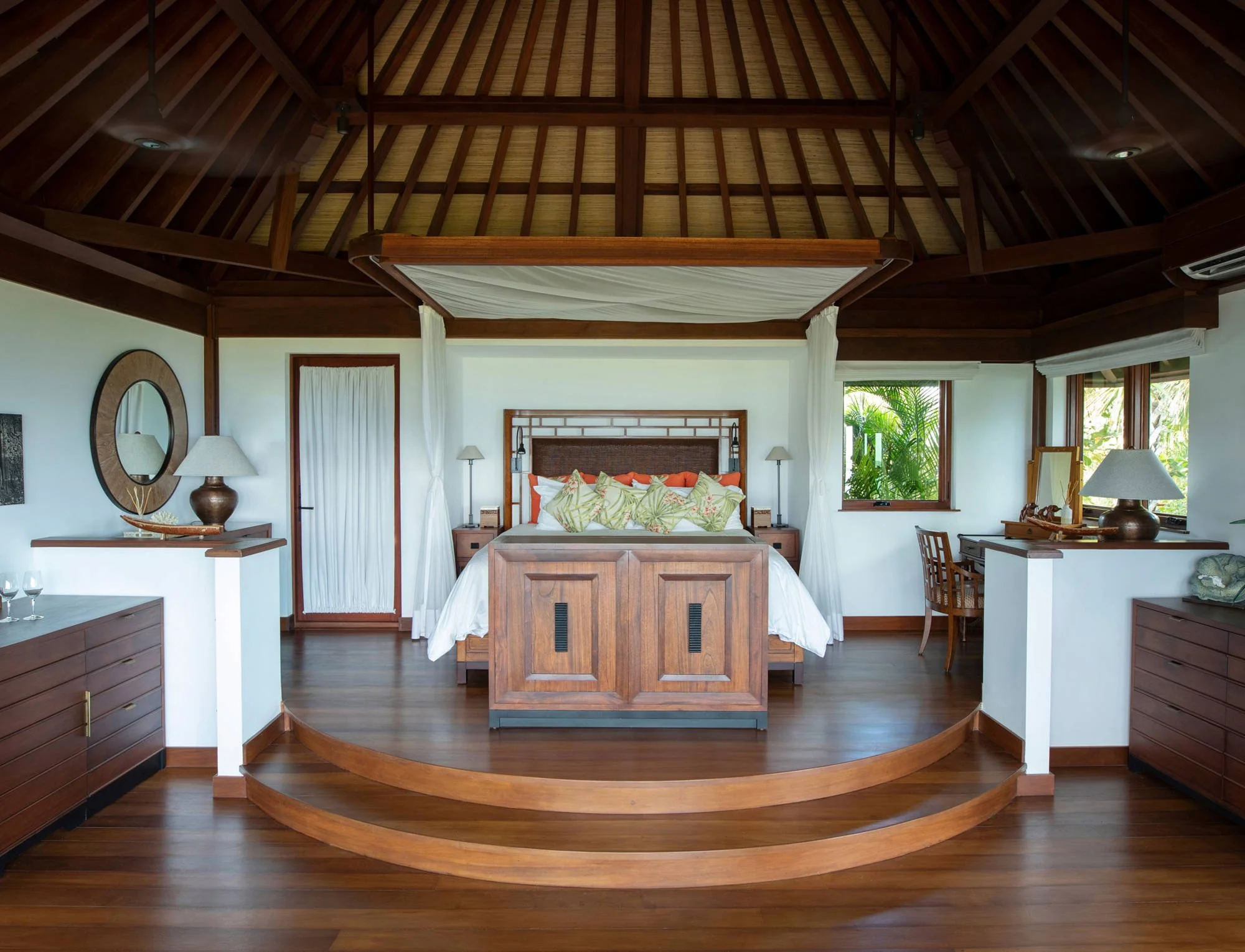
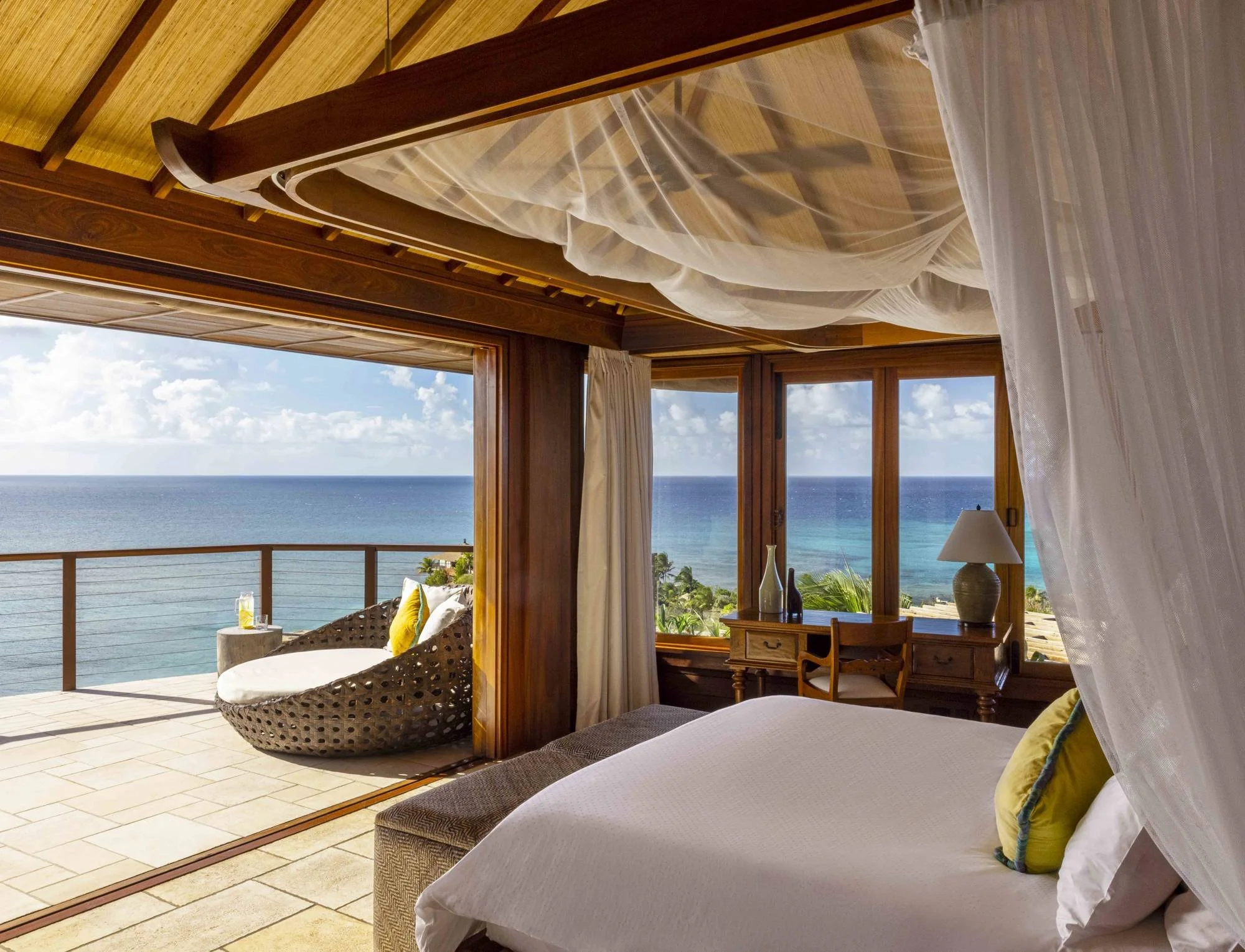
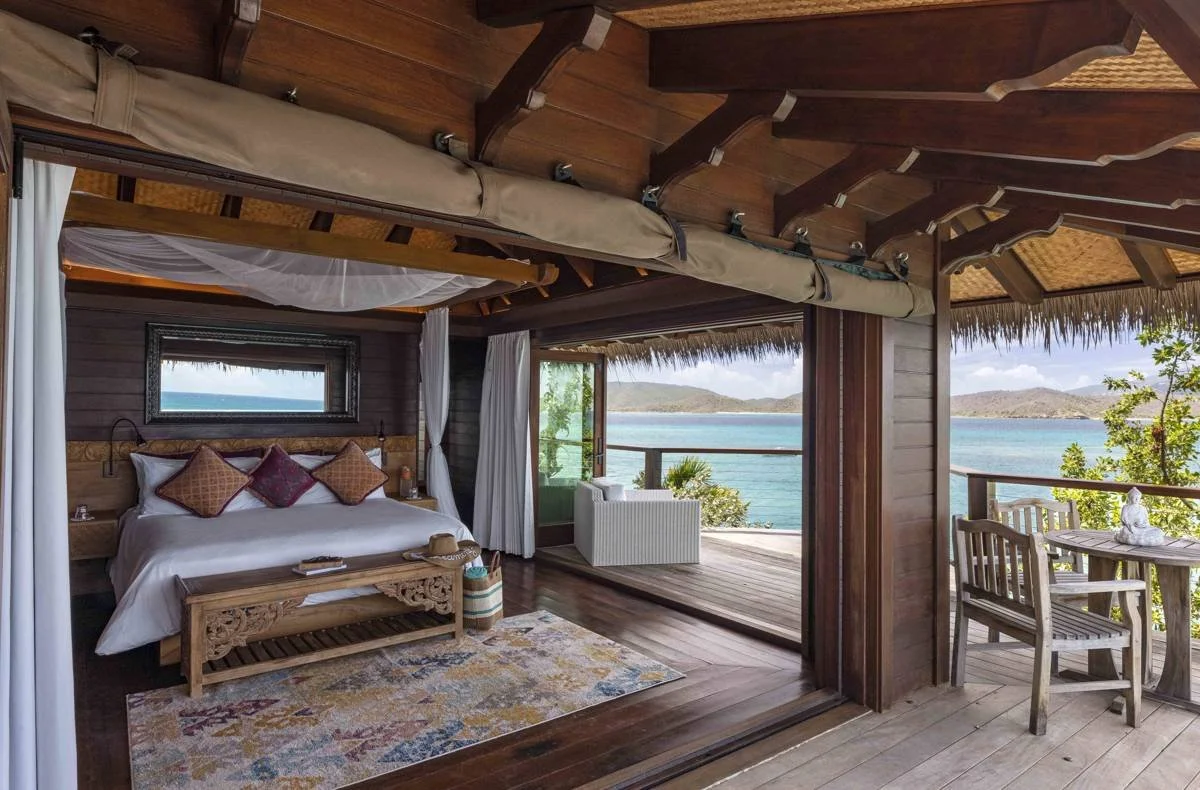
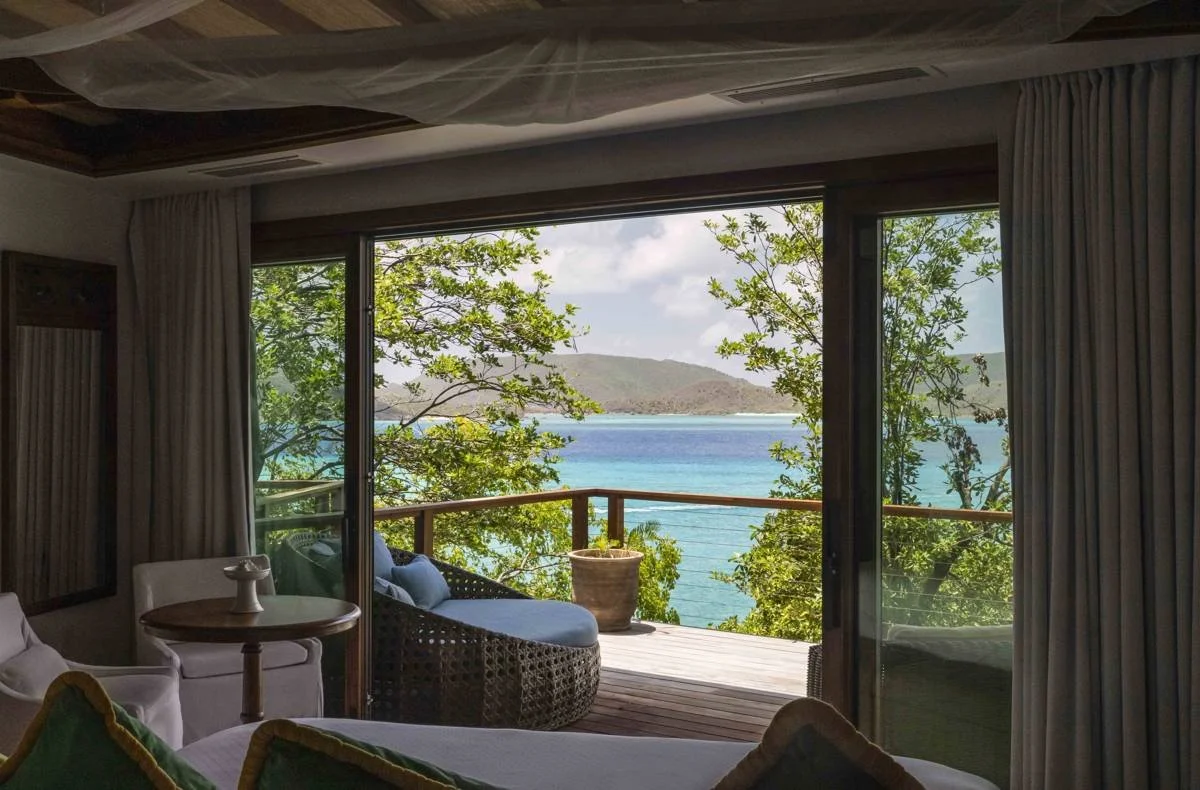
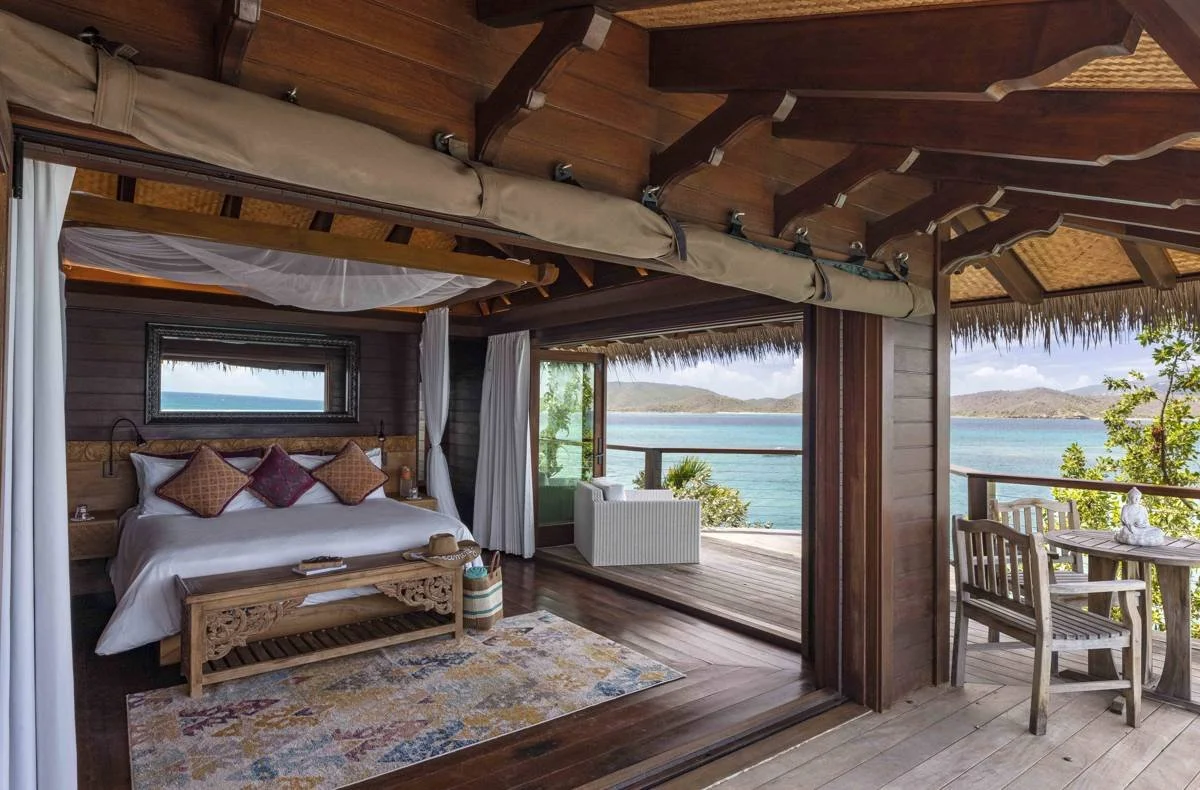
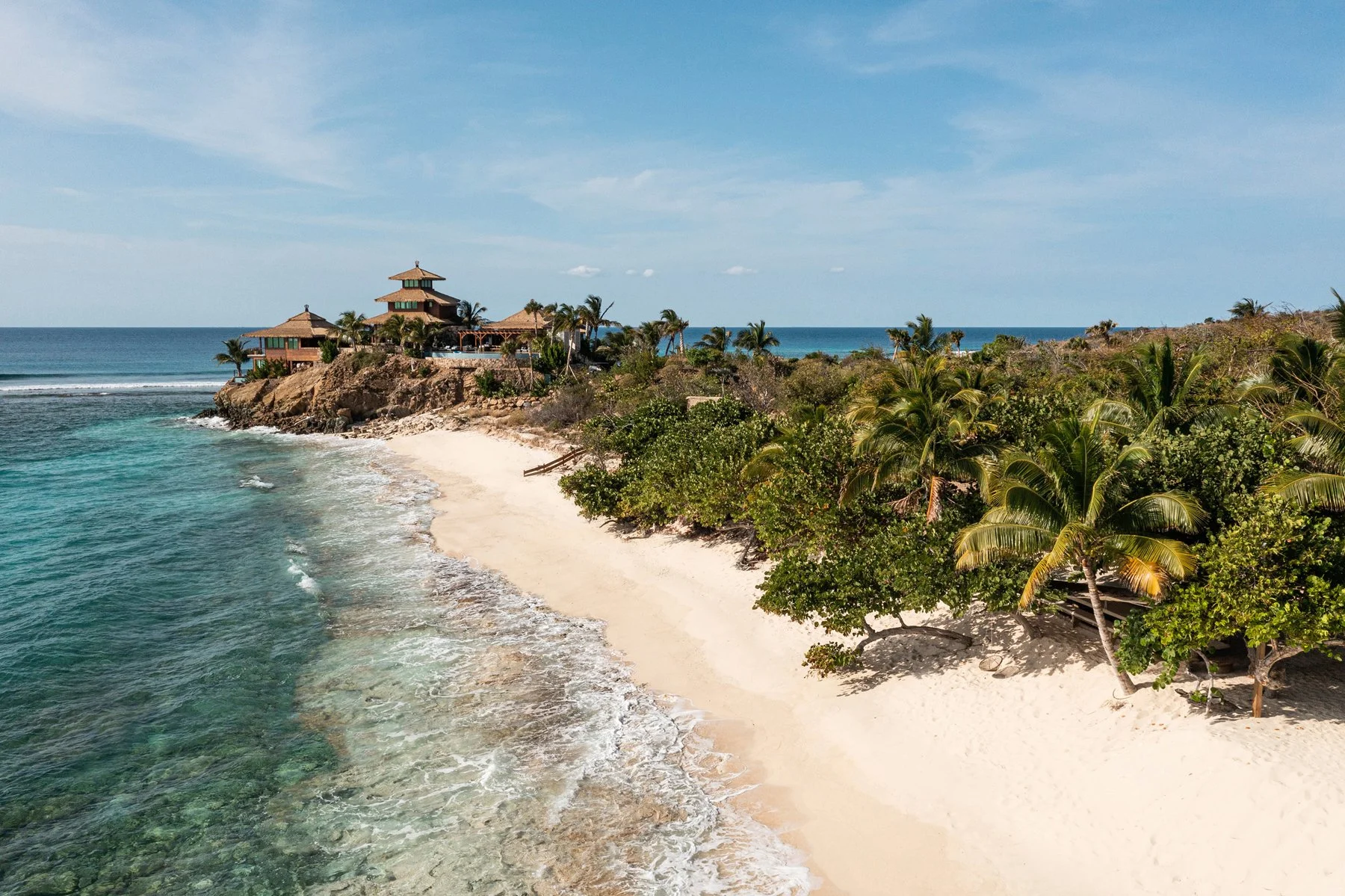
The visual language is consistent without being rigid. Timber, stone, pitched roofs, four-poster beds, open-air bathrooms and shaded terraces borrow from Southeast Asian resort architecture, while the island itself keeps the design rooted in the Caribbean. Views are central: many rooms open toward the sea on more than one side, and private terraces, plunge pools and outdoor showers are positioned to keep the horizon visible throughout the day.
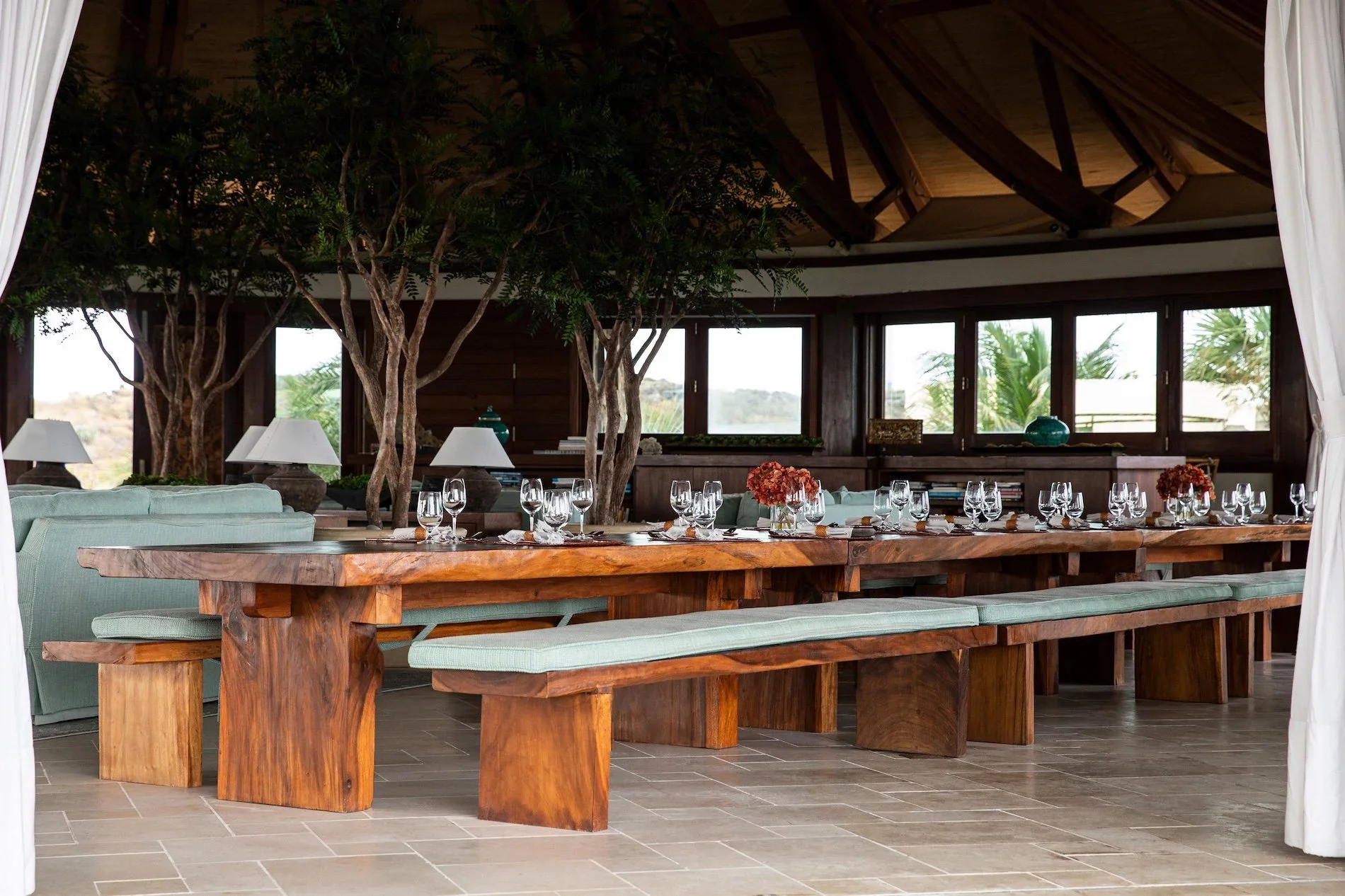
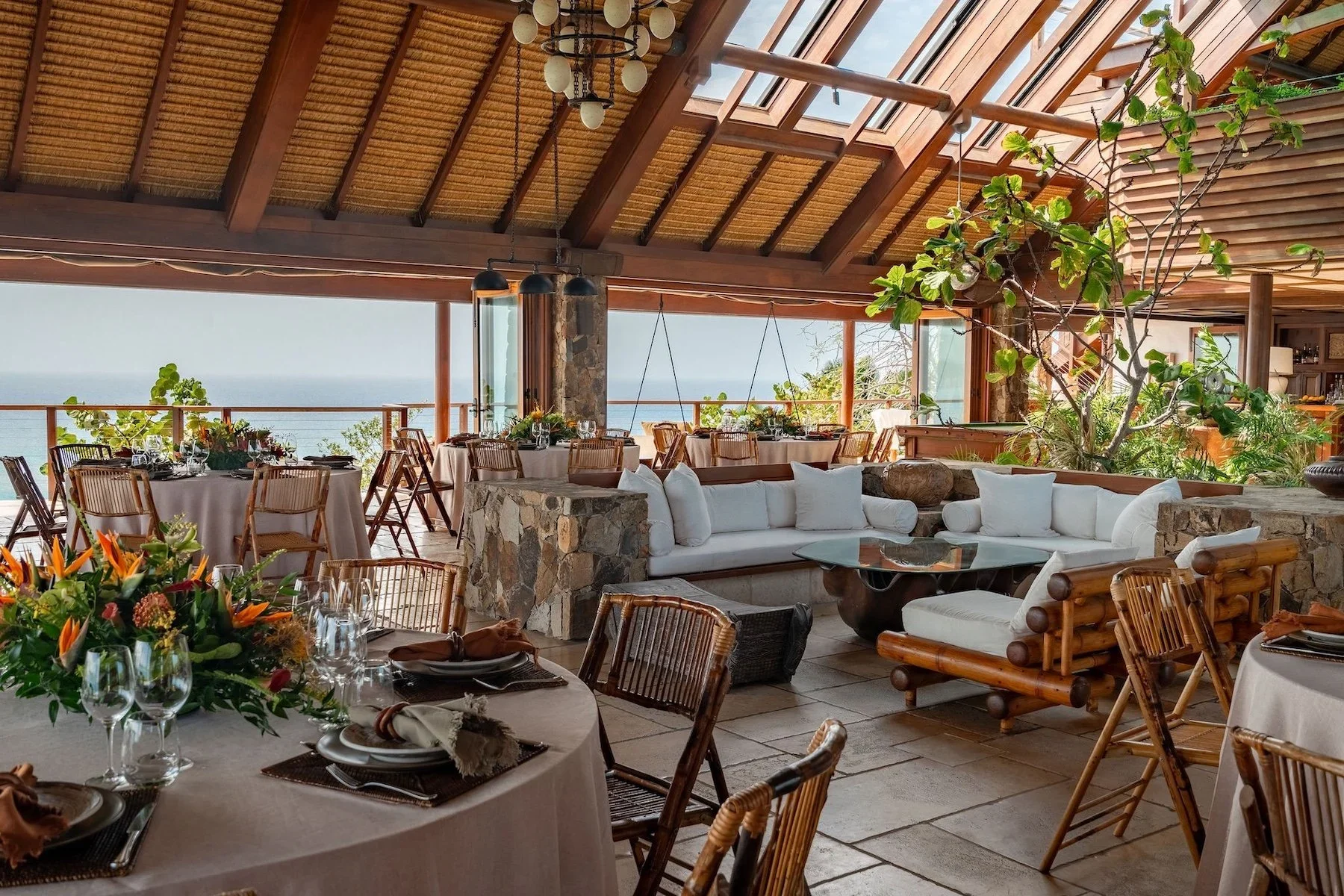
The Great House is the social and architectural center. Its elevated terraces look toward the Caribbean and Atlantic, while indoor and outdoor dining areas, lounges and the rooftop create gathering spaces large enough for an exclusive group. Elsewhere, Elders Temple, the Beach House, pools and bars allow activity to disperse around the island so a large party does not need to remain together.
Bedrooms Are Individual Houses Rather Than Standard Categories
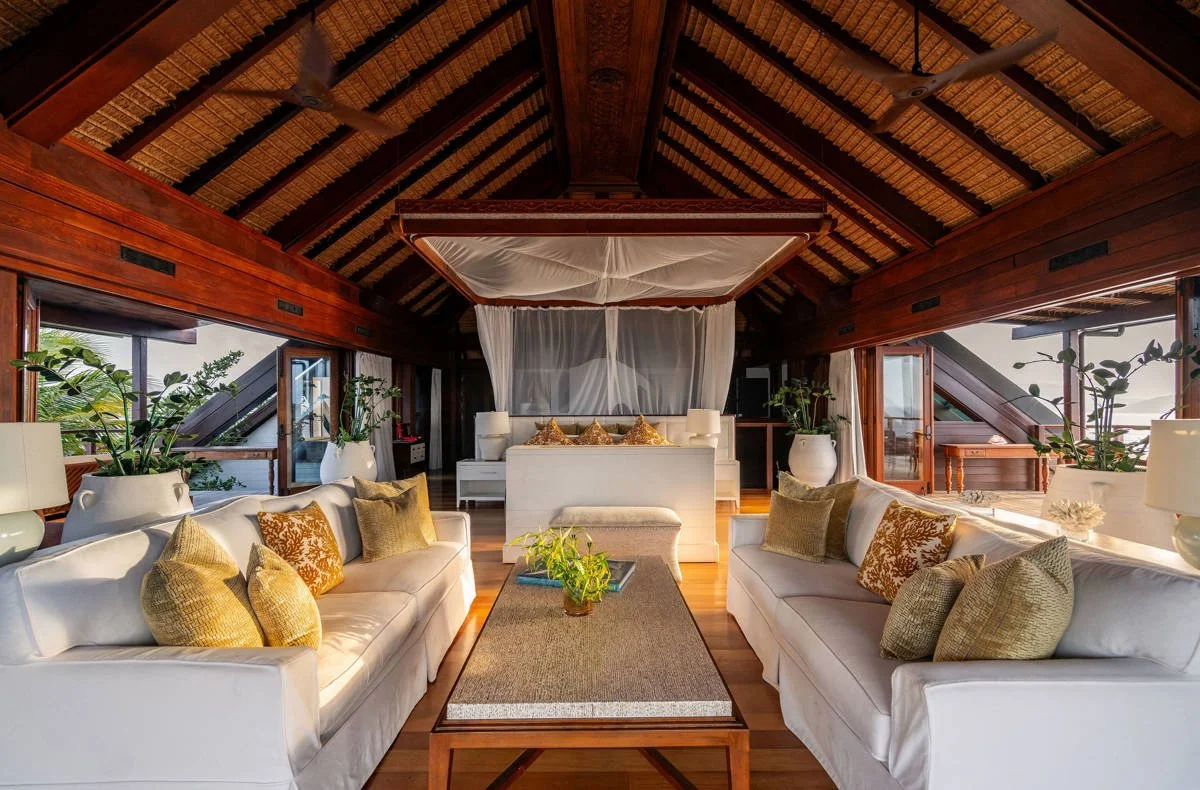
Great House Master Suite: Approximately 1,490 sq. ft., occupying the entire top floor of the Great House with one bedroom, three terraces, a private hot tub, outdoor bathtub and shower, and approximately 180-degree views across the surrounding sea.
Great House Bedrooms: Approximately 390–570 sq. ft., each with a king bed that in most rooms can convert to twins, an en-suite bathroom and private ocean-view terrace, with selected rooms adding outdoor showers and interconnecting configurations useful for families.
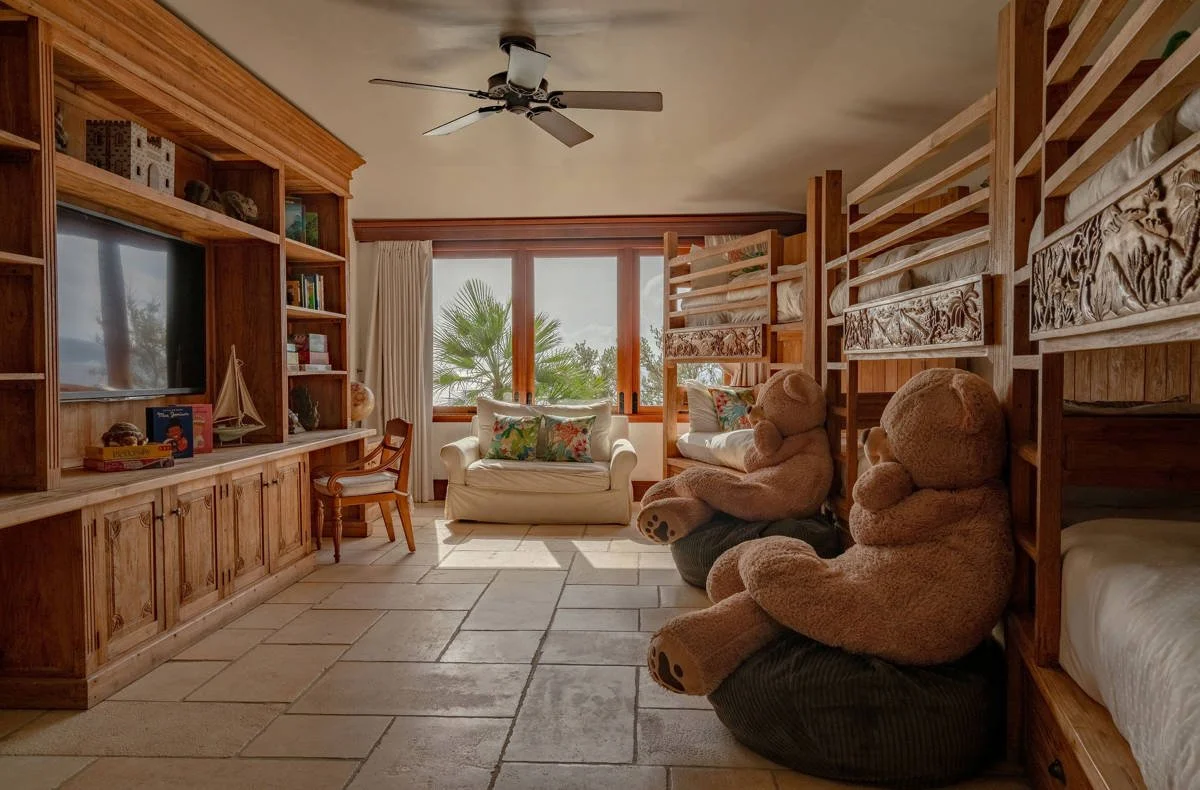
Great House Bunkroom: Approximately 575 sq. ft., designed specifically for children with three bunk beds sleeping up to six, an en-suite bathroom, separate toilet, television, games console, board games and toys.
Leha Lo: Approximately 340 sq. ft., a standalone double room positioned 81 steps above the Great House with an en-suite bathroom, outdoor shower and wraparound terrace offering approximately 180-degree sea views.
Temple Master: Approximately 1,700 sq. ft., with a king bed, panoramic island views, an extensive wraparound terrace, an outdoor bathroom and an indoor freestanding marble bathtub.
Temple Sunrise: Approximately 470 sq. ft., with a king bed, large terrace with daybeds, en-suite shower room and an east-facing position designed around sunrise and sea views.
Temple Hi and Temple Lo: Approximately 324 sq. ft. per room, arranged as two separate guestrooms in one Balinese-style house with a shared outdoor lounge; Temple Hi has a king bed and outdoor bathroom, while Temple Lo can be configured as a king or twin and includes an outdoor shower and bathtub.
Bali Lo Suite: Approximately 1,360 sq. ft., arranged over two levels with a ground-floor lounge and an upstairs king bedroom, en-suite bathroom and ocean views, within the Bali Lo complex and its shared pool.
Bali Buah Suite: Approximately 480 sq. ft., with a king or twin configuration, large furnished balcony and hammock, plus a lower-level en-suite bathroom with double showers and access to the Bali Lo shared pool.
Bali Kukila Suite: Approximately 610 sq. ft., with a king four-poster bed, lounge opening onto a private terrace and uninterrupted ocean views within the quieter Bali Lo section of the island.
Bali Hi Suite: Approximately 1,343 sq. ft., a three-tiered Balinese house with two flexible king-or-twin bedrooms, private outdoor areas, a plunge pool, indoor and outdoor showers and terraces overlooking the sea.
Bali Cliff Suite: Approximately 633 sq. ft., with two en-suite bedrooms, a private terrace, plunge pool and a large bathroom with freestanding tub and open-air shower, positioned close to the island’s rocky edge for particularly open sea views.
Bali Beach Room: Approximately 550 sq. ft., with one king bedroom, two terraces, an outdoor shower and plunge pool, oriented toward Flamingo Beach and connected to generous outdoor entertaining spaces.
Because Necker is designed primarily for exclusive use, these accommodations are best considered as parts of a larger island layout rather than a conventional ladder of room upgrades. For multigenerational groups, proximity matters as much as size: the Great House, Temple complex, Bali Lo and Bali Hi each create their own small clusters within the island.
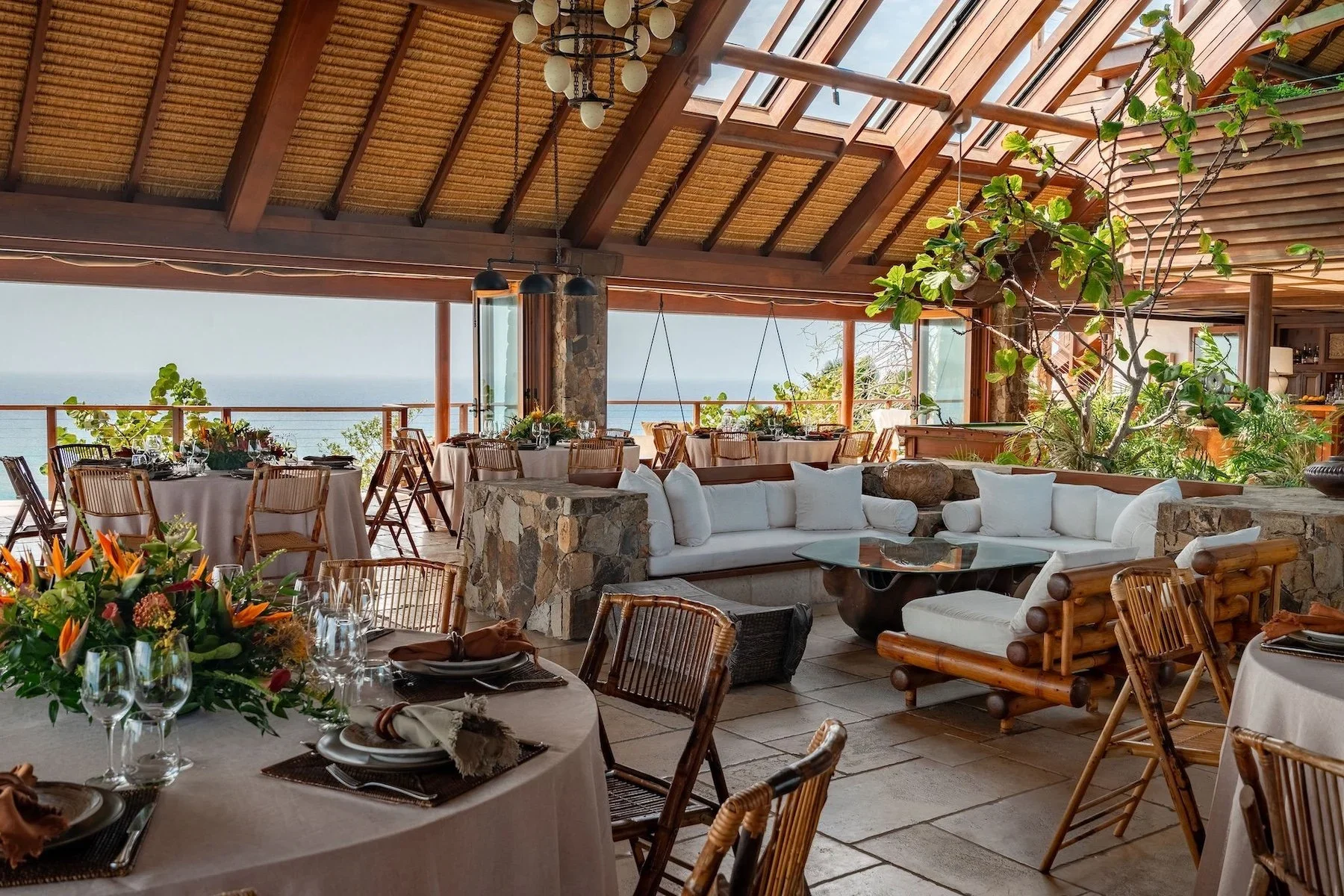
Dining Moves Wherever the Group Wants to Be
The Great House: The island’s principal gathering point can host breakfast, lunch or dinner indoors, on its terraces or on the rooftop, with menus shaped around the group rather than a fixed restaurant concept.
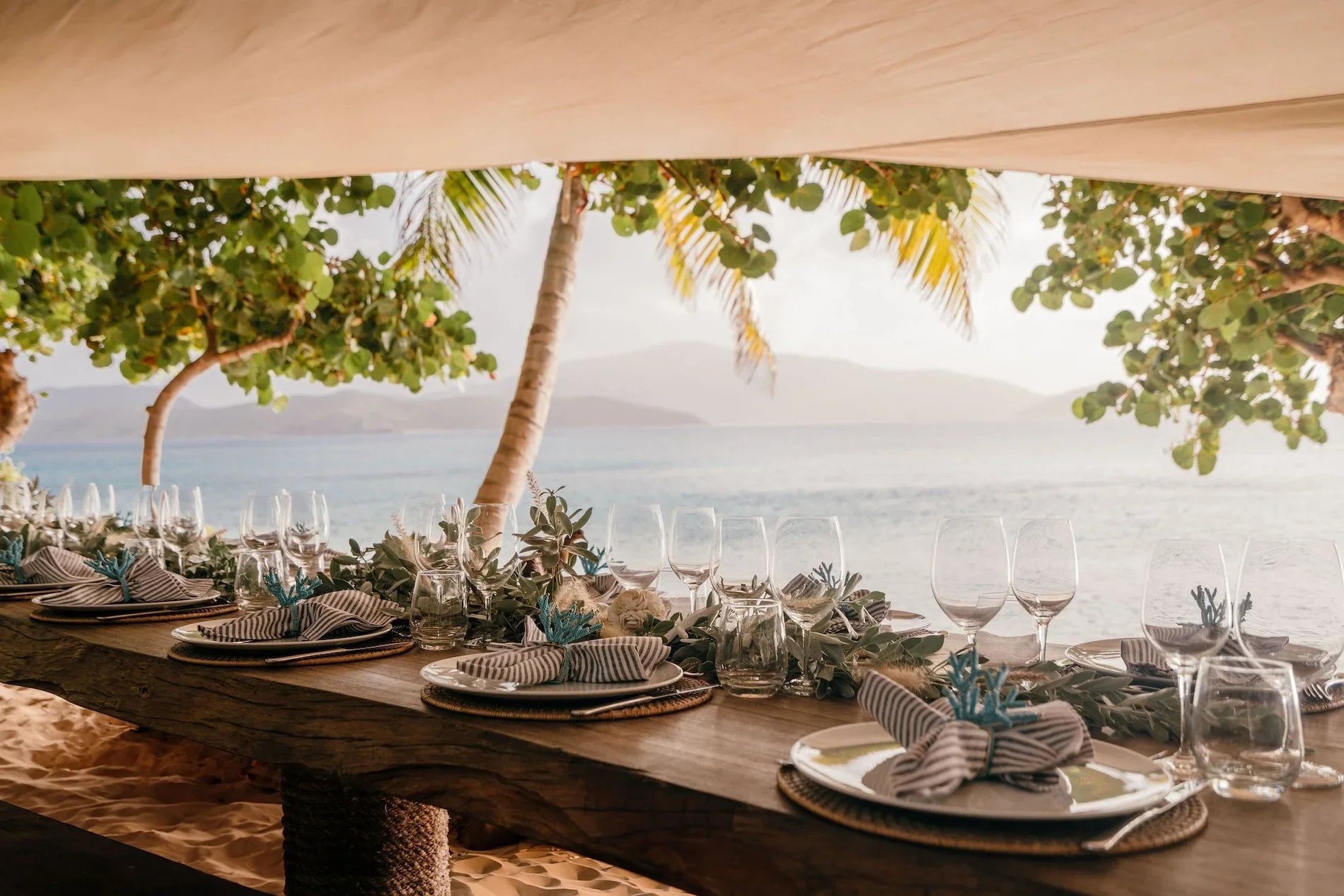
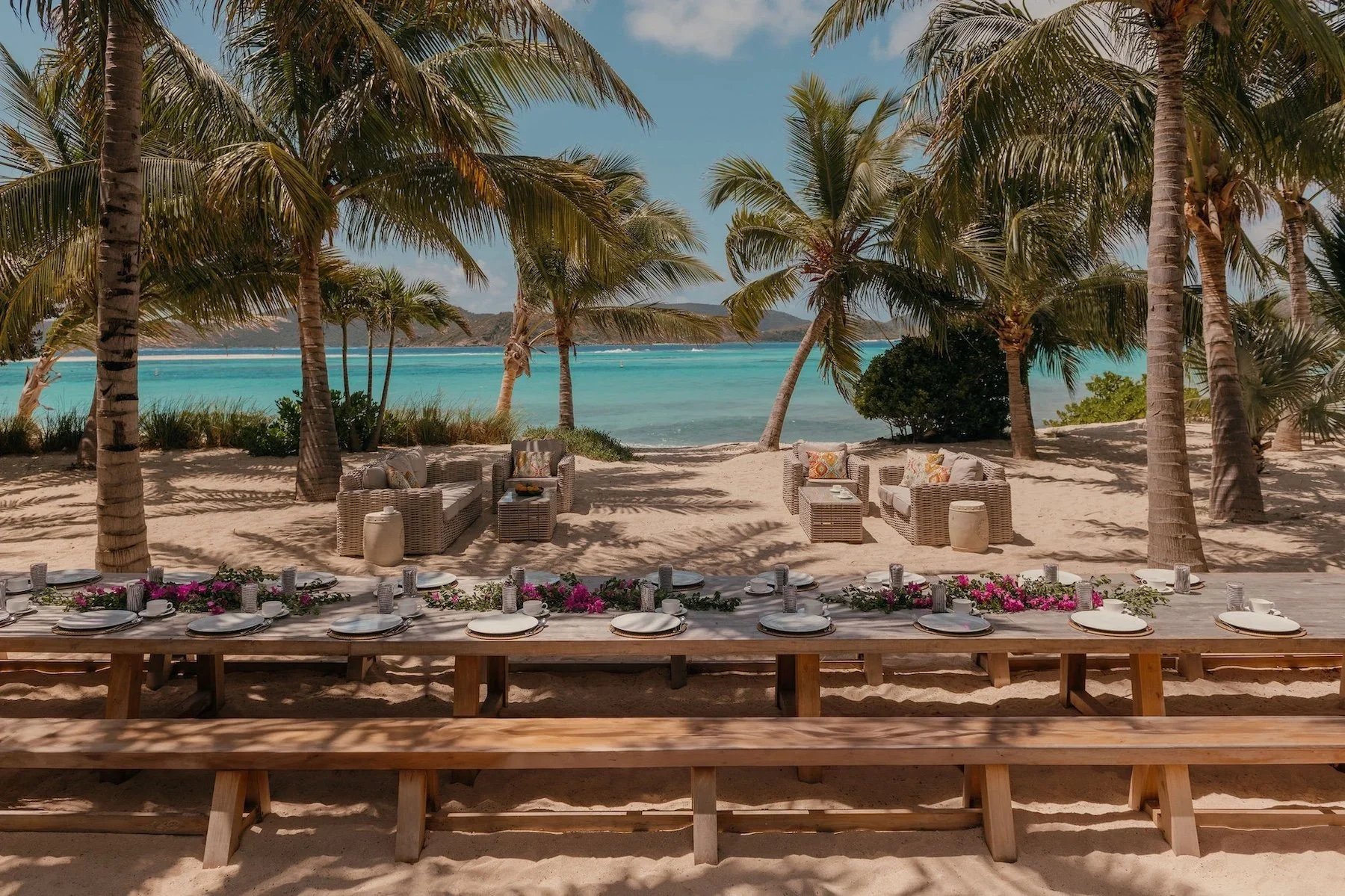
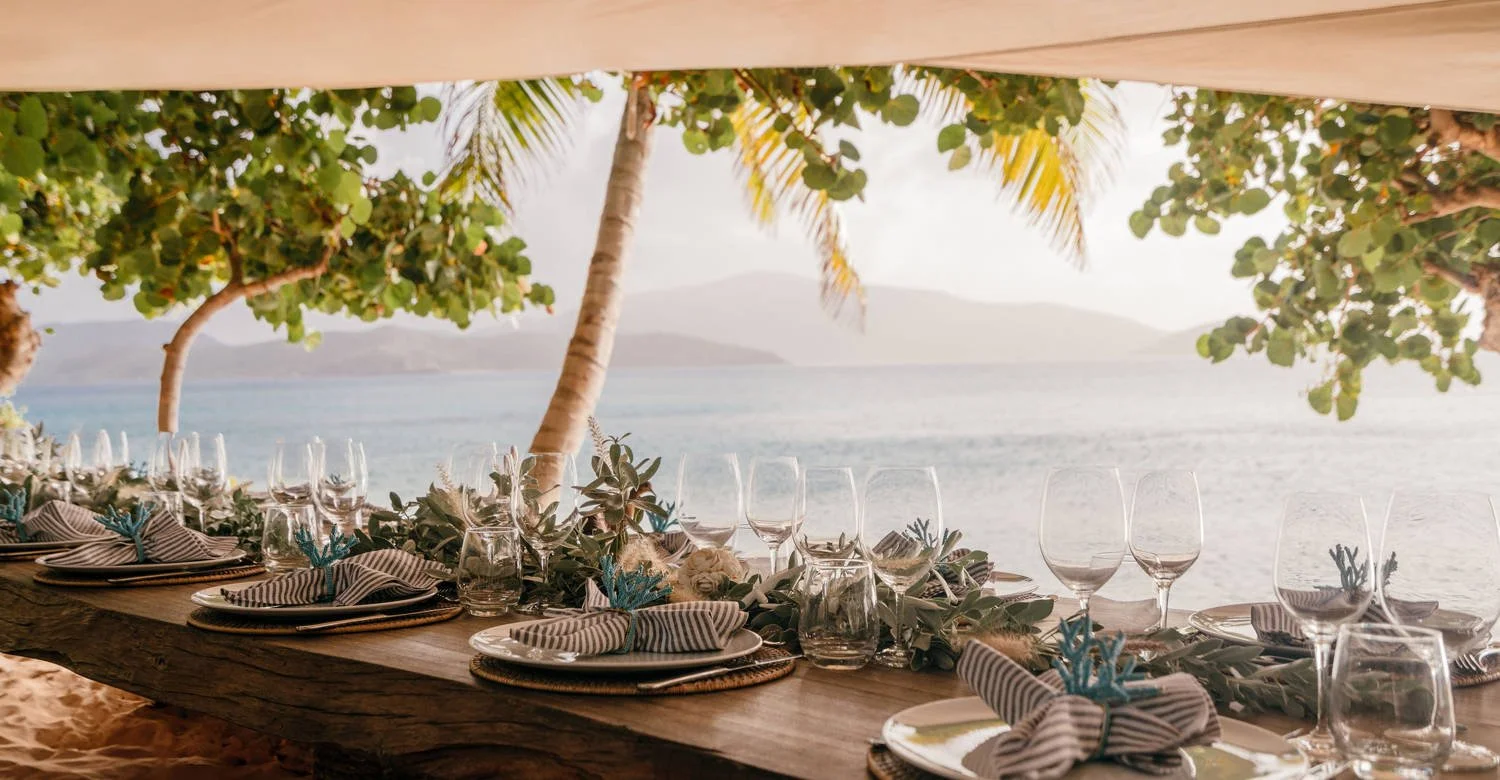
Turtle Beach: Barefoot lunches and dinners can be arranged directly on the sand, turning one of the island’s beaches into a private dining room rather than a formal restaurant venue.
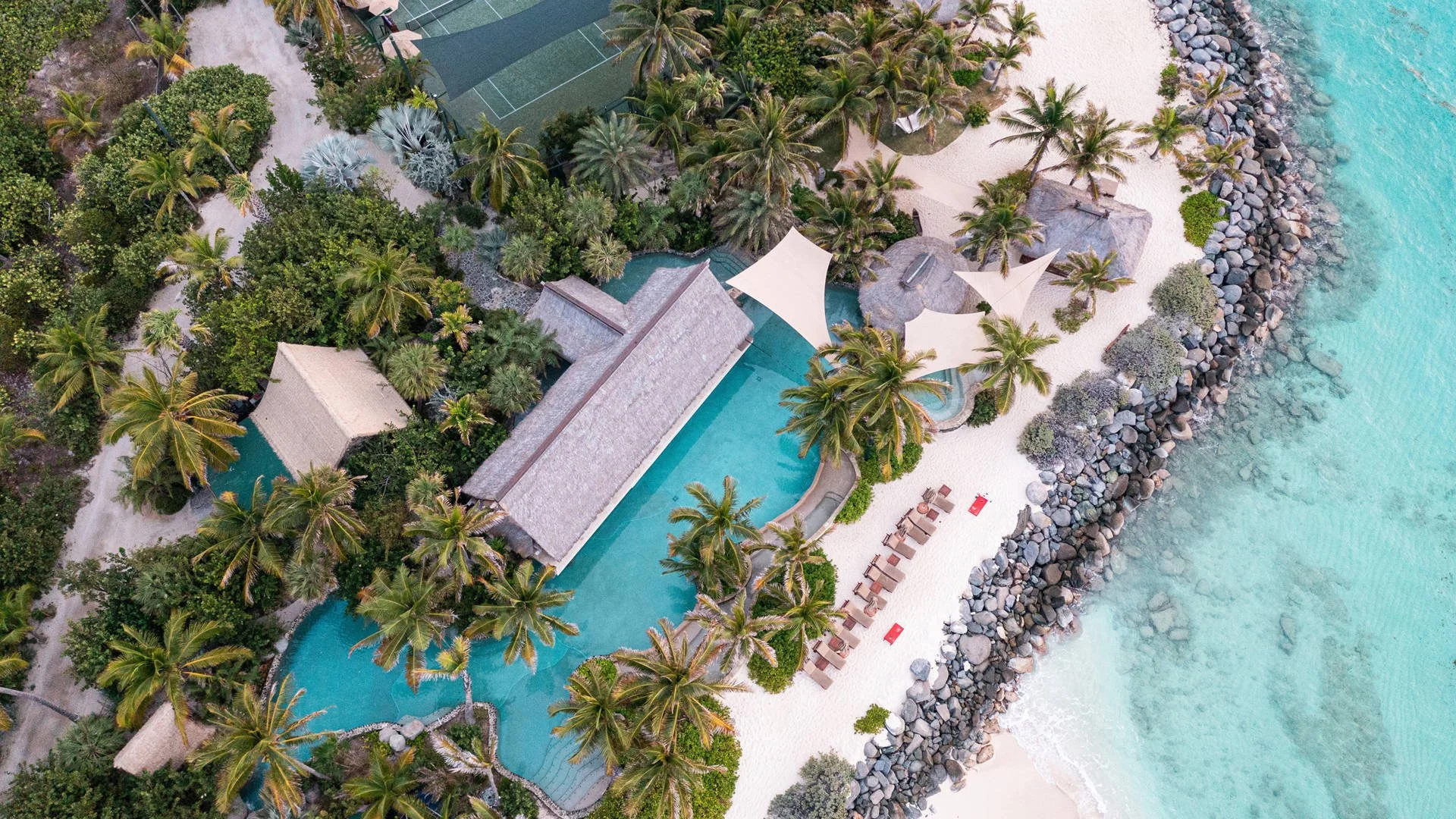
The Beach House and Beach Bar: These relaxed shoreline spaces support daytime meals, drinks and poolside gatherings, with cocktails, wine, beer and soft drinks included in the stay.
Elders Temple: The open-plan pavilion beside the Temple House pool includes dining, bar and lounge areas and can be used for meals, parties and evening events away from the Great House.
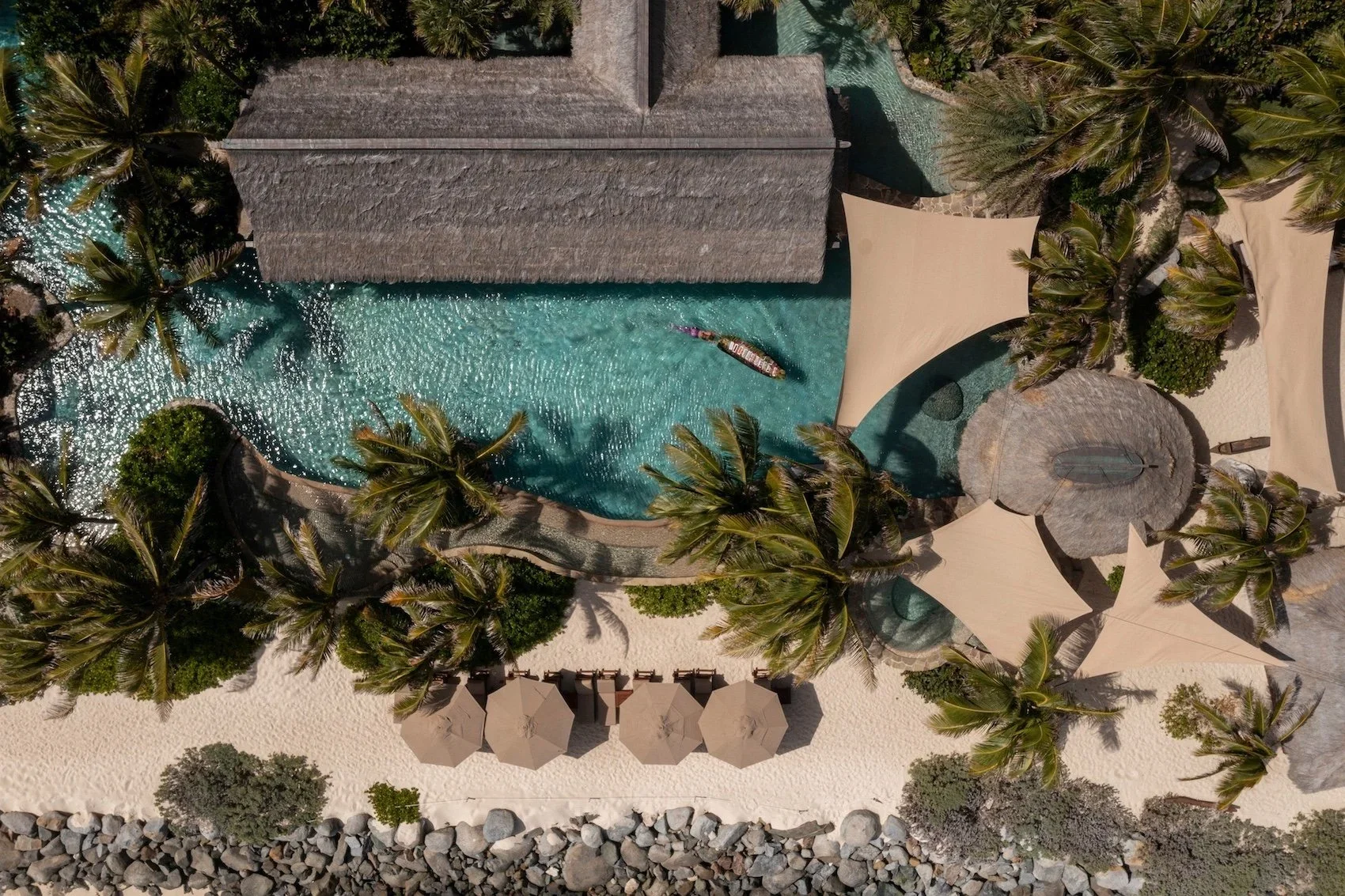
Sushi Kayak: One of Necker’s signature dining experiences sends sushi around the beach pool on a floating kayak; one Sushi Kayak lunch is specifically included during exclusive-use stays.
24-Hour À La Carte Dining: Food can be requested around the clock, supported by afternoon treats and late-night snacks, with the island team tailoring menus to dietary preferences and the day’s schedule.
Children’s Dining: Dedicated lunch and dinner menus for “Necker Squids” emphasize balanced, child-friendly dishes, while allergies, dietary requirements and favorite foods can be accommodated with advance notice.
The lack of named restaurants is intentional. Dining at Necker is organized around setting and occasion, moving from beach lunches to formal dinners, rooftop meals or poolside service. During exclusive use, this flexibility is one of the clearest differences between Necker and a resort with fixed reservation times and restaurant opening schedules.
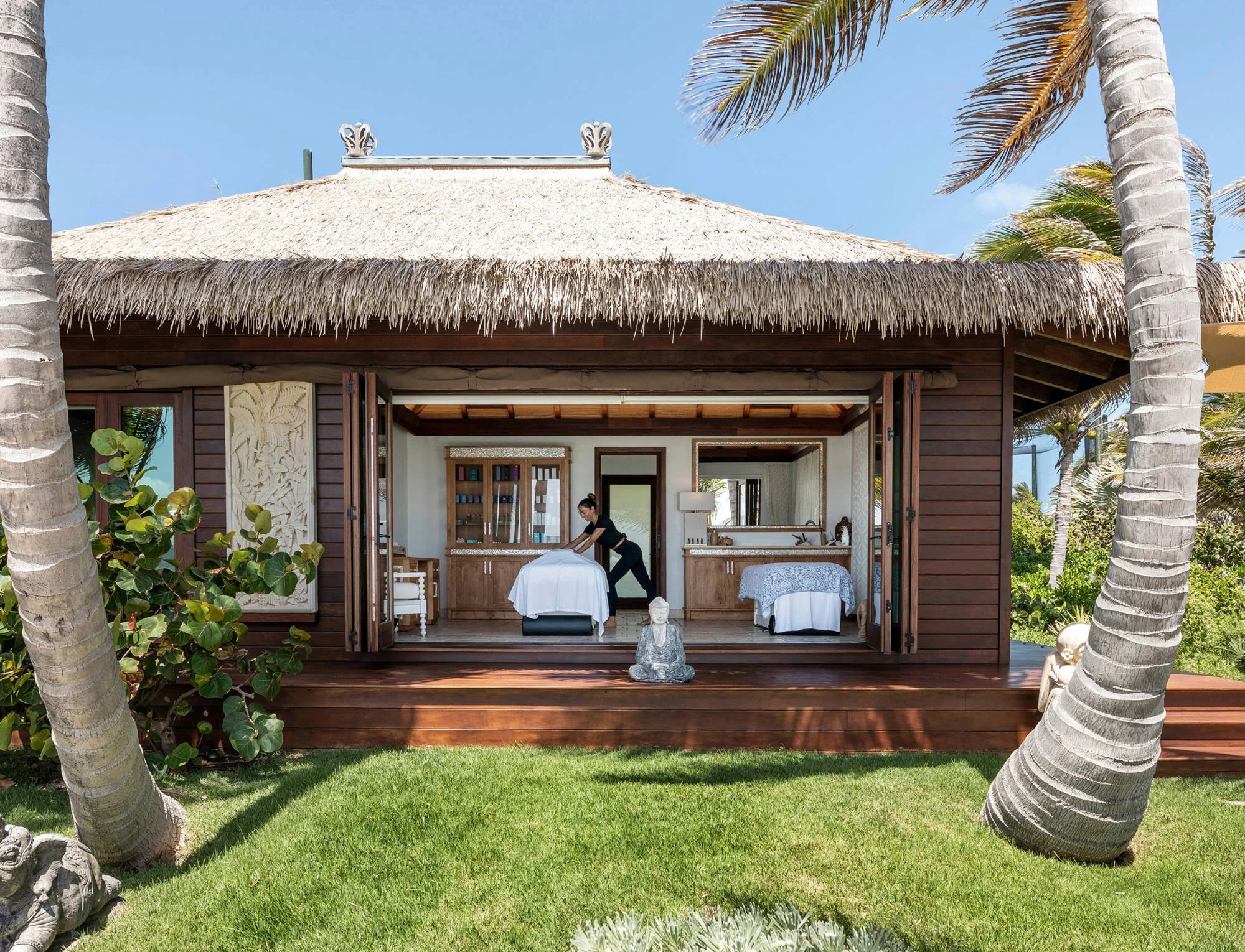
Samudra Spa and a Wider Island Wellness Program
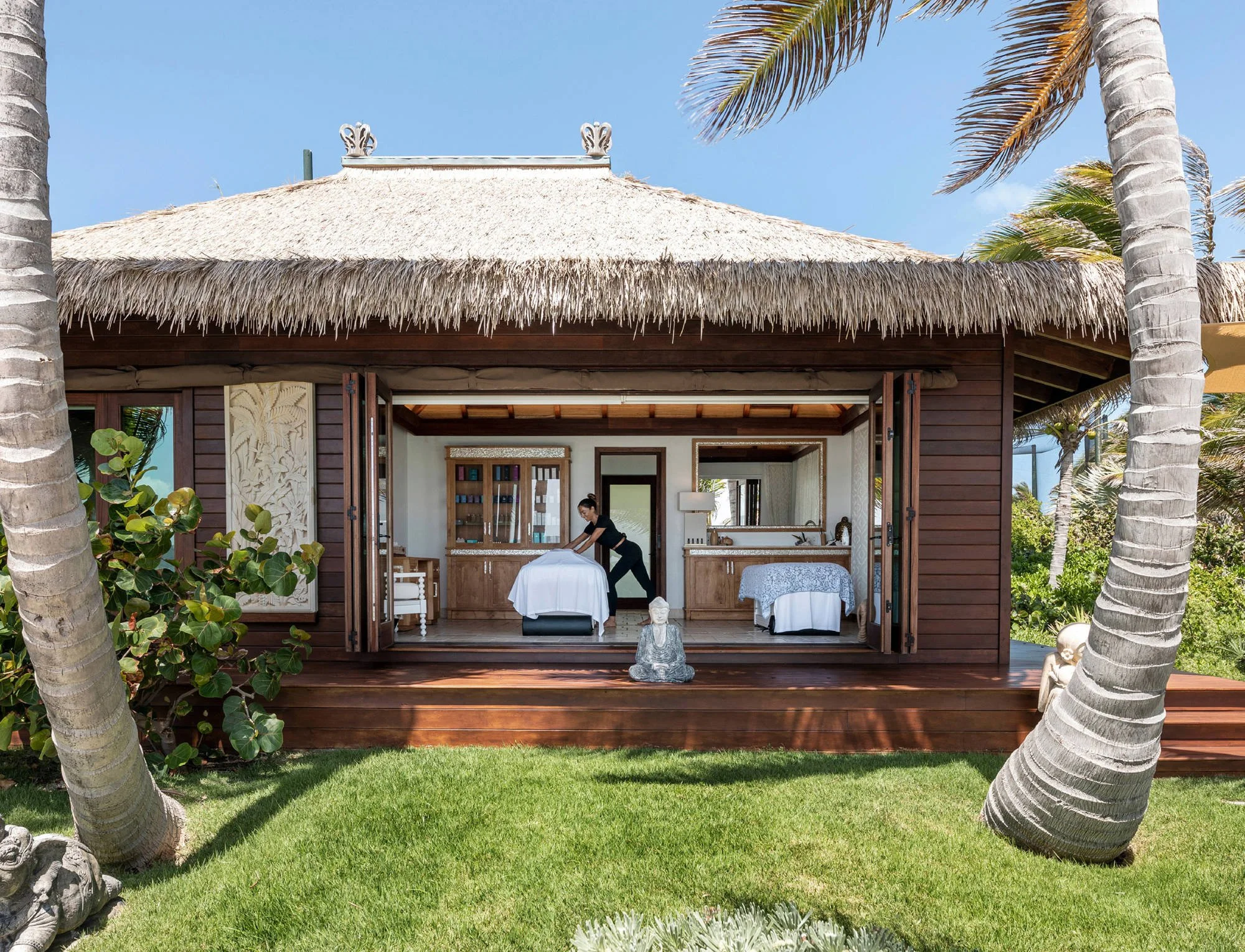
Samudra Spa provides the treatment side of Necker’s wellness program, while yoga, fitness and restorative sessions spread across the island. The current offering includes massage and body treatments alongside sound healing, breathwork, meditation, cacao ceremonies and classes designed around jet-lag recovery.
Movement ranges from morning-flow yoga and Pilates to functional training, strength sessions and a “workout crawl” that uses different points around the island. A fully equipped indoor gym near the Great House includes a Peloton bike, treadmill, rowing machine and other equipment with sea views.
Recovery can be less structured. Four infinity pools are spread around the property, some with hot tubs or swim-up bars, and a cold plunge sits near the main beach pool. The island’s natural “seacuzzi” – a rock pool where waves create a bubbling effect – forms part of a complimentary early-morning island tour. Spa treatments and certain specialist wellness experiences are additional charges rather than part of the standard all-inclusive rate.
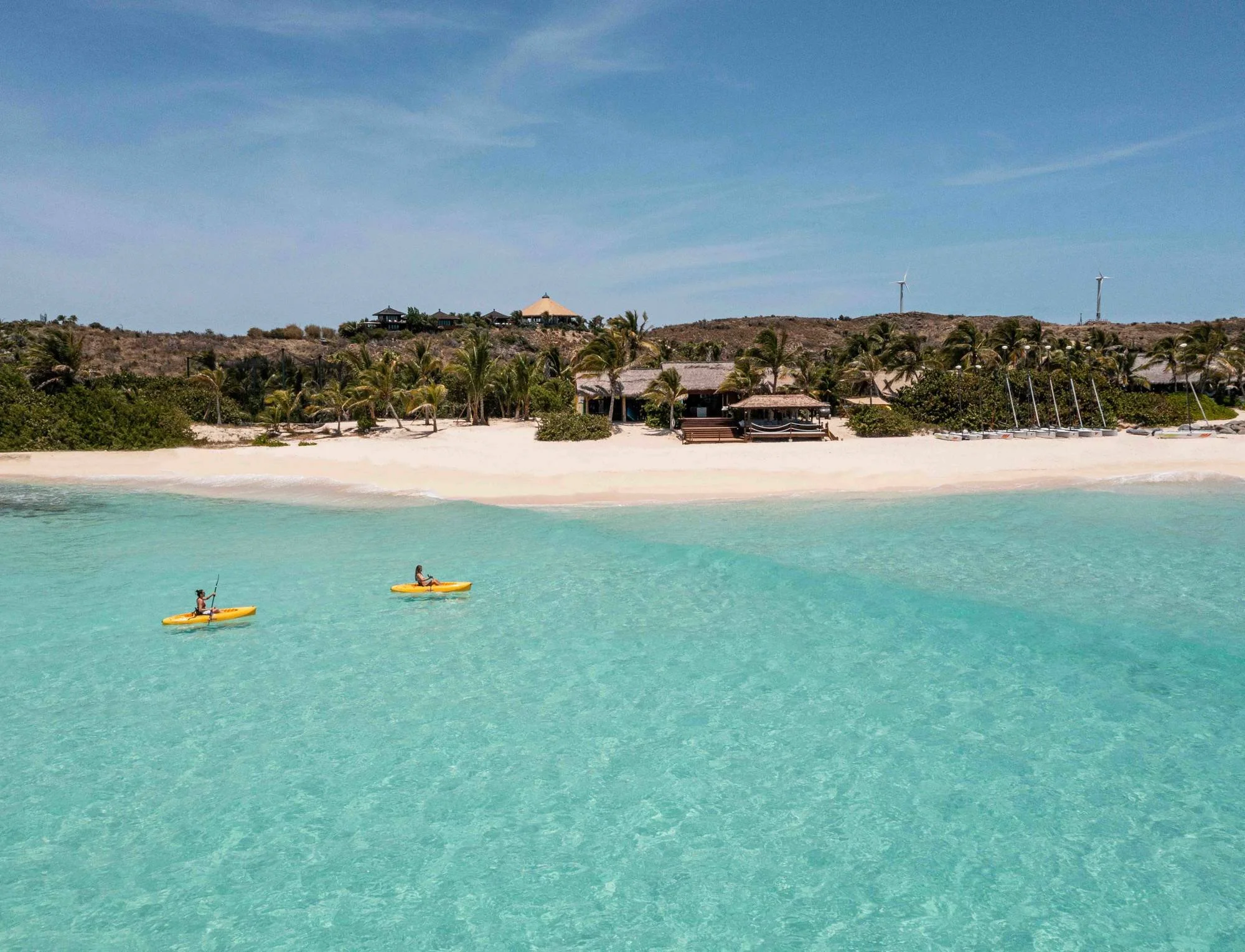
An Island Built for Watersports and Play
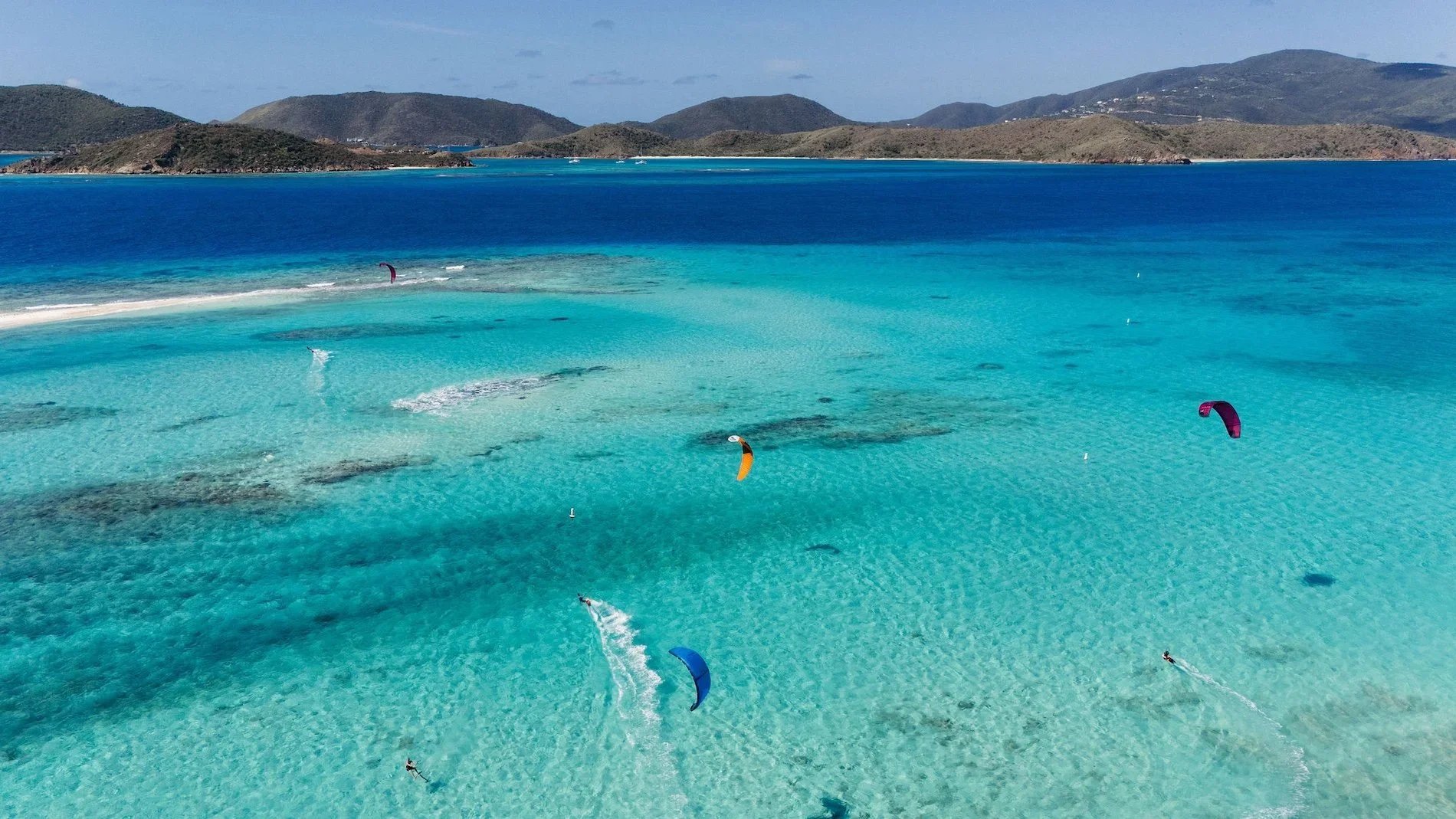
The activity program is unusually broad because Necker functions as both private home and playground. Watersports equipment and instruction cover kitesurfing, wakeboarding, water skiing, sailing, stand-up paddleboarding, kayaking, subwing, e-foiling, seabobbing and snorkeling. Most are included, while scuba diving, jet-skiing and deep-sea fishing are charged separately.
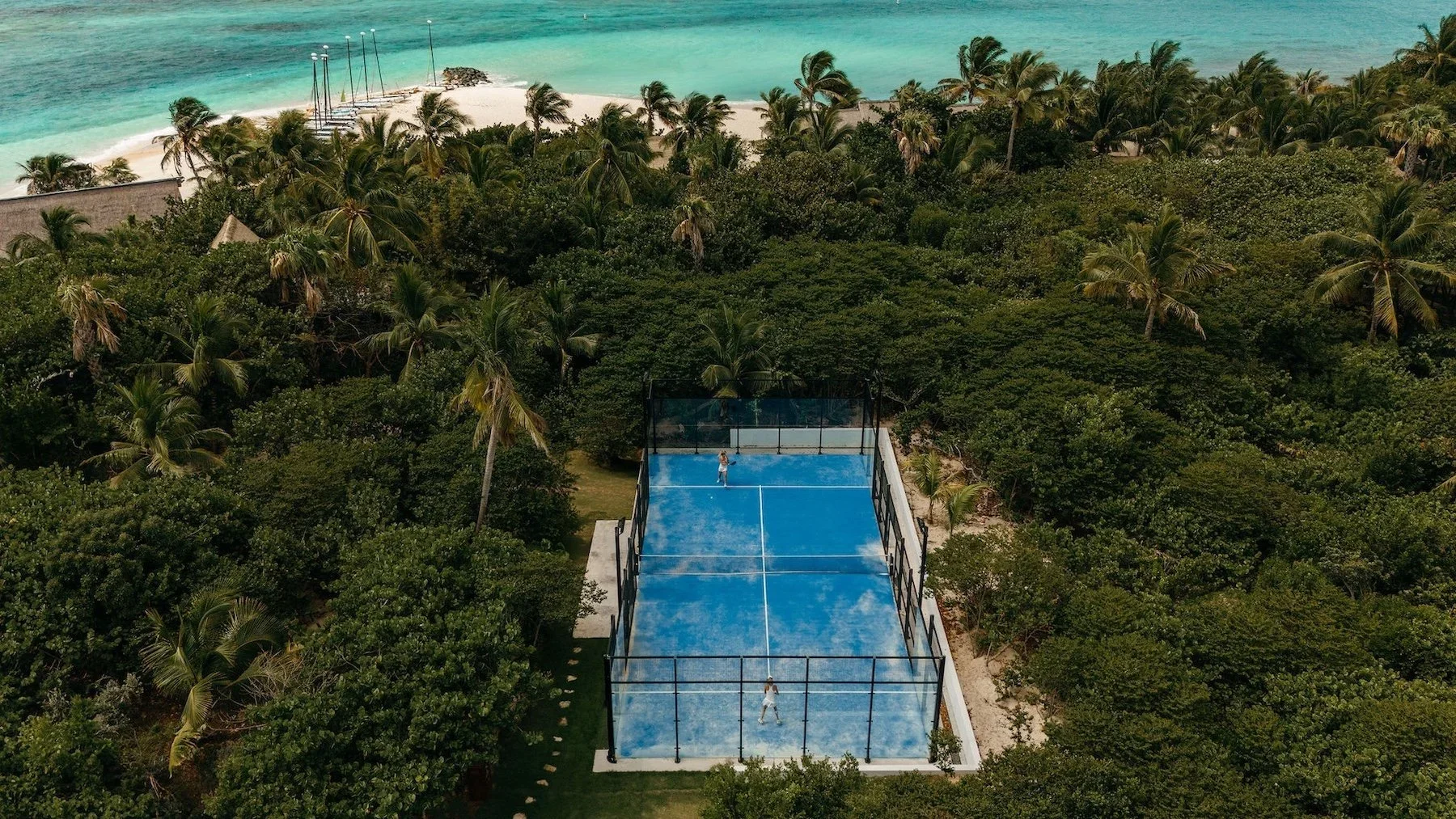
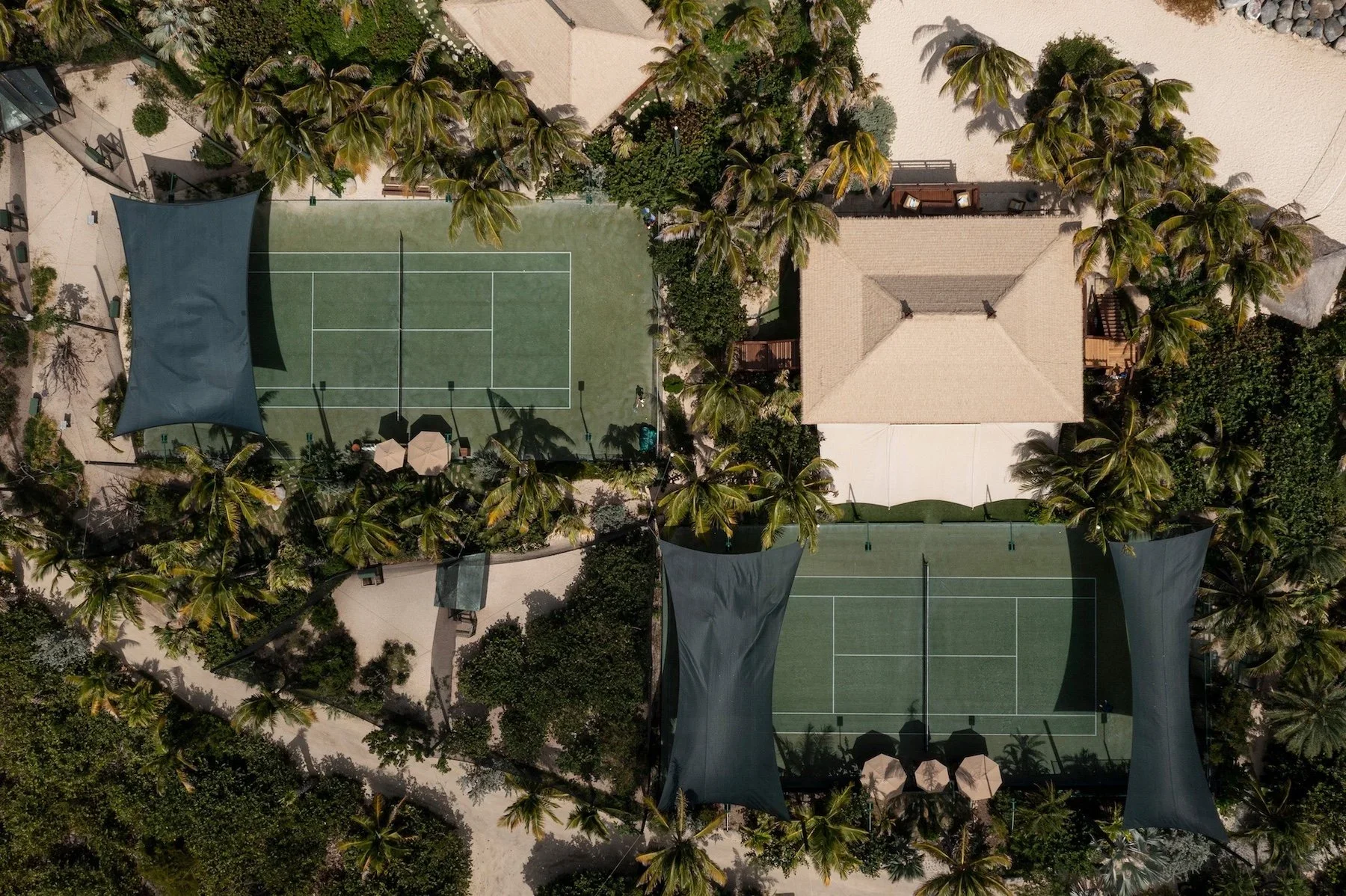
On land, two floodlit tennis courts are joined by padel and pickleball courts, with resident professionals available for coaching. The program can be as serious or unserious as the group prefers: private lessons sit alongside Tipsy Tennis, Matchplay & Mimosas and other social formats that treat sport as entertainment.
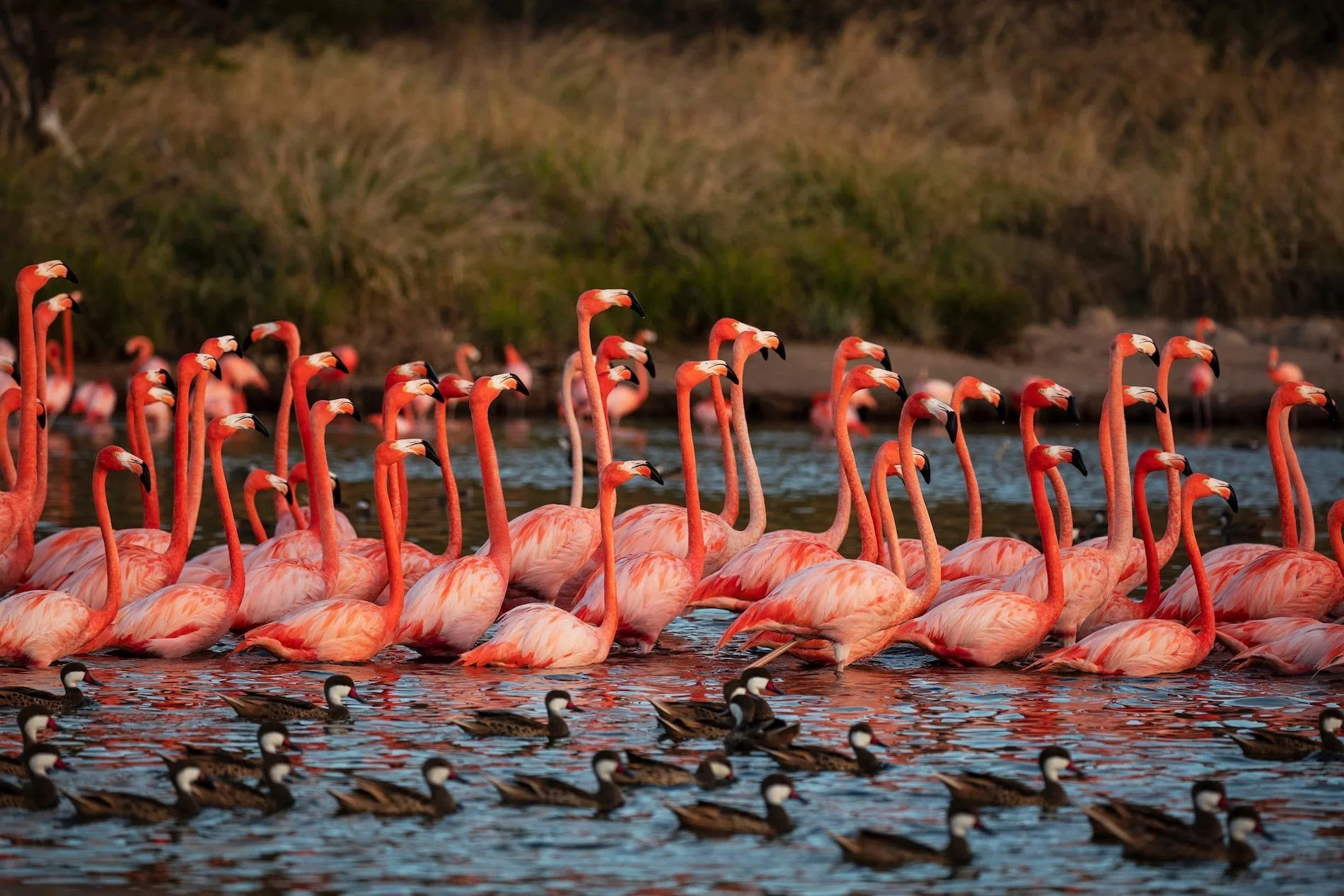
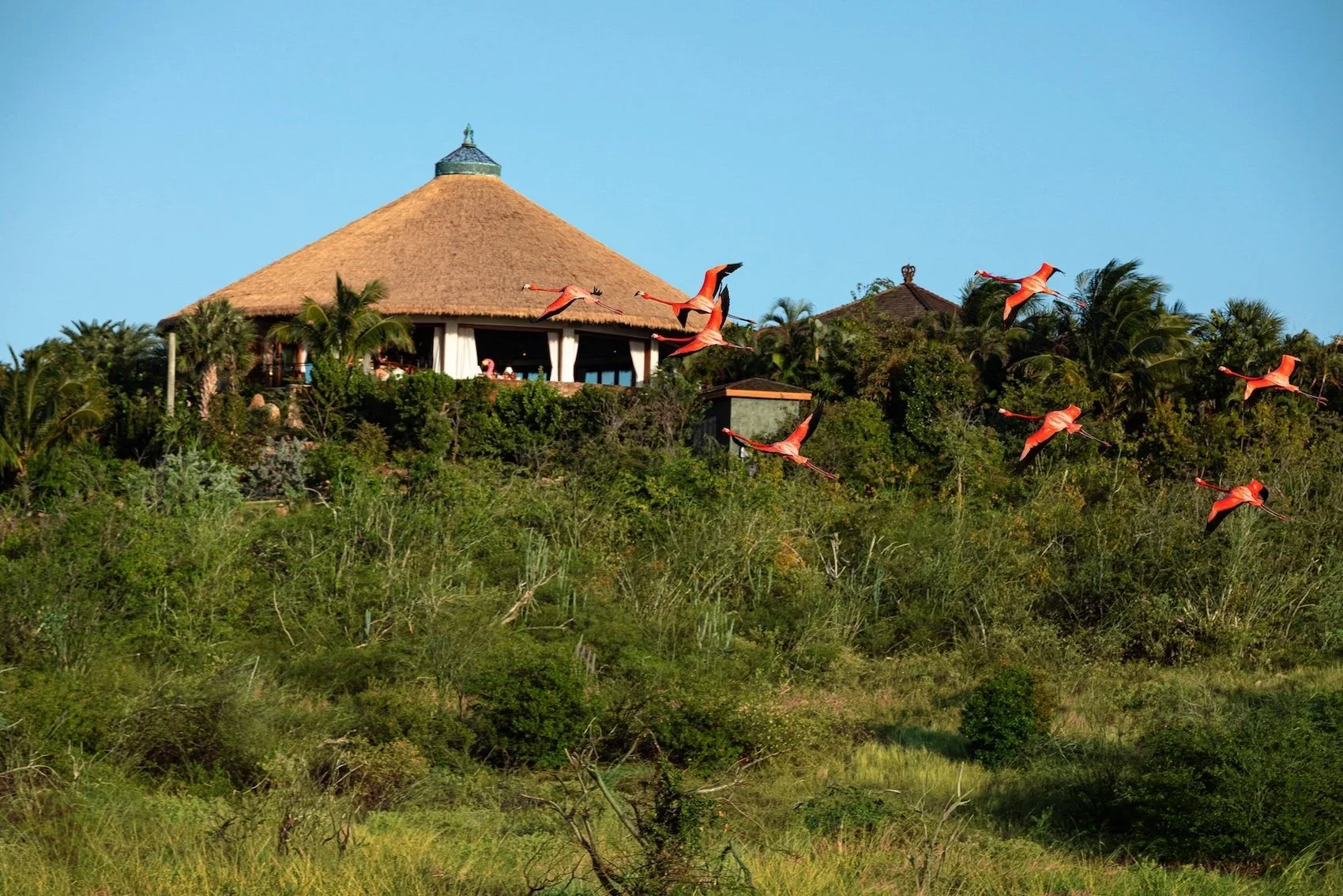
Walking trails cross the ridge and north side of the island, while guided tours pass flamingo ponds, beaches and wildlife areas. Necker is home to species including lemurs, flamingos and giant Aldabra tortoises, creating opportunities to learn about the island’s conservation work as part of a normal day rather than through a separate excursion.
Exclusive-use stays also include one boat excursion. The Baths on nearby Virgin Gorda – known for huge granite boulders, caves and rock pools – is a natural choice, although weather and sea conditions still determine what works on any particular day.

Necker Squids Have a Real Program, Not a Token Kids’ Room
Necker’s family identity comes from the island’s history as the Branson family home. Children up to age twelve are referred to as “Necker Squids,” and the current kids program includes supervised morning and afternoon sessions rather than relying only on ad hoc babysitting.
Activities range from treasure hunts, wildlife encounters and snorkeling to wakeboarding, tubing, karaoke, mocktail making, cookie decorating, face painting and arts and crafts. The program can become more elaborate during an exclusive-use stay because activities can be adjusted to the ages and interests of one group.
The Great House Bunkroom sleeps up to six children and is equipped with games and toys, while baby cots, baths and other infant equipment are available on request. Professional babysitting can also be arranged at additional cost with advance notice.
Families should note that some individual-stay periods may be designated adults-only. For regular family dates, interconnecting Great House bedrooms, Temple Hi and Lo, and the multi-room Bali houses allow parents to remain close to children without placing everyone in one bedroom.
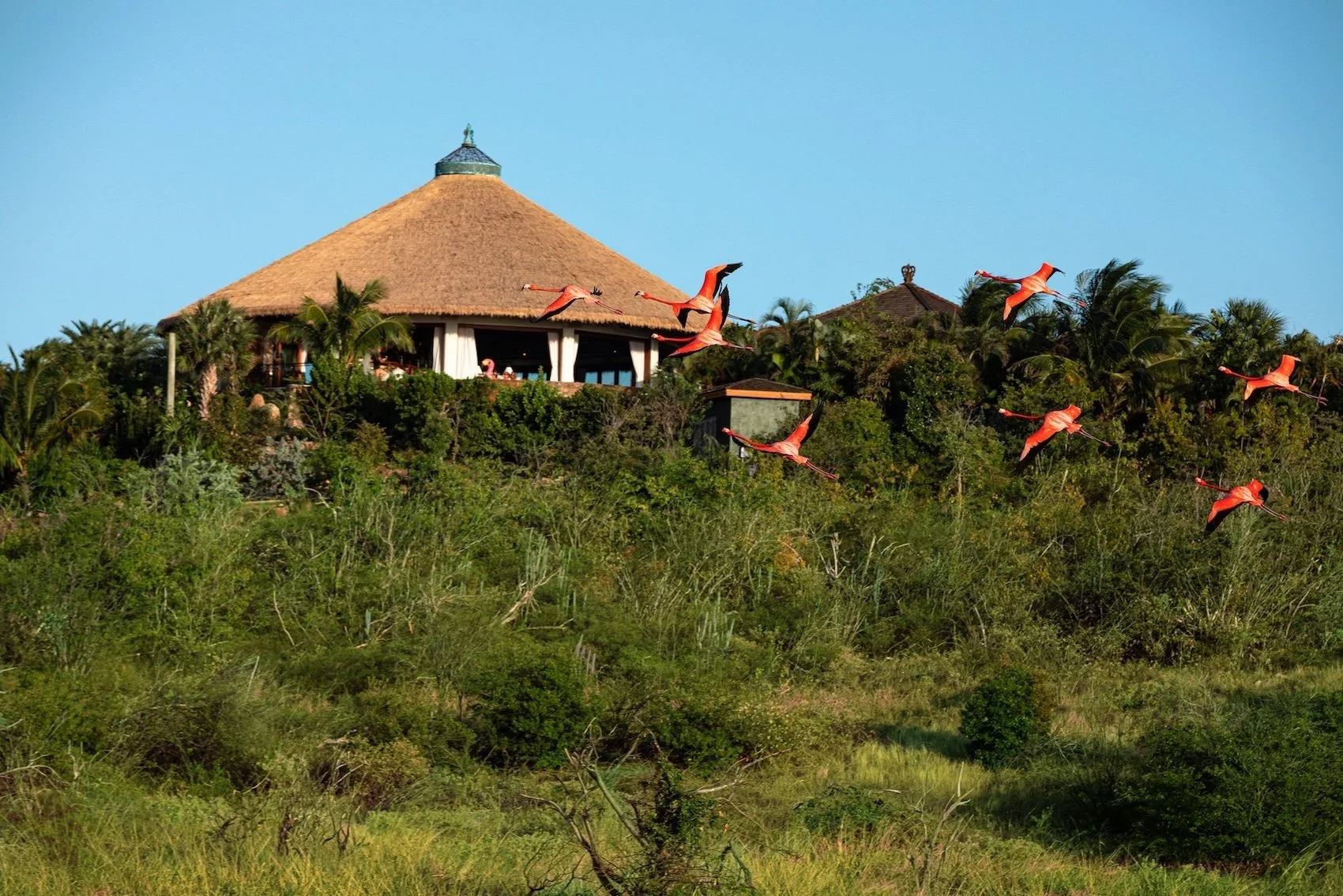
Renewable Energy and Wildlife Conservation Are Visible Parts of the Island
Necker’s sustainability work is more concrete when described through infrastructure. Virgin Limited Edition reports that the island has three large wind turbines and a solar farm capable of producing up to 650 kW of renewable energy through an integrated off-grid system. Company materials have also described periods when the island can operate on up to 100 percent renewable power, depending on conditions.
Waste and water measures include irrigation systems, composting or animal-feed use for food leftovers, efforts to reduce single-use plastic and a uniform program using recycled ocean plastic. Reef-friendly sunscreen is supplied around the island, reducing the need for guests to bring products that may be less suitable for marine environments.
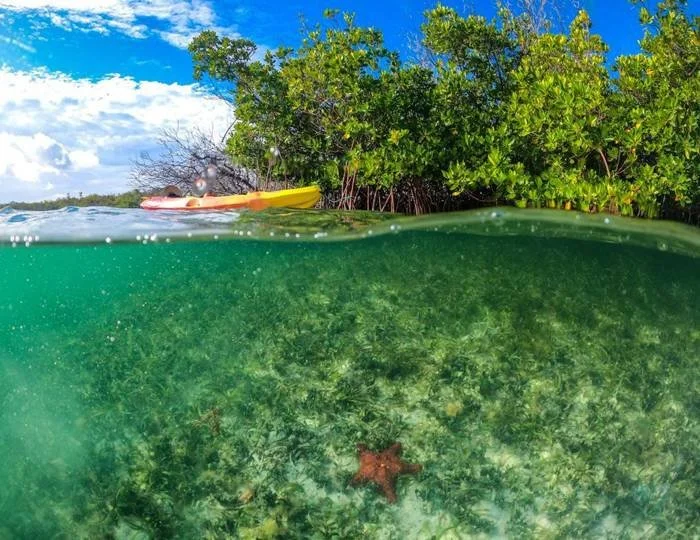
Wildlife conservation is unusually visible. Necker has supported breeding of giant Aldabra tortoises and helped restore flamingos to the British Virgin Islands. In partnership with Unite BVI, the island also promotes mangrove restoration, including guest conservation tours that contribute to planting work elsewhere in the territory.
These initiatives should not be translated into a claim that a private island has no environmental footprint. Boats, aviation, imported goods and island infrastructure remain resource-intensive. The more useful assessment is that Necker has invested in measurable renewable-energy capacity and long-running conservation programs while continuing to work within those realities.
Accessibility Requires Detailed Planning Before Arrival
Virgin Limited Edition does not currently publish a detailed accessibility guide for Necker Island identifying wheelchair-adapted bedrooms, roll-in showers, hearing systems or step-free routes across the property. That gap matters because the terrain varies significantly between beaches, hillsides, jetties and elevated houses.
Some accommodations are clearly unsuitable for travelers who cannot manage stairs – Leha Lo, for example, is reached by 81 steps above the Great House. Other rooms may involve slopes, sand, outdoor showers or changes of level, and arrival itself normally requires transferring from an airport vehicle to a speedboat and then onto the island.
Travelers with mobility, hearing, vision or other access requirements should ask the island team to identify the most appropriate bedroom, bathroom configuration and route to dining, spa and activity areas before confirming a stay. Boat-transfer assistance and any required equipment should also be discussed in advance rather than assumed.
North Sound Is a Different Side of the British Virgin Islands
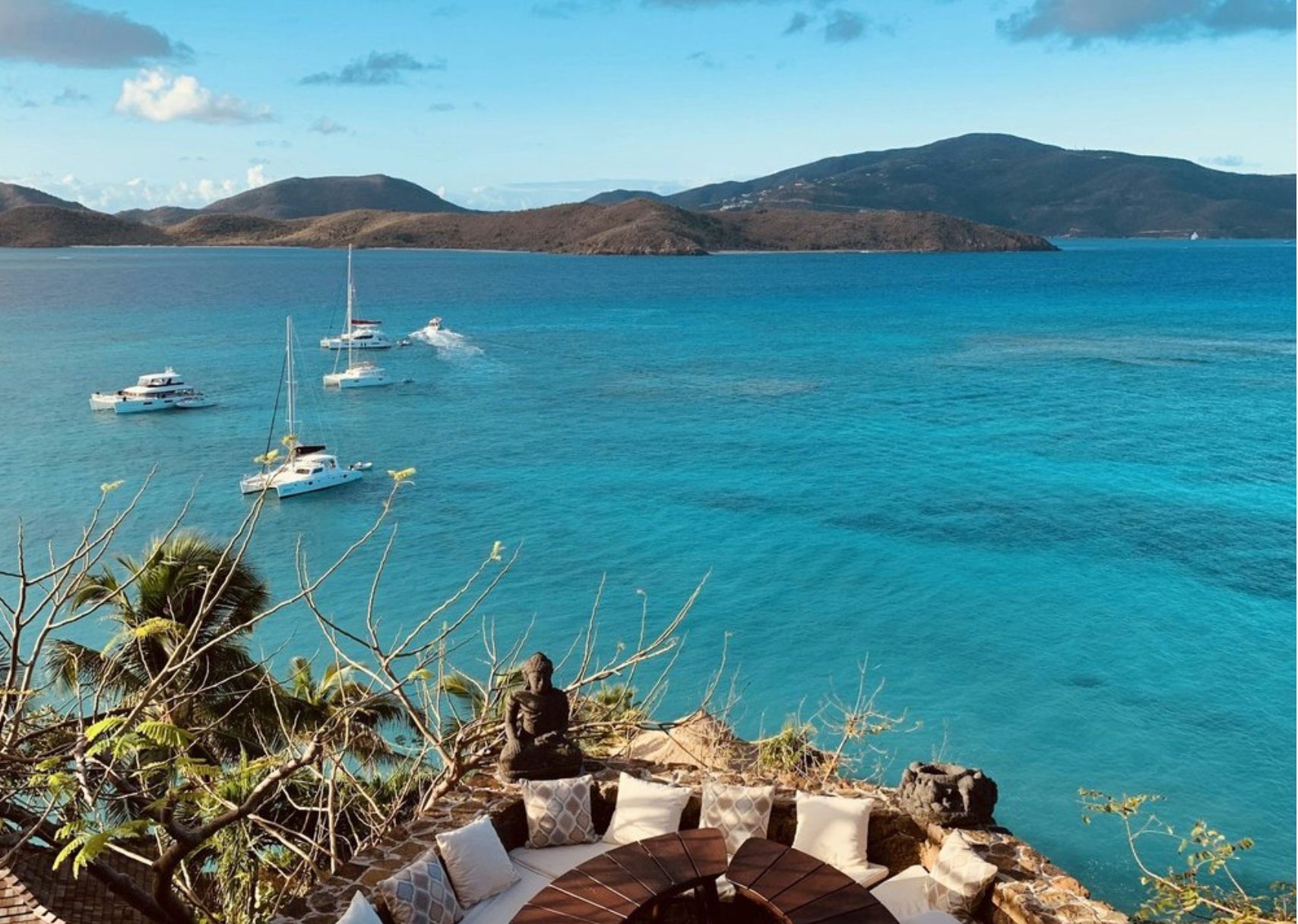
Necker sits in North Sound, a part of the British Virgin Islands shaped by sailing routes, sheltered water and a cluster of smaller islands rather than by one large resort district. Virgin Gorda is the nearest major island, while Tortola and Beef Island provide the principal air gateway for most international arrivals.
The Baths on Virgin Gorda are the best-known nearby natural attraction. Granite boulders create pools, passages and small beaches along the southern coast, offering a landscape very different from Necker’s open sandy shoreline. Elsewhere on Virgin Gorda, protected areas and elevated viewpoints reveal why the island remains one of the territory’s strongest day-trip options.
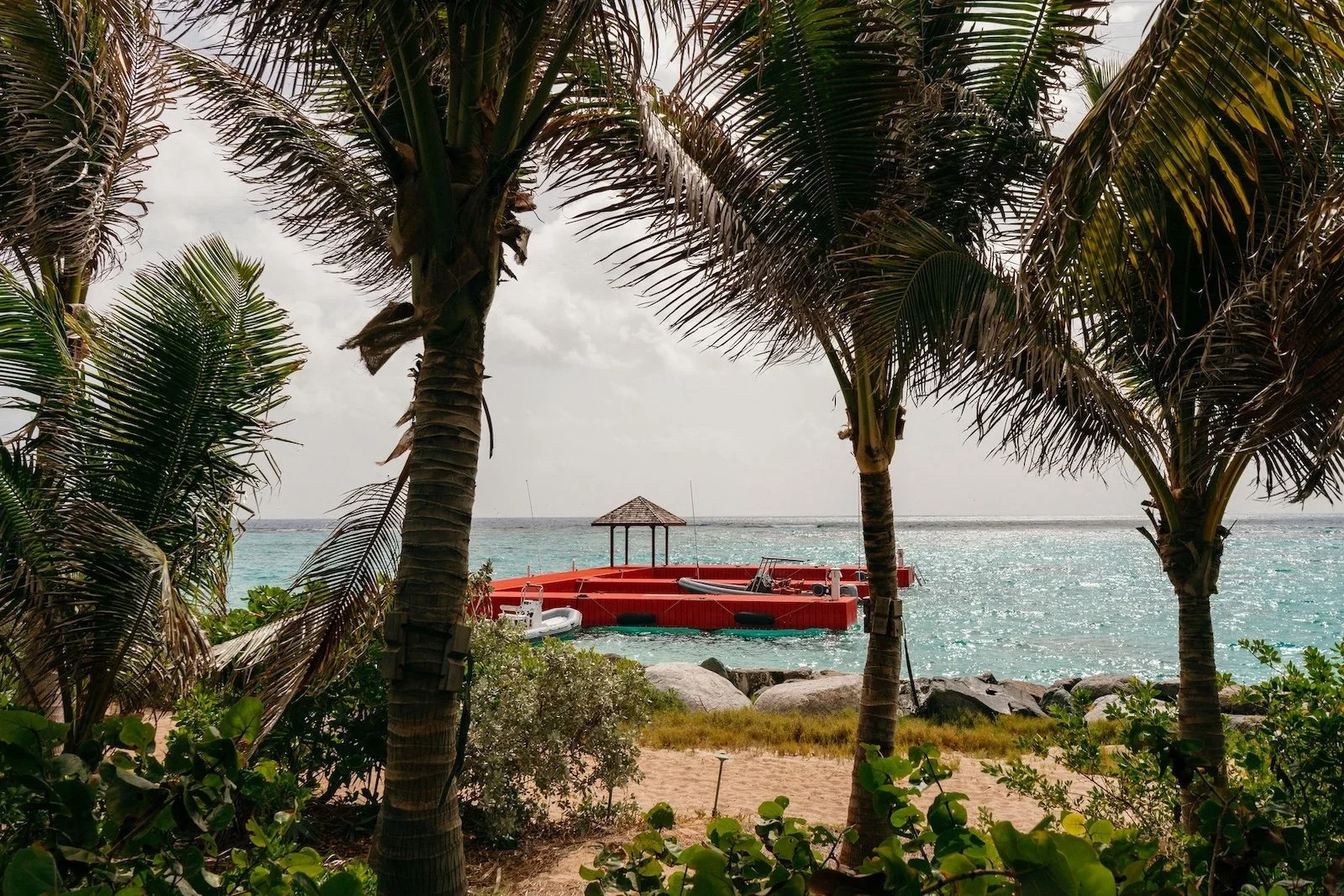
Yachting is equally important to the character of the region. The North Sound’s protected anchorages make it a natural base for sailing, and yachts can anchor off Necker when arrangements have been made. Travelers who want more local context can extend a stay elsewhere in the BVI before or after Necker rather than expecting the private island itself to provide a conventional town or village experience.
The Final 30 Minutes Are by Speedboat
Terrance B. Lettsome International Airport (EIS), Beef Island: This is the primary gateway for Necker Island; guests are met at the airport, driven approximately two minutes to the dock and transferred by speedboat for a journey of roughly 30 minutes to the island.
Virgin Gorda Airport (VIJ): Regional flights and private aircraft can arrive on Virgin Gorda, with onward boat transfer to Necker included when arranged through the island.
Cyril E. King Airport (STT), St. Thomas: Travelers arriving in the U.S. Virgin Islands must continue to Beef Island or Virgin Gorda by regional flight, charter, boat or helicopter before reaching Necker.
San Juan (SJU), Antigua (ANU) and Other Caribbean Gateways: Regional operators including Tradewind Aviation connect several Caribbean hubs with Virgin Gorda or Beef Island, subject to current schedules and operating conditions.
Helicopter Transfers: Caribbean Buzz operates daylight helicopter services between parts of the BVI, U.S. Virgin Islands and San Juan, subject to weather, aircraft availability and operational restrictions.
Private Yachts: Yachts can anchor off Necker Island with arrangements made in advance, offering an alternative arrival for travelers already cruising in the British Virgin Islands.
The Luxury Is Having an Entire Island Behave Around Your Group
Necker Island makes the most sense when viewed less as a resort and more as a private setting that can be reorganized around the people staying there. Rooms are scattered rather than standardized, meals move around the island, watersports begin when the group is ready, and a beach or rooftop can become tonight’s dining room without changing hotels.
That flexibility is the defining luxury. The Great House, Bali complexes and Temple rooms create different pockets of privacy, while tennis, pools, wildlife, water and children’s programming keep a large group from needing the same schedule. Even during individual-stay dates, the island’s strongest quality remains this sense of informality – an exceptionally elaborate operation designed to feel as though very little has been scheduled at all.