Raa Atoll, Maldives | JOALI Maldives
An Island Where Art Is Part of the Landscape
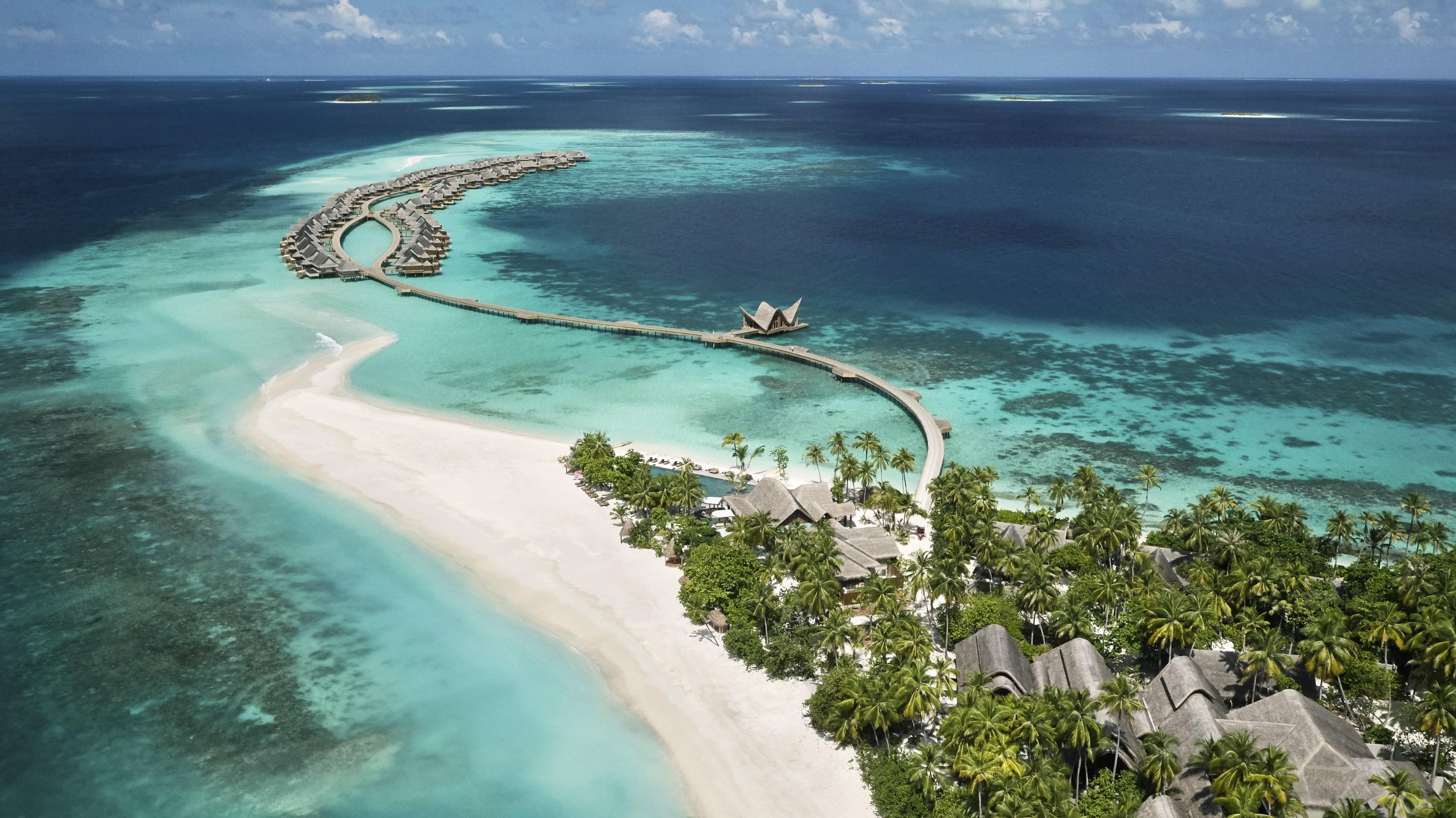
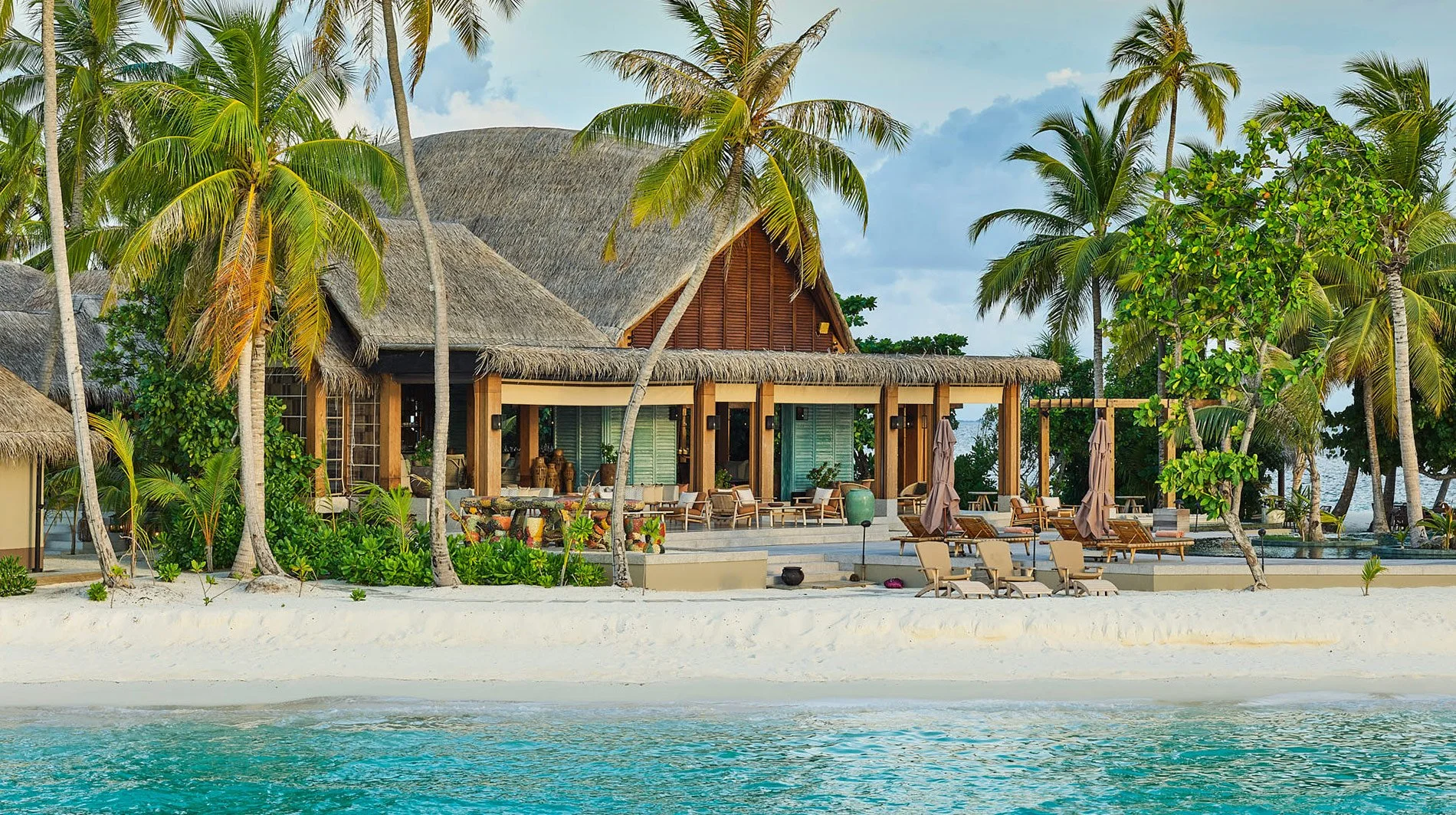
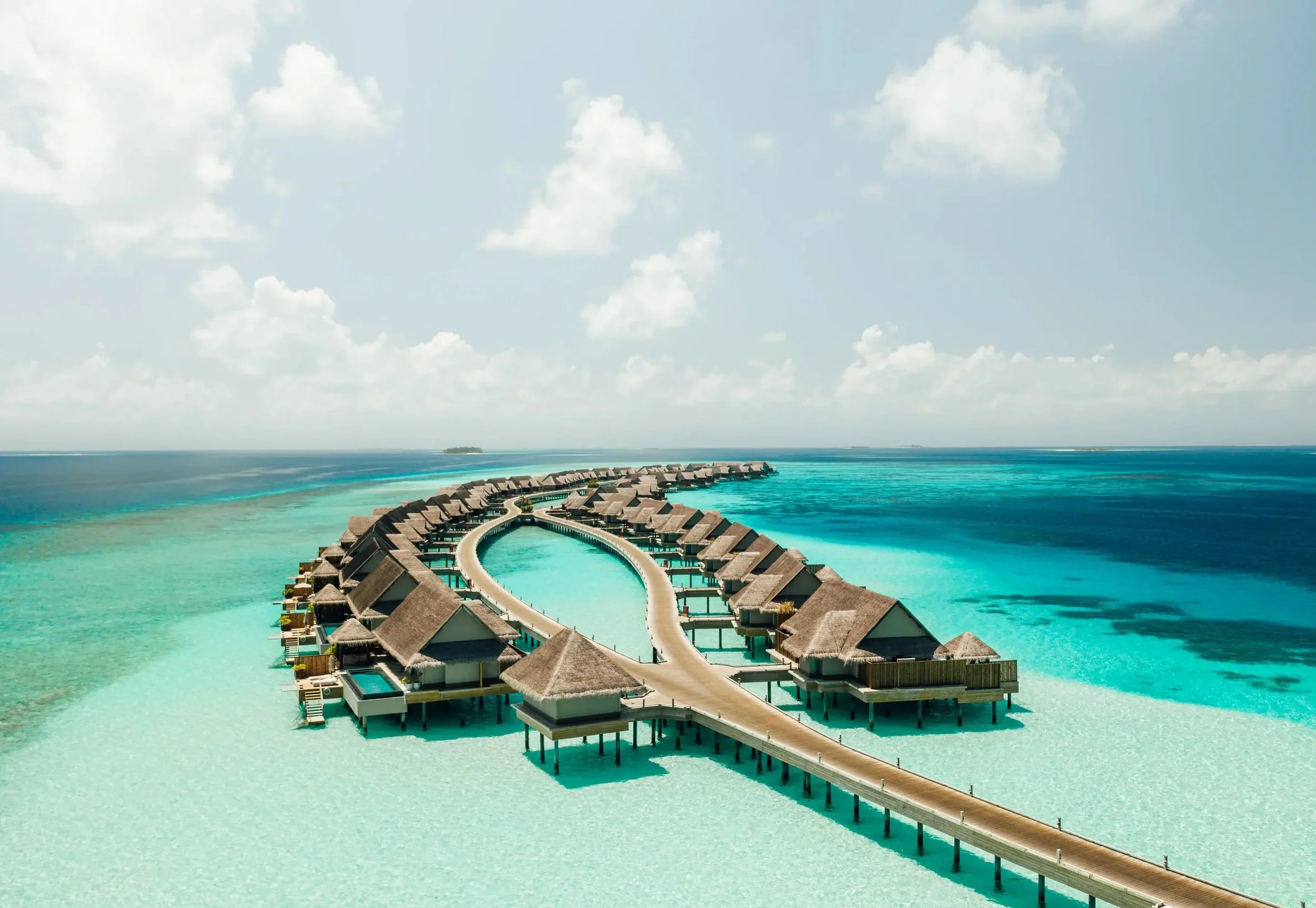
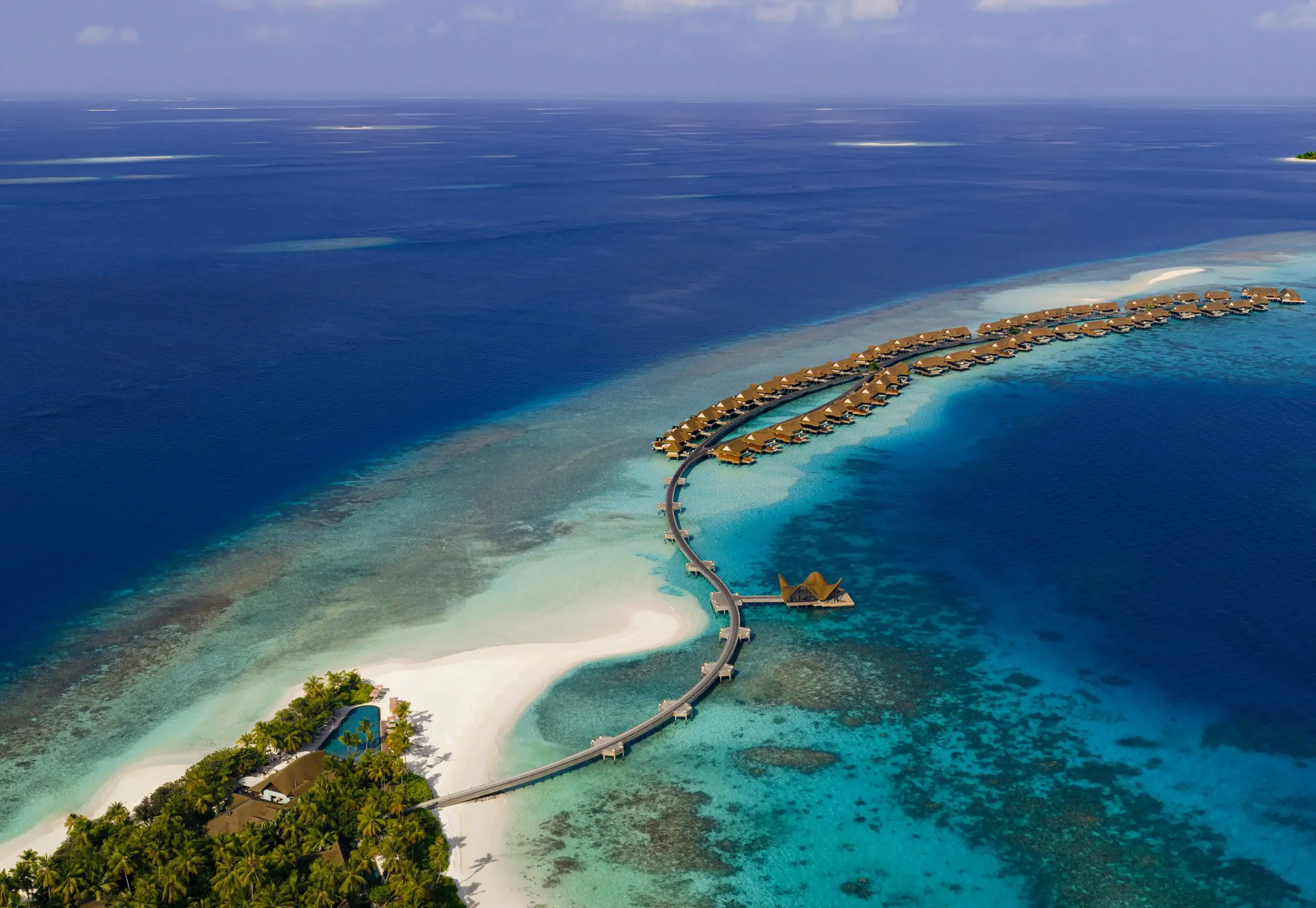
JOALI Maldives occupies Muravandhoo Island in Raa Atoll, a northern Maldivian setting of white-sand beaches, dense tropical greenery and clear water shaped by one of the archipelago’s deeper atoll systems. Since opening in November 2018, the resort has distinguished itself less through scale than through an unusually deliberate relationship between art, architecture and island life.
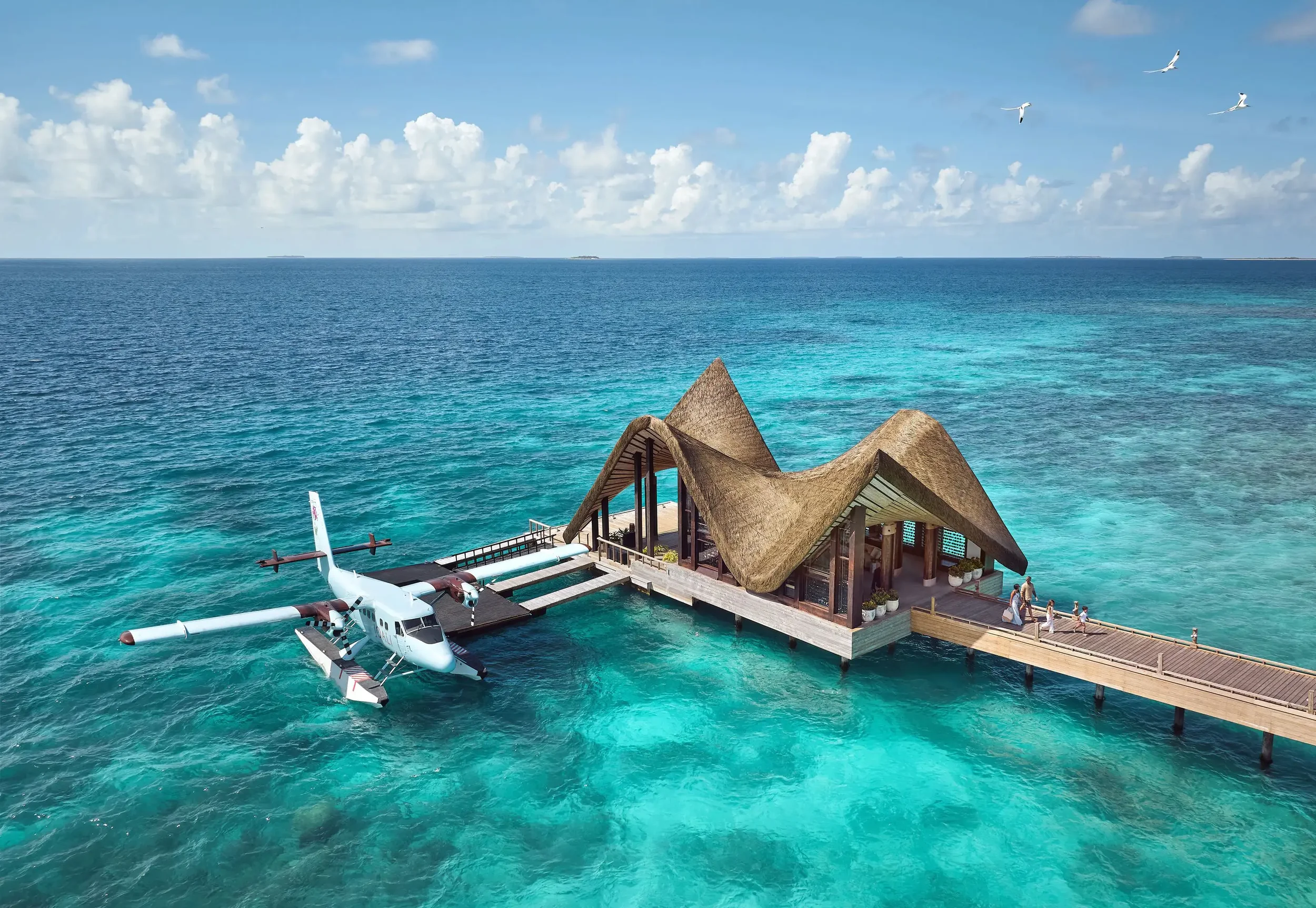
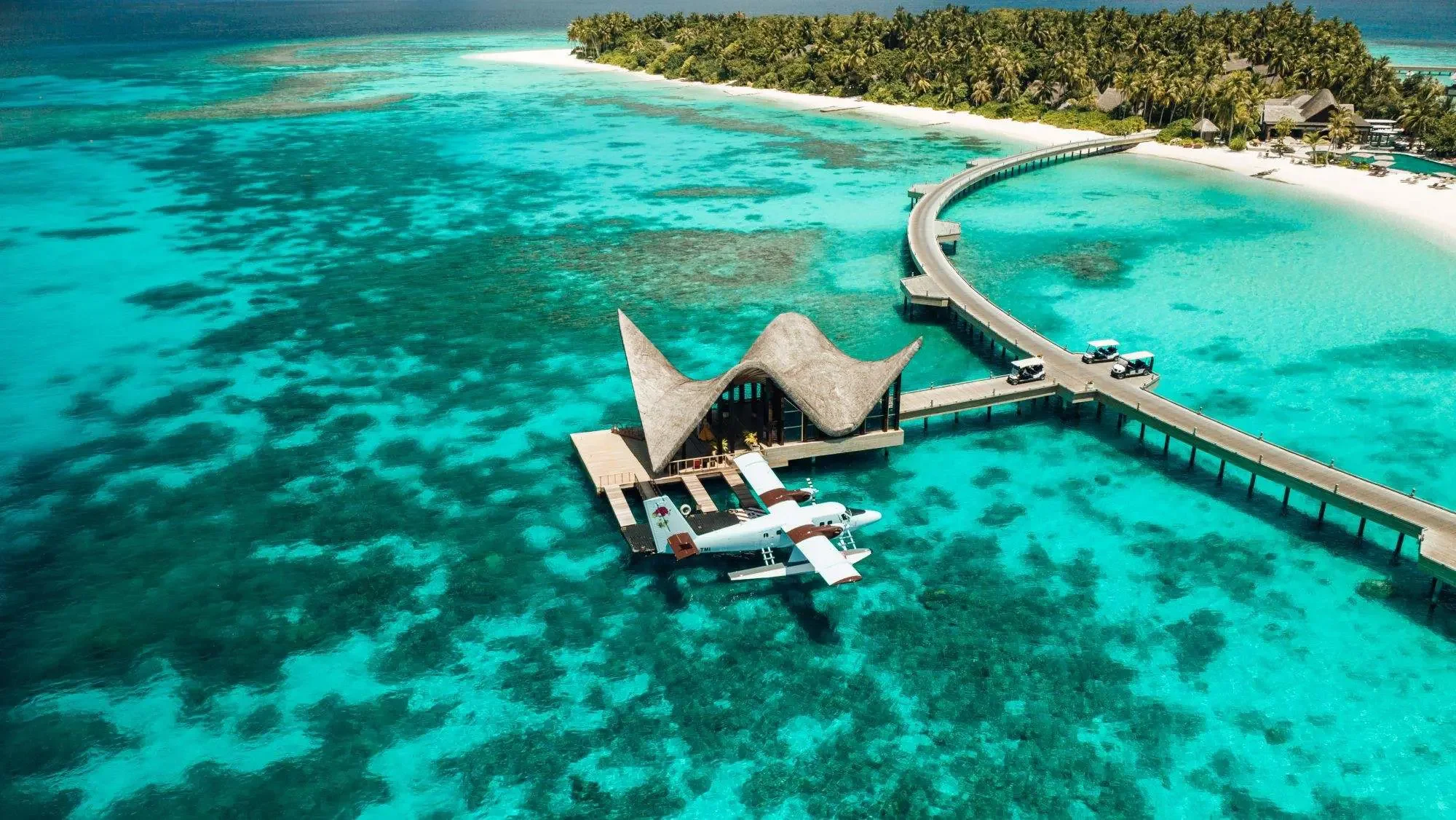
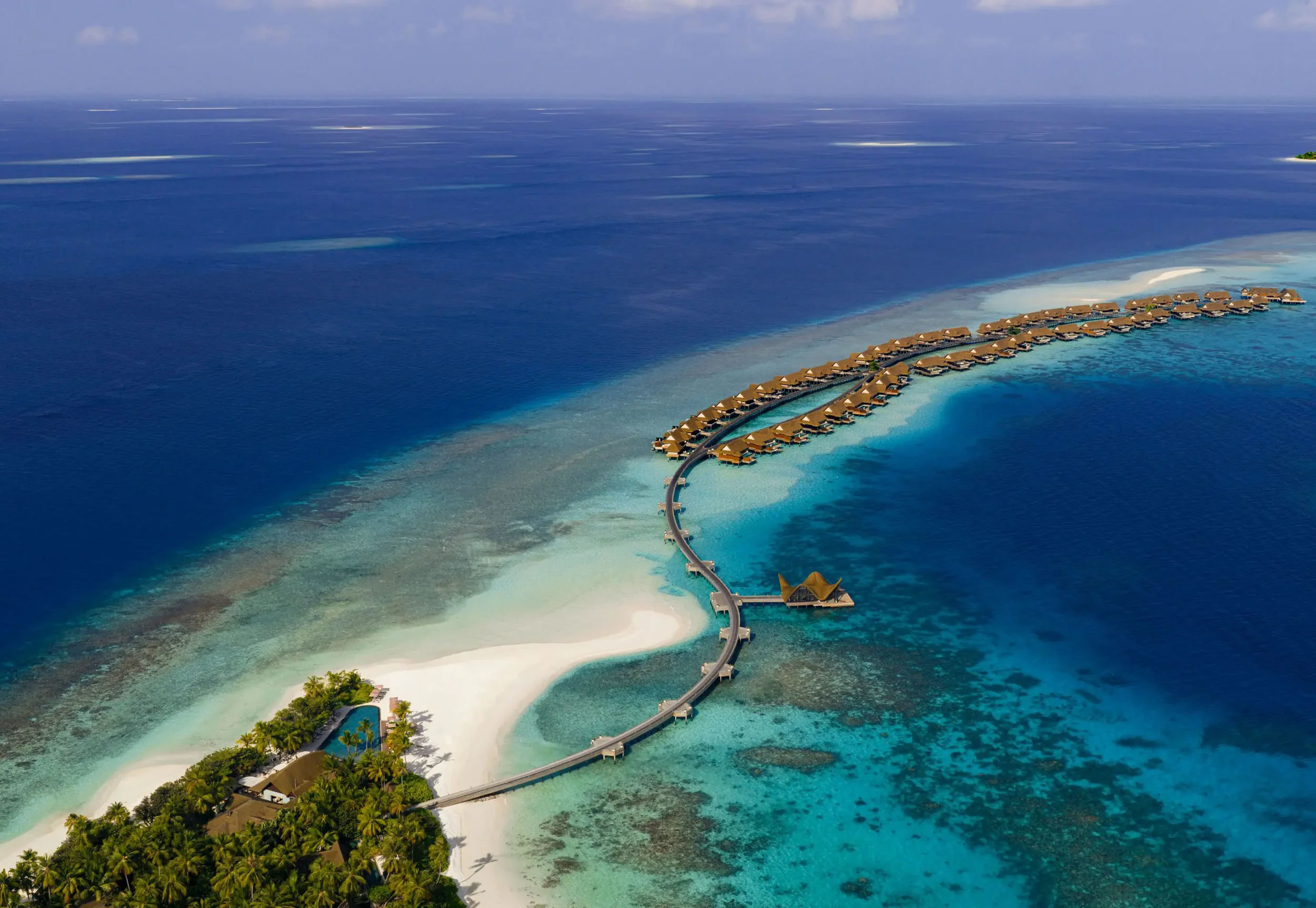
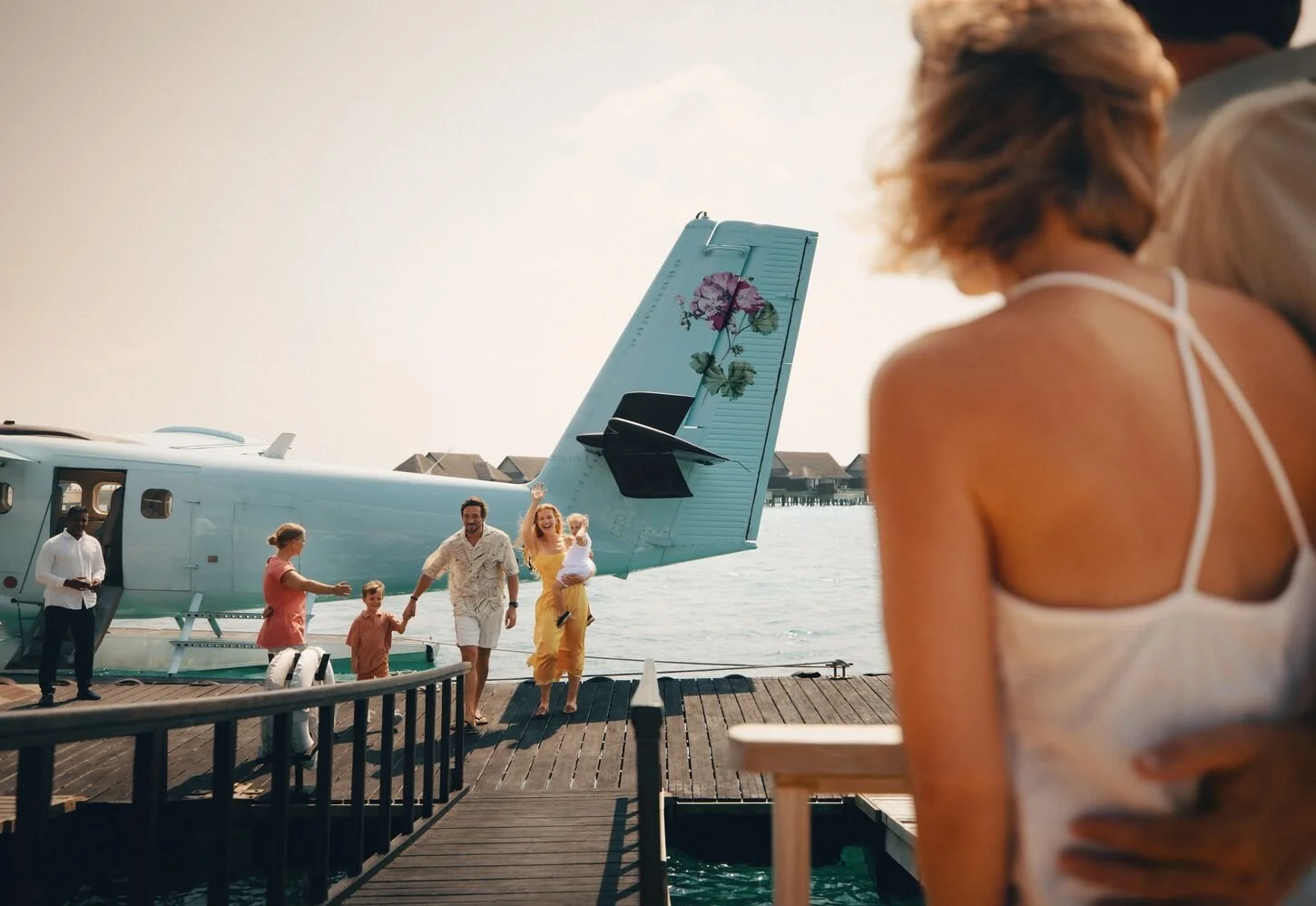
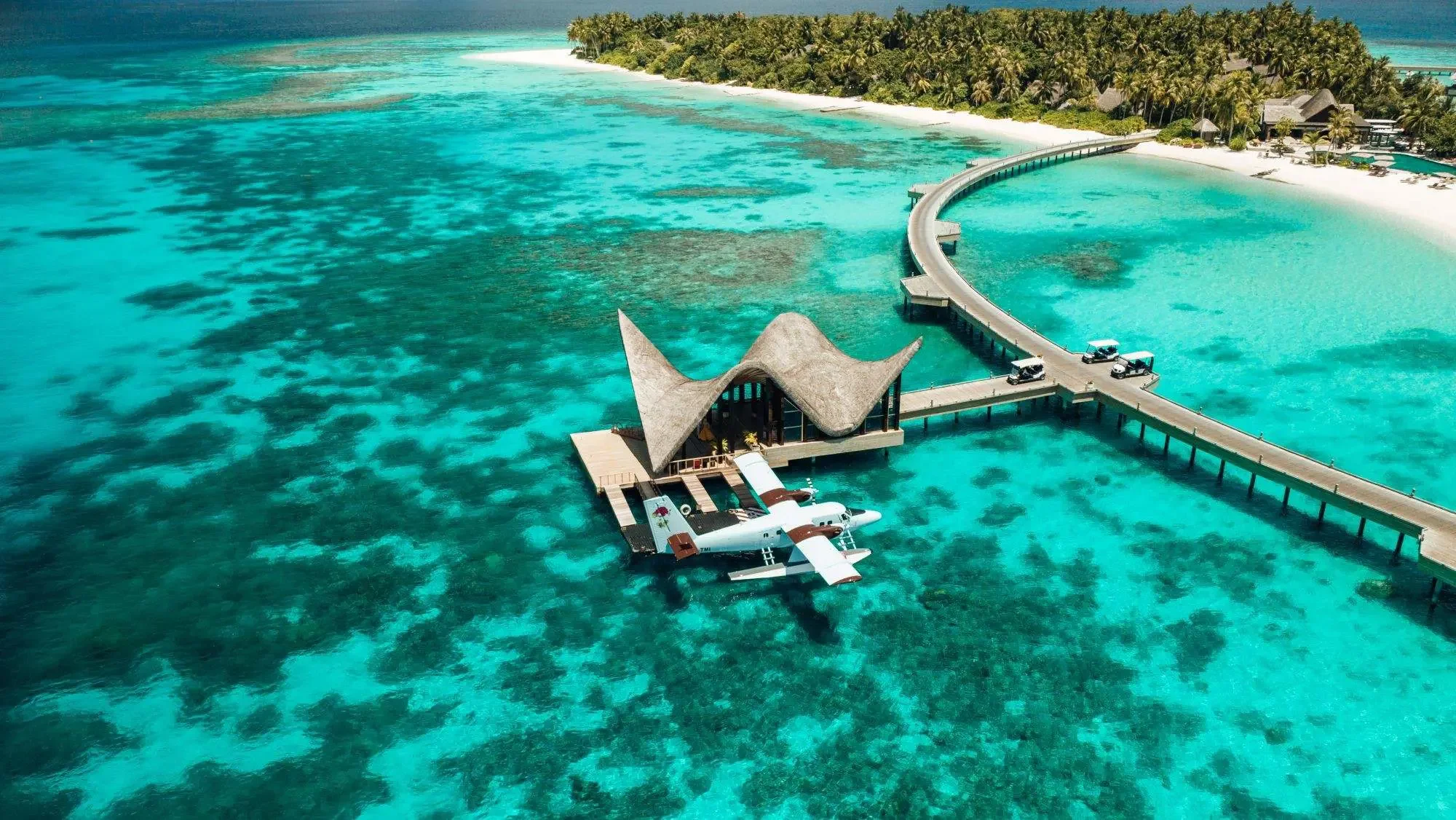
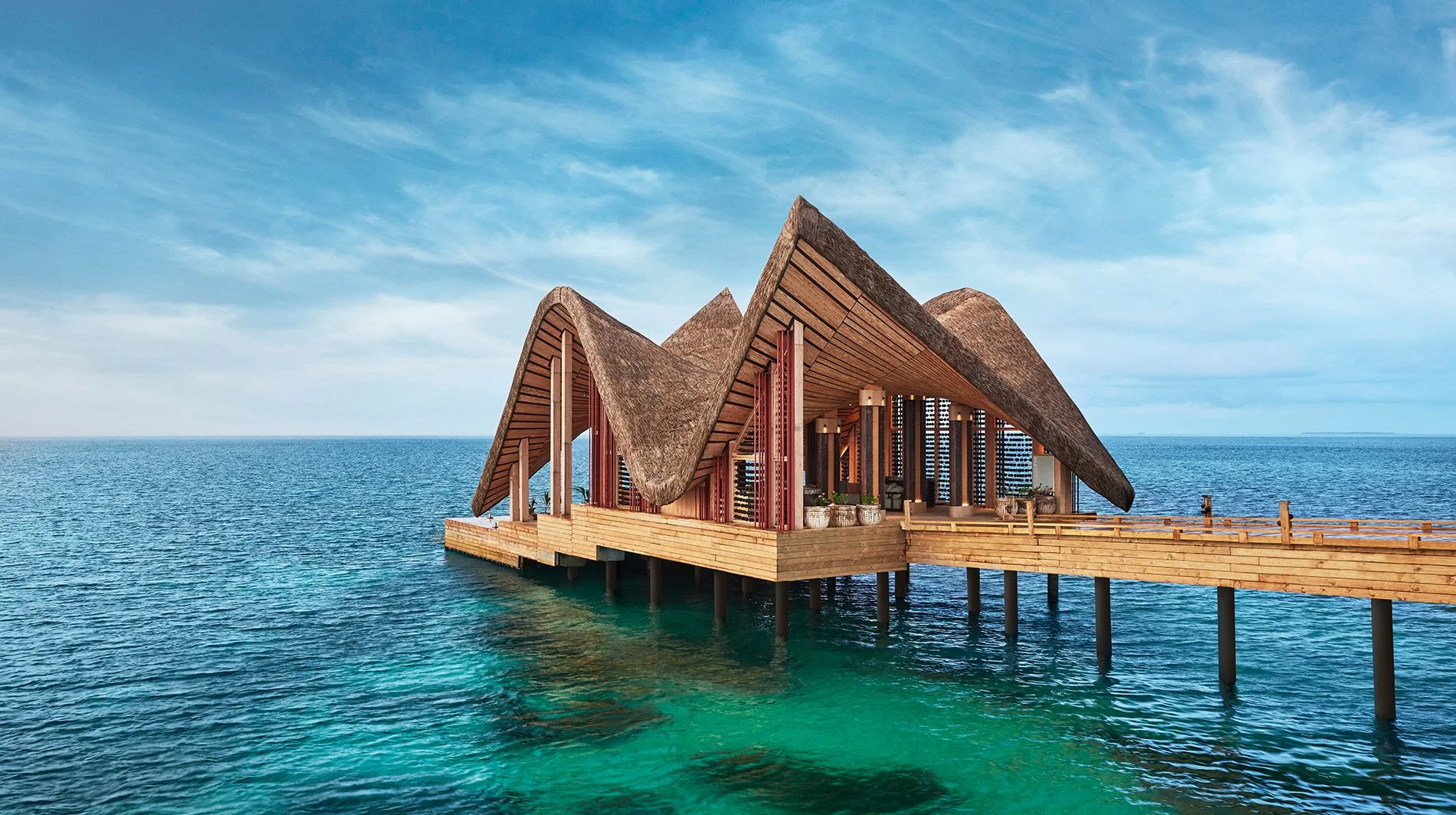
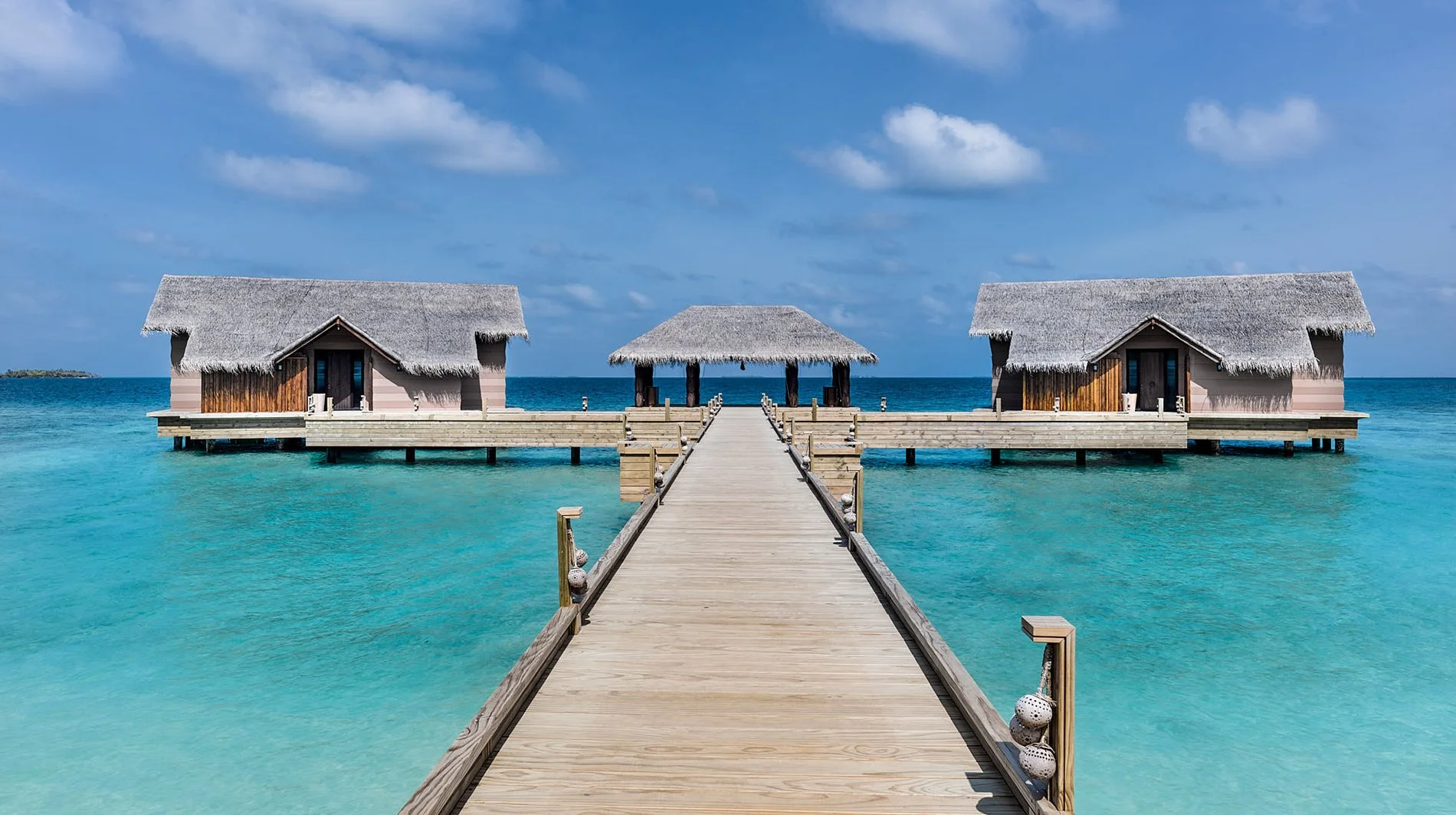
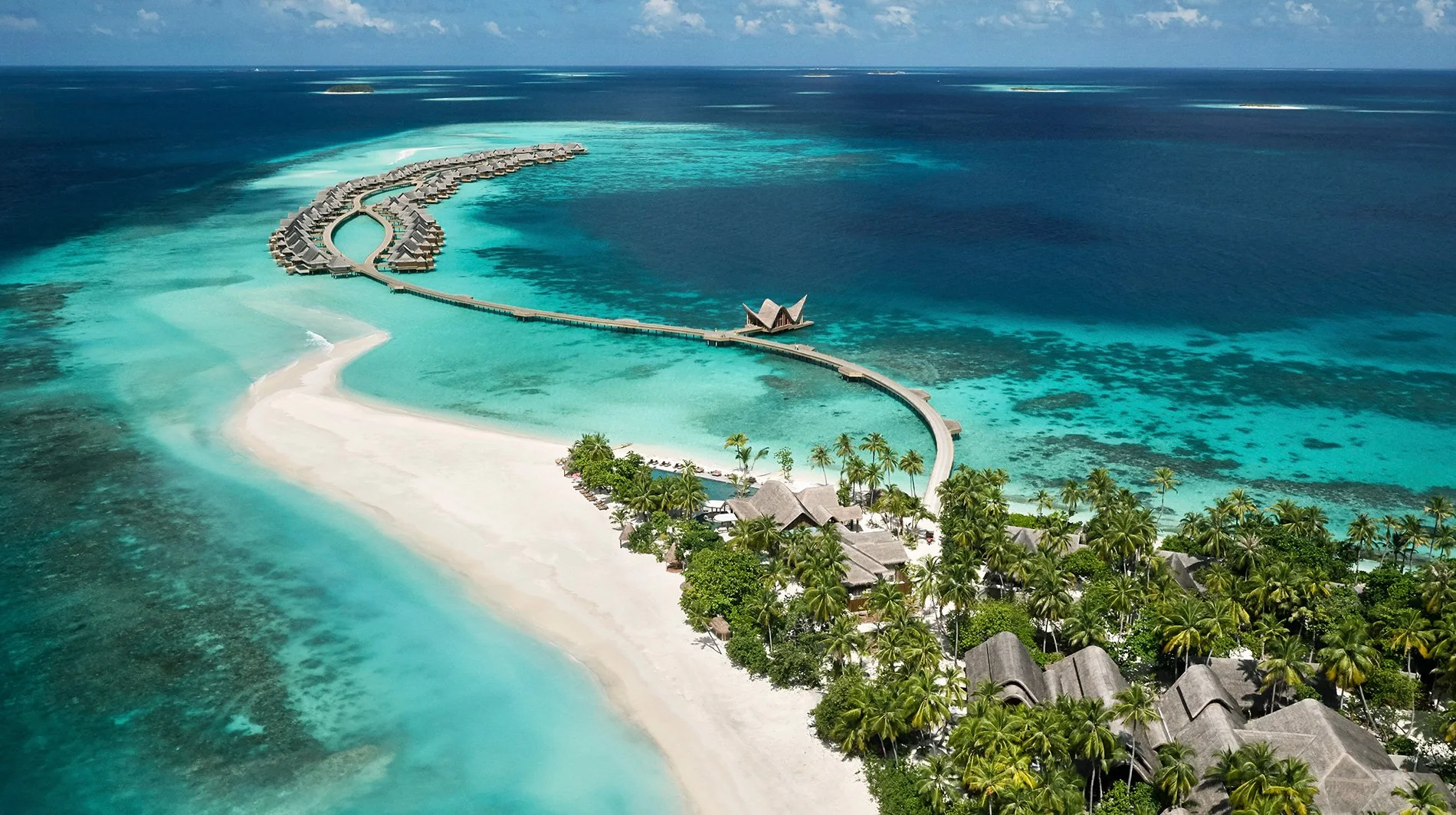
The experience begins before reaching a villa. The arrival jetty takes the form of a manta ray, site-specific artworks appear across beaches and gardens, and the island’s art map turns an afternoon walk into a self-guided exhibition. That creative identity extends into guestrooms, restaurants and public spaces rather than sitting inside a conventional gallery.
JOALI currently has 73 villas and residences, all with private pools and dedicated Jadugar service. In 2026, the resort retained One MICHELIN Key, earned its fifth consecutive Forbes Travel Guide Five-Star rating and placed No. 2 among resorts in Asia and No. 3 in Travel + Leisure’s World’s Top 100 Hotels. Those awards are useful context, but the more revealing distinction is how clearly the property knows what it wants to be: a family-friendly Maldivian resort where design, art and play are central to the stay.
A Resort Built Around Esin Güral Argat’s Idea of Creative Living
JOALI began with Turkish entrepreneur Esin Güral Argat, Vice President of Gürok Group, who set out to create an art-immersive resort rather than another interpretation of tropical minimalism. Muravandhoo became the first expression of that idea, and JOALI Maldives opened in November 2018.
From the beginning, the property was designed around the concept now described as the Joy of Creative Living. Female empowerment, sustainability and collaboration with artists were built into the brand identity rather than added later as separate programs. International artists work alongside Maldivian makers, while the resort’s art program places particular emphasis on giving women artists and local craft traditions visible platforms.
The second JOALI island, JOALI BEING, later opened elsewhere in Raa Atoll with a completely different purpose centered on structured wellbeing. That distinction matters when planning a stay. JOALI Maldives is the art-led, family-oriented resort with a broad culinary and activity program; JOALI BEING is the brand’s dedicated wellbeing island. Day trips between the two can be arranged subject to availability.
Autoban, Atölye4N and an Island-Sized Collection
Architecture and interiors were developed by a group of international studios rather than through one uniform design language. Atölye4N handled architecture and master planning, working around Muravandhoo’s existing forest and reef systems, while Autoban created the interiors and selected architectural elements. The design process included mapping coral fields before fixing the shape of the jetties and relocating more than 700 coconut trees during development.
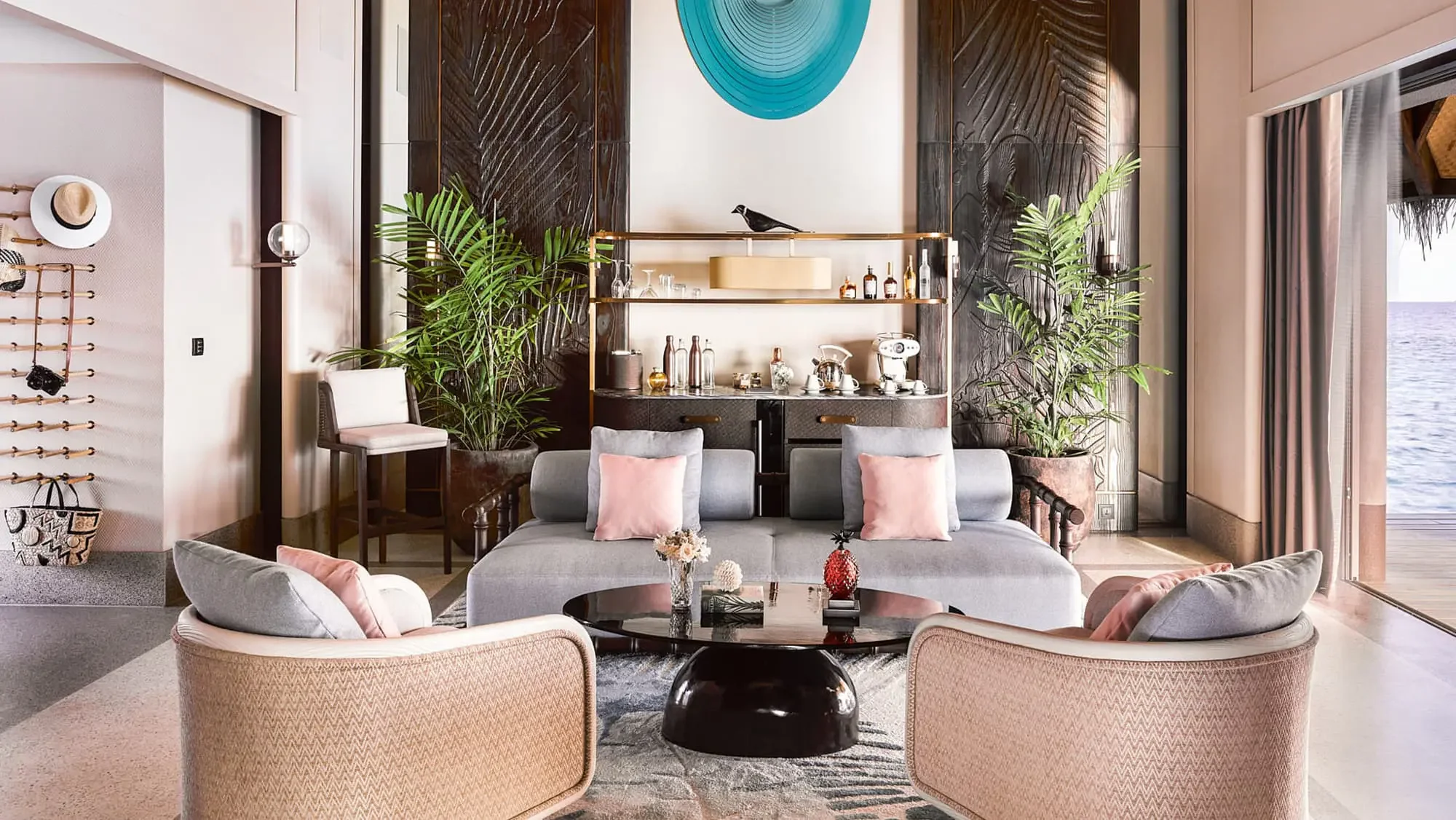
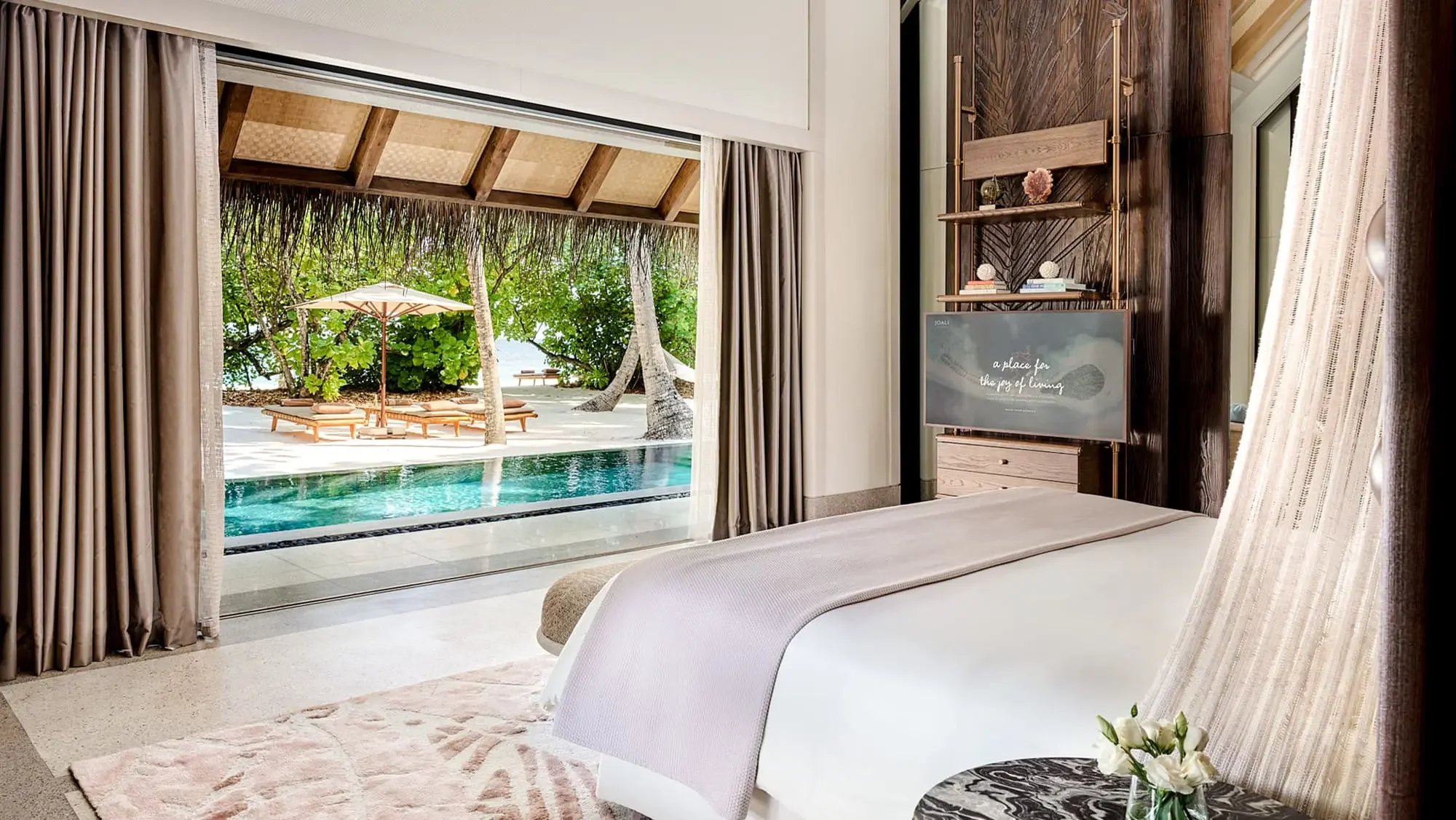
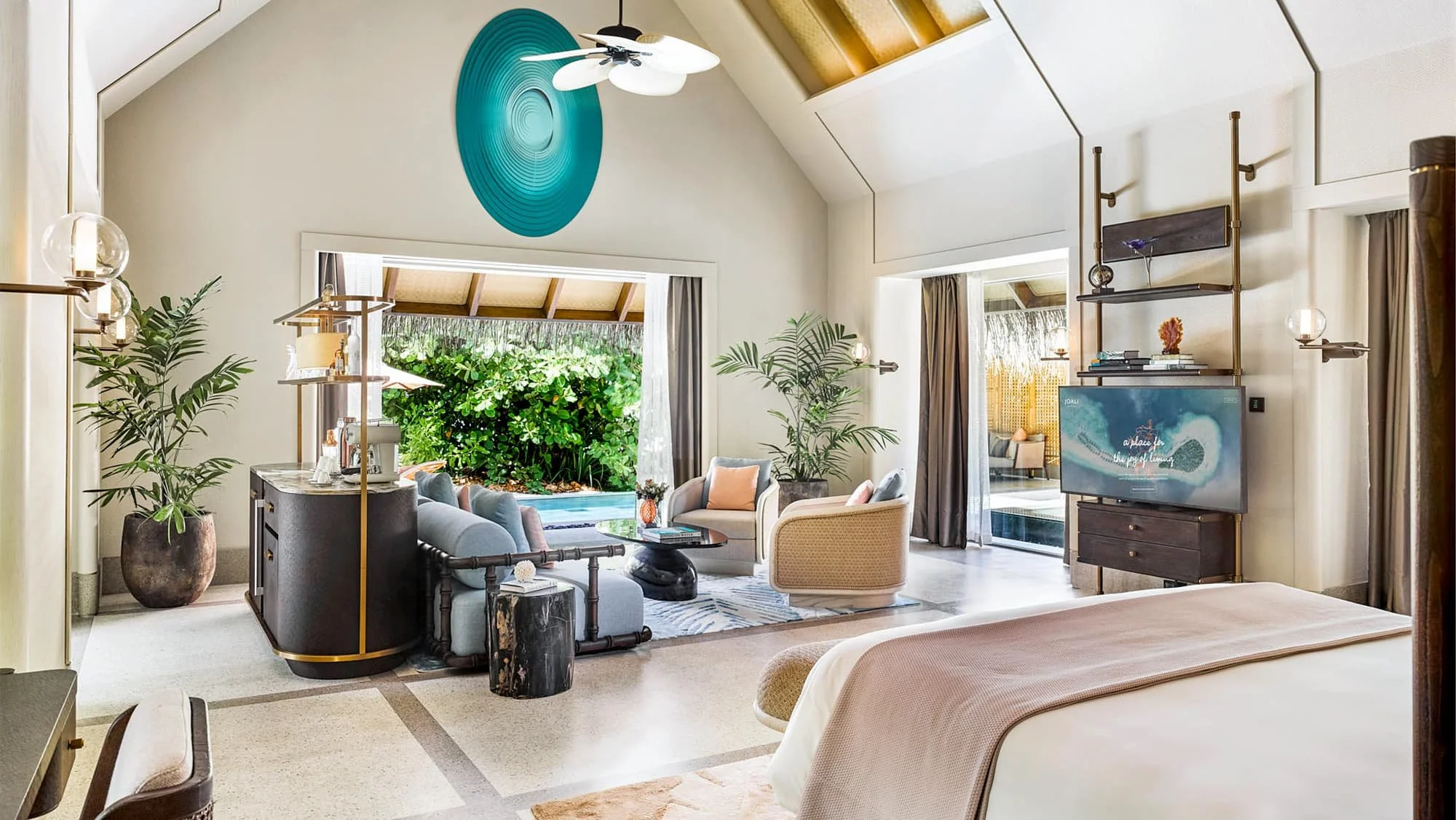
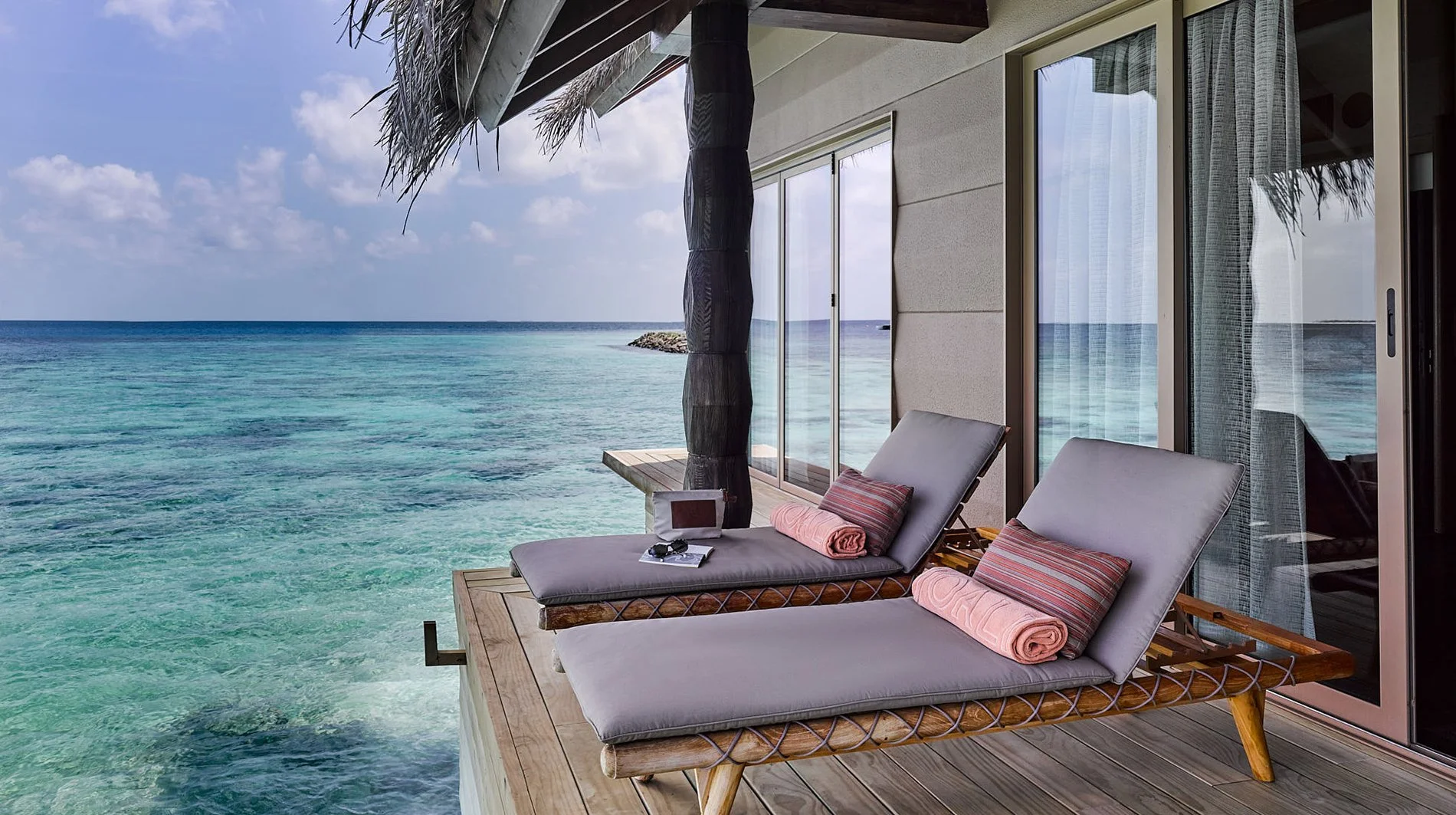
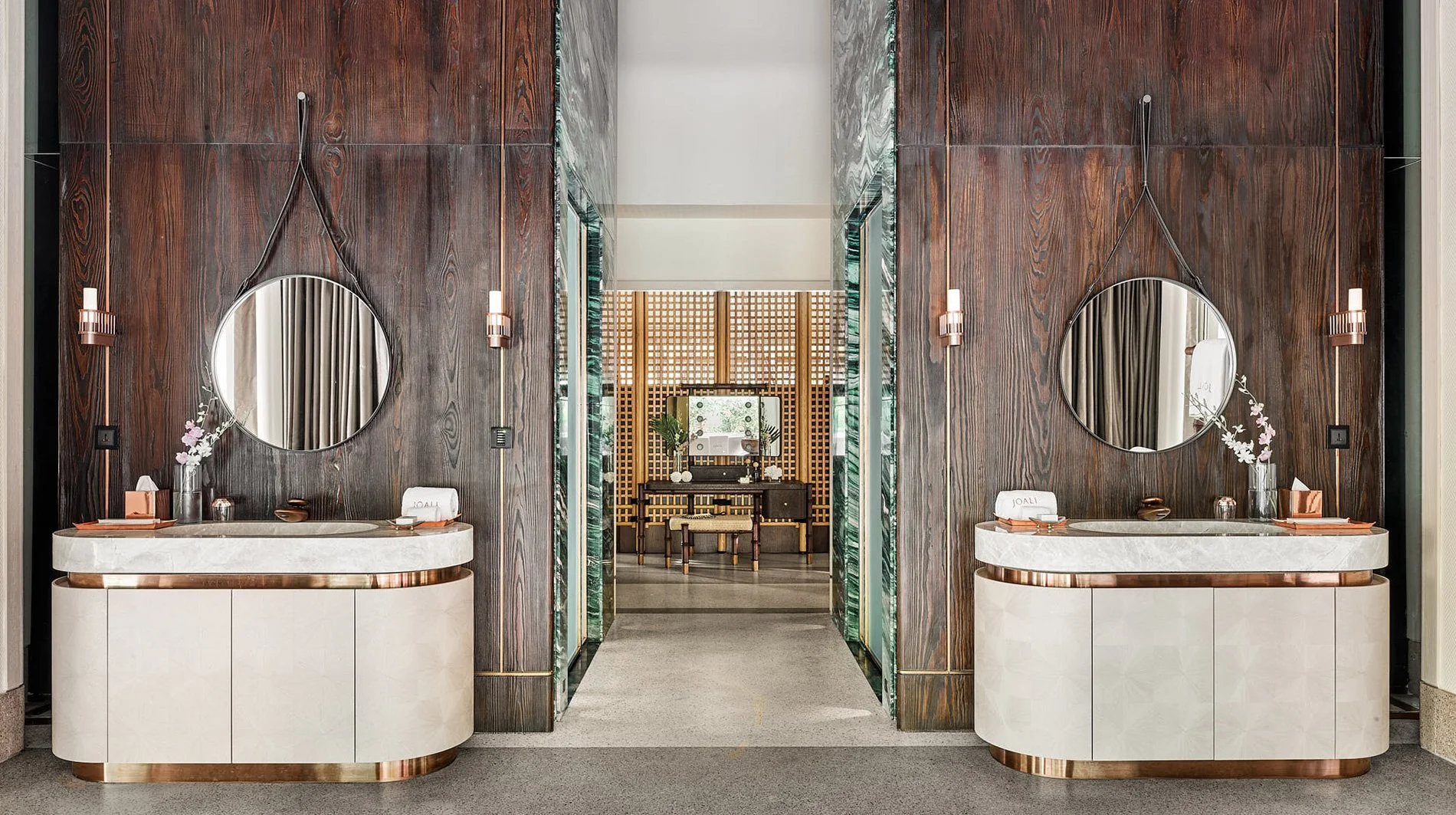
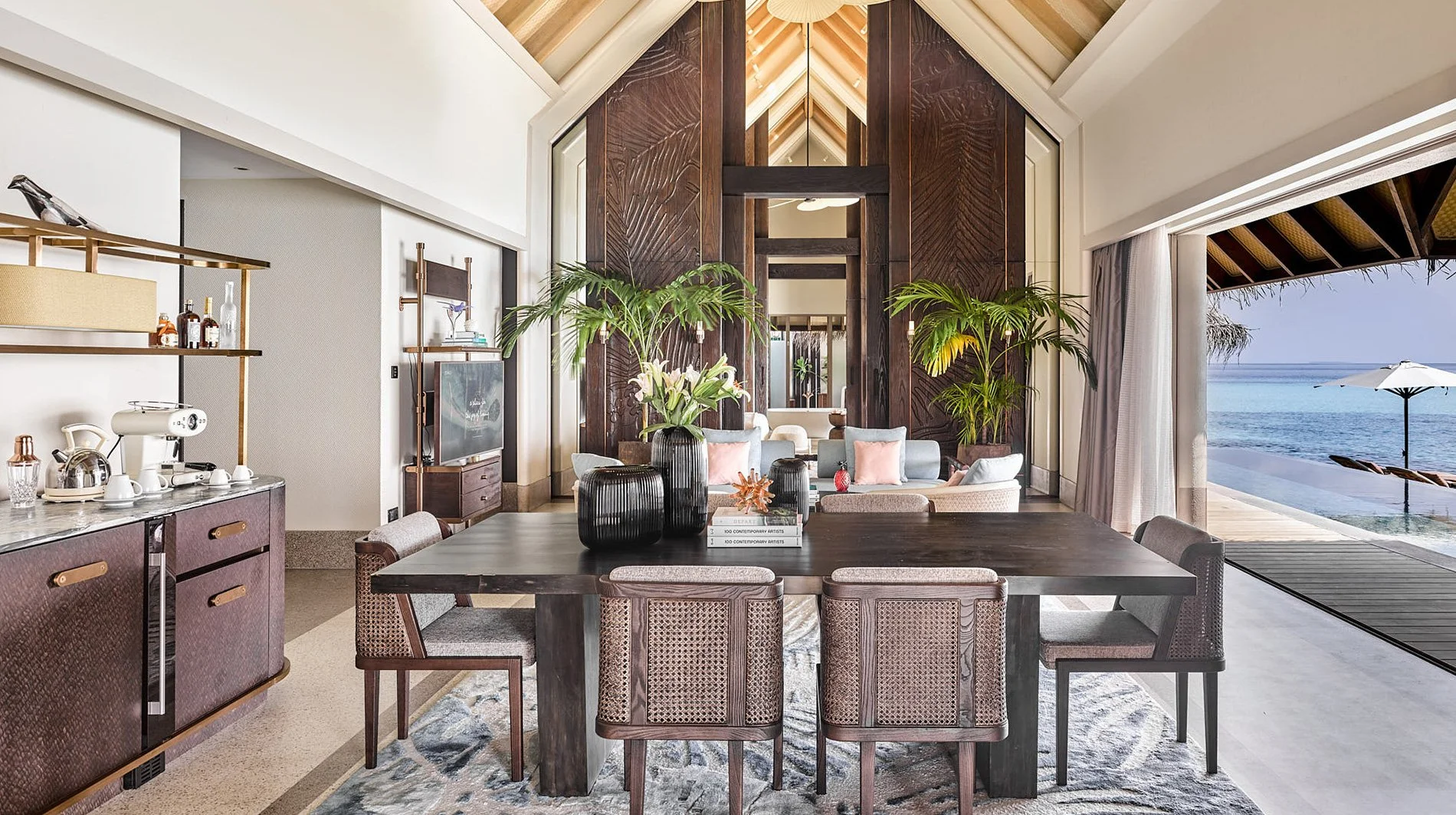
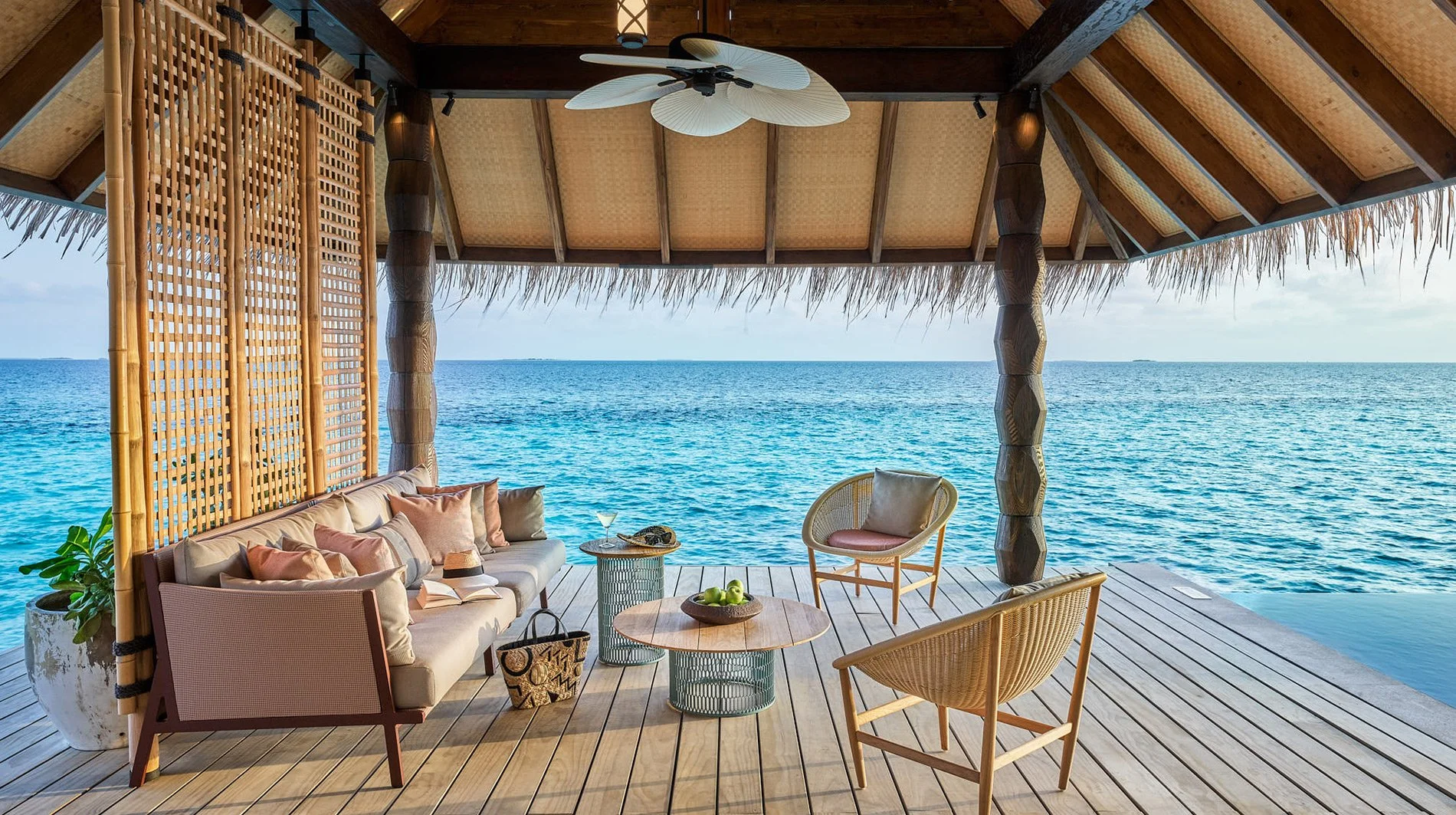
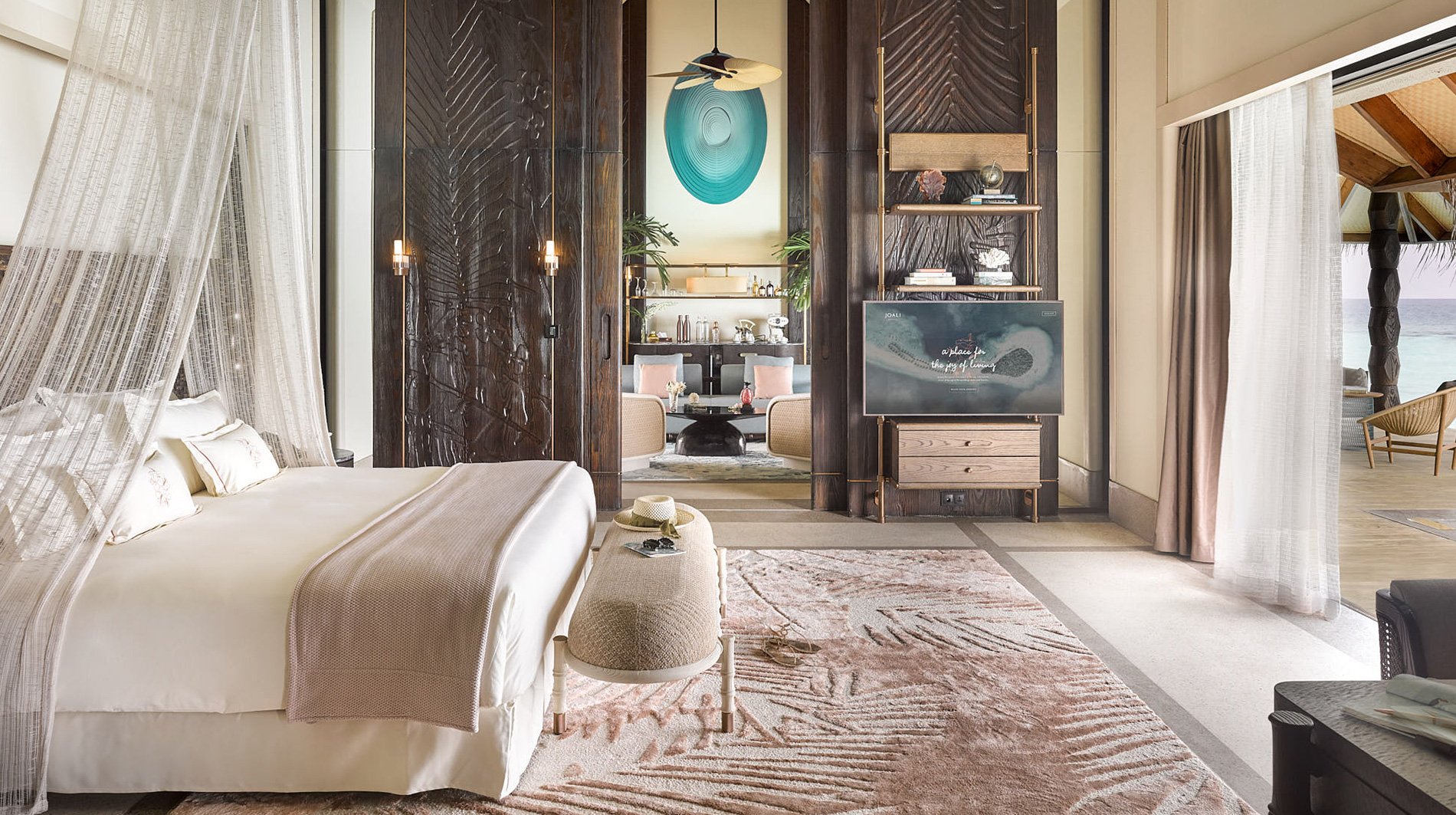
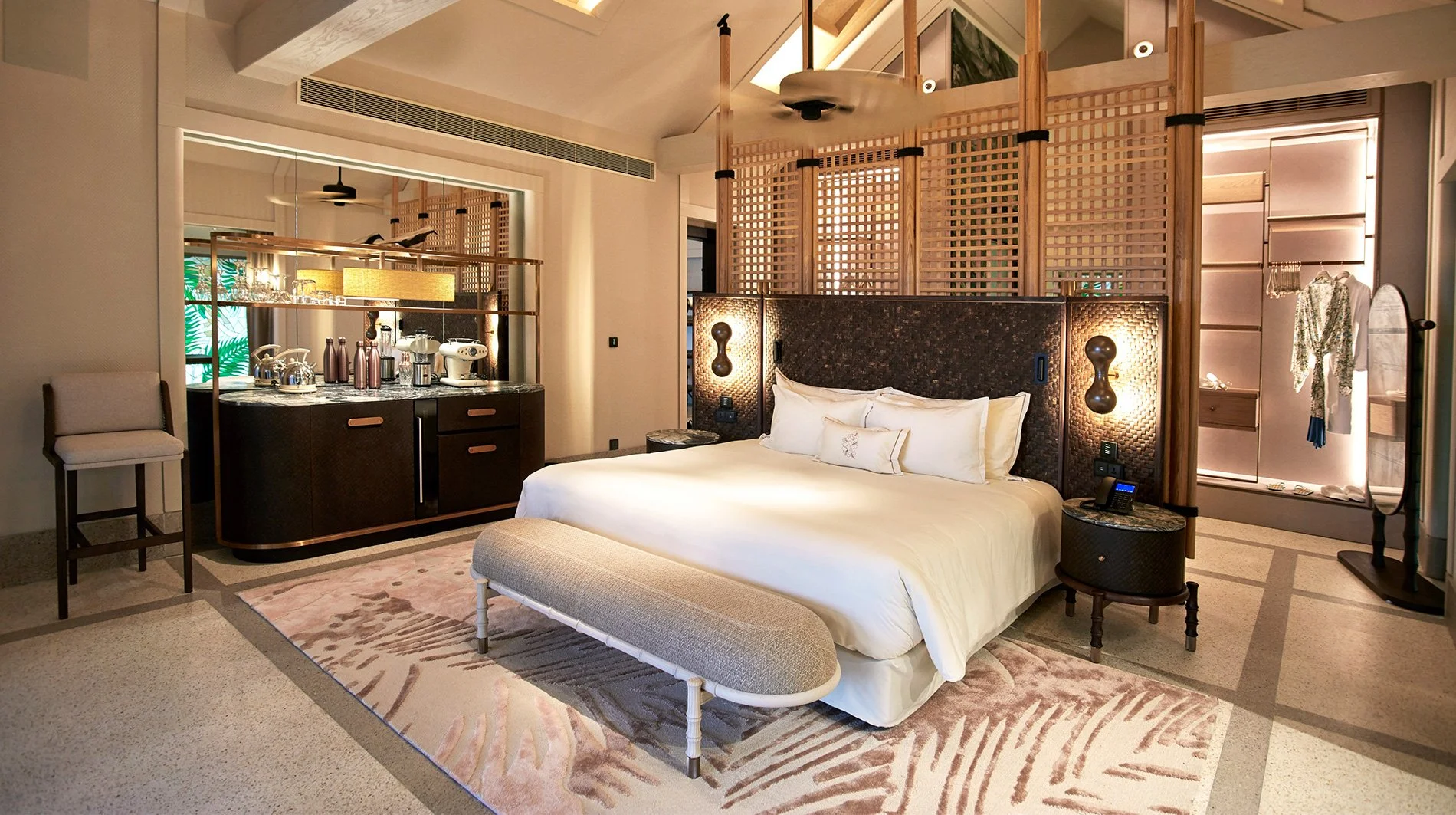
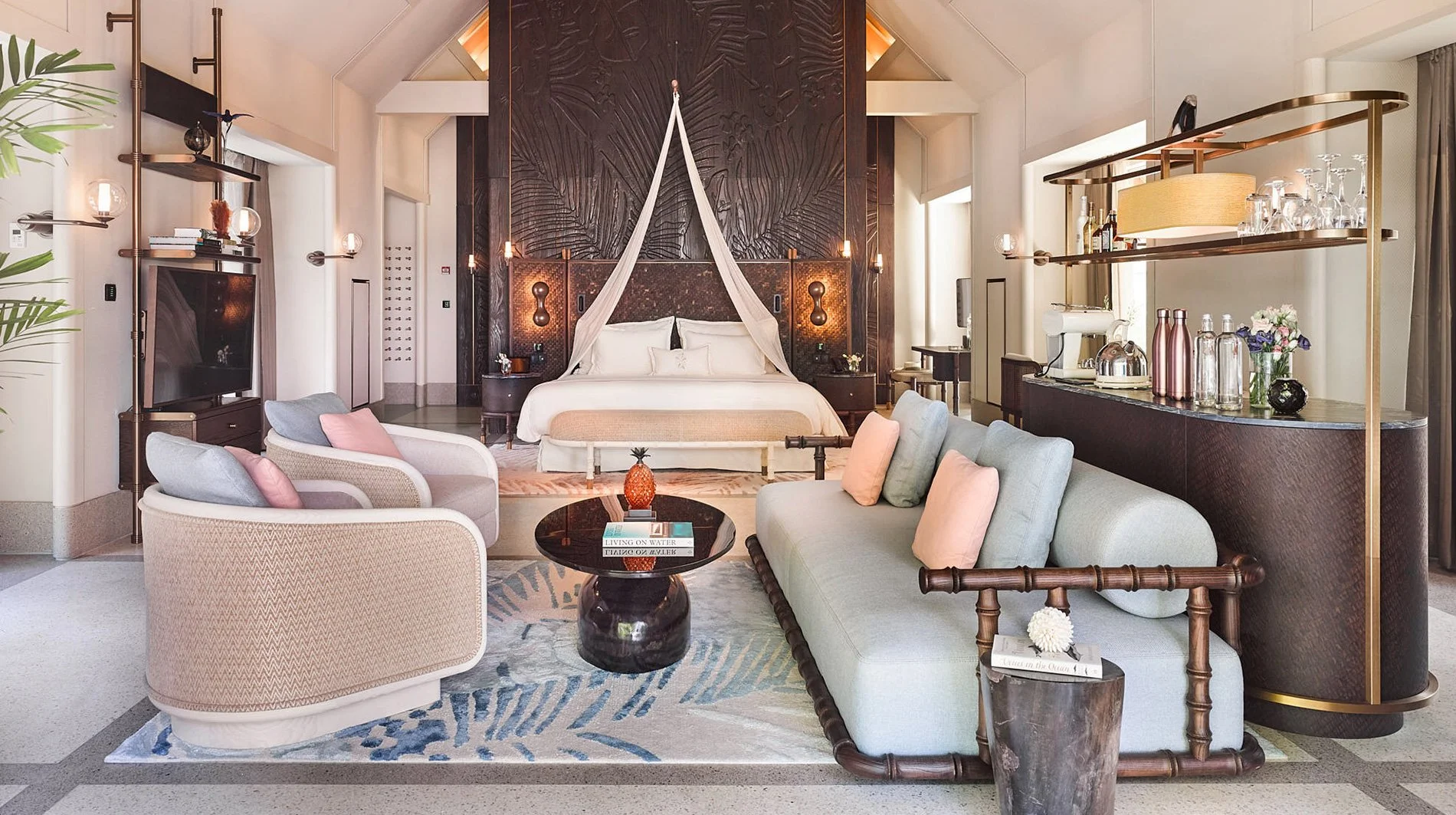
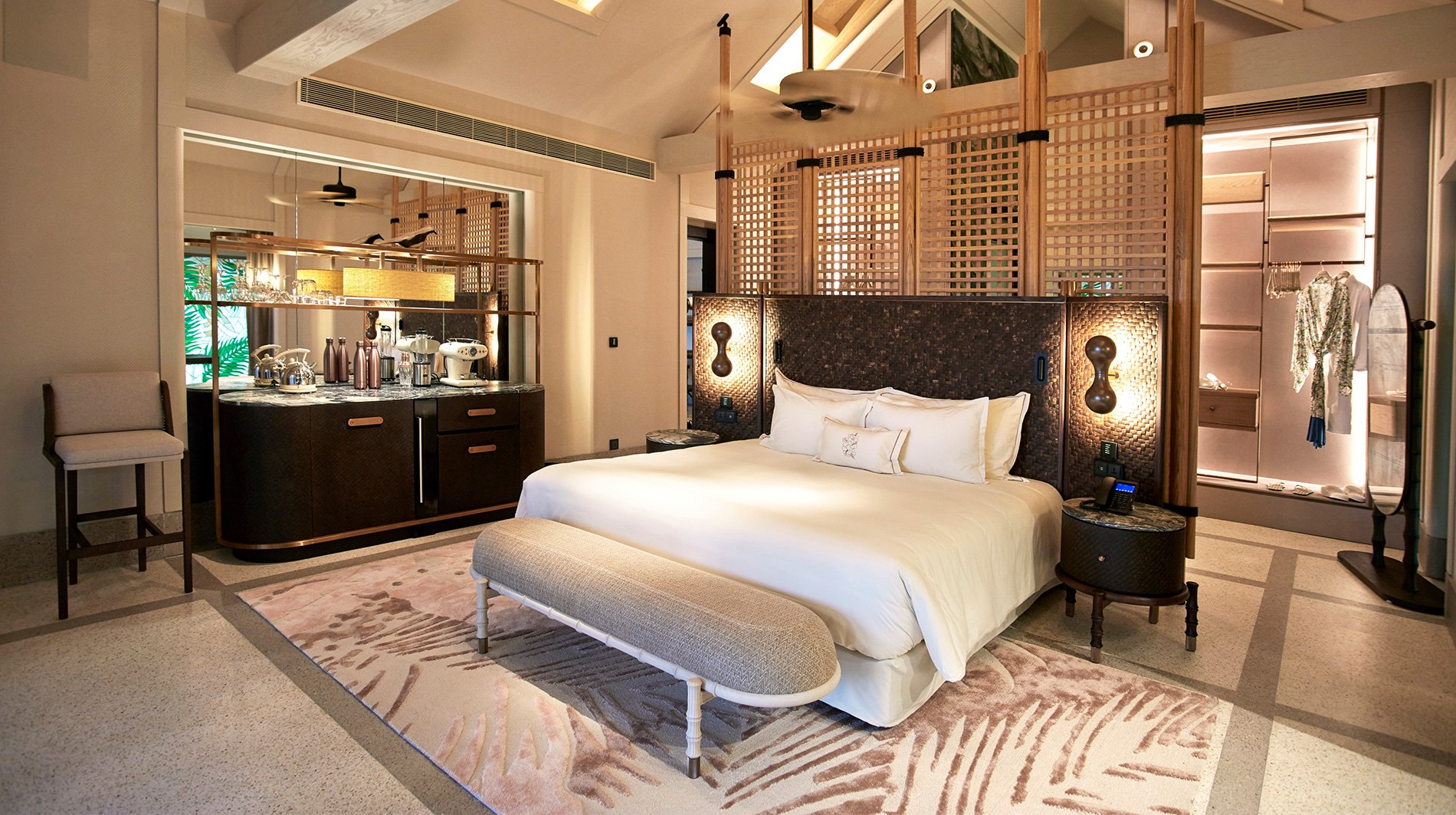
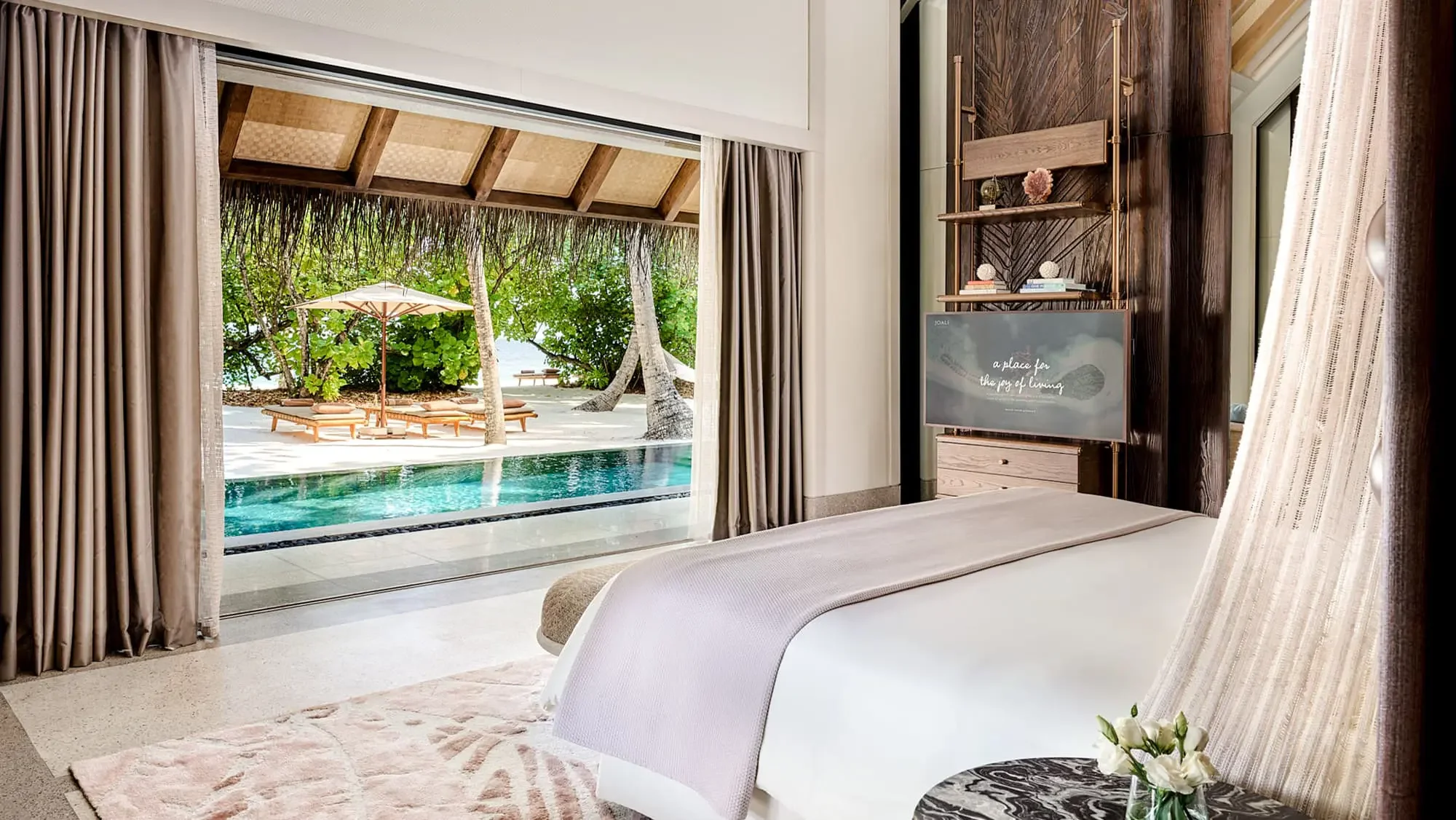
Inside the villas, Autoban uses timber, terrazzo, carved panels, rounded forms and carefully layered surfaces to soften the boundary between interior and exterior. The spaces are expressive without abandoning the practical requirements of a tropical resort: doors can open toward sea breezes, shaded terraces become functional living rooms, and pools are positioned as part of the daily rhythm rather than decorative additions.
Art gives the island another layer. Curators Zeynep Ercan and Aslıala Onur have worked with international and Maldivian artists to build an evolving collection of interactive pieces. Porky Hefer’s manta-inspired treehouse, Misha Kahn’s surreal objects, Studio Glithero’s botanical work, Feleksan Onar’s glass pieces and installations by artists including Seçkin Pirim and Zemer Peled appear across the resort.
The Art Studio keeps that collection participatory. Workshops in ceramics, painting and other media allow guests to make something themselves, while visiting artists and local artisans regularly add temporary residencies and classes to the calendar.
Eleven Villa and Residence Categories, Every One With a Pool
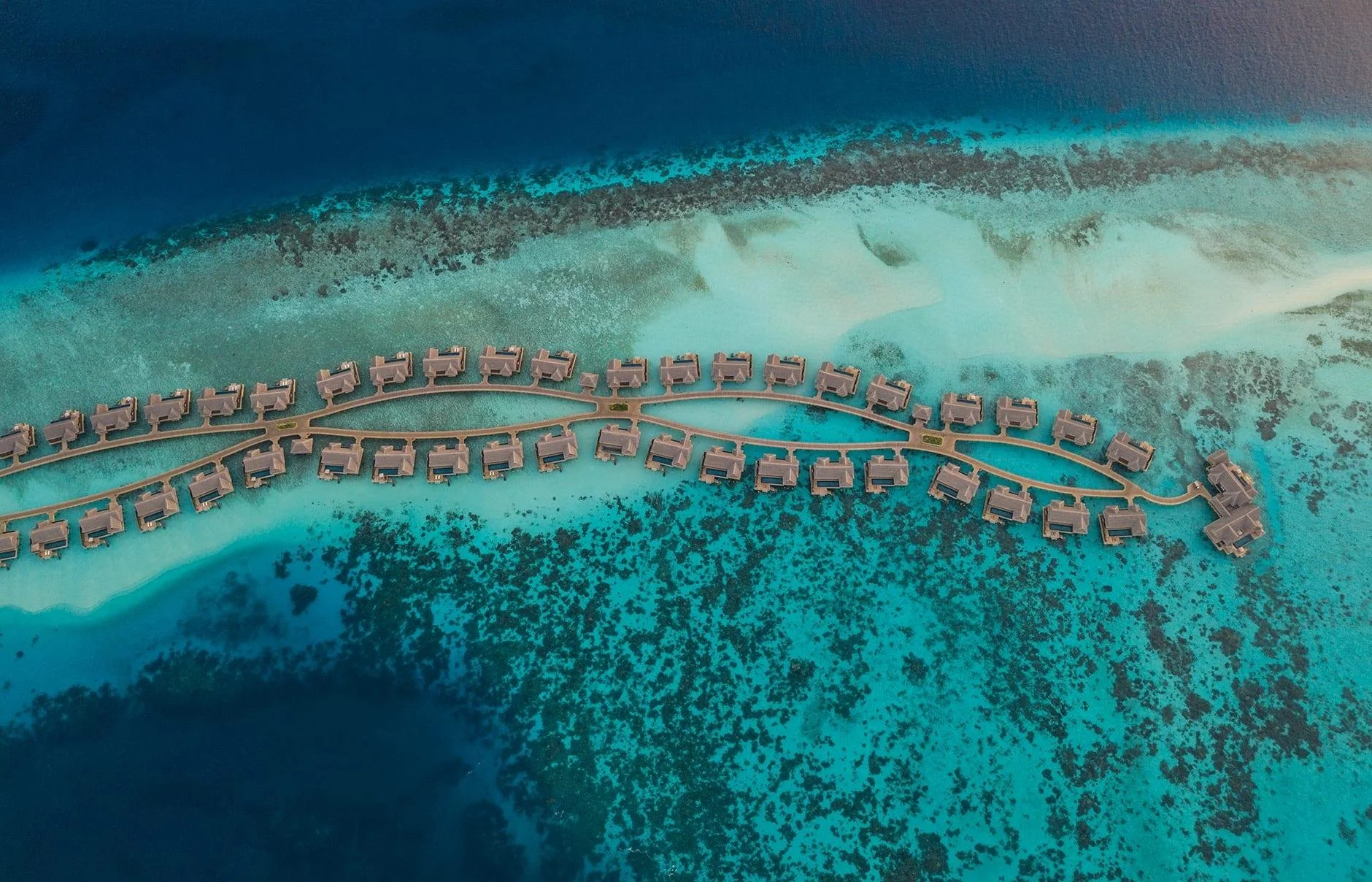
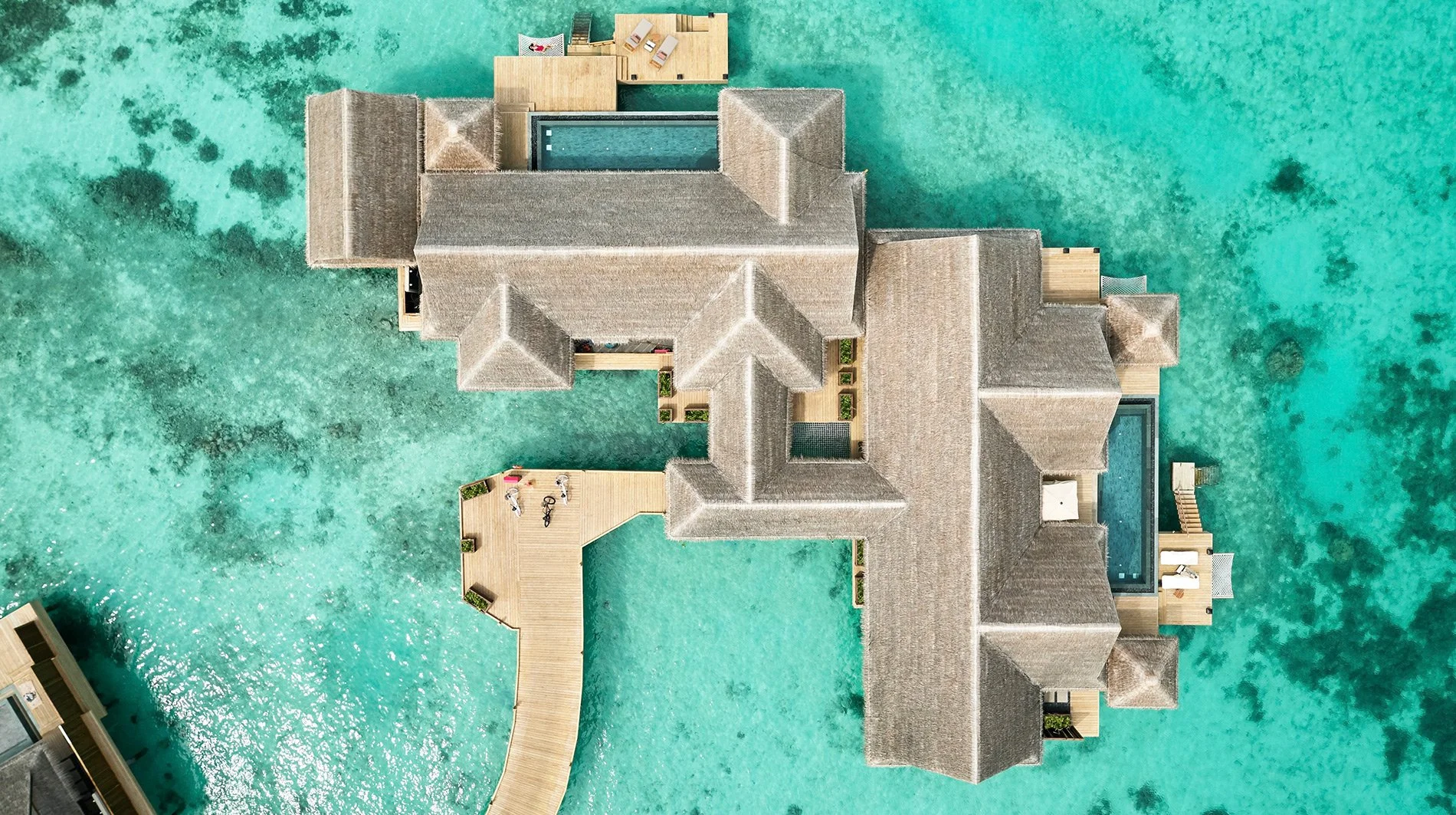
Water Villa with Pool: Approximately 1,076 sq. ft. of interior space and 2,583 sq. ft. in total, with one king bedroom, a private infinity pool, direct lagoon access and a broad overwater sundeck designed for up to three guests.
Luxury Water Villa with Pool: Approximately 1,163 sq. ft. indoors and 3,014 sq. ft. in total, with one king bedroom, a separate living room, curated library, larger deck and private pool overlooking uninterrupted Indian Ocean views.
Luxury Sunset Water Villa with Pool: Approximately 1,163 sq. ft. indoors and 3,014 sq. ft. in total, with one king bedroom, separate living space and a 377-sq.-ft. infinity pool oriented toward sunset views from both the bedroom and sundeck.
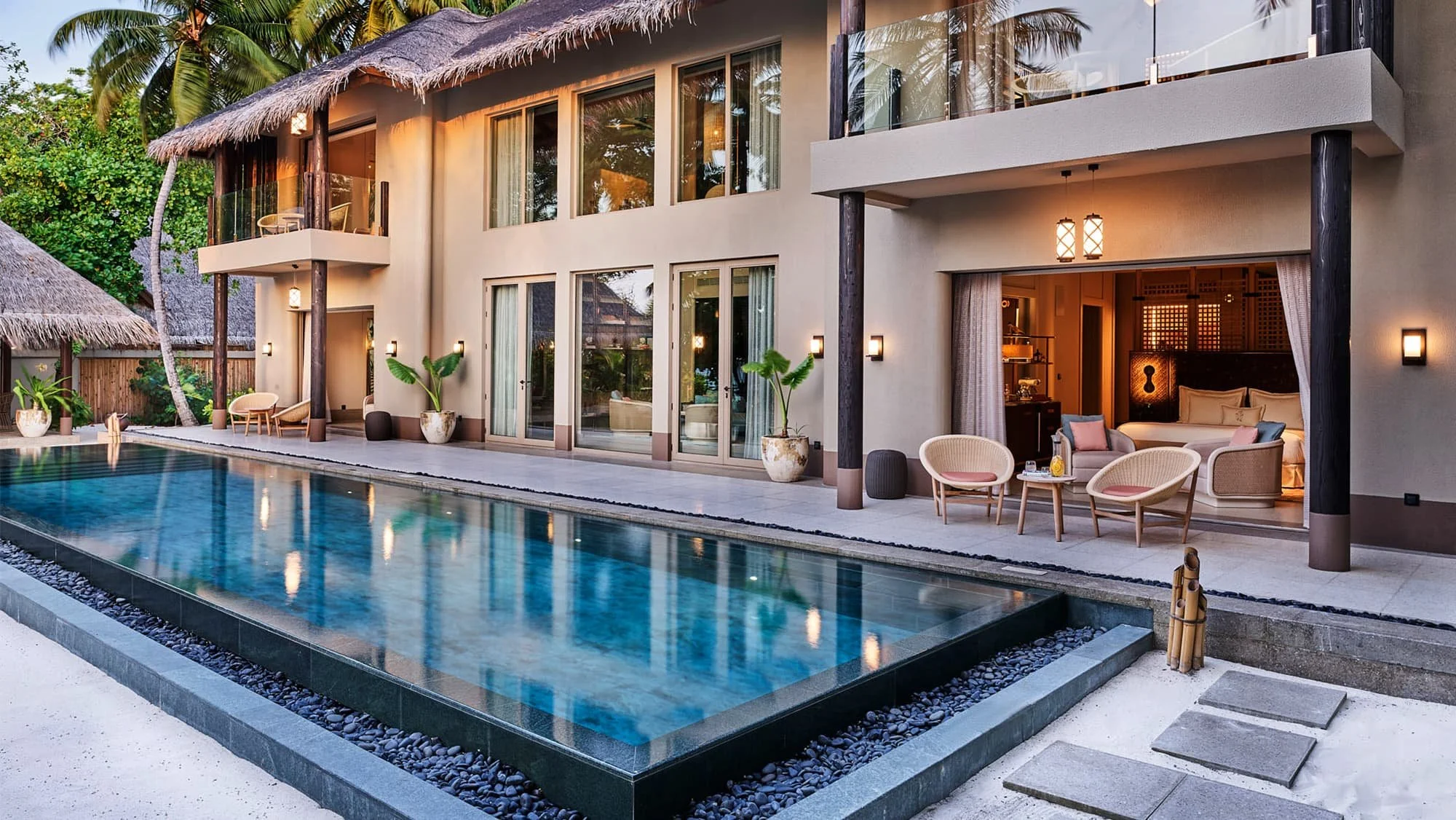
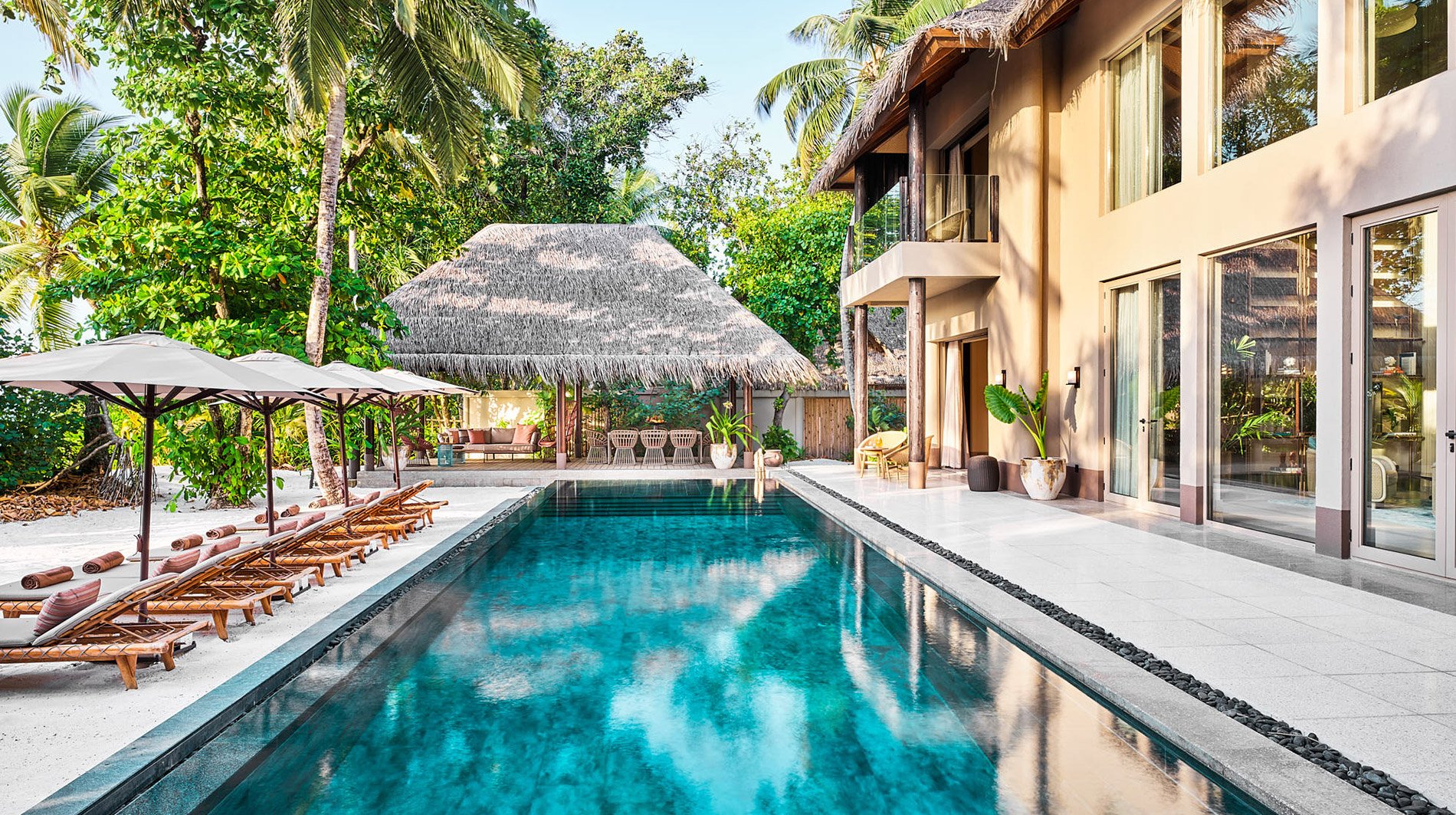
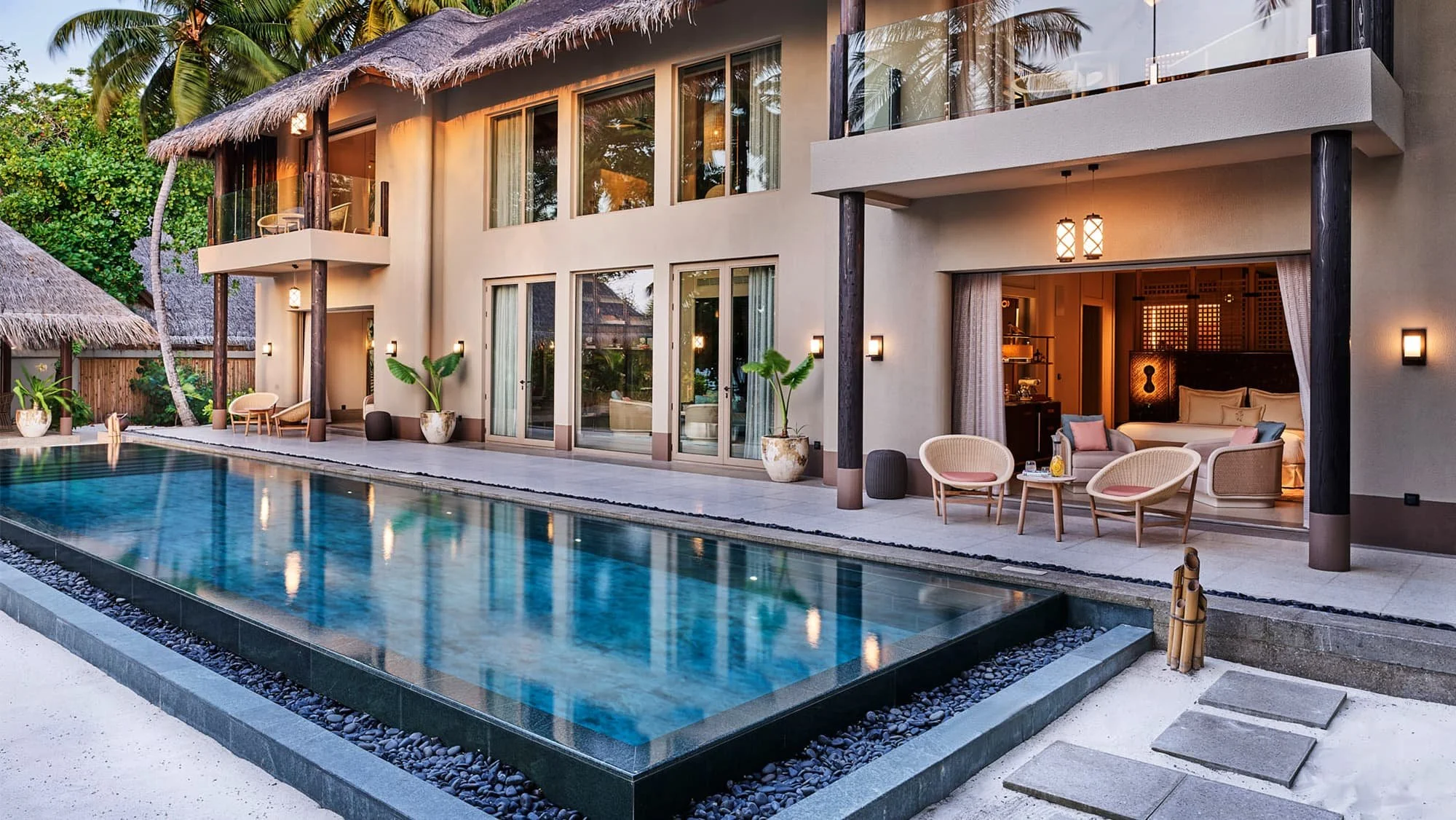
Beach Villa with Pool: Approximately 1,163 sq. ft. indoors and 7,319 sq. ft. in total, with one king bedroom, a private beach garden, direct beach access, curated artworks and an infinity pool positioned between tropical greenery and the sea.
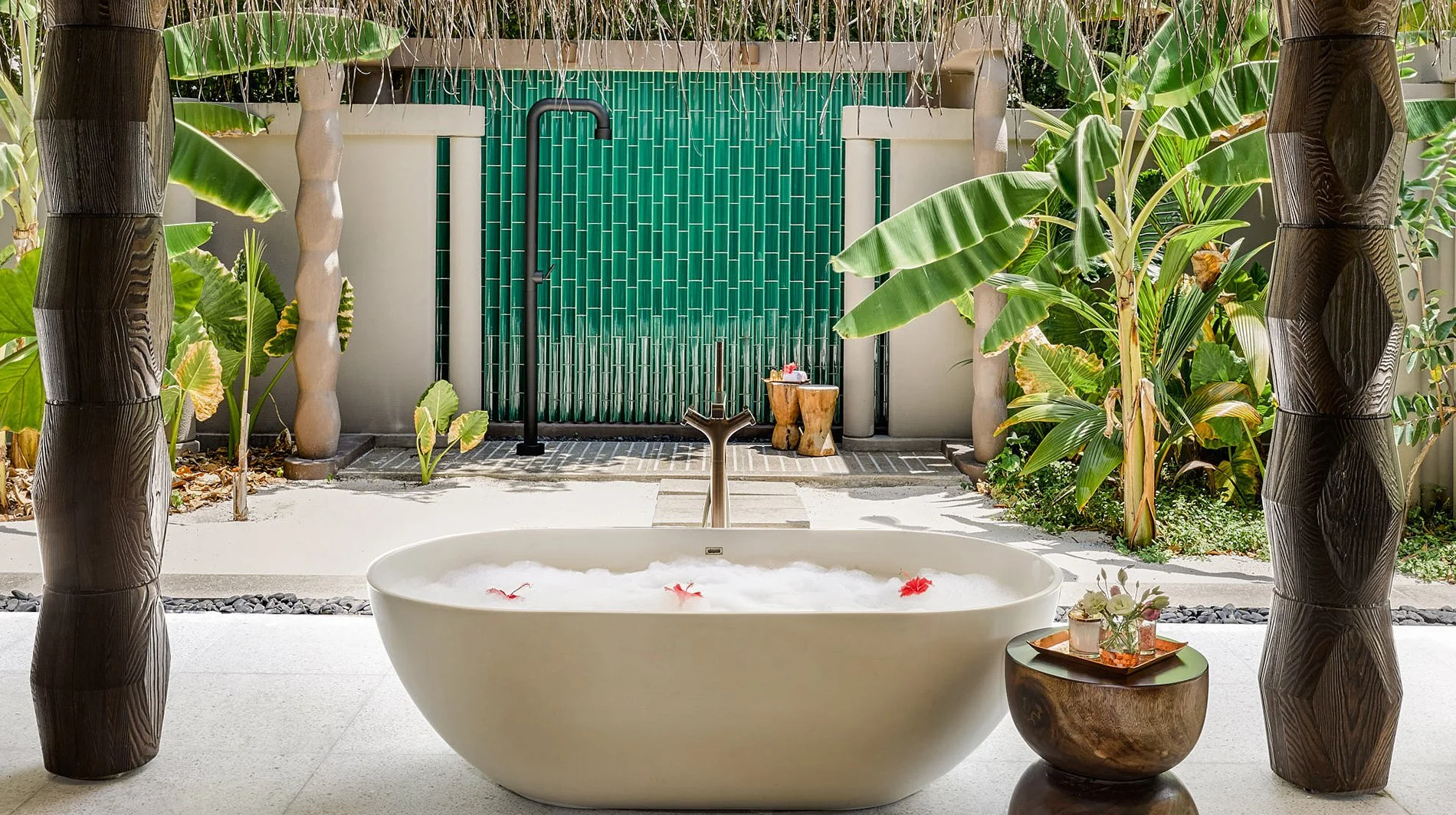
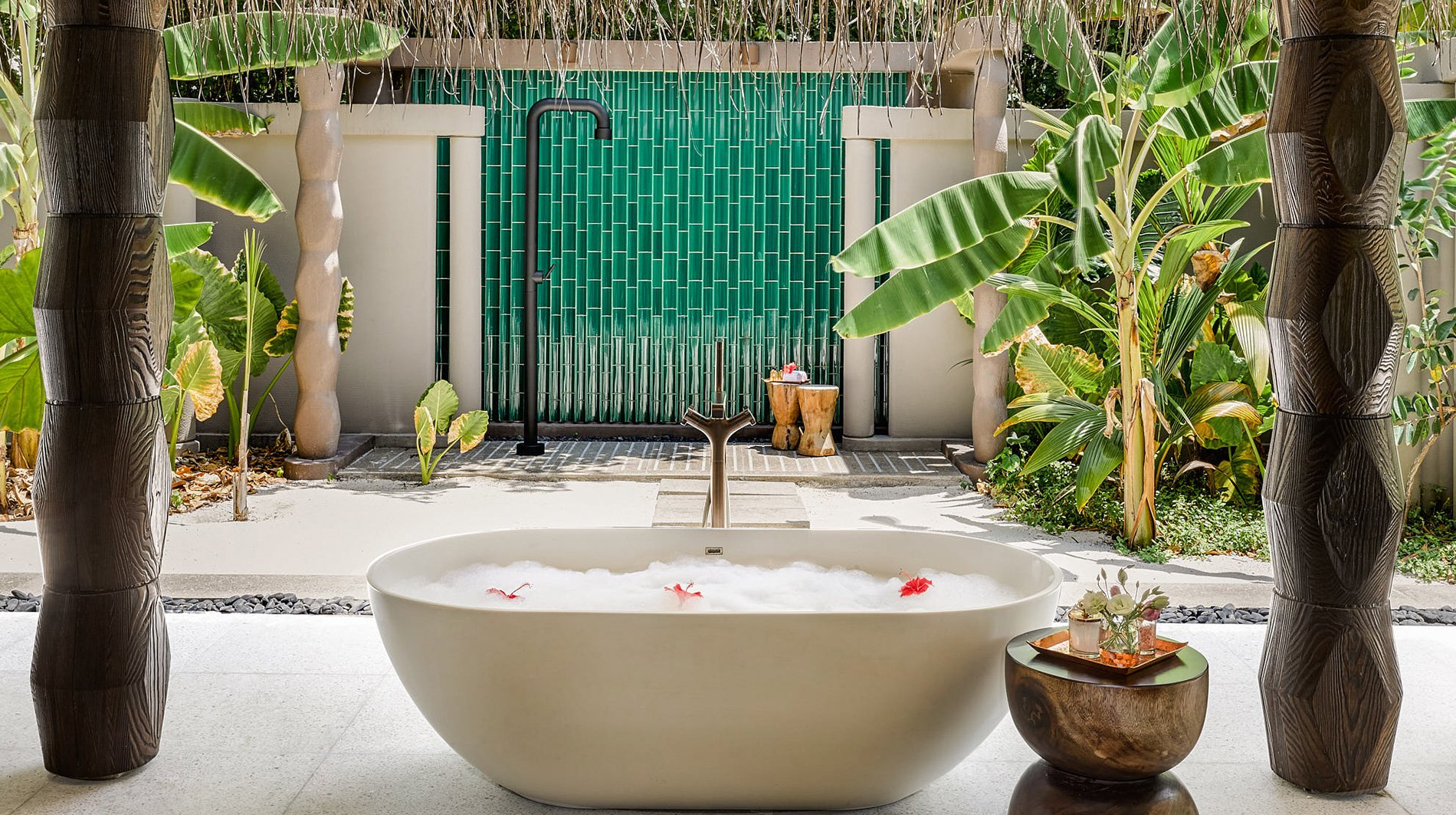
Luxury Beach Villa with Pool: Approximately 1,259 sq. ft. indoors and 9,311 sq. ft. in total, with one king bedroom, separate living area, private library, outdoor rain shower and a pool enclosed by tropical landscaping for additional privacy.
Two Bedroom Water Villa with Pool: Approximately 1,561 sq. ft. indoors and 3,208 sq. ft. in total, with one king bedroom, one twin bedroom, shared living room, private pool and direct access to the lagoon for families who prefer an overwater configuration.
Two Bedroom Beach Villa with Pool: Approximately 1,690 sq. ft. indoors and 9,311 sq. ft. in total, with one king bedroom, one twin bedroom, shared living space, direct beach access and a private infinity pool facing the water.
Two Bedroom Family Beach Villa with Two Pools: Approximately 1,529 sq. ft. indoors and 10,118 sq. ft. in total, with one king and one twin bedroom, an ocean-facing infinity pool and a second garden pool that gives families two distinct outdoor zones.
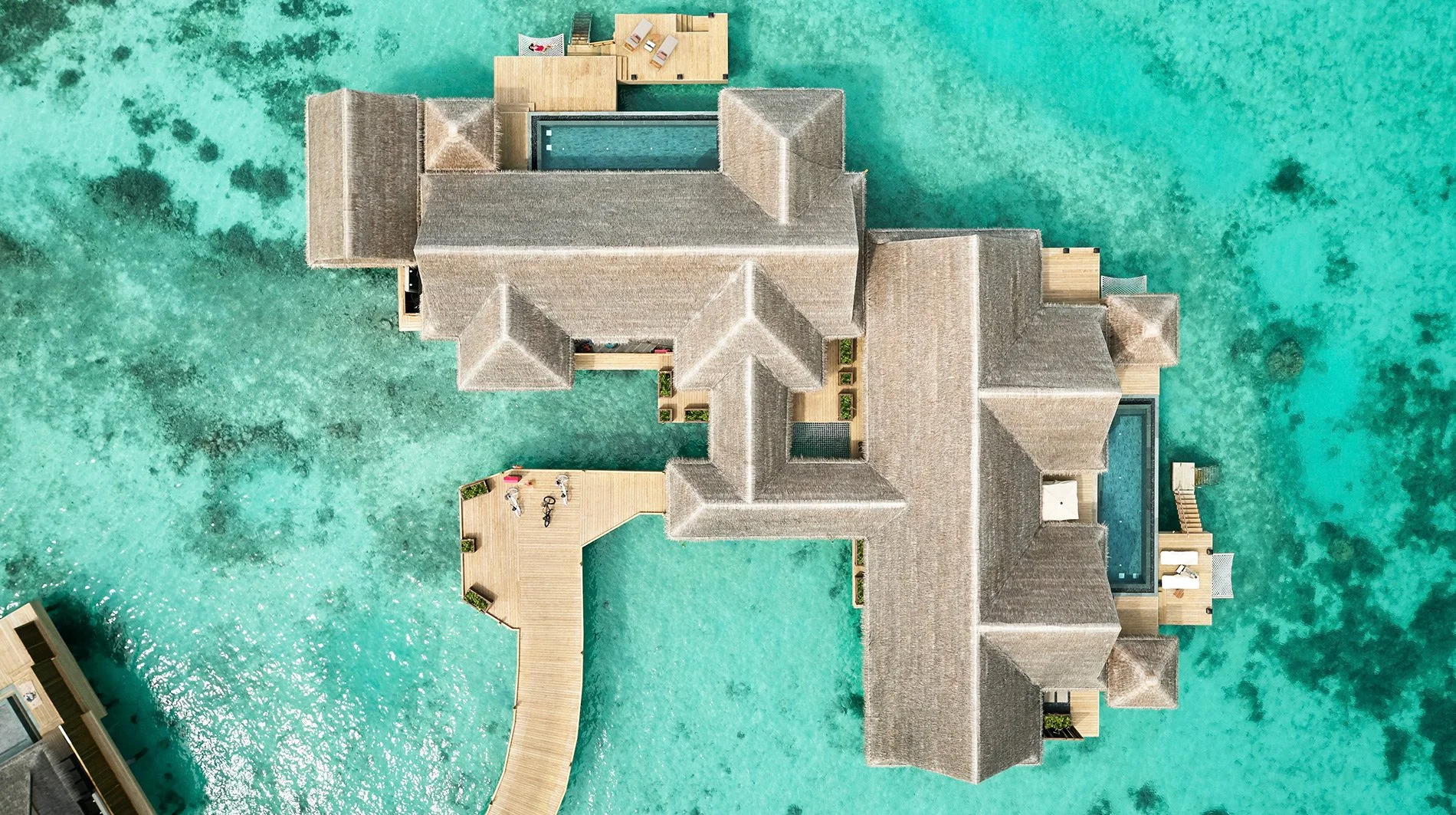
Three Bedroom Ocean Residence with Two Pools: Approximately 4,306 sq. ft. indoors and 10,656 sq. ft. in total, with two king bedrooms, one twin bedroom, two living rooms, two infinity pools, private balconies and a dedicated spa-treatment room above the water.
Three Bedroom Beach Residence with Pool: Approximately 2,734 sq. ft. indoors and 11,980 sq. ft. in total, with two king bedrooms, one twin bedroom, two living rooms, an extra-large pool, open-air dining cabana, fitness room and direct beach access.
Four Bedroom Beach Residence with Pool: Approximately 5,382 sq. ft. indoors and 12,917 sq. ft. in total, arranged as a duplex with four bedrooms, an infinity pool, dedicated Jadugar room and a private buggy with driver for larger family or multigenerational stays.
The figures above distinguish interior area from total villa or residence area because the outdoor footprint can be several times larger than the enclosed rooms. Orientation matters as well: travelers who specifically want evening light should select a confirmed sunset-facing category rather than assuming every overwater villa has the same view.
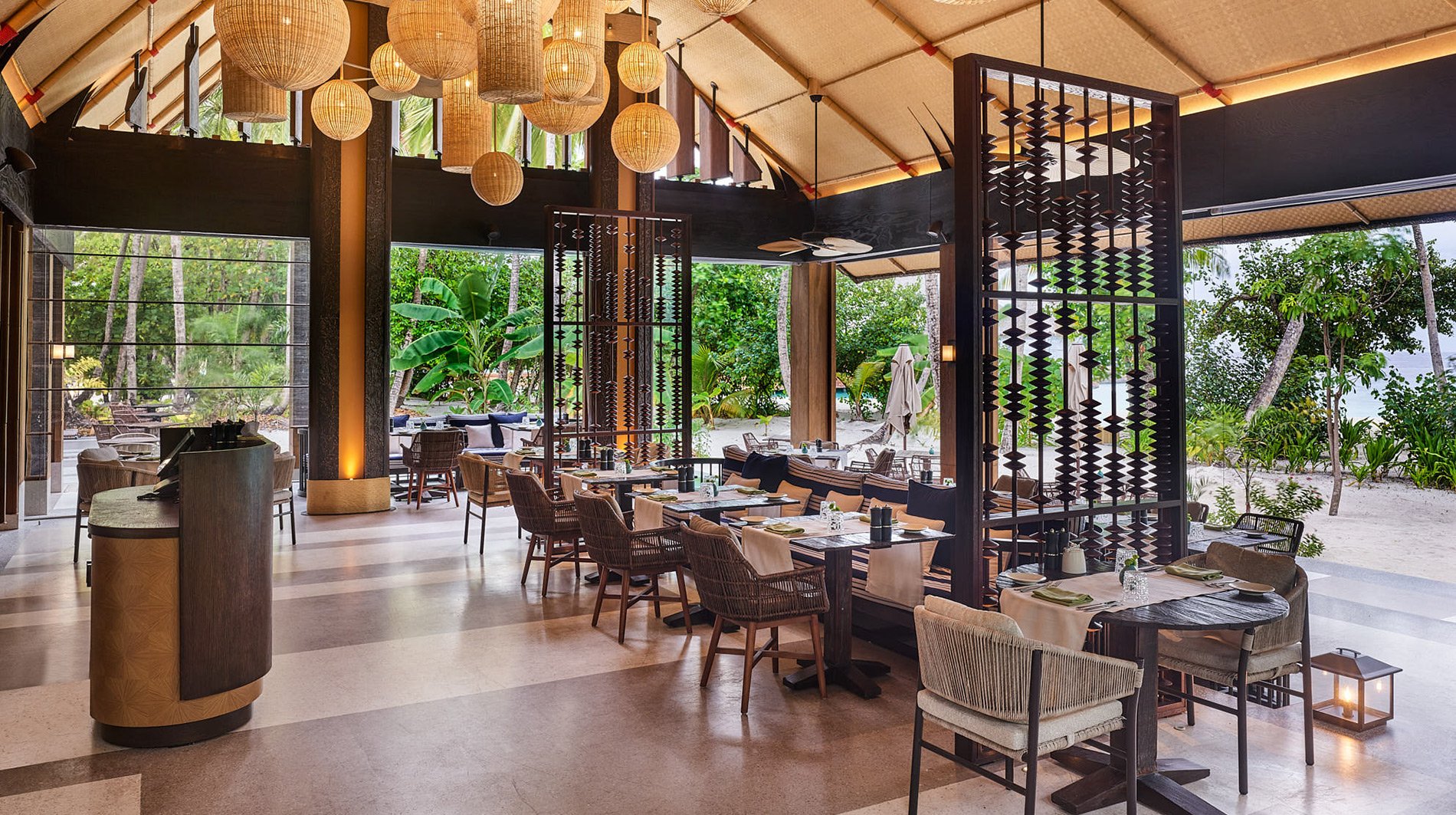
Five Main Dining Venues, From Saoke to the Sand at TUH’U
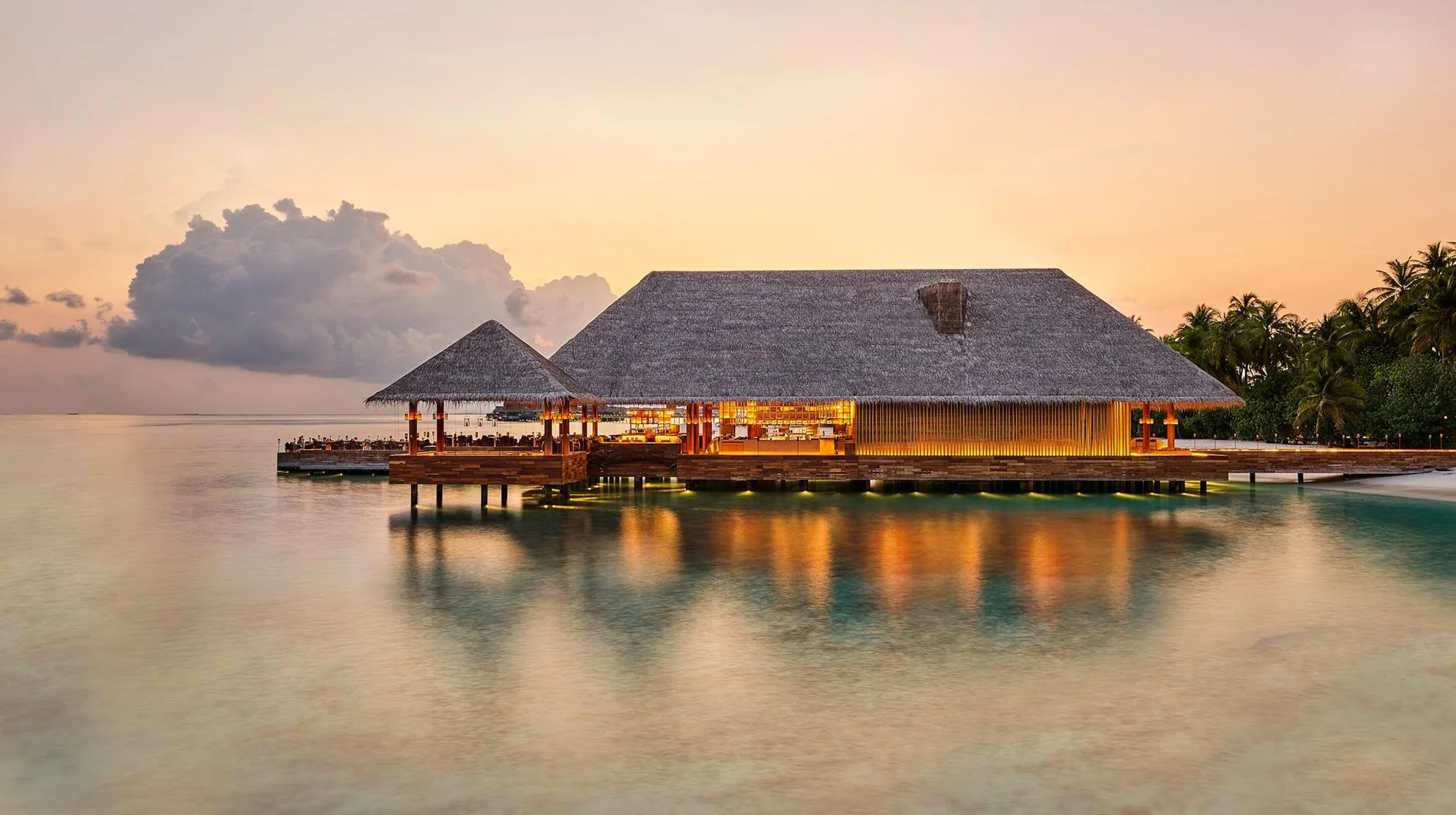
Saoke: Designed by Japanese architect Noriyoshi Muramatsu, this overwater restaurant serves sushi, sashimi, tempura, robata and teppanyaki with a curated sake program; in 2026 it received its first Forbes Travel Guide Four-Star rating, making it one of the few Forbes Star-rated restaurants in South Asia.
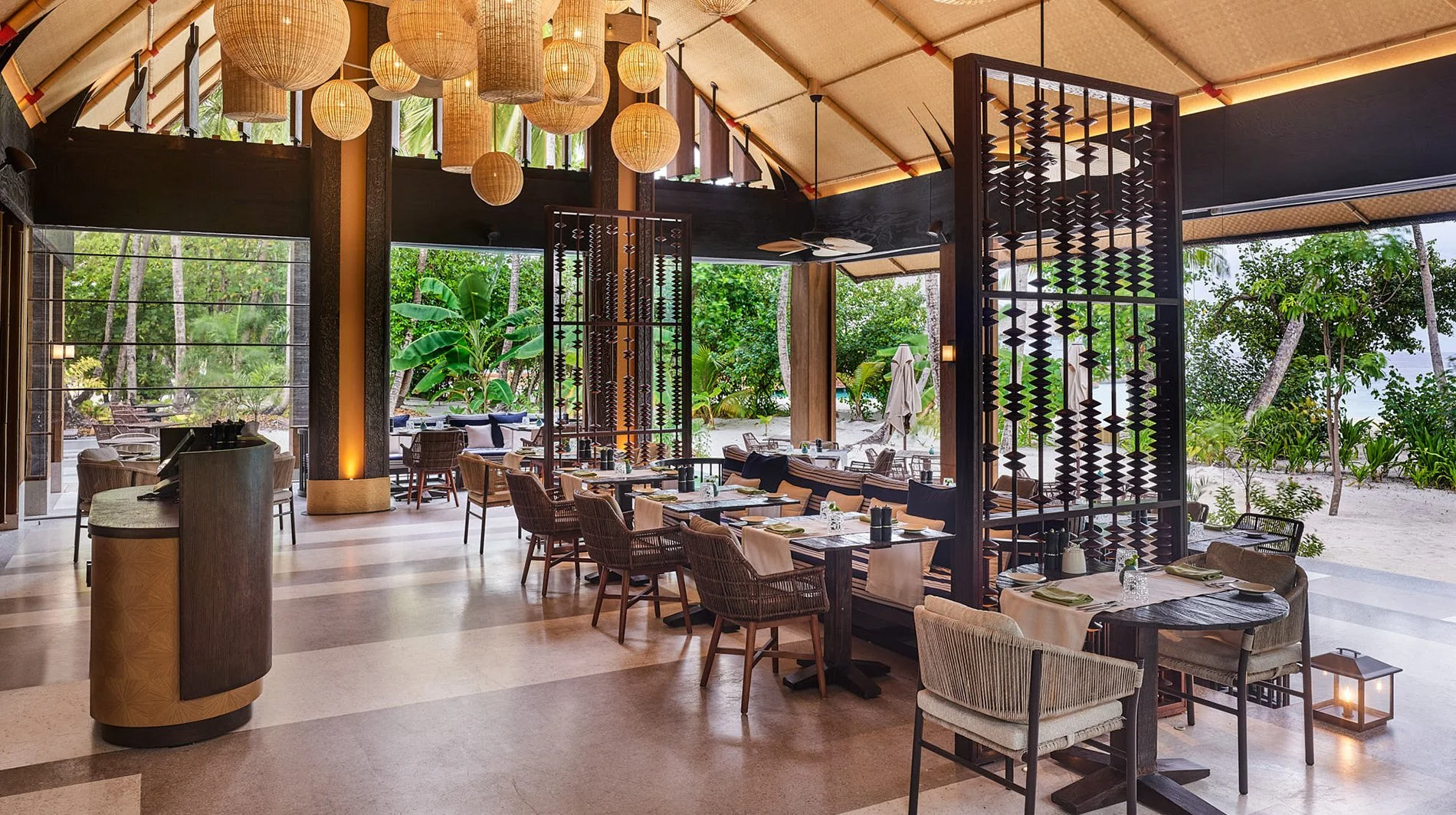
Vandhoo: The resort’s principal breakfast restaurant becomes an Asian dining room in the evening, with Chinese, Indian and Southeast Asian cuisines, indoor and garden seating and seafood that includes daily catch sourced from local fishermen.
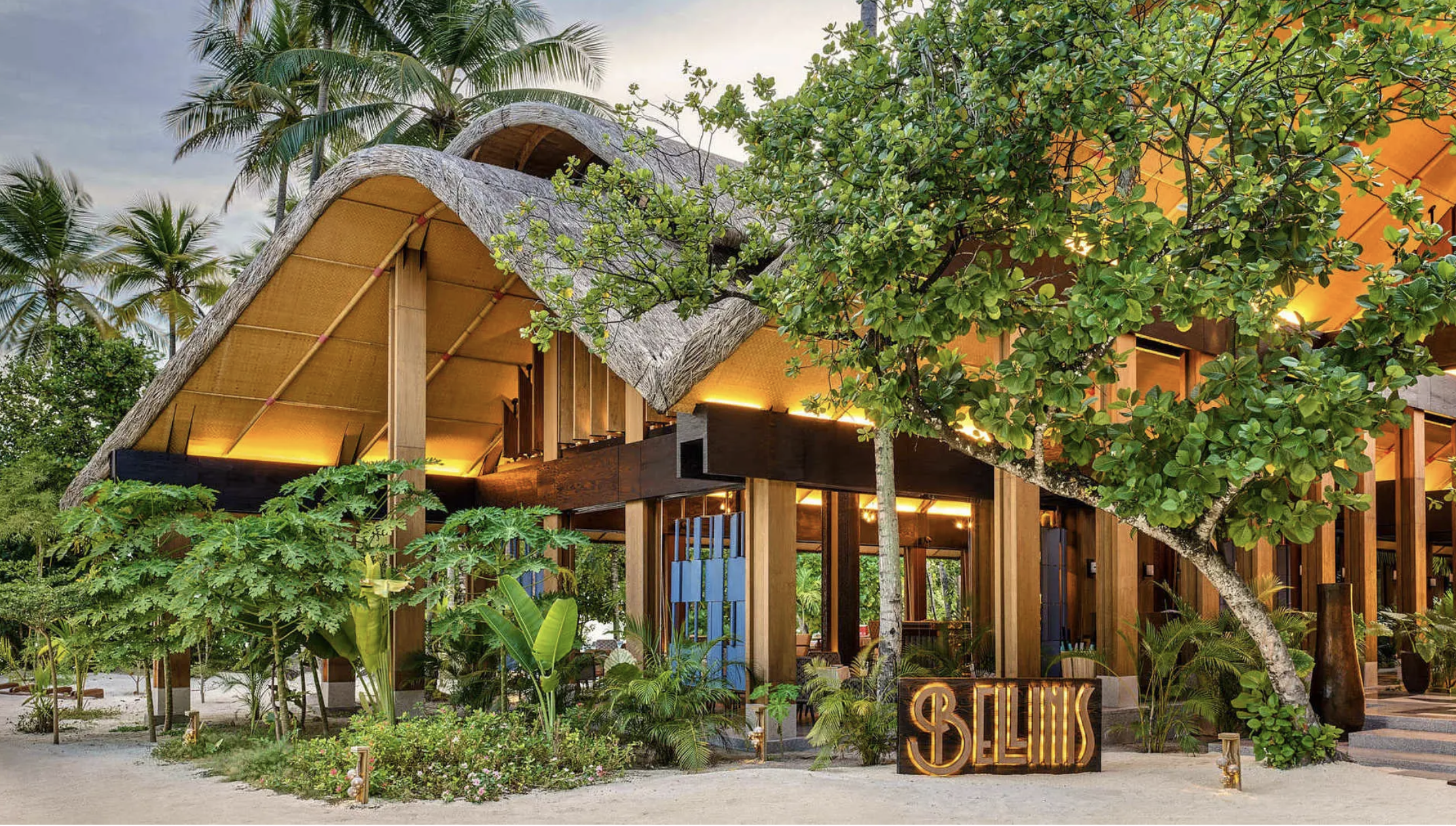
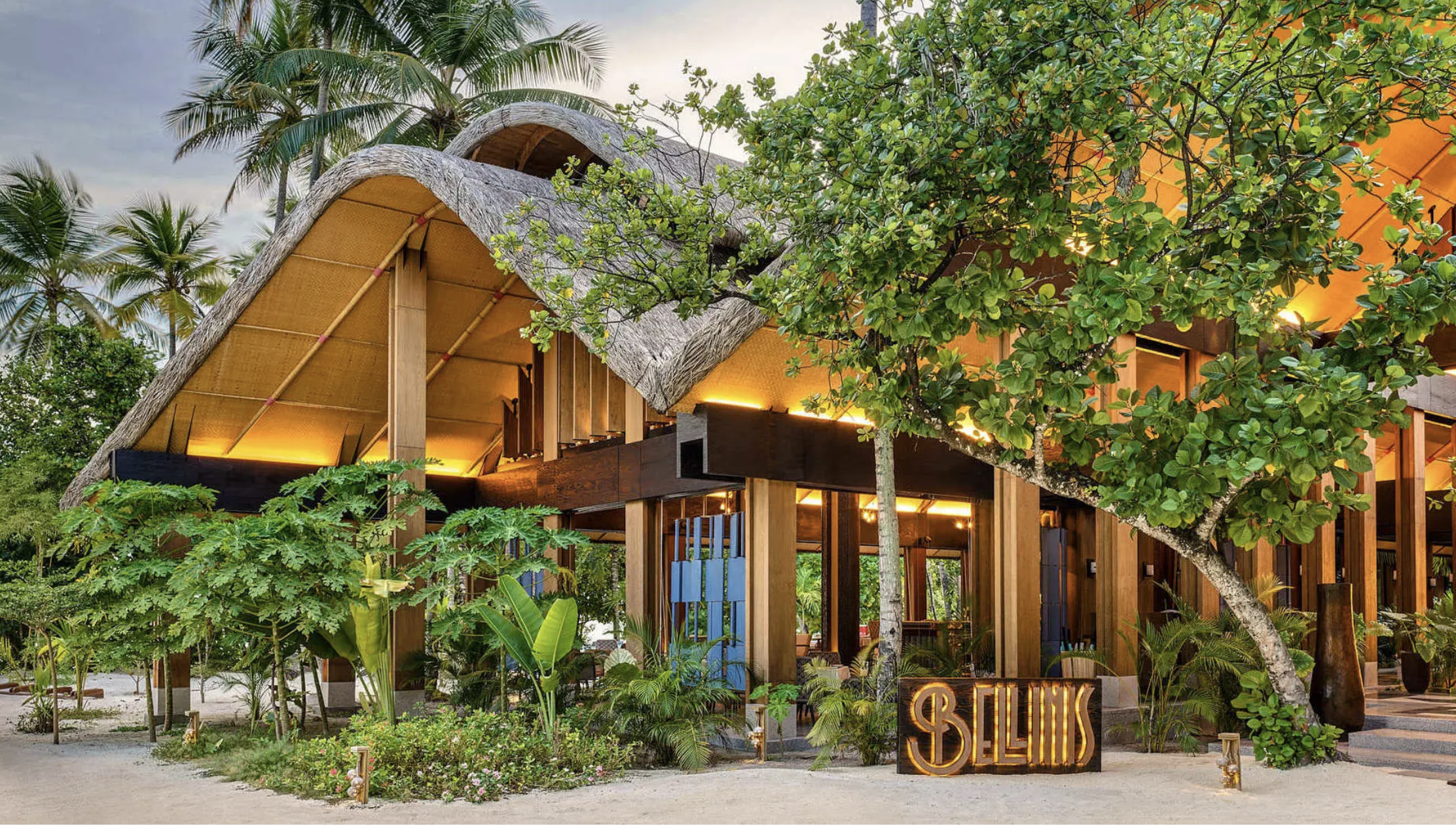
Bellinis: An Italian fine-dining restaurant built around classic regional cooking and carefully sourced ingredients such as aged balsamic vinegar, saffron, caviar and seasonal white truffle, with a polished setting that contrasts with the island’s more casual venues.
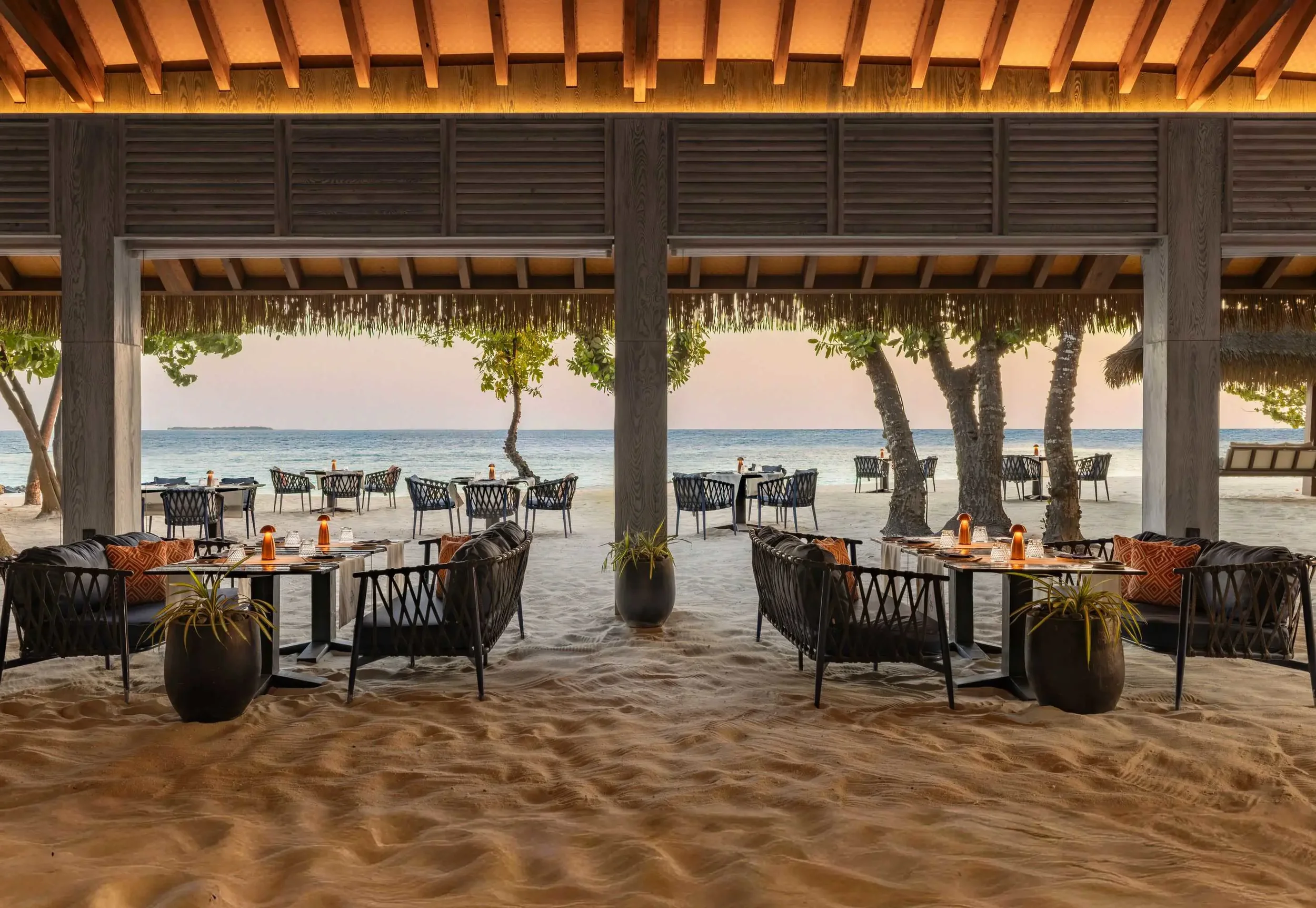
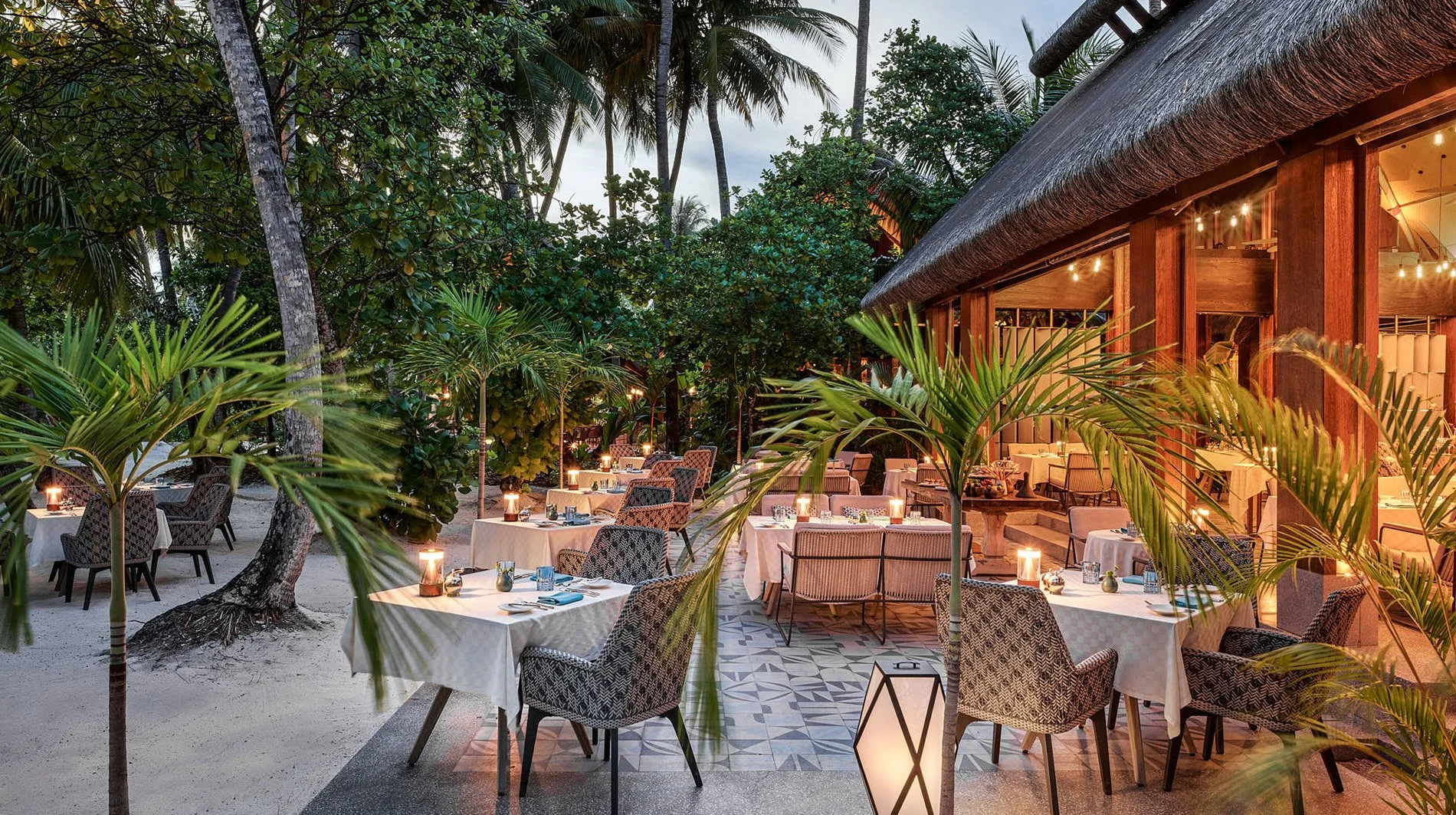
TUH’U: A Levantine restaurant set directly on the sand beneath illuminated palms, serving sharing-style mezze, grilled dishes, seafood, kebabs and desserts in an atmosphere designed around long, social dinners.
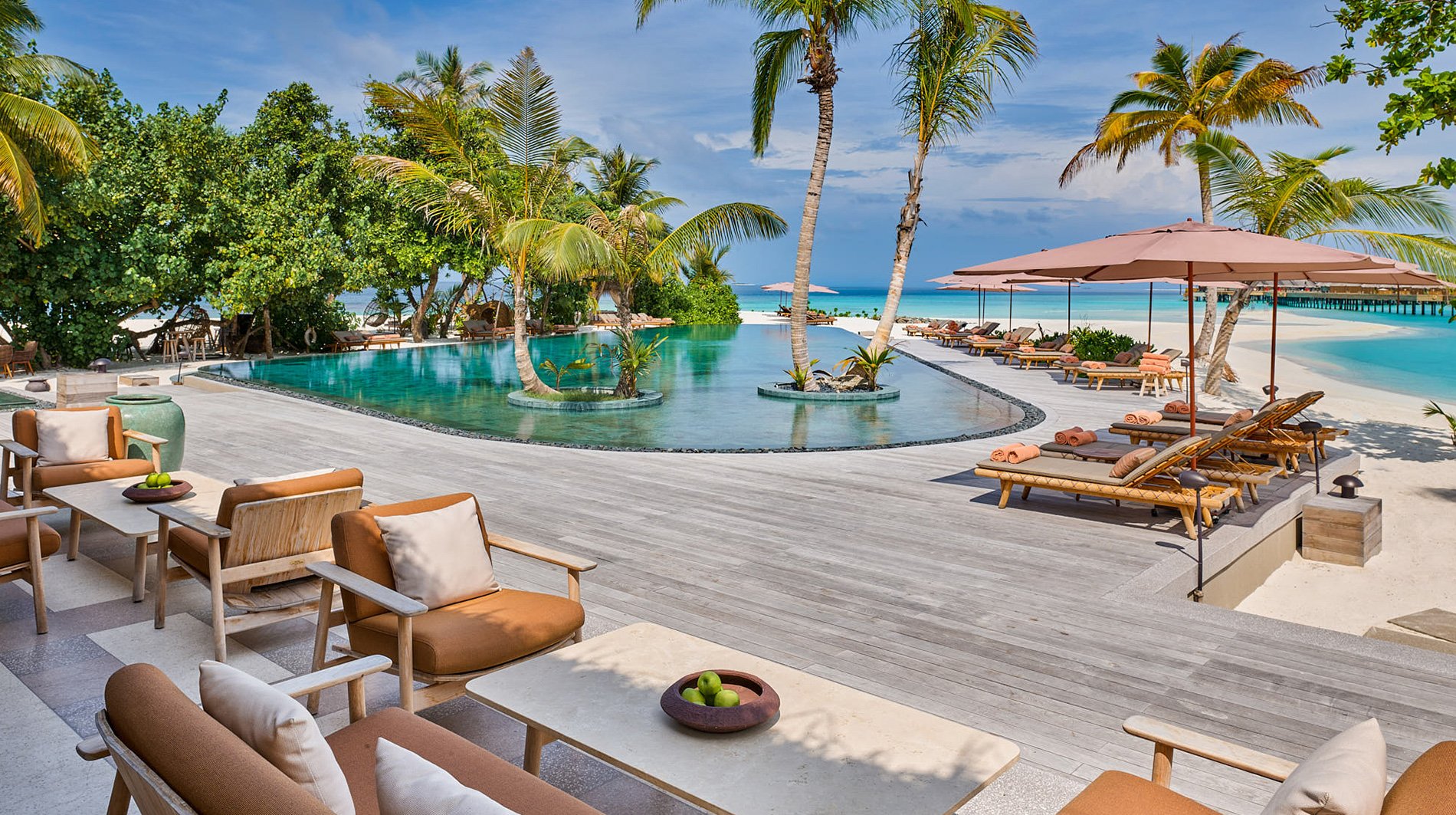
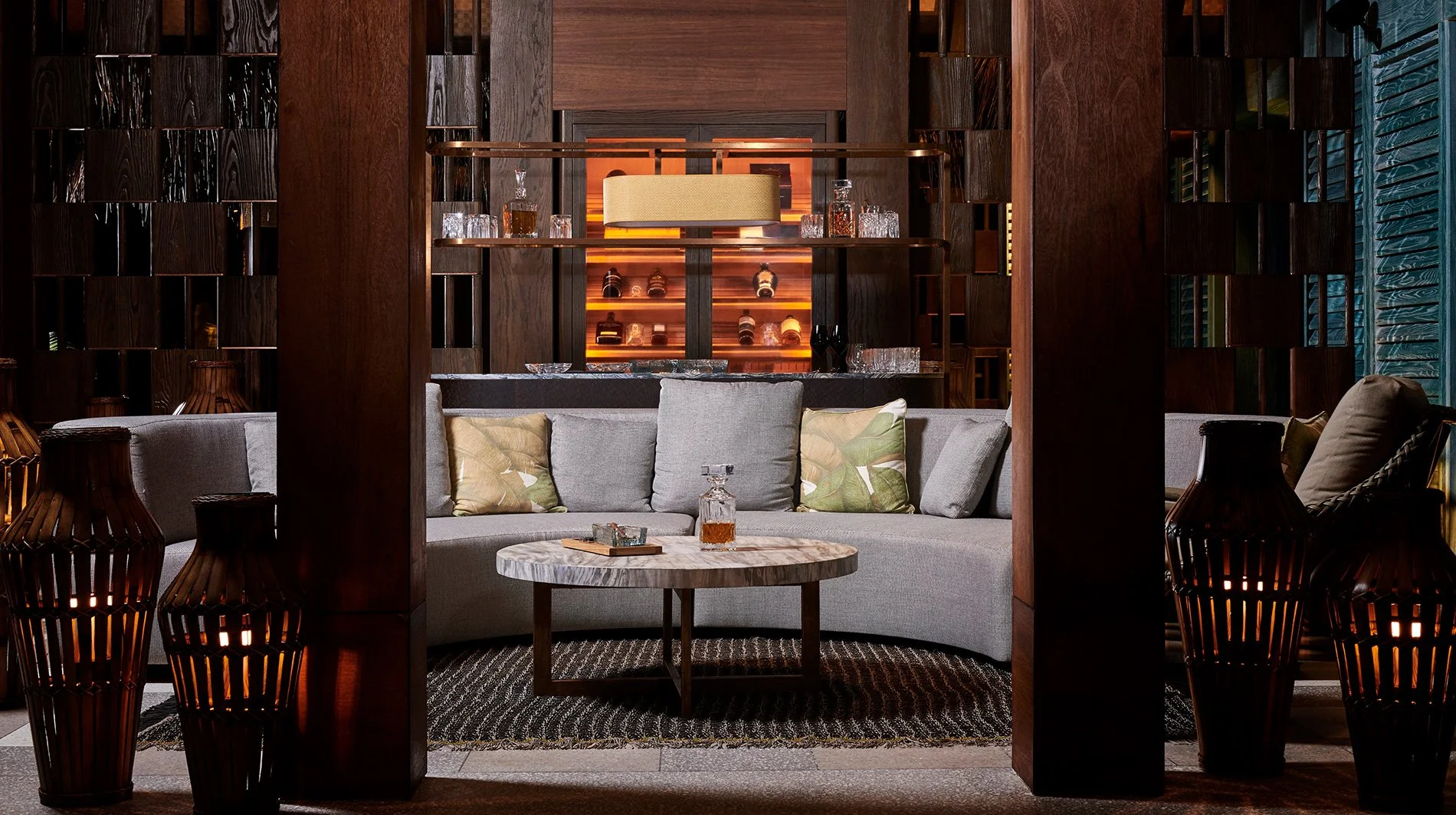
Mura Bar: The poolside hub for lunch, street-food-inspired dishes, cocktails and sunset drinks, with cabanas, infinity pods, live entertainment and a separate whisky and cigar lounge for later in the evening.
La Joie: An all-day chocolate and ice-cream boutique offering 30 house-made ice-cream flavors alongside confectionery, useful for families and for an informal stop between the beach and villa.
Her Kitchen: A hands-on cooking experience inside a professional kitchen where adults and children can learn recipes with JOALI chefs rather than simply watch a demonstration.
Destination Dining: Private meals can be arranged on a sandbank, at the Chef’s Garden, in the Manta Treehouse or in other bespoke island locations, with menus tailored to the occasion and setting.
The variety matters over a longer stay. Japanese, Italian, Levantine and pan-Asian meals create genuinely different evenings, while destination dining and the wine cellar add flexibility for celebrations. Advance reservations are particularly worthwhile for Saoke and for private setups that depend on weather or a specific location.
JOALI BEING Cure Brings the Sister Island’s Wellness Philosophy Here
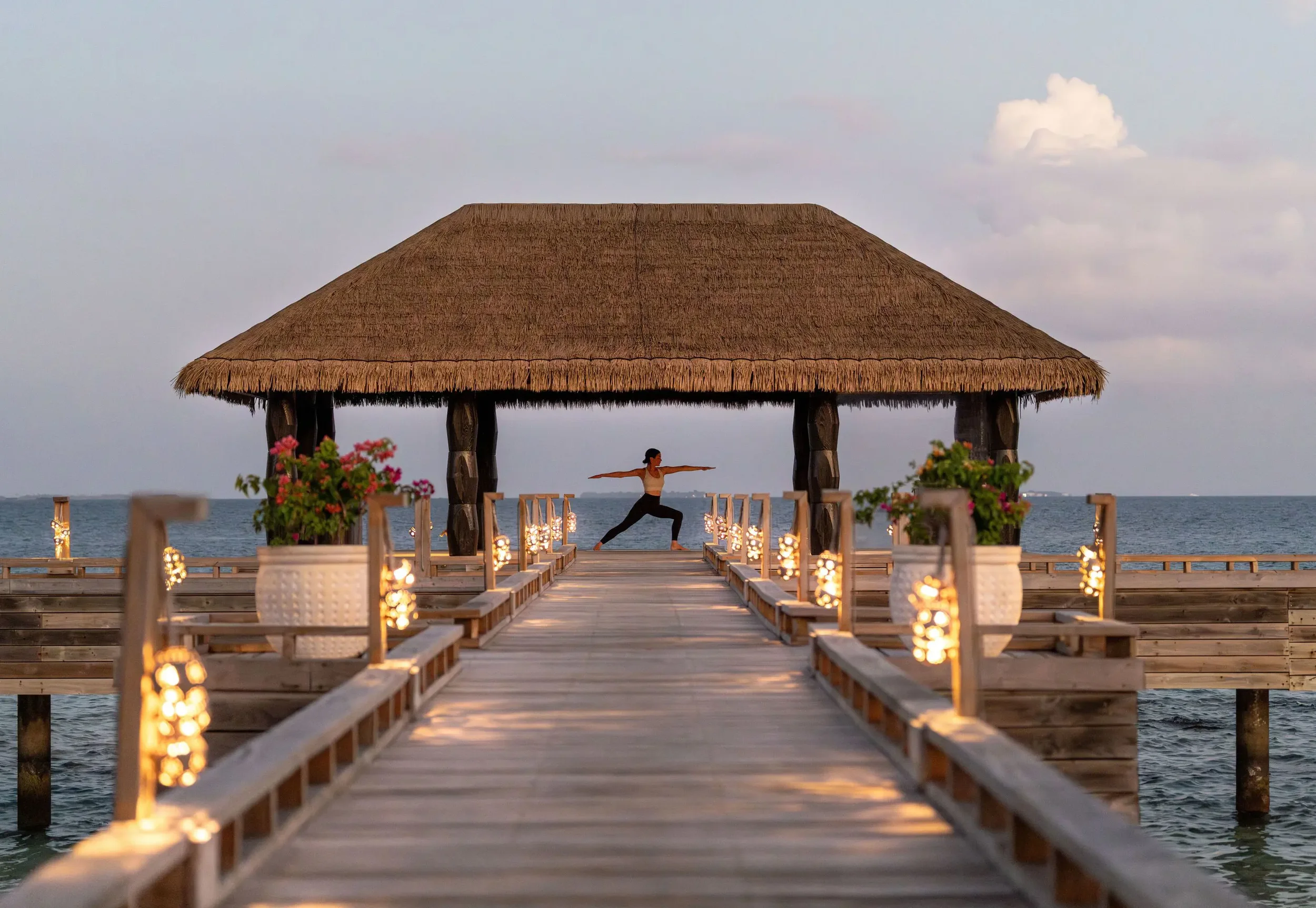
The resort’s spa now operates as JOALI BEING Cure, bringing a condensed version of its sister island’s Joy of Weightlessness philosophy to Muravandhoo. Treatments are organized around four pillars – Mind, Skin, Microbiome and Energy – and combine massage, skincare and bespoke wellbeing journeys with visiting practitioners.
This remains an important distinction from JOALI BEING itself. At JOALI Maldives, wellness is one part of a broader holiday built around art, dining, family and the ocean. Guests can schedule restorative treatments, movement sessions and specialist therapies without committing the entire stay to a structured wellness program.
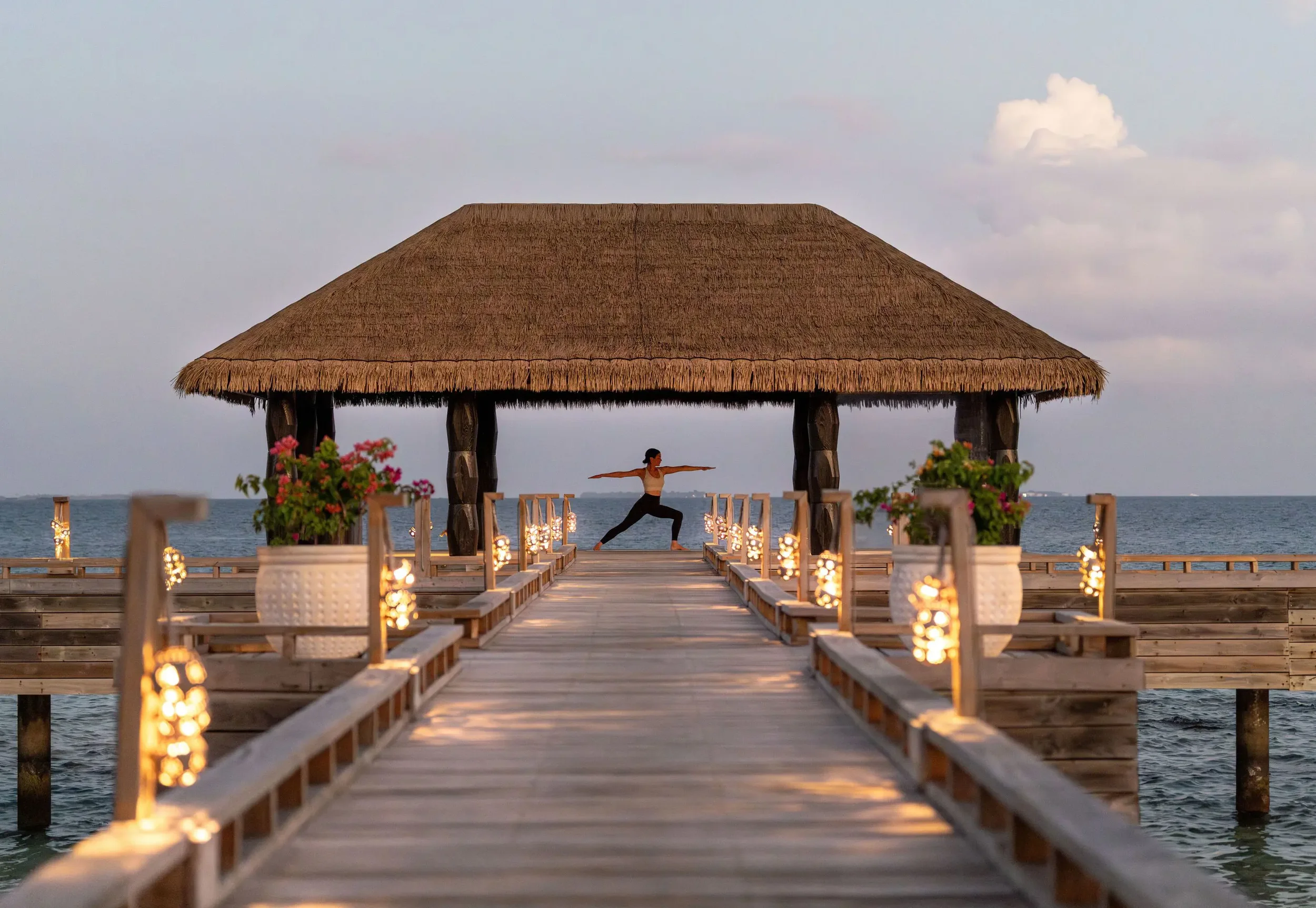
Fitness, yoga and seasonal programming extend the offering beyond the treatment rooms. In September 2026, for example, Global Wellness Weekend included yoga, mindfulness, clay work, running and beach fitness, showing how the resort increasingly connects creative activity with physical wellbeing.
Art Tours, Coral Planting and Days on the Water
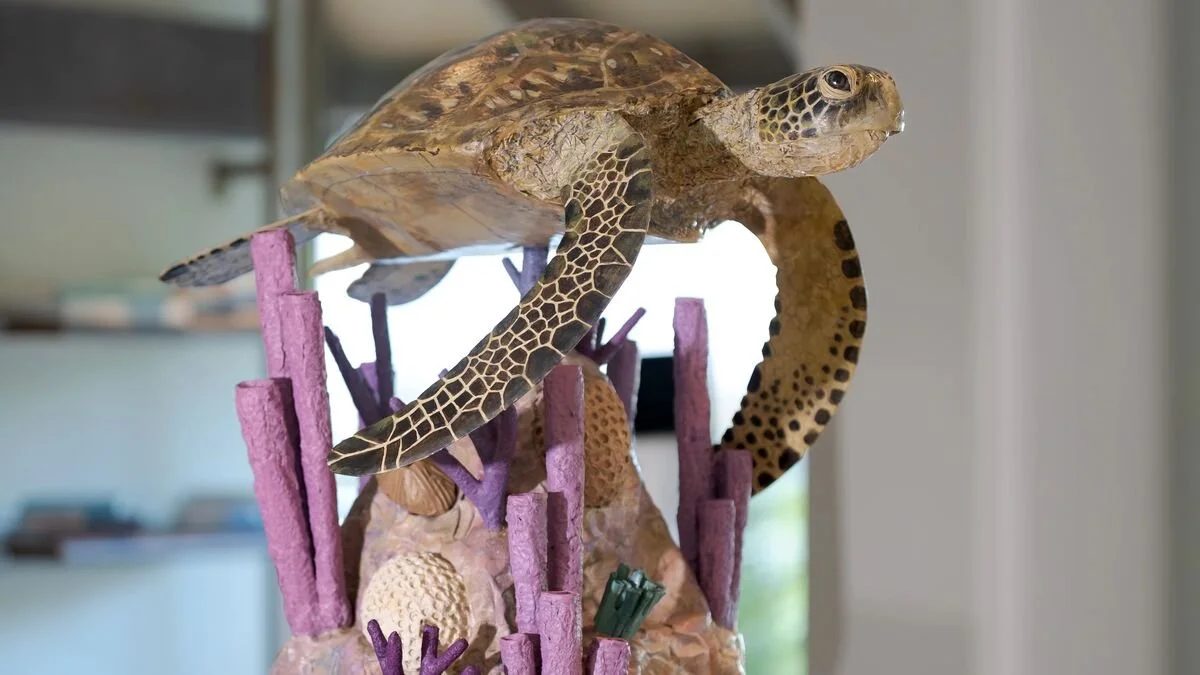
The island’s most distinctive activity is the art journey. Guests can follow the Art Map independently or join guided experiences that explain the artists, materials and environmental ideas behind installations spread throughout the resort. Workshops at the Art Studio move the experience from viewing to making, with ceramics, painting and visiting-artist sessions appearing throughout the year.
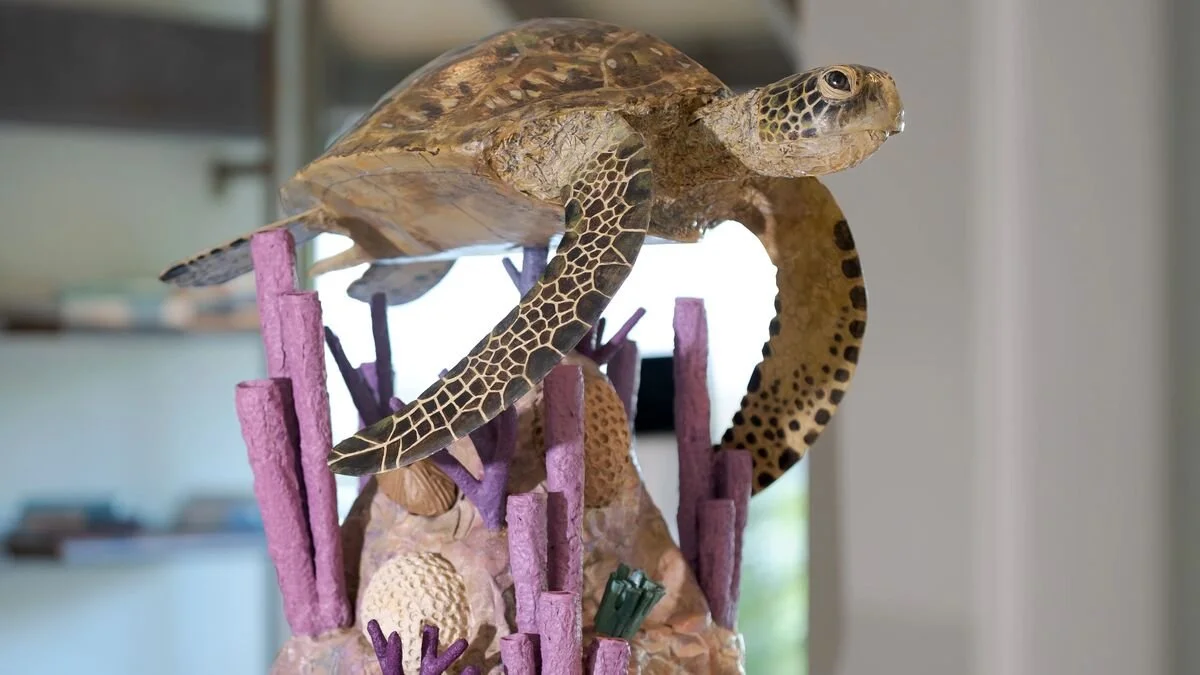
Raa Atoll supplies the other half of the activity program. Snorkeling, diving, paddleboarding, kayaking, seabob outings, jet skiing, fishing, sunset cruises and dolphin trips can all be arranged, with schedules shaped by weather and sea conditions. The resort also offers access to manta-ray and turtle encounters depending on season and location.
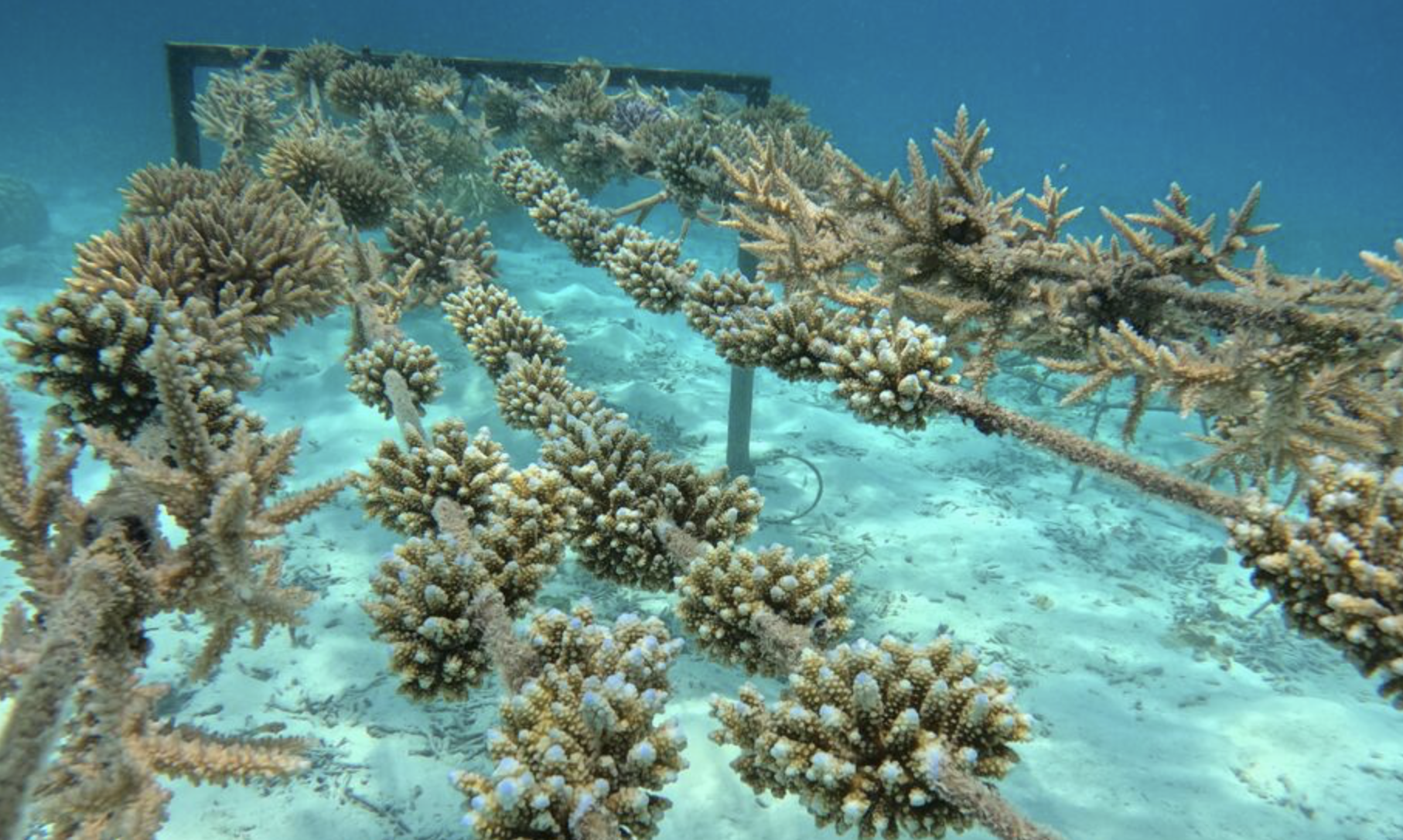
Marine conservation is increasingly visible in guest programming. JOALI’s Marine Lab leads coral restoration and education, and private coral planting or adoption sessions allow visitors to support monitored nursery structures rather than treating conservation as a background message. Day trips to JOALI BEING can also be arranged through a Jadugar, subject to availability on the day.
Muramas Gives Children Their Own Creative Island
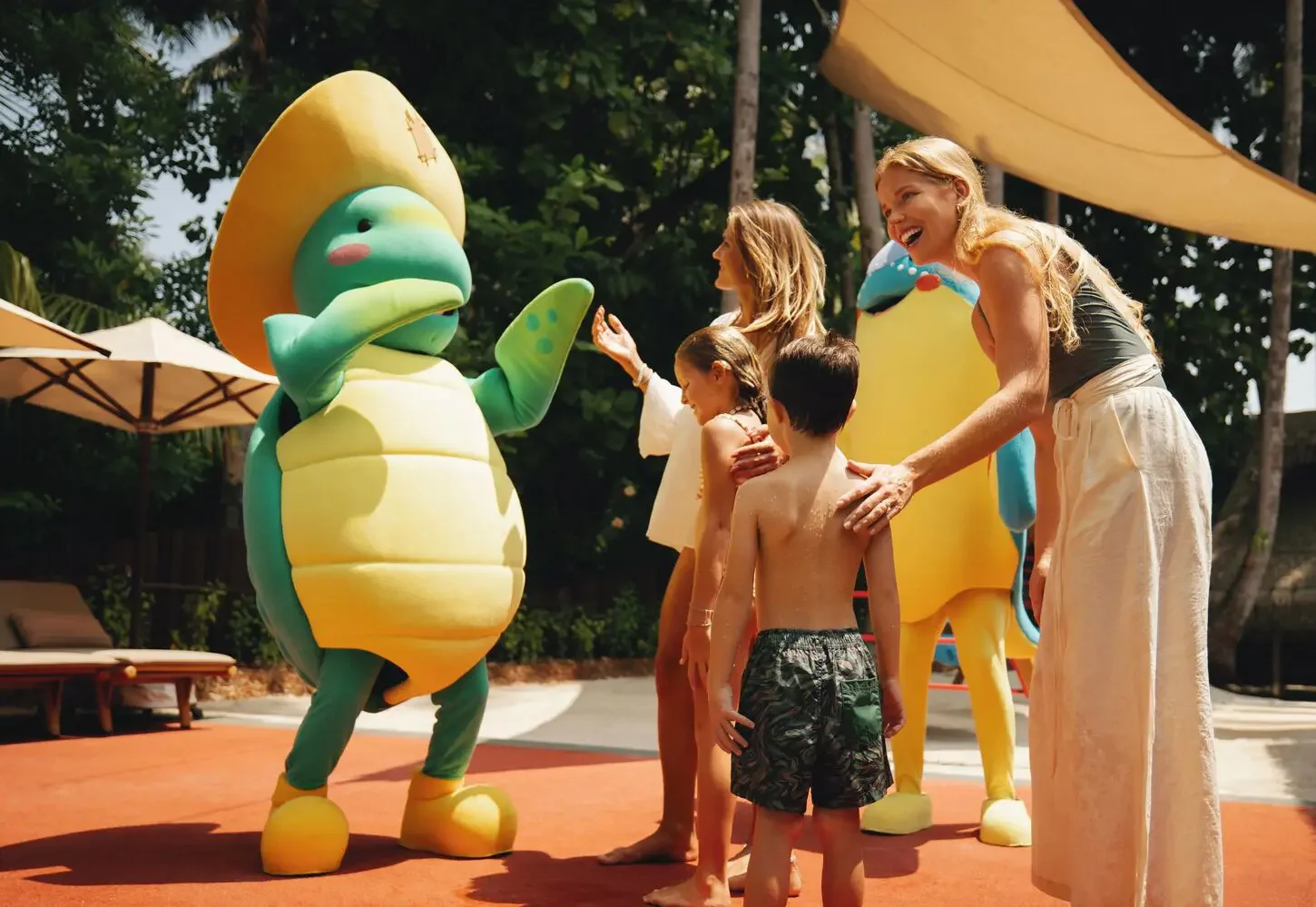
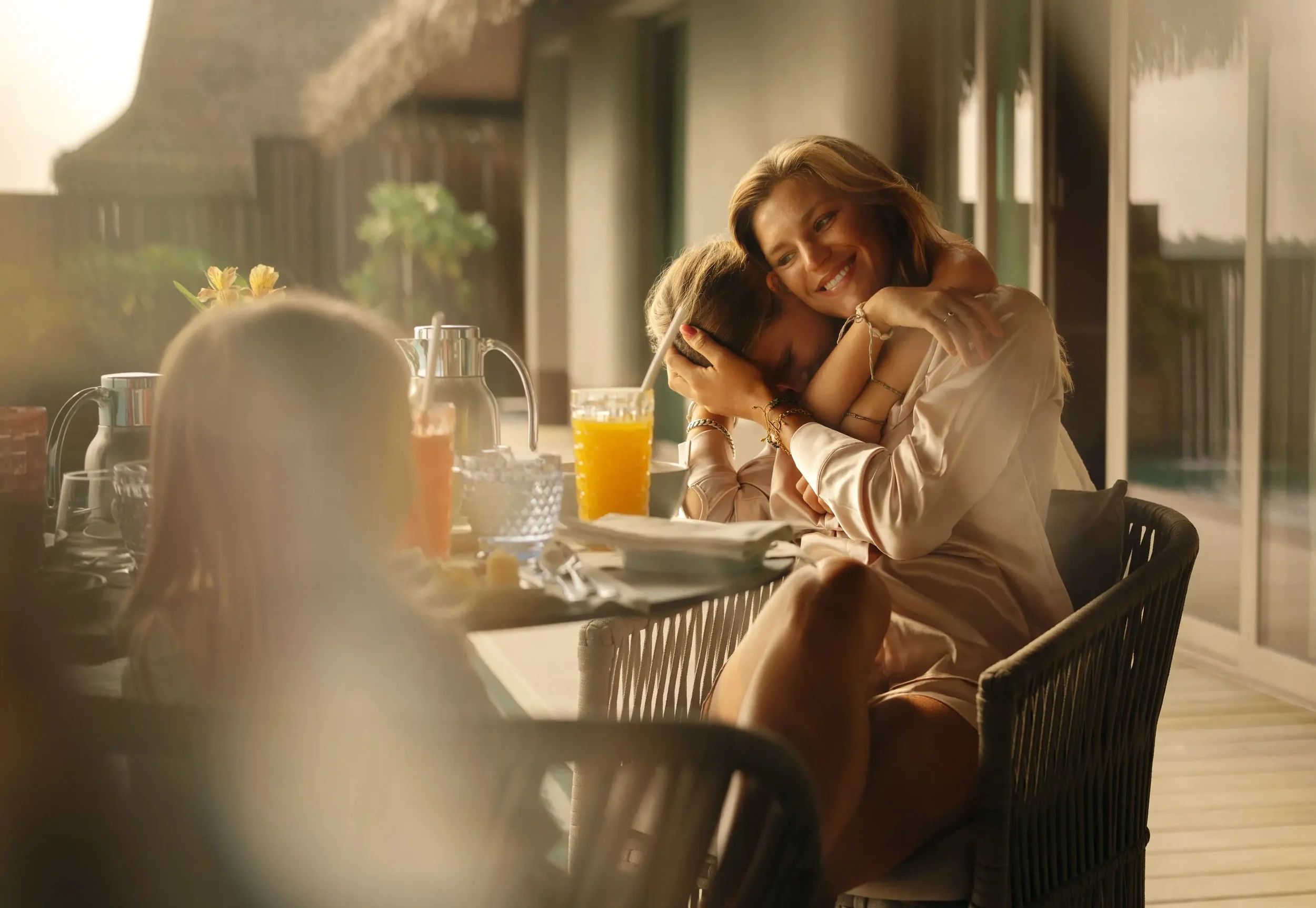
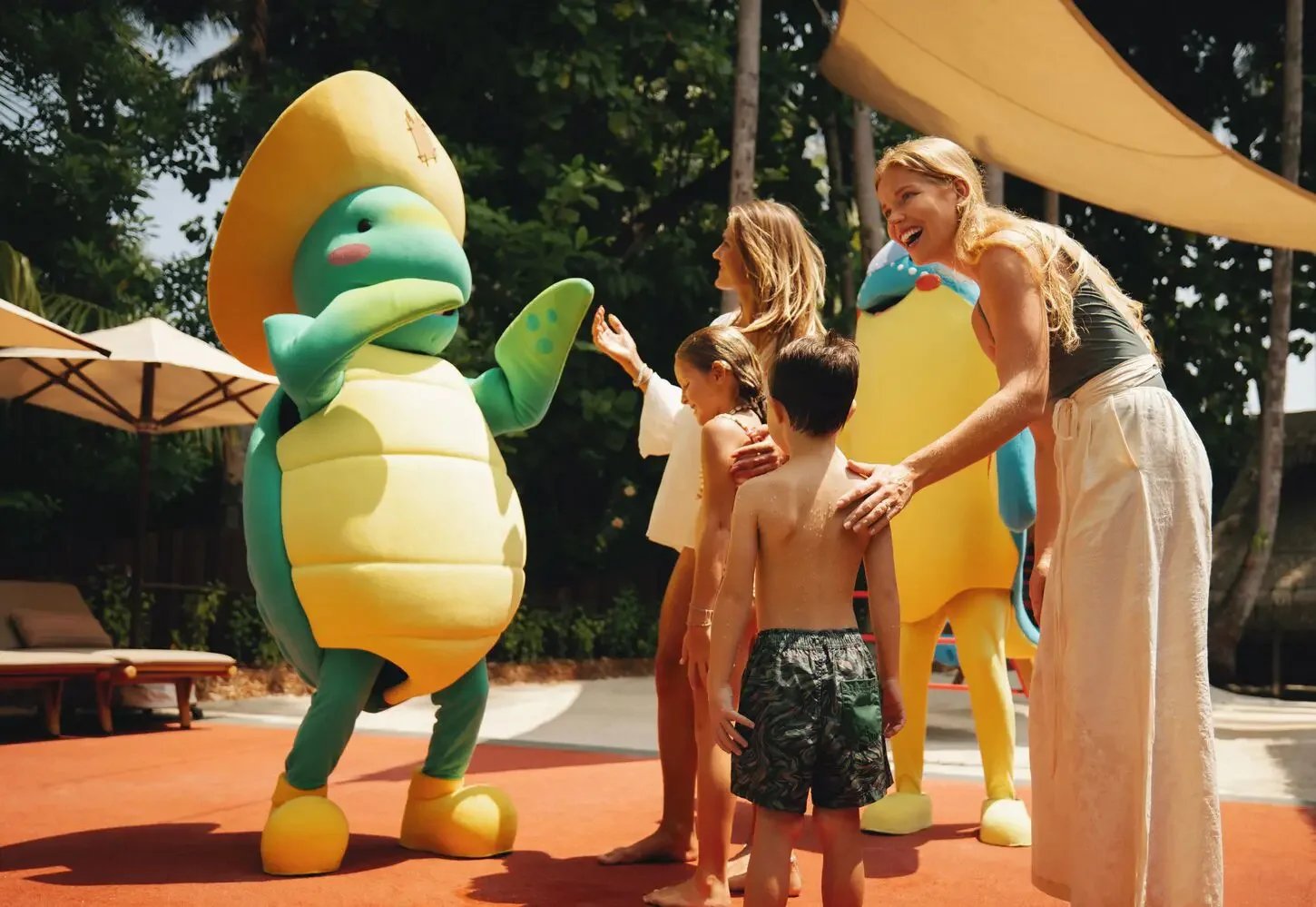
Muramas Kids Club is designed primarily for children aged four to twelve and connects its program directly to JOALI’s Creative Living philosophy. Culture, marine life, culinary activities, nature-led learning and art all appear in the schedule rather than separating the children’s program from the identity of the wider resort.
JOALI’s current published information states that access is complimentary for ages four to twelve. Children under four are welcome but must remain with a parent, guardian or babysitter. A parental disclaimer is required when leaving children in the club, and babysitting is available for ages zero to twelve at an additional hourly charge.
The website currently contains a small operating-hours inconsistency: the main Kids of JOALI page lists 9:00 a.m. to 7:00 p.m., while its FAQ states 9:00 a.m. to 6:00 p.m. Families should confirm the daily closing time during their stay rather than planning around either figure in advance.
Accommodation is equally important for families. The two-bedroom categories avoid the need for separate villas, while the three- and four-bedroom residences add dining areas, multiple pools, fitness space and, at the top end, a dedicated buggy and driver.
EarthCheck Gold and a Reef Program With 11,124 Coral Fragments
JOALI describes its sustainability strategy as Joy of Caring, with four focus areas covering environmental protection, community wellbeing, women’s empowerment and more responsible consumption. At property level, JOALI Maldives is EarthCheck Gold Certified, giving the environmental program an external certification rather than relying entirely on brand language.
The most current measurable example is underwater. In September 2026, the JOALI Reef Restoration Programme reported 11,124 coral fragments planted across nursery systems and artificial reef structures, including 1,500 fragments already outplanted onto the house reef. The Marine Lab manages the process and monitors the fragments as they develop into established colonies.
On land, the brand supports local and regional projects through the JOALI Sustainability Fund and continues to give Maldivian artists and craftspeople a role in the creative program. Atölye4N’s original site planning also documented coral mapping and the relocation of more than 700 coconut trees before construction, showing that the environmental conversation began at the development stage.
These initiatives should still be kept in proportion. A remote resort reached primarily by seaplane has unavoidable resource and transport impacts, so the strongest sustainability case comes from documented certification, reef restoration and specific operating practices rather than broad claims of being environmentally neutral.
Accessibility Needs to Be Planned at Villa Level
JOALI Maldives’ official website does not currently publish a detailed accessibility guide identifying specific adapted villas, roll-in showers, transfer equipment, hearing features or beach-access provisions. Because the property is spread across sand, timber jetties and individual villas, those practical details matter more than a generic statement that the resort is accessible.
Third-party listings note features such as a front-entrance ramp, well-lit paths and an accessible airport shuttle, but these should not be treated as substitutes for confirmation from JOALI. Travelers using wheelchairs or mobility aids should ask the resort to identify the most suitable villa, step-free routes to restaurants and spa areas, buggy-transfer arrangements, bathroom clearances and how seaplane boarding will be handled.
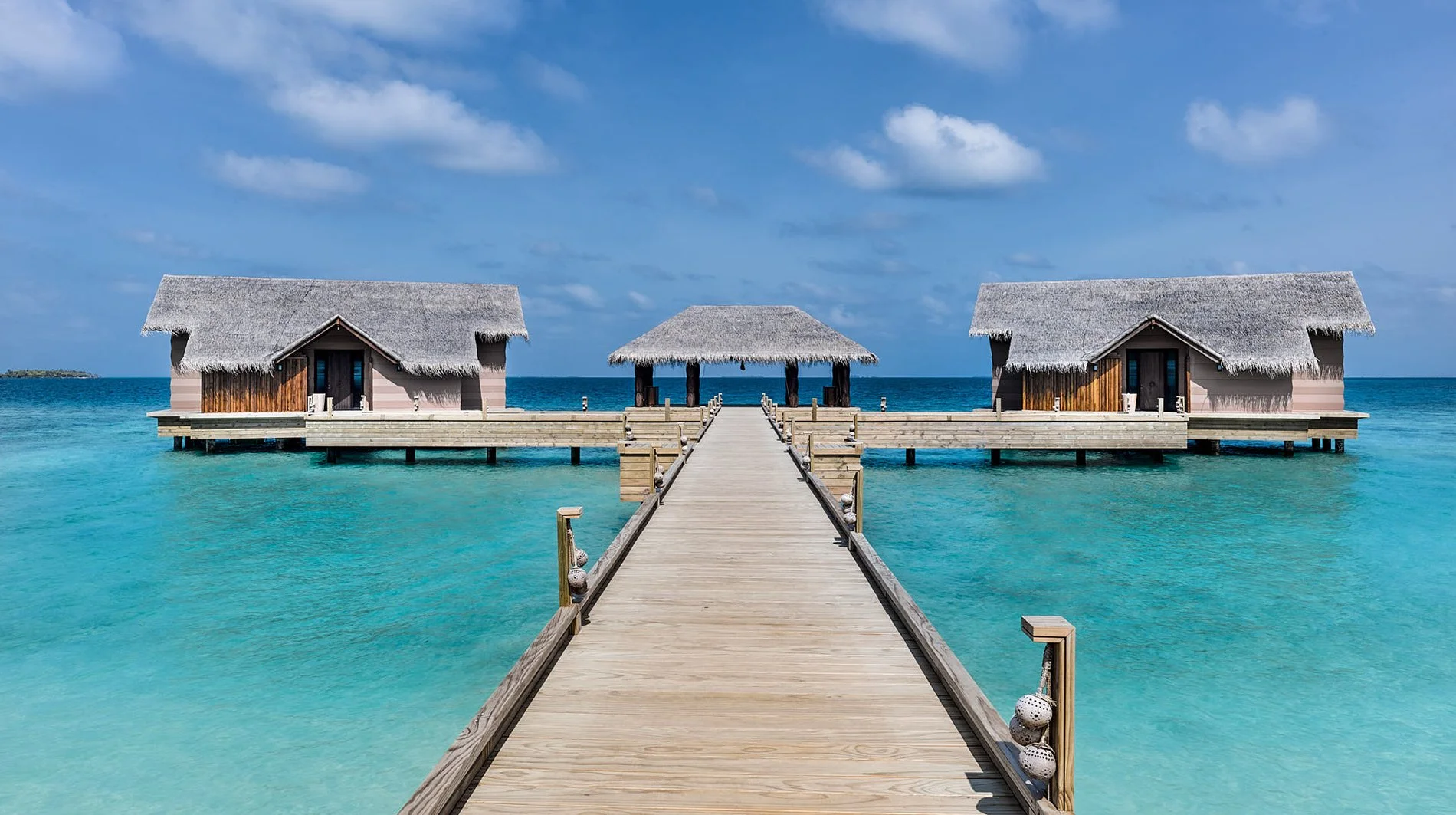
Overwater accommodation can introduce additional thresholds and long jetty distances, while beach villas may involve sand between the villa and common areas. Matching the category to the traveler’s individual requirements before arrival is therefore more useful than assuming all 73 accommodations work in the same way.
Raa Atoll Beyond Muravandhoo
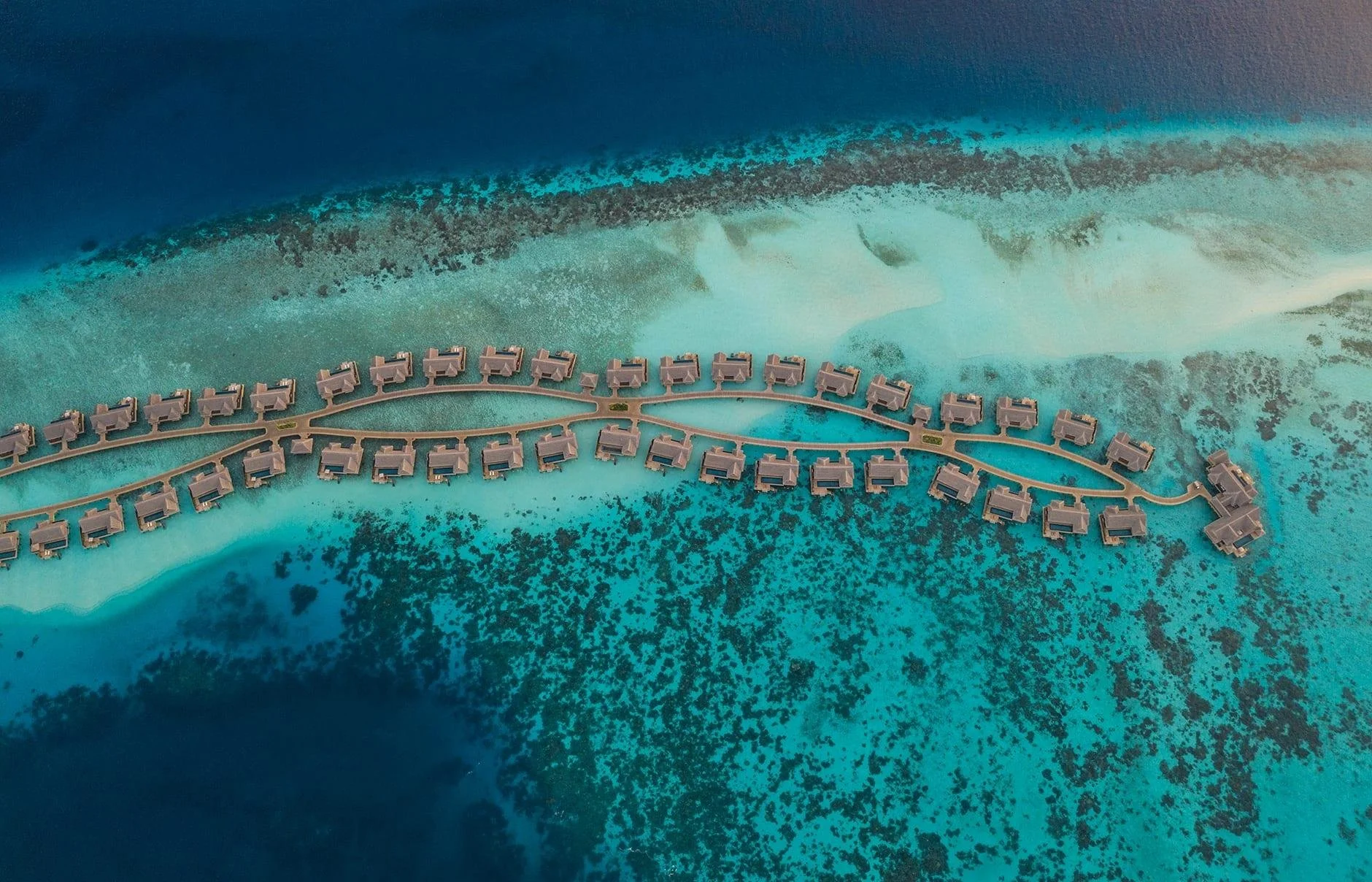
Raa Atoll sits well north of Malé and remains less densely developed than several central Maldivian atolls. Its geography combines deep outer ridges with shallower interior plateaus, creating habitat for corals, reef fish, turtles and pelagic species. That setting is central to JOALI’s appeal because the island experience is as much underwater as it is on the beach.
Excursions can extend beyond Muravandhoo to neighboring reefs, sandbanks and inhabited islands, where arranged visits provide a different perspective on Maldivian life than a private resort island can offer. Fishing and boat trips also connect the stay with the atoll’s long maritime traditions, while seasonal manta encounters give the northern location a specific wildlife dimension.
Travelers interested in a contrasting second island can pair JOALI Maldives with JOALI BEING, located elsewhere in the same atoll. The short inter-island journey changes the emphasis from art and broad resort life to a more structured wellbeing environment without requiring a return through Malé.
A 45-Minute Seaplane Is the Standard Arrival
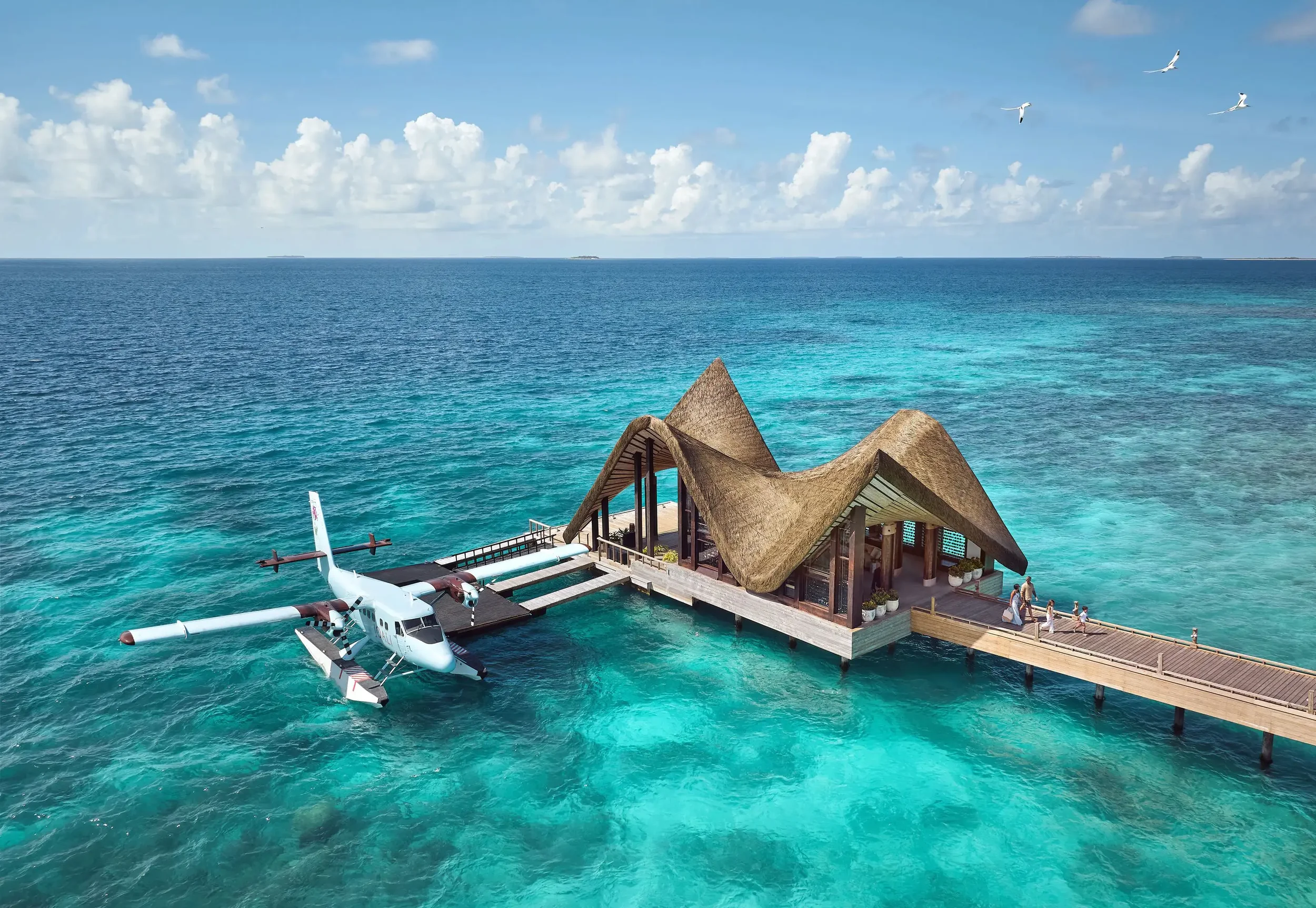
Velana International Airport (MLE): JOALI Maldives is reached most commonly by a shared seaplane flight of approximately 45 minutes from Malé to Muravandhoo Island.
JOALI Airport Lounge: Guests with pre-arranged transfers are met after international arrival and escorted to JOALI’s private lounge before the seaplane sector, where waiting time depends on the day’s flight sequence and weather.
Private Seaplane Charter: A private seaplane can be arranged for travelers who want greater control over the transfer experience, subject to daylight operating conditions and aircraft availability.
Late International Arrivals: Seaplanes operate only during daylight hours, so flights landing too late for the day’s final transfer may require an overnight stay near Malé before continuing to the resort the following morning.
Private Aviation: JOALI identifies Maafaru Airport and Velana International Airport as the closest airports relevant to private-jet travel, with onward arrangements coordinated separately.
Speedboat or Yacht: A direct sea transfer from Malé can be arranged but is not recommended for normal arrivals because the journey can take approximately six to eight hours depending on conditions.
Island Time: Since 1 July 2026, JOALI Maldives operates on GMT+6, one hour ahead of Malé time, while transfer schedules still need to be coordinated around the airport’s local time and daylight seaplane operations.
Creative Living Works Best When the Island Is Given Time
JOALI Maldives rewards travelers who notice details. The reason to stay is not simply the private pool, turquoise water or overwater villa – those are familiar ingredients in the Maldives. What changes the experience here is the way art, design and family life have been given equal importance alongside them.
A day might move from breakfast at Vandhoo to a ceramics session, snorkeling with the Marine Lab, an afternoon treatment at JOALI BEING Cure and dinner above the water at Saoke. None of those elements needs to dominate the trip, but together they create an island with more internal variety than a resort built almost entirely around beach and spa time.
The strongest stays leave room for that variety. Muravandhoo is small enough to understand quickly, yet the collection, reef, restaurants and family programming benefit from several unhurried days. By the end, the manta-shaped arrival jetty, Porky Hefer’s treehouse and the curve of the overwater villas become part of one coherent story rather than separate design gestures.