Hudson Valley, New York | Wildflower Farms, Auberge Collection
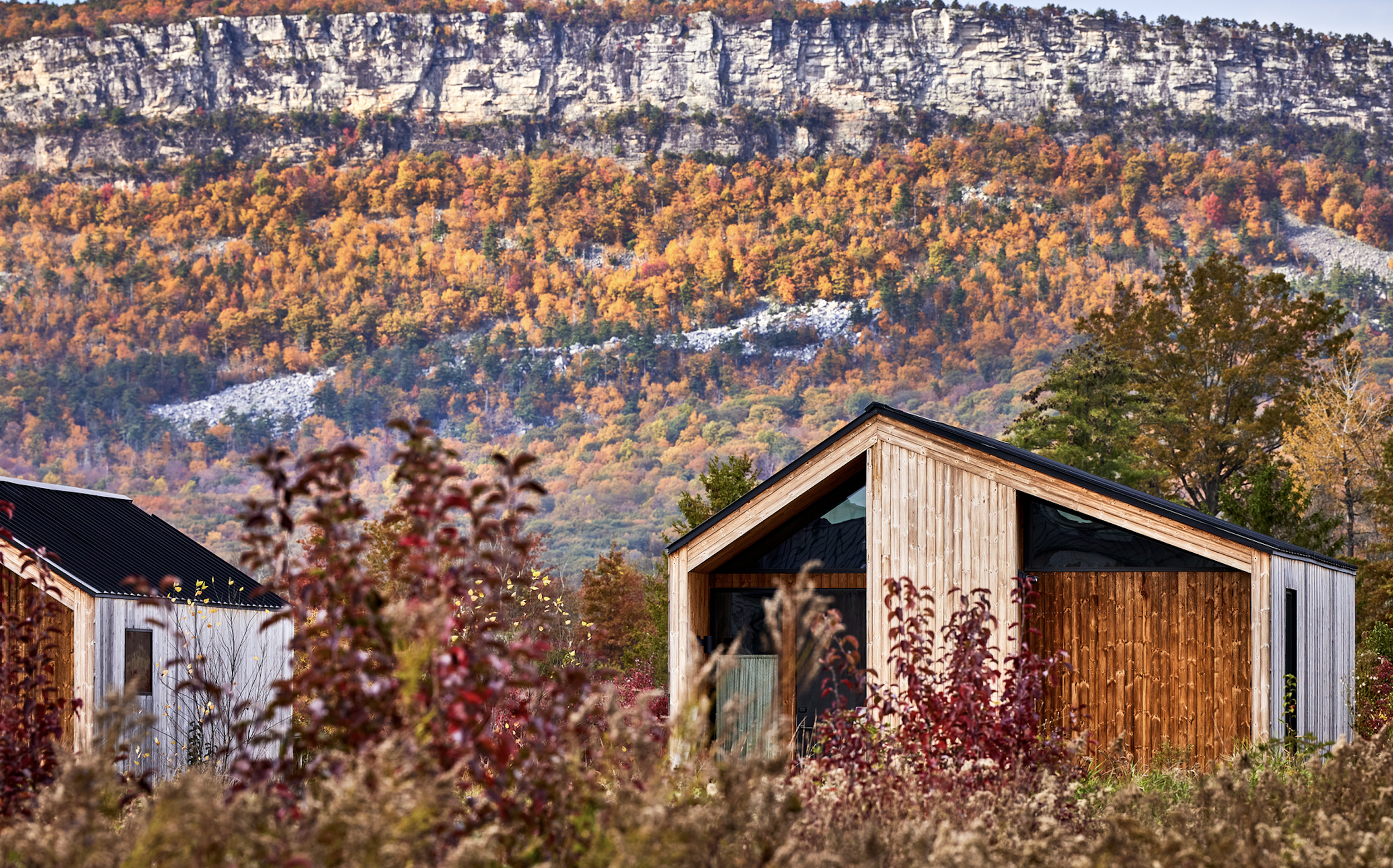
A Country Escape Beneath the Shawangunk Ridge
A few days in the Hudson Valley can begin with a fairly simple ambition: leave the city, spend more time outside, and sit down to a good dinner without watching the clock. At Wildflower Farms, those plans might expand to include a morning in the greenhouse, a cooking class, or a hike beneath the cliffs of the Shawangunk Ridge. They might also give way to an afternoon on your terrace.
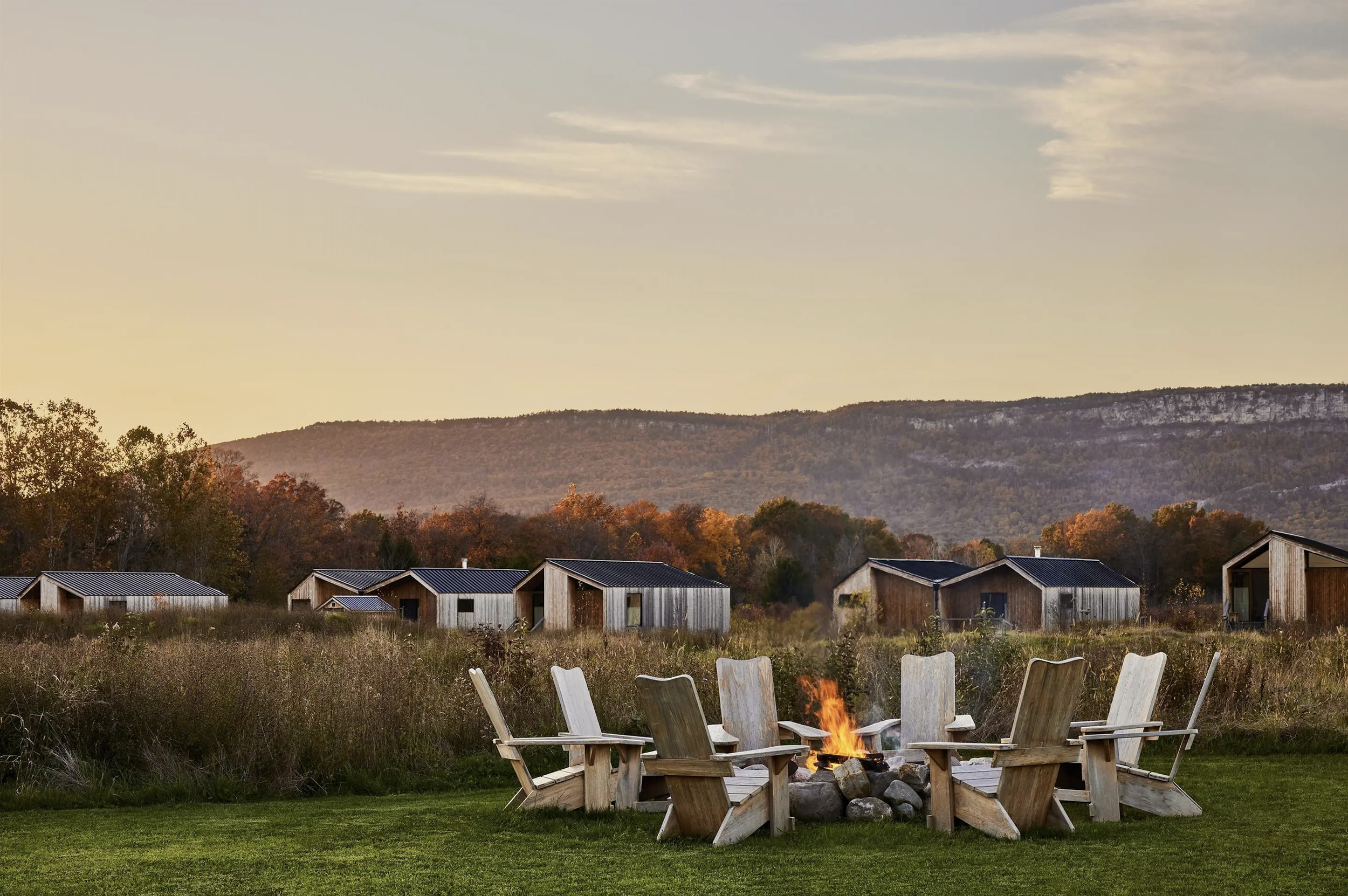
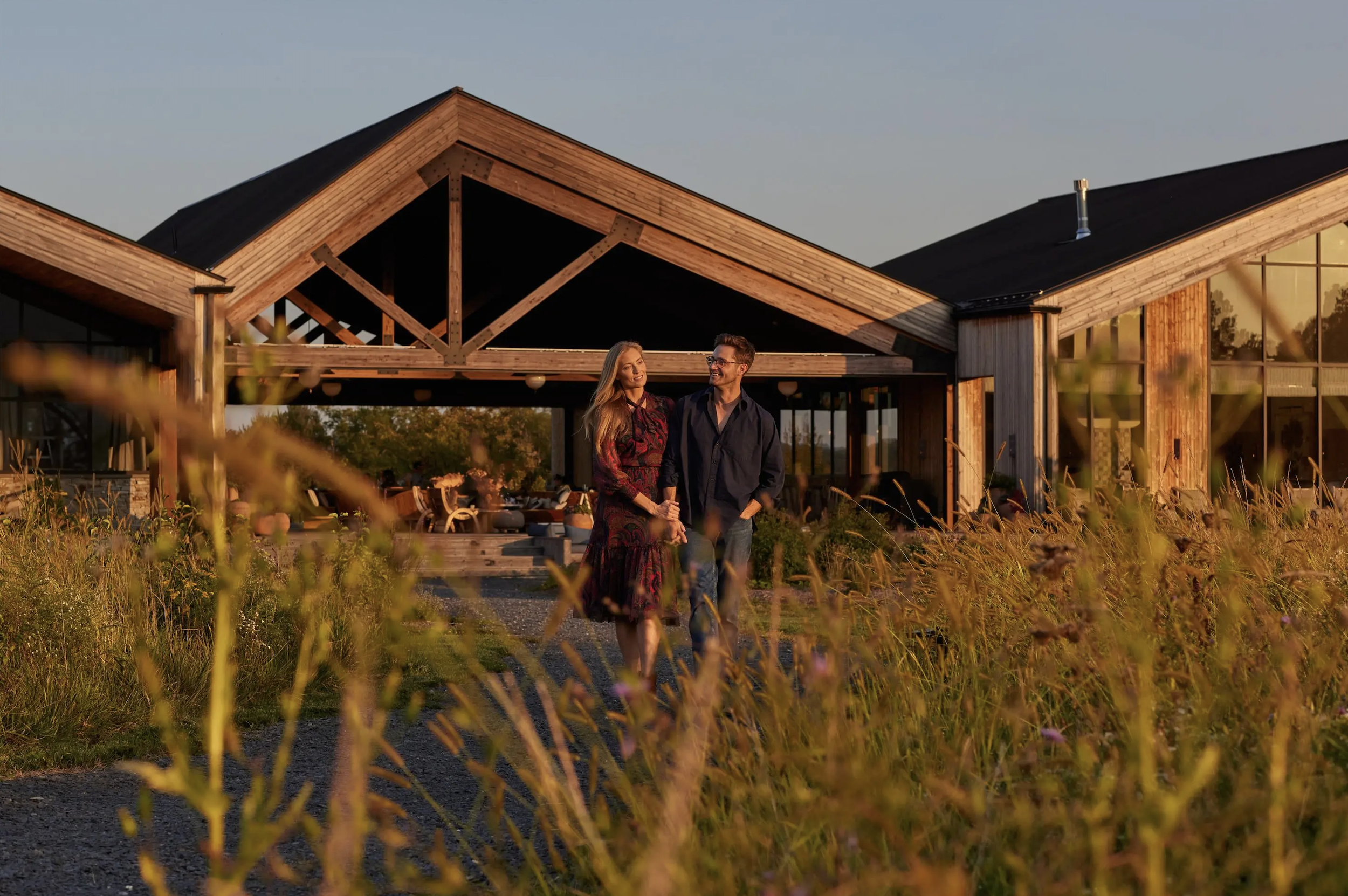
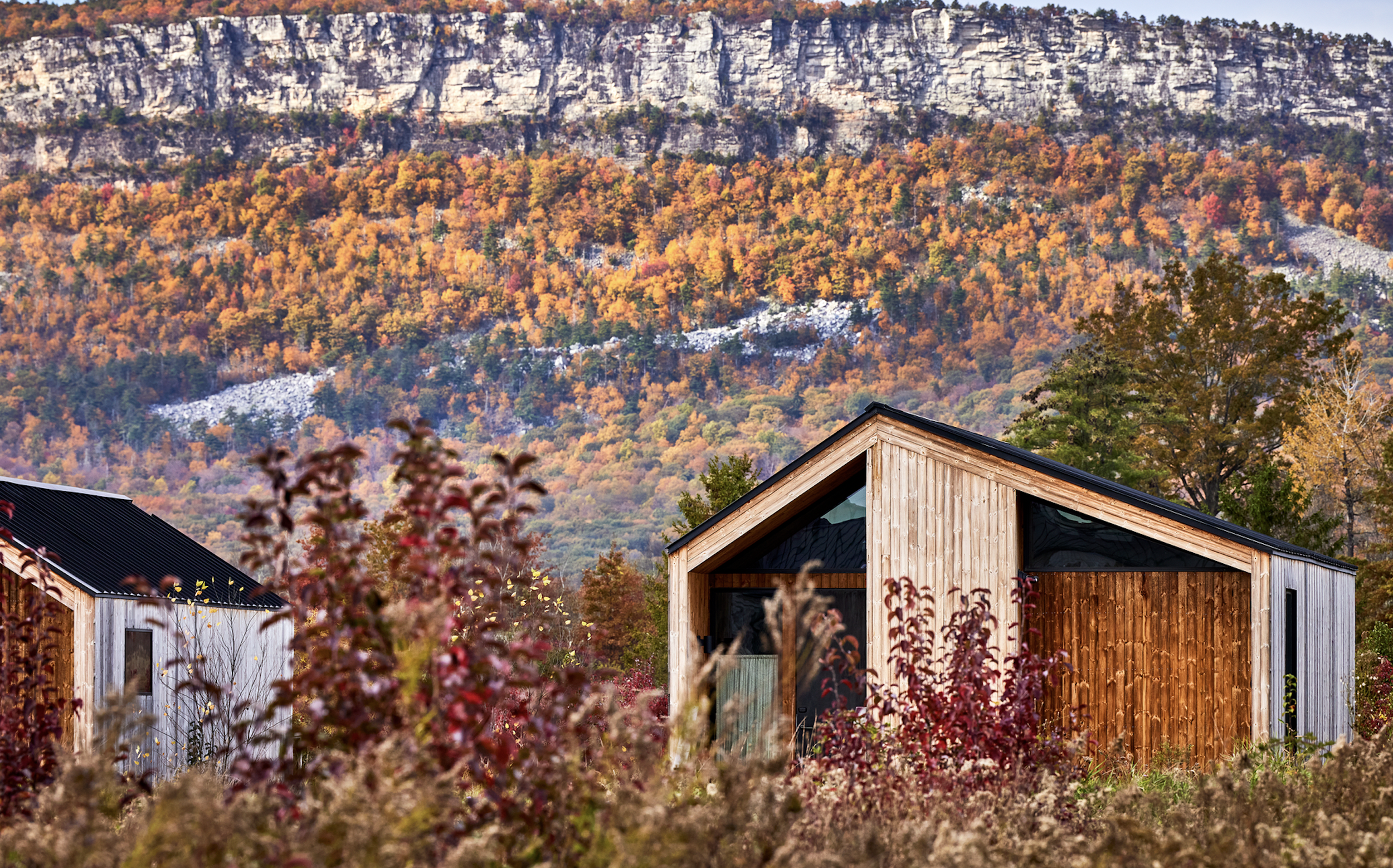
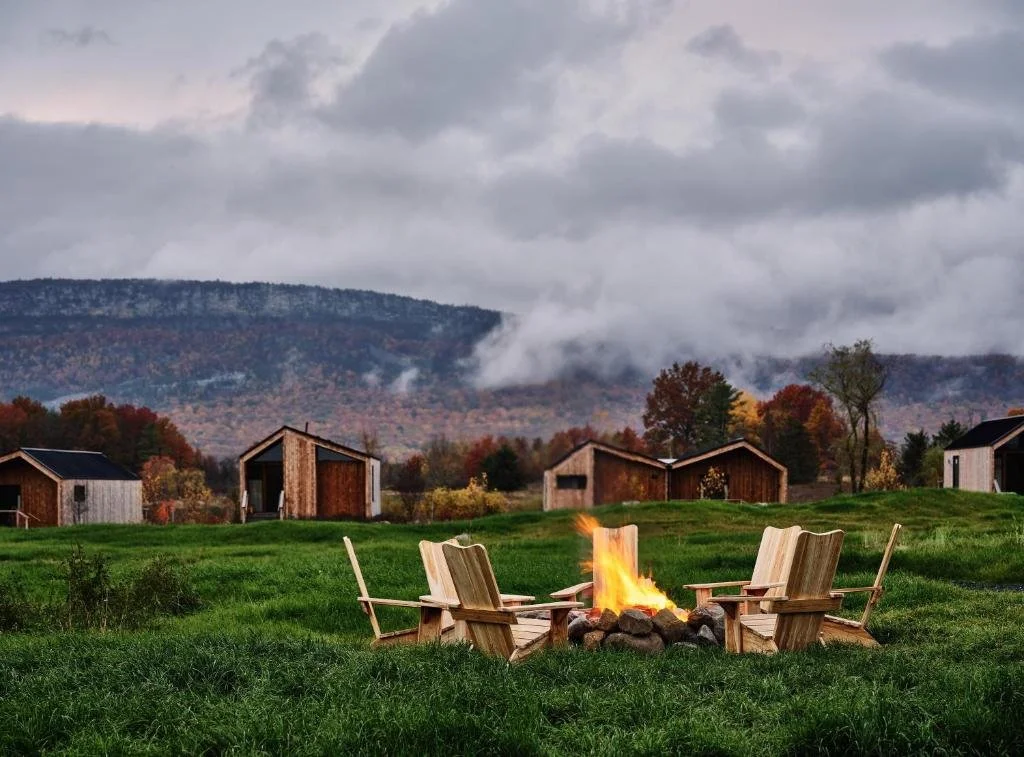
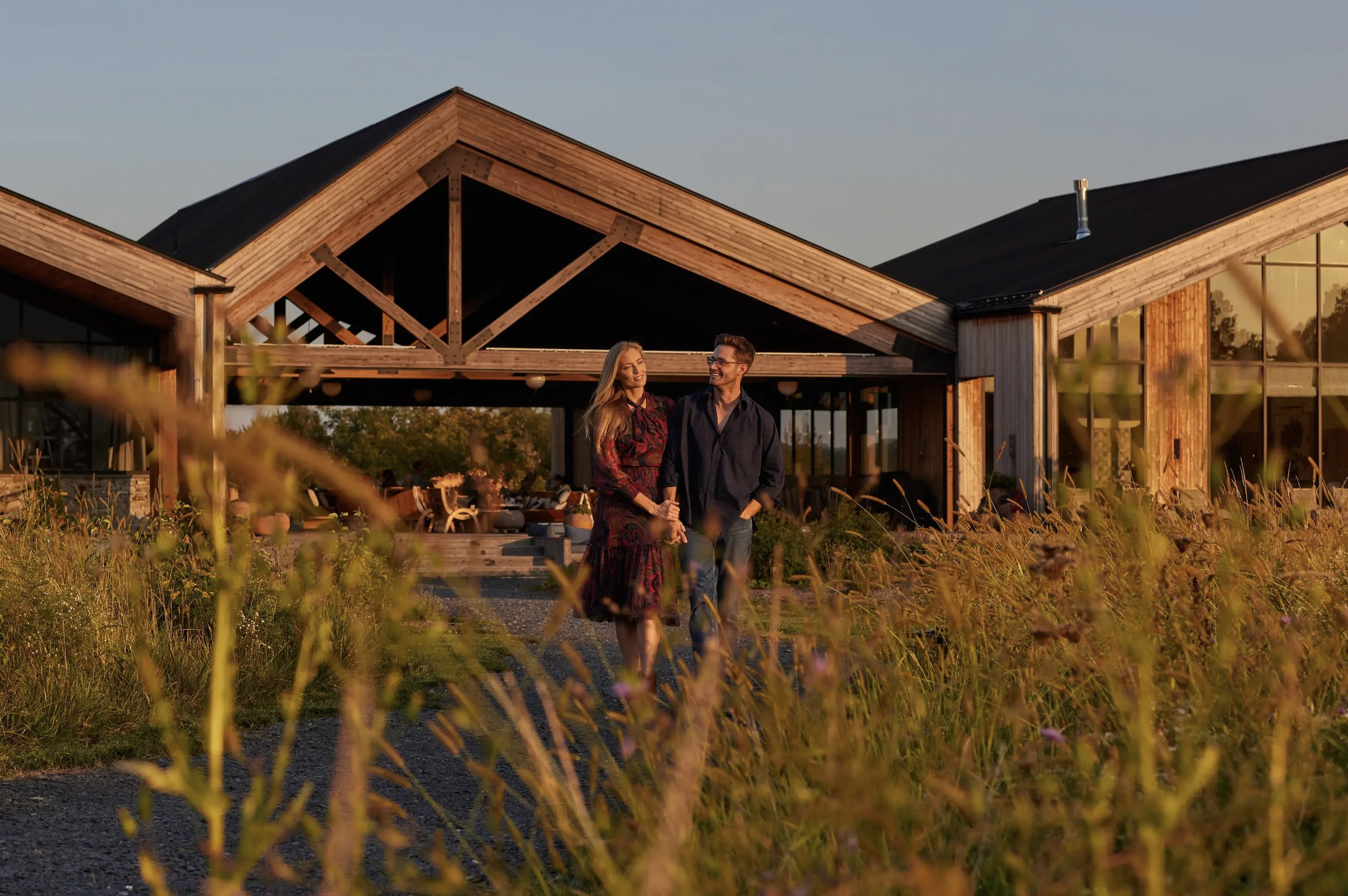
Set across 140 acres in Gardiner, New York, Wildflower Farms, Auberge Collection brings together 65 cabins, cottages, and suites, a working farm, seasonal dining, and a spa that draws inspiration from the surrounding landscape. Meadows and woodland separate the accommodations, while the ridge provides a striking backdrop to daily life on the property.
For travelers accustomed to leaving New York for a long weekend, the appeal is easy to understand. There is enough here to make the hotel the focus of the trip, alongside access to a region known for its farms, hiking, art, and small towns. We would allow at least two nights, with a third making room to explore without giving up the slower mornings that are a good reason to come.
From Tree Nursery to Country Retreat
Wildflower Farms opened on September 30, 2022, introducing a contemporary resort to land previously used as a tree nursery. Its story is closely connected to owners Kristin Soong Rapoport and Phillip Rapoport, whose own time in the Hudson Valley helped shape the project.
The couple had been drawn to Gardiner for rock climbing in the Shawangunks. Growing food and welcoming friends from the city became part of their relationship with the area, eventually inspiring a property that could introduce more travelers to that way of spending time.
The resulting hotel retains agriculture as an active part of the experience. Planting, harvesting, cooking, and exploring the land inform a stay, giving Wildflower Farms a clear connection to its surroundings from the outset.
For a relatively young property, this is an important foundation. Its character comes from the landscape and the activities it supports, with the former nursery providing a setting of established trees, open fields, and changing views.
Architecture That Leaves Room for the Landscape
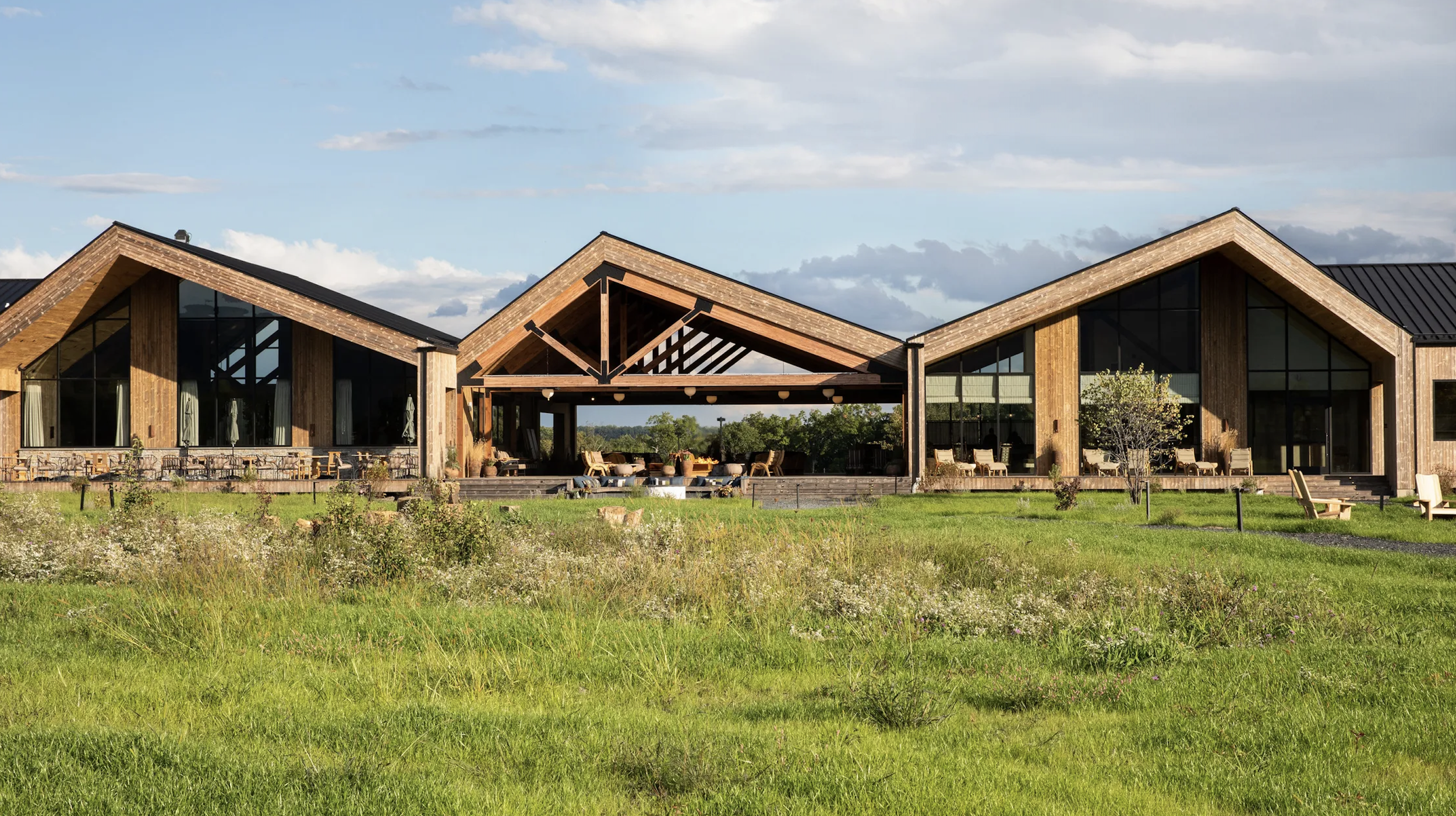
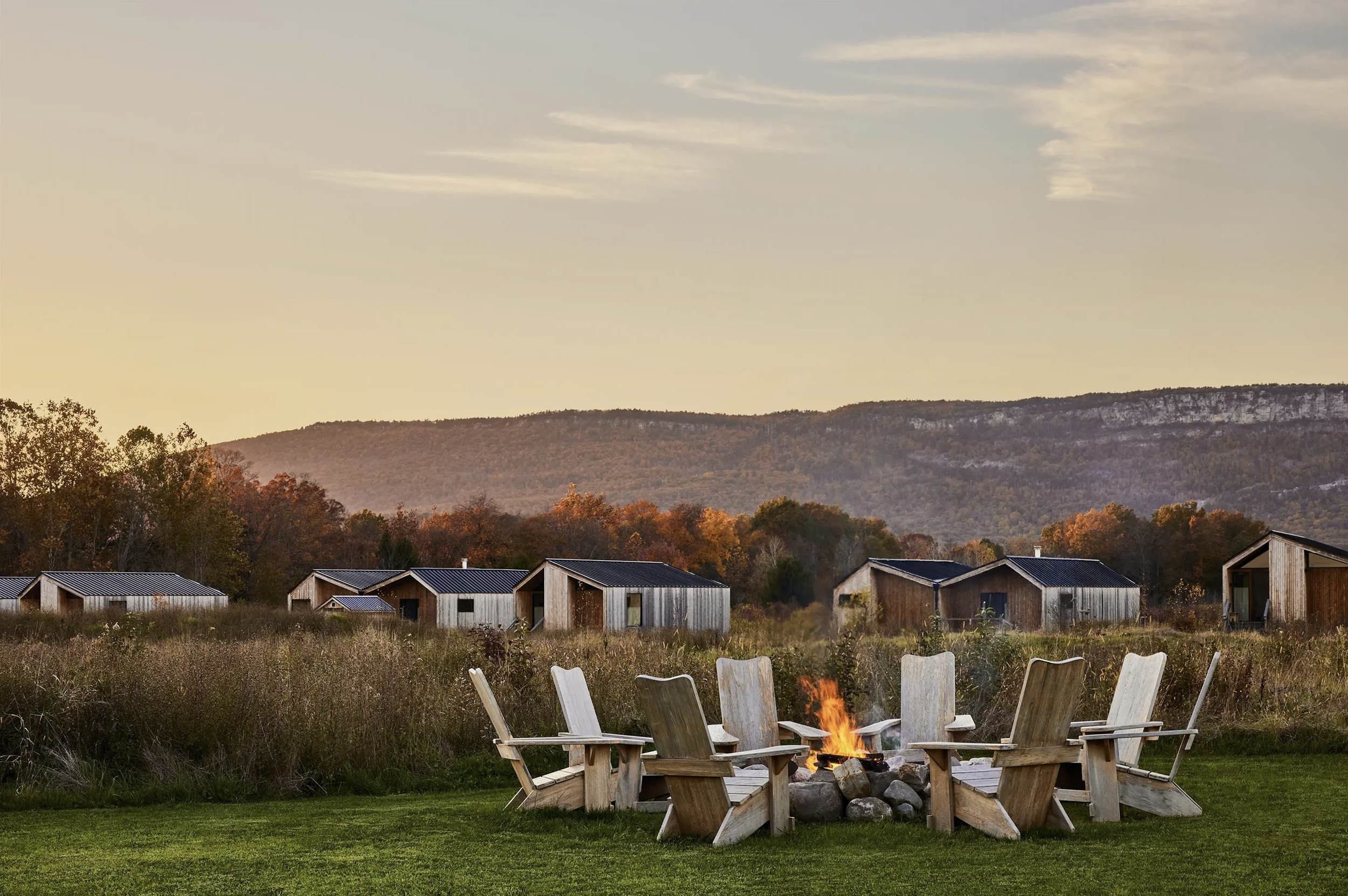
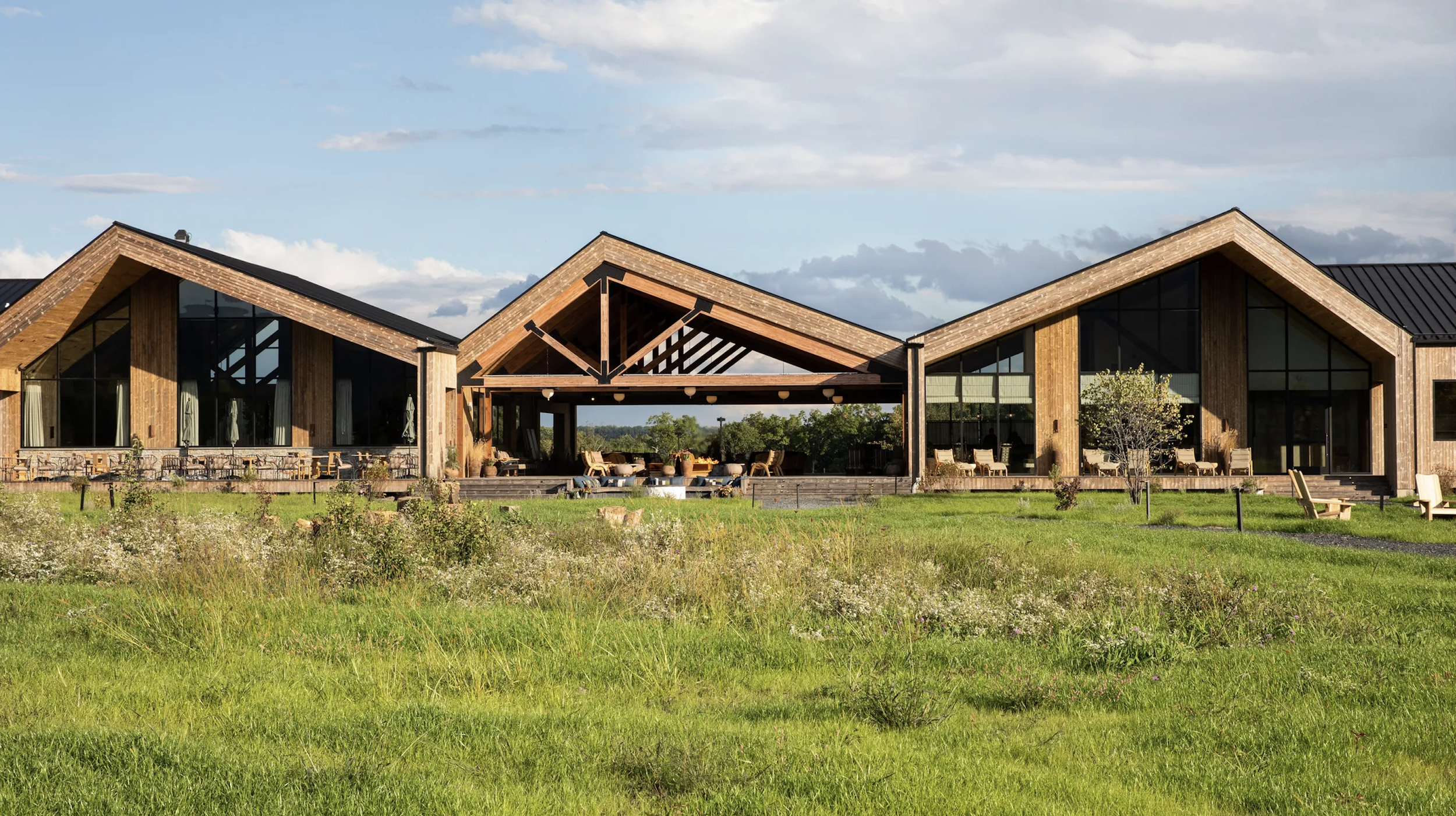
Architecture by Electric Bowery and interiors by Ward and Gray give Wildflower Farms a coherent identity without making every space feel identical. Low buildings sit comfortably within the grounds, their proportions allowing the meadows, woodland, and distant ridge to remain prominent.
Electric Bowery drew on Swiss and Dutch architectural traditions, alongside influences from California’s approach to indoor and outdoor living. Wood, glass, textured slate, and plaster establish a restrained material palette. Repurposed oak and recycled canvas wallcoverings also appear in the project.
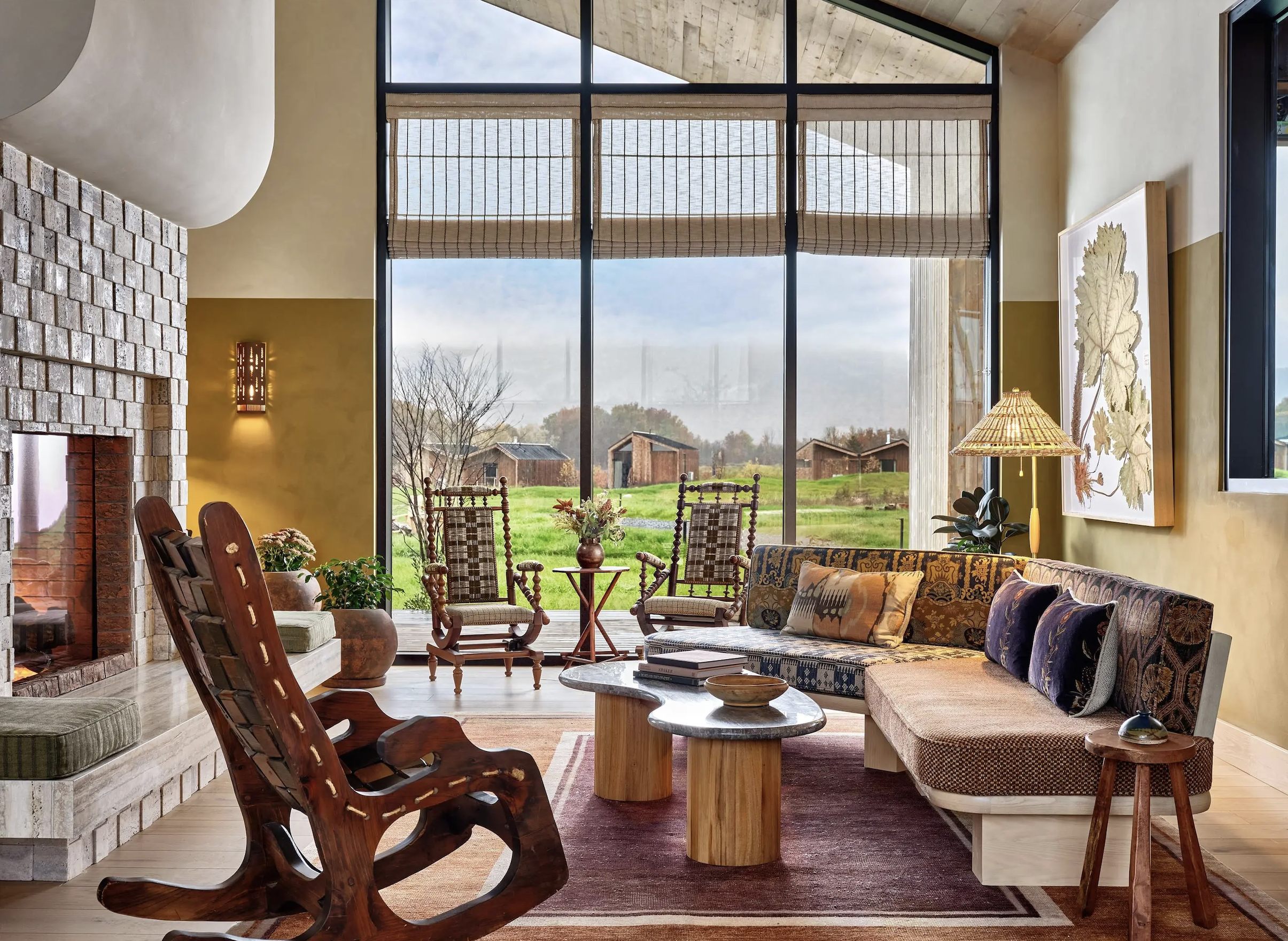
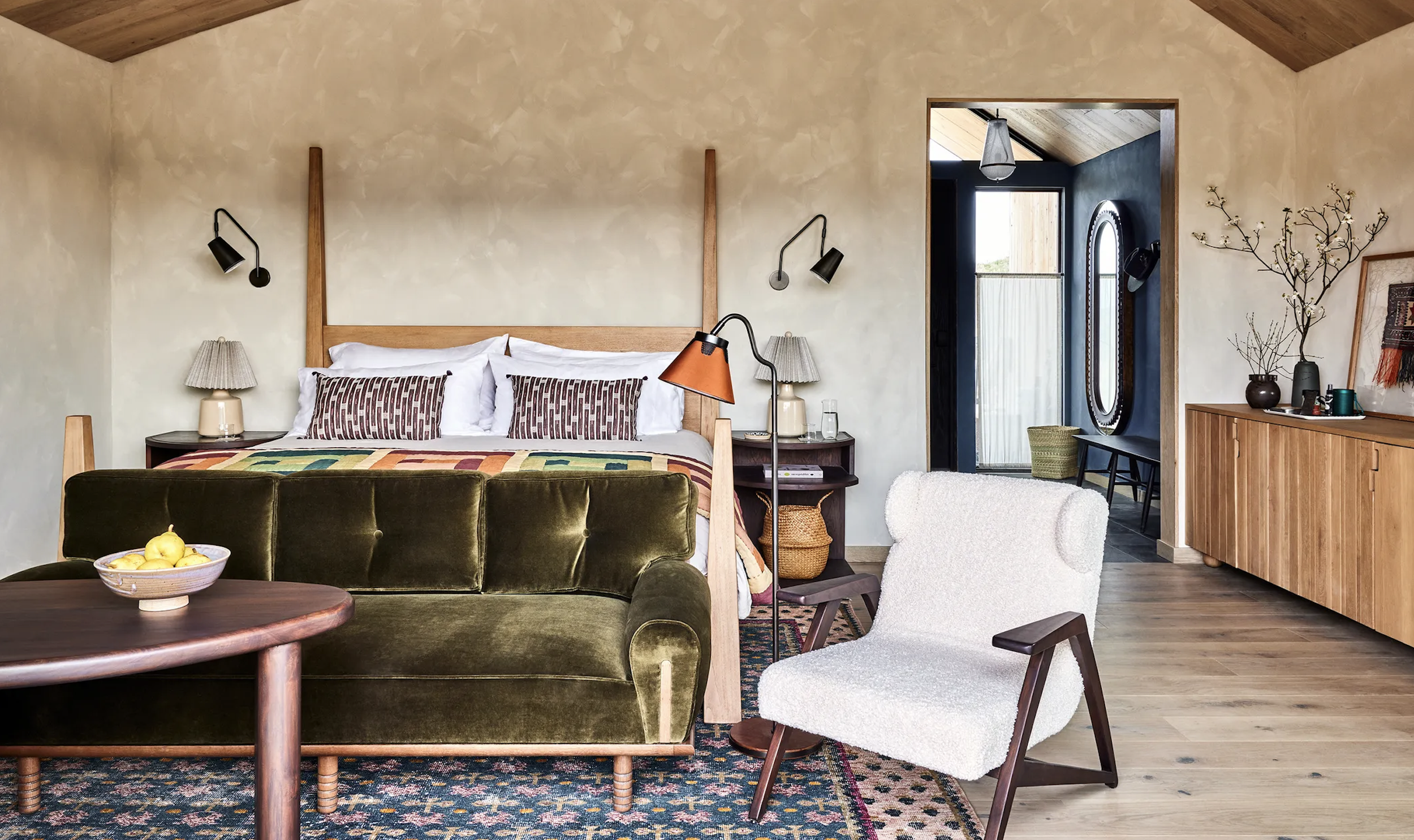
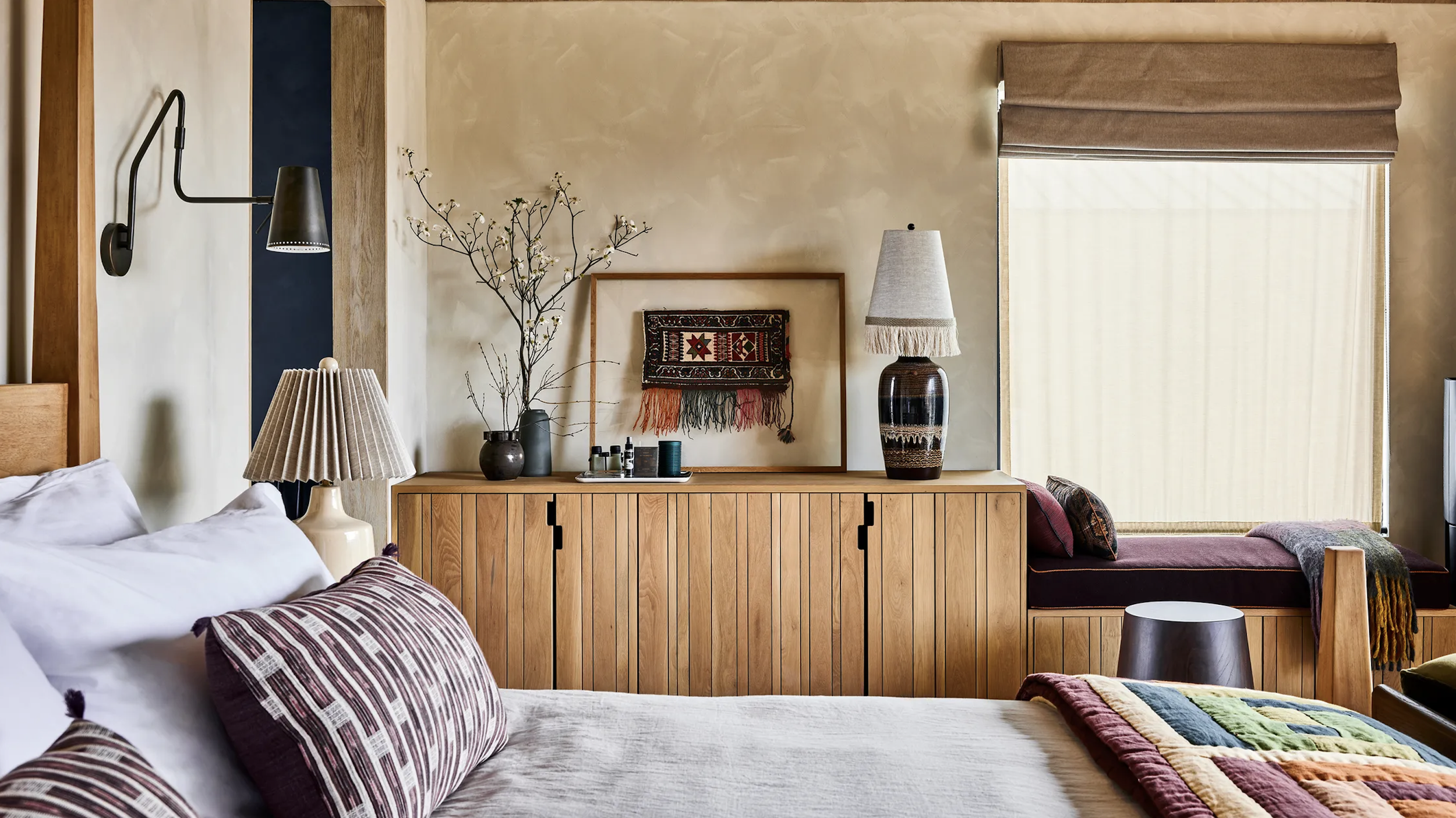
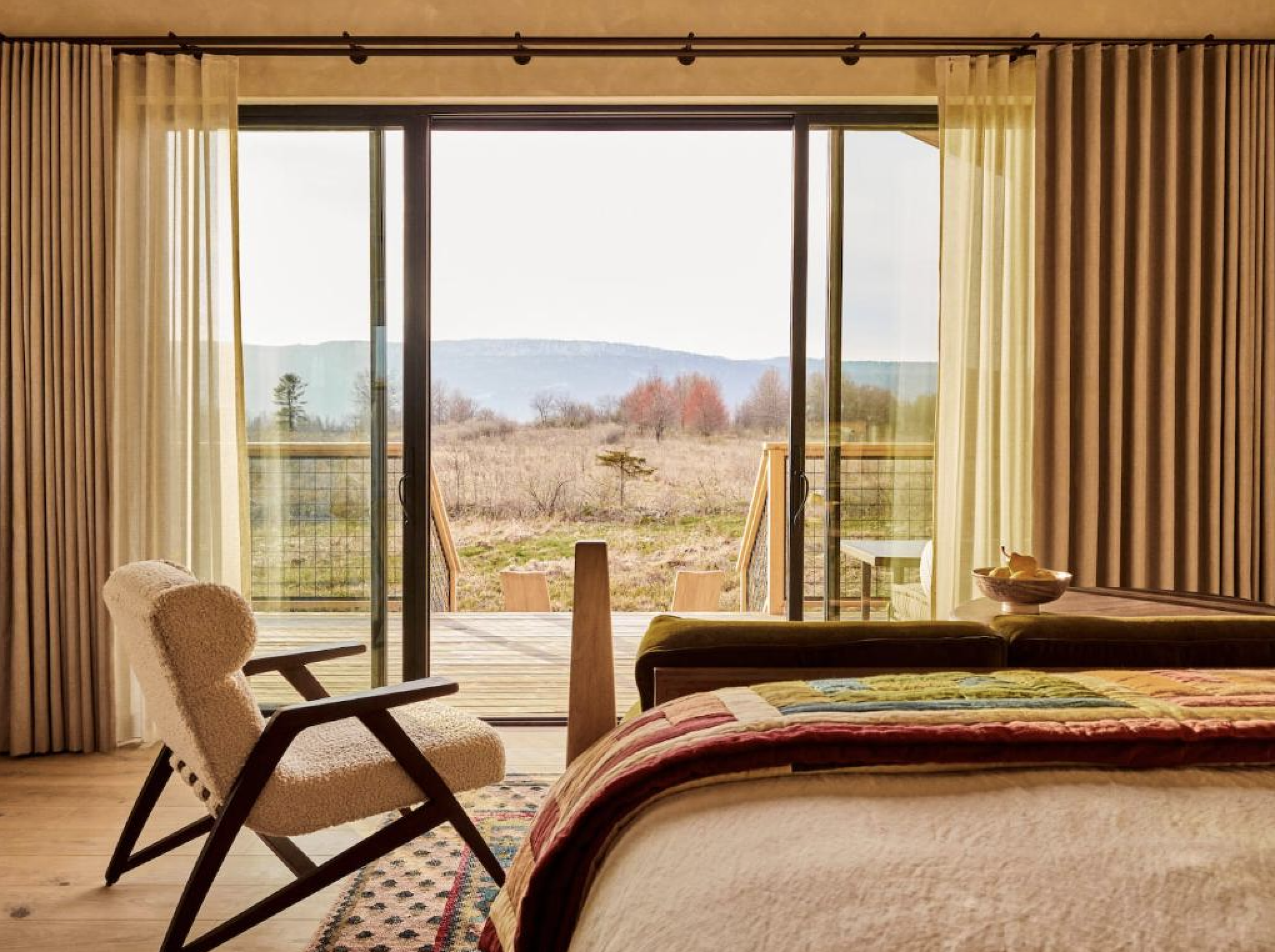
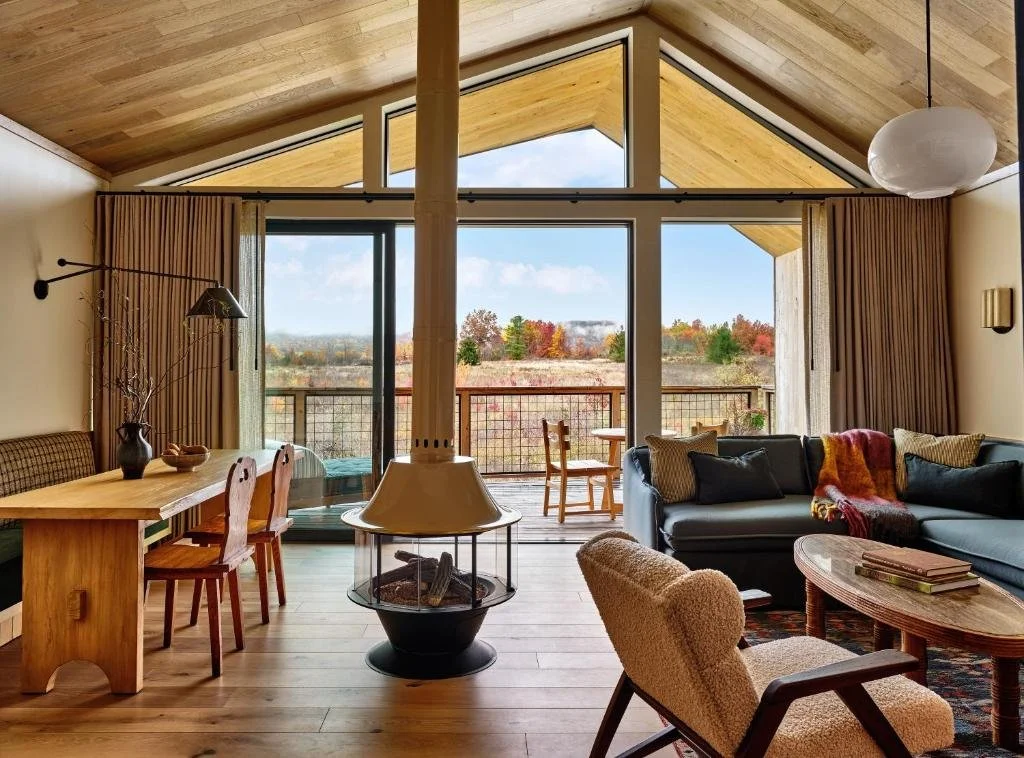
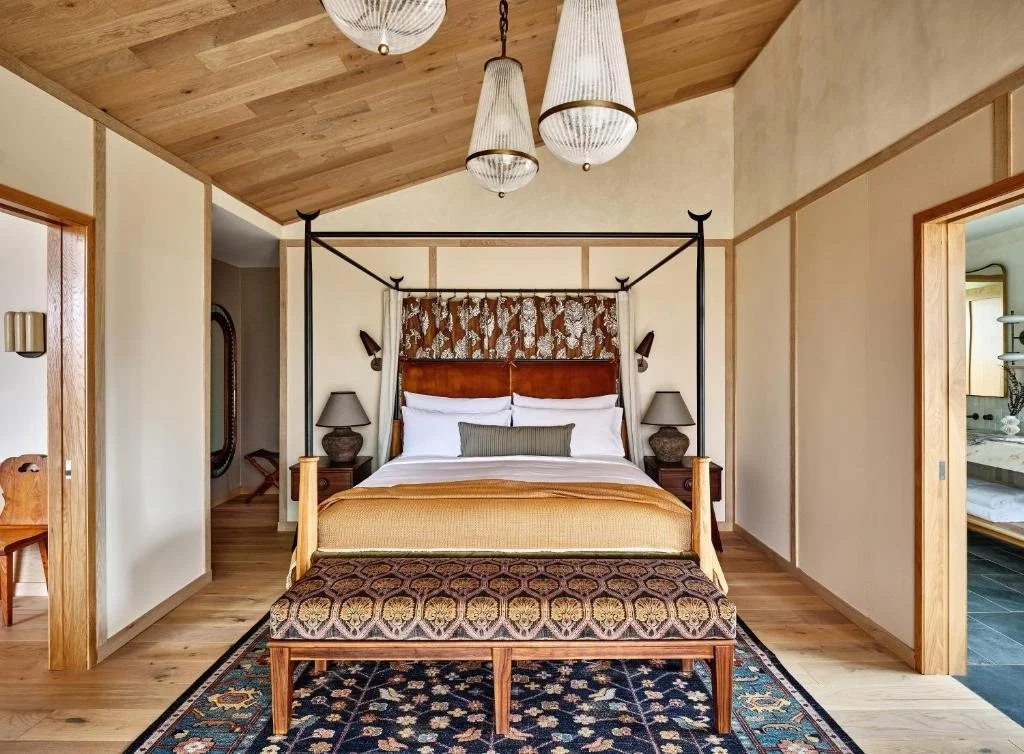
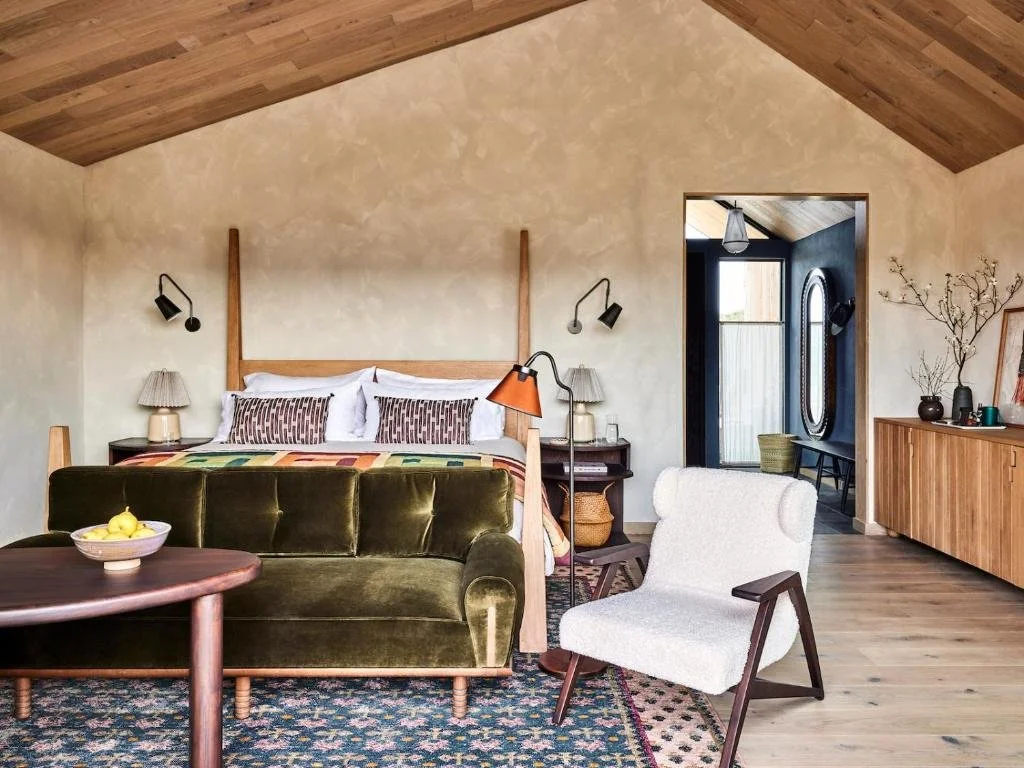
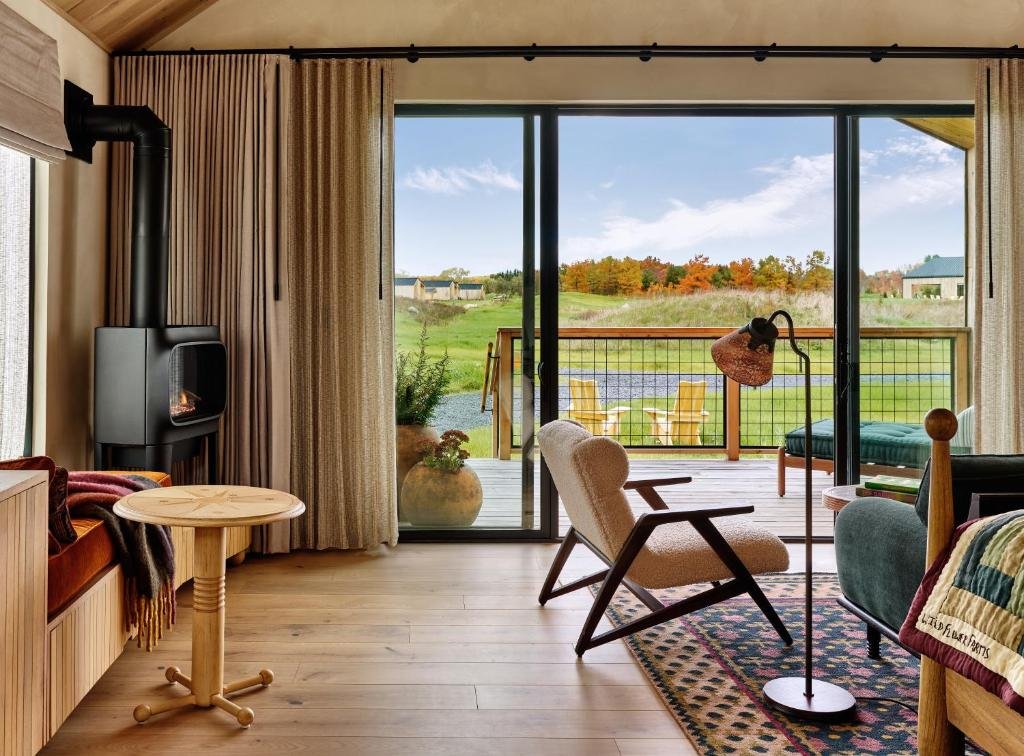
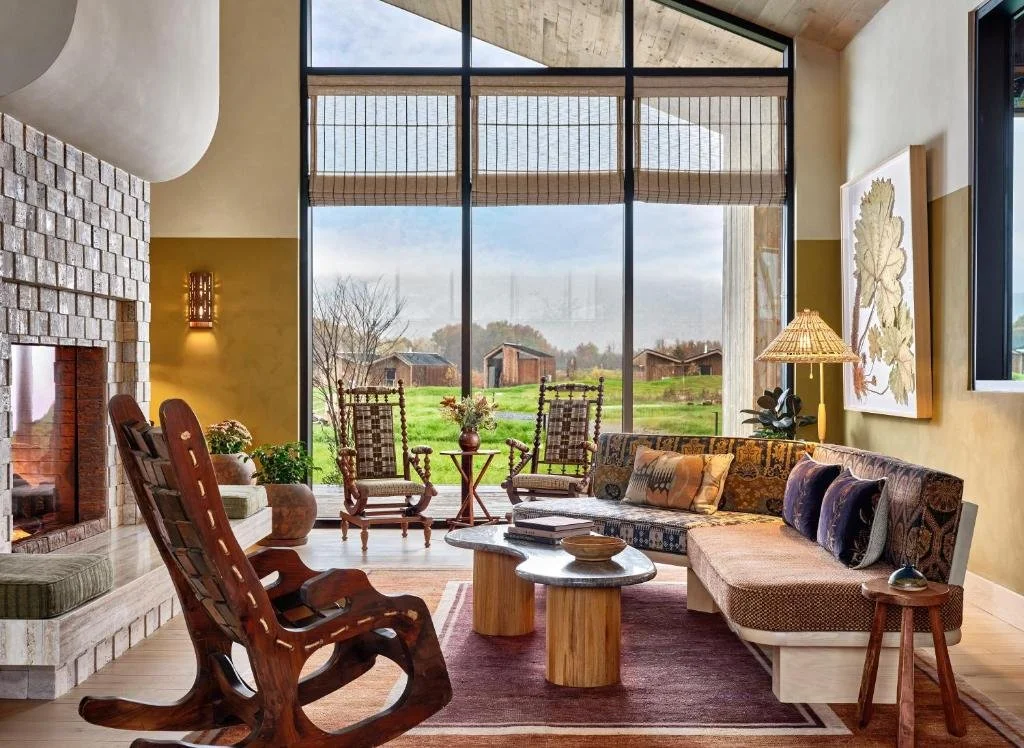
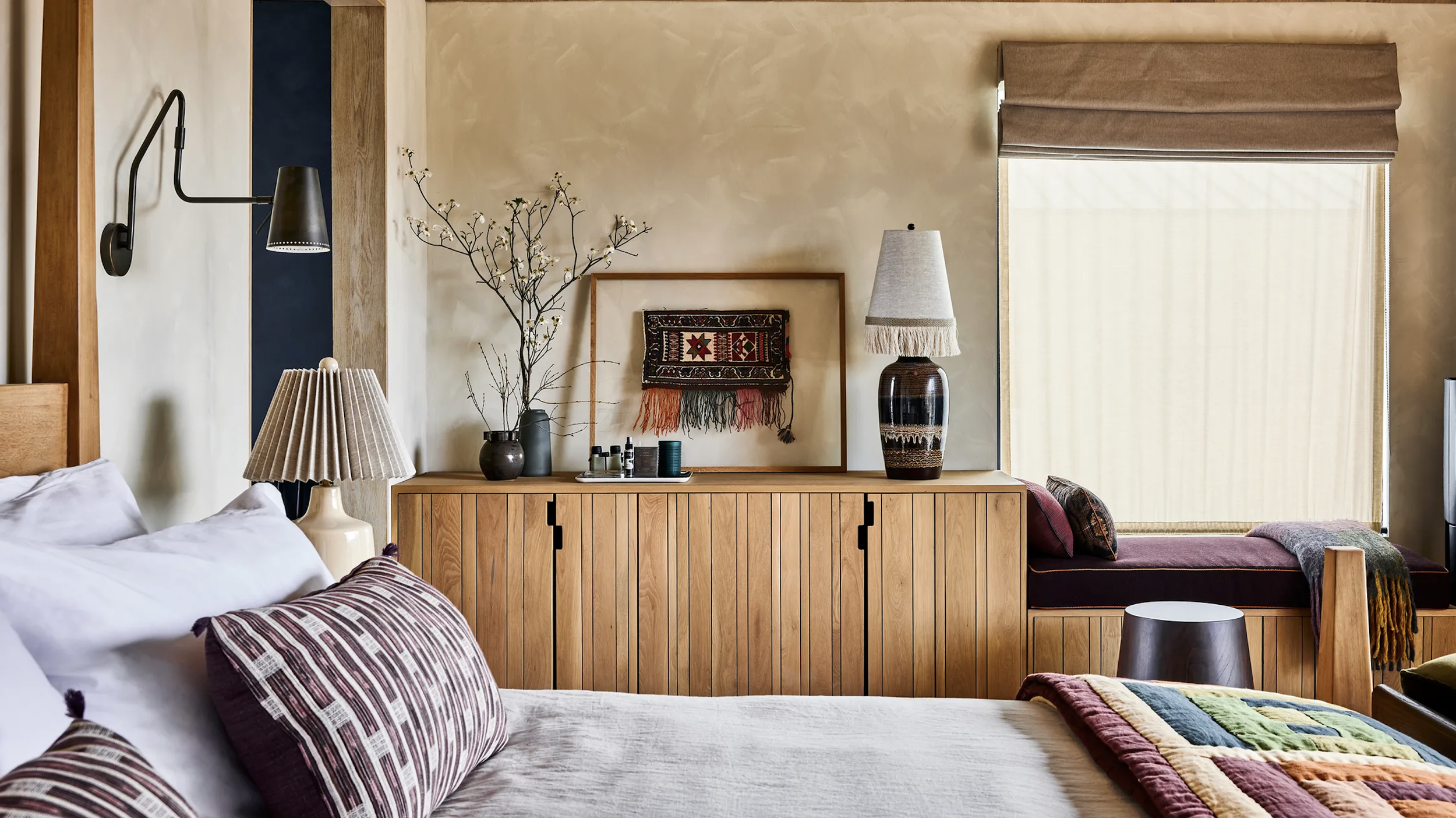
Inside the accommodations, large windows and private terraces make the view part of the room. Wood-clad ceilings, upholstered seating, and natural finishes introduce warmth, while the choice between a wooded setting and open meadow outlook gives each category a distinct atmosphere.
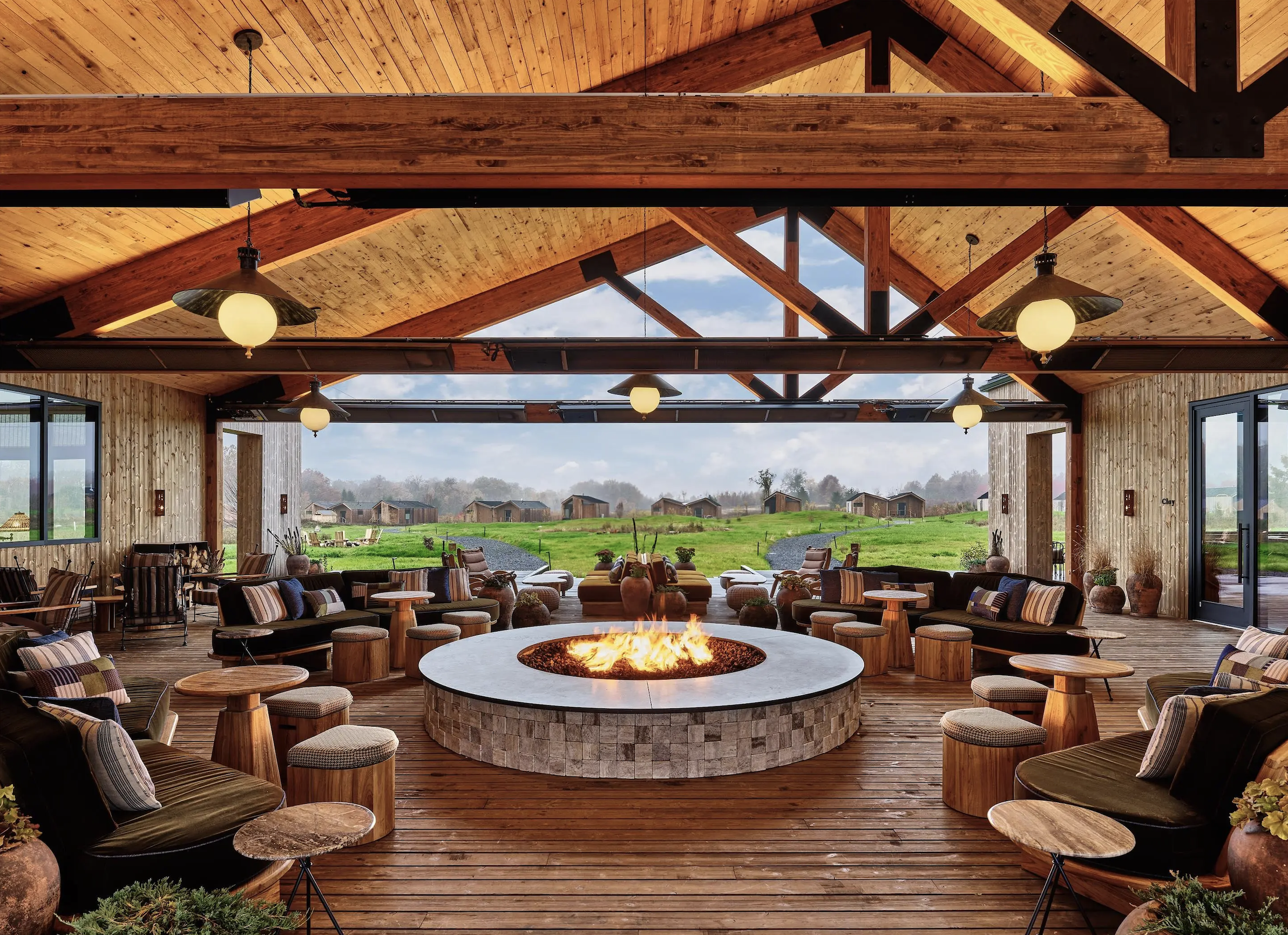
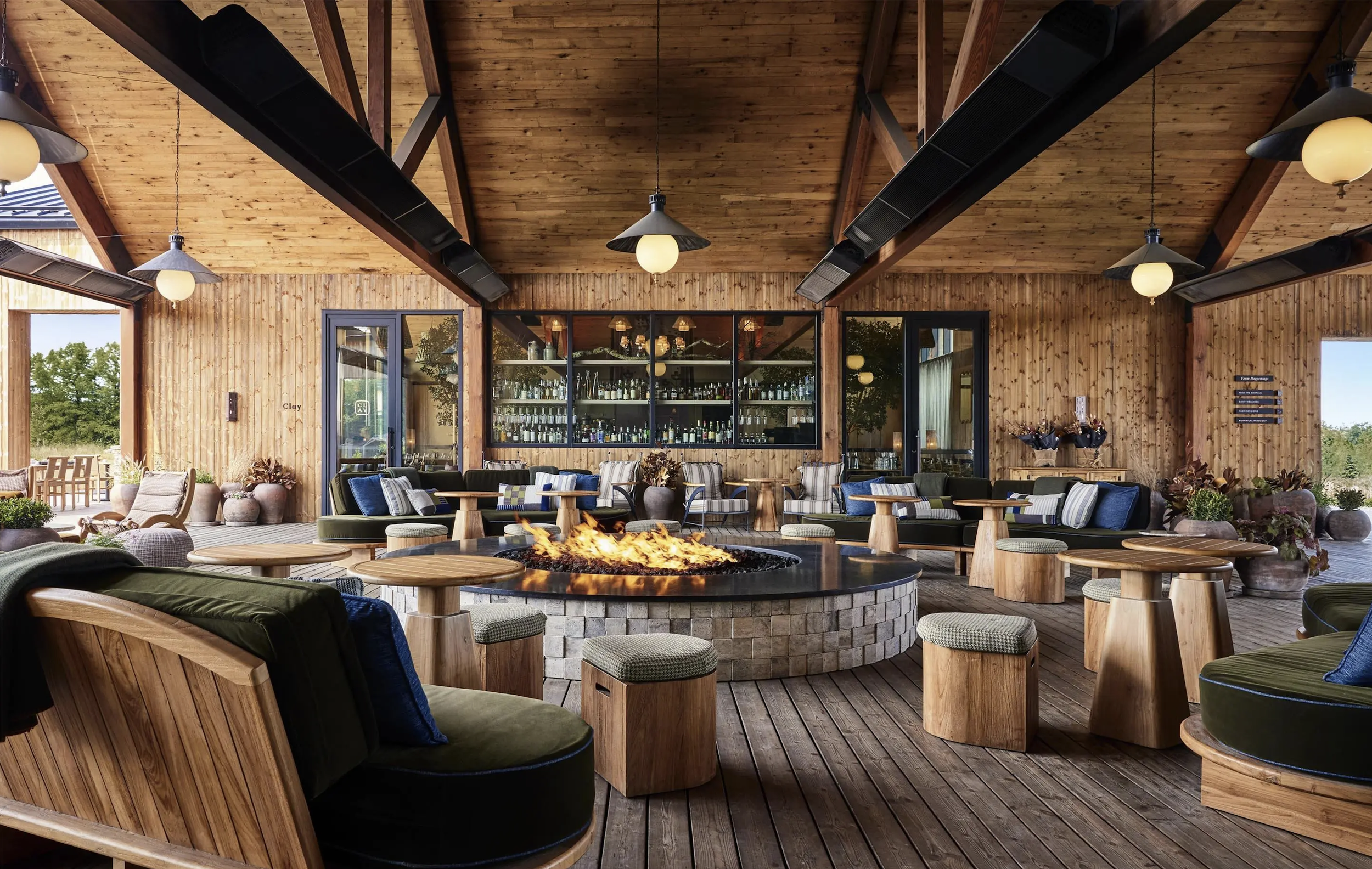
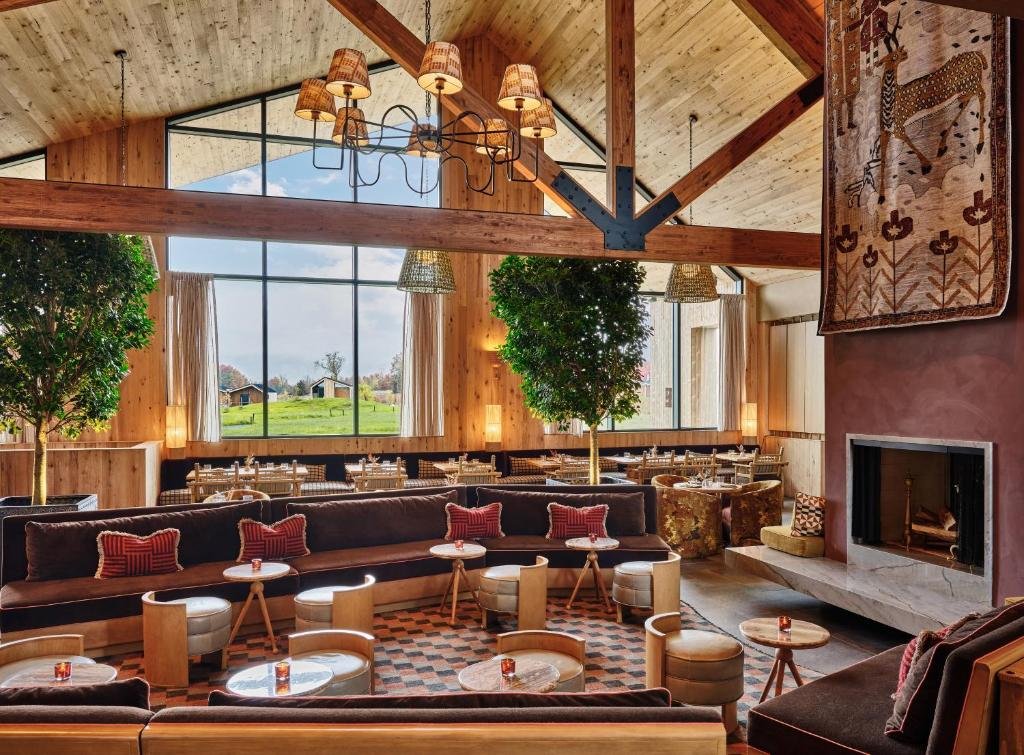
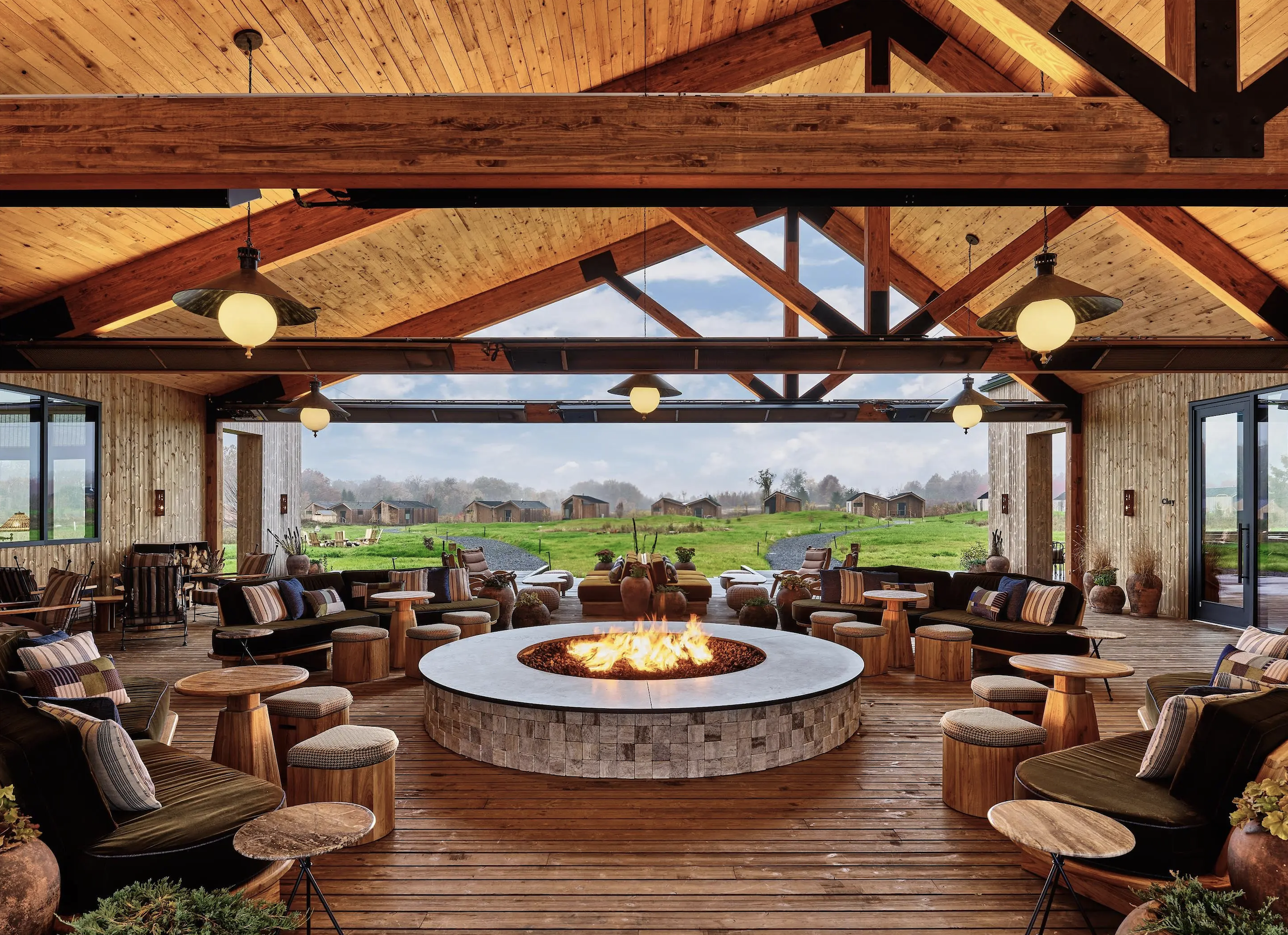
The Great Porch is particularly important to the property’s layout. This open-air gathering space looks toward the Shawangunk Ridge and gives the hotel a shared living area where coffee, conversation, and evening drinks fit naturally into the day.
Cabins, Cottages, and a Place of Your Own
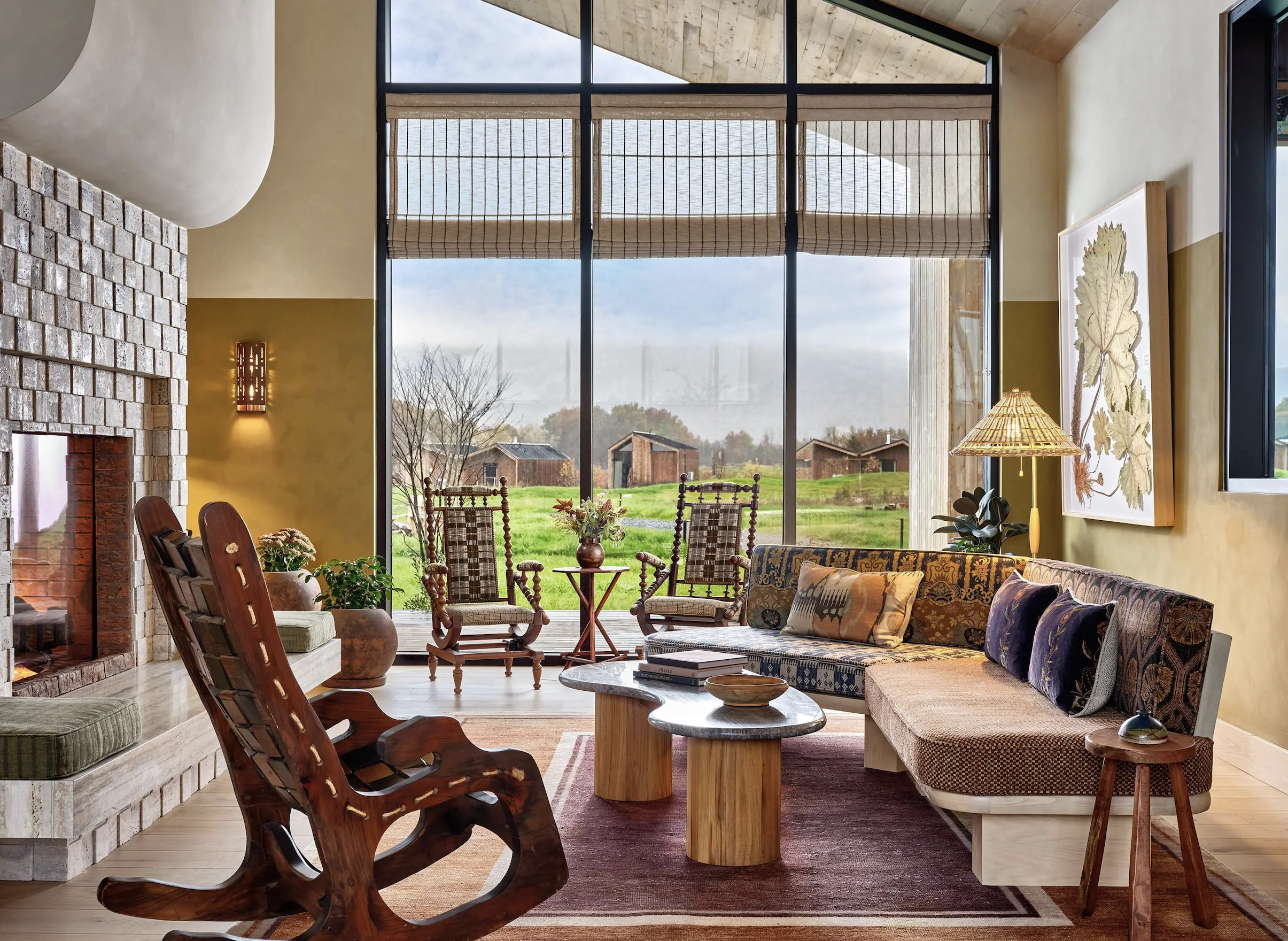
Wildflower Farms’ accommodations are spread across the grounds, with king beds and private outdoor spaces throughout. Choosing between them is largely a question of outlook, layout, and how much time you plan to spend at your accommodation.
Bower Cabin with Terrace: Set among the trees, the Bower Cabins offer the property’s most intimate accommodation, with a king bed and a private terrace overlooking the tree canopy. They suit couples or solo travelers who prefer a wooded setting and expect to spend much of the day exploring the property.
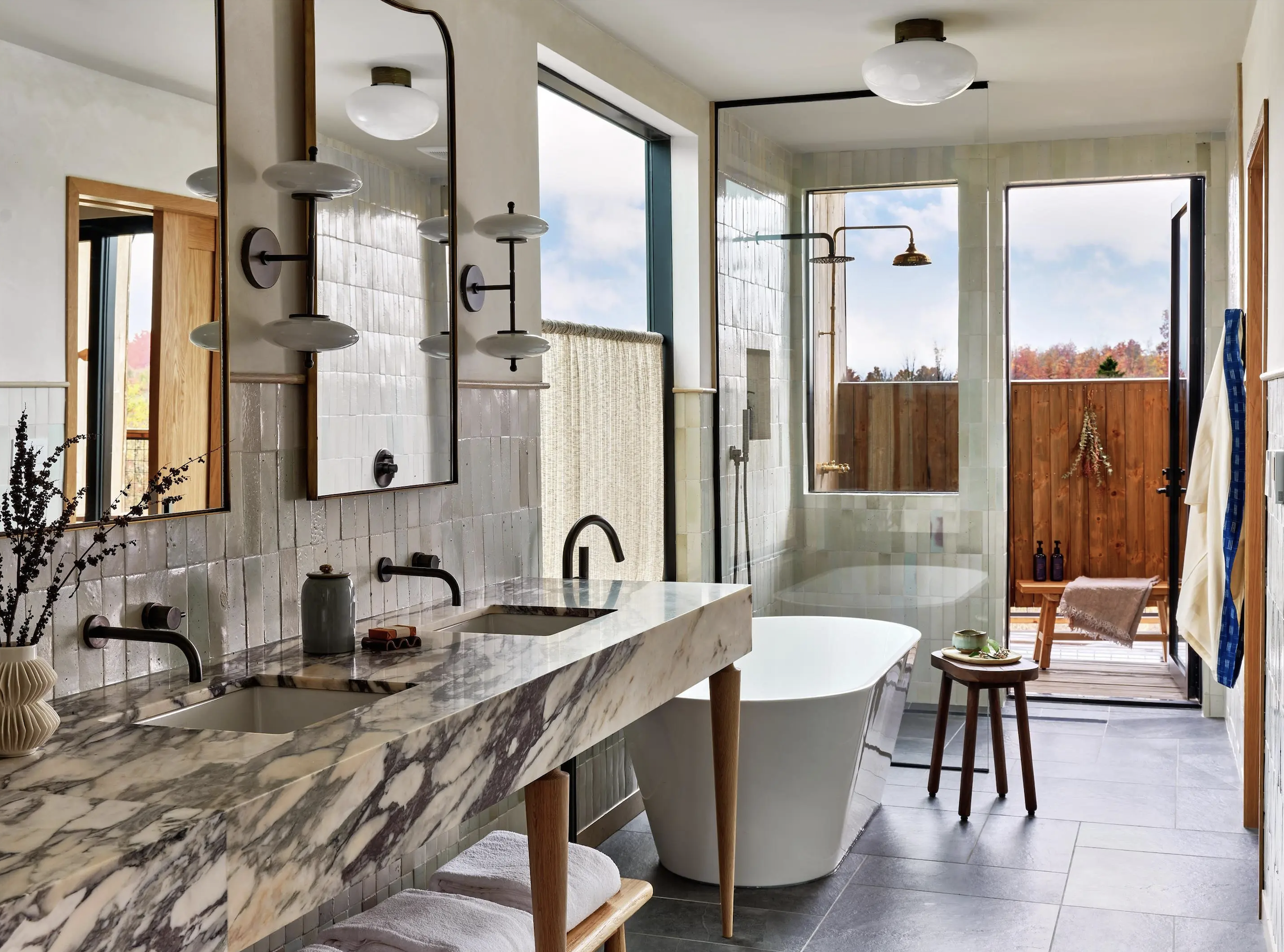
Meadow Cottage with Tub: Expansive windows face the wildflower fields, while a covered terrace provides space to sit outdoors. Inside, a sofa, built-in window seat, and vaulted wood-clad ceiling create several comfortable places to settle. Bathrooms include a rain shower, double vanity, and freestanding soaking tub. Most Meadow Cottages have a gas fireplace, so we would confirm that detail when it matters to the stay.
Ridge Cottage with Tub and Fireplace: These cottages turn toward the Shawangunk Ridge, with sliding glass doors opening onto a private terrace. A king bed, sitting area, window seat, and gas fireplace make them particularly appealing for a fall or winter visit. The bathroom includes a soaking tub and separate shower, and a twin rollaway is available for a third occupant.
Ridge Suite: The five Ridge Suites offer separate living rooms, two bathrooms, and multiple terraces overlooking the ridge. Indoor and outdoor fireplaces, an outdoor shower, and a private cedar hot tub make the outdoor space especially inviting. A queen sleeper sofa provides additional sleeping capacity. For a celebratory weekend or a longer stay, this is the category we would consider first.
Two-Bedroom Connecting Meadow Cottage: This configuration brings two cottages together, with two king bedrooms, individual sitting areas, and two private terraces with daybeds. Both bathrooms have soaking tubs and rain showers, while the primary bedroom includes a gas fireplace. With two twin rollaways available, the arrangement accommodates up to six and works well for families or friends who want proximity alongside personal space.
Accessible accommodations are also offered in selected categories. We would match the location and specific layout to each traveler’s needs before confirming a reservation.
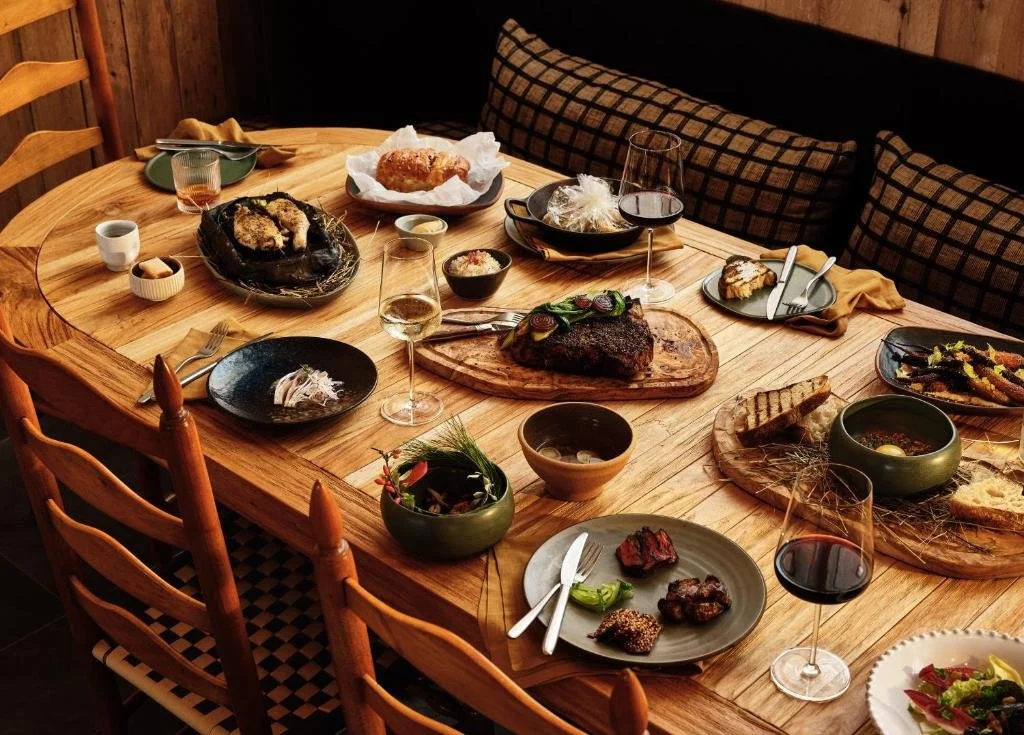
The Hudson Valley at the Table
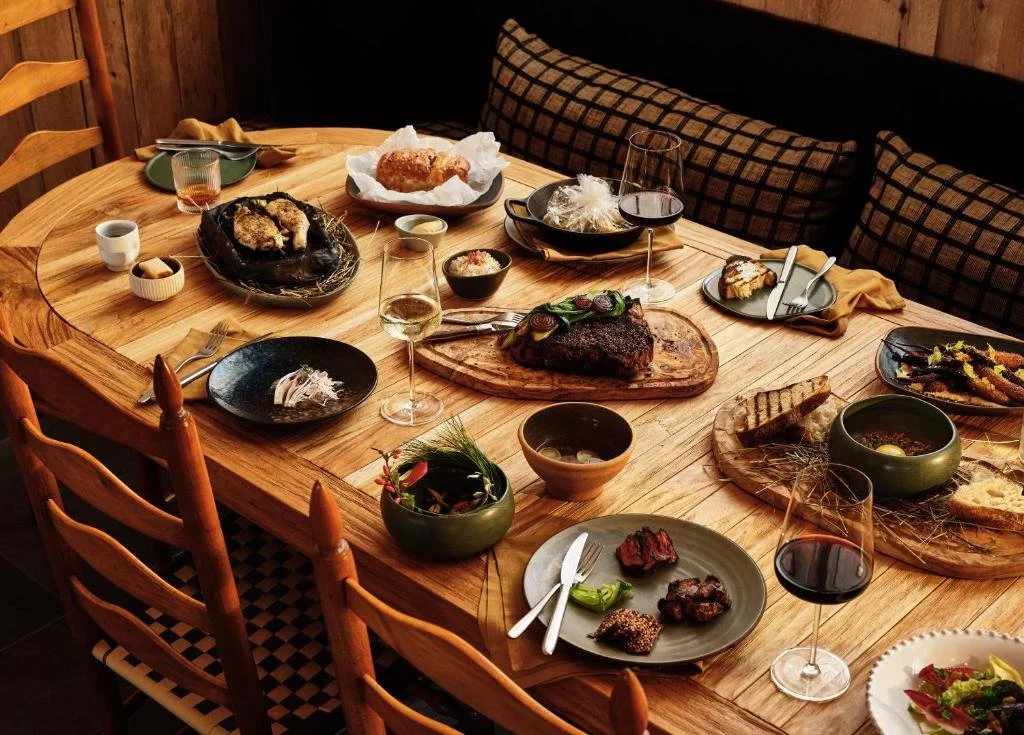
Food is central to Wildflower Farms, with ingredients from the property and regional producers shaping the menus. The dining options cover a proper evening out, a casual meal overlooking the ridge, and warm-weather afternoons beside the pool.
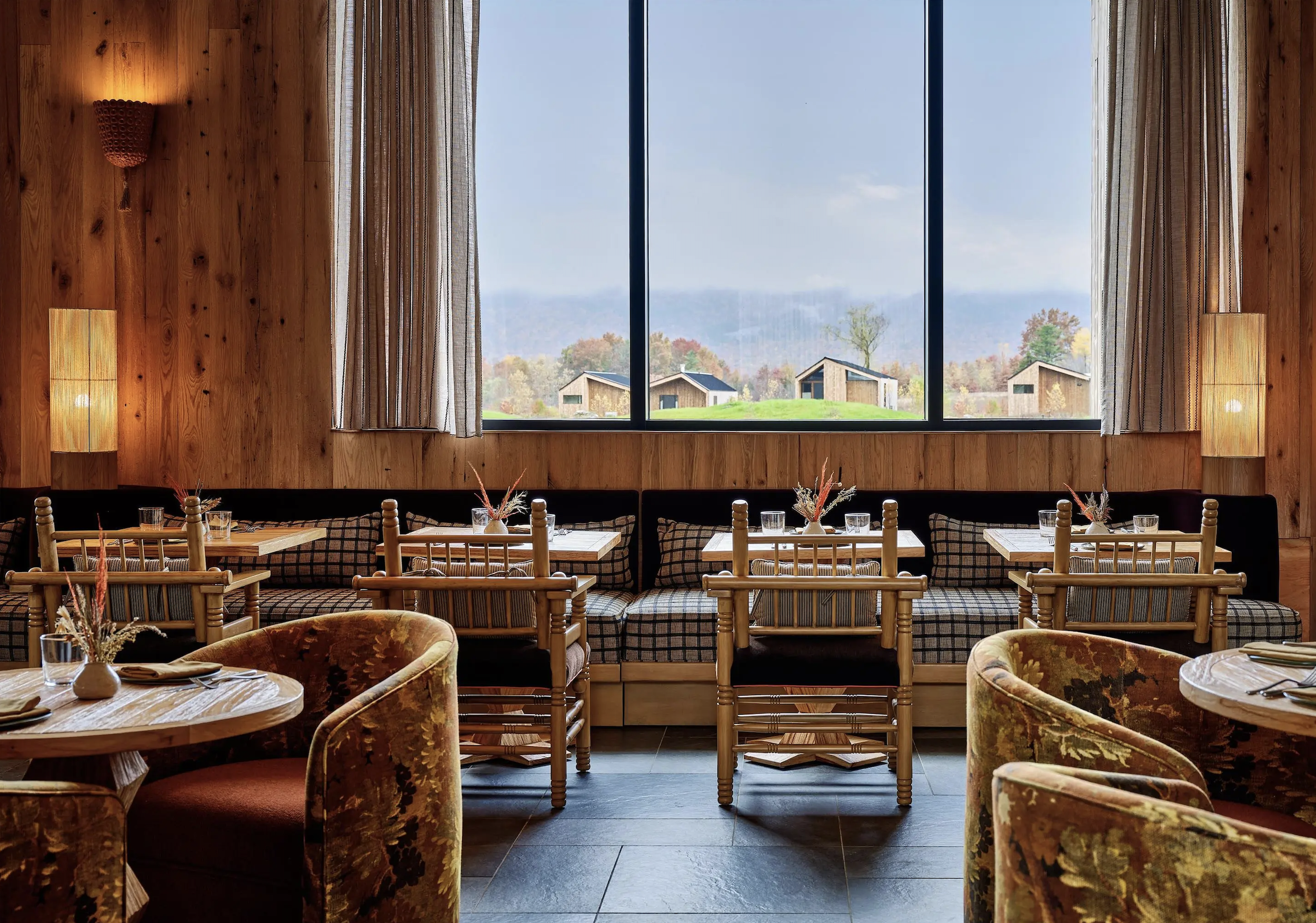
Clay: The signature restaurant serves New American cuisine built around seasonal vegetables and thoughtfully sourced meat and seafood. Produce from the farm gives the kitchen an immediate relationship with what is growing nearby. The wine program considers farming practices alongside the producers themselves, while cocktails incorporate seasonal garden ingredients. Clay is the principal setting for breakfast, lunch, and dinner, with Sunday brunch adding another reason to linger over a meal.
The Great Porch: Coffee and pastries suit the morning here, followed by shareable dishes and drinks later in the day. Its open-air setting and ridge views make it one of the easiest places to spend time between activities. In the evening, the fire becomes a natural gathering point for a drink before dinner or a final conversation afterward.
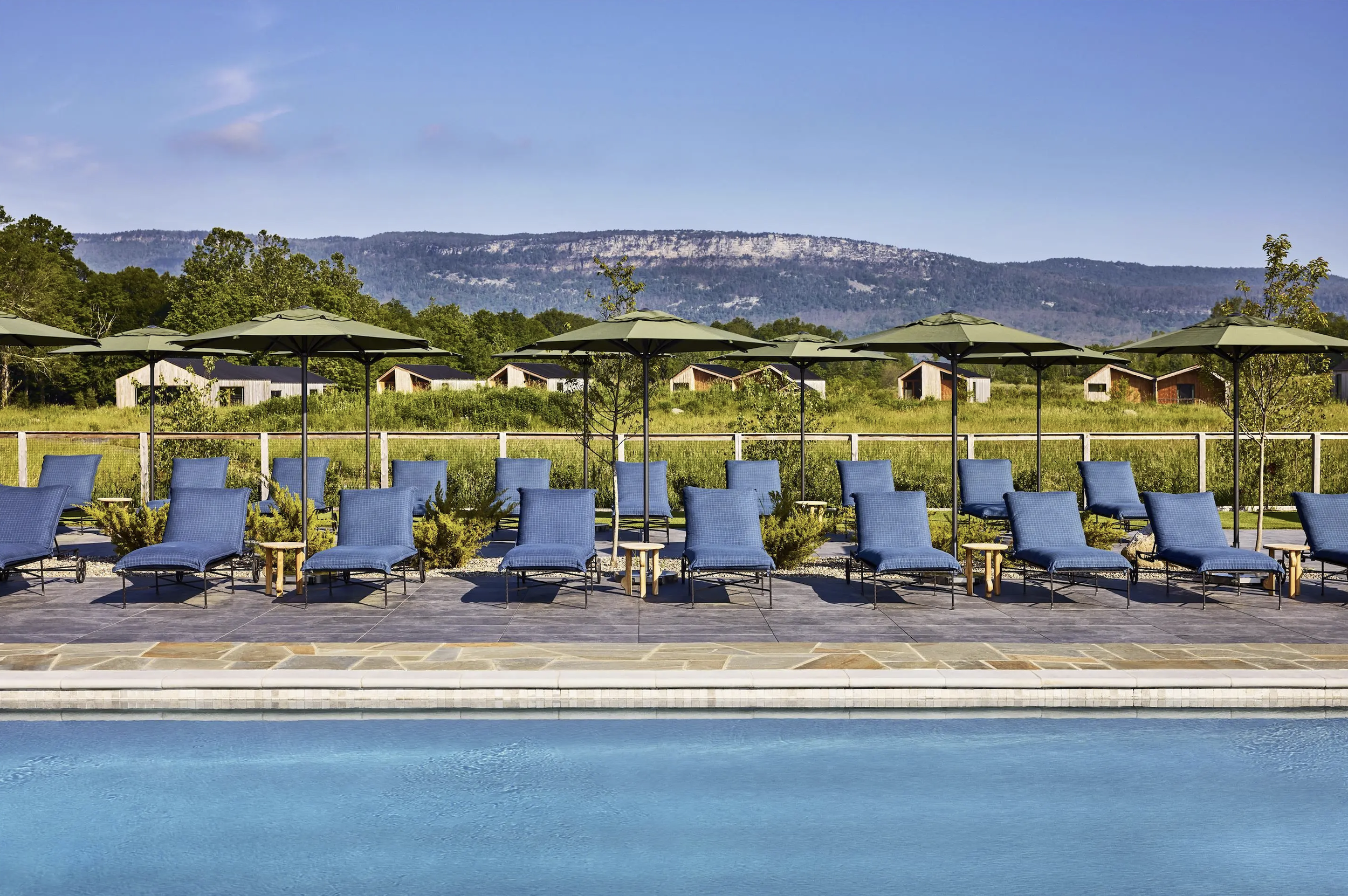
Dew Bar: The seasonal poolside venue serves light bites and cocktails, allowing lunch to fit around an afternoon in the water. Its operation depends on the season and weather, making it a warm-weather addition to the dining experience.
We would reserve dinner at Clay ahead of a weekend stay, particularly when coordinating it with a treatment or afternoon excursion.
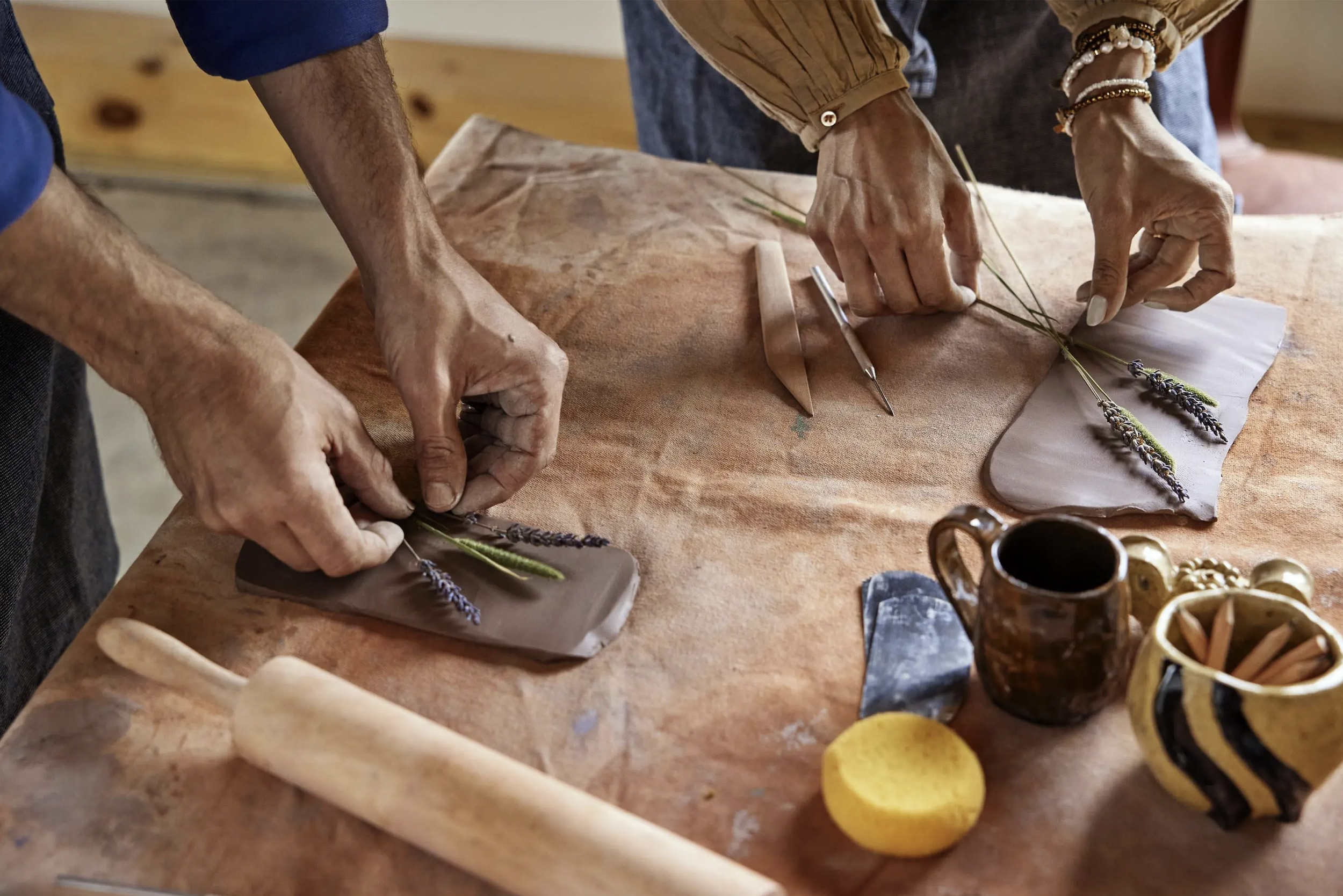
Days in the Fields and the Cooking Barn
The farm gives Wildflower Farms some of its most distinctive experiences. A guided visit introduces the crops and growing practices behind the kitchen, while seasonal sessions may involve planting or harvesting alongside the team.
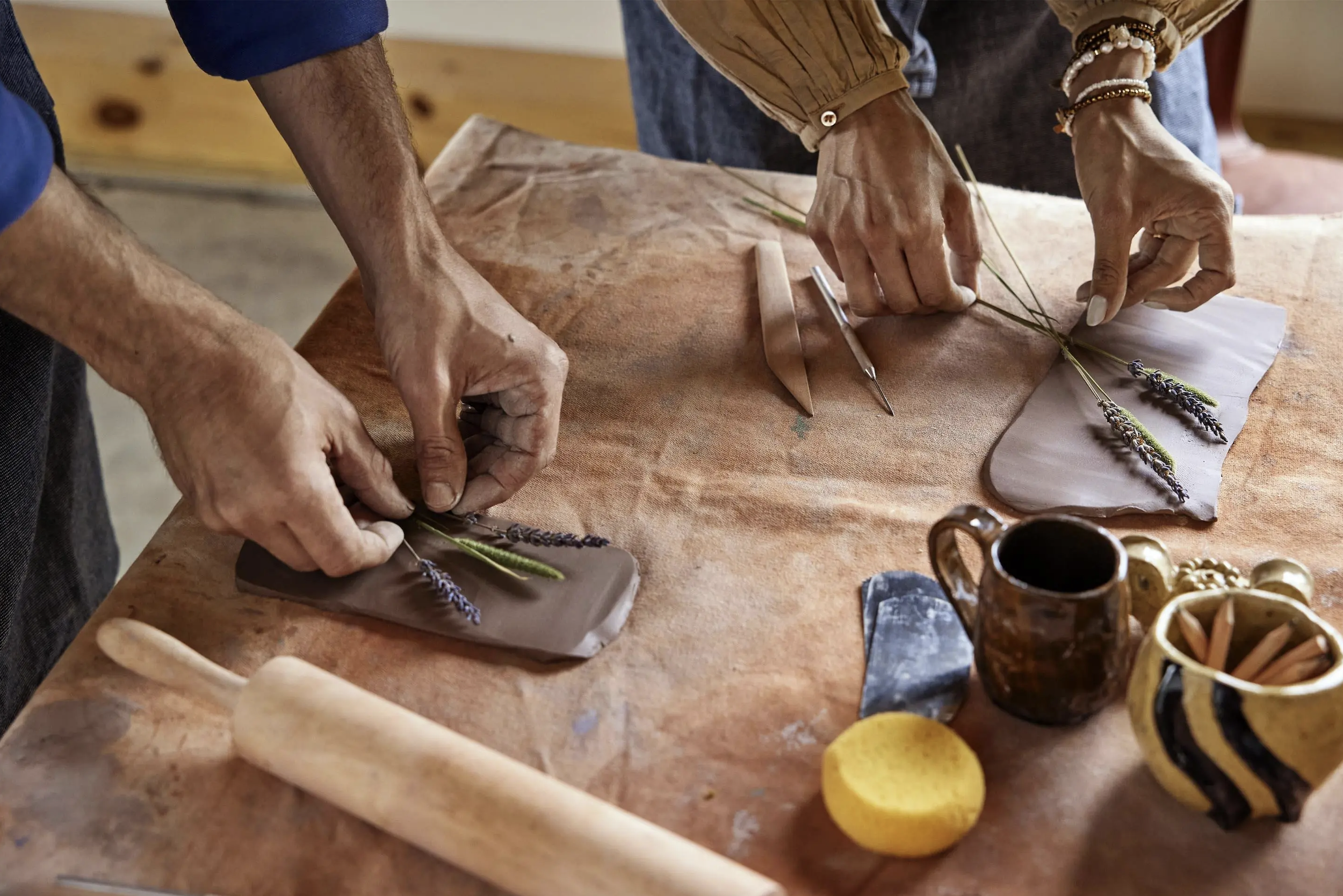
Maplehouse, the property’s cooking school and gathering space, brings that interest indoors. Culinary programming includes workshops such as botanical mixology, sourdough focaccia, and butter and biscuit making. The appeal is in participating: working with ingredients, learning a technique, and spending time with the people who bring the property’s food program to life.
Other experiences draw on the landscape through foraging, floral arranging, and creative workshops. Offerings change, so we would select from the calendar for the dates of the stay rather than build an itinerary around a particular class months in advance.
There is also plenty to enjoy independently. Approximately three miles of on-property trails connect time in the woods with walks through the meadows. Tennis, pickleball, and basketball courts add more active options, while the outdoor pool becomes a natural focus in warmer weather.
One planned experience each day leaves enough room to enjoy the rest without hurrying.
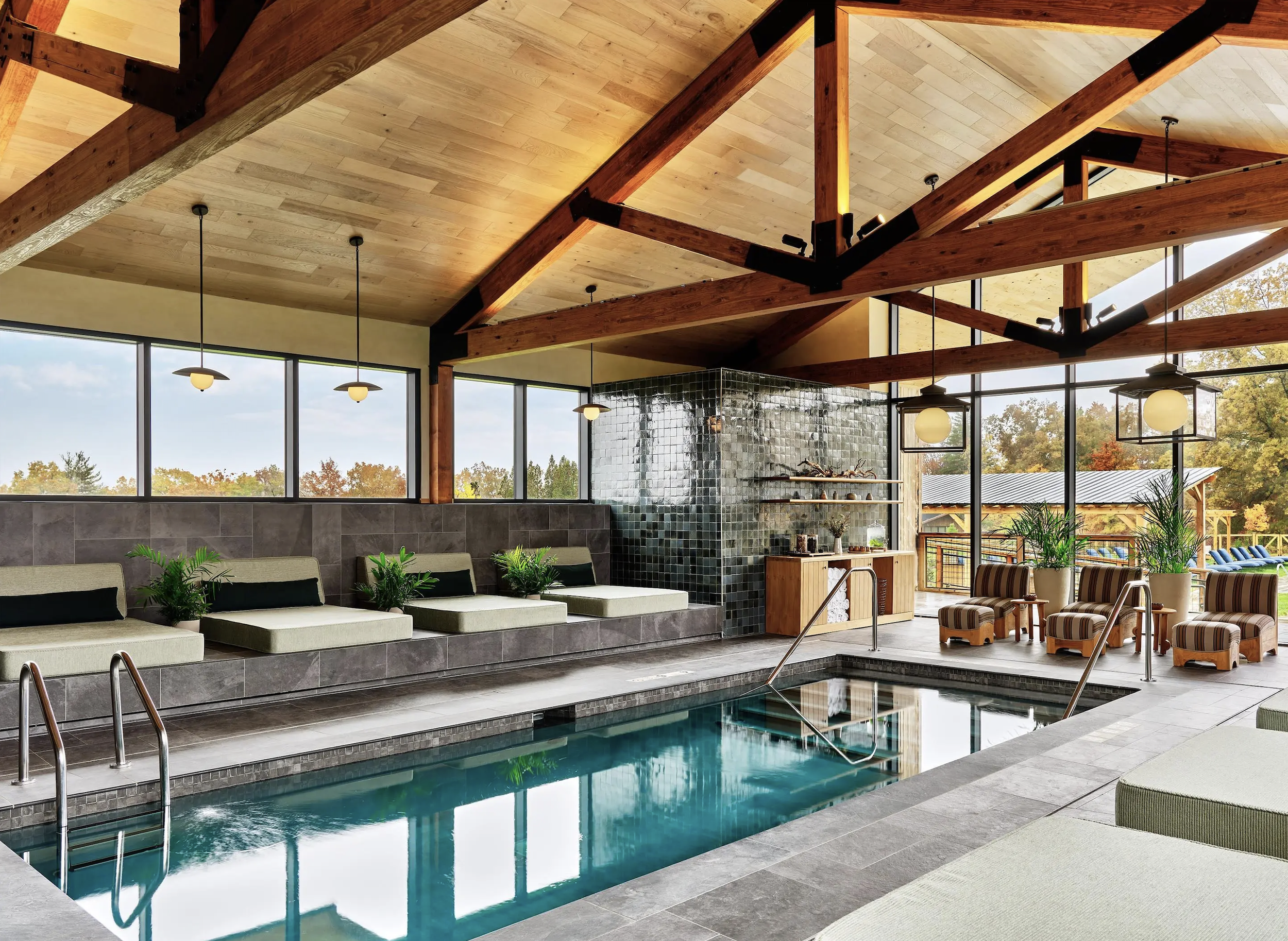
A Slower Afternoon at Thistle
Thistle, Wellbeing by Auberge, continues the property’s interest in botanicals and the seasons. Its treatments incorporate small-batch products and plant ingredients, with massages, facials, and longer rituals providing several ways to spend an afternoon.
The Body Botany treatment combines massage with steamed herbal poultices, while the Valley Ritual is designed for two and includes a botanical scrub, an infused bath, and massage. Facial offerings draw on Biologique Recherche and Monastery, allowing the approach to be tailored to individual preferences.
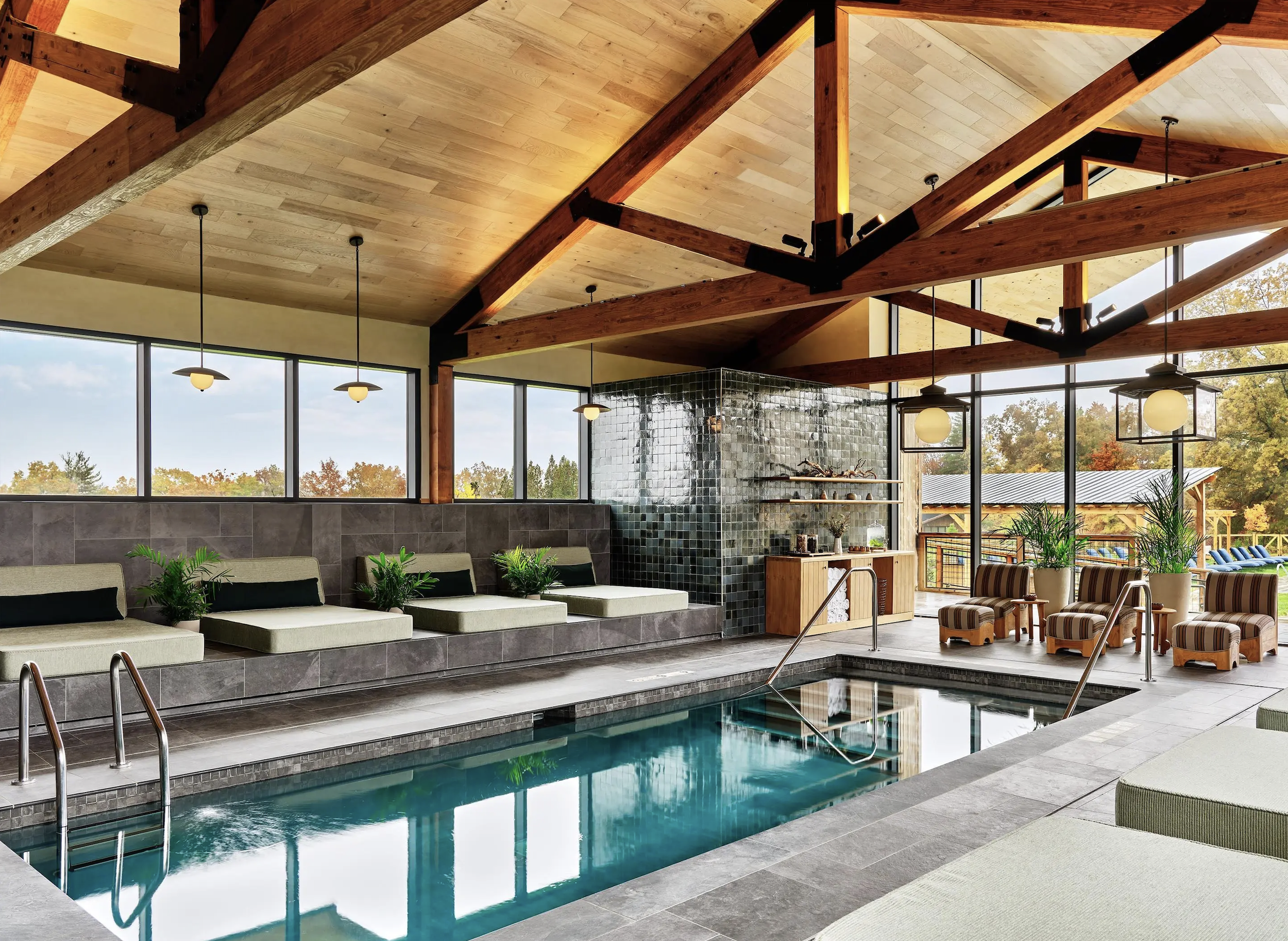
An indoor saltwater pool and outdoor hot tubs extend the experience beyond the treatment room. Spa access is for ages 16 and older, with appointment and access arrangements worth confirming when planning the day.
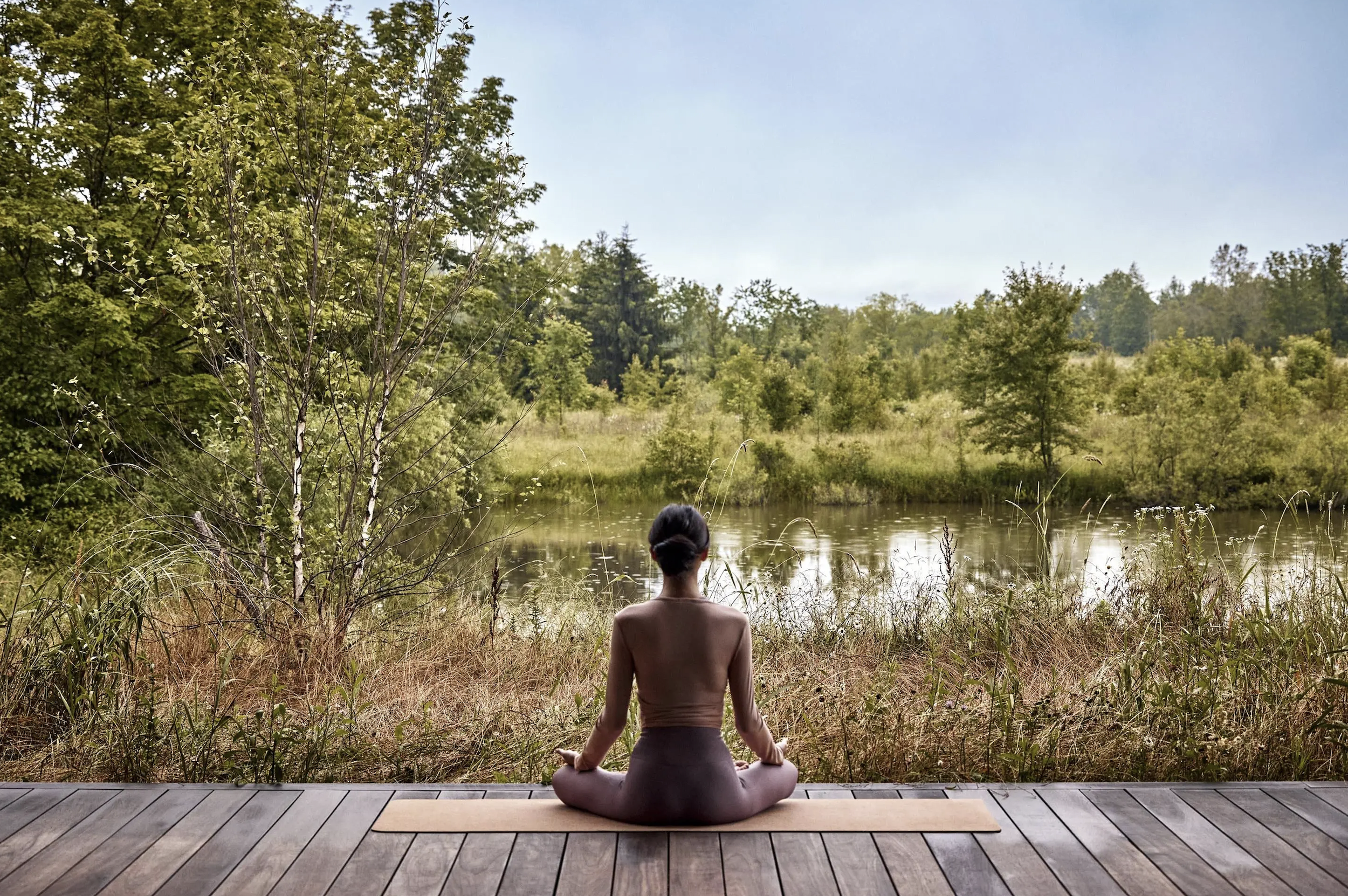
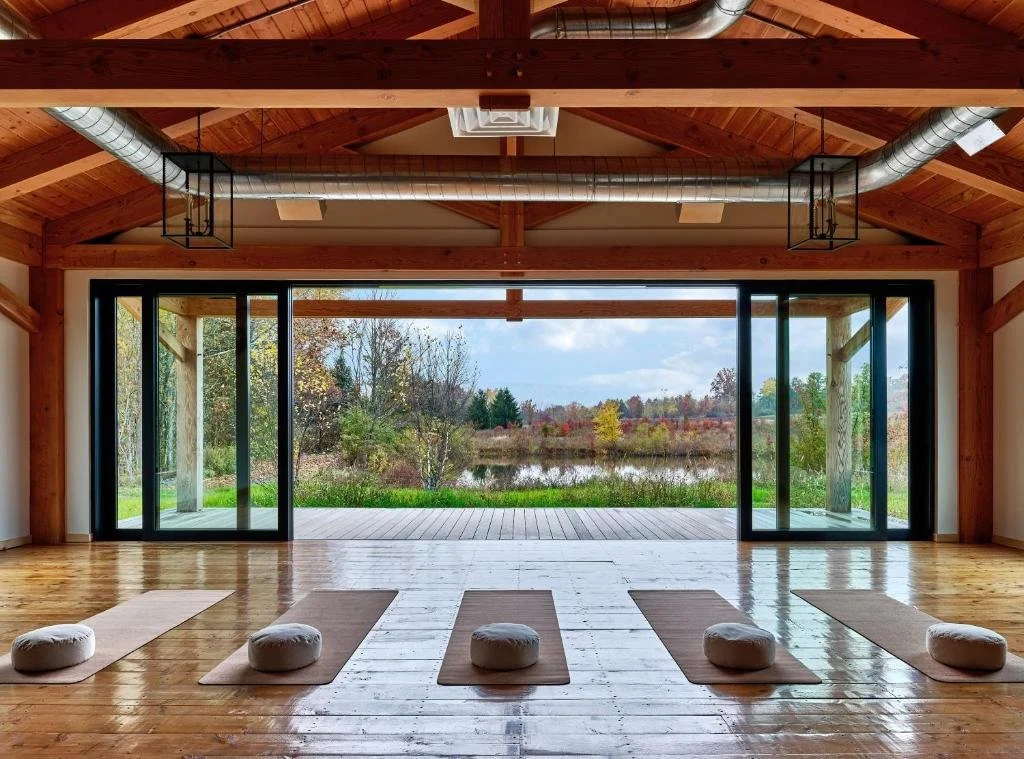
A fitness center and movement programming provide options for maintaining a routine, although there is no need to turn the stay into a structured retreat. We would leave time around a spa appointment for lunch, a walk, or simply returning to the cottage for the afternoon.
Small Discoveries for Younger Travelers
Wildflower Farms welcomes children, and its strongest family appeal comes from shared time outdoors. The Natural Playground, farm visits, and seasonal outdoor pool offer straightforward ways to enjoy the property together.
Animal encounters introduce younger travelers to residents such as chickens, donkeys, and Icelandic sheep. Following a trail or seeing vegetables growing in the fields can become an activity in itself, especially for children whose daily lives are primarily urban.
We would approach this as a family country retreat, with activities selected around the children’s ages and interests. The connecting cottages are particularly useful when separate bedrooms matter, while the Meadow and Ridge Cottages provide options for a smaller family. Cribs and highchairs are available, and dining and activity plans can be discussed before arrival.
Caring for the Land Behind the Stay
Wildflower Farms’ environmental approach is most visible in its agricultural practices and relationship with the kitchen. The farm follows regenerative methods, and seasonal growing gives visitors a practical introduction to the work behind the food.
Surplus produce is preserved through techniques such as pickling and fermentation, extending the usefulness of the harvest. Composting helps return organic material to the soil, while rain gardens support water management across the property.
The hotel has also described a partnership with a solar farm in nearby Stone Ridge as part of its energy approach. These initiatives complement the use of repurposed materials in the architecture and the emphasis on regional sourcing.
For travelers, the educational element adds substance. Learning how crops are grown or ingredients preserved makes the connection between the landscape and the stay easier to understand and appreciate.
Beyond the Farm Gates
The Shawangunk Ridge deserves time beyond the view from the porch. Nearby Mohonk Preserve offers hiking, carriage roads, and renowned climbing terrain. A guided outing is a worthwhile choice for travelers who want an introduction to the area’s cliffs or a route selected for their experience level.
Art provides an equally compelling reason to venture farther. Storm King Art Center places large-scale sculpture across a 500-acre outdoor landscape, where walking between works becomes a substantial part of the visit. It pairs naturally with a trip already centered on spending time outside.
Across the Hudson River, Dia Beacon occupies a former Nabisco box-printing factory. Its galleries present art from the 1960s onward, with the building’s scale allowing a very different encounter from a conventional city museum.
Gardiner and nearby New Paltz offer opportunities to explore local shops and places to eat, while farms and producers throughout the region make seasonal outings rewarding. We would choose one substantial excursion for a short stay, leaving the remaining time for Wildflower Farms itself. A museum visit on the journey north or south can also work well, depending on the route and opening schedule.
The Road to Gardiner
Wildflower Farms is located in Gardiner, New York. Driving or arranging a private transfer is the simplest way to arrive, particularly with luggage or plans to explore the region.
By Car from New York City: The property describes the journey from Manhattan as approximately 90 minutes in favorable conditions. We would generally allow around two hours, with additional time for Friday departures, holiday weekends, and traffic leaving the city.
Via Stewart International Airport: Stewart is the closest commercial airport, approximately 18 miles from the property. Allow roughly 30–40 minutes for a road transfer, depending on traffic and routing.
Via New York City Airports: LaGuardia, JFK, and Newark offer broader flight options, followed by a private transfer or rental car. As a planning estimate, allow approximately two to three hours by road, with longer journeys possible during busy periods.
We can coordinate arrival arrangements and advise whether a car is useful for the experiences planned during the stay.
A Few Days Worth Leaving the City For
The pleasure of Wildflower Farms lies in how easily its different elements fit together. A visit to the greenhouse gives context to dinner. A view of the ridge becomes an invitation to explore it. A cottage terrace makes an unscheduled afternoon feel like a perfectly good use of the day.
For couples, it offers privacy and room to reconnect. For families, there are shared discoveries in the fields and woods. For travelers adding the Hudson Valley to a New York itinerary, it opens a quieter chapter within comfortable reach of the city.
We would plan enough to enjoy what makes the property distinctive, then leave some space around it. There should be time for another coffee, a longer walk, and an evening on the porch that lasts a little later than expected.